
If you’ve opened YouTube or Instagram in the last few years and have any interest in food, odds are high that you’ve encountered a video set in a mountain village where a guy, say, roasts an entire camel in a pit in the ground, or deep fries a whole ostrich, or cooks a Wagyu steak aged for 30 days in peanut butter. (Is it good? Apparently.)
This is Wilderness Cooking, a viral YouTube channel with 1.8 billion views and counting — statistically somewhere between MythBusters and The Eagles in terms of total views — where each dish, cooked in the great outdoors, seems more outrageous than the last. Other channels filmed nearby, like Sweet Village or Faraway Village, feature scenic footage of rustic villagers milking sheep, foraging for wild herbs, or making homemade jam.
Yes, this is a niche part of the internet, but not that niche. Wilderness Cooking alone has more than 6 million subscribers — that’s three times as many as the U.S. White House official account. Or, to put it another way, that’s 60% of the population of Azerbaijan, where the channel is based (a small, oil-rich country nestled between Russia, Armenia, and Iran). These videos tap into a global online trend of “simple living” that includes all manner of outdoor cooking shows, and styles like “cottagecore” and “farmfluencing.” As Kaila Yu writes in an Offrange piece on Chinese farm influencers, “the challenges of modern urban life have led countless millions to yearn for something simpler, more picturesque.”
In this particular case, what’s picturesque turns out to be simple meals, usually cooked over an open flame and accompanied by a soundtrack of roosters crowing, gurgling streams, and distant birdsong. But something deeper than urban fascination with country life is at play here too: a sense of wonder at our interconnected world. “I’m sitting on my couch in Alaska watching a man in Azerbaijan cook fish in the mountains,” writes one YouTube commenter. “What a time to be alive.”
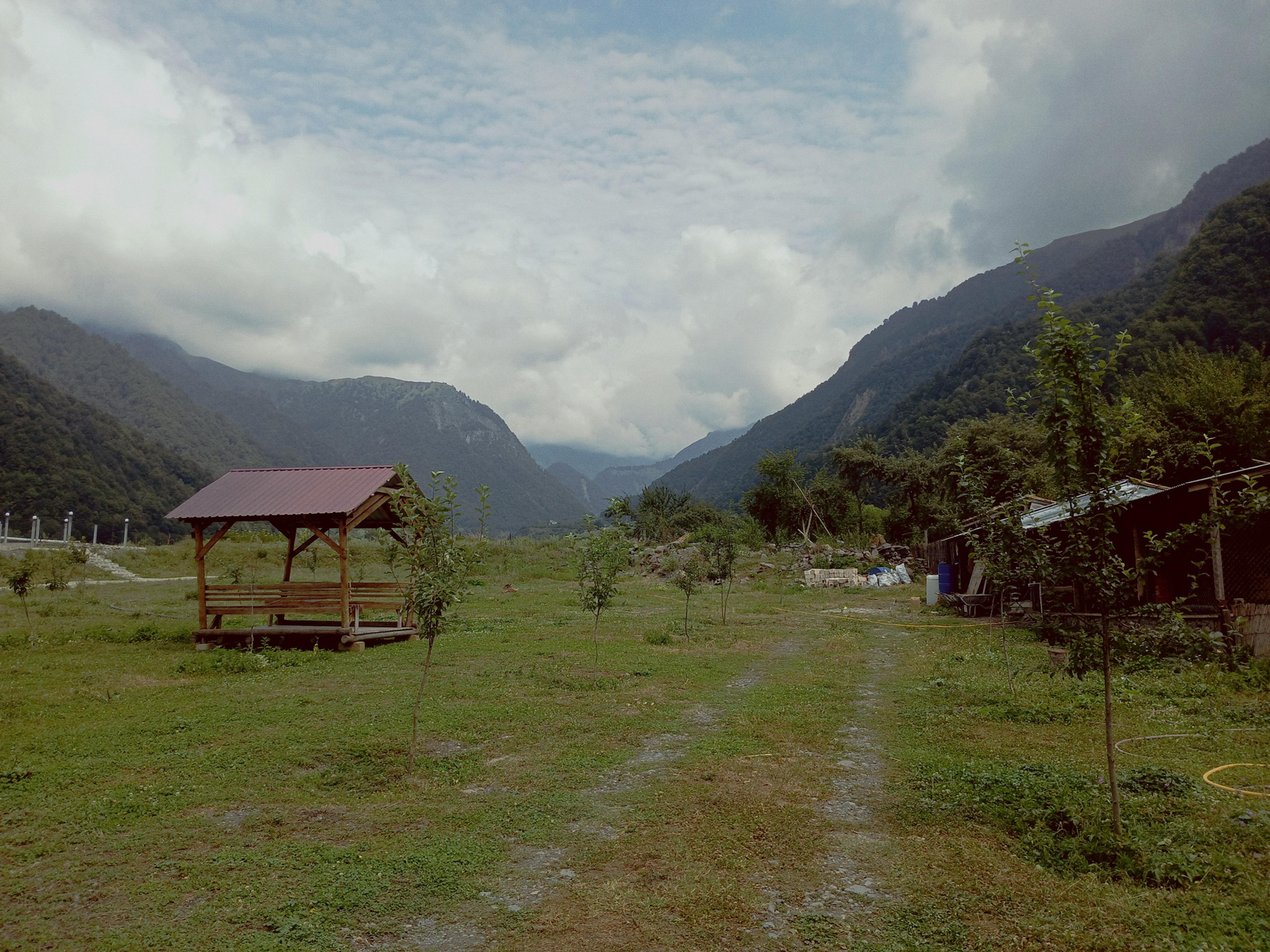
The mountains surrounding Qamarvan
·Stepan Sveshnikov
Like the viewer in Alaska, I couldn’t get enough of this cooking show. The fact that there’s no speaking, paired with the unfamiliar scenery, gives it a documentary feel. A lot of rural lifestyle content on social media has an air of inauthenticity about it. As in Cottagecore or Tradwifing, visions of a simple rural life often played by urbanites can feel like watching a model trying on ill-fitting clothing.
With Wilderness Cooking, viewers can indulge in a different kind of fantasy: the idea that the people on screen are real old timers, rooted in place, part of an unbroken tradition in a less developed part of the world. But eventually I had to wonder what really lay behind the whimsical shots. Was this a real village? Was it documentary, fiction, or something in between?
I wrote to the channel’s founder on Instagram, and soon, thanks to a Yale Global Food Fellowship, found myself traveling to the place where the content is made, in the foothills of the Caucasus mountains. The village, with stone houses clinging to the mountainside, is at the north end of the country, just miles from the Russian border, and a world away from the opulent skyscrapers of the coastal capital.
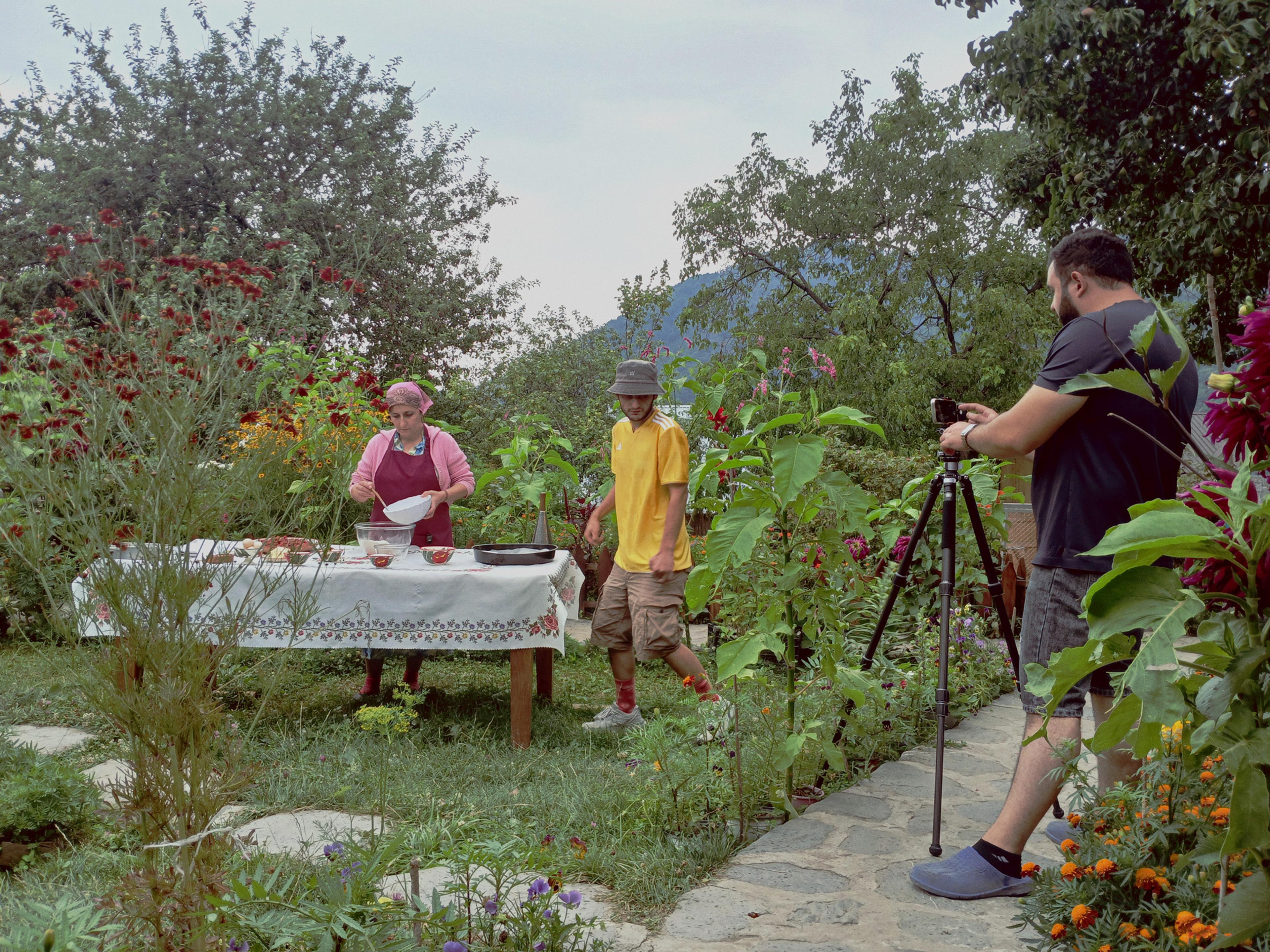
A shoot in progress
·Stepan Sveshnikov
After hours on desert roads in a rented Lada with struggling A/C, periodically swerving to dodge cows, I arrived at the mountains. Getting to Qamarvan itself took another several miles lurching in low gear up steep gravel roads along a roaring mountain river, following the film crew. My destination was a house with a large whitewashed porch and dusty courtyard filled with sheep and calves, a home that — for today at least — would double as the setting for the next Sweet Village cooking video. It normally functions as the summer home for the family that stars on the channel.
The broad appeal of outdoor cooking is clear, but what is less apparent is how our taste in online content drives change in the rural economy on the other side of the screen. I may have been the first American to visit in person, but this mountainous community draws millions of views from the United States. For fewer than 2,000 residents, 30 million subscribers across all channels is a massive audience.
On set, a grandmother peeled garlic from her garden while the grandkids tried their best to be quiet. Around the edges of the scene, millennials in branded t-shirts filmed with an iPhone on a tripod. Like with any cooking show, there was lots of starting and stopping.

Cutting garlic on the Sweet Village channel
·Stepan Sveshnikov
Tomorrow most of the film crew would be back in a brightly lit office in the capital of Baku, sitting in cubicles and working on post-production, monetization, and content strategy. They’re employed by a small media empire called OkayTube, founded by entrepreneur Gadzhi Ziyadov, who spent a large part of his childhood in the village he’s made famous. Many of the faces on camera — like the old woman peeling garlic — are from Ziyadov’s extended family. All told, the company employs over 100 people, about half of them in the capital city.
It’s the ideal situation for a content creation company: Production costs are low, but having an American audience means that ad revenue stays high. The economic reality is that each view from the U.S. is more valuable than a view from, say, India. “As we know,” said Ziyadov, in a featured speech at the BUR Marketing Summit in Berlin, “the English-language audience — the American audience — is the most lucrative.” Merch like Acacia wood bowls and Damascus steel chef knives, sold in USD and prominently featured in reels and videos, helps convert loyal subscribers to paying customers. Indirectly, the U.S. (and other countries, too) have economic power to influence the content and style of videos from countries many of us can’t find on a map.
For intstance, the classic Azerbaijani meat dishes are lamb, but steak does better with American audiences, so there’s a whole beef playlist on the main page of the channel. “Americans like to see steak,” said Ziyadov. Similarly, the national drink of choice for Azeris is black tea, but one of the recent Instagram reels on the Sweet Village channel is captioned “Rustic Coffee-Infused Steaks Cooked in the Village!”
The ad dollar imbalance does more than influence local trends or introduce new flavors. YouTube views are also transforming the village economy in Qamarvan by providing a new type of employment opportunity. Paradoxically, the globalized digital economy may actually help keep young people in the village. Ziyadov said the channel tries to hire locally and teach young people video shooting skills. “Even if the director is from Baku, next to him there’s always a young guy from our village who’s learning the craft.”

"To you, these mountains are breathtaking, because you’re seeing them for the first time. To me, they’re ordinary."
·Stepan Sveshinikov
Ziyadov doesn’t think YouTube has the power to reverse urbanization, or anything like that. But now, instead of heading to Baku to look for work, more young people have the chance to learn cinematography or set design right at home. Ziyadov states the obvious: “The more people stay in a village, the longer the village will survive.” The long-term effects of this relatively new digital economy (Wilderness Cooking premiered in 2020) remain to be seen. For now, most people in the village still make their living off a combination of sheep herding and tourism. The regular YouTube shoots bring another stream of income, and great entertainment for the local children, but they haven’t fundamentally changed the rhythm of rural life.
Back on the set of Sweet Village, the success of the approach was evident, but it was unclear how long it would last. One of the young men filming admitted that his dream was to go to Hollywood. Meanwhile, the grandfather, Malik, was getting restless. He wasn’t on camera that day, and the constant stopping and starting, along with the necessity to be silent — had him itching to get out. He asked if I wanted to get out above the village and see the mountains. Of course I did.
After 15 minutes up some roads I would never have braved on my own, we emerged into the open grazing land overlooking the village. As Malik spryly strode up the narrow sheep trails, despite being in his late 70s, I asked whether he found it strange that while many people in Qamarvan want to go to America, in America people were wishing they were here.
Malik’s face betrayed no emotion. “It’s normal,” he said. “Take these mountains, for instance. To you they’re breathtaking, because you’re seeing them for the first time. To me, they’re ordinary. It’s like that.”

The maple syrup industry was trying to make things easier, really they were. After all, the world of food labeling is a quagmire — it is the rare consumer who has really studied the difference between “cage-free” and “pasture-raised” eggs, who understands what separates “natural” from “artificial” flavors.
But somehow, maple syrup was even more complicated, with labels differing between not just countries, but individual states. (Vermont has a team of state inspectors to enforce its grading system.) In any store or sugarhouse, you could find things like Grade A Fancy, Grade A Amber, or Grade B. But a bottle of “Grade A Medium Amber” in Vermont was the same product as “No. 1 Light” in Canada.
How did that make any sense?
These labels, regulated either by the USDA, Canadian law, or state requirements, were all meant to convey the color and flavor of the syrups. For example, Grade A Light Amber was thinner and clearer; Grade B was dark and intense. But in Canada, which used a numerical system, No. 1 could range from light to medium, while a darker No. 2 could also be named “Ontario Amber” in some places. The same product could be labeled “Grade A Light Amber” if produced in Maine, and “Vermont Fancy” in Vermont.
So the maple syrup industry — specifically the International Maple Syrup Institute (IMSI), a trade group representing the industry in both the U.S. and Canada — proposed a solution, and released a new plan in 2011. Gone would be Canadian No. 1 and No. 2, and Grade A and Grade B in the U.S. Instead, all manufacturers would label their syrups “Grade A,” and specify the color and taste as ranging from “Golden Color With Delicate Taste” to “Very Dark Color With Strong Taste.” This way, in theory, customers could choose maple syrup based on whether they wanted something lighter or more robust, rather than the perceived quality — the assumption being that no one would buy Grade B if a Grade A were available.
Of course, some customers never needed convincing. I grew up in a Grade B maple syrup household, which was essentially maple syrup for Real Heads. It was the most maple syrupy syrup you could get, viscous like toffee, like licking a sweet tree. Knowing Grade B was a good product made you feel like you were in on something. There was a punk edge to buying it, publicly declaring your love for something that sounded worse in comparison to its counterparts, but that you knew was better. Amateurs could have their Fancy Grade As — basically sugar water — in a novelty maple leaf-shaped bottle. The real ones, who understood pancakes were only a vehicle for the good stuff, knew Grade B.
The new grading system was accepted, and has been in place since 2015. At any grocery store or farmer’s market, you’ll find a range of Grade A jugs of maple syrup, the only difference being an adjective to tell you whether you’re getting a lighter or darker product. But despite it being over a decade since the change, some consumers are still not over it.
The maple syrup industry insists Grade B has just been replaced with Grade A Dark or Very Dark, that the same great product is there under a different name. In fact, they were trying to save Grade B when they made the change. “There are many consumers who prefer good quality Grade B or Canada No. 2 Amber or even darker coloured syrup. The new system would place all colours of maple syrup on equal footing in the retail market, provided they meet taste and quality standards,” wrote the IMSI in its 2011 regulatory proposal.
In theory, the change could even help more customers discover the benefits of darker syrup. “Some dark syrup with bold flavor had been labeled as Grade B for reprocessing and not intended for retail sale. But, the USDA said there’s more demand for dark syrup for cooking and table use,” wrote Today at the time of the change. Instead of seeing “Grade B” and thinking it was an inferior product, renaming it “Grade A Dark” would hopefully get more customers to buy it.
Grade B was the most maple syrupy syrup you could get, viscous like toffee, like licking a sweet tree.
Pam and Rich Green of Green’s Sugarhouse in Poultney, Vermont, have seen the positive impact of the labeling changes in the past decade. “People would pick up ‘Fancy’ thinking it was the best, and then they didn’t like it because it had a very delicate flavor,” said Rich Green of the old labeling. Now the labels are more tied to the flavor you get in the bottle, so “if they like dark roast coffee or dark chocolate, then maybe they’ll like dark robust.”
Having them all labeled Grade A, they argue, is just assuring the customer that they are getting the same quality regardless of color. Plus it sounds better. “You wouldn’t buy grade B eggs or grade B meat,” said Pam. (Grade B eggs do exist, but are typically not sold in grocery stores).
But some fans of Grade B say they never equated the name with quality. “I liked that intensity just for regular use. I felt like I was getting more of the tree,” said Michael Metivier, who started buying Grade B in the Berkshires when he and his wife lived in Western Massachusetts. And the new naming system, for him, presents as many problems as the old one. “Having a range of Grade As with different labels seems unwieldy while Grade B felt pretty clear … It felt more like ‘This is the serious stuff.’”
This would all be easy enough to navigate if consumers knew they were getting the same product under a different name. But some consumers say it’s still not the same. “The commercial Grade As that I’ve tried that are supposed to be the most like Grade B still look too light to my eye and taste a little thinner, less interesting somehow,” said Erin Keane, who started seeking out Grade B syrup after attending a maple syrup festival in Indiana about 15 years ago. She’s mostly chalked it up to memory clouding her experience, but she very well could be right.
“People would pick up ‘Fancy’ thinking it was the best, and then they didn’t like it because it had a very delicate flavor.”
The change in labeling also came with a change in which syrup goes into which category. To be legally categorized as maple syrup (as opposed to a “pancake syrup” or other maple imitator), the product must be produced by the concentration of maple sap, and have soluble solids (mainly sugar) between 66% and 68.9%. The different grades are then judged by light transmittance, or how transparent it is.
Producers sometimes advertise that Grade A Very Dark used to be called Grade B, but that’s not entirely true. What was sold as Grade B in Vermont and Ohio, or Canada No 2. Amber, had to have 27-43.9% light transmittance, while anything below 27% was sold as “Commercial Grade” or “No. 3.” But the change in naming also came with a change in light transmittance classification. Now, Grade A Dark is a wider range of 25-49.9% light transmittance, while Grade A Very Dark is anything below 25%. It seems minor, but now that means it’s possible to buy a Grade A Dark syrup that is lighter than what Grade B used to be.
It also could be possible to buy Grade A Very Dark that is darker than formerly Grade B syrups, but in all likelihood that’s not happening. According to Tasting Table, Grade A Amber is the most popular, and a quick scan of a few local grocery store shelves confirmed that even when there were a range of maple syrup brands, Grade A Amber was by far the most common grade available. And a look around at individual producers show some don’t even make Grade A Very Dark. Like any other business, maple syrup sales work by supply and demand.
Both Kaylie Stuckey, executive director of IMSI, and Peter Christopher, IMSI’s vice president, agree that while there are no official statistics, Grade A Amber is the crowd pleaser. This makes an intuitive sense — it’s not too dark and not too light, suitable for both baking and drizzling on waffles, the kind of syrup most people would be happy enough with. If you’re stocking shelves for the general public, it’s what will sell.
It’s also the easiest to stock because that’s what maple syrup producers make the most of. Golden Delicate syrup is produced at the very beginning of the season, while Very Dark syrup is produced right at the end, so less of each is made. “I have to have enough volume on the shelf to put out a product,” said Christopher, who is also the plant manager at Maple Grove Farms of Vermont. So Amber and Dark go out for mass consumption, while the rest is usually bottled and sold at sugaring houses.
What I and other Grade B fans want is credit for knowing the band before they got big, as it were.
There is an inherent tension in trying to label and classify a natural product. Just as the same wine will taste different year over year, maple syrup changes with the seasons, with the soil, and across geographical zones — even if it carries the same name. This was the case then and now, whether it was called Grade B or Grade A Very Dark. But those who miss Grade B don’t necessarily miss a specific product, but a phrase that symbolized they were different, an identity that made them unique from other consumers.
But perhaps they’re not so unique anymore. It’s clear the Dark and Very Dark syrups are enjoyed by those who try them — some producers are saying they’re becoming more popular, and perhaps some of that is indeed because of the naming change. “If you don’t know maple syrup, I think you’re automatically drawn to the lighter colors, but then I find once you actually get to know syrup and you taste enough of it, you’ll find that the darker flavors are more robust,” said Stuckey. It’s just that because of the quirks of maple syrup production, you have to be the kind of maple syrup fan who actively seeks them out, rather than casually picks up whatever’s in the syrup aisle.
This whole grading change was an exercise in public education, to convert casual grocery shoppers into the kind of people who know more and seek out exactly what they want. Which is precisely what chafes. That the same syrup can be bought and enjoyed is not the point (though let’s be honest, everything being called “Grade A” is kind of silly).
What I and other Grade B fans want is credit for knowing the band before they got big, as it were. For seeing the value in Grade B before it got a makeover to appeal to the people who previously never gave it a chance. Then again, regardless of the name, you still have to know where to look for it. Nothing feels more punk than that.
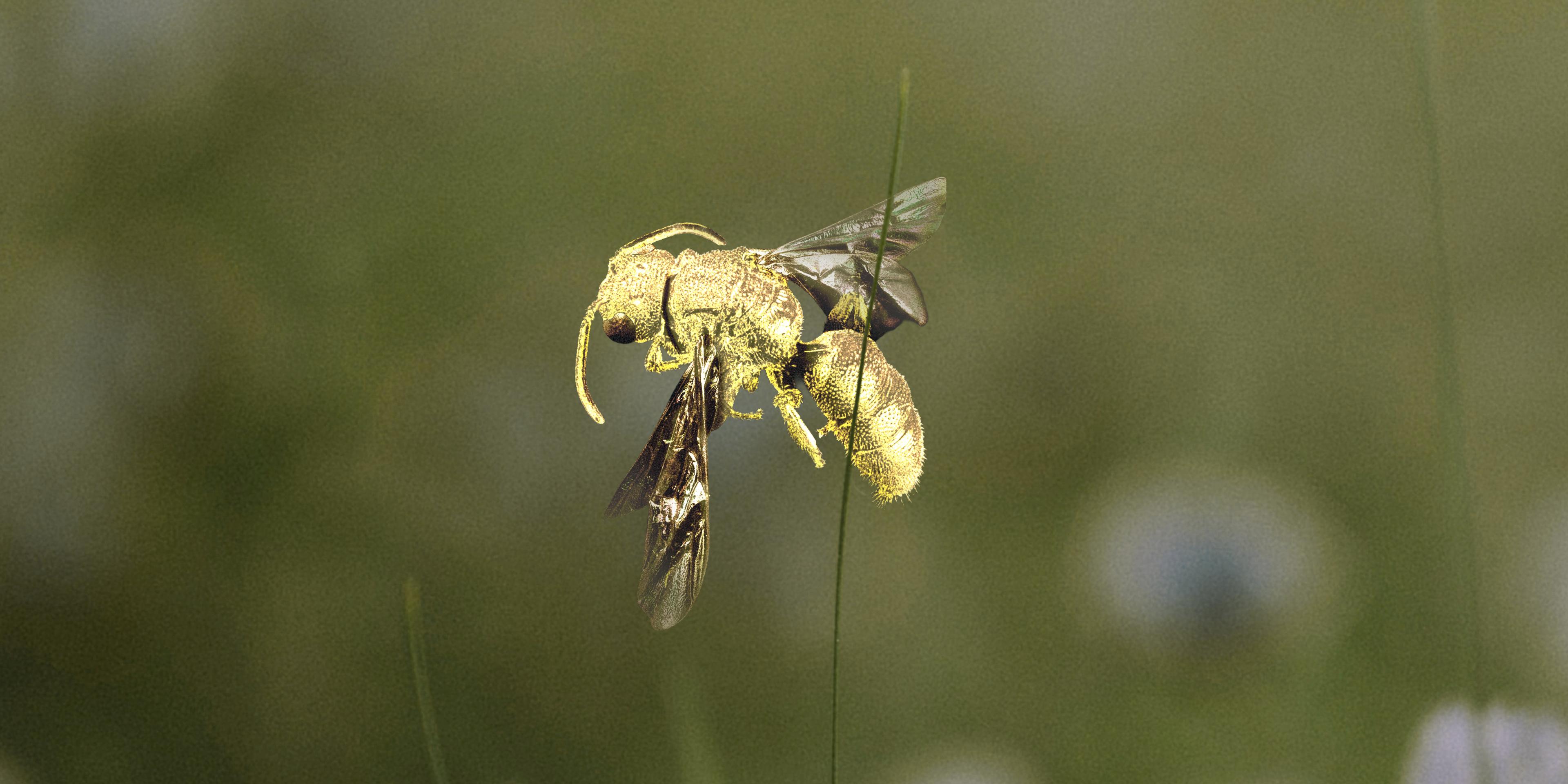
Half of North American bee species are in decline and a quarter at risk of extinction, as bee populations face daunting challenges like habitat loss, pesticides, and disease. This is a problem for ecosystem health, but it’s particularly acute for many of our edible crops.
In the United States, honeybees, which do the bulk of agricultural pollination, are shipped to California in February for almond season, then to Washington two months later when the apples bloom as the beekeepers try to match the demand. When sunflower and canola season falls later in the summer, the bees need to be moved back.
“There’s a supply and demand issue,” said James Strange, professor of entomology at Ohio State University. “Demand for food has grown, [which] means that we need hives of bees moved to places where plants are blooming at that moment.”
Or we can turn to robots.
In the U.S., the dinner plate-sized Dropcopter drone can now be seen releasing dry pollen from what looks like a WW2 aircraft ball turret under its belly. One person can manually pollinate five to 10 trees a day, while Dropcopter will cover 40 acres in around four hours. Since the robot bee was first used in 2017 to pollinate almond orchards in New York, it has been used to pollinate almond, apple, cherry, and pistachio orchards from California to Brazil.
In 2017, Dropcopter co-founder Matt Koball and Adam Fine visited a food conference in San Francisco. Fine was about to launch a drone food delivery company, but when they were at the conference, they heard an almond grower complaining about the increase in beehive rental costs during the pollination season. At that time the rental fee had risen from $150 to $175 per hive. Now in 2025, it can cost up to $225 a hive during peak pollen season.
Koball was an olive farmer, so he was aware how the almond growers used bees to pollinate their trees. “They put trays of pollen in front of the beehives. The bees [collect] a load of pollen on their way out to the field,” said Koball. “I started thinking about doing this with a drone and we went from delivering food to delivering pollen.”
The duo spent the next four months in a garage creating a rudimentary robot bee using an upturned salsa pot filled with pollen that would sit underneath a drone. The robot would fly high above the orchard and scatter frozen pollen over the trees. They trialed the robot bee in an almond orchard as it is the first to blossom in the United States; it’s also one of the hardest trees to pollinate.
After joining an incubator program, Koball and Fine ended up building a patented device that was able to meter out pollen at a specific rate and a steady speed. The Dropcopter team expanded to working with cherries and apples, which proved to be even more successful than almonds. Koball says the almond orchards saw a 25% yield increase while cherry orchards saw a 45% increase. They now rent out Dropcopters for up to $375 an acre.
The almond orchards saw a 25% yield increase while cherry orchards saw a 45% increase.
Of course, Dropcopter is not the only company working on robot bee technology. Singapore-based company Polybee is using robot bees to pollinate fruit farms in Australia and Europe. When its founder Siddharth Jadhav was studying drone tech in 2019 at the National University of Singapore, food security and vertical farms were a large part of the national conversation.
Singapore, which launched the world’s first vertical farm in 2012, imports 97% of its food. Jadhav decided to see how his drones could help vertical farms. When the autonomous Polybee hovers above self-pollinating plants such as tomatoes and strawberries, the downforce from the drone causes the plants to shake and the flowers release their pollen.
Robot bees were of particular interest to the indoor farmers in Australia as the country doesn’t have native bumblebees, so they need to pollinate indoor plants by hand. This can mean tapping the plant, brushing by hand, or even using leaf blowers.
Polybee’s software pilots the drone and uses the robot bee’s camera to recognise flowers and fruit. It also enables multiple robot bees to fly at one time without bumping into one another. Just two robot bees can pollinate a hectare of plants in a greenhouse within a few hours.
The robot bee can not only pollinate the plant, but help the farmer forecast yield and detect disease or nutritional deficiency. “What we’re doing at Polybee is [turning] unpredictable farms into data-driven factories,” said Jadhav.
Mark Fielden, CEO of Borotto Farms in Victoria, Australia, has been using Polybee’s robot bees not for pollination, but to analyze yields within its 400-acre farm. At one time the team would have walked the paddocks themselves, assessed the crop, and had their own opinions on whether it was the right time to harvest. “At $3 a kilo [for a spinach crop] you can be looking at $1,200 an acre a day if you get it wrong,” said Fielden. “[Polybee] flies itself every day over fields and paddocks. It measures all the leaves and gives you an objective view.”
Just two robot bees can pollinate a hectare of plants in a greenhouse in a few hours.
A swarm of other robot bees are also being created in labs, and they seem to be as varied as the ones in nature. In the Netherlands, startup Flapper Drones has designed a robot bee that can be used for pollination, with wings made from lightweight space blankets. This helps keep people safe as they work in proximity to the robots.
In 2017, researchers at the National Institute of Advanced Industrial Science and Technology created a robot bee using a 4 cm-long toy drone covered in horsehair bristles and a sticky gel. While the pollen was transferred between the lily plants, it was reported the drone’s wings damaged the petals. In 2020, the team trialed another form of pollen dispersal by fitting the robot bee with a delivery system that would fire pollen-filled soap bubbles onto flowers.
A different project in the United States seems to have solved the problem of having the robot bees damage high-value crops. Associate professor Kevin Chen, head of the Soft and Micro Robotics Lab at MIT, has designed a bee that will land as softly as a water boatman upon a petal. Building on the work of the RoboBee team in the Wyss Institute at Harvard, Chen has designed artificial muscles that contract when voltage is applied.
Chen’s robot bee, which is tethered to a power source, is currently limited to flying between plastic flowers in the lab, but the robot engineer can see its potential. “Bees are doing great in terms of open-field farming,” said Chen, a statement some would surely disagree with. “But there is one potential type of pollination I think we can consider in the longer team, which is indoor farming.”
Entomologist professor Strange said: “The nice thing about putting a hive of [actual] bees into a greenhouse is they find the flowers themselves. You don’t have to worry about them getting caught up in the ropes or hitting the lights. [But] as drone technology gets better that might be an area where I actually would say, ‘Okay, that makes sense.’”
We’re not anywhere near a point in bee decline [where] some of our crop plants are going to go extinct. But we’re definitely at a point where we are looking at increases in costs for beekeepers, orchards, [and] farmers. Those are going to go up, so we’re going to pay more.”

When Bernard Kratky left his Hawaiian home and horticulture research in the ‘80s, he went to learn from another island across the planet with similar challenges. Taiwan, and its Asian Vegetable Research and Development Center, was running ambitious experiments to grow resilient crops in developing countries.
Breeding sweet potatoes and mung beans, developing disease-resistant tomatoes, and reducing fertilizer inputs were some of their priorities. Among all of the vegetable excitement, Kratky saw researchers growing crops without soil, hydroponically. He had grown some crops this way before, but in Taiwan he saw something new: hydroponics using no electricity or aeration whatsoever. This ran contrary to every growing system of the time, so he dismissed it and focussed on other research. But its memory stuck with him when he returned to Hawai’i. Now, almost 40 years later, people worldwide know the style of growing hydroponics without any aeration as the Kratky method.
Back at his home and work at the Volcano Agricultural Experiment Station in Hawai’i, Kratky encountered the same farm struggles that the islands have always had to deal with: weeds, nematodes, and extremely depleted soils. On top of that, certain areas didn’t have access to power, and he needed to grow successfully while leaving for extended periods. Frustrated with these pervasive challenges and informed by his observations in Taiwan, he and a farm foreman removed a door from an old refrigerator and laid the fridge on its back. He filled it with water nearly to the top, added a makeshift cover, and suspended young tomato plants above the nutrient solution, dangling their dainty roots into the water below. Unlike other hydroponics at the time, this system had no pumps and no power.
Kratky left for a trip and didn’t think much of the experiment. When he returned, he was surprised to find the tomatoes flourishing with their roots reaching deep into the baby blue fridge’s now-depleted reservoir, surviving without additional inputs or supervision.
Kratky began publishing his findings on non-circulating systems in 1990, but it didn’t gain much popularity until the internet got ahold of it in the mid-2000s. Today it is proliferating among growers around the world where infrastructure and inputs are more limited. What began as a practical response to Hawai‘i’s production barriers is gaining traction in places where simplicity is not a weakness but a necessity.
How It Works
The principle is disarmingly simple. Plant roots require oxygen to function, so when hydroponic growers fully submerge the roots in water, they also submerge a weighted bubbler connected to an air pump. By contrast, in the Kratky method, the container is filled once with nutrient solution and water. As the suspended plant sucks the water, the exposed upper roots switch from processing the nutrient solution to processing the air between the water and the container’s cover.
Kratky summarizes the streamlined system as a tank, a cover, and net pots. The nutrient solution is put in place “at the time of planting or transplanting” and then left alone. There is no electricity, no circulation, and no moving parts.
“Typical hydroponic growers are on call 24 hours per day and always checking on the operation,” he wrote. “However, Kratky hydroponic growers normally just fill the tanks with nutrient solution, plant or transplant the crop, and do nothing until harvest.” Growers can leave for five weeks and return to find lettuce ready for harvest.
A recent study from Uganda found that the vertical Kratky system produced lettuce yields similar to those grown in soil-filled grow bags and allowed producers to grow in multiple vertically stacked racks. The authors argued that the system could support urban food production and income generation in developing countries, especially given the lack of electricity requirements.
Why the Industry Dismissed It
While the history of hydroponics dates back to ancient systems in Babylon and the Aztec capital of Tenochtitlan, modern hydroponics is generally considered to have emerged in the 1930s from UC Berkeley professor William F. Gericke and his nutrient solutions. Then in the 1970s, plastics became more commercially available, and they allowed commercial growers to scale up for the first time. The containers, gutters, tubes, and other parts that used to require glass, ceramics, and stainless steel could now be fabricated quickly and cheaply for hydroponic farms.
Both universities and large farms had something in common. They both had access to plenty of infrastructure and electricity. So when these resource-rich growers then wrote books and taught the world how to grow food without soil, they declared that pumps and aeration were essential for plant growth.
As a result, Kratky said his early work did not receive much attention from professional hydroponic circles; his first manuscripts were rejected from publication. Then at a 2005 hydroponics conference in New Zealand, two scientists publicly objected to his findings and insisted that Kratky systems could not have similar yields to those with supplemental oxygen. The skepticism was based not on specific data but on assumptions already entrenched in the field.
Nathaniel Heiden, plant pathologist and research director at Levo International, a nonprofit farm based in Connecticut, said that when he first encountered Kratky’s papers in 2016, the method still generated little discussion. “I sometimes talk now with hydroponic growers and experts who write off the Kratky method and assume that you need an air stone [an oxygenating air pump] to get optimal yields,” he said. The belief that dissolved oxygen must be mechanically supplied was widespread enough that Heiden and collaborators at Cornell, Ohio State University, and the University of Connecticut designed trials to compare systems directly.
“We were shocked to find repeatedly that Kratky systems with and without air stones performed similarly and that Kratky systems even performed similarly to more intensively monitored deep water culture systems,” he said. Their core findings, one of the first scaled up experiments to directly compare yields between Kratky and conventional hydroponics, showed that hydroponics with no power can produce almost the same yield, as long as some of the roots are exposed to absorb oxygen.
“Most areas of farm fields and even most backyards don’t have available electrical power so Kratky hydroponics can easily be done in places that would require a lot of infrastructure investment.“
Joe Swartz, senior vice president at American Hydroponics, has been growing with commercial hydroponic systems for more than 40 years with large growers. When asked about the Kratky method’s possible applicability in large farms, he said, “Unfortunately, no, not in a commercial application. Aeration is only one of the challenges. Root systems produce waste products, such as ammonia, which in the soil or other hydroponic systems is either carried away by nutrient flow or broken down by beneficial microbes. In a Kratky system, the plant produces ‘air roots,’ but the nutrient solution can become quite stagnant, which inhibits these microbes. The microbes die, ammonia builds up and the plant can begin to literally poison itself.”
Kratky himself acknowledges these limitations. He estimates that circulated and aerated systems can achieve roughly one-third higher yields when perfectly managed.
Still, setup of Kratky’s system is quick and inexpensive, safety worries about electrical power are eliminated, and there is no concern over breakdown of equipment or loss of power. Yes, a tank leak could cause a failure, but that could also happen with an aerated or circulated system. And Kratky said little experience is needed as he has taught this system to elementary school students. Additionally, he said, “Most areas of farm fields and even most backyards don’t have available electrical power so Kratky hydroponics can easily be done in places that would require a lot of infrastructure investment for conventional hydroponics.
Typical hydroponic growers are on call 24/7 and usually perform some maintenance operations during the crop growing period. However, Kratky hydroponic growers normally just fill the tanks with nutrient solution, plant or transplant the crop and do nothing until harvest.”
Where the Method Has Taken Hold
The Kratky method has struggled for acceptance in large-scale operations in the United States, but its adoption elsewhere tells a different story.
Heiden and Levo International describe using Kratky systems in Hartford, Connecticut, at a scale sufficient to supply their CSA farm and market stand. The systems have also been central to their work in Haiti, where electricity is unavailable or unreliable in many communities. In those settings, Heiden said, the method was “the only hydroponic approach that can be successful with a set-it-and-forget-it approach.”
Levo’s lead Haitian researcher, Girlo Augustin, has used the systems to test nutrient sources and substrates that can be produced locally. Heiden noted that their team has grown crops ranging from peppers to spinach in these Kratky systems, known locally as Bokits.
The MethodsX study from Uganda points to a similar pattern. The authors frame their vertical Kratky system as a tool to address urban land scarcity and to provide fresh vegetables where soil cultivation is constrained. They describe the method as low-cost, low-tech, and potentially transformative for food access in developing countries.
The common thread is not yield maximization but accessibility. In Hawai‘i, non-circulating hydroponics offered an escape from nematodes and poor soils in remote areas. In Hartford, it provided an affordable entry point for community-based production. In Haiti and Uganda, it offered a way to grow food where electricity, inputs, or infrastructure were unavailable.
Growing Outside the Frame
Kratky didn’t name the method after himself. but it became popular after a MHP Gardener, a grower on YouTube, released a video entitled “Easy Hydroponics — Anybody Can Do This,” that became viral in hobbyist hydroponic circles. Other hobbyists began experimenting, posting videos, and reaching large audiences, using the term themselves.
“The name stuck,” Kratky said.
Today, the method is thriving in an interactive, scientific community on YouTube with hundreds of growers reviewing and adapting each others’ systems. As the Kratky method grew in popularity, the academic community has responded by quantifying and publishing results on the method — despite initially dismissing it.
The Kratky method is unlikely to shift large-scale commercial operations, but it has created a simpler option for growers in very different situations. It begs the question: What other technologies and techniques seem too simple to work? Frustrated scientists, stubborn hobbyists, and YouTube may hold the keys to adapting new agricultural technologies to widespread applications beyond what the universities and commercial industry consider viable today.
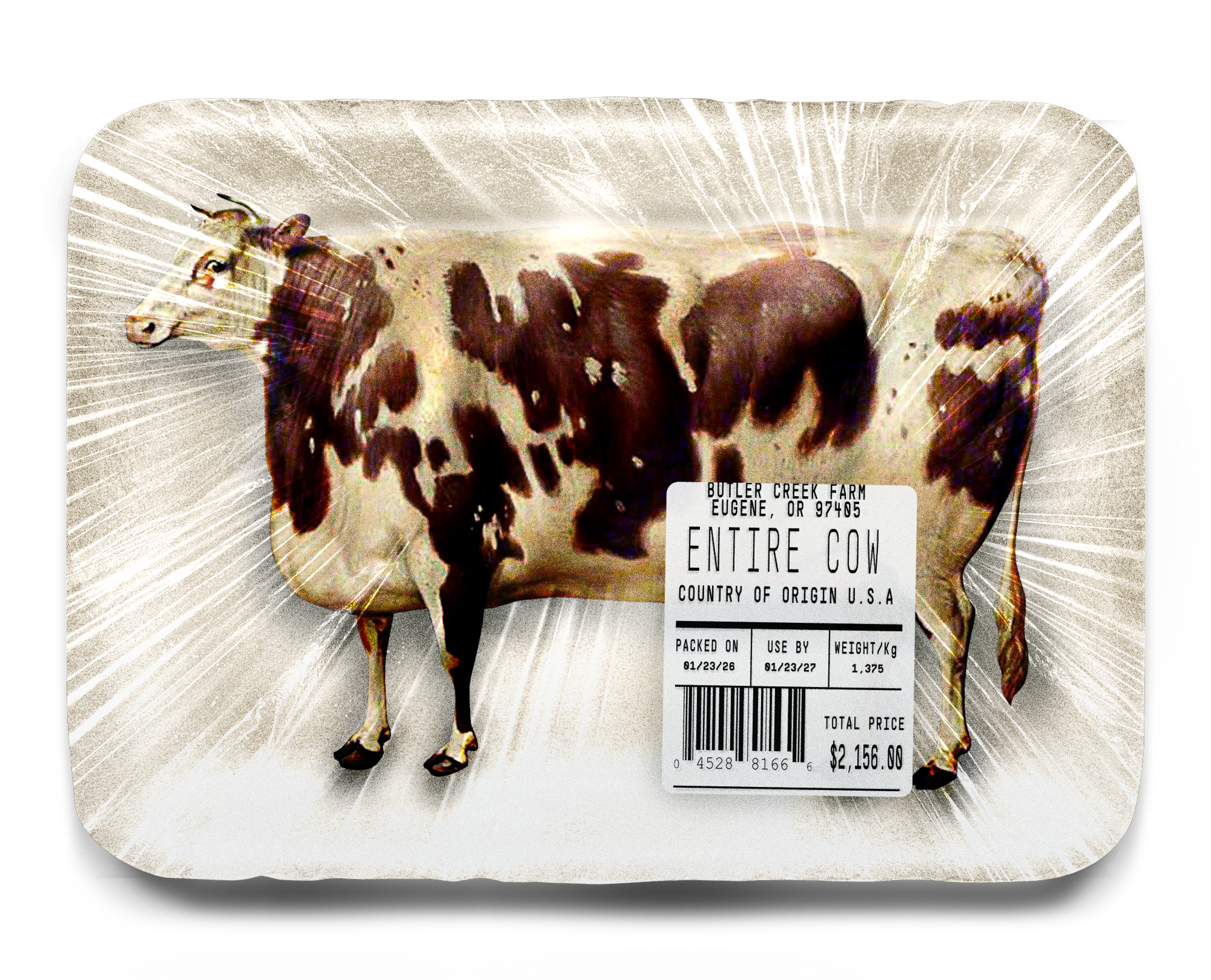
Lauren Bailey answered the phone just a few hours after she’d picked up her annual quarter cow. The butchers at her local shop in Eugene, Oregon, are always slammed, and that November day was no different. She waited as six workers ran around, cutting and processing meat. Eventually they cashed her out (around $900) and loaded up her car with roughly 125 pounds of frozen beef — enough to last Bailey and her husband the entire year, if not longer.
She acknowledges that the upfront cost might deter many, as would the inflexibility in choosing which cuts you take home. (A quarter of beef only has so many ribeyes, for example.) But it’s much cheaper than if she bought meat throughout the year from the supermarket, she told Offrange. And the stockpile of protein gives her freedom.
“I grew up pretty poor,” she said over the phone. “But to know I have a freezer full of meat, that I have a year’s worth of meals, is really helpful.”
For the majority of U.S. meat-eaters today, this approach is foreign. Most consumers know their meat as the pre-portioned plastic-bound flesh lining rows of grocery store refrigerated shelves. But with increasing social, political, and economic instability, some are predicting more Americans will attempt to insulate their pantries and wallets by adopting Bailey’s style of purchasing: buying their meat in bulk directly from farmers.
Michele Thorne is one of those believers; she leads a nonprofit, the Good Meat Project, that’s committed to making more ethically produced meat accessible to the average American. Buying in bulk, she said, is a consumer- and farmer-friendly approach that skirts many of the pitfalls of the meat market today. Almost six years after pandemic disruptions laid bare the fragility of our food supply chains, meat remains especially unstable.
Beef prices are “near record levels,” according to the The New York Times, in part because drought-afflicted herds are shrinking. In November, the Trump administration green-lit low-tariff beef imports from Argentina, claiming it would lower beef prices in the U.S., but so far cattle ranchers say the move “hurts U.S. farmers,” according to CNN. Two major meat processing corporations have recently agreed to pay millions to settle a 2019 beef price-fixing lawsuit filed on behalf of consumers, according to NBC News. And meanwhile, record stagflation has sent grocery prices soaring, while millions of SNAP users’ benefits — wielded as political pawns during the recent government shutdown — were not guaranteed for a portion of this year, contributing to overall unease.
Amid this uncertainty, buying in bulk can be a balm. Bulk shoppers like Bailey pay one price per pound for everything, whereas the price per pound at supermarkets will have “such a huge range,” Thorne told Offrange. And it’s better for producers, too. “I enjoy supporting a local farm, because I know that my money is staying in the community, in the state,” she said. “It’s a money multiplier, it boosts the local food system.”
“The timing was right during Covid because people couldn’t get stuff at stores, people were searching for farms they could buy directly from.”
For Bailey, her “local” farm, Butler Creek, is actually about two hours away, closer to the Oregon coast. It’s managed by an old friend of hers, Nadja Sanders, who also lives in Eugene, and whose family has managed Butler Creek Farm for close to 150 years. About 25 years ago, Sanders introduced bulk purchasing options and cow-shares. Since then, the customer base has grown entirely by word of mouth, with the advent of the internet making it easier for people like Bailey to place orders.
Because of the farm’s remote location, Sanders has few options for butchers. She partners with a Eugene-based mobile butcher, 4-Star, which will typically slaughter about 13 cows for them, once a year, around October.
“We’re about as far as they wanna go,” Sanders told Offrange of 4-Star. “They’re super willing and super efficient,” though she caveated that their customer service isn’t always the … gentlest. Sometimes they can be a little “gruff,” she admitted, but only because they’re always busy. They’re so slammed, in fact, that Sanders has to make arrangements for her butcher dates at least a year in advance. When she spoke with Offrange, she had just set the butcher date for October 2026.
But 4-Star isn’t an outlier. This country’s butchering industry has been shrinking for the last half-century, stretching the remaining butchers to their limits. In her professional spheres, master meat-cutter and fifth generation butcher Kari Underly talks a lot about the “missing middle,” or the slow disappearance of the butcher trade. It’s a trend that’s been disastrous for farmers and ranchers, who rely on butchers to connect them to the consumer — and who make bulk purchasing from small, independent farms possible. For example, 4-Star handles the slaughtering, processing, and final point of purchase for Butler Creek customers like Bailey.
Small- and medium-sized meat processors are increasingly outcompeted by the “Big Four” meat companies — Tyson, Cargill, National Beef, and JBS Foods — which “dominate the industry and have the resources to control every aspect of the meat supply chain from animal feed to meat processing to distribution,” according to sustainability nonprofit The Lexicon. These corporations, which receive government subsidies, are able to process exponentially more animals at a time and undercut the costs of smaller producers, contributing to the loss of local butchers in communities around the country.
As the market value of skilled meat-cutters has declined, Underly said, so has the skilled labor pool — and companies have supplemented with undocumented immigrants who are frequently paid and treated worse. As of 2024, it was estimated that anywhere from 30 to 50 percent of meatpackers in the U.S. were undocumented, in some cases making poverty wages. This year’s tornado of ICE raids has led to the detention of many of those workers and pushed others into hiding, further decimating the meat processing workforce, Underly noted.
On the consumer side, the upfront cost is a deterrent, even if bulk-buying saves money over time.
She agreed with Thorne that a widespread transition of American families buying their meat in bulk directly from farmers would go a long way towards patching up the meat industry’s problems. But without more butchers helping to connect customers directly to their local farmers and ranchers, she said, it’s unlikely to gain ground with the average household.
For its part, the Good Meat Project is trying to address the access gap with a tool called the Good Meat Finder, which maps out farms that offer direct purchasing by region. They also hold marketing workshops and seminars for farmers and ranchers on how to transition to these types of direct sales.
Still, on the consumer side, the upfront cost is a deterrent, even if bulk-buying saves money over time. It’s an investment, Thorne said. She spends the whole year leading up to her annual half or whole cow purchase from Butler Creek Farm financially preparing. “Instead of paying $6,000 a year on meat, I’m reducing my costs by 25 or 30 percent every year by buying in bulk,” she said. “It’s a discipline like anything else you’re saving money for, like a house, or a car.”
“It really is a shift in purchasing decisions,” she said.
To dampen the sticker shock, some people go in on an order with other family members or neighbors — or sometimes even people they don’t know, not dissimilar to a CSA. Thorne, for example, split her first bulk purchase from Butler Creek with a stranger.
Resource-pooling might not come as naturally to those of us living relatively isolated 21st century lives. But, as Thorne pointed out, it was only two or three generations ago that it was more common — like in the 1970s, when her parents, aunts, and uncles all split meat boxes. They got “hundreds and hundreds of pounds of meat” that none of them would have been able to afford individually, she said.
But the average American has moved pretty far from that model. Community bonds are frayed, butchers are in short supply, and being precious about where your meat comes from is likely to come off as “elitist,” as Underly called it. And in order for bulk buying to catch on at a larger scale, consumers would need a serious meat re-education, too. Unlike at a typical grocery store, you can’t drop in at random and select the cuts you want. Buying a quarter of beef means you’re going to get all sorts of cuts — not just 50 pounds of steaks.
“It’s a discipline like anything else you’re saving money for, like a house, or a car. It really is a shift in purchasing decisions.”
At May Hill Farm in Campbellsport, Wisconsin, Carrie Stevens has gotten very good at managing customer expectations, though it’s yet another layer of labor on top of her already-demanding workload. Without a mobile butcher nearby, she and her husband haul their own animals to a handful of carefully vetted butchers in their region, who then handle the slaughter and processing. Stevens said next year they’re targeting 50 cows for butchering, and they’ve seen a steady increase in demand each year since the pandemic, when they began marketing meat directly to consumers. (They also raise pigs and chickens.)
“The timing was right during Covid because people couldn’t get stuff at stores, people were searching for farms they could buy directly from,” she told Offrange. And now with beef prices as volatile as they are, the bulk orders for quarter and half cows have been rolling in. But some of her customers need a lot of hand-holding.
“Buying in bulk is really different if you’re used to going to the grocery store,” Stevens said. “There’s only one tongue on a beef, only one heart, only one oxtail.” Some of her customers in the Milwaukee area ask for “like, 10 beef cheeks” at a time, apparently not grasping what it means to purchase a section of a steer.
But while some may feel deprived of their favorite cuts, Bailey happens to love that her annual quarter of beef lets her try meat she wouldn’t otherwise find at the local supermarket, like rump roasts, half briskets, and heart. Sure, she only gets a limited amount of steaks per order, but she chooses to look at the glass as half-full: Buying in bulk lets her experiment.
There are plenty of reasons the average family might not be able to buy meat the way Bailey and Thorne do it. Prohibitive upfront costs, the surrendering of total choice over cuts, the sheer weight of all that meat, and the challenge of actually storing it (between chest freezers, standup freezers, and fridge freezers, Thorne, for example, has five working freezers and one she plans on fixing up). But the experience of buying meat directly from a farmer instead of shrink-wrapped at the grocery store would seem to outweigh the negatives for many.
“We serve a lot of families, and people who maybe grew up with farming in their family,” Stevens said. “They say things like, ‘This pork tastes like the pork my grandma used to make.’ They really can tell the difference, and they appreciate that.”
Thorne believes that, if nothing else, buying directly from farmers and butchers goes a long way toward strengthening the overall community fabric. “There’s ways to get closer to your food, to get to know your butcher, to be in relationship with your farmers and local meat supply chain and meet the faces of the people who are working so hard to keep their product so quality,” she said. She’s befriended her local butcher, who gives her free bones for her dogs, and she’s known the folks at Butler Creek Farm for years.
Buying her meat this way just feels good, she said. “It’s like Christmas when I pick up my meat from my butcher.”

The flames, distant at first, move fast as they consume tall, thick tufts of brown cogongrass, an invasive plant native to southeast Asia. The flames burn so high and so hot that when they approach an outcropping of pine trees, the trees don’t stand a chance. In an instant, fire has enveloped the lower branches, then the crowns, denuding the trees and turning their trunks into sooty spikes.
Prescribed burns, in which humans purposely set fire to a landscape to boost native plants and minimize non-natives, have long been embraced by Indigenous fire stewards. The practice has also slowly gained favor with the U.S. agencies tasked with protecting people and property from devastating wildfires.
But around the country, worsening incursions of intensely flammable weeds like cogongrass complicate the idea that prescribed burns are always a commonsensical, cost-effective fix for decades of misguided fire suppression. These invasive plants, some of which can withstand much hotter and more frequent fires than the natives they easily outcompete, are morphing ecosystems to favor themselves, making them ever-more more prone to the wildfires that help them proliferate.
It’s an endlessly repeating feedback loop.
Nationwide, one likely underestimate finds that invasive plants have taken over 133 million U.S. acres and are consuming 1.7 million more acres every year — costing some $26 billion in management, damages, and lost productivity. Although many native plants benefit from low- and moderate-intensity fires, which crack open their seeds and trigger germination, some non-natives can withstand hotter, more frequent flames.
“That’s how they’re spreading so well,” said Jutta Burger, science program director at the California Invasive Plant Council (Cal-IPC). If you use controlled burns where these plants have taken hold, she said, “You’ve just stimulated billions of [invasive] seeds to emerge from the seed bank.” In some cases, the practice has become “a very limited tool,” if not an ecological detriment. “If you have an environment where you’ve already got an infestation,” Burger said, “and you put a controlled burn through it, you need to be thinking about, is that the best thing to do?”
Over millennia, fire return intervals — that is, how frequently wildfires scorch an area — evolved with plants. Northern Wisconsin’s black spruce forests once experienced fire every 105 to 145 years so it’s no surprise that they are largely pyrophobic — fire thwarts their flourishing. On the other hand, prairie flowers of the northern Nebraska Sandhills were rejuvenated by a five-year fire cycle that cleared piles of dead grasses to let in sun and turned soil nutrients to beneficial ash. Invasives can usher in type conversion — that is, transforming a deep-rooted perennial system that experiences infrequent fires to, say, an annual dominated system that’s rejuvenated by frequent fire and “doesn’t need anything except for light and water,” Burger said.
One such plant is cheatgrass, whose “entire goal in life is to produce more seed to continue the population,” said Brian Mealor, rangeland weed scientist at the University of Wyoming. “It matures very early in the growing season, and as it senesces and dies off, it produces a continuous fine fuel load that is very flashy and easily ignitable.”
“If you’ve already got an infestation and you put a controlled burn through it, you need to be thinking about, is that the best thing to do?”
Introduced accidentally to the United States in the mid 1800s, cheatgrass has consumed huge portions of the Great Basin’s sagebrush steppe. This ecosystem, which stretches across most of Nevada and parts of Utah, Idaho, California, and Oregon, was accustomed to fire every 50 to 100 years; it’s declined by about 50 percent since cogongrass turned up. Prescribed burns have been used to improve rangeland for cattle (cheatgrass makes for poor forage) and to boost native steppe plants more generally. Since these do not re-sprout after fire, they have to “re-establish from seed,” Mealor said, “and it takes a long time.” Current fire interval: every three to five years, which has only ushered in more cheatgrass and fire.
To help land managers understand how to tackle invasions, researchers have collaborated for years to map the steppe and its ecoregions, overlaid with microclimates, aridity, and both native and invasive plant communities. This work shows that patches of the lower, warmer, and drier elevations of the southernmost Central Basin region are the areas most imperiled by prescribed burning; the practice should be suspended in them.
“You need to have a healthy ecosystem to be ready for fire,” said Eva Strand, professor emerita of rangeland and landscape ecology at the University of Idaho, who has worked with the sagebrush strategy group. That means having at least 20 percent of the land covered in native grasses to ensure there’s enough of their seed in the soil to out-compete cheatgrass after a burn. Katherine Wollstein, rangeland ecologist at Oregon State University, encourages the ranchers she works with to think in a nuanced way about eradicating cheatgrass on their grazing lands. “What plants can tolerate the level of disturbance that prescribed fire creates? What is going to be that plant community’s response to fire? If it is negative … then prescribed fire [maybe] isn’t the right tool for you.”
Meanwhile on the East Coast, invasive cogongrass and stiltgrass are blazing through deciduous forests. Attempting to eradicate them with burns can be a fool’s errand. Luke Flory, invasion ecologist at the University of Florida, conducted a study in the Big Oaks National Wildlife Refuge in Indiana, where prescribed burns are common. He found that stiltgrass made those fires burn extra-hot and long, significantly inhibiting native tree regeneration — and likely favoring more stiltgrass invasion.
But stiltgrass, Flory says, is benign compared to cogongrass. “The density of invasions, the amount of biomass, the fuel loads … If you get a prescribed fire that goes into a cogongrass-invaded area, it can kill every tree, it can kill huge trees.” Flory ran an experiment to test how drought and cogongrass invasion interacted when longleaf pine forests burned. One of the most endangered forest ecosystems in the U.S., longleaf pines evolved with frequent, low-intensity fires.
“If you get a prescribed fire that goes into a cogongrass-invaded area, it can kill every tree, it can kill huge trees.”
But in recent decades, the rapid spread of cogongrass, bolstered by climate-change-induced drought, has made any fire dangerous to these trees. First, drought causes the trees to grow shorter than usual. Then when fire is set to the cogongrass in the understory, flames surge to engulf treetops. Almost half of the longleaf pines exposed to fire in Flory’s experiment died from these extreme conditions.
The threat of invasives is even more dire in Hawai’i. Introduced by humans and helped along by habitat disruption, non-native plants now occupy almost one-quarter of the land in the state. One of the widest-spread invasives on the Big Island is fountain grass, an African ornamental that skipped out into the wild from where it was being cultivated and now has consumed at least 200,000 acres. The grass is pyrophytic (it adapted to resist fire), ranking .99 on a scale of 0 to 1 on the Hawai’i Weed Fire Risk Assessment. In a region where wildfires were once uncommon, areas dominated by fountain grass now burn roughly every eight years, contributing to the loss of 90 percent of Hawaii’s dry forest.
Research suggests that some prescribed fire might help control fountain grass. But the Hawaiian islands are home to so many rare plants — 366 are federally listed as threatened or endangered — that burning is often too dangerous to attempt. A’e trees are one of those rarities, with only eight left in the wild. One fire set to surrounding invasive grasses, said Elliott Parsons, a specialist with the Pacific Regional Invasive Species and Climate Change Management Network, based at the University of Hawai’i at Manoa, “could lead to the extinction of the species.”
So what tools are available to rein in these greedy, combustible plants — and lessen wildfire risk in the process? “We know roads are starting points for invasive plants to get established,” says Cal-IPC’s Burger, “so have a botanist or citizen science person [scout] them regularly.” In a similar vein, Parsons says the community-science app iNaturalist has become a favorite early-detection tool for land managers, who send taxonomic experts to patrol places with invasive sightings, to tamp the weeds down before they proliferate.
Intensive livestock grazing that specifically targets invasives might stimulate more native plant growth in some scenarios. Fire-resilient buffelgrass is now ubiquitous across West Texas’s Trans-Pecos grazinglands, where it’s pushing out natives like little blue stemgrass. Buffelgrass “grows in heavy clumps that take out nutrients and water meant for native grasses,” said David Brooke, prescribed fire coordinator for Texas A&M’s Department of Rangeland, Wildlife and Fisheries Management. But he’s seen progress in weakening it with cattle grazing, followed by applications of grass-specific herbicides.
Livestock, though, can degrade landscapes. So, for a restoration of Hawai’i’s Pu’uwa’awa’a Ahupua’a State Forest Reserve, miles of fencing was built to exclude livestock from areas that contained endangered plants; fountain grass was also cut with a weed whacker and native seedlings were planted to push non-natives out. After a multi-year effort, fountain grass was largely vanquished from some restoration areas after much labor, time, and expense. But “the phenomenon of re-invasions is real,” said Parsons, with invasives just waiting for a brief span of human inattention to attack again. He notices new fountain grass sprouts in restoration areas every year. “It’s something you can never walk away from,” he said.

Benton County, Indiana, may be over 900 miles from the Atlantic Ocean — and smack dab in the middle of the Midwest — but it’s also home to a saltwater shrimp farm that’s been supplying local communities and restaurants for the past 15 years.
“We sell them out faster than we can grow them,” said Karlanea Brown, who started RDM Aquaculture LLC in 2010 with her husband, Darryl. “Each of my 14-foot tanks will produce anywhere from 125 to about 150 pounds of shrimp every 90 days.”
There are 51 saltwater shrimp farmers in the U.S., according to the USDA’s 2023 Census of Aquaculture; the majority of them are located in traditional coastal states like Florida or Texas. Brown is one of only seven saltwater shrimp farms located inland with the others found in Iowa, Kentucky, Minnesota, and Missouri.
By raising saltwater shrimp hundreds of miles from the coast, these Midwest operations are challenging long-held assumptions about where seafood can be grown, and testing whether inland aquaculture can play a bigger role in the future of U.S. food production while potentially reducing reliance on imports.
“We’re still kind of small,” said Brown, noting that theirs is a two-person operation with 19 production tanks, seven intermediate tanks and between six and 10 nursery tanks, depending on the time of year.
A self-described “city girl,” Brown said she’d never “met a pig or cow in her life” until she met her husband, a third-generation pig farmer, decades ago. When they married and decided to start their own farm, their original plan was to follow in his family’s hog-shaped footprints, but that changed during the 1990s when the pork market hit a price collapse that pushed thousands of independent producers out of business.
“We literally poured the concrete for the pits and the slats for the first two hog barns and the price bottomed down,” said Brown.
This forced them to pivot to another type of livestock farming both were curious about: aquaculture, one of the fastest-growing forms of both U.S. and global food production. Their initial research brought them in contact with someone who not only had a tilapia system they could check out, but also a shrimp system. Brown said her love of shrimp influenced her to create their land-locked farm — but the fact that it was also cheaper than growing tilapia didn’t hurt either.
Shrimp: It’s What’s for Dinner
Shrimp is a perennially popular protein among Americans, due to their flavor, their nutritional value, and their versatility when it comes to preparation — they can be grilled, boiled, steamed, sautéed . In fact, shrimp accounts for about 38% of all seafood eaten in the U.S., according to Sustainable Fisheries, and the average American consumes roughly 5.5 pounds each year, which adds up to more than 1.5 billion pounds annually.
That level of popularity — and the potential for dibs in a growing U.S. market — is what made shrimp farming appealing to Landon Loftsgard.
“Shrimp’s the number one seafood consumed in the U.S. and we import about 90% of it,” said Loftsgard, who operates LandGrown with his wife. “We see an opportunity to eat into some of that 90% and provide a high-quality, local product. How cool is it that we can grow it in Iowa?”
Loftsgard’s operation is based near Redfield, Iowa, and consists of a 15,000-gallon system that takes up two 17-foot tanks where the Pacific white shrimp are grown and three tanks for water treatment in roughly a 1,200-square-foot barn. However, it utilizes a patent-pending, closed-loop Recirculating Aquaculture System (RAS) created by Midland Co. that uses algae to process shrimp waste, minimizing the environmental impact and reducing water loss from evaporation.
“I wouldn’t say that theirs is a booming industry at the moment. I think that there is promise of good things to come.“
Brown’s setup isn’t the same as Loftsgard’s. She uses an RAS with heterotrophic bacteria-based water that the Browns redesigned to run on an air pump after the motorized pump failed. Heterotrophic bacteria break down shrimp waste, converting ammonia into nitrite and then nitrate, allowing the same water to be reused for years, adding to the sustainability of raising shrimp in Indiana.
And for both, it’s all about the water quality when it comes to the shrimp they raise.
“We actually do nine tests on our tanks every day,” said Brown. “I learned the hard way when we first started. I didn’t test for four days and it cost me 400 pounds of shrimp in one day.”
The Medication Behind the Crustacean
One of the key differences between U.S. farmed shrimp and global aquaculture operations is the lack of added antibiotics, chemicals, or hormones. Last year, the U.S. Food and Drug Administration (FDA) refused 81 shipments of foreign shrimp because of antibiotic contamination — the highest refusal rate since 2016. The kicker? According to Seafood Source, “Many of the refused shipments came from Best Aquaculture Practices-certified producers and processors.”
“They’re at such a mass scale that they have to use those antibiotics, they have to use those chemicals to control for disease,” noted Loftsgard, adding, “It was funny, the first time we harvested, that week was the same week as when the radioactive shrimp recall came out.”
Antibiotics commonly used in global shrimp production are banned for use in the U.S.
“If you put an antibiotic in a pig or cow, you cannot sell that pig or cow until that antibiotic’s run its course, but in imported shrimp, it’s in their food, it’s in their water,” said Brown. “They literally just harvest it at that time, then freeze it, so now it’s frozen in their bodies when you thaw it out and cook it.”
Brown’s point is clear: “You’re literally cooking [the antibiotics] into the meat.”
Is Shrimp America’s Next Great Commodity?
Shrimp farmers like Brown and Loftsgard begin each growing cycle with a delivery of postlarvae (PL) shrimp — juvenile shrimp that have completed their larval stage — that are usually only a few millimeters in length. The quality of the PL shrimp is crucial because it directly influences their growth and ability to resist disease.
Most come in shipments direct from the Gulf, according to Thomas Detmer, an assistant professor in the department of natural resource ecology and management at Iowa State University and director of its North Central Regional Aquaculture Center.
Brown said she gets hers from a supplier in Florida.
“We typically get them in groups of approximately 40,000 PLs at a time, which we hope to turn into about a thousand pounds harvested,” said Loftsgard, noting that the shrimp at this stage are about the size of an eyelash, filling large, grocery-store-like bags that are transferred to grow tanks for several months.
“After about 90 days, we harvest them as 20-gram shrimp, which is basically like a jumbo-size shrimp,” said Loftsgard.
U.S. shrimp fall under the same umbrella as all American aquaculture processors and are regulated by the FDA. To date, there are no future FDA or USDA regulations targeting shrimp farmers, according to Detmer, likely because there are so few producers in the country.
“I wouldn’t say that theirs is a booming industry at the moment,” said Detmer. “I think that there is promise of good things to come as there are some creative new approaches that would improve sustainability in the region in more ways than one.”
“Demand for shrimp in the U.S. far exceeds domestic production, so most shrimp is imported and can lack consistency and sustainability.”
One of the biggest barriers, according to Detmer, is competing with overseas shrimp “that are produced with limited/no regulations and under poor working conditions.”
“It has not been a particularly sticky industry in that there have been several ventures that have not persisted in the last decade,” he added, noting however that U.S. shrimp aquaculture could be a way for farmers to diversify income streams when there are stresses in other sectors.
The price is also a factor as well as availability. Brown sells direct-to-consumer at $22 per pound and relies on repeat customers and referrals for business. Loftsgard, who sells his shrimp at $20 per pound, also sells direct-to-consumer, but with an online order form on his website. He’s branched out by selling his shrimp under the Midland Co. brand in several central Iowa stores like Fareway Meat & Grocery. Loftsgard anticipates a mid-30% profit margin once they’re in full production.
“We are higher priced than frozen imports, but it’s really hard to compare the two, in my opinion,” said Loftsgard. “Frozen imported shrimp is really a commodity product while fresh domestic shrimp is a premium product. We see positioning it similar to high-quality beef versus frozen.”
For both, the shrimp people buy is never frozen and always fresh — quality that Brown hopes makes the cost worthwhile compared to imported shrimp sold at major retailers that averages between $8 and $14 per pound, depending on whether it’s farmed or wild-caught.
“The barriers that jump out in conversations are economics, permitting, and a supply chain built around frozen (not fresh) products.”
“Demand for shrimp in the U.S. far exceeds domestic production, so most shrimp is imported and can lack consistency and sustainability,” said Detmer. “That creates opportunity for domestic farms to compete on freshness, traceability, and high environmental standards. The barriers that jump out in conversations are economics, permitting, and a supply chain built around frozen (not fresh) products. Even so, the industry appears to be evolving quickly with several farmers demonstrating exciting new approaches.”
While Brown’s not looking to expand her operations, she has turned her focus to consulting on top of shrimp farming, and has helped train other potential shrimp farmers — both nationally and internationally.
Loftsgard is eager to see how the future of shrimp aquaculture will pan out — from an increase in his direct-to-consumer sales as well as other interesting shrimp-byproduct avenues.
“Shrimp molts have some pretty interesting potential byproduct uses … in medical like wound dressing,” said Loftsgard. “We’re hoping we can actually sell that, too, if we end up with the right volume.”
Chris Smaje is remarkably mild-mannered for a prophet of catastrophe. Once a university-based social scientist, now a self-described “aspiring woodsman, stockman, gardener, and peasant” in rural England, his writing combines an academic’s gentle persuasion with an understated wit that is quintessentially British.
Nonetheless, Smaje speaks doom. His latest work, Finding Lights in a Dark Age: Sharing Land, Work and Craft, does not shy away from proclaiming that the end — at least, the end of modernity as we know it — is nigh. Given the combined pressures of climate change, unsustainable economic systems, and delusional technology worship, he argues, Western civilization is all but certain to face “disorder and uncoordinated breakdown” over the coming decades.
Apocalyptic narratives are not hard to find these days. Less common are visions for what forms of human flourishing might emerge as existing social structures crumble into irrelevance. These are the proverbial “lights” Smaje works to illuminate throughout the book. Offrange readers will be pleased to learn that, by his account, farmers will be vital to keep the hopeful beacons blazing.
When some sort of societal collapse inevitably occurs, Smaje argues, it will likely hit cities the hardest: places that depend on cheap fossil fuels, complex logistics, and orderly government to import raw materials and export waste. As those conditions disappear, urbanites will be pushed to seek refuge in what he calls “open country,” places where it’s feasible to make a living directly from the land.
“Improbable dreams of renewable energy transition, ‘farm-free’ manufactured food and extensive rewilding reflect at best a smugly superior and improbably dematerialized urbanism,” writes Smaje. “Ultimately, there is no better lifehouse than a farm.”
He explores the implications of this big idea in a book that, while difficult to characterize, rarely fails to be lucid and thought-provoking. Smaje roams from imaginary travelogue to personal memoir, philosophical treatise to anthropological field note, in all cases referencing a formidably broad pool of thinkers. His citations include permaculture cofounder David Holmgren, social ecologist Murray Bookchin, Catholic distributist G.K. Chesterton, agrarian luminary Wendell Berry, and Australian Aboriginal scholar Tyson Yunkaporta. Anyone designing a crash course on sustainability thought leaders would be hard-pressed to improve on Smaje’s bibliography.
Farmers tend toward a spiritual worldview, informed by their real experience with the land, that serves as a valuable corrective.
Perhaps it’s best to think of Finding Lights in a Dark Age as a collection of essays, attempts to provide searching inquiry against an uncertain future. Chapters with titles like “Home Economics: Caring” and “Politics of the People” address different dimensions of the post-collapse world, in many cases showing how farmers are most likely to embody the skills and attitudes most needed for the new reality. (Smaje writes less here on the specific types of farming he believes will dominate, but he covers that topic extensively in 2020’s A Small Farm Future.)
Beyond their practical understanding of land and its potential, Smaje points out, farmers are already used to thinking of the household as a place to meet local needs rather than a mere locus of consumption. They’re familiar with non-monetary ways of organizing labor, like apprenticeships and trading favors among neighbors. And they often have a populist political streak — as explored by Sarah Mock in Offrange’s The Only Thing That Lasts podcast — that seeks to protect local livelihoods against outside interference.
Smaje is clear-eyed about the potential for such interference as society breaks down. Existing governments may scramble to maintain their former glory through authoritarian diktat over rural areas; bands of refugees from failing cities may overrun small communities. Yet he believes there’s room for new, mutually beneficial social arrangements, especially as the loss of cheap energy favors job-rich, small-scale forms of agriculture.
“In all of these scenarios, there’s enormous scope for factionalism, power politics and tyranny,” he writes. “There’s also enormous scope for co-operation, care and benevolence.”
Perhaps most importantly, Smaje argues, farmers tend toward a spiritual worldview, informed by their real experience with the land, that serves as a valuable corrective to modern “Promethean, growth-oriented techno-salvation narratives.” This isn’t necessarily a formal religious faith, but instead an understanding of “immanence,” a sense that the world has its own intrinsic value and inviolable dignity. “The main point of being a pig-keeper isn’t to produce more pork, and the main point of being a person isn’t to get maximum cheapness and convenience,” he offers in pithy summary.
Finding Lights’ final chapter features a vividly imagined pilgrimage out of late-21st-century London by a disaffected laborer to an agrarian outpost in western England. Smaje is careful not to call it a prediction, but instead “a dark thrutopia embodying aspects of arguments made earlier in the book.”
“People used to say ‘this is the twenty-first century’ when they were shocked about bad stuff happening. Now we say it like an amen when it does.”
The big city is beset by malaria and flooding, holding on to scraps of self-importance through policing and land seizures. Regional cities like Bristol have more or less divorced from the national government to run their own local affairs. In the community where the London laborer eventually ends up, the electric grid is a distant memory, sheepskins and apple brandy are more common currency than pounds, and New Age nomads mediate arguments between cattle farmers. It’s a collapsed society, but one where people can still find joy in harvest festivals and the village church. A dark age, with points of light.
This vision felt both plausible and strangely compelling to me — especially as a resident of Asheville, North Carolina, which spent two weeks in 2024 essentially off-grid thanks to the climate-change-enhanced Hurricane Helene. I saw how a community can choose not to devolve into chaos when times get tough; I saw local growers and livestock producers organize to provide water and food to people in need.
The late 21st century feels like a long ways off, but if my four-year-old daughter is lucky, it’ll be within her lifetime. To read Finding Lights gives me some optimism that, in her old age, there will still be a society worth engaging with, growing from the seeds of resilience and realism that farmers are planting today.
Still, I’m haunted by a line Smaje attributes to an old man in his future London. It felt like something on the tip of my tongue, even today: “People used to say ‘this is the twenty-first century’ when they were shocked about bad stuff happening. Now we say it like an amen when it does.”

On any given Saturday here in the Pacific Northwest, the farmer’s market looks like a postcard of American agrarian nostalgia. Baskets of heirloom tomatoes glow like jewels. Children clutch Rainier cherries dripping with dew. A street performer strums a guitar under a tent that’s losing its battle with the wind. Shoppers drift from booth to booth with tote bags and good intentions, telling farmers how grateful they are for “local food” — a phrase that has become equal parts praise, aspiration, and political statement.
But behind the tables, the view can be different. The farmer who woke at 3:45 a.m. to pick, pack, and drive his product to the market is doing quiet math: stall fees, fuel costs, labor hours, the percentage of product that won’t sell.
The farmer’s market has become a symbol in today’s political and literal climate: celebrated, scrutinized, and often misunderstood. Some say it’s a feel-good outlet for consumers who want to believe they’re supporting a better food system. Others argue it’s one of the few remaining spaces where small family farms can still carve out a livelihood and potentially grow. The truth, as usual in agriculture, lives in the tension between those two ideas.
Like any self-respecting locavore who grew up in a food desert, I was over the moon when I moved to western Washington five years ago, surrounded by what seemed like an endless supply of farmer’s markets. But the more I shopped at, talked with, and wrote about these growers, the question kept surfacing: Do farmer’s markets genuinely strengthen local farming communities, or are they just a comforting story we like to tell ourselves—one that often overlooks the realities of farm labor, risk, and economics?
There’s no question that farmers‘ markets hold a special place in our hearts. Today, they account for a distinct-but-modest share of the nation’s overall food supply — roughly 3 to 8 percent by calories. While most households still rely on large supermarkets for more than 60 percent of what they eat, the role of direct-to-consumer markets is firmly established.
Even so, farmer’s markets remain essential for many small family farms, providing opportunities for these growers to shine. For small-scale producers — typically family-owned with a gross income under $350,000 — these markets provide the primary platform for direct-to-consumer sales. Rather than navigating complex global supply chains, these growers rely on the market as a vital source of income, allowing them to sell the majority of their products directly to the community.
Caleb Poppe of Sundowner Farm has been selling at the Olympia Farmers Market for three years, but his connection to the market began long before he ever imagined becoming a farmer. For years, he was a loyal shopper — buying produce, browsing craft stalls, and admiring the farmers who felt like “local celebrities.” That early admiration shaped how he saw the market community. Today, his stall is a vibrant display of carrots, chicories, greens, and heirloom tomatoes. He has also carved out a unique niche by growing Caraflex cabbage — a pointed, tender variety that no one else in the region currently produces.
Caleb approached farming with intention and patience, and his first two seasons were focused entirely on building a CSA program while he finished college. Easing into the market slowly by selling only on Fridays, he quickly expanded to the weekend, selling out each day.
They act as a living billboard, helping establish a level of community trust that is difficult to achieve through digital marketing alone.
Today, farmer’s markets remain his most important income stream. “Starting out with a CSA provided me with crucial early-season income, and it’s still a contributor to my success,” Caleb shared. Those upfront payments are invaluable before market sales pick up at the beginning of the season, but he feels farmer’s markets play an important role in supporting small and mid-sized farms. They act as a living billboard, helping smaller farms build a broader customer base and establish a level of community trust that is difficult to achieve through digital marketing alone.
“Let’s face it, farming can be lonely,” Caleb said. Unlike wholesale or CSA deliveries, selling face-to-face allows him to see people’s reactions, hear their comments, and share in their excitement over the food he’s worked so hard to produce. That interaction lets him educate customers, build trust, and feel part of a shared experience.
Next season, Caleb is preparing for significant growth. He plans to expand his production by taking on three additional acres and, for the first time, hiring two full-time employees. The move marks a major step forward — one that he says could only have come because of the market. With more land, more labor, and more responsibility, he sees the expansion as the next evolution of his farm and a commitment to the future he’s building.
When I asked Koji Pingry of Makanai Farm, a no-till farm north of Seattle, why he and his wife, Lizzie Jansen, pivoted from the restaurant industry to farming, he laughed, “That’s a question we were asking ourselves seven years ago, too.” He admits farming wasn’t their original plan. “I remember reading an article questioning whether farmer’s markets could ever truly sustain small-scale agriculture. The odds didn’t seem too promising.”
Still, driven by a shared belief in food’s power to connect people, Koji and Lizzie leaned into farming. Restaurants supported them financially while Lizzie worked on local farms and Koji finished college, and Koji found joy in the rhythm and camaraderie of the kitchen. Those same skills, he says, carry over to farming: “It has its own version of a dinner rush — just slower.”
Unlike wholesale or CSA deliveries, selling face-to-face allows him to see people’s reactions, hear their comments, and share in their excitement.
Like Caleb, Koji and Lizzie first launched a small CSA program, initially serving 30 members and eventually growing to over 100 — all on a single intensively managed acre. Their no-till approach was intentional, aimed at building soil health and nutrient density while pushing the limits of what small-scale land can produce.
“We avoided farmer’s markets at first,” said Koji. “Working with growers in the restaurant industry, I’d heard how grueling the model could be.” Loading and hauling produce, setting up a booth for a single day of sales, paying market fees, and hoping the numbers penciled out: At their scale, it didn’t seem worth it.
What finally changed their minds was community. For Koji and Lizzy, farmer’s markets have an undeniable cultural impact: They’re hubs for education, connection, and mutual support among growers. Their decision to join the market was also deeply personal.
For three decades, a Japanese farmer at Mair-Taki Farm — someone Koji grew up admiring and whose vegetables his mother revered — had anchored the market with some of the same Japanese vegetables Koji and Lizzy now grow. They often joked that they’d only take on a market stall if he ever retired. When he stepped away earlier than expected, he offered them his space, a gesture that felt like both an honor and an invitation to continue his legacy.
Koji and Lizzy are still newcomers to the farmer’s market world: This past season was their first. To make room for the shift, they cut their CSA membership in half — from 100 shares to 50 — and added a weekly Saturday market showing at the University District Farmers Market in Seattle. Surprisingly, the revenue they earned at the market balanced almost exactly the 50 CSA shares they gave up. This balance proved that while a CSA can sustain a farm’s start, the market provided the immediate scalability and brand awareness they needed to justify moving to a larger piece of land.
While the farmer’s market clearly seems to be working out for Caleb, Koji, and Lizzie, it’s not all beer and skittles. Still basking in the warm, soft glow of farmer’s market shopping, I read Sarah Mock’s two books, Farm (and Other F Words): The Rise and Fall of the Small Family Farm and Big Team Farms. Sarah gently, but firmly, brought me back to reality as she shared example after example of small farms that had transitioned away from selling directly to consumers at farmer’s markets for a variety of unsavory reasons:
Labor demand to work the market is hard for smaller growers to manage alone
Risk: unsold inventory, failed crops
Transportation costs
Emotional toll
Weather
The pain point that weighs most heavily on Caleb is the inherent exclusivity of farmer’s markets. Even with incentives like Washington’s SNAP/EBT match program, markets remain financially out of reach for many. “If I’m being honest,” said Caleb, “I can’t afford to buy the produce I sell, and it troubles me knowing that many people today face that same barrier.”
Pricing deepens that challenge. Farmers can’t legally coordinate prices, and each grower sets them independently based on costs. Caleb often charges some of the lowest prices at the market, partly because his overhead is lower and partly to remain accessible, but affordability has limits within a system that leaves farmers to navigate inequity on their own.
For Koji and Lizzie, those limits appear as sustainability rather than access. Early on, they learned that an estimated 70–80 percent of small-farm household income comes from off-farm work — a reality that continues to shape their decisions.
“We keep our living expenses low, and diversifying between the CSA, the market, and restaurant sales helps,” said Koji, “but we’re in our early 30s, and we still lease our land.” One of them taking an off-farm job is becoming part of their long-term plan — less out of defeat, Koji said, than out of realism. Supplemental income would relieve pressure and allow them to keep farming in line with their values.
While their CSA provides upfront stability and the market is currently strong, uncertainty remains week-to-week. Koji has seen that farmers who succeed long-term in market-driven models often own their land and farm three to eight acres — conditions that underscore how fragile sustainability can be without assets.
Sustaining small farms requires consistent customer turnout, fair pricing, and policies that prioritize farm viability.
Yet even with these contradictions and compromises, farmers keep showing up at the market, and shoppers like me keep returning to support them. For growers, these direct sales can mean survival. But more than that, a market is where a community decides whether its farmers truly matter.
Perhaps we should stop asking farmer’s markets to fix our broken food system. Markets do matter — but they are not a panacea. Their true impact depends on economic realities, community investment, and policy support, not just a locavore’s enthusiasm.
Farmer’s markets have the potential to bolster local agriculture, but only when the warm, community-focused narrative is matched by genuine support for the farmers themselves. The charm of open-air stalls and face-to-face connections can only go so far; sustaining small farms requires consistent customer turnout, fair pricing, and policies that prioritize farm viability. Without that deeper commitment, the feel-good story of shopping local risks becoming just that — a story, rather than a meaningful investment in the future of local food.
This Perspective piece does not represent the views of Offrange or Ambrook, its parent company.
Forty minutes into an Agri-Pulse panel titled Scaling Sustainable Supply Chains, I began to notice that both “scale” and “sustainability” were remarkably flexible terms. The conference room in downtown Washington, D.C., bustled with journalists, farmers, interested citizens, and policy wonks, clustered around tables like pale lily pads. On stage sat a vice president of global public policy from a major food company, alongside a representative from the Soil and Water Outcomes Fund (SWOF), a grant-issuing organization affiliated with the Iowa Soybean Association, and two Iowa corn and soybean farmers.
Agri-Pulse had brought them all together to discuss a set of recent corporate conservation initiatives. The food and beverage company has been investing in direct payments to its farmers for planting cover crops through SWOF, as one of the fund’s largest corporate partners. Midwestern growers can apply to receive $30−$40 per acre annually. Half the money is offered up front, and the rest is paid after an inspection the following year, to ensure that cover crops were actually planted. This program dominated the panel’s discussion, though they applied many variations to the theme: Why should farmers work with corporate sustainability initiatives? Why not other programs? What advantages do private-sector partnerships offer?
To be fair, these initiatives do deserve some plaudits. Cover crops such as rye or oats are crucial for reducing erosion and improving soil health. It’s hard to dispute the immediate benefits of the SWOF framework, which lets companies pay to protect their own supply chain and bottom line, while also reducing the up-front cost for farmers, many of whom may be reluctant to invest in conservation practices that don’t yield profits for several years. At the same time, however, a faint sense of unease nagged at me. We were ostensibly here for a discussion of sustainability, after all; yet almost an hour into the panel, climate change and greenhouse gases had not even been mentioned.
The dangers of more severe droughts, storms, and more volatile seasons for farmers’ lives and livelihoods are hard to overstate, as Offrange has reported. Because of this, understanding the complex relationship between agriculture and climate change is critical to making our food industry less extractive and more resilient. But when the Agri-Pulse panel did finally allude to climate impacts, it was only to deride the arbitrary emission standards of “the carbon gods.” The panel closed by asking each member where they expected the future of agriculture to lead, with a pointed reminder to keep the tone hopeful. One of the Iowa farmers replied that he’s heartened that bleak environmental headlines today are unchanged from those of 60 years ago, yet “we’re still here.” As he saw it, “the future is as bright as you want it to be.”
This was embodied most poignantly in the mantra of the day, repeated more times than I could count: Scaling Sustainability.
It’s quite a claim in an era when billions of people are threatened by climate change and fossil fuel pollution, but it is also, in a way, hardly surprising. Corporations have strong incentives to support conservation techniques up to the point that they measurably boost returns, and to treat any more ambitious approach — particularly government regulation — as a threat.
But overt opposition risks public backlash, as two-thirds of Americans believe corporations are doing too little to reduce emissions. Instead, some companies display enthusiastic support to gain credibility in these discussions — as fossil fuel companies have at UN climate summits. Shifts in the food industry to embrace emission accounting efforts have likewise been criticized for potential greenwashing.
All of this was embodied most poignantly in the mantra of the day, repeated more times than I could count: Scaling Sustainability. The two words certainly sound exciting, but each of them was gradually whittled down over the course of the event. “Sustainability” came to include only those projects and programs that coincide with corporate profitability. The nearer the financial dividends, the more sustainable a given investment was judged to be. Never mind such nebulous notions as a common good.
The approach to “scale” was similarly striking. The panel portrayed government action, both regulatory and incentive-based, as being too large and clunky, too top-down and one-size-fits-all. Simultaneously, however, it was taken as a given that conservation solutions are only worthwhile if they can be implemented on the order of millions of acres, ruling out most individual or community-based efforts by default. The only survivors, occupying the tenuous Goldilocks Zone between ‘too huge’ and ‘too local,’ were corporate programs.
These terminological shifts underlie and complicate the plainly positive impacts of SWOF’s corporate cover crop investments. If we don’t intentionally reckon with the causes, we all risk following suit unconsciously. On one hand, when such programs exceed empty commitments, they can be remarkably effective. Researchers at NYU have found that profit motives alone can sometimes lead large firms to make significant climate investments, which in turn guide the market and policymakers to offer more of those incentives.
Any company has strong incentives to support conservation techniques up to the point that they measurably boost its returns, and to treat any more ambitious approach as an existential threat.
But to treat corporate partnerships as the only effective form of disaster mitigation and sustainability — as was the decided tone of the Agri-Pulse event — is to abandon any of the countless vital efforts that fall outside the margins of a given company’s demonstrable profitability. The same NYU research showed that much private environmental action depends on enacting carbon tax policy, for instance. Once again, corporations are incentivized to ensure that we over-rely on their voluntary actions; hence their portrayal of government programs as clumsy and outdated, and of local and community conservation efforts as doomed from the start.
To get a broader perspective on what “scaling sustainability” could mean instead, I spoke with Neil Gormley, founder and executive director of Wild Potomac, a Maryland non-profit. They work to restore the Potomac River’s watershed through volunteer tree-plantings, stream cleanups, and exchanges of sustainable produce that “build a bioregional gift economy.” Gormley firmly disagreed with the premise that effective work at scale has to come at the expense of a hyper-local focus.
On the contrary, he argued that bureaucratic and larger programs are often forced to ignore meaningful features of each ecosystem they manage. “You’re going to be focusing on just a few metrics,” Gormley said, “and you’re going to be leaving a lot out.” By grounding his work locally, on the other hand, he aims to “engage with an ecosystem as the complex being that it is.” That doesn’t mean giving up on national impacts. In fact, Gormley agreed with the importance of scalability, but he added an important twist for work at an ecosystem or watershed level: “Those solutions can scale in a different sense … They have to scale fractally.”
A fractal pattern, like the branching of a tree or river, repeats smaller structures as it grows and becomes more complex. In other words, Gormley wants local conservation projects to increase their impact by inspiration and iteration rather than simply becoming larger themselves.
One way a project might “scale fractally” is to be widely implemented across state or county governments. Even if the funds are federal, this allows each instance to be specialized for its region. On my own family’s farm, for example, we’ve planted trees through Maryland’s Healthy Soils Competitive Fund, a grant program with a striking resemblance to corporate investments through SWOF. Notably, however, it lacks the latter’s profit-driven incentives to obstruct more ambitious conservation work. As a government program, it is designed to serve the general public, unlike a company’s sole commitment to its financial shareholders.
What is it that we want to sustain? The answers will look different for every person, every year, on every plot of land.
I also met with The Land Institute, a nonprofit focused on developing and promoting perennial grains for regenerative agriculture. Their work offers another alternative model of scalability alongside corporate support. Tammy Kimbler, their chief communications officer, and Jen Mayer, director of crop stewardship, agreed that “scaling sustainability” is an important aspiration. In fact, the Land Institute’s website includes a page on precisely that. But both Mayer and Kimbler echoed Gormley’s point about what scale really means. Kimbler emphasized “local specialization,” rather than top-down funding and enforcement.
They also cited General Mills’ support of Kernza, a perennial grain created by The Land Institute, as emblematic of the way that corporate funds can be used with less risk of creating perverse incentives. There are many obstacles to the widespread adoption of Kernza and other new grains. Yet their non-profit inception and potential for boosting soil health and resilience highlight what was all but overlooked at the Agri-Pulse conference: that private-sector programs alone cannot possibly address our climate and sustainability crises. Rather, we should recognize the benefits of resources like corporate funding of cover crop funds, and insist on comprehensive government action, and support local conservation in agriculture — all while being wary of any attempt to narrow the scope of these solutions. As Mayer put it, “It can be a trap to think of one approach as achieving scale.”
As climate change continues to outpace predictions, farmers must somehow prepare for harsher conditions, reduce their own emissions, and protect their land, all while continuing to turn a profit in harsh economic straits. Corporate funds can be extremely useful in that transition, as the SWOF-backed cover crop initiative is. Yet by their very nature, companies will never have sufficient incentives to solve all of our ecological problems for us. Taking advantage of private programs should not mean ignoring the importance of many other avenues: governmental and non-profit, local and national, regulatory and grant-based. The Agri-Pulse panel illustrates how easy it can be to ignore the fundamental multiplicity of sustainability at scale.
During our conversation, Gormley asked a question that’s stuck with me: “What is it that we want to sustain?” For him, the answers are things that we can’t put a price tag on: clean air, beautiful natural spaces, accessible food, connection to the land, hope for a stable future — the unquantifiables that can fall through the cracks in larger programs, or even more troublingly, may be deliberately excluded from the definition of sustainability in the first place.
What is it that we want to sustain? The responses will vary for every person, every year, on every plot of land. But for multinational corporations, the answer will always be themselves.
About 40 minutes south of Miami, gleaming high-rises and snarled traffic give way to country roads lined with lush greenery. Here, sprawling out from the agricultural town of Homestead, is the center of South Florida’s tropical fruit industry, which produces specialty crops that thrive in the hot and humid climate.
On a balmy afternoon in November, I drove past farms with names like “Tropical Sugar” and “Vietnamese Fruits Garden” to reach the University of Florida’s Tropical Research And Education Center, or TREC. The center’s associate director, Jonathan Crane, showed off row after row of fruit trees on the facility’s 160-acre campus. Some, like papaya, guava, and lychee, I recognized, while others — mamey sapote, carambola, sapodilla — I had never heard of.
As the only place in the continental United States where it almost never freezes (Crane cautioned that though rare, occasional freezes do happen, so growers shouldn’t get too complacent), South Florida can support the kinds of fruits usually only found in the tropics, which start about 1,000 miles to the south, below the Tropic of Cancer. And thanks to new advances in plant breeding as well as growing interest from consumers, the tropical fruit industry here is booming.
For anyone interested in cutting-edge plant research and growing new varieties commercially, Crane told me: “South Florida’s the place to be.”
Florida is famous for its citrus industry, which once raked in billions of dollars annually. The state has long sold its renowned fruit around the country, with marketing campaigns promoting products such as Florida’s Natural orange juice. But starting in the mid-2000s, a bacterial disease called Huanglongbing, or HLB (also known as citrus greening), tore through the state’s orange groves, crippling trees and reducing yields by over 90 percent. As citrus has moved out, tropical fruits have moved in, Crane said, offering growers alternative crops that allow them to continue working with trees — though not nearly to the same extent as before.
Though oranges remain Florida’s top fruit crop, generating $197 million in revenue each year, the tropical fruit industry, which consists of higher-value crops like avocadoes and mangoes as well as more niche fruits like starfruit and guava, isn’t far behind. The state’s 15,000 acres of tropical fruit groves rake in $100 million in annual revenue, up from 12,000 acres and $74 million two decades ago. That’s still small compared to ornamental plants and vegetables, the state’s other top agricultural commodities, but the industry has potential because of the uniquely high value of its crops, Crane told me.
Vanilla, for example, is one of the most expensive spices in the world, because the plants have to be pollinated by hand and are susceptible to disease. The vanilla industry is currently concentrated in Madagascar, but TREC is working on developing a variety of self-pollinating, disease-resistant vanilla that could provide valuable opportunities for Florida growers.
Using conventional breeding as well as genetic modification techniques, researchers at TREC are working to introduce other varieties of tropical fruits, such as papayas, mangoes, dragonfruit, and avocados, which could become agricultural commodities in the region. They share their knowledge as well as access to these varieties with farmers through the university’s agricultural extension service, Crane explained. The goal, he said, is to encourage growers to diversify their production, making operations more resistant to fluctuations in the climate and the market.
South Florida can support the kinds of fruits usually only found in the tropics, which start about 1,000 miles to the south.
“[Growers say:] you’re telling me to diversify — so, what do I grow?” Crane said. “By us testing and developing these alternative crops, it helps them figure out [their options].”
Even if these fruits can be grown in Florida, however, questions remain about how to get consumers interested in them, or how to ship them to other states. So far, many customers have come from immigrant communities around the U.S. who already know about niche tropical fruits and are willing to pay a premium to ship them quickly — before they spoil. Other fruits can only be bought from in-state or local customers, as they need to be eaten shortly after harvest.
Still, as the tropical fruit industry grows in South Florida, it’s also attracting tourists who come specifically to experience produce they can’t find anywhere else in the continental U.S. The Fairchild Tropical Botanic Garden, just south of Miami, hosts an annual mango festival in the summer, while the Truman’s Tropical Fruit Festival at the former president’s home in Key West offers tropical fruit trees for sale. Miami-Dade County’s Fruit & Spice Park, a 37-acre botanical garden home to over 500 varieties of fruits, vegetables, spices, and herbs, allows visitors to collect as many fruits as they want from the ground with the price of admission.
A few miles down the road from the TREC facility, I stopped by the Robert Is Here fruit stand, a south Florida institution founded in 1959 and still run to this day by 72-year-old Robert Moehling and his family. True to the name, Moehling was there when I arrived, carving up fruit behind the counter and suggesting the ripest passion fruit for customers to choose. (Tip: “The worse they look, the sweeter they taste.”) He told me that since the citrus greening disease claimed almost all of Florida’s citrus, tropical fruit is “all we’ve got left.”
Although it’s expanding now, the tropical fruit industry isn’t new to Florida, with curious growers planting crops like mango, avocado, lychee, pineapple, and key lime as far back as the mid-19th-century. David Fairchild, a botanist responsible for bringing more than 200,000 varieties of plants into the United States from around the world (and for whom the Fairchild Tropical Botanic Garden is named), introduced many of these species to the state, seeing that its climate could support plants incapable of growing elsewhere in the country.
Many customers have come from immigrant communities around the U.S. who already know about niche tropical fruits.
Some growers are now taking advantage of newfound consumer interest to build on South Florida’s long history with these crops. The family of Alexandria Garner, a 17-year-old senior at the Palmer Trinity School in Palmetto Bay, Florida, grows over 70 varieties of mangoes, along with dozens of other rare tropical fruits, on their farm in Homestead, called Jamy Mango. Garner, who plans to take over the 15-acre operation after finishing college, showed me around. The mango trees here were planted in 1949, and her parents bought the land in 2022, seeking a future in agriculture after serving in the military.
In the past few years, they’ve seen demand for online fruit sales skyrocket, particularly for lychees and jamun, a type of tropical berry native to Southeast Asia and known as the “Java plum.” Much of it comes from immigrant communities living in the U.S. who seek fruits they grew up with in Vietnam or Bangladesh, but which are difficult to import and impossible to grow outside of Florida’s tropical climate.
“We’ve had people write poems for us about a specific fruit” that they haven’t been able to eat since leaving their home countries, Garner said. “They reminisce — like wow, I had this as a child.”
Other people have developed a taste for so-called “designer” mangoes — new varieties bred for their unique flavors, many of which were developed by Florida horticulturalist Gary Zill. “Orange sherbet” mangoes are said to taste like creamsicles; “cotton candy” varieties evoke spun sugar. Connoisseurs of these rare breeds (who, within the community, refer to themselves self-consciously as “mango snobs”) are willing to pay premium prices of more than $25 per pound.
“We’ve had people write poems for us about a specific fruit. They reminisce — like wow, I had this as a child.”
Florida mangoes have another leg up on their competitors from abroad thanks to the USDA’s imported fruit screenings. All mangoes shipped into the U.S. must be disinfected to prevent foreign pests or diseases from entering the country and threatening the domestic agricultural industry. That process involves either boiling the fruit or zapping it with radiation, which tends to leach out nearly all of its flavor. (Some enthusiasts bypass these screenings by purchasing their mangoes from smugglers on WhatsApp.)
Crane said that although climate change is opening up opportunities for growing fully tropical fruits such as guanabanas or papayas — which tend not to like weather below 60 degrees — in southern Florida, it’s also making it harder to produce others. Lychees, for example, require exposure to “cool, non-freezing temperatures” between 32 and 59 degrees, without which they have difficulty flowering. “Down here, it’s gotten harder and harder to have cool temperatures because the climate is warming,” Crane said.
The Florida tropical fruit industry faces other challenges, too. Developers are swallowing up more and more farmland each year to build homes for the state’s rapidly growing population, while fruit growers struggle to compete with low-cost imports. Farms like Garner’s also suffer from diseases and pests, while hurricanes can batter mangoes to the point that some people may not want to buy them.
At the same time, she’s excited about the potential for growth in the future, especially for mangoes. Garner said she’s planning on grafting some of the specialty varieties, like orange sherbet, onto the nearly century-old mango trees in her family’s plot to increase production. Jamy Mango also just received its organic certification from the USDA, and Garner believes fruits grown without chemical fertilizers or pesticides will draw in a dedicated customer base.
“People really want organic, straight-from-the-tree fruit,” Garner said. By buying imported fruits from the grocery store, she added, “we are just losing so much flavor out of our fruit that we don’t even know what we’re missing out on.”

For the thrifty and waste-conscious farmer, grease is never garbage. Household and restaurant grease can be made into hog feed, for instance, or processed into biodiesel for farm machinery.
At Small Acres Farm, a mixed-vegetable organic farm in Washington state, the farm is almost entirely renewably run; in addition to on-farm solar panels and wind turbines that provide power, they’ve been using biodiesel — a renewable, biodegradable fuel made from vegetable oils, animal fats, or recycled grease— for more than a decade. Once a year, they purchase 275 gallons from a company in Seattle and use it to power their tractors and a delivery truck.
They’re not alone in seeing the potential in biodiesel. In the last two decades, as governments have sought to shift more people off fossil fuels, biofuel use has increased significantly, particularly for transportation (and increasingly, in home heating and electricity generation). That’s driven an increase in demand for used cooking oil — and in turn, hundreds of millions of dollars-worth of thefts.
Companies and industry groups say that these thefts are often connected to money laundering, as well as efforts to pass virgin oil off as recycled grease, as the latter type has become the more valuable of the two.
“There’s a lot of people making a lot of money,” said Sumit Majumdar, CEO of Buffalo Biodiesel, a used cooking oil recycler based in the U.S. and Canada. “It’s the legitimate operators that are getting pushed out.”
Cue the puns — and prepare to enter the greasy world of used cooking oil.
Greasy Gold
According to some estimates, per-capita consumption of fresh vegetable cooking oil in the United States is prolific, totalling roughly 10 gallons per year. In recent decades, the resulting glut of used cooking oil, once a liability for restaurants and other high-volume producers, has become a valuable commodity.
Often, the destination for used cooking oil is biofuels — displacing fossil fuels for trucks, tractors, and other machinery with a product that would otherwise go to waste.
At the level of values, that appeals to operators like Small Acres co-owner Chris Devine. Devine said it isn’t always easy to run machinery off biodiesel, but choosing to do so is in line with their ideals. “We’re choosing to do that because we want to not be purchasing fossil fuels for our farming operation,” he said.
“It’s more expensive — you get slightly less power out of the fuel than you would conventional diesel, and having to drive 200 miles to fill up the thing … is inconvenient. So that’s just strictly a value decision.”
In between being emptied out of the fryer and powering a tractor, crime is interceding.
At Buffalo Biodiesel, they’re focused on collecting used cooking oil from thousands of restaurants and other sources across the northeastern U.S., which they then sell as a feedstock to refineries producing sustainable aviation fuel and green diesel.
Twenty years ago, there were hundreds of small producers of biodiesel, Majumdar said, but over time, the industry has consolidated, with the remaining players being mostly major petroleum companies like British Petroleum and Chevron.
But in between being emptied out of the fryer and powering a tractor, crime is interceding.
In recent years, used cooking oil has become a target of organized theft rings, with dozens of people being charged with stealing cooking oil and laundering the proceeds through various channels. The way it works, according to Majumdar, is that organized crime groups pay cash for stolen cooking oil, which is sold to refineries; the refineries then pay the crime group for the oil, laundering the money.
“2025 losses are going to touch about $30 million. So that’s about 50 percent of our supply.”
The North American Renderer’s Association, an industry group, estimates that theft of used cooking oil totals around $500 million annually — and potentially as much $1 billion — up exponentially from $75 million in 1980. NARA executive director Kent Swisher confirmed suspicions that organized crime is involved. “It’s tied to money laundering, RICO stuff … human trafficking — it’s an income source for people doing all this other stuff.”
As an example, Swisher points to a case from mid-December, when a federal grand jury indicted 13 Chinese nationals on charges related to used cooking oil stolen from restaurant collection tanks in Iowa, Tennessee, and several other states. The 9-count indictment included money laundering, racketeering, and transporting stolen goods across state lines.
Majumdar said his own company’s losses will total in the millions of dollars this year, with thefts from restaurant storage tanks that number in the thousands. “2025 losses are going to touch about $30 million. So that’s about 50 percent of our supply.”
Behind those thefts is a well-intentioned attempt to make fuel more sustainable.
Industry Cleanup
One of these attempts is California’s Low Carbon Fuel Standard, said Andrew Swanson, professor in the department of agricultural economics at Montana State University. California provides subsidies for diesel from non-crop-based feedstocks, which includes used cooking oil and beef tallow, as they’re especially low-carbon, having been recycled. Thanks to this, used cooking oil provides the basis for 15-20 percent of the entire diesel market in the state (which in 2024 totaled 3.5 billion gallons).
At the federal level, there’s also the EPA’s Renewable Fuel Standard — which initially focused on corn ethanol, but has more recently shifted to alternative diesels including used cooking oil. This has increased the targets for the amount of biodiesel that producers are required to blend into petroleum diesel.
This shift significantly increased demand for feedstocks, fueling the black market. But — stolen or not — domestic production of used cooking oil is “nowhere near” enough to meet demand, said Swanson. (Though some estimates suggest only a quarter of vegetable oil used in food is recovered, often due to difficulties with collection.) As a result, imports of used cooking oil have increased significantly in recent years, particularly from China, Malaysia, and Indonesia.
This has its own problems. At times, the additional subsidies provided for used cooking oil have made it more valuable than virgin palm oil, creating an incentive for importers to pass virgin oil off as its used counterpart.
This means subsidies meant to encourage more sustainable fuels could instead be driving deforestation in places like Indonesia — a concern highlighted in 2024, when a group of U.S. senators issued a letter urging a crackdown on cooking oil imports, amidst concerns they could be mixed with virgin palm oil.
Stolen or not, domestic production of used cooking oil is “nowhere near” enough to meet demand.
A recent shift in federal policy, including a tax credit finalized under Biden and modified in the One Big Beautiful Bill, will shift demand away from imported feedstocks, Swanson said. (Among other changes, the Trump administration banned foreign feedstocks for biofuels, so that only feedstocks from Canada, Mexico, and the U.S. are eligible for the tax credit.)
This shift is ultimately aimed at helping domestic soybean producers, Swanson said — but it has implications for used cooking oil supplies as well. “With the restriction on imports, that means all domestic sources and feedstocks are going to become more valuable.”
Demand for biofuels is also likely to keep increasing. For something like sustainable aviation fuel alone — for which used cooking oil and other biofuel feedstocks are the only viable path, researchers say — the Biden administration had set a target of producing 3 billion gallons by 2030, up from 30 million today. “That is a possibility that a lot of biofuel producers … would like to see happen.”
Without sufficient regulatory oversight, Sumit Majumdar said this increase in demand will mean that taxpayer money dedicated to reducing emissions is instead continuing to subsidize organized crime. He added that improved regulation could look like collectors being registered federally in both Canada and the U.S., which would enhance traceability.
“The hope is that … a federal agency will get involved in regulating the industry.“
“You’ll eliminate most of the organized criminal gang activity because the stolen oil will be worthless,” he said. “The hope is that … a federal agency will get involved in regulating the industry, and deliver to the public that’s paying the [price], the sustainability and the traceability. And once that happens, I think that’s going to fix the problem.”
In the meantime, Buffalo Biodiesel is working on technology to address break-ins, Mujamdar said, including adding devices to monitor the amount of oil in their storage tanks, for theft prevention; so far, they haven’t stopped thieves, he admits, but it’s made their collection more efficient.
As for Chris Devine, he said he’s surprised that people would bother to steal something as messy and seemingly low-value as used cooking oil. He notes that biodiesel itself has its issues — in addition to being hard to source, it degrades natural rubber over time, which meant they had to replace the fuel lines in their tractors. Biodiesel also doesn’t work as well in cold temperatures, and has to be blended with petroleum diesel to work in modern engines.
But at least for now, biodiesel offers a way for small producers to reduce their emissions, and Devine’s example has prompted some other local farms to follow suit. “[It’s] not that much more expensive and you feel a little better about it.”

An artificially intelligent robot with an orbital saw capable of speedily processing an 800-pound cow carcass can feel reminiscent of the Terminator movies — but we might just have to get used to it.
Like other agricultural sectors, the meatpacking industry is not an exception to the automating economy. While mainstream meats like poultry and pork have seen decades of increasing automation — alongside a simultaneous reduction in the labor force — the process of turning a side of beef into store-ready meats has resisted simpler robotics.
Unlike smaller-sized animals, two cattle from the same origin can have a weight difference on the scale of hundreds of pounds. Up until the AI boom, designing systems that could handle the variety of beef carcasses coming down a processing line had been out of reach. Meanwhile human labor is challenging, extremely physical, and rife with labor violations and shortages. But new AI-enabled technologies have brought the potential for sweeping changes to the industry.
Robots Dream of Electric Beef
Australia’s Intelligent Robotics is among the companies developing new meatpacking technology. In partnership with 3D machine vision lab PhotoNeo, the firm invented an AI-driven beef rig in 2023, and are now furthering a transformation that started with smaller-weight proteins like chicken and pork. And Scott, a New Zealand robotics company with clients in automotive, appliance, and healthcare, provides a mix of fully automated and manually operated mechanical systems for the butchering of lamb, beef, and poultry.
“The beef industry … is the protein area which has the least amount of automation so far. Part of the reason for that is the sheer variation in size that you get in beef, relative to [poultry or pork],“ said said Jonathan Cook, general manager of Intelligent Robotics. ”You might have a 160-pound side coming through one second, and then the next side of beef will be 800 pounds, and you’ll get everything in between.”
The step of the meatpacking process that Intelligent Robotics has developed technology for is known as “beef scribing,” or the breakdown of whole sides of cattle into more manageable sections that can be further cut into portions —think brisket, rib, or chuck — that can be sold to grocery stores. Typically, sides are hung on hooks and cut along the skeletal structure by employees using electric saws. The assembly-line work is physically demanding and repetitive.
In the plants that Intelligent Robotics supports, the large-scale cuts produced by the automated process are sent to be further butchered by laborers who perform tasks that require more dexterity. Still, Cook would like an entry point into automating technologies for producing these smaller, more complicated cuts “within the next couple of years.”
Whereas prior technology couldn’t accommodate the many challenges of butchering such a large and variable animal as a cow, AI possibly can. “Using a rules-based … system becomes very complex, [and] that’s the area where AI shines,” Cook said.
Labor on the Line
A 2024 cost-benefit analysis of the beef scribing technology at a KGF Kilcoy beef processing plant found that automated beef scribes were more accurate in their cuts than laborers across all cutting lines. With increased butcher accuracy, less meat left on carcass bones translates to higher repeated profits. And since these robots are fully autonomous, they obviously do not require the cost of labor.
Robotics boosters suggest that the jobs aren’t all that desirable to begin with: Scribing is dangerous, tiresome, and extremely repetitive. Conditions may have improved significantly since The Jungle exposed America’s slaughterhouses in 1905, but that isn’t saying so much. Slaughterhouse workers were among the essential workers very negatively impacted by the Covid-19 pandemic, with some of the worst workplace outbreaks in the United States. The job remains undesirable to many, and staffing remains an issue. In 2023, Iowa passed a law to allow 14-year-olds work in meatpacking plants, and recent waves of deportations have left fewer laborers for the industry.
Megan Elias, associate food studies professor at Boston University, noted that the initial turn towards mechanization at the beginning of the 1900s is to blame for many of these dangers in the meatpacking workplace. “In the days when you just had your local butcher chopping things up at his own pace, it was not dangerous at all,” Elias said. But as the United States urbanized, food producers moved farther away from food consumers.
In 1900, 40% of Americans were agricultural workers; now, about 1% are. The history of American agriculture is the history of automation, Elias remarked. “When people are rounded up and taken out of the country, nobody will save those positions because [they’re] difficult. And so that seems like a problem for AI … if nobody wants to make the potatoes, can AI do it?”
AI Gets Physical
The shift towards robotic beef meatpacking is part of the larger movement to implement “physical AI”: Think self-driving Waymos, humanoid Amazon workers, and unmanned surgery. Unlike a large language model like ChatGPT, physical AI utilizes a “digital twin” — a virtual model of a real-life object that is updated in real-time with input from motion imaging and other sensors.
Cameron Bergen, CEO of Mode40, a Canadian consultancy, works with a range of manufacturing companies in both the United States and Canada. Bergen believes that the Canadian sector is far outpaced by American industrial adoption of new, automated business practices.
“The AI-robotic innovations entering meatpacking draw the principals heavily from other sectors like surgical robotics, automotive manufacturing, and advanced material-handling systems,” he said. “The difference is that those industries have massive economies of scale that drive rapid iteration and standardization. Meat processing doesn’t.” Adoption of automation in beef meatpacking has lagged behind other industries because “the technology hasn’t been configurable, adaptable, or affordable enough for high-mix, variable raw inputs,” according to Bergen.
Cow Crisis
As the beef plant undergoes structural changes, economic trouble has hit the U.S. market. Ground beef is 51% more expensive than it was in February 2020, a spike created by a classic supply and demand dilemma: Just as demand for red meat is going up (and TikTokers are eating their steak off cutting boards), a drought cut the American cattle herd to the smallest supply it’s been in 75 years.
The cattle market is facing a historic supply low, and as a result, meat giant Tyson Foods announced that it would be closing their Lexington, Nebraska, beef slaughterhouse, eliminating 3,200 jobs in a town of 11,000, and eliminating one of two shifts in their Amarillo, Texas, plant. These moves will reduce the nationwide beef processing capacity by 7-9%. In 2025, Tyson Foods expects a $600 million operating loss on beef.
In 2023, Tyson committed to invest $1.3 billion to automate meatpacking processes.
What the Consumer Wants
While price optimization is the primary driver of automated meatpacking, not all consumers are interested in the cheapest version of their favorite cut of meat. As specialty grocers become more popular in high-spend metros — and as protein-loading continues to dominate diet trends — a demand for independent butcher shops may follow suit.
Bradley Darr, a veteran whole-animal butcher at The Meat Hook in Columbia County, New York, came into the trade after decades in the restaurant industry. The art of whole animal butchery, he said, includes an attention to detail that machines will find hard to match. While a mass return to mom-and-pop butcher shops is an unlikely fantasy, the option to shop from local operations does have demand from consumers seeking a higher quality cut.
“There are so many hidden gem steaks that you are never going to see outside of all animal butcher shops. [For instance,] two little steaks sit in the hip joint: they’re called oyster steaks or spider steaks. They’re so small, you’ll never see them in a grocery store.”
Independent butcher shops are not going to be able to offer prices that match the machine-slaughtered meat available in chain grocery stores. And there are many other signs of automation in the food supply chain that have become visible over decades of industry shifts. While white-collar, “knowledge economy” jobs are considered first in conversations about AI disruption and job instability, physical labor — often staffed by immigrants and people of color — is just as susceptible, if not more so, to replacement by machines.
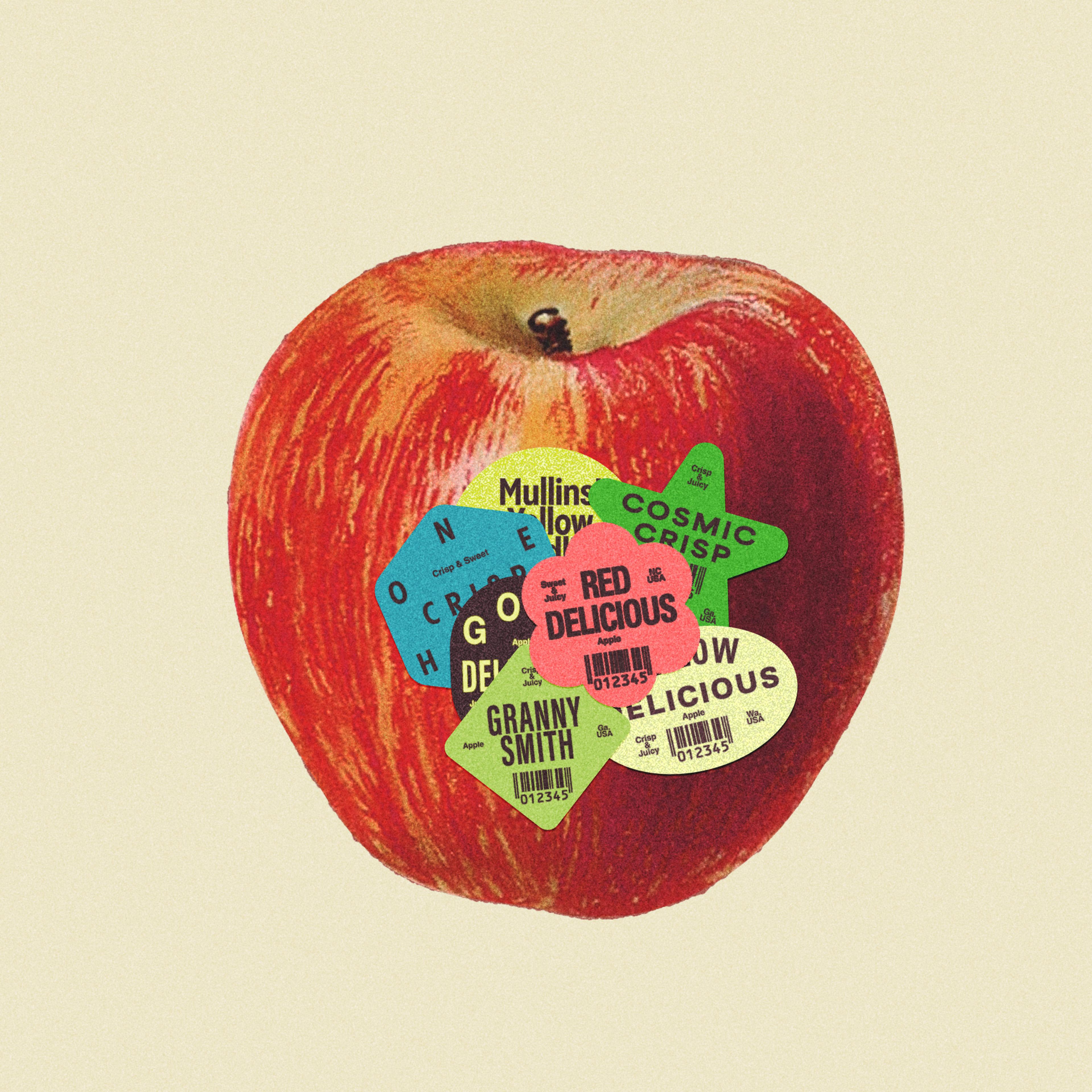
Apple people are a spirited sort, able to talk fervently about the aging qualities of an Albemarle Pippin, the rock hard crunch of an Arkansas Black, the complexity of an Esopus Spitzenburg, the sweet-yet-acidic bite of a Mullins‘ Yellow Seedling. They’ll take road trips through Maine to seek out rare apple varieties; they’ll dedicate their labor to documenting and preserving wild seedlings. Apple people make films that rival Wes Anderson. They drive seven hours, one way, from their home in Denver to the very southwest corner of Colorado just to pick up a Pewaukee apple tree. (Okay, that last one was me.)
Beloved though they may be, fresh apple consumption has trended down by about 2.2 pounds per person since the 1990s, despite popular newer varieties like Honeycrisp and Cosmic Crisp. “Something’s gone wrong where we haven’t been able to increase the per capita consumption despite how good ... many of the most recently developed varieties are,” said Luke Tonnemaker, a fourth generation farmer near Royal City, Washington.
As orchards consolidate, increase yields per acre, and vertically integrate, entire regions have become very efficient at growing apples. But the domestic and export market for the fruit continues to diminish. Cosmetically imperfect apples remain unpicked on trees, and the cost to grow apples — from inputs all the way to labor — keeps increasing.
“I feel like we’ve lost the plot a little bit and that’s one of the reasons that we’re seeing apple consumption, both fresh and processed, go down,” said Ben Wenk, a seventh generation apple grower in Adams County, Pennsylvania. “The whole experience has been so consolidated and so driven by capitalism, and in some ways it’s very shortsighted.”
–
Tonnemaker grew up eating Honeycrisp grown on his family’s 126-acre farm. The beloved apple, developed in the 1980s by the University of Minnesota’s apple breeding program and released to apple growers in 1991, changed consumer expectations of what an apple can be. “For better or worse there’s been such a big push to develop new apple varieties since Honeycrisp raised the bar on the apple eating experience,” he said.
Even though people still like the cultivar, “It feels like everyone’s looking for the next Honeycrisp,” said Wenk. New varieties flooding the market, often crossbred with Honeycrisp, are in effect different versions of the same thing: juicy, flavorful, sweet with enough acidity to be considered tangy.
Since Honeycrisp are notoriously tricky to grow, many producers would love an alternative that can, in theory, fetch a premium price. (“In theory” because from August 2023 to July 2024, the price that a grower could fetch for a 40-pound box of Honeycrisp dropped from $67.85 to $30.55.)
“It’s hard to understand how the least valuable component of a bottle of apple juice is the apples.”
But consumers? “I don’t really know which of these new varieties that are trying to reinvent the wheel — or you know, put the toothpaste back in the tube, however you want to talk about it — I’m not sure which of those has a realistic chance of having that effect,” said Wenk.
It is in this spirit that I bring up Cosmic Crisp, launched in 2019 and patented and trademarked to be grown exclusively in Washington. I’m not here to malign the apple nor the Washington State University breeding program that produced it.
But here’s my bias: Although I grew up 80 miles east of Wenatchee, the apple-growing center of Washington, the nation’s top-producing state (valued this year at approximately $2.3 billion), I grew up on Red Delicious, which Washington can grow very well. The quintessential apple was once sweet with the taste of muskmelon — it forever changed the apple industry.
But since I mostly ate flavorless and mealy mainstream Red Delicious, I did not truly appreciate or even like apples until I spent 10 years selling fruit for a small, south-central Pennsylvania farm at a farmers market. There I realized apples are like basically any other agricultural product — good enough from a grocery store but potentially transcendent when sourced from a farmer who values quality and flavor over quantity and appearance. “Apples to apples” becomes a useless idiom when removed from its standardized implication.
Cosmic Crisp apples, a cross of Honeycrisp and Enterprise, have their ardent fans; they also have their detractors. (“It’s a big nothing sandwich, as far as I’m concerned,” said Wenk.)
Washington may be good at growing them, but it’s a state that has flooded the market with apples in a marketplace “already rife with overproduction and price stagnation and typical economic hardship,” said Wenk. (And tariffs, which already impacted the apple industry in 2018, continue to be an issue.) According to the orchard- and vineyard-focused magazine Good Fruit Grower, this year in Washington, growers are harvesting an estimated 125 to 137 million boxes of apples. Per the USApple Industry Outlook 2025, Cosmic Crisp increased in production by a whopping 798 percent compared to the 2020/21 season.
“If you knew how little apples were selling for ... you would wonder why you’re paying $2 or $3 a pound.”
An abundance of apples hasn’t led to cheaper prices for consumers, and it hasn’t meant more profits for farmers. (Even though there’s plenty of product, the inputs to produce them are more costly and grocery stores can set prices however they please.) “If you knew how little apples were selling for, how much the growers were getting from the system that is ending up in grocery stores, you would wonder why you’re paying $2 or $3 a pound,” said Tonnemaker.
(Putting aside waste and potential solutions, even selling fruit to a processor isn’t a viable option for farmers when offers are shockingly low, like the two cents per pound that Tonnemaker was quoted within the last few years. “They put it at that price to discourage you from bringing it in because they don’t even want it,” he said. “It’s hard to understand how the least valuable component of a bottle of apple juice is the apples.”)
Meanwhile in the grocery store, we haven’t progressed too much beyond the homogeny of Red Delicious, Yellow Delicious, and Granny Smith. “That’s a weakness of the supermarket model,” said Tonnemaker. Big stores count on brand or variety recognition since they don’t have staff to talk to customers about every single apple, to explain each variety and which ones are best for pie and baked goods, which ones improve with age, which ones make a velvety sauce. “Apples are so diverse and can be used in so many different ways,” said Wenk, “and then grocery store produce aisles are restricting the diversity of the apple down to six or seven varieties.”
“I think a lot of us are looking to these true heirloom varieties and trying to educate people that of course you can make a pie with a Gala, but there’s all these apples that are specific for baking that just make it that much better,” he added.
–
Apples used to be regional and use-specific. Now they’re everywhere, all the time, seasonality be damned. For those who want to go out of their way to find unique apple varieties, there’s much to discover, said Wenk. “It feels like this kind of niche, underground apple counterculture, those of us who are real nerds about it.”
So are the worlds of heirloom apples and big time plant breeding in tension, or are they different slices of the same pie?
“I don’t think that new apple breeding and old apple discovery have to be opposed to each other at all,” said Jude Schuenemeyer. He and his wife Addie run the Montezuma Orchard Restoration Project near Cortez, Colorado, the source of my Pewaukee tree. “Cultivars are cultivars because somebody found a seedling and decided to take a cutting and graft it,” he added. Human interaction with trees prevents certain cultivars from going extinct; plant breeders creating new apples are part of that process.
“It feels like this kind of niche, underground apple counterculture, those of us who are real nerds about it.”
Tonnemaker sees Cosmic Crisp as having the potential to save the small and midsize apple orchard in Washington. “If Cosmic can help provide an apple that gives people a consistently good eating experience in the store like it should, maybe we can get that apple consumption number back up,” he said. “And if it’s economical to grow, which I think it is in comparison to other varieties, you can get a better price back to growers.”
Schuenemeyer also points to downstream effects from the cider industry: “The reason why any cider has grocery store or liquor store shelf space is because of Angry Orchard.” Sometimes you need a mass-produced product to get your foot in the door. And while fresh consumption of apples is down, “It’s better to have people that decide that they like apples,” said Schuenemeyer. “The next step, though, is how do you introduce them to the other ones?”
Apple varieties already exist that excel at varying applications, whether it’s fresh eating, baking, drying, saucing, juicing, or fermenting into cider. “All those apples are being largely overlooked in a quest for some new sameness,” said Wenk. “The ‘same thing but new’ seems to be trumping ‘it’s different but old.’”
It’s true for so many things beyond produce, but perfectly good — great, even — varieties of apples lose their luster once they become too popular. Take the Mullins’ Yellow Seedling, discovered accidentally in 1891 in Clay County, West Virginia. Sweet like honey, with a little spice and acid for balance, the yellow apple is juicy, crunchy, and excellent for fresh eating and turning into sauce or butter. It grows well all over the country, bears plenty of fruit, and produces ample pollen to pollinate other varieties.
“Consumers love stories, right? With these older cultivars, you open up a whole world that most of them never knew existed.”
You’ve probably even tasted this apple. In 1914, horticultural company Stark Bro’s introduced it as Golden Delicious. If it were discovered yesterday, it’d be a runaway success, said Wenk, but “it’s not weird enough to be an heirloom and it’s so ubiquitous that it gets lost in the shuffle.” I tried a Colorado-grown Golden Delicious this season and was blown away by its burst of juice and complex flavor.
While new apple varieties can benefit growers in certain regions, the old ones still have potential. “If you can’t access the same new and zippy product that everybody else has, or that the big boys have, how do you keep that farmland viable farmland?” asked Schuenemeyer.
For some growers to have a future, it won’t be on new patented and trademarked varieties, especially in locations like Colorado, which once boasted a vibrant apple economy, but where growers might not be able to afford access to managed varieties. “But we can access the old cultivars that were proven to grow well here for a long, long time,” said Schuenemeyer. “Consumers love stories, right? With these older cultivars, you open up a whole world that most of them never knew existed.”
And as farmland gets more expensive, less attainable and consolidated by corporations and private equity, styles of farming that work on small acreage present an opportunity. “We really feel like orchards can be successful on an acre or three acres or 10 acres, that they can be viable commercial enterprises,” said Schuenemeyer. “That’s really what we’re looking at, is the ability of people to keep agricultural land. We are so removed from farmers to consumers that I think most people no longer understand the value of farmland until that barn in the field is now the barn surrounded by houses, and the field or the orchard is no longer there.”

“Life-changing money.” That’s how Wendy Reigel describes the windfall developers are offering farmers for their land, potential sites for hyperscale data centers to meet AI’s massive processing needs. Reigel is a grassroots anti-data-center activist who successfully fought the building of a center just 300 feet from her house in Chesterton, Indiana; she now helps other communities mobilize against data center incursions. She can only make an educated guess as to how much money is on offer — almost everything about these facilities is shrouded in secrecy.
“$20,000 an acre would be low-balling it,” Reigel said. “$40,000 would be maybe a starting point. And I’ve heard as high as $90,000.”
From the Pacific Northwest to the Northeast, communities are seeing a surge of tech-center buildouts as American tech leaders embark upon what Wired magazine called a “battle for AI dominance.” New executive orders from the Trump administration will eventually ease environmental permitting and other barriers to these builds — there have been three such orders since January 2025. And with this wind beneath their sails, AI-giddy companies like Amazon, Google, Meta, Microsoft, and Oracle have embarked on a national land grab.
Legislators often welcome data centers for their promise of jobs, infrastructure development, and increased tax revenue and property values — rewarding developers with tax breaks and weak regulations. Meanwhile local residents decry them for guzzling water, driving up energy costs, fouling the air, churning out noise pollution, and causing land prices to skyrocket. (In some instances, land prices surpass Reigel’s guesstimates: Developers are paying $150,000 an acre for farmland in Ohio, $400,000 an acre in Utah.)
Some farmers are loath to condemn fellow farmers who sell their land for this purpose. They don’t begrudge life-changing money to anyone who’s contended with their industry’s often brutal fiscal realities, although a farmer in Michigan who sold his land for an “astronomical” sum — in the interest of what he called progress — says his neighbors don’t wave at him anymore. With or without the animus, farmers who opt not to sell are left to contend with the potential destruction of their operations and their lives. “It ruins all our little farms around here that we worked all our lives on,” a couple in Coweta, Oklahoma, told the local news.
There are data centers popping up almost everywhere, from Oregon and Nevada to Georgia and Virginia. (Loudon County is our country’s “data center alley.”) But Indiana has become an especial target for hyperscale facilities, of which there are an estimated 1,130 globally; since Indiana produces a lot of corn, soy, and hogs, it’s also illustrative of the challenges that farmers in particular are up against.

“It ruins all our little farms around here that we worked all our lives on.”
“Of the 40-something [data centers] that we’re tracking” in the state, “most of them are in ag areas,” said Bryce Gustafson, program organizer for environmental nonprofit Citizens Action Coalition (CAC). He’s not sure what the exact implications are for food security although he noted, “Last I checked, we can’t eat data or AI.”
Even before data center developers started to swarm, farmland in Indiana was going for about $15,000 an acre, according to Kiley Blalock, who married into a third-generation row crop and beef-producing family some 30 miles east of Indianapolis. At first, she said, private equity firms were the eager buyers.
“That hurts us, because they’re paying a higher price than market value for the land; that drives property values up, then farmers are struggling to pay their taxes,” Blalock said. That price is also “completely out of reach” for any farmers starting out or looking to expand their operations. When data centers are willing to quadruple or quintuple an already-inflated price, affordability for farmers goes up in smoke.
Morgan Butler is a senior attorney at the Southern Environmental Law Center, who helped the tobacco- and dairy-producing community of Pittsylvania County, Virginia, fight off a 1,000-acre AI facility. He said developers are drawn to farmland because “They see a huge area. In their eyes there’s nothing on it, nothing particularly valuable, there aren’t that many residents so hopefully they won’t kick up a firestorm of public opposition.”
That rural “nothingness,” though, is precisely what community members opposed to data centers hope to preserve. One farmer in Kentucky turned down an $8 million offer for his land, citing his family’s sentimental ties to it and the community’s fondness for the landscape as it is. However, one bitter truth for farmers is that much of their net worth can be tied up in their land; retirement might necessitate selling property because they have few or no other assets, making a generous offer for acreage hard to refuse.
“They’re paying a higher price than market value for the land; that drives property values up, then farmers are struggling to pay their taxes.”
Blalock is currently fighting a proposed 585-acre data center that abuts some of her farmland in Henry County. The facility would be built on land sold by the property’s non-farming heirs — no one knows for how much. Many sellers sign NDAs because companies “don’t want them knowing that maybe the next project down the way is getting double,” said CAC’s Gustafson.
A hyperscale data center can use upwards of 8 million gallons of water per year, mostly for cooling its servers. “We don’t have the water supply” to meet those needs, said farmer Bart Snyder. Snyder lives in Wolcott, an ag-centric town 135 miles northwest of Henry County, where Amazon is scouting a 330-acre facility 1,000 feet from one of his farm properties. He’s suing his town’s commissioner and redevelopment committee members (all of whom signed NDAs) for approving a farm-to-industrial land rezoning on behalf of that facility. “To consume that much water would absolutely devastate our row crops” and potentially create a deficit for Snyder’s 30 beef calves, which each drink 15 gallons of water daily. “People are literally scared to death,” he said.
Blalock is concerned that if a data center is approved in her county, it could deplete the local aquifer, causing neighbors’ wells to run dry and preventing her family from ever drilling one of their own for their cattle. She said that would put them out of business and leave their land valueless. “No one has answers for us about, what’s our backup plan? What if people lose water? You can take your family to go stay in a hotel but it’s not like doggy daycare; you can’t show up with 50 head of cattle.” And she worries: “Are we going to be the generation that loses the farm?”
Farmer anxiety doesn’t end with water use and property values. Data centers require enormous amounts of energy to run — worldwide, they consume 55 gigawatts per year, with 14 percent of that used by AI. They’re projected to gobble 84 gigawatts by 2027, with 27 percent used by AI; for reference, one gigawatt can power 876,000 homes. And they’re driving up the cost of electricity for users who live nearby, by 267 percent a month.
Snyder uses electricity to grind and dispense cattle feed and he doesn’t relish the idea of a price spike if a data center moves in. Even worse, these facilities tend to have emergency generators, for which they store hundreds of thousands of gallons of diesel onsite. What happens if the facility catches fire? In Wolcott, population 952, “The local fire department is all volunteers. We don’t have anything to fight a fire like that,” Snyder said.
“Are we going to be the generation that loses the farm?”
Over in Blalock’s part of the state, developers want to connect the proposed data center to a nearby natural gas pipeline, to generate what she calls “clean-er” energy — Indiana got 42 percent of its energy from coal in 2024. “We’re talking about VOCs [volatile organic compounds] and methane that are going to be released,” she said. “Is that going to create a heat island that’s important to anybody that grows corn?”
Blalock explains: “Night temperatures for corn, they need to drop. That helps with the development of the kernels. If nighttime temperatures remain elevated, it can drop yields up to 10 percent. We have hot summer nights; it’s Mother Nature, she’s her own thing and we can’t control her. But this is manmade.” The data center is in her county’s power to control — but planning commissioners have voted to recommend it, with no environmental review or guarantees the company will be held accountable for much of anything.
There’s also the hum. Data centers “emit low-frequency noise 24/7 through their fans and their diesel generators,” said activist Reigel. Both Snyder and Blalock are quick to point out that no one knows how this affects livestock. “We live out here with grain bins and when we harvest, they have heaters and blowers on them to dry the grain, but they’re only going to run for a few weeks,” Blalock said. “I’ve seen studies that show that even just with fans in barns, that can impact cattle” — elevated noise is connected to lowered milk production, and fertility disorders in bulls. “But again, these are more questions that we have that nobody can answer.”
What’s being offered to communities in lieu of answers are promises — rarely backed up in clear, detailed, contractual writing, say critics. There are promises that an incoming company will pay for infrastructure upgrades, or that water quality and amounts will remain stable, or that economic benefits will pour into rural towns.
SELC’s Butler says that for this reason, his organization is encouraging communities to make sure they’re requiring permitting for data centers — something that’s often bypassed in these transactions. (Permitting currently tends to fall under state and local jurisdiction, although in December of 2025 the House passed a bill that would make federal permitting easier.) Butler would also like to see states offer guidance and legislation to help small communities better understand both the pros and cons of what data centers bring with them.
“The developers say, ‘Oh, we promise we won’t do that. We promise we will do this. We promise, promise, promise, promise.’ But there’s nothing binding them to that,” said Blalock. She scoffs at a developer offering a million dollars to the local school system, although in one Michigan township, a data center will pay an estimated $8.1 million annually in school taxes, which is nothing to sneeze at; it will also pay $14 million for a farmland preservation trust.
Still, Blalock and others remain unconvinced of data centers’ benefits. “The town is thinking in terms of, what is the tax revenue going to be?” she said. “They’re not thinking about, how does this uplift every individual in town? And it doesn’t.”

Offrange writers produced some excellent stories in 2025, ranging from the thoughtful and compelling to the heart-breaking and dramatic. That said, in journalism, we so often focus on the words at the expense of the visuals. But our designer Adam puts considerable care and attention into designing original artwork for every Offrange story; our inbox is filled with reader praise for his work. We also have commissioned some original photography that turned out quite nicely.
So this year, in lieu of a traditional “Best of 2025” roundup, we asked our regular writers to share their favorite Offrange art from the year. Enjoy!
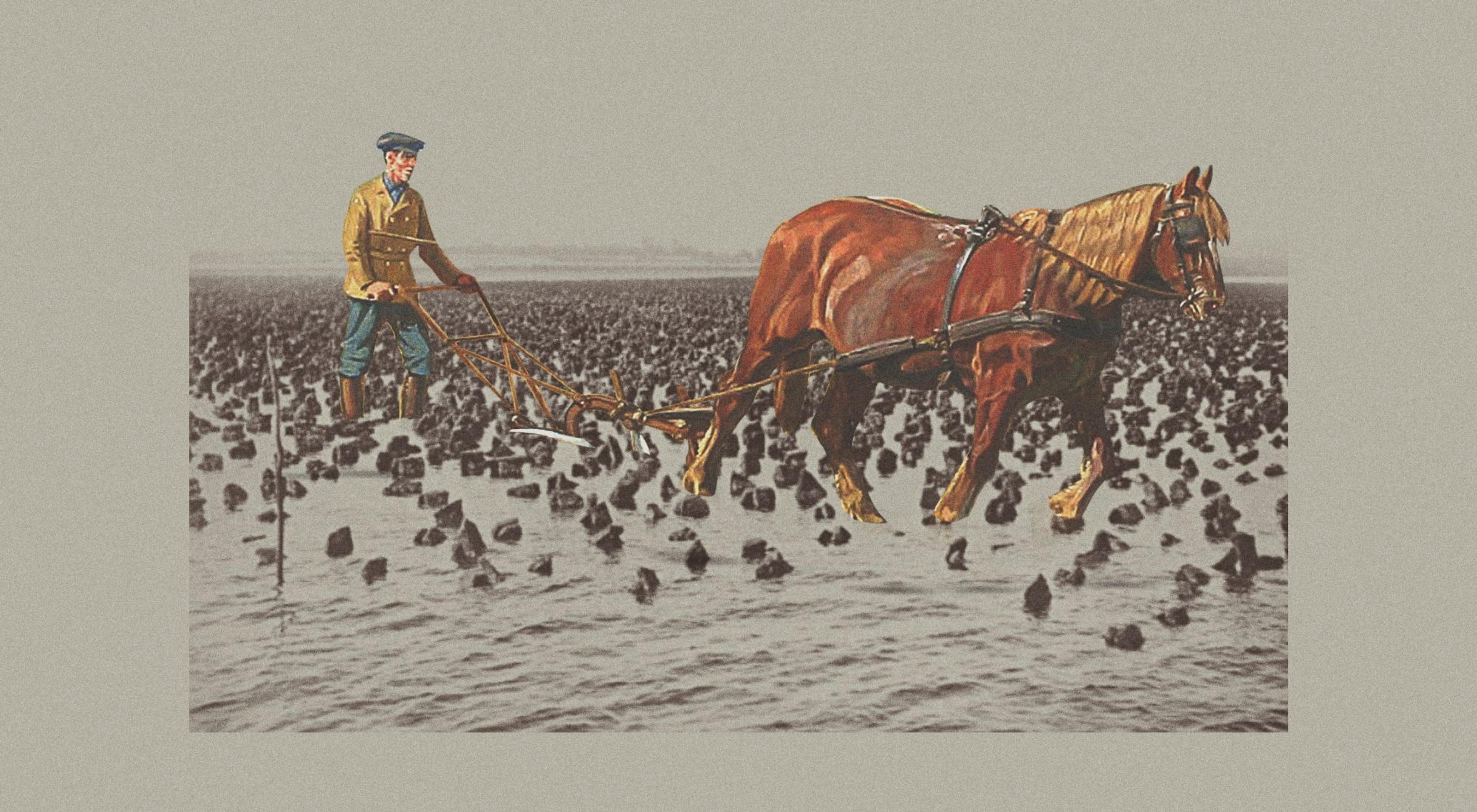
Bringing Oyster Farming Into the 21st Century
I really love that the aesthetic for Offrange stories leans to looking a bit older and timeless instead of prompt, like breaking news. The art does a good amount of work in helping the reader register that these themes and conversations remain evergreen over time, and that agriculture is a cyclical sector connected to generations of knowledge and conversation.
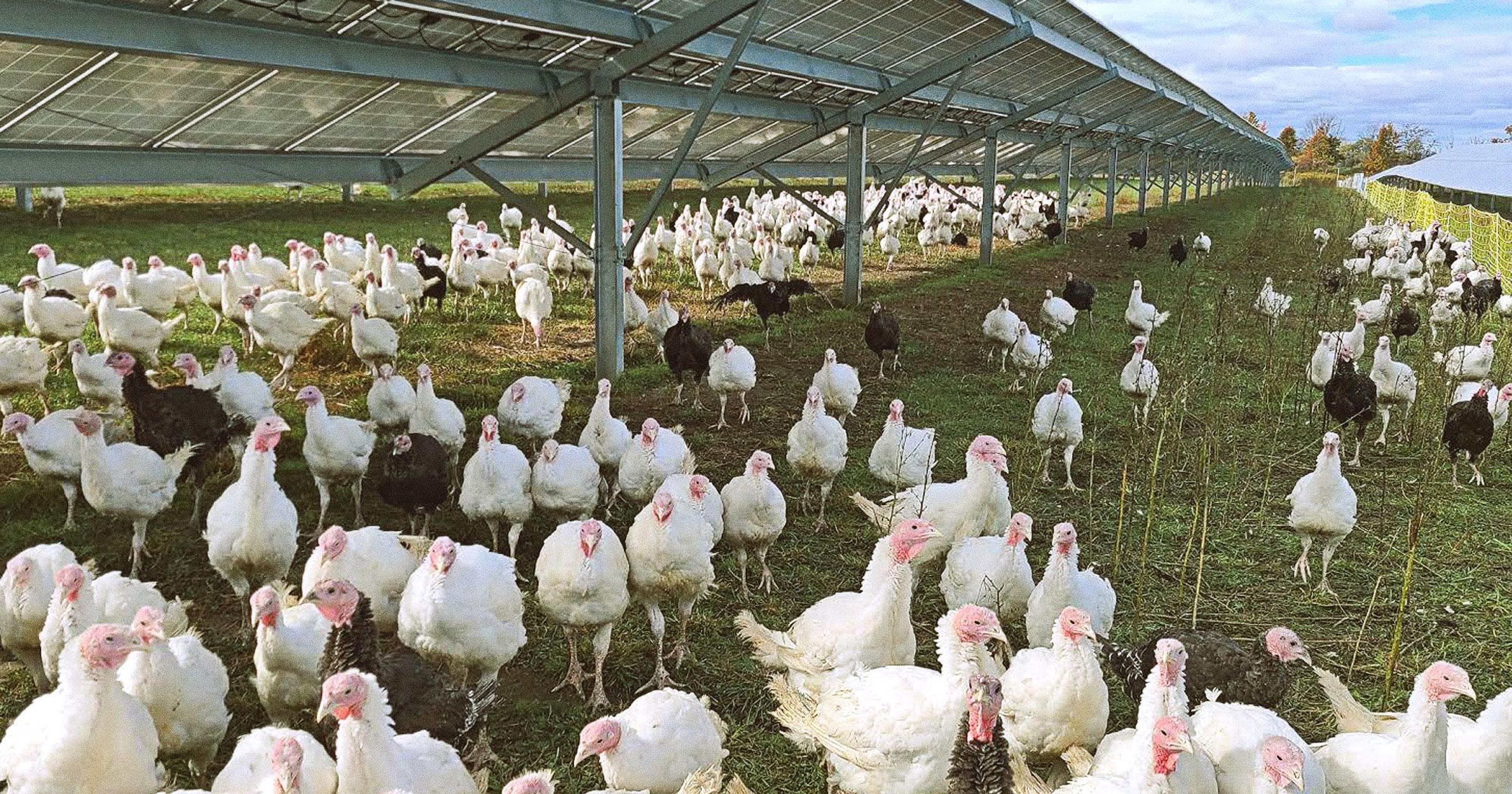
Evan Carpenter
Turkeys Grazing Under Solar Panels
I love the photographs in the article “Turkeys Grazing Under Solar Panels” because I admire their composition, and they perfectly represent the story’s content. They also grab readers‘ attention since they depict an unusual scene.
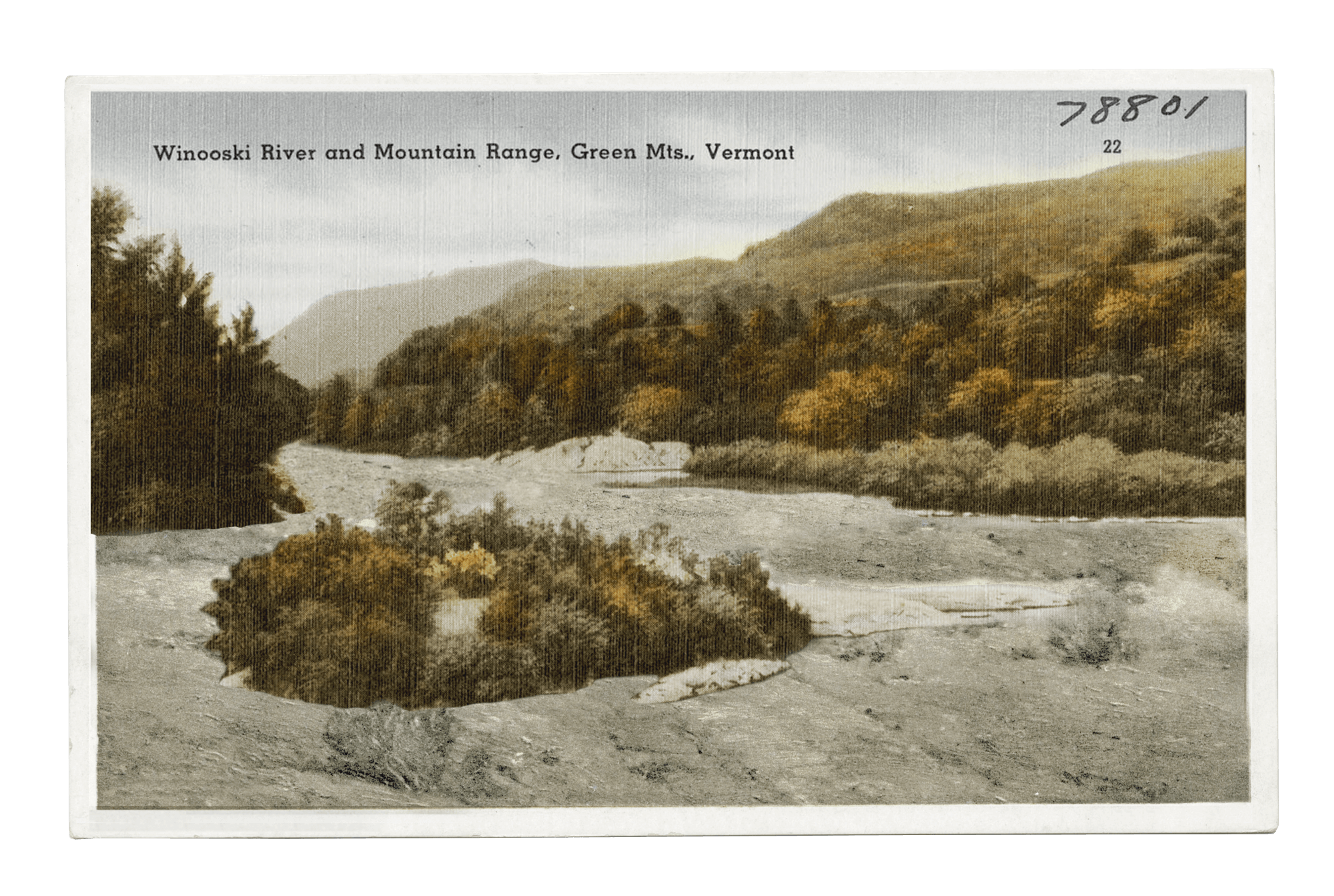
Floods, Then Floods, Then More Floods, Then Drought
This is such an important article about the critical interaction of climate and agriculture and the art has an antique tinge to it that makes me think about the time before climate chaos. It features water, which is the crux of the problem so many of us farmers are dealing with right now, and which is only getting worse. The art shows the natural beauty of Vermont and the USA, which is something most farmers and most Offrange readers presumably want to protect.

The wolf is one of man’s most archetypal foes, a figure of real danger to livestock and storybook menace alike. The stark, elemental color palette of the illustration here evokes those deeply rooted feelings. And the stylistic contrast between the quick-sketched lupine and photorealistic quadcopter highlights the way some are trying to assuage those instinctual fears through technology.
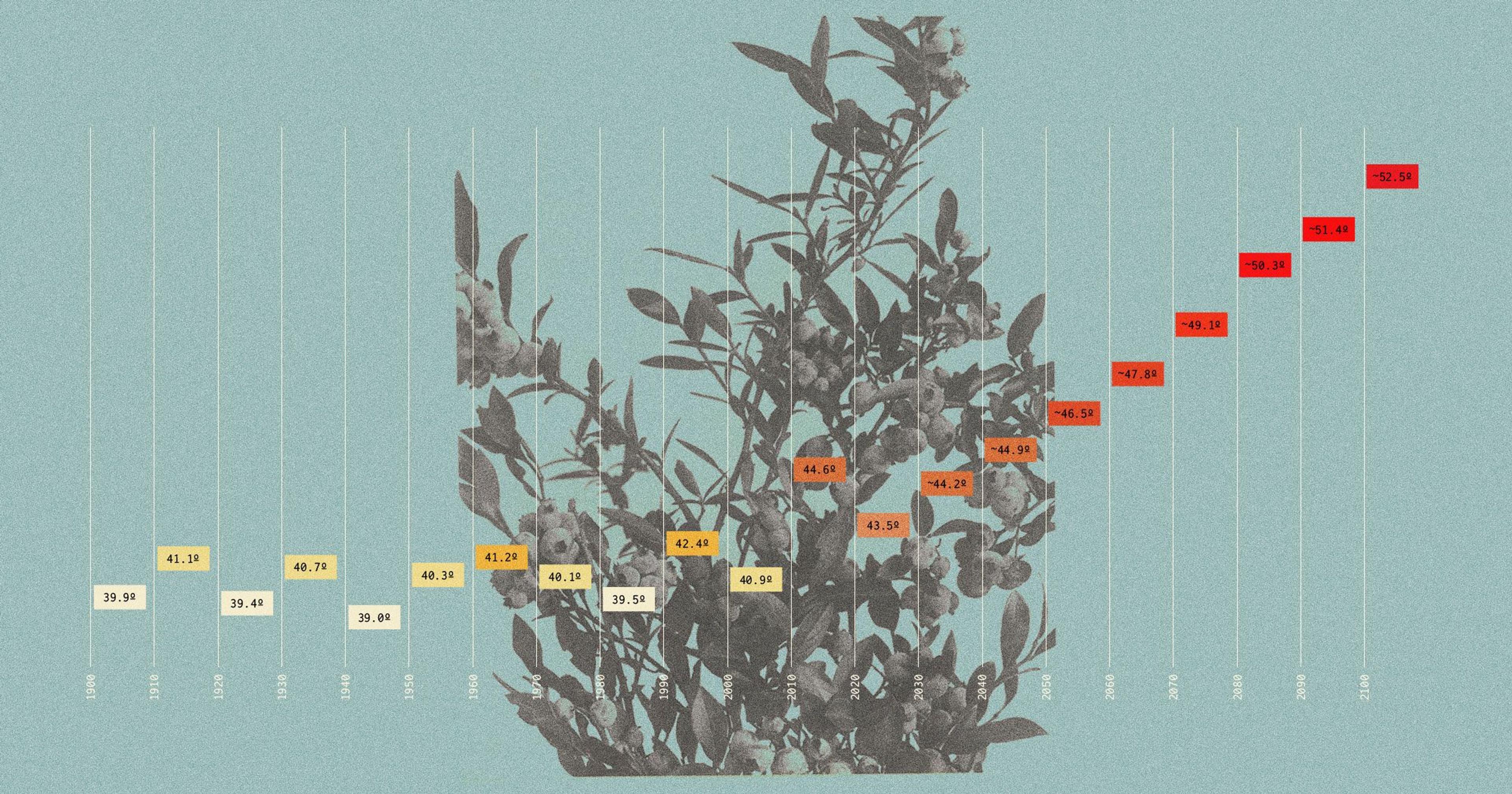
I’ll pick Ben Seal’s “Black and Blue in the Barrens” piece from August. I’m a huge fan of Adam Dixon’s illustration style, particularly the fusion of natural images and data that he often employs. The header art for this article exemplifies how effective that juxtaposition can be. The organic reaching of the blueberry bush and the orderly march of the climate graph complement each other both conceptually and aesthetically.

“Bears in the Boneyard” has to be my favorite cover art from this year! It’s so dramatic looking, so historic and fits the article so well, which has some historic talk about predator fears in the West... (I’m trying to think of something more intelligent to say about why, but visually it is just a very appealing artwork to me!)
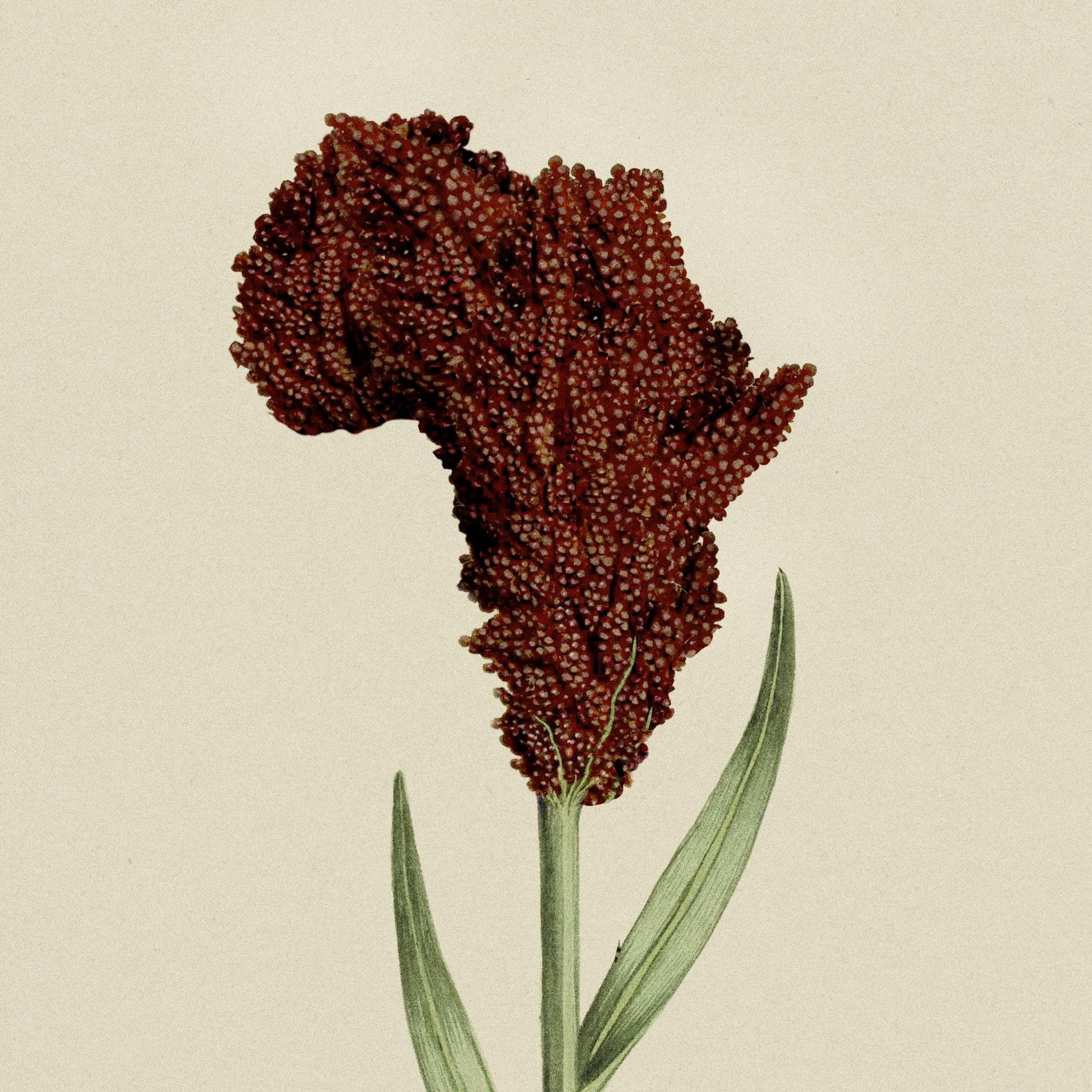
U.S. Sorghum Farmers Look to Africa
I love the art that accompanied the sorghum story. I just think it’s gorgeous!
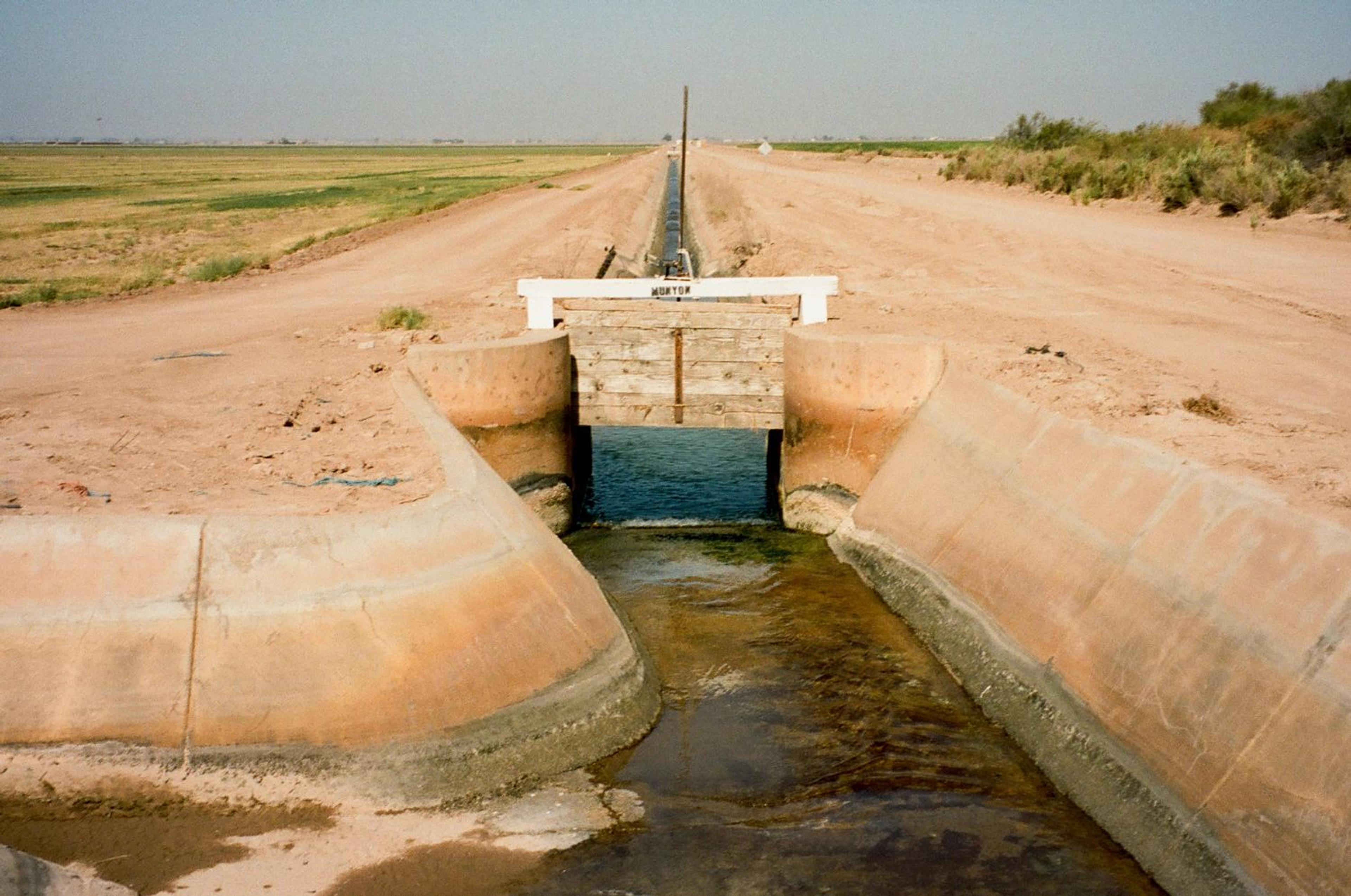
Christina Yergat
I really loved the original photography in the Imperial Valley feature. It’s got a kind of epic feel. The photos (especially the landscapes) have a gorgeous sparseness and austerity that helps convey the mood of the story. The washed-out color palette of denim blue and sandy brown make you feel the baking heat. And they do that difficult photojournalism task of telling a story without being overly literal (i.e., simply illustrating what the writing itself is already telling the reader).
So many stories about the food system are really about how we use our land. Christina Yergat’s photos of the Imperial Valley, taken for her story with Carina Imbornone about that agricultural region’s looming lithium mines, made that reality immediately clear — in sun-drenched style. Even though I’m a words-first person, these photos reminded me how valuable it is to see change with our own eyes.
Changing the Weather Is for Farms, Not Evil
Love all of the art and illustrations, but if I have to choose one I’d say my story on “Changing the Weather Is For Farms, Not Evil.“ The graphic perfectly captures the idea of chemtrail conspiracies that’s been linked to cloud seeding, while also being reminiscent of the Illuminati. It’s very tongue in cheek — sometimes with a story like this, it’s good to have a little fun!

Adam’s graphic on my eminent domain piece was fantastic. He perfectly captured the shadow cast by the government on farms when eminent domain laws rear their head, and it was simple artwork, in a way, but so poignant and striking.
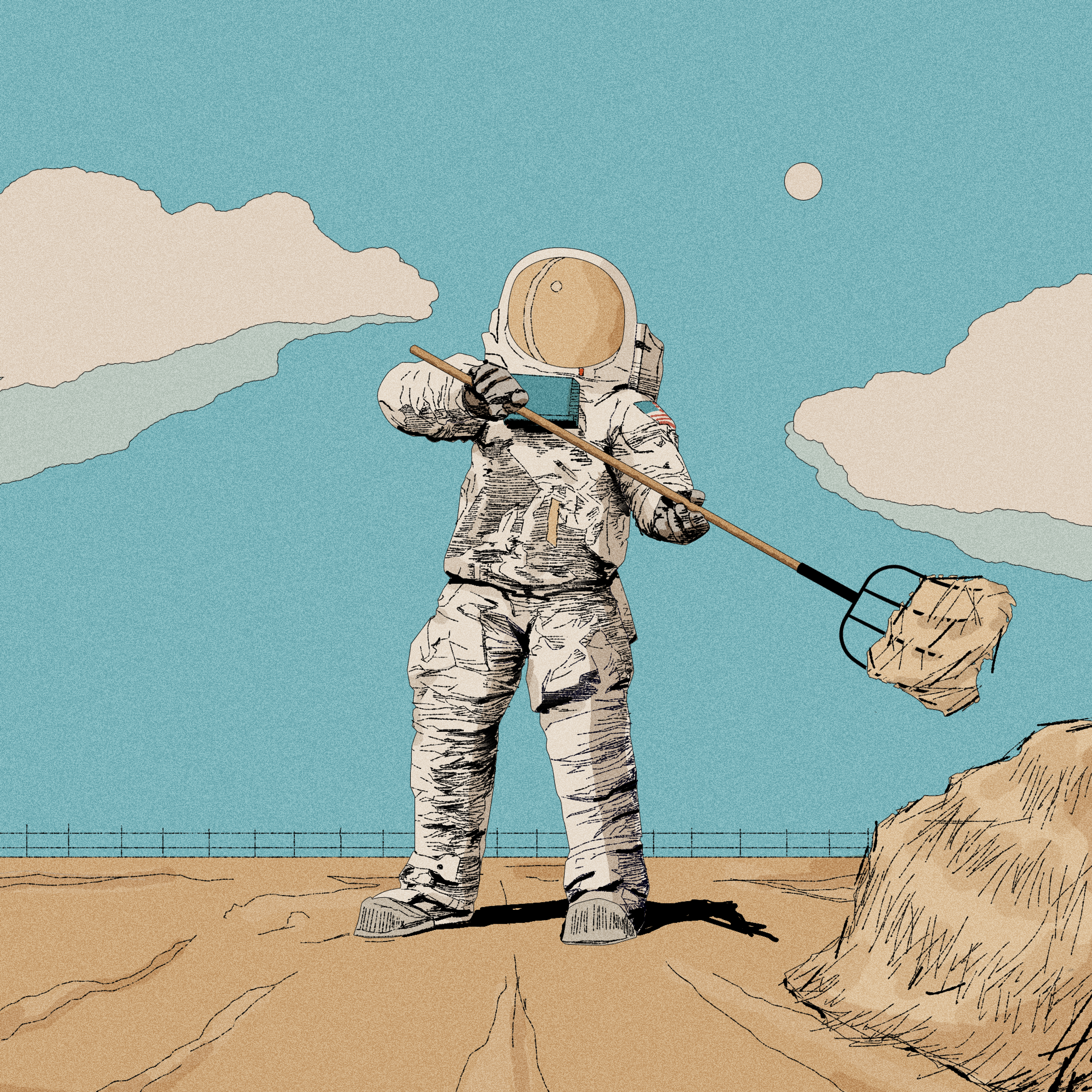
If You’re a Farmer, NASA Wants a Word
I loved the art on my NASA story from earlier this year. The astronaut with a pitchfork in hand was super cool and captured the unexpected nature of the space agency’s partnership with farmers.

Do Farmers Dream of Electric Tractors?
I really like the art in “Do Farmers Dream of Electric Tractors?” It’s clean, simple, and nostalgic, which is a good fit for this forward-looking topic.
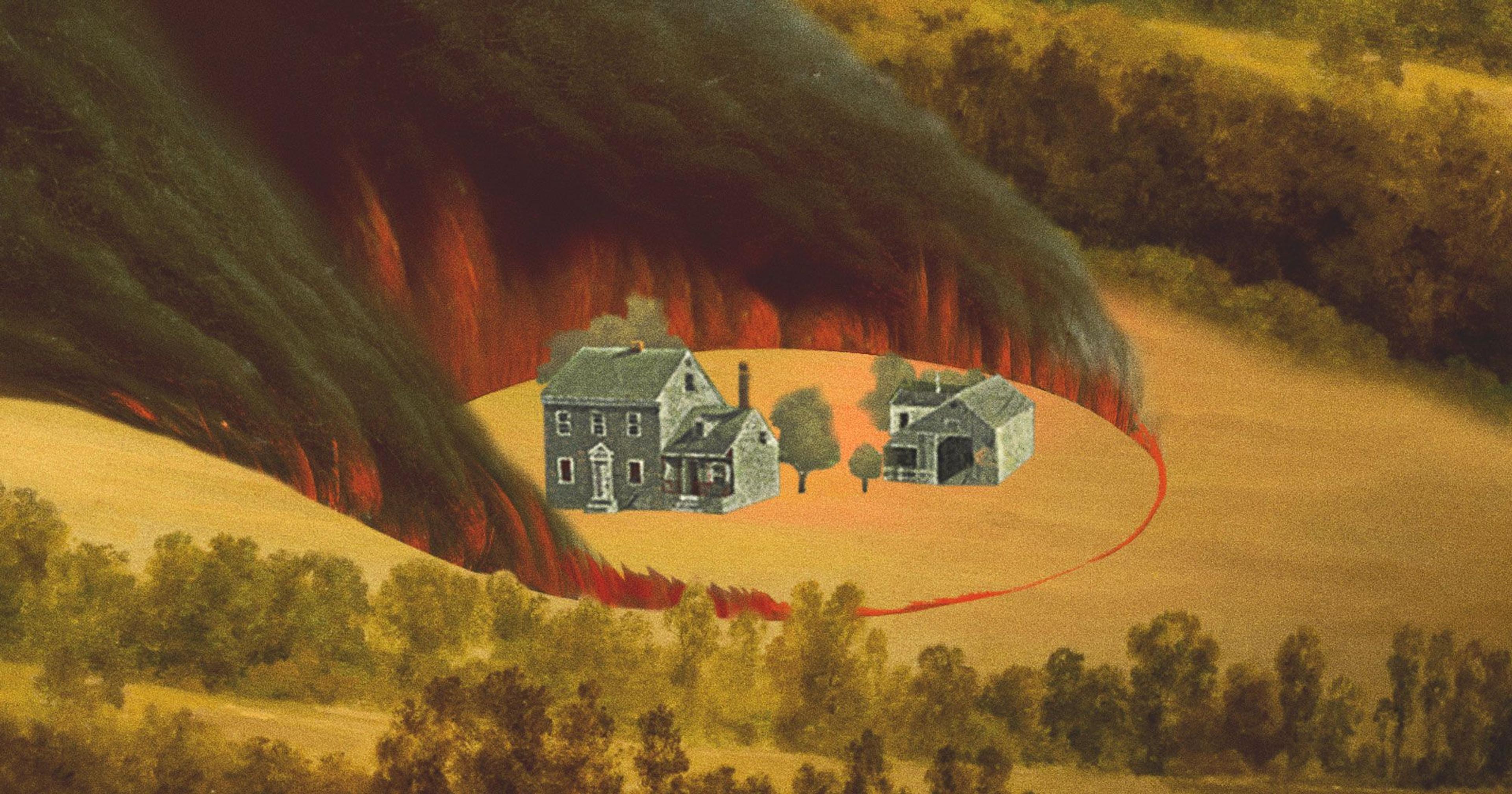
and
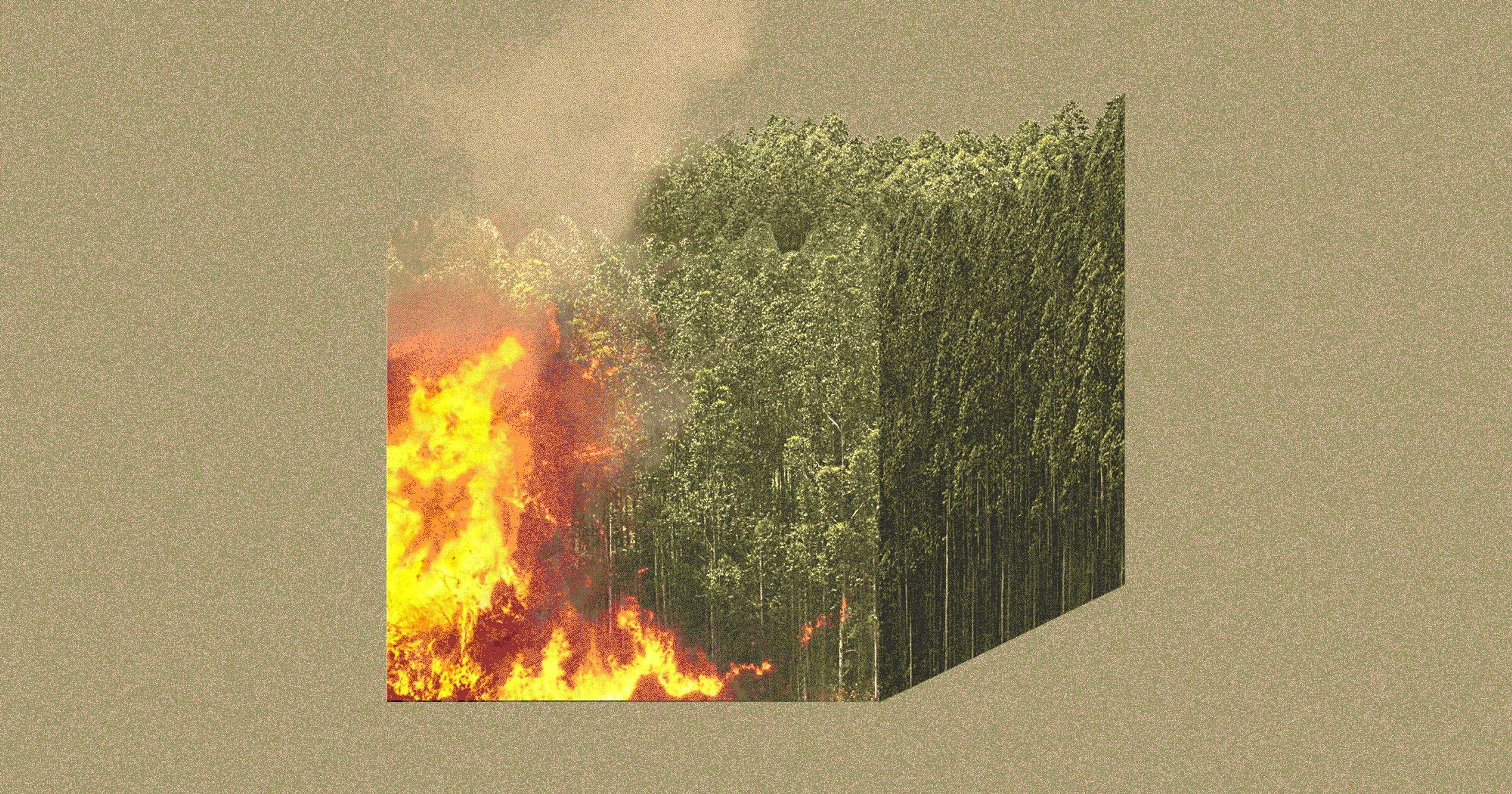
Wildfire Lessons From Texas Hill Country
I always love the surprise that comes with one of my Offrange stories going live and getting to see the art that’s been created to accompany it. This year my favorite was a sort of magical-realist illustration of flames surrounding a farm that went along with my story To Burn or Not to Burn. It was evocative, a little weird and best of all, had a corollary in another fire-related story that pubbed the same week: Wildfire Lessons From Texas Hill Country by Serina DeSalvio, which came with a very cool moving graphic of fire consuming a surreal sort of cube of trees. I loved them individually but together they were really visually striking.
Mercury Moves Up the Food Chain
This is a very, very tough call because Adam rarely misses but I’m going to go with my gut and choose this story about mercury in American alligators. The art is creepy and murky and perfectly captures *swamp,* but it’s also bold and beautiful (my favorite shade of green) and delightfully minimalist. It’s hard not to lock eyes with that heavy-metal-riddled gator and contemplate the weight of the crimes we’ve committed against our four-legged family. Plus, that all-knowing gaze pulls you right into the story, like boots sinking into a puddle of muck.
(Editor’s Note: This was also Adam’s favorite piece of the year.)
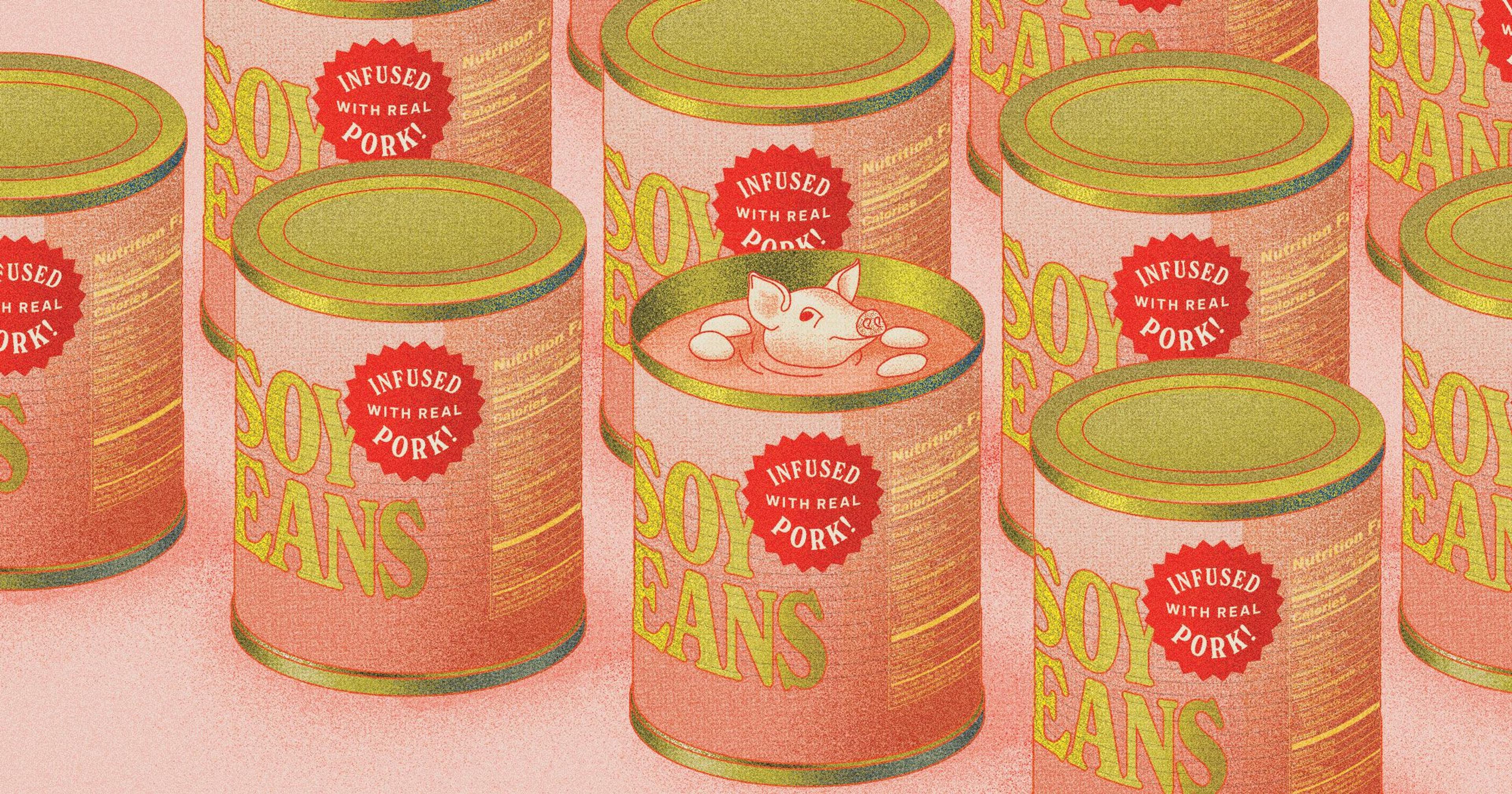
Pork-Infused Soybeans and Beef-Infused Peas
It is for a story I wrote, so I may be biased, but I truly love the art on the Pork-Infused Soybeans and Beef-Infused Peas story. The design, to me, has a retrofuturism feel that I think does a good job of highlighting the food technology angle of the story. The colors and the cans remind me of a 1950s magazine ad for canned food, with the added twist that the soybeans are infused with pork. The pig floating next to the soybeans in the center can is also such a cute touch. And, there’s something humorous/ironic to me about having a can of soy beans, which you often associate with the intentional choice NOT to eat meat, bearing a sticker that says “now infused with real pork.”

and

I don’t have children, but I feel like this ask is like choosing among my children. There were many excellent artworks this year in Offrange. My favorite is probably the greenhouse from Irrigating with Oil Waste, maybe because of the same type of simple treatment of the centrality of concept. My runner-up is the textured paper from Make Your Own Micro Forest, mostly as a request to Adam to play with more textures next year because they’re lovely. (Editor’s Note: Seconded on the micro forest art.)
-Mackenzie Burnett, Offrange publisher

This story was nominally about the Farm Olympics, a convivial annual event in Tennessee; its true focus was on the steep challenges young farmers face in trying to acquire their own property. Adam did such a great job here using old video game aesthetics to create cheeky artwork that didn’t detract from the gravity of the subject matter.
-Jesse Hirsch, Offrange editor
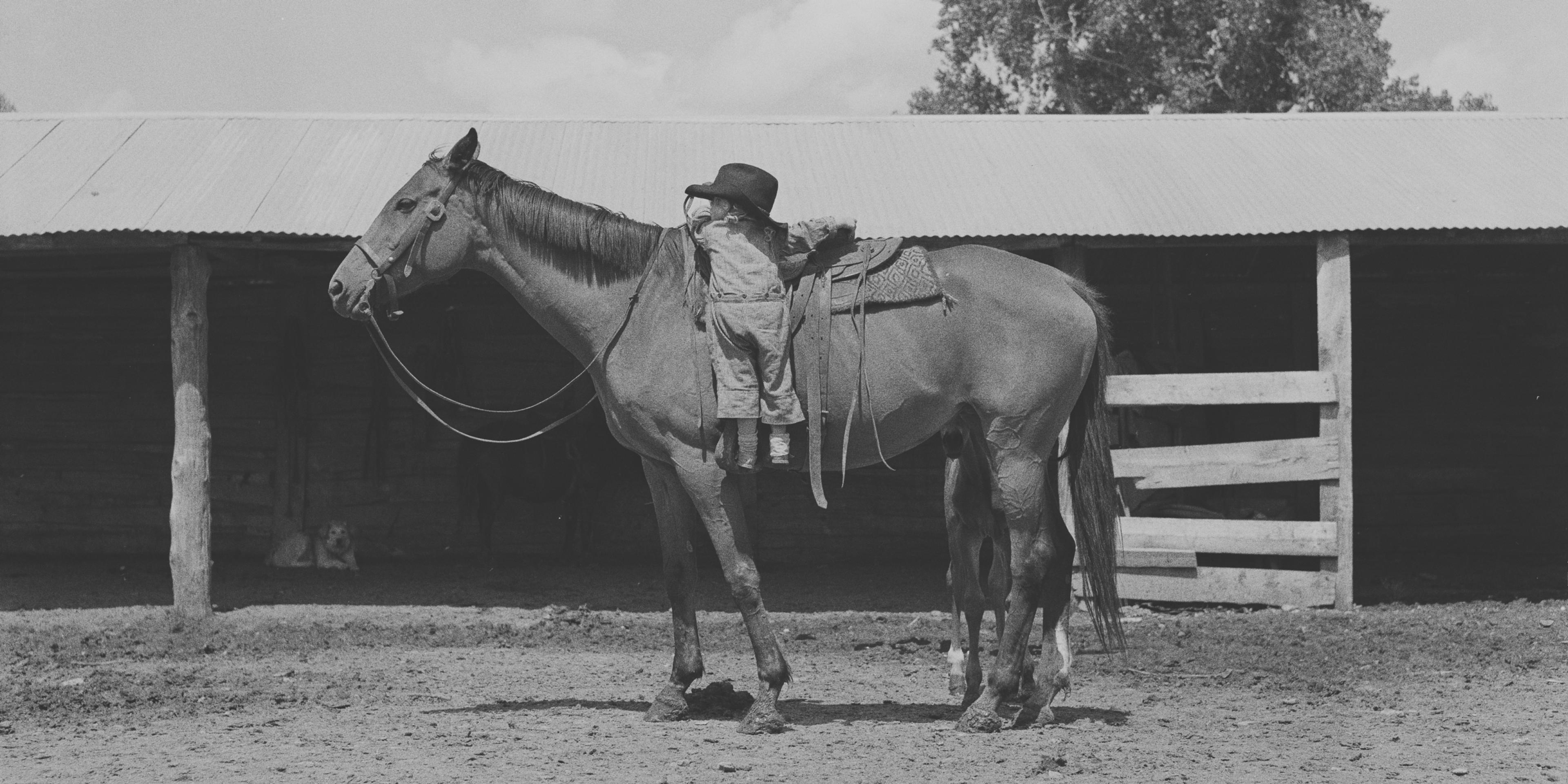
I grew up in the rural West, a beautiful-yet-desolate place of proud independence, all-enduring grit, and hard-to-crack personalities. The culture could be intimidating, if you let it. I lived in town, in a comfortable, not-too-big house in a well-respected neighborhood, within walking distance of my dad’s small engine repair and retail shop. Many of my classmates lived far outside of town, down dusty, unpaved roads, miles from the nearest house. They had this Wyoming life figured out, I always thought. They were the definition of the grit and hardship that chiseling a life in such unforgiving country required.
I never really talked to them, these ranch kids whose lives were so different from mine. Part of me held a high respect for them — because, to me, they were undaunted by the work, the weather, the untameable land. I was the same, yet I could never admit it.
Until I started talking to a longtime local rancher. And I realized, we are more alike than we are different.
There is a certain brag worthiness to saying you’re from Pinedale, Wyoming. When I was growing up there, it belonged to the least populated county (Sublette) in the least populated state. My mom liked to say that Pinedale was the farthest town from a railroad track in the country. (When I researched “farthest town from a railroad track in the United States,” for this story, Google’s AI overview quickly informed me: “There is no single ‘farthest town from a railroad track’ in the United States, because the answer depends on how you define ‘farthest’ and what type of track you are measuring from.”)
The roads stretched on, narrow and hemmed in by solid walls of plowed snow that spanned miles. My high school mascot was the Wrangler, a cowboy who takes charge of the horses, and our number-one rival was the Big Piney Punchers. Only recently did I learn what a puncher is: It’s one who “punches” — or drives — cows from one location to another.
Yet even as I claim Pinedale as my hometown, I know I represent just a sliver of the tough-as-nails, self-reliant culture that comes with living in the rural West. I was scared to death of horses. I had never been invited to a branding (and if I had, I would likely have declined). Telling people where I grew up still generally brings an excited or intrigued reaction. But the truth is, I never really felt like I fit there.
There was, while I was growing up, an unspoken divide between the “townies” and the ranchers. As a townie, I always felt less-than, not tough enough. I respected the sun-up-to-sun-down work of the local ranchers from afar, but I never wanted to be one.
I had never been invited to a branding (and if I had, I would likely have declined).
Yet it wasn’t until I was an adult that I understood there is another side to the story. It had never occurred to me that, just as I struggled with how exactly I “fit” into the rural Wyoming lifestyle, a rancher might, too.
“My [family’s] story is the opposite of yours,” said Ann Noble, who grew up in the more populated Rock Springs, 100 miles south of Pinedale, and married a longtime Sublette County rancher. Ann learned the ranch life and raised 4 girls — all of whom run big equipment and “know how to pull a calf.”
“The rancher-townie divide was very much a part of our lives [as our kids were] growing up,” Ann said. “We raised ranch kids. They were made to not fit in with the townies.”
Her comment caught me off guard. How is it that I felt like I didn’t fit in with the rural Wyoming lifestyle — but that her family, the very ranchers who I thought carved that way of life — didn’t either?
The sharp divide between the ranchers and the townies has existed for generations. But — as I came to learn in my visits with Ann and my own family members — it’s not a divide that clearly defines winners and losers. Instead, it’s a deep-seated story about people trying to eke out a living in hard and desolate country.
As a townie, I always felt less-than, not tough enough.
My grandparents grew up working on Sublette County ranches — my grandpa as a cowboy, my grandma as a cook for the ranch crews. Ranch wages were poor at best, even with room and board included. They continued to pursue ranch work after they were married but couldn’t make ends meet. In the winter, little snowdrifts would appear here and there throughout the cabin they were given to live in. The cabin’s roof had so many holes they could never seem to patch them all before another snowdrift escaped through.
At a loss for what to do, my grandpa came to town looking for work. He walked into Isaac Trucking and asked for a job. The head mechanic hired him and taught him the trade.
By the time my dad was born, his parents were living in town. My dad, by default, grew up a townie.
Ann’s husband, Dave, grew up in my dad’s generation, a rancher. They attended the same school. My dad excelled as a track star. Dave went out for the high school basketball team, but he quit after his dad’s nightly trips into town from the ranch to pick him up became too much for the family.
“Townies could just walk to practice, or walk to school,” Ann said. “But if [your cows are] calving, it’s [ranch work] 24 hours a day.”
The divide has grown sharper with each passing generation. But back in the 1930s and ‘40s, the local school calendar was built around haying season. “[The townies] were very much attuned to the lives of the ranch kids because they were all tied in together,” Ann said.
“Townies could just walk to practice, or walk to school. But if your cows are calving, it’s ranch work 24 hours a day.”
Ranch kids would stay in town for the week to attend school and then ride horses back home on the weekends. Ranchers depended on students and teachers to help with haying during the summer months.
In the 1960s, my dad remembers staying the night at the home of his rancher friend, Louie, and helping Louie’s family punch cows before dawn.
“I remember Louie’s sister screaming,” he told me. Louie’s sister had been awakened in the middle of the night by her father threatening to use the electric cattle prodder on her if she didn’t get out of bed to start the ranch work. “Louie whispered to me, ‘We’d better get up before he gets to us.’”
There is that Wyoming brag worthiness. A story worth telling.
My go-to tales about growing up in rural Wyoming center around turning the hubcaps to 4-wheel drive on my 1991 Ford Ranger during blizzards and hanging snowpants to dry next to the wood-burning fireplace in our kitchen. The guy next door left his diesel truck running 24/7 through the winter months for fear that if he turned the motor off, it would never start again.
The question pulses just beneath the surface: Who are we and where do we belong?
The Nobles’ four daughters represented the third generation to attend Pinedale High School, in the 2000s. Of the 60-plus kids in her graduating class, the oldest daughter, Meredith, was one of two who hayed every season. She drove her dad’s beat-up old pickup to town for school each day, parking alongside brand new $45,000 diesel pickups that the townies (many whose parents worked in the gasfields south of town) drove.
Meredith had discovered long-distance running, and, like my dad, she excelled at it. She became the star of the Pinedale High School track team.
Then, the Nobles’ top ranch hand hung himself during spring calving season, leaving Ann and Dave in serious need of help. Meredith gave up her top spot on the cross-country team to help with spring calving. The coach was livid; her absence from the team wrecked their shot at going to the State cross-country meet.
“It was unbelievable rejection,” Ann said. “There was no support for [Meredith] choosing her family and her ranch.”
Recently, Dave attended his 50th high school reunion. The reunion was at Stockman’s — one of Pinedale’s oldest and most established restaurants. The ranchers sat at the bar. The townies sat at tables.
“They were still hanging out in their cliques,” Ann said.
*****
I knew, even as I was growing up, that I would leave Pinedale when I turned 18. As a townie, I lived on the fringes of the gritty, fiercely independent way of life necessary to succeed in such a far-flung place. While I respected the people who doggedly worked the land and its livestock, I knew I would never be one of them. I wanted an easier way of life, a tamer place. I knew there was a wider world to explore.
It took a long time for me to come to terms with it, but looking back, I can confidently say that we all possess different gifts. My gift is not that of a hands-on rancher, but rather that of a storyteller — of tilling memory and nurturing conversations to pull out stories that help make sense of the world and our places within it.
The ranchers in Sublette County are doing that in their own ways — making sense of the world and their places within it. And I think for all of us, the question pulses just beneath the surface: Who are we and where do we belong?

On a 30-by-15-foot patch of suburban ryegrass, Peter Lovenheim changed his regular mowing routine into a plan for sowing and threshing. For five seasons, Lovenheim transformed his Rochester, New York, backyard — just 425 square feet — into a small field of hard red winter wheat.
Each season, he and his young children threshed wheatberries into grain kernels, ground them into flour, and used it in their baking, a significantly different rhythm than his other gardening. The patch could produce roughly 30 pounds of wheat, about half a bushel, supplying a portion of the families yearly wheat supply.
Backyard wheat has long been tucked away in horticultural guidebooks for dedicated gardeners, and hobbyists fascinated by ancient grains. But this niche practice could revive a fading tradition: wheat production in the United States.
Peaking in 1981, U.S. wheat acreage has since declined by 42 million acres, according to the U.S. Department of Agriculture. While rising yields have partly offset this decline, global trends tell another story. European precipitation and yield gains have made wheat more competitive, pushing the American commodity market toward other crops — corn and soybeans chief among them.
One of the practice’s earliest advocates, Gene Logsdon, a farm writer from northern Ohio explained: “The reason Americans find it a bit weird to grow small plots of rows of grain in gardens is that they are not used to thinking of grains as food directly derived from the plant, the way they view fruits and vegetables.“
Not limited by yield like a commercial grower, master gardeners have experimented with almost every variety of wheat. Lovenheim’s family harvested their crop each summer, storing kernels for flour blends. When it came time to bake, they poured the grain into a tabletop grinder to make flour for muffins and other baked goods.
“We’re not growing the grains that are necessarily the highest yielding, but they have the best flavor.”
Their first-season harvest party puzzled neighbors unfamiliar with homegrown grain. “Children raised in cities and suburbs typically have no hands-on understanding of where their bread, muffin, cereal — even their oat milk — comes from, unless we show them,” Lovenheim said.
The exact planting routine, depth, and planting density vary depending on whether you access your info from online sources, or Lovenheim’s guide. Ask today’s extension agents or horticulture professors, and most cannot name anyone currently growing backyard wheat. YouTubers and bloggers — some of the newest forms of instant extension — can, however.
As a top five exporter in the world, the U.S. still imports wheat, mainly from Canada, varieties that climatically work better in the North: hard red spring and durum wheatclasses. On the East Coast, white winter wheat for pastries dominate; Kansas and Nebraska rely on hard red winter wheat for bread or all-purpose flour; while the Dakotas grow high-protein spring wheat and pockets of durum for pasta.
The choice of spring versus winter wheat, your environment and soil conditions, and harvesting efficiency all influence the final yield. Just like a high-priced combine cuts, threshes, and winnowing grain crops, the same process happens by hand.
Backyard growers choose their preferred harvesting tools including sickles, scythes, or any curved blade for gathering stalks and cutting. For Lovenheim, that included garden shears. Grains are threshed, which detached kernels from their stalk. Finally winnowing, or the fanning process, separates the edible grain kernels from unwanted chaff.
“Americans find it a bit weird to grow small plots of rows of grain in gardens because they are not used to thinking of grains as food directly derived from the plant.”
In later years, Lovenheim’s plot rotated through buckwheat, oats, soybeans, alfalfa, quinoa, millet, and flax.
Logsdon, a writer and chief gardner, published some of his finest niche books on small grains, like Small-Scale Grain Raising in 1977 and Holy Shit, about manure in the garden. His writing coined the term “pancake patch” — growing enough wheat that a single bundle of harvested wheat could produce a stack of pancakes. At the end of each chapter of his book, he included a pancake recipe using flour made from that grain.
The book’s core principles — choosing varieties based on location and use — haven’t changed, nor have the pancake recipes. But reaching a broader audience for local grain remains a challenge, even though grain still makes up about half of our daily diet.
For consumers, Logsdon explained, “Flour … is purchased like automobiles and pianos,” without a thought of how it’s made. To remedy an agricultural literacy gap like understanding wheat production, small farmers often partner with millers and bakers.
Thor Oechsner farms regenerative organic small grains outside of Newfield, New York. Just like backyard growers, he started with the same experimental mindset on 15 acres. “We’re not growing the grains that are necessarily the highest yielding, but they have the best flavor,” Oechsner said.
“Flour is purchased like automobiles and pianos,” without a thought of how it’s made.
While a lot of wheat production has shifted abroad, specialty markets and local interest keep the crop alive in New York. “We want to grow it closer to where people are using it and revitalize this lost part of New York’s agricultural heritage,” he said.
When the farm started, Oechsner estimated he would need about 400 acres to make the operation viable full-time. When delivering products to any size customer, he admitted there is an undeniable truth. “It’s all about economies of scale,” said Oechsner. His farm now grows about 150 acres each of winter and spring wheat, buckwheat, rye, corn, and soybeans in rotation.
While Oechsner flours are sold to wholesale retailers, supermarket prices on his type of product ring out to almost double the cost than all-purpose flour. Central New Yorkers know his farm and its end product through Wide Awake Bakery, the organic bakery in Ithaca that uses Oechsner-blended bread flours. His farm also stands out for producing spring wheat in New York, a wheat class typically grown in the Dakotas for its short season and high protein content.
But local grain growing, milling, or even backyard production rely on a specific audience: people willing to grow it of all sizes or buy it. Oechsner doesn’t see that demand fading. “Consumers are more discerning than we give them credit for,” he said.
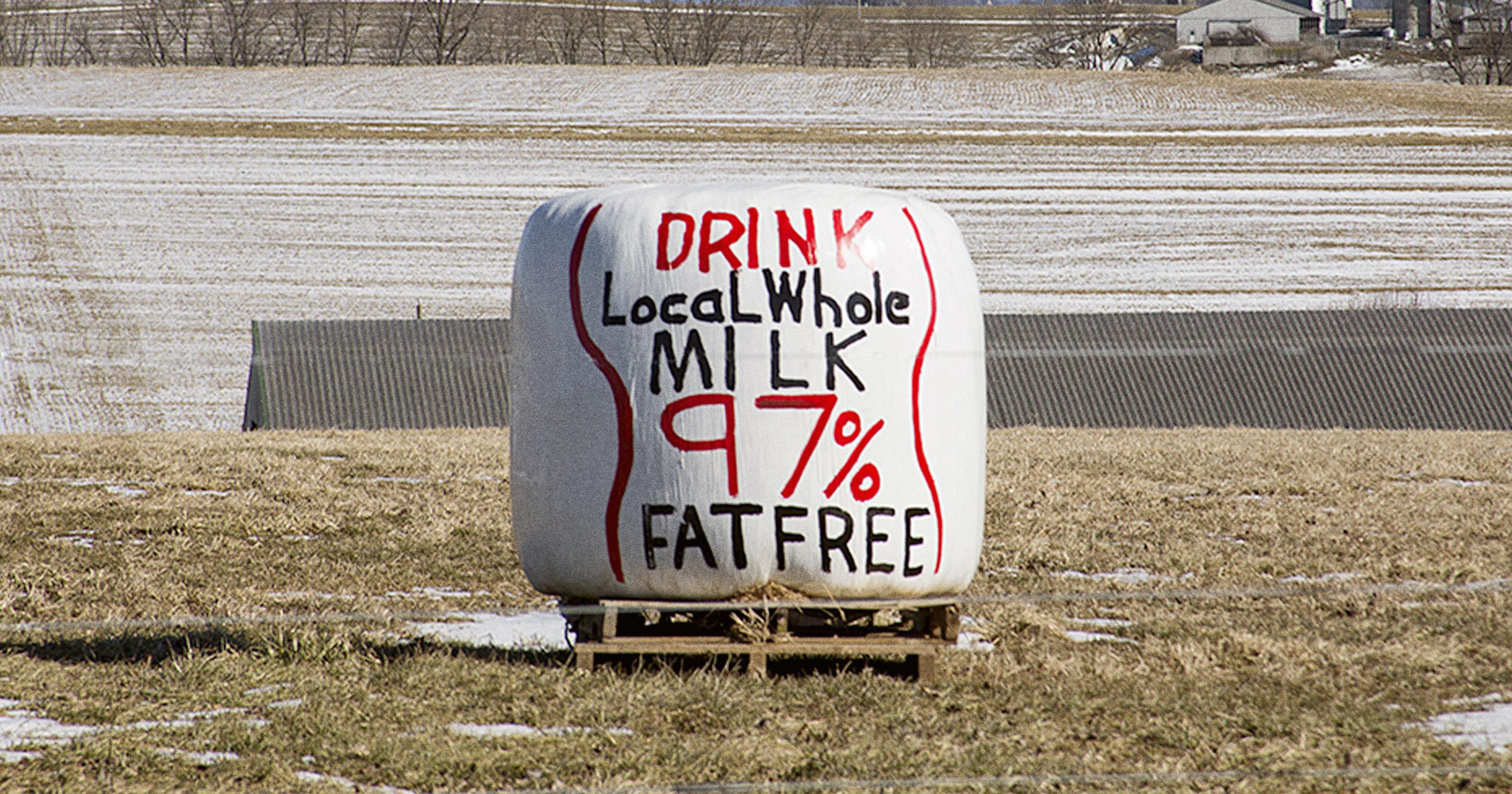
This November, in a rare act of singlemindedness, the U.S. Senate voted unanimously to pass a bill that would allow whole and 2 percent milk to be served in schools. On December 15, the legislation passed the House and now awaits a presidential signature. Now, nutritional guidelines that since 2012 have mandated that only fat-free and 1 percent milk be offered at school meals will soon be overridden. “Kids are gonna love it, it’s just gonna be fantastic for them,” said Tim Hawk, a vice president at Dairy Farmers of America (DFA), echoing a common pro-fattier-milk sentiment across the industry.
Having experienced a steady downward spiral of milk prices and small farm losses since the 1970s — concurrent with a large drop in milk consumption — dairy farmers take this potential return to “real” milk as a big win. Although they offer differing opinions on the ultimate benefit. Some see it as industry salvation — a way to get more money in farmers’ pockets. Others view it more as a corrective to a poor nutritional decision, enacted during the Obama administration, that they say has had adverse effects on children’s health. Both groups, though, feel victim to what one insider called a “rigged system,” in which a less tasty and desirable product (fat-free milk) turned public sentiment against them, contributing to dairy’s ongoing crisis.
Thanks to 13 years of low- and no-fat milk in the National School Lunch Program (NSLP), “We lost two generations of milk drinkers,” said Nelson Troutman, a fifth-generation, semi-retired dairyman in Berks County, Pennsylvania.
Back in 2019, Troutman kicked off a one-man grassroots campaign with hand-painted hay bales meant to drum up public fervor for whole milk. He and several other Northeast farmers now spearhead a nonprofit called 97 Milk, a reference to store-bought whole milk’s three-ish percent milkfat content. “So many people we’ve talked to think whole milk is 100 percent fat,” Troutman said. “Now come on! Ice cream is 8 to 15 percent butter fat ... but that’s what you see on the internet.” And what Troutman’s hay bales — which proclaim whole milk to be 97 percent fat-free — aim to counteract.
Troutman believes that by providing higher-fat milks in schools, demand for them will naturally rise and boost lethargic milk sales. “Long-term, when the kids start drinking good milk in schools, they’re going to want good milk at home,” he said. That “would help the farmer that’s producing the milk.”
“As a kid, my mom was entirely on the low-fat bandwagon; she bought ‘white water,’ is what we used to call it.”
Jay Hoyt grew up on a Northeastern dairy farm and has been driving a feed truck since 1972. In Washington County, New York, where he moved after graduating from college, “There [were] over 600 dairy farmers and now that it is 50 years later, there’s only like 35 or so left,” he said. He partly blames processors who reap profits while paying out low milk prices to farmers for this demise, and who make extra money by skimming the fat off whole milk and selling it for ice cream, butter, and cheese — extra money the farmer never sees.
Hoyt volunteers with Troutman’s 97 Milk campaign, spurred in part by a desire to help dairy farmers survive. However, “I’ve come to the conclusion I probably can’t save [any] farms,” he said. Instead, he’s now focused on “saving these kids from bad nutrition and maybe giving them a little more healthy product. Now I’m not trying to tell you that skim milk is bad nutrition. I’m just telling you that 50 percent of that milk goes in the garbage after the kid takes it at school.” (One research estimate puts milk waste at 45 million gallons per year.) “That may count — as far as the government’s concerned — as nutrition, but at the end of the line, there is no nutrition in what goes in the garbage.”
Shane St. Cyr is a co-owner of Adirondack Farms in Clinton County, New York, and a board member of the Northeast Dairy Producers Association — an organization he said felt “really great” about efforts to get whole milk back in schools. It’s “full of nutrients, full of vitamins and minerals that kids need, and it’s naturally made, it’s readily available, and it’s healthy.” Was he suggesting that lower-fat milks were not nutritious or healthy? “I’m not a nutritionist, so I can’t really speak to that,” he said. “I do know that I think there’s a lot of products out there that have much higher levels of things that are not healthy and not nutritious.”
Better nutrition is, in fact, a huge talking point across the whole-milk campaign, including among some cheerleaders of the Make America Healthy Again (MAHA) movement. They’ve argued that there’s no link between childhood obesity or other poor health outcomes and full-fat milk — the impetus for removing it from the NSLP in the first place. Recent studies have both seemingly backed up and contradicted this claim, and public health experts are similarly at odds on the matter.
Many balk at the idea of subjecting kids to any extra saturated fat when they’re already consuming too much, while influential Tufts University nutrition professor Dariush Mozaffarian has asserted that there’s no evidence that whole-fat dairy is “worse” than low-fat dairy.
Largely left out of the nutrition conversation as it relates to school meals: organic milk, which is produced without antibiotics and growth hormones, and pesticides in feed, and which has been shown to have higher levels of healthier fats. But as New York organic dairy farmer Samantha Kemnah pointed out, the rates that the USDA reimburses schools for food are already so low that nutrition directors don’t have the capacity to pay extra for organic.
“At the end of the line, there is no nutrition in what goes in the garbage.”
“The only [organic milk] initiatives that have gone anywhere have been grant-funded,” she said, alluding to a $1.75 million USDA grant issued in the spring of 2025 — arguably a pittance — meant to boost organic dairy sales to schools in 11 Northeastern states.
Still, Kemnah, like her conventional dairy colleagues, expressed support for getting fattier milks back in schools, and a nostalgic personal preference for them. “As a kid, my mom was entirely on the low-fat bandwagon; she bought ‘white water,’ is what we used to call it,” Kemnah said. “And then I went to a friend’s house where they bought whole milk and it was a revelation.” Like other dairy farmers interviewed here, she also expressed skepticism that the big players in the industry actually wanted to see this switch happen. “I would love to see whole milk in schools. Will the industry, which is behemoth, let that happen?” she mused.
In fact, DFA has come out in strong support of whole and 2 percent milk in schools, as have the Farm Bureau and other industry players. DFA’s Hawk said that his organization has been celebrating the recent Senate win and that they kept “working with legislators to move this through the House of Representatives for a vote so every child can have the access to the milk that they love and need.”
In true farmer spirit, Troutman remains dubious even amid industry enthusiasm. “They’re going to do whole milk, they claim. But see, they have the power to say, Oh, you got to take 2 percent milk, we don’t have whole milk because we’re low in processing. They do stuff like that.” And he believes that when they do sell whole milk, they’ll push extended shelf life, or ESL, milk, which he called “horrible.”
“With fresh milk, you have to take it [to a school] maybe twice a week,” Troutman said, “where, with the ESL, they can take a whole tractor trailer load there and set it on the dock and it [doesn’t] need to be refrigerated.” That means lower delivery costs.
Hawk, in response, spun ESL as a win. “Anything in whole milk, whether it’s ESL or whether it’s fresh, tastes better, feels better on the tongue, and those higher fat items just taste better to the human experience. We have a real pathway to having the right product and the right packaging delivered to the kids in any format and flavor.”
Should the whole milk in schools legislation garner a presidential signature, industry insiders expect that whole milk could make it to school lunch trays in the New Year.

Authorities in Denmark are investigating claims that Bovaer, a relatively new supplement intended to reduce methane emissions in cows, has sickened animals and reduced milk production in their herds. But separating the conspiracy theories from any actual ill effects could take years, as scientific study of the supplement continues.
Large numbers of Danish farmers began to use Bovaer on Oct. 1 of this year to comply with a new rule in the country’s Livestock Approval Regulation, according to a November 22 statement by the Danish Veterinary & Food Administration that has since been moved or removed from the agency’s website. As of Nov. 17, according to an official tally, some 400 Danish farmers have reported issues such as diarrhea, fever, “poisoning symptoms,” and other signs of disease in their cows.
Accounts from farmers on social media suggest cows fell ill within days of receiving their first full dose of the Bovaer supplement, becoming unwilling or unable to stand after several days of refusing to eat. But other accounts which frequently express skepticism about climate soon amplified these reports with incendiary language calling Bovaer poison and alleging climate mandates will destroy farming.
Bovaer is no stranger to controversy; dairy products from cows fed the supplement have been subject to boycotts in the UK, mostly driven by conspiracy theories about climate change and tenuous connections to the software mogul Bill Gates, who has invested in other climate-related technologies. Some of those boycotting milk produced from cows using the supplement claimed — without supporting evidence — that it could harm human health.
But Denmark is the first country to experience widespread complaints of health effects in cows since using of the supplement. Aarhus University, a leading Danish educational institution, had launched a study of the supplement’s impact on animal feeding behaviors and welfare earlier this year, before the rash of complaints emerged.
According to SEGES Innovation, a private research firm that is collecting data on the reported illnesses, 419 Danish dairy farmers have reported that their cows are eating less since they began using the supplement. Another 58 farmers report their cows are producing less milk since supplementation began, while 376 farmers say their cows are both eating less and producing less milk. Thirty-nine percent of Danish dairies with more than 50 cows had responded to the SEGES Innovation survey as of Nov. 17.
About three-fourths of survey respondents say the supplement has had a negative effect on their cows, though SEGES Innovation noted on its website that this is likely because the herds that haven’t experienced problems are less likely to report.
About three-fourths of survey farmers say the supplement has had a negative effect on their cows.
Cows produce methane, a potent but short-lived greenhouse gas, as a side effect of their digestive processes. A Danish mandate requiring dairy farmers to use Bovaer or other dietary supplements known to reduce methane production took effect earlier this year.
Reports of health effects surged in October, when most Danish dairy farmers began to use Bovaer to comply with the mandate, according to SEGES Innovation. Although the supplement was used by farmers prior to October, SEGES collected just 118 complaints regarding the supplement from January to August of this year, and 124 complaints from September.
A spokesperson for dsm-firmenich, the company that manufactures Bovaer, noted that the supplement has undergone 15 years of scientific research and has been approved for use by the European Food Safety Authority. The U.S. Food and Drug Administration also approved Bovaer as safe and effective, and the supplement has been used successfully in diets for more than 500,000 cows in 25 countries, including the U.S., France, the UK, and Spain, according to dsm.
To date, dsm has not received complaints of health effects tied to Bovaer in herds outside Denmark. Additionally, some 400 Danish dairy farmers used Bovaer prior to October 2025 without reporting any ill effects, the company spokesperson said. SEGES Innovation has itself previously conducted trials of Bovaer that showed no signs of negative effects.
“We fully support the Danish Veterinary & Food Administration and Aarhus University’s investigation and encourage all stakeholders to await official findings before drawing conclusions,” the company said in a statement to Offrange. “We agree with the minister that animal welfare is a top priority. We will work with the ministry, farmers, and other stakeholders to get to the bottom of the concerns of these farmers and ensure that we move forward based on the factual evidence.”
“It matters how and under what conditions a feed additive like Bovaer is used in practice.”
Studies of the supplement to date, including those previously conducted by Aarhus University, never identified “the pattern of disease now being described in the media — with fever, diarrhea, and in some cases, dead cows,” Charlotte Lauridsen, head of the department of animal and veterinary sciences at the university, said in a statement when the reports of sick cows began to emerge.
However, a handful of studies, including some conducted at Aarhus, had collected data to suggest that feeding Bovaer might cause cows to eat less feed. Scientists there pushed for a closer look at feeding behavior because “reduced [feed] intake can be an indication of welfare issues,” Jesper Emborg, head of communications for Aarhus University, said in an email to Offrange.
Now, with the results of that study due out in 2028, “I think we would have all liked to be closer to a result,” Emborg said.
Lauridsen said it is possible that differences between real-world scenarios and research trials, which take place under carefully controlled conditions, could result in different outcomes in commercial settings. Factors such as feed composition, management, housing environment, and individual animal temperament could influence how the supplement performs — as could the way in which the supplement itself is dosed and administered.
“You can compare it to being prescribed medication,” Lauridsen said in a statement emailed to Offrange. “If I’m given four pills by my doctor, it’s crucial that I read the leaflet to see whether I should take them all at once or spread them out during the day. Such details make a big difference in how the medicine works. In the same way, it matters how and under what conditions a feed additive like Bovaer is used in practice.”

It’s a common adage in ranching that one doesn’t name their livestock. It makes the act of slaughter for food harder, and blurs the line between farmed animal and pet. Yet one type of rancher is built differently: reindeer herders. They’re accustomed to naming their animals precisely because this sector of the agritainment industry is built on tourism and visitors returning year after year, mostly around Christmastime. That gives herders a lot of time the rest of the years to care for their creatures and become quietly enamoured by them.
“It’s very different from elk, or other deer farming,” said Jane Atkinson, owner of Running Reindeer Ranch in Fairbanks, Alaska.
In North America, reindeer are often considered a cousin to caribou because while they are domesticated, caribou are their wild counterpart. But part of it is also semantics: While they are the same species, Rangifer tarandus, the word caribou is only used on this continent. The rest of the world calls various caribou subspecies reindeer. Caribou are native to Alaska, and reindeer are native to Eurasia, from countries such as Finland, Norway, and Russia.
But both animals are in deep trouble. An August analysis found that by 2100, caribou populations in North America could decline by up to 80 percent due to global warming. There are nine million reindeer and caribou grazing throughout the Arctic Circle today, but the future outlook became increasingly dire when the Trump administration announced that it was re-opening oil and gas drilling leases in Alaska’s Arctic National Wildlife Refuge — deep in the state’s far-North caribou range.
Reindeer herders who make their living through holiday tourism under no circumstances slaughter their livestock; this festive corner of ranching has everything to do with their conservation.
Eating Rudolph?
Often, there is an interplay between mammal conservation and human consumption. Some animals, such as bison, have been buoyed off of the edge of extinction by becoming a protein that can be raised, ranched, and slaughtered for food. But reindeer are not thought of as a food product in the United States for a simple fact: They’re far too expensive to eat.
“When I bought my first two reindeer [in 2015], they were a fifth of the price of one reindeer now,” said Cassandra Hoover, a reindeer farmer in the Poconos in Pennsylvania. “So in 10 years, the price of them has gone up exponentially.”
Lauren Waite, the farm manager of the Williams Reindeer Farm in Palmer, Alaska, said that when her grandfather was working their family reindeer farm 25 years ago, reindeer sold locally for $500. Now, they easily go between $15,000 to $30,000 each.
It wasn’t always this way. The first reindeer entered the United States in 1892 from the Russian Far East as a source of meat for Indigenous tribes who lived in the Arctic. These groups had always been subsistence hunters, not herders, but Presbyterian Minister Sheldon Jackson argued that herding animals would provide a greater economic livelihood for Arctic peoples.
Reindeer are not thought of as a food product in the United States for a simple fact: They’re far too expensive to eat.
But the experiment of importing reindeer as a food source was a fraught one because more animals fell into ownership by missionary groups than tribal communities. In 1937, Alaska responded with the Reindeer Act, which restricted animal ownership to solely Native populations. In those years, Canada bought thousands of head of reindeer stock from Alaska, and established its own herding communities.
But things changed by the 1980s, Atkinson says, when ranchers identified a loophole: If a reindeer was imported into Alaska from Canada, anyone could own it, not just Native peoples. “It’s really only been 30 years since non-Native people have been able to own reindeer in the state,” Atkinson said. Due to that, the larger agritainment industry in the Arctic has slowly but surely emerged over the past generation or so.
For example, when Waite’s family began their farm, the original intention was to raise reindeer for meat, but the family fell in love with them. Now, they have about 120 reindeer, which is the largest captive herd in North America, Waite said. The business sustains itself through selling live reindeer to other herders and from agritourism to the farm.
Seeing Is Believing
In 2019, the last wild caribou in the lower 48 that migrated from the far north was captured and transferred to Canada to await rejoining another herd. The only place to see these animals in the continental United States now is at reindeer farms, and the only state where you can still see caribou in the wild is Alaska. The question is for how long.
Knowledge and conservation advocacy are a chain of events, Waite said. A family may be watching TV one night, and see wild caribou or reindeer on a show. From there, they may visit a reindeer farm and actually get to interact with the animal in-person. Before long, maybe they take their annual vacation to Denali National Park, and see that these animals do have a place, still, in wild ecosystems.
“From my perspective as a reindeer farmer, I would love for more wild caribou to be preserved,” she said. “That’s what we think contributes to conservation today, that people have positive experiences with our animals.“
“That’s what we think contributes to conservation today, that people have positive experiences with our animals.“
Reindeer have many idiosyncrasies, which contributes to a passionate subculture and community of herders. For example, when there is a herd of reindeer and a threat is detected, they immediately move the babies and weak members of the herd into the middle of the group, and run circles around them, like a clock, to confuse predators until they give up. Their antlers are like a fingerprint, and each animal (typically) grows back the same rack year after year. The long hair on their necks protects them from the Arctic cold, but also serves as an optical illusion: Their necks look lower than they actually are, so if a predator jumps to bite into their throat, they’ll miss by a few inches, giving them time to run away.
“There is a lot of divine design around reindeer,” said Hoover.
Atkinson argues that her business is different from a zoo where people can run from one exhibit to the next. People have to learn about the reindeer if they come on a tour to her farm, she says, which is important to her. There is so much to understand about wild animals, a changing climate, laws, and regulations. A single tour may barely scratch the surface, but people are interested in taking on that responsibility.
“By sharing that information, us herders help conservation in that way,” Atkinson said. “We donate a lot of money to caribou conservation, [...] and only through that education do people understand what is really going on.”

It was around 2018 and David McDaniel was disgusted. He was starting to reckon with the sheer tonnage of plastic used on his and his wife’s 181-acre Earth Dharma Farm in northern Maine. Sheets of black plastic mulch covered his soils to suppress weeds while floating row cover, a woven plastic, protected his vegetables from frost.
One spring, he walked under one of his plastic greenhouses to pick up a roll of old floating row cover. Upon touching it, a cloud of particles erupted into the air. What McDaniel had just inhaled — and was probably all over his fields — was microplastic dust. “If you actually see this stuff turn to dust in front of you, if you know about the dangers of plastic and all the chemicals in them, it will revolt you.”
Reliance on plastic is an unfortunate reality of modern farming. One September 2025 study estimated that U.S. farmers account for 2.7% of the country’s plastic use, going through nearly 1.6 million tons every year. And ironically, organic farmers in northern latitudes like McDaniel are especially reliant on products like mulch so they can extend the growing season as well as avoid using herbicides.
Much agricultural plastic is used only once and ends up in landfills — but it could also cause harm long before then; scientists are learning that, when it breaks down into tiny microplastics in the field, these can harm the health of earthworms, breed antibiotic-resistant bacteria, and perhaps even contaminate crops themselves.
Yet breaking farming’s plastic addiction is easier said than done. Agricultural plastics are notoriously difficult to recycle because they’re so dirty, though recycling options are growing. Scientists are developing biodegradable versions of products like mulch, but so far, few viable alternatives exist. Until broader systemic solutions are put into place, some organic farmers are taking matters into their own hands. By finding more sustainable alternatives and changing their practices, they’re decreasing their reliance on plastic little by little.
“We do still use plastic, but we don’t use anything that’s single-use anymore,” said Chad Gard, co-founder of the 35-acre Hole in the Woods Farm in Culver, Indiana. That said, “it’s a genuine problem that doesn’t have simple answers.”
“If you actually see this stuff turn to dust in front of you, if you know about the dangers of plastic and all the chemicals in them, it will revolt you.”
McDaniel, the farmer in Maine, has first-hand experience with the challenges of recycling agricultural plastics. Around 2018, he joined the board of a regional recycling center and became the chair of an agricultural plastics recycling committee as part of the University of Maine’s Cooperative Extension, in an effort to develop recycling programs. But, except for one company willing to buy used greenhouse plastic — one of the cleaner agricultural plastics as it never touches the soil — he struggled to find practical solutions. And many kinds of ag plastics were simply too dirty.
“Any ag plastic is going to have some dirt, rocks, gravel … and some silage and haylage and that kind of stuff,” which typically amounts to much more than the 5% maximum contamination rate that most recyclers can handle, said Jean Bonhotal, a waste management specialist at Cornell.
Bonhotal was part of a landmark recycling effort led by Cornell University that, between 2013 and 2016, collected 2 million tons of plastic from farms across New York state. Some of it was melted down into plastic lumber or pellets to make products like parking lot stoppers, while nearly 816,000 pounds was sent to a company in New York City that processed it into trash bags. But for the most part, “things just didn’t last more than, like, six months,” Bonhotal said. Much of the collected plastic had nowhere to go and is probably still in fields or ended up in landfills, she added.
On top of contamination, which harmed the integrity of the final products, fluctuations in oil prices often made it cheaper for manufacturers to use fresh virgin plastic instead of recycled plastic, making recycling economically unviable. Two chemical plants tasked with converting agricultural plastics back into oil — for energy or to make new plastics — also floundered when dips in oil prices made it cheaper to buy new crude oil instead, Bonhotal said.
However, some recycling programs for the least-contaminated plastics are managing to persevere in spite of such challenges, including the low cost of virgin plastic resin. The Ag Container Recycling Council (ACRC), which has been running since 1992, collects used containers for pesticides and other agricultural chemicals. The council’s members — largely agricultural chemical companies — fund the collection of the plastics, and collectors make additional cash by selling the material to recycling companies. The resin then gets turned into products like drain pipes, plant pots, and underground electrical conduit.
Much of the collected plastic had nowhere to go and is probably still in fields or ended up in landfills.
Since its inception, the program has recycled roughly 260 million pounds of plastic from thousands of farms and other chemical users across 47 states, said Mark Hudson, ACRC’s executive director. In some states there are also recycling programs for used drip irrigation tubing, plant nursery pots and trays, and twine and hay wrap, Hudson said. “There definitely is a growing network of both companies and associations like ours who are trying to help solve this problem.”
But the drawback of such recycling programs is that they usually convert ag plastics into other products that eventually get thrown away anyway. Another challenge is that many farms aren’t anywhere near recycling centers or collection points. And importantly, there are few outlets for the dirtiest agricultural plastic of all: mulch. Some biodegradable mulches exist, but they’re not approved for use in organic farming because they contain materials like fossil fuel-derived substances alongside materials derived from biological sources like plants or fungi; the National Organic Program requires them to be 100% bio-based.
Studies are lacking on whether and how plastic mulches influence long-term soil health, said Lisa DeVetter, a fruit horticulture expert at Washington State University. In an effort to give farmers more options, she and her colleagues are developing a new biodegradable, sprayable mulch that consists only of plant-based materials: shredded paper and sugar gum. Though this meets the certification criteria for organic farming — and research suggests it has some benefits for crop growth — it’s expensive, and not yet effective in suppressing weeds, DeVetter said. “We’re just not at the level where we feel confident that it’s going to work on grower farms.”
In the absence of good solutions, McDaniel became quite jaded about solving the plastics problem — and was glad when he and his wife got the chance to shift away from producing vegetables that require mulch and floating row cover and to growing garlic and winemaking instead. “I no longer have to deal with plastic mulch,” he said. Garlic can be mulched with straw, and because vines are long-lived, he plants grasses underneath them to suppress weed growth.
Gard, meanwhile, said that many farms his size use plastic landscape fabric to suppress weeds. But although that fabric can be used for multiple years, it sheds microplastics and wasn’t effective against the kinds of weeds that grow on his farm. Gard ended up turning to old-school weeding techniques like dragging rakes or wire weeders through the beds on foot or using a tractor cultivator. He’s also planted clover around multi-year crops to deter weeds. “You can keep things fairly weed-free … as long as you keep up with it and don’t get behind on things,” he said. But the extra work is offset by not having to use plastic mulch, which requires equipment to lay down and remove, he added.
They are developing a new biodegradable, sprayable mulch that consists only of plant-based materials: shredded paper and sugar gum.
For growing young seedlings, Gard switched to a paper pot transplanter system that was originally developed for Japanese sugar beet farmers. This consists of a durable plastic tray that lies underneath a chain of paper pots that expand out into 266 cells, one for each seedling. A special hand-pulled machine is used to plant these into the soil with appropriate spacing between plants. “The paper chains decompose right there in the field,” Gard said. Though more expensive than plastic pots, they save him a lot of work. “Transplanting a bed of lettuce would take us four to six hours before, and it takes about 10 minutes now with the paper pot transplanter.”
Gard has even tackled the plastic packaging for produce, opting for home-compostable corn-based produce bags, paper packaging, and plant-based clamshells. Though they are more expensive, “We’ve cultivated a customer base that values the plastic reduction,” Gard said. Through tweaks like these, he’s been able to rid his farm of virtually all single-use plastic; the plastic piping he uses for irrigation lasts multiple years.
Many farmers, however, remain reliant on single-use plastic due to its convenience and low cost. “Farmers make very little money and overhead, so they need every edge they can get,” McDaniel said. In his view, there should be subsidies to help farmers buy more sustainable glass greenhouses or hay choppers to make biodegradable mulch, for instance. Extended Product Responsibility (EPR) Laws, which make manufacturers responsible for the entire life cycle of their products, would also help.
In Oregon, which recently introduced such a law for plastic packaging, members of the ACRC are exempted, as they’re already paying to have their chemical containers collected; such frameworks could incentivize more companies to join recycling programs like the ACRC’s, Hudson said. Technological improvements in recycling that allow products to be recycled back into the same products — and not just into other single-use items — would do wonders to make recycling systems truly circular. “Very hopefully, within the next two or three years, we’ll be able to recycle our plastic into new containers,” Hudson said.
In the meantime, it’s left to farmers — especially organic farmers, devoted to sustainability yet reliant on certain plastics — to push for wider changes. If customers can help cover the extra cost of plastic alternatives, “we can get to a point where we don’t use so much plastic,” Gard said. “But somebody needs to lead the way and show that it’s possible. And if it’s not organic produce farmers, who’s it going to be?”
On Labor Day weekend 2020, multiple wildfires broke out across Oregon. When it was all over, they had killed 11 people, burned more than 1 million acres, and blanketed the entire region in apocalyptic levels of smoke.
It was the worst spate of wildfires the state had ever seen, and it marked a significant shift in Pacific Northwest agriculture. In the five years since, wildfire smoke has become a persistent fact of life in the region, impacting not just the people who live there but the crops that are grown.
Hops are a crucial part of the region’s agriculture — more than 98% of U.S. hops are grown in the Pacific Northwest, with a 2024 farm gate value of $450 million, according to Maggie Elliot, science and communications director for Hop Growers of America, an industry group. They are also particularly susceptible to smoke taint.
While the 2020 fires were immediately concerning for wine grapes, there was initially less attention paid to hops. So Tom Shellhammer, professor of fermentation science at Oregon State University (OSU), set out to change that. Since 2022, Shellhammer has received around $250,000 in funding from the Hop Research Council to study how wildfire smoke affects hops — and, by extension, how it impacts the taste of beer.
As climate change has made wildfires more frequent and more intense, it’s increasingly important to understand how the plants and the resulting beer are affected. “Smoke has been persistent enough with hop growers that it’s not an occasional thing,” said Shellhammer. “It’s almost like a smoke season.”
If you drive through certain regions in Oregon, Washington, or Idaho, you’ll likely see fields of hops. Grown on a trellis system, the delicate-looking strands, called bines, stretch 18 feet in the air and wind along the upper wire. Each bine can yield more than 1,000 cones, which look a little like a miniature green pinecone, except light and papery and just an inch or two long. What growers are after is the lupulin inside the cone, which contains the resins and aromatic oils that give hops their bitterness, aroma, and flavor. (They’re also what can make hops smell like weed, as they share some similar compounds.)
After being harvested (typically from mid-August to mid-September), they’re taken almost immediately to the kiln to be dried, which happens onsite at the farm. These spaces are typically around 1,000 square feet and a farm will have many of them onsite; some growers can process up to 100,000 pounds of hops a day. The cones come in with about 80% moisture and are spread out onto a massive cloth bed. Hot air is then pumped into the building until the hops are dried to 8-12% moisture, which typically takes 6-8 hours.
If the air outside is smoky, it gets pumped in and essentially blasted right at the cones. “This crop that you’ve cultivated for the year is now, because of the weather, at a very high risk of being rejected due to smoke taint,” said Elliot.
After hops are dried, they’re typically sold to a hop merchant, who turns the bales into pellets or extracts and sells them to brewers, who use hops at two stages. Most add it when they’re boiling the wort (the sugary liquid that comes from grain); this adds a bit of flavor but is primarily used for bitterness. But if brewers are looking for intensely aromatic or really hoppy beers, they also add it after fermentation, essentially making “a hop tea with beer,” Shellhammer said.
If hops smell smoky, they can be rejected, which means farmers must try to recoup their losses through crop insurance, said Max Coleman, farm operations manager at Coleman Agriculture, which has had bales rejected for smoke taint. “Sometimes farmers can get a reduced price rather than an outright rejection, but you definitely make quite a bit less money.”
There aren’t industrywide numbers on how many hops are rejected because of smoke damage, but Elliot said that after 2020, farmers started “ringing alarm bells.”
Right now, it’s more about planning for eventualities, Shellhammer said. “The losses have been real, but not devastating,” he said. “The industry knows that it’s going to be a persistent problem. They just don’t know how much.”
Shellhammer has been working with a handful of farms in the Pacific Northwest to test three stages in hop development: the impact of smoke while hops are still growing, the impact while they’re being dried, and how smoky hops affect the brewing process.
To test hops in the field, he and his team built a greenhouse-like structure over the hop plants and pumped in smoke from a Traeger grill. For this phase, they worked with two Oregon farms: Coleman Agriculture, which is the state’s largest hops producer, and Westwood Farms.
For the drying phase, Shellhammer took a similar approach, using a grill to pump smoke into a pilot kiln at Elk Mountain Farm in Idaho, which supplies hops to Anheuser-Busch.
It’s still too early to be definitive, especially since both sets of experiments were done in controlled environments, but Shellhammer feels reasonably confident that the kilning phase is when the hops get the most smoke exposuret. “It’s sort of logical,” he said “If you think about really peaty Scotch whiskeys, during the drying process, they pump a bunch of smoke through it.”
There’s potentially a silver lining to these findings, since growers may be able to slightly adjust their kiln time. But even that is limited, as hops need to be dried within 12 hours of being picked. “Hop varieties mature at very specific periods of time,” Elliot said. “They might only be the perfect ripeness for two to three days, so there’s just not a lot of wiggle room.”
If the hop cones get overly ripe, she said they start to smell like onion and garlic — not qualities that brewers want in their beer. “[Farms] might be able to pause here and there,” she said. “But that’s very dependent on every farm and what variety they’re looking at.”
There have also been discussions about adding filters to the kilning rooms, said Coleman, but it ultimately comes down to the ROI since the kilns would require a pretty massive filter — about 32 square feet on each side of the opening, according to Shellhammer. The retail price for each panel is about $300 to $400, and large farms would need dozens if they wanted to outfit all their kilns
His team actually ran trials using filters at Elk Mountain Farm, and while they haven’t analyzed all of the data, he said it didn’t impact drying time. This may be a direction farmers move in, especially since one rejected bale could easily be a $1,000 loss, and one lot can contain hundreds of bales, according to Elliot.
“But what’s it worth if you can save 100,000 pounds of hops from being possibly rejected by spending X amount on a filter?” Coleman said. “It’s a math problem.”
Shellhammer is also looking at whether certain varieties may be more susceptible to smoke than others, depending on the shape and properties of the different hop cones. It’s an area he’s continuing to research, as he tests mosaic hops samples that were collected from Westwood Farms over the summer.
The final piece of Shellhammer’s research is how smoke-tainted hops affect beer. This is particularly thorny because the hop cones and pellets might smell fine, but when they’re used to make beer, they could start releasing smoky aromas. Shellhammer compares this to wine grapes, which attach sugar molecules to the smoke particles, essentially neutralizing the smoky compounds.
But when the grapes are fermented, the yeast eats the sugar and the smoke molecule reappears. “So what you see with wine grapes is that the must doesn’t smell that smoky, but during fermentation, you start getting this evolution, and particularly during aging, this intense smokiness comes out,” Shellhammer said.
Shellhammer said there’s some preliminary evidence that the same thing happens with hops, and he’s heard from brewers that smoky flavors may continue to develop even after the beer is on the market.
And hops affect the beer differently depending on when they’re used. Shellhammer said those that are added during the pre-fermentation process tend to transfer less smoke, both because there are fewer hops and because the high heat might strip out the smoky compounds.
But the latter stage, known as dry hopping, uses far more hops to give beers their unique aromas and flavor profiles. “When you have low inclusion rates, it’s fine,” he said. “But as you have higher inclusion rates, you start to see that aroma signature come through in the finished beer.”
Shellhammer is doing brewing trials onsite at OSU, testing with different amounts of smoky hops. He plans to start releasing some of his findings in the coming months. Ultimately, he hopes to offer more definitive recommendations when it comes to adding hops in the brewing process; for instance, X amount of smoky hops are OK to use at Y stage.
He’s also hoping to be able to give growers some guidance tied to the Air Quality Index; for instance, if the AQI is above 150, farmers should avoid picking and drying hops (if they’re able).
Elliot said any findings that help give growers a bit more control would be welcome.
“The industry has taken a lot of progressive steps to try to understand how to grapple with the problem,” she said. “But at the end of the day, it still feels like it’s a problem that’s out of our control, because it’s really just [the result] of the environmental consequences.”

Morris, Minnesota, a small city surrounded by farmland, is flanked to the north and south by two wind turbines. Stretching 82 meters across, their blades harness the gusts of wind that sweep across the city, and bring that energy to a modular building on the University of Minnesota’s West Central Research and Outreach Center (WCROC). There, it powers the process to create a low-carbon ammonia that’s used to make fertilizer.
“It’s an elegant concept when we thought about it,” said Michael Reese, the Renewable Energy Director at WCROC. “That you could have these wind turbines on farmers‘ land, and then they could produce a product that could be used on the fields right below the wind farms.”
When the pilot project went online in 2013, it was the first in the world to use wind energy to produce ammonia. Since then, dozens of projects have sprung up across the globe that aim to make lower-carbon “green” ammonia, most of which is used for fertilizer.
Ammonia is a vital component of the nitrogen fertilizer industry, and its production currently accounts for about 1.8% of the world’s carbon emissions each year. One study found that swapping in green ammonia could reduce the carbon footprint of corn by 33% in the Corn Belt, without requiring farmers to make changes to their current practices.
Along with slashing emissions, supporters say localized green ammonia plants could help shorten supply chains and stabilize prices in an industry known for its volatility. “You could decarbonize agriculture, have security of supply for nitrogen fertilizer, cut down the risk associated with transport, and keep dollars in our local communities,” said Reese.
But creating green ammonia in a way that’s efficient and cost-competitive isn’t straightforward, especially since fossil fuels are conventionally used in multiple parts of its production.
“Ammonia has been manufactured pretty much with the same process over the last 100 years or so,” said Lea Winter, professor of chemical and environmental engineering at Yale University. “It’s an interesting scientific challenge to figure out how we can make a better process compared to the one that’s been around for 100 years.”
Swapping Natural Gas for Water — and Price Stability
The first step in making ammonia is to produce hydrogen, usually by extracting it from natural gas or coal, which releases carbon dioxide. After that, the hydrogen is combined with nitrogen from the air at a high temperature and high pressure to produce ammonia.
The second part of the process tends to require a lot of energy and is most efficiently done at a large-scale, which is why traditional ammonia plants are big industrial operations, according to Winter. In the short term, the easiest way to slash emissions when making ammonia fertilizer is to focus on the first step and change the way the hydrogen is made.
“Ammonia has been manufactured pretty much with the same process over the last 100 years or so.”
“An attractive, more sustainable approach is to use hydrogen coming from water, typically through water electrolysis,” said Winter. Then, the rest of the process stays the same.
That’s what the Minnesota researchers did for their pilot plant. Reese said that removing natural gas from the equation has a huge impact on price stability.
“Farmers are subject to current market swings on ammonia, and the general consensus is that almost 90% of the cost of conventional ammonia is from natural gas. When natural gas goes up, so does ammonia,” he said. The price of ammonia fertilizer in the U.S. has ranged from about $500 to $1,600 per ton over the past 5 years.
Renewable energy contracts, on the other hand, tend to be for longer periods of time, usually at least 10 years to upwards of 25. That means companies can offer green ammonia at a consistent price, according to Reese. In 2024, long-term contracts for green ammonia in the U.S. Gulf Coast were about $600-$800 per ton.
“If you overlay the price of conventional ammonia and how volatile it is, basically you find that green ammonia will be kind of right in the middle. And so sometimes it’s cheaper, and sometimes it’s not, but it’ll be more stable,” said Reese. “It’s an advantage that farmers can budget, and then they can market their grain, their crops, accordingly. Whereas, if you don’t know what the fertilizer prices are going to be in the spring, how do you manage that essentially?”
“So sometimes [green fertilizer] cheaper, and sometimes it’s not, but it’ll be more stable.”
On top of price fluctuations from natural gas, the fertilizer supply chain is also notorious for its volatility, and farmers in the U.S. have experienced disruptions in recent years from both the war in Ukraine and drought along the Mississippi. Stakeholders have also raised concerns about the long-term sustainability of phosphorus, another key nutrient in fertilizer.
The desire to provide locally produced, affordable fertilizer to farmers is what inspired Hiro Iwanaga to start TalusAg, a company that manufactures and deploys modular green ammonia systems.
TalusAg’s first project was in sub-Saharan Africa, where supply chains are even more tenuous and farmers pay significantly more for fertilizer. At the Kenya Nut Farm, the modular system uses on-site solar panels to produce hydrogen from water instead of natural gas.
“Access to reliable and affordably priced fertilizer is absolutely paramount to any farmer,” said Iwanaga. “Because our systems can locally produce that basic fertilizer, we can avoid what can be a 10,000-kilometer-long, expensive, unreliable supply chain.”
“Access to reliable and affordably priced fertilizer is absolutely paramount to any farmer.”
But he soon recognized there was a market in the U.S. too, in part because of the falling cost of renewable energy and the government’s clean hydrogen manufacturing tax credit that went into effect in 2022. “We are cost-competitive in the United States because we have the clean hydrogen production tax credit. In the rest of the world, we’re cheaper because their logistics costs are just so much higher,” Iwanaga said.
The tax credit is set to expire in 2027, but will cover any projects that have started construction before then.
TalusAg recently began operating a green ammonia production system in Iowa in partnership with a local agricultural cooperative, and has plans to open 74 more in the U.S. over the next few years, focusing on locations like South Dakota and Arizona, where fertilizer costs tend to be higher. Each of their modular units can produce about 7,000 tons of ammonia per year, with some sites having up to seven units on them.
“We deploy projects only when we can be cheaper, more reliable, and more sustainable,” he said.
Reinventing the Other Part of the Process
Though swapping natural gas for water to make hydrogen and powering that process with renewables is one way to make lower-carbon ammonia, other scientists are working on reinventing the second half of the process.
That decades-old procedure is known as the Haber Bosch process, during which nitrogen and hydrogen react at high temperatures and pressure. It’s very energy-intensive and hard to scale down in an efficient way.
A research team at Stanford University recently created a prototype device that uses a different process, producing ammonia by drawing air through a catalyst-coated mesh, with the nitrogen and hydrogen coming from water vapor.
It operates at room temperature, standard atmospheric pressure, and relies on microdroplet chemistry, the idea that “little water droplets or air bubbles in water are highly reactive at the interface,” according to Richard Zare, professor of physics at Stanford.
“I would like ... when the farmer waters his or her crop, what comes out contains fertilizer dissolved already in the water.“
The initial prototype produced enough ammonia to work as a hydroponic fertilizer in a greenhouse setting, but more work is needed for it to scale up and become market-ready. “I would like to be able to put it into farmer’s hands, in a way that when the farmer waters his or her crop, what comes out contains fertilizer dissolved already in the water,“ said Zare. ”That, to me, would be ideal.”
Other approaches have the same idea. Lea Winter, the Yale professor, is most excited by a method that uses plasma technology to create fertilizer. The plasma reactor acts like a controlled “low-temperature lightning” strike to create the reaction, and only needs air, water, and electricity for the process, she explained.
“It allows us to be able to directly take air, water, and renewable electricity and turn it into fertilizer compounds in water,” Winter said. “It’s something that we’re still discovering a lot about, but it opens up a lot of opportunities.”
There are several startups focused on this technology, and one group of researchers found that it increased tomato plant growth. Still, others are looking at methods to use human wastewater as fertilizer, since it’s high in nutrients like nitrogen.
Beyond carbon emissions from the production process, ammonia fertilizer also has other negative environmental impacts during its application. Up to 60% of the fertilizer applied can get lost to the environment, contaminating the air and groundwater, and harming aquatic life.
“Being able to make ammonia is really essential for food security.”
“Instead of going into the plants to help them build up plant matter and make food, it ends up in the air or lost to the soil, lost to the water, and then ends up contaminating groundwaters,” said Winter.
She said part of that is because synthetic fertilizers often get applied in excess. “If you have these concentrated, solid fertilizers that you’re purchasing that are delivered to your farm, and you’re only able to apply them a couple times a year, then that leads to this over-application and the resulting waste,” Winter said.
Winter said she hopes some of the localized innovations, like diluting ammonia in water and spreading it through irrigation systems, could help apply ammonia fertilizer more efficiently and on-demand, leading to less waste and environmental pollution. Other ways to reduce synthetic fertilizer use include planting cover crops, no-till farming, and using natural methods like compost.
“Being able to make ammonia is really essential for food security,” said Winter. “It’s this important challenge where you can make a lot of impact in terms of mitigating carbon emissions. And if we could come up with a process that can be more accessible to global populations, where you don’t need to have the capital to build an enormous new ammonia plant, or figure out how to break through challenges with transportation networks, then you could also have a big impact on augmenting food security.”
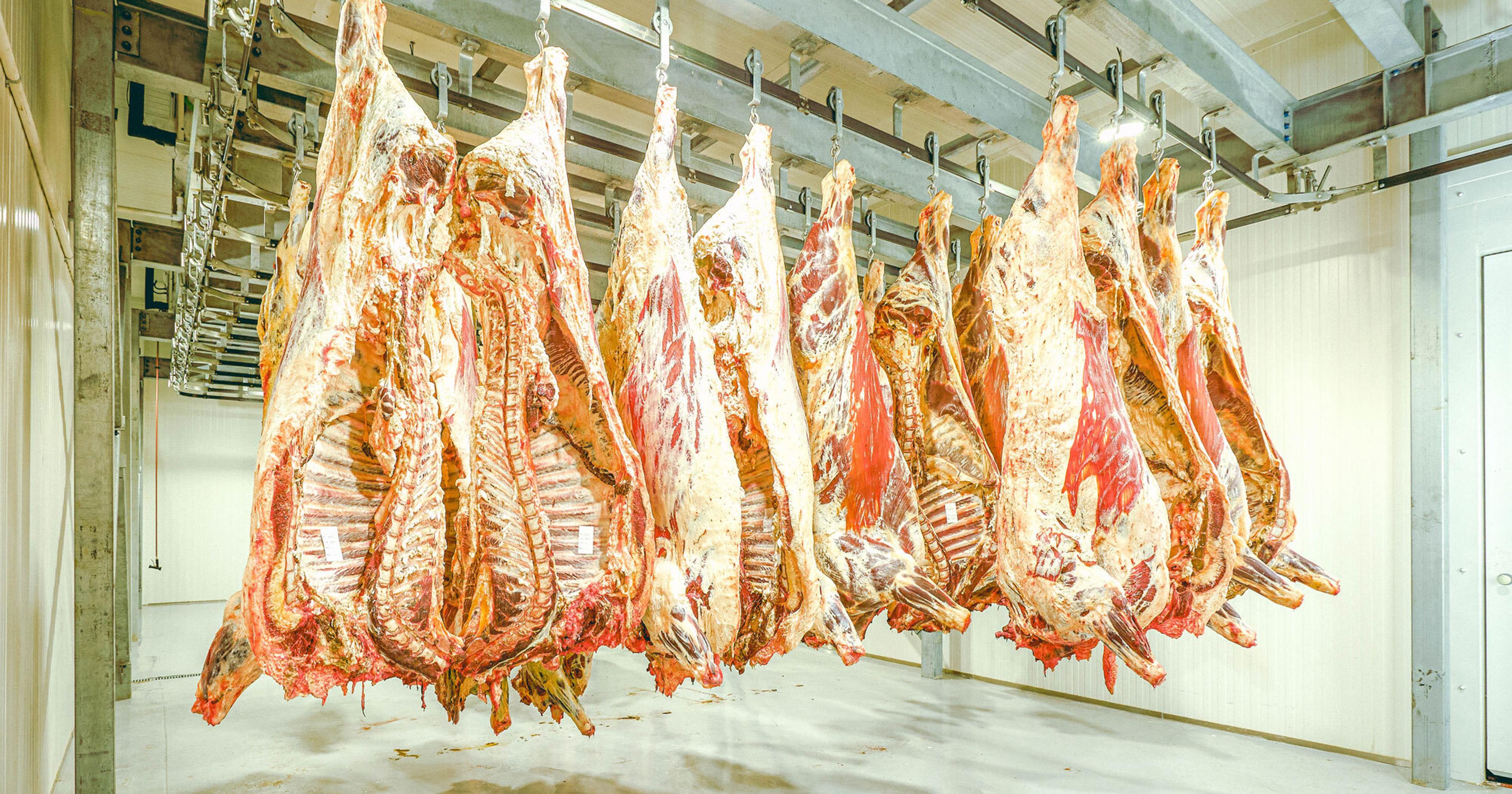
In 2016, the Osage Nation bought a 43,000 acre ranch from Ted Turner, the media mogul who founded CNN. The purchase made the tribe one of the largest landholders in Osage County, where it once owned every acre.
On the rolling prairies, the Osage Nation raises bison and cattle, with a large herd owned by its for-profit arm and a smaller one controlled by the tribe’s Department of Natural Resources. When the Covid-19 pandemic disrupted supply chains across America, the tribe found itself with no meat to feed the children in its daycare program or the elderly members who depended on food assistance.
“The chief was asking, ‘If we have cattle, why don’t we have meat?” said Jann Hayman, secretary of natural resources for the Osage Nation.
The answer was that the tribe, like many ranchers during the pandemic, had nowhere to slaughter and process its cattle.
Consolidation of the U.S. meatpacking industry accelerated rapidly in the final decades of the 20th century. Today, four companies control 85% of America’s beef processing. Many of their massive plants, which can slaughter more than a million head of cattle each year, shut down during the pandemic when Covid spread through their workforce. In Oklahoma, smaller meat processing plants often did not slaughter beef, and those that did had wait times of up to a year.
The Osage made a decision that they could not depend on others to feed their people: They would build their own USDA-inspected meat processing plants. They were not alone. Since the pandemic, five tribes — the Osage, the Cherokee Nation, the Choctaw Nation, the Miami Nation, and Muscogee Nation — invested in processing plants across Oklahoma, the state with both the second-largest Indigenous population and the second-largest beef cattle industry.
“Give them credit for being first. They saw the direct demand during Covid and were the first to react to the problem,” said Chris Roper, who works with the Native-owned nonprofit Flower Hill Institute to help tribes develop processing facilities.
The Oklahoma tribes had the advantage of a nearby, successful model from the Quapaw Nation, which opened the nation’s first tribally owned meat processing plant in 2017.
Across the country, an estimated 18 tribes now operate plants that process meat and seafood, according to Roper. Nearly all those plants have opened since the pandemic. But that’s not all — Roper knows of dozens of other tribes that are planning to open their own processing plants.
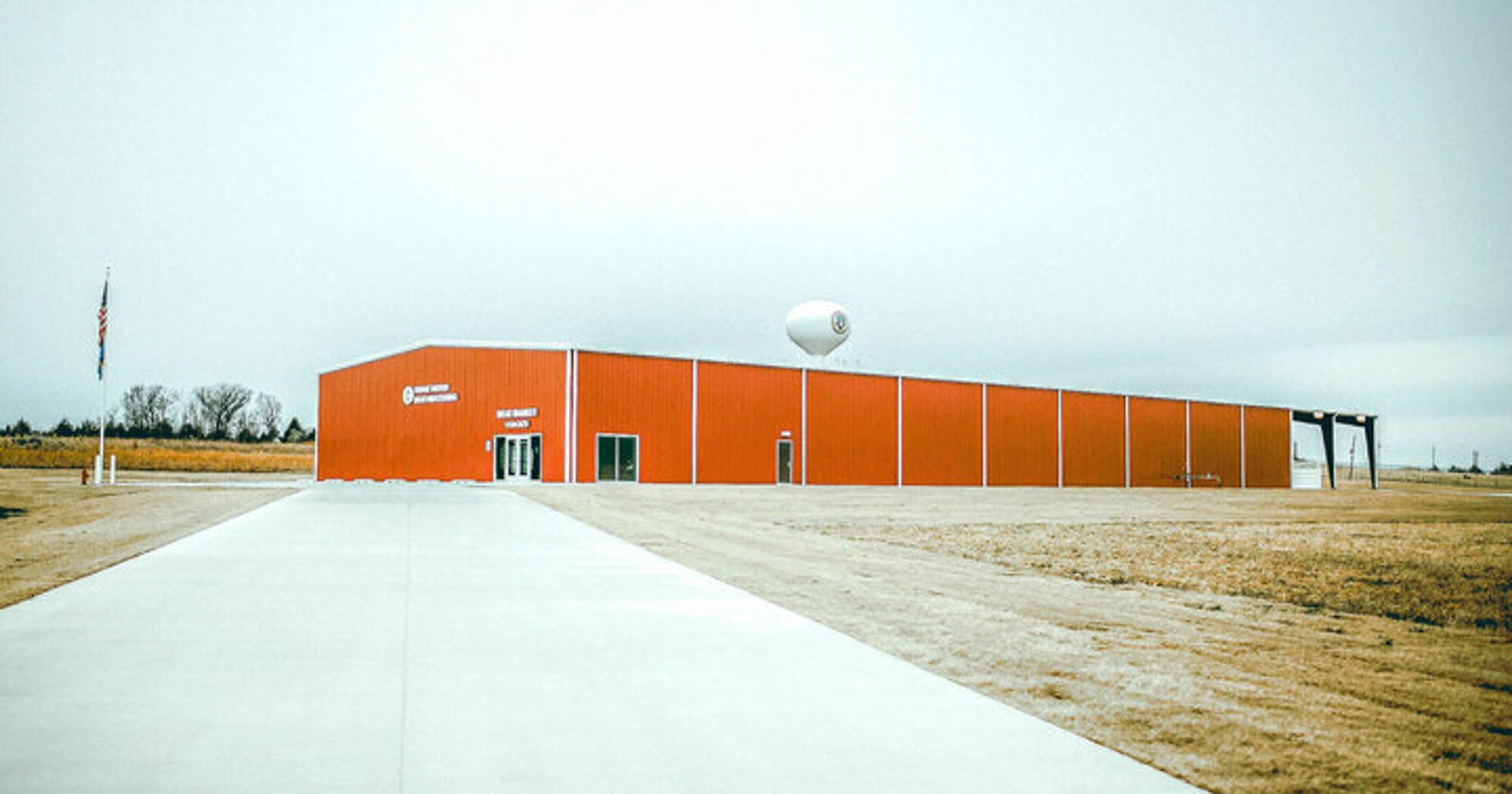
The Osage Nation’s Butcher House Meats offers slaughter and processing along with retail meat sales.
Meat processing plants are expensive to build. The business has thin margins. The competition from large processors is stiff. But the tribes are finding ways to be successful through vertical integration. They own the animals and then sell the meat to their casinos or food assistance programs. And they do not always define success in dollars like a private business. Bringing good jobs to rural areas and meat to food deserts is part of the goal.
The Covid pandemic also exposed the vulnerability of America’s overall meat supply. The shutdown of one massive facility could lead to a region-wide shortage. Supply chains proved to lack resilience. Tribes, often in remote areas, felt these disruptions acutely. And many tribal communities relied on food assistance that was only delivered once a month.
Many tribes recognized the urgency of taking control of their food supply so they could always ensure their people would be fed. “It’s been a revolution,” Roper said.
The Osage invested nearly $10 million to build its meat processing facility, which harvested its first cattle and bison in February 2021. Today, Butcher House Meats, a 19,000 square-foot brick-red building, slaughters and butchers around 60 animals each month, including hogs and deer during hunting season, for both the tribe and other local community members.
The Business of Beef
On a stretch of U.S. Highway 259 in southeastern Oklahoma, close to the Arkansas border, the large, tidy white building emblazoned with the Three Rivers Meat Company logo stands out among the surrounding pastures and pine trees. The store and processing plant sits in a rural corner of the nearly 11,000 square miles that fall within the boundaries of the Choctaw Nation, which owns 65% of Three Rivers in a partnership with private investors.
Inside the gleaming space, with walls of blond wood planks and a patinated ceiling fan that looks salvaged from a windmill, you might smell burgers on the grill or the meat smoker in the back. There are tables for café customers. Cases are filled with deli meats, hot dogs, and summer sausage — all made on site and branded with the Three Rivers logo — along with roasts, ribeye steaks, and ground beef. The shelves are stocked with supplies for boaters headed south to nearby Beavers Bend State Park.
“We wanted to be part of that community over there, that rural community,” said Evan Whitley, executive director of agriculture and natural resources for the Choctaw Nation.
The tribe got serious about ranching a decade ago. They started paying more attention to the breeding of their cattle and the management of 65,000 acres spread across eight ranches. These ranches were assigned to its commerce division, which also runs casinos and a chain of gas stations.
Whitley, who had experience both with the Noble Research Institute, which works with farmers to improve profitability and soil health, and the commercial grass-fed beef producer Dakota Beef, was hired to manage the operation. Today, the tribe’s herd numbers around 2,500 head of Angus-based cattle and a handful of bison. That makes the Choctaw Nation one of the top five cattle producers in Oklahoma, according to Whitley.
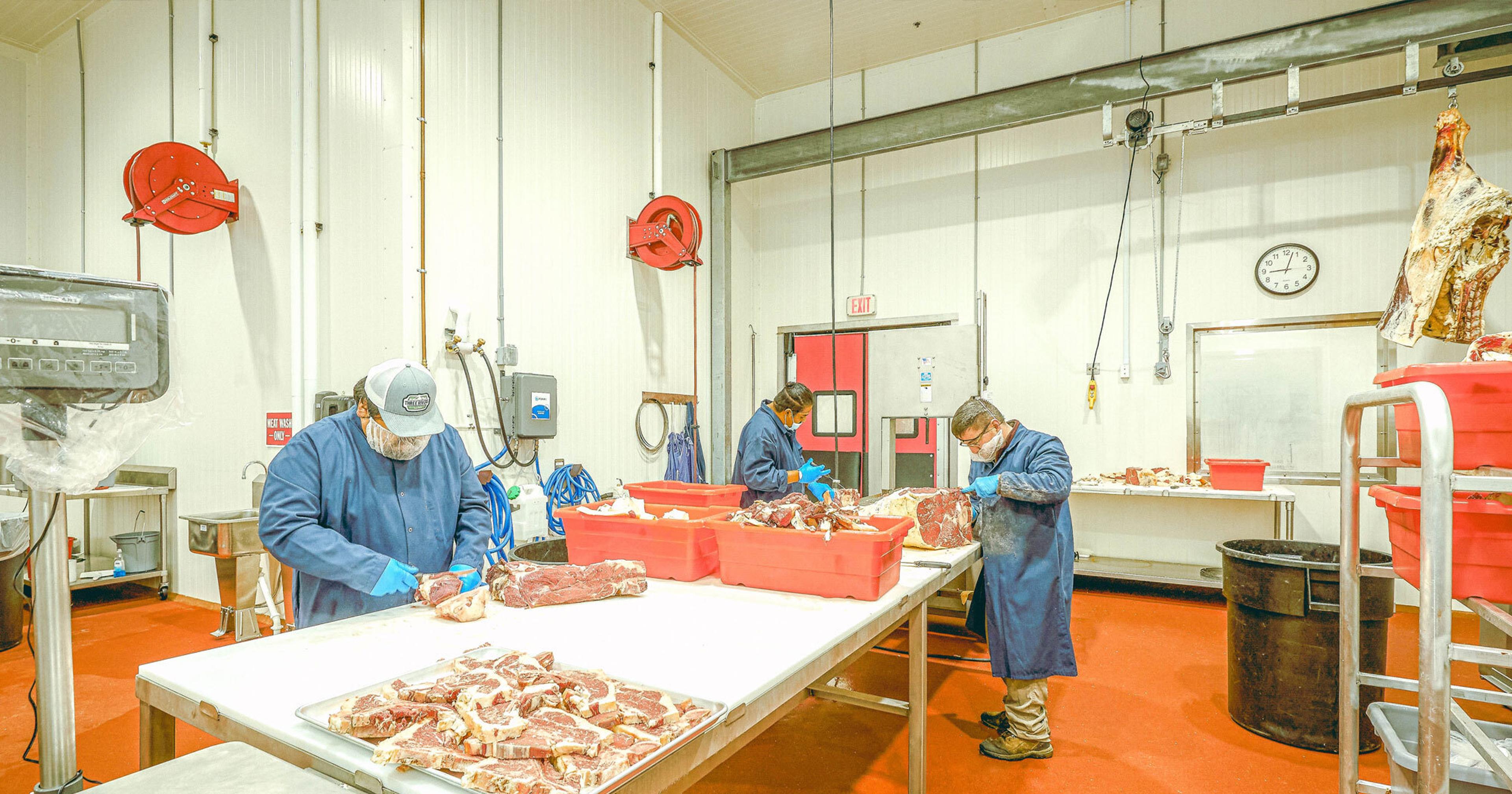
Workers cut steaks at Three Rivers Meat Company, whose majority owner is the Choctaw Nation.
Three Rivers, financed without federal funds, was built to support the tribe’s cattle business while taking care of the surrounding community. Owning Three Rivers also ensures the Choctaw’s beef business will not be interrupted by a future emergency.
“We learned in Covid that we are very vulnerable,” Whitley said.
Unlike many startup businesses, Three Rivers already had a ready buyer for its products: The restaurants inside the Choctaw casinos.
“When I was working at Dakota Beef, most of our conversations were, ‘How do we capture more market share?’ These conversations are, ‘How do we make sure we leverage the market share we already have?’” Whitley said.
“We learned in Covid that we are very vulnerable.”
The Choctaws are vertically integrated. Their cows graze on their ranches, are butchered by their processor, and then are sold to their businesses. At the Choctaw casinos, the prime cuts end up on the steakhouse menu for high rollers, while the ground beef gets made into burgers.
The bottom line for the tribe’s businesses, however, is not just measured in dollars. Paying a little more for beef can make sense when the money stays in the family.
“It’s incumbent on me to provide a competitive price, but we can’t be food sovereign at Sysco prices,” Whitley said. “The goal here is not to make money at the demise of our food and beverage [department].”
In the last two years, Whitley has also grown the Choctaw’s “freezer beef program,” which offers retail customers a quarter, half, or whole carcass, from 150 to 600 pounds of butchered beef. And the tribe took advantage of the USDA’s Local Food Program Assistance Cooperative Agreement Program, which let states and tribes buy local products for their food aid initiatives. Nearly 180,000 pounds of Choctaw ground beef was distributed to community members through the program.
Built for Bison
From the remote dirt road, an array of solar panels blocks from view the Quapaw Food Services Authority, the Quapaw Nation’s meat processing plant in Miami, Oklahoma. The entire plant is arranged in a logical straight line, with the kill floor in one corner and a clean room for ready-to-eat products at the other end. Along an antiseptic hallway decorated with photos of grazing bison, picture windows reveal what happens in each room. Since opening, Quapaw Food Services Authority has given thousands of tours to students, potential customers, and other tribes.
On a recent October day, the plant was processing bison, which had come all the way from a private South Texas ranch that sells the meat online. From the kill floor observation window, the live bison were hidden inside the knock box, which is heavy steel on the outside and well-padded inside. Bison are fierce. When they encounter a wall, they may break their neck trying to charge through it.
From a platform above, a worker aimed a .223 bolt-action rifle at a knot on the back of the bison’s neck and fired one shot. A few minutes later, a panel opened and the lifeless bison tumbled onto the floor. The crew, wearing hardhats and yellow aprons, got to work with knives and air skinners to break down the beast.
“Everything about a bison is harder than beef,” said Jeff Mitchell, plant operations manager. “But once you get used to it, it’s not that bad.”
The crew, wearing hardhats and yellow aprons, got to work with knives and air skinners to break down the beast like an automotive assembly line running in reverse.
“Everything about a bison is harder than beef. But once you get used to it, it’s not that bad.”
Bison was a main reason the Quapaw Nation opened a meat processing plant in 2017. The tribe in 2010 had brought bison back to northeastern Oklahoma on the land surrounding its Downstream Casino Resort. The bison were a living symbol of the Choctaw’s history and culture. Managing the herd required culling bison that were crossbred with cattle, not genetically pure. And selling those culled bison could generate income.
“You need to sell some to pay for the feed, pay for the program,” said Roper, who at the time was a full-time consultant for the Quapaw Nation.
The tribe added cattle to their ranching operation in 2014.
Quapaw Food Services Authority, financed mainly with private loans along with some federal HUD funds, now ranks as the top small processor for bison in the country. The facilities, designed in consultation with famed animal-welfare expert Temple Grandin, were built stout enough to handle bison. The butchers are trained for the challenge. And, since 2024, the Quapaw are reimbursed for the USDA’s bison inspection fees, one of the only advantages a tribally owned meat processor has over other facilities. The Quapaw refund that fee to their customers.
Bison, though, remains a niche. In August, only 5559 bison were processed in USDA-inspected plants. That same month, for contrast, 2.33 million cattle were slaughtered. And cattle still account for roughly three quarters of the 40 to 80 animals that pass through the Quapaw Food Services Authority each week.
As the first tribally owned meat processor, the Quapaw had no examples to follow. The tribe built a 25,000 square-foot facility, far more space than the seven-member opening crew needed. “We were great at getting the cart before the horse, so to speak,” said Mitch Albright, director of agriculture for the Quapaw Nation.
A steady customer for the Quapaw beef is the tribe’s own Food Sovereignty Department, which gives away 20,000 pounds of beef or bison every quarter.
The Quapaw Food Services Authority did eventually outgrow the space that once seemed overbuilt. Since opening, the plant has expanded to 30,000 square feet and more additions are planned.
Albright stressed that profit margins are always thin in meat processing. And the tribe’s policy of offering a $15 minimum wage with benefits means they spent more on labor than their local competitors. But one mission of the plant is to provide good jobs in the rural region.
A steady customer for the Quapaw beef is the tribe’s own Food Sovereignty Department, which gives away 20,000 pounds of beef or bison every quarter to tribe members. The most recent distribution in September provided each head of household, regardless of need, with 10 pounds of ground beef and two roasts.
“I think we hit a point where the tribe feels we’re certainly an asset,” Albright said.
Looking Ahead
A few dozen relatively small meat processing plants cannot replace America’s consolidated system of massive plants. But they can help feed a community.
“If you have 400 pounds of meat, and divide that out by six-ounce servings, how many meals is one animal providing? For most of the tribes, they’re trying to feed their people, and they’re trying to make sure that their grocery store shelves aren’t empty in the next pandemic,” said Roper of Flower Hill Institute.
Owning the plants that process meat is not just about food security, making sure that tribal members can eat. It is also an important step towards food sovereignty — controlling the food supply and deciding what they will eat. And sovereignty, the power to govern themselves, is a right that tribes have long fought to preserve.
Food sovereignty means tribes can decide if profit matters most, or if breaking even while giving back to members is the goal. One tribe can support other tribes, processing their cattle, hog, bison, or the deer that individual members hunt. If they have a retail outlet, they can offer tribal discounts or accept SNAP benefits.
They are preparing for the next time the system fails them.
At the retail shop for Butcher House Meats, the cases always have suet, which Osage members use to make meat pies. Sometimes customers ask for stew meat cut a certain way for a dish to be served at a funeral or a tribal dance. Or carvers want bison bones to turn into traditional dice.
Some tribes that Roper works with prefer to slaughter their livestock in the fields where they lived. Others make sure to say a prayer before ending the animal’s life.
As he works across the country, Roper sees more tribes taking control of their food systems, not just beef production. The tribes are stepping up in the rural areas that private businesses have abandoned. They are finding ways to supply food assistance programs, so money stays within the tribes. And they are preparing for the next time the system fails them.

If you eat peanut butter, wash your hair, or brush your teeth, you’re most likely a palm oil consumer. For food and personal care companies, its versatility and low cost makes it a wonder ingredient.
Palm oil is present in 50% of packaged goods, from crackers to chocolate to detergent to skin cream: It can be used to enhance spreadability, as an emulsifier, a moisturizer, or to provide a pleasant texture. Palm oil is the world’s most prolific oil crop per acre — but it also has deforestation and labor exploitation baggage that has severely damaged its global reputation. It only grows in sensitive tropical climates near the equator, leading to heavy deforestation in the 1990s that accelerated during the aughts.
In the bad old days of 2012, over 850 square miles of forest was bulldozed and burnt in Indonesia alone (that’s an area one and a half times the size of Los Angeles). The resulting plunge in populations among endangered orangutans and pygmy elephants became a flashpoint for global outrage, prompting consumer boycotts. The industry reacted by founding the Roundtable for Sustainable Palm Oil (RSPO), which certifies products as having been produced without destroying rainforests or exploiting laborers. Deforestation in Indonesia, the world’s largest palm oil producer, is just 18% of its all-time highs, though it is ticking up slightly.
With palm oil prices per ton having doubled from about $500 to over $1,000 since 2019, the question is whether the improved palm oil industry will lean into sustainability and avoid another frenzy of deforestation — or if the product can be replaced by something else entirely. On the alternative side, a handful of companies around the world have focused on creating oil alternatives using advanced biochemistry. The most common technique is called precision fermentation, in which scientists feed sugar or another feedstock to specialized microbes, which then ferment it into oil. The process resembles making beer.
With high palm oil prices creating large financial incentives to ignore deforestation guidelines, these biotech companies see an opening — by starting with the higher-end market for specialty oils in food and cosmetics. Established palm oil analysts scoff that the tiny volumes produced in the lab will be able to scale up and compete with the 72 million tons of conventionally grown palm oil brought to market each year. They say that makers of biochemical replacements for palm oil underestimate the enormous economies of scale built into the price of every ton produced.
“Maybe one day in the not too distant future, these technologies will play a role in the replacement for the palm oil industry,” said Jack Ellis, an independent consultant based in Vancouver who has written about agriculture and green technology. “But at the moment, it’s still very early, and it’s not clear how they get to the scale of this huge palm oil industry that we already have.”
The Alternatives
Lars Langhout is the CEO of a Dutch company called NoPalm Ingredients that ferments agricultural waste into an oil that can be used in food or cosmetics production. His stated goal is not to replace the 73 million-ton giant that is the palm oil industry, but to halt additional growth that would cause more deforestation.
“The ‘dragon’ we are slaying is not the existing volume, it is the growth,” he said. “Palm oil demand is increasing by roughly 4% per year, which adds 3 million tons of demand. Today, there is no sustainable strategy to supply this growth. Indeed, only 20% is even certified sustainable. This drives deforestation and biodiversity loss as well as price volatility and long-term supply risk for our customers.”
Bryan Quoc Le, a food scientist and author of 150 Food Science Questions Answered, noted that most large palm oil producers depend on cheap labor, which will make it hard for biochemistry alternatives like Langhout’s to compete. A recent study found that the minimum wage in Jambi province, on the palm oil powerhouse island of Sumatra, was about $200 per month. Even so, 59% of workers in the province reported making even less than minimum wage. “I think [synthetic oil producers] will have to switch to more lucrative industries, like cosmetics or skincare,” Le said. “The food industry does not provide nearly enough returns where a high-grade palm oil is worth producing.”
“The food industry does not provide nearly enough returns where a high-grade palm oil is worth producing.”
Shara Ticku is the CEO of C16 Biosciences, an NYC-based biochemistry company doing just that. Ticku says that six different cosmetics brands have launched this year using her company’s “torula oil” product, a palm oil replacement made when torula yeast ferments sugar. That includes the recent announcement of an Estee Lauder-owned brand called NIOD that uses torula oil to make a skin cleanser.
Ticku notes that food companies typically have razor-thin gross profit margins, whereas cosmetics brands have margins of 50% or higher. That gives them more financial wiggle room to try a new, ecologically friendly ingredient. And it’s not just a marketing gimmick — cosmetics already use dozens of palm-derived ingredients. Making oil in the lab allows the creation of entirely new compounds that do things that ordinary palm derivatives cannot. And that can fetch higher prices.
“With precision fermentation, you can create novel profiles. So we create novel carotenoids that come from our yeast,” Ticku said. “They do great things for skin health, and that’s why a lot of the beauty brands want to use it. And they do pay much higher prices than they would pay for, say, just a functional palm thing.”
Has Palm Oil Cleaned Up Its Act?
For the champions of sustainable palm oil, lab-grown oil companies are “fighting the last war” of early aughts deforestation, rather than focusing on 2025 reality. They argue that the palm oil industry has made substantial progress since its time as one of the world’s chief environmental villains.
Consultant Judith Murdoch, who helps large palm oil producers through RSPO audits, said we should focus on fixing supply chains to be sustainable. Instead of boycotting or replacing palm oil, she argues that we should focus on preventing additional deforestation. It’s a “mend it, don’t end it” approach.
“No, there’s not going to be alternatives at scale,” Murdoch said. “Maybe in 50 years, there might be. But where’s the population at that point? Your only alternative now is to ensure that it is grown sustainably.”
Palm oil remains a major cash crop in Indonesia and other equatorial countries, including Malaysia, Thailand, Nigeria, and Colombia, with millions of low-income laborers and smallholders — not to mention wealthy landowners and corporate executives — depending on it for their livelihoods. If European or American environmentalists boycott the Indonesian product, for example, Murdoch believes the country will be happy to use it to create biofuel. Indonesia currently has a mandate to create biodiesel with 35% palm oil content, and may bump up the requirement as high as 50% next year. This has helped commodity prices double since 2019.
Felipe Guerrero, vice-president of a sustainable palm company based in Colombia called Daabon, said his company has been focused on reducing ecological and labor harms for the past three decades. Satellite imagery and remote sensors help the company watch existing rainforests, making sure that palm is grown only on existing pastureland and that no one among their suppliers destroys additional ecosystems. The company uses no-till farming, crop rotation, and cover crops to prevent soil depletion, and their farms became the first palm oil producers to be Regenerative Organic Certified in 2023. (They also received Rainforest Alliance Certification in 2012, and RSPO NXT certification in 2017.)
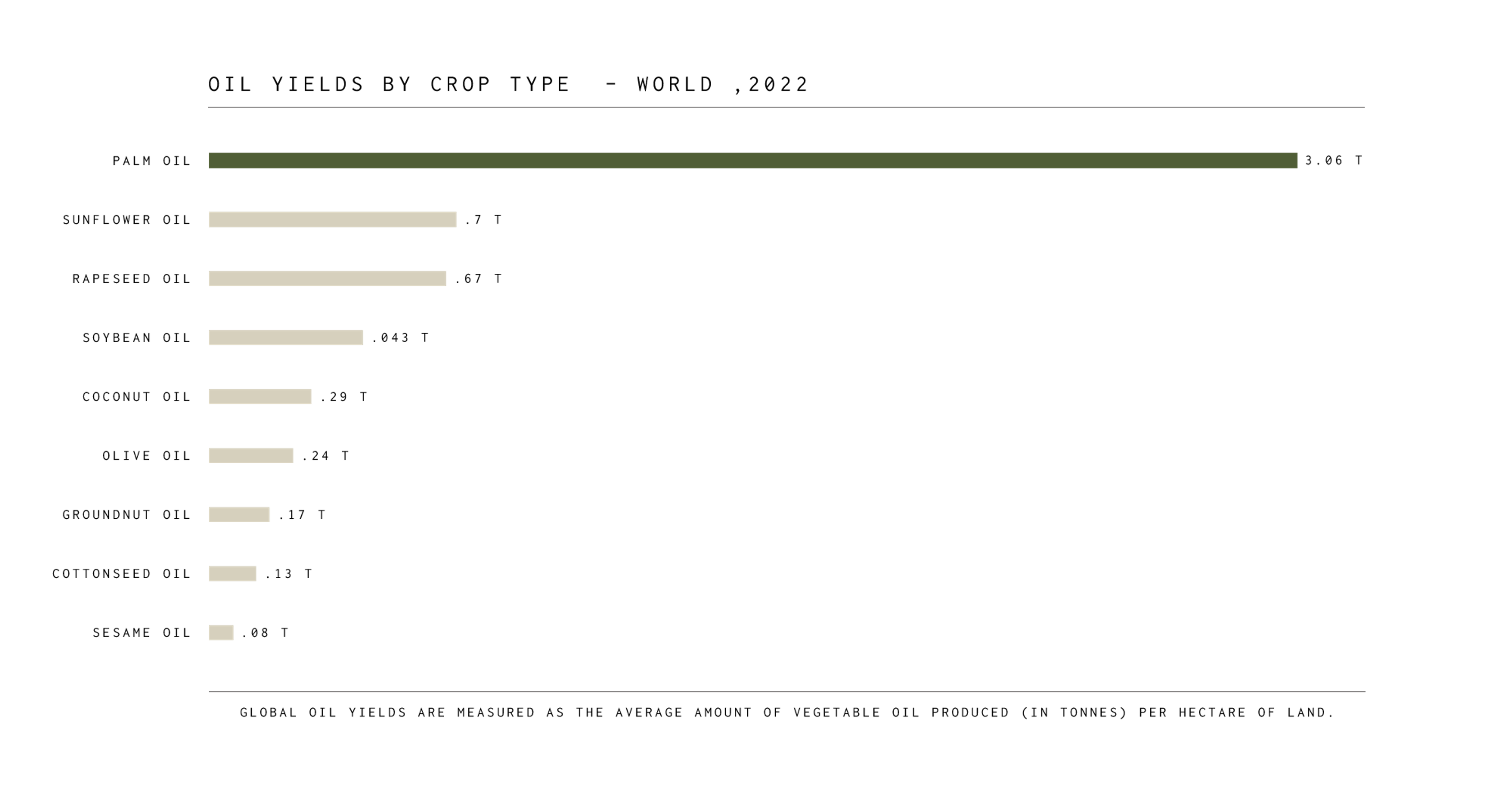
Food and Agriculture Association of the United Nations, 2025
Daabon creates connecting sections of forests known as “biodiversity corridors” to allow wildlife to travel freely, and has restored sensitive turtle habitat near rivers as well as depleted mangroves. A family-owned business that produces more than 70,000 tons of sustainable palm oil annually, Daabon ships approximately 40% of its product to the U.S., where it has an office in Miami. As the umbrella term “sustainable” has expanded to encompass deforestation and labor standards, the company has been happy to adapt. In 1999, they launched an “Alianzas” program to purchase sustainable palm oil from small landholders — and they became the first palm oil producer to receive Fair Trade USA certification in 2016.
“It was thought that organic was ‘sustainable,’” Guerrero said. “But then having smallholders was sustainable. But then having ecosystem protection was being sustainable. And then human rights was being sustainable. So it has grown.”
With most palm oil grown on land that wasn’t deforested recently, even the biodiversity champions at the World Wildlife Fund argue against boycotting palm oil entirely — instead, they say we should focus on stopping additional deforestation and buying sustainable palm oil. And it’s not just to protect jobs in developing countries.
One of the reasons for the popularity of palm is that in these rare tropical ecosystems, the plant yields an extraordinary 3.06 tonnes of oil per hectare, making it more than four times as prolific as sunflower oil and more than seven times as prolific as soybean oil. And that’s before you get into its physical qualities that are so useful in food science and cosmetics, including spreadability, melting behavior, and texture.
With a boycott, you need to find an alternative. Switching to soybean from palm oil, for example, would require more than seven times as much land to yield the same amount of oil — which paradoxically could cause even more deforestation. (Even though soy grows in a much wider variety of climates.) And soy oil lacks some of palm oil’s desirable qualities for taste and texture: It is liquid at room temperature, is more likely to allow food to become rancid, and is not as stable at high temperatures.
Palm Oil Riches Are Hard to Resist
Not all producers are as conscientious as Daabon though. And high prices will always provide a strong incentive to cheat — there have been multiple recent cases of large palm oil producers using shell companies to circumvent deforestation or labor regulations. And besides, it’s not like the minority the palm oil crop marketed as “sustainable” is a magic bullet. One 2020 study found that 75% of Indonesian and Malaysian plantations certified as sustainable by the RSPO are located in places that were deforested in just the past 30 years — some would argue a “sustainability” label greenwashes that semi-recent deforestation.
There’s also what oil entrepreneur Lars Langhout calls “long-term supply” risk. Food scientist Le noted that global warming could lead to reduced palm oil yields in sensitive equatorial regions. “With increasing challenges from climate change, the palm tree will eventually suffer serious deficiencies in their ability to produce palm oil or even outright loss of their habitat. And of course, the demand for palm oil will only increase with more applications in the food industry, as the need for an oil that can solidify at room temperature is paramount to the mouthfeel and texture for many food products.”
Langhout said that No Palm Ingredients is indeed focusing on the market for specialty fats in both food and cosmetics because these are markets where texture and melting behavior are particularly important. But he doesn’t feel he can ask consumers to pay more for his product, just because it generates 90% less carbon dioxide and uses 99% less land than conventional palm oil.
Take it from the makers of plant-based meat, who have seen their product boom and then bust: Though a subsection of consumers are willing to pony up, most products struggle when they add on a “green premium.”
“With increasing challenges from climate change, the palm tree will eventually suffer serious deficiencies in their ability to produce palm oil.“
What makes No Palm Ingredients different from other lab-based oil makers is that it uses agricultural byproducts, rather than relatively expensive sugar, as the feedstock. In a facility under construction in the Dutch town of Ede, Langhout uses whey permeate, a sidestream from mozzarella production. Provided by Milcobel, the largest dairy co-op in Belgium, the whey permeate would otherwise be a low-value product sold as animal feed or for biogas production. Or Milcobel might have to pay to have it dumped in a landfill.
Though Langhout’s process could also work with potato peels or brewery waste, using a single uniform sidestream like whey permeate makes the biochemistry more reliable. It also saves money, because it costs about 50% less than the food-grade sugars used by many of his competitors. When completed next year, the factory will yield up to 1,200 tons annually of “no palm” oil.
But he’s not going to ask buyers to pay more for his product.
“They should choose it because it performs, is circular, and avoids the deforestation risk at price parity,” he said. “We don’t believe in a green premium.”
The only hint that something was amiss came from the leaves: muted yellows and browns instead of the usual flame tones of a crisp Vermont autumn afternoon. That is, until you started talking to farmers.
Sighing deeply between sentences, they connected the dots between the vaguely un-vibrant trees and the catastrophe brewing across their acreages: drought, which began this June and, as it evolved over the summer and into the fall, shriveled grass pastures and taxed wells and waterways. As of this writing, more than half the state had finally emerged from drought and the effects of too many months with too little water, down from 89 percent just a few days earlier, in mid-November.
“We can count on a six-week period, usually by August, that’s going to be dry — it’s pretty consistent,” said Ben Haigh, who owns a direct-to-consumer beef, lamb and butter operation called Rolling Bale Farm in Shoreham, in the Champlain Valley. “This year was different, because all the plants just completely went dormant and everything was brown. We’re used to periods of reduced growth. We’re just not used to this whole no growth.”
Heading into winter with too little feed for their animals, over 160 producers have so far reported more than 65,000 acres affected — one quarter “severely” — with $16.5 million in estimated losses. Thirty-one percent foretold poor, severe, or critical financial health for the coming year. The state appealed to the feds for a disaster designation in early October but due to the government shutdown, any potential aid was likely to be “too late for some farmers,” according to Valley News.
Not that Haigh was holding out much hope for federal relief: “You have to get presidential approval on those designations and Trump is not a fan of Vermont,” he said, referencing the president’s refusal to release aid in response to flooding earlier this summer — the third consecutive year in which severe rainstorms washed out portions of the state.
This August in Vermont was the driest there since 1895 but it’s also these extreme swings in weather, from severely dry to overwhelmingly wet, that are harbingers of a more challenging farming future under climate change. Such swings are also causing corn yields to drop in North Carolina, and soybeans and other crops to falter in Minnesota and Iowa.
“If this happens again next year, we are done if we don’t make any changes.”
Jamie Hamilton, a first-generation grassfed-and-finished beef producer in Western Vermont, walked Offrange through the unusual and devastating effects of weather on his operation — recounting a series of events echoed by many other local livestock farmers: “It rained fairly regularly through May and into early June, and that prevented us from getting our first-cut hay off in a timely manner,” he said.
The rain also compelled him to keep his 400 head of cattle off pasture in those months, to avoid them destroying the muddy fields; supplementally feeding them during that time was an unexpected expense. “Then the water just shut off, and it didn’t come back on until” mid-October, Hamilton said. “By the time that we had enough dry weather to get the hay off, the heat and drought kicked in.” The hay grew back poorly after it was first cut, which meant when it was cut for the second time later in summer, “We ran about a 30 percent yield … compared to what we normally do, which is brutal.”
Recognizing the pending emergency, Hamilton started buying up feed here and there from hay farmers “kind of early,” he said. But as he’d also had to supplementally feed in the early fall to try to give his parched and stunted fields a chance to bounce back, he’s still short about 100 round bales. (He feeds 10 to 12 of these a day throughout the winter.) With every other livestock farmer in Vermont in pretty much the same boat, he said, “Getting quality hay is going to be the biggest challenge.”
Diversified farmers like Margaret Loftus, who raises vegetables and poultry, pigs, sheep, and cattle in West Corinth, near the New Hampshire border, are faring somewhat better than their livestock-only peers. The advantage of being diversified, she said, “is if something doesn’t go well, something else is going” alright. Her potatoes, for example, had skins that didn’t set; Loftus left them in the ground longer than normal and they got hit by a freeze before the onset of drought. “Our potato crop was horrible,” she said, “but then the dryness was the perfect timing for squash.”
She’s had the same feed challenges for her ruminants as Hamilton — compounded by the sheep, which “were not crazy about eating hay when they could see grass around” during the rains, she said. “They waste hay because they don’t want to eat it; they have opinions.” The laying hens are fine, however, despite a late arrival thanks to a bird-flu related chick shortage.
“You have to get presidential approval on those [disaster] designations and Trump is not a fan of Vermont.”
“There are days that we wake up and we say, ’Oh my god, we have too many balls in the air, why are we doing it this way?’” Loftus said. “And then years like this, you’re like, Okay, we had a really good agritourism year because it never rained. All of our other vegetables, there was no disease pressure because it wasn’t raining. It’s been rocky but we’re doing okay.” The fact that her farm’s got two drilled wells, from which she could irrigate despite the high cost, helped her survive the season, too, even as some of her neighbors with shallower dug wells have seen them run dry and have had to get water trucked in. “Without the wells, we would have been out of business,” Loftus said.
The extreme swings of the past three years have got Haigh thinking about some diversification, too. “Because if this happens again next year, we are done if we don’t make any changes,” he said. He’s got a $21,000 USDA loan about to come due (and no FSA officer available during the shutdown to answer questions about what happens in the event of a default); a plan to apply for another loan to purchase some land he’s currently leasing; and a negative cash flow from early spending on feed for his 45 cattle.
Still, Haigh is planning to bring on some pigs this winter to bolster his income, and he just plowed up 20 percent of his owned pasture to plant triticale and other winter grains. “We can usually count on having moisture in the fall for that to germinate and grow,” he explained. “As of June, it’s going to switch over to seed heads, and at that point drought is actually favorable to desiccate the crop, so you can harvest.”
Haigh’s sheep “have never had grain before but our ideals are gonna have to shift away from all this permanent grass — we have to use all the tools,” he said. Raising prices isn’t an option — chefs who buy his butter are already paying $22 to $27 a pound, for example — “so we’re definitely trying to farm our way out of this mess.”
“Seeing our peers get out of farming, that’s more unnerving than the drought.”
In the absence of federal help, the state of Vermont has been spurred to action — albeit slowly. It’s been working since 2009 on a roadmap that envisions full food security for its residents by 2035, for which funding farmers to keep them in business in the face of climatic disruptions is seen as “essential.”
Loftus is on the policy and organizing committee for NOFA-VT, which is spearheading a related a $20 million Farm Security Special Fund that would give out grants to farmers affected by adverse weather; it passed the Vermont Senate in March 2025, then was passed on to the House appropriations committee in April, which is expected to pick it up sometime after it reconvenes in January 2026. The point, said Loftus, “is that it would be nimble enough to respond to farms like ours — that aren’t eligible for crop insurance. We don’t grow enough of one thing — in farm time.”
Loftus has been heartened to see her community coming together this year: farm store patrons purchasing gift cards for neighbors who lost access to SNAP funds during the shutdown, and farmers helping with “advice on what cover crop is good to plant, because I got to plant something here, but I don’t want to have to irrigate it, and it’s not raining,” she said. “If you have water that you can donate to someone, you call this person; if you need water, you call this other person, and they’ll coordinate.”
But that communal spirit isn’t always enough to tamp a mounting sensation of foreboding. “There was a whole cohort of six farms that started farming around the same time as us,” in 2014, Haigh said, “and there’s two of us that are still in it as of the last two years” because of the ceaseless weather challenges. “Seeing our peers get out of farming, that’s more unnerving than the drought,” Haigh said.
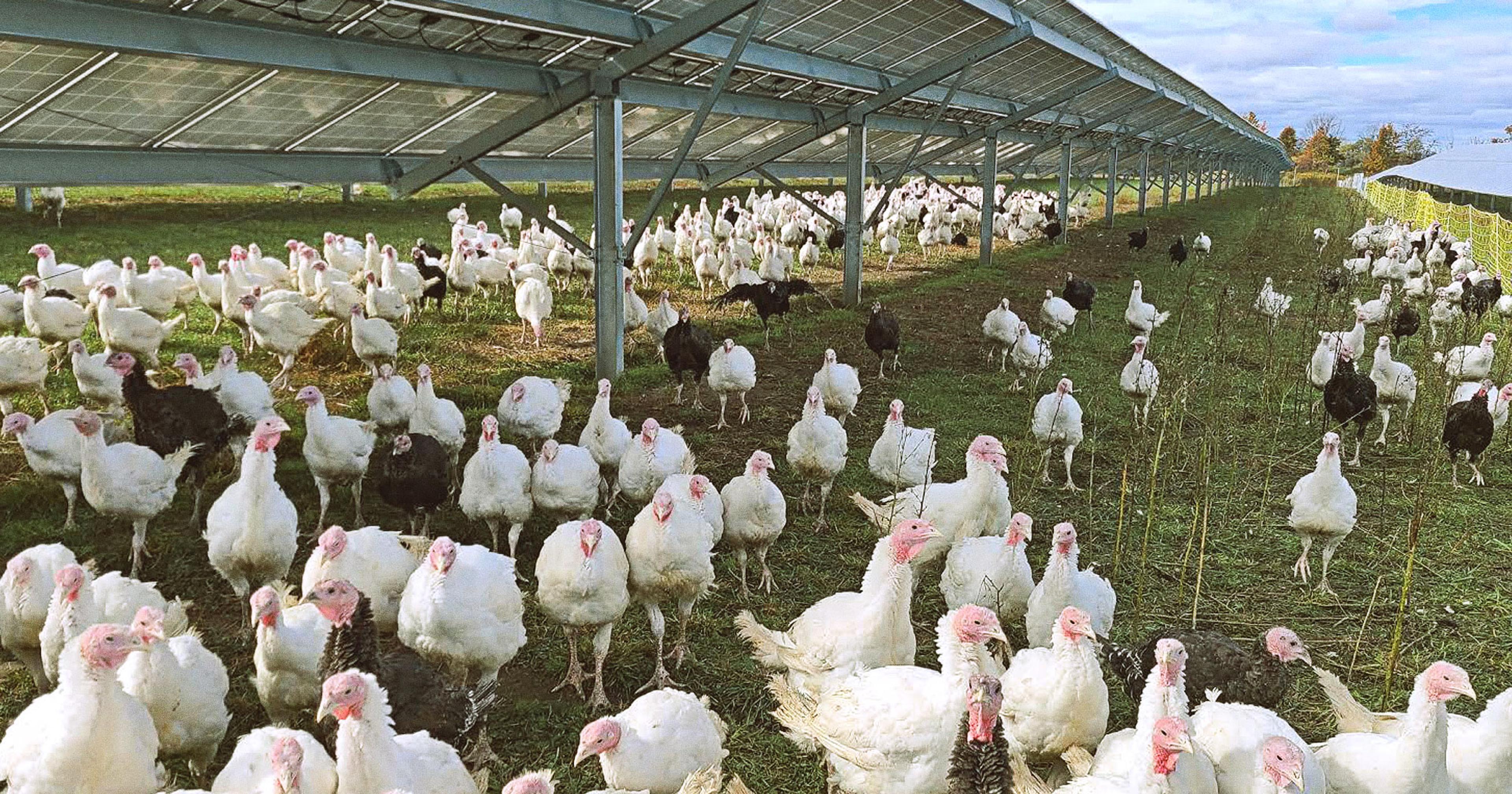
Evan Carpenter’s fifth year growing turkeys looks a little different from all the others. Roaming three acres enclosed by electric fence netting and grazing down vegetation, the turkeys are now contracted employees of a solar company in Central New York — and they are likely the only “employees,” of sorts, in the business.
To get the job, they outcompeted a contract usually held by traditional lawn companies, or goats and sheep. Starting their lifespan in a warm room with a heat lamp until their feathers grew out, the flock of 650 spent the rest of their 14-week lifespan under solar panels. Feeders hang under the panels, moved week to week to even out the grazing. The weekend before Thanksgiving, the last batch of almost 150 direct-market fresh birds were processed for local residents.
Turkeys at Carpenter’s WideAwake Farms find shade under the panels and have become part of a dual-use agrivoltaic system, one that integrates solar energy production with food production. The farm has 25 acres leased under a commercial solar operation and manages, via sheep and cattle grazing, an additional 65 acres.
His region faces yearly arguments about the next commercial operation — solar and new data centers — that will be built in New York’s highest-producing agricultural regions. “They like the idea of not using fossil fuels for their electricity, but they don’t like looking at the solar panels,” said Carpenter about his community.
Tompkins County, New York, a renewable energy–forward county, is known for being an early adopter of residential solar, but it’s still finding its boundaries as Central New York is targeted as a key renewable-energy production site. Home to Cornell University, the town sits in a hotbed of research which is also expanding university solar fields, regardless of local public opinion.
Solar arrays make up 7 percent of America power production, with livestock grazing on nearly 130,000 of those acres of production, according to the United States Solar Grazing 2024 Census. But grazing doesn’t stop at sheep.
Evan Carpenter
When he sold off the cows on his New York dairy farm in 2016, Carpenter began leasing some of the land to a commercial solar site, a contract paying enough to gradually cover the rest of his farm mortgage. But he knew farming wasn’t over for him; his next form of farm income would be from the same solar company that is leasing his land, but through a vegetation contract. “Agrivoltaic ideas have gone through my head for years,” he said.
With five years of free-range turkey experience, Carpenter grew his flock and used the land he was already letting his sheep graze on. “We’ve been wanting to have more of a market for them — just haven’t gotten there,” he said. With the help of a 4-H student, 150 birds are being marketed locally and the rest going to a specialty processor.
The data and results of this trial flock will be shared with project collaborators United Agrivoltaics and Cornell University, to study the feasibility and business model of Carpenter’s project to scale dual-use income land.
Caleb Scott, owner of United Agrivoltaics, a company that connects farmers directly with vegetation contracts from solar companies, said farmers are earning the same as landscapers, but with a few added benefits. “They’re providing food off the same land that electricity is being provided off from, and they’re doing a significantly better job than the lawnmowers,” he said.
“It’s natural for a farmer to look at the best way to maximize the use of land. That’s what they’ve always done.”
Around the country, Scott oversees 184 projects and 64,000 sheep. He explained that while sheep are practically custom-made for this work — perfectly sized, docile, shade-loving animals — the turkeys “make it look like a golf course.” Scott also calls WideAwake’s operation the largest turkey agrivoltaic operation in the world.
Poultry grazing is far from common, said Stacie Peterson, executive director of the American Solar Grazing Association. She noted that while the 500 solar sites — 40 percent being utility projects — report using sheep in their vegetation management, “It’s natural for a farmer to look at the best way to maximize the use of land. That’s what they’ve always done.”
Funding and innovation in agrivoltaics is catching up with Carpenter’s operation. The New York State Energy Research and Development Authority recently awarded $750,000 to United Agrivoltaics to explore adding pigs, poultry, and specialty crops at existing solar sites on more than 100 acres. “Farmers are the best site planters for the solar industry. The solar industry just hasn’t figured that out yet,” Scott said.
It’s one of many investments New York state is making in the solar industry, despite a federal shift away from incentivizing renewable energy production. The Trump administration’s political will to reduce renewable-energy protections, combined with Agriculture Secretary Brooke Rollins’ actions to protect and preserve farmland from solar conversion, has resulted in the end of all forms of renewable-energy tax credits and loans. The decision sent shock waves through renewable business communities, leaving some out to dry.
Evan Carpenter
Projects must be under construction by July to remain eligible for federal tax credits like the Investment Tax Credit and Clean Electricity Investment Credit, which Congress voted this summer to eliminate in the One Big Beautiful Bill. As a result, Scott said, there is now a race to acquire land, install solar panels, and contract solar grazers.
The tax credit cut is anticipated to reduce the amount of renewable projects in the long run, but in the short term, the solar industry is not as concerned. The New York Times reports companies stockpiling solar panels and supplies to show the Internal Revenue Service that their projects are underway. Research firms are also increasing their forecasted wind and solar battery capacity by 10 percent through 2027.
Peterson expects that, even after the tax credits end, there will still continue to be huge growth in the solar industry. “It is the cheapest form of energy,” she said. Her organization is ramping up certification programs with solar companies to take on vegetation contracts, companies that otherwise wouldn’t know livestock can do the job of mowers.
Peterson, who started the agri-solar clearinghouse in the U.S. Department of Energy earlier in her career, has worked directly with livestock grazers since 2018, when ASGA was created. “I watch people in real time change their minds about what possibility there is and what this could be for farmers,” she said.
A 2022 study in Michigan found that over 80 percent of respondents would be more likely to support solar development if it integrated agricultural production. While some argue that ecological and community benefits outweigh methane emissions, overall acceptance of solar still remains contentious.
WideAwake Farms will have even more turkeys next year, farming in a system that may not be common across the country. They are considering more crops into their agrivoltaic system like pumpkins below the solar canopy and apple trees surrounding the property.
“This solar project isn’t seen from the road because of the crops we grow on three sides of it, 75 percent of the year,” said Carpenter. But whether most people realize it or not, Central New York is getting a taste of agrivoltaics this Thanksgiving.
Kelly Ingalls is a third-generation Montana sheep producer; he runs a flock of more than 1,000 in Broadwater County. In summer he trails them east to the Big Belt Mountains. In fall he brings them home, separates out the lambs, then takes the ewes southwest to the Elkhorn Mountains, where they’ll spend the winter on a mix of federal and private land.
The Elkhorns are also home to a herd of wild bighorn sheep. Occasionally one of the bighorns will get curious about the domestic sheep, or a ram is attracted to the ewes. Ingalls does his utmost to make sure that they don’t get too close. He employs herders who are always on the alert, plus he keeps guard dogs. “They are very very good at chasing things off,” Ingalls said.
At one time, bighorn sheep — named for the males’ bulky curving horns — graced rugged mountainous terrain across Western North America. But over many decades habitat loss, hunting, and disease decimated populations, which dropped from historic highs of one to two million to just 20,000 in the early 1900s, according to some estimates. Following extensive conservation and restoration efforts, the bighorn numbers across North America now sit at nearly 70,000. But they still haven’t bounced back in the same way as other species like elk or deer, said Emily Almberg, disease ecologist at Montana Fish, Wildlife & Parks.
One of the major reasons is a bacteria called Mycoplasma ovipneumoniae (M. ovi). Domestic sheep and goats often carry M. ovi in their nasal cavities, and it causes them few, if any, problems. But wild sheep and goats, including bighorns, do not have the same level of resistance. The bacteria attacks the protective cilia in their nostrils, leaving them open to other respiratory pathogens. If domestic and wild sheep mingle, the bacteria can be transmitted from the domestic to wild sheep, leading to pneumonia outbreaks. Whole herds can be virtually wiped out, followed by low lamb survival for years (though there is some variation in mortality rates that’s not yet fully understood).
“It’s so frustrating when you spend years and literally millions of dollars trying to bolster your bighorn herds, and then they can crash in, you know, a matter of months,” Almberg said.
Many say the best way to prevent transmission is strict separation between domestic and wild sheep. But in a multi-use landscape like Montana, maintaining the recommended 9-mile buffer around bighorn herds isn’t easy, according to Jared Beaver, assistant professor and extension wildlife specialist at Montana State University (MSU). That’s stalling recovery plans, and has led to tension between conservationists, who want to see bighorn recovery, and producers, who must take precautions to prevent transmission yet may feel blamed when disease outbreak occurs.
“It’s so frustrating when you spend years and literally millions of dollars trying to bolster your bighorn herds, and then they can crash in a matter of months.”
Now, a new research project led by MSU and Montana FWP and collaboratively created with input from producers, land managers, and biologists, is trying to figure out what makes comingling between domestic sheep and bighorns more likely.
“If we can get a better understanding of those patterns and risk factors, then we can start to develop more flexible and adaptive strategies that will help both wild and domestic sheep thrive on the landscape,” Beaver said. “At the end of the day, it’s not about choosing sides. It’s about finding shared solutions.”
The project is focused on eight bighorn herds where Montana FWP has ongoing research. Within these herds, bighorn sheep have been fitted with GPS collars that record position data at set intervals. The collars have also been programmed with a virtual fence that alerts the research team when the animals get within 200 meters of a domestic sheep flock or pasture.
One of the team can usually get there within about four hours and will collect data on things like the sex and age of the bighorns, their behavior, and if the producers have recently put out any potential attractants like hay. That will help researchers figure out what factors or management practices encourage or discourage mingling.
So far the team has recorded more “contact events” than expected. “When we were designing the project, I think one of my personal fears was that we’d have a whole lot of zeros and there’d be no contact to work with. So that’s not the case. And I think [contact] is happening more than we realize,” Almberg said.
About a third of the producers asked were not aware of M. ovi or the danger it posed to wildlife herds.
These contact events do not mean there’s been disease transmission, the researchers note. M. ovi is carried through respiratory droplets and is thought to be transmitted at distances up to 39-49 feet. But understanding where, when, and why domestic and wild sheep overlap will give researchers a better idea of where there’s risk.
Preliminary data also shows that contact isn’t just occurring during the late fall rut (aka, mating season), as was previously hypothesized. Nevertheless, contact was confined to a small subset of domestic sheep operations, just 3% of those within that recommended 9-mile buffer zone, said Smith Wells, research associate at MSU.
These appear to be mostly those with smaller flocks, whose pastures butt up against bighorn habitat. “This shows that disease risk is variable across the landscape and may be higher in certain areas or circumstances,” Smith said. “So that’s what we’re trying to look at. What are those underlying factors that are least resulting in that variability in risk?”
Ingalls is not involved in the study, as the Elkhorn Mountains, near his grazing allotment, are not in the study area. But he hopes the research will provide new insights. Ingalls has seen the impact of M. ovi on bighorn sheep firsthand. Back in 2007, an M. ovi-connected pneumonia outbreak killed 90% of the Elkhorn bighorn herd, leaving just 20 animals. Today the herd is slowly recovering and is now up to an estimated 75 animals, according to Adam Grove, wildlife biologist with Montana Fish, Wildlife & Parks.
Yet M. ovi is an everpresent danger. Ingalls still worries about the possibility of contact between his sheep and bighorns, despite the preventative measures he has in place. “The more we understand about how the interaction [between domestic sheep and bighorns] can occur, we might be able to prevent that from happening in the future,” Ingalls said. “That gives you a better tool.”
One study found that M. ovi infection could cost producers 4.3% in lamb productivity per year.
The new research project is also highlighting the need for more awareness; about a third of the producers asked were not aware of M. ovi or the danger it posed to wildlife herds. That lack of awareness has been an ongoing problem, said Brent Roeder, sheep and wool extension specialist at MSU.
National and regional organizations like the Montana Wool Growers Association do a good job educating their members about M. ovi, he said. But it’s hard to reach very small producers, those that have just a few sheep. (Don’t call them hobby farmers, Roeder warned.) “Fifteen years ago, we were discussing the same issue, how do we educate the small and very small scale producers on the topic,” Roeder said.
There are still a lot of unknowns when it comes to M. ovi, including why it impacts some bighorn populations much more vigorously than others, said Helen Schwantje, eremitus wildlife veterinarian for British Columbia.
Most producers — and even veterinarians — also don’t know much about the impact of M. ovi on domestic sheep, she said. Yet one study found that M. ovi infection could cost producers 4.3% in lamb productivity per year.
In Canada, the long-running British Columbia Sheep Separation Program, started by Schwantje, offers producers free M. ovi testing, and advice on how to improve separation. She said that paying more attention to disease will bring benefits to both producers and wild sheep.
“Everyone involved, producers, wildlife managers, researchers, conservationists, we want the same thing. We want healthy herds.“
“If I was raising sheep where there was a likelihood of contact with wild sheep, I would test my sheep and ensure that they were mycoplasma [M. ovi] free … That will give you a better product, healthier animals, and reduce the risk to wildlife,” Schwantje said.
Diane Bimczok, professor of microbiology and immunology at MSU, is also trying to figure out ways to treat or prevent M. ovi infection in domestic sheep. Her recent trials with autogenic vaccines, a type of bespoke vaccine that can be rapidly developed from particular bacteria, are showing promise. In lab trials, which finished in September, researchers detected significant antibody response, though data analysis is ongoing, Bimczok said.
In the meantime, MSU researchers hope their work can help develop new strategies to prevent mingling and disease transmission between domestic and wild sheep.
“Everyone involved, producers, wildlife managers, researchers, conservationists, we want the same thing. We want healthy herds. We want resilient landscapes. And we want solutions that work.” Beaver said.
For over a year now, I’ve been mulling over Lauren David’s thought-provoking article on whether we’ve outgrown the CSA model. I have to admit she made some excellent points, especially about the appeal of models that offer more choice to consumers than traditional CSAs and, often, a discount over farmer’s market and supermarket prices. But the traditional CSA model has features I would hate to give up, especially in the urban environment where my own program operates.
I run the volunteer core group of the Clinton Hill CSA, which has served residents of three neighborhoods in Brooklyn, New York, since 2002. This past year, our 230 members included owners of multi-million-dollar brownstones as well as those who qualify for SNAP benefits. We offer sliding-scale pricing, where members pay more or less depending on their income.
Our farmer, Ted Blomgren of Windflower Farm, has been with us from the start; he supplies nine CSAs in NYC as well as a 10th CSA based on his farm, four hours north of the city. He works with core groups of volunteers at all of his New York City CSAs, since it would be impossible for him to run his farm while recruiting members, supervising the weekly distribution, and maintaining the deep neighborhood ties that allow these urban CSAs to thrive. The 10 volunteers in our core group handle recruitment and payments; monitor our website, databases, and social media; produce a weekly newsletter; and run our weekly distribution.
Let me take you through a year in the life of our traditional CSA, operated with a core group of volunteers. I believe the value it provides should be clear.
Mid-February
Most of the core group are sitting around Sarah’s kitchen table, eating brownies. Farmer Ted has just sent the season’s pricing, and I’ve been working out the master equation that lets us subsidize SNAP-eligible members while not overburdening those who pay more. If we get it wrong, we might have to reimburse the farmer from our own funds.
This year, our farmer has raised prices by 2.2%, and we’ve allocated the increase proportionally to our three membership tiers. Our highest-income members pay what works out to $35 per weekly pickup. Members at the middle-income tier pay $21.36, and our SNAP-eligible members pay $9.36. As with most CSA models, members pay up front in the spring, when the farmer needs the cash. Without retailers and wholesalers, the cost of the CSA is quite a bit less than one would pay for comparable produce at the farmer’s market or the local supermarket.
In addition to certified organic vegetables, Ted offers fruit, egg, maple, and grain shares, some of which he sources from other local growers. This spring, egg prices are sky-high, so we know the egg share will be extra popular.
At least 60 CSAs in New York City operate with a core model like ours. Since most of our farmers are at least two hours outside the city and can’t staff the weekly distribution, the core group of volunteers partners with the farmer to run the CSA. Freed from having to recruit members, find a site, supervise distribution, and handle most payments, the farmer can devote more time to growing the produce. In return for a substantial commitment of time (typically 30-50 hours over the season and sometimes many more), core members usually receive a free or reduced-price vegetable share.
Beyond the fact that our farmers simply can’t supervise distribution in the city, what are the advantages of a core group? With deep knowledge of our neighborhoods, we can reach out to various networks and put together a membership that’s diverse in so many ways. Most of our core, all of whom work for a living, also volunteer with other groups: a mutual aid society that sprang to life during the COVID pandemic, community gardens, an organization that keeps street trees healthy, the neighborhood food co-op. I’m on the advisory board of Just Food, a nonprofit that works for food justice and loosely oversees community supported agriculture in New York City.
April
I walk over to our distribution site to meet Nadia, a social worker at the nonprofit that hosts our distribution. She wants me to speak about CSA programs to some of the formerly homeless people who live there. During the season, Nadia distributes some of our extra produce to them, and we’re curious if they might be interested in becoming members. Not this time — this group has been through a lot. They ask questions, but the prospect of membership might be too much of a commitment, and I know many of them are worried about their SNAP benefits. We’ll try again later.
Every fall we survey our members. In addition to questions about the quality and quantity of the produce, we ask everyone what they value most about the CSA. We have a lot of churn in the first few years of membership, as people move away or decide the CSA model isn’t for them. They may decide they prefer to eat out more or they just want to choose their own produce at the farmer’s market (our local farmer’s market hosts a spend-down CSA). But those members who stay for three years tend to be in it for the long haul, and in the annual surveys, many of them mention our community as particularly important.
Late May
Don’s been driving the farmer’s truck forever; he’s an artist who also drives a school bus to pay the bills. Our members start their volunteer shifts next week; today, those of us on the core greet Don and his helper, Daniel. We unload the truck, arrange the plastic bins on patio tables, put out sign-in sheets. This early in the season, the share is mostly greens, spring onions, potted basil. Members start trickling in.
Chad, one of our distribution managers, turns on a portable speaker and puts out a swap box for items members don’t want, which soon fills with chard. (Sigh. As a chard-lover, I’ll never understand this.). Herman, a retired school principal who may be our oldest member, arrives with a big smile. He’s one of a collection of people who’ve been there from the start: Roy, Jenny, Bianca, others. In our early days members signed up for volunteer shifts on a clipboard, and we took all of our payments by check. When the terrible blackout hit the Northeast in 2003 and we had to cancel distribution, we called our members on landlines.
Tonight, everything works beautifully; a few members Venmo outstanding payments after we check the online spreadsheet to verify what they owe. Our outreach coordinator, Chelsea, talks to new members, jiggling her newborn, while her 3-year-old zips around on a scooter. At the end of the evening, Pastor Valerie arrives with her grandson to take half the leftover produce, whatever doesn’t go to Nadia’s group, for her church’s soup kitchen.
The CSA wouldn’t retain as many members as we do if the weekly pick-ups weren’t enjoyable, if people didn’t feel they could linger, ask the hard questions about what to do with garlic scapes and kohlrabi, chat with neighbors, let their kids painstakingly count out and choose the carrots, and give their dog a drink from the water dish by the main entrance.
All of our members volunteer a few hours during the season, and our distribution managers work to make that a pleasant experience. And though Farmer Ted rarely makes it to the site himself, our members value their connection with him, in part because his “Letter From the Farm” is the centerpiece of our weekly newsletter. For our members, the CSA functions as a third place, separate from home and work, where the anonymous city falls away, and people feel recognized.
Until the pandemic, we struggled to find low-income members. We have always been able to sign up affluent food-lovers without trouble, but reaching SNAP-eligible neighborhood residents was a challenge. But in 2020, as job losses mounted and food insecurity became a new fact of life for many New Yorkers, our membership at the lowest income tier tripled. Since that time, it has continued to grow through dedicated outreach and word of mouth. The city can feel siloed, a place where people rarely interact outside of their established social groups, but every week, CSA members of all income levels might find themselves smiling at a toddler’s first taste of a strawberry or in serious discussion about how to cook an eggplant.
Competition for the food dollar in high-income urban neighborhoods is intense, with upscale farmers markets and various farm box and subscription models offering the convenience of home delivery and a la carte options — but not the personal ties to a farmer that come with a genuine CSA. On the other hand, a portfolio of sliding-scale CSAs in demographically mixed neighborhoods offers a stable model for our farmers. My own farmer makes his living entirely off his CSAs, all but one in the city.
In 2003, our second year, one of our members painted the banner that we hang on the fence outside. To finish it off, we asked all the kids who showed up one week to dip their hands in paint and put prints on the banner. The toddlers — including my son — whose handprints are on that banner are grown up and in the world. But now, in June, I’m pleased to see many new, young-adult members who look as if they could be my son’s age. Our farmer’s son, Nate, is working on the farm and probably will take it over at some point. We’re not running the CSA right unless we’re reaching out to new members, ensuring continuity.
June
The swap box is a reliable source of newsletter inspiration, and this week Veronica, our newsletter editor, has added recipes for chard. Our farmer’s letter starts exuberantly: “On Friday of last week, in one spectacular day, three of our staff planted ‘Panisse’ and ‘Tropicana’ lettuce, ‘Red Russian’ kale, ‘Giant of Italy’ parsley, and ‘Prospera’ basil, some 15,000 plants in all.” It would be uncharacteristic for a farmer (any farmer) not to throw in a word of caution, and he adds, “Weather, the fickle managing partner of our farm, has been particularly out of step with the plans I made for this season.” We shall see.
October
With torrential rains on the last night of the season, we’ve cancelled our annual potluck, though a plastic pumpkin filled with Halloween candy offers consolation. Juggling tote bags and dripping umbrellas, members pick up their shares and leave quickly. Climate change has made the year a challenging one for our farmer. With the government shutdown, we know many local people are worried about SNAP benefits, and our core group arranges to donate a large shipment of extra produce to our host group and a nearby food pantry. We hope some of those who benefit might try a subsidized CSA membership next year. We regularly hear from farmers who are new to the CSA model and eager to give it a try.
There’s no doubt the core model CSA is more work at the outset, and I suspect it’s not for those communities with affordable farmer’s markets or multiple produce stands in easy driving distance. But here in the city, our CSA offers value for farmers who are geographically removed from their customers, and it brings tangible benefits to high- and low-income urban residents who appreciate knowing where their produce comes from and enjoy the community that develops around the weekly distribution.
We certainly have other CSA models to choose from, including farm boxes and spend-down CSAs that operate out of farmer’s markets. But the core group model has proved durable here in the city; it’s worth growing and studying for the real benefits it offers, including — maybe especially — the “community” in “Community Supported Agriculture.”
John Duff has watched the global sorghum market for decades, but he has never seen American farmers in a bind like this.
At the start of September, he noted that producers across the Great Plains were holding more than 200 million bushels of unsold sorghum, grain piling up in bins and elevators with nowhere to go. The cause is the trade war with China that cut off access to a market that purchased 1.2 billion dollars‘ worth of American sorghum just the previous year.
For U.S. farmers who planted their fields counting on that demand, the result has been devastating.
Duff, chairman of Sero Ag Strategies and former executive vice president of the National Sorghum Producers, wrote in a blog post that what is happening at the moment is much worse than Trump’s last trade war. “We haven’t seen a picture this dire since the Chinese investigation of U.S. sorghum farmers in 2018-2019. Today is worse.”
The crisis has left Kansas sorghum farmers scrambling for alternative buyers. But behind this emergency lies a more complex story that involves the collapse of traditional export markets, the fragility of agricultural trade policy, and an unexpected opportunity emerging in sub-Saharan Africa that could reshape American farming for years to come.
China’s withdrawal from the sorghum market, driven by escalating tariffs and political tensions, has exposed how vulnerable American producers are to geopolitical instability. This is happening against a backdrop where sub-Saharan Africa faces a severe food crisis. More than 178 million people are experiencing food insecurity, and grain demand is projected to grow by 2.2 percent each year, while local production increases at only 1.6 percent.
The convergence of these challenges, American oversupply and African need, has created what agricultural economists describe as a rare opportunity to rebuild trade relationships.
Yet taking advantage of it will require navigating trade barriers, restoring international aid programs that have been weakened by budget cuts, and persuading wary African governments to open their markets.
The China Problem
The roots of the current crisis run deep. For years, China served as the anchor market for U.S. sorghum exports, providing the kind of reliable, high-volume demand that allowed American farmers to make their planting decisions with confidence. But when the Trump administration’s renewed trade war with China escalated this year, sorghum came under fire. The subsequent tariffs all but shuttered a $1B+ annual market, stoking U.S. agricultural tensions.
William Ridley, associate professor of agricultural and consumer economics at the University of Illinois, Urbana-Champaign, who researches international trade, explained the situation saying, “the elephant in the room remains the potential loss of the Chinese export market.” He added that if trade tensions with China were resolved and grain exports were to resume as before, that that would go a long way “to boost sorghum’s continued viability as a major export commodity.”
In October, Trump’s meeting with President Xi then enabled the first sorghum shipment there since the trade war peaked.
Unlike wheat or corn, where domestic demand provides a cushion, U.S. sorghum producers are heavily dependent on exports, making them especially vulnerable when international markets shut down. The impact on farm economics has been immediate and severe. Basis levels, the price difference between local cash prices and futures contracts, collapsed as oversupply flooded local markets.
Farmers who had locked in production costs based on expected Chinese demand are now finding themselves in a financial crisis. Storage facilities are additionally beginning to fill up beyond capacity.
The convergence of these challenges has created what agricultural economists describe as a rare opportunity to rebuild trade relationships.
Farmers need to move this grain, Duff explained, noting that “expanded food aid moves inventory quickly, because USDA and USAID purchase U.S.-grown commodities in truck- and vessel-scale lots and deliver them on fixed timetables.” But with international aid programs under political duress, that safety valve has become less reliable.
The Food for Peace initiative, a seven-decade-old program that purchased American grain to feed hungry populations abroad, had long provided a steady, if modest, revenue stream for U.S. farmers. But when the Trump administration’s Department of Government Efficiency (DOGE) targeted foreign aid for cuts, Food for Peace landed on the chopping block. The Republican-controlled House initially passed legislation to abolish the program entirely.
The move triggered panic among farm-state representatives, who suddenly realized their constituents were about to lose one of their few remaining export outlets. Media coverage amplified the alarm, with The New York Times reporting on Kansas farmers who had lost Food for Peace contracts and were exploring dog food production as an alternative market for their grain.
Facing constituent pressure and media scrutiny, Congress amended its approach, preserving some food aid programs while transferring others from USAID to the USDA. By September, the USDA announced it would invest $480 million through programs like McGovern-Dole Food for Education to purchase commodities for school meals and nutrition projects in countries including Benin, Mozambique, and Senegal. A separate announcement indicated plans to spend more than $2 billion on grain purchases for international food aid across sub-Saharan Africa and elsewhere.
For sorghum farmers, these purchases offer immediate relief, clearing bin space and stabilizing prices ahead of the next harvest. But aid alone cannot solve the structural problem. What American sorghum farmers need is sustainable commercial markets, the kind that food aid programs can open but not replace.
The African Opportunity
Sub-Saharan Africa imports significant quantities of grain to supplement local production that can’t keep pace with population growth. Sorghum is especially valued there, not as animal feed, as it’s often used in the United States, but as an ingredient deeply woven into local cuisines.
In Ethiopia, it is the base for injera and other traditional dishes. Across West Africa, it is processed into porridge and beer. The World Food Programme (WFP) distributed more than 772,000 tons of American-grown sorghum valued at nearly $400 million between 2020 and 2025 in Chad, Ethiopia, Nigeria, Somalia, South Sudan, and Sudan.
“Sorghum is a culturally accepted and widely consumed staple [in Ethiopia],” Claire Nevill, spokesperson at WFP Ethiopia, said. And “red sorghum enhances the bioavailability of iron and zinc, two minerals often deficient in communities where WFP works,” according to Djaounsede Madjiangar, spokesperson at WFP West Africa.
East Africa, representing up to 10 countries, has been the third-largest destination for U.S. sorghum since 2014, behind only China and Mexico. Nigeria imported $10 million worth of U.S. sorghum in 2023, its largest amount from any country, making the United States its fastest-growing sorghum supplier. The potential for expansion now seems obvious, as Africa needs grain and American farmers need markets. But turning humanitarian food aid into commercial trade relationships has proved extraordinarily difficult.
In Nigeria, high import duties and foreign exchange controls make grain imports both expensive and bureaucratically complex. Ethiopia imposes tight controls on foreign exchange allocation and requires high collateral for commodity-related imports, according to Samson Tizazu, an international trade advisor at Proma Partners PLC who works regularly with banks and commodity importers.
Sorghum is especially valued there, not as animal feed, as it’s often used in the United States, but as an ingredient deeply woven into local cuisines.
The barriers reflect more than protectionism. Muhammed Waziri, senior lecturer of botany at the University of Maiduguri in Nigeria, told Offrange that Nigeria has “the land, talent, and manpower to produce food grains to meet all our local needs.”
“If the intentions are genuine, I believe we can cover this production gap, if not entirely, at least reduce importation to the barest minimum with Nigeria’s capacity.“
During the Goodluck Jonathan administration in Nigeria from 2010 to 2015, Waziri recalled, “there was a famous and widespread campaign that we should be substituting wheat bread with cassava bread. This campaign gathered a lot of attention.”
The politically driven push made it “economically unfavorable for even local farmers to produce wheat, causing them to switch focus to sorghum and other staples that were more in demand.”
Yet despite these aspirations, African production continues to fall short. Grain production in sub-Saharan Africa is projected to grow at only 1.6% annually, while demand is expected to reach 2.2% annually due to population growth. Climate change, drought, violence, and economic troubles continue to undermine local agricultural efforts.
“For now, we cannot talk of stopping importation, because doing so would compound the issues,” Waziri acknowledged. “The best thing for Nigeria to do is to make a plan. The government should have a plan to reduce the rate of importation while encouraging increased local production.”
What U.S. Farmers Need to Compete
Ridley believes Africa represents a critical opportunity for American sorghum producers, “if the United States can negotiate access.”
“Market development and securing more favorable market access such as Nigeria are key for making sorghum a viable export commodity, particularly as exports to China have fallen off a cliff,” Ridley said. “Consequently, I strongly recommend pursuing trade agreements to open the doors for U.S. commodities such as sorghum and other products.”
But he’s not optimistic about the current trajectory.
“As far as accessing new export markets in Asia and Africa, U.S. sorghum has its work cut out for it. Such countries typically have high barriers to agricultural imports, either in the form of high tariffs or quantitative restrictions that severely restrict the volume of imports.”
“As far as accessing new export markets in Asia and Africa, U.S. sorghum has its work cut out for it.“
Worse, he added, “the United States has mostly sat on the sidelines when it comes to establishing new [agricultural] trade agreements. The last big one was the US-Japan Trade Agreement of 2019.”
The USDA announced in September that it plans to pursue commodity purchases that would “remove trade barriers and ensure market access for U.S. agricultural exports in Ethiopia, Kenya, and Nigeria, among others.” But the context surrounding that announcement complicates the mission. The United States allowed the African Growth and Opportunity Act (AGOA), which provided duty-free access to U.S. markets for thousands of products from selected sub-Saharan African countries, to expire without renewal in September. At the same time, the U.S. imposed high tariffs — 10% on Kenya, 15% on Nigeria.
African leaders have responded by signaling renewed interest in the African Continental Free Trade Area (AfCFTA), an intra-regional free trade agreement that would prioritize trade within the continent, potentially at the expense of American agricultural exports.
Beyond Trade Policy
Duff identified another domestic priority in the U.S.: “Finalizing year-round E15 access and clarifying regulations on it.”
E15, gasoline consisting of up to 15% ethanol and 85% petroleum, currently faces seasonal restrictions due to air quality concerns.
Year-round availability would allow ethanol plants that use sorghum to “operate consistently and support local prices,” Duff explained, providing a domestic demand floor that would make export market volatility less devastating.
The ethanol angle matters more than it might seem. As biofuel mandates have evolved, sorghum has become an increasingly important feedstock for ethanol production, offering farmers a domestic market that does not depend on the whims of foreign governments.
Strengthening that domestic foundation would give producers more leverage in international negotiations and the security to walk away from unfavorable trade terms, because they have alternatives at home.
Strengthening that domestic foundation would give producers more leverage in international negotiations.
Moreover, if American sorghum is going to compete successfully in African markets, it will need to offer superior quality and specific characteristics tailored to African needs and conditions.
Gunvant Patil, associate professor of plant genomics and soil sciences at Texas Tech University, argues that genomics and seed quality improvements should be the priority.
“The U.S. sorghum community should prioritize high-performing hybrids that combine early maturity with improved seed composition, better protein digestibility, higher lysine content, and reduced tannin levels,” he said. Additional innovations like dhurrin-free sorghum varieties (which improve livestock feed safety) and herbicide-tolerant lines “further improve integrated weed management,” he noted.
What Happens Next
The coming months will reveal whether American sorghum farmers can navigate the transition from dependence on China to a more diversified export portfolio centered on Africa to help mitigate its food insecurity challenges.
The USDA’s $2 billion commitment to grain purchases for international aid programs provides immediate breathing room, clearing inventory and stabilizing prices. But those purchases are, by definition, temporary crisis management rather than long-term strategy.
For now, American sorghum farmers are caught in an uncomfortable limbo: too much grain, too few buyers, and a future that depends on trade negotiations and aid programs beyond their control.
For now, American sorghum farmers are caught in an uncomfortable limbo.
Some may diversify into other crops. Some may leave farming altogether. Still others are betting that Africa, despite all the obstacles, represents the next chapter in American agricultural exports.
“Hunger is rising as conflict, shocks, and instability drive a food crisis of unprecedented scale,” the WFP noted in an email to Offrange. “Increased support, including the provision of sorghum, would enhance WFP’s ability to deliver emergency, life-saving assistance, prevent widespread hunger, and protect the most vulnerable.”
That need creates a mutually beneficial opportunity. Whether American farmers and policymakers can seize it remains to be seen. But with hundreds of millions of unsold grain and Chinese markets effectively closed, they may not have much choice but to try to work with African policymakers.
This story was produced in collaboration with Egab.
In 2017, the Food and Drug Administration banned the usage of antibiotics as growth enhancement for livestock. This was enacted to stem the growing resistance of bacteria to antibiotics, which had manifested into a significant global public health threat. We’ve seen the development of antibiotic-resistant bacteria (ARB) and antibiotic-resistant genes (ARGs), which reduce the effectiveness of critical medicines on humans.
Now, a team of researchers has found significant evidence of global health risks in livestock waste or manure, posing as an important vector for ARGs. When animals are given antibiotics, resistant bacteria and their resistance genes can build up in their guts, which is then excreted into manure.
“Livestock manure carries antibiotic resistance genes that can defeat every major class of antibiotics used in human medicine — including those considered ‘last resort,’” said Xun Qian, professor at the department of environmental science at China-based Northwest A&F University, one of the authors of the study. This makes manure one of the most concerning reservoirs of resistant bacteria in the environment, he added.
ARGs are zoonotic pathogens that can be transmitted to humans through food. What was most worrying for the authors was that the genes were often located on mobile DNA elements, which meant they could move from harmless bacteria in manure to dangerous pathogens, potentially creating “superbugs that are hard to treat.” The authors analyzed over 4,000 livestock metagenomes — a study of genetic material from organisms — in 26 countries, and devised a comprehensive catalog of livestock ARGs. The United States and Brazil, leading global beef producers, showed the highest resistome abundance in cattle manure when compared to other countries.
How manure is managed makes a huge difference, according to Siddhartha Thakur, veterinarian and executive director of Global One Health Academy, a research organization at North Carolina State University. One of the ways bacteria are commonly transmitted is through food. When arable land is treated with manure that is not properly composted, crops grown underground and even above-ground plants like tomatoes become susceptible. For example, salmonella can grow inside a tomato, which means washing it externally is not going to help when the tomato is consumed raw, said Thakur, who has over two decades of experience in the study of antibiotic-resistant foodborne pathogens.
“Livestock manure carries antibiotic resistance genes that can defeat every major class of antibiotics used in human medicine — including those considered ‘last resort.’”
Leafy greens have been associated with a fair share of foodborne illnesses. A 2023 listeria outbreak was linked to lettuce, while kale and spinach emerged as culprits behind a 2021 E. coli outbreak. A recent paper put things in perspective when the authors attributed 9.18% of foodborne illnesses to pathogens associated with leafy greens, which meant these greens accounted for almost 2.3 million illnesses — the costs of which can rise as high as $5.2 billion annually.
These outbreaks often stem from the usage of water contaminated with faecal matter of cattle to irrigate crops, illustrating the magnitude of the threat outlined by the study’s authors.
Further, the global disease burden for antimicrobial resistance remains high. In 2021, a study published in The Lancet estimated that 4.71 million deaths were associated with anti-microbial resistance between 1990 and 2021. This death toll is estimated to reach almost 10 million by 2050. Given this, the Chinese scientists intend for their new research to help governments target surveillance, policy, and interventions where they are needed the most.
One of the major challenges with ARG-related deaths is the issue of underreporting, Thakur pointed out. “Surveillance programs figure out how many people died. [In] many of the low to low-medium-income countries, the surveillance programs are not robust enough to catch the people who have died,” he added, stating that we might already be inching closer to the 10 million threshold.
Xun also mentioned that applying untreated manure to fertilize farm fields can increase transmission risks. One of the best ways to reduce this risk, he noted, is to reserve antibiotic usage for treating actual infections.
4.71 million deaths were associated with anti-microbial resistance between 1990 and 2021. This death toll is estimated to reach almost 10 million by 2050.
This holds true for Bill Niman of Niman Ranch, who made that choice in 1975. He told Offrange that they use antibiotics only when necessary — when animals get sick. To avoid frequent sickness, the ranch keeps a lower number of animals, which affords the pigs and cattle more space. And while he believes in treating sick animals with antibiotics, he found no reason to feed the cattle the drugs otherwise. “[Antibiotic usage] only works as a compelling business model,” the 80-year-old said — the cons to growth enhancement far outweigh the pros.
Meanwhile the regulations governing antibiotic usage in livestock have been getting tighter. “The Food and Drug Authority guidelines (209 and 213) prevented the over-the-counter sale of medicated feeds and prevented growth promotion use of medically important drugs,” said Thakur. He also noted that over the last 10 years, there has been a 37% decrease in drugs that are medically important for human use in the food animal industry.
Notably, we observed a decline in ARG abundance in U.S. swine manure between 2016 and 2018, which may be linked to the implementation of the Veterinary Feed Directive (VFD) in 2017,” Xun said. “This provides encouraging evidence that well-designed regulations can effectively reduce resistance pressure in livestock systems.“

Route 30 has been carrying vehicles across Pennsylvania for nearly a century. It’s the fastest way to travel east-west across the southern portion of the state, a divided four-lane highway that never stops making noise. For the Horn Farm Center for Agricultural Education in York, the endless roar of cars and trucks speeding past — not to mention the pollution they cough up — had long disrupted an otherwise peaceful site for regenerative farming and community programming.
If only there were a forest to serve as a buffer, the organization’s staff thought. So they planted one.
Trees move at their own pace, often taking decades to reach maturity once planted, but Horn Farm didn’t want to wait that long to address its concerns. Instead, it opted to experiment with the Miyawaki method, an approach to reforestation developed by a Japanese botanist. It places a dense, diverse assortment of native species in close proximity to one another in an effort to rapidly regenerate degraded land. Andrew Leahy, the farm’s education and outreach specialist, describes it as “the marriage of competition and collaboration,” a riot of trees fighting for and sharing resources as they grow.
Miyawaki forests — alternately described as micro, tiny, or pocket forests because of their small stature — have been spreading internationally for years. Katherine Pakradouni, a horticulturalist who has planted several in Los Angeles through her landscaping and restoration business, Seed to Landscape, says the movement “has altered the way people think about reforestation.” The method is still building steam in the U.S., where supporters admire it for quickly establishing young forests with myriad environmental benefits and the ability to reconnect people with nature.
In 2019, Horn Farm planted what it believes was the first Miyawaki-style forest in the Eastern U.S. — more than 500 native trees in a 12-foot-wide strip along Route 30. Roughly 100 feet long, it features five major species and 23 supporting species. Six years later, a thriving overstory of oaks, hickories, and sycamores stands nearly 30 feet tall, surrounded by redbuds, dogwoods, and shrubs including elderberry and viburnum. Bluejays and robins nest in the branches, pollinators gather among their host plants, and predators like wasps feed on agricultural pests. On a bright morning in early October, the forest was thick enough to nearly drown out the sights and sounds of the highway just a few paces away. It’s “infinitely eye-catching” for anyone who spends time near it, Leahy says, but more importantly it’s a haven for biodiversity and a boon for soil, air, and water remediation.
Although Miyawaki forests are often found in urban settings, where land is precious and trees are hard to come by, Leahy says they could be a welcome complement for agriculture, particularly on farms with a regenerative bent.
“As opposed to creating systems where we’re farming in a vacuum and then relying on insecticides and chemicals to make it possible to grow things, why not foster the habitat needed by the very predators that naturally keep those things in balance?” he says.
Horn Farm has gone on to apply the method to other sections of its land, including a flood-prone plot that also borders Route 30. With root systems in place, it stopped flooding, instead serving as a sponge that absorbs water during storms. The forest helps prevent run-off and soil erosion, while supporting the farm’s effort to rehabilitate a nearby stream that feeds the Susquehanna River. To make way for its young forests, Horn Farm first decompacted and aerated soil that had been used for conventional agriculture for decades, then planted its seedlings and gave them a heavy mulching, including inches of leaf litter gathered by the surrounding township.
He describes it as “the marriage of competition and collaboration,” a riot of trees fighting for and sharing resources as they grow.
“It’s a cool thing to say we took all the leaves from the community and built a forest with them,” Leahy says.
Reforestation is a global undertaking, backed by a vast assortment of governments, nonprofits, and private companies seeking to address habitat loss and respond to climate change. There’s no shortage of opportunity: 482 million acres globally could support reforestation, according to a recent study by The Nature Conservancy. U.S. nurseries produce 1.3 billion trees annually, enough to plant around 2.5 million acres. For its part, the Forest Service reforests about 190,000 acres annually, partly by planting trees and partly through projects that support the natural regeneration of forests. In traditional reforestation efforts, seedlings are planted some 10 to 12 feet apart to allow each one to thrive. The Miyawaki method applies a much different approach to a much different context.
Akira Miyawaki developed his namesake reforestation technique in the 1970s, inspired by the small protected forests of indigenous trees that surround Shinto shrines and the need for Japan to address the mounting threat of industrial pollution. The method was organized around the concept of “potential natural vegetation” — the overstory, understory, shrubs, and herbaceous species that would occupy a given piece of land if not for human intervention.
Facing the rapid rise of environmental degradation, he also emphasized urgency. His method — simple as it may be — was to identify the species that might once have populated a swath of land, prepare the soil to support their addition, and plant densely so competition for light, water, and nutrients can encourage growth. Some trees won’t make it, but “death is built into the system,” Leahy says. When a tree falls, it feeds the growth of its neighbors.
Miyawaki honed his technique on the campuses of corporations like Nippon Steel and Honda Motor, eventually planting more than 30 million trees across 1,500 sites and winning the Blue Planet Prize — the environmental equivalent of the Nobel Prize. When he spoke at the Toyota plant in India in 2009, he inspired the industrial engineer Shubhendu Sharma to found Afforestt, a for-profit social enterprise that has honed Miyawaki’s principles with a manufacturer’s eye for efficiency. The company has planted well over 100 tiny forests in at least 10 countries, carrying Miyawaki’s method around the world.
“If you see truth in a very simple language, it gets inside your heart,” says Gaurav Gurjar, a jungle tree expert at Afforestt. “And that has happened. People have connected with this method.”
It can be hard to convince grant funders and conservationists that such small-scale restoration is worth supporting when acreage is often the currency of the realm.
The most challenging part of growing a Miyawaki forest is reading the landscape, Gurjar says, in part because most of the world has been so deforested that finding pristine land to mimic is rarely possible. The world has lost over one-third of its forests and half of that loss has come in the last century; an additional 25 million acres are estimated to be cut down each year. Micro forests can’t make up for all that loss, but they can still serve an important role.
“It gives people hope and it empowers them,” Gurjar says.
In Los Angeles, Pakradouni’s experiments with Miyawaki-style planting began with a 1,000-square foot forest in Griffith Park in 2021 and expanded with the development of a 10,000-square foot forest in Ascot Hills Park — about one-sixth the size of a football field — that features 850 native plants sourced from local nonprofits. She sees micro forests as an opportunity for ecological reconnection.
“The world is way bigger than the concrete and the cars and the bills and the news,” Pakradouni says. “There’s something much more essential and close to our souls — that is, the natural world. We can uncover that and be exposed to it and experience it in lots of places we didn’t think we could before.”
Demian Willette, an applied ecologist at Loyola Marymount University, has been studying the Ascot Hills forest, using a neighboring plot as a control and tracking changes based on environmental DNA, remote sensing, and hands-on measurement. The plant survival rate is 89 percent — well above the standard on park land, he says — and in less than two years the forest is already home to 51 percent more biodiversity than its counterpart.
“Biodiversity begets biodiversity,” he says. The forest has also sequestered roughly one ton of carbon dioxide, allowing Willette to project that in 20 years’ time it will be trapping 55 tons annually — not the primary purpose of the Miyawaki method, but a significant climate benefit nonetheless. Leahy suggests micro forests could help farms offset carbon-intensive aspects of their work.
For Willette, Miyawaki-style forests can bring the unwieldy work of biodiversity restoration and climate resilience down to an approachable scale. By gathering communities together for planting and creating unexpected opportunities to engage with nature, they can serve as “a gateway to environmental thinking,” he says. And as his research is showing, their rapid emergence can lead to rapid results.
“It’s actually working,” Willette says. “It’s real and it’s worth the effort. It’s not just hopes and dreams.”
“It’s actually working. It’s real and it’s worth the effort. It’s not just hopes and dreams.”
The accelerated growth rate of a Miyawaki-style forest resembles what sometimes occurs following an avalanche or a forest fire, says Ethan Bryson, the founder of Natural Urban Forests, an Afforestt partner that has planted dozens of forests, beginning in the Pacific Northwest and expanding as far as New Zealand. He likens the forests to “urban acupuncture.”
The costs involved can be significant. An average micro forest typically runs around $25,000, Bryson says, while the Ascot Hills forest cost $35,000. Because juvenile trees aren’t planted in the shelter tubes often used for protection against hungry animals in a tree’s early years, adequate fencing is an important — and costly — consideration for getting a forest to take root in an agricultural setting, Leahy says.
And as he notes, it can be hard to convince grant funders and conservationists that such small-scale restoration is worth supporting when acreage is often the currency of the realm. Micro forests are so densely planted that there’s hardly any space for humans among them, which can deter supporters in urban settings who want to keep park space available for public use, Pakradouni says. Although the Miyawaki method is catching on in the Western world, it still represents a niche within reforestation and ecosystem restoration whose effectiveness will take time to prove out.
But evidence is growing, including research from the UK that found Miyawaki plots had a 79 percent survival rate, even through drought, compared with control plots that averaged 47 percent. Growth rates, too, far outpaced control plots. And despite the higher upfront costs tied to planting densely, the cost per surviving tree ended up lower in Miyawaki plots than in those planted conventionally. Given the range of environmental concerns trees can help ameliorate, the Miyawaki method is “an exciting tool for addressing a lot of the urgent challenges we’re facing,” Bryson says.
Those environmental attributes can make the Miyawaki method an asset for farms, where it can help rebuild soil health, protect crops, and serve as part of a broader water management system, perhaps in the form of a riparian buffer, Leahy says. More than anything, though, he sees it as a reminder that reforestation and restoration can be engaging work, rather than something done from a distance to revive degraded land.
“It restores our sense of being woven into the ecosystem and being active practitioners in the ecosystem. Restoration isn’t about removing ourselves,” Leahy says, “but actually about bringing ourselves back.”

Several years ago, when Andrea LeFevre was reading to her kids at bedtime, she often chose titles about agriculture. After all, she grew up on a farm, works on a farm today, and sought to give her children a glimpse into that lifestyle.
But managing a soybean and corn farm with her husband in Northern Illinois, LeFevre noticed something concerning with the books she selected.
“They all had the same plot,” said LeFevre, “where the farm dad took his kids to do all the fun things, like feeding the cows and collecting chicken eggs, and at the end of the day, on the last page of the book, there’s the mother finally entering the story because she has supper ready for everyone.”
She sighed, as if reflecting on that hurtful moment, and then said, “It was like a dagger to my heart because being a farm wife, a daughter of a farmer, I knew that I contributed a lot more than just making meals. I felt like I needed to write a book on all the things that women on farms actually do.”
LeFevre’sdebut kid-lit book, On the Farm with Mama: Harvest Edition, reveals the unspoken work farm wives take on around the crops and barns, ranging from driving tractors to fixing broken equipment to encouraging her kids to participate in daily upkeep and maintenance activities.
“There is a big trend of authors writing kid books about farming, and it’s great to be part of this growing community,” she said.
LeFevre is one of many U.S. kid-lit authors who are attempting to teach kids about farming and food without using well-worn tropes of old male farmers with a cob pipe between their teeth. Instead, these writers want to show young readers the diversity in farming today while also educating them on where their food comes from — and academic research has revealed these books can help shape a kid’s diet.
Breaking Stereotypes
“Miss MacDonald has a farm. She loves that things grow. And on that farm she has some lettuce. E-I-E-I Grow! With a seed-seed there, and a sow-thrown there, here it shoots, here it sprouts, everywhere it sprouts-sprouts…”
This beginning to Kalee Gwarjanski’s take on the Old MacDonald refrain forms the thread running through Miss MacDonald Has a Farm, the Maine writer’s first children’s book. A self-described hobby farmer with 15 chickens and a garden brimming with lettuce, peas, and tomatoes, Gwarjanski echoed LeFevre’s motivation: She was tired of seeing the same-old farming stories taught to children, and she wanted to bring more veggies into the agricultural narrative.
“I also used to think books on farms were just about raising cows and pigs and not much vegetables, a simple farm,” she said, “but in my book I wanted to focus on quality produce.”
“I think kids should see that agriculture is an area that could be a career choice for them.”
Lisl Detlefsen, a Wisconsin mother, writer, and wife of a cranberry farmer, recalls reading too many children’s books “with negative stereotypes, with a farmer wearing overalls, corn cob pipe in his mouth, and his animals always pulling one over him because he’s portrayed as unintelligent. When I met my husband, he defied all those stereotypes.”
Detlefsen has written several books on farming and food for young readers. One standout is Time for Cranberries. It tells the story of how cranberries are farmed, a process that amazed Detlefsen when her husband first introduced her to the crop.
“I always describe it as Dorothy stepping into Oz,” she said, “because the color is incredible. You’ve got these beautiful crimson berries bobbing along the water, and it’s just beautiful, a really magical experience.”
Detlefsen also wrote Farm Boots, which follows farming families as they work and play in boots; Still There was Bread, a story about a grandmother teaching her granddaughter how to bake bread; and Right This Very Minute, which won the 2019 American Farm Bureau Foundation for Agriculture Book of the Year. The explores the journey of food from the farm to the table, a concept that Detlefsen contends more children should learn about whether at home or in the classroom.
“Kids come up to me and say they saw themselves in my books. They tell me how their friends or cousins can now understand what a harvest is.“
“It’s important to understand and appreciate and value our food system,” she said, “and we can have blinders on thinking there is one way to live. I think kids should see that agriculture is an area that could be a career choice for them.”
She points to an idea that rarely gets mentioned when discussing children’s books and agriculture: Kids can learn the origin stories of their favorite foods in these books, and their approach to eating could also shift. This isn’t an unfounded assertion. Stories depicting healthy food choices often encourage children to make those nutritious decisions in person, according to a 2024 study led by German-Nigerian researchers and published in the journal Appetite.
Another recent study noted that promoting food literacy from an early age is associated with developing healthier and more sustainable eating habits later in life. And research going as far back as 2009 has demonstrated the positive impact of picture books on children’s willingness to taste, try, and like the vegetables seen in the books.
“We Need Books About Agriculture for Kids”
Jacqueline Briggs Martin recognized the responsibility she took on when she wrote books on food systems and revealing where our food comes from, ideal for tweens and older. To use her first book as an example, the Iowa-based author and daughter of a farming family profiled an urban farmer and former NBA player who could be a model for “how they could live in the world,” she said about Farmer Will Allen and the Growing Table.
She wrote about his story from athlete to urban farmer while also giving readers details on a closed-loop aquaculture system. “He used the water from the tilapia tank to fertilize vegetables, and the water dripped down through the veggies into the soil, which cleaned the water, and he had a closed loop of water to bring back to the fish tank, and that’s something kids can see, can learn about,” she said.
Martin also showcased the story of Chef Alice Waters, well-known for helming Chez Panisse restaurant and sourcing fresh ingredients from farms. “With Alice Waters and the Trip to Delicious, I loved writing about how Alice was looking for the most delicious peach, or the best carrot, and so she established relationships with farmers,” Martin said.
Her books also aim to place readers in an environment that might be miles away from their upbringing. “The farm was always a good place for me to be when I was growing up,” she said. “There were smells of hay, the earth thawing out, the flowers and trees, and I loved being outside as much as possible.”
“I worked closely with my art director to make sure this or that produce was its actual color and shape instead of having cartoony tomatoes that are perfectly round.“
Gwarjanski’s work seeks to show the realistic look of veggies and fruits, a step toward respecting young readers and inspiring them to learn more about food as it’s truly represented. She recalled, “I worked closely with my art director to make sure this or that produce was its actual color and shape instead of having cartoony tomatoes that are perfectly round. This is what kids remember.”
Gwarjanski loves the reception when she reads Miss MacDonald Has a Farm aloud at libraries or schools. “To see all these children get into it with the sing-song voices, and to hear later from parents that their children constantly request my book at bedtime, well, I love that a book on celebrating veggies is getting parents and their kids thinking about what they’re eating,” Gwarjanski said.
When children can relate to what’s between the pages, these authors earn another internal gold star. “Kids come up to me and say they saw themselves in my books,” Detlefsen said. “They tell me how their friends or cousins can now understand what a harvest is. I think we need books about agriculture for kids who grew up on a farm so they feel represented in these books.”
Drive southbound from Joshua Tree on the 111 and find, to your right, the Salton Sea, the behemoth salt lake. Hydrogen sulfide gas clouds the far rim, vanishing point obliviated. To your left, the Chocolate Mountains appear like a shadow above the desert’s boundless microwave. Gold mines with names like American Girl and Picacho once attracted hotshot prospectors; today, the Chemgold corporation owns the latter, and the former is defunct. Now, these ranges host Marines from Yuma who come to practice their aim. Driving the 35-mile lakefront on the hottest day in August, the daytime temperature registers 118℉. In the pitch of night, respite is 100℉. With the air conditioning turned up, the interior of my windshield burns my hand. On this single-lane highway, there are no floodlights and few exits; on the left bank’s similar Highway 86, neon bright gas stations serve as de facto beacons.
You’d be forgiven for not believing that you are on your way to some of the most productive farmland in the world. Almost all the produce Americans eat in the winter — and much of the alfalfa and Bermuda grass that is baled and fed to cows across the country — grow on Imperial County’s’s 425,000 irrigable acres, where water is available on demand. On this drive, maybe it would also surprise you to know that you’d likely just passed enough untapped lithium to provide the requisite battery materials for every single person in the United States to own an electric vehicle.
Though the Imperial Valley is one of the biggest producers in the American food supply chain and is poised to alter the global trade of lithium, it also has some of the highest unemployment rates in the country. And it’s likely many Americans have never heard of it. “I would say absolutely that this area is unknown. Whenever I try to explain where it’s at, I say, well, it’s kind of by San Diego, kind of by Palm Springs, kind of by Yuma,” says Tyler Brinkerhoff, Imperial Valley historian. “And people are like, so Salvation Mountain? Well, you’re getting close.”
One Hundred Years of Farming the Desert
This perennially warm section of the Yuha and Colorado Deserts — and its position below sea level and downstream of the Colorado River — lent itself to becoming a suitable American winter breadbasket in the early 1900s. That’s when the Imperial Land Company encouraged global settlers to immigrate to the valley and stake a claim on the richly productive land. Before capital development, the river would flood and dry unpredictably, challenging the new farming community.
But in 1928, the Boulder Canyon Project Act both built the Hoover Dam and the All-American Canal, an 82-mile-long aqueduct that stretches from the Colorado River, which delineates Arizona and California, all the way to Imperial County. The resultant engineering allows a farmer today to order water in the afternoon and have it flow to their fields via the irrigation ditches that line the square plots of field the next day.
It becomes clear that Imperial County is a sandbox of extremes, a place where land use can quickly turn into a lose-lose game. In 1905, torrential rainfall caused the irrigation canals that branched from the Colorado River to flood. Two hundred feet below sea level, the Salton Sea was the resultant farming accident. By the 1990s, polluting runoff turned the vacation spot into one of the grandest ecological disasters in the country.
Trevor Tagg’s “island” is a little over a mile from the U.S.-Mexican border and the All-American Canal that runs parallel to it.
Today, the bones of dead fish dress the waterfront like the pebbles lining the shore. Very few live on the sea now, in abandoned Bombay Beach. The nearest town, Niland, had 452 residents in 2021, after a brush fire destroyed 40 homes; but here, just as things contract fast they also expand, and by 2023, the population had risen above pre-fire levels. On the edge of Niland, the anarchist community Slab City — and its tourist attraction, the technicolor Christo-psychedelic land sculpture Salvation Mountain — hangs like a dreamy, lawless tumor off the edge of the town. Past Niland and Slab City, tractors drive on the side of the road, and farm country begins in earnest. In this border county, a supermajority of Imperial County residents are Latino. The twin cities Mexicali and Calexico straddle the wall, which day laborers pass through on their commutes.
At his garage in El Centro, I meet Trevor Tagg, who operates the nearly 3,400 acre West-Gro Farms with his father and brother. He’s been awake for 35 hours straight, baling hay by night, but he still wants to drive me around in his truck. “I’m going to take you down to what we call our ‘island,’” he says, driving straight to the Mexican-American border. His plot of land is a verdant rectangle ringed by a wash of blue-gray solar panels. There’s more profit per acre in solar farming — and virtually no need for labor — compared to traditional farming. But unlike the rest of his family, Tagg refused to sell out his share of the land.
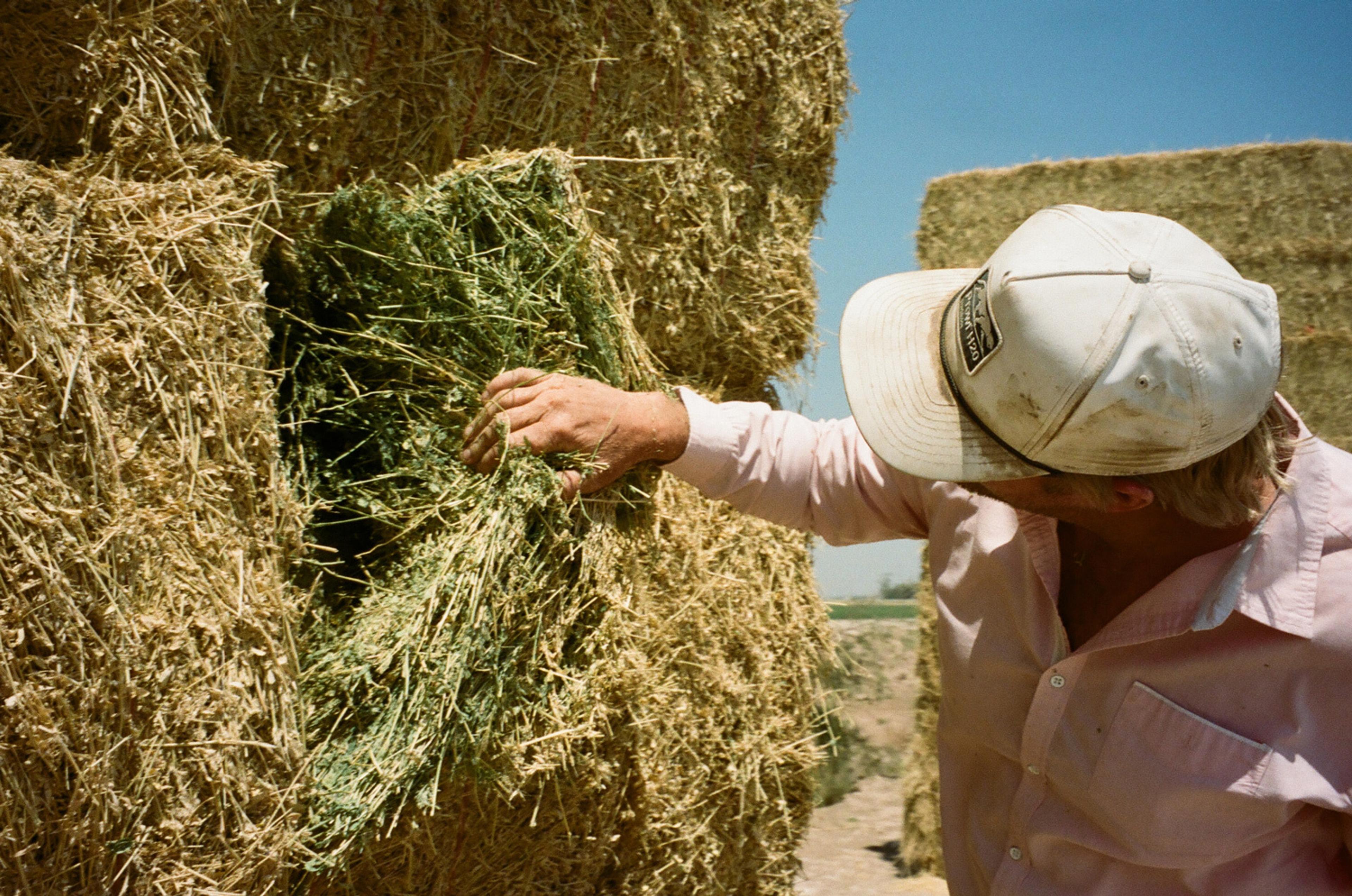
Trevor Tagg with his hay.
After creeping along the border and the All-American Canal that lines it, we head back. “What’s literally a half a mile down the road takes me eight miles to get to because the bridge is closed and has been for 10 or 12 years,” Tagg says. He is vehement that farmers are the most hated people in California. “It’s been a slow burn down the toilet. It’s why I don’t have any peers, any young people. I don’t have any competition in agriculture down here … I’m the youngest person in every meeting I sit in by 20 years.”
When one of the county’s several hundred independently run farms quits the business, Tagg says that newcomers are seldom interested in joining the industry; starting a new operation is extremely cash-intensive, profit margins are slim, and the desert is an isolating, hot environment.
Tagg has just come off what he describes as a two-to-three year produce “bloodbath.” He has many objections to Californian government policy. The cost of labor and gas are more than he’d like to bear. “It’s arguably the most productive farm ground on Earth, because we order water and get it the next day. I just can’t pick up 3,000 acres and move to Texas or Missouri. Tagg cites the cost of labor and other expenses in California as primary roadblocks for his operation and for other local farms.
One such operation, the Spreckels Sugar Company, a 28,000-acre sugar beet plant with a century-long history and payroll of 400 workers, closed down this year. The sugar beets that are in the ground now may be the last ever grown in Imperial County. At the peak of dairy farming in the valley, there were 1,800 dairies; now there’s just one. Local plant closures, transportation fees, and cow-cooling costs influenced these sites to be replaced by dairies in Chino, California; now, those dairies are bygone too. In frustration at the relative profit margins of his Californian industry against that of Silicon Valley, Tagg says, “You can’t eat an iPhone,” talking to me on his own.
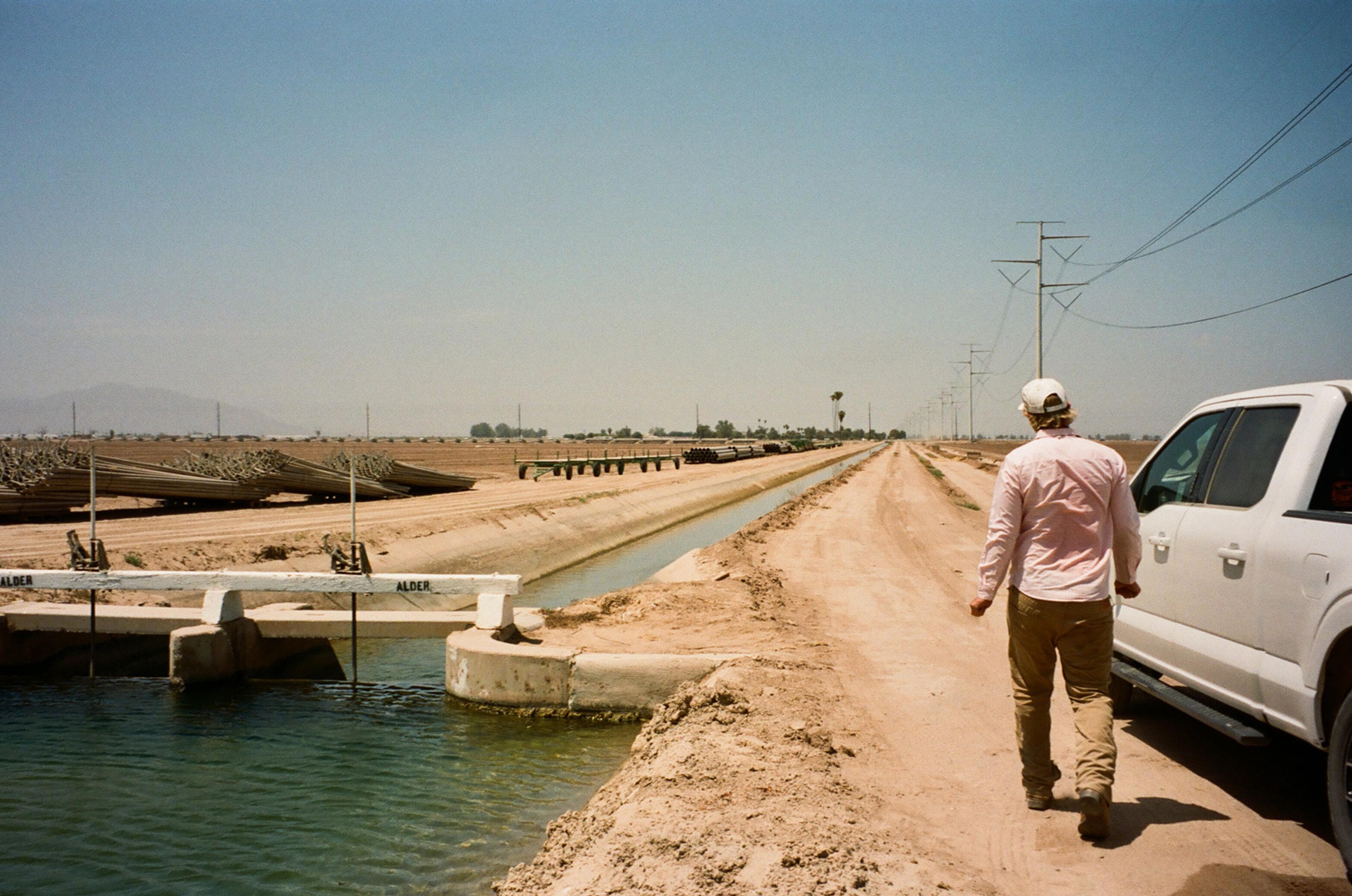
In the blistering heat of the August desert, spending too much time outside of an air conditioned vehicle can quickly lead to heat stroke.
One of Tagg’s first jobs was working for Bryan Ashurst, a fifth-generation beekeeper in the valley. The Ashurst Bee Company was established in 1918 to support the area’s growing agriculture industry. Because North American bee populations are dying at an outsized rate due to neonicotinoid pesticide adoption, parasitic disease, and habitat loss, beekeeping has become a hard business. Now, the average beekeeper simply produces more honeybees to offset this colony collapse. Fifty to 70 percent of Ashurst’s bees will die per year. “You should lose 10 percent,” he says.
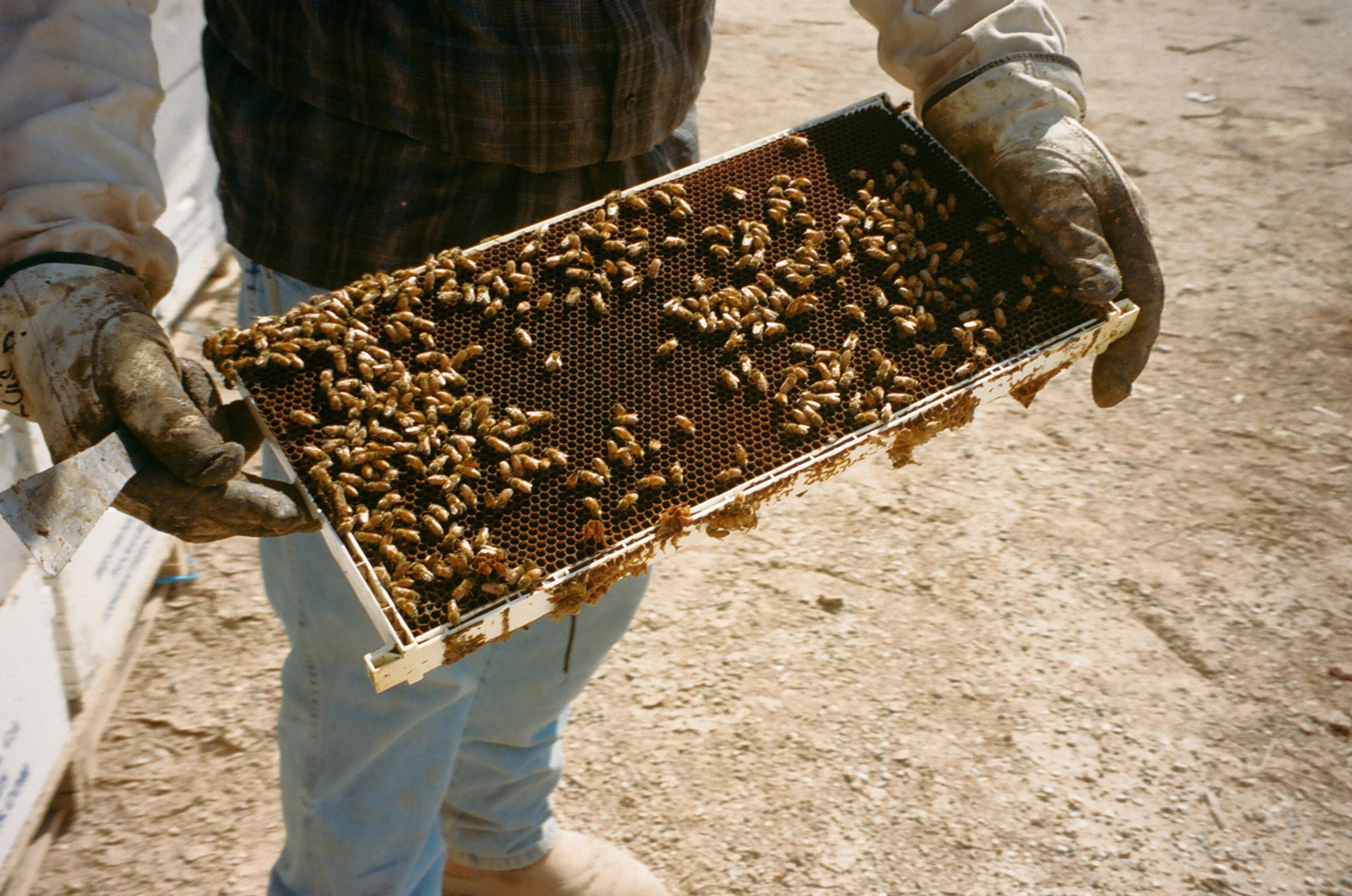
Some of Ashhurst's bees.
As a child, Ashurst and his friends would play in the irrigation pipes surrounding the growing fields. He drives into the fields and shows us the Mullins Pipe, where he earned a scar on his scalp from a childhood dive. He’s remained on this same land at the family beekeeping operation.
For the farmers that grew up in the Imperial Valley on family-owned farms, the past decade has not been simple. Many of these operators say that rising labor costs, regulatory constraints, water restrictions, and an overall rising cost of doing business are contributing to the fear that the Imperial Valley farm business is not delivering local residents the promise of bounty that it was sold on a hundred years ago.
At the same time, the county has become a key player in the national food supply chain: American consumers will still need winter produce (and cows, their hay). These lithium mines, which are slated to line the Salton Sea, 20 miles away from Brawley, the town at the approximate geographic center of farm country,are still in early stages of development.
One of these mine projects, Controlled Thermal Resources’ Hell’s Kitchen, plans to engineer small-physical-footprint, closed-loop mines with nearly no carbon emissions. Unlike open pit mining, CTR’s planned process is one of the cleanest lithium mining proposals in the country, and perhaps the world. Even with the promise of sustainable design, the process would require a modest allotment of water from the Imperial Irrigation District.
In 2020, CTR signed a contract with the IID to provide a 25-year term supply of 40 megawatts of geothermal energy yearly from their yet unbuilt Hell’s Kitchen facility. Even if mines like Hell’s Kitchen have little environmental impact on the valley, the economic conditions created within a region Governor Gavin Newsom once called “the Saudi Arabia of Lithium” are of local concern.
Nobody knows what will happen next.
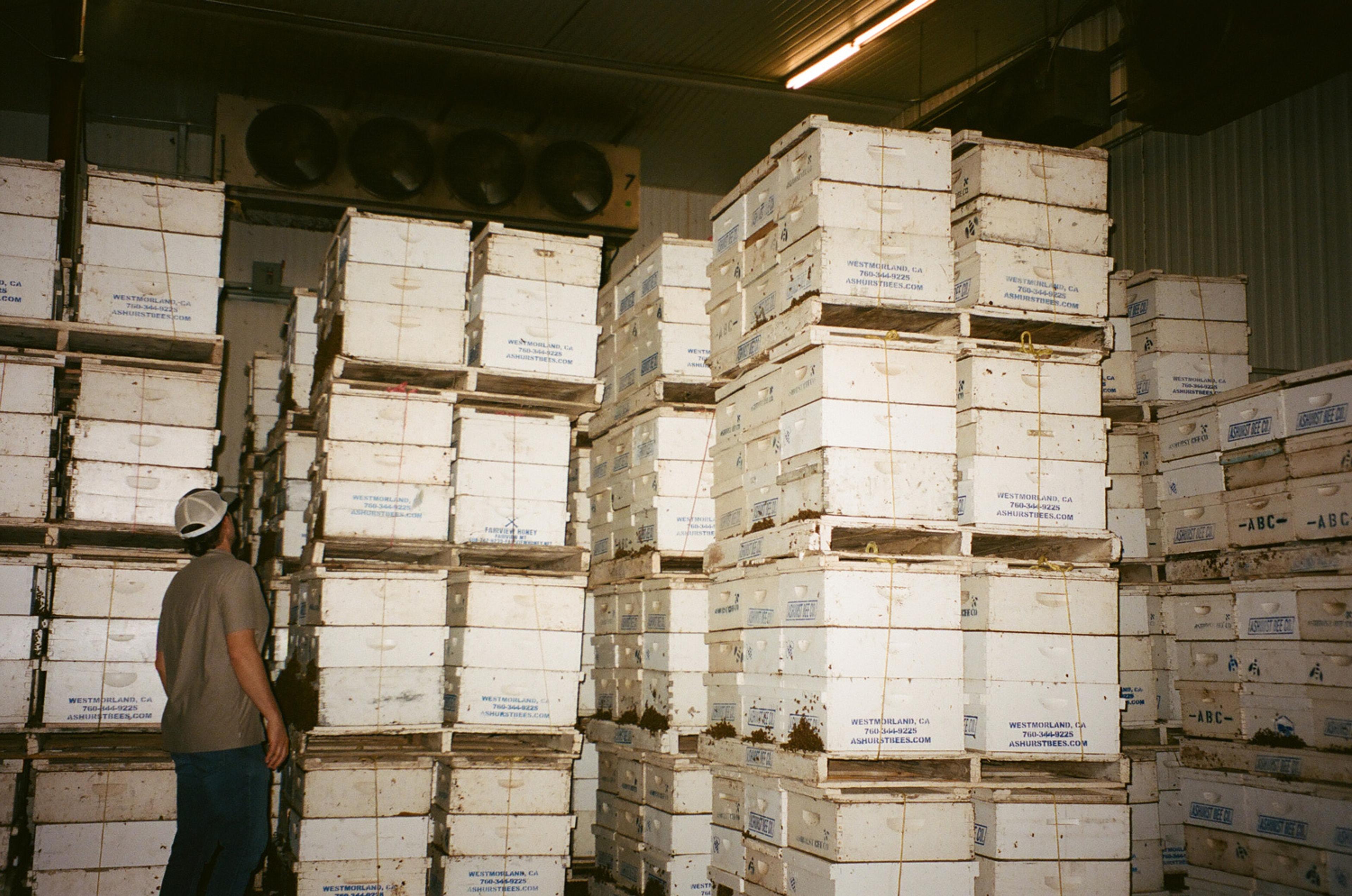
Cold, low-oxygen bee storage offers a “brood break” to slow the spread of parasites.
It must be strange, I think, to spend your life among the lettuce, carrots, onions, and spinach that are destined to end up on dinner tables across the country. Farmers send the product of their labor to such varied locations, but cannot themself move their means of production. As costs continue to punch the sustainability of the farming business down, these farmers struggle with the location of their land. “I guess we’re paying the penalty for being here,” Ashurst says.
On lithium: “Okay, I don’t like it. It worries me a little bit.” In the wake of so many existing challenges, Ashurst’s not sure how the county will react to the new lithium industry. He considers Montana, where he runs another pollination-and-honey operation. There, he says, “You can’t hire locals. They don’t work for you because they either work on their own farm, or the family farm, while [the locals] work in the oil field.” The presence of a new commodity industry in farm country has the ability to quickly impact what are often fairly small local labor markets.
The White Gold Rush
By the bulbous eastern tip of the Salton Sea, I drive three and a half miles down a gravel road to visit an unmarked test site. An oxidized metal structure seated on otherwise blank, unfootprinted desert land, the two brine straws and sole extraction rig looking like a Richard Serra sculpture of a mine, rather than a mine itself. It’s so hot that standing outside for 15 minutes causes my phone to overheat and shut down. (The first time I visited the Salton Sea, in January, the weather was pleasantly warm, and the land was covered in shocking miles of unmanned vegetation. During this winter drive, the Salton Sea’s chemical haze made the body of water look endless. I felt alone enough that I could fall off the edge of the earth into the toxic lake.)
I’ve been invited here by Jim Turner, president of CTR, the developer of Hell’s Kitchen (named after a mid-century Salton Sea dance hall) mining and geothermal energy project, one of three new endeavors to mine lithium in Imperial County. BHE Renewables (a subsidiary of Berkshire Hathaway Energy) and Energy Source Minerals are the other two players in the region. Turner is soft spoken, but he’s grown used to teaching local residents about what’s happening in this corner of the country he’s found his career in. “There’s no reason to bring your bathing suit and go to the Salton Sea,” he says, “so it’s ... [a matter of] constant education.”
Lithium brine enters S-shaped “straws” below the surface of the earth at approximately 700 degrees Fahrenheit and cools to 500 degrees Fahrenheit by the time it reaches the surface.
Every chart that shows the past tally and the future growth of the global demand for lithium displays a comically impressive exponential curve. The transformation of the car market means that now 90 percent of lithium mined is now used in the electric vehicle battery production. Once responsible for a third of the world’s lithium production, the United States is now only responsible for a sliver of the total mined supply; Australia, Chile, and China now export the majority of what’s commercially available. But across the United States, new mining outfits have thrown their hat in the ring to meet rising demand.

Since the 1980s, the region’s lithium brine has been used for geothermal energy, but not mined. Imperial’s motherlode — estimated to contain 127,000 metric tons of lithium carbonate equivalent per year — was discovered underneath the briny, earthen crust alongside the Salton Sea. In one CTR brochure, a terminal proposed project stage claims between 175,000 and 250,000 tons per year are capable of being produced. That’s a greater planned yearly output than what was proposed by Nevada’s Thacker Pass, which boasts that it sits on the “world’s largest known measured lithium Resource and Reserve.” Basically, there’s a hell of a lot of lithium.
The unmarked Hell’s Kitchen test rig lies three miles down an inconspicuous gravel road.
But neither Thacker Pass nor Hell’s Kitchen have yet come into operation. Currently working with a California Entitlement Permit, CTR is seeking the federal permit that will enable them to complete their multi-billion dollar equity raise. The longer the permit process, the bigger the worry.
Despite this, Turner says that he has an excellent relationship with the government’s office. Gavin Newsom has even come to visit. It’s a far cry from Tagg’s understanding of Californian government policy: “a parasitic load on us.” Stellantis and General Motors have already developed working relationships as buyers of the new lithium. Across the United States, the white gold rush has begun.
Pending permitting and subsequent equity raises, CTR’s extraction rig is slated to be a dual geothermal energy and lithium mineral mining outfit. S-shaped pipes pump 700 degree brine to the surface, where the heat energy is converted to electricity. The Hell’s Kitchen project plans to collaborate with the energy developer Baker Hughes to power AI data centers across the country.
Each bundle of 180 “sticks” (the irrigation pipes that run water through fields) is worth approximately $9,000.
These rigs will need a water allotment to function — about 4,000 acre-feet a year. These water batches, Turner stresses, would be reused multiple times in the cooling cycle. Unlike in strict geothermal operations, where the heated brine is not used to make commodity-grade lithium, Hell’s Kitchen will be optimized for lithium production. “When we evaporate water, we’ll grab it, condense it back to a liquid, we’ll use it somewhere else.” But even though the need is relatively small, water in Imperial Valley is a precious resource, and any new claim to it is cause for review.
California, Manifested
In this downward corner of the United States, a new mining industry springing from the ground will likely be a transformative vector for the local environment and economy. The mines, with their promise of well-paying, local-hire jobs, could change the course of economic prospects in the Imperial Valley.
Exactly how things will transform, though, is unpredictable; if past attempts to re-address the Imperial Valley prove illustrative, whatever the intention of change, troublesome externalities follow. The offspring of settlers who came from around the world to find prosperity in the desert now find themselves wishing they could move their land to another state. Canals built to facilitate crop growth overflowed and spawned a man-made pool larger than Lake Tahoe. The Salton Sea’s Bombay Beach was once a waterski paradise for mid-century Hollywood stars; now, it is an asthma-inducing, ecologically crippled ghost town. As the county’s farmers struggle for economic viability, who knows if a yet-unbuilt lithium mine will save things or tear them further down.
In 2024, Imperial Valley agriculturalists produced over $360 million dollars of alfalfa hay and Bermuda grass hay.
But it is certain that these mines will change the story of the Imperial Valley. Gavin Newsom, has already overwritten the valley’s name altogether: “We’re advancing a vision for Lithium Valley that promises to become a global source of critical minerals while also powering a new economic boom for the region.” In a June op-ed, Brawley mayor Gil Rebollar wrote, “During [Newsom’s] last visit, [he] declared, “The future happens here first …” He was talking about Lithium Valley, and he was bold and on point in proclaiming our potential to lead the transition to a greener economy. [But] we cannot ignore what is already here: The invisible people connected by our waning cornerstone agriculture industry.”
In the Imperial Valley’s century-long history of American expansionism, ecological disaster, and resource prospecting, transformation is certain, especially the kind of change that threatens to overwrite local ways of life. The century-long history of commercial farming in the Imperial Valley feels susceptible to being superseded by a new mineral future.
What I know is that the Imperial Valley, of all isolated American counties, contains an extreme capacity for American desire to extract from the land. This manifestive agita pools like water runoff in the ancient Colorado Desert. In this singular 4,500-square mile area, gold has been dug up; geothermal and solar energy have been developed at scale; the food you eat, and, quite possibly, the car you drive, will be indebted to this dirt.
I’m repeatedly told that Imperial Valley farmers don’t like to play around with landowner rights — you can do whatever you want on your own lawn — but it’s clear that the polycrises of the commodities market can make or break the economic sustainability of the whole valley. Even in this untouristed, secretive corner of the Southwest, the needs and interests of others impinge and overlap and collaborate; no person gets to be truly alone.

From the Appalachians to the coastal plains, North Carolina’s farming landscape has been dominated by the expected giants: tobacco, soybeans, corn. A team at North Carolina Agricultural and Technical State University, however, has spent the last decade advocating for the potential of the Tarheel State to adopt a spicy, aromatic root more known in the tropics than the Piedmont.
Domestic ginger production has, historically, not been common within driving distance of the Great Smoky Mountains. Humans first domesticated the fibrous, underground stem in Southeast Asia 5,000 years ago, where it became lauded for its myriad health benefits. Polynesian settlers brought the first cultivators east to Hawai’i as a “canoe crop,” along with other subsistence staples like taro, sweet potato, and coconuts. The archipelago’s moist and accommodating soil produced thousands of tons of the root, until bacterial wilt kneecapped the industry over the past couple of decades.
Even at peak production, however, Hawai’i hardly made a dent in global demand. It now produces mere hundreds of tons a year, connected to a mainland that imports as much as one hundred thousand tons annually (and in a world that consumes as much as five million yearly tons).
Seeing the scale of the potential market, an agricultural cadre at North Carolina A&T set to work. They did so under the guiding hand of Guochen Yang — a man who, for four decades of research, recently got dubbed by the American Society for Horticultural Science as a “HortLegend.”
“When I first started, it was basically one bench in the greenhouse and two rows in a high tunnel,” explained Julia Robinson, Yang’s research technician, lab manager, and “right hand” who also researches black cohosh, a plant native to the region and whose biology serves as a helpful ginger analog. Ten years down the road these modest beginnings have expanded to two high tunnels, studies on what color shade helps encourage ginger’s growth, explorations of its viability in wooded areas, and development of one of Yang’s scientific specialties, known as “micropropagation.”
As a form of tissue culture, micropropagation utilizes small batches of cells from a parent plant to produce genetically uniform flora, often on a mass-produced scale. It’s a wheelhouse that may prove exceedingly useful when trying to instigate a novel agricultural market — especially for a root that could inhabit pockets of mountainous, textured terrain in the U.S. Southeast.
The white-coated world of academic inquiry comes with substantially more guardrails and margin for error than anxious farmers tend to enjoy.
Yang’s “left hand,” meanwhile, has been with him for even longer: William Lashley IV has been part of Yang’s lab for the past 12 years, from some of the earliest days of his undergraduate career, even receiving tuition assistance out of Yang’s own grant money. When colloquially described as Lashley’s “Greensboro uncle,” Yang and Lashley quickly moved to clarify.
“Not ‘uncle,’ that’s a too-little title,” Yang laughed. “Greensboro dad.”
Ginger makes for a fertile field for experimentation. “It’s been a very exciting process to see the research evolve, from the basic questions to where we are today,” Lashley said. For his own PhD, one of Lashley’s objectives has been to investigate how various shades and intensities of light — red, blue, yellow, and green — can impact the growth, yields, and physiology of ginger.
But the white-coated world of academic inquiry comes with substantially more guardrails and margin for error than anxious farmers tend to enjoy. “Even though we are promoting and advocating for this, we try to — as a public institution — make some mistakes before the farmers do,” Yang explained. “You have to really evaluate, because each farm has a different situation: what type of soil you have, what kind of facility, your labor force. It really does need intensive care.”
Translating these insights from the lab to the field, meanwhile, often requires some skilled interpretation. Yang’s former student, Trequan McGee, often provides this critical interface in his work as a horticulture extension specialist — especially in the university’s “Ginger Field Days,” which has hosted as many as a hundred rhizome-curious growers. There, folks like McGee stand by to explain the nitty-gritty details of tending to a novel crop that can fetch as much as 18 dollars a pound, and appear in “value-added products” like teas, candies, ice creams, and even beer.
Another of Yang’s former students, Michael Rayburn, has also been at the front lines of boosting the rhizome’s budding profile. After starting Rayburn Farms as a pumpkin patch in 2014 (with his partner Lauren, also an NC A&T alum), Michael’s work connected him with local brewers whose experimental beer flavors would help kickstart a North Carolina-born model now known as “plow to pint,” in which breweries fill their vats with the harvest of local farmers.
At local farmer’s markets, ginger had long gone unappreciated as a viable crop in its own right, often serving merely as an asymmetric splash of color on vendors’ tables.
At local farmer’s markets, ginger had long gone unappreciated as a viable crop in its own right, often serving merely as an asymmetric splash of color on vendors’ tables. And as Rayburn’s growing rolodex of brewery contacts worked to spice up their beverages with home-grown herbs, he slowly learned to navigate the knobby crop’s logistical idiosyncrasies from the ground up (or down, rather).
“It’s more labor-intensive in both weeding and harvesting,” Rayburn cautioned. “You can’t weed it with a hoe, because the rhizomes don’t grow in a predictable way: They go in all different directions, and you can easily nick them, so you kind of have to get in there and hand weed. That takes time.”
Ginger’s versatility, however, may still prove ideal for smaller, resourceful farmers: a small footprint per plant; flesh that can be used for candies or tea; and sap that can be utilized by everyone from breweries to chocolatiers. On a commercial scale, meanwhile, Rayburn suspects that larger Southeastern farms might eventually be able to compete with international competitors like Brazil and Peru, even with a shorter growing season. He is quick to point out, however, that ginger should not be viewed as a “new golden ticket,” as many novel high-value crops can sometimes be portrayed.
“With a crop like ginger, I wouldn’t suggest someone to go and plant any large acreage [without first] getting your hands dirty. Get some experience, get familiar with it, before you expand that production,” McGee said. “But what we’ve seen is that, overall, it’s a pretty resilient crop. It really has adaptability.”
That’s not to say that the region doesn’t face its own unique challenges. In the wake of Hurricane Helene stressing the soil (and traumatizing local farmers), Rayburn almost declined to plant any ginger at all this year. Yang’s lab, however, stepped in to provide him with enough seed that Rayburn can comfortably supply a local soda company, Waynesville Soda Jerks.
Even a decade into his ginger journey — and with Lashley having just defended his thesis, as the first ever PhD in the university’s horticulture program — Yang and his team feel like they are only just getting started, both in their research and ginger’s Tarheel potential. “There are so many scientific questions that need to be answered: diseases, pests, nutrient level, irrigation and watering, phytochemical context under different lighting conditions. All those details,” Yang explained.
“Even though I’m old, I’m very active and very sharp,” Yang declared. “For ginger research, I will not change direction, because there are so many questions I can see that need to be answered.”

When a rancher’s cow dies in southwest Montana’s Madison Valley, Linda Owens is usually the one they call.
A rancher herself, Owens has lived and worked in the valley the majority of her life, raising cattle on her family’s farm outside of the small town of McAllister. In 2017, she joined Madison Valley Ranchlands Group, a local rancher-led nonprofit, as a project director.
The project she leads? It’s a carcass pickup and composting program that removes dead livestock from ranches in order to mitigate attacks from grizzlies, wolves, and mountain lions.
Before the program, ranchers would dispose of any dead animals (an inevitability of ranching) in boneyards, where they would slowly decompose. But these boneyards are smelly and attract vultures, scavenging critters, and large carnivores, too.
This issue has grown in recent years as grizzlies and wolves repopulated Western Montana due to protection through the Endangered Species Act and wolf reintroduction to Yellowstone National Park. Over the past three decades, their numbers have slowly but surely ticked up, requiring some ranchers to implement new management strategies for their operations. That’s where Owens’ program comes into play.
“The carcass pickup is a proactive tool,” Owens said. “What we’re trying to do is not draw [grizzlies and wolves] in and make them feast on something that, even if it’s just scavenging, it’ll get them in trouble.” If the predators start hanging around boneyards and attacking livestock, it could mean their death if a rancher has reason to think they’re a threat. In Montana, it’s legal to shoot a bear if it is attacking or threatening livestock.
That’s the trouble Owens wants to keep grizzlies and wolves out of.
When she gets a call for a pickup, Owens usually shows up same-day to the ranch with a trailer and a winch to haul the carcass out. The cause of death varies, but this year she’s picked up several cows who were struck by lightning.
After loading the carcass into the trailer, which is lined with a biodegradable spill mat to catch any seeping carcass fluids, Owens transports them to a two-acre composting facility surrounded by electric fencing to keep scavengers out. The carcasses (and spill mat!) are covered with soil, manure and straw, sprayed with water, and left to decompose for several months. Unlike the boneyards, there’s hardly any smell, which Owens said helps keep the neighbors happy.
The service is free to ranchers, paid for by private grants from places like the National Fish and Wildlife Foundation and Vital Ground Foundation. Owens takes donations, but her perspective is that the service should not come at a cost to ranchers. “I am a firm believer that my ranchers should not be paying for this,” she said. “We are not the ones that asked for the wolves and the grizzly bears.”
Some History
Throughout the 19th and 20th centuries, wolves and grizzlies were extirpated from much of the West with the introduction of cattle and loss of native prey animals like bison and elk.
Ranchers became accustomed to ranching without these large carnivores on the landscape, so their return has been a difficult transition for some. Wolves have been a particularly contentious topic for Montana and other states like Colorado, where they were reintroduced through a ballot measure in 2023.
Matt Barnes, a wildlife scientist who works with organizations like Northern Rockies Conservation Cooperative to help ranchers implement predator management, credits the ongoing debate to the legacy of cowboy culture in the American West.
“I am a firm believer that my ranchers should not be paying for this. We are not the ones that asked for the wolves and the grizzly bears.”
“If you’re the descendant, either literally or figuratively, of the pioneers, the fact that we are now restoring the very species your ancestors worked so hard to get rid of, probably feels like a repudiation of your cultural history,” Barnes said.
The settlement of the West, Barnes said, is often framed as a heroic epic of scrappy young cowboys making a life for themselves on the range and removing predators in the process. But that narrative leaves out the wholesale removal of native wildlife and widespread ecological destruction.
As wolves and grizzlies repopulate their historic habitat, efforts to mitigate conflict with livestock make up the latest chapter in the long story of ranching in the West. While carcass removal won’t ever be a silver bullet to end livestock depredation — experts say there will likely always be some amount of it when ranching in carnivore country — it’s one of the most effective strategies ranchers can employ to protect their livestock.
The Challenges
But getting these carcass removal programs off the ground is not always easy.
In the Madison Valley, it took several years to get approval from county health officials to build their composting facility. Even after they got the green light, finding a location for it proved to be tricky. In the end, they built the facility on private land offered to them by Matt Moen, owner of Bar MZ Ranch. In 2018, they finally started picking up and composting carcasses.
“Departments of health or environmental quality can have some pretty strict laws that make it really challenging to set up these carcass composting sites,” said Matt Collins, the Working Wild Challenge manager at the non-profit Western Landowners Alliance. “Just years and years of red tape and different permitting to get them going.”
Seven years into the program, Owens of the Madison Valley Ranchlands Group said county officials have finally come around to the idea of the composting facility. She’s helped assuage some of their concerns over disease by getting the compost tested twice per year for pathogens like E. coli, salmonella, and brucellosis. Since they started operating in 2018, they have not yet removed the compost to be used anywhere outside the facility.
In the Blackfoot Valley, about 175 miles north of the Madison Valley, the non-profit Blackfoot Challenge has led a similar program since 2003 with great success: About 90% of the valley’s ranchers participate. Their pickup program is also free to use, but runs in partnership with the Montana Department of Transportation and U.S. Fish and Wildlife Service. That means their composting facility also takes roadkill.
“The fact that we are now restoring the very species your ancestors worked so hard to get rid of, probably feels like a repudiation of your cultural history.”
But with the rise of chronic wasting disease — a fatal neurological disease affecting deer, elk, and moose — some worry the compost the facility produces could spread the proteins that carry the disease. The state has stopped using their wildlife compost to grow roadside vegetation because of this concern, according to the Blackfoot Challenge.
“In one sense, integrating the wildlife and livestock compost can be helpful because these communities have a lot of roadkill,” Collins said. Removing roadside carcasses also protects scavengers like golden eagles and vultures from getting hit by cars as they feast. But limiting the compost pile solely to livestock has alleviated chronic wasting disease concerns. That’s the system Owens has going, and so far it’s working well.
During her first year in operation, Owens wrote out objectives for the program. She hoped for long-term project viability through partnerships with a diverse group of agencies and people, and a healthier and safer landscape for both animals and people.
When asked if she thinks she’s met these objectives yet, Owens was hesitant to say absolutely yes or no. To her, it’s an ongoing process, but a gratifying one. Even if just one cow or one wolf is saved because of the program, she said that makes her work worth it.
“It takes a lot of time, but I feel I’m actually providing something that [the valley] can see a benefit from,” Owens said.

Late one night on a trip with his parents to Kansas City, six-year-old Tony Troia encountered a couple of strange satchels lying on the hotel kitchenette counter. Confused, he asked his mom what he’d found. It’s tea, she replied. “‘You put it in hot water and drink it.’”
So he did.
The next thing Troia knew, he had taken every chair in the suite and lined them up like a playground obstacle course, clambering over backs and under legs with inexhaustible energy. “I remember distinctly being like, ‘Tea is crazy!’” he said with a manic grin. “I’ve just been chasing the dragon ever since.”
The wiry, bushily bearded Troia still exudes a caffeinated aura as he presents a cup to Offrange. He pursued his childhood feeling all the way from his Nebraska hometown to North Carolina, where he eventually found a way to get high on his own supply. On an acre of forested southwest-facing slope outside Asheville, he and business partner Amelia Stuetzel have been growing, harvesting, and processing Camellia sinensis as Red Sun Tea since 2022.
The result is delightful — a vibrant, reddish-brown brew with deeply toasty robustness. And it fetches a premium price: $16 per ounce, compared with about $1.25-$3 per ounce for most grocery store blends.
In the broad scope of the agricultural economy, however, Red Sun and the handful of other American growers who have taken up tea are curious outliers. The U.S. imported over $550 million of tea in 2024, according to the U.S. Department of Agriculture’s Foreign Agricultural Service; USDA doesn’t even bother to track domestic tea production. (Troia said he raises about 25 pounds per year, with plans to eventually reach 125 pounds.)
As its scientific name suggests, tea originated in southeastern China, and the vast majority of tea production takes place in tropical or subtropical regions such as Sri Lanka and Kenya. Although Americans have experimented with the crop since colonial days, particularly in the Southeast, concerns over climate and labor costs kept it from finding a foothold. The only substantial U.S. tea farm is the 127-acre Charleston Tea Garden in South Carolina, the remnant of a failed experiment by the Lipton Tea Company.
Yet American consumer interest in tea continues to grow: consulting firm Grand View Research projects the U.S. market to increase by 6.2% annually through 2030, outpacing coffee. Roughly 86% of that is black tea and 75 to 80% is served iced, according to the Tea Association of the U.S.A., but hot tea is becoming more popular, particularly among millennials and health-conscious consumers. And while traditional tea-growing areas around the globe face increasingly hostile weather due to climate change, some researchers are now revisiting domestic possibilities for the crop.
A domestic tea industry might end up looking closest to that of Japan.
There’s been particular momentum in Troia’s own North Carolina. He sourced his plants from the Camellia Forest Nursery in Chapel Hill, which, over the past few decades, has become the country’s premier provider of tea starts. And earlier this year, the state’s agriculture department awarded over $218,000 to scientists with North Carolina State University working on tea.
The academic research follows two main tracks. The first, immodestly titled “Carolina Super Teas,” aims to breed plants suitable for the American South. With the right varieties in hand, farmers and gardeners could diversify their crops, develop specialty markets, and lay the groundwork to scale domestic production in the event of disrupted imports.
Tom Ranney, a professor of horticultural science at NCSU, said the key trait that needs improvement is cold tolerance. Many commercial tea cultivars, he explained, start dying off around 15 degrees Fahrenheit, but parts of the North Carolina mountains where he’s based have hit 0 degrees for five years in a row.
To that end, Ranney’s research specialist John Nix has been casting a wide net for existing Camellia varieties with potential to tough out the cold. He’s sourced tea plants from the mountain highlands of Korea and the shores of the Black Sea in Russia, bringing them back to the U.S. and crossing them in search of ever-greater hardiness.
Early results have been promising, with several new hybrids showing full hardiness at 0 degrees. Further breeding will focus on ensuring their caffeine content and flavor remain commercially viable. Ranney notes that in citrus breeding, cold tolerance can be linked with sourness, but he hasn’t yet encountered a similar issue with tea.
(Nix and Ranney have also been experimenting with tea’s Western Hemisphere cousins. They say crosses between yaupon, a caffeinated plant native to the U.S., and South American yerba mate could someday yield a “Carolina Mate” with the vigor of the former and flavor of the latter.)
The other research push, led by extension specialist and assistant professor of horticultural science Emmanuel Torres, is focused on honing in agricultural practices for American tea production. He said the answers to basic questions like when to propagate tea plants, how much fertilizer to use, and what pests pose problems vary between existing tea regions, and Southern farmers need more data before they consider taking a risk.
Domestic farmers are likely to struggle to make headway in a market dominated by imports.
With those best practices in hand, Torres suggests, a domestic tea industry might end up looking closest to that of Japan. The country has niches for both larger-scale, conventional tea farming and smaller-scale, boutique operations that blend sales with agritourism.
“Something that we notice in Japan is that they use the tea farms as a way to not only sell the tea, but bring people to the farm so they can experience how to make their own tea, how to do tea tastings,” Torres explained. “It becomes an experience that the farmer is going to charge for, and in those settings, the general public likes the idea of a farm that is more sustainable and organic.”
Torres acknowledges that he and his colleagues aren’t looking into the economics of American tea at this point. But for the time being, domestic farmers are likely to struggle to make headway in a market dominated by imports.
That’s true even with smaller companies that pride themselves on careful sourcing. Jessie Dean is the founder and CEO of Asheville Tea Company, which highlights the Southeast origin of the ginger it works into its “Mountain Chai” and the chrysanthemum flowers in its “Jasmine Gold.” But its black and green teas come primarily from India and Nepal.
Dean said she’s looked into buying U.S. teas, but prices have been simply prohibitive. She buys direct from organic, regenerative growers abroad, paying about $15 per pound — a good deal more than the $4 per pound she’s seen for some conventionally grown bulk tea, but far below the $100 or more per pound she’s been quoted by American growers. And while her demand of 1,200-2,500 pounds per year is small compared with national tea companies, it’s still far beyond the current capacity of niche U.S. producers like Troia’s Red Sun.
Still, Dean said she’s open to the possibility as the market evolves. She notes that her customers have started asking if U.S. tea is possible. And as a connoisseur, she’s eager to taste the new American way. It’s exciting, she said, “that we have this opportunity to learn and develop what the terroir for tea might be like here in the U.S.”

William Harrison tells a quaint story about a pink-hued mineral. In 2008, the research director of the Michigan Geological Repository for Research and Education got a call from an intern at a company that had built, then sold, a mine in the western part of the state. Did Harrison want their historic collection of core samples? Harrison turned up in his too-small pickup to find 4,000 boxes filled with cores drilled over a mile deep from a mineral deposit known as the Borgen Bed. Once (arduously) stored, the boxes were visited by representatives of another would-be mining outfit. Scientific analysis revealed that the samples were replete with high-quality potassium chloride. When processed to remove impurities, this becomes potash — a fertilizer rich in potassium, which is a primary nutrient for plant growth. And thus, the Michigan Potash and Salt mining company was born.
Certain members of the farming community expressed elation over the venture. Agriculture publication FarmProgress enthused over the company’s proposed operation for its “potential to reduce imports of potash, improve the nation’s trade balance, create jobs, greatly increase the state’s tax base, improve the rural economy, and provide farmers with an easily accessible U.S. product”; CropLife deemed it essential to national security. Michigan Potash’s new plant was supposed to come online sometime around 2017, provide a few hundred jobs, and produce over half a million tons of potash a year (eventually upgraded to 1 million tons). Nine years later, construction has yet to begin.
But a March 2025 executive order from the White House designating potash a “critical” mineral; a promise of some $1.4 billion in federal and state loan guarantees, tax-exempt bonds, and subsidies; and a sudden flurry of expedited permits means that this mining operation might come into being after all. It’s a possibility that some, like Ken Ford, a forester and member of action group Michigan Citizens for Water Conservation, are less than thrilled about, because of the potential for the mine to pollute drinking water and impact wildlife. “People around here want to know exactly what’s going on,” he told Offrange, and they don’t like what they’re hearing.
“Simply replacing foreign-made inputs with domestic ones only partly addresses the issue.”
U.S. farmers use 4.75 million tons of potash fertilizer a year, mostly on corn and soybeans, to help with photosynthesis, starch formation, root growth, and other plant functions. Not every farmer believes potash mining on American soil or elsewhere is worth the expense, effort, and environmental cost. “Nobody that values soil as a regenerative resource — a capital investment — who respects the land, would use refined potash on soil, any more than they would use urea in production farming,” one California farmer told Offrange.
Lara Fornabaio, a food and environmental lawyer at the Columbia Center on Sustainable Investment, agrees. “Simply replacing foreign-made inputs with domestic ones only partly addresses the issue,” she said. “Inputs remain costly, and over time their impacts on soils and ecosystems can actually undermine the very productivity farmers depend on.”
According to a new USDA report on the fertilizer market, the U.S. is “heavily dependent on imports to meet potash fertilizer demand.” The small amount of domestic potash we use comes from mines in New Mexico and Utah, and our reserves of the stuff are around 220 million metric tons. We export zero potash. The remainder is imported mostly from Canada (75% in 2021, now subject to a 10% tariff), Russia (despite the war in Ukraine), and Belarus (currently sanctioned).
Michigan Potash’s founder, Ted Pagano (who did not respond to Offrange’s requests for comment), told the Kalamazoo Gazette back in 2013 that his plant would produce “a Michigan product for Michigan farmers that would dramatically reduce the expensive transport costs on the more than 300,000 tons of potash consumed in our state annually.” In the intervening years, another 700,000 tons has apparently found an eventual buyer in Illinois-based food processor ADM, according to Forbes.
Pagano also insisted to that outlet that his mine would be virtually imperceptible on the ground, an idea that makes Ford balk. The operation has leased 14,500 rural acres, about 80 of which are earmarked for the mines themselves, and the refinery. A neighbor was reportedly told by Pagano himself, “You’re going to smell it, you’re going to hear it, and in fact, you’re going to see it.” Transporting potash away from the plant — which will be sited amid 50 pristine wetlands — will require, by the estimate of one local county’s road commission, about 80 round-trip semis a day, “roaring through our peaceful little neighborhood,” said Ford. This means no one in the community is a “real happy camper.” In fact, Ford’s organization petitioned the U.S. Environmental Protection Agency’s oversight body, the Environmental Appeals Board, to review six permits that it believes were granted to the company without proper environmental review.
Steven Emerman is a hydrologist and mining consultant based in Utah. He said that solution mining, which is what Michigan Potash intends to use in its operation, is, “on the scale of mining operations, getting toward the more benign end. That doesn’t mean there’s no problems.” Water — in this case, almost 2 million gallons a day, drawn from an aquifer separated by only 170 feet of clay and sand and gravel from another aquifer that supplies drinking water to two counties — is pumped into the ground to dissolve potassium rock. The resulting salty solution is pumped back up and the water is evaporated; what’s left behind are potash crystals. In the case of Michigan Potash, any waste, known as tailings, would be injected deep underground via disposal wells, the likes of which have a habit of leaking.
Emerman’s worried that pipelines transporting corrosive brine, which have a high failure rate, could effectively poison drinking water. “Do you actually have a safe route where a rupture is not going to destroy anyone’s water supply? What rivers are you going to cross? That’s all of what should be in an environmental impact study,” he said. Michigan Citizens for Water Conservation’s petition to EPA alleges that the agency’s environmental review was inadequate to protect community water sources; since then, EPA confirms the permits for the company have been withdrawn. MCWC’s counsel hopes this will trigger a new application and review process, which EPA declined to comment on.
Emerman’s also concerned about the ground sinking as material is extracted, known as subsidence. According to Harrison, potash will be taken from a depth of 7,600 feet, where “the structure of the earth is much more stable.” Countered Emerman, “If someone says there’s no subsidence, where’s the report, where’s the study? And if there’s no report, then it’s just gossip. It’s a rumor.” The materials supplied by the company are unpersuasive, he said. Ford fears that subsidence could cause the lower aquifer, which contains salts and arsenic, to leak its contents into the drinking-water aquifer above.
Emerman has greater concerns over another planned potash mine in a proposed wilderness area and critical bird migration stop in Western Utah. Similar to Michigan Potash, Peak Minerals has been trying to launch its mine for over a decade, on the Sevier Playa. Its website promises a “positive environmental impact,” although it plans to use a destructive method of brine mining, in which deep trenches are opened up and filled with fresh water to create a potassium chloride brine, which then evaporates in ponds. Similar mines contain waste behind earthen dams that have a history of failure, with devastating environmental results.
“This is very, very much a surface-disturbing operation,” said Hanna Larsen, staff attorney at the Southern Utah Wilderness Alliance. The plan here is to extract increasing tons of potash over 50 years, starting at 215,000 tons a year and eventually hitting 474,000 tons. A representative of Peak Minerals told Offrange that intended purchasers of their potash include specialty crop farmers in California and the Pacific Northwest.
Emerman worries about the company’s consumption of surface water in an arid area, and how that might affect the surrounding ecosystem. The Bureau of Land Management’s own environmental analysis found that the mine would worsen dust pollution in the region and decrease aquifer water levels — although, according to Peak Minerals’s spokesperson, this analysis also showed improved aquifer health, expanded wetlands and riparian habitat, and support of wildlife during mining operations. But groundwater pumping will have “much longer-term impacts far beyond the life of the project,” Larsen countered.
“You’re going to smell it, you’re going to hear it, and in fact, you’re going to see it.”
Larsen is spearheading a lawsuit against BLM for its failure to conduct an updated environmental analysis after the company amended its mining plan in 2025, and for the original environmental analysis it conducted in 2019, which she calls arbitrary, capricious, and in violation of the National Environmental Policy Act.
“I think it’s that attitude of, this has to happen now, it’s got to happen quickly, President Trump says so, so we’re going to do it,” Larsen said. (In an email, a BLM spokesperson said the agency would not comment on litigation matters.)
Peak Minerals claims it will create over 200 jobs during its construction phase and 175 jobs thereafter. Larsen is skeptical. “Milford or Delta would be the [very small] towns that people would be living in if they were gonna go work on this. It’s pretty far from those towns” — over an hour’s drive in each instance — “so I don’t know whether it would have economic appeal for people to pick up and move to these areas,” she said.
Many experts are wondering how to balance what Farm Bureau and related organizations are saying — that we need to boost American potash production to defray costs to producers — with community and environmental needs. Omanjana Goswami, a food and environmental scientist with the Union of Concerned Scientists, points out that, as a nutrient, “potash has no replacement or alternatives in nature.” But its manufacture comes with enormous environmental costs. Consequently, she’s urging farmers to reduce reliance on potash by “adopting practices that build soil health and improve the ability of soil to sequester nutrients naturally.”
Similarly, CCSI’s Fornabaio advocates for farmers “shifting toward less intensive — and, where possible, regenerative — practices [that bring] multiple benefits, including lowering farmers’ costs for fertilizers and other agrochemicals.” It’s even a concept supported (at least on paper) by one branch of the Farm Bureau, in Iowa.
Emerman’s idea for a different (if unlikely) model involves a collective of farmers that agrees to build a potash mine on their collective land. “We’ll get the benefits, we’ll assume the risks. That would be a utopian idea, okay, but that would be the ideal,” he said.
Because as it stands with these mines, he said, farmers and other community members are being forced to assume all the risks while the companies reap the benefits. “Is it really that simple that potash from a [U.S.] mine is going to supply what a local farmer needs at a cheaper price than he would have got it from Saskatchewan?” Emerman asked, citing the case of the Oak Flat copper mine, which is being fast-tracked to produce copper concentrate destined for export to China. “What’s American about that?”

Like most farmers, Jason Amundsen spends a lot of time thinking about water.
Amundsen, who produces berries and pasture-raised eggs on a farm half an hour outside of Duluth, Minnesota, has experienced inconsistent moisture in recent years: In 2023, his land suffered a drought, though lately it’s had too much rain.
Through his reading, he knew water scarcity didn’t just affect him. So in 2022, he wrote the college of engineering at the University of Minnesota Duluth with a question: “Can you take the power of a car battery and make water?”
For a liquid, water is strangely inflexible. The proportion of global water that’s fresh and easily accessible is tiny, and competition for it is increasing, as demand rises due to population growth and industrial activities.
Yet no industry is thirstier than agriculture. Roughly 70% of freshwater used globally goes to agriculture, depleting aquifers faster than they can be replenished. Meanwhile, for the vast majority of farmers who rely on rain, climate change is driving longer and more intense droughts, spurring reliance on irrigation — and crop failures.
This has consequences for billions of people worldwide: A 2024 report estimated that in regions responsible for half the world’s food production, water storage (reserves either on or beneath the earth’s surface) is projected to decline sharply by 2050.
But now, a growing number of farmers like Amundsen — who is developing a low-power, small-scale system (hence the car battery) that can be replicated for other farmers — as well as researchers and entrepreneurs, are investigating ways to pull water from the atmosphere to provide for an agricultural sector facing catastrophic water shortages.
“We’ve gotten really good at moving surface water, and really good at treating wastewater to irrigate crops, and even desalination of oceans to irrigate,” said Paul Westerhoff, an environmental engineer at Arizona State University. He’s also the president of the International Atmospheric Water Harvesting Association, which was established this past summer as a way to coordinate the burgeoning industry. Atmospheric water harvesting, he told Offrange, is a “more intentional way” to take water out of the air.
The approach faces hurdles, from high costs to energy intensiveness. But proponents say the risk of water shortages — and the potential for profit, with the atmospheric water harvesting market already valued at more than $2 billion a year — make the prospect worth pursuing.
If atmospheric water harvesting sounds familiar, that’s perhaps because it’s a staple of science fiction. In “Star Wars,” Luke Skywalker’s adoptive family ekes out a life as moisture farmers, sucking water from the dry desert atmosphere of Tatooine. In Frank Herbert’s “Dune,” characters wear suits that harvest precious drops of moisture from the air.
Atmospheric water harvesting on this planet takes advantage of the earth’s hydrologic cycle, whereby water travels from the atmosphere to the surface and back again.
The atmosphere has more water in it than all the rivers of the world combined.
In between bouts of evaporation and precipitation, water hovers in the atmosphere for about 10 days. “The atmosphere has more water in it than all the rivers of the world combined,” Westerhoff said. “There’s a lot of water and it’s turning over pretty quickly.”
That volume (roughly 3,100 cubic miles of water at any given time) makes it a nearly inexhaustible resource. And unlike draining an aquifer, tapping into an atmospheric source — say, to grow plants — doesn’t remove water for an extended time; instead, water absorbed by those plants is released back into the atmosphere as they grow, maintaining the cycle.
Harvesting that water takes three forms, Westerhoff said. One involves capturing water from fog and dew, using nets or other surfaces to harness water droplets. This method has a long history — though it’s being updated with high tech materials — and works in coastal and mountain locations (such as the Canary Islands). But because this method requires a soggy atmosphere, it isn’t effective everywhere.
Another involves devices that use condensation, akin to household dehumidifiers, where warm air is sucked in and run over a cold surface. Removing the heat condenses the water, turning it into water droplets that can then be used for drinking water and other purposes. (Crucially, though, a regular dehumidifier does not produce water that’s safe to drink.)
The third type — “the one that’s really been changing the landscape over the last 10 years,” Westerhoff said — uses desiccants (like the little bags of silica found in some food and clothing packaging) to absorb water from the air, and expel it again when the desiccant is heated up.
Amundsen has been exploring an option that uses devices similar to household dehumidifiers.
Working with the University of Minnesota Duluth and the University of St. Thomas in St. Paul, Amundsen is prototyping a device resembling a mini fridge, which uses a power source — either car batteries or solar panels — that’s small enough to be moved around easily to a field or an orchard. There, it can produce up to 45 liters of water from air a day, at a relative humidity level comparable to that of New York City. “Our approach to solving the problem is, you know, how do we make this small? How do we make this portable?”
Other organizations are trying the condensation-based approach at a larger scale. For the last decade, the Moses West Foundation, founded by a former army captain, has been working with units that can harvest up to 5,000 liters a day, for military deployments and communities facing water crises, such as Flint, Michigan, as well as in regions affected by natural disasters like Hurricane Maria.
Using solar power, these machines pull moist air out of the environment, pass it over cold steel, and filter the resulting water to make it drinkable.
“The tech is not all that complicated,” chief business officer Colin Hutzler said. “I think [atmospheric water harvesting] is the only long-term solution for the current water crisis, which is getting worse by the day.”
“Clean water from air… As a reasonable person, anyone would hear that and say that’s crazy.”
The foundation’s current focus is drinking water, but Hutzler said there’s room to expand. “Agriculture is huge for us,” he said, particularly in vertical farming (though they’re not yet working in conventional agriculture).
“Clean water from air… As a reasonable person, anyone would hear that and say that’s crazy. But it’s been done and it is being done and it will continue to be done, and the tech is only getting better.”
In Nevada — currently experiencing the worst megadrought in 1,200 years — a startup called WAVR Technologies is pursuing the desiccant-based model, using an approach inspired by Australian tree frogs, who absorb water through their skin rather than drinking. The process draws ambient humidity through a membrane called a hydrogel, and stores that water in a liquid salt solution until it’s released by applying heat.
Rich Sloan, WAVR co-founder, said the approach works down to 10% relative humidity, which is drier than the Sahara Desert. Currently, the system is producing just a single liter per day, though the company is in the process of engineering 10,000-liter-a-day units.
Sloan said the company is targeting industrial users of water, including within agriculture, as they wanted to focus on applications that will have the greatest impact on water usage. In agriculture, the most likely application would be in processing food and other agricultural products, where waste heat from a processing facility can be used to help extract water from the salt solution, driving costs down.
“Agriculture is extremely cost-sensitive. Margins are already stressed. So we think that a breakthrough approach like ours moves us closer to economic feasibility, and therefore hopefully proliferation of this incremental source of water.”
Anjali Mulchandani, assistant professor in the department of engineering at the University of New Mexico, has analyzed the economic viability of a dehumidifier-like system for atmospheric water harvesting. In her analysis, atmospheric water harvesting can be cheaper than bottled water, though it’s orders of magnitude more expensive than desalinated water.
Ultimately, the technology is not complicated, Mulchandani said. It’s the power to run it, and the conditions it’s deployed in, that determine whether it’s viable.
“To me the real-world equation questions are, like, reasonably what climates can you do this in? Reasonably where does your power come from? And then what will your water quality be?”
Mulchandani said she could see atmospheric water harvesting being used in agriculture, but the cost of the water is so high it would be a tough sell to farmers.
But farmers like Amundsen still see potential.
He’s started offering the device to farmers across the country to test (and is seeking more farmers willing to give it a spin), though he stresses that they’re still at an early stage. But with the specter of catastrophic water shortages looming ever closer — the Global Commission on the Economics of Water projects that freshwater use will exceed supply by 2030 — the time to try something different is now.
“None of this is proven,” Amundsen said. “But we think we’re holding out a solution.”

When whispers of lab-grown, cell-cultivated meat first hit the media in 2013, a clash between the livestock industry and food system reformers was widely anticipated.
More than a decade later, that clash is unfolding — remarkably, even before lab-grown products have reached grocery store shelves. On May 20, livestock powerhouse Nebraska became the sixth state to preemptively ban the sale of cultivated meat.
Nebraska joined Florida, Alabama, Mississippi, Montana, and Indiana as states that have enacted lab-grown meat bans. Florida was the first to pass such a law, and in several cases, companies like UPSIDE Foods already filed lawsuits challenging these restrictions on constitutional and commerce grounds.
Nebraska Governor Jim Pillen, a Republican and hog farmer, framed the law as a measure to “protect and preserve our state’s vital ag industry as well as our consumers” adding that such food products are “unproven, dishonestly labeled.”
Yet many Nebraska beef producers reject a need for legislative protection, believing livestock can go toe-to-toe against their petri dish counterparts in both sustainability and consumer preference. Statewide industry advocates like the Nebraska Farm Bureau, Nebraska Cattlemen’s Association, and Nebraska Pork Producers have all indicated they do not see such products as any real competitive threat.
While laboratory meat products are indeed made from real cattle cells, they give pause to many. (It’s noteworthy that nearly 49% of Americans say they’re eating more fresh, minimally processed food and 80% check processing levels before buying.) Creating cultivated meat involves growing cells with a nutritional media in bioreactors, producing a highly processed product far removed from traditional beef.
To ranchers like Ron Sealock of Sealock Livestock in south central Nebraska, concern over this reflects a growing consumer desire for wholesome, natural food — something he believes conventional beef already offers. Sealock and his family run a small cow-calf operation, selling feeder calves into the conventional beef market. But while the endpoint of their cattle may be a feedlot, Sealock’s own practices are what he calls “regenerative grazing before regenerative grazing was cool.”
“We’re grazing the ‘dreaded cow,’ but doing it in a way that takes care of the planet. I just don’t buy that what’s made in a lab is going to be better.”
“When I look out the window, I see butterflies, bees, rabbits, bats, and owls,” he said. “We’re grazing the ‘dreaded cow,’ but doing it in a way that takes care of the planet. I just don’t buy that what’s made in a lab is going to be better.”
He believes regulators and consumers alike should be cautious in accepting cultivated meat’s promises at face value. And still, Sealock stops short of supporting a full ban on cultivated meat, “I’m a capitalist. I believe in the free market.”
One of the ban’s loudest supporting voices is the Center for the Environment and Welfare (CEW). Founded in 2023, CEW positions itself as a science-based watchdog group providing issue briefs and commentary to food industry stakeholders, especially those facing pressure from activist groups or investor campaigns related to sustainability and ethics. No clear evidence ties the group directly to beef or meat industry lobbying, but this has been raised as a question by critics.
“Food companies might only get one side of the story when they’re asked to weigh in on controversial issues,” explained CEW research director Will Coggin.
While CEW describes itself as pro-consumer choice in general, Coggin says the group views cultivated meat differently. “This is a food that nobody’s ever eaten before,” he said. “There’s a number of very legitimate questions about whether this food is safe to consume.” CEW’s chief concern is the regulatory pathway itself.
Under a 2019 joint agreement, the Food and Drug Administration (FDA) and the U.S. Department of Agriculture (USDA) share oversight of cultivated meat. The FDA evaluates the production process and final product under the Federal Food, Drug, and Cosmetic Act. USDA then takes over for labeling and facility inspections under the Federal Meat Inspection Act.
“Every cultivated meat product sold in the U.S. must go through a multi-year FDA consultation process, with oversight of everything,” said Madeline Cohen, associate director of regulatory affairs at GFI. “The FDA publishes its findings, the company’s safety dossier and a full scientific memo. That’s far more transparency than most conventional food products receive.”
“Every cultivated meat product sold in the U.S. must go through a multi-year FDA consultation process, with oversight of everything. That’s far more transparency than most conventional food products receive.”
The Good Food Institute (GFI), a nonprofit think tank that promotes alternative proteins as part of a more sustainable food system, defends the oversight process for lab-grown meat as comprehensive and transparent.
“Every cultivated meat product sold in the U.S. must go through a multi-year FDA consultation process, with oversight of everything,” said Madeline Cohen, senior regulatory attorney at GFI. “The FDA publishes its findings, the company’s safety dossier and a full scientific memo. That’s far more transparency than most conventional food products receive.”
During review, companies must submit data showing how their cells are grown, harvested, and tested for allergens, nutritional composition, and contaminants. If FDA determines the data supports safety, it issues a “no questions” letter indicating it sees no need to challenge the company’s conclusions.
But Coggins of CEW points to a whistleblower complaint submitted to the FDA by a former cultivated meat company scientist, which reportedly included product samples with 20 times the lead and eight times the cholesterol of conventional chicken. The complaint, totaling more than 250 pages, has reportedly not been made public despite FOIA requests.
Another concern involves immortalized cell lines, those which are genetically modified to divide indefinitely and commonly used in pharmaceutical testing and never approved in food before. “We’re not saying it’s unsafe,” Coggin said. “We’re saying we don’t know; and that’s a problem.”
Cultivated meat supporters argue this is an overstatement.
“I believe in consumer choice. But these products need to be clearly labeled and thoroughly overseen. Beef can stand on its own.”
“It’s important to remember that cultivated meat is real meat (and) real animal tissue, not a meat substitute,” said Tamar Lieberman, GFI’s senior director of policy. “It’s grown in a controlled, sterile environment … And in many ways, they go further than those for the foods we already eat daily.”
Legal scholars suggest CEW’s framing reflects political dynamics as much as scientific concern. Trevor Findley, attorney and clinical instructor at the Harvard Law School Food Law and Policy Clinic, noted that states have broad authority to regulate food, regardless of FDA approval.“States have quite a bit of leeway in terms of deciding what foods are allowed to be sold within their state boundaries,” he said, citing the 2023 Supreme Court ruling that upheld California’s pork production standards.
Still, Findley cautioned the line between public health and economic protectionism is often blurred.
Nebraska rancher co-owning Flying Diamond Beef and former chair of international trade with the National Cattlemen’s Beef Association Jaclyn Wilson echoed the importance of state authority and clear oversight. While initially open to the concept of cell-cultivated meat, she said her views shifted after considering the precedent that premature approval or unclear labeling might set.
“I believe in consumer choice,” she said. “But these products need to be clearly labeled and thoroughly overseen. Beef can stand on its own.”
“Why should consumers be asked to eat something when the science just isn’t there yet?”
Wilson noted that her concern isn’t about the science itself but about the process. “If these products are still being developed and studied, then it makes sense that we take the time to make sure they meet the same standards traditional producers have to meet,” she said. However, “Until they’re actually on store shelves, there’s no reason to rush policy one way or another.”
Wilson also highlighted that alternative proteins aren’t immune to market challenges. “Look at the Impossible Beef situation,”* she added. “Their stock share is down to nothing. That’s proof the marketplace will ultimately decide.”
For CEW, the issue remains one of due diligence. “We’re not in a rush,” Coggin stressed. “Why should consumers be asked to eat something when the science just isn’t there yet?”
But supporters say cultivated meat is the result of years of careful development and evolving transparency standards.
“This isn’t science fiction anymore,” says Cohen. “These products are moving through the most rigorous safety frameworks we have for food. If anything, they offer an opportunity to improve how we feed people more safely, more sustainably.”
While supporters and critics remain divided in cattle country, one point of consensus is clear. The public conversation around cultivated meat is just getting started, and the decisions made today could shape food systems for decades to come.
*Note: Wilson was likely referring to Beyond Meat, as Impossible is not a publicly traded company.
Whether you’re in the country, city, or suburbs, chances are you’ll see a flock of Canada geese. Found widely throughout North America, these birds are everywhere — from the Gulf of Mexico to the Canadian Arctic, spanning all flyways between the Atlantic and Pacific. That’s because they’re an adaptable species. In fact, their global breeding population is estimated at 7.6 million, according to Partners in Flight, and the species has experienced a continual uptick in numbers since the North American Breeding Bird Survey began in 1966.
Canada geese are native to North America and, in the early 1900s, the loss of habitat and unregulated hunting led to a massive decline in numbers. As a result, the U.S. Fish and Wildlife Service (USFWS) ran large-scale conservation and reintroduction programs in the 1960s and 1970s that brought numbers back into a sustainable range.
However, while thousands migrate each year, flying in their trademark V formation between summer and winter ranges, the number of resident Canada geese — aka non-migratory — has increased — and is the cause of many geese-related problems. Thanks to mild winters and urban adaptation, you’ll spot many geese congregating in areas with abundant lawns, golf courses, and parks since these areas provide easy access to both food and water.
These year-round stays are now causing public nuisance complaints, agricultural damage, and ecological impacts. Further, the abundance of geese — and the abundance of goose poop — is infiltrating waterways used for agriculture, recreation (think public beaches), and drinking water, increasing the spread of disease and the worry of what that means for public and animal health.
“Canada geese have long been known to be potential spreaders of campylobacter — which is a bacteria that causes dysentery kind of illnesses — Cryptosporidium, giardia and salmonella,” said Tom Langen, biology professor and associate dean of the Lewis School of Health & Life Sciences at Clarkson University.
They’re also known carriers of Highly Pathogenic Avian Influenza (HPAI), aka avian flu, infecting other birds and animals (like these Nevada dairy cows) that come into contact with infected saliva, nasal discharges, and/or feces.
“The 2016 outbreak in North America and the current outbreak in North America were brought by migratory birds,” said Langen, noting that waterfowl like Canada geese, mallards, and widgets seem to be the primary carriers.
What Is It About This Species (and Their Feces)?
If the average goose consumes about four pounds of grass per day, resulting in roughly three pounds of fecal matter, think about how many pounds an entire flock produces. Further, that fecal matter contains 76% carbon, 4.4% nitrogen, and 1.3% phosphorus, which can lead to algal blooms and excessive plant growth in lakes.
And how long geese feces lasts in the environment is “still an area of research,” according to Langen. On land, it can take geese feces about a month to break down and disappear, but the residual bacteria and parasites can survive for several weeks, depending on the weather. Near water, it can last for weeks, said Langen, fermenting into the perfect bacterial cocktail for anyone who comes in contact with it.
In Michigan, where geese congregate along the shores of the Great Lakes as well as other waterways, causing months-long closures of public beaches and lakes, a network of labs called the Michigan Network for Environmental Health and Technology test beach water regularly for “fecal contamination and genetic makers of hosts that contribute to the contamination,” according to Shannon Briggs, a toxicologist with the Michigan Department of Environment, Great Lakes, and Energy.
While Langen notes that there’s “a lot of uncertainty in the literature” about the frequency of the bacteria carried by Canada geese affecting humans, he acknowledged, “It’s pretty clear that Canada geese are a source of at least some of these waterborne microbes that cause illness.”
Beyond the Poop: Crop Damage
But it’s not just the abundance of goose poop infiltrating waterways. Across farm fields, geese also create excessive damage to agricultural fields and crop production — with the unfortunate bonus of leaving residual feces behind. That’s due to their feeding habits, which include grazing on grass and grains, and their constant foraging and flocking causing significant damage to crops and cropland. Canada geese, specifically, will graze on seeds, young sprouts, and full plants, resulting in halted growth that can lead to disrupted crop production — and an economic loss for the farmer.
In a 2025 paper published in the journal Agriculture, Ecosystems & Environment, researchers discovered that fields used for livestock feed productions like pastures were most popular among geese in spring and summer. Post-harvest fields were selected in fall and winter, and cereal crops were generally selected in both winter and spring as good food sources for geese.
Potential solutions for “reducing goose grazing and potential damage to growing crops” was to “leave harvest residues in untilled fields for as long as possible” in both the fall and early winter. Another suggestion was to sow in the spring instead of the fall, which could reduce grazing “specifically on cereals during winter and early spring.” The bottom line: With the abundance of geese — and their ability to traverse multiple regions and seasons — reducing crop risk damage is an ongoing issue that has to be tailored to the specific type of goose, region, and season.
Getting Rid of Problem Geese
In California, one community is focusing on non-lethal Canada goose population control. Foster City is home to a steadily resident population that causes overgrazing, excessive fecal accumulations, aggressive nesting behavior, and pose both a health and safety hazard. To combat that, the city is planning a $400,000 pilot project that will use drones, dogs, and lasers to haze the birds away.
Scare tactics may work as well, particularly in agricultural fields where a kite, scarecrow ,or inflatable man can be employed, though researchers noted in a 2024 study published in the journal Crop Protection that “since geese continue to graze during scaring, we conclude that scaring alone is not a final solution to mitigate crop damage.”
In Michigan, according to Briggs, the state has adjusted landscaping to deter geese from staying in the area by planting dense, native vegetation like coneflowers that create a visual barrier while also creating a native buffer strip that benefits shoreline health and reduces mowing.
Langen points to man’s best friend as a potential deterrent to overly-comfortable geese.
“These birds learn,” noted Langen. “They habituate to things that aren’t scary, or that don’t do harm. You can’t put out a statue or a model of somebody with a shotgun and have them permanently deterred. Noises and poppers don’t work very well either. They eventually get used to those. But a dog, a barking dog that’s chasing, that works.”
“These birds learn. They habituate to things that aren’t scary, or that don’t do harm. You can’t put out a statue or a model of somebody with a shotgun and have them permanently deterred.“
Of course, not all areas approach managing geese populations with nonlethal measures. Cities across North America have held Canada geese culls, with Windsor, Ontario, recently making headlines after obtaining a permit and hiring an independent contractor to round up 150 goose eggs and destroy their nests.
Lethal measures are often a last resort when it comes to depopulating popular geese areas. There is typically controversy that surrounds culling large numbers of wildlife — even if the culled geese are repurposed for a good reason like when Denver worked with the U.S. Department of Agriculture (USDA) in 2019 and 2020, killing more than 2,000 birds and donating the processed meat to local charities serving hungry families.
To move forward with lethal removal, a city or municipality is required to obtain a federal permit after registering for the Resident Canada Goose Nuisance Control Program or applying for a Migratory Bird Depredation Permit through the USFWS. The permit, which involves getting technical assistance from the USDA, allows for destroying nests and eggs and culling birds — after documenting geese are causing harm to human health, property, or agriculture.
Of course, there’s always hunters to help manage Canada geese populations. Across the U.S., an average of 1,853,192 Canada geese were harvested in the U.S. during the 2019 through 2022 hunting seasons, according to Ducks Unlimited. And yet the population continues to grow.
This essay is from our Perspective section. The opinions presented do not represent those of Offrange or Ambrook, its parent company.
For a brief moment, after Hamilton first crashed headlong into pop culture, every immigrant and child-of-immigrants I know (self included) clung to one line: “Immigrants, we get the job done.” Echoed in the decade since by protesters and politicians (the Hispanic Foundation recently launched a coalition named for the lyric), it’s the sort of rallying cry that can wend its way through liberal society. It doesn’t specify which immigrants or which jobs, but simply the self-contained argument that immigrants work hard, and America values hard work. Ipso facto, immigrants are good.
As ICE and other masked gunmen have been empowered to upend America’s immigrant communities, there’s been increased calls to understand the role they play in America’s economic systems, especially its foodways. The focus of these calls is often on the hard work these immigrants do, work like seasonal fruit picking and factory butchering that few others would take on in their absence. But in the attempts to rally support from those not directly threatened by these brutal immigration policies, they — perhaps inadvertently — strip immigrants of their humanity, reducing them to how many tomatoes they can harvest, how fast they can man the assembly line. Which indeed, has always been the problem.
On July 10, local news outlet L.A. Taco posted videos of federal agents tear gassing farmworkers in Camarillo and Oxnard, California. In one, white smoke billows across a field as adults and children run from the danger. In another, a child with a megaphone cries to agents: “Why are you taking the parents away?” The horror is self-evident — families being torn apart, people dying as a result of the raids.
And yet, many arguments against ICE and Trump’s immigration policies center not the people being harmed, but the results of their labor. “If the Trump administration follows through on its most ambitious mass deportation plans, who exactly will replace these essential workers?” asks Politico, saying the lack of undocumented immigrants would “blow up the food system.” The Guardian built a visualizer to illustrate the percentage of immigrant workers in various food industries, saying deportation would lead to “major disruptions.” A New York Times op-ed from California officials opens its argument with warnings of “wilted lettuce” and “rotten strawberries,” and stresses that ICE raids “will have real consequences for all Americans, very likely including higher grocery prices and fewer options in the produce aisle.”
All of this is true: Our food production system is fundamentally broken. America’s foodways are propped up on underpaid, sometimes underaged workers who are overwhelmingly migrants. And if enough of these workers are sent away, it’ll be almost impossible for everyone else to eat. There is nothing wrong with acknowledging that these actions have consequences beyond the immediate targets. But these pieces tend to frame the visceral horrors immigrants are facing as almost an afterthought, positioning these humans as perpetual “others.” The assumption, perhaps, is that readers wouldn’t be moved by the idea of a child stranded in a field with no idea where his parents have been taken.
Even immigration advocates have been framing the issue as one of economics. “All of this will have a huge impact on the rest of us because the immigrant community contributes much more than their labor; they pay taxes,” Elizabeth Rodriguez, director of farmworker advocacy with National Farm Worker Ministry, told The Guardian.
“There’s a lot of moral hazards if the implication is that we should run our agricultural labor policy solely on the basis of what’s the cheapest price of food possible.”
“We are in a time where people only worry about something when it affects them,” Teresa Romero, president of United Farm Workers (UFW), which represents farm workers in California, Oregon, and Washington, told Offrange. Part of this is due to Americans’ inclination to view ourselves primarily as consumers. “Most people don’t spend much time thinking about, say, monetary policy, but they make many choices every day about what to buy or not buy, who to hire or who not to hire, what they can afford and what they can’t afford,” Ethan Porter, author of The Consumer Citizen, told Vox. Americans are deeply inclined to view ourselves through the lens of our purchasing decisions, something politicians have taken advantage of by insisting that running a country should be like running a business, and that shopping is our national duty (think of the post-9/11 “Market Patriotism”).
Knowing how food systems work is my actual job — now it feels like it’s everybody’s. People who previously couldn’t tell you what a tariff was are now hyper-aware of each declaration threatening the price of coffee or cinnamon, and the exact way pistachios from California get into a latte in New York. But by focusing solely on the price and availability of food, these arguments covertly suggest that our system of labor is fine, as long as some imagined ideal of the American consumer is happy. For Antonio De Loera-Bust, communications director at UFW, this creates a slippery slope: “There’s a lot of moral hazards if the implication is that we should run our agricultural labor policy solely on the basis of what’s the cheapest price of food possible.”
Besides, it’s not like the increase in prices at grocery store has corresponded to an increase in wages in the fields. “Companies make money. If consumers have more expenses, it’s because of tariffs, not because of what we’re paying workers,” said Romero. Instead, what’s happening is bosses using the threat of deportation to keep workers from fighting for their rights, reporting things like abuse and wage theft.
It is good to be reminded that we all have skin in the game. None of us are free until all of us are free, after all. But the freedom to keep buying off-season strawberries on the East Coast is very different from the freedom to walk outside and not fear ICE chasing you down, or to stand up for your rights as a worker. Our food systems have been built on depressed wages and subpar conditions, and indeed, it has been overwhelmingly immigrants who have gotten those jobs done. By focusing solely on grocery prices, we tie the value of human life to production capability, which only aids in ICE’s project of dehumanization and fear.
To fight these horrors, we have to remember who — not what — the fight is for.

This essay is from our Perspective section. The opinions presented do not represent those of Offrange or Ambrook, its parent company.
Many farmers view putting solar panels on their land as a decision with only net positives. There is significantly less labor in renting land to an energy company than planting and harvesting a crop; you’re helping create clean energy; and, best of all, when the lease ends, the land is returned to the farmers’ use. For many aging Wisconsin farmers, of which there are many— the state average is 56.7 years old — leasing land to an energy company allows them to keep their land and reduce the labor required to make a living.
But when large-scale utility developments — whether they are solar, wind, or power infrastructure — try to build in rural areas, neighbors often push back. Though it’s easy to brush this off as base NIMBYism, there can be legitimate concerns about solar projects from rural neighbors.
My dairy farming friends Gary Swain and his wife, Dana, have learned firsthand how large-scale solar developments could possibly impact their farm and their neighbors. They’ve also discovered how little they can do to stop it.
Three years ago a solar company proposed a roughly 4,600-acre solar development in the Wisconsin township where Gary, Dana, and their family farm. Both of them grew up on dairy farms and showed their livestock in 4-H (where I met them). They also both have off-farm jobs — a necessity for most people who work in ag. Gary milks about 30 cows with his brother; they have roughly 60 young stock on the farm. In addition to their livestock, they grow the alfalfa and corn used to feed them — their families have been farming continuously in the township for 180 years.
The proposed development near their property has leased 4,600 acres of farmland for a 2,400-acre solar array in the towns of Christiana and Deerfield. The project would generate 300 megawatts of solar, enough to power 90,000 homes and provide 165 megawatts of battery storage; it would be the largest solar project in Wisconsin. Gary and Dana, along with their neighbors, were surprised to learn that the process for approving or denying a development like this doesn’t reside in local decisions made by town boards. The Wisconsin Public Service Commission (PSC) decided how much weight to give the viewpoints of neighbors impacted by large utility developments.
Gary, Dana, and their neighbors have concerns about this large of a solar development being built around their farms, homes, and a school. Gary is concerned about stray voltage from the energy transmission and large energy storage batteries affecting his cows and their milk production, as noted in this Wisconsin Public Radio article. There are additional worries about wildlife being impacted — will large numbers of deer, turkeys, and other wildlife move their routes to go through other farmer’s fields if they can’t access the typical paths now blocked by the solar array?
Gary and Dana requested an agricultural impact study to quantify these effects, but both the PSC and the Wisconsin Department of Agriculture, Trade and Consumer Protection declined to conduct one. Is there enough known about the effects of solar panels on the soil and groundwater? What about the risk of fire from the large batteries storing energy? How will local roads hold up under heavy truck traffic for the building of a roughly 3,400-acre solar development?
The uncertain answers to these questions highlight a lack of research into the effects of large solar developments, especially on prime agricultural land in the Midwest. Most large-scale solar projects in the U.S. are in the West, on arid land that is unsuitable for farming. This limits the applicability of these studies — such as this or this — to the temperate Midwest. The lack of applicable research regarding the effects of large solar development on Midwestern wildlife is noted in the PSC’s environmental assessment of the project.
Nationally, opposition to large-scale solar development from farmers and rural neighbors has been growing and becoming organized.
What research there is presents a mixed bag on the effects of solar developments on the environment. On one hand, there are confirmed negative effects on certain species of wildlife, such as aquatic habitat birds (ducks, geese, loons, etc.) that confuse reflective solar panels for water and try to land and collide with the solar panels. Research is being done by the United States Geological Survey into this phenomena, called the Lake Effect Hypothesis.
Research from Murdoch University found that large solar developments can attract insects, which create new feeding areas for birds and bats. However, this can cause birds and bats to fly off course as the solar panels mimic large bodies of water, as well as increase the risk of collisions. Additionally, migratory species may find their typical routes blocked, which disrupts nesting and feeding patterns. Although some negative impacts to wildlife can be mitigated by wildlife-friendly design, such as one in Nevada which preserved native plants and left openings in fences, implementing these measures is rare.
Results are also mixed for pollinators. One study found that the building of solar developments may contribute to pollinator loss because of vegetation removal. Another study found that establishing pollinator-friendly habitats in solar developments may result in positive effects such as increasing flower diversity, pollinator abundance, and diversity. Many of these studies emphasize that more research is required to fully understand the relationship between solar energy infrastructure and wildlife. This is a key point for resistant rural communities — we don’t yet know enough about the consequences to approve these massive solar projects.
Soil degradation can also be a problem for large-scale solar, in the form of erosion when solar companies do not mitigate this risk. This is evidenced by a $135.5 million settlement for damages caused by erosion and lack of sediment control after clearing and grading 1,000 acres of timber and farmland near a Georgia landowner’s property. And although the heavy metals used in solar panel infrastructure are said to be safe and pose no significant threat to soil quality, a study in 2021 found that ongoing monitoring is required to ensure this.
Here in Wisconsin, local news coverage has presented the project’s positives and glossed over the concerns of neighbors as NIMBYism. Wisconsin Public Radio quotes Michael Vickerman, policy director of RENEW Wisconsin, a non-profit environmental organization: “This lawsuit is the result of a couple of individuals and Town of Christiana government that just don’t like solar on agricultural land. That’s all it comes down to.” Vickerman added that large solar farms are operating in Wisconsin without causing any environmental damage (an unverified claim).
“This is good land that has grown crops for hundreds of years. Why do they need to put it here?”
Like several large-scale utility projects in Wisconsin, this development is being appealed in circuit court. The townships of Christiana and Deerfield are suing the PSC to stop the project, citing the land leases by the private utility exceeding the 15-year term of leases spelled out in Wisconsin’s Constitution.
Nationally, opposition to large-scale solar development from farmers and rural neighbors has been growing and becoming organized. A non-profit formed in 2018, Citizens for Responsible Solar, helps rural communities in fighting large-scale solar development on agricultural or forestry-zoned land. In the Catskill region of New York, for instance, opponents purchased 60 acres of a proposed solar development in an effort to stop the 267-acre solar project.
In Southwest Colorado, residents have organized and had success in opposing a solar development located on an important cultural landmark, Wright’s Mesa, through establishing local regulations. A current bill in the Wisconsin legislature would require similar local approval of major solar or wind projects before the PSC can decide on them.
Gary and Dana can find common cause with ranchers in Colorado, all asking questions about putting solar on farmland. Said Dana, “This is good land that has grown crops for hundreds of years. Why do they need to put it here?”
At this point, though, her question might be moot. In the town of Christiana, construction has already started on the solar array, with semis hauling large excavators following local tractors and grain carts as they bring in this year’s harvest.
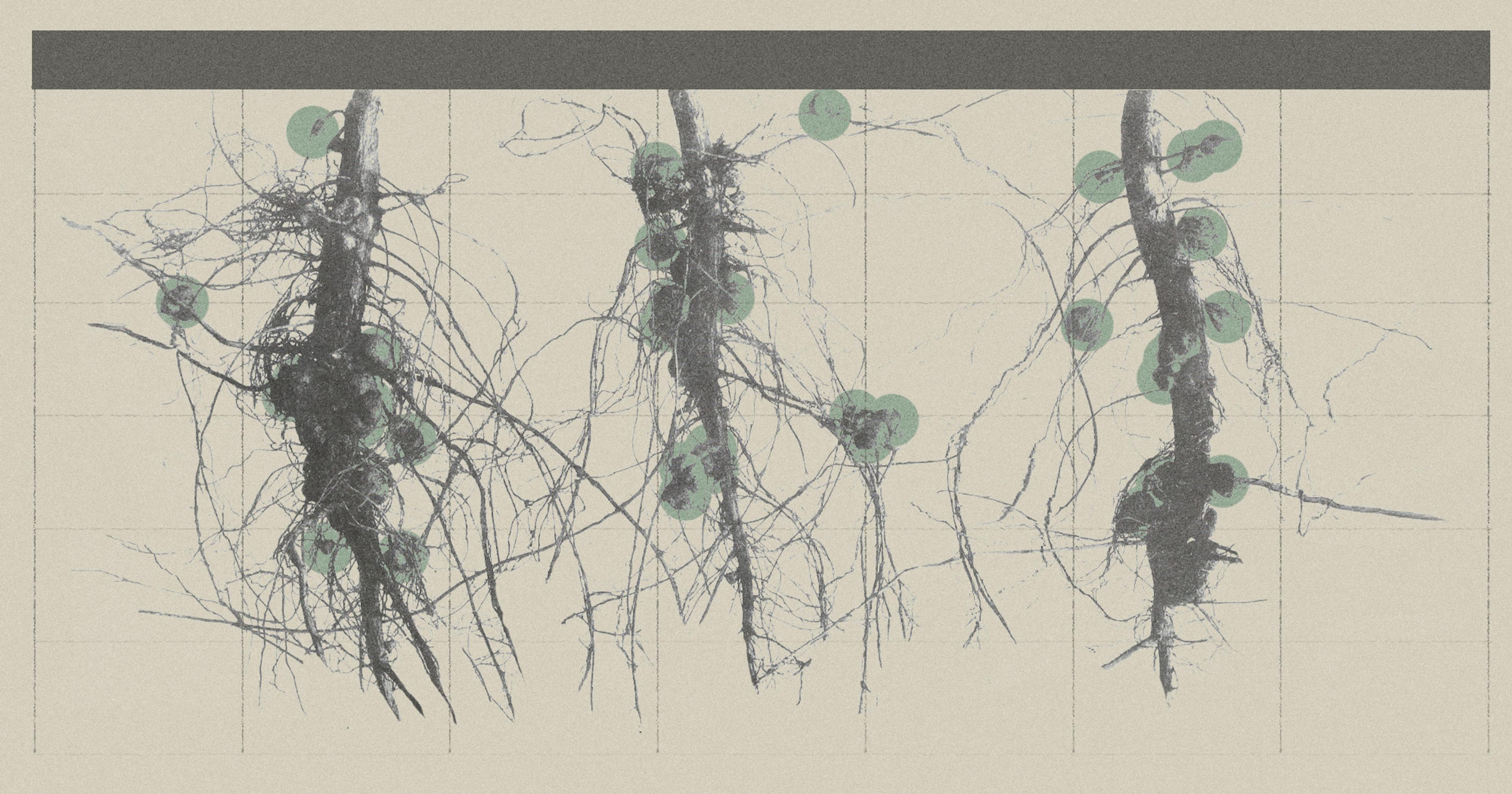
A hundred miles west of the North Carolina coast, Adrian Locklear farms 4000 acres of soybeans; he swears by using microbial inoculants on his seeds every year. “Whenever we dig our plants up, we’re looking at our roots, there’s just so much more nodulation starting on the soybeans so much earlier, and they look so much more healthier, than if we did not inoculate,” he said.
Locklear farms in the coastal plains of southeastern North Carolina, which are known for their sandy well-draining soils, deposited there millions of years ago when the sea level was much higher. This soil has made it really challenging for Locklear to grow soybeans.
The nodules on the roots of soybean are essential to their nutrient content. Nodules are root growths that house nitrogen-fixing bacteria from the soil and in return the soybean receives nitrogen from the bacteria. However, these bacteria occur in extremely low quantities or are completely absent from sandy soils.
“A lot of times you dug plants up and you looked at the nodules, there wasn’t a lot of nodules on the plants. I could see it visually in the plant. They were a pale green and they didn’t quite have the vigor that some of the other plants had,” said Locklear.
Now that he uses seed inoculants he’s seen a vast improvement in yield. “I really think on a large scale, I think we’ve seen maybe a two-bushel increase.”
These types of seed inoculants are part of a growing market of biologicals — products containing microbes or biologically derived compounds that benefit crops — and are expected to grow into a $31.84 billion industry by 2029, according to Markets and Markets.
But do these products live up to the hype?
“The Wild West”
Biologicals are divided into four major groups: biopesticides, pathogen controls, biofertilizers, and biostimulants (which improve growth overall). There are also a variety of application techniques including a powder coated on the seed, a liquid applied in furrow, or sprayed directly onto plants. Some seeds are even sold pre-coated in an inoculant.
The mechanisms by which these products work are as varied as their application methods. Biofertilizers and biostimulants directly improve plant health by increasing nutrient uptake, root growth, yield, and vigor by forming partnerships with different microbes present in an inoculant.
Some types of biologicals, such as biopesticides, have been around since the 1930s. However, the reliability of newly developed biofertilizers and biostimulants has been met with some skepticism due to variability in success.
Piran Cargeeg has been working at the agrochemical company BASF for 35 years, focused on research and development of seed and soil biotechnologies, including biologicals. Cargeeg affirms that when biologicals first hit the market it was the Wild West of products and claims.
“I would agree that numerous early pioneering biologicals lacked performance consistency. Typically, for small and mid-range enterprises at this time — the drive to market and profitability were important for survival. Performance sometimes ‘lacked luster’ — generally as a result of reduced understanding of topic and technology, as well as not setting the correct expectations.” Cargeeg believes that in the rush to be a part of the expanding biologicals market, some smaller companies pushed products that had only been minimally tested and not marketed correctly, creating distrust among farmers.
In the rush to be a part of the expanding biologicals market, companies pushed products that had only been minimally tested and not marketed correctly, creating distrust among farmers.
But even with current improvements to biologicals technology, some are still concerned about their efficacy and consistency. Mallory Choudoir is an assistant professor and extension specialist at North Carolina State University who studies soil-microbe interactions in agriculture. “There’s this expanding market of biostimulants. And it’s just this immense commercial market and there’s very little regulation.”
In 2024, she tested the effects of four seed biostimulants on soybeans in the field. The claims of these products seemed too good to be true. One of the products in the study claimed up to a 10x return on investment and improved yield. However, Choudoir found no difference in yield between treated and untreated soybean. She reasons that perhaps nutrient-rich soil and efficient plant breeding have something to do with the biostimulants’ failure to perform. “In the field, we are evaluating these products in high-yield environments. And for the most part, we’ve bred plant varieties to perform well under high-nutrient conditions. So, there’s not really a need to establish relationships with microbes.”
Despite these lackluster results, she is hopeful that microbes could serve as an amendment for current fertilizer use, especially for more sustainable soil practices.
“I think biologicals will continue to improve. I don’t see this as this dichotomy between biologicals and chemistry, but I think there’s the opportunity to specifically reduce synthetic fertilizer inputs.”
Do Your Own Research
On the other hand, Adrian Locklear is glad that using biological inoculants has been worth his investment.
“When you talk about inoculants on the farm, that’s one of the cheapest things that you can put out to the plant. Anytime I can get a two-bushel increase on a $4-an-acre investment, I think I’m doing pretty good.”
Despite his personal success, Locklear suggests that other farmers should use biologicals on a case-by-case basis. “I mean, I know all regions of the country are different, different soil types, different microbes in your soil. But I think we have to look at it on a farm-by-farm basis and see how different soil types work. It’s like anything else; it might not work every single year on every single farm. That’s why I think you need to do your own research and study.”
Introducing biologicals is not only an additional monetary cost to growers but also another cost in the time growers need to research these innovative technologies. Cargeeg from BASF suggests that growers should consider all local data available before committing to a product.
“For any product, I would recommend to the grower to ask for field data generated in your local area across at least two growing seasons.”
“Anytime I can get a two-bushel increase on a $4-an-acre investment, I think I’m doing pretty good.”
Choudoir agrees. “Locally relevant field data is important. Some companies provide more information on the type of microbe, maybe where that microbe was sourced from, the specific mechanism of that microbe, whether that’s phosphorus solubilizing or nitrogen fixing. So those more specific modes of action can be a helpful way to at least include [biologicals] and evaluate. But certainly, it’s a cost.” Companies that not only market the benefits but also the mechanism by which these products work would allow farmers to make informed decisions based on the nutrient needs of their crops.
But even if biological companies provide product data, many farmers just don’t have the time to do the research needed to choose the right biological product. The Certified Biostimulant Program provides a solution to this problem. The program certifies there is data to support the claims made for a product, based on United States biostimulant industry guidelines. However this program is still in its infancy and only has 10 products registered.
The current best resource for farmers is to bring their questions about biologicals to their local extension office as Locklear did before he decided to use inoculants. “I talked to my local extension agent here in the county and about treating seed with some inoculants. And I guess we both agreed in our sanity and souls that that’d be a good practice for us to start doing.”
Looking to the Future
Consumers now not only demand that their food be healthy but also that the practices used to make those crops are sustainable. In a 2025 global consumer survey by PWC management they found 44% of consumers would be willing to pay more for food to support “actions taken to improve the health of the land and the environment.” Advocates argue that biologicals can provide a safer alternative to synthetic chemicals in terms of the effects on human health and soil health. Choudoir hopes as the possible benefits of biologicals increases, that biotechnology companies begin to target other aspects of sustainability and soil health.
“I think targeting all those processes that contribute to soil health, whether that’s nutrient cycling and reduced nutrient loss, reduced greenhouse gas emissions, potentially some carbon soil aggregation. There’s a lot of opportunities there.”
Locklear just hopes for an improvement to ease of use in inoculant technology overall.
“Putting it on the seed is pretty easy, but it’s a little messy trying to get it coated evenly. I would probably like to see more liquid, so I can do more and firmer products. A lot of times with the coating stuff, you got to mix it really well to get a good even coat.”
Meanwhile Cargeeg is optimistic that biologicals can one day become just another part of what a farmer uses to improve yield.
“Biologicals are increasingly finding their place as a tool in the agronomic toolbox. Definitely not silver bullets, but if used judiciously with the correct expectation setting, the right biologicals will provide value to the grower.”
Last summer, Marshal P., a prisoner and cook at the Marble Valley Regional Correctional Facility (MVRCF) in Rutland, Vermont, prepared tomato sauce from scratch, using 300 pounds of tomatoes grown at a farm nearby. “It’s actually cool to make it all fresh,” he said.
Marshal, who patronized farmstands prior to being incarcerated, was pleased by the positive response from fellow prisoners to his homemade meals. “Guys will come by and say, ‘Hey, dinner was great!’” he reported.
Using nutritious, local ingredients in a prison setting to cook food from scratch is far from the norm. Yet MVRCF is one of a handful of correctional facilities throughout the country serving fresh food crafted from area products, reshaping the unhealthy, tasteless, even toxic diet that has historically been served to people in prison.
“Food is so much more than what is on the tray,” said Leslie Soble of Impact Justice, a nonprofit prison reform organization which released a groundbreaking report in 2020 on the food served in United States prisons. It starkly details aspects like maggots found in meat and quotes those formerly incarcerated: “The food there was designed to slowly break your body and mind.”
Against the backdrop of George Floyd’s murder and the hot topics of public health and food security and access, the findings brought a newfound awareness to this issue, offering fresh approaches and fueling conversations and nascent change.
“Obviously there is the nutritional aspect, physical health, mental health, but also how do people absorb a sense of identity, what’s being communicated through food?,” said Soble, the report’s lead author. “Is there a way that food could support re-entry?”
Better food and nutrition hopefully translates into an improved rehabilitative experience, along with lower health care costs for the state and taxpayers, said Isaac Dayno, public policy director for Vermont’s Department of Corrections (DOC). Correctional facilities “have a moral obligation,” he added, “to support our {agricultural} communities and to make sure we’re getting folks healthy, fresh food.”
Over the past decade, amid the recognition that access to healthy food is a human right, there have been efforts to overhaul institutional food at hospitals and schools — but not at prisons and jails. “Correctional facilities,” said Dayno, “have always been a place where we put people we don’t want to think about, where we kind of disappear folks who society has deemed are too much trouble to be dealt with in the public sphere.”
“When you get the fresher stuff, you notice the difference daily on how your body is feeling.”
Kyle Moore, MVRCF’s food service supervisor, was purchasing local corn and apples before Vermont’s DOC instituted a strategic plan prioritizing health and wellness in 2024. Moore said now they’re considering how the food served affects “the way people perceive themselves, where they’re better nourished and feeling like they can then go and do things that they can better accomplish their goals.”
Discovering that Vermont’s procurement contracts allowed some discretionary purchasing, Moore visited over 50 farms across the state, developing relationships with producers. His experience highlights a prominent hurdle: Each state possesses different, often cumbersome, and poorly understood procurement policies.
California’s application is 32 pages long, said Hope Sippola, farmer and co-owner of Spork Food Hub in Davis, California, which supplies food from area farmers to institutions like schools, prisons, and prison hospitals. Spork is part of “Harvest of the Month” (HOTM), a pilot program of Impact Justice and the California DOC which delivers a California-grown product like persimmons and asparagus to the state’s adult facilities monthly.
“It always aligned with our mission to improve the food in the places that need it most,” said Sippola. HOTM is part of Impact Justice’s farm to corrections program, which also holds trauma-informed nutrition education classes for those formerly imprisoned. Fresh produce exposes those inside to new foods, tastes, ideas, and understanding about food, said Heile Gantan-Keo, who oversees the program. It launched in three sites in July 2023; by year’s end, all 31 will be participating. Impact Justice’s other projects include advocacy work and recommending best kitchen practices.
Because Spork aggregates products from mid-size and smaller farms to assemble enough to meet an institution’s needs, producers are able to access markets they might not be able to otherwise. The food hub model is also key to managing the procurement process, as most farmers do not have the time nor bandwidth for the intensive application.
Sippola notes the program’s value to farmers, who need high-volume, consistent year-round sales — particularly over the summer, when produce is most abundant.
Sippola notes HOTM’s value to farmers, who need high-volume, consistent year-round sales — particularly over the summer, when produce is most abundant. Legislation requiring that, by 2026, 60% of agricultural food products purchased by California government agencies be produced in-state, offers real opportunity for market expansion. But winning a contract is lengthy, unwieldy, and unguaranteed; agencies are required to review at least three bids for any item.
Moreover, correctional facilities’ food budgets often only allot under three dollars per person per day according to Impact Justice. California-grown produce costs nearly 20-30 cents more per serving than distributor offerings from Mexico.
Surprisingly though, purchasing nearby can often be less expensive, said Mark McBrine. A farm owner and director of farm to table programs at Maine’s DOC, McBrine pioneered creative, local purchasing while establishing the same self-described “scratch cooking, whole foods approach” that he used at home. He believes that eating convenient, processed foods has wrought a health crisis in America.
Under McBrine’s ovesight, Mountain View Correctional Facility (MVCF) uses Maine Grain Alliance’s literal “run of the mill” flour. This product results from the two or three initial runs of the stone mill to fine tune the consistency of a particular grind, at a considerable discount. Baking a sub roll in-house costs 5.8 cents, versus 33 cents for one purchased via a state contract. Instead of paying for convenience, said McBrine, “We’re able to do this very efficiently and save a tremendous amount of money. And it’s a lot better product.”
Moore sometimes purchases seconds or an oversupply at lesser cost. His staff is testing products from Salvation Farms, an enterprise using agricultural surplus to build a resilient food system in Vermont. Salvation is developing a line of minimally processed frozen foods like cubed winter squash crafted from seconds and gleaned produce that can be easily incorporated into institutional meal plans.
Moore has also teamed with Farm to Institution New England (FINE), which works to support a healthy, equitable, local food supply chain. The organization brings together a diverse network of partners ranging from producers and processors to colleges and carceral institutions. It is currently surveying his area expenditures, about $35,000, to offer suggestions for establishing local procurement at Vermont’s other correctional facilities.
“The world of people doing this work is still very small and tight knit, but it has expanded exponentially in the last five years.”
FINE also conducts research, hosts a biennial summit, and facilitates Zoom calls and communities of practice for the region’s prisons for networking and idea sharing.
Some takeaways are as simple as working with a facility dietician to develop purchasing flexibility by adjusting a menu item description from, say, broccoli salad to seasonal salad. Other, bigger shifts, like seasonal menu planning, procurement changes, and increased budgets, will take time, effort, and likely, political will.
Along with the changes to the food served in prisons, facilities in other states like Michigan and Oregon have developed high-quality kitchen and gardening apprenticeships in which participants receive certifications and can sometimes be paid. Others, however, have come under fire for abusive prison labor programs. MCVF’s program supplies the prison, has a regenerative focus, and is even the subject of a documentary, Seeds of Change.
Reforming the food served in prisons is an uphill battle — there are at least 6245 correctional facilities in the United States — and the topic is getting another spotlight with reports of moldy, expired food being served at ICE detention centers. Soble is encouraged not just by the outlier efforts taking root, but also the willingness of policy makers and those working in corrections to being more open to considering avenues for change. “The world of people doing this work is still very small and tight knit, but it has expanded exponentially in the last five years,” she said. “Even if we’re not seeing a ton of concrete, on-the-ground change, I do feel there in the past five years has certainly been a shift in the way we talk about this issue and a shift in who is participating in those conversations.”
“Before,” said Marshal P., “you were always feeling like you were missing something, even taking vitamins.” He mentions MVRCF’s shift from powdered to fresh milk. “When you get the fresher stuff, you notice the difference daily on how your body is feeling.” He appreciates the benefits to him, others who are incarcerated, and to farms, too. Said Marshal, “It feels good all around.”
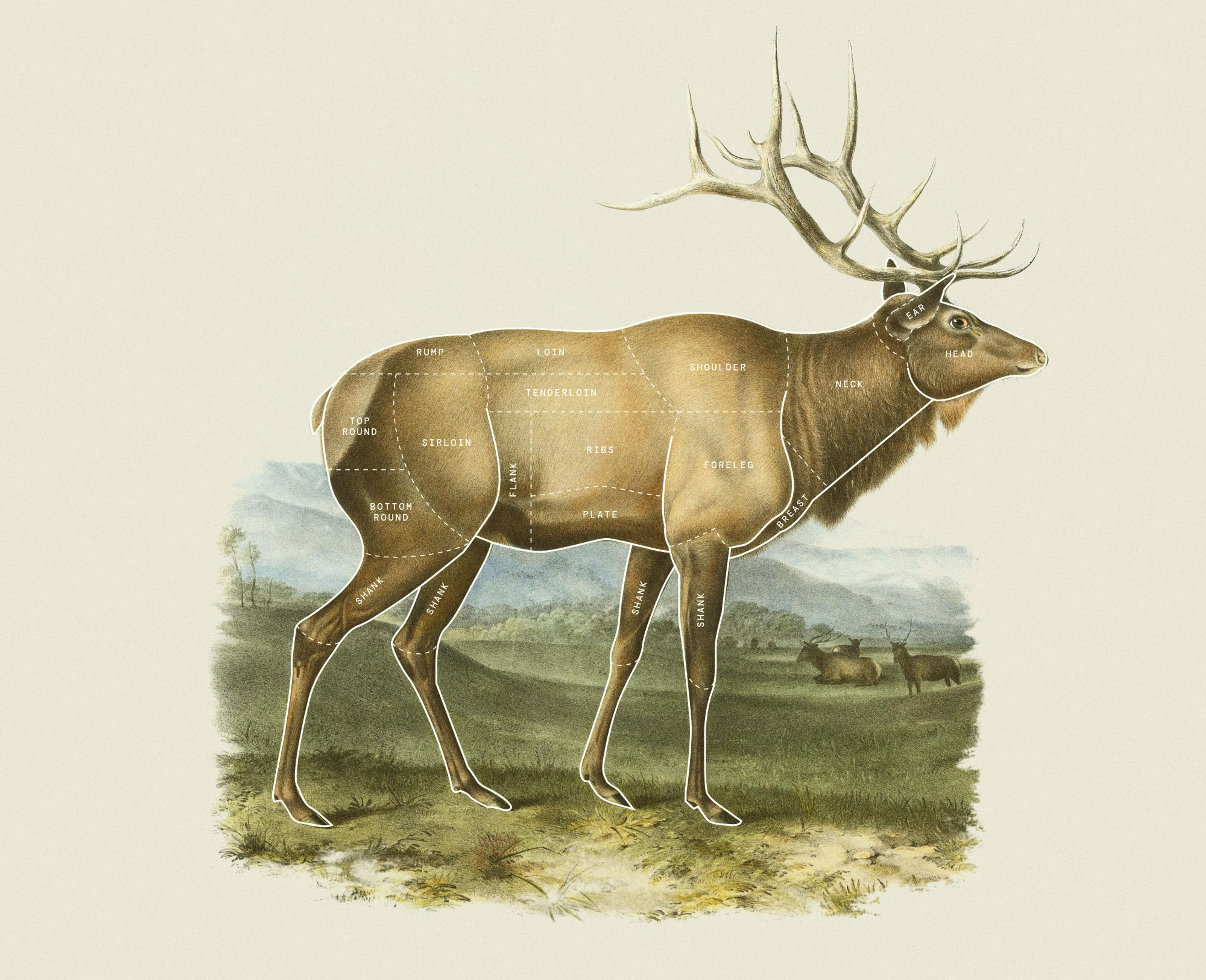
Elk are blessed with a unique physical feature that has been a point of delight around the world for thousands of years: They grow velvet every year.
The first wave is velvet on their baby horns, which naturally drop between February to April. The next velvet comes in on their full-fledged antlers, which also drop every subsequent year. Velvet is actually a sensitive skin with blood vessels, with full sensation. When their antlers are full-grown in August, they wander around and scrape the velvet off on tree trunks to reveal the bone underneath. It’s a rite of passage.
Velvet is one of the many reasons why Diana Molenaar loves raising elk. They’re smart, they don’t smell bad, they’re large — 800 to 1,300 pounds apiece — “and they’re pretty,” she says.
She and her husband own the Timber Butte Elk Ranch one hour north of Boise. They have 84 acres on high, dry land. About 37 acres are fenced, which is where her 100 head of elk live. The elk eat on fresh grass pasture for six to eight weeks in the spring, and feed on alfalfa the rest of the year. Those first velvet sheds also serve a unique purpose: They’re collected and cut up for dog chews.
This is one of many applications of elk. The industry is strong, and the price of elk is solid and high. But the future of the elk market is at a crossroads, and could end up being many different things that appeal to different people.
What would it mean for the elk industry to shed its own velvet, and keep growing?
Historic Distribution
Elk, much like bison, are native to the United States. Their historic distribution was vast, from New Jersey to California. The only places they were not native to were Florida and New England. In the wild, their biggest threat is encroaching humans. The elk industry was booming in the 1990s because for thousands of years, elk antlers sheathed in velvet have been a component of Chinese medicine, and sold for between $35 to $110 a pound. Elk meat was also higher than beef back then, and was about $4.50 per pound versus $0.80 for beef. But the real moneymaker was the antlers.
But the bubble burst across the global market, even with plenty of sales, when elk started to get sick with conditions like chronic wasting disease. Combined with continental drought that forced farmers to pay more for feed, elk farmers exited the market, and only a few are left standing.
One curious aspect of elk meat is that any elk raised in captivity has long been separated from their wild counterparts. Elk raised for meat aren’t wild anymore, and their previous generations have been domesticated for decades. There is a hard line between wild elk in the Yellowstone Valley and what is harvested at an elk ranch or farm. Those animals have no relation, and it is illegal to capture and breed any wild elk.
“It’s really hard to compete with [New Zealand] supply-wise. We don’t have enough to sustain U.S. demand. We just don’t.”
Robert Northrup, an elk farmer in Luddington, Michigan, has 130 acres with about 110 elk roaming throughout the year. The farm is open to the public in the summer when there are wagon rides to see the animals. But the farm isn’t for elk meat.
“Our primary goal is to raise breeding stock,” he says. When it comes time for animals to be sold, a good amount stay in Michigan, but others go as far as Mexico, Texas, Oklahoma, and Idaho. Most of the stock goes into the shooting market for hunts. That means that a high-fenced elk hunting outfitter in the larger Yellowstone region may very well be stocked with trophy elk raised in Michigan — they would be significantly easier to hunt.
That’s because elk raised in captivity tend to be bigger. Elk are measured by inches of antler, and one of Northrup’s elk is typically 600 inches. If one finds a 400-inch elk running in the wild, that’s “extraordinary,” he says. The size of the antlers is the big draw for hunting lodges and outfitters.
However, the deviation between domesticated and wild stock is a big headache for hunters. If a domesticated elk or deer breaks out of its fence and mates with a wild one, diseases can be spread between herds. That means that sick domesticated elk have to be culled at the owner’s expense, and wild counterparts can continue spreading different genetic variations that the population doesn’t have.
Plus, domesticated elk aren’t afraid of humans, so they and their young may not have the same instinct to hide or run from a hunter. Fencing can also be problematic because private elk ranches can border public grazing lands that wild herds would otherwise use, but don’t have access to. Some hunters argue that the very existence of commercialized elk and deer ranching is deteriorating the richness of those wild creatures and their habitats.
Dollars and Cents
“The elk market is extremely strong,” Northrup says of the live sales sector for breeding and hunting. One reason for that is the elongated breeding season. An elk can’t have a calf until they are two years old, and when they do give birth, it’s typically to a single calf. It takes time for more stock, whether live animals or meat, to enter the market. Northrup has been sold out of birthing cows for six years straight, and has a waiting list. The market for shooter bulls is also strong because there is a shortage.
On the other end of the spectrum, Morgan Cummons, an elk farmer and rancher from Del Norte, Colorado, has about 190 elk in 140 fenced acres. She raises elk for meat, and her team ships out elk, bison, rabbit, whitetail deer, and goat meat. Yet for all of the different products she carries, elk is the bread and butter and constitutes about 65 percent of sales — much of it online, from around the country.
“There aren’t a lot of outlets for elk meat. We definitely have a niche market, and are one of the top competitors,” she says. Her ground meat ranges between $10.95 and $12.50 a pound.
Similarly, Molenaar says that every time she processes elk meat, she sells out. She typically charges $16.98 for a pound of grind. New York steaks go for about $34 a pound, and tenderloins $40 a pound. Molenaar knows it’s expensive, but she sells out within three weeks every year.
The big global competitor for elk is New Zealand, Cummons says. They’re able to raise a large amount of elk and red deer, so when one orders an elk steak at a restaurant, it’s likely from there. “It’s really hard to compete with them supply-wise,” Cummons says. “We don’t have enough to sustain U.S. demand. We just don’t.”
So What’s in the Way?
Molenaar says that a big barrier to entry to growing the elk industry, no matter how strong prices are now, is cost. For example, game fencing is different from typical fences. It’s eight feet high because an elk can generally jump about seven feet alone, and consists of squares. It’s about $500 for a roll of 330 yards. Ranchers also need to have substantial acreage for the animals to graze, but the rate of land per animal is actually quite similar to cattle: Both elk and cattle need about one acre per animal.
In Michigan, Northrup says that the regulatory mechanisms can add up, though they’re not entirely prohibitive. The license for the facility is about $770 every three years, and medical testing for chronic wasting disease across the whole herd is about $3,000 every three years. An annual inspection costs about $600, and any elk transported out of state costs $500 for a veterinary visit.
Part of the barrier to more growth in the industry could very well be the same thing that makes the price per pound so astronomical: It’s niche. People don’t really consider raising elk when compared to other proteins, and people that don’t eat elk may not have an easy way to try it. Molenaar doesn’t see the industry exactly dropping its velvet any time soon.
“It’s kind of stagnant … Information doesn’t get out,” she says. “Unfortunately I don’t think it’s an industry that will thrive, which is too bad. It’s rewarding.”
Cummons is more optimistic.
“I think [the field] is going to grow still. I really do,” she says. She’s involved with the North American Elk Breeders Association, and sees new faces at every meeting. The late 1990s may have been booming, but she thinks it’s coming back. “We have the potential to get there.”
Growing up in the Bay Area, Dungeness crab was found on the dinner table every holiday season. On Christmas Eve, with friends and family, we waited excitedly for the night to fall and consume crab and butter accompanied by my family’s homemade Caesar salad. We’d debate over the best sauce, who would eat the most, and, importantly, if it was best to pile the meat or eat as you go. It was a longstanding tradition, not only in our household, but in households across the greater Bay Area.
“I moved here in 1996 and only then learned about how San Francisco celebrated Thanksgiving, Christmas Eve, and New Year’s Eve with Dungeness crab,” said Kenny Belov, part owner of Fish Restaurant and TwoXSea fish distributor in Sausalito, California.
But in recent years, this tradition has been put in peril.
“With the ups and downs and the seasons of late, that tradition of having local crab for the holiday season has become a thing of the past, which is very hard for me to stomach,” Belov said. “There’s a full generation of people now who know nothing about that tradition.”
What was a cherished local winter staple and a critical source of income for local fishermen and their communities has slowly evolved into an annual struggle. Over the past six years the local California Dungeness crab fishery has been mired by late starts and early closures. The cause? An increase in whales becoming entangled in the lines of crab traps and other fishing gear. The delays have turned an historically six-month fishery into just a four-month one. Crabbing for Dungeness will likely have a late start again, in early to mid-January, entirely missing the lucrative holiday season.
Whale entanglements have been part of fishing off the California coast for many years. In fact, in 2016, entanglements rose to their highest numbers ever. They used to typically happen in spring, as hungry whales returned to their feeding grounds. However, it wasn’t until 2019 when entanglements began to occur more commonly in the winter, leading the California Department of Fish and Wildlife — which oversees the management of California fisheries — to delay the crabbing season to reduce the amount of fishing gear in the water entangling whales. Since then, there have only been two on-time starts to the season, almost entirely due to whale entanglements.
Whale entanglements are what happens when a whale gets caught up in any kind of fishing gear. This can cause something as mild as strain on the animal, but often can lead to death from getting trapped. Usually this is from vertical lines, long ends of rope, propped to the surface with a buoy and fixed to the ocean floor by the weight of a crab trap, often referred to as a pot.
“It used to be that we rarely would see a whale,” said Dick Ogg, Bodega Bay-based fisherman and a member of the Dungeness Crab Task Force, a working group between state and federal agencies, conservation groups, and crabbers. “Now we see them all the time, everywhere we go.”
“With all the delays and closures, it feels like a ghost town now during what used to be our busiest season.”
For many observers, this shows that whale conservation efforts are proceeding well. This may not be entirely true. From 2012 to 2021, scientists observed a decrease in the population of humpback whales by nearly 7,000 individuals, or close to a quarter of their population. Scientists widely believed this was caused by a massive marine heatwave in the region, ominously called “The Blob,” which impacted what they ate, and in turn harmed their numbers. After this event their numbers began to rise, but scientists noticed that the whales were coming closer to the coastlines to search for food, putting them in contact more often with Dungeness crab traps and other fishery lines. This has created the situation the Dungeness crab fishery is in today: a shortened crabbing season leaving many crabbers — who might only catch Dungeness crabs and may not have knowledge of other fisheries — out of work.
As the years have gone on, Ogg said, the crab fishery has been doing much better to avoid whale entanglements by spreading out where they place their lines, ideally leaving more room for whales to pass. The Dungeness fishery is so popular, however, that this is not always possible.
“There is not one fisherman that would say, ‘Oh, yeah, I want to go out and entangle an animal,’” said Ogg. “We’re doing everything we can to minimize our potential interaction.”
It is important to note that many other fisheries cause entanglements as well. That said, the Dungeness crab fishery has historically been the most detrimental to whales due to the sheer number of crabbers going out during the first days of the season. According to the California Department of Fish and Wildlife, the Dungeness crabbing season gives out anywhere from 350 to 700 permits any given season accounting for many thousands of traps and lines in the water, making around $40 million in a decent year. Compare this with one of California’s other lucrative fisheries, market squid, which makes on average $60 million, but usually gives out 150 permits.
In a recent press release from NOAA fisheries, confirmed whale entanglements in 2024 were up to 95. “This is higher than the 64 confirmed large whale entanglement cases in 2023. It is also above the average annual number of confirmed entanglements over the previous 17 years, which was 71.4,” the press release states. These numbers are a total for the whole of the United States, but 25 percent, the greatest contribution from any region, occurred off the West Coast in California waters.
For Belov, the delays impact his sales during the winter; luckily his businesses have gained back those lost months in February.
“There is not one fisherman that would say, ‘Oh, yeah, I want to go out and entangle an animal.’”
“I’m now, as a wholesaler, selling Valentine’s Day crab,” Belov says. “For our first 15 years of business, we never saw our fleet fishing through Valentine’s Day. They were long done by then, getting ready for salmon. So it’s not so much that we’ve lost sales. We’ve just shifted when we have those sales.”
He also emphasized the importance of accepting and moving with the changes in a shifting market. “I am a huge proponent of change, and that you always have to be growing your businesses and adapting to changing conditions. Doesn’t matter what business you’re in,” said Belov. “You always have to have an eye on the future. And if you don’t have an eye on the future, you’re going to be left behind.”
Belov, however, is fortunate to have a restaurant in Sausalito, a wealthy suburb and tourist destination just outside San Francisco. Having so many more potential customers to serve on a weekly basis may mean that he is in a more fortunate position than others.
For decades, the crabbing season brought in vital tourism to more remote coastal communities across the Bay Area. Gurpreet Singh, owner of Fishermen’s Cove restaurant and tackle shop in Bodega Bay, said he has lost around half of his revenue during the November through January holiday season due to entanglements.
“With all the delays and closures, it feels like a ghost town now during what used to be our busiest season,” said Singh. “It’s affected a lot of people’s livelihoods, including ours.”
“You always have to be growing your businesses and adapting to changing conditions. Doesn’t matter what business you’re in.”
With a late start this means that, rather than make that money back later in the season, Singh just outright loses it. Since Bodega Bay is a small town far away from the urban hubs of the Bay Area, businesses there rely heavily on tourist dollars to stimulate the economy. As the holiday season is the most common travel time for people around the country, this is a very important time of year for restaurants and businesses in the North Bay. Losing out on the crabs has meant that the whole of the community is impacted.
While the impacts of the entanglements are great, solutions are on the horizon. Conservationists and a growing number of fishermen believe that the relatively new technology of pop-up crab pots may be the answer to the issue of entanglements.
Since 2018 many crabbers in conjunction with conservation groups and fisheries have been experimenting with this new technology during the spring season. Crab pots are dropped to the bottom of the ocean with a long rope, often with a buoy attached to the top for easier retrieval. This line, as noted earlier, is the key cause of entanglements. Pop-up pots are simply crab traps with no vertical line, thus reducing the threat of entanglements. This new kind of pot drops to the ocean floor with a line and buoy trapped inside of it. When the crabber is ready to haul in the pots, they can release the buoy via a sonar signal, bringing up the rope only for the necessary moment of retrieving the traps, greatly reducing the chances for whales to get trapped in the gear.
Over years of experimentation under experimental fishing permits, many crabbers have found it to work fairly well. However, this tech is only for the spring season, when the waters are less choppy, and the chances of whale entanglements are typically greater.
“This was never going to be solved by the government, by, you know, the people making the technology, by the NGOs, right? It was really a few fishermen that decided to step up.”
Oceana, an ocean conservation organization, recently released results of a study of pop-up crab pots and their economic viability for the spring. It shows that across California during this last spring season, when the waters were closed for conventional crab traps, pop-up pots brought in 1.4 million dollars of crab, showing that the traps can be economically effective while an area may be full of whales.
“This was never going to be solved by the government, by, you know, the people making the technology, by the NGOs, right? It was really a few fishermen that decided to step up,” said Geoff Shester, California campaign director for Oceana. “And I think a lot of fishermen took a big risk by going out there and trying this — a financial risk, a risk within their own community. And they really brought this from a concept to something that now looks like it really could be the future for the fishery.”
Fishermen are still hesitant about using ropeless pots in the winter, due to large swells and safety concerns. Regardless, it is a cause for hope that, at least for the spring season, the crabbers could remit their losses slightly as more of them take on this new style of equipment.
The crab fishery itself has been remarkably stable since it began to be regulated by the state in 1895. However, as the climate begins to warm, these sorts of impacts will increase. What we know currently is that the season has shortened. Along with that we are watching the local environment change alongside local economies and traditions.

INTRODUCTION
Sarah Mock: The first time I learned about “the little death,” I was so confused. I was a kid, reading The Carnivorous Carnival, a “Series of Unfortunate Events” book by Lemony Snicket. And he mentioned the French version of the phrase– La Petit Mort– which he defined as “a feeling like a part of you has died.”
But as a precocious adolescent, I thought I’d look it up myself to be sure, and I found out that “the little death” might literally meet that definition, but that it usually references the moment immediately after an orgasm when a person experiences a brief loss of consciousness or awareness of the world. As you can imagine, thirteen-year-old me was scandalized. I mean, also fascinated and titillated, but also scandalized.
So after finding out that a “little death” is a good thing, you can imagine my further confusion to learn that when someone has “bought the farm,” they’ve died. As a kid who grew up on a farm, I couldn’t make sense of why purchasing farmland would be comparable to a person’s demise– though it did help me connect the dots on why a dog or a horse gets “sent to a farm Upstate” when they’ve reached the end of their life.
So on the one hand, I learned about the idiom of the “death” of sex, on the other “farmland ownership” of death. In this syntactic equation, it felt like I could cancel out the deaths, and maybe create a new idiom, wherein having “bought the farm” is the sex metaphor, given the shared feeling of safety, satiation, and contented accomplishment that comes with both orgasm and, I imagine, property acquisition.
In that alternate reality, to declare that someone you know and love has “bought the farm” would be a cause for festivities rather than a funeral.
[MUSICAL INTERLUDE]
But in this reality, we do not often get to celebrate people having “bought the farm,”not figuratively, or even literally, because so few people literally get to do it these days. And it’s not just new and beginning farmers that struggle to buy farmland, it’s almost everyone else. With the possible exception being the rapidly growing group of institutional investors from the worlds of banking, insurance, private equity, and beyond, that have flocked to buying American farmland, especially since 2008. But the origins of modern farmland’s affordability crisis began way earlier than that, and can be traced pretty directly to the 1970s and ‘80s, a time during which farmland was transformed from the home of farmers into one of the world’s most rewarding and stable financial assets.
So today we’re going to explore the intersection of farmland and finance. We’ll follow one farmer on their journey to farmland ownership, as they reflect on the pleasure and pain of buying and caring for land, and we’ll gain a deeper understanding of how large-scale farmland investing earns your retirement account a good return, while making farmers vulnerable to the whims of speculators. Through all of this, I’ll be on the lookout for insight as to why “buying the farm” seems an obvious source of pleasure and satisfaction, but has instead become a symbol of loss and pain.
In other words– why do we dread having “bought the farm?”
That’s today on The Only Thing That Lasts. I’m Sarah Mock.
[MUSICAL INTERLUDE]
PART 1: The Farmland Gambit
SM: I want to start off by introducing you to Jackson Rolett. He’s a family farmer who’s lived and farmed most of his life in South Central Kentucky. He’s also a first generation farmer, and in many ways the exact kind of farmer that I think many dream about. He’s young and enthusiastic with a strong ethic around land and animal care. He’s a student of Wendell Berry and gets excited about growing healthy, organic food for his community, but he also needs to provide for his growing family, and wants to engage his children in the wonder of living close to the land.
Jackson’s farming career also, I think, reflects our collective aspiration that a person can start from anywhere, and through a combination of hardwork, grit, and entrepreneurial spirit, start a farming legacy.
Jackson realized he wanted to farm in college, and his journey to the land started as soon as he graduated. Without a farm in his own family to start on, he began the slow work of learning as a farm employee– first as an apprentice and then a farm manager while also working another job to make ends meet. After years of building skill, he was eventually able to bring together the money and confidence to lease land and start his own farm. And then, years of careful saving and planning later, he achieved the near impossible. He had the opportunity to buy his own farm, with the help of a USDA-backed beginning farmer loan.
Jackson Rolett: It was one of those moments when we signed the paperwork that we thought we just bought the place we are going to be buried in, it was 10 acres. It was close to neighbors that we knew it was plenty of room for us. The house– it wasn’t great, but it was a house. And we thought that this is where we are going to spend the rest of our life. We envision the grandkids coming back here to like the family farm, right?
SM: As we discussed last episode– actually achieving the dream of farm ownership is incredibly hard for young farmers, and for a number of reasons. A low volume of farmland for sale at any given time means prices are constantly rising. Plus there’s costly interest involved in financing farmland, and farmers who can’t pay cash need to make as much as a 50% down payment. In short, without a lot of money already in the bank, buying the farm often doesn’t pencil out.
And yet, Jackson and his family made it happen– they bought the farm. Literally.
But in the course of just a few years, things started to go sideways. Jackson’s high-value organic vegetables were repeatedly contaminated by herbicide drift from neighboring farms– devastating his crop and leaving what survived unsellable. When Jackson tried to address these issues with the adjacent landowners, most were unreceptive to changing anything about the way they were farming. And in a few cases, Jackson couldn’t even get ahold of the neighbors, as some parcels were controlled by absentee owners, and tracking down the ultimate decision-maker for a conversation proved impossible. Year after year, Jackson’s rows of fresh vegetables and herbs suffered the damages inflicted by these neighbors, until it simply became untenable.
JR: We ended up selling that farm and it felt bold, and scary. Like, I thought we did the thing, I thought we apprenticed and leased and bought the farm and that was the end of the journey. There was nothing else after that. So it felt like going backwards, starting back over from square one.
SM: If having “bought the farm” is a type of death, maybe having “sold the farm” is a kind of rebirth– a sad one, for sure– but one that opens up new possibilities, as it did for Jackson and his family.
Selling the farm in 2021 meant they were able to get a good price for the land, and they immediately set about looking for another farm to settle down on. The problem was, all the other properties they might have moved to had also become significantly more expensive. Especially for what they were looking for– five to ten acres of land that would be good enough for growing vegetables, but also with a home where the family could live. Jackson wasn’t looking for a palatial estate, thousands of acres, or a swimming pool. Just a small farm, that not so long ago, would have been affordable for a farmer. And yet today–
JR: A lot of realtors told us that’s rare and you’re going to pay a lot of money for it because that’s like a luxury property now to have a home with that much land around it and it not either go with a larger parcel, like a larger land purchase or not be subdivided into a subdivision.
SM: Though he was able to sell the first farm for more than they bought for, Jackson’s family hadn’t lived there long enough to build up extensive equity. They were in a healthy financial position after the sale, but still not rich enough to compete with, say, a stock broker looking for a country estate or a developer looking to build a planned community in the same corner of Kentucky where he intended to farm.
[MUSICAL INTERLUDE]
Jackson’s difficulty in finding a farm to fit his needs is not unique in agriculture. Partly this is due to the nature of the farmland market itself. On average, only about 1-2% of farmland turns over every year. Or put another way– in America, a farm generally only sells on the open market once every three to four generations.
PART 2: The History of Competing with Farmers for Land
SM: But beyond the fact that farmland is so rarely for sale, and that competition for land in general from uses like urban development is stiff, we often hear about another culprit, who’s guilty of buying prime agricultural acres and jacking up prices in farmland markets. These are the institutional farmland investors.
Whether we’re talking about hedge funds and companies, individuals like Bill Gates and institutions like the Mormon church, or even foreign entities and nations, it seems like the epidemic of non-farmers, especially corporations, buying and holding, or in other words, speculating, in farmland rose from almost nothing to crisis levels in just the last decade or two.
Frankly, that is kind of true– but also, it’s more complicated than that.
Madeleine Fairbairn: There had been of course farmland investment forever.
SM: That’s Madeleine Fairbairn, an associate professor at the University of California, Santa Cruz. She literally wrote the book on farmland investing- it’s called Fields of Gold: Financing the Global Land Rush.
MF: But the 2008 moment seemed to be a moment in which the farmland investment industry really crystallized as a thing. You start to see a lot of new entities being created, a lot of new asset management companies that specialized in farmland investment as well as a lot of existing asset management companies making farmland funds just really fast.
SM: Twenty years ago, when Madeleine first started to learn more about why these changes were happening, she discovered that it was no accident that 2008 was the moment that farmland got on the radar of so many in the investing class.
MF: In a way it’s around 2008, this kind of financialization of land started in large part because of market uncertainty, because people were freaking out about the global financial crisis and looking for real assets where they could park their wealth and feel confident that it was safe.
SM: This confidence in farmland didn’t come from nowhere. It’s something of a “truth universally acknowledged” by some of the very biggest and oldest financial institutions in the country, that farmland is an excellent growth investment, as long as you have time to wait. This is in part because of some key features of farmland– for example, the supply is fixed. As Mark Twain famously quipped, “God isn’t making any more of it,” and in fact, between environmental and industrial impacts, the total quantity of possible farmland is shrinking slightly– as we explored in Episode One. This limited and/or shrinking supply means that what’s left gets more and more valuable all the time.
Another feature of farmland– it can be rented out, like rooms in an apartment building, but unlike an apartment building, farmland does not depreciate. There are no lightbulbs to replace, carpets to upgrade, or units to renovate, and there never will be. Farmland, then, carries on accumulating rents while very rarely requiring any additional investments from the landlord.
Investors realized long before 2008 that farmland is both an investment that appreciates purely by nature of its rareness, like gold, and one that yields cost-free rental income on top of that appreciation. These investors realized that farmland could outdo even the old folktale– this asset was a goose laying golden eggs, but the goose itself was also made of gold.
[MUSICAL INTERLUDE]
It wasn’t Goldman Sachs or the Bill Gates of the world who first discovered this insight. To understand who did, and how, we’ll have to rewind a bit, to a time before companies bought farmland at all. In this era, the only companies involved in farmland markets didn’t own the dirt, they earned interest by lending money to regular people who wanted to buy farmland. In other words, they invested in farmland by giving loans to farmers.
MF: Life insurance companies had been doing tons of farm mortgage lending for ages. And it made sense because they have these really long-term liabilities that are quite predictable out into the future, and farm mortgages are similar.
SM: So the business of life insurance works like this: An insurance customer gives a company a little bit of money over a long period of time, so that if they die, their family can receive some substantial payout. The idea for the buyer of the life insurance is that if they, you know, figuratively “buy the farm”– their family will get much more money out than they ever paid in.
This business model only works because thousands or millions of people are paying into the insurance scheme all at once, and many fewer than that are making a claim at any given time. But it also works because insurance companies are taking the millions they receive and investing it in assets and ideas that will help them grow the pot overall. That means when policies need to pay out, an insurance company has both premium income and investment income to ensure they remain solvent.
Nearly 100 years before 2008, insurance companies had already realized that farm mortgages were a good asset to invest their premiums in, because farm mortgages both led to regular income in the form of mortgage payments, and if the farmer couldn’t pay back their loan, the whole deal was backed by a hard asset– the farmland– which the insurance company could foreclose on and then sell to recover the rest of their money. Compared to investing in companies or stocks, which could go belly-up and leave investors with nothing, farmland loans seemed almost risk-free.
For years, insurance companies were some of the only institutional investors engaged in this kind of lending. After all, a company would have to have a lot of assets, and a very long time horizon on which to grow them, to make investing in farmland in the 1930s, 40s, and 50s pencil out as a business.
But then the 1970s hit, and everything changed. In the year 1970, an acre of Midwestern farmland might’ve sold for about $200. By 1980, just 10 years later, the same acre would have sold for over $2,000. For a farmer with a thousand acres of farmland, this was a nearly unfathomable growth in net worth, and suddenly investors well beyond the life insurance space were starting to take notice. This was absolutely a “dollar signs in the eyes” era, but beyond the huge returns farmland was creating was the fact that farmland was also becoming massively more valuable during an of hyper-inflation in the rest of the economy. So while companies, stocks, and goods were becoming less valuable due to financial conditions, farmland was not only holding but growing its value. It became clear that farmland provided a hedge against inflation, and institutional investors were champing at the bit to get their hands on it.
So some big institutional investors started to put out proposals about how they planned to enter the farmland market.
MF: The big one was 1977 when the Merrill Lynch Hubbard and this Chicago bank proposed to create this entity called Agland Trust that was specifically for investing pension capital into farmland. And it was just panned, like there were congressional hearings called all kinds of Congress people across the aisle, like Chuck Grassley’s there, are just horrified.
SM: In the late 1970s, politicians and the general public were shocked and incensed by the idea that companies, rather than farmers, would attempt to buy farmland. Lending farmers money and collecting interest was one thing, but actually owning the land themselves, and thus turning the independent American farmer into tenants and workers, forced to share his harvest with Wall Street fat cats? That was a step too far. The public backlash back then to this proposal would have been familiar to many of us today. The public said clearly, “farmland is for farmers, not companies and investors.” And so for many would-be institutional investors of the era, their proposals bought the farm.
By the mid-1980s though, these banks and funds were counting their blessings, because the 1980s farm crisis that came on the heels of the 1970s boom hit farmland prices particularly hard. Land values collapsed, and tens of thousands of farmers went bankrupt.
In a cruel twist of fate for many farmers that became a lucrative one for their lenders, the economic carnage of the 1980s farm crisis left the insurance companies, who held many of these farm mortgages, as the owners of quite a bit of farmland. Had the insurance companies sold all their new farmland in the ‘80s, they’d have taken a bath on their investment, but they knew– from decades of experience– that if they could just hold it for a few years, the value would return. So these companies decided to keep the land in the meantime and rent it out. They were carrying out the exact plan the public rejected in the 1970s, but this time, there were no splashy proposed announcements or congressional hearings. It all happened very quietly, behind closed doors.
The companies that pioneered this in-house farmland management in the 1980s became the grandfathers of the farmland investing space, so that by the time 2008 rolled around, they were well-established, well-respected, and ready to do what couldn’t be done 40 years before.
As the Great Recession struck, these managers presented farmland as a palatable and convenient asset class for anyone looking for a long-term, reliable investment, in hard assets, that hedge against inflation.
They could show that during 2008, farmland values on average rose 16%, while the S&P 500 lost 37% of its value. Plus, rental income makes farmland a short-term win, asset appreciation makes it a long-term win. And the only difficulty was owning and managing it, but farmland managers could now do that for you.
“Farmland,” they promised, was, “the ultimate blue chip stock,” and they could help you buy it as seamlessly as you buy shares of Boeing or GE. New investment vehicles were quickly emerging to help– from public farmland REITs to real estate investment funds, crowdfunding vehicles and more. And then came the tech solutions of the 2010s, and all of that has led to right now, where I can get on an app and invest $10,000 in a farm in Missouri– without ever setting foot in the state or talking to a farmer. Or, you know, getting up from my desk.
[MUSICAL INTERLUDE]
It’s worth noting that, especially amongst very large investors, they generally want only a small part of their overall portfolio to be invested in farmland, because farmland still grows relatively more slowly, if more consistently, than say, Tesla stock or Bitcoin, and because the cost to acquire farmland, to go out and identify properties, and actually do real estate deals, is higher than the cost of acquiring stock or other financial assets.
But as Madeleine points out, when a fund has a trillion dollars under management, 1% invested in farmland means hundreds of thousands, if not millions, of acres owned. Much of the eventual value of that farmland rent and appreciation goes into the bank accounts of extremely wealthy investors and hedge fund managers, but some of it might go to you, too. If you invest in a 401K, a life insurance policy, or benefit from a pension through your employer, there’s a good chance that you, too, are accumulating some of the value of farmland.
Again, it’s not that people had just discovered these benefits of farmland investing in 2008. But what changed between the 1970s and ‘80s and 2008 was that in the later era, the American public didn’t stand up in protest to insist that “farmland is for farmers.”
There’s surely many reasons for this lack of resistance– for one, the public was a little too occupied with a home mortgage crisis at the time to be focused specifically on farmland ownership issues.
There was also the fact that companies had now owned farmland since the 1980s, and for many it surely felt like it was too late to turn the bus around. Madeleine also suggests that in the time between the 1980s and 2008, the American public just got a lot more comfortable with financiers owning everything– from beloved brands to newspapers to single family homes. So why would farmland had been any different.
But then again, Madeleine adds, though Americans might have gotten more desensitized to corporate ownership of farmland, they didn’t actually change their feelings about it. Even today, many still believe that farmers, not corporations, should own farmland. Madeleine thinks one of the big changes that occurred is not among the public but politicians, who have radically changed their strategy for addressing these feelings.
MF: The one thing that it seems that quite a lot of politicians are willing to propose is restricting foreign land ownership. These laws are politically palatable across the spectrum, in a way that allows politicians to respond to public anxiety about land changing hands in this way, land concentration, in a way that is not possible when it comes to dealing with corporate land.
SM: To Madeleine’s mind, the political obsession with foreign farmland ownership that we hear about regularly today is a kind of proxy war. Foreign nationals are the one group of non-farmer farmland owners that politicians can safely attack without alienating absentee landowners in urban centers or potential political donors within corporations.
But the fact reminds that the amount of foreign landownership in the U.S. is miniscule. Only about 2% of all land in the U.S. is owned by foreigners, and less than half of that is farmland. Plus, despite alarming and xenophobic rhetoric about Chinese, Russian, or Iranian land purchases, the vast majority of foreign-owned U.S. land is owned by Canadians and Western Europeans, especially Germans, Dutch, and English people– who all hail from countries in which Americans own a lot of land, and thus the foreign ownership is largely mutual.
And yet, 30 states have passed over fifty pieces of legislation aimed at banning or limiting the rights of foreign farmland owners, in the last five years alone. The outlines of these state-level rules vary a lot, but most are framed with alarmist arguments about national security, the safety of the U.S. food supply, and even the integrity of our national borders.
I’ve asked many of the experts I’ve talked to for this podcast about the foreign farmland ownership question, but the best answer I’ve gotten was the first, from Bruce Sherrick,
the farmland researcher who you last heard from in our very first episode. I’ll warn you, this is a bit of a long quote for us. But I really appreciate the way that Bruce just absolutely puts the question of foreign farmland ownership to bed.
Bruce Sherrick: So if I’m a Chinese citizen and I buy a bunch of land in Illinois and then we go to war with China, I think we can just confiscate assets of a foreign adversary rather directly. Next, where do you suppose the production from that land goes? Third, who do you suppose farms it if it’s an absentee owner?
So once you start peeling it back, it becomes a different set of questions altogether. They’re legitimate questions. They’re great questions. They’re complicated. And should we modernize our reporting and understanding system? Yeah, we should. Public ownership records are a backbone issue to many, many people. Have we kept up with the ability to do modern reporting on that? No, we haven’t. Yeah, should we revise? Sure. But let’s not take grandstanding kinds of positions that are completely antithetical to the ability of U.S. citizens to also own and operate in a global world. It’s just... it’s silly to have that hugely, scare tactic-based approach to legislating anything, I find, and it’s really counterproductive to U.S. agriculture in the long run.
[MUSICAL INTERLUDE]
SM: Bruce went on to argue that it’s not only foreign farmland ownership that is an overhyped problem, but also institutional farmland ownership. His evidence? The fact that today, about 90% of U.S. farmland is still owned by families and individuals. Of course, that doesn’t mean that all of these individuals and families are farmers themselves. The rate of absentee land ownership is on the rise, and has been for a while. But I think that Bruce would argue that that makes sense historically, given that more people leave production agriculture every year than enter it, and that old farmers still have the right to will their land to children and grandchildren even if they don’t farm themselves.
Then the question becomes– is it wrong that the grandchildren of farmers sit in their offices and apartments in New York and Miami and San Francisco, pocketing annual farmland rents and watching their net worth grow as their farmland inheritance appreciates? I think Bruce would argue that this isn’t wrong, and that it’s not wrong for other investors to take advantage of this system either.
[LONGER PAUSE]
So these are the barriers, and the realities of farmland financialization, that were standing between Jackson Rolette and a new farm. And on top of all of this, Jackson faced a new set of pressures too. A burgeoning interest in rural properties motivated by the pandemic, with more people looking for private outdoor recreation properties, and even market pressures related to environmental conservation efforts– as we discussed last episode.
With all of these chips stacked against him, and since he’d already been– figuratively at least– set back at square one, Jackson decided to rethink some of his base assumptions about what his dream farm might look like.
How Jackson decided not to buy the farm at all. That’s after the break.
[BREAK]
Intro:
This podcast is made possible by Ambrook. Ambrook builds financial management software for farms, ranches, and businesses across the American supply chain. It’s an all-in-one platform that simplifies accounting, record-keeping, and payments workflows while empowering operators with visibility into the health of their business. Here’s Jeff Anders, Head of Design at Ambrook, on how his team works to make Ambrook tools easy to use, engaging and inspiring:
Outro:
That was Jeff, a design leader at Ambrook, on how Ambrook supports customer success. Tune in to the rest of the season to hear from other members of the Ambrook team on why they chose to join and what motivates them to build the financial layer powering American industry.
Now, back to the show.
[END BREAK]
PART 3: A Different Way to Not Own the Farm
SM: With no available farms that fit his needs, Jackson started to wonder why owning the farm always seemed to be a “given” for new and beginning farmers. So he sharpened his pencil and put on his analyst hat, and took a hard look at the real value farmland offered him, and his explorations took him far and wide throughout the food system.
Jackson Rolett: You know, restaurants never own their buildings. Never. That’s a stupid thing for a restaurant to do. To own the building that they operate out of, and that’s interesting that in another section of the food industry, that’s the case. Whereas farms are always intent on owning the land first. But then you tie up a lot of your capital. Say, if you have to make a down payment on that.
SM: I’ll add some nuance here to say– it’s not that restaurants never own their own buildings. In fact, the restaurant chain McDonald’s has built its global empire on a foundation of property ownership. But Jackson is correct that it is much more common for small and independent restaurants to rent space, rather than buying it.
But as Jackson worked to integrate this perspective and disentangle it from the advice he’d always gotten to buy land as soon as you can– he realized that if he didn’t tie up all his capital in purchasing the land, he could use it instead to get the farm cash flowing, or even to profitability, faster. He also realized that so much of what he felt about owning farmland was, just that– feelings. But the more he thought about the reality of it, the more he realized that for all the good feelings he’d come to associate with farmland ownership, there were also bad ones.
JR: That trope farmers are only rich when they’re dead. I don’t want my worldly wealth to be tied up in something that’s value is only realized if it’s sold. So, I don’t know what the answer is. I’m interested in gaming out what happens if you just don’t buy the land. But you own the business and you are able to put equity into the business and then maybe even cash that equity out as it’s transitioned to another farmer.
[MUSICAL INTERLUDE]
SM: Jackson did game out what happens, and part of that work led him to where he is today, pouring his farming efforts, not into owned farmland, but into a 10-acre market garden at his church in the middle of Bowling Green, Kentucky. As a member of the congregation, he looked around at the empty acres around the church building, and proposed starting a farm. He offered that the first 10% of proceeds would go to the church, and the rest go to pay Jackson and back into building out the farm itself.
This is a job for Jackson, and it’s also a labor of community, faith, and love– as he’s been able to share not just funds and food with his flock, but also his knowledge and skills with the volunteers who help the farm run.
So far, he’s been pleasantly surprised to discover that not owning the land he works doesn’t take away from the joy of farming, and that not having a huge farm mortgage hanging over his head has made it all more fun too.
[PAUSE]
But that trope Jackson mentioned– that “farmers are only rich when they’re dead,” offers an interesting counter to the “bought the farm” idea. Selling the farm, not buying it, is the real world sign that someone has died. And that someone’s children don’t plan to continue the family tradition.
But looking past the death of it– the other surprising part of this trope is the word “rich.” I don’t think most people would think of farmers as “rich.” After all, food is cheap and tractors and farmland are expensive. But given the background we learned about the financialization of farmland, if they own their land, they still get to enjoy the benefits of farmland appreciation. Even if they can’t really access that wealth as long as they want to keep farming the land.
This very dilemma, that farmers have a bunch of money locked into farmland that they can’t access without selling off their business assets, was the insight that led Ben Gordon to found his company, Fractal Ag.
Ben Gordon: Fractal is essentially equity capital or financing for farmers. So, it is a minority investment in a piece of land that a farmer owns.
SM: Ben is an institutional farmland investor. But he’s probably not the one you’re imagining. He’s not an old Wall Street tycoon or an Ivy League investment bro. He grew up around agriculture in North Dakota before he headed off to an early career in the Army. Through the years he stayed connected to family roots on the farm, which eventually brought him back to a career in agriculture, and finally to starting Fractal.
But what does Ben mean, exactly, when he says that Fractal makes ‘a minority investment in a piece of land?’ Well the theory is actually pretty straightforward. Say a farmer owns a 500-acre field– which could easily be worth a million dollars. A farmer looking for capital can approach Fractal and offer to sell a share– say 40% of this field for $400,000. Fractal pays the cash, which the farmer can then use to shore up their business, buy new equipment, or buy more land, while the farmer maintains majority ownership over the whole parcel.
After that, Fractal gets to participate in the appreciation of the land, and they get a bit of rent. Fractal’s spin on the traditional model is that they work with farmers who’ve integrated regenerative practices, on the principle that better practices lead to better outcomes for farmers and the land, which enriches everyone’s investment both year to year and over the long term.
For laypeople– maybe this seems silly. If a farmer already owns their land, why would they want to sell part of it off, even if it is just a minority part of it? But the fact is, farmers often need cash, especially when they want to buy more farmland.
BG: If you look at the amount of generational transition, there’s just gonna be a lot of land that’s gonna come for sale and a couple things are gonna happen. One is, outsiders are just gonna own that land anyway. So it doesn’t matter what I do. There’s gonna be a lot of outside investment, whether that’s institutional investors or others. And we really want to have farmers owning it. The second is that, like, farmers will have to like, massively over leverage themselves and then eventually they’ll go under because they’re not positioned with a capital partner to go in or third, the whole like thing just blows up.
SM: The generational transition that Ben is referring to is already underway. By some estimates, as much as 40% of all U.S. farmland will go up for sale or be willed to another generation before 2040. In Ben’s experience, forward-looking farmers are already out in the market, seeking financial partnerships that will help them be able to buy this farmland when it comes up for sale. From Ben’s perspective, farmers need this help because banks usually require a significant down payment in order to finance land purchases. High quality Midwest cropland can go for more than $30,000 an acre, and land like the kind Jackson is looking for, good for specialty crops and near to a city, can go for $100,000 an acre. That means 100 acres of Iowa farmland might go for $3 million, and 10 acres good for vegetables for a million. When a farmer needs to put 50% cash up front, farmers simply can’t hang without help.
I think it’s easy to argue that Ben’s solution is a bit of a Bandaid over a bullet hole. Because the problem isn’t really that farmers need more access to money and financing, but that farmland has simply become too expensive.
But farmland did not become this expensive by accident. We made it this way. Over the course of this podcast, we’ve touched on so many things that have, directly and indirectly, driven up the price of American farmland. From the enforcement of private property protections to federal farm policy, from new farm technology to the rise of environmental conservation, in every generation, we’ve worked to make farmland more valuable, which has made it more desirable and more and more expensive.
BG: Essentially, anytime a government program, or a new technology comes in, that increases the profitability. It just goes right into the land.
SM: In other words, one of the key reasons that farmland is so expensive today is because farms have gotten more profitable over time. As farmers become more profitable, they have more cash to spend to buy land. That means that farmland values get bid up as more farmers become more profitable, and at the same time, farmland renters see their rents raised as well, because owners want to realize the benefit of that increased productivity too.
BG: Because there’s just this cycle where the landowner gets it. And this is actually one of the reasons we really want farmers to own their assets. So they don’t just become this like contractor class like we’ve seen in other parts. And not that there’s anything wrong with being a hardworking person who happens to be a contractor. I just like the incentive alignment of long-term management with owning the asset and realizing that value. Plus, I like having a little bit of wealth in rural communities.
[MUSICAL INTERLUDE]
SM: Throughout our conversations, I was always struck by Ben’s ability to move back and forth between his personal motivation for farmland investing, which centers on helping farmers, enriching rural communities, and reducing agriculture’s environmental footprint, and his hardnosed commitment to making money for the people who contribute capital to his investment fund.
In a lot of ways, I think, farmers are also being asked to walk this line– because in today’s farmland market, it’s not enough for farmland to be home, legacy, and livelihood. If a farmer is going to get a loan from a financier, they also have to prove that farmland will be a profitable investment.
For a farmer, though, farmland profitability is vulnerable to interest rates, federal payments, commodity prices, and trade conditions. And farmers don’t usually have the flexibility investors do, when markets turn against them.
BG: Whenever we have a down cycle in agriculture, they have to ride that out. They have to see their working capital and their balance sheet decline. I or any other investor, I get to go raise money and say, this is a great vintage opportunity. Land has come down, there’s a great investment case. So the investor inherently has this massive advantage over a farmer.
SM: The point Ben is making here goes back to what Madeleine taught us– that to institutional investors, farmland is a golden goose that lays golden eggs. When the markets are down and times are tough in agriculture, the geese are on sale, and for folks with money and income from outside agriculture, that’s a tremendous opportunity. But for farmers, with all their wealth and income tied up in farming, it doesn’t matter how cheap the golden farmland is– they don’t have the money to buy it.
Since the 1980s, this financialization of farmland has also forced farms to evolve, from small scale family operations towards being more sophisticated and diversified businesses, if for no other reason than to compete with gigantic corporations that are encroaching on the farmland they need. And from Ben’s perspective, that transition for farmers is far from over.
BG: If 2010s was the professionalization of like I used to be in a lifestyle, now I run a business. I think the 2020s and 2030s will be, I don’t just run a business, I am running a corporation, albeit a small regional or local corporation. But it’s gonna have to have HR, it’s gonna have to have good managerial accounting, it’s gonna have to have leadership and that’s a big leap.
SM: In a lot of ways, this feels like where the question of farmland financialization comes full circle. On the one hand, the public has never liked the idea of businesses owning farmland. After all, we want farmland to be for farmers. But farmland is not just for farmers anymore. It’s for anyone who can afford it. And that means that farmers have to become more like their competitors, more like the institutional investors, if they want to compete. When farmers don’t or can’t become more corporate, they’re left out in the cold, with too few resources to buy into the game.
This, I think, was part of Jackson’s realization. If he wanted to make farmland ownership work, it would require him to focus on scale, on efficiency, on bigger markets and customers that would require him to move away from the land ethic and community ethos that had brought him to farming in the first place. If he didn’t want to make that tradeoff, he realized, he was going to have to find a different model, one that didn’t center farmland ownership. And as he worked towards building one, he decided not to put something else first, to center his future, his kids, and questions about retirement and security. He questioned whether owning farmland was inherently good for him as a farmer to determine whether some other option might better suit his goals and circumstances.
JR: And I just keep thinking that I don’t take any of this with me, you know? What is it that I want to leave behind? And when I think about it in that way, owning farmland, unless it’s a vessel for wealth for my children, just doesn’t seem as important anymore. And that’s one of the reasons why we’ve set this current garden that I’m working in up the way that we have. If I’m starting something and I’m investing my time and my money into something that, God willing, will continually, even as I leave. generate 10 percent of its revenue for a church that I believe in because it has so positively impacted our life. Like I want that for other families and I want that for my kids when I’m dead. I want that church to be there. So to me, it’s oh, that’s investment.
[MUSICAL INTERLUDE]
SM: I think most farmers today still want to own farmland. But I think Jackson’s story speaks to a quiet trend that’s emerging across rural landscapes. The fact is that today, on top of all the other challenges farmers face, farmland itself has become a commodity, and in order to buy the thing they need to do their work, they have to go toe-to-toe with multinational companies, Wall Street funds, and some of the richest people in the world. Farmers that lack substantial financial resources lose those competitions, and the farmers that win are increasingly pressured towards massive-scale commoditized production. From Ben’s perspective, this is simply the reality of the situation, there’s no putting the farmland back in the “asset for the people” tube, which is why he sees his work at Fractal as a way of arming farmers for the fight.
BG: So I guess I am pragmatic where like I am going to operate within the world that exists and so I think like the real question is do you want to just have a hopes and dreams approach to a future? Regardless if you want better, stronger rural communities or you want a more environmentally sustainable agricultural system, or you’re actually gonna do something about it that’s realistic. And what I get really frustrated about is going to a conference, someone’s oh, we should have an agricultural system like this. And, there’s no realistic path for a farmer or anyone to participate in the next five years in what you’re saying. And you’re talking about philanthropic dollars that’ll get us to 0.000001% of the market. Thank you for what you’re doing. It matters. But it’s not gonna matter to anyone I grew up with.
SM: I think what Ben is getting at here, and what Jackson, even, agrees with in his own way, is that farmers exist in a financial world that does not serve them, but within which they must survive. All the other hopes and dreams we have for farmland or agriculture writ large are admirable and important, but if farmers’ leases aren’t being renewed and they can’t find a new place to set up shop, if chemical drift or a bad pest outbreak or a catastrophic storm has made it so they can’t pay their mortgage, then all of these admirable and important goals go right out the window.
In short, if farmers can’t afford to rent or own farmland, they can’t afford to farm. And no matter how talented or admired they are, if farmers can’t afford to farm, they won’t. End of story.
[MUSICAL INTERLUDE]
CONCLUSION
SM: The financialization of farmland may be reaching a fever pitch today, but it has been an ongoing project since Europeans first arrived on this continent. Everything we’ve talked about over the last eight episodes has brought us right here. From colonization and the establishment of a legal system of property rights, to the dispossession of the land’s existing occupants who were replaced with pioneers via the Homestead Act– these were all steps along the road towards Bill Gates owning a quarter of a million acres of farmland as a purely financial investment. Agrarian populism might have temporarily arrested the slide towards titans of industry owning all the land, but the Farm Bill, technology, and even some environmental actions have made the slide more slippery, and have only served to make farmland a lucrative, accessible, and secure investment. Today, questions about foreign farmland ownership cloud our vision, distracting the American public from the fact that it’s Americans that own the vast majority of farmland, and though some of it is owned by corporations, most of it is owned by farmers. Farms that look more and more like corporations all the time.
Small and mid-sized farmers are increasingly being squeezed out of this picture altogether. Some, like Jackson, still figure out how to make the dream work– they crowdfund, they take on loans, they work second and third jobs to save up enough to buy their farm. And others, also like Jackson, come to the conclusion that the dream doesn’t actually work, and that if they do manage to get a mortgage, they’ll be risking financial ruin with every hailstorm and market downturn.
Many of these farmers will, like Jackson, quit the farmland ownership dream and instead rent or lease farm ground, making themselves into the caretaker for the landowner’s golden goose of farmland appreciation, and paying for the privilege with their rent.
[MUSICAL INTERLUDE]
Jackson talked to me a lot about how difficult it was to part with the dream of farmland ownership. Hearing him talk about it made me realize, more than anything else, why “buying the farm” is a metaphor for death.
Death is the end of the road, the final place, beyond the stress and uncertainty of ordinary life.
In that way, death is a final retreat and to us Americans, a farm is a place where, to quote George Washington– “Everyone shall sit in safety under his own vine and fig tree and there shall be none to make him afraid.” And in death too, we seek this same peace and repose.
For the Founding Fathers, small farms owned by the mass of American citizens was to be the bedrock of the country they imagined. This was the basis of their revolution, a dramatic break from the European practice of a small elite holding all the land. But as farmland ownership becomes increasingly out of reach for the majority of American citizens, farmers like Jackson are starting to wrestle with what farmland means to farmers today.
Jackson Rolett: I feel like ownership can very much distort our perception of what land is and what it is for, and now that I don’t own it anymore, I feel like our economy is treated land as a store of value. And I feel like that’s dangerous. That’s not what it is. That’s not what it is intended for. I’m not saying capitalism’s wrong. I’m not saying investing in things is wrong. But treating land as a store of value is what has made it inaccessible.
SM: Throughout our discussions, Jackson was quick to challenge me about the definition of words like wealth and value, investment and security. Again, another place where he and Ben Gordon would agree is that wealth is not a measure of numbers in a bank account. Wealth is more than that, it’s about the wellbeing of communities, especially rural ones. Investment is not just where a rich person parks their money, it’s the ideas and projects we spend our time and attention on, and security too, is not just about the money socked away in a retirement fund, it’s about the resiliency of the people around us– it’s not about knowing that nothing will happen to what’s yours, it’s about knowing that the people and things you’ve poured your life into will be able to continue– even after you’ve bought the farm.
The other thing that struck me about Jackson was his openness about the role his faith has played, and continues to play, in his farming work. Jackson has been a farmer longer than he’s been a Christian. He discovered his faith alongside his work in the field. It’s so clear that the teaching of his church has shaped the way he thinks about the role of land and wealth, versus the role of people and his community.
JR: This ethos of “I need to own this farm or this land” is counterproductive to the attitudes that I feel I should have about it. There was some saint of the early church and talking about material wealth. And essentially he says, instead of building more barns to house more grain, to store your wealth, why don’t you let your barns be the bellies of the poor? And you could store infinite wealth there. And that in a phrase has exploded my conception of, yeah, we need to own the family farm.
[MUSICAL INTERLUDE]
SM: Many episodes ago, we learned that farmland is more than a financial asset, it’s an emotional asset. And speaking with Jackson, I saw this fact even more clearly. For him, buying his first farm was an ecstatic experience, and having to sell that farm felt like being forced out of the peace and safety of a final resting place back into the rat-racing world. And now, at this mid-point in his life, I think Jackson can see both things at once– the space and security and the albatross around the neck of it. But the thing he sees most clearly, I think, is that true wealth of farmland comes not from its dollar valuation, but from the fact that farmers use land to feed people.
In some ways, this brings us all the way back around to where we started this season, with questions about the relationship between farmland and food. And the reality is, that the kind of farmland that the folks at American Farmland Trust talked about in the first episode, the kind that we’re worried about running out of, is the exact kind of farmland that Jackson can’t find. In that way, it’s true, we are running out of it, but not because it’s being ripped up by hurricanes or paved over by parking lots.
We’re running out farmland because so many farmers can’t afford to buy it. And farmers can’t afford to buy it because of the cumulative impact of 300 years of farm, land, and economic policy.
Of course, the problem of land affordability is not unique to agriculture. But the reality is that if we want the condition of American farmland to change, it’s up to us– the self-governing American people– who have to change those conditions. And that’s what we’re going to focus on in our next and final episode.
Landon: Farmland is so expensive. It is inaccessible for young farmers. If you get really far out from the cities though, there’s stuff there and there’s a lot of other people who’d want to go into it and I think there’s unique ways that that could be possible as more interest comes.
SM: After 300 years of farmland in the United States, what else could farmland be, and how do we turn these other possibilities into realities? Next time, on The Only Thing That Lasts.
SIGN OFF
SM: Before we sign off, I talked through information from a number of sources and experts today, so if you want to dig into it yourself, check out the shownotes, or our website for links.
While you’re there, make sure you head over to ambrook.com SLASH offrange to stay up on the latest reporting from the Offrange team on agriculture, land, and environmental issues like the ones we talk about here on the show. After you subscribe to the podcast, don’t forget to sign up for the newsletter, and follow Offrange on socials for news about upcoming projects and stories. And we can’t wait to hear what you think! If you like what we’re doing, let us know, and don’t forget to share.
The Only Thing That Lasts is now an Offrange production. This podcast is written, produced, and mixed by Sarah Mock. Our editor is Jesse Hirsch, with support by Ali Aas. Technical support by Dan Schlosser, and general support by Mackenzie Burnett and the whole team at Ambrook.
A final note, Offrange, the media outlet that produced this podcast, is 100% editorially independent from Ambrook, the fintech company that funds it.
When determining the canary in the coalmine for the toxic chemicals being released into our environment, we may need to look at the world’s largest predators. In Georgia, it’s an unlikely ancient creature ringing the bell — their American alligators have been found to harbor large amounts of mercury in their blood.
This discovery from researchers at the University of Georgia (UGA) not only shows the prevalence of mercury in local waterways, it also raises questions about the amount of chemicals in the fish the gators eat, as well as other creatures that share the rivers and swamps. Older gators were shown to be consuming and retaining significantly more mercury than before; it was also being passed into their eggs.
A neurotoxin that is naturally present in the ground, mercury has been used for centuries for paint, mining, thermometers, contraceptives, detonators, lightbulbs, and batteries, among other novel uses. It has also been named by the World Health Organization as one of the top 10 chemicals presenting a hazard to human health.
Many industries have evolved to eliminate this hazardous substance from their processes or worked to reduce it, but the question remains: Why are such large quantities showing up in the food chain? There are a myriad of reasons for this phenomenon, but our changing climate has been identified by researchers as a key factor.
What the Alligators Tell Us
Kristen Zemaitis is a biologist and the lead author of the alligator study at the University of Georgia, focusing on Okefenokee Swamp, Jekyll Island, and the Yawkey Wildlife Center. She looked at alligators because they are an apex predator that consumes smaller animals over a long lifespan, leading to long-term mercury accumulation in the blood.
Blood samples were taken from alligators of different ages in the area and tested to ascertain their mercury levels. The study found that accumulations varied across sites, but the ecology and age of the animal affect the toxin burden that mercury places on the animals from birth into old age.
While the health of alligators is less directly affected than in small mammals or birds, wildlife like this is certainly impacted. “Some of those health issues include issues with reproduction, cognitive behavior in animals. Especially, we see issues with how fast they’re reacting, or how they’re hunting, and eventually it can lead to poisoning and death,” Zemaitis said.
“We think about all these interactions they’re having with these different food webs and ecosystems throughout their lifetime. They could be getting things like contaminants into their system and then also spreading them throughout the ecosystem.” And while the swamp is in an isolated area, it can still have human impacts. “It’s not just fishing, it could also be hunting, just because of the interconnectedness of the food web,” Zemaitis concluded.
Mercury and the Environment
Swamps like the one in the alligator study function like wetlands — with saturated soils and slow-moving waters fed partly by precipitation — which allows mercury to accumulate. “It’s most likely coming from the burning of coal, which happens at our coal-fired power plants, because that’s by far the biggest user,” said Jeb Byers, research professor at the University of Georgia, who contributed to the study.
He explained the climate change connection related to using fossil fuels. “So burning coal is fostering greenhouse gases, and it’s also putting mercury into the atmosphere, because the mercury is trapped inside the coal and released when it gets burned. So they come together.”
Climate change puts stress on marine life, with warmer temperatures forcing fish to consume more food in order to grow, resulting in a higher mercury intake. This chemical has staying power too, persisting in the oceans for 300 years, making it a particular problem in the Arctic, where it is bioaccumulated and magnified. Mercury that has made its way there through water and air is being released as the ice melts due to higher-than-average temperatures.
Despite concerns about air and water, soil has been found to be the best incubator for mercury pollution, holding three times as much as the ocean and 150 times more than the atmosphere. Hot temperatures increase plant growth, so the decomposition then deposits more mercury back into the earth.
Farmed animals like cows, sheep, or pigs can potentially ingest more mercury from grazing on contaminated soil.
Farmed animals like cows and sheep can potentially ingest more mercury from grazing on contaminated soil. A study into these effects concluded that heavy metal poisoning is one of the biggest reasons for non-disease-related illnesses in livestock. It also affects both productivity and reproduction, making contaminated animals an economic issue as well as a public health concern.
Increased flood events also introduce more mercury into water courses as contaminated soil is washed into the ocean. This mud obscures light levels and means that there are fewer phytoplankton and more bacteria in aquatic environments, leading to higher mercury concentrations. Researchers found that this is more of an issue in estuaries and lakes than in the ocean, where it will be less concentrated.
Human Impacts
According to the EPA, eating fish is the most common way for people in the U.S. to be exposed to mercury, although its prevalence means that almost everyone has some amount inside them. People particularly at risk are those in the Arctic, tropical riparian communities like those in the Amazon, coastal or sea-fishing communities, and those close to mines.
Bacteria also interact with mercury to turn it into a more toxic form, known as methylmercury. It is this that inhabits the food chain, and high levels, such as those in mining towns in Ethiopia, can kill. As well as neurological problems, it can cause cancer, miscarriage, blindness, and deafness in adults. Unborn babies and newborns are particularly at risk as mercury crosses the placenta, and it is passed via human or animal milk.
Megan Weil Latshaw is an associate teaching professor at Johns Hopkins Bloomberg School of Public Health who has studied the environmental effects of mercury and other heavy metals.
“Mercury impacts both the nervous system (including the brain) and the cardiovascular system (including the heart), so older people might be more sensitive to mercury,” she said. “This is especially true as doctors might recommend older people eat less red meat (which is good for their cardiovascular system) and eat more fish (which might be high in mercury).”
“Mercury can travel pretty far in the environment, so you don’t need to live near a source of mercury to be exposed to it,” Latshaw added.
The Geographical Lottery
In the Northeastern United States, where incinerators, electrical facilities, and industrial processes are still releasing mercury into the atmosphere, an oft-mentioned aim is to reduce these by 70%. Fish like yellow perch have shown accumulations that well exceed safe consumption levels.
The continuation of mercury emissions in the U.S. is estimated to have created three times the amount of concentration in the marine environment when compared with pre-industrial times. How much it bioaccumulates can vary wildly, according to a U.S. study that looked at aquatic marsh, river, estuary, and shelf systems.
The researchers involved in the alligator study suggest it shows a clear need to pinpoint the sources of this mercury output. They believe that it is human-made mercury and that it is getting into the food chain with wider implications for the rest of us. As reptiles are cold-blooded and process toxins differently, they warn that what can be tolerated by an alligator may be lethal for a bird or a small mammal. Similarly, humans are mammals who can also be sensitive to unknown dosages when we don’t know where this toxin is coming from.
The Future of Mercury in the Food Chain
Much like any other pervasive heavy metal or forever chemical, mercury needs to be measured on a global level, and not just the U.S. This is why the UN Environment Programme proposed the Minamata Convention on Mercury in 2017, whereby 145 countries have pledged to reduce anthropogenic (human-made) sources of the metal.
Researchers have created a map of mercury biota called the Global Biotic Mercury Synthesis (GBMS) database to track its concentrations and exposures. They have, however, found that biomonitoring needs to improve to provide a better picture, especially in African countries, Australia, the Indo-Pacific, the Middle East, and the South Atlantic and Pacific Oceans.
There may be no end in sight for the natural degradation of mercury, but keeping it out of the food chain is a public health provision that is increasingly difficult to ignore in light of our changing climate.

In 2023, Jim Beam hosted 126,000 visitors at their expanded distillery in Clermont, Kentucky. Their other local distillery, a 15-minute drive away in the town of Boston, isn’t open for public tours, but they’re planning to make dinner for a few billion guests by the end of the year.
The guests are their tiny new neighbors: Bacteria and other microorganisms will live in tanks across the street eating “whole stillage” piped over from the distillery.
Whole stillage is the watery, cloudy mixture with around 10 percent solids that is left over after corn and other grains are fermented and alcohol is separated out during distillation. For every gallon of bourbon made, around 10 gallons of whole stillage are produced — an estimated one billion gallons annually in Kentucky.
The American whiskey industry has been scaling up over the last decade, and its distillers have been planning for better and more efficient ways to get rid of — and/or profit from — all that stillage. Kentucky Bourbon production increased 475% between 1999 and 2021. In 2022, Jim Beam announced they’d be increasing their distilling capacity at the Boston facility by 50 percent. Buffalo Trace completed a 1.2-billion-dollar, 10-year expansion in early 2025. Heaven Hill, Bulleit, and the other largest producers also greatly increased capacity or built additional distilleries. That’s a lot more whiskey on the market, and a lot more stillage to process.
The tiny critters that will live in tanks next to the Jim Beam distillery are being brought in to help. The stillage will pass from one tank to another in an anaerobic digester system, and then to a huge rectangular covered storage pond. There, the liquid — now with only around two percent solids remaining — can be trucked away for use as liquid fertilizer. Along the way, hungry microbes consume the stillage and release methane gas to be collected from the top of the tanks and pond.
Anaerobic digester systems are used to manage waste in many different industries, but the methane is often flared off — those fire spouts you see driving by industrial sites at night — rather than captured. But Jim Beam’s neighboring facility is owned and operated by 3 Rivers Energy Partners, a renewable energy company whose founders have roots in energy infrastructure.
They’ll transform the methane into “pipeline quality” renewable natural gas (RNG), which will then be sent back across the street to power the distillery. The companies predict that the Beam distillery will be 65% powered by RNG from those microbes in the future. Welcome to the neighborhood.
Cows, Fields, Fish, and Flies
Whole stillage has to be dealt with one way or another — if the tanks that store it fill up, the distillery can’t keep making more whiskey. Smaller producers have reported having to shut down production when snowstorms prevented trucks from hauling it away.
The low-tech way to get rid of stillage is to “land apply” it to fields as fertilizer/compost, or run it into a trough and feed it to cattle. Whole stillage is mostly water and spoils in a few days, so it needs to get to the animals quickly before that happens. In fertilizer use, it should be turned into the soil soon after application.
As the amount of stillage increases with increased whiskey production, the more land and animals are needed. Eventually that becomes an issue. Joseph W. Ward, executive director of the Indiana-based Distillers Technology Council (DTC), says, “There’s only so much land that you could land-apply it. There are only so many people that could take it wet.”
Whole stillage has to be dealt with one way or another — if the tanks that store it fill up, the distillery can’t keep making more whiskey.
The DTC was founded in the 1940s (as the Distillers Feed Research Council) to work on the same problem that whiskey makers are facing today — to “develop uses for their non-fermentable waste materials.”
A solution developed in that post-war era was to evaporate much of the water from whole stillage, and dry out the solids with steam tube dryers — huge, short, thick pipes, through which wet grains pass into one end and come out dry on the other as DDGS, for “distillers dried grain with solubles.”
Evaporating all that water is energy-intensive, and alcoholic beverage producers have made sustainability initiatives a larger part of their marketing. As the whiskey industry was booming earlier this decade, industry leaders finally acknowledged that they too needed to get with the times and come up with better and more forward-looking solutions to the increased quantities of their byproducts.
Bourbon Gets In On It
In 2021, the Distillers Technology Council, along with other industry and economic groups like the James B. Beam Institute for Kentucky Spirits at the University of Kentucky, sponsored a “reverse pitch” competition. Entrepreneurs and engineering firms were invited to submit proposals with winners invited to pitch at a DTC conference ways “to implement their ideas for surplus stillage usage.” The first criteria listed for consideration was that proposals should “prioritize sustainability and environmental impact.”
One submission proposed making high-protein material by feeding spent grains to black soldier fly larvae and red wiggler worms. Another suggested using the grains to produce the low-calorie sweetener xylose, plus activated carbon. One applicant proposed a centralized facility to make high-protein products like dog and fish foods, which could be used by several smaller distillers.
The competition may have helped put some projects into motion, only to encounter recent roadblocks. “Unfortunately, I think they haven’t moved as quickly as their plan was because of what’s happened in the last, you know, eight or nine months,” said DTC’s Ward.
Under the current administration, tariffs and stressed international relations could impact trade in animal feed ingredients, as well as American whiskey, but some big projects are still in the works. Buffalo Trace announced this July a partnership with Meridian Biotech, an entrant from the reverse pitch competition, in which the company would take a direct pipeline of stillage from the distillery and convert it to “multifunctional alternative proteins.”
“We’re ramping up. We have to feed the biology, slowly, and build out the bacteria colonies.”
Meridian’s website lists four products: a yeast product for pet foods, a mixed microbial ingredient for aquaculture feeds, a dietary fiber gel usable in human food, and a high-phosphorus, slow-releasing fertilizer. Construction on the project is set to begin later in 2025.
The RNG projects that produce gas instead of protein products are going ahead as well. Louis Buck, SVP of public affairs for 3 Rivers, said that as of early August, “Jim Beam is receiving stillage now, but very little. We’re ramping up. We have to feed the biology, slowly, and build out the bacteria colonies. So the valve is open — it’s been commissioned.”
A second 3 Rivers facility is being constructed near Jack Daniel’s in Tennessee, which Buck says is “about a month or six weeks behind” the Beam project. The projects look similar on paper, but the RNG from Jim Beam will be used to power the distillery, while the Jack Daniel’s project RNG will be fed into the local pipeline to heat houses and the like.
These RNG facilities rely on a constant supply of stillage to feed the microbes, which is why they’re not often suitable for small distilleries — or ones that may close during flagging markets like the one the American whiskey industry is suddenly facing.
Enough of a Good Thing?
All that quick growth may have resulted in a whiskey glut. In 2025, several high-profile new American whiskey distilleries have closed, and other major brands have reported a decrease in sales. In late September, The Spirits Business reported that global liquor giant Diageo was pausing distilling operations at its Balcones distillery in Waco, Texas, through June of 2026, and pausing distillation at their George Dickel distillery in Tennessee “through this fiscal.”
Even the huge new carbon-neutral distillery in Lebanon, Kentucky, built to produce Bulleit bourbon, paused production earlier this year. The company has an existing distillery in Shelbyville in which to keep making Bulleit, but had they installed anaerobic digesters on-site they would have had to make alternate plans.
But for the big American companies still actively making whiskey, these new facilities could be proof of concept for the distillery-RNG facility partnership that is common in Scotland. Buck of 3 Rivers noted, “Although the forecasts are down for our two partners, their corporates have other brands nearby.”
One of those brands is Maker’s Mark, owned by Suntory Global Spirits, the parent company of Jim Beam. Maker’s gave AD digesters a try in 2008 to produce “methane-rich biogas,” but Buck said that Maker’s does not currently have a functional anaerobic digester on site. “They’re fully exploring, including with us, if they want another one. So, we’re optimistic. We look good. We’re gonna make our money. We’re gonna be profitable,” he said.
There’s a current sales hiccup for sure, but there will always be more American whiskey being made, and a need for energy sources. Starting with the biggest distilleries may be the way to go.
Buck said, “We’re not going out of business, and neither is Jim or Jack.”

The barn doesn’t look like much yet. The white exterior still bears the name of its former owners, the Atwaters, who once packed it with seed potatoes. The dusty interior has been stripped down enough to reveal a timber frame that dates, in part, to the 18th century. In the early days of summer, just shy of the Vermont border in Salem, New York, there’s little more inside than roosting pigeons and 6,000 square feet of empty ground on which to build.
But two years from now — or sooner, if Russell Wallack has his way — this will become the largest chestnut processing facility in the country. With help from a $2 million U.S. Department of Agriculture (USDA) grant targeting the development of new organic markets, Wallack and his colleagues at Breadtree Farms are converting the barn, aiming to turn it into a regional hub for growers to ready their chestnuts for sale. Their vision is aligned with a growing movement of farmers and gatherers leaning on cooperative models to overcome the prohibitive costs associated with processing chestnuts and other tree nuts as their markets materialize in the eastern United States.
The ambitious goal is nothing short of reimagining woodland landscapes as a source of abundance — a haven for perennial, climate-friendly foods that can feed local communities and offer opportunity to farmers looking to break free from the corn-and-soy paradigm.
“Chestnuts are the tentpole of everything we hope to accomplish,” Wallack says.
Among several crops attracting renewed interest from farmers focused on regenerative agriculture systems, the chestnut stands tall. It offers potential as a sweet, starchy carbohydrate with a nutritional composition similar to corn and other annual grains but a vastly superior environmental profile. It can be eaten fresh or ground into flour to make polenta, bread, and necci, an ancient Italian cross between a crepe and a tortilla. It also has a global market surpassing $5 billion, according to the Savanna Institute, an agroforestry nonprofit, and a long history as an everyday food in this country — one that was interrupted by a 20th century blight that killed billions of trees.
Biologists, conservationists, and environmental activists are working to bring the iconic American chestnut — distinct from the chestnut trees at Breadtree — back to its native range, which spans most of the eastern U.S., including much of New York. The American Chestnut Foundation, founded in 1983, uses plant breeding and genetic engineering to develop disease-resistant, genetically diverse chestnuts with the goal of wide-scale restoration to the landscape.
With that work in the background, Breadtree is hoping to revive the chestnut’s standing among American farmers and consumers. When the native chestnuts died off, so did the culture that had grown around them; the average American now eats a paltry 0.1 pounds each year, compared with one pound in Europe and four in Korea. China, whose own native species never suffered the fate of the American chestnut, dominates the global market, producing more than 80 percent of the world’s crop. Most of the roughly 3,000 tons the U.S. imports, meanwhile, comes from Italy. Breadtree wants to build a domestic alternative, using trees that include a mix of Chinese, Japanese, European, and American genetics.
Ripe chestnuts emerging from the burr at Breadtree Farms.
·Breadtree Farms
Doing so will only be possible with the right equipment and the right partners — and a surge in consumer interest. Breadtree aims to bring all three to its region, joining others who are laying the groundwork for an approach to agriculture that they believe can be both environmentally and economically sustainable. Although the farm isn’t organized as a cooperative, the facility it’s building will be spacious enough to handle 10 times the quantity of nuts it expects to produce on its own land. By providing a reliable place for processing, Wallack and his team want to encourage other growers to plant their own nuts, so they can expand the industry together. And expansion is possible, according to the Savanna Institute, which estimates a market opportunity of around 120,000 acres in the U.S., about 30 times the current size.
From New York and Pennsylvania to Ohio and North Carolina, growers and gatherers have established small cooperatives with a similar ethos in mind. Whether the focus is chestnuts, black walnuts, acorns, or hickory nuts, the easiest way to move forward is collaboratively, given the tens of thousands of dollars in crackers, sorters, mills, and presses — not to mention land — necessary to operate at any kind of scale.
It will take more than just motivation to turn tree nuts like these into the staple crops their backers believe they can be. In working to develop the supply chain, “the missing link is processing,” says Matt Grason, a member of Pennsylvania’s Keystone Tree Crops Cooperative, which last year produced its first modest run of hickory oil — 70 bottles’ worth.
Inside its repurposed barn, Breadtree is building that missing link.
Until 2019, Wallack, who has a master’s in ecological design from The Conway School in Western Massachusetts, was a consultant to food companies and landowners, whom he regularly implored to plant chestnuts as an environmentally sound investment for the future. He wanted to see hundreds of acres of trees spread across New England, bearing two to three thousand pounds of nutritious, profitable chestnuts per acre, year after year. But he soon realized urging others to buy in “wasn’t a strong theory of change,” so he started searching for land where he could help prove the viability of a farming system that shared his principles.
Wallack scoured the Northeast for a landowner willing to enter a long-term lease. Trees typically begin bearing nuts after about five years and don’t reach maturity for 15 or 20; Wallack estimates the break-even point on an investment at 10 to 12, provided a grower has what they need for processing. With that in mind, he eventually found a recently retired fifth-generation dairy farmer who was open to a 30-year agreement. With help from family and friends, he planted Breadtree’s first 800 chestnuts in the spring and summer of 2019, acquired at a discount after someone else bailed on their purchase.
“This is something that’s good for the planet, good for the grower, and good for the consumer. The constraint is you have to make money or it’ll never happen.”
Since then, Breadtree has used around $2 million from investors to expand its operation to several sites spanning 600 acres, mostly in Washington County, New York, nearly half of which is occupied by orchards and silvopasture. Around 85 acres will bear some quantity of nuts this fall, already surpassing the country’s total for organic chestnuts, Wallack says. Hundreds more young trees dot Breadtree’s properties, still sheltered in white tubes. Soon, they will join the fray, and the harvest will grow exponentially.
Considering the present scale of Breadtree’s operation — last year’s crop was about 1,000 pounds and this year should double it — the equipment needed for processing remains minimal. Even meeting Breadtree’s own needs several years down the line would only have required a facility capable of handling 50,000 to 100,000 pounds a year.
But the USDA’s backing will allow the farm to build a million-pound processing facility that dwarfs any other in the country, complete with a pass-through for nuts delivered from around the region, where more than 150 current or aspiring growers have already expressed interest in partnering with the farm. The grant is also supporting outreach, education, and product development to broaden the chestnut’s market — a pivotal, if uncertain, part of the vision — as well as a feasibility study to guide others in building something similar. A tour of processing facilities in Italy, where the chestnut is so engrained that some simply refer to it as “the tree,” informed the farm’s preparations.
Wallack considers chestnuts “a foot in the door” for a broader vision of agroforestry, a “somewhat bankable” way to begin establishing landscapes that can yield a range of tree crops and products including acorn flour and hickory oil. For Noah Simon, who started planting trees with Wallack in 2020 and soon became a partner in the farm, their work is focused on facilitating a better future for a generation of farmers who “don’t really have a good menu of viable perennial agriculture” that makes sense economically. He points to Organic Valley, the Wisconsin-based dairy and produce cooperative owned by more than 1,600 farms, as a model for what Breadtree wants to build. Organic Valley, of course, sells a range of popular dairy products that don’t need any help with market development.
“I hope that over the next 10 to 15 years, with partners, we can help to develop many of those missing pieces as steps towards a cooperative industry where people can do this work and do it together,” Simon says, “so it can actually impact the food system and not just be a marginal, niche thing.”
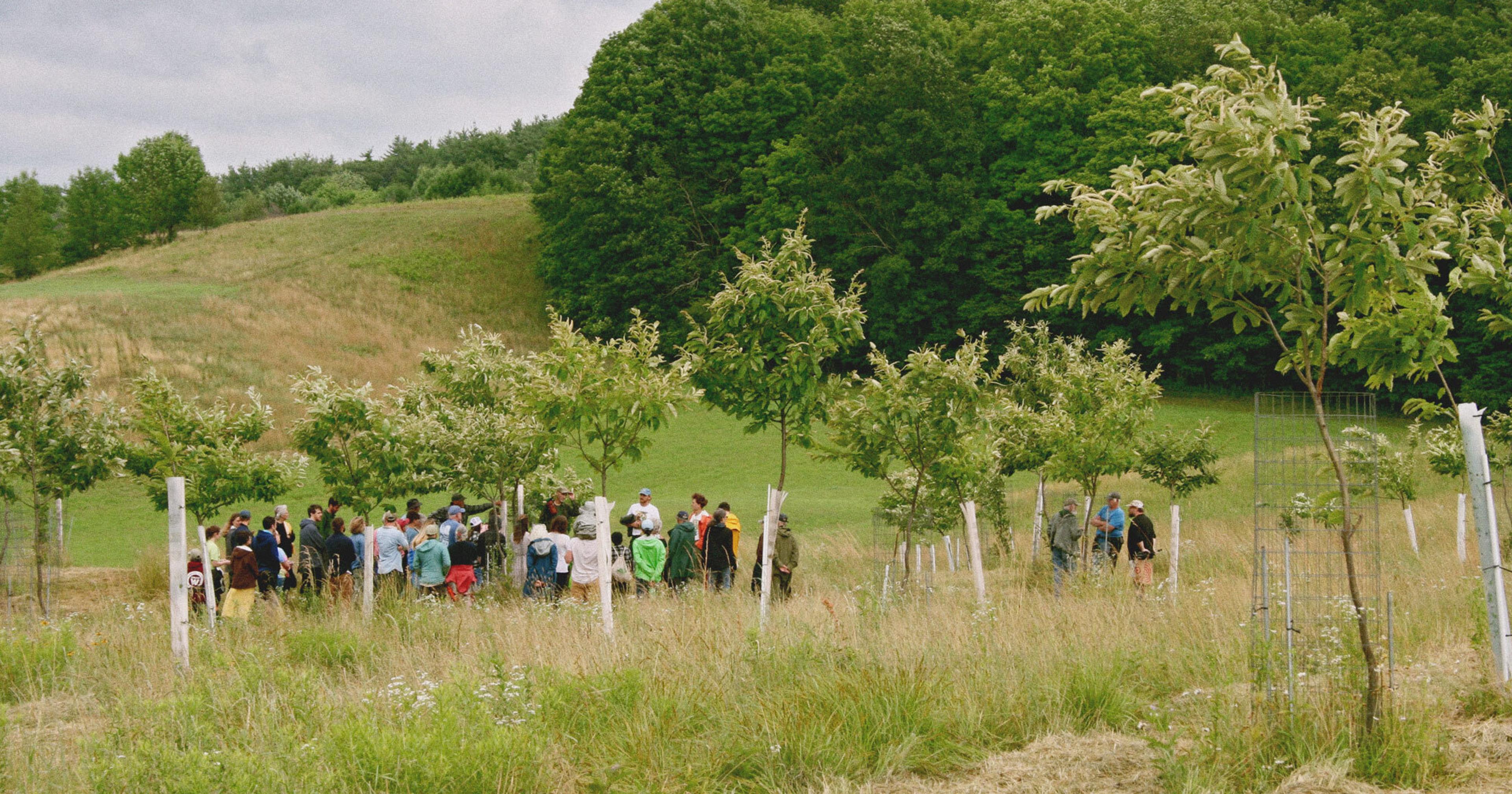
An educational tour of Breadtree Farms' silvopasture at its Otter Creek Farms, where chestnuts planted in 2019 are grown alongside beef cattle and honeybees.
·Breadtree Farms
Bug Nichols, who began planting with Breadtree as a volunteer in 2020 and later became its first employee, says she and her colleagues are under no false pretenses about their certainty of success.
“Our business could fail,” she says. “But all of us think that even if our business did fail, it would have been helping take another step toward trying out new ways of farming in our region.”
Breadtree’s seemingly niche idea is based on millennia of history in which chestnuts and other tree crops fed people in New York and other places where they were grown. Restoring that approach to agriculture and reaping the environmental benefits — carbon sequestration, abundant wildlife habitat, improved soil health and water quality — will require cooperation and collaboration across a developing industry, as well as an openness to long-term thinking. It takes patience, but patience is the path to a healthier and more sustainable food system.
“Until there are people who want to finance agriculture on a decade timescale, we won’t have agriculture that works on a century timescale,” Wallack says.
Greg Miller has several decades invested in his chestnuts in Carrollton, Ohio, an hour southeast of Akron. His father began planting them in 1957 and kept them as a hobby until the ’80s, when Miller started Empire Chestnut Co. with several hundred trees already bearing. In the early 2000s he began marketing the nuts grown by three of his neighbors, who joined him in establishing the Route 9 Cooperative in 2009 after a bumper crop delivered 60,000 pounds — well more than Miller could handle. The co-op’s members invested about $180,000 into a 5,000 square foot steel-framed facility on Miller’s property and have been in business together ever since, now selling around 100,000 pounds of fresh nuts in the shell every year.
It costs about $2 per pound to grow Route 9’s chestnuts, which wholesale for $4 to $5 and wholesale at twice that, Miller says. Margins go up in concert with volume, so operating as a cooperative is a boon for members. It helps that demand outstrips supply, particularly among immigrants whose home countries retain a strong chestnut culture. In 1994 a Korean couple backed their truck up to Miller’s door and asked to buy his entire crop, he says. Business hasn’t slowed since.
“Once people find out that we have them, they clamor to get them,” Miller says.
Beyond the economic benefits of the cooperative model, Miller has found that a collaborative spirit helps move the operation forward. Periodical meetings allow farmers to learn from one another, sharing knowledge about growing and harvesting methods and proposing new ideas for how to best run the business. There’s something to be said for not having to go it alone, he says.
“I hope that over the next 10 to 15 years, we can help to develop many of those missing pieces as steps towards a cooperative industry.“
To that end, Miller has spent years serving as mentor for chestnut farmers and hobbyists, including the farmers at Breadtree and others establishing co-ops. During the busiest weekend of the annual harvest, in early October, Route 9 hosts what Miller has dubbed “Chestnut Woodstock,” inviting as many as 50 people to camp in the orchard, help out with the harvest and learn about the ins and outs of growing nuts. At the end of it all, he delivers what his daughter, Amy, calls his “chestnut sermon,” a treatise on the philosophy behind shifting from annual grain production to perennial tree crops. Anybody who fairly examines annual agriculture will conclude that “it’s just not a sustainable practice,” Miller says. Chestnuts and other tree crops, though, can be.
“This is something that’s good for the planet, good for the grower, and good for the consumer,” Miller, now 70, says. “The constraint is you have to make money or it’ll never happen.”
Cooperatives offer an answer to that conundrum, as Justin Holt and his colleagues at North Carolina’s Asheville Nuttery have found. Since 2017, the cooperative has been wild harvesting black walnuts, bitternut hickory and acorns, as well as buying them from community members. A separate but related cooperative called the Nutty Buddy Collective manages two four-acre orchards set up with 99-year leases signed in exchange for a share of their eventual yields.
The Nuttery processes its nuts in a facility stocked with equipment amassed through Kickstarter funding and a secondhand purchase from an Ohio grower. (That grower, Kurt Belser, explored nut crop production with a USDA Sustainable Agriculture Research and Education grant and determined it can be economically viable as long as farmers band together.) Last year, the co-op started selling holiday boxes stuffed with a dozen products, including fresh nuts, oils, acorn cookies, and black walnut salad dressing.
Like many growers, there’s something spiritual about Holt’s relationship with nuts. He still savors his first encounter with a hickory nut, cracking it open as the aroma of banana nut bread wafted out. “It was dizzying. It went straight to my heart,” he says. “It was like I saw God in some way.”
“All of us think that even if our business did fail, it would have been helping take another step toward trying out new ways of farming in our region.”
Holt believes growing tree nuts can help address “the deleterious effects our diets have on us and our planet,” and he sees how compelling the notion can be for like-minded individuals. “The foods themselves are interesting and delicious and expand our palates and what it means to eat from our places,” he says. “And there’s other levels to it: the need for togetherness, to feel like you’re part of something and that you’re contributing to a promising, hopeful vision for the future. There’s a hunger for that.”
But that doesn’t mean the work is easy, Holt admits. He’s spent the last decade wrapped up in the promise of it all, only to find himself burnt out from the uphill battle of changing even a small corner of the food system. For those willing to forge ahead, it’s only possible with partners.
“If anyone is actually willing to do it they come up against limitations real quick,” Holt says. “Land is impossibly expensive. There’s nowhere to process. You’ve got to figure this all out on your own. That’s the reason people turn to cooperative approaches. How can we get together and figure out how to do this?”
At Keystone, Grason and about a dozen fellow members bring a similar communal approach to nut harvesting. They’re focused on hickory oil but also plan to buy chestnuts, hazelnuts, and black walnuts to turn into value-added products, aiming to develop the market for tree crops with support from a Climate-Smart Commodities grant that delivered around $50,000 before being frozen by the Trump administration. (Breadtree’s USDA grant was also temporarily frozen before being reinstated; the pause will likely delay the facility’s opening by a year, shifting the goalpost to the 2027 harvest.)
The New York Tree Crops Alliance, meanwhile, shares Keystone’s vision, emphasizing hazelnuts and chestnuts, although member Brian Caldwell says Breadtree will serve as the region’s primary hub for the latter. There’s a sense of unity among those invested in seeing tree crops flourish, which feeds into the cooperative approach taking root, he says. “It self-selects for a certain kind of person,” he adds. The kind of person who sees an opportunity to reorient agriculture by establishing local economies based around perennial systems in places that currently produce relatively little of their own food — even if, as he acknowledges, growing demand alongside supply may be harder than growing the nuts themselves.
“It’s kind of like a fallow field,” Breadtree’s Simon says. “It’s fertile ground for something new to be done.”
When Breadtree’s farmers visited Italy’s chestnut region last fall, they witnessed what it could look like to achieve what they’ve set out to do. Nichols recalls walking through orchards that have been stewarded by families for centuries, their trees producing nuts in a seemingly endless cycle. Working with tree crops encourages people to consider their work from a generational perspective, she says, and the only way to do that is in community with others.
As Holt says of the tree crops movement, “the long-term vision is something on the time scale of an oak tree.”
It seems fitting, then, that Breadtree is pinning its future on a barn that has stood the test of time. Adaptive reuse is a complex proposition, Simon admits, “but it’s also part of our heritage.” Demolition began last winter, clearing off inches of dust and debris that had accumulated over nearly a decade of disuse and breaking down the interior so it can be built back up. Along the way, Breadtree will continue leaning on the wisdom of their compatriots. Miller, the Route 9 veteran, says that’s the only way to proceed. Work with tree crops moves too slowly for anyone to answer all the questions that arise in one lifetime, so collaboration is essential.
“Nobody can do this on their own,” he says.
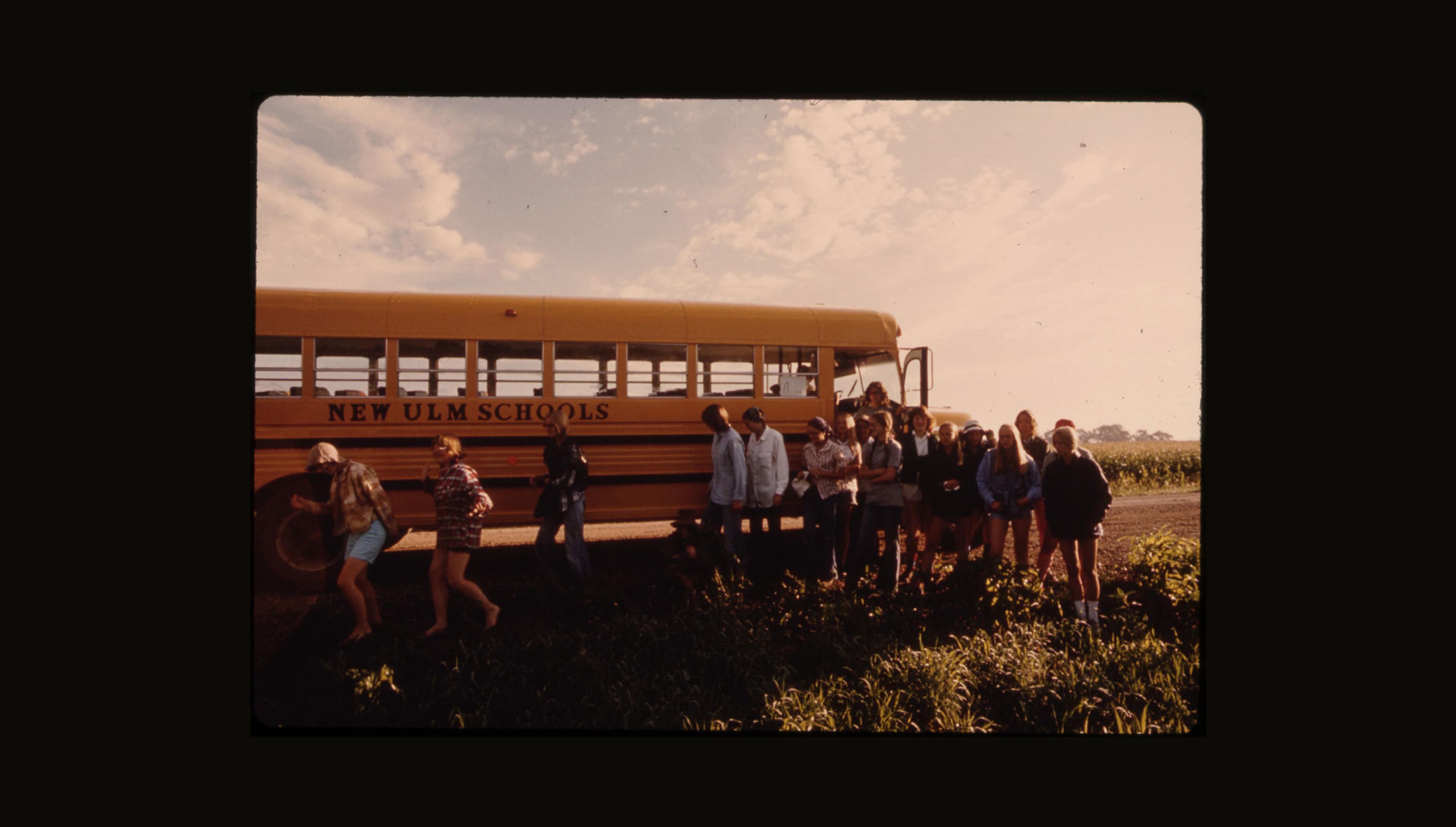
Each summer, thousands of teenagers across the Midwest step into rows of seed corn fields before sunrise. In an age-old tradition, these teens have ridden buses from small towns and city centers to lace up their tennis shoes, fan out across the field, and perform one of agriculture’s youth-labeled jobs: corn detasseling.
Detasseling is a step in seed corn production that involves manually removing the male tassel from the female corn plant to prevent self-pollination. It’s a vital part of a massive Midwestern industry, usually happening during July. In Nebraska, Matt Schulte grew up in Grand Island detasseling corn in the late 1990s. He was a part of a seasonal workforce that still stretches across the Corn Belt today, working just one month a year.
Schulte learned hard work and the realities of farm life, plus what residents call the “Midwestern Spirit.” Now a father, pastor, and county commissioner, he passed that experience down to his own three kids. “The place where I drop off my kids each morning … there are six buses that pick up kids just at one site.” Just as students everywhere load buses for sports, Nebraska kids climb aboard the same buses in summer, bound for the cornfields. One company alone picks up teen workers at five different locations around Omaha, Schulte said.
More than 7,000 people detassel each year in Nebraska, according to the state; 80 percent of them are under 18. Row crop production pairs well with the availability of rural farm kids, who have long performed chores before they ever clock hours onto a timesheet. In an era of labor shortages, mechanization, and shifting youth priorities, these teen workers serve as a rare, essential link in the farm labor chain.
The national shortage of skilled workers has always left the door open for entry-level job seekers. Roughly 70 percent of agriculture businesses report needing to hire and train inexperienced employees, according to the Midwest Food, Agriculture and Forestry Workforce Needs Assessment. Enter youth labor in agriculture. An estimated 600,000 workers are in agriculture under the age of 18, according to the most recent Childhood Agricultural Injury Survey.
With parental consent, children as young as 12 can work in non-hazardous farm jobs, typically outside of school hours. At 14, teens may work in a wider range of non-hazardous farm roles. At 16, they may perform hazardous agricultural work without restrictions on hours. At 18, they can work in dangerous jobs across both agricultural and non-agricultural industries.
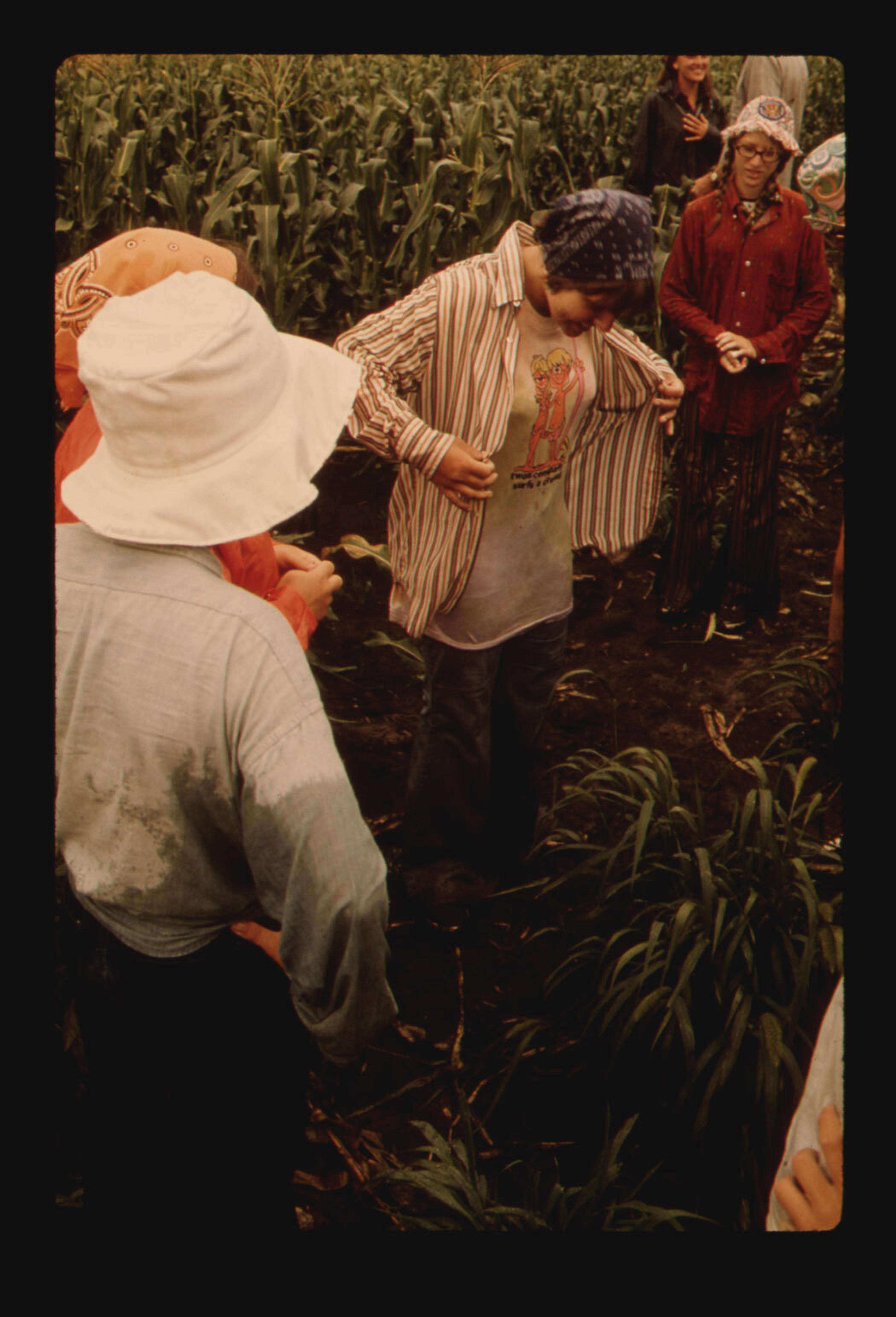
Federal regulations under the Fair Labor Standards Act set the national minimum for child labor protections, but agricultural exemptions allow states to loosen youth employment rules — with exact regulations varying from state to state.
Around the country, children are picking strawberries, baling hay, cleaning pens, and feeding livestock. But in row crop country, detasseling is king. The detasseling process is controlled, allowing for cross-pollination between selected parent plants, enabling the production of hybrid seed. Machines remove about 75 percent of the male tassels, but workers must walk miles of rows to identify and pull the rest by hand. Timing is critical because removing them too early and your yield suffers; too late, and the corn pollinates itself.
Nick Grandstaff is an Iowa native who detasseled for DuPont Pioneer in his younger years. Come the end of June, “Everyone in town either opted into detasseling or found another job,” he said. Reflecting on why the market exists, Grandstaff pointed to regions like North Central Iowa, where fertile soil and nearby seed processing plants create the right business conditions. In those towns, all youth, regardless of background, took part.
“Mechanization can only go so far in detasseling,” he said. “Well-motivated youth get the job done.”
For many teens, detasseling is a summer side job — a way to earn spending money. But in the broader under‑16 farm workforce around the country, many have low-income family responsibilities that extend beyond pocket money. According to the Lawyers for Good Government, over 90 percent of children agricultural workers are persons of color. Within that percentage, 83 are identified as Hispanic.
The USDA reports that up to 7% of crop production workers are aged 14 to 19. The size of this child labor population complicates assumptions that teen wages rarely contribute to household needs, undercutting opponents of minimum wage spikes. Bureau of Labor Statistics data show that nearly 45 percent of minimum-wage jobs are held by workers ages 16 to 24.
“The original idea behind farm exemptions in youth labor law was to help family farms survive.”
As demand for cheaper labor grows, the detasseling capital of America is outsourcing to migrant crews that follow harvests from south to north, replacing thousands of teen jobs with lower-paid adults whose wages must still meet the federal minimum.
Nebraska county commissioner Schulte took issue with that when he published an op-ed protesting reduced detasseling access for local teens. “Large seed producers have found that they can improve their bottom line by outsourcing detasseling and rogueing to migrant worker companies,” he said.
Companies like Bayer, Syngenta, and Remington Seeds all utilized the H-2A visa program to fill these labor crews. Adults over the age of 18 years old qualify for H-2A visas, but their children or dependents are not authorized to work themselves, under the H-4 visa — a rule often broken.
Starting in 2019, the United States Department of Labor and state of Nebraska feuded when the state argued its teens were ready to detassel corn, while the federal agency continued approving H-2A visas for migrant crews.
The model is not new — migrant crews have long filled agricultural labor gaps — but outsourcing a job historically held by local teens has sparked concern. In 2024, Nebraska lawmakers passed LB844, a bill requiring seed companies to make documented efforts, submitted to the state, to recruit local youth before hiring out-of-state migrant crews. The law adds steps beyond the H-2A program’s basic recruitment strategies like newspaper posting.
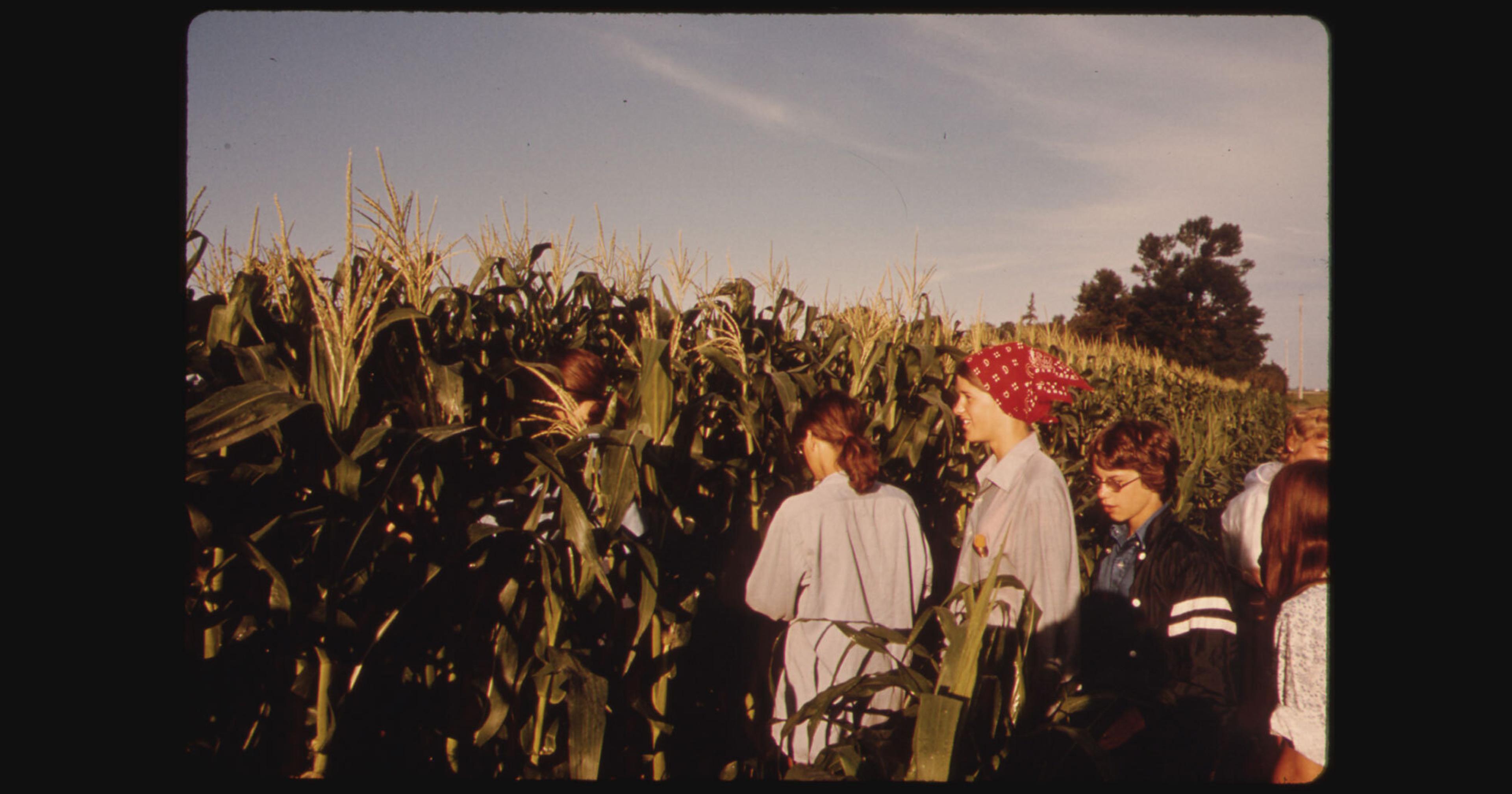
Defending teen access to tough farm jobs is neither politically easy nor popular. But advocates argue the bill does more than protect jobs — it preserves young people’s exposure to agriculture. “We need to protect migrant workers from these unhealthy, harsh conditions,” Schulte said about the traveling team who work all year-round. “We need to protect Nebraska jobs,” he also said, revealing a complicated dichotomy: Should the unhealthy, harsh conditions be reserved for native-born youth?
Schulte says his eldest son earned $12,000 over his years detasseling, enough to buy a pickup truck outright. “Every dollar he used to pay for that thing came from those fields,” he said. “Once he realized how much he could make, he was all in.”
The broader farm workforce is also “all in”— but only if they’re allowed to stay in the country to work. In July 2025, Agriculture Secretary Brooke Rollins doubled down on a zero-amnesty policy for foreign labor, calling for a fully American farm workforce. She pointed to Medicaid recipients as potential replacements for the millions of farmworkers her administration has sought to deport; differing state laws could expand the role of teen workers even further.
Youth labor protections in agriculture were created to shield minors from hazardous work, prevent exploitation, and ensure children stay in school. Even for the youngest workers, the law sets age minimums, mandates breaks in some states, and limits tasks based on risk, said Jeffrey Lewis, an attorney with Ohio State University’s Agricultural & Resource Law Program.
But enforcement and legal standards vary widely by state and often depend on how each job is classified. And right now, various states are both strengthening and loosening their child labor protections.
“Mechanization can only go so far in detasseling. Well-motivated youth get the job done.”
In Iowa, lawmakers recently introduced legislation that would allow 14-year-olds to work in meatpacking plants under certain conditions. In Ohio on the other hand, a new rule bars youth under 18 from handling restricted-use pesticides, a change expected to directly affect small grain and row crop farms.
This patchwork of regulation has created inconsistencies in how, and whether, youth can participate in farm work legally. “Youth employment is particularly nuanced in employment law,” Lewis said. “The distinction matters.” Field labor, meatpacking, and equipment use each fall under different legal categories and are not governed by a single standard when state law superseded federal law.
Some critics note that detasseling is often done in peak July heat for eight hours a day, and is too demanding for minors. Their concerns are backed by a 2018 U.S. Government Accountability Office report, which found that more than half of all work-related youth fatalities occurred in agriculture.
The Fair Labor Standards Act sets a national baseline, but states can impose stricter rules — or attempt to loosen them. Fieldwork like corn detasseling qualifies as “agricultural labor,” which is broadly exempt from many child labor restrictions. By contrast, meatpacking, though often discussed in the same context, is not considered agricultural labor under federal law. Instead, it is classified as manufacturing and processing, industries deemed too hazardous for workers under 18.
Illegal child labor in meat processing remains common. In 2025, JBS USA settled for $4 million dollars with the Department of Labor. In 2024, 11 children, some as young as 13, were found working at Seaboard Triumph in Iowa. Regardless, many states have further legislated to operate with a younger workforce; Iowa, for example, allows work permits for children as young as 14 to work in meat coolers and industrial laundries, restricted workplaces under federal law.
“The original idea behind farm exemptions in youth labor law was to help family farms survive,” Lewis explained. But today, those exemptions now apply on a much broader scale across the economy. One of the big conversations now is whether we are doing enough to protect young workers, he said.
Depending on who you ask, you might get very different answers.

At a May 12 town hall meeting for Cranbury Township in Middlesex County, New Jersey, anger was thick in the air.
“How would you feel if someone did this to your home!” shouted one woman.
More than 16 people took to the podium in the open comment portion of the meeting, double the usual amount. One resident angrily told the committee there was a lack of transparency in what was going on here. Weeks earlier, voicemail messages left on the committee’s public phone number included outcries such as, “You’re just stealing from the taxpayer, you need to give that f*cking farm back.”
This vitriol was aimed at the township for approving a housing project that would tear up a 175-year-old, 21-acre cattle ranch due to eminent domain, which allows governments (from municipal to federal) to seize property for public use and interest — even if the owner doesn’t want to sell. Cranbury Township is seeking to redevelop 11 acres of the ranch to install a range of affordable units, just minutes away from the busy New Jersey turnpike.
Ranch owner Andy Henry pleaded his case at the meeting, clarifying he wants to keep the property in his family and that it isn’t an investment. While he lives in New Mexico now, still owning the property with his brother and leasing it out to a farmer, he has consistently rebuffed $1 million-per-acre offers from other buyers over the past few decades. But this eminent domain ruling has felt like quicksand he can’t get out of.
Henry’s case is one of many pitting farmers and ranchers against the government right now. In the past, this law has commonly applied to public infrastructure upgrades such as installing new transit yards or widening highways. Utilities companies use eminent domain issuances to, say, build transmission lines across several counties, a situation adding drama to city council meetings in Maryland.
But eminent domain cases have seen marked expansion in their definition. In Southwest Iowa, a school district wants to acquire five acres from a 100-year-old farm to build a 10,000-square-foot bus barn with maintenance and wash bays, a concrete apron, and parking for bus drivers.
“This is a steamroll job by county officials… The whole thing stinks and they know it.”
In Iowa, farmer opposition has been quite effective against three proposed CO₂ pipelines that would capture carbon dioxide from ethanol plants and transport it out of state for sequestration. Private pipeline companies attempted using eminent domain to acquire easements across private farmland, in the hope of securing lucrative Inflation Reduction Act tax credits, with the Iowa ethanol industry claiming the pipeline is necessary to remain competitive in markets adopting low-carbon fuel standards. In March, the Iowa legislature voted to ban eminent domain for this type of project.
In Northeast Virginia, county government officials want to construct a 14-million-gallon per day water intake plant and adjoining pipeline on Garrett Farms’ riverfront acreage, using eminent domain leverage. Owner Cory Garrett told AgWeb in December, “This is a steamroll job by county officials … The whole thing stinks and they know it.”
Lawyers familiar with eminent domain cases have seen a surge in these rulings as infrastructure projects ramp up. “When you hear about these big bills to allocate trillions of dollars to highway improvement projects, for example, that means local transportation departments are putting in transmissions lines and need land for all of this, so they need to condemn more property,” said Sean Sherlock, a partner at Snell & Wilmer in Orange County, California.
The municipality or government body issuing the eminent domain letters to property owners may seem to be holding all the cards but their rights aren’t unlimited. Their eminent domain issuance can be taken to court where judges can reverse rulings and ensure the owner’s property is free from any development.
In any eminent domain case, compensation has to be given to the property owner, which can still be complicated due to how the owner and the government will each hire appraisers who may come up with very different amounts. “Government agencies often have an initial inadequate number, I’ve found,” said Sherlock, “and they don’t consider severance damages.”
“Government agencies often have an initial inadequate number, I’ve found, and they don’t consider severance damages.”
Say a municipality wants to seize 20 acres of a 160-acre property, at $10,000 an acre, he said. The owner may get $200,000 but those remaining 140 acres have lost value immediately, especially if some of those seized 20 acres are on top of an entry point.
Henry’s lawyer Tim Duggan filed a lawsuit against Cranbury Township, claiming their ordinance is not based on “sound legal and factual precedent.”
“These housing developments are in the middle of nowhere, so is that really in the public interest?” Duggan added.
Cranbury is using eminent domain in this situation due to an encroaching deadline. It had until June 30 to present a plan for adding 265 affordable housing units over the next decade, a requirement for every New Jersey community under the Mount Laurel doctrine. This series of state Supreme Court decisions, going back to 1975, mandates each municipality provide its “fair share” of affordable housing based on its population.
Henry said, “When I got that eminent domain letter in April, I was shocked, I had no clue it was coming. Cranbury didn’t reach out to me at all to even ask me to sell any acres to them.”
This is actually the second time Henry’s family had to fight to preserve their property. In the 1960s, the same township wanted to lay a road down through the family acreage, cutting through his family’s 2,300-square-foot farmstead.
“I remember hearing how our family and everyone in the community was going into town to fight off that ruling, and we obviously won,” Henry said, “and I hope for the same here.”
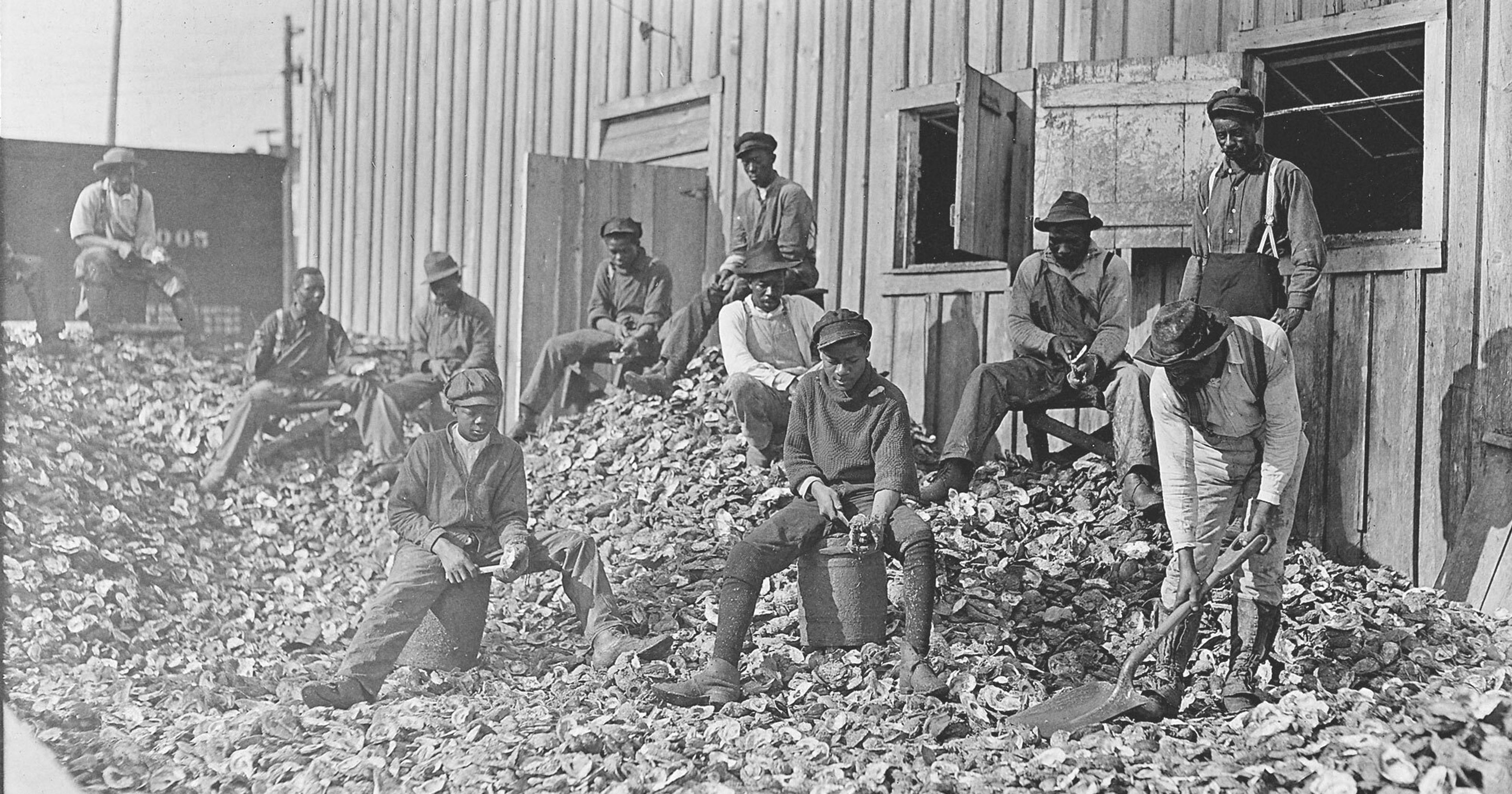
When Baltimore restaurateur Jasmine Norton set out to partner with a Black oyster farmer, sourcing was a lot more difficult than she’d imagined.
“There generally isn’t a lot of widespread coverage of Black oyster economies and farmers,” said Norton, chef and owner of Baltimore’s The Urban Oyster Bar, the country’s only Black-and-woman-owned oyster restaurant. “A lot of our industry connections are made by word of mouth and the legacies are often shared through the oral tradition, but not much has been written down or documented in a way that gives new generations access to this information,” she continued.
Norton acknowledged that her own path to oysters was forged by a legacy of Black oystermen and women — shuckers, dredgers, and especially farmers — who helped build today’s billion-dollar industry in the United States.
Similarly, in other coastal regions of the United States such as New Orleans, Maryland’s Eastern Shore, South Carolina, and Georgia, the contributions and expertise of Black oystermen and women during The Gilded Age were critical in building the American oyster industry. According to the Food and Agricultural Organization of the United Nations, in the 1880s, oyster farming peaked to around 27 million bushels per year. Oysters were a common food, especially throughout the East Coast and Midwest. Thousands of industry workers were involved in the process from harvesting to shucking, dredging, canning, packing, and transporting.
However, many Black oystermen and women during this time traced their involvement in the industry back to the pre-and-during Civil War era when Blacks and Whites often worked the waterways together. Still, Black oystermen and women of coastal communities were often taken advantage of by enslavers who used them to farm, sell, clean, and prepare oysters, but paid them little to nothing at all.
In the Netflix docu-series High on the Hog: How African American Cuisine Transformed America, host Stephen Satterfield highlights Thomas Downing, “The Oyster King of New York,” who became famous for his NYC oyster business in the late 1800s. Learning the ropes from growing up on Virginia’s eastern shore, Downing’s Broad Street oyster cellar assisted in elevating the business of oysters, taking them from cheap, easy-to-afford eats for the working class to fine-dining delicacies. Located near Five Points and the center of the city’s bustling business district, oysters ironically became inaccessible to the very people who helped to build their popularity.
Despite his own community’s lack of access to oysters, Downing expanded his business to include catering and shipping nationwide. His pickled oysters even made their way to Queen Elizabeth in Europe. The queen was so pleased, she sent Downing a gold watch that became a treasured family heirloom.
This popularity, in turn, gave Downing the platform as an activist for New York’s free Black community, fighting alongside local civic organizations for economic equity — a legacy that was passed down to his eldest son, George Thomas Downing, who was also a hotelier, activist, and restaurateur.
After the Emancipation Proclamation, Black oyster harvesters looked to the fishing industry as means to financially support themselves and their families. At the time, oystering was one of the highest paid professions for Black men. By the early 1900s, many areas along the Eastern Seaboard were renowned for robust oyster harvests. The Department of Labor even noted in its yearly bulletin that Black oyster harvesters were thriving in oyster and fish-producing areas like Litwalton and Whealton.
During the Reconstruction era, Black oyster farmers in the South (the Carolinas, Georgia, Louisiana) often entered into sharecropping-variety agreements that kept Black Southerners impoverished and immobile. In response, many made their way North to form communities like Sandy Ground, an oyster harvesting sanctuary in Rossville, New York.
Promoting Sustainable Communities
Historically, oyster farming supported sustainability not only within the industry, but also within predominantly Black communities.
“The economic impact of the oyster farming process affects individuals and businesses on several levels,” said Kevin Dawson, associate professor of history at the University of California, Merced, and author of The Undercurrents of Power: Aquatic Culture in the African Diaspora. Dawson has dedicated his life’s work to examining aquatic culture amongst West Africans and Africans in America during the late 15th century through American Reconstruction.
“My current work in progress closely examines how enslaved African women used fishing techniques to sell all kinds of seafood, including oysters, at what would be known as modern-day farmer’s markets,” said Dawson.
“During the early and mid-1800s, most of what was being eaten in seaports was being produced by enslaved people during their free time. They were fishing, crabbing, harvesting oysters and selling it in port cities like Baltimore, Charleston, and New Orleans. Oysters, in addition to other types of seafood, were really crucial to those economies,” emphasized Dawson.
In his research, Dawson discovered that these women were often allowed to keep their profits. However, enslavers used this system to justify not giving the enslaved enough clothes to wear or quality food to eat.
“A universal complaint was that enslavers did not provide them with enough clothing and food … so women used profits from selling oysters to buy necessities like clothes, bedding, bathing, and hygienic products in addition to small livestock for meat and eggs,” explained Dawson.
Another such story is that of John and Tom Vreeland Jackson, two brothers who, in 1830, were freedmen in the Hudson River region whose oyster business funded the purchase of family land and served as a refuge for enslaved Africans escaping through the Underground Railroad.
Oyster harvesting continued to support generations of families by providing stable and steady work. For instance, Ira Samuel Wright of Wetipquin, Maryland, worked as an oyster farmer from the 1950s to the mid-70s. Oystering the Chesapeake Bay, just like his father had done before him, Wright earned a solid income for himself and his family.
Dawson continued, “Over time, oysters were not just used to feed people and produce cash crops for profit. Oyster farmers contributed to an ecosystem within Black neighborhoods by also using oysters as fertilizer in composting methods and by providing jobs for skilled workers and their families.”
Longtime oyster farmer and commercial crabber Ernest McIntosh Sr., who owns the family-operated oyster farm E.L. McIntosh and Son Oyster Company, has been harvesting wild oysters along Georgia’s coastline for more than 50 years.
In an interview with Jolvan Morris, a consultation biologist at the National Oceanic and Atmospheric Administration (NOAA) Fisheries Oral History Archives, McIntosh described how the oyster industry supports the economies in the Southeast, particularly St. Augustine, Jacksonville, Savannah, Atlanta, and parts of the Carolinas. McIntosh Sr., who taught his son to harvest oysters as a pre-teen, used revenue from crabbing and oysters, as well as a SBA loan, to build a seafood packing and shipping house which provided jobs and income to other members of the community.
Although the crabbing portion of the business proved fruitful for McIntosh Sr., he explained that his brothers left due to shifts in the industry, government regulations, and increased pricing. “They all turned sour at it … and got out,” said McIntosh, whose business is now entirely focused on oyster farming.
A Vanishing Legacy
Around 1929, state governments replaced oyster harvesting with repletion seed programs, hoping to restore oyster beds that had been displaced by large kelp forests. However, decades after the programs were initiated, efforts were thwarted by fungal pandemics and natural predators.
In the 1970s, overharvesting, pollution, and gradual climate change continued the sharp decline in oyster farming, especially in Black communities. And while restoration practices have resulted in boosting previously low oyster populations, Black oyster communities have yet to fully recover, jeopardizing the history and traditions of culturally-nuanced oyster harvesting.
Today, oyster farming is still practiced by the descendants of generations of Black harvesters in coastal communities along the Chesapeake Bay such as Hobson Village, Virginia, where Mary Hill, a seventh-generation oyster harvester may be the only Black woman oyster farmer in the country. Local historians, societies, museums, preservationists, and oral storytellers in Louisiana parishes as well as other once-thriving historically Black oyster communities along the coasts are working to ensure the stories, recipes, and traditions of Black oyster farmers don’t get lost in shifting economic and political landscapes.
Accessibility and Education in Mind
“While it has steadily declined in African American coastal communities, accessibility and education can further support development in oyster farming,” said Jordan Lynch, aquaculturist and farm manager of the Key Allegro Oyster Farm in Rockport, Texas.
Lynch said “one of the biggest hurdles in advancement is visibility and access to capital for underrepresented and Black [oyster] farmers.”
There are, however, organizations like Minorities in Aquaculture which are increasing opportunities for anyone who wants to learn more about oyster farming or any careers in the aquaculture sector. While Minorities in Aquaculture is the currently the only minority workforce development organization in the industry, according to their official website, they are committed to “educating underrepresented demographics about the environmental aquaculture and a growing viable career pipeline.”
Lynch, who is originally from Iowa, knew that in order to get more career-focused information, he was going to need to get out of his hometown. Not only did he leave his construction career to pursue an education in aquaculture at Texas A&M in Galveston, he voluntarily interned with a local oyster farmer who showed him the ropes. “I also paid my way to a lot of national conferences, but I know that everyone can’t always afford to attend them.”
“In order to preserve the legacy, there should also be more education on the nuts and bolts of oyster farming,” said Lynch. “If new oyster farmers are just learning the ropes, they should definitely understand their access to landing and the history of the farm site. How far is the landing from how you’re going to get your oysters? Five miles versus 10 across the bay makes a huge difference. Also, what about the history of the site … how often does the bay close?” he continued. “There’s a ton of research that needs to be done.”
Diverse Storytelling Holds Another Key
“Oyster farming today is pretty much a face-to-face network … and the relationships you build with people in this industry are critical if you want to go far,” said Lynch.
After a delectable first experience eating raw oysters in Charleston, South Carolina, Kamille Harris and Jasmine Hardy highlighted their newfound love by starting an Instagram page, Black Girls & Oysters, where the couple showcase themselves eating and learning about all-things oysters.
“Not having prior knowledge of the intersection of Black history and oysters, I really did not think oysters were eaten widely by people in our communities. So, bridging that gap and helping our people to understand the history, is going to get more Black folks not only wanting to taste them, but potentially even work in oyster farming or seafood commerce,” said Hardy.
Dawson confirmed that, as storytelling evolves, new generations are sharing the stories of Black oyster farmers (past, present, and future) in unconventional ways to ensure visibility.
“Instead of just providing information through scholarly texts and museum exhibits, social media platforms can help historians get information to individuals in short, digestible chunks,” he said.
Jasmine Norton also envisions a future where accessible information can open more doors especially for Black oyster enthusiasts, chefs, scientists, historians, restauranteurs, harvesters, shuckers, dredgers, packagers, transporters, or anyone who wants to explore the oyster industry for its history or as a trade.
“One of my goals is to have my own brand of oysters that are sourced from Chincoteague, Virginia, the birthplace of Thomas Downing. It’s my way of honoring history … And I’m definitely not the only one fighting to keep our connection to oysters alive. Through storytelling, we can make sure our narratives — and our legacies — don’t disappear.“

At first, the wolf was intrigued by the strange, buzzing creature flying toward it. Dropping into a playful stance, it considered whether the drone overhead was something to play with or, at the very least, eat.
That was not the response that the USDA’s Wildlife Services “night watch” team, positioned nearby, was looking for. It was August of 2022 in southwestern Oregon’s Klamath Basin, and the group was testing whether small, remote-piloted drones might be effective at detecting and scaring wolves away from cattle.
It had been a tough period for conflict between wolves and livestock. Over the preceding three weeks, the notorious Rogue Pack had killed a cow just about every other night. “It was really bad,” said Dustin Ranglack, predator project leader for the National Wildlife Research Center. “And nobody’s happy when that is happening.”
As in most of the lower 48 states, gray wolves are federally listed as endangered in the western two-thirds of Oregon, which means that nonlethal tactics are the only legal option for ranchers hoping to prevent wolves from preying on their livestock. Since 2018, state and federal wildlife agencies had been conducting “night watches” in the area, patrolling hotspots of wolf activity on foot and in all-terrain vehicles, and using handheld thermal cameras to scan for predators entering cattle pastures. If detected, they’d deploy an assortment of tools to scare the wolves away, including cracker shells, noisemakers, and nonlethal ammunition.
The hands-on approach was relatively effective, but trees and uneven terrain presented a visibility challenge. The inspiration to try drones came from an unlikely source. “Some folks were out trying to find Bigfoot using drones with thermal cameras,” said Ranglack. “We thought, boy, that’s actually a good idea.” Drones might enable the night watch to detect wolves sooner. But personnel at Wildlife Services, which in recent years has directed more resources toward nonlethal approaches, wondered whether the drones themselves might be able to directly haze wolves away from livestock, reducing the agency’s need to intercept them in person.
That night in 2022, the drone’s pilot flew it away from the playful wolf and back to base, where a speaker was attached to the aerial unit’s setup. As the wolf began to approach a group of cattle, the drone flew to it again, this time with the pilot yelling at the wolf through the speaker overhead. Spooked, it ran off immediately.
Everything But the Kitchen Sink
Before gray wolves were protected under the Endangered Species Act in 1974, they were nearly exterminated through a government-sponsored campaign of trapping, poisoning, and shooting. Today, wolf populations are rebounding across the Western U.S., driven by natural repopulation, as well as reintroduction efforts that have seen wolves intentionally released in areas such as Yellowstone National Park and, most recently, Colorado’s rural Western Slope. It’s a major win for conservationists, but many livestock producers view it as an alarming turnaround, particularly if they find themselves on the receiving end of a persistent predation issue.
Seeking a solution, ranchers and wildlife agencies have tested and deployed a diverse arsenal of equipment and strategies, from motion-activated floodlights to noisy speakers to the occasional inflatable air dancer. “We’re seeing a lot of uptake in these practices with people who may not be excited about wolves on the landscape, but who recognize that they’re here to stay,” said Shawn Cantrell, vice president of species conservation and coexistence at the nonprofit Defenders of Wildlife, which promotes strategies for living alongside wolves through community outreach and advocacy.

“Some folks were out trying to find Bigfoot using drones with thermal cameras. We thought, boy, that’s actually a good idea.”
Cantrell has been working on issues around human-wolf interaction for over a decade. He said that the single most effective nonlethal tool is human presence. Range riding, a practice of patrolling and monitoring herds on horseback or ATV, seen as an effective approach, and new agency-funded range rider programs are popping up in states such as Colorado. Livestock guardian dogs are another low-tech solution. But both methods can be costly and require specialized training for dogs and humans alike.
Another highly effective tool is fladry, lines of brightly colored flags that are attached to a wire and strung around grazing land to form a visual barrier that is offputting to wolves. Multiple studies have demonstrated that fladry works, but only if used sparingly, for about six weeks at a time. “Wolves tend to be very inquisitive, and they’re also very smart,” said Cantrell. “After a while, they will get accustomed to any particular nonlethal tool, and at some point they’ll test it.”
Habituation is one angle that Ranglack’s team monitored in their experimentation with drones. So far, he said there’s been no evidence of wolves getting comfortable with them. In fact, the tool may be getting more effective. “That first wolf, when we approached it with the drone, wasn’t afraid of it at all,” he said. “Now, the wolves in this area have had exposure to the drone, and they will often already be moving away when we approach them with just the drone’s rotor noise. They’ve already come to associate the drone with people, and we’re not necessarily having to use the human voice, or recorded gunshots, or fireworks sounds, or whatever else.”
Speaking Their Language
Sara Nozkova has a vision for a future where new technologies aren’t limited to scaring animals away with loud noises and flashing lights. She’s the CEO of Flox, a Swedish company that’s working to combine artificial intelligence with wildlife science for a more holistic approach to deterrence.
This fall, Flox will begin selling its first product, the Edge unit, which is designed to attach to fence posts and repel wildlife using AI-powered image recognition and a proprietary set of bioacoustic deterrents. “It’s kind of our core technology, so I cannot say too much, but the idea is that we kind of speak the language that they understand,” said Nozkova. Flox works with wildlife researchers and biologists to learn and adapt from the animal responses it receives on the spot. “If we see that there isn’t the right reaction with one sound, we go directly to the next one, so the AI is learning the behaviors and how to trigger the right reaction.”
“It’s become a staple for wolf conflict prevention, especially in southwest Oregon.”
Nozkova said this approach mitigates the issue of habituation. “Based on the trials that we’ve been doing, not only do we not see any habituation, we actually see that we can teach animals to avoid different areas.” Predator deterrence is just one application of the technology: Flox has trialed the Edge device in airports, railways, and farms, and says it’s so far repelled 25,000 animals, including deer, elk, and wild boars.
Drones are the next frontier of Flox’s product development. “We’ve been experimenting with drones since 2021, because we believe that that’s the future,” said Nozkova. To fulfill customers’ needs, she said a drone would need to operate autonomously, patrolling around the clock — especially evenings and nights when animals are most active — and returning to a charging station as needed. “It’s something that’s definitely possible, but it’s quite complicated.” Autonomous drones are tightly controlled by the Federal Aviation Administration, and regulatory hurdles abound.
Nozkova says her company is continuing to test the concept while waiting for the next wave of drone technology to lower costs and enable further innovation. For now, multiple Edge units can be installed to form a virtual fenceline that approximates what a drone might be able to cover. “With drones, we will unlock the potential to cover even larger areas,” she said.
Peace of Mind
While autonomous drone patrols may be a long time coming, there are plenty of limitations to using drones to haze wolves today. Battery life allows only for a short window of time before drones need to recharge, and topographic elements such as tree cover or rocky areas can present a challenge. (Seen from an overhead thermal camera, a sun-warmed rock can look like a wolf.)
Cost is another major issue: Each drone used by Wildlife Services costs between $10,000 and $20,000, and flying them requires at least one trained pilot and one visual observer to keep eyes on the drone, ideally with a fully charged backup on hand. “The cost of this technology is not at a point where it is feasible for each individual producer to be able to go out and buy something like that,” said Ranglack.
“It’s going to take time for the technology and the price point to catch up. But it would give that producer peace of mind.“
Still, he is positive about the technology’s potential. After the night watch introduced drones in the Klamath Basin, livestock predations went from one every other night, to just two over 85 days. Though more experimentation is needed, “It’s become a staple for wolf conflict prevention, especially in southwest Oregon,” he said. Wildlife Services is now growing the program, training more pilots, acquiring more drones, and working with state agencies to test the approach in Colorado, Arizona, and Northern California.
Someday, Ranglack would like to see a future where every producer could buy an affordable drone that could be programmed to patrol an area that covers all of their livestock. At a minimum, he envisions a system where the drone could assess whether there’s a threat or not, and send out either an “all clear” or “threat detected” message with a location pin, allowing people to respond quickly.
“It’s going to take time for the technology and the price point to catch up,” he said. “But it would give that producer peace of mind of knowing that there is something out there watching over their herd or their flock while they sleep at night.”

Rolling hills covered in tall grass, short trees and shrubs, and wildflowers every color of the rainbow — it doesn’t get much more picturesque than Texas Hill Country in the spring. Late March is when the wildflowers are in full bloom, lining the highway alongside ranches, vineyards, BBQ halls, resort spas, and other tourist attractions.
This year, just before peak wildflower season, nearly 10,000 acres of Hill Country burned in a scorching wildfire — later named the Crabapple Fire for its origins on Lower Crabapple Road.
“It literally just took off and we could not catch it,” said Fredericksburg Fire Chief Lynn Bizzell, who spearheaded containment of the Crabapple Fire. He said in his nearly 50 years of fighting fires, this one stood out as especially overwhelming — calling the heat “incinerating,” and noting that this fire moved quickly, making it particularly hard for his crew to catch.
The vegetation across the land was a huge part of what made this fire high-speed and hot — including tall grass and cedar trees. Both of these are endemic to Texas Hill Country; however, grazing animals typically keep these two types of kindling in-check. With more people moving to Hill Country and managing their land without grazing animals or prescribed burns, kindling like this is becoming more plentiful — which means wildfire risk will continue to rise.
Unless — we fight fire with fire.
*
Tom Proch didn’t lose his home to the Crabapple Fire, but he did lose his guesthouse, woodworking shop, barns, shed, chicken coop, trailers, and around 40 acres of trees and timber. In terms of land management, Proch does his best to keep his recreational land clear of fire kindling — keeping in mind the cost associated with managing that much recreational land.
“Long story short, if you have the equipment, all it takes is time to manage the land,” Proch said. “But if you don’t have the equipment, it takes time and a bunch of money.”
And Proch is not alone. Many landowners in Hill Country now file for wildlife exemption for their non-agricultural land, a way of paying agriculture property taxes in return for performing conservation practices. Managing that land can pose a challenge when it comes to minimizing wildfire kindling.
“To me, a lot of the country now is undergrazed, and that’s why our fire danger has skyrocketed around here.”
“Because there’s portions of the land here under wildlife exemption that are not grazed, the cedar that grows in there has the fuel around it, the grass, to be very, very volatile,” said Brad Roeder, county extension agent. “To me, a lot of the country now is undergrazed, and that’s why our fire danger has skyrocketed around here.”
While it may seem simple (less kindling = less chance for a wildfire to spread), in practice this quickly gets into the weeds of land management — literally and figuratively.
*
Cedar was key to the Crabapple Fire burning hot, due to the high oil content of these trees and the tall grass growing around them on land that hadn’t been grazed. Under more humid conditions, sometimes cedar can actually work as a firebreak — due to their high leaf moisture potential.
When the fire broke out, the humidity was down to 9%, according to Fredericksburg Prescribed Burn Association (PBA) president Allen Ersch.
“At 20% humidity, if you have short grass burning you can spray it out with water, look back at it, and it’s burning again,” said Ersch. “Like a trick candle — you blow it out, and it comes back. At 9% humidity, you’re lucky to get it out the first time.”
Ersch has worked with fire in a productive way for Texas Hill Country for over 20 years, serving the community as a certified private prescribed burn manager, and teaching landowners how to use prescribed burns and brush pile burns to manage their land. He also uses prescribed burning to manage the nearly 600 acres of property he currently manages for himself and for others.
“At 20% humidity, if you have short grass burning you can spray it out with water, look back at it, and it’s burning again. At 9% humidity, you’re lucky to get it out the first time.”
Looking at the history of the land, Ersch pointed out that fire has always been a part of the story, but how people have interacted with and viewed fire has changed significantly.
Prior to European settlers moving in, Texas Hill Country was open land with frequent wildfires that would start from campfires and lightning strikes and would burn until they were stopped by natural breaks like creeks. However, German influence brought fences around property owned by different families to contain grazing animals like cattle and goats, and fires needed to be put out so they wouldn’t destroy those fences.
Overgrazing quickly became a large and consistent issue.
“Tall grass was wasted grass,” Roeder said. “The first picture of our ranch was from the drought of the 50s, and there is literally not a blade of grass anywhere in sight.”
When people started turning away from the land for their livelihood after the 1950s Texas Drought, the grass had time to recover — and so did the cedar, previously kept in check by goats.
*
In 1995, Texas enacted a wildlife management exemption from high property tax — this alternative to farm exemptions meant people could own large pieces of Texas land without paying high property taxes, and without having to graze animals or plant crops. As Ersch put it, many landowners opted not to have the “pleasant remains” left by cattle on their land under wildlife exemption. Put simply: Land without cattle is land without cattle manure, too.
Morgan Treadwell, professor and extension range specialist at Texas A&M University, said that both a fear of fire and of overgrazing has kept landowners from preventing wildfires — especially those who are managing land under wildlife exemption.
“They’re sort of in preservation mode, a little bit of let-nature-exist-in-a-vacuum type of thing,” she said. “But when you start talking about the natural processes that shape plant communities throughout the Edwards Plateau, Hill Country, the panhandle, all of that — they crave fire and grazing. They cannot survive without it.”
She explained that oftentimes landowners who move out to Hill Country from larger towns or cities don’t prepare their land for things like floods and fires, even though they are both real threats to this part of Texas. “It’s another example of humans becoming even more disconnected, and rather than living in sync with Mother Nature, they’re just fighting it,” she said.
When it comes to managing brush to prevent wildfires, there appears to be two options for wildlife exempt plots and rangeland alike — graze it or burn it.
Treadwell also made the point that fire is not only a native to Texas Hill Country, but it also plays a crucial role in maintaining soil health and plant biodiversity that conservationists and ranchers both depend on.
“If I can graze it, I can burn it, and then I can graze it again — it’s a really cool cycle that inevitably benefits [ranchers’] bottom line.”
“I think there’s lots of reasons why we should look to inject fire into every place that evolved with fire — after that reset, it’s incredible the amount of diversity that’s released on every trophic level,” said Treadwell.
Although many people who run cattle on their land have an incredible understanding of what it takes to keep their grass healthy, many really “put the brakes on” — as Treadwell put it — when it comes to fire. “Few producers really embody that synergistic process of the more you burn, the more grass you have, the more brush and trees you suppress, and the less they are choking your grasses out,” she said. “If I can graze it, I can burn it, and then I can graze it again — it’s a really cool cycle that inevitably benefits their bottom line.”
And she would know — her family is the fifth generation on their ranch just north of Hill Country, where they’ve been using a combination of prescribed fire and grazing to manage their land for decades.
So while the number of wildfires per year has steadily risen, in Texas and across the United States, a fear of fire might only fuel the ones that are out of our control.
Conservation of Texas grasslands may call for lighter grazing than in decades past, but swinging the pendulum in the opposite direction makes the land unmanaged — perfect kindling for an unmanageable wildfire when the conditions arise. Striking a balance between prescribed burning, grazing, and giving the land time to rest between management styles is what will likely move Texas ranching, conservation, and wildfire prevention forward more than any one of these alone.
“No one’s really gotten prescribed fire off the ground here. A lot of ranchers are afraid of it.” So said Jim Armedariz, a state rangeland specialist with the Natural Resources Conservation Service (NRCS) in New Mexico. He’s fixing to change that fearful attitude across his state — and to help producers understand not only how to introduce the practice to their land, but how to do it safely.
Land managers across the U.S. have suppressed fires for the better part of a century, creating situations that have increased fire’s destructive potential. When Armendariz talks to ranchers around New Mexico, he points out other devastating effects of that suppression: invasive eastern redcedar encroaching on central grasslands, Rocky Mountain juniper taking over the Great Basin and Front Range, creosote bush and mesquite gobbling the desert. This encroachment is displacing the nutritious grasses munched by some of the state’s 2 million cows, goats, and sheep and upping the risk of more destructive wildfires. But as he and other fire specialists shared with Offrange, there are ways for producers to have their fire and the safety of their operations, too.
Though Armendariz believes fire is as “natural to the land as wind and rain and snow and drought and all of the elements we deal with,” he understands why it stokes so much fear in people. In 2022, U.S. Forest Service lost control of two prescribed burns; they merged and eventually sizzled over 340,000 acres to become the biggest fire in New Mexico’s history. Nevertheless, Armendariz considers prescribed fire a potent way to ensure natural fire events are less potentially destructive, and to make land more productive for farmers and ranchers — by revitalizing native grasses and managing troublesome non-native plants. Preparation, however, is key.
It’s also important to note that in some habitats, burns can supplant natives in a process called type conversion. This means that it’s essential to talk with a fire professional like Armendariz to better understand the suitability of fire to your land and its plants. “Of all the tools that we have in our toolbox for managing woody species encroachment [fire is] probably the cheapest one,” Armendariz said — it costs a rancher less than $15 an acre to run a controlled burn, versus $80 an acre for herbicide sprayed by plane, or up to $400 an acre for mechanical removal.
Livestock producers often use prescribed fire to improve rangelands. But the practice has its upsides for farmers, too, who may “burn off their fields to get rid of debris and other residue as a regular part of their annual operations,” said Katie Low, statewide coordinator for the University of California Division of Agriculture and Natural Resources’ Fire Network. In some farming communities there’s also a tradition of irrigation ditch burns, which get rid of weeds and dead stuff to improve waterflow.
“No one’s really gotten prescribed fire off the ground here. A lot of ranchers are afraid of it.”
Fire safety starts with hardening the defensible spaces on your property. According to Lou Bean, a wildland fire fighter in Colorado, there are three defensible zones around a house or barn. Up to five feet from a structure is zone one, which can be hardened by cleaning debris from gutters, clearing away leaf litter, replacing flammable mulch with pebbles, and removing trees and shrubs (no matter how much you love them). Zone two, five to 30 feet from a structure, should have grasses mown short, no dead plants, and “ladder” fuels (branches and grasses that carry fire) trimmed away; give the same treatment to infrastructure like wells and propane tanks. Zone three, 30 to 100 feet from a structure, should more generally promote good forest health, Bean said. They also recommended storing firewood at least five feet from any structure. These efforts, they said, are “super, super critical and generally the easiest and cheapest to do.”
More thorough hardening can be done as finances allow, said Low. For example, removing debris from roofs and patching any holes; installing fire-resistant metal flashing when gutters are installed; staple-gunning 1/8” metal mesh over vent openings, which are usually covered with 1/4” mesh that keeps out critters but can let embers through. Armendariz recommends replacing wood fences with virtual fencing (though that’s not viable for all ranchers).
Documents available online can help you understand what’s actually involved in a burn; NRCS, Extension, and state ag departments may also provide information. Many states have prescribed fire councils, which typically offer their own basic training. This can be a great way to gain confidence and expertise, without which, said Bean, “It’s hard to know who to turn to to understand fire behavior.” Some California counties have an additional Livestock Agricultural PASS Program, which may provide some training to producers for when wildfires arrive.
If you are thinking of experimenting with prescribed fire, all three experts recommend building a relationship with your local fire department first. Prior knowledge of your setup can “really help them in a situation where they need to defend your property,” said Low. “But also they can advise on like, ‘Hey, you might want to put a fuel break on this ridge line or increase your defensible space around this thing here.’” (A fuel break is an area that gets cleared of vegetation or other flammable materials to lessen a fire’s ability to jump from one place to another.)
Next comes your burn plan. In it, you describe the area to be burned, your objectives, anticipated weather, the number of people on your crew, what equipment you’ll assemble; NRCS can help you do this right, as well as get it submitted to the right people. “The entire burn is not going to go according to the plan,” Armendariz said. “It’s just a tool so that you’ve thought everything through.”
“Weather is probably the biggest factor that you’ve got to really understand to carry out a prescribed burn.“
A standard burn trailer for prescribed fires, which some fire councils rent out, contains water sprayers that attach to an ATV or a person’s back; multiple radios so your crew can communicate; portable weather kits; drip torches; extra fuel; gas-powered pumps to pull water out of a pond or well; and hand tools for tossing dirt over an errant ember or flame. (Armendariz’s preferred smothering tool is a still-green juniper branch). Low adds well-fitted N95 masks and animal first aid to her list of must-haves; Bean recommends PPE-level leather gloves, all-cotton clothing, and eye protection.
Make sure you are knowledgeable about, and stay up-to-date on, any state and regional laws around burns. For example, said Low, California’s local Air Quality Management Districts have region-specific requirements for agricultural burns and prescribed burns; you’ll also need to contact them for permits.
Working to make your property a controllable environment is an essential next step. “First things first, you’ve got to have good fuel breaks all the way around,” Armendariz said. These can be manmade — existing roads whose abutting vegetation has been hand- or sheep-mowed — or natural, like rivers and streams. When well-maintained will prevent fire from spreading beyond where you intend it to go. Low recommended putting signs on all roads and water resources, so they’re easy to locate for anyone unfamiliar with your property.
Next up: getting a handle on the weather. “Weather is probably the biggest factor that you’ve got to really understand to carry out a prescribed burn; temperature, relative humidity, and wind direction are the three most important ones,” Armendariz said. Also be on the lookout for an inversion layer — that is, a layer of warm over cold air that can trap smoke beneath it; subjecting your neighbors to clouds of low-lying smoke is sure to sour them on your activities. “And don’t pull up your Google weather app; go the extra mile to access the [National Weather Service’s] Fire Weather Dashboard,” Bean advised, which shows a much wider array of useful data, such as dewpoint and the probability of thunder.
“You think everything’s under control and you walk away but that thing is not out until the last smoke is completely out.”
Armendariz relies on his local airport for valuable info. “There’s weather stations at most airports that have been collecting data for 50 years or more, and those are really good resources to know what to expect month to month,” he said. He consults historic weather data to determine the least-windy months. In New Mexico, that’s August and September, which have the added benefit of being followed by October’s wetter, cooler conditions that can prevent fires from smoldering on and on. It’s also important to pick a day with some humidity as very dry air can make it easier for fire to spread.
Pick your burn crew wisely, perhaps from among your neighbors, and be prepared to return the favor. “I think [a burn’s] much more manageable to do as a practice if you’re willing to do it with your community — like branding,” Bean said. And figuring out how to break your burnable area into smaller units allows you to stop when you need to, “if winds pick up or you feel uncertain. It’s easy to bite off more than you can chew,” said Armendariz.
Vigilance is especially critical after a fire. When somebody loses control of a prescribed burn, “It’s hardly ever when you’re doing the actual burn; it usually happens days after,” Armendariz said — although the danger can persist for months in a timber stand. “You think everything’s under control and you walk away but that thing is not out until the last smoke is completely out.” After a burn, plan to check the area twice a day, especially at the hottest time of afternoon between 2pm and 5pm.
Armendariz and Bean hope that more producers will learn to let go of their fear of using fire as a tool on their working lands. “Being afraid is not necessarily a good motivator to do this really important work on our landscape,” said Bean. “The attitude piece is huge.”

In the first few weeks after deadly wildfires swept through the Los Angeles area in January, Mia and Justin Nguyen weren’t sure what they could do to help.
The couple runs a gourmet mushroom farm in Long Beach, California, which started as a pandemic-era hobby and eventually grew into an operation supplying 1,000 pounds per week to dozens of restaurants and farmer’s markets. All those mushrooms produced thousands of pounds of substrate — wood chips containing mycelium, the part of the mushroom that grows underground and is left over after the edible parts are harvested.
People had been coming to pick up spent substrate “by the truckload,” Mia Nguyen said, to use for composting or as a soil amendment, since the Nguyens began giving it to their neighbors for free in 2021. But after the fires, they noticed more and more people making the trek from Altadena, a community which had experienced widespread destruction, about an hour’s drive north of Long Beach.
“We heard the same story, that the land is in major need of repair and that many people are using the power of ... spent substrate,” Mia Nguyen told Offrange.
That material was used to help restore the soil in private homes as well as public spaces like the Altadena Community Garden, which had been contaminated with toxic heavy metals, plastics, and compounds like PCBs. In doing so, mushroom growers and the volunteers who use and apply their substrate are providing real-world data on the effectiveness of using mushrooms to clean up pollution, helping researchers understand how it can be applied on a larger scale in the future.
Known as mycoremediation, this technique is growing more popular as people search for low-cost, low-tech solutions in the wake of worsening natural disasters, driven largely by climate change. When a fire sweeps through a neighborhood like Altadena, all the plastics, electronics, and building materials it consumes release their toxins into the air and surrounding soil.
“We heard the same story, that the land is in major need of repair and that many people are using the power of ... spent substrate.”
While government agencies like the U.S. Army Corps of Engineers conduct a basic cleanup, that often just means removing the top six inches of earth and debris, leaving residents to deal with any remaining pollutants before they can safely rebuild. Recognizing that many people weren’t receiving the funding needed to carry out a full remediation — which can cost upwards of $100,000 — experts like Danielle Stevenson took matters into their own hands.
Stevenson, a researcher and founder of the nonprofit Centre for Applied Ecological Remediation, established the SoCal Post Fire Bioremediation Coalition, which brings together three organizations that use mushrooms alongside plants and other living organisms to help clean up after the wildfires. So far they’re working to demonstrate their technique on one plot of land in Altadena, though they’re hoping to get funding to expand to other sites this fall.
“We were seeing that there were a lot of groups forming that were interested in this stuff, but didn’t have experience” in the field, Stevenson said. “We wanted to offer guidance and expertise and build a coalition around this type of work, knowing that there will probably be more fires [in the future].”
Though this is the first large-scale effort of its kind in Southern California, other teams of growers and mycologists have previously jumped into action after devastating wildfires in other parts of the state. Gourmet Mushrooms, Inc., a mushroom farm in Sonoma County, donated oyster mushroom substrate after the Tubbs Fire in 2017, which was used to cultivate mycelium in straw tubes called “wattles.”
The process works because mushrooms release enzymes that can break down pollutants into smaller pieces, which they eat and absorb into their own tissue.
These not only provide fungi with a base from which to start breaking down toxins, but also help stabilize the soil, which is particularly vulnerable to erosion from wind and rain following wildfires. An organization called CoRenewal, which is also part of the SoCal Post Fire Bioremediation Coalition, led similar efforts in the Santa Cruz area following the state’s worst-ever wildfire season in 2020, with help from local mushroom farms Far-West Fungi and Mazu Mushrooms.
And in remote Butte County, California, where the Camp Fire destroyed the town of Paradise in 2018, a mushroom grower whose entire farm burned down began using his mycological know-how to introduce residents to mycoremediation. Cheetah Tchudi founded the nonprofit Butte Remediation to apply the technique on the ground and help people who had been left behind by the state’s cleanup process. Although he warned that mycoremediation is not a “silver bullet” — for example, the mushrooms proved less effective against heavy metals than other toxins — Tchudi believes they can be helpful when combined with erosion control measures like wattles.
“We could potentially use fungi as a biological barrier — a stopgap for these contaminants slipping into the watershed where they’re so much harder to remove,” Tchudi told Offrange. “Their ability to break down hydrocarbons can potentially reduce the toxicity of the ash while we’re waiting for it to get cleaned up. It’s what I call an imperfect solution to an impossible problem.”
The process works because mushrooms release enzymes that can break down pollutants into smaller pieces, which they eat and absorb into their own tissue. Along with these species, known as “decomposer mushrooms,” Stevenson also uses mycorrhizal fungi, which live symbiotically with plants and help them absorb heavy metals such as lead and arsenic. She focuses on stimulating fungi already present in the soil along with introducing other kinds of mushrooms, such as oyster.
“It’s what I call an imperfect solution to an impossible problem.”
Working in other contaminated sites known as “brownfields,” Stevenson had previously figured out the best combinations of fungi and plants to use for soils specifically in the Los Angeles area — knowledge that proved useful after January’s fires. It’s particularly important to avoid using non-native species for mycoremediation, Stevenson said, because they can become invasive; not all types of mushrooms commonly grown for food can be used for post-fire cleanup for this reason. “You wouldn’t want to use yellow oyster or any of the tropical oysters,” Stevenson said.
Stevenson is now conducting more research in Altadena to understand which species can be the most useful for wildfire cleanup specifically, and how to work with them. But the SoCal Post Fire Remediation Coalition is also pushing for these methods to be applied in real time, offering workshops to train people in the technique. The group is also actively seeking volunteers to help out with planting and caring for the sites, or producers who can donate seeds, tools, or compost.
Cleanup in Altadena is proceeding slowly, with homeowners fighting for insurance payouts and federal agencies declining to help with soil testing. Though a still-developing field, bioremediation offers an immediate solution that’s four to eight times cheaper than traditional cleanup methods, according to Stevenson. And farmers, gardeners, or people with agricultural experience can be particularly well-suited for it.
“[Bioremediation] takes similar types of skills,” Stevenson said. “You’re farming, but it’s a special type of farming.”

In south-central Nebraska, Brandon Hunnicutt is trying to stave off an attack.
He’s heard the reports: sightings of white mold in the Northeast and in South Dakota. He knows the fuzzy fungus is coming for his soybeans. He just doesn’t know when.
Hunnicutt is a fifth-generation farmer, who runs an irrigated farming operation on land that’s been in his family for nearly 125 years. Working with his father and brother, they grow corn, popcorn, and soybeans. Rather than guessing when crops might get sick, Hunnicutt’s now letting the soybeans “speak” for themselves.
The translator, in this case, is InnerPlant, an agtech company in Davis, California. The startup engineered a soybean to emit a fluorescent signal within 48 hours of fungal infection and two weeks before visible symptoms would typically appear.
“If the plant itself can act as a sensor, that changes the game,” he said. “Usually, we’re behind the disease. By the time you see symptoms, yield’s already lost.”
The impact, of course, is bigger than any one farm. Fungal infections pose a major threat to crops worldwide, putting food supplies at risk. This is why scientists around the world are going straight to the source — the plant itself — to detect stress early. Researchers from several universities in India and Israel envision a tech-driven future where farmers beat blight using multi-omics research to reveal early warning signs, portable biosensors for quick field tests, and AI to break down complex imaging data.
“By continuously advancing and integrating detection technologies, researchers can make significant strides in mitigating the impact of these diseases on crop yields and safeguard them,” the authors wrote.
Still, size matters when it comes to adopting agtech, including early warning systems. A McKinsey study found that farms over 2,500 acres are 45 percent more likely to invest in agtech than smaller operations under 100 acres, mainly because they can spread out the costs. Even when input prices drop, tight margins mean any new made-for-growers technology has to save money or boost yields fast. Ideally both.
“Usually, we’re behind the disease. By the time you see symptoms, yield’s already lost.”
Add climate chaos to the equation, and the urgency ramps up. In hard-hit regions like Europe and Latin America, the survey notes, farmers are more willing to spend on agtech if it helps them deal with real threats. Now, researchers around the globe are answering the call, developing novel approaches to help farmers catch pathogens before disease takes hold.
“It really feels like researchers are starting to understand that plants are the ultimate storytellers of what’s happening in the field,” Hunnicutt said. “If we can figure out how to read that story, we can respond not just faster and more effectively, but in a way that’s more sustainable. With tech like this, it’s not just about spraying because it’s that time of year. It’s about knowing whether you actually need to. Otherwise, you’re throwing money away and doing more harm than good to the soil and the plant.“
“The Ultimate Storytellers”
Catching disease before it takes over a field is the golden fleece for farmers. Many still rely on sight alone to spot the blight, but by then, it’s usually too late. Losses can be devastating. For Hunnicutt, a pathogen can wipe out up to 50 percent of a crop, or $350 an acre. He says that even an 8 percent loss costs $50 an acre. As sustainable agriculture advocates push to cut fungicide use, early detection tools make targeted treatments possible. Basically, farmers can spray only when there’s an actual threat and not “just in case.”
In California, InnerPlant co-founder Shely Aronov said the team decided to target fungus first because it’s invisible, making it “the hardest stress.” Figuring out how to make a plant fluoresce was a multi-step process. By comparing healthy plants to sick ones, molecular biologists observed which plant genes switch on when stressed. Then they hooked those stress switches to a glowing protein and put it back into a healthy plant so it lights up when under attack.
Across the country, researchers at North Carolina State have zeroed in on volatile organic compounds (VOCs) to decode what plants are saying.
“Plants do not talk, but they do emit small molecules to communicate,” said Qingshan Wei, lead developer and associate professor of chemical and biomolecular engineering at North Carolina State University. “Sometimes, when the stress comes in, plants release those molecules as a warning to neighboring plants.”
The idea was simple: If Wei’s team could learn to read those VOCs, they’d get an early heads-up too. Rather than relying on bulky lab equipment to extract DNA, Wei developed a “Fitbit for plants.” Weighing just 1 to 2 grams and no bigger than a postage stamp, the sensor attaches directly to a leaf and detects VOCs emitted during the early stages of a pathogen attack.
Early lab tests on tomato plants showed promise detecting multiple pathogens earlier than usual tools, said Zach Hetzler, a postdoc at NC State and CEO of Verdia Diagnostics.
The team is now moving into pilot trials, ultimately aiming to deploy a distributed sensor network across a field or greenhouse. Though pricing is in the early stages, Hetzler said they’re aiming for about $30 per sensor. This is low for greenhouse growers, he added, especially given the potential to save about 50 percent more plants compared to relying only on visual cues.
“We are inspired by a lot of the existing systems in nature,” Wei said. “Some animals, like a mouse or dog, can sniff out diseases — some plant diseases, even some human diseases. The mechanism behind this is still not clear, and for us, that’s also quite a motivation. If natural living systems can perform so well, can we, as engineers, create something that does the same thing?”
Reading the Air
Across the pond in the UK, instead of targeting VOCs, researchers at the Natural History Museum and the Earlham Institute have their sights set on spores.
Matt Clark, lead researcher at the museum, developed a technology called AirSeq (pronounced “seek”), which captures spores using a vacuum-cleaner-like filter system. The particles are then flushed out, processed and run through a nanopore sequencer, a USB-stick sized device that can decode full genomes on the spot.
In greenhouse trials, he said, AirSeq detected fungal diseases in strawberries two weeks earlier than agronomists could. He envisions the tech evolving into a small device farmers place in their fields for real-time monitoring, combining spore readings with existing weather data to backtrack where the spores are coming from.
But something of this scale would require government backing and, of course, money. Previously, Clark received funding for biodefense applications from the Defense Advanced Research Projects Agency (DARPA), but that ended. To build the automated prototype, the team needs more financial support, he said, citing estimates in the low millions (USD).
Sequencing entire genomes gives deeper insights than a single-gene test, but requires more complexity. On the hardware side, the box needs to be either mobile (like a self-driving vehicle or drone) or large and bolted to something big, so it’s not left unattended for long periods or too hard to steal. The device also needs to be cheap enough for farmers to afford running it, but he believes it would help pay for itself by reducing pesticide use.
Ideally, the box would be inexpensive, initially around 10,000 GBP, he said. But scaling and a suitable service model could help bring the price way down. One idea is to create a monitoring system paid for by a mix of levies (small fees UK farmers and co-ops pay based on crop production) and local or national government money.
“As the data can inform all farmers in an area,” Clark said, “this is a way for all to benefit but keep the costs (per farm) low.”
Old Farm, New Tricks
Financing is always tricky, but farmers know that growing anything is about learning the right balance. Hunnicutt understands this, especially when it comes to irrigating soybeans when fungus is present. Too much water feeds the white mold. Too little makes the soybeans suffer, and yield drops. He knows a farmer who faced this exact dilemma last year.
Row spacing also adds to the complexity. Wider 30-inch rows improve airflow, which helps the canopy dry and slow mold growth. But as plants close in, moisture gets trapped, and mold thrives.
In both cases, catching stress two weeks earlier means treatments can be applied to prevent damage.
These challenges aren’t new. His father and grandfather dealt with them. But while the problems remain, the tools to counteract them keep advancing. Overall, he said, his father and brother support innovation, at least once he explains what the new technology can do.
“Usually the question is ‘Why?’ and I just say, ‘Why not?’” Hunnicutt said. “We’ll try it. If it doesn’t work, we’ll learn something anyway.”
One afternoon in May, the InnerPlant team planted a sentinel plot — designated plantings used as an early warning system — in his 160-acre field to signal a potential fungal outbreak. In August, despite the high humidity (where white mold usually thrives), nothing has shown up. No signal, no stress. Nothing.
“We haven’t seen any results,” Hunnicutt said. “I keep waiting to see if anything pops on ours. If it doesn’t show up, that doesn’t mean the technology doesn’t work. It just means we don’t have any disease … Maybe we just lucked out. I don’t know.”

Like many U.S. farmers right now, Paul Overby is feeling the Big Tariff Squeeze. For starters, the early August tariffs the Trump administration socked on an enormous swath of countries, including some input producers, raised fertilizer costs for the North Dakota commodity and specialty crop grower. A high Chinese tariff on canola from top producer Canada, affects U.S. farmers, too, whose prices are tied to those of our neighbor to the north; this leaves Overby with an as-yet untallied loss on this year’s harvest. And as of this writing, not a single soybean shipment had been booked from the West Coast to leading importer China, as that country retaliates for a U.S. tariff on all Chinese goods and Trump threatens to push it ever higher.
“We’re just struggling to deal with the normal fundamentals of the market — supply and demand — then there’s this whole uncertainty that’s created in the marketplace because of the craziness of tariff threats and then next week it’s different,” Overby said with an air of exasperation. “Just like the grocery store, once the prices go up, they don’t come down very fast,” he pointed out. Nevertheless, “We can’t do anything about it so most farmers are ignoring it for now, putting their heads down like, ‘Harvest is coming, I just gotta get the grain in the bin.’”
The U.S. harvested 4.36 billion bushels of soybeans last year, and more than half of that windfall shipped to China. Where the brunt of this year’s haul will go is — thanks to that essential trading partner’s decision to purchase zero American soybeans in retaliation for a 56.7 percent tariff on all Chinese goods — a matter of growing concern. And it’s happening just as U.S. farmers are bringing in their beans; the season for exports is September to February, with a slight overlap with when South American soybeans mature and hit the market, according to Mike Steenhoek, executive director of industry group the Soy Transportation Coalition, who grew up in an ag family.
Steenhoek compares the yanking of the Chinese market to a restaurateur who opens a sports bar next to a major league baseball stadium, where customers are almost guaranteed — only to have that team pick up and move to another city. “Someone can say, there are other customers out there; you can diversify, and we have been working very diligently to achieve that,” Steenhoek said. “But we’ve had this very mutually beneficial relationship with China for years and it’s served farmers well and been a source of major rural economic development.”
“We can’t do anything about it so most farmers are ignoring it for now, putting their heads down like, ‘Harvest is coming, I just gotta get the grain in the bin.’”
Suddenly needing to find an outlet for $13.2 billion worth of soybeans — the amount China purchased last year, compared to the $2.3 billion purchased by number two importer Mexico — is no easy lift. Not least, said Steenhoek, because China is the ideal soybean customer: a country with a large population; growing per-capita income to spend on food; an “insatiable demand for pork … and poultry” (hogs and chickens are the livestock fed the most soy meal); and a lot of home cooks who stock soy oil in their kitchens. “There isn’t another country that would have all those bullet points,” Steenhoek said. “That’s why it’s a real concern.” Not to mention, China has begun to invest in Brazilian soybeans, sending the clear message that “the United States is going to become [their] supplier of last resort,” Overby said.
As a result, the price for U.S. soybeans is now so low that grain elevators are sending letters to farmers, warning of the challenges to off-loading them. “At present, selling a soybean train is nearly impossible, and with the export market essentially at a standstill, we do not know when trading conditions will improve,” wrote grain cooperative CenDak to its members on August 18, in correspondence shared with Offrange. And the American Soybean Association, an industry trade organization, penned a letter to the White House on August 19, warning that “soybean farmers are standing on a financial precipice,” and urging the administration to prioritize their needs in upcoming negotiations.
What Overby called the “Trump tariff thing” was also an issue back in 2018, during his first presidential term. Crop prices had just plummeted and those tariffs “did not help anything at all,” Overby said. But biofuels, which can be made of corn, soy, and other grains, helped pull prices back up under Biden; exports mostly snapped back towards normal-ish, Steenhoek said.
“At present, selling a soybean train is nearly impossible, and with the export market essentially at a standstill, we do not know when trading conditions will improve.”
In a normal-ish export year, Midwestern soybeans get barged down the Mississippi, Ohio, and Illinois rivers to export facilities in New Orleans. Meanwhile, hundred-car-long trains shuttle soybeans from Western states to Pacific ports, and Pacific Northwest beans get barged down the Columbia River or through the Puget Sound. In Memphis, the main port for Arkansas growers, “There’s no [grain] barge traffic on the Mississippi River,” farmer Shawn Peebles told Offrange on August 19, recounting his first-hand view of the scene. “I mean, that’s scary. That is something I’ve never seen. I’m 54 and I have never seen it this bad. Would this put me out of business? No. Could we lose all our retirement? Yeah, yes.” (There has been some grain barge traffic elsewhere on the Mississippi but it’s down from last year at this time.)
Members of Overby’s wife’s book club had recently mused that grain elevators might not even purchase farmers’ soybeans this year — a rumor Overby’s co-op has since dispelled. “There will not be turning away of soybeans at elevators,” confirmed University of Illinois farm economy professor Gary Schnitke to Offrange in an email. “The question will be the price.” Not to mention how long the beans will have to sit around before it’s worthwhile to sell them.
That wait causes at least one serious ripple effect: “There’s going to be a lot of bushels that are going to need a home and then when you don’t have a green light for our major international customer, that’s going to put pressure on storage,” Steenhoek said. Dried soybeans can store for a couple of years, even in piles on the ground. But a soybean surplus from 2024 means some farmers have “missed the opportunity to pull the trigger” and sell off last year’s crop before this year’s harvest, Steenhoek said. Worst-case scenario: They’ll have to continue to pay for storage even as Brazilian soybeans start flooding the market in a few months, further limiting demand for the U.S. supply. Peebles responded to this possibility with resignation. “We’re approaching everything as business as usual, because you don’t have a choice, really,” he said.
Steenhoek said the landscape is not all doom and gloom, though. For starters, “Increased low prices will result in increased demand elsewhere, and we will continue to pick up [other] sales.” (He declined to say where.) A decrease in the value of the U.S. dollar will also help make exports more competitive, he predicted.
“I’m 54 and I have never seen it this bad. Would this put me out of business? No. Could we lose all our retirement? Yeah, yes.”
He and Overby are also both counting on a lift from the renewable fuels market, which can use any number of crops to make biofuel, including soybeans. “Delta Air Lines is buying every gallon they can get of it, because of the regulation in Europe requiring international flights … to have sustainable fuel,” Overby said. “Just like the farm crisis in the 2000s, which we solved by turning corn into an energy crop, that’s, in essence, what we’re probably going to do now — turn soybeans and some other minor crops into energy as a way of providing a support base for farmers.” Steenhoek said that the U.S. is currently limiting imports of renewable fuel feedstocks from other countries, “So that is certainly helping” soybean farmers, he said. Where soybean meal (as opposed to oil) can be sold, though, remains an open question, as does how the transportation industry will weather this swift change in supply chains. “It really wreaks havoc,” Steenhoek said.
The American Soybean Association has pleaded with the Trump administration to get China to remove their retaliatory tariffs and commit to a “significant” soybean purchase. There was no movement on that front in early September, although a Chinese ag consultant told Reuters that things could change come November, with the cost of U.S. soybeans “attractively priced” (read: low) and Brazilian beans priced high.
Still, Overby’s not overly optimistic about how things will pan out. “Those of us sitting in the middle with these smaller size operations are the ones that really get squeezed,” he said about his 1,300-crop-acre operation. “We’re too big to go get a bunch of off-farm income, and yet we’re too small, from a capital standpoint, to have a huge amount of resources to dip into to ride it through. That’s really the hidden farm crisis.”

“You’ll know you’ve found them when you feel the crunching under your feet,” Jason Jarvis said over his shoulder. I wasn’t sure I would feel anything through my thick-soled platform Crocs, but I played along. The salty water in southern Rhode Island wasn’t warm, but not as cold as I had braced for. By now it was up to our waists, mucky as we shuffled in the direction of the receding tide. A claustrophobic layer of fog made it impossible to know how far the pond actually stretched, but I could see a line of oyster cages bobbing gently, maybe a quarter-mile out, faintly distinguishable from the cloak of gray.
Several paces ahead, Jarvis stopped and angled the cage end of his long, steel clamming rake into the sand. I waded closer, anticipating a crunch. Nothing. But a couple more clumsy steps and suddenly the cushy sand gave way to something gravelly, coarse enough to feel through my bulky, rubbery soles. We’d found them.
The sand here was paved with slipper limpets, a variety of sea snail that grows so quickly and in such dense numbers that it earned the Latin name crepidula fornicata, or “the fornicators.” I had driven two hours from Boston early that morning to meet Jarvis — one of just a handful of fishers even bothering to harvest slipper snails — at the saltwater pond where he’s been gathering the overlooked creatures for the last two years. As climate change, warming seas, and habitat loss have made staple species more elusive — like wild clams, cod, seabass, and oysters — the snail population has stayed strong.
In parts of Europe, where invasive slippers have devastated local ecology, these snails are considered a delicacy. But in North America, where they’re native, the snails have a very different reputation. With the exception of some Indigenous communities, Americans have largely been untempted by sea snail snacks, and instead view them as undesirables and pests — especially professional clammers who have to fight with them to make their living.
While clams burrow deep in the sand, slippers grow on top of it in large stacks of up to a dozen. In places like Rhode Island, where slipper limpets remain an unregulated species with a very limited niche market, clammers are forced to dig through layers of lower-value snails to reach those commercial-friendly clams, typically throwing back the crepidula they dig up. They make the back-breaking work of clamming even more gruelling, whereas the snails themselves are easy pickings. Jarvis uses a small clamming rake because of the scale he’s harvesting, but for most people, no specialized equipment is needed; a garden rake would work, he said, or they’re easy enough to scoop up by hand. Yet somehow, this abundant protein source still feels like a well-kept secret.
That may soon change, thanks to a small but influential segment of the New England seafood strata. Jarvis has been pioneering their harvest and sale, supplying one of the region’s top restaurants — The Shipwright’s Daughter in Mystic, Connecticut — with a steady flow of sea snails. Executive chef David Standridge, 2024 recipient of the Best Chef: Northeast James Beard award, eagerly incorporated them into his menu, knowing they would “draw in the weirdos.” “People don’t post the lobster roll [online], they post the weird stuff,” he said, sitting across from me at an empty table in the downtime before the evening rush.
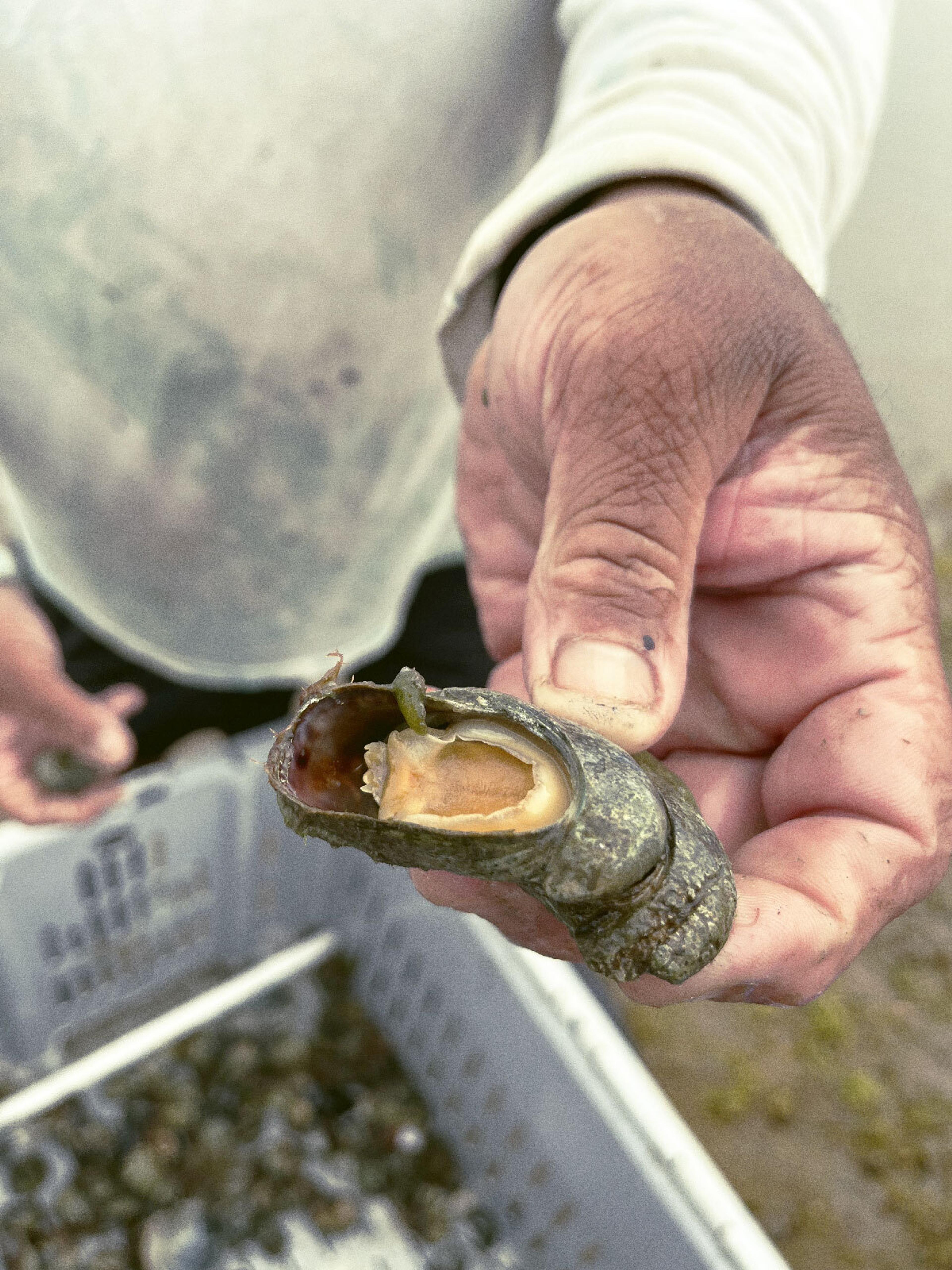
Jason Jarvis holds out a slipper snail that we had just scooped up on the banks of Winnapaug Pond.
·Emma Glassman-Hughes
Limpet dishes like “sea-scargot” (a take on the classic French dish) quickly caught on with his fanbase, and his offerings have since expanded. While they have a distinctly saltier flavor than the average garden snail, these sea snails are comparable to other mollusks, Standridge said, good for pastas and fritters. Last year he experimented with preserving the snails in vinegar, and someday raw limpets might secure a spot on his raw bar. They can replace other shellfish like conch or cherrystone clams, the latter of which have become so expensive that he doesn’t even bother buying them anymore. He can get 100 pounds of limpets from Jarvis for $2.50 per pound, less than half of what he might pay for the same amount of clams.
A few years ago, slipper snails reportedly made waves in a handful of other fine dining rooms, including Dan Barber’s Blue Hill and Thomas Keller’s Per Se. And though limited, Jarvis occasionally has a few competitors on the sea snail market, including seafood retailers like Dune Brothers and American Mussel Harvesters, Inc.
At least in seafood restaurants, Standridge believes the only truly sustainable practice is to let fishermen dictate what’s on the menu — whether that’s sea snails, dogfish, mackerel, or any other locally abundant, attainable species. It’s up to the chef to translate that into something delicious. “It’s my job to make the unusual seem accessible. People come to a place like this where they can try something new,” he said. “If it’s good, they’ll eat it.”
But not everyone is so convinced. Jeffrey Levinton, professor of marine biology at SUNY Stony Brook, told Offrange that he has a hard time understanding the culinary appeal. “There’s so little meat relative to the shell,” he balked. “They’re not going to ever be a serious item in anybody’s cuisine. That’s the bottom line.”
Still, he acknowledged that these snails have remained radically abundant, while other — perhaps more appetizing — species have disappeared.
“In the 1970s, if you were in Shelter Island on the beaches, there would be three feet deep of scallop shells,” Levinton said. But today, because of habitat loss, climate change, and other factors, the bay scallop has practically disappeared from its native Long Island and Cape Cod. “Now it’s three feet deep of crepidula shells. We’ve got reefs of dead crepidula shells.”
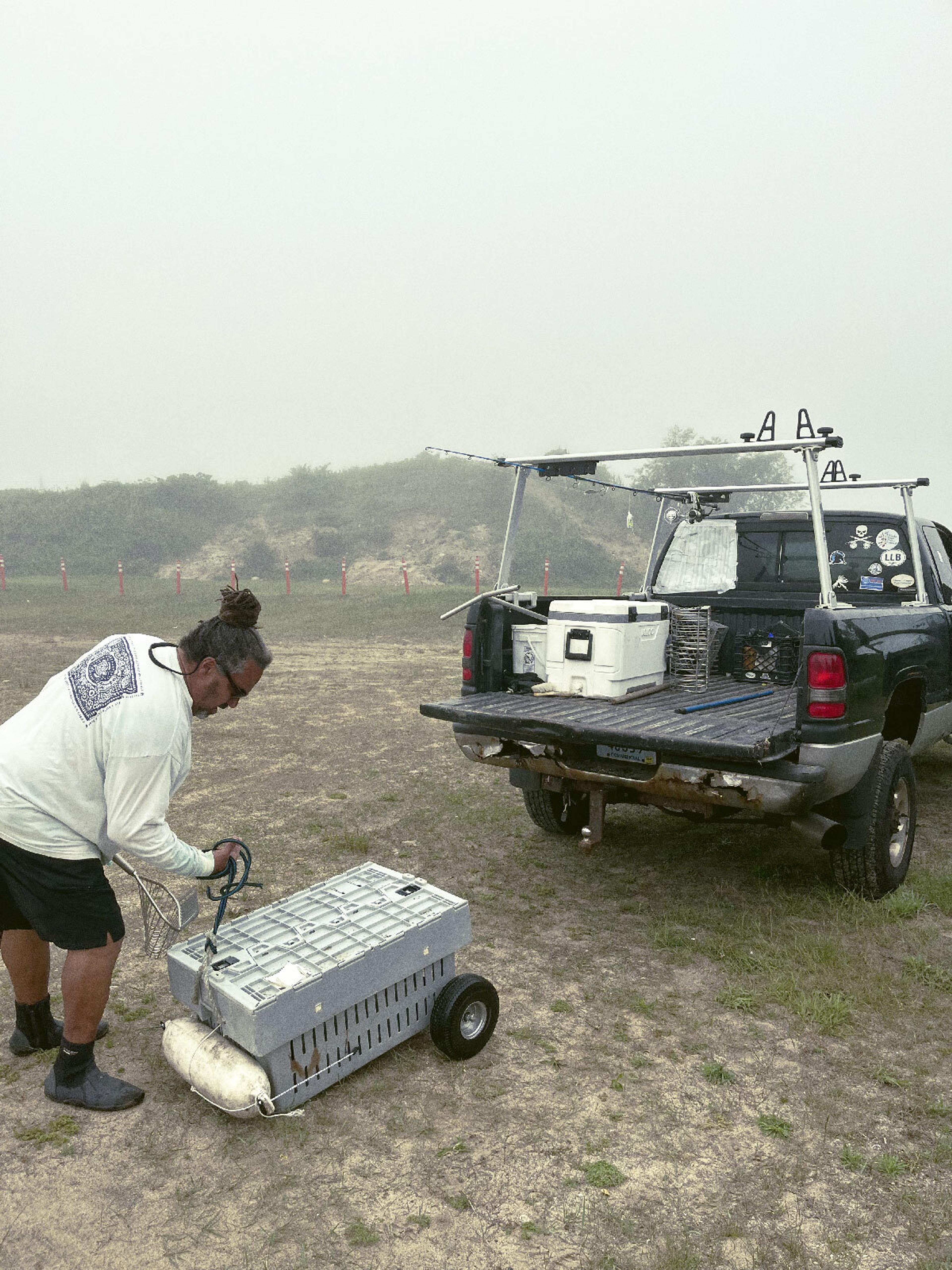
Jason Jarvis preps a wheeled cart for slipper snail harvest in the nearby pond.
·Emma Glassman-Hughes
Those shells are particularly recognizable because of the way they’re stacked on top of each other, which Levinton explained is always in the same pattern: an older female on the bottom and younger males on top. (Crepidula, he said, are hermaphroditic, meaning the oldest male will change its sex from male to female when the bottom female dies.) In general, these stacking snails are hardy creatures, with larvae that are “very resilient to all sorts of pollution” and ocean acidification, he explained. So it’s not like their population has suddenly exploded. It’s just that “everything else has declined in abundance.”
“We know they’ve always been abundant. But now wild oysters are gone, scallops are gone,” Levinton said. “As time goes by, other organisms disappear and crepidula survives.”
I asked Levinton what kind of an impact a hypothetical slipper limpet industry might have on the environment. Could we theoretically drive them to the brink of extinction, too? He laughed in my face — not only because he can’t imagine there being that kind of demand for the snails, but because they’re currently “so abundant, I find it hard to speculate without laughing.” But then again, he said, stone-faced, early European settlers used to write home about how the cod in Massachusetts was so prolific it was like you could “walk” on them. A few hundred years later and those cod are no longer here.
“There was a time when everything looked unimaginably abundant,” Levinton said, “so one must have a certain feeling that maybe anything could be exploited.”
We’re a long way off from disrupting the slipper snail population. And regardless, without a reliable way to process and package them, it’s hard to imagine sea snails in American fish markets and grocery stores, where they could be sold in mass quantities. One company in France developed its own proprietary processing method over a decade ago, but nothing similar has made its way to the States yet. Jarvis hopes to someday change that, and simultaneously raise the snails’ market value.
Unlike clams, oysters, scallops, and other marketable shellfish, there are currently no limits on where or how much an individual can harvest slipper snails. “But once the state of Rhode Island figures out somebody can make money from them they’re gonna regulate them and you’d have to have a shellfish license,” Jarvis said.
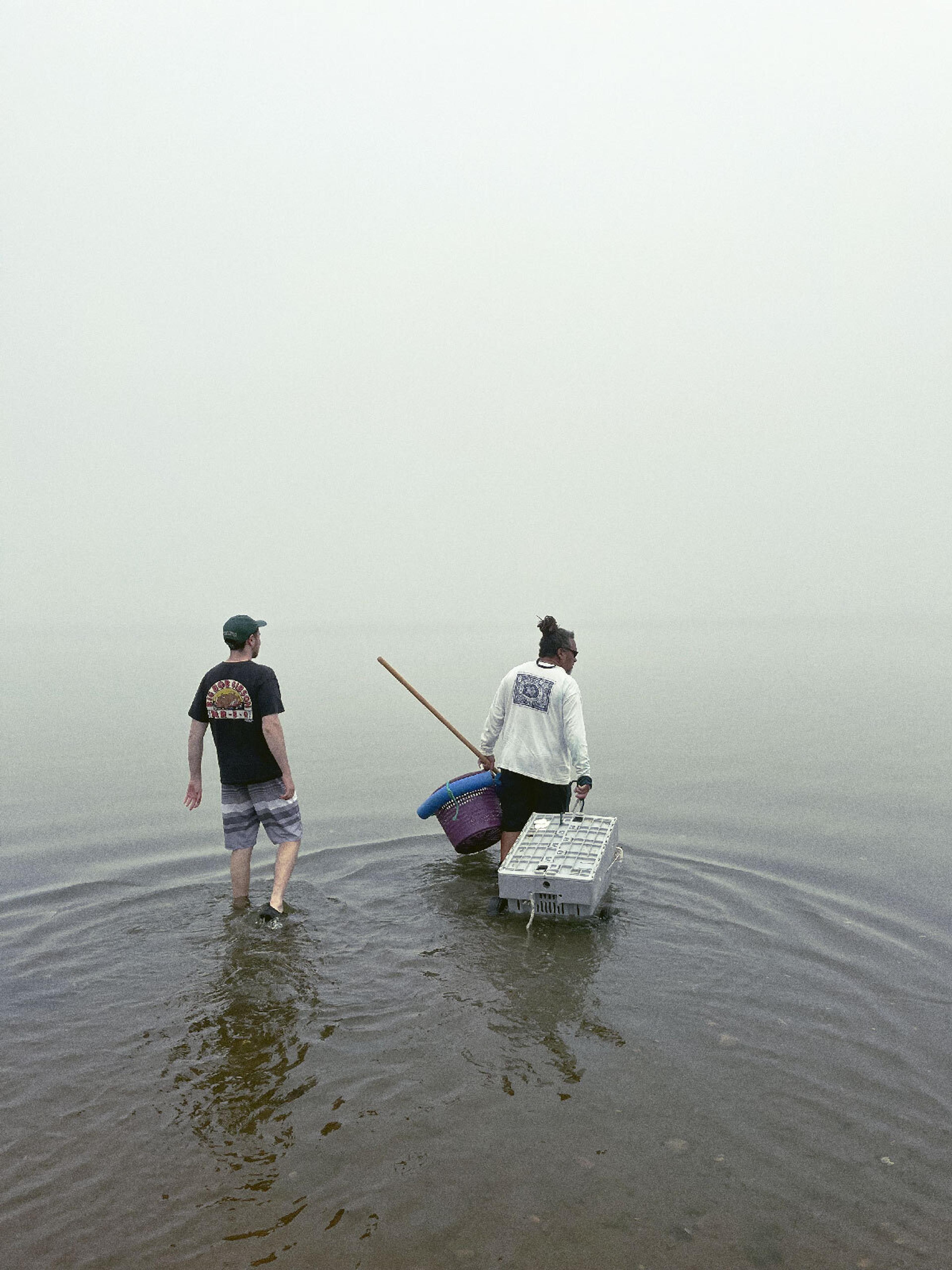
Jason Jarvis, right, walks out into Winnapaug Pond in Westerly, Rhode Island, with floating baskets and a small clamming rake.
·Emma Glassman-Hughes
Until then, they’re fair game for anyone with access to the shore — which Jarvis predicts will only become more important as the economy keeps tumbling and our access to food grows more unstable and inequitable. Jarvis tells a story about New England during the world wars, when he says slipper snails were one of few protein sources for poor coastal dwellers. “When times were tough, people who didn’t have much knew about slipper snails,” he said. “It got a lot of people through tough times.”
It’s been a year dominated by “recession indicator” foods — foods the masses have learned to love that were otherwise quirky or out-of-bounds, like tinned fish, an industry that’s projected to hit $44.27 billion by 2030. Some might say slipper snails are more likely an apocalypse indicator — only entering the mainstream, as Levinton estimates, “100 years from now, when there’s not many of us left, scrounging along the shore.” But while the rest of us still teeter on the edge of full-blown dystopia, these are already pretty desperate times for our oceans and the people who make their living harvesting from them.
New England’s iconic shellfish — its clams, lobsters, oysters, and scallops — have become harder and harder to come by in the wild. But resilient slipper snails are here to stay. “The future is possible for slipper limpets,” Standridge said. “They’re the definition of sustainable and they take pressure off other species.”
In many coastal communities, there’s a very real fear that someday there will be nothing left to fish. Jarvis believes that these snails, though they’ve been “considered worthless forever,” may be the thing that keeps fishers in the water.
They got me in the water, anyhow — waist-deep in Winnapaug Pond with Jarvis, to be specific, swallowing a raw slipper snail that he’d just shucked from its knobby gray shell. The meat was briny and bright. It kind of shimmered in my mouth, the taste equivalent of how a sequin looks. He sent me home with a full bag of muddy snails. I cleaned and shucked them individually in my sink, after prying them from one another with surprising force. It felt kind of barbarous considering the miracles they undertake to keep their stacks alive and in one piece against tall odds. But for as tightly as they clung to each other, once they were separated, they practically slipped out of their shells with an easy sweep of a pocketknife.
With Standridge’s voice in my head, I prepared them the way I would normally do clams: in a lemon, butter, shallot sauce over bucatini. I made the mistake of overcooking them a bit, a little out of fear, so they lost some of their delicate flavor. But they were still sweet and perfectly chewy, just like all the more familiar shellfish I learned to love from an early age. If sea snails are an end-times food, at least I know I’ll be going out happy.

The West Texas oil and gas industry has a problem: It has too much water.
This isn’t clean water, though. It’s a byproduct of fracking, a form of oil and gas extraction where pressurized fluid is injected into the earth to crack open ancient fossil fuel deposits, which — along with oil and gas — often contain water.
In the Permian basin, an 86,000-square-mile geological formation spanning parts of Texas and New Mexico, about 6 million barrels of oil are pumped each day, creating upwards of 24 million barrels of wastewater.
The industry term for this wastewater is “produced water,” when the pressurized fluid from fracking mixes with the naturally forming water below-ground. For every one barrel of oil extracted there’s about four barrels of produced water, which contains high levels of salt, chemical additives, and metals like radium and arsenic.
Produced water is usually dealt with by injecting it back into the ground. But space to store this polluted water through deep well injection in the Permian Basin is running out. This has led some companies to experiment with other options, like treating the water and using it for agricultural uses.
While not yet ready for widespread use on farms, some oil and gas companies are optimistic it could soon be implemented — but produced water researchers and environmental advocates worry it’s being rushed without knowing the full impact on the land.
One of the state’s largest produced water pilot projects is currently being conducted by Texas Pacific Water Resources. They’re a subsidiary of Texas Pacific Land Corporation, the largest landowner in the Permian Basin, which makes money through royalty interests from oil and gas production.
Right now, Texas Pacific Water Resources is trying to determine how many toxic compounds Texas farmland could withstand if it were irrigated with produced water. To figure this out, in 2023 they started small greenhouse experiments with 12 different planter boxes growing native grasses and alfalfa. Each box contained different combinations of soil types from Reeves and Loving counties in West Texas; they were irrigated with varying qualities of produced water.
“We did start seeing some accumulations [of dissolved solids] in the soil, and we started noticing some decline in the crop quality by the end of the study as well,” said Adrianne Lopez, research and development manager at Texas Pacific Water Resources.
“What would be the impact on the soil and in the microbes, and also on the groundwater quality? That is ongoing research.”
This happened when the planter boxes were irrigated with water that had total dissolved solids (TDS) at 1,500 parts per million. TDS is the number of organic and inorganic materials like metals or salts that are dissolved in a certain amount of water.
The TDS of produced water from the Permian Basin is about 120,000 parts per million before it’s treated. The drinking water guidelines in the U.S. for the maximum level deemed safe to drink is 500 parts per million, according to the Safe Drinking Water Foundation. Texas Pacific Water Resources’ standard for their treated water is anything under 500 parts per million, according to Lopez.
“The desired TDS for us is below about 300 parts per million,” Lopez said. “And I’d say the upper limit of what we would accept coming out of the treatment is 500 parts [per million].”
To do this, they use reverse osmosis and thermal desalination systems to remove the salts from the water. It then goes through a second treatment process to get rid of more toxic compounds that can pass through desalination systems, like ammonia, boron, and benzine.
In 2024, Texas Pacific Water Resources took their experiment outdoors. Using about an eighth of an acre, they planted alfalfa and irrigated different sections of it with varying qualities of treated water.
“We know it is going to be expensive to treat this [wastewater]. After it’s all said and done, can it even be done economically?”
“Our goal was to find a crop that could uptake a lot of water since the whole purpose of beneficial reuse and desalination is to get rid of a lot of water that oil and gas is running out of space to dispose of,” Lopez said. Alfalfa proved to be the best crop for this because it can hold up in the tough West Texas climate.
Now, Texas Pacific Water Resources is building a 10,000-barrel-per-day water treatment facility that will expand on their alfalfa and native grass experiments. They’re testing to see how many chemicals could be in the water without harming the soil.
“We’re looking at if the treated produced water has those constituents [like ammonia] in the water, and if we apply it to the ground, what the degradation, absorption, fate, and transport of those constituents in the soil will be,” said Pei Xu, a civil engineering professor at New Mexico State University. Xu is the research director for the New Mexico Produced Water Research Consortium, which Texas Pacific Water Resources has been collaborating with to conduct their soil and crop research.
“What would be the impact on the soil and in the microbes, and also on the groundwater quality? That is ongoing research,” Xu said.
A High Price Tag
But even as these treatment facilities scale up, some are concerned it’s still not a cost-effective alternative to storing produced water underground. That’s according to Dan Mueller, a water resources engineer who worked for the Environmental Defense Fund for more than a decade on produced water management issues in the Permian Basin.
He’s worried that there hasn’t been enough pilot testing to predict the exact cost of treating potentially millions of barrels of produced water every day.
“We know it is going to be expensive to treat this [wastewater],” Mueller said. “So after it’s all said and done, can it even be done economically?” Yet Texas Pacific Water Resources isn’t too concerned about the price because they anticipate produced water treatment will be a growing interest in the Permian Basin as disposal space underground becomes scarce.
“Right now, with a 10,000-barrel a day pilot, we’re not necessarily going to see all of those economies of scale yet because it’s still so small,” Lopez said. “But as it gets higher into the 50,000-barrel a day treatment systems to the 100,000-or-more-barrel a day systems, those costs are going to drop quickly as those sites get bigger.”
Proximity Problems
But even if produced water gets cheaper to treat, figuring out how to even get it to farmers will be another hurdle.
There’s very little farmland in the Permian Basin because of how dry the region is, which means Texas Pacific Water Resources would have to find a way to transport the treated water to farmers 100 miles away — or incentivize them to move closer.
One way to do this could be to allow surface water discharge of treated produced water, Lopez said. Texas Pacific Water Resources is currently seeking a surface water discharge permit from the Texas Commission on Environmental Quality (TCEQ) that would let them release treated water into the Pecos River Watershed in West Texas.
But the company has yet to get approval for this permit, which was submitted in February of 2024. They’re also waiting to hear back on a land application permit from the Railroad Commission of Texas, which would allow them to irrigate with produced water.
Recently passed Senate Bill 1145 could make that more challenging for them: The new legislation, which went into effect September 1, changes jurisdiction of land application permits for oil and gas operations from the Railroad Commission to the TCEQ. That means there could be different produced water standards Texas Pacific Water Resources will be required to meet.
Texas Pacific Water Resources has to find a way to transport the treated water to farmers 100 miles away — or incentivize them to move closer.
“We don’t know what their standards [for treated water] are going to look like,” Lopez said. “Once we get a permit from TCEQ, then we’ll have a better idea of how different the specs are going to be from surface water use to land application.”
Lopez is confident that their research has proved they can safely use treated water for a variety of purposes — including irrigation — but some environmental advocates say it’s being pushed too quickly.
“It feels like we’re rushing ahead of what we actually know,” said Evgenia Spears, water program coordinator for the Sierra Club’s Texas Lone Star chapter. They’re part of the Texas Produced Water Consortium that’s studying the economics and technology for treating produced water, and helps inform legislation like Senate Bill 1145.
While the Sierra Club supports the intent of that bill — which will allow the TCEQ to grant land application permits for produced water treatment projects — they don’t think it provides enough clarity on how those projects will be managed.
“The bill allows for the use of produced water in agriculture, but there is no clear system in place for the monitoring of environmental impacts associated with land application of produced water,” Spears said. “And there are no enforcement mechanisms in the language of the bill as it passed.”
The Sierra Club is pushing for clarity on these issues during the upcoming rulemaking that will dictate how SB 1145 is implemented.
“We want to make sure that there are standards that TCEQ has in place before we embark on agricultural reuses of produced water,” Spears said.

A fruit enthusiast doesn’t have to search far to find poetic celebrations of nectarines, bananas, apples, peaches, blackberries, watermelons, figs, oranges, or serviceberries. However, the various fine fruity qualities inherent to Lonicera caerulea — also known as haskap, blue honeysuckle, or honeyberry — have yet to inspire a single scribe to wax rhapsodic. Why? Maybe a better question is: Who’s ever heard of a honeyberry?
A small knot of farmers, university researchers, and extension folks in the West and Midwest have been working to boost both the name recognition and ubiquity of this berry that’s native Russia, Japan, and North America. It’s a heavy lift.
There’s no framework yet for standardizing production — best-tasting varieties, will they store, how much will they yield — to transform honeyberries into a commercial crop. There’s only one (retired) breeder in North America to support any new researchers interested in making necessary improvements. Berries picked before their Brix value (a measure of their sugar levels) has peaked at full sweetness can elicit an underwhelmed shrug from a first-time eater. And there’s also the matter of the cedar waxwings; migrating north in spring, they will greedily pick off every ripe berry and leave a grower with none. “I think you are underestimating how evil these birds really are,” one Minnesota farmer told another who’d just recounted the utter denuding of his shrubs on a university podcast.
In fact, it was this podcast that convinced its host, Steffen Mirsky, who’s also the emerging crops outreach program coordinator at the University of Wisconsin-Madison, to turn some attention to the oblong fruit. An earlier honeyberry episode got a relatively huge number of listens (1,255 versus the usual 300 or so), “which told us there was a lot of interest,” Mirsky said — possibly enough to make the challenges of getting a regional honeyberry supply chain up and running worth the effort.
As it happens, honeyberries have a unique set of attributes. For apple or grape growers who harvest in fall, June-ripening honeyberries can provide a revenue boost just as summer’s starting to hit. “They’re early flowering, but the flowers are cold hardy down to at least 20 degrees Fahrenheit,” Mirsky said. That means they can also support the first bumblebees to emerge when there’s no other food around for them, according to Madeline Wimmer, an extension educator at the University of Minnesota specializing in fruit, who’s been partnering with Mirsky to raise honeyberry awareness with events like farm field days.
Additionally — for the moment, anyway — honeyberries are only slightly vulnerable to spotted wing drosophila and powdery mildew (plus those waxwings); this means they don’t require much in the way of inputs, making them the rare fruit that can be handily slotted into an organic system. Although, said Zach Miller, superintendent of the Western Ag Research Center at Montana State University, “That is a honeymoon that will be over soon; it is an island right now that is relatively uninhabited by pests but as that island grows in size, there will be colonists.”
Unlike blueberries, which they resemble in color if not in shape, they do not require acidic soils to thrive — an additional appeal for farmers in the Midwest. And they’re good for value-add products like jams, ice creams, and wines; can be schlepped to the farmers market either fresh or frozen; and are ideal for a U-pick operation. Said Wimmer, “There’s a lot of directions they could go.”
For apple or grape growers who harvest in fall, June-ripening honeyberries can provide a revenue boost just as summer’s starting to hit.
This wasn’t always evident. Miller’s been running trials of honeyberries in the Intermountain West for the last decade to see, “Would farmers make money off this?” he wondered. Initially, “It wasn’t clear if there was any potential, because the first varieties that came onto the U.S. market, mainly from Russia in the early 2000s, were gross.” They were small and scant and had “kind of a quinine taste, to list their sins.”
They also bloomed way before any bees in the Montana springtime emerged onto the landscape. That honeyberry breeder, in Saskatchewan, along with a second, now-deceased one in Oregon, eventually produced a number of improved varieties, with names like Tundra and Borealis and Indigo Gem. They have big berries, good sweet-tart flavor, and steady ripening so a grower can pick them all at once — shaking the bush with a modified Sawzall works, as does a mechanical blueberry or raspberry harvester.
Since those early days, Mirsky, Miller, and several dozen farmers they’ve worked with on trials have figured out some of the fruits’ finicky particulars. Somewhere in the neighborhood of 1,000 plants, spaced 3 to 5 feet apart, fit on an acre, and these take three or four full years to reach maturity. Miller’s back of the envelope math indicates that “8,000 pounds per acre is where you’d want to be to make money,” although he admits this is a rough estimate, based on blueberries and grapes.
For fruit to set, they need fabric stretched beneath their roots to control weeds, as well as cross pollination with other varieties that have comparable flowering times, and if the varieties are too closely related they can’t cross-pollinate. So, for a primary crop of Aurora, say, a farmer needs to plant some bushes of mildly flavored Tundra or slightly bitter Honey Bee. Although, “Anyone who tells you that they know the perfect ratio between harvested varieties and pollenizers is lying and probably trying to sell you something,” Miller said. He’s trialed 16 varieties, some of which, like Indigo, grow low to the ground to make harvesting tricky (better for U-pick). Borealis hangs on to its fruit “so you tear the berries and they don’t store well,” said Miller (better for home gardeners).
After their first three years in the ground, the shrubs grow vigorously and amply — sometimes becoming as wide as they are tall and so laden with fruit that “they flop over,” said Miller. “It would be nice if they stood up a little bit more,” for harvesting purposes. In Wisconsin, Mirsky’s first trials are just hitting the two-year mark and he hasn’t yet assessed things like yield and mature plant size. But in Montana, Miller’s figured out that some varieties can yield 15 pounds of berries per shrub. They can also take a heavy pruning with hedge trimmers and even though this “hurts yields immediately, [plants] rebound after a year,” Miller said. Trellising is another possible fix he’s planning to test out.
Still, bridging the gap between farm and Jamba Juice remains the biggest hurdle in getting these fruits their due.
Perhaps most essential of all is netting to keep the birds out. For individual nets placed over each row, this means spacing plants 10 to 14 feet apart to accommodate the net posts. “Berry plants have been making berries for birds for millions of years; ignore that at your own peril,” said Miller.
Honeyberries can be stored for weeks in a cooler but since they’re soft, both shaking and mechanical picking can damage them, which makes U-pick a way to get them quickly into a consumer’s hands, for about $8 a bucket. “Then there are a few farmer’s market gardeners that have realized that if you have a rack of … honeyberries amongst your other vegetable offerings, you’ll have a much longer line,” said Miller. A frozen berry pack might retail for $10 at the farmer’s market.
Any berry’s nutrients lie mostly in its skin and a honeyberry has extra, due to the fact that it’s really two berries wrapped up in another, outer layer of skin. That means juice shops might be obvious outlets for reaching the sorts of wellness afficionados who embrace açai for its purported antioxidant properties. “For people who are into super fruits this is definitely something that hits home,” said Wimmer.
Still, bridging the gap between farm and Jamba Juice remains the biggest hurdle in getting these fruits their due. “Most people haven’t heard of them and have never put one in their mouth,” said Miller. “But if you can get it in front of them and have them taste it, it’s a pretty easy sell.”
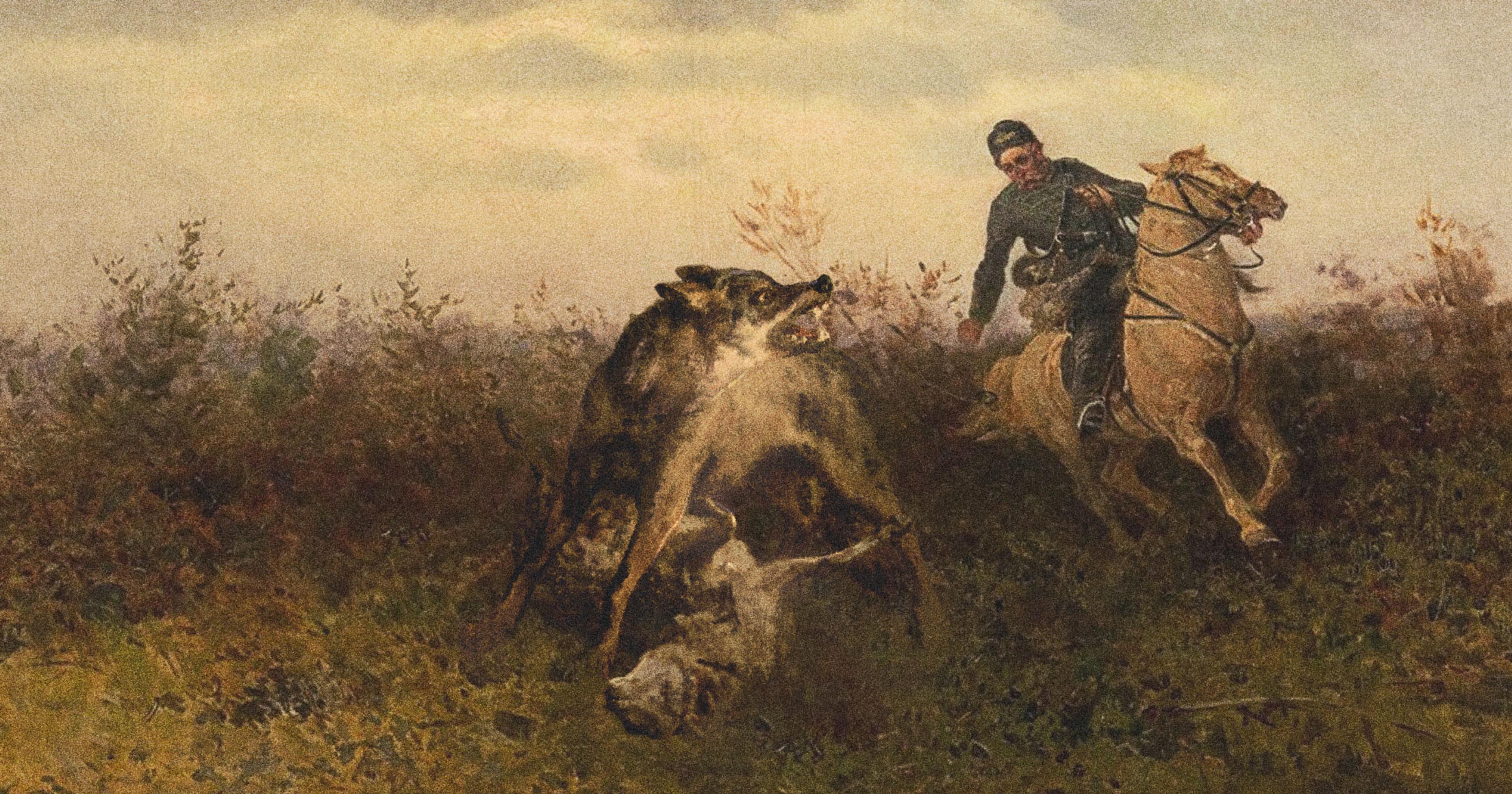
In Colorado, thousands of cattle graze upon a salad bar of forage found across 7.8 million acres. It’s one of the many benefits of raising cattle there, where the Bureau of Land Management operates about 2,400 separate grazing allotments used by more than 1,000 ranching operations. Yet, where a plethora of cows once roamed with little worry, much has changed since wolves were returned to the state via a voter-approved reintroduction effort.
Proposal 114 passed in November 2020, making it the first time voters were able to influence state wildlife management strategy. Prior wolf restoration efforts historically followed federal protocol outlined by the Endangered Species Act. When the measure passed, Colorado Parks and Wildlife (CPW) had three years to meet the Dec. 31, 2023, deadline to reintroduce wolves into the Western Slope.
CPW released the first 10 wolves in mid-December of 2023, meeting their deadline. Since then, they’ve introduced 15 additional British Columbian wolves in Eagle and Pitkin counties, and have a goal of introducing 30 to 50 wolves over the next three to five years. Yet, as the reintroduction effort continues, reports of livestock depredation funnel back to both CPW and the Colorado Department of Agriculture (CDA). To date, wolves have killed 36 head of cattle, 15 sheep, one llama and one dog since the reintroduction process began, according to CPW.
“It was a huge change for us,” said Tim Ritschard, a fifth-generation cattle rancher in Grand County and president of the Middle Park Stockgrowers Association (MPSA), which represents producers in Grand and Summit counties where the first 10 wolves were released. “And none of us knew when it was actually happening.”
Enter the Range Riders
Range riders serve as on-the-ground livestock guardians in areas with high depredation. They can travel by foot, on horseback, in UTVs, or by truck, patrolling grazing areas to observe predator-livestock activity, using non-lethal methods — think noisemakers, scare devices, or guns loaded with rubber buckshot or bean bags — to keep wolves at bay. In fact, the use of range riders as predator control was included in the Colorado Wolf Restoration and Management Plan to help ranchers combat livestock depredation. Because Colorado wolves retain both federal and state protections through the Endangered Species Act, it’s illegal to kill them, making non-lethal hazing a necessary component of Colorado wolf management.
Range riders aren’t a new concept to Western communities: “As a producer, most of the time we do our own range riding,” said Ritschard. However, agency-funded ones aren’t the norm. In fact, only two other states have officially funded range rider programs: Washington and Arizona.
“As a producer, most of the time we do our own range riding.”
In 2024, Dustin Shiflett joined CDA as their non-lethal conflict reduction program manager. He has extensive experience in both the agriculture and conservation arenas, having spent 16 years at CPW before spending a year in CDA’s Conservation Division. His first task? Working with local producers, livestock associations, CPW, and other stakeholders to hire the first group of range riders to serve Western Colorado while also developing a statewide range rider training program.
Washington and Arizona’s programs were paramount in helping shape Colorado’s program. He also collaborated with the Western Landowners Alliance, which provides four different Producer Tool Kits for Wildlife-Livestock Conflict Reduction.
“Ultimately, the goal’s to try and get a range rider training program that’ll be considered a gold standard in the Western states and I think Colorado is there,” said Shiflett. “While a traditional range rider might have done livestock management, fence maintenance — general ranch work — the modern range rider deals with wildlife and livestock interaction, mitigation, data collection, predator and livestock movement, and monitoring.”
During the hiring process, Shiplett included the community as much as he could.
“Every step of the way, CDA has tried to involve the producer,” he said. “The approach is more of a what’s going to work best for them because we don’t really know, aside from some of us raising livestock ourselves, what’s going to work best on their landscapes.”
There are currently eight range riders in Colorado, though they have funding for 12, paid via CPW’s “Born to Be Wild” license plate fund.
“Ultimately the goal’s to try and get a range rider training program that’ll be considered a gold standard in the Western states.”
Only months into the program, the idea’s still new. Many producers are skeptical of what the new range riders will do — and why CPW’s involved. Most ranchers don’t interact with the agency on a regular basis, according to Ritschard, who was involved with the hiring process.
That’s where Max Morton, CPW’s wildlife damage specialist, comes in.
“At the beginning, my job consisted of just calling producers all day, every day,” said Morton. “I’d say, ‘Hey, we have some wolves on your allotment. Are you okay with having a range rider out there? We’re not going to mess with your livestock. Just going to kind of make sure the wolves are staying out of trouble.’”
For the past few months, Morton has worked to build relationships within the communities impacted by the new wolf presence, noting how grateful he is to be “allowed on their properties to try to make the best of what they would call a bad situation.”
“I’m really happy to see the collaboration and the togetherness even in times of such stress,” said Morton.
Ride, Ranger, Ride
Unlike the old-fashioned depictions of range riders in Western imagery and paintings, those filling the positions have modern technology in their toolkits, which makes managing hundreds of thousands of acres by only eight contracted range riders manageable. With GPS collars on nearly 100% of the state’s wolf population, range riders know where the wolves are at all times — and can keep tabs on traveling packs.
And CPW anticipates the population will naturally increase. In July 2025, the agency confirmed three new packs — the King Mountain Pack in Routt County, the One Ear Pack in Jackson County, and the Three Creeks Pack in Rio Blanco County — though the exact count isn’t yet known. Female gray wolves average four to six pups per litter; however, pup survival rates vary based on location, with survival rates for the first year between 50% and 60%, according to CPW. The average lifespan of a wolf living in the Rocky Mountains is only three to four years.
“We’re coming to the tail-end of the denning season,” said Morton, noting that wolf pups are typically born in late April, sticking to their dens until the pups are about eight weeks of age “That kind of heavily localized wolf presence has really allowed our range riders to establish perimeters and work pretty closely with the producers who are in the immediate vicinity of highly localized wolves.”
“We want to give producers some peace of mind that somebody’s out there monitoring their livestock from predation.”
While it doesn’t seem like a lot of riders, Morton added “given the biology of the wolves and the number that we have in the state, coupled with the technology that we have to our advantage, we’re making it work pretty well.”
To measure success of the program, CPW will be collecting data, including GPS coordinates at range rider locations to compare with wolf presence, location of carcasses, wolf tracks, scat, and hair to see if range riders do decrease depredation for local producers. The state will compensate producers for lost livestock, up to $15,000.
As for the length of the program, Shiflett said the on-the-ground program will likely run seasonally — April through October/November — due to Colorado weather patterns with additional range rider training occurring during the offseason.
“Hopefully, we’re being effective out there,” said Shiflett. “We want to give producers some peace of mind that somebody’s out there monitoring their livestock from predation.”
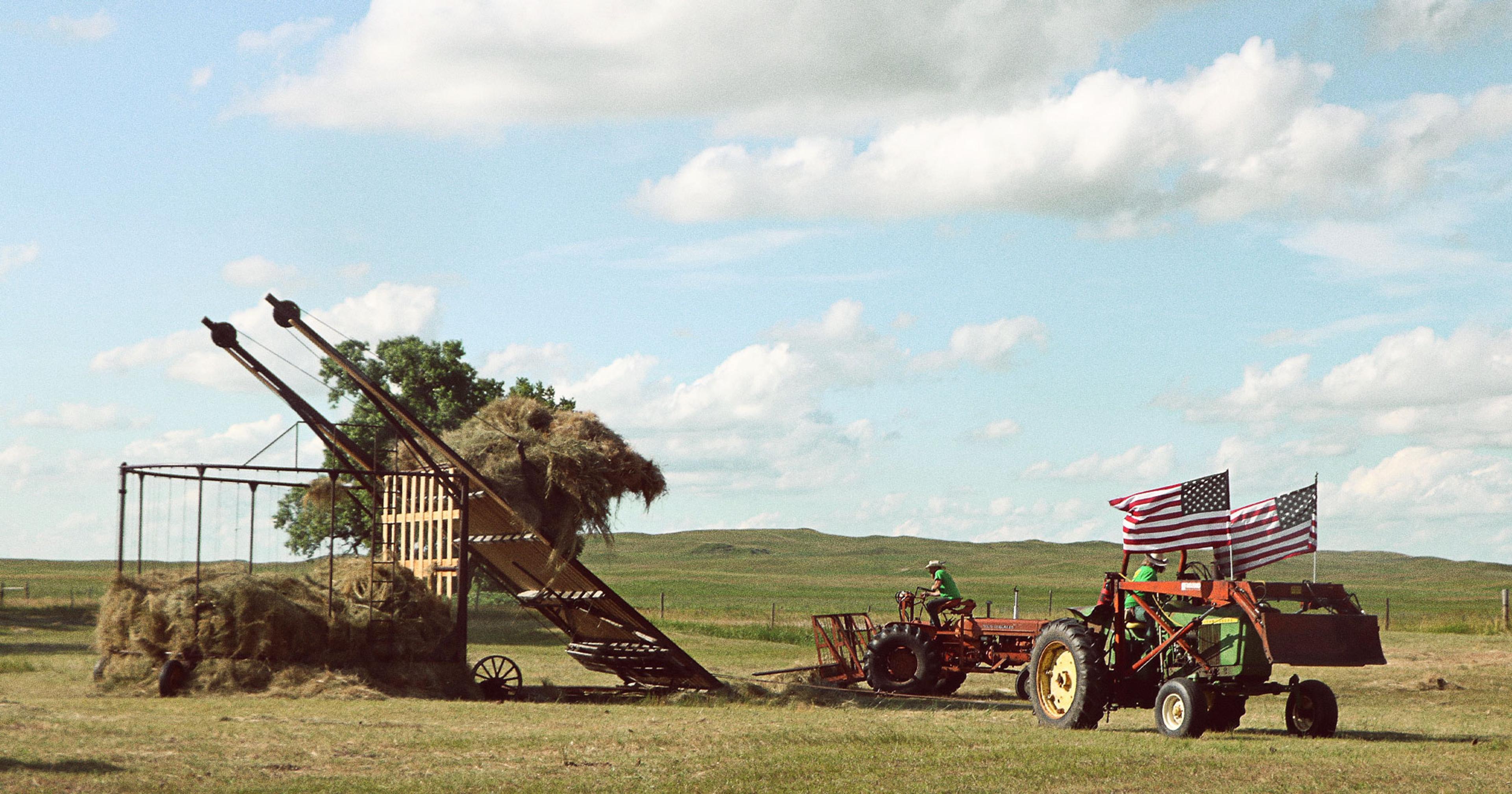
A scan of the horizon in Montana’s Big Hole Valley reveals plenty of examples of the land reclaiming what once belonged to it. Derelict jackleg fence. Log calving sheds with caving roofs. Rusting Chevrolets and spools of barbed wire. A giant compost pile of livestock carcasses, bones protruding from the mulch like seashells at low tide.
Then, every five miles or so, an old, spindly implement punctuates the scenery. It’s tall, maybe 30 feet, resembling a giant see-saw permanently out of balance. It’s not so much a stairway to heaven as it is a halted conveyor belt to nowhere; there’s no grain silo or corn crib nearby for a machine like this to fill up from above. Regardless, its efficacy in stacking giant piles of hay is clear from its construction. Grass grows tall around its base of rough-hewn lodgepoles, as if the earth might swallow it whole if it stayed put for another century.
This contraption is known as the beaverslide, patented in 1910 by Big Hole ranchers Herb Armitage and D.J. Stephens. The haystacking device consists of a wide, sliding fork at the base of a ramp and a cable pulley system rigged to the ramp’s underside. In practice, ranchers use a team of horses or a motorized vehicle with a winch to pull one of the cables perpendicular to the beaverslide, which in turn hoists the fork up the ramp, bringing a giant pile of hay up with it. (Ranchers rake cut hay onto the beaverslides with old buck rakes.) At the top of the ramp, the hay falls to the other side, forming three-story piles that can reach 25 tons in weight, depending on who you ask.
Details on the manufacturing and distribution of the beaverslide — named for its origins in Beaverhead County — are slim. The prevailing story is that ranchers often made their own, then made duplicates for neighboring ranches upon request, according to Big Hole rancher lore. Over the last few decades, the contraption has largely become a relic of a bygone era. But it’s not entirely obsolete, as some ranchers still use their old beaverslides today. With modern challenges like ballooning upgrade costs and the ever-present battle over a rancher’s right to repair their own equipment, the analog beaverslide makes more and more sense for those still using one with every passing hay season.
One such family, the Kirkpatricks, have been ranching north of Wisdom, Montana, for going on four generations. The fifth generation rides along in car seats strapped to the small tractors that push buck rakes around the large field, collecting cut and cured hay and plowing it onto the fork of the beaverslide — or the derrick, as the Kirkpatricks call it.
“I just prefer it. The hay keeps better, and I didn’t want to have to invest in newer, modern, high-price machinery,” Dennis Kirkpatrick says, sitting in the windbreak of a pickup truck during lunch. Mykal, his wife, leans next to him and chimes in.
“We could either invest in land, or we could invest in machinery. And, well, what good is the machinery without the land?”
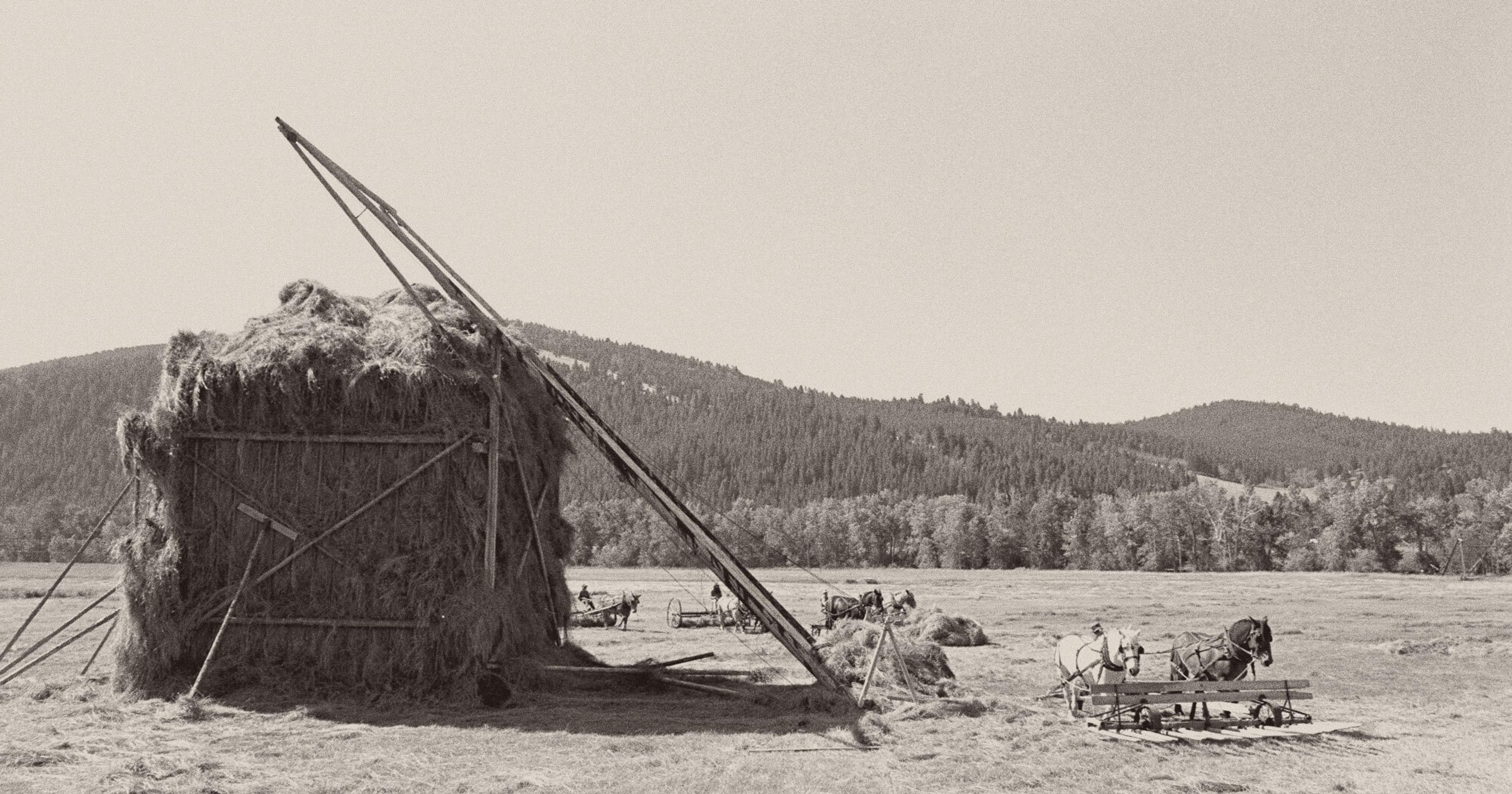
Beaverslides come with their own limitations. Unlike balers that a single person in a tractor can operate on their own, stacking hay the old way requires a roster of help — something that’s increasingly hard to come by in ranching and agricultural communities across the West. At any given time, the Kirkpatricks might have three or more drivers pushing tractor-mounted buckrakes around the field, plus someone to operate the winch that hoists the fork. Today, that’s Hans Humbert, an extended family member and fourth-generation rancher who Dennis Kirkpatrick also refers to as their handyman.
“This guy right here could repair any piece of equipment we own,” Kirkpatrick says, jerking a thumb at Humbert. “Probably with the pliers on his belt.”
That’s more than could be said for much of the mechanized equipment in the Big Hole Valley. The Kirkpatricks recall memories of neighbors being stuck in the middle of winter with broken-down bale processors and hungry cows. The closest repair shop in Jackson, an unincorporated community of roughly 20 people, is 42 miles south. The next closest shops or available technicians might be 53 miles away in Butte or 73 miles away in Dillon.
Many big-name mechanized implements run on trademarked chip technology that requires a trip to an authorized dealership for servicing. Even ranchers like Humbert who otherwise possess ample repair knowledge don’t have access to the diagnostic equipment necessary to solve problems on the fly. This might sound like sacrilege for an industry that lives and dies with rural, self-sufficient communities, but a bill calling for a rancher’s right to repair their own equipment died in the 2025 Montana legislature.
Score another point for the beaverslide — especially the more modern one with its sturdy steel frame that the Kirkpatricks use.
“I’ve never seen a metal derrick break an arm,” Humbert says. “The wooden ones, if they break an arm, the rancher goes across the river and cuts a tree, brings the tree back, whittles it down to size, puts the new arm on, it might cost them three days. We’ve broken the basket a few times. They can get bent, so they don’t deliver the hay properly, but you just fix a new one on there. We’ve had to get new cables. The skids wear out, but that’s something you fix in the off-season. It’s an awfully simple piece of equipment.”
“My brother is 75, and I’m 70. We’ll continue to stack hay this way until we die.”
While beaverslides and their resulting piles stuck the Big Hole Valley with the nickname “Land of 10,000 Haystacks,” this simple machine didn’t stay relegated to its namesake Beaverhead County. Use of the “slide stacker,” as it’s also called, spread as far east as Nebraska. Dan and Shirley Carson of Purdum, Nebraska, last used a stacker in 2020, when neighbor Marvin Sierks refurbished his and asked if he could employ it on their ranch to put up some hay.
The stacker now works as a crucial decor item for the Carson Ranch’s annual bluegrass festival. But at the time, the Carsons recall it outperforming their baler on wet, muddy ground resulting from summer rainstorms. Dan Carson, now 79 and retired, feels a sentimental affinity for the stacker, and not just because he also prefers the quality of stacked hay.
“There’s nothing prettier than a crew working a stacker,” he says. “It’s a fun time. I like to see it.”
Back in the Big Hole, Frances Strodtman-Royer shares a similar affinity for the beaverslide she and her brother use on their late dad’s ranch south of Jackson.
“With the beaverslide, we don’t need a specialist to get it repaired. A metal derrick will last forever. All you have to do is replace the wooden slide. But the structure’s there. And if you find a crack and know how to weld, you can fix it.”
Vintage local ad for tractors that can haul beaverslides.
Their metal derrick was constructed at Shepherd’s Garage in Jackson, founded in 1945 and still serving the community today. Repairability is extremely important to Strodtman-Royer’s operation. She and her brother still use tractors that range in age from 45 to 75 years old. To hoist the hay basket, they even run a winch on a 1939 Army truck — the first four-wheel-drive vehicle in the Big Hole, they say.
“Sure, our equipment is old,” Strodtman-Royer says, “but if our tractors were computerized like some of today’s equipment, we’d have to take them to a dealership in Dillon, and it doesn’t behoove us to do that. We’d also be looking at a quarter-million to a half-million dollars to switch over, and that just isn’t economically feasible for us. And the prices keep going up.”
But there’s something else about the old equipment that Strodtman-Royer considers impossible to part with: the connection it maintains between herself and her father.
“The buckrake I run was my father’s first buckrake. He put it together. So when I drive it, I’m with my dad. I’m putting my feet on the pedals where his feet were. So nostalgia is a big part of it. My brother is 75, and I’m 70. We’ll continue to stack hay this way until we die.”
In late August of 2008, an Alaska farm harvested fresh peas while sandhill cranes strutted down the rows, gleaning leftover peas and foraging for insects. The birds were regular visitors from the Palmer Hay Flats wildlife refuge, about 10 miles away, where 20,000 cranes congregate each summer.
Unbeknownst to the farmer, these stately birds left droppings that infected the peas with campylobacter jejuni, a bacterial illness that infects about 2.4 million people each year. After this batch of peas hit the market, close to 100 people fell ill and five were hospitalized.
As alarming as it was, this situation in Alaska is the only documented domestic incident of foodborne illness conclusively linked to wild birds through lab testing. Yet birds are often associated with food poisoning outbreaks in produce, leading buyers to make stringent demands and farmers to destroy wild bird habitats.
Where It Began
Most experts agree that popular fears about foodborne pathogens in produce started with an infamous 2006 spinach E. coli outbreak which caused 104 hospitalizations and 3 deaths. This outbreak was a major hit for food buyers. They dealt with financial losses from recalls, lawsuits, and plummeting spinach sales.
Facing economic losses and increased public scrutiny, food companies felt the pressure to make food safer. This pressure led buyers to institute new food safety practices including the removal of wildlife habitat on and around farms. While the 2006 outbreak was ultimately linked to wild hogs and cattle, buyers remained concerned about birds and other unrelated wildlife. They passed these fears down to their suppliers.
“There’s been incredible pressure on growers to do everything that they can to keep wildlife out of the farming environment in California.”
Daniel Karp, associate professor of wildlife, fish, and conservation biology at University of California, Davis, said that, “Since [the initial outbreak], there’s been incredible pressure on growers to do everything that they can to keep wildlife out of the farming environment in California. And then that’s kind of spread to other places throughout the United States as well.”
Over the last couple of decades, farmers have poured copper sulfates in the water, put out snap-traps and anticoagulant rodenticides, removed hedgerows, and made every effort to convince buyers their produce will not be tainted by local fauna.
While some farmers may not agree with these practices, continued food safety concerns among farmers and buyers have kept them alive. A study of the Salinas Valley (where the majority of U.S. salad greens are grown during warmer months) found that “over a 5-year period following [the 2006 spinach outbreak] 13.3% of remaining riparian habitat was eliminated or degraded.”
Testing the Fears
During the 2024 summer growing season, a team of researchers from UC Davis spent hours following bluebirds, turkeys, California quail, and other wild birds around the campus farm and nearby Putah Creek, dutifully collecting fecal samples. Their goal? To measure E. coli survival in droppings on lettuce, soil, and plastic mulch to determine how birds and their poop can affect food safety on farms.
At the end of the study, the team surveyed droppings from nearly 10,000 birds across 29 lettuce farms on California’s Central Coast. The team found that E. coli survival rapidly declines in bird feces, particularly those smaller than a quarter from songbirds and other smaller specimens. While they noted that E. coli lives longer on lettuce than soil or plastic mulch, likely due to the moist microclimate of lettuce, about 90% of all surveyed droppings were on the soil.
Their findings showed that birds on farms pose a relatively small food safety risk. They estimate that if growers ignored small bird feces on the soil, California lettuce farms following a no-harvest buffer around feces would be able to decrease the affected area from 10.3 to 2.7 percent. It also means that farmers could preserve habitat and even erect nest boxes to attract small, insect-eating songbirds to help with pest control — without compromising food safety.
John McKeon, who has been working on farms in the Salinas Valley for the last 25 years, shared a similar outlook. He’s noticed that for wildlife, there’s “a very high risk assumption” but that often the incident rate is actually really low, especially with wild birds.
“Pathogenic E. coli and salmonella are vanishingly rare in wild, farmland birds. And we now know E. coli tends to die off quickly in most bird poop.”
McKeon is currently working as the director of organic integrity and compliance at Taylor Farms, a massive agricultural operation that partners with other farms to produce about one in three salads in North America. Recently, Taylor Farms found that one of their 10-acre fields of romaine lettuce had accumulated significant bird feces.
Current safety recommendations include a “no-harvest zone” around bird poop including any crop that has been directly contaminated or could be by soil splash. The exact size of the zone depends on the crop type, number of droppings, and the size of droppings but it’s often around a 3-foot radius. Based on these guidelines and their own safety protocols, Taylor took this field off the commercial list, and decided to use it to further study the risk posed by wild birds.
They sampled bird poops throughout the field and tested for common foodborne bacteria. McKeon said, “Our incident rate was super-low, like no detection to only a few.” Then they had a harvest crew come through and run the lettuce through a rig before testing again, to “see what kind of detection we saw on that rig in terms of transference or cross-contamination potential, and again, the incident rate was really low.”
Don’t Blame the Habitat
Losing 10 acres of lettuce to wild bird poop is a financial loss for any farm, but Karp’s team has found that attempting to remove wild bird habitat may unnecessarily amplify this issue. Their work supports these conclusions. “Pathogenic E. coli and salmonella are vanishingly rare in wild, farmland birds,” he said. “And we now know E. coli tends to die off quickly in most bird poop.”
One of the team’s previous projects surveyed 20 strawberry farms on California’s Central Coast, a region that produces 43% of the nation’s strawberries. They found that removal of neighboring wildlife habitat had a negative impact on the farm.
“Our results indicate that strawberry farmers are better off with natural habitat around their farms than without it,” said lead author Elissa Olimpi, a postdoctoral researcher in Karp’s lab. The team found that removing natural habitat can increase crop damage costs by 76 percent. Conversely, adding habitat can reduce costs by 23 percent.
Karp explained that removing nearby habitat changes the way birds interact with the landscape and affects the type of birds on the farm. With less habitat available, more birds visit the farm. Large monoculture plantings that lack wild spaces also encourage more of the larger invasive species rather than native, insect-eating songbirds that benefit farmers. While many advocate for the ag benefits of birds for your farm — pest control is frequently invoked — Karp said he wishes we could reframe the way we think about them. Even on an intensive farm with no habitat around, you will still have birds. He encourages farmers not to think of birds as good or bad: “It’s like, what are you doing and how does that affect the birds and how does that affect the outcomes you want?”
In a 2022 study, Karp’s team examined the types of birds visiting farms and the pathogens they carry. They found that pathogens were most often found in birds associated with cattle feedlots, not the songbirds eating pests in a produce field. Karp said, “Our data suggests that some of the pest-eating birds that can really benefit crop production may not be so risky from a food-safety perspective.”
Changing the Conversation
Organizations like the Wild Farm Alliance (WFA) are trying to help farmers seize that benefit while protecting birds. They teach farmers how to support beneficial birds on their farms as a form of retro pest control.
Federal and state programs that regulate food safety on farms also seem to side with wildlife.
The USDA recommends against the removal of avian and other wildlife habitat and has implemented several programs designed to support wildlife on farms, including the Conservation Reserve Program (CRP), Environmental Quality Incentives Program (EQIP), and Working Lands for Wildlife (WLFW).
Today, the vast majority of leafy greens growers in the Salinas Valley, including Taylor Farms, are members of the California Leafy Green Products Handler Marketing Agreement (LGMA). This program is a voluntary certification program for farmers that was created by the farming community in response to the 2006 outbreak. While joining is optional, membership requires farmers to verify compliance with food safety practices — more than 90% of U.S. leafy greens come from LGMA members.
When I reached out to them, leadership at LGMA noted they are first and foremost a food safety organization. However, communications director April Ward said that they do support wildlife co-management, which is “all about balancing food safety risk and conservation efforts.”
“We could go to the buyers and be like, you know, this is not benefiting anyone. It’s likely not making things more food safe.“
Like the USDA, they don’t recommend bird habitat removal. Instead, they recommend steps like “preventive barriers and increased monitoring” in specific situations along riparian areas.
McKeon said that it again comes down to controlling the perceived risk versus the actual risk. He said, “You have customers that come out on a farm that may have never been on a farm and their sense of risk is different than yours.”
While farmers like McKeon may agree with Karp, the real challenge is getting buyers to the table. The team at UC Davis, along with other scientists and nonprofits, have done outreach events, testified before water control boards, and talked to farmers, but nothing will change if they can’t reach the buyers.
Karp hopes soon they can get farmers and academics together to form a coalition, “We could then go to the buyers and be like, you know, this is not benefiting anyone. It’s likely not making things more food safe. It’s costly from an environmental perspective.”
“If we don’t take an interest in AI, AI is going to take an interest in us,” says Marc Arnusch of Arnusch Farms in Colorado.
Make no mistake: Digital technology, and artificial intelligence specifically, has been a key part of farming for years. What has changed, however, is the immense interest and investment in ChatGPT and other generative AI, particularly large-language models (LLMs) and chatbots. As seemingly every sector and industry rolls the dice on LLMs, it has likewise become a common discussion topic among farmers, agriculture experts, and anyone else involved in the business of food.
While hype abounds and capital flows, it’s worth pausing for a moment and assessing what LLM applications are already being used in ag, and what is being developed and forecast. Advocates say its potential for improving agricultural efficiency and addressing localized vulnerabilities makes it a game changer for the sector, while critics argue that the propensity of misinformation alongside privacy and environmental concerns means that, at the very least, far more regulation is needed.
Building for Farmers
Researchers around the world are scrambling to develop cutting-edge chatbots and LLMs for farmers, making use of various datasets and following a diverse array of ethical guidelines. David Warren is senior director of integrated digital strategies for Oklahoma State University’s Agriculture Division, and the AI program leader for the Extension Foundation, an educational ag non-profit. For many years, the foundation managed a platform called “Ask An Expert,” essentially a human-powered search engine, as users could ask a question and, hours or days later, get a response from a real expert — often one residing in the user’s state. Warren and others realized that this dataset of around 400,000 questions and answers was “an ideal training set for AI,” Warren told Offrange.
The foundation, which works closely with the U.S. Department of Agriculture (USDA), ultimately developed a chatbot after holding a series of workshops to determine what it should and shouldn’t be able to do. The intention was to offer actionable advice to focus, somewhat narrowly, on science- and fact-based outputs. ExtensionBot, as it was dubbed, launched in November 2022, and two weeks later, ChatGPT hit.
“If we don’t take an interest in AI, AI is going to take an interest in us.”
OpenAI’s model possessed the ability to pull directly from large swaths of the internet, all of which made a static, limited tool like ExtensionBot suddenly seem insufficient. “We ripped out ExtensionBot’s guts,” Warren said, “and replaced it with an open-source model.” OpenAI had changed the game, and even the foundation’s small, direct-purpose tool felt the need to respond.
The main concern, of course, is the model’s trustworthiness, especially when it comes to farmers, notoriously risk-averse when it comes to their bottom line. This is understandable, Warren said, but argues that unlike a giant model like ChatGPT, what his group can offer is something much more purposeful and specific. His LLM is trained only on verified agricultural data, unlike ChatGPT’s scraping of essentially the entire internet, which has led in part to “hallucinations” built on inaccurate or incomplete information.
By the end of 2025, Warren’s team plans to include all the data contained with the foundation’s many systems throughout the country, alongside USDA sources. But even then, Warren stressed, “We curate what goes in there, even from those sources. We have a different idea of what is trustworthy, which is research-based outputs.”
Potential Advantages
Some farmers are taking a distinctly nuanced approach to AI. Farmer Marc Arnusch says he uses LLMs like ChatGPT and Grok to “help disseminate contracts, understand business strategy, in landlord negotiations, and email composition.” He has also used an AI-assisted Farmers Business Network platform to inquire about potential strategies for wheat control, and to suggest crop protection products. Even so, Arnusch is well aware of the risks: “It’s a recommendation, not a marching order. The farmer still has to make the decision, and do some ground truthing to make sure it’s legitimate and accurate, and understand the risk. It would be no different to going to anyone else for advice: You still need to scrutinize it and make sure it’s the right decision for your operation.”
This reflects some of the first research that has emerged on LLMs in agriculture. A study published last fall concluded that “While LLMs can potentially enhance agricultural efficiency, drive innovation, and inform better policies, challenges like agricultural misinformation, collection of vast amounts of farmer data, and threats to agricultural jobs are important concerns.” Another study argued that specialized LLMs for agriculture would “provide better consulting, explanation, interpretation, and decision recommendations,” which would only work if “it is ensured that the data behind these models is location-dependent, rely on real observations, and is up-to-date” — which Warren and ExtensionBot are aiming to achieve.
“It’s a recommendation, not a marching order. The farmer still has to make the decision, and do some ground truthing to make sure it’s legitimate and accurate, and understand the risk.“
As Arnusch has spent more time with these tools, a more exacting approach has helped to clarify what they can and can’t do. “We need to be apprehensive and not embrace this technology with open arms,” he said. “It is something that we need to understand, not necessarily adopt. [We need to] understand how it’s going to change our competitiveness, our markets, our ability to make good decisions quickly.”
Jim Wally, a small-scale farmer and engineer in north Florida, has played around with ChatGPT and other tools. His assessment is that if you’re an absolute expert on a subject and you can recognize immediately whether an AI output is accurate or not, it “can be reasonable to use it as a shortcut, but I wouldn’t trust it for anything that you don’t have an incredibly good understanding of.”
Like most industries, it shouldn’t be surprising that there is a diversity of opinion among farmers about the usefulness of AI and LLMs, especially when looking ahead to the future. Arnusch said that, among the farmers he interacts with, “There’s a high adoption rate of these technologies,” especially among younger producers, but he acknowledges that his personal network may not represent U.S. agriculture at large.
Risks Abound
Wally notes that many farmers are trying AI for simple tasks like email composition. But when it comes to using chatbots for actual advice and problem-solving, he identifies three groups across the farmers he knows: the old-fashioneds who haven’t used it and aren’t certain it could help them; some that are excited about it and want to use it as much as possible, while understanding they can’t fully trust it; and, “the biggest group, it seems, is those that were interested in it, tried it out, it gave them some grievously incorrect or harmful answer, and never touched it again.” He places himself in that final category.
Warren understands these concerns, but argues that “LLMs can support broadening the reach of expert advice and making it more accessible.” For the foundation’s tool, they are avoiding the verbose answers familiar to ChatGPT users and focusing squarely on simplified, fact-based responses. It also collects no personal data, unlike the larger bots. Among other concerns, one study noted that “farmers might input increasing amounts of personal information into these chatbots, including agronomic ‘trade secrets,’ such as what they grow, how they grow it, and personal information such as age, gender, and income.” Several chatbots, including an early version of ChatGPT, have had this type of data leaked. That is surely cause for concern, but there are larger worries over how unclear it is about how this data is being used by these companies.
“If an LLM recommends a pesticide that ends up killing an entire crop, it’s hard to know who’s to blame.”
Even so, Warren admits the tool hasn’t been tested with actual farmers yet — funding for that comes next. In the meantime, while slower-paced and lower-resourced efforts struggle to take shape, the bigger players are enjoying extreme popularity. Wally, for his part, puts this growth — and its attendant dangers — in stark terms: “People will die,” he says. “It can tell you the arsenic concentration in your soil is fine, and it can kill a person.” Or, even on a non-lethal scale, “It can tell you that your calcium’s out of range and that you need to spend $10,000 on more calcium, and it’s simply not true, and there’s no way to know that besides doing the work that you’re trying to skip by using the model.”
Sarah Marquis, outreach strategist for the National Farmers Union in Canada, notes that “the farmer is not benefitting as much as the corporations are” from the imposition of AI technology on their practices. “These technologies can be helpful, but it’s the companies that have all the data, which they can make profitable use of.” While chatbots and other AI-enabled tools are still emergent for most farmers, LLMs in particular lack transparency, Marquis added, and what they advise “might seem objective and true, but [it] might not be, and the way they arrive at their answers is unclear. We encourage our members to be careful with tools like that.”
Moreover, agribusiness companies like Cargill and Bayer are seizing the opportunity to push AI tools specifically for farmers, and it becomes difficult to know their trustworthiness when their data is proprietary and kept from view. An October 2022 article in the academic journal Frontiers in Sustainable Food Systems analyzed multiple research studies and determined farmers may be right to be concerned. “Generally, farmers have limited control of their farm data by agricultural technology providers (ATPs). This raises concerns about privacy of farm data ... farmers are usually not informed about the purpose of data collection from the farm, how their data is used, and whether their data is shared with third parties. Due to the lack of control and lack of transparency, farmers are unwilling to share their data with ATPs.”
Then there is the even more elusive issue of accountability. “If an LLM recommends a pesticide that ends up killing an entire crop, it’s hard to know who’s to blame,” Marquis said. “Is the algorithm going to be held accountable, is the corporation?” From the farmer union’s point of view, there are far more long-standing and significant issues to address, namely economic dignity for farmers and improvements in safety. “LLMs are not helping with any of those outcomes,” Marquis said.
“These technologies can be helpful, but it’s the companies that have all the data, which they can make profitable use of.”
Marquis also notes the rapidly growing investment in AI data centers and the heavy toll they take on the environment, and how many of these centers are being built on rural land — land that is, or could be, agricultural. Wally calls this “a bubble” for short-term gain, regardless of long-term consequences. Arnusch suggests that there are rural economic development opportunities to these centers but, at the same time, the loss of agricultural land is an obvious detriment. Either way, he says, “We simply have too many businesses boarded up, and we see a hollowing out of our rural towns” — ideally, the centers will help spur the development these areas need.
As AI tools and LLM chatbots continue their growth, whether via large tech corporations, research-based academic prototypes, or UN-funded global platforms, farmers across America and beyond are facing an uncertain future overtaken by technologies bearing a lot of hype and promise. As Wally points out, this reflects a “broader historical trend of Silicon Valley being really sure that they’re smarter than everyone else in the world and they’re going to solve a problem in an industry they know nothing about.”
Wally does think farmers remain open to anything that can help improve their business. At the same time, “I imagine that a lot of farmers are probably a little insulted by the idea that they need [AI] to tell them how to run their farm.”

Picture a tree seedling on the forest floor, tiny and fragile. In a shifting climate, these seedlings are supporting the future with their spindly branches — and that burden is growing.
As forest fires, insect outbreaks, and other climate-related pressures intensify in North American forests, the need for tree seedlings is rapidly increasing. Meanwhile, demand for seedlings for large-scale reforestation projects to absorb carbon dioxide from the atmosphere is also on the rise.
Yet all of this is being squeezed through a bottleneck: tree nurseries — whose capacity currently falls well short of the need. “Now that there’s this shift towards greater interest, we’re quickly realizing there’s just so few seedlings produced to sustain that,” said Tony D’Amato, professor in silviculture at the University of Vermont.
Now these nurseries are starting to seek ways to boost capacity, with both small-scale initiatives, and expansions of university and government facilities. But like all things to do with trees, such efforts take time. And time, in a changing forest, is in short supply.
Starting Small
Growing a tree starts small; first, seeds have to be collected from the wild. Those seeds are then germinated and grown in beds or containers for at least a year.
It’s a deceptively simple process, and the reasons for low nursery capacity vary. In places like the Northeast, commercially and ecologically valuable species generally grew back on their own — at least until recently — limiting demand for seedlings, said D’Amato.
In other places, state governments have divested from seedling production, and production declined due to decreased funding and demand in the 1990s and 2000s.
But in recent years, the need to increase seedling supply has become apparent. “Bigger fires, bigger insect outbreaks, more people excited about trying to add forest to areas that currently don’t have forest — all these things have really pushed for more planting,” said D’Amato. “When you get above any scale that’s beyond a hobby project, you’ve realized there’s just not a lot of seedlings being produced.”
That deficit can reach staggering numbers: For instance, to plant 15 percent of the forest lost in Canada’s devastating 2023, 2024 and 2025 (so far) wildfires, the Canadian Tree Nursery Association estimates it would take 6.8 billion seedlings.
Some institutions have started to leverage public funding to meet that demand.
States Step In
In 2019, New Mexico’s state forester invited Matthew Hurteau, a professor in the department of biology at the University of New Mexico, along with two other researchers, to a meeting to help draft the reforestation section of the state’s forest action plan. In that session, they realized there was no way to accomplish the state’s goals — there simply weren’t enough seedings. “And so basically it was the four of us trying to figure out how to make that happen,” said Hurteau.
The resulting plan is to build a nursery with state and federal funds that will ultimately produce 5 million seedlings a year, starting with 1 million seedlings annually by 2028 — an increase up from 200,000 a year with current capacity.
Hurteau said they’ve already started seed collection and aim to provide a genetically diverse supply for the most common species, as well as a stock of less common but culturally important trees. Sale of seedings will cover the expense of operating the facility, but public funding for capital costs is important, Hureteau said, as there hasn’t been much of a business case for seedling production in the region, which can make it challenging to source the right local seedlings (a problem stymying other projects restoring ecosystems with native plants). “Here in the Southwest, we don’t have a timber industry, right? It’s not like you’re planting tomorrow’s dimensional lumber. It’s really about restoring watershed function and stuff like that.”
Increasingly, the ecology of forests is being compromised by extreme weather; in many places, fires are destroying the seed-producing mature trees as well as the seeds in the soil, meaning areas are too severely burned to regenerate on any human time scale. This requires more seedlings, and to fill the gap, California’s department of forestry and fire protection is currently designing an expansion of California’s only state-run nursery and seed bank, to quadruple its production of Douglas fir, coast redwood, and other coniferous species.
Topher Byrd, statewide reforestation coordinator at Cal Fire, said even an increase to a million seedlings produced a year, up from 250,000 today, still falls well short of what’s required. “We are definitely still behind the curve in terms of meeting the overall need for reforestation,” said Byrd. “Even if we were able to increase our capacity to five million, that’s still such a small drop in the bucket.”
Lack of existing capacity isn’t the only issue. In some places, seedling production isn’t always well-suited to the forest conditions of the future — prompting small nurseries to step in.
Farmers Band Together
In Minnesota, a network of growers called the Farm & Forest Growers Cooperative is starting to produce hardwood seedlings, spurred by research from the University of Minnesota, Duluth. In some parts of North America, the changing climate favors hardwood trees. But even where seedling production has existed, nurseries have often focused on conifers favored for timber production. That’s left a gap in the supply of species that will make up future forests — a hole that small-scale growers are trying to fill.
One of the co-op’s growers, Stefan Meyer of 3 Oaks Forest Farm in Minnesota, said despite being an experienced farmer, growing trees is a different beast. Meyer is currently growing several species of oak and maple, as well as yellow birch — a species for which there’s a lot of demand, and few suppliers. But the co-op’s focus isn’t just species diversity; growers are producing seedlings from seeds collected across southern and central Minnesota, to ensure broad genetic diversity. Those seedlings are then planted in the northern part of the state, where research suggests their southern genetics will help them withstand a warming climate.
Meyer, who is also the co-op’s coordinator, said while there is a state nursery, the co-op is the only entity paying close attention to migrating tree genetics northward. And while the co-op is meant to help its several dozen members benefit economically, Meyer said most growers, himself included, are motivated by concern for the future.
“They’re already seeing drastic changes [in] the forest around them. And this is why … they’re like, ‘I need to be doing something. I need to be an active participant and somehow helping to solve this issue.’”
In April, the co-op was dealt a blow, with the loss of USDA funding, but Meyer said they’ve dug in their heels and aim to get to producing 500,000 seedlings annually in the next five years.
“When you get above any scale that’s beyond a hobby project, you’ve realized there’s just not a lot of seedlings being produced.”
Seedlings are also needed to plant the trees that bolster climate targets. In New York State, The Nature Conservancy has launched a nursery incubation program to increase nursery capacity for reforestation programs; to meet net zero targets (where greenhouse gas emissions are balanced by carbon removals), the state has a goal of planting 25 million trees by 2033, which will require millions of additional seedlings.
The program is meant to provide funds for nurseries to increase seed collection or purchase greenhouses and tractors. TNC restoration manager Mandy St. Hilaire said that making it clear there will be buyers for the seedings — as the Nature Conservancy does with the incubation program, by contracting with nurseries ahead of time — is essential; otherwise, nurseries are leery of the risk of growing trees for future demand. “Being able to better coordinate that demand signal and de-risk that capacity investment with nurseries is really key, in order for them to be able to respond to this call to action.”
In the meantime, scientists say being strategic with seedlings can help with supply issues. At the University of New Mexico, Matthew Hurteau has been building a model to help determine where planted seedlings are more likely to be successful.
While conducting field research to build the model, he noted survival of planted seedlings as low as 13 percent; increasingly, severely burned landscapes are too hot and dry for seedlings to survive (“it basically cooks the little buggers,” said Hurteau). That’s a lot of waste when seedlings are already in short supply, but using data to refine planting locations can help the limited supply go farther on the landscape, Hurteau said — and this could ultimately help foresters direct nursery capacity to where it’s most likely to have an impact.
Ultimately, none of this can happen overnight, and the need is urgent — but that’s the tension of living in an era of accelerating climate change. In the long-term, trees can help support a liveable future. Tree nurseries can plant the seed.
Ninety years ago in 1935, a cataclysmic wall of dust swept across the Great Plains. Known as Black Sunday, it wasn’t the beginning of the Dust Bowl era, but it was the moment it entered the public consciousness. Photographs of towering clouds swallowing towns stunned Americans, driving home what had already been years of creeping environmental catastrophe.
The Dust Bowl began in the early 1930s, as drought gripped the central United States. Unsustainable agricultural practices, particularly intensive tillage of fragile prairie soils that they thought would enhance its moisture retention, had caused massive erosion. Soaring commodity prices in the 1920s and new tractor technologies had caused farmers to expand operations to produce huge volumes on marginal land. As the drought deepened and topsoil blew away, millions of those acres became unproductive for decades. Entire communities were displaced, and the federal government responded with landmark legislation that changed United States agriculture for most of the last century.
Now, those protections could crumble under changing federal priorities.
Today, conservation practices have grown considerably, largely thanks to federal policies. Cover crops grow on at least 5% of total U.S. cropland (around 15 million acres). Acreage cultivated without any tillage is over 100 million acres, and the USDA estimates that reduced tillage now comprises the majority of cultivated cropland.
Still, the gulf between health and declining soils in U.S. farmland is deepening. Dust storms affecting roadways in 2025 killed eight people in Kansas and four in the Texas Panhandle. Climate change is making these cataclysmic events even more likely. According to the Union of Concerned Scientists, “Although erosion rates have slowed since the US Department of Agriculture (USDA) began estimating them in the 1980s, soil loss from the nation’s farms is still unsustainable. Every year, U.S. croplands lose at least twice as much soil to erosion as the Great Plains are estimated to have lost annually during the peak of the Dust Bowl.”
Without the right mix of federal policies, incentives, and networks, the progress that’s been made over the last 90 years could erode. The gains of the post-Dust Bowl era were the result of deliberate, layered investments including locally led conservation districts, federal technical assistance, and a broader shift in agricultural norms. The National Resource Conservation Service (NRCS) today is facing structural changes that could affect them all.
The First Response
The Soil Conservation Service (SCS) was formed in 1935 following dramatic congressional testimony from Hugh Hammond Bennett, calling for a federal response to the soil erosion crisis on the exact day that the dust from Black Sunday blanketed the sky above the U.S. Capitol.
Promptly, the Roosevelt administration formed the Soil Conservation Service and appointed Bennett head; this agency ultimately became the NRCS in the 1990s. This group provided direct cash payments per acre for conservation techniques, such as planting soil-conserving crops, contour plowing, cover cropping, and retiring highly erodible land.
Hugh Hammond Bennet, right, the first head of the Soil Conservation Service, speaks with a farmer in his field.
One lesser-known element of the Dust Bowl policy response, beyond financial incentives and crop insurance programs, was the Soil Conservation and Domestic Allotment Act’s creation of conservation districts throughout the country. These locally led entities were rooted in peer-to-peer networks: farmers working with fellow farmers, supported by federal technicians. Demonstration plots on private land were dotted across the country, showcasing sustainable practices, serving as powerful tools of persuasion. A culture of conservation began to take hold, reinforced by neighbor-to-neighbor engagement. Today there are over 3000 conservation districts in the United States.
This layered approach, leveraging financial incentives from above and social cohesion from within, formed a durable model for promoting sustainable agriculture. Work wasn’t perfect, but it was advancing. For decades, SCDs served as hubs of innovation, advocacy, and practical support.
The Rise of Top-Down Incentives
Direct payments, through Conservation Reserve Program (CRP) payments, Environmental Quality Improvement Program (EQIP), Conservation Stewardship Program (CSP) have grown from the 1940s to the 2000s alongside crop insurance subsidies, forming a suite of financial tools to encourage environmental stewardship.
However, recent research suggests these top-down financial incentives alone face huge challenges. Aparna Howlader, professor of economics from Chatham University, analyzed every conservation district and demonstration plot in the decades following the Dust Bowl and found that while financial incentives for conservation practices were available nationwide, “empirical data analysis shows that areas with strong conservation districts had a consistently higher yield and profitability during the massive 1957 drought.”
According to Howlader, “Soil conservation strategies mostly work when neighboring farmers are working together.” In times of high commodity prices, the appeal of conservation payments weakens. Land that might otherwise be left fallow or cover cropped is instead kept in production. Additionally, tenant farmers, who often make land-use decisions but don’t receive direct payments through federal programs, may lack motivation to adopt conservation practices at all. Soil conservation districts and their networks of technical support appear to have offered a kind of insulation against the boom-bust dynamics of commodity agriculture.
Today’s Soil Policy Environment: Incentives Retained, Support Eroded
Funds for federal conservation incentives programs are stable now, but other policy shifts may be undermining their effectiveness. The GOP-backed One Big Beautiful Bill maintains EQIP, CRP, and CSP funds by rerouting funds earmarked for climate resilience from the Inflation Reduction Act. Simultaneously, technical support around those practice changes is dwindling.
According to Richa Patel, policy analyst for the National Sustainable Agriculture Coalition, “The greatest challenge for soil health today is wavering federal support.” The White House has proposed eliminating the NRCS’s entire Conservation Technical Assistance (CTA) division, which now awaits congressional approval. Patel said, “CTA is a foundational component of supporting farmers in adopting conservation practices — and ultimately improving soil health and productivity — on their farm.”
This is in addition to the Department of Government Efficiency terminating the leases of 59 office leases for the Farm Service Agency/NRCS and approximately 12,000 NRCS staff dismissed in mass firings. Funding freezes at the beginning of the new administration either paused or ended tens of millions in support for conservation districts. The federal architecture of conservation is tilting heavily towards financial incentives as the scaffolding of peer networks and technical is eroding.
Conservation districts themselves and the technical support they represent are experiencing uneven funding shifts. In some states, like Texas, Minnesota, and Oregon, resources have kept generally stable or even increased. More, like those in Illinois, Indiana, and Arkansas have sharply reduced funding due to state or federal policy shifts. Others, like California, have funding in limbo from federal changes to the Inflation Reduction Act.
The National Association of Conservation Districts represents the nation’s conservation districts to Congress. According to their CEO, Jeremy Peters, “One of the things we’re concerned with is a generational loss of conservationists. If the resources for technical support aren’t available, then we may lose the opportunity with this next generation of farmers to demonstrate how important conservation agriculture is to their bottom line. Our research shows on average, farmers can realize a net increased return of $65 per acre, based on efficiencies that are gained through conservation measures.”
At the same time, today’s crop insurance programs provide little incentive for new conservation techniques, as the risk for lost harvests from soil erosion and climate change for large farms falls on the federal government rather than the farmers themselves.
The Farm Journal’s 2020 “State of Sustainable Ag” report surveyed 500 farmers and found more than half believe implementing conservation practices typically improves a farming operation’s profitability in the long run. “Row crop farmers tell us they are willing to do the work, but they do not feel that they can, or should, individually shoulder the burden of the agronomic and financial risk associated with adopting new practices.”
Targeted soil conservation incentives are just one piece of the puzzle, however. Patel said, “To help prevent future Dust Bowl-like conditions, not only are voluntary programs like CSP valuable for increasing the implementation of important soil health practices, but it’s important we don’t continue to subsidize unsustainable farming practices on lands that are unsuitable for farming. Ideally, basic soil health standards tailored to all farmland can become a future prerequisite to receive federal crop insurance and commodity subsidies.”
Looking Back, Looking Forward
The Dust Bowl catalyzed an extraordinary response of federal investment, local engagement, and cultural transformation. In the decades that followed, resilient networks took hold, centered around conservation districts to embed a conservation ethic into rural life. Today, that ethic persists, but the structures that supported it are under strain.
Ninety years on, the lessons of the Dust Bowl remain visible in the programs and policies that shape American agriculture. Financial incentives from the federal government remain strong, but the support structure around them to help the transition towards conservation practices are faltering. Future policies, and farmers’ decisions in their fields, will determine whether 90 years of response after the Dust Bowl is taking root or in the wind.

Jess Wilson stood on a picnic table bench and welcomed a crowd to the Southeast Tennessee Young Farmers’ (SETNYF) third annual Farm Olympics. These farmers and their families had gathered at a park about a 30-minute drive north of Chattanooga, Tennessee, for good-natured competition. Participants would test their professional skills including a plant identification quiz and a fencing contest (not the Olympic kind). In the latter, teams of two would need to take down temporary fencing, carry it to a different area, and set it back up. The fastest pair would win.
As the competitors stretched before the events, Wilson, SETNYF president, explained the organization and the plan for the afternoon. Wilson’s group is a chapter of the National Young Farmers Coalition, a 15-year-old organization advocating for young and minority farmers. Shifting from the practical to the existential, Wilson highlighted the obstacles facing aspiring farmers.
“It is nearly impossible to be a young farmer because it’s so expensive to enter into agriculture,” she said. “The biggest barrier is land access.”
One of the planned Olympic events was based on this issue: The Obstacles to Land Access Race. Competitors would have to climb over rows of temporary fencing, scramble under or over giant wooden spools, and run around barrels in their race to the finish line. In past years, signs were placed next to each obstacle indicating which challenge they represented, including high land prices, student loan debt, and housing. This race was obviously a light-hearted game, but plenty of participants had struggled through the real thing.
Every five years, the U.S. Department of Agriculture National Agricultural Statistics Service (USDA NASS) releases a Census of Agriculture. In its most recent census from 2022, it found that the average age of American producers, defined as participants in farm decisions, was 58.1 years old, a number that had been increasing over the past 20 years. NASS also found that young producers (under 35 years old) comprised only 8.8 percent of all producers in our nation. And about 80 percent of those young producers were considered beginning farmers as they had been farming for no more than a decade.
Ernie and Janet Mathes did not have farming experience when they decided to enter the profession a few years ago. The Atlanta residents, now aged 39 and 36 respectively, began to improve their diet. They started with a small garden and backyard chickens but eventually sold their Georgia home and traveled America in an RV searching for the perfect place for their own homestead. “And then we figured, if we got enough property, why not supply [others with] the same food that we want?” Ernie said. “There’s other people looking for it.”
The Matheses’ search for property mirrors that of so many other young farmers struggling to break into the industry. “The longer we’re looking, the harder it was getting to find things,” recalled Ernie. They couldn’t compete with developers buying farmland, and they also couldn’t get a loan to buy land on which they could build a house. Eventually, they were fortunate to find an overgrown former cattle farm in Georgia whose owner, a widow, could no longer care for it.
Most new farmers are on their own when it comes to finding land. According to American Farmland Trust (AFT), an organization working to preserve farmland, most farmers no longer inherit their farms from family. But “land is becoming so expensive that you can’t pencil out a profit,” said Charles Martinez, an agricultural economist and director of the University of Tennessee’s Center of Farm Management. “So if you can’t pencil out a profit from the get-go because of the price of land, then you probably shouldn’t enter that business.”
“It is nearly impossible to be a young farmer because it’s so expensive to enter into agriculture. The biggest barrier is land access.”
According to the USDA’s Economic Research Service (ERS), the value of American farm real estate, defined as land and the structures on it, has surged since the mid-20th century. After accounting for inflation, ERS reports that the average value of one acre of that real estate has risen from almost $750 in 1950 to $4,170 in 2024. The average value for one acre this year is $4,350 according to NASS. Although this growth has been flagging since 2021, the American Farm Bureau Federation notes that the 2025 value is a record and the fifth consecutive year of increase.
To explain farmland’s high price tag, Martinez points to basic economic principles. Low supply increases prices, which is amplified by increased demand for land which also increases price. Young farmers often can’t compete with wealthier established enterprises for this finite resource, such as other farmers buying land to consolidate into larger operations. If they’ve been working on others’ farms to gain experience, it’s unlikely they’ve earned much, and high interest rates can prevent them from obtaining loans. And “if you have student loan debt, forget it,” said Wilson.
While leasing land is an alternative to buying, it doesn’t provide as much stability since leases can be broken or not renewed. Even the park where the Farm Olympics was held demonstrates this instability. Once a working farm, Hamilton County purchased McDonald Farm a few years ago and uses some of it as a public park. (A farmer also leases hundreds of acres on this site to grow corn.) The property’s future is uncertain as some want to use it for industry instead; for now, a decision on its fate has been postponed.
The cost of land is not limited to its price tag, of course. If it doesn’t already have a house, purchasers must plan for housing costs. They must also consider the cost of any infrastructure such as fencing that they need to build. If they recently bought the land, they should also take their unfamiliarity with it into account.
In 2023, the Matheses opened Iron Root Pastures, 225 acres on which they raise chickens, cows, and pigs. Ernie Mathes recalls that when his family first moved onto their farm and had to build their own infrastructure, they had to learn their area’s weather patterns. For example, because they are in a valley, their farm is subject to strong winds from storms; initially, this wind damaged a couple of their chicken tractors, or mobile pens. If a young farmer buys land but can’t pay for these initial costs, their farming career might remain stalled.
“If you can’t pencil out a profit from the get-go because of the price of land, then you probably shouldn’t enter that business.”
Like the Matheses, beginning farmers must also compete with affluent buyers who plan to use the land for something other than agriculture, such as development companies intending to build neighborhoods. In 2020, the AFT issued a report on America’s farmland entitled “Farms Under Threat: The State of the States.” It found that 11 million agricultural acres were transitioned, or converted, to urban and residential land from 2001 to 2016. This is the same amount of land that our country needed in 2017 to grow vegetables, nuts, and fruit.
In the first episode of Offrange’s podcast The Only Thing That Lasts, Sarah Mock interviewed AFT leaders about these statistics and learned that the lost 11 million acres represented roughly one percent of U.S. agricultural land. While that doesn’t seem like much, the reason losing such a small percentage of land can affect farmers so intensely is location. “If you look at it from a sky eye view,” said Martinez, “it might not seem like there’s much of an issue, but if you zoom in in certain areas, then you have issues.”
Tennessee is one of those areas. The AFT’s 2020 report listed the 12 states whose farmland was most at risk. Tennessee initially ranked fourth but was moved two years later to third. Because of this report, the Tennessee Department of Agriculture asked Martinez to conduct his own study.
By using USDA data based on satellite imaging and parcel data, or property assessment records, from each of the state’s 95 counties, Martinez tracked changes in every parcel in Tennessee. He concluded that the amount of the state’s farmland converted each year from 2017 to 2024 is roughly double what the AFT calculated. From 1997 to 2017, about 1.5 million agricultural acres were converted. He estimates that by 2027, Tennessee’s total lost farmland will reach about 2 million acres.
Conversion can have many causes, and the factors that have led to conversion in Tennessee can also be found across the nation. These include an area’s development driven by population growth. For instance, Middle Tennessee, home to the state capital of Nashville, had the highest rate of conversion in the state. This was due to residential development. Other causes include difficulties such as lack of planning, in transferring land to new owners, and farmers selling back their land to repay loans. Depending on location, extreme weather and disease can also lead to conversion.
“The longer we’re looking, the harder it was getting to find things.”
Tennessee’s experience matches that of its region. When AFT identified the states with the most threatened land and also the fewest land policies, a group the organization considered most troubling, it came up with a list of 11 states. Nine of them, including Tennessee, were in the South. According to the AFT, this region is “clearly a hotspot for agricultural land conversion.” And once converted to non-agricultural uses, it’s almost certain this land will never again be farmed since fixtures like concrete would have to be removed and the soil will have changed.
Some factors explain this regional trend of threatened land. One consideration is size. One hundred acres converted in Tennessee will have more of an effect on agriculture than 100 acres converted in a more expansive state such as California. Also, other areas have more land use policies addressing agricultural threats than the South. Martinez agrees with the AFT that one reason other states have more of these policies is because they have had to address the effects of development for a longer period of time. He also notes that those areas, especially on the coast, have natural resources like the ocean that inspired more conservation policies which benefited their agricultural sectors.
Martinez expects the struggle for land access to continue. “It’s not as simple as, ‘This is the first time we’ve seen this.’ It’s always been around,” he said. “It’s just it comes in different forms, generation to generation.” Not even a future significant transfer of farmland due to aging owners — the AFT estimates more than 350 million acres — changes his prediction. Land access obstacles will still be present. And if those owners need to fund their retirements with the sale of their land, they will need the highest price they can get moving it beyond the reach of young farmers.
In the meantime, Ernie Mathes has advice for the next generation of farmers facing these challenges: Don’t get bogged down in research. “Make something small and just start,” he said. “See if you enjoy doing it before you either saddle yourself with debt or do something that’s overwhelming that wears you out.”

Courtney Hammond is surrounded by color. In the late afternoon sun, he stands on a dirt path that divides gently sloping hills draped in pale greens, soft pinks, and rich burgundies — wild blueberries in full bloom. Each shade represents one of hundreds of different plants with its own genotype, forming a vibrant field buzzing with pollinators. It doesn’t look much like a cultivated blueberry farm, or any other agricultural land, for that matter.
It’s late May in coastal Maine, and the plants are speckled with white blossoms that will become this year’s crop by mid-summer. Each one rises up to shin height and brushes against its neighbors to form a patchwork quilt that helps define the region’s landscape. When glaciers receded from Maine and Canada’s Maritime provinces some 10,000 years ago, the blueberries took root in the acidic, rocky, virgin soils they left behind. The perennial shrubs have been growing on this destitute land ever since.
To the people of Maine, the wild blueberry is something much more than a fruit. It’s a natural resource, a point of pride, a stubborn and resilient companion that has reflected Mainers back to themselves for generations.
But for small growers like Hammond, who has been walking and working the fields at Lynch Hill Farm since he was little, it’s become harder and harder to turn a profit as obstacles mount. Most blueberry fields are unirrigated, so drought can wreak havoc, and late frosts kill blooms before they become berries. Both are being exacerbated by climate change, according to Lily Calderwood, wild blueberry specialist at the University of Maine, whose research program supports the industry. In good years, the total crop surpasses 100 million pounds, most of it grown here in Washington County. In bad years, it’s less than half that.
The shifting blueberry market has complicated matters further, owing largely to the cultivated or high-bush blueberry, which can be grown in a range of climates. The wild or low-bush berry is smaller, sweeter, and more varied in flavor, thanks to all those genotypes, and it has twice the antioxidants that turned blueberries into a superfood in the late 1990s. But high-bush production more than doubled in the 2010s, flooding the freezer aisle — home to 99 percent of all wild blueberries — and making it harder for Maine’s growers to get a fair price. The U.S. supplies roughly one-quarter of what is now a million-ton global supply. Canada’s support for wild blueberry expansion, meanwhile, has added even more pressure on Maine’s growers.
Last year, growers made just 38 cents per pound — less than the 60 or 70 cents it costs to produce.
For Hammond, a past president of the Maine Farm Bureau and member of the advisory committee for the Wild Blueberry Commission of Maine, the headwinds have become nearly unbearable. He’s been picking blueberries since his father quit teaching to take over the family farm and started dragging his kids along for the harvest. Like many of Maine’s independent blueberry growers, most of whom have a connection to the industry that goes back generations, Hammond may as well have been born with a rake in his hand. Unlike so many others, he still uses one — picture a handheld dustpan with comb teeth — to harvest each August. But at 57, he’s worried about who will take over when he hangs it up. More than that, he’s worried about whether hundreds of other small-scale growers will be able to persist through the challenges they all face together.
In a place where wild blueberries are more culture than crop, Hammond’s weary outlook reflects a broader concern about the future of the fruit that has helped sustain the region’s rural communities for decades.
“I’m fighting to keep the industry alive because it’s a way of life down here,” Hammond says, “but it’s not like it was.”
When Hammond’s grandparents bought this field in Milbridge in the early 1950s, they joined a lineage that dated back thousands of years to the Wabanaki tribes, who first learned to burn the land after a blueberry harvest to restart the plants’ two-year growth cycle. The tribes ate the berries fresh or dried them in the sun to offer sustenance through winter, and used them as both medicine and as dye for woven baskets. When settlers arrived in the 17th Century, they too relied on blueberries as a valuable food source. During the Civil War, blueberries were shipped out to support the Union. By the late 19th century, canning made preservation possible and commercial expansion followed. Soon, nearly every town around here had a cannery and managing blueberries became a viable way to make a living. These days, though, it’s far from a sure thing.
The vast majority of the 500-odd Maine growers sell their crop to one of five processors, which sort, clean, and freeze the berries to be shipped around the country. Their parents and grandparents could earn an income doing it, but most are now sustained by other work. Adjusting for inflation, the price they receive per pound has fallen by half in the past two decades, according to Eric Venturini, executive director of the Wild Blueberry Commission. Last year, growers made just 38 cents per pound — less than the 60 or 70 cents it costs to produce. That imbalance has led some to cease managing the crop altogether, rather than pour in resources just to finish in the red. If it continues, Hammond anticipates a “massive exodus” of independent growers, some of whom have already begun turning their land into solar fields or gravel pits.
On a drive around Lynch Hill’s scattered properties, Hammond points out some blueberry land he leased until everything went upside-down. Since 2016, he says, he’s only made money once. Otherwise, he’s hoped to break even. In response, he’s let more than 50 of his 300 acres go. Unless someone else steps in, the land will soon be overgrown by other species. Within a decade, much of it will be filled in by birch, cherry, and pine trees. It will return to the successional forest it would have been without human intervention.
Courtney Hammond gives a tour of the wild blueberry fields at Lynch Hill Farms.
·Kat Arazawa
“We’re at a turning point,” Venturini said. “The industry is changing. The question is whether it can change fast enough to be the version of the industry that we hope it will be.”
Calderwood, the extension specialist, is among those focused on helping growers adapt to all that change. When she came to Maine after studying hops and grains at the University of Vermont, she had never seen the fields known as the barrens — thousands of rolling acres of blueberries studded with rocky outcroppings. At first, managing them looked like an awful lot of work for little reward. “Immediately, I was like, ‘Why are you doing this?’” she says. But after meeting the people committed to preserving the fruit and its place in Maine’s culture, she quickly understood.
“For a lot of people, it’s not about the economics,” she says. “It’s about their care for the land and managing it over time — being a steward of that property.”
At a late-afternoon workshop at the headquarters of wild blueberry processor W.R. Allen in Orland, an hour west of Milbridge on Route 1, Calderwood and her colleagues show a group of growers how to calibrate their boom sprayers to get the most out of their inputs. The conversation drifts toward the cold, wet weather that’s been hampering pollination. Beehives are trucked into the fields each spring to support the process — among growers’ most significant costs — but the bees haven’t been flying. It takes several visits for a blossom to become a berry, and the window for pollination isn’t open long, so any delay adds anxiety about this summer’s crop. The last thing a wild blueberry grower needs is more anxiety.
Just down the road at a research field, Calderwood is studying the potential of mulch to help alleviate some of the stress felt by both growers and their plants. Spot mulching has been known to encourage wild blueberries to expand into bare patches by growing their subterranean rhizomes. Now, Calderwood is exploring whether broader application can help retain soil moisture. Drought has become more common in recent years, nearly biannual for the past decade. If it hits at the wrong time, it can wipe out entire fields. The same is true of late frost. “We’ve had years when you couldn’t pick a blueberry to save your soul,” Hammond says.
Adding to the volatility, some blueberries, confused by changing weather patterns, have started blooming in the fall. The unseasonal flowers die in the winter, limiting a plant’s fruit production the following summer, according to Brogan Tooley, a senior agroecologist who leads climate-related research at Wyman’s, a 150-year-old processor that buys from growers and also manages around 10,000 of Maine’s 47,000 total acres of blueberries. (The company has expanded into a wider range of frozen fruits as well.) Tooley is collaborating with University of Maine researchers to better understand how shifting weather patterns are affecting blueberry production — and to develop solutions.
“We’ve had years when you couldn’t pick a blueberry to save your soul.”
“Even growers I work with who three or four years ago would’ve said climate change doesn’t exist, they see it,” she says. “It’s in their backyard and they’re dealing with it on a daily basis now.”
Research shows the barrens are warming faster than the rest of the state, and growers have no choice but to respond. For decades, harvest began in the first or second week of August and lasted about a month, but last year Wyman’s began on July 20, Tooley says. The snowpack that protects blueberries from the elements in winter is also decreasing, which could inhibit their development and cut down yields. For growers, it’s become increasingly difficult to rely on traditional knowledge.
“Mainers are set in their ways,” Tooley says. “For a long time this industry was very much doing things by the books and by the calendar and had locked into this method of farming and just existing. People are realizing that things do need to change.”
Part of that change will come through research, which industry members fund via a 1.5 percent tax that supports the Wild Blueberry Commission and the university’s extension efforts. Calderwood and her colleagues are searching for ways to ward off diseases, including mummy berry (a fungal disease that shrivels the fruit), blight, and leaf spot. Entomologists are helping growers defend against pests like spotted wing drosophila, a fruit fly with a saw-like tail that emerged as a new threat in recent years. And the university has also explored whether drones can help growers more efficiently target the numerous weeds that populate their fields.
Other projects aim to illuminate the berries’ positive impact on human health, secure exemption from the Food Safety Modernization Act to streamline harvests, or investigate how to maintain the quality and shelf life of fresh berries. This last idea holds real potential, Calderwood says, because it could bring significantly more value to the crop. Hammond makes more than $4 per pound for the fresh-packed berries he’s begun focusing on — 10 times last year’s price for frozen. But it requires a level of investment most growers can’t muster: He couldn’t afford the $110,000 optical sorter he uses to ensure his berries meet quality standards if he didn’t use money from his family’s fuel company to buy it.
A burned field at Lynch Hill, regenerating for next year's harvest.
·Kat Arazawa
At the Passamaquoddy Wild Blueberry Co., a Native American-owned business in Columbia Falls, Maine, general manager Darren Paul and product manager Holli Francis have found their own way to branch out from the standard wild blueberry model. With help from a U.S. Department of Agriculture value-added producer grant, the company now keeps 20 percent of the berries grown on its 2,000 acres of tribal trust land to sell wholesale or freeze-dried under its own brand, while the rest are sold to Wyman’s. That control over a portion of its own crop makes Passamaquoddy a rarity in the industry, helping it return around $3 million in profit over the past five years to support the Tribe, Francis says. The company’s unique status in the industry is fitting, considering that the Passamaquoddy are among the five tribes of the Wabanaki Confederacy and their connection to the blueberry extends back thousands of years.
The Tribe bought its blueberry fields in 1981, in large part to preserve work for its members, Paul says. The Passamaquoddy have a migratory history, moving from harvest to harvest throughout the region. Blueberry season used to bring thousands of members from the Tribe and its relatives across Maine and the Maritimes to hand-rake the crop. Now, as with most of the industry, mechanized harvesters have taken over much of the work. Still, the barrens are peppered with shacks that house workers each summer, where the fields have long taken on the spirit of a family reunion.
“It’s a tough business,” Paul says. “It’s weather-dependent and you’re not going to get a good crop every year.”
That reality is helping to drive the industry’s existential crisis, with so many growers questioning whether to keep giving themselves over to a crop that doesn’t always give back.
“It would be sad,” Francis says of the prospect of fields gone fallow. “Blueberries are Maine.”
A short drive from the first blueberries his grandparents bought, Hammond pulls up to a charred field that he burned last week, just as the Wabanaki once did to reset the blueberries for a prune year. Most farms have transitioned to flail mowing to restart the plant’s two-year cycle, running a tractor through their fields with blades sturdy enough to cut down the thick carpet of blueberries. But Hammond spent most of his adult life as a Maine forest ranger, so the traditional method comes naturally to him.
As his black boots crunch through the ashes, he ponders why he and his fellow growers stay loyal to their blueberries, despite everything they face. It’s in his nature to keep going, he says. “It’s what we do.” Next spring, these blueberries will return, just as they have for thousands of years, and Hammond will be back for more.

When you think of 4-H, do you picture images of prized calves, giant zucchinis, and delicious pies? This summer, one 4-H program is taking to the skies so that teens can learn about using drone technology in farming.
This program comes at a time when the U.S. agricultural drone market is experiencing rapid growth. According to one forecast by Grand View Research, the segment is expected to grow from $506 million in 2024 to more than $1.7 billion by 2030. Benefits include reduced water, pesticide, and fertilizer costs by targeting only those areas in fields where they are needed. One study in Brazil showed that using drones for spraying used just 10 liters per hectare, compared with 250 liters for tractor application.
Data from drones can also result in higher crop yields through early detection and intervention of issues that could affect plant growth. And drones make far more efficient use of farmworker time and effort, as the devices can conduct field inspections faster and in greater detail than a human can.
Flying a drone for commercial use requires a FAA Part 107 Remote Pilot Certificate, which is available to operators 16 years or older after completing a written test (which costs $175). This qualifies the user to operate a drone that weighs less than 55 pounds that is flown during daylight hours no higher than 400 feet above the ground while maintaining visual line of sight (VLOS) with the drone. (Enforcement has been sparse, with only 27 civil actions taken between October 2022 and June 2024, but fines can be up to $75,000 per violation.) Steven M. Worker, 4-H youth development advisor with UC Agriculture and Natural Resources, is “excited to have a draft curriculum and to be pilot testing it at our youth drone camps.” He expects that the program will help campers ultimately attain their 107 licenses.
The majority of ag drones are currently focused on monitoring operations, according to Sean Hogan, drone program coordinator with the University of California Division of Agriculture and Natural Resources. These include using spectral image analysis to identify pest infestations, irrigation needs, and areas requiring fertilizer. Other applications include monitoring livestock herds.
Regulations hinder some uses of unmanned aircraft in agriculture. For example, the VLOS requirement typically limits the operational distance to about 2,500 feet, depending on terrain and weather conditions. Some applications are permitted under specific waivers, such as clearance for a pilot to operate a swarm of up to three drones at a time which can greatly increase the area that can be covered. Waivers can also be obtained for drone spraying applications for pest control or fertilization, which might also include a waiver for nighttime operations when conditions might be more favorable.
Hogan looks toward a future when the use of ag drones will be expanded. “Removing the VLOS restrictions and even permitting the use of autonomous drones” would make drones far more useful, he said, especially for larger farms with a lot of acreage.
In the meantime, California 4-H is hosting a series of week-long camps this summer to teach teens how to fly drones and use them to gather data to improve farming practices.
The camp curriculum is based on a modified version of training courses for adults that have been held over the past nine years, according to Hogan.
“Flying the drone accounts for only about 7% of the total time” that it takes to complete a camp project.
The participants will learn to fly drones safely, as well as gather and process the data from those flights. As it turns out, flight time is just a small part of using drones in agriculture. “Flying the drone accounts for only about 7% of the total time” that it takes to complete a project, said Hogan. The participants will also learn to use GIS (Geographic Information System) mapping software in conjunction with the aerial images and other data gathered from their flights.
The California 4-H camps will give some teens a head start in this new field. According to Hogan, “A single drone operator can cover about 200 acres in a day. Agricultural drone pilot is an emerging career opportunity.” The camp experience covers a range of STEM components, which are essential for agricultural applications. Hogan points out that “there is a shortage of people who have all the required skill sets” for drone projects.
The camps are part of a broader program called AFA2, which stands for “Ag from Above for All.” This three-year program is designed to engage youth aged 13 to 18 in the food and agriculture industries, through hands-on experiences. It is funded by a $750,000 grant from the USDA’s National Institute of Food and Agriculture (NIFA). The program appears to be working, based on the positive response to the drone camp opportunities.
Mekhai is one of the teens who has registered for one of this summer’s camp sessions. He already had some experience flying his brother’s drone. “I’m eager to learn more about how drones are used in agriculture,” he said. “As someone who is currently raising a dairy goat and a market pig through 4-H, I’m passionate about livestock and farming. I’m also interested in exploring how to combine my interests in agriculture, livestock, and technology.”
These three camps are just the first step. Worker said that, “The goal is to finalize and disseminate the curriculum to other state 4-H programs and other youth programs. We have funds to copy edit, graphic design, and disseminate the curriculum.” Drone camp: coming to a state near you.

If you drive past any popular bowfishing or spearfishing sites in Minnesota, you might see fish carcasses strewn on the sides of roads or near boat landings — sometimes by the dozen, and in heaping piles. This sort of wanton waste is not legal, but it’s not often punished either. People continue to do this, and continue to get away with it, because of a longstanding prejudice against the animals deemed “rough fish.”
Though it’s commonly used by anglers and various state agencies across the country, rough fish — also known as “trash fish” — has no one definition. Broadly, it’s a term applied to freshwater fish that implies a species is neither valuable nor worthwhile to catch or eat. But this term has garnered a lot of criticism, over the past few years especially, for being problematic on multiple levels.
For one, it’s a term that’s confusingly applied differently to different species across states. The longnose gar, for example, is considered a rough fish and a nuisance in Ohio, but a desirable food source in Louisiana. Some fish like catfish and sturgeon were once considered rough fish, but escaped that designation when they became popular. To make matters worse, it’s used to describe both pesky invasive fish and underappreciated native species alike, creating an unfair conflation between the two and a false sense that native fish are damaging to the environment and deserve to be killed.
Changing the Conversation
Over the past few years, especially as a greater cultural tide boosts our appreciation for native ecology, scientists and activists are increasingly calling for a move away from what many call the “rough fish paradigm.” The disregard people have for native fish species simply because of the rough fish label creates a cycle of neglect, where fish are ignored and therefore understudied, recklessly fished, and tossed, says Andrew Rypel, director of the Fisheries School at Auburn University in Alabama, and lead author of a seminal 2021 paper on the rough fish paradigm. But failing to adequately examine these fish means we don’t discover all the interesting and potentially important aspects of their biology and contributions to the environment.
The term’s usage in the U.S. is just as unscientific as its current usage. “When the Europeans came to North America, they wanted to have fishing opportunities that mirrored the opportunities that they left behind in the older world,” said Rypel. They stocked American waters with more prized European game fish, fish that were deemed better for food and sport compared to the native species that had long been treasured and eaten by Indigenous communities. These less desirable fish became known as rough in reference to the practice of “rough dressing,” where commercial fishers gut lesser fish but don’t bother to fillet them.
Rough fish became the fish for poor and marginalized people, said Olaf Nelson, an Illinois-based amateur historian of North American native fishes and co-founder of Native Fish for Tomorrow, a non-profit advocacy group. And an idea took hold that these rough, native fish were taking up too many resources and squeezing the prized, non-native game fish. This terminology quickly entered legal parlance. In Minnesota’s first Fish Commission in 1875, native rough fish were referred to as “the vermin of the waters,” said Tyler Winter, native fish advocate and another co-founder of Native Fish for Tomorrow. There became plans to cull their populations and relegate them only to certain lakes.
“People don’t eat the fish they used to.”
The consumption of rough fish continued well into the early 1900s, especially since it was a time when people relied more heavily on local resources. But since then, commercial fishing for rough fishing has declined. Terry Miller, a commercial fisherman who harvests rough fish at the intersection of North Dakota, South Dakota, and Minnesota, said that 30 years ago there were six other guys operating out of his town alone. Today, he’s the only one doing this work in his whole region.
“People don’t eat the fish they used to,” Miller said. He argues that, since you can find whatever fish you want at the supermarket, people have been “spoiled” for choice. The rough fish Miller catches — including smallmouth and bigmouth buffalo, redhorse, sucker, and bowfin — mostly get sent to Asian markets in cities like Chicago or New York City.
The rough fish paradigm also permeates the sport fishing world. Since rough fish are thought to be pests, and the term colloquially includes native and invasive fish species, people conflate native rough fish with invasives like carp, and mistakenly believe that killing and discarding any rough fish is good for the environment — hence the piles of tossed-out carcasses. Bowfishing and spearfishing, sports that have gained traction over the last few years, have made new targets out of some native fish species like bigmouth buffalo fish. Many places don’t even have limits in place for how many rough fish you can fish at a time, and no protected seasons. A concern, Winter said, given that we don’t have comprehensive research on the populations of rough fish species, or even the number of species we have.
Learning More
We also know “almost nothing about the life cycle of many of these species,” according to Rypel. Questions like where do they migrate; how long does it take them; how do they spawn; and do they spawn every year successfully, are all critical for our understanding of whether a species is thriving or in danger.
Scientists have started to fill these gaps in our knowledge in recent years, with some pretty striking findings. Specimens of the bigmouth buffalo fish have been found to live amazingly long lives — up to 127 years — and don’t seem to decline biologically with age. But while bigmouth buffalo fish populations seem to be relatively stable over the years, new research also shows that they’ve struggled in the past 50 years to produce successful young, warning of a potential imminent decline in their numbers. Research on other native fish like quillback suckers, bowfins, and redhorse suckers have found that they’re also longer-lived than people previously assumed.
Despite new findings, in some places rough fish are still “not even listed in state fishing regulations, which speaks to their greater neglect,” said Alec Lackmann, a fish researcher at the University of Minnesota, Duluth, who conducts research on the biology and aging of native fish. Ideally as more of this research comes in, government agencies will step up and put regulations in place specific to the species.
We know “almost nothing about the life cycle of many of these species.”
Taking these fish and their regulatory needs seriously are important, not just for the species themselves, but for the greater environment. “The bigmouth buffalo is a direct competitor to the invasive bighead and silver carp,” said Lackmann, and act as a bulwark against their continued spread. They also consume baby zebra mussels, another invasive species. Certain native mussel species also have symbiotic relationships with native fishes, attaching to those specific fishes’ gills, he adds.
Despite all these known benefits that native fish species provide to the environment, the rough fish label still “cuts off people’s basic curiosity” about these fish, said Winter. So what would it take to shed the moniker?
There are several different species that used to be deemed rough fish that now have some other protected status. Rypel calls these “rough fish escapees.” Paddlefish and alligator gar escaped and are now trophy species for anglers. Sturgeon gained public awareness after nearly becoming wiped out and are now protected. Catfish gained popularity through media exposure starting in the 1980s and became a more popular food source (though Indigenous communities have long eaten catfish). But each of these species basically required publicity campaigns that made them fashionable in the public eye — not necessarily a scalable strategy for every native fish.
Policy Reform
Only one state so far, Minnesota, has taken steps to tackle the rough fish problem on a policy level. In May 2024, the state passed legislation to replace the rough fish category with a “native rough fish” category that includes only native species. It may seem like a small change, but “it’s a huge accomplishment,” said Winter, who was involved in these renaming discussions. This change is a step toward Minnesota protecting native species before they’re even endangered. The state is currently working through how exactly they’ll regulate all the species in this new category, such as with new harvest limits.
A lot of people, however, think the change to “native rough fish” is not quite enough. Lackmann and Rypel would both have preferred they just be labeled “native fish,” since that’s what they are, and “rough” still carries that pejorative connotation. Even more ideal, Lackmann said, would be for species to be referred to and regulated by their own individual names.
Winter explained that “native fish” would’ve implied that all other fish are non-native, which is certainly not true. Other candidate names created similar confusions. In the end “native rough fish” was the least bad option they had, he says (and jokes that no one went for his suggestion of “really really good fish”).
Despite this win in Minnesota, other states have yet to catch up. And we’re still a long way from fully correcting the “trash fish” mentality.
“In an ideal possible future, there would be a mix of all these things — catch and release, catching and consuming, and maybe some commercial harvest in some places.”
Ideally each native species would be valued simply because they’re native and good for their ecosystems. But what the rough fish escapee precedents show is that people tend to care about fish they think are either cool to catch, or good to eat.
But the problem with jumping ahead and encouraging people to catch these native species for sport or food is that we first need more basic research on these fish, how they live, how many there are, and what they need to survive and reproduce, said Lackmann. Then, if it seems like populations are robust enough, the next step would be to work through what sort of tracking and reporting is required to regulate commercial fishing, to prevent populations from declining too much.
Funding for robust management of native fish also poses an obstacle, said Rypel. “The majority of funding for state agencies to manage fish populations comes from fishing license sales,” he said. When people come in and only fish for bass or walleye, that incentivizes agencies to prioritize those species. It’s a chicken and egg dilemma — funding for the management of rough fish species is lacking, but it’s also not ideal to just reclassify and advertise native species as game fish without regulations and management plans in place first.
“In an ideal possible future, there would be a mix of all these things — catch and release, catching and consuming, and maybe some commercial harvest in some places — as science determines is acceptable,” said Nelson. But it’s a long way to go to get there.

Bees swarmed beneath the tulip trees. The late-June morning was already scorching, as I sat on the fringe of the meadow’s chest-high greenery. The densely packed native grasses and shrubs looked random and chaotic, but to realize how methodically they’d been introduced and maintained, I only had to glance beyond the nearby trees. I could see the asphalt of a manicured suburban road, dormant street lamps, and small front yards. The foliage here was overwhelming by contrast. Danila Sergeyevich Sheveiko, who owns the property with his partner, Linda Schade, had told me that if the rains continued, the narrow paths would soon close into verdant tunnels.
When Sheveiko returned, he found me there, studying the frenetic bees. They surged around his half-dozen hives. Each shallow super box held about 80 pounds of honey. Briskly, he set to work, leading me down one of the paths crisscrossing the forested heart of the land. Some local native species he’d reintroduced were thriving too well, overwhelming more reticent characters. Crouching, Sheveiko began to painstakingly thin the plants. He brandished an offending stalk of Virginia knotweed in illustration. It had nearly strangled a clump of sedge. When he moved on, the beleaguered sedge was visible again, although the surrounding vegetation appeared completely undisturbed.
In addition to knotweed, sedge, and many other carefully curated native plants, Sheveiko and Schade raise more typical agricultural fare. They grow tomatoes, green beans, blackberries, strawberries, chard, sweet potatoes, oyster mushrooms, and much more. They sell some locally and donate the rest. More impressive than the sheer bounty, though, is the footprint. Sheveiko and Schade have cultivated this dizzying array on a mere 1.5-acre residential plot in Kensington Heights. In the middle of the Washington, D.C., suburb, surrounded by neat grassy yards, they’re doing something utterly different. Their land, called The Sanctuary, is one of only two urban farms in Montgomery County, Maryland, officially recognized under the state’s grant program.
Its initial growth was rooted in destruction. A decade ago, the neighborhood lost 15 acres of green space to development in just a few years. When the couple learned another lot was on the chopping block, they pooled their resources with those of friends and family to buy the property before it became another cul-de-sac.
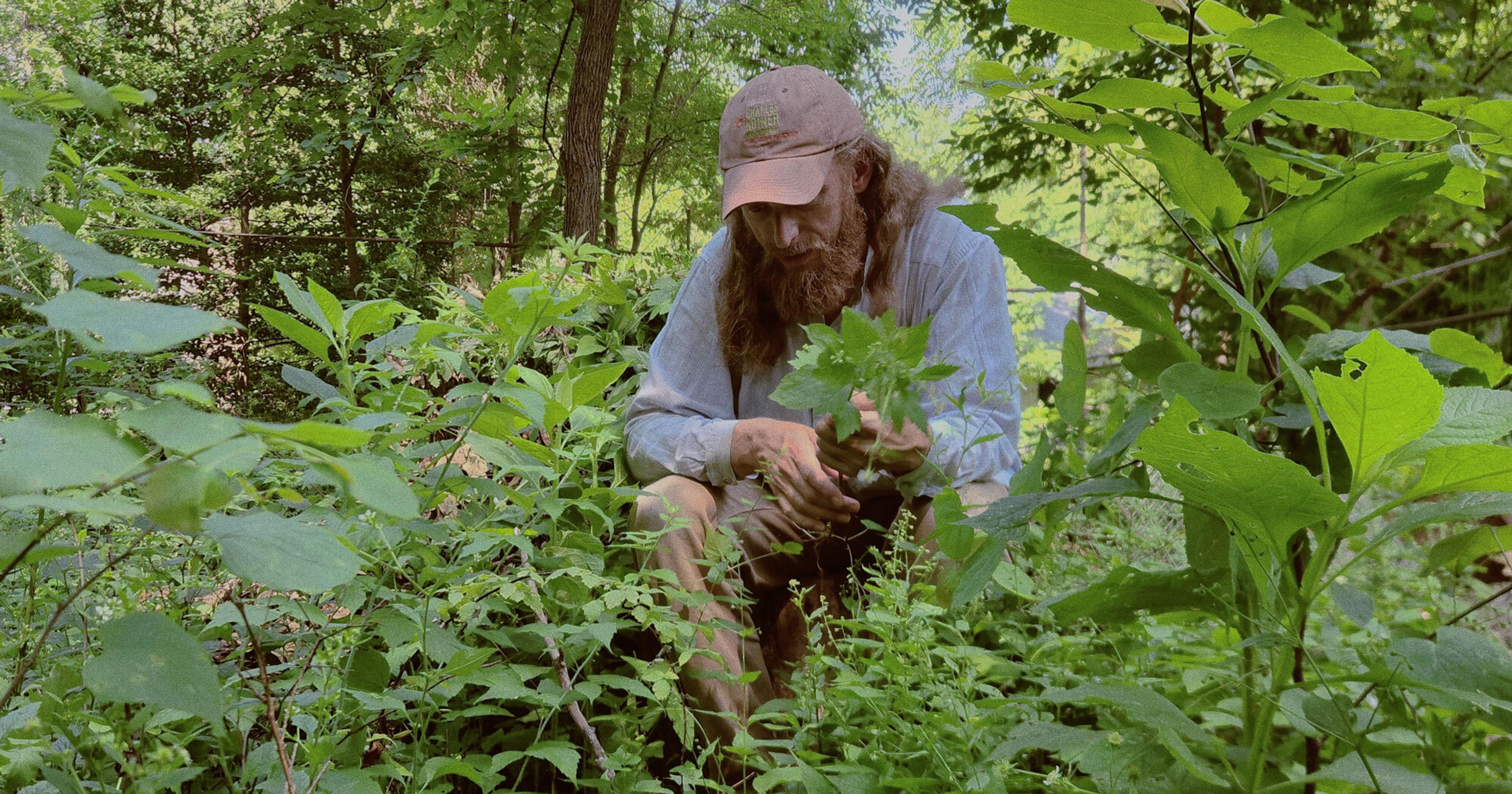
Danila Sergeyevich Sheveiko thins the native undergrowth along one of his paths.
·Davin Faris
At the time, the plot was hardly a paradise. Behind the house, shadowed by tulip trees, lay the ruins of a commercial azalea nursery. Heaps of scrap metal and old equipment rusted beneath poison ivy and strangling honeysuckle vines. But within the neglected land, they saw a deeper potential. Sheveiko, a Russian Ukrainian expatriate and IT contractor, grew up farming and studied ecology, as well as finance. He was also president of the neighborhood’s Civic Association and chaired the county’s Water Quality Advisory Group. Schade, meanwhile, has degrees in urban planning and environmental management from Cornell and the Yale School of Forestry.
I asked Sheveiko what had led him to attempt such an unexpected restoration. We’d been talking for hours, sitting in a jungle of goldenrod as the sun fell behind the trees and the first fireflies emerged. It was clearly a question many people had asked him over the years. “I suppose,” he said wryly, “I wanted to save the world.”
The scope of that ambition is manifest in the project they’ve undertaken. The Sanctuary isn’t simply an urban farm; in fact, its most audacious goals have little to do with harvest. It is a time machine. Season by season, one square foot of soil at a time, the couple and their friends are undoing a stark ecological transformation centuries in the making. Showing me around, Sheveiko gestured at the radiant flourishing of his land.
“If you go to any park in Montgomery County, there’s no native ground cover. The bushes, the shrubs, and the ground cover — it’s all just a smattering of invasive species.”
The original ecosystem was all but eradicated when European settlers in the 17th century cleared the land and put down roots, both metaphorical and literal. The isolated colonial forts and outposts depended on imported crop species. As they expanded into towns, then cities, they increased agricultural production and systematically displaced Indigenous communities, who had spent millennia shaping the ecosystem. In the process, the environment was drastically altered, with native flora and even fauna replaced by imported species, including crops and livestock.
Strawberries growing in a Sanctuary garden bed.
·Davin Faris
Hundreds of years later, The Sanctuary is a lonely island in a sea of transplanted, often far less diverse environs. As Sheveiko put it, there is “no other place in Montgomery County like it.” They currently boast three hundred local ecotype native species, or LENS, evolved for their specific region. Many are overlooked “scrappy fighters,” like the prolific Virginia knotweed. He recited names as we strolled through the meadow, reaching out to caress leaves or stems. Ten species of native grass. Eleven species of sedge. Six of goldenrod. Twenty-eight from the Aster family. Hundreds of fungi; I came home with a paper bag full of oyster mushrooms, repeatedly assured that in 43 years of mushroom hunting, Sheveiko has never poisoned anyone.
The restoration demands an absurdly myopic vigilance. Sheveiko wages meticulous warfare against his “enemies,” tiny weeds like celandine (now vanquished from the property) and Japanese stiltgrass (still entrenched). He sometimes baffles neighbors and dog-walkers. What on earth is he doing, hand-weeding the little strip of grass that divides his sidewalk from the road? Why doesn’t he just use a lawnmower? He’ll explain that he isn’t just weeding, but rather removing the non-native grasses.
At first, Sheveiko says, most passersby think he’s crazy. But after answering their questions, if they’re still interested, “I bring them up here and I blow their mind. And they’re never the same again.”
Certainly, some of his neighbors have welcomed the renewal of the land. Vasna Nontanovan, a retired Georgetown biotechnologist, lives within sight of The Sanctuary’s magnolia-shrouded front yard. She recently organized a group visit with local members of Third Act, an environmental nonprofit for elder activists. Nontanovan said it’s inspiring “for people to see that it is possible to have a place to forest-bathe, a stone’s throw from a Costco parking lot.” She’s been learning more about local ecotypes, hoping to integrate them further into her own extensive pollinator garden.
Sourcing and even identifying local native species can be a significant challenge, as Sheveiko acknowledged. Although many nurseries mark plants that are native to the United States, he looks for a much more specific “chain of custody,” narrowing the origins of the seeds to his precise region. Otherwise, his emerging meadow would include subspecies adapted to wholly different environments, like the Midwest’s prairies. Only three nurseries in the area provide enough information for him; however, they have limited stock. To gather the rest of his plants, Sheveiko works with local botanists and experts to identify nearby natural areas of least disturbance — also called refugia — and gathers seeds directly from there. “It is a patchwork,” he admits. But slowly, the work has reshaped his land.
Vasna Nontanovan studies flowers in The Sanctuary's meadow.
·Davin Faris
In her seminal essay collection, Braiding Sweetgrass, the Potawatomi botanist Robin Wall Kimmerer asks, “How, in our modern world, can we find our way to understand the earth as a gift again, to make our relations with the world sacred again?”
When I posed Kimmerer’s question to Sheveiko, he replied with a quotation from the agrarian essayist Wendell Berry: “There are no unsacred places; there are only sacred places and desecrated places.”
On a spiritual level, Sheveiko’s goal is reconsecration. In the middle of a landscape monopolized and manicured into submission, he and Schade are sinking their hands into the dirt and finding the grief buried there. Like Kimmerer, Sheveiko believes an understanding of human history is integral to ecological restoration. He has spent countless hours immersed in local archives, digging through contracts, newspapers, and historical photographs. He knows the story of his land, dating back to the first colonization — the surveyors, the settlers, the Native tribes they encountered and often clashed with. Without such details, the complex tragedies of our history too often remain untaught and unreckoned with. It’s another kind of time travel, inextricably linked to his botanical efforts. Within both domains, he’s fighting to pull up colonialism by the taproots.
Still, he views the effort as deeply congruent with American principles. By reviving native species, Sheveiko wrote to me after my visit, “We can rescue the American farmer from the corn-soy duopoly and move the livestock industry towards sustainability while restoring American rivers and creeks at the same time. Decolonization actually means a return to capitalism — the ability of the land and the farmers to accumulate capital again.”
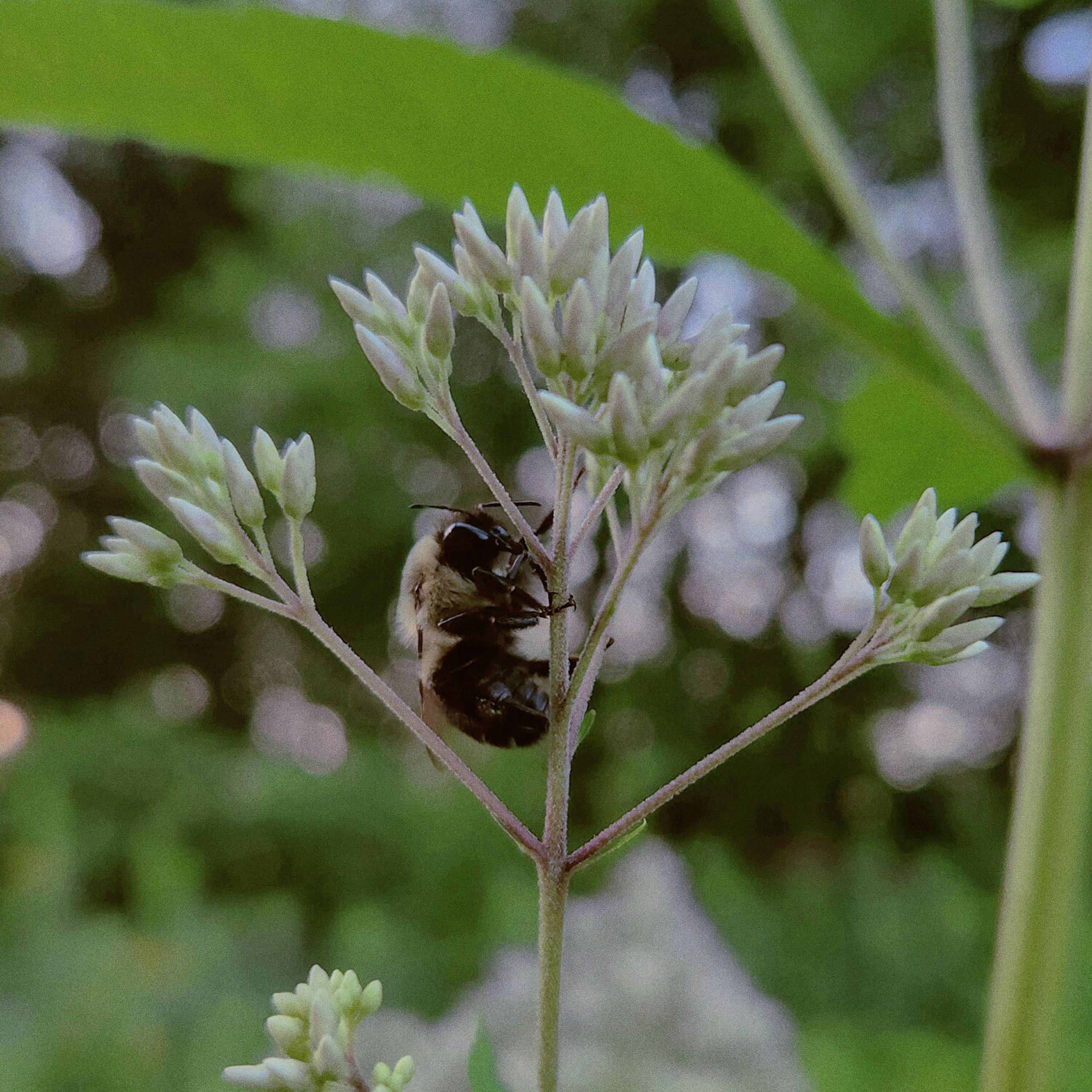
A wild bee perches on flowering Joe-Pye weed.
·Davin Faris
Despite mainstream resistance and his own skepticism of institutions, Sheveiko remains determined to reach a wider community. They don’t have a website for The Sanctuary, but the couple encourages visits and offers volunteer opportunities. Education is key to the broader mission. As Sheveiko told me, “If we want to restore the ecological integrity of this land, we have to know what the land was like to begin with.” After a reflective pause, he added, “That’s a quote from Aldo Leopold, the founder of the Yale School of Forestry. A horribly, horribly racist, deplorable genius.”
As radical as Sheveiko’s approach is, the results are hard to argue with. Standing in the leafy embrace of The Sanctuary, you’re transported to another world. After the modern desert of the surrounding suburbs, it’s an oasis, jarringly alive. You can’t help but imagine what towns and cities could be if each of us applied the same holistic care to our own land, in lieu of pesticides and mowing regimens. Imagine the change to our food system if backyards became polyculture powerhouses, yielding dozens of affordable staple crops. Imagine the transformation if even a few more people took up sustainability and diversity as the sacred work of a lifetime.
Just this year at The Sanctuary, they’ve had the first salamanders return. Several varieties of vital mycorrhizal fungi are again permeating the soil. Praying mantises — non-native but indispensable in fighting spotted lanternflies — are arriving in force. Beech and holly trees are springing up in parallel, the latter resistant to the former’s toxins. Everything is still changing, evolving, reaching for balance.
As we sat in the meadow at dusk, our conversation wandering from Revolutionary War history to etymology to epigenetics, the flickering fireflies suddenly reached a critical mass. Their scattered sparks coalesced into a dazzling firestorm, an unspeakable multitude. Sheveiko and I stood, set our tea mugs aside, and waded into the murky gloam. Somewhere in the loose folds of time, centuries unraveled. The world blazed.
Eventually, Sheveiko broke the silence. “All this work. All this blood, sweat, and tears. But then you come out here, and it’s so beautiful.”
In the living darkness, there was nothing else to say.

Mara Kushelman visits her mosquitoes almost every day. “They have no idea the weekend is a thing,” she says with a laugh. For Kushelman, a Ph.D. candidate at the Yale School of Public Health, it’s a short walk to the Fikrig Lab, which specializes in arthropod-borne infectious diseases (think ticks, mites, fleas, mosquitoes, and other generally bothersome insects). The entryway to the tall building at 60 College St. is flanked by enormous epoxy sculptures of a mosquito and a bedbug. The real, live mosquitoes are all the way up on the sixth floor.
Kushelman’s research focuses on dengue fever, so she keeps white paper cups of mosquitoes in climate-controlled chambers for experiments. The males are easy to take care of — they’re happy to drink sugar water from a wet paper towel draped over their cup. But the females? They need blood. On the top shelf of the lab refrigerator is a clear 30ml bottle with a white cap, full of bright red liquid. This isn’t human blood: It’s defibrinated sheep’s blood, sourced from a blood ranch in California.
*
Modern science and healthcare require increasingly large quantities of blood (the global blood product market — human blood, to be specific — is projected to grow at 6.4% over the next five years, according to Grand View Research). The average American is already familiar with the need for blood, since hospitals have long relied on donations for procedures like transfusions and organ transplants. And considering healthcare is now the fastest-growing sector of the U.S. economy, this need is only expected to increase.
Yet some blood comes from unexpected places. A few years ago, New England horseshoe crabs were in the news for their role as (involuntary) donors of the bright blue blood used in vaccine production. But crabs aren’t the only non-humans donating blood. Mammal blood from familiar farm animals is used in everything from routine hospital lab tests to cutting-edge virology research. Sheep blood is the cheapest and most widely available, but goat blood, bovine blood, and rabbit blood are all commonly used, along with mouse, chicken, and more.
Of course, this all begs the question: Where is the best place to get vials of sheep blood? “I can’t say I thought too much about where blood came from,” said Kushelman, at least not until she had to order goat blood for a specialized procedure. She had heard rumors of labs that pay college students to donate their blood. But in the case of her mosquitoes, that would be both unnecessary and impractical. “Human blood is expensive, and you need it fresh,” she said wryly. Instead, the Fikrig Lab orders vials of sheep blood through a centralized spreadsheet from a company in California that specializes in animal blood products.
But does it really take a whole farm specializing in blood production to feed a few lab-grown mosquitoes? Instead, a logical place to look for animal blood might seem to be a slaughterhouse. After all, over 40 million tons of blood are generated by slaughterhouses in the U.S. every year (over 10,000 Olympic-sized swimming pools’ worth). As it turns out, though, about 70 percent of slaughterhouse blood in the U.S. is discarded. In fact, blood is the main source of pollution in the millions of gallons of slaughterhouse wastewater generated annually, most of which ends up in waterways, according to the Center for Biological Diversity.
“I can’t say I thought too much about where blood came from.”
Why do we waste so much blood? There are many reasons, but at its core it’s an infrastructure problem related to American food history. Long before the biomedical industry needed vials of blood for lab tests and experiments, blood consumption in American kitchens had already begun to decline. In the late nineteenth century, as the meatpacking industry industrialized, upper-class Americans started to avoid foods like blood sausages, which they associated with “backwards” Central and East European immigrants.
The modern slaughterhouses built to fill the growing demand for meat after World War II didn’t usually incorporate infrastructure to save blood in a safe and hygienic way, and by the 1970s animal blood had virtually disappeared from American kitchens. That same decade saw the introduction of new regulations to control animal byproducts more strictly (making it more expensive and complicated to preserve blood at the industrial level).
As time went by, regulations ossified, and there have been no substantive changes to the rules about saving livestock blood since 1974. In fact, the USDA only removed a burdensome requirement for defibrination (a procedure to prevent blood from clotting) four years ago. The final result: during the same decade (1970s) when the U.S. healthcare sector expanded dramatically, the slaughterhouse sector, which could have provided a key ingredient for that expansion, gave up on blood almost entirely.
So, ironically, our reluctance to eat blood — which means that there is more of it available than ever — may have made it less available for the biomedical industry in the long run. And there’s no easy way to fix the infrastructure problem. As Arun Kumar Gupta explained, there are “logistical barriers to safely recovering and processing blood as a clean ingredient, unless it was a planned part of the system from the start.” Gupta is assistant professor at the department of food processing at Sardar Vallabhai Patel University of Agriculture and Technology, and the the lead author of a scholarly review of slaughterhouse blood uses.
The fact that most Americans — unlike Brits, Spaniards, or Costa Ricans – no longer enjoy blood sausage, is only one of the issues. A more prosaic challenge is “the lack of infrastructure and dedicated collection systems in many slaughterhouses,” said Gupta. “Collecting blood in a hygienic, food- or pharma-grade manner requires closed-loop systems, trained personnel, and investment in storage and processing facilities — things that aren’t commonly integrated, especially in conventional or high-throughput operations.”
Even when the blood can be captured appropriately, large slaughterhouses can’t always provide information on what the animals have been eating, whether they’ve been on antibiotics, or offer traceability back to the farm. And if it’s not clean enough or fresh enough to eat, livestock blood certainly isn’t high enough quality for a hospital or lab.
*
This is where “blood farming” comes in, filling the gap in a lucrative market for high-quality blood, serum, and plasma. At operations like Quad Five Ranch in central Montana, farmers keep animals exclusively as live blood donors, and every vial is traceable back to the initial batch.
It’s an unusual type of farming, to say the least. Candy Mitchell, who handles customer service at Quad Five, is used to getting asked what exactly she does for work. “I actually get that question a lot,” she said. “I basically tell them it’s a donor animal blood and serum facility, and tell them that we bleed horses, sheep, goats, and cows.” None of the animals are killed in the process, just like with human blood donation drives. The sheep are bled 1 liter each in special chutes every 28 days (it takes seven minutes for the entire process), after which “they eat like kings,” explained Mitchell.
“Using live donor animals with complete traceability and controlled conditions — definitely represents the gold standard.”
There are special considerations for this type of operation. Some of the animals, like the cattle, are rotated out every couple of years. “Cows tend to hold a grudge, and they don’t like being bled,” laughed Mitchell. The draft horses (purchased at Amish auctions) and goats end up in a special paddock which the ranchers at Quad Five call the “retirement pasture.” Sheep can be rehomed to ranches in Utah once they get too big for the chutes, at which point they’re raised like any other meat animal.
“Quad Five’s approach — using live donor animals with complete traceability and controlled conditions — definitely represents the gold standard,” said Gupta, the slaughterhouse blood expert. There are only a few operations in the U.S. like it (and according to Quad Five, they’re the only ones who are traceable). Outside of Denver, the Colorado Serum Company, founded in 1924, keeps a smaller herd of over 200 horses, 85 Holstein steers, 150 sheep and 22 goats in a 22-acre facility. Larger operations, like California-based HemoStat, contract with regular livestock farmers to source their blood.
For even more specialized work, there are operations like CoCalico Biologicals in Lancaster County, Pennsylvania. If an experiment requires pre-vaccinated blood (to test immunity, for example), researchers can purchase an individual animal for an experiment. Rabbits start at $415 each. Goats are pricier, at $1,379 per head.
The pricing is transparent, but there is an air of secrecy surrounding blood collection. “I can answer vaguely,” said Audrey S., the office manager at HemoStat Laboratories in a phone call (she declined to use her last name). At Quad Five, Mitchell was reluctant to share photographs for this article. “We try to steer away from sending pictures of the blood being drawn directly.” On their website, CoCalico Biologicals euphemistically mentions a “disposal charge” included in the overall price of their product. “You can only vaccinate an animal with one type of antigen,” explained Kushelman. Once a goat has been used for a specific experiment, it’s not much use for anything else. Not all farms have a “retirement pasture.”
“Cows tend to hold a grudge, and they don’t like being bled.”
And not all blood farms sound as pleasant as Quad Five. Last year, a routine USDA inspection at Alabama-based based Southern Biotech found multiple health and safety infractions, including injured goats and a wild raccoon in with the rabbits. A particularly controversial practice is the farming of pregnant mares for a serum used to artificially induce sows at hog farms to go into heat.
It’s no surprise, then, as Gupta points out, that “blood-based products still carry a certain stigma.” The idea of herds of sheep lining up to have their blood drained, even if it’s saving lives, still sounds like something out of a bad science fiction movie.
*
Back in the lab at Yale, I ask Kushelman how much blood she goes through. It turns out that the experiments only take about two milliliters a week. In other words, it would take nearly 10 years for her mosquitoes to drink 1 liter of blood — a sheep’s monthly donation at Quad Five.
Kushelman’s neighbors, though, use a lot more. They’re researchers at a nearby lab who study sleeping sickness, transmitted by the dreaded African Tsetse fly, which feeds on cows. She shows me a box of flies in a chest freezer. “They take a gigantic amount of blood,” she says. The bigger the experiment and the larger the insect, the more blood is needed. She tells me to Google “engorged Tsetse fly.” I do, and wish I hadn’t.
Farming blood is different from farming chicken or beef. A cow slaughtered today feeds someone a few days later. Farming blood is more indirect. A sheep blood agar plate could detect strep throat at a pediatrician’s office, or it might feed lab-grown mosquitoes for years, slowly helping develop a strategy to eradicate malaria.
One thing is for certain: blood is a growth industry.

Farmers tend to be stoic people. They gaze at the sky, parsing out if the rain will come as forecasted, or if drought will persist before they shrug and decide: It’s out of my hands. It’s a career defined by a certain type of faith, and groundedness in cycles. That’s why massive trends like Dubai chocolate can’t exactly be planned for.
At least that is the case with Marianne Schweers. She’s owner of Heart of the Desert, a pistachio farm and vineyard outside of Alamogordo, New Mexico, a dry and sandy town three hours south of Albuquerque en route to the Mexican border. Schweers and her husband George moved from rural Nebraska in 1969 so that he could serve at the Air Force base there.
They enjoyed the Southwest so much that they settled in after his tenure was up, but they were farmers back in Nebraska. When they looked around, they had no idea what crop could possibly grow in the desert, and if their farming could continue. The cracked dirt was a far cry from the Midwestern soil that can cultivate row crops like clockwork. In their research, the Schweers stumbled across the ancient history of one native desert crop in Persia: pistachios.
“The pistachio-growing regions there have almost the exact same growing environment as here,” Schweers said.
Today, Heart of the Desert has 105 acres of pistachios. They are vertically integrated, so they farm, harvest, process, and market their own crop. They employ eight farmworkers, with about 40 employees in total. It’s a small operation in the middle of a big trend: Dubai chocolate.
These luxurious sweets are typically thick chocolate bars stuffed with green pistachio cream that’s studded with phyllo dough for a slight crunch. They’re a TikTok craze, and they’re expensive — bars typically sell for about $20 apiece. The trend has also spurred a range of global offshoots, like Dubai chocolate donuts, ice cream, and other desserts. In April, The Guardian reported that the craze was causing an international shortage of pistachios, with prices increasing from $7.65 to $10.30 a pound over the course of one year.
With all of this buzz around Dubai chocolate, are smaller pistachio farmers like the Schweers winning?
Crop Basics
The pistachio yield of New Mexico and Arizona shakes out to about 2 percent of the American crop. California dominates 98 percent of the market. Stephen Vasquez, executive director of the California Pistachio Research Board, said that in California, pistachios have a similar footprint as almonds and walnuts. They don’t require as much water as either of those other nuts, though. Almonds have a shallow root system, he said, while pistachios have a deeper one that extends two to three feet underground, and allows for a more established tree to grow because it can take advantage of underground moisture.
The U.S. is currently the number one producer of pistachios in the world with 51 percent of the market, followed by Turkey and Iran. Vasquez said that American pistachio farming systems are more advanced than competitors that still harvest in traditional ways. In California for example, pistachio trees have been engineered to be more like a bush, which helps with shaking the nuts loose mechanically as opposed to hand-harvesting.
Pistachios are also a resilient crop. They can live without irrigation, but consistent watering yields higher production and quality. The split rate, which is the percentage of nuts that grow big enough to break open their shells, is low without adequate water.
The Role of Byproducts
For all of its international might, the American pistachio market has one blind spot: Manufacturing capabilities to produce pistachio creams and butters. Those are largely imported, and the real moneymakers in the Dubai chocolate craze. The American market largely did not foresee ramping up to cash in on it.
“We look like a bunch of idiots in the sense as we marketed how we normally market, and [Dubai chocolate] snuck up behind and clobbered up,” said John Hueller, president of A & P Ranch in Arizona.
Pistachio creams and butters aren’t made with high-quality split nuts, but with what’s called closed-shell sinkers and floaters. These are immature nuts that are typically considered a byproduct of the harvest process. With Dubai chocolate getting stocked at a break-neck pace, recently Hueller had to figure out how to transport a few million pounds of byproduct to a processor within two months.
“It’s beyond a sensation, and driving the market,” he said.
For what it’s worth, Schweers doesn’t see Dubai chocolate as really being the indicator of the pistachio’s success. She attributes that to the larger industry as a whole that marketed pistachios successfully to the general public around the world, including giants like Wonderful pistachios that you can find in small travel-ready packs in the gas station.
“All of the small farmers are benefiting from what the Pistachio Growers’ Association are doing,” she said.
Luck of the Draw
Hueller is a second-generation farmer. He started his career in agriculture at 14. He’s 63 now, and about to retire. His primary operation in Cochise County, Arizona, has 2,400 acres of pecans and 1,500 of pistachios. Cochise is in the desert, but quite high at 3,600 to 4,200 feet. It snows a bit in the wintertime, and gets a good amount of rain during monsoon season. That combination of factors creates something magical.
“Very few places in the world can raise pistachios,” he said. “You have to have a certain number of things happen.”
For one, pistachio trees need to be able to chill for 950 hours per year, or about a month and a half, because they don’t rely on bees for pollination. There are male and female trees, and they self-pollinate via the spring winds. Pollen grains released by the male trees end up on the female flowers. It’s a natural process that doesn’t require heavy intervention, and the chilling helps to prepare both for pollination.
The weather also needs to be dry enough to allow for the pollen to travel when it’s released. Pistachios are a nut with a small footprint in this world, and we’re lucky enough that there are lands in the U.S. that can cultivate them. Even with climate change on the horizon and rising and falling demand, Schweers doesn’t see the unique factors that make pistachios so successful changing anytime soon, even when the Dubai chocolate trend fades.
“[New Mexico] produces a really good crop,” she said. “Nuts grown in the Southwest in particular have a robust flavor. I certainly see the pistachio industry staying, and growing.”

Livestock come in all shapes and sizes, fulfilling an array of assigned roles in the agriculture industry. Whether they’re a bucking bronco or rodeo bull in the performance sector, a dairy cow in the milking parlor, or a young calf racing its mates across a grassy pasture, they all regularly face injury risks, a reality underscoring the need for mindful stewardship in managing their well-being.
Enter the traditional, Western medicine-based large animal veterinarian.
These professionals fill this caretaker role much like our own doctors: diagnosing, treating, and preventing diseases, while also providing preventative care for whole-body wellness. The vet’s roles range from administering vaccinations to performing surgeries, depending on the specific needs of the animal at hand.
Yet some practitioners have found that traditional Western techniques are not enough to meet the veterinarian’s version of the Hippocratic Oath, and are turning to complementary or integrative treatment therapy tools, including applied kinesiology, acupuncture, and chiropractic care, to fill in the gaps.
These DVMs claim that integrating non-Western care methods with traditional practices can offer a more comprehensive and holistic approach to managing health issues. Anchoring these philosophies is the belief that all animals are unique and their care requires a customized methodology. Integrative care practices can help provide a more complete picture of an animal’s well-being, addressing pain, mobility, musculoskeletal problems, and even neurological and digestive conditions with potentially fewer side effects than conventional medications or surgeries.
Applied Kinesiology Turns on the Power
Dr. Keith Wagner, a seasoned Missouri-based DVM practitioner, works with horses of all ages, levels, and dispositions, ranging from Olympic athletes to acreage pets. He began his practice as a traditional Western medicine-based veterinarian, but over the last 15 years, he’s transitioned roughly 80% of his methods to applied kinesiology, acupuncture, and chiropractic treatments.
“I just had to make a change,” Wagner explained. “It was in my nature to continually ask why things happened and why something worked or didn’t work. Because of all these questions running around my mind over the years, I began adding and tweaking small things, slowly changing the way I was approaching health issues and how I treated them.”
His diagnosis method of choice is applied kinesiology (AK), also known as muscle testing, a diagnostic process to assess and treat functional illnesses and neurological imbalances. AK is a supplementary approach to standard medical practices, evaluating muscle responses and aiming to identify underlying nervous system dysfunctions that may contribute to health issues.
“I examine and assess the electrical function of the individual by touch to test muscle strength,” said Wagner.
Using applied kinesiology, Wagner checks approximately 25 central pattern generators (CPGs), essentially making up the hard wiring of the nervous system. Each CPG has an indicator muscle that becomes weak when CPG dysfunction occurs. Injury or pathological changes in the body create this dysfunction.
“Because of all these questions running around my mind, I began adding and tweaking small things, slowly changing the way I was approaching health issues.”
“When the muscle weakens across a joint, stability is lost, causing laxity or play during movement, followed by inflammation,” Wagner said. “Once I identify the problem CPG, I can essentially turn it back on to help restore the joint’s stability.”
Typically, these inflammations and weaknesses are treated with injections into the affected joint.
While applied kinesiology is Wagner’s primary diagnostic tool, he typically follows up with chiropractic procedures or acupuncture.
“To address the ongoing cycle from youthful wellness to later disease in horses and humans, early treatments such as acupuncture, applied kinesiology, and chiropractic care have preventative benefits,” he said. “These methods focus on maintaining balance within the body and preventing minor issues before they become major health concerns. In contrast, traditional Western medicine becomes more beneficial during later stages, providing effective treatment at end-of-life.”
Wagner believes combining these approaches delivers more comprehensive life cycle health and disease care.
“We correct the mechanical functions, which in turn helps us not to go down the aging and disease path so quickly,” he said. “In a perfect world, using complementary care earlier in life and Western-based medicine later should be the goal. We can’t stop disease and death, but we can slow or restrict them.”
Breaking Out the Modalities
Dr. Quinley Koch, owner of Elite Equine and Veterinary Services in Wichita, Kansas, offers acupuncture, chiropractic, traditional Chinese medicine, and physical therapy for horses, cattle, and rodeo bucking bulls. Traditionally trained in Western veterinary medicine, Koch eventually branched into “integrative” work, a term she’s passionate about; she considers the often-referenced “alternative’” a misused word.
“First, these types of modalities are not ‘alternative’ to anything,” Koch said. “With many procedures, for example, neutering, there’s no alternative. Alternative is not an accurate term for what I do. Integrative is much better as it allows different processes and philosophies to work together.”
She commonly works with other veterinarians who provide vaccinations, joint injections, colic treatments, and other mainstream protocols. Koch said most members of the animal health and performance sector, including owners and veterinarians, use at least some form of integrative medicine as they’ve witnessed its positive results firsthand.
“There’s ample room for both mainstream and integrative practitioners. It’s an amazing, symbiotic relationship, achieving superior results.”
“There’s ample room for both mainstream and integrative practitioners,” she said. “It’s an amazing, symbiotic relationship, achieving superior results. Group efforts are far better than singular endeavors.”
Koch focuses on muscles, the nervous system, bones, and tendons, but her processes include the entire body. “The beautiful thing about acupuncture and physical therapy is it’s a whole-body approach,” she said. “If I help balance the body better than the body balances itself, it’s successful without using medications.”
Like Wagner, Koch also believes the veterinary community is changing, becoming more accepting of integrative methods. She thinks the shift started with human medicine, then trickled down.
“A huge push has occurred for integrative strategies on the human side as more and more people have tired of doctors prescribing medications without finding root causes,” she said. “With chiropractic treatment, acupuncture, and Chinese medicine, we’re able to find and treat the root cause along with the symptoms. Human medical shortcomings have created this massive interest, which has pushed its way into the veterinary field as owners want to treat their animals the same way they want to be treated.”
Claiming the Well-Traveled Road
Typically a veterinarian is called to assess, diagnose, treat, and rehabilitate using traditional, mainstream medical practices.
“When I’m faced with a new large animal patient, I start with a strong Western approach including a visual assessment, a thorough physical exam to make a diagnosis, radiographs, and lameness locators for travel issues, discussions of nutritional health, and sometimes a neurological exam,” said Kelsey Walker, assistant clinical professor at the Oklahoma State University College of Veterinary Medicine. “Treatments often consist of antibiotics for infectious diseases, pain medications, non-steroidal anti-inflammatory drugs (NSAIDs), joint injections, plus surgery to insert pins and plates.”
Walker treats all types of livestock from rodeo bucking stock to sheep, goats, and pigs. “Our clinical management depends on where the underlying source of the problem is found,” she said. “These large animals are often aggressive, of course, but we complete our Western-based protocols, keep them in the hospital, and apply a lot of positive reinforcement through their rehabilitation process. It’s amazing when fire-breathing dragons [Ed. Note: not actual dragons] limp into the clinic, and a few weeks later, they’re begging for scratches as they proudly walk back into their normal lives.”
Walker believes mainstream medical research and trials create the underlying foundation of performance animal care, reinforcing diagnosis and treatment protocols, and installing qualified and certified caregivers.
“The biggest problem is that we’re years behind human medicine, but we’re expected to provide the gold standard with data we don’t have. Continuing research is so vital to keep progressing.”
She notes Chinese medicines and herbs can help but is concerned about unregulated products and withdrawal times. She’s also seen modalities being misused and causing injuries by those without the correct training. If practitioners are certified with appropriate training, they can hold a positive place. She even utilizes acupuncture in her own treatment regimen when she deems it necessary.
“We’re all striving for the same results, and every integrative practitioner I know is willing to work together with more mainstream Western medicine practitioners.”
“For emergency matters like broken legs and acute illnesses, in my opinion, it’s obvious traditional Western practices fit best,” said Walker. However, “Due to how the body responds to long-term pain management, for more chronic issues, other modalities might be more effective,” she admits.
Walker credits a new generation of veterinarians and the open-mindedness of the general population with a shift to more out-of-the-box diagnosis and treatment methods.
“We’re all striving for the same results, and every integrative practitioner I know is willing to work together with more mainstream Western medicine practitioners,” Koch said. “By using a well-balanced strategy mix, we can provide the best possible, whole-body care.”
All three DVMs admit that both human and animal health have a long way to go. “Roadblocks to performance animal care include the same issues as on the human side,” Walker said. “Much of it comes down to education and explaining what we’re doing and why we’re doing it. Clients are asking for these modalities. They should be able to coexist successfully with Western veterinary medicine. I think it’s the way of the future.”

200 miles off the coast of New Orleans, and 2,200 meters below the surface, there’s a dip in the ocean floor containing a brine that makes the surrounding seawater look positively sweet. Sipping from a Jurassic-era salt deposit — with 500,000 metric tons of salt dissolved into the water every year — the Orca basin brine pool is roughly eight times saltier than ocean water. Though it’s dense with microbes, the basin is devoid of oxygen and toxic to aquatic animals.
But the same traits that make it hostile to life have a company eyeing it as a tool for maintaining a livable climate.
In May, a company called Carboniferous applied for a research permit from the EPA to drop 20 metric tons of sugar cane bagasse — the fibrous material left after crushing stalks to get juice — into the Orca Basin, a process the company says could store carbon for hundreds of years.
“We couldn’t do this in the lab, and there’s insights we’re going to be able to actually get with this plan that are going to justify the effort and the risks,” said Morgan Reed Raven, chief science officer at Carboniferous and assistant professor of earth sciences at UC Santa Barbara. “We’re going to throw everything at this, and if the data really supports it, then it will have definitely been worth it.”
The Carboniferous field trial is just one of a growing number of projects that propose to use oxygen-free (or anoxic) parts of the ocean as disposal sites for agricultural waste, enabling the removal of carbon dioxide from the atmosphere — a removal the IPCC has said is essential to reaching net zero emissions.
Yet some scientists are raising concerns with the safety and effectiveness of these methods — not to mention their potential to distract from emissions reductions — while farmers ask if it’s the best use of the waste material. Either way, projects are moving forward — are we ready?
Sinking agricultural waste to the deep sea — or “Marine Anoxic Carbon Storage,” as the company Puro.Earth, which validates carbon removal methods, dubbed it back in April — rests on a simple premise.
As crops photosynthesize, they incorporate carbon into their tissues. After those crops are harvested and processed, whatever is left over is often burned or tilled back into the soil and decomposes, which sends that carbon back into the atmosphere as carbon dioxide.
By sinking that crop waste into anoxic environments instead, researchers hope that material would potentially resist breaking down for thousands of years, effectively storing the carbon long term.
“We talk about [climate change] as being existential. We should act that way.”
Raven said it’s a promising enough idea that when the co-founders of Carboniferous reached out for advice, she assumed work had already begun. “I said, well, it’s an obvious idea. There must be a dozen teams working on that. And they were like, ‘Would you believe there aren’t?’”
That led to work in the Orca basin — a site Raven said has many advantages.
The basin is clearly defined — it has edges, it’s relatively small (3.2 miles squared), and it’s all within the United States — making monitoring easier. But more importantly, it has no oxygen, meaning no animals to quickly break down organic material and release carbon dioxide (the microbes that do exist there break down organic matter very slowly). As a brine pool, it has the additional advantage of being salty; salt has been used to preserve food for thousands of years, Raven said, and in the Orca Basin, sediment cores have revealed perfectly preserved macroalgae — seaweed that would otherwise turn to slimy goo in days, even in anoxic parts of the ocean. “For it to come up looking pristine is truly remarkable.”
Permanent preservation isn’t typically the goal in waste disposal. But in this case, Carboniferous was happy to learn, in early research trials, that material such as kelp stayed intact after 200 days in the basin. “They’re almost brighter green than when we put them in the brine. It’s just sort of a jaw-dropping gut check just how effective the salt is at preserving stuff,” Raven said.
As a next step, Carboniferous is proposing a field trial that will involve sinking 20 bales of sugar cane bagasse from Louisiana; bagasse is a waste material that requires a lot of energy to manage, often by burning, Raven said. “And so that particular scenario simplifies a lot of the … issues that are going to become really important as we think about scale.”
In the field trial, bales of bagasse will be wrapped in burlap and rope, and sunk to the bottom; researchers plan to test ways to examine whether the material is breaking down, along with other monitoring.
“I said, well, it’s an obvious idea. There must be a dozen teams working on that. And they were like, ‘Would you believe there aren’t?’”
The Orca basin is just one of the anoxic sites being explored for storing crop waste; another, much larger basin is found in the Black Sea, the kidney bean-shaped inland sea bordered by Turkey, Russia, and Eastern Europe.
Many countries in the area are large agricultural producers, producing millions of metric tons of produce, as well as wood products.
A company called Rewind is moving forward with a plan to use this waste — particularly, woody leftovers after pruning fruit trees, and residuals from the timber industry — to sink biomass into the Black Sea, which is largely devoid of oxygen. That provides a huge capacity for carbon storage, said Rewind CEO Ram Amar.
Amar says the company tried various kinds of biomass, from lettuce and corn stover to wood, and concluded wood degraded the least. Rewind is currently working through the permitting process with Romania on a plan to sink 100 metric tonnes of biomass in 600 meters of water.
Amar said there’s an analog for the effectiveness of this method in the wood that can naturally be found in the Black Sea, where shipwrecks from antiquity look as pristine as the day they sank. “You can find wood that has been in these environments for a thousand years or more.”
Altogether, Amar said anoxic basins could provide half a billion metric tons of carbon dioxide removal — a process that he said scientists at a recent Rewind workshop concluded can’t happen quickly enough.
“30 of the world’s leading marine researchers are saying, ‘Why aren’t we moving much, much, much faster with this method, even at very large scales,” he said. “The scale relative to the Black Sea … is really, really, really small, and therefore the environmental risk is really non-existent.”
“These are ecologically really interesting and special areas; using it as a garbage dump doesn’t seem to make a lot of sense to me.”
Lisa Levin isn’t so sure.
Levin is a marine ecologist at the Scripps Institution of Oceanography, and co-author of a recent paper that touches on biomass sinking. She says at the research level, there likely isn’t any risk. But at a large scale, she worries that filling these unique environments with sugar cane byproducts or other agricultural waste will have negative impacts; she questions whether we know what we’re at risk of losing in these environments, which contain unexplored microbial diversity.
“These are ecologically really interesting and special areas; using it as a garbage dump doesn’t seem to make a lot of sense to me.”
Amar said Rewind has dedicated significant resources to understanding the impact, and has concluded the effects of storing biomass would be in line with the natural variability of that environment; in the Orca Basin, Raven said sinking biomass is unlikely to change the ecosystem, since it already has no oxygen (biomass sinking can otherwise deplete oxygen), though she said when thinking about other sites and possible expansions, “we move into much harder questions.”
Levin and other scientists prepared input on Carboniferous’ plan in the Orca Basin, the public comment period for which closed in mid-July; so far, she said her main conclusion is that the approach doesn’t have the capacity to turn down the temperature of the planet. “It’s not going to be able to accommodate enough carbon to affect climate change. So my feeling is this is probably about selling carbon credits and making money.”
For some farmers, there’s also the question of the best use for agricultural waste.
Luke Lasley grows five acres of rare heirloom sugar cane on a farm in southwest Florida, which they press for fresh juice and shelf-stable syrup.
Lasley said the resulting bagasse is highly useful. “It’s actually a resource for the farm if you know how to work with it.”
“Shipping it out into the ocean and trying to sink it down there seems like a crazy way to sequester carbon because there’s a lot of costs involved with getting it there.”
Mostly, Lasley uses the bagasse to make biochar, a carbon-rich material similar to charcoal, made by roasting bagasse at high heat without oxygen. He said this helps retain water and nutrients in sandy soil, in addition to sequestering carbon.
Biochar is useful enough that Lasley buys what he can’t make himself — given that bagasse makes good biochar, he said he found the thought of sinking it into the ocean “kind of a wild idea.”
“Shipping it out into the ocean and trying to sink it down there seems like a crazy way to sequester carbon because there’s a lot of costs involved with getting it there, when the farm that’s producing it basically needs it in biochar form.”
Ultimately, trade-offs are becoming a fact of life in a changing climate, and proponents of carbon removal say the hazards need to be considered against the cost of doing nothing to remove emissions; when it comes to sinking crop waste, scientists say the potential means we have to at least try.
“We talk about this as being existential,” said Raven. “We should act that way.”

The relationship between farmer Steve Hess and his landlord had broken down by the time the tractors disappeared in 2017. For a decade, Hess had tended blueberry, apple, cherry, and other fruit trees on his 5-acre organic farm, a small sliver of the owner’s 600 acres nestled along the Ohio River in north-central Kentucky. But the informal agreement ended with the death of the landlord. The surviving family members wanted to reclaim the land and sell it.
Then, two weeks later, all three of Hess’s tractors had vanished. “It was all gone, clean,” he said. A two-row planter, post hole digger, and a mower deck also disappeared. Only his 1939 Ford 9N model tractor, a relic of our post-WWII agricultural heyday, remained.
He informed the sheriff of Oldham County, Kentucky, of the theft, noting the impending eviction from his farm. The county sheriff took notes and said Hess would hear back when new information about his tractors when, or if, they surfaced.
For three years the sheriff’s office called to say there was no news about the tractors. Then they stopped calling.
Farmers like Hess have found themselves in possession of increasingly valuable assets: used farm equipment. It’s a straightforward example of supply-and-demand. “The supply of used equipment comes from buyers of new, or at least newer, models, for the most part,” said Kelsey Larson, assistant professor of agricultural economics and extension specialist at Montana State University.
But current high interest rates have been dissuading potential buyers of new equipment, whose prices have skyrocketed due to the nationwide steel shortage, supply chain disruptions, and tariffs on European and Asian-manufactured equipment.
“If a farmer has to buy, they’re going to buy used; if they can, they’re going to hold on to what they’ve got right now — and both of those factors are going to push the price [of used farm equipment] upward,” Larson said.
Add general economic uncertainty to the mix and a 23% shrinkage of the inventory of used compact and utility tractors in the last year, and it’s no wonder that each year, thousands of tractors get reported as stolen across the U.S. In 2023, six years after Hess’s experience, there were 1,221 reported thefts of special equipment including tractors each month, according to data collected by the National Insurance Crime Bureau and provided to Offrange. From 2022 to 2023, the total number of reported thefts jumped by 10%, from 13,287 to 14,646.
It’s common practice for farmers to leave keys in the tractor for the next ride or the next driver.
Mower, riding, or garden tractors were the top style of reported thefts in the category, under which all three of Hess’s tractors fit. He lost a 22-horsepower Yanmar; a 60-horsepower John Deere; and a 30-horsepower Kubota.
It’s remarkably easy to steal a small tractor, provided you have access to a flatbed truck or trailer. One could say that tractors are ripe for the picking: It’s common practice for farmers to leave keys in the tractor for the next ride or the next driver, said Jacob Landis, whose family farm is spread across 1,500 acres in Northern Illinois. Tractors are often left alone, out of sight from houses or buildings or surveillance cameras. Older models from the same manufacturer, Landis noted, also often share keys.
By grinding off the VIN, older tractors can simply disappear into the used farm equipment market. Older models are often not equipped with GPS, leaving law enforcement little to go off. Less-reputable auction houses can turn a blind eye to a tractor’s provenance, or the stolen goods can change hands in private sales.
Last October, California law enforcement announced that they had broken up a farm equipment theft ring alleged to have stolen equipment totalling $2.25 million. The case began when detectives tracked the signal from a brand new stolen backhoe to the back of a semitruck parked at a truck stop. There, the detectives found another backhoe and an excavator reported stolen from a different county. More than 10 suspects are alleged to have transported the stolen machinery from San Joaquin Valley, the agricultural heart of California, into Mexico.
Talking about a stolen tractor is taboo in the farming community, Hess said, likening it to divorce.
Stealing a tractor might be relatively easy, but recovery is not. Only half of the value of the stolen equipment — $1.3 million — in California was recovered in the recent bust. The average annual recovery rate of stolen special equipment is even lower, according to NICB data. In 2023, the recovery rate was 30%, down from the 34% recovery rate of 2022. Half of the recoveries in 2023 occurred within one week of the theft.
Even a 30% recovery rate seems high to Hess. He believes that his tractors didn’t go far, maybe just down the road to a nearby auction house. But despite his lived experience, talking about a stolen tractor is taboo in the farming community, Hess said, likening it to divorce. He’s silenced many bustling farmer meetings with the announcement that his tractors got stolen.
Later, he would be quietly approached by fellow farmers with stories of their own thefts or thefts they’ve heard of. “How come we’re talking about this in hushed tones outside the room?” Hess asked.
But farm insurance specialist Jeff Joseph located near Rochester, New York, has not heard of tractor thefts in his 25 years of selling insurance to farmers. ATVs, snowmobiles, chainsaws, tools — those are common thefts, Joseph said. But tractors? “It’s not like stealing a car where you can get in and drive it at 80 miles an hour someplace and hide it in your garage,” he said.
“It’s not like stealing a car where you can get in and drive it at 80 miles an hour someplace and hide it in your garage.”
Yet Joseph could see the reasons why tractors appeal to thieves. “I’m glad that it’s not a phenomenon that we see here in New York,” he said.
Companies offer tractor-specific GPS tracking devices as theft prevention. Posters to online farmer forums recommend Apple AirTags or common-sense solutions like locking tractors in barns overnight or adding more surveillance cameras to the property. In the more remote stretches of his farm in Northern Illinois, Landis will deter tractor theft by putting the gear in a position that prevents the tractor from turning on. A tractor aficionado could figure it out, Landis said, “but if somebody just crawls in there and don’t know what they’re doing, the struggle might be enough that they leave the tractor alone.”
Buyers, meanwhile, can assure themselves that they are not buying stolen property by requesting a full maintenance and inspection history.
In some ways, losing both tractors and land at the same time was a blessing for Hess. It forced a clean break with the farming life. “I didn’t have to go to an auction. I didn’t have the store equipment. I didn’t have to worry about the pieces that didn’t sell.”

Jesse Galbreath’s 1,100 acre, family-owned farm sits in Washington state’s Skagit Valley. His mornings are spent tending to spinach seed, Brussels sprouts, beets, and orchard grass for horse fodder. If all goes well, his short-stalked spinach crop, with a rosette of leaves that relies on a consistent water supply and minimal pesticides, will produce a gainful seed yield.
Galbreath is one of multiple growers in the Pacific Northwest who produce spinach seed — Washington state grows nearly 75% of the country’s supply. The seeds are produced by the flowering spinach crops, which are then sold to growers who grow the vegetative spinach that is harvested for its leaves.
However, four years ago, the 32-year-old was dismayed to find that a spinach cluster occupying nearly 12 acres was wilting — the leaves were browning, and soon the beautiful crop died a quick death. There was nothing he could do. This was due to fusarium wilt, a disease where a pathogen burrows into the soil and starves the crops of water and nutrients by blocking the vascular system. This causes them to turn yellow, wilt, and die before they start flowering, depriving growers like Galbreath of the necessary seeds to sell to ag companies.
Now, a team has discovered a central Asian spinach variety that has demonstrated resistance against the wilt, spurring hope for growers here in the U.S. In a new paper published in Scientific Reports, plant pathologist Lindsey du Toit and co-author Sanjaya Gyawali of Washington State University discuss their attempts to control the wilt-causing gene.
Spinach requires the crop to be exposed to longer lengths of the day, to get them to shift from a vegetative state to a flowering one that produces seeds. It is not heat-tolerant when it’s flowering. The authors point out that the only area in the U.S. that meets these climatic requirements is the maritime region west of the Cascade Mountains in the Pacific Northwest. Commercial growers like Galbreath are contracted by seed companies who provide the seeds necessary for growers to produce and harvest, which is then bought by the companies for an agreed-upon fee. The fee, he said, is based on a five-year average of yield.
The wilting problem, however, goes deeper — the infected soil cannot be used to grow spinach for at least a decade. “If fusarium gets into the field, the rule of thumb is that you cannot grow spinach for 15 years,” said Galbreath, adding that this then warrants a very long rotation period between crops. Without an adequate supply of spinach seed, you can’t plant enough vegetative spinach crops to meet consumer demand, added du Toit.
One of the reasons du Toit started this job was to help manage this disease more effectively so the spinach seed growers can rotate the crops on a more reasonable duration. “This disease has complicated our ability to produce enough spinach seed in the U.S.”
“If the grower has two parent lines they’re planting — one female and one male line — either one parent or both might be susceptible to the disease,” du Toit warned, attributing this to the lack of resistance amongst commercial spinach varieties. So every winter for 16 years, her program has been testing soil samples from the seed growers’ fields to identify the potential risk, something Galbreath is thankful for. Their testing of spinach parent lines for seed companies also help seed companies and growers ascertain the susceptibility of the parent lines.
“If fusarium gets into the field, the rule of thumb is that you cannot grow spinach for 15 years.”
“While fungicides help, they are not as effective,” said Gyawali, who has worked as a geneticist for over 20 years.
They have been accessing gene banks where different spinach lines — including those of its wild ancestors — are stored. They sourced seeds from 600 accessions from gene banks including those that belong to the United States Department of Agriculture (USDA) and the Dutch, as well as samples from central Asian regions of Uzbekistan, Tajikistan, and Kyrgyzstan. They then assessed which of these were resistant, so the seed companies and breeders can hopefully incorporate the resistance gene(s) into their modern cultivars.
They say the next step is figuring out what gene causes this resistance among this variety. To test how they fare in the field, Gyawali has been testing the wild, resistant lines with fusarium strains in a greenhouse that mimics the growing conditions of central Asia. For now, the farmers cannot grow this variety directly, he said, adding that they need to transfer wilt resistance to the local spinach varieties being grown in the Northwest.
Gyawali said that growers in the regions were fervently looking for resistant varieties, which is how they secured government funding to carry out this research. Their research was funded by USDA, and the team has a second tranche of funding that will allow them to continue.
As the Trump administration continues gutting federal agencies and their research wings in a bid to trim public spending, teams like du Toit’s stand to be affected. Last August, USDA announced federal grants worth $82.3 million to enhance the competitiveness of specialty crops. But since late January, the agency has rescinded or cancelled grants that were supporting donations to food banks and climate-smart agricultural practices, leaving many farmers in the lurch.
The authors highlight the need for such studies that can potentially benefit thousands of growers in the region. “We know that companies are using the information we’re generating from this work, so our work is supporting the industry,” du Toit said.
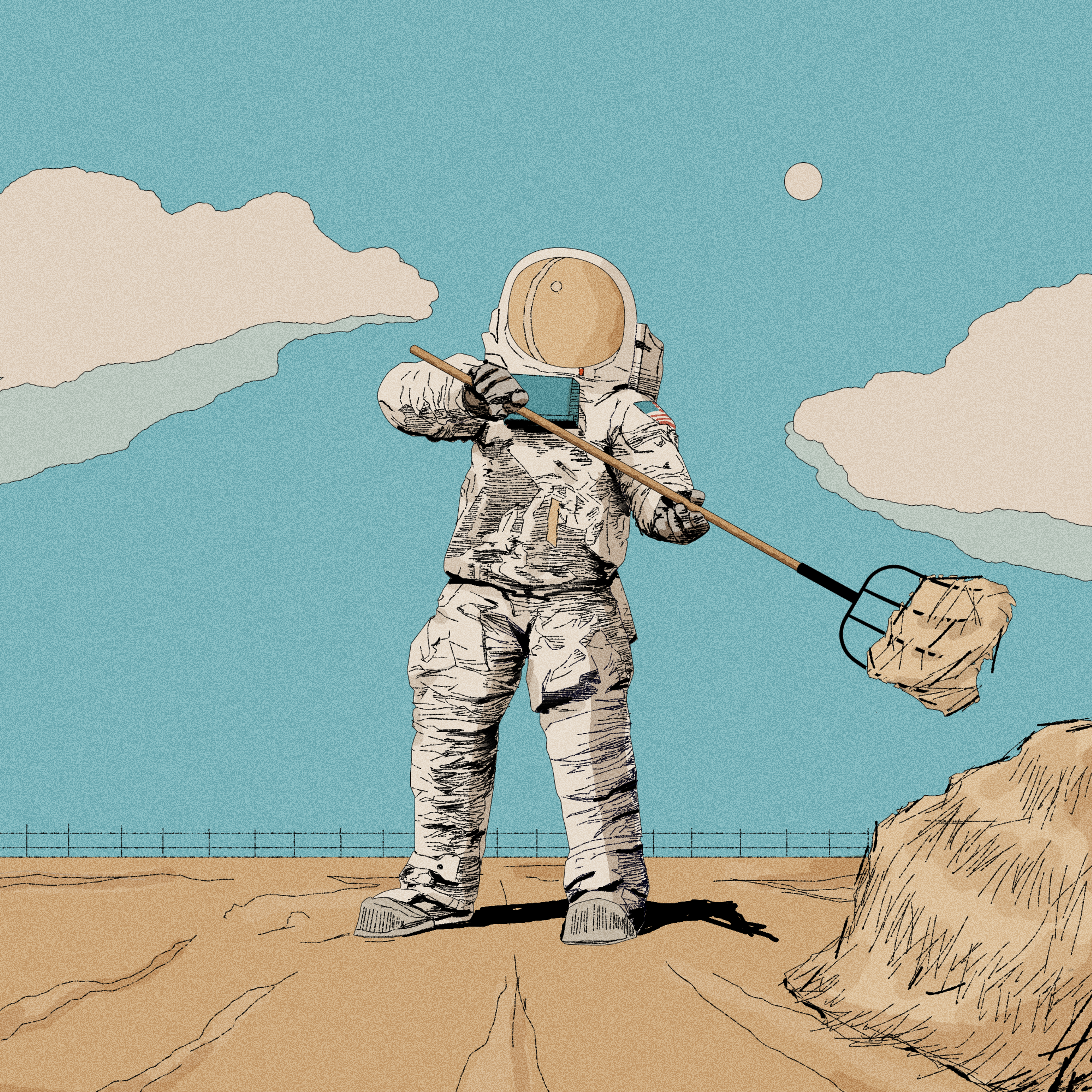
Lance Lilibridge got the call less than 24 hours after a derecho — a widespread windstorm — decimated much of northern Iowa in August 2020. If the winds had reached just five miles further north, Lilibridge’s home and crops would have been flattened. He was cleaning up what remained of his neighbor’s house when the phone rang.
Iowa Corn Growers Association was on the line, passing on a request from none other than NASA. They wanted pictures of the damaged crops.
“What does NASA want with pictures of wind-blown corn?” Lilibridge recalls asking. Turns out they were tracking the crop damage by comparing photos from the ground to satellite images above. That was enough to win him over. Lilibridge took out his phone and started snapping.
Contrary to popular belief, NASA is not just in the business of stargazing and Mars missions. In addition to their satellites that keep tabs on the cosmos, the space agency mans an entire fleet of Earth-facing satellites. These orbiting instruments collect enormous amounts of data on water cycles, weather patterns, vegetation, nitrogen content, and much more. The data NASA can record from these satellites has become so specific that it can weigh in on farm-level decisions.
That’s the whole purpose of NASA Acres, a sub-agency of NASA designed to use satellite data to help U.S. farmers make sustainable decisions and be more profitable. And through their ambassador program called FIAT — Farmer Innovation Ambassador Team — NASA Acres is recruiting farmers like Lilibridge to weigh in on the problems that need solving and to spread the word: NASA can help. The space agency is leveraging 50 years of satellite and data science to help any farmers willing to join in.
“FIAT is designed to be this partnership,” said Alyssa Whitcraft, director of NASA Acres. We want to “bring the value of satellite data down to earth and take everything NASA can do and use it to help farmers positively impact profitability.”
NASA can offer farmers data on how vegetation is growing, water usage, the amount of nitrogen taken up into the canopy, yield changes over time, and the impact of different types of tillage, just to name a few. They’re already supplying data to critical agriculture services like the U.S. Drought Monitor. And soon, they hope to be able to offer data on disease detection. These insights could help farmers minimize fertilizer costs, choose more profitable planting windows, time harvest, stop disease spread, or weigh the costs of management changes.
But most importantly, how the data gets used and applied is entirely up to farmers, Whitcraft said. Farmers identify the challenges — NASA Acres supplies the information to help with a solution.
“Every single time we walk into a room, there’s a mixture of excitement, ‘Oh gosh, NASA is here,’ or skepticism, ‘Why is the federal government here?”
“We want to build this together,” said Ignacio Ciampitti, professor of agronomy at Purdue University and co-director of the FIAT program. “We don’t want to play the game of assuming what they need, we want them to tell us what they need to be more effective.”
And farmer partnership is essential to making practical use of NASA Acre’s agricultural data. While NASA satellites collect tons of information over time, that data holds very little meaning if it isn’t connected to data on the ground — like Lilibridge’s crop damage photos. For every tool NASA Acres builds, they use a farmer’s on-the-ground images and measurements as reference points for the data from above.
In the arid regions of western Kansas, for example, NASA has satellite estimates of water used on crops. To compare, farmers have moisture probes — which measure water depletion in the soil — in their cornfields. With data from a few moisture probes as their key, NASA Acres can then estimate the water availability and usage across the whole operation based on the satellite data. This helps farmers make better decisions on when and how long to irrigate, Ciampitti said.
Similarly, in Oregon and Idaho, cattle and sheep ranchers penning their livestock at night to protect from predators were concerned that the nightly confinement was wearing down the rangelands. They shared their penning schedule and locations with NASA Acres researcher and NASA DEVELOP science advisor Tony Vorster. Vorster paired rancher information with satellite data measuring the vegetation to see if night penning was costing the ranchers valuable grass. So far, the rangeland appears to be holding up to overnighting cattle. Ranchers can keep their animals and their feed supply.
And the great thing about satellite data, Whitcraft said, is once researchers and farmers work together to make the on-the-ground connection, NASA Acres has years and years of data to look back on. Not only could farmers see where their operation is today, but they can compare it to years passed or see it change over time. That kind of data is invaluable as farmers attempt to plan for the future.
Spreading the Word
NASA Acres has lots to offer farmers, but one of its biggest barriers is that farmers don’t know about it. Most people don’t think NASA and agriculture have any overlap — at least on Earth.
But that couldn’t be further from the truth, Whitcraft said. NASA has been using its space vantage point to help with agriculture since 1972. The difference now, is that the satellite data has gotten a lot better and there are more ways it can be useful, she said.
So, the second purpose of FIAT — on top of helping NASA collect and apply data to solve problems — is to help the space agency spread the word and build trust in farming communities.
Dwane Roth, a water conservation advocate and retired farmer in Western Kansas, tells everyone he can, “I work with NASA.” So far, he’s only gotten positive feedback. “Everybody loves NASA. American farmers are patriotic — NASA is the definition of patriotic,” he said. But most have no clue that the agency works with agriculture. ”That’s where the ambassador program comes in,” he said.
In Whitcraft’s experience, not everyone responds with the same enthusiasm. “Every single time we walk into a room, there’s a mixture of excitement, ‘Oh gosh, NASA is here,’ or skepticism, ‘Why is the federal government here?” she said.
NASA isn’t in the business of surveilling farmers, enforcing compliance, or making a profit off of farmer data.
In Iowa, Lilibridge has experienced the same thing. People always think his affiliation with NASA is cool and even want to get involved. “But when I say we have to share our data, they say, “Oh, I’m not sure. What do they want?’” he told Offrange.
“We want to show all the cool stuff we can do, but we also want [farmers] to know we are non-regulatory,” Whitcraft said. NASA isn’t in the business of surveilling farmers, enforcing compliance, or making a profit off of farmer data. Much of the FIAT ambassador’s role is to get that message across.
Farmers have a right to be wary. Big Ag players have been leveraging farmer data to maximize their own profits for years. “There’s so much industry mining our data and taking advantage of us that it makes farmers really reluctant,” Lilibridge said. But he is adamant that sharing data with NASA is different giving it away to a corporation.
That’s because, ultimately, the tools built by NASA Acres will be open — built with farmers and handed over to any farmer that needs them. When a Colorado farmer reached out to NASA Acres and their U.S. Geological Survey partners, asking if her drought-stricken winter wheat crop was worth harvesting, they sent her satellite data measuring vegetation density on the crop fields compared to previous years — hers, free to use, Whitcraft said. NASA Acres researchers also developed a tool to help farmers in Illinois optimize nitrogen input based on their region and prices, again — free to any farmer who needs it.
That’s why Lilibridge is all in. “There’s so much wrong in ag,” Lilibridge said, “but this is one spot where I think farmers can regain some control and benefit.”
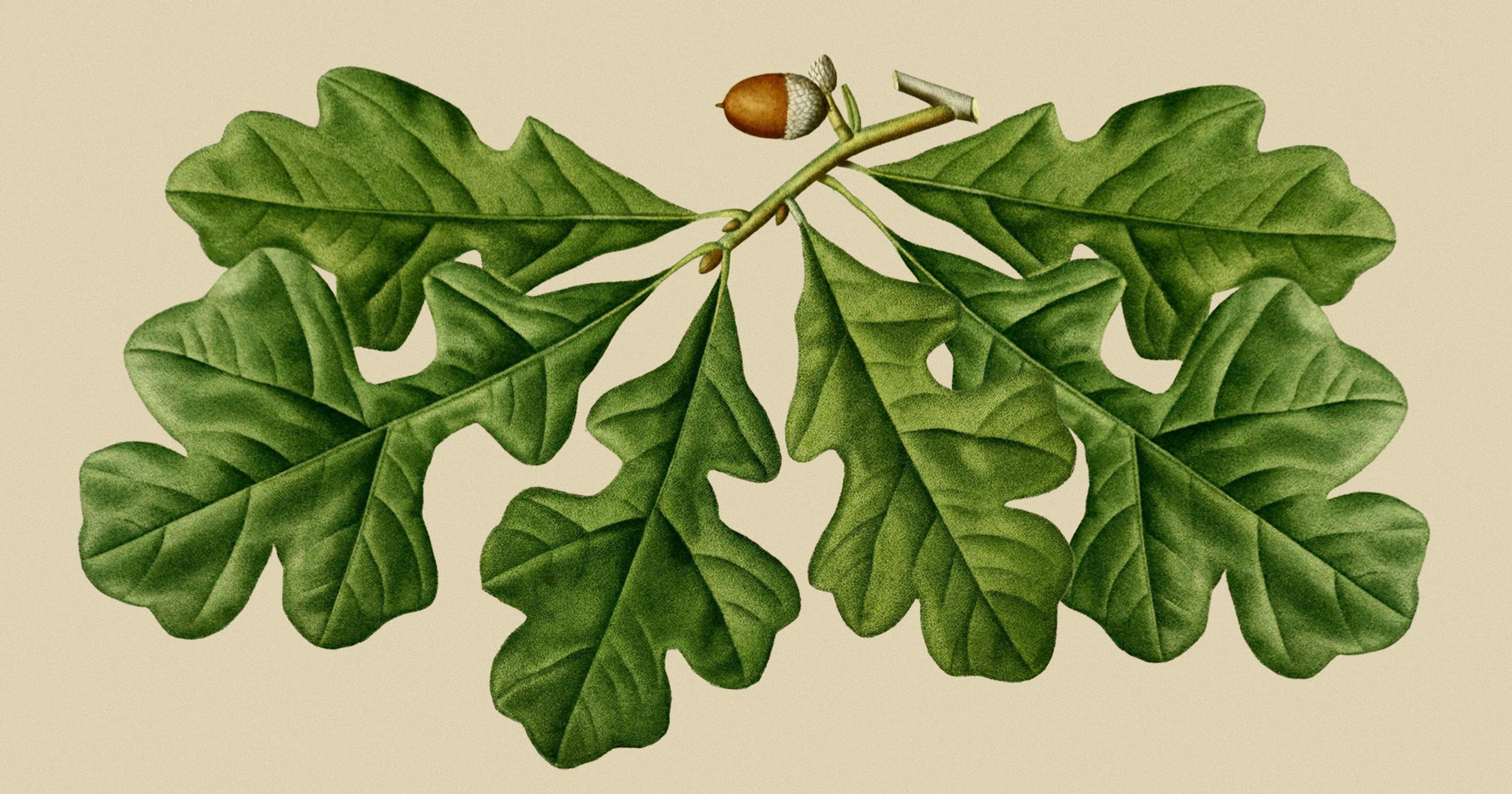
On the hottest of July afternoons, as I wrestle my lawnmower through the soup-thick humidity and Amazonian undergrowth of a North Carolina summer, I wipe the stinging, salty sweat from my eyes and imagine that I am in hell.
Ancient Greek hell, specifically — I identify with Sisyphus. The lawnmower is my boulder, and the growing grass forever keeps me from pushing it to the summit of a tidy yard.
Elspeth Hay, food writer and creator of Massachusetts public radio program The Local Food Report, believes American agriculture is trapped in a similarly Sisyphean cycle of plowing and planting annual crops. In her just-released debut book Feed Us with Trees: Nuts and the Future of Food, she suggests that a better path may lie with perennial nut trees like oaks, hazelnuts, and hickories.
The country’s reliance on industrialized monoculture field crops like corn and soy, Hay argues, has led to environmental issues such as soil erosion and an unhealthy food culture, heavy on refined grains. Through exploring the agronomy, cultural history, and nutrition of nut crops, she proposes a different story of how people can partner with plants for a world of ecological abundance and human wellness.
The book plays out like a tale of religious conversion. Hay summarizes her original faith with the phrase “No Farms, No Food,” a simple dogma that she unspools into a creed of unspoken assumptions about humanity and its relationship with the Earth. Going back to the Biblical creation narrative, in which Adam and Eve are expelled from a naturally productive garden to earn their bread by toil, Hay believes people in the West have grown alienated from their environment.
“We seemed to be the only species without a habitat; the only species without wild, abundant foods; the only species destroying our home planet and the vibrant communities of life that cover it,” she writes. According to this mythos, humans can flourish only at the expense of other creatures, by converting ever-larger portions of the world to farmland and staving off nature’s encroachment each year to plant high-performing annuals.
Hay’s road-to-Damascus moment takes place on a trip to Northern California, where she meets the Indigenous activist and cultural biologist Ron Reed. In a travelogue rich with visual detail — I particularly enjoy Hay’s fine eye for the traces humanity leaves upon landscapes, from grapevines to graffiti — the author visits the ancestral home of Reed’s Karuk people along the Klamath River.
In the valley the Karuk believe to be the center of the universe, Reed explains how his culture traditionally lived off the land, by stewarding oak forests with intentional burns to encourage the production of acorns. Their mythology treats humans not as despoilers of nature, but as vital components, carefully using fire to support habitat both for themselves and for animals like salmon, deer, and elk. Through this Indigenous example, Hay becomes obsessed with the potential of perennial nuts as a superior replacement for annual grains.
“Listening to Reed was like walking into a world I had always hoped might exist but never really believed in. I had no reference points for humans as ecologically good; I’d never heard us described this way,” Hay recalls. “In Reed’s stories, we had a habitat. We had responsibilities toward other species. And we had an environmental niche.”
“I had no reference points for humans as ecologically good; I’d never heard us described this way.”
The essential arc here, of Indigenous lifeways offering a revolutionary perspective shift for modern civilization, reminds me of David Graeber and David Wengrow’s monumental The Dawn of Everything: A New History of Humanity. That 2021 book, a New York Times bestseller, drew heavily on historical critiques by Native commenters about what they saw as the strange and harmful ways of European settlers. Hay cites the historians in her acknowledgements, and while her book is more narrowly focused than their sprawling tome, it’s no less ambitious in its aim to interrogate a founding assumption of Western culture.
Having sown this proverbial acorn of a narrative, Hay spends much of the text defending it from the obvious counterarguments while it grows into a mighty oak. She deftly addresses questions about nuts’ yield, management by fire, and culinary potential, tying each chapter of well-supported research together with a scenic vignette from her reporting trips.
As a resident of the Blue Ridge Mountains who’s previously reported on a nut collective in Asheville, I was especially taken by Hay’s descriptions of Appalachia. Through archival documents and lively interviews, she reconstructs the thriving nut-based economy that carried on in the mountains through the early 20th century, until a fungal blight wiped out the American chestnut.
That section and others emphasize how both Indigenous and historical Western cultures reliant on tree nuts have held different ideas about land, embracing ideas of the commons and shared foraging rights rather than considering every parcel its owner’s exclusive domain. In Appalachia, for example, residents had legal permission to gather nuts and feed animals in the woods beyond farmers’ fences.
It’s enough to make a man walk away from the lawnmower and plant an acorn.
“All the spending money [many mountaineers] had came from nuts they had gathered on other people’s land,” Hay writes. “This was a completely different picture than I’d understood before, a way of life based on a set of cultural agreements I’d never heard of or experienced.”
The U.S. would be better off, Feed Us with Trees claims, if it restored some of those agreements and the tree crops that go with them. Compared with annual grain fields, nut forests build soil fertility over time; they serve as habitat for many more species; and they invite more intimate connection between people and place.
And as humanity wrestles with the climate change it’s causing, argues Hay, nuts and their management offer a powerful new mythology for how to relate to the Earth. “We don’t just need to move away from No Farms, No Food; we need a story to move toward: a new collective mission, a freshly forged communal understanding of how we might do our jobs in this world where we are a keystone species,” she writes at the book’s conclusion.
It’s enough to make a man walk away from the lawnmower and plant an acorn.

For 15 years, the Ivanhoe Farmers Market has been bringing fresh produce to a neighborhood in Kansas City’s East Side, where full-service grocery stores are few and far between. Its 20-plus vendors — farms, bakeries, apothecaries, and artisans — offer healthy food and specialty products. And the market itself serves as a platform from which small-scale gardeners and purveyors like Alana Young-Henry can grow. Her Young Family Farm started as a backyard garden and has expanded to two acres since joining the market, bringing community members collard, mustard, and turnip greens. Despite its popularity, the market has only been able to operate once a month from June to September. Young-Henry says the issue is quite simple: lack of funding.
But last fall, a three-year, $165,000 grant from the United States Department of Agriculture (USDA), was set to change that. With funding from the Farmers Market Promotion Program, Ivanhoe aimed to support new growers, extend its season, and add a second day each month focused on low-income young mothers and seniors using food subsidies. For Ivanhoe, and scores of similar markets approved for funding, the program was set to be a game-changer.
That plan changed on February 14, when Young-Henry, who oversees the market as executive director of Ivanhoe Neighborhood Council, received a letter from the USDA saying the grant had been terminated because it “no longer effectuates agency priorities regarding diversity, equity, and inclusion.”
For Young-Henry, the grant cancellation rescinded what had been an important recognition of the role urban agriculture plays in sustaining her community — and the financial support to expand that role. “It means less healthy food in people’s bellies,” she said. “It means less opportunities for small backyard gardeners to establish a farm business.”
As the Trump administration’s attempt to reshape the federal budget has shaken up the USDA and the farmers who rely on its support, the sudden shift in priorities has muddied the path forward for producers in urban environments. Brian Guse, director of the Office of Urban Agriculture and Innovative Production, an arm of the USDA that has invested over $85 million in building the capacity of urban farms since it opened in 2020, retired in April “with mixed emotions.” The office pulled its latest round of grant applications this spring, and its funding for the next fiscal year remains in limbo. So, too, does the future of the urban service centers established in 2023 to connect uarban farmers with resources that have long benefited their rural counterparts.
Just as urban agriculture was beginning to attract the attention of the federal government, farmers and advocates describe having the rug pulled out from under them.
“Everybody is a little shell-shocked,” said John Bixler, executive director of Pittsburgh’s Hilltop Urban Farm, which lost about $43,000 in Climate-Smart Commodities funding it planned to use for deer fencing to protect the land where it runs a farmer incubator program.
“It means less opportunities for small backyard gardeners to establish a farm business.”
Although the Office of Urban Agriculture was authorized in the 2018 Farm Bill, much of the support offered to urban farmers has come since the 2020 pandemic disrupted supply chains and revealed cracks in the food system. Amid the crisis, the rate of food insecurity rose from 11 to 15 percent and the population seeking food assistance increased by half. In those circumstances, local producers were in high demand. At farmer’s markets, vendors offering fruit, vegetables, meat, and dairy largely saw increased sales. And at many markets, the use of SNAP benefits grew. By delivering for their communities in a moment of great need, urban farmers say they galvanized support — and, in time, garnered the backing of the federal government.
“We helped sustain our city,” said Ebony Lunsford-Evans, who operates a diversified vegetable farm and fresh-food corner store in Pittsburgh. She had a $7,000 climate-smart grant canceled that would have allowed her to install a water line for her farm. “We were a big part of our neighborhood’s eating. We were all in dire need then, and we truly stepped up. That really gave a lot of us hope and momentum.”
That momentum contributed to the Biden administration opening 17 urban service centers and 10 urban county committees, joining a roster of more than 2,300 USDA service centers nationwide. They were designed to put urban farmers in touch with the Farm Service Agency and National Resources Conservation Service (NRCS), which offer funding and technical assistance to growers establishing and expanding their operations.
“If you grow up on a farm in the country, you’re always hearing about the local NRCS office. That’s part of your life,” Bixler said. “It’s totally foreign to urban growers, and this was a first step in switching that up and making them aware of what resources might be available.”
But a pall of uncertainty and a string of cancellations, both to individual grants and programs just beginning to make a difference for urban farmers, have left many feeling spurned. “It was heartbreaking,” Lunsford-Evans said.
As farmers deal with the ramifications of lost funding, urban agriculture advocates worry that the disinvestment will have long-term consequences. Some, including Pasa Sustainable Agriculture executive director Hannah Smith-Brubaker and Hannah Quigley, policy specialist at the National Sustainable Agriculture Coalition, expect the government to pull its leases on the urban service centers. Some of the directors of those minimally staffed local offices have participated in the deferred resignation program, leaving their future murky. Meanwhile, the USDA removed from its website a call for its next round of urban agriculture grants, which help train new farmers and expand production capacity for gardens and farms that often support low-income and food-insecure communities.
“Finally, finally, finally, the USDA was paying attention to and providing resources to farmers who historically have not been served very well, if at all.”
Urban farmers have also been hampered by cuts to local food purchasing programs that helped farms sell to schools and food banks and had an outsize impact on small-scale growers who benefited from their sizable contracts. And cuts to food assistance threaten to impact urban farmers, whose community members often rely on SNAP to purchase from them.
“USDA has a solemn responsibility to be good stewards of the American people’s hard-earned taxpayer dollars and to ensure that every dollar spent goes to serve the people, not the bureaucracy,” an agency spokesperson told Offrange. “As part of this effort, Secretary [Brooke] Rollins is carefully reviewing funding, including for programs that support urban agriculture.”
For Smith-Brubaker, whose Pennsylvania-based organization helped 45 farmers in Pittsburgh and Philadelphia apply for about $100,000 in now-canceled climate-smart grants, the federal investment in urban agriculture was a recognition that the food system must include cities.
“Finally, finally, finally, the USDA was paying attention to and providing resources to farmers who historically have not been served very well, if at all,” she said. “We had such momentum going and it’s all gone now.”
The rejection of diversity, equity, and inclusion principles further complicates the present and future funding environment for urban agriculture. In many cases, grant applications that were required to consider those principles under the last administration are now being targeted for doing so. Take, for example, Rollins announcing the cancellation of a grant for an Oakland, California, nonprofit focused on establishing new farmers because it aimed “to educate queer, trans, and BIPOC urban farmers and consumers about food justice.”
“We aren’t going to be able to put our faith in the idea that the federal government is going to come save us, because that hasn’t really been true for most of us.”
“How stripped will your narrative have to be in order to be considered [moving forward]?” said Qiana Mickie, executive director of the New York City Mayor’s Office of Urban Agriculture and a member of the advisory committee for the USDA’s urban agriculture office. The impact of the shift in priorities, she said, will be disproportionately felt by urban farmers.
As the future of the USDA comes into focus, farmers and advocates say their resilience has been tested before and will serve them in this moment. For many urban farmers, even establishing land for growing can require removing thousands of pounds of rubble from a site, remediating soil, and facing an uphill battle to install basic necessities like water lines and fencing, often on shoestring budgets. The recent federal investment promised to lighten the load, but the restructuring of the USDA won’t stop progress, they say.
“Urban farmers have really been doing it without USDA’s help for decades,” Quigley said. “They won’t cease to exist. They’ll be more creative.”
Young-Henry, who is coming to terms with the lack of funding to expand the farmer’s market in Ivanhoe, said the experience has led her to redouble her commitment, she said, and she’s seen the same from other urban farmers who are putting their heads down and focusing on the mission of their work.
“That’s what will continue to give us hope,” Young-Henry said. “We aren’t going to be able to put our faith in the idea that the federal government is going to come save us, because that hasn’t really been true for most of us. And it doesn’t seem like it’s going to change anytime soon.”

If you’ve ever bought a bouquet of flowers, chances are the green fronds placed among the blooms came from Pierson, Florida. This sleepy town of 1,500, sprawled out along Highway 17 about halfway between Jacksonville and Orlando, bills itself as the “Fern Capital of the World,” and for good reason: The area around Pierson supplies 97 percent of the leatherleaf ferns in the U.S., the most popular variety for floral arrangements.
Ferns in Pierson are typically grown outdoors to take advantage of central Florida’s slightly acidic soil and warm, humid climate, but they also require artificial shade structures or large trees to protect them from the relentless sun. When Felipe Ferrão, a plant researcher at the University of Florida, first came to Pierson in 2023, he immediately thought that these shaded areas would be ideal for another kind of crop: coffee.
This year, Ferrão is planning on testing out this hypothesis by brewing his first batch of coffee from field-grown Florida beans, which he plans to harvest from a half-acre plot on a fern farm in Pierson. He hopes to demonstrate that Florida can nurture a homegrown coffee industry, providing a domestic supply of the crop at a time when climate change is devastating coffee plots in countries like Brazil and Kenya.
“We are the country that consumes the most coffee in the world,” Ferrão said. “If we think about the fact that by 2050, more than 60 percent of coffee production around the globe is going to decline, there is no way that this country won’t be affected.”
Florida is better known for its citrus industry, which once thrived in the state’s abundant sunshine but has declined by over 90 percent in the last two decades due to more extreme weather and the spread of citrus greening disease. When Ferrão started working at the University of Florida as a postdoc in 2017, his goal was to study how genomics and plant breeding could be used to develop new kinds of agricultural industries in the state, starting with blueberries. Ferrão comes from a long line of coffee farmers in Brazil, the world’s largest coffee producer, and he eventually began thinking about what it would take to grow the crop in Florida.
To find funding and institutional support for the project, Ferrão approached the University of Florida’s Tropical Research And Education Center, where since 1929 specialists have studied how to grow all kinds of tropical fruits, vegetables, and ornamental plants, from passionfruit and papayas to lychees and limes. They breed different varieties to develop ones that are most adapted to the climate and try to work out solutions for diseases and pest control issues, said Jonathan Crane, the center’s associate director.
“People have tried to grow coffee down here for many years and have not been successful,” Crane said. “They didn’t have the knowledge to grow it successfully, or they picked the wrong species or variety of coffee.”
Temperatures played a role, too. Coffee originates from the Ethiopian highlands and has been introduced to countries like Brazil, Vietnam, Costa Rica, Kenya, and Colombia, all located close to the equator between the Tropics of Cancer and Capricorn, an area known as the “coffee belt.” The climate here is mild and typically doesn’t swing into extremes, which is how coffee plants like it. Coffea arabica, the most popular variety, thrives in a temperature range between 64° and 70°F.
“People have tried to grow coffee down here for many years ... they didn’t have the knowledge to grow it successfully, or they picked the wrong species or variety of coffee.”
Though Florida is usually warm and sunny, because it lies north of the coffee belt it can occasionally experience freezing temperatures (leading to headlines about iguanas falling out of trees). When Florida growers last attempted to plant coffee in the 1940s, Crane said, it “got frozen out,” unable to tolerate temperatures in the 40s and 50s.
Florida’s changing climate, though, could mean it’s time to give coffee in the state another try. Average annual temperatures in the state have increased by 3.5° F since 1950. Although Florida still experiences winter cold snaps, the number of freezing events per year has sharply decreased, Crane said, allowing agricultural production to move northward. And it’s opening up the possibility of growing some crops, like coffee, that struggled to survive when temperatures were colder.
Ferrão is also experimenting with growing a different variety of coffee — Coffea canephora, also known as robusta — that’s more heat- and pest-resistant than the popular arabica. And aside from producing homegrown coffee, Ferrão’s research focuses on understanding the genetics of coffee plants in order to breed more resilient, flavorful, and high-yielding varieties — not just in Florida, but around the world.
“We can deliver new tools [to growers], discover new trends and answer important biological questions,” Ferrão said. “All this expertise can help breeders and other institutions to improve the sustainability of the coffee chain.”
The work in Pierson began two years ago, when Ferrão was contacted by Gineva Peterson, a Pierson resident whose family has been running a fernery there since the 1970s and who wanted to branch out into growing coffee but couldn’t afford the start-up costs. She offered her land in exchange for Ferrão’s plants and expertise, and since May of last year they’ve planted around 600 arabica and robusta seedlings, which they anticipate will produce enough beans to host a coffee tasting by the end of the year.
“The majority of people in the U.S. have not seen a coffee tree.” She thinks they’ll come to Florida “just to experience what a coffee tree looks like.”
Peterson’s eventual goal is to run a coffee shop supplied entirely by her home-grown beans. Though it would be a Florida first, coffee production has also taken root in southern California, where a cooperative of 65 small farmers called Frinj is growing on a commercial scale. Crane sees potential for family farms and small growers to similarly make a living selling specialty, “Florida coffee”-branded beans.
“It’s not like we’re going to become a major coffee production area for the world like Brazil or Vietnam,” Crane said. Instead, “there is a huge interest and potential for a niche, high-end, valuable coffee industry.”
He brought up the example of Kona coffee, which was introduced to Hawaii in 1829 and grows only on around 9,000 acres on the slopes of the Hualalai and Mauna Loa mountains. One of the most expensive coffees in the world, it averages around $20 per pound and can get up to $60 or more. Educated consumers who have developed specific tastes in coffee, Crane said, are willing to pay a premium for specialty brands; other income can come from agrotourism, where people visit coffee farms and see how it’s grown and roasted.
The coffee plants have had to adjust to Florida’s sandy soil, and those grown under shade structures needed to be protected from freezing. Eventually, Peterson hopes to transition away from shade structures entirely and instead plant coffee underneath groves of oak trees in an arrangement known as a “hammock,” which also naturally keeps them warm in the winter. Insurers have stopped covering shade structures in the last few years, Peterson said, claiming they were too vulnerable to destruction from hurricanes.
Though Peterson doesn’t see coffee replacing ferns entirely, she believes the additional crop can help diversify the agricultural industry in central Florida. She anticipates she’ll have enough beans to open her coffee shop within one to two years. And once she and the University of Florida researchers have finalized their coffee-growing technique, other growers in Florida can participate, too.
“The majority of people in the U.S. have not seen a coffee tree,” Peterson said. She thinks they’ll come to Florida “just to experience what a coffee tree looks like.”

Subscribe on your favorite podcast app: Spotify, Apple Podcasts, Overcast, Pocket Casts, Amazon, or via our RSS feed: (https://feeds.megaphone.fm/onlythingthatlasts).
INTRODUCTION - The Environmental Trolley Problem / Conserving Land, But for Whom?
SM: You’ve probably heard one of the many versions of the Trolley Problem. My favorite goes like this: There is an uncontrolled trolley barreling down the tracks. Five people are in its path. You have the ability to flip a switch and divert the trolley onto an adjacent track where it will hit only one person. So do you flip the switch, or do you do nothing?
If you feel like there’s a straightforward answer to this question– you might want to share your logic with the environmental movement, because a question with very similar contours has been plaguing them for the better part of a century. The environmentalist version, of course, doesn’t involve an actual trolley, but it hinges on a similar set of questions– about the pre-existing nature of things, when, or whether, we have a responsibility to act, and if we do, whether our aim should be to minimize harm or to allow “nature to take its course” without interference.
Differing opinions here have led to one of the most enduring schisms in the environmental movement, the one between conservationists who believe that land, forests, soil, and water should be protected through careful management, and preservationists, who believe that America’s pristine wildernesses should never be managed, or even touched, by humans at all– and should be left forever wild. So whether to protect land for use or from it– this is environmentalism’s hypothetical trolley switch. And this ideological divergence is at the heart of many of the most heated disputes between environmentalists and farmers.
[MUSICAL INTERLUDE]
In the first part of this episode, which you’ll find earlier in our feed, we took a closer look at how American farmland has been fundamentally transformed by and for agriculture, and the lasting impacts those actions have on farmers, communities, and ecosystems.
Today, in Part Two, we’re taking a look at our still-evolving ideas about the opposite– conservation, preservation, and even regeneration. We’ll be complicating the idea that “farmers are the original environmentalists,” and that environmental protection is an unmitigated good.
We’ll also look ahead to the role farmland may be able to play in sequestering carbon and averting climate disaster in the future.
This is The Only Thing That Lasts. I’m Sarah Mock.
[MUSICAL INTERLUDE]
At the beginning of Part I, I spoke with the environmental historian Paul Sutter, about Providence Canyon, a state park in Georgia that’s home to Grand Canyon-like cliffs, which were caused, in part at least, by overzealous farming on fragile and misunderstood land in the 19th century. As you’ll recall– Providence Canyon is a gigantic erosion gully, the result of countless gallons of water falling onto unstable soil, and then carrying the dirt away downstream, gouging out cavities in the land hundreds of feet deep. The impact that these gullies had on farmland, farmers, and their communities were severe, and in the end tens of thousands of acres of deeply gullied land had to be abandoned.
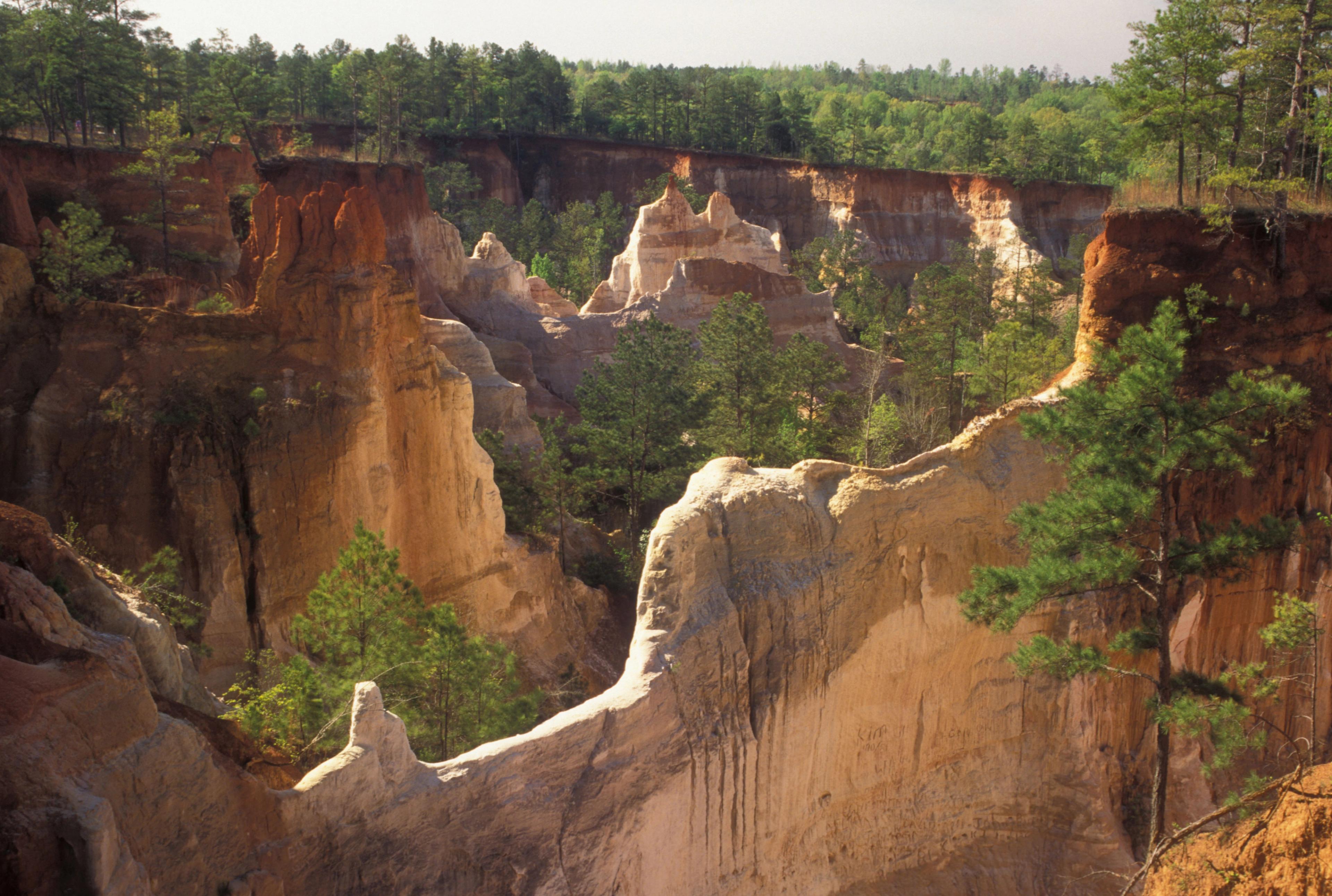
Providence Canyon
But I’m going to bring Paul back now, because there is an epilogue to the Providence Canyon story that we haven’t talked about yet, one which takes place in the 1960s, decades after the canyon was formed, and provides a very real example of the land stewardship trolley problem.
But this afterward doesn’t start amongst the farmland and gullies of the Georgia Piedmont, it begins downstream, in a wild, riverine area East of Atlanta–
Paul Sutter: This place called the Alcovy River Swamps that were seen as swamplands, wetlands in the new parlance, in need of protection. And the Soil Conservation Service, ironically, it’s the Soil Conservation Service, wanted to go into the Alcove River and straighten it out and drain it and have more of the land open to agriculture.
SM: This proposed project marked the beginning of a fierce debate about the destiny of the Alcovy Swamps. To drain or to preserve, that was the question.
This issue arose around the same time that Rachel Carson’s book Silent Spring was published, in which she warned, for one, that if the widespread and indiscriminate use of pesticides like DDT continued, the indirect effect on bird populations would be devastating. Hence the book’s ominous title–future Springs without songbirds. Silent Spring sparked a national environmental awakening, one that raised the stakes of draining the Alcovy swamps from what was previously a simple land improvement project into a full blown controversy.
On the one side of the issue were these newly empowered preservationists, who were anxious to protect the Alcovy wetlands in all their natural, soggy glory, and so protect the ecosystem and habitats that the swamp represents for wildlife. On the other side were those who identified as conservationists, people who supported channelizing the river and removing the swamp, in particular to make it more amenable to landowners and farmers.
It’s worth reckoning with the fact that these swamp-drainers weren’t necessarily money-hungry capitalists or careless polluters– on the contrary, they also thought of themselves as environmentalists. But from their perspective, using and managing land is an element of environmental protection. This is a core disagreement between preservationists and conservationists, even today– what one group calls preservation the other calls abandonment. What one group calls management the other calls extraction and abuse.
Depending on which of these two groups makes you feel more at home, maybe the right thing to do here– the solution to this trolley problem, seems straightforward to you. Either believe that the needs of humans and wildlife can both be advanced through active human interference and management, or you believe, as many researchers and activists did at the time, that these swamps represent pristine wilderness, have inherent environmental value, and therefore must be preserved undisturbed.
But let me complicate the story a little further. What if I told you that these swamps were not as “natural” as they first appeared.
Paul Sutter: Almost certainly there were swamps there in the mid-20th Century because all that soil that had been washed off the Piedmont had to go somewhere, and it went down into the bottoms of these river valleys and created swampy conditions.
SM: That’s right. The Alcovy swamps were not naturally occurring. They were formed by the same massive agricultural erosion that created the likes of Providence Canyon. Now does the answer seem so obvious? In other words, is the right thing to do to preserve the swamps as they are now, because over the years they’ve become home to wildlife, provided recreational value, and are now lending valuable ecosystem services? Or is the right thing actually to drain the swamps and restore the pre-man made-erosion ecosystem?
The end of this story is already written– and the final result was a mixed bag. Part of the swamp complex, called Cornish Creek, was channelized, and other parts were protected as part of the Alcovy conservation area. But for Paul, exploring these exact kinds of dilemmas has been one of the big, and relatively recent, leaps forward in the study of environmental history.
Paul Sutter: Environmental historians go into places that appear to be pristine and natural and show us all of the ways in which those places were materially and culturally constructed. Wilderness areas, national parks, and a lot of the effort of environmental historians was to show us that these places had all kinds of histories that we had to recognize. And that in some ways the acts of preserving these landscapes erased. Those histories, not the least of them being Indigenous histories. So a lot of the work environmental historians were doing was troubling these ideas of pure nature.
[MUSICAL INTERLUDE]
SM: It seems to me that having access to all the information about the true nature of a place– including its full history– human and otherwise– is critical to ethically deciding whether to flip the hypothetical trolley switch, or to do nothing. And one of the most important lessons of both Providence Canyon and the Alcovy Swamps is that separating human influence from “pure nature” is often nearly impossible.
But then what does that mean from preservationists, whose goal is to protect wildspaces by preserving their original states? What if we don’t know the original state of a place? Or what if that original state has been altered fundamentally by human action? How far back in history must we look to find that true original state? How do we know when to stop looking back?
I’ve asked myself a lot of questions like this while working on this story, and I’ve landed on few satisfying answers. The good news, then, is that I’m not the one answering most of these questions– after all, I make podcasts, not environmental policy.
To me though, that’s the most fascinating thing about this environmental trolley problem.
That, unlike the original thought experiment, questions of environmental policy are not hypothetical– they get decided all the time, by local officials and legislatures, by courts and federal agencies. Maybe then the better question for us to ask– rather than whether we should flip the switch or not– is whose hand is actually on the switch? What is it they’re trying to either conserve or preserve, and who are they saving it for?
That question has been a central one for Levi Van Sant, a researcher at George Mason University, who’s focused, among other things, on the intersection of conservation and farmland consolidation.
By happenstance, he grew up in central Georgia, within an hour of Providence Canyon, and spent years working on farms after college. He dreamed for a while about starting his own farm, but found that it was nearly impossible to go from being a farm laborer to a farm owner– especially without significant startup capital. As he learned how common a challenge this is, he returned to university, eager to study the cause of land access issues informed by his own direct experiences.
Levi Van Sant: The long and short of it is if you want to be in the local, sustainable, organic market, then you oftentimes need to be relatively close to a city because that’s where most of your market is a lot of the times. And that means the land cost is significant, so that’s one of the things that was motivating my research.
SM: For most anyone in agriculture, the fact that many young and beginning farmers find it nearly impossible to buy, and sometimes even rent, farmland is well-known. The farmland access challenge is complex, but one of the key contributors is another common issue– farmland consolidation. Consolidation in agriculture was most famously pushed by Richard Nixon’s Secretary of Agriculture, Earl Butz, who proclaimed that farmers should “get big or get out,” and since then farmland consolidation has continued steadily,leading to fewer and fewer people holding a larger and larger share of total U.S. farmland.
It’s easy to point to mega-buyers like Bill Gates as prime culprits, but according to Levi’s research, the problem is more insidious than that, leading to radical inequalities on a much more local level. For example, in some of the Virginia counties that Levi studies, the top 1% of landowners own between 25 and 45% of all land in the county, while the vast majority of other rural residents own tiny tracts or, more likely, renting.
But what do questions of farmland access and consolidation have to do with the people that make decisions about conservation or preservation? It’s a question of following the money. Throughout the U.S., money and environmental policy converge in one particular place– a conservation tool known as a conservation easement.
A conservation easement is a voluntary legal agreement usually between a landowner and a non-profit or a land trust. Under a conservation easement, the private landowner agrees to forego some property rights, to receive a tax or other benefit. And the non-profit is responsible for making sure the landowner sticks to the agreement. Communities, states, and even the federal government justify this tax discount, ostensibly because conserving open space provides a public good– and so owners pay fewer taxes in exchange for this public benefit.
There are many different kinds of conservation easements– ones for historical preservation, ecological benefits, and even ones that support the continuity of production agriculture. These last two types have become especially popular in areas with strong development pressure, like directly around cities. That matters because that land is also highly desirable for young and beginning farmers.
And that’s the thing, because depending on which type of easement is instituted, conservation easements can be a way that farmland, or potential farmland, gets tied up and removed from the market, limiting supply and therefore access.
Levi Van Sant: I got interested in the tendency for conservation easements to be used by large landowners, to maintain their large land holdings as a tax write-off. And there are lots of examples of how this works.
SM: The mechanism here is pretty simple, but packs a big financial punch. See, property taxes can be a key barrier to maintaining large landholdings. For free market heads out there– this is a good thing. If landowners aren’t making enough money on their land to afford the taxes on it, then they’ll be motivated to sell. And farmland should become more available, which might even eventually push the price down. But– conservation easements, whether they allow ag production or not, release current landowners from this bind by cutting their tax bill.
An easement can be created for any number of acres, and are generally negotiated privately, each one custom tailored to the landowner’s desires. This means that a landowner can create an easement that maximizes their benefit, helps them hold on to as many acres as possible, and maybe even set them up, financially, for expansion.
Levi Van Sant: Basically, the more money that you have, the bigger of a benefit you get from getting a conservation easement. In terms of tax benefits, they are regressive. By design, not to mention the fact that you have to be a landowner to even get one, right? So immediately you’re taking out a huge portion of the population that has least access to land.
SM: In the case of conservation easements, this is the end of the money trail, and the answer to our question about who decides environmental policy on farmland, and for whose benefit. It’s the wealthiest landowners who are in the driver’s seat when it comes to conservation easements, the same group who already have the most access to farmland, and who derive the most direct benefit from the land itself- whether by working it or enjoying it.
The impact on local communities around conservation easements goes beyond the financial.
There are good questions to be asked about what benefit an “open space” provides when nearby residents aren’t allowed to access it because it’s private land. It’s nice to see woods and fields from the road I guess, and there is some amount of clean air and water benefit that might not otherwise be present, but the terrible paradox that many landless rural communities live in is to be surrounded by farm- and wildlands that they’re forbidden to physically enjoy, even though they help pay for them through tax credits.
The fact the easements first and foremost deliver benefit to landowners is essential to their voluntary function– but it also makes them an imperfect tool if the goal is to protect ecosystems and open space, ostensibly for the benefit of the public. And questions about the public benefit of conservation easements are increasingly being raised.
Levi Van Sant: Republican lawmakers in South Carolina were the ones who challenged the sort of conventions around conservation easements and said, ‘Hey, if we’re funding conservation, my constituents want to be able to deer hunt there. Right? If we’re funding the protection of lands, why can’t we provide public access?’
SM: There is a lot of interesting work being done to make conservation easements more beneficial to the public. Because conservation easements tend to be highly customizable to a landowners needs, it may be possible, given the right landowner and situation, to make them less regressive, more accessible to the local community, and a better tool for achieving conservation goals. Though this is not a comprehensive solution, it could be a step in the right direction.
But Levi is thinking even more expansively about how policies and tools that go beyond easements might help not only preserve wildlands, but also relieve the farmland access issue as well.
Levi Van Sant: We do have federal public land for ranching and forestry, right? We have BLM land. We have national forest land. We don’t have any federal public land for farming. That’s a strange thing to me. That is a different path to preserving agriculture than conservation easements, that would provide a lot of access to farmland for a lot of people. It’s possible anyway that this could be done. There’s no reason why we couldn’t have public farmland.
SM: While publicly owned farmland might not be in the cards in the near future, it’s promising to see creative solutions being imagined that might allow more young and beginning farmers access to farmland, and that might help all Americans gain access to more spaces, agricultural or wild, that are protected in their name, for their benefit, and most importantly, with their tax dollars.
And when it comes to the question of who benefits from conservation or preservation, how it is done, and who, in the end, gets to decide, the idea of public ownership of farmland would change that equation as well. Rather than leaving the question of how land is managed or preserved exclusively in the hands of a shrinking pool of top farmland owners, public ownership could democratize decision-making around farmland stewardship, putting more hands on the switch while clearing more people off the tracks.
[MUSICAL INTERLUDE]
The question of how to balance human needs with those of the ecosystems around us will likely continue to be a key source of friction between conservationists and preservationists.
But in recent years, a new solution has emerged, one that promises not a trolley problem, but a win-win for both humans and the environment. Does the idea of regenerative agriculture stop the farmland-wildland tradeoff trolley in its tracks?
That’s after the break.
[BREAK]
Intro: This podcast is made possible by Ambrook. Ambrook builds financial management software for farms, ranches, and businesses across the American supply chain. It’s an all-in-one platform that simplifies accounting, record-keeping, and payments workflows while empowering operators with visibility into the health of their business. Here’s Alex, a Product Operations Specialist at Ambrook, on helping customers find success:
[AD]
Outro: That was Alex, a team member at Ambrook and an operator herself, on how Ambrook supports customers. Tune in to the rest of the season to hear from other members of the Ambrook team on why they chose to join and what motivates them to build the financial layer powering American industry.
Now, back to the show.
[END BREAK]
Part 4: Filling in the Gullies
SM: I think it’s safe to say that regeneration is the Next Big Thing, not just in agriculture, but across the land management world. After all, what’s the point of flipping the switch between conserving or preserving a deeply damaged landscape. The wounds must first be healed.
And there is no shortage of wounds for agriculture or environmentalists to take on either. From soils depleted by hundreds of years of extractive cropping, to the wind scoured landscapes still recovering from the dust bowl, to fields ravaged by overzealous chemical applications or pastures turned to sacrifice zones through animal overpopulation. America is littered with current and former farmland that’s experienced substantial damage.
Agriculture is, of course, not the only culprit– logging, mining, development in general, and countless other industry have contributed to the harm. But no industry has had a larger footprint over the course of this nation’s history than farming, and few other industries have caused such a wide mix of problems.
So what’s this solution? I’d argue that there is no reliable or widely agreed on definition of regenerative agriculture, but I think it’s safe to say that, at least philosophically, the goal is regeneration– agricultural practices that enrich a landscape, making it healthier, more vibrant, and more complete. There is a huge range of practices and tools that are considered regenerative, depending on who you are, but for our purposes, I wanted to know what kind of regeneration might be possible on a landscape like the one that has been at the center of this two part episode.
My question was simple– does the regen ag world have an answer for repairing the dreaded gully?
A.T. Cole and his wife Lucinda do not live in Georgia, nor have they set their sites on repairing the hundred foot gorges of Providence Canyon. But they have been working diligently for the last 20 years to repair their slice of another deeply gullied landscape– the one that cuts through their Pitchfork Ranch in Southwestern New Mexico.
When the Coles got started, they had no experience with ranching, and just a little experience with restoration work. Otherwise, they’ll tell you that they didn’t really know what they were doing. At the time, they’d never heard the term cienega– which describes a body of water that would come to dominate two decades of their life.
A.T. Cole: A cienega is shallow, slow moving water, and they would run from the boundary of a mountain on one side to the other side. So they were huge. They were wide and shallow. There’s an old adage, you didn’t know you were in a cienega until you got your feet wet because they were so shallow.
SM: When the Coles arrived on the Pitchfork Ranch, however, the cienega was not shallow at all.
Overgrazing, the elimination of fire on the landscape, and many other factors had left the cienega incised or gullied, and rather than a wide body of shallow water that sprawls and supports a large habitat, the cienega had become a narrow, fast-moving creek, eight or 10 feet deep in places, which whisked away more and more precious water, nutrients, and soil every season.
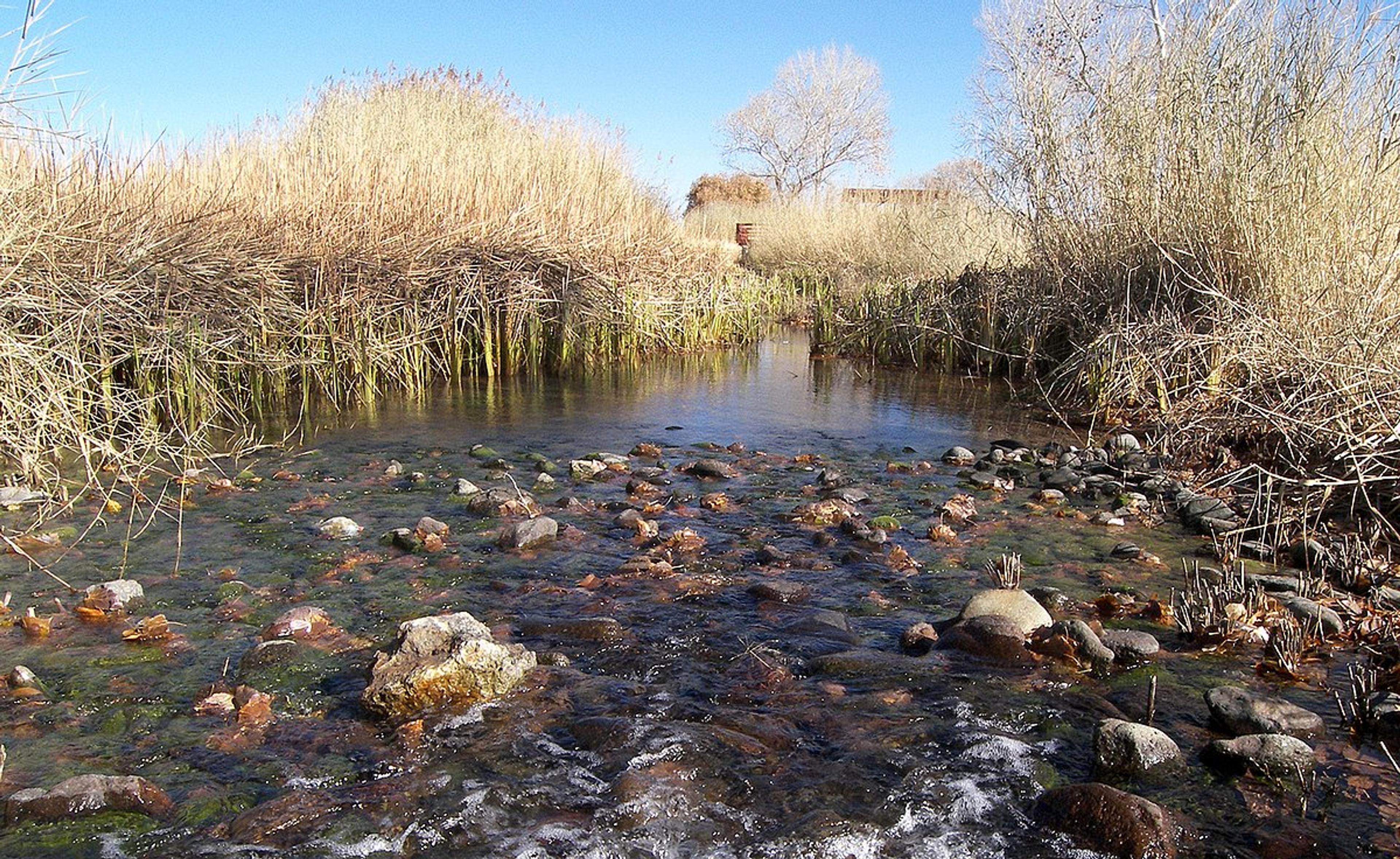
Cienegas at Pitchfork Ranch
Learning about this history, the Cole’s set out to restore the cienega. The first step was figuring out how to slow the water down. Their solution involved creating more than 250 earthen grade control structures, like weirs, all along the streambed. When the water hits these structures– it slows down, and both sediment and seeds sink to the bottom. This simultaneously starts to fill in the gully with soil, and plants the seeds, creating a virtuous cycle, as more plants slows the water even more, which means more sediment, more plants, and a shallower and shallower stream.
Building grade structures is one of the most straightforward and affordable ways to undo a gully. With enough obstacles in its path water will slowly do the work of building up its own creek bed, repairing the channel it gouged out and in the process, stretching life-giving moisture across the desert. Between two and five feet of gully has been filled in on the Pitchfork so far, and the Cole’s have done this work with a combination handmade, machined, and even natural structures. A single boulder, for example, has captured 1,037 tons of sediment over the last 20 years.
A.T. Cole: I think the Apache term for this country translated to horizontal yellow. And that’s because it was predominantly yellow grassland and it wasn’t incised like it is now. And so it was much more horizontal. And so horizontal yellow is what we’re going toward. And we think of it in terms of shallowing the landscape.
SM: Both gullies, and the artificial gully we discussed in part one– field tile are strategies for deepening the landscape, for moving land to change the way that water flows in the hopes of making it better for farming. The problem of course, in both cases, is that water that’s flowing over land is never just water. It carries soil and nutrients away with it. The Cole’s efforts on the Pitchfork Ranch are aimed at turning this interaction on its head. They want to hold every drop of water they possibly can in the land for as long as they can, and in doing so, helping the land reabsorb all the moisture, nutrients, and life that the water holds.
A.T. takes comfort in the fact that the work that he and Lucinda are doing on the ranch is not only increasing the local land’s resiliency in the face of climate issues, it’s also contributing, at least in a small way, to climate mitigation. After all, research has shown that wetlands, including cienegas, tend to be dense carbon sinks in the landscapes, capable of storing fifty times more carbon than, say, farm fields or even grasslands or forest.
They also provide important cool spaces in hot regions, and provide critical environments for many vulnerable species. And the Coles see the outcomes of this work all the time, with their own eyes.
A.T. Cole: It’s almost a false appearance sometimes. Sometimes it looks like Eden. This is the Sonoran Desert. But there are parts of it that look like Virginia in the spring. we’ve videoed a herd of 50 deer on this ranch, 50. It was huge. And, the elk have arrived. We didn’t have elk here when we first came here. Just yesterday we saw Four Fox in front of the headquarters here. And we’ve had a coati, a troop of kudamundi.
SM: In case you, like me, are not familiar with Southwestern mammals, a kudamundi or a coati is also called the mexican raccoon, though they have slimmer bodies and longer tails and snouts than their raccoon cousins. These critters are rare in the U.S., and they’re pretty severely threatened by habitat loss, especially related to urbanization, deforestation, and agriculture.
[MUSICAL INTERLUDE]
SM: I think it’s safe to say that the work being done on the Pitchfork Ranch is, in the truest sense, regenerating the ecosystem that once occupied its landscape. But the sharp-eared listener might have noticed that, though the Coles may be realizing the promise of restoration efforts, we haven’t talked about the “agriculture” half of the “regenerative agriculture” equation here.
Today, A.T. does raise cattle on the Pitchfork Ranch, but he has mixed feelings about it. Throughout his decades of doing restoration work, he’s not seen evidence that cattle are good collaborators in regeneration efforts, though he does think they have some kind of place on the landscape.
A.T. Cole: So our cattle are not here as a restoration tool. Our cattle are here because we want to have the agricultural tax benefit. And you’ve probably heard the term that the tax benefit is substantial. Well, I had no idea, but substantial means over 400 times. It’s shocking, but what’s going to happen to this land? You can build houses, you could have McMansions here, you could have subdivisions here, but what else can you do on this habitat? I can tell you that my spouse doesn’t agree with that. She thinks that there shouldn’t be any cows out here. And there are lots of people who think there shouldn’t be any cows, period.
[MUSICAL INTERLUDE]
SM: The Coles’ experience on the Pitchfork is just a single anecdote, and many others, across the U.S. and around the world, have presented evidence that appropriate grazing and cropping can help make nearby human and wild ecosystems more healthy and stable.
But when it comes to answering our question, about the role of regenerative agriculture in repairing gullied landscapes, I think the Coles’ experience is particularly apt. After all, the southwestern U.S. may well be a more severely gullied landscape than the Georgia Piedmont, and unlike in the Southeast; overgrazing cattle, overharvesting timber, and generally overtaxing the land has unquestionably led to the Southwest’s current state.
To me, the answer is clear– the Cole’s success thus far wasn’t won by bringing more cattle into their cienega, a place where cattle will tend to loaf, wallow, and generally cause more pollution and destruction. Instead these victories were won by intervening in a way that accentuated natural processes, which in turn attracted wild animals to participate in the work of restoration, rather than familiar barnyard critters. I think the experience on the Pitchfork suggests that activities that truly restore or regenerate are often separate from, or even opposite to, agriculture.
And there’s something sensible about that conclusion– after all, agriculture is inherently extractive. Our food, fiber, and fuel are taken from one set of landscapes to be consumed elsewhere. It is very hard to regenerate a landscape when you are systematically removing some of its constituents, often replacing them with new inputs extracted from some other landscape somewhere else. Nothing comes from nothing, not even when you’re doing regenerative agriculture.
In other words, it seems to me that regen ag is really to be just another type of conservationism, dressed up in a sort of hyper-preservationist costume. Perhaps the lesson here is that, if a solution seems too easy and too perfect, it just might be.
CONCLUSION
SM: If regenerative agriculture is just another flavor of conservationism, then we’re back at square one, trying to decide whether we should conserve the landscapes around us for our use, or whether our obligation is to protect wilderness from the most destructive species on earth, humans.
Given the current political environment, conservationists currently have the upper hand, though in truth both sides of the environmental world are being excluded as questions about environmental protection and resource conservation take a backseat to economic and political expediency.
Pressures are extreme today, but not necessarily unprecedented, as many national environmental organizations have, in recent decades, already tilted their priorities away from their most radical preservation goals and towards those that are more palatable to farmers, business, and wealthy funders writ large.
This is likely why preserving farmland and protecting ecosystems are often blended together in environmental messaging as if they are a single activity. Perhaps the intent of creating the false equivalency is to indicate that farmland is better for wild plants and animals than, say, a housing development. But given everything we’ve learned across these last two episodes, about the destructive and partially agrarian forces that shaped Providence Canyon, about the correlation between Iowa ag and the state’s environmental and public health crisis, about the unintended consequences of conservation easements, and even the unhelpfulness of cattle on the Pitchfork, I think the assumption that farmland is automatically better for wildland seems questionable at best.
But of course, advocating for less farmland– or even better managed farmland, is not without consequences. More management is more expensive– it could raise food prices, an injustice to the poor. On the other hand, less farmland overall might make the farmland that’s left even more expensive and inaccessible– even further out of reach for young and beginning farmers. So then is it better to commit to higher levels of environmental mismanagement in order to have more affordable food, or to further expand agriculture’s footprint in order to ease access, even if doing so might cause more environmental problems and public cost? Which is right? Which is wrong? I genuinely don’t know.
The reality is, there are no easy answers– on farmland or in environmental policy. Every action has an equal and opposite reaction. For every good deed, a punishment. It’s trade-offs– all the way down.
[MUSICAL INTERLUDE]
There are just a couple of episodes left in this series, but one of the most crucial topics to discuss is still ahead of us. In the last 40 years, or so, the fundamental transformation that farmland has undergone, was not primarily ecological or practical, not political or cultural.
No, I’d argue that the biggest thing that’s happened to farmland in the last half century is the land’s transition from the home place to a home run financial asset. Something more valuable than gold.
Howard Halderman: the blue chip nature of it is, it provides that consistent annual cash return, and historically speaking, a 4 5 percent appreciation. So the Corn Belt is going to generate a 2 to 3 percent return today cash yield and a 4 or 5 appreciation. It’s an all in 6, 7, 8 percent returning asset and it’s like widgets coming out of a factory in that regard.
SM: How farmland became a more reliable investment than Wall Street, and how your retirement accounts farms its value— but actually, next time, on The Only Thing That Lasts.
SIGN OFF
SM: Before we sign off, I talked through information from a number of sources and experts today, so if you want to dig into it yourself, check out the shownotes, or our website for links.
While you’re there, make sure you head over to ambrook.com SLASH offrange to stay up on the latest reporting from the Offrange team on agriculture, land, and environmental issues like the ones we talk about here on the show. After you subscribe to the podcast, don’t forget to sign up for the newsletter, and follow Offrange on socials for news about upcoming projects and stories. And we can’t wait to hear what you think! If you like what we’re doing, let us know, and don’t forget to share.
The Only Thing That Lasts is now an Offrange production. This podcast is written, produced, and mixed by me, Sarah Mock. Our editor is Jesse Hirsch, with support by Ali Aas and Bijan Stephen. Technical support by Dan Schlosser, and general support by Mackenzie Burnett and the whole team at Ambrook.
A final note, Ambrook Research, the media outlet that produced this podcast, is 100% editorially independent from Ambrook, the fintech company that funds it.

Mistakes were made. To that, everyone can agree.
In 2019, Steamboat Springs, Colorado, became host to the region’s first ever Steamboat Gravel (SBT GRVL), a gravel cycling race that involved 2,000 participants hitting the rural, dirt, and gravel roadways of Routt County in distances that can top 100 miles. While the cyclists enjoyed the event, local ranchers experienced what they say was a long list of difficulties.
It was the county fair weekend, for starters, and many ranchers struggled to get out of their driveways to participate in events. It was also haying season, when ranchers can’t afford to lose time on the surrounding county roads. There were complaints about strewn trash, cyclists using ranchland as bathrooms, and overall rude behavior from the participants. And then there were the spooked cattle, startled by large packs of cyclists whizzing by at high speeds. “Ours got to running, hit the fence and broke through,” said Trenia Sanford, owner of the v\Ranch-Semotan Ranch. “It took us more than two-and-a-half hours to get them back. Once they learned how to escape, they kept doing it.”
Mistakes were made. But in the ensuing years, the two disparate communities of cycling and ranching have worked together to hopefully find a peaceful co-existence. This year’s late June event will serve as a proving ground.
Working Toward a Solution
Gravel cycling — something of a hybrid between traditional road biking and mountain biking — is the second-fastest growing category of the sport, behind e-bikes. Cyclists are drawn to the opportunity to ride at high speed on quiet, bucolic roadways, far away from busy traffic full of distracted drivers. And, as the sport explodes, so too have events around the country. Colorado, with its beautiful vistas and plentiful dirt/gravel roadways, is a natural spot for race organizers to target. Cyclists have shown their willingness to travel from all areas of the country for a chance to ride there. They bring with them plenty of tourism dollars for local hotels, restaurants, and more, which surely does hold appeal, especially in town proper.
But there are limits, say the ranchers, and questions of who exactly benefits from the influx of dollars — not to mention the need to avoid overtourism and protect the agricultural heritage of Routt County. “There’s a reason everyone wants to experience the area,” said Nancy Mucklow, who along with husband CJ has leased land for their alfalfa, hay, grass, and cattle farming for decades. “It’s pristine and uncrowded. But we have a master plan that prioritizes agriculture over tourism, so we’re not set up for large crowds of people.”
Following the first year of SBT GRVL, the ranchers compared notes and took their case to the county commissioners. Amy Charity, founding partner and CEO of SBT GRVL, was all ears, and created a second listening session a few months later. “The primary issues were the fact that the date of the race coincided with the Routt County Fair, there was two-way cycling traffic on the roads, which caused delays, and that not all rural residents knew the dates and timing of the event,” she said.
“We have a master plan that prioritizes agriculture over tourism, so we’re not set up for large crowds of people.”
Each year, Charity and her organization have worked to improve the situation, even as it expanded over the past few years. In 2024, the key changes included moving courses to a more remote location in the county; eliminating two-way cycling traffic; altering the timing and course routes to avoid commuting delays; increasing sheriff and police presence, medical support and traffic control; adding a command center; attempting to visit every on-course residence to communicate event day impacts; increasing on-course signage; and educating participants on the local rules of the road and stewardship.
Going into this year’s SBT GRVL all those changes will continue, in addition to others. “We’re moving the date away from haying season and the county fair,” said Charity. The organizers have also split the event into two different days, the first featuring a leisurely “ride” and not a race, and the second serving as a circuit race that begins and ends in Hayden, a small town about 20 miles outside of Steamboat. The total number of cyclists will top out at 2,500, down from last year’s 3,000.
Amber Pougiales, executive director of the local Community Agricultural Alliance, says that the ranching community is optimistic. “The race director has done a lot to mitigate the various issues, and moving the date will be huge for the ag community,” she said.
For her part, Pougiales sees great need for cohesion. “The sport wouldn’t exist without the rural communities, and I think the ag community can gain from the relationship, too,” she explained. “An event like this is an opportunity to create respect and appreciation for the rural landscape and the work that goes on there.”
A Roadmap
Ranchers are no strangers to conflict, whether with the federal government, housing developers, or even allowing land access to hunters. In most cases, they’ve had to work with the other party to achieve a peaceful solution.
As SBT GRVL and Routt County work out the kinks, they may take a page from Gunnison County, its distant neighbor to the south. Home to the towns of Crested Butte and Gunnison, each with long histories of mountain biking and, lately, gravel cycling, there’s an established blueprint for ranching/cycling cohesion. “We’ve worked hard with the ranching community to develop good lines of communication,” said Tim Kugler, executive director of Gunnison Trails, a non-profit trail advocacy organization. “When we started Gunnison Trails, we were forward thinking and quick to offer help and let the ranchers know we didn’t want to mess with their operations.”
To that end, Gunnison Trails has educated cyclists about keeping gates closed when they encounter them, added cattle guards in appropriate places, and has chosen not to introduce new mountain bike races out of respect for rancher concern (the county will continue hosting its gravel race).
“The overall sentiment I hear is that we are on the brink of over loving the valley, and we should be mindful of the consequences of hosting large events.”
With the emergence of gravel cycling, the organization has ensured that cyclists wait until the local roads are dry and ridable in the spring before they take to their two-wheeled steeds. The town’s Gunni Grinder gravel race is now entering its fourth year, features three race distances up to 120 miles, and remains smaller than its Steamboat counterpart. “The gravel scene is young here, and as it stands, we don’t have any issues,” said Kugler. “We are sensitive to anything that can grow quickly and keep good communications open.”
Rancher Hannah Cranor-Kersting, director of Gunnison County’s extension office, pointed out that organized recreation like gravel races is relatively new when compared to agriculture. “Obviously there can be conflict, and issues will pop up,” she said. “But we’ve been able to work together so that both sides can be happy with the outcomes.”
Ultimately, each community is unique and will respond to its issues differently, whether from the ranching side or the cycling side. The 2025 race weekend in Steamboat Springs took place in late June, and Mucklow hasn’t heard much negative feedback. Steamboat Gravel’s 2026 permit request will go in front of the county commissioners for approval in late July, which will make or break its future.
Mucklow had this to say: “The overall sentiment I hear is that we are on the brink of over-loving the valley, and we should be mindful of the consequences of hosting large events in a valley that isn’t set up for hosting large numbers.”

Conversations about agricultural emissions often center on livestock or fertilizer. Transport is a quieter, but crucial contributor. From farm to grocery store to kitchen cupboard, there’s a sprawling network of trucks, trains, and ships working to bring your groceries to you. About 30% of the world’s GHG emissions come from land-based transport, predominantly of cargo. But, as it stands, very little of that transport is powered by electricity.
“You can’t wake up a person who is pretending to be sleeping.” said Rish Ghatikar.
The words by Ghatikar, who is a researcher and advisor to the transportation and energy industries, are momentarily puzzling — what does pretend-sleeping have to do with electric trucks? Ghatikar is a visiting professor at the University of Southern Denmark, an Open Charging Alliance Ambassador, and he consults for EV startups; he’s considered a global authority on electrifying the trucking industry.
Ghatikar uses sleeping as a metaphor to describe prevailing attitudes towards the health and environmental consequences of a fossil-fuel dominated transport industry. By pretending to sleep, he outlines how policy and industry may appear to sideline these consequences, and even miss out on economic opportunities.
In the United States, almost all food transport happens by truck; transportation accounts for one fifth of the carbon emissions of food production and consumption. Researchers are still trying to estimate the global health impact of these tailpipe emissions, but it’s significant. These emissions have high concentrations of particulate matter and harmful gases like carbon monoxide, nitrogen oxides, and sulfur dioxide, which are linked to respiratory issues or exacerbate existing ones like asthma; they can even lead to complications like heart problems.
“For me, a lot of electrification comes down to tailpipe emissions. They’re so, so harmful,” Ghatikar stressed.
On the upside, with the right infrastructure, investment, and policy alignment, he believes that electrifying agricultural transport could offer one of the fastest pathways to climate progress and human health improvements.
Decentralizing Power
Long hours, tight delivery windows, and razor-thin margins leave little room for error for long-haul truckers. Most agricultural transport happens by road, whether it be a cross-country, big-rig journey or short-haul trucks delivering from farm to distributor. Technically, any of these vehicles have potential to be electrified, but logistics vary with scale and distance. Many agricultural trucks operate in remote areas with limited infrastructure. Charging time, limited range, and sparse rural charging stations are real concerns that could disrupt already demanding schedules.
Ghatikar and his colleague Michael Barnard worked on a series of articles identifying logistical hurdles in decarbonizing the trucking industry. Barnard is the founder and chief strategist of The Future is Electric, an analytical firm.
One issue: Agriculture predominantly takes place in rural communities in the U.S. “That poses a different set of challenges for the availability of charging infrastructure. The Level 3 charging [DC fast charging for heavy-duty vehicles] requires robust electrical infrastructure for high-capacity charging needs,” said Ghatikar.
The problem is, the United States’ grid hasn’t been upgraded or modernized for the last three to four decades. Wires carrying electricity to truck stops and warehouses are often thin and overhead, prone to overloads and extreme weather events. The distribution grid is also not currently equipped to handle the additional load that fully electrified agricultural transport would demand.
EV infrastructure like national charging stations is vital, but a centralized system that’s wholly dependent on the outdated grid might not be the best approach. A solution? Micro-grids.
A grid has three parts: An energy source where electricity is generated, a point where energy can be used, and a battery, where energy needs to be stored. Batteries help balance supply and demand, reducing strain during peak use or adding a boost when power is scarce. A micro-grid can serve just a single house, or even scale up to powering a neighborhood. They assure power availability, especially in areas prone to outages or scarcity. Ghatikar and Barnard’s model suggests deploying these microgrids wherever trucks need power, from farm to processor to rest stop. Microgrids can also address EV’s carbon problem.
“Depending on the energy matrix used to provide the energy, there might be no statistical difference in carbon emissions between using an EV and using a traditional diesel-powered engine,” said Lourival Monaco, a research assistant professor at Purdue University and research manager at Purdue DIAL Ventures, investigating agricultural economics.
The key difference is where power comes from. For example, if an electric vehicle is powered by electricity generated from burning coal, the total emissions might be the same as a gas-powered car. The key difference is simply where those emissions occur — at the power plant instead of from the vehicle’s tailpipe. One possible solution: Solar arrays could provide a significant chunk of the power required for microgrids.
“The plummeting costs of solar panels, despite the 50% tariff on Chinese panels, means that commercial solar installations at depots and truck stops are less expensive and with a faster return on investment than ever,” wrote Ghatikar and Barnard in an article in CleanTechnica.
Solar for EVs, combined with microgrids, could be something of a win-win. Farmers get electricity at minimal to no cost, and transportation runs at minimal to no emissions.
Dan Porter, director of operations and head cheesemaker at FireFly Farms Inc. at Deep Creek (Maryland), said his operation has already instituted solar panels to offset electricity costs. Currently, it doesn’t power EVs — electric trucks “are just currently way more expensive than a normal truck to purchase” — but rather helps them meet day-to-day electricity needs.
“Our grid makes about 60% of our power usage I think, but less in winter and more in summer. The array was 50% funded by a grant. [Overall] I think it was a good investment,” said Porter.
Grants, however, raise the next question. Who exactly is paying for electric trucks? Who pays to install things like microgrids?
The Right Policies
The immediate concern is that increased costs might shift to farmers and trucking companies — those costs are significant.
“A new fully electric commercial truck that you can put a milk tank body on costs 3X what a conventional diesel costs. Conventional $100k, electric $300k. There is also no used market. There are infinite used diesel trucks for $60k, but no electric,” said Porter.
It should be noted: Not all electric trucks are expensive. Smaller delivery trucks that travel relatively fixed, short distances every day already beat out diesel trucks in terms of cost. But that’s not the industry norm.
“Transportation is a tool. Processors look at this tool as an ROI-based decision. They’re going to leverage whatever makes financial sense to do — unless they can charge a premium for low carbon [products], it’s unlikely they’re going to invest in a tool that reduces their ROI,” said Monaco.
There is some concern that this premium might end up being a bad business decision.
“If you ask consumers ‘Do you think we need to have more sustainable products in supermarkets,’ over 80% will say yes. If you ask ‘Would you be willing to pay additional?’ in our research, 40% say no and 60% say yes,” said Monaco.
If consumers aren’t in a position to compensate for this extra cost of electrifying trucks, and processors see their bottom line changing, the onus of sustainability falls on the state.
In an ideal world, the extra costs of supporting farmers and transport companies that want to switch to EVs, as well as the setting up of micro-grids, would come from state, federal and local programs — a number of which do exist. One example is the USDA Rural Economic Development Program, which can provide grants of up to $2 million dollars to fund EV charging stations. The Bipartisan Infrastructure Law and Inflation Reduction Act also contained pro-EV and grid policies in the form of tax credits and discretionary grants. And many states have a dizzying array of funding, too. Virginia, for example, allocates grants specifically for EV provisions in rural communities. Washington state deployed $85 million in grants during 2024 to build thousands of chargers.
And it’s not just direct funding that can help. When asked about what policy changes might enable electrification, Daniel Sperling laughs for a good 10 seconds before responding. “There are more than I can count, probably,” he said.
Sperling is the founding director of the Institute of Transportation Studies at the University of California, Davis, and a leading international expert on the energy and environmental aspects of transportation. Sperling outlines a number of non-grant-based policy shifts that could be implemented. Equipment manufacturers can pass on costs to final purchasers. Manufacturer mandates to sell a minimum number of electric vehicles can reduce prices for purchasers. Scholarships can be given to train new EV mechanics and maintenance staff.
“With policy changes, it’s vital to articulate benefits and be clear about potential outcomes, and be clear about the potential challenges that must be overcome,” said Ghatikar.
A circular economy of EVs can also help reduce costs. Batteries remain the most expensive part of an EV. For a personal vehicle, a 25% loss in battery capacity typically signals the need for a replacement. Instead of replacement, electric batteries or EVs themselves can be resold to less strenuous sectors, or deployed on shorter routes, recouping some costs.
From incentives to lower prices to battery swapping to rebates, there are ways to electrify the industry — but is there a will?
California-based Challenge Dairy purchased two EVs for their regular delivery route, and reached out to Offrange for a potential profile. But as the current administration announced changes in electrification policy, they rescinded this offer.
Changes to policies and subsidies currently involve a major rollback of the previous administration’s pro-EV policies. An important Biden-era goal was a (non-binding) agreement for 50% of vehicle sales to be EVs by 2050. The Trump administration has issued an executive order to dismantle this goal. They have also frozen the $5 billion National Electric Vehicle Infrastructure (NEVI) Formula Program for building EV infrastructure earmarked under Biden. The Inflation Reduction Act also supported the expansion of the USDA’s $1 billion dollar support for rural farmers to access clean energy — the Trump administration froze this funding. All of these changes can be understood in the context of the administration’s executive order from January 2025, “to eliminate the ‘electric vehicle (EV) mandate’ and promote true consumer choice.” A lot has also changed with the passing of the “Big, Beautiful Bill” on July 4th.
Slow Steps Forward
In 2021 and 2023, the California Air and Resource Board proposed two ambitious plans to transition a significant proportion of medium and heavy duty vehicles to electric, eliminating fossil fuels. Some agricultural and trucking organizations expressed unease, and the state has since withdrawn the requirement for comprehensive fleet electrification.
The state also requested a waiver from the U.S. Environmental Protection Agency to implement these emission standards, but repealed this request earlier this year.
“Identifying priority areas — both geographies and sectors, is key to begin the transition to EVs,” said Ghatikar.
For geographies, the agricultural powerhouses of California, New York, the Midwest, and Great Lakes regions are key. A lot of transport happens within these regions, minimizing the range required for EVs, and thereby reducing costs.
Among ag sectors, dairy production looks particularly promising. Dairy transport is always refrigerated, and around 15% of global fossil fuel energy is used in refrigeration.
“An electric refrigeration unit drawing from the battery could be 85-90% efficient overall,” said Ram Vijayagopal, research engineer at Argonne National Laboratory.
Most farms are within a 125-mile radius of a dairy processing facility, and data demonstrates that refrigerated tankers usually drive less than 300 miles a day. Strict labor laws surrounding the number of hours truckers can drive means they spend a lot of time doing other activities like loading, unloading, and resting. Since processors typically organize transport, a charging station at just one pickup point could provide enough charge for a truck to easily complete a day of driving. Coordinating charging with milk transfer means truckers won’t even lose time.
Whether electrification starts with dairy or not, the steps to enabling decarbonization of agricultural transport are clear. Solar-powered microgrids for charging, policy interventions, and research to lower costs, and rolling them out slowly in the sectors and geographies that will benefit the most. The real question is, will we wake up? Or pretend to keep sleeping?
Correction: This article initially stated that 15% of global emissions came from refrigerated transport. That figure includes all forms of refrigeration, not just from the transportation industry.

I imagine that you eat garlic. Most people do. Garlic is everywhere, all the time. It appears seasonless. It stores for months. Widely beloved, but rarely considered closely. So you might not know that these days, almost all of the garlic you can buy — whether from among a pile of perfect silverskins in your grocery-store basket, or an ivory-and-pink Chesnok red from the farmer’s market — is a little clone of some other garlic. You might not know that, nine months after you break off a clove and bury it, it will have fractaled into a head of near-identical cloves. You may not know that this process is faster and more consistent than planting seeds, which, like apples or citrus or rhubarb, don’t grow true — an offspring might not resemble its parent in any useful way.
But none of this is the crazy thing. The crazy thing is not that garlic isn’t grown from seeds; it’s that, for the most part, it can’t be. Ever since people began cultivating garlic — six millennia ago by some estimates, 10 by others — it’s primarily been done through asexual reproduction. In all those thousands of years, scarcely a single plant was coaxed to produce one solitary seed.
And so it forgot how.
About 15 years ago, a Missouri farmer and former union painter named Mark Brown began trying to coax true seeds from his garlic — an attempt, essentially, to undo thousands of years of domestication. (As an aside: What’s typically called garlic seed is not actually a seed, but rather the clove planted to grow a bulb. A true seed, on the other hand, is the small black sphere produced when pollen meets stigma.) It took years for the plants to cough up just a few small dark orbs. Only about 8 percent of them germinated. “You build your history of true garlic seed on failure,” Brown told me this spring, frogs chirping in the background. “That’s your foundation.”
The seeds that did germinate emerged with novel combinations of traits. He described one early success: a garlic that was pleasantly spicy, stored well, and grew a gargantuan scape. He named it Vavilov, after the Soviet geneticist. It’s still one of his most popular varieties, out of more than 200 that he grows. Brown is part of an informal network of independent growers who are cultivating garlic from true seeds — referred to, among garlic people, as TGS — to increase its resilience and diversity, to develop distinctive calling-card varieties, and to simply see what’s possible.
“Ironically,” Ted Jordan Meredith writes in The Complete Book of Garlic, something of a Bible for garlic people, “it is largely people that are responsible for recovering and preserving what was nearly lost as a result of human intervention.” It was a seductive notion: to create something new by making it wilder.
–
In the spring, Avram Drucker invited me to his farm, Garlicana. It’s located in Tiller, Oregon, about an hour and a half from the California border — a community made famous when much of it was put up for sale in 2017. (Most garlic grown in the United States comes from the Pacific Northwest and northern California. That said, American output is dwarfed by that of China, which produces around 90 percent of the world’s garlic, much of it destined for garlic powder and other processed products.) Before Drucker moved here in 2008, the land was just a junkyard, filled with trash and rusted-out cars. It took a decade to level the fields and produce arable soil, which even now is primarily hard, rust-red clay.
I’d met Drucker the previous fall at a Portland festival devoted to chicories, of all things. He stood behind a long table upon which were a dozen or more baskets of garlic and shallots, varieties listed on placards in elaborately calligraphed type. Those he’d developed from true seeds bore eclectic names. Some were invented, nonsense palindromes, while others were pulled from folklore or Ursula Le Guin novels. “When you breed anything, whether it be garlic or anything else,” he told me, “you create stories.”
“Ironically it is largely people that are responsible for recovering and preserving what was nearly lost as a result of human intervention.”
The tattoos wrapping down his arms ended in a small inked illustration of a garlic bulb on one middle finger. Before he started farming, he was squatting in Seattle and Portland, immersed in justice projects with a punk-rock bent — delivering books to prisoners, working with Food Not Bombs. In the world of garlic breeding, Drucker’s name is well-known; while reporting this story, I lost track of the number of times that someone mentioned his work.
He led me across the field, down the rows between plants sprouting flaglike from the soil. He grows around 150 types, roughly half of them created out of true seeds. Some were tall, some were short. Some were stiff, some were floppy. They were all green, but one was of a slightly bluer green. The bright afternoon sun washed out their differences, but I flatter myself to think I could actually discern the finer distinctions between horticultural groups — among the glazed purple stripes, marbled purple stripes, Creoles, or rocamboles — let alone between one generation of a breed and the next. The bulbs grew invisibly underground. I could not see garlic the way Drucker sees garlic, but it struck me that that was why I’d come: to understand why he and others do this work. To pay the feverish, single-minded attention necessary to grow true garlic seed was, I thought, to notice the object of that attention remade.
He describes himself as a garlic obsessive, though he says, often, that he also believes obsession is arbitrary — just about anything can catch your eye. Still, for the growers I spoke with, garlic seemed to have an intrinsic allure, even if it wasn’t something they always described in material terms.
Amit Shiftan
“Garlic is mysterious and magical.”
“I’m drawn to it in a way that I’m not drawn to others.”
“As soon as you start thinking deeply about it, then you just can’t not anymore.”
“I think it’s kind of a sexy plant. I don’t consider radishes sexy, or turnips sexy, even though I like both of them.”
In The Complete Book of Garlic, Meredith describes garlic as “a plant that is both mundane in its everyday uses and mystical in its resonance with us.”
“You know,” Drucker told me, “one of the things you’re selecting for is charisma.”
At the end of one row of garlic, a cluster of small pink flags fluttered in the breeze. Each one marked a separate generation of a separate TGS offspring — none of them yet remarkable enough to earn their own names. It might take years for any of them to pay off. Perhaps none of them will. The work is minute, meticulous, and unfathomably slow. Drucker might start with a hundred seeds and, over years, whittle down to a single plant he thinks is worth propagating, whether due to qualities of the bulbs or of the leaf architecture; then, he’ll grow it from seed cloves for stability.
The garlic flower contains both flower buds and tiny cloves called bulbils, a strange mash-up of organs, as though you were to look down at your hands and find toes growing among your fingers. This means that when the garlic bolts, the true-seed grower must remove the bulbils to encourage the flowers to mature. “It’s a long-term nerdy project,” Drucker said, “that hardly anyone’s ever going to stick through.”
–
The study of garlic reproductive pathways is only a few decades old. In the 1950s, Soviet researchers managed to get seeds from garlic, and starting in the 1980s, a flurry of papers by American and Japanese scientists described garlic fertility and seed production, while they also conducted expeditions to central Asia to collect wild garlic accessions for study. (The USDA declined multiple requests I submitted to speak with the pioneering botanists Barbara Hellier and Philipp Simon, who have shared garlic accessions with several of the growers I interviewed.)
“To protect their financial investments, the private sector has largely kept its research and development secretive and proprietary.”
Outside of the lab, breeding garlic using true seeds is even younger. Dillon Haggerty, a Washington farmer who is growing his first season of seeds, said, “It’s not like it’s a common practice.” Ted Meredith echoed this, telling me that the biggest change he’d observed since he started writing about garlic was more awareness of TGS among small-scale growers.
Yet it could also prove critical to the future of garlic as a crop. A 2004 study showed that around 50 percent of garlic varieties grown under different names are genetically identical. Generations of cloning have reduced its diversity, making it vulnerable to disease and climate change. Haggerty and Mark Brown both said they know some farmers who can’t grow garlic due to a fungus in their soil. Seeds, on the other hand, fuse genetic material from both pollinator and pollinated, increasing the crop’s resilience by introducing new combinations of traits. Some true seed advocates note that this genetic diversity will also be an asset as the planet grows hotter and extreme weather events become more common.
Garlic is remarkably sensitive to its environment, the same breed displaying different traits in different climates. True garlic seed allows growers to develop cultivars that thrive on their particular corner of farmland. In the late ’90s, Joseph Lofthouse quit his job as an analytical chemist and moved home to Paradise, a small Utah town near the Idaho border where his family had farmed for generations. He tried to grow garlic, but commercially available varieties failed to thrive in his high mountain valley, some 5,000 feet above sea level. His true garlic seed cultivars, on the other hand, are specifically adapted to their environment.
True garlic seeds
·Avram Drucker
Lofthouse calls himself a “good little Mormon boy” and signs his emails “Love, Joseph.” He wears caftans and kilts and often goes barefoot. Though he used to sell his garlic, these days, he focuses exclusively on his breeding project — identifying promising new plants based on how they grow and how they taste. “I select for seediness above all other traits,” he told me. In contrast with Drucker’s meticulous accounts of bulb size, clove count, scape weight, and the like, Lofthouse is more inclined to let nature run its course; he doesn’t record his plants’ parentage. He is also devoted to spreading the word about true seed. He wrote a book, Landrace Gardening, which has sold nearly 10,000 copies, and manages a Facebook group of nearly a thousand amateur TGS growers. He thought they were driven by a shared desire: to make something connected to their own specific land.
–
As we walked among the garlic rows, Drucker turned back to look at me: “This will be a digression, but it’s important,” he insisted. “It’s a fundamental difference between my model and the professional model, and where those clash. That’s something that, to me, is worth elaborating.”
As the study of garlic reproduction has grown more robust, large private businesses have used this research “for larger-scale breeding projects,” Meredith writes in The Complete Book of Garlic. “To protect their financial investments, the private sector has largely kept its research and development secretive and proprietary.” In a sense, independent growers are working in direct opposition to this black box, committed to sharing their findings and seeking a closer relationship to the land.
The point of this story, I thought, wasn’t about the seeds themselves.
In 2012, Drucker and Meredith, who had been collaborating for several years, published a guide to growing true garlic seed. Although large commercial growers and researchers were producing true seed, they explained, few small growers were participating in the process. “We can change that,” they wrote. They published, in part, in order to democratize access to TGS; according to Drucker, they had learned that at least one patent application on the process was pending. “It’s a fuck-you to intellectual property rights,” he told me. “Ideas should be free.”
At Gateway Garlic Farms, Mark Brown, too, cited seed patents as “something that … made me go balls-out” on TGS. “Agronomical benefits belong to the world,” he told me. Since 1930, the Plant Patent Act has made it possible to patent crops produced asexually — the typical pathway for garlic. In 2001, the Supreme Court ruled that seeds could be patented, too. As public breeders face a decline, perhaps principled independent growers will be the ones picking up the slack. New types of garlic can be a mark of distinction for these small farmers, making them stand out in the market. “The hybrids that we’ve created all seem to have been superheroes,” Brown said.
–
After we spoke for the first time, Drucker steered me toward Rina Kamenetsky Goldstein, a prominent garlic scientist who recently retired from the Volcani Institute, Israel’s national agricultural research center. Kamenetsky, who was raised in Kazakhstan, likes to say that she’s from the same place as garlic — Central Asia being one proposed center of origin. She had an exuberant vision for the future: Garlic seeds, she hoped, could become an efficient alternative to propagation by cloves. They kept well, remained disease-free, and were lighter, smaller, and easier to transport.
But when we spoke, she predicted, dejectedly, that it would take decades for true garlic seed to be employed widely in this way. After all, breeding was a long, slow process, and broad commercial applications would require an enormous financial investment. “With all my respect, it’s on the level of hobbies with individual growers,” Kamenetsky said. “I am very pessimistic,” she went on. “I am very disappointed. I did a lot of research — and, finally, it doesn’t work commercially.”
Avram Drucker
At first, I found her pessimism infectious. Was true seed a futile exercise? You had to get on your hands and knees and take a hatpin or a penknife to a flower. Some plants are fertile for only a couple of days, and if you miss that window, better luck next year. The seeds themselves didn’t yield consistent results. It seemed like an absurd practice. But I wondered whether a commercial future was the point that I was looking for — or, maybe, if it was the point of a different story.
The point of this story, I thought, wasn’t about the seeds themselves. It wasn’t even really about the new breeds, but instead about how independent growers make meaning from the work itself. So many of them were interested in making and maintaining new types of garlic for the pleasure of diversity itself. They were still participating in the age-old practice of domestication, but in the opposite direction: By encouraging their garlic to be a little wilder, they were also expanding its potential. Brown hoped to grow a garlic whose flowers didn’t produce bulbils at all — that could produce true seed without human intervention.
Still, you couldn’t silo commercial concerns entirely, nor could you sever the practical from the philosophical arguments for TGS. “You grow things for money, for business, for joy,” Dillon Haggerty told me, “and I’m an information freak, a knowledge freak.” That very tension between domestication and wildness demanded closer attention to the plant and the land from which it grew; many of these growers also harbored a shared interest in sustainable growing practices. In the end, these conclusions weren’t unique to garlic. Drucker recalled encouraging a shopper at the farmer’s market to buy delicata squashes from several different stalls. “I’m the guy at the market who’s not the friendliest of people, but I’m the one that is like, ‘Check this out,’” he said. “I want people to have that connection, because that is going to counter a sense of alienation.”
In December 2023, former Secretary of the Interior Deb Haaland designated an old farm in the city of Socorro, Texas, as a National Historic Landmark (NHL). On a list chock full of historic churches, former homes of presidents, and examples of grand architecture, the 14-acre farm with its dilapidated adobe-brick outbuildings stood out. Nonetheless, the National Park System and Haaland agreed that the property merited inclusion on the government’s official list of sites deemed historically significant.
That’s because Socorro’s Rio Vista Farm was formerly the Rio Vista Bracero Reception Center, a processing center through which tens of thousands of Mexican migrant farmworkers entered the U.S. in the mid-20th century as part of a temporary labor program. The arriving Mexican workers were known as braceros from the Spanish word for arm, brazo, roughly translating to “one who swings his arms.”
“One of the most incredible aspects about this story is that often in the United States, we think about food, but we don’t think about how our food is grown or who is enduring that extreme labor to bring us that food,” said Sehila Mota Casper, executive director of Latinos in Heritage Conservation (LHC). “The story behind Rio Vista is so important because of its association with agriculture and farm laborers.”
Rio Vista Farm’s journey to national recognition began in 2015, when Casper identified the site while working at the National Trust for Historic Preservation. The organization soon partnered with the City of Socorro and began working to secure funding for architectural studies, historical research, and interpretation, as well as critical stabilization and preservation work on the farm’s crumbling buildings.
Through archival work and interviews with former braceros, researchers pieced together Rio Vista Farm’s past and its role in the Bracero Program. The program, which ran from 1941 to 1964, was designed to recruit skilled agricultural laborers from Mexico to mitigate labor shortages in the United States resulting from American farmworkers enlisting during World War II and, later, the Korean War. Shortages were magnified during World War II when the government incarcerated tens of thousands of Japanese Americans, many of whom were farmworkers.
The young men who applied for the Bracero Program at intake stations across Mexico made significant sacrifices in pursuit of economic opportunities in the U.S. Many hoped that higher wages across the border would allow them to provide for those they left behind. “These are not just farmworkers, these are fathers [and] husbands who left behind their wives, their children, and also their culture and language,” explained Casper.
Applicants underwent humiliating medical and psychological examinations and delousing with dangerous chemicals such as DDT, before being invited to make the trip northward through Mexico and across the border, often in cargo trains without seats, windows, or water stops along the way. Mel Escobar, a former LHC graduate student fellow who researched bracero migration, said many “expressed pride in their role, despite enduring hardships such as racial tensions, low wages, humiliation, and navigating an unfamiliar culture.”
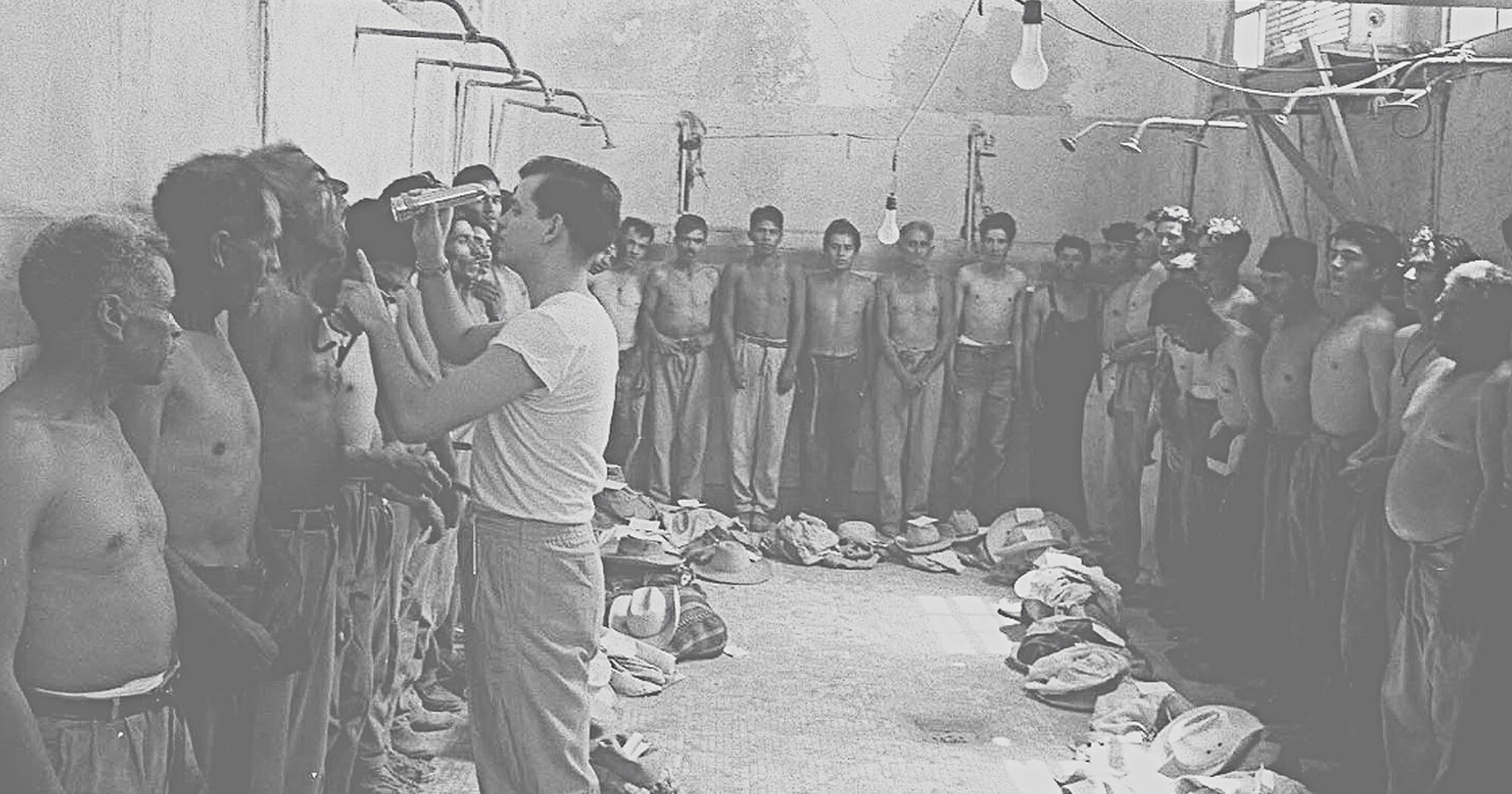
Federal official inspecting a bracero's teeth with a flashlight
·Library of Congress
In the 1950s and early 1960s, the barracks on Socorro’s Rio Vista Farm served as dormitories, offices, and a mess hall to house and process the more than 80,000 braceros who passed through each year. It was one of five long-term bracero reception centers in California, Arizona, and Texas. At these sites, workers signed short-term contracts and boarded buses to farms in 30 participating states, going on to pick fruit in Michigan or trim tomato plants in California. Over the lifespan of the Bracero Program, more than 4.6 million contracts were issued.
After the Bracero Program ended in 1964, many of Rio Vista Farm’s buildings fell into disrepair, and its former use slipped from popular memory. According to Victor Reta, historic preservation officer at the City of Socorro, for decades before its recent revival, Rio Vista Farm had been “a mystery, like people knew that it was there, but didn’t really know what the barracks were for or anything of that nature.”
When Casper and Reta set out to preserve the old farm, 13 of the site’s remaining 18 buildings were empty and unmaintained. One that had been built for the Bracero Program was at risk of imminent collapse. The others had been repurposed as a community center and administrative offices for the City of Socorro.
“We talked about what the big dream was with the buildings, and we talked through what the community needed,” said Casper. Early on, the team made plans to nominate the site for NHL status. “We always knew the history was so significant that it should be a National Historic Landmark,” she said.
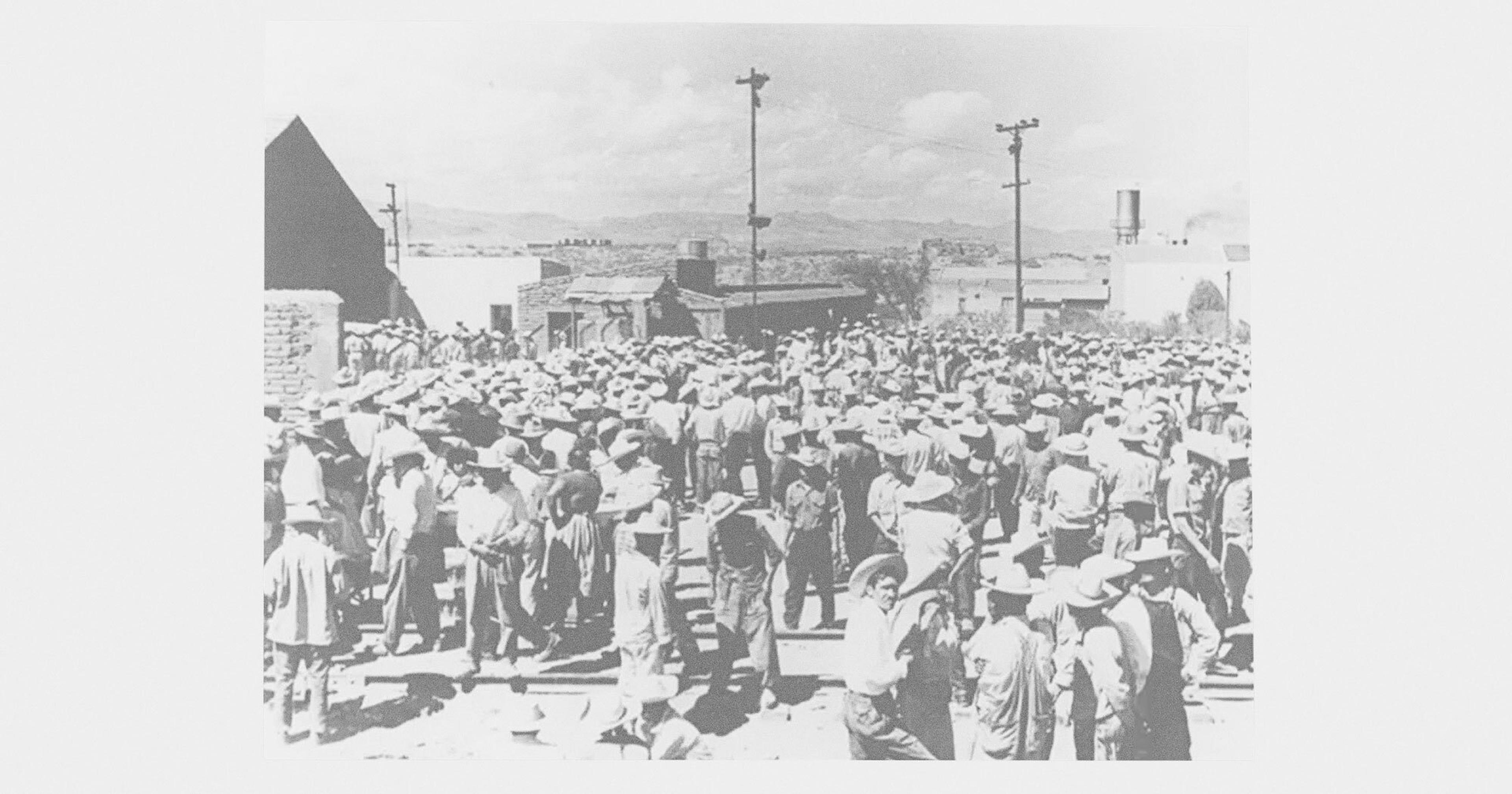
Braceros congregating at Rio Vista
·Library of Congress
Before Rio Vista Farm became an NHL in December 2023, the City of Socorro received grant funding from the Mellon Foundation to pursue another of the team’s early plans: establishing the nation’s first Bracero Museum and Cultural Center at the site. A project to rehabilitate and renovate one of the existing barracks for the museum is currently underway. Slated to open in 2026, the museum will feature an exhibition about the Bracero Program curated by historians from the University of Texas at El Paso.
While the museum has yet to open, other efforts to help the public connect with Rio Vista Farm have already launched, including an award-winning online exhibition about the Bracero Program created by LHC based on Escobar’s research. A ribbon-cutting in May 2024 to honor the site’s NHL designation and its being home to the nation’s first bilingual Spanish and English landmark plaque drew dozens of interested locals. “We’re seeing more and more visitation to the site as the story has become better known,” Reta said. “It’s been a really great project to connect people to their history.”
Casper said the task of honoring and educating the public about Rio Vista Farm’s past has begun to feel even more urgent since President Donald Trump took office again in January 2025. Trump has issued executive orders to change historical interpretation at National Park Service (NPS) sites in ways that obscure the contributions of working people and communities of color. Seemingly as part of these efforts, NPS removed Rio Vista Bracero Reception Center from its website earlier this year. “These actions send a chilling message about whose history is valued and whose can be thrown away,” wrote Casper in a press release.
The Trump Administration has also launched a crackdown on immigrants, sparking fear in farmworker communities nationwide. While the Bracero Program ended in 1964, the nation’s agricultural sector remains dependent on immigrant workers from Mexico. Almost two-thirds of crop workers interviewed as part of the Department of Labor’s National Agricultural Workers Survey in fiscal years 2021 and 2022 were born there. Another 6 percent were born elsewhere in Central America. Typically, 90 percent of those with H-2A visas, issued to foreign laborers to work agricultural jobs on a temporary basis, are from Mexico.
As Reta said, “The story that began at [Rio Vista Farm] and helped create America is still going on today.”
Editor’s note: The author of this piece writes for the National Trust for Historic Preservation’s Saving Places.
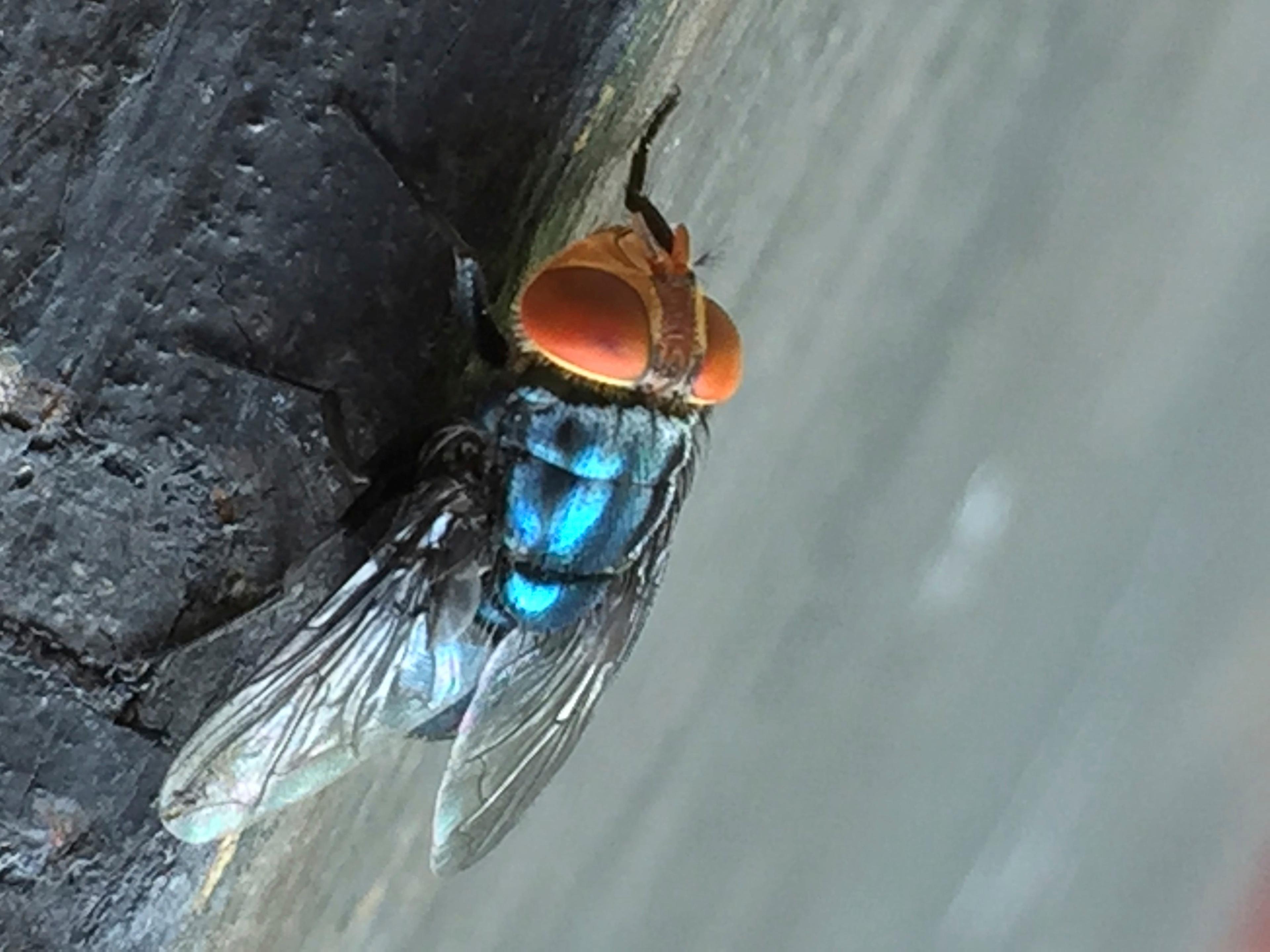
Horror fans are spoiled for choice when it comes to films about flesh-eating bugs. Giant irradiated ants with poison fangs threaten to extinct humankind in Them! Arachni-lobsters stagger out of The Mist to snap terrified Mainers in half while dog-size quasi-spiders (ok, not technically insects) lay eggs inside alive humans. Swarms of grasshoppers bloodily wing their way through men’s heads and torsos in Locusts: The 8th Plague.
For sheer dread, though, nothing beats a short film made by the U.S. Department of Agriculture in 1963, called Look Out for Screwworms. That’s because every brief, suspenseful scene in its two minute and 26 second run time is absolute fact: the scientists exposing screwworm larvae to “gamma rays from radioactive cobalt;” the clueless cows wandering fields where danger assuredly lurks; the rancher discovering maggots burrowed deep in the meat of his live sheep. Not seen but potentially more panic-inducing is the rare possibility of human death to what’s known as screwworm myiasis; a man in Costa Rica died from this last summer.
The New World screwworm (Cochliomyia hominivorax) is a devastating pest — a species of blowfly — that’s native to the Americas. It was mostly eradicated from the U.S. in 1966 then beaten thousands of miles back south over the course of the next 30 years. However, it has managed to jump the jungle-y barrier afforded by Panama’s Darién Gap (where sterilization techniques have long been implemented to keep it at bay), possibly due to reduced jungle cover and more grazing livestock in the area. It’s made its way northward — from Costa Rica, Nicaragua, Honduras and El Salvador, Belize and Guatemala, and into Mexico, wreaking havoc along the way on all manner of livestock (and one deeply unfortunate human).
The advance of the screwworm, which is currently about 600 miles from the Mexico/Texas border, is making U.S. ranchers exceedingly nervous. Will defenses launched by university researchers, inspectors at USDA’s Animal and Plant Health Inspection Service (APHIS), border-scouting “tick rider” cowboys, and scientists at fly-sterilizing facilities actually hold? That’s the question on every Southern rancher’s mind.
If “they were to come back like they were, it would put 90% of the cattle people out of business,” cattleman Jim Kearney, who helped his father in the “nasty” fight against the screwworm the last time around, told the Texas Standard. Treating screwworm infection is always disgusting business — the maggots have to be removed before the wound is cleaned and sutured — but back in Kearney’s father’s day antiseptic pine tar oil and insecticide smears added their noxious scents to the already-putrid smell of decaying flesh.
Philip Kaufman is an entomologist at Texas A&M and helped compile a new screwworm fact sheet that’s being distributed to ranchers. He isn’t prone to screwworm pessimism. “We are concerned but we are not in a crisis,” he told Offrange. “People are getting trained up and we’re gonna tackle this and solve it again.”
Also working in mammals’ favor (mammals are the preferred hosts, although birds will do in a pinch) is the fact that screwworms aren’t great at being parasites. Unlike other types of blowflies, these metallic-blue members of family Calliphoridae lay their eggs in live animals. They’re attracted by the smell of blood, from the wound left from a lamb’s umbilical cord, for example; or from castrating, branding, dehorning, and ear-tagging cattle, sheep, and goats. Horse ears can be munched raw by ticks, and among wild deer, shedding velvet from antlers is a siren call to screwworm moms to come on over and lay their eggs — up to 300 at a time. These hatch out spined maggots that anchor themselves into flesh, then proceed to eat their way through it, sometimes deep into muscle. If it’s deep enough the host animal cannot survive.
If “they were to come back like they were, it would put 90% of the cattle people out of business,”
“Normally with parasites, it’s not good to kill the host but inherently, by its host dying, that helps keep its numbers low,” Kaufman said. “If it were phenomenally good at its job we’d be overwhelmed with them.” Fire ants are powerful screwworm predators but unsurprisingly, no one is talking about dispersing more fire ants to eat the screwworms — although Kaufman expects native ant populations will help with the problem.
Still, there is bad news. The last time screwworms infested the American South, the population of Texas white-tailed deer was in the 10s of thousands. That population has since ballooned into the millions, according to Kaufman — in part, probably, because of the absence of screwworms to curtail their numbers. With more potential hosts around, eradicating screwworms will require a lot more effort should the pests make it over our border.
There’s been talk of using ivermectin to control screwworms in both wild and managed animals. But listening to Kaufman rattle off its drawbacks highlights the complexity of the task at hand. For starters, “Screwworm is not on the label for ivermectin,” he said, and FDA would have to be petitioned to change that. “They’re talking about adding ivermectin to [livestock] feed but how much do you give them? You don’t want to overdose them. You don’t want to under-dose. How long do you feed? Do you do two weeks on, two weeks off? A bobcat, it’s not going to eat corn [or pellets] out of a feeder, how do you control for that? What’s the withdrawal period going to be? Right now, it’s a 56-day withdrawal period for cattle” when used as an injected or pour-on dewormer.
“So you can’t butcher your cattle for 56 days. If you’re feeding wildlife, what does that look like for hunting season?” Studies, Kaufman said, would require “a lot of money, and they have to be done on every species you’re going to expose.”
Hopefully, it won’t come to this. Imports across the border of cattle, horses, and bison were halted this past May (as of this writing they’re being phased back in) and APHIS is working out how best to inspect and treat animals at the border and elsewhere, and how to quarantine regions or whole states if necessary.
“Reporting is the number one thing people can do. If you ignore this, that fly population is just going to get bigger and bigger ... this is a community issue.”
Fly sterilization techniques — male flies get zapped with radiation then dropped by plane over screwworm hotspots to mate with females that produce zero offspring — emerged in the 1950s and are still used, to great effect, today. A sterile-fly facility in Panama is still producing 100 million sterile flies for release per week, both an old J-06 strain that’s still effective, and a new one called PANCR-24 that was bred from flies in current outbreak areas. The U.S. is also funding updates to a Mexican sterilization facility and building a new one at an Air Force facility in Mission, Texas; the former should be online by summer of 2026.
Meanwhile, putting eyes on animals both wild and managed is the number one way to control for screwworms. To that end, USDA’s tick riders, who patrol the Rio Grande on horseback looking for animals carrying fever ticks, will have screwworms added to their portfolio of pests. Kaufman said ranchers must be on high alert, too: Check trail cams for animals “acting oddly, get out your binoculars and have a look.”
Changing livestock management might eventually be in order — forgoing dehorning, for example. And most crucially, inspecting animals often and thoroughly, and reporting any infestation to a veterinarian, even if it means the ranch could be quarantined. “Reporting is the number one thing people can do,” said Kaufman. “If you ignore this, that fly population is just going to get bigger and bigger and cause more of a problem for everybody else. This is a community issue.”
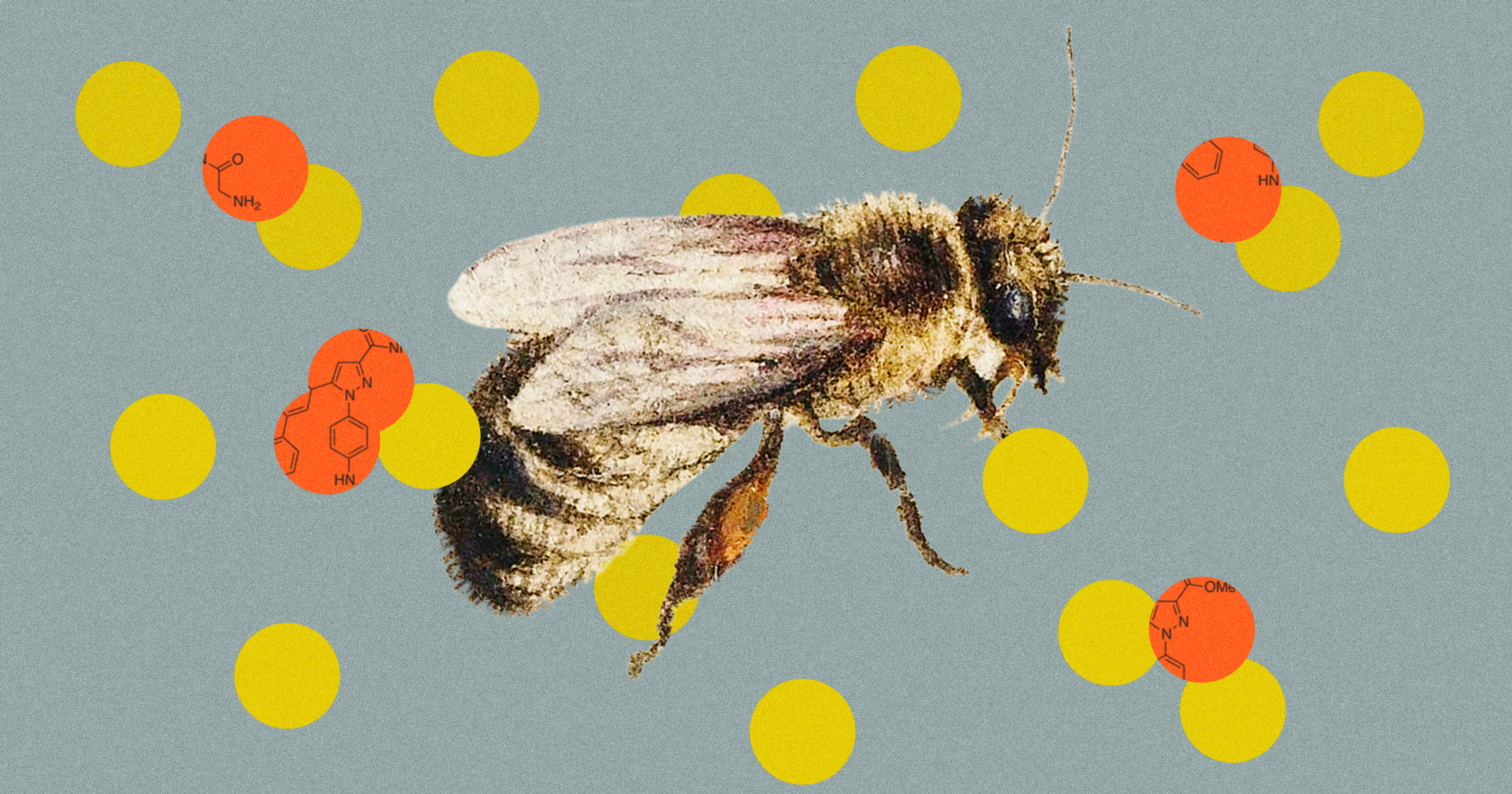
A bumblebee prepares to leave its hive. But first, it passes through a dispenser and picks up a dusting of biofungicide, a pesticide made of mycelium, that it will soon pass on to every strawberry flower it visits.
The pest-control formula will then be transmitted from flower to flower by other bees and different pollinators who visit next, hopefully preventing the farm’s strawberries from developing the gray mold no one wants.
When the bee returns to its hive after a long day of work, it enters through a different, pesticide-free entrance than it exited, so that new pest-control dust would not be brought in to contaminate the whole hive. This isn’t an accident; it’s a precise design for a method called entomovectoring, a buzz-worthy biological control solution to the pests and plant diseases destroying between 20 and 40 percent of the global annual harvest.
“As long as the crop has flowers that are visited by pollinators … then the possibility is there,” said Peter Kevan, a British-Canadian entomologist and professor emeritus at the University of Guelph, who quite literally (co-)wrote the book on entomovectoring. The method takes advantage of the fact that bumblebees, honeybees, and other pollinators visit thousands of flowers each day, making them an unexpected delivery system for fungicides and insecticides made from biological agents.
“Pollinating insects by their very activity spread tiny [pollen grains] between plants, so why not [use] them to disseminate other tiny particles such as microbes, that can serve to suppress plant pests and pathogens?” reads the introduction to Kevan’s book. He is referring particularly to microbial pesticides, which consist of a microorganism such as a fungus, virus, or bacteria as the active ingredient — the chosen agents depend on the particular pest being treated.
Since he first began studying this method two decades ago, Kevan has tested its potential on a number of crops including strawberries and greenhouse tomatoes, finding success with over 58% increased yield in some cases. Other studies around the world have also shown that biocontrol agents spread by bees can manage fire blight in apples, fungal diseases in tomatoes, and even borers in coffee plants when paired with specific microbial agents known to combat these issues. The method is being picked up across North America, Australia, Brazil, and Europe, and is now being evaluated in India, too.
“It’s taken off on a number of crops,” Kevan said. “People are becoming more and more interested in growing things without so much dependence on harsh chemicals.”
Along with crop protection without spraying en masse resulting in spray drift or run-off, this method claims to offer enhanced pollination. Bees spread pollen along with the protective treatment, which in turn improves crop yield and quality, especially for organic farmers who shy away from adding additional fertilizers and pesticides. Entomovectoring can also reduce the need for broadcast spraying equipment since hives are individually inoculated.
“Why not [use bees] to disseminate other tiny particles, such as microbes, that can serve to suppress plant pests and pathogens?”
The pesticides used through this method must be selected carefully, both for their effectiveness against the pest at hand and for their safety for bees. As a result, pesticides made of bacteria, fungus, and antibiotics have been the most successful. “It may be a little more management intensive in as much as there has to be somebody to look after the bees,” said Kevan.
Because of this, some are skeptical of how feasible this method really is. In 2024, Leisure Farms in Northeastern Ontario tried using entomovectoring to reduce aphids, which had been causing barley yellow dwarf disease in their oat fields. The hope was also to leave aphids‘ natural enemies, ladybugs, untouched.
The study showed a significant reduction in the population of aphids, but the family farm was left uncertain that the bee husbandry trade-offs were worth it. The scientists in this study did not track the impact of the bees on the final crop yield, leading to an incomplete picture for a farm that needs to closely monitor its bottom line.
“Oats, wheat, barley, these are relatively low-value, high-volume crops. In other words, we have to produce it cheaply and productively, and if we’re managing bumblebees … that’s not productive,” said Ben Schapelhouman, agronomist for Leisure Farms. “I’m not all that interested in that, just because … even if it does work, it might be too expensive to carry out and not scalable,” pointing to the fact that there might only be specific use cases where it is actually profitable to raise and care for bees.
There are other limitations to bee vectoring. Sometimes, the pollinators can spread harmful pathogens to their hives, and other times they may not be able to fly through extremely hot or rainy weather. Chemical agents also often work faster than their microbial counterparts. In many places, there’s also a lack of existing support for growers who may want to implement and troubleshoot bee vectoring technology.
“We have to produce [crops] cheaply and productively, and if we’re managing bumblebees, that’s not productive.”
“Bee vectoring is not a silver bullet and, as such, should be used as part of a more holistic pest management program,” said Les Shipp, a former greenhouse entomologist with Agriculture and Agri-Food Canada in an earlier interview.
However, there are companies scaling bee vectoring successfully. One such company is BVT, currently in the process of getting permits to operate under regulations in the U.S., Canada, Mexico, and European markets. It already has customers trying out bee entomovectoring with a proprietary powder mainly made of fungus. It’s been used on sunflowers, fruit, and even canola, another high-volume crop, and promises yield increases of at least 30 percent.
“It’s our job as farmers to distinguish ourselves and be different, to do something bigger, better, or more efficient than the next guy, so it’s a competition out here,” said Winn Morgan, co-founder of Major League Blueberries farm in Nicholls, Georgia, in an interview with BVT in 2021, adding that bee vectoring helped his operation switch to organic. “This technology using bees as a vector … it changed the way we farm here.”
“If you have a normal rate of 50 percent pollination success we’re having more like 65, 68 percent on most of our varieties here, and it’s throwing out a bigger crop,” Morgan said.
There is still lots of work to be done to determine just how widespread entomovectoring could become in helping solve pest management and pollination challenges. But, ask one of its many staunch proponents — they’ll argue that involving pollinators in our food systems in this new way could help us rise to the challenge of meeting global food demand.

In a corral that skirts a weathered red barn, Emily Black approaches a chestnut brown horse, placing her hands against its shoulder, careful not to press too hard as she works with the animal to correct a joint that’s lost its full range of motion. It’s part of her typical day — and the horse is one of her regular patients — as an animal chiropractor who serves clients along US-131, from Kalamazoo to Traverse City, Michigan.
Black is part of a developing field of specialists — chiropractors certified to work on animals large and small. “Instead of treating just a six-inch square on a human, I’m able to treat both humans and all sorts of animals,” said Black, whose client list is about 75% animals and includes horses, cattle, alpacas, goats, and pigs. She also provides chiropractic services to humans on some of the farms she visits. “Vets recommend chiropractic adjustments for several reasons, such as pain relief, performance enhancement and overall wellness.”
Animal Chiropractors 101
Animal chiropractors have been around informally since the early 1900s. However, it wasn’t until the late 1980s that Michigan veterinarian Sharon Willoughby-Blake became interested in chiropractic care after seeing its effect on a canine patient, and a small group of colleagues founded the first school and established certification standards. In 1989, the American Veterinary Chiropractic Association (AVCA) opened as a central place for those interested in pursuing careers as animal chiropractors. Later, Willoughby-Blake also opened the Options for Animals College of Animal Chiropractic headquartered in Kansas, which provides the coursework needed to become a licensed animal chiropractor per the AVCA and International Veterinary Chiropractic Association (IVCA).
To date, there are 803 animal chiropractors licensed by AVCA and 714 by IVCA. A veterinarian or human chiropractic degree is required before becoming an animal chiropractor.
“It’s about 250 hours of education along with hands-on training with animals,” said Jess Stief, an animal chiropractor based in Illinois. Stief works with a variety of farm animals along with smaller animals like dogs and cats. “You sit for a board exam with either the AVCA or IVCA. Once you get your license, there’s continuing education and you re-license every couple of years — just to stay current.”
But What Does an Animal Chiropractor Do?
Just like humans, animals can develop issues with joint mobility, spine alignment, arthritis, muscle spasms, and more. While traditional veterinary medicine often turns to pharmaceutical solutions, an animal chiropractor focuses on correcting alignment and function with physical intervention.
“Imagine large working draft-type horses getting sore and experiencing dysfunction in their back end, dairy cows getting sore in their hips and stifles from their udders, show goats presenting with sore necks from training, and agility dogs with sore shoulders,” said Black.
Common ailments where a farmer or rancher would contact an animal chiropractor or request a referral from their vet include problems with an animal’s gait, posture, chronic pain, mobility issues, and behavior such as extreme stress or anxiety.
But it’s not like animal chiropractors are putting the cow or horse up on a drop table like a human chiropractor does. Stief, for example, uses a step stool or ladder, depending on the size of the animal she’s treating, in order to get to the right angle to adjust their spines, pelvis, or hips. Black often moves with each animal, say, applying pressure to a horse’s shoulders while it is walking.
Livestock vs Humans
Animal chiropractic adjustments are similar to human chiropractic adjustments. Once the chiropractor locates the problem area — usually one with decreased or restricted motion — they apply a “high-force, low-amplitude thrust” specific to that joint to regain normal movement. For Black and Stief, this equates to gentle pressure with ideally little to no pain during the adjustment.
Without any “conscious, verbal communication,” according to Stief, they must rely upon non-verbal cues, especially when it comes to farm animals. “Most of them are going to be flight animals, right? They’re prey animals so my work with a dog versus cattle in that regard, I have to take into account how they’re wired a little bit differently.”
And, of course, it depends on the type of animal. For example, a horse will be used to human contact through regular grooming and riding, while a dairy animal that’s had little human touch tends to be more skittish, providing a much smaller window in which it can receive care.
“Once in a while, if something is really sore, I’ll get a little ear flick here and there, or somebody will kind of cock a leg or bite a little, but really, there’s not a lot of that aggression at all,” said Black.
But Is There Proof?
Chiropractic care, in general, is often met with skepticism as some practices or therapies lack scientific-based evidence proving that they’re beneficial. Further, within the animal chiropractic field, some veterinarians argue that there’s no evidence that these sorts of adjustments actually improve animal health. And, if animals can’t talk, how do animal chiropractors know the adjustments are working? Observance of better mobility and motion, the appearance of reduced pain and discomfort, and improved gait and posture, according to Black.
Rachel Rice, co-owner of True North Equine LLC at Cold Spring Farm in Maple City, Michigan, said she can attest to the value of an animal chiropractor’s abilities to keep animals like the horses she trains healthy and happy.
“Horses are always just messing around,” said Rice. “They lay down and roll and throw their neck out of place. It doesn’t take much for them to mess themselves up.” Especially since many of the horses she works with also barrel race, Rice has Black out monthly to work on 12 to 15 horses — she said the results speak for themselves.
“We had this mare with some underdeveloped muscle,” said Rice. “The horse’s withers, which are like extensions of their vertebrae right above their shoulders, had sunk down below her shoulder.” Rice credits the horse’s recovery to regular chiropractic adjustment, specific exercises and the use of MagnaWave — an unverified type of therapy that claims to use electromagnetic pulses to stimulate cellular activity, improve circulation, and promote healing. “The mare now has correct position and her back’s lifted up, allowing her to compete at a much higher level than she was previously.”
Instead of thinking of it as an either/or situation, the work of animal chiropractors can complement traditional veterinary care.
“The overall medical field and people’s interest in alternatives that are noninvasive, that don’t require drugs — these types of approaches, I think, are just growing in popularity and understanding around a healthy animal,” said Stief.
“This isn’t a replacement for traditional veterinary medicine,” said Stief. “But I will say I think the veterinary field — just like human medicine has — is getting more open-minded and holistic in its approach. I’ve never had a veterinarian respond poorly to the work I do.
“An animal that feels better in their body is going to have lower cortisol levels, it’s going to feel better, it’s going to digest its food better and so what you’ll notice is an animal — whether it’s a farm animal or a horse — is that if it feels better, you’re going to see overall improvement in the quality of life, whether you’re measuring performance or digestion, you’re going to see changes as that body falls back into homeostasis and balance.”
Every gold rush needs its proverbial shovel salesmen, even when the wealth in question lies above the soil. The bonanza Eric Meltzer and Byron Boos hope to facilitate comes in the form of hairlike, half-inch, reddish-orange threads: the stigmas of a small purple flower that, when dried, become the most expensive spice in the world.
The two are partners in Pennsylvania Saffron, LLC, which operates a research farm about 50 miles northwest of Philadelphia in the small community of Barto. Although the company harvested over 83,000 saffron crocuses from its one-acre plot last year, founder Meltzer said farming the flowers is mostly a means to a greater end.
“Our goal isn’t to be saffron farmers, but to be a technology company that solves the problem of mechanizing it,” explained Meltzer, who came to the crop in 2022 after selling his stake in a prior business. “We’re trying to make it so small American farmers can make money growing saffron, doing it in a way that’s different from how it’s been done since the time of the Bible.”
Saffron’s high prices — a half-gram retails for $14, or nearly $12,700 per pound, through Pennsylvania Saffron’s website — have long been tied to its intensive production. Traditionally, to avoid damaging the delicate flowers, each crocus is picked and has its three stigmas removed by hand. It can take 150 flowers to yield one gram of finished spice.
While the colonial U.S. once enjoyed a domestic saffron industry (coincidentally anchored in Philadelphia and supplied by nearby Pennsylvania Dutch farmers, who exported the crop to Spanish colonies in the Caribbean), it dwindled away after British disruption to trade routes during the War of 1812. We currently meet its saffron demand through imports, over 54 tons in 2024, from places with lower labor costs.
(Iran produces about 90% of the world’s saffron, but much of it is reimported through Spain or other countries to circumvent U.S. sanctions. Afghanistan, India, and Greece are among the other leading growers.)
Boos, Pennsylvania Saffron’s chief operating officer, envisions American saffron producers finding a toehold in the domestic market through greater automation at every step. He’s been engineering a modified garlic planter to put crocus corms in the ground, a motorized harvesting platform to speed a worker’s progress through the field, and mechanical systems for separating the stigmas from the flowers.
“We’re basically developing a playbook for farmers, so if you want to grow saffron, this is where you start,” he said. “But because we haven’t grown it before, every one of the elements is unproven. It’s a little daunting.”
“Because we haven’t grown it before, every one of the elements is unproven. It’s a little daunting.”
Even without specialized equipment, a growing number of U.S. farmers have been staking their own claims on saffron’s golden vein. The crop’s domestic resurgence traces to 2015, when University of Vermont entomologist Margaret Skinner partnered with one of her postdoctoral researchers, Arash Ghalehgolabbehbahani, an Iranian who was curious if the crop could grow in his new home. To their surprise, the plant proved remarkably resilient and produced solid, high-quality yields.
Ghalehgolabbehbahani and Skinner went on to establish the North American Center for Saffron Research and Development at UVM and held their first saffron-growing workshop in 2017. The center now boasts over 800 members on its SaffronNet listserv, and its most recent workshop, held earlier this month, had over 100 registrants from 25 different states. Commercial saffron operations have popped up in Vermont, Texas, California, and Washington. Skinner says hobby growers are successfully raising the plant as far afield as Alaska.
She sees saffron as a particularly great fit for small-scale, diversified farms like those that proliferate in Vermont: Although harvesting takes a burst of hard work, she says, it’s squeezed into a couple of weeks in late fall, when most other crops are done for the year. And because the spice is dried, farmers can store it and make sales over time, potentially supplementing their income during leaner seasons.
Mechanization of the type Pennsylvania Saffron is pursuing could be helpful for those farmers, but bigger barriers to domestic saffron may lie downstream of growing the crop. Rebecca Brown, a researcher at the University of Rhode Island who’s experimented with saffron, said that drying the spice is technically considered food processing. State-level regulations that weren’t designed with saffron in mind can demand cumbersome compliance paperwork or require a sterilizing “kill step” that would destroy its delicate flavors.
Finding a market also remains a major challenge. U.S. growers can’t compete on cost with even the most expensive imported saffron; Antonio Sotos, who exports the coveted La Mancha variety from Spain, says he pays farmers the equivalent of about $2,500 per pound. Although the Trump administration has generally increased tariffs on saffron-exporting countries, those rates aren’t anywhere near enough to close the price gap with domestic saffron.
“Our goal isn’t to be saffron farmers, but to be a technology company that solves the problem of mechanizing it.”
Ethan Frisch, co-founder and co-CEO of online spice company Burlap & Barrel, said he’s explored adding U.S.-grown saffron to his lineup. But the selling point of domestic sourcing, he continues, isn’t enough to justify the much higher cost. He also wants to keep supporting the female Afghan farmers who currently supply his saffron, for whom agriculture is among the few income-generating activities permitted by the country’s Taliban-led government.
“Customers are reluctant to buy saffron in the first place,” Frisch said, with the notable exceptions of the Indian and Iranian diaspora, who value its subtle, floral, honey-like flavors in dishes like Persian rice and paella. “In my experience, most European-background Americans are not cooking with saffron on a regular basis, and trying to get them to has been a huge challenge.”
While some U.S. saffron growers have been able to market directly to customers, charging between $50 and $75 per gram — up to $34,000 per pound — volumes remain low. Other marketing possibilities include value-added products, like infused honeys and maple syrups, or the pharmaceutical industry, where saffron has been studied as a treatment for conditions like premenstrual syndrome, Alzheimer’s disease, and depression. (Traditional medical systems like Ayurveda have also claimed the spice to be a potent aphrodisiac.)
Meltzer with Pennsylvania Saffron agrees that the industry is at best embryonic. “We certainly don’t want to solicit people to pour all their money into pickaxes,” he said, returning to the gold rush analogy. “We don’t have a complete answer yet.”
But he and Boos are hopeful that the time will soon be right for American farmers to dig in. They point to the rise of foodie culture, a growing desire for local sourcing, and visual-driven social media that might reward saffron’s striking hues.
“People are using things that are unique and different,” Boos pointed out. “Well, saffron is the most unique and the most different.”
A new generation is currently emerging across the rangelands of northern California, and it’s a hungry one. Some new generations inspire hope for the future. This one, however, bears the stench of destruction — or, in some cases, onions.
“Some producers walk out in spring and summer and can smell the onions, because the grasshoppers are eating them so viciously,” said Modoc County natural resources advisor Laura Snell of her region in California’s far northeast. She works for the University of California Cooperative Extension. “You can smell the grasshoppers eating your vegetables. No one feels good about that.”
Snell first spoke with Offrange last fall, after a particularly devastating season for California and seven other nearby states. A press release from last summer said her county had been “invaded” by grasshoppers, a voracious critter that will consume practically anything growing out of the ground, and lots of it. Just 30 pounds of grasshoppers will eat the same amount of vegetation as one 600-pound cow. Modoc was listed among eight other northern California counties as some of the worst hit. And that was their fifth consecutive year facing a grasshopper infestation — now they’re closing in on a sixth.
It was also in the fall when the pods now hatching this generation of grasshoppers were laid. The most effective time to try to stop the spread of the pests is between then and the spring, when they gestate from crawling nymphs into adults that can fly 15 miles or more. But the bureaucratic pest management systems in place rarely operate on that timeline. And the farmers and ranchers of Modoc County are paying a steep price.
Snell has watched as what once was an issue only for rangelands, grasslands, and hay production now disrupts every realm of local agriculture. Last year, the county lost 30 percent of its crops to grasshopper damage alone, with some producers reporting closer to 70 percent crop loss. Also suffering is the local population of bees, which tend to spend summers up there in the mountains. But damage to early crops and flowers meant 2024 was the first year Snell and her team observed a major hit to honey producers. “You can see the effects at the now-sparse local farmers markets and food co-ops,” she said.
The pests themselves aren’t new to the region, but the rate and persistence of their spread is. For generations, grasshopper invasions were cyclical, with something like one bad grasshopper year for every five good years — and existing guidance on how to manage them reflects that. But even as the county enters its sixth straight season of grasshopper hell — with the insects falling, as one local farmer put it to The Los Angeles Times, “like hail” — local authorities say they are limited in their ability to fix it.
Though Snell and her colleagues have tried, the federal agency devoted to grasshopper management — USDA’s Animal and Plant Health Inspection Service (APHIS) — has proved difficult to recruit. Each year the county needs to request an environmental assessment that would clearly detail the scope of the problem and lay out a plan of action. But rarely is it completed and approved in time to have a meaningful effect on grasshopper containment.
“You can smell the grasshoppers eating your vegetables. No one feels good about that.”
Unlike its neighbors in states like Oregon, Arizona, and Nevada, California doesn’t have a standing abatement program in place that would allow it to address this issue at the necessary scale and with the necessary speed. Reporting from the LA Times last year states that “California discontinued its abatement program more than 50 years ago because the grasshoppers had stopped becoming an issue until their recent return.” Without it, the county is forced to file ad hoc requests, which are very hit-or-miss.
Modoc County’s agricultural commissioner Heather Kelly said that without an environmental assessment in place, the county’s pest monitoring efforts are insufficient. With help from APHIS, they could “immediately go into action and make the appropriate applications so it doesn’t get beyond that property and damage adjacent crops.”
Though nothing when it comes to grasshopper abatement appears to happen on a very immediate, or linear, scale.
In an email, APHIS’s National Policy Manager William Wesela wrote that in May 2024 his office did send grasshopper experts from APHIS Oregon down to survey for grasshoppers at the Lower Klamath National Wildlife Refuge, where “populations of potentially damaging grasshoppers” were identified. But the wildlife refuge doesn’t technically contain any rangeland, a congressionally mandated stipulation of APHIS’s jurisdiction. Consequently, APHIS was unable to assist with treatments, which typically involve the application of an insecticide like carbaryl, diflubenzuron, malathion, or chlorantraniliprole.
Later last summer, APHIS did some surveys of Modoc County’s portions of the Modoc National Forest, where they found a different species of grasshopper and therefore determined it “would not benefit the adjacent cropland” to treat it.
Just 30 pounds of grasshoppers will eat the same amount of vegetation as one 600-pound cow.
Wesela said APHIS is “considering an environmental assessment for Modoc County” on an ongoing basis, though it will be a challenge to pursue because “historically, APHIS has not seen grasshopper activity in this area of the country.” He added that grasshopper populations are surveyed annually in states where outbreaks are “common.” But in states like California, he said surveys may be needed “when outbreaks occur” — which, on the grasshopper’s timeline, is already too late. But after nearly six straight years of catastrophic invasion in northeast California, it’s hard to know what the agency considers “historic” or “common.”
As outdated as these abatement policies now seem, the science for monitoring and understanding these insects and their behaviors hasn’t quite kept up either. No one is comfortable saying definitively what has caused the extended outbreak, but the strongest hypothesis appears to be drought, made more extreme by climate change. When the soils are wetter, for example, a naturally occurring fungicide keeps the grasshopper populations at bay.
Without better, more proactive solutions coming from the top, pesticides and insecticides are filling the treatment gap for the average solution-starved producer.
Of course, some science indicates that synthetic pesticides ultimately worsen drought by disrupting the soil biome. That partially explains why the California Department of Pesticide Regulation (DPR) is currently rolling out a new phase of its Sustainable Pest Management strategy, meant to “increase the availability of sustainable pest management alternatives [...] to replace the highest risk pesticide uses by 2050,” according to an email from DPR deputy director Sapna Thottathil.
She continued: “As climate change introduces new and increasing pest pressures, current tools decline in efficacy, and scientific studies identify potential risks that require restrictions on high-risk pesticides,” DPR will work alongside state, federal, and local agencies to improve “pest prevention, management of invasive species and other pests, and ongoing work to promote healthy soils and climate-smart agriculture.”
“You can see the effects at the now-sparse local farmers markets and food co-ops.”
While this strategy may have an overall benefit in the long run, it’s left some producers fearful that they may lose access to the only tool that’s had even a remote impact on the grasshopper epidemic in the short term. As their desperation grows, they’re even turning to ChatGPT for answers — which means Snell spent last summer debunking a bunch of online myths.
“It was saying dust your plants with flour and then the grasshoppers will choke on the flour and die,” Snell said. “In good ChatGPT style it had cartoon pictures of grasshoppers choking on flour.”
But flour isn’t going to cut it. The only real solution lies in proactive land management — not reactive surveying, spraying, or the sprinkling of baking supplies. The leaders of Modoc County know this, but have had trouble finding partners with the resources and the will to help. Snell predicted her county was unlikely to get increased federal support for grasshoppers this fiscal year. And with the tumultuous start to the second Trump administration, federal funding may be even harder to come by. Wesela from APHIS said he preferred “not to speculate” on the matter, though shortly after his correspondence, massive cuts were made to the agency’s workforce.
The grasshopper management program is over 90 years old, which could be seen as an asset or a handicap. But without accounting for modern challenges, climate and environmental changes among them, it will continue to fail to protect vulnerable places like Modoc County. In the meantime, Snell and others like her will be forced to rely on 40-year-old science that claims grasshopper invasions will simply cycle through, run their course, and disappear.
“Some of our changes with climate, in terms of moisture and temperature — it’s not the same ag as it was 50 years ago,” she said. “That resource from the federal government that says, ‘It’s just gonna be cyclic, don’t worry,’ it’s not providing comfort to the producers because they’ve seen it on the ground here year after year.”

When Kāwika Lewis is teaching keiki (children) how to plant fruit and vegetables on his family farm north of Hilo, he often uses guidance from the Hawaiian moon calendar. Different lunar phases can signal whether that particular day is fortuitous for planting, cultivating, or pruning. Lewis tells his visitors that, if the crescent moon is facing upwards — like an upright bowl — then it’s fine to plant.
On the other hand, “We do not plant when the bowl is facing upside down, when it’s empty,” Lewis said. “That represents a bowl that cannot hold anything.”
For centuries, Native Hawaiians have let the moon steer their farming and fishing. Today, locals are leading the charge in keeping those traditions alive — and modern agriculture organizations like the Western Pacific Regional Fishery Management Council (WP Council) are embracing the benefits of ancient knowledge, too. These annual moon calendars have long been created to guide outdoorsmen and women in their endeavors, and proponents believe they can be utilized in communities outside Hawai‘i.
Agriculture producers on the islands say the lunar phases dictate the tides, fish spawning patterns, plant water content, and the amount of light available on a given day. That helps them determine what sea creatures to catch and which plants to cultivate. Some techniques have been analyzed by Western scientists, while others remain understudied. Regardless, many Kānaka Maoli (Native Hawaiians) put faith in these ancestral practices and are working to revitalize them today.
The moon’s gravitational pull on the tides and its effect on fishing are much discussed among sportsmen and women, with researcher Nur Aida Athirah Sulaiman concluding that lunar phases and tides impact sea life’s behavior. “The moon phenomenon indirectly affects the biological cycle of living species including fish,” she wrote in the International Journal of Academic Research in Business and Social Sciences.
On the other hand, the University of Illinois Extension’s College of Agricultural, Consumer and Environmental Sciences depicted the science behind the moon’s influence on plants as “difficult to find,” though it conceded that further studies need to take place on the topic. The school cited recent findings that lunar gravity “is so negligible it cannot have significant influence over plant processes,” but researchers also found unexpected ties, such as the moon’s potential impact on plants’ pollen production.
According to the Hawaiian lunar calendar, Hilo, or the new moon, signals good fishing, with low evening tides, according to The Kohala Center. It’s also an excellent day for cultivating every crop except mai‘a (banana). However, the four phases of the waxing moon won’t suffice for planting or fishing, with rough waters and high tides. During Muku, or the dark moon, banana stalks grow, and fishing — especially diving — is recommended.
Lewis has focused on circulating that knowledge since 2016 when he founded ʻĀina University, a nonprofit that promotes reconnecting with the ʻāina (land). Lewis has hosted more than 50,000 visitors at his farm and takes that opportunity to introduce them to the kaulana mahina (moon calendar). “It’s inside of my DNA,” said Lewis, referring to his Kanaka Maoli ancestry.
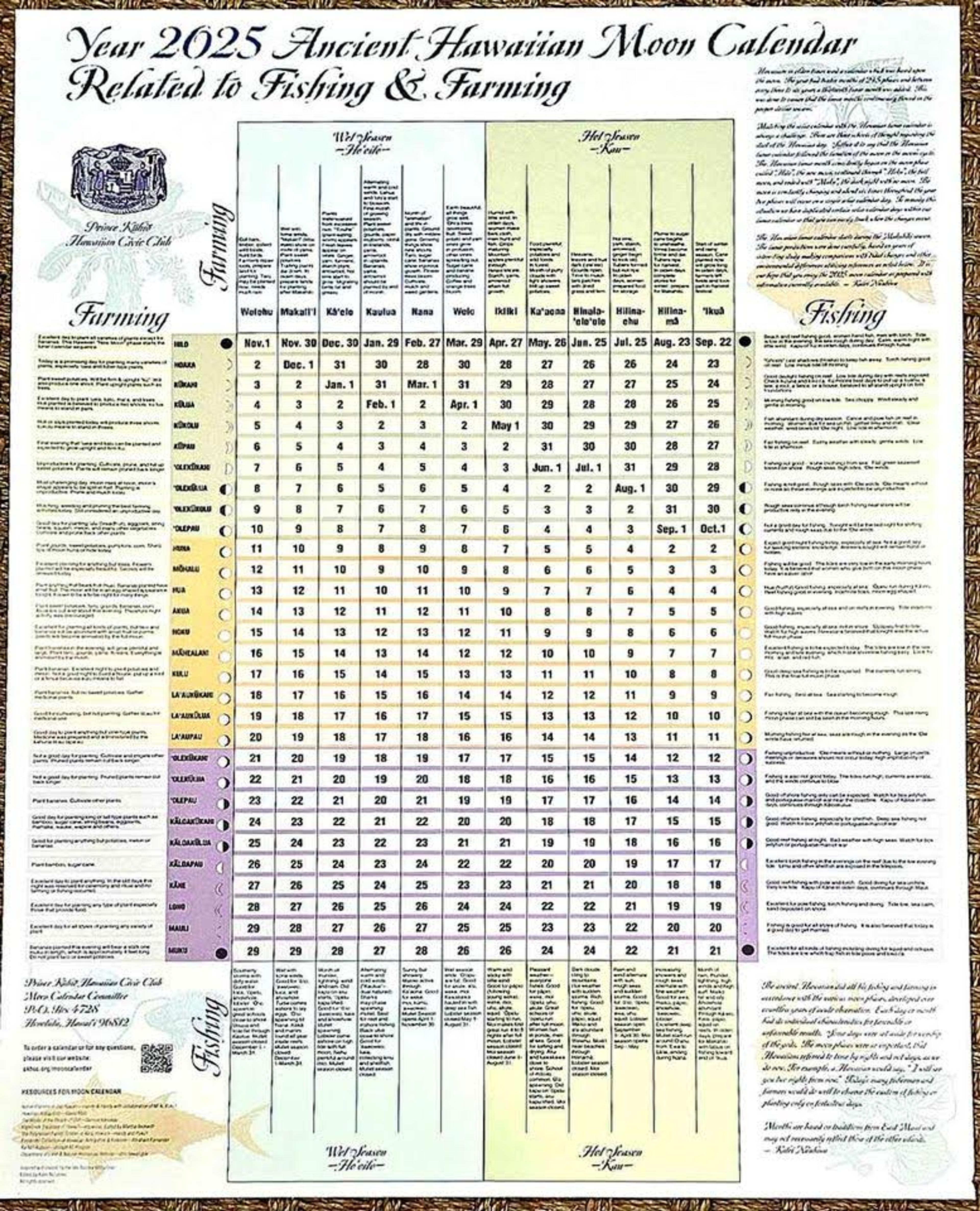
The moon phases are being shared at both the institutional and local levels. Honolulu-based television station KHON2 News broadcasts the Hawaiian lunar phases to viewers, and the WP Council produces free lunar fishing calendars for not only Hawai‘i, but also American Samoa and the Northern Mariana Islands.
“Each region has their own older fishing traditions and kind of gear and what kind of fish are there and how they catch them,” said education and outreach coordinator Amy Vandehey at the WP Council.
The WP Council is a congressionally-created regional fishery management council that’s involved in fisheries across those islands, with a focus on incorporating Indigenous perspectives from local communities. Before the council started distributing the lunar calendars, many fishermen followed the moon phases on their own, Vandehey said.
“Typically, people end up learning it from other people, whether it be from family or friends,” she added.
Now, the council produces between 1,000 to 2,000 large classroom versions and 500 to 1,500 small waterproof versions for boat use — “and they definitely go quickly,” Vandehey said.
Haunani Miyasato also designs an annual moon calendar in ʻŌlelo Hawaiʻi (Hawaiian language) and leads mahina (moon) workshops that teach schools, organizations, and community members about the moon from a Hawaiian perspective. Local gardeners, farmers, fishermen, surfers, paddlers, and medicine makers often attend. The former teacher decided to make her own calendar to help her four children learn the lunar phases, which fall on different Gregorian dates each year.
“Some moons, you plant things, and some moons, you harvest or prune.”
“Growing up, we always heard some moons are better for fishing and, some moons, you don’t go fishing on at all,” Miyasato said. “Some moons, you plant things, and some moons, you harvest or prune.”
She also teaches the reasoning behind why certain lunar phases are better suited for their respective activities. For example, if someone wants to gather ʻopihi, a shellfish found on the shoreline, then low tide would be ideal for the best access, and daytime would allow for the most light to do so. Therefore, a moon phase that correlates with low tide during the daytime makes the most sense.
The ʻŌiwi (Native) belief is that the theory can also be applied to plants, Miyasato explained, because nutrients are supposed to travel through the plant during different lunar cycles.
“The waters of the ocean are pulled by the moon,” she said. “The waters in our plants are also pulled by the moon, too, so it’s like there’s a tide in our plants.”
Other Indigenous cultures use similar systems of planting, Miyasato said. She likens the kaulana mahina to North America’s Old Farmer’s Almanac. First published in 1792, the almanac explains the significance of full moons and includes a moon phase calendar.
“It gives you some excuse as to what to blame it on if you don’t catch, too.”
Gil Kuali‘i is a Hilo lawai‘a (fisherman) and the Hawai‘i advisory panel vice chair at the WP Council. Kuali‘i says he and other Kānaka Maoli watermen plan their fishing expeditions based on the lunar phases because of their impact on the tides. The kaulana mahina can also correlate the spawning cycles of different species, Kuali‘i added.
The extra information promotes business productivity among fishermen, Kuali‘i said. “We’re really just scratching the surface on what this calendar can provide.”
Other Hawai‘i residents who aren’t of ʻŌiwi ancestry also use the lunar phases as a reference point.
Jeff Fay has owned Kona’s Humdinger Sportfishing, a family-run charter fishing business, since 1975. Originally from California, he now predominantly caters to tourists in Hawai‘i. Before they set off on his boat, Fay checks the lunar app on his phone, on top of other factors like the currents and the weather.
His business advises clients to fish on the full moon and the new moon — the best time to catch ‘ahi (tuna). The days near the full moon are also well-suited for blue marlin fishing. Fay explained that lunar phases affect when the fish feed and bite, and tidal changes mean increased activity.
On top of that, “It gives you some excuse as to what to blame it on if you don’t catch, too,” he joked.
Author’s note: Megan Ulu-Lani Boyanton identifies as Kanaka Maoli.
This past March, German chemical company Bayer announced (warned? threatened?) that it might stop making glyphosate, the herbicide in Roundup that the company acquired when it bought rival chemical company Monsanto back in 2018. After having paid $11 billion to settle 100,000 lawsuits from people claiming exposure to Roundup caused non-Hodgkin’s lymphoma and other cancers — and with over 65,000 cases still pending — Bayer is hitching the future of its glyphosate production in the U.S. to the whims of the Supreme Court, from which it seeks protection from further litigation.
A recent MAHA report barely mentioned glyphosate’s potential health risks; nevertheless, the report has troubled (outraged? disturbed?) American row crop groups, which means this controversy probably won’t fizzle out anytime soon. That got us wondering what Offrange’s readers made of the hullaballoo. More than 40 of you weighed in on the matter, expressing opinions that ranged from the pithy (“get rid of it”) to the significantly more nuanced. So here, using your thoughts and experiences as a springboard, we take a dive into the pros and cons of glyphosate; what the most recent science tells us about its human health impacts; and what Bayer’s announcement may or may not mean for the future of the most popular weed killer in the world.
First, as many of you pointed out, glyphosate is not going anywhere anytime soon. Since its patent expired in 2000 — and with it, Monsanto’s exclusive right to use it in products sold here — off-brand formulations for agricultural use, with names like Buccaneer and Killzall, have been widely available at the local farm supply. They’re often cheaper than Roundup, which is also still ubiquitous. “If you’ve got to buy 1,000 acres of product,” said Steve Haring, an agronomist with a new, small cider orchard in central Virginia, “the generic formulations are pretty good.”
What accounts for Bayer’s announcement, then? We asked Charles Benbrook, a pesticide expert and expert witness in litigation against the company. The liability for glyphosate, he explained, will always be Bayer’s — not the companies that make Buccaneer or Killzall — as the inheritor of the former primary manufacturer. To salvage their tanking stock price and protect their other assets, he expects they’ll sell off their production and formulation plants in Iowa and Louisiana, then place all remaining liability into a spin-off company infused with several billion dollars.
That would be used to settle future lawsuits till the funds are gone; the spin-off might then declare bankruptcy or otherwise make it difficult for plaintiffs to collect awarded payments. As Investigate Midwest reported last June, Bayer’s CEO doesn’t deny this possibility, saying he’ll “explore every reasonable option to protect the company and protect our mission from the litigation industry.” The announcement, then, might be seen as a provocation, meant to drum up support.
Offrange reader Haring considers himself a glyphosate “agnostic,” neither strictly pro nor con. He manages his orchard vegetation with a string mower because “baby trees are easy to kill” with herbicides, and he’s not concerned about weeds competing for water. “If I had an irrigation system, with weeds growing on or around the drip lines,” things might be different.
Brent Searle, an organic raspberry, tomato, garlic, and winter squash farmer in eastern Idaho, expressed a similar strain of “meh.” He uses OMRI-approved herbicides on his crops but glyphosate on his three acres of driveway. Organic chemicals, he said, “hit you with a six-times cost” that is “astronomical” for small-scale growers, “and honestly, they don’t work as well. But I see both sides. I know the benefit for farmers, but I’m not convinced that there isn’t a lingering impact on the environment” — in particular, for his honeybees.
“I see both sides. I know the benefit for farmers, but I’m not convinced that there isn’t a lingering impact on the environment.”
Rick Machado, who breeds seeds for experimental crops like sea beets in Bakersfield, California, once “trashed Roundup and the devil Monsanto”… until he got hit with bindweed. “All of a sudden I found myself in a position of needing” the herbicide, he said. “I used it, I kicked myself, but there was nothing I could do.”
Mihail Kennedy is production manager for B Bar, a regenerative organic ranch in central Montana. Where conventional neighbors “burn down the range” with herbicides to obliterate cattle-toxic larkspur, he sees this as “fighting 20 years of overgrazing and not understanding the system.” Weeds pop up in response to poor soil quality in order to “start the mineral cycle again and make nutrients more available to other plants,” he said. Glyphosate chelates those nutrients, binding with them to ensure they remain unavailable. At B Bar, Kennedy said, “Our whole philosophy is managing for life, not with death. We don’t kill any plants” on the range — with glyphosate or anything else. They deal with rangeland weeds by releasing cattle onto mountain pastures later, when larkspur’s not as palatable, and seeding in more diverse perennials.
Jim Smith, an organic farmer and former landscaper, witnessed a comparable dynamic in North Carolina with Japanese knotweed. When this much-reviled plant emerges to restore degraded soil, he said, people “spray it with Roundup and it comes right back” — helping create herbicide-resistant weeds and further trashing the soil. Globally, 56 species of weed are now resistant to glyphosate, driving up use of other, more toxic herbicides; where once GMO corn and soybean seeds were merely Roundup Ready, they’re now increasingly engineered to resist 2, 4-D, dicamba, and glufosinate, too.
The relevance of glyphosate to no-till was top-of-mind for Jeff Stoltzfus, a farm food safety educator at Penn State’s extension. The conservation plan for his own 45 acres connected to the Chesapeake Bay watershed, which is plagued by sediment issues, requires that he use no-till practices. “It’s been a huge soil saver. It’s a huge cost saver,” he said. And he doesn’t see a way to practice no-till without glyphosate. “There’s a couple of other things we could use” to control weeds — 2, 4-D, Gramoxone — “but I’m not sure what the gain would be. Those are not safer chemicals by any stretch of the imagination.” He sees the proliferation of Roundup as a big win for safety. “There’s no herbicide I’d rather use,” he said.
Other Offrange readers concurred. On his 17,000 row crop and hog acres in Henry, Tennessee, the use of glyphosate is 100 percent a given for Jimmy Tosh. It’s helped him control Johnson grass; he’s seen no evidence of weed-resistance on his land; and he believes claims that Roundup causes health issues are “ridiculous,” he said. “Most studies show it to be a safe and effective chemical.“
“There’s no herbicide I’d rather use.”
In a related vein, Mark Nussbaum used glyphosate when he grew Roundup Ready row crops in Girardeau, Missouri, 20 years ago; he uses it now on his 800 acres of hardwood trees. And he said he’ll continue to do so until “there becomes scientifically based, peer-reviewed evidence that glyphosate is harmful.”
Is it true that science hasn’t proven glyphosate has adverse effects on human health? There are a few relevant threads to pull here. As a number of you noted, the vast majority of legal claims against Bayer come from home users. And several others of you remarked that it was the surfactants in glyphosate-based herbicide (GBH) formulations that were responsible for human health concerns. Surfactants help the product to penetrate the weed; they also penetrate human skin.
As pesticide expert Benbrook explained, homeowners and landscapers tend to spray their yards with a handheld wand, with skin exposed. They feel no sickening effects as the product gets absorbed and enters their bloodstream — as opposed to, say, touching atrazine — leading them to believe it’s innocuous. Farmers, on the other hand, “are driving tractors and sprayers with glass and steel cabs [and] sophisticated air filtration systems ... The only time they’re exposed is when they get out of the machine to refill the tanks.”
Had Bayer labeled bottles intended for consumers with guidance to wear chemical-resistant gloves, that would have reduced exposures to what Benbrook called “this terrific herbicide.” In response to lawsuits, Bayer agreed to remove glyphosate from its lawn and garden products back in 2023 — although a 2024 review conducted by environmental group Friends of the Earth found that it remained in some formulations still available on store shelves.
“All of a sudden I found myself in a position of needing [Roundup]. I used it, I kicked myself, but there was nothing I could do.”
There are other health concerns surrounding commercial Roundup formulations, however. These, said Benbrook, pertain to spraying glyphosate as a desiccant on wheat, oats, and barley right before they’re harvested — a practice banned in the EU because it leaves residue on food crops intended for human consumption. Ninety percent of Americans pee glyphosate because of its use as a desiccant, said Benbrook.
And peer-reviewed, non-industry-backed science papers have indeed linked glyphosate to preterm delivery, low birth weight, late-term spontaneous abortions, and neurodevelopmental issues when mothers have been exposed to the chemical. The International Agency for Research on Cancer classified it as a probable human carcinogen in 2015 — a study that Jimmy Tosh, echoing the sentiments of farming groups and U.S. EPA, called “flawed” — but other peer-reviewed studies have since reached the same conclusion. Benbrook said what (partly) accounts for the difference is that EPA used largely industry-commissioned studies in its analysis; and it looked solely at dietary exposures to pure glyphosate, versus IARC’s additional considerations of dermal exposures and formulations.
Earlier this June, the results of a large, global peer-reviewed study, looking at both pure glyphosate as well as two formulations, were released. “[I]ncreased incidence of leukemia, and of skin, liver, thyroid, nervous system tumors were observed across all three treatment groups,” the paper concluded.
“It’s biochemistry and you’re going to get hurt if you’re not careful with it,” said Rick Machado.
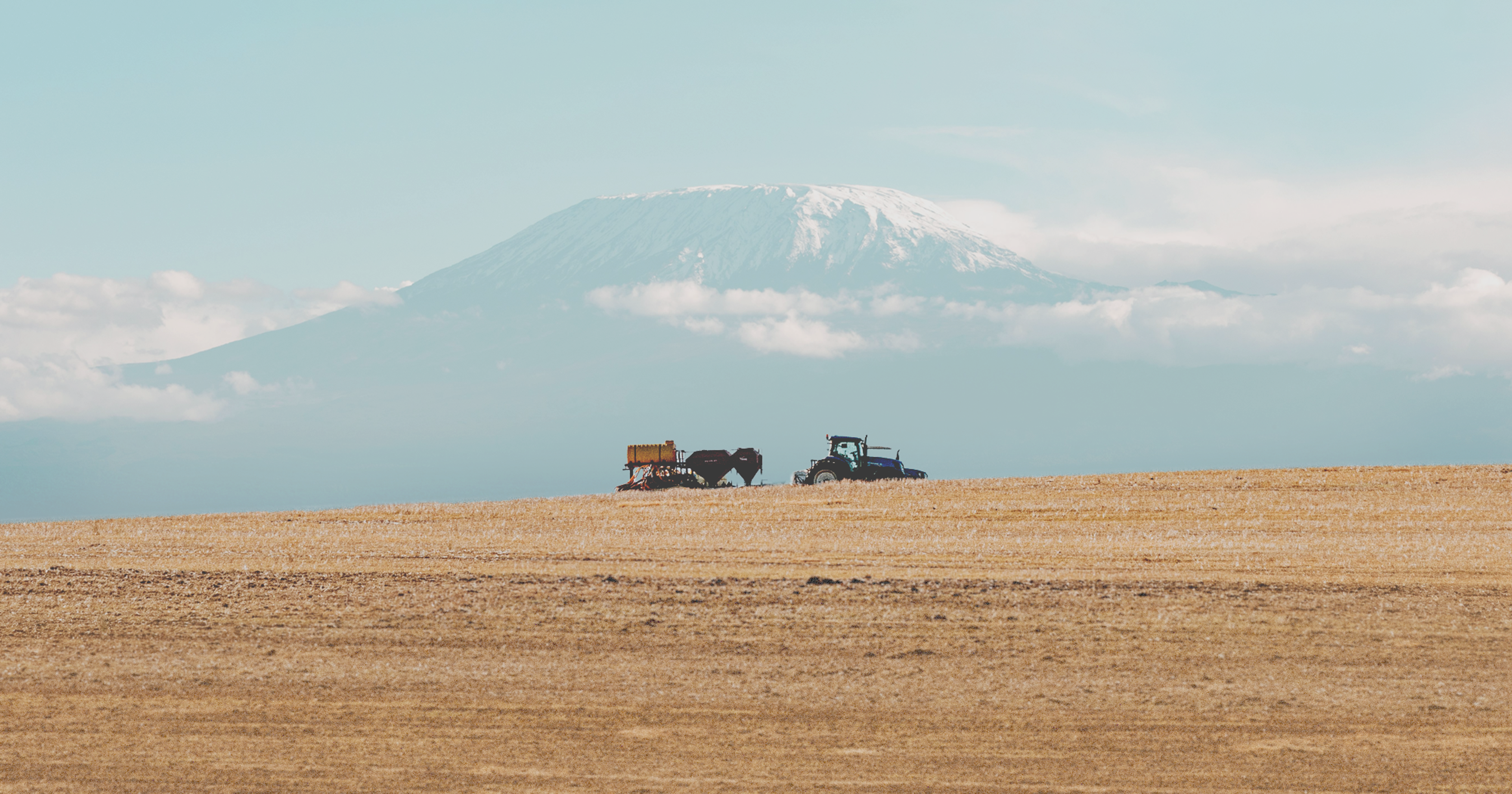
This story was produced in collaboration with EGAB.
At the break of dawn in Kitale County, Kenya, Kenneth Kipchumba tightens his grip on a worn-out “jembe,” the Swahili word for hoe, and heads out to his five-acre farm. The soil is rich but the work is grueling, and with no access to affordable tractors or modern machinery, he spends countless hours under the sun, manually tilling rows for watermelons, maize, and millet.
Kipchumba is among the continent’s 65 percent of smallholder farmers for whom manual labor remains the norm, stalling agricultural productivity and threatening food security. Scarce and costly mechanization forces them to rely on sheer muscle and willpower, limiting yields and livelihoods.
“Tractors are almost nonexistent in the village, and when they do show up, they’re either too expensive or too few to meet everyone’s needs, forcing us to make tough choices,” Kipchumba said. “The planting season starts in April, but we had already started preparing the plots in December,” Kipchumba explained. “It’s time-consuming and less efficient. We get to [only till] the upper surface of the land, which could be easily uprooted, as sometimes strong winds come, and the soil is gone. Now you have to dig again.”
For much of the world, ag-tech has grown to encompass drones, robots, and other advanced technologies to ease crop cultivation. But for most farmers in Sub-Saharan Africa, even securing relatively old technology such as tractors remains a challenge. But while this greatly affects the productivity level of farmers in Sub-Saharan Africa, there are a handful of startups trying to change that. In the face of significant funding and ecosystem challenges, they have seen some successes.
Africa has just 1.3 tractors per square kilometer, a stark contrast to, say, Brazil’s 116 or India’s 128. According to Ohio-born Jehiel Oliver, CEO of Hello Tractor, a Kenya-based, John Deere-backed ag-tech company working to bridge the gap between farmers and mechanization, this shortfall is largely driven by “capital expenditure burdens, a lack of financing, and de-risking structures that continue to hold back mechanization across Africa.”
“In Sub-Saharan Africa, the liquidity isn’t there to address the investments needed for our farmers to be competitive globally, so innovation is needed — specifically, technology applied in an intelligent way to reduce the [capital expenditure] burden that farmers would bear to reach [high] productivity levels,” said Oliver, who was appointed to the President’s Advisory Council on Doing Business in Africa under the Obama Administration.
Oliver also explained that “while tractors are capital-intensive,” the company has expanded beyond the traditional ownership model where each farmer owns a tractor. Instead, they leverage technology to “spread the cost of a single tractor across many farmers,” making access more affordable and “significantly reducing the capital expenditure burden.” In practice, this may mean paying less but only getting a tractor on a part-time basis.
Hello Tractor and other firms like Nigeria’s Traxi and Ethiopia’s Lersha are part of a growing wave of startups shaping the future of Africa’s agricultural mechanization. These enterprises provide a range of services to farmers, from land preparation to harvesting.
“It truly takes an entire support ecosystem to ensure machinery reaches farmers and meets their agricultural needs.“
Hello Tractor, through its software technology and financing programs, operates an amortization scheme that helps farmers become tractor owners within their communities. These programs, according to Susan Njihia, innovation lead at Hello Tractor, have enabled the firm to build a functioning ecosystem of 4,500 tractors and combine harvesters, personally financing 198 of them.
This initiative has benefited farmers across Nigeria, Kenya, Uganda, and Rwanda, with plans to expand into Ethiopia. To date, Hello Tractor has mechanized 179,500 acres and serviced 199,800 smallholder farmers.
“We’ve gradually become one of the largest financiers of tractors on the African continent. It truly takes an entire support ecosystem to ensure machinery reaches farmers and meets their agricultural needs. Our Pay-As-You-Go tractor finance model offers credit to traditionally unbanked entrepreneurs at the base of the pyramid, enabling them to become tractor owners,” Oliver explained.
Njihia noted that, unlike other regions where large-scale mechanization depends on individual ownership and well-established infrastructure, Hello Tractor has adapted to the unique realities of African smallholder farming.
Farmers like 40-year-old Bala Chuseh from Pangri village in Taraba State, Nigeria, say they have benefited from Hello Tractor’s mechanization programs, successfully cultivating multiple crops last year’s season.
“I planted maize, guinea corn, and beniseed,” he said.
Jkusenga went on to explain that tractors are a “rare sight” in his community, leaving him with no choice but to hire 15 laborers to cultivate cabbage, lettuce, spinach, and other crops.
However, most smallholder farmers across Africa still lack access to such services. This includes Kipchumba, who has never heard of Hello Tractor — or any ag-tech companies, for that matter. His experience is shared by fellow Kenyan farmer Dennis Mutua Jkusenga.
Jkusenga went on to explain that tractors are a “rare sight” in his community, leaving him with no choice but to hire 15 laborers to cultivate cabbage, lettuce, spinach, and other crops on his 10-acre farm in Machakos County, Eastern Kenya.
“With a tractor, it takes about a day to till a plot, but with human labor, it takes much longer, even for your produce to be ready, because of the extra time spent using manual labor,” he said, adding that when farmers rely on human labor, there is always a risk of injury, which could become “very costly.”
The solutions to the challenges of access, according to Theo Chiyoka, CEO of Traxi Continental Limited and Vida Verde Limited in Nigeria and Uganda, are still evolving, as inaccessibility of machinery remain a significant issue.
At Traxi, they use a tractor-hiring model in several Nigerian states and collaborate with local associations to ensure smallholder farmers have access to mechanization.
“Our model is simple: We purchase and provide the machinery for hire. A farmer rents the machine and only pays for the work done and the time it’s used. Any idle time is our responsibility, so we must ensure the machine is used efficiently. The machine pays for itself through its work,” explained Chiyoka.
Recent USAID funding cuts have severely threatened farmers’ access to these services and slashed Vida Verde’s revenue by up to 40 percent.
He further explained that they had previously attempted to involve the government in addressing the issue, but acknowledged that “it’s a work in progress.”
Soil testing services are also a key component of Traxi and Vida Verde’s approach to mechanizing smallholder farmers in Nigeria and Uganda.
“[Soil testing] determines moisture levels and which crops we can grow. Traditionally, soil samples had to be sent to a laboratory, and it would take seven days to receive results,” Chiyoka said. “These results are often too technical and require a specialist to interpret and recommend action. Now, we can use mobile phones, portable testing scanners, satellites, and have the information relayed via WhatsApp.”
Nonetheless, recent USAID funding cuts have severely threatened farmers’ access to these services and slashed Vida Verde’s revenue by up to 40 percent, he noted.
A lot of work has come to a halt, Chiyoka explained. He had contracts with NGOs that were meant to provide soil-testing services to farmers in rural areas across Uganda, Nigeria, and Mozambique. With those agencies now closed, it has led to the shutdown of some mechanization operations for Vida Verde Limited and Traxi.
Chiyoka added that the funding cuts also suspended a job-creation plan targeting mechanization and other agro-allied services, which was projected to benefit 25,000 youths over 10 years.
Hello Tractor, like others in its category, lost a potential funding partner, due to cuts of up to 83 percent of USAID programs announced in March by the Trump administration.
“The challenges that these firms are facing with mechanization cannot be separated from the broader challenges of agricultural development in Africa.“
Most of these ag-tech firms, according to Oliver, continue to grapple with the same longstanding challenges that “have held back Africa’s agricultural sector for decades.”
Idris Badiru, a lecturer at the Department of Agricultural Extension and Rural Development, University of Ibadan, noted that while ag-tech operations supporting mechanization are “valuable,” solving agricultural problems requires “a collective effort from all stakeholders.”
“The challenges that these firms are facing with mechanization cannot be separated from the broader challenges of agricultural development in Africa. The key issues are finance, infrastructure, and knowledge management and transfer,” Badiru explained. “Small-scale farmers are not considered creditworthy. There is often no electricity to power some of these mechanization technologies. Technical know-how is still lacking, and we face major hurdles within the agricultural extension delivery system.”
Badiru criticized African governments and their agencies for failing to fulfill their obligation to farmers and leaving social entrepreneurs unsupported.
“In the case of credit facilities, we need to go beyond relying solely on the government. There is a need for angel investors and social entrepreneurs who are interested in the agricultural component but are not solely focused on profiting from farmers,” he said. “The governments must create a conducive environment so that these agribusinesses can deliver mechanization services to farmers at minimal cost, without negatively affecting consumers in the long run.”

Around 30 A.D., the Roman emperor Tiberius decided he wanted year-round access to his favorite food: long-fruited melons, also known as Armenian cucumbers. Near his palace on the island of Capri, the emperor’s gardeners constructed wheeled beds with wooden frames covered by sheets of transparent gypsum, which let in sunlight and kept the vegetables warm even during the winter. These structures, called specularia, were the world’s first greenhouses, buildings designed to regulate the temperature and humidity of the environment inside.
These days, greenhouses look a little different. In an airy, 8-acre facility in Texas, the roof is made of glass rather than gypsum, while fans, screens, and heating systems control the climate inside with precision. Leafy greens are grown in neat rows using a hydroponic system that replaces soil with a simple growth medium and delivers nutrients through water. When it’s time to harvest, a conveyor belt moves the lettuce underneath a mechanical blade and into the embrace of a robotic packing arm, which separates the greens into neat bags to be shipped to consumers.
This greenhouse is operated by BrightFarms, a company founded in 2011 which has since become a major player in the greenhouse-grown leafy green market. While vertical farms have struggled to break even, horizontal greenhouses like this one are booming, buoyed by advances in technology as well as energy and water savings that put them at an advantage. Aside from its Texas site, BrightFarms runs facilities in New Hampshire, Virginia, North Carolina, Georgia, and Illinois, boasting that it can deliver lettuce to two-thirds of U.S. consumers in as little as 24 hours after harvest.
As climate change makes traditional field-grown agriculture more risky and unpredictable, greenhouses like the ones used by BrightFarms are having a moment. According to the USDA’s Economic Research Service, the number of “controlled environment agriculture” operations, where plants are grown indoors under carefully monitored conditions, doubled from 2009 to 2019.
Both greenhouses and vertical farms fall under the umbrella of “controlled environment agriculture,” or CEA. But there’s a key difference: While vertical farms stack plants on top of each other and rely entirely on artificial light, greenhouses tend to spread out horizontally and utilize some sunlight, with additional lighting provided when necessary.
That arrangement makes vertical farms more suitable for growing crops in the middle of urban areas where space is limited, endearing them to tech companies and start-up investors who saw their potential to “disrupt” agriculture. The hype, though, by and large hasn’t paid off; a number of vertical farming companies have gone under in recent years, plagued by high energy costs and consumer indifference.
Greenhouse-grown lettuce ... is now seeing “explosive growth,” increasing five-fold in the past five years.
“Greenhouses have continued to grow because we now have exceptional control over the climate” inside them, said Abby Prior, BrightFarms’ chief commercial officer. At the same time, they have advantages over vertical farms because they still rely on sunlight as their primary energy source. “Sunlight is free. It’s how we’ve been able to scale this business and also build a business model that’s financially sustainable as well as a better solution for the planet.”
The first greenhouse in the U.S. was built in Boston in 1737, and by the 19th century, greenhouses were common around the Northeast, allowing farmers to sell fresh produce in the cities even during the off-season. Then, starting with the Great Depression, the value of greenhouse-grown vegetables trended steadily down, said Neil Mattson, director of the CEA program at Cornell University. The nationalization of the food system, with year-round produce being grown in California and Florida and shipped by refrigerated trucks across the country, made them less necessary.
But since the 1980s, that trend has reversed, with new greenhouse technology imported from the Netherlands — the world leader in CEA — driving down costs of production and encouraging the expansion of some greenhouse crops, particularly tomatoes. A majority of the fresh tomatoes Americans eat now come from greenhouses, Mattson said, and though greenhouse-farmed lettuce holds a much smaller share of the market, it’s now seeing “explosive growth,” increasing five-fold in the past five years.
There are a few reasons behind this shift, Mattson explained, starting with consumer preferences. The popularity of bagged salads has led to greater demand for fresh, varied, and flavorful lettuce at any time of the year; growing greens indoors near major urban centers rather than trucking it in from California allows them to stay on store shelves for longer, leading to a better experience for buyers as well as less waste for retailers.
Climate change, meanwhile, is wreaking havoc on traditional lettuce-growing regions like California’s Salinas Valley, with erratic weather patterns shifting between droughts and torrential rains. This has made harvesting more difficult, encouraged the spread of diseases, and led to worries about water use, as California grapples with high demand from its agricultural industry. And the Covid-19 pandemic caused supply chain disruptions that exposed the fragility of a centralized food system, pushing some suppliers to focus more on distributed, local production.
A majority of the fresh tomatoes Americans eat now come from greenhouses.
At the same time, greenhouses still face some challenges. In 2020, Mattson and his colleagues at Cornell published a study showing that in major urban areas, greenhouse-grown lettuce was still at least 50 percent more expensive than field-grown lettuce because of higher associated costs of electricity and labor. Companies like BrightFarms or Gotham Greens have to charge at a similar price point as organic produce, and rely on consumer willingness to pay more for lettuce that’s labeled “local” or “pesticide-free.”
Technological advances, though, could eventually bring these costs down as greenhouse production expands through economies of scale, Mattson said. Inside, greenhouses today don’t look like the simple constructions of yore; they’re integrating much of the technology typically associated with vertical farms.
Lamps made with light-emitting diodes, or LEDs, have become widespread in the last 10 years and use much less energy than older incandescent bulbs, bringing electricity costs down and allowing greenhouses to operate year-round. Climate control systems regulate the humidity and even the carbon dioxide levels in a greenhouse, maximizing crop yields. And automated systems, like those utilized by BrightFarms, use robots at all stages of the growing process, from seeding to harvest and packaging, reducing the need for human input at a time when farms are facing labor shortages.
“Greenhouse technology has gotten so sophisticated,” said Tom Stenzel, executive director of the Controlled Environment Agriculture Alliance, an industry group that was founded in 2019 to represent leafy greens growers and has since expanded to include all kinds of indoor crops. “It’s not the old plastic cover — you’re controlling everything.”
At the same time, developing these systems requires a huge up-front cost, which can be a barrier for growers trying to enter the industry. That’s why Stenzel’s organization is lobbying for government support for CEA — for example, by pushing for USDA programs to encompass indoor agriculture as well as outdoor. And more recently, Stenzel said, they’ve had to speak out against Trump’s tariffs, which would raise the cost of imports from countries like the Netherlands that supply greenhouse technology and make the business more expensive for growers.
In major urban areas, greenhouse-grown lettuce is still at least 50 percent more expensive than field-grown lettuce because of higher associated costs of electricity and labor.
So far, the greenhouse-grown lettuce market seems to be expanding alongside traditional field-grown lettuce, rather than replacing it. But Stenzel and Mattson don’t expect that to continue for long. Modern greenhouses require less water, less fertilizer, and little to no pesticides, putting them at a long-term cost advantage and aligning them with consumer preferences. And particularly in areas of the world with little water and abundant energy — the Middle East, for example — indoor agriculture is much more pragmatic than outdoor.
In the U.S., companies like BrightFarms are also expanding into new areas, focusing on building a network of regional greenhouse-grown salad “hubs” that bring their product closer to consumers. Freshness and quality, they believe, will give them an advantage over still-cheaper field-grown lettuce.
“There is value in being able to eat every single leaf in the container,” Prior said. “And in the product looking beautiful in your refrigerator even well past the sell-by date.”

On a foggy March day in Putney, Vermont, about 40 cheese professionals, wearing mostly plaid shirts and wool sweaters, gathered at a conference inside a renovated whitewashed barn framed with dark wooden beams. There was a homey smell of manure in the air, and soft light filtered in through the big windows. At the front of the room, a microbiologist was giving a 1.5-hour lecture about mold. Instead of yawning or looking out the window, most members of the audience were literally on the edge of their seats. Many knew each other already, but this was their first time meeting for an inaugural conference on the science and craft of raw milk cheese; the excitement in the air was palpable.
Public health agencies in the U.S. have warned Americans about the dangers of raw milk consumption since the 1920s, when pasteurization became widespread. Recently, concerns about the safety of milk have resurfaced in a big way with the spread of avian flu to dairy cows, cuts at the FDA, and a concurrent fascination with raw milk across broad swaths of popular culture. But what to do with raw milk cheese, the aged cousin of the controversial white liquid? The answer historically has been less clear.
The CDC recommends that pregnant women avoid raw milk cheeses, even those aged for over 60 days, such as Gouda, cheddar, or the king of raw-milk cheeses, Parmeggiano-Reggiano. Meanwhile, the FDA has repeatedly placed restrictions on raw milk cheeses imported from Europe, including effectively banning well-known favorites like Roquefort.
The U.S. is more cautious than most other countries. Less than a day’s drive north of Vermont, in the Canadian city of Montreal, customers at cheese shops like Bleu & Persillé can buy tiny rounds of wrinkly raw-milk cheeses imported from France that are only a few weeks old. But south of the border, since 1949, the importation or sale of young raw milk cheeses like Crottin, Brie, or Camembert has been illegal.
For government regulators, the higher counts of microbes in raw milk cheeses are cause for concern. But for participants at the conference in Vermont, raw milk cheeses like Parmesan have a proven safety record, and those microbes — and their unpredictability and mystery — are something to celebrate.
“We actually have no idea what molds are out there in the landscape,” said Benjamin Wolfe, associate professor of biology at Tufts University. Behind him, colorful graphs illustrated microbiomes he’d discovered on cheeses around the Northeast. “Molds are like the beavers of cheese,” he explained, “little fuzzy creatures” whose actions shape the landscape of the cheese rind. All cheesemakers know how important mold is for the final taste of their cheese. But Wolfe explained that we have no idea how much diversity is out there, diversity that can be lost with pasteurization. At his lab, “we’re trapping molds, we’re hunting molds,” and Wolfe’s graduate students are combing through the New England landscape for unidentified microbes. “Literally in my backyard we found a new species of penicillium we’re working on describing.”
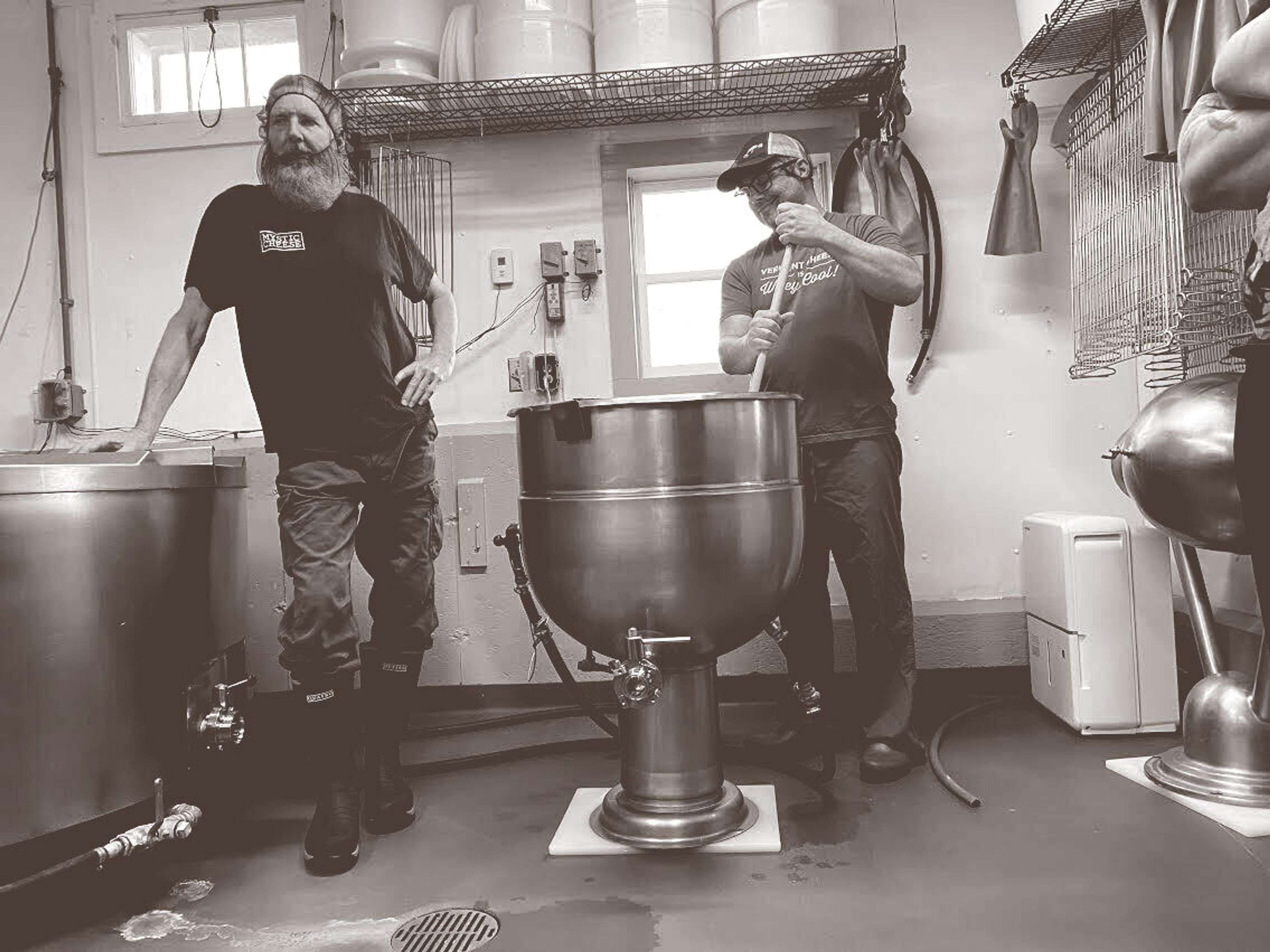
Peter Dixon, Parish Hill Creamery (L) and Brian Civitello, Mystic Cheese, CT (R)
·Photo by Lacey McNeff
This wilderness of mold microbiota, about which we know surprisingly little, is especially exciting to raw milk cheesemakers who — to put it bluntly — think pasteurized cheese is boring.
In fact, the co-hosts of the conference, Rachel Fritz Schaal and Peter Dixon at Parish Hill Creamery, not only want more raw milk cheese on American plates, but want cheesemakers to make it from scratch, using their own starter cultures. This method of using autochthonous (indigenous) cheese cultures is practiced widely around the world, from Italy (think Parmesan) to Colombia — but not in the U.S.
In fact, although in 2025 most consumers have heard of sourdough bread, natural wine, or wild-fermented beer, there are still fewer than ten producers of “wild” cheese in the U.S., according to Fritz Schaal. In a similar way to sourdough bread, cheese can be made by letting fresh raw milk sour into a sort of natural yogurt, and using that yogurt to inoculate a vat of milk, instead of freeze-dried imported microbes which are standard in the industry.
Dixon, Fritz Schaal, and Wolfe all argue that studying the microbiome of raw milk reveals an important element — terroir, or the influence of place on the final taste. “I have been known to argue at great length that pasteurized cheeses do not have terroir,” said Fritz Schaal. The reason is that pasteurization “flattens” the milk, turning it into a blank slate.
In addition to killing potentially harmful microbes, pasteurization gets rid of any local microorganisms that may have originated in the locale where the animals grazed. Most cheesemakers then add industrially produced powdered cultures to produce the flavor notes that they want in the cheese. These freeze-dried cultures come from as far away as Denmark, and the result, according to raw milk aficionados, is that a lot of pasteurized cheese basically tastes the same. According to Dixon, the goal with raw milk cheesemaking is to “drag the pasture into the cheese,” anchoring it to the creamery where it’s made.
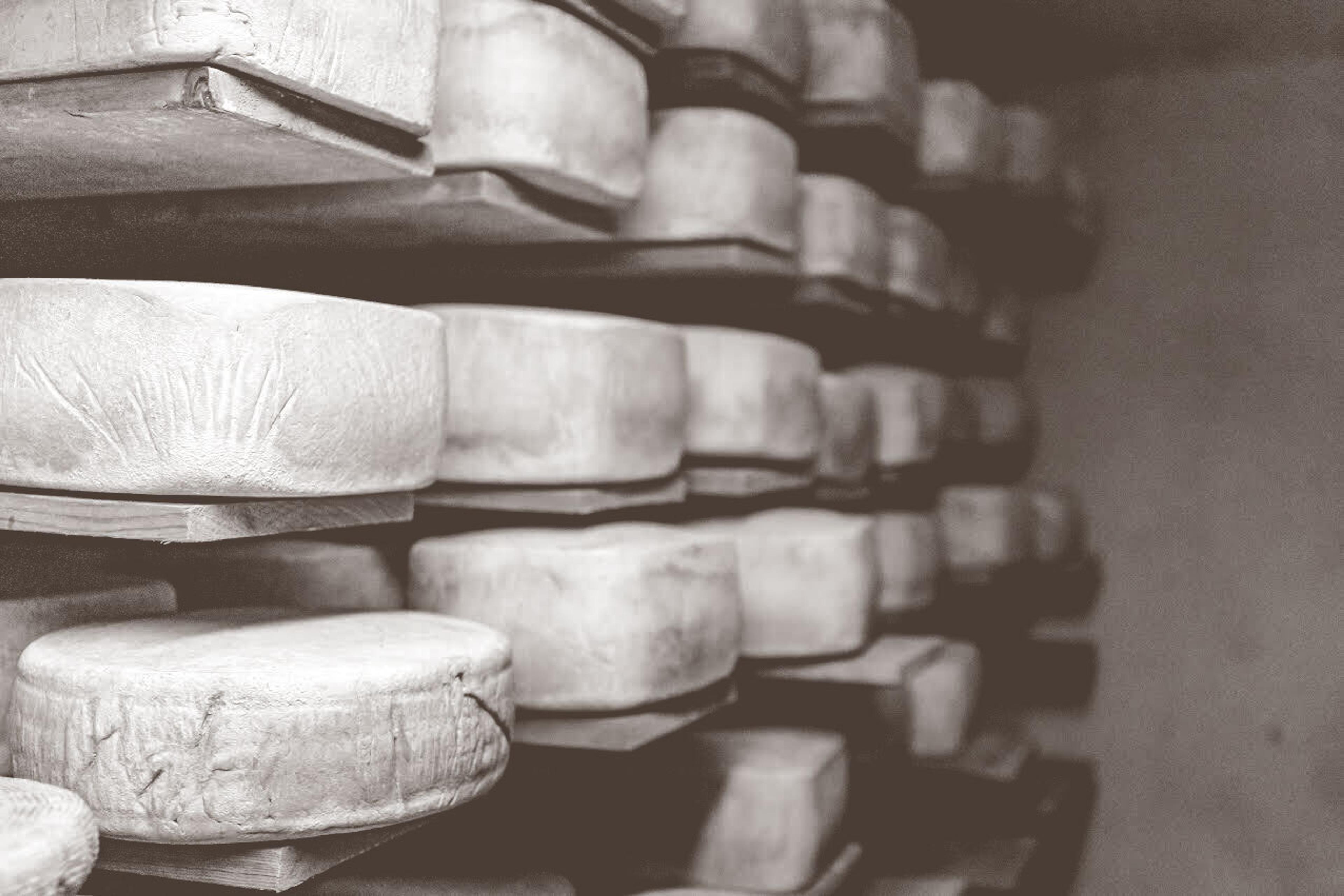
Cheese acquires a natural rind while aging in the cellar at Parish Hill Creamery.
·Photo by Rachel Fritz Schaal
Terroir for cheese takes a more circuitous path than with wine: soil to grass, grass to milk, and then milk to cheese. In studies performed by Wolfe’s lab at Tufts and the D’Amico Microbiology Lab at the University of Connecticut, fungal genetics has revealed that the microbes present in the air, on the wall, and on cheesemakers’ hands on the day the cheese was made showed up in the final product months later. Wild mold strains from the leaves and grass outside, and of course those from the animal producing the milk, also influence the cheese’s development. Even sea salt can introduce microbes captured from the ocean. The result — if done right — is a cheese that cannot be replicated anywhere else.
On the last day of the conference, participants tried three cheeses made as part of the Cornerstone Project, in which multiple cheesemakers in different states commit to make cheese according to the exact same recipe, but each using their own raw milk. Represented on the plate were Connecticut, Pennsylvania, and Vermont. The three cheeses were nothing alike. One was yellower than the other two. Another had stronger flavor, while a third tasted creamier. The recipe was the same, but each cheese reflected the evolution of local microbes over time.
Fritz Schaal argues that this kind of unique, regional, raw milk cheese could be the way to keep more small producers in business. “It is not enough to make cheese at a small scale. You have to make something exceptional, something that wows. Autochthonous starters are something only you can do.” She is careful to point out that only high-quality, tested, safe raw milk from a trusted source (in her case, a neighboring dairy) will produce the type of cheese she’s advocating for.
Not all raw milk, then, is created equal, certainly not when it comes to cheese. Robert F. Kennedy, Jr., may not have convinced everyone that drinking raw milk is patriotic or American. But raw milk cheesemakers are sure that nothing could be more American than a raw, natural-rinded wheel of cheese, with a microbiotic signature that reads “Made in the U.S.A.”
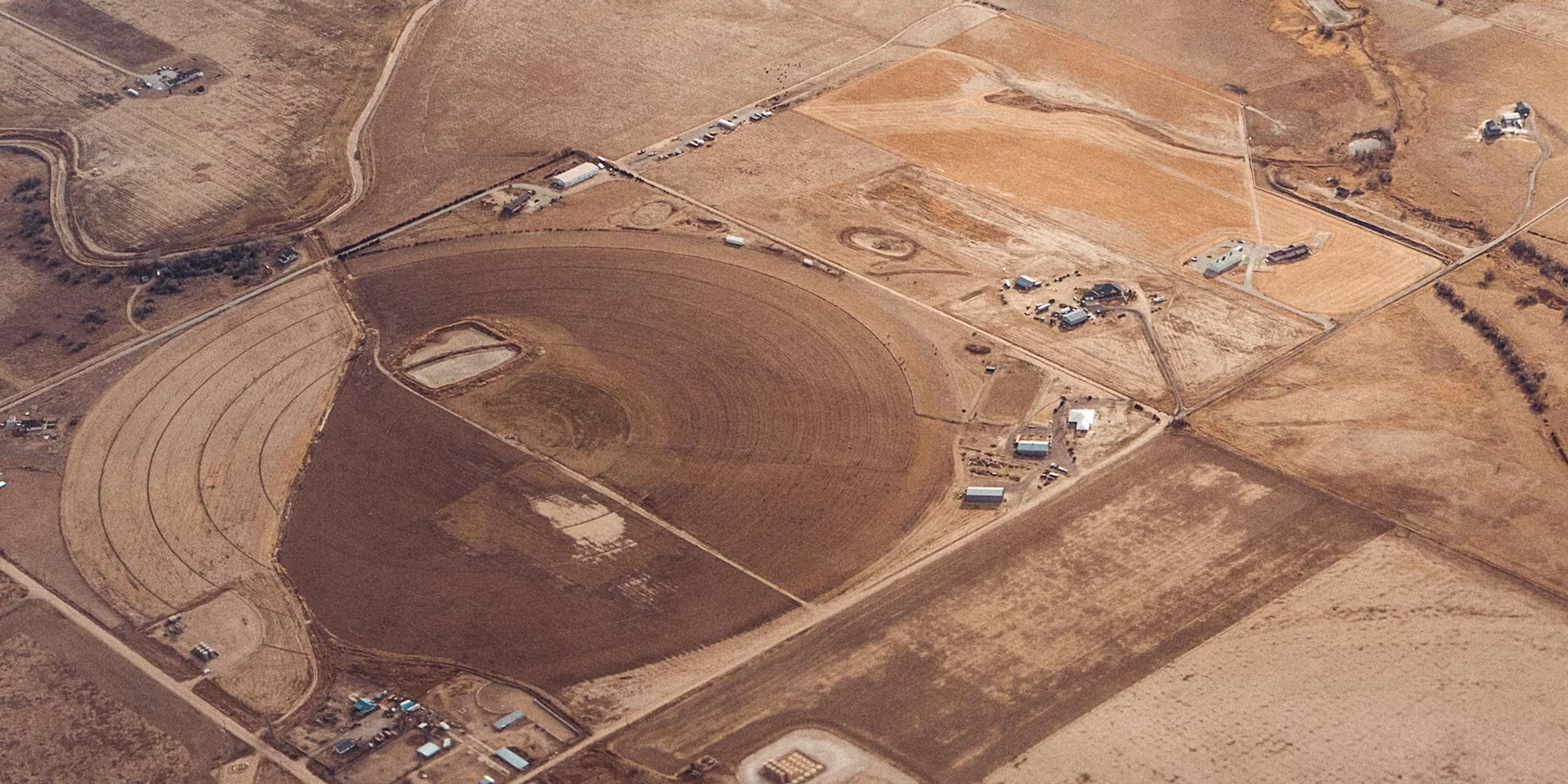
Born under cloudy skies in soggy northern Portland, my family moved to the tiny northern town of Page, Arizona — in a land where thirst is a constant companion. Surrounded by the Navajo Nation, I grew up with kids whose families have a long history of adapting to the climate of northern Arizona’s high desert.
Best known for herding sheep, the Diné people mastered dry farming on the arid Colorado Plateau, drawing on generations of traditional ecological knowledge. They managed water with features like waffle gardens and berms, utilizing deep alluvial soils, and cultivated drought-tolerant crops, such as the “Three Sisters” — beans, corn, and squash. The sustainable system they developed relied on continuous seed saving and maintaining soil health with minimal disturbance.
It makes sense why their environment necessitated the Navajo’s year-round preparation for a brief planting season, adapting their food system to the arid climate of the Colorado Plateau.
Five years ago, I returned to the Pacific Northwest, where I now live with my sister on her 20-acre property in Western Washington. I was surprised to discover that growers in the Willamette Valley in Western Oregon, an area that receives around 35 to 60 inches of rain annually, were now on the lookout for more innovative ways to grow plants with less water. I couldn’t understand why farmers receiving that much annual rainfall needed to worry about water.
Wanting to understand why, and looking for resources that might help my sister and me conserve water ourselves, I reached out to Amy Garrett, director of operations at the Dry Farming Institute.
Amy’s involvement in dry farming began when she was working for the Small Farms Program at Oregon State University in 2011. She kept getting questions from new and beginning farmers facing unexpected water rights limitations and restricted access to irrigation. Traditional extension resources and conversations primarily focused on irrigated agriculture, which left water-poor growers somewhat up a creek without a paddle.
There is more to dry farming than simply turning off irrigation.
“I was having conversations with growers who had signed leases or were bequeathed land and were really just trying to figure out what they could grow after discovering they didn’t have water rights to the land, or it was a lot more expensive than they’d planned for,” Amy recalls. “It became clear after discussing soil type and drought-hardy crops that there was a significant knowledge gap regarding dry farming practices.”
For new farmers in Oregon, securing water rights presents significant challenges due to the state’s “first in time, first in right” water doctrine. This system prioritizes older water rights, meaning newer farms often face shortages, and water rights are not automatically transferred with land ownership. Many basins are already fully claimed or “over-appropriated,” making it difficult or impossible to obtain new permits, particularly in eastern and southern Oregon. This already complex situation is further exacerbated by the past two decades of persistent drought, which has strained water supplies and made existing rights even more precarious.
What Is Dry Farming, Actually?
There is more to dry farming than simply turning off irrigation. The methods shared by the Dry Farming Institute rely on carefully selecting sites with deep, water-retentive soil and enhancing these conditions through practices like adding organic matter and precise soil preparation. Key to its success is planting at optimal times when soil moisture is present, often with lower plant density to reduce competition for water. Farmers employ moisture conservation techniques such as dust mulching throughout the growing season, alongside selecting drought-tolerant crop varieties, to grow crops with minimal to no irrigation. This encourages plants to access and utilize deep soil moisture more effectively.
The general definition of “dry farming” from their downloadable Dry Farming Zine toggles between terminology, but ultimately, “Dry Farming is rainfed [read: not irrigated] crop production during a dry season in a region that experiences 20 inches or more of annual rainfall.” In the maritime Pacific Northwest, winter rains replenish soil moisture yearly, giving growers sufficient water to grow crops without traditional irrigation.
But even in a region with over 20 inches of annual rainfall, Oregon’s food systems still have a water problem. In 2015, a severe drought in the Pacific Northwest led to early water restrictions, forcing many farmers to reduce or halt irrigation, which resulted in crop failures. The crisis highlighted the region’s fragile water supply and the challenges faced by those with junior water rights.
“It became clear after discussing soil type and drought-hardy crops that there was a significant knowledge gap regarding dry farming practices.”
A chance encounter with an experienced dry farmer applying the practices he’d learned from Italian immigrants inspired Amy to bridge the knowledge gap between farmers with practical experiences and growers needing dry farming insight. In the midst of that severe drought, she staged a pivotal demonstration to showcase the potential of dry farming in the Willamette Valley. Despite challenging conditions, dry-farmed crops thrived without irrigation, leading to a paradigm shift among attendees.
Today, the core purpose of the Dry Farming Institute is outreach and education, aiming to empower growers to thrive with less water through various initiatives. They develop impact case studies, sharing innovative approaches from active practitioners, and host virtual water resilience workshops, which are great for getting ag professionals and farmers together to network and trade insights.
This year, the Institute is also developing a water resilience toolkit — a practical guide based on extensive research, offering actionable steps and resources for increased water resiliency. All these efforts aim to build capacity, confidence, and community within the farming sector in Oregon and Washington.
Should You Dry Farm?
If dry farming practices work so well in the Pacific Northwest, why wouldn’t farmers adopt them everywhere? While the strategies developed in Oregon can help reduce water use in other regions, their suitability depends on climate, soil, and local conditions. Plants don’t need to develop deep roots in areas with steady summer rainfall (say, a Midwestern state like Indiana). In contrast, in Oregon’s dry summers, crops must reach deeper for moisture, training them to be perfect candidates for dry farming.
Amy suggests that dry farming is particularly beneficial for farmers in drought-prone regions or those facing specific water restrictions; growers looking to improve resilience to extreme heat; and regions with seasonal or intermittent rainfall, where farmers can use soil assessment, variety trials, and soil moisture sensors to reduce irrigation reliance.
But before you reach out directly to DFI, consider that their overall process of knowledge-sharing and experimentation can be replicated anywhere. I asked Amy whether dry farming is viable for large-scale corporate farms or if it’s primarily suited for smaller operations.
“I would have to say that depends on how a farmer defines success,” Amy suggested. “Corporate farms prioritizing maximizing yield and profit often rely on and have more access to traditional irrigation, making it less appealing.” Small-scale farmers often turn to dry farming out of necessity, due to water shortages, high irrigation costs, or a lack of infrastructure.
“A major advantage of dry-farmed produce, we’re discovering, is extended shelf life.”
“It’s just not a yield-maximization strategy,” she continued, “but a major advantage of dry-farmed produce, we’re discovering, is extended shelf life.” Despite yielding smaller sizes and quantities than irrigated crops, she said dry-farmed produce tends to store much longer, reducing waste. This is particularly beneficial for farmers marketing their produce over extended periods, as irrigated produce can rot in storage, negating its initial higher yield.
Longer shelf life and exceptional flavor turned Mary Colombo of Wild Roots Farm onto dry farming. Located near the confluence of the Sandy and Columbia rivers, the farm supplies a CSA and local restaurants in the metro Portland area with dry-farmed produce such as potatoes, tomatoes, winter squash, corn, and tepary beans, a legume grown by Native people since pre-Columbian times.
“I became interested in dry farming because it seemed so counterintuitive to grow crops without irrigation, but the results we’ve had are impressive,” admits Mary, who took her passion for food, gardening, and a desire for more meaningful work to a deeper level through the help of a farming incubator program, which eventually led her to the Dry Farming Institute.
Her biggest takeaways of dry farming? “I’m amazed by the wide variety of crops that can be dry-farmed,” she said. “The Dry Farming Institute is continually expanding and exploring new crops that can thrive in our region without irrigation.”
“Corporate farms prioritizing maximizing yield and profit often rely on and have more access to traditional irrigation, making [dry farming] less appealing.”
Growers who may not have initially had to worry about water restrictions may need to reconsider water conservation in the near future. With funding from the 2022 Inflation Reduction Act helping farmers conserve Colorado River water, many are reconsidering their irrigation practices. If these financial incentives disappear, growers may face economic losses from reduced crop production, making alternative water-saving techniques like dry farming more appealing.
When I interviewed Amy in mid-February, she had just returned from a brief vacation to learn that a major grant, representing half of the Dry Farming Institute’s 2025 funding, had been frozen. This was likely due to its focus on “underserved producers” and “climate change” — phrases that are perceived as problematic by the current administration. On May 6, that funding was officially terminated. This cut creates substantial uncertainty for ongoing projects and additional hiring in 2025. It also makes relying on federal grants, the primary funding source for the past decade, unreliable.
While this is challenging, Amy acknowledges the opportunity to re-evaluate the organization’s priorities and potentially transform their approach to funding and programming. Like most people in the food and agricultural industries, they’re used to pivoting. Individual donors and the NoVo Foundation have already stepped in to help fill the gap.
“I’m trying to look at this setback as an opportunity to let go of some things that we don’t need to carry anymore,” said Amy. “A chance to transform the way we work as we continue to support growers in their efforts to produce food with less water.“
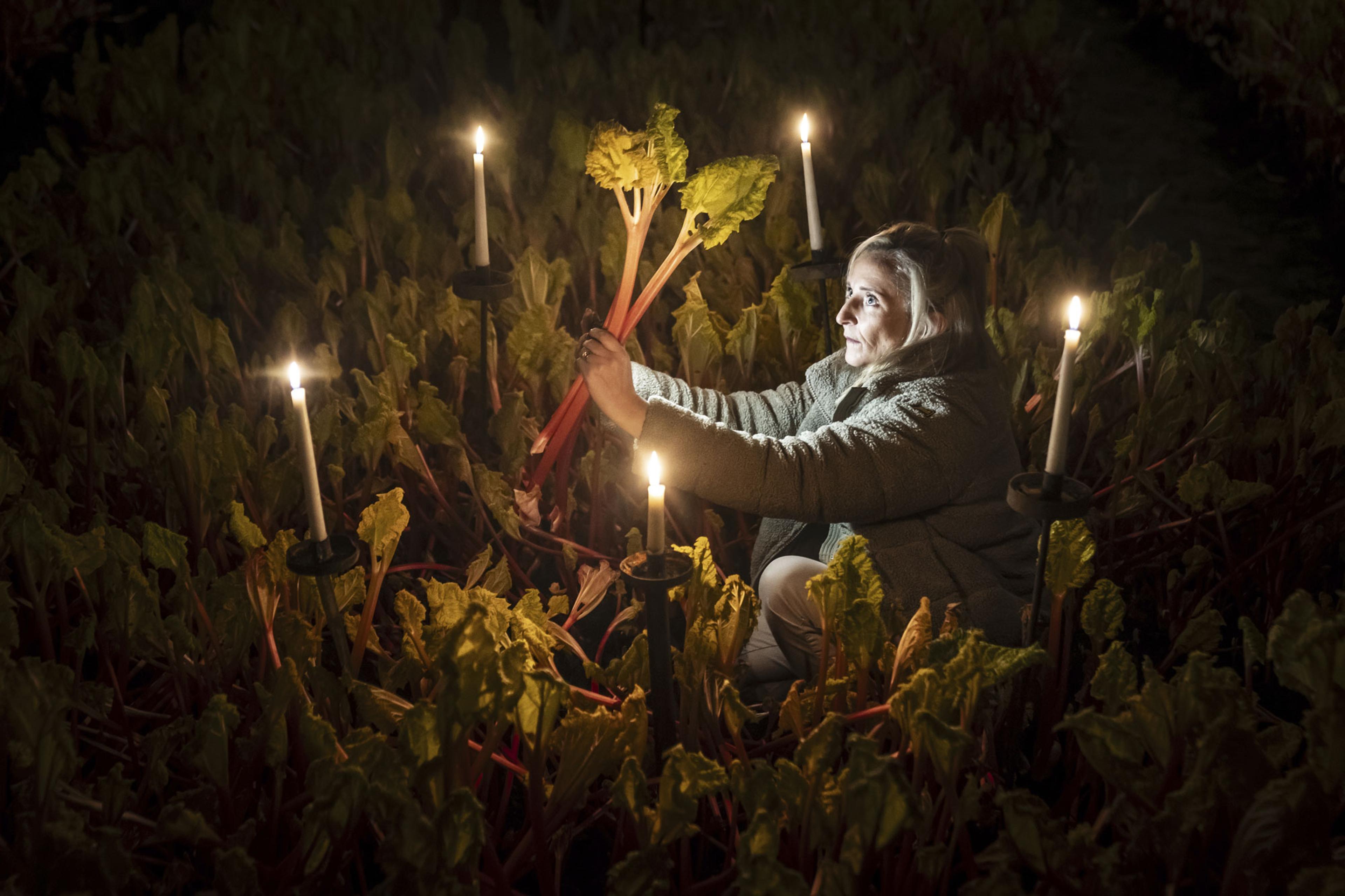
Fifteen of the U.S. Department of Agriculture’s federally funded gene banks are common-sensical repositories, housing plants that thrive in the regions where they’re located: bananas in Puerto Rico, onions in Geneva, New York. But the 16th bank, the Western Regional Plant Introduction Center in Pullman, Washington, is weird no matter how you slice it. Like its brethren, its 14,000 seed and rootstock accessions, representing 1,300 species, are meant to safeguard agriculture’s genetic diversity and are available to breeders and commercial growers.
But Pullman’s are mainly plants that “didn’t fit into anybody’s else’s collection,” said curator Alex Cornwall. Its orphaned odds and ends include sugar and table beets; legumes like Lupini beans and lotus; cool season grasses; dye plants like madder root and bed straw; dandelions being investigated for their potential to make natural rubber; and culinary rhubarb — 47 varieties in all, with 10 more on the way, including some crop wild relatives.
Despite the fact that rhubarb’s pinkish/greenish stalks can reliably be found piled up on farmer’s market tables pretty much everywhere starting in April, it’s not much of a farm staple outside the Pacific Northwest — possibly because it flourishes in plenty of American home gardens. A handful of holdouts in Washington’s Puyallup Valley still grow rhubarb both in its field and forced form (more about that later). But in 2022, only 1,720 acres of rhubarb were farmed across the country; for comparison, the crops that bookend rhubarb in the Census of Agriculture totaled 20,400 acres that same year (radishes) and 79,400 acres (spinach).
You can intuit near-desperation in Cornwall’s voice as he discusses the professional disinterest in this vegetable that’s related to buckwheat and loves temperatures as cold as minus 50 degrees Fahrenheit: If professional growers “request rhubarb from me, I am 100 percent willing to send material to them” — for free, no less — “so that we can get more of these varieties out there,” he said. Takers in 2024: three, including a group from Canada that was discounted because they neglected to secure the necessary import permit. Consider this a rhubarb stan article as we consider: What would it take to get American farmers and eaters to embrace the Rheum?
***
Perhaps the answer can be found in northern England’s Yorkshire Triangle. This is the accidental birthplace of forced rhubarb, a winter crop that’s grown in total darkness after being transplanted from field to hothouse (or as became traditional in Yorkshire starting 200 years ago, a shed heated by the region’s abundant coal supply).
Legend has it that a gardener unwittingly kicked a bucket over a rhubarb plant, only to discover that it thrived in the murk. In a few short weeks it had used the energy stored in its roots to shoot up dramatically. Its normally pallid, super-sour stalks were colored a vivid pink and tasted sweet(er), with less of a stringy, tough chew; the stalks were capped with pale (toxic) leaves wrinkled like Napa cabbage. Even now, starting in January enthralled Brits flock to Yorkshire, where the delicacy is harvested by candlelight after a growing period so fast and intense — allegedly an inch per day, as it frantically seeks sunlight — the plant makes a high-pitched popping sound.

“There’s not a whole lot of research being conducted, and I think part of it is the perception that rhubarb is only seen as a dessert.”
Brian Anderson runs Knutson Farms in Sumner, Washington, which sells over a million pounds of Crimson red and Johnson red rhubarb a year; the farm started forcing rhubarb in the 1940s, to keep the crew busy over the winter. The plants can live for decades but working them is labor-intensive. To keep them healthy as they age, Cornwall said the plants actually need to be chopped up occasionally; some farms’ crews will run a tractor or a spader through a field of them — or chop them one by one with a shovel — so the centers of their crowns don’t rot. Like apples, rhubarb doesn’t breed true if it’s raised from seed, so chopping it up into pieces is also how you make more plants to propagate.
Only well-established field plants that are three or more years old are hardy enough to be forced as the days grow short and cold. As soon as they go dormant, in late December, “We dig them up, put them in tight rows in our completely dark hothouse. And they just grow,” said Anderson. Any plants that survive the intense effort of transferring all their energy into their shoots get moved back to the field come spring. “If we get 60 percent of that [winter] crop, we’re pretty happy,” Anderson said. He manages to sell everything he harvests, to local grocers as well as mail-order chefs and mixologists interested in turning out cobblers and cordials. But as he told Washington’s Capital Press, he doesn’t see much potential to grow his rhubarb business; any more and “we probably wouldn’t have a sale for it,” he said.
USDA’s Cornwall thinks part of the problem is rhubarb’s association with sweets. “There’s not a whole lot of research being conducted, and I think part of it is the perception that rhubarb is only seen as a dessert,” sweetened with sugar and other, less astringent, fruits. It wasn’t always, or everywhere, so.
The U.S. got its initial predilection for rhubarb from the U.K., where it didn’t start appearing in cookbooks until the early 19th century, when sugar became affordable to the masses. Before that, it was used medicinally, as a purgative to restore “the tone of the stomach,” according to a manual published by an 18th century British physician. Centuries earlier, as rhubarb traveled along the Silk Route from China and Tibet, whence it originated, it was heralded as a cure-all for spleen and liver ailments; inflamed kidneys; sciatica; asthma; dysentery; fever; and poisonous animal bites.
In the late 1800s, the USDA moved its rhubarb collection to a new gene bank in Palmer, Alaska, as a means to bolster the fresh food supply for people who’d settled in with the Klondike Gold Rush (they’d brought cold-loving rhubarb with them); starvation was a major concern. By then, eating the plant, which is rich in vitamin C, was also known to be a reliable way to stave off scurvy; the leaves are inedible, however, due to their high oxalic content. As a bonus, frigid winters and long summer days meant an Alaskan homesteader could raise a rhubarb the size of a shed. Today it’s recognized for its anti-bacterial, anti-inflammatory, digestion-promoting properties.
“My technicians sample rhubarb [varieties] growing in the field; they eat it like celery and they’ve become connoisseurs.”
What other important abilities might rhubarb possess? “We’re preserving these plants in the hopes that people are going to come looking for them,” Cornwall said wistfully. He and his team have even identified types that can withstand increasing heat from climate change. “We’ve got a farm down the Snake River where it gets well over 100 degrees during the summer and [several] accessions are thriving,” he said. Southwestern desert rhubarb? Anyone?
Fed up with waiting for his worthy collection to be discovered, Cornwall decided to take matters into his own hands. At the end of May 2025 he hosted a Rhubarb Rumble in the town of Pullman. Locals were asked to submit dishes, — especially non-desserts. Cornwall made chutney, although he’d been intrigued by tales of an Alaskan rhubarb competition to which someone contributed a rhubarb pizza. (Pork barbecue in tomato/rhubarb sauce was on the menu but the winner was a rhubarb panatela.)
In fact, outside the Anglo-Saxon tradition of pies and jams lies a whole swath of cuisines that use rhubarb as a savory ingredient. Tugum rawash is a rhubarb sauce topped with coddled eggs — a sort of Afghani version of Middle Eastern shakshuka. A Persian stew called Koresh Rivas tempers bitter rhubarb slices with lamb and spices. TikTok is replete with videos of gourmets munching on fresh rhubarb stalks either with a sprinkle of salt or au naturel.
“My technicians sample rhubarb [varieties] growing in the field; they eat it like celery and they’ve become connoisseurs,” Cornwall said. All he wants to know is what he can say or do to convince you to become a connoisseur, too.
Nearly every day, dog trainer Jamie Penrith meets with dog owners whose pets have threatened or harmed sheep. “People come to me because they are desperate,” he said. “Either their dog has attacked, or they can see that their dog would attack.”
He teaches these dogs to leave sheep alone, using perhaps the most maligned tool in the dog training industry — the electronic collar, or e-collar. Through adjustable electric pulses administered via a handheld remote, the predatory pets learn that livestock are off the menu.
While the tool has been banned or heavily restricted in several countries due to welfare concerns — including Germany, Norway, and Sweden — some trainers argue that e-collars can prevent dangers to both livestock and dogs. Sheep farmers are even pushing back on existing bans, citing concerns for their animals. As more governments consider prohibiting the collars, debate is heating up over whether predatory instincts can be controlled without them.
Shocking Dogs to Protect Sheep
In the English countryside, where publicly accessible footpaths cross grazing lands, canine-bovine conflict is common. By one estimate, about 15,000 sheep are attacked by dogs every year across the UK — a number that may be growing, according to insurance data.
From speaking with owners, Penrith knows many attacks go unreported. “I would say you could probably quadruple that, at minimum, in terms of the actual attacks that do take place.” And livestock are not the only animals at risk — legally, farmers may shoot a pet that harasses their herd.
The conflict is common in Dartmoor National Park, where dogwalkers roam the rolling terrain alongside farmers grazing sheep, cattle, and ponies. Last year, the park’s livestock officer, Karla McKechnie, responded to 109 incidents of dog attacks on livestock, an increase from previous years. “We have a huge problem with out-of-control dogs,” she said.
In Wales, which enacted a ban on training with the collars in 2010, sheep farmers have called for a reversal. They argue that insurance data shows their animals suffer a higher rate of dog attacks than other parts of the UK. Adding to farmers’ concerns, a 2024 survey found that while a majority of dog owners let their dogs run free in the countryside, less than half of owners say their dogs come when called.
“We have a huge problem with out-of-control dogs.”
Years ago, Sarah N. (last name withheld for privacy concerns) of Devon, England, realized the risk of letting her dogs roam without training. On a walk through the woods, two of her dogs, Lola the terrier mix, and Fred the vizsla-pointer cross, charged a sheep down a steep bank and into a river. Her husband had to climb down the cliff, wade in the water and lift the sheep — shaken but uninjured — back onto shore.
After the incident, she hired Penrith. He first taught the dogs that following a verbal command to come back allows them to avoid the sensation coming from the collar. In a later session, the trainer brought the dogs near sheep in a controlled setting, delivering a pulse when their predatory impulse was piqued. The dogs learned two things: You must come back when called, and livestock must be left alone.
Usually after about three or four zaps, “the sheep becomes a stimulus that the dog thinks ‘do not approach under any circumstances, because it’s bad news for me,’” said Penrith. This negative association is intended to stop sheep attacks even when the dog’s handler isn’t present, which accounts for a large proportion of documented attacks — for example, when a dog escapes a yard.
After the training, Lola and Fred could safely run through the woods without bothering sheep. “It just gives them freedom,” Sarah said. “E-collars are a really good thing, used humanely with a trainer. ” (This reporter observed a similar outcome with her own dog, who now reliably responds to “come” even around squirrels and deer).
Electric Science
Electric shocks have a long history in behavioral research. Zaps can be timed precisely and delivered at calibrated intensity.
In dogs, findings dating back to the 1980s suggest that well-timed remote collar shocks — as part of a bigger training program — can curb unwanted behaviors. Still, other research has linked punitive training to worsening behavior in pets. The trouble is, protocols are inconsistent between studies. Many findings are based on owner observations reported in surveys, which begs questions like: Are certain tools causing problems, or are owners more likely to reach for those tools for problematic dogs?
The science on e-collars and livestock predation is sparse. In a 2001 study, researchers shocked 13 dogs when they came within two meters of the sheep. Tested a year later, their interest in sheep had tanked — only one dog stepped close enough to receive a zap. Owners of those dogs reported no negative behavior effects following the training.
Anamarie Johnson, an animal behaviorist working with U.S. rescue organizations, says there isn’t enough data on the consequences of e-collar training — both regarding predation as well as the emotional impact on dogs. That’s one reason why she studied stopping chasing in dogs as part of her PhD research at Arizona State University.
“The sheep becomes a stimulus that the dog thinks ‘do not approach under any circumstances, because it’s bad news for me.’”
For her study, published last year in the journal Animals, she selected dogs that chased a plastic lure moving rapidly through a motor-powered course. Then, the dogs were split into positive training and e-collar groups. The goal: Teach the word “banana” to mean “stop chasing.” (She chose a novel word that the dogs likely had no history with, unlike “come” or “stop.”)
In short training sessions, the word was paired with either a shock when the dog reached the moving lure, or, in the positive approach, the trainer said “banana” and dropped the dog’s favorite treat into a bowl while the lure machine was turned off. After the initial training, the dogs were tested to see how they responded to the banana cue when presented with a moving lure. While the e-collar-trained dogs were successful — most avoided chasing entirely or stopped when they heard “banana” — the food-reward group ignored the signal and chased the flying plastic. In a video behavior analysis of the training sessions, Johnson noted the e-collar dogs yelped when shocked but found few other signs of stress, though she added that the study didn’t provide insight into long-term impacts.
While some trainers embraced the findings (and others angrily criticized them), Johnson, who advises animal rescues on non-aversive handling and training methods, still thinks the collars are a risky tool in the hands of everyday dog owners. That said, “I don’t think anyone should be using my non-aversive protocol to try to stop [chasing] either,” she added, since it failed to stop dogs from going after the moving lure. Both training protocols were “super slimmed down” she added, and not something for owners to replicate — most real-world training takes longer, and is more complex, than can be fit into a three-day experiment.
(With more time, many e-collar trainers faced with a prey-chasing pup would teach an alternative behavior, such as coming back when called, and apply the stimulation for non-compliance. On the flip side, positive trainers might focus on getting many successful repetitions of “come” — rewarding heavily — until the behavior becomes near-reflexive.)
Avoiding Fragile Birds
While several countries have banned e-collars, at least one uses them in an official capacity to protect wildlife. New Zealand’s department of conservation, in partnership with nonprofit Save the Kiwi, organizes e-collar training to discourage dogs from approaching the flightless and fragile birds. Kiwi birds not only lack the ability to fly, they lack sternums — a hard nose nudge from a curious canine can be enough to crush their organs, said Emma Craig, dog specialist at Save the Kiwi.
The program started with hunting dogs in the 90s. Hunters use dogs to track their target: feral pigs. But those canines can also be drawn in by the kiwi’s strong musky scent. So, conservationists and trainers developed a program to teach dogs that kiwis are off-limits. In an outdoor training field, dog owners pretend to take their companion on a normal walk in the woods, but when the canine sniffs toward the kiwi decoy — either a real, dead kiwi or an artificial one, with added fresh scat for extra stink — the trainer shocks the dog via an e-collar, aiming for the lowest level needed to create an avoidance response.
Now, thousands of hunting, farming, and pet dogs are trained in New Zealand every year. While it’s not a guarantee against kiwi predation, Craig hears many stories from hunters — their dogs will suddenly move in a wide arc around an area, cautiously avoiding kiwi scent. Such unofficial reports as well some research suggests it provides extra security for the sensitive species, which is seeing a rebound in its numbers in some parts of the country.
A Welfare Worry or a Seatbelt?
From the spotty data available, Johnson and positive-reinforcement trainers remain unconvinced the tool is necessary and worry of welfare impacts, especially if owners can order the equipment with a single click online and no instruction. But, after facing intense pushback online for her research, she doubts other researchers will take up the cause of studying the behavior outcomes of using the training aids. The unwillingness to consider gaps in scientific understanding, said Johnson, is “a problem within the industry.”
Meanwhile, concerns about welfare continue to fuel proposals to limit use of the tool. In the United States, New Jersey and San Francisco regulators have considered bans. But, in a polarized dog training industry that seems to echo our current political climate, it’s unclear if dog professionals will come together on any guidance or regulation.
While acknowledging no training is fail-safe, Penrith argues the extra reliability of an e-collar is akin to a seatbelt — another layer of security for dangerous situations. Back in Dartmoor, McKechnie says that while she recommends leashing up pets near livestock, sometimes that’s not enough — leashes can break or slip out of hands. For dogs that are highly motivated to go after animals, McKechnie supports electric collar training to save the lives of both sheep and dogs. “Those dogs need to be trained,” she said.
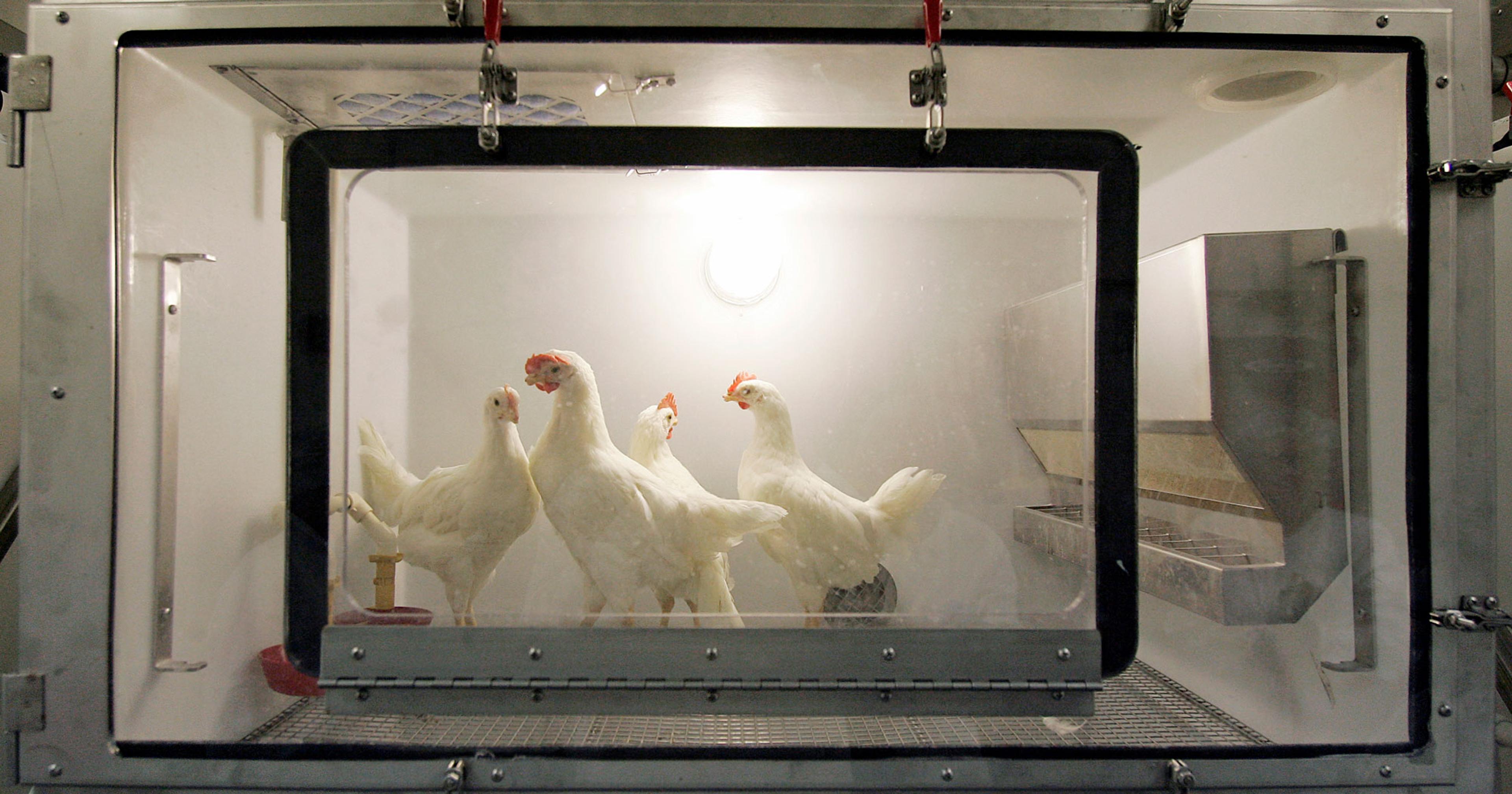
Avian flu has become a financial disaster for some flock owners, especially in the egg industry. Backyard chicken owners are wondering whether their birds will be next. The problem is that there is no “early warning” system available. The gold standard for testing requires a lab and can take days to deliver results. A new detection technology can produce results in minutes, however, and is designed to be installed on site, right in the flock housing buildings, to provide continuous monitoring.
The USDA deems the H5N1 strain to be a highly pathogenic avian influenza (HPAI), which has had a mortality rate approaching 100% for some outbreaks. To control the spread of the disease, nearly 170 million heads of poultry have been culled or otherwise affected since the first outbreak was identified in February 2022, according to the Animal and Plant Health Inspection Service (APHIS) of the USDA. This includes both commercial and backyard flocks, and the disease has had a significant impact on commercial egg supplies and other aspects of the poultry industry.
Controlling avian flu is difficult, because the virus is present in wild bird populations and it can easily be spread to domestic poultry, including chickens and turkeys.
But as we learned from Covid-19, viruses don’t always stay in their lane. H5N1 has also infected cattle, primarily herds of dairy cows. Unlike the high mortality rate with poultry, the virus does not appear to kill cattle. The spread of HPAI has forced the isolation of sick cows, however, and restrictions have been placed on transporting infected animals across state lines. According to Mostafa Ghanem, assistant professor of veterinary medicine at the University of Maryland, bulk testing of raw milk has been helpful in identifying outbreaks in dairy herds.
The more concerning development has been the transmission from cattle to humans; as of March 2025, the CDC reports 70 human cases in the U.S. and the majority of those were due to transmission from infected cattle. (To date, there haven’t been any known cases of human-to-human transfer.)
The risk to the general public is deemed to be relatively low; the costs to the poultry and cattle industries remain significant, however. While many federal research grants have been stopped as part of recent cost-cutting measures, the USDA did announce a $1 billion program that covers biosecurity, financial relief for affected farmers, and vaccine research. And new testing procedures are at the forefront.
The fact remains that time is money when it comes to poultry infections. Traditional testing takes time, which limits how quickly flock owners can respond and start mitigation treatments. Faster results could reduce financial losses significantly.
Faster Testing for Flocks
Researchers at Washington University in St. Louis have developed a novel testing procedure that can identify infected poultry in five minutes or less. These results are nearly instantaneous compared with the current gold standard for testing.
At present, detection of H5N1 in poultry relies on real-time reverse transcriptase polymerase chain reaction (PCR) testing. This process requires that physical swabs are applied to the birds — living or dead — or to surfaces in the flock housing and then those samples must be delivered to an appropriate laboratory. There, the samples must be processed and prepared for testing. “The automated testing process itself takes about six hours,” according to Ghanem. “In general, results are available within 24 hours, though this can be cut in half in urgent situations.”
The PCR testing is also used to detect the virus in products including milk and meat.
Other testing procedures require drawing blood samples from individual birds, which is more difficult than simple swab samples. These alternatives rely primarily on blood samples. Once these samples have been collected and delivered to a lab for processing and testing, these tests can rapidly detect antibodies in animals that have been exposed to the virus. This means they can report on exposure, but not specifically about active infection. And these test can still take days before results are available.
Results Out of Thin Air
The Washington University technology takes a completely different approach. Instead of relying on physical samples from individual birds (or cattle), the system samples air from the exhaust vents from the animals’ housing. The researchers have described their results in a paper in ACS Sensors.
The air enters a wet cyclone sampler which captures aerosol materials and concentrates them in a fluid. A “wet cyclone” uses a design similar to dust extraction systems that drive air through a cone-shaped device. This spins the airflow, as in a cyclone, that forces particulates to the outer wall of the cone. In this case, the wall is coated with a carrier fluid — keeping it wet — which captures the viral and other airborne material. The carrier fluid rinses the wall, and every five minutes, a sample of the fluid is pumped to the processing unit which is about the size of a desktop printer. A biosensor then analyzes the sample and quickly indicates whether or not the target virus is present.
The biochemical sensor relies on a material that is specific for the H5N1 virus, made from materials that are commonly available and relatively low-cost. One advantage of this testing is that it is non-destructive. The sample is not affected by the testing, which means that it can be preserved for use with other testing procedures if needed.
In addition to the speed of testing, a big advantage is that it does not require any technical skill to operate. The system can alert workers of possible infection in real time, and the levels of the detected pathogen. While the fabrication of the sensor system requires precision, the materials involved are not expensive and the system could be mass produced at a reasonable cost. The basic fabrication process uses screen printing technology to create the sensor electrodes.
But just how accurate is the testing? According to the team’s own published results, the system’s results showed a 90% correlation with the standard PCR lab results.
Where Do We Go From Here?
At this point, the system has only been tested in the lab using controlled samples. The research team has consulted with Varro Life Sciences during the process of designing the system, which could help speed the development of a commercial product. But the system will require pilot testing in the field to make certain that they can duplicate the accuracy produced in the lab and that the device will hold up under continuous operation.
One feature of the design does provide an important advantage for commercial applications. The biosensor can be charged with DNA material from other viruses, such as Covid-19 or the new H7N9 strain of HPAI virus. The sensor can also be charged using material from bacterial antibodies. This enables the system to detect aerosols containing a target bacteria and thus provide early identification of infections. The researchers were even able to identify samples of E. coli bacteria antibodies with their sensors.
In fact, it would be possible to include multiple sensors in the processing device so that multiple viral and bacterial infections could be detected using a single system. This continuous and real-time monitoring could be helpful in tracking disease not just in poultry and livestock operations, but in human healthcare facilities and other settings where disease transmission is a concern.
A low-cost airborne disease detection system that does not require trained technicians could save significant health costs — not to mention lives — for both agriculture and humans. If this new system proves to be effective, it could have a huge impact.

My first pet was a goldfish named Sparkle. She was 25 cents at Petco, and the size of my pinky finger. My mother bought a tank and all of the accoutrements — pebbles, dark flakes of fish food, and a miniature net — for Sparkle and her inexpensive friends waiting in collection cups to enter their new home.
A couple hundred bucks and four days later, Sparkle was dead, floating on the turquoise skin of the tank’s surface. But another one of those specimens, a standard Comet goldfish, thrived for the next decade. When I went off to college, my father was in charge of caring for the nameless goldfish that was easily six inches wide and thick.
Now that I think about it, is he still out in the garage, swimming in that too-small tank? No one can be sure. It’s very likely that he passed away, but it’s also not unlikely that he was brought out to a beach on the Magothy River in a bucket and released by my dad to go live his best life.
But the impact of owners that want to be merciful and release their goldfish into a local water body is profound. The first consideration is size. A recently caught goldfish in France weighed more than 67 pounds. In 2023, goldfish caught in the Midwest were over a foot long. And, of course, there was Megalodon, a massive goldfish caught in March in Pennsylvania — and an instructive warning tale.
These goldfish grew that large for a reason: They’re adaptable, voracious eaters that breed like crazy. In recent years, their presence in the Great Lakes has caused researchers to reassess what part the creatures have to play in environmental decline. For example, Lake Ontario is known as one of the most degraded aquatic ecosystems in the bunch due to nearby industrial activity, but it’s also home to a colony of goldfish that spawn in a specific spot every year, and each one can live up to 25 years.
But what exactly makes goldfish so dangerous to local waterways? And are pet owners to blame?
The American Chameleon
Grant Lord, the owner of AboutGoldfish.com, is a walking encyclopedia on the namesake species. Within 30 seconds of a video call from New Zealand, I learned roughly 10 facts: There are over 100 varieties of goldfish, which are descendants of the Prussian carp, carassius gibelio, which is a part of the Cyprinidae family, which also includes the sleek, stylish koi fish.
It’s not uncommon for goldfish to live from 10 to 40 years, and for over 1,000 years, farmers in China selectively bred them, and started to see new, exciting colors emerge from the genetic pool. Before long, more varieties developed, which are dubbed fancies by goldfish insiders. They may have bloated cheeks, two tails, or elongated eyes, among other features.
Traders in boutique varieties can sell a fancy for $15 a pop. But goldfish as a whole are particularly unique, Lord says, because they quickly revert back to their ancestral aesthetic. “Their genes try to revert back,” said Lord. “That’s one of the reasons why you mainly see single-tail goldfish in waterways. A lot return to their orange color [from other varieties] because of birds of prey ... They’re very adaptable, and breed like rats.”
Jennifer Riddle, programs manager for the Invasive Species Action Network (ISAN), also spends a lot of her time thinking and talking about goldfish. ISAN is largely funded by the U.S. Fish and Wildlife Service, and though there have been announcements of all kinds of cuts in the federal government, they have not impacted ISAN.
“The barrier to entry for ownership is low. At the county fair, each kid gets a free goldfish.”
“I think [I talk about goldfish a lot] because many of us have owned one at one point in life,” she said. “The barrier to entry for ownership is low. At the county fair, each kid gets a free goldfish.”
But in our communal hearts and minds, when we hear the word goldfish, we think of the cracker or the Comet, the ubiquitous goldfish that children receive in a little bag at the county fair. The variety was bred around 1880 in Washington, D.C., in a few local ponds. It’s the most common type of goldfish that gets released in waterways, and can survive in a staggering range of temperatures and conditions. Fancies cannot.
Comets have very little economic value, and are bred as beta fish to feed turtles and large tropical fish. They’re the variety that goes into a little tank at home for a quarter, but that doesn’t limit what they can become.
The Question of Size
Though reputable resources say that goldfish are confined by their tank size and cannot grow to be large without more space, as an expert on the species, Lord isn’t completely sold on the theory.
“I’m doing research on this as we speak because it’s sort of a myth,” he said. “There are examples of stupidly large goldfish in small aquariums, and in other cases, there’s no growth [in a big space] ... So take that [idea] with a grain of salt.”
He argues that a goldfish’s size has much more to do with the mineralization of the water. When water is soft, which is excellent for laundry, that’s really bad for goldfish. Likewise, in the U.K. and the U.S. where there is a higher prevalence of hard water that runs through limestone, that’s an optimal environment for goldfish.
Beyond that, a significant misconception is that large goldfish are an anomaly.
“The Prussian carp can grow to 450 millimeters,” said Lord. “That’s just under half a meter. Goldfish grow to be large, especially the common Comets.”
Riddle concurs. Goldfish are hardy creatures and can survive in waters as long as they don’t freeze and do not exceed around 100 degrees Fahrenheit, so the majority of North American waterways are suitable habitat for them. If a pet owner dumps the contents of their aquarium into a river, it is more than likely that other species may die, but the goldfish will survive.
“I think part of it is sort of a numbers game,” she said. “The fact that they’re so common and so many people have had them means that they’ll be released.”
The Role of Pet Owners
As a goldfish enthusiast, Lord says that goldfish most definitely have personalities. Some are fearful, others are relaxed. They live a long time, and get to know the people who feed them. Lord says that if a stranger comes and stands beside him while he’s feeding the goldfish, they’ll swim to be closer to him, and be apprehensive of the stranger.
“Their memory is not three seconds. They remember stuff for months … They are quite intelligent.”
Yet even for all of Lord’s affection for goldfish, he is a staunch critic of pet owners who release their goldfish into the wild to live beyond a tank or personal pond.
“They should be shot for the ecological damage they’ve done,” he said. The problem is their very adaptability: Goldfish are not malicious like pike or catfish, but they eat whatever happens to float into their mouths, including a whole host of local aquatic plants. Years ago, Lord says that someone released numerous goldfish and koi in local waterways in New Zealand and has been disastrous for conservation managers to control.
“They’re very hard to get rid of,” he said. When a conservation body goes in to eradicate a goldfish population, Riddle says that it usually requires mechanical removal to selectively catch and cull the fish. There are also some chemical treatments that will kill them along with other non-target species. The economic burden of removing wild goldfish can fall to a state Fish and Wildlife service, or on a municipality. It just depends on where the water body is. A lake is a confined waterway, so eradicating released goldfish is difficult, but not impossible. In rivers, it’s a different story. They can never be completely cleared. A conservatory entity can work for years to chip away at the goldfish population, but one starry-eyed pet owner with a pair of tiny goldfish in a bucket can plunge the aquatic equilibrium back downhill.
But Riddle has a sympathetic view towards pet owners. When she talks to them about this issue, they get it. The dots connect, and she can see that when they let their pet go in the wild, it’s coming from a good place. They are often at a loss of what to do, she says, when they have to rehome a pet. Too often, pet stores sell animals without providing owners with information on the long-term commitments that come with it, or what to do if the owner is in a position where they need to rehome their animal. People get rid of pets for all types of reasons, like housing, a death, or even the cost to feed and maintain a pet’s environment — especially in this economy.
“You care for your pet. You’re releasing it into the wild where it might live a long, happy life … The biggest gap [...] comes from those selling or distributing pets.” Thus, part of the work in the future may be educating pet owners post-winning a carnival goldfish, but also getting buy-in from pet traders to be honest with their customers about what to do if they ever need to say goodbye to their pet.

Verdant pastures and happy cows star in the commercials of Tillamook County Creamery Association — more commonly called Tillamook — but a recently revived lawsuit paints a different picture of the farmer-owned cooperative, nationally famous for its cheese and ice cream products.
While the company is headquartered in the idyllic coastal town of Tillamook, Oregon, the bulk of their products are made in the small town of Boardman, a majority Hispanic community located in an arid, north-central corner of the state. There, Tillamook runs an 85,000 square-foot factory that produces roughly 170 million pounds of cheese every year. More than 30,000 dairy cows are housed in concrete structures on the nearby Threemile Canyon Farms.
The lawsuit alleges that Tillamook misrepresents where their products come from in their “Dairy Done Right” and “Goodbye Big Food” marketing campaigns, distancing themselves from the realities of large-scale dairy production while charging a higher price.
“This case is on behalf of all of the folks who were paying a price premium for these allegedly small-scale-produced products when in fact they’re very mass-produced,” said Amanda Howell, an attorney at Animal Legal Defense Fund, one of the litigators in the case.
The case is one in a long line of class action lawsuits accusing dairy and other food companies of similar marketing deception.
In 2022, a lawsuit was filed against Organic Valley on behalf of a consumer who accused the company of misrepresenting the conditions its dairy cows are raised in. Another case, filed in 2019, accused the egg brand Nellie’s of cruelly treating its laying hens while purporting humane animal conditions on its egg packaging. Neither case has been settled by the courts.
Tillamook faces similar accusations.
“The advertising that I’ve seen from Tillamook is very focused on this old-time, pastoral idea of farmers who interact with each cow every day and they all have names and they’re munching grass on pasture on the coast,” said Amy van Saun, senior attorney at the Center for Food Safety. “But there’s no pasture involved in Threemile Canyon’s operation.”
“The advertising that I’ve seen from Tillamook is very focused on this old-time, pastoral idea of farmers who interact with each cow every day.”
Tillamook adamantly disagrees with the accusations lobbed at them about deceptive marketing.
In a press statement, the company said that it “is true that not all of our milk and products originate from Tillamook County, and we’ve never hidden that fact.” It also said that it believes the case is “an unmerited attack initiated by the Animal Legal Defense Fund, anti-dairy activists who advocate for people to cut all dairy products from their diets, which only hurts the farming families of Oregon who own our co-op.”
The litigators disagree.
Howell of Animal Legal Defense Fund said that Tillamook’s marketing hurts “actual small-scale family farms” who have to charge higher prices in order to stay in business. “[The smaller producers] charge a premium price because they have to, and [Tillamook] is just charging a premium price because they can,” she said.
Something in the Water
In Boardman — where Threemile Canyon Farms is located — and the nearby town of Irrigon, some well water users have recorded nitrate levels five times the amount deemed safe by the federal Environmental Protection Agency. Ingesting nitrate-polluted water can cause a whole slew of health problems, including stomach cancer in adults and blue baby syndrome in infants. Enough long-term exposure can be deadly.
“Out in this area, they’re seeing increased amounts of cancer,” van Saun said. “It’s notoriously hard to attribute exactly where those [cancer rates] come from, but it is known that high levels of nitrates cause these health problems.”
The state of Oregon established the Lower Umatilla Basin Groundwater Management Area in 1990 to mitigate the pollution, but progress has been slow. The nitrate pollution comes from many sources, including fertilizer, manure, septic systems, and wastewater, which makes staunching the pollution all the more difficult.
Some of the region’s most vocal advocates point to the region’s commercial farms, CAFOs, and local port authority as the primary polluters. A different class action lawsuit was filed in 2024 on behalf of five Boardman residents against Threemile Canyon Farms (Tillamook’s operation), Lamb Weston, Madison Ranches, Beef Northwest Feeders, and the Port of Morrow, accusing them of polluting the groundwater. No court decision has yet been made.
A Rocky Past and a Hazy Future
The lawsuit accusing Tillamook of marketing deception was originally filed on behalf of four Oregon consumers in 2019 by the Oregon-based law firm Sugerman Dahab and the California-based Animal Legal Defense Fund.
In 2020, a circuit court judge dismissed the case, saying that it didn’t qualify for class action status. This decision was affirmed in 2022 by the Oregon Court of Appeals, but in early April of 2025, the Oregon Supreme Court decided the case had merit and should be allowed to proceed.
“Their decision was not unexpected, especially given our understanding of the Unlawful Trade Practices Act and the expertise of our co-counsel who are long time consumer protection advocates in the state,” Howell said.
But the lawsuit’s future remains unclear: Now the lawsuit will proceed at square one in the state’s trial court, with no specific timeline for when a final verdict will be made on the six-year-old case.
The electric vehicle market has seen explosive growth over the past decade. In 2014, a mere 63,525 plug-in electric vehicles were sold in the U.S. By 2024, sales skyrocketed to 1.2 million. Yet the same trends haven’t hit the electric tractor market, which continues to lag far behind the rest of the sector.
A 2022 report from California nonprofit CALSTART suggested that only well-off farmers with strong convictions about climate change were likely to purchase electric agricultural equipment, given the higher up-front cost and the need to invest thousands in charging stations. The infrastructure needed to charge electric agricultural vehicles can cost up to $50,000, and the CALSTART report noted that electric tractors are about 20% more expensive than their diesel counterparts; savings incurred by using electricity instead of fuel can take time to pay off.
Other issues inhibiting electric tractor growth include concerns about soil health and a lack of available tax credits. Behemoth tractors are already weighty vehicles, and the heavy batteries required to run large machines would add significant weight — this poses the risk of damaging soil. And while financial incentives like the clean vehicle tax credit are available for on-road electric vehicles, not many incentives are available for farmers. No federal credit exists for electric tractors, and California is the only state that offers a voucher through its Clean Off-Road Equipment Voucher Incentive Project (CORE) program.
Monarch Tractor, an electric tractor startup in California, makes the only approved model for the CORE program. Their tractor sells for $90,000 and boasts autonomous driving features; CORE vouchers knock $55,000 off the sticker price. But despite the vouchers, and despite raising $133 million in July 2024, Monarch laid off 10% of its workforce last November.
Monarch’s struggles are reflective of the overall electric market: The U.S. electric tractor market was worth just $200 million at the beginning of 2025. By comparison, the overall U.S. tractor market was worth $23.7 billion at the same time.
While the electric tractor market at large hasn’t gone according to plan, some farmers have turned to custom electric solutions.
Ted Blomgren runs Windflower Farm, a 30-acre organic farm in New York’s Hudson Valley. When Blomgren attempted to convert his Allis Chalmers G tractor to electric in 2000, it was mostly a passion project to work on with his two sons, 8 and 5 at the time. But what was intended as a father-son bonding project turned into a years-long fascination with electric tractors.
The G tractor conversion wasn’t the ideal fit for Blomgren’s farm — he needed a tractor with a three-point hitch, and wanted to carry more tooling implements at a time — so he set out to design his own electric tractor from scratch. Blomgren took inspiration from an Italian-made Mazzatti tractor, and its ability to carry three tooling implements at a time, reducing the number of passes through his crops. His tractor build worked well; he’s now built three of them for his farm.
And while financial incentives like the clean vehicle tax credit are available for on-road electric vehicles, not many incentives are available for farmers.
Blomgren has toyed with the idea of taking his invention to production, but he wants to fine tune a few features first. ”We’re building so many pieces from scratch, it’s kind of a fun challenge. We built our own brake pedals and brake boxes,” he said.
Despite innovators like Blomgren, Steve Heckeroth thinks farmers can be slow to adopt new inventions. “Farmers are a pretty conservative bunch to begin with. They don’t like change, and there’s so much change happening now,” said Heckeroth, CEO of Renewables. Renewables is a startup building a two-wheeled electric tractor for small farms. The tractor is still in the prototype stages, but Heckeroth hopes to bring the tractor to production by partnering with an autonomous vehicle company.
Heckeroth’s former company, Solectrac, which he founded in 2012, produced larger four-wheeled electric tractors. Solectrac — along with its parent company, Ideanomics — filed for bankruptcy in 2024. Heckeroth believes that the strategy to sell Solectrac tractors through a network of diesel tractor dealerships was a big mistake.
Heckeroth claims the company “spent millions and millions on advertising to people who thought it was a communist plot. Even some of the dealers got death threats when they put the electric tractor on their lot.” Heckeroth added that Solectrac “moved too fast” in their attempts to expand, which ultimately doomed the company.
A salesman at Beeler Tractor in California told me he previously had one Solectrac tractor on his lot, but it took over a year to sell. At another Beeler tractor location in Yuba City, California, sales representative Casey Dihel told me that “a lot of people weren’t open to the idea of an electric tractor, mostly due to run time.” He added that most Solectrac tractors he sold went to hobby farmers — commercial farmers weren’t interested. Two Solectrac tractors remain on his lot, which he received prior to the company filing for bankruptcy.
“ Our pitch to farmers is seven to $12 an hour. For every hour you run a tractor, that’s the savings that you see just on diesel versus electric.”
A YouTuber who goes by Tractor Time with Tim posted several videos on the Solectrac tractor he purchased. He praised the power of the electric motor, but was disappointed in the battery, which drained after a mere two hours.
Short battery life has long been a recurring critique of electric vehicles — both tractors and automobiles — but Blomgren says his invention can run for about six hours. “ Six hours is kind of a sweet spot,” he said. ”Nobody wants to be out cultivating for too many more hours than that.”
In a 2023 Pew Research survey, researchers found that younger respondents were more likely to consider purchasing an electric vehicle. That said, only 24% of rural respondents were open to the idea, in comparison to 48% of their urban counterparts.
Tepid responses to electric tractors aren’t stopping other manufacturers from dipping their toes in the market, though. Tilmor — an Ohio based startup — is slated to release a small electric tractor in fall 2025, and John Deere plans to release several electric models in 2026.
And despite the challenges, many remain optimistic about the future for electric tractors, including Kofi Britwum, an agricultural economist at the University of Delaware. ”The market is really going to grow,” he said. ”As much as 29% within the next nine years or so, so there’s definitely some promise.”
Monarch thinks the best selling point for skeptical farmers will be cost reduction — after the initial investment. Monarch CEO Praveen Penmetsa noted that the operating costs per hour are much lower than diesel tractors. “ Farming is a very low-margin business,” he said. “ Our pitch to farmers is seven to $12 an hour. For every hour you run a tractor, that’s the savings that you see just on diesel versus electric.”
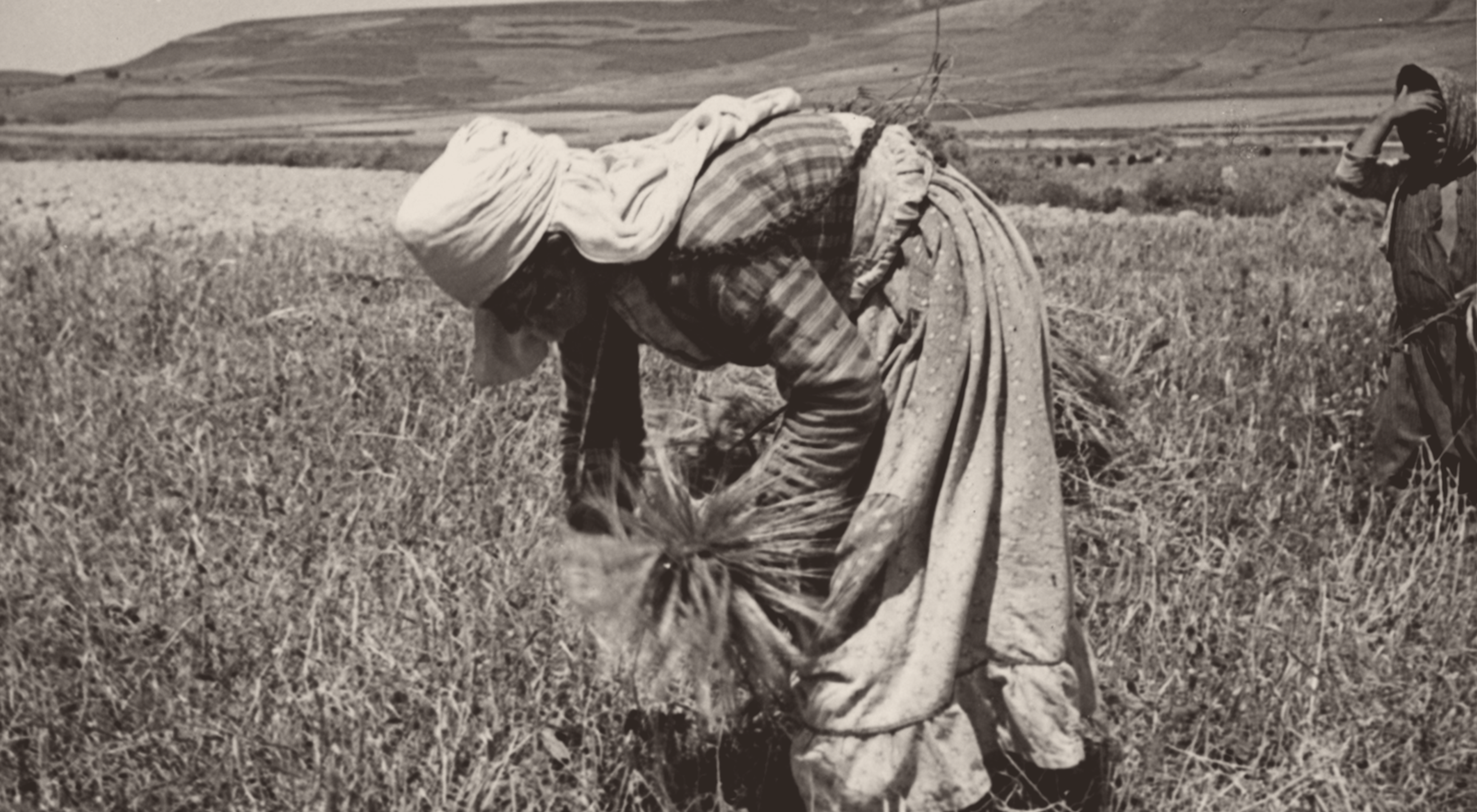
For Tony Eldridge, a fourth-generation produce farmer in Middle Tennessee, community service is a vital part of farm life. To help feed hungry neighbors, he and his wife donate extra crops to churches and local charities. “We’ve been blessed, and we’ve been able to bless others,” he said.
Eldridge recently found a new way to contribute: gleaning, the ancient practice of gathering unharvested or unused crops and providing them to those in need. Last year, he invited volunteers with the Society of St. Andrew (SOSA), a gleaning nonprofit, to pick strawberries on his farm. Because it was near the end of the season, there weren’t enough strawberries left in his field to justify the expense of another harvest. “But why leave it in the field to rot and go to waste, when it can benefit other individuals?” Eldridge said.
Actual data on how many crops are left on farms is sparse. Estimates are mostly based on extrapolations, surveying farmers, and a few research studies. Jeannie Hunter, regional director for the Tennessee SOSA office, discussed this lack of solid statistics with colleagues; she realized that gleaners are perfectly situated to collect this data since they’re already in the fields. Hunter and her partners received a government grant for her gleaners to conduct a measuring study on nine Middle Tennessee farms during the growing seasons of 2021 and 2022.
To measure the amount of food loss on these farms, Hunter and her volunteers used a methodology developed by Lisa. K. Johnson, an independent food and agriculture consultant and expert in on-farm food loss. “If we don’t know, there’s nothing we can do about it,” Johnson said. “But once you’ve measured something and you’ve seen it, you’ve identified it, it’s hard to forget about.”
The SOSA volunteers began by choosing three random sites in a field. They picked all of the produce in those sites and sorted it into three categories: marketable, edible but unmarketable, and inedible. They weighed each group and then used a formula to determine the amount of food left in the entire field. At the end of the study, they estimated that more than 30 million pounds of edible food could have been left in Tennessee fields in 2021 and 2022. Afterwards, SOSA conducted another measuring study with Johnson’s help, from fall 2022 to fall 2024 on 20 farms in South Carolina. They found that 10 to 20 percent of the harvested crop was left behind and was edible.
There are a lot of factors that contribute to on-farm food loss. Because harvesting and preparing produce for transport is the most expensive part of cultivation, according to Johnson, farmers risk spending more picking crops than they’ll earn from them. This can happen if there isn’t enough produce left in the field after an initial harvest or if a farmer can’t find a market for it due to changing consumer preferences or the crop’s quality. For instance, if cucumbers are edible but too long for jars, a farmer can’t sell them to a pickle company and will have to find another buyer that doesn’t care about length.
Also, farmers under contract to supply customers with a certain amount of produce might plant more than they need. This ensures they can fulfill their obligation but might mean some produce will remain unsold. While farmers could donate the leftover crops, the federal tax deduction offered to them for doing this work is often seen as requiring too much work for too little benefit. “People that work in this field know that it’s not a failure on the part of the farmer, it’s a failure on the part of the system,” said Johnson.
For instance, if cucumbers are edible but too long for jars, a farmer can’t sell them to a pickle company and will have to find another buyer.
Negative connotations in labels like “food waste” can make farmers reluctant to allow gleaning and measuring. They also may be concerned about liability, possible damage, schedule delays, or the use of gathered information. But there are solutions to these concerns, and farmers can benefit from gleaning and measuring, using information provided by gleaners to consider adjusting planting plans.
Hunter has seen firsthand how farmers benefit. One farmer’s pepper plants had produced so much they were sagging. He allowed SOSA volunteers to pick the top peppers in what he called a “maintenance glean.” The plants stayed healthy, and the rest of the peppers were still available for his customers. Hunter and her volunteers also gleaned at a blueberry farm; that farmer viewed their services as a form of organic pest control, encouraging them to harvest every berry so none would rot on the ground attracting pests.
Eldridge noted that gleaning can be a marketing tool, an opportunity to help establish a farm’s reputation as one that assists others. Sylvia Ganier agrees. She’s the owner of Green Door Gourmet, a farm and agritourism site in west Nashville and a participant in the Tennessee SOSA measuring study. Volunteers who have gleaned in her fields have returned to buy produce from the farm, and they tell restaurants they’re happy to see her farm’s produce on menus.
But while gleaning has many benefits, it cannot solve the issue of on-farm food loss by itself. Shawn Peterson is a former sixth-generation Utah produce and poultry farmer and current executive director of the Association of Gleaning Organizations (AGO). Every year, AGO advocates for public support of gleaning and works with about 200 gleaning organizations to help them grow. Peterson believes that AGO gleaners are rescuing less than one percent of the produce that is available. “I think that gleaning is much better at building community and raising awareness around food waste than ... at actually recovering food,” he said.
Negative connotations in labels like “food waste” can make farmers reluctant to allow gleaning and measuring.
Peterson knows the challenges faced by gleaning organizations. Most are small, and the work is seasonal. Since they’re only busy for a few months each year, employees leave, and the organization has to hire new staff — making fundraising difficult. For these groups to grow, they need to obtain transportation for food and staff, as well as cold storage. Also, farmers often don’t provide much notice, making it challenging to find available volunteers. And distribution is a particularly difficult obstacle because volunteers often have to visit multiple organizations to deliver all of the gleaned produce (each can usually only take a limited amount if they don’t have cold storage).
The AGO has recently launched a project that will help address these limitations and advance discussion on how everyone in the food supply chain can benefit from unharvested crops. After receiving a government grant, AGO began a nationwide on-farm food loss study that will continue SOSA’s work of measuring unharvested crops. “We want to see farmers better understand what’s actually in their field, so they can better sell it,” Peterson said. “We want to see funders understand what’s in that field, so we can better recover it and get it to those who can’t afford produce.”
Peterson believes this study is the first of its size. Any of the 200 organizations that collaborate with AGO can choose to participate. Johnson, program manager for the grant program, will assist, and participating groups will use her methodology as much as possible.
The AGO aims to publish its findings in the spring of 2027. No matter what the study reveals, Peterson knows the journey to more efficiently using crops left on farms will be complex.
“It’s not farmers having better access to secondary markets. It’s not farmers having looser buying standards. It’s not more gleaning,” he said. “It’s a combination of things to address this real opportunity, and that’s really what it is. It’s an opportunity.”
Subscribe on your favorite podcast app: Spotify, Apple Podcasts, Overcast, Pocket Casts, Amazon, or via our RSS feed: (https://feeds.megaphone.fm/onlythingthatlasts).
INTRODUCTION — The More Things Change
Sarah Mock: They say that fences make good neighbors, and as part of a generation eager for “healthy boundaries,” it seems like that idea still resonates.
When it comes to farmland, fences often communicate something just as important. Fences are a signal that on the agricultural side of the boundary, there are rules. Beyond the fence, the devil may care, but within the bounds, the seeds will be planted in rows, straight and even, at the right time, and with the requisite care and attention. Water, nutrients, plants, animals, and the soil itself will be looked after here, carefully monitored and controlled. On farmland there is thrift and intention and above all, order.
The antithesis of farmland, that place beyond the fence, is complex, chaotic, and unruly nature. Plants, animals, fungi, and the elements mingle and separate according only to chance and the forces of the universe. Life ebbs and flows with the seasons and the years, by turns explosively abundant and anemic, rarely orderly and often unpredictable. Wildland knows no straight lines or firm boundaries. Nature oozes, infiltrates, and evolves. Natural spaces change, and change, and change again.
Change is not a word we tend to associate with farmland. We celebrate century farms, fields and acres that have been in production for the span of multiple human generations. Postage stamps of the earth that yield a harvest again and again and again. After all, we want to– maybe need to believe that farmland will last forever, as long as we take care of it.
But then there are places like Providence Canyon, a little state park in Southeastern Georgia, that challenges the idea that it’s even possible to create a boundary between farmland and nature.
Paul Sutter: These canyons are probably 100,150 feet deep in places, hundreds of yards wide. And these were allegedly caused by poor farming practices in the 19th century. These canyons were effectively erosion gullies.
[MUSICAL INTERLUDE]
SM: Farmland in America has a distinct mythology, as we’ve been talking about on this podcast for the last six episodes. But nature and American wilderness have mythologies too, and the place where the farmland and wildland stories collide has become one of the most controversial flashpoints in American politics, culture, and society.
Full disclosure: Agriculture and the environment is a big topic– too big for a single podcast episode, and potentially even a whole season. Given that, we’re focusing on two particular questions here, the first about the separation of farmland from natural systems, and the second about the impacts of human actions, and lack thereof, on the places and spaces we use. We’ll be covering these two topics in a two part episode. This is part I.
Today we’re going to poke around at the fence line between nature and farmland, looking more deeply at the shared histories of what are now farms and wild landscapes, and at the possibility that the boundary between these supposed “opposites” might be a lot more porous than we thought. We’re going to explore the relationships between managed and unmanaged landscapes, and better understand how natural systems shape farmland, and how farmland in turn shapes everything from national forests, grasslands, and monuments, to cancer rates in the Midwest and the annual dead zone in the Gulf of Mexico.
This is The Only Thing That Lasts. I’m Sarah Mock.
[MUSICAL INTERLUDE]
PART 1: What Washes Away
SM: Whatever else might be true about Georgia’s Providence Canyon, it is beautiful. It looks a bit like the Grand Canyon, if not for all the trees. It’s a vista of cliff walls, colored shades from burgundy and bright orange to a crisp eggshell. The undulations in the rock faces are mesmerizing, and the place has the impressive feel of a landscape carved over millions of years.

Today, Providence Canyon receives about 300,000 visitors a year who come to marvel at the picturesque views and enjoy the woods, the wilderness, and the great outdoors. These visitors can hike around the thousand-acre park and read the occasional signpost about the history of the area, and how these canyons were formed.
Paul Sutter, the environmental historian and professor at the University of Colorado-Boulder that you just heard from a few minutes ago, stumbled upon Providence Canyon almost by accident. And when he first realized how the place came to be, he was flabbergasted.
Paul Sutter: My first reaction was, how ironic that the remnants of environmental mismanagement had been preserved as a park for its scenic qualities. I was amazed to find that the locals wanted to protect them initially even as a national park. They thought they were spectacular enough to warrant that designation.
SM: Paul is referring here to the fact that, beautiful as Providence Canyon may be, it is not a work of nature, but a work of man. Or, maybe not a work– an accident?
The most straightforward version of how this landscape was formed goes like this. The gullies started to appear in the middle of the 19th century, not long after farmers first arrived in this part of Georgia, cutting down the trees and plowing up soil. In doing so, they destabilized the land, and when it rained ,the force of the water hitting and then running off the ground would slice into the Earth, often quite spectacularly, swallowing up hundreds of acres of land, cemeteries, and buildings in a single storm. Providence Church, from which the Canyon gets its name, had to be moved in the late 1850s, to save it from falling into the gully’s now gaping maw.
I think it would have been easy for Paulto learn this ecological history and then wash his hands of Providence Canyon. After all, it’s a familiar story– enterprising landowners barge into a place they know too little about, launch into their work with too little awareness for the local ecological realities, and their self-interested efficiency leads to needless destruction. It share’s important similarities with the story of the Dust Bowl and other manmade ecological disasters both modern and ancient.
But Paul was suspicious that in the case of Providence Canyon, that convenient narrative wasn’t the full story. This suspicion arose out of a local legend that suggested the origin of the gullies was a little more fantastical than you might think.
Paul Sutter: The most common story was that it was started by a dripping barn roof. Or a woman who would throw out her washing water in the same place every day or cattle, walking downhill in this region. But the more I learned about this landscape, the more I recognized that whether these were actually true or not, they could have been.
SM: The science here gets a little tricky, but it’s true– these gullies weren’t caused exclusively by the destabilizing action of farmers. It was also caused by the nature of the place itself.
See, this region sits atop the beach of an ancient ocean. The beach was covered in sand dunes that were hundreds of feet high. Over time, with the help of upstream erosion, the sand dunes were completely covered with clay. And this covering resulted in the rolling, tree-covered hills common in this part of the country. To explain what happens next, Paul compares the landscape to a dipped ice cream cone. The clay is the chocolate, a hard, seemingly stable shell, and those ancient sand dunes underneath are the ice cream.
For a while, the clay holds the sand in place, and it doesn’t seem like anything has changed, but when you break through the outer shell, as farmers did when they plowed deeper and deeper into the soil, things start to go sideways, literally.
Paul Sutter: They breached that clay layer, and then water would start percolating down into that unconsolidated sand. And then at a certain point the land would just slump and slide downhill.
SM: Once this sliding starts, it doesn’t stop until the soil runs out. And the impacts can be unimaginably massive. In Stewart County, Georgia alone, erosion gullies have effectively obliterated 70,000 acres of former farmland, nearly a quarter of the whole county. And this was despite efforts by Georgia farmers to halt the carnage.
Paul Sutter: At least a subset of Southern farmers, were quite attentive to these problems and did try to solve them with what we would today recognize as conservation practices, sometimes successfully, sometimes unsuccessfully. And again, ironically, sometimes those very practices ended up creating the worst gullies by diverting terrace ditches off level fields into sloping land that concentrated water flow that actually created gullying.
SM: After World War II, farmers in the region had much greater success in reducing erosion, in part by recognizing that it wasn’t the farming practices alone that were causing the devastation. It was the combination of geography, soil, and farming that was to blame. So the remedy in the 20th century then, was not some newfangled farming practice, but the much simpler solution of moving farming elsewhere, to more stable soils, and allowing land in this area to return to forest.
Another reason farming largely came to an end in this area was because the existing gullies were basically impossible to repair, both because the damage was so extreme, and because the land simply wasn’t suited to recovery. In that way, retiring the land from agricultural production altogether was the only option.
In many cases, arranging this land retirement wasn’t very difficult, because the land had been abandoned already, or was effectively worth so little that the government was able to buy it from impoverished farmers as both a poverty alleviation mechanism and an environmental protection measure.
Paul Sutter: If you are to go through the South today and look at the conservation areas that exist, and here I’m mostly thinking about a suite of national forests that forest lands along the Piedmont, the former plantation belt in the South, a lot of state parks, refuges, a lot of these lands are lands that had been severely eroded.
SM: The fact that many of America’s most damaged agricultural lands have been reborn as conservation land is not just a phenomenon of the agricultural South. There are many national forests that sit atop former ranchland, many Dust Bowl-era wheat fields that are now part of protected national grasslands, and many state parks and recreation eras that had previous lives as unsuccessful farms.
In the rare cases where parks and protected areas do not have settler-agriculture roots, think the Grand Canyon, Yellowstone, or Glacier National Park, these places were often given over for conservation not for their natural beauty, but in large part because they lacked promise as productive agricultural spaces for settlers.
In fact, Paul explains, the whole concept of preserving scenic places is a relatively new one that came into fashion right around the turn of the 20th century. Prior to that, the Grand Canyon, for example, wasn’t necessarily admired as a wonder so much as it was begrudged as a desert badland, a waste of cliff faces that hid in its depths the only valuable thing about it– the Colorado River. A river that could and would lend itself to irrigation.
[MUSICAL INTERLUDE]
SM: Life is a cyclical thing, and so is land. The story of Providence Canyon may, at first blush, be one of disaster and destruction, but Paul pressed me to look deeper– not to think of “the end of farming” as the end of the story.
Paul Sutter: As I’ve returned to Providence Canyon, the gullies are healing. And what’s really happening is as trees are growing up, they’re trapping more soil. It’s just harder to see Providence Canyon now. When you walk up to the edge, it’s in the middle of a forest. And I would really love the park to be able to tell this complicated environmental story.
SM: Part of the complicated story of Providence Canyon is that, despite our desire to make a sharp distinction between nature and agriculture– between the things we control and are responsible for and the things we don’t and aren’t, the reality is, that distinction is only in our minds. Providence Canyon provides undeniable evidence that human and natural processes can co-create spaces and places, and often entangle to create unexpected outcomes, and our desire to label those outcomes, to assign values like “good” and “bad” to certain actions and people,
Might be natural, but they’re not particularly helpful. Not least because the outcomes, these gullies, are hardly final. After all, Providence Canyon, like every square inch of land on Planet Earth, is still evolving.
Paul Sutter: One of the most fascinating parts of Providence Canyon, if you go for a hike there, you come back out of the canyon and you’re hiking through the forest, and there’s actually an old automobile junkyard there, and these old rusted chassis of automobiles from early- to mid-century have trees growing up through them. And I’ve come to think of that as a really powerful metaphor for the place as well. That there is a kind of lesson about environmental resilience. When we talk about the damage done, the destruction, I use a phrase like environmental disaster. What exactly was the disaster? In the simplest sense, there was a lot of land that might’ve been in agriculture that was destroyed for agriculture.
SM: I’ve been thinking about the last part a lot lately, because land that is “destroyed for agriculture” is, of course, not necessarily destroyed at all. Land is not a thing that is very easily made, but it is not easily unmade either. Land transforms, expands and contracts, sometimes with human help, and sometimes without it. Often these changes are deadly and wonderful, beautiful and devastating. And more importantly, as time passes, triumphs and disasters both fade away.
The forests have come back to Providence Canyon, a younger version of the very kind that American farmers would have cleared away 200 years ago. And time, and the land, goes on.
[MUSICAL INTERLUDE]
SM: Providence Canyon and the severest of the Southeastern gullies may seem, today, like a somewhat quaint environmental disaster of yore. The result of too little knowledge, science, and technology colliding with a hell of a lot of gumption. Surely not a mistake we’d ever find ourselves making again…
Today, we have plenty of knowledge and know-how, and no shortage of gumption either. What’s more, we have wealth– wealth we’ve used to fundamentally reshape American farmland, especially in the Midwest. This time, our efforts are no accident, and we’ve taken some precautions, and put in some guardrails to prevent against calamity, and yet, there is always a price to pay for farming, and making farming more efficient, and the bill is already coming due.
How, exactly, are we paying for is the installation of tens of millions of acres of plastic gullies, or the large-scale adoption of field tile in American crop farming.
That’s after the break.
[MUSICAL INTERLUDE]
Intro:
This podcast is made possible by Ambrook. Ambrook builds financial management software for farms, ranches, and businesses across the American supply chain. It’s an all-in-one platform that simplifies accounting, record-keeping, and payments workflows while empowering operators with visibility into the health of their business. Here’s Tom, the engineering lead at Ambrook, on how the company keeps the people who make their software as close to farmers as possible.
[NEW AD]
Outro:
That was Tom and his team help turn empathy into great products at Ambrook. Tune in to the rest of the season to hear from other members of the Ambrook team on why they chose to join and what motivates them to build the financial layer powering American farms.
[END BREAK]
PART 2: Field Tile — The Plastic Gully
SM: To teach us what we need to know about field tile, meet Larry Weber. Larry grew up on a small family farm in Northeast Iowa.
Larry Weber: Had a four-crop rotation. We had 400 chickens. We fed out a couple thousand feeder pigs each year and we had a small dairy herd that pastured in an area that had a little creek that ran through it. And I was drawn to the creek as a child, as many people are. And I think that influenced me.
SM: Today, Larry is a professor of civil and environmental engineering at the University of Iowa, and a founder of both the Iowa Flood Center and the Iowa Nutrient Research Center. Larry is still a self-professed “water guy”and he’s dedicated his life to understanding the interplay between soil, water, and the ecosystems they underpin.
And Larry’s been busy over the last two decades or so. It started in 2008, when Iowa experienced an unprecedented and devastating flood. It involved most of the rivers in Eastern Iowa, and lasted essentially the whole month of June. Tens of thousands of homes and businesses were damaged or destroyed, whole communities essentially washed away.
Not unexpectedly, there were a lot of questions in the wake of this disaster, and Larry’s Iowa Flood Center was funded by the state legislature to understand why these floods were so severe.
The most direct answer was simple– Iowa is experiencing more severe rain events though overall annual precipitation hasn’t changed very much. But more rain is coming in short periods of time, which is the recipe for flooding.
But another place where blame accumulated was with Iowa’s farmers. See, farmers have also been impacted by this changing precipitation regime and they’ve struck on a solution.
Larry Weber: Those episodic rains that make the soil very wet for a short period of time lead farmers to do land improvement activities. One of those primary activities is to install subsurface tile drainage pipes to take that excess soil moisture out of the water column, and to dry that land out or those soils out because, as they say, corn doesn’t like wet feet.
SM: To keep corn roots dry, Iowan farmers have gone to great lengths, installing more than 9 million acres of field tile in recent decades.
Tile is an odd name for these drainage systems, because it doesn’t involve any kind of flat, ceramic object. Field tile is a series of interconnected and evenly spaced pipes, which are buried in a grid pattern in farm fields to move water quickly out of the soil. To install them requires significant earth-moving, as field tile is usually buried at a depth of three to six feet.
It can be hard to imagine that installing these pipes on 9 million acres could be worth the expense, but it often is, not least because the pipes last for a long time, and the year on year yield improvement, especially in a field with good soils but that can be wet, is often substantial, and more than compensates for the marginal cost of installation.
In the flooding years since 2008, however, farmers started to get flack about the impact of field tile on downstream flood conditions. After all, the logic goes, water that use to sit on farm fields is now being flushed away into the river as soon as it falls. Doesn’t that make farmers at least somewhat responsible for high water levels downstream?
Despite that logic, Larry’s research indicates that field tile is probably not worsening flood conditions in Iowa, mainly because water has to penetrate the soil to get into the tile system, and when 18 inches fall in a day, as it did recently about 16 inches will run right off the surface, never getting into the soil at all, and all that water is what causes the flooding.
But that doesn’t mean that field tile is not causing problems. To the contrary, Larry is very concerned about the impact of field tile on communities, land, and water downstream. But it’s not the water itself that’s the problem. It’s what the water is carrying that we should be worried about. Namely, Larry is worried about ag nutrient runoff.
There are two major sources of ag nutrients in Iowa. The first is applied chemical fertilizers, mainly nitrogen, phosphorus, and potassium mixes, N-P-K for short. The second is animal manure, most of it coming out of confined hog facilities. Both animal waste and organic sources of N, P, and K exist naturally in the landscape, and all these nutrients feed plants and help them grow. But plants can only use so much.
Larry Weber: As they are applied in excess or as they run off in excess into our streams, they become a pollutant. And so they’re a pollutant in our rivers and streams that can result in levels that exceed the maximum allowable levels for drinking water.
SM: Nitrate, a form of nitrogen, is probably the most common excess nutrient found in Iowa’s waters.The EPA sets the maximum allowable level of nitrates in drinking water at 10 parts per million, above which the risk of severe impacts like blue baby syndrome, which can lead to death in children under six months of age, rises substantially. In some rivers in Iowa, nitrate loads are regularly above this level.
In 2015, the issue led the Des Moines Water Works board to sue several counties in Iowa for their nitrate discharge levels. The lawsuit specifically claimed that tile drainage lines moved nitrate more quickly and efficiently from farm soils into rivers which then feed into the public drinking water system. The nutrient loads required the utility to spend more than half a million dollars on nitrate removal in a single season to make the water safe for consumption.
But contaminated drinking water is really just the tip of the iceberg of nutrient-related problems, in Iowa and beyond.
Larry Weber: Too many nutrients into the Gulf of Mexico, result in small algal blooms that happen, the algal die and then consume the oxygen and the water creates a dead zone in the Gulf of Mexico. That dead zone target is 5,000 square kilometers as the acceptable size. That’s been as high as well over three times that, if not larger once that dead zone is created, of course, and all the oxygen is taken out of the water, then the aquatic species, both the fish that swim through the area as well as the macroinvertebrates and other, benthic and beneath forms of aquatic life all die. And obviously that’s not good for the health of that system.
SM: Not least of the dead zone’s impacts are on Gulf fisheries, both recreational and commercial. But we don’t have to wait for the nutrients to get all the way to the Gulf to see impacts. Algal blooms are common in lakes, reservoirs, and other water bodies throughout Iowa and the midwest, not only leading to an appealing green film, but also leading to fish deaths. An even more unpleasant consequence is high bacteria loads, in particular cyanobacteria, which can not only lead to rashes, pink eye, and terrible stomach aches, it can also get into drinking water supplies, where it is particularly hard to remove. And when cyanobacteria blooms die, they emit airborne toxins that can be extremely harmful to our respiratory systems.
High nutrient loads fuel cyanobacteria growth, and have led to countless closures of public recreation areas from beaches to rivers to lakes. And these increasingly high nutrient loads, Larry says, are directly linked not only to agricultural production, but to the installation of field tile.
Larry Weber: Historically, that nitrogen would have had to travel a great distance laterally through this soil matrix to find its way back to the stream. Now we have a buried pipe that’s installed on a regular pattern, widespread across Iowa. And so that nitrogen absorbed to that water doesn’t have to travel many thousands of feet to get to a stream. It has to travel tens of feet to get to a tile.
SM: One result of this very efficient removal of water from farm fields is a big yield boost, a boon for the bottom lines of individual farms. But another is a devastating quantity of pollution flowing downstream, killing fish, growing algae, closing public spaces, and threatening public health as it goes.
A big part of Larry’s work is not just understanding the relationship between ag production and water quantity and quality in Iowa, it’s also working on solutions that lead to a more stable future for the state.
He and his team have supported the development and adoption of hundreds of practices and tools that have been rolled out on farms all over the region. Though he’s proud of this work, he also understands that the incentives are stacked against them. He points to a 6-year period in which his team rolled out 84 solutions in a single small watershed aimed at holding back heavy rainfall and improving nutrient retention. Over that same period, 8,400 miles of new tile drainage was installed in that same watershed.
[MUSICAL INTERLUDE]
SM: Our technologies have advanced, and today we’re not losing buildings and towns to gullies we don’t understand. But we’re still causing damage, to the environment and to ourselves, through our actions to reshape the landscape for ag production and the corresponding reactions of natural systems, which move in ways we’re notoriously bad at predicting to keep things in balance. After all, water carrying nutrients downstream is not a “flaw” of nature, it’s by definition how nature works. It’s how soils are built, how nutrients get cycled, how life evolves and expands.
To my mind, there’s at least two ways to think about what might come of field tile in the future.
We can think about it as the straightforward reality, where those with the will and the resources to install field tile benefit the most, and the cost of quickly drying out fields is paid downstream, on nearby properties that depend on well water, by city water drinkers and recreationalists, by distant communities and industries. And perhaps most of all, the cost is paid by wild plants, animals, and ecosystems all along the way.
Perhaps in the longer term, we can also think of it like Providence Canyon, where the combined force of farming and nature reshaped the land of Southeast Georgia, destroying it for agriculture, and in many ways changing it beyond our recognition.Similarly, the intersecting qualities of farming and nature are reshaping the rivers and waters of the Midwest, perhaps destroying them for human consumption and recreation, but I think it would be wrong to say that it’s destroying the Mississippi Basin writ large. It’s not. Plants, animals, and ecosystems will adapt and survive. Whether or not we humans will, that’s another question altogether.
Our agricultural ways, in many senses, are about control, but they also exist at the confluence of forces we don’t control. Legally, we can say things like, “I can do what I want on my own property.” But the reality is, the effects of farming on the land are not contained by fences or property lines, nor are the impacts of nature and wilderness excluded by them. Farmland is at the mercy of natural systems, just as wilderness is at the mercy of farmland. The two are not separate or separable.
[MUSICAL INTERLUDE]
But what does that mean for us, as we sit at this critical juncture both for the future of farmland and Nature, in America and beyond? I asked this question of Larry, a man, I’ll remind you, who is not an environmentalist by training. He’s an engineer, and an engineer raised on an Iowa farm. He’s not advocating for the end to agricultural production in the state, not by a long shot.
But he does spend a lot of his time talking to farm and non-farm stakeholders alike, trying to communicate what’s at stake if the state can’t figure out how to manage its water problems.
Larry Weber: If we want to continue to intensify agriculture and we do it in a way that’s unchecked, that will become one of our biggest weaknesses. And I think one example of that is the impact of those agricultural pollutants on public health, on the water that we drink, and the air that we breathe. The state of Iowa has seen in the recent cancer registry that we are the second highest rate of cancer incidents in the nation and the state with the largest increase in rate of cancer. In the country. And so at the current status, we will likely overtake the number one position. Most certainly there are many competing elements to that cancer incidence. But it would be hard not to look at the water that we drink and the air that we breathe.
SM: Protecting our land, air, and water has long been a priority of the environmental protection movements, and it still is today. But though the outcomes we want, and the destruction we’re trying to avoid, might seem obvious, there are, in fact, a lot of disagreements about how to actually achieve them. And at a moment when environmental regulations– especially on the federal level– are weakening how we solve those disagreements and decide to take action feels more high-stakes than ever.
So now that we’ve gotten a taste of how we’ve transformed the land for agriculture, we’re going to take a closer look at these movements that are trying to conserve, preserve, and even regenerate healthy landscapes instead, sometimes in collaboration with agriculture, and sometimes– as was also true with 20th century Georgians did– by choosing to abandon agriculture altogether.
We won’t spend much time on the glossy websites and polished talking points of the organizations you’re likely already familiar with, but instead will dig into the sticky and unsexy debates about the role of domestic animals in landscape restoration, our obligation to manage damaged ecosystems or leave them alone, and who really benefits from existing environmental actions.
Levi Van Sant: Republican lawmakers in South Carolina were the ones who challenged the sort of conventions around conservation easements and said, ‘Hey, if we’re funding conservation, my constituents want to be able to deer hunt there. Right? If we’re funding the protection of lands, why can’t we provide public access?’
SM: Who are we really protecting farmland for, and who’s making a killing on the public dime— next time, on The Only Thing That Lasts.
SIGN OFF
SM: Before we sign off, I talked through information from a number of sources and experts today, so if you want to dig into it yourself, check out the shownotes, or our website for links.
While you’re there, make sure you head over to ambrook.com SLASH research to stay up on the latest reporting from the Ambrook team on agriculture, land, and environmental issues like the ones we talk about here on the show. After you subscribe to the podcast, don’t forget to sign up for the newsletter, and follow @AmbrookAg on socials for news about upcoming projects and stories. And we can’t wait to hear what you think! If you like what we’re doing, let us know, and don’t forget to share.
The Only Thing That Lasts is an Ambrook Research production. This podcast is written, produced, and mixed by me, Sarah Mock. Our editor is Jesse Hirsch, with support by Ali Aas and Bijan Stephen. Technical support by Dan Schlosser, and general support by Mackenzie Burnett and the whole team at Ambrook.
A final note, Ambrook Research, the media outlet that produced this podcast, is 100% editorially independent from Ambrook, the fintech company that funds it.

This is an op-ed. It does not represent the perspectives of Ambrook or this publication.
More than one hundred feet beneath the ground in Springfield, Missouri, there are expansive, dimly lit limestone caves. These caves are not filled with either iridescent hanging stalactites nor emerging, rocky stalagmites. Instead, the football-field-sized caverns are stuffed to the brim with American made cheese: cheddar, Swiss, provolone, and even a room dedicated to Wisconsin curds. The original owner of these infamous cheese caves? The United States government.
For decades, it was official American policy to purchase and store massive amounts of cheese in Missouri, Wisconsin, and Kansas. In the intervening decades, a company called Springfield Underground has taken over operations. While the USDA itself no longer actively stockpiles cheese in the caves, their use for storing immense amounts of dairy products continues, a quiet testament to the persistent overproduction baked into federal dairy policy.
The story of how the government came to store millions of pounds of cheese underground begins with the Great Depression. As prices for agricultural products collapsed in the 1930s, dairy farmers across the country faced financial ruin. Despite their pleas, distributors refused to raise their prices, convinced Americans would not pay a premium for a pantry staple. Infuriated, farmers took to the streets, sabotaging milkmen on their delivery routes and pouring gallons of milk on the ground to make their point.
They won: Franklin Delano Roosevelt offered subsidies to farmers who agreed to reduce their production in order to raise milk prices. While FDR’s policies planted the seeds of federal agricultural intervention, they would pale in comparison to what came later.
Throughout World War II, the American government touted dairy production as a vital contribution to the national war effort. They shipped dried milk to soldiers overseas, and new research about milk’s ability to build muscle mass made it the ideal beverage for the nation’s virile self-image. “If you read the literature from the 1940s, there’s an almost religious feel to the discussions of dairies‘ powers,” said Andrew Novakovic, E.V. Baker Professor of Agricultural Economics Emeritus at Cornell University. (A glowing pamphlet from the era described cheese as ”a food no one should live without.“) Soon, this belief became law. In 1946, Congress signed the 1946 National School Lunch Act, which required every meal served in schools to include milk.
But milk presented a logistical challenge. It was easily perishable, costly to transport, and difficult to store. For many dairy farmers, the precarity of their product necessitated a consistent, stable consumer. To promote production, Congress passed the Agricultural Act of 1949, which included the Milk Price Support Program (MPSP). The program guaranteed a minimum price for milk and authorized the USDA to buy the surplus when prices dipped below the support level. With the government as a buyer of last resort, production among dairy farmers soared. With their newfound certainty, they raced to churn out as much milk and cheese as possible.
That trend intensified under President Jimmy Carter. A peanut farmer from Georgia with deep ties to rural America, Carter viewed price support as a lifeline for struggling farmers, many of whom were being crushed by inflation and rising input costs in the 1970s. While running for president, he promised to raise the price of support for vulnerable dairy farmers and when elected, followed through. The result was a dramatic oversupply of dairy. Since it spoils quickly, the U.S. government encouraged producers to transform their milk into cheese, and the USDA began stockpiling the surplus in warehouses across the country, including deep underground in Springfield, Missouri. At its peak, the government spent over $2 billion a year to store the excess, much of it entombed beneath the Midwest.
For many dairy farmers, the precarity of their product necessitated a consistent, stable consumer.
When Ronald Reagan took office in 1981 promising to slash federal spending, the cheese stockpile became a symbol of a bloated government. In an infamous press conference, Reagan’s Secretary of Agriculture, John R. Block, held up a five-pound brick of processed cheese and declared, “We’ve got 60 million of these that the government owns. It’s moldy, it’s deteriorating ... we can’t find a market for it, we can’t sell it, and we’re looking to give it away.” Some critics proposed dumping it in the ocean. Instead, amid rising hunger and a recession, the Reagan administration created a solution: Give it away. The USDA began distributing the surplus through food banks, churches, and welfare offices. This marked the beginning of what became known — often mockingly, sometimes gratefully — as “government cheese.” (Not to be confused with the new TV show of the same name.)
To many, the image of government cheese embodied the contradictions of federal policy. A symbol of waste born from overproduction and bureaucratic miscalculations yet also a lifeline for millions of food-insecure Americans. The dense, salty cheese was emblematic of the era’s social safety net: essential, flawed, and stigmatized. These contradictions were used to justify sweeping changes. Under Reagan, the federal government began scaling back and privatizing key food assistance programs, leading to a major reduction in SNAP. The public image of food aid shifted from a social right to a begrudging handout.
Today, the former government cheese caves are still operational, but the Department of Agriculture is no longer their primary tenant. The Springfield Underground complex has been transformed into a vast industrial logistics hub, with over 3 million square feet of temperature-controlled storage leased to corporations like Kraft Heinz, PepsiCo, and Nestlé. Some of the same companies that benefited from USDA dairy surplus purchases during the program’s heyday now rent space in the very caverns once used to house that surplus. These artificial caves maintain a steady 58 degrees year-round, making them ideal for storing perishable goods including cheese, which is still housed there, albeit now as private inventory.
“We’ve got 60 million of these [blocks of cheese] that the government owns. It’s moldy, it’s deteriorating ... we can’t find a market for it, we can’t sell it, and we’re looking to give it away.”
While the U.S. government no longer actively stockpiles cheese, the surplus problem hasn’t entirely disappeared. In 2022, the USDA reported that commercial inventories of American cheese topped 1.5 billion pounds, the highest level since the 1980s. Though most of that cheese is now stored above ground in refrigerated warehouses, the symbolism of the caves persists and is often invoked during debates over agricultural subsidies and food aid.
Dozens of viral TikTok videos continue to show the Springfield cheese caves with a mix of befuddlement and pride. “This is where our taxes go?!” writes one user; “God Bless America,” says another. Despite privatization, the caves remain a subterranean monument to the country’s ongoing struggle to balance food security, farm economics, and public perception. Government cheese, once a symbol of abundance and attempts to help small farmers, has continued to be a symbol of government dysfunction — a stigma that persists to this day.
In President Trump’s “one big beautiful bill,” which passed the U.S. House of Representatives last week, federal funding for SNAP would decrease by more than $267 billion over 10 years. The impact of that cut would be enormous: More than 40 million Americans rely on SNAP, including one in five families with children. Like in the 1980s, accusations of government waste have fueled calls to reduce the social safety net. Once again, dairy is at the center of the story — but this time, the industry could face a major loss.
According to Mother Jones, the dairy industry still receives nearly $1 billion a year in subsidies. Perhaps the largest, least visible subsidy flows through federal food programs like SNAP, WIC, and school lunches. A prime example: Every federally reimbursed school meal must still include a carton of milk regardless of whether or not students want it, need it, or can even digest it. Some students have even protested and won lawsuits over the fact that they need a doctor’s note to receive soy milk.
“Every dairy producer I work with is aware of this connection [with the federal government] and many are frustrated by it.”
This creates an enormous, federally subsidized market for dairy. In fact, recent bipartisan legislation proposed by the dairy lobby would expand this requirement to include whole and two percent milk, bringing more milk into American schools. “Dairy producers understand that they are deeply intertwined with federal food aid programs,“ said Novakovic. If the Republicans‘ proposed cuts go through, the benefits could profoundly impact their bottom line. ”Many dairy producers who supported [the President] are surprised to see the proposed cuts.“
Luis A. Ribera, professor and extension economist at Texas A&M, agrees. “Every dairy producer I work with is aware of this connection [with the federal government] and many are frustrated by it,” he said. Most would prefer open international markets as a release valve for their products, selling cheese in places like Canada and Europe, where import restrictions remain tight. Their goal isn’t to produce less dairy, despite the fact that fewer Americans are drinking milk than ever before. Activists argue that instead of subsidizing a fading industry, federal policy should pivot toward emerging, climate-conscious alternatives like almond, soy, and oat milks.
At a time when federal food aid is once again under attack and claims of government waste abound, it’s no surprise that the cheese caves have resurfaced in the public imagination as viral symbols of confusion and government excess. While today’s debates may feel new, the entanglement between the dairy industry and the American government is anything but. With dairy exports declining and domestic surpluses rising once more, it’s not unthinkable that the government could once again return to the caves or finally shut off the milk spigot once and for all.
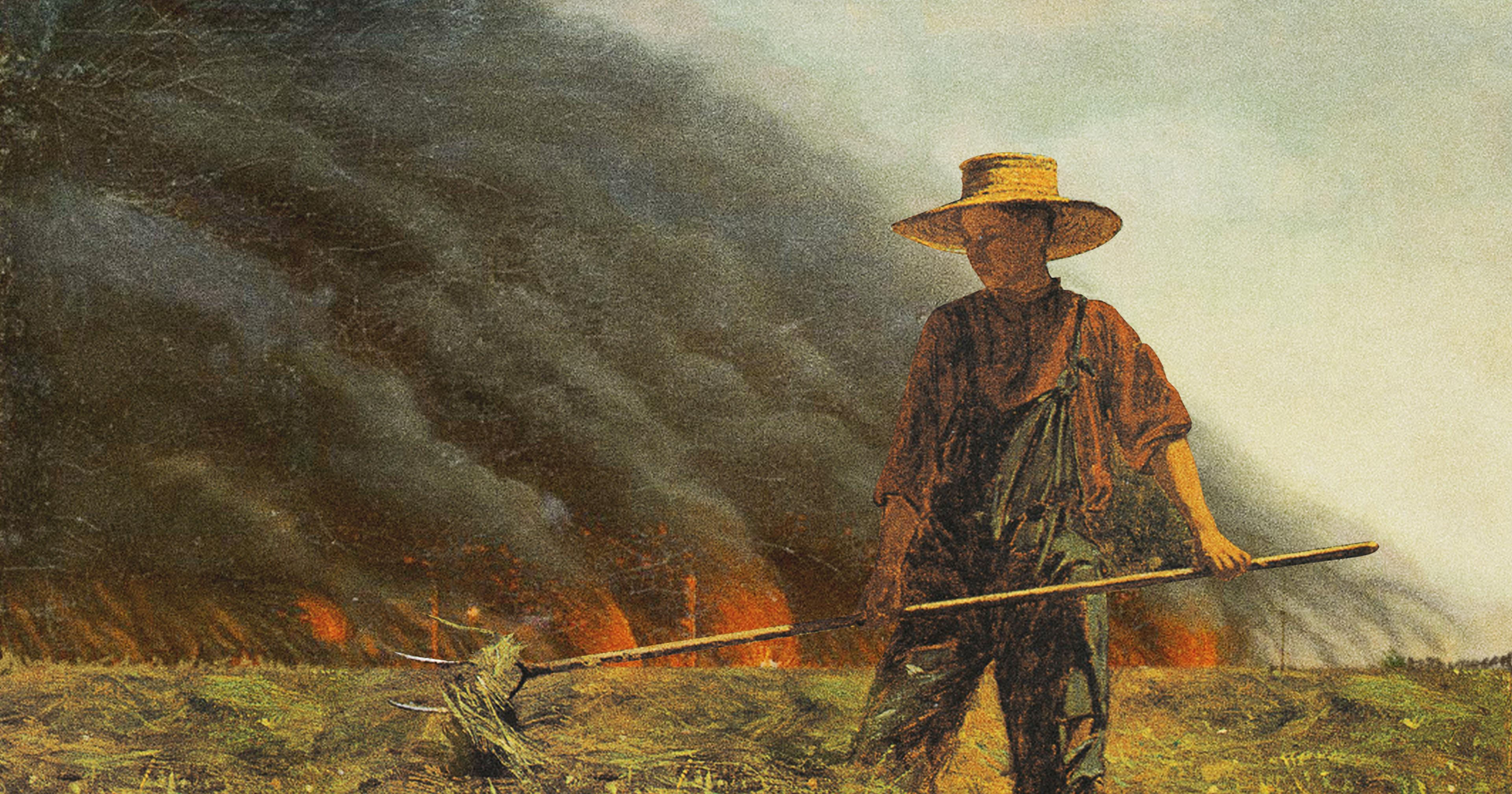
Invasive annual grasses affect tens of millions of acres across the U.S. Their success comes down to unique biology and the ability to grow whenever and wherever the opportunity arises. Not only do they pose significant challenges for rangeland management, where they are a major contributing factor to the increasing frequency and intensity of wildfires, but these species have also made their way onto arable land, where they outcompete crops for essential resources such as water, nutrients, and light.
One crucial agricultural commodity, which contributes billions of dollars to the U.S. economy and is particularly affected by these troublesome grasses, is winter wheat. Similar life cycles and optimal conditions necessary for growth mean that in the fall, when the wheat is planted, these weeds are just starting to germinate. Thus they can compete with the crop throughout much or all of the growing season, causing significant problems for wheat producers.
Vipan Kumar, associate professor of weed science at Cornell University, has dedicated his career to researching weed ecology and biology, developing strategies to manage these tough-to-control grasses.
“These invasive annual grass species have an advantage over others because they can withstand harsh conditions — dry climate and cold temperatures — and can produce seeds and germinate in a short period of time. Wild oats, downy brome, Japanese brome, Italian ryegrass, and jointed goatgrass can all significantly impact winter wheat, and if the crop is infested heavily, the grass species can take over and reduce grain yield by up to 70 or 80 percent,” said Kumar.
The quick emergence and growth of annual grasses, and their ability to produce many seeds for the next generation have, for many years, meant wheat producers have struggled to control them — particularly in Western states such as Washington, Oregon, Montana, and Colorado.
“Sometimes the crop can be a complete failure, especially if these grasses are taking over and have a good seed bank. Yield, quality, and price can all be dramatically affected,” Kumar explained.
These grasses can also pose problems after harvest, when the percentage of weed seeds and other contaminants in the grain determines price and quality. They can not only devalue the crop so it gets classified as animal feed, but can even lead to an export being rejected.
Chemical Solutions
To help combat these troublesome species, herbicide-tolerant wheat varieties were developed, which have been bred to tolerate specific herbicides, allowing farmers to manage these weeds without harming the wheat crop. Clearfield wheat varieties were the first to come onto the market in 2001. Although extremely effective at first, years of repeated use of these herbicides has led to invasive grasses developing resistance.
The need for an alternative led to a collaboration between Colorado Wheat and Colorado State University, and the development of CoAXium herbicide-resistant wheat varieties, which first became commercially available to farmers in 2019. According to Brad Erker, executive director of Colorado Wheat, CoAXium is currently used on approximately two million acres of wheat production, out of about 25-30 million.
“Invasive annual grasses have been a problem for wheat producers in Colorado for decades — especially jointed goatgrass, brome species, and feral rye,” Erker explained. “In some areas, weeds are very accustomed to (and have become resistant to) Imazamox, the chemical used in the Clearfield system, because it’s been applied for so many years in a row. The CoAXium system is one additional tool that has come into the mix lately, and we market it around the Western United States,” said Erker.
It is only a matter of time before these weeds also develop resistance to the [newer] herbicides, so precautions are being taken to minimize risks.
However, it is only a matter of time before these weeds also develop resistance to the herbicides used with CoAXium, so precautions are being taken to minimize risks. Stewardship programs for both the Clearfield and CoAXium Wheat Production Systems are in place, which emphasize the need for specific rotation of crops and herbicide modes of action, and also stress the importance of not saving seed to replant. Farmers must sign and adhere to these conditions before purchasing seed.
According to Kumar, it is extremely important to fine-tune cultural and agronomic practices, such as cover crop and crop rotation usage, as part of an integrated approach to weed control. Annual grasses tend to accumulate if wheat is grown year after year in the same field, but a wheat-fallow rotation allows herbicide spraying during the fallow period, which can prove very effective at reducing the weed seed-bank. But the best way to disrupt the cycle of these winter annual grasses, while also helping to combat herbicide resistance, is a three- or four-year rotation of winter wheat with summer crops such as sorghum, soybean, and corn.
Southeastern Emergence
Annual ryegrass is a significant problem for wheat farmers in some parts of the Southeastern U.S. Although a valuable forage crop for cattle farmers, it can greatly reduce wheat yields and can be very challenging to control.
Austin Thrash, a wheat and soybean farmer based in the Arkansas River Valley, never had a problem with invasive annual grasses until five years ago, when machinery moved into the area from other parts of the country, helping to spread these unwanted species into a new area.
“It seemed like all of a sudden we had a problem, and it started it spread, especially on our acres that we don’t till a lot. The ryegrass really has been troublesome, especially over the last two or three years. For the last four or five years all the post-emergent herbicides we use don’t work any more, and the problem’s so bad that on some of our acres we’ve had to quit growing wheat,” he said.
Pre-emergent herbicide, applied soon after planting and ideally before the ryegrass emerges, is Thrash’s best option. Without this, he says the only way to kill it would be to till the land. He has been looking for new ways to manage this invasive annual grass, and one method seems to be working really well. Last year he planted wheat, let the ryegrass grow, then put cows into these fields. They grazed the ryegrass out until the middle of May, which helped prevent it from going to seed.
“The cows love it, and really do well on it! We’re increasing our cow numbers per acre now,“ Thrash said earlier this year, ”and are about to turn them out on it again. The wheat is now at a stage where it can handle the grazing, and traffic from the cows.”
Lessons From Down Under
But Thrash and other farmers around the U.S. will eventually need other methods to control these troublesome grasses. In Western Australia wheat producers are now experiencing multi-herbicide resistance, a huge issue. Because there are now no chemical control options available, this has brought about the use of several Harvest Weed Seed Control (HWSC) methods, which control the spread of herbicide-resistant weeds by reducing the amount of weed seed going back into the soil seed-bank.
One prominent method of HWSC involves attaching an impact mill to the back of the combine and as the crop is harvested weed seeds enter the mill and are destroyed. So, although they go back onto the field, they do not germinate.
Chaff lining is another method, and involves modifying the combine so the chaff, which contains all the weed seeds, is separated from the straw and funneled into narrow rows in the field. These chaff lines act as a mulch, preventing germination and emergence of the weed seed. They can also be used as animal feed.
More than a decade ago, Jason Norsworthy, a weed scientist at the University of Arkansas Division of Agriculture, travelled to Australia to see HWSC in action. Well aware of its benefits, Norsworthy and other scientists are currently testing these methods for suitability in U.S. agriculture. Australia has a very arid climate, and a much lower yield potential compared to the U.S., so although used with great success there, some minor mechanical problems need to be overcome before these are adopted here. The much larger amounts of biomass taken into the combine can affect airflow in the system, while high moisture content entering the seed mill can lead to serious clogging.
“Combating these grasses is not a one man job, a farmer cleaning every field and he’ll be alright. The problem will come back if your neighbor is not also doing that job.“
Norsworthy is also working with John Deere See and Spray technology, which uses cameras and machine learning to differentiate between crops and weeds, enabling precise herbicide application. HWSC is driven by herbicide resistance, and Norsworthy can see that the day is fast approaching when these weed control methods will also become essential here in the U.S.
“Australia has run out of chemical options and the U.S. is now getting very close to a similar situation,” he explained. “Growers will then be forced into these techniques. That’s a bad situation to be in. I wish growers were more proactive and would adopt them prior to not having the options. But unfortunately I’ve done this long enough now to know that as long as there’s an easy button, and as long as there’s something you can do chemically that is effective, there will be a lot of hesitation in trying to adopt something like [HWSC],” he said.
As the area dominated by invasive annual grasses continues to expand, helped by milder winters and more arid summers, they are already causing increased frequency and intensity of wildfires, affecting ecosystem health and biodiversity, and will soon also change the way we farm.
“Combating these grasses is not a one man job, a farmer cleaning every field and he’ll be alright,” explained Kumar. “The problem will come back if your neighbor is not also doing that job. Assistance is also needed from the government, researchers, and various other agencies. A community approach is needed, and everyone needs to be made aware of the problem.”
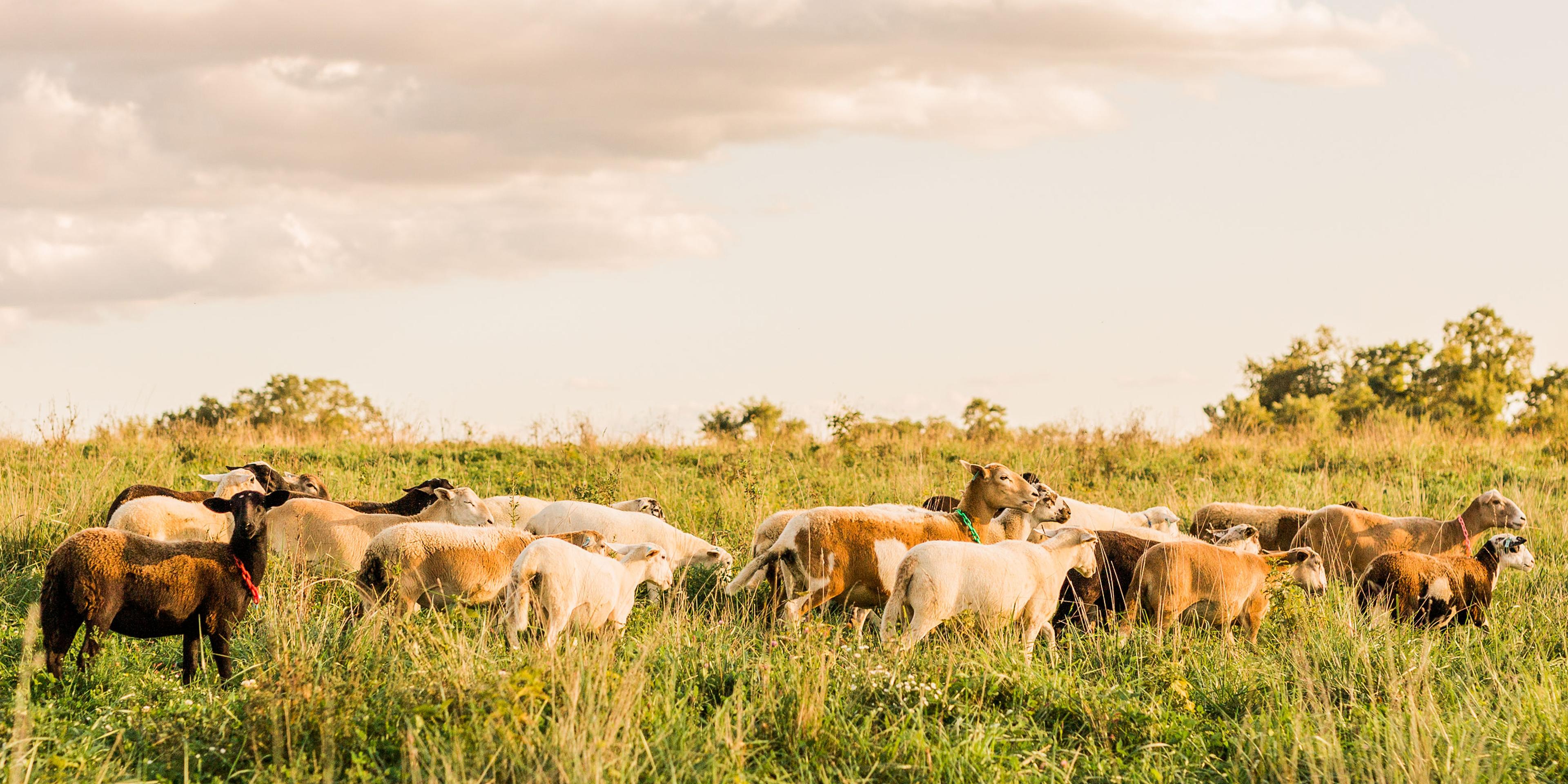
I pin the ewe against the wall, one arm around her chest and one around her rump. Her head is tied to a post and she thrashes against the restraint. She needs to stay still for her newly adopted lamb to get a good suckle. This mother bore only a single lamb of her own, leaving her extra milk to feed this one, the smallest of her sister’s triplets — if she accepts him.
I lean into the ewe with my chest, feet cramping and biceps burning. My 16-year-old daughter helps the little guy find the teat each time he loses it. After 15 minutes or so, he wanders off with a full belly and lays down for a nap. Walking home from the barn in the quiet of 3 a.m. with my girl, I am filled with gratitude. Tending the land and animals fills me with purpose and satisfaction, which peak with the pre-dawn magic of new life.
We weren’t expecting these lambs. In fact, it’ll be six weeks until our planned lambing window. However, last Halloween Eve, appropriately known in some areas as Mischief Night, our young ram had an “unsanctioned conjugal visit” — as my husband called it — with the ewes. Apparently it was a busy night, as we now have three ewes with lambs. As happens often with sheep, some birth more than they can feed and some have fewer. When this leaves lambs neglected or undernourished, my daughter and I step in to balance the families.
By restraining the potential adoptive mother every few hours around the clock to allow the new lamb to nurse, she is supposed to eventually accept him as hers, as her milk changes his smell to match her own. The ewe’s milk changes the baby as the baby becomes part of the mother, in a reciprocal dance central to the continuance of many species. A child can enter a parent’s heart deeply enough to remake us, whether human or ewe, whether born of our body or not.
For example, normally the ewes will run in terror from our herding dog. However, a mother with young lambs will often charge and ram the dog, overcoming fear to protect her babies. As a mother, I have been equally changed by the drive to give my children the best of myself and of the world. My heart has been broken down and rebuilt in the shape of the ones I am raising.
The little lamb we’re helping tonight belongs to my daughter. She and I each have our own sheep flock. While we manage them together, we each make our own decisions about selling, culling, and breeding. Managing the business aspect is a large part of why raising sheep appeals to her. At an age when a person’s desire for autonomy often outstrips society’s willingness to grant it, making real decisions about life, death, and substantial sums of money help meet that need. Sometimes she makes choices for her flock that I wouldn’t make for mine, such as keeping one that is tame but not robust. I provide information but she makes her own decisions, as she did when she was eight and we first started raising sheep.
One of the things I love about lambing time is the way it brings my daughter and me together. Like most teens, she has her own busy schedule and interests. While she does quite a bit of farm work, she generally prefers to do it on her own these days. I understand it’s time for her to reach for independence, and I’ve already gone through this stage with my son. Still, I miss the abundant time and easy companionship of chores when she was younger.
Lambing brings us together again. Whether we are going to the barn in the middle of the night to deal with a problem, sharing the work of caring for moms in stalls with newborn lambs, or sitting with a birthing ewe, it’s easier to be with each other during lambing season than any other. Some people believe sheep are unintelligent, but I find they have a gentle zen presence that helps me come home to myself. Maybe that helps us be with one another, too.
In my experience, becoming a parent means having one’s heart perforated — little dotted lines right down the middle, dividing the portion that will be torn away when that child moves off into life on their own. As the splitting of the parent’s heart begins in earnest during the teen years, every warm hug or shared laugh becomes precious and, in some cases, all too rare. As a mother and daughter working together to help connect this ewe with the lamb who needs her, our efforts to build bridges between them are also strengthening the bond between us. It’s a beautiful parallel that has always been present in this shared shepherding project, but has become clearer in recent years.
A couple of years ago, my daughter told me she liked lambing season more than Christmas: the miracle of new life and first steps, the surprises: Girls or boys? Spotted or solid? One, two, four? All are amazing, but for me, the best gift is time and joy shared with her. This year, she said that it’s not just witnessing births and new lambs, but also making the decisions and doing the caretaking that feels deeply fulfilling. This is an education and nourishment that far too few young people get to experience these days — an antidote to the unreality of video games and social media.
Caretaking the land and animals isn’t just good for youth. It’s a large dose of mental wellness for me every day, too. When I lived in the city or suburbs, I often found myself overcome with despair and a kind of purposeless drifting feeling brought on by the artificiality of the surroundings and my daily activities. Now that I use my heart, mind, and body to nourish people in my community, caring for the plants and animals that produce real food, I no longer suffer that way. Working for tangible benefits in all weather, bathed in the music of birds, frogs, and wind is how humans evolved. It’s also how I thrive.
After five days, the ewe accepts her adopted son. Watching them graze together on pasture, knowing that he would’ve starved without our help, is a joy that inspires me when other aspects of life are hard. The success shared with my daughter is a balm to my heart where it’s slowly tearing in two, just as it’s meant to.
Few recent novels give agriculture its due. In contrast, farming is at the core of 19th- and even 20th-century American fiction, with its heroes formed through westward expansion.
“I don’t see enough fiction about contemporary farming, so I wanted to try,” Louise Erdrich told me on a phone call.
Erdrich, who is of Ojibwe descent and a member of the Turtle Mountain Band of Chippewa, reimagines the contemporary farming plot for our era of climate change in her latest book, The Mighty Red. Across her expansive body of work, which now totals 32 books, she has ignored the narrative assumptions U.S. audiences place on Native people, and written with precision and sensitivity. She has won the Pulitzer Prize, National Book Award, and National Book Critics Circle Award, among others.
The Mighty Red takes place in a sugar beet farming town in North Dakota’s Red River Valley of the North during the 2008 financial crisis. Kismet Poe, the protagonist, is a young woman with Ojibwe ancestry about to graduate from high school. Following a confusing tragedy, Kismet finds herself stuck in a portent-clouded marriage to Gary Geist, the son of sugar beet farm owners. But as her consciousness about the land grows, so does her sense of agency, and her resolve to escape the marriage.
Human relationships and the environment twine, each reflecting the other’s condition. Erdrich explores the environmental consequences of industrial farming and the possibilities for action when our fate is uncertain.
As weighty as the subject matter is, this novel is a page-turner. After finishing it, I felt like I had read a book without parallel — it stayed with me, coloring my perspective, for weeks.
The Red River runs north along the border of North Dakota and Minnesota into Canada. It is extremely toxic — a key site of danger in the novel — and floods often. Minnesotan geologist Jim Stark said floods in the flat Red River Valley differ from conventional ideas of river surges. “They’re very slow because of the topography, but they inundate a great deal of land,” he said.
The valley’s clay soil is some of the world’s most fertile, however. “I can dig down for two, three feet sometimes, and it’s still black soil,” said Steve Radel. Erdrich stayed at the Radel family’s holiday rental on their Minnesota family farm, Redpath Retreat, while writing the book. The region is responsible for nearly half of U.S. sugar beet production, and is home to the American Crystal Sugar co-op, the largest producer in the country.
“I grew up in the Red River Valley, so I suppose it would be fair to say that I have been researching this book a little at a time, for many years,” Erdrich said. She gathered stacks of documents and interviewed people from different phases of her life about farming.
“While in high school I visited and sometimes helped out friends who lived on farms, or worked in the sugar beet fields, but things have changed considerably,” she said. “I might have a better emotional understanding of why people farm than a practical understanding of how it is done. That did take a lot of research.”
“I don’t see enough fiction about contemporary farming, so I wanted to try.”
Phoebe Farris, a photographer, art critic, and professor emeritus of art and design at Purdue University who is of Powhatan-Pamunkey ancestry, has written about Erdrich. “For Indigenous people, it was always an issue, trying to protect the land and the environment. It wasn’t some kind of new age threat or something that got commodified. What she’s doing, what she’s talking about, we’ve always experienced and tried to live,” Farris said.
Crystal Frechette, Kismet’s mother, works the night haul for the Geists, sticking it out regardless of weather. Erdrich shows the physical labor involved with exactitude: She “worked until her biceps trembled and the back of her neck went numb.”
As Farris said, “Some people are harming the environment. It’s not by choice. It’s the only job we can get.” Environmental damage is not always a matter of agency, but rather of survival.
Meanwhile, Gary, who will inherit the Geist family farm, muses, “The fact was, they weren’t as rich as people thought.” Despite their high output, debt is the reality of running a farm. His mother, Winnie, continues to carry the hurt from the foreclosure of her childhood farm, which her father-in-law bought up.
Sarah Vogel, a North Dakotan advocate and former state Commissioner of Agriculture, is the author of The Farmer’s Lawyer, which discusses her experience representing 240,000 small family farms facing foreclosure during the Reagan administration and which Erdrich cites in her acknowledgements. “It was absolutely accurate, the way Louise Erdrich described what happened to her family’s farm,” Vogel said. As in the rest of the country, the number of farms in the sugar beet industry has decreased over time, while their size has increased.
[Sugar beet farming is] “a big cultural thing … it’s really helped a lot of farms through difficult times.”
Still, sugar beet farming is a fact of life in the Red River Valley. Kismet and other characters see a strange beauty in it. Looking out at the Geists’ farm, how “the baby beet plants, coddled in their chemical dust, stretched row after laser row into the shimmer of tomorrow’s heat,” she finds it “exquisite.”
Rob Sip, executive director of the Red River Watershed Management Board, said, “[Sugar beet farming is] a big cultural thing … it’s really helped a lot of farms through difficult times.” His grandmother told him stories of defoliating, digging, and loading sugar beets by hand from nearly a century ago. Sip has helped with the sugar beet harvest almost every year since 1990.
While The Mighty Red is set against the backdrop of the sugar beet industry, gardens are also at the novel’s heart. “There are also gardeners in the book — that’s farming too, personal farming,” Erdrich said.
At the moment she is most lost, Kismet creates a plot of her own. She discovers real soil, with “insect husks, fluffy particles, nutlike crumbs, infinitesimal threads,” while reading Madame Bovary. She resolves to do the opposite of whatever Emma would do, because Flaubert’s heroine poisoned herself and died. “The last thing Emma would have done was put her hands in the dirt and start a garden,” she says. This intention, held onto when everything else is unclear, becomes her guide. She plants cuttings from Crystal’s garden instead and chooses life.
Her realizations crescendo once she visits her friend’s farmstead, which is rewilding sections of its land with native plants, and witnesses a vesper flight. The Radels have been working to make Redpath Retreat a similar oasis, with land put into the CRP (Conservation Resource Program) and RIM (Reinvest in Minnesota), a permanent easement.
Names carry significance in The Mighty Red — it is bold, and a little mischievous, to make your protagonist a gardener named after fate. Aside from Kismet, Crystal is named after American Crystal Sugar. Radel said, “I texted her [Erdrich]. I said, ‘Hey, has anyone else that’s read this book picked up on that little pun?… She goes, ‘Steve, Steve, nobody else.’”
As in the rest of the country, the number of farms in the sugar beet industry has decreased over time, while their size has increased.
Weeds are also more than their name. They symbolize resilience against elimination. Crystal compares her and Kismet’s father Martin’s families to the Lord’s ivy, “a weed ineradicable by human means.” As she eats the nutritious lambsquarters she has grown in her garden, she reflects on how this early American crop has been supplanted by the nonnutritious sugar beet.
“I was raised by parents who operated a large garden so I grew up working in the garden and weeding (and eating some weeds),” Erdrich said. “My grandparents on the Turtle Mountain reservation supported their children with a successful truck garden. My sisters, brothers, nieces, nephews — and as for me I am a slacker.“
She continued, “I am very bad at gardening. Last year my only successful crop was mint — because it is invasive.”
As Erdrich brings readers closer to the present day, she alludes to shifts such as drones and precision technology. These are not framed as at odds with regenerative agriculture: In a dream, Diz sees fields covered in amaranth via a drone.
What most closely links The Mighty Red with our current world is existential risk from climate change. At a book club meeting, the women read Cormac McCarthy’s The Road and debate how the world will end. Winnie points outside at the dirt rising from the sugar beet fields. She says that this is how the apocalypse will happen, because there is no food without soil. Kismet speaks up, saying that the novel is not about apocalypse, but about the love between a parent and child.
The novel acts as a closed circuit, creating balance from its own elements.
These two threads — love and apocalypse — lace through the novel. It maintains the hope that even if we approach the brink, and live amid varying forms of destruction, we can return.
The novel acts as a closed circuit, creating balance from its own elements. At the end, I wondered if Kismet’s world could have been opened slightly more, if returning to the beginning was best for her. But perhaps Kismet is right — what will get us through doom, if not love? The book is about what is to come, but also about what always has been.
From the essential literary ingredients of fate, environment, and love, The Mighty Red charts its own dynamic. While in conversation with the classic novels, it transmutes this literary inheritance to present us with something fresh and true.
“It’s big enough to hold what’s troubling you,” Steve Radel said, about the prairie. “Anything I’m concerned about here, it can be held.”
Perhaps it is big enough to hold our existential crises, both planetary and personal, as well.

When Eric Cates, owner of Cates Family Farm in Spring Green, Wisconsin, monitors his cows, he’s carefully eyeing them for one particular transgression: to ensure they don’t munch on any plastic garbage thrown from driver windows.
“I’ve seen bags of chips and plastic bags drifting into our farm,” said Cates, “and we can’t let them eat anything that they come up on. We don’t want that plastic in their system.”
New research has found that farmers might be up against a more difficult form of plastics to find that can hurt their yields: Microplastics are miniscule fragments of plastic products that have been detected almost everywhere on Earth, from Antarctic sea ice to human brains.
Most research on microplastics has focused on its potential relationship to human health but now more studies have found a relationship between these tiny plastic pieces and plant health.
A 2024 report discovered how this crisis has disrupted the photosynthesis process across a wide swath of crops, including soybean and corn. The study from Ninjaing University in Japan, published in National Academy of Sciences USA, noted how microplastics coverage reduces the photosynthesis of terrestrial plants by about 1 percent, and by about 7 percent in marine algae.
The study also found that with the current rates of worldwide plastic production and microplastics exposure, farmers may see a 4 to 13.5 percent yield loss per year in staple crops such as corn, rice, and wheat over the next 25 years.
The researchers added that a 13 percent decrease in “environmental microplastic levels could reduce photosynthesis losses by approximately 30 percent … and the study emphasizes the importance of incorporating plastic pollution mitigation strategies into broader sustainability and food security initiatives.”
“The impact of this study is very substantial,” said Richard Thompson, professor of marine biology at the University of Plymouth and who, in 2004, coined the term “microplastics.” He wasn’t involved in the recent research.
It is “almost impossible to remove [microplastics] from the environment, which is why it’s essential to reduce their use straight from the source.”
He added how microplastics are so nano-sized, it would be “almost impossible to remove them from the environment, which is why it’s essential to reduce their use straight from the source.”
Both Thompson and the Chinese study point to several pathways for microplastics to infiltrate crops: Heavy use of plastics in textiles and cosmetics leads to treatment plants pumping out sludge that is often used in farmland as a nutrient enrichment. Mulch films and fleeces to protect crops are largely made from plastic. And airborne microplastics can shuttle through the air from, say, car tires on nearby roads.
The latter pathway can be especially harmful to human health. A report from the Center for International Environmental Law noted that “microplastics often have large specific surface areas and are predominantly hydrophobic, meaning they repel water. These characteristics make airborne microplastics a ‘Trojan Horse’ capable of hiding and carrying harmful substances inside the animals or humans who inhale, absorb, and ingest them.”
Microplastics don’t just hurt a crop’s growth but also its flavor. A 2023 study from Agricultural University in India also found stunted growth in crops, such as tomatoes, peppered with microplastics. Study author Periasamy Dhevagi said these particles dwindled seed germination rates, particularly at higher concentrations. She added, “It was observed that a concentration-dependent negative [meaning, if the observed area was high in microplastics concentration] impacts the physiological, biochemical, growth, yield attributes and fruit quality of tomato.”
Most significantly, microplastics in the studied crops showed “metabolic disturbances that can impair growth and reduce resilience to environmental stresses,” Dhevagi said.
“The impact of this study is very substantial.”
Dhevagi urges for more research into an area of agricultural science she believes is sorely ignored. “The possibility of microplastics entering the food chain raises worries regarding food safety and human health,” she said. “Addressing this issue needs a collaborative effort among politicians, academics, and the agricultural community to establish sustainable practices and policies that reduce microplastic contamination in agroecosystems.”
Thompson, a specialist in microplastic pollution’s impact on marine life, is hopeful that UN negotiations between 180 countries “who realize how dangerous microplastics can be,” is close to securing a binding treaty, despite numerous meetings over the past five years.
Most recently in December 2024, a group of oil and gas producers led by Saudi Arabia, Iran, Russia, and other Gulf states, opposed capping plastic production outlined in the treaty, insisting the regulations should focus solely on plastics waste management.
With plastic production still rising — projected to nearly triple by 2060 — Thompson is anxious the spread of microplastics in both agricultural and marine ecosystems will gain too much momentum to be reversed. He also believes a particular scientific challenge has blunted the treaty’s progress.
“If there’s enough outrage out there about microplastics covering so much farmland, then yeah, I definitely think these ideas could gain traction.”
“Many countries still want evidence microplastics can be dangerous to human health, and studies have only been able to prove association, not causation, because we can’t do studies on human subjects,” Thompson said.
Still, he maintains, the microplastics found on plants could end up in the food we eat. “We already know this happens with other foods including fish, and questions are in what concentration and how harmful are they.”
Some farmers are not taking any chances with how microplastics may be ending up on their land. For now, Cates will still be taking a hands-on approach to keeping his family farm as plastic-free as possible. He’ll continue picking up Doritos bags and beer cans flung near his land, and he’ll also quickly trash the plastic binding wound around his hay bales.
He pauses thoughtfully when asked if he thinks these new studies on microplastics will move the policy needle in any way. Two beats. Then he replies, “If there’s enough outrage out there about microplastics covering so much farmland, then yeah, I definitely think these ideas could gain traction.”
Once upon a time, cow milk was a foul liquid, linked to fully one-quarter of all foodborne illnesses in the U.S. and in second place only to water for its ability to transmit disease. Epidemics of typhoid, tuberculosis, and scarlet fever were readily passed from milk to humans; additionally, an innocuous-looking glass of the stuff put a Gilded Age imbiber at risk of contracting salmonella, E. coli, campylobacteriosis, Staphylococcus aureus infection, yersiniosis, brucellosis, Q fever, and/or listeria. A century later, unpasteurized milk can still offer up a slew of historic hazards, as well as a new one — the H5N1 bird flu virus.
There’s one process that has so far reliably protected humans from getting sick from many of the pathogens that can fester in milk: pasteurization. It’s been standard practice since 1924, thanks to the efforts of the U.S. Public Health Service (the umbrella organization for the Department of Health and Human Services, which today oversees the Food and Drug Administration). Pasteurization is still keeping our milk supply safe as you read this — despite alarming headlines that appeared in the media at the end of this past April, like this one from the Greenville News: “FDA suspends dairy quality testing amid federal workforce cuts. Is it safe to drink milk?”
The short answer is yes — for now. But an ongoing erosion of trust in federal agencies meant to keep the public safe, as well as potential harmful consequences from kicking the safety can down the road in the middle of a massive bird flu epidemic, means there are reasons for concern.
The suspension of testing is happening at the FDA’s Moffett Center Proficiency Testing Laboratory in Chicago — mass layoffs mean there aren’t enough staffers to carry out the lab’s work. However, what this suspension practically means for milk safety got largely lost in the public freak-out. Way back when, the U.S. Public Health Service developed what’s known as the Pasteurized Milk Ordinance (PMO). This is a set of voluntary testing and other standards that counties and states could follow to ensure that the milk from their cows was safe to drink. The PMO exists to this day; it’s updated biennially and undergirds the milk testing that ensures a disease-free Grade A milk supply across the U.S.
“Program is currently paused but will resume once transferred to another FDA laboratory — an effort that is actively underway.“
After the Moffett news hit, the dairy industry rushed to assure Americans that there was no reason to forgo (pasteurized) milk: “Consumers can continue to trust that the dairy products they purchase at retail are safe to consume,” said a spokesperson for trade group International Dairy Foods Association in a statement. (IDFA declined to comment about the current milk-testing situation.) Consumer safety advocates largely agreed. But they’ve also cautioned that gaps in testing at Moffett — as well as an earlier announced suspension of testing for bird flu as that epidemic grows and morphs — could contribute to a less-safe food supply as waves of foodborne illnesses continue to crop up.
“I’m not sure there’s a direct threat to the food supply now” from milk, said Thomas Gremillion, director of food policy for the Consumer Federation of America, which is also part of a consortium called the Alliance for a Stronger FDA that seeks to keep the agency sufficiently funded. “Your milk is generally a pretty safe product if it’s pasteurized.” (Metal residues and pharmaceuticals are contaminants that heating can’t get rid of.) But the suspension of Moffett’s and bird flu testing are “part of a broader erosion of FDA’s capability to … detect outbreaks before they get big. It’s pretty scary,” he said.
Below, we take a look at what FDA downsizing actually does and does not mean for milk safety.
***
The 2023 update of the PMO is a 421-page behemoth that offers guidance to regulatory agencies — a state department of agriculture, for example — about keeping milk sanitary. This includes everything from how to construct and keep clean a milking barn; how to hygienically move milk from cow to hauling truck; how to sanitize equipment; how often facilities need to be inspected; and how frequently milk needs to be sampled from dairies and processing plants to make sure it meets various standards — usually once every three months.
Samples are sent for testing to a municipal or state lab. Washington’s lab, for example, tests over 3,500 samples a year, for aerobic and coliform bacteria, somatic (aka tissue) cells, antibiotics, and phosphatase (to check for proper pasteurization). Forty-six of 50 states have adopted these standards; states that haven’t adopted PMO standards have their own standards that are at least similar and in some cases might be higher. Some food retailers, like Costco, also do their own food safety audits. However, said Ilana Korchia, an attorney at foodborne illness law firm Marler Clark, the fact that not all state epidemiology labs are created equal is something to be uneasy about. “Without centralized federal oversight, there may be gaps,” she said.
The Moffett lab exists parallel to the PMO structure. Until April 2025 it conducted what’s called lab proficiency testing — basically, ensuring that 170 FDA-affiliated testing labs are capable of accurately and consistently identifying any contaminants sent to them in milk samples. This is the testing that’s been suspended. As an FDA spokesperson wrote in response to a comment request, the “Program is currently paused but will resume once transferred to another FDA laboratory — an effort that is actively underway. In the meantime, state and federal labs continue to analyze food samples, and FDA remains committed to working with states to protect the safety of the pasteurized milk supply.” Good news? Yes. With some caveats.
“It’s never good when you’re reducing instead of empowering these agencies, which were already understaffed.”
According to Gremillion, the suspension is effectively a gap in testing; this, he said, “undermines the federal government’s ability to surveil the food supply” and reduces our confidence that “public health authorities will be able to respond effectively if, say, the virus evolves to withstand pasteurization.” He said that under the Biden administration, there’d already been talk about closing the Moffett lab. It’s fine if FDA wants to consolidate lab functions or otherwise reorganize, “but they have gotten the cart before the horse here. I’m pretty sure the previous administration’s plans to close down the lab were not fire everyone and then figure out who can do the work somewhere else in the agency,” Gremillion said.
Korchia equates FDA’s role in keeping people safe to one essential leg in a three-legged stool, the other two being state and municipal oversight. “When someone falls ill, they get hospitalized. A [stool] sample returns positive for E. coli or [a blood sample for] salmonella or bird flu and if it’s a reportable disease in that state, the [hospital] reports that positive test result to the health department,” she explained. “Then it’s a coalition of state, county, and federal agencies that get involved and that do confirmatory testing and do trace back analysis. And it’s never good when you’re reducing instead of empowering these agencies, which were already understaffed.”
Gremillion concurs. “Some states have very robust public health and epidemiological surveillance infrastructure,” he said. “Minnesota has got state-of-the-art epi labs and they find more foodborne illness outbreaks — but they’re small. States like Alabama find fewer outbreaks — but they’re big. The takeaway is, if you don’t look for this stuff, you won’t find it.”
The Moffett lab is one piece of federal safety infrastructure that’s been cut. “It’s certainly not the only one,” Korchia said, pointing to the decimation of staff elsewhere at the FDA as well as at the Centers for Disease Control, which tracks outbreaks. She added, “I think this will continue to happen, and I don’t see it getting any better. Some people say, maybe this administration is cutting down these agencies in an effort to rebuild them, but we haven’t seen that yet.”
“The fact that new vectors of transmission are being identified now, when resources are being cut, is concerning.”
Gremillion points to another troubling outcome of the Moffett’s suspension: Its scientists were also working to “develop the capacity to test for H5N1, to ensure that we can respond if that becomes an important vector,” he said. In 2024, when bird flu re-emerged, the U.S. Department of Agriculture established the National Milk Testing Strategy (NMTS) to selectively monitor raw milk for the virus — which means there is “absolutely … a risk of further proliferation,” Korchia said. “Cattle that appear healthy can still harbor and transmit the virus asymptomatically.” FDA’s role was to sample dairy products — milk, cheese, and butter, for example — for any evidence that H5N1 had survived pasteurization (so far it hasn’t). This FDA testing has also been suspended.
Before the advent of avian influenza in the U.S., raw milk dairies had been expanding and regulations loosening. Bird flu, however, has been found in raw milk — a product that accounts for as much as 5 percent of the nation’s milk supply. New research indicates that raw cheese might also pose a bird flu infection risk. A new strain of bird flu has also evolved — B3.13, which has leaped from cows to cats, killing, sickening, or blinding a number of them. Said Korchia, “The fact that new vectors of transmission are being identified now, when resources are being cut, is concerning.”
Korchia noted that suspending milk testing is of a piece with a larger federal effort to abandon food safety measures; as of April 25, the administration walked back a proposal to test chicken for salmonella. “Each lab that gets shut down, each program that gets shut down, each federal employee that’s actively working on outbreak response and on testing and figuring out where the source of an outbreak is coming from that gets fired, is a step” towards “more chaos and less transparency,” she said.
“Have the first 10 days of the Trump administration done things that are causing foodborne illness out in the population?” asked Gremillion. “It’s really hard to know that, but moving forward, it seems like that’s going to be the ultimate effect.”
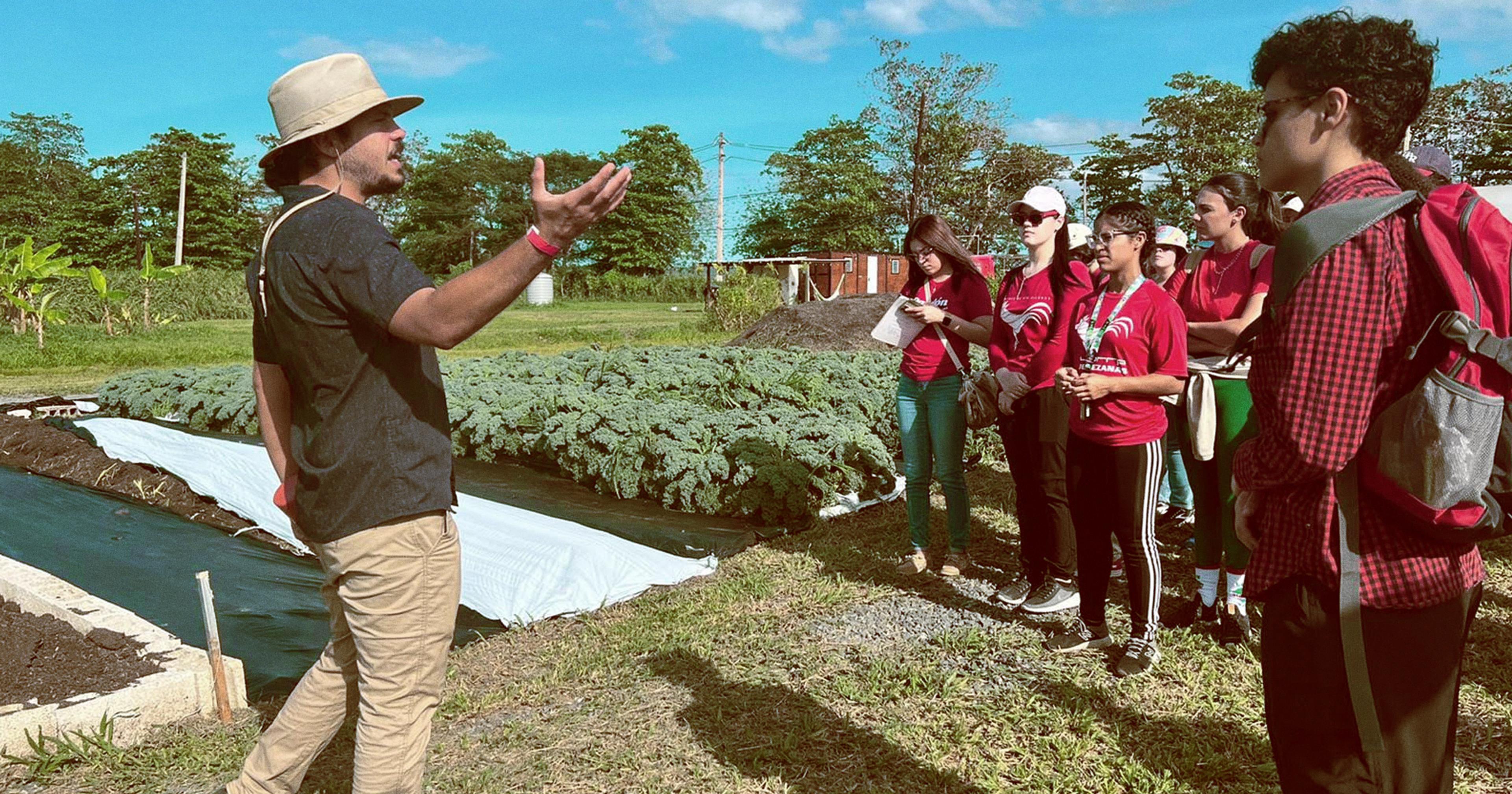
The first thing visitors see when they arrive at Finca La Zafra, an agroecological project in Gurabo, Puerto Rico, is the welcoming restaurant. Bartenders shake up cocktails to an upbeat soundtrack while servers weave through the space, balancing abundant plates. The scene is compelling enough, but the Finca’s most innovative offering is hiding in plain sight: Eco-Agricultores 100x100, its recently launched program that equips budding farmers with machinery, tools, seeds, compost, technical guidance, and, most importantly, a 100x100 plot of land to grow anything they can dream up, on the Finca premises.
Ask any Puerto Rican in the food or hospitality industry, and they’ll share an inconvenient truth: The island imports more than 80% of its food, and that includes produce. This reality has created significant challenges in the recent past; when Hurricane Maria disrupted the supply chain in 2017, the media got to review the anachronistic Jones Act, which complicates imports from the U.S and steeply affects the cost of goods. Every port strike or shift in policymaking is also a bitter reminder of how dependent the island is on the U.S. mainland.
But recently, educational projects, experimental farms, innovative restaurants, and hands-on programs like Eco-Agricultores 100x100 have been carving out a different narrative. Led by a young generation of farmers and entrepreneurs, these initiatives shine a spotlight on local, sustainable produce Puerto Ricans are excited to both grow and consume.
“We need farmers in PR. We need to grow our food and depend less on importation,” said Jan Diaz, president of Finca La Zafra. “It’s important for our communities to have access to fresh and healthy food and it’s important for individuals to figure out where to get this food.”
According to professor Angela M. Linares Ramírez from the Agro-Environmental Sciences Department at the University of Puerto Rico, local agriculture in PR faces a range of environmental, financial, and labor-related challenges. There are environmental hardships like soil degradation that’s driven by erosion, nutrient depletion, and salinization, and water scarcity caused by erratic rainfall patterns, prolonged droughts, and inefficient water management practices. Then, there’s the cost of inputs, and the scarcity of young farmers.
“Food imports, mainly from the Americas, are another challenge and competition for local farmers,” Linares Ramírez said. Then there’s the cost attached to agriculture — everything from fertilizers, pesticides, equipment, and electricity. Not to mention actual land ownership. “These costs place a heavy burden on local farmers, especially since many depend on imports for these inputs, driving up their prices,” she said.
At Finca la Zafra, Eco-Agricultores 100x100 tries to tackle some of these obstacles. At first, the Diaz family, who purchased the 30-acre parcel in 2019, didn’t see it as a major opportunity. Coming into the project with a background in hospitality — the family owns several restaurants on the island — “We just wanted a space to decompress from the fast-paced life and to harvest a few crops for our restaurants on a small scale,” Diaz said.
A nudge in the right direction, however, came from a course at El Josco Bravo, an agroecology project and training school that had been pioneering the discipline in Puerto Rico since 2004. “We started to understand the importance of agriculture here in PR and the impact it has in our daily life,” Diaz said. “We also knew how hard it was to find local products for our restaurants, let alone for an individual, and decided it was our responsibility to join the movement of Puerto Rican farmers.”
The family decided to launch an application process for several 100X100 plots in August, inviting people with or without experience to experiment and plant. As of now, six farmers are running agricultural projects at the Finca. “We are excited to see them thrive as we continue to understand how else we could help them grow,” Diaz said.
While the scope may sound small, Eco-Agricultores 100x100, as well as other projects scattered through the island, have a big task at hand — shifting the cultural mindset among the younger generation of Puerto Ricans to position farming as a respectable, promising, and viable career.
In addition to Finca la Zafra and Josco Bravo’s offerings, Carite 0.3 in Guayaba, Frutos del Guacabo in Manatí, and Finca Neo Jibario in Rio Grande operate similar models: working farms combined with agrotourism, featuring a restaurant or dinner series, educational tours or workshops, and, at times, lodging.
“We need farmers in PR. We need to grow our food and depend less on importation.”
These new initiatives tend to avoid pesticides and adopt permaculture and hydroponic practices. At Finca Neo Jibario, insects are kept at bay with the help of “teas” brewed from tobacco plants, and compost is used to enrich the soil. What started as a patio passion project in San Juan is now a 10-acre operation, growing kale, passionfruit, acerola, lettuce, eggplants, and more, depending on the season. “The land was used for sugarcane over 50 years ago, and it wasn’t impacted too much by chemicals and pesticides, which was perfect for us,” said Antonio Castro Barreto, general manager at Finca Neo Jibario .
A few years ago, Barreto pivoted from a career in personal training to join his brother, founder Francisco Castro, in his quest to revive local agriculture. He never looked back. “People are starting to care more about local, nutritious produce,” he said. Having “direct experiences with the farm,” according to Baretto, is also important. “With the tours, especially for children, and the private dinners, we try to establish that connection,” he said. “So people really see and feel the importance of local agriculture in Puerto Rico.”
While the learning curve can be steep — according to Linares Ramírez’s students are still hesitant to adopt farming as a career, and establishment commercial farms are equally apprehensive to tap into innovative, environmentally friendly methods — things are slowly changing.
“There are pockets of farmers interested in innovation, particularly those who see long-term sustainability and profitability potential through modern farming techniques,” said Linares Ramírez, who, three years ago, introduced a new course on sustainable agricultural management. Additionally, she said, there’s been “a growing interest in agroecology and regenerative farming practices, which focus on sustainability, biodiversity, and soil health.”
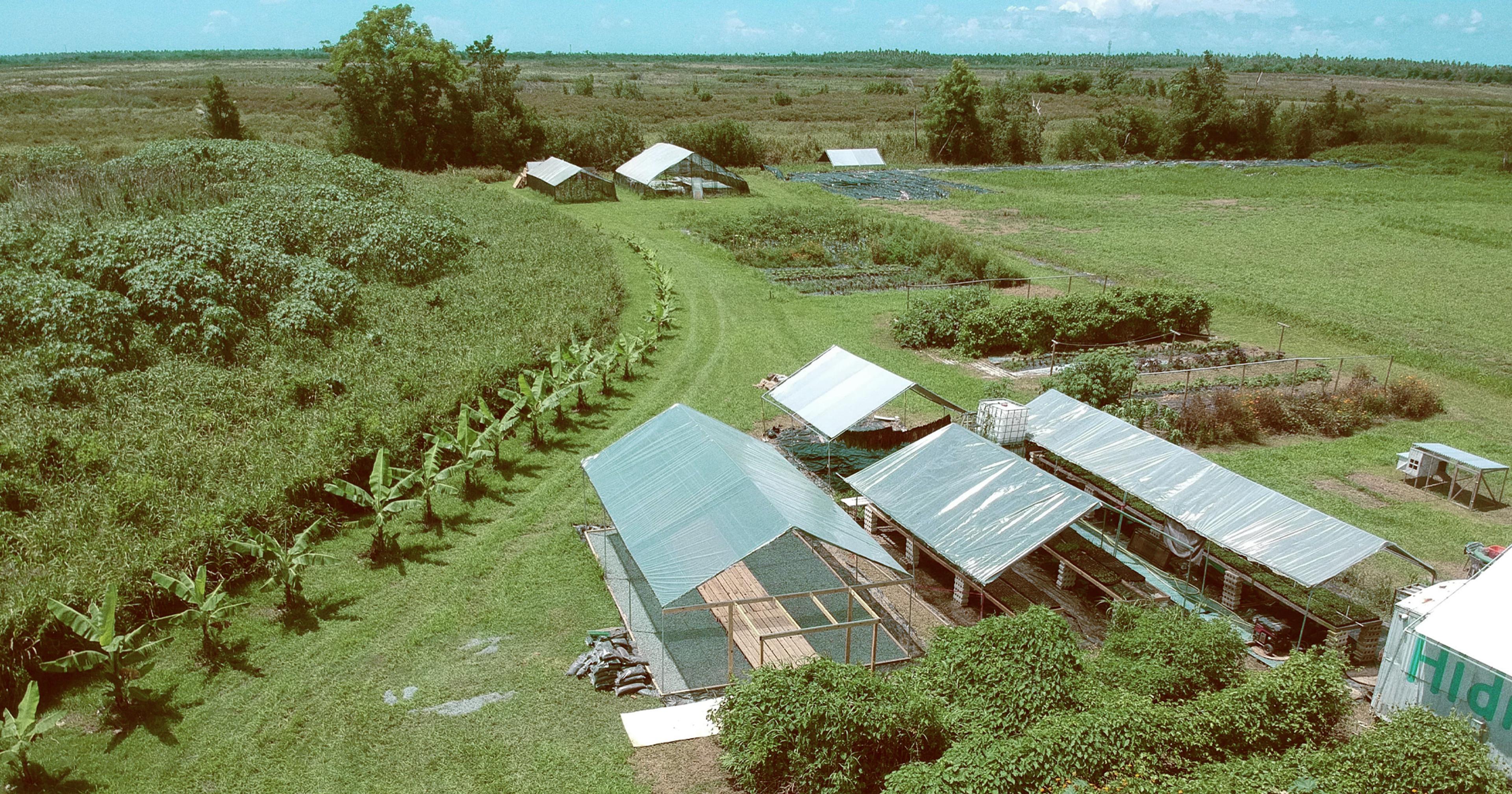
This shift, Linares Ramírez added, reflects broader global trends toward environmental consciousness. “Puerto Rico, with its fragile ecosystems, is especially well-suited for these practices,” she said.
The appetite for local produce is also growing on the consumer side. Finca Neo Jibario has been working with PRoduce, an island app offering subscription boxes and connecting shoppers with local growers and farmers; launched in 2020, the app received James Beard recognition a year later. On the app’s produce section, each product is labeled “local” or “imported,” with the former outweighing the latter.
More and more restaurants are also pledging allegiance to locally grown produce by sourcing it from local farms or growing it themselves. Aldeana, a farm-to-table restaurant and event space opened in 2024, is a good example of Puerto Rico’s new culinary wave — restaurants that promote farm-to-table and locality.
In addition to sourcing everything locally, the chefs also grow seasonal produce on site, from herbs like cilantro and recao — a popular Puerto Rican green used in stews and sauces, to avocados, guava, breadfruit, and edible flowers. “The more we can support local agriculture, the better,” said Aldeana chef and co-owner Raúl Correa. “It’s a fundamental part of both our business and personal philosophy.”
Correa views the restaurant as a part of a movement, emphasizing that sourcing locally is what sets these emerging restaurants apart. “A tomato is a tomato, but what makes the difference is the soil and climate,” he said. “When we travel, we want to taste the tomatoes from that region, and when you visit us, we want you to experience ours.”
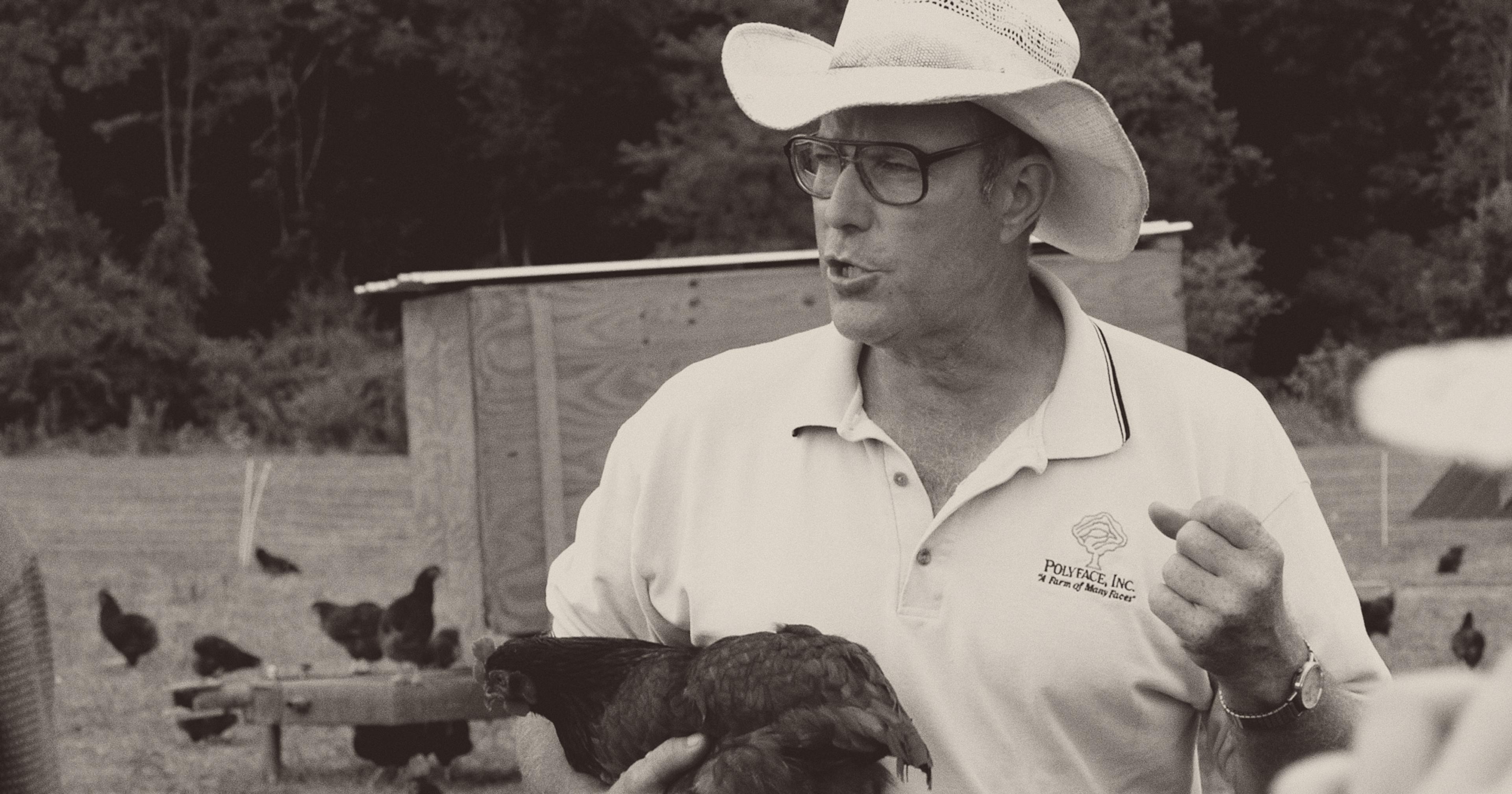
This is a Perspective piece and does not represent the views of Ambrook or this publication.
A rumor swirled in the immediate aftermath of Trump’s victory: Joel Salatin had been picked to serve as an advisor to the incoming Secretary of Agriculture. It was speculated that he would be counseling Thomas Massie, a Republican congressman from Kentucky who lives on an off-grid regenerative farm in the hills of Appalachia.
Neither of these reports proved true. Brooke Rollins, a Republican politico with little farm policy experience, was selected as agriculture secretary. Neither Massie nor Salatin were in the picture that emerged.
Salatin, one of the most well-known figures in the eco-farming movement, is part of a right-leaning current in the otherwise prevailing liberal culture of the scene. A successful Virginia chicken farmer, he gained prominence through his innovative techniques in animal husbandry, showing that it could be done sustainably, humanely, and profitably. He popularized these methods — and his name — with books like You Can Farm and Pastured Poultry Profit$. Alongside these farming how-to titles were others like Everything I Want To Do Is Illegal, a critique of the over-bureaucratization of our food system (including what Salatin sees as the overreach of child labor protections on farms).
Michael Pollan catapulted Salatin beyond the world of pastured poultry enthusiasts when he featured him prominently in his 2006 bestseller The Omnivore’s Dilemma. He is introduced in the book as a “self-described Christian-conservative-libertarian-environmentalist-lunatic farmer” — a collection of attributes that didn’t seem to cause much of a stir at the time. Perhaps this was due to the relatively depoliticized culture of the mid-2000s. Maybe Salatin’s off-farm views were a bit less front and center back then. Either way, in the last decade or so as America’s partisan lines sharpened, some in the regenerative agriculture scene grew wary of Salatin’s politics. By Inauguration Day 2025, he was planted firmly in the MAGA camp.
I spoke with Salatin last month. I wanted to get a sense of where he saw things heading for agriculture under Trump. On November 6 of last year, a day after Trump won, he penned a blog entry titled Celebration. In it, his optimism seemed unbounded. He wrote about a potential future where we would “eliminate ALL federal intervention in the food system, in farming.” A libertarian’s dream.
So what does Salatin think is on the horizon for our food system? His chances at directly affecting farm policy may have been scuttled, but does he still have hope that the new administration might usher in a revolution in agriculture, with RFK Jr — the lodestar of MAHA — at the president’s ear?
Over the hour and a half we spoke — he was generous with his time — our conversation meandered off the farm and into a wide range of controversial subjects. I’ve included italicized links to provide clarity and corrections when necessary.
Can you evaluate what we’ve seen so far with the second Trump administration, specifically on agricultural issues?
My bottom line sense is that the food and farm sector is going to sabotage the health sector. So you got RFK Jr. over here at Health and Human Services. You got Brooke Rollins over here at USDA. My sense is that she’s a bit of a lightweight in this space. So the question is, how’s she gonna get pushed around?
Obviously, the bird flu is front and center and we’re still seeing the extermination policy, the stamp out policy for surviving birds. We’ve killed 166 million chickens and probably only a million of them were sick. The rest of them were not sick. It’s insanity to kill the survivors, but that’s what we’re doing
I’m on a 12-person task force to try to create an anti-USDA bird flu policy that RFK Jr. can use as a bargaining chip in his discussions with Brooke Rollins. And my two primary suggestions on that have been: Don’t kill the survivors and allow the chicken owner to determine the remedy. Right now there’s only one remedy, kill them all. But there are lots of other remedies. There’s hypochlorous, there’s some homeopathic stuff. And you can do nothing. Sometimes it runs its course.
(Read why experts largely support the “stamping-out” policy of culling all birds on affected farms.)
It’s clearly 99% affecting factory farms. There are some backyard flocks that have gotten bird flu, but there are some really filthy backyard flocks that have a dirt chicken yard, dirt run, and some very old chickens. They’re being kept until they’re geriatric, which makes them much more vulnerable to bird flu as they get old. I went on a bit of a tear with the homesteading community — “Look folks, when that chicken hits four years old, put it in the stew pot.”
You mentioned the task force that you’re sitting on. Is this an official government task force?
No, that’s kind of an ad hoc group. We’re working directly with RFK Jr and just trying to provide him an alternative view. I can tell you this, that every single medical doctor that was de-platformed and censored over questioning Anthony Fauci about our COVID policies is in favor of eliminating the extermination policy in bird flu.
I know that you’re skeptical of vaccination regimens for animals. Are you similarly skeptical of vaccines for humans?
We don’t vaccinate any of our animals at all. And in humans, in general, I’m no-vax — vaccinations have not actually cured anything. Sally Fallon at Weston A. Price says, typhus and cholera, dysentery, diphtheria, whooping cough, those were all due to lack of sanitation. She says the plumbers and electricians are what stopped all those.
(It is estimated that childhood vaccines alone have saved over 150 million lives.)
The longer I live, the more I doubt the conventional narrative, why did we enter World War I? Why did we enter World War II? Why do we get the Federal Reserve? Why do we have an Internal Revenue Service? Why do we have the food safety inspection service that Teddy Roosevelt [started]? I call him “Rooseveltski,” because he was a socialist.
Why do we have these things? The longer I live, the more I realize that the official narrative generally obfuscates the real story. I’m completely skeptical of whatever the official narrative is. A guy was telling me the other day, “You know what the difference is between conspiracy and uncovering the real story? About 12 months.”
It seems like the vaccine skepticism and health food concerns of MAHA might make some ground in the governing MAGA movement. It does not appear that any of the regenerative agriculture aspects of MAHA have made any headway. If this trajectory continues, do you feel like your support for Trump was a miscalculation?
I don’t see my support of MAHA a la Trump being a miscalculation. The other side would have been way, way, way worse. Sometimes you take the lesser of two evils … I don’t think that was the case here. I’m thrilled with DOGE. I’d like to see the federal government down to about a tenth of its size. I’d like to see the USDA eliminated, Health and Human Services eliminated, Department of Energy, Department of Health, Department of Housing and Urban Development, IRS … I would eliminate just about everything except the military and I would close all of our foreign bases and bring all our soldiers home. I’m a Ron Paul guy, okay? Let’s be Switzerland. Let’s hoe our own garden and let the world mind its own business and not try to meddle in everything.
But I think that your assessment of the regen ag aspect of MAHA is absolutely dead on. It’s going to be thwarted by the industrial ag sector surrounding Brooke Rollins.
It was reported in the last couple of weeks that the USDA has been taking steps to strengthen the industrial agricultural system in a number of ways like providing economic relief payments to commodity growers and increasing line speeds at meat processing plants.
It’s just more of the same. It just shows that, in agriculture, we definitely have not turned the corner. I’m not in favor of any relief payments to any farmer at all. I’m not in favor of crop insurance. All that stuff is market manipulative. I mean, it helps wheat, but doesn’t help amaranth. Any time that you have marketplace intervention on the part of the government, whether it’s regulatory or beneficial, or concessionary, you incentivize the markets into places, that in a free market, they wouldn’t go otherwise.
The new administration has frozen funds to USDA programs which are aimed at helping small scale regenerative farmers and their allies. For instance, Pasa — a major service provider to farmers in Pennsylvania and the region — has had to furlough 60 of their 70 employees. Does this concern you?
Not at all. Bring it on. Bring it on. I think the sooner we wean the entire ag sector off the government’s nipple, the better off we’re going to be. We complain about crop subsidies and corn and soybeans and ethanol, but as soon as we get a chance at that trough, we’re guilty of the same. Just shut it all down. Shut it all down and I think we can compete very well.
You’ve long described yourself as a “Christian libertarian environmentalist capitalist lunatic farmer.” Do you think that the current regime offers a decent home for this kind of politics to flourish?
I do. The question will be, can we get to him? When people ask me, “If you could be king for a day, what would you do?” I always disappoint them and tell them, I’m a one string banjo, I’m a one string guy. My one solution is a food emancipation proclamation. And yes, that is strong language. But right now, our food and farm sector is enslaved, it is shackled by a regulatory structure that keeps us from being able to engage as neighbors in food transactions. If two consenting adults want to get together voluntarily and exercise freedom of choice on the fuel for their microbiome, we should be able to do that, we should be able to engage in that transaction without a bureaucrat involved.
I can’t imagine a more Trumpian idea. Can you imagine him standing up? “Today, I’m issuing a food emancipation proclamation!” That’s so Trumpian. I’ve told everybody that I know that I can get to, “I want 30 minutes with Trump.” If I had 30 minutes with Trump, to present this idea, I think he’d be all over it. It would unleash hundreds of thousands of homesteaders and small farmers and culinary artisans to our neighborhoods, our communities, our locales, to create entrepreneurial options. The fact is, Americans, we love choice. We’ve got choice in the bedroom, choice in the bathroom, choice in the womb, but no choice in the kitchen. And it’s time to rectify that. What good does it do to have the freedom to pray, preach, and assemble and own a gun, if you can’t choose your body’s fuel to give you the energy to go, shoot, pray, preach, and assemble.
In 2020, your long standing relationship with Mother Earth News was terminated by the magazine due to “a significant ideological impasse over political and social issues.” Have you found that your ability to speak to a more liberal crowd has diminished over the years?
Yes, I would say so. It used to be that it was much easier, but today’s partisanship and bifurcation have made it far more difficult. I will tell you, that break was very painful for me, I mean, I grew up on Mother Earth News as a teen, a young fella.
Let me back up a little bit. We homeschooled our kids before homeschooling was popular, back in the early ‘80s when they sent truant officers to take your kids away because you were being a negligent parent. And at that time, the entire homeschooling movement was dominated by liberals. It was very much a hippie anti-establishment holdover. “I don’t want my kids praying in the school.”
Well, then the 10 Commandments came down off the public school classrooms. And that awakened the kind of faith-based conservative element in America to rise up and say, “Whoa, wait, we don’t like the way this is going.” And here’s my point. In 1980, if you met a homeschooler, chances are they were, they voted Democrat. They were for, you know, abortion, blah, blah, blah. Today, if you meet a homeschooler, 90% chance they’re a conservative Christian faith-based kind of person.
We’re seeing the same thing, I believe, in the homestead movement. So, you know, you had the hippy, beaded, bearded, braless back-to-the-land-movement of the 1970s that spawned Mother Earth News. And we saw it on our farm as we started getting some media attention and some fame. People would come to visit and goodness, 75% of our visitors were liberal Democrats, “Coexist” on the license tag and that sort of thing. And we loved them and we got along fine. We were glad to have them interested in compost and not chemicals. And, you know, acupuncture and chiropractic and all the quackery, medical quackery.
And so, when Mother Earth News was developing these homestead fairs and capitalizing on that post-hippie revival of self-reliance and do-it-yourself-ism, back in let’s say, 2010, they were the big kahuna. I mean, they owned the space.
Well then 2020 ... we’ll never forget that year, that was a cultural year from hell, in my view, on so many fronts. And so, when I got canceled, what happened was, those camps split up, Mother Earth News deteriorated rapidly and completely embraced liberal [politics]. It outed them, I think. And I still love them. I don’t have any animosity.
What I’m going to get to is that when they exited the space as the big gorilla, suddenly it opened up oxygen for conservative faith-based homestead outfits to step up to the plate. And today, there are, I don’t know, 20 at least of these conservative faith-based homestead conferences around the U.S., maybe even 30. Seems like I go to 90% of them. And, you know, they’re not afraid to open in prayer. They’re not afraid to have a presenting of the colors. They’re not afraid to sing the national anthem on opening day. It is a revival.
This interview has been edited for length and clarity.
Witnesses to an evening’s murmuration of starlings have described the event as an “elegant,” “shape shifting,” “dazzling cloud.” A swarm of locusts hits different.
Those who have watched the approach of a ravenous horde — infamously referred to as a “plague” in the Bible — lean toward more dread-filled reactions, describing how massive undulations of the winged insects have blacked out the sun then “beat against the houses, swarm[ed] in at the windows” before “dropping to the ground like hail.” Capable of eating millions of pounds of plant matter in a single day, such swarms decimated crops, fouled water supplies, and destroyed livelihoods across the American West in the 1870s.
Yes, the Rocky Mountain locust of devastating yore is now extinct. But American agriculture in Western states remains vulnerable to several kinds of endemic grasshoppers. As Gregory Sword, entomology professor at Texas A&M, explained it, “All locusts are grasshoppers but not all grasshoppers are locusts”; and even without the swarming mechanism they can cause a lot of damage.
Last year saw devastating scourges hit California nut orchards and Colorado rangelands. Biologists are also anticipating a threat from a non-native, Central American locust (Schistocerca piceifrons) that’s edging ever closer to the South Texas border as climate change shifts the insects’ range. The threat’s not only that they’ll gobble valuable crops; it’s that they might interbreed with local non-swarming North American grasshoppers. “Maybe we’re going to be invaded by the genes for becoming a [swarming] locust,” said Sword. Yikes.
Aerial spraying of potent pesticides when swarms are already in progress is the usual treatment by the U.S. Department of Agriculture’s Animal and Plant Health Inspection Service (APHIS); this can wipe out numerous beneficial species. But researchers studying what makes grasshoppers swarm believe this knowledge holds clues on how to more effectively fight the bugs’ insatiable chomping — or even stop it before it happens. “The holy grail” for controlling these insects, said Sword, “is to be able to predict their movements.”
There are over 10,000 species of grasshoppers across the globe. Only a few of them have the genetic capability to go from comparatively docile bugs to swarming locusts — called locust phase polyphenism, according to William Wesela, an agriculturist at APHIS. Non-locust-type grasshoppers can wreak havoc, too, as 2024’s influxes prove; there are about 20 species of these grasshoppers in the American West. Sometimes, though, definitions can get mushy.
“Like many things in biology, it’s complicated,” said Rick Overson, co-director of Arizona State University’s Global Locust Initiative Lab. “There are 19 poster-child locusts all nerdy grasshopper biologists will agree, those are the ones we’re safe calling locusts. There’s other grasshoppers that have locust-like tendencies. Then there’s locusts that nobody remembers being a locust several decades ago, and now they’re acting like a locust.” This certainly complicates things for anyone hoping to better control them.
“The holy grail [for controlling locusts] is to be able to predict their movements.”
Swarm-capable locusts exist everywhere except Western Europe, Antarctica, and the U.S. and Canada (for now). The most concerning species of them all, the desert locust (Schistocerca gregaria) has been devastating smallholder farms across Africa’s Sahel since time immemorial; they caused $2.5 billion worth of agricultural losses in a 2005 outbreak. Scientists expect in some cases, climate change will make future outbreaks much worse.
People used to believe swarming and non-swarming locusts were different species. We now know the same genome in a single species, turned off or on, can produce two very different creatures. As Sword explained, desert locusts, reared in isolation, are colored green or brown — colors of camouflage. They’re also “really slow and cryptic and shy — they’ll move away from other individuals. But when you crowd them, all that changes and they aggregate towards one another, and they become much more active, which leads, ultimately, to the swarming.”
According to Arianne Cease, director of ASU’s locust lab, plenty of rain leading to abundant plant growth can cause locusts to lay enough eggs to trigger group swarming dynamics. But locust and grasshopper outbreaks are also common during droughts, “potentially because their predators haven’t survived,” she said. Their ability to capitalize on both conditions “can exacerbate an already challenging situation for agriculture in the region that might have been navigating years of drought.” The consequences can also be enormous for beekeepers, according to Wesela at APHIS, who depend on rangeland flowers to sustain their hives.
Desert locusts raised crowded together become brightly, boldly colored and are more willing to eat a wide range of even toxic plants. “When there’s more competition for food, you can’t be as picky,” Sword said. The bugs are compelled to keep teeming forward en masse in order to find more food sources — and also avoid becoming prey to each other. That’s right, on top of everything else, swarming locusts are “raging cannibals,” said Sword. “If they don’t move, they risk getting consumed by other locusts.”
In a chamber of the ASU locust lab, it’s not a swarm but one solitary migratory locust (Locusta migratoria) that’s flying, legs casually stretched behind, into strong headwinds in a PVC wind tunnel. Attached by a tiny magnet glued on its back to a long metal screw, the miniscule aeronaut first ate a high-carb/low protein meal — mimicking the cotton, wheat, and prairie grasses it targets in the wild — so researchers can gain better understanding of its dietary preferences in advance of a day’s journey that might last hundreds of miles. “We’re trying to paint a picture of the nutritional physiology of these beasts” — basically, what they like to eat and when — “to better understand how they’re doing what they’re doing to make them so hard to manage,” said Overson.
Swarming locusts are “raging cannibals. If they don’t move, they risk getting consumed by other locusts.”
In another chamber down the hall, both gregarious, group-reared locusts, and solitary little ones that can’t see or smell each other, are awaiting an assortment of experiments. Some of these will test what the locusts will do in group marching situations; it turns out even juvenile locusts that haven’t yet developed functional wings have the propensity to “swarm” on the ground. They’ll be fed different diets, explained Sydney Millerwise, a doctoral student at the lab, then monitored as they make their way round and round a donut-shaped arena to see what, if anything, will compel them to break ranks. The marching phase of teeny-bopper locusts might prove the most fortuitous time to try to stop them in their tracks; they’re a lot slower when they’re small and can’t fly.
The next things to ascertain are whether the swarming proclivities of one locust species apply to other grasshopper species. Sword’s lab is part of a National Science Foundation grant to figure out just that; he’s hoping the grant will be renewed after this year. He’s also on the cusp of understanding what makes a swarm tick, neurobiologically speaking.
Sword is part of a team that recently figured out that it’s the sight of other locusts moving ahead of it — rather than the smell of them, or the perception of polarized light coming through its compound eyes — that keep a bug careening ever forward. With this sort of intel in hand, researchers might be able to develop more targeted biological controls so chemical use could be cut way back. “If we can keep them from being attracted to each other, even though there might be an outbreak going on, they would still stay as normal behaving grasshoppers,” said Sword. Wesela believes Sword’s and ASU’s work “could have valuable implications,” he wrote in an email, especially in informing “strategies for managing grasshopper outbreaks in rangelands.”
A technology called RNA Interference (RNAi), which targets the expression of certain genes, might work. Another control that shows promise is Metarhizium acridum, a fungus that penetrates a locust’s outer cuticle to inhibit its immune function. ASU’s Cease said it isn’t approved for use in the U.S. yet; it’s also slow-acting, to the annoyance of anyone who “wants locusts off their land as soon as possible,” she said. And the potential for it to have unexpected consequences on landscapes is something that needs to be considered.
For now, Sword is tempering technological innovation with old-fashioned physical labor, visiting the U.S.-Mexico border every month to look for signs that the Central American locusts have arrived at last. “I literally drive along the wall and collect grasshoppers,” he said. He’s also trying to get locals engaged in the search because the occasional, if determined, efforts of one man go only so far in grasshopper surveillance. “Somebody out there is going to find it,” he said.
In 2015, Pennsylvania hobby farmer Daniel Leiber showed up to a French fine dining restaurant in New York City with some cuts of lamb and pork, hoping to turn his livestock pastime into a business. If this meeting went well, it would be his first restaurant account. If it didn’t, he was going to need to find another way to make an income off of his growing farm. In the end, things took a turn he wasn’t expecting.
This is good, the executive chef told him. But do you think you could grow me some squab?
“I didn’t even know what squab was,” Leiber said. “He could see that on my face.”
The chef explained that squab are juvenile pigeons — and no, they weren’t the same as the ones perching on statues and buildings around the restaurant. Pigeons grown for food are commonly consumed in other parts of the world, such as China and France. It’s common, for example, to see deep-fried squab on Chinese New Year banquet menus, or roasted and served at Michelin-starred French restaurants. These pigeons, which are raised as livestock, harvested as juveniles, and called “squab,” are thought of as a delicacy. And, since this restaurant happened to serve high-end French food, the chef wanted them on the menu.
Fortunately, Leiber was up for the challenge, and quickly found out why the chef had made such a query of someone with no experience — squab farmers are few and far between in the U.S. He had to mostly teach himself the craft of “squabbing,” because the only help he could find nearby was someone who raised pigeons for show. He purchased a few King pigeons, built them a dovecote (pigeon house), and started working on creating his own custom feed. Within a few months of that first meeting, the New York City restaurant had Stardust Farm’s squab on the menu.
In January of this year, there were 869.3 million broiler-type chickens hatched in the U.S. Squab numbers are much harder to get ahold of, but the most reliable estimates are that we produce barely more than a million squab annually. In the U.S., squab is what Leiber calls “a lost delicacy.” But it wasn’t always so hard to find.
Not What You Think
Most people are familiar with city pigeons, but these urban-dwelling birds only represent a small facet of the wide variety out there.
“If you go on our website, you can see all kinds of different colors and varieties that don’t look anything like the [pigeons] you see out in the wild,” said Tim Heidrich, secretary of the National Pigeon Association.
Heidrich said there are hundreds of pigeon breeds, and they can generally be sorted into four categories. “Fancy” pigeons are raised for showing. Racing pigeons are raised for speed. Performance pigeons are trained to do tricks. And “utility” pigeons are used for squabbing.
Heidrich himself has been keeping fancy pigeons since he was a child in the 1960s and ‘70s, when he says it was much more common. Anecdotally, several other kids in the neighborhood kept backyard pigeons, inspiring him to get into the hobby. He started with two birds, whom he named Hank and Henrietta. Today, he maintains a dovecote with a couple hundred birds, including four breeds that he shows at competitions. But beyond show value, he also just really likes them.
“Chickens don’t interact with you as much as pigeons do,” Heidrich said. “The pigeons, they just seem to have much more personality to them.”
Culturally, pigeons have played many roles for humans. Like Heidrich, many people have kept them as backyard pets. They have been messengers, entertainers, and even took part in World War I, providing critical communications services by carrying messages. There’s a laboratory in Utah that studies pigeons for their impressive genetic variation. But raising pigeons as meat is one of the key ways humans have interacted with pigeons through time.
“Chickens don’t interact with you as much as pigeons do. The pigeons, they just seem to have much more personality to them.”
Squabbing as a practice has been around for thousands of years in many parts of the world such as Europe and North Africa. In England and France, there were thousands of dovecotes belonging to members of nobility in the 16th and 17th centuries. But the practice has faded over time, and while there’s a minor pigeon market in the U.S., it’s not that common.
“It never caught on in the U.S. that I know of, in any big way,” Heidrich said.
Bigger companies like Palmetto Pigeon Plant in South Carolina dominate a rather meager industry in the United States. Hanna Raskin of The Food Section reports that in the U.S. there are only 13 producers authorized to sell squab across state lines.
Most folks looking to buy squab in the U.S. must turn to online ordering or specialty meat markets. Paulina Market in Chicago is just such a place. They sell squab online and in their brick and mortar to retail customers. A spokesperson for the shop said they don’t sell much of it, though — it would be a big month to even sell 12 birds, they said. However, they added, sometimes that number doubles around the winter holidays.
The low numbers may be partially due to the fact that pigeons have gained a reputation as dirty birds — a misconception that both Leiber and Heidrich enthusiastically deny. For some Americans, the rugged urban ones have tainted their perceptions of this protein. But it may also be because the industrialization of animal agriculture requires the most meat for the least input, a demand that’s particularly difficult for pigeons to meet. As the quick-producing chicken took center stage as America’s most popular animal protein, squab has all but faded from view.
Raising Pigeons
It’s not that squab farms are impossible to scale up — Palmetto Pigeon Plant has tens of thousands of birds. But raising pigeons is a little different from poultry like chickens, explained Leiber.
“You could take a fertilized chicken egg, put it in an incubator, hatch that egg, and within three days, the baby chick is already eating grain on its own,” Leiber said. “With pigeons, you need the parents.”
A mother pigeon will lay only two eggs at a time, and the parents will take turns incubating those eggs. It takes just shy of 20 days to hatch these eggs, and then both parents will assume the responsibility of feeding their young.
The bird is meant to be tender, owing to the fact that they are butchered so young. Leiber harvests his at a month old, before they’ve left the nest.
“In a perfect world scenario, I’m pulling the squab right out of the nests so they’re not even flapping their wings yet. You can imagine how tender the meat is.”
“I’m pulling the squab right out of the nests so they’re not even flapping their wings yet. So you can imagine how tender the meat is.”
Covid-19 nearly ended Leiber’s career as a squab farmer. Before the pandemic hit, Leiber’s flock was about 1000 birds, or 500 pairs. When restaurants started closing down, he had to significantly cut down his flock. Leiber, who has a pigeon tattooed on his arm, took the culling hard.
“It was horrible,” he said. “It messed me up psychologically for a couple months.”
But now, he’s started building his flock back up and he’s pivoting his operation. Instead of searching for restaurant clients, he’s inviting people to stay at the farm and learn what he loves about pigeons firsthand.
“I’ve been trying my best to reintroduce people to squab,” he said. “I mean, people in my generation, they don’t know squab. I’m the only person where they would ever hear about squab from.”
Leiber, who also went to culinary school, now operates a farm stay bed and breakfast. People can come learn about squab farming, among other things, and then try pigeon for dinner — perhaps for the first time.
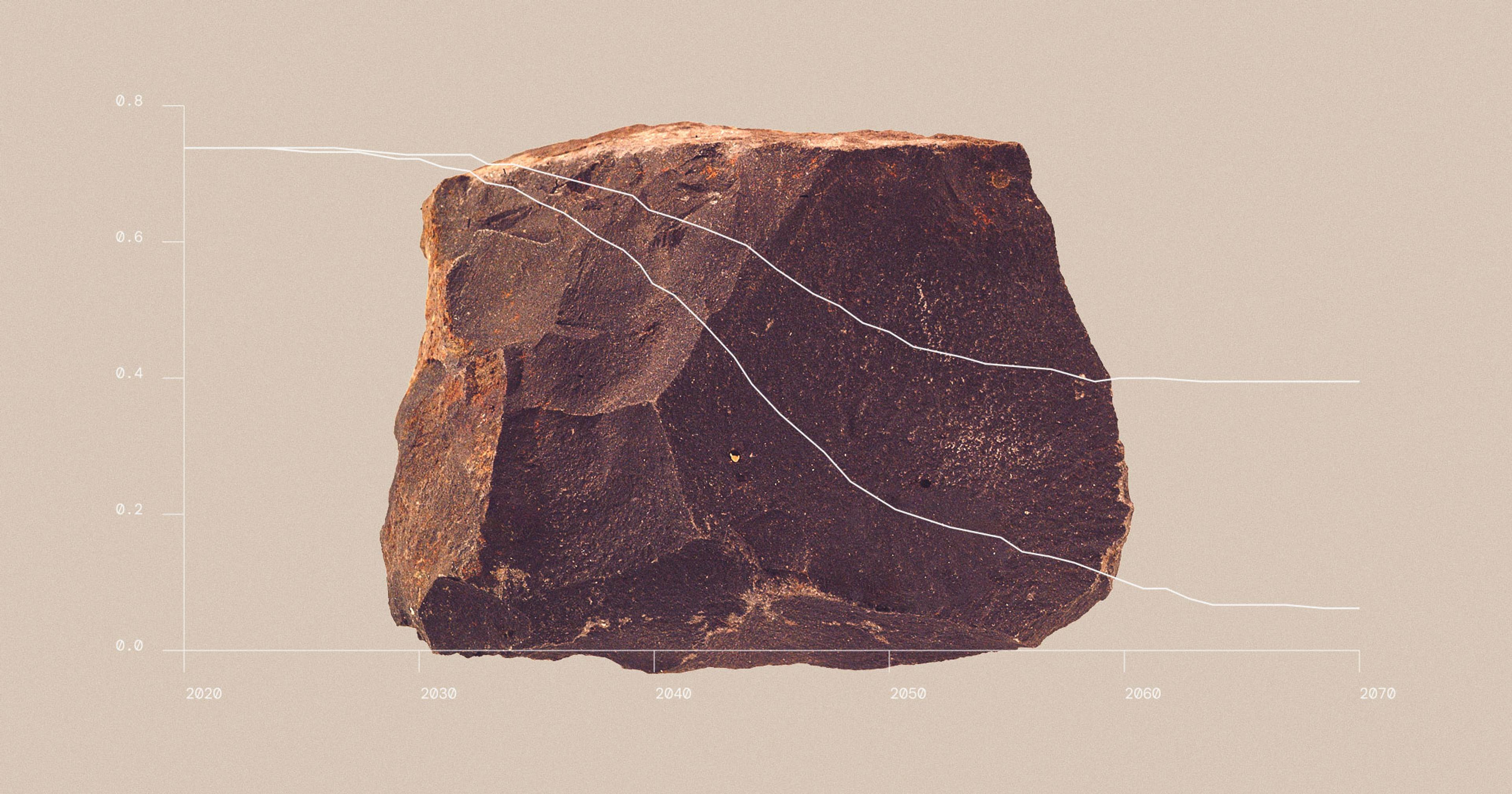
When Matt LeBel and his team went out collecting soil samples at the end of September in North Carolina, it was a different experience than usual. Hurricane Helene had just ravaged the southeastern states of the U.S., leaving farmers focused on providing support to communities that had been hit hardest. “We just went out and kind of did things in a way that felt like they could keep their focus on family and supporting the community,” said LeBel, chief of staff at Lithos Carbon.
The team needed to test whether the basalt they’d treated the soil with had actually stored carbon. Lithos sells carbon credits to companies looking to offset their emissions, and with deadlines for end-of-year accounting approaching, LeBel and his team had to act fast. Before the hurricane hit, however, there’d been a drought that had pushed the harvest back, making the fields inaccessible to vehicles, so they had to do the work on foot.
Lithos is one of many companies aiming to store carbon through a process known as enhanced rock weathering (ERW). In May last year, Lithos, alongside four of its competitors, was awarded $1.2 million dollars as a semi-finalist in the Department of Energy’s Purchase Prize, a competition to deliver carbon removal credits to the government. Yet some issue caution on claims of whether the practice can truly store carbon.
When basalt is added to fields and is exposed to water, it breaks down and reacts with carbon dioxide to form bicarbonate ions. These ions contain carbon and are washed away into rivers, lakes and eventually the ocean, where they remain. Lithos adds basalt to farmers‘ soils for free and finances their operations by selling carbon credits to polluters looking to offset their emissions.
“The trade-off is we allow them to put the product on our fields, and we sign off on any carbon credits that they can sell off of our farming,” said Tim Madeiros, a farmer in Newburg, Pennsylvania, who is working with Lithos. They first applied basalt to his fields in July 2023, with the resulting harvest of grass hay in May last year.
Madeiros came across Lithos via a Facebook advert while he was searching for a solution to his weed problems. His farm is organic so herbicides weren’t an option; he instead turned to Lithos and their basalt. Madeiros said that the weed control from ERW has been “very effective” and on top of that his yield increased by 40%.
A UK paper published in February 2024 found that ERW can store around 2.5 tons of carbon dioxide per hectare every year and improve crop yields by up to 15%. Another study a year later from the same author found that ERW deployed on agricultural land could sequester 0.16-0.30 gigatons of carbon dioxide every year by 2050. For context, the U.S. emitted 6.3 gigatons in 2022.
“Many studies … are not looking at the net impact of putting rocks on fields for the atmosphere, which is what we ultimately care about in our climate strategies.”
Despite the promising results presented by ERW studies, Freya Chay, program lead at non-profit Carbon Plan, recommends caution, stating that we’re still early in our understanding of the technology’s potential. “Many studies … are not looking at the net impact of putting rocks on fields for the atmosphere, which is what we ultimately care about in our climate strategies,” said Chay.
The study published in February 2024 calculated the carbon storage potential based on the amount of basalt that dissolved — which doesn’t automatically equate to carbon removed from the atmosphere.
Similarly, it’s difficult to generalize, said Chay. Each study has its own design — from the kind of rock used through to the type of soil or the local climate — so results from one situation don’t necessarily apply to others. Differences can arise from “one field to another.” That’s true across time, too: The study found a yearly carbon storage potential of 3.8 tons per hectare in the first year, which averaged out to 2.5 tons per year over a four-year period.
“We need more field trials to understand how general these kinds of responses are,” said David Beerling, professor of natural sciences at the University of Sheffield and lead author of the paper in question. He agrees with Chay that our understanding of the technology is still in the early stages, though he highlights that increases in yield seem to be a consistent result in field trials.
Another consideration is the carbon emitted in deploying the technology. One paper found that it is rock grinding, rather than mining, which has the largest environmental impact. Another found that particle sizes of less than 50 micrometers result in greater carbon sequestration through ERW.
Microsoft, British Airways and the Nigerian government all announced ERW partnerships in fall last year, showing there’s growing interest in the technology.
“I think there is an argument to be made that the commercial sector is running ahead of the science.”
Some have concerns that the business model of selling carbon credits to polluters isn’t doing much to actually address emissions and is instead a way for companies to greenwash. A paper published in November found that less than 16% of investigated carbon credits constituted real emissions reductions, though the paper in question didn’t look into any ERW projects.
“I think a lot of the credits that are used to make public claims to consumers are not backed up by science, and there’s a lot of evidence to support that concern,” said Chay.
Carbon markets are, however, a little more nuanced than that. “Buying credits to make claims that you have offset fossil fuels is very different than buying credits as basically a mechanism for supporting R&D,” she said. She adds that it’s important to take each credit on a case-by-case basis if you want to levy the criticism that it’s a way for companies to greenwash.
“I think there is an argument to be made that the commercial sector is running ahead of the science,” said Beerling. At the same time, he said there are some “very good” commercial companies, and he highlighted Lithos as being “rigorous” in their work.
“We actually go to every farm about every six months and [take a soil sample] approximately every two and a half acres,” said Mary Yap, co-founder of Lithos. The soil samples are then tested against a control field in order to better understand how much bicarbonate has formed.
Modeling is used to understand how the bicarbonate ions move through rivers and into the ocean, which Yap said was studied with academics and is publicly available for scrutiny. It’s possible that when the ions come into contact with acidic rivers — due to excess fertilizer runoff, for example — that carbon can be released again. When accommodating these kinds of issues in their accounting, Yap said they estimate conservatively.
She adds that Lithos currently uses super-fine basalt in their operations, which is a waste product of other mining processes and therefore no new mining or grinding is needed. “We screen all that for purity, for safety, making sure it’s good for our farmers, making sure it’s nutrient-rich,” she said.
Yap said companies like Microsoft and Google “are really trying to reduce their emissions while also buying down removals for the parts that are really hard to reduce.”
Responding to the idea that polluters might use carbon credits to greenwash, Yap said companies like Microsoft and Google “are really trying to reduce their emissions while also buying down removals for the parts that are really hard to reduce.”
Microsoft recently signed a deal with Lithos to permanently remove 11,400 metric tons of carbon from the atmosphere. The software company’s emissions have risen from 12.2 to 15.8 million metric tons of carbon equivalents between 2020 and 2023.
Chay said that on a structural level, “offsets have played a role of relieving structural political pressure on emission reductions,” and that “carbon removal is only useful if we do deep emission cuts.” Yap added that “there’s no way that we’re going to use carbon removal to remove 50 to 60 billion tons of emissions a year.”
For farmer Madeiros, however, the carbon credit side of things doesn’t really matter. He doesn’t believe humanity’s carbon footprint is impacting the Earth. “I would [work with Lithos] again, because simply, it doesn’t cost me anything to do it, and I’m benefiting from it,” he said.
After the post-hurricane collection, LeBel says he and his colleagues at Lithos feel that the kind of hard work they put in is going to be necessary to get the industry off the ground. “There will be more hurricanes, there will be more droughts, there will be more things that impact farmers,” he said. For now, however, things are back to normal: “We’re thankfully outside of that emergency period, we’re back into a world where [the sampling is] more planned, more scheduled, and we’re not as crunched.”

When Charlie Henriksen began working on Lake Michigan in the 1980s, fish and commercial fishermen were both abundant. But in the decades since, fisheries have shrunk, undercut by increasing regulations and invasive species.
Henriksen is still fishing — his primary catch is lake whitefish, which have proved remarkably resilient to changing conditions — but the fishery he started in 40 years ago is all but gone. “There’s little spots where there’s some fish, but nothing like it used to be, or should be.”
This trajectory isn’t helped by the way many North Americans consume fish. On its way to your plate, a fish leaves much of itself behind. First goes the head — roughly 20 per cent of the animal — then the guts, bones, blood, and skin, leaving a fillet that makes up less than half of the creature it started from.
For the fish, this is bad enough. But for the fishermen already operating on thin margins, throwing half of their catch away is also bad for their bottom line.
In the Great Lakes region, people are investigating whether there’s another way.
Henriksen is part of a group of Great Lakes fishermen, aquaculture producers, and processors exploring whether the solution lies in using 100 percent of the fish they catch for applications ranging from fertilizer to cosmetics and skin grafts. “Even if it added a couple dollars a pound to our base price, it would be a game changer … it would actually make what’s left of our industry profitable again.”
The initiative is part of a global movement that people hope can address the problem of fish waste — which the World Economic Forum estimates in the tens of billions of tons a year — while making fishing communities more resilient.
But in the Great Lakes, the effort is also contending with a shifting environment, ecologically and politically, and a supply chain that isn’t set up to use much of what comes out of the water.
Why Not Take All of Me
While Indigenous and traditional communities have long used the entirety of fish (as do cultures outside of the Western world) efforts are intensifying to do so in industrial fishing— starting with a nation that’s long been dependent on cod.
In the 1980s, Icelandic fisheries were put under a quota system to address concerns about overfishing; over the next decade, landings of Atlantic cod dropped from around 450,000 tons to less than half that amount. “What it meant is that all these businesses that had been built around volume as the business model really had to think, ‘Okay, now I can’t catch as much … so how do I maximize the value’,” said Alexandra Leeper, CEO of the Iceland Ocean Cluster, a network of Icelandic ocean companies.
Initially, the industry responded by adjusting filleting practices to waste less of the fish — but in time, focus shifted to cod’s other parts. The 100% Fish Project, an initiative of the Iceland Ocean Cluster, now helps as much as 95 percent of cod caught by Icelandic fishers find a purpose. This includes cosmetics, fish leather, pre-treatment sprays for colds, and skin grafts for burn victims.
As an island nation, there’s a longstanding recognition in Iceland that resources are limited, and that effort into catching fish can’t be wasted, said Leeper. Now, the 100% Fish Project is relearning those pathways. “We couldn’t just keep fishing endlessly — there’s a need to do things better now.”
Casting the Net Wide
The shift isn’t confined to Iceland.
On a trip to Europe, David Naftzger, executive director of the Great Lakes St. Lawrence Governors & Premiers (GSGP), which supports environmental protection and economic development in the Great Lakes Region, stumbled across the Iceland Ocean Cluster.
In Atlantic cod’s trajectory, Naftzger recognized a parallel story to that of lake whitefish, one of the Great Lakes’ most important species — and the 100% Fish Project prompted a revelation. “We realized we really just had a filet factory, and we were leaving a tremendous amount of unrealized value on the table,” he said.
In response, Naftzger’s organization launched their own project, called 100% Great Lakes Fish, in 2022. Projects to use the entirety of fish have also sprung up in Namibia, South Korea, and Alaska.
As a first step for the Great Lakes, participating fishermen and companies voluntarily pledge to stop sending fish waste to landfill, starting this year. “Putting valuable raw material … into that landfill really doesn’t make any sense,” said Naftzger. He said the GSGP has also done testing of the major fish species caught in the Lakes to determine what kinds of products they’re suitable for. “In the near term, we’ve identified opportunities to roughly triple the value that’s generated by each fish.”
Initially, this may be as simple as diverting fish waste to compost, but over time, could include uses such as fish meal, collagen, and leather.
Stakes Are High
One challenge in the Great Lakes is the fishery’s highly decentralized structure; unlike in Iceland, where processing happens in one location, fish in the Great Lakes is harvested and processed by small companies or individuals in communities on both sides of the Canada-U.S. border (a situation that also confounds efforts to develop tinned fish production in the Great Lakes).
This adds complexity at a time when Canada-U.S. trade relations are rocky, to say the least; in an average year, Charlie Henriksen might send 50 percent of his catch to Ontario for processing — 80 percent of which then comes back to the U.S. “This whole war with Canada and tariffs is just really draining to think about,” he said. “There’s been so much legwork to make [100% Great Lakes Fish] happen. It really just doesn’t need an extra roadblock.”
On top of that, traditionally, many Great Lakes harvesters have been in competition, Naftzger said, which makes collaborating to develop new products a tougher sell. Still, fishermen see promise in the idea.
“It’s just heartening that we’re trying to do something,” said Henriksen, whose son is his business partner. “We’re building a business for the future — that’s why I’m involved.”
Henriksen is skeptical that the increase in fish value that Iceland Ocean Cluster claims — from $12 to a potential value of $5,000 for a single cod — would be possible in the Great Lakes. But even a small increase in the price per pound could make the fishery viable, he said.
Already, Henriksen has been collaborating with a researcher to see if his scraps make viable aquaculture feed; he’s also worked with a company to make fish leather products, though “people didn’t get real excited about them.”
Rough Waters Ahead
There are other hurdles to overcome. Fisheries have been decimated by invasive species, and recovery from those impacts has been slow — even as funding for control measures is precarious.
And in the long term, invasive species — among other issues — could be exacerbated by climate change. The Great Lakes’ cold temperatures have held many invasives at bay, said Zachary Feiner, research scientist at University of Wisconsin-Madison. But Feiner’s research on invasive carp in Wisconsin rivers suggests that could change in future. “A little bit of warming all of a sudden makes those a great place for invasive species to be in.”
Meanwhile, declining ice cover on the Great Lakes is also affecting the survival of young fish of species like whitefish, which depend on ice to protect their eggs over the winter. “You’re seeing impacts of climate change very, very directly.”
Naftzger said shifting the industry to use more of each fish makes it more resilient to the shifts that come from a changing climate. “Anytime you’re dependent on a single product, you’re more vulnerable to some kind of a dislocation or a change.”
Dennis VanLandschoot is one of those hoping for that more stable footing.
His grandfather started VanLandschoot & Sons after emigrating from Belgium to Michigan in the early 20th century.
But environmental conditions, regulations, and persistent labour shortages make keeping the fishery going a tough proposition; earning revenue on the 50 per cent of the fish they’re currently throwing away would be “huge.”
VanLandschoot said this isn’t just about his family, or the commercial fishers on the Great Lakes. Ultimately, using more of what’s coming out of the water will also support healthier populations for what’s left in the water. “Really it starts from the back end,” said VanLandschoot. “What can we do for the fish?
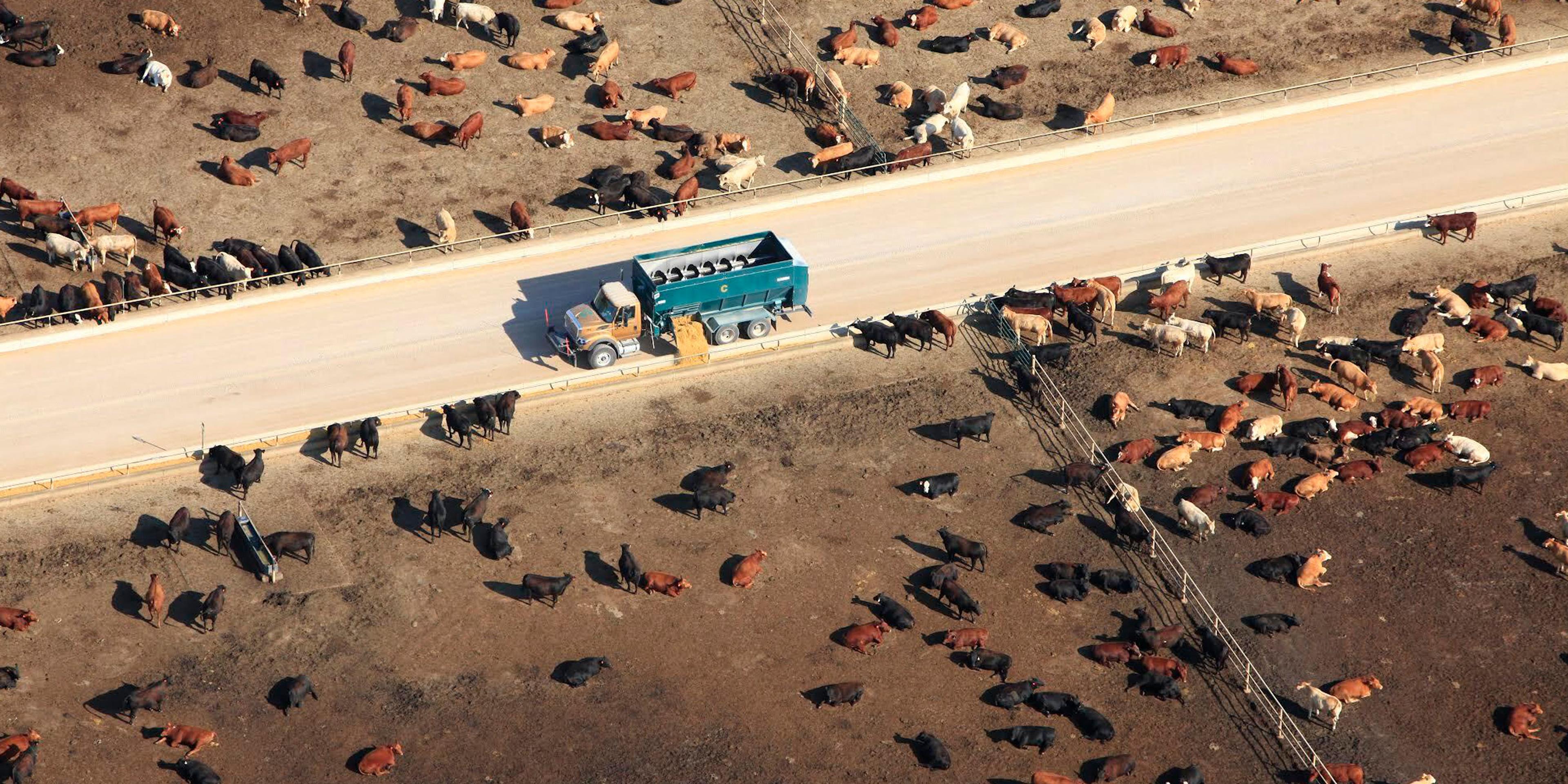
Five Rivers Cattle Feeding LLC is the world’s largest cattle-feeding company, employing hundreds of workers in 13 feedlots scattered across six states. Veterinarians, managers, health staff, and barn employees support the health and welfare of nearly 865,000 cattle.
These employees identify and treat respiratory diseases, pneumonia, viral and bacterial infections, rumen disruptions, lameness, and a host of other health-related maladies, injuries, and defects. They insert rectal thermometers, inject antibiotics, deliver oral drenches, and complete minor and major medical procedures to care for the sick.
Alongside this, dozens of riders comb through countless pens, scanning for a nearly never-ending, committed-to-memory list of symptoms and clinical signs including every consistency and variation of bodily discharges and fluids, irregular sounds, surprising behaviors, awkward gaits, funky smells, and much more. All this is accomplished from the back of a horse, often in extreme heat or cold, gale force winds, sheeting rain, and/or howling blizzards.
Even when deemed successful in their roles, too many animals die; cattle are prey creatures and use every shred of willpower to hide sickness until they’re no longer able. No matter how experienced and knowledgeable, even the best pen riders are mere mortals. They cannot see what isn’t yet there to see.
Five Rivers personnel aren’t unique or unusual in their abilities, but an example of what occurs each day across the cattle feeding industry. Veterinarians assess and prescribe, barn staff probe and record, and pen checkers ride and inspect, each mirroring various industry approaches to animal health. Five Rivers, as the largest feedyard in the country, is representative of the industry’s tech-driven push toward predicting cattle diseases earlier and more efficiently.
Tech Languishing in the Shadows
Technology has created superior vaccines, more efficient antimicrobials, and improved treatment deliveries, but identifying cattle illness before clinical signs appear has remained an industry challenge.
A ride amongst the pens at Five Rivers confirms evidence of tech-based aspirations. Currently trialed and functioning hardware hums quietly beside unused, previously tested gadgets deemed ineffective or impractical. Sporadically mounted on alleyways, light posts, gates, and bunk rails, they cast a shadow of proof on the efforts made.
“Being in agriculture has a way of wearing us down, as much of what we play a role in is often out of our control.”
“Seeing this evidence, it’s obviously a work in progress,” said Five Rivers’ head veterinarian, Josh Szasz. “Being in agriculture has a way of wearing us down, as much of what we play a role in is often out of our control. Early disease detection technology is no different, but this ... doesn’t stop us from returning to the table when something new shows promise.”
Five Rivers focuses on early disease detection innovations. If these advancements could ever crest the figurative hilltop, the cowboys might be able to ride into previously uncharted territory, identifying sick animals for treatment days before clinical signs surface.
“Our motivation toward using these early disease detection tools is to deliver fewer antibiotics and to use them more judiciously. We want to do our part in curbing antimicrobial resistance too,” Szasz said. “These kinds of improvements are good things.”
Look at Those Handsome Muzzles
Of course, if technology startups wish to showcase their capabilities, the largest feedyard in the world is the ideal place to do it. To this end, Five Rivers Cattle Feeding hosts periodic competitions with many disease detection startups exhibiting their offerings to capture the feedlot’s attention.
MyAniML, a Kansas City-based animal health technology company, attended one of these competitions, propelling themselves onto the feedyard’s radar. Their technology uses motion sensor cameras to photograph faces and, more specifically, muzzles. Facial recognition identifies individuals, and AI breaks down video and picture data, assessing muzzle distinctions to predict the onset of illness.
“Each muzzle is like a fingerprint,” said Shekhar Gupta, MyAniML’s founder and CEO. “They go through tiny changes as health status fluctuates. By studying these minute differences in a muzzle’s ridges, we can predict health events 2 to 3 days before noticeable symptoms occur.”
Feedlot cattle generally live close together; disease transmission is a major concern. But Gupta believes facial recognition and muzzle analysis will help identify and isolate sick individuals earlier, saving money on treatment costs and reducing transmission risks.
Turn Up the Lights
Five Rivers has hosted several smart ear tag startups hoping to catch the operation’s attention with their unique product capabilities.
HerdDogg is a technology company that operates like a benign Big Brother, continuously watching over animal health from afar. Its Bluetooth-capable system uses accelerometers and sensor-equipped ear tags to detect minute temperature and movement changes even the most experienced handlers can miss. These smart tags collect data and upload it to the cloud, where algorithms correlate it to individual health status. Alerts of potential sickness or injury are delivered through text messages or emails.
“We’ve improved our health algorithms to be more customizable to each operation,” said HerdDogg CEO Andrew Uden. “Our system now allows users to remotely activate ultra-bright green LED lights on the smart ear tags of sick animals making it easy to identify them.”
Uden says their enhanced capabilities have cut false positives across the board without sacrificing detection of true positives. Their timing has also improved with shorter intervals between alerts and less time needed to ‘train’ the algorithms on new cattle or properties.
Currently, Five Rivers hasn’t committed to any smart ear tag startups, although they remain interested in their capabilities.
A Deep Breath to Assess
Isomark Health, a Wisconsin-based animal health company, has developed a non-invasive technology to monitor disease status by measuring and analyzing isotopic biomarkers in exhaled breath samples.
While they haven’t taken part in any of Five River’s events, they are currently attempting to advance their innovation further into beef markets.
Isomark’s patented breath analysis system provides sickness notifications one to two days before clinical signs appear. In ongoing, internal, dairy-based trials, the technology identified ketosis and milk production issues three to five days ahead of conventional methods. The company is currently enhancing its algorithms for infections and adding identifications for other metabolic diseases.
“Isomark is optimizing cattle management by observing health, metabolic status, and methane emissions,” said CEO and founder Fariba Assadi-Porter.
The company’s next goal is to place the device on more dairies and feedyards, screen more animals, and increase awareness while developing a smaller footprint for the next generation of their device.
Other Innovations
Many other start-ups have generated feedyard interest.
One biotechnology company developed a rapid farm-based blood test for immune health status. Smart rumen bolus devices claim to detect sickness up to 5 days before symptoms appear. Computer vision analyzes movements and behavior to identify illness, while internet-connected smart collars detect irregular patterns, including H5N1 avian influenza. Another start-up uses leg tags that monitor motion and gait for health issues. And out-of-the-box software programs are interpreting vocalizations to diagnose sickness.
It remains to be seen if any of these innovations will “pass go” on the way to Five River’s ground floor. For Dr. Szasz, this speed of commerce always represents the massive elephant in the room. It’s where he gauges promise.
“If our motivation to pursue innovations is sidelined by cost or speed of commerce not matching our reality, it tends to go away.”
“If we have to adapt our handling chutes or hire an extra person to run a device, it tips the scales,” he said. “We continue to show interest, but If our motivation to pursue innovations is sidelined by cost or speed of commerce not matching our reality, it tends to go away.”
“Early disease detection technologies are promising; they really are,” Szasz added. “[But] while this potential is getting closer, some truths still make us hesitant.”
He’s tested many innovations but continues to find most are still too expensive, don’t work well in the realities of production, have cumbersome hardware, exhibit connectivity issues, or are simply too far off to be a genuine option.
Yet Szasz continues to be hopeful. “I’ve got to stay optimistic something positive will come along or an upgrade to something currently out there will be the answer,” he said. “Maybe the next pitch we hear will move the ball down the field. If it’s a break-even proposition and the right thing to do, we’ll do it. Even if we lose a little money or efficiency, and it’s the right thing to do, we’ll do it. And especially if an animal welfare breach occurs if we don’t do it, it’s a no-brainer. I’m optimistic. We’re on a slow march but at least we’re still moving.”
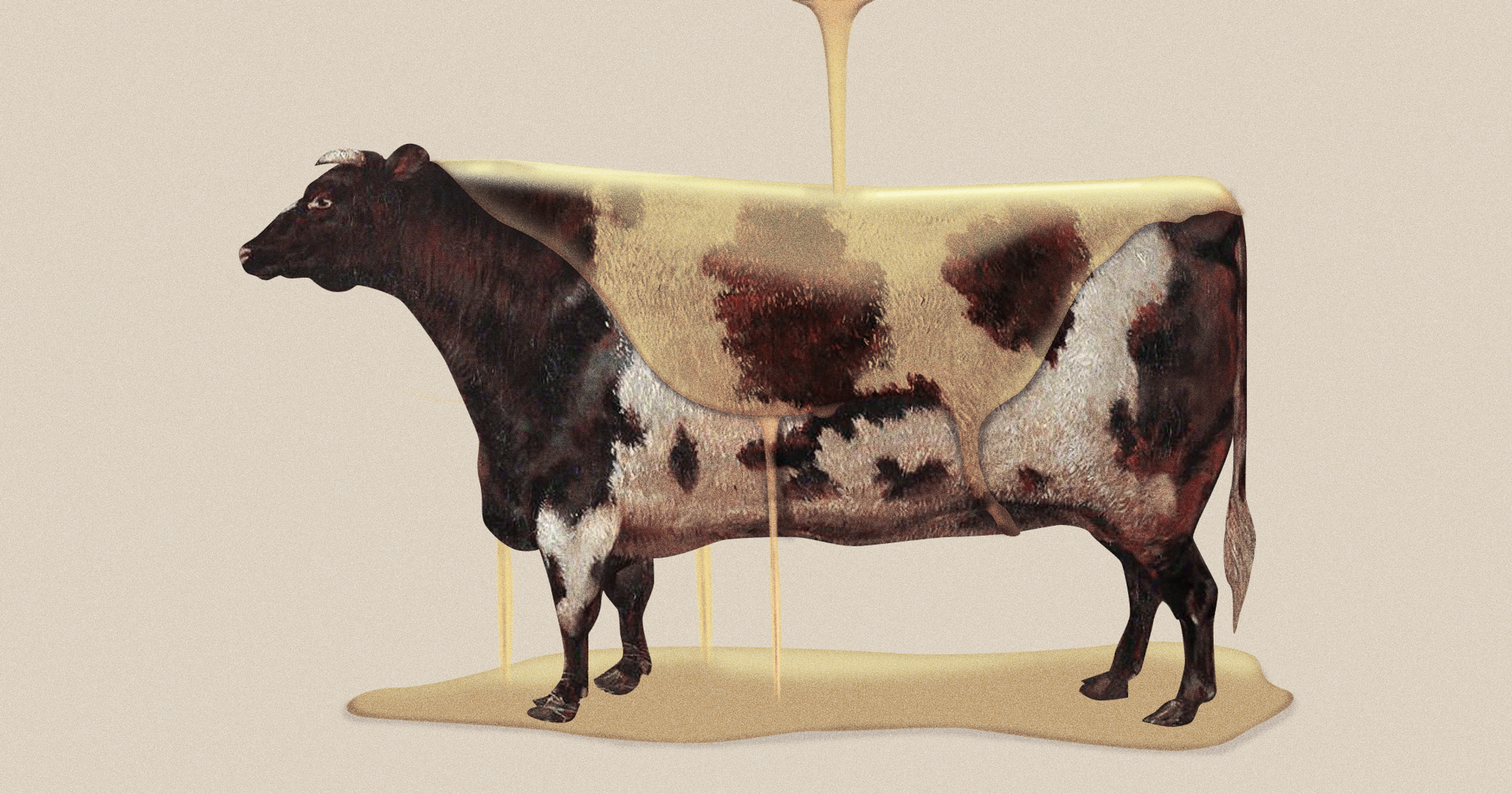
Traci Malone has heard a lot of different worries about food over more than two decades as a registered dietician and licensed nutritionist in Asheville, North Carolina. But over the past five years or so, she says, a new fear has started taking hold of the people she serves, its spread turbocharged in the way only the viral internet can.
“I think it’s insane, this impact of social media influencers,” said Malone. “Clients come to me believing that the seed oils are the devil incarnate.”
When she first began to study nutrition, Malone explained, the term “seed oil” itself — now used in reference to industrially extracted, neutral-tasting cooking oils from plants like canola, soybean, and sunflower — wasn’t a mainstream phrase. Instead, dieticians called those products vegetable oils and, due to their higher levels of unsaturated fat, considered them a generally healthier alternative to animal-based fats like butter and lard. Although seed oils can break down into toxic byproducts when repeatedly heated and may contribute to inflammation in large amounts, Malone said, they’re not a problem when used in moderation for home cooking.
The term — and its attendant discourse — broke into popular consciousness around 2020, when “Carnivore MD” Dr. Paul Saladino appeared on the Joe Rogan Experience podcast to associate seed oils with a wide range of dietary woes. (It should be noted that Saladino was promoting his recently published book, The Carnivore Code.) Influencers on both sides of the culture, from left-leaning environmental advocates to right-wing skeptics of globalized farming, proceeded to pick up the theme. The nonprofit International Food Information Council, which is largely supported by big food and ag companies like General Mills and Cargill, found that 28 percent of American consumers said they actively avoided seed oils as of late 2024.
Those influencers have gained a powerful sympathizer in federal government through the confirmation of Robert F. Kennedy Jr. as the U.S. Secretary of Health and Human Services. Long a critic of the industrial food system, Kennedy sold merch emblazoned with “Make Frying Oil Tallow Again” as an independent presidential candidate; in October, he posted on X that Americans were “being unknowingly poisoned by heavily subsidized seed oils.”
Farmers who grow oilseed crops are now facing their own fear: Will Kennedy, whose role includes oversight of the federal Food and Drug Administration, strive to eliminate seed oils from America’s food supply?
At a February Senate hearing, American Soybean Association Chair Josh Gackle cited “increasing rhetoric perpetuating false claims about the detrimental health impacts of soybean oil and other seed oils, paired with threats of banning these products from domestic food use,” as major challenges. The ASA and other advocacy groups, including the National Oilseed Processors Association, Edible Oil Producers Association, and Corn Refiners Association, signed onto a March open letter urging Kennedy to follow “the robust science- and risk-based regulatory systems to which these products are already subject.” Over 60 Republican lawmakers, many from farming-heavy states like Iowa and Nebraska, sent a similar letter to Kennedy in April.
Vegetable oils are big business in the U.S., representing nearly $114 billion in annual value as of 2022 according to Purdue University’s Center for Global Trade Analysis. And although much of that value stems from exports or industrial and biofuel use, the domestic food market makes up a key part of the mix. A March study by World Agricultural Economic and Environmental Services, commissioned by the United Soybean Board, found that a domestic ban on seed oil in food would cut annual U.S. net farm income by $1.9 billion, or 1.6 percent.
“Clients come to me believing that the seed oils are the devil incarnate.”
“From a vegetable oil perspective, this is a much more disruptive shock than COVID,” said agricultural economist John Kruse, the study’s lead author. In the event of a ban, he projects that the U.S. would try fill its food oil needs mostly through imported palm oil (a product with its own controversies). Current domestic production of lard and tallow, seemingly Kennedy’s preferred alternatives, could substitute for only a few of the 59 pounds of seed oils Americans consume per capita each year.
Among those farmers concerned is Tim Mickelson, president of the U.S. Canola Association, who has grown the plant since 1997 on about 2,800 acres in Rolla, North Dakota. Canola is an excellent climatic fit for the state, which produces over 80 percent of the country’s harvest. He says it’s been an invaluable part of his own rotation, yielding a solid return while conditioning soils and breaking disease cycles between wheat crops.
Mickelson is also an avid social media user as @BisonAddict — honoring the mascot of his alma mater, North Dakota State University — with over 17,000 TikTok followers. There, he’s run headfirst into anti-seed oil rhetoric, and he’s been frustrated by what he sees as its irrational fearmongering.
“What surprises me the most is how many people will actually judge something not on scientific facts,” said Mickelson, pointing to research by Harvard University and other experts that backs vegetable oil as a healthy choice. “But anything that causes a consumer to make a different decision in the store and not buy canola oil affects the demand for the product.”
Mickelson personally believes a federal seed oil ban is unlikely and is more worried about the market impacts Kennedy’s rhetoric is already having. A number of businesses have publicized their switch away from seed oil, including salad chain Sweetgreen and fast-food icon Steak ‘n Shake. “Fries will be RFK’d!” wrote the latter, in an X post announcing its decision. (Kennedy subsequently praised Steak ’n Shake as he ate its fries with Fox News host Sean Hannity, and he later hosted the company for a pop-up at an HHS staff cafeteria.)
“From a vegetable oil perspective, this is a much more disruptive shock than COVID.”
But how the federal government might act remains uncertain. Kennedy declared that “nothing is going to be off limits” in his first address to HHS employees. In response to a request for comment on this story, a spokesperson for the FDA wrote that “it is critical to consolidate the scientific literature and gain a clearer understanding of the overall impact of ingredients within our U.S. food supply — so Americans know what is in their food.” Despite Kennedy’s promise of “radical transparency,” the department did not respond to further clarifying questions.
It’s also unclear if Kennedy will face opposition from other forces within the Trump administration. Kailee Tkacz Buller, the USDA’s new chief of staff, was previously president of the National Oilseed Processors Association and Edible Oil Producers Association. “Soybeans are a major crop in the United States, and USDA continues to support American agriculture and put farmers first,” wrote a USDA spokesperson, when asked about Kennedy’s stance.
All of this hubbub over seed oils, emphasized dietician Malone, is unlikely to make Americans much healthier, especially when seed oil opponents often don’t acknowledge the well-established link between saturated fats like beef tallow and heart disease.
“I do my best to help people move away from very black-and-white thinking about food and nutrition to somewhere in the middle, a little bit more gray,” Malone says. “We’re now frying all in beef tallow, and that seems like a very reactionary and extremely sharp direction to take.”

Sometime around 2015, Keper Connell had an epiphany while on vacation in Barcelona. He had long worked as a commercial fisherman, doing all kinds of fishing jobs throughout the seasons. “But most of that was just so I could keep catching bluefin tuna,” he said. He loved the challenge, heading out to the Gulf of Maine from his home in New Hampshire with just rod and reel. Those expeditions were, as he puts it, “entirely enjoyable.” But profitable? Not so much.
In Spain, though, Connell learned that bluefin tuna was a prized food fish — caught every summer the same way it had been for millennia, much of it packed in olive oil and tinned to enjoy year round. “I thought, ‘Wow, I’m catching these same fish. How come I can’t put this in the tin back home?’ It was in the back of my mind for many years,” Connell said. He continued catching tuna on slim margins — “not really making any money but knowing full well that, up the chain, they’re making plenty” on the wholesaler or restaurateur side — and eventually decided to do the value add himself. He founded Gulf of Maine Conservas in 2019.
It was a good time: Tinned fish was becoming a much-discussed food world darling, and the U.S. market would go on to grow steadily over the next several years. “Americans started to realize this is a healthy source of protein and all these other nutrients,” said Anna Hezel, author of the 2023 tinned fish cookbook Tin to Table, who first started noticing the trend bubbling up in the early 2010s.
American consumers also realized that the cheap, water-packed albacore they grew up with was not their only option. Cans of high-quality fish from Portugal and Spain, where tinned fish (or conservas) is a longstanding tradition, came back in suitcases as souvenirs and appeared in greater numbers on grocery shelves. Wine bar menus began filling with cockles, razor clams, and whole baby squid, packed in olive oil and sometimes flavored with ingredients like garlic or chile. At some point, tinned fish became a poster child of affordable luxury, declared online to be the new “hot girl food.”
Still, when it comes to traceable, carefully processed, beautifully packaged tinned fish, companies like Gulf of Maine Conservas are relatively rare. Other U.S. brands have sprung up, too — but look at the tin and you’re likely to see the fish inside was caught and processed in Europe as a private-label product, then shipped thousands of miles. As the global tinned-fish market continues to grow, expected by some estimates to nearly double in the next decade, there are a lot of reasons to start asking: Why don’t we make more of it here?
*
There are reasons to love tinned fish that aren’t just TikTok fodder. For one thing, it can be a highly sustainable seafood choice, often using smaller species that are wild-caught and less prone to overfishing. Preserving reduces waste and requires less energy for storage and transport. It also means that a seasonal catch can be sold year-round, creating new and more reliable markets for fishers. Especially amid global trade uncertainty — and the threat of a 20 percent blanket tariff on imports from the European Union — there might be an opening to keep some production local.
“I think a lot of American companies are asking the same question: We have fish here, we have canneries here, why can’t we do what they’re doing [in Europe]?” Hezel said. “One of the main reasons is probably just species availability.” Some fish emblematic of Iberian conservas are not so easy to come by on this side of the Atlantic. Our native anchovy, for example, is harvested mostly as bait fish, and the Pacific sardine fishery has been closed since 2015 due to overfishing.
Other conservas classics are available domestically, like mackerel, which Connell sources locally to complement the bluefin he mostly catches himself. But Gulf of Maine Conservas also offers tins of something slightly more unusual: smoked eel from the region’s American eel elver fishery, which are caught as juveniles and raised in a recirculating aquaculture system at American Unagi in Waldoboro, Maine.
“I think a lot of American companies are asking the same question: We have fish here, we have canneries here, why can’t we do what they’re doing [in Europe]?”
Connell is not alone in giving the conservas treatment to American fish that customers might not be used to seeing in tins (or eating at all). In Oregon, chef Sara Hauman’s Tiny Fish Co. makes Pacific Northwest conservas with species like sole, rockfish, or geoduck. Wildfish Cannery, a brand that grew out of a community salmon cannery in Alaska, gives some of its tinned salmon a Mediterranean twist and packs seafood like lingcod or Giant Pacific octopus in high-quality olive oil.
For Marissa Fellows, founder of Michigan-based Great Lakes Tinned Fish, the conservas trend has provided a new way to support fishers and culinary traditions in her home state. Fish is big business in the region — the industry is valued at about $7 billion — and is embedded in the culture of life on the water. Still, around 90 percent of seafood sold in Michigan is imported. As far as Fellows knows, hers is the only company of its kind that sources fish exclusively from the Great Lakes.
One of the most popular native species in the region is lake whitefish, which Fellows said is synonymous with summer: “People have family whitefish dip recipes that they eat at their cottages. It’s this super idyllic, quintessentially Midwestern thing.” Her tins of cold-smoked whitefish have found an audience among tinned fish skeptics and aficionados alike. “There’s a little bit of local pride that comes with that,” she added — “to show people what the Midwest and the Great Lakes are all about.”
Still, despite her best efforts, it was more or less impossible to keep the whole supply chain entirely regional: “There’s no fish cannery in the Midwest,” Fellows explained.
*
As basic as it is, one huge hurdle to domestic tinned fish production is a lack of infrastructure. There simply aren’t very many canneries. “In Spain and Portugal, a lot of the companies that still exist are canneries that were started by families a hundred years or more,” Hezel noted — but thanks to consolidation and changing consumer tastes, many coastal U.S. states don’t have an operating seafood cannery at all. And building one from scratch tends to be a prohibitively expensive proposition.
It wasn’t always this way, but the historical seafood processing model was not necessarily built with longevity in mind. “Just like lumberyards, [canneries are] built on a resource site,” Connell explained. Take Cannery Row, of Steinbeck fame: Northern California and the Central Coast were long centers for the sardine industry, but when the stock crashed in the mid-20th century, the canneries shuttered. Connell said the situation in Maine is similar; when herring stock collapsed in the 1970s, the canneries eventually moved, closed, or were bought up. In late 2024, the last remaining cannery in the state announced that it would be relocating to Delaware.
Though Connell catches or sources all of his seafood from the Gulf of Maine, he has found that the best option for canning is across the country in Coos Bay, Oregon. “The Pacific Northwest is really the only guiding light at this point,” he said. A group of canneries that popped up around the region’s Albacore fishery about 50 years ago is still going strong, serving many of the country’s domestic conservas brands.
In light of the tinned fish renaissance, some in that area are expanding. Western Washington’s iconic Taylor Shellfish, for example, got into the canning business recently, about a century after the Taylors first started farming oysters in South Puget Sound. Wes Taylor, a fifth-generation employee, explained that it started with a small deal between neighbors: The owners of a local oyster operation called Ekone were looking to retire and approached Taylor Shellfish to look after their business, including the small cannery and smokehouse they’d built by their tidelands on Willapa Bay.
Another sign of a potential groundswell: The East Coast recently saw the opening of its first new cannery in more than 80 years. Island Creek Oysters began operations at its new facility in the seafood capital of New Bedford, Massachusetts, in June 2024. One hope is that the cannery will provide a more consistent market for local shellfish farms; Island Creek buys from more than 100 of them for its tinned fish line, which also includes products from a co-packer in Spain.
“I’ve been met with a lot of sheer enthusiasm. Doors are opening left and right.”
Aside from the infrastructure challenges, some amount of consumer education and market-building is likely still ahead if U.S. conservas are to really thrive. This could include increasing awareness of local species, tying this style of seafood into the locavore movement, and emphasizing all the ways that tinned fish, already a sustainable choice, can be made even more so while celebrating seafood biodiversity. Fellows noted that chefs can be an asset in introducing these products to new audiences. “I’ve been met with a lot of sheer enthusiasm,” she said of her deepening ties in the Michigan restaurant industry. “Doors are opening left and right.”
But paying fairly, producing on a small scale, and keeping the supply chain close to home — that all adds up, and the pricing of brands like these can be another hurdle. Transparency about why these tins cost much more than the cents people might used to be paying for an inferior product is important. So is a certain degree of smart branding, which has helped companies like Fishwife — which mostly imports its fish but processes some of it at a cannery on the West Coast — achieve massive success. Hezel is confident that the “get what you pay for” mindset that conscious consumers bring to other foods can be leveraged to recast domestic conservas as something to be coveted: “I think there is opportunity for American companies to build products that have the same amount of cultural currency.”
In the end, Connell said, it’s a rising-tide situation — the more companies, canneries, and customers, the better. “Is this really a substantial industry? Can it be bolstered? I think it can. And the closer you get to the consumer’s mouth, the easier it is.” Connell also noted that objections to the price tag tend to arise only before someone has actually tasted the fish in the tin. “My only response is, ‘Please try it,’” he said, “and it’s quickly overcome.”

Every year in the United States, tax loopholes originally created to help struggling farmers are utilized by businesses and individuals with seemingly no agriculture connection.
In Florida, local governments lose millions in revenue every year to real estate developers who lease their land to cattle grazers to avoid higher property taxes in so-called “Rent-A-Cow” schemes. Earlier this year High County News found more than 3,000 homeowners in Montana were claiming farming-related tax benefits, in some cases without having to prove any agricultural activity at all.
Last year public documents showed that Trump National Golf Club in New Jersey was avoiding $257,000 in taxes every year by treating some of its acreage as farmland and keeping a herd of 12 goats.
But some tax experts believe they’ve found a long-abused farm tax shelter that could specifically benefit farmers. It’s called the monetized installment sale, and it’s available to anyone selling an agriculture product — but it also requires a sophisticated set of transactions, is heavily scrutinized by the IRS, and if not done carefully, could overwhelm generations of farmers in back taxes.
Following the Big Dogs
Tax attorney Michael Burwick is not a farmer or from a farm community. He works a couple of blocks from the New York Stock Exchange and has spent most of his career between Boston, New York, D.C., and South Florida.
But about two decades ago, Burwick noticed something curious: Large, publicly traded companies in the paper goods, packaging, building materials, and forest management sector were using a safe harbor in the farm tax code to sell billions of dollars in assets, seemingly tax-free.
Between 2004 and 2016, at least 10 companies including Boise Cascade, International Paper, Kimberly Clark, Plum Creek, and Greif, Inc. deferred billions in federal taxes — $3.4 billion to be exact — by using a complicated financial transaction known as the monetized installment sale.
Burwick “realized there was a legal way to help farmers with their biggest complaint — taxes.”
Monetized installment sales normally aren’t permitted by the IRS, which added them to its Dirty Dozen list of tax scams in 2023. But Burwick noticed there was an exception in the tax code for farmers — a little-known section called 453A — which the companies could exploit because the assets they were selling included timberland, which the IRS considers an agricultural asset.
When he saw how companies in the Fortune 500 were exploiting 453A, Burwick “realized there was a legal way to help farmers with their biggest complaint — taxes,” he said.
Tax Me Later
Burwick isn’t the only tax expert promoting monetized installment sales to farmers, but he’s one of a handful of people who have endeavoured to explain how they work in plain English, having addressed the topic in a series of columns for Bloomberg Tax.
Monetized installment sales can involve up to five parties — a seller, a buyer, a dealer, a lender, and an escrow agent — and a sophisticated set of transactions.
First, farmers can defer their income taxes for 30 years by agreeing to be paid in installments for their crop, cattle, or other agricultural product rather than a lump sum. Second, they can use those promised installments as collateral for a loan of 90% or more of the total sum. They essentially walk away with their entire earnings untaxed — for a time.
The first part of Burwick’s strategy, using installment payments, is not a new idea. They’re a widely used tax strategy in many industries for deferring capital gains tax — the tax incurred when you sell a high-value asset for more than it was purchased.
Rather than accept all the funds at once and pay a 30 to 50% capital gains tax on them, sellers opt to get the money in installments, said Garrett Griffin, tax attorney and CEO of Griffin Private X Investors, a firm that executes installment strategies.
“As a farmer, I can sell my grain — which is ordinary income — on the installment sale treatment. Nobody else in the U.S. can do that.”
In these cases, Griffin’s firm buys the asset with a promissory note and then sells it to the ultimate buyer. Griffin invests funds from the buyer and pays the seller in installments over 10, 15, or 30 years. The seller only owes capital gains taxes a little at a time.
“It’s a way to not avoid, but delay the payment of capital gains tax so it’s not happening all at once,” Burwick said. And it can make a big difference. Take a $1 million sale. If you pay taxes all at once, the best case scenario is that you’ll have $700,000 to invest and grow at about 6% interest. But with installment sales, the entire $1 million is collecting that 6% interest while it sits with the intermediary. In fact, most of Griffin’s customers request interest-only payments and use it as additional cash flow to fund retirement.
These are the installments Burwick wants farmers to use, but in 453A they get two key perks: In addition to deferring capital gains, they can use installments to defer their ordinary income tax, and they can use that agreement as collateral for a loan, allowing them to reap almost the total income amount at once and untaxed.
Cash in Hand
453A applies to anyone selling an agricultural product: farmers, ranchers, fishers, winegrowers, allowing them to defer their ordinary, April 15th income tax. Similar provisions have existed in the tax code since 1918 when the country’s economic base leaned more heavily towards agriculture, likely to reflect the fact that farmers don’t get paid regularly but in lump sums at harvest.
“As a farmer, I can sell my grain — which is ordinary income — on the installment sale treatment. Nobody else in the U.S. can do that,” said Griffin, who is also building a 453A service for farmer income taxes.
The even bigger caveat is that a farmer can take their installment sale agreement with a firm like Griffin’s to another lender and get a loan for 90 to 95% of the total income.
Take a grain farmer. If they sold $1 million in product last fall, they can opt to do an installment sale over 30 years, effectively deferring the taxes. But instead of getting the installments, they use their arrangement with the intermediary as collateral for a loan of $950,000.
A portion of that loan must be set aside to pay for future taxes. But with nearly their entire earnings in hand, farmers have way more control. They can buy land, invest in life insurance, and do meaningful wealth planning. They can pay tuition or take an anniversary trip. At least for 30 years.
With nearly their entire earnings in hand, farmers have way more control.
For the hobby farmer, the strategy really isn’t worth it, Griffin said. “But the guy selling half a million in inventory can certainly use this.”
“Only ag is allowed to monetize the installmentment sale contract, that is right in section 453A,” said Paul Neiffer, CPA, a tax principal and expert in agribusiness and income taxation.
Even within agriculture, there’s tons of red tape, said Michael Gustofson, principal at Farmers First Trust. Gustafson’s operation has been setting up monetized installment sales to help farmers defer capital gains tax for the last seven years. “From what our attorneys tell us, the sale of raw ag products can also use this approach,” he said, meaning farmers can use the monetized installment sale on income from yearly crop sales too.
But the IRS is still watching closely. The agency has cracked down on anyone trying to use the strategy outside of agriculture. And in 2023, it proposed new regulations for the ag businesses legally using monetized installment sales, too. The new regulations, which would require anyone using 453A to fill out a special tax form, haven’t been approved in the two years since. But they are a reason for farmers considering this approach to be cautious.
Griffin argues that transactions by companies like Boise Cascade and International Paper are proof that this approach is legal — albeit complicated. Farmers only need a way to execute the same strategy — year after year after year.
A Long Time for Things to Go Awry
A legal way for farmers to put off taxes and manage more of their own money seems like a no-brainer. But “it’s not a free lunch,” Neiffer warned. There are both risks and costs to this approach.
The deferred taxes eventually come knocking.
At year 30 — or whenever the loan is due — when the intermediary pays back the lender, the seller will be on the hook for the income taxes they deferred. This approach assumes the farmer is setting aside and investing an appropriate portion of their loan to pay off future taxes. That 10 to 20 percent set-aside for investment is significant, but less than the 30 to 50 percent many farmers give up when they pay income taxes normally.
But even then, there are risks. A lot can change in 30 years. Operations can be passed to the next generation, and financial details can get lost. If a farmer makes this deal in middle age, her heirs will likely be the ones left to foot the tax bill. If there’s not very clear communication and financial advice, the new generation could get saddled with bills they weren’t prepared for.
Farmers agreeing to this arrangement are also signing on to pay taxes in future conditions. Taxes deferred this year will be paid based on 2055 inflation and tax rates. “The risk is that no one knows what the tax rate will look like in 30 years,” Burwick said.
And even if the strategy works, Neiffer said it still comes with costs, usually in the form of interest. Farmers get yield interest from the intermediary. But they owe interest on their loan. The hope is that those two interest rates would cancel each other out, but usually the interest they owe outpaces the interest they earn, Neiffer said. Then there’s the fee — typically around half a percent — to conduct all the transactions.
The deferred taxes eventually come knocking.
And not every farmer needs to defer taxes. Many farmers carry enough operating costs to significantly minimize their taxable income, Gustafson said. In those cases, this strategy likely wouldn’t be worth it. He recommends farmers consult their CPA, the person who knows the operation best, when considering 453A for capital gains or income tax deferral.
Both Griffin and Burwick are still in the building phases. Griffin said he’s still looking for the right lender, a separate entity willing to offer the loan against the installment sale. But one of his clients, a feedlot owner selling $10 million in cattle twice a year, is an ideal candidate for monetized installment sales.
Burwick already has a few interested clients, but he will need more to get this offering to scale. Scale is the only way to lower the costs of these expensive and precise transactions so that they don’t eat into the farmer’s financial benefit, he said.
“This is perfectly legal, and nobody knows about them except for Fortune 500 companies,” Burwick said. “My goal is to work with individual farmers … to democratize the legal theory.”
Really, he’s just using the code the way it was intended.
Thanks to Nick Zarzycki for his help reporting and editing this piece.

About a decade ago, Ryan Prewitt, executive chef and partner of New Orleans restaurant Peche, found himself in a pickle. The seafood restaurant was about a year old, and the raw oyster bar and menu of Gulf seafood was a hit. But Peche was limited on space, and between trash, recycling, composting, and glass, garbage was constantly accumulating everywhere. One might be surprised to learn that the worst element amid all of the chaos of a seafood restaurant were ragged oyster shells. They were heavy, wet, and they stank. Amid all of the other refuse, collecting between 5,000 to 8,000 shells a week with nowhere for them to go but the garbage can wasn’t working.
Prewitt thought the solution was a no-brainer: Staff could pack shells back into the cardboard boxes they were delivered in and return them to the supplier, who could then dump them right back into the Gulf of Mexico.
But he was very wrong. “We were told by members of the scientific community that [the oyster shells] could be infected with bacteria, and poison the water,” Prewitt said. By a twist of fate, at the same time Shell Oil was seeking to sponsor a trial oyster recycling program through the Coalition to Restore Coastal Louisiana (CRCL) that year, and Peche was approved and enrolled in the pilot program for free. They’ve participated ever since.
The aquaculture off of Louisiana’s coastline in the Gulf of Mexico has always been big business. Seventy percent of all oysters in the U.S. come from the Gulf Coast, and in 2018, Louisiana ranked third nationally for the highest seafood sales. The three main products that make up the bounty of state sales are farm-raised crawfish, catfish, and oysters, which alone generated $619 million in 2019.
But a consistent, acute threat to the seafood industry is coastal erosion and wetland loss. To New Orleanians, it is no secret that the longevity of the city is correlated to the existence of the outer barrier wetlands that slow storms and their cascading waves.
How do you make sure every oyster shell gets recycled, and not thrown in the trash?
“Recent figures are [that we’re losing] a football field [of wetlands] every 100 minutes,” said James Karst, communications director for CRCL. “In less than a century, 2,000 square miles of wetlands [have] disappeared. They’re no longer wetlands, [but] open water that’s about the size of Delaware.“
Thus, the Restaurant Recycling Program through CRCL that Peche started participating in came from multifaceted needs: If restaurants recycled their oyster shells and they were processed properly to prevent contamination, strategic oyster reefs could be installed to prevent land loss. Other benefits like water restoration and a greater oyster harvest for future generations are also invaluable. But a very simple, everyday occurrence can imperil this network of positive impact: How do you make sure every oyster shell gets recycled, and not thrown in the trash?
*
Oyster recycling programs are not a new phenomena. Maryland and Virginia operate collection services to restore the Chesapeake Bay, along with other regional programs in Mississippi, Galveston, and Tampa. But besides New Orleans, only one other city was truly defined by the oyster, yet tangibly lost it over a century ago.
“Pre-colonization, oysters were a huge resource for the Indigenous population,” said Charlotte Boesch, senior shell recycling program manager with the Billion Oyster Project (BOP) in New York City, an oyster recycling program that creates oyster reefs in the New York harbor via recycled shells from city restaurants. “During colonization and industrialization, [we] overharvested and dredged shipping channels, [which] destroyed the habitat and polluted our harbor. Oysters became functionally extinct, and [we] stopped having oysters in New York City.”
Though most have heard of iconic dishes like Oysters Rockefeller, it’s hard to really understand what was lost with the de-facto extinction of oysters by the 1930s. Early European travelers to New York reported that oyster shells were nearly 10 inches to a foot in length. Nowadays, oysters are considered large when they’re over 3.5 inches. Though bigger doesn’t always equal better, it goes to show that the waterway’s abundance has drastically changed.
“New York used to be known as Oyster City because they were shipped across the country, [but] all oyster harvesting shut down until the 1970s when the Clean Water Act passed,” said Boesch. Prior to the passage of the regulation, industry was free to dump waste and sewage into the city’s harbor, and oysters simply couldn’t survive. The Clean Water Act banned the dumping of waste into the city’s waterways, and the water slowly but surely became cleaner, and more hospitable to aquaculture.
Early European travelers to New York reported that oyster shells were nearly 10 inches to a foot in length. Nowadays, oysters are considered large when they’re over 3.5 inches.
The Billion Oyster Project launched in 2014 with a slightly different mission than the CRCL: In Louisiana, oyster shell installations in the outer wetlands were expressly to prevent land loss. For BOP, the larger goal is a cleaner coastline due to the filtration capacities of oysters. There is no short-term goal to eat the oysters of New York harbor because of the city’s sewage system design. With heavy rains, sewage still overflows into the surrounding waterbody, which is what budding oysters eat.
“If we had a billion oysters in the harbor, we would be able to filter it every three days,” said Boesch. From there, New Yorkers could finally, after over a century, safely utilize their central coastline for safe recreation, boating, and economic activity. Though the harbor is cleaner than it has been for the past 100 years, there is still a stigma that it’s dirty. With enough oysters and cleansing power, that could change, even if no one eats them at all. The problem is collecting what oyster shells are out there amidst the notoriously high turnover, limited space, and financial constraints of the restaurant industry.
“That’s our biggest challenge with the program,” said Prewitt of Peche. “We’re a fairly large restaurant with 100+ employees and people constantly coming and going … The system, on one hand, is established with a method for getting the shell into the bin, and it works, but to say it works all the time would just not be true.
”At Peche, a large dump bin to collect shells is situated next to the dish station with a top layer that allows for ice to melt and water to flow through. The detritus from the raw bar includes ice, lemons, and shell in one wet mix. That concoction is hauled periodically to this dump bin, where the ice melts off and spent lemons and shells are left. A runner will pluck all of the shells up and transport them to their own storage area periodically for weekly pick-up by CRCL contractors.
But all of this happens in a pressure-cooker where cooks, servers, managers, and hosts are trying to make and serve food, and if new hires aren’t educated about why and how to separate out all of the restaurant’s waste, shells can easily get routed into the trash, even with the most noble intentions from leadership. High turnover in restaurants is common in New York, too, which means that Boesch has to think about a metric of her success as not just as the number of restaurants that sign up for shell recycling, but how many stay engaged and participate year-round.
“There’s not enough oyster shell in the world or Louisiana that we could armour our entire coast with oyster reefs, so it’s a very targeted method of slowing land loss.”
To keep in touch with rotating chefs, Boesch produces a monthly newsletter for all participating restaurants to keep oyster recycling top-of-mind. The team also visits restaurants a few weeks after onboarding for a 10-minute preshift talk with servers and hosts so that they can explain the program to diners. BOP has also dipped their toes into conducting restaurant staff briefings with the front and back of the house in Spanish to help the message resonate with bilingual restaurant workers.
“Staff turnover and staff engagement is incredibly challenging, and the only solution is a very dedicated chef that communicates it to new staff,” said Boesch.
But the tiny act of dropping a shell into a bin makes a difference. Since 2014, CRCL has constructed 8,000 linear feet of shoreline with over 15 million pounds of recycled shells from participating New Orleans and Baton Rouge restaurants. Five barrier reefs have been constructed in the wetlands, including a project that helped stabilize ancestral mounds for the Pointe-au-Chien Indian Tribe. In 2023, Governor John Bel Edwards signed bill HB255 into law, a tax credit of $1 for every 50 pounds of oyster shell recycled by restaurants. New York has a similar bill in assembly right now.
“There’s not enough oyster shell in the world or Louisiana that we could armour our entire coast with oyster reefs, so it’s a very targeted method of slowing land loss,” said Karst.
By way of running Peche and working with local seafood purveyors, Prewitt has traveled all across the country to meet fishing communities and learn how to make these human and ecological ecosystems more sustainable for generations to come. He said that right now, much is difficult in the Gulf aquaculture industry. The work is hard, and many young people don’t want to do it. Buying a fishing boat is expensive, and there aren’t enough pathways for fishermen to access low-cost loans and grants to launch their business. Yet even for land loss and struggles with storms that impact oysters harvests, Prewitt is optimistic about the future of oysters and how far Louisiana’s management of the crop has come in the past decade.
“Offshore oyster versus offshore fin fishing is a considerably cheaper way to get into the fishery business. The start-up costs are lower, and the effort is frankly lower … The permitting is straightforward, and the system is set up for them to exist,” he said. “That’s a tremendous help to get more people into that industry.”
The irony was not lost on Josh Pierce. In 2014, a couple of dozen geese had descended upon his office building in Elmhurst, Illinois — which happened to be the headquarters of Bird-X, one of the country’s biggest suppliers of bird-control products — and showed no intention of leaving.
Pierce, now sales manager for Bird-X, decided to test a solution his company had recently started offering: a handheld laser meant to startle unwanted birds. Like a latter-day Buck Rogers, he strolled out of the building with his blaster, sized up the quarry, and took aim.
“I shined that laser directly at the head of the alpha goose, and my goodness, did they disperse instantly,” Pierce recalled. “It really turned on a lot of light bulbs. If we can actively connect with bird flocks out in the field the way that I just did, we really might have something here.”
Livestock farmers across the U.S. have been reaching similar moments of laser-driven enlightenment. As poultry and dairy operations struggle with the ongoing spread of highly pathogenic avian influenza, they’ve sought to reduce the risk of their animals contracting the disease. Farmers know that wild birds such as geese, ducks, and seagulls spread bird flu along their migration routes, and lasers are becoming a go-to tactic for keeping them — and by extension, the virus — away from buildings or pastures.
Scientists have looked into lasers for bird control around airports since the 1970s, said Rebecca Brown, chair of plant sciences and entomology at the University of Rhode Island, but comparatively little work has examined their use in agricultural settings. She and her husband David Brown, a professor of computer science at the same university, published the first study of “laser scarecrows” for protecting cornfields in 2021. (They’d been asked to look into the technology as an alternative to gas-fired startle cannons, which regularly draw noise complaints.)
The theory of why lasers work is fairly straightforward. “Birds primarily rely on vision to interact with the world and sense threats, and their vision is much better than human vision,” Rebecca Brown explained. Green lasers in particular are close to the wavelengths that birds best perceive in motion, and the beams likely interact with the green chlorophyll in plants to produce disorienting effects only birds can see.
Although the research is limited, Brown continued, it’s promising. Her own study found that lasers could reduce bird damage on corn by up to 70 percent, while Dutch scientists determined in 2021 that lasers cut wild bird visits to a free-range egg farm by over 98 percent. In a survey published in 2024 by Cornell University, corn growers reported that lasers were by far the most effective method of bird control, outpacing options like scare eye balloons and wacky inflatable arm-flailing tube men.
A notable gap in the data, says Brown, concerns whether lasers routinely damage birds’ eyes. A 2021 masters thesis from Purdue University found that the beams could induce cataracts, corneal swelling, and other problems in the lab, but no peer-reviewed study has yet checked their impacts in the field.
“I shined that laser directly at the head of the alpha goose, and my goodness, did they disperse instantly.”
As the scientific understanding matures, many growers are pressing ahead with lasers based on their own experiences. Among them is Jake Vlaminck, general manager of turkey producer Fahlun Farms in Lake Lillian, Minnesota, about 100 miles west of Minneapolis.
The town’s namesake lake and other nearby bodies of water attract a lot of gulls, Vlaminck said, that proceed to roost on the roofs of his barns. He didn’t give them a lot of thought until 2022, when a bird flu outbreak forced him to cull tens of thousands of turkeys. Realizing that gulls or other wild birds might have introduced the flu, he started looking for countermeasures.
A neighboring farmer encouraged him to attend a demonstration of the Bird Control Group’s AVIX Autonomic, a robotically controlled system that costs about $15,000 to purchase and install. Its laser swivels on a base to target dozens of different points in constantly shifting patterns, keeping birds from growing accustomed to the beams.
Although Vlaminck remained a bit skeptical, he was willing to take a chance on anything that might avoid a repeat outbreak. He set up two units in early 2023, before the spring migration season, and over the following year his flocks remained untouched by flu.
“It really got me interested in saying, ‘This must be the answer here,’” said Vlaminck. He’s since bought two more lasers to cover even more of his farm, and as president of the Minnesota Turkey Growers Association, he’s become something of an evangelist to other farmers. Minnesota is now a hotspot for laser installations; poultry farmers have put in over 100 laser systems since 2023, some with support from a state program meant to prevent bird flu transmission.
Federal authorities, however, aren’t as enthusiastic. U.S. Secretary of Agriculture Brooke Rollins announced a $1 billion strategy to combat bird flu in February, including $500 million in cost-share funding to help farmers beef up their biosecurity. But the USDA is unlikely to approve lasers as part of that plan.
Agriculture Brooke Rollins announced a $1 billion strategy to combat bird flu in February, but the USDA is unlikely to approve lasers as part of that plan.
“While we cannot speak to all possible recommendations that will be made or mitigations that will be considered for the cost-share program, we can say that lasers have not been proven to deter the types of wild birds most commonly found around poultry facilities,” wrote Tanya Espinosa, a spokesperson for the USDA’s Animal and Plant Health Inspection Service.
(Other segments of the federal government appear less worried about the disease. The U.S. Food and Drug Administration, overseen by Health and Human Services Secretary Robert F. Kennedy Jr., recently paused efforts to increase bird flu testing. Kennedy has also suggested poultry farmers let the flu spread freely through their flocks, an idea experts say would be both inhumane and a likely economic disaster.)
Vlaminck argued that the USDA’s position ignores lasers’ demonstrated potential. He compared recent cases of bird flu in Minnesota poultry to those across the U.S. as a whole: The country saw 21.8 million cases in 2023 and 50.7 million in 2024, an increase of over 130 percent, while the state’s caseload rose just 14 percent over the same period. “I don’t know what better study you could have than to look right there and say, ‘What did Minnesota do differently?’” he said.
Even without federal backing, farmers are moving forward with the technology. Keith Gutshall is a 20-year veteran of the pest control industry and owner of The Fur Bandit in central Pennsylvania. He started installing lasers just two years ago, but he estimates they’ve already grown to about 40 percent of his business, with agricultural clients including major egg producer Hillandale Farms and multiple dairies.
Lasers aren’t a silver (or shiny green) bullet, emphasized Gutshall. They work by line-of-sight, so they can be a poor fit for facilities with complicated layouts, and growers may be constrained by nearby roads or airports where lasers pose a safety hazard. Top-of-the-line systems are expensive and require careful programming to perform at their full potential.
But for farmers who’ve lost entire flocks to bird flu, or find their stockpiles of feed pecked apart, Gutshall says the investment can be very worthwhile. He estimates that laser clients usually see their wild bird activity drop by 80 percent, with even further reductions when they add on other deterrents. And the entertainment value can’t be underestimated.
“People that I show it to are amazed, and after doing this two years, I’m still amazed,” said Gutshall. “It’s actually kind of fun to watch the birds take off when the laser gets close to them.”

When it gets hot outside, we humans turn on the air conditioning. Birds fly to cooler places. But trees stay put. Their migration occurs over generations. Each tree can only hope their seeds grow in more suitable land, higher up in elevation or further north where climates are cooler and wetter.
And, in general, young trees across the interior Western U.S. do occupy cooler climate areas than their adult predecessors. But not because seeds are successfully spreading to new areas.
Instead, forests are contracting away from the hotter, dryer areas that they used to occupy, according to a study published in Nature Climate Change in January.
This contraction without expansion means that trees may be well-served by a helping hand from us. “We probably need to actively plant at the higher elevation portions of their range, in these kind of cooler and wetter sites, where they would be successful—but are really seed-limited,” said Miranda Redmond, associate professor in forest science and climate change and University of California, Berkeley.
The Trees That Resist
Around 2016, Redmond set out to determine if the mismatch between young and old tree ranges—which has shown up in smaller scale studies—could be influenced by disruptions like wildfires, bark beetles or disease. She began this work when she was an assistant professor at Colorado State University.
Disturbances like a fire or an insect outbreak can give seedlings a chance to compete against the adult forest. But breaks in the canopy of adults allow light and heat to stream down onto vulnerable juvenile trees on the forest floor. The researchers wanted to know if disturbances limited tree regeneration because the hotter climate filtered down to the juvenile trees.
Redmond and her team tracked forests across eight states and over 25,000 plots of forest monitored by the USDA Forest Service. Fifteen tree species, including trembling aspen with its vibrant yellow leaves in the fall, and the towering grand fir, were counted every 10 years, with those numbers entered into a dataset called the Forest Inventory Analysis.
Dead trees, the cause of their death, the number and types of saplings: Redmond and her colleagues overlaid all this information in the FIA with climate data and known disturbances like wildfire, beetle outbreaks or severe wind.
Many species turned out to be stable across the landscape. Over half of the species stayed put, sprouting seedlings among their adult cousins.
Though several species’ seedlings sprouted in cooler and wetter areas after a disturbance, this movement of young trees was not as widespread as they’d thought, said Katie Nigro, who conducted the research as a doctoral student in Redmond’s lab at CSU. She is now a postdoctoral researcher working with the USDA Forest Service’s Rocky Mountain Research Station in Fort Collins.
To Nigro, this is good news. “It means we have time with trees, because they do live so long, and adults do tend to be really resilient to changes in the environment,” she said. “Especially when they’re not all killed by a wildfire or an insect outbreak, they’re hanging on in areas that maybe aren’t suitable for regeneration.”
The major change in tree distributions right now is due to losses in the hot and dry climate, Nigro said.
But it was difficult to make a broad conclusion about the impact of disturbances on range contractions. Patterns across an entire landscape “have to be really, really prevalent and really consistent,” to be meaningful, Nigro said. Instead, some disruptions in areas with certain species—wildfires and lodgepole pine, for instance—resulted in a significant shift while others did not, the study reported.
This is one limitation to working with FIA data, Redmond noted. It’s a robust dataset held in high regard by forest ecologists across the world, but the sites are essentially set up at random, which means that disruptions like wildfires might only happen in a small portion of the sites.
Other factors may obscure why a species does not appear to expand into new areas: It may get eaten before it can grow into a mature tree. Young trees are particularly tasty to certain browsing animals like elk and deer, said Simon Landhäusser, a forest ecologist and professor in renewable resources at the University of Alberta, Canada.
Aspen, for instance, is like “candy” to herbivores compared to pine trees, said Landhäusser, who was not involved in this study. Consistent browsing might obscure a species’s attempts at natural migration to a new area—especially in America’s southwestern states, which are full of elk and deer.
“They go to that candy store and eat it and let it regrow, and then eat it again. And they do that 30 times, and then the tree just gives up,” Simons says.
Lending Trees a Hand
Before industrialization, it’s thought that trees migrated around 20 to 40 kilometers per 100 years. In this century, trees would need to migrate an estimated 10 times that distance—or migrate roughly 10 times as fast—to keep pace with current climate change.
That is why trees are good candidates for assisted migration, Nigro said. It gives species “a little push” into cooler climates by planting warm-climate trees among more cool-adapted species.
This is considered the “low-hanging fruit” of forestry solutions to address climate change, said Greg O’Neill, climate change adaptation scientist for the provincial government ministry of forests in British Columbia (BC), Canada.
“It’s inexpensive, it’s very low risk—there’s precedent for it,” O’Neill said.
He should know. O’Neill has been running the assisted migration trial program in BC since 2009. Over the past 15 years, the anecdotal success of the trial shows “that what we call the realized niche of trees—where they are found—to be much smaller than their fundamental niche, where they can grow,” O’Neill said. “It dispels a lot of our anxiety when we go to do assisted migration.”
The trial led to a provincial rule requiring foresters to plant seedlings selected from a similar climate but two degrees warmer. This is called a climate-based seed transfer system and, beginning in 2023, all of the roughly 240 million seedlings planted in the public forests of BC are selected this way.
After years of analyzing how forests covering thousands of square miles react to climate change, Nigro is honing on just two sites in the Colorado State Forest.
“As much as we would love a conclusion to be true for the whole Western interior U.S., it’s still really important to do studies at the site level and really understand what’s going on,” Nigro said. “There are so many other factors that are influencing where and why trees are regenerating.”
She and her colleagues are preparing the sites outside Fort Collins, Colorado to join the Adaptive Silviculture for Climate Change project, which began assisted migration in forests of Eastern and Central U.S. and Canada in 2009. Nigro’s sites will be planted with five different species of pine, fir and spruce in the coming years—54,400 seedlings in all.
The project’s goal is similar to that of the BC-assisted migration project—to make forests more resilient to climate change. Though it will take years to complete the project, Nigro says she’s excited to see those trees get the critical nudge they need to establish themselves in areas where they can thrive.
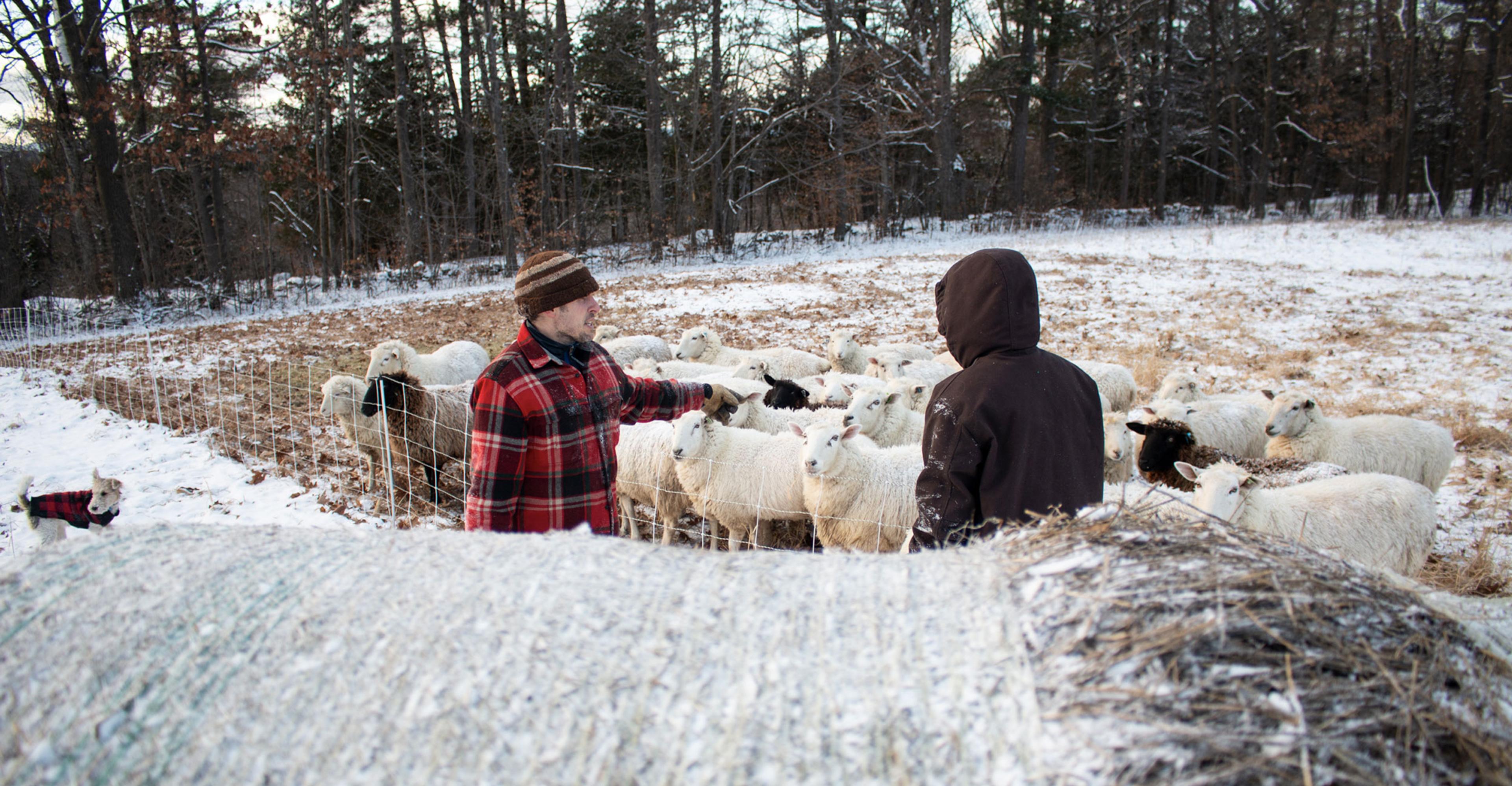
It’s a sunny March afternoon and unseasonably warm in the High Peaks region of the Adirondacks. Farmer Adam Wilson is sipping tea at the wooden desk in his tiny house, and reading out loud from a book called Remembering Peasants: A Personal History of a Vanished World. A large window looks out across a soggy field and the bare vegetable garden to a grassy slope where a small herd of cows is sunning. It’s been three years since Wilson signed the deed to Sand River Community Farm – purchased in one lump sum of half a million dollars.
Farming isn’t the first thing that comes to mind when people think of the Adirondacks. Mountain wilderness, skiing and hiking, canoeing and camping, all draw millions of tourists to the area each year. But despite the harsh winters, up in the High Peaks region there’s a cluster of farms scattered across the mountain valleys and rocky alpine meadows. Right on the shore of Lake Champlain lies Essex Farm, one of the world’s only CSAs that feeds its members all year round, instead of only during certain seasons. Across Jay Mountain, tiny Sugar House Creamery milks twelve Jersey cows and makes award-winning cheese.
Yet local food remains beyond reach for many residents of Adirondack State Park. Those who spend time up in the North Country know there’s more to the Adirondacks than tourism: A hidden opioid epidemic accompanies an undercurrent of rural poverty in struggling towns and villages where logging and mining once paid the bills. Sand River is next to one of these towns – Keeseville – where lumber and iron processing in the 19th century made for a bustling hamlet, and local businesses produced everything from horseshoe nails to chairs.
Like many of America’s small industrial areas, circumstances changed over the course of the last century: lumber moved to the West coast, coal mines closed, factories went abroad. By the 1960s, the last big manufacturing operation in the area closed. In 2013, Keeseville residents voted – twice – to dissolve their village. One grocery store opened last December, but the owner admits that, since he’s been in Keeseville, three other stores have closed. For much of the last fifty years, this place – surrounded by some of the most fertile soils in the Adirondacks – has been a food desert. Some farmers have started taking food stamps or subsidizing CSA shares, but breaking down barriers to access remains a challenge.
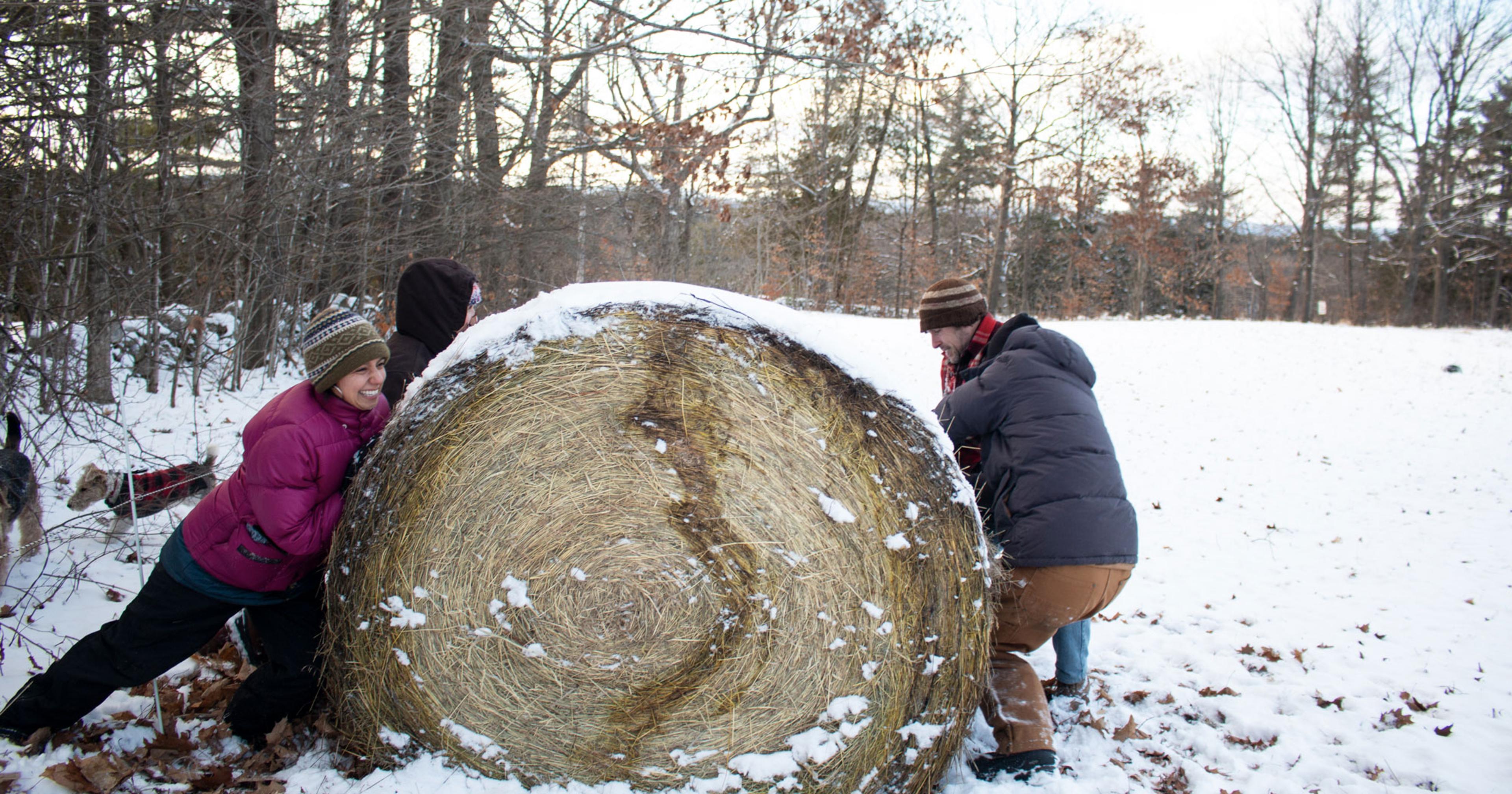
The ‘Good Shake’
The farm Wilson runs is different from most others in the area. Nothing grown there is for sale at any of the regional markets. The farm isn’t on Google Maps; other than visiting its barebones website, the only way to find the location is a small wrought iron sign near the driveway that reads “Sand River Community Farm.”
Yet hundreds of people in the area have eaten food harvested from its soil. Just about anyone who stops by, whether on purpose or by stumbling upon it and getting curious, goes home with a frozen quart of soup. On the lid is a small sticker that reads: “This food is offered as a gift to anyone who is hungry for any reason.”
Sitting at the desk where he writes every morning, Wilson talks about his journey to Sand River Community Farm, which started around the time of the COVID-19 pandemic. Back then, he lived in Huntington, Vermont, and ran a bakery alongside a community farm. “I was footing all the bills with the bakery profit,” he says.
At the time, he’d read some books about the concept of a “gift economy” and was considering forming a nonprofit. The day before the pandemic was announced, he fell off his bed and broke his ribs. At that moment, lying on his back with no air in his lungs, he felt he’d reached a crossroads. He points at the corner of the desk, where a crack in the light wood reminds him of that day.
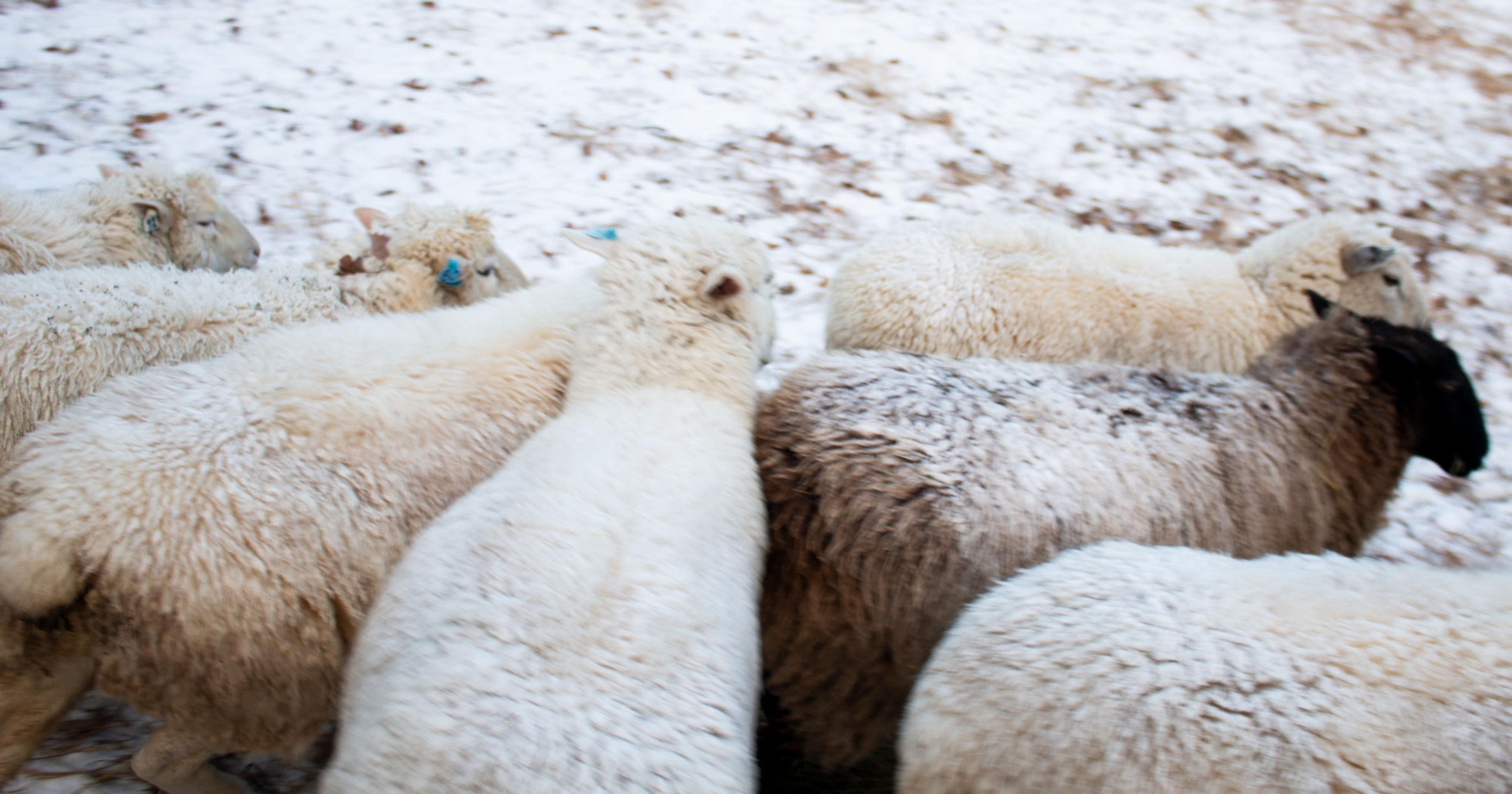
“I needed a good shake,” he smiles. “Now’s the time. Stop selling the bread. People are ready to consider things they wouldn’t have a week ago.” He decided he needed to commit to the idea he’d been ruminating on – that he needed to give everything away. So he opened a gift stand in Vermont in April, 2020: In those early days of the pandemic, neighbors in Huntington began exchanging gifts like sourdough bread and wine in a frenzy of exuberance.
Wilson’s stand was a rousing success, but there was no solid home base for the project. That is, until Ava, a member of the community, gave Wilson the most significant gift he’d ever received: half a million dollars from an inheritance to find the project a lasting place of its own. There was a farm for sale right across Lake Champlain. As Wilson explains, it was the last time that land would ever be sold.
“Now’s the time. People are ready to consider things they wouldn’t have a week ago.”
In his first months on what was to become Sand River, Wilson started to get to know his neighbors. Many were receptive to his ideas, especially some of the more seasoned farmers, who appreciated his emphasis on community and how he’d drop by with a package of ground beef from time to time. Younger folks showed up to volunteer on Sundays, and big crowds gathered for barn dances, singing, and community feasts all summer long.
The farm established itself as a local institution in less than two years, and Wilson incorporated the farm as a nonprofit. But he kept thinking about the neighbors who had never shown up – the ones hit hardest by life in a food desert. “How are we going to get the food to the people who need it most?” asks Wilson. “It’s been years trying to answer that question.”
So far, the answer seems to come in the form of grass-fed lamb and beef and incredible vegetables that would be the pride of any farmer’s market. He doesn’t want to sell this food. But he believes his idea is much more than charity – it’s about building what he calls a “modern commons,” a place where nothing would be bought and sold, where the food would always be a gift, and where both the harvest and work could be shared by all the members of the community.
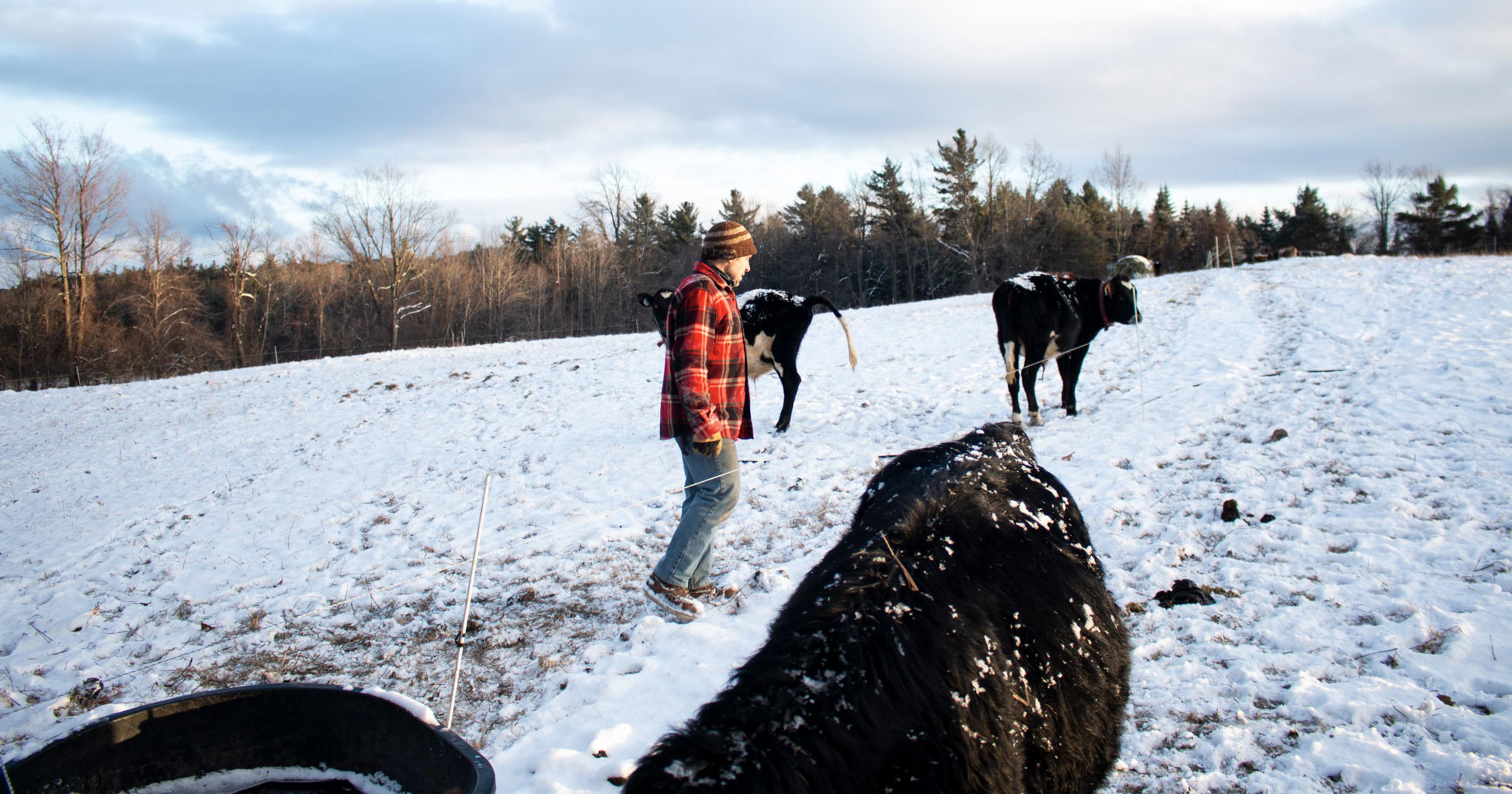
The Neighbors’ Gift
Saturdays, Wilson and a few others head down to Keeseville and open an informal “gift stand” on the place where one of the now-demolished grocery stores used to be. Anyone who stops by is offered a bowl of soup from a big five-gallon pot.
On a winter day last December, about a dozen people gathered around a brightly burning fire. One was an Ivy league graduate. Another, a dancing instructor. There was a social worker who stopped by with her daughter. Wilson started a conversation with her, asking for advice on how to reach some of the more vulnerable residents of the town.
“The gift offers me a way to meet my neighbors where I’m not selling anything,” says Wilson.
Not everyone is convinced. Last fall, Wilson and his friend Sam, who works with unhoused people in Burlington, gave a talk at a local Grange. At the end of the talk, an audience member challenged the privilege of being in a position to be able to give food away, without worrying about making ends meet.
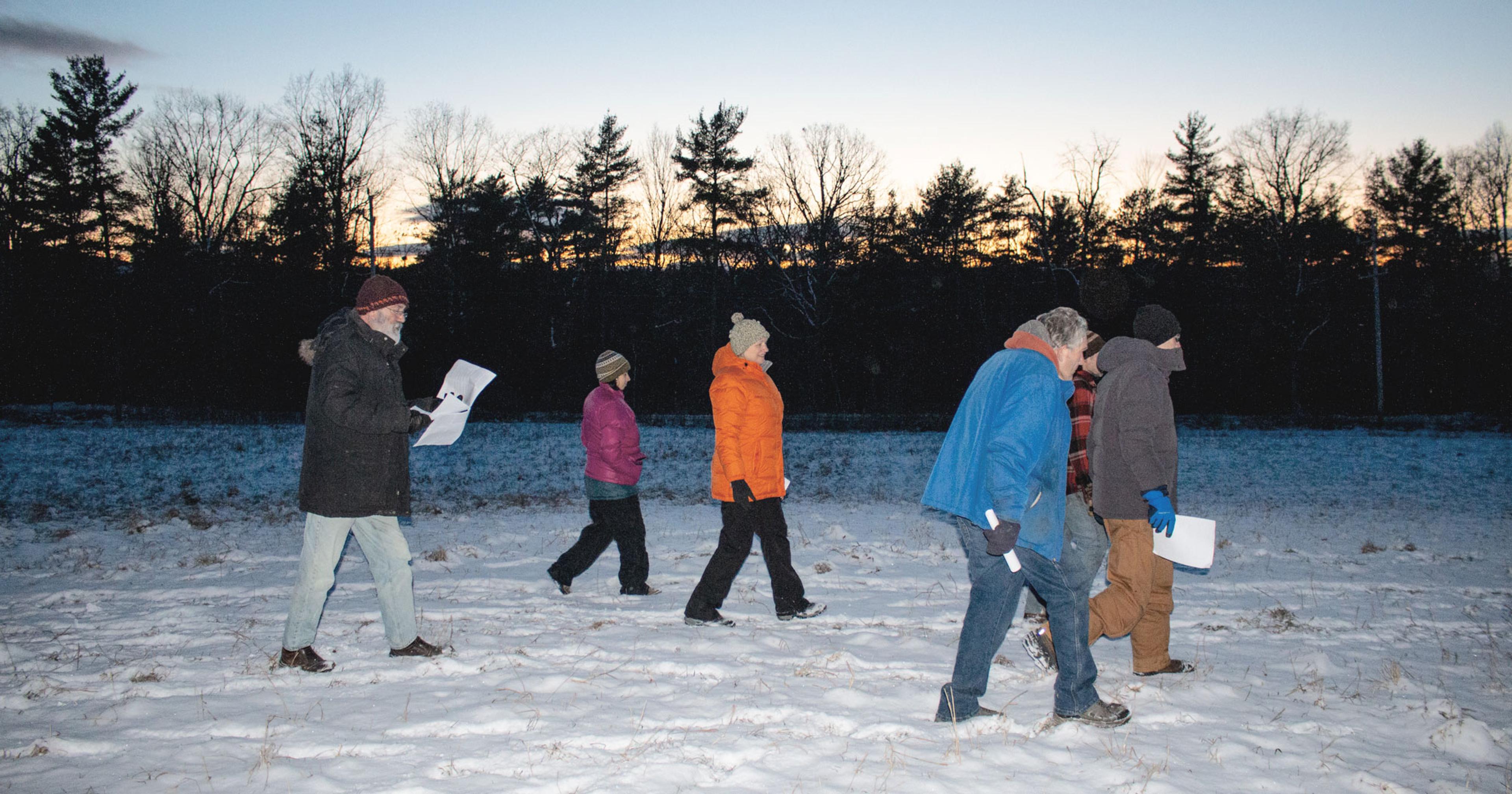
Wilson acknowledges the discomfort. “The question about luxury is very important,” he says. He believes that food can be a way to bridge class divides. Every gift, no matter how small, is also an opportunity for an exchange, which means an opportunity to build community.
Not all of his neighbors think it will work. But the dozens who give up their Sunday afternoons to garden, make soup, and prepare the food to share, are practicing a neighborliness that they hope will revive their rural community – and one day, establish it as the modern commons Wilson has been dreaming of.
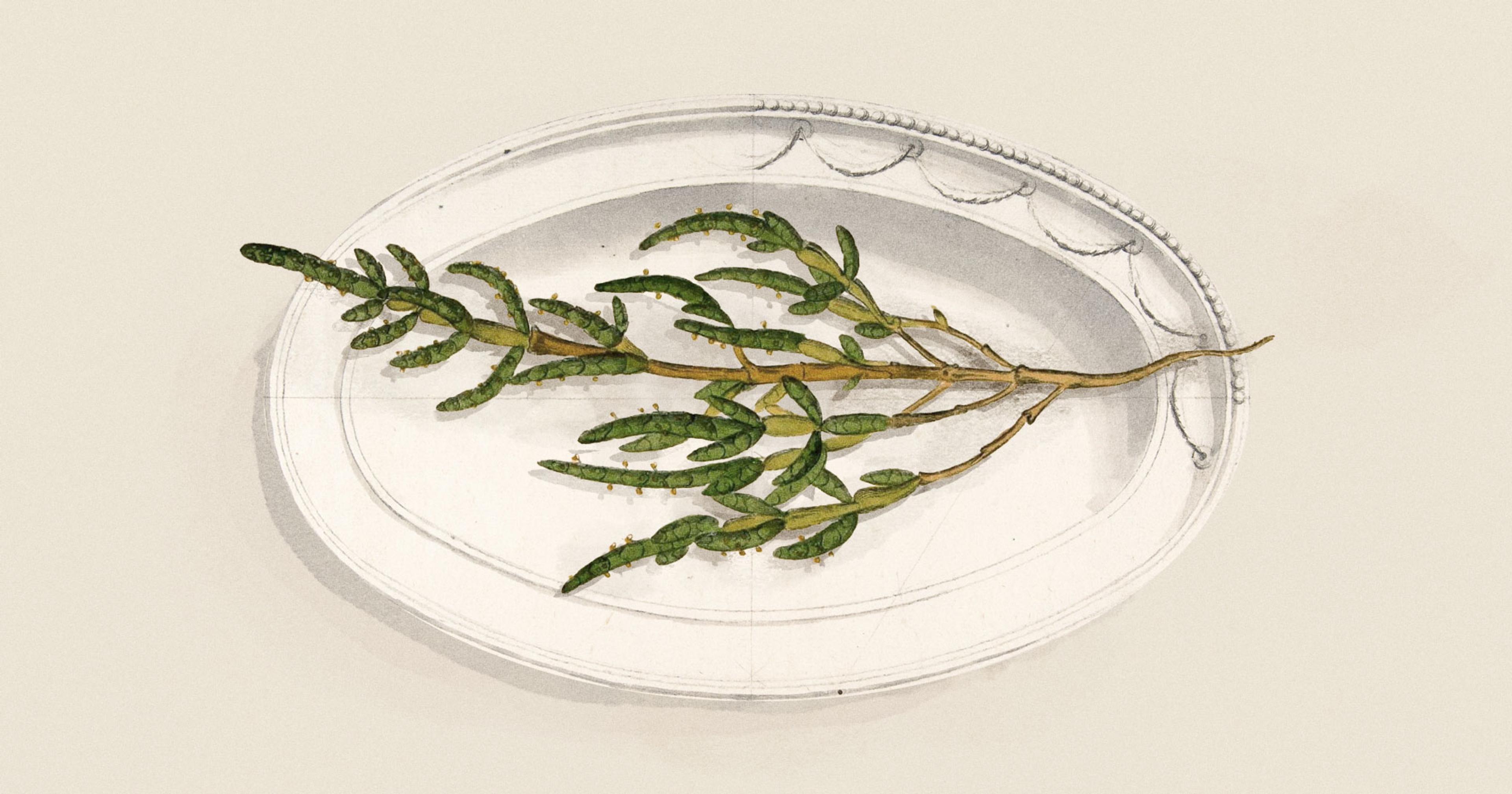
Industry insiders are making a big bet on a rather unusual plant—a spindly, bright green succulent that thrives in saltwater. The wager? Ramping up its production could put a new superfood on grocery shelves, while helping address a soil crisis that’s decimating the livelihoods of farmers from Bangladesh to the U.S. eastern seaboard.
You may already be familiar with salicornia, also known by at least half a dozen other names, including pickleweed, sea beans, and sea asparagus. It belongs to a group of salt-tolerant plants called halophytes, which grow in saline marshes, swamps, seashores, and even semi-desert climates.
Recently, interest in halophytes has grown as scientists and environmentalists raise the alarm about increasing soil salinity. The salt content in soil has risen as a result of climate change-driven sea level rise and droughts, as well as human interventions, such as deforestation and seawater irrigation. It’s already affecting American farmers—more than 10,000 acres of farmland in Maryland and Virginia have been abandoned due to saltwater intrusion, while in California’s Central Valley, an estimated quarter of a million acres have gone out of production due to salt accumulation from saltwater irrigation, and another 1.5 million acres are designated salt-impaired.
Salicornia can be used to remediate soil in areas like these – it helps absorb run-off from fertilizers or urban waste before it reaches waterways. “The plants will pick up the salt out of the soil, and they can also be used to help pick up nutrients along the shoreline to help improve the coastal waters,” explained Megan Davis, research professor at the Harbor Branch Oceanographic Institute at Florida Atlantic University (FAU). Davis studies “sea vegetables,” including salicornia and other halophytes, and operates a marine Integrated Multi-Trophic Aquaculture (IMTA) system as director of FAU’s Queen Conch Lab. “The plants can actually utilize those nutrients and grow a crop,” she said.
That crop has yet to gain a foothold in the U.S. market. Still, scientists, environmentalists, and start-up founders in Asia, Europe, and North America are betting that salicornia has a bright future on restaurant menus and supermarket shelves. Similar products, including kelp, seaweed, and spirulina, have grown popular in the last decade. Last year, Innova Market Insights named ocean-derived ingredients, including things like fish oil and sea vegetables, a top consumer trend.
“There’s an amazing opportunity for farmers to get involved with working with the halophyte plants, salicornia being probably the most popular known species,” said Davis. Salicornia is an annual crop, but it can be harvested multiple times from a single planting and produces its own seeds. It can be grown in greenhouses year-round or outdoors and harvested in the spring. According to Davis, the plant is not prone to disease and has no known pests (most critters find its saltiness off-putting).
Salicornia tastes, as one might expect, like salt—with a hint of lemon and a pleasant crunch. Davis said she most enjoys the vegetable blanched as a side dish, pickled as a garnish, or chopped raw and tossed into a cold quinoa salad. Besides its approachable flavor profile, the plant is packed with vitamins, minerals, and antioxidants. It’s often labeled a superfood.
Salicornia tastes, as one might expect, like salt—with a hint of lemon and a pleasant crunch.
But while salicornia has potential as a foodstuff and is already growing popular in parts of Europe, it has yet to gain a foothold in U.S. supermarkets. Perhaps no one knows more about the challenges of selling salicornia to American consumers than Sam Norton, founder and former CEO of Heron Farms, a Charleston, South Carolina-based saltwater hydroponic farm start-up. Of marketing the product, which Heron Farms sold under the name sea beans, Norton said, “It’s not something like tomatoes where you can say, ‘Here’s the total addressable market and et cetera, et cetera.’ No one knows what the market is for such an obscure group of plants.”
Investors at Heron Farms appointed a new CEO in June 2023 and, according to Norton, began winding down operations and looking for a buyer for the company’s patent on a method of extracting salt from plants. Heron Farms did not respond to requests for comment, and its website appears to have expired as of March 2025.
Turning salicornia into a salt substitute is what Norton calls a “traditional MBA angle” to utilizing the crop. “People typically say, ‘Well, what’s the market for salt, and can we replace part of that market with a plant-based salt?’” Companies, including Texas Salt Co. and Green Salt, already offer salicornia-based salt substitutes in the U.S.
“But what we were doing is saying, ‘Let’s think of it as a new crop and not try to compete with commodities. Let’s just try to drum up some interest for it,’” explained Norton. That worked for a while. At its peak before the new CEO was appointed, Heron Farms was selling as many as 15,000 units of fresh salicornia per week across 40 states.
A real breakthrough, though, is going to require more than one punchy start-up. Norton believes the solution can be borrowed from the success of organic and non-GMO food labeling initiatives, which helped create sub-industries and carve out market shares for those groups of products. Recently, climate change-related food labels, which tell shoppers about the carbon footprints or recyclability of items in their carts, have also cropped up in supermarkets. These labels drive demand among a growing majority of consumers who want to make climate-conscious decisions.
Salicornia’s claim to fame among this same group of consumers could be that the crop can be grown using no fresh water in a world where fresh water is becoming increasingly scarce. “With halophytes, you can use seawater to grow basically a whole new industry that’s freshwater-free,” said Norton. “Not only are there all these products that could be developed from halophytes, but there’s also the question of how many consumer products can be grown without using any fresh water.”
The crop can be grown using no fresh water in a world where fresh water is becoming increasingly scarce.
Across the Atlantic, Europeans are already embracing salicornia. Dutch farmer Hubrecht Janse was the first on the continent to grow the crop, beginning in 2006. Later, he branched out into other sea vegetables on his outdoor sea marsh farm, Zeeuws Zilt, and helped develop a mechanical harvesting system to facilitate commercial production. In 2023, in eastern Germany, a regional produce company, Bördegarten, bought Salifaktur, the nation’s first salicornia start-up, and moved its production into the company’s greenhouses. Bördegarten harvested a whopping 400 kilograms, about 880 pounds, of salicornia per week from a 1,600-meter-square plot in its first year. It supplies hotels, catering businesses, supermarkets, and restaurants.
Davis said she believes American consumers will also develop an appetite for the salt-loving crop. “It’s just a matter of time and good marketing.”

On an episode of the BBC comic quiz show Would I Lie to You?, comedian Bob Mortimer was asked to describe the first time he discovered he could split an apple in half with his bare hands.
“I can’t remember the first time I did it,” he replied. “I can remember the feeling.” (Which, for the record, was “magnificent.”)
Similarly, I cannot remember the first time I watched a cow hoof trimming video on YouTube. But I recall the profound sense of fascination and wonder. Cows need their hooves trimmed? Why? Does it hurt? And what is “digital dermatitis?”
Months of bingewatching later, I now know that most dairy cows benefit from regular hoof trims for two main reasons: their diet and their time spent in barns. High-protein diets increase hoof growth, and barn floors prevent the natural shedding that occurs on natural surfaces like grass. (That’s one reason beef cattle don’t get their hooves trimmed.) It hurts as much as cutting our nails does — that is, not at all, unless we cut too close.
But I’m just one of millions of viewers on Facebook, YouTube, and TikTok who cannot get enough of cow hoof trimmers draining pus or blood-filled abscesses, removing detached hoof horn, and treating white line defect.
It’s the pimple popping of agriculture: a bit gross, but very engrossing. (Chances are someone you know shares this obsession. Ask them about it at your own risk, unless you have a couple hours to spare.)
In the world of cow hoof trimming, two internet stars stand out. Graeme Parker, who goes by The HoofGP, is based in southwest Scotland. Meanwhile Nate the Hoof Guy is Nate Ranallo, who lives in West Salem, Wisconsin, and has trimmed dairy cows’ hooves — and the occasional goat — for 23 years.
Parker and Ranallo are as different as chalk and cheese in their approaches to trimming and content creation. Parker favors the Dutch method, which trims each hoof to a standard length, while Ranallo uses the newer Kansas method, which focuses on each cow’s individual anatomy. Since Parker began his channel in 2019, he’s expanded to include videos about his family, his assistants, and even an autobiography called Bruised Sole. Ranallo takes a more minimalist approach with his one-man business and content, rarely showing his face and keeping his private life private. Which is ironic, since Ranallo was the only one of the two to respond to my request for an interview and a callout to their fan community.
Both trimmers sell merch, though Parker also sells a trimming course and his own lime-green adhesive. Between them, they have over 4.5 million followers on Facebook, 4 million on YouTube, and 2.4 million on TikTok.
“They show an aspect of American life that many of us never experience.“
What makes these videos so popular? A handful of media outlets have attempted to answer this question, including The New York Times — which cheekily but inaccurately called the preventative care a “cow pedicure.”
But none of them have actually asked the fans — until now.
“They show an aspect of American life that many of us never experience, and yet once presented with find ourselves very curious about,” wrote Benjamin Kieran in response to an informal, unscientific study I sent out to a group of Nate the Hoof Guy fans.
Or, to put it more bluntly as Rob Tooley from Havre, Montana, did, these videos are just “so damn interesting.”
Hooked on Hooves
The first rule of cow hoof trimming videos is that you don’t go looking for them; they come to you. For me, it was probably summoned by watching episodes of Dr. Lee Pimple Popper, whose videos of excavating icky things from someone else’s skin taps into people’s penchant for morbidly curious things like gory horror movies or picking scabs. Similarly, for hoof-trimming fan Jamie Showalter, it started with videos of ingrown hairs getting removed. “Skin, to me, has always been fascinating. Even the gross parts,” she said.
Clearly, we’re not alone. While the majority of hoof trims are routine maintenance, it’s videos like Ranallo’s “Cow’s Hoof BLOWS BUBBLES==INSTANT RELIEF” and Parker’s “NAIL REMOVED from BULL’S PAINFUL FOOT” that bring in the views: 66 and 17 million, respectively. “Oddly satisfying to watch — like removing a splinter,” commented @TheRealJohnux on Parker’s video. Though not even all fans will be able to stomach the waterfall of fluid in a HoofGP video where he drains an abscess on a cow’s side. “I have never gagged at one of your videos until today,” commented a user named @Haunted_Symphonics. Still, it has over 4 million views.
“One of the things that comes through in his videos is just how much he loves his work and loves those animals and wants them to be healthy.”
For other fans, the algorithm reflects a true subject matter curiosity. Joel Rifkin, a 61-year-old retired sheet metal worker and teacher living in the Bronx, found Ranallo’s videos through similar content posted by farriers, who trim and shoe horse hooves. So did Janeen Schultz, who lives in central Wisconsin and uses the videos to teach her 8- and 10-year-old sons about anatomy, vocabulary, biology, and even the mechanisms of the chute Ranallo uses to keep each cow and its hooves in place. “I’ll actually start pausing the video as Nate is uncovering the hoof” to quiz them on a potential diagnosis, she said.
On Ranallo’s platforms, viewership skews male. On Facebook, which has an older audience, it’s about 70% male to 30% female; YouTube is 60 to 40. TikTok, the youngest generation, is 50-50. But women dominate the comments section.
For all the different paths to Nate the Hoof Guy, his fans all seem to appreciate the care he takes with his craft and with the cows. “One of the things that comes through in his videos is just how much he loves his work and loves those animals and wants them to be healthy,” Showalter said.
Other fans agree. “I’m kind of jealous of the cows who receive such professional care!” Kai Spellman, a viewer with chronic health issues, wrote in response to my survey.
Such responses are what Ranallo hoped for when he filmed his first video in 2020. “I happened to see a post on Facebook where there was a cow getting a hoof trim, and it was depicted as torture,” he said, describing the misinformed and outraged comments as “atrocious.” While he wanted to combat misinformation, he had no clue it would take off as much as it did.
Ranallo became interested in cow hoof trimming while working on a dairy farm during college. He’d always wanted to have his own business, and both the repetitive nature and the relatively instant gratification of the work appealed to him. “Each cow is a mini job, so you can see your progress,” he said.
Both of these qualities also help explain why viewers love his videos. “There’s no surprises. There’s no sensationalism,” Schultz said.
Or, as Jean-Manuel Esnault in Nantes, France, put it, “He is an artist in his field.”
Parker’s road to the profession was grimmer. He grew up on a farm that his grandmother sold for millions after his father committed suicide — millions she pocketed and did not share with her grandchildren. Parker’s mother remarried a hoof trimmer, which is how Parker discovered it.
“He is an artist in his field.”
It’s easy to imagine a rivalry between Nate the Hoof Guy and The HoofGP fans, and there’s some truth to this. None of Ranallo’s fans would name names, but they hinted that they have watched other trimming videos and found them lacking.
From what I can tell, though, there’s plenty of room for two trimmers in this space, especially two as different in their trimming and marketing methods as Ranallo and Parker.
As Ranallo put it on a video in August 2020, “If you’ve been here before, but you’re a fan of The HoofGP and you’re afraid that if you subscribe to another hoof trimmer, it would be like cheating, don’t worry about it! I’ll never tell.”
To which The HoofGP cheekily replied in the comments, “I’ve always been [subscribed], but if you tell anyone I’ll deny all knowledge. ”
Rules Are Rules
Ranallo has his largest following on TikTok, where 2.4 million people are subscribed. One of those is Jennifer Greenlee, a doctoral student who enjoys the comments section almost as much as the content. “It’s one of the few communities where I genuinely see very, very few negative comments,” she said.
Instead, it’s defined by inside jokes such as “rules are rules.” The premise, Greenlee said, is that Ranallo’s voice is so soothing that people fall asleep as soon as they watch a post. The problem is that often it’s not bedtime. “It’s 11:45 a.m. but rules are rules,” a user named Sage commented on an upload.
Many survey responders find Ranallo’s videos, with their tight narrative arcs and folksy voiceovers, soothing and calming. “I watch at least one of his videos before sleeping,” wrote Ashutosh Jeevan Tilak, a 32 year-old podcaster from Jalgaon, India.
It’s “great ASMR,” wrote Sharon Baltusis, a cartographer from DeWitt, Michigan, who called his videos “euphonious.”
Showalter and Greenlee are such dedicated fans that they time their views to maximize Ranallo’s income. Greenlee switched from watching on TikTok to YouTube because the latter app pays more per view, and Showalter tries to watch each new upload within six hours of its appearance to help it gain traction. “I want to support the guy,” Showalter said.
Ranallo said that he makes six figures yearly from Facebook and YouTube and five figures from TikTok. Even so, he has no plans for fancy vacations or upgrading his house. The only large purchase has been a replacement chute that he plans to use until he retires. Otherwise, he keeps the money in the bank for retirement. “I know that it can disappear instantly,” he said. He has already seen a dip in income from some of the more explicit videos whose excess bovine fluids have run afoul of newer content guidelines. “They claim it doesn’t affect the reach, but it absolutely does,” he said.
Not only does he appreciate the opportunity to educate the public, but Ranallo also finds that making these videos has made him a better trimmer. “I’m my toughest critic,” he said.
Most importantly, it’s offered people a chance to understand agriculture better. “I didn’t even know this was a thing,” wrote Kristen Ritchie, a 59 year-old woman from Oklahoma City who grew up on a farm.
“He has actually created a place of comfort and understanding at the same time for a lot of people in a very busy, chaotic and hectic world,” Greenlee said. “He changes people’s minds every day.”

It’s now a distant memory, but black currants once had a strong foothold in American agriculture. The sweet, tart berries had been brought over from England in the 17th century as a crop for settlers to cultivate — a piece of home in unfamiliar lands. Shade-tolerant, cold-hardy, and bountiful, the bushes fit right in alongside numerous native cousins that had long been prized by Indigenous peoples for their medicinal properties. In time, they became a piquant part of the American diet, cooked into jams and sauces and eaten fresh by those who didn’t mind a bit of a pucker. By the turn of the 20th century, there were at least 7,400 U.S. acres in commercial production.
The black currant might have gone on to become an agricultural mainstay if not for another European import that arrived early in the new century. This one spelled doom. White pine blister rust, a parasitic fungus that uses the black currant and its genetic relatives to spread to nearby pine trees. This endangered the country’s critical timber industry, leading the federal government to wage an all-out assault on the otherwise innocent berry. In the process of protecting the pines, black currants were forbidden and then forgotten.
Today, though, a small community of growers are urging its revival, seeking to bring the berry back into the American consciousness — and into agroforestry systems, where it can thrive as a complementary crop.
“I don’t think this plant is a lost cause,” said Lily Hislop, who runs the only institutionally backed black currant breeding program in the Western Hemisphere at the Savanna Institute, a nonprofit focused on expanding agroforestry. “I don’t think this plant is going to stay stagnant forever.”
***
The demise of the black currant began in 1909, when a stand of white pines in Geneva, New York, began showing signs of sickness. The trees’ branches were swollen and dotted with yellow, elongated cankers, the work of Cronartium ribicola, or white pine blister rust, which had crossed the Atlantic on infected pine seedlings. The parasitic fungus requires two plants to complete its life cycle: pine trees and Ribes, a genus of shrubs whose most beloved member was the black currant. Spores from infected Ribes are carried on the wind to neighboring pines, which then become infected and send out distinct spores of their own in search of Ribes hosts to continue their spread. Although the fungus can cause leaf loss on Ribes, it’s relatively harmless; to white pines, however, it’s deadly.
Chestnut blight had ravaged the hardwood forests of America in the late 19th century, and another wave of devastation seemed imminent. With the health of the timber industry threatened, the federal government wasted no time. By 1912, the first domestic plant quarantine was put in place and the sale and cultivation of black currant and other Ribes plants — including red and white currants and gooseberries — was banned. A few years later, a blister rust control program was established, pouring $400,000 a year into containment and eradication.
Homeowners were asked to tear out their currants to stop the spread. Each summer, as soon as the plants leafed out enough to be easily identified, thousands of teachers and college students on break were hired to canvass forests, yanking Ribes up by their roots or dousing them with a deadly combination of salt and borax. At its peak, the eradication effort employed over 8,600 workers; it lasted until World War II. By 1959, the project had spanned more than 20 million acres at a cost just north of $100 million — roughly $1 billion in today’s dollars.
The Ribes restriction was lifted at the federal level in 1966, but by then the damage was done. Generations had passed with the black currant as an afterthought at best, or an enemy at worst. States were slow to end their bans, and roughly a dozen, mostly in the Northeast, maintain restrictions or outright prohibitions to this day. The black currant kept its prominent place in the European palate, where it’s favored for jams, cordials, juices, and fresh eating. But in the U.S., where its scale once rivaled the modern blackberry industry, it was all but buried.
The black current restriction was lifted at the federal level in 1966, but by then the damage was done.
Nearly 1,000 farms now grow black currants in the U.S., spanning about 500 acres, primarily in New York, Wisconsin, and the Pacific Northwest, according to Hislop. The small scale indicates the lack of a robust market; most farms sell direct to consumers or have “you-pick” operations. Most of the plants in the ground are cultivars that emerged from Canada, where, rather than outlawing Ribes, the government supported the development of currants resistant to blister rust.
The Canadian currants, bred primarily for disease resistance, tend to be “in-your-face funky” in a way that doesn’t suit the typical American palate, Hislop said, so their primary audience is European immigrants who grew up with the berries and want a taste of home. The most common varieties are Consort and Titania, but she’s working to release more appealing varieties based on the plant materials of a longtime breeder from British Columbia that might better connect with unacquainted Americans. Those cultivars are gaining popularity and regularly sell out. Given the fruit’s curious combination of flavors — blackberry, blueberry, and pine are among the base notes, said Hislop, but some varieties taste of raspberry, citrus, or grapes — she’s banking on its appeal.
“We don’t have access to complexity like that in our jam aisle,” she said.
If the black currant does catch on, it could occupy a compelling niche in the agricultural landscape. Because of its comfort with shade — an outgrowth of centuries spent in woodland habitats — it’s well suited as an understory crop. Hislop is also planning a research trial with colleagues at the University of Wisconsin to explore the currant’s potential in agrivoltaics. Grown alongside solar panels, she believes it could unite the push for renewable energy with the drive to keep farmland producing crops. Kevin Wolz, the Savanna Institute founder who now runs its for-profit spin-off, Canopy Farm Management, plans to plant 1,000 acres of currants over the next decade. They’ll be situated exclusively beneath chestnuts, where the bushes can maximize the value of land in agroforestry and accelerate cash flow for farmers waiting for their nuts to yield.
“It’s a very different approach to starting a new crop — to pair it with other things and put it in the most ecologically relevant context, rather than pushing forward with some new monoculture,” Wolz said.
He started putting currants in the ground on a farm in Sauk City, Wisconsin, last fall and will complete the first 100 acres this spring. He thinks Canopy can take on much of the risk inherent in reviving a forgotten crop that’s caught in a chicken-and-egg scenario, thanks to its complicated history: Growers are wary of planting a berry without a market, but re-establishing the black currant will require exposing it to consumers at a scale beyond what’s presently possible. As Hislop said, “We lost the throughline of people understanding and wanting the flavor and seeking it out.”
“It’s a very different approach to starting a new crop — to pair it with other things and put it in the most ecologically relevant context, rather than pushing forward with some new monoculture.”
In discussions about the future of agroforestry, “berries often get the back burner,” Wolz said. Nuts take the limelight as a potential staple crop full of protein, calories, and healthy fat, as well as valuable oils. But berries offer vitamins and minerals to round out a diet — particularly the black currant. Greg Quinn, a New York currant farmer who lobbied the state’s legislature to overturn the ban in 2003, rattles off the list as if he’s been stumping for decades: “Currants have twice the antioxidants of blueberries,” he said, “four times the vitamin C of oranges, more potassium than bananas, calcium, iron, manganese, magnesium. It’s a little powerhouse berry.”
And, because the rest of the world kept planting currants even as the U.S. tore them out — to the tune of more than 100,000 acres in 2020, the last year for which data is available — there’s no shortage of knowledge, harvesting machinery, and plant material to support the crop’s domestic growth. Still, it will take more than one plant breeder and 100 acres a year to rewrite the book on currants in the U.S.
“It’s a plant that’s a little bit steeped in its own history,” Hislop said, “and I don’t know how to get it unstuck from that legacy.”
Quinn, 75, has spent the last third of his life doing his best. He fell for currants while stationed in Germany as a military translator in the 1970s, and cooked with them in a restaurant he opened there. He was taken by their balance of astringency and sweetness, which worked just as well with meats as it did in dessert. When he bought a former cattle farm in the Hudson Valley decades later and sought an unusual crop to plant, he stumbled upon the currant once again. “It was like an awakening,” he said.
After months trekking to Albany and expounding the currant’s virtues to the state legislature, Quinn rallied support for a law that revoked New York’s ban. He’s spent the past 22 years riding the roller coaster with his business, CurrantC, which sells a range of products from jam and nectar to chocolate-covered berries grown on the 30-odd acres he manages. The black currant is just a marketing campaign short of being the next pomegranate or acai, Quinn believes.
Like others backing the black currant, Quinn admires its unique flavor profile. As he points out, there’s a reason it’s among the most common tasting notes for bold red wines like cabernet sauvignon.
“Those descriptors were chosen because nothing tastes like a cherry or a plum,” he said. “And nothing tastes like a black currant.”
“The industry can grow, even if the cultural revolution lags behind.”
At the 10-acre Hundred Fruit Farm in New Hope, Pennsylvania, Adam Dusen grows both black and red currants, as well as fellow Ribes jostaberries and gooseberries. Red currants have their admirers — they taste “like pomegranates on a bush,” Hislop said — but have taken a backseat to black currants because of their delicacy and labor-intensive harvest.
For Dusen, the appeal of currants goes well beyond flavor. The plants are productive, yielding between five and 10 pounds of berries per push. They don’t require any sprays, they’re easy to propagate, and they’re deer-resistant too. He offers permaculture design for households in the surrounding communities and includes currants every time. “It’s a superstar plant,” Dusen said.
But, like others who see the currant’s potential, he’s running up against the limits of a country still stuck in the past. Neighboring New Jersey and Delaware, where many of his clients live, both restrict or prohibit the importation of black currants. Still, word is spreading among Ukrainian, Russian, German, and Dutch immigrants who have learned they can find an old favorite on his farm. Someday, he hopes, the laws will loosen up and American culture can catch up to its own past, leaving the crusade against currants in the rearview.
Until then, Wolz believes the black currant’s burst of vitamin C and powerful natural pigmentation can make it a welcome inclusion in health drinks and other products that harness at least a small part of its potential. Bringing the berry back from the dead is a tall task, he acknowledges, but it’s a worthy pursuit.
“The industry can grow,” Wolz said, “even if the cultural revolution lags behind.”
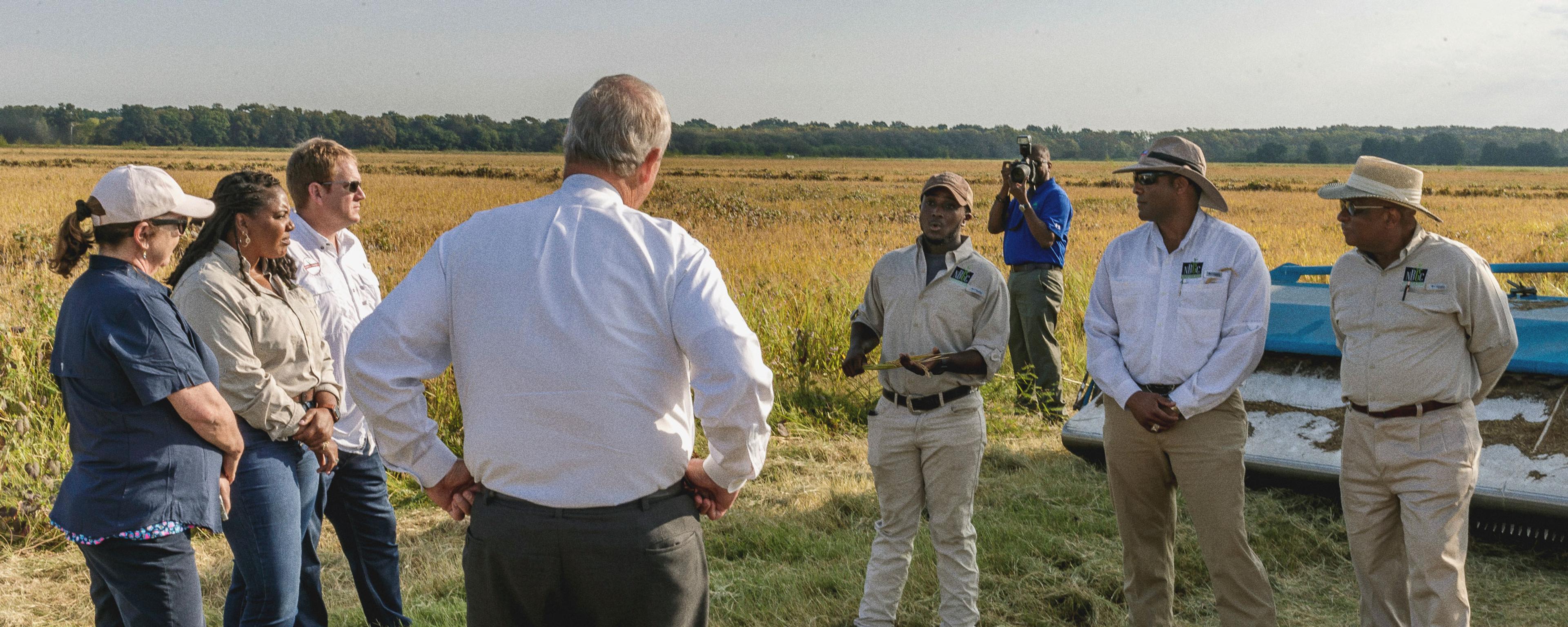
This is a story about confusion. Although, since it’s the job of reporters like me to lend clarity to our subject matter, maybe it’s an anti-story. Whatever this is, it covers what I do and don’t know about the U.S. Department of Agriculture’s $3.1 billion Partnership for Climate-Smart Commodities (PCSC) program, which I started reporting on after a pleasant lunch seminar held in midtown Manhattan this past February.
The PCSC is (was?) a program initiated by the Biden administration to research climate-friendly farming and forestry practices, measure their impacts, and expand U.S.-based markets for them. Through USDA’s Commodity Credit Corporation (CCC), in 2023 it began doling out five-year grants to projects led by food companies, universities, farmer organizations, state agriculture departments, and Indigenous groups. By working through the CCC, it bypassed USDA’s EQIP program — one of the main funding levers for funding environmentally friendly farming practices — which is tied to the Farm Bill that Congress has been half-heartedly knocking around since it expired a year and a half ago.
Before the lunch, I knew of the existence of PCSC but not much about its specifics; I was especially surprised to learn that it had a marketing side. After the lunch, I did what I always do when I start working on a story: I called up sources, asking how they fit into what appeared to be a complicated and unwieldy program, trying to understand how it all pieced together. I’d almost finished my interviews and was itching to start writing when the news hit.
Like dozens if not hundreds of federal funding streams — particularly ones involving any mention of sustainability or climate — one morning I woke up to the news that PCSC had its taps turned off by the administration, with no indication of when or if the money would flow again. The anxiety was palpable, now, when I talked to my sources. Some farmers had already shelled out a lot of their own hard-earned money for equipment and materials. They were now on the hook for those costly expenditures, which they trusted the government would pay back because it said so right in their contracts; many were uncertain if their farms would survive the hit. So, this is also a story about panic, depression, and anger. (USDA did not respond to a request for further information.)
How It Begins
This story begins in a wood-paneled room in the company of a small group of journalists, publicists, and academics. I was there to hear about this generously funded climate-smart program that I hadn’t quite been able to wrap my head around. The academics were marketing experts, there to tell the rest of us about their contribution to one $60 million PCSC grant: They were tasked with determining how to convince consumers to pay a premium for “climate-smart” foods, and they walked us through a presentation on how they intended to do that.
Will consumers even know what climate-smart means, the journalists asked? We’re not even sure we know what it means, we said. I later learned from Ben Lilliston, director of rural strategies at the Institute for Agriculture and Trade Policy, that there’s no USDA definition of climate-smart; a project simply had to reduce greenhouse gas emissions and sequester some carbon to qualify. The academics were sure they could simultaneously educate and entice consumers by building out special grocery sections where climate-smart foods could be displayed.
Does this mean a new labeling scheme, the journalists wanted to know? And were the academics concerned their displays might compete with, for example, organic food displays? The academics seemed baffled by this question, as well as the suggestion that consumers had become overwhelmed by the growing number of labels meant to sway their purchases with promises of everything from zero GMOs to no child labor in the supply chain.
To myself I wondered, would grocery stores even agree to that kind of display? When I left the paneled room I called Errol Schweizer, grocery savant and editor of The Checkout on Substack. He pointed out that many grocers don’t even have separate organic sections anymore. “All that stuff is integrated into the aisles by category, because consumers shop by category,” he told me. “This is such a silly thought exercise, because it is so out of touch with the realities of retail … If USDA wants to get a clue they should talk to people … who are working on regenerative production systems, who are marketing products to consumers based on terms consumers recognize.”
The deeper I dug into the story the more tentacles it seemed to sprout.
As I continued to report this story, the fact that the academics had been brought on to market specialty crops. aka fruits and vegetables, nagged at me. The PCSC program has commodities — corn, soy, wheat, dairy — right there in the name. Lilliston explained that this was a workaround to get some money into farmers’ pockets. With meaningful climate action left out of the 2018 Farm Bill, PCSC was meant to be another way to compensate farmers for environmentally friendly practices. Any project funded by the CCC had to have the word “commodity” attached to it; speciality crop producers were nevertheless eligible. Okay, one mystery solved.
The deeper I dug into the story the more tentacles it seemed to sprout. I reached out to Linley Dixon, co-director of the Real Organic Project. What did she make of the fact that the PCSC program didn’t mention organics, which has clearly stated standards for climate-mitigating strategies? “We were disgusted when we saw who the money went to,” she told me, referring to the first round of funding, which mostly benefitted large agribusinesses. She pointed out that Tyson is now marketing “climate-smart beef” after receiving a $60 million PCSC grant (it also got sued by the Environmental Working Group over the claim).
“It feels like an attempt to try to put Band-Aids on our current system,” Dixon continued, “and give more subsidies to the status quo rather than investing in the people that are doing it right.” The second round of PCSC funding did go to smaller farms and organizations and it turns out, some of those farms were organic — a rare instance of governmental vagueness working for the little guy.
Things Fall Apart
I’d been working on the story for days and although I still wasn’t entirely clear on what a climate-smart commodity was meant to be, after talking to farmers and farming experts, at least I was getting to the roots of my confusion. Just a few last interviews, I thought, and then I’ll feel clear-headed enough about the program to sit down to write.
Then it was all over.
A week after the press event I was on a follow-up Zoom call with the academics. I asked if they could share some data. I watched in real time as they went about the mundane task of calling up a USDA page — only to discover it had been wiped from the server. Their faces went pale. My sources stammered for a few minutes, trying to appear un-alarmed. Then they ended the call.
Several days later, researchers on another part of their grant declined to speak to me. Then New York’s Agriculture and Marketing department, a PCSC grant-holder, also refused to speak, releasing a statement instead: “[W]e are closely following developments and continuing to monitor federal actions for any potential impacts on our programs.” I soon learned that, as grant funding stopped coming in, state agencies and universities were deciding to go silent, fearful that public comment would generate government backlash.
Soon after that, reports started rolling in about farmers impacted by the funding freeze; I contacted some of them. If I’d initially been feeling panic over a story that was rapidly slipping away from me, my troubles soon seemed small by comparison.
As grant funding stopped coming in, state agencies and universities were deciding to go silent, fearful of government backlash.
Kia-Beth Bennett is the owner of 113-acre Bittersweet Milkweed Collective in St. Lawrence County, New York, raising pigs, sheep, chickens, cows, produce, and perennials. Her farm was included on a grant that would have provided them $46,500 for fencing to improve rotational grazing, a grassed waterway to reduce flooding in their cow pasture, and a hedgerow to support pollinators and reduce erosion. They spent about half of what was allotted to them; the reimbursement never arrived and the rest of their planned improvements remain unapproved. That’s because their projects required a third-party environmental evaluator, and USDA abruptly canceled its contracts with third-party environmental evaluators.
“At this point I am feeling confusion and panic, and extreme discouragement,” Bennett said. The possibility of PCSC funds “gave you that little sense of hope. We can’t have hope right now. There is no hope. We have to have action … I’m turning to my neighbors and saying, ‘Okay, I will trade you a piglet for chicks, and I will give you some pork if I can borrow your backhoe. I think that’s where we’re heading.”
Katie Baildon is policy manager of the Northeast Organic Farming Association of New York (NOFA-NY), which was a grant partner with nonprofit Pasa Sustainable Agriculture in Pennsylvania. This grant was the umbrella for Bennett’s fence and waterway and hedgerow, and for projects on 662 other farms in 15 states that still haven’t received anticipated funding (although $1.85 million has been distributed to about 140 farms).
“A lot of farms are in the same boat. A lot of organizations that work with farms are in the same boat. So this terrible experience has brought us together to share our stories and hopefully make ourselves stronger for the future,” Baildon said. Solidarity, however, does not make up for the harm the funding freeze has caused. Some farms purchased new equipment “only to find out they’re not going to have the funding to carry out the project,” said Baildon. “Farms are businesses and in New York we’re starting to enter the [growing] season. To have this happen at this time of year is especially stressful.”
“At this point I am feeling confusion and panic, and extreme discouragement.”
Ang Roell of They Keep Bees, also part of the Pasa/NOFA grant, raises honeybee queens in Western Massachusetts and Florida. They were awaiting $15,000 in PCSC funding for fencing; additional plantings to add to newly planted young chestnuts, hazelnuts, pear, and other trees; and an irrigation system to keep those trees watered. Roell never received the funds they were anticipating. They were also frozen out of an emergency ELAP reimbursement after part of their operation got slammed by Hurricane Helene last year.
“It’s a pretty detrimental hit and frankly, feels like an attack on small farms,” Roell said, although some larger farms are suffering as well. The loss of PCSC money doesn’t mean they’ll take a loss on production, but it did disrupt their irrigation budget. “We’re looking at another year of watering all these trees by hand, which takes four to five hours of labor. Or we are looking at the potential loss of every tree and shrub that we … spent $20,000 in materials and supplies to put into the ground,” they said. The state of Massachusetts has been in touch to offer grants that might bridge funding. “But to get screwed by the government — I’m not exactly surprised, but I’m disappointed,” Roell said.
The Essex Food Hub in the Eastern Adirondack Mountains was not directly part of a PCSC grant. However, said executive director Lindsay Willemain, 10 of the 60 producers the Hub works with are owed a total of $716,000 in climate-smart funding. That money was intended to “implement agroforestry strategies [to] provide more climate resilience for their farms,” in a region recently plagued by both extreme flooding and drought.
But the Hub is also out $426,000 through another USDA program, meant to distribute local farm produce to individuals in need, that may never get reimbursed. “We won’t survive that,” Willemain said. Should the Hub fail, 120 community members will be out of jobs and local farmers — those who survive the funding freeze, that is — will have to seek alternative distribution in a region that desperately needs access to fresh local food.
As of this writing, I’m still not entirely sure what climate-smart commodities are — and I may never get to the bottom of it. Farmers and farmer organizations are still reporting missing funds and are expressing their dismay over the resulting “devastation” to their operations. Several farmer groups came together in early March to meet with Congressional agriculture committees, and to pass on news of the “severe disruption” they were experiencing as a result of promised funds that never materialized. As Lindsay Willemain of the Hub said, “It just seems hopeless.”
Western North Dakota is a land of extremes. Farmers there spend their summers either anxiously waiting for rain or dreading the approach of a hailstorm, which can send golf-ball sized chunks of ice shooting towards their crops at up to 100 miles per hour. But they’re not completely at the mercy of the weather, thanks to a technique called cloud seeding, which encourages the precipitation to fall as rain instead of hail. For three months each summer, planes shoot small amounts of the chemicals silver iodide and dry ice (frozen carbon dioxide) into the clouds and then monitor the effects on the farmland below.
The idea of humans controlling the weather sounds like the stuff of science fiction, but the practice of weather modification is very real, and has been going on for decades. In recent years, though, a backlash has developed against long-running cloud seeding efforts in North Dakota, driven by environmental concerns as well as misinformation and conspiracy theories proliferating on the internet and social media.
Last year, two North Dakota counties voted to end their cloud seeding operations, limiting the program to just two remaining counties and part of a third. And a bill to criminalize the practice entirely came up in the state legislature, though it was defeated in February.
This opposition to cloud seeding could make life more difficult for the farmers it’s supposed to help, said Darin Langerud, director of the Atmospheric Resource Division of the North Dakota Department of Water Resources, which runs the cloud-seeding program.
“We’re facing misinformation — not only on this topic but other topics relating to science and technology,” Langerud said. “It’s a difficult thing to combat. The ability to get proper information in people’s hands is a challenge.”
Cloud seeding was invented in 1946 by a scientist working for General Electric. Seeking to test it out on a larger scale, the federal Bureau of Reclamation — an agency tasked with increasing water availability for agriculture in the arid West, —turned to North Dakota. It started the world’s longest-running aerial cloud seeding program — one that continues to this day, now administered by the state.
Texas and New Mexico have similar summer hail-suppression and rain enhancement programs, while California, Utah, Nevada, Colorado, Wyoming, and Idaho all run winter cloud-seeding programs — it increases snowpack, which helps fill reservoirs and keep hydroelectric dams running. Fifty countries around the world, including the United Arab Emirates, China, and India, are known to experiment with cloud seeding.
Scientists tend to disagree about the impact of this technology, though research from more than 50 years of cloud seeding in North Dakota suggests that it’s effective at meeting limited goals.
“People believe this is nefarious activity. Cloud seeding is somehow getting wrapped up in these discussions where it doesn’t belong.”
Cloud seeding works by harnessing the properties of atmospheric physics, said David Delene, a University of North Dakota professor and editor of the Journal of Weather Modification. Clouds are filled with tiny drops of water, which won’t condense and fall as rain until they have something to latch onto — what are known as ice nuclei. Chemicals like silver iodide can serve as artificial ice nuclei, Delene said, in cases where the clouds won’t release moisture on their own. The process can’t create rainfall out of thin air, but instead gives already-existing clouds a little push.
Cloud seeding can create longer-lasting storms that drop their water over a larger area, but it’s also not 100% effective; not every cloud that’s seeded ends up releasing rain. It’s also hard to track results because researchers have to compare post-seeding precipitation totals with the amount that would have fallen without the intervention — something that’s difficult to estimate. Its effects on hail suppression are even trickier to track, because it’s hard to say for sure that hail would have fallen if a cloud wasn’t seeded, or that the hailstorm would have been more intense.
The data that does exist, though, suggests that investing in cloud seeding tends to be better than doing nothing. A 2022 study looked at 30 years of data in the counties that participated in weather modification programs, and found that cloud seeding had increased precipitation between 5 and 15 percent. That may not mean much for some farmers, as precipitation in North Dakota can vary wildly from one year to the next, making a 10 percent increase fairly minimal in some years, Delene said. But it can make a huge difference during times of drought, and especially in avoiding damage from hailstorms. Other studies have found that the state’s program reduces hail damage by 45 percent while also increasing crop yields.
The program costs the state less than $1 million annually and can rake in economic returns of 40 or 50 times that, Langerud said — making it a fairly low-risk, high-reward endeavor.
Despite these effects, the cloud seeding program has become the target of suspicion in recent years. In January, a bill that would have banned “weather engineering, cloud seeding, stratospheric aerosol injection, or other atmospheric activity that is harmful to a human or the environment” was introduced in the North Dakota House of Representatives.
Known as HB 1514, it was driven by fears about the “chemtrail conspiracy,” Langerud said, referring to the theory that the government is secretly spraying toxic chemicals in the air to sterilize people or, yes, control the weather — a funhouse mirror distortion of what’s actually happening. The theory has been bolstered by people as powerful as President Donald Trump’s Health and Human Services secretary, Robert F. Kennedy Jr.
A bill was introduced that would have banned “weather engineering, cloud seeding, stratospheric aerosol injection, or other atmospheric activity that is harmful to a human or the environment.”
“People believe this is nefarious activity,” Langerud said. “Cloud seeding is somehow getting wrapped up in these discussions where it doesn’t belong.”
The opposition is also driven by a lack of understanding, Delene said. Some people question whether more rainfall in one area can cause droughts in a nearby county, which Delene said isn’t how storms work; there’s plenty of water in the atmosphere to go around, even with cloud seeding. Many also fear the effects of silver iodide, which Delene explained is used in such small amounts as to be nearly undetectable, and isn’t considered a health or environmental concern.
Still, to try to answer some of these questions, officials like Langerud travel to the counties that still allow cloud seeding operations. They host public meetings and answer questions before flights begin in the summer. He pointed to the trove of information on the department’s activities, including records of each flight, available on its website to emphasize its dedication to transparency. But although HB 1514 was eventually defeated in the state legislature, Langerud thinks that the conspiracy theories that fueled its rise are likely to stick around, putting the future of cloud seeding in doubt. “My sense is, this issue is probably not going to go away anytime soon,” Langerud said.
Even if no statewide bill succeeds in killing the program, farmers who believe in its benefits fear that this kind of piecemeal downsizing will cause it to be cancelled eventually — a sort of death by a thousand cuts. That includes George Siverson, a now-retired livestock farmer who lives in rural Bowman County in the southwest corner of the state.
At 83, Siverson knows what it’s like to experience the full fury of a hailstorm, like the one that busted the windows of his car and killed several of his sheep six years ago. He believes cloud seeding has helped reduce hail damage, although not everyone agrees — Siverson often overhears gripes about the program in the local bar and restaurant.
“You hear those comments around the table, especially if there’s adverse weather,“ he said. “That it’s dry because they seeded clouds, or that they didn’t get up there in time.”
But although the question of ending the program has come up on the ballot in Bowman County several times in recent years, voters there have so far decided to keep it. Siverson estimated that about 60 percent of the farmers he talks to support cloud seeding.
“I don’t think the benefit is as much as it used to be,” Siverson said, “but I would hate to see it cancelled.”

What do a wrestling coach, a Johnny Cash cover, and a prayer all have in common? They’re the inspiration for the names of crop varieties.
If you are so interested in the names of new varieties that you choose to download the USDA’s Agricultural Variety Naming List, you will be greeted with an inscrutable plain text document that is thousands of lines long, detailing each variety regulated under the Federal Seed Act: Some crop names are a string of incomprehensible letters and numbers, some look like they’ve been teleported straight off of a seed marketer’s whiteboard, but many are named after familiar people, places, and things.
Currently, the crops covered by the registry include grass, forage, and field crop seeds. Why maintain a list? Crop varieties are only allowed a single name, so as not to cause confusion across the industry. It is also a key step in obtaining intellectual property rights through the USDA’s Plant Variety Protection Office. In order for a new variety to be eligible it has to meet a number of criteria, including a three-part standard that shows it is “distinct, uniform, and stable”.
Allan Fritz is a professor of wheat breading and agronomy and the head of the wheat breading program at Kansas State University. He’s had a hand in naming varieties after longtime university employees like Carl Overley and Larry Patton, small Kansas locations like Zenda and Everest, and at least one, KS Providence, after a prayer. That last one followed a field disaster in 2014 during which a field was sprayed with an unintended chemical that killed much of the crop.
“We lost everything that we planted there, which was well over half of the breeding program.”
Typically, Fritz said he’ll make a lighthearted prayer, asking the divine where the best places to plant are. This time, he was far more desperate: “That prayer was more like, ‘Oh, God, please let there be something here.’”
That wheat variety, dire origin aside, has turned out really well for Fritz and his team. While every program does it differently, Kansas State partners with the Kansas Wheat Alliance; naming is a process that begins years before a variety comes to market, with workshopping beginning as soon as it seems commercially viable.
Anyone looking to name a variety, whether they’re university-affiliated or part of a private sector program, can’t name it just anything, though. There is a process to follow, administrated by the Agricultural Marketing Service at the U.S. Department of Agriculture. This ensures not only that there isn’t confusion on American soil, but that there isn’t any cross-border duplication with Canada.
That process includes submitting documentation, and receiving approval, from the department. In a statement, a USDA representative shared how they have constructed that process to align with international regulations.
“There were people who were like, ‘I’m not growing a variety named after Bob Dole.’”
“Typically, plant breeders develop a variety. After coming up with a variety name, plant breeders or company representatives contact our office to ensure that the variety name has not been used by another company of the same kind. Our office lets the company know if there is a conflict or issue with the variety name.”
While Fritz tends to stay away from political figures, one variety was named after Bob Dole, former Republican senator from Kansas and one-time presidential candidate. He said that Dole’s contributions to the state made him a viable choice.
“I would probably not highly recommend naming varieties for political figures, just because they’re inherently polarizing. But Dole had done a lot for agriculture in the state, and he had been retired for a long time, and I think, generally considered a good ambassador for the state, good ambassador for agriculture,” Fritz said. “Although there were still people who were like, ‘I’m not growing a variety named after Bob Dole.’”
The Marketing Aspect
Political polarization aside, naming a variety is as much an exercise in marketing as it is in history making. In some cases, the variety works best in one part of a state versus another, so naming it after an area provides a signifier to farmers that it is going to work in their neck of the woods. Sometimes, naming a variety is about finding a way to signify that a variety is particularly resistant to a prominent disease. A lot of the time it’s about connecting the variety to its origin and giving farmers a recognizable name to latch onto. Whatever the reasoning, those who spoke to us for this story consider it as much an art as a science.
Brett F. Carver, regents professor and Wheat Genetics Chair in Agriculture at Oklahoma State University, for example, named a variety after a musical technique called the double stop. “I named it that way because double stop, you’re playing two strings at a time on a string instrument. In this case, we’re playing two genes at one time to give us herbicide tolerance,” Carver said.
He likes to make sure that any varieties in that line then follow a similar naming convention, in order to draw a connection for producers.
“Once you start with that [name], the progeny of that variety will have to be, I think, named in a similar way.” Recently, Carver announced the name of a variety that descends from Double Stop, choosing a song popularized by Johnny Cash. “I called it orange blossom, because there is hardly any other song that takes advantage of and utilizes double stops more than ‘Orange Blossom Special.’ Farmers knew, automatically, what I was talking about.”
“They’ll talk about ‘My Ruby Lee’ or ‘My Double Stop.‘ They take ownership of that, and they won’t take ownership if it’s a name they just don’t accept.”
In another case, he released two varieties both named after legendary Oklahoma State University coaches.
“We released two varieties at one time, Gallagher and Iba, and those two names are often used together at OSU, so I wanted the farmers to know, okay, these two varieties are related. They’re very similar.”
Carver says that while marketing is secondary to quality of the variety, it really can boost a successful product, he estimates as much as 10%.
“It must yield equal to or better than the competition. Once you satisfy that, checking that box off the name can really be important. And you can hear that when farmers talk about a variety they’re using. The one thing you’ll often hear them [say], if they really like it, They’ll talk about ‘My Ruby Lee’ or ‘My Double Stop.‘ They take ownership of that, and they won’t take ownership if it’s a name they just don’t accept.”
The One that Got Away
When deciding if a variety could or should be named after a person, quality is also at the top of Fritz’s mind, but so is how he can shine a spotlight on those whose roles in the industry are both vital and generally unacknowledged.
“If I name it for a person, I really want it to be an honor … I think having names are something that producers hang on to, and I also really just like that you can honor people through that that maybe have made a big contribution, and maybe they’re kind of in the background, but it’s a way to bring that story out and for people to be able to recognize that there’s a lot of folks in the wheat industry who are doing things that matter, and to recognize that effort.”
“We’re the Oklahoma State Cowboys, and I really wanted to use the name cowboy. And darned if Colorado State didn’t take that name.”
With long-dead historical figures, there’s less pressure to ask permission for a variety to be named after a person if a family connection is unavailable, but Fritz asks permission when a variety is named after a person where a connection can be made. He said he’s never had anyone decline.
“I have always gone to either the person, if they’re still alive, to their family, to ask if it’s okay if we name a variety after them … I think it’s just better to have that permission.”
Even with compiling an ongoing database, like Carver does, there are still names that get away.
“We’re the Oklahoma State Cowboys, and I really wanted to use the name cowboy. And darned if Colorado State didn’t take that name.”
The wonderful thing about fish is that they naturally grow and replenish. A single female cod lays hundreds of thousands of eggs each year, of which dozens usually survive into adulthood, while a young cod will double its body weight in a year. In some places, the total volume of bluefin tuna in the sea has quadrupled within a decade. This self-restocking makes fishing, in principle, a very sustainable business. Sometimes, though, we end up fishing too much, at faster rates than stocks can renew; fish populations collapse and there’s no fish left to harvest.
But how do we know just how much fishing is too much? How do we make sure that a fishery is actually sustainable?
In theory, every fishery in the world — from sardines to tuna — has a sweet spot where fishermen extract the greatest amount of fish as possible without interfering with the population’s ability to replenish. In an ideal world, we can keep taking that same tonnage of fish year after year, and the stock will remain stable, a win-win for fishermen and fish. Fortunately, fishery scientists can calculate this ideal harvest amount — which they call “Maximum Sustainable Yield” (MSY) — and fisheries around the world are required by law to use it to set harvest limits. “MSY is really important in assessing the sustainability of a fishery,” said fisheries scientist Christopher Free of the University of California, Santa Barbara. “It’s just a really clear measure for knowing how we’re doing.”
Using the MSY limit has inarguably improved the sustainability of fisheries around the world. But unfortunately, it is but an imperfect metric of sustainability. Experts say that it’s hard to measure accurately, and there’s even disagreement on how to calculate it. It’s also becoming increasingly difficult to apply in a world where fish stocks are suffering from the effects of climate change: A level of harvest that might be sustainable in one year may not be during a fish-killing heatwave. The upshot is that, just because a fishery uses the MSY limit, doesn’t always mean it’s perfectly sustainable. All of this makes it hard for anyone — especially the regular fish consumer — to know if a fish was sustainably caught.
“Using Maximum Sustainable Yield is really hard. In an idealized world, it’s perfect. In reality, I have thoughts,” said Ben Martens, executive director of the Maine Coast Fishermen’s Association.
To Martens, the problems with MSY begin with measuring it. To calculate MSY, you need to know how fast a fish population regrows after fishing — which usually requires knowing how many fish are in the water, how many there used to be, and how many were caught. Computer models crunch through this data to estimate the optimal harvest amount, which is then used to set fishing limits. But even just estimating how many fish are in the water is difficult. Often, research vessels drag nets through the water to get a sense of how many fish there are in particular spots and then extrapolate that to a larger area. But these estimates can be off. Basically, “it’s hard to count fish,” Martens said. And calculating MSY from such measurements, he added, “is trying to take a sniper rifle and hit the top of a curve.”
If experts overestimate fish numbers, they might recommend higher levels of harvest than are actually sustainable. Most fisheries set catch limits conservatively to account for this uncertainty, but sometimes the guardrails just aren’t big enough, said Free, who is one of the scientific advisors for the Pacific Fisheries Management Council which manages federal fisheries along the West Coast.
Sometimes, fishermen themselves are distrustful of the science that underlies catch advice. At a recent meeting where New England fishermen could share input on the management of sea scallops, experts discussed a preliminary model recommending that they could fish for more than 40 days, compared to 24 days in previous years. But fishermen concerned about scallop numbers balked. “If a model is saying ‘Go catch double,’ and the fishermen are saying ‘No,’ that screams there’s a problem,” Martens said. Ultimately, the model was recalibrated to account for the declining catch rates seen in the fishery, and the New England Fishery Management Council finally recommended 24 days at sea, according to its public affairs officer Alex Dunn.
Calculating MSY from such measurements, he added, “is trying to take a sniper rifle and hit the top of a curve.”
Other times, Martens said, fishermen feel the catch limits have been set too low. When fishermen themselves don’t trust the science that catch limits are based on, they have little incentive to adhere to them, he says. (Though the Council has previously expressed concern about the quality of stock assessments conducted by the NOAA Fisheries Northeast Fisheries Science Center, Dunn stressed that many sources of science, as well as industry input, are used in setting catch limits. Teri Frady, a spokesperson for the Science Center, added that stock assessments undergo several levels of review and said she’s confident the scientific information on scallops is the best available at the time it’s delivered.)
On top of often having imperfect data to begin with, experts disagree about how to calculate MSY. Fisheries scientists Rainer Froese of the Helmholtz Center for Ocean Research in Germany and Daniel Pauly of the University of British Columbia in Canada have long taken issue with the calculations of many fisheries management organizations. In their view, fishing tends to become unsustainable once a stock is reduced to less than 50% of its original size; in practice, at least 60% of a stock should be left in the water to account for measurement errors. But many fisheries managers, they argue, have been tweaking the MSY-estimating computational models to justify fishing stocks down to 30% or even 20% of the original stock, which they say is past the point where populations can naturally replenish (although other scientists, like Free, disagree, arguing the cut-off depends on the biology of a given fish population).
“If you take out more than is regrown, what happens? The stock shrinks,” Froese said. What exacerbates this problem is that we often don’t know what the original size of a fish stock even was, as industrial fishing began decades ago. Sometimes, data collection only began when fish stocks were already overfished, leading managers to believe that populations are healthy at sizes that are actually too small, and setting catch limits too high.
Collectively, this could mean that fishery scientists often overestimate how sustainable they are, while fish stocks are actually in much poorer condition — leading to widespread declines in fish. That not only risks the collapse of fish populations, but can also reduce catch to the point where fisheries need government subsidies to break even. Another result, “is that the stocks never recover to the biomass they could have,” Pauly said. If we reduced fishing levels so stocks could recover to the 50% point, we’d ultimately be able to catch more, he said. But, Froese added, catch limits should be set even more conservatively for fish species upon which other fish depend — such as herring and sprat, which are eaten by cod. “Normally, the species that are eaten by others that you want to catch, you would have to fish them less,” Froese said.
“We’re just really scrambling to figure out how to account for this.”
The most pressing problem for MSY is climate change, according to Free. The MSY catch limit makes sense in situations where environmental conditions are stable, but many fish stocks today — especially along the eastern coast of the U.S. — are suffering from ocean warming. When these species are already dying in droves during heatwaves, fishing them too close to MSY could easily be too much. Ideally, Free said we should set fishing limits especially cautiously in climate-impacted fisheries, which would allow us to continue fishing productively. But accounting for climate change in fisheries is still a work in progress. “We’re just really scrambling to figure out how to account for this,” Free said.
The solution to these issues, experts say, is not to throw out MSY entirely — we still need ways of assessing sustainability — but to work on improving it. Free points to East Coast fisheries that are exploring new ways of accounting for ocean warming in their computational models. Froese and Pauly argue that fisheries should dial back fishing to keep stocks above 50% of their original size. Martens, meanwhile, would like to see improvements in the collection of data used to calculate MSY; he suggests using fishing vessels themselves to gather data on fish stocks and environmental conditions. That would solve not just the data problem, but also increase trust among fishermen towards catch limits.
But what can ordinary customers do in the meantime? In general, Froese said, it’s good to eat things that are low down in the food chain — small, fast-growing silvery fish like sardines and anchovies, as well as species that are faring well under climate change, like Alaska pollock. Free and Martens, meanwhile, are strong believers in American fisheries. “[Fisheries are] one of the most heavily regulated industries in our country, and we’re using the best available science to tell people what they can and cannot fish. We don’t always trust that best available science, but the fishermen are conforming to it,” Martens said. “If it’s coming out of your neighbor’s business, you can feel really good about eating local stuff.”
We throw out approximately 30 to 40 percent of all the food grown in the U.S. Insects, meanwhile, are happy to munch on our food waste. In turn, their waste can fertilize the soils that grow tomorrow’s tomatoes.
This idea — that insects can round the circle of our food supply system — has gone from a dubious proposition to a valued addition in the agriculture community over the last decade.
A recently published, federally funded two-year field study in Arkansas sought to stack insect poop, called frass, against the standard ammonium nitrate fertilizer. Frass, the study found, increased the key elements that make soil fertile for crops as compared to nitrogen-based fertilizer. It also enriched the soil more than another common organic fertilizer, poultry litter — a mixture of chicken manure, pine wood shavings, and spilled feed.
That’s the beauty of insects, said USDA soil scientist Amanda Ashworth who led the study alongside colleagues at the University of Arkansas in Fayetteville, Arkansas.
“They can pretty much eat anything and turn it into some really value-added products — so I think it’s really exciting,” Ashworth said.
A Bug’s Life
Like all livestock, mealworms poop. But unlike their warm-blooded peers, a mealworm’s poop is nearly odorless, with subtle hints of vanilla. That’s according to Cheryl Powers, who co-founded and manages the commercial mealworm farming company Kirkos LLC.
Kirkos‘ mealworm manure — golden in color, sandy in texture — is produced within a warehouse in the suburbs of Omaha, Nebraska. There, millions and millions of yellow mealworms munch on wheat bran, carrots, and potatoes within plastic tubs stacked high in the facility. The worms grow to around one and a quarter inch in length before being shipped to wild bird businesses and exotic pet markets, Powers said.
The golden color of the frass reflects their potato-heavy diet — when the mealworms eat a more carrot-heavy diet, their frass turned more orange, Powers said.
Frass is sold by the bagful to farmers looking for a chemical-free fertilizer. Under the mantra of nothing going to waste, Kirkos also sells frass that cannot be separated from exoskeletons and leftover food scraps to local farmers. (The mealworms, like many kids, don’t like potato skins, Powers said.) That waste heads for the farmers’ compost pile and eventually spreads across fields or mixes into potting soil.
Frass enriched the soil with higher concentrations of carbon, nitrogen, potassium, phosphorus, and magnesium compared to ammonium nitrate, the study found.
In addition to a well-balanced N-P-K value, Powers said that her company’s frass is safe to spread across fields of fresh vegetables. It tests negative for common bacteria including Salmonella, Listeria, and Shiga toxin-producing E. coli. It is also clean of seeds from weeds that find their way into cow manure and end up sprouting amidst the crops that the manure is meant to fertilize.
But the unique sandy nature of frass is also its primary downside, Powers said. It is difficult to spread on a field, she has heard from farmers, because it blows away. While frass could be compacted into pellets, the heat of that process would degrade some of the microbes that make it appealing as a fertilizer — a Catch-22, according to Powers.
Local Fertilizer
Mealworm frass was compared to poultry litter and ammonium nitrate on the fields of the University of Arkansas research station in Fayetteville. Fifteen plots of land received one of the three fertilizers — frass and litter being the organic fertilizers; ammonium nitrate, the standard fertilizer — and five plots received no fertilizer.
For two years, Ashworth and her colleagues pushed cylindrical probes into the soil, by hand, pulling out cores of dirt. Soil was tested for nutrients and elements in the lab.
Frass enriched the soil with higher concentrations of carbon, nitrogen, potassium, phosphorus, and magnesium compared to ammonium nitrate, the study found. Frass fertilized soil also had higher levels of nitrogen, potassium, and magnesium compared to poultry litter, while the carbon and phosphorus levels were similar between the two organic fertilizers.
The nitrogen enrichment was particularly exciting for Ashworth, she said, because of the high nitrogen fertilizer prices facing farmers these last few years. Prices are likely to spike again with the added tariffs imposed by President Trump’s administration on imports from Canada including fertilizer and fertilizer ingredients.
Mealworms in their study received “the primo diets” of wheat bran and potatoes.
“If we could find a local source of nitrogen for crops, that would be huge,” she said.
Ashworth noted that the mealworms in their study received “the primo diets” of wheat bran and potatoes. Their poop, as expected, “is going to be more primo,” she added.
Commercial insect-rearing companies, in contrast, may not use such high-quality foods. Bacteria lurking in lower quality insect food transferred to the frass in another study by Ashworth and her colleagues.
This poses a potential health risk, Ashworth said. “You don’t wanna put pathogen manure out on lettuce, right?” Composting is one straightforward solution to this problem. Heat kills the pathogens, making the frass safe for fields.
The limitation of frass fertilizer — the reason that not all farmers are sprinkling frass across their fields — is that there just isn’t much frass being produced. “It’s a huge growing industry,” Ashworth said. “There’s a lot of startups with insect agriculture and, because it’s a new area, there’s still a lot of unknowns and things to be worked out in the supply chain.”
Treasured Trash
The insect agriculture industry of today coalesced from two disparate groups: edible insect enthusiasts and old-timers in the live bait market, said Aaron Hobbs, executive director of the North American Coalition for Insect Agriculture trade group.
The first conference in the U.S. on entomophagy, the process of eating insects, was held in Detroit, Michigan, in 2016. Since then, the industry has matured to focus not just on insects as food — whether humans or other animals — but on something called bioconversion, he said.
“It’s taking things that are fairly low value for other uses — insects are happy to consume it, and then creating products that are valuable for people and the planet,” Hobbs said. The industry’s trade group incorporated in 2019.
In other words, insect agriculturalists now unite under the old adage, “One man’s trash is another man’s treasure.”
One of these treasures is insect-derived fertilizer and soil amendments, Hobbs said. Overall, he said the insect ag industry growth has been slow but steady. “The industry as a whole has learned a lot from each other and from experience about how to properly size and and run these facilities,” he added.
The insect agriculture industry of today coalesced from two disparate groups: edible insect enthusiasts and old-timers in the live bait market.
U.S. fertilizer regulation is a headache for small frass companies and big nitrogen fertilizer companies, alike, Hobbs said. Each state has its own registration process, and although some states coordinate their specs, each single product with the same N-P-K values may need at least four registrations to sell across the country.
While insect frass cannot currently meet the demand for fertilizer in the U.S., the federal government recently invested millions in two insect ag companies, awarding $11 million to Innovafeed and $4.6 million to Chapul Farms, in order to pilot insect-to-fertilizer projects.
But the industry has also had its growing pains. Two large-scale insect farming companies, Ÿnsect and Agronutris, have sought financial shelter from French courts in the last year as they raised funds and worked to pay off debts. No investors came to Ÿnsect’s rescue and the company entered judicial recovery procedure in February.
Hobbs expects that much of the industry’s future growth will be through partnerships with grocery store waste companies, packaged food processors, and large food producers. In 2023, for instance, Tyson announced a partnership with the Dutch insect ingredient company Protix to build a facility in the U.S. that will feed food manufacturing byproducts to insects. The next year, in April 2024, food processor heavyweight Archer-Daniels-Midland opened a pilot plant of black soldier flies with French insect protein company Innovafeed in Decatur, Illinois.
Studies like Ashworth’s are necessary steps towards understanding “the real awesomeness of frass,” Hobbs said.
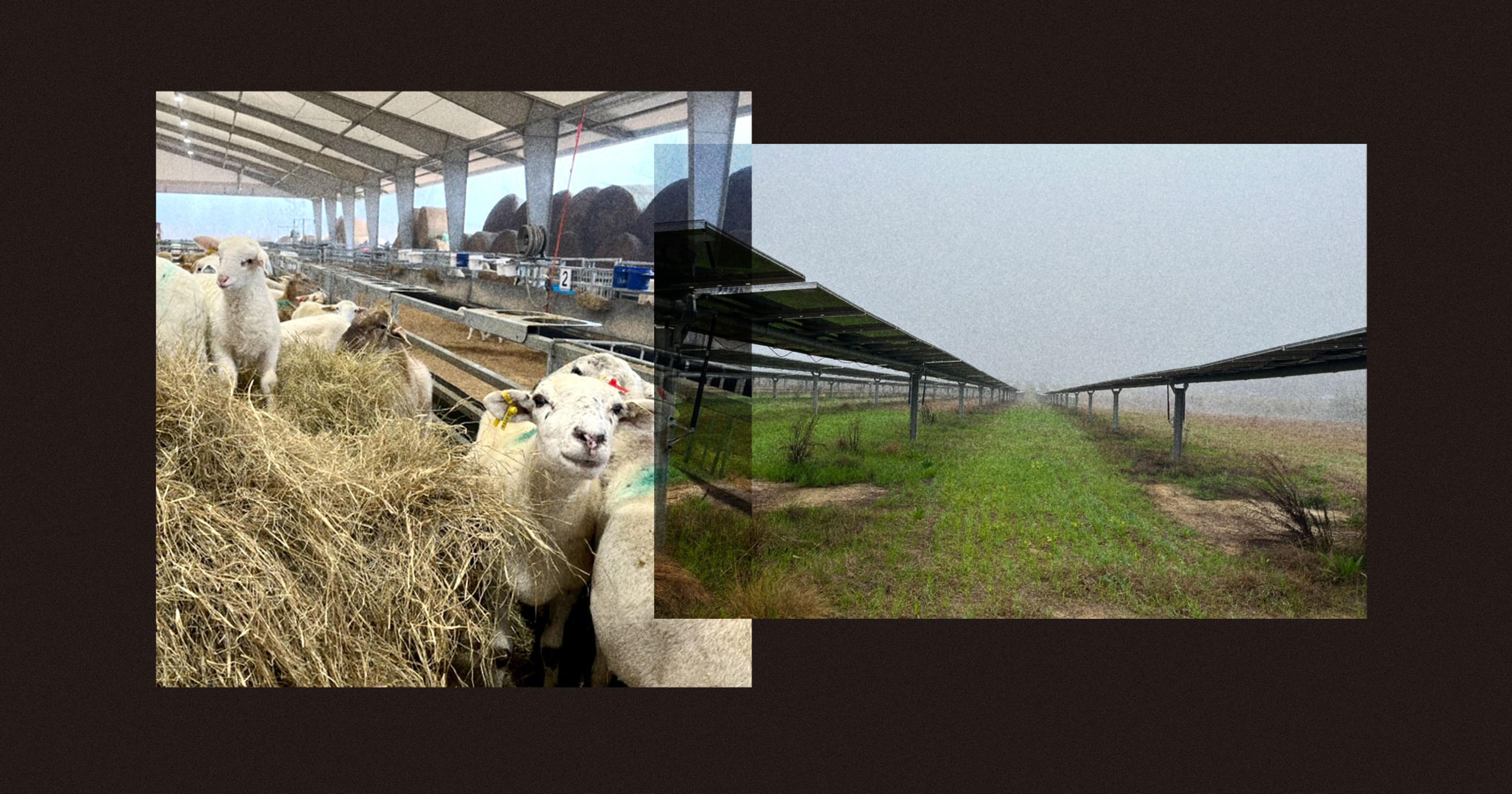
Rain is misting gently over some muddy, hawk-patrolled fields in Elko, Georgia, a sleepy town 117 miles south of Atlanta. Under the roof of a large sheep shed, though, pandemonium reigns. As their mothers poke their muzzles out of their pens to nibble snacks, dozens of curly-haired Katahdin lambs have seized the chance to wriggle out and are now boinging up and down the shed’s pathways.
The adorable chaos belies the more serious business afoot (a-hoof?) here. These lambs and ewes, about 800 sheep in all, belong to Silicon Ranch, a green energy company that combines solar power generation with agriculture, known as agrivoltaics, in all its installations. Agrivoltaics keeps land in food production — livestock rearing, in-soil and greenhouse crop production, for example — instead of giving it over to less beneficial turfgrass to undergird solar panels. In a few weeks, the Elko flock will be set loose beneath 560 acres of such panels to rotationally graze a smorgasbord of cool-season ryegrass and clover and vetch. The sheep are key to managing the site without the gas-powered mowers and intensive watering needed to keep turf in shape; eventually, many of the males will become food for humans.
Experts agree that this kind of “stacked” use of dwindling prime fertile farmland supports a slew of improvements to ecosystems, community, and green energy supply. But do these plusses offset the environmental impacts of spreading more methane-belching livestock across the surface of our planet? That is a trickier question, and one that hasn’t been well-studied. It also, said Emily Bass, associate director of federal policy at the nonprofit Breakthrough Institute, “requires a complex accounting of whether this demand [for lamb] exists in the market already, or if it’s being constructed.”
Silicon Ranch is a 14-year-old utility-scale solar company that has over 180 agrivoltaic sites in 15 states — about one-third of all that exist across the country — mostly in the Southeast. These sites, plus a few in Canada, generate 5 gigawatts of power, enough to service 1 million homes.
What food can be grown under solar panels is highly dependent on location; there are agrivoltaic sites in the U.S. that are ideal for growing blueberries, or lettuces. Some Silicon Ranch sites are suitable only for pollinator habitat and prairie strips — food for bees and butterflies. Two of their sites are being developed for eventual cattle production, which is a challenge, since panels must be raised higher off the ground to accommodate these animals; on the plus side, the panels provide shade that can protect cows from heat stress. And 25 of their sites have sheep munching through them already.
Sheep production was once a mighty American agricultural force, with a historic peak of 51 million animals back in 1884; that number has been whittled to about 5 million head today. With too few available animals to stock their sheep-suitable sites, Silicon Ranch is on a mission to revive the industry. Increasing sheep numbers means improving the genetics of Katahdins. This breed is a cross with one that hails from the Caribbean (and is not common in chillier Mountain states where much U.S. sheep rearing now happens), and is susceptible to a deadly parasite called the barber pole worm. As for the market for lamb: Americans eat an average of one pound of it a year, versus 60 pounds of beef; much of U.S.-eaten lamb is imported, though, leaving a niche for domestic suppliers to fill.
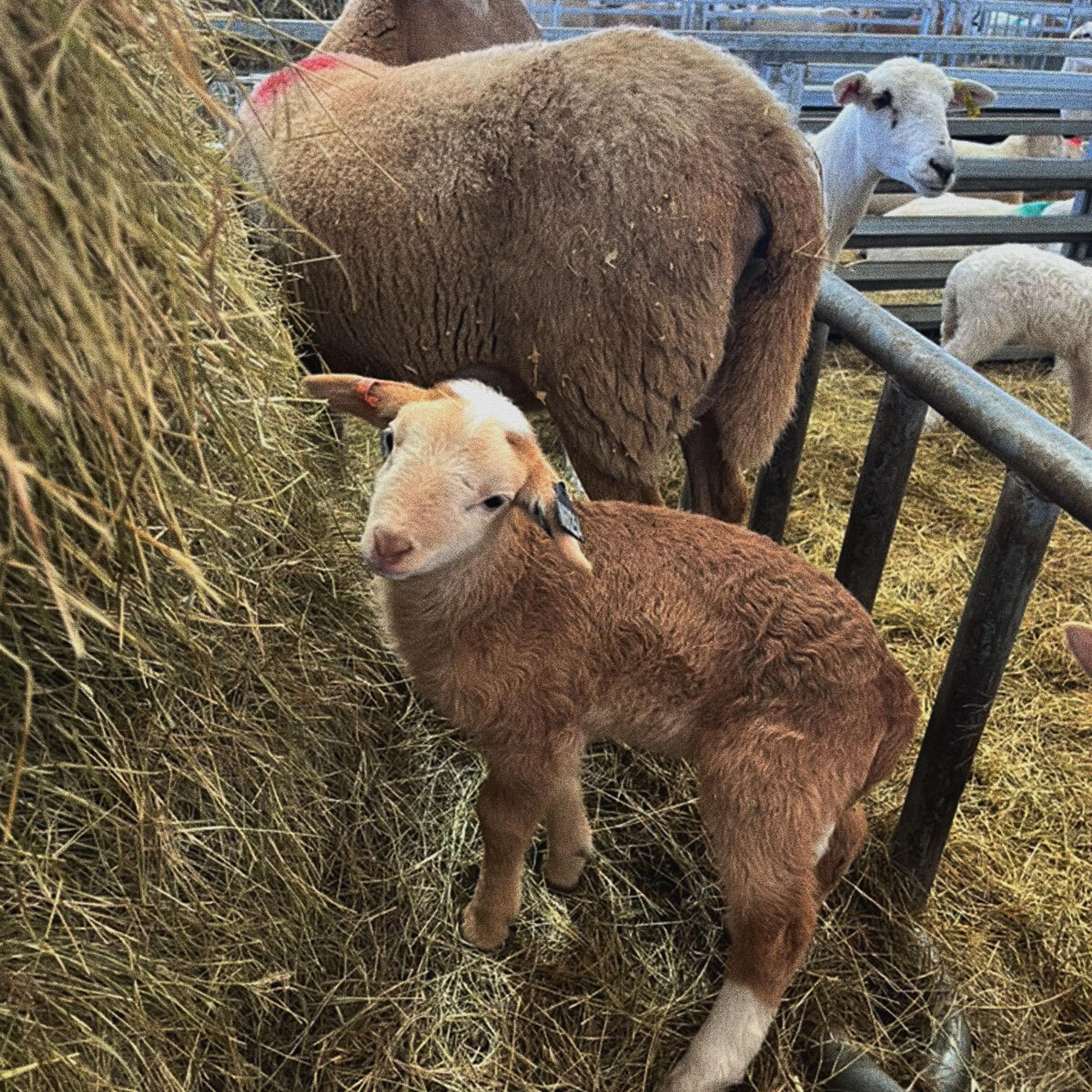
Katahdin lambs preparing to graze under solar panels in Elko, Georgia
·Lela Nargi
Silicon Ranch talks a big game about the positive impacts of its practices. Chief commercial officer Matt Beasley is quick to point out that as owner (rather than lessee) of all the land it develops, the company maintains control over what happens to that land. And what it wants to happen is for that land to continue to store carbon, improve water cycling, support pollinators, and feed people, using regenerative farming guru Allan Savory’s metrics for holistic management and ecological outcomes.
It’s also invested in helping revitalize rural communities with jobs and municipal revenue. “We’ve hired over 8,500 Georgians over the last 10 years to install, operate, maintain, and care for our land and those projects generate over $250 million in tax revenues for the counties where they’re located,” Beasley said. “We want to be good neighbors.”
Trade publication Solar Power World chose Silicon Ranch as its Most Forward-Thinking Contractor in 2020 “because they were absolutely ahead of the curve when it came to solar site stewardship,” managing editor Kelsey Misbrener said. “Even five years ago, they were working to minimize site grading and tree removal.” (Deforestation for energy generation can be one consequential negative of solar adoption.)
Although the tide may be turning when it comes to public sentiment, Misbrener said that NIMBYism was a big impediment to getting more solar panels out on the American landscape. “Developers spend a lot of time at local city commission meetings dispelling false rumors … about solar projects harming communities,” she said. Which is one reason Brent Kim, faculty scientist at Johns Hopkins Center for a Livable Future, thinks there are a lot of positives in the agrivoltaics model. Since there’s “an economic and ecological urgency to wean ourselves off of our dependency on fossil fuels,” seeing animals roaming under solar panels might “move the social perception needle toward people understanding that, oh, these can actually be a win-win for rural economies and the environment,” he said.
But the methane, though. It’s an issue Kim said bears consideration, since one meat sheep emits about 25 grams of this potent greenhouse gas a day, contributing to a severe exacerbation of climate change. (This is still less than a mature beef cow, though, which emits as much as 396 grams a day.)
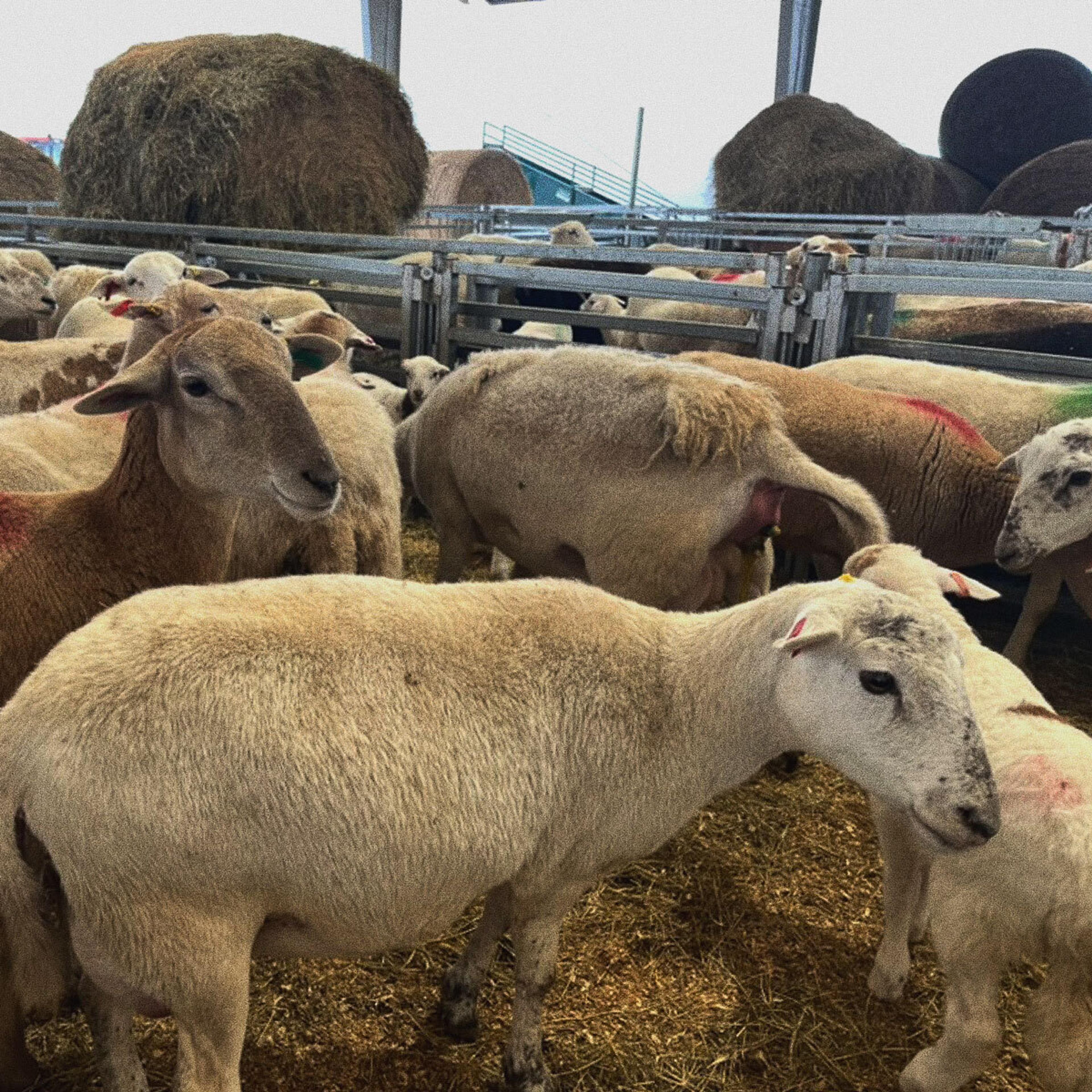
Sheep excited for their new solar grazing
·Lela Nargi
There are livestock producers who push the idea that methane from grazing livestock can be offset by soil carbon sequestration in healthy grasslands. “The problem with this kind of framing is that soil carbon sequestration itself has serious limitations, because once soil reaches kind of a carbon equilibrium, it can’t sequester anymore,” said Bass, and that potential varies by things like region and management practices. “So what happens when [livestock] continue to be grazed on these lands? It’s going to take complex emissions accounting to determine what that benefit is, if any.” She said even “optimistic” studies of carbon-for-methane offsets vary between 20 and 60 percent.
Adding to that complexity is the fact that methane and carbon are not equivalent when it comes to their global warming potential. Methane breaks down after 7 to 12 years in the atmosphere (as opposed to carbon, which lasts hundreds of years), but its ability to trap heat is up to 80 times greater than carbon dioxide’s. Said Kim, “There are studies that project that by the end of the century, driven predominantly by methane, agriculture alone could add another degree Celsius of warming to the planet. That’s really sobering.” Silicon Ranch is using a tool called a flux tower to monitor microbial gas exchange — that is, how much carbon is moving from land to atmosphere. Notably, that does not measure methane or its impacts.
Said Bass, when it comes to balancing the need for food with the need for more solar, agrivoltaics in some places “has real efficiency trade-offs that more research can help illuminate — Silicon Ranch even talks about how it costs more to raise panels to have livestock in these systems.” To better determine whether “the math pencils” on agrivoltaics systems, she’d like to see comparisons of land in solar alone versus agriculture alone versus the two together, as well as an economic analysis “to translate agricultural production and solar energy generation tradeoffs to impacts on profitability,” she said.
Kim, however, believes there’s already “enough evidence to say that agrivoltaics is among the potential viable options for expanding renewable energy, making more efficient use of agricultural land, [and] supporting regenerative grazers and rural economies,” he said. “It’s not a free pass to scale up ruminant animal production but if implemented well, there are a lot of wins.”
Paul West, a senior scientist at climate solution nonprofit Project Drawdown, agrees. “I think it’s important that we don’t oversell [agrivoltaics] as a climate solution,” he said. Nevertheless, “We need a stronger appreciation for multiple benefits — habitat and pollination and water and community electricity. When there’s too much emphasis on climate, those other benefits, which I think are greater, don’t have as much of the limelight and hence appreciation for their values.”

In the span of one week, President Donald Trump upset the apple cart of international agricultural trade with our three closest trading partners, Canada, Mexico, and China.
Using executive orders, Trump rolled out 25% tariffs on goods from Canada and Mexico while upping tariffs on goods from China and Hong Kong from 10 to 20%. Then, after a conversation with Mexican President Claudia Sheinbaum, Trump announced a delay of the 25% tariff on Canada and Mexico until April 2, when he plans to retaliate against any country that imposes tariffs on the U.S.
Canada and China wasted no time in responding with tariffs of their own. Canada added 25% tariffs on U.S. goods; China, 10% or 15%; and Mexico delayed, given the delay by Trump.
But the temporary reprieve in North America is not applied evenly to all goods: Only products that meet the criteria of the U.S.-Mexico-Canada free trade agreement of 2020 (USMCA) will have another few weeks of no taxes applied at the border. (It’s possible that things have changed again by the time you read this.)
The new tariffs are poised to fall heavily on the American agriculture industry — but not evenly across all sectors. The retaliatory tariffs from China on U.S. goods are deeply concerning to the export-heavy soybean industry. Others, like beef and cattle, whose domestic market competes against cheaper meat from South America, want more tariffs imposed on U.S. imports. And all farmers reliant on fertilizer are waiting to see if prices will surge as they restock their supply for the fall planting season.
The scope of the new tariffs “is something that we haven’t seen in almost a century,” said David Ortega, food economist and professor at Michigan State University. And it’s no surprise that China’s tariffs focused on U.S. agriculture products, he said. “They know the importance of the export market to our farmers.”
The last trade war between the U.S. and China, from 2018 to 2020, led to “some pretty significant consequences to the agricultural sector,” Ortega said. Back then, Trump paid farmers to tide them over from the lost revenue, and experts expect he will try the same thing again.
Let’s take a look at what the major agricultural trade organizations are saying in response to the tariffs.
Soybeans
Soybeans are the top export crop for the U.S, over a quarter of it heading to China. Perhaps unsurprisingly, the American Soybean Association has come out strongly against the tariffs.
The constantly shifting news of the tariffs have left the soybean industry “almost numb to it,” American Soybean Association president Caleb Ragland told us.
While the delay on tariffs on Canada and Mexico is commendable, Ragland said, it’s the retaliatory 10% tariff from China that worries soybean producers. Trump has said that any retaliatory tariffs will be met with reciprocal tariffs on imports to the U.S. starting on April 2.
Memories of the last trade war with China initiated by Trump in 2018 are still present for American soybean farmers of today, Ragland said. The two countries added more and more tariffs until calling a truce in early 2020. China’s retaliatory tariffs essentially halted soybean exports from the U.S. overnight. The U.S. lost $27 billion of ag sales to China back then, over 70% of which was from soybeans, Ragland said.
The industry has only regained around three-quarters of what it lost, he said. “We may never gain back everything we lost with China.“
“The President was elected by rural America, and these folks far and wide have put a lot of confidence in him. And we need him to have our backs right now. He said he loves farmers and I believe he does. We need to put the rubber to the road here and not do something that sets us back for a generation.”
Unlike the start of the last trade war, the American farming industry is already in a bad spot, Ragland said.
“Markets are low. Production costs have crept up over the last several years. We’re already on the verge of a farm crisis, high interest rates, just a combination of everything. Then you add a trade war with multiple countries at the same time, that further erodes demand for our products, which we have to have those export markets — there’s no if ands or buts about it. You combine all that together, and you’re putting American soybean farmer — and the American farmer, in general — we’re being backed into a corner. This is a bad, bad situation,” Ragland said.
“The free market always wins long-term,” Ragland added. “You can study economics, you can look at history, and you don’t win with protectionist policies that end up swinging punches at each other and just taxing yourself to death through a trade war with tariffs.”
Fertilizers
The U.S. imports more than it exports when it comes to fertilizers, according to USDA’s trade data monitor. The major players in the industry — China, Canada, and Russia — have natural deposits of the key fertilizer ingredients, potassium (aka potash) and phosphorus. But the U.S. still produces around 10% of the world’s fertilizer. The Fertilizer Institute (TFI), which represents fertilizer wholesalers, retailers, and producers, asked Trump for a specific carve-out of Canadian potash from the new 25% tariffs. It got what it wished for, and then some.
Potash from Canada and Mexico that do not meet USMCA criteria will have a lower 10% tariff, Trump said in a specific callout during the second round of executive orders. That is in addition to the relief from the 25% tariff on fertilizers that meet USMCA rules.
“The fact that you had automobiles, oil and gas, and fertilizer all at the top of the discussion was really significant for our industry,” president and CEO of TFI Corey Rosenbusch told us. “We were all very excited.”
But the game could change entirely on April 2, Rosenbusch said, when Trump said he will impose reciprocal tariffs on any country that puts a tariff on U.S. goods. Some are worried he will backtrack on the 10% potash promise.
Until then, fertilizer producers are scratching their heads to make sure their products meet USMCA standards, Rosenbusch said. June is the next key month for the industry, when farmers begin filling their sheds for fertilizer needed for fall application.
Dairy
A decade ago, the U.S. imported more dairy products than it exported, according to the International Dairy Foods Association (IDFA). But in 2024, the U.S. exported over $8 billion of daily products, 40% of which headed to Canada or Mexico. China, too, has begun to import more U.S. dairy products over the last few years.
So it’s not surprising that the IDFA asked Trump to work out the tariffs situation as soon as possible: Canada’s and China’s retaliatory tariffs include dairy products.
Another tariff came up in the Oval Office on March 6 when Trump mentioned a tax of 250% that Canada puts on U.S. milk. But that 250% tax has never been applied to dairy products sent from the U.S. to Canada, wrote IDFA’s Becky Rasdall Vargas, senior vice president of trade and workforce policy, in a statement.
IDFA balanced gratitude to Trump for holding Canada accountable for “these protectionist measures” with concern for a drawn out trade war that “will continue to create uncertainty and additional costs for American dairy farmers, processors, and our rural communities,” Rasdall Vargas wrote.
Corn
The National Corn Growers Association initially asked President Trump to “quickly negotiate agreements with Mexico, Canada, and China that will benefit American farmers while addressing issues important to the United States.”
After the second set of executive orders, CEO Neil Caskey said on a podcast hosted by the group that the tariffs with major trading partners “put us a little on edge when you think about just the state of the farm economy right now — you know, that has us nervous.”
Around 15% of corn is exported, Caskey said, much of it heading to Mexico. Ethanol is sent up north to Canada. As farmers are poised to plant corn for the year, Caskey said many are nervous about having markets to sell to. “We, like all of agriculture, we are an export-dependent industry,” he said.
But Trump’s focus on domestic markets might come in handy as NCGA supports a bill that removes a federal policy preventing the sale of fuel blended with 15% ethanol during summer months. “We cannot be the dominant energy player that I know this administration wants us to be without ethanol,” Caskey said.
Cattle/Beef
The National Cattlemen’s Beef Association has not put out an official statement about the tariffs. And the U.S. Meat Export Federation, unsurprisingly, was disappointed that a non-tariff trade resolution failed to materialize.
But praise for the tariffs came from the influential Ranchers Cattlemen Action Legal Fund (R-CALF). The group has long called for tariffs — and wants even more countries added to the tariff list, said CEO Bill Bullard.
The cattle industry has shrunk “at an alarming rate” over the past few decades, Bullard said. Imports seem to flood into the U.S. every time cattle prices reach a level that would allow the domestic industry to grow, he added.
A 25% tariff on Canada and Mexico is “a very important first step in re-establishing tariffs as a legitimate economic tool,” Bullard said. Ideally, tariffs would also be applied to Australia, New Zealand, Argentina, and Brazil who he said “inundate” the U.S. market with imported beef. In addition to tariffs, Bullard said country of origin labeling for beef sold in the U.S. should also be implemented as it is “part and parcel with the tariff issue.”
But others in the cattle industry might balk at the tariffs, said Jill Hobbs, professor of agricultural and resource economics at the University of Saskatchewan — specifically, those who import feeder cattle from Canada to be fattened up in the U.S.
Seeds
The U.S. exported $1.7 billion in crop seeds in 2024, much of it heading to Canada, Mexico, China, and Europe. It’s little wonder that the American Seed Trade Association has consistently come out against tariffs and other barriers to international trade over the years.
On March 4, ASTA CEO and president Andy LaVigne wrote in a statement that the new tariffs and retaliatory tariffs “introduce significant uncertainty that will negatively impact those who help grow the food, feed, fiber, and fuel for millions of American families.”
Seed research and development is an international business, LaVigne wrote. Plant breeders test drive new seed varieties around the world before perfecting the products that are sold to farmers. The U.S. and China have a particularly complicated relationship when it comes to seed production. The intellectual property of seeds coming from China to the U.S. are often owned by U.S. companies, according to the ASTA.
It’s hard to quickly shift these R&D pipelines, LaVigne wrote, so plant breeders will have to shoulder the new costs of international trade before passing the costs down to farmers.
Rice
The trade group USA Rice welcomed the tariffs in a statement titled, “It’s Tariff Time,” by CEO Peter Bachmann. The U.S. exports half of its rice each year, but rice imports to the U.S. from other countries have doubled in the last decade, Bachmann wrote.
While Bachmann acknowledged that tariffs can be a double-edged sword, he called on Trump to “come to the defense of our farmers through targeted, product-specific reciprocal tariffs against bad actors.”
These bad actors include China, India, Thailand, and Vietnam, whose governments subsidize the rice that later floods the world trade market.
Right now, only China is facing tariffs. But Trump promised reciprocal tariffs on any countries that impose tariffs on the U.S. starting on April 2. He specifically named China and India, calling out the latter for being “a very high tariff nation.”
Pork
The National Pork Producers Council has not put out a statement about the tariffs. But the group has highlighted how important global trade is to the pork industry, noting that pork exports reached an all-time high in 2024, the result of a two-decade-long upward trend. China is the largest importer of U.S. pork, followed by Mexico. Canada, China, and Mexico together received over 50% of U.S. pork exports in 2024, according to NPPC.
Chinese company WH Group bought a prime slice of the U.S. pork industry when in 2013 it took over Smithfield Foods, the largest American pork producer. Smithfield president and CEO Shane Smith addressed the tariffs at the Bank of America Consumer and Retail Conference on March 12, reported by Supermarket Perimeter. While retaliatory tariffs in China are a concern for the meat industry as a whole, including Smithfield, they’re not new, Smith said. The industry has operated under tariffs since 2018 when the first trade war started — and China is still the best place to sell offal products such as stomachs or ears that most Americans do not eat.
It’s still unclear how trade will be impacted by the new tariffs, Smith said. “What is it going to mean to exchange rates; what is it going to mean, for example, if meat is tariffed going in and corn is also tariffed going in, what does that mean to the underlying raising costs,” he said.
NPPC CEO Bryan Humphreys wrote on the organization website that it was “actively engaged to ensure government actions minimize damage” to producers. The group’s president Lori Stevermer went further during meetings at the Capitol the week before the tariffs were announced, saying that “the United States needs more comprehensive trade agreements that eliminate or significantly reduce tariffs and non-tariff barriers to U.S. exports.”
Farm Equipment
The farm equipment industry relies on a global network of trade for parts. And any disruption, including tariffs, on “those tightly connected supply chains” will have “a serious impact on equipment manufacturers and on our farmers,” said Johan “Kip” Eideberg of Association of Equipment Manufacturers (AEM) to Farm Journal.
Many U.S. farmers use farm equipment made in countries across North America and Europe, according to a breakdown of data by Farm Journal. A third of equipment made in the U.S. is exported, much of it going north to Canada.
While the trade group did not put out a statement explicitly about the tariffs, their latest data on sales in February noted that the continued decline “reflect current market challenges, including global trade concerns and tariffs,” AEM senior vice president Curt Blades wrote in a statement on the data.
Over the last few years, farm equipment inventory has dropped following a shortage in steel. Farmers had to wait months or even a year for new equipment — a delay most cannot afford to have. Now, China has imposed a 10% retaliatory tariff on U.S. agricultural equipment in addition to the 25% tariff on steel and aluminum that was already in place. The new tariffs arrive as sales of new farming equipment are dropping and used equipment prices are rising due to inflation.
Farm equipment manufacturer margins are tight, which means that the costs of tariffs will be passed from equipment dealers on to farmers, wrote Eric Wareham of the North American Equipment Dealers Association to Farm Progress in February. NAEDA includes the agriculture equipment industry. “There’s a wait-and-see approach right now. Uncertainty has been injected into the market,” Wareham said.
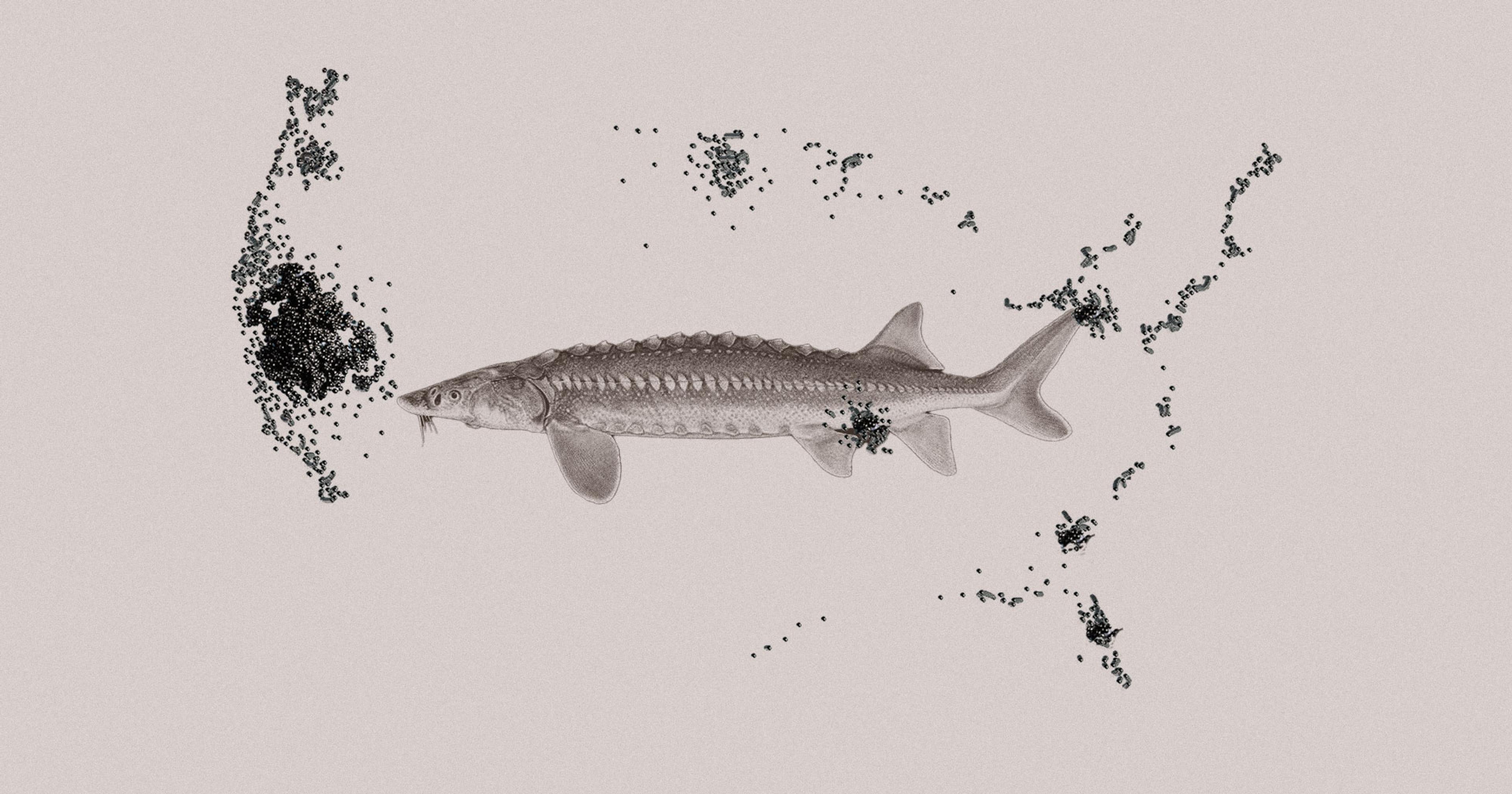
Ali Bolourchi is discerning with a seafood menu, careful to analyze the specifications: Key West pink shrimp, Alaskan king crab, oysters harvested from a tiny farm in the northeast corridor of the Puget Sound. But for the most expensive item on the list, caviar, traceability is rare. There are times when no one knows where it comes from — a mystique that somehow adds to its cachet. But the smoke and mirrors don’t work on Bolourchi, president of Tsar Nicoulai, the only certified sustainable sturgeon farm in the United States. And he’s hoping they won’t work on a growing number of 21st century caviar enthusiasts, either.
A year into what foodies nationwide have declared a great caviar renaissance, it’s clear this is not just a revival of the 1970s and 80s, when fish eggs belonged to the rich and famous. The caviar of the 21st century reflects the democratization of the internet age. Caviar’s TikTok-ification has paved the way for Ritz cracker playdate snacks and Doritos topped with fish eggs, and friend groups of all stripes taking joint “caviar bumps.” Global consumption patterns bear out caviar’s trendiness — the market is expected to reach $3.13 billion this year, and steady growth is expected to continue through 2029.
It used to be that the rarer the species, the more desirable. To make caviar “sustainable” was thought to cheapen it. But now that caviar has been steadily increasing in popularity, attitudes around its origins are changing. No longer does it have to be harvested from endangered species and flown in on the black market from Russia or Iran to be considered top-notch. It can be farmed here, from fish indigenous to the U.S., using the aquaculture equivalent of regenerative methods. But without a robust certification system to standardize ethical practices across the industry, sustainable brands like Tsar Nicoulai have few means to differentiate themselves from other caviar purveyors that import their product from dubiously regulated foreign farms. In total, the U.S. imported 95,000 kg of caviar from China in 2020.
There’s been a global crackdown on sturgeon poaching since those black market days of the 80s, including a U.S. ban on Beluga caviar from the Black Sea basin and Caspian Sea in 2005. But the overall ecological sustainability of the industry — reliant on the unfertilized eggs of giant, slow-growing, dinosaur-like fish — still lags behind. While there are plenty of institutional guardrails around the farming of other finfish like salmon, very few sustainability certifications exist for sturgeon farming. Bolourchi said he has been pestering the Aquaculture Stewardship Council for years to create a sturgeon farming standard, but there have been no takers. (Representatives from the council did not respond to a request for comment.)
The most rigorous standards that exist right now have been set by private companies like Whole Foods, which carries Tsar Nicoulai products. Through that partnership, Ecocert USA, a separate company that works with Whole Foods to assess an individual producer’s “environmental and social” impact, developed its first-ever sturgeon farming standards at the Tsar Nicoulai farm around 2018, Bolourchi said.
But he wants a standard that could be applied to all U.S. farms. “We want to do something that could be more of a broad brush, and allow other domestic farms to be able to utilize a way of differentiating themselves from imported products, especially from Latin America and Asia, where practices in terms of forced labor and feeds and antibiotics and growth hormones, none of that stuff is regulated,” he said.
Despite a lack of oversight, Bolourchi continues to bet big on sustainability as a 21st century selling point, and it seems to be working. Aside from the lucrative partnership with Whole Foods, top chefs nationwide source from him, as does Fishwife, the internetty tin fish retailer, which stocks Tsar Nicoulai at $99 an ounce in their signature cutesy packaging. Bolourchi also recently acquired nearby caviar farm Sterling — more than quintupling the size of his operation — and has invested heavily in sustainability projects like farm-wide solar panels and a state-of-the-art water-recycling system.
Every part of the fish gets used — from the collars and burnt ends that get made into paté dip, to skins that become chicharrones.
Tsar Nicoulai is also what Bolourchi calls “an A-Z operation,” where they not only spawn sturgeon and make caviar, but they have a fishmonger team to process sturgeon meat, and an onsite smokehouse. Every part of the fish gets used — from the collars and burnt ends that get made into paté dip, to skins that become chicharrones.
The water recycling system, also called a recirculating aquaculture system or RAS, has been fine-tuned over years, and now allows Tsar Nicoulai to recycle the majority of its water. It cycles nutrient-rich effluent from the fish ponds into a separate pond, where they’ve experimented with growing hyacinth — “Mother Nature’s filters,” as Bolourchi calls them. And, since 2018, they’ve been piping that water into a 24,000 square-foot greenhouse, where the staff has grown hydroponic lettuce and is testing out growing basil and microgreens, according to Bolourchi.
“For Tsar Nicoulai, there aren’t older farms, we are the road map,” he said. “Sometimes there’s some trial and error but … sustainability is a real tangible thing.”
Bolourchi’s next crusade is to boost the visibility of where exactly his products come from — Sacramento County — based on the belief that Tsar Nicoulai’s traceability is an asset, not a handicap.
Those uninitiated in sturgeon lore tend to be shocked by the volume of caviar produced from this inland region of California, which represents more than 80 percent of all domestic production. But Sacramento is actually where it all began. Russian-born scientist Serge Doroshov, known as both the “father of sturgeon aquaculture” and “the Baryshnikov of marine biology,” landed at University of California, Davis, in the late 1970s, and received California Sea Grant funding to research the local white sturgeon, native to the nearby Sacramento River. Within a few years, the original Sterling and Tsar Nicoulai farms were established, and their close relationships with the university have remained strong.
“Our efforts and our thoughts and methodologies will not change, because sustainable for the environment is sustainable for business.”
Today, Jackson Gross, aquaculture specialist at the UC Davis cooperative extension, offers scientific support to virtually every sturgeon farm in the state, including Tsar Nicoulai. He considers them to be a “very progressive farm,” noting that their partnership with Whole Foods requires them to adhere to strict feeding protocols. Still, Gross believes existing certifications fail to take a more holistic and farmer-first approach to sustainability.
Ecocert, for example, doesn’t take quality of life into account, Gross says. He believes true sustainability would be achieved by minimizing fish stress and improving worker safety, two things that will feature prominently in the welfare chapter he’s currently writing for the third edition of the Hatchery Manual for the White Sturgeon. From pioneering more humane end-of-life care for the fish, to using machine learning and AI to determine a fish’s sex without taking it out of the water, Gross is hoping to establish less invasive techniques that will not only improve welfare but also the quality of the end product.
Current certifications may be helpful marketing tools, he says, but they don’t actually make you a better farmer. “My farmers care about their animals,” he added. But there’s no certification for that.
With the Sterling acquisition, Tsar Nicoulai grew from 40 total acres to nearly 300. It’s a big job for production manager Austin Gabrielse, who moved to Tsar Nicoulai from Sterling just several months before the acquisition in October. He oversees the 62,000 white sturgeon on site, a number that will soon grow to more than 120,000 during the spawning season.
“It’s been a massive undertaking, but the existing [Sterling] people who stayed on are great individuals who have cared long and hard for the fish that are here,” he said.
“Is it perfect? No. But they’re striving to do better.”
Rapid growth is often antithetical to sustainability, but Gabrielse hopes the acquisition will be an opportunity to modernize Sterling’s vast facilities and reduce waste. “I look forward to seeing the care and quality of life increase for these fish,” he said.
Gross confirmed that, compared to many other farms, Tsar Nicoulai is getting a lot right. “They’re not the only ones out there doing this, but they’re constantly striving to do better,” he said. “Is it perfect? No. But they’re striving to do better.”
Bolourchi agrees with Gabrielse that the Sterling operation “needs a little bit of love,” and he acknowledges that the additional acreage is “a lot of responsibility.” But maintaining a low environmental impact will always be a priority. “Our efforts and our thoughts and methodologies will not change, because sustainable for the environment is sustainable for business,” he said. “They can work together.”
In caviar’s past life, that ethos wouldn’t fly. But for anyone hoping to enjoy sturgeon for years to come, it’s a bump in the right direction.

Only one community in the U.S. goes by the name of Spuds. As one might expect, it’s a potato-growing hotspot, nestled among nearly 20,000 tuber-bearing acres. Trains known as “Potato Specials” once hauled its produce to markets across the country — after heading past palm trees and ocean breezes.
While its name might suggest Idaho, Spuds is squarely Floridian, located about 15 miles from the Atlantic coast, 50 miles south of Jacksonville. For over 100 years, this corner of the Sunshine State has played a surprisingly large role in the domestic potato industry.
The Northeastern and Midwestern states that dominate U.S. potato production mostly plant during the spring and harvest in the fall, leaving a supply gap for the early months of the year. Florida producers are happy to fill that need by harvesting spuds planted over their subtropical winter. From about 2 percent of the country’s potato acreage, they meet roughly a third of U.S. demand from February through June. It’s a lucrative market: Florida potatoes sold at a premium of more than 60 percent over the U.S. average in 2023.
Yet Floridian farmers are working to fill that niche with a plant that was originally domesticated under very different circumstances — the highlands of the Andes Mountains in Peru and Bolivia. Those climatic roots make potatoes a natural fit for places like Idaho, and efforts to improve the crop by breeding have focused on varieties for cooler, drier conditions.
A recently launched effort at the University of Florida is working to make sure these potato growers aren’t stuck with the proverbial crumbs at the bottom of the chip bag. In 2021, researchers at the UF Institute of Food and Agricultural Sciences established the state’s first public breeding program specifically aimed at developing Florida-adapted tubers.
Marcio Resende, who runs the program together with UF colleagues Lincoln Zotarelli and Leo Hoffmann, noted that the university has been evaluating potato varieties developed elsewhere and advising growers about which perform best in Florida since the 1930s. But the cultivars that went into their Southern trial fields, he said, inevitably reflected the biases of Northern breeding programs.
“Breeders would first select varieties that were good for them, then those best selections would come to Florida,” Resende explained. “The risk is that, if something wasn’t as good in Maine or Michigan, potentially it would never come to Florida, and maybe we would lose the ability to screen more diversity and identify materials that could be better here.”
Florida’s main red potato variety, Red LaSoda, was originally developed in 1953; its most popular chipping potato, Atlantic, was released in 1978. These older genetics, not optimized for the Florida environment, contribute to per-acre potato yields that trail the national average by about a third.
“We usually just get the leftovers. We find something that’ll work here, and that’s it,”
Now, the Florida breeders are making new potato varieties of their own, creating roughly 15,000 new genetic combinations every year and growing them over 15 acres in a combination of greenhouses, small plots, and replicated trials. Most of the crosses start between previously improved cultivars, which earlier generations of breeders have selected for characteristics like yield, disease resistance, and specific gravity (a measure of the tuber’s dry matter, particularly important for potato chip makers).
There’s still a lot of untapped potential in those varieties. Potatoes are a tetraploid crop, meaning they have four copies of each chromosome instead of the usual two — and thus more chances for genetic variation that a breeder can tease apart and recombine in useful ways.
Resende recalls a rainbow of potatoes growing from the field in seemingly every shade between crimson and white. “The amount of variability that you see in the progeny is exemplified in the colors, but you see it for everything: shape, size, yield. It’s just amazing,” he said.
Such diversity can be challenging to work with, admitted Resende, because breeders must be mindful of variation in more traits than usual when selecting potatoes. But it also provides more opportunities for a unique combination of genetics to come together that will meet Florida’s unique demands.
Resende said growers want early-maturing varieties that can provide respectable tubers before the state’s summer rains make harvesting difficult. Heat tolerance is also critical, especially for chip potatoes, which often develop a browning defect called internal heat necrosis that makes them unsuitable for processing.
Given the potato’s mountain origins, said Jiwan Palta, heat tolerance generally hasn’t been a breeding focus. He’s a professor emeritus of plant and agroecosystem sciences at the University of Wisconsin-Madison, with over 40 years of experience researching stress in potatoes and other crops.
“I always tell my students that potatoes love what we like: about 70 degrees Fahrenheit is the ideal temperature.”
“I always tell my students that potatoes love what we like: About 70 degrees Fahrenheit is the ideal temperature,” Palta said. “Once you get above that, they can survive for a short time, but they don’t do well in terms of production.”
Yet breeders are paying more attention to heat in potatoes, Palta continued, as climate change ratchets up temperatures even in historically cooler growing areas. He and others have identified traits, such as antioxidant production and the ability to use calcium, that protect against heat stress. And there are reasons to be hopeful that the crop has the needed diversity: Some wild potatoes that grow near the coasts of Argentina and Brazil, he pointed out, can keep growing strong under 100-degree conditions.
The genetic complexity of heat tolerance, added Palta, means that there’s likely no quick-fix molecular engineering option for the trait. He believes potato breeders will be best served by a deliberate, traditional program of crossing and selection, as Resende and his colleagues are doing.
The Florida team estimates that their program’s first variety will be ready for release in seven to 10 years. Resende said that, beyond the state, that new potato is likely to find an eager audience across the Southeast and possibly beyond if heat and humidity become greater problems throughout the crop’s range.
Among the growers awaiting the program’s results is Daniel Corey of DeLee Produce, just down the road from Spuds in St. Augustine. Corey said he raises about 400 acres of red, yellow, and white potatoes for fresh consumption, selling direct to large grocery chains like Publix, Aldi, and Costco that want a premium product in otherwise lean months.
Potatoes better adapted to Florida, he believes, will translate directly into an economic boost for farms like his.
“We usually just get the leftovers. We find something that’ll work here, and that’s it,” Corey said of existing varieties. “Now, we’re focusing time and effort right into breeding for Southeast growers, so I think it’s going to be great.”

This past fall, Land O’Lakes launched a multipronged marketing campaign around Farmcore — an identified social media fashion trend. It all culminated in a “Farmcore-to-table” runway show featuring beat-up and stained workwear from Land O’ Lakes dairy farmers in Paris, Wisconsin (get it?). Just like any fashion show, the styles were eventually made available, all sold on Depop — with proceeds going to a non-profit organization dedicated to helping young farmers. The sold-out collection included weatherbeaten and faded Carhartt work pants, vintage Land O’Lakes hats, and of course, some well-loved overalls.
According to Land O’Lakes, the campaign was a success. “The goal was to share the stories of our co-op farmer-owners‘ impact on the world in a way that resonates with everyday consumers,” said Elizabeth Nelson, director of enterprise marketing at Land O’Lakes, adding, “This campaign showed that a brand like Land O’Lakes can participate in these cultural trends in a way that meaningfully contributes to the consumer experience, while staying true to who we are.”
But what exactly Farmcore is and how culturally relevant it is can be harder to pin down.
In the shattered and fractured culture we live in, tastes and trends have become ever smaller and hyper-specific. Some call it the “corefication” of style. Dress like you read books? That’s bookcore. Dress like you like soccer and Guinness, call it Blokecore. These microtrends live and die on social media and are informing an increasing number of young people how to dress.
Blue-collar workwear and aesthetics have been an integral part of popular fashion for decades; they are currently ascendant. Trends like Farmcore, as defined by social media, are mostly about how the general population views farming. What Land O’Lakes stumbled upon is that the cultural consensus on what farmers look like are changing. The Farmcore that Land O’Lakes shows is accurate in its reflection of how farmers and non-farmers dress — even if few real people would ever call it Farmcore.
According to Nelson at Land O’Lakes, Farmcore was “fast becoming a hot cultural trend” in 2023 into 2024. But, besides a smattering of brief trend pieces from mid-2023, “Farmcore,” as a distinct trend, never seemed to coalesce into anything of note. More importantly, the style that was being defined as Farmcore in 2023 looks very different from what the dairy giant says it is.
The Farmcore being peddled on TikTok and In Style was really just a riff on the already popular “Cottagecore” trend. This whimsical idolization of rural life is filled with cozy cardigans, wicker baskets, and sundresses. The Farmcore version really just brought in a few distinctly American touches like wide-brimmed hats and high boots and generally is more Little House on the Prairie.
The Land O’Lakes version could not be more different. First of all, consider the source. To give them credit, they created the campaign using the clothing of actual farmers — stains and all. Their version of Farmcore consists of hardwearing double-knee work pants, rugged insulated jackets, and sweat-stained caps. With the ubiquity of brands like Carhartt in everyday dress for rural and office workers alike, what takes on the significance of Farmcore isn’t the clothing itself — it’s how well-worn it is.
“The urban hipsters are now adopting this idea of what a farmer looks like.”
While the Farmcore of Land O’Lakes may not have looked like the Farmcore of TikTok, Nelson was right — the styles they presented were becoming increasingly popular. “This aesthetic is super hip among the Gen Z Chappell Roan listening kind of demographic,” explained fashion writer and critic Derek Guy, who has gone from niche-internet personality to one of the most influential voices in fashion criticism.
According to Guy, the popularity of workwear is nothing new, but the past 10 years have seen worn and broken-in workwear growing fashionable among the young and urban. Authenticity, or the perception of it, plays a role in its popularity. “It’s an aesthetic that says ‘I’m authentic, I’m down-to-earth, I’m working-class, I have a connection to the world outside of digital life,’ even though this is an incredibly digital look,” that is promulgated on social media.
The proof of its popularity is littered across our contemporary culture. While the rural-urban divide seems undeniable, there is a strange mashing up of cultural signifiers and styles that result in examples like RealTree camouflage feeling as at home in a treestand as behind an espresso machine. The result is a feeling like everyone is cosplaying a bit.
“We fetishize the class of people who are not digital drones, and I think that’s where all of this is coming from,” Guy explained. Maybe the most prominent example of this has been the rise and exhaustive documentation of “tradwife” (as in ‘traditional‘) influencers who glamorize traditional gender roles and homemaking — often in a rural setting.
What is undeniably true is that non-farmers are adopting something resembling what you’d call Farmcore. “The urban hipsters are now adopting this idea of what a farmer looks like,” laughed Guy, adding the caveat, “Even though I don’t know if actual farmers dress like this.”
“Land O’Lakes’ Farmcore duds, gathered from farmers who had worn the articles down to aged perfection, can leave some with a feeling of stolen valor.
Farming is, of course, insanely varied, making it hard for there to be one true “Farmcore.“ What makes sense for a dairy farmer in Michigan to wear may share little with the clothing of a row crop farmer in Iowa or a veggie farmer in Vermont. There are constants, though.
“There is almost never a focus on the aesthetics of the thing; it’s functional,” said Elliot Young, a graduate of the UC Davis Sustainable Agriculture and Food Systems program. Young has one foot solidly in both the farming and fashion world, putting himself through his program working at the chic men’s specialty store Standard & Strange. What a farmer can never forget though, is a hat. “I don’t know a farmer who doesn’t have a rotation of at least a couple hats of many styles that they’re swapping through year-round,” he said.
But the true Farmcore bonafides aren’t the clothing at all, but rather the condition it’s in. They need to go through the mill. Young finds it hard to see his dirt-caked farm duds as being fashionable anywhere outside the farm. Land O’Lakes’ Farmcore duds, gathered from farmers who had worn the articles down to aged perfection, can leave some with a feeling of stolen valor. As for Young, he loves the high contrast of the dark earth stains and sun-bleached fabric. That doesn’t mean he wants to wear his farm garms outside the fields.
While Land O’Lakes’ Farmcore campaign has come to an end, one wonders if they will release another collection next season. “Farmcore is something that remains a topic of conversation around our offices,” admitted Nelson, though she knows how fast the winds of trends can change.

Wisconsin doesn’t get much more prototypically rural than Knowlton. Farmland and forest surround the settlement of about 2,000 people, and it lies over 100 miles west of Green Bay, the closest major city. Still, Heather Mullins insists that Knowlton has life’s essentials.
“A cheese factory, a bar, a gas station, and a church. That kind of makes up a Wisconsin town,” Mullins jokes. She’s given Knowlton the second entry on that list through the cocktail lounge at Knowlton House Distillery, which she co-founded with her husband Luke in 2023.
Luke Mullins also works down the street at Mullins Cheese, where he helps run the state’s largest family-owned cheese manufacturer with his father and three brothers. The two businesses have become tightly connected, and not just through marriage: Knowlton House specializes in crafting spirits from whey, a byproduct of cheese and yogurt production, sourced from the Mullins factory.
Heather Mullins’ TenHead vodka, a smooth sipper with just a touch of creamy sweetness indicative of its origin, boasts multiple platinum and gold awards from international competitions. “Potato vodka doesn’t taste like potatoes, and milk sugar vodka doesn’t taste like milk,” explains the distiller. “It just has some of those underlying, nuanced, silky textures that come from that source ingredient, which we think are really special.”
Outside of Knowlton, however, whey often gets treated as a problem rather than a potable. Dairies make far more whey than they do actual products, roughly 9 pounds for every pound of cheese and up to 4 pounds for every pound of yogurt. Handling that excess often means spreading it on agricultural fields or sending it into wastewater treatment systems. Although whey can add nutrients to farm systems, too much can make soils more acidic. If whey runs off into waterways, it reduces available oxygen levels, causing fish kills and other damage.
Producers are increasingly seeking ways to make whey more valuable and less environmentally concerning. Some market it directly as a beverage, like the “probiotic tonics” sold by Brooklyn’s The White Moustache. Whey holds usable amounts of protein, which Mullins Cheese and other larger producers can extract for sale. It also carries sugar in the form of lactose — and where there’s sugar, there’s the potential for alcohol.
The concept of fermenting whey isn’t exactly new. Lars Mairus Garshol, an author who specializes in traditional European brewing history, notes that Norwegians and some Scots regularly drank a mildly alcoholic whey ferment called blaand, aka “milk mead,” from at least the time of the Vikings through the early 20th century. But they abandoned that practice, he writes, as modernity made higher-status alternatives like juice and coffee more widely available.
In the 1970s, the Irish dairy company Carbery redeveloped whey fermentation at an industrial scale, adding on a distillation process to make high-proof ethanol for beverages and biofuel. That approach also caught on in New Zealand, where Lactanol now produces 15 million liters of whey-based alcohol annually. Boutique producers in both countries sell upmarket whey-based liquor, such as New Zealand’s Broken Shed vodka and Ireland’s Bertha’s Revenge gin.
“Potato vodka doesn’t taste like potatoes, and milk sugar vodka doesn’t taste like milk.“
Yet while at least one manufacturer, Cayuga Ingredients in New York, is fermenting whey on an industrial scale, whey alcohol has yet to make a widespread impact in the U.S. Lisbeth Goddik, head of the food science and technology department at Oregon State University, believes that may be due to the country’s abundance of cheap corn used for ethanol. There’s little economic pressure, as in small island nations like Ireland, to explore the whey waste stream as a feedstock.
Goddik’s OSU colleague, chemist Paul Hughes, points out that whey also brings unique challenges to the fermentation process. He’s mentored several graduate students through projects aimed at refining whey fermentation and distillation on an artisan scale.
Traditional brewers’ yeast can’t break down lactose, Hughes explained, so processors have to either add the enzyme lactase (the same active ingredient in human lactose intolerance medications) at additional cost or work with yeast species that are less well-understood. When heated, he adds, whey’s proteins have a tendency to cling together, fouling equipment and leading to unpredictable hot spots in the mixture.
“This can cause ‘bumping,’ which is the violent release of boiling liquid. This is bad for your health,” Hughes says with dry humor as he recounts an early experiment.
To avoid such issues, most of those fermenting whey work with whey permeate, which is left over when cheese manufacturers filter out its proteins. That’s true for both Knowlton House and fellow Wisconsin distillery Copper Crow, operating near the shore of Lake Superior in Bayfield.
Copper Crow co-owner and distiller Curtis Basina sources his permeate from the Burnett Dairy Cooperative, nearly a three-hour drive away in Grantsburg. Despite the distance, Basina says, it makes more sense to buy the already-filtered product from that larger facility than it does to buy raw whey from closer, smaller cheesemakers. “If [Burnett] didn’t further those processes, it wouldn’t be economically feasible for me,” he explains.
“I love the idea that we’re playing our small part in that puzzle to find a diversified use for the whey.”
Basina says distilling from whey permeate still takes longer and is more expensive than making liquor from cane sugar or a corn mash. But the resulting products have attracted a strong customer base since he started offering them in 2017 — especially his whey-based amaretto, which he says tourists often buy by the case.
The permeate approach works, says Goddik, but there are limits to its widespread adoption. The machinery for filtering whey and isolating proteins is too expensive for most smaller dairies. And while it works well on the sweet whey left over from hard cheeses like cheddar, it’s much less effective on the acid whey remaining from products like cream cheese and Greek yogurt, which has a lower pH and higher mineral content.
Goddik and Hughes have successfully fermented and distilled raw acid whey, but the few commercial efforts to work with it so far have foundered. Harry Gorman, master distiller for Vermont Spirits in eastern Vermont, experimented with distilling acid whey from a nearby Cabot Creamery facility in the early 2000s but says he struggled with contamination and low yields. (He ended up producing a white whey vodka by redistilling Irish-produced whey spirits.) The whey-based Norwhey Nordic Seltzer, an alcoholic beverage launched in 2022 by Cornell University researcher Sam Alcaine, is no longer on the market.
Even the producers who’ve managed to carve out a successful whey-based alcohol niche say it’s important to keep their contributions to managing the waste stream in perspective. Heather Mullins, for example, says she works in 2,000-gallon batches; Mullins Cheese goes through 7 million pounds of milk each day, or well over 800,000 gallons. The USDA estimates that the country produced 14.2 billion pounds of cheese and 4.6 billion pounds of yogurt in 2023, resulting in roughly 140 billion pounds of whey overall.
“I’m not trying to tell the public that I’m saving the world with my vodka,” Mullins says. “But I love the idea that we’re playing our small part in that puzzle to find a diversified use for the whey — and, I’d say, a very delicious use.”
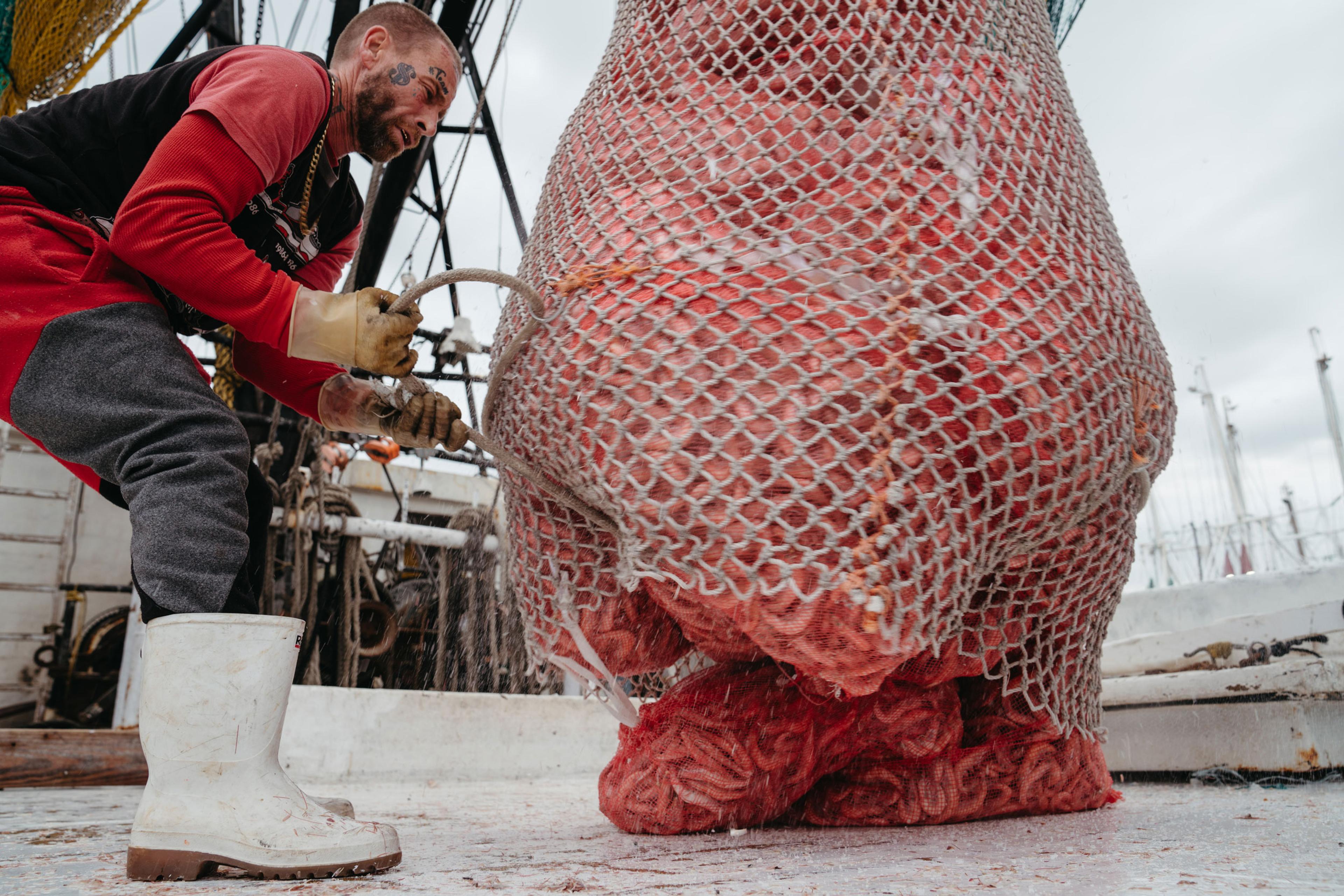
Erin Williams sometimes wonders what the fast food workers must think of her when she rolls up to the drive-through window with 10 to-go bags of fried shrimp already in her car.
“I know they can smell the shrimp wafting into their place, and they’re like, ‘Man, hasn’t she had enough?’” said Williams, chief operating officer at food safety and technology company SeaD Consulting.
But with copious shrimp comes clarity of purpose. Williams is on a mission to find out whether restaurants are serving the local-caught, wild shrimp often advertised on menus along the Gulf Coast, or the farm-raised, imported kind that makes up more than 90 percent of the shrimp consumed in the U.S.
Misrepresenting the origin of shrimp on menus doesn’t just mislead customers who want to buy local and avoid shrimp raised with antibiotics and produced using slave labor and human trafficking. It hurts U.S. shrimpers, who are already feeling the squeeze. Farm-raised shrimp from countries such as India, Ecuador, Thailand, and Indonesia flooding the market has driven down the cost of wild U.S. shrimp, while the cost of diesel fuel relied on by shrimp boats has increased.
“You’re talking about a monumental collapse, an industry in peril,” said Justin Versaggi, a fourth generation shrimper based in Tampa, Florida. “They’re on our throat and it’s just a little bit of windpipe left sucking air.”
To assess shrimp authenticity, Williams and her colleagues took a special rapid genetic testing tool on the road, visiting more than 100 restaurants across the Gulf Coast and South Atlantic. Testers took the patented tool, developed in collaboration with researchers at Florida State University, to randomly selected restaurants in Louisiana, Texas, Mississippi, and Florida. They ordered shrimp as any customer would, while documenting the labeling on menus and signs, then testing the product. The investigation was funded by the Southern Shrimp Alliance, a collective of shrimp fishermen and processors and other industry stakeholders in shrimp-producing Southern states.

Captain Jimmy at Versaggi Shrimp Co.
·Adrian O'Farrill
The results? Pervasive shrimp fraud. In Biloxi, Mississippi, 80% of tested restaurants were serving farmed imported shrimp rather than local Gulf shrimp; in Galveston and Kemah, Texas, 59% of restaurants served farmed imported shrimp; and in Tampa Bay and St. Petersburg, Florida, a whopping 96% of seafood restaurants were serving farmed and imported shrimp.
Restaurants flagged by the study included both those that explicitly mislabeled the origin of their shrimp on menus, and those that implied the shrimp was local through imagery, decor, advertisements, or other language — think large photos of shrimp being pulled from the sea by fishermen or the use of phrases such as “Eat local! Try our seasonal catch of the day!”
“This is the first time there’s been a good, portable, affordable test for genetic testing on the origin of shrimp,” said Deborah Long, spokesperson for the Southern Shrimp Alliance.
SeaD’s testing in Baton Rouge, Louisiana, was less alarming than the other cities: 29% of tested restaurants were found to be mislabeling shrimp there. That disparity didn’t come as a surprise to Williams. Unlike Florida, Texas, and Mississippi, Louisiana has a labeling law. Restaurants caught selling mislabeled shrimp or crawfish in the state can face fines as high as $50,000.
The Little David at Versaggi Shrimp Co.
·Adrian O'Farrill
“We’ve seen a significantly lower rate of non-Gulf shrimp served in restaurants [in Louisiana], which I think highlights the impact regulation and legislative efforts can have on ensuring an authentic and transparent supply chain,” said Williams.
While country of origin labeling rules overseen by the U.S. Department of Agriculture offer clarity for customers shopping in grocery stores, no such federal regulations exist for restaurants. States like Louisiana and Alabama have begun to address the problem with their own legislation, but enforcing those rules is another challenge. And it’s not just explicitly misleading labeling that’s a problem. Many of the seafood restaurants visited by Williams and her colleagues decorate and adorn their menus with nets, boats, and other waterfront imagery that suggests to consumers their shrimp is locally caught, all while serving only imports.
That kind of marketing came under fire by the Federal Trade Commission in September, when it issued a letter to some of the highest grossing seafood chain restaurants, including Red Lobster and Long John Silver’s to remind them of guidance against misleading customers.
Visual misrepresentation is especially frustrating to Versaggi as he tries to keep his business afloat.
“Why don’t they put pictures of ponds and child labor and antibiotics on the menu and see if they sell any shrimp?” he said, exasperated.
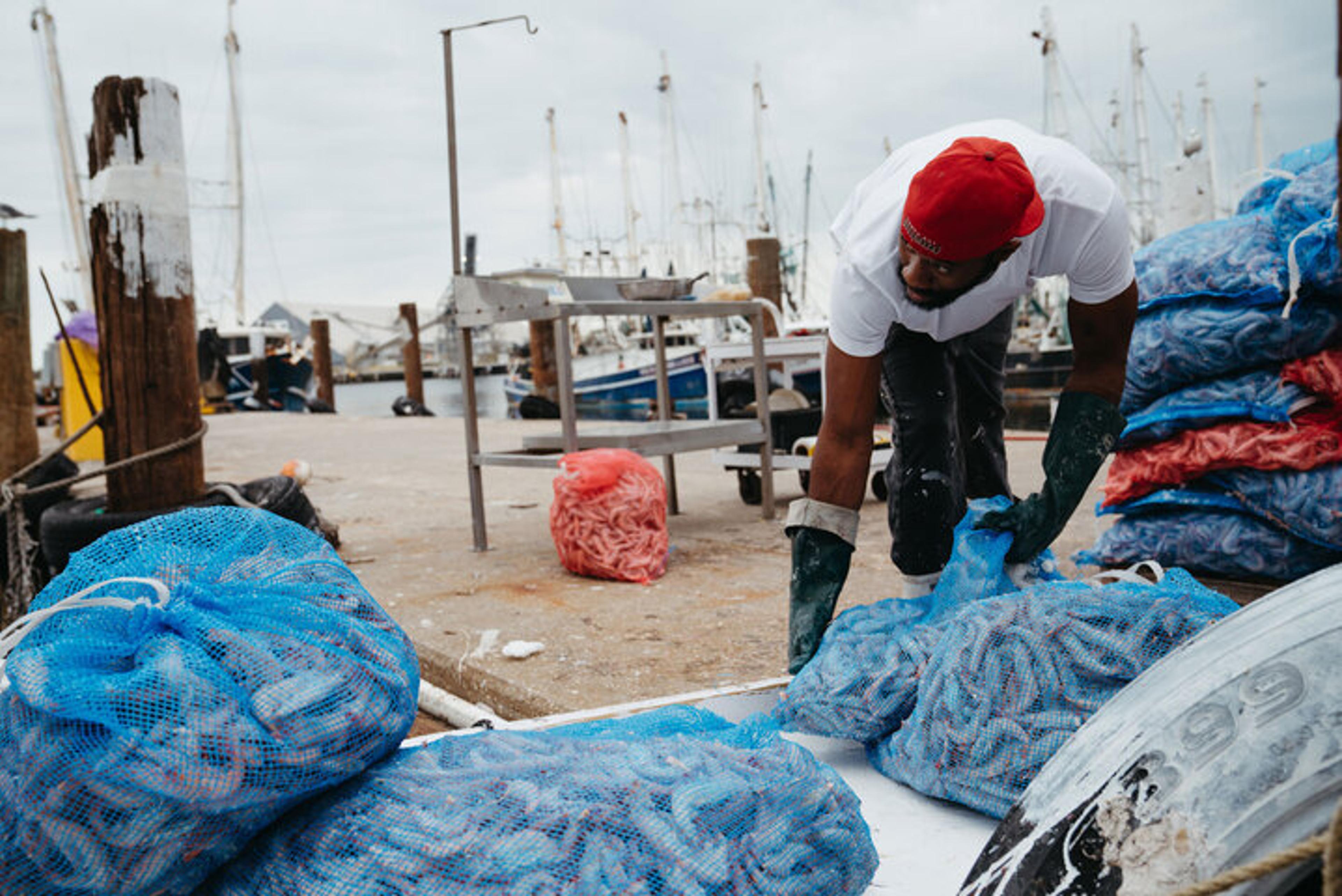
Adrian O'Farrill
Michael Stephens, CEO of Bama Seafood Products, a seafood processor and distributor, thinks the federal government could help the industry by creating a grant program for the marketing of U.S. seafood.
“We need to create a brand for us, just like the milk council, the beef council, the cotton council did,” said Stephens, whose company sells both domestic wild-caught shrimp and imported shrimp to wholesale, grocery, and retail clients. “We need to tell the story of the American fisherman.”
SeaD consulting’s testing campaign does give shrimpers like Versaggi some hope. Armed with their findings, he believes consumers are more likely to deliberately ask where the shrimp on their table is coming from, and go the extra step to ensure they’re getting what they paid for. Meanwhile, he’s going to continue to do everything he can to stay in business.
“We’re not going anywhere,” said Versaggi. “We’re going to try to see this through.”
“We’re not curing cancer down here, we’re going fishing,” he added. “And you know, I love it.”
According to the USDA’s 2022 Census of Agriculture, Asian-operated farms increased by 6% between 2017 and 2022, even as the total number of U.S. farmers declined. Despite comprising only 0.8% of the country’s 3.4 million producers, their growing presence isn’t going unnoticed.
Several factors may have contributed to this increase. There were a few notable demographic shifts — the average age of Asian producers is 54.6 years, about four years younger than the overall U.S. producer at 58.1 years. Also 47% of Asian farmers were beginners as compared to 36% overall. This matches anecdotal evidence of the growth of farms launched by young Asian American women in recent years.
This rise in Asian American farmers also coincides with shifting consumer preferences, as nearly half (47%) of Asian producers focus on specialty crops. Between April 2023 and April 2024, retail sales in the U.S. “Asian/ethnic aisle” and produce sections — think sugarcane, bittermelon, and water spinach — grew nearly four times faster than overall grocery sales. This dovetails with the fact that Asians are America’s fastest-growing ethnic group. However, Asian grocers such as Korean grocer H Mart — now valued as a company at two billion dollars and including over 100 stores across 18 states — report that its customer base is at least 20% non-Asian. In response, some Asian American farmers are blending ancestral farming methods with modern sustainable techniques to meet this evolving demand.
“I came to farming on my own through a long and circuitous path,” explained Kellee Matsushita-Tseng, founder of Bitter Cotyledons, a group of cultural workers/artists centering, archiving, and sharing the stories of queer Asian American Pacific Islander community through the lens of ancestral foodways. She strives to bring culturally significant foods to underserved communities.
In California and Hawaii, where Asian American farmers are concentrated, cultural heritage often informs crop selection and farming methods. “My grandfather, a second-generation Japanese American, grew up farming in Stockton, California,” said Jade Sato of Minoru Farm. “During World War II, our family’s land was confiscated when they were interned in Japanese incarceration camps. It wasn’t until after his death that I realized how much I missed connecting to the earth and working with the soil.”
A farmer of Japanese ancestry in Stockton, California, in April 1942, prior to evacuation
In New York’s Hudson Valley, Christina Chan of the farm Choy Division started Choy Commons, a collective of Asian American farmers growing ancestral foods to distribute to local and often disadvantaged communities. She finds that growing sustainable Asian vegetables helps bridge the gap between her American upbringing and Chinese heritage.
“Early in my farming career, I explored Korean natural farming,” said Sato, who farms in Adams, Colorado. “There are also many similarities with subsistence farming, which is common in China. I studied how Asian people in different climates work with the land in a way that reduces waste and considers the full cycle of life.”
The legacy of traditional practices is also evident in Hmong-built farming communities in Minnesota. After arriving in the U.S. as refugees following the 1970s Khmer Rouge genocide, these farmers have become essential to local agriculture, now comprising more than half of Minneapolis and Saint Paul farmers. There’s also a significant population of Hmong farmers in Fresno, growing much of California’s Central Valley’s strawberries, ginger, and sugarcane.
Overcoming Challenges
Systemic barriers have historically prevented Asian Americans from thriving in agriculture. Before World War II, two-thirds of West Coast Japanese Americans worked in agriculture, producing 40% of commercial vegetables in California. The mass incarceration of Japanese Americans during the war led to seizures of their land and property, an event from which most never recovered. Earlier, discriminatory policies like the California Alien Land Law of 1913 prevented Asian immigrants from securing long-term land leases or ownership. Organizations like the Asiatic Exclusion League further marginalized Asian farmers and laborers.
More recent laws in at least two dozen states forbid foreign-born individuals or entities from owning farmland — and specifically target China. National security is the professed reasoning behind the laws even though Canadians represent the largest portion of foreign landowners at 33%; Chinese holdings are less than one percent. Activists argue that these laws are on pace with past discriminatory laws against Asian Americans in the United States, and do not bode well for the future.
Many Asian American farmers also still face structural challenges, including difficulties in securing funding and land ownership. “Getting funding when you’re a small farm is tough,” said Sato, whose farm encompasses nine acres and focuses on growing Asian varieties of produce. “We’ve tried to get USDA funding, but I have limited time to write detailed proposals about how I’d use the money if I got it.” These are similar challenges faced by Black and Latino farmers who have faced a history of discriminatory laws and USDA practices.
On top of these hurdles, it’s no secret that farming is a tough livelihood for all producers. “It’s more than just putting a seed in the dirt, adding water, and harvesting,” said Noah Hubbard, a row crop farmer in Central Nebraska who goes by The Korean Korn Farmer on TikTok. “Depression and suicide rates in agriculture are incredibly high. I have a farmer friend down the road who recently took his own life. It’s emotionally taxing work.”
Choy Division
Climate change further complicates an already unpredictable profession. “Two years ago, I returned from the farmer’s market on a Saturday, and it was a beautiful day,” said Sato. “I go inside to unpack, and this huge storm rolls in with tornado gust winds up to 80 miles an hour. It completely ripped apart our field, and our greenhouse was utterly destroyed in ten minutes. It took an entire year and a half to rebuild and recover.”
Yet, despite hardships both specific and general, Asian American farmers have long contributed to U.S. agriculture. “Many early 19th-century Chinese, Japanese, and Korean immigrants arrived with farming experience,” said former USDA Equity Commission Member Yvonne Lee. “In California, they pioneered and created the asparagus, celery, and strawberry industries.” She also points to the enormously popular Bing Cherry, developed by Ah Bing in Oregon in the late 1800s.
“Supporting these farmers means using consumer power to uplift this still invisible yet vital group in the American food chain,” said Lee.
Community organizations and advocacy groups are crucial in this movement, providing resources, policy advocacy, and community-building efforts. “The agricultural system is changing, and there are ways to build businesses and farms that focus more on relationships than commodities,” said Matsushita-Tseng. “There’s starting to be a shift in public awareness about supporting historically disadvantaged farmers, which will be the key to success.”
Janell Dusi could sum her routines into three words: pick, prune, and press. Outside her childhood bedroom window in Paso Robles, California, rows of old grapevines that her great-grandfather planted are lined up like soldiers in a ceremonial parade. For four generations, the Dusi family, who immigrated from Italy, has tended, harvested, and sold Zinfandel grapes to local winemakers in California. As a kid, Dusi would beg her grandfather, Dante Dusi, to teach her how to make wine. She’d later become the first winemaker in her family, with a wine label that carries their name.
As the wine market shifted in favor of more popular varietals, keeping the old vineyards going can be challenging — both financially and practically. But Dusi, along with a fiercely dedicated array of California grape growers, is not letting these challenges stand in her way.
Zinfandel’s Tangled History
Zinfandel is a grape variety with a complicated American past. “It is the only grape in California that had any trial by fire,” said Joel Peterson, founder of Ravenswood Winery, who has been growing and making Zinfandel wine since 1976.
The grape has a Croatian origin, and made its way to the United States in the 1830s. In the 1800s, when a virus called phylloxera wiped out most vines in the U.S., Zinfandel was the first to be replanted on a virus-resistant St. George (Vitis rupestris) rootstock. By the 1880s, it was the most planted grape in California. The grape saw its glory days during the Prohibition era in the 1920s, around the time Sylvester Dusi, Janell Dusi’s great-grandfather, planted his Zinfandel in Paso Robles.
When the government banned commercial wine, growers shared their supplies with home winemakers who continued to produce and enjoy them legally. Apart from surviving shipment, Zinfandel grapes, “had the flexibility to be able to be planted in a number of places and still produce good terroir-driven wines, wines that had a specific flavor of place,” said Peterson, who serves on the board of directors at Zinfandel Advocates and Producers.
After the Prohibition era, Zinfandel’s popularity waned.
Cabernet Sauvignon Takes Over
Zinfandel wines produced from old vines are known for their bold red color and flavors that burst with hints of berries and plums, topped with a toasty, peppery finish. But while its exuberant taste draws people in, few would place it at the caliber of high-end, luxurious wine varieties.
“I think that somehow familiarity breeds contempt,” said Peterson. Post-Prohibition, Zinfandel was made into ‘jug’ wine that didn’t sell for much money and wasn’t highly regarded. “It was the grape that got lost in part because it was so functional. People thought of Zinfandel as a Volkswagen as opposed to a Cadillac,” Peterson said. “And it never entirely recovered from that.”
Over time, Zinfandel’s reputation was eclipsed by Cabernet Sauvignon and Chardonnay, which came to California from France with high-end reputations. The two cultivars earned Napa Valley its global recognition as a premium wine destination after winning an important wine contest in France in 1976, dubbed the Judgment of Paris.
“There is a little quip that we used to say: Cabernet Sauvignon is king, and Zinfandel is the prince that will never become king.”
“There is a little quip that we used to say: Cabernet Sauvignon is king, and Zinfandel is the prince that will never become king,” said David Gates, senior vice president of Ridge Vineyard. Ridge has been making Zinfandel wine since the 1960s, some of it using grapes sourced from the Dusi family vineyard. For decades, Ridge has prided itself on making individual wines from individual vineyards across California. “Why Zinfandel for us? Because we’re making wines that showcase the place and that’s what Zinfandel is really good at, especially when you find some older vineyards.”
While Ridge is a primarily Zinfandel-focused winery, they also make other wine varieties like Cabernet Sauvignon. “It is difficult to sell Zinfandel at a price as high as Cabernet — that is our [eventual] goal.”
Only those who can set their bottle prices could afford to keep an old Zinfandel vineyard, said Jason Mikami, a winegrower in Lodi. But that’s not a luxury everyone has.
Since 2006, California has lost about 20,000 acres of its Zinfandel vineyards. The exact opposite was true for Cabernet Sauvignon. In 2022, a ton of Cabernet Sauvignon was sold at an average of $1,955, almost three times higher than Zinfandel, according to a USDA report.

Zinfandel dwindles. Data of grape bearing acreage in California based on USDA data.
Mikami, who grew up at a vineyard that his family has kept since they emigrated from Japan in 1896, had to sacrifice some of these century-old vineyards. When his father died in 2005, he tore down all the old vine Zinfandel and replanted them with younger vines for greater yield. “It was a really tough decision for us,” he said. “I wish I still had those old vines because it’s hard to beat the quality.”
Bruce Fry in Lodi shared Mikami’s sentiment.
“We don’t really want to do it,” said Fry, a winegrower at the Mohr-Fry ranches in Lodi, California. Over the years, he’s torn out 50 acres of old vine Zinfandel in his vineyard to grow Sauvignon Blanc, a higher-priced grape.
“It just comes down to economics and if the dollars and cents don’t compute for the old vine Zins then you got to do it,“ he said ”In the end, you got to make money.”
Tending the ‘Geriatric Ward’
Vineyards are now typically replaced when their productivity dwindles — usually at around 25 to 35 years. Some “old vines” refer to grapevines more than 35 years old, others older than 50. Because of their age and anatomy, these older vines require extra patience and skills to maintain. As a result, hundreds of acres of these century-old vineyards are ripped out each year and replaced with more productive and profitable varieties.
“An old vineyard is like a geriatric ward,” said Mike Officer, recently retired winemaker and grower in Sonoma County who co-founded the Historic Vineyard Society, a non-profit dedicated to preserving old vineyards. “Every vine is its own individual patient with its own individual needs,” he said. Yet despite the challenges, “these vineyards produce incredible wines. And I think it would be a great loss to consumers and wine aficionados to lose these vineyards.”
Unlike most modern grapevines, old vine Zinfandel is head-trained, which means they stand freely without the support of a trellis. They have short trunks with arms that spread in different directions, forming a goblet shape. Because of their gnarly architecture, growers usually hand-prune their spurs, often bending their backs over for hours. Meanwhile, most modern trellis vines can be easily machine-pruned.
A Zinfandel vine at Dusi's property in Paso Robles
·By Kristel Tjandra
The way old vine Zinfandel grows also causes their grape clusters to hang at varying heights and sun exposure. Hence, their fruits don’t ripen evenly. When the harvest comes, the berries or raisins vary in size and plumpness, producing fruits with a hodge-podge of acidity and sweetness.
“That makes people nervous about Zinfandel,” said Dusi. Not to mention, changing climate and rainfall patterns always keep growers and winemakers on their toes. “Mother Nature just brings us something different every year,” she said.
Zinfandel’s Hidden Treasure
Morgan Twain-Peterson, son of Joel Peterson and owner of Bedrock Wine Co. in Sonoma, California, sees a real learning opportunity in tending the old vineyards. He noted that while economics could thwart the survival of old vines, sustainability may be its saving grace. Most old vines were planted with dry farming in mind, meaning the vines relied solely on soil moisture or annual rainfall and no irrigation. Compared to younger vines, old vines are usually more spaced out to allow more airflow and roots to deepen, and a larger area for the plants to draw moisture and nutrients.
“A lot of modern vineyards have been put in with the expectation of water availability,” Twain-Peterson said. “The problem though, is that in a state like California, where historically we’ve always had drought events, if the water goes away, those vines die.”
“With Zinfandel, you’ve got something that we make in California that no place else makes in the world.”
Many commercial grape varieties are also prone to powdery mildew infection, necessitating the use of fungicides like sulfur. In 2022, sulfur was the top pesticide used in California by pounds. “The problem is sulfur dust absolutely destroys soil structure,” he said. Over-acidified soil due to excess sulfur could introduce stress to plants that interrupt photosynthesis. But powdery mildew is not a threat to Zinfandel; no sulfur is needed.
But despite its hardiness, Twain-Peterson believes the main value of preserving old vine Zinfandel lies in its history and heritage. “Bordeaux has always been the reference point for Cabernet. The northern Rhone is the reference point for Syrah. With Zinfandel, you’ve got something that we make in California that no place else makes in the world,” he said. Because of this, Zinfandel is often referred to as the American heritage wine.
Twain-Peterson also appreciates the genetic diversity that old vines carry. In his vineyard in Sonoma, Twain-Peterson has found more than 60 different grape varieties, “some of which have no matching genetic fingerprint, which means they’ve likely been lost — where they originally came from — or that they are extremely rare and nearly extinct. That makes them really interesting.” Preserving old vines is therefore akin to conserving this rich genetic diversity that could increase the overall value of wine.
Continuing the Legacy
This year the Dusi family celebrates 100 years of winemaking in Paso Robles. For Dusi and other growers, the solution to keeping these old vineyards is straightforward: “We keep them alive and thriving by caring and not replanting them,” she said.
Janell Dusi
·By Kristel Tjandra
As winter arrived, Dusi prepared the old vines for pruning. She looked forward to spring, her favorite time of the year. “When the buds break, you can just watch them grow overnight. It’s miraculous,” she said.
As she walked towards her winery, a young man entered with his boots.
“That is my nephew,” Dusi said. “He’s 21. He lives and breathes the vineyard and is obsessed with it. I trust him with my life on the tractor compared to me driving.”
And his name? “Dante — Dante Dusi.”

For the first half of the 20th century, small American farms relied on small equipment. With inventions like gas-powered engines still getting their bearings, mechanized tractors like the John Deere D started on the smaller side. But as monoculture farming practices exploded after World War II, tractors and harvesting machinery grew along with newly expansive farms. Once-common equipment, like the single row corn harvester, became a relic of history for farms now expanding into hundreds, even thousands of acres.
In 1930, the average farm size in the United States was around 156 acres. By 1950, the average size rose to 215 acres, and in the 1970s, it rose to 440, just slightly under the 2022 average of 463 acres, per the U.S. Census of Agriculture. And yet while the average farm size has climbed, many farms are much smaller: 802,000 farms in the U.S. are between 1 and 49 acres.
For the small to midsize grower, particularly diversified farmers who grow an array of food crops, investing in expensive, massive equipment for a single crop isn’t feasible. Many midsize growers still employ decades-old machinery, or import specialty equipment from overseas.
Used equipment gets the job done, but if it breaks down, tracking down replacement parts can be a headache. Repairing the equipment might be the only option, too, as full replacements are unavailable or prohibitively expensive.
For instance, no American manufacturer produces a single row corn picker today. New Idea, a now-defunct farm equipment company, manufactured a single row corn picker for much of the 20th century, some of which are still available from secondhand dealers. One of the company’s original models, manufactured in 1952, is housed in the collection of the National Museum of American History.
“Ag is constrained in large part by the land that you own and the labor that you have,” said Trey Malone, an agri-food economist at Purdue University. “And so if I have a larger planter or harvester, then I can manage more acres myself without having to have somebody else.” While large equipment is readily available for farmers growing commodity crops like corn and soy, tracking down equipment for vegetable crops is less straightforward. Meanwhile manufacturers like John Deere are implementing new technology like artificial intelligence which drives up the overall cost of their products.
”The large producers are going to have to make those investments or are going to be able to make those investments in a way that the mid-sized players will not be able to because they just don’t have the money,” said Malone.
Many organic farmers who grow a diverse array of crops, like Peter Seely of Springdale Farm in Wisconsin, still employ the trusty Allis Chalmers G tractor, which was manufactured from 1948 to 1955. Even 70 years after its production run, the G tractor remains popular with small vegetable farmers. “All the vegetable growers really love them. It has a small 10-horsepower engine on the back and then in the front you can hang a cultivator, or a seeder, or other things, and you can see clearly what you’re doing,” said Seely, who grows everything from leeks to cantaloupes to zucchini.
“Ag is constrained in large part by the land that you own and the labor that you have.”
Multiple startups have attempted to recreate the G tractor, although none of them have yet seen lasting success.
Vegetable harvesting equipment, particularly for midsize farm operations, is a niche market. Seely has purchased specialty equipment from Europe and Japan, including a leek harvester from ASA-LIFT, a Danish manufacturer. Investing in harvesting equipment for a single crop means Seely has to grow enough of the crop each year to make the investment worth the money. He says having five to 10 acres of a single crop is the starting point to even consider investing in harvesting equipment.
Meanwhile brand-new combine harvesters run well into the six figures. John Deere’s top-of-the-line models will set you back over $800,000, and even 10-year-old models on the secondary market can still fetch over $100,000. Some of John Deere’s old combines, like the John Deere 55, look like children’s toys next to contemporary behemoths.
Lettuce is another headache for the midsize grower. “Most of us that grow lettuce mix on a smaller scale, you have these little hand scissors or something a little bit more efficient than that, but there’s not too many things in between for a grower that would have two to five acres of it,” said Seely.
Seely is currently in the process of purchasing a speed disc from Maschio, an Italian company. John Deere manufactures speed discs as well, but they’re too expensive and too large for Seely’s operation.
Ryan Pesch, a farmer and extension educator at the University of Minnesota, encourages new farmers to scale up slowly in crop production and have an established base for their product before they invest in specialized equipment. ”It just takes a while for folks to build a customer base, even if they’re putting out good product,” said Pesch. Buying specialized equipment — Pesch used the example of a carrot harvester and buncher — means a farmer needs to have several years of production and sales experience at a smaller scale before investing in such equipment.
Some new American producers and importers have entered the market in recent years, like Small Farm Works and Neversink Farms, both of whom sell a version of the paper chain pot transplanter system, a revolutionary way for midsize farms to quickly transplant crops. The system works by loading a tray of seedlings into a metal chute, which transplant the seedlings as the device is dragged across the soil. Seely, who uses the system, said it has dramatically cut down on the time it takes to transplant crops and reduces stress on the body from kneeling and bending over when planting crops.
”The large producers are going to have to make those investments or are going to be able to make those investments in a way that the mid-sized players will not be able to.”
”This has been a game changer for a lot of small farms because you can transplant five times as quick, so you’re saving a lot of labor costs,” said Seely. The paper chain pot system — a Japanese invention — was brought to the United States in 2006 after John Hendrickson, a Wisconsin farmer, learned about it while living in Japan for a year.
Simon Yevzelman of Cedar Field Farms in Belleville, Michigan, runs a market garden-style farm on a half acre of land. Many of his tools are from Neversink, a producer of tools for the market-garden farmer, which Yevzelman favors for their quality. “ I couldn’t wait for the one that was coming in the mail from Neversink, so I bought one from the local hardware store, and it was just the worst junk,” he said. “I’m going to go for the tools that are manufactured specifically with [market-garden] in mind.”
Bryce Loewen, who runs Blossom Bluff Orchards in California, relies on a mix of used and new equipment, but usually only turns to purchasing new items when he has grant funding available. Loewen recently purchased a new tractor with the help of a California subsidy program that helps farmers trade in old tractors for newer, more environmentally friendly ones.
Loewen, who takes pride in producing high-quality stone fruit, lets his peaches, apricots, nectarines, and plums ripen on the tree to deliver them to consumers in a pristine, ready-to-eat state. Working with delicate fruit during the harvesting process means all the fruit on Loewen’s farm is harvested by hand, a process no machine can replicate. Chez Panisse, the famed farm-to-table restaurant in Berkeley, California, is among Blossom Bluff’s customers.
While Loewen is usually able to get his hands on the right equipment, he ran into some roadblocks when attempting to acquire a new bush hog mower. His local dealer didn’t have any mowers in stock, so Loewen put himself on the waitlist, but the dealer never called him back, prompting Loewen to purchase a used unit instead. “ I felt a little brushed off, and it seems like if we’re not buying multiple units like the big guys do, there’s less interest in following up and selling a single mower instead of 10 or 15,” said Loewen.
“This coffee helps fight climate change.”
If you look closely at grocery store shelves, you’ll see packages for scores of “regenerative” products, from cheese to corn chips, purporting to improve soil health, revitalize ecosystems, and build resiliency to drought. My inner alarm bells go off when I see a new regenerative label crop up. Will this be the next “USDA organic” — a highly regulated certification with its share of detractors? Or end up in the “all natural” bucket with minimal oversight from the FDA, leaving us guessing what’s actually in a bottle of fruity-tasting juice claiming to save the planet?
A lot is at stake, in large part because the regenerative movement has tremendous potential. Globally, there’s increasing consensus that regenerative practices — think cover cropping and rotational grazing — can begin to solve dire crises in agriculture, while strengthening livelihoods and ecosystem and human health.
But there is a risk that the movement could get watered down if corporate commitments and marketing campaigns (like those from ag giants Bayer and Tyson) are made before a formal definition exists. One study showed that only 8% of committed businesses surveyed have plans to deploy funds to support the transition at the farm level, drawing skepticism that companies are co-opting the term without distributing the rewards.
Without a common understanding of what regenerative means, how can we begin to ensure it benefits farmers, farmworkers, and the people across the food supply chain who are responsible for raising, processing, and preparing the food we eat?
A unified framework for regenerative could help state and federal agencies allocate funding, and help consumers feel confident voting with their dollars. It could also serve as a guiding star for food and apparel companies looking to invest in sustainable approaches for soil health and climate resilience, and to better anticipate a return. This is especially critical as many companies are paralyzed by scrutiny from the federal government on environmental justice initiatives and nervous to even talk about topics like the regenerative movement. (One multinational food company I asked declined to comment on what a definition of regenerative would mean for them.)
Despite this uncertain atmosphere, a unified transitional framework has the potential to help the private sector improve soil health, take care of farmers, and reduce carbon emissions. According to Liza Lamanna, manager of agriculture policy at The American Sustainable Business Network, “Businesses play a critical role in driving demand, shaping supply chains, and influencing consumer perception.” That last piece is essential considering that a recent OTA survey showed that upwards of 40% of consumers still lack an understanding of what regenerative means. “A well-defined standard ensures that regenerative agriculture delivers real environmental and social benefits, rather than serving as a marketing buzzword,” Lamanna says. But we need alignment with other standards, and collective action is key: “No single stakeholder can transform agriculture alone.”
I’ve dedicated the better part of the last three years to asking cross-industry stakeholders what regeneration means to them, and I’ve heard some potent responses: from “holistic ecosystem management” to “enabling community health outcomes,” to my personal favorite, “leave it better than you found it.” Every perspective adds meaning. Some think it should become a certification; others favor a global outcomes framework. Still others contend that regenerative shouldn’t be defined at all — doing so would be reductive, antithetical to the diversity of practices under its banner.
Without a common understanding of what regenerative means, how can we begin to ensure it benefits farmers, farmworkers, and the people across the food supply chain?
Regenerative is not a term devoid of history. It has deep roots in land-based communities and links to traditional ecological knowledge (TEK) held by Indigenous agriculturalists and includes methodologies adapted and refined over millennia by Black, Latino, and diasporic farming communities. Native agriculturalists urge regenerative practitioners to examine how unsustainable practices have made it challenging for farmers to meet basic needs like land and credit access.
Michael Alcazar, a TEK consultant in Colorado, said he first heard the term “regenerative” in the 1990s in reference to permaculture practices, but that it has now become “publicly charged.” This is because current agricultural incentives are typically geared towards large monocropping systems (like crop insurance and subsidies), which are necessary for many farmers to stay afloat, but don’t always protect or include those who want to try regenerative approaches.
Nonetheless, some experts at the state level want to codify a definition. In California — the state with the highest gross agricultural production in the U.S. and the fifth largest economy in the world — the Department of Agriculture established a task force to define regenerative agriculture for its policies and programs. It spent the last year conducting a participatory process involving seven multi-stakeholder listening sessions, including two with Tribal communities. Though the process hasn’t been without hiccups (an initial draft was sent back to the task force to fix ambiguities that some feared would lead to greenwashing), I’ve been cautiously optimistic about what it could mean for the movement.
The latest draft, released January 7, goes beyond the typical soil and ecosystem health outcomes of established regenerative agriculture frameworks. The California framework integrates outcomes that protect culturally specific agricultural practices, urges consultation with Native farmers, and acknowledges regenerative agriculture’s socio-economic benefits. It also opens the door for a phased transition which would be more inclusive of all farmers, stating that “regenerative agriculture is not an endpoint, but a continuous implementation of practices that over time minimize inputs and environmental impacts” while prioritizing community benefits.
I can’t help but think of these ideas as I drive through the San Luis Valley in southern Colorado, on my way to co-facilitate the first session in the Regenerative Transition Conversation Tour — another participatory process in support of regenerative agriculture. Co-led by Forum for the Future, the Alliance for Collective Action, and the Earth Regeneration Alliance, this tour engages people across the state in imagining a regenerative future and defining its terms.
Questions are swirling in my head: What’s missing from these definitions, and how will they be implemented and enforced? What about farmworkers, who represent an increasingly vulnerable, yet vital, part of farm communities? How can our vision set the bar as high as possible for an agricultural system that enables both people and planet to thrive?
“When businesses prioritize minimizing costs and maximizing profits, the bare minimum often becomes the ultimate goal.”
As Jolie Brawner of Alliance for Collective Action says, “The challenge with a static definition of regeneration is that it risks setting the ‘floor’ as the limit. When businesses prioritize minimizing costs and maximizing profits, the bare minimum often becomes the ultimate goal.” In this scenario, a definition that sets the bar too low will fail to be effective in the long term. If your fifth grade teacher told you a C+ grade was good enough to make the honor roll, who could blame you for studying less? The same goes for farmers and businesses operating on thin margins.
The goal in Colorado is to build a state-level standard that establishes accessible entry points to the regenerative movement, enabling farmers who utilize conventional methods — which haven’t been too kind to our soil, water, climate, or people — to begin transitioning. It has the potential to shape state policy, building on Colorado’s Regenerative Agriculture Tax Credit bill (SB24-152), an incentive for food and beverage companies to purchase from local, regenerative farms and ranches.
Mandy Magill of Earth Regeneration Alliance has been involved with these legislative efforts since 2023, when Colorado’s legislation was being drafted. She’s confident that a transition plan grounded in a community vision can help get us there. “We need a framework that allows for both flexibility — for place-based approaches and traditional knowledge — and integrity towards the vision we define as a collective,” she says.
Michael Alcazar, the TEK expert, says that the legislation needs to have a “foundational ethos” to succeed. In other words, we need to align on a shared value system to inform and underpin the state’s definition. This could include a focus on equitable economic prosperity, and an acknowledgment of the connection between the health of humans and ecosystems we inhabit.
It’s not a surprise to me that some of the most innovative thinking and action in the regenerative movement is happening at the state level. One thing that ambitious standards (like Regenerative Organic Certification and the recent California definition) have in common is their emphasis on continuous improvement over time, where a guiding vision is deeply rooted in place. California’s eight target outcomes and Colorado’s evolving vision are getting closer to what we need. If we are to have a common definition, it needs to invite everyone who touches agriculture — from the biggest commodity farm to the smallest garden patch — to reconsider their relationship with our precious land and ecosystems.
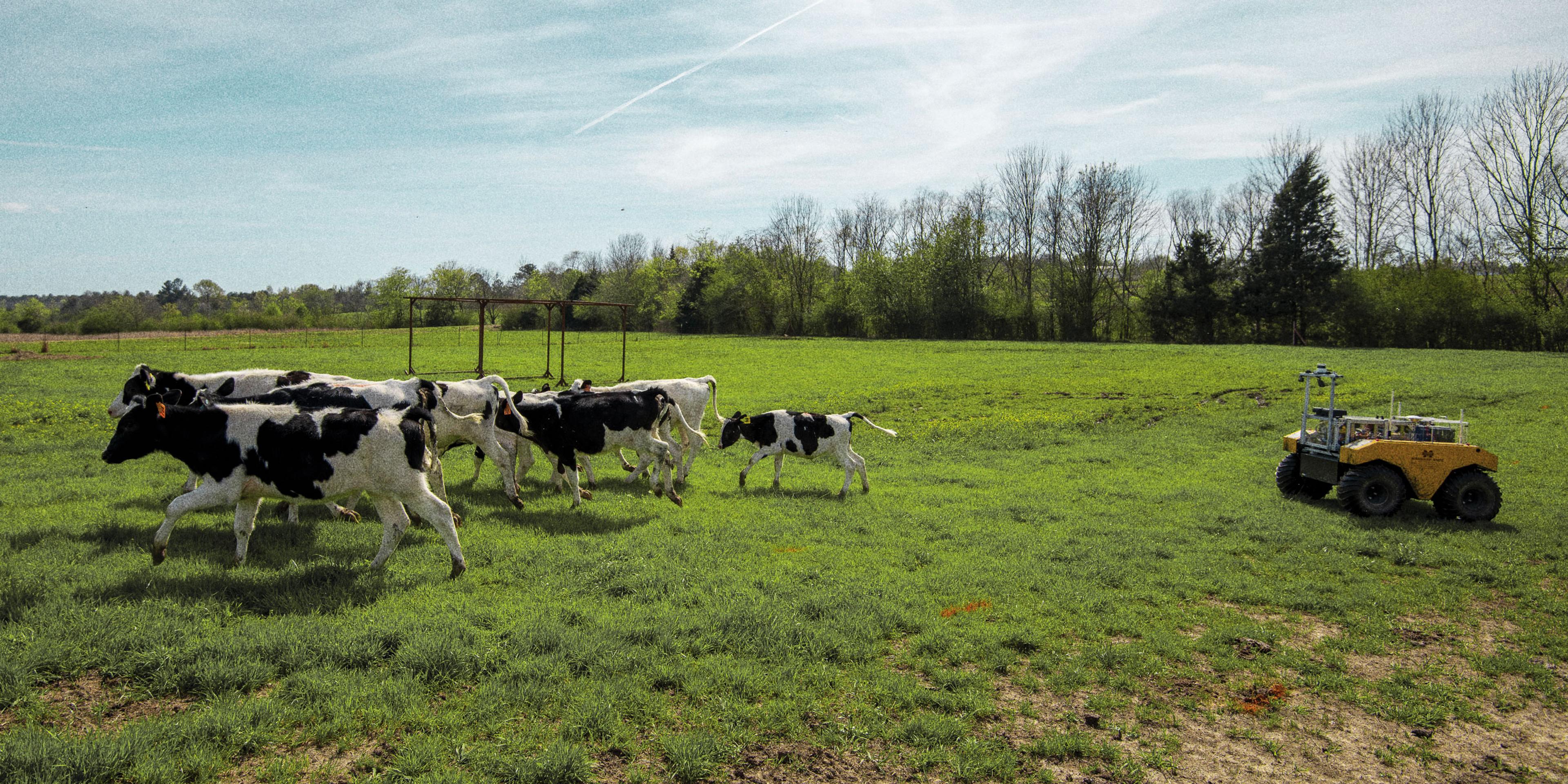
On a sunny spring day in 2023, a fascinating scene unfolded at Mississippi State University’s Bearden Dairy Research Center. Out in a grassy paddock, a small group of cows and calves loped along, followed closely by a squat yellow driverless vehicle topped with cameras and sensors. No humans in sight.
This yellow vehicle, a Clearpath Robotics “Warthog,” was demonstrating the feasibility of fully autonomous cattle herding. To the surprise of the researchers who designed the experiment, the trotting cows behaved completely normally around Warthog, the same way they would around a more traditional person on horseback. This is one of several projects underway at the new Agricultural Autonomy Institute (AAI) at Mississippi State University, the first interdisciplinary research center in the U.S. to focus specifically on autonomous farm technology.
Although only a little over a year old, the institute already has inspired a series of impressive research projects: robotic cotton harvesting and cattle herding, fully autonomous crop-spraying drones, and an unmanned boat equipped to test water quality.
Autonomy in agriculture is nothing new. In 2008, former employees of iRobot, the company behind the Roomba vacuum, founded HarvestAI, which builds autonomous robots that can work alongside humans in a greenhouse. By 2021, 87 percent of U.S. agricultural operations reported using some form of AI, according to Relx, an analytics company — a number that has surely grown in the last four years. John Deere released fully autonomous tractors in 2022. But the array of possibilities is dazzling and continues to grow. One company offers an upgrade to make a regular tractor self-driving. In Germany, researchers prototyped an automatic manure scraping robot that could be used in pig farming. Existing technology can automate weeding, mowing, bird deterrence, and harvesting of everything from strawberries to lettuce.
But are farmers ready?
Large swaths of the rural U.S. still lack the high-speed internet necessary to run wireless technology. The cost of much of the latest technology is prohibitive for smaller operations. And farmers are often hesitant to adopt new equipment without a proven ROI.
“I would tell you, I think we need to move forward with caution,” said Marc Arnusch, who farms heritage wheat, barley, and corn in Keenesburg, Colorado. He’s excited about the prospect of a self-driving tractor, but it’s important to him that whatever technology he’s adopting aligns with the realities of his farm, and that it can be customized. While farmers like Arnusch are eager to explore autonomous tech, they remain conscious of its limits, and especially its flexibility.
Back at MSU, Alex Thomasson, director of the Agricultural Autonomy Institute, acknowledged that some U.S. farmers are likely to move slowly to adopt the new technology. “Is the workforce ready for this? I would say, well, no.” But he believes that the agricultural labor shortage makes the adoption of new technology inevitable.
“To some extent I think growers will have to make this move, because they don’t have a choice.”
“To some extent I think growers will have to make this move, because they don’t have a choice. They’re not going to have the labor that they need to do the things that they need to do.” To help prepare farmers for a more autonomous future, Thomasson said that his institute will be supporting workforce development by working with community colleges and companies to train interested growers. Within the university, AAI employs undergraduate and graduate students to work on research projects, supports agricultural-autonomy coursework, and assists two student agricultural robotics competition teams.
Institutes like AAI, or campuses like the Grand Farm in North Dakota, where farmers can access training and interact with cutting-edge research, are already changing the way U.S. farms operate. But the question of whether autonomous technology will be a satisfactory replacement for human labor — and whether it should be — is a divisive one. This may be especially true for livestock operations, where farmers have both ethical and practical concerns about the role of robots on the farm.
Jamila Jaxaliyeva, a forestry graduate student at the Yale School of the Environment, spent last summer working on Sarah Faith Ranch, about 1.5 hours south of Jackson, Wyoming. She readily acknowledged the difficulty ranches face in finding skilled labor. But although she had used a drone to herd cattle, it had its limits, especially in forested terrain. “You still need riders,” Jaxaliyeva explained. “This technology is not going to replace a range rider.”
Christian Wolpert-Gaztambide, manager at his family dairy farm in Caguas, Puerto Rico, is also wary of replacing human labor. He runs five hundred head of cattle on 650 acres of hilly and partially forested terrain.
I showed him a picture of the cattle herding Warthog and asked if he thought it could work on his farm. Wolpert-Gaztambide shook his head. “It can get really muddy and slimy,” he said, and there are hills and places with steep drop-offs.
“If I automate I’d be cutting three or four jobs. These are people who have been working on the farm for generations.”
He has considered adopting fully robotic milking machines; cost remains the biggest hurdle. He’d have to replace his current infrastructure and invest hundreds of thousands of dollars in new equipment, but money is not his only concern.
“If I automate I’d be cutting three or four jobs,” Wolpert-Gaztambide said. It matters to him to keep good faith with the community. “These are people who have been working on the farm for generations.”
Instead of automating, Wolpert-Gaztambide is trying to expand the size of the milking herd so that he can afford to hire more locals to work on the farm.
“Sure, I’m not maximizing efficiency. But there’s more to agriculture than that. There’s more to husbandry than that.”

The crunchy green leaves on a head of romaine lettuce are a breeding ground for dangerous strains of E. coli that can make people sick. So is the tender skin of an onion, before it’s sliced and placed between the buns of a McDonald’s hamburger. From broccoli to carrots, Americans experience new outbreaks of tainted produce with a not-quite-comforting regularity.
Still, produce safety is only one priority among many for the farmers that produce these crops, who contend with financial challenges, hiring woes, and problems securing land, along with the day-to-day vagaries of weather and pests. That’s how it was for Joan Olson, who owns a 33-acre diversified vegetable farm with her husband Nick in Litchfield, Minnesota.
In 2018, she attended a training at the University of Minnesota that covered how to handle food after harvesting. Though she didn’t follow “bad practices” before, Olson learned how crops can become contaminated with bacteria like E. coli, and how simple fixes like having a firm cleaning schedule for their produce storage bins could make a big difference in keeping customers safe.
“I thought, woah, I want to make a lot of changes on our farm,” Olson said. “There were so many areas for improvement.”
Farmers like Olson are taking a proactive approach to keeping their products from harming the people who eat them. The U.S. Centers for Disease Control estimate that each year, 48 million people get sick, 128,000 are hospitalized, and 3,000 die from foodborne illnesses. Last year, the number of hospitalizations and deaths from contaminated food doubled from the year before.
The main cause is poop — both animal and human. Manure runoff can contaminate water sources that are then used to irrigate crops, depositing bacteria like E. coli on produce. And agricultural workers can spread germs to the food they harvest by not washing their hands after using the bathroom.
Up until recently, growers large and small were trusted to deal with this problem on their own. “It’s a way to improve marketability,” said Don Stoeckel, environmental microbiologist and food safety educator with the Produce Safety Alliance, a partnership between Cornell University and two federal agencies. “Building consumer confidence starts with not having produce safety issues.”
But a series of E. coli outbreaks in the early 2000s — including one traced to spinach that sickened at least 276 people and caused three deaths in 2006 — led to calls for more stringent regulations, rather than voluntary guidelines. In 2010, Congress passed the Food Safety Modernization Act, which gave the federal Food & Drug Administration new powers to regulate the way foods are grown, harvested, and processed.
At first, the FDA required farmers to regularly test their “pre-harvest” water sources for bacteria and other sources of disease. This process, though, was considered overly burdensome by many growers, and it didn’t always work; irrigation water could be clear of contaminants at the point where it was sampled but then pick up new ones before reaching produce in the field. So last year, the agency made a change. Instead of making farmers submit samples of their water, they would instead have to conduct an annual assessment to identify any hazards, and come up with a plan to mitigate risks.
“American consumers by and large go to the grocery store expecting their produce is going to be safe, and they always have.”
That strategy, although more holistic, is also more confusing to many farmers, Stoeckel said. “Conceptually, this is a very good thing, because it sets up a system where a farm owner would understand the risk factors that might affect the quality of the water,” he said. “Better understanding leads to better outcomes, hypothetically.” But many farmers aren’t equipped to think through the complex ways contaminants could reach irrigation water and produce, Stoeckel added, making the process difficult and painful.
Farmers have to think about the location and nature of their water sources; a closed source like a well, for example, would be much less susceptible to contamination than an open one like a stream. They also have to identify possible hazards, like any nearby farms or concentrated animal feeding operations (CAFOs) that could introduce fecal matter into their water supply (although some industry groups already require a buffer zone between CAFOs and leafy greens). And they should factor in the type of produce they grow; water might roll off of a watermelon but stick to the skin of a cantaloupe, while droplets can penetrate deep into a head of romaine lettuce but not a cabbage.
Growers that identify risks are obligated under the law to take steps to mitigate them, said Phillip Tocco, food safety educator with Michigan State University’s agricultural extension service. That means strategies like changing the way they irrigate, such as by using drip irrigation rather than sprinklers to minimize the amount of water that comes into contact with produce. Another strategy involves lengthening the time from irrigation to harvest, or the amount of time the food is stored before it’s packaged and sold, which allows bacteria in the water to die naturally.
Testing is still recommended, Tocco said, as a way to double-check that the measures farmers implement are working — but it shouldn’t be used as a pass/fail measure. To help them work through all of these complexities, he and Stoeckel, along with Annalisa Hultberg, a food safety educator from the University of Minnesota, came up with a risk prioritization tool that instructs growers on how to weigh the potential hazards to their water, and suggests ways to combat them. “There’s no such thing as zero risk,” Tocco said, but there are ways to get it relatively low.
Tools like this will be needed more and more as farms start to adjust to the new rules, said Elizabeth Bihn, director of Cornell’s Produce Safety Alliance (PSA); large operations have to start complying by April, while small and medium farms have a few more years to get ready. (Though with President Donald Trump slashing regulations and making deep cuts at the FDA, it remains to be seen how strictly these new standards will be enforced). The PSA hosts trainings for farmers all around the country, and since the new regulations were introduced last year, Bihn said she’s seen an outpouring of questions and requests from growers to help them understand the government’s expectations.
“It can be hard as a farmer to hear all the things you’re supposed to be doing and think, well how?”
Even without these regulations, though, Bihn said that the produce industry has vastly improved its food safety practices over the last few decades; farms now almost universally provide their workers with hand-washing stations, for example. Public health agencies have also gotten better at tracing the spread of foodborne illnesses and issuing recalls when needed — a factor that she said could make it seem like outbreaks are happening more frequently, when in reality we’re just detecting them more. And hearing about these events can lead consumers to put more pressure on the companies that produce their food, leading to further improvements.
“American consumers by and large go to the grocery store expecting their produce is going to be safe, and they always have,” Bihn said.
Growers like Olson are exempt from the new rules because they mainly sell directly to consumers through CSAs, and her water comes from a well, putting it at minimal risk of contamination; she tests regularly anyway out of caution. That came in handy one winter when a ruptured wellhead exposed the water to the elements, causing it to test positive for E. coli; Olson was able to catch the problem and sanitize her well before the water reached any crops.
Practices like testing and regular cleaning, she believes, not only improve food safety but also lead to better products that last longer on the shelf. And grants from federal and state agencies can offset any costs that come up, making it easier to adjust.
“It can be hard as a farmer to hear all the things you’re supposed to be doing and think, well how?” Olson said. “As a beginning grower, you have so many other things to think about. But when you convey the information with stories and share what other farms have done … people think, ‘I can go back and implement this on my farm.’”
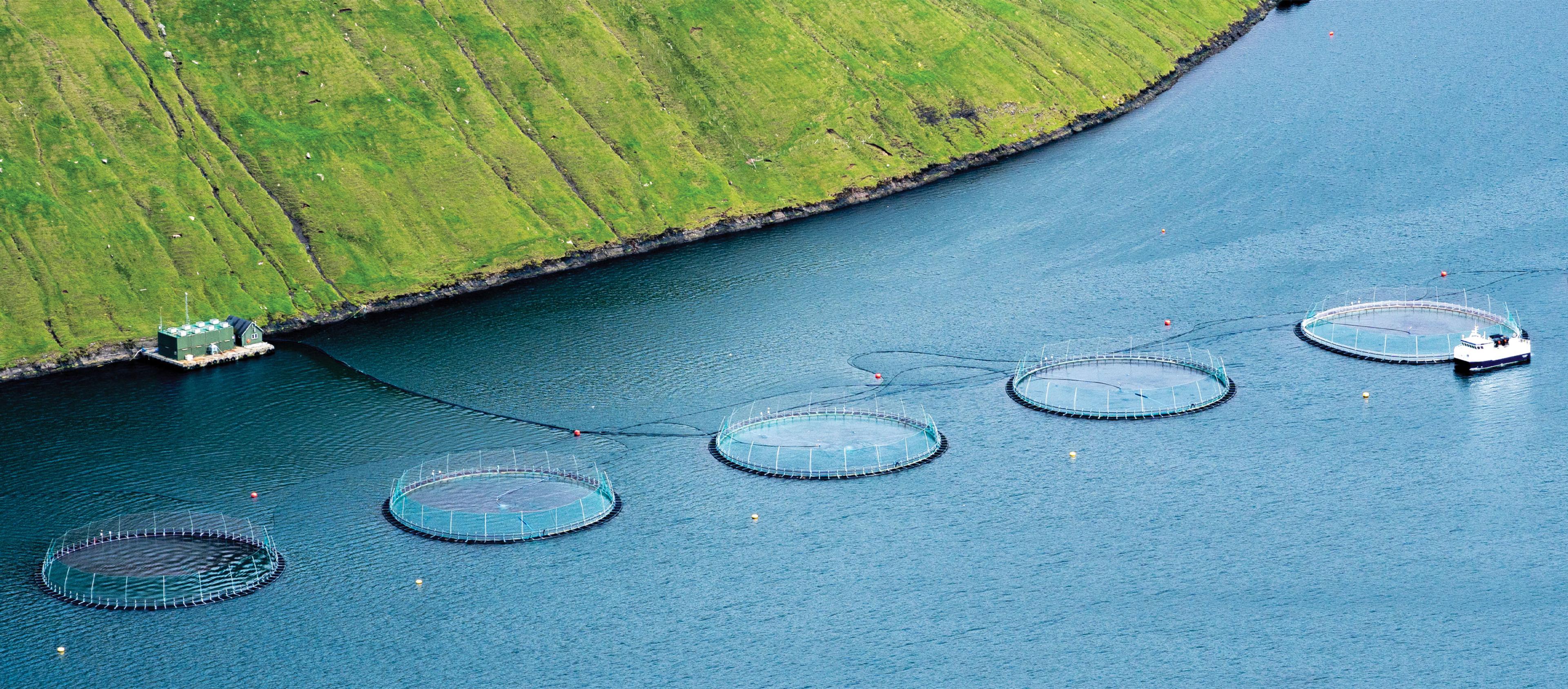
As a data scientist and geochemist, Mojtaba Fakhraee has spent much of his career investigating and strategizing unusual methods of carbon capture. His most recent project, developing a safe model for increasing iron sulphide on fish farms, may be the most remarkable.
Fakhraee, an assistant professor at the Department of Earth Sciences at the University of Connecticut, recently published the results of his research. He and his team argue that iron sulfide enhancement in aquaculture could help sequester hundreds of millions of tons of CO₂.
Adding iron to low-oxygen environments such as fish farms, the study says, reacts with the accumulated hydrogen sulphide in the sediments found in the water, and increases alkalinity. This sets off increasing carbon saturation levels, enhancing the capture of the greenhouse gas from the atmosphere.
The researchers believe this will help the aquaculture industry offset its carbon footprint, which currently amounts to 0.49% of global carbon emissions or 245 million tons of CO₂. Fakhraee says this model could work especially well in places like China and Indonesia, which have an abundance of fish farms.
Oceanographers will likely view this as the most viable path for scaling up, said Halley Froehlich, whose lab at the University of California explores the impacts of aquaculture, wild fisheries, and climate change. But she also harbors doubts regarding the approach the study takes.
“When you are modifying a pretty substantial chemical composition, what is that doing to the organisms that you’re farming?” she said.
All good things, the authors assert. According to Fakhraee, this introduction can improve water quality by removing hydrogen sulfide — which has been proven to cause fish deaths — and improving productivity to benefit farmers.
But Karen Wristen, head of Vancouver-based Living Oceans Society, an environmental advocacy organization, expressed her skepticism about the viability of this method in aquaculture. She questions whether it could further propagate algal blooms in the water which is known to be harmful to the fish as well as disrupt the cycle of nutrients.
“When you are modifying a pretty substantial chemical composition, what is that doing to the organisms that you’re farming?”
Fakhraee, however, is quick to note that they don’t suggest iron fertilization, a controversial carbon capture technique that’s been found to increase algal blooms. Their model focuses on adding reactive iron directly to sediments in controlled, low-oxygen environments — fish farms — and potentially locking away carbon. That said, future experimental studies should “focus on the optimum size and concentration of iron to be added to the sediment,” he pointed out.
Despite lesser emissions than its land-based agriculture counterparts, the aquaculture industry remains at the forefront of the impact of climate change as a “canary in a coal mine,” according to Tiffany Waters, an aquaculture professional at The Nature Conservancy who has worked with shellfish farmers.
“The farmers depend on a healthy and stable climate, as they work and grow food directly in the marine environment,” Waters said, adding how they end up experiencing climate-related challenges in real time.
Large amounts of CO₂ that the ocean absorbs from the atmosphere can leading to “impacts like ocean temperature changes, more frequent and intense storms, ocean acidification, and harmful algal blooms (HABs) that can affect oyster growth and mortality,” she stated.
The aquaculture industry remains at the forefront of the impact of climate change as a “canary in a coal mine.”
In a sobering turn of events, scientists recently confirmed that 2024 was the first year where global temperatures breached the critical 1.5 degree Celsius mark. As conventional methods fail to keep a lid on carbon emissions, innovative methods will be required to reduce them, according to Fakhraee.
Researchers have also pegged rearing of bivalves such as clams, oysters, and mussels to act as possible carbon sinks, as well as seaweed farming. Peter Malinowski, who grew up on an oyster farm, remains compassionate about the challenges faced by fish farmers in making their practice sustainable. The executive director of Billion Oysters Project, which is committed to restoring a billion oysters in New York’s harbors, said they are currently assessing if the oysters can sequester carbon.
The Food Agriculture Organisation (FAO) arm of the United Nations says that fisheries and aquaculture systems must factor into the National Adaptation Plans, to help those who work in the sector chart their resilience against climate change. Further, COP29 held in Baku this year, also foregrounded the transformation of food systems and the role of farmers in addressing climate change. As people deeply impacted by climate change, Waters found that if farmers and aquaculturists know there are low-cost, easy-to-implement mitigation strategies out there, they’re very interested.
Fakhraee’s model still needs to be tested, but if successful, the carbon could be stored on a timescale of thousands of years — longer than the lifespan of CO₂ in the atmosphere.

The petri dish Dr. Fay-Wei Li pulls from a small, white refrigerator is filled with identical green sections of plant tissue. The plants are called hornworts, an often-overlooked species of small, nonvascular plants that have been around since the dawn of time. But despite their lengthy history on the planet, only recently have researchers identified their secret power.
Hornworts contains a CO₂ booster, unique within the plant world, that gives it the ability to more efficiently photosynthesize. This discovery could potentially have high rewards if the same CO₂-concentrating mechanism was installed in crop species. That is, it could boost photosynthesis between 30% and 50%, making it possible to increase crop yields without having to increase the amount of land or resources, according to Li, associate professor at the Boyce Thompson Institute (BTI) and an author of the study.
The research centers on Rubisco, one of the most abundant enzymes — proteins found in all living things that speed up chemical reactions — on Earth and the necessary ingredient for photosynthesis. Simply put: Rubisco captures CO₂ and converts it into sugar. The problem is that Rubisco isn’t as efficient as it should be. During photosynthesis, about 25% of the energy is lost during the process to correct for photorespiration. This is when Rubisco reacts with CO₂ to make sugars for the plant instead of reacting with oxygen like it’s supposed to, said Tanner Robison, a graduate student at BTI and first author of the paper recently published in Nature Plants.
This results in a waste of energy within the plant as it must correct its mistake.
“We wondered if we could find a way to get around this,” said Robison. “What if we could save that wasted energy? Like in theory, the energy lost during photosynthesis is now going into growth instead of correcting for this mistake.”
While the CO₂-concentrating mechanism is likely present in the common ancestor of all land plants — Charophyte algae, a type of freshwater green algae — hornworts is the only land plant to retain it. Further, hornworts have improved and refined this CO₂ booster over the course of millions of years of evolution. Based upon this discovery, researchers hope to eventually insert that CO₂-concentrating mechanism into crop species, boosting photosynthesis, and resulting in an increase in crop yields without the need for more land or resources.
Finding ways to regain that lost energy has been a problem other plant biologists have worked to solve over the years, though the majority of available modeling is constructed around Chlamydomonas, a type of green algae in the same plant kingdom as Charophyte.
“While there’s a huge amount of progress that’s been made,” acknowledged Li, “one of the key problems in using Chlamydomonas [is that] you’re trying to put something from algae into a flowering plant — and that’s a pretty big jump” because algae is water-based.
“In theory, the energy lost during photosynthesis is now going into growth instead of correcting for this mistake.”
“That’s the selling point here,” noted Robison. “There are aspects to the algae that haven’t worked in terms of trying to improve crops.”
Unlike algae, hornworts have more in common structurally and functionally with U.S. farm staples like corn, making this discovery — though not yet applied on-the-field — a potential game-changer for crop farmers.
“The advances that we’ve made in the field have been pretty significant over the last five years,” said Robinson. “Ten years ago, people thought we were a long way out from figuring out how to insert pyrenoids into plants, but we kind of do it regularly now. So, it’s just about finding how all of the various parts come together. And we’re reasonably close to that.”
James Schnable, a professor at the University of Nebraska with an expertise in plant breeding and genetics, agreed with the researchers’ assessment of Rubisco’s inefficiency and noted that hornworts “appears to be simpler than the approach corn and sugar cane use.”
“That suggests that, as we understand the hornworts method better, it may eventually be easier to engineer it into crops that currently lack a method to concentrate carbon dioxide (like rice, wheat or soybeans) than the current efforts to make C4 rice, which is still estimated to be decades away from success,” said Schnable.
Allen Williams, a sixth-generation farmer and former professor at Louisiana Tech University and Mississippi State University, said that the research definitely “has potential.” For farmers interested in boosting crop yields more efficiently, if available, hornworts “could be added to the farmer’s toolbox.”
“As we understand the hornworts method better, it may eventually be easier to engineer it into crops that currently lack a method to concentrate carbon dioxide.”
Yet, the concept will take a while to get to fruition. The current research is lab-based only and field tests are still on the horizon. Further, field tests would likely span multiple years to incorporate different seasons and locations.
When asked about the feasibility of applying the hornworts research to U.S. farming, Schnable said, “I could imagine this sort of research eventually being deployed in crops across the USA, which currently lack carbon concentrating mechanisms, but likely on a timescale of decades, not years.”
While this research is still ongoing, in another study, Li and his team previously discovered other hidden hornwort qualities that could be beneficial to farming. The most interesting one may be hornworts’ ability to source its own nitrogen through a symbiotic relationship with cyanobacteria. If the same thing could be applied to farm crops, it would result in the use of less nitrogen fertilizer.
“What if a plant could self-fertilize itself?” asked Li. “That would be the holy grail in plant science and agricultural research.”
Based on the discoveries of this remarkable plant, and despite its evocative name, hornworts could be a hidden asset for the future of agricultural production.
Think of plants as mini bioreactors, little factories using energy from the sun to build proteins, says Martín Salinas from his office in Rosario, Argentina.
Salinas is a co-founder and the chief of technology at Moolec, an agritech company that produces animal proteins in plants by changing what he calls the “factory” settings.
“We basically change the instructions that the plant has to produce its protein — we give the plant a new recipe [to follow],” he said. This genetic “recipe” comes from public databases and doesn’t require using an animal to start the process. Once the protein recipe is introduced to one plant, all its offspring will naturally carry the instructions and make the protein on their own. “It’s a more efficient, cost-effective way to produce new proteins,” said Salinas.
After receiving USDA approval to carry out field trials, Moolec harvested their first batch of “Piggy Sooy,” a pork-infused soybean last year. Their pea that produces beef protein was recently approved to begin field trials.
Moolec’s technology is known as plant molecular farming. It’s been used by the pharmaceutical industry since the 1980s for vaccines; about a dozen companies globally are now looking at its potential for the alternative proteins market. Like anything GMO-related, its detractors question if it is actually a sustainable solution. Meanwhile, proponents say it has the potential to make animal proteins more efficiently and humanely, and improve the color, nutrition, and sensory experience of alternative meat and dairy products.
“To date, alternative proteins are mostly an oil and starch mixture,” said Adam Leman, principal scientist of fermentation at the Good Food Institute (GFI), an alternative proteins think tank. Add meat proteins into the mixture and you could have tastier, more nutritious alternative meat products, he explained.
“If you were to take the example of something like a plant-based burger made with soy or pea, you could have an improved taste or aroma, a more meaty flavor that gets added into these,” he said. “I think that would be something that would make these products more appealing and better replicate that experience people are looking for.”
It’s not just meat proteins. Companies are using the same approach to grow dairy proteins and sweet proteins for sugar replacement inside plants.
Leman said one benefit of growing proteins in plants like soybeans or corn is that we already have ways of using the products derived from them. He gave an example of making soy meal or corn meal. “There are already ways that we know to valorize and really use those products in our food system,” Leman said.
“If you were to take something like a plant-based burger made with soy or pea, you could have an improved taste or aroma, a more meaty flavor.”
These advancements could be the bump the U.S.’s stagnating plant-based retail market needs. Though the market grew from $3.9 billion in 2017 to $8.1 billion in 2023, unit sales declined in both 2022 and 2023, according to a report from GFI. The report cites taste and price performance as the industry’s biggest hurdles.
That matters because of the role plant-based food can play in reducing global greenhouse gas emissions. One analysis by the Boston Consulting Group estimated that increasing the global market share of alternative proteins from 2% to 8% by 2030 could have the same impact as decarbonizing 95% of the aviation industry. Another study found that cutting a person’s red meat consumption by half could reduce their carbon footprint by 25%.
Though several studies have found plant-based meat products to have a significantly smaller environmental impact than meat production, some analysts say there’s still a lack of transparency from alternative meat companies about their overall emissions. An exact study of the environmental impact of products made from plant molecular farming has yet to be conducted since the industry is in its beginning stages; no products are currently on shelves.
Leman from GFI and Salinas from Moolec also view plant molecular farming as a solution to food security and future protein supply.
“The population of the world is growing and our arable land continues to dwindle, so having really efficient ways of making protein is good,” said Leman. “In places where you have established agricultural infrastructure, there’s a lot of readily adaptable parts of plant molecular farming that fit in well with what people are doing today.”
In an article authored for Frontiers, members of the American Soybean Association wrote that plant molecular farming could help row crop farmers diversify their operations and boost their income.
“It’s Not About the Bean.”
The ideal result of plant molecular farming is an affordable, more nutritious, better-tasting alternative meat that’s sustainably produced. But products made from plant molecular farming are still years away from hitting the shelves and their exact benefits remain to be seen.
With Moolec’s first Piggy Sooy field harvest, the co-founders were excited to see that they did successfully grow pork myoglobin inside soybeans. On average it made up about 10% of the bean’s weight and turned the beans’ insides a light pinkish hue, similar to a slice of raw pork instead of the creamy white color of standard soybeans.
Moolec’s Salinas said this could reduce the need to add colorants to plant-based products. In addition to giving meat its color, myoglobin is an important dietary source of iron and it’s closely associated with the taste and mouthfeel of meat. It’s what makes meat alternatives appear to “bleed” and what the Impossible Burger aims to mimic in its patties.
But Moolec co-founder and chief product officer Henk Hoogenkamp said it’s too early to make claims about the nutritional profile and sensory experience of Piggy Sooy. This is partly because soy is heavily processed and the end product can vary a lot from soy sauce to tofu to veggie patties.
[The pork] made up about 10% of the bean’s weight and turned the beans’ insides a light pinkish hue.
“It’s not about the bean itself. We don’t want to talk about what the bean tastes like, we want to talk about what the product is like,” Hoogenkamp said. “Any place that’s currently using soybeans could plug our product in, but after their processing, we need to re-evaluate what the advantages are: Is it texture? Is it taste? Is it color? Is it nutrition?”
Hoogenkamp said they aim to start processing the beans next year after scaling up their field trials. He said they are also looking at a variety of applications for their soybean, including in pet food or as a meat additive.
Another variable that needs to be evaluated is what the tradeoff is for producing myoglobin, according to Hoogenkamp.
“The plant is sacrificing something else to make this myoglobin,” he said. “What is it making less of? It could be another protein, it could be oil, could be carbohydrates, so that’s what we’re trying to find out right now in actual field conditions and places where soybeans are grown: What is that penalty? Is there a penalty at all? And what would be the benefit?”
Creating a Problem to Fit the Solution?
Not everyone is convinced plant molecular farming and its pork-protein growing soybeans are the solutions they claim to be.
“I think it’s so silly. I think most of this stuff is really silly,” said Julie Gutham, a professor at the University of California, Santa Cruz, who was part of a research project that looked at Silicon Valley’s role in the food and ag tech sectors. “It feels like it’s something they could do, and then they went looking for a problem they could address, which is what we see over and over again.”
Guthman co-authored two research papers and a book — The Problem With Solutions — that analyze the tech sector’s obsession with protein.
“While innovators and investors act as if protein needs this sector to solve an impending crisis and bring its possibilities to fruition, we suggest the inverse — that without protein the sector would be nearly barren of novelty and food, much less the disruption and impact routinely claimed,” she wrote in one of the papers.
Guthman said her other concern with these types of technological innovations is that they’re patented.
“If this is really to solve some big social problem, which I don’t think it really is, why is it always under these proprietary wraps?”
“If this is really to solve some big social problem, which I don’t think it really is, why is it always under these proprietary wraps?” she said.
Matthew Greco from the Instagram account MyHealthForward shares this concern.
“I believe that inventions like this actually increase the risk for food insecurity because they allow companies to patent and control the food supply,” he said in a recent video. “This would inevitably shift grocery store shelf space and consumer spending away from local farms and towards centralized companies.”
It will still be several years (Moolec is hoping for 2027) before these products could hit the shelves, and in what capacity remains to be seen. One reason plant molecular farming has such a long timeline is that it takes a while to develop and research plants.
“Plants grow slowly, they move at their own pace,” said Leman from GFI. “It’s still just so early days.”

At risk of stating the obvious, farming is physically challenging work that takes a toll on the human body. Over the years, we have turned to various forms of technology to amplify the efforts of a single person, starting with a single plow behind a mule or ox, progressing to a motorized tractor, 700+ horsepower combine harvesters, and now robotic weeders and autonomous flying drones that handle a range of tasks. But what about the human body? Is it destined simply to be replaced by machines?
The fact is that people remain a weak link in modern farming. According to some sources, agriculture is considered the most hazardous occupation globally. Work-related musculoskeletal disorders (WMSDs) accounting for 93% of occupational injuries. And of these, lower-back pain is the most frequent, with shoulder injuries coming in second.
Exoskeletons for the Assist
Exoskeletons are devices that are worn on the body to augment the natural capabilities of a human worker. Once confined to the world of science fiction — who can forget Ripley’s exoskeleton-enhanced final battle in the movie “Aliens” — these have now become practical for use in many industries. There are two major categories of “exos” (as they are known in the industry): powered and passive.
Powered exos use motors to provide additional force for certain actions, such as lifting objects or wielding heavy tools overhead. These tend to be complex — and expensive — bits of machinery that require recharging and regular maintenance. While these may be suited for specific manufacturing tasks, they are typically beyond what farmers typically need or can afford for the foreseeable future.
Passive exos are the other class of devices. These take the energy created from one motion — such as bending over — and then release that energy to the wearer for the opposite motion, such as lifting an item from the ground to waist level.
These passive devices do not require the expensive motors, wiring, batteries, and sensors found in powered exos. Instead, they use a variety of materials to store and release energy: springs, torsion bars, gas pistons, elastic bands, and flexible beams. Some designs rely on a rigid frame while others are made from fabric and other flexible materials. According to some sources, current passive exos can cost from $2,500 to more than $14,000, depending on design and which parts of the body are supported.
Designs vary based on the type of targeted task. For example, lifting boxes of produce could require one sort of assistance, while reaching overhead to harvest fruit could require something different. But can they actually help farmers and farmworkers?
The Benefits
Many studies have shown clear benefits from wearing exos in other industries such as warehouse work and manufacturing. According to Karl Zelik, associate professor of biomedical engineering at Vanderbilt University, one longitudinal study of warehouse workers tracked more than 281,000 hours of work while wearing exos. Historical data would predict 10.5 back strain injuries over that period, but the study revealed that there were none.
Not as much research has been done in farm settings, but the existing studies point to clear benefits. For example, one test of an upper limb exo in orchard management tasks reduced muscle activity by up to 40%. Reduced muscle activity results in less fatigue and strain, which in turn lowers the risk of injury.
Another study gave a back support exo to farmers for their daily operations and several of the subjects cited increased productivity by reducing fatigue. Many of the subjects also reported feeling more protected when shoveling. In some cases, the exo helped them maintain proper posture when lifting, which can reduce the risk of lower back injuries.
Sarah Ballini-Ross is co-owner of Rossallini Farm in Oregon; she and her husband sometimes use exoskeletons in the work on their diversified operation. She is also an expert in exo technology and founder of Evolving Innovation, a consulting firm that provides safety technology and ergonomic solutions services. Ballini-Ross said that fatigue reduction is an important factor in their use of exos. “A lot of the farmwork really involves that repetitive lifting from ground to waist level, so my exo is the first thing I grab when it comes to doing hay.” Other tasks where she wears it is “on inventory days when we unload a couple of tons of 50- to 70-pound boxes.”
Not a Cure-All
In spite of the benefits, exos are not the solution for every case. Not all passive exos are the same, and each has its own advantages and disadvantages.
Some exos can restrict movement to enforce proper lifting posture, which can reduce injury. However, other designs might not have this feature, which means that the worker could place themselves in an awkward or dangerous position that could lead to injury.
For example, the same feature that enforces proper posture when lifting might restrict movement that requires rotating the body, such as when shoveling. A warehouse worker is likely to do a similar task over and over all day, but a farmworker often has to rapidly switch from one task to another.
Even passive exos can be bulky and awkward to maneuver in during daily activities. Farmers in one study cited the fact that they can make it difficult to get in and out of the cab of tractors and other farm machinery. And having to take the exo on and off throughout the day can take up significant time.
Most passive exos have at least some fabric, but this fabric can get soiled — especially from sweat on hot days or during strenuous activities — which can make them unpleasant to wear. Most also include Velcro-style hook-and-loop fasteners. These fasteners make it easy to adjust the fit of the device for workers of different sizes, and to accommodate the presence of layers of clothing. But those hooks and loops can also grab foreign materials, impairing their functionality and appearance.
Ballini-Ross noted, “I use my exo when trimming the hooves of our sheep, and hair and straw gets stuck in the fabric. So when I take my exo to a presentation or a conference, I have to think twice because maybe I’m bringing a little too much of the farm with me.”
Obstacles to Adoption
Education may be the biggest barrier to more widespread adoption of exos in agriculture; many farmers simply aren’t aware of the products and their potential benefits.
Close behind comes the question of expense. Even passive exos can be costly, and unlike heavy farm equipment, the manufacturers are not set up to provide payment plans or other terms to ease the financial strain.
But the problems go beyond those two obvious factors. For example, many farms rely on a transient workforce. A small farm does not have the resources to stock a full range of exos to meet the needs of different body sizes. Furthermore, different tasks could require different exo designs. Harvesting or weeding some low-growing crops require bending and stooping, which needs a different type of support than lifting boxes of produce or shoveling.
In addition, a farmworker’s needs vary with the season. Providing exos for these workers for just a week or two may not be feasible.
Another part of the problem is that the exo industry has not yet focused on the needs of agricultural workers. The low-hanging fruit is in other industries, such as warehouse logistics, construction, and manufacturing. These applications have narrowly defined tasks with lots of repetition, and often involve large corporations with the capital to invest in new technology.
To really be embraced in agriculture, exo manufacturers would need to create exos that are modified for farm work. For example, one study found that a typical exo requires adjustable straps that go around the thighs. This design blocks access to pants pockets where farmworkers keep tools such as pruning clippers where they can reach them easily. But with little demand for agricultural exos, companies have little financial incentive to design around these problems.
While exoskeletons have proven their value in terms of reducing workloads and related injuries for some farming tasks, significant obstacles remain. But as farmers become more aware of the benefits, as the costs continue to come down, and as manufacturers respond more to the specific needs of agricultural tasks, we can likely expect to see more exos down on the farm.

On a two-acre community garden in the small coastal town of Tokeland, Washington, amongst beds of leafy greens and nettle and blueberries and bog Labrador tea, is a pile of dead crabs.
The crab bodies are mixed with bark chips and ground up in the garden’s wood chipper. They’re being used to make compost to amend the garden’s otherwise sandy soil with calcium and magnesium. It’s a project of the Shoalwater Bay Indian Tribe, whose reservation is on the northern shore of the long, partially enclosed Willapa Bay, a complex coastal estuary fed by numerous rivers and streams and draining into the Pacific Ocean.
The goal of the composting project is to make something productive out of the destructive: in this case, the European green crab, an invasive species native to coastal Europe and northern Africa whose population has exploded in Willapa Bay.
“We’re working on making a circular economy [out of the crabs],” said Larissa Pfleeger-Ritzman, director of the Tribe’s natural resources department, which manages the community garden.
The European green crab first made its way across the pond to the eastern United States in the 1800s via ballast water — ocean water brought onto a ship to weigh down the hull, making the ship more stable. Once docked, ships would release the ballast water into the ocean, introducing organisms from thousands of miles away to new environments.
In 1989, the first green crab on the West Coast was found in San Francisco. Nine years later, one was found in Washington state. But not until 2018 did the crab become a serious problem in the Northwest.
“We kind of reached a tipping point where action needed to be taken to protect uninfested areas … and avoid some potentially massive economic consequences,” said Justin Bush, Washington Department of Fish and Wildlife’s green crab emergency incident commander.
The crabs live in shallow waters and prey on smaller shore crabs, clams, and oysters. Willapa Bay produces an estimated 10 to 20% of all the country’s oysters, which is why the green crab’s presence there is of particular concern to the bay’s 30-some oyster companies.
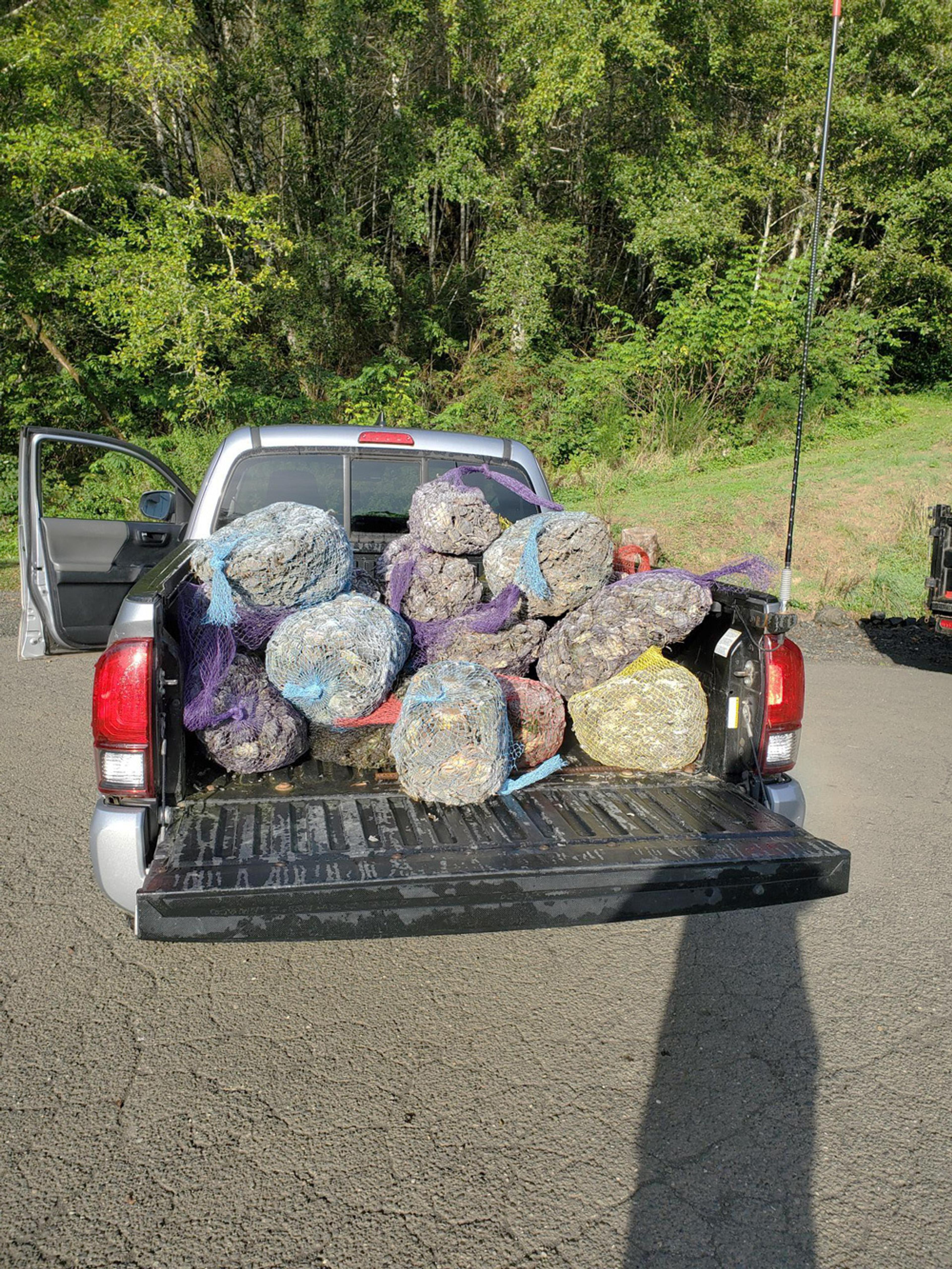
Crab carcasses en route to the chipper
·Travis Torset
Last year, employees of the Shoalwater Bay Indian Tribe’s natural resource department trapped 117,000 green crabs in Willapa Bay, the most they’d seen since starting removal efforts in 2018. The Tribe is just one of several entities who, in partnership with the Washington Department of Fish and Wildlife, are removing green crabs from the bay.
“The numbers have just kind of gone on this upward trajectory,” Pfleeger-Ritzman said.
The crab repopulates more successfully during El Niño years when waters are warmer. As climate change has increased ocean temperatures, scientists theorize there could be a correlation between the heat and the crab’s increasing population because of the timing of their Washington coast invasion.
That’s because of the lag phase, the period of time between when an invasive species is first detected in a new ecosystem and when it proliferates throughout that ecosystem. “Sometimes populations will fail,” Bush said. “Other times, conditions aren’t right, but a small number persists for a year or two.”
When conditions become favorable enough for a species to thrive, their population can reach a threshold where they grow exponentially in number. That appears to be what happened to the green crab in Washington in 2018.
“That lag phase could be due to climate change and rising ocean temperatures,” Bush said. Just last summer, the ocean directly off Tokeland was 1.4 degrees Fahrenheit warmer than it would have been without climate change, according to analysis from Climate Central. Those warmer waters could have helped the green crab proliferate.
Disposal Closer to Home
The green crabs are baited and trapped in circular crab pots left in the bay. Employees of the Shoalwater Bay Indian Tribe check on the traps a couple times a week and haul captured green crabs to Tokeland to freeze them in refrigerators (this is the most humane way to kill the crabs, according to the Washington Department of Fish and Wildlife).
When the Tribe started trapping the crabs, they would bag them up and drive them to the nearest landfill 20 miles away in Raymond, Washington. But the sheer volume of crabs and the number of trips it took to dispose of them soon made it clear that they’d need to consider options for disposal closer to home.
The Tribe first considered using the crab as a food source. While there are a few examples on the East Coast of using the green crab in niche food markets — a distillery in New Hampshire is making whiskey out of the crustacean, for example — they soon discovered the crab doesn’t have enough meat, nor is it tasty enough, to make a good meal.
With that option ruled out, the Tribe turned to their community garden for answers. Travis Torset, agricultural specialist in the Tribe’s department of natural resources, experimented by spreading their whole bodies on top of the soil to see what changes he could observe in the garden.
“He wasn’t satisfied with that,” said Kristine Torset, Travis’ wife and the Tribe’s heritage and cultural specialist. “I think it just wasn’t amending the soil in a way that he appreciated.”
That’s when Travis got the wood chipper involved, grinding the crabs into smaller pieces so they could break down more quickly. Soon, the garden took off: in October and November of 2024, they distributed 700 pounds of free fruits, vegetables, and eggs to 35 tribal households, consisting mainly of elders and a few families with young children.
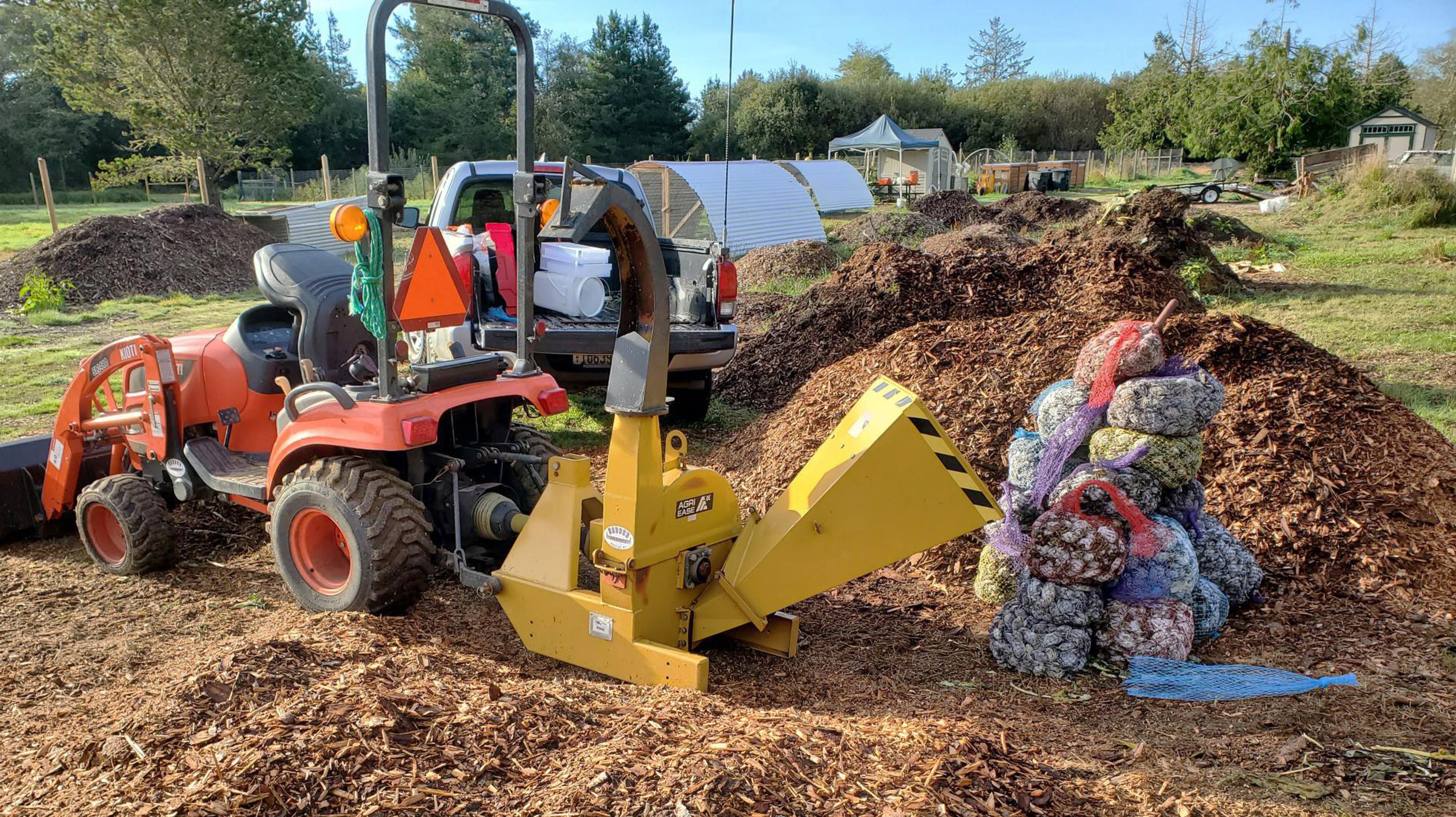
Crabs go in, soil amendments come out
·Travis Torset
“That’s helped empower our tribal members with self-determination,” Torset said. “Being able to choose what fruits and vegetables they and their family want to eat and not just be dependent on what they can afford, helps them expand their taste buds a little bit.”
The Tribe is hoping to increase the amount of food they can produce. Last year their natural resource department was awarded a $900,000 grant, distributed over three years, from the Environmental Protection Agency’s Solid Waste Infrastructure for Recycling Grant Program. With it, they plan to build a larger composting facility next to the community garden where they can compost not just green crabs but all sorts of food waste from the 150 residents in Tokeland and the nearby town of North Cove.
Eventually, they’re considering selling the compost to generate some money for the community. “It’s making a business for the Tribe in an area where there’s no business like that,” Pfleeger-Ritzman said.
Developing this project aligns with the Tribe’s larger sovereignty goals, which include being self-sufficient enough to feed themselves in a rural area with limited access to fresh produce. It could also help the Tribe generate a source of income, all while being good stewards of the land they call home.
“We’re a tiny Tribe,” Torset said. “How can we thrive without making too much of an impact on the environment around us?”
Recently, Raye Walck recounted for this inquisitive journalist a grim story from some high-desert grazing lands in Grand Junction, Colorado. “I had a case a couple of years ago where these sheep came off the range and were brought into a dry lot situation, into a bunch of old pens,” the director of the Western Slope Veterinary Diagnostic Laboratory at Colorado State University (CSU) told me. “There was a ton of kochia weed growing in the pens and they just went for it. There were just piles, honestly, piles of dead sheep.”
Kochia weed is one of about 35 common plants of the Western and Southwestern states that USDA’s Poisonous Plant Research Laboratory (PPRL) identifies as toxic to livestock in a handy reference guide. Although it’s considered more of a problem for cattle, in sheep it can cause dehydration, muscle weakness, blindness, brain swelling, enlarged liver and, if enough of it is consumed, death.
According to Walck, what happened to those piles of sheep was pretty obvious: A visiting extension agent identified the weed and saw that it had been grazed down; Walck sent rumen contents out to a bigger lab to confirm its presence. But evidence of plant poisoning — which costs the U.S. livestock sector about $500 million a year — is not always so easy for a rancher to assemble. That’s why PPRL has been trying to figure out simpler, less invasive ways to identify poisoning, using “non-traditional” samplings like hair, saliva, boogers, and earwax.
The work of PPRL, which has had a home in Utah since 1905, actually began in the late 1800s. American settlers were moving their herds and flocks westward and, unfamiliar with the plants they encountered, began experiencing die-offs. Today, the lab exists in part to educate ranchers about plants of concern — their plant guide can also be accessed as a phone app — and give veterinarians tools to diagnose their ingestion. It’s also looking into treatments for poison-sickened animals; vaccines that might prevent poisoning to begin with (a longshot); and genetic markers that might help breed toxin-resistant animals.
Livestock poisoning affects an estimated 3 to 5 percent of sheep, goats, cattle, and horses every year — a likely undercount since many ranchers won’t bother to report a single dead animal. Although, death’s not the only outcome of some leafy nibbles. Depending on the toxin ingested, at what stage of its growth it was consumed, and how much was eaten, an animal can become painfully ill; a fetus can be aborted; it can give birth to a baby with defects. Most poisonings occur in the 17 Western states because, “In the East, animals are more on [agronomically improved] pastures and they’re fenced in,” said Stephen Lee, a research chemist at PPRL. “And herbicides are more [economically feasible] when you have a couple of acres versus thousands.” Some herbicides may also be forbidden on federal land leased to ranchers.
For the past several years, Lee has been testing the effects of some of the West’s most consequential toxic plants: larkspur, locoweed, lupine, and death camas. He’s also trying to figure out if hair, saliva, nasal mucous, or a slug of earwax will contain enough traces to identify the poisons; in all cases, to varying degrees, the answer is yes. “These toxins are in the blood and the blood feeds your glands — they come out in your sweat through your sweat glands, and your saliva through your salivary glands, and the glands in your ear,” as well as the sebaceous glands connecting skin to hair follicles, Lee explained.
These secretions, he said, fill “an important niche. If we have an animal here, and we dose it [with toxin], we can get it into a chute, restrain it, and then” obtain a high-quality blood sample to analyze. A rancher, though, might not have the ability to hold onto a large sick animal out on the range, let alone stick it with a needle. For a dead animal, a sample of stomach or rumen content is preferred by a lab, “But you’ve got to have a knife and it’s stinky,” Lee said. With earwax, for example, “All you need is a tissue and just wipe around in its ear, then put that in a bag and send it to us.”
John Derek Scasta, director of the Laramie Research and Extension Center at the University of Wyoming, likens plant poisonings to bears and wolves: “While they don’t affect every ranch, the ones that they do affect, they can affect significantly.” In his neck of the woods, larkspur, delphinium, and ponderosa pine are problems for cattle; death camas, which he said looks like a small green onion, is a problem for sheep.
“There was a ton of kochia weed growing in the pens and they just went for it. There were just piles, honestly, piles of dead sheep.”
Knowledgeable management is the way to mitigate against potential disaster. For starters, said Scasta, time of year plays a role. During a blizzard, cows — pregnant in winter in advance of spring births — might shelter under a stand of pines, whose needles contain isocupressic acid that causes abortions. In spring, death camas is one of the first plants to sprout through the snow, just as sheep are “foraging around, looking for something green,” Scasta said. They might eat more than usual because they’re hungry, at the time when the plant is most dangerous, although no one’s exactly sure why, according to Lee. At any time of year, sheep can tolerate the toxic alkaloids in larkspur at four times greater concentration than cattle, which is why “Some of the work we’ve been doing is using sheep to graze it before cattle are exposed to it,” Scasta said.
Sometimes the toxic plant isn’t foraged at all. Walck remembers another recent case in which cattle were mysteriously dying in wintertime. Rumen contents were sent out to PPRL, a history of the incident was taken from the rancher, and eventually it was discovered that milkweed had been baled in with their hay. Similarly, said Robert Poppenga, head of diagnostic toxicology at the University of California, Davis, veterinary school, fields might contain high levels of livestock-toxic nitrate after being fertilized — exacerbated by drought conditions — that turns up in oat straw. Sometimes the toxic plant was previously unknown. Scasta recalled a case in which 165 head of cattle died after eating hay contaminated with lanceleaf sage. “That hadn’t even been recognized as a poisonous plant before,” he said.
Sometimes, a rancher is to blame for not adequately surveying his rangeland by photo monitoring or physically visiting established problem areas in the spring; for not knowing enough about the seasonality of toxins; or for not paying enough attention to the broader picture. Steve LeValley is an extension specialist at CSU who’s seen sheep poisoned by a low-lying hairy plant called halogeton. He’s aware of ranchers who set loose from a truck a flock of sheep that’s ravenous after hours of travel. The sheep “just take off and start eating that stuff like crazy,” he said. They might be a replacement flock of “naïve” animals from another state, whose mothers haven’t taught them to avoid halogeton and other poisonous flora of Northern Colorado. “Within 24 hours they can have tremendous death losses,” he said.
Lee believes there’s potential for more poison-related livestock losses, thanks to changes in when and where poisonings are happening. “Climate change is real and our concern is that there is going to be a shift in these plants, into areas that haven’t had problems from [them] before,” he said. As Western state ranchers face the possibility of new toxins requiring their vigilance, Scasta, for one, is glad to know that Lee’s unusual diagnostics could become more prevalent. “We need more tools,” he said, “and innovation is the name of the game.”
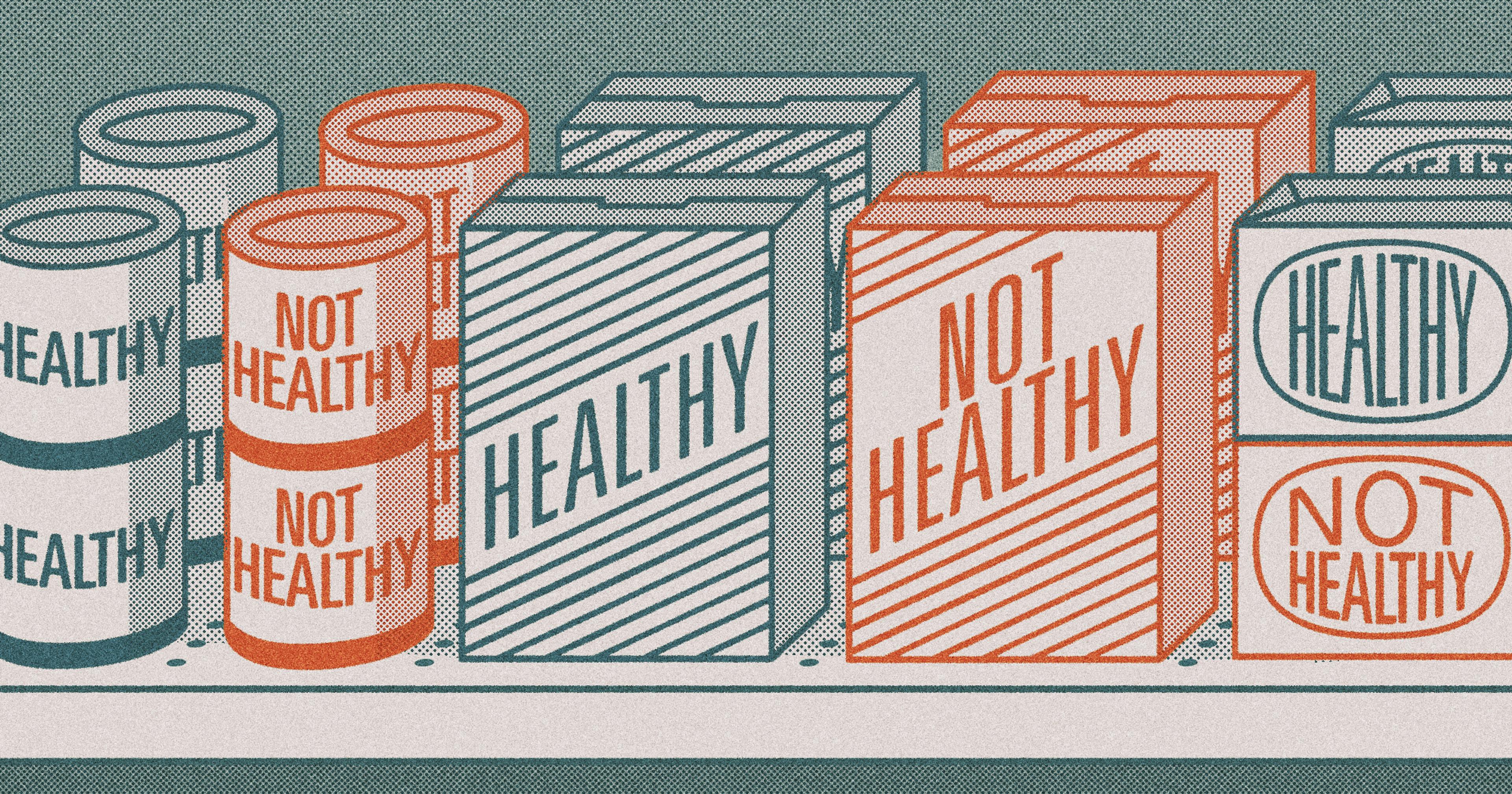
In a move meant to help consumers figure out what food is good for their health, packaged foods that use “healthy” on the label have to meet a new set of nutrient requirements from the U.S. Food and Drug Administration.
Most fresh foods — vegetables, fruits, whole grains, and beans — will automatically qualify as healthy. They are joined by some newly minted additions, such as avocados, nuts, higher-fat fish, and olive oil.
But some previously healthy products with added sugar, including white bread and sugary yogurt, got the boot under the new rule, which goes into effect on February 25.
It’s the first time in 30 years that the definition of “healthy” foods have changed, ever since the agency defined the term in 1994. The revisions took nearly a decade to come to fruition after first being floated in 2016 and proposed in 2022, which drew over 400 hundred comments from the public and industry leaders.
Soon after the announcement of the final healthy label rule, the FDA proposed a second, complementary one: a front-of-package nutrition information box with low sodium and low saturated fat nutrient content. That proposal is open for comments on the FDA’s website until May 16, 2025.
The actual “healthy” logo or graphic that manufacturers can put on packages is still in the works, according to the FDA.
Shifting consumer purchasing towards a more healthy diet is a tough, complicated issue for the FDA to tackle, said Brandon McFadden, professor of food policy economics at the University of Arkansas. But he doesn’t think the new healthy definition likely to impact farmers of whole foods.
“I see it more as creating competition within categories and between food manufacturers,” McFadden said.
Sugar and corn producers may be the exception, he added, because of the rule revisions on added sugars in packaged foods.
The long-considered FDA rule arrives as the Trump Administration pauses much of the federal funding and plans to slash the federal workforce.
The International Dairy Foods Association called the ruling “so narrow that few foods, including many nutrient-dense dairy products, will be able to bear the claim.”
Yet Robert F. Kennedy Jr., whose slogan is “Make America Healthy Again” and is now President Trump’s nominee for Secretary of Health and Human Services, may support the changes to the healthy definition. He has long railed against high-fructose corn syrup, blaming the ingredient for childhood obesity, and vowing to ban it. While the use of high-fructose corn syrup use has declined over the last two decades, it still makes up roughly 10 percent of the U.S. corn market, according to reporting by The Guardian.
Use of refined sugar, meanwhile, is higher than ever before. In 2023, 2 million acres of U.S. farmland was dedicated to sugar beet production, primarily in North Dakota and Minnesota, and sugarcane, primarily in Florida, Louisiana, and Texas. U.S. farms produced 9,174,000 short tons — or 18.4 billion pounds — of beet sugar and cane sugar in 2023.
The new healthy rule is based on the 2025 Dietary Guidelines for Americans, and is meant to encourage diets that meet nutritional needs and reduce the risk of chronic diseases, according to the FDA.
Packaged foods that call themselves healthy must contain a certain amount of food from the main food groups. Those groups — fruit, vegetables, grains, dairy, and protein foods — each have specific limits of sodium, saturated fat, and, new to the updated rule, added sugar.
Grain products, for example, can have 5 grams of added sugar, or 10 percent of the daily value. Fruit products, whether fresh, frozen, or canned, are allowed to add just 1 gram of sugar, or 2 percent of the daily value.
Sodium is set as a standard 230 milligrams, or 10% of the daily value, across the food categories — except for oils such as canola, which are allowed no salt or sugar.
The original healthy rule established in 1994 included a total fat limit as well as a saturated fat limit. The new rule focuses solely on saturated fat. By eliminating the total fat limits, salmon and other seafood with higher levels of unsaturated fats generally seen as beneficial by nutritional scientists, can now be considered healthy.
Instead of shifting a consumer’s grocery list, a healthy label may nudge a customer to abandon their favorite brand for a “healthy” alternative.
Dairy products, game meat (think bison or quail), and eggs are considered healthy with an allowable 2 grams of saturated fat or 10% of the daily value. Seafood, beans, and soy products are allowed half that saturated fat: 1 gram.
But 2% and full-fat milk and cheese do not make the healthy cut.
Reviews from the major food group lobbies have been mixed. The International Dairy Foods Association called the ruling “so narrow that few foods, including many nutrient-dense dairy products, will be able to bear the claim,” in a statement from senior vice president Roberta Wagner. The inclusion of tart cherries as “healthy” prompted praise from the Cherry Marketing Institute. Producers can sweeten tart cherries until the total sugar content meets the amount in unsweetened raisins or 100% grape juice. USA Rice praised the decision to include brown rice — while regretting that white rice did not make the cut.
While game meat and eggs get their own subgroups from the typical meat and eggs protein category, pork and beef were notably absent from the list.
The 2025 Dietary Guidelines for Americans, upon which the healthy rule is based, recommended reducing red meat, which prompted backlash from the National Cattlemen’s Beef Association.
The National Pork Producers Council has not released a statement about the healthy rule nor did the organization respond to requests for comment in time for publication.
“I don’t think anybody who’s buying steak doesn’t know that red meat has more saturated fat than pork, and pork has more than poultry.”
However, in February 2022, NPPC commented on the proposed healthy rule by applauding the FDA’s decision to update the healthy term based on current nutritional science. However, it questioned the requirement that the healthy definition be updated every five years, which may result “in products having to be continually reevaluated to maintain their nutritive values in the stated guidelines of the “healthy” definition.”
Instead of shifting a consumer’s grocery list, a healthy label may nudge a customer to abandon their favorite brand for a “healthy” alternative of the same food sitting on the same shelf, McFadden said.
“I don’t think anybody who’s buying steak doesn’t know that red meat has more saturated fat than pork, and pork has more than poultry. I think these things are pretty well-known,” McFadden said. And actually using a logo — once it is designed — on whole foods seems difficult to coordinate. “Would there be some healthy sticker on each avocado?” he asked.
More likely, the ruling may prompt some food manufacturers to reformulate packaged food products to get under the thresholds for sugar and salt, McFadden said.
The packaged food industry must comply with the rule beginning February 25, 2028. Reformulation is estimated to cost food manufacturers upwards of $400 million over 20 years, and package redesign could cost around $280 million, according to the FDA’s calculations.
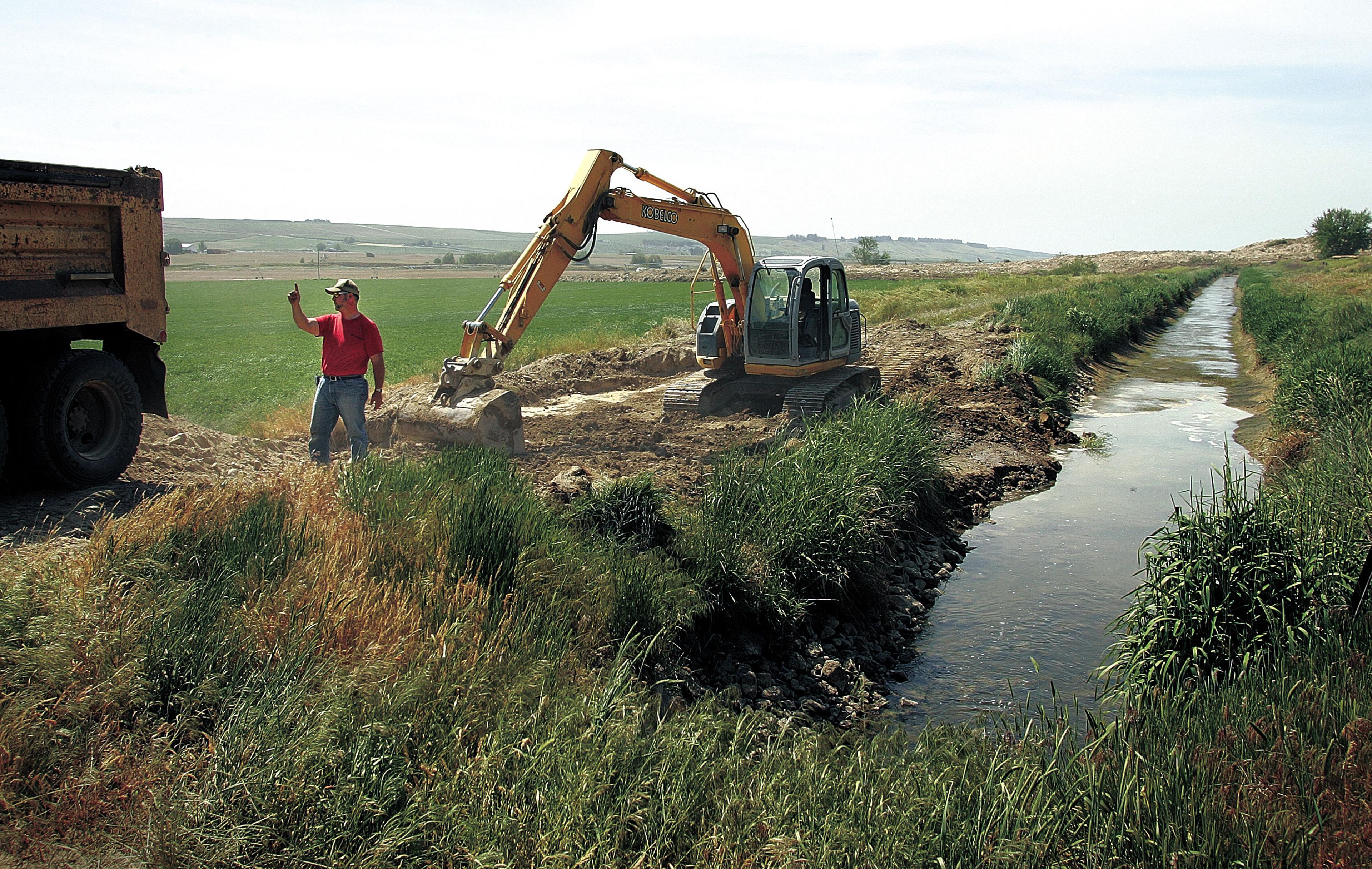
Of all the native plants he grows, Nicolas Lirio’s favorite is rough blazing star, a prairie plant bearing tall stalks festooned with tufts of wispy purple petals. “We don’t make any money off of those fields, but I emotionally keep those fields around,” Lirio said. He grew up on a prairie farm in Iowa, and his dad started Hoksey Native Seeds, a commercial native seed farm which Lirio now runs.
Lirio isn’t alone: Commercial native seed and plant suppliers must balance business realities with their passion for natives, plants that have evolved over a long period of time within — and therefore are uniquely suited to — a specific area’s environment and ecosystem. But that is just one challenge. As these growers strive to make a living, they must navigate and adapt to a host of hurdles inherent to the world of native plants.
These plants are crucial to the survival of a local ecosystem. Over time, they become so intertwined with that ecosystem that their demise threatens the survival of the system as a whole. For instance, the loss of a native plant species threatens the survival of the insects that eat that species as well as any birds that eat those insects and so on. When natural disasters such as wildfires or floods decimate habitat, those working to restore the land must have native plants to halt this domino effect. If they tried to use non-native plants instead, those plants may not be able to fulfill the natives’ role since they didn’t co-evolve with the rest of the ecological community.
This need for natives is only expected to grow, but demand has already outpaced supply. The fragmented, temporary, and reactionary nature of our current native supply chain is a major cause of the deficit. When combined with other obstacles in every stage of production, these problems are often too much for a commercial grower trying to make a profit supplying natives.
Lirio summed up life as a commercial native plant grower. “Natives are uncertain. Like with corn and beans, you put stuff in the ground, you know what’s going to come up,” he said. “You’re going to make margins that are thin, but they’ll be there, and you’ll have support from all sorts of people around. With natives, it’s like, sink or swim.”
Ed Toth has spent his career growing and studying native plants, currently leading the nonprofit Mid-Atlantic Regional Seed Bank. Toth believes that commercial growers are just as important to solving the problems of native seed and plant supply as other entities. Growers of all sizes — commercial and nonprofit — must work together. “It’s not one or the other. It’s all of them, and it’s about them all finding their niche in the overall supply chain.”
Commercial native plant growers already exist within a niche. This is because what’s native in one region may not be in another. This limits their customer base. “We only ship to states that we feel it’s appropriate that our seed is in,” said Lirio. So commercial native growers must search for customers — individuals, nonprofits, other businesses, or government agencies — within these layers of limitations. The customer must be in the right geographical area, they must be searching for native instead of non-native plants, and they must be interested in the specific species sold by that grower.
But Toth is referring to an even more specific niche: a particular supplier’s specialty within its region’s native plant world. When businesses find that niche, they mimic the evolutionary history of the native plants they sell. They ensure their companies’ survival by adapting to the demands of the market while also becoming essential providers to others in the industry. Commercial growers must be flexible; there is no one business model for success.
“With traditional marigolds and hostas, [when] you’re running low, you know where to get more. That doesn’t happen with what we carry.”
Tom Knezick knows firsthand the importance of finding your niche. He is the president of Pinelands Nursery & Supply in New Jersey, a wholesale native nursery that grows live plants to sell to other businesses. After Knezick and his team calculated their administration costs per order, they decided to implement purchase minimums, including requiring customers to buy a set number of plants per order. Since they applied these restrictions, their business has grown.
Prairie Moon Nursery in Minnesota has the opposite business model. It sells to everyone, individuals included. According to Becky Klukas-Brewer, Prairie Moon’s director of marketing, sales, and service, their specific retail approach works because of the company’s scope. They sell mainly through their website to a large number of customers and offer a lot of species. While other nurseries might offer one or two hundred species, Prairie Moon offers more than 700.
In addition to disparate business models, growers’ experiences with native growing patterns can differ. Both Hoksey and Prairie Moon grow species in separate fields to farm them efficiently. While Prairie Moon’s Klukas-Brewer has not observed any adverse consequences of growing monoculture plots, Lirio said this quickly depletes the nutrients in Hoksey’s soil — ultimately shortening the lifespan of fields.
Native plant farmers must also take the idiosyncrasies of various species into account when planning their finances. For instance, both Prairie Moon and Hoksey grow whorled milkweed. While Prairie Moon has not had any trouble with this species, Lirio at Hoksey knows he will have to invest years of resources into the field; he hopes he can make his profit for the endeavor in perhaps a single harvest. He attributes this to a toxin released by the plant to ensure nearby plants can’t overgrow it. Since it’s grown by itself, it suffers from its own toxin, shortening its lifespan.
Native farming is also complicated by customer demands that reveal a general unfamiliarity with native plants. “There’s a seasonality to it,” Knezick said. “It’s not like other manufacturing.” Growers must wait for the correct season to plant the seed they have, then wait until they can harvest more seed from those plants, and wait for the next appropriate planting time to repeat the process until they have the required amount of plants or seeds. It might take years to produce that amount, but often customers, including government agencies requesting bids on contracts, want delivery on an impossibly short timeline.
“There’s not many people that do what we do or have the same goals that we do, so we have to do a lot of it ourselves.”
Klukas-Brewer has noticed that native plant trends can clash with native market realities. At one point, she and her team received requests from engineers and landscape designers hoping to create lawns of Pennsylvania sedge, a native in her region that looks like grass but requires less maintenance. But since it’s difficult to grow, the seed didn’t exist in the amounts requested. “I mean, certainly garden centers and nurseries are dealing with live product, but a lot of time with traditional marigolds and hostas, you’re running low, you know where to get more,” Klukas-Brewer said. “That doesn’t happen with what we carry.”
This lack of easily accessible materials means that native growers must be self-sufficient. “There’s not many people that do what we do or have the same goals that we do, so we have to do a lot of it ourselves,” Knezick said. When he and his team realized they needed a reliable supply of seed for their business, but unlike a traditional nursery where consistency among plants is key, they began looking for genetic diversity. That way, the plant’s population would be better able to survive to fulfill its role in the ecosystem including as food for wildlife and a method of erosion control. So to get the appropriate seed, Knezick and his team began collecting it from partners’ properties. When customers began asking to buy the seed they collected, they decided to expand, raising some plants exclusively for seed sales.
The Hoksey Native Seeds team is used to finding creative solutions on their own. Over the years, the company has had to modify old combines and tractors because the equipment they needed wasn’t manufactured. They’ve also created their own native seeders, machines that plant seeds in fields, which they’ve rented and sold to customers. With traditional seeders, prairie seeds are sown in unnatural rows and can get stuck in seeders’ tubes, but Hoksey’s seeders have eliminated these issues.
Lirio attributes this lack of specialized equipment to a lack of investment in the industry. But like a native plant species evolving to become the sole food source for a local insect species, perhaps the Hoksey team has discovered a gap in the industry they can fill. And their success — as with that of all commercial native seed and plant growers — doesn’t just ensure their future. It’s also key to the future of the natural ecosystems surrounding us.
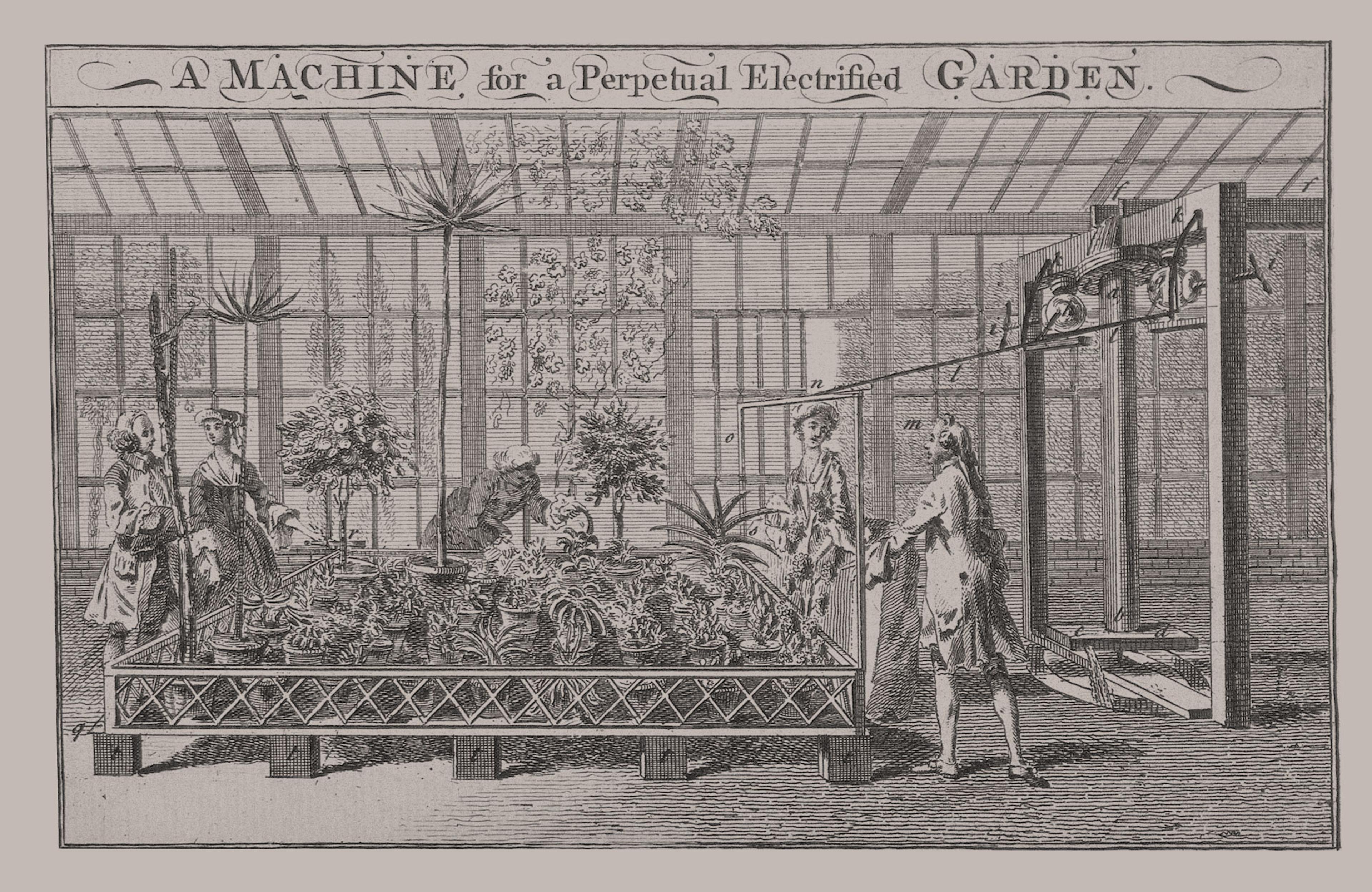
Despite all the innovations that have changed farming over the last 12,000 years, from the introduction of the plow to the development of genetically modified corn, one fact has remained constant: Plants need sunlight to grow. It’s been that way since some of the planet’s earliest bacteria began using photosynthesis more than 3.5 billion years ago — the same cycle plants go through today. The process harnesses the energy of sunlight to move atoms from carbon dioxide in the air to the cells of the plant, building up the biomass needed to produce a crunchy leaf of lettuce.
In 2017, Feng Jiao, a chemist then working at the University of Delaware, started to think that it didn’t have to be that way. What if carbon dioxide could be converted into a chemical that plants could take up through their roots and then transform into the sugars they need to grow, rather than relying on photosynthesis to do the same thing? A few years later, he proved that instead of sunlight, naturally photosynthetic organisms like algae could feed on acetate, a chemical compound that can be made from carbon dioxide using a process called electrolysis.
“If you look at photosynthesis for traditional agriculture — the energy efficiency is only about 1 percent,” said Jiao, who is now at Washington University in St. Louis. “We’re trying to take advantage of these electrochemical systems which can operate at a much higher efficiency. Then we can overcome some of the shortcomings in the nature of photosynthesis.”
In a paper published in November in the journal Joule, Jiao and Robert Jinkerson, a specialist in artificial photosynthesis at the University of California, Riverside, argued that their system — known as “electro-agriculture” — could convert electricity into chemical energy with four times the efficiency of photosynthesis. So far, they’ve been able to grow algae, yeast, and mushrooms in complete darkness, and are testing out more complex plants like tomatoes and lettuce, which they’re not able to grow entirely without light just yet.
Their goal, the pair argued in the Joule paper, is to demonstrate that indoor vertical farming powered by electro-agriculture can help meet the needs of a growing population while reducing the impact of agriculture — which is responsible for one third of global greenhouse gas emissions — and make it more resilient in the face of climate change. Producing the entire U.S. food supply through electro-agriculture, Jiao and Jinkerson wrote, would reduce land usage by 88 percent.
Jiao is quick to admit, though, that practical concerns make upending the entire U.S. food system unrealistic. Aside from the massive infrastructure buildout required to support the energy drain, vegetables and leafy greens would likely have to be genetically modified to accept acetate, a shift that Jiao thinks could be difficult for the public to accept given the entrenched movement against genetically modified organisms.
Consumers also might find the very concept of a plant grown without sunlight to be off-putting, though Jiao said that these fears could be put to rest once it’s made clear that the crops don’t look or taste any different. He harvested the mushrooms he grew in his lab using acetate, and said that their flavor didn’t differ substantially from the ones he buys from the grocery store. “I thought it would taste like vinegar, but it doesn’t,” Jiao said.
Even if Jinkerson and Jiao are able to perfect the process of electro-agriculture for food crops, taking it from the lab to the farm requires building a whole new kind of enterprise. So far, Square Roots, the vertical farming company co-founded by Kimbal Musk — brother of Tesla’s Elon — is the only producer working toward commercialization. With funding from the Bill & Melinda Gates Foundation, Square Roots dedicated one of its farms in Grand Rapids, Michigan, to testing out the electro-agriculture method developed by Jinkerson and Jiao. The company is trying to understand whether and how this technique could be applied to grow crops on a larger scale, said Square Roots’ head of innovation and partnerships, John Paul Boukis.
“Electro-agriculture can ... bring consistent food production to places that historically rely on importing food at a very high cost and with a large carbon footprint.”
So far they’ve grown arabidopsis, a “model” plant that’s used to get a quick read on the effects of an experiment because of its fast life cycle, as well as tobacco, which provides a better idea of what it might be like to grow leafy greens. Though they’re still in the research & development phase, Boukis said that early observations have been promising; the tobacco plants grown using acetate and reduced light look about the same as they would in a field outside.
None of the plants currently being grown by Square Roots will be sold to consumers, and getting there could take years, if it ever does. But Boukis has high hopes for electro-agriculture as a way to address the economic problems that have beset the vertical farming industry as a whole. After promising to revolutionize farming and solve the climate crisis, a string of early investments from the likes of Jeff Bezos and Alphabet’s Eric Schmidt spurred an indoor farming boom. But with the initial hype dying down, multiple operations have folded in recent years, in part due to the massive amounts of electricity required to power their operations. Square Roots has also downsized, laying off most of its staff and closing all but one location in 2023.
But theoretically, if plants could be grown in the dark, vertical farms wouldn’t have to run LED lights 24/7, instead powering their acetate production using a smaller amount of electricity derived from solar panels.
“While electro-agriculture is still early in its development, it could become instrumental in reducing the lighting energy required for indoor farming, bringing down costs and removing carbon,” Boukis said. “We have high hopes for this technology to make indoor farming more viable, especially for low- and middle-income countries disproportionately affected by climate change disruption.”
But while the research on electro-agriculture touts its efficiency compared to plants grown using sunlight, there are ways to make photosynthesis more efficient without relying on solar panels, which themselves require a high energy input, said Amanda Cavanagh, a plant scientist at the University of Essex in the UK. Her research focuses on genetically modifying crops to avoid wasting energy while converting sunlight into sugars, a process that, while not 100% efficient, is still what she believes is our best option.
“I think it’s foolish to think that there’s only one way to produce food.”
However, Cavanagh doesn’t discount the potential of electro-agriculture altogether. “I think it’s foolish to think that there’s only one way to produce food,” she said, adding that she believes it could support more localized food production in places that aren’t able to farm outside because of harsh or unpredictable weather, like the Canadian Arctic or desert nations like Saudi Arabia. The U.S. government is also interested in using electro-agriculture to grow food in outer space. “Vertical farming or electro-agriculture can find their niche in those areas and bring consistent food production to places that historically rely on importing food at a very high cost and with a large carbon footprint,” Cavanagh said.
Still, she doesn’t think growing plants on acetate will ever be a realistic pathway to rewilding large swathes of agricultural land. Most U.S. farmland is either used for animal pasture or dedicated to growing commodity crops like soybeans, wheat, and corn, which can’t yet be grown indoors on a large scale. Fruits and vegetables only make up about 2 percent of U.S. farmland. And although leafy greens and specialty vegetables are better suited to an indoor growing environment, even the Square Roots team hasn’t yet figured out how to grow those completely without sunlight.
“Plants cannot currently be grown to harvest on acetate or in the dark, and achieving either or both is an absolutely massive challenge,” said Emma Kovak, food and agriculture analyst at the Breakthrough Institute, a sometimes-controversial think tank that studies how emerging technologies can help address major challenges like climate change. She believes it’s worthwhile to continue research into electro-agriculture for the chance that it could help scientists learn how to grow food in hyper-specific environments, such as during space travel. But she doesn’t believe it’ll ever make up a “significant component” of crop production here on earth.
“For all the talk of photosynthetic inefficiency, when crops are grown outdoors, sunlight is a free and abundant energy source,” Kovak said. “And that’s hard to beat.”
As Colorado cattle rancher Gayel Alexander greets each day from her neat and orderly home porch, she relishes its contrast to the rugged landscape surrounding Ja Quidi Ranch. Her panoramic view displays a living ecosystem, from the constrained harshness of the ranch’s summer pastures to the deep canyons of her winter grazing allotments. This ecosystem holds dear a structure of both wild and domesticated life.
Scattered throughout 41,000 Bureau of Land Management (BLM), U.S. Forest Service, and privately owned high-desert acres, her 225 cow-calf pairs graze alongside deer, antelope, bears, mountain lions, and the most dominant of local wildlife: elk.
The crux of Alexander’s business is protecting her herd, keeping them safe and content while providing an income. Cattle operations have for centuries relied on physical fence lines to manage this fragile balance between the domesticated and the wild, but the Ja Quidi Ranch is turning to technology, specifically virtual fencing, to maintain order. But there’s an emerging side benefit that Alexander and other conservationist ranchers are noticing: It strengthens the wildlife and natural habitats that share her lands.
Changing Control Patterns
Over recent decades, permanent fence posts and wires controlled Alexander’s cattle’s grazing habits, but the herds of elk calling her land home have had a significant say in the strength of this control.
“We can spend weeks fixing an old fence and building a new one and a single bad winter makes it look like we haven’t done anything,” Alexander said. “When 200 to 400 elk come off the high country moving in a mob as wide as a house, they tear up miles in the blink of an eye.”
With these chaotic scenes driving her thought process, Alexander changed how she controlled her cattle.
In May 2024, thanks in part to a USDA-related grant, she began using Vence virtual fencing technology to reduce her costs and slash the time and labor set aside to monitor, repair, and replace her fences.
“We can spend weeks fixing an old fence and building a new one and a single bad winter makes it look like we haven’t done anything.”
Virtual fencing uses software to draw perimeter pasture lines on a digital map. These coordinates are transmitted via radio towers to GPS-enabled collars fitted with radio antennas. When cows wearing the collars approach the invisible lines, they first receive an audible warning to keep their distance. If ignored, a weak electric shock moves the animal back into the desired coordinates.
Alexander’s initial interest in the tech was money-related.
“Yes, primarily my reasons were focused on my cattle,” she said. “I wanted to save money on infrastructure, improve my range management, and build up intensive grazing practices to increase my herd numbers.”
But the benefits didn’t stop there.
Bringing Wildlife Behavior Into the Equation
Wildlife care ultimately became a vital reason for Alexander’s interest.
“The elk and deer travel the same route every season like clockwork,” she said. “I knew they would break through fences, and of course, some would get hurt or worse. My life is about caring for animals. I didn’t want to passively accept this kind of thing.”
Karie Decker, director of wildlife and habitat at the Rocky Mountain Elk Foundation (RMEF), a Montana-based conservation and pro-hunting organization, sympathizes with Alexander’s view. Decker says that research examining the impact of fence-line-dotted landscapes on big game species behavior is ongoing.
“It’s true big herds of elk moving in a hurry take them out,” Decker said. “Injuries and deaths are a bigger deal for deer and pronghorn as they tend to get tangled up easier and more frequently, but we have many records of elk, especially calves, getting hung up, and breaking legs as they try to get free. Elk bulls’ giant antlers become an even bigger risk in the fall and winter.”
She explained that RMEF research confirms that elk avoid heavily fenced areas. Pronghorn antelope and deer will also be redirected from high to low-quality forage regions. “This behavioral shift influences their migration and breeding, plus hurts their ability to get food, especially during the hardships of winter.”
Physical Fences Promote Genetic Vulnerability
On top of these issues, Decker believes too many permanent fences harm elk’s genetic maintenance and improvement.
“Young bulls need to separate from their herds to wander; it’s key for genetic variability and keeping bloodlines healthy,” she said. “If they face significant barriers, roadways, and large obstructions, this wandering isn’t successful. Genetic improvement takes a hit.”
Studies focusing on pronghorn antelope also confirm wire and posts alter their migratory paths. As antelopes are built for speed and not for jumping, they will often follow fences for miles, wasting the energy necessary for breeding.
Densities, Time Budgeting, and Travel Data
The University of Wyoming Migration Initiative has also documented ungulate behavior changes due to cattle fences. “Density is a big deal,” said Jerod Merkle, Knobloch Professor of Migration, Ecology, and Conservation. “We have evidence proving animals don’t spend much time around areas with a high fence density.”
Matt Barnes, a Colorado-based rangeland scientist and wildlife conservationist, believes wildlife must move without impediment, largely for seasonal migrations but also between plant communities. “Physical obstacles are a barrier to this movement and barriers are rarely a good thing,” he said.
During the last decade, U.S.-led research has doubled down on the importance of migration for elk, deer, and pronghorn antelope. Attached radio collars are proving big game moves farther than anyone initially thought.
“We’re seeing the extent of their travels,” Barnes said. “We’ve confirmed physical fences and infrastructure create pinch points to slow migrations. This is especially noticeable in the more arid West where deer and elk naturally follow the greening up of the grasses and plant life. It stands to reason virtual fencing would provide a much greater opportunity to roam freely wherever their natural instincts take them.”
He explained that physical fences interrupt migratory paths not only from winter to summer range but also through the habitat itself. “We simply don’t know to what level this reduces numbers or weakens species since fences are a barrier but not an absolute barrier,” Barnes said. “It’s hard to measure without more research.”
Ecosystem Gains
In 2022, The Nature Conservancy (TNC), a global environmental nonprofit, began a 5-year research project on Kansas, New Mexico, and Colorado ranches examining the relationship between virtual fencing and the environment.
“Partway in, we’re finding it’s a game changer for land managers of all stripes,” said TNC deputy director of the North American Regenerative Grazing Lands Program, William Burnidge. “It reaches wildlife habitat, water resource management, and business outcomes.”
Burnidge explains the benefits for biodiversity and wildlife include the removal of physical obstructions that injure or kill birds during flight. There are also indirect benefits that improve range conditions and habitat, aid adaptation to drought, deal with fire after-effects, and even integrate prescribed burning.
The TNC trials also investigate virtual fencing’s impacts on plant communities and their productivity, ecological processes, biological activities, and the cycles above and below ground.
“Partway in, we’re finding it’s a game changer for land managers of all stripes.”
Riparian areas are managed to promote greater health, and thicker, denser vegetation, particularly grasses and forbs. “We’re seeing definite signs of early vegetative response and a reduction in erosion and other aspects impairing water quality,” Burnidge said.
Burnidge said they are in the early days of accurately assessing soil health and carbon sequestration, but emphasized its importance as global grasslands hold approximately 20% of the planet’s carbon stocks.
“The worst thing we can do for the climate is convert grasslands to other land uses,” he said. “Breaking grassland up releases perhaps as much as 50% of the carbon from the soil. If technology can improve business and quality of life for cattle producers, it reduces the risk of these lands being converted to corn or other uses.”
Burnidge stressed the key to virtual fencing technology contributions lies in the recovery that plants and grasses gain during and after grazing events. “Virtual fences deliver a path forward by providing more valuable growing seasons and rest periods.”
Out With the Old
Tracing invisible lines on a computer to contain cattle is intriguing, but nothing substantial changes until the old obstacles are removed. In the short term, ranchers are shying away from rolling up wire as the policy issues around what’s legal, what’s a right of way, or what a neighbor-to-neighbor boundary looks like are hammered out.
Back overlooking her Colorado landscape, Gayel Alexander is hopeful the U.S. Forest Service will give her the nod to clean up the old wire on her parcels, leaving only the wooden posts so elk don’t tear up miles of fence or die in the process.
“Fences are a wonderful tool, but elk can’t help how they behave, migrating in the same corridors every year,” she said. “I know some are getting hurt and dying when they come through … This technology is still in the early ‘working out the kinks’ stage, but we’re hoping for a positive outcome for everyone on both sides of the real and the invisible.”

Beneath the serene surface of a plant, invisible defenses lie in wait. When a plant is bitten into by an insect seeking a meal, or infected with a disease, these defenses leap into action.
Over the past half century, the Green Revolution — a 20th century development that boosted food production and saved a billion people from starvation, through the introduction of high-yield crops that are dependent on pesticides and fertilizers — has pushed these capabilities to the margins.
But as the costs of that choice are becoming clear, from greenhouse gas emissions to biodiversity loss, scientists are once again looking to harness plants’ innate defenses with induced resistance, or “plant vaccines,” to help the plants fight back.
“We don’t have a choice,” said Jurriaan Ton, professor of plant environmental signalling at University of Sheffield in the UK and co-author of a 2024 paper on induced resistance. Just as the Green Revolution transformed agriculture in the last century, “we need a second green revolution that allows us to uphold our food production in a much more sustainable way.”
Part of that sustainable way may be to boost plant immunity — a phenomenon called induced resistance — by priming plants’ natural abilities to fight back against pests and pathogens. “[The innate immune system] is incredibly important,“ said Ton. “Without it, plants wouldn’t have survived for 500 million years.”
A Visible Threat
In California, lettuce growers have been grappling with the limitations of the current system.
In 2020, lettuce crops were devastated by Impatiens necrotic spot virus, a pathogen transmitted by miniscule insects called thrips. “It starts with marginal spotting symptoms on the plant,” said Ryan Kelly, vice-president and general manager of Boutonnet Farms, a vegetable grower with 5,000 acres in the Salinas Valley, roughly half of which is lettuce. “Within a couple weeks, your plants are dead.”
Overall, the farm lost around six percent of overall production, while total losses for growers reached $100 million. Another INSV outbreak in 2022 caused $150 million in losses.
While Boutonnet Farms stemmed the bleeding by switching to resistant varietals, controlling the disease currently requires controlling the vector, and thrips are very difficult to suppress, said Kelly. “There’s not a lot of materials that are effective,” he said. Those chemicals that do work are of an older generation that are being phased out. “We don’t have a lot of tools in the toolbox.”
These issues aren’t confined to lettuce: Plant diseases are increasing, and are expected to become more severe as a result of climate change, even as pests and weeds are becoming more resistant to chemical control.
To cope, scientists are instead looking to plants’ innate immune systems for alternatives to external chemical controls.
The Power Within
Just as animals have immune systems, plants have natural defenses that they acquire over time. But while mammals, including humans, have white blood cells that produce antibodies to attack invading pathogens, plants’ immune systems don’t have specialized cells. Instead, plant cells can produce tens of thousands of specialized molecules that act as toxins or defences against invaders.
In agriculture, this ability has been eroded over time; not only has selective breeding for commercial species intentionally eliminated plant toxins, it’s also inadvertently eliminated plants’ defense mechanisms in favor of yield.
“Crop breeding has tended to maximize growth, and that by definition minimizes the defense responses,” said Michael Roberts, senior lecturer in plant science at Lancaster University in the UK. “The simplest way of looking at it is that you can’t invest your resources in both growth and defense at the same time.”
This has meant that an agricultural system focused primarily on yields has made plants more vulnerable to attack. That’s where induced resistance — and specifically, a form of induced resistance called defensive priming — comes in.
As the Covid-19 pandemic highlighted, human vaccines create resistance to disease by tricking the immune system into thinking it’s under threat — thereby priming the system to respond to future threats.
In plants, this follows a similar principle.
How to Induce
When a plant is infected or attacked, this creates a long-term memory of stress. “The plant makes a calculated guess that if I’ve been attacked once, I may well be attacked in the future, and it ups its ability to defend itself,” said Roberts.
In agriculture, scientists don’t want to go as far as actually attacking or infecting plants with real disease to trigger that memory. Instead, chemicals (like vitamin B1 or salicylic acid), or bacteria and fungi, induce resistance by mimicking the signals the plant uses when it’s under attack. This prompts a weak defensive response that primes the plant to jump into battle when actually required.
Roberts has seen this work with tomatoes; a dozen years ago, his PhD student proposed applying the hormone jasmonic acid, which triggers a defensive response, to tomato seeds.
The student hypothesized this could mitigate the growth reduction associated with triggering defensive responses in actual plants. But Roberts was initially skeptical, thinking the hormone wouldn’t work if it wasn’t applied to growing tissue.
“To cut a long story short, it worked,” Roberts said. The tomato plants exhibited improved resistance to attacks from insects during their growth period.
“We will have to take a cut in yield and growth, but the long-term benefits greatly outweigh the cost.”
Making use of induced resistance at a broader scale means figuring out how to make the effects last. One strategy is to get plants to pass resistance down to future generations through epigenetic changes, meaning chemical changes to a plants DNA that don’t change the plants’ genetic sequence, but determine which defensive genes are expressed.
Ton stumbled across this fortuitously; years ago, his lab was running short on seed stock for Arabidopsis thaliana, a cress varietal that serves as a common lab rat for plant research. To avoid running out, he directed a student to save the seeds from plants badly affected by disease.
Later, they observed the plants grown from those seeds (which were genetically identical to non-infected plants) were more disease-resistant — a change that could only be explained by epigenetic mechanisms. “Those … give plants the ability to build up immune memory.”
In addition to work on chemicals like beta-amino acids as vaccines to induce immunity in plants, Ton’s lab is now working on epigenetic mechanisms, and is confident that epigenetic changes can be manipulated to prime plants over the long-term, allowing them to be more efficient in fighting off pests and diseases. “It allows us to take a short cut.”
The Challenges
There are still hurdles, Ton said. Induced resistance can have consequences for growth and seed production.
Plant vaccines are also subject to practical constraints; strategies that use plants’ defenses are less effective, and more sensitive to environmental conditions, than pesticides. “There’s more variability there, so that introduces some uncertainty to growers,” said Roberts.
Regulatory hurdles are another barrier; jasmonic acid, the natural plant hormone Roberts’ lab has used on tomato seeds, is widely used in the perfume and food industries, but is classified as a pesticide once used to induce resistance in a plant. While his lab’s tomato seed treatment has been commercialized, Roberts said those barriers make it costly to introduce priming chemicals into the agricultural system.
Still, these hurdles and limitations need to be weighted against the harms caused by agrochemicals, Ton said. “[Farmers] don’t have an easy job, and financially, they have their backs against the wall, but they see that modern high-production systems are not sustainable and are eroding their soils.”
“Yes, we will have to take a cut in yield and growth, but the long-term benefits greatly outweigh the cost,” he added.
Ultimately, scientists say plants’ natural abilities aren’t a replacement for all pesticide use; instead, they’re part of a range of tools that will shift us away from the one-size fits all solutions of the first green revolution.
In the Salinas Valley, lettuce growers have been considering this too, with researchers investigating immunity priming for protection against INSV infections.
At Boutonnet Farms, Ryan Kelly has his eye on new strategies for pests and pathogens too; while his operation isn’t currently using induced resistance, he said an approach that considers the whole system is essential.
“You just kind of have to know the crop and know the pest that you’re fighting to know some of the best ways to control it,” he said. “There’s no more silver bullets — those are gone.”
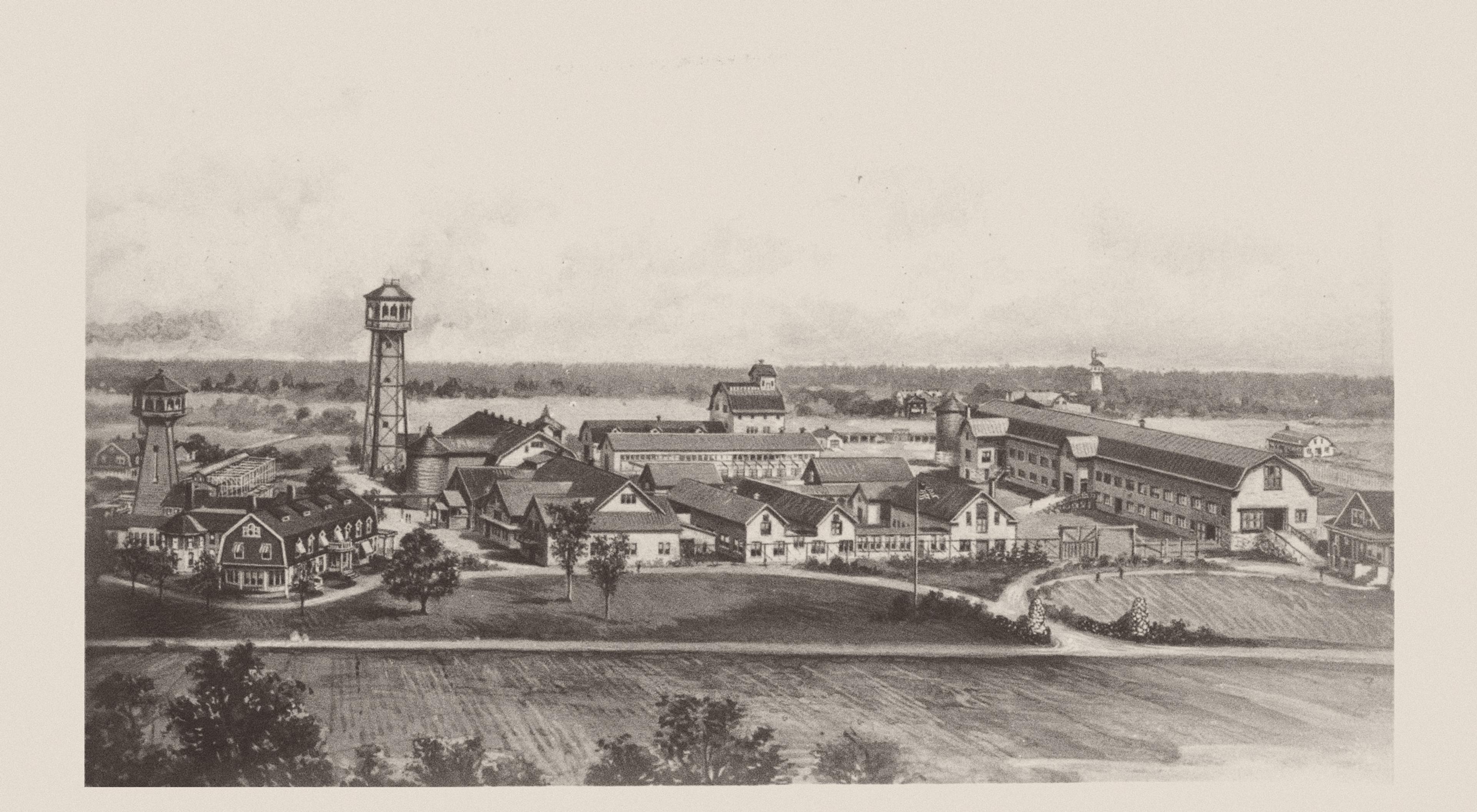
Many people look back on their student days with fondness, but Wanda Emerich finds more reason than most. In the summer of 1983, Emerich interned with the William H. Miner Agricultural Research Institute, a Chazy, New York-based ag organization that embraces hands-on learning and a collaborative approach. “I worked on a project involving the feeding and management of baby goats,” Emerich recalls. “We had a really fun and well-connected group … [I] remain in contact with some of them still.“
Chazy, located a short drive from New York’s Canadian border, was a busy agricultural destination when William and Alice Miner arrived in 1903 — it remains so to this day. There are signs advertising wineries, breweries, pumpkin patches, and berry farms everywhere you look. Chazy Orchards, established in 1920, is the largest McIntosh apple orchard in the world. Come autumn, its parking lot is packed with day trippers eager to stock up on fresh cider, cinnamon-crusted homemade donuts, and apple Blondies. You’ll see street signs, attractions, and public institutions named after the Miners throughout the region.
The Miner Institute oversees education, research, and demonstration programs that optimize the biological and economic relationships among forage-crop production, dairy and equine management, and environmental stewardship. It’s also a working farm, welcoming year-round visitors to explore its expansive horse and dairy barns and summertime flower gardens. But even though it’s one of the principal tourist draws in Chazy, the institute’s main target isn’t casual visitors.
The Miner Institute administers summer internships to students like Emerich, offering placements in farm management, equine management, agricultural research, water quality research, and — in collaboration with the Alice T. Miner Museum — history. It also offers year-long internships in dairy farm management, equine management, and agricultural research for students who have completed their undergraduate degrees.
Chazy and the Miner family were intertwined long before Alice and William moved there in 1903. William’s grandfather purchased a 144-acre farm in Chazy in 1820, and, as an orphaned child, he spent many formative years of his youth on the property. Yet, as an adult, agriculture wasn’t initially on his mind. When William and Alice met in Chicago in the early 1890s, William worked in the railroad sector, netting him his fortune. Alice loved art, history, and music. They may have stayed in the city if not for a family tragedy. Their only child, William Junior, died in infancy in 1902. Soon after, the grieving couple retreated to Chazy.
The industrious William soon oversaw the construction of sheep and dairy barns, henhouses, a gristmill, a fish hatchery, and dozens of other structures on the farm they called Heart’s Delight. At its peak, the farm encompassed 15,000 acres and employed 800 people. William and Alice were also busy building a legacy, which included establishing a charitable trust that provided a permanent endowment to the William H. Miner Agricultural Research Institute, founded in 1951.
According to The Aging Agricultural Workforce, the average age of the American farmer in 2017 was 57.5 years, an increase of 1.2 years since 2012. The Miner Institute is built to help counter that trend, aiming to make agriculture as attractive and accessible a career choice as possible. That’s why the institute’s internships are paid positions, offering students a salary, accommodations, and meals. And the whole program is built on total immersion. Rachel Dutil, Miner Institute’s marketing coordinator, shares that a favorable student-to-staff ratio allows for an intensive, in-depth experience. Students aren’t merely watching the work happen. They’re doing the work, with staff nearby to back them up as needed.
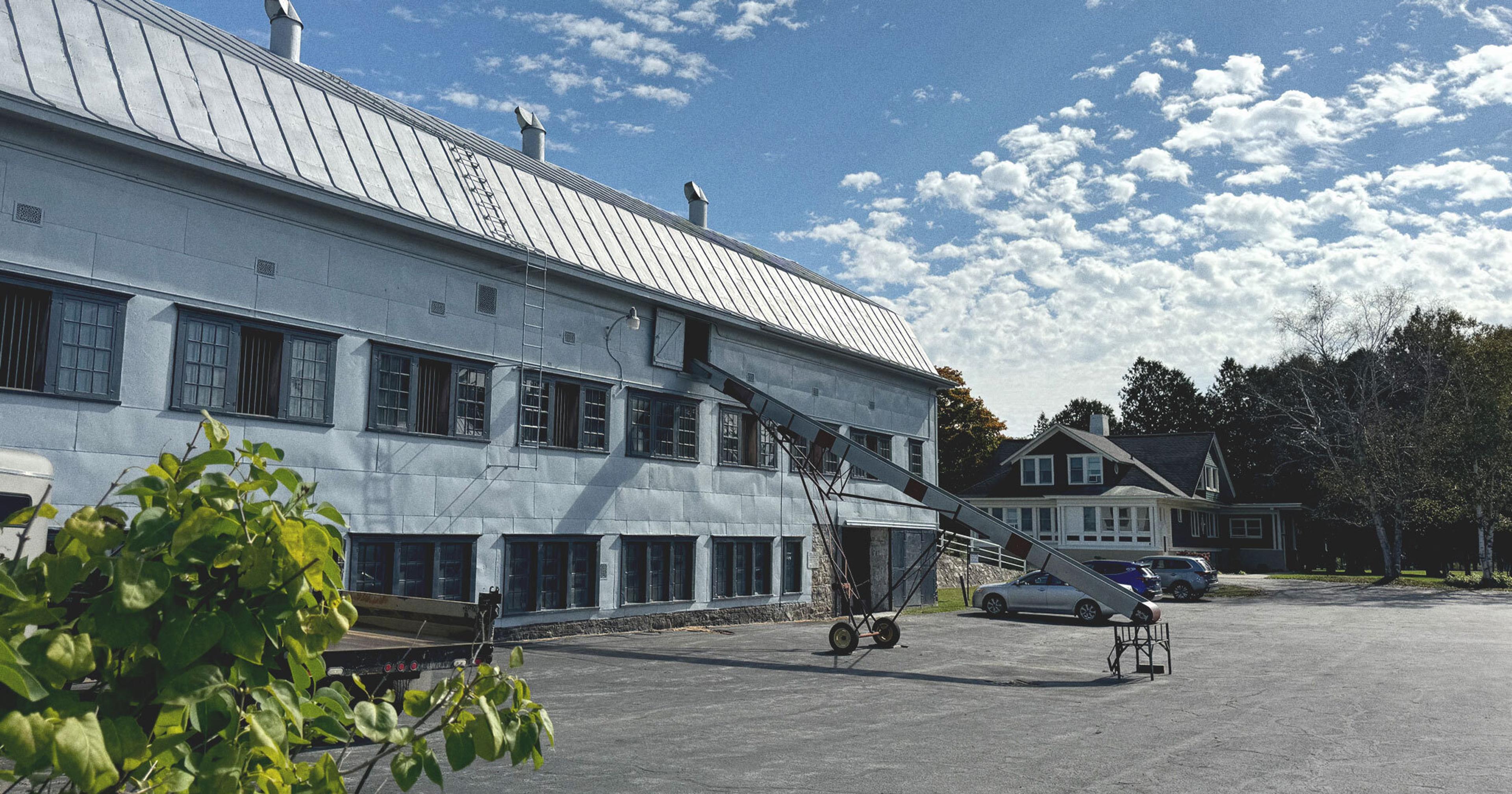
Not your typical agriculture school
Wanda Emerich remembers that approach well: “[My] duties included milking dairy cows, milking dairy goats, feeding calves, heifers, and cows, herd health, driving tractors with forage wagons attached and unloading to an upright silo, picking rocks, working on an independent research project, and preparing a group of dairy heifers to take to the Clinton County Fair.”
Karen Lassell, part of the 1989 cohort, recalls similarly rewarding work, noting that her duties included: “Basic horse farm chores: feeding, cleaning, turnout, moving hay. [We] had lectures during the week to cover topics relevant to the farm, dairy and equine. We worked with young stock to learn how to train them for the basics of leading, picking up feet, wearing equipment, lunging and longlining. We rode the older, more finished horses to practice skills ourselves and keep them fit for show as well as competitive trail riding.”
Not every day went smoothly. “As you can imagine, there were often mistakes made which we took seriously but found that self-deprecating humor was our way of coping with them,” said former intern Katie Ballard. Just how self-deprecating were they? “Every Friday, we nominated the “Miner Moron” for the week … what had each of us done that was worthy of the award. I was the first recipient.” Ballard earned this honor by putting a tractor in a ditch, stymied by a “hitch that was making a funny noise” and loose steering issues. Emerich also admitted, “I received it once for not being able to back up the manure spreader into the horse barn while the whole maintenance crew was watching.”
While this dubiously named distinction has long been retired, former interns clearly cherish the Miner Institute’s dive-right-in philosophy. Veterinarian Victoria Vendetta is one of them. In 2017-2018, Vendetta was a dairy intern. “I attended veterinary school with an incredible amount of hands-on skills and practical knowledge in dairy farming that most of my peers were not lucky enough to receive,” she said.

The Alice T. Miner Museum
The institute’s farm internship program expanded in 2018 when the it joined forces with the Alice T. Miner Museum to administer a history-focused internship. The history intern splits their time between the two organizations and, depending on seasonal needs and the candidate’s area of study, they might research artifacts and acquisitions, develop educational programming, or put their design skills to the test on promotional material. As the museum’s director, Ellen Adams, says: “Until 100 years ago, the majority of people lived on farms. It might not always feel like it, but we are still living in a world that is shaped by the history of agriculture.”
The Miners’ impact isn’t limited to the two institutions which bear their names. The couple was the driving force and the funding source for the Chazy Central Rural School, Plattsburgh’s Physicians Hospital, and Kent-Delord House Museum. But perhaps the finest tribute to the Miners’ legacy is the relationship many of their former interns maintain with the institution which played such a pivotal role in their education.
According to Vendetta, “I still visit the Miner Institute when I am called upon to treat sick cows or horses. Sometimes it feels surreal to think about where I started and where I am now. It’s truly been a full-circle experience.”
On January 13, 2025, a month’s worth of voting commenced to determine whether America’s sod farmers will get their own checkoff. At least in theory.
Several days earlier, Carolyn Sherry, who runs a 1000-acre sod and calf-cow operation in Yukon, Oklahoma, with her husband, Brad, still hadn’t received her ballot in the mail. She was skeptical it would turn up. In fact, she was skeptical about pretty much everything related to a sod checkoff: how legitimate it was for the fescue, Bermuda, and Zoysia grasses their farm grows by seed and sells by the roll; how fair and transparent distributing and counting ballots would be; or the program’s actual utility for sod farmers.
“Our main challenges are weed control and weed resistance to chemicals over time … but we feel like we’re handling our problems pretty well,” Sherry said, referring to the sod checkoff referendum as an attempt at “democracy through bureaucracy.”
“We don’t have any complaints we want USDA involved in,” she added.
Checkoff programs are run by the United States Department of Agriculture (USDA)’s Agricultural Marketing Service and they are a contentious business, as we reported back in 2023. They require mandatory fees from all producers of an enrolled agricultural commodity — 22 in all at the moment, including beef, eggs, and popcorn, with exemptions for Certified Organic. The programs have been challenged in court, most significantly on First Amendment grounds.
“The basic principle argument was that I, as an individual, object to the government requiring me to pay for speech with which I disagree, which in general is not allowed,” explained Harrison Pittman, director of the National Agriculture Law Center at the University of Arkansas. Additionally, certain of the checkoff boards have been accused of fund mismanagement.
Despite the contention in other checkoffs, Turfgrass Producers International (TPI), a trade group representing 350 of the estimated 1,500 sod grass producers in the U.S., has determined that a checkoff will help their industry weather various challenges. They’ve spent the last five years trying to convince their colleagues that a vote for checkoff is a vote for a brighter, soddier future. They’ve already got a slogan, “Keep It Real” — an unsubtle dig on the fake turf industry.
A sod checkoff would extract from every producer a fee (critics call it a tax) of 1/10th of a penny per square foot, or a little over $43 per acre harvested. All collected funds would be earmarked for sod marketing and research and portioned out by an 11-member board. “We used to have auctions and events and maybe we’d raise $75,000, $100,000 in a good year” for those purposes, said Bob McCurdy, a West Tennessee sod and row crop farmer who served on TPI’s board for six years; he grows warm season hybrid Bermuda and Zoysia root stocks planted by a method called sprigging. “That’s not enough to fund anything.”
“We don’t have any complaints we want USDA involved in.”
When checkoff discussions began, he was firmly in the anti camp, balking at what he considered government interference. Eventually, he was convinced that a checkoff would be a big help to American sod farmers, helping the industry as a whole gain greater appreciation among the public and the producers themselves “sell more grass, and that’s pretty important,” he said.
McCurdy believes American consumers have been fed the erroneous notion that natural turf is too water- and chemical-intensive to be environmentally sustainable. He said that has contributed to more urban and suburban landscapers — the biggest purchasers of sod; it’s also used for sports complexes and golf courses — choosing artificial turf. The Sherrys, however, dispute that plastic turf is a threat to their business. They note that a number of municipalities and states have moved to ban fake turf over concerns about heavy metal and PFAS contamination. “The artificial turf problems in California of toxins in the water runoff are taking care of itself,” wrote Brad in an email.
Still, it’s difficult to compare the broad ecological footprint of sod versus plastic turf. A 2024 report prepared for Montgomery County, Maryland, to determine which was preferable for its athletic fields noted that a natural grass field could use 1.5 million gallons of water per acre per year, for example. They also found that artificial turf needed plenty of watering, too, for cleaning and cooling purposes — in addition to the environmental risks it poses to waterways. It’s also a challenge to understand how much of a threat artificial turf truly is to natural grass. Artificial turf was valued at $2.7 billion in North America in 2020; the sod industry was valued at $2.2 billion in 2022, up from $1.5 billion in 2017. Both industries predict increases in sales over the next five years.
To battle what he sees as a two-headed negative force, McCurdy would like for an estimated $14 million in annual checkoff receipts to pay to disseminate the positives of real grass turf: The industry claims this includes carbon storage, oxygen production, and soil erosion prevention. And the negatives of plastic turf: its toxicity, high maintenance requirement, and the need to be replaced. “Most people who put an artificial field in don’t realize that in eight to 10 years they’re going to rip that thing up,” McCurdy said. “Every high school I go to has got a pile of it sitting back there, hoping lightning strikes it.”
“Almost all people irrigate their lawns in an incorrect manner, therefore producing a false image that grass is a heavy water user … The sod checkoff can generate a VOICE that is currently absent.”
An unscientific sampling of the 72 public comments left on the sod checkoff docket before voting started seemed to indicate strong support for the program. Lindy Murff, a Texas sod farmer and TPI board member, wrote, “Almost all people irrigate their lawns in an incorrect man[ner] therefore producing a false image that grass is a heavy water user … The sod checkoff can generate a VOICE that is currently absent.” Derek Tjaden, farm manager for Lawrence, Kansas’s, Sod Shop, felt checkoff dollars could support needed new varieties of sod as well as non-biased field research. In a similar vein, a golf industry representative named Chava McKeel wanted to use checkoff funds “to gather more national, state and local research focused on the value of ecosystem services, smart irrigation, drought tolerance, low-input grasses, etc. that turfgrass provides.” Members of Rutgers University’s turfgrass program were highly in favor of checkoff, as it would give them necessary funds, they wrote, to expand their research to improve sod production and develop new cultivars.
In fact, support of research programs is where the true value of checkoff lies, said Pittman. “I’m in the research and extension part of the university system, and a lot of our budget derives from checkoff programs,” he said. “Frankly, without them, from a land grant university perspective, I don’t see how we would have the incentive to maintain equipment, to maintain land, to maintain research plots, to maintain human resources, without those research dollars coming in.”
There is no shortage of contrary opinions about a checkoff program, though, or the way it would be managed. “I’m against one farm one vote,” wrote someone named William Popek about checkoff referendum procedures that give out one vote per farm EIN number. “If the larger burden is going to be on larger farms to keep this program going, then acreage should be considered.” Anonymous complained that the checkoff would come with “additional procedures to regulate and tax sod growers.” A trade group called the American Sod Farmer Coalition, which appears to have emerged with the specific intent to fight the checkoff, called the program unequal in its benefits, lacking in transparency and accountability, and an “immoral … form of theft.”
At the moment, it’s all but impossible to predict which way the sod checkoff winds will blow. Voting concludes on February 11, 2025. At the time of this writing, the Sherrys had finally received their ballot and would be voting No. Time will tell if their colleagues are with them or against them.
As a 16-year-old spending her summer working at a ranch in Estes Park, Colorado, Amanda Mills was already familiar with horses, but there was something different about Cricket. Others cautioned her — calling the horse standoffish, skittish. Cricket wasn’t as trusting as some of the other horses at the ranch.
Then Mills noticed a brand on Cricket’s neck, something she’d never seen on a horse. Other ranch employees told her that wild horses receive a brand from the Bureau of Land Management (BLM) when they are removed from the range. Cricket had been born wild.
As the weeks went by, Mills worked to build trust, something that took time and a gentle hand. By the end of the summer, Mills and Cricket had an undeniable bond. Mills took Cricket back to her home in Texas, where they competed together in high school rodeos.
That was in 2000. Nearly 25 years later, Mills is the marketing and operations director at Forever Branded, a nonprofit that helps make wild horse and burro adoption more attainable for the average equestrian, helping BLM-gathered wild horses find their forever homes.
“When I brought Cricket home 24 years ago, I had no idea of how that would change the whole trajectory of my life,” said Mills.
Forever Branded is one of five organizations that all together will receive $25 million over five years from the BLM. The goal of this funding is to help whittle away at the bottleneck of horses and burros that live at BLM holding facilities — over 60,000 animals — stuck in limbo between being wild and finding a secure domestic home. The BLM estimates this award can help place an additional 11,000 horses and burros.
“We are coming at this huge issue, having lived it for a very long time,” said Mills. “We have all seen the good, the bad, and the ugly of everything that has come before, and we’re doing our best to address the problems we know exist.”
The Wild Horse Dilemma
Ten states in the western U.S. have wild horses roaming the range in herds, while five have wild burro populations. The Bureau of Land Management has been tasked with managing the populations of these herds since 1971, when Congress passed the Wild Free-Roaming Horses and Burros Act.
Wild horses and burros reproduce quickly, and predators don’t curb the growth of the population enough. As of 2024, the BLM estimates that there are 73,520 horses and burros in the wild, up from approximately 25,000 in 1971. Each herd management area (HMA) has a BLM-designated population threshold that the area can accommodate. The total threshold across all herd management areas (HMAs) is currently 26,785, meaning there are over 46,000 more horses on the range than the BLM estimates the ecosystem can sustain. A large population can damage rangeland, or outcompete livestock and other wild animals, resulting in depletion of resources and even starvation.
It’s common for state, federal, or Tribal governments to manage wild animal populations. For example, the U.S. Forest Service manages feral cattle with aerial gunners. However, because of wild horse and burro protections, hunting isn’t an option on federal land. And unlike other animal populations that get out of control, like deer, horses can be domesticated.
And so the BLM routinely rounds up wild horses, holding them at facilities until they can be purchased or adopted.
Former wild mustang Remi with trainer Sophia Jasmer Leyenda
·Joan Deutsch
Some animal advocates have taken issue with wild horse round-ups, or the idea of interfering with wild horses at all, since the stress of the horse gathers can cause animals to panic, risking injury and even death. And despite the BLM’s intention to adopt out the horses, some have fallen through the cracks and ended up in slaughterhouses.
Nancy Perry, senior vice president of government relations for the ASPCA said that “some form of management does seem inevitable and necessary to protect these animals.”
The ASPCA vision for wild horses hinges on increasing fertility control, in conjunction with strategic gathering and rehoming of wild horses and burros. Expanding the use of immunocontraceptive vaccines would still require gathers to administer the treatment, but those horses receiving the contraceptive would not be permanently removed from the range. If individualized fertility control programs could be instituted in each region, it would curb the population growth, slowing or eliminating the need for regular horse gathers said Perry — which are risky for horses and expensive for the BLM and taxpayers. Without fertility control on the front end, Perry said the cycle will continue.
“This non-preventative approach will not work. It will just continue to be a spiral of round-ups, removals, harm to horses, harm to landowners, harm to the range, without getting out in front of the problem,” said Perry.
While Perry and the ASPCA are part of those working to end the “spiral” of round-ups, those like Mills of Forever Branded are focused on the other end of the pipeline — removing the barriers to wild horse adoption, and helping equestrians see the potential in these horses.
“You can’t just go in and cowboy the wild out of them. You have to be patient. You have to take your time.”
Forever Branded will use its award dollars to forge partnerships with trainers across the country to gentle horses and pair them with an adopter, easing the transition from the trainer to the new home. It will also create partnerships with private adoption centers in parts of the country that don’t currently receive many wild horses. They will showcase newly trained horses at their Branded Bonanza event, where adopters can see what a trained mustang can do once gentled.
While wild horses have become a cultural symbol, burros often don’t get the same attention. Forever Branded also works with burros, so they can be ready for their domestic life. Mills said her burro is not only a valued companion animal for her, but was her son’s first riding animal, instrumental in getting him into the backcountry at a young age.
Though people can purchase or adopt wild horses or burros directly from the BLM, a major obstacle is that these animals have not been trained for domestic life. The awarded programs create an intermediary step for the horses, one where the horses can work with trainers to be gentled, and transitioned more effectively into long-term homes. The risk of an unaided transition is that the horse and owner don’t click, and the horse can end up back at auction, opening up opportunities for the horse to be put in harm’s way.
“You can’t just go in and cowboy the wild out of them,” said Mills. “You have to be patient. You have to take your time.”
Gentling the Horse
When Joan Deutsch was looking for a new horse for her husband, an acquaintance suggested looking at mustangs. Living in western Washington, they found Remi, a mustang from southeastern Oregon, through Mustang Yearlings Washington Youth (MYWY), a program where trainers spend 150 days gentling a Mustang. MYWY may receive $500,000 over five years.
“We took things slowly,” said Deutsch, now a MYWY board member. “Mike, my husband, worked with him daily … then our trainer and I started working with him to gain his trust. Remi is the smartest, calmest, most expressive and communicative horse we’ve ever had in 40 years.”
Adopted wild horse Remi in action
·Joan Deutsch
Within the equestrian community, the subsect who love wild horses are enthusiastic — but those who are new to the idea of buying one can take some convincing. Joseph Burtard, executive director of Meeker Mustang Makeover in Colorado, said that he never really gave mustangs a chance — until he unknowingly acquired one and found her to be one of the smartest horses he’d ever owned, surefooted and dependable in the backcountry. Now, he’s trying to recruit folks to the program who similarly have overlooked the potential of wild horses. Meeker Mustang Makeover could receive nearly $700,000 over five years.
Burtard’s organization is a nonprofit that supports mustang training through an annual competition. Every year, people who want to train a horse sign up to receive a BLM mustang. In spring and summer, they spend 120 days with the horse, gentling and training. At the end of the summer, the Meeker Mustang Makeover is a competition, wherein trainers show off what the horses can do — after being purchased they may work with cattle, be ridden for pleasure, and more. Though the number of horses per year hovers around 35, the purchase rate is 100%.
Burtard believes programs like Meeker Mustang Makeover can be a good platform for building relationships across different sides of the wild horse issue.
“There’s a lot of wild horses, and removing wild horses from their herd is a very political thing. I think programs like this allows us to find some common ground … this is just the beginning for these wild mustangs.”

There is a mound of concrete shaped like a Hershey Kiss buried in the middle of Clayton Rosenberger’s corn and soybean fields in McClean County, Illinois.
Bolted to the tip of the Kiss, around ground level, is a wind turbine. After watching the construction of the turbine from his porch over eight months, Rosenberger was amazed by the efficiency of the process. The bottom of the concrete Kiss rested 12 feet below the ground’s surface. The dirt removed to make the hole for the Kiss is poured and packed up to its pointed top, at the junction with the turbine, so it appears sprouted from the ground when Rosenberger looks out over his fields.
The single turbine takes up about two-thirds of a football field of land, including the ground-covered concrete and surrounding gravel, or 0.1 percent of Rosenberger’s 1100-acre farm. With a blade position at 12 o’clock, the turbine stands at 499 feet tall, one foot shy of the county’s height limit.
The turbine began spinning four years ago, and with each rotation, Rosenberger makes money. “I’m a self-employed farmer. I don’t have a 401-K,“ Rosenberger said. ”I don’t have a retirement plan, but now I do.”
More than 90 percent of the land-based wind turbines tower over private agricultural land. In 2000, there were around 14,300 turbines operating across U.S., Guam, and Puerto Rico. In 2010, the number more than doubled to 36,000 turbines. By the end of 2024, 74,695 turbines dotted the country.
The energy generated by wind has grown at an even faster rate, now that turbines are taller with larger blades, with higher capacity for energy conversion. Between 2000 and 2023, annual capacity for wind energy jumped 65 times, from 0.1 gigawatts to 6.5 gigawatts. Over the last 25 years, the industry has generated a cumulative 150 gigawatts of energy across the U.S.
Money is clearly the main reason that farmers have leased land to wind companies in the last three decades, said Julia McPherson, community relations manager for wind company EDP Renewables, who owns the turbine on Rosenberger’s land. Contracts with wind companies provide a regular income “to help hedge against the ups and downs of agriculture,” McPherson said. “It really helps keep family farms in families.”
On average, farmers who add turbines to their land make between $8,000 and $33,000 per year, according to a report by the USDA that looked at wind energy costs between 2011 and 2020. In another study, the same USDA researchers found that between 2012 and 2017, 94 percent of farmland remained agricultural in its primary use after a turbine was placed on the property.
John Dollinger of Grundy County, Illinois, has 10 turbines spread across his family’s 800 acres of farmland. A wind company started paying him an annual $10,000 per turbine around a decade ago when the contracts were signed. The annual pay goes up with the consumer price index each year — now, each turbine brings in around $12,000 per year.
“I’m a self-employed farmer. I don’t have a 401-K. I don’t have a retirement plan, but now I do.”
But despite the money, and despite the ability to continue farming, not all farmers and their neighbors are on board with wind energy. Wind is a hyperlocal issue, popular in some communities, opposed in neighboring ones; championed by some farmers, but garnering indifference or distrust from others. While some like Rosenberger and Dollinger view it as a financial safety net, increasing the value of each acre of their farm, others see wind turbines as an imposition, a detraction from the hard work they’ve given to their land.
In Pershing County, Nevada, alfalfa farmer Randy Scilacci would be quick to turn down a wind company, should they approach him. “No, I’ve worked too hard to get to where I am at to let somebody do something like that.”
Over his three decades of farming, he’s watched wind and solar get “pretty big here, out West.” His area of Nevada is more prone to solar projects, but he turned down the only solar company that contacted him.
His main concern — what “scares me more than anything,” he said — is the trend of losing precious farmland. New construction in rural areas is partly to blame. But wind and solar, Scalacci said, are part of this problem.
Every access road, every cement base around a turbine, removes cropland, he said.
“You’ve only got so much farm ground, and there’s 1% of the population that feeds the rest of the country, and you go taking that stuff out, then you’re putting more pressure on the farmers that are farming to do more,” Scalacci said.
In addition, wind companies rely on federal subsidies, Scalacci said, and without the subsidies, he can’t imagine how the business of wind would be profitable.
What “scares me more than anything” is the trend of losing precious farmland.
The Inflation Reduction Act included tax incentives for wind projects, which ended in 2024. President-elect Trump has opposed wind energy, and has said recently that he would not subsidize new wind farms and does not “want even one built” during his time in office. His pick for the Department of Energy, Chris Wright, CEO of oil and gas company Liberty Energy, has denied the existence of climate change and stated that we are not in an energy transition in a video posted to his Linkedin page.
Farmers and rural landowners who don’t like wind turbines are often concerned about noise and shadows, McPherson said. Others find that turbines interrupt the idyllic view. The increasing height of turbines also gets brought up, she added. In the Midwest, farmers worry about construction damaging their drain tiles or compacting soil.
There has always been opposition to wind, sometimes in an organized fashion, other times just a general negative sentiment or reticence, said McPherson of EDPR. Those concerns are not new.
But “with the way that political tides have shifted, it’s become much more of a partisan issue” in the last decade or so, McPherson said, even though the company experienced record growth under President Trump’s first term in office.
Over a dozen House Republicans asked Speaker Mike Johnson to not gut the Inflation Reduction Act in a letter sent in August 2024, pointing out how much economic investment by clean energy manufacturers helped their rural districts.
“With the way that political tides have shifted, [wind energy has] become much more of a partisan issue.”
McPherson said wind energy injects millions of tax dollars into a local government with a “lighter touch” with “way lower intensity” than, say, an Amazon distribution center or a factory, which take up more land and changes the community.
One state to the east of Rosenberger’s turbine, in Rush County, Indiana, Michael Dora’s farm sports no wind turbines. This, despite Dora signing a lease with a wind company nearly seven years ago.
Dora, now Indiana director of the non-profit renewable energy advocacy group Farm-to-Power, still gets worked up when explaining why the lease never led to a turbine standing tall above his grain fields and herds of livestock.
The opposition to wind energy was fierce in his county. Neighbors who lived tens of miles away from his farm expressed concern at public hearings about wind companies moving into their county. They brought up how the turbines would change the landscape or could mess up drainage on neighboring farms. Leaders waffled under the pressure, Dora said. The wind company eventually abandoned the project, voiding existing contracts with Dora and countless other landowners. Afterwards, the county imposed a moratorium on future wind projects.
Wind turbines tend to generate fear and misinformation in communities, said Insurance Commissioner Glen Mulready of Oklahoma.
“There may be reasons you want to oppose a wind farm here in your county or in your area, but insurance isn’t one of them.”
A misconception that Mulready often hears from Oklahoma farmers and rural neighbors is that a turbine would prevent them from obtaining homeowner insurance. This is untrue, Mulready said at a meeting in Lincoln County, Oklahoma in June, and later repeated to this reporter.
In fact, in 2011, Mulready pointed out that Oklahoma passed a law requiring wind companies to add the landowners to the company’s insurance policy. This provides another layer of protection to the farmer, he said. “So they get more coverage than your regular homeowner,” Mulready added.
After a turbine failure or fire, which happens to between 1 in 2,000 and 1 in 7,000 turbines but is thought to be underreported, insurers might pass off the cleanup costs to the wind company as a liability claim, Mulready said. But the farmer wouldn’t see any of that behind-the-scenes accounting.
“Look, there may be reasons you want to oppose a wind farm here in your county or in your area, but insurance isn’t one of them.” he said.
Disruptions to farming operations is a top concern for farmers about wind turbines, said Sarah Mills, associate professor of practice in urban and regional planning at the University of Michigan. Mills conducted a survey of farmers in Michigan regarding wind energy between 2013 and 2014, back when the average wind turbine stood around 400 feet tall. (Now, turbines average 550 feet from the base to the tip of the top blade.)
Soil could get compacted, and drain tiles might get broken, when the large cranes walk turbine pieces across the land, the farmers said. Fires or lightning strikes to the turbines might damage a batch of crops, such as the fire at the Eight Point Wind farm that littered fiberglass across hayfields in West Union, New York. Older turbines might need to be removed after decommissioning. That said, all of these should — and often are — covered in a wind contract, so farmers are compensated for farming disruptions and lost crops.
“I think part of it is they were just a little jealous that they don’t have one.”
Neighborliness is another concern, Mills found. Some farmers worried about becoming unpopular with neighbors if they sign on to a wind farm. Wind energy is more contentious in areas where aesthetics are valued higher than land productivity, such as in Michigan, where one is always within six miles of a body of water, Mills found.
Payment models can help smooth — or exacerbate — tensions.
Farmers are paid in two ways, Mills explained: a fixed rate for having the turbine on their property, or a percentage of the money made by selling the electricity to the grid. Some leases are a combination of the two payment types.
But other payments may be made to landowners near the turbines, a “participatory payment” as a thank you for the eyesore that turbines are sometimes considered to be. Other neighbors might also receive a one-time construction payment during the months of digging, pouring of cement, and trucking of equipment to and from the turbine site.
Another factor is the decreasing number of newer, larger turbines needed for each wind farm. Fewer people get big payments, Mills noted, but more people are affected by the taller towers. Even with neighborhood payments included in the leases, Mills does not think that leases are adapting to the trend of larger but fewer turbines.
“I think this kind of [lease] model not evolving, is creating more haves versus have nots,” Mills said.
So, it’s often the case that farmers who stand to gain financially from a wind project tend to be quiet about their decision, Mills noted in her research study.
Jealousy may play a role. In central Illinois, Rosenberger heard notes of disappointment masquerading as opposition from neighbors whose farms were not considered for the wind farm. Some had land too close to the town, while others just were not located in the windy plains of the region. “I think part of it is they were just a little jealous that they don’t have one,” Rosenberger said.
“It’s a good thing all the way around. I know some people probably don’t like it, but they’ve gotten used to it.“
Wind turbines also do not uniformly benefit farms, Mills found in her research. Typically, larger agricultural farms benefit more than smaller enterprises — a common outcome in the farming world.
Companies need around 80 to 100 acres around each turbine to catch enough wind to be profitable. But it’s best to align wind turbines across many hundreds of acres in order to catch the best wind dynamics, so having access to more land is better for the companies.
In one rare example, small farms in northern Michigan banded together to craft a revenue-sharing wind contract that suited their community. Every acre involved in the community wind farm — regardless if the landowner hosted a turbine — got paid the same per acre rate, according to reporting by Reimagine Rural. The farmers would also get a share of the profits should the wind farm turn out to be more profitable than anticipated. They shopped the contract out to wind companies. The Isabella Wind Farm started operating in 2021.
Rosenberger’s farm on the prairies of central Illinois had the three ingredients necessary for a wind turbine: access to wind, a nearby connection to the grid, and no environmental restrictions. That is why EDPR approached him.
At first, Rosenberger and his wife did not want a wind turbine on their land. They did not like the look of them. And what would it sound like, they wondered? They took a trip down to a wind farm 25 miles or so south and parked their car beneath a turbine close to the road. The faint whooshing with each rotation was much quieter than they thought it would be. “Well that ain’t that annoying,” Rosenberger said he thought at the time.
Then Rosenberger learned that the neighboring farms on which he worked and plowed, but did not own, would be getting turbines. If his daily life was going to include the four turbines for him to plow around on these other farms, why not a fifth on his own land?
The finances sealed the deal for Rosenberger. He would lose roughly an acre and a tenth from his 1100 acres of farmland, but the turbine would make up that money and more. He was the last landowner to sign the lease for his area’s wind farm.
Four years later, Rosenberger doesn’t even notice the turbine any more. If he’s sitting on the patio in the evening, he can hear a faint whoosh sound of it spinning, which increases to a small aircraft taking off on the windiest of days. The blades throw shadows over the yard during certain times of the year, but he lives too close to the tower to notice the red light flashing.
He can square up his plowing around the turbine base. And he doesn’t worry about lightning strikes, even though three nearby turbines have been struck over the years. EDPR, which leases Rosenberger’s land, would compensate him for the damage.
The township of just six square miles and 300 residents is benefiting from the taxes as well, Rosenberger said. When he was a township official, prior to the wind farm coming into the area, they could barely make ends meet. Now, new fire trucks drive on repaved roads.
“It’s a good thing all the way around. I know some people probably don’t like it, but they’ve gotten used to it. I think because you just don’t hear any rumblings in the neighborhood about them.”

You know the little raincloud that hovers above a character’s head in a cartoon? For someone who works on how to use genetic engineering to tackle climate challenges, that raincloud is Roundup Ready crops. When engaging diverse audiences about genetic engineering for creating climate-resilient traits like drought tolerance or disease resistance, the first question is frequently, “But what about Roundup?” Frustratingly, this response is often from colleagues with whom I share common goals like restoring soil, improving water quality, conserving biodiversity, and reducing waste.
One of the first genetically engineered products to enter the market, Roundup Ready crops contain bacterial DNA that makes the plants tolerant to the herbicide glyphosate (commercially known as Roundup). Leaving aside technical arguments about the pros and cons of Roundup Ready, this application of genetic engineering has gained an overwhelmingly negative connotation among environmental advocates, in large part due to controversy over potential health and environmental risks of glyphosate and dislike of the company that launched it — Monsanto.
Within the context of the contemporary environmental movement that fought against the use of synthetic chemicals and the control of large corporations, the pushback against Roundup Ready crops is hardly a shock. But not all genetic engineering follows the trajectory of Roundup Ready.
Case in point is the Rainbow papaya, which was developed around the same time as Roundup Ready. Papaya ringspot virus (PRSV), a devastating disease, was ravaging Hawaiian papaya in the 1990s. With considerable financial support from the U.S. Department of Agriculture, scientists generated resistance to the disease by inserting a gene from a mild strain of the virus into the papaya genome. These engineered papayas resist the virus without any chemicals, and instead of being commercialized by a company, they were originally placed under the control of a group of Hawaiian papaya growers. Released at no cost in 1998, the Rainbow papaya comprised 50% of the area used for commercial papaya by 1999 and 77% by 2009, saving the Hawaiian papaya industry.
Or consider more recent examples. Genetically engineered blight-resistant potatoes were developed by inserting genes from potato wild relatives into the genomes of cultivated potato varieties. These engineered potatoes could drastically reduce the amount of fungicides currently sprayed to keep blight at bay. Genetically engineered drought-tolerant wheat, first approved for cultivation in Argentina in 2020, could be crucial for climate resilience of one of the world’s most significant crops. Genetic engineering of crop wild relatives or underutilized crops can even help expand crop diversity, an important strategy for reducing vulnerability to climate shocks.
It would seem that environmental activists and organizations would be natural allies of approaches that could decrease pesticide use and improve agricultural sustainability. However, often biased by their negative views on Roundup Ready, these groups have tended to be some of the most outspoken against genetic engineering technology as a whole.
Concerns associated with Roundup Ready calcified into an ideology that stretches far beyond the specific product into a blanket rejection of all genetic engineering, largely under the misguided presupposition that it goes hand-in-hand with chemical use and corporate control. Over decades, despite notable efforts to mend this perception, it has been a challenge for scientists and advocates to persuade others to separate the technology of genetic engineering from one high-profile and controversial example of its use.
It would seem that environmental activists and organizations would be natural allies of approaches that could decrease pesticide use and improve agricultural sustainability.
Even though glyphosate is used in massive quantities without genetically engineered crops in places like Europe; even though Monsanto’s other main product of genetic engineering was designed to reduce pesticide use through insertion of the “Bt” insect-resistance trait; and even though GM crops have been developed that have nothing to do with synthetic chemicals or large agribusiness involvement, the ideology is entrenched.
Today, as many in the environmental space embrace the “regenerative agriculture” movement, it is troubling to see stale anti-genetic engineering rhetoric repeated, once again setting up a false dichotomy between this technology and environmental restoration. As many within the movement will agree, there is no one definition of regenerative agriculture. But anti-genetic engineering stances that reinforce the narrative of chemicals and corporations permeate the rhetoric of leaders in the space.
Take, for example, the well-known regenerative agriculture nonprofit Kiss the Ground, whose website advises: “Corn, soy & potatoes are commonly produced with GMOs, so it’s best to avoid these products unless you see an organic, regenerative, or non-GMO verified certification.” Digging one layer deeper, Kiss the Ground lists The Non-GMO Project, an organization sworn to fight against the use of all genetic engineering in agriculture, as a key partner in their advocacy coalition. The Non-GMO Project states bluntly: “GMOs are a direct extension of chemical agriculture and are developed and sold by the world’s biggest chemical companies.”
With genetically engineered crops already in fields and in the development pipeline that can enhance crop diversity, decrease dependence on fertilizers and pesticides, improve water management, and increase climate resilience, sweeping rejections of the technology appear counterproductive to achieving the goals of regenerative agriculture. It sounds a lot like, “But what about Roundup?” to me.
We have been conditioned over decades, long before genetic engineering became a technical possibility, to see the future of agriculture as an either/or scenario — either we accept “technosolutions” and detach from our connection to the land or we condemn these innovations as a signal that we value our role in ecological processes.
Climate-resilient agricultural transformation will require a convergence of knowledge, not further polarization and exclusion.
This divide was exemplified in the lead up to the 2021 UN Food Systems Summit, when many NGOs boycotted the event because they felt it revolved too much around “high-tech” solutions, including genetic engineering, presented by corporate actors. A prominent critique argued that instead, strategies “rooted in food sovereignty and agroecology” were the path forward for transformative change.
This is a false choice. Climate-resilient agricultural transformation will require a convergence of knowledge, not further polarization and exclusion. Lasting impact will result from combining diverse strategies to achieve common goals.
We need to liberate the conversation about future uses of genetic engineering from stagnant ideology, prioritize evidence-based outcomes, and ensure that farmers can access the tools they need to protect their crops while protecting the planet.
Maybe if we work together, the cartoon rain cloud will become a productive sun shower, bringing context and insight to the discussion of crop genetic engineering, while also cultivating new innovation.
Note: The views expressed in this article are solely that of the author and do not necessarily reflect the views of the author’s organization.
When Natasha Crawford grows her mustard greens, garlic, and squash in a quarter-acre plot 23 miles south of Richmond, Virginia, she’s taking part in something bigger than her own hobby farming.
A restaurant health inspector by day, Crawford signed an in-kind lease of the acreage on the Petersburg Oasis Community Farm as part of a more expansive vision for Black farmers in the state: This site acts as an incubation program organized by the Central Virginia Agrarian Commons (CVAC), a non-profit seeking to bolster the area’s food systems by turning land over to Black farmers. Farmers can lease a plot of land here, as Crawford did with her Healing Hope Urban Gardens.
“It’s really hard for small, independent Black farmers to try to do things on their own, and try to purchase land and not really have the support that I feel that you would need,” said Crawford.
The CVAC launched in 2022 after white Amelia County residents Callie and Dan Walker donated an 80-acre portion of their farmland as a form of reparations. The Walkers, who stopped farming on that acreage once it was donated, realized the land housed a plantation on it until the 1960s, when Callie’s father bought the property and tore down the house.
The Walkers signed a deed of gift drafted by Agrarian Trust, an Oregon-based national land trust working to advocate for collective land ownership and stewardship through multiracial coalitions. The deed permitted the CVAC to take complete ownership of the land, which doesn’t yet have any Black farmers toiling the soil.
Crawford works on the Petersburg plot while the Amelia County property has yet to invite farmers onto its land. In a way, the Petersburg site acts as a training ground for farmers who have their sights set on a bigger plot at Amelia.
First, the CVAC has to build a retreat-slash-bed-and-breakfast building that will together house around 16 farmers, in order to “allow for folks to have a place to say and to also have an educational opportunity and learn how to farm,” said Duron Chavis, a founding board member of CVAC based in Richmond.
Each farmer can receive a lease for the land based on their needs, Chavis added, noting that CVAC is seeking to acquire more land to “replicate the model … and to ensure farmers can farm without going into debts.
Each farmer will receive a lease for the land based on their farm enterprise needs, Chavis said. “Our goal is to connect urban and rural agricultural enterprises that have been created by BIPOC community members to facilitate long-term alternatives to land access.”
“I’ve seen how we have limited access to capital to purchase land, so it made a lot of sense to try to figure out how we lock that in so that we can establish that long-term land tenure.”
The property will eventually become a multi-functional space where Black farmers can live, work, and grow their agricultural enterprises without debt. But farmers will need to pay for their own business expenses, Chavis clarified.
“While we received the land we did not receive any funding or anticipate any funding to invest in the farmer business or to subsidize their farming endeavors,” he said.
Construction is expected to be completed by early 2026.
Chavis views the Petersburg farm as a starting point for BIPOC farmers who may be interested in low-cost or in-kind leases that will soon be available at the Amelia County acreage. As an example, Crawford doesn’t pay for her lease but instead will soon help the CVAC by managing a greenhouse that’s under construction.
This is an opportunity that Chavis said is vital for marginalized farmers in Virginia, if not the entire country. “As someone who has spent years farming in urban environments, I’ve seen how we have limited access to capital to purchase land, so it made a lot of sense to try to figure out how we lock that in so that we can establish that long-term land tenure,” he explained.
The CVAC is part of a growing movement of young Black Americans advancing the idea of reclaiming land that has been lost or stolen. Of all private U.S. agricultural land, white Americans account for 96 percent ownership, according to the USDA. At the peak of Black land ownership in 1910, Black farmers owned 14 percent of the country’s farmland, a notable accomplishment less than five decades after slavery was outlawed.
In a statement published by the American Farmland Trust, the organization outlines how Black, Indigenous, and farmers of color have been “subject to discriminatory federal, state, and local policies and practices, from being denied land ownership in the early 19th and 20th centuries, to receiving fewer government loans compared to their white counterparts.”
Healing Hope Urban Gardens
Today, Black farmers can still encounter troubling reminders of a violent past. “When we approached the county to rezone the land to make it more amenable for us to build housing, members of the community in Amelia County were very racist towards this project,” Chavis recalled. “They expressed things like how they didn’t want to have strangers living in proximity because they like to walk around their neighborhood. That type of dog whistling around Black farmers coming onto this land to farm was an example of the type of hostility that exists in rural communities.”
What the CVAC has accomplished should act as a blueprint for other states, said Kenya Crumel, director of the Black Land and Power sector at the National Black Food and Justice Alliance. “Many other marginalized groups in this country have received some form of reparations, but we’re the sole group that is told ‘Move on, sorry, you don’t get any reparations.’”
That’s not entirely accurate. In August 2024, the Biden administration announced it would begin distributing millions of dollars in relief checks to farmers who have experienced discrimination in farm loan programs. More than 43,000 individuals will receive payments ranging from $10,000 to $500,000. Also, more than 20,000 farmers and ranchers who were unable to secure loans due to discrimination will receive between $3,500 and $6,000.
Tyrone Cherry, a Black farmer who runs the youth farm component of Petersburg Oasis, appreciates the immense potential for what CVAC is aiming to do. “I’ve seen how farmers teach others about equipment to use, the skills they can apply to their crops, and it’s that intergenerational learning that is helping engage young farmers here,” he said.
He said young farmers gain valuable experience learning not just the hands-in-the-soil approach to farming but also the business side of it. “Because we bring our fruits and vegetables to farmers markets, we’re teaching them about the connection between food and community,” Cherry said.
Crawford points out how the CVAC projects can have a ripple effect that go beyond influencing the trajectory of Black farming opportunities. “It’s not just going to benefit Black and brown communities,” she said. “At no point has any farmer ever said they’re only going to their veggies for underrepresented groups. They’re going to grow them for whoever wants them.“

My Montana looks like Yellowstone’s. Wide blue skies churn clouds the size of small cities; cowboys gallop through the sage to turn wayward calves; snowy mountains glow pink in last light.
My white-mustachioed father dons silk neckerchiefs and Stetsons. Once, at the Bozeman airport, he got asked if he was an actor on the show. Like the fictional Duttons, we ranch not far from that city swelling with money and outsiders.
America’s favorite TV show holds themes familiar to any Montanan. Yellowstone is the story of a family struggling to hold onto an old way of life in the face of rapid change. The Duttons fight to protect their beloved piece of Montana against outside forces that threaten to sully, steal, sell it off.
In a ballooning, changing Montana, our worries have a national audience. So why do I, like so many Montanans, feel allergic to the show?
For instance, I’m not convinced that Yellowstone is fueling a population boom that recreates the very changes and land loss combated in the show. This did play out in pockets of Montana where tensions swirled between film crews and locals. Yellowstone brings tourists, and surely some fans have decided to settle here after a visit. But there are much larger factors at play behind Montana’s population boom — COVID, remote work, high retirement rates. Boise, Idaho, is experiencing similar growth to Bozeman, after all.
Nor am I turned off by the show’s politics. My mom, an Eastern Montana farm girl turned progressive organizer, nearly growls over the image of ranching as macho, conservative, violent. I’d argue that Yellowstone’s politics aren’t that cut and dry. Look at the show one way, and Montana does seem like the last best place for masculinity and self-reliance. Squint a little differently, and it’s an opus against greed and environmental destruction.
And yet whenever I remembered that I was supposed to write this piece, I got itchy over the idea of watching Yellowstone. Instead, I talked to other Montanans about the show. I started noticing a pattern, and with it, an aversion that predates Yellowstone’s first pitch meeting.
*
Caitlin Dutiel works on our ranch, moving cattle on her mustang, Walter. Caitlin is the ultimate horse girl. She grew up out East riding English and participating in equestrian vaulting (gymnastics on a moving horse). She fell in love with the idea of the West through advertisements and TV shows. She wanted to know if the images were real, and ended up falling in love with the actual Montana — and an actual cowboy.
Six years ago, Caitlin adopted Walter at a government auction. She picked out a kind-eyed bay in a sea of never-touched mustangs.
Despite her experience with horses, she wasn’t the first to pet Walter. She gave $100 to an experienced mustang trainer to slowly work up to touching him. Caitlin gained Walter’s trust, bit by bit.
On Yellowstone, Kayce Dutton ropes a stallion out of a herd of wild horses. He bridles the mustang and loads him into the horse trailer. Caitlin, who took over a month to first bridle Walter, was incredulous and gave up on the show.
*
My sister Brady watches Yellowstone. She’s blonde, a spitfire, and a tireless public defender. I call her “The Beth Dutton of Justice Reform,” a characterization she loves — she’s a strong female character who likes strong female characters.
When she first started watching Yellowstone, Brady texted fact checks to a non-Montanan friend. In one scene, a cow struggles to give birth, and the cowboys put on gloves to help. My sister has been the night calver on our ranch (I wrote about night calving here.) She informed her friend: “Only little bitches wear gloves when pulling calves.”
*
My friend Josh “Fuzzy” Pallister gave up the show over a different inaccuracy. Fuzzy chases mountain lions in the peaks surrounding our valley. He’s a Montana renaissance man; his fingers resemble sausages from building cabins and cutting up countless elk. Fuzzy fattens calves to slaughter — he quit Yellowstone when a few alfalfa bales killed off hundreds of cows.
*
A shibboleth is a word that marks an outsider by their inability to pronounce it. In New York, it’s how you say Houston Street (think how-stun); in New Orleans, it’s Tchoupitoulas Street (chew-op-olis? I’ll never get that one down).
A few summers ago, some Brooklyn friends rented an Airbnb on the Rocky Mountain Front. They called me — the resident Montana whisperer — to go over their plans for staying in Choteau. The name rolled off their lips with a delicate French pronunciation. They sounded like they were headed out for croissants on the Riviera, not to a landscape where joggers carry bear spray in case of grizzlies. I interrupted: “It’s pronounced show-dough.” I made them practice until I was satisfied they wouldn’t be laughed out of town.
Montana has a long, complicated relationship with outsiders. We share what generation we are early on in conversations (conveniently ignoring the thousands of years of human history that precede our family’s 1864). We’re a tourism state that calls itself The Last Best Place. The beauty of Montana’s wildness holds a funny tension: The allure of its long, empty landscapes is sullied by too many people standing in the frame.
And so Montanans bristle over the tourists who fuel huge sectors of our economy, and over newcomers who love the view, but don’t quite understand the place. When Montanans talk about the population boom, they often wonder out loud if a cold snap might change the newcomers’ minds, as if Californians could be frozen out like pine beetles.
Montanans can forgive Yellowstone’s more outlandish plot lines but not the shibboleths — the ways in which their own experience of this place gets muddled on the show’s tongue.
Montana, which can hit negative 50 with wind chill, demands attention to live in it. And so the pattern: Montanans can forgive Yellowstone’s more outlandish plot lines — this is a cowboy soap opera after all — but not the shibboleths, the ways in which their own experience of this place gets muddled on the show’s tongue. You can’t make a quick drive from Billings to Canada, you don’t need gloves for pulling calves, fly-fishing from the back of a horse is a terrible idea, the Broken Rock Reservation doesn’t exist, and you can’t out horse the horse-girls by quickly taming a mustang.
Obviously all TV shows contain mistakes. Caitlin loves the show Suits and she pointed out that it surely contains annoying errors for any lawyer watching it.
Yet this goes deeper for us.
Country music became popular in the U.S. at the moment when the majority of the population changed from rural to urban. Songs of red dirt roads and old ways of living found an uprooted, nostalgic audience.
In Montana, according to the 2022 Census, the population is teetering on the edge of the majority having been born elsewhere. Nearly all of our statewide politicians are from out of state.
Yellowstone is a country song about the very real changes happening here, and I can’t blame the rest of the country for listening. But it’s a new recording of Montana’s favorite old song, a song we’ve been singing for as long as I can remember (indeed, everything I write seems to be this with a slightly different glaze; using “shibboleth” forever marks me as an overeducated outsider forever trying to return). The lyrics are garbled.
Yellowstone is a show about Montana, but it’s not a show for Montanans. The show has ended. A changed Montana goes on changing.
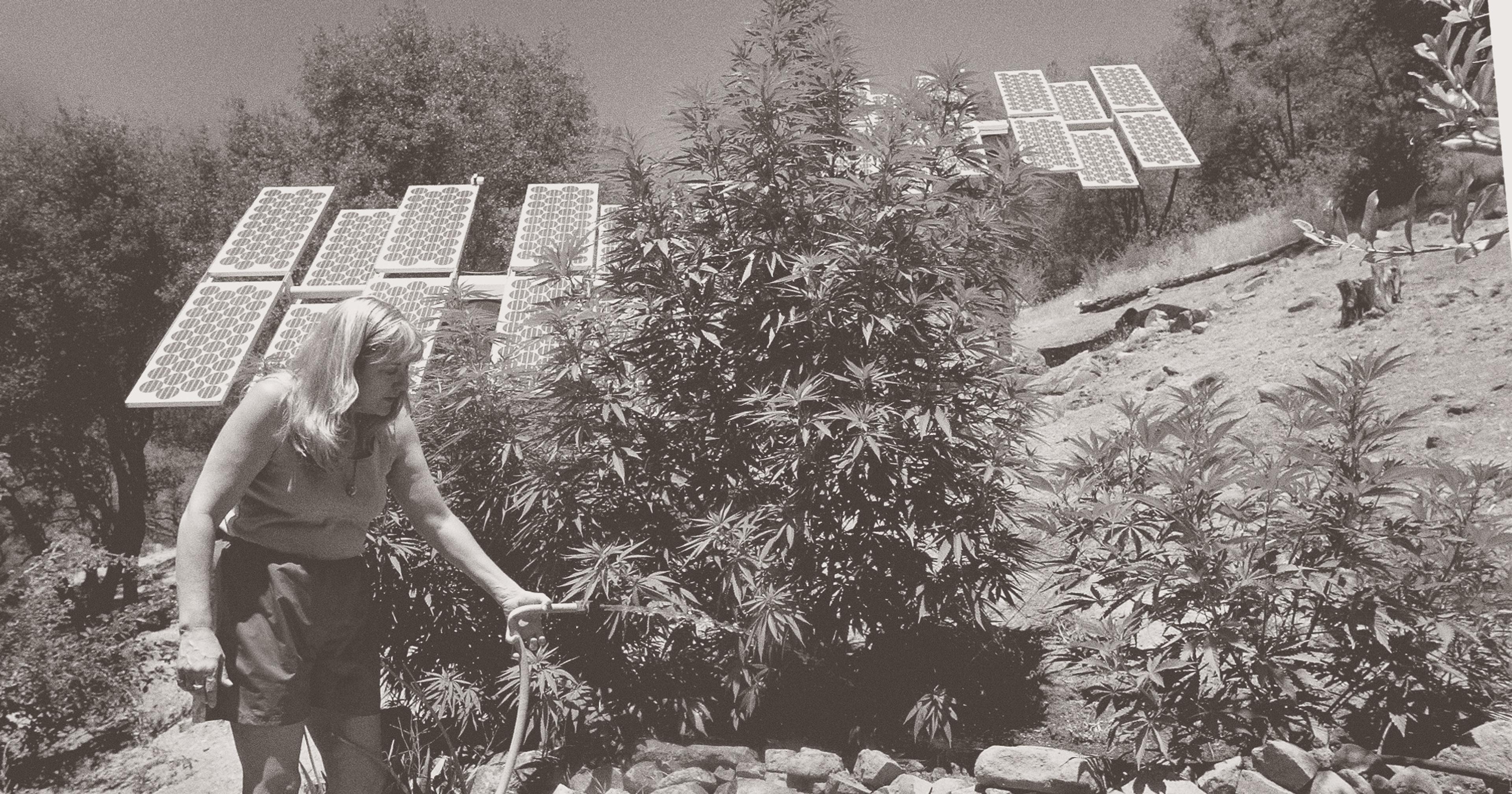
Like a toddler on a crisp fall morning, Brian Niestrath was getting excited about a big pile of leaves. He and his wife, Sarah, co-owners of the Southwest Oregon farm Green Bandit, were awaiting a mid-November dropoff from the nearby city of Eagle Point, where municipal workers had collected the bagged autumnal bounty from hundreds of homeowners.
“My favorite would be the maple leaves. They’re just very delicate and pretty, red and orange and all these radical colors,” Brian Niestrath enthused. “And then probably the best leaf is willow — that just seems to break down the fastest.”
The Niestraths planned to unbag this free organic material and mix it into their compost heap with feather and bone meal and alfalfa. From there, it would be applied to the fields and begin its transmutation into a very different kind of leaf: the slender-fingered green fronds of cannabis.
Because marijuana remains federally illegal, it’s ineligible for organic certification under the U.S. Department of Agriculture. But that hasn’t stopped growers from seeking to produce what they call “clean weed” with practices like cover cropping and on-farm composting. Third-party organizations like Sun+Earth, which certifies Green Bandit, and Dragonfly Earth Medicine have sprung up to offer clean weed credentials. California, the nation’s largest legal cannabis market, runs a “comparable-to-organic” certification program known as OCal.
Drawing from the organic and regenerative agriculture movements, green practices have proven successful for the Niestraths. Their products are distributed in hundreds of dispensaries across Oregon and have won multiple awards at the Oregon Leaf Bowl, a statewide competition sponsored by cannabis publisher Leaf Magazines. Their way of raising cannabis, however, remains a rarity in the broader market.
An ever-more consolidated cannabis industry has focused on growing in controlled environments with energy-intensive lighting, chemical pesticides, and questionable labor conditions. A 2021 Cannabis Business Times survey of commercial growers found that two-thirds grew exclusively indoors; just 11% farmed their weed entirely outdoors, as required by Sun+Earth and Dragonfly. (In recent years the USDA started allowing indoor-grown hydroponic produce to be sold as organic, a decision that’s drawn legal action from outdoor organic farmers and the nonprofit Center for Food Safety.)
Some growers hope that an increasing awareness of those issues, as well as the potential health concerns of industrially grown marijuana, will fuel consumer interest in doing things more naturally. They believe it’s possible to produce cannabis crops that are better for the planet, their customers, and their own bottom line.
Among the largest players in the clean weed market is California-based Coastal Sun. Darren Story, the brand’s CFO, says its $25-$30 million in annual sales make it the biggest of the 41 operations certified by OCal. (California officials said that they don’t separately track the sales of OCal-certified products; the state’s total cannabis sales reached $4.89 billion in 2023.)
“You have to get the right people who believe in what they’re doing and are willing to really get the shit kicked out of them by nature until they figure out how to do it right.”
Story says Coastal Sun’s approach is primarily driven by concerns over health — both of their customers and the plants themselves. He believes that the two are linked: Cannabis plants with more robust immune systems produce more terpenes, flavonoids, and cannabinoids, the chemical compounds that give weed its flavor and medicinal qualities. Similar boosts to antioxidants have been observed in organic produce, although it’s unclear if those differences lead to human health benefits.
When an organic system provides cannabis with the nutrients it needs, companion plants like sweet alyssum that attract pollinators, and beneficial insects like aphid-eating wasps, said Story, it also costs less to operate than a conventional farm with constant chemical inputs. But he admits that there’s a steep learning curve. Many companies, especially those funded by venture capital firms and seeking a shorter-term return on investment, don’t want to take the financial risks of the organic approach.
“You have to get the right people who believe in what they’re doing and are willing to really get the shit kicked out of them by nature until they figure out how to do it right,” he said, noting that Coastal Sun is self-funded. “We didn’t know any other way to do it; for us, it’s just growing plants.”
Despite the challenges, Story said Coastal Sun has kept up an average annual sales growth rate of about 28%, even as California’s overall cannabis sales have contracted more than 8 percent since their 2021 peak. Part of that success is due to strong demand from processors such as Jetty Extracts, which sells an OCal-certified line of vaporizers and infused pre-rolled joints.
Chief product officer Nate Ferguson said Jetty has also grown steadily against California’s broader headwinds. He cites an LA Times investigation from earlier this year, which found “alarming levels of pesticides” in dispensary products, as accelerating interest in the company’s clean weed approach.
Due to the premium Jetty pays for OCal-certified cannabis and its solventless extraction — a labor-intensive process that pulls medicinal compounds from the plant using ice water instead of chemicals like butane — its offerings can cost double what other brands charge for similar products. But Ferguson says that the upscale niche is more resilient to shifts in the market, with customers developing a strong brand loyalty.
“The message should really be, we have the best weed, and the reason is because we grow organically and regeneratively.”
Perhaps the biggest challenge for the clean weed industry, suggests Vin Deschamps, is getting consumers to try these products in the first place. He’s a board member for the Sun+Earth certification program and owner of the certified farm 54 Green Acres in Cave Junction, Oregon.
The legal weed market is still very young, Deschamps said, and entry-level customers tend to weigh their options based on the percentages of THC, the main psychoactive chemical in marijuana. Organically grown cannabis tends to have somewhat lower THC levels but much higher levels of terpenes and other compounds, which he said creates a much more enjoyable experience. (Judges at the California State Fair agreed, awarding six gold medals to Sun+Earth-certified farms this year.)
Deschamps is pushing for dispensaries to add “organic sections,” where budtenders can highlight clean products and educate consumers about their benefits. Eleven Oregon dispensaries have already signed on to the effort, along with several in California.
“Our message was almost apologetic, that you should buy us because we’re small farms and we care about the Earth,” said Deschamps. “The message should really be, we have the best weed, and the reason is because we grow organically and regeneratively.”
On a broader scale, Deschamps and other growers hope for looser federal regulations on marijuana that would allow them to ship across state lines. He compares the current situation to Napa Valley wineries only being allowed to sell in California — if connoisseurs across the country can’t buy the best, he argued, that limited customer base causes lower prices and discourages growers.
In the meantime, those looking for the cleanest, highest-quality weed may have to make a pilgrimage. “People around the world can buy my cannabis,” Deschamps said with a laugh. “They just have to come to Oregon to pick it up.”

In a lab in Texas, and another in Florida — and in a handful of others throughout the world — researchers are trying to make something happen for the first time in history: a pregnancy without the use of an egg or sperm.
Using stem cells, scientists have grown what are essentially models of blastocysts — an embryo in a stage of development about six to eight days after fertilization. These so-called “blastoids” have a massive research potential, helping scientists to better our understanding of how embryos develop, why pregnancies fail, and the behavior of diseases.
But they also have another practical application that could have a huge impact on the agriculture industry.
“Think like Star Wars, like the army of clones, but an army of cows,” said Carlos Pinzón-Arteaga, one of the researchers on a team at UT Southwestern Medical Center that published the first “bovine blastoid” recipe in 2023.
The hope is to impregnate an animal with a synthetic embryo and to deliver a healthy pup. But the problem still beguiling researchers is that so far none of the blastoids have successfully resulted in a pregnancy.
Cows in Florida
Since 2023, a research team at the University of Florida led by the reproductive biologist Zongliang “Carl” Jiang has been trying out the synthetic embryos in cows. After giving hormones to recipient cows, his team uses catheters to deposit blastoids into the uterus.
After a few days, they flush them out and examine them for signs of development. Jiang hasn’t yet published the results of the most recent trials but early attempts were unsuccessful.
“We’ve never recovered any viable structures,” Pinzón-Arteaga said. “Once they get into the cow, they just die.”
This isn’t altogether surprising. The use of embryonic stem cells from cows is relatively new compared to other animals, and therefore not well understood; the blastoids likely need tweaking if they are going to successfully create a pregnancy. But the potential is massive: A farmer looking to improve their herd’s genetics could pay a company to transfer blastoids derived from the cloned stem cells of, say, a champion heifer.
“Think like Star Wars, like the army of clones, but an army of cows.”
The process would likely be similar to embryo transfer today, which is part of the in-vitro fertilization process, but it wouldn’t require the extraction of eggs from a mother cow. And even more importantly, once you have the blastoid recipe figured out they are easy to make en masse.
“You are not bound by a limited number of embryos,” said Jun Wu, an associate professor in the department of molecular biology at UT Southwestern who collaborated with Jiang to create bovine blastoids. “With stem cells, essentially every week we can produce hundreds of thousands of these.”
Pinzón-Arteaga — who developed an interest in cows growing up in Colombia, where his uncle is a bovine embryo transfer specialist — hopes the technology could level the playing field for farmers who normally lack access to the latest advances in reproductive science.
In places like Latin America or Africa, where livestock is often owned by families dependent on just a few animals, farmers can’t afford to buy a high-producing dairy cow like a Holstein, and because of the cost an embryo is also likely out of reach, he said.
“But if you were able to produce clones from that cow at a very large scale — this is what the blastoid technology can promise,” said Pinzón-Arteaga, who is now a postdoctoral fellow at Harvard Medical School. “And then you can really kind of democratize access to high-quality genetics across the globe for the small producer. So that’s the dream of what the technology can achieve.”
‘High risk, high reward’
At his pioneering Texas lab, Wu has cultivated a catalogue of stem cells from a variety of species for research and preservation. His lab’s portfolio includes everything from cows, sheep, pigs, and horses to endangered species like the Northern White Rhino. These days, Wu’s blastoid work is mostly focused on humans and mice — the animal most scientists agree will be the first to give birth through a synthetic embryo, if it happens at all.
Cows present logistical challenges because of their size and the cost of caring for them, and they are also relative newcomers to the stem cell game. Scientists first derived embryonic stem cells from mice in a lab in 1981, but it wasn’t until 2018 that a team of them, including Wu, were able to do so for cows.
Synthetic mouse embryos have even been found to begin growing organs in a lab, with a brain and beating heart starting to develop after just over a week.
“We need a better [bovine] starting cell and we need better embryonic stem cells like we see in mice and rats,” Jiang said.
In its current experiments, Jiang’s team is trying to understand what happens to the embryos in the initial stages of a pregnancy “because particularly in cattle the majority of pregnancy loss occurs during the first few weeks.”
“Then you can really democratize access to high-quality genetics across the globe for the small producer.”
“If we think these blastoids have the potential for agriculture applications, they are going to need to develop through that critical step after transfer,” he said.
Much of the work is focused on perfecting the blastoid recipe, which consists of cloned embryonic stem cells that are cultured in a cocktail of other inputs. Jiang and his research team have developed a new protocol for bovine blastoids using three different stem cell lines, one more than the previous recipe called for, and he says the end result better resembles a real blastocyst.
But according to Wu, it remains unknown if viable embryos can actually be generated from stem cells, in part because nobody has found a way to induce cells to create a “functional” placenta in a lab. Then there is the fact that embryonic stem cells can undergo changes when placed in culture that may make them unsuitable for creating a pregnancy.
“Even though they came from the egg and sperm, they’ve been cultured in vitro for a long time, and they may have accumulated changes that could be irreversible,” Wu said.
A Global Race
Despite the challenges of working with cows, international industry has shown interest in the research of Jiang and his collaborators, and he said several companies have discussed patenting the original bovine blastoids. The global animal genetics company Genus plc “is currently sponsoring research being conducted by the University of Florida in this space (using stem-cell derived blastoids in animal reproduction),” said Clint Nesbitt, global director of regulatory and external affairs at Genus.
Government funding into this research has been hard to come by, however, and the U.S. Department of Agriculture has turned down all three of Jiang’s grant applications.
“They are very cautious and don’t support this kind of high-risk, high-reward project — which I think they should, but so far I haven’t had luck on that,” Jiang said.
Meanwhile in China, researchers are focusing on pig blastoids with funding support from the government.
“[USDA] are very cautious and don’t support this kind of high-risk, high-reward project — which I think they should.“
“Chinese people love pork,” said Yinjuan Wang, a researcher at China Agricultural University who got her Ph.d under Jiang when he was a professor at Louisiana State University. “Pig, bovine, and ovine are the three important livestock species in China, so the Chinese government will fund lots of special programs for these three species.”
First, though, Wu and others think research into mice will determine if live births from synthetic embryos are possible at all. If they are, the door flings wide open for all sorts of advancements — from species preservation, to disease modeling, to what Pinzón-Arteaga calls “cloning on steroids.” It would also introduce a host of ethical considerations, since there’s no biological reason why the same techniques couldn’t be applied to humans.
With a half dozen labs working on mouse blastoids that Wu is aware of, he is hopeful to see developments in the field this year or next. After that, he speculates focus will turn to a large livestock species because of the agricultural needs.
“For the cow, the potential is still far away, and I don’t know how long it will be,” Wu said. “If we’re optimistic, maybe in five to 10 years. But if we’re pessimistic, we don’t know. It’s still an open question whether we can do it or not.”

Every time I read the framed poem on my wall, tears cloud my vision. We bought our 85 acres of workaholics’ paradise when our children were 2 and 5. In the 14 years since, I have been the farmer and the homeschooling parent while my husband, whose dreams do not include farming, gallantly works off-farm for actual income.
For every happy memory I carry of the kids filling out grammar workbooks next to me while I hand-milked our cow, I have two of being torn between their needs for me and the farm’s. Of feeding hogs in freezing rain and trying to keep the kids warm while they whined. Of not taking them to sports or parties because I needed to mow the pasture, weed the spinach, wash the eggs...
We have a hundred photos of our son and daughter snuggling newborn lambs, pigs, and chicks, but none of me at 1:00 AM, exhausted from staying up for calving, cheese-making, or food-baking.
The splinter that lives in my heart is the question of whether I was fair to my children. The farm was my mental health but it was also my crazy. The work on the land brought me peace and meaning, but also terrible overwhelm. Looking back, I sometimes wonder if I took it on at their expense — and not to support us, because it didn’t — just for my own desire.
The night the sheriff’s deputy arrived at our door at 3 AM will long live in our family’s lore. Our cattle were out in the road. It turns out that herding scared cows in the dark and rain, on unknown ground, is a lot harder than regular pasture moves, but the kids (and husband) were champs about it. They summarized the experience as we finished with the sunrise: “I never want to do that again!” from my 15-year-old son and, “That was amazing! So fun!” from our 11-year-old daughter. These reactions correlated with their general attitudes about the farm.
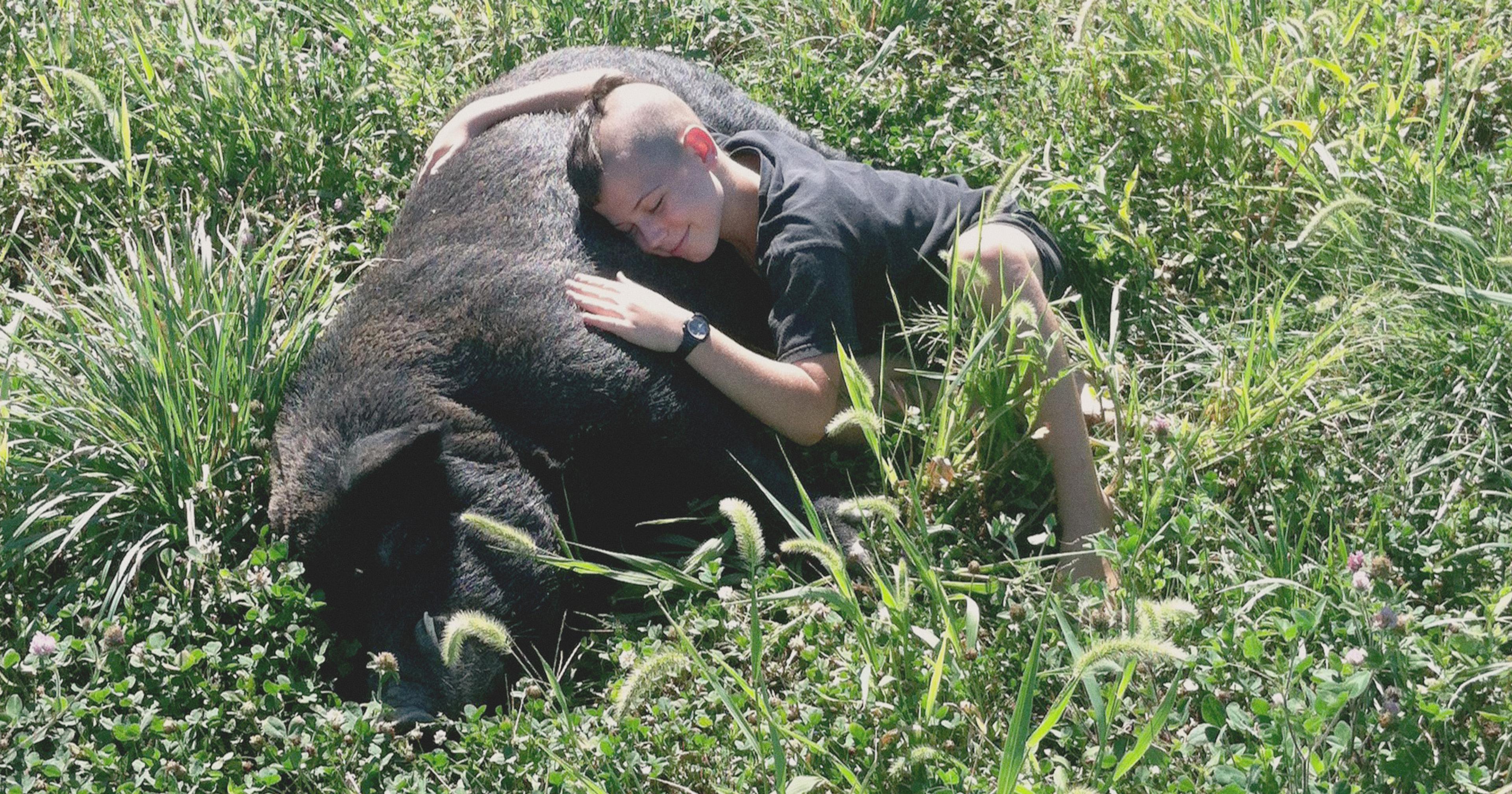
Because of my daughter’s interest in farming, when she was very young we often did chores together while singing our theme song: “We are farmers, we are tough! We feed our animals in the nighttime, yes we do...” As she grew we rode ponies in the fields together and camped in the barn during lambing. However, I often wondered if my extroverted son would have been better off with a childhood in town. Not that he seemed to mind long stretches alone in the house absorbed in Legos and audiobooks, or later, novels to read and others to write, but he was sometimes lonely, and I often felt torn on his behalf.
Given this history, I was amazed when his interests turned to eco-activism and he began speaking publicly of his childhood on the land and how it had awakened his concern for the Earth.
The summer he turned 18, our hard-working, hard-saving son got on an airplane to spend six months traveling alone through Europe and Latin America. He returned in time to hike the Appalachian Trail from Georgia to Maine, before starting college this past August. Somewhere along the way he found time to write the following reflection on his childhood; the poem that cracks my heart open a little more each time I read it on my wall.
Demeter and the ewes: two sonnets
by Davin Faris
I.
My mother—she keeps one hand in the earth
and one upon the sky, my youth a season
of unabashed witchcraft. Her reaching
inside a birthing sheep, the way a god
shoves life into a body, bloody and wild.
She pulled our hearts up from the garden, no wonder
the metaphors I adore are soil as miracle
and rainstorms as the braiding of the land.
The soul if it exists must first be taught
to love the flock, then not to weep at slaughter.
My mother—she invited death to dinner,
told me to shake his hand. Harvest, she said,
awaits us all, but don’t forget all we’re given.
Even now, a world away,
II.
I have not forgotten.
Leaving home I felt the face of winter,
the crop cut down, the blind lamb born too soon.
But my mother—when once I wept for springtime
she took my hand and led me to the ewes
their flat and golden eyes, their clouded forms.
Their tender dedications to the grass.
She said, you must learn this, the balance
of our home. The pasture’s precious weft,
bramble tracks beside the shadowed creek.
The eternity we reap and tend. Study it.
Know it as part of yourself, for then
you’ll reach the boundary of this earth
and as we are meant to, go.
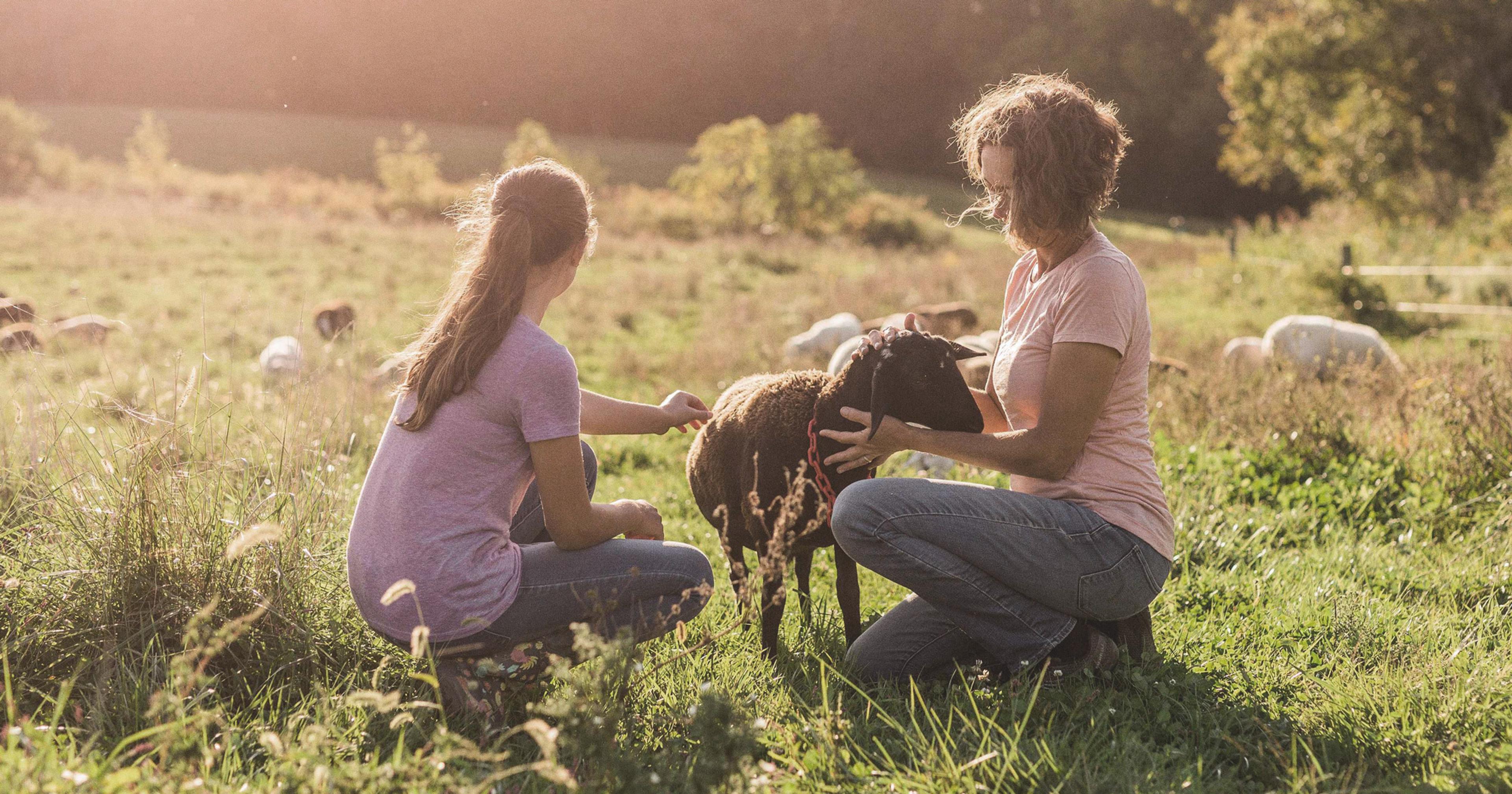

At the end of last year, I asked some of my colleagues to share their favorite stories from 2023. They did a great job, but this year I talked to a different group of coworkers — plus our loyal readers. What emerged is an eclectic, fascinating sampling of our best journalism and perspectives from 2024. I hope you love reading these as much as I loved editing them.
Our Favorites
I really enjoyed Taylor Hartman’s recent piece Growing Grapes in the High Desert. After reading books like Cadillac Desert about how the rate of agricultural water usage exceeds that of natural replenishment for crops in significant portions of the U.S., I found it interesting and hopeful that farmers in the deserts of Utah have identified grapes as a water-efficient crop that results in a high-value product.
Rethinking what we grow and where feels like an important consideration as we experience more extreme weather and resource constraints, and it was exciting to read about a case where this has shown positive early results.
-Katie Ellig, Product Ops
I discovered [this publication] in March, and since then my favorite read was The Boat Forest by Rebecca McCray. It touched many points of interest — from evoking memories of visits to the USS Constitution in Charlestown, to reminding me how all of us are impacted by agriculture in ways that are sometimes obvious but often overlooked.
-Tom Woolway, Engineering
I absolutely loved Beth Hoffman’s What the Neighbors Think, sharing how her “unconventional” methods (rotational grazing, goats for clearing weeds) didn’t bother her neighbors as much as she thought they might. The neighbor’s response — “It takes crazy to make change” — are words to live by, I think.
-Dan Schlosser, Ambrook Co-Founder

This biodynamics article is the best thing I’ve ever read.
-Adam Dixon, Graphic Design
My favourite part of helping copy edit the newsletter every week is learning something new (and maybe a bit controversial) about the food system. One of my favorites this year was about the Amish-Chinese mushroom collaboration. It reminded me a lot of my favourite Eater piece on the mysterious Pakistani mango supply chain. They both reveal how systems will emerge in the most unexpected places and how the merging of very different cultures can happen.
-Jaclyn Chan, Engineering
I really connected with Elissa Welle’s Meet Superblack Wood because it hits close to home for me. My dad used to run a textile factory in Madagascar, but political turmoil forced him to leave. It’s heartbreaking to see how that chaos has led to things like illegal logging of ebony trees. Reading about the science behind “superblack” felt like a glimmer of hope — like there’s a way to work with the land sustainably instead of destroying it. I love how it ties modern innovation to ancient farming practices to tackle big challenges like climate change and soil health. It’s a mix of creativity and tradition that feels so meaningful.
-Calvin Ku, Design

Given that I took as many life sciences classes as I could while pursuing my Computer Science degree, my favorite 2024 AR story is Katherine Rapin’s Farmers Are Breeding Heat-Resistant Cows. Selective breeding strikes me as a well-thought out, iterative solution for reducing cooling costs on farmland. When I read stories like these, I feel a sense of optimism that scientific research and reporting can empower the custodians of our land to make decisions that are both financially sound and climate-smart.
-Dylan Hoang, Engineering
(Editor’s Note: Dylan accidentally chose a story from 2023 but he’s a nice guy so we’ll let it slide.)
Your Favorites
I really like Moira Donovan’s writing, and I especially enjoyed her piece about geothermal energy powering greenhouses. I thought the information was so cool (I had no idea greenhouses covered so much area on the Earth) and the science was interesting and feel-good. As a person who cares deeply about both the environment and agriculture, the story-telling about people who have come up with ways to use geothermal energy to warm greenhouses was fascinating — and very well done. The story made me think a lot about how agriculture and the environment are often portrayed at odds in the media, but that human success depends heavily on the two working together.
-Serena DeSalvio
It’s Highway Robbery — I was radicalized by stories of Robin Hood, which eventually turned into a historical obsession with the history of poaching and other radical environmental crimes. This includes stories about the Commons and my favorite historical “document” — the Charter of the Forest. So it was an absolute delight to find those interests in this story, which expanded my knowledge and applied it to the history of America and the West. I know that technically this was a podcast episode, but I also love to read transcripts so I really appreciated that you published it online!
-Lyndsie Bourgon

One of my favorite stories of this year has been the article on GMO microbes that Corteva and Bayer have proposed to apply to cropland. I love staying up to date with current ag research and am a big appreciator of how microbes in the environment can make or break the yield and success of a crop. Even with that in mind, I had never considered using genetic editing to alter that environment, nor had I considered the ethics behind introducing them. I’ve mentioned the topic many times since that article came out, usually about the morality and unintended future consequences.
-Renee Smith
I am an agricultural economist in training. Even though my work is mostly on international development I find Ambrook articles very insightful, especially because I can compare and contrast international agricultural issues with more domestic ones. I found the article on Horse Progress Days especially interesting for many reasons. While Amish agriculture faces many challenges, the fact that the sector continues to flourish, even in the face of rapid modernization, may offer insights on how the international development space needs to think about preserving Indigenous/localized agricultural practices in the context of ever-accelerating globalization.
-Leslie Alex
Lauren David’s article about outgrowing the CSA model was the one that stuck with me the most. I run a large (150+ full shares, 400+ members), mixed-income CSA. It’s rewarding work, and we’re well-established and could easily take on more members if we had capacity. While it’s hard to argue that the CSA model doesn’t need some updating, it’s also an incredibly efficient way to bring healthy produce to a wide urban demographic, in contrast to many “farm box” models that concentrate on an upscale customer base. These issues don’t often receive much media attention, and I’m glad to see Ambrook’s focus on the topic.
-Ruth Katcher
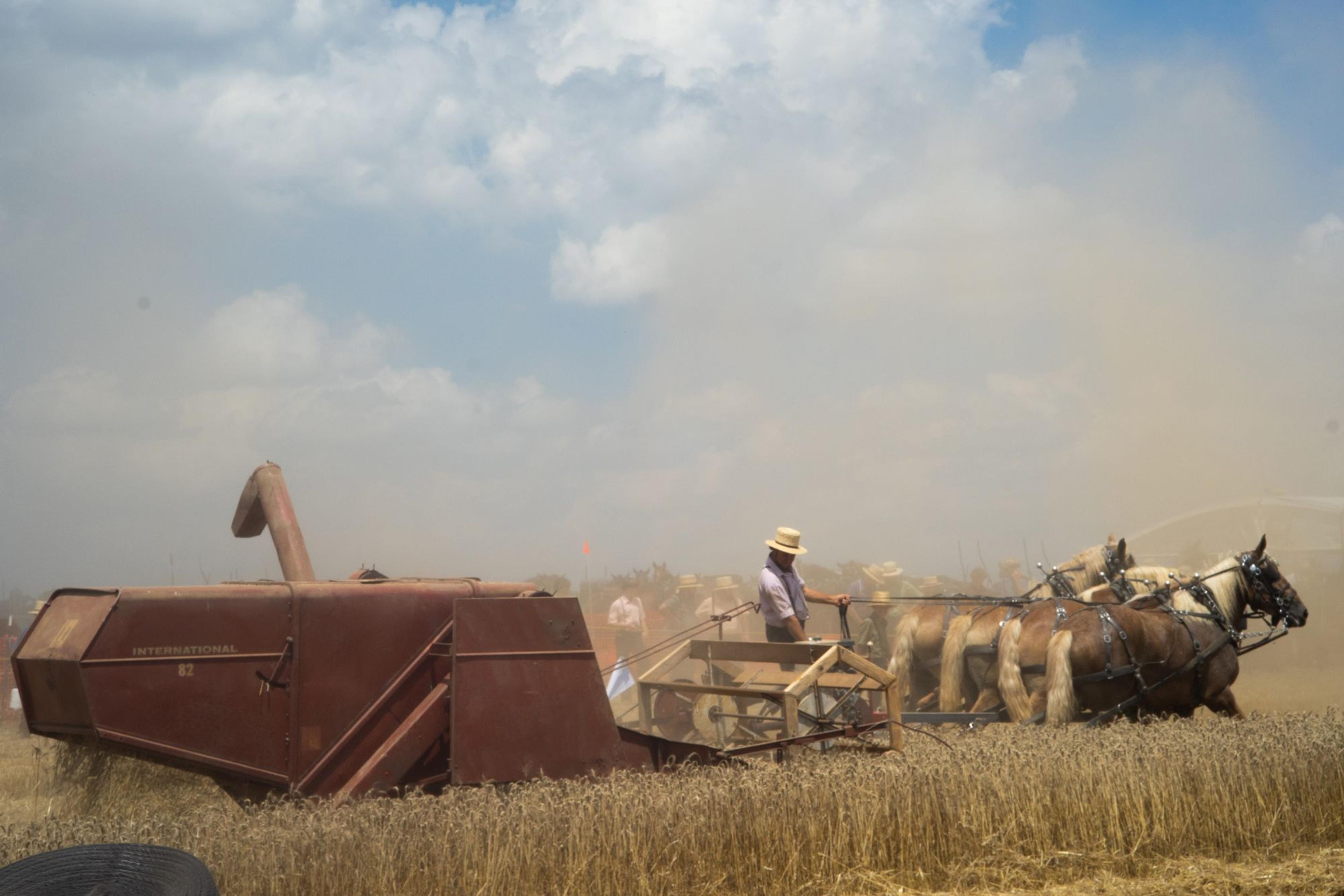
The story that resonated with me the most this year was Mining Bitcoin, Growing Tomatoes. I was fascinated by how Bitcoin mining, often criticized for its high energy consumption, can repurpose its waste heat to warm greenhouses and grow tomatoes. This convergence of financial technology and agriculture made me rethink how modern innovations can be adapted to address local challenges, such as heating costs in cold climates. However, it also raises questions about the long-term viability and sustainability of such solutions, considering factors like the limited lifespan of mining equipment and the specific needs of different crops. It’s a powerful reminder that effective solutions emerge when we combine disciplines and focus on the common good.
-Javier Aquino Florenciani
As a humanities professor working primarily with agricultural students, The Slow Death of the American Barn Cat sparked one of the most engaging class discussions I’ve had this year. I’m always looking for texts that connect the cultural and ethical dimensions of rural life to my students’ lived experiences. This story struck a perfect balance — thought-provoking, well-researched, and emotionally relatable. It inspired my students to think critically about the evolving relationship between tradition, sustainability, and modern agricultural practices. Well done!
-Mitch Plosonka
(Editor’s Note: Many readers chose the barn cat story as their favorite.)
For Struggling Cranberry Farmers, Wetland Restoration Offers a Way Out — or a Chance at Survival by James Reddick made me think about land usage in a way I really hadn’t before. The piece is a thoughtful, complex exploration of how cranberry farming changes the landscape in the short- and long-term. It never gets bogged down (sorry) in administrative details, but it is realistic about both permitting barriers to converting cranberry bogs and the potential for looking at them differently.
-Jules Reich

AR’s story on insect welfare immediately caught my attention because of my special interest in entomology. I enjoy sharing my knowledge with others, so I occasionally teach classes that include how to create your own insect collection. My primary method of collection has always been to catch live insects so that I can have the freshest possible specimens. Since reading AR’s article on insect welfare, I think twice about catching live insects; instead, I now rely on sustainably sourced insects, for example, farm-raised butterflies that have lived their full natural lives.
-Sydney Jackson
Fellow Pittsburgher Eve Andrew’s My Groundhog, Myself. As a gardener who’s been fighting with my own groundhog nemesis this year (one of many critters very happy to eat all my food plants), I very much appreciate Eve’s articulation of the internal conflict one feels when gardening. It’s lauded for bringing you closer to nature, but can actually make you feel at odds with it … or a little too much part of the ecosystem.
-Marie Cosgrove-Davies
A Different Kind of Farm really resonated with me for two reasons. First, I work for Farm Credit Administration, a small federal regulator of the Farm Credit System. I would love to see more of the institutions we regulate either make loans to those farms or offer small grants as they continue to focus on young, beginning, and small farmers. Second, I have an adult child with developmental disabilities. She has volunteered with her father on two different farms for over 15 years, one in South Carolina and now in New York City. She is also a beekeeper. She feels strongly that working on the farm has helped with her disabilities, and in particular, her mental health challenges, many of which stem from her developmental disabilities. It would be great if she were given the opportunity to get paid for doing the work that she loves.
-Lori Markowitz

As the western U.S. emerges from a drought twice as severe as anything in the 20th century, consider a simple question: What causes a prolonged dry spell? If “lack of rain” was your first response, we have some news. According to a revealing new climate study, evaporation from plants and soil has replaced lack of rainfall as the primary driver of droughts.
And this higher evaporation demanded by our atmosphere can be traced back to human-made higher temperatures across the earth. Droughts of yesteryear were considered immutable acts of God, said study author Rong Fu, professor of atmospheric and oceanic science at University of California, Los Angeles.
“But this time, we caused it, we have control.”
If global average surface air temperature continues to rise, as is expected, Fu said, this all but guarantees a future of stronger, more devastating dry periods in the western U.S. Temperature-dominant droughts occur on far larger scales, and last far longer, then precipitation droughts. That could mean more rainfall that evaporates away before we can even use the water, lowering our reservoirs, drying our rivers, and exposing cracks in a creaky water allocation system — even in years of normal rainfall.
This demand for moisture from the atmosphere, called potential evapotranspiration, comes from a slurry of measurements made by meteorological stations on the ground, satellites, and computer models. Precipitation is simply what falls to the ground as measured with a rain gauge. And ultimately, when potential evapotranspiration exceeds precipitation, the negative value means that the earth’s surface lost more water than it gained.
Along with researchers at the National Oceanic and Atmospheric Administration (NOAA), Fu wanted to differentiate droughts caused by climate change from natural, random weather patterns, such as when a warm high pressure system settles over an area of land. They calculated values for precipitation and potential evapotranspiration in the 21st century based on those baseline weather patterns.
When observed droughts in the 21st century were more severe than the estimated natural droughts, the researchers chalked the difference up to climate change.
Lived Experience
Dry conditions are the norm for alfalfa farmer Randy Scilacci, based in Lovelock, Nevada. Wet years consist of just 4 to 6 inches of rain. Three years ago, in the middle of the latest drought across the western U.S., not a drop of rain fell from the sky and Scilacci’s farm received none of his 36 inches of water allotted from the Humboldt River.
Clay soil allows Scilacci to still “raise hay on no water.” The dense soil stays saturated with water long after the surface dries. When the rains do come and the fields flood, the clay soil drinks what it needs: half a foot, maybe one whole foot.
“If we don’t flood irrigate, you can’t keep raising crops.”
But the droughts hurt — the hay that is raised is thinner than during wet years, and grows at 50 to 70 percent the quantity. “If I hadn’t lived here my whole life and been through it before, I’d probably have pulled my hair out,” he said.
“If we don’t flood irrigate, you can’t keep raising crops,” Scillaci added.
For what it’s worth, Scillaci doesn’t blame climate change for any of this. After nearly 30 years of farmwork in Nevada, droughts and other weather patterns cycle “up and down,” according to Scilacci.
“We’re lucky if we’re here 100 years, in the scheme of things,” he added. “I think that’s a pretty short duration of time to try to blame stuff on mankind.”
Another View
A warmer atmosphere sucks up moisture from plants and the soil, anywhere it can, and holds more water vapor, allowing less rain to fall to the earth. The study compared the amount of water that fell from the sky to the amount sucked back up to the atmosphere in a supply-minus-demand equation. It assumes that the earth will give the atmosphere the moisture it wants.
Climate physics researcher Richard Seager thinks there’s more to the story — and less evapotranspiration than the study suggests.
Drought in the study was calculated by subtracting the amount of water that the atmosphere could potentially suck up from the earth subtracted from the amount of water falling to the ground. But potential evapotranspiration is “a mythical quantity,” said Seager, professor at Columbia University’s Lamont-Doherty Earth Observatory in Palisades, New York. It is a measure of how much moisture the atmosphere allegedly wants, not what actually gets transferred from the ground to the sky.
Plants have ways to limit transpiration in dry conditions, Seager said. They do this by closing the pores on their leaves, called stomata, and cutting off the ports for water to transpire. Therefore, evapotranspiration goes down as soil dries, he said.
Seager’s climate model shows that decreasing precipitation in the cool season will dry out the soil in the summer months, and result in a decrease in the actual evapotranspiration from the surface.
Temperature does play a role in future droughts, Seager said. But this study “has overemphasized the role that temperature plays relative to precipitation.”
Groundwater Woes
Even in the absence of climate change, water allocation in California and other western U.S. states is a system that can be called, at best, inefficient. And as climate change supercharges droughts in California, these inefficiencies get more exacerbated, said Ellen Bruno, associate professor of cooperative extension in agriculture and resource economics at the University of California, Berkeley.
Groundwater is seen as a substitute for surface water in dry conditions. If droughts lead to increases in evapotranspiration, as the study concludes, that will increase the demand for pumped groundwater, Bruno said. The water table will lower further beneath the ground surface, impacting domestic wells and nearby ecosystems.
Historically, groundwater access in California has been a “free for all,” Bruno said. That perception began to change after the passing of the California Sustainable Groundwater Management Act in 2014. The act requires all groundwater agencies across the state to make plans to achieve sustainable groundwater use by 2040.
Those plans might include pricing groundwater in order to incentivize less groundwater use. Or, they could focus on ways to artificially recharge groundwater by flooding fields in winter or pumping water directly into the ground.
The latest drought over much of the western U.S. ended in 2023 when heavy snowfalls blanketed the Sierra Nevada mountains and some areas to their east received 200 percent more rain than normal. Yet, 2023 was the fifth-warmest year on record. Now that evaporated loss due to high temperature has surpassed precipitation deficits, one wet year will not refill a reservoir, study author Fu said.
Lake Powell, a major reservoir source of water for many western U.S. states, never reached the “full pool” level of water in 2023, despite receiving more snowfall runoff than previous years.
The solution, Fu said, is to slow temperature increase. And that requires aggressive emission control, she added. While that is difficult, “the consequence of not doing that is far larger.”
As climate change warms our world, winemaking in some regions has been shifting northwards. But in Utah, where cutting-edge technology, resilient grape varieties, and innovative farming techniques have converged, some growers are thriving in the driest of terrains.
A surprising agricultural story is taking root in southern Utah, where scorching summers and stark sandstone cliffs define the landscape. At roughly 37-38 degrees north latitude, on par with Valencia in Spain or Tuscany in Italy, and at elevations that expose vines to intense ultraviolet radiation, a small but determined community of vintners is mastering the art of winegrowing.
Once considered too hot, too dry, and too high for cultivating premium grapes, these arid fields now produce wines that regularly stand out in blind tastings. How are Utah’s vintners overcoming thin soils, limited water, and climate extremes to make a mark in American wine?
The answer lies in a blend of historical wisdom, scientific innovation, and persistence.
A Heritage Revisited
The idea of winemaking in the desert of Utah isn’t new. In the 1860s, early Mormon pioneers planted vineyards for sacramental wine, proving that grapes could flourish here under careful stewardship. But as attitudes shifted toward temperance, those vineyards withered and the region’s winemaking dreams lay dormant for generations. Fast forward to today, and renewed interest — spurred by tourism, entrepreneurial growers, and broader consumer curiosity — has revived the craft.
Michael B. Jackson, owner of Zion Vineyards in Leeds, arrived in 2012 and was astonished to discover a legacy waiting to be reclaimed. “The early Mormons had 650 acres of vineyards here,” Jackson said. “We’re now at just 1/10th of that, but we’re rebuilding.”
The high-elevation fields near Cedar City and Leeds face a suite of environmental hurdles. Volcanic soils rich in potassium require careful nutrient management. High altitude intensifies sunlight exposure, and desert air can push temperatures to extremes. Vines must be chosen and tended with these conditions in mind, balancing the delicate equation of heat, sunlight, and vine stress.
To make informed decisions, growers rely heavily on local expertise and research support from Utah State University. Testing soils, measuring radiation, and analyzing temperature fluctuations provide data that inform choices ranging from which grape varieties to plant to the precise timing of irrigation. USU’s Extension programs and collaborative research efforts have been central to equipping vintners with the tools to succeed in Utah’s challenging environment.
Doug McCombs, owner of IG Winery in Cedar City, explained that the extension is leading the way on research.
“They’ve done water, soil, water and soil sample studies to establish baselines. And they’re beginning that research now, so that they can, as years go by, have a real good database on which to begin working through some of these issues,“ he said.
One significant contribution is USU’s work in identifying grape varieties suited to the state’s extreme conditions. By evaluating cold-hardy and drought-tolerant cultivars, researchers have provided critical insights into which vines are most likely to thrive. These studies take into account factors such as survival rates, fruit yield, and optimal harvesting times, enabling growers to tailor their practices to Utah’s unique climate and soils. For example, specific grape types have been shown to withstand the region’s thin soils and high UV exposure, which might otherwise limit production quality.
Additionally, USU supports cutting-edge projects like the Grape Remote-sensing Atmospheric Profile and Evapotranspiration eXperiment (GRAPEX). This initiative uses advanced remote-sensing technology to monitor vineyard water usage, helping growers optimize their irrigation schedules. In a state where efficient water management is vital, such tools are transforming how farmers balance sustainability with productivity.
Precision in a Parched Environment
Water scarcity is obviously the defining challenge of agriculture in the desert. While some traditional crops thirst for large volumes of water, grapes have proven more efficient. Still, vintners must deploy smart tactics to make the most of every drop.
McCombs explained that efficiency is key: “If we have ample water, and the temperature’s not a million degrees, we can do quite well here.”
This efficiency comes through advanced irrigation management. Drip emitters deliver precise doses of water directly to the vine’s root zone, reducing evaporation. Soil moisture sensors are checked daily or weekly and signal when vines truly need water.
Weather stations track temperature, humidity, and wind. Armed with this data, a grower might apply water in shorter, more frequent intervals during peak heat, or cut back by a certain percentage late in the season when vines require less.
“We’re experimenting with desert weeds as ground cover,” Jackson noted. “It’s unconventional, but it helps hold moisture and reduce evaporation.”
As growers gain confidence, they are also turning to grape cultivars that thrive in extreme heat and dryness. Spanish and Italian varietals, well-suited to Mediterranean and continental climates, have proven especially adaptable to Utah’s challenging conditions. Leading the way are the Albariño, prized for its bright acidity, and the Tempranillo, celebrated for its robust structure. These varietals produce grapes with thick skins and balanced sugars, enabling them to endure the region’s intense sunlight while yielding wines of remarkable character.
“We’re sticking to varietals that handle the heat and elevation,” Jackson said. “They’re not just surviving; they’re actually thriving.”
Volcanic soils in Utah impart subtle mineral notes, and the dramatic day-to-night temperature swings preserve acidity and aromatic intensity. Add a dash of altitude, and you get wines that marry lush fruit flavors like ripe peach in Albariño, and dark cherry in Tempranillo with lifted aromatics and a structured acid backbone. Tastings often reveal surprising complexity. For instance, a Utah Albariño might present bright citrus upfront, evolving into stone fruit and a whisper of minerality, while a Tempranillo could showcase red plum, subtle spice, and a lingering finish that speaks to the region’s high-elevation conditions.
Local wineries have noticed that educated drinkers appreciate these nuances. “Our Merlot has beaten big labels in blind tastings,” McCombs shared. “Once we find the sweet spot, the quality is undeniable.” Sommeliers and wine educators, intrigued by the novelty of these emerging vineyards, have praised their distinct personality, citing a fresher, more aromatic style compared to warmer lowland counterparts.
Historically, southern Utah’s agricultural landscape was dominated by alfalfa and other forage crops, essential to the region’s livestock-based economy but notoriously water-intensive. These crops thrived for decades, but as water scarcity has become an increasingly urgent issue, they are less viable in the long term.
Replacing alfalfa fields with vineyards represents a strategic rethinking of the region’s agricultural identity. Grapevines, once established, are far more drought-tolerant, requiring only a fraction of the water used by forage crops. By investing in wine, growers not only tap into a higher-value product but also embrace a sustainable solution for farming in one of the nation’s driest climates. This transition reflects a shift in priorities — toward crops that are both economically resilient and better suited to the environmental challenges of the future.
Ongoing research explores drought-resistant rootstocks, new pruning techniques, and experimental varietals from similarly arid regions, potentially from parts of Portugal or southern Italy, where climate conditions mirror Utah’s. Early climate modeling suggests that as global temperatures shift, more winemaking areas may resemble what Utah faces today. This positions the region as a laboratory for future-proof viticulture.
“The industry is growing fast,” McCombs said. “We’re selling more wine than we can grow, and there’s pressure to expand.”
By merging historical knowledge with scientific precision, selecting grapes that align with the climate, and leveraging every available resource — from university research to ground cover strategies — winegrowers in arid environments can secure their future. As climate patterns shift and water become ever more precious, the lessons from Utah’s wine country may guide other producers seeking to turn inhospitable landscapes into vineyards of possibility.
“I have so many people that walk out the door and go, ‘Hey, thank you for doing this,‘” Jackson said.
First Lady Jill Biden hailed this year’s White House Christmas tree as a symbol of resilience. The 20-foot Fraser fir withstood the floods and landslides of Hurricane Helene in September, which killed over 5,000 other trees on the Cartner family’s christmas tree farm in Avery County, North Carolina . Meanwhile, the stately Norway spruce which illuminates Rockefeller Center this season was shipped from western Massachusetts, where growers have lost up to 25% of young trees to severe drought conditions.
“It just breaks your heart to see the losses,” said Mathew Wright, a third generation grower from Lunenburg County, Nova Scotia, billed as the “Balsam Fir Christmas Tree Capital of the World.” Over the last 30 years he has observed the impacts of climate change on his trees, which go well beyond the dramatic weather events that make the headlines, like droughts, superstorms, and the June frost that decimated his young trees in 2018.
Wright explained that rising temperatures have prolonged the growing season well into the fall. This means that trees aren’t getting the cold exposure they need to harden off and set their needles before harvest in late November and December. Conifers need to retain their needles to conserve water and continue photosynthesis throughout the winter; growers need them to retain their needles because nobody wants to buy a Christmas tree that sheds like a Golden Retriever — especially when they can go out and buy an artificial tree that lasts forever. Warmer, wetter winters also bring a host of other insidious problems like increased pests and pathogens, especially Phytophthora (Latin for “plant destroyer) root rot, which Wright said never used to be a problem in Nova Scotia.
That’s why growers like Wright are now collaborating with researchers across the U.S. and Canada to help the billion-dollar industry adapt to climate change and compete with artificial trees.
Justin Whitehill, leads a team of researchers at the Christmas Tree Genetics Program at North Carolina State University, who are using genetic approaches to help growers mitigate some of these challenges. They are developing an “elite” variety of Frasier Fir, a popular species of Christmas tree native to the cool, wet elevations of the southern Appalachians.
In addition to cosmetic traits like fragrance and a uniform, conical shape, Whitehall’s “elite” trees are bred for climate-resilient qualities like needle retention and resistance to Phytophthora and pests like the invasive balsam woolly adelgid, which used to be killed off by cold winter temperatures but is now reproducing year-round.
“Once we understand the molecular and DNA side of it, we’d like to apply some of the CRISPR (Clustered Regularly Interspaced Short Palindromic Repeats) technologies to utilize genome editing,” Whitehall said.
But it’s not a Brave New World for Christmas trees, at least not yet.
“I think the biggest issue is the care and consideration of knowing that what might be modified and planted won’t significantly alter the species composition of our natural stand.”
“I always like to make sure that we’re clear on the various terminologies,” Whitehill said. “The focus of our lab is centered around genetic improvement, which is more of the traditional kind of domestication of trees and cross plants. We’re just dipping our toes into what folks would maybe consider genetic engineering, but really that is more a tool that we use in the lab to understand a bit more deeply how traits impact the performance of the tree.”
Nevertheless, the genetic approach does raise flags for environmental groups concerned about the spread of genetically modified crops. Up until now, trees have been mostly exempt from USDA regulations and labeling requirements that apply to food crops. This may be poised to change, following a Dec. 2, 2024, federal court decision that struck down a Trump administration rule weakening government oversight of genetically modified crops.
Jaydee Hanson is policy director for the Center for Food Safety, a non-profit public interest and environmental advocacy organization working to protect human health and the environment. Hanson’s employer was one of the plaintiffs in the USDA lawsuit. “When these trees come out,” he said, “we will be clearly asking the USDA to require labeling on them that they’re genetically engineered because it’s something consumers want to know.”
Whitehill said such concerns are premature. His lab is entering its second breeding cycle of Fraser fir, generations behind researchers working with food crops like corn.
“There’s no GMO trees available,” Whitehill said, “and if we did people would know about it.”
As for the risk of modified trees contaminating wild populations, neither Whitehill nor Wright see cause for alarm. Most of the trees will be going into plantations where they will be harvested before they’re old enough to throw their pollen.
Wright said, “I think the biggest issue is the care and consideration of knowing that what might be modified and planted won’t significantly alter the species composition of our natural stand.”
Whitehill’s first generation of elite trees have already shown considerable genetic gains, including a faster growth rate and improved needle retention. But when it comes to pests, pathogens, and resistance to climate change, Whitehill said the genetics are far more complex.
“Organisms are very good at eliminating genes that have no function, so why are conifers and ancient plants hanging on to so many?”
The evergreens we deck out in lights and tinsel every year belong to an ancient lineage of conifers, whose fossil record stretches back at least 300 million years to the late Paleozoic era, when earth’s climate began trending cooler and drier. Their ancestors dominated the prehistoric landscape for over 100 million years before flowering trees burst onto the scene. They outlived the dinosaurs and endured repeated glaciations and thaws. The current era of human-driven climate change would seem to be only a blip in the deep geologic time in which they dwell.
“Understand their genome or chromosome base is about 80 times larger than a human’s,” said Wright, who has participated in breeding trials with the Connecticut Agricultural Experiment Station. “Organisms are very good at eliminating genes that have no function, so why are conifers and ancient plants hanging on to so many? Well now with climate change, we’re beginning to find out.” He said that in the face of environmental stress, these ancient plants will revert to enzymes or proteins or whatever they need to help them cope.
Then why the need to invest so many resources (the USDA’s National Institute of Food and Agriculture awarded $7.5 million in funding to Whitehill’s lab) into a product that’s bought once a year and discarded a month later?
“We have some trees that do incredibly well,” Wright said. “but in the general population where they grow they would not be in the majority. What we’re hoping is, in the genomic work, we can find a gene or two that controls the rest.” He said there are some 200-400 genes involved in hardening off alone (the process in which conifers condense their tissues in preparation for winter).
No matter how successful the efforts of Whitehill and other researchers, Hanson believes that the challenges of climate change are more than genetically modified root stock can handle.
“It won’t help with the super droughts and it won’t help with super storms.” He said resources would be better allocated toward addressing underlying causes of climate change, such as alternative energy sources.
Chuckling, Hanson added, “I don’t know a good way to genetically engineer people so they don’t use so much fossil fuel.”
To hear Don Webster tell it, oyster aquaculture technology is equivalent to something like a flail for threshing, a horse-drawn plow, maybe even a scythe. Webster, a regional aquaculture specialist at the University of Maryland (UMD) Extension, should know. He’s been studying the industry for 40 years and says that advancements in traditional bottom culture oyster planting and harvesting are essentially non-existent.
The option to farm off-bottom exists, but farmers must manage it at scale in order to turn a profit. The approach involves the production of hatchery-raised oysters in containers, which float in man-made reefs. There’s a high cost involved with the equipment and methods, which helps make traditional on-bottom aquaculture more appealing and enduring.
Meanwhile, demand for the marine mollusks continues to grow. This year’s oyster market is 1.2 million tons; recent analysis predicts that it will grow to 2.4 million annual tons by 2033. In recognition of the need to close the gap between demand and production, the United States Department of Agriculture (USDA) has funded a five-year, $10 million grant, led by researchers at the University of Maryland, to bring the industry from past to future.
Led by Miao Yu, a professor in UMD’s A. James Clark School of Engineering, and dubbed the “Smart Sustainable Shellfish Aquaculture Management“ (S3AM) project, the multi-disciplinary/multi-institution — several UMD branches plus Louisiana State, Virginia Polytechnic Institute, the Pacific Shellfish Institute, and the Fraunhofer USA Center for Experimental Software Engineering — effort has set about to develop precision farming techniques to help increase profitability in the market. To accomplish that goal, the S3AM project is tackling the two main issues holding back progress: outdated planting and harvesting methods.
“The U.S. oyster industry currently faces significant production bottlenecks because of outdated technology and tools,” explained Yu. “We are developing and implementing a framework to enhance nationwide shellfish production and economic viability of shellfish farm operations, while maintaining environmental health.”
Currently entering its final year, the S3AM project is giving oyster farmers plenty of reasons for hope.
Problem One: Planting
Oyster farming has a long, rich history in Maryland’s section of the Chesapeake Bay — as early as the late 19th century, the state was harvesting more than 15 million bushels of wild oysters annually. By 2011, however, that number had plummeted to 0.3 percent of that abundance, thanks to overfishing, habitat loss, and disease. The state employed a cross-sectional panel of 40 experts to bring the industry back to life.
Despite a successful and concerted effort to restore the oyster populations through the Oyster Recovery Partnership, farming methods remained stuck in the past century. From planting/seeding methods to harvesting techniques, not much has changed of late. The result: “The current oyster farming starts from random deployment of spat-on-shell oyster seeds in a farm plot,” said Yu. “If the seeds land on mud, they will suffocate and die. So many young oysters are lost in the planting phase.”
While mileage may vary, a typical acre of bottom culture oyster planting will produce between 500 and 800 bushels of oysters in a three-year period, according to Webster. “There are no good tools to monitor what’s happening on the bottom in the meantime,” he explained. “Farmers don’t know the conditions of the substrate, and they can’t really see the oyster sizes or counts before harvesting.”
“There are no good tools to monitor what’s happening on the bottom.”
To combat those losses, the S3AM team has worked to develop an underwater, environmental monitoring system that is capable of mapping water quality and substrate conditions as well as oyster inventory conditions. Using a remotely operated underwater vehicle (ROV) with drone technology tethered to a command vessel on the surface, the S3AM monitoring tracks the much-needed information of an oyster lease. The drone collects details on the health, growth, and plant harvest beneath it by determining how many live oysters exist, what their sizes are, areas of mortality, and if there are other organisms in the area, particularly predators.
Brian Russell, an oyster farmer who owns Shore Things Shellfish in Tall Timbers, Maryland, is intrigued by the project’s possibilities. He’s been harvesting about half a million oysters each year since launching his business in 2011, primarily with the existing, traditional methods available to him. “Every year, we take samples and assess the health of the oysters, but that’s a fairly random approach,” Russell admitted. “I like the idea of using the mapping technologies so that you can be more precise when you harvest.”
Current harvesting, said Russell, requires “blindly dragging a dredge” and pulling it up every few minutes to see what you’ve captured. Often, that may not be much.
Development of the ROV and mapping technologies has taken place both in the lab, assisted by machine learning, and in the field. “We are in the process of conducting the field experiments on sonar-based oyster inventory mapping ,” said Yu. “Once the mapping technology is validated in the field experiments, we will integrate it with the smart precision harvesting techniques we are developing.”
Problem Two: Harvesting
Just as oyster planting techniques date back 200 years, so too do harvesting techniques. “After two to four years of growth, a towed dredge is used as the primary tool for harvesting,” said Yu. “Since farmers don’t have the information about where the market-sized oysters are, the dredging harvest is usually done randomly and repeatedly to increase the chance of harvesting more of the oyster crop. Dredging activity can be environmentally damaging to oyster habitat and water quality. As a result, from planting to harvesting, the survival rate is very low.”
Based on the S3AM mapping results, the team is developing path planning algorithms that will generate an optimal path for the harvesting vessel to follow. The simulation results obtained by UMD Engineering Professor Yang Tao’s group have been promising, suggesting that this precision method can greatly enhance the harvesting rate.
All told, when combined, the monitoring and harvesting techniques will ideally lead to increased efficiency, reduced time, reduced labor, and reduced fuel use. “That will be the success of the project,” said Webster.
Oyster Farmers in Training
While the S3AM project has been led by researchers and extension faculty at UMD, it has involved students and the local community to achieve its goals. The team’s education partner, University of Maryland Eastern Shore (UMES), is a historically Black institution and the team has worked to prepare undergraduate students for careers in American aquaculture. Maryland 4-H has also served as an educational partner, introducing the project via summer camp and robotics competitions.
“With a goal of promoting diversity and inclusion in science and engineering education, our education programs have helped prepare socially and economically disadvantaged and first-generation college students in rural coastal areas to become a skilled workforce in the American agricultural industry,” said Yu.
To that end, Yuanwei Jin, professor and chair of the department of engineering and aviation sciences at UMES, developed two classes for undergraduates that tie into the S3AM project. Senior capstone projects have also involved the S3AM work. “They’ve been very involved in both the hardware and the software development for the oyster imaging,” Jin said. “This has allowed the students to earn additional digital badge certificates that help them launch in the industry, as well as academia.”
As the project enters its final phase, the team is banking on success, and Russell is anxious to potentially put the tools to the test. “Any advancement in our industry is good, whether with different gear or technology,” he said. “Any time someone is interested in researching aquaculture, I’m excited.”
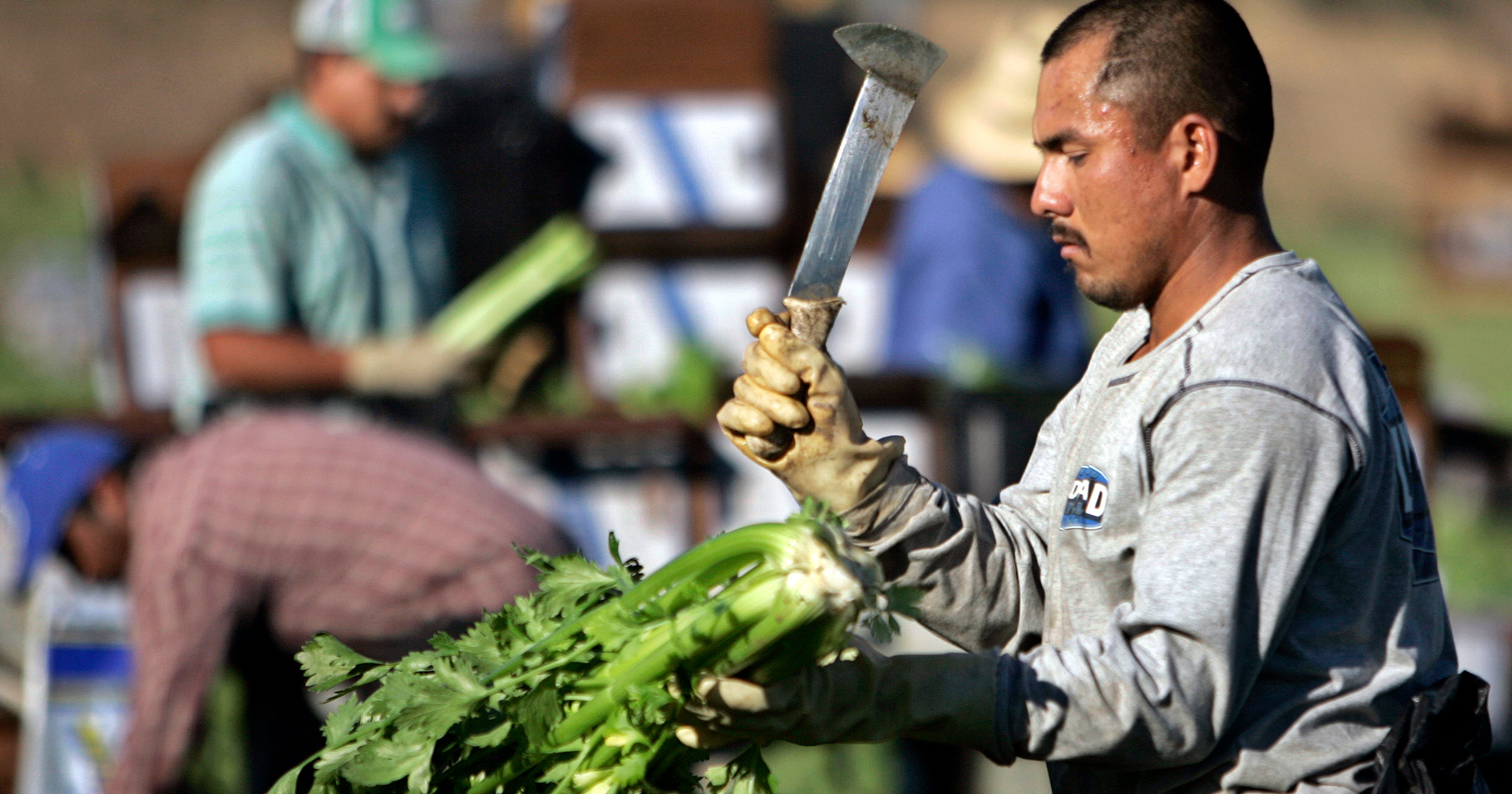
In April, a host of new protections were extended to agricultural guest workers by the Department of Labor (DOL). The department announced the finalization of a rule designed to extend rights to temporary and seasonal workers in the H-2A visa program, which allows farm owners to hire foreign laborers after proving they’ve been unable to recruit domestic workers. Workers on H-2A visas, whose legal status in the U.S. is tethered to their employers, are particularly vulnerable to exploitation and abusive working conditions.
The rule, which went into effect in June, enacted a range of new safeguards for workers and mechanisms to hold agricultural employers accountable. Unlike private sector workers, who are protected by the National Labor Relations Act (NLRA), agricultural workers had no federal right to organize and bargain for better working conditions without the threat of employer retaliation. The new labor department rule aimed to change that for H-2A workers — and in doing so, extend those protections to non-H-2A agricultural laborers when working alongside peers in the guest worker program.
But the win for this vulnerable labor force was short-lived. In June, 17 Republican-led states sued the Department of Labor, arguing the agency had stepped outside the bounds of its regulatory power by extending labor protections to workers explicitly excluded from the NLRA. In addition to being illegal, the suit claimed, the new rule would pose undue financial and logistical burdens for farm owners. The 17-state lawsuit was quickly followed by three others, filed by farm owners and trade associations in North Carolina, Kentucky, and Mississippi. In North Carolina, the NC Farm Bureau Federation took particular issue with allowing H-2A workers to unionize.
“Farm Bureau’s farmer members believe that unions make resolving disputes with their employees more difficult, costly, and time consuming,” read the organization’s complaint. “Farm Bureau farmer members also have concerns about unions in agriculture because unions increase the cost of doing business in a local market,” they added.
As of early December, judges in three of the four lawsuits had blocked all or part of the labor department’s rule, rendering it virtually toothless. The lawsuits follow years of efforts by industry giants and lawmakers to inhibit worker protections. From limiting enforcement of protections for workers toiling in increasingly high temperatures, to blocking efforts to create new safeguards for workers, to trying to repeal overtime pay, every win for agricultural workers seems to meet a roadblock.
Attorney General Kris Kobach’s (R-Kansas) office, which led the initial 17-state lawsuit, did not respond to a request for comment.
In recent years, reliance on the H-2A guest worker program by farm owners and growers has risen in tandem with harsher immigration policies and restrictions at the Southern border; advocates argue this makes the rule’s new protections all the more vital. Between 2017 and 2022, the number of H-2A workers requested by employers rose nearly 65 percent.
Beyond labor organizing, the new rule would have increased safety for H-2A workers during travel by requiring employers to provide vehicles with seatbelts, barred employers from withholding passports or visas, increased transparency in labor recruitment, and enforced adherence to a minimum wage for H-2A workers, among other protections. When the rule was announced, United Farm Workers President Teresa Romero applauded the Biden Administration for “stepping up to meet this moral crisis at the heart of American agriculture.”
The blow to the DOL’s rule is a grave disappointment for advocates who fought to protect it along the way. Nathan Leys, an attorney with the agricultural legal advocacy organization FarmSTAND, filed an amicus brief in opposition to the lawsuit from the 17 states this summer.
“Whenever these abuses come to light, the response from the agricultural industry is ‘This is a few bad apples,’” said Leys. “And rather than looking inward at their own industry to see what allows apples to go bad, the agricultural industry circles the wagons.”
“The [farm] labor shortage itself is a product of restrictive immigration policies, and a lack of path to citizenship for temporary workers.”
In a 2020 report that draws from interviews with more than 100 former H-2A workers, the migrant worker advocacy organization Centro de los Derechos del Migrante chronicled wage violations, sexual harassment, squalid living conditions, and rampant discrimination. Workers described trying to leave abusive work environments only to have their passports withheld, preventing them from fleeing. Others recounted being charged to live in horrific conditions: “I lived in a chicken pen made out of thin metal material that was in bad shape, and it had bunk beds with 30 to 40 other people,” recalled one worker.
Maria Quintana, an assistant professor of history at California State University in Sacramento who focuses on guest worker programs, pointed out that “the [farm] labor shortage itself is a product of restrictive immigration policies, and a lack of path to citizenship for temporary workers.”
The election of Donald Trump, who sailed to victory on a platform that promised mass deportations, has left some agricultural employers who heavily rely on immigrant labor uneasy. Both employers and lawmakers have urged the president-elect to exclude these employees should he fulfill the promise, pointing out that the large-scale removal of foreign agricultural workers would massively disrupt the U.S. food supply. But it remains to be seen how, in practice, Trump will navigate the tension between Republican-led states that rely heavily on foreign labor, and his proffered mission to rid the U.S. of a population that includes workers putting food on our tables.
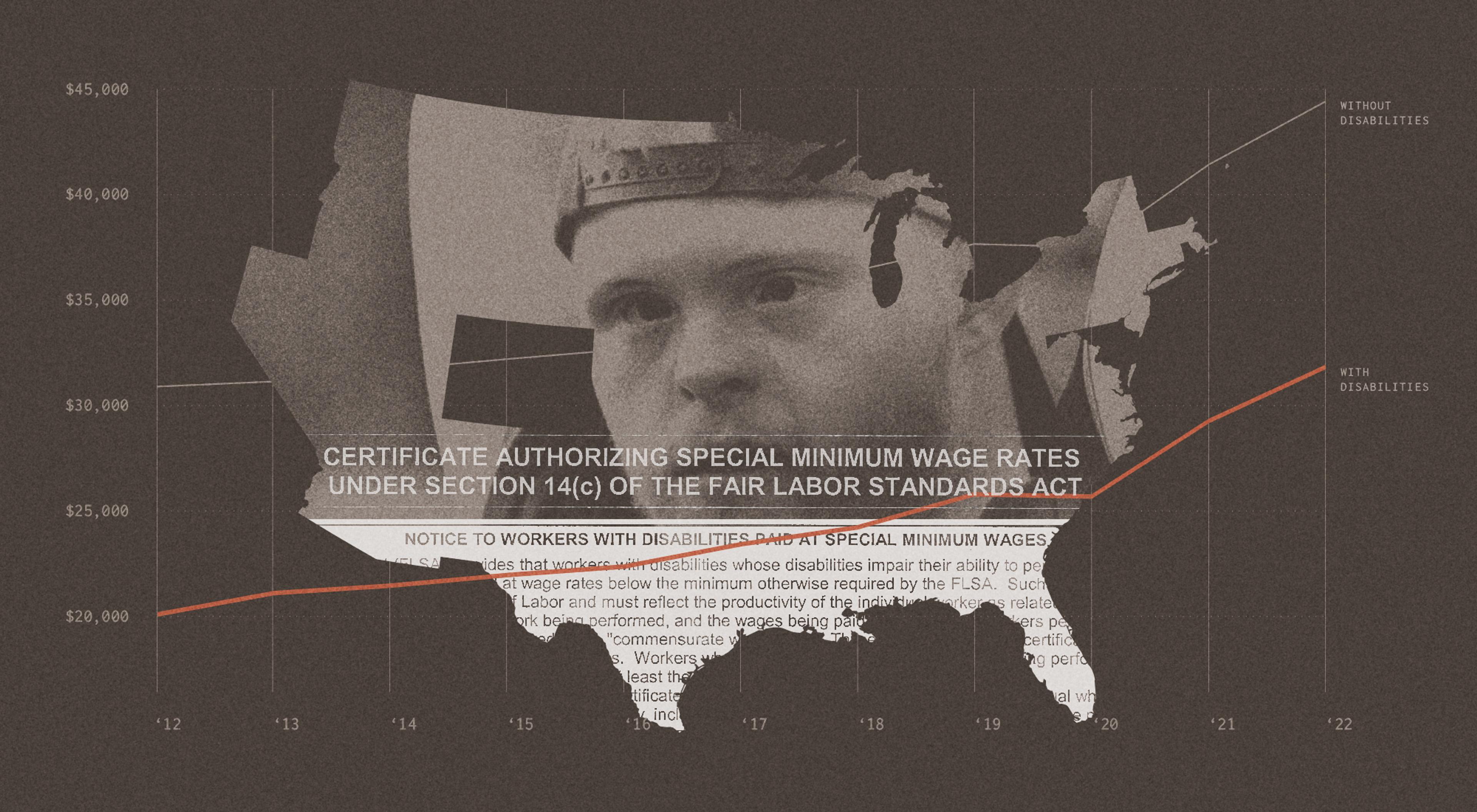
Jack Butler is one of the directors at Achieva, a Pennsylvania-based organization focused on a range of services and job opportunities for people with disabilities, calls the usual employment options for intellectually and developmentally disabled workers what they are.
“We’re trying to provide more options than food, fetch, and filth.”
In America, it is legally possible to pay some disabled workers below minimum wage for their work, whether that’s working at a drive-thru, stocking shelves, or cleaning greenhouses — what Butler calls part of the three F’s. The provision that allows the subminimum wage is called a 14(c) certificate, named after the section of the Fair Labor Act that allows this level of payment. Now, some states are moving to abolish their use.
The agriculture and farming sector, like so many areas of the economy, is not immune from a practice that is unethical and exploitative. The 14(c) system operates much like the piecework system for foreign farmworkers, paying people by piece instead of by the hour. Though unlike the typical farm-based piecework system, it is entirely legal to pay less than the federal minimum wage.
If you want to see what wage your farm task would net you if you were under a subminimum wage, there’s even a set of calculators available online. For many employers, out of sight is out of mind and profit has proven to be king. 14(c) certificates are enticing for employers, whether they’ll admit it or not, because it means you can pay people for pennies and pretend you’re doing them a favor.
The 14(c) process was formalized into law as part of the Fair Labor Standards Act of 1938, in an effort to get disabled people into the workforce. Colloquially known as sheltered workshops, the places where these programs operate have tended to warehouse disabled people, mostly those with intellectual and developmental disabilities, segregating them while selling the products they create. Many programs with 14(c) certificates lean on the idea that they can provide valuable vocational skills that can be translated to properly paying jobs eventually, though that transition rarely happens.
In recent years, at least 15 states have banned the practice of allowing 14(c) certificates to be used — Illinois committed to abandoning the program last month. Additionally, the Department of Labor (DOL) is currently seeking comment on a proposed rule change that would force a nationwide transition away from the program — though whether the incoming administration would implement any proposed changes is an open question.
Of the four organizations with obvious ties to agriculture who hold or have applied for 14(c) certificates — a list of current holders is publicly available — all appear to be billing agricultural production as a form of lifeskills development. None who were contacted responded to requests for comment. In total, as of publication, there are 751 14(c) certificates that have been approved, are in the process of renewal, or have been applied for for the first time. In total, that means just under 37,000 people are being paid less than minimum wage.
Using disabled labor on the farm is an approach as old as the hills. Stretching back to the late 1800’s, farm labor was used at institutions for disabled people under the guise of skill development and to offset the operational costs of the institutions. The Templeton Colony in Massachusetts, a state that still has four 14(c) certificates in use today, had a farming operation until the 1970s. This was a facility started by Walter E. Fernald, a key figure within the American eugenics movement, which sought to separate disabled people from the wider population by forcibly institutionalizing them. Those working in these “mini-institutions”, as the state of Minnesota calls them, were labeled inmates, not unlike the prison farm labor that is still used across the country.
Pennsylvania is one of the states that has committed to transitioning away from the use of 14(c) waivers, including a $14 million investment from the state’s government in October via federal funds. Lauren Avellone, an associate professor at the Rehabilitation Research and Training Center at Virginia Commonwealth University, is one of the people working to see more employment for disabled people nationally, working primarily with current 14(c) holders to support transition into a different model.
She noted some key reasons why we might see an underrepresentation of intellectually and developmentally disabled people in paying jobs within the agricultural sector: “A) Agriculture tends to be in more rural areas where transportation to work is a huge obstacle for people who cannot drive and do not have reliable public transportation, and b) people with complex support needs get wrongfully pigeonholed into a restricted number of professions in stereotypical jobs (e.g., janitorial, food prep, etc.) and so they are often aren’t represented in a diverse number of professions.“
One of the common arguments against the repeal of 14(c) is that the workers involved in these programs will have nowhere else to go, leading to less opportunities in the aggregate. Mihir Kakara, an assistant professor of neurology at NYU-Langone Health, is part of a research team that has found that this isn’t necessarily the case. Her research, published in JAMA Health, found that in two states that have eliminated 14(c), New Hampshire and Maryland, employment and workforce participation rates either increased or stayed level, depending on the funding provided.
“If not for these jobs and in sheltered workshops that pay subminimum wages, people with disabilities would go unemployed — [that] has always been the existing assumption,“ she said. ”We expect big level policies to have the same effect across states, but in the reality that is not the case ... And I think it makes sense that we should be looking at state level factors, also, in order to best optimize the repeal of Section 14(c) across other states which have been thinking about it.”
So, if the American economy still has a provision to pay disabled people less than everyone else, what does an equitable transition away from that look like? For Avellone, it starts with a multitude of efforts, including providing employee and provider training as well as benefits counseling; many disabled workers worry that an increase in wages could mean a decrease or elimination of the supports they need to live.
“The overall solution to ending 14(c) programs is not to close agencies and displace workers, but rather to train the same agencies in how to provide fully integrated employment services to the same clients they already serve who wish to work,“ she said. ”In my opinion, the biggest barrier has nothing to do with disability-related challenges but rather other people’s … perception of the ability of people with IDD to contribute to the workforce.”
Transport can one of the biggest barriers, especially in rural farming communities. Court Hower, Achieva’s president, said that finding employers willing to offer jobs to those who would have formally fallen underneath a 14(c) program requires a different approach to recruitment and logistics when it comes to those outside of urban centers.
“We’re working with one employee right now that’s in a very rural area, and it’s a large employer, but there’s no public transportation there and that poses additional barriers and challenges,” he said.
At the end of the day, the message from those looking to stop the use of 14(c), in agriculture and elsewhere is clear: Pay disabled people the wages they’ve earned. As Avellone put it, “...The 14(c) program is a dead-end road.”
Flight simulators that prevent real plane crashes. Building a virtual hotel that redirects to a hospitality job application. Digital games have concrete, tangible value for certain industries. Take the U.S. military, which has been using games like Fortnite to target new generations of tech-savvy gamers in its efforts to recruit more young people into service. The NYPD is using a VR game to inspire city residents to make better public safety choices by placing them into virtual situations on the street. Gamification is becoming one of the most popular recruitment tools real world industries have to synthesize the digital zeitgeist today.
But when it comes to the farming industry, can digital games like Farming Simulator or Stardew Valley crack the code on recruiting new farmers?
Less than 8% of the American farm workforce is under the age of 35, and in Europe, it’s even worse, with young farmers making up less than 5% of the sector. For the American Farm Bureau, this shortage is the number one issue facing agriculture today, leaving ag marketers to seek unconventional approaches to find new recruits. Earlier this year, John Deere’s marketing team announced that they were hiring a “Chief Tractor Officer” — a TikTok star named Rex Curtiss, who would try to catch the attention of young people and speak for the next generation of farmers. Meanwhile YouTube star MrBeast has built a 100-player farm simulation to market Dairy Farmers of America. For those tasked with agricultural recruitment, seeking new approaches to getting more young people into farming requires creativity.
Farming Simulator attracts an agriculturally curious audience rooted in learning the ins and outs of farming, from breeding livestock to growing crops and selling assets; this includes some real farmers who want to wind down from a long day of driving actual tractors by driving a virtual one at night. Developed by Giant Software, the game typically has 44,625 live players and is based on the real-world challenges of both American and European farms.
Farming Simulator’s biggest competitor, Stardew Valley, has a worldwide gaming community with more than 120,000 live players in a 24-hour cycle with a largely non-farming audience. The game’s focus isn’t designed to depict the real challenges that farmers face, but worldbuilding that reinforces self-reliance. Its premise mirrors what many young farmers face today: someone who has inherited their grandfather’s once plentiful farm. The goal is to transform decaying fields into lush, fruitful landscapes with fertile crops and a potentially lucrative future.
Stardew Valley creator Eric Barone’s inspiration draws from the popular 1990s farming game, Harvest Moon, developed by Japanese video game designer Yasuhiro Wada. Wada drew from his childhood growing up in the countryside and a desire to develop a role-playing game without any combat. For Barone, the game was so evocative because it spoke to the core power of agriculture: Civilization doesn’t exist without farming.
Many of the popular games on today’s top charts — from Call of Duty to Grand Theft Auto and Madden NFL 25 — are focused on themes that evoke violence, sports, and conquest. What sets Stardew Valley apart as one of the most popular indie games of all time is its unconventional focus on resiliency and self-reliance at the heart of human desires. “I think that there’s something about the game that taps into that deep desire that we have to live off the land and make small goals incrementally towards growing and expanding and creating a home for yourself,” said Barone.
“I think there is a real challenge in converting someone into becoming a real farmer, because I think the reality of actually being a farmer is not going to be the romantic ideal.”
While the game doesn’t necessarily intend to capture the real world experience of farming, Barone’s inspiration for designing the game is loosely inspired by his experience of growing up in the Pacific Northwest, where his parents prioritized sourcing fresh food from local farms. “My parents were always supportive of small-scale, regenerative farms, and growing up around them definitely influenced the themes in the game,“ he said. ”Some of the types of crops and foraged ingredients that you’ll see — such as the salmonberries — are inspired by this area, but players thought I had made them up.”
Despite the creative and unconventional marketing recruitment efforts that organizations like Dairy Farmers of America and John Deere have taken in recent years, no one from the agricultural sector has ever approached Eric Barone to collaborate. But even Barone isn’t convinced that gaming has the potential to effectively attract a new generation of agriculturalists. “I’ve seen a lot of things on Reddit, and people have emailed me to tell me that because of Stardew Valley, they were inspired to start growing vegetables or start a garden,“ said Barone. ”I do think there is something about playing the game and then having this slightly romantic idea of farming which could inspire people to be interested in it. I think there is a real challenge, though, in converting someone into becoming a real farmer, because I think the reality of actually being a farmer is not going to be the romantic ideal.”
Whether or not his game could help with recruitment, Barone does worry about the potential implications that the aging global farming population poses to localized food systems. “The thing that I worry about … is that the future will be in the direction of just a very few huge corporate farming businesses that will produce all of the food for everyone. I would like to see farming become more decentralized, where there’s more local farmers doing small enterprises like you might do in Stardew Valley.”
Real-world applications aside, an enduring appeal of games like Stardew Valley is using world building as a form of escape. Barone said, “People will approach me and tell me things like, ‘The game was an escape for me during a tough time,’ or I often hear people started playing it during Covid, and it made that experience easier to give them a form of escape.”
Regardless of the potential effectiveness of virtual gaming successfully recruiting new farmers, farming remains the enduring, analog system that’s a backbone of all other human endeavors. “Farming is living in what’s productive, working with your hands, and contributing to the community in a tangible way, as opposed to everything being digital, abstract. In a way, it’s almost kind of punk, because the world has become so abstract and digital, and everything is in the cloud, and everything is intangible,” said Barone.
Long before he stepped into the farm fields, Daniel J Rooney learned from a different frontier: outer space. His father’s job at the space program filled their home with Apollo-era models — replicas of spacecraft he called “twins.” To young Rooney, they were just toys; to his father, they were lifesaving tools, letting engineers on Earth solve problems in space. Now the CEO of LandScan is adapting that same concept — not for space, but for soil — creating digital twins of farm fields.
Digital twins have the potential to reshape modern agriculture with virtual replicas of fields, crops, and livestock. These exact replicas of your farm can enable data-driven decisions that boost yields and reduce waste. First used in the aerospace industry in the 1960s, digital twins simulate real-world conditions and adapt with each new data update, providing farmers with precise, real-time insights.
“Agricultural twins go beyond mapping fields,” explained Rooney. “They’re about building interactive models that mirror real-time changes on the ground.” By combining data from multiple sources — soil scans, satellite imagery, and on-farm sensors — digital twins create 3D models that track every change, from nutrient levels in the soil to specific crop water needs. This integrated view lets farmers see both the land’s current state and likely developments, enabling smarter, more targeted responses.
Though the concept of digital twins originated decades ago with NASA, in agriculture the technology has evolved to create real-time, adaptive models of specific fields. “Think of it like a virtual avatar for the farm,” said Suresh Neethirajan, computer science professor and department chair at Dalhousie University in Canada. “If a cow is feeding or a tractor is in motion, the twin mirrors it, allowing us to run ‘what-if’ scenarios and plan ahead.”
The Soil and the Sky
Rooney’s work with digital twins enables farmers to monitor soil health with a level of precision previously unheard of, especially for permanent crops like orchards and vineyards, where soil variability can make or break yields. Earlier this year, Rooney was awarded a patent for his pioneering process, which combines soil scans, vegetation data, and analytics to produce what he calls Root Cause Analytics (RCA). “RCA lets us go beyond simply identifying water stress. We can pinpoint exactly what each part of the field needs, whether it’s more water or nutrients, and adjust accordingly,” he said.
By deploying a “digital soil core” probe, farmers can map soil properties in real time, creating a digital twin that mirrors the field’s physical conditions. This model allows farmers to simulate different scenarios, optimize resources, and project outcomes. “For soil-dependent crops, small adjustments can yield big returns,” Rooney said. For example, irrigation schedules could be adjusted based on real-time moisture levels, nutrient application could be fine-tuned to match specific soil needs, and planting depths could be optimized to improve root development.
While Rooney’s digital twin approach starts from the ground, Agronomeye CEO Stu Adam’s perspective spans the sky. His technology leverages aerial imaging from drones and planes to map vast landscapes, offering farmers a strategic, top-down view of their fields. This method provides insight into erosion risks, water distribution, and other large-scale factors, helping farmers make high-level, strategic decisions.
Adam’s journey began during Australia’s severe 2017–2019 drought, where optimizing every drop of water became crucial. With AgTwin, farmers can identify high-risk erosion areas, improve water catchment, and prevent soil degradation. By focusing on water distribution and soil absorption rates, Adam’s technology could help farmers stretch their resources further and respond to environmental challenges.
Twinning in the Real World
As digital twin technology continues to evolve, its applications in agriculture are expanding to more sophisticated simulations. In Nebraska, a team of researchers led by University of Nebraska-Lincoln’s James Schnable is building a digital twin of an entire cornfield, with a $1 million grant from the National Science Foundation. This virtual cornfield allows researchers to simulate various “what-if” scenarios — from drought impacts to nutrient deficiencies — without needing to grow an actual crop each time. By running these scenarios on high-performance computers, Schnable’s team can quickly identify the most resilient planting arrangements and hybrids.
Meanwhile, in livestock, Neethirajan’s research with digital twins includes monitoring individual cows through wearable sensors that capture real-time data on heart rate, feeding patterns, and even social behavior. In animal welfare research, these models offer unprecedented insight. For example, when sensors track a cow’s heart rate, movement, and feeding patterns, that data feeds into a virtual model of the cow — a “twin” — which represents not only its current state but also its predicted future state based on historical data and real-time inputs. This twin can then simulate how different scenarios (such as a change in feeding or social grouping) might affect the cow’s well-being or productivity. It’s more than just an alert system — it’s a model that helps anticipate issues before they become critical.
The value of having a digital twin is in the predictive power it offers. Instead of simply reacting to high heart rates or low milk production, the model can simulate outcomes based on changes made in real time, helping farmers make proactive decisions for better herd management. Digital twins even help farmers in remote locations by enabling expert consultation without physical presence; veterinarians, for instance, can access health data and offer advice from afar.
Slow to Adoption
Despite their transformative potential, digital twins in agriculture are still largely in the R&D or pilot phase, particularly on smaller farms. “Generally, when new technology is developed, it’s first used in defense and intelligence, then in aerospace, followed by healthcare, and finally in fields like environmental management, shipping, and logistics,” said Neethirajan. “Agriculture is typically slower in adopting new technologies ... though that landscape is starting to change.”
While large corporations and research institutions are actively testing digital twin applications in the U.S., Canada, and Europe, full-scale implementation remains limited. One significant hurdle is cost. Adam points out that, while large firms often see a clear return on investment, the initial expenses can be daunting for smaller farms. “For now, there’s an overhead,” Adam noted, “but as the technology scales and benefits become evident, that barrier will lower.” (None of the companies mentioned in this article shared specifics on their pricing.)
The potential for digital twins, however, is undeniable. As costs decrease, adoption is expected to accelerate, with projections suggesting the digital twin market could reach $73.5 billion by 2027. With digital twins, farms have the potential to optimize crop yields, assess climate risks, and improve sustainability practices, which could help them meet emerging standards in the EU and potentially access premium markets in North America.
Rooney’s work demonstrates that digital twins can significantly decrease greenhouse gas emissions tied to over-fertilization by allowing farmers to optimize nutrient application and minimize nitrogen runoff. Meanwhile, Adam’s technology provides insights into land use, enabling farmers to implement erosion control and preserve soil health — critical for carbon sequestration. (It should be noted that digital twins are one tool in the larger precision agriculture toolkit, and will ideally work alongside other existing technologies to maximize sustainability and farm efficiency.)
Neethirajan emphasized this potential: “With digital twins, we can calculate emissions on every level — from manure management to water use. The data empowers farmers to benchmark performance and make small adjustments with big impacts, like cutting CO₂ emissions per liter of milk.”
As digital twin technology becomes more accessible, its role in agriculture will likely grow, providing farmers with valuable insights to navigate the challenges of climate change, resource management, and sustainability. While not a one-size-fits-all solution, these tools are poised to support more informed decisions, helping to optimize yields, reduce waste, and contribute to long-term environmental goals.
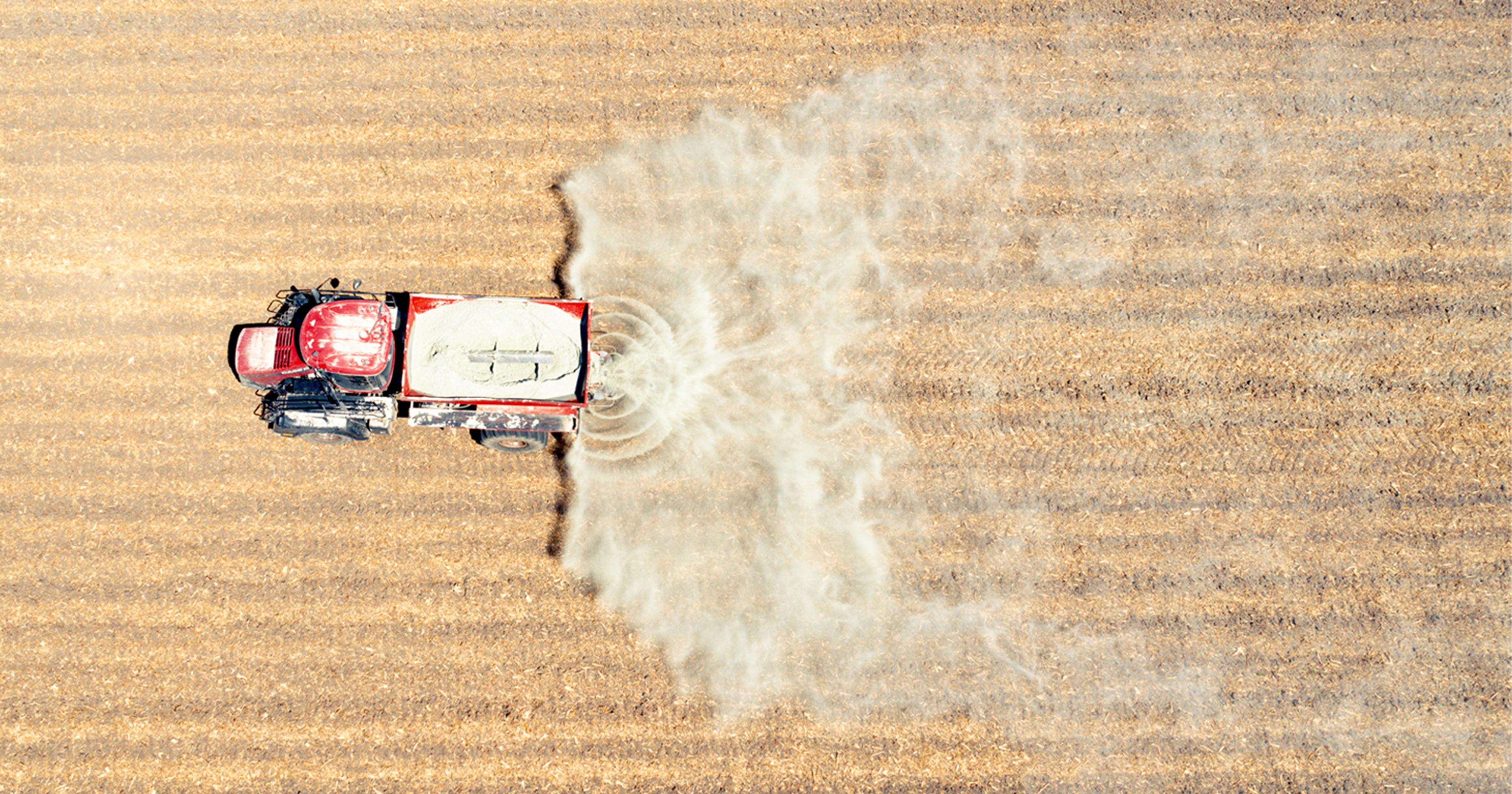
The soil on Dan Prevost’s 1,000-acre farm in central Mississippi has a lot going for it. Flush with nutrients from hundreds of years of Mississippi River floods, it’s silty, thick and good for growing cotton, corn, and soybeans, as well as raising cattle.
But it has one major downside: Thanks to a chemical reaction triggered by frequent rainfall, the dark brown earth grows more and more acidic over time. Prevost has to treat it with limestone, which counteracts the acidity, to keep it from killing his crops. Liming is “foundational,” he said, but expensive; when he first started farming six years ago, he could only afford to cover about a third of his fields at a time.
Then, in 2022, Prevost was offered a deal: He could get enough material to meet all his liming needs, at only half the cost. But instead of limestone, he would have to use a different, greenish rock called olivine. Prevost had never heard of it, but he didn’t take much convincing.
“I said if I can get a good liming material at a cheaper price, I’m all ears,” Prevost said.
The olivine came from a startup called Eion, which was able to present it at a heavily discounted rate to farmers like Prevost. When it rains, crushed olivine reacts with carbon dioxide, removing it from the atmosphere and storing it away in a solid form — a process known as enhanced rock weathering, or ERW. Corporations like Microsoft, which recently signed a deal with Eion, are willing to pay a premium to offset their own carbon emissions, subsidizing the cost of olivine for farmers as a result.
Seeking to meet its own climate goals, the U.S. government is investing in ERW, too; in 2022, the Department of Agriculture awarded $3.1 billion in grants to projects that would develop “climate-smart commodities,” such as crops that sequester carbon through ERW. This rock weathering boom is presenting new opportunities for farmers like Prevost who want to improve their soil health without added costs, even as the future of the carbon markets that are propelling this new technique remains uncertain.
“Farmers aren’t necessarily thinking about carbon marketplaces, but they understand the basic chemistry better than anyone around,” said Noah Planavsky, a geochemist at Yale University who’s working with USDA’s climate-smart commodities program to help farmers learn how to implement ERW.
Many recent efforts to combat climate change have targeted agriculture, which contributes about 10 percent of U.S. greenhouse gas emissions. But unlike other “climate-smart” techniques like no-till farming or cover cropping, ERW doesn’t ask farmers to do anything substantially different, said Anastasia Pavlovic, CEO of Eion.
“The practices that we’re fitting into today have been around for ages,” Pavlovic said. Rather than trying to convince farmers to try something new, she said, framing ERW as “replacing or supplementing or reducing the cost of an activity [they] do today … that’s game-changing in the first conversation with the farmer.”
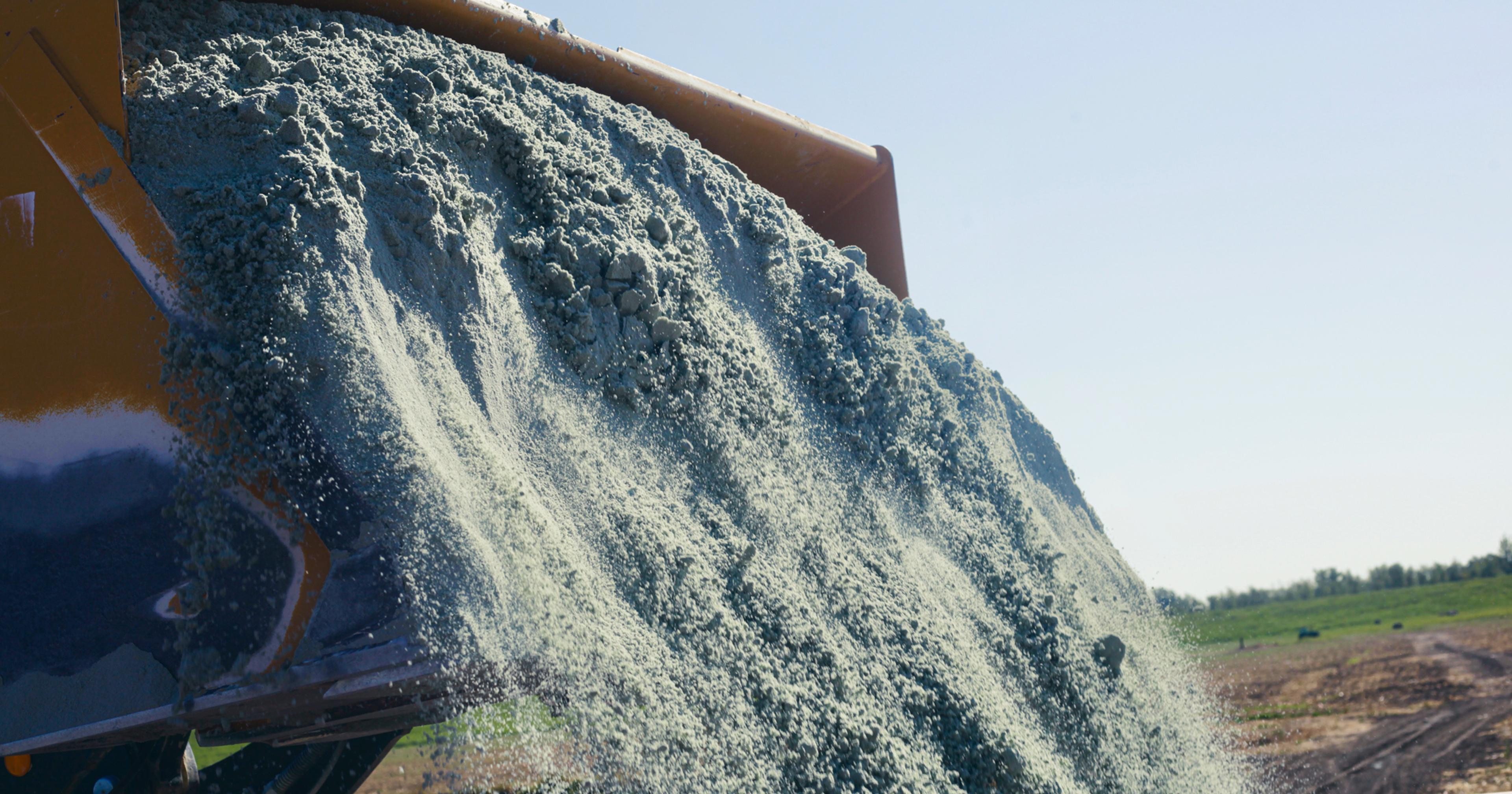
In order to have the biggest climate impact in the shortest amount of time, Eion is targeting large row crop farmers and beef producers, Pavlovic said. The company worked with farmers on about 8,000 acres in the Deep South and is in the process of spreading rock dust on another 8,000 acres in the mid-Atlantic; next year, it plans to expand to the Midwest through a partnership with agricultural supplier Growmark, which will give it access to “millions of acres,” according to a company release.
Their work has been bolstered by recent research that has quantified the impacts of ERW on crop yields, as well as the climate. The science behind how rock weathering removes carbon isn’t new; geologists have long known that volcanic rocks like olivine and basalt react with carbon dioxide and water to form new compounds like calcium carbonate, which is swept into rivers and eventually deposited in the ocean.
This process occurs naturally, but slowly, all around the world. ERW was born when scientists found that they can speed up weathering by grinding the rocks into a fine dust, increasing their surface area and having a measurable effect on global carbon dioxide concentrations. Although the amount of carbon dioxide ERW can remove varies widely depending on soil types, crop types, and weather patterns, one four-year study by researchers from the U.S. and U.K found that spreading crushed basalt on corn and soybean fields in Illinois can sequester three to four tons of the greenhouse gas per hectare per year. Their paper, published in February, also reported that ERW increased yields by up to 16 percent compared to liming, and the crops that grew with the help of basalt were more nutritious.
Scaling up ERW application beyond a few test plots will require working more closely with farmers. Many are skeptical about being marketed new products after being inundated with offerings during the agtech boom of the 2010s, Pavlovic said, making a direct-to-farmer model more difficult to sustain. Instead, Eion makes agreements with the distributors who supply amendments like lime, making it easier for farmers like Prevost to work with the suppliers they’re already using. Basalt, the rock that Planavsky and other ERW companies use, also raised some safety concerns; with much of it sourced from mine waste, batches have to be tested for harmful substances like heavy metals.
If they’re able to overcome these hurdles, those who embrace ERW are entering a potentially lucrative market. Under the USDA grant, Planavsky — who co-founded the ERW company Lithos, but stepped away from the company to focus on research — is working with 20 farmers around the country, with plans to expand to 60 in total. He’s focusing on teaching them how to work with the rock dust for different kinds of products, from corn and soy to berries, mixed vegetables, beef, and even honey. He hopes that eventually, farmers can not only get discounts on soil amendments like lime, but actually get paid directly to sequester carbon through ERW, while also being able to market their products as climate-friendly.
“We have way more interest from farmers than we’re able to enroll in the program,” Planavsky said. “It’s a strong sign that these programs resonate with farmers.”
For now, though, the main benefits are still in soil pH management. Acidic soils, which have always been a problem in parts of the U.S. like the Deep South, are now growing more common nationwide due to extensive use of nitrogen-based fertilizers. Basalt and olivine are good at combating this; Prevost saw his soil pH rise by 0.3 to 0.5 points per year after applying olivine. His yield grew too, by about 27 bushels per acre in cornfields that received the crushed rock over those that didn’t. The corn that grew in olivine-treated soils was a darker green, and looked healthier and more vigorous, he said. He was able to double his ERW-treated acreage in 2023, and even introduced some of his neighbors to it.
Despite the benefits for soil health, the future of ERW is uncertain. Substances like olivine are rare in the U.S. and need to be shipped in from Norway; basalt, while more common domestically, is still costlier to procure than lime, which has an established supply chain for agricultural buyers. The math works out right now because companies like Microsoft or agencies like the USDA are willing to pay farmers to remove carbon, lowering costs of these rocks. But under a new presidential administration, which has promised to slash any mention of climate change from federal programs and pull the U.S. out of the landmark Paris climate accord, public funding for ERW will likely dry up; private financing could follow if companies decide they no longer want or need to reduce their carbon emissions.
This year, Eion shifted its focus to farmers in the mid-Atlantic under the new deal with Microsoft, and Prevost was unable to secure any olivine as a result. He doesn’t need to lime his fields again until 2026, and hopes that by then he’ll find another source.
“We need buyers of carbon to make this whole thing work,” Prevost said. “Whoever is buying these credits, they need to buy more.”

Everything on earth reflects light — a black t-shirt, the feathers of a blackbird, cooled lava rock all bounce light back to our eyes. But there is a scientific quest to find materials that do the opposite, to absorb light rather than reflect it. “Superblack” materials reflect less than 1 percent of light that hits their surface. The current record holder is a polymer that reflects less than 0.0002 percent of light.
Now, among synthetic polymers and chemical paints, a new contender has emerged in the race: a piece of simple carving wood.
This June, a team of scientists in Canada released the results of a study, wherein they placed a piece of common basswood inside a plasma reactor the wrong way up. It emerged from the reactor as the first wood material to achieve superblack status.
The simple flip of a wood sample, from its longitudinal edge to the transverse, showed that a common, light-colored wood could mimic — and surpass — the velvety color of dark hardwoods coveted for furniture, musical instruments, and art.
The scientific discovery now raises the possibility of using plasma to create substitutes to precious — and endangered — centuries-old darkwoods. The hope is to help stymie the illegal logging of wood, which ranks as the third most lucrative transnational crime behind drug trafficking.
“You’re never going to stop the trade unless you can develop a substitute material that is just as good,” said Philip Evans, senior author on the study and professor of forestry at the University of British Columbia in Vancouver.
Dark Matter
Plasma is often referred to as the fourth stage of matter. Energy melts a solid ice cube into water, and boils water into gas. When gas is heated by more energy, the molecules rip apart, forming a soup of positively charged ions and electrons. This ionized soup, called plasma, appears in our skies as the Northern Lights or streaks of lightning bolts.
In the 1970s, at the start of Evans’ career, plasma emerged as a way to change the surface of wood.
Waxy woods like eucalyptus, when placed within a plasma reactor for a few seconds, become wettable, meaning that glues could spread and stick to the wood surface, making eucalyptus furniture a possibility. By 2018, Evans began to use plasma on wood in the same way that semiconductor manufacturers etched grooves and pathways into wafers of silicon.
A metal plate protected some of the wood within the reactor, leaving the exposed wood to get etched away. Evans and his doctoral student Kenneth Cheng bombarded the longitudinal side of the wood, the direction that the water flows within tree trunks, with plasma.
Instead of the golden color they saw on the long edge, the transverse wood sections emerged from the plasma reactor black.
But, for completeness, Evans asked Cheng to run the tests again on the transverse edge of the wood, the weaker side of the wood that emerges when you chop down a tree. Transverse wood cuts are typically seen atop decorative end tables or kitchen cutting boards.
Instead of the golden color they saw on the long edge, the transverse wood sections emerged from the plasma reactor black — very black, so black that Evans asked a team of astrophysicists to measure the reflectivity of the surface.
But appearing black to the eye does not equate to reflectivity. Many dark materials still reflect light in other wavelengths outside the visual range, said Luke Schmidt, who tested the plasma-wood samples for Evans at Texas A&M University. The plasma-etched wood, to Schmidt’s surprise, reflected only 0.68 percent of light across the visual and ultraviolet wavelengths.
It was superblack.
Illegal Harvest
The wood may have started in the lab, but the superblack wood’s size and shape leaves it without an obvious “home run application” for science, Schmidt said. Synthetic polymers or paints made from tiny tubes of carbon can more readily spray the inside of telescopes and other scientific equipment — one of the most common current uses for superblack.
More likely, Evans said, the superblack wood could relieve pressure on the precious darkwood industry, where centuries-old trees are felled for consumer goods like furniture bound for Asian countries or musical instruments bought in the West.
Overharvesting has landed many dark and tonewoods on the CITES Illegal Trade Database, a list of endangered flora and fauna that the international community has agreed to not trade or trade only in very particular circumstances.
The plasma-etched basswood from Evans’ lab looks similar to ebony, a precious wood used in guitar fretboards because of its dark color and durable hardness. But only one in 10 ebony trees are pure black; the other nine are streaked with an undesirable white color — and discarded, a wasteful end to their centuries-long life.
Anything to divert the waste of the ebony trade and “give trees a fighting chance of surviving” is “wonderful,” said Edgard Espinoza, the criminalistic section chief of the National Fish and Wildlife Forensics Lab in Ashland, Oregon. There, he and 25 researchers test wildlife samples to determine if the item is or isn’t legal to trade.
But Espinoza has seen how lookalikes to precious natural materials like ivory create more demand for the original item, not less. “People see the fake and they go, man, I’d love to have the real thing, because the fake is so cool, the real probably is better.”
“You’re never going to stop the trade unless you can develop a substitute material that is just as good.”
Only once, in the decades of testing wood samples, did Espinoza come across an inferior wood masquerading as harder, higher-quality species. The wood came from Hong Kong and the importer claimed it was cherry wood. It was compacted so it was hard as cherry, it was dyed to look like cherry, but the spectrometer said otherwise — the molecular signatures did not match the cherry wood spectra. Nor did the signature match any other protected species.
The economics of illegal logging still governs the industry of wood, Espinoza said. Inexpensive timber from Africa — or inexpensive labor in Papua New Guinea or Malay islands — provides wood that sells for “outrageous prices in other parts of the world — that’s what’s the driving force, right?”
In 2012, Gibson Guitar Company admitted to illegally purchasing ebony wood from Madagascar following the ban of its export after 2006. The Gibson case pushed the music industry to more closely monitor its lumber sources, said David Gehl, senior manager of traceability and technologies at the Environmental Investigation Agency, the non-profit that exposed the Gibson’s illegal imports.
Paying for Cool
For now, Evans and his colleagues are focused on fine jewelry — not scientific — applications. “Unfortunately, the world we live in, people are willing to pay for cool, they’re not willing to pay for science,” he said. “The general public couldn’t care less about the papers.”
They’ve created watches with eye-catchingly dark black faces, similar to the Swiss watch company Chronotechna, which coats their watch faces with superblack paint developed at Harvard University. And just as the jewelry store Tiffany sells onyx rings, Evans created rings sporting the plasma-etched wood. The vertically aligned lignin structures at the surface of the wood also make it hydrophobic, Evans found, increasing its prospective value. Since the paper came out, they’ve continued to prototype products, including phone cases.
The plasma-etched wood is now trademarked under the name Nxylon, after the Greek goddess of the night Nyx, and xylon, the Greek word for wood. The Nxylon surface is delicate, Evans said. But they came up with a way of preserving the superblackness and protecting the surface with a thin coating of gold/vanadium. Evans said he has no intention of profiting from the discovery.
“Unfortunately, the world we live in, people are willing to pay for cool, they’re not willing to pay for science.”
It’s difficult to quantify the impact consumer aesthetic preferences have on the illegal logging market, Gehl said. But he wouldn’t minimize it. After the Gibson case, guitar manufacturers claimed that they used too little of the wood to drive the loss of endangered species.
“But I think, you know, overall, all of these industries do really have an impact.” Gehl said.
No matter what its ultimate impact, the plasma-etched wood is a “very valuable development and part of a positive trend of this environmentally-friendly methods and techniques for creating good alternatives to much more destructive and unsustainable products,” Gehl said.


Graphic by Adam Dixon
This November, when temperatures started to drop, Melody Swan, a registered dietitian and greenhouse manager with Abegweit First Nation, a Mi’kmaq community in the Canadian province of Prince Edward Island, sought relief in the community’s greenhouse. “I was like, I’m just going to stay all day in here, and remind myself of summer.”
On sunny days, the greenhouse reached a toasty 70 degrees, even as cold conditions set in. Over the winter, Abegweit will use the structure to grow produce for community members, and for use in programs like Meals on Wheels and a local daycare.
The greenhouse allows the community to maintain consistent growing conditions in the summer, and prevents the temperature from dropping too low in the winter. But that heat isn’t coming from conventional sources — instead, through the use of geothermal technology, the greenhouse is drawing it up from inside the earth.
As the world’s population increases, the use of greenhouses is also on the rise; in May, a study published in Nature Food used satellite data and artificial intelligence to determine that greenhouses cover 5,000 square miles worldwide (an area about the size of Connecticut) — up from just 115 square miles 40 years ago.
These greenhouses have the potential to safeguard food production against a more volatile climate — but that security comes at a price for the planet. Greenhouses hog energy, and as they proliferate, the energy demand does too.
To make greenhouse production more sustainable, some growers are turning to geothermal energy: energy derived from the heat of the earth itself. Geothermal uses the heat that’s found beneath the earth’s surface to generate electricity, provide hot water, and, crucially for agriculture, to heat and cool buildings.
“It is widely recognized that probably geothermal’s biggest role within decarbonization is decarbonization of heating and cooling … whether that is in a house or agriculture,” said Helen Robinson, global R&D manager at the International Geothermal Association.
Geothermal has other roles to play in farming, from pasteurization to processing, but greenhouses are the lowest hanging fruit, as they require the lowest temperatures, said Robinson. Meanwhile geothermal heat systems have smaller footprints than those that would provide a comparable amount of heat from renewable sources like solar.
Yet while geothermal has been around for a century, the use of the technology is limited; it’s seen as an expensive approach to energy, and there are only so many locations in the world where it’s feasible. But with new technologies, and a greater urgency around decarbonization — including an industry commitment to triple geothermal by 2030 — this niche form of energy may finally be having a moment.
Could agriculture be part of it?
***
Many people, thinking of geothermal energy, likely imagine places like Iceland — and for good reason, since roughly a quarter of Iceland’s energy is produced by geothermal power, and 85% of all homes are heated by it.
Icelandic growers also use geothermal to power greenhouses, including a structure that’s home to one of Europe’s largest banana plantations.
Iceland and similar places are using something called conventional or deep geothermal, said Maurice Dusseault, engineer and professor emeritus in the geology department at the University of Waterloo in Canada. In conventional geothermal, a combination of heat, water, and permeable or porous rock create a well of potential energy deep beneath the surface. “In its most wonderful realization, you drill a hole and you find a big porous rock mass that is full of super-hot fluid … and then you can bring that to the surface, and you can flash it into steam, and the steam drives turbines and electricity is generated,” he said. “[But] that’s only available in a very small area of the world.”
“What we’ve done is scratch the surface of what’s possible.”
Apart from Iceland, countries with capacity for this kind of geothermal include Kenya, Indonesia, and the western United States — with the U.S. being the largest geothermal power producer in the world.
But in most places, the rock is either too dense, making it impossible to extract fluid, or too cold. Even in the U.S., geothermal only accounts for 0.4 per cent of electricity generated. What most places have to work with instead, said Dusseault, is the heat stored in the earth’s subsurface, through an approach called low-grade geothermal.
Thirty years ago, a retired U.S. Postal Service worker named Russ Finch set out to build a greenhouse that used this approach.
Seeking a way to grow produce in the Nebraska winter, Finch adapted a design for a pit greenhouse to include geothermal energy; by burying perforated plastic tubes at a depth of eight feet, where the temperature held constant at 52 degrees, and circulating air through the ground and back into the greenhouse, Finch could generate enough warmth to grow citrus fruit without any additional heat.
In 2010, Finch approached a local machinist named Allen Bright for steel to manufacture a new greenhouse. That first winter, Bright kept an eye on the structure as temperatures went down to 25 below zero. “I had thermometers up and I had bottles of water sitting around, and it was never frozen [in] that greenhouse,” Bright said. “And I’m sitting there saying, ‘It does work.’”
With that project under their belt, Finch and Bright began selling greenhouse kits commercially, as Greenhouse in the Snow; in the 14 years they’ve been operating, Bright said they’ve refined the design, and are now finalizing a 24-foot wide greenhouse for commercial growers.
“What we’ve done is scratch the surface of what’s possible,” said Bright. “That’s what Russ’s goal was: to say, ‘Hey, this is possible, where can we go from here?’
“I had thermometers up and I had bottles of water sitting around, and it was never frozen [in] that greenhouse.”
While this approach to geothermal is widely available, it has limitations. When the ground temperature is in the 40-50 degree range, geothermal isn’t especially efficient at providing the kind of heat required to power a greenhouse (as it stands, the Greenhouse in the Snow design is just meant to keep temperatures above freezing at night).
An alternative approach to geothermal is often called geoexchange. With this method, the ground is used as a way to store heat over the course of the year, dumping that heat in the ground when it’s abundant, and pulling it out when it’s needed — and some growers are using methods to boost that ability even further.
In 2017, Tim Clymer was looking for an economical way to grow figs year-round in Pennsylvania. As propane was too expensive (and too polluting) as a power source for a greenhouse, Clymer looked to geothermal.
Clymer said he considered the Greenhouse in the Snow design, but deemed it too pricey per square foot; instead, he designed a system based on an approach called a climate battery. That involved using fans to push the excess heat collected by the greenhouse (which can reach 120 degrees on a sunny winter day) underground via a network of piping, where it’s stored in the soil. That heat is then released back into the structure when temperatures drop.
Right now, Clymer said they’re maintaining the ground temperature at about 75 degrees, “and then [we] try to carry that into winter. So we really are trying to manage it more like a battery than a sort of quasi-infinite power source.”
Clymer now sells climate battery greenhouses across the U.S. and in Canada, including to Abegweit First Nation. Over time, he has significantly improved the efficiency of the design; nonetheless, Clymer said there’s still an environmental impact, as making a climate battery entails burying plastic in the ground. Such systems also rely on electricity to run the fans. Still, the alternative involves importing produce and trucking it across the country. “So there’s no free lunch there.”
“The interest, and the enthusiasm, and the rate at which [development] has increased even in just the last five to 10 years, it’s phenomenal.”
Either way, Clymer said making use of the resources of an area, whether it’s through a climate battery or a true geothermal system, makes sense. This is especially true where space is at a premium; a megawatt of heat from solar can take a four to six acre solar installation, while an equivalent geothermal heat station can be the size of a garden shed (meanwhile, alternatives to fossil fuel heat don’t stop there, with greenhouses using waste heat from pulp mills, data centres, and bitcoin mining operations, to grow crops).
Going forward, geothermal advocates say there’s significant untapped potential for the agricultural sector to use conventional geothermal. Geothermal can be expensive, but the temperatures needed for agriculture are much lower than those needed to generate power, meaning the wells don’t have to be as deep, said Robinson. “You can look at something that’s coming out of the ground at 50 or 60 degrees [120 to 140 degrees Fahrenheit], and still be like, ‘Right what can we do with this?’”
Meanwhile, even for power generation, geothermal energy is advancing, with new techniques that engineer the conditions that produce power in conventional geothermal systems by fracturing rock. In the U.S., projects using these approaches have begun producing power in the past year. There’s also growing recognition of the potential for geothermal to repurpose oil and gas infrastructure, said Robinson.
“Whether it’s agriculture or something else, the whole perception of geothermal, the interest, and the enthusiasm, and the rate at which [development] has increased even in just the last five to 10 years, it’s phenomenal.”
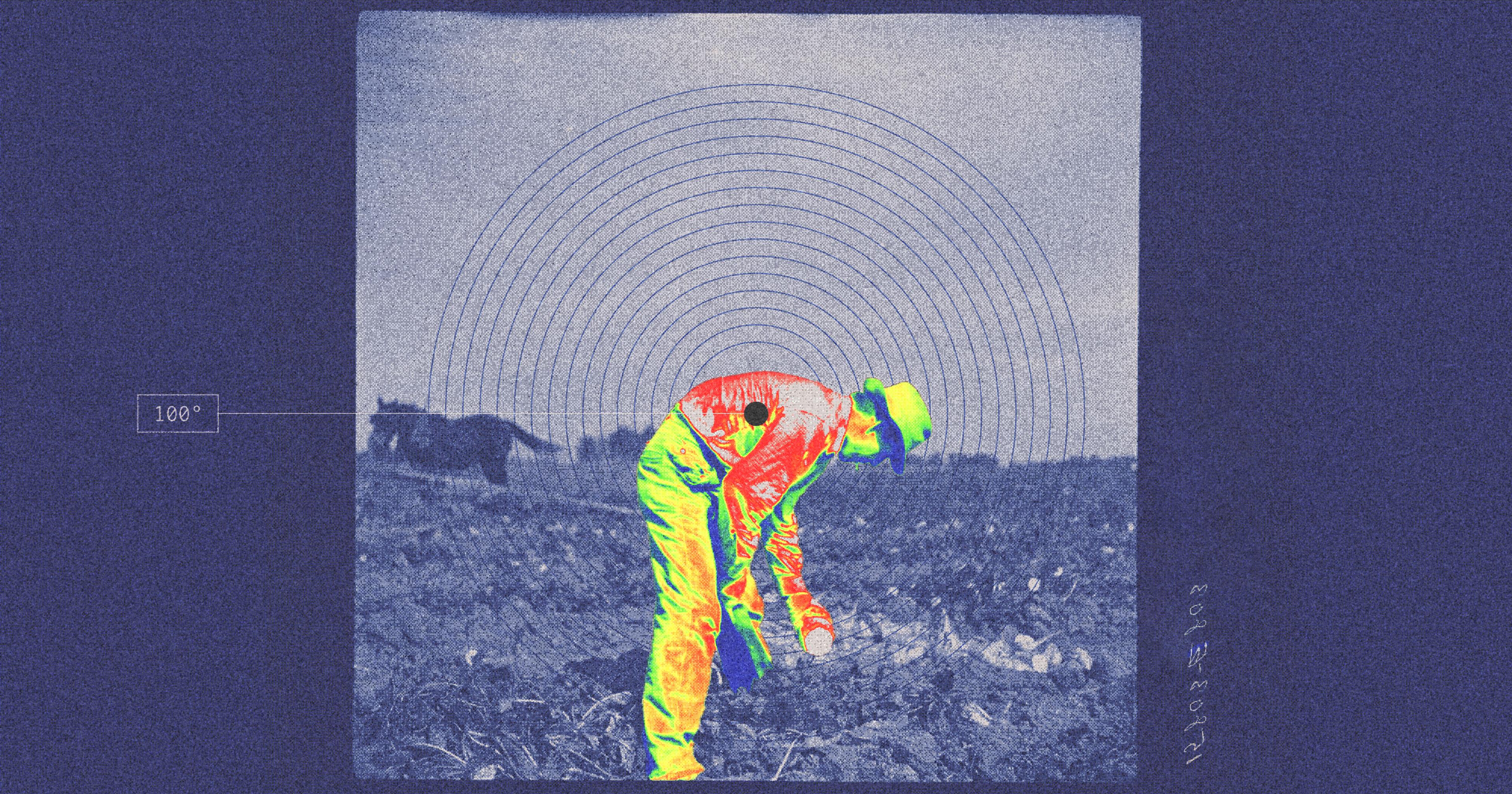
The Sunshine State is the hottest in the nation, bearing down on residents with scorching temperatures and stifling humidity alike. Outdoor workers, including the roughly 150,000 agricultural workers seasonally employed every year in the state, are especially vulnerable.
Summer months on Florida farms are “almost like a sauna,” said Roxana Chicas, a registered nurse and assistant professor at Emory University. The shade cloths protecting crops from sunburn make workers feel even hotter by stopping air flow.
Chicas is working on a solution — a biometric device that warns the wearer they are at risk of heat injury. Researchers at Emory University, Georgia Tech, and the Farmworker Association of Florida are now testing wearable sensors on outdoor workers to better understand heat risks and to develop algorithms that predict the onset of heat-related illness. “The idea is that we will be able to prevent people from having heat-related illness and heat-related deaths,” said Chicas.
Fevers and Kidney Injuries
The research builds on previous findings from the same collaborators, who have worked with landscaping teams, construction crews, and farmworkers. Between the summers of 2015 and 2017, the team tracked the core temperature of 221 agricultural workers using a swallowed, pill-shaped sensor. For three days at a time, while the pill relayed temperature readings every 30 seconds, the participants also provided blood and urine samples before and after work. On average, nearly half the workers exceeded a core temperature of 38ºC (about 100ºF) at some point over a workday. “Farmworkers are working in the field with a fever,” said Chicas. “They may have headaches, muscle aches, nausea.”
Analyzing blood and urine samples, the researchers found that about a third of workers had an acute kidney injury over the course of just one work day. That risk of kidney injury went up 47% for every 5-degree increase in the heat index. “This is not something the workers know that they are developing — they don’t really have any symptoms,” said Chicas. “Once a person has one episode of acute kidney injury, they are at higher risk of chronic kidney disease.”
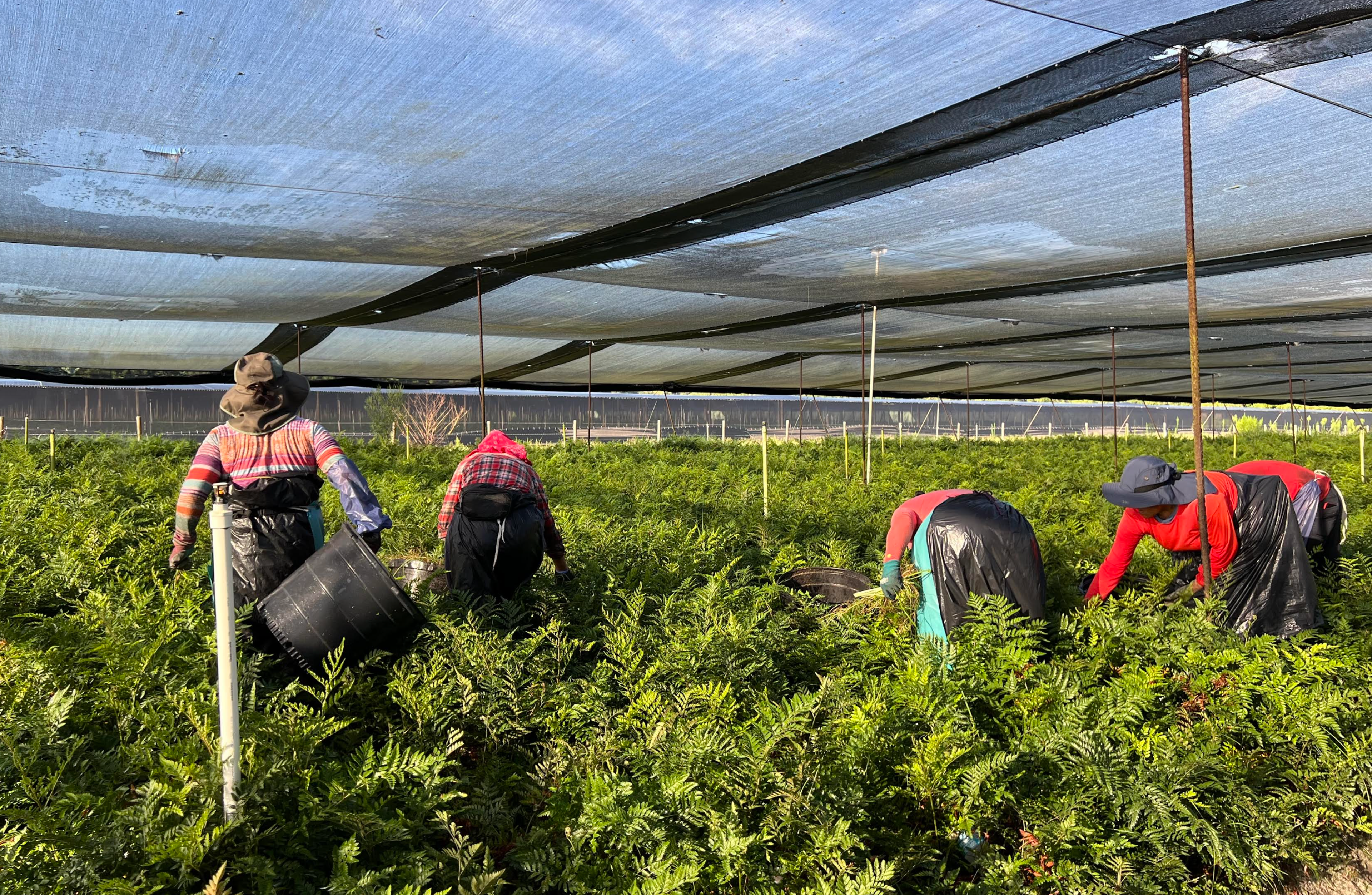
Florida farmworkers toil under a heat-intensive shade cloth.
·Photo by Roxana Chicas
The risks of heat are worsened by the equipment workers wear to protect against pesticide exposure, added Ernesto Ruiz, a researcher at the Farmworker Association of Florida. Thick clothing with long sleeves, boots, and gloves have the unfortunate side effect of stopping heat from escaping their bodies. And, not only is it difficult to rehydrate in the sweltering conditions, many report feeling pressured to skimp on fluids. “Workers tell us often that they specifically forgo drinking water so that they don’t have to take time off going to the bathroom,” said Ruiz.
Developing a Better Wearable
The earlier research was uncomfortable for workers, who in addition to swallowing sensor pills wore sensor straps across their waists and chests. Engineers at Georgia Tech reworked the sensors, and, after several iterations, developed the less cumbersome device the team is now testing.
The current wearable is now a single chest patch that sticks like a bandage on the sternum. It tracks the workers’ respiration rate, heart rate, electrocardiogram, physical activity, blood oxygen saturation, skin temperature, and skin hydration — all in a square package about the size of a mini matchbox. The tech is far more accurate than your average smartwatch, using ultra-thin membranes that stay in contact with skin even when the worker is moving, said W. Hong Yeo, an associate professor of mechanical and biomedical engineering at Georgia Tech.
This summer, 168 farmworkers, recruited by the research team, wore the sensor as they labored under the Florida sun, in addition to stopping into a clinic to provide blood and urine samples and respond to a questionnaire about working conditions. The participants also got health test results and nurse advice for markers such as lipid profiles and blood sugar, a valuable service since they are mostly uninsured or under-insured, said Ruiz.
“Workers tell us often that they specifically forgo drinking water so that they don’t have to take time off going to the bathroom.”
The first goal for the summer’s data is to identify biometric thresholds for acute kidney disease, said Yeo. Computer scientists are now training an AI on the data points to develop equations capable of predicting kidney injury.
In the future, the researchers hope the device can ping the wearer’s smartphone when it senses impending illness, notifying them to take a break and hydrate. Connected via Bluetooth, the device could route alerts both to the worker’s phone and even a co-worker’s or manager’s.
Beyond that, the technology could further build on data from worker breaks to refine its alerts, perhaps telling wearers how long to rest or how much water or electrolytes to drink. Data from the breaks on how much a worker’s core temperature cooled or heart rate slowed could provide further information for developing detailed notifications. “That’s gonna be our next step,” said Yeo.
The Limits of Tech
Ruiz hopes the data collected over the course of the collaboration will also influence measures to improve working conditions. Currently, agricultural workers in Florida are not protected by enforceable heat standards at any level of government. Last year, Miami-Dade County officials proposed heat protection standards for outdoor workers. But, after complaints from agricultural and construction interests, Governor Ron DeSantis signed into law a bill that prevents local governments from setting their own heat regulations.
Ruiz said that findings such as those on acute kidney injury can underscore why heat protections are needed. “We need to amplify that to influence policy, to influence public sentiment, and ultimately to enact legislative change around actual worker-centered protections.”
But he is skeptical about the impact of the wearable device itself. Currently, many agricultural workers, often paid by how much they produce rather than hourly, say they feel pressured to push through the heat.
“We need common sense protections, the same sort of things that we offer student athletes.”
To be effective, Ruiz said wearable tech must be part of a larger set of cultural and policy changes. “We need common sense protections, the same sort of things that we offer student athletes,” he said. He adds these protections should include acclimatization periods for new hires, requirements for providing shade and water, and standards for breaks based on temperature and humidity. Recently, the Occupational Safety and Health Administration proposed new rules for heat protection that would enact similar heat safety measures; the proposal is currently in the public comment stage.
“We need tech and policy solutions,” agreed Chicas. She added that the objective information provided by the wearable could help remind someone to slow down at a critical point, avoiding dangerous consequences. She’s looking forward to continuing to refine the device — the next field study will test out health alerts, getting feedback on the alerts from workers.
“I think we can all agree that we don’t want workers dying in the field or having heat-related illness,” she said. “With the implementation of some simple interventions, I think we can protect farmworkers.”

On November 6, Senator Jon Tester — the last remaining Democrat to hold federal office in Montana — was voted out. Tester is a self-described “dirt farmer” who has served three terms as senator. This election, he refrained from endorsing Harris-Walz, presented a more conservative stance, and hoped in vain that Montanans would split their votes, separating national from local as they have often done.
Gilles Stockton, a sheep and cattle rancher from Grass Range, Montana, is a Democrat who disavows what he sees as the party’s dismissal of rural demographics.
“I live in a community in Montana right now that’s considered deep red Trump territory. And I don’t see the attraction,” he said. But, “I’m quite disgusted with the way the Montana Democrat party has been addressing the rural parts of Montana,” he added.
The former president of the Montana Cattlemen’s Association, Stockton has worked with Tester on advocating for the COOL (Country of Origin Labeling) Act, which would keep imported beef and pork from being tagged “Product of USA” just by virtue of being packaged domestically.
Transparency in agriculture — for producers and consumers alike — is a passion of Stockton’s. His recent book, Feeding a Divided America: Reflections of a Western Rancher in the Era of Climate Change, takes the form of a battle cry. The title evinces an understanding of his own heterodox identity as a member of a rural, conservative-leaning industry who readily acknowledges the threat of climate change.
It also gives clues to those obsessively searching for answers in the wake of Trump’s re-ascent to the presidency. Is there an answer in a man who is not at a liberal remove, who is in fact deep in manure, meat, and Montana, talking about protecting the environment?
The book’s conception reflects Stockton’s active participation in civic life: It began out of frustration with the constraints of letters to the editor about the food system, grounded in his decades-long farmer advocacy at the grassroots level. The ends of this advocacy may challenge typical ideas of what ranchers want. For instance, the Montana Cattlemen’s Association’s mission statement says they “shall be true environmentalists in protecting and advancing their environmental positions in water rights, mineral rights, and natural resources.”
According to Stockton, Democratic policy toward wild animals in Montana in particular has contributed towards the backlash against them. “Obviously, the Democratic party doesn’t have a platform that says we are in favor of wolves and grizzly bears,” he said. Still, “When you live with those animals every day, as a rancher you’ve got this very intimate connection with them that other people don’t have, and you wonder, where in hell did they get that notion?”
For him, rewilding national parks dismisses farmers‘ needs and expertise. Treating rewilding as a niche, rural issue is tantamount to abdicating state power, as the results of this election have proven.
“You have a lot of idealistic, utopian folks from the city who think ... the animals should run wild, and people should not be part of the equation.”
“You have a lot of idealistic, utopian folks from the city who think that the ranges or the mountains in the West, both of which are just very vast spaces, they should all be wild, and the animals should run wild, and people should not be part of the equation,” said Baker Morrow, the book’s commissioning editor and Stockton’s friend from his USAID days in the late 1960s.
Stockton also strongly objects to those who draw a relationship between cows and climate change, responding to the charge with a level of personal offense.
“You know, people believe a lot of shit,” he said. He referred to it as an urban myth — emphasis on the “urban.” “There has always been this cycle [of methane production],” he said. “This is happening in the guts of animals and in the bottom of the swamps and just in the decomposition of organic materials in the soils … How’s the belief come about that cows are somehow different?”
He pointed out that cheap meat means that people can eat. Take it away, and you find “a bunch of people starving to death.” One section of his book is named, “The Vegetarian Nonsolution.” As perhaps befits his position ranching in the harsh Eastern Montana landscape, Stockton does not imbue untamed nature with a sense of justice or balance. He is vocal in his conviction that agriculture imposes necessary order in a wasteful, violent system — and argues that ranching constitutes the only sustainable form of agriculture.
This is how he demands respect for former U.S. farmers, who have been forced to leave the lands that shape their identities because, as he repeatedly returns to, we have “a national policy that systematically confiscates the food we raise for less than it costs to produce.”
Stockton explains why farmers vote overwhelmingly Republican by comparing them to traumatized cows, who respond with rage when they are vulnerable or hurt, even toward those who try to help. Stockton terms this visceral anger “Political Extremist Personality Disorder.”
Stockton explains why farmers vote overwhelmingly Republican by comparing them to traumatized cows, who respond with rage when they are vulnerable or hurt.
His positive feelings toward human intervention into the environment, which some may understand as conservative-coded, do not represent support for environmental extraction. In fact, he reminds the reader that Montana farmers stood up against mineral exploitation even when it meant the loss of jobs for their families. He is also unequivocal about his disdain for Republican policy, pointing out the irony of farmers supporting a border wall when they rely on undocumented migrant labor to maintain their operations.
“The [Republican] alternatives — fascism, a police state, theocracy — are unacceptable,” he writes. Stockton expresses disgust towards local Republican lawmakers, who have mocked Covid precautions, loosened gun regulations, and legislated kids’ genders.
Indeed, he proudly adds his voice to the growing chorus of environmental advocates in Montana who lay a claim to authenticity. Sara Call Ihrie, who hosted the Montana Farmer and Rancher Heritage Project podcast while studying in Missoula, said, “The majority of the people I talked to brought up that they were probably the real environmentalists and the original stewards of the land as far as mass scale food production goes.”
She continued, “Every single one of them talked about sustainability in one way or another … Some of them were really quick to be like, ‘I’m not an environmentalist, but I wanna take care of my land,’ and a couple of others were like, ‘I am an environmentalist and I wanna take care of it my way and I’m willing to try these [techniques] that most people think I have to see.”
Politically, Stockton is concerned about the ramifications of the fundamental misunderstanding between food producers and environmentalists, “the people concerned with watersheds, soils, and outdoor recreation,” at the perceived expense of those who make their livings by stewarding the same land. This degree of misunderstanding elevates the risk of climate disruptions, for which our agriculture system is catastrophically unprepared.
He reminds the reader that Montana farmers stood up against mineral exploitation even when it meant the loss of jobs for their families.
For me, Feeding a Divided America opened more questions than it answered. It represented — far more than a typical academic book about agriculture or the environment — the author’s particular quirks and preferences. Both personal and expansive, it fits more into the genre of testimony than memoir. But the memoiristic sections compelled me easily, including the middle insert full of family photographs.
Stockton is likeable and well-intentioned; when he rebuts the conventional science around beef and climate change, it couldn’t help but give me pause. However, what struck me as more interesting than the departure from scientific wisdom was why. His emotional motivations differ from those of critics of the meat industry and the Big Ag-funded beef lobby alike. Instead, he seems driven by a concern with the basic premise of the question: that cattle, at the end of the day, can be seen as responsible for the ethical bargains that humans make. The idea of fault here is more precise than that of someone living in the city, at a remove from the animals they may or may not enjoy eating.
(Disclaimer: I eat beef, and I don’t doubt the industry’s contribution to climate change — though it is important to recognize that much of this is from the depredations of industrial agriculture, rather than smaller, grassfed operations.)
Is there a lesson to be drawn from this? I don’t know. Stockton writes from the trenches — and his reflections, for better or worse, don’t have the privilege of distance. But now, after the U.S. presidential election, it’s clear that more people recognize they are in the trenches too.

The late summer grass crunched under my feet as I tried to keep up with my dad’s 6-foot-tall strides. Dressed in camouflage, we carried our weapons of choice — my dad, his bow, and me, my plastic tea party set (which conveniently came with a backpack).
At 4 years old, the excitement for my first hunting trip was built around the promise of a tea party with my dad. Little did I know, those trips — and the stewardship he instilled in me — would deeply shape my views of the world and the career path I would ultimately take.
Growing up a fourth-generation Montanan in a family of hunters and fishermen, it’s a no-brainer that hunting and conservation are inextricably linked — if we want wildlife to be around for future generations, we have to treat it sustainably today. We didn’t used to see agriculture as part of that equation, but over the past few years, the intersection of hunting, sustainability, and farming has come into focus for both my dad and me.
For him, it was using regenerative agriculture to transform our property into a plentiful wildlife habitat. For me, it was working at a company that’s trying to help farmers build sustainable businesses. But while I had heard about regenerative ag, it wasn’t until my dad dove in that I started hearing about it in the context of wildlife management.
In a world where most media doesn’t highlight hunters and sustainability in the same story, my dad’s path is a tangible reminder of the many ways outdoorsmen and landowners can have a real impact in enriching our natural resources and being stewards for generations to come.
How It Began
My dad’s dream was always to own a piece of land he could restore into a habitat for wild game. When he finally bought a few-hundred acre ranch in 2015, it wasn’t exactly brimming with life. Years of mismanaged grazing had decimated the plants, and the spring creeks were clogged with silt, making them essentially sterile. But my parents saw the potential.
Over the next six years, they rebuilt the creeks, created wetlands, and planted fields to provide habitat for pheasants and deer. Without a background in farming, my dad sought advice from neighbors on agriculture’s many challenges.
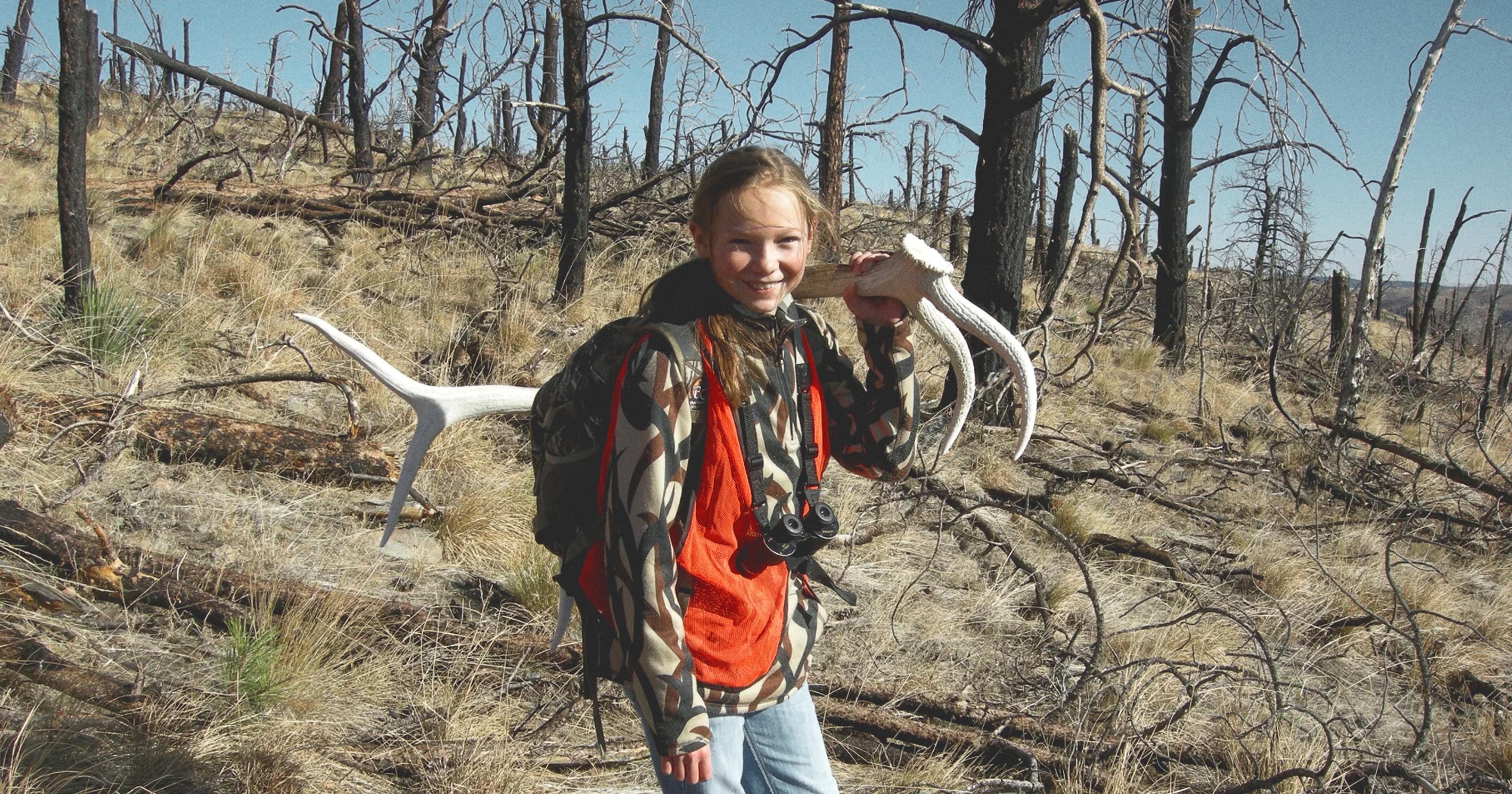
Katie carries some antlers earlier in life.
The first year, we had a great crop, and the second year went well too. By the third year, we saw emerging weed pressure and started spraying herbicides and using fertilizer. The weeds kept getting worse, and by 2022, the pigweed was out of control. We started the spring by spraying glyphosate to kill everything, but the weeds kept coming back before the crops could take hold.
My dad was at his breaking point when Kate Vogel of the seed and agronomy consulting firm North 40 Ag suggested he check out Montana’s first regenerative agriculture symposium. When he asked what regenerative agriculture even was, she recommended Gabe Brown’s Dirt to Soil (which my mom now refers to as my dad’s bible), and a lightbulb went off. Regenerative agriculture made the challenges he’d had on the land — feeling like the harder he worked, the worse things got — make sense.
In spring 2023, his decision to mostly stop spraying herbicides and tilling and start planting cover crops was relatively easy, in part because my dad was fortunate to not have to deal with the same financial and generational pressures as many producers. Kate shared that for landowners considering new practices, in general, “If they’re focused on wildlife, it’s easier to make that jump than if you need to make sure you get a cash crop the following year.” My dad hasn’t looked back since.
A Day in the Field
While “sustainability” can sometimes feel like a meaningless buzzword, sitting in a ranch outbuilding a little before 8 a.m. last July, surrounded by the smell of black coffee and musty wood, sustainability in the form of regenerative agriculture felt clear and practical.
We were kicking off a regenerative ag field day on our property, and our guide was Jeremy Sweeten from Understanding Ag, a regenerative consulting company founded by Gabe Brown and Allen Williams — pioneers of the soil health and adaptive grazing movements, respectively.
Our group was a mix of local farmers, ranchers, and conservationists, but they were also avid hunters, interested in whether adopting new practices could improve their land for wildlife.
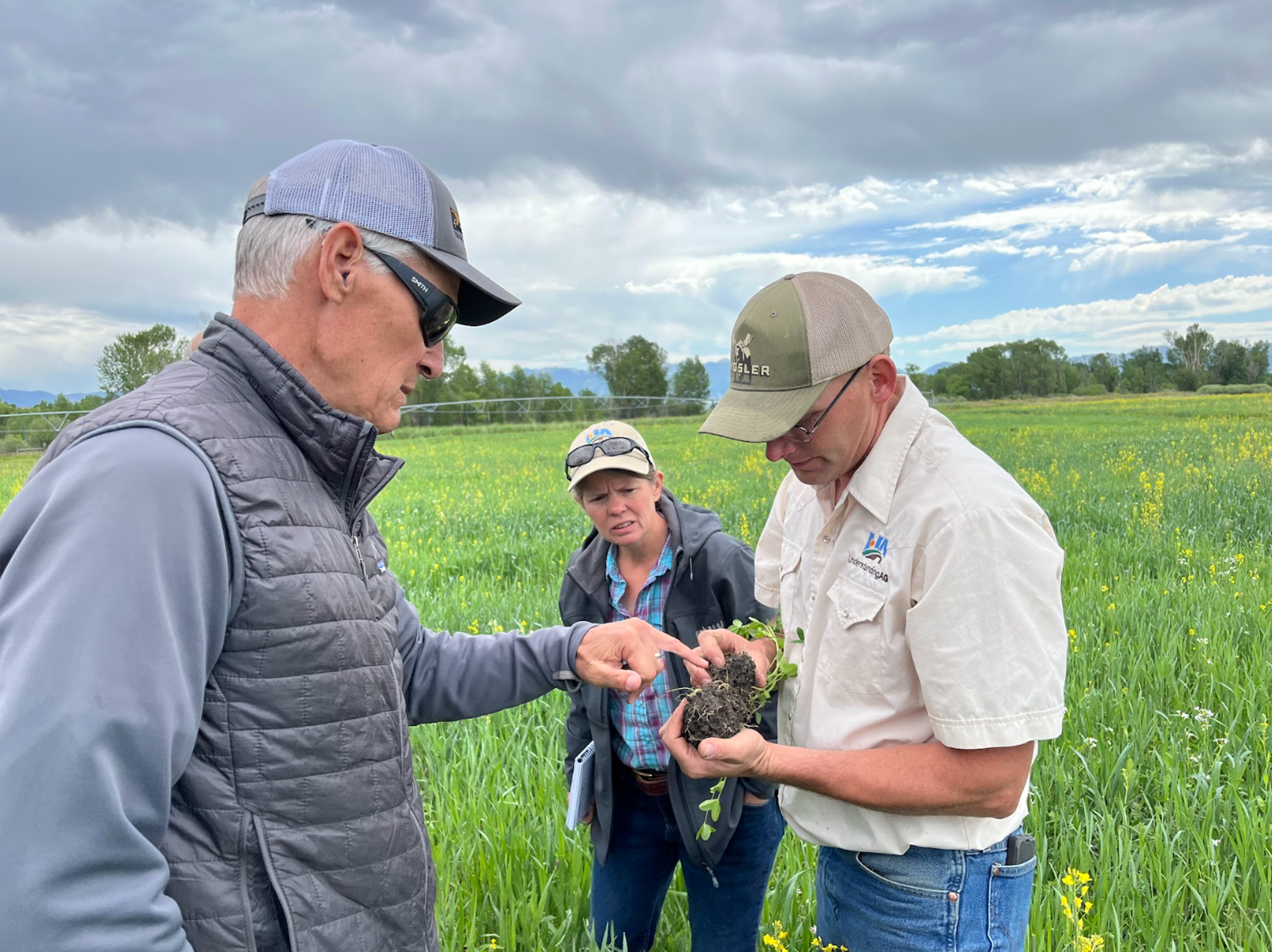
Inspecting soil samples on the field day.
There was a sense that there’s an opportunity for regenerative agriculture and hunting to overlap, but also a lack of relevant information — that’s what inspired the field day. Jeremy’s own ah-ha moment came from 10 years of hunting in the West. “I’ve hunted some of the BLM ground where there’s been grazing allocations, and if there’s been livestock there, it’s grazed to the ground, and so the hunting’s horrible. I’m like, ‘There’s gotta be a better way.’”
He started by explaining that regenerative agriculture isn’t a strict list of requirements that an operation does or doesn’t meet. It’s a set of principles and practices that can help restore soil health. Healthy soil decreases the need for costly inputs like fertilizer and herbicides and makes the ecosystem more resilient to shocks like rainfall, wind, and drought. While it can require more intensive management, many find the practices make their operations more profitable.
For Understanding Ag, the six principles of soil health, described in Gabe’s book, are the fundamentals. They include knowing your operation’s context, minimizing soil disturbance, keeping the soil covered, cultivating diversity of all living species, keeping living roots in the soil year-round, and integrating livestock.
The group left the field day with concrete ideas for restoring their soil to build better wildlife habitat, and maybe even ready to share their new knowledge with others. For my dad, the fact that it took eight years of struggling before he stumbled upon regen for wildlife has made him eager to share the quantifiable impact it’s had on our property.
The Proof Is in the Antlers
After a morning of soil sampling, my dad took our group back to the outbuilding’s dimly lit attic. With a smile, he gestured to a row of plastic bins on the ground, each filled with deer antlers.
Deer shed their antlers every winter, meaning each year’s sheds offer a rough way to understand the size and number of bucks frequenting the area. My dad has counted every shed from our ranch for the last 10 years, and the story is striking.
The first year, we collected two sheds, with the biggest being a three point. The size of a male deer is often talked about in terms of the number of points on its antlers, and a three point is not big.
That number grew as we rehabilitated the land and planted crops the deer could eat throughout the winter. In 2023, the number of sheds dropped by half as a result of the previous year’s fields being sprayed twice with glyphosate and the deer having little food to help them through the winter. Since implementing regenerative practices the following spring, the number has rebounded. Last year, we found 74 sheds — up 3000% over 10 years.
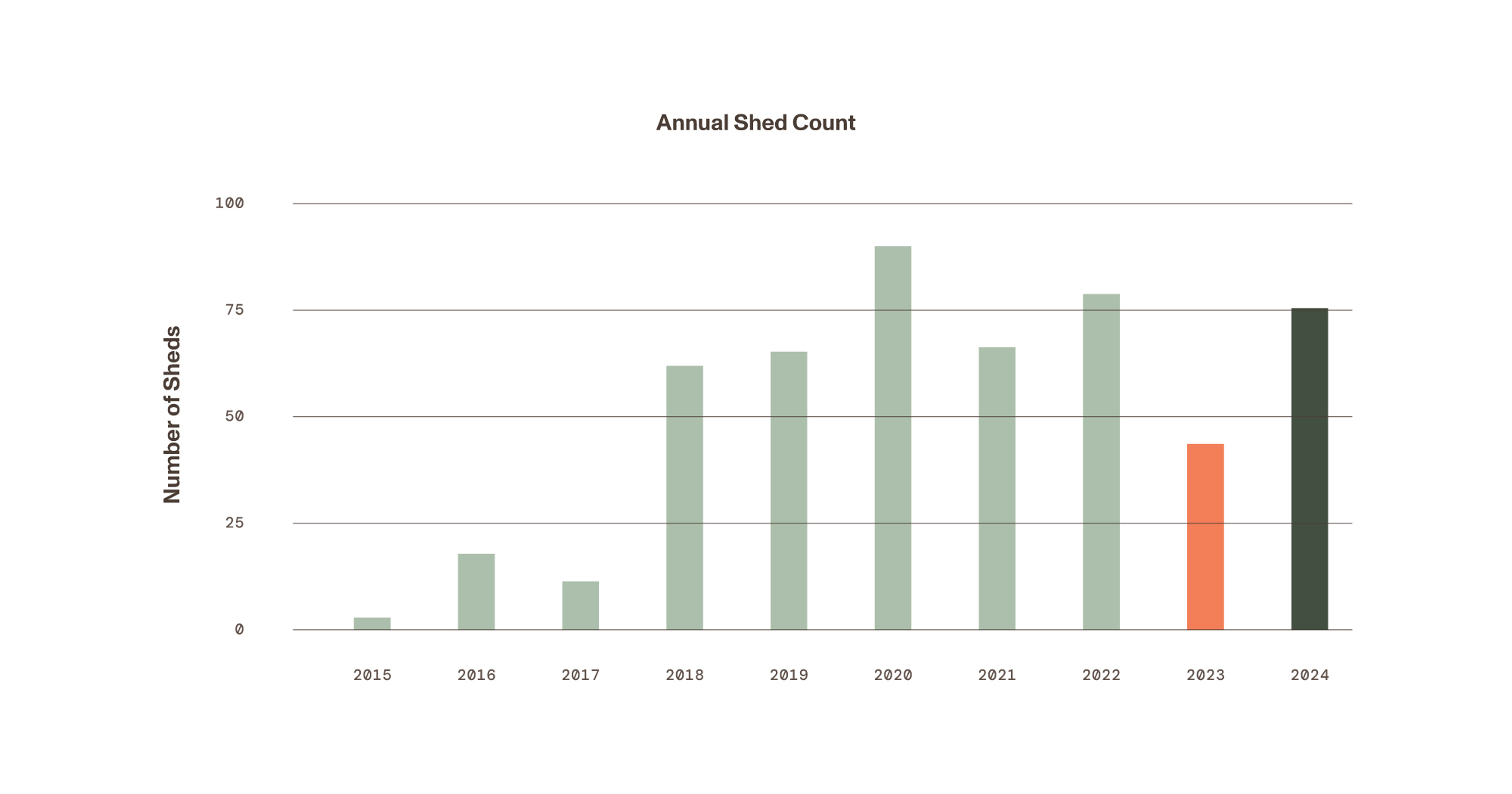
2022 was the year of spraying the fields 2x and tilling them once. 2023’s sheds were the result of the lack of food in 2022, and 2024’s sheds show the results of the first year of regenerative ag.
Beyond the number of antlers, my dad has also noticed a shift in the age of the deer. We’ve sent teeth from all the deer we’ve harvested or found dead to Matson’s Laboratory for aging. In the last few years, the bigger bucks have been five and a half to six and a half — very old for whitetails in Southwest Montana.
While many of them leave for the summer, they come back in the fall because they know there’ll be food for the winter. Jeremy, who implemented regenerative practices on his own property, also noticed an increase in deer, particularly ahead of big winter storms when they seek out more nutrient-dense feed in his bale-grazed fields: “It’s pretty interesting that the deer gravitate toward the areas where the management has changed.”
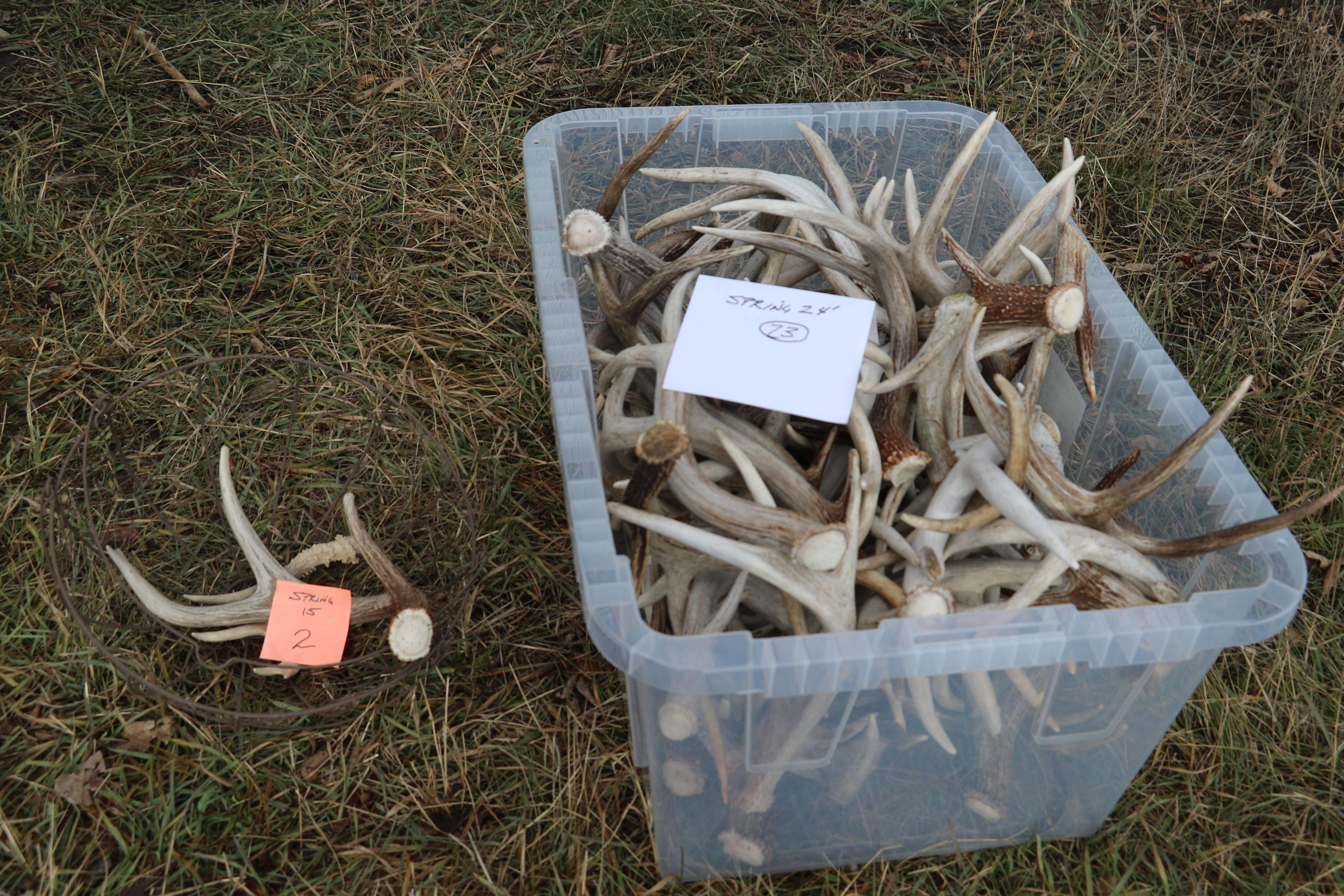
The first year's antler haul on the left, the most recent year on the right.
This change can’t be attributed to a single intervention, but for my dad, regenerative agriculture for wildlife just makes sense. If he can keep cover on the ground year-round, wildlife have more food and shelter to get them through the winter. If he doesn’t have to spray herbicides and use fertilizer, the chemicals won’t run off and impact the fish populations. If the soil is healthier, the plants have more nutrients, and the animals eating the plants will be healthier, bigger, and more likely to make it through the winter.
On the Birds and the Bees
When I asked my dad what he would want people to know about his experience adopting regenerative practices, he said that it’s not just about shooting a big deer: It’s about building a resilient ecosystem.
When we bought the property, there were no turkeys. Now, you’ll see groups of 10 or more shuffling across the road. The butterflies came back with the planting of pollinator mixes, and the fields literally buzz with bees. Ten years ago, there were no fish spawning in the spring creeks. Last month, my dad counted over 300 redds (spawning beds where trout lay their eggs) in one creek alone.
The author and her dad.
Beyond seeing the change in the biology of our property, the most persuasive thing for him has been comparing the time, money, and effort he was spending before and after. It certainly takes work, but regenerative ag has meant spending less time and money on things like spraying weeds and still seeing better results. It’s also been a lot more fun.
For me, as I’ve talked to more farmers and ranchers who have adopted regenerative practices, I see my dad’s story as a version of a broader narrative of landowners looking to achieve their goals for the future, whether it’s becoming more profitable, leaving their land in a better place for the next generation, or cultivating a place for outdoor recreation and wildlife.
And to anyone still skeptical about trying regenerative agriculture for wildlife, there’s an open invitation from my dad to come see it for yourself (just don’t take the antlers home with you).
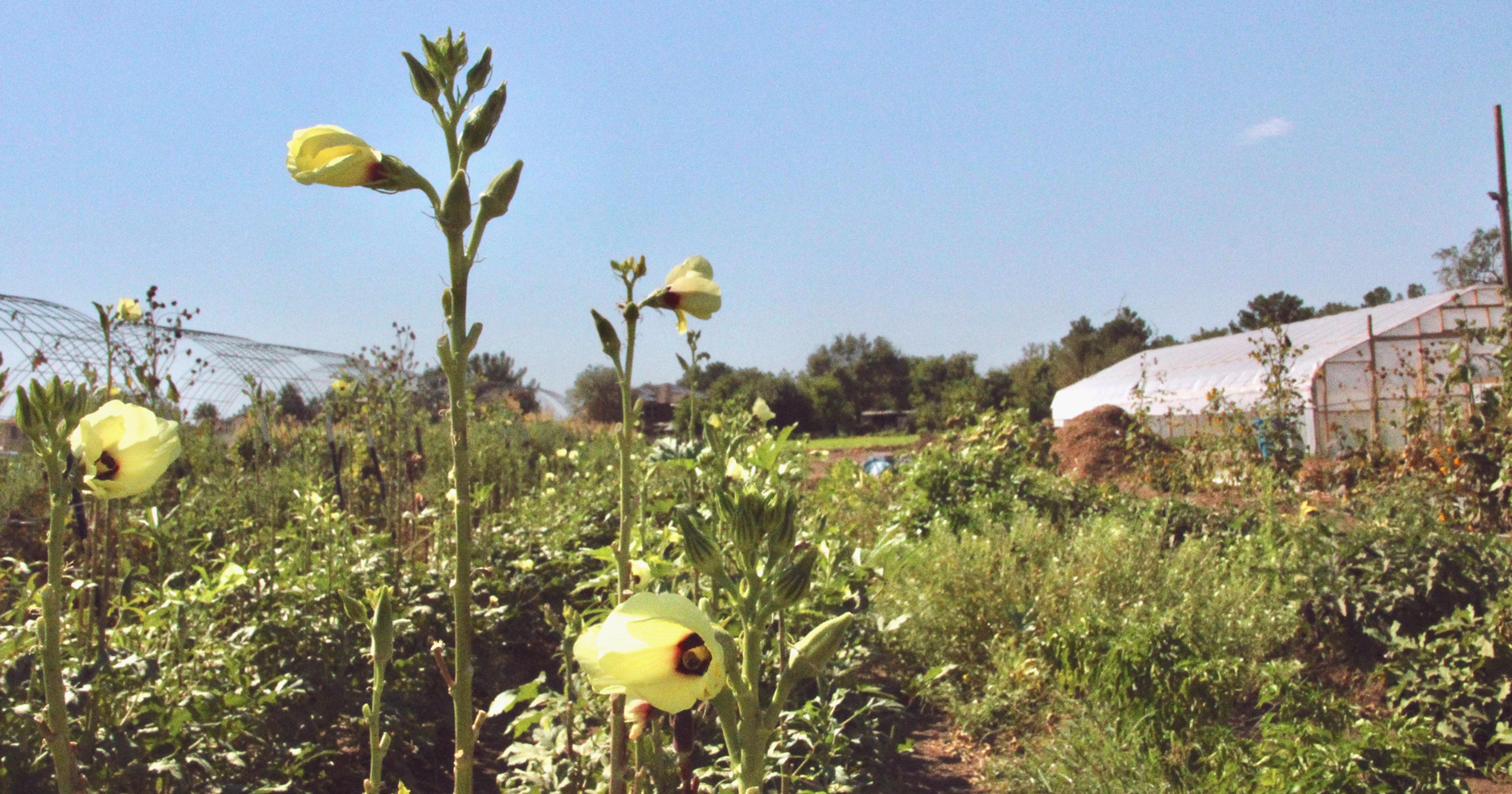
It’s 100 degrees Fahrenheit in Socorro, a West Texas border town wedged between Mexico and I-10 as it runs north into the white gypsum sands of New Mexico. Not a bird, bug, or lizard is stirring. Several humans, however, are sweating quietly in the shed that comprises Bodega Loya. Honeydew, honeycrisp, piel de sapo, white snow leopard — Ralph Loya, the bodega’s mustachioed proprietor, rattles off the names of melons he’s grown on his 7-acre farm out back as he pulls several from the fridge to slice into pale orange and green wedges.
Eileen Candelaria is among those gathered in the shed nibbling chilled fruit. A childhood friend of Loya’s, she wandered over after hearing that, since he retired from his staff job at the University of Texas, he’s been growing stone fruits and radishes; okra and tomatillos; Apache red sugarcane, several kinds of chiles, and a type of Piro Indian corn whose seeds were passed down through Loya’s ancestors for 400 years. Loya’s farm, inherited from his in-laws, is a rarity in the middle of the Chihuahuan Desert, where large-scale cotton farms dominate.
“Back in the day there was little farms everywhere and everybody would sell their stuff on the side of the road,” Candelaria remembers. These days, Loya’s is the only one, and it’s attracting customers from miles around. “We can’t seem to grow enough. The more we grow the more we sell,” said Loya.
Small farm advocates are prone to rattling off the virtues of these sorts of operations: Small farms can feed their neighbors; small farms can revitalize rural communities; small farms can help turn the tide on diet-related diseases and nutrition insecurity. These optimistic talking points are in evidence at Loya’s. He employs several farmhands and his bodega carries duck eggs from a local guy, pistachios grown by a retired dentist down the road, asadero cheese from a nearby dairy — allowing him to sell a range of whole foods in a town mostly served by Walmart.
But many small farmers must contend with a stark reality: Consolidation in agriculture continues to increase while small farms continue to struggle. Making things worse, farmland prices are surging across much of the U.S.; according to the U.S. Department of Agriculture, the average price of farmland was $4,080 per acre in 2023, representing a 7.4 percent increase over 2022. In some parts of the country, prices are higher still: Average Iowa farmland prices rose to $11,835 per acre in 2023; in Monterey County, California, which encompasses the Salinas Valley, farmland values are currently $15,518 per acre.
Reclaiming family land, if possible, makes financial sense in this context, even if it means your neighbors are farming in very different ways than you; it also means finding creative ways to make a profit. “If you have a different business model than everyone else around you, it’s important to consider what ramifications that has for your business,” said Mike Lavender, operations director at the National Sustainable Agriculture Coalition. Small farmers in the middle of commodity land can face challenges with water access, building a customer base, chemical drift, and nutrient runoff from adjacent large-scale farms.
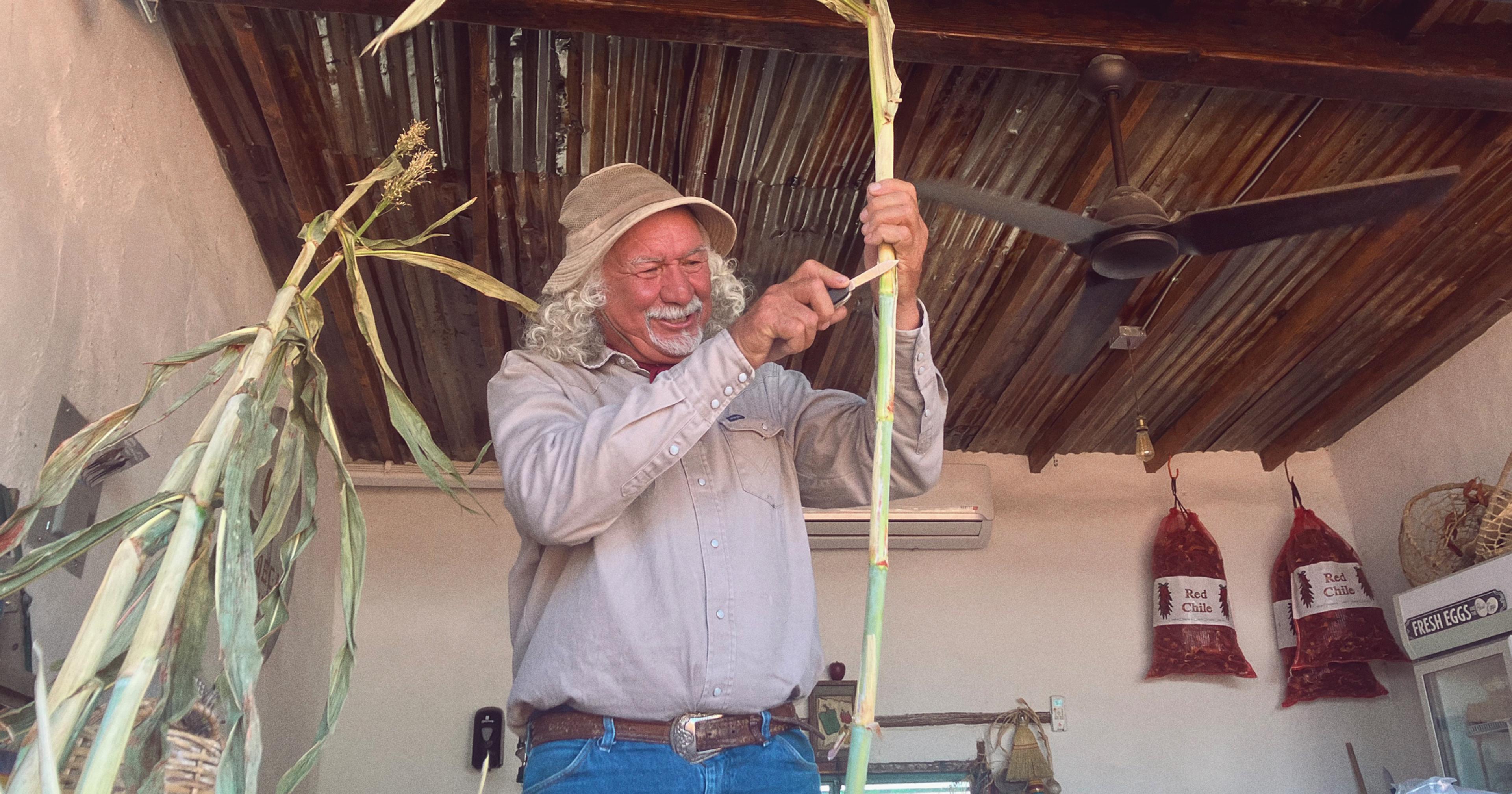
Ralph Loya processing sugarcane.
According to a survey conducted by the U.S. Department of Agriculture, 5,700 small farms went out of business between 2022 and 2023, on top of 142,000 losses between 2017 and 2022. Meanwhile, the number of farms with more than $5 million in sales doubled between 2017 and 2022, to 16,226. USDA has announced plans to better support local small- and medium-sized operations; it’s impossible to know if these plans will survive a new administration.
For a farmer like Loya, “One of the positives is, hey, everybody in my community knows that this is the only place to get X, Y, or Z. The flip side is, is that enough to sustain your business model?” Lavender said. Loya relies on direct-to-consumer sales — although he also rents out space to artisans, runs a coffee shop, and plans to grow high-value grapes to supply local wineries.
One big problem with being surrounded by 1,000-acre cotton farms in the drought-plagued Southwest, however, is water. A few years ago, cotton farmers cut back their plantings because they couldn’t get full flood irrigation allotments from the Rio Grande. This year, with water plentiful enough, the cotton farmers went back to planting their entire acreages. But that meant there was less water for Loya. “Those big farms got the water,” he said.
Dedicated to Healthy Land
Six years ago in Lovilia, Iowa, Beth Hoffman and her husband, John Hogeland, took over his family’s 530 acres (and purchased another 40) in a region packed with calf/cow operations and commodity corn and soybeans. In a state where pollution is rampant — agricultural nutrients have contaminated 1,000 miles of waterways and contributed to a massive dead zone in the Gulf of Mexico — the two are committed to farming sustainably.
Whippoorwill Creek Farm sells grass-fed and finished beef, pastured goat, and chemical-free produce; Hoffman and Hogeland also host on-site cooking and writing classes as well as farm dinners and stays. Like Loya, they’ve learned that “Everybody likes having the small-scale farm in their community,” Hoffman said. Unlike Loya, they’ve had to cast a wide net to find it. “Living in a rural area means, in a 10-mile radius, there’s maybe 35 people,” Hoffman said.
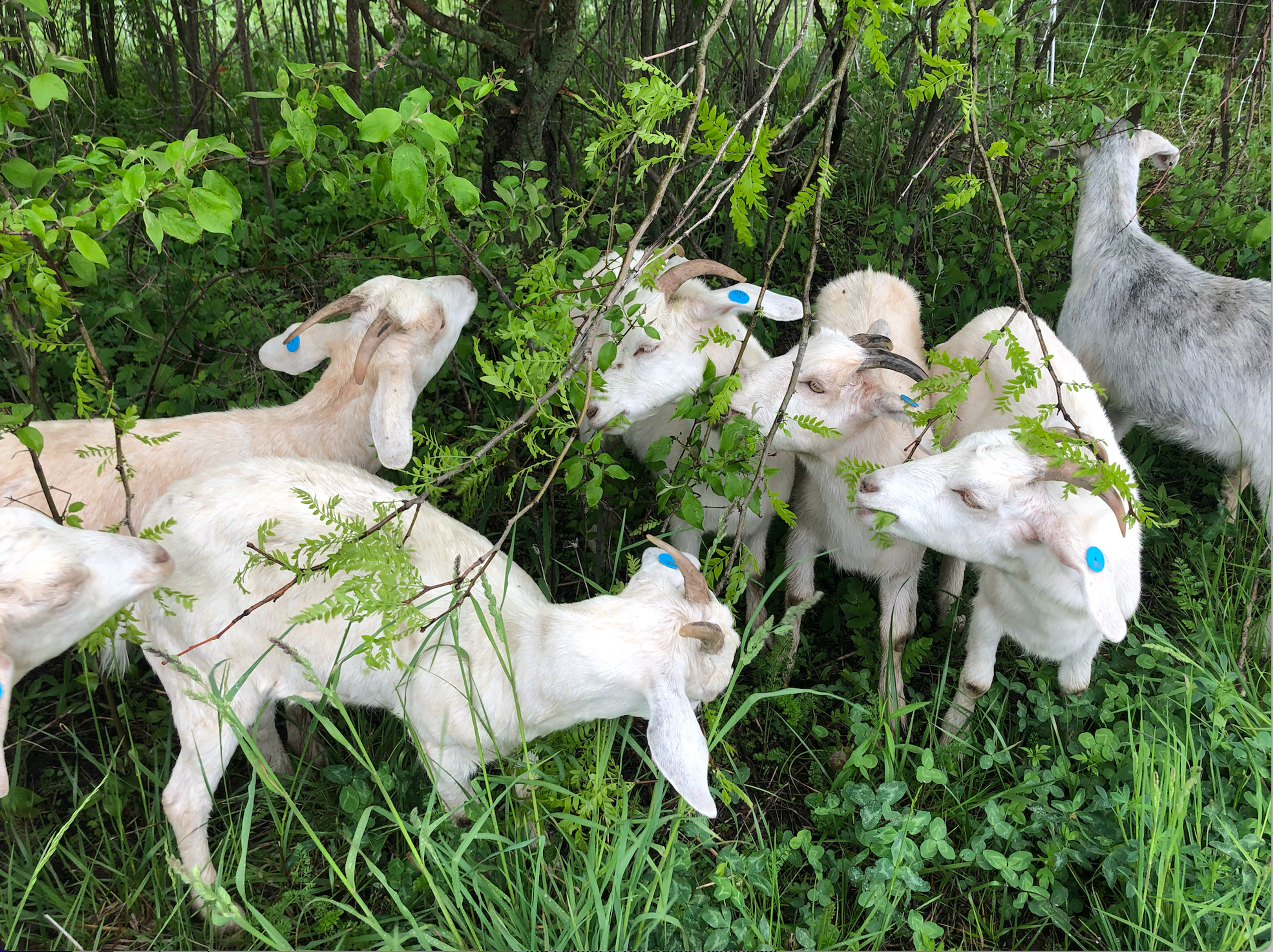
Goats on Whippoorwill Farm
·Beth Hoffman
A lot of would-be customers discover Whippoorwill Creek through Hoffman’s blog. There’s no drive-up stand at the farm but people can order meat bundles or quarter, half, or whole animals for farm or meat locker pickup; they also sell meat wholesale. Produce is usually reserved for restaurant customers, although Hoffman will offer it to individual consumers when she’s got extra.
But what works for one operation isn’t necessarily applicable to neighboring small operations. Hoffman has neighbors who grow Kinderkrisp apples, although “not commercially yet, because where would they bring all these apples? We don’t have any processors in the state,” she said. The reasons go back generations: Farms in Iowa “were established as stops on a rail line to bring products to cities and for export. This always was a corn, cattle, and hogs kind of place. We’re establishing something new.”
Becoming the Boss
For specialty and niche producers in commodity-land, “There isn’t necessarily the path worn in your area for aggregation or distribution or selling to local schools or institutions,” said Lavender. Helping to forge those connections is part of the mission of the Agriculture and Land-Based Training Association (ALBA) in Salinas, California. ALBA hosts year-long education courses targeted at Latino farmworkers looking to start their own farms, then leases 90 acres to about 40 of them for up to five years. Jessie Najera is one of those former farmworkers. Growing up in Oaxaca, he moved to Fresno as a teenager and began harvesting wine grapes and lettuce. Najera took the ALBA classes, he said through an interpreter, because he envisioned having his own company one day.
“If you’re the only person operating in a certain way within your neck of the woods, that right there is a logistical hurdle for sure.”
The Salinas Valley is Big Lettuce and Strawberry country, with some of the most expensive ag land in the U.S. Farmer’s markets in Central California are “already totally saturated,” said Aysha Peterson, who acts as a crop advisor for Monterey County’s Resource Conservation District. So, even small operations need to sell to wholesale distributors who want “large quantities of things like celery and broccoli that are not particularly relevant to a Mexican diet.” Najera, assisted by his father and brother, leases 4-1/2 acres from ALBA to grow broccolini and onions, which he sells to a regional distributor; ALBA made the introduction.
Even so, Najera faces many uphill battles. Last year he lost 3 acres of crops to flooding and didn’t realize he could apply for financial assistance to replant (he paid out-of-pocket). Wholesale prices fluctuate wildly — Najera has gotten as much as $38 and as little as $19 a box for broccolini — making profits nebulous. Farmers like him have to “navigate U.S. bureaucracy and all the different kinds of permitting that need to happen, in English and on paper, which are not super familiar to the farmers I’m working with,” Peterson said. When the time comes for Najera to find acreage of his own, Peterson said what’s available around Salinas is either on sandy slopes vulnerable to erosion, or heavy-soil plots adjacent to wetlands. Such hurdles force many immigrant farmers to quit too soon after they’ve begun.
Finding a Niche
In central North Dakota where 5,000-acre commodity grain farms are the norm, Glen Philbrick has transitioned his family’s fifth-generation Hiddendale dairy farm into a diversified operation growing native grassland flowers and organic specialty crops. It’s mostly direct-to-consumer carrots and onions, but he’s also got a romaine lettuce contract this year. Part of this shift resulted from an incident in 2014, when he was hospitalized after exposure to herbicide drift. But the decision to move into niche markets also came from “looking at the margins of commodity and thinking, no, I don’t want to engage in that,” he said. “There’s going to be years that grain’s high, but on average it’s gotten thinner and thinner.”
USDA grant money helps Philbrick stay in business. He currently has a Sustainable Agriculture Research and Education (SARE) grant to test grasshopper-resistant crops. Peterson also believes federal funding is essential to solvency among her network. Five Mexican farmers she works with each got $350,000 grants for Farm-to-School projects. They “felt like they won the lottery. But there are 95 others that are still struggling,” she said.
Hoffman, though, expresses frustration with lack of support from USDA. “There’s a new organic program as of last year but the [local office] doesn’t know what’s going on,” she said. Even when they call leadership for answers, they “can’t get any information. There’s nobody to ask questions of. And we’re the only people who are asking about it because everyone else is getting pigs.” Said NSAC’s Lavender, “If you’re the only person operating in a certain way within your neck of the woods, that right there is a logistical hurdle for sure.” He said NSAC sees an imperative for federal policy to incentivize investments in small farms — like the pandemic-born Local Food Purchase Assistance Cooperative Agreement Program, meant to “spur purchases of local food from local farmers … which used to be more commonplace.” But of course, this also requires well-informed USDA offices.
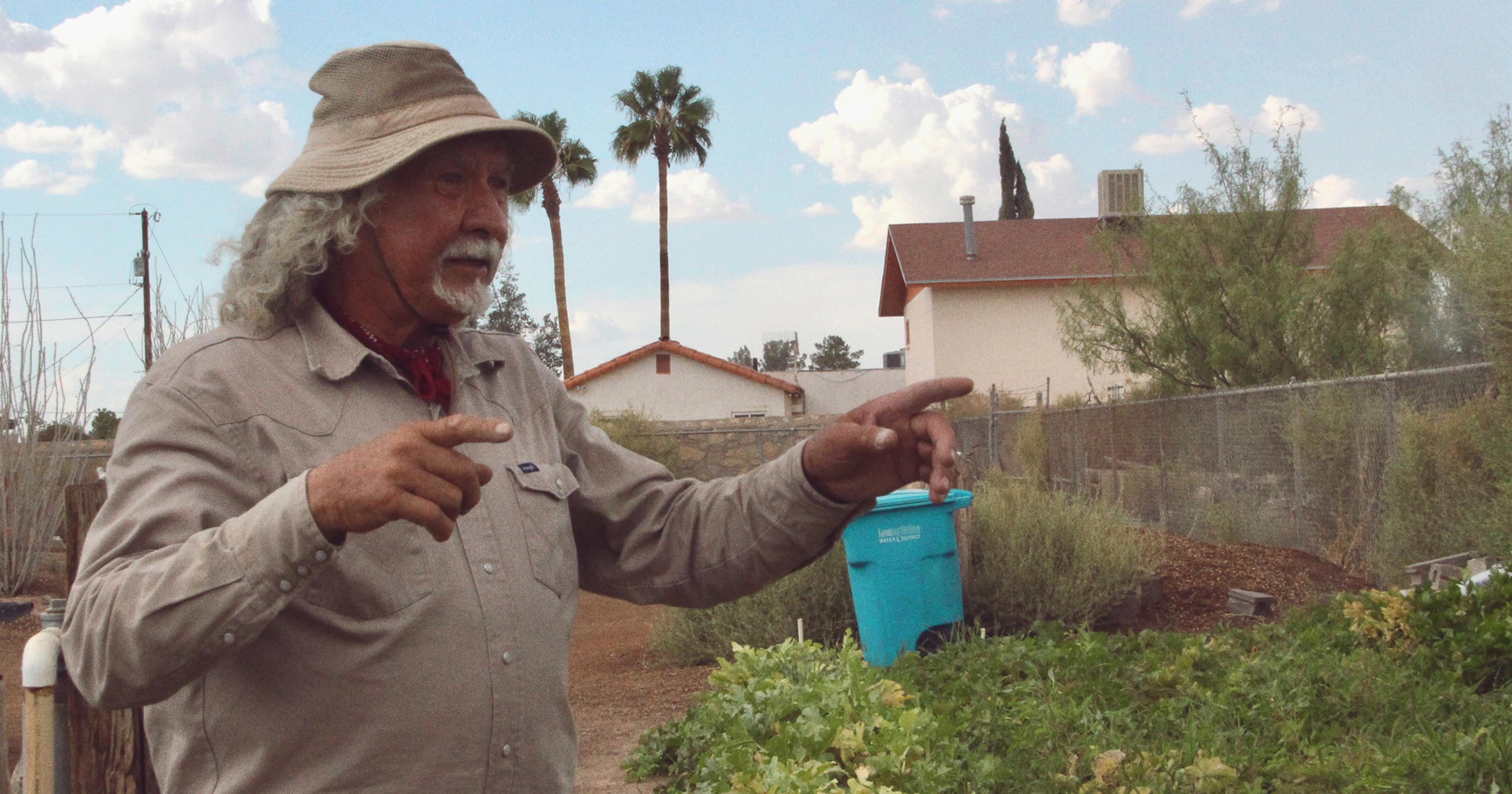
Ralph Loya surveys his property.
In spite of the challenges, some small farmers remark on one unexpected plus to their positioning among the big guys: respect from their neighbors. Said Philbrick, “I got one who’s conventional and he’s very blunt with me — he says, I hate chemicals. So when I say, ‘Well, here’s what I’m doing to deal with this,’ he’s excited to hear about it.”
“I don’t think that any of the farmers around here are thinking that these things are crazy anymore — specialty crops, why would you do that, or grass-finished beef?” Hoffman said. “I think a lot of people think, wow, what a great idea. If I could get more for my crops, if I could get more for my beef, why wouldn’t I do that? But they can’t because they have [off-farm] jobs. The whole thing’s just set up now so nobody has the time and the infrastructure to do it.”
For Loya, there was never a doubt as to why he would farm where and how he does. “My dad worked for El Paso utilities … but he grew up farming and when we were kids he’d grow vegetables” at a farm a mile from Bodega Loya, he said. “He was just a happy guy so I said, when I retire, I want to farm. I want to be like him.”


Graphic by Adam Dixon
This time last year, Ojibway writer Staci Lola Drouillard made her way through the deep snow of northern Minnesota, approaching the oldest maple tree in her sugar bush to continue a family tradition. This tree, affectionately known as Old Man Maple in Ojibway, has seen generations of tappers from her family come and go. Drouillard and Old Man Maple are not unique in this.
A study last year on maple tappers from Appalachia to Montreal found that while maple tapping is becoming an increasingly large-scale industry, roughly half the tappers active today are the children or grandchildren of tappers. For the Indigenous communities that have grown up among the maples that familial link goes much further back and flavors the overall culture and lives of the community. For the Anishinaabe, the third month of the year, which falls roughly in March or April, marks the Maple Sugaring Moon when families would meet in the sugarbush to harvest what we now call maple syrup, sugar, and candy.
This year was different. Many small-scale tappers in the Midwest began tapping in January. In Grand Marais where Droulliard lives, “there was virtually no snow cover in the Superior Highlands along the North Shore of Lake Superior where the maple ridges are. We didn’t put snowshoes on once last winter — and that’s very unusual,” Drouillard said. “And because of unseasonably warm temperatures throughout last winter, the sap run was very unpredictable.”
Maple production is intricately tied to the weather around the tree. In general, to collect maple sap, temperatures need to be freezing at night but above freezing during the day. The snow that falls at this time of year has even been called sugar snow for its link to maple sugaring; without it, regional treats like syrup on snow are more or less out of the question.
This is why the shifting climate matters so much to the location of the sugar bush. Researcher Jay Wason at the University of Maine points out tree migration is often more complicated than people think and that many trees will not be able to swiftly migrate further north. For example, he said, “Sugar maple requires pretty rich soils with plenty of exchangeable calcium. We just don’t have that in many places … So we wouldn’t expect that species to move there easily. So, these soil constraints are definitely a factor.”
This soil differential is why maples and other hardwoods cannot simply be moved north. The maple leaf that dominates the Canadian flag does not even dominate the majority of Canada because the soil is simply not a good match for sugar maples; it becomes less habitable for maples the further north you go. Moreover, as any good tapper will tell you, a maple tree needs to be at least 30 years old before being considered. So while the climate may be warming, maple production cannot simply be shifted to different environments. Indeed, for many years the sugar bush offered northern farmers a buffer against bad weather crops by the extra income they brought in to local farms. Now, it seems that the maple tree is becoming the most climate-dependent producer on the farm.
“Sugar maple requires pretty rich soils with plenty of exchangeable calcium. We just don’t have that in many places.”
The climate also determines a whole host of variables related to adequate sap flow, quality, and overall production. This is because environmental factors directly impact the amount of sugar, metabolites, minerals, and other compounds in maple products. This has a direct link to the flavor, nutritional profile, and health attributes being captured in the sugaring. This includes the sugar content of the sap, with higher temperatures decreasing the amount of sugar. In terms of maple syrup, the less sugar, the more sap is needed to produce a gallon of syrup. Additionally, an overall increase in temperature has been seen to make tap holes less productive.
Harvard’s Joshua Rapp, a forest ecologist who studies maple production in the U.S. and Canada, points out that the issues surrounding maple tapping are not as simple as accounting for higher temperatures but also the unpredictability of the shifting seasons. He noted that, “One of the challenges with warmer winters is that collecting the most sap is not just a matter of tapping trees earlier than would be optimal in the past. As warm spells get more common throughout the winter, it becomes less predictable as to when the optimal time is to tap. Do you tap as soon as temperatures are in the right zone (say, in January), or later to catch the period when sap sugar content is higher and flows typically larger (in March) and risk having a short season because temperatures warm too fast?”
This new uncertainty is yet another challenge for those in an already unpredictable and complex market, prone to price fluctuations. At present, the maple industry in the United States is estimated to be worth over a 100 million dollars and is spread across the maple range, roughly from Appalachia to Minnesota. In 2018, for example, the value of production was 142 million U.S. dollars although it is the Canadians who produce the bulk of the world’s maple syrup with most production taking place in Quebec. In fact, it is a Canadian group, the Federation of Quebec Maple Syrup Producers, that accounts for roughly 80% of the world’s maple production.
And like the maples themselves, the climatic change is being felt by maple producers across the entirety of the maple range, with 89% of producers having dealt with the negative impacts of climate change even before this unseasonably early sugaring. However, the work of scientists like Rapp suggests that some producers will be more impacted than others with the south more likely to see longer unseasonable warm periods.
In the long term, the maple range may shrink with production clustered around the areas that can provide the needed freeze thaw effect needed for a sugaring to occur. These sites are almost exclusively in the north and dependent on what is called lake effect snow which occurs when cold air moves across warmer water. As such, it is possible that maple sugaring could become clustered around the Great Lakes and parts of northern New England and eastern Canada.
“As warm spells get more common throughout the winter, it becomes less predictable as to when the optimal time is to tap.”
If that happens it is not only the production capacity of maple products that will be lost. It is also the traditions that surround the maple sugaring. The family gatherings that will not be had in the sugar bush. The pancake socials that will change. The tapping skills that will not be handed down. The unique relationship between the trees and the tappers that will be damaged or lost.
That, of course, is one future. It seems to be the most likely one. Already the world’s only maple reserve fell to a 16-year low. Yet forest-based agricultural systems remain under-researched compared to other agricultural methods — there is much to be studied. And importantly, the uncertain sugaring seasons of today, as eerie as they have been for producers, offer a heads-up that allows for the adoption of large and small-scale adaptive strategies, e.g., new production methods like reverse osmosis or very old methods like selective harvesting. Maple production also has one huge advantage over traditional agricultural products: Products can be reserved for a more profitable season or a more difficult one. In that regard, tappers may be set for a more traditional season in the upcoming year as La Niña promises to deliver a snowy winter along the maple range.
This new uncertainty has also sparked an interest in marketing techniques such as the benefits of obtaining an organic certification. There has also been a diversification of products being marketed beyond the maple range. Maple sugar has been touted as a safer sugar for those with diabetes (something organizations like Diabetes Quebec dispute). Less controversially, maple sap is having its moment in the sun as maple water, a healthier alternative to sports drinks.
For Indigenous tappers like Drouillard, challenges like these are hardly the first to impact her family’s ties to the sugaring. As she noted, “My great-grandmother and my grandfather’s generation experienced forced assimilation, land loss, and diminished access to tribal harvest lands. And yet, they continued to go to sugar bush, fish for trout in Lake Superior, go wild ricing in early fall, and hunt game all year long.”
In the meantime, Old Man Maple is still there for small local tappers like Drouillard. He just wakes up a little earlier these days.

When Tom Molnar was a young man in the late 1990s, he visited an orchard that gave him something to dream on.
On a farm in south-central Pennsylvania, George Dickum, nearing his 80s, was the proud keeper of a 30-year-old hazelnut orchard. Packed with fruiting trees, it was a land out of time. All across the eastern United States, hazelnuts had been cut down by Eastern filbert blight, or EFB, an endemic disease that chokes life from a tree and prevented a domestic industry from taking root. As if by magic, the trees in Dickum’s orchard had evaded the blight.
For Molnar, then early in his tenure as the head of Rutgers University’s hazelnut breeding program, it was at once inspirational and worrisome. Dickum’s hazelnuts showed the promise and potential of a new crop for northern growers — a low-input, high-value, nut tree that could enhance soil health and diversify farmlands sustainably. That is, if someone could protect it from disease. But, Molnar knew, nobody had yet done that; Dickum’s trees were susceptible. Their survival was predicated on isolation from other orchards. Someday the wind would blow the wrong way, bringing deadly spores from neighboring land, and the orchard would collapse.
“This poor guy,” Molnar said, “was going to lose everything if blight made it to his farm.”
Carried on the wind or splashed about by rain, EFB spores infect a tree at bud break, when young, vulnerable shoots emerge. Some 16 months after infection, cankers begin to grow — sunken, dark brown, football-shaped patches that will release their own spores in time and spread from a tree’s canopy down to its trunk. By the time the cankers have reached that far, the tree’s fate is certain. The fungus girdles the vascular tissue; limbs die, leaves brown and shrivel. “It’s a slow, painful process,” hazelnut breeder Shawn Mehlenbacher said.
But now, after nearly three decades developing a way for farmers to overcome EFB, Molnar has finally got something to show for it: a collection of four cultivars, released in 2020, that can withstand even the intense pressure on his New Jersey research farm, where numerous strains of the blight are present. Molnar, now 47 and as driven as ever, has planted tens of thousands of doomed trees in search of these resistant varieties. And there are more in the pipeline, as well as a small but growing circle of farmers, chefs, and chocolatiers eager to see his vision made real.
Today, a hazelnut industry stands ready to rise in the eastern U.S., just as a new strain of EFB threatens 100,000 acres of trees in Oregon that represent nearly all of this country’s contributions to the $3.5 billion global hazelnut market. The U.S. ranks third in the world in production behind Turkey, which grows more than 70 percent of the nearly 600,000-ton global supply, and Italy. But it’s the only country where EFB lurks, making it necessary to breed resistance. There are now 150 acres of sturdy, resistant hazelnuts planted across the Mid-Atlantic, Molnar said, and the foundation for something much bigger to develop.
“I’ve been all over the world looking at hazelnuts just to see if we can do it here,” he said. “And I’m finally seeing that we can. It’s actually happening.”
The Slow Work of Selection
On a Friday morning in late August, a wash of dark clouds hangs over Rutgers’ Horticultural Farm 3 in East Brunswick, just a stone’s throw from the cars whizzing by on the New Jersey Turnpike. The first cool air in months suggests fall is on the way, and the hazelnuts pooling around the base of the trees seem to sense it. Vise-grip in hand, brown hair tucked behind his ears, Molnar darts between selections of Corylus avellana, the European hazelnut, habitually cracking open shells. In a trim scarlet t-shirt over boots and cargo pants, he moves and speaks with the type of enthusiasm that usually wears off after all this time.
“Very few people have ever tasted a fresh, high-quality hazelnut,” he said, handing over a batch he just roasted. “Most people don’t know how tasty they actually are.”
He’s right. They’re rich, buttery, and faintly sweet, with a depth of flavor absent in shelled, months-old grocery store varieties. His breeding program is first and foremost about blight resistance, but it’s about more than that, too. Molnar wants to identify and propagate trees that will yield impressive quantities of round, flavorful, hefty kernels that shed their skins when roasted, so they can be inserted into chocolate bars, sprinkled into salads, blended into butter, or eaten by the handful.

He points to a Raritan — a robust cultivar he calls the “workhorse” in his stable — with admiration. When its nuts are roasted, he said with pride, “they just unzip.” Named for the river that runs alongside Rutgers’ campus, it’s joined by the Monmouth, Somerset, and Hunterdon (the New Jersey counties where they’re being grown), as well as the Beast, a pollinizer that earned its moniker by towering over smaller, weaker plants in research trials. (Hazelnuts are wind-pollinated and unable to fertilize their own flowers, so trees like the Beast are needed to produce nuts.) As a group, these trees are the first that a farmer in the region could reliably plant in the European hazelnut’s ideal growing range — throughout the Mid-Atlantic and reaching into southern Ontario and parts of Michigan — without fear of ruination.
Getting here has been slow work. It takes 17 years from the time two parent plants are bred until a hazelnut cultivar can be released. Today, Molnar’s research farm is full of healthy green trees studded with clusters of nuts ready to drop, but as recently as seven or eight years ago it was a different story. “When I brought people here,” he said, “it was just dead and dying trees every year. It looked like hell.”
“When I brought people here, it was just dead and dying trees every year. It looked like hell.”
For Molnar, trees have been a lifelong companion. Much of his childhood was spent exploring the woods of eastern Pennsylvania, where he moved when he was nine. At home, his yard was full of ornamentals from the nursery where his grandfather, mother, and uncles worked. (In addition to hazelnuts, he also breeds dogwoods.) He always knew he wanted to be a scientist, someone who could make an impact on the world. Studying plants seemed more welcoming than research on animals, so he went to Indiana University of Pennsylvania to study plant biology. In need of a summer job after his freshman year, his aunt connected him with Reed Funk, Rutgers’ renowned turf grass breeder, who was turning his attention toward nut trees as he aged. Molnar planted his first hazelnut when he was 18.
He was taken by the work — the interaction with plant life and all the questions waiting to be answered. If he wanted to make a contribution, developing a sustainable, climate-friendly food source was about as good as he could do. He eventually transferred to Rutgers in the late 1990s and stayed on for a PhD under the mentorship of Funk, who gave him the program’s reins upon retirement. He narrowed his attention to the hazelnut, casting aside research on pecans, hickories, and chestnuts, because it offered a tangible problem to solve: With blight resistance, an industry could prosper. He only had to look to Oregon for proof.
A Valley Under Attack
North America is home to its own species of wild hazelnut, Corylus americana, but its small kernels aren’t viable in a market dominated by the domesticated European variety, first introduced to the U.S. by pioneering California nurseryman Felix Gillet in the late 19th century. The European hazelnut soon found a home in Oregon’s Willamette Valley, where the crop is worth over $120 million today, according to the U.S. Department of Agriculture. But given its susceptibility to EFB, which is native to eastern North America, it wouldn’t exist at all without an effort similar to the one Molnar has undertaken.
Sometime in the 1960s, a single strain of the blight was transported west of the Rockies, where it had never been. (East of the Rockies, numerous strains exist, increasing the threat to susceptible trees and complicating the search for resistance.) By the ’80s it was traveling two miles per year, right through the heart of Willamette Valley. Orchards were decimated; the industry’s destruction seemed all but certain. But there was one species that could survive contact with EFB. Known as Gasaway, that species, identified in 1975 by a breeding program at Oregon State University, was a pollinizer — it carried small nuts in paltry quantities. But if crossed with more compelling trees, the resistance carried in its genes could make it a savior.
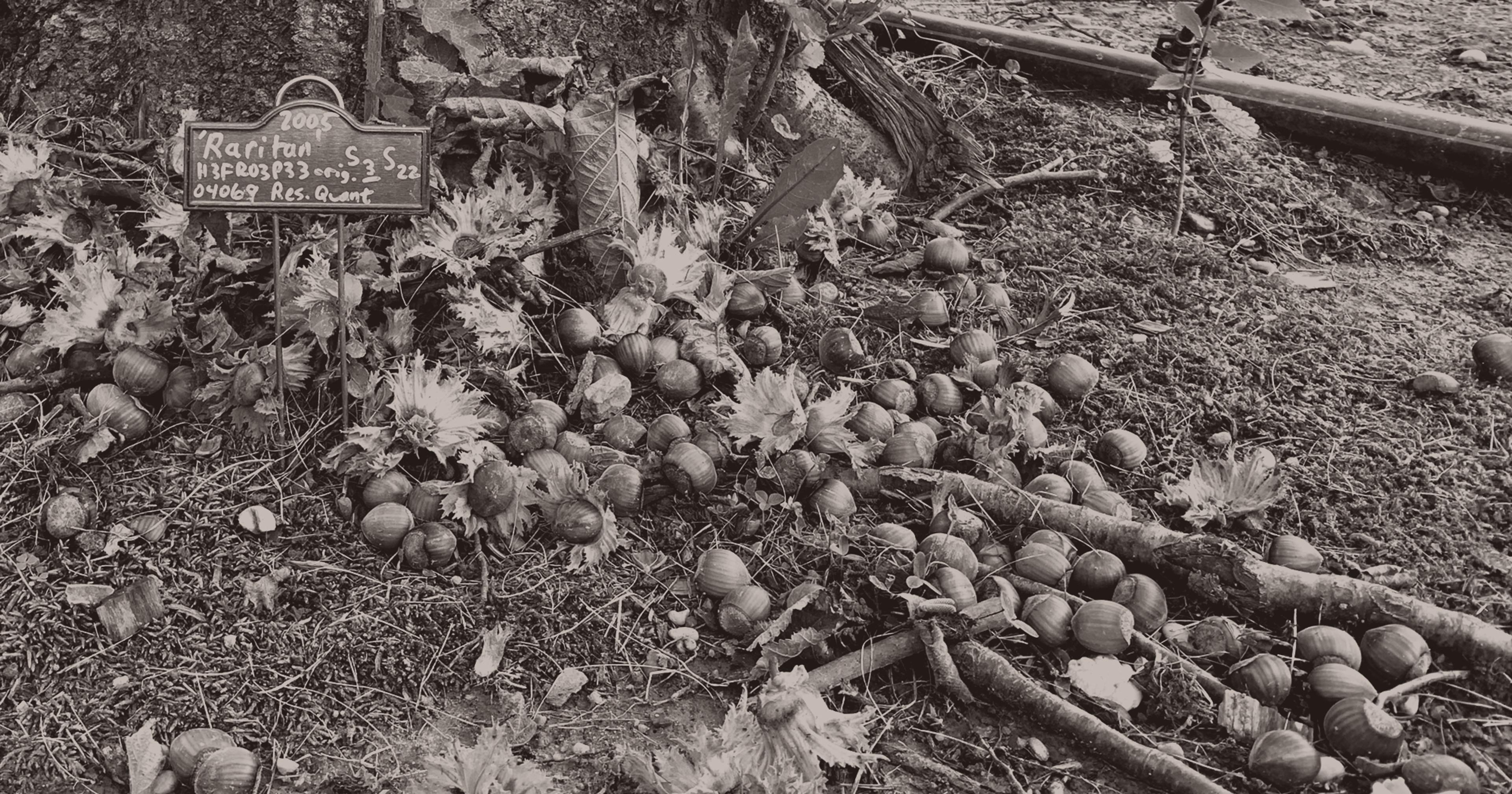
Mehlenbacher has led Oregon State’s program since 1986. A straight talker with gray hair and a thick mustache who got his start breeding fruit trees at Rutgers, he and Molnar have collaborated for many years, sharing research and plant materials in search of high-quality sources of resistance. That work has taken them around the world to collect germplasm from Turkey and a long list of former Soviet nations, in search of species that might carry resistance to EFB.
With Gasaway and the seeds he and Molnar brought back from those expeditions, Mehlenbacher bred enough resistant cultivars — 28 and counting — to replant the Willamette Valley and refortify Oregon’s hazelnut industry. Acreage has more than tripled in the past 15 years. But, he points out, “we don’t consider that problem solved.” This spring, an apparent mutation in the blight showed why.
When they heard rumors of EFB in an orchard at the northern end of the Willamette Valley, Mehlenbacher and his colleagues went out to inspect. What they saw was distressing. The pathogen had overcome resistance. Based on the size and position of the cankers, it had been seven years since infection — enough time for it to have spread considerably. And because the industry was now relying on Gasaway to breed resistance into each new cultivar, the entire valley was in danger.
“They all have the Gasaway resistance gene,” Mehlenbacher said. “That’s the scary part.”
There are ways to manage infected trees: scouting to catch it early, pruning, spraying fungicides. But many Willamette Valley growers are relative newcomers who thought EFB was vanquished and never learned how to handle it. Even worse, when demand dropped for the relevant fungicides, so did supply.
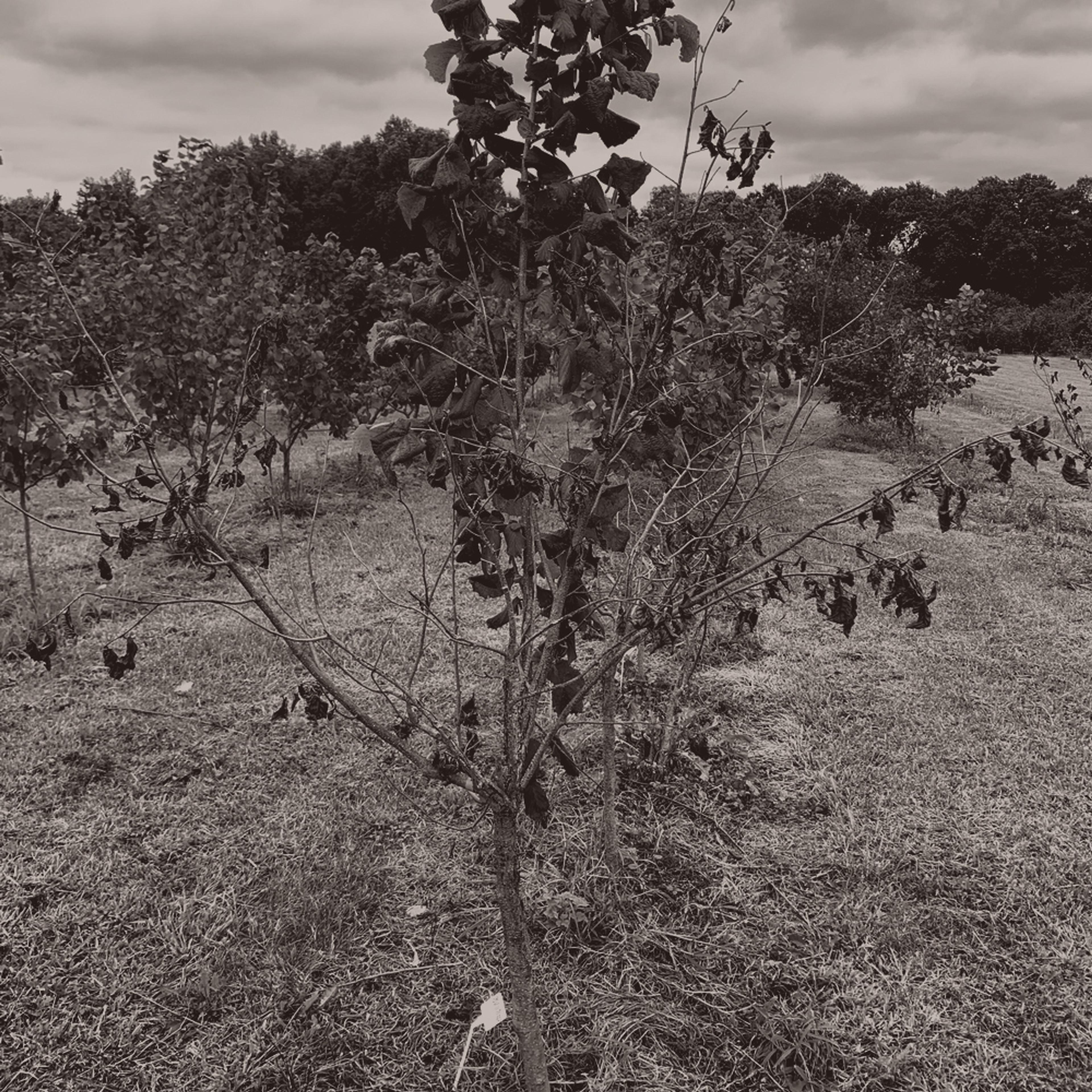
“People were a little bit complacent about the strength of that resistance gene,” Mehlenbacher said, “to the point where they weren’t doing any EFB management at all.”
It isn’t all doom and gloom, Mehlenbacher said, but overcoming the outbreak will take education, outreach, and more plant breeding to give farmers alternatives.
Mehlenbacher and Molnar are focused not just on genetic resistance, but tolerance — genes that can limit canker growth or spore spread, or allow a tree to keep fruiting even once infected. Combining those genes in new cultivars could create what they call “quantitative resistance” that would be harder for EFB to overcome. Where once Gasaway stood alone, they have now identified more than 100 major sources of resistance and nearly as many that offer quantitative protection. Still, the outbreak in Oregon is “a wake-up call,” Molnar said.
In addition to breeding with European varieties, Molnar and Mehlenbacher have crossed avellana with americana from the beginning, blending the superior size and quality of the former with the cold hardiness and EFB tolerance of the latter. (The Beast, for example, is one-quarter American, and boasts the native plant’s sticky husks as part of its genetic legacy.) The process of breeding hybrid hazelnuts moves slowly because of the generations needed to weed out the native plant’s inferior traits, including its small kernels and thick shells. But while his recently released cultivars are fully European, Molnar believes the American variety will figure prominently into long-term, sustainable hazelnut production in a changing climate. Sections of his research farm are devoted to the effort, in collaboration with the Upper Midwest Hazelnut Development Initiative, which is breeding native cultivars in hopes of kickstarting commercial production in the region.
“You don’t need 1,000 acres of this to have a good life for yourself.”
Jason Fischbach, a co-leader of the initiative, is tired of “the inertia of corn and soy” that holds sway in the upper Midwest. It’s all he sees when he drives around the region, he said, while the American hazelnut — native to the Midwest and nearly the entire country east of the Rockies — is relegated to the woods. “It’s a biological treasure,” he said, “but no one’s ever looked at it.”
There’s a small community of growers in the Midwest, Fischbach said, although none are yet using the American hazelnuts his program has been breeding. They’re interested, though, in an alternative to the corn-and-soy paradigm that could actually have a positive effect on the environment.
“We really are trying to take a whole new approach to what ails us agriculturally,” Fischbach said.
In on the Ground Floor
On his farm in Somerset, New Jersey, Ed Clerico is trying to do something similar. He grew up here in a family of dairy farmers that eventually transitioned to hay and beef. When his father died in 2013, he took over with an interest in something more sustainable. Exploring his permaculture options, he found Molnar and his hazelnuts. They were his favorite nut to crack as a kid, he said, and soon enough he was planting some of Molnar’s trees.
He’s now up to four acres, with plans to add two more per year. Last year was his first harvest, 300 pounds of nuts that he ground and baked into cookies, sold at farmer’s markets, and offered to chocolatiers as samples. “We weren’t shooting for the moon,” he acknowledged while rolling a handheld gatherer along the grass to pick up the first nuts from a harvest he expects will be closer to 1,000 pounds this year. Once the orchard fills out, he wants to establish a you-pick arrangement to help teach people about regenerative agriculture. He sees a bright future, both for the land that carries his hazelnuts and the industry Molnar is working to kickstart.
“You don’t need 1,000 acres of this to have a good life for yourself,” Clerico said.
From a farmer’s perspective, hazelnuts have plenty to offer. They require fewer inputs than a fruit crop like peaches or apples — less sprays, less labor to prune and train, and no need for hand-harvesting. The nuts simply fall to the orchard floor and wait to be swept up. One or two people can easily manage 50 acres, Mehlenbacher said, and the work can largely be done on the side of something else. In the shell, the nuts maintain quality for up to a year, so the season isn’t limited. And in the Mid-Atlantic, at least, there’s no competition to keep prices low.
Chefs and candy makers see the promise, too. Molnar’s hazelnuts are regularly featured at Blue Hill at Stone Barns, Dan Barber’s revered Hudson Valley restaurant at the agricultural vanguard. Molnar also has a longstanding relationship with Ferrero, which makes Nutella and is a dominant force in the global hazelnut industry. The company has helped fund his research, recognizing that although EFB is limited to North America, it could threaten hazelnuts worldwide if that changed. In that scenario, resistant cultivars would be vital. In the meantime, the company, always in need of nuts, is tracking the quality and output of Molnar’s cultivars.
Dan Richer, a James Beard nominee at Jersey City pizzeria Razza, got connected to Molnar 13 years ago while searching for local ingredients for his pies. He started with a five-pound bag and ample curiosity; these days, he buys a few hundred pounds from Rutgers each year to use on Project Hazelnut, a pizza he said has “a cult-like following.” It’s simple: fresh mozzarella, ricotta, a drizzle of honey, and hazelnuts — the star of the show. For Richer, the pizza is a platform to help diners discover something new about their region, and a way to support a nascent crop in the land of blueberries, cranberries, and tomatoes.
“I want to be part of a hazelnut industry developing in an area where it has such great possibilities,” Richer said. “It takes a village to accomplish these things.”
As soon as Rutgers released its cultivars in 2020, he planted three trees of his own. They haven’t fruited yet — it takes five years — but he appreciates them all the same.
“Every time I look at them I think of Tom, I think of New Jersey, and I think of my restaurant,” Richer said. “These trees in my backyard are part of something special.”
A Field in East Brunswick
In both plant breeding and tree crops, patience is a virtue. Although Molnar’s excitement about reaching this point is palpable, he realizes the finish line isn’t in sight. After all this time, he’s just settling into the starting blocks. In the next few years, he expects hazelnut acreage in the region to approach 500. Once the first wave — those trees already in the ground — begin producing mature harvests, he said, further investment will likely follow.
Slow growth is ideal, Molnar said. He doesn’t want his hazelnuts to be planted like they are in Oregon, where orchards often span more than 1,000 acres. “To be safe and buffered from the crazy climate,” he said, “we’re going to need this to be part of a diversified farm system.”
Even discussing these practical considerations would have been foolish earlier in his career, but it’s quickly becoming real. What he saw in George Dickum’s orchard all those years ago was a mirage of sorts, but the trees on Ed Clerico’s farm are built to last. It’s enough to make Molnar a bit reflective.
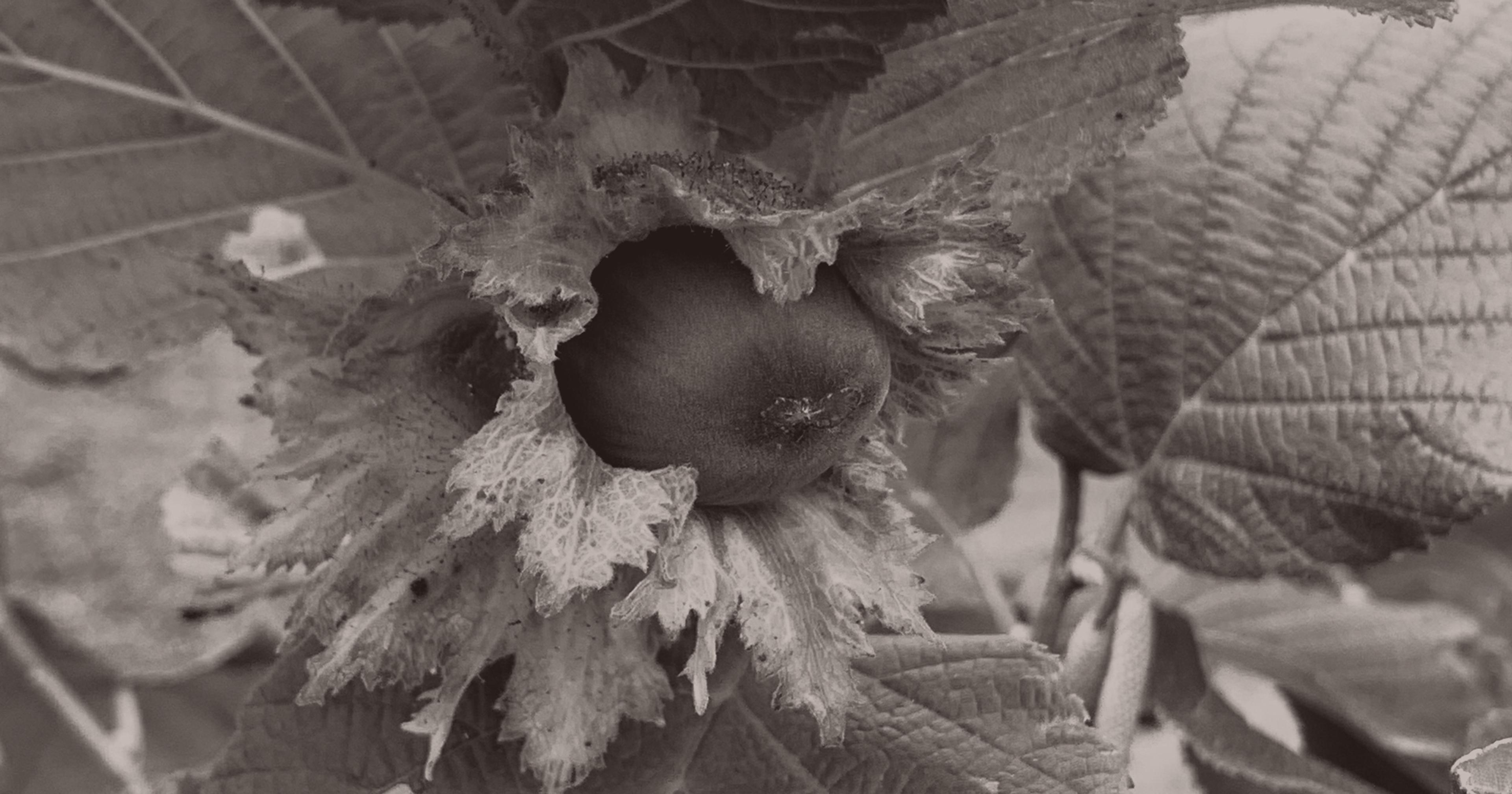
“In the plant sciences,” he said, “there are very few opportunities to do something like this with your career.”
He could be forgiven for getting a little emotional at the sight of a successful harvest. He’s seen whole progenies collapse, only to plant more. He’s known some of his trees longer than his own children. Many will end up outliving him. Someday, if he has his way, his grandkids will be able to pick up a hazelnut and trace its history back to a field in East Brunswick.
“I guess it’s a fear of the shortness of life that has always driven me,” Molnar said. “If you have the opportunity to make a contribution, you have to do it.”

Each weekday morning, Jeff Ishee enters his home studio in Virginia’s Shenandoah Valley at 6 a.m. to begin producing farm reports. Since 2002, Ishee has run On the Farm Radio, a one-man operation that distributes 11 daily reports of one to eight minutes in length to 95 stations east of the Mississippi River, representing more than 5 million listeners, including at least 430,000 farming operations.
“I try to put myself in the position of being in between the farmer and the consumer,” he said. “What’s available at the farmer’s market this week? Is sweet corn still in season? Can you buy locally produced watermelons in Western North Carolina?”
Farm radio has been part of commercial radio from its earliest days. Only four months after KDKA in Pittsburgh made history on November 2 by broadcasting live updates on the 1920 presidential election, Illinois grain dealer James Bush began broadcasting market prices under the call sign WDZ.
Even though terrestrial AM/FM radio now faces a lot of competition from podcasts, satellite radio, and streaming services like Spotify, statistics show that large numbers of people still tune in. According to Nielsen Media Research, 82 percent of Americans aged 12 and older listened to radio every week in 2022 — down just 10 percentage points from 2009. Further, 83% of farmers with at least $100,000 of gross farm income listened to farm radio five days per week or more in 2023, according to a National Association of Farm Broadcasters survey.
That doesn’t mean the content and technology of farm radio has stayed static, or that the medium doesn’t face challenges in a digital world. But Ishee still finds radio’s staying power impressive.
“The station that I started with, WSVA, they went on the air in 1935. That means that next year they will be celebrating their 90th anniversary,” he said.
“I’m really amazed that radio has lasted as long as it has.”
Accessible, Credible News
Amy Biehl-Owens, general manager for KRVN (880 AM) in Lexington, Nebraska, loves telling the origin story of the station and the Rural Radio Network, a farmer- and rancher-owned cooperative. After the historic winter of 1948-49 killed an estimated 20 people and thousands of livestock across the state, Nebraska’s Farm Bureau, Cooperative Council, Farmers Union, and Grange wanted to ensure farmers would never again be blindsided by severe weather. Traveling door to door, they sold $10 certificates of ownership until they raised enough money for a station.
Since KRVN’s first broadcast in 1951, the RRN has expanded to 15 stations across the state and over 3,000 owners who now pay $25 for a lifetime membership. Rather than paying dividends, Biehl-Owens said, the money goes back into running the stations. Beyond their robust farm reporting, the RRN works with local TV affiliates and newspapers to cover everything from high school football games to local and state government in both Nebraska and other states, from Kansas to Wyoming.
Radio has retained its popularity in the Corn Belt because much of the region lacks high-speed internet. “If you consider that agriculture is the biggest industry in a not very densely populated state, it makes sense that farm radio would be pretty much king out here,” Biehl-Owens said.
Credibility is another reason that farmers keep tuning in. The 2023 NAFB survey found that 76% of farmers highly trusted farm radio to provide credible and timely information. “We do have a much higher trust rating than general media — significantly higher,” said Sabrina Halvorson, national correspondent at AgNet Media, which serves California and multiple Southeastern states.
But she finds that trust is more easily cultivated by the farmers who listen than general interest listeners, who harbor concerns — sometimes spurred by misinformation — around topics like GMOs. “It’s important to me to have their trust as well,” Halvorson said.
Changing Trends in Storytelling
When Ishee got his first farm radio job, the retiring farm news director, Homer Quann, gave him some advice. “He said, ‘Ish, farmers want to know three things. They want to know the weather, they want to know market prices, and they want to know what other farmers are doing,’” Ishee said. Nowadays, “they can get the first two items on their smartphone, 24/7, instantly. The third thing they cannot get. So that’s what I’m trending toward.”
As an example, he highlighted his coverage of the opening of the Shenandoah Valley Produce Auction in 2005 helped show the predominantly livestock farmers in the area a way they could diversify their offerings.
On the opposite coast, Halvorson has noticed a growth in popularity in sustainability stories since she began working at the company in 2012. Policy and trade, including stories about shipping since supply chain issues that began during the pandemic, have also been popular.
No matter what the story is, however, it’s likely delivered in a shorter report than in the past. It’s easy to blame shorter attention spans, but Ishee also noted that station scheduling is a factor. Often, radio stations will have dead air they’re looking to fill near the end of the hour, Ishee said, and his one- to three-minute segments fit the bill. “We have some radio stations that play our reports, not only once a day, but sometimes three or four,” he said.
For longer form stories, podcasts are now the usual format. Ishee hosts a podcast called 4 The Soil that focuses on the importance of soil as a natural resource, and Halvorson has hosted AgNet Weekly, a deeper dive into legislative and policy. (The podcast is on hiatus due to Halvorson’s workload.)
Challenges Ahead
But as popular as podcasts are — “I see new podcasts pop up every day in agriculture,” Halvorson said — producing the next generation of traditional farm broadcasters might be a challenge.
“As far as I know, I’m the only remaining farm broadcaster in Virginia,” said Ishee. The younger people he has spoken to about farm radio as a career tend to want to make more money straight out of college, though he pointed out that “our revenue has gone nothing but up over the years”.
Halvorson has found a similar resistance in California, where many young people she encounters join high-paying ad agencies. “If you’re working at a small radio station, and you’re their farm broadcaster, it’s not an easy way to live,” she said.
The Rural Radio Network is once again an exception, thanks to a robust intern pipeline through multiple universities in Nebraska, as well as Oklahoma State and South Dakota State University. According to Biehl-Owens, at least four of KRVN’s current full-time staff interned at the station.
“We grow our own,” she said.
That said, even Biehl-Owens is noticing a shortage of some vital jobs like broadcast engineers — a job that requires a complex set of skills. They are currently looking to partner with local junior colleges.
Another infrastructure-related threat to radio comes from the car industry, as carmakers including Ford, Mazda, and Tesla have either planned to or already removed AM radio from their vehicles. According to the NAFB survey, 73% of farmers listen to farm radio in a vehicle, with 89% listening through AM/FM stations. The NAFB has joined over 20 advocacy groups to support the AM in Every Vehicle Act to ensure that all passenger motor vehicles are equipped with AM radio. (The bill has sat idle in the Senate since September 2023.)
Changing Demographics, Changing Listeners
Even as the demographics of agricultural workers has changed, farm radio remains a very homogeneous space, according to Halvorson.
In the Willamette Valley of Oregon, however, Radio Poder provides a glimpse of a possible future direction for farm radio. Radio Poder broadcasts from Woodburn, a town of 26,013 residents in which 16,000 are Hispanic/Latino and 52 percent speak Spanish at home. Farmworkers make up not only a significant portion of Radio Poder’s listeners, according to station director Arturo Sarmiento, but also their volunteer staff. “Some of them are working in the fields and, after their work, come to do their radio shows,” he said.
During the early days of the pandemic, the station garnered national attention for translating information about Covid into Spanish and indigenous languages. That included letting undocumented residents know that they could apply for pandemic relief. At the heart of Radio Poder’s success is partnerships with nonprofits and state agencies to offer information about everything from affordable housing to labor rights. On the first Wednesday of every month, for instance, two staff members of the local nonprofit Farmworker Housing Development Corporation present En Tu Casa (In Your House) FHDC to inform listeners about housing issues. MLP Mujeres de la Comunidad focuses on women’s issues in partnership with Mujeres Luchadoras Progresistas, a grassroots organization of female farmworkers.
But Sarmiento said that it was just as important to include programming for women — including on-the-job issues for female farmworkers — and children. “More than broadcasting for workers, we broadcast for families,” Sarmiento said.
Pearls of Wisdom
“AM radio is probably not the wave of the future,” Biehl-Owens admitted. Even so, the recent loss of internet and cell communication in Western North Carolina following Hurricane Helene served as a reminder that AM radio still plays a crucial role in informing the public.
And it’s clear that farm radio still cultivates a strong bond with its listeners. Whether it’s the RRN’s farmer-owners or the farmworkers learning how to report on the fly for Radio Poder, farm radio is one of radio’s pillars.
One of the things that keeps Ishee going is when his listeners recognize him in public. “They say, ‘Hey, I listened to that report the other day that you did on Alpine dairy goats … You know that was really interesting, and I’m going to learn more.’”
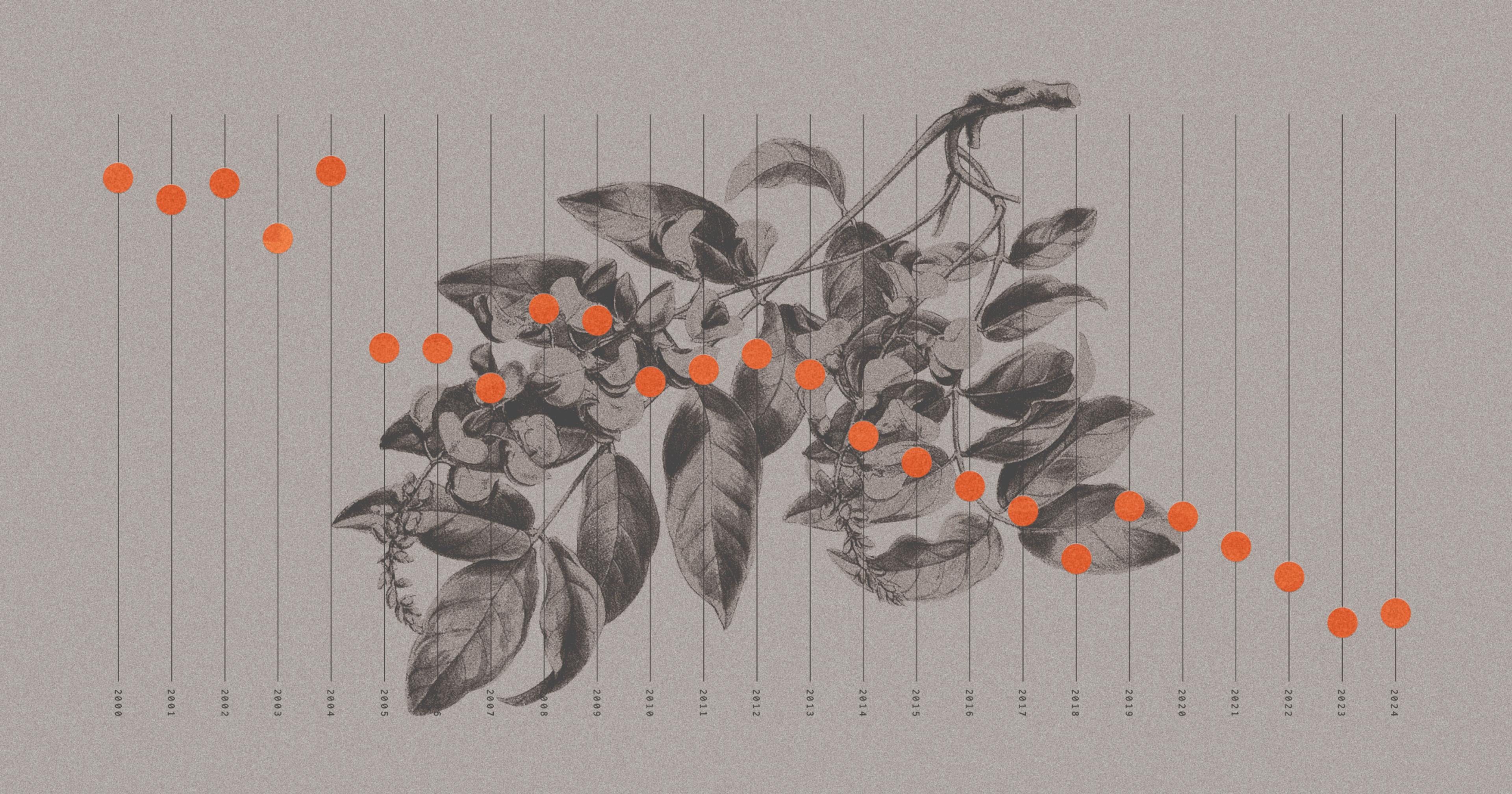
When citrus greening — a devastating bacterial disease — swept through roughly 2,500 acres of John Paul’s citrus groves in Central Florida, he likened the effect on his crop to a more human disease.
“It’s like an AIDS or something,” he said. “It really bogs a tree down and then something else comes and kills it; it’s just in a weak state.” The greening made it so his trees just couldn’t stand up to the “couple hurricanes, some freezes, and droughts” that also hit his acreage in the last two decades, and will only continue to grow more regular and destructive because of climate change. While the damage of Hurricane Milton, which tore through Central Florida this season, is still being assessed, the Florida Farm Bureau estimates Hurricane Ian caused close to $250 million in citrus losses alone in 2022.
The greening wave has left Paul little choice but to convert large chunks of his total 8,000 acres to pasture land. While he only has 400 acres currently in production, he has about 4,000 available for experimental planting of greening-resistant crops, a new fixation of his. “We’re trying to figure out stuff to survive,” he said. He’s planted all sorts of things, from red and green guavas to olives and a lychee-like fruit called a longan. He’s also looking into a South Asian evergreen tree with leaves that are used to make kratom, a stimulant that some researchers suggest might help wean heroin addicts off the drug.
In the scramble to find a viable replacement for citrus, farmers like Paul have searched high and low. Agriculture entrepreneurs have sung the praises of countless miracle crops — everything from bamboo to hemp — that have mostly failed to take off. But about 10 years ago, Paul learned of a subtropical “super tree” called pongamia that grows throughout in other countries with similar climates to Central Florida. He read lots of studies out of Australia about these pongamia trees: their hardiness, their adaptability, and the beans they produce, which can be processed into biofuel or high-protein foods for people and cattle. He reached out to the Ministry of Agriculture in India to get some pongamia seeds, and they were “very happy” to provide.
Since that time, pongamia trees have found a champion in a company called Terviva, a California-based agriculture venture that has been busy pushing it as yet another miracle plant that can not only resist greening but is “climate-resilient” and “helps to reforest land and revitalize communities,” according to the company’s website. This summer, a swirl of Terviva press posited that pongamia may be the answer to greening-related citrus decline in Florida.
“As large parts of the Sunshine State’s once-famous citrus industry have all but dried up over the past two decades ... some farmers are turning to the pongamia tree, a climate-resilient tree with the potential to produce plant-based proteins and a sustainable biofuel,” per the Associated Press.
But Paul and other Florida citrus experts are skeptical.
Ray Royce, executive director of Highlands County Citrus Growers in Florida, wonders if pongamia isn’t just another buzzy gimmick like bamboo, which recently enjoyed a glimmer of popularity in the state but was never able to establish a solid market.
“[Citrus greening] really bogs a tree down and then something else comes and kills it, it’s just in a weak state.”
“You start talking about the bamboos and pongamias of the world, there isn’t infrastructure,” Royce said. “It’s hard to be the guy who says we’ll spend thousands and thousands on an acre with just the hope that someone will put in the necessary processing facility.”
Royce said that before farmers buy into pongamia on a mass scale across thousands of acres of former citrus land, there needs to be a guaranteed market. As of now, Terviva hasn’t been able to demonstrate that there is one.
Royce has been in touch with Terviva representatives, and asked to speak with some of the growers who have purchased Terviva’s trees and whose product Terviva has processed. “I’m interested to know how profitable per acre their product is versus other agriculture,” he said. But he’s never gotten an answer. (Neither have we: Terviva representatives declined to comment, and top investors did not return multiple phone calls.)
As for Paul, his early investment in pongamia hasn’t paid off. What started as several dozen acres of pongamia is down to five or 10, he estimated. And while the remaining trees have “grown beautifully” — some of them up to 80 feet tall — he’s never been able to find a market for the nuts, even 10 years in.
“There’s a lot of stuff you can grow here, but unless you know you can make money at it, then people aren’t gonna plant hundreds or thousands of acres,” Royce said.
He assured me he wasn’t just being stubborn. He’s not an “only citrus” kind of thinker, and as painful as it may be, most citrus growers aren’t against finding alternatives either, he said.
“It’s not that I’m thinking that this will never replace citrus, or that citrus is king. It’s not that.“
“I hope that either this or something like this comes around. By me being more skeptical, it’s not that I’m thinking that this will never replace citrus, or that citrus is king,” he said. “It’s not that.”
But citrus does have deep roots in this part of the country that long pre-date this greening epidemic, explained University of Florida citrus extension specialist Tripti Vashisth.
Much of her focus at UF is on horticultural strategies that will help greening-affected trees stay productive. “Many growers are at least third or fourth generation,” she said. “They are passionate about citrus and that’s what they want to do because it’s their family legacy. There’s a lot of growers who want to keep citrus in Florida. We want this crop to work here because it has worked for centuries.”
But greening, a bacterial disease spread through bites from an insect that feeds on a tree’s leaves, is a particularly devastating force. It ravages the trees from the inside, coursing through the circulatory system and prompting counterintuitive defenses, like halting the movement of sugar to its fruits. The result is nasty, commercially non-viable citrus.
The AIDS comparison isn’t such a wild exaggeration, according to Vashisth, because the disease zaps a tree’s energy needed to fight infection. Also like AIDS at its peak, “the disease is everywhere” — since it was first detected in Florida in 2005, virtually every grove in the state’s heavy citrus regions has become infected in the first year of planting. Overall, it’s estimated Florida’s orange production has fallen 92 percent in 20 years because of disease and natural disasters.
“Our growers are kind of stuck with what they have and that’s the problem.”
If pongamia turns out to be the silver bullet Terviva claims it to be, Florida’s citrus country would welcome it with open arms and fields. But no one is willing or able to prove that just yet.
The articles that circulated earlier this year imply that pongamia is currently being produced and processed on a large scale in the U.S., though it’s been years since Paul, Royce, Vashisth, and other contacted experts have heard much about pongamia production in Florida. “My intuition says there are possibly some challenges,” Vashisth said, though no one knows for certain what they are.
Whether it’s pongamia, bamboo, hemp, peaches, or hops, a tree crop won’t have the sweeping impact anyone hopes for until there’s investment in production infrastructure.
“Citrus is an evergreen, perennial crop, and you expect the trees to be productive for at least 20 years if possible,” Vashisth said. A similar kind of disease would never be as devastating to something like a potato, because you start each season with a new crop. “But our growers are kind of stuck with what they have and that’s the problem,” she said.
Royce put it another way. “A tree crop is like getting married, not a long weekend date,” he said. Before they tie the knot, farmers need to know what they’re getting themselves into.

Carmen Licon wants us to eat more cotija. And requesón, and kefir, and paneer. Licon is the founder of the MILKulture Institute, a multidisciplinary project under the USDA’s Dairy Business Innovation Initiative that’s aimed at helping regional producers develop and promote “ethnic” and international dairy products — and getting more types of people, from more backgrounds, interested in a career in dairy.
Licon, who is also the director of Cal Poly’s Dairy Products Technology Center, sees this work as especially important in the context of current challenges facing dairy farmers around the country. The latest Census of Agriculture indicates that, while U.S. milk production rose slightly between 2017 and 2022, the number of cow dairy operations declined by nearly 40 percent. Labor shortages, too, are a constant. Meanwhile, people are drinking less milk — but they’re also eating more cheese, with per capita consumption growing steadily in recent decades.
For the small dairies that remain, innovating products and diversifying their businesses — and getting the next generation excited about keeping them going — is a priority. Could one path forward be to expand our idea of what dairy products look like?
Take “Hispanic” cheeses, the USDA term for the cheeses of Latin America. Annual consumption has more than quadrupled since the designation was first formalized in 1996; in 2022, it was close to the figure for Swiss cheese and higher than blue, brick, and muenster. Still, quality options can be lacking. “We don’t have a lot of artisanal cheesemakers making Hispanic styles,” Licon explained, noting that it is the fastest-growing category in the country. “We can do more.”
Licon was born and raised in Chihuahua, one of Mexico’s main dairy-producing states — known for cheeses like the eponymous queso Chihuahua, a smooth, melty cousin of Monterey Jack. Both sides of her family worked in the industry. “I grew up surrounded by agriculture,” she said. “So dairy products have always been very important for me, and part of my heritage.”
When she moved to California, she was impressed by how important the dairy industry was there. Still, something wasn’t quite adding up. “We have all these cultures here,” she said — but when it comes to dairy, “we don’t necessarily see ourselves represented in the products that we see in the market.”
“It benefits the business that’s diversifying their portfolio, but it’s also helping farmers, because they will be buying more milk.”
MILKulture hosts events, funds research projects, and offers grants to producers interested in making culturally specific dairy products. Dairy foods originating in the Middle East, South Asia, and Latin America, especially, are slowly entering the lexicon of U.S. consumers — though cheese is produced all over the world, from chhurpi, a hard yak’s milk cheese from the Himalayas, to the Ethiopian fresh cheese called ayib. Licon has organized a series of short courses at Cal Poly covering global dairy products, including one on Hispanic and Mediterranean cheeses in October. Next year, the plan is to do one around acid-set cheese styles like paneer.
One hope is that multicultural dairy education will help dairy farmers find new ideas and new customers. Plus, inspiring and funding artisan producers can create more well-paying buyers for specialty dairy farms that may not process their milk in-house. In a larger sense, more kinds of dairy products produced in the U.S. will mean more milk being sold here, too. “Let’s assume that someone is really into making cheese, and now they want to make ice cream because they think that Hispanic ice cream is a way to go,” Licon offered. “It benefits the business that’s diversifying their portfolio, but it’s also helping farmers, because they will be buying more milk.”
***
Mauricio Travesí Salgarolo, president of the Dallas-based Mozzarella Company, can speak to the demand for a diversity of dairy products. The first product made at the company’s small factory was, as might be obvious, the one in its name — founder Paula Lambert fell in love with mozzarella while traveling in Italy. But of course, this is not the only cheese people eat in Texas. In the operation’s early years, Lambert connected with local chefs, many of whom were helping build the state’s burgeoning Southwestern and Tex-Mex dining scene. The rich tradition of Mexican cheesemaking inspired her.
It wasn’t a huge leap from mozzarella to the company’s first Mexican-style cheese, queso Oaxaca: Both are made with a similar stretched-curd (or pasta filata) process that involves kneading and pulling the cheese until it becomes pliable. That product, an early success story, was launched more than 30 years ago. From there, Salgarolo said, “Paula continued to experiment.”
The team now hand-produces many other Mexican cheeses, and some that cross other cultures and cuisines. This includes caciotta, an Italian cheese, with added flavors like ancho or Mexican marigold mint. Salgarolo knows of a few other producers in Texas making artisan Mexican cheeses, but it’s a small cohort. (For context, around 30 percent of the state’s population is of Mexican ancestry.)
The Mozzarella Company does not have its own dairy operation; the cow’s milk for most of its cheeses is sourced from Dairy Farmers of America, a large national cooperative, and the goat’s milk, for products like a goat cheese wrapped in hoja santa, from LaClare Farms in Wisconsin.
LaClare also makes its own cheese, an operation that’s growing rapidly with a $10 million expansion of the LaClare Family Creamery completed in 2019. But many dairy farmers with smaller herds “choose not to make their own cheese and will sell their milk to another cheesemaker,” explained Ruth Flore, outreach advisor for the Oldways Cheese Coalition. “And that cheesemaker may be buying milk from a handful of farms.”
“If you want to work with one farm for their milk, then you have to be able and willing to buy their milk every day.”
Artisan cheesemakers often like working with small dairies for the higher quality and better transparency they provide, with more options for sourcing from specific breeds or seeking out certain farming practices. “It’s important to know that the health of the herd is good, and that the milk has the components that a cheesemaker is looking for,” said Flore, who was also former president of the American Cheese Society. Plus, it often looks good to customers to be able to point to where your milk is coming from. “A direct conversation with the farmer — that’s what this generation now wants to be able to do,” Flore noted.
What’s in it for the dairy farmers? For one thing, artisan cheesemakers will often pay more than a farm could earn selling fluid milk in bulk, especially if they’re looking for something specific, like organic or A2 certification. Sometimes, this can make all the difference in keeping a farm in business.
Still, Flore is realistic about the idea of small farms circumventing the problems of the industry by finding the perfect cheesemaking partner. “That’s a very pristine, perfect world,” she said. “If you want to work with one farm for their milk, then you have to be able and willing to buy their milk every day, as opposed to having you buy their milk when you need it … So right there is a huge commitment, even if it’s only 20 cows.”
But these types of direct sales are not the only opportunities Licon sees for boosting dairy farmers. “Regardless of how and who is going to process the milk, the fact that we have a higher offering of products — that makes more milk usage,” Licon said. “Volume is also important, especially in California, because we have very big dairies. So the more volume they can get into products, it’s better for everyone.”
***
Of course, there is also opportunity for farmers in doing value-added products in-house — itself a huge commitment. Chapel’s Country Creamery, in Maryland, makes both paneer and queso fresco; Brush Creek Creamery in Idaho has won awards for its marinated labneh (strained and preserved in oil, Levantine-style). In Washington, Ferndale Farmstead co-owner Nidia Hernandez nods to her Mexican heritage with a new line of cheeses called Familia del Norte, producing cotija, queso asadero, queso Oaxaca, and more.
Much of Oldways Cheese Coalition’s work centers around supporting demand for traditional products like these, especially “cheeses that center on the milk, production practices, culture, and history,” Flore explained. “You want people to know about their cultural heritage,” — especially in a time when finding people interested in cheesemaking is “like trying to find a needle in a haystack.”
For Karin Eide, owner of Spring Hill Farmstead Goat Cheese in California’s Humboldt County, the connection between dairy and heritage was only natural. “My mama was from Chihuahua,” she explained, “so she is my inspiration on all the goats’ names here” — Bonita, Guadalupe, and Pepita among them. These Mexican roots also inspired her to branch out from the classic soft goat cheeses she started her business with. Eide has tried adapting many Mexican cheese styles, and also started making the goat-milk caramel called cajeta, which she said she’s finally perfected.
“It’s not gonna solve all the problems, I know. But we’ll start somewhere.”
Getting here took time: Eide got started in cheese 20 years ago, while working an off-farm job. “It was very expensive, and still is, to be a microdairy and cheese plant licensed with the state of California,” she said. But by 2019, she was able to retire from that job, build her current creamery, and commit to cheese full-time. “My dream was to make cheese for my community,” she said — “and that is what I do.”
In the end, one of the goals for MILKulture is to inspire others to do the same. The program has helped arrange student internships — not just at hands-on dairy operations, but also in fields from engineering to communications, a multidisciplinary approach that Licon hopes will help broaden conceptions of what a career in dairy can mean. Students have also led research on DEI initiatives in dairy workplaces. Short courses offer technical assistance in both Spanish and English, and the plan is to expand to other languages as well; Licon is working on getting simultaneous translation for MILKulture’s new public webinar series.
“It’s a way to celebrate this diversity, but also, it’s a call to action,” Licon said of her work trying to thread the needle between culinary heritage, product innovation, recruitment, and resilience in the dairy industry. Perhaps, by showing people there’s room for their culture in this field, everyone can benefit, in one way or another.
“It’s not gonna solve all the problems, I know,” Licon said. “But we’ll start somewhere.”
When two competitors enter a market, it’s natural that they’re going to have much more in common than what makes them different. But some rivalries, like bison and beef, cannot be squarely compared, apples to apples, because their differences start biologically.
Bison remain partially wild animals, whereas most cattle are fully domesticated apart from some wayward herds in the American West. Bison can wander through all types of terrain and withstand inclement weather because they’re native to North America, developed over millennia to live all across the continent. They can independently give birth, so with enough land, a bison rancher can own a herd and be relatively hands off with their animals while they wander off. When bison eat, they’re drawn to native grasses and leave flowers and clover alone, which can support butterflies and other pollinators in the surrounding ecosystem. Due to these factors, bison is a very tender, lean protein that many describe as slightly sweet.
Cattle, on the other hand, were introduced here in the 15th century and cannot naturally traverse different types of terrain, so they tend to congregate on flat land near waterways (which can have adverse effects on local water sources). Due to the current scale and set-up of the beef industry, cattle require a significant amount of hands-on action with ranchers to house, feed, and assist with the birthing of animals. They also tend to be crowded very densely when they’re outside, and if given the choice, will indiscriminately consume flowers, clover, and native grasses that can limit pollinators.
Some estimates say that prior to the arrival of European settlers in North America, 75 million bison roamed the continent from coast to coast. But by the late 1800s, the massive bison herds were brought to the brink of extinction with less than 500 head. The mass killings were partly for the value of their hides and bones for fertilizer, to build infrastructure for incoming settlers, and to wreak havoc against nomadic Western tribes to pressure them onto reservations. Native tribes not only subsisted on the animal, but used each and every part of it for toys, shelter, clothing, and tools. Without buffalo to hunt, a way of life was gone.
But there has been major revitalization in recent years of Tribal bison ranching programs, including a 2023 initiative by the USDA to buy bison meat from a handful of Native tribes to provide a traditional food option via the Food Distribution Program on Indian Reservations. Thus, the bison market also supports Native ranchers and vendors in a particularly unique way.
Yet despite the national heritage, appeal, and ecological benefits of bison, it’s still not eaten in quantities that get anywhere near beef. It makes one wonder: Why?
A Burgeoning Meat Market
“In modern times, consumer consumption is relatively new,” said Jim Matheson, executive director of the National Bison Association, a coalition of about 1,100 bison ranchers, producers, and marketers.
Matheson cites the birth of the commercial bison industry in the U.S. as February 1966 when Custer State Park in South Dakota hosted the first live buffalo auction. One hundred animals were sold off to manage the growing herd, and buyers considered the possibilities of buying and raising bison for meat consumption. Within 30 years, the industry soared due to interest from enthusiasts like Ted Turner.
“The live market got really active in the 1990s for processing animals, but there was no meat market,” said Matheson. By 2000, a massive crash brought the bison market down to the point where animals that days before went for $10,000 apiece fell to a measly $200.
That’s when the National Bison Association got very serious about developing a sustainable market that would support the entire supply chain for years to come — as opposed to a bubble without actual market support from consumers.
“In modern times, consumer consumption is relatively new.”
Terry Kremeniuk, previous executive director of the Canadian Bison Association in Saskatchewan, Canada, also describes bison as a niche protein in the mainstream Canadian market, except the industry didn’t get its start until between 1980 and 1985. In 1996, the first year that a census of bison was taken, there were 45,000 head total in Canada, but the majority of animals raised in Canada were slaughtered and sold in the U.S. (This remains true.)
Even so, the smaller scale of bison inhibits it from getting anywhere close to the market for beef. Last year about 85,000 bison were processed for meat consumption stateside, Matheson said. Beef, on the other hand, saw 36 million head processed. Thus, Matheson argues that based on assessment and conversations with ranchers, processors, and restaurants, there is not enough bison to meet current American demand, especially after the pandemic. This is why the U.S. remains such a strong import market for Canadian bison.
The bison contraction is related to the same pinch right now in the beef industry: Farmers and ranchers are reducing their herd size due to drought and rising operating costs, so cattle inventory is at a 50-year low. Therefore, the price of beef is skyrocketing, which makes the choice between a $10 pound of ground bison much more approachable when beef is now $7 or $8. The average price per pound of bison meat, Matheson said, has stayed consistent for some time, unlike beef.
But Kremeniuk said that contrary to Matheson’s assessment, there isn’t exactly a shortage of bison, but still plenty of room for more growth and expansion, especially for specialty products.
“There’s certainly room for more demand,” he said.
Alternate Harvesting
Colton and Jilian Jones, owner-operators of Wild Idea Buffalo Company in South Dakota, are niche processors in the larger bison industry. What distinguishes their business is field harvesting all their bison, which means that an animal is born, raised, and lives their life in the wide open plains. When it is time for slaughter, a hunter drives out to their pasture and kills them with a pop-up slaughterhouse via semi-truck stationed nearby.
This model is distinct in a market where between 92 to 95 percent of bison available in stores, the couple said, are finished on feedlots in a similar fashion to beef for the last few months of their life. Due to this, some experts argue that bison is not a fully wild animal anymore, but somewhat domesticated due to human intervention.
With field harvesting, every animal lives and dies without seeing the inside of a truck, feedlot, or slaughterhouse. The method also ensures that each animal lives a life with zero human intervention until death.
However, it drives costs up: A pound of Wild Idea’s ground bison is about $16.50. Both Jilian and Colton say that they don’t see beef as their competition whatsoever; they’re competing with the larger bison market that uses similar practices as the cattle industry — but still trade on the environmental, cultural, and ecological legacy of bison.
“It’s whitewashing,” said Colton. “[That’s] grain-finished buffalo … [When a customer shops and] thinks of a buffalo, they put the animal in a prairie landscape. They don’t think of a buffalo and a feedlot.”
“When a customer shops and thinks of a buffalo, they put the animal in a prairie landscape. They don’t think of a buffalo and a feedlot.”
Colton sees the course changing for his niche corner of the industry only if other producers actively compete with them to raise buffalo in wide-open landscapes and field harvest themselves. But it’s still a chicken and the egg scenario — in order for ranchers to take on more bison, the market for more expensive specialty field harvested meat has to grow.
But for Matheson and Kremeniuk, this simply isn’t doable when the wider industry is still so young and trying to sustainably grow amidst a wide range of ranchers and processors.
Kremeniuk said that people who produce bison want to earn the highest returns, and to grow the industry, it needs to continue to be profitable. The way that the cards fall right now with the exchange rate between CAD and USD and the low cost of shipping animals to the U.S., if something were to change, it could result in the Canadian market growing and a greater share of bison being kept at home where it is raised.
The flipside is that this comes with its own risks, and ceilings. The American market is 334 million people strong and the darling of any global business seeking to grow and succeed with an economy of scale. Canada, on the other hand, has about 40 million citizens, and if bison were kept at home, the bison marketing and sales would have to ramp up significantly to make up for the American export losses. Such pressures, if all didn’t pan out, could force Canadian ranchers to throw in the towel on managing their own herds.
Looking Ahead
Matheson doesn’t have dreams of grandeur when it comes to bison burgers or the like becoming wholly mainstream, even for the sake of climate change. Instead, he envisions slow, steady growth in the years to come that reflects how the bison market has organically grown on its own without excessive inputs — much like the animal itself.
“I know what we’re doing is working, and supporting tribal buffalo preservation,” he said. “If it ain’t broke, don’t fix it.”
Colton of Wild Idea says that while he’d like to see a shift in harvesting practices, he’s been heartened to see the growing interest in the concept.
“It’s catching traction … In the last year or two, more people are asking if they can hire us for field harvesting, or how to make a mobile harvester,” Colton said. “There’s definitely movement in our area.”
Meanwhile Kremeniuk said that all things considered, it’s important to have perspective on where the state of bison as an animal was in the not-so-distant past, and how far the species has come partly due to more people choosing it as the grocery store — no matter the method of harvest.
“To look now at where the industry was in the 1800s and the number of bison down from millions to hundreds,“ said Kremeniuk, ”it’s one of the best conservation stories of our time.”

As you’ve likely heard, the production of Bitcoin requires an immense amount of energy, its annual terawatt consumption roughly equal to that of Australia. This energy usage in turn creates a lot of “waste heat,” which radiates off mining rigs and typically burns off into the ether. The endeavor to capture this wayward heat and direct it toward useful ends has developed into something of a cottage industry in the crypto sector: Use Bitcoin to warm your house, your pool, your greenhouse.
For many people, cryptocurrencies exist as a quintessential artifact of the digital age. A financial abstraction. A human contrivance. It’s hard to think of anything less organic, less biological, less living than a Bitcoin.
A garden-fresh tomato, on the other hand, is a basic unit of the natural world. Its warm red flesh — sometimes purple, sometimes yellow-green — feels self-evidently full of life in your palm. We all know what a tomato is.
But for some Bitcoin miners, this seeming incompatibility between agriculture and the world of crypto is actually an opportunity for symbiosis.
“Bitcoin Capitalist,” an enthusiast on TikTok, visited one of these greenhouses this past January. Bundled into a thick coat, he panned the camera around to show tomatoes and basil growing resolutely against the winter’s odds. “This is the future of Bitcoin mining,” he announced, his voice just loud enough to compete with the relentless buzz of computers in the background, a stack of them affixed to the inside of the greenhouse wall.
In addition to tomatoes and basil, the gardeners here have also planted parsley, sage, and peppers. The greenhouse is on the campus of the Bitcoin company Merkle Standard, located in eastern Washington state. With the help of a Chinese hardware manufacturer and an American investment conglomerate, the firm outbid the local Kalispel Tribe to take over the former site of the Ponderay Newsprint Mill in 2022. The cryptocurrency operation has replaced the industrial output of paper with a less tangible — but potentially more lucrative — product for the 21st century.
While crypto has seen a recent downturn in profits, the biggest mining enterprises in the business are generally still doing well, taking advantage of cheap energy rates offered to large-scale buyers. In Washington, dammed rivers provide abundant hydropower, making for especially low electricity bills.
Perhaps self-conscious of the mixed public opinion on crypto’s environmental record, Merkle Standard’s website pledges its commitment to “building North America’s largest sustainable digital asset mining platform.” Laura Verity, the company’s director of external affairs and environmental manager, was quick to acknowledge in an interview that there is “a lot of really negative press and understanding of the data center operations around digital assets.” She hopes that Merkle Standard can be “the shining star example of how to do it right.”
In addition to traditional green business practices like prioritizing renewable energy, the company’s heat recapture efforts indicate an interest in pushing the envelope into more experimental territory. The blueprint for using Bitcoin rigs as the heat source for greenhouse production is close to nonexistent, at least in this country. The practice has gained a bit more traction in Europe and Asia. In the Netherlands, a tulip farmer is warming her grow space in part with the help of crypto miners.
“The miner is a guest in the greenhouse, it has a completely different objective.”
(Perhaps she was inspired to prove mathematician-philosopher Nassim Taleb wrong on two accounts, who disfavorably compared Bitcoin to the 17th century “tulip bubble.”)
For some, the dearth of Bitcoin-heated greenhouses is indicative of a fundamental impracticality in the whole idea. Or rather, a series of impracticalities. Alex de Vries, founder of the Bitcoin Energy Consumption Index, pointed out very simply that “these machines are not made to be heaters.” These are computers manufactured to perform exclusively one task.
Besides the passive work of the sun, the most common energy inputs for greenhouse heating are fossil fuels. The heaters are precisely calibrated with a thermostat, which keeps the structure from getting too hot or too cold. This finely tuned automation is a vital cost-saver for an industry with famously thin margins (propane is too expensive to burn up carelessly). It’s also necessary for sustaining the optimal temperature range in a greenhouse, which is typically a grow space designated for fussy high-value crops that can “earn their rent.”
If a farmer replaces a standard greenhouse heater with a Bitcoin mining rig, they are introducing a piece of equipment that is never supposed to be unplugged. Stacy Stang, business development supervisor at Merkle Standard, explained, “It’s not like a propane heater that you just go over and shut off. You need to still have the revenue from the miners running.” While greenhouse crops generally thrive in warm environments, running heaters on a hot day can quickly lead to wilting and crisped plants.
“It’s not like a propane heater that you just go over and shut off. You need to still have the revenue from the miners running.”
Merkle Standard is first and foremost a digital asset mining company. The agricultural demands coming from its experimental greenhouse are necessarily secondary. As DeVries put it, “The miner is a guest in the greenhouse, it has a completely different objective.” A thermostat signal telling the computers to, even temporarily, pause their life’s mission would run counter to the profit requirements of the whole enterprise.
Further complicating the promise of miner-heaters is the increasingly short lifespans of the rigs. In an ironic flourish, as Bitcoin computers become more energy-efficient with every new generation, models are passing into obsolescence at a quicker rate. This constant race to upgrade mining rigs with cost-saving machines (energy is money), contributes to a growing pile of electronic waste associated with the industry.
With proper maintenance, a farmer can reasonably expect traditional greenhouse heaters to last well over a decade. De Vries’ research estimates that a Bitcoin rig’s mileage averages only a year and a half. This is a short window of time to earn one’s money back after dropping thousands of dollars. You are going to want that thing firing on all cylinders (until it inevitably ends up in the trash heap).
Last year, a study out of The University of Western Ontario considered the hypothetical application of Bitcoin waste heat in greenhouses. It found wide disparities in feasibility between sites. In Quebec, where the price for electricity is relatively low, a grower could potentially see some profits from substituting out fossil fuels with electric-powered crypto heat (assuming it’s a profitable year for Bitcoin). In California, where electricity is significantly more expensive than Quebec’s supply, the operation is almost certain to run a deficit. Even in a good year for Bitcoin valuation, it is unlikely that the revenue would justify the electric bill.
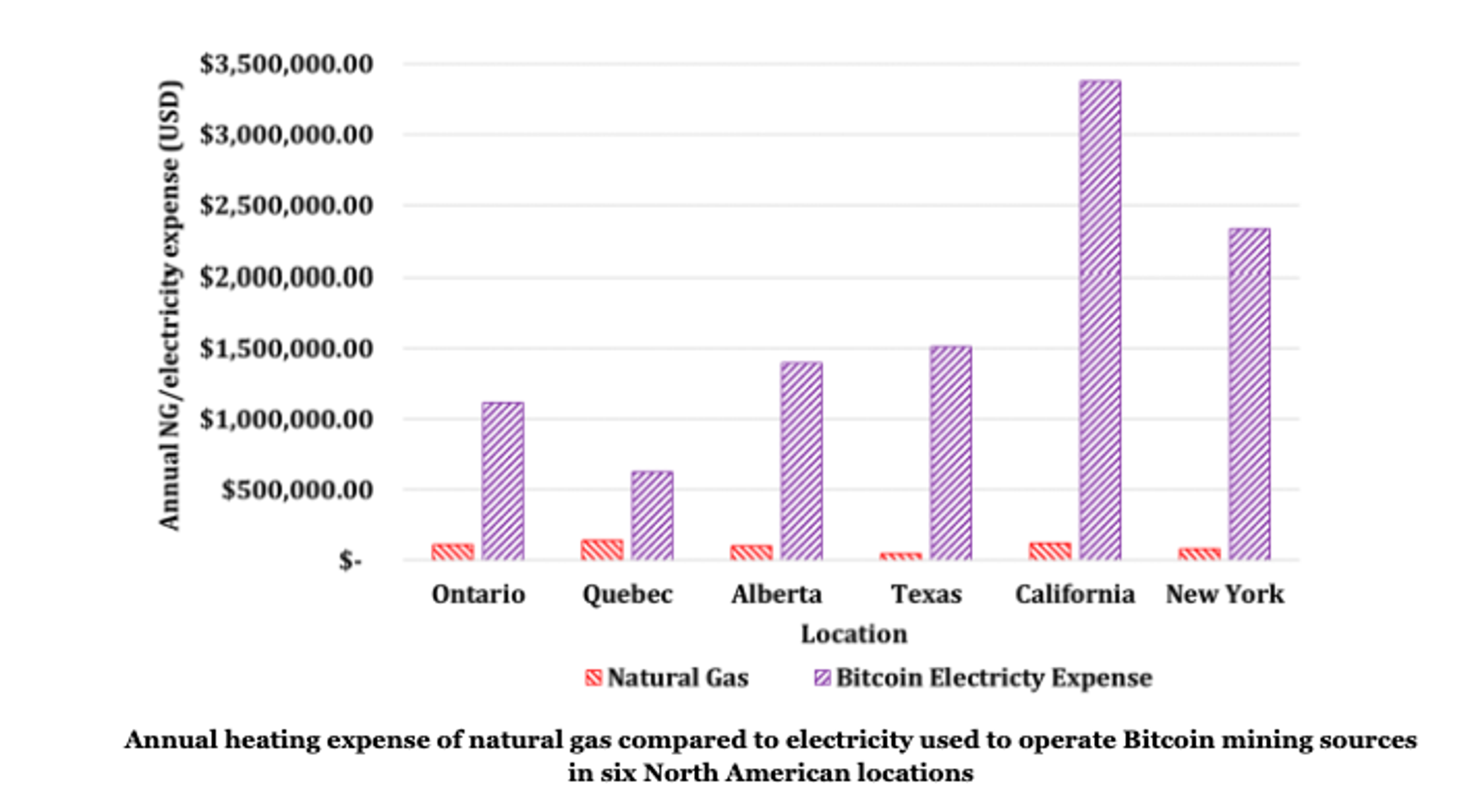
With the ag sector already riddled with economic volatilities, it seems doubtful that many growers will be looking to swap out propane for crypto heat. More likely, any movement that we do see in this space will be from large digital asset companies like Merkle Standard, who are better positioned to absorb the risks of fluctuating cryptocurrency markets (and pay a premium for energy). For them, the Bitcoin miners are already a fixed investment. Why not use the waste heat to grow a crop of tomatoes?
Going beyond financial considerations, there are simple hardware concerns with the computer-heater model that could make it unattractive to a farmer whose primary objective is growing produce.
As hot as these rigs burn, in cold climates (like Quebec), the waste heat will not always be sufficient to keep the crops alive and healthy — the Dutch tulip grower (who is partnered with the cryptocurrency company Bitcoin Brabant) still relies on some natural gas. This means a miner-farmer has to keep their traditional heating infrastructure in place, with all of the costs associated with its upkeep.
And while a propane heater isn’t the quietest piece of equipment on the farm, once it gets past the initial clanging rattles of firing up, it settles into the background. It pales in comparison to the noise that ceaselessly emanates from the miners, which is only magnified by a greenhouse’s echoing acoustics. Changing out the old heater for a newer, louder, more costly, and less efficient one might be a hard sell for the average bootstrapped farmer.
All told, the marriage between Bitcoin and indoor growing is perhaps better understood as a development in the cryptocurrency space than as a sign of the future in how we farm.
Twelve months ago, Jonathan Gaskins knew it would be bad.
Corn prices, once as high as nine dollars per bushel, were falling well below the USDA’s projected price of $5.91. After banner years in 2021 and 2022, his 5000-acre row crop farm in southern Kentucky was in for a squeeze; he decided to wait it out. Instead of selling, he stored his 2023 corn harvest in hopes of a price rebound. But the 2023 dip was just the start.
“Hindsight is always 20/20,” Gaskins said. “We should have sold everything off the combine.” Since the 2023 harvest, prices have only continued to nosedive.
Gaskins managed to sell most of last year’s crop before prices got so low. But this year’s crop won’t be so lucky. With only 20% sold pre-harvest thanks to a wet spring, 80% of Gaskins’ crop is at the mercy of a commodity market that doesn’t show signs of turning around.
“It would have to be someone smarter than me to lock in a profit because I sure wouldn’t know how to do it right now,” Gaskins said.
There are countless farmer stories like Gaskins’. After all-time high prices in 2022, U.S. ag markets have taken a downturn and no one is sure how long they will last. 2024 saw corn and soybeans on razor-thin margins, unlikely to make enough to pay back the loans taken out to grow them. Ag lenders are now preparing for repayment problems and loan restructuring as farmer cash-flow takes a dip. And experts say federal dollars won’t offer much relief. To make it through, good business — like built-up cash, outside income, and lender relations — will be more important than good farming.
“The ag industry, like a lot of industries, goes through cycles,” said Nathaniel Watts, vice president of credit agriculture underwriting at Farm Credit Mid America. Downturns are expected, he said, but they also demand quick operational changes. “When market conditions are down, producers must quickly adapt and manage their costs,” he said.
Watts said Farm Credit has already asked its financial officers to help vulnerable customers find their breakeven and proactively reduce expenses to meet it.
The price drops are so severe that breakeven may be the best some farmers can hope for. For example, once you account for land rental costs, Illinois farmers will be losing money this year, said Brittney Goodrich, an agriculture economist who studies risk at the University of Illinois. And Illinois is typically one of the more profitable corn and soybean states in the U.S., since it has fewer irrigation costs. “I would say other corn and soybean-producing states are going to be hurting even worse,” Goodrich said.
“We are sitting on a pile of corn.”
The falling crop returns are largely a product of inflation and surplus. The cost to produce corn and soybeans increased dramatically during Covid’s peak, according to Michael Langemeier, associate director of the Center for Commercial Agriculture at Purdue University. Growing a bushel of corn that once cost four dollars now costs five or more, he said. That wasn’t a problem when prices were high, but now “we are sitting on a pile of corn,” Langemeier said.
Gaskins isn’t the only one that held onto last year’s harvest in hopes of better prices. The USDA estimates that in June 2024, there were still 3 billion bushels of corn sitting on farms unsold — up 37% from 2023 — and another 1.97 billion bushels in commercial storage. Meanwhile on-farm soybean stocks were up 44% from a year ago. It’s basic supply and demand; the surplus is already driving down prices while the Midwest — which dominates row crop production — is expecting a bumper crop.
That means the federal farm safety net won’t offer much relief, said Gary Schnitkey, agriculture economist at the University of Illinois. Despite extreme weather that delayed planting and overheated crops during the growing season, harvest for most row crop farmers was too good for crop insurance to kick in. And because 2024 corn and soybean subsidies are based on 2023 harvest prices, which weren’t all that low, farmers will see little if any federal dollars. The proposed FARM Act would offer crop farmers rescue payments, but Schnitkey said it won’t be voted on until after the election.
Daniel Sumner, ag economist at University of California, Davis, said that talk of an ag downturn is “a very Midwest perspective.” Not all of agriculture is in trouble. Most California specialty crop markets are doing well. Milk prices are better. And cattle prices are way up. Plus, anyone feeding livestock stands to benefit from the low commodity prices, Sumner said.
Still, corn and soybeans are important, he said. Corn, alone, generated more farm income than cattle in 2022. And when the commodities take a hit, they tend to take other ag sectors — like equipment — down with them.
“That’s what happened with the layoffs at John Deere,” Langemeier said. Seeing prices fall, farmers have to cut costs and new equipment is first to go.
Farmers can only cut costs so far — inputs like seed, pesticides, and fertilizer have no workaround.
But farmers can only cut costs so far — inputs like seed, pesticides, and fertilizer have no workaround. And the price of these inputs has remained high despite falling crop prices. A survey by the Kansas City Federal Reserve reported that many farmers in the region are approaching their credit line max earlier than usual, due to rising production costs.
“Most of these operations take out operating loans every year” to cover input costs, Goodrich said. Facing high costs and low returns, farmers that don’t have cash on hand “may not be able to pay back those operating loans,” she said.
According to Watts, many farmers — if they’re proactive — will be able to weather this downturn by tightening their financials and using cash reserves from better years. But some will undoubtedly need additional financial support. Anyone who took on lots of debt for land, equipment, or other fixed costs will be under more financial stress, because “those payments are required no matter if corn brings $5 a bushel or $3,” he said. Young farmers, because of their high debt load, low cash reserves, and need to grow, are especially vulnerable during a downturn, according to the University of Illinois farmdoc daily.
These financial hurdles are being negotiated in real-time. If you’re a Midwest corn or soybean farmer, “you know your lender and interact with them on a weekly if not daily basis,” Goodrich said.
And lenders have strategies to take some of the immediate pressure off. When the time comes, Watts said, FCMA is prepared to offer loan services like additional financing or debt restructuring to help farmers free up some cash and keep going.
Still, that financial lifeline is not one you want to have to take, Gaskins said. He’s been there. In 2009, he couldn’t repay the operating loan for his 300-head dairy. The lender worked with him, but he spent five years paying off that loan.
At least this year, Gaskins expects most farmers will be able to pay back operational loans — even if they don’t turn a profit — because they have cash on hand from the last couple of years of high prices.
“We hope — and hope is never a good marketing plan —that something turns around.”
The Kansas Federal Reserve confirmed as much, reporting that even with sharp decreases in farm income and capital spending, ag credit stress remains limited. In a survey, ag lenders reported some emerging signs of financial stress, like modest deterioration in farm finances, gradual decline in farm loan repayment rates, and a slight rise in farm loan repayment problems.
Most row-crop farmers are still working with a fairly strong balance sheet, Langemeier said. The U.S. farm debt-to-asset ratio is low, land values are strong, and farmers built up liquidity in 2021 and 2022. “We can withstand one or two years of low margins, but it will bleed that liquidity down,” he said.
In 2016, Gaskins‘ operation launched a fertilizer sales business. Today, the business does more than 10 million in annual sales, but this will be its first time facing a downcycle. And it’s Gaskins’ first time weathering a downturn with an accounts receivable department.
The debt load, his customers’ ability to pay their bills, “that worries me more than my own operation,” he said. “I know where I’m at on my operation but other people I don’t know as much about.”
For now, the fertilizer business and Gaskins’ 300-head dairy help offset the low commodity prices. But a few years at this rate and Gaskins says it will get a lot tougher.
While no one knows how long a downturn will last, it’s rarely just one year, according to Watts. In past cycles, periods of high prices are traditionally followed by multiple years of low prices.
Barring a devastated harvest or international event, Gaskins doesn’t expect to see things change soon. “I think we are in for at least two years, maybe three of losing money,” he said. In the meantime “we hope — and hope is never a good marketing plan — that something turns around.”
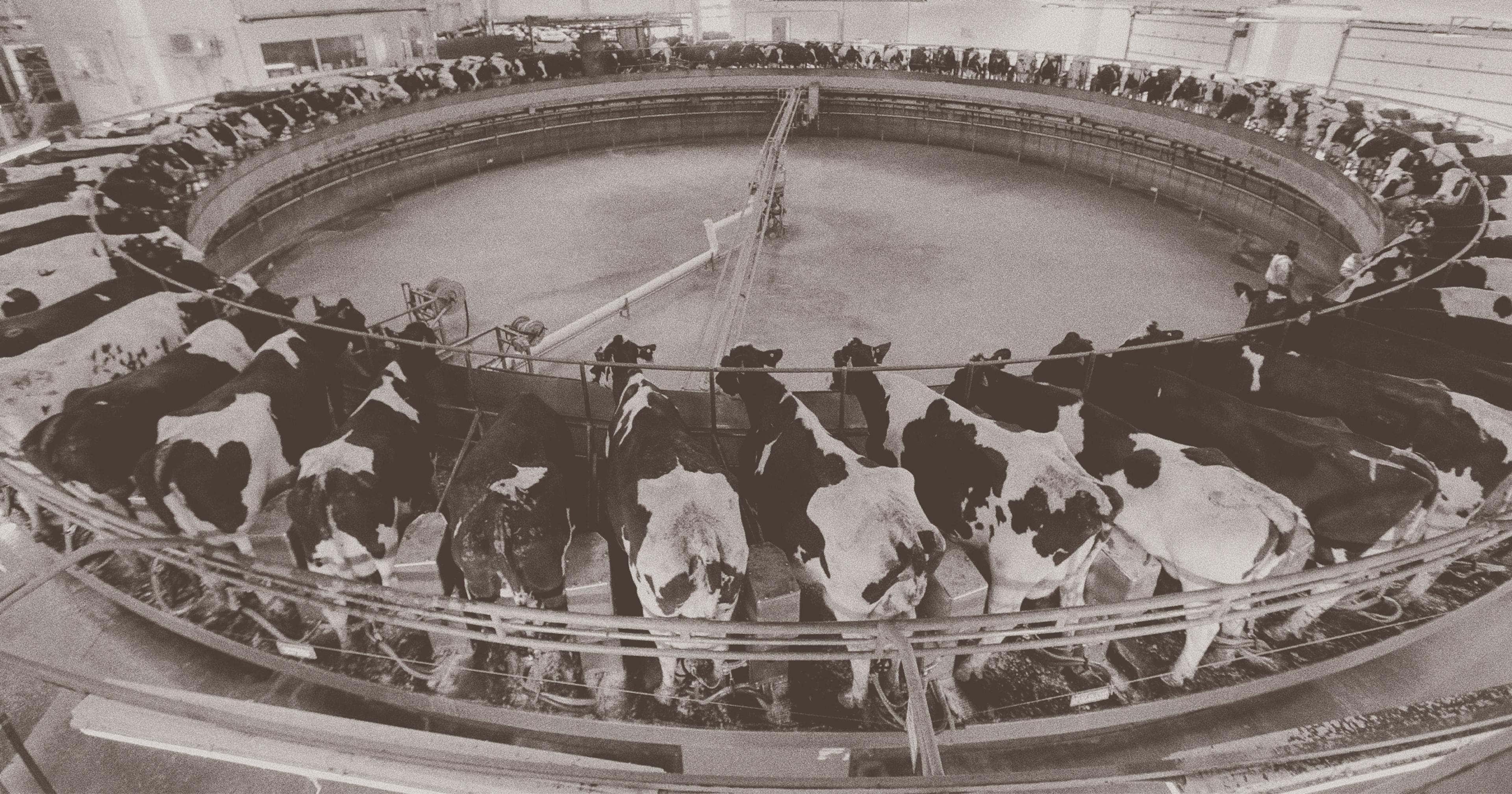
To many, the term “CAFO” — or concentrated animal feeding operation — implies a certain kind of industrialized animal agriculture: massive operations controlled by a large agribusiness, with animals in cramped conditions and environmental impacts like the unrelenting smell of manure and the contamination of local watersheds. This kind of “factory farming,” as it’s often referred, has become notorious for horrific animal welfare conditions, pollution via the spread of livestock waste, and the economic collapse of rural towns.
As a result, it’s perhaps unsurprising that 54% of respondents told a Johns Hopkins survey that they supported a national ban or moratorium on new CAFOs. And this year, that fight is getting a real test — in November, voters in Sonoma County, California, will vote on Measure J, a ballot initiative that proposes to “stop factory farming.” To do so, the measure would ban CAFOs.
But the term “CAFO,” technically, is solely a water pollution regulation, governed by specific rules around farm size, animal housing, and wastewater management. Any farm with at least 700 dairy cows, 2,500 large pigs, or 55,000 turkeys that keeps the animals indoors for at least 45 days out of the year is technically classified as a large CAFO. These operations can pose a significant risk to their local communities if the waste from all those animals is released into the local environment — and many CAFOs, separately, have ties to large agribusiness and checkered animal welfare records. Yet, at least legally, the term CAFO has nothing to do with who owns the farm or how those animals are treated.
In communities across the country, people are now fighting back against the harms posed by factory farming, and many of these efforts focus specifically on CAFOs. But that term — factory farm — can mean different things to different people, depending on their priorities and interests. That contrast was apparent in a recent San Francisco Chronicle story about Sonoma’s Measure J. The story featured a local chicken farmer who sees his coops filled with birds as “his heritage,” where animals are “treated well” — and an activist who sees the very same farm as “inherently cruel.”
Everyone — from farmers and activists to politicians and grocery shoppers — has a stake in how food is produced. And everyone bears the consequences of the environmental, welfare, and economic impacts of industrial agriculture. But if you want to start making policy to address these challenges, finding some sort of consensus on what (and who) the problem is starts to become important.
“A term like ‘factory farm,’ it’s very difficult to enact policy on a term like that, so it really needs to be defined,” said Jonathan Coppess, associate professor of agricultural policy and law at the University of Illinois. “And then when you start defining it, the complications are pretty significant.”
Factory farming can be viewed from a lot of different angles. From an animal welfare angle, you might call it a factory farm if the animals face inhumane treatment or intense confinement. From an environmental angle, it might be a large farm that poses a significant source of water pollution or odor. And from an economic angle, a farm could be a factory if it’s not owned and operated by a family, but rather a large agribusiness. But these descriptors don’t necessarily correlate with each other.
“A term like ‘factory farm,’ it’s very difficult to enact policy on a term like that, so it really needs to be defined.”
Take farm size and animal welfare — you can have a large farm that treats its animals well and a small farm that treats its animals poorly. In a 2019 article, a group of animal welfare experts at the University of British Columbia pointed out that larger farms may come with a reduced risk of lameness in cattle. But they also noted that large farms can come with welfare risks, such as being less likely to let their animals feed outside on pasture. Amy van Saun, senior attorney at the Center for Food Safety, made a similar point. “When you get that big, it’s not possible to have pasture animals,” van Saun said.
Many “factory farms” are either owned outright by an agribusiness or contracted out to individual farmers, who can struggle under these agreements and have little say in how they run the operation. But, large, industrialized farms aren’t necessarily owned by a big corporation. In fact, many aren’t. “You can have a family farm by the most traditional definition of family farm, a couple generations, possibly even, in the operation,” Coppess said. “But they are thousands and thousands of animals under one confined facility. That’s not at all uncommon.”
Any farm with thousands of heads of livestock, whether owned by a family or a corporation, does come with environmental concerns. More animals mean more waste, and larger operations that confine their animals indoors are categorized as CAFOs out of concern about all that waste. These CAFOs are supposed to be permitted and regulated with nutrient management plans to deal with that waste and limit pollution (though many slip through the cracks).
These different conceptions of factory farming may impact how policy and political fights on these issues play out, such as with the Sonoma County ballot measure. While activists in favor of the measure have stated that they’re focused on CAFOs (and claimed that such a move would help small farmers by improving their competitive advantage), some farmers in the area have worried that such a move would eventually impact other farms. Some environmental and family farm advocates have also expressed concerns that, in their opinion, this measure may not be the best method of addressing the concerns around factory farming.
But when you ask family farmers and family farmer advocates how they define a factory farm, they often have a pretty good idea of what counts. “When I raise these hogs, do I get to decide how many I raise? When I raise them? Where I raise them?” said Berleen Wobeter, who lives on a farm in Iowa. “Or is someone else saying: ‘You do everything I want and then we’ll buy them?’”
“When I raise these hogs, do I get to decide how many I raise? When I raise them? Where I raise them?”
Jenna Vanhorne, a dairy farmer from North Dakota, echoed this sentiment. To her, a “family farm” wouldn’t have a board that tells them what to do — rather, the family makes the decisions and invests in the future of the farm until they’re ready to pass it down to the next generation. Factory farms, on the other hand, are operations that are “just pushing animals through” and have “a lot of capital and backing to make it work,” Vanhorne said.
Farmers, when asked about factory farms, also brought up specific operations near them. Wobeter noted a 5,000-head hog CAFO that had previously been proposed on a five-acre plot in her community. “It was just a very scary situation because our lives could have changed completely with the smell of hogs all the time, windows closed at night, no fresh air, new trucks on our roads that aren’t the best shape as it is because they’re gravel roads,” she said. “And what does our community get out of it? Very little.”
Blake Naze, a livestock farmer whose family has been in North Dakota since the mid-19th century, also questioned whether the people running some of these larger operations contribute to the local community nearby, send their kids to the local schools or help with local challenges.
“That’s what rural America was built on,” Naze said.
For many, “factory farming” seems to be about the antithesis of that ethic — the sense of belonging, mutual well-being, and camaraderie in an agricultural community where neighbors support each other. Are you buying supplies from the local supply shop, or shipping them in from out of state? Are you treating your animals, as van Saun put it, like sentient beings with social behaviors and emotional needs, or like “widgets?” Are you operating your farm with an eye toward a sustainable, prosperous future for your family and your neighbors’ families, or are you trying to maximize profit at all costs?
Each of the concerns associated with the term “factory farm” — environmental, animal welfare, corporate consolidation, etc — could be addressed with individual policies and programs focused on those concerns. In recent years, Senator Cory Booker (D-NJ) has introduced several proposed laws aimed at some of those concerns. The Farmland for Farmers Act, for example, would place limits on corporate ownership of farmland, and the Industrial Agriculture Accountability Act would, among other things, improve animal welfare conditions at processing plants.
Wobeter also said bringing back small processing plants could help smaller-scale farmers by giving people with just a few animals a place to get their meat processed. And Jordan Treakle, from the National Family Farm Coalition, noted that many programs to help independent farmers with conservation, water quality and animal welfare — such as the Conservation Stewardship Program — haven’t kept up with the demand from farmers.
Together, these sorts of efforts could make it easier for farmers to make decisions for themselves on how they want to raise their animals. They could also make it harder to farm in a way that harms animals, local environments and agricultural communities — breaking down “factory farming” not through one fell swoop, but through a death by a thousand cuts.
But if you truly need a concise, holistic, definition of “factory farm?” Well, it may be best defined much the same way that Supreme Court Justice Potter Stewart once famously defined another hot-button issue: You know it when you see it.
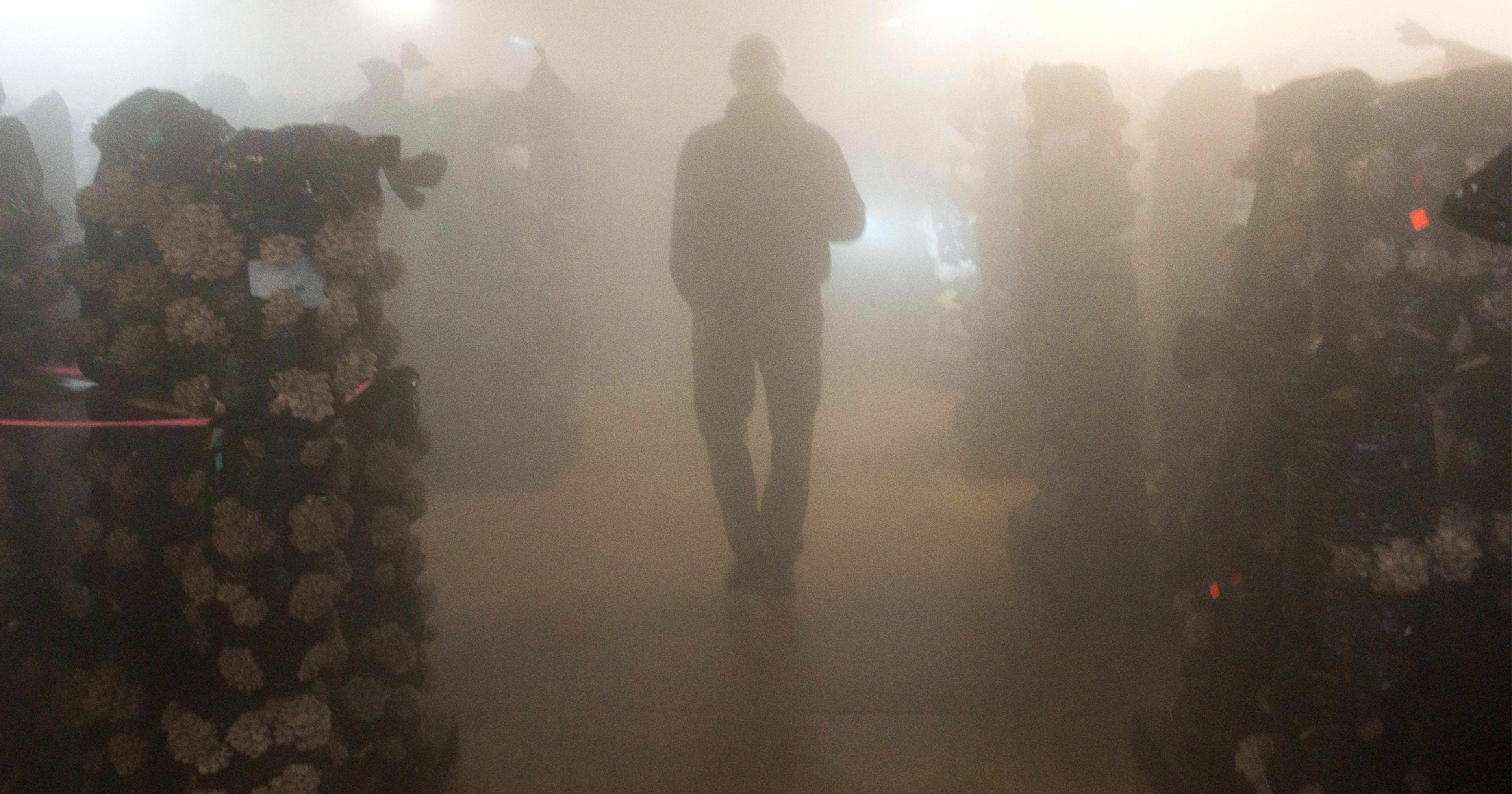
While labor shortages in agriculture are a common refrain, the issue is particularly acute when it comes to growing mushrooms. Industry sources have said mushroom labor shortages are particularly bad, reaching up to 20 percent vacancy rates.
“Labor is still a challenge. I don’t think that’s changed much over the last 10 years,” said Lori Harrison, American Mushroom Institute’s director of communications.
Harrison added that finding “reliable” labor is the main difficulty, especially given the nature of mushrooms needing to be harvested around the clock with a short shelf life: “Reliable in the sense that people are here legally, and there are people who want to work. That’s what our industry advocates for.”
Meanwhile, labor advocates argue that it wouldn’t be hard to find workers if conditions were safe and compensation fair. On the heels of some high-profile regulatory actions this year, union organizers are trying to make inroads into the multi-billion dollar domestic industry, changing conditions they claim have become endemic.
“The working conditions in the mushroom barns are very hazardous. It’s dark. The air is rank. Many of the workers are forced to work non-stop 12-hour shifts with little or no time off to eat, rest or go to the bathroom,” UFCW’s Stan Raper said in a press release. “It’s like working in a 19th century coal mine.”
Rough Work
Mushroom harvesting often requires working long shifts in back-breaking positions, scaling high shelves, and 24-hour harvesting in dark rooms with poor air quality. Studies have shown workers are exposed to mold, bacteria, and mycotoxins, causing lung disease, allergies, and rashes, among other ailments.
This issue isn’t new. Way back in 1977, a report prepared by the Delaware and Pennsylvania Advisory Committees to the United States Commission on Civil Rights delved into horrible living and working conditions of mushroom workers including cramped conditions, exploitation, and “mushroom lung,” a type of occupational pneumonitis still observed in mushroom workers today.
“They are most of the time working in these very enclosed structures where there are very damp conditions … there are different molds and fungi that thrive in those conditions, and which are part of growing the mushrooms,” said Rebecca Young, director of programs at the advocacy group Farmworker Justice.
Young added that pesticides and residues tend to linger much longer than they would when applied in open air: “The conditions that are necessary in which to grow mushrooms aren’t always the healthiest conditions for workers to be in.”
“It was almost like this hidden industry that is slowly opening up and getting a bit more exposed.“
At two mushroom farms in Half Moon Bay, California, the U.S. Department of Labor (DOL) recently concluded workers were underpaid and living in unsafe housing conditions. Here, DOL found migrant workers living in “cramped cargo containers, garages and dilapidated trailers” at one site and in “moldy, makeshift rooms in a greenhouse infested with insects” at the other. DOL also recovered more than $450,000 in back wages and damages for 62 workers.
Also in the last year, Ostrom Mushroom Farm came under fire for mistreating workers in Sunnyside, Washington. In May 2023, the farm was found by the Washington Attorney General to be discriminating against female workers and Washington residents by intentionally replacing them with male guest workers from Mexico, and then retaliating against workers who made claims of discrimination or tried to engage with unions. The mushroom farm was ordered to pay $34 million to resolve a lawsuit asserting unfair, deceptive and discriminatory actions, alongside the egregious conditions.
“It’s over the last few years that we are starting to hear more … it was almost like this hidden industry that is slowly opening up and getting a bit more exposed to either the public eye or certainly the farmworker advocate,” Young said.
Who Can Fix This?
Raising wages and addressing these conditions — something union reps have been agitating for of late — would seem to be the simplest means to attract new workers. That said, the owners of mushroom operations have placed blame elsewhere, including post-pandemic industry recovery, lack of automation, and younger workers preferring office jobs. A common lament is that some percentage of each year’s mushroom harvest is being lost without enough workers to pick and process it.
“For a company our size, that’s maybe 10-20% of production not being harvested right now,” Shah Kazemi, owner of now-shuttered Monterey Mushrooms in Watsonville, California, told industry publication The Packer in late 2021. “Large or small, we’re all suffering from the same shortage. And mushroom consumption is on the rise.”
Industry insiders have also argued that the specialized nature of mushroom work limits the hiring market — mushroom harvesting is an extremely manual process that requires handpicking and delicate handling. As Sean Steller of Phillips Mushroom Farms, a leader in U.S. mushroom production, said, “There are countless factors impacting the labor market, but a few specific to mushrooms include intense competition and specialized skill requirements.”
“Large or small, we’re all suffering from the same shortage. And mushroom consumption is on the rise.”
Union reps point out how little of the mushroom industry is unionized, and is often built on low-cost foreign labor — the Watsonville companies were employing workers under H-2A visas, provided to temporary agricultural workers from outside the U.S. “In the union mushrooms, there is no labor shortage. Our workers are well-paid and stick at that job for decades, if you treat them fairly and you pay them well,” said UFW’s Antonio De Loera-Brust.
“This narrative of there being a labor shortage … that’s just completely untrue,” he added.
De Loera-Brust and his colleagues have faced steep pushback in their unionizing efforts, leading to the filing of multiple retaliation complaints. Additionally, existing U.S. law makes it extremely difficult for farmworkers to unionize. Harrison of the Philadelphia-based American Mushroom Institute said she has not heard of any unionizing efforts taking hold in her state, where more than 60% of the country’s mushrooms are grown.
Some progress is still being made, however. Migrant farmworkers in British Columbia made history this year when 390 new members unionized, representing the “largest group of farm workers in Canadian history to join a union” at Highline Mushrooms. And despite the challenges against farmworker collective bargaining outside New York and California, workers’ movements are taking hold in Washington as well.
The Path Ahead
Companies like Mycionics and 4AG Robotics say their robot mushroom-pickers can revolutionize the mushroom picking industry. In some cases, the machines can pick constantly for 24 hours, harvesting each mushroom at its ideal time instead of being restricted to human working hours and shifts.
Proponents also say automated harvesting and data analytics increase food safety and disease detection, but workers’ rights advocates are skeptical of how far this technology would go toward helping workers within the current system.
“If technology can make workers’ jobs less physically demanding [and] safer then we’re all for it. But if it’s going to just be used as a labor cost saving measure to eliminate jobs, and increase productivity without increasing wages, then obviously we’re going to be extremely against it,” De Loera-Brust said. “Technology is morally neutral; it’s the power dynamics of the workplace in which it is being introduced.”
Supporters of robotic mushroom picking claim it is highly scalable, too. Since mushroom farms around the world have common infrastructure, companies can develop systems for multiple farms without having to customize them to each operation.
“Technology is morally neutral; it’s the power dynamics of the workplace in which it is being introduced.”
But the technology is emergent; advocates say haven’t seen these solutions trickle into the workplace yet.
“We’ll believe it when we see it,” said De Loera-Brust. “At some point, presumably the technology will get there. I don’t know if it’s going to be the next 10 years or in the next 100 years, but when it does get there, we want workers to be in a position of strength, to be able to negotiate terms for how that technology is used.”
The American Mushroom Institute did not respond to detailed questions about the conditions in mushroom barns and overall treatment of migrant workers.

Twice a growing season, a big yellow truck with the license plate “P4FARMS” pulls into Jesse Kayan’s farm in Brattleboro, Vermont, loaded with a thousand gallons of pasteurized human urine sloshing around in IBC totes.
For more than 10 years, Kayan has been applying human urine to his hayfields through a partnership with the Brattleboro-based Rich Earth Institute, a non-profit engaging in research, education and technological innovation to advance the use of human waste as a resource. In August, Rich Earth released a Farmer Guide to Fertilizing with Urine, available for free on their website. The guide compiles a wealth of information and best practices based on working with farm partners like Kayan and a growing body of scientific research from around the world.
“Our hay yields have gone way up as a result [of the urine],” said Kayan. “We have really hungry land and sandy soil. It’s brought it up to a new level and provided some resiliency in the soil health.”
Kayan, whose business relies on the organic vegetables he grows for his farmstand and CSA, said he’d be happy to use urine on other crops if the practice was more widely accepted by consumers.
“I personally, if it were my garden I would not think twice about it,“ he said. ”I really don’t think there’s actually any food safety concerns. It’s a matter of perception.”
Kayan is one of nine Vermont farmers who’ve participated in Rich Earth’s field studies, funded by USDA Sustainable Agriculture Research and Education (SARE). In addition to hay, Rich Earth has conducted trials on sweet corn, hemp, figs, nursery trees, and cut flowers. The multi-year trials found that crops fertilized with human urine performed better than untreated control plots.
Kayan and other farm partners also observed higher yields and/or more robust growth and color in the urine-treated plots relative to those treated with conventional synthetic fertilizer; however, the trials found no statistically significant difference in total yields or relative feed value. That said, some international studies have shown improved yields and growth in certain urine-fertilized crops, such as cabbage, maize, and cucumber.
This is no surprise to Arthur Davis, who oversees farm partnerships for Rich Earth. He said human urine has a nutrient profile similar to many commercial fertilizers, with high levels of nitrogen, phosphorus, and potassium, as well as micronutrients like magnesium, sulfur, and calcium.
But the potential benefits of fertilizing with human urine reach far beyond the fields of Vermont. Most commercially available fertilizers rely on synthetic nitrogen produced through the Haber-Bosch process, which accounts for 1.4% of carbon dioxide emissions, and 1% of total global energy consumption, according to the journal Nature Catalyst.
Most of this energy comes from natural gas, which means that the price of fertilizer is closely tied to the price of natural gas, a cost that is passed down to farmers and consumers. But the carbon footprint of conventional fertilizer doesn’t stop there. Mining of phosphate and potash are depleting natural reserves. The Global Phosphorus Research Initiative predicts a shortage of rock phosphate within the next 40 years.
“Our hay yields have gone way up as a result [of the urine].”
Diverting urine from the wastewater stream for use as fertilizer would also address the two largest contributors of nutrient pollution in the U.S., agriculture and human waste, which are responsible for toxic algae blooms, aquatic dead zones, and a wide range of human health conditions. It could also reduce nitrous oxide emission by keeping urine out of uncovered waste lagoons, where it festers with methane-breeding solid waste. Not only that, but urine-diverting toilets — available through Rich Earth — require little or no water to flush, which by their estimates could save up to 900 billion gallons of water per year in the U.S. Some of this water can be recycled for use in irrigation.
Initially, there were concerns about trace levels of pharmaceuticals in urine, but a recently concluded study by Rich Earth in partnership University of Michigan, the University at Buffalo, and the Hampton Roads Sanitation District in Virginia, detected no significant buildup in crop tissues. Davis said they are now also testing for PFAS; so far their samples have tested negative or extremely low.
If human urine is a safe, cost-effective and environmentally sustainable alternative to conventional fertilizers, why hasn’t it already been adopted on a larger scale?
One fundamental challenge of fertilizing with human urine is ammonia volatilization, which can cause the nitrogen in urea to evaporate quickly during storage and application. To prevent this, urine is applied as close to the ground as possible, and incorporated into the soil immediately.
Davis has worked with farm partners to develop application methods that are both practical and effective. For Kayan’s hay fields, Rich Earth uses a custom-built, 500-gallon trailer tank attached to a 30-foot boom suspended about three feet above the ground. The urine drizzles out evenly through small holes spaced every six inches.
“It’s incredibly easy,” said Kayan. “It requires basically just one person on the farm and some sort of form of locomotion.” In his case, this means a team of Suffolk Punch draft horses, but the same apparatus can be hitched to a tractor. “It’s real fast and easy, you can fertilize a lot of land real real quick with it.”
“When you’re filling the bulk tanks to go out and spray it’s really really powerful, but when I’m applying it I don’t really smell it that much.”
John Janiszyn, who runs a multigenerational farm stand in Walpole, New Hampshire, has been using urine on sweet corn for several years, and this year is testing it on his pumpkins.
Davis helped him modify his tractor so that he could cultivate his fields and apply urine in one pass. The urine flows from a tank attached to the three point hitch down through a hose onto the ground, where it is immediately buried by his cultivator. For his pumpkins, they applied the urine under a layer of plastic mulch, trapping the nutrients in the ground.
For Janiszyn, one drawback of using urine is that it is highly diluted. “You need a lot of it to do an acre,” he said. “So you sidedress or whatever and then have to go back and refill and keep going.”
It takes about 1000 gallons of urine just to fertilize one acre of hay. Currently, Rich Earth is nowhere close to being able to meet that kind of demand.
Rich Earth sources its urine from about 250 donors in the Brattleboro area, the first and largest ever community-scale urine nutrient reclamation project in the United States. At their central treatment and storage facility, the urine — about 12,000 gallon a year — is sanitized using a computer-controlled pasteurizer.
“I think it’s a little bit of a chicken and the egg,” said Davis. “It requires farmers to really feel like it’s worth investing in new equipment. They want to feel like they have steady access to the material in the first place, which then requires, on the backend, systems in place for collection and treatment.”
In Vermont, Rich Earth has been working with lawmakers for over a decade to clear regulatory pathways, and are now beginning the process in Massachusetts and New York.
“It’s purely the optics that I would worry about, and I really think that that’s just a matter of time [until it becomes normalized].”
“We’re probably the most kind of far along group in this country in terms of having a whole ecosystem of collection, treatment, transport, application, all under one regulated program,” said Davis.
Rich Earth offers assistance to organizations across the U.S. to obtain approval for farm-scale urine application, including the Land Institute of Kansas, which launched its own urine reclamation project in 2023.
But the greatest obstacle to making peecycling mainstream may not be logistic or regulatory at all. It goes back to what Kayan said about public perception.
“It’s purely the optics that I would worry about, and I really think that that’s just a matter of time [until it becomes normalized].”
“I don’t really want to be the first one,” he added.
Janiszyn and his wife Teresa found out about Rich Earth when they participated in one of their focus groups examining public attitudes toward urine reclamation.
“It was funny how having us in that focus group sort of changed people,” he said. “We said we use cow manure and stuff and this [urine] doesn’t sound like it would be an issue. And I remember one guy was like, yeah, well, hearing from these guys, you know, I guess it’s not that bad.”
Janiszyn said that after his experience in the focus group he wasn’t too concerned about customer response. “I realized that if I’m positive about it people will just come along with it. You have to have some control over the narrative.”
Last February, desiring eggs but not wanting to support factory farming, I purchased three fluffy, day-old chicks from a beloved local farm store. I grew up with my mother’s chickens; I loved their small clucking dramas around the discovery of earthworms and the way they hurtled toward me whenever I appeared with a spoonful of leftover oatmeal. My teen daughter and I raised them in our bathroom, cuddling and hand-feeding Jolene, Rosemary, and Ophelia for three months before releasing them on our suburban ⅓-acre. But in June, tragedy struck.
Jolene began to crow.
Look up animal ordinances for cities around the U.S., and you’ll see the same non-negotiable statement: “No person shall keep roosters.” The call of a rooster can reach 130 decibels; compare that to a dog’s bark (80-90 dB) or a gas-powered leaf blower (same), and the ban against roosters in cities makes sense.
Roosters start to crow between two and five months of age. Before that unmistakable signal, determining the chick’s sex would be quite challenging for your average backyard chicken owner. But after a few months, many owners have bonded with their bird; they’ve hand-fed and named him — likely something feminine — learning his personality as they would a dog or cat. It can be devastating to find that instead of an egg a day, their pet has just offered up a whole carton of grief.
After Jolene’s crow, I walked around my neighborhood, telling my tale of woe to everyone I met. Reactions ranged from “I don’t even hear him” to “I think it’s sweet.” But in July, I got a text from a neighbor I hadn’t spoken with yet.
“Do you know where the rooster lives?” she wrote. “His crowing is incessant!!!!! Are roosters allowed in city limits?”
“Jolene’s mine,” I admitted. “He’s leaving.”
I had no idea how difficult it would be to rehome him.
Flaws in the Backyard System
Avian flu outbreaks, egg scarcity, skyrocketing food prices, and sheer boredom helped to inspire the pandemic-era backyard chicken boom. A 2024 study published in Animals found that people in the U.S. now own 85 million backyard chickens. Myself, I wanted eggs without facing a moral dilemma about hens in deplorable conditions every time I went to the market. And as anyone who has ponied up for ethically raised eggs knows, they aren’t cheap — I wanted to cut out the middleman.
In a warm, bright alcove off the farm store’s main room, my daughter and I chose chicks from bins labeled Speckled Sussex, Black Moran, and Lavender Orpington. The teen employee who took our $15 didn’t explain that one or more might be a rooster. I trusted the owners to source their chicks from a conscientious hatchery at which someone had sexed the babies. Big mistake.
Arizona residents Sara and Jacob Franklin made the same mistake. During the pandemic, they adopted several chicks from their neighbors. “It was silly of us to think that our neighbors could produce all hens for us,” Jacob admitted. “It’s best practice to anticipate at least fifty percent male when you’re getting chicks.”
Inspired by their flock, the Franklins wrote Through their Eyes: A Revolutionary Guide to Rooster Care and created the companion podcast Roovolution. Now, they field emails from frantic owners like me; they also network with sanctuary owners perpetually full-up with roosters. “They have to turn so many people away when the alternative is a death sentence,” Sara said.
Many of these sanctuaries are a part of Adopt a Bird Network. Members of the nonprofit work to find permanent homes for adoptable ducks, geese, and chickens in animal rescues and shelters. Their website includes a list of 215 chicken rescue organizations, including Hen Harbor near Santa Cruz.
Sara and Jacob Franklin with their four accidental roosters
Hen Harbor’s founder, Ariana Heumer, worked for the Humane Society before opening a nonprofit chicken rescue. She planned to adopt mature hens from the commercial egg-laying industry — chickens in need of a home. Now, she lives with 50 outdoor roosters.
“I took one,” she said. “But once someone knows you have a rooster, every other homeless rooster in the county is going to be at your door.”
Heumer doesn’t fault the owners desperate to find their male birds a good home. Rather, she’s furious at the lack of oversight and education around the purchase of chicks. “Why are the unwitting consumers being punished and not the hatcheries?” she asked. “Why are you allowed to sell roosters in areas where they’re banned?”
Before she accepts a bird, she asks the owners to write a letter to their city council, describing the negative impact of the anti-rooster ordinances. “Even though I know the laws aren’t going to change, the city council will get the idea, and maybe they’ll help to stop this issue from getting worse,” Heumer said.
She also asks owners to try listing their rooster on rescue sites. “I know it’s not going to work, but I ask you to do it so I know you made an effort,” she explained.
The Near-Impossibility of Rehoming
The month Jolene began to crow, two of my friends discovered that they, too, had accidental roosters. One butchered hers and made them into treats for her dogs. The other, Debbie Williamson Smith, created a social media ad. In it, a black rooster with fluffy neck feathers appears to gaze into the camera. “WANTED,” the ad read. “A flock to call my own. Me: I’m a vibrant and passionate ARIES rooster looking for love. You: A flock of hens attracted to a bearded man.”
Williamson Smith refers to herself as “Chief Henfluencer” of Fuster Cluck Farm, located near the farm store where we’d both purchased our chicks. “There’s no easy way to sex chickens,” she said. “I knew roosters were a possibility.” Over years of backyard chicken keeping, she’s found herself with four adolescent roosters and placed them in good homes thanks to her witty social media posts on backyard chicken-owning groups.
Sanctuary owner Ariana Heumer with one of her 50 roosters
But she’s the exception. Visit any social media farming group, and you’ll read post after post of desperate owners looking to rehome their pets.
Free!!! gifting a white silkie rooster, 4 months old! We’re not allowed to keep him.
One of my new chicks is a rooster, 3 months old, Rhode Island Red free to good home. Anyone?????
Does anyone want an aggressive rooster who is only good for stew? He’s MEAN.
I dutifully made Jolene an ad and posted it to Facebook farming groups. His beautiful, red-feathered head appeared in profile under the words “FREE: Tall, handsome and speckled gentleman. He’s an excellent protector of females.” I added a speech bubble under his beak. “For a good time,” it read, “email my owner.”
The post received laughing-face emojis and hearts. But not a single person offered to adopt him.
Seeking Solutions
Dannica Wall works as a research specialist for Prestage Poultry Science at North Carolina State University. There are ways, she said, of ensuring owners don’t find themselves with a decibel-busting roo.
Wall suggested that people purchase chicks from a reputable source skilled at feather-sexing in a process that involves fanning out the wing feathers of a day-old chick. “If the feathers are even across the bottom, you have a male,” she said. “If the bottom feathers are longer than the top feathers, you have a female. When you don’t know, you automatically categorize them as male.”
Few farm stores, whether a chain or independently owned, can guarantee the sex of the chicks they sell. Instead, many hold rooster roundups in which they invite owners to return unwanted male chickens; staff teach community members how to kill roos humanely and process them for meat. It’s far kinder, Williamson Smith noted, than dumping a rooster in a park where it starves to death or gets ripped apart by predators.
Debbie Williamson-Smith of Fuster Cluck Farm
“Events like the roundup make sure a rooster has only one bad moment,” she explained. “They don’t suffer because someone has dispatched them humanely.”
Our farm store offered a rooster roundup. I missed it by a week.
The Franklins upended their lives to save their four accidental roosters. They moved from Phoenix to unincorporated land outside of Kingman and invited their flock inside. “We both worked from home,” Sara explained, “so we hauled their fluffy butts on in and put them in diapers.” They’re in the midst of building an outdoor chicken run. “The plan is for them to choose when they want to go outside and play; they get to come in when it’s time for bed and stay in when the weather is unfavorable,” she said.
Sanctuary owner Ariana Heumer, like numerous members of the Adopt a Bird Network, urges people to adopt adult hens as an alternative to the baby chick crapshoot. I did a search of all the Facebook groups on which I’d posted an ad for Jolene; in less than five minutes, I discovered three owners in my area attempting to rehome their egg-laying hens.
*
In buying baby chicks, I’d congratulated myself for avoiding the cruelties of commercial chicken farming. My naivete came back to peck me in the ass. Now, I see that I simply helped to perpetuate an industry that harms both birds and humans.
For now, I’ve trained Jolene to sleep inside our laundry room. At dusk, he and his hens walk up a ramp to a cage on the washing machine. But I’m breaking the law. And I’m pissing off at least one of my neighbors.
That knock on the door, that order to cease and desist, is coming. For now, I step away from my computer for the 20th time in a day to distract JoJo from crowing. I walk him into the laundry room. Then, I return to my computer and sit down to research chicken diapers.

Consider an insect; maybe there’s one buzzing around your head right now. It’s likely that few people would dwell deeply on the ethical implications of swatting that fly. Even concerns about practices that deliberately harm insects, like pesticide use, are rarely couched in welfare terms.
But as insects come to occupy a new position — largely as farm animals for livestock feed — welfare questions are coming to the fore. Worldwide, roughly 1.2 trillion insects are already raised annually, a number that is expected to increase by orders of magnitude as more insects are farmed for pet food, livestock feed, and human consumption (compare that to the approximately 1.55 billion cattle worldwide, in 2022). With that expansion imminent, researchers and farmers are attempting to answer an existential question: Do we need to care about insect welfare — and what, exactly, does welfare look like for a bug?
As it stands, there are no welfare protections for insects. “Insects just aren’t animals, from the perspective of policy,” said Bob Fischer, professor of philosophy at Texas University and president of the Anthropoda Foundation, which was established this year to support funding for insect welfare research. “It’s really the Wild West when it comes to these agricultural practices.”
The U.S. Animal Welfare Act doesn’t include invertebrates, for example, nor does its counterpart in the UK. Fischer said some producers are doing their best, but in the absence of regulations there’s nothing to stop producers from focusing on maximizing production — which may not always align with welfare considerations.
One of the companies attempting to do its best is Entosystem — a black soldier fly farm located in the Canadian province of Quebec. Entosystem, which raises flies for use in animal feed and fertilizer, stands to become the largest black soldier fly facility in North America when it reaches full capacity (currently it’s operating at around 40 percent).
Chief science officer Christopher Warburton said that when he started working in insect farming eight years ago, welfare wasn’t considered an issue. At first, Warburton said he felt irked by those focused on it, given the harm done to insects by conventional agriculture through the use of insecticides. But given that he’d gotten into insect farming to do good for the planet, “You do have to start thinking about: Are you harming them?”
Entosystem takes this into account by killing larvae and adults in what they believe to the most humane ways — high heat for larvae, extreme cold for adults — and mimicking natural living conditions for different life stages.
Yet there are still many unknowns, said Warburton.
“Insects just aren’t animals, from the perspective of policy.”
Filling in this picture requires determining whether insects have the capacity to experience feelings: in other words, whether they’re sentient.
Most people wouldn’t doubt the sentience of an animal like a cow, said Andrew Crump, lecturer in animal cognition and welfare at the Royal Veterinary College, London. If nothing else, few would question that a mammal can feel pain. But until recently, he says, insect researchers and the farming industry conclusively ruled this out for insects.
Now, a more tenable position is to say we’re not sure, said Crump — a position supported by his own research, which has included work on bees. Crump and collaborators have found, for instance, that bees will endure high heat they’d otherwise avoid, if it means they can sup on a sugar solution (suggesting their behavior is more than simple reflexes, but instead involves trade-offs between motivations). Researchers also found that an injured bee will tend to its wounds, as humans do. “Until that paper people were saying ‘Insects don’t do this, there’s no case of insects doing this,’” said Crump. “Of course, it turns out that in reality it’s just that no one’s really seriously looked for it.”
Establishing whether or not insects feel pain is the first step in determining whether welfare considerations apply, said Crump. The next step is to ask what that means for humane treatment, especially in the slaughter of farmed insects.
At Indiana University, a new lab is exploring this for some of the most common farmed insects. Assistant professor Meghan Barrett, the lab’s founder, said the focus will be on slaughter and nutrition, with a goal of developing standard operating procedures for mealworms and black soldier flies.
On the question of slaughter, Barrett said standard operating procedures matter. Barrett’s past research has proposed grinding, boiling, and freezing in liquid nitrogen are likely the most human slaughter methods, based on instantaneous death. Yet whether those methods cause instant death is procedure-dependent (think of how fast one larvae dies in a litre of boiling water, versus a million larvae). Barrett published recommendations on humane grinding for black soldier flies in 2023, and is currently investigating recommendations for mealworms.
“At the end of the day, we are raising insects and we are killing them, and so you have to be careful of not having an impact on your business either.”
Beyond slaughter, there are welfare considerations for diet, and for ideal rearing conditions — and these are species-specific, said Barrett (for instance, mealworms are stressed by light, while black soldier flies need it for mating behavior). “Welfare is about providing each individual with what they need to have a life worth living — and this is going to vary based on the kind of life an animal leads given its species-typical needs,” Barrett wrote in an email.
These are core questions that still need to be answered. Nonetheless, taking precautions for welfare, even where questions exist, is not without precedent. When the Animal Welfare Act was introduced in 1966 in the United States, very little was known about birds, said Bob Fischer. People debated whether chickens and other birds engaged in motivational tradeoffs, or had nociceptors (the sensory neurons that allow the experience of pain). Nonetheless, welfare protections were applied to some species.
“We knew less about birds [then], with respect to the evidence for sentience, than we do about insects in 2024,” Fischer said. Now, evidence is suggesting that insects, too, show those signs of sentience. “If we’re going by the standard of what was good enough to get some precaution in place [then], insects clear the bar.”
More to the point, people worried about the complex implications of protecting insects should consider how permissive welfare practices are for agricultural animals like chickens, pigs, and cattle, Fischer said. In that context, industry has carve outs for practices it deems necessary. “Given that level of permission, it’s hard to see why we would be particularly anxious about regulation for some new species.”
“It’s hard to see why we would be particularly anxious about regulation for some new species.”
Yet welfare regulations for farmed insects are a particular can of worms, said Warburton at Entosystem, given the implications for treatment of insects in other agricultural contexts and for insect farming itself. (Scientists estimate that insects are declining 1-2 percent per year worldwide, in part due to pesticide use.)
“It’s a big topic, it’s a really prickly topic, and at the end of the day, we are raising insects and we are killing them, and so you have to be careful of not having an impact on your business either,” said Warburton.
He thinks the likely path forward for the industry is self-regulation. Insect farming has been caught on the backfoot by the welfare conversation, he said, but it’s now focused on the issue. The North American Coalition for Insect Agriculture, a trade association for the industry, aims to publish draft guidelines for welfare in 2025.
With so many questions, researchers and farmers say it’s important for everyone to work together to fill in the gaps. Either way, insect farming already expands what we think of as agriculture — now it may do the same with welfare.
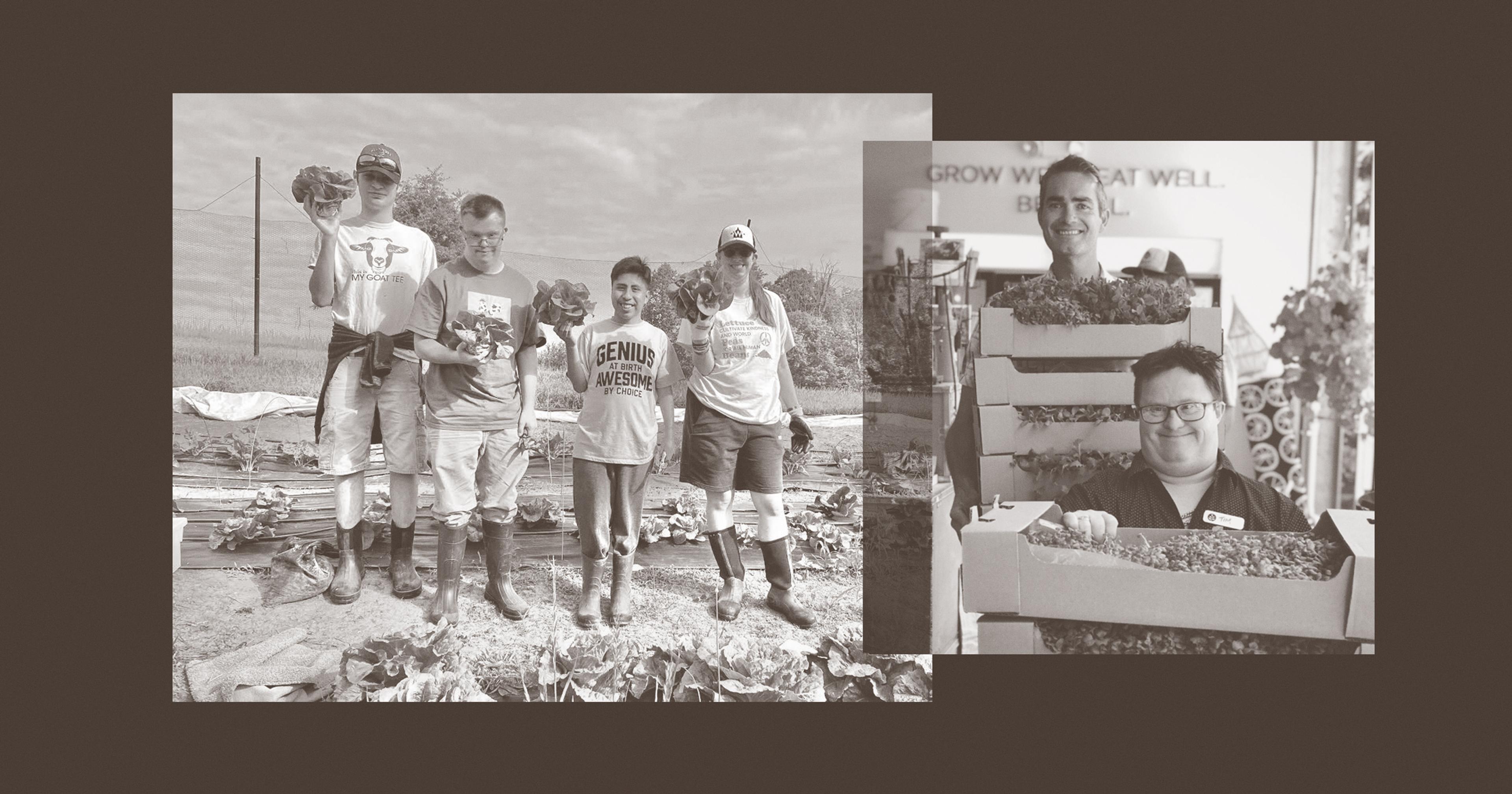
When Guthrie, a 32-year-old Albuquerque resident with intellectual and developmental disabilities, started working at Mandy’s Farm, he was quiet and lacking in confidence. Over the next few months, he learned how to cultivate soil, grow crops such as tomatoes and sweet potatoes, and he also helped reskin a hoop house.
As his role expanded at this New Mexico farm, he began to smile more and identify himself as a farmer. “He’s also become a strong motivator to help lead the volunteer groups we have here,” said Melissa McCue, executive director of Mandy’s Farm. “His confidence has grown tremendously, and he’s showing his personality more.”
Mandy’s is just one farm working with developmentally disabled adults like Guthrie, from Smile Farms in New York City to A Farm Less Ordinary in Virginia. These farming communities are becoming known for buoying the spirits and careers of disabled workers who have often been pigeon-holed into service jobs — if they are able to find employment at all. The unemployment rate for Americans with intellectual and developmental disabilities hovers at around 7.2%, roughly twice that of those with no disability.
But beyond gainful employment, these farms provide another valuable gift for the workers: nurturing an element of nature in a way they may have never done.
“There’s a therapeutic element to farming, where these folks can see something grow from start to finish,” said McCue, “and I think farms like ours play an imperative role in the community.”
Mandy’s Farm, launched in 2000, is spread across two lots, at a combined six acres. The non-profit organization — a common designation for many of these farms — has employed more than 400 adults with developmental disabilities living in the Albuquerque area.
More than 1,800 miles east is a similar operation in Lovettsville, Virginia, founded in 2016. A Farm Less Ordinary got off the ground when Maya Wechsler and Greg Masucci moved from Washington to Virginia to give their autistic son Max a less hectic lifestyle. They sought to create Max’s “forever home,” a farm where he and other adults with disabilities could find paid work, acceptance, and meaning, Masucci said.
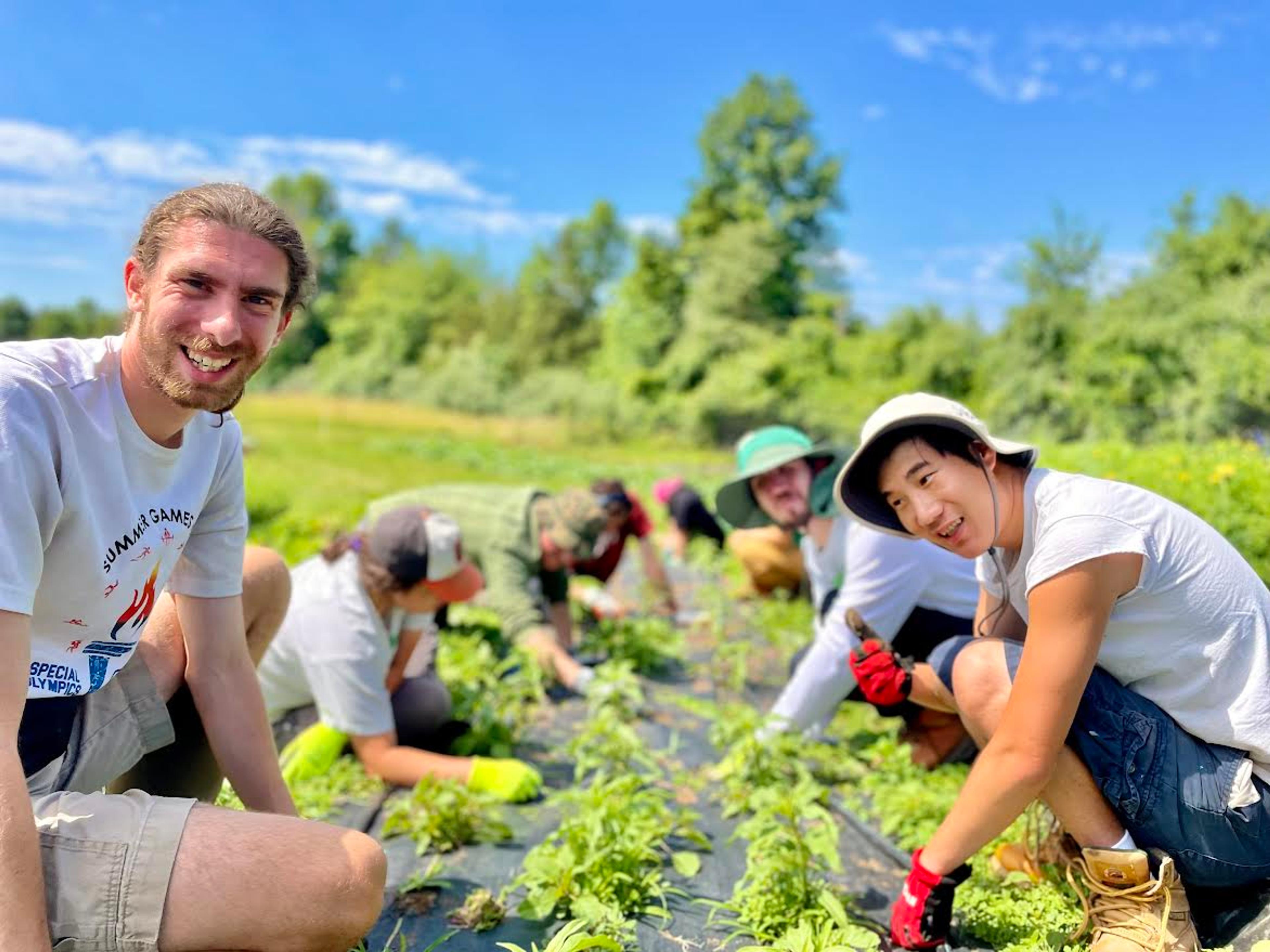
Courtesy of A Farm Less Ordinary
“These kids want to work and get out of the house and be productive,” he said, “and they want the same life as you and me, with a steady paycheck and relationships and friends and having meaning in their lives.”
Growers, as Masucci calls employees at his farm, regularly till the soil, plant crops, care for their growth, and also sell fruits and veggies at local farmers markets. That kind of face-to-face interaction can inspire those with disabilities to come out of their shell and engage in work that they find socially invigorating, he added.
Most importantly, Masucci and McCue stress, agricultural jobs for adults with developmental disabilities counters a disappointing and ongoing narrative. “Too often, they are only given work at piecemeal jobs, or with janitorial work,” said McCue.
Some of these non-profit farms also aim to place aspiring farmers outside their own acres. At Mandy’s, they partnered with New Mexico State’s AgrAbility project to assist farms across the state that have been “impacted by a disability, chronic health issue, or aging issue that is limiting participation in production agriculture.”
McCue added how it’s “important for us to not just fill the gaps on our own properties but in external communities where their skills can be used to help continue operations.”
At Vertical Harvest in Jackson, Wyoming, co-founder Nora Yehia brought the farm to life thanks to her family — much like A Farm Less Ordinary. “Growing up with a brother with disabilities, I watched the world offer us very different opportunities,” she said. “I ended up an advocate for accessibility and inclusion even before I knew what those words meant.”
Courtesy of A Farm Less Ordinary
But some experts on employment among the disabled community warn against an uncomfortable trend: placing adults with developmental disabilities into roles they may not express a desire to have. Steven Eidelman, professor of human services policy and leadership at the University of Delaware, admires the noble intentions of these unique farms but he has heard how some parents force children into employment positions without asking what they want first.
“Families are desperate to get them out of the house and doing something,” Eidelman said. “And it’s challenging, because these adults may not be able to decide on their employment without sufficient support.”
He added how farming job placement may also leave them vulnerable. “I’m wondering how skilled these farming community managers are in working with those with special needs,” Eidelman said.
Even if these adults want to work in these communities, these farms face similar issues to other nonprofits — and other farms, for that matter — funding can be a major source of anxiety. Vertical Harvest’s Yehia said they are in the same situation as start-ups where they’re building the plane as they’re flying it. “The past few years have been really challenging for fundraising, and while this is true for all businesses trying to scale,“ she said, ”the volatility in the industry is an added challenge for those of us still here and growing.“
For Masucci’s A Farm Less Ordinary, payroll accounts for three-quarters of their budget and continues to cause him stress. “Fundraising can be exhausting,” he admitted, “and I worry about the day when I don’t bring enough money through the door and have to lay off growers, causing them to lose their social conduit.” Thus far, thanks to government assistance such as loans from the Paycheck Protection Program, he has kept all the employees he hired. Vertical Harvest credits a $52 million USDA-backed loan for allowing them to launch a new farm in Maine set to open in 2025.
Beyond funding consistency, another key to success is collaborating with other farms. McCue says she and colleagues recently visited A New Leaf in Oklahoma to learn best practices and approaches to employing adults with developmental disabilities. “The more we can learn from each other, the more we can grow stronger together,” she said.
That growth mirrors how developmentally disabled growers can nurture their own self-worth and confidence as they watch their crops flourish. These plots of land are more than a simple career path — they can foster connection, compassion, and a sense of pride.
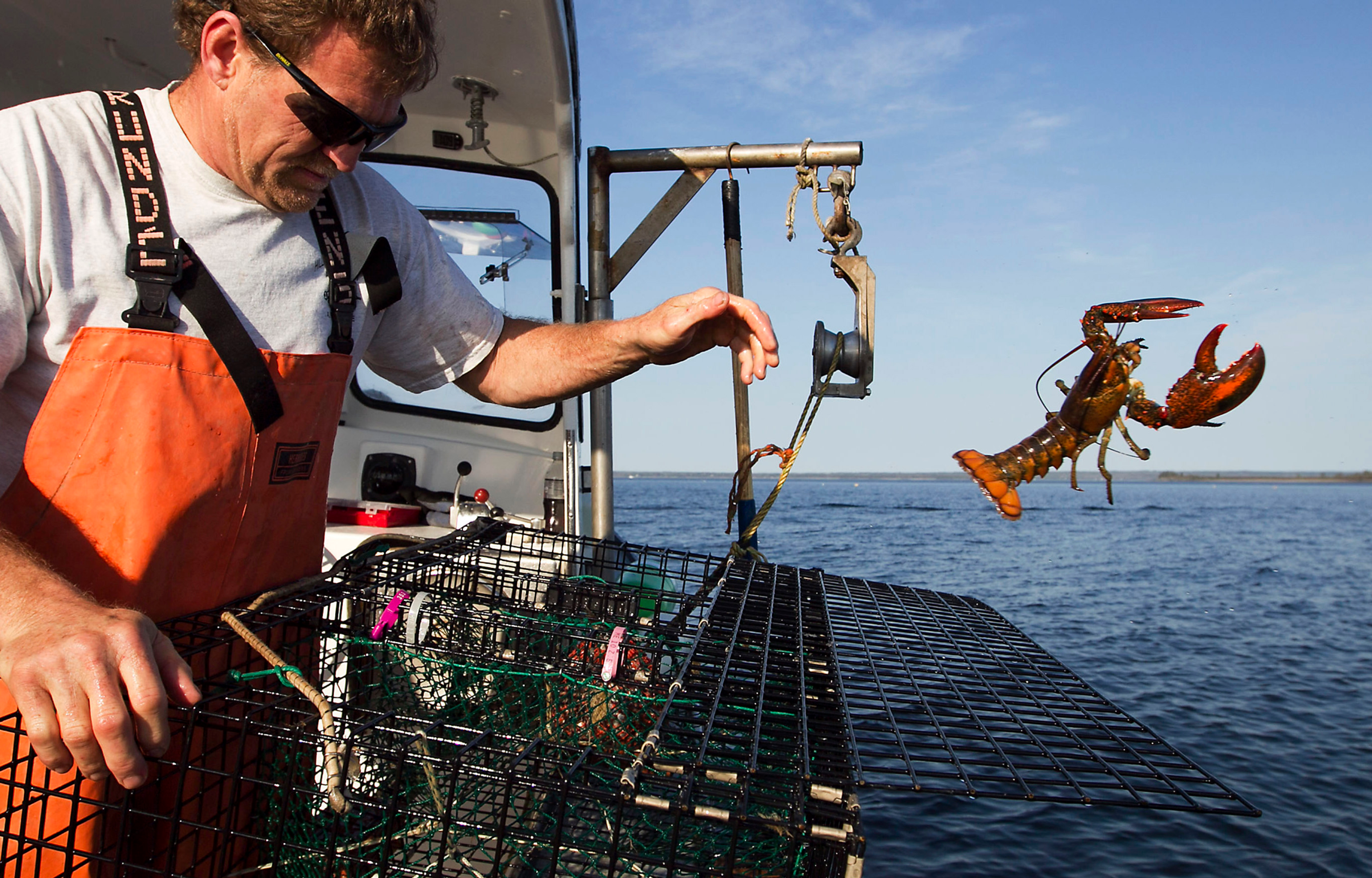
Damian Brady spends a lot of his time in lobster boats, scooping up, counting, and measuring baby lobsters in the Gulf of Maine. Along with counts from scuba dives and fishing hauls, Brady’s data goes into the comprehensive Gulf of Maine Ocean Observing System that helps managers regulate the fishery. Brady also looks at “lobster settlement” — under what water conditions do these baby lobsters decide to settle in? He has studied decades of lobster booms and busts, refining the models in search of a “crystal ball,” as he calls it, on lobster futures.
“It’s in everyone’s mind that [the Maine lobster industry] peaked in 2016, and the future is a little bit in doubt,” Brady said.
Climate change has course-adjusted the Gulf Stream northward, warming the waters of southern New England, and driving a northward movement of lobster populations. It feels like history repeating: Science suggests warming waters caused the Rhode Island lobster industry to collapse earlier, going from 22 million pounds in 1997 to just over 3 million pounds in 2013.
But in Maine, lobsters are still a vital industry. On a good year, 100 million pounds of lobster may cross the state’s docks, bringing in more than $400 million. Maine’s boon from the northward lobster migration was a record-breaking lobster haul in 2016. But then lobster counts began to decline consistently, year after year into 2023. The fishery’s worst fear echoed across the docks: A Rhode Island-style collapse was heading toward Maine.
But Brady, after years of careful study, is not seeing that future. What many announced as the beginning of the end, he calls a “regime shift.”
The shift drove a downsize in the Maine lobster fleet, particularly from southern Maine towns such as Portland.
“The center of lobstering has moved [north], from the center of Maine to Downeast Maine,” Brady said.
Above Portland on a map, “Downeast” is where Maine juts into the Atlantic Ocean by way of many small islands. There, the island fishing town of Stonington brings in the largest lobster catches. Its boats are able to reach the deep, federal-permit waters far offshore where lobsters are now settling.
“There was a particular boom in deep water settlement,” Brady said, reporting the most recent surveys, “places we haven’t really looked before, or looked at much.” To scientists, new habitats call for more data.
A New View of the Ecosystem
The ‘23-’24 count of baby lobsters was up from the year prior. And early numbers from this summer promise another strong showing for ‘24-’25. Brady suspects the alarming post-2016 decline cycle is turning.
“The key is that the sky isn’t falling for the industry,” Brady said. “What you call the eastern current that’s going to be cold for a while — that’s going to allow the species to be pretty robust.”
Brady looks at the fishery in 8-year spans, the time it takes a Maine lobster to mature, and his models look even farther out, sometimes into 2050. But a fisher has to budget things like gear, bait, and fuel according to prices for a given year. Lobstermen have heard about the positive trend in stock numbers. More importantly, they’re seeing an increase in younger lobsters in their traps. From their view, it’s not a time for stepping up conservation measures.
“The regulations don’t seem to be connected to what’s actually happening now,” said Kyle Kennedy, a self-employed lobsterman in Milbridge, Maine. “They’ll change the rules based on patterns from a few years ago, without a good understanding of what we’re seeing every day.”
As regulators work to protect those lobsters through maturity, a disparity of viewpoints can lead to clashes between regulators’ better-safe-than-sorry mindset and fishers’ strike-while-the-iron’s-hot instincts.
“The key is that the sky isn’t falling for the industry.”
Brady’s most recent work is in mapping ocean currents, a relatively new enterprise for predicting lobster futures. For those watching fisheries collapse to the south, this work offers hope because in Maine, the picture isn’t as simple as warm waters driving lobsters northward. Canada’s Labrador and Scotian currents are also coming down to meet lobsters in the Gulf of Maine.
Because the laws of hydrodynamics can inform mathematical models, scientists like Brady have begun to develop models that track all these water flows entering and intermingling in the Maine lobster’s world. The Gulf of Maine has a unique underwater topography that includes basins, plateaus, and a continental shelf break, making water flows a complex system of ”eddies“ and ”blockages” scientists are only beginning to understand.
In a paper just released in Continental Shelf Research, Brady and his research team began to look closely at the mysterious, under-studied Scotian shelf stream. Meanwhile, lobsters are already navigating the changing seascape by instinct. They are picky about their water temperature. The baby lobsters Brady hunts want 12-20℃ (53.6–68° F) before they’ll settle into a neighborhood.
Vulnerable lobster larvae also need to drift into opportune ocean pockets dense with food. “The one thing that I worry about,” Maine lobsterman Bruce Fernald wrote in a public comment to the Atlantic States Marine Fisheries Commission (ASMFC), “is food for the lobster larvae when they’re on the surface.”
Maine may be unique among New England states in providing this advantage going forward. Brady points out that because Canadian streams, particularly the Labrador current, are churned up from the ocean depths, they can be full of nutrients that feed lobsters and their prey. So models that could understand how and where these pockets might occur would offer a valuable tool for predicting lobster “sweet spots.”
“The strength of that thing, that coastal continental shelf jet, means everything to what the future of this industry is,” Brady said. “And frankly we need more monitoring in there.”
From Research to Management
Brady has, in fact, been working through channels aggressively to bring monitoring buoys to the Gulf of Maine.
“We’re pushing for a new ocean observing system. There’s $5 million in the current Senate appropriations bill,“ Brady said.
Maine’s Department of Marine Resources (DMR) submitted a letter in support of federal funding for increased monitoring, to augment the Gulf of Maine Ocean Observing System.
“Improvements to this system are vital for our understanding of the impact of a rapidly changing Gulf of Maine ecosystem on the fisheries,” Maine DMR Commissioner Patrick Keliher said, adding that fisheries “are so important to our state’s economy. It will also ensure our ability to predict and prepare for the effects of a changing climate on our coastline and coastal communities.”
Basically, the monitoring buoys tick off issues near and dear to the federal infrastructure bill: They improve existing infrastructure, address climate change, and help the economy.
“I throw back several hundred pounds of under-sized lobster a day.”
According to Caitlin Starks, senior fishery management plan coordinator at the regulatory body ASMFC, the commission would be happy to consider the environmental data (as distinguished from population data) these buoys provide to support regulation —when they have it.
“But so far we don’t have a lot of data available.“
Meanwhile, regulators have to take measures (“Use levers and knobs,” as Brady puts it) to ensure that both the fishing industry and the lobsters thrive sustainably. And the science of counting has its limitations.
By 2023, stock assessments had confirmed that the average of three years of lobster counts had declined 39% over the 2016-2018 average. It was such a dramatic decline, it unexpectedly triggered an ASFMC regulation to increase the “gauge size” — smaller lobsters would no longer be viable catches.
“I throw back several hundred pounds of under-sized lobster a day,” said Maine lobsterman Dustin Leighton.
The unexpected gauge increase caused immense push back from lobster fishers already nervous about the future of their industry. Leighton and other lobstermen sent public comments to ASFMC. They’ve been facing increased regulation on many fronts, much of it arguably climate-related.
“I have never seen them admit a mistake or reverse a regulation. We just have to live with it.”
“The industry continues to support robust science,” Patrice McCarron, acting COO at the Maine Lobstermen’s Association said, “to understand the health of the resource and ensure that any future regulations are based on accurate data.”
On the gauge increase, fishers questioned the science. An 8-year study of averages wasn’t matching up with the lobster numbers harvesters were seeing in their traps. They felt they might become a casualty of over-caution. Additionally, they fear the stricter regulations are here to stay.
“I have never seen them admit a mistake or reverse a regulation,” said Kennedy, a 16-year industry veteran. “We just have to live with it.”
Lobstermen often feel that their real-world connection with the resource gives them an expertise that regulators may be missing. “We are your best and largest data source,” lobsterman Eric Smith wrote in his public comment. “Thousands of sets of eyes on the resource and taking part in catch reporting programs.”
Lobstermen’s groups took the issue to Maine congressman Jared Golden (D-Lewiston), who drafted a bill to oppose the increased gauge size issuing a call for “more accurate lobster stock data.”
“I am concerned,” the congressman told ASMFC in his public comment about the size increase, “that the data used to arrive at the trigger index for a gauge increase is overly precautionary.”
This push-back against strategies based on stock assessments underscores the need for new types of data. For Starks at the Atlantic States Commission, environmental data provided by monitoring buoys can only help strengthen the case for regulatory measures.
“I think that certainty is the bigger issue,” she said. “We could come up with other levers and knobs, but even those might not be certain, as far as impact on the population.”
The gauge size increase, delayed to January, is likely to be pushed back again, at least to July 2025. And perhaps lobster populations, which do seem to be increasing, have dodged a bullet this time. As with so many other climate-related changes, the balance between resource use and sustainability demands increasingly precise assessments of risk.
As Brady put it, “There’s only so many triggers you can afford to avoid.”

Vanilla. Olive oil. Truffles. The list of most counterfeited foods is a veritable who’s-who of culinary delights. On that point: Chefs, mead makers, and home cooks crave honey for its subtle flavor profiles and robust nutrients. But honey fraud can mean they pay top dollar for tony tupelo, but end up with wildflower — or worse, a honey that’s adulterated with cheap rice syrup.
In the past two decades, Americans have increased their per capita honey consumption from 1.2 pounds a year to nearly 2 pounds. Producers in the United States harvested 139 million pounds of honey in 2023 — that’s about 17 Olympic swimming pools or 4,000 concrete trucks worth. But even this heavy harvest isn’t enough to meet America’s demand. In 2022, the United States imported $745 million worth, and is the largest honey importer in the world.
The high demand and variable production of honey — like all farmers, bees can experience low-yield harvests — means that sneaky ways to fake, forge, and adulterate abound. Like adding water to a thick soup, honey supplies can be stretched by adding cheap plant-based syrups like corn or rice. In 2023, the European Commission found that nearly half of imported honey samples were adulterated.
Considering the breadth of the fraud, honey testing is one way to ensure a quality product makes it from hive to consumer. A number of testing solutions are in practice, but the financial costs and lingering turnaround time can deter many suppliers and packers from making the investment. But some scientists and honey aficionados are trying to create a database of honey “fingerprints” that can lead to a more accessible and cost-effective test framework. Their hope is to help tamp down on fraud while supporting suppliers and apiaries at the beginning of the supply chain.
The Circuitous Route From Hive To Table
Picturing honey may invoke images of identical gold liquid in bears with spout-caps lined up on store shelves, but honey has more than a one-note personality. Depending on the majority of flowers bees visit, honey takes on floral, acidic, medicinal, or earthy notes. Honey hues can range from pale, barely-there rays of morning sunlight to deep, molasses-like tones.
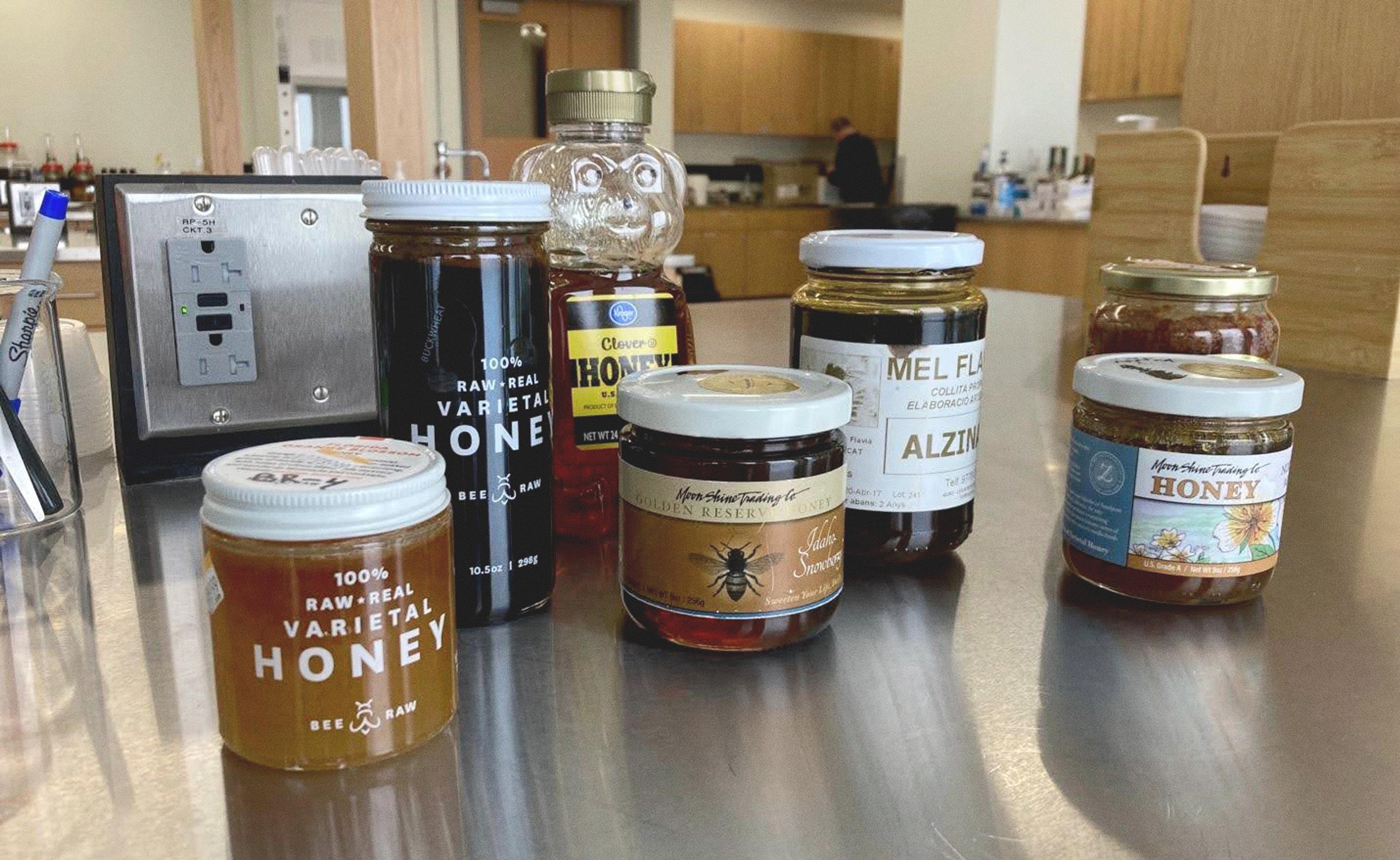
Honey varietals get their distinct color and flavor from the type of botanicals a bee visits. These are just a few of the samples being tested by Eastern Michigan University to map honey fingerprints.
·Credit: Sarah Derouin
While mead makers or chefs crave unique varietals for their concoctions, the general public usually prefers a more “classic” honey: sweet, golden, with few strong flavor notes. In part, this tried-and-true flavor arises from the way honey makes its way from apiaries to table.
Many honey brands at a grocery store typically originate from multiple beekeepers around the county and even globe. Honey makes its way into barrels and buckets where it’s then shipped to a central packing plant. There, honey from multiple floral sources gets combined in a giant vat to become a general “honey.”
“It’s sort of like mixing paint, trying to find a color that most people in the U.S. think is honey,” said Jeff Lee, a self-proclaimed “bee shepherd” and the owner/operator of Lee’s Bees in North Carolina. Lee takes his bees on the road, providing pollination services to farmers around the country. He explained that once individual honey harvests have been combined, it’s nearly impossible to trace where it originated from, or where any adulterated honey snuck in. And with so many intermediaries between beekeepers and packers, adulteration can easily sneak into supplies.
In the 1990s, a significant influx of cheap honey from China and Argentina was being imported to the U.S., depressing the worldwide price. By the early 2000s, the U.S. government imposed a large duty on honey imports from China and Argentina (184% and 37%, respectively).
“Companies were basically taking honey from China, they were shipping it to a third country or maybe just doctoring the shipping manifest.”
What happened next was unsurprising. “Companies were basically taking honey from China, they were shipping it to a third country or maybe just doctoring the shipping manifest … and thereby avoiding the duties,” said Eric Wenger, member of the board of directors member for True Source Honey. For instance, one year, 37 million pounds of honey came from Malaysia — but the American Honey Producers Association notes they only had the capacity to produce about 45,000 pounds of honey annually.
“The industry was in a very difficult position where this honey was flooding in,” said Wenger. In 2010, industry professionals came together and formed True Source, a non-profit organization that certifies and traces the source of honey.
Wegner explained that True Source has a certification process that focuses on conducting third-party audits in countries of origin to prove that these countries had legitimate beekeeping industries and that the honey shipped to the U.S. is legitimately from those countries. The honey is tested before and after shipping. “The entire purpose to say that if you said honey came from a particular country, you needed to go through the steps and provide the evidence to support that claim,” he said. While the process won’t help consumers buying generic honey in bears, branded honeys can contain True Source certification.
Originally, True Source used pollen testing methods to determine where a honey originated from. Microscopic pollen grains naturally make their way from bees into honey, leaving behind a biological map of their home, reflecting a geographic location. Now, Wenger noted they have moved on to more advanced technologies.
Honey Fingerprinting
Honey testing can reveal the signature, or fingerprint, of that sample. Pollen mapping is one way to identify the provenance of a honey, but counting and identifying individual pollen grains can be time consuming. The method also doesn’t tell you if there are other sugars added to the honey.
Newer methods have emerged over the past couple decades focusing on the chemical signatures of honey, including NMR (nuclear magnetic resonance spectroscopy). NMR instruments work in a similar way as an MRI machine, but instead of mapping out the parts of a knee, NMR maps out the chemical molecules. The honey is slightly diluted with distilled water and run through a human-sized tubular machine. In the end, researchers get a printout of peaks and valleys that represent different compounds in the honey. While the NMR is expensive — instruments usually run in the hundreds of thousands of dollars — running the sample only relies on a simple prep with distilled water and a few minutes.
In the NMR readout, sugars create the giant spikes while the more subtle chemical signatures from harvested flowers show up as tiny speed bumps. And when it comes to identifying honey varietals, the devil is in the details. Cory Emal, chemistry and fermentation science professor at Eastern Michigan University, uses these small blips to fingerprint the signatures of different honeys.
Along with his team, Emal developed an algorithm that sorts the tiny NMP blips into categories. It’s an exercise in fine tuning. “We’re operating right on the edge of what we can detect,” Emal said. The algorithm must also be dialed in to pick up the nuances in the NMR results. “One of the problems with our technique is: What is a standard honey? There’s no standard orange blossom that everybody can point to and agree this is the platonic ideal of orange blossom honey.”
In the future, they hope to be able to run a honey sample and identify the varietals by the chemical signatures available to everyone. Ideally, the database would continue to grow with testing results being added by researchers and industry professionals. The more information, the better the database will be.
“One of the problems with our technique is: What is a standard honey? There’s no standard orange blossom that everybody can point to and agree this is the platonic ideal of orange blossom honey.”
Professional testing is one tried and true way of testing for fraudulent honey, but Wegner says to not waste your time with at-home testing. “The industry spends hundreds upon hundreds of thousands of dollars every year for very expensive, very sophisticated tests. And somebody’s like, ‘Oh, well, take it home and do the flame test, or the water test,’” Wegner said. “We just shake our heads, and it’s like, please don’t promote those tests, because if they worked, we would all do them because they’re very cheap.”
The next best way to ensure quality and origin is buy directly from local honey producers. “Where I take the bees, there are certain times of the year where there’s only one type of flower blooming. And it’s so dominant, the bees will only make that type of honey,” explained Lee. “I harvest it as soon as those flowers are done, and that’s how I personally control the quality.” When he moves his bees, he replaces the boxes of combs to collect a different varietal. The careful collection process allows him to confidently classify his sour wood honey from his water tupelo honey for consumers.
If you really want to support local bees and find a reliable product, Lee suggests getting to know your local beekeepers. “I just tell people, if you don’t buy it from me, just know who you’re buying it from.”
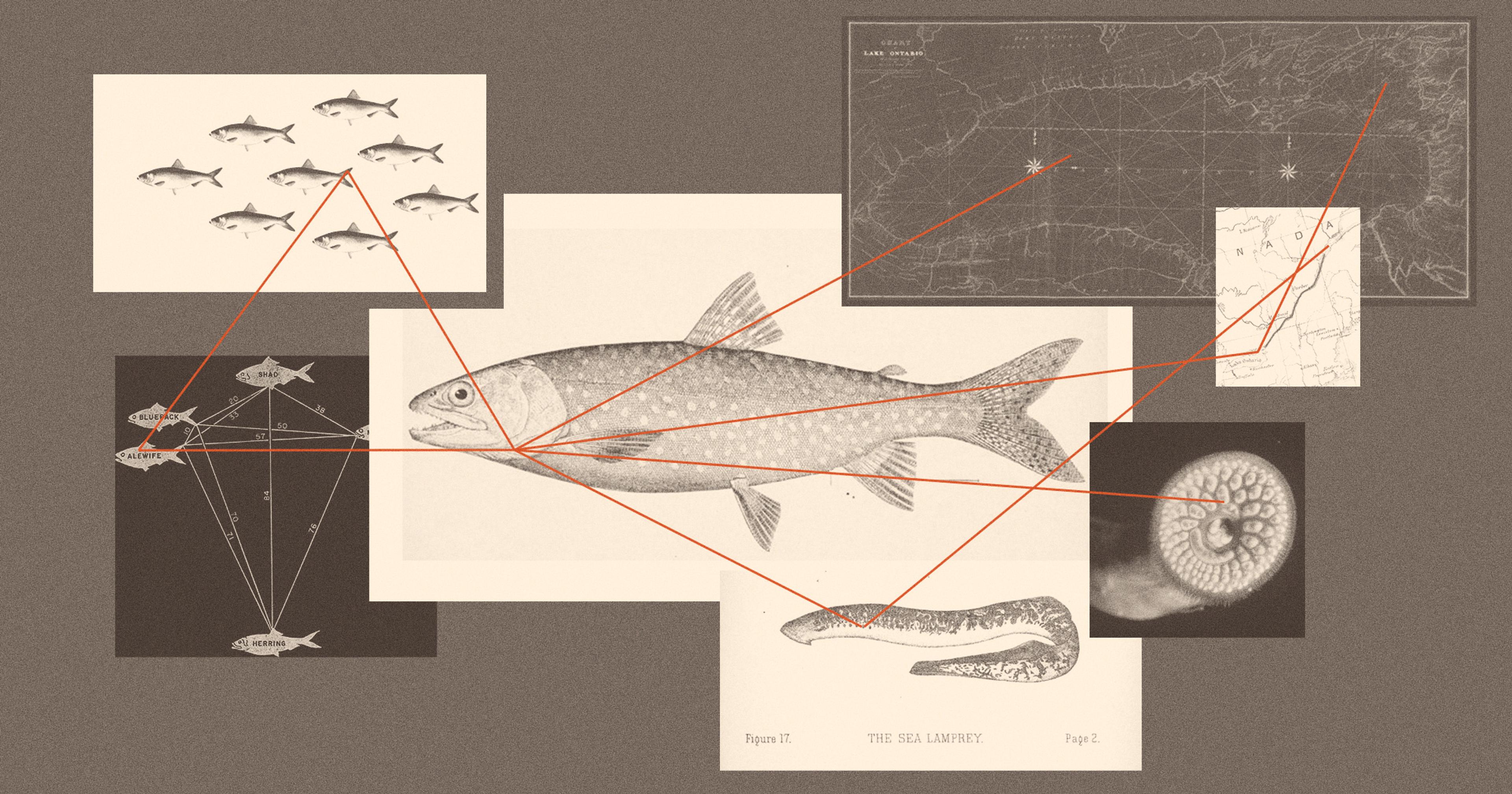
Each spring more than half a million lake trout are released into the frothy gray water of Lake Ontario. Raised 150 miles away in a Pennsylvania hatchery, each fish has been fitted with a metal nose clip that carries pertinent biographical information, including its genetic strain and when and where it was released. That means the next time someone — either a scientist or a sport angler — pulls the speckled, slate-colored creature from the water, they’ll also reel in a lot of important data. For more than 50 years, this data has said the same thing: Despite the billions of adult Salvelinus namaycush now cruising around Lake Ontario, almost none of them are reproducing.
Despite the trout’s abundance — remarkable given that overfishing essentially wiped them out by the 1950s — all that stocking has yet to yield a wild population. Scientists know the fish can reproduce naturally, but that something is getting in their way, a glitch in the ecosystem. For decades they’ve tried to identify and correct the glitch, battling one invasive species after another and addressing vitamin deficiencies that inhibit reproduction.
In short, none of it has worked. “We should be seeing natural reproduction,” said Stacy Furgal, a fish biologist and the Great Lakes fisheries and ecosystem health specialist at the New York Sea Grant, “and we’re just not.”
Last year, officials from five federal, provincial, and state agencies spread across the U.S. and Canada — working under the banner of the U.S.-Canada Cooperative Science and Monitoring Initiative (CSMI) — launched a massive 10-year study aimed at solving the 50-year-old mystery, establishing something of a trout surveillance state in Lake Ontario, which is bounded by the state of New York and the Canadian province of Ontario. They’ve caught and fitted hundreds of fish with telemetry tags, dropped receivers all over the 7,000-square-mile lake, and plunged cameras into the depths of its frigid water, hoping to reveal what’s keeping this keystone species from recolonizing its historic range.
Establishing a native population of lake trout would be an important step in repairing an ecosystem still reeling from a slew of century-old ecological harms. It would also bolster the health of the larger fishery, which provides a living for a small but diligent group of commercial producers like Tim McCormack.
“Ever since the trout have been gone, the fishery has been a shell of itself. It never rebounded from the shock of that loss,” said the 57-year-old third-generation fisher from Tipton, Ontario. “There used to be 40 families working out of the same harbor, now there’s just us. And it does stem from lake trout.”
For millennia, lake trout were an apex predator in Lake Ontario, providing sustenance and trade for the Anishinaabe tribes that made their homes along its shores. After a series of lopsided treaties stripped the Anishinaabe of their ancestral land in the region, countless European settlers set out in gill net tugs and trap net boats, creating one of the most productive freshwater fisheries in the world. By 1895, more than 12 million yards of gill nets were licensed in Ontario alone. During the early 20th century, lake trout fishers set lines with as many as 3,000 baited hooks per boat.
“Ever since the trout have been gone, the fishery has been a shell of itself. It never rebounded from the shock of that loss.”
While the lake teetered on brink of depletion, ecological catastrophe loomed on the horizon. The opening of the St. Lawrence Seaway in the 1950s connected Lake Ontario to the Atlantic Ocean, opening it up for international commerce — and making it the first stop for nearly 180 invasive species that hitched a ride on the so-called Highway H20, including the ravenous sea lamprey.
The arrival of the parasitic fish — a snakelike creature with a tooth-ridden mouth out of a horror movie — triggered an ecological and economic collapse the Great Lakes still haven’t fully recovered from. For lake trout in Lake Ontario, it was the last straw.
“Once lamprey got in there, they decimated the lake trout population,” said Larry Miller, who oversees the Allegheny National Fish Hatchery, birthplace of pretty much every lake trout swimming in Lake Ontario today.
In the 1970s, not long after the now-successful Sea Lamprey Control Program showed signs of promise, biologists began experimenting with genetic strains of lake trout from neighboring water bodies to launch a restocking program in Lake Ontario. But other obstacles stood in their way.
Thanks to a shortage of natural predators, populations of alewife, another invasive species, had exploded in the lakes. Whereas a 19th century lake trout feasted on a rich variety of fish, the restocked population were mostly chowing down on alewife. When researchers took them into the lab, they saw trout exhibiting some troubling symptoms: uncoordinated movements, stunted growth, and lethargy. In humans, these symptoms point to one thing: Vitamin B deficiency.
“The habitat is pretty degraded. Instead of big piles of rocks, you have rocks covered in invasive mussel shells which fill in places where eggs used to go and incubate.”
“Alewife is high in an enzyme called thiaminase, which causes a vitamin deficiency,” explained Furgal. “Vitamin B is crucial for reproduction.”
Furgal added that things have improved in recent years. Conservation agencies have begun stocking prey fish, which, along with another ascendent invasive species, the round gobi, are providing a more balanced diet to lake trout.
With the lamprey and alewife problems mostly addressed, researchers began to suspect that predation and reproduction health were not the glitch in the ecosystem after all — or at least not the only one.
Furgal says there was one last place to look: the fish’s spawning grounds. The new theory is that the trout are indeed reproducing, but “things are going wrong in the early life history stage, where eggs are being laid and hatched.” That means that getting to the bottom of this mystery requires journeying to the bottom of the lake, in the dark, cold crevasses where the fish deposit their eggs.
“Lake trout require rocky spawning substrates, places where their eggs can Plinko down through the rocks,” said Furgal. “They provide a cozy little spot and protection from predators or getting sloshed around by water.”
But even this remote part of the lake has not been immune from invasive species, she explained.
“The habitat is pretty degraded. Instead of big piles of rocks, you have rocks covered in invasive mussel shells which fill in places where eggs used to go and incubate.”
“We thought we knew the historical areas where they spawned. Well, we didn’t.”
The CSMI initiative aims to find the spawning habitat trout that are still using, assess it, and, if necessary, rehabilitate it. This could be done by cleaning the reefs of shells, or even dropping piles of rocks into the lake to create new spawning grounds.
But first, researchers have to find those spawning grounds — and it hasn’t been easy. “We thought we knew the historical areas where they spawned. Well, we didn’t,” said Miller.
“Since this is not the native strain, we don’t have good accounts of where these new guys are going to spawn, even the old ones — accounts from fisherman and community members — are loosey-goosey, from the days before GPS,” Furgal echoed.
To find current sites — or at least potential sites — the team used computer modeling to identify about 3,000 places in Lake Ontario that have the characteristics of good spawning habitat.
Then the researchers recruited some field assistants in their endeavor — the trout themselves. Last summer, using gill net, bottom trawlers, and even local sport fishing guides, they caught and implanted 400 lake trout with telemetry tags. For the next 10 years, biologists like Furgal will follow those tags as they ping to 500 receivers that are now scattered around the lake, providing vital information about where today’s lake trout are spawning. Scientists will be right behind them, visiting each and every site to collect data with underwater cameras.
“It looks like someday — maybe in my lifetime, but probably not — there could be a natural harvest.”
There’s a lot of work left to do, the fish biologist said, “but we’re getting a lot closer to the answers we’ve been after for decades.”
The tagging effort also marked a hopeful milestone: It was the first time a wild-produced lake trout was tagged in Lake Ontario. Scientists could identify the wild trout by its intact adipose fin, which are removed in hatchery fish to enable easy identification.
Tim McCormack, who said he’s also reeled in a handful of wild trout in the last few years, is feeling that hope. “It looks like someday — maybe in my lifetime, but probably not — there could be a natural harvest. It looks like it’s trending that way.”
Still, like every scientist and fisherman who’s been humbled by the whims of the mysterious Great Lakes, he’s quick not to get ahead of himself.
“Even then, we’ll have to be careful,” he said. “We can’t go out and go hog-wild on lake trout until that fish has gotten a grip.”

For over half a century, the world has worried about carbon dioxide burning a hole in Earth’s atmosphere. More recently, attention turned to methane, the gas best known as being burped from cows.
Now, another greenhouse gas has scientists worried: nitrous oxide. Casually referred to as laughing gas in the dentist’s office, to climate scientists it’s a global threat, clocking in at 300 times the global warming potential of carbon dioxide and 12 times that of methane.
Further, it turns out that our well-intentioned efforts to tackle methane may be inadvertently increasing nitrous oxide emissions.
Both methane and nitrous oxide are emitted from microbes, not released into the atmosphere from fossil fuels like carbon dioxide. The tiny gas-producing bugs sit at the intersection of water, earth, and air, according to Lisa Stein, professor of climate change microbiology at University of Alberta, Canada.
“Here, we are really talking about microbes that are distributed all over the planet, and we don’t really control them. It’s land we’re talking about, right, not driving a car or an industry,” Stein said.
How these tiny bugs eat and produce energy determines whether the two greenhouse gasses will be absorbed from the air or released into it. From rice paddies to lagoons full of animal waste, bacteria-producing methane can quickly switch from making — or absorbing — methane to producing nitrous oxide if the conditions are favorable.
The two gasses — methane and nitrous oxide — need to be considered in tandem, Stein wote in a perspective piece published in Nature in June, so that efforts to mitigate methane do not inadvertently increase the emission of nitrous oxide.
While methane mitigation is now at the forefront of climate policy and monitoring, “Eyes also have to be on nitrous oxide and the concern is that we are going to miss the boat,” Stein said.
*
Rice production is a classic example of the tradeoff between methane and nitrous oxide, according to Stein. Rice is often grown in the soggy, flooded fields known as rice paddies. There, methane-producing microbes thrive on the carbon-rich soil. Around five percent of the world’s methane emissions in 2020 came from rice production.
Drying the fields at strategic stages of the rice growth cycle has emerged as a popular technique to tamp down methane emissions, a process called “alternated wetting and drying.”
But rice paddies, like most managed cropland, are flush with nitrogen from fertilizer. The nitrogen in the now-dry soil leads to a spike in nitrous oxide emissions in the days after the soil dries. Dry rice fields produced 30 to 45 times the nitrous oxide compared to flooded fields, according to a 2018 study in India, one of the world’s two largest producers of rice, along with China.
Still, the alternated wetting and drying system is recommended by the USDA’s Natural Resource NRCS for rice farmers in the Delta region of the United States to reduce methane emissions.
“Eyes also have to be on nitrous oxide and the concern is that we are going to miss the boat.”
It’s also a practical choice when surface water is scarce. The amount of water available each year decides the growing method for the field, said rice producer Jason Waller, whose farm is located in Mer Rouge, Louisiana. In addition to wet-dry cycling, the other two strategies available to rice producers in Louisiana are the traditional flooded paddy fields and growing the rice in rows.
But in rainy years, Waller floods the fields. Opening the floodgates of full canals and reservoirs avoids turning on diesel pumps to irrigate the water, which saves the farm money. It also has the added benefit of being good for the environment, Waller added.
“We do everything that we possibly can to conserve water, topsoil, air quality,” he said.
The incentive to minimize nitrous oxide emissions in rice farms is there, said Jarrod Hardke, rice extension agronomist at University of Arkansas. Nitrogen converted to nitrous oxide is fertilizer lost from the soil. “Part of sustainability has to be profitability because you’re not sustainable if you’re no longer in business,” Hardke said.
*
The tradeoffs of methane mitigation strategies, like wet-dry cycling of rice fields, are included in an ongoing global nitrous oxide assessment being carried out by the United Nations Environment Programme, said Eric Davidson, one of the assessment’s co-authors and professor of biogeochemistry at University of Maryland Center for Environmental Science.
Davidson hopes the caution to remember the other gas “isn’t used as an excuse for inertia” regarding methane mitigation.
Most methane mitigation strategies, including rice production, do take into account nitrous oxide, Davidson said. And while nitrous oxide should be included alongside methane in climate policies and monitoring efforts, Davidson hopes the other gas “isn’t used as an excuse for inertia” regarding methane mitigation.
Methane, with its uniquely short lifespan of just 10 or 12 years, has the potential to rapidly reduce temperature increases if mitigated now, he added. “The sooner that we can slow down the rate of climate change, the fewer people that will be suffering, the less adaptation we need, and the less risk of feedbacks of things like thawing permafrost that would release even more methane and receding glaciers and warming wetlands that release even more methane.”
Still, the two gasses coexist in tandem and should be regulated together, Stein said. As reward or penalty programs for greenhouse gasses are put in place, “it doesn’t make sense to attach a reward on methane and not on nitrous oxide.”
*
Some possible solutions to tamping down nitrous oxide emissions attempt to manipulate the microbes that produce the gas. Researchers in Norway discovered a strain of bacteria that contains an enzyme capable of digesting nitrous oxide, called N2O reductase. They grew large quantities of the N2O-eating bug within manure slurries gathered from waste digesters and then spread the engineered mixture onto crop fields.
Fields fertilized with manure infused with the special bacteria produced less nitrous oxide — 64 percent less in the 10 days after fertilizer application — than fields treated with regular manure.
“The net balance between production and consumption in the soil determines the amount of nitrogen oxide which is emitted to the atmosphere,” said lead investigator Lars Bakken, microbiology professor at Norwegian University of Life Sciences. The speciality bugs tip the scale in the soil by eating more nitrous oxide than their regular counterparts produce.
The results were published in Nature in May.
For now, the bacteria need to be applied to soil in wet mixtures. But a dry powder containing the live bacteria is only a few years away, Bakken said.
*
Other strategies to lower methane also lower nitrous oxide without a tradeoff — or not an obvious one.
Waste lagoons, where the solid waste that produces methane combines with the urine that produces nitrous oxide, are commonly left uncovered, Stein said. Covered lagoons are becoming more common as government agencies subsidize the installation of bioreactors that convert the trapped gasses into energy. Around 400 anaerobic digesters operate at commercial livestock farms in the United States, many in California. That said, there is significant debate about the overall effectiveness of digesters.
Additionally, measuring gas emissions is not viable — either logistically or financially — at individual dairy farms, a representative of the California Department of Food and Agriculture wrote in an email.
“Part of sustainability has to be profitability because you’re not sustainable if you’re no longer in business.”
Freshwater bodies are another large source of greenhouse gas production. Floating islands of plants, akin to artificial wetlands, are a possible way to decrease gas production in freshwater bodies impacted by agricultural runoff. Nitrogen from fertilizer that flows into reservoirs or lakes encourages algal growth at a rate that quickly outpaces the amount of oxygen in the water, called algal blooms. Once the oxygen is stripped from the water, microbes begin producing methane and nitrous oxide.
While aerating large bodies of water is impractical in most reservoirs, Stein said, artificial wetlands can help pull nutrients from the water. Stein is working with an artificial wetlands company, Floating Islands International, to test reductions in methane and nitrous oxide in impacted reservoirs in Montana.
More importantly, monitoring needs to be done at the large scale. And that will only happen, Stein said, with regulation. “But if there’s no regulation on greenhouse gasses, there’s no reason to spend the money and the effort to do the measurement, because, when you measure it then you have to mitigate it.”

Avid sports fisherman Ernest Hemingway hated sharks. During the 1930s, he spent years trying to land bluefin tuna around Bimini in the western Bahamas. Hooking the fish was easy; the problem was hauling it to the boat before sharks took a bite. For three years in a row, anglers hauled up mutilated tuna, often “apple cored” — nothing but scraps of flesh hanging off the spine. It’s perhaps unsurprising that the protagonists in Hemingway’s novel The Old Man and the Sea clubbed and knifed sharks, and Hemingway himself shot at them with a Tommy gun.
Fishermen around the world have long contended with “depredation” — the partial or complete removal of a hooked fish before it’s landed, by sharks or other marine predators. But in recent years, many U.S. fishermen, especially in the Southeast, have reported an uptick in depredation by sharks — including commercial fisheries in the Gulf of Mexico.
There has been a particular uproar about the issue among recreational fishers, many of whom say they’ve seen a clear increase in depredation. In one survey of 541 North American anglers, 77% said they had experienced depredation in the last five years. “It’s gotten ridiculous,” one angler said in a recent workshop on the issue. “I’ve had days where I’ve lost a dozen snapper in a row by sharks.”
For anglers, the perceived increase has been a source of growing frustration as well as animosity towards sharks. Many blame the uptick on conservation measures taken to protect shark species, some of which are only now starting to rebound after years of overfishing. Many have complained to fishery managers to no avail, and some are now more likely to go after sharks themselves or are advocating for greater shark harvesting. But experts say shark recovery likely isn’t the only culprit — fishing practices play a role too. Scientists and fishery associations are now working to find solutions that will allow peaceful coexistence between sharks and fishers.
“I think a lot of people are feeling frustrated at this point,” said Martha Guyas, southeast fisheries policies director at the American Sportfishing Association (ASA), which spearheaded legislation to boost research into depredation that was passed by the U.S. House of Representatives earlier this year. “There’s just a lot of questions about why this is happening [and] how to avoid it.”

Depredation can bring a host of problems. For commercial fishers, the lost catch can make fishing less economically viable — although many likely see depredation as the cost of doing business, said fisheries ecologist Marcus Drymon of Mississippi State University. Depredation can sometimes also result in a loss of gear; in some years, shrimp fisheries in Georgia, for instance, have seen 32% of trawl nets damaged by sharks. In a 2022 workshop that convened commercial shrimp industry representatives from along the Gulf and South Atlantic coasts, many participants said depredation has become significantly worse in the last few years. While dolphins also depredate on shrimp nets, participants said they’re much less of an issue than sharks. “Dolphins can rip the net,” one shrimper said, “but sharks will take a whole chunk out of the net.”
Several participants from the South Atlantic said they felt that, much like dolphins, sharks have learned to associate the noise of the engines with food. “Gulf Sharks are smart and they adapt,” one shrimper noted. “They are just always looking for a way to get an easy meal. It’s hard to predict when you are going to have the problem and when you aren’t.” Another shrimper commented, “Sometimes you just have to work through the sharks regardless of how bad they are if you want to catch shrimp.” Many shrimpers said they often hauled up their nets more often in situations where they can’t avoid sharks, so they can inspect them for damage.
Depredation is also frustrating for fishing guides — who say it hurts their livelihood — as well as individual anglers, even when they intend to release fish after they’re caught. In the tarpon fishery in Bahia Honda in the Florida Keys, recent research found that 15.3% of successfully hooked tarpon are nibbled by hammerhead sharks — killing fish that would otherwise be released back into the sea.
”You’ve worked really hard to get all the way out there to finally get hooked up with this really nice fish, and to see it depredated is a painful experience.”
Drymon, an angler himself, has also experienced the tightening of the line when a fish bites the bait, followed by a “pop” when that pressure suddenly disappears, indicating that a shark has grabbed the fish, or part of it. “As someone who fishes often, I sympathize,” Drymon said. “Especially if it’s an offshore species or a deepwater or a pelagic species, you’ve worked really hard to get all the way out there to finally get hooked up with this really nice fish, and to see it depredated is a painful experience.”
Depredation influences fishermen’s attitudes, instilling a belief that sharks are “overprotected” at the expense of fishing opportunities. In one workshop that convened charter fishermen from across the Gulf of Mexico, participants frequently noted a need to increase the commercial shark harvest, Drymon said. Surveys by ecologist Grace Casselberry and her colleagues at the University of Massachusetts Amherst suggest that experiencing depredation makes fishing guides more likely to harvest sharks, in an effort to protect their target species. “People reported that they were much more likely to be inclined to target and harvest sharks in the future,” Casselberry said.
Certainly, the recent signs of recovery of some shark species in the southeastern U.S. may well have contributed to the perceived spike in depredation — although what fishermen see as an “overpopulation” today is still a far cry from healthy shark population levels a century ago, well before sustained shark harvest.
But shark recovery isn’t the full explanation. For instance, the sandbar shark has shown signs of recovery since its harvest was banned in 2008, but its population fluctuations don’t align with the perceived increase in depredation rates in the Gulf of Mexico, recent research by Drymon and his colleagues found. Rather, the paper points to another contributing factor: Many places have seen a rise in the number of anglers, which means more hooks in the water, increasing the odds of sharks encountering and snatching the catch. While anglers’ frustrations with depredation are real, Drymon said, “I’m simply pointing out that … as much as the problem should be attributed to sharks, the problem needs to also be attributed to the fact that we’re just on the water a lot more.”
“As much as the problem should be attributed to sharks, the problem needs to also be attributed to the fact that we’re just on the water a lot more.”
It’s also possible that more sharks are learning to track boats in search of prey, as some shrimpers already suspect, Guyas added, though such learned behaviors are hard to quantify. Fisheries practices might also be adding to the problem, she said — such as requirements that undersized fish need to be released back into the water, attracting sharks to boats. Casselberry suggested there may also be some social media effect that heightens emotions around the issue when fishermen post about depredation.
But because most of the depredation data in recreational fisheries comes from surveys of anglers, it’s unclear how much of the perceived increase reflects a real increase in depredation rates; in commercial fisheries, independently collected data show an increase in depredation in some but not all fisheries in the region. That said, it may not matter if depredation rates have changed, Drymon said: “Perceived conflict is as important to address as any real conflict.”
The solution, however, is not to harvest sharks, predators that are conserved due to their ecological importance, Casselberry and Drymon said. Other cases of human-wildlife conflict, like between ranchers and reintroduced wolves in the Western U.S., tell us that targeted predator removal doesn’t help much to reduce the conflict, and it also tends to pit conservationists against ranchers. (The ASA, meanwhile, suggested in a statement that “increasing catch limits or relaxing regulations on shark stocks that can withstand additional harvest should be considered where appropriate and supported by science.”)
Fortunately, there are other solutions. Anglers could move to new, potentially shark-free locations after experiencing depredation in one spot, Drymon said. Casselberry added that fishermen should make sure to use heavy fishing gear to quickly reel in large fish; she’s seen some tarpon fishers show up with light fishing rods, taking them 45 minutes to land a big fish.
“Sometimes you just have to work through the sharks regardless of how bad they are if you want to catch shrimp.
Drymon is also testing the effectiveness of higher-tech solutions like electronic, magnetic, or chemical shark deterrents. The Zepellin, for instance, is a $70 gadget that can be attached to fishing lines and emits magnetic signals that overwhelm the sensory organs in sharks’ noses that detect electromagnetic fields. “I imagine a shark getting like a brain freeze or a headache and just staying away from that fish that is within the enveloped field of this Zeppelin,” Drymon said.
Ultimately, though, more research is needed to work out which solution will be effective in a given situation. Guyas hopes the SHARKED Act — the full name is Supporting the Health of Aquatic systems through Research, Knowledge, and Enhanced Dialogue — which is now awaiting approval by the U.S. Senate, will help. It would establish a task force of fishery managers to identify priorities for research, develop strategies to reduce depredation, and encourage better coordination between fisheries managers as well as better communication with anglers. At the moment, Guyas said, “I think where anglers are struggling is knowing which tools to use in different circumstances, and in some cases, just what tools are available to them.”
Although Hemingway might have preferred to see sharks disappear altogether, he also found effective, non-lethal solutions. Using larger fishing spools and attempting to reel in the fish as quickly as possible helped him land the first intact bluefin tuna in May 1935 — after the three-year dry spell. The solutions to shark depredation today will similarly demand changes in fishing habits. “I’m not going to be out here advocating for people to stop fishing. I think it’s a great way to connect with nature and really appreciate the environment,” Casselberry said. “But we need to figure out how we can let these two things coexist.”
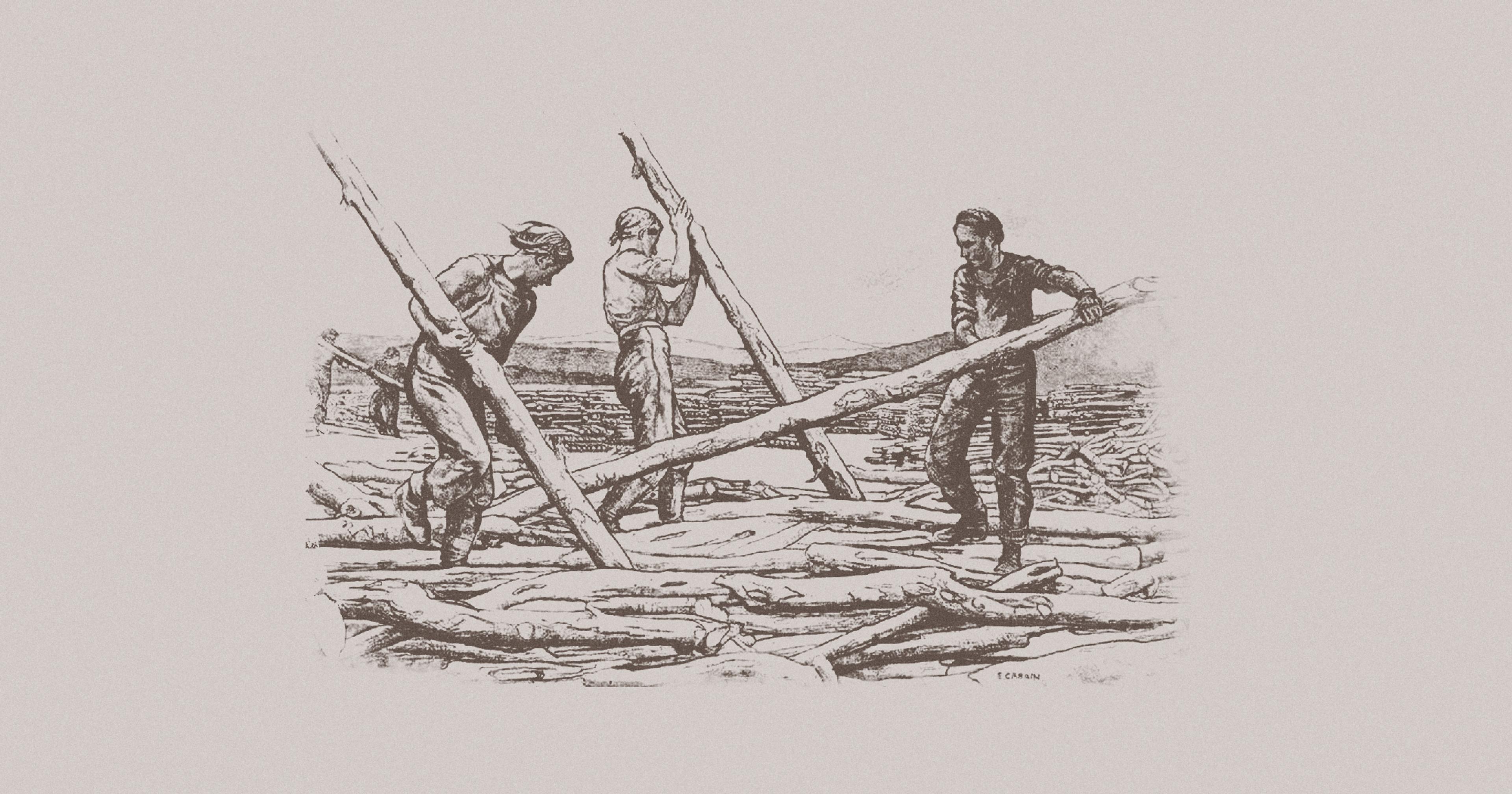
Patricia Sowards grew up in an orange grove in Orlando, Florida, exploring its oak hammocks and the lake on which the orchard grew “like a mermaid swimming among the lily pads,” she said. When thunderstorms rolled in, she’d sneak out with her German shepherd to run in the rain and mud. “I liked the whole feeling of the wildness of the storm and elements and just dancing in the rain basically,” Sowards said. “It sounds funny but I felt the freest then.”
Eventually she left home, became a teacher, had kids, bought a house in an Orlando suburb. Still, she found ways to let wildness in, shunning the de rigeur grass lawns of her neighborhood for a messy pollinator garden. “If I can’t feel like I’m doing something positive for the earth, I get really anxious and I get afraid of what’s going to happen,” she said.
Then change came again. When Sowards turned 60, she moved out of Florida for the first time in her life. She now lives on 70 acres in North Carolina — 30 acres of fields, another 40 of forest — planting native grasses on what was once a tobacco farm and trying to restore pine stands to hardwoods.
The number of women who, like Sowards, own woodlands and are their primary managers has been growing. As of 2018, women made up 24% of all family forest owners, up from 11% in 2006, and were responsible for 44 million acres of forestland in the U.S., out of 420 million acres that are privately owned.
When confronted with land management questions, recent academic research and the U.S. Department of Agriculture’s National Woodland Owner Survey have found that women landowners are making different decisions than their male counterparts: They’re less likely to manage actively, to harvest timber or to prioritize income generation, less likely to steward with hunting use in mind. Women also tend to be more passive managers; they’re more likely to incorporate ecologic values into decision-making, more likely to be concerned about how climate change is affecting their land.
For Sowards that data rang true. She moved there with the intention of farming but soon realized that the soil on this land was depleted from growing tobacco and hay; she had underestimated the physical labor involved. Around 2019, a couple years after her move, she read an article about another woman in her 70s who had 70 acres of family land in North Carolina and had dedicated herself to transforming them into a wildlife preserve.
“It was a revelation,” Sowards said.
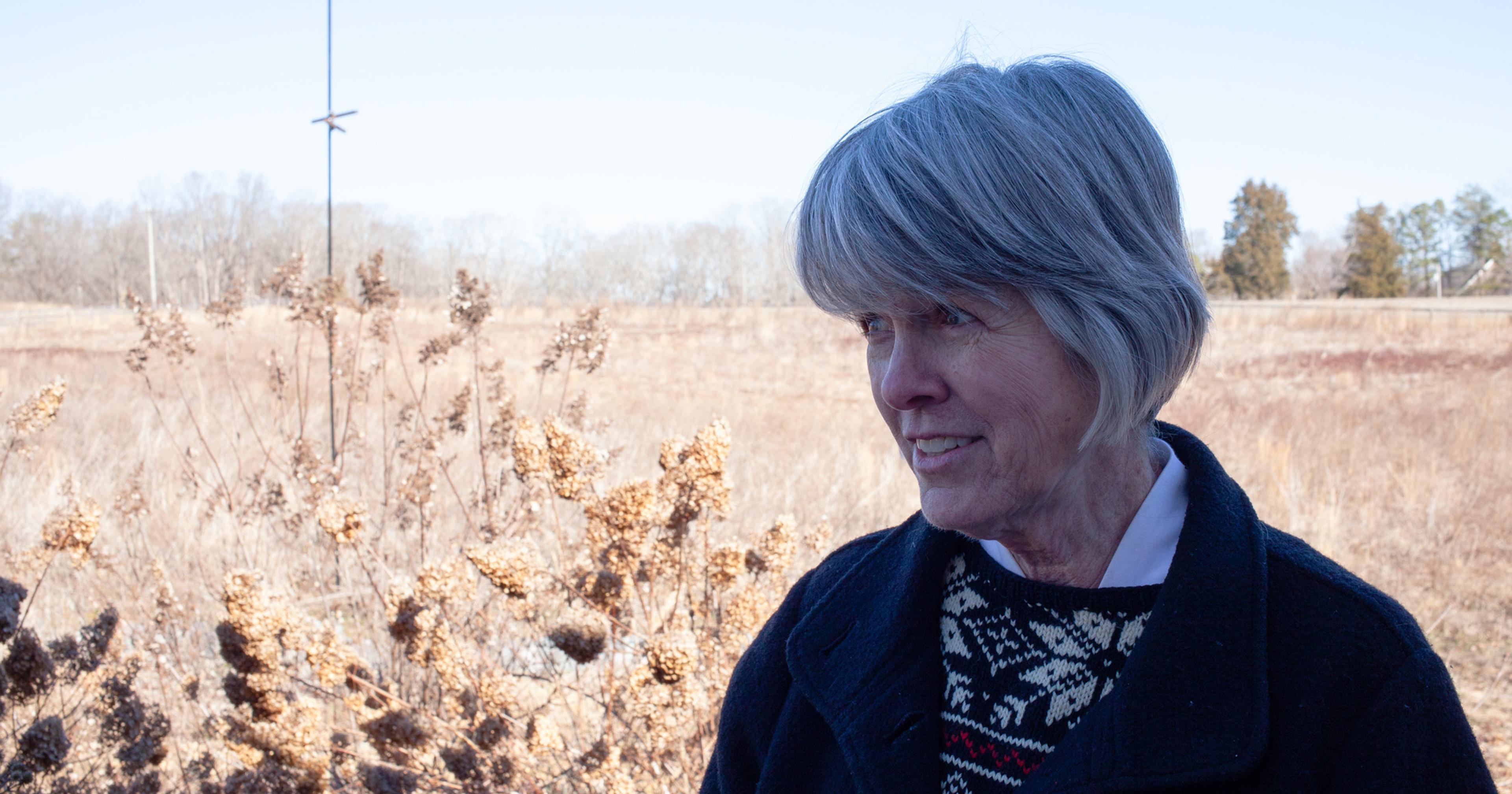
Patricia Sowards
In Sowards’ family the men “looked at property as a way to make money,” she said. She saw herself as its protector. “I don’t want anything to happen to it ever.”
But she didn’t know where to start. Neither her grandfather nor her father had ever taught her anything about managing this land — she didn’t even know it existed until she was in her 40s.
Sowards has sought out assistance from public and private foresters, biologists, and silviculture professionals, cobbling together knowledge and plans for her acres. The learning curve has been steep, but she’s been aided by groups set up to help people in her position.
*
About a decade ago, Becky Barlow, an extension agent with the state of Alabama, noticed that women weren’t showing up to her forestry workshops. And women who did attend rarely participated during class, instead flooding her with questions one-on-one afterwards. She reformatted her class to gear it specifically to women.
Forestry is, and has been historically, a male-dominated industry. Land ownership in the U.S. has long conferred power and that power was reserved for men; men acquired land, men passed down land to their sons, and men made decisions around that land.
Government programs meant to help landowners were also organized around men’s needs. “Women have been excluded from outreach programs and policy making processes often due to sexist attitudes and behaviors,” one study found. Seemingly minor logistical issues, like a workshop’s timing, could limit female participation. Men’s names, the study went on, “are often listed first (or exclusively) on property documents and thus are contacted for input and/or participation in programs and policy-making advocacy work, further centering male landowners.”
Barlow marketed her classes specifically to women, found female speakers, offered non-judgmental tutorials on the basics of silviculture, and left plenty of time for questions. Her classes, which she called ForestHer, filled up. Other states took note of the model; in North Carolina a group of state and private natural resource professionals established their own ForestHer program in 2019.
“It was easy to ask stupid questions, because nobody knew, it was okay.”
Kerry Steedley, who’s taken over Alabama’s ForestHer initiative, said when she hosts a workshop she puts flowers on the tables to create a welcoming atmosphere and blocks off more time for introductions and informal conversation. “The ideal scenario would be to have people connect, talk about their experiences with certain management practices or consultants or biologists they’ve used, what they feel like went well, maybe didn’t go well,” Steedley said.
Other women-focused programming models have popped up, like the national Women Owning Woodlands (WOW) Network. WOW and ForestHer classes teach participants what questions to ask, how to advocate for themselves, and how to find seasoned foresters that’ll take their interests seriously. WOW is also often hands-on; for example, they host a popular class on chainsaw use.
Emily Huff, who teaches at Michigan State University’s Department of Forestry and has researched female landowners as well as worked with the WOW Network, said participants report concrete actions after the workshops, like hiring a forester or assembling a management plan. She and other WOW members have put together a list of best practices for such workshops, which includes featuring female presenters, a physically and emotionally safe environment for women to ask questions, and time for informal social interactions and relationship building. They also recommend scheduling sessions at times that would be less likely to interfere with potential attendees’ caretaking responsibilities or, alternatively, to provide on-site childcare.
Sowards has taken advantage of just about every resource she could find, women-focused or not. But at ForestHer meetings she found people to be more open to novel management goals and she liked how the women lit up when they started talking about birds.
“It was easy to ask stupid questions, because nobody knew, it was okay,” she said. “Everybody was excited to talk because they were kind of isolated in their desires.”
*
It’s not clear why women might have different priorities for their land than men but one reason could be how it’s acquired: Women are significantly more likely to inherit their land than to purchase it.
If management practices haven’t been passed down to the women in the family, that might come with gaps in knowledge. It could also bring anxiety about doing right by past generations and future ones, leading to decision paralysis, said Danielle Atkins, a forester who runs a private, woman-focused forestry course through her company Land and Ladies.
Cutting down trees is emotional, Atkins said, but forestry can also be very technical, especially around timber sales. Indeed, harvesting is a major diversion point between male and female forestland owners; Steedley said an unpublished study in Alabama found that 75% of men prioritized timber harvest for income generation versus 37% of women. A national 2018 study asked whether landowners had cut wood for personal use — 43% of men versus 24% of women had.
Atkins said arranging a timber sale, with its jargon — lump sum, pay-as-cut, negotiated, sealed bid — and varying approaches to payment and harvest cycles, can be a little like going to a mechanic. Is the forester negotiating with the landowner’s interest in mind? Does the landowner feel like they’re being taken advantage of? For someone who’s never gone through the process it might be easier to prioritize something else.
So rather than some inherent difference between men and women, perhaps it’s a matter of experience.
“I don’t want to perpetuate a stereotype that women are more social and they’re more meek and they’re incapable of running a power tool.”
“I don’t want to perpetuate a stereotype that women are more social and they’re more meek and they’re incapable of running a power tool,” said Huff. “The hope is that we are just training everyone to create this opportunity for women and to provide that technical assistance.”
Still, that won’t happen overnight. And if priority differences persist as the share of women forestland owners grows, as it’s expected to, then it could potentially lead to changing management approaches among private landowners — the group responsible for stewarding the largest share of land in the eastern U.S.
Atkins thinks that could look like longer rotations between harvests or smaller clear cuts, which preserve a larger diversity of habitats.
“We may see forests managed in different ways, whether that’s less so for game species habitat, and more so for non-game species habitat, whether it’s a decline in harvesting activities,” Huff said. There are other factors like market demand for wood that could affect landowners’ decisions, she said, but added, “I do think it’s a possibility that we would see a shift in management objectives, and then as a result, some of the ecological functions that forests provide.”
*
As Sowards has grown comfortable on her land, she’s started to manage it more actively. She planted fields with native grasses and flowers. The fields bloomed and brought insects, butterflies, and birds she’d never seen, like blue grosbeaks.
“Oh my god, I thought I’d died and gone to heaven,” she recalled. “It was so exciting.”
She thinned a remaining stand of hardwoods to encourage understory growth and attract birds, did prescribed burns on the loblolly pine sections, and sowed acorns. She wants to transition the pine forest back to hardwoods.
Sowards doesn’t need income from the land, which frees up her decision-making. Instead, she’s driven by memories of her idyllic childhood among natural beauty and a desire to return her land to a more native state.
“I’m a little bit sad,” Sowards said. “Because now I can’t look at a field or forest without seeing all the work that needs to be done. All of the damage. I didn’t know all this before I started learning about it.”

As summer turns to fall, Lauren Catey Dillon is thinking about love. Specifically, weddings — the small flower farmer rents out her barn for events year-round. This helps support her family through Indiana winters, when the dahlias and the sunflowers slumber under frost. Selling cut flowers to florists is just one part of Dillon and her husband’s income: They also create floral designs for events, run DIY flower workshops, sell bulk buckets of flowers, manage CSA subscriptions, and run a farmstand two days a week. In addition to the farm, they both work at nearby Ivy Tech Community College; her husband Jem is an adjunct philosophy professor and a success coach, helping first-generation college students navigate the education system.
Although flower farming can seem dreamy, something out of the romantasy novels Dillon reads in the spare hours between multiple jobs and co-parenting their toddler Imogene, the reality is that flowers alone cannot sustain their modest lifestyle. Sales of cut flowers in Indiana totaled $461,000 last year, about 15% of what the CEO of 1-800-FLOWERS earns annually — an extremely slim slice of that is the Dillons.
They make it work because they love it: the land, the relationships with customers, the opportunity to give something back to their community. But it’s not just love that pays their bills and allows for the occasional trip to Main Street Market for soda combos like Strawberry Shortcake (vanilla, strawberry, and Sprite). For their business to stay viable, they need people to buy local — to choose the less convenient, more personal, arguably more beautiful option.
The Root of the Problem
The financial situation for Lauren and Jem’s farm, Catey Heritage, was set into motion not long after they were born; in 1991, the United States government enacted the Andean Trade Preference Act, offering trade benefits to help Bolivia, Colombia, Ecuador, and Peru transition from drug production to legitimate industries. This meant that flowers could be imported to the United States tax-free; the hope was that farmers would stop growing the coca leaves and poppies used to make cocaine and opium. The Act’s effectiveness in eradicating drug crops is an ongoing discussion, but what it meant for the flower industry was definite: Eliminating tariffs on imported flowers was a blow for domestic growers. They could no longer compete on cost, and imported flowers became and stayed the norm.
One would not be amiss in wondering what came first, supply or demand; the list of occasions on Teleflora’s website requires a long scroll, suggesting that flowers are standard for everything from back-to-school to Women’s Equality Day. However we got here, the reality is that people can get flowers easily and relatively cheaply. And they do: Americans buy an estimated 10 million cut flowers every day, with floriculture sales across all retail outlets reported at $6.43 billion. The vast majority of these flowers are imported: When you’re picking up a dozen roses at Trader Joe’s or ordering a funeral arrangement from Teleflora, it was probably shipped from another continent. But an increasing number of bouquets come from outfits like Catey Heritage Farm — the number of domestic floriculture producers totaled 10,216 last year, compared to 8,949 in 2022.
For Lauren Catey Dillon, farming was a chance to get back to her farming roots and their mutual passion for the work. Her favorite part of teaching kids in Chicago was being in nature with them. It was in Chicago that she met Jem, who had worked on an organic farm outside of the city and was down for an adventure.
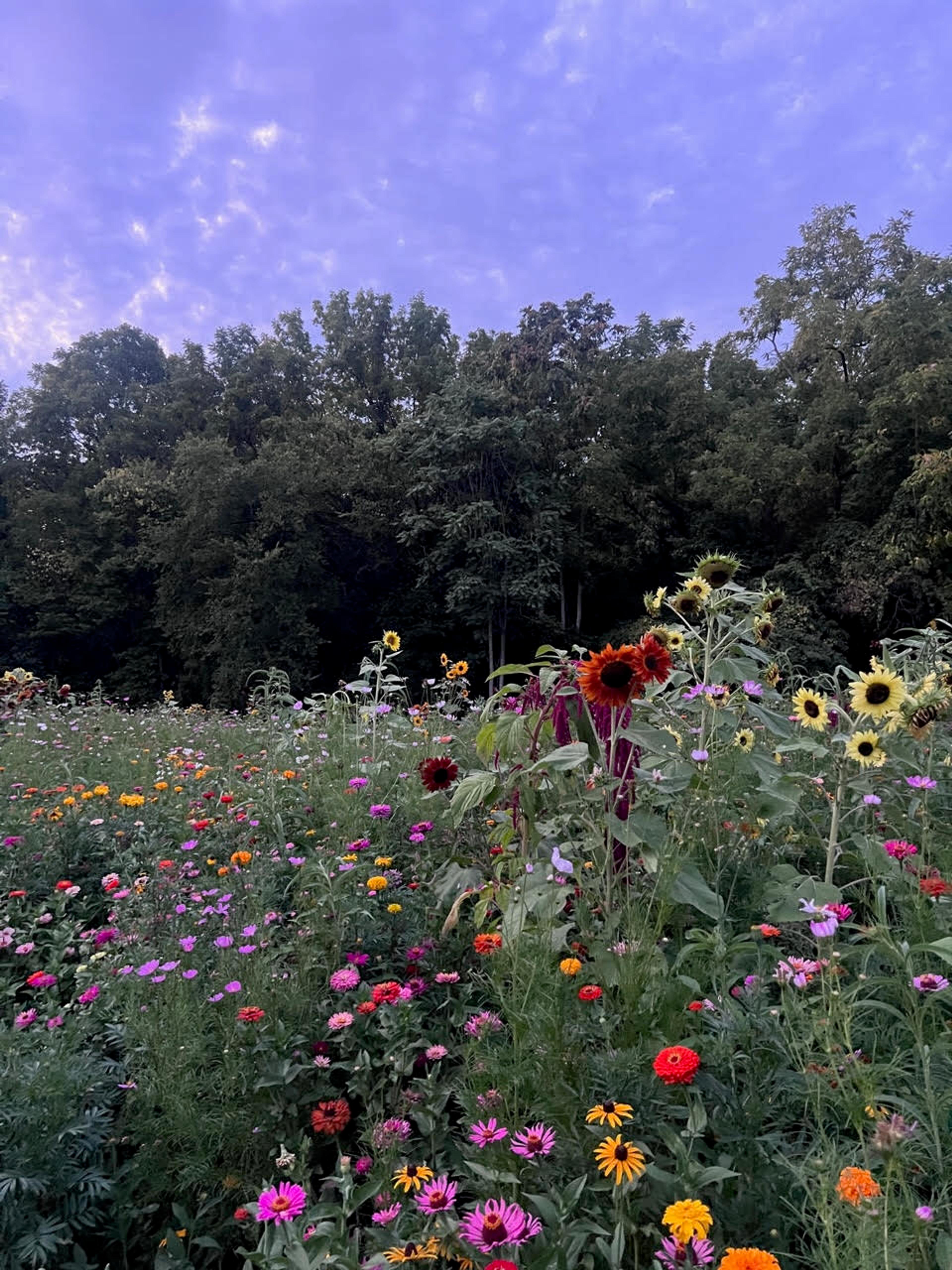
A field of flowers at Catey Heritage Farm
·Photo by Lauren Catey Dillon
Passion was part of Isabelle Barron’s decision to pursue flower farming as well. The farmer and artist behind Fairy Meadow Flowers fell in love with gardening while creating colorful planters for her grandmother, providing something beautiful to look at during her struggle with Alzheimer’s. From Barron’s three-quarters of an acre in Connecticut, they grow vibrant hibiscus and hollyhocks without tilling or chemicals; they also create floral designs for events. Similarly, Kate Farrar grew up gardening and worked for over a decade in local agriculture before opening Foxtrot Farms in 2021. Foxtrot is a regenerative flower farm and studio in upstate New York that offers stunning, fiery arrangements well into autumn.
Hand in hand with the heart these farmers put into their work are the struggles. Domestic flower farmers are not a monolith, but regardless of size they have some shared challenges. Though the demand for flowers always exists, they cannot meet it; small-scale farmers don’t always have the capital to expand, or operate year-round. And many can’t provide the same endless, diner menu variety of blooms: Dillon noted that without paying a tremendous amount heating hoop houses with gas or forcing tulips, there’s no way in the Midwest to have things bloom throughout the winter.
And unlike the farms where we get most of our roses, the farmers I talked to take ethics into consideration — environmental impact and quality of life (theirs and their employees, if they had them) were key factors. Dillon knows firsthand the effects of using chemicals: When she worked at a local florist that used domestic flowers, she developed contact dermatitis. She won’t use them, and because of this must do more weeding to keep unwanted plants from choking her zinnias.
Meanwhile, Barron was matter-of-fact about the trade-offs they make: “The reason I won’t ever be as profitable as a corporation is because I pay my workers well.” Farrar echoed Barron’s sentiment: “[Imported] flowers are not the real cost of doing business fairly. Some customers … are happy to pay a fair price for the fruits of our labor, but there are other customers who have the global industrial agricultural price ingrained in their brain and are offended by my living wage pricing.” Taking into account what happens to the earth and its people means more effort and less profit.
Flourishing Amidst Everything
What do consumers get when they give up some convenience and pay a little more? A lot, both tangible and otherwise. Local flowers can mean fresher flowers, more artistic and unique arrangements, and a relationship with someone who knows what you like and will work with your vision. It also means flowers that are more likely to be grown in a way that respects humans and the planet. Dillon gets why people pick up grocery store roses, and is sympathetic — she’s the first to admit she doesn’t always make sustainable choices.
Although she’ll occasionally choose Taco Bell over homegrown vegetables, she’s trying to practice what she preaches as much as possible, working with other flower farmers in the region when a customer’s needs go beyond what she can provide: “If I need more flowers for a wedding, instead of calling up the wholesaler and having them send me flowers that came from South America, why don’t I just reach out to my farmer who lives 20 minutes away, find out what she has in the color palette, and go support her?”
Dillon, Barron, and Farrar have an ally in Debra Prinzing, who wants to make buying domestic flowers easier. The author of Slow Flowers: Four Seasons of Locally Grown Bouquets from the Garden, Meadow and Farm is also the creator of Slow Flowers, a free online directory for people who want to buy domestically sourced flowers. It features over 700 farmers and florists who supply local and seasonal flowers. If you can’t find domestically grown flowers through Slow Flowers, you can also Google [flower farm] + [your city], or make inquiries at your local farmer’s market.
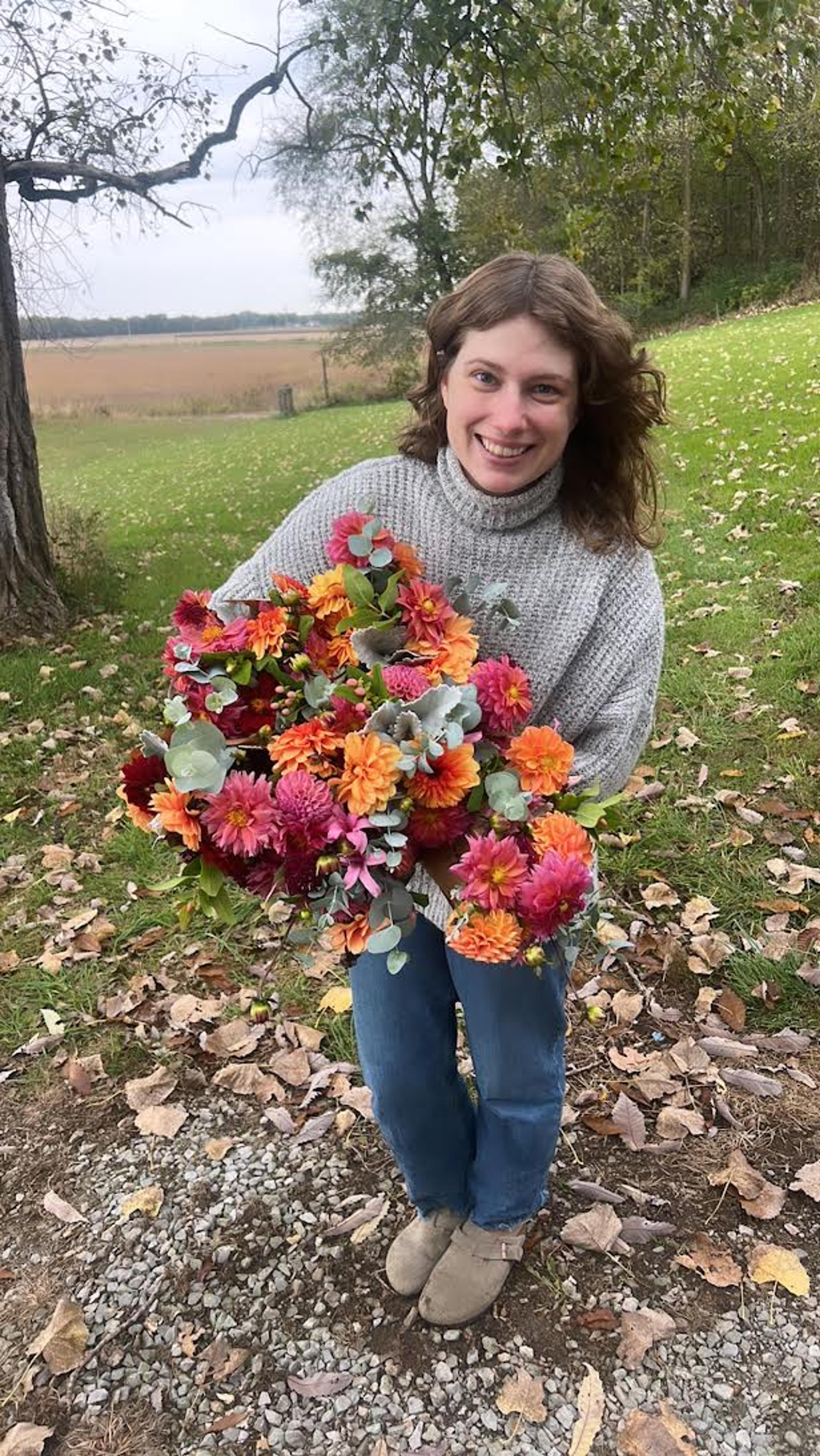
Lauren Catey Dillon on the Catey Heritage grounds.
·Photo by Jem Dillon
Prinzing is realistic but hopeful about the future: “Imported flowers will not ever disappear from our floral landscape. The industry is too deeply reliant upon the pricing model of low-cost, volume flowers produced offshore.” She knows that garish arrangements like Teleflora’s Bee Well bouquet are not going away anytime soon, but she also sees a definite movement in a more sustainable direction. Slow Flowers partners with the National Gardening Survey to assess consumers’ attitudes and behavior around local flowers; an increasing number of respondents state that it is very or somewhat important that the flowers they purchase are local or at least American-grown. Most importantly, consumer spending habits echo this change of heart: domestic cut flower sales have increased $90 million since 2017.
Last year’s National Gardening Survey also offers clues as to why the money is moving: When consumers were asked to rank the importance of buying local and domestic flowers and floral arrangements, the top answers were “Helping family-owned flower farms to keep jobs in my region” or “Backing my community’s economic growth.” Why these answers were prioritized over those like “Minimizing the carbon footprint of moving perishable products like flowers” isn’t clear, but perhaps it’s because climate change can seem abstract, while buying locally is tangible and immediate.
Whatever their reasons, more and more people are willing to invest effort, money, and trust into a beautiful present and a more humane, collectivist future. Prinzing believes that the needle will continue to move, with just a shift in mindset: “Our florists highlight the sustainable benefits of sourcing in-season flowers. That means you might have a different-looking floral arrangement in December in Chicago,” she said. “The Slow Flowers philosophy aims to redefine ‘beauty’ as different than having any flower, any time, all year long.”
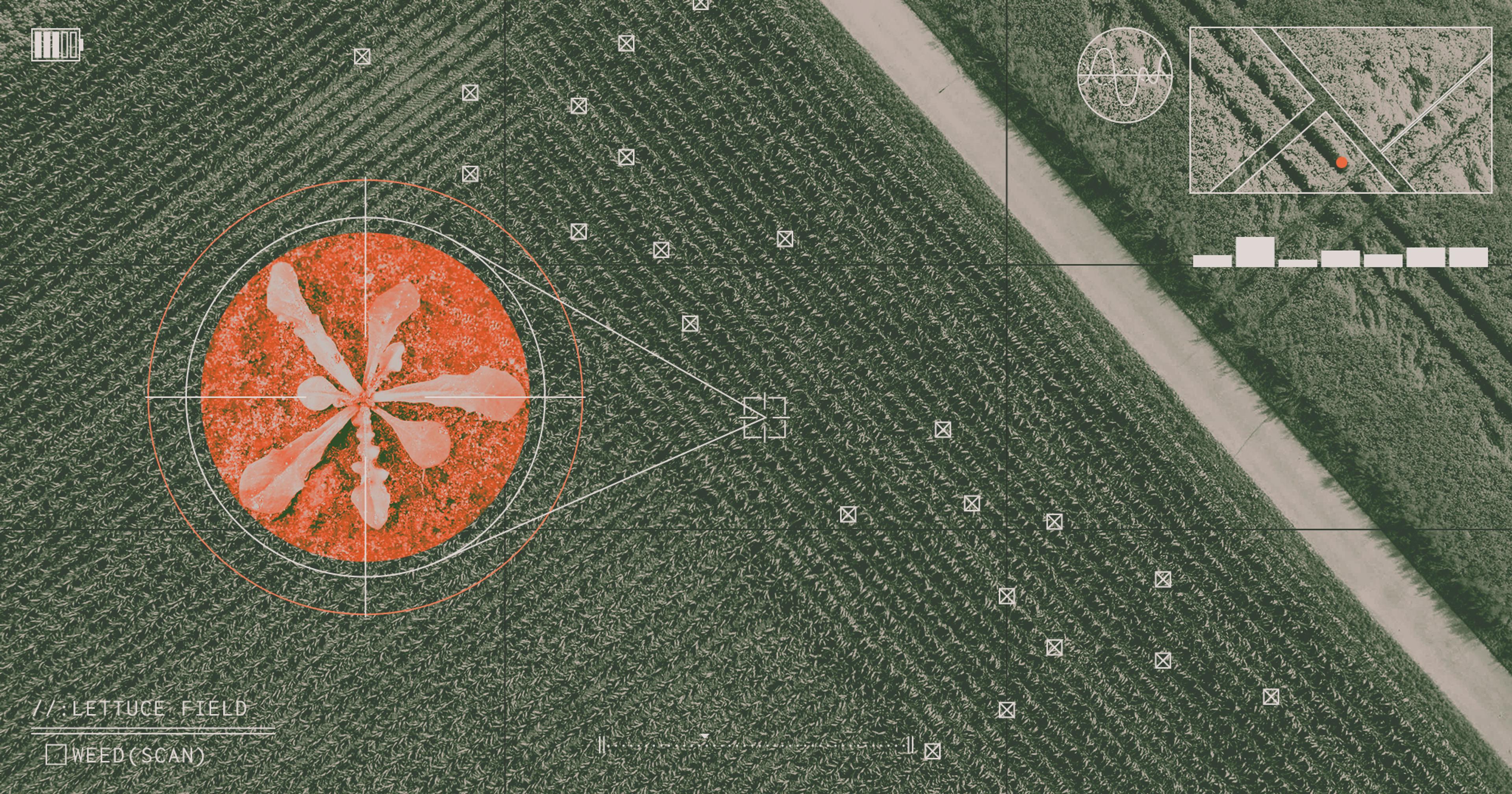
On a warm day in early August, Sean Iliff pressed a few buttons on an iPad and waited for the laser jets to warm up. Before him was a boxy white machine about 20 feet wide, hitched to a tractor and perched over a field of lettuce — one of the key crops grown in the town of Hollister, an agriculture hub on California’s central coast. Iliff, who works for a company called Carbon Robotics, was there to demonstrate the new device before a crowd of curious farmers, researchers, and agtech experts. They craned their necks as beams of infrared light, invisible to the human eye, shot out of the bottom of the machine, hitting the soil with an audible sizzle.
If the field had contained weeds — the laser’s intended target — they would have been burned to a crisp. But a farmer wouldn’t have to do much besides operate the tractor that pulls it, because the LaserWeeder, which claims it can cover two acres and kill up to 300,000 weeds per hour, decides where to fire its lasers using artificial intelligence, or AI. Designed by a team of engineers in Washington state, it’s been trained to recognize weeds from crops, and to shoot the beam at the weed’s meristem, killing it close to the root.
“Other machines have to be programmed to fit the crop that they’re in,” Iliff said. “This machine learns on its own.”
The LaserWeeder may be the only one of its kind on the market, but it’s part of a wave of technology companies using AI and robotics to help farmers deal with weeds. From mechanical arms that pluck the pesky plants out by their roots to drones that spray herbicides directly onto their targets while avoiding crops, these devices are already starting to replace expensive and difficult-to-find human labor. And those that allow farmers to avoid using chemicals hold particular promise for organic agriculture, where weeds threaten to compete with and ultimately damage produce.
“[Farmers are] much more vulnerable in organic systems than they are in conventional,” said Steven Fennimore, a weed ecophysiologist at the University of California, Davis. “So the potential for automated technology to benefit is vastly more important for organic, because they have so little pesticide protection from weeds in any way.”
Agricultural AI isn’t limited to weeding, of course. In 2021, 87 percent of agricultural operations in the U.S. reported using some form of AI to manage their farms, according to Relx, an analytics company. Meanwhile, market research placed the value of the U.S. agricultural AI market at $1.63 billion in 2022 and predicts it will reach $7.97 billion by 2030. AI services can help farmers decide what to plant and when to plant it, making predictions based on satellite images, soil health measurements, and weather data; others take the form of chatbots, similar to OpenAI’s ChatGPT, which farmers can turn to with questions about the health of their livestock or how much fertilizer to use. But these virtual assistants have received pushback from farmers who say they can give inaccurate or misleading answers; researchers have suggested that AI models in agriculture need “thorough monitoring and testing” before they are widely implemented.
AI-powered robots, on the other hand, are having much more success tackling repetitive, physical tasks like planting, spraying chemicals, and especially weeding. The technology got its start more than 10 years ago in Europe, Fennimore said, where farmers dealt with more acute labor shortages than in the U.S.. In response, companies like ecoRobotix, based in Switzerland, developed innovations like a fully automated, solar-powered robot that sprays herbicides more efficiently, claiming it can reduce chemical use by 95 percent. Other kinds of precision sprayers, like John Deere’s “See & Spray” system also reduce herbicide use; rather than replacing human laborers, they help overburdened farmers to keep costs down and adapt to increasingly stringent pesticide regulations, Fennimore said.
“The potential for automated technology is vastly more important for organic, because they have so little pesticide protection from weeds in any way.”
Chemical-free robotic AI weeders have taken longer to hit the market, but they’re now proliferating throughout the U.S., where shifting demographics and restrictive immigration policies — along with low pay and difficult working conditions — have led to a severe labor shortage, with less than half of fruit and vegetable growers reporting access to adequate labor in 2023. Carbon Robotics has distributed more than 100 LaserWeeders around the country; though the company wouldn’t disclose its prices, farmers have said the upfront cost hovers around $1 million. Those who can afford it, though, say the benefits are clear. Sabor Farms, a 3,000-acre operation in Salinas, California, finds it particularly useful for leafy greens that face significant threats from weeds, especially when grown without chemical inputs, said farm manager Pete Anecito.
“When we’re talking about high-density planting, the entire bed top is planted, and so trying to get any sort of mechanical weeding mechanism in there has not been possible up until now,” Anecito said. “It’s all been by hand. So we’ve been able to cut down on that hand labor significantly.”
Other AI-powered devices on the market are trying to replace human labor for other needs farmers might have, like monitoring crop counts and soil health. Aigen, which is also headquartered in Washington state, created a solar-powered, autonomous robot that continuously roams around a farm, plucking weeds while gathering data on irrigation levels and the presence of insects. The robot — which founder Kenny Lee called a “Roomba for the farm” — can cover about 40 acres in a growing season. The company deployed around 50 devices this year on sugar beet fields in North Dakota and Minnesota, and is targeting large soybean operations next. Its goal, Lee said, is to center farmers’ needs first by creating a device that helps make their business more financially sustainable in the long run.
“It sleeps on the farm and wakes up on the farm,” Lee said. “If you were to have eyes and ears on the farm at all times, what would you ask it to do?”
“If you were to have eyes and ears on the farm at all times, what would you ask it to do?”
Though the promise of AI for agriculture is great — especially in the organic industry — its applications have been limited so far, said Eric Gallandt, professor of weed ecology and management at the University of Maine. Most of the AI robot weeders on the market today are designed for large farms spanning thousands of acres, Gallandt said, while the needs of small organic farmers — who manage much fewer acres and aren’t able to afford large, expensive machines — aren’t yet being considered.
Adapting the technology to work on smaller farms will come with its own challenges, Gallandt added. The terrain can have more irregularities, creating obstacles for robots that are used to moving across flat ground. Weeds can also be clustered more densely, overwhelming the machines if they’re not built to keep up. But the potential benefits are exponentially greater, with small organic farmers facing existential threats from labor shortages as well as climate change.
Right now, there are few signs that agricultural AI startups intend to consult with smaller farmers and design products around their needs, a “bottom-up” approach that Gallandt supports. But the few devices already on the market show what can be possible; one farmer he knows has been using a KULT Kress weeder, which isn’t fully autonomous but comes with a camera and can replace a crew of four human laborers at what he estimates is a fraction of the cost of the Carbon Robotics LaserWeeder. Even cheaper robots, like the $150 Tertill, have very simple sensors that differentiate crops from weeds by their size. It’s not particularly useful in its current form, Gallandt said, but demonstrates just how accessible these devices can someday be.
“The increasing pressure of labor and climate are going to really motivate farmers to look carefully at any automation that comes along that seems like it’s designed for their farming systems,” Gallandt said. “They watch the very cool YouTube videos of these giant fields in California, and they don’t look at that technology as anything close for them yet, but I think they realize it’s coming.”

One might say that weeping on the ground is a dramatic reaction to discovering a few chewed-upon tomatoes. I found them scattered in a haphazard trail originating in the 8x4 raised bed where I’d chosen, in an idealistic commitment to maximizing the usefulness of my tiny plot of land, to attempt to grow vegetables for the fourth summer in a row.
When I discovered the first damaged fruit, abandoned in the soil under its parent plant, a chunk removed to expose its soft seeds and pink innards, I yelled to no one: “GROUNDHOG!” Six more underripe specimens, each tasted and discarded, marked the way to one green tomato rolled dejectedly under a row of hostas — that, for some reason, was the one that broke me.
I am a dramatic person. I am also a vengeful person, something I’ve long suspected, now fully confirmed over the course of a prolonged battle with a six-pound rodent. The act of cultivating food from the earth, I believed, was supposed to be a meditative practice, something to bring me closer to nature and all that is wholesome and good. Instead, it brought out a furious, territorial, even violent part of myself — one that did not want to commune with nature, but control it.
There were two reasons for this, driven by philosophy and fantasy in equal parts. As an environmental journalist, I knew that the easiest way to know the source and footprint of what you eat is to grow it yourself. Beyond that, the act of growing food on one’s own land — however small — felt like an almost biological imperative. In Orwell’s Roses, the writer Rebecca Solnit’s biographical essay collection about the writer George Orwell and his love of gardening, she describes the grander significance of the act of home gardening:
“...[L]et it mean a collaboration with the world of and work of plants, the establishment of tending of a few more carbon-sequestering, oxygen-producing organisms, the desire to be agrarian, settled … To garden is to make whole again what has been shattered: the relationships in which you are both producer and consumer, in which you reap the bounty of the earth directly, in which you understand fully how something came into being.”
After years of living in brick-bound apartments in Seattle, I had purchased a little rowhouse in Pittsburgh, and I was determined to reap the bounty of my 15-foot patch of earth. I would pluck the ingredients for summer salads straight from my backyard, ideally while clad in Americana-chic cutoffs and a wide-brim hat. (Therein, the fantasy.)
The first spring that I spent in that house, I built a raised bed from a cheap Home Depot kit and filled it with soil and compost I made over the winter in an overcrowded rotating bin. I planted seedlings with very little research on what would grow well together in a fairly compact space, and was delighted when about half of them did indeed produce edible things. The next year, I was more intentional about what I planted. And the following season, this year, as though he’d been apprised of my gradually refining efforts, the groundhog appeared.
At first we lived in a state of détente. He had made his home under my neighbor’s porch, and in the mornings and evenings would tentatively emerge from a gap in the fence and sniff around my patch of grass. I would run to the kitchen window at every rustle of leaves, carefully observing his patterns of movement; I’d take photos of him under cover of my rusting fire pit, examining his black eyes closely to determine if he was watching me too. Eventually I began to notice more advanced incursions: an erosion of zucchini leaves, a chewed-up delicata squash, the disappearance of lettuces. And then within the space of a few days, he ate every single tomato within reach.
You are growing food for your family, and the groundhog constitutes a threat to that practice. You have to get rid of it. Protect what you’ve grown.
I felt, genuinely, like I had been robbed — a powerlessness mixed with violation and indignant rage. How dare he. (In my mind, I always assumed that the groundhog was male.) I began to research my options: capture and euthanization, which felt too brutal and also cost hundreds of dollars; poisoning his home, which I couldn’t suggest to my neighbors for fear of sounding like a murderous psychopath; or relocation, which an animal rescue employee told me would likely result in death by starvation in an unfamiliar environment.
In a desperate quest for advice from those more experienced than me, I turned to friends who had devoted years and years to gardening.
Marie (not her real name!) is an angel on Earth, an exceptionally kind, generous, and thoughtful person, who recently bought a patch of rural land on which to build a homestead. On an overcast August day at the public pool, we stood side-by-side as she dipped her nine-month-old baby in and out of the water, squealing. I asked what she would do, and Marie responded with surprisingly merciless counsel. You are growing food for your family, she explained emphatically, and the groundhog constitutes a threat to that practice. You have to get rid of it. Protect what you’ve grown.
Alice (also not her name), meanwhile, gets more joy and fulfillment out of growing produce in her community garden plot than anyone I know. She is also a committed vegetarian, which means she is probably a better person than me. And sure enough, as a Bonafide Good Person, she counseled patience and empathy: As humans, we’ve taken so much from the groundhog. Why not share what we have in return?
Her gentle suggestion reminded me of an anecdote from Wendell Berry that I read in a profile in The New Yorker. The author had asked Berry if his hallowed cabin in eastern Kentucky had ever suffered any intruders:
“The place was so inviting, I wondered if anyone had ever broken in—seeking, perhaps, a little food and a furtive night’s rest. “Yes, once,” Berry said. He was pretty sure he knew the culprit. “Someone took out a few panes and tried to get into my safe. I wrote him a note—‘Dear Thief, if you’re in trouble, don’t tear this place up. Come to the house, and I’ll give you what you need.’”
I was paralyzed by indecision and guilt and a futile desire to be a person that could peacefully accept an intruder who, all things considered, was not a threat to my well-being.
Two indisputably compassionate and wise people whom I trusted had provided polar opposite approaches to my dilemma, which made me feel only more insane and hesitant to act.
I was paralyzed by indecision and guilt and a futile desire to be a person that could peacefully accept an intruder who, all things considered, was not a threat to my well-being. I did not want to be responsible for the death of a living being. Meanwhile, the groundhog continued to feast on an endless tomato buffet.
I tried other methods of protection. I sprayed organic animal repellent, which did absolutely nothing. I installed sonar devices that were both ineffective and maddening, because I could hear them more clearly than seemingly any other animal. I put up a fence, and within a few days the groundhog learned to climb right over it. I decided to trap him.
For two days and two nights he eluded the “humane” metal trap that I baited with corn and watermelon and the tomatoes he’d sampled. On the third day, I heard a rustle in the vegetable bed from my office. I ran outside to find him cowering in its corner behind the eggplant and on top of the mint, frozen completely still by my furious presence. I could not tell, from the angle of his head, if he was looking at me. I felt like a monster, sickened by my role as a predator, shaky with adrenaline at the prospect of finally defeating my rival. With one hand I lowered the trap, sitting undisturbed nearby, into the raised bed, and with the other used a large shovel to usher my nemesis into it, as it slammed definitively shut.
My boyfriend offered to come home from work to help me move the groundhog, but I declined. I knew this was a task I had to undertake alone, without another person’s love or comfort to soften its gravity.
I laid out some flattened cardboard boxes in the trunk of my car, because groundhogs are known to relieve themselves in states of fear. I had no clear idea of where to bring him; I once went on a date with a Ukrainian doctor who advised me that if you really wanted to ensure that a groundhog would not return to your home, you had to bring him across a body of water. He was very tall, so I trusted his authority.
And so we crossed the bridge and drove through the northern outskirts of the city for an hour, ruling out one potential new domicile after another: too close to people’s homes, too close to a railroad or a busy street, too depressing.
I knew this was a task I had to undertake alone, without another person’s love or comfort to soften its gravity.
The greater Pittsburgh area is riddled with patches of thick woods, one of which I hoped would be an appropriate and abundant home for a groundhog. I finally pulled over into an industrial park on the edge of one such small forest. When I set the cage on the ground and opened it, he clung to its bars and refused to leave, which absolutely broke my heart and drove me to tears.
And then suddenly, he tore off into the trees as though I’d kicked him. (I did not.) I convinced myself for a moment that the animal rescue employee would be wrong, that this groundhog was a survivor, and would feast and flourish in his new habitat.
I returned home spent, and disgraced by the sense of relief I felt when I surveyed my little 8x4 patch and found no new tomatoes chewed on the ground. It was relief bought by violence, by the expulsion of a member of my ecosystem.
Solnit describes how gardening, for writers, is a way to escape the intangible, abstract realm of our own minds and make contact with the stabilizing force of earth. She frames it as a source of peace, a practice of sanity. But I have found myself unable to grow food without confronting greed — both in myself and perceived from an animal simply trying to feed himself in an environment in which green things and fresh vegetables are not particularly abundant.
There’s not much solace in that. But there is, perhaps, a step further down the path of self-awareness; a recognition of one’s own flaws, and how they shape how we behave in the world. And shouldn’t that be any writer’s ultimate goal?

I met Muhammad Ayub of Dancing Goats and Singing Chickens Organic Farm in the Harmony Garden — a heart-shaped covered terrace, filled with flowering plants and vines — to talk about steps they were taking to become a “care farm.” Instantly I felt my shoulders relax and my breathing deepen. I was reminded of Mary in The Secret Garden, and how she set out to discover the secrets of her uncle’s garden, bringing it back to life to regain her own happiness.
“Farmers, gardeners, pregnant mommies — we invite anyone and everyone who wants to improve their flexibility, preserve energy, and learn to rest and enjoy life,” Ayub says, as he hands me a tarp to unfold and runs to welcome the yoga instructor.
This wasn’t my first visit to Dancing Goats and Singing Chickens, a small twelve-acre farm in Yelm, Washington, just south of the Nisqually Indian Reservation and South Puget Sound. Working by day for a destination marketing organization, I’d visited two weeks earlier to interview Ayub
for an article highlighting his love of permaculture and regenerative farming. When he mentioned the work had begun to bleed over into social care I wanted to know more.
In the past six years, Dancing Goats and Singing Chickens Organic Farm has employed more than 120 marginalized people, many of whom are women who have faced trauma, military veterans, and people emerging from incarceration. The farm has become known throughout the community both for its bountiful CSAs and its commitment to creating a safe place for people who want to reconnect with the land.
Care farming — the therapeutic use of farming to promote mental well-being — is based on the model developed by the Care Farming Network (CFN), based out of Red Wiggler Community Farm in Germantown, Maryland. Since 1996, Red Wiggler has brought people with and without disabilities together to work and learn while cultivating healthy food. When founder Woody Woodroof began receiving inquiries from other farms interested in providing these services to their communities, he recognized there wasn’t a U.S. network like those in Europe. He launched the Care Farming Network in 2018 with a vision of having a care farm in every county in the country.
Care farming might be relatively new and broadly defined, but it’s been practiced throughout history. From its inception in the monasteries of medieval Europe to the incorporation of gardening and outdoor activities at asylums in the 1900s, European countries like the Netherlands and Norway recognized the benefits of care farming. It wasn’t just about growing food — it helped people with mental health struggles, learning challenges, addiction, and even loneliness.
Could the expansion of care farming in the U.S. be a solution to one of our nation’s biggest problems? Today’s farmers are experiencing a workforce crisis, our healthcare is too expensive and often unobtainable, and many are trying to shift toward more preventative care.
Research-based evidence supports the effectiveness of farm-based therapeutic strategies, such as livestock-assisted and horticultural therapy. It can be an impactful approach to providing more mental health care in the U.S., particularly in areas that are underserved by more traditional facilities. So why aren’t there more care farms here?
“Farmers, gardeners, pregnant mommies — we invite anyone and everyone who wants to improve their flexibility, preserve energy, and learn to rest and enjoy life.”
The number one reason could simply be a lack of information. While financial benefits from care farming are possible, some farmers might feel unsure about the sustainability and profitability of the model, especially if they’re already operating on slim margins. But if there’s a local demand for therapeutic farm experiences, it’s worth considering.
The CFN’s website lists fewer than 300 identified Care Farms in comparison to over 6,000 registered farms in Europe. Unlike these larger networks abroad, our government hasn’t yet put much weight or funding behind a network like the CFN.
“We’re already struggling with finding enough people to farm,” says Kate Mudge, outreach consultant for the Care Farming Network. “So, it makes sense to be strategic when we think about creating a more inclusive workforce, which care farms are great at doing.”
If you think the concept of care farming might be a bit too “woo-woo” for you or that it’s better suited for young, first-time farmers on the West Coast, keep in mind the concept was birthed in the East with the highest concentration of farms currently located in the Northeast and Mid-Atlantic regions of the country.
There’s also the possibility you could already be care farming without even realizing it. Many farmers are making employment opportunities available to more marginalized people and integrating them into a farming operation without considering themselves traditional care farms. There is a genuine need for community-based programs where young adults aging out of mental health care services can continue to learn, develop social relationships, and work toward self-sufficiency.
The Care Farming Network thinks that farm could be your farm.
“We’re seeing huge strides in people struggling with substance abuse at care farms with animal-assisted therapy.”
In 2023, with a $257,000 grant from the Northeast Sustainable Agriculture Research and Education (SARE), CFN launched a Beginning Care Farming Series which helps aspiring farms with the logistics of developing their messaging, choosing a business model (profit vs. non-profit), and choosing the right location (urban vs. rural). The grant also established a mentorship program that connects aspiring care farms with more established care farmers.
The grant provides CFN with the opportunity to fund actual research, which U.S. networks have lacked — and European countries have tenfold. In January 2025, CFN will convene a panel of researchers at their national conference for a discussion about currently existing research and what’s needed to make a case for additional support.
“We’re seeing huge strides in people struggling with substance abuse at care farms with animal-assisted therapy,” says Mudge, “with success rates of 90 to 95% program completion as opposed to 30% completion in a traditional rehab setting.”
Nicole Byers of Wild Oak Therapeutic Farm in West Linn, Oregon, has seen this transformation firsthand in her practice. Covid-19 was a serious disrupter in 2020, but also compelled new ways of working. Seeking a more natural environment in which to raise her children, Byers, a Portland licensed clinical psychotherapist found property outside of rural West Linn and began providing telehealth services from her home, eventually including Covid-safe outdoor sessions.
The experience sparked a realization: She found that therapy was more effective when her clients were able to move around freely while processing emotions. Wild Oak now offers a variety of activities, including animal interactions and gardening. Children are encouraged to get dirty and participate in animal care including feeding and socializing. Rabbits are specifically used to help kids with impulse control issues, as handling them requires slow and gentle movements.
“Animal interactions can help children with emotional regulation and boundary setting, especially when they’re interacting with goats who have no idea what personal boundaries are,” says Byers. “It gives them space to establish those boundaries which fosters bravery and self-assurance in children who might initially be hesitant or fearful.”
“We don’t judge who you are, what you’ve done, or what you look like. We don’t want to label you; we just want you to find value in your life while you’re here.”
The challenges of a single clinician running a care farm means resources can be limited, both in terms of staff and funding. (Wild Oak is for-profit, so it doesn’t qualify for state or federal funds.) This restricts the number of people they can help and has made expansion challenging. Nevertheless, Byers sees her foray into care farming as the right move. “It’s a lot of work,” she admits, “but I’m no longer dealing with practitioner burnout. I get to experience all the benefits of being on the farm that my clients do and that’s a substantial reward.”
As Ayub heads to the Harmony Garden for yoga, he shouts instructions to volunteers about morning tasks, then asks me if the back seats of my car fold down — he wants to send me home with a variety of shrubs, as well as a few dozen eggs and jars of honey. They also have baby chicks if I think we might want to add to our flock. Have I considered taking a baby goat? I live with my sister on 20 acres of western Washington farmland but we’re just getting started; I’m soaking up all of Ayubs wisdom. I can’t help but be enthralled by this cheery care farming evangelist. He clearly sees his farm as not only meeting a physical need, but also a place to feed your soul.
Both Ayub and his wife Lizzie work in medicine — he’s a family physician, and she’s a clinical social worker — but over the years they’ve become disillusioned with the modern food system’s impact on their health and that of their patients. They sell (and often give away) organic produce and fruit trees and share their love of permaculture which has been the driving force behind their farm.
“Social work has always been a part of why we exist,” says Lizzie Ayub. “I started thinking, ‘I’m a clinical social worker — how can I contribute to our farm in a way that aligns with my professional values and utilizes those skills?‘”
The couple eventually wants to provide clinical services for people who have struggled receiving more traditional therapy. In addition to providing a space for restorative yoga, they offer the farm as a meeting place for AA and NA meetings.
“We’re creating a safe space for people with no prejudice or bias against them,” Lizzie Ayub adds. “We don’t judge who you are, what you’ve done, or what you look like. We don’t want to label you; we just want you to find value in your life while you’re here.”
Consider the seemingly limitless number of living species on the planet — more than half of them are contained in healthy soils. Most are microbes: bacteria, fungi, protozoa and other microscopic organisms which, although invisible to the naked eye, are essential to agriculture, and fundamental to life on Earth.
These microorganisms play a critical role in the health, quality, and nutrition of our crops, and protect them against a wide variety of diseases, pests, and weeds. They help restore degraded soil, building its structure, and guard against floods and drought. Microbes also regulate the nitrogen and carbon cycles, playing a crucial role in capturing and storing carbon in the soil, thereby helping us combat climate change.
Hundreds of these naturally derived soil microbes or “biologicals,” traditionally used in agroecological farming, are now also applied to conventional production systems. Their market is worth almost $15 billion but, driven by growing consumer demand for healthier, more sustainable food, is expected to double in the next five years. As a result, huge agrochemical and biotech companies like Bayer-Monsanto, BASF, Syngenta, and Corteva Agriscience, are pushing to commercialize soil microbes, which they are genetically engineering to increase survival and efficiency in the soil.
Much like GMOs in other parts of agriculture and livestock production, genetically engineered (GE) microbes are proving somewhat controversial. At issue: We currently have little idea of the potential impacts these microbes could have on the soil microbial community and its vital functions. We understand the function of less than one percent of the billions of species of microbes in our soil, and even less about the interactions between these hugely diverse and complex communities. Yet the scale of release of these GE microbes is huge, and the odds of containment very small, with an application of GE bacteria releasing up to 3 trillion genetically modified organisms every half an acre.
A report by Friends of the Earth, titled Genetically Engineered Soil Microbes: Risks and Concerns, explores the potential implications of these microbes used in agriculture, and claims they are a cause for concern and a potentially serious threat to soil health.
Kendra Klein, deputy director for science at Friends of the Earth and the report’s author, said, “These are living organisms, put out into living systems — organisms that can replicate and are part of incredibly complex ecosystems that we understand very little about. We are releasing genetic sequences into the environment which have never existed before.”
Klein believes an extremely precautionary approach needs to be adopted when GE microbes are used in agriculture because the scientific evidence is uncertain, but the stakes are high in terms of human health and the environment.
“It’s reasonable to assume there will be some unintended consequences, but there is absolutely no system to monitor any potential impacts, or their spread in the environment, once released,” Klein explained. “Most microbes used in agriculture die off within a season, but if they are engineered to be more persistent, and last longer, they could become invasive and change the microbial community dynamics. And if they are pathogenic and persistent, then that could create enormous problems.”
“There’s no silver bullet or shortcuts to achieving a better functioning soil.”
At least two genetically engineered microbes are currently used across U.S. farmland, primarily in monoculture corn production. BASF’s Poncho/VOTiVO 2.0 seed coating protects against nematodes using an insecticide known as clothianidin, while an added GE bacteria provides more nutrients and higher yields by breaking up organic matter around the root. Proven, a nitrogen-fixing, gene-edited bacteria from Pivot Bio, has had its natural ability to stop fixing nitrogen turned off. Currently used on more than five million acres of corn, this GE microbe is used alongside a reduced amount of the farmer’s traditional nitrogen fertilizer and, the company claims, contributes to healthier, more productive plants.
Mitchell Craft, director of communications at Pivot, said, “Pivot Bio’s microbes provide ammonium in small amounts on the roots of crops where it is directly taken up by the plant, avoiding nitrate leaching or volatilization into nitrous oxide. The microbes produce ammonium in exchange for sugars produced by the plant, which are their food source. When the crop dies, their food source goes away, and they die.”
As yet, we do not know what the consequences might be of releasing billions of Proven microbes across millions of acres of farmland. Research has shown if a legume, such as lentils, is swamped with nitrogen, the plant will down-regulate the colonization of its nitrogen-fixing bacteria. But Pivot Bio has eliminated the ability of these bacteria to sense they are in a nitrogen-rich environment, by eliminating the “off switch” for the microbe’s process for fixing nitrogen. The negative consequences could be significant.
Joseph Amsili is a soil scientist at Cornell University’s Department of Crop and Soil Sciences, and coordinator of the New York Soil Health Initiative. His work includes educating farmers about how practices which build up organic matter, such as reduced tillage and cover crops, help regenerate soils.
“It’s like the Wild West with all these biological inoculants and people making claims that theirs is going to do this and that for the farmer,” he said. “Just adding a microbial inoculant, and expecting that you’re going to get all the benefits down the line is potentially a poorer investment than focusing on rebuilding soil health using good sustainable management practices — whether that’s cover crops, manure, or reducing tillage.”
“We don’t have enough data from field trials, or even from a controlled environment such as a greenhouse, to know what will happen.”
“There’s no silver bullet or shortcuts to achieving a better functioning soil,” he added.
Developers of GE crops and microbes are allowed to self-designate unlimited amounts of information as “Confidential Business Information” (CBI), so many details about the nature of the product can be hidden from the public. Although the Environmental Protection Agency (EPA) website mentions they have registered eight different genetically engineered microbes as pesticides, according to Klein, Friends of the Earth researchers could not even identify which microbes have been commercialized or are in the pipeline, beyond the two mentioned here.
Referring to a letter sent by Pivot Bio to the US Department of Agriculture (USDA), regarding its GE microbe, Klein explained that the entire 4-page table, which appears in the publicly accessible regulatory system, is completely blank because the information has been deemed CBI.
“Whether people are farmers, consumers, local communities, or conservation organizations, they need to be able to weigh in and collectively decide what’s okay. What are we willing to allow? What are the risks involved?” said Steven Allison, a microbial ecologist and climate scientist at the University of California, Irvine. “It’s hard with microbes, as we don’t have an existing framework. It’s uncharted territory, and we’re not sure about what the potential risks might be. We don’t have enough data from field trials, or even from a controlled environment such as a greenhouse, to know what will happen.”
Allison stressed the importance of having an evidence-based regulatory framework and said that, because the development of these GE soil microbes is still at an early stage, there needs to be more testing by industry and researchers to prove the benefits are real and the risk is tolerable.
“We need to see the evidence first — that they work, and aren’t too risky. For example, that there is a kill switch in your GE microbe that prevents it traveling too far, or to too many generations,” he said. “There are probably safeguards that can be built into this technology. These need to be in place and the data has to be collected, before I can tell you ‘Yes, this is a low-risk technology.’”
“It’s like the Wild West with all these biological inoculants and people making claims that theirs is going to do this and that for the farmer.”
Clearly the stakes of maintaining soil health are particularly high right now, in the face of relentless climate change. Soil is the basis of 95 percent of our food production. We clearly need to protect and regenerate soil, so we can continue producing food into the future, and so farmers can deal with the increasing droughts, floods, and extreme temperatures.
If a GE soil microbe could legitimately reduce the use of synthetic pesticide or fertilizer, without harming soil health or the ecosystem, this would have significant environmental benefits. But we know genetic engineering, even using techniques claimed to be “precise,” can result in unintended genetic consequences in organisms, and has the potential for profound and widespread changes.
Research has shown microbial inoculants can significantly disrupt and alter an already existing plant and soil microbial community, even when they die off quickly, by changing the overall diversity of fungal and bacterial species, and can cause visible changes to plant growth and insect communities, which are different from the intended effects of the inoculant.
Allison suggests that a more natural and effective evolutionary process could be used to manipulate the microbes in the soil, which might be lower risk and less invasive than the genetic engineering approach.
“By choosing the microbes that survive best, in the environment you want, generation after generation, after only a few weeks you might have microbes which are genetically distinct and performing differently — from natural selection, not genetic engineering,” he said.

A young woman wears head-to-toe denim, smiling demurely against a backdrop of pumpkin-topped hay bales. A yellow cowboy hat tops her perfectly coiffed hair, and an expensive-looking watch encircles her tiny wrist. It’s just one of a trend of photos proliferating on Xiaohongshu — China’s equivalent of Instagram — featuring Chinese influencers cosplaying as American farmers. They’re aspirational snaps of the glamorized countryside reverie known as American Farm Style.
Although American Farm Style leans purely aesthetic, there’s also a distinct trend of actual Chinese farmers blowing up on social media. Starting around 2020, the popularity of Chinese cottagecore influencers skyrocketed, highlighting luxurious HD pans of elaborate, made-from-scratch meals with ingredients harvested from bespoke Chinese farms. This trend emphasizes the family unit over the individual and highlights traditional tasks such as preserving meat, crafting bamboo furniture, and preparing elaborate feasts for holidays and festivals. Take, for instance, a recent video posted by cottagecore heavyweight Dianxi Xiaoge, titled The Irresistible Yunnan Mushrooms. For her 11.2 million YouTube followers, it’s a languid showcase of multiple preparations of local mushrooms, showing the entire process from foraging to cooking to serving family dinner.
It’s easy to draw parallels between Chinese “farmfluencers” and their American counterparts, and surely there is some crossover. As in the U.S., the challenges of modern urban life have led countless millions to yearn for something simpler, more picturesque. It’s unsurprising that these trends spiked during the pandemic in both countries. Yet in China, where online expression is more carefully monitored and regulated, these seemingly organic trends are connected with a government push for more young people to pursue careers in agriculture and revitalize rural economies.
As in the U.S., Chinese farmland has decreased rapidly in recent decades; according to Foreign Policy, China lost the equivalent of South Carolina between 2009 and 2019. Simultaneously, the Chinese government has been raising the alarm on how much reliance the country has on imported food for its 1.4 billion residents. Since 2004, the CCP’s annual “No. 1 central document,” which highlights the country’s policy priorities, has focused on agriculture, the countryside, and farmers.
“With their homespun videos featuring folksy charm, these influencers are increasingly seen by Beijing as convincing conduits for party-approved messaging,” according to analysis in Japan’s largest financial publication, The Nikkei. “For the mostly young and female ethnic-minority influencers, such an active presence on a Western social media platform is highly unusual, and ordinarily would be fraught with danger in China.”
Despite — or perhaps because of — the alignment with official party goals, China’s farm influencers are finding widespread traction, dovetailing with an overall disaffection with city life and 21% youth unemployment. Cottagecore star Ziqi is a living example, after trading the countryside for city life and struggling to survive. Upon returning to her family’s village home in Northwestern Pingwu, she went viral documenting daily farm tasks. Since then, the hashtag “new farmer project” on Xiaohongshu exploded into 300 million views, and the Chinese government claims that about 20 million have joined the “new farmer movement.”
Another datapoint is Become a Farmer, one of China’s most popular reality T.V. shows. The program pits ten urban youths against the rigors of agricultural life on a 450-acre farm. Beyond building a massive audience, the program helped revitalize the show’s filming location in Zhejiang province, and the participants launched a profitable produce company that now boasts more than 1.8 million followers on Douyin. The second season just aired, and an all-female spin-off is in the works.
Still from Become a Farmer
The CCP has trumpeted the show’s success, writing in an op-ed in the Communist party newsletter, “From sowing and irrigating to fertilizing and harvesting, they are no longer celebrities, but true farmers that rely on nature for their livelihood. This affects every single viewer, and allows audiences to more intuitively understand the importance of food, to cherish food and cherish life.”
Meanwhile, China’s American Farm Style mimics a mythical American agriculture sector that exists primarily in the popular imagination. Yin Muchuan, a platinum-blonde creator and self-described “outfit sharer,” plays dress up in his version of the American Cowboy 美国牛仔 aesthetic, complete with a makeup-drawn face of freckles. A silver star reading “sheriff” decorates his tan cowboy hat, and he pairs a denim shirt tucked into wide-leg black and white cow print jeans. American Farm Style fits within the larger trend of America Core, presenting the imagined version of a faraway lifestyle. America Core appears in Muchuan’s other posts, where he dresses up as a McDonald’s server or poses in front of an Ikea sign.
But just like actually working at McDonald’s may not be so glamorous, real farmers in the U.S. face unprecedented challenges today. According to the USDA’s 2022 Census of Agriculture, from 2017 to 2022, the number of U.S. farms decreased by 141,733, nearly 7%. Additionally, since 1982, urban expansion has decimated American agricultural land by more than 31 million acres. Meanwhile, farmers on the ground are dealing with everything from climate disasters to corporate consolidation to general financial hardship.
Influencer Yin Muchuan displays American Farm Style
Unsurprisingly — and similar to China — it’s a struggle to convince enough young Americans to enter the field. A future shortage of new farmers looms; the 2017 Census of Agriculture found that farmers 35 or younger only make up 9% of the nation’s 3.4 million agricultural producers. Though they may not have official government backing like their Chinese counterparts, some U.S. social media stars see their platform as an indirect recruitment tool for new young farmers.
Morgan Shaw of Gold Shaw Farm in Peacham, Vermont, boasts more than 2.2 million TikTok followers. Obviously his platform helps him make a living, but Shaw also hopes his videos can convince more young people to heed farming’s call. “If I look at my audience, many are younger and getting their first exposure to agriculture and farm animals,” he said. “For most, it’s escapism, but for others, it fuels a passion, getting them to want to start raising their own ducks, cattle, or start gardening.”
Chinese farming influencers are but one of the government’s means to bolster food security and rural revitalization, but they’re clearly seen as important. Even Pay, an agriculture analyst at the research and advisory firm Trivium China, told the Los Angeles Times, “Policymakers are going to use every single tool in their toolbox to make sure China continues to have ample food at a reasonable price. Part of that is persuading young people to pursue a career in agriculture.”
And China is surely seeing some dividends from this public relations push. The L.A. Times reported that the number of young Chinese people going into agriculture, forestry, animal husbandry, or fishing climbed from 1.2% to 1.9% in 2022, an increase of more than 200,000 people. Anecdotally, stories like this one from France’s press agency have been showcasing a trend of urban Chinese millennials leaving their day jobs to pursue careers in agriculture.
Despite differences in presentation and approach, farm content creators in China and the United States are both helping foster a new generation of potential, first-generation farmers. “Which, at least here in the United States, is something we very much need,” said Shaw. “We need our best and brightest going into farming. And if content like mine can influence the next generation to do that, I’m so happy to see that happen.”
Meanwhile, a tea farmer in China who uses the social media handle Countryside Vending Machine makes a pitch to his followers: “Maybe you will find your original self and the courage to start anew.”
To describe the 30 million acres of America’s cropland that have transitioned out of row-cropping since the mid-1980s, the term “abandoned” isn’t quite accurate. It invokes something washed-up, useless, even tragic. Instead, we could call it retired land. Land that’s going through a midlife crisis. Land that just doesn’t know what it wants to be yet. Land that some researchers believe is perfectly positioned — in its second act — to contribute to climate solutions and habitat conservation without putting a strain on farmers. And land that still has plenty of value even if it’s not producing cash crops.
This year, data scientists at the Great Lakes Bioenergy Research Center in Wisconsin published a study of abandoned cropland that gives important insight into where and when land has transitioned out of food production. Using satellite data from 1986 to 2018, the data scientists trained an AI to track and analyze patterns of cultivation over that period and managed to produce the most granular map to date of abandoned cropland in the U.S. While previous estimations of abandoned land, like the USDA Census of Agriculture, relied on county-level data, this holistic new methodology allows researchers to see what’s going on at a field level — and offer recommendations for land use tailored specifically to that field’s needs.
Tyler Lark, one of the study’s authors, said this is just the beginning of understanding land abandonment patterns in this country. “Historically a lot of the estimations have been pretty coarse and not super accurate,” he said. “This is the first step to understand what’s really going on.”
Lark’s team found land in the contiguous U.S. was abandoned at roughly 1 million acres per year during the study period. Half of that abandoned land became grassland and pasture, while almost 20 percent transitioned into shrubland or forest, and eight percent into wetlands. They also looked at USDA data from a similar period to see whether abandonment correlated to enrollment in federal Conservation Reserve Programs (CRPs), which offer landowners cash incentives to stop agricultural production on their most ecologically sensitive parcels for a restoration period of 10-15 years.
Lark was surprised that less than 20 percent of the abandoned land had been absorbed by CRPs. In fact, abandoned cropland and CRP land are fairly “distinct pools.” The next round of research, he said, will try to answer why land is being abandoned at the rate that it is, though there’s some speculation that certain abandonment hotspots may result at least partially from irrigation challenges and droughts.
Even without that information, Lark believes the new zoomed-in maps “open up all these opportunities for climate mitigation,” identifying open lands that are not reserved for sensitive habitat restoration and are also not in high demand or even viable for food production — what Lark calls the “sweet spots” for renewable energy projects like wind and solar farms.
While owners will still make the ultimate decisions about the use of their land, one “really cool application” of the data, Lark said, is that it can “identify an area that’s not a pristine, native ecosystem, but also not prime, productive agricultural lands. It could help reduce some conflict that’s arising in that sector.”
As funding for renewable energy infrastructure ramps up, there’s a growing unease among food producers who are worried we’re running out of space, and that protecting agricultural land isn’t a priority among lawmakers.
Lark believes the new zoomed-in maps “open up all these opportunities for climate mitigation.”
Senators Tammy Baldwin (D-WI) and Chuck Grassley (R-IA) introduced a bill last September that proposes incentivizing clean energy projects with clear protections for the farmland they’re built on top of. In a press release, Baldwin’s team identified that 83 percent of new solar projects through 2040 will be installed on farmland and ranchland, with almost 50 percent of these projects “placed on the most productive, versatile, and resilient land.”
Yanhua Xie, a data scientist at the Great Lakes Bioenergy Research Center and an author on the study, believes his team’s research can be used to pioneer climate solutions that don’t compromise quality agricultural land.
“We see a lot of wind and solar farms, and many of those are actually built on active cropland,” he said. “Abandoned cropland is one of the most important marginal lands for bioenergy production [and] can be used to reduce some of that competition, and keep the active land for food production purposes.”
Wildlife conservation firms have also requested the abandonment data to help inform their projects. Playa Lakes Joint Venture is one such group, focused on migratory birds in the south and western Great Plains, a huge area that includes parts of Colorado, New Mexico, Texas, Oklahoma, Kansas, and Nebraska, and is irrigated by the Ogallala Aquifer. The region also happens to be one of the biggest abandonment hotspots in the nation, per the study.
Stephen Chang, a data scientist at the joint venture, said a focus of his work is to support “agricultural transition” to “land use outcomes that benefit producers, landowners, and wildlife.” In order to do that, his team must understand the life-cycle of row-cropped land after it’s been abandoned — whether it naturally transitions to grasslands or is incorporated into a grassland CRP, and whether that transition relates to the encroachment of woody plants throughout the grasslands, which is one of the region’s biggest drivers of bird habitat loss.
“We see a strong role for landowners as stewards, because these landscapes need to be actively managed.”
“We see a strong role for landowners as stewards, because these landscapes need to be actively managed. Otherwise woody plants will move in and decrease grassland habitat for birds in our region,” Chang’s colleague, conservation design director Zach Hurst, explained. “Throughout North America, grassland birds are experiencing a significant decline. To keep lands in grass is important, and this research helps us understand a little more about when lands are abandoned and if they are going to grass or not.”
Sometimes data jargon like “abandoned land” fuels attitudes and perceptions of what’s valuable and what isn’t. But land isn’t lacking in value just because it isn’t producing cash crops. There are all kinds of applications for it — and all kinds of roles people can take in maintaining it.
“One of our primary goals is to promote outcomes across our landscape that are a net positive for birds and people,” Chang said. “The goal is always to keep land in production and to keep working lands working. It’s not to remove the stewards from [...] stewarding their lands.”
At the Great Lakes Bioenergy Research Center, Lark said there’s a lot of interest in the bioenergy potential of switchgrass, a native perennial grass found in prairies and on land that’s been left to rewild — otherwise known as land that’s been abandoned.
Grasslands need disturbance to be maintained anyway, Lark said, which can look like controlled burns, animal grazing, or harvesting. That those existing grasses can be converted to biofuels is an added bonus.
Regardless of what the data says, land is never really abandoned, and certainly never worthless. It’s just in between gigs.

A glass of Woodford Reserve is among the crowning jewels of Kentucky. The official drink of the state’s most famous cultural export, the Kentucky Derby, the bourbon shines in the light like a clear amber gemstone. Each sip lingers as it presents a complex blend of flavors, from citrus and cocoa to caramel and spice.
Yet those who enjoy Woodford — or practically any bourbon made in the Bluegrass State — aren’t tasting the work of Kentuckians alone. While its water is drawn from limestone-filtered springs, and its corn from nearby farms, the ingredient that gives good bourbon its distinctive pepper and herbal notes is shipped in from thousands of miles away.
Rye makes up 18 percent of the grain (the technical term is mash bill) used in Woodford’s flagship bourbon; the percentage for other well-known bourbons ranges from 10 percent in Elijah Craig to 28 percent in Bulleit. Rye whiskey, another popular Kentucky spirit, legally must contain at least 51 percent.
Early in the state’s history, area farmers grew enough rye to supply its distilleries. But when Prohibition shuttered alcohol production in 1920, according to Woodford Master Distiller Elizabeth McCall, the market for local rye evaporated. In response, most Kentucky farmers shifted to a rotation of monocrop corn and soybeans — by the time distilleries reopened to pent-up demand in the 1930s, domestic rye production had all but disappeared. Distillers looked abroad, sourcing the grain from places like Germany, Poland, and Canada.
In the interests of sustainability, supply chain resilience, and good old-fashioned local pride, the bourbon industry now wants to bring rye back to Kentucky. Since 2017, Woodford Reserve has been partnering with nonprofits, farmers, and academics to explore the crop’s economic potential and develop varieties suitable for the region. In 2023, the collaborative launched a five-year, $1 million program that combines support for growers, plant breeding, and distillation research. And other distillers have already started to buy the resulting grain and release bottles where it plays a starring role.
Those familiar with cover crops will note that rye is a common cool-season option for growers looking to suppress weeds, scavenge excess nitrogen, and prevent erosion. That’s true in Kentucky as well, notes farmer Sam Halcomb. Since 2009, his family has planted rye after the fall corn harvest on some of the roughly 9,000 acres they manage through Walnut Grove Farms near the state’s southwest border, preparing the soil to sow soybeans.
What’s new, Halcomb says, is letting that rye mature to harvest. Kentucky’s warm, humid climate isn’t optimal for the cold-tolerant plant, and with limited regional research on best management practices, area farmers knew their yields would be lower than in rye’s European heartland. Due to existing international supply chains, there’d be limited local demand for any product they could grow.
And unlike in Europe, where the grain is often sold as swine feed, America lacks an established market to absorb rye that doesn’t meet distillery quality standards. So Kentucky farmers generally terminate their rye crop early using herbicide or a mechanical roller-crimper, giving them a head start on soybean planting.
“There’s nobody going out knocking on doors in Kentucky saying, ‘Hey, do you have rye for sale?’”
“There’s nobody going out knocking on doors in Kentucky saying, ‘Hey, do you have rye for sale?’ Since nobody’s asking for it, nobody’s growing it [for grain],” Halcomb explained. “It’s kind of a vicious cycle.”
Policy choices have also made rye farming less attractive. Walnut Grove Farms has received funding from federal conservation programs for growing rye as a cover crop, Halcomb says, but it doesn’t qualify for that support when harvesting the grain for sale. And because commercial rye lacks a recent Kentucky history, crop insurers require growers to jump through extra hoops when seeking coverage and offer less generous terms.
In response to those economic headwinds, the rye project collaborative is giving Halcomb and three other Kentucky farmers a $5,000 annual stipend to grow 26 acres of rye each. Woodford then guarantees the purchase of all the grain from those acres at a premium compared to the commodity market.
“The program is intended to de-risk taking on a new crop,” said executive director Barbara Hurt of the Louisville-based nonprofit Dendrifund, which committed $500,000 and helps coordinate the project. “The farmers are putting in a lot of effort and in-kind value to the program, and we want to make sure it doesn’t hurt their bottom line.”
Another chunk of funding backs the work of David Van Sanford, professor of wheat breeding and genetics at the University of Kentucky. He and grad student Ela Szuleta evaluated nearly a thousand rye varieties from across the world, narrowing them down to about 40 that are most suitable for the state. Many originally hail from the Balkans, the European rye region with the closest latitude to Kentucky.
“The farmers are putting in a lot of effort and in-kind value to the program, and we want to make sure it doesn’t hurt their bottom line.”
With that genetic material as a starting point, Van Sanford hopes to breed an open-pollinated rye that matures quickly, thereby avoiding the worst of Kentucky’s heat and allowing farmers to plant their soybeans on schedule. He also aims to incorporate resistance to fusarium head blight, a fungus that can make rye toxic to consume, and a dwarfing gene to keep the plants from growing too tall and falling over in the field.
“I still feel like we’re at the fairly steep part of the learning curve,” Van Sanford admitted. But he’s encouraged by Kentucky’s history of wheat research, which has roughly doubled yields over the past four decades through improved varieties and management. Within the next five years, he says, it should become clear if similar improvements are possible for the state’s rye.
Meanwhile, McCall is hard at work evaluating Kentucky-grown rye for its distilling potential. Her team at Woodford is making small-batch whiskeys and serving them to a highly trained panel of judges, who taste for distinctions between rye varieties or grain grown in different parts of the state. She says the native product generally has a bolder character when it first comes off the still, with more floral, fruity, and spice notes, but that those differences tend to mellow with age.
Yet only a handful of boutique distilleries are currently selling whiskeys made with Kentucky rye. Examples include Monk’s Road Rye Whiskey by Log Still Distillery and the Kentucky Straight Rye Whiskey by Wilderness Trail. Bigger players are taking their time: Woodford only plans to release its first bottle with Kentucky rye as part of its premium “Master’s Collection” in a few years, while Heaven Hill will incorporate it through a limited-run “Grain to Glass” series.
McCall hopes that the locally grown grain will one day be much less of a novelty. “We’re committed to normalizing Kentucky rye, and hopefully mitigating the premium cost of it,” she said. “The dream is that it’s comparable to your standard rye that we’re getting now. And I think we’ll get there — it’ll take a long time, but I think we’ll get there.”
When Indiana row crop farmer Aaron Krueger planted oats and radishes in 2018, his goal was to stop soil erosion. Because of how the land had been farmed previously, water was running right off the topsoil instead of penetrating the ground.
“There was a lot of sheet and rill erosion,” Krueger said. “I got tired of seeing that.”
But planting cover crops soon became more than a way to combat erosion: Krueger also saw increased earthworms and porosity, which helps move water and air through the soil. Now he manages a conservation cropping system that includes cover crops and no-till practices. He’s reduced herbicide and insecticide use and hopes to add cattle to graze the cover crops in winter.
Cover crops are very much in fashion at the moment, gaining high-profile endorsements from celebrities and politicians — not just practitioners like Krueger. But beyond the provable benefits, they’re also being sold as the next big thing in climate change mitigation; the U.S. Department of Agriculture (USDA) is investing billions in cover crop promotion to address climate goals.
The Breakthrough Institute, a controversial climate think tank known for floating heterodox ideas, recently released a report that questions whether cover crops deserve such a high level of funding and attention — the institute estimates $2.5 billion of the USDA’s $19.5 billion from the Inflation Reduction Act will be directed to farmers for planting cover crops. They argue our mitigation efforts would be better directed toward practices like improved fertilizer management and modifying livestock feed.
Talk to farmers like Krueger and you’ll have no doubt about the overall value of cover crops in sustainable farm management plans. But is there any truth in the critique?
Other Ways to Tackle Greenhouse Gasses
In the recent report, Dan Blaustein-Rejto, director of The Breakthrough Institute’s food and agriculture program, argued that because cover crops don’t demonstrate as strong a direct climate change benefit as other practices, climate-change funding should be diverted to those other practices.
“The climate mitigation benefits of cover crops are being overstated,” Blaustein-Rejto said. “The carbon sequestration benefits, in particular, are really overstated. Money that’s focused on climate mitigation could probably have a bigger bang for the buck if it was directed elsewhere.”
Blaustein-Rejto supports cover crops for soil erosion reduction and water quality improvement, and he supports using government funds toward their adoption. But he wants to see more rigorous, quantitative studies that demonstrate cover crops reduce emissions of gasses like carbon dioxide, methane, and nitrous oxide before farmers receive funds to plant them.
“The climate mitigation benefits of cover crops are being overstated.”
“It’s frustrating that they’re not able to identify first what would be the most effective in terms of using this money,” Blaustein-Rejto said.
Blaustein-Rejto said that while carbon sequestration has a role to play in climate-change mitigation, practices like nutrient management and agroforestry should receive more funds because of their direct climate mitigation benefits. He added there are also several ways to reduce methane emissions, such as manure lagoon covers or anaerobic digesters that create energy from manure.
“There’s a whole suite of new approaches to cut those enteric methane emissions from cattle, like feed additives,” Blaustein-Rejto said. “People are starting to invest more money to develop vaccines that might be able to reduce methane emissions.”
Cover Crops and Climate Resilience
For proponents of cover crops, these grasses and legumes are part of a systemic approach to farming that improves soil and water quality, which in turn benefits the climate.
Kirsten Workman, senior extension associate for PRO-DAIRY at Cornell, works with dairy and crop producers on nutrient management and environmental sustainability.
“No matter what practice we’re looking at, researchers would say we don’t have enough data yet on any of those,” Workman said. “Cover cropping is a huge win-win-win on so many fronts that disincentivizing on any level is shortsighted.”
She said that cover crops reduce indirect greenhouse gas emissions by keeping nutrients on the farm and reducing the need for fertilizer.
“The idea of cover cropping, helping build a resilient soil and crop system, is not only about emissions, but about resiliency to our increasing extreme weather,” Workman said. “I hate to downplay those benefits, and they’re really hard to quantify.”
“Cover cropping is a huge win-win-win on so many fronts that disincentivizing on any level is shortsighted.”
To increase a farm’s climate resiliency, Gary Bentrup, research landscape planner with the National Agroforestry Center, said that farmers can integrate windbreaks, forest buffers, or silvopasture into their systems. With recent extreme weather events, such as Illinois’ deadly dust storms in May 2023, he said farmers need “all the tools in the toolbox.”
“What best suits the environment, the landscape, and producers’ objectives?” Bentrup said, adding that more frequent extreme weather events require “a multitude of practices to hedge your bets.”
To aid with climate resilience, Blaustein-Rejto wants USDA to develop standards for cover crop management so that the practice truly is climate-smart. For instance, he suggested planting legumes rather than grasses, which would provide nitrogen to subsequent crops, reducing fertilizer and fuel emissions.
Krueger agreed some cover cropping strategies are better than others. Timing and species make a difference. Krueger plants his cover crop mixtures in September or October and lets the plants grow to five feet and three tons of biomass, then rolls them down in May.
On some farms, however, cover crops aren’t planted until November. Then, in March, they’re worked into the soil through tillage or sprayed with herbicide.
“In that case, does that cover crop even have any benefits toward climate change?” Krueger asked. “I don’t know, but I know it’s not having as much benefit as the way I’m managing it.”
“Cover cropping helps producers’ total systems work better, quicker, and longer. That’s a great win for climate.”
Kate MacFarland, an agroforester with the National Agroforestry Center, said that conservation and production practices are most effective when thought of as a system and landscape.
“It’s not an either/or,” MacFarland said. “We can’t do everything all at once, but you can find ways to find practices that fit the conservation goals of an operation, the production goals of the operation, while at the same time preparing that operation for what’s coming in the future.”
Workman said that cover cropping provides benefits for the total farm system.
“Cover cropping helps producers’ total systems work better, quicker, and longer,” she said. “That’s a great win for climate.”
A synergistic system like Krueger’s can also help farmers make improvements to their operations. And when the system is right, he said, farmers can change microclimates.
“Rather than having these heat islands where the solar radiation is bouncing back up into the atmosphere, you would essentially be absorbing it into the plants,” Krueger said. “Regardless of anything that man has ever created, the greatest carbon-capturing machine that there is on the face of the planet Earth is a plant.”
A Climate-Smart Farm with Multiple Benefits
Krueger said farmers’ opinions on planting cover crops vary, from “never going to plant them” to “only will plant them if there’s incentives.”
“If this climate-smart funding deviated from cover crops, I think it would drastically slow down the adoption of these practices,” Krueger said.
While not disagreeing, Blaustein-Rejto said that the future demands creative thinking around climate change.
“There really is a huge need for innovation in the development of new technologies and practices,” he said, “and much more data to develop the next generation of climate-smart farming practices and climate-smart farms.”
“If this climate-smart funding deviated from cover crops, I think it would drastically slow down the adoption of these practices.”
Right now, the most popular pathway to a climate-smart farm is cover crops. Beginning cover croppers are advised to plant them on the back 40 and see how the cover crops affect yields, weed control, and fertilizer needs. Alongside the cover crops, farmers can add more practices to create a conservation cropping system that’s right for his or her farm, as Krueger did.
Cover crops are only one component of the system, and they require good management to show climate-smart benefits. But the choice of what practice to use to mitigate climate change doesn’t have to be an either/or, as MacFarland noted: Multiple climate-smart methods can be used at the farm level.
Along the way, researchers can gather the needed data on these conservation cropping systems’ greenhouse gasses while rural and urban communities reap the benefits of better water and soil quality.

The complicated relationship between food producers and wild animals is an age-old saga — cattle ranchers and wolves, home gardeners and rabbits, ranchers and beavers. Birds are no exception; the wrong species can decimate a farmer’s entire crop, but if managed effectively, birds can also offer crucial pest control.
The cost-benefit analysis might seem simple on its face: If birds have the potential to be problematic, keep them away from your crop and utilize pest control methods that seem more reliable. But, of course, it’s not that simple.
A 2019 report by the Cornell Laboratory of Ornithology found that North America has lost nearly 3 billion birds since 1970 — as in, nearly 30 percent of the total population of breeding adult birds has vanished in the last 50 years. More than 90 percent of those losses are seen in just a few common species such as warblers, finches, sparrows, and blackbirds. The researchers peg this dramatic decline as an environmental crisis; birds are a crucial part of our ecosystem, serving major roles in pollination and seed dispersal.
Farming — specifically the large-scale, mechanized monoculture that’s become more prevalent in the last half-century — is a major contributor to this crisis. A 2005 article in Science identified agriculture as “the greatest extinction threat to birds,” primarily because of the loss of natural habitats, interactions with farming equipment, and death from pesticides.
“Agriculture’s footprint is taking out habitat and water resources,” said Jo Ann Baumgartner, executive director of the Wild Farm Alliance (WFA). “Then there’s the pesticides that harm birds, and those pesticides also harm the food source: the insects that birds eat and the plants that support birds.”
The WFA is a non-profit organization dedicated to increasing biodiversity by expanding the idea of wild farming, a practice that both supports and benefits from untamed nature. The WFA promotes the presence of flowers, native trees, shrubs, and wildlife on farms. It also encourages farmers to keep as much soil as possible covered in plants (crops or cover crops) to control erosion, provide habitat for wildlife, and promote the build-up of carbon in the soil.
The WFA advances these principles through three primary programs: the Farmland Waterways Trail, the Farmland Wildways Trail, and the Farmland Flyways Trail. Each of the trails is intended to create a connected network of wild space across North American farms. The WFA also encourages organic farming practices, endeavoring to create a more holistic, closed-loop system in which nature and farmers are working in collaboration rather than opposition.
The Farmland Flyways Trail is WFA’s effort to address the crisis of bird decline. It encourages farmers to invite birds onto their farms with nest boxes, perches, and native plantings, and also gives lessons on how to manage the birds to mitigate crop damage. Participation in the trail is free and self-monitored, and farmers can register with a simple online survey.
“We watched these birds … swoop down and get the army worms. We have really seen a decrease in our pest population.”
The WFA tracks participating farms on the Farmland Flyways Trail map, which currently includes 200 farms with about 2,000 bird boxes across the country. Most of the farms are concentrated on the West Coast, where the WFA is headquartered (a new satellite office was recently established in Minnesota).
A number of studies and reports indicate bringing wild birds onto the farm is often a net positive for farmers. Much of this evidence can be found in the publication Supporting Beneficial Birds and Managing Pest Birds, a resource authored by the WFA in collaboration with Sacha Heath, now a senior scientist at the San Francisco Estuary Institute, and Sara Kross, a senior lecturer at the University of Canterbury in New Zealand.
“The literature is showing benefits after benefits after benefits from doing things like planting native hedgerows for farmers,” said Kross. “They are often bringing in insectivorous birds and birds that provide benefits to the farm and not necessarily increasing the number of pest birds and the amount of damage from pest birds. So that bird equation seems to be tipping more on the beneficial side than the cost side.”
Pest birds are birds like crows and starlings that tend to flock, creating large groups that can do quick damage to a farmer’s crop. Hedgerows, one of the strategies promoted by the WFA, are actually found to discourage flocking birds, which prefer to forage in large, open areas.
Some species of songbirds may switch to a plant-based diet during certain parts of the year, thus becoming a pest by feeding on a farm’s crops, rather than the insects. There are usually specific times in the growing cycle when this becomes problematic, and the WFA offers a variety of strategies for addressing this, including visual and audio scare tactics and crop exclusion (netting). Farmers can also discourage pest bird behavior by allowing the first few rows of a crop to go to seed, providing a non-crop food source for the birds, and also by inviting predatory birds like raptors and kestrels to the farm with additional perches and nest boxes.
Supporting Beneficial Birds and Managing Pest Birds looks at the role of various species of birds in several different types of farms, including nut crops, fruit fields and orchards, mixed crops, grasslands, and pastures. An appendix of 118 avian pest control studies found that, in most cases, birds provided valuable pest control and inflicted negligible damage to the farmer’s crop.
“I have not seen a single drawback.”
“We are really trying to help growers understand why habitat can be beneficial in all these different ways,” said Baumgartner.
The organization’s goal is to reach 500 farms and 5,000 bird boxes within the next two or three years, by inspiring more farmers to install boxes and also capturing data about farms that have existing boxes.
Mountain Sun Farm, an organic vegetable farm in Mentone, Alabama, is the only farm in the Southeast that’s listed on the map. Owners Liz Simpson and her husband Brian installed five bird boxes on their property at the end of 2021, and since then, they’ve also increased native pollinator plantings like buckwheat, sweet alyssum, and sunflowers to provide additional food sources. The Simpsons report dramatic improvements in pest control. Before installing their bird boxes, the farmers were in a constant battle against destructive cucumber beetles.
“We would see them starting in February or March,” said Liz Simpson, “and they would go all year. It seemed like year-round we would have these cucumber beetles. I don’t know what type of bird would eat those, but we seem to have them because” they’re seeing a lot less beetles.
Army worms were another pest that attacked a cover crop field of sun hemp at Mountain Sun Farm.
“While Brian was mowing it, we watched these birds … swoop down and get the army worms,” said Simpson. “We have really seen a decrease in our pest population.”
Simpson thinks that their diverse crop array is advantageous in terms of the benefit they see from the birds.
“This is not some new, hippie thing to be doing. This was mainstream farming only three or four generations ago.”
“Growing a diverse range of crops helps us with that: If we lose something because of a pest bird, it’s okay,” she said. “But if you’re growing one crop and [a specific bird species is] a pest of that crop, I can see how it would be pretty scary to build houses and invite [other birds] along.”
Kross highlights that the correct type of box is important: The entrance hole needs to be the right size because if it’s too large, it can be accessed by starlings, which can often become a pest bird.
“But if [the entrance holes] are small,” said Kross, “they’re going to support tree swallows and bluebirds and wrens and other cavity nesting birds, most of which are insectivorous. So they’re usually providing benefits to farmers by then going out and eating whatever’s most abundant, which is often the thing farmers don’t want a lot of in their fields.”
In 2022, WFA monitored 174 boxes across the central coast of California and found nearly three quarters of them occupied, mostly by Western bluebirds. Honig Vineyard and Winery in Rutherford, California, started putting up nesting boxes in their vineyard 15 or 20 years ago, primarily to invite bluebirds onto the vineyard for pest control.
“Putting bluebird boxes in vineyards has been going on for quite some time,” said Kristin Belair, director of winegrowing and sustainability at Honig.
In addition to bluebirds, the vineyard also encourages the presence of predatory birds like barn owls and kestrels, which have helped control the rodent population. Belair estimates there are around a hundred nesting boxes on their property.
“I have not seen a single drawback,” Belair said. “We’ve done a lot to enhance biodiversity around the vineyard and we feel that we’ve gotten a lot of benefits from doing that.”
“Being organic is not a prerequisite, but we do caution growers about using pesticides.”
The concept of inviting birds onto your farm is not new. In 1885, the USDA established the Division of Economic Ornithology and Mammalogy, the first federal agency that was responsible for birds. The division was a precursor to the U.S. Fish and Wildlife Service and its primary role was to study the positive effects of birds on agricultural pests. Kross explained that it wasn’t until after the World Wars, when chemical pesticides became more widespread and available to farmers, that using birds for pest management fell out of practice.
“Only a couple of generations ago,” said Kross, “farmers were learning about and really encouraging birds to come onto their farms to be the natural enemies of pest insects. This is not some new, hippie thing to be doing. This was mainstream farming only three or four generations ago. So it’s a little bit unfortunate that we have lost that understanding of the value that biodiversity can bring onto our farms.”
In addition to the general biodiversity benefits and sustainability aspect, bird boxes also have the tertiary benefit of reducing the need for on-farm pesticides.
“Being organic is not a prerequisite, but we do caution growers about using pesticides,” said Ashley Chesser, communications director for the WFA. “The goal is to create a holistic ecosystem where the beneficial birds and insects keep the pest insects in check. Spraying will kill off the insects the birds need to survive and can have negative impacts on the birds directly as well.”
Simpson remembers the temptation to use the strongest sprays permitted for organic farmers in the early days of their farming career.
“It’s hard to make a living farming,” she said. “The first few years, we were just in survival mode and we were just trying to make enough money to survive and the cost was so high. It was like, if this crop does not work and we can’t sell it, how are we going to farm next year? And so you get desperate.”
The WFA isn’t ignorant of the narrow margins that farmers face. Baumgartner herself was an organic farmer in the 80s and 90s.
“I really understand how hard farming can be and how farmers are on the edge of making a living or not,” she said. “Nature’s messy. It’s not like in every situation birds are great. But we can tip the scales towards having birds be beneficial on the farm. We can change things around.”
Of course, the benefits of wild farming and using farms to support the bird population cannot be assessed just by profit margins. There is an intrinsic value to supporting the natural world — humans feel more at home and relaxed in a space that is rich with plant and animal life than one that is bare and monotonous. Furthermore, increasing natural habitat on farmland provides greater carbon sequestration, which is crucial to healing a warming planet.
“Everything is connected,” said Baumgartner. “We can’t exist with just things that only benefit people. When we have those connections in place, our world is going to function better, be cooler, support more carbon storage, and hopefully bring back the biodiversity that is so fundamental to our psyche and how the world works.”
For North American farmers, birds are an integrated pest management system that worked well before, and could once again.

The U.S. market for cannabis is booming, with combined retail sales from medicinal and recreational marijuana expected to top $50 billion per year within the next three years. Sales from recreational marijuana alone, which is now legal in 24 states, surpassed $30 billion last year. The days of underground grow operations are rapidly fading; legalization continues to spread, subjecting cannabis to the same rules and oversight as all agricultural goods.
Cannabis work might seem like a cash cow in an industry with a slick and glossy reputation, but many of the workers who cultivate, harvest, and process cannabis have a different story to tell — one of grueling manual labor, hazardous working conditions, and low wages.
“Anytime I tell someone that I work in the cannabis industry, they tend to say, ‘Wow, that must be a chill job,’” said one post-harvest technician at Sinse Cannabis in Missouri, who wished to remain anonymous for fear of retaliation. But, they continued, “It’s not. In fact, it’s the most stressful job I’ve ever had.”
Some of the struggles facing those in cannabis cultivation and processing will be familiar to workers in other agricultural industries, while others are unique holdovers from an era when cannabis was the domain of back alley deals and questionable additives.
Cannabis cultivation often involves working with pesticides and other chemicals, operating heavy machinery, and performing taxing manual labor. Anthony Sykes, a harvest technician at Green Dragon in Denver, Colorado, said he and a team of nine other workers often harvest and break down as many as 2,500 plants in a week. This involves cutting the several-foot-tall plants at their base using shears, then breaking off and stripping their branches. After harvesting, the team cleans up debris and wipes down or power-washes walls and surfaces. Sykes drives a Zamboni to polish the floor.
Working in extreme heat is one of the most challenging parts of agriculture work in general — and cannabis work in particular. Most cannabis is cultivated in industrial greenhouses, and heat and humidity are intensified year-round thanks to the use of grow lamps. “The thermometer could be telling us it’s 91 degrees in there with 75 percent humidity or 80 percent humidity, and it feels like 110,” said Sykes.
Cannabis processing workers who turn raw hemp and cannabis plant biomass into products for sale through a range of processes, from pre-rolling joints to producing cannabis concentrates in a lab, can also face heat stress and exposure to chemical and biological hazards. Jimena Peterson, organizing director at United Food and Commercial Workers International Union (UFCW) Local 7, which represents workers in Colorado, said she has seen cannabis workers develop rashes and respiratory problems on the job. “Safety for them is something that is very concerning,” she said.
“Anytime I tell someone that I work in the cannabis industry, they tend to say, ‘Wow, that must be a chill job.’”
While cannabis remains an illegal substance under the federal Controlled Substances Act, federal courts and regulating bodies have nonetheless taken note of wage and safety issues and demonstrated some willingness to enforce standards in the industry. Last year, the Centers for Disease Control and Prevention labeled occupational allergic diseases like asthma among post-harvest workers “an emerging concern.” The death of 27-year-old Lorna McMurrey, a production worker who had a fatal heart attack at her workstation in January 2022 after cannabis dust exposure caused her to develop asthma, garnered scrutiny nationwide. The Occupational Safety and Health Administration has also fined cannabis businesses in multiple states — including Trulieve Cannabis in Massachusetts, which employed McMurrey at the time of her death — for failing to protect employees from workplace hazards.
For all the dangers they face, most cannabis workers earn between $14 and $22.50 per hour, or about half of the average hourly wage for all workers in the U.S. “Most of us have second jobs or a side hustle just so we don’t drown,” said the post-harvest technician at Sinse Cannabis.
Many cannabis workers are also on part-time or temporary contracts, excluding them from employer-sponsored health insurance programs. Some, categorized as agricultural workers, are also exempt from minimum wage, overtime, and other wage and hour rules under state or federal law. While there is no comprehensive data available on the demographics of the cannabis labor force, research suggests it mirrors other agricultural industries, comprising an outsized portion of migrant laborers who are even more vulnerable to wage theft and other abuse.
Seeking relief from these conditions, cannabis workers have begun organizing nationally. The anonymous post-harvest technician at Sinse Cannabis is one of them, and the union drive at that facility could have major implications for national labor law.
Since last September, when employees in the processing, lab, and order fulfillment departments at Sinse filed a petition to unionize, parent company BeLeaf Medical has become the sticking point in a case before the National Labor Relations Board (NLRB). BeLeaf argues that the post-harvest workers at its Sinse Cannabis facilities are agricultural workers and, therefore, not protected or allowed to unionize under the 1935 National Labor Relations Act. Because this is the first time the national board has been asked to consider the issue, its eventual decision will set a national legal precedent.
For those who may have been in the cannabis trade before it was legalized and are now transitioning into running a legal business, old habits die hard.
While the national board has yet to weigh in, Andrea Wilkes, NLRB regional director for Missouri and five other states in the Midwest, already ruled against BeLeaf Medical’s argument twice this year. Her decisions aligned with another regional ruling from September 2023 regarding a group of post-harvest workers in New Jersey. However, those decisions have not stopped BeLeaf from asking the federal government to intervene in its case. Nor have they stopped the company from allegedly punishing workers who backed the union push.
Elsewhere in the industry, labor wins offer hope. At Green Dragon, a successful campaign to unionize with UFCW 7 allowed employees to secure better wages, vacation time, and personal protective equipment. Colorado has state legislation enabling agricultural workers to unionize, so Green Dragon management could not contest the election like BeLeaf Medical has in Missouri. Still, workers faced retaliation for their efforts.
Matthew Shechter, legal counsel at UFCW 7, attributes some cases of union-busting and other suspect business practices to “the nature of the cannabis industry, where you’ve got a lot of fly-by-night type of operators.” For those who may have been in the cannabis trade before it was legalized and are now transitioning into running a legal business, old habits die hard.
“There have been other campaigns where we have started having conversations, and we find out that the employers are paying their workers in cash, or they’re not paying them correctly,” said Peterson, who has worked on campaigns to organize cannabis workers at grow facilities and dispensaries across Colorado. Similarly, issues in Michigan, California, and New Mexico have led to class action lawsuits filed against cannabis companies on behalf of hundreds of workers, alleging minimum wage and overtime violations.
Peterson said some companies even take drastic action to avoid bargaining with workers: “When they hear that their employees are trying to unionize, all of a sudden, they’re like, ‘Oh, we’re going to close the grow house.’”
“We want to watch this industry that’s making billions of dollars benefit the people that are actually working it.”
Top-down decisions like that can be heartbreaking for workers, not only because they lose income but also because many do not want to leave behind an industry they love and are excited to work in. Finding new jobs can be difficult, especially in states like Missouri and Arizona, which issue only a limited number of identification cards that allow individuals to work in cannabis. Peterson said workers also fear being de facto blacklisted if owners at one operation label them troublesome and warn others.
While damning patterns of employer behavior have emerged in some sectors of cannabis, there are also examples of more responsible paths forward. One way to foster better relations between employers and workers is labor peace agreements, which establish a period during which a union agrees not to disrupt an employer’s business operations in exchange for the employer agreeing not to undermine union organizing.
Proponents, including UFCW, argue that labor peace agreements facilitate collective bargaining and promote fair labor practices, leading to better conditions for cannabis workers. Some states, including California and New York, require cannabis businesses to sign such agreements with certified labor organizations to obtain licenses. (Though California had some issues with companies inking agreements with fake unions.) This November, a ballot measure in Oregon could see that state added to the list.
Sean Shannon, lead organizer with UFCW 655, the union local Sinse Cannabis workers are fighting to join, said the answer is not less engagement with unions but more. “The workers want to take care of this business,” Shannon said. “They want to help, and we want to watch this industry that’s making billions of dollars benefit the people that are actually working it.”
BeLeaf Medical and Green Dragon did not immediately respond to requests for comment; we will update this story with any responses.
The notorious barn cat — perched atop a tractor, chasing mice, napping on bales of hay — was a sight once seen on virtually any American farm. Beloved for their pest control skills, domesticated felines arrived in North America in the early 1600s and quickly put themselves to work for farmers. Now, barn cats are fading from many of their former haunts — and many believe their disappearance is long overdue.
It’s estimated that there are 70 million unowned and/or feral cats in the U.S. — neck and neck with the 85 million cats owned by people. With even conservative estimates finding that outdoor cats kill up to 1.4 billion birds and 22.3 billion mammals each year in the U.S. alone, it’s hard to say that ecological impacts of barn cats are limited to the farm.
I grew up in Durham, North Carolina, where feral cats lurk around every corner. I don’t remember a time without them — our elderly neighbor managed a constantly fluctuating colony that always contained at least 40 cats, and they often strayed into our yard. There were many magical moments — finding kittens outside of gas stations, or being followed home by friendly strays — but they were often accompanied by the troubling reality of these cats’ lives.
In 2022, Durham banned the euthanasia of feral cats within the county. With over 60,000 feral cats in the city alone, this was a breath of relief to many who loved their communities’ cats — and a shift into panic mode for the area’s conservationists. The county agreed to establish a TNVR (trap-neuter-vaccinate-release) protocol to slow the population’s growth, a method touted by many feral cat advocates.
However, science says otherwise: It’s incredibly difficult to spay and neuter every cat in a colony, and leading studies found that at least 70% of the population must be altered to prevent population growth, which may rebound later anyway. Having grown up with feral cats who grew so friendly they would greet me when I returned home from school, but also having fostered a lifelong appreciation for local ecosystems and birds, Durham’s decision made me feel conflicted. Residents advocating for feral cats believed this was a success for animal welfare — but what about the ecosystems suffering under the pressure of tens of thousands of free-roaming cats?
And where is the line between legitimately feral felines and working cats, allowed to wander free on farms? To people who don’t know them, it’s incredibly hard to tell the difference between a feral cat and an owned and beloved working barn cat.
“Barn cats and house cats in particular have solidified themselves as important, even key components to a high-yield agricultural enterprise.”
It can be hard to conceptualize the damage that even one barn cat could do to its surrounding ecosystems. But experts in the field warn that their threats to wildlife are too often overlooked. I spoke with Courtney Donkersteeg, an avian biostatistics analyst at Carleton University in Canada. Donkersteeg is far from a cat hater — she empathizes with those who keep barn cats around, even against current advice.
“Barn cats and house cats in particular have solidified themselves as important, even key components to a high-yield agricultural enterprise,” she said. “Much like the working dog, they are both business assets and adorable companions, thanks to our ever-present desire to include every proximal creature in our social circles.” Donkersteeg thinks that cats’ dominance in barnyard rodent control isn’t perfect, but is sensible. “I think that the ways in which they are mostly self-sufficient are enough to be a good competitor with other methods of pest control on farms,” she said.
But although barn cats certainly aren’t the greatest threat to America’s wildlife, their time to shine may reside in the past. “There was likely a time when barn cats were more beneficial than not, but given the modern evidence, I don’t think that is the case anymore,” said Donkersteeg. “The current state of things shows that free roaming and feral cats are one of the primary reasons for avian decline in North America. Birds are a crucial biological indicator for most environments — if something goes wrong with bird populations, that’s usually a sign that other aspects of the ecosystems are suffering and direct, swift conservation action is needed.”
“There was likely a time when barn cats were more beneficial than not, but given the modern evidence, I don’t think that is the case anymore.”
I spoke with Darlene Peterson, a horse rancher in Minnesota and a lifelong owner of both free-range barn cats and indoor cats. Darlene’s barn cats have lived over 14 years with regular vet care, meaning they haven’t seemed to suffer from short lifespans as a result of their lifestyles. “They have the same or higher success rate for catching prey as owls or rat snakes,” she noted. “If you have the means to vaccinate and give them proper veterinary care, spay and neuter them, give them regular food and bring them indoors somewhere overnight it can greatly reduce the risks.”
Peterson’s concern for outdoor cats has changed as she’s gotten “older and wiser,” and while she still keeps barn cats, she believes the practice is maybe more common than it should be. Peterson also anecdotally noted that the bird populations around the farm remain strong, as she’s sighted over 100 species. “Our farm has grassland, woods, and water habitats and many of the bird species regularly nest and return year after year, such as barn and tree swallows, robins, house wrens, Baltimore orioles, grackles, red winged blackbirds and mallards, among others. Even with barn cats running around I think that’s a pretty impressive number.” Of course, that doesn’t mean there’s never any casualties — or that Peterson’s cats are a harmonious part of the natural ecosystem.
Barn cats have their claws sunk into American culture — and many farmers will keep their generations-long lines of barn cats around for as long as they’re working in agriculture. But attitudes are changing, and while vet care and spaying and neutering become more prevalent, so does the other option — forgoing barn cats altogether. Time will tell if we’ll see barn cats disappear, hopefully to the benefit of native wildlife, or if this is one tradition we’re not quite ready to let go of.
“You know, with all the ponies we have here this morning, they’re doing a super good job,” the announcer sings out, as a parade of children drive miniature ponies around a paddock. “We got some of the best horsemen of the future in the ring this morning. Horsemen of the future!”
The horsemen of the future have ponies named Sparky, Pepsi, and Snickers, which, the announcer tells us, they earned by saving tips from the market, or got as gifts from their parents for not eating candy. They are Amish and Mennonite children, whose families and parents and communities sit around the paddock, applauding them as they drive by.
This is the opening event of Horse Progress Days 2024. Now in its 30th year, Horse Progress Days (HPD) is an annual two-day event dedicated primarily to demonstrating horse-drawn technology. Of the estimated 20,000 attendees this weekend, some 60 to 70 percent are Amish or Mennonite — otherwise known as the “Plain community” because of their simple garb.
HPD wasn’t founded by the Plain community, nor exclusively for them, but it has become an event dedicated as much to horse-based farming as it is to encouraging the next generation of Amish and Mennonites to keep working in agriculture.
There are fewer and fewer farmers in the Amish community — recent estimates suggest only around 40% of the Amish households in Lancaster County are farming, a decrease of 27% over the last fifty years. As event organizer and Amish farmer Stephen Esch put it, “It’s important for us to be very inspiring, to inspire the younger generation, that, hey, this is a way of life, it’s worth your time and effort to grow food.”
I can see it working, too. Watching a farmer named Junior Blank pull a manure spreader with a team of four mules, the announcer tells us Junior was a spectator at the first-ever Horse Progress Days in 1994. Blank remembered thinking, “‘You know what, this would be my dream someday to drive a team in Horse Progress Days,’ … and today, he is living the dream.”
Jonas Stoltzfus’s combine preparing for the demo.
The inspiration is direct too: Along with typical HPD fare like manure spreading and breed presentations, this year also features lectures and seminars such as “Elements of Successful Farming Communities,” “Inspirational Farming: How Can We Embrace the Times?” and “Continuing Goat Farming into the Next Generation.”
The drive for inspiration is why, this year, everyone is excited about Jonas Stoltzfus and his horse-drawn combine harvester. It’s the first new horse-drawn combine created in some 60 to 70 years. It’s so new that it doesn’t even appear in the events scheduling, since no one was sure if it would be ready for demo.
“This is what Horse Progress is all about,” I hear on three separate occasions, from three different people. Stoltzfus’ combine is both a major innovation in horse-drawn farming technology, and a way for new generations of Amish to maintain viable farming businesses.
Nina White of Bobolink Dairy & Bakehouse lectures on “Baking with Local Grains” in the Homemaker Seminar Tent.
While old horse-drawn combines are still operated and maintained by Plain farmers, they were designed for much lower crop yields per acre than contemporary agriculture can produce. More and more, some Amish and Mennonite farmers have been contracting non-Plain farmers who own self-propelled combines to harvest their fields (permitted based on their local church’s rules). It’s a practical, economic decision, essential for many farmers to be viable; it is also a small but significant erosion of the communal spirit so essential to Amish life. And this is why Jonas’s new combine is, in a sense, an existential effort.
As event organizer Dale Stoltzfus (no relation to Jonas) puts it, it’s a question of if “the big combines coming down the road for eight dollars an acre will win, or … if a couple farmers go together and buy a $30,000 machine [such as Jonas’s] and then work together and do their neighbors’ wheat and so on. Maybe that will win out. I don’t know. But Horse Progress Days is a place to experiment with these kinds of things.”
From a distance, what appears to be an exercise in paradox and anachronism is in fact a petri dish for how an oppositional society survives in a changing world, especially in practical, economic terms.

Lot 29 in the Pony Parade, pulled by miniature pony Angela, a two-year-old
fusion mare.
Plain community ethos begins from the biblical passage Romans 12:2, “And be not conformed to this world.” Separation from society — and the state — is an essential element of how they move through the world. Case in point: HPD 2024 takes place on the Wireless Valley Farm, so named because the Amish farmers who run the land have kept it off the electrical grid.
That doesn’t mean the Amish and Old Order Mennonite don’t use electricity though. Plain communities sometimes use solar panels or gas-powered generators. In what scholar Donald B. Kraybill calls “the riddle of Amish Culture,” new technology is approved or rejected on a case-by-case basis that can appear confusing to outsiders. For instance, while self-propelled locomotion is prohibited, some young Mennonites have underglow LED lights on their buggies. And horse-drawn farming equipment often includes a gas engine to power the rest of the mechanics, as seen frequently at Horse Progress Days.
Community leaders arrive at these decisions by balancing separation from society with the economic and cultural appeal of a given technology. There’s no overarching Amish or Mennonite governing body either. Each local church determines its own ordnung, or rules, that define the boundaries of their world. As Kraybill writes, a successful ordnung allows a community “to worship together and to commune secluded from the world.”
Plain community youth enjoying a game of volleyball.
This seclusion is readily apparent at Horse Progress Days. Except for business and lectures, there’s a high degree of separation between Plain folk and the rest of us. Weaving through the crowds, the main language spoken is Pennsylvania Dutch, a dialect of German that hardly anyone outside their community speaks. Many Plain folk firmly decline to be interviewed. Of those who do agree to speak to me, I feel an intense wariness, a factor of their being “not conformed to this world.”
They also all ask me who I’m writing for before they agree to speak, surely due to the Cosmopolitan and Type Investigations report from 2020 that detailed cases of silenced and unprosecuted rape and incest in Amish communities. I also don’t manage to have a single conversation with a Plain woman — perhaps because the subservience of women is another common ordnung. The fact is that the rules that maintain their unique and, in many ways, admirable way of life are the same that can actively dissuade people from addressing and preventing inequity and sexual assault.
Still, despite the marked uneasiness between communities, everyone’s having a good time. Vincent, a French Canadian man working with a camera crew, tells me it’s the best day of his life. When a piece of manure flies into a Mennonite announcer’s mouth during a manure spreading demo, he earnestly praises the smell. At a horse-drawn stake-pusher demo, another announcer comments that it “almost makes you want to grow an acre of tomatoes just for the fun of it.”
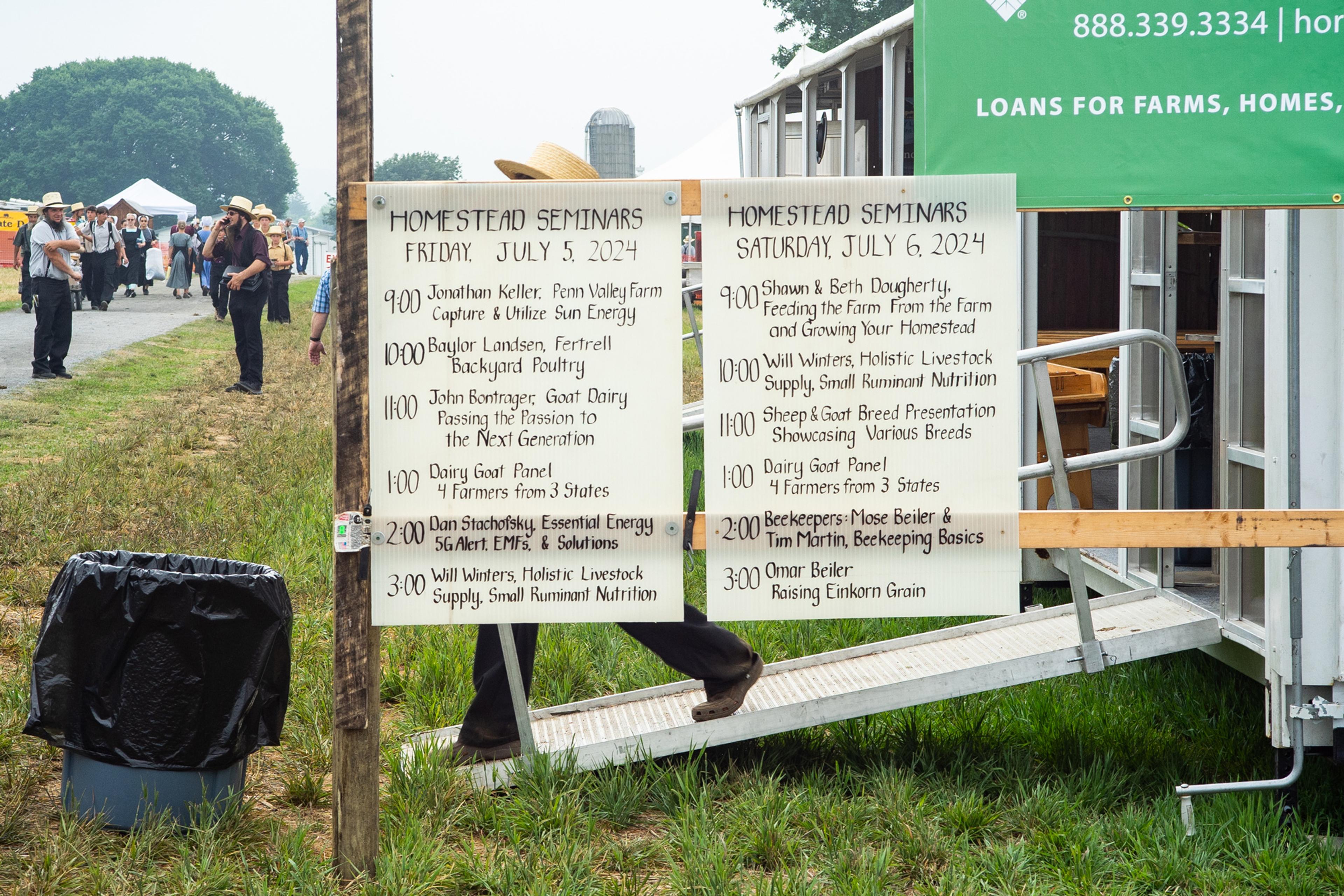
Homesteading Seminar Tent schedule for the weekend
As well as a technology expo, it’s also a flagship social event that people look forward to all year. Amongst the demo fields, paddocks, and lecture tents, there are also volleyball courts, horse-drawn train rides, and a petting zoo.
Horse Progress Days has evolved a lot from where it started. It was founded in 1974 by Elmer Lapp, a Belgian breeder, and Morris Celine, who founded the magazine Draft Horse Journal. Neither were from the Plain community, but they wanted to create an event for the outside world to see what that community was doing with animal-traction farming. (Mules and oxen are also welcome.) Since then, HPD leadership has become almost entirely Amish and Old Order Mennonite. And while its core mission is still “to demonstrate newly manufactured horse drawn farming equipment behind real horses in real field conditions,” it has equally become a moment to celebrate the Plain way of life.
The event organizers made it very clear to me, though, that they don’t want this to become a big tourism event where people come to ogle the Amish and Mennonites. At its core, it should always be about horses and progress.
Horse progress really takes on meaning at the wheat field at 1 p.m. on Saturday, where Jonas Stolfetz will finally demo his combine prototype.
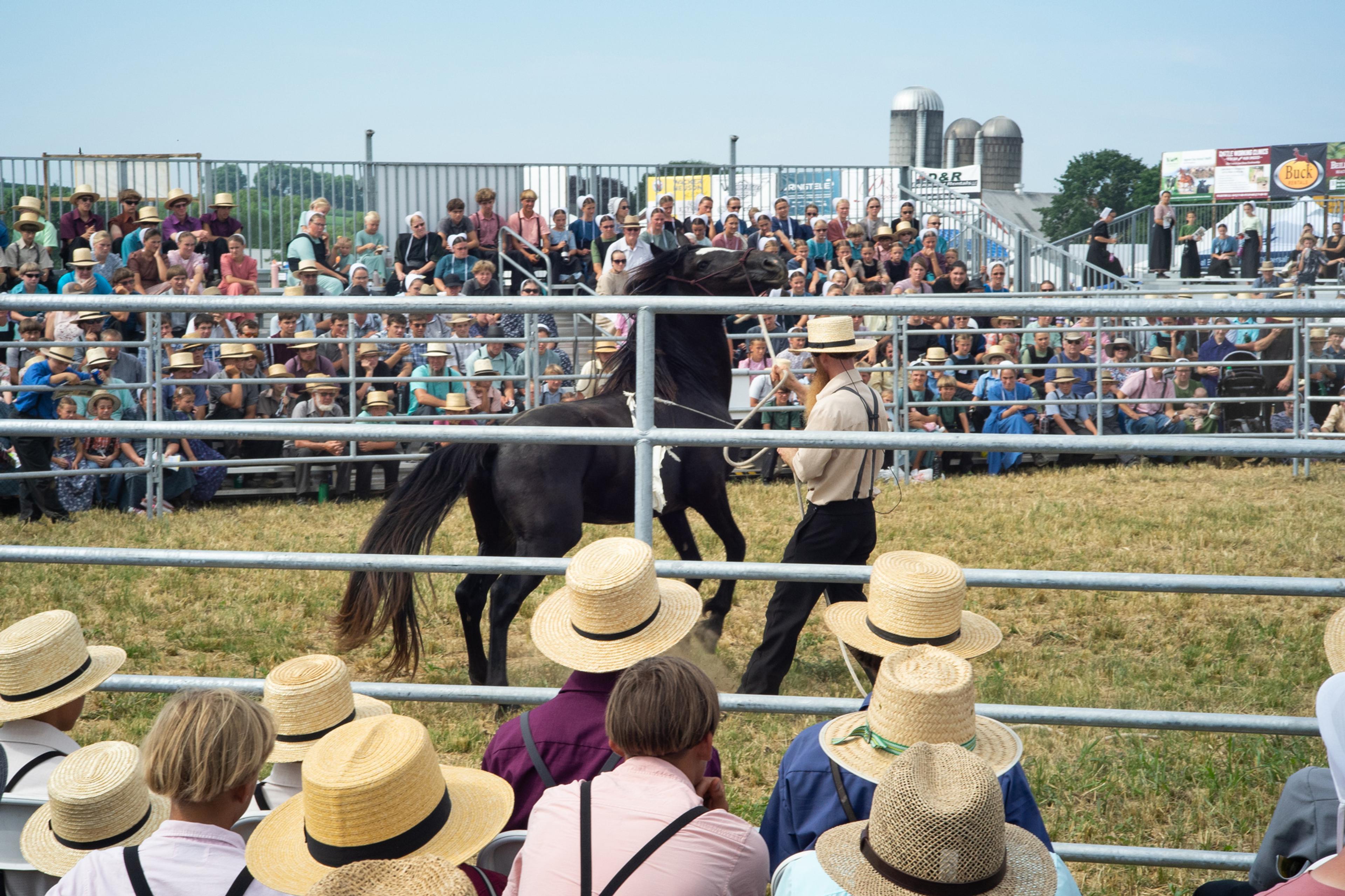
A member of the East Coast Horse Association demonstrates how to break a colt.
The long, narrow strip of unharvested wheat, near the buggy parking lot, is packed three to four rows deep with guests. The announcers, speaking from a Conestoga wagon, are effusively praising the coming attraction, and speculating on “the property this makes possible.” I look out over a sea of straw hats and bonnets to see Stolfetz and his team readying the eight matching mules it takes to pull this machine.
There is a few minutes’ delay when one of the mules falls over, and again when the engine battery dies. “It takes a lot of gumption to bring a new machine out here,” an announcer says, “because it can always fail at the last minute. And I commend these guys … and just say thank you.”
And then the engine is up and running, the mules are ready, and Jonas leads his prototype into the wheat. The mules bow their heads in effort. The machine is whirring so loud it drowns out the commentators. As it catches the first rows of wheat, it churns up huge clouds of dust and chaff behind it. Half a second later, it starts spitting grain out of the unloading pipe in a steady, powerful stream. It’s a success, and there’s a palpable release in the crowd.
As I take photos, an older Mennonite man hands me a note card with his email on it and asks if I can send them to him. At his church, they can use self-propelled combines but not cameras. He hasn’t seen something like this since he was a young boy, and he wants to remember it.
“What a sight, what a sight…” the announcer cries out.
Golden oyster mushrooms are the labradoodle, nay, the goldendoodle, of mushrooms. They are popular, pretty to look at, easy to raise, and highly adaptable.
That last attribute, it turns out, can be a problem.
Some months back, a Subreddit thread contained a warning about oyster mushroom grow-your-own kits. Beware, they can take over your couch, your rugs, or really anywhere the spores migrate to and settle in. Some experts have said this dramatic case of “good mushrooms gone bad” may be apocryphal, or at least exaggerated, and that grow kits pose little danger to your home.
But that doesn’t mean there is no cause for alarm. Non-native invasive golden oyster mushrooms are now in the wild. A lot of them.
There isn’t consensus about whether they came from kit mushrooms abandoned in the backyard or from spores creeping out from commercial growers. Either way they are proliferating, with the potential to crowd out indigenous mushrooms, other plants, and even animal habitat.
“Fungi have been overlooked in conservation and biodiversity frameworks,” said Anne Pringle, a mycologist in the botany department at University of Wisconsin-Madison. “People have a very strong sense that there is such a thing as an invasive plant — that concept is not controversial. But as humans, we don’t have an equivalent sense that fungi can also have a biogeography, and because we don’t have that sense of the biodiversity of fungi, we have that perception that moving them around is not harmful.”
With the proliferation of mushroom and mycelium uses far beyond food — as packing and building materials, as clothing fibers and leather alternatives, as biodegradable coffins and as soil cleaners — it’s easy to imagine globetrotting non-native species.
Andi Reisdorf’s master’s thesis was likely the first document to sound the alarm in 2018. Reisdorf (née Bruce) published a study examining the spread of non-native golden oyster mushrooms (also called “GOM,” yellow oyster mushrooms, or Pleurotus citrinopileatus), which she said represents the first known case of a cultivated mushroom spreading quickly and widely outside of its native range. She used citizen science data to track its growth across at least nine states.
“One of the reasons we’re lucky here is that it’s such a charismatic mushroom, so people are noticing it and recognizing it as an oyster. So that helps a lot,” she said. “Its invaded range is continuing to expand and its density is increasing. From my perspective, for something to spread so aggressively and so fast that native decomposers are being outcompeted and displaced, it’s alarming. Two fungi can’t occupy the same space.”
“For something to spread so aggressively and so fast that native decomposers are being outcompeted and displaced, it’s alarming.”
Now found throughout the Midwest and Northeast and into Canada, golden oysters are native to the subtropical hardwood forests of eastern Russia, northern China, and Japan.
The big threat is to biodiversity, Reisdorf said.
“Strong biodiversity is really important to ecosystem function. We don’t have measured evidence about specific impacts, but it’s not a stretch to infer that biodiversity is being threatened here,” she said. “And climate change adds an additional threat.”
Many experts have posited that with shifts in temperature and other conditions, fungi may evolve, introducing new fungal diseases.
Two of the central people doing work on invasive golden oyster mushrooms are Michelle Jusino, a research biologist with the USDA Forest Service, and Aishwarya Veerabahu, a graduate student in Pringle’s lab.
Veerabahu cautions that their data is only preliminary and nothing has been published yet, but that the spread of GOM is heavy in the Midwest and in the Northeast.
“In the Midwest you’re very likely to see golden oyster mushrooms in the woods. People are walking out with garbage bags full.”
“In the Midwest you’re very likely to see golden oyster mushrooms in the woods. People are walking out with garbage bags full — whether the intention is to eat them or just to get them out of the woods,” she said. (She cautions amateur mushroom foragers to never eat wild mushrooms unless they have received training.)
Ah, but maybe this is a problem Americans could, with enough training, eat their way out of? Nope. Veerabahu describes it as a “genie-out-of-the-bottle situation.”
“The way that mushrooms grow, that is not really an option,” she said. Mycelial thread grows through soil, wood chips or other substrate, she said. When it’s ready to produce a fruiting body, it forms a mushroom above ground. That can be plucked or removed, but the rest remains underground.
“There’s practically no way to get rid of it,” she said.
Jusino said there have been other invasive fungi, such as the death cap in California, which likely arrived by hitchhiking on plant imports. (Its claim to fame is it’s the No. 1 cause of fatal mushroom poisoning worldwide.) This new outbreak is something different, though — an invasive cultivated fungus. As to where it is thriving, it could be where the release started, or it could be because temperature, humidity, and other factors are particularly conducive. She said they are investigating the question of whether the proliferation of golden oysters is crowding out other plants or fungi, or destroying animal habitat. They aim to have a paper ready in the next few months.
In June, the New Phytologist Foundation held a symposium on invasive fungi with conclusions about the ecosystem/biogeochemical consequences of such introductions forthcoming. From Reisdorf’s perspective, it’s unlikely we will know how GOM were introduced.
“There’s practically no way to get rid of it.”
“There’s a lot of lore about how this happened — a commercial outfit caught fire, or there was a tornado. But if there was one big introduction event, you would see that in the population genetic data. You’d see a cluster of similarity, and we’re not seeing that at all. We’re seeing extremely genetically similar specimens collected far apart.”
Reisdorf said this suggests multiple introductions of the same source strain in different parts of the country. But how that happened is still a bit of a mystery.
Pringle stresses the importance of citizen science websites like iNaturalist and Mushroom Observer in tracking movement and making a species more visible. But it’s an uphill battle.
“We have names for 5 percent of fungus species. Best estimates on how many species there are range from 2 million to 10 million, and they are hidden within soil, plant leaves, even animal bodies,” she said. “But there is such a thing as an endemic fungus, a place a fungus grows and where it doesn’t. So, moving them should be done thoughtfully.”

A few weeks ago in our newsletter, we put out a call to our 80k+ subscribers, curious to hear their thoughts on this year’s presidential election. Then, after Harris had been swapped in for Biden, we asked the question again.
Most of our readers are farmers and food producers, or work in some kind of related industry (e.g., ag academia, public sector, etc.), so the answers provide a look into how food producers are feeling on the eve of a historically monumental election. Obviously there are a million variables that can skew a survey like this, but it still gives some compelling insight into the varied feelings at play right now.
Note: We’ve included first names, professions, and state for some respondents. Others preferred full anonymity.
I will 100% be voting for Harris and Walz. Thank you, have a great day.
-Suzanne, Ag Researcher, Montana
I have been a Republican for most of my life, but I have not and will not vote for Donald Trump. I will be voting for the Harris/Walz ticket.
-Anonymous, North Dakota
I’m voting for Trump. The failed policies of Biden’s administration is awful. Harris doesn’t know any better than to do what joe was doing (or whoever was telling joe what to do).
-Dan, Dairy Farmer, Wisconsin
I will be voting for Harris/Walz. Nice to have a Midwesterner on the ticket.
Sad that my vote will be dismissed due to being in a “Red state” and the biases of the Electoral College system; I have voted in every election since 1976 and will continue to do so as long as I am capable of it. I consider myself to be a very patriotic American.
Really enjoy your newsletter. (Editor’s Note: Aw, thanks!)
-Jessica, Ecology Professor, Indiana
Small farm farmer and Trump 100%! Tired of this country not having a backbone. All other countries laugh at us over Biden and Kamala.
-Lacy, Farmer, Tennessee
Voting for RFK whether he makes the ballot or not. He’s the only one who’s addressing the real issues. Plus he’s hot for an old guy.
Sara, Soil Health, Massachusetts
I am a registered Republican.
I will only vote for Kamala Harris and Walz!
Bruce, Third-Party Management, Iowa
As cattle ranchers, my family will be voting for a candidate who has not promised to change the food pyramid to reduce the consumption of red meat because they believe it will save the climate. (Link included.)
-John, Cattle Rancher, Pennsylvania
Regardless of the fact that one candidate is a demonstrable hollow vessel with no ethical core, and the other is an accomplished professional with a sense of social justice … this election is fundamentally about the choice between democracy and autocracy. All else is distraction.
-Anonymous
I’ll be voting for the candidate who still wants to preserve democracy in the United States, Kamala Harris. Democracy is important to me. Yes, it’s messy and complex, but it still represents the voice and will of the people far better than any autocracy, oligarchy or authoritarian system, which is what Trump has always wanted to do.
-Monica, Nevada
Election - who will I vote for. Democracy, of course. The vaunted Man/Woman in the Arena- who strives- and fails. Gets up- strives and fails again.
Who has squandered its position time and time again. Maybe this time, we’ll get up, and make a stand on the oratory of what we always pretended we stood for.
Harris/Walz absolutely no question.
-Rick, Fruit Farmer, California
I will be voting for Trump. Harris had her chance to do something for the country and failed miserably.
-Bruce, Pecan Farmer, New Mexico

2 retired farmers and our 2 daughters: all voting for Harris and would have voted for Biden. We are all extremely against trump.
-Connie, Retired Farmer
I’ll be voting for Harris/Walz. I’m a Republican, but Trump is not and I have never voted for him. I have voted for an independent candidate in 2016 and Biden 2020. Trump’s attacks on China that caused our markets to tank and spurred on acreage expansion in Brazil are STILL costing the American farmer money! Plus, any president who tries to turn over an election to stay in power can’t be trusted with that power ever again. We had a chance to nominate a replacement, but blew it.
I do like Walz on the ticket! His experience with agriculture is stronger than any person in the White House since Harry Truman. So it will be interesting to see how the campaign uses that in bringing attention to ag and rural issues. Having said that, I’m not comfortable with all their liberal positions, so I hope that either the Senate or House stay in Republican hands if Harris wins.
-Paul, Crop Farmer, North Dakota
Me and my family will be voting for Trump.
-Darrell, Cattle Rancher, Montana
Trump is the only option for President for any sound minded, USA loving, God fearing, American.
Respectfully, a 4th generation farmer/rancher, entrepreneur, business woman, of mixed race from around the world.
-Krista, Farmer/Rancher
Kamala of course.
Never voted for the Orange Menace, never will. Never could figure out why anybody would.
-Barbara, Regenerative Farmer
Rancher, voting for Trump! I live on a ranch about 60 miles from the border. The land has been in my family since 1946 and we’ve never had people cutting our fences and running through our fences until the current administration came into power. The stress, expense and sheer frustration my husband and I deal with daily because of traffickers destroying our property and also not feeling safe on our land are 100% the fault of the current administration and their policies. That’s the 1st reason, 2nd is the insane cost of everything from groceries to feed to fuel, I don’t feel like we’d be in this shape if Trump was president.
-Rachael, Rancher, Texas
I’m voting for Harris/Walz which is a vote for the environment among many other things.
-Chris, Produce Farmer, South Carolina
Frankly I don’t understand why any small business, rancher or farmer would not vote for TRUMP!!! A vote for the other is a vote for socialism, anti-American and anti-agriculture end of story!
-Leslie, Cattle Rancher, Texas

We’ll be voting for Trump. He’s far from perfect, but light years ahead of the Maoist team of Harris/aWalz.
-Todd, Farmer, Idaho
I am absolutely voting Harris-Walz. The other ticket is a pair of anarchistic reactionaries who care only for power. Unfortunately neither party is saying enough about soil and water conservation, energy conservation, natural resource conservation in general. Those aren’t perceived as catchy enough.
-Josiah, Grain Farmer/Rancher, Iowa
Maintaining and improving our democracy, opportunity to vote, as much honesty in politicians as possible, etc. is more important than an individual policy that affects my economics.
-Trish, Ag Professor, California
This election is an easy but unsatisfactory choice. The Republicans are apparently going to nominate a criminal and incipient dictator while the Democrats are offering a fairly successful, reasonably decent incumbent President. (Editor’s Note: This response came before the Biden/Harris switch.) I’d rather both were younger and neither had the baggage they do, but there really is no choice. Trump has no business being anyone’s nominee for any public position.
-Dave, Retired, Missouri
About the upcoming election, what I feel is absolutely terrified. I voted for one of the candidates in the last election, but I will not vote for him again. The thing is, it doesn’t really matter which candidate wins. I think we’re going to have major problems.
If Biden wins, I think that Trump supporters will be rioting in the streets. This concerns me to the point where my entire family is slowly stocking up on everything just in case we don’t want to go out.
If Trump wins, I am scared of what is going to happen on a more international basis. I think that both our friends and enemies around the world see him as a complete nutcase. I am scared of how they are going to react. Also, he has already said he will pull us out of NATO. This could lead to all kinds of other problems, including war in Europe. If this happens, I’m sure we will get sucked in at some point and since I have two draftable age grandchildren, I am really scared.
I do not see this as a TEOTWAWKI event, however, I am really, really concerned. We are so concerned that as I said earlier, we are stocking up on everything possible, getting all our vaccines updated, rescheduling any appointments that are currently set from November through February and generally trying to do everything we can to be prepared for some rough months.
-Anonymous, Produce and Livestock Farmer, South Carolina
I am very disappointed with the U.S. presidential election. I remember a quote from Jim Hightower that represents my sentiments about this year’s election, “If the Gods Had Meant Us to Vote They Would Have Given Us Candidates.” I appreciate many of the things that Joe Biden has done but he does not understand rural America. We need a new Secretary of Agriculture and more aggressive antitrust actions to fight the tyranny of the market. Trump will strengthen the tyranny of the market and claim that he solved the problem. He is not interested in learning about rural America, he thinks that more concentration, and more tyranny of thoughts will solve everything.
I won’t follow either one. I won’t endorse either one. I won’t donate to either one. I will vote for Biden.
-Rick, Farm Lobbyist, Wisconsin
I’m a 77 year old organic foods industry veteran who “retired” into an organic vegetable CSA farm for 10 years. I’m very interested in preserving a healthy local, national, and worldwide environment and I’m working to grow a vibrant local food system here in southeast Michigan, taking part in my county and township land preservation and sustainability efforts. Federal environmental safeguards and protections were put into place during the Obama administration which were subsequently erased or eroded under the Trump administration. The current Biden administration has strengthened environmental protections again and has furthered actions to mitigate the troubles ahead from climate change. I greatly fear another 4 years under Trump, 4 years that could be the most dangerous to our democracy and environment than under any other administration, ever. The recent assumed presidential candidate mudslinging “debate” between Biden and Trump both sadden and concern me greatly. There is an incredible pool of smart and highly intelligent, aware and energetic talent in this country willing to do what it takes to lead our country in ways of sustainability and equity. I’d like to see new and inspired younger people taking the reins of government.
-Timm, Produce Farmer, Michigan
Biden must win. Our democracy depends on it. The Supreme Court is already a sham. The Senate is a danger. A president who recognizes they are the only thing between the American Public and a complete collapse of our democracy is essential.
I am already taking steps to safeguard against the grim situation the alternative represents, but fear for the worst.
-Nancy, Medical Research, Pennsylvania
I’m a retired Navy Officer, retired naturalist, have a Masters in Political Science, and now a supplemental income farmer raising sheep, turkeys, geese, ducks, chickens, and produce. Neither candidate is near ideal. But if Trump is re-elected, I predict the end of The United States and our way of life as we know it. I suppose some people will think that that is good. I don’t.
It means run away prices for even common commodities, disappearance of the middle class and a society not composed of degrees of those who have and have not, but trending toward the rich are haves and everyone else a have not. When you are destitute and don’t have the basics, who cares if it is illegal to steal food? You steal to live. Those with arms and willing to exert force and violence, will, for a time, rule. The values this country is based upon are sound and excellent. The implementation of all of those values and self-serving interpretation of laws over time has been less good, especially our race record.
As a political scientist, who also lived and studied abroad, the American people do not realize the globally stabilizing role that the U.S. with its basic, constitutional values, and its past reliability as a supporting partner with like-minded nations have kept world chaos at bay. Domestically, I do not like Trump because he lies he has said things, when recordings make it perfectly clear he has said those things and is lying. He lies for convenience like no one before him. It is blatant, yet people ignore it. How can one support a candidate who says he is going to be a dictator from day one? No one is above the law, no matter how powerful. Read this article.
-Caryl, Produce Farmer, Virginia
My situation is an organic (trying regenerative) dairy farmer, also as a mayor of a small Idaho town. I think that the disparity of approach between organic/regen and conventional farming is a good metaphor for the political situation we find ourselves in. Organic/regen farming is all about health in the soil and practices that will allow synergistic relationships between plants where natural, healthy, sustained growth of plants and livestock, without toxins or an inflow of more and more fertilizers and herbicides to continue high yields and clean fields that are the basis for conventional paradigms. As long as the latter practices are employed, the soil -and even the environment- will not improve and often even digress.
This nation and its motivated voting citizenry should be politically involved, starting locally in ways that build families and communities, that allow for healthy relationships with each other. So we grow the fruits of honor, freedom, and decency to our fellow citizens. The homes and communities are like that healthy soil. But as the meddling federal govt continues to spray on more and more grants (fertilizer) and regulation (pesticides and herbicides), America’s citizenry will look more and more to govt programs for a continued abundant life and not to the relationships and efforts at the home and community level to solve their problems. This approach is leading to toxins in my own community and is leading to the same and is not sustainable on the national level.
No party or serious political movement is really taking this on, because few even recognize the problems in this out-of-balance federal govt we now have. It feels with every passing election the consequences are getting more dire, but I feel like that’s similar to the conventional farming system that we’re seeing continued production from, but less nutrition, less ability to shirk the paradigm to find a better way.
I could develop this further, but hopefully you get my point. Thanks for the question.
-Duke, Dairy Farmer/Mayor, Idaho
I am a single-issue voter. I don’t want to send my sons and daughter to WW3. Thus, I will close my eyes and vote for Biden.
-Jack, Grain Farmer/Rancher, Kansas
The presidential election is a horse race between two old nags. (Editor’s Note: This response came before the Biden/Harris switch.) Both are beholden to the Aristocracy of Billionaires. It is a national disgrace that we are not “allowed” to choose a leader who will bring the citizens together. Lincoln said “A house divided against itself cannot stand.” Yet neither of these men promise to work toward a more perfect union. The nation of citizens suffers with no end in sight. As farmers, we take a back seat, receive subsidies rather than open markets, as the two parties bribe us to support their side.
-Michael, Cattle Rancher, California
If Trump is elected again, our country will be subjected to what it does not deserve: loss of freedom and democracy as we have worked to preserve. The word “compromise” will disappear from the dictionary. We are entering an age when facts from truths are no longer discernible or important. Trump is working hard to destroy trust such that when chaos prevails, he will raise his hand and say “Follow me.” Where? 1984, George Orwell.
-William, Ag Professor, Florida
Tucked inland of the Gulf of Mexico and a stone’s throw from the Tabasco hot sauce factory in South Louisiana, Vermillion Parish is crawfish and rice country. Adler Stelly, a farmer in the parish, operates approximately 3,000 acres of crawfish and rice fields — a symbiotic pair of crops — with his brother. All told, it’s the staggering equivalent to 3,000 football fields, or 1,200 full city blocks.
Normally, the abundance of crawfish throughout the parish means that the price can drift as high as $3.50 and as low as $1 a pound throughout the season. But over the past year, virtually every single acre of Stelly’s land was impacted by last summer’s historic drought, which torpedoed crawfish availability and caused available crawfish to double and triple in price.
In an area where farmers can expect to yield 450 pounds of crawfish per acre, that monumental loss reverberated. For Stelly, it meant that from late November to mid-June, traditionally crawfish harvesting season, a local workforce wasn’t employed. Agricultural farmworkers from Mexico could not come north for seasonal work. Many, many acres did not produce any crawfish at all.
“A lot of these crawfish died in the drought when they were buried up in the off-season,” he said. “It’s a part of their life cycle, and how they reproduce. The ground dried up entirely too much, which dried up their hole. So a lot of those crawfish died in the ground, and I never saw them at all.”
Due to the impact of a quarter-billion dollar industry going nearly belly-up in the first quarter of the year, the Louisiana Commissioner of Agriculture and Forestry, Mike Strain, issued a request in February for the United States Department of Agriculture (USDA) to provide monetary relief to crawfish farmers. By March, the governor followed suit with a disaster declaration.
Strain said that about 100,000 acres of crawfish production were lost throughout the state due to the drought, nearly one-third of the 320 to 340 thousand acres dispersed across the state. A drought of that magnitude, he said, hadn’t occurred since 1942, and before that, 1924.
The stakes are getting even higher as average daily temperatures, especially throughout the summertime, continue to break national and global records. As the fourth-hottest state in the country, politicians, researchers, and farmers themselves are eyeing the sky across South Louisiana, trying to determine the best ways to bounce back not just from this past drought, but the next that may be right around the corner.
The Managed Ecosystem
There are two types of crawfish in Louisiana that only deviate based on how they’re harvested: wild-caught and farm-raised. Wild-caught crawfish are the domain of fisherman who, similar to crabbers, take off into the Atchafalaya Basin and drop traps into deeper waters than the managed rice fields. From there, they report their yield to the Louisiana Department of Wildlife and Fisheries. According to estimates by the Louisiana State University (LSU) AgCenter, wild-caught crawfish constitute just 20% of the state’s crawfish industry.
Todd Fontenot, an LSU Extension agent, said that the farm-raised crawfish crop starts, at the core, with rice. The two crops are symbiotic because the timeline of flooding, draining, and harvesting rice fields coincides with the ebbs and flows of crawfish production. In the wild, crawfish grow without the presence of rice. But to manage a harvest, the crops are complementary.
“Once the rice is growing and has an irrigation flood on it, which means the irrigation water is at a good depth and the rice plants are growing strong, it’s late April or May, and these rice fields are intended for crawfish production in late fall and into the spring,” Fontenot said.
In springtime, crawfish are seeded into growing rice crops in watery, flooded fields lined with mud levees. In Stelly’s case, many fields are covered by wide roofs to protect workers from rain and heat as they stomp through the mud in rubber boots and gloves. The fields are drained in the summertime and harvested for their rice. In the meantime, crawfish burrow into the mud levees along the perimeters of the field. They stay underground until October when the fields are flooded again and all of a sudden, they’re rife with the crawfish that dug out of their mud burrows and are fished from around November into June.
Some crawfish farmers opt to let the fields rest for a year in between crawfish crops while others alternate between two working fields. Another option is maintaining a permanent crawfish field, which requires seeding rice back into the fields as soon as farmers curb crawfish harvesting in early spring.
“[If you’re seeding] 200 pounds of crawfish per acre that are $2.30 a pound, that’s a heavy investment for that farmer to make, not knowing the weather conditions in the future.”
No matter the format, many farmers opt to supplement their crawfish fields with seed, or more live crawfish, to ensure there’s a healthy stock in the coming season. Seeding crawfish can be done in one of two ways: Mudbugs can be raised in a holding pond nearby and introduced into flooded rice fields, or live crawfish can be bought on the market and used as seed.
“The intention of stocking improves production by far,” Stelly said. “We were trying to [seed this spring], but with the shortage of crawfish and higher prices, we didn’t get out what we wanted to get out,” he says. “Farmers are putting in everything they can get their hands on and afford at the same time.”
Stelly cited another major cost that cropped up in the past year: water. Since his fields did not receive adequate rainfall and many areas with flooded surface water dried up, he had to pump in more groundwater to make up the difference — it still wasn’t enough. What were supposed to be humid, flooded fields dried up, which killed all of the crawfish that burrowed because the mud was far too brittle for them to crawl back out.
But experts still don’t know if the massive crawfish shortage stemmed from them trying to crawl out of their burrows and failing to do so. Another theory, Fontenot said, is that crawfish could have stayed in their burrow longer than normal because without good, soaking rain or flooding the fields in lieu of it, crawfish don’t know exactly when to exit hibernation. In such a situation, crawfish will eat their young to survive since their eggs continue hatching, even while they’re in their burrow.
“It all depends on the weather from here on,” said Fontenot. In the case that the weather takes a turn away from wet, soaking summer rains, he said that farmers are going to have to try a few tactics to prepare for the future.
Preventing Disaster
One option farmers can utilize in the coming years to recover their crawfish is simple: stock heavier. The downside is that this requires a gamble because it’s expensive, and a risk against the weather.
“[If you’re seeding] 200 pounds of crawfish per acre that are $2.30 a pound, that’s a heavy investment for that farmer to make, not knowing the weather conditions in the future,” Strain said.
Another option is to flush crawfish ponds with extra water to keep them very moist and deeper than usual, but the problem with that is that crawfish may emerge from their burrows too early if the ponds are soaked too much. It’s also extremely expensive if a farm isn’t located near an abundant freshwater source.
“You don’t want crawfish emerging in late August and September, even if the [rice] fields are harvested,” said Fontenot. “[If you] flush or wet the fields, [crawfish can] emerge too soon and not be able to survive … We’re concerned. We’re definitely concerned.”
Another type of disaster that Fontenot sees with overseeding crawfish is an overabundance of product in the next year or two. While that may seem like good news and indicate market recovery, it also means that prices for crawfish stock will fall, and ultimately hurt farmers.
“Farmers are putting in everything they can get their hands on and afford at the same time.”
“If we end up with too much crawfish, that causes depressed prices,” he said. “Right now, [I fear that] more than the weather situation.”
From Ag Commissioner Strain’s perspective, the number one move that crawfish farmers must make to become more sustainable and resilient in the years ahead, no matter drought or heat, is making sure that fields are adjacent to an aquifer with plenty of fresh — not salt — water.
“If you don’t have freshwater or are in an area where the aquifer is depleted, you may not be able to raise crawfish there,” he said. The cost of flooding the fields in an emergency, he added, is enormous if there is not a natural source of water nearby. Over time, fields that are far from natural water sources may need to be shuttered.
Strain isn’t concerned about prices falling from too much local crawfish on the market, but he does worry about the importation of crawfish from China that occurs when local supply cannot meet demand.
Even so, he is optimistic. Even if farmers may have to be flexible and shift some crawfish ponds in the coming years due to a lack of water, he doesn’t see the combination of rice and crawfish failing on a long-term basis.
“We’re in a transition phase,” Strain concluded.

The landscape of San Francisco — steep, packed, and often wet with fog — is at odds with standard ideas of farmland. You won’t find the sprawling pastures and acreage of crops that decorate California’s interstate highways, nor the thousands of rows of vines in nearby wine regions. But upon closer look, scattered among the old Victorians and autonomous taxis, the not-quite 50-square-mile city holds roughly 100 urban farms and community gardens, plus a decently sized ag tech sector. So it only seemed logical to State Treasurer Fiona Ma that the city get its own Farm Bureau.
The San Francisco Farm Bureau (SFFB) — the first new one chartered in California in nearly 40 years — was the passion project of Ma, who initially sought to support California’s food system following the supply-chain hysteria of Covid-19. After committing herself to understanding the state’s vast agriculture sector and touring over 200 farms, Ma was surprised to learn that her home county of San Francisco didn’t have its own bureau. Only one other county in the state — Alpine, located within the Sierra Nevadas — was not represented by a bureau.
“There was some skepticism, as you can imagine,” Ma said, describing the day she and a handful of industry contacts proposed the chapter at a delegate meeting in Reno. “You know, who are these San Francisco people?”
Given that the agriculture, forestry, fishing, and hunting industries combined employ less than half a percent of San Franciscan workers, this chapter’s focus is likely to be different from others in the state. Ma, who previously represented San Francisco in the California State Assembly, hopes the initiative will be a far-reaching support system for both aspirational and practicing growers across the city, with a particular emphasis on youth educational programs.
California farm bureaus typically work in the policy realm, attempting to incorporate the needs of local farmers and help them adjust to changing regulations.
But the farmers in San Francisco County may not share the same concerns as those in more rural regions of the state — and in some cases, Bay Area-bred initiatives have been a source of contention in other agricultural communities. A bill in nearby Sonoma County seeking to outlaw “Concentrated Animal Feeding Operations,” or, euphemistically, “factory farms,” was spurred by Berkeley activists. The Bay Area also contains the first cities to ban the sale of new fur, now a statewide policy.
“A lot of the animal laws start in San Francisco.” said Ma. “So some [state farm bureau delegates] were really skeptical of what our mission, vision, and ulterior motives were,
The farming industry is one of the most powerful lobbies in the U.S. Across the country, farm bureaus have been criticized for throwing their dollars behind social and political causes — such as election security and education — that have little to do with farming. The Napa County Farm Bureau, for instance, which oversees the region’s $9 billion wine industry, was subpoenaed late last year for records related to its political action committee, a PAC that has historically supported winery developments and pro-development politicians.
“There was some skepticism, as you can imagine. You know, who are these San Francisco people?”
So what do San Francisco-based farmers want? Christopher Renfro, founder of the Two Eighty Project, an urban farming and mentorship organization, said that if the SFFB can provide some municipal support, farmers in the city will have more time for community building. The small-but-mighty community is “definitely connected, but also definitely fragmented in a way that feels like everyone is scrambling for the same resources,” he said.
Renfro grows grapes on plots of land dispersed throughout the city and surrounding area, some of which can be seen from Highway 280, and also mentors youth. “That’s what I hope they’ll be there for: Here’s a loan or a grant that we can help you get. Here are the people that’ll help you file everything so that more farming is happening.”
With little to no space, some seasoned farmers have been tapped to oversee the implementation of rooftop farms in the Bay Area. In several cases, these farms have become successful ways to address food insecurities in the area (especially during the pandemic), help mentor and place local youth in leadership positions, and address the climate crisis. However, San Francisco’s steep pricetags remain a barrier to many.
Ma said the bureau is going to help the city’s growers stay on top of compliance. “It’s not easy to do any type of business here in California. The regulations are constantly changing and getting more and more difficult. Everything is costing more here in the states, the different agencies, they are auditing more, requiring more reporting,” she said.
“That’s what I hope they’ll be there for: Here’s a loan or a grant that we can help you get. Here are the people that’ll help you file everything so that more farming is happening.”
This spring, Ma was joined by San Francisco Mayor London Breed and Blong Xiong, the USDA Farm Service Agency’s executive director in California, to encourage community gardens around the city to register with the USDA and utilize the resources at a newly announced urban agriculture service center in Oakland. (Xiong did not respond to requests for comment.)
Beyond paperwork, Renfro said he’d love to see some of San Francisco’s open spaces turned into more community gardens — a sentiment echoed by many of his farming peers.
Land is the city’s tightest resource, whether you’re farming or not. Because of this, San Francisco’s agricultural scene differs greatly from even that of other urban California counties. California’s most populous county, Los Angeles, has over 750 farms across 69,224 acres, according to data from the USDA. By comparison, San Francisco has seven farms over 127 acres. However, the average market value of the land and facilities is significantly higher in San Francisco than the rest of the state at an average of $48,425 per acre, second only to Napa ($61,295).
Much of San Francisco’s agriculture is performed through its 42 community gardens, some communal and some individual. The waitlist for an individual plot is currently several years, according to San Francisco Recreation & Parks, which oversees the gardens. The agency owns 4,100 acres and some 200 parks across the city.
“It’s funny how we’re not thinking about how people need green space beyond just sitting in it — we also need green space to get your hands dirty, green space to actually feel like you’ve worked,” said Renfro. “During the pandemic, everybody got super into feeding themselves. A lot of people got really into the idea of baking their own bread, doing things from start to finish. And I think that’s something we don’t promote anymore, learning how to do something from the beginning of it all the way to its finished product.”
“I think the tech sector understands that there are three things that we need as humans. We need water, we need food, and we need air.”
In order to hold a board seat, one must derive most of their income from agriculture which, in San Francisco, can be quite difficult. However, those who live in the city — even if their farming operations are elsewhere — qualify. Currently, SFFB has 41 members, 13 of whom are directly involved in agriculture, according to its president, Gary Sosieth.
“While about 30% of our membership consists of agriculture members, many are like me: We farm in other areas of the state, but call San Francisco home full- or part-time,” said Sosieth, an advisor for USAID’s Bureau for Humanitarian Assistance and the former mayor of Turlock, a small town in California’s Central Valley.
Ma said another goal of the bureau is to integrate the city’s ag tech sector with its more traditional growers and gardeners.
“I think the tech sector understands that there are three things that we need as humans. We need water, we need food, and we need air,” said Ma. “We need to be able to feed people, more people, even if we don’t have enough water. So I think for people who are focused on solving everyday problems, food has to be one of the top line items.”
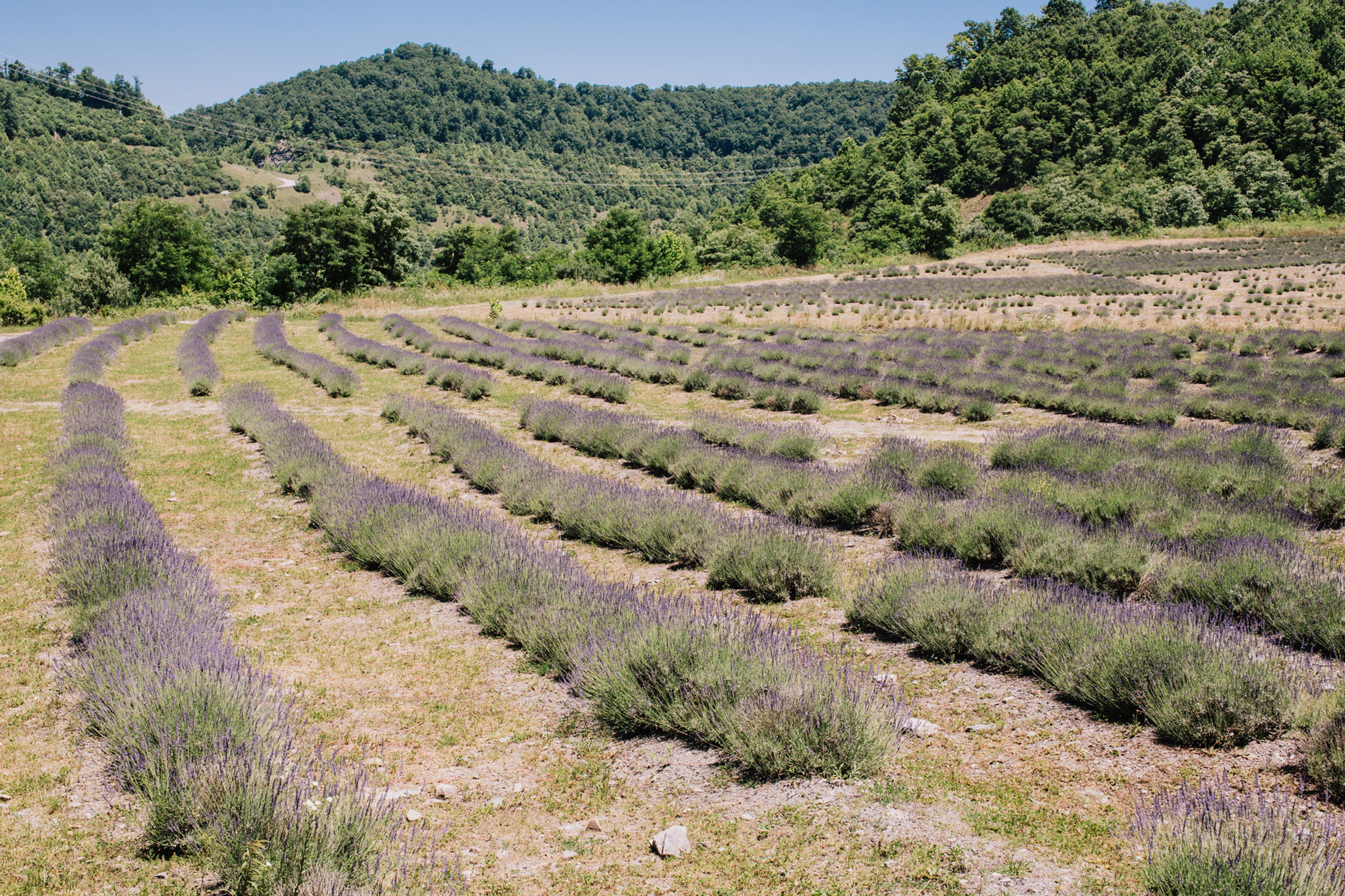
When Charles Bowman worked seven miles underground, he spent days in complete darkness, no light but for what comes out of a lamp on the forehead. One day, a piece of metal 15 feet long fell on him from behind and drove him headfirst into the ground. Left with five blown-out discs, nerve damage, and a spinal cord stimulator, he found himself unable to continue work as a coal miner.
Today, in the middle of June, he is bathed in light. He is sweating, in fact; the flattened-out hollow of an old surface mine on a West Virginia mountain is blazing hot. The mercury reads about 85, but with dense humidity pouring off the surrounding forests and unrelenting sun, it feels more like 400 degrees. He and a team of roughly a dozen other farmworkers are crouched, clipping single stalks of lavender from clusters in the rocky ground. This is the Ashford Farm, formerly known as the Appalachian Botanicals farm, which has been cultivating lavender for five years on the same mountain where Bowman spent 14 years underground.
“The reason I took this job, is with all the coal mines shutting down, I wanted to still be involved with West Virginia. I’m a West Virginia boy, I love the mountains. And this” — he gestured toward the field around us — “wouldn’t be nothing, it’d still just be a flat bottom.”
The coal-rich region of Appalachia is pockmarked with old mine lands that lie spent from their former use. Coal mining, regardless of its potential economic merits, pretty much obliterates the ecosystems it touches. When you blow the top off a mountain to chisel out the coal within, you can never build it back. You can, however, make efforts to heal what’s left of the ecosystem, which is mandated by the Surface Mining Control and Reclamation Act of 1977.
And once that ecosystem is healed, must it serve some economic purpose? It’s a question without an easy answer — these are millions of acres of polluted and degraded rock in remote, sparsely populated areas. And the communities that formed around them have relied primarily on pulling coal from that rock to make a living and support their families. How can the land support them now?
In West Virginia, the answer to that question has largely revolved around timber — more extraction — and tourism. Farming remains a fairly fringe proposition.
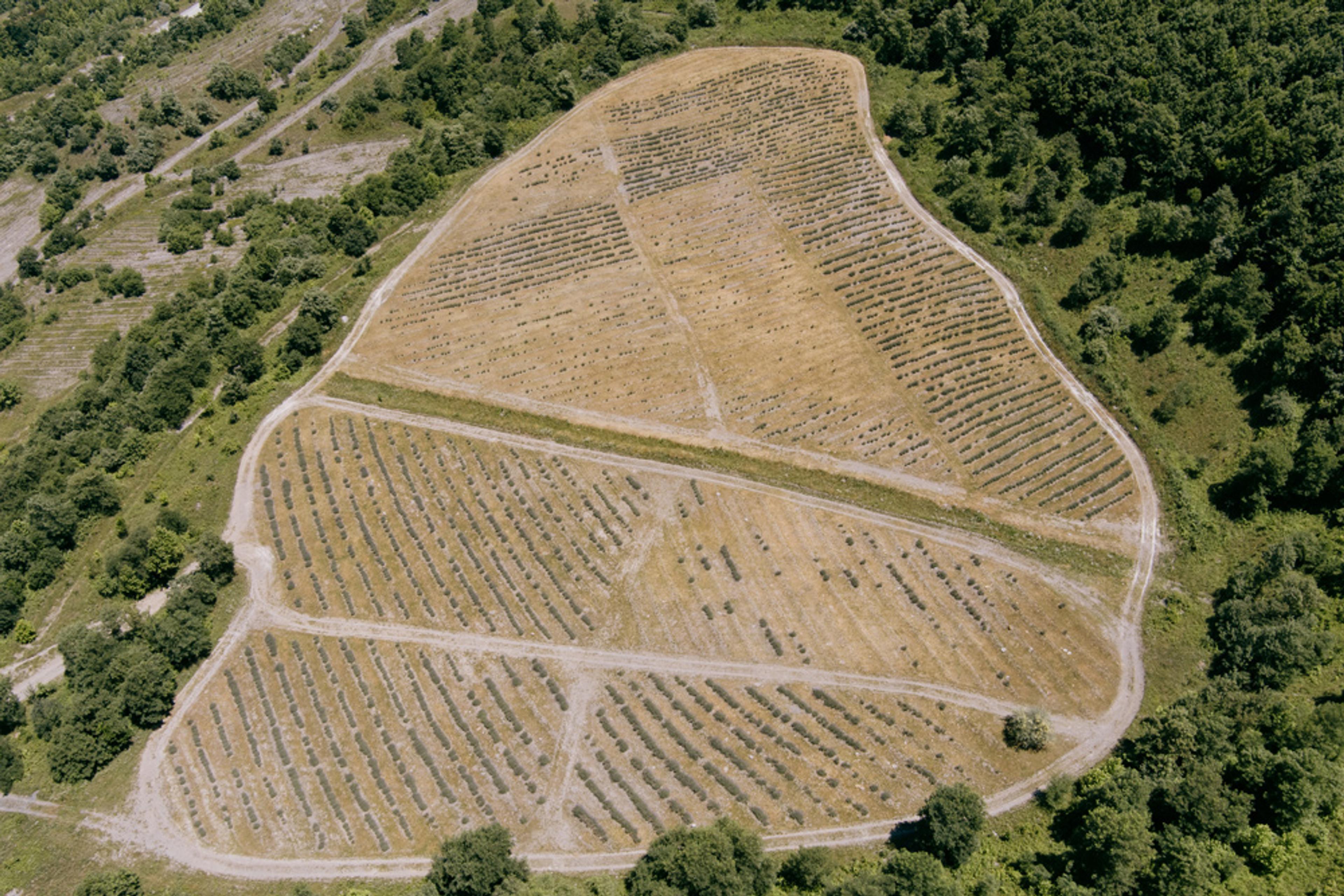
An aerial view of one of the fields referred to as “the Bowl” by the workers at the Appalachian Botanicals farm.
A farm’s success is inherently dependent on striking a balance between exploiting the land and caring for it. You’re removing a plot of land from its natural state and coaxing it into an artificial purpose: the cultivation of crops for human use and consumption. But if you push the land too hard, and do not allow it to rest or restore, it will produce less and less.
It’s an immense challenge to run a farm even in the most forgiving of soils, to say nothing of the ruins of a mine. What does it take to sustain it?
_______________
Here’s how reclamation works, in simplified terms: To be able to mine on a given site, a coal company is legally required to take out a bond that gets released once they’ve restored that site to a reasonable degree of ecological health. (Kind of like a security deposit.) The release of that bond occurs in stages, upon meeting various requirements: keeping pollution out of waterways, fortifying against landslides, and planting new forests and vegetation over rocky remnants.
The system has yielded varying degrees of success. In the worst case scenario — if coal companies go bankrupt, or pretend to have ongoing mining activity on sites that are actually abandoned — they can evade responsibility for remediation. In the case of bankruptcy, that means that states are left to clean up the mess. In the case of evasion, it means that the communities living alongside and downstream of those mines have to endure pollution for which no one will claim responsibility.
And even when former mine sites are successfully reforested, the ecosystems are not necessarily healed. When the earth is still bare and raw immediately after mining, it’s most vulnerable to invasive species like the autumn olive. When those take root, they’re very difficult to eradicate, and can overcome the native organisms that sustain the ecosystem.
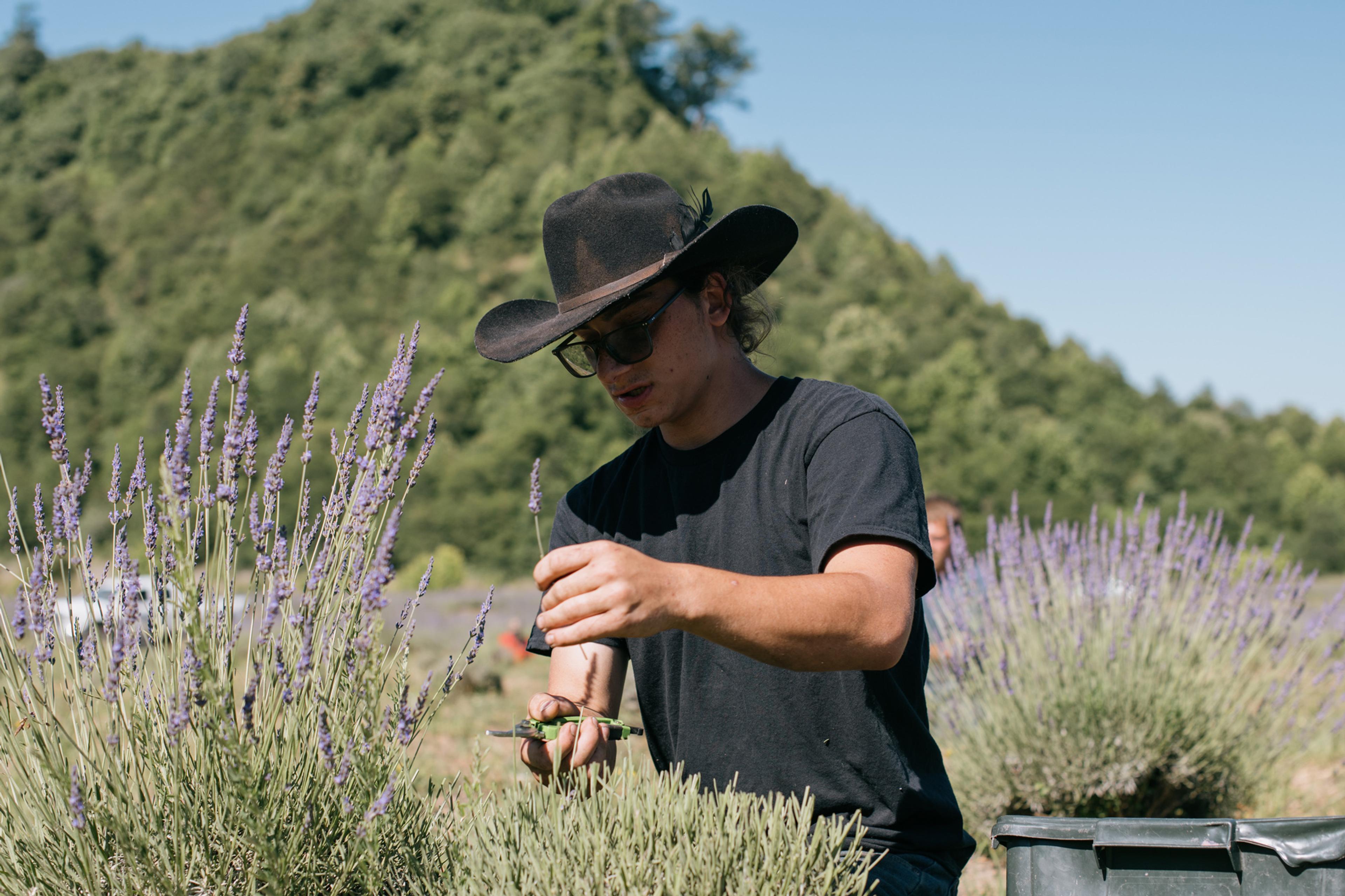
Dakota Graley, 18, harvests lavender from one of the thousands of plants in the main field at Appalachian Botanicals lavender farm.
But the prospect of putting a farm on a former coal site is highly ambitious and pretty rare — at least in the mountainous Central Appalachian Coal Basin, which stretches across the state of West Virginia into eastern Kentucky and Tennessee. This is not a region that is known for quality farmland to begin with. It’s all steep slopes and hollers, shallow layers of soil over rock formations. W. Lee Daniels, professor emeritus of plant and environmental sciences at Virginia Tech, estimates that less than 10 percent of former mine lands in this region go to agricultural use, in plots just a few acres in size.
Lavender, however, is a good match for mined terrain because it’s a relatively low-maintenance crop that thrives in dry, rocky soils. It also provides a very romantic, media-friendly narrative: from dirty coal to aromatic lavender, ruined land to fields of blooms. In 2017, the Green Mining initiative earned some optimistic coverage for its vision to transform a strip mine in Kanawha County into a lavender farm. It brought in would-be farmers from across the country to learn how to grow the crop, with the goal of eventually making them cooperative owners. But it quickly ran out of funding, and the lavender crops that survived the first planting were tended by volunteers.
Jocelyn Sheppard, who worked as a consultant for nonprofits at the time, had helped secure the grant for the Green Mining Project. A similar project could serve the community by providing reliable employment, she believed, as a for-profit business. With the support of a private investor, she signed an agricultural lease with the property owners of the Raven Crest mining complex in Ashford, West Virginia, and started growing lavender on 38 acres of partially remediated surface mine in 2019.
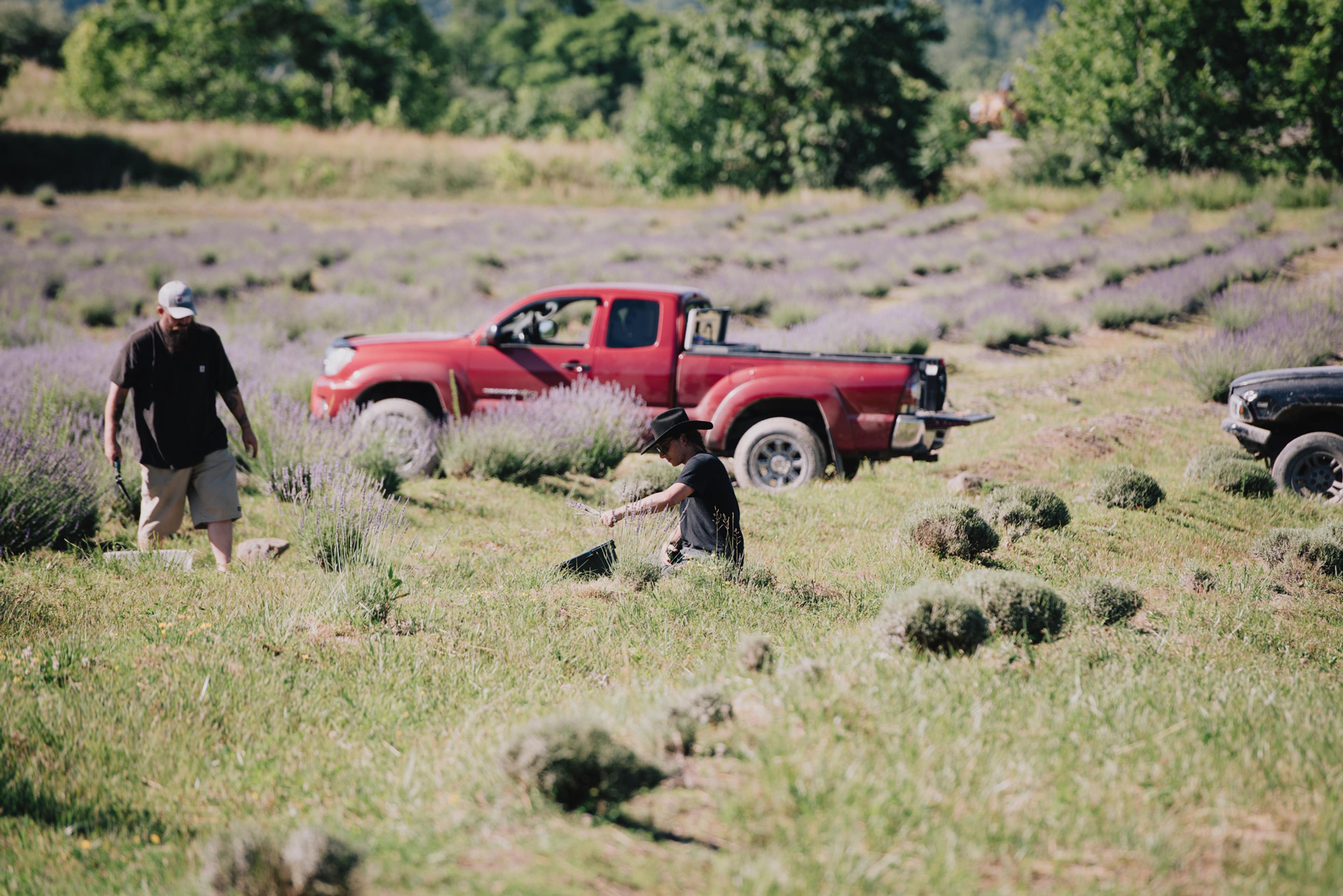
Dakota Graley, right, and Kaleb Hanshaw, director of reclamation & remediation for the Center for Coalfield Development, work to harvest lavender in the main field.
“It’s been reclaimed so technically it’s usable for something,” she said. “We’re this 38-acre piece of a 2000-acre coal mine site, and a chunk of it is still active. No one’s gonna build houses up there, no one’s gonna put in a store, a hotel, you couldn’t have people camping or hunting. There isn’t going to be anything to do with it other than grow something on it.”
But growing something, especially on reclaimed mine land, is a significant challenge. Sheppard had no agricultural background, and running the farm was a learning process. Other commercial lavender farms have been able to capitalize on picturesque, delicious-smelling land by hosting weddings, tours, and other Instagrammable events — the still-active mine all but ruled out these prospects. And finding enough lavender buyers to sustain the farm proved challenging, so Appalachian Botanicals developed its own product arm to be able to process and sell the crop in the form of essential oils, mists, and lotions. The company opened a manufacturing facility and store in the town of Foster, a few miles southeast of Ashford.
About a year ago, Sheppard came to the conclusion that operating the farm was too costly, and started to look for partners. In April, she announced that the West Virginia-based nonprofit Center for Coalfield Development would take over management of the farm, and it would be transferred to a new nonprofit entity “so we’d be eligible for grants and other types of support to sustain the farm in future years.”
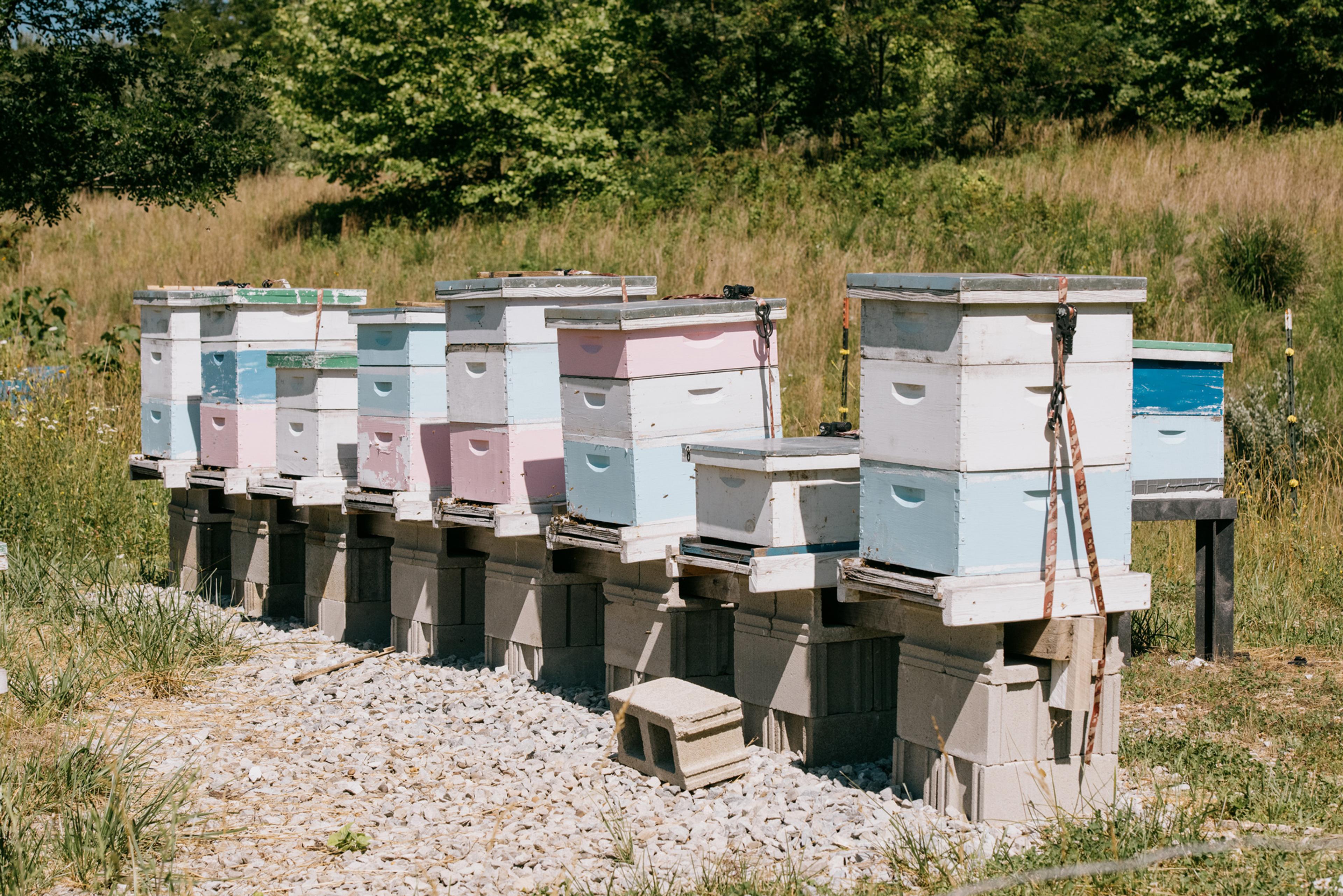
The beehives at the Ashford Farm serve not only to pollinate the plants, but the honey is harvested as well.
Under the Biden-Harris administration, there’s more and more government money to clean up the mess left behind by fossil fuel companies. In 2022, the Center for Coalfield Development and West Virginia University won $63 million in funding from the Build Back Better framework to “take [West Virginia’s] former mine lands and turn them into assets,” in the words of a press release announcing the grant.
Kaleb Hanshaw, Center for Coalfield Development’s director of reclamation and remediation, took over the farm in May. Hanshaw, a former youth pastor, homesteads on his property outside of Huntingdon, West Virginia, and is certified in permaculture design. He drops reference to the teachings of Alan Savory into conversation, talks fervently about the balance of bacteria and fungi in the soil of a healthy ecosystem, and earnestly cites The Lion King’s “Circle of Life” as an agricultural philosophy.
Most industrial reclamation efforts are insufficient to actually restore a mine site to ecological robustness — they’re more about removing contamination than boosting health. Nor is a single-crop farm an effective method of ecosystem restoration, Hanshaw explained in a narrow shady grove next to rows of lavender in the softly sloping “bowl,” cradled on each side by forested mountains.
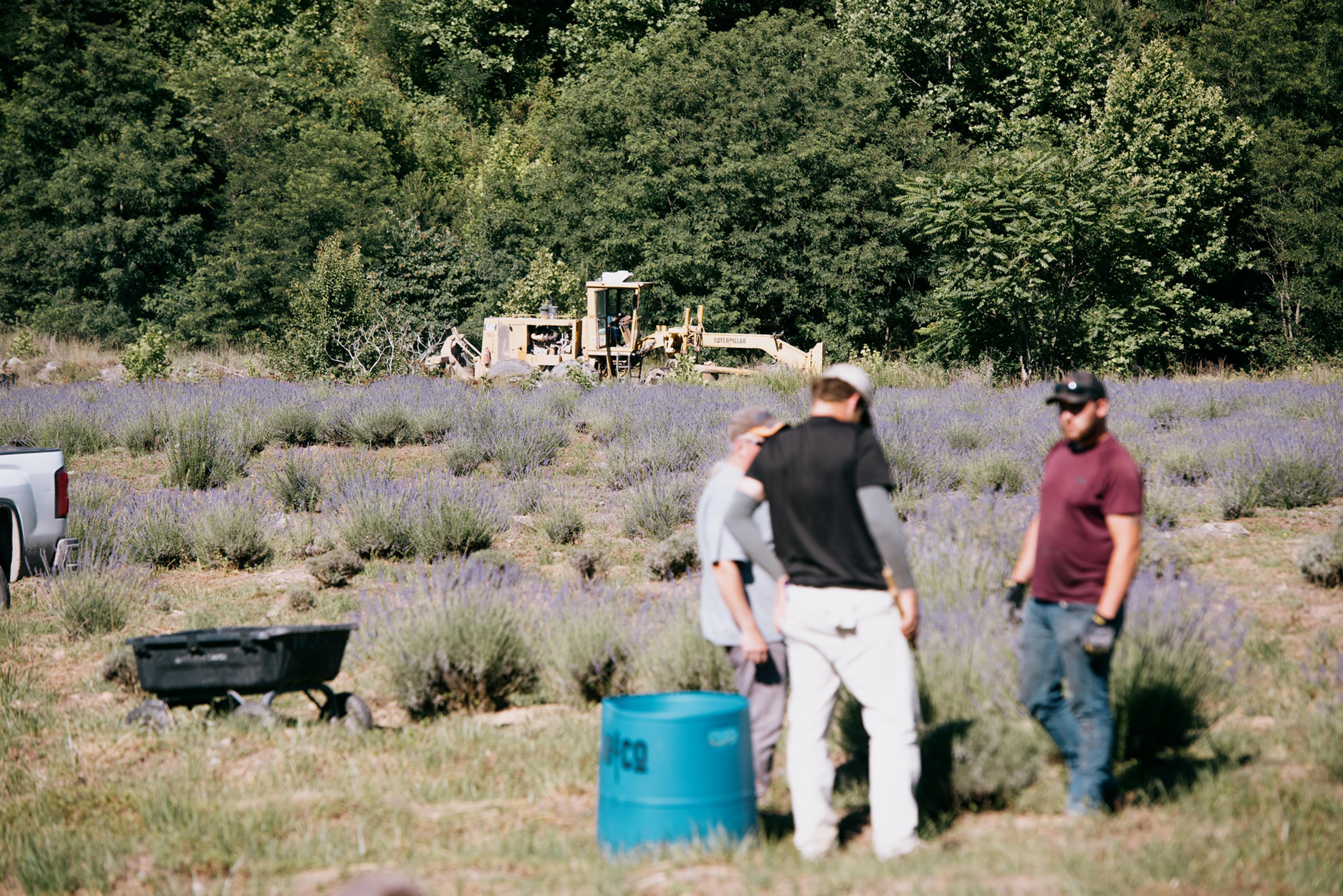
Charles Bowman, Nate Withrow, and Brian Bentley take a break from harvesting lavender near a road grader owned by the nearby mining company.
“The soil’s not healthy yet,” he said. “We’re impressed with the way Appalachian Botanicals was utilizing land that wasn’t used before with lavender, and it gives us the responsibility to go forward with reclaiming this site and move away from a monoculture to a diverse ecosystem.”
The eventual goal is to bring in complementary species of plants and livestock: plant fruit trees, strawberries, and melons; bring in herds of sheep to graze weeds and encourage pasture grasses around the lavender; bookend the lavender rows with water-hungry plants to draw excess rain away from the crops. But there’s a lot to do in the meantime, to improve conditions on the farm itself. Center for Coalfield Development’s resources, thanks to significant government grants, have allowed the farmworkers to get pay raises and health insurance, to buy safety equipment and trucks, and shelter from the blistering summer heat.
But there’s a delicate balance of factors that are required for the longevity of the Ashford Farm. The corporation that owns the land could decide to sell, which could jeopardize the lease. The farm has to maintain a positive relationship with the operating mine nearby. And a lot of the current funding opportunities could shift with a change in political administration.
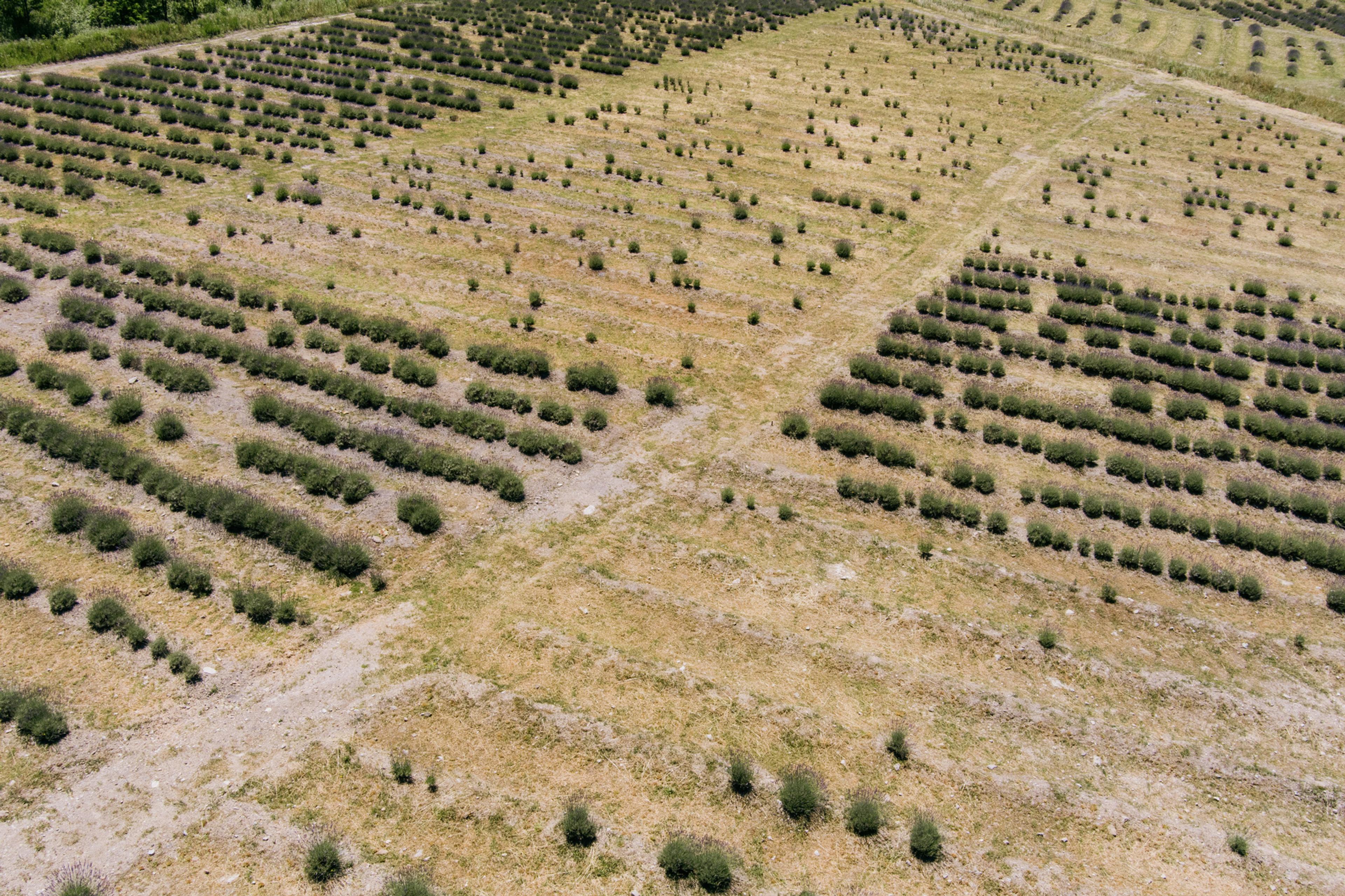
"The Bowl" sets higher than most of the other fields and half of it is surrounded by a ridge to the south.
“From what I know, and I’ve seen, a lot of Appalachian land has been taken for energy for the country,” said Tommy Cook, a 25-year-old farmworker who’s lived in Boone County his whole life. “Once you’ve grown up with those mountains so long, and you’ve been all over them and they’re just gone, it breaks your heart to a certain degree to know I’ll never see that mountain again. But I’d rather see trees and foliage, and that part of the mountain won’t be just barren dirt anymore.”
While the farmworkers on the Ashford Farm make less than half of what they would in mining, they try to find value in the act of restoring what’s been lost. The market does not reward caring for earth; it rewards taking from it. It is also challenging work, contending with the whims of wild flora and fauna and the shifting demands of a changing climate. But at the end of a long day, Charles Bowman observed, when the wind hits at the right angle, the rows of rippling lavender look kind of like the ocean.

After the 2018 Farm Bill legalized hemp production for the first time since the 1970s, Chelli Stanley started seeking out polluted land for an experiment. Hemp is a hyperaccumulator, meaning toxins from soil can be absorbed through the plant’s roots. Inspired by Indigenous activist John Trudell, the journalist and environmentalist wanted to grow hemp to see if it could clean up contaminated soil.
She eventually met Richard Silliboy, Vice Chief of the Mi’kmaq Nation. In 2009, the Tribe had acquired the former Loring Airforce Base. Located in the small town of Limestone, Maine, the military previously used the land for over 40 years as a firefighting testing area. Upon inspection, the Tribe found the soil and groundwater was thoroughly contaminated with PFAS from toxic firefighting foam. It was so polluted, in fact, that the EPA deemed it a Superfund site, putting it on the national priority list for hazard clean-up.
Eager to collaborate, Silliboy partnered with Stanley in 2019 and co-founded Upland Grassroots alongside community activists, Tribal members, and researchers at a variety of institutions. The goal: to try using fiber hemp to remove the PFAS.
While industrial hemp has been used for phytoremediation efforts before on heavy metal toxins and radioactive isotopes — one of its large successes was on agricultural lands in Chernobyl after the 1986 nuclear disaster — hemp’s potential with PFAS is a newer subject.
PFAS, or Per- and polyfluoroalkyl substances, also known as “forever chemicals,” are a group of thousands of different compounds that don’t easily break down in the environment. Some compounds aren’t harmful, but many others have been linked to health issues including liver damage, thyroid problem, and cancer.
Upland’s creation coincided with the rise in PFAS found in farms all over Maine due to the usage of PFAS-heave sewage sludge as a low-cost fertilizer applied on fields. A practice used since the 1980s, most sewage sludge is said to contain PFAS due to wastewater treatment plants being unable to break it down. It has since contaminated waterways and crops; sickened farmers; killed livestock; and led to multiple people losing their farms.
Maine eventually banned sludge usage and is trying to repair the damages, but lawsuits are popping up against regulators such as the EPA; the agency still promotes its usage, while little federal regulation has taken place. Nationwide, according to the Environmental Working Group, nearly 20 million acres of farmland have been treated with sewage sludge.
Even if the EPA bans its usage, how to repair the land remains an open question. Can hemp be the answer, and what are the potential benefits and barriers?
Research Commences
Inspired by the Loring cleanup project, Lesley Putman, chemistry professor at Northern Michigan University, began doing research with her students. They started by exposing hydroponically grown hemp to PFBA, a nontoxic PFAS compound. The plants successfully took it up in the leaves, stems, and flowers.
Next, they exposed hemp to toxic PFAS compounds such as PFOS, which was found at Loring. Putman watered some hemp plants with a PFAS solution, while other plants got treated by the sewage sludge that she got from the former KI Sawyer Airforce base, another property which had PFAS contamination from firefighting foam.
She said the experiments with the toxic PFAS didn’t affect the growth of the plant. The team was disappointed that it only got sequestered in the roots, but Putman said it’s a good start.
“There is persistence in experimenting with it, but that’s what science is about. It’s about finding solutions.”
Furthering the research, one of her students recently started looking into how PFAS affects the cannabinoid content in cannabis plants. She also recently partnered with an area business that specializes in fungal remediation. They inoculated the roots on some of Putman’s hemp plants with fungi to see if it could help degrade the PFAS more quickly, but she hasn’t noticed a difference.
Most recently Putman presented her team’s work at a seminar, highlighting that their studies showed hemp seems to be most effective in sites where contamination is highest — a surprise.
“There is persistence in [experimenting with it], but that’s what science is about. It’s about finding solutions,” she said.
A Web of Regulations
Though Putman has been doing phytoremediation for years, it wasn’t always easy to research hemp. The Agricultural Act of 2014 had made hemp legal for academic study, but it remained heavily regulated because it was still considered a controlled substance.
Even after it was removed from this list, Putman had to apply for a grower’s number, which involved a background check and GPS coordinates for where she planned to grow. The university designated a fenced-in outdoor area, where she used above-ground planters to avoid contaminating the soil. Hanging on the entrance into the area is a sign with her grower number, and underneath in blazing capital letters: “HEMP IS NOT MARIJUANA.”
“Not only is there still confusion about the difference between hemp and marijuana in government, there’s still very much confusion between industrial and cannabinoid hemp,” said Erica Stark, executive director of the National Hemp Association (NHA).
Industrial hemp is cultivated for fiber and oil, and used in products like textiles, paper, and construction materials; it has low levels of THC (typically less than 0.3%) and doesn’t get you high. Cannabinoid hemp is grown specifically for its high concentrations of cannabinoids like CBD and also contains low levels of THC that can produce a calming effect.
“We are still facing the problem of various government agencies not even understanding or acknowledging that hemp is legal.”
Stark said that when the 2018 Farm Bill passed, the word “industrial” was dropped from the definition intentionally to protect the cannabinoid industry, but as an unintended consequence that made it more difficult to have distinct rules for fiber and grain hemp.
“We are still facing the problem of various government agencies not even understanding or acknowledging that hemp is legal,” she added.
The NHA has been working on the Industrial Hemp Act of 2023, introduced to the Senate last March. The bill would create a legal distinction between industrial and cannabinoid hemp to be able to lessen some of the regulatory confusion.
Potential for Profit
In terms of growing hemp for phytoremediation, Stark says she doesn’t see too much yet in the ag sector, likely for several reasons. Partly, it’s because of regulatory hurdles. Compliance testing is expensive and hard to accommodate on several acres of land. NHA hopes the bill will also get rid of the arduous testing protocols if it’s being used for phytoremediation.
Stark also said that it needs to be known what products can be safely made from hemp grown on contaminated land to be able to create value-added products. This way, instead of paying to fix the contaminated land, farmers could not only be doing something good for the environment but also generate revenue and get some of that money back.
Stark said there still needs to be more research on what can be done for viable options, and it would likely not involve anything ingestible. Some are putting their hope in biofuels.
“The most important thing would be finding a way to get the PFAS out of the hemp.”
Bryan Berger, chemical engineer and professor at the department of chemical engineering at the University of Virginia, has been collaborating with the USDA to build pathways toward converting hemp into fuel. They recently released a study in April about the process of conversion.
The process breaks down the plant’s cellulose, which has sugar valuable for the fermentation process that can help fill in fuel products that he says will hopefully be an answer to getting away from petrochemicals. That said, it’s still an open question whether PFAS-contaminated hemp could ever be safe enough to use in this fashion.
“The most important thing would be finding a way to get the PFAS out of the hemp,” said Vice Chief Silliboy, adding that they currently can’t burn it, because the PFAS would just go back into the atmosphere.
To degrade some of the PFAS in the harvested hemp, scientists on the Upland project have been using a process called hydrothermal liquefaction, a process of breaking down the biomass that was spoken about in their joint-published study on the trial. However, so far their studies have shown that a small amount of contaminants remain in the plant.
The Uplands project currently has a company remove and safely dispose of the contaminated plants. However, they said that one member of their team has been researching how to break down the PFAS using microbes.
Hemp’s Future Legacy
UVA’s Berger lives not too far away from Albemarle County in Charlottesville. which used to be one of the largest hemp processing facilities in the U.S., before it got criminalized in the 1900s due to what some believe were dirty tricks from the timber industry. Hemp was once used widely by the military; the government even encouraged U.S. farmers to grow it.
“A lot of history was lost,” Berger said, adding that if you talk to 3rd and 4th generation farmers there, they remember their grandparents growing hemp.
Berger, who is part of the team of researchers with Upland Grassroots, said that there still needs to be more studies done about converting contaminated hemp into biofuel. He hopes that maybe the Upland project can help move the dial with it continued research, which thanks to a grant will be continued over the next few years.
They grow from June through mid-August and harvest once the plant starts flowering, because there is a lot of PFAS uptake in the pollen, and they don’t want it blowing around. This summer the group tried to plant 50 to 60 different varieties of hemp to see which works best.
“We can do nothing with the property. We can’t put homes on it.”
While the conclusion the team made was that it doesn’t offer a comprehensive solution, hemp has effectively cleaned up some of the soil, and they will continue using it. The team also made another observation, that their research underscored the importance of involving community members in research aimed at remediating their lands.
Some of the group have also been trying to remediate nearby land that was contaminated with jet fuel, but they aren’t yet working with scientists on that.
Silliboy said that he hopes the group gets enough documentation that the Air Force will come back and do some of the cleaning or compensate the Tribe because there is still so much contamination. “We can do nothing with the property. We can’t put homes on it,” he said, adding that they were hoping to at some point put up a portable mill for economic development.
In the meantime, he said, “It’s very slow progress. As long as we’ve got people willing to work with us, I’m willing to keep tagging along and doing what we can.”
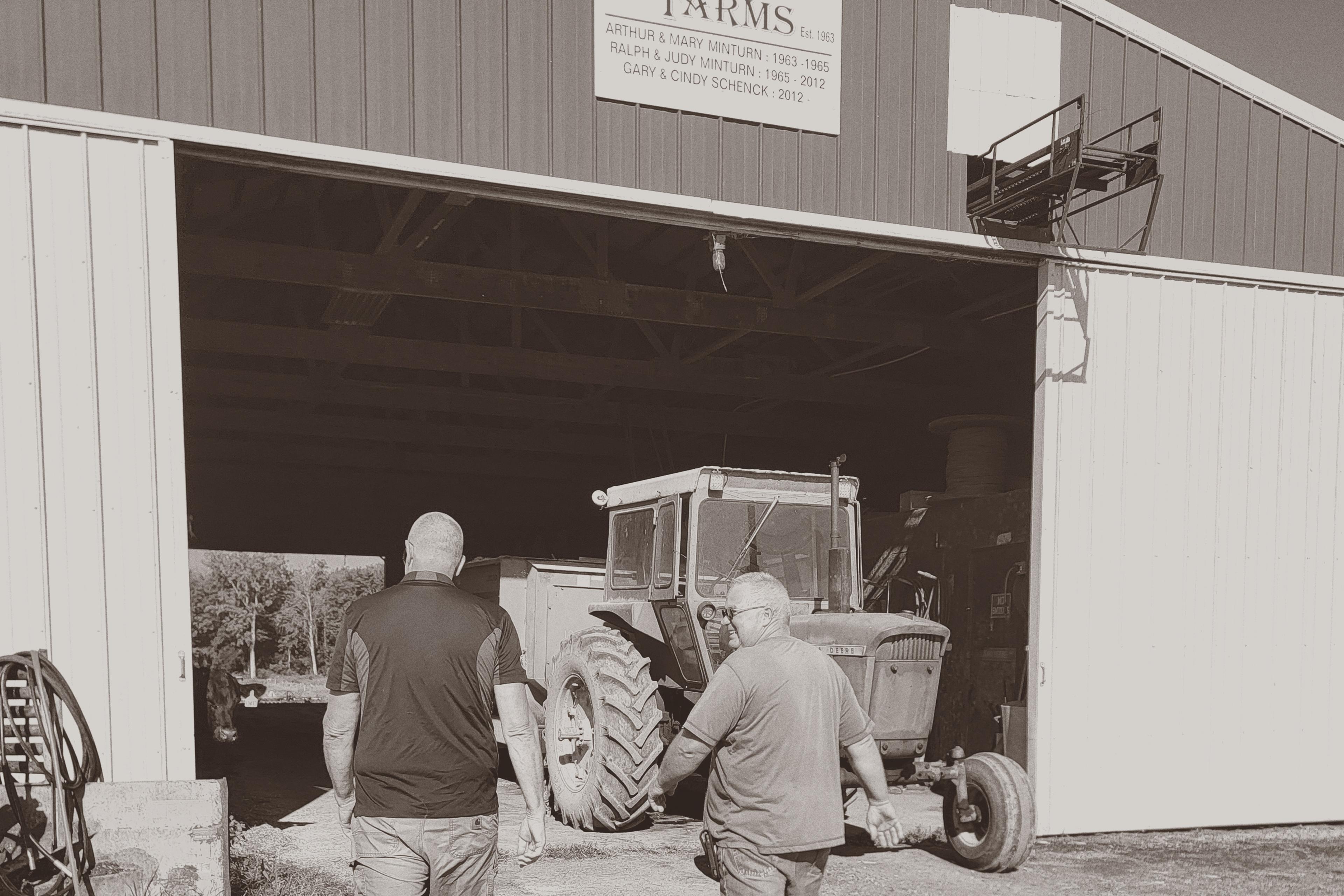
Farming is an entire way of life, not just a job — the work is intertwined with a farmer’s personal identity as well as their family legacy. With so much on the line, it’s no surprise that many farmers avoid dealing with succession and retirement planning for as long as possible. In fact, according to a 2015 AgAmerica survey, while 70% of farmers surveyed planned to transition their farm to the next generation by 2025, only 23% had a plan.
As anyone who’s undertaken this process can tell you, there are many legal and financial complexities involved — especially for families with multiple members who have varying degrees of interest in the business. Who is there to help? Lawyers, bankers, and accountants all play an important part but largely stick to their specific roles; none deal with emotional and mental health. Unfortunately, farmers are often more vulnerable than most when it comes to issues related to stress and mental health. The pressure to maintain the legacy of the farm, competing family expectations, and isolation can all play their part in making retirement a time when farmers could especially benefit from support.
In New York, a program called FarmNet is tackling the issue of farmer retirement head-on by addressing all sides of the issue. Since the program was founded in 1986, FarmNet has provided guidance for thousands of farmers navigating the rocky transition to retirement. The program deploys teams of consultants — one to assist farmers in making financial decisions, and one licensed social worker who helps families navigate the conflict, communication, and outright anxiety brought on by the prospect of so much change. NY FarmNet is fully funded by the state of New York, provides its services free of charge to any farmer, and helps over 300 new farm clients each year.
The NY FarmNet model is based on a simple principle: Financial challenges and personal stress are linked, creating patterns where one issue leads directly to another. For instance, a family farm whose owners are dealing with conflict between their children about how to run the business, combined with their own anxiety about retirement, will often have a hard time managing their finances effectively. Similarly, a poor financial situation or declining business can create mental health problems ranging from depression to addiction.
A holistic approach is what NY FarmNet discovered works best. Consultants work as a team to help farmers develop plans that address all aspects of the challenges they face. Building trust is key and the program’s consultants will often work with farmers for years. The program has fought hard over the years to gain the trust of New York State’s farming community — the outcomes speak for themselves. In a recent review, 80% of NY FarmNet’s clients remained in farming, 94% of clients surveyed would refer others to the program, and 91% of past clients would contact NY FarmNet again.
Minturn Farms
Run by Gary and Cindy Schenck, Minturn Farms is a small beef cattle operation in Auburn, New York, encompassing 200 acres of land and a herd of 100 cattle. The farm was passed down to Gary and Cindy by Cindy’s parents, as they intended to do with their son Jason and his wife Bethany. In total, the business involved four generations, leading to a complex succession planning situation.
Jason was heavily involved in the process of planning for the farm’s future. “My great grandfather purchased this farm in 1963,” he said. “My grandfather [Ralph Minturn] takes a great deal of pride in the fact that we are still here taking care of this farm. That drives us to keep it economically viable so we can continue and pass this on to the next generation.”
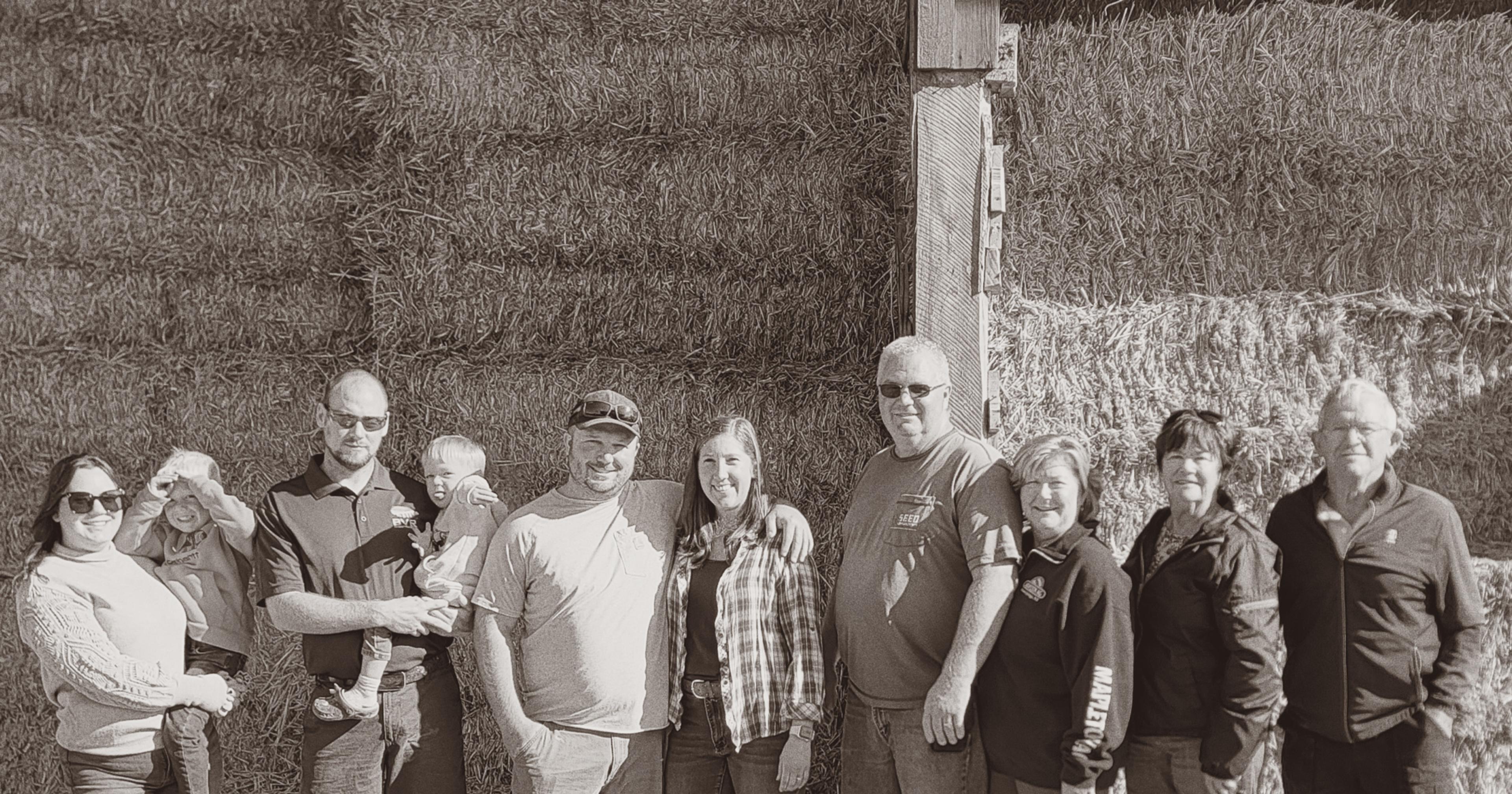
Five generations pose together for a picture at Minturn Farms in Auburn, New York.
NY FarmNet consultants began working with the family in the spring of 2022. Financial consultant Will Schonfeld introduced the possibility of income-only irrevocable trusts and postnuptial agreements to protect the rights of family members and keep assets safe for future generations. Family consultant Judy Flint, a trained social worker, assisted with communication and helped the family avoid conflict during the process.
Jason’s family had weathered ownership transitions from the previous generation — they understood that proper planning is critical. “Succession planning was stressful to think about because the first two family transitions for our farm were abrupt. First, my grandfather was forced to take over immediately after my great-grandfather passed away,” he said. Then, “My grandfather decided one day that he was done; he made an appointment with a lawyer, went to town and signed the farm over to my parents. This created some financial struggles when it came to operating funds, as well as some family issues amongst my mother’s siblings. We knew we did not want a repeat.”
“I think one main thing that every generation here can agree on is that the goal is to keep the farm in the family. My grandfather takes a great deal of pride in the fact that we are still here taking care of this farm.”
Hoskins Farms
For Lynn and Stanly Hoskins, the complications of succession planning didn’t have to do with dividing the farm between multiple family members but rather finding a way to protect their 1100-acre diversified crop farm when no clear successor wanted to take it over. They worked with NY FarmNet financial consultant Ed Ward to make sense of their options for retirement while seeing to it that the assets of the farm are protected.
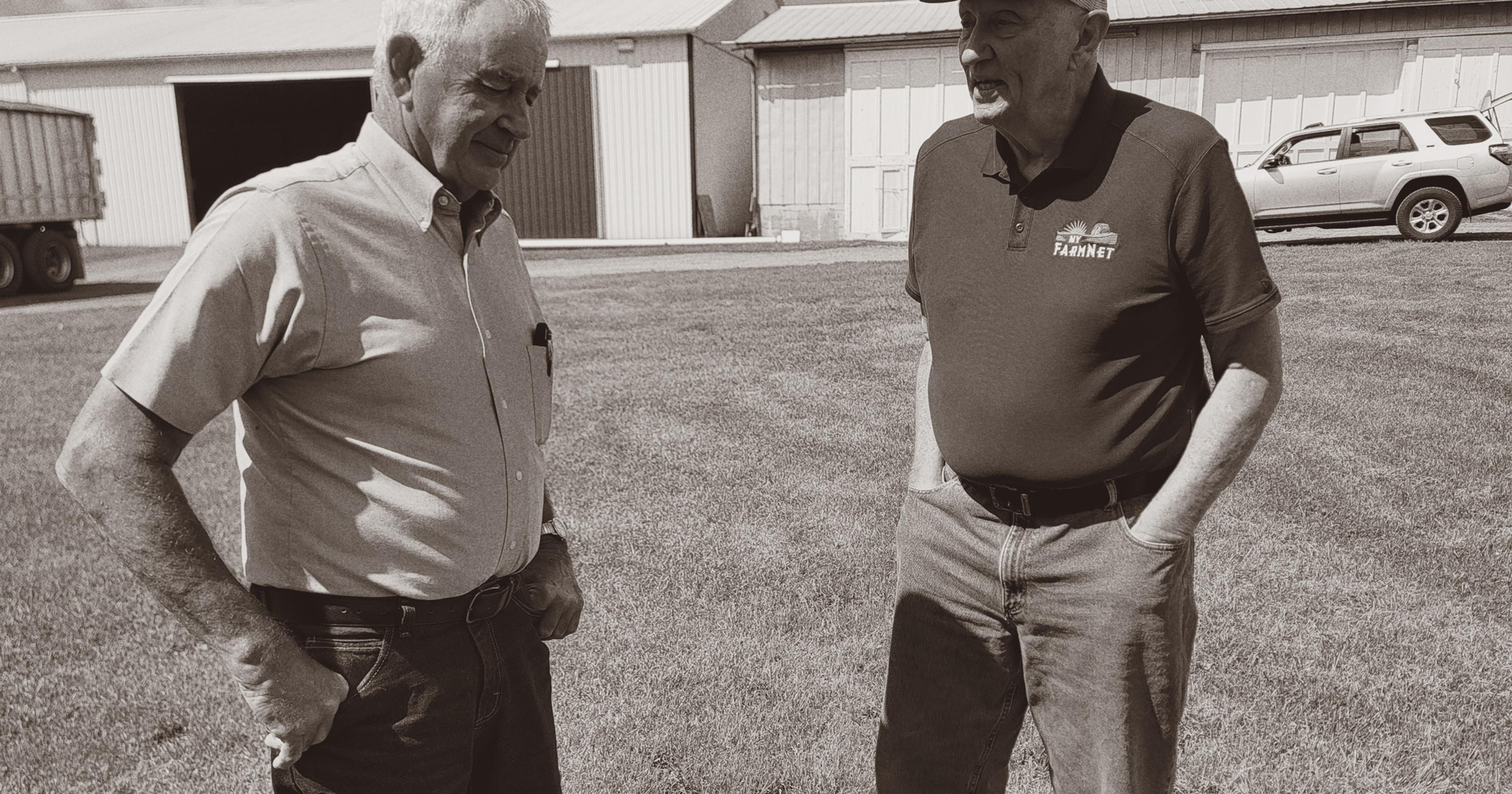
Farmer Stanly Hoskins, left, speaks to NY FarmNet financial consultant Ed Ward at Hoskins Farms in Auburn, New York.
For Stanly Hoskins, the process became complicated when a trusted source of guidance was no longer available to them. “Our long-time attorney retired. In an interview with a prospective new attorney, he strongly suggested an update to our partnership agreement. I was feeling a bit overwhelmed after returning from this attorney’s office with the task of changing our agreement and revising our wills. ”
When Stanly began working with NY FarmNet financial consultant Ed Ward, things became clearer. “His perspective and knowledge of how to get a succession plan in place was presented in such a manner that it turned a topic that is uncomfortable to think about into something bearable. (Ed) drew upon other farm situations he had handled to show what might work for us or to point out mistakes others had made. His presence at the first meeting with our new attorney was a true asset. He knew the questions to ask.”
Becky Wiseman, Family Consultant
NY FarmNet family consultant Becky Wiseman is a licensed clinical social worker with over 30 years of experience working with New York farmers. At NY FarmNet, she helps farmers cope with pressures that stem from an ever-changing agricultural industry.
“In my work with farm families, I have seen difficulties with intergenerational communication as a primary problem. It’s not a new problem, but conflicts come out in the open as the older generation begins succession planning,” she said.
Mental health support is available in a variety of forms across the nation, but unfortunately, there are few professionals who understand the unique nature of agriculture. For Becky, this is what makes the specialized work of family consultants so critical.
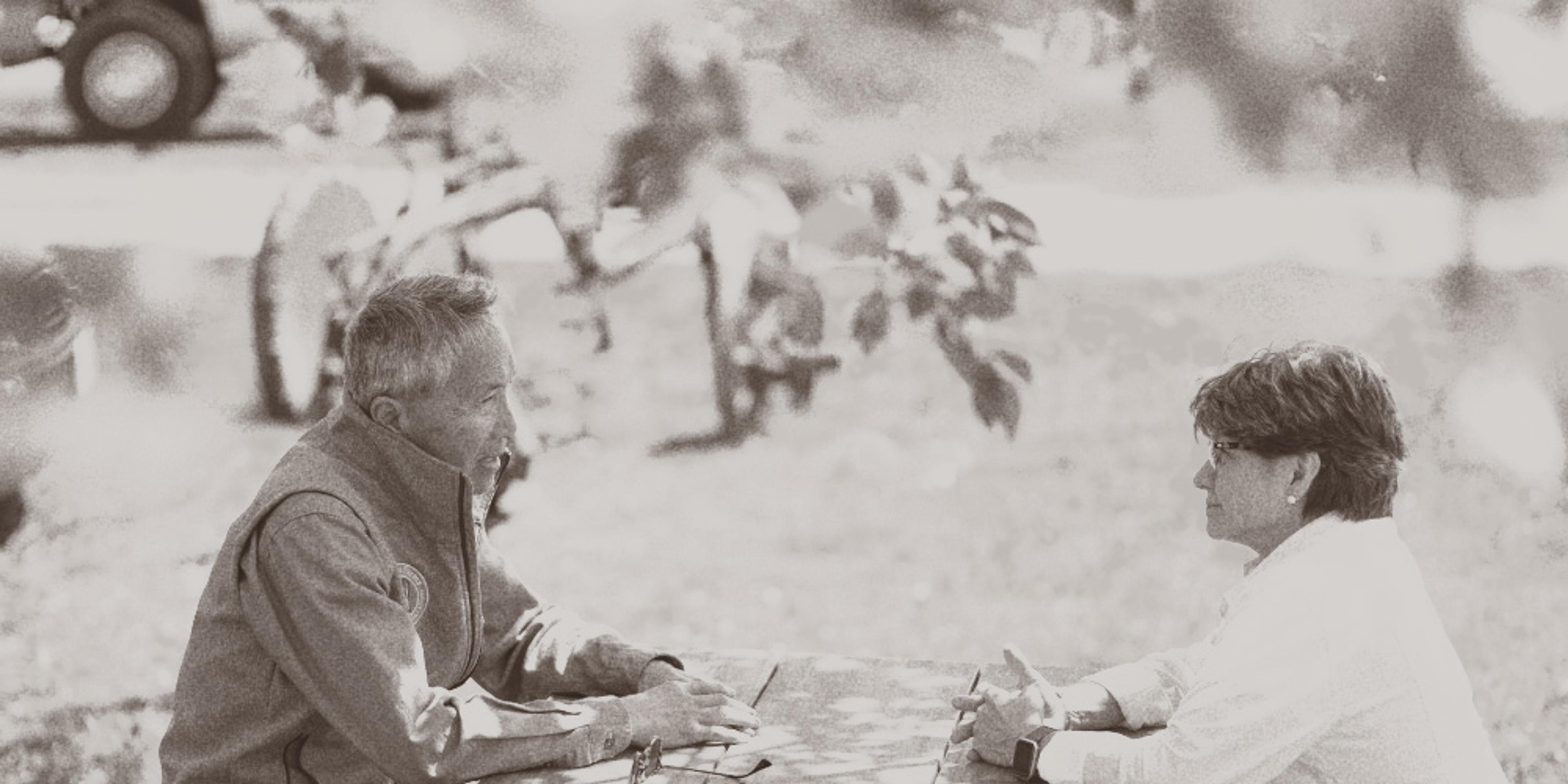
NY FarmNet family consultant Becky Wiseman (left) meets with client Fred Lee (right) of Sang Lee Farms on Long Island to provide mental health support.
“Farming is not a 9-to-5 job. Farming is not just a job; farming is a vocation, a way of life. Farming defines the family and its history from one generation to the next. Farmers I have worked with never worked off the farm,” she said. “A farmer who retires and gives up the business to the next generation while continuing to live on the farm experiences extreme pressure. Letting go means watching someone else do what you have always done — only ‘they’ do it differently. The fear of watching what has been your identity possibly fail, can be debilitating for the older generation.”
Declining mental health in agriculture is a growing concern, and often these struggles stem directly from financial stress, combined with the complex dynamics that exist within farm families working together. According to a 2019 Morning Consult Poll/American Farm Bureau Federation Poll, farmers and farmworkers stated that financial issues (91%), farm or business problems (88%), and fear of losing the farm (87%) all take a significant toll on farmers‘ mental health.
“They can dot the I’s and cross the T’s — but when it comes to looking the next generation in the eye and beginning to deal with realities such as: Tom doesn’t want to farm, Ginny does but she’s not good at it and Bob has always been dad’s right-hand man. The older generation is caught in a bind Family dynamics are created over the years and cannot be managed with a signature on a piece of paper,“ said Wiseman. “That’s why it is so important to include a mental health professional during succession planning.”

Danielle Southern is training for her first marathon; each week, her practice runs are getting progressively longer. In November, she will finally put her hard work to the test on the genteel, oak-lined streets of Savannah, Georgia, for a race sponsored by the national dairy checkoff program. Southern will stand out in a candy red singlet, loudly emblazoned with the logo “Team Beef.”
Running a marathon organized by the dairy industry, on a team funded by the beef industry — you’d be excused for thinking Southern is an ag lobbyist of some kind. The truth is more benign: She joined Team Beef back in 2017 when she noticed her brother-in-law sporting some of their gear. He told her that all she had to do was wear the jersey, too, and all of her race entry fees would be reimbursed.
“I’m like, ‘That’s really cool,’” Southern said. “I can’t say no to free races.”
Team Beef was created in 2009 by the national beef checkoff program, the marketing and research group that requires beef producers and importers to pay a $1-per-head on animals they market. The stated goal is to “promote beef’s health benefits and showcase people leading active and healthy lifestyles fueled by lean beef,” according to the Cattlemen’s Beef Board website. There are more than 20 teams across the country, each independently run by the respective state’s beef board. Team Beef Texas has about 1,200 members and is so popular there’s currently a waitlist to join; Team Beef Tennessee and Arkansas are also at capacity.
What exactly is the point of these teams, though? They celebrate participation, not podium finishes, and don’t provide training plans or coaching. The few hundred bucks for race fees that members are annually allotted can’t go all that far for athletes who race often, and longer races like marathons tend to be pricier. Is it simply a way for beefheads to show allegiance to their favorite protein?
“Team Beef is a collection of runners and athletes … that believe in beef as a powerful protein to fuel their training and their everyday lives,” said Kentucky rancher Joe Lowe, in a promotional video that includes him cheersing his wife Cassie with beef jerky.
But is marketing on the backs of these runners a successful initiative, and if so, in what sense? How exactly do beef and athletics go together? As it turns out, Team Beef is just one part of a multi-pronged effort to associate beef with health in the popular mindset.
“There’s a big difference between a brand showing up at a race with a brochure and a peer running or riding beside you with a Team Beef shirt,” said Scott Stebner, director of communications at the Kansas Beef Council on the Beef Board website. “Research shows time and time again that messaging from peers — people within your social circles and sphere of influence — is more credible and relatable.”
“There’s a big difference between a brand showing up at a race with a brochure and a peer running or riding beside you with a Team Beef shirt.”
In a February report titled “Aligning with Athletics,” the Beef Board quotes a statistic from a 2022 Nielsen Insights report: 81 percent of consumers trust branded sponsorships at sporting events. Running with that knowledge, the Northeast Beef Promotion Initiative (NEBPI), a beef checkoff subcontractor, has been busy trying to win the hearts and appetites of athletes and fans through on-site and in-game fan interaction, digital ads, social media content, and student-athlete engagement throughout the athletic season.
“The goal of these partnerships is to drive a greater understanding of beef by aligning with and capitalizing on the loyalty fans have for their sports teams,” said Kaitlyn Swope, NEBPI’s director of consumer affairs.
In 2019, a deal was struck with Penn State: Throughout the university’s football season, fans got steak samples at a “beef booth,” were encouraged to share beef content on social media for the chance to win a “beef tailgate prize pack,” and the Penn State Coaches’ weekly radio show featured an ongoing promotion heralding beef’s praises. A partnership with Seton Hall University in New Jersey led to the naming of beef as the official “Preferred Protein of the Seton Hall Pirates,” and the NEBPI has forged partnerships with high school athletic departments, too.
When Lance Pekus, known as the Cowboy Ninja, made his debut competing on NBC’s American Ninja Warrior in 2009, beef was a major talking point for the somersaulting, super-strong Idaho rancher. “Some of my biggest supporters and sponsors are the beef community, the Idaho Beef Council,” he told the Idaho Statesman in 2017. “A lot of people I compete with are vegans and vegetarians. I feel like there’s a lot of negative connotation to the beef and beef industry.”
Like anyone who wishes to join Team Beef, Southern had to go through a requisite “beef education training” that prepares athlete-advocates to “answer tough questions about beef and raising cattle,” from the slaughter process to animal care and a glossed-over version of the industry’s environmental impact. For just $300 per head, the Beef Checkoff is able to build an army of athletes to evangelize about consuming carne.
“So they’re very sneaky. They said that their athletes had improved performance when they ate beef the night before a race. Well, what else was eaten with that meal?“
“At the time, I was studying to become a dietitian,” Southern said, “and so I was going to be wearing a jersey for a food product, it was something that I wanted to feel strongly about. … [I] saw that their messages align with my approach to nutrition.”
The Team Beef approach to nutrition heavily emphasizes how essential nutrients, including protein, iron, zinc, and B vitamins are found in beef, which along with exercise, can “help build muscle and mental strength, according to their website. Taking a swipe at competing proteins, Joe Lowe said, “The biggest mistake people make in not incorporating lean beef in their diet is saying ‘Oh well I’m eating pork or I’m eating poultry,’ … and they’re not realizing those other vitamins and minerals that beef’s providing.“
And while all those positive nutrition values may be true, beef’s place on an athlete’s plate can be a much more complicated subject.
“[R]ed meat is indisputably an excellent source of high quality protein,” wrote registered dietitian Nancy Clark on the United States Tennis Association website. “It is rich in iron and zinc, two minerals important for optimal health and athletic performance.” That said, she acknowledges the risks of a diet high in red meat. Choosing whether to eat or forgo beef is not a simple decision, “but rather a weighing of nutrition facts, ethical concerns, personal values, and dedication to making appropriate food choices,” Clark said.
Then there’s heart health to consider. Despite small portions of red meat fitting within the American Heart Association’s recommended daily serving, that only applies to lean meats like London broil, extra-lean hamburgers, and top-round roast beef. The fat in meats like greasy cheeseburgers, beef sausage, and juicy steaks, make them poor choices for heart health — particularly for athletes, most of whom are allotted just 45 to 70 grams of fat per day, according to Clark.
“I do believe that if someone enjoys beef that they should include it in their diet and I think looking for the leaner meats is probably more beneficial,” said registered dietician Amy Stephens, a certified specialist in sports nutrition who works with NYU’s track and field team as well as Olympic-level athletes. “Endurance athletes need lots of calories, so it’s appropriate to include [lean beef] in a diet, or as part of a diet.”
“Casually looking over the [team] list, I can only see like, maybe three or four actual producers. The rest are just consumers.”
But while Stephens approves of the inclusion of beef — even daily — in the diets of her athletes, there are asterisks. The amount and the quality of the meat matters, as well as what else is on your plate. At the end of the day, Team Beef’s “goal is to get you to buy more beef,” Stephens said. “So they’re very sneaky. They said that their athletes had improved performance when they ate beef the night before a race. Well, what else was eaten with that meal? They won’t even say it.”
Stephens recommends that a runner following the Team Beef’s nutrition guidelines might want to rotate their protein sources. “The thing with beef is it contains a lot of saturated fat,” she said, “which has been linked with heart disease, which is a very common issue in our country. And eating foods with mono-unsaturated fats like avocado, olive oil, nuts, and seeds — also provides that, but they also have a cardioprotective effect and they help with lowering cholesterol and still providing that energy.“
But again, outside of the race reimbursements, what are the benefits of running on a beef team? (That is, assuming you aren’t beef ranchers like the Lowes, literally promoting your own product.) Southern said her favorite thing about Team Beef Georgia is the sense of community she feels when she sees other beef athletes at races — despite there being no workouts, meetings, or other shared events. Allegedly the majority of Team Beef runners are just enthusiastically pro-beef athletes, but is that really it?
“They do not come from a ranching or farming background,” said Caitlin Jackson, Georgia Beef Checkoff program coordinator. “You know, just kind of casually looking over the list, I can only see like, maybe three or four actual producers. The rest are just consumers.”
Maybe it’s the fashion. There’s something so eye-catching about the enlarged, sizzling flame-grilled steaks adorning the front and back of the garment, and well, that’s kind of the whole point. When Nebraska Team Beef member Jacki Musgrave accomplished her goal of running a marathon in all 50 states this year, she told Nebraska Rural Radio Station that she always receives a lot of attention for her meat-forward racing singlet.
“It’s got this big steak on the back,” she said. “[Runners are] like ‘Where can I get one of those?’ I tell them to follow me to the steakhouse after the race.”
Some states require that team members go through an online, self-guided course called Masters of Beef Advocacy that trains them on how to speak knowledgeably about environmental sustainability, beef nutrition, animal welfare, and beef safety. Texas requires members to participate in at least one sponsored volunteer activity and complete a reorientation video every year to remain on the team. In Georgia, all new members must go through an initial training call, and there are three membership tiers, with higher rates of reimbursement (up to $200 at the highest tier) going to members who take on additional trainings like the “30-Day Protein Challenge.”
Most Team Beef athletes say that the interactions they have with people at races are overwhelmingly positive. But one reason the checkoff dollars are being spent on all these trainings is to counter negative perceptions of the industry. For instance, beef production plays a hefty role in the creation of greenhouse gasses, the industry continues to lean heavily on antibiotic use, and of course, vegans will not support meat consumption on any grounds. Do such detractors ever give Team Beef athletes an earful?
“Yeah, we do get some comments about ‘Hey, some people said this,’” said Scott Stebner, executive director of the Kansas Beef Council, “but fortunately, every single one of our active beef members has gone through a brief training course so they can learn how to talk about beef nutrition, and how to talk about beef sustainability and animal welfare as well.”
Despite the size and spectacle of Team Beef, it should be noted that there are other commodity-sponsored running teams, like the Illinois Corn Grower’s Association team and the dairy checkoff-sponsored Team Milk. When asked why he chose a beef team, specifically, Team Beef Georgia runner Dustin Monroe responded, “I am a huge fan of milk and will look into that team as well now that you have made me aware of them.”

USDA has a long and well-documented history of racial discrimination, more explicit than most federal agencies. In recent years, the agency has responded with decisive steps to acknowledge and address some of the resulting harm. To wit: A few days before Democrats made history by nominating a woman of color to run for the presidency, the Biden-Harris Administration announced execution of more than $2 billion in payments to farmers and ranchers who had experienced harm from USDA discrimination.
These payments are beneficial and important, if only a start. USDA Secretary Tom Vilsack said of them, “While this financial assistance is not compensation for anyone’s loss or pain endured, it is an acknowledgement.” John Boyd, president of the National Black Farmers Association, put a finer point on it to AP News: “It’s like putting a bandage on somebody that needs open-heart surgery.”
Of course, even those funds were fiercely contested; the USDA payments were first blocked by court order in June 2021, responding to complaints they did not provide equal protection under the law to white farmers. The assistance may never have gone through if Congress hadn’t broadened the scope beyond Black beneficiaries.
That decision may be of lasting consequence to how loan programs operate moving forward, as NPR’s Ximena Bustillo noted during an All Things Considered segment on the payments. “Since these new programs are race neutral, Black farmers and other farmers of color say that the move could hide the scope of the unequal lending practices,” Bustillo said.
While these payments were executed in consideration of past actions, USDA has also been afforded significant authority to invest in a more equitable future through the Justice40 Initiative. The Biden administration implemented the initiative in tandem with significantly heightened federal investments toward climate-friendly programs. In essence, Justice40 calls for the realization of at least 40% of the benefits of these investments to occur in communities disproportionately impacted by social and political marginalization and pollution.
Mechanically, this “whole-of-government initiative” applies to “any grant or procurement spending, financing, staffing costs, or direct spending or benefits to individuals for a covered program in a Justice40 category.” Agencies have declared their lists of impacted programs; USDA’s can be viewed here. But while communities of color — rural or urban — are disproportionately impacted by underinvestment and pollution, many BIPOC farmers may not recognize themselves as the intended beneficiaries of the program.
Justice40 does not explicitly acknowledge itself as a vehicle of racial justice, which protects the effort from interference but may ultimately undermine its potential to make USDA programs more accessible to communities of color. A report on Justice40 implementation issued by Resources for the Future stated “The White House acknowledges that it left race out of the [eligibility screening] because of concerns that legal challenges might result if federal funding is directed to communities based on race.”
The Justice40 Initiative uses the term “disadvantaged communities” to designate its beneficiaries, an effort to avoid legal entanglements like those leveled on USDA’s discrimination payments. However, if agencies implementing Justice40 could speak more freely about the racial factors of environmental justice, they could draw more BIPOC farmers and organizers toward USDA programs.
“The White House acknowledges that it left race out of the [eligibility screening] because of concerns that legal challenges might result if federal funding is directed to communities based on race.”
Justice40 defines underserved communities by either geography or the experience of “common conditions” beyond geography; White House guidance uses “migrant workers” as an example. In January 2024, impacted agencies were given the Climate and Economic Justice Screening Tool to identify communities to which Justice40 benefits should flow.
Having worked as a consultant to farmers and grassroots nonprofits through the pandemic and recovery, I can attest to the difficulty of alerting folks to the existence of federal support programs like Justice40. These are people who have historically been held at arm’s length by USDA; they would surely prove more likely to endure the daunting application processes if they understand the government was attempting a new way to direct support to their communities, specifically. But in my experience, BIPOC farmers are more likely to understand themselves and their communities in terms of race and culture, rather than as “socially disadvantaged” or “marginalized” communities.
Tiffany Bellfield El-Amin is a third-generation farmer in Madison County, Kentucky, and executive director of Kentucky Black Farmers Association. Her family’s history is in tobacco production — she saw that resources from major settlements with cigarette manufacturers tended to almost exclusively benefit white farmers in her state. El-Amin asserts that government programs have been made specifically unavailable to BIPOC farmers since the Civil Rights era.
When asked whether President Biden’s Justice40 initiative will support farmers like her, El-Amin said, “People have to show up to demonstrate that there are actually Black farmers in Kentucky.” As USDA agencies continue implementation of the Justice40 Initiative, they may continue working with their familiar farmers and clients, rather than using Justice40 as an opportunity to reach out to new constituencies. There are far too few BIPOC farmers in the U.S. for USDA to fulfill its Justice40 obligations by working with them exclusively. But the agencies may miss opportunities to empower BIPOC farmers in producing the benefits for Justice40 communities.
There are about 600 farms owned by Black farmers in Kentucky, or less than two percent of the total farms in the state (the national average is under one percent). But USDA’s implementation does not have to directly benefit BIPOC farmers. Agencies like the Farm Service Agency (FSA) and Natural Resources Conservation Service (NRCS) can choose to work with white farmers to produce benefits in underserved communities in order to satisfy Justice40 requirements.
“People have to show up to demonstrate that there are actually Black farmers in Kentucky.”
Consider a hypothetical where USDA agencies acknowledge water quality impairment in a Justice40 community. USDA will seek to fulfill part of its Justice40 obligation by improving water in the community. In many cases, this could be accomplished by supporting upstream farmers who use sustainable practices, regardless of whether that farmer can be considered a member of the Justice40 community.
El-Amin, in asserting the need for BIPOC farmers in Kentucky and elsewhere to make their presence known, noted that agency outreach cannot afford to discount race and culture in their outreach efforts. “The farmers I work with do not think of themselves as underserved or socially disadvantaged.” Without acknowledging the specific challenges BIPOC farmers continue to encounter, many will not realize the federal government is making extra effort to partner with them.
It’s a politically savvy strategy — the Justice40 Initiative is more likely to survive by making it race-neutral. But where a genuine focus on racial justice could mean foundational change to the USDA and signal a new course to other vested stakeholders, Justice40’s focus on “underserved communities” may allow business to proceed as usual.
That said, El-Amin expresses cautious optimism, viewing Justice40 as an opening for farmers and organizers like her to take a seat at negotiation tables that had previously been beyond reach. “It would not take away from the majority to make sure that everyone is represented,” she said.

When Jim Wally has a question to ask about his 10-acre chestnut farm near Alachua, Florida, he has no intention of firing up ChatGPT or any other chatbot to answer his query. “I’m horrified at the thought of using it as a resource for knowledge,” he said. “There is already so much strong research from universities and experts we can draw on, thanks to farming being one of the more data-driven fields.”
Wally is hardly an outlier, as ChatGPT’s shaky reliability has many skeptics among those studying the relationship between large-language model systems (LLMs) and agricultural queries.
Researchers from the U.S., UK, Kenya, Nigeria, and Colombia recently analyzed the accuracy of professional advice provided by ChatGPT (versions 3.5 and 4.0) to farmers in Africa. The researchers noticed inaccuracies that could lead to agricultural missteps and crop losses, mainly due to the chatbot outputting wrong information on various questions. Though their work was geographically targeted, the conclusions could apply to farmers in the U.S. and beyond.
The researchers wrote, among other conclusions, “[T]he chatbot provided inaccurate information related to planting time, seed rate, and fertilizer application rate and timing.”
In their article for Nature Food, the emerging-technologies analysts warned against the unmediated use of generative AI models in agriculture, noting that farmers might implement flawed recommendations that could lead to poorly managed practices, crop losses, and potential food crises. Instead, the researchers suggest a more “optimal development process for AI models in agriculture that includes thorough monitoring and testing before these models are widely implemented.”
In a series of questions posed by cassava root farmers in Nigeria — Africa’s most important cassava producer — the researchers studied recommended methods for cultivating the plant. In one example, ChatGPT suggested the use of herbicides, but erred in the timing of chemical application, which would instigate significant crop damage and food loss if the farmers followed its advice.
“The problem with our findings extends beyond the errors of the algorithm itself,” one of the lead authors, Asaf Tsachor, research affiliate at the University of Cambridge’s Centre for the Study of Existential Risk, said in a release. “Many had forewarned us about potential errors and inaccuracies. The fundamental problem is the absence of any safeguards against the widespread use of Large Language Models, and AI more broadly, in a system as sensitive as agriculture.”
(We made multiple attempts to contact Tsachor without success.)
“The chatbot provided inaccurate information related to planting time, seed rate, and fertilizer application rate and timing.”
This research is presented at a time when some farmers are dipping their boots into the AI chatbot space, albeit tentatively. Jim Ladlee, state program leader for Emerging & Advanced Technology at Penn State, has attended countless presentations on agriculture; he estimates up to 40 per cent of farmers he talked to had experimented with chatbots. “But they are doing it cautiously,” he noted, “and they are realizing how the system is a tool and you still need the human element in there.” He added that LLMs shouldn’t replace the suggestions and advice given by actual farmers with experience in managing crops.
Ladlee recalls how he once asked Google’s chatbot Bard, and then later Meta’s Gemini, for guidance on how to best can tomatoes. “They told me I should place tomatoes in an ice bath, and used an example of showing a person in an ice bath, for some reason, and it was just a silly reply to a serious question,” he said.
LLM chatbots are typically trained to ingest data from a slew of sources, most commonly billions of pages available online, from blog posts to Wikipedia articles to news stories. LLMs are managed by parameters — millions, billions, and even trillions of them. (Consider a parameter as something that assists an LLM decide between different answer choices, an attempt to weed out flawed sources.) OpenAI’s GPT-4 reportedly has 1 trillion parameters.
The training set for a particular chatbot will give it the expertise to deliver answers on a given topic, such as agriculture. But the LLM sector can also be plagued by the garbage in, garbage out theory: If the data an LLM has ingested is biased, incomplete, or undesirable in some way, then the response it gives could be equally unreliable or bizarre.
Farmers have to be particularly wary about using chatbots for advice related to, say, pesticide recommendations, Ladlee cautioned. “If an LLM is searching for suggested pesticides and scrubs all these websites to pick the popular item, I’m not sure that is necessarily effective,” he said. “A lot of people are trying to see LLMs as a magic wand that are going to solve everything and that is not the case.”
“A lot of people are trying to see LLMs as a magic wand that are going to solve everything and that is not the case.”
Research tackling other areas of chatbot reliability contend these systems should complement human work as opposed to replace it. A May 2024 report by Marquette University computer science researchers focusing on chatbot disease classification queries found that “AI chatbots demonstrate potential for disease classification from patient complaints, but their reliability varies significantly.” But the report says, “these scores, even at their best, do not reach a level that ensures absolute reliability. One reason for that is AI chatbots, like OpenAI’s ChatGPT, are trained on a broad dataset from the open internet, which makes them susceptible to reflecting web-based biases and association.”
That conclusion echoes what Ladlee noted about the importance of human intervention for questions related to farming practices.
That said, some agricultural specialists believe LLM systems can be leveraged for less technical tasks. Crop management might not be in ChatGPT’s wheelhouse, but farmers may use it for business-related applications, said Tim Hammerich, host of the podcast The Future of Agriculture. “Look at all the compliance work a farmer has to do,” he said, “and a chatbot can help with paperwork related to say, commodity group compliance or government documentations. That’s where I see the most immediate value.”
Wally echoed Hammerich, saying, “I can see ChatGPT being great for something like writing copy for marketing materials.”
Meanwhile, the Farmer Business Network continues to fine-tune Norm, an AI chatbot that declares itself an experiment and notes in the small copy below the question-field box, “Not intended for real agronomic guidance.”
It can answer questions on pest and disease strategies, livestock and animal health, and general agronomic advice. Questions about soil condition and the right to time plant certain crops are also common.
Norm’s creator, Kit Barron, said last year, “Over time it’s become more of a useful tool, we’re seeing a lot more seasonally relevant, directed questions. People are treating it as an ag advisor, or another trusted consultant on their farm. Now, they’re asking about post-harvest [tactics], fertilizer regimes, or herbicide applications, and that’s been really great to see.”
“I can see ChatGPT being great for something like writing copy for marketing materials.”
Yet basic questions, such as asking Norm for how often to spray herbicides on corn fields, yielded answers that were vague and cautious, which some may contend is an improvement on blatant unreliability. After all, many LLMs hedge their answers in order to provide information that may require more context. “The frequency of herbicide application on your corn farm can depend on several factors, including the type of herbicide you are using, the specific weed pressures you are facing, and the growth stage of your corn.”
When asked about a more research-driven questions, such as how the Inflation Reduction Act is relevant to farmers, it offered much more concrete advice on, for example, harnessing the Act’s conservation programs: “The IRA allocates significant funding to conservation programs, which can provide financial assistance for practices that improve soil health, water quality, and biodiversity.”
In India, Farmer.CHAT launched in 2023 to deliver “data-driven insights to improve policies that support farmers,” according to its website. Also last year, Helios launched Cersi, a chatbot that generates billions of climate, economic and political signals to forecast potential supply chain risk down to the farm level for American users. The virtual assistant is part of Helios’ larger risk management platform.
Another platform, agri1, works similarly to Norm and invites image submissions. Its website notes, “agri1 utilizes images to better understand and manage pest control, soil conditions, insects, diseases, crops, and other agricultural imagery. A beta version of image detection is currently running.”
This surge of agri-focused chatbots could auger a possible future with tailored solutions that goes beyond the general advice of what is available on ChatGPT. Still, significantly more research has to determine the reliability and accuracy of these models.
Embracing new forms of technology may not come easy to older generations of farmers, but some seem open to relevant innovation they recognize as essential to understand, at the very least.
As Ladlee said, “More experienced farmers have come up to me and admitted that certain technologies might not be right for them but they want to know about this stuff. There is an understanding that technology can help with efficiency, sustainability, and a way to keep the farm alive for the future.”

At a site as large as Colonial Williamsburg, the world’s largest living history museum, chance encounters between its 1,500 employees happen all the time. Once such meeting, between Eve Otmar and Chris Custalow four years ago, led to a literally groundbreaking project.
Otmar, the site’s master of historic gardening, had recently collaborated with storied African American culinary historian Michael Twitty to create the Sankofa Heritage Garden, a recreation of a garden enslaved people might have kept in 18th-century Virginia. As she talked with Custalow, the site’s Indigenous communities engagement manager, the idea of adding an Indigenous garden took shape.
“I never saw someone like me, working in an agricultural field — let alone at a museum, talking about their ancestral knowledge and teaching those things,” said Custalow, a member of the Cherokee Nation of Oklahoma. “Now we’re on our third season of growing traditional foods in the traditional agricultural methods of our ancestors.”
Over the last few decades, living history farms and museums in the U.S. have begun to highlight the stories of previously overlooked communities. Thanks to researchers and interpreters, the agricultural practices of Native Americans, African Americans, and Hispanics are reshaping our understanding of the history of American agriculture. And it’s coming at a moment when diversity initiatives in the workplace, the classroom, and in society at large are facing significant backlash.
“This is, dare I say, a revolutionary thing,” said Custalow.
Learning by Doing
The idea for the Sankofa Heritage Garden began with the closing of the museum’s Great Hopes Plantation, which featured historical recreations of enslaved houses and gardens. Twitty and Otmar, along with now-retired historic interpreter Robert Watson, planned and planted the garden in August of 2021. Crops included the Egusi melon from West Africa, okra, cowpeas (black-eyed peas), white eggplant (called Guinea squash), and tomatoes.
Sankofa, a word from the Twi language spoken in Ghana, comes from a longer proverb that says we should not hesitate to go back for something we forgot in order to move ahead. In short, Sankofa embodies the best intentions and possibilities of historical interpretation, which scholars say “brings the lives and experiences of a past age into the modern era to provide a contextualized interpretation of long-gone cultures.” The Three Sisters Garden came along a year later.
When in full bloom, it can be difficult to tell the Sankofa and Three Sisters gardens apart. Both feature mounds or hills of the traditional Indigenous triad of corn, beans, and squash, a method also known as companion planting. Beans climb and stabilize the corn stalks, while squash keeps moisture in the soil and keeps out weeds. As Custalow explained, scooping the rich topsoil into hills also gives the plants maximum exposure to its nutrients — particularly important in a place like Virginia where the topsoil layer quickly gives way to clay.
Of the two gardens, Sankofa’s hills tend to be higher. According to Otmar, their greater height reflects the drier conditions in West Africa, where most enslaved people in 18th-century Williamsburg learned how to grow food. Otmar and Twitty also accounted for the historically limited time there was to tend these gardens and only weeded once a week — to great success. “We barely had to touch that garden,” said Otmar. “It kept the moisture longer. It grew incredibly well.” She and the other gardeners still adhere to that schedule.
To determine what to grow, Otmar uses a blend of written records and archaeological research. Take the peanut. Before a housing development was built on the grounds of a former plantation near Colonial Williamsburg, archaeologists unearthed centuries-old peanut shells where the enslaved quarters used to be. Otmar added peanuts to Sankofa’s rotation.
While their first peanuts suffered from a cold spring and late frost, Otmar has had better luck with Bambara groundnuts, the third most important legume in Africa after the peanut and the cowpea. Meanwhile in the Three Sisters Garden, she and Custalow have planted muscadine grapes, Jerusalem artichokes, paw paw trees, prickly pear cactus, and even sunflowers, the heads of which Custalow says are delicious fried with just a touch of salt and pepper.
Many of the Sankofa’s heritage seeds come from Truelove Seeds in Philadelphia and the Roughwood Center for Heritage Seedways. In the Three Sisters Garden, however, seeds often come directly from Native communities. Custalow has brought seeds back to Colonial Williamsburg from the Saponi nation in the Virginia and North Carolina piedmont, as well as the Choctaw and Cherokee nations in Oklahoma. They not only plant the seeds in the plot but also send seeds back after growing them out to help Native communities increase their yields. It’s this aspect of the American Indian garden that Custalow finds most rewarding.
“Right now, the agricultural movement within Native nations is really big,” he said. “It’s only in the last five to 10 years that these people have really been able to … produce larger quantities of food that allows them to approach food sovereignty.”
Cultural Sustenance
“Food and language are the two things that hold our history,” said Jennifer Frazee, a biracial member of the Choctaw nation and director of Fort Gibson, a 19th-century army fort in eastern Oklahoma that played a role in the Trail of Tears. “Whenever you’re learning the process of food, the ceremonies that go behind food, the making of it, and all that, you are learning the culture of that people in a way that you would never do just by reading the recipe out of a book.”
Frazee began her career in living history museums as an interpreter at Hunter’s Home, Oklahoma’s only surviving antebellum plantation. In fact, it was a visit to Colonial Williamsburg in 2015 that inspired her to highlight untold agricultural stories.
One of the most notable changes to the plantation site came in 2018, when the site changed its name from the George M. Murrell Home back to Hunter’s Home, the name given to it upon its completion in 1845. George Murrell was a white Virginian who came to Oklahoma because of his wife, Minerva Ross Murrell, a half-Cherokee woman forced to relocate during the Trail of Tears. Moreover, since the Cherokee nation is matrilocal, the actual owner of the property was Minerva, not her husband.
“We’re at this Cherokee site, this Cherokee plantation, the only one in Oklahoma that we have left. And all we’re talking about is this old white guy that really had nothing to do with it,” said Frazee.
Frazee was able to bring her educational expertise as well as her lived experience to Hunter’s Home. She grew up on an allotment given to her family in 1903, one of the most significant waves of forced relocation for the Choctaw. “What I saw was Native American agriculture. That’s all I knew,” she said. Frazee remembers her grandfather having a kitchen garden at the back of the house for tomatoes, peppers, and herbs. From him, she learned to rely not on gardening manuals but on spiritual practices and collective knowledge passed down through generations.
If the grass turned purple due to a lack of phosphorus, for instance, they would make offerings of eggshells and banana peels, both good sources of the mineral. She still puts sardines (which provide nitrogen, phosphorus, and other fertilizing nutrients) in the soil whenever she plants a tree on her own home.
“We’re at this Cherokee site, this Cherokee plantation, the only one in Oklahoma that we have left. And all we’re talking about is this old white guy that really had nothing to do with it.”
At Hunter’s Home, she and the other employees would lay down tobacco to ask for a favorable harvest before planting. Whenever possible, the site’s employees use seeds from the Cherokee Nation’s seed bank for their companion planting and raised beds. The heritage breed of Dominique chickens also provides meat, eggs, and feathers to recreate historical clothes and bedding. When they graze, they turn and fertilize the soil.
There is a darker side to the history of Hunter’s Home, however. Minerva’s overseeing of the plantation included approximately 40 enslaved people brought from Virginia to Oklahoma. Hunter’s Home staff do not shy away from this reality, but they acknowledge its complexity.
“She was the product of a policy of assimilation,” said Frazee of Minerva, explaining that intermarriage was a way for white settlers to disrupt and erase Indigenous cultural teachings.
“Traditional culture is about community. It’s about everybody working for each other and taking care of each other. And there is no place for slavery in that,” she said.
Controlling the Narrative
“Agriculture and its enslaved component cannot be disconnected from the economic development of America — and particularly the economic development of Texas,” said Naomi Carrier, a playwright, composer, historical interpreter, and founder of the Texas Center for African-American Living History in 2007.
Since the 1980s, Carrier has been commissioned by various places to write and perform plays about the lived experience of African Americans in Texas. Fifteen of these plays, most of which dramatized the experience of enslaved African Americans from 1821 to the end of the Civil War, were collected in her 2010 book ‘Go Down, Old Hannah’: The Living History of African American Texans. But her last commissioned performance was in 2017.
“The political climate [now] is not open to the work that I did,” she said, referencing the reactionary turn in the last decade of Texas state politics. “I am developing my grandfather’s and grandparents‘ property into a living history farm because I am not allowed to tell this story as I once have on these state-owned farms.”
“The political climate now is not open to the work that I did.”
Fortunately the Texas Center for African-American Living History allows Carrier to tell this history on her own terms — and turf. “My vision for that space is to interpret some of the reenactments in my book and also how cotton and sugar was essential to the lives of my family,” she said. The center is housed in a building constructed by her grandfather, Marshall Mitchell, on the property in Lavaca County that he and his wife Malinda purchased in 1917. (Carrier successfully lobbied to have a historical marker placed on the site.) Mitchell not only built the family home but also a school, a church, and a sugar mill. “At harvest time, in the fall, wagons would be lined up full of sugar cane for my grandfather to turn that into molasses,” she said.
Carrier also recalls her aunts and uncles having to pick cotton before school to help their families survive. She is reminded of this reality every time she drives out to the property: “Sometimes the fiber from the cotton is so thick that it almost looks like fog.” Inside the house, she has her grandmother’s teaching certificate, an old sewing machine, and other artifacts from her grandparents’ time.
As a one-woman operation, building out the programming will take time, especially since Carrier is helping with other projects, such as assisting with efforts to get national recognition for the Columbia Tap Trail in Houston’s Third Ward, a 4-mile stretch of former railroad built by enslaved people to transport sugar and cotton.
“You can only memorialize with respect and preserve what you love. But you can only love what you’ve learned,” she said.
Hands-On History
According to Sean C. Paloheimo, assistant museum director and director of operations at El Rancho de las Golondrinas outside of Sante Fe, New Mexico, visitors are increasingly interested in connecting with — and potentially adopting — the agricultural practices of the past. “We’ve gone from a place where people are like, ‘Oh, that’s it you used to be done’ to people saying, ‘Oh, it can still be done that way,’” he said.
El Rancho is the largest living history museum in the state and sits on a former trading post and paraje, or official rest stop, on the El Camino Real (Royal Road) that ran 1,600 miles from Mexico City to north of Santa Fe. Home to heritage gardens, residential and trade buildings, historic mills, and livestock, the site shows how Indigenous nations, Spanish colonizers and their Hispano descendants, and white settlers interacted and influenced each other.
The most prominent example of a traditional practice still in place at El Rancho is its acequia, or community irrigation ditch. When the Spanish arrived in the 1590s, they drained the marshland in the valley where El Rancho sits and built these ditches based on technology learned during the 8th-century Moorish occupation of Spain.
“We try to get people’s hands dirty.”
These acequias are the earliest non-Indigenous form of government — with seven hundred still active in modern-day New Mexico — as well as the oldest water management organization in the U.S. Paloheimo sits on the commission for the La Cienega Acequia, whose section on El Rancho property dates from around 1715. “All of our crops that we grow here are irrigated in that historic flood irrigation way.” While flooding the area may seem less efficient and more wasteful than newer precision irrigation systems, Paloheimo has discovered that “by flood irrigating, you’re actually putting more moisture into the aquifers,” providing water to the whole ecosystem and not just individual plants.
The historic garden watered by the acequia features many of the same plants found at Colonial Williamsburg, including beans, corn, watermelons, pumpkins, green chili, and eggplant, as well as punche, a native tobacco. Livestock manure fertilizes the plants. Some of their most popular programming are the historical demonstrations and classes, including making molasses from sorghum rather than sugar. “We try to get people’s hands dirty,” said Paloheimo.
A Fragile System?
Over time, the living history stewards have lost some of the knowledge they used to impart. Take the mills at El Rancho. Historically, they were powered by burros to crush the sorghum cane. Before the pandemic, a Hispanic family handled burros for the demonstrations. But they stopped coming after the shutdowns, and the site has not been able to train any other volunteers to handle the animals. “You’re working with an animal that can kick. It’s a precarious thing for one of our retired volunteers to take on,” Paloheimo said. They now use human power to turn the mills.
“It really is a fragile system,” he said.
The same might be said of the attempts by living history museums to increase the diversity of their agricultural interpretations, even as the acronym “DEI” has been weaponized against inclusiveness. When Frazee would tell people about Minerva’s role in the history of slavery, some visitors would ask, “If you have Cherokees that owned slaves, then why should we bother with giving them the rights back to their land?”
Both Frazee and Otmar, as white-passing and white women, also acknowledged that they are not always the ideal messengers for Black history. However, Frazee also noted that many Black interpreters do not get the level of support they need. “It’s all good and well for us to make a position and hire a Black interpreter — but how do we make sure that they’re not going to have to deal with bull when they’re doing their job?” Frazee said.
“Young kids, Native or non-Native ... it’s changing the way that they’re seeing the world and who they can be or what they can do.”
Carrier acknowledged the toll this work can take, noting, “This history has left me with a lot of trauma. There is a very powerful movement to conceal the violence, the terrorism, the trauma, and the achievements, and the resilience and the overcoming of every obstacle,” of African Americans, she said. Nevertheless, “I can declare freedom for myself. It’s not something you can give me.”
But learning this history can give people a whole new sense of understanding of themselves and their heritage. Otmar recalled an exchange with a young Black woman at the Sankofa Garden about the practice of planting hot peppers on the outside of their gardens — a practice enslaved people brought from Africa, where the smell keeps animals out of the other crops.
“She goes, ‘My grandmother taught me to do that,’” Otmar recalled. But the young woman had been told that they planted the peppers not to keep out animals but to ward off evil. “The tradition was still in their family and still being passed on, but they’ve long since forgotten where it came from.”
But despite some losses over time, Custalow said, “Young kids, Native or non-Native, get to see these concepts and see these communities and the crops themselves growing here. It’s changing the way that they’re seeing the world and who they can be or what they can do.”

To know a truly elite piece of produce is to love it.
Who among us doesn’t remember that singular box of berries, that perfect tomato, the mango that lingers in the recesses of our taste buds, the one we hope every subsequent experience might replicate? Maybe this time, we think, as we rifle through the bin at the grocery store, we’ll hit the jackpot again.
What if instead, we could be assured of a superior fruit experience every time? Recently, a series of trend pieces in outlets like The New York Times have let readers gawk at the new “luxury fruit” trend. Some specialty markets and online retailers are now selling produce that, apparently, is a cut above the plebeian stuff piled high at the supermarket — with the prices to match. The new “Rubyglow” pineapple, for example, has sold out at the specialty retailer Melissa’s for a whopping price of $395.99 each.
The concept of paying more for specialty produce, or even produce we trust will taste better, is nothing new — just look at the enduring popularity of Harry and David. But could any fruit be truly delicious enough to justify these prices?
Del Monte, the company that introduced the Rubyglow earlier this year, claims that the fruit’s “striking red exterior and sweet, yellow interior” make them “truly one of a kind,” and that these pineapples are “sourced from the tropical rainforest to ensure the freshest possible taste with the highest quality.” The pineapple, they proudly note, was developed after “16 years of research.” According to Jim Luby, fruit horticulturist at the University of Minnesota, this is fairly standard for a new fruit variety — more on the hype versus reality later.
Pineapples are far from the only luxury fruit on the menu right now. For example, Melissa’s also carries $155.99 crown melons, described as the “Japanese King of Fruits” that undergo a “rigorous inspection and sugar content analysis before shipping.” And Ikigai Fruits, which specializes in Japanese produce, carries a 1.1-pound package of Kotoka and Awayuki strawberries for a full $108 — some of their berry boxes cost nearly $800. Kotoka strawberries are described as a “diligently designed classic strawberry with a symphony of sweet and tart notes perfectly blended into every satisfying bite.”
The companies claim to grow these fruits meticulously to create a unique product. For example, the crown melon’s provenance is marketed as the “one tree, one fruit” method, where each plant only grows a single fruit to concentrate nutrition and flavor into the melon. This, according to Luby, could make sense — theoretically, if a melon plant has only one fruit, it could send all of its energy to perfecting it. Similarly, a box of jewelbox strawberries at Melissa’s (not for sale online, no price listed) advertises being hand-pollinated, which Luby said could help lead to a berry that grows nice and uniformly.
Of course, the value of luxury products is always partly about other people seeing you with the luxury product.
But when asked if he thought any individual piece of fruit could ever be worth a few hundred dollars, Jim Luby replied: “Not to me, no. There’s a lot of fruit out there that are really good for a lot less money.” Many regulars at the farmer’s market might agree — even if they’re paying a slight premium for those farm-fresh, melt-in-your-mouth donut peaches, it’s not that high of a premium.
That said, Luby added, he’s also never tried any piece of fruit that costs a few hundred dollars. And like any luxury product, the quality itself is only ever one part of the value. The Rubyglow advertises its “scarce supply,” as just a few thousand of the fruits were grown this year, “furthering their resemblance to the scarce gem.” (The Times reported that the company expects prices to drop in the future as supply grows.)
Of course, the value of luxury products is always partly about other people seeing you with the luxury product — about the association that you, the high-end consumer, get to have with this symbol of wealth. This is produce that might be tastefully arranged in the background of a selfie on a private jet. “Imagine gifting (or indulging in) a fruit this majestic,” reads the Melissa’s webpage selling Rubyglows. “Impeccably presented in packaging worthy of fine art, the Rubyglow® represents the pinnacle of luxury fruit.” In an article on the high-end produce market, one marketing executive even wrote: “In luxury branding, the allure of a product is significantly enhanced by its presentation and packaging, turning ordinary items into coveted pieces of art.”
Turning ordinary items into coveted pieces of art.
A recent CNN story on the luxury fruit trend looked at the success of a much less rarified product — and one that tells a slightly different story: the Honeycrisp apple.
Honeycrisps are known to be especially delicious. Luby, who helped introduce the variety, said there are some good reasons for that. The cells in a Honeycrisp apple are larger than the cells in other apple varieties and arranged in a tightly bound network. That means when you bite into it, the cells rupture — and explode with juice.
“Do you know, I’ve never gotten a single complaint about the price of honeycrisp?”
“So it’s a very juicy eating experience, you know? You almost get juice running down your chin like you do with a good peach,” Luby said.
The variety often sells for higher prices than other apples. But Honeycrisps were never intended to be a luxury product. According to Luby, after the variety was first developed in the early 1990s, local orchards in Minnesota began to grow and sell them in farmer’s markets. Customers quickly took notice and began asking larger retailers to stock them. And as word spread of these new apples, orchards around the country began to grow Honeycrisps. At the same time, retailers found they could charge a higher price for them, as demand was so high.
Today, Honeycrisps are among the most popular apple varieties in America, despite still often selling for higher prices. John Jacobson, part of the family behind Minnesota’s Pine Tree Apple Orchard, said that part of the reason for that higher price is the fact that it’s a slightly more finicky apple to grow, but the other part is high consumer demand. (Nationally, the Honeycrisp’s price finally fell earlier this year as supply began to match demand.)
The success of Honeycrisp apples and the emergence of luxury melons, pineapples, and berries have at least one thing in common — customers want to be assured that the fruit they’re buying is the best. In the case of apples, where everyday consumers understand that there are different varieties, the name “Honeycrisp” has become synonymous with superior flavor. With other fruits, like pineapples or strawberries, where most consumers don’t think about the different varieties, brands have come in to differentiate some fruits over another, and to charge prices more in line with a branded product than a commodity.
Whether those ultra-high-priced fruits are here to stay or just a fad is yet to be determined. But as for the Honeycrisp, Michelle Sirles, one of the owners of southern Illinois’s Rendleman Orchards, said that every year, their market sells double the amount of Honeycrisps as every other apple variety combined, even though Honeycrisp sells at their “premium” apple price.
“But do you know,” Sirles said, “I’ve never gotten a single complaint about the price of honeycrisp?”

Consider this plot: Two people meet. Sparks fly, they have sex on a haystack, and the main character renounces city life for a perfectly actualized farm existence.
This, give or take a few details, is a common premise for an enduringly popular strain of romance novels that features farmers, ranchers, and cowboys as love interests. In the world of romance, farm backdrops serve as a seemingly limitless font of heart-stirrers.
Take it from Nora Stephens, fictional heroine of Emily Henry’s self-referential Book Lovers. On the first page, she complains about this very trope. It begins with city people going to “Smalltown, USA” to “run a family-owned Christmas tree farm out of business to make room for a soulless corporation.” Then, destiny intervenes in the shape of the farm owner, who is “ridiculously attractive and suitably available for wooing.” They get together, and the farm triumphs over nefarious corporate forces.
Henry is among the authors driving the recent boom of romance novels in the United States. Since 2020, she has sold 7 million books, while romance book sales as a whole doubled from 18 million that year to 36 million in 2023. Part of what draws readers to contemporary romance is that writers often approach tropes with a level of self-aware cleverness. In Book Lovers, for example, we see Nora Stephens landing in a small town despite her misgivings. Her love story threads in and out of farm romance tropes, before — spoiler — she finds a happy ending with a fellow grumpy New York literary agent who grew up on the town’s horse farm.
But this is an old story dressed up in new costuming. The apotheosis of this sub-genre might be the grocery store romance that shoppers can pick up alongside their weekly provisions. A hunk with a cowboy hat, sporting an unbuttoned shirt that reveals impossible-without-steroids abs, usually gazes off into the middle distance on the cover. Optional add-ons: cowboy boots with spurs, horse reins loosely clutched in his weathered but muscular hands.
When Nancy Cook, professor emeritus of literature at the University of Montana, was researching romances set on Montana ranches, she had to visit supermarkets for her fieldwork. “‘Romance novels set in Montana’ is not a Library of Congress classification search term,” she said. She added that they were “ephemeral,” usually appearing at grocery stores for three weeks to a month before simply disappearing.
That romance novels are sold at grocery stores is not a coincidence. Romance publisher Harlequin, founded in Canada in 1949, pioneered this strategy in the 1970s. Under the leadership of Larry Heisey, who had previously worked as a marketer at Procter & Gamble, they decided to market romance novels the same way as detergent — at supermarkets. Bundled into deals with grocery products, Harlequin soon boomed. Today, “Harlequin” is easy shorthand for a racy romp.
In her research, Maryanne L. Fisher, psychology professor at St. Mary’s University, analyzed patterns in nearly 24,000 Harlequin Romance titles. After “doctor,” she was intrigued to discover that “cowboy” was the most common profession in the genre. Fisher believes this comes down to the cowboy representing “someone that’s independent, attractive, athletic.” She also looked at book covers, discovering that even if the main character is a farmer, they will probably be wearing a cowboy hat. The hat proves a durable symbol for rugged self-sufficiency, ripe for romantic conversion.
“‘Romance novels set in Montana’ is not a Library of Congress classification search term.”
Farm romances work off of myths that are deeply embedded in the U.S. cultural imagination. In these novels, farms exemplify wholesomeness, places where the trappings of modern life have not quite reached and neighbors still help each other out. As K.L. Noone, queer romance novelist and English professor at Irvine Valley College, said, “There’s a real sense of nostalgia to it, that sense of something that’s personal, that you’ve worked on this land, you’ve grown these carrots.”
Otherwise, they gesture towards the myth of the lone ranger, riding free and independent in the big-skied west — a primordial expression of the American dream. In the edited volume All Our Stories Are Here: Critical Perspectives on Montana Literature, Cook writes that romance novels “maintain and promote the West as a mythic and fantasy space, a pastoral world where intricate social constructs identified with urban culture have been sloughed away, revealing an essential West and an essential character.”
The mythology of freedom can afford characters the room to explore desires that would otherwise be impossible. In the ubiquitous 2005 film Brokeback Mountain, for example, two cowboys in 1960s Wyoming fall in love amid the rugged, untested landscape. Cook also mentioned the historical lesbian romance Montana Feathers by Penny Hayes. “The big open spaces, big ranches, create a safe space and there’s a sense that with all this land around them, there’s some privacy and a space to enact desire,” she said. “The book, by having her come from the straight world, is having her give up a restrictive life that’s not just about her sexuality. It’s about the West as a place where one’s full personality can be expressed, whereas somebody who’s wearing corsets from Boston can’t express [themselves],“ Cook continued.
The romantic tension frequently exploits the insider-outsider dynamic, with the reader typically approaching rural life through the outsider’s lens. Even Farmers Only, a popular dating app for farmers, plays off this dynamic in its marketing. “There are basically two groups in America,” they write. The first “revolves around five dollar lattés, riding in Ubers, and getting ahead at all cost.” The second “enjoys blue skies, living free and at peace in wide open spaces, and appreciating nature.” Romance novels bring these groups together.
According to Cook, “A lot of people in the world outside the novels think that rural ranching and farming communities are very closed communities, and part of the work that these novels do is that — whether it’s realistic or not — they create a blueprint for how someone can enter that community and make it home. And I think that’s really important cultural work.” With readers of romance in on the conceit, the community expands a little wider.
“Rural ranching and farming communities are very closed communities, and part of the work that these novels do is that — whether it’s realistic or not — they create a blueprint for how someone can enter that community and make it home.”
A key element of farm romance is often the love interest’s tenderness despite their physical strength. “Even though they’re extremely strong and have the ability to be aggressive, they’re not,” Fisher said. “They care deeply for their animals, they care deeply for the people that are around them.” According to Cook, there is a striking parallel between animal husbandry and human husbandry. “Why are we getting all of this detail about [how] this guy’s gentling a mare? Well, because the mare’s a lot like how he will be with a human,” she said.
This relationship between the hero and his environment reaches into the earliest works of English literature. “Something that you see in a lot of the Arthurian legends, a few of the grail quests,” Noone said, that nature serves an extension of the hero, and if he tends to it carefully, we know that he is virtuous and deserving of our sympathy as readers.
Later, Regency romances employ this conceit too. “There’s a problem with the estate, or a problem with scarcity of food,” she said. “It’s one of those — how you know a person is a good person: Are they a good landowner, are they responsible, do they take the time to go and fix a bridge or help their farmers with a field?”
Of course, as Cook said, “To some degree, all of these begin with a statistical improbability.” The trope has its own tradition separate from real life. She said that ranching and farming in North America now mainly consists of older people, a significant issue that many in the field are trying to remediate. It is even more unlikely to find young single ranchers, the kind that figure as the love interests in most romance novels.
In her Substack, Ballad of the Blue-Eyed Cowboy and Me, Jill Rothenberg writes about how she, a New Yorker who “will never ride a horse or eat meat,” fell in love with a Colorado cowboy. But he is a 58-year-old twice-divorced grandfather, a “solid oak tree,” who perhaps better represents current demographics than typical romance novel tropes.
“Why are we getting all of this detail about how this guy’s gentling a mare? Well, because the mare’s a lot like how he will be with a human.”
Cook used to belong to a group of ranchers that met up to counter isolation and provide each other with continuing education. “One of the biggest problems that would have sometimes devastating effects is the lack of communication, verbal communication,” she said. “These kind of lone people would try and solve their problems and they wouldn’t talk about it, they wouldn’t bring it into language.” Romance novels offer a counterpoint to that. And readers of these novels can surprise. Cook corresponded with cowboy romance novelist Anne McAllister, author of over 55 books, who told her that, “Bachelor cowboys read her novels and all kinds of people.” What’s more, in rural communities, romance novels can provide escape and even sex ed.
At The Ripped Bodice bookstore in Brooklyn this summer, there was an array of farm romances on display — reflecting their more recent visibility outside the aisles of a grocery store. There were classic genre titles like Julie Anne Lindsay’s Cider Shop Mystery series and Rebekah Weatherspoon’s Cowboys of California series. There were also romantasies, like Mary Warren’s A Highlander for Hannah and J.C. Cervantes’ The Enchanted Hacienda, which focuses on a magical family farm in Mexico.
Wider cultural trends impact the farm romance genre as well. To coincide with the release of Beyoncé‘s Cowboy Carter album in March, the bookstore curated a cowboy bookshelf with books by Elsie Silver and Lylah Sage. Bookseller Josie Fried noted, “You can find cowboys in historical, in erotica, in contemporary, even in fantasy, so that’s pretty cool.”
According to fellow bookseller Haruka Iwasaki, “it has to do with what we’re consuming in entertainment and how it translates to romance.” Farm weddings are lucrative business, while social media provides insight into wholesome farm prom-posals and curious spectacles like Ballerina Farm. Books pick up on the moment: In the Weeds, part of the Lovelight Farms series by B.K. Borison, centers on a social media influencer and farmer’s second chance at love.
“We need to believe … that there’s this beautiful place out there in Wyoming that we’ll probably never see, because it doesn’t exist.”
When it comes to movies, the Hallmark Channel famously runs on trope-driven romance. Mysteriously, farmers appear far less in Hallmark movies than in Harlequin novels. “We analyzed 537 Hallmark movie titles and we analyzed half that many movie posters,” Fisher said. “We did not find cowboys very often and we didn’t find farmers, ranchers, anything. That theme is really reduced.” She suggested that this is because it tends to have a more seasonal focus. Indeed, when the farm trope appears, it is chiefly through Christmas tree farms and farmers.
Although Hallmark is relatively light on farmers, agricultural systems are coded into popular period dramas like Bridgerton, which broke records to become the most in-demand romantic drama on TV this year. The main characters have lavish country estates that rely on tenant farmers. Here, the farmers exist primarily to advance the landowners’ romance. According to Noone, the show generally avoids mentioning, “where is this wealth coming from, where is the sugar coming from that goes into Penelope’s chocolate eclair. We’re in this fantasy where none of this seems to matter.”
Fisher pointed out how the sensory experience of growing up on a farm completely differed from the sensory experience in romance novels. “People in the city don’t understand what it’s like to get up, take care of your pigs in the middle of the night because they’re giving birth. They don’t understand what the smells are like, how absolutely exhausting it is to be hanging there,” she said. The reality of animal husbandry isn’t sexy. Some non-fiction writers have tackled this — for instance, food writer Rochelle Blow’s memoir, The Call of the Farm, exalts in the visceral sensory experience of farm life alongside romance.
But still, as Fisher added, maybe the romance genre provides a useful fantasy. “Most people I talk to, their romance life is a mess, it’s complicated,” she said. It’s true that human relationships, with each other and with our food systems, are often messy. In farm romances, this jumble exists to serve the happy ending. “We need to believe … that there’s this beautiful place out there in Wyoming that we’ll probably never see, because it doesn’t exist,” Fisher said.

Fifteen years ago, Danielle Stevenson, former urban agriculture coordinator in Victoria, British Columbia, set out to help the city’s public schools establish vegetable gardens. It was an exciting project, but a major roadblock kept rearing its head: When she tested the soil on prospective garden plots, she would find hazardous levels of lead and other metals, rendering it unsafe to grow food. The projects would grind to a halt.
“Nobody knew what to do about it,” said Stevenson, who grew up living and working on farms.
Instead of getting discouraged, the soil toxicity problem piqued Stevenson’s curiosity. Ultimately, it led her to work full-time on developing ecologically regenerative methods of cleaning up contaminated soil and water. Now an environmental toxicologist and mycologist, some of her favorite tools are fungi.
Stevenson is an expert in the small but growing field of mycoremediation, or the use of mycelium to restore the health of soil or water. Certain fungi can essentially “eat” toxins; their mycelium produce enzymes that degrade some plastics, petroleum, and heavy metals. Mycelium are an underground network of fungal strands, and the potential of this fungal root system is already being realized in leather and plastic alternatives, building materials, and meat substitutes.
While mushrooms have enjoyed a moment in the spotlight in recent years thanks to innovations like these, mycoremediation still has a long way to go. There may be great potential in applying mycoremediation to agricultural settings, but there are still major impediments to applying the method at scale.
“There’s a lot of talk about the potential of fungi, but a lot of the studies have been done in a lab and on a very small scale,” said Stevenson.
One of those promising smaller-scale projects took place in Marathon County, Wisconsin, in 2021, led by the county’s solid waste department. Alex Thomas, a compost and hazardous waste specialist, was contacted by a machine shop that had accidentally spilled coolant all over its gravel parking lot and was looking for help with cleanup. Thomas and his colleagues had been waiting for an opportunity to experiment with mycoremediation, and the oily parking lot was their chance.
A local mushroom farmer excited about mycoremediation, Jerome Segura, agreed to donate blue and pink oyster mushroom blocks that had already been harvested to the project. The blocks, which contain the organic substance mushrooms are grown in and the mycelium left behind after the fruiting bodies are harvested, are a waste byproduct from mushroom farming. The team broke up the blocks over oily soil that had been removed from the parking lot and put into three plots: one with pink oyster mushrooms, one with blue, and one without mushrooms. They were thrilled to find in a 96% reduction in oil waste in the blue plot, and 60% reduction in the pink.
“Polymers are thick and they have to be decomposed to smaller pieces, and fungi are specialists for doing that.“
“It tells us that this is a pretty easy field method, that with a couple more verifications, and a systematic approach can be a kind of an approachable in situ treatment, or at the very least, a very cost-effective treatment for hydrocarbon spills,” said Thomas. The experiment involved minimal interventions on the part of the team: They just broke up the mushroom blocks over the oily soil and watered them a few times, and let the mycelium do their thing.
“This is a good case study of where we can use existing waste to solve existing problems, and give it a second life and second use,” said Thomas. “Mycoremediation is really exciting from that aspect.”
Segura worked on other projects with the county waste department, including a promising experiment that demonstrated the potential for mycelium to reduce the presence of PFAS in water. But Segura says there is often a failure to reproduce such studies or publish their findings, and while the federal government has dedicated plenty of money to remediation projects, “very little of that money is making its way down to the people doing the work.”
“This work is expensive, and often done in ad hoc fashions outside normal research channels,” Segura added. “As a result, I think many of the studies and the results are lost to the researchers.”
The findings from the project Segura and Thomas did together on the spilled coolant, for example, were presented publicly but never published in an academic journal.
Some of the largest-scale studies Stevenson has seen are her own: As part of her PhD research, she identified native plants growing on polluted sites throughout Los Angeles, then planted those along with symbiotic fungi previously shown to remove cadmium and lead from the soil at three separate 3-acre brownfield sites. The one-year study on these polluted sites showed reduced heavy metals and petrochemicals in the soil, thanks to this combination of phyto- and mycoremediation. While the results are exciting, Stevenson emphasized that the study needs to be replicated and tested further, and scaled up.
The EPA initially posed a catch-22, basically telling Stevenson that she couldn’t test a new method in the field unless it had already been proven in the field.
“I’m really, really passionate about trying to do more of these,“ said Stevenson, ”trying to continue to scale and test these methods in field conditions.“
One of the impediments she repeatedly encounters is regulatory agencies, which initially stood in the way of her brownfields project. The EPA initially posed a catch-22, basically telling Stevenson that she couldn’t test a new method in the field unless it had already been proven in the field.
The lack of thoroughly proven methods also makes it challenging to encourage experimentation with mycoremediation on farms. Because farmers are often “maxed out,” Stevenson said, trying an experimental method isn’t a popular undertaking. The same logic often applies to city agencies that own sites like brownfields.
“The folks who own or run those lands just don’t want to try something that hasn’t been proven, even though it might actually address the issue and build healthier soil and have all these other benefits and be a lot cheaper than any other remediation methods,” she said.
Still, Stevenson remains hopeful, and the broader community of mycologists, mushroom farmers, and enthusiasts is pushing forward in North America and around the world. In Germany, mycologist Dietmar Schlosser has been studying how plants and fungi can degrade environmental pollutants for two decades, and has gradually seen more attention drawn to his field in recent years.
“Fungi are known to be excellent polymer degraders,” said Schlosser. “Polymers are thick and they have to be decomposed to smaller pieces, and fungi are specialists for doing that. Considering that with the increasing attention paid to biodegradation of plastics, they are gaining more interest now than 10 years before.”
As researchers like Stevenson and Schlosser work to demonstrate and document the potential of mycoremediation, there are still many blanks to fill in.
“Fungi are very powerful organisms, and I think we are just now beginning to become aware of their capabilities,” said Segura. “We do not understand how their nonselective digestive enzymes work. Imagine what we might be capable of doing after we understand those channels and replicate them on a large scale.”
A few years ago, the birth of my second child came hard and fast. Around two weeks postpartum, I experienced excruciating inner thigh pain which cascaded down to my ankle. I thought it was a bad muscle strain. However, doctors confirmed a postpartum blood clot.
With no preparation, and having to separate from my newborn, my six-year-old, and my husband, I was rushed into an emergency thrombectomy. The days, weeks, and months following the surgery were extremely challenging. I was tasked with regaining my strength to walk, and simple duties that many of us take for granted like using the restroom, cooking, or taking a shower were things I had to retrain my body to do — all during the throes of motherhood.
Financially, my family was in a bind, and at first, I hesitated to reach out for help. As a freelancer, I was in no shape to take on assignments and my husband only had two weeks of paid family leave. We drained our savings, utilized need-based grants, and started a GoFundMe for additional postpartum care and necessary medical interventions. All of this occurred during a busy holiday season and I carried the shame of not wanting to be a burden — these days, so many people are struggling.
There was little time to prepare meals and going to the grocery store seemed physically impossible. But I was in desperate need of nutrients to sustain a body still healing from childbirth, nursing and expressing milk, and recovering from surgery.
“The two weeks [postpartum] are critical because while adjusting to parenthood, there is a drastic change in hormones,” said Melan-Smith Francis of Roots Collaborative Care, a Nashville-based midwifery and holistic health organization. “With that, holistic nutritional support is key. Consuming fresh fruit, vegetables, and hydrating with coconut water has the power to heal wombs and give vital sustenance.”
To help ease our worries and aid in recovery, a good friend organized a meal train. Neighbors, friends, and my husband’s co-workers brought crockpot meals, casseroles, gift cards, and various pantry staples. In addition to setting up the train, my friend also delivered a generous yield of fresh fruits and vegetables — collard greens, okra, squashes, apples, corn, and tomatoes — from our nearby community garden.
During a tumultuous postpartum, those around me ensured that I was abundantly nourished. However, it was the fresh food (provided by a micro farmer) that truly made a difference in my recovery. Various studies link low-quality, ultra-processed diets during the postpartum period with adverse consequences.
“Black women in particular are at a higher risk for anemia and postpartum eclampsia,” said Danielle Crumble-Smith, a registered dietitian nutritionist and mother of three. “That’s why fresh, organic, and nutrient-dense produce that has been safely washed and prepared is recommended.”
My postpartum story is not an anomaly, and it serves to highlight the subtle yet glaring interconnectedness between farming and maternal health. Uniting farmers, birth workers, and birthing families can provide great value for families — as well as fuel a resurgence of individuals interested in deeply connecting with the land. Moreover, as a Black birthing person, whose likelihood of experiencing postpartum complications is higher than any other demographic, these partnerships can certainly assist in lessening maternal health problems.
Why Fresh Produce Matters
One barrier that some Black birthing people and their families face is access to fresh fruits and vegetables. Food apartheid, inadequate support systems, housing insecurity, and economic hardship remain a systemic challenge.
In Oakland, California, the community group Mothers for Postpartum Justice aims to “share postpartum traditions, expose maternal health inequities, and uphold postpartum justice within the Black community.” Through their Nourish! initiative, postpartum mothers apply to receive healthy meals for up to six weeks for themselves and their families. According to recent activity on the Mothers for Postpartum Justice’s Instagram page, Café 15, a locally owned meal-preparation and catering business, partnered with both organizations to deliver nutritious meals to doorsteps.
While proper nutrition supports optimal health and recovery for birthing individuals, it also helps to honor rooted practices and cultural traditions across the diaspora. The diversity of postpartum foods across cultures supports families and agriculture workers in maintaining their cultural identity during the transition to parenthood.
“Black women, in particular, are at a higher risk for anemia and postpartum eclampsia.”
Across the country in Atlanta, Johane Filemon, nutrition consultant, mother of five, and founder of Wonderfully Nutritious Solutions, credited her own mother with introducing her to fresh, healing produce after the births of her children.
“She fed me fresh folate and vitamin-rich papaya juice in the morning. For lunch and dinner, it would be a plate of Haitian rice and various beans paired with legume, which is a mix of stewed vegetables, consisting of eggplant, tomatoes, bok choy, carrots, cabbage, bell peppers, onions, garlic, parsley, and many other herbs and spices rich in many anti-inflammatory and antioxidant properties that support my body in the postpartum healing process,” shared Filemon.
Katia Powell-Laurent, founder of Black Girls Nutrition, birth doula, holistic nutrition practitioner, MIT faculty member, and maternal health researcher, believes the community can be a crucial component in ensuring these nutritional needs are met. “Assisting families with connecting them to community resources that help with meal planning, preparation, or delivery can alleviate some of the stressors associated with the early postpartum period, allowing parents to focus more on recovery and bonding with their baby,” she said.
An Urgent Call to Action
If you want to go fast, go alone. If you want to go far, go together.
— African proverb
In 2022, Ashley Brailsford, nature educator, mother, and founder of Unearthing Joy, held an annual “Unconference” on her family’s land in Charleston, South Carolina. A gathering of Black women land stewards in the South, this space was instrumental in conjuring ideas in which farmers can help address the Black maternal and infant health crisis.
The women discussed how the development of federal nutritional guidelines, like the food pyramid, has often been influenced more by economic interests than by public health concerns. For example, the promotion of certain food groups has historically been tied to agricultural subsidies and industry lobbying rather than to unbiased health research.
This economic-driven approach can overlook the health needs of diverse populations, including Black Americans, whose traditional diets and nutritional requirements might not align with these generalized guidelines.
“We sat in a circle around a fire and began brainstorming … two major issues that Black and brown birthing people face in the lowcountry is food and housing insecurity,” said Adrienne Troy-Frazier, birth worker, educator, and co-founder of The Bee Collective, a birthing and healing justice organization in Charleston.
“Oftentimes, there’s no place to prepare food — and that’s if there’s enough financial support or transportation to even get fresh fruits and vegetables.”
“Oftentimes, there’s no place to prepare food — and that’s if there’s enough financial support or transportation to even get fresh fruits and vegetables,” Troy-Frazier continued.
Brailsford, who has a farming background, and Stephanie McFadden, childcare and community outreach manager at Fresh Future Farm, came up with a transformational idea at the conference: a two-year pilot program and partnership between The Bee Collective and Fresh Future Farm.
This partnership would allow a small group of birthing people and their families to receive free, daily “heat and eat” meals, along with fruits and vegetables from the farm, available for pickup or to be delivered to those who are physically unable to come to the farm’s grocery store.
Shifting Postpartum Mental Health Outcomes
The link between farmers and postpartum mental health may not be an obvious one, but it is remarkably significant. That’s because, according to the National Library of Medicine, nearly 44 percent of Black birthing people experience postpartum depressive symptoms up to a full year after giving birth — and one of the primary stressors is having access to fresh food.
While struggling with postpartum mental health, I was relieved knowing my six-year-old was fed and that my husband didn’t have to spend so much time out of the house. I grabbed healthy snacks as I made my way to and from doctor’s appointments and therapy sessions — avocados were a lifesaver!
“Trying to figure out what you are going to feed yourself and the rest of your family [if there are older kids], in addition to lack of sleep and not having enough support is a lot to carry,” said Filemon.
Assisting families with community resources that help with meal planning, preparation, or delivery can alleviate some of the stressors associated with the early postpartum period, allowing parents to focus on recovery and bonding with their baby. It also promotes a sense of belonging and collective care, vital for emotional well-being.
“Sharing meals can offer comfort and foster connections among family members and the community. Farmers and birth workers can then encourage practices that involve preparing and sharing meals as a form of emotional support,” said Powell-Laurent.
Since the launch of the pilot program with Fresh Future Farm, Adrienne Troy-Frazier has noticed a significant improvement in the mental health of postpartum mothers who received free meals and produce from the farm.
“We’re reconciling the truth that farmers and birth workers can take care of birthing people and their families so that they can show up as their best selves in this world.“
“With one of our postpartum clients, a call saying ‘I’m bringing food’ was a way to open a closed door without overstepping,” said Troy-Frazier. “[One] mom was not taking phone calls and resisting having postpartum visits. We were really worried about her mental health, and so our team agreed, let’s start with food. Let’s call her and tell her we’re bringing something hot for you to eat … ask her what kinds of fruits and vegetables she likes to eat … and that was the call that opened the door.”
Taking it one step further, “Fresh Future Farm prioritizes building relationships beyond the postpartum period, as many of pilot participants and their families continue to purchase food and farm-to-table meals from our grocery store, once they are financially able to do so,” said Tamazha North, co-director of food systems and projects at Fresh Future Farm.
North and Troy-Frazier, who are both optimistic about the future of the farm-to-postpartum-homes program, understand that there are specific obstacles that Black farmers, in particular, face. The ongoing fight for farmland, access to seed funding, and limited kitchen space to prepare meals and clean produce are challenges that directly impact how farmers are able to help families.
Nevertheless, partnerships with farmers, farm-to-table restaurants, and families like those in Charleston, Oakland, Atlanta — even community care systems like the family and friends who helped me in Nashville — are models that can positively affect necessary change not only in Black maternal health outcomes, but maternal health outcomes at large.
“We’re reconciling the truth that [farmers and birth workers] can take care of [birthing people and their families] so that they can show up as their best selves in this world. We tell our participants that they don’t have to pay us back. But seriously, not to be cliche, pay it forward. Help somebody else and tell them that they’re not alone,” said Troy-Frazier.

Hiding in farmer Chip Vosburg’s corn stalks in Pointe Coupee, Louisiana, there’s more than just rows and rows of drooping, ready-to-harvest cobs. Troops of feral hogs lay in wait, beckoned by the whiff of summer-ripe kernels, capable of looting entire acres clean in just a day.
In southern Louisiana, as in a growing segment of rural America, the reputation of a feral hog — at best a thief, at worst a cold-blooded killer — precedes it. Considered a nuisance by farmers and land-owners, the feral hog costs the state of Louisiana an estimated $91 million in agricultural damage annually, a tab they rack up by rooting around in fields, digging mud pits, polluting water bodies with fecal matter, and, as in Vosburg’s case, disappearing crops in large quantities.
But recent research suggests those may be the least of the problems resulting from a ballooning feral hog population. Scientists determined feral pig attacks are more than three times deadlier to humans than sharks worldwide. That, coupled with feral hogs’ capacity for carrying disease, has raised their profile from farm pest to existential threat. But not enough people seem to understand the gravity of the situation, according to experts — and municipalities are struggling to control it.
For many urbanites, the very idea of a feral hog crisis is so absurd and improbable that it once morphed into one of the internet’s favorite jokes. The “30-50 feral hogs” meme began on Twitter as a seemingly earnest question from an Arkansas resident about using an assault-style weapon to kill the animals in his backyard. It then proliferated across the cybersphere almost as fast as feral pigs can reproduce (very fast), demonstrating just how little this issue is taken seriously outside of rural America.
To those amused by the meme, the numbers may be startling: The average number of fatal pig attacks per year between 2014 and 2023 was just over 19, whereas fatal shark attacks averaged less than six. While the circumstances of feral pig attacks vary, the most damage is done by the knife-sharp tusks that perpetually sharpen themselves over the course of the animal’s life.
The study’s lead author, Jack Mayer, a renowned feral pig expert at the Savannah River National Laboratory in South Carolina, said that these animals can get up to several hundred pounds, with “very strong neck muscles,” that they will use to defend themselves if they feel at all threatened. In most cases, pig aggression is defensive, though Mayer’s study notes at least seven attacks that appeared to be predatory — including one gory incident in 2019 that left a middle-aged woman dead in rural east Texas, her body partially consumed.
But even if killer hogs aren’t yet infiltrating America’s cities (for the most part), the fall-out from the diseases they carry has an even broader reach. Of most acute concern is the spread of African Swine Fever, a disease that killed millions of pigs — domestic and wild — across Asia starting in 2018.
“Grow all the best crops you want, but these animals come in right when it’s time to make a pass through the fields.”
“Just because you don’t have wild pigs in your backyard, it’s still something that’s gonna affect you,” Mayer said. If African Swine Fever gets into our wild pig population, “it’s over for the U.S. pork industry,” worth $7.7 billion in exports in 2022. “Some people in USDA think it’s only a matter of time.”
Wild hogs are not native to North America, Mayer explained, and they’ve proven especially difficult to control because of their hardiness, their intelligence, and how quickly they reproduce. (A female can start having babies as early as four months, and she typically gives birth to six per litter.) Today’s feral hogs are a vestige of colonization, brought to this continent by European settlers around the 1500s as domesticated versions of the Eurasian wild boar. Once here, colonists “followed longstanding practices where livestock were turned loose to forage for themselves,” Mayer said.
Americans continue to suffer the effects of that decision today. “Pigs go wild quicker than any other species of domestic livestock that we have,” Mayer explained. “You turn pigs loose and they’re survivors. They can pretty much live anywhere [and] eat anything, if it’s got a calorie in it and they can get their mouth around it. And they crank out babies like nobody’s business. So once they get into an area, it’s pretty much all over at that point.”
To make matters worse, Mayer talks of a “pig bomb” that went off in the 1980s and 90s, following a period in which state game departments had been promoting wild boar as a “big game resource,” stocking natural areas with pigs for hunting purposes. “All they had to do was go get themselves a trailer load of pigs, take them to where they wanted them, turn them loose, and pigs did the rest.” As a result, “isolated pockets” of wild pigs appeared in all but two states — Wyoming and Rhode Island — and have taken root.
“Just because you don’t have wild pigs in your backyard, it’s still something that’s gonna affect you.”
As part of the Louisiana Department of Wildlife and Fisheries, wildlife veterinarian Jim LaCour has observed a massive population spike near Baton Rouge over just the last 20 years. His Feral Hog Management Advisory Task Force is focused on what he and his colleagues call the “pigdemic,” in which he says feral hogs in his area now outnumber domestic pigs by over 800,000. They’re a popular target of local hunters, and LaCour and his team regularly set up different kinds of traps, including “Pig Brigs,” or net traps.
In general, the methods of pig management are highly militarized, featuring assault weapons, booby traps, and after-dark attacks outfitted with night-vision goggles. Those who live in wild pig territory talk casually of their brutalization. But at times, Mayer hasn’t known which side of the war he fights for, having dedicated his whole adult life to the study of these animals.
“Back in the 70s, I started out an advocate for wild pigs,” he said. “They’re smart, they’re survivors, they’re just incredible.” And in the right ecosystem, wild pigs play an important role in maintaining balance. On the island of Borneo, for example, where African Swine Fever recently wiped out an estimated 95% of the local bearded boar population, a host of issues have cropped up in the pigs’ absence. Without a steady pig population to prey on, crocodile attacks on humans have risen. Indigenous groups lost a culturally significant source of protein. And scientists are concerned that the rainforest soil will also suffer without pigs there to turn it over in search of worms and other snacks. The people of Borneo rejoiced over a recent sighting of a bearded boar and her piglets, signaling a possible comeback for the species.
Across the U.S., however, a similar sight is cause for dread. “Because the pig bomb went off, we’ve got now 7 or 9 million wild pigs in places where they really don’t need to be,” Mayer reflected. “And I’ve come to a realization that this isn’t a good thing.”
In addition to the Pig Brig traps set up on his property, Vosburg once employed a group of night hunters to seek out the pigs after dark. The dual methods were effective for a short period until the pigs learned to outsmart the traps and stay hidden at night.
“They’re mammalian cockroaches. They’re gonna be here when we’re gone.”
To minimize the risk of disease, LaCour’s task force provides some education about how to properly handle wild pig carcasses and, for those who hunt the pigs for meat, how to safely cook it. But anecdotally, Vosburg said most people he knows at this point who might have eaten wild pig previously are now afraid enough of disease that they’ve given it up altogether.
In the throes of his summer harvest, with pigs clearing acres of his corn by the day, Vosburg isn’t optimistic about what the pigdemic holds for the future.
“Grow all the best crops you want, but these animals come in right when it’s time to make a pass through the fields,” he said. “Birds will take, but that’s just part of growing corn. But for hogs, it’s nothing for them to wipe out acres in a couple days. They’re the top nuisance. Bar none.”
Scientists are looking into toxicants that could eradicate whole sounders of pigs, as well as oral contraceptives for sows. Both are a long ways away, with no guarantee that they’ll be effective.
“They’re mammalian cockroaches,” LaCour said of the pigs, a glint of respect in his tone. “They’re gonna be here when we’re gone.”
Subscribe on your favorite podcast app: Spotify, Apple Podcasts, Overcast, Pocket Casts, Amazon, or via our RSS feed: (https://feeds.megaphone.fm/onlythingthatlasts).
INTRODUCTION - Farmland True Crime
Woody Guthrie:
If you’ll gather round me children
A story I will tell,
‘Bout Pretty Boy Floyd, an outlaw,
Oklahoma knew him well…
Sarah Mock: If you’ve ever heard this urban legend-turned-folk classic by Woody Guthrie, you might be familiar with its star– the 1930s outlaw known as Pretty Boy Floyd. Born Charles Arthur Floyd, he grew up in Oklahoma and whether or not you believe the anti-hero hype, he was, by all accounts, a thief and a bankrobber for sure.
But Woody Guthrie didn’t immortalize the man because of the money he stole. Floyd was widely celebrated because of the farmland he stole.
Farmland mortgage records, actually, which he was said to have stolen from banks he robbed, effectively clearing the debt of poor farmers in the midst of the Great Depression, allowing them in some cases, or so the story goes, to keep their land.
Pretty Boy Floyd was an outlaw, and he died like one, in the midst of a gun battle on a farm in Ohio in October of 1934. In doing so he took his place among the final generation of Old West badmen. In their day, the men and women on this list were amongst the most famous Americans, many of them world-renowned for their antics, skills, and cruelty.
There’s the names you know– Jesse James and Billy the Kid, who robbed trains and stagecoaches, rustled cattle and horses, and were pursued by local lawmen to the cutting edge of the American frontier and beyond. And there’s many more you probably don’t know– like Mexican-American outlaw José Chávez y Chávez, his Hungarian-born contemporary “Big Nose” Kate, or the Black and Cherokee youths of Oklahoma’s Rufus Buck Gang.
Maybe Pretty Boy Floyd with his Robin Hood shtick doesn’t seem cut from the same cloth as these more traditional outlaws, but they have more in common than it might seem. All of these people struggled, in their own ways, against the deeds, tracks, fences, and padlocks that were rapidly hemming in the American West.
So today we’re going to flip the coin of the 19th century homesteader, to better understand their counterpart– the Outlaw. Which will require us to delve into the shared history of rural crime and private farmland that spans from America’s Old West to 16th century England. We’ll make sense of how a history of farmland dispossession , that crime that Pretty Boy Floyd purportedly fought, contributes to poverty, desperation, and acts of resistance that often land former ruralites in chains– or worse.
The path of this rural land to outlaw pipeline is what we’ll tackle today– from agrarianism to banditry on America’s farmland.
This is The Only Thing That Lasts. I’m Sarah Mock.
[MUSICAL INTERLUDE]
PART 1: The Lore of Goose and Common
Sarah Mock: To start us off today, I wanted to talk to Peter Linebaugh, a professor at the University of Toledo. Peter is a lot of things. He’s a Michigander, a philosopher, a storyteller, and a historian.
His expertise is in the Enclosure period of English history, the moment when farmland ownership and crime first became irrevocably linked. When I asked him to explain this historical collision– he revealed that, on top of everything else; he’s also a connoisseur of old English folk poetry.
Peter Linebaugh: It’s a short ditty that has an origin, I think, in 17th century Ireland, but became quite common in the early 19th century and let’s see, I should have it by memory.
The law locks up the man or woman,
who steals the goose from off the common,
but lets the greater villain loose,
who steals the common from the goose.
Sarah Mock: The fact that this three hundred year old folk art is still cited in 2024 suggests how prominent these ideas were, and how enduring this sentiment has proven over the centuries. But to understand what’s going on in this poem, we first need a quick primer on something called the Charter of the Forest. This agreement is nearly 1,000 years old, and it gave common people– all people, in other words, a set of rights with whimsical names that were critically important for their survival. The charter outlines estovers, or the right to harvest wood in the forest, chiminage– the right to roam across land. And pannage, the right to release pigs in the forest to forage. In short:
Peter Linebaugh: It established, even though you don’t own the land, you have rights to the land, you have common rights to the land. So this is part of the ancient charters of English liberty.
Sarah Mock: We don’t often think of the American legal system as being “ancient” but this is in a lot of ways, its origin story. Because American law is grounded in, and founded from, English law.
So the Charter of the Forest formalized the rights of ordinary, free people to the world around them, and for the better part of 500 years these rights to the common– or the shared, community spaces of forest and fields, were foundational to most lives in England. Alongside these more formal rights came widely respected customs, even some related to things that lay outside the physical bounds of the Commons, like farm fields.
These fields, wheat fields in particular, belonged to a landlord and were rented to farmers. Yet one of the most widely respected customs in England, a custom with Old Testament origins, is gleaning– the practice of going back into a harvested field to collect the scraps of unharvested grain. This was laborious work, often carried out by women and children, but it often yielded enough nutrients to provide for a family through a difficult winter, and especially for the likes of rural widows, orphans, or those with large families, gleaning was quite literally a matter of life or death.
That was still true for most of the English peasantry in the late 18th century, despite the fact that the enclosure movement in England had been afoot for a century or so. Enclosure was a movement amongst the land-owning class– those who no longer depended exclusively on the Common, to survey, define, and make private all the land in England, much of which had previously been considered to be Commons.
But in 1787, something happened. A commoner, one Mary Houghton, went gleaning. In the village of Timworth, in Suffolk, in the field of the wealthy Mr. James Steele.
Peter Linebaugh: The landlord was attempting to enclose it, and before he could enclose it, he had to reduce the power of the community which opposed enclosing.
Sarah Mock: Again, Enclosure had been ongoing for some time already, and both common customs and the rights of the Charter of the Forest had begun to erode everywhere across England, often in slow and insidious ways. But this moment was a turning point. Because the landlord charged Mary with trespassing (well actually, Mary’s husband, but that’s another story), and the case went to the 18th century equivalent of the Supreme Court.
Peter Linebaugh: The high court of England, declares that English common law does not recognize a right to gleaning at the harvest.
Sarah Mock: This is the meaning of “letting the greater villain loose, who steals the common from the goose.”
In other words, this is the legal work of stripping commoners of their ancient rights that protected the essentials of subsistence, if nothing else.
The language of enclosure does a lot to emphasize what was gained in this era, namely, private property– the stuff that got ‘enclosed,’ but it tends to glaze over what was lost– the rights and customs of common people.
So, what does any of this have anything to do with American outlaws? Well, one aspect of Peter I haven’t mentioned yet, he didn’t actually start out studying enclosure– he started his historical journey studying banditry.
Peter’s expertise on enclosure is actually part and parcel of his study of highway robbery, piracy, and other “crimes against property,” which came distinctly into fashion during this era. And by all accounts, they’ve yet to go out of fashion. To this day, some of our most romantic and durable heroes are notable bandits– from Robin Hood to Zorro. But the figure of the dashing renegade hides something, in Peter’s opinion, much more complex.
Peter Linebaugh: Underneath that romantic side, there’s something far more fundamental. And that is resistance by common people to the expropriation of their subsistence, of the taking the bread from their mouths.
Sarah Mock: The arc of this story of resistance is familiar– free commoners, slowly but surely routed from their ancestral common lands, facing poverty, starvation, and death, do what they must, which for some at least is stealing back the products of those land, whether that’s grain, wool, wood, or the coins and jewels the landlords bought with the profits of selling those commodities. This is the story of Robin Hood and many others, a character who was, no matter how dashing and virtuous, a robber, a criminal, a highwayman.
That name, the highwayman, is no accident. In the 18th century, during the heyday of the Royal or King’s Highway, the highway was the main road by which people, and more importantly, goods, traveled from the countryside to cities. It was, in the eyes of many commoners, the open wound from which their food, fiber, and other precious resources were bleeding away.
Peter Linebaugh: The highway, like the canal, become a location for the sparking of riot, the sparking of food riots, which happened frequently from the 16th century on up into the 19th century, to lower the price of grain or to prevent grain from leaving the neighborhood. It was felt that it was not just, it was not fair that the labors of your community are exported and you suffer as a result. So that’s why the highway becomes the terrain of robbery. And also it becomes a place where the double nature of robbery, who’s robbing whom, is raised.
Sarah Mock: What stood out to me the most– hearing about the motivations of highway robbery– is that these motivations– the sense of injustice that rural people should suffer so much by poverty and decay while simultaneously feeding and clothing the nation, that sentiment is not uncommon, in America and elsewhere, today.
[MUSICAL INTERLUDE]
So we’ve seen how this historical moment, with its erosion of rights to land that had been custom since ancient times, motivated an explosion of banditry amongst common people, and at the same time, what we now call poverty laws expanded too– laws against vagrancy, against trespass, against foraging, gleaning, and hunting. And punishments got crueler and bloodier too.
Peter Linebaugh: Essential to the enclosed field was the gibbet or the gallows. After the person was hanged and thousands were hanged, tens of thousands were hanged. Their body was removed and, and put in an iron cage and hung on a post like a lamppost or a tree near the enclosed field for all to see. Enclosure was accompanied and it was part of a human terror campaign led by the state.
Sarah Mock: By one count only about one out of 100 hangings in London were due to conviction for murder around this time. The rest were for lesser offenses– like robbery, piracy, even trespass. Capital punishment was old hat for the English by the late 1700s, most punishment at the time was corporeal in some way– if not life-ending it likely involved the stocks, lashings, or maimings, and then release. It was possible to end up in a for-profit workhouse at the time alongside debtors, the homeless, the infirm, and even orphans. But workhouses were much more like modern jails– a temporary holding place.
The invention of the penitentiary was different.
Peter Linebaugh: Sitting in a cell for 10 years, by yourself. This is the penitentiary. The penitentiary, the place of penitence, is an enclosure and its practitioner, architect, and theorist was named John Howard. And he published his book, The Condition of Prisons in England, in the same year that the Constitutional convention was formed in Philadelphia, that Mary Houghton lost her gleaning in England in 1787 AD. The first edition was 1776. So this period of so-called freedom is a period of the penitentiary, the period of the enclosure, not just of the factory in the field, but also of the body.
Sarah Mock: Like the singular origins of the enclosure and banditry, Peter sees a similar entangled beginning for enclosure and the penitentiary.
Capital and corporal punishment were terrible, without doubt, but with scars and missing limbs, commoners could still return, occupy, and fight for their common land. But the penitentiary, and its cousin, penal servitude in exile, were novel and terrible solutions to this problem. These punishments removed commoners from the land and kept them away, effectively dissolving bonds of kinship and community without the pesky business of martyrdom. It was a highly effective strategy, and the popularity of these kinds of punishments rose dramatically as the enclosure movement advanced.
And Americans were paying attention.
[MUSICAL INTERLUDE]
So an infatuation with incarceration made it across the sea, and early prisons were founded throughout the 18th and 19th centuries in Maine, in Massachusetts, and famously, on Walnut Street in Philadelphia.
The Charter of the Forest did not make the voyage. But that does mean there was no familiarity with the ideas of commoning among early Americans. European commoners found their way to American shores, and occasionally even made a name for themselves, preserving and sharing common ideals.
The most famous American commoner might well be Thomas Paine, the founding father, American revolutionary, and good friend of Benjamin Franklin, who grew up just a few miles from where Mary Houghton was found guilty of gleaning. And whose most famous work, a pamphlet entitled Common Sense, references the sensibilities of the people of the commons, and was read by virtually every American patriot prior to 1776.
So common ideas– common sense, common law, the common good– did make their way into the American consciousness and legal doctrine, both before and after revolution. Even as they were running headlong into the fact that Americans were hungry to own property, farmland in particular. And that under Paine’s ideas equality, every man should have the same chance to wrest property from the wilderness for themselves.
But what’s to be done when the wilderness is gone? When the last bit of unclaimed nature is claimed, what equal opportunity does the next guy in line have to private property? And what about the person after him, and the generation after them?
How Americans answered these questions, and the outlaws who resisted. That’s after the break.
[AD BREAK]
PART 2: Fencing the Homestead
Sarah Mock: At the end of our conversation, I asked Peter whether he thought America even had an enclosure era, in a similar way that England did, and his answer surprised me.
Peter Linebaugh: Think over barbed wire. Think over razor wire. Why did they come about in the U.S.? Why were they invented in the U.S.? These were methods of enclosing land.
Sarah Mock: In my experience with the history of the Western U.S., barbed wire, which was first patented in 1867, looms large. I think many would go so far as to say Euro-Americans couldn’t have
“won the West” without it. It’s cheap, it’s light, and perhaps most importantly, cattle and people respect it (at least some of the time). Without barbed wire, the creation of a boundary between a pasture and a corn field, between a neighbor’s place and your own, would have been not only difficult but prohibitively expensive in terms of time and resources. A nd without a marked boundary, it’s much more difficult to define, and therefore enforce, property rights.
Barbed wire might have been necessary, but its existence alone doesn’t not an Enclosure Era make. Unenclosed land America surely did have– many of the millions of acres West of the Mississippi, but who were the enclosers– who aimed to be the lords of the new private farmland?
How about the Sinykins? Harry and Faige Etke Sinykin, that is, the Russian Jewish family who we met last episode. After fleeing Russian pogroms, they arrived as homesteaders on the Dakota prairies, proving up their claim and earning their own private property right in 1907.
But the Sinykins were hardly the James Steeles of America– they weren’t richly appointed landlords anxious to dispossess peasants to ensure their wealth– were they?
Well as Rebecca Clarren, journalist, author, and direct descendent of Harry and Faige Etke Sinykin tells us, their idea of property rights started with their understanding of the Homestead Act.
Rebecca Clarren: The Homestead Act, as my family would have understood it, and so many Americans would have understood is, this land is empty and we are inviting you to come and do an important, really Christian thing, which is to make land productive. This land is being wasted.
Sarah Mock: This is John Locke’s improvement argument, right? Free people, exerting their labor on the wilderness, and therefore improving it, and so earning private property for themselves.
Combined with Thomas Paine’s ideas of liberty and equality, this was going to be the path by which America would manifest its destiny, by the efforts of common men and women.
In this way I think it can be argued that no, the Sinykins were not in the same mold of James Steele– the story they’d learned about American homesteading was not about imitating England, it was about learning from their mistakes.
Here’s Jessica Shoemaker, the law professor at the University of Nebraska, Lincoln, who we met last episode.
Jessica Shoemaker: We’re going to not have a dynastic land system. We’re instead going to make land ownership open and accessible to new entrants to farming. We’re going to encourage stewardship, right? We’re going to say that you can become a land title owner if you live in the place and make improvements for some period of time, because we want to build kind of connections to these spaces and we want to build this rural community where there’s these agrarian stewards and this kind of Jeffersonian ideal of the new democracy.
Sarah Mock: Jessica argues that, for a few different reasons, these promises were never realized. In no small part because the idea, or ideal, that the Sinykins, and so many other Americans believed in, was false.
Jessica Shoemaker: All of homesteading occurs on this sort of manufactured blank canvas.
Sarah Mock: This is what historian refer to as terra nullius, the idea that America was an empty place, that there were, at the very least, no other legitimate claims to the land to contend with, and at the most, that there was literally no one else on the continent.
Like any good wallpaper, this idea of terra nullius worked to conceal worked to conceal what proponents of homesteading and manifest destiny didn’t want to see– that in fact there were many people occupying the American continent, from Indigenous nations, freed slaves, and Asian emigrants, to Spanish and French explorers, settlers, and their descendents and even a few people whose heritage was too complicated, obscure, or unsavory to be related.
In short, the terra was very much not nullius, but that didn’t matter– it was the principle, that America was for Americans, that mattered, the canvas either was blank, or it would be made blank.
So Harry and Faige Etka Sinykin claimed a corner of the canvas, 160 acres of free farmland in South Dakota, which might have been free cost-wise, but it wasn’t free in the sense that no one else was claiming it. Here’s Rebecca again:
Rebecca Clarren: What they may or may not have known, my ancestors, is that the land, this free land that they’re getting, had been reserved for Lakota usage in perpetuity. In 1851, the Lakota Nation had signed a treaty with the United States, but by 1908, when my family are planting their first crops on the South Dakota prairie, the Lakota are living on just about 2%, by my calculations, of what was reserved for them by federal treaty, which is the highest law of the land.
Sarah Mock: Despite the fact that Rebecca ancestors had settled only 13 miles from the nearest reservation where Lakota were being confined, and despite the huge trove of family records Rebecca parsed,
Her ancestors recorded almost no stories about their Lakota neighbors.
As we discussed in Episode 2, the Lakota, like other Indigenous groups, did not have a concept of private ownership of land like the Americans did. They held much of their land– especially their expansive hunting grounds– in common, not unlike the forests and fields of Old England.
The 1851 treaty was meant to ensure Lakota access to this subsistence landscape, but in a matter of years, American officials had turned this promised land into a prison.
Rebecca Clarren: The Lakota are not allowed in the early 1900s, they’re not allowed to leave the reservation without permission of the white sort of mayor, they were often called supervisors or Indian agents who the United States put in charge of running the reservation. They weren’t allowed to leave without a permit from one of those people.
Sarah Mock: Rather than confined, Peter might have described the Lakota at this time as enclosed, in the same way that bodies became enclosed In England by penitentiaries. In effect, the Lakota were already being treated as outlaws.
But to understand how treaties with sovereign Indian nations led to this confinement of Indigenous people on the fringes American homesteads, we have to consider the bigger picture of Western history.
It’s worth remembering that the settling the Western half of the U.S. was as much about that earliest European aim, of establishing a trade route to Asia, as anything. California promised to be that “Golden Gate to the East,” but to take advantage of it, American manufactured goods would have to be moved from the East Coast, and its agricultural goods moved from the Midwest and the South, to the West Coast– by rail. The transcontinental rail line was possible, and then money was there. But there was a problem.
Rebecca Clarren: Inconveniently, there are millions of buffalo and tens of thousands of Plains Indians living on that land, and it will be very difficult to put a railroad line across that land.
Sarah Mock: These Plains Indians had proven to be highly effective fighters, and attempts by the U.S. Army to simply route them by force often failed. In the face of these defeats, and many stalemates, the fledgling U.S. government decided to treat with their adversaries, promising to respect the people’s sovereignty and security within the agreed upon lands.
These treaties, signed and guaranteed by the U.S. Congress, represented the most sacred promise one nation could make to another. And then, time and time again, they were broken.
At times, the encroachment on treaty lands looked almost accidental, something as simple as a homesteader staking a claim on land they didn’t know was part of Lakota territory. At other times, the dispossession was direct and acute– like when U.S. agents, noting that the annihilation of the buffalo had left an abundance of grass on treaty hunting grounds decided unilaterally to rent out these large swaths of pasture to Texan ranchers, for pennies on the dollar.
While Indigenous groups used what tools they had to protect what was promised, including violence, the U.S. government’s justification that Indians had to be confined and controlled to protect settlers grew more persuasive. And so, not unlike the commoners of old England,
Indigenous peoples increasingly found themselves vulnerable, displaced, and confined, fighting against both lawmen and soldiers while they’re home was systematically carved up and carried away.
A few hundred miles south of the Dakotas, a different conflict, though with similar themes, was unfolding.
Karen Roybal: Well, the U.S. unfortunately has a long history of not upholding the treaty rights that were guaranteed. They’re still not upheld, but certainly with the Treaty of Guadalupe Hidalgo.
Sarah Mock: That’s Karen Roybal, an associate professor of Southwest Studies at Colorado College, whose research has centered on dispossession in what is today Texas, New Mexico, Arizona, and California.
She mentioned the Treaty of Guadalupe Hidalgo, signed in 1848, which was the agreement that ended the Mexican-American war, and which handed all or part of what would become 9 Southwestern states to the U.S. Part of the agreement was that existing land arrangements, including property owned by Mexican citizens, would be formally recognized by the nation that was absorbing them.
What the U.S. actually did was introduce a foreign legal system into an old and well-established community, one deeply suspicious of the powers that created the new system itself.
Karen Roybal: Part of what happens is that there’s like this cadre of folks, those are lawyers and judges who are working together to one, they represent, Mexicanos in the court systems. As you can imagine, those folks were not necessarily cash-rich, right? They were land-rich, but not necessarily financially secure. And so in order to pay for those legal fees– well if you don’t have the cash, then, you end up paying with your land.
Sarah Mock: This was far from the only way Mexicano lands were taken. Incomprehensible English-language notices summoning landowners often went unanswered, leading to de facto surrendering of ownership. Elsewhere white settlers simply came and squatted on farms, and if existing owners couldn’t provide documentation proving ownership, they could lose their land to this kind of interloper.
Beyond individual properties, there were also hundreds of communal land grants which existed in the ceded territory. These were made by the Spanish crown over the previous 200 years to specific communities, and meant to encourage settlement and village establishment. These land grants were Commons, though there were individual homes and irrigated fields, the vast majority of these granted lands were communally used for grazing, hunting, and forestry.
But before the U.S. Senate certified the Treaty of Guadalupe Hidalgo, it removed the relevant articles protecting the land grants, and the vast majority were never honored, leaving common people across the Southwest without legal access to land and resources they’d been using, in some cases, for hundreds of years.
Not unlike their Indigenous neighbors to the north and east, formerly Mexican landowners were fighting in the courts, trying to staunch the onslaught of Anglo settlers, and generally trying to survive displacement, cultural erasure, and navigating a new language and society.
This same pattern plays out too in the Southeast, where in the years after the Civil War, freed Black men and women demanded land to farm as part of emancipation. This need for land is best summed up in the idea of “40 Acres and a Mule” for freed peoples. The idea began as a wartime order issued by General Sherman after his march to the sea– but continued to be a rallying cry for freed Black folks in the years after the war ended. By the start of Reconstruction in the post-war years however, when America was more focused on healing its internal rift than keeping its promises, the land that General Sherman had handed over to freed slaves was already being clawed back.
Here’s Jessica Shoemaker again.
Jessica Shoemaker: There’s also stories like the experience of Black farmers, for example, who struggle to acquire roughly 15 to 20 million acres after the Civil War. And then, dramatically lose that property.
Sarah Mock: Black farmers have been dispossessed of their land since the first 40 acres were granted. During Reconstruction, a major qualm amongst policymakers was that these freed people were getting these grants “for free.” Lawmakers at the time worried that land rights for former slaves would
“‘ruin the freeman’ by leading them to believe they could acquire land without ‘working for it.’”
To put this in perspective, just a few states away, homesteaders were quite literally getting land for free, and celebrated as heroes for it, while the Black farmers who had been working Southeastern farmlands for generations, without compensation, were labeled undeserving.
Across the newly unified nation, this story was playing out again and again. The canvas of farmland was being– legally at least– wiped cleaned during the 19th Century, and all the claims of place and ownership held by previous and even current occupants, particularly if those occupants weren’t white, were largely being washed away, especially to accommodate homesteaders.
Jessica Shoemaker: It’s a real sort of time warp that happens. So much of property is built unfortunately to look backwards and to stabilize and shore up and privilege claims based on past use or past practices. But that past only goes back so far, right? We’ll go back to homesteading, but we won’t look before that.
Sarah Mock: The Indigenous, Black, and Hispanic farmers in America, many of them legal U.S. citizens, were systematically dispossessed of the land their ancestors farmed and occupied often for hundreds of years. But that certainly wasn’t the end of it.
Here’s Rebecca Clarren again.
Rebecca Clarren: I know I sound like a broken record. But the record is broken. I write that in the book because I just felt like, my God, readers are going to feel like I’m just telling the same story over and over again. Because in every generation, the United States, the Department of Interior comes up with this new justification for land taking. But it’s the same plot. It’s the same idea. We want your land. We’re just giving you another reason why.
Sarah Mock: Rebecca is not exaggerating when she says “in every generation.” The homestead era of dispossession was often carried out through force and forced treaties, which followed the previous eras where land was taken as part of bogus purchases, particularly when both sides did not have the same understanding of the terms of the agreement.
But after the homestead era, land taking grew even more insidious.
On the plains, treaties were undermined, worked around, and in some cases, flat out broken. This was the case for the Lakota. The encroachment of settlers and government grazing leases, was followed by federal dam projects which flooded prime Lakota farmland, submerging critical wild and domesticated food sources beneath reservoirs that were meant to protect homesteads down river from floods and droughts. But then, American policymakers turned the full power of private property on reservations.
Here’s Jess Shoemaker again.
Jessica Shoemaker: And so things like allotment, which was, in the 1880s, federal government saying, we are concerned that tribal people are still being tribal people, basically, and we affirmatively want to assimilate Indigenous people in a process towards extinguishing tribal relations. And it’s all sold in this story of productive land use and individualistic agriculture. And so what happens with allotment is the federal government, often without tribal permission, reaches into reservation communities and takes whatever land tenure system the tribe has set up within that space, wipes it clean, and allots individual parcels of reservation property to Indigenous landowners.
Sarah Mock: By turning reservations into individual parcels, the federal government was erasing a communal resource and replacing it with taxable private property. Maybe you can see where this is going. In the years following allotment, many, many Indigenous people lost their individual lands due to unpaid taxes, which led to liens, foreclosures, and repossessions. Plus, whatever lands were left over after all the Indigenous families received their parcels, were often either sold off to private interests, or opened up to homesteaders. A crushing aspect of the Lakota story of the homestead era, is that in the 1980s, the Supreme Court affirmed that the U.S. government did, in fact, violate its treaty with the Lakota people, stealing the Black Hills, a sacred Lakota site, as well as many other lands in the process.
Today, the Lakota are still fighting to reclaim their lands.
For Black farmers too, dispossession has had a new face in every generation. Racism, violence, and coercion have been present in every age, but not unlike Indigenous communities, tax foreclosures, partition sales, and other legal property maneuvering has devastated Black farmland ownership to this day.
Perhaps even moreso, the U.S. Department of Agriculture, the very agency whose funds helped Harry and Faige Etke Sinykin stay on their homestead throughout periods of disaster, have contributed to Black land loss, mainly through an acknowledged pattern of discrimination in farm lending practices.
Rep. Maxine Waters (D-CA): In 1920, 925,000 African American farmers, 14 percent of all farms were African American. Today, there are only 18,000 African American farmers, less than 0.01 percent of all farmers. Each day, African American farmers lose 1,000 acres of land. The loss of African American farms will result in the loss of economic independence, jobs, and history.
Sarah Mock: That was U.S. Congresswoman Maxine Waters, speaking at a hearing of the Congressional Black Caucus, on the crisis of the Black farmer in America. This hearing was held in 1997, and by all accounts this issue has not abated in the ensuing decades. Case in point, a 2022 report estimates that Black farmers lost around $326 billion worth of farmland in the 20th century. And according to USDA’s own figures, more than 4,000 Black-owned farms were lost between 2017 and 2022.
[MUSICAL INTERLUDE]
PART 4: Dispossession, Despair, and the Rise of the Desperado
Sarah Mock: So this is the history that lies behind the manufactured “blank canvas” of the Homestead Act– the era that could reasonably be described as America’s enclosure. In the homestead years, hundreds of millions of acres of private agricultural land were created, and millions more transferred, legally or illegally, for fair compensation and for peanuts, from longtime occupants who often owned land in common, to new, individual arrivals.
Again, I think these themes would not be foreign to very many rural Americans today, landowner or not. In more recent decades, dispossession has gone by another name, and its effects were supposedly softened by the exchange of money.
Consolidation, a word that’s forever on the lips of those in the farm community, refers to the fact that, for the better part of a century, big farms have gotten bigger, and small farms have gone out of business. Some of these farmers perhaps wanted to get out of farming, wanted to move to the city and use the money from selling their lands to fund other pursuits, as the Sinykin descendents eventually did.
But many of these farmers did not want to sell. The 1980s farm crisis was a particular moment when many poor farmers were forced by economic conditions off their land, which then, as with the previous occupants, was often sold off to someone richer for cheap.
But Karen Roybal goes a step further in her analysis, because to her mind, enclosure in America does not stop at the edge of town.
Karen Roybal: Dispossession is an evolving process. And so I think that’s why we continue to see the residual effects and that’s why we see today like dispossession and displacements happening through gentrification. We’re still continuing to push people away.
Sarah Mock: Most Americans have heard of gentrification, but we rarely use the word dispossession in those same discussions. Gentrification is hardly our generation’s only strategy to void people’s property rights– because that’s what dispossession is, right? In the first place, property rights are a promise from the state that land, or something else, will be yours, to use or dispose of at your discretion. But the problem with this promise is America’s long history of breaking land-related promises.
Here’s Jessica Shoemaker again:
Jessica Shoemaker: One thing that we know for sure is that some people’s property rights are more secure than other people’s property rights. And we see that in a whole history of things like, which communities are subject to condemnation actions or eminent domain proceedings from the government. Those are the more vulnerable, marginalized, economically, or racially or otherwise communities.
Sarah Mock: Jessica is right here to point out that a community’s wealth– particularly as measured in economic activity, is a good predictor of its vulnerability to dispossession. This is true when we think about where a city places a waste management facility or where it builds an airport, but it’s also true when we consider that Lakota land was flooded by dam projects not because it wasn’t fertile and productive, but because in the eyes of planners, homesteads contribute to state economies and tax bases, whereas self-sufficient and sovereign Indigenous communities did not. Therefore the rationale to flood the reservation to save the homesteads made sense.
The irony here is sinfully rich, right? Because the whole fantasy of the yeoman farmer, the homestead’s superhero, was that the homestead family would be self-sufficient.But those communities that were the most self-sufficient on the American frontier were perceived as a threat to federal authority– the giver of property rights, and so as a matter of policy, their self-sufficiency was attacked, eroded, and eventually, destroyed.
Since then, as this drama played out again and again, America has faced a set of questions that would have been familiar to the English leaders of three centuries ago. What is to be done with the landless poor? What if they try to stay on the land their family occupied for centuries, even if it’s now considered trespassing? Would they move on, becoming vagrants until they found other property to squat on? Would they find their way to the already overcrowded urban areas, where, if they couldn’t navigate the struggle of low wages and high cost of living, they might be reduced to crimes like begging, stealing, illegal trade, or sex work? And we see our failure to answer these questions playing out in our communities today.
Here’s Karen Roybal again.
Karen Roybal: We see examples of what happens when that sense of place and the cultural ties to the land are lost. And I’m going to give the example, in northern New Mexico, in Espanola, that has a really high incidence of drug use and drug abuse, and that’s not separate from the loss of land, right? There’s this great sense of loss that happens. And I’m not saying that’s directly responsible for what’s happening. But I think that there’s links, right? That we could trace back to think about the detriments that land loss has on folks.
Sarah Mock: This sense of desperation that arises from land loss, and the loss of culture and security that land holds, sounds an awful lot to me like the kinds of emotions that, a few centuries ago, motivated English commoners to engage in highway robbery, a tradition that crossed the ocean and changed its name– in America, we call them outlaws, or more accurately, desperados.
The gunslinging desperados of the Old West, whether they were white or Black, Mexican or Indian, robbed the trains and stagecoach routes that were, in many ways, the American answer to the Kings Highway. It’s always fascinated me that in the story of Robin Hood, the Sheriff of Nottingham is so clearly a villain, but in the American West, the local sheriff is rarely seen that way.
In American mythology, the desperados are always the villains, even as they follow in the footsteps of romantic heroes of yore by resisting the extractive and domesticating power of barbed wire, banks, railroad tracks, and land barons.
As Karen indicated, it would be overstating the case to suggest that dispossession and its associated negative outcomes, were the only or even the key contributor to the rise of crimes against property– like stagecoach or train robbery, cattle rustling, and the like, in the Old West.
But as Karen also says, it certainly seems like there are links– then as now.
To me, the similarities between the story that Peter Linebaugh told about English bandits and the stories of dispossession in an American West teeming with outlaws are simply too strong to be ignored. And the historical record proves that from Jesse James and Billy the Kid to Geronimo and Sitting Bull, Westerners who earned the outlaw moniker were often resisting the taking of lands, whether by the federal government or private interests.
And in America as in England it took a focused campaign of state violence, by sheriff’s posses, U.S. Marshals, and the American military together, to establish the laws and fences required to hand out private property in an unenclosed West that had previously been a relatively equal if brutal place for people of various races, creeds, and ethnic backgrounds.
The establishment of private farmland required that Indigenous people be confined to their reservations by force, that the landless rural poor be cajoled into urban labor, and that freedmen and women and non-white folks be excluded from property wherever possible. And for the resistors– there’s always the penitentiary, like one of America’s first federal prisons, the one in Leavenworth, Kansas, the cage at the edge of the fenced-in West.
[MUSICAL INTERLUDE]
It shouldn’t surprise you now that it was Peter Linebaugh who first pointed me to Woody Guthrie’s Pretty Boy Floyd– a song that Peter might call an American folk poem in the spirit of The Goose and The Common. It wasn’t Floyd’s Robin Hood-esque story, though, that captured Peter’s imagination, it was Guthrie’s conclusion, a message that Peter thinks would have been as clear to 16th-century English peasants a s to 19th and 20th century American farmers.
Woody Guthrie:
As through this world I’ve wandered,
I’ve seen lots of funny men.
Some will rob you with a six gun,
And some with a fountain pen.
And as through your life you travel,
Yes as through your life you roam,
You will never see an outlaw
Drive a family from their home.
[MUSICAL INTERLUDE]
CONCLUSION
Sarah Mock: So far in this podcast, we’ve talked about farmland as a scarce, or not-so-scarce, national resource, as a site of crop production and trespass, as a promise of freedom and self-sufficiency, and as both a battlefield and a treasure trove.
These aspects of farmland still resonate in our modern conversations, but I would argue that they are dwarfed by another aspect– the idea of farmland as place, as home and heritage, an extension of family and even of a farmer’s self. These ideas may seem intangible, but in the realm of public discourse, and winning hearts and minds, few ideas have proven more enduring, or more powerful, to the American people.
Jessica Shoemaker: Even when we think about family farmer, like all the political force that white, existing family farmers have, that’s a claim to place attachment that we give a lot weight to in our agricultural and other tax and other policy, but not so much the more vulnerable farm tenants or farmworkers or others.
Sarah Mock: Those who can’t own, rent. How the claims to place of America’s sharecroppers, farmworkers, and other non-owner farmers shaped a century of American policy— next time, on The Only Thing That Lasts.
SIGN OFF
Sarah Mock: Before we sign off, I talked through information from a number of sources and experts today, so if you want to dig into it yourself, check out the shownotes, or our website for links.
While you’re there, make sure you head over to ambrook.com SLASH research to stay up on the latest reporting from the Ambrook team on agriculture, land, and environmental issues like the ones we talk about here on the show. After you subscribe to the podcast, don’t forget to sign up for the newsletter, and follow @AmbrookAg on socials for news about upcoming projects and stories. And we can’t wait to hear what you think! If you like what we’re doing, let us know, and don’t forget to share.
The Only Thing That Lasts is an Ambrook Research production. This podcast is written, produced, and mixed by me, Sarah Mock. Our editor is Jesse Hirsch, with support by Ali Aas. Technical support by Dan Schlosser, and general support by Mackenzie Burnett and the whole team at Ambrook.
A final note, Ambrook Research, the media outlet that produced this podcast, is 100% editorially independent from Ambrook, the fintech company that funds it.

On a biodynamic farm, fall means it’s time to make some Preparation 500. A lactating cow’s manure is packed tightly into a horn and buried in the ground, with the opening facing downward to facilitate drainage. The farmer will have to wait until the following April to unearth the horn and its contents, which should smell pleasantly of forest soil. Stirred with water for exactly one hour, alternating clockwise and counterclockwise stirs, the hornmanure will then be sprayed over the fields, ideally at dusk, under an overcast sky.
Proponents of biodynamic agriculture, which celebrates its hundredth anniversary this year, are not unaware of how their practices can seem to outsiders. Reactions, one Oregon biodynamic farmer wrote, can range from intrigue to “hogwash.” Although based on the work of the Austrian occultist Rudolf Steiner, it emerged in tandem with the organic movement; these days you often hear it described as “organic-plus.” Practitioners emphasize concepts with broad appeal, like the idea of a self-sufficient “farm organism,” and tend to refrain from mentioning the magical thinking at the movement’s heart. But after a closer look, biodynamic farming’s esoteric practices are as prominent as ever.
Roughly 10 years after an intriguing but brief volunteering stint on a biodynamic farm, I embarked on a day trip to Hawthorne Valley, a biodynamic dairy and vegetable operation sprawling over the upland hills where New York’s Hudson Valley gives way to the Berkshires. During my visit Steiner’s name came up again and again. There are other “guiding lights,” but “Steiner is at the base of everything that we do,” said Spencer Fenniman, Hawthorne Valley’s farming director.
If the name sounds familiar, that’s because Steiner is also the guiding light behind Waldorf schools — pricey institutions best known for their handicrafts, strict screen-free policies, and occasional antivax-driven measles outbreaks. Chosen for its proximity to a highway and train station, Hawthorne Valley started as a demonstration farm where Waldorf students could come for field trips. It wasn’t until the mid-1970s that production really kicked off. “They had 300 acres,” Fenniman said, and realized they needed a certain amount of livestock to manage it. Today the organization also runs its own school and a sizable natural foods store, which has expanded considerably over the past couple of decades.
Fifty years later, Hawthorne Valley remains a destination for New York City’s Waldorf students. Zahra Booth was one of those students, visiting on elementary school field trips, attending summer camp, and volunteering as a middle schooler. She’s now spent a few years working on small-scale and biodynamic farms. Every farm has some kind of underlying philosophy, she told me, but biodynamics is unique. “There’s definitely a certain magical thinking that goes into it, which either you’re on board with or you’re not.” I was also drawn to biodynamic farms as a teenager — in my case, for their ecological commitments and plain beauty — but, until recently, I hadn’t really learned the full story.
Born in 1861, Rudolf Steiner spent nearly a quarter century on the lecture circuit, where he held forth on topics as varied as mysticism, medicine, the arts, and race: He taught, among much else, that the souls of Black people were suspended in perpetual childhood and the souls of Asians in perpetual adolescence. (The U.S.-based Council of Anthroposophical Organizations continues to recognize Steiner’s “profound insights” while rejecting his racist statements.) Near the end of his life, in 1924, he turned his attention to agriculture in response to a group of farmers, concerned about the perceived deterioration of their crops. He used his well-honed method of “spiritual research” to outline the preparations, which continue to be the central factor distinguishing biodynamic from organic agriculture.
Like hornmanure, “horn silica,” which consists of ground-up quartz, is buried in a cow horn and sprayed over fields in minute quantities. The idea is that the substances act as a kind of homeopathic medicine, attracting “new life forces from the cosmos.” Another six preparations are made from different plant materials buried in animal “sheaths” (stag bladder, cow intestine, etc.) and distributed across the compost pile in order to infuse it with a “cosmic intelligence.” If you’re confused, don’t worry: “Biodynamics,” wrote the respected practitioner Hugh J. Courtney, “cannot be grasped by intellects that are conditioned by an education that currently is so focused on the material world.”
“It’s been stigmatized as hocus-pocus.” But rituals also offer people access to “mystery and magic” in a way that technology can’t.
That said, biodynamic farmers don’t hesitate to allude to scientific evidence that supports the preparations’ efficacy — much of which is contested. The Swiss “DOK” trials have produced 46 years of data comparing biodynamic, organic, and conventional methods, some of which reflect positively on biodynamics. Martin Hartmann, senior scientist in the Swiss university ETH Zurich’s Sustainable Agroecoystems group, conducted his doctoral research on the trials. But even he recognizes their limitations. The DOK trials’ biodynamic plots receive composted manure, while organic plots receive partially rotted manure; as a result, it’s impossible to isolate the preparations’ effects.
Research analyzing the preparations in more controlled settings has so far failed to consistently demonstrate either their benefits or mechanism of action. Although fermenting manure in a cow horn of course produces microbes, it’s hard for Hartmann to see how they could outcompete with the soil’s existing microbial communities when administered in such miniscule quantities. “I personally would be very surprised if these preparations would do anything,” he said.
In his work with biodynamic farmers, though, he noticed one distinguishing factor: They were unusually passionate about their work. “They observe their fields very carefully,” he said, and try new things in response to varying environmental conditions. “Biodynamic farming could show better soil health,” he said, “just because these farmers care a lot more about this.”
“I can absolutely understand a scientist calling it a pseudoscience,” said Anna Pigott, a Swansea University geographer who conducted research at a biodynamic CSA in South Wales. But for the farmers she talked to, Pigott said, it seemed to be “kind of irrelevant whether or not biodynamics appeared to work in a scientifically proven sense.” While the farmers did attribute an anecdotal effectiveness to biodynamic rituals, just as important was how the rituals could reconfigure human relationships to soil and other “more-than-human” entities.
“You’re producing food, which is the most important thing that you can do” — and a belief structure “adds a sense of purpose and seriousness to the work.”
“It’s been stigmatized as hocus-pocus,” Pigott said. But, she said, rituals also offer people access to “mystery and magic” in a way that technology can’t — and encourage a valuable reverence toward nonhumans.
“I would be lying if I said I could tell the stars have an impact on the vegetables,” admitted Spencer Fenniman of Hawthorne Valley. But he cited other benefits to the practice of biodynamics: it “opens us up to a certain type of thinking which can lead to a lot of freedom of possibility.” From that internal development, he claimed, you can improve not only soil but also broader communities.
***
Not every biodynamic farm is as sprawling as Hawthorne Valley’s, but even smaller operations emphasize their community affiliations. Central to Steiner’s philosophy, Fenniman said, is the idea that “agriculture is connected very much to every part of life.” One of the first things a new biodynamic farm does, he said, is work to create community.
Hawthorne Valley is far from the only Steiner-centered complex in the region. The Threefold “living community of practical work” in Rockland County, New York, includes two Waldorf schools, including one focused on special education, as well as a biodynamic CSA, a medical center, a senior living community, and a host of educational courses on anthroposophical speaking, dancing, and teaching. Closer by, several Camphill villages — commune-adjacent institutions based on Steiner’s philosophies — are home to disabled and non-disabled people who live and work alongside each other, often at on-site biodynamic farms. Further south, Kimberton, Pennsylvania, hosts a similar array of Waldorf schools, biodynamic farms, and Camphills. Zahra Booth called these places “fortified.”
I didn’t attend Waldorf school, although I was jealous of a neighborhood pair of siblings who did. Having temporarily relocated to my New England hometown to care for aging grandparents, by middle school my friends had returned to a Camphill in Kimberton, where I was introduced to both Steiner and to biodynamic farming over years of semi-regular visits. Their family shared a roomy pink house on a hilltop with several developmentally disabled adults and a rotating cast of international volunteers; other houses were nestled beside hayfields, orchards, and herb gardens. I still miss the interminable afternoons I spent sprawled out beside the quiet, hot asphalt of the community’s roads, watching residents trek to their work sites and home for lunch.
“I would be lying if I said I could tell the stars have an impact on the vegetables. But it opens us up to a certain type of thinking which can lead to a lot of freedom of possibility.”
One summer I signed up to work at the CSA and dairy. As at all biodynamic farms, the milking cows still had their horns — Steiner believed they were integral to the digestive process —which meant that they also regularly speared each other in the vulva. I’d watch farmers apply homeopathic calendula ointment to the cows’ gynecological wounds and wonder if the horns were really worth keeping. Still, every morning I looked forward to drinking the cold, fatty raw milk they produced. My friends had welcomed me into their world, and I loved it too much to worry about the dangers of bacteria.
There is a younger generation that’s interested in biodynamics, Booth said — biodynamic wine is increasingly popular — but it’s the older generation that tends to be more dogmatic about it. Booth doesn’t consider herself a “hardcore believer,” but when working on organic farms, she sometimes feels like something is missing. There’s already a magical aspect to farming, she said — “you’re producing food, which is the most important thing that you can do” — and a belief structure “adds a sense of purpose and seriousness to the work.” That has some kind of effect, she believes, whether from the hornmanure spray or from the accumulated intention of farmers walking through the fields, step by step, reflecting on the land and the seasons.
But biodynamics can also make that work more difficult, especially for farmers following the planting calendar, which tracks celestial influences on different parts of the plant — root, leaf, flower, fruit. Booth gave an example: “If you need to plant carrots one day, and it’s a leaf day, then you can’t.”
Recently, Anna Pigott learned that one of the farms she studied is no longer using biodynamic practices — not because the farmer doesn’t agree with them, but because “he just found it a real time drain.” For greatest effect, the preparations should be administered not only during certain times of the year but under certain weather conditions.
Scheduling, Pigott said, had become difficult. “Sometimes,” the farmer told her, “I just want to go surfing with my son.”
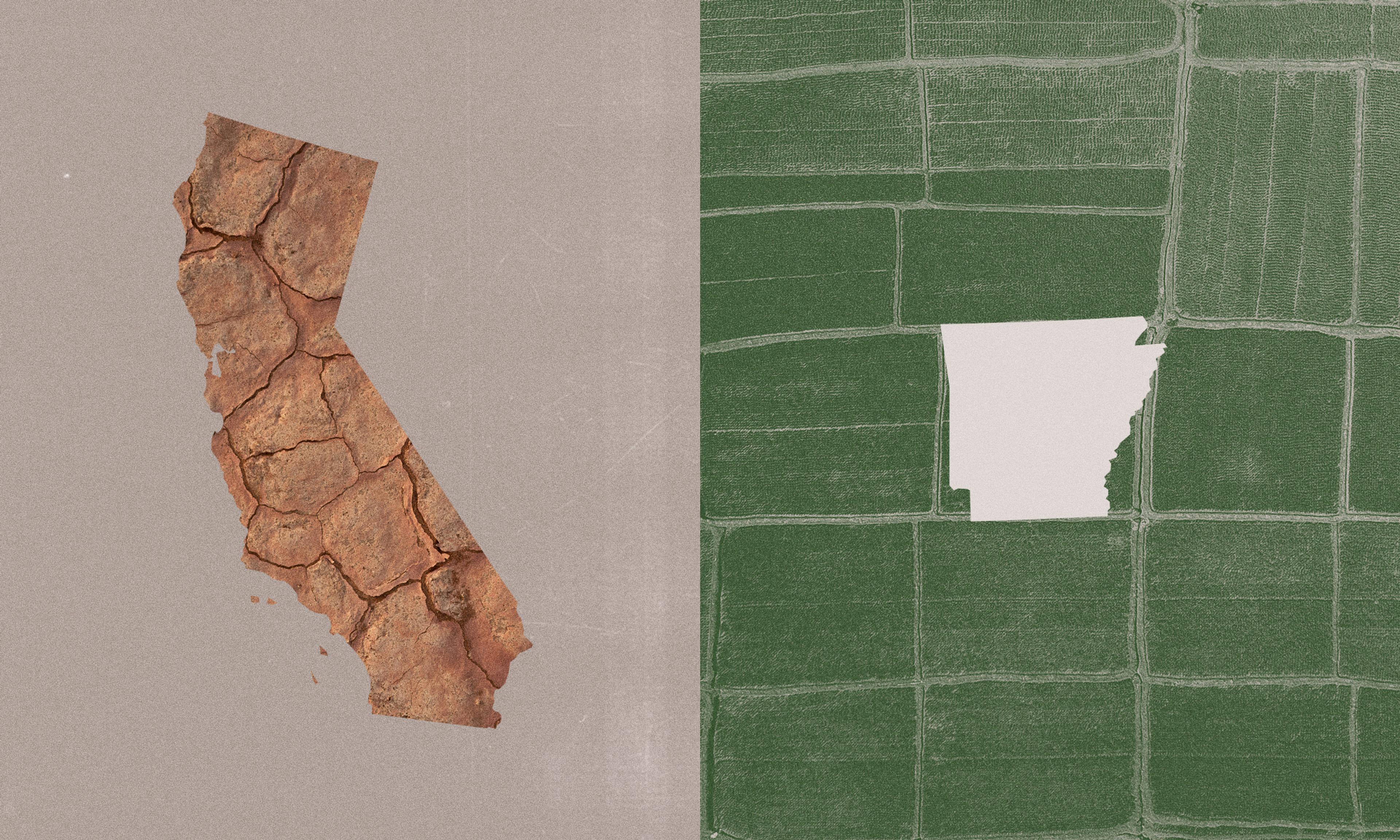
The thick, squelching mud means there’s no outrunning the mosquitoes, which pierce any bit of skin left un-doused by bug repellant. Still, the discomfort of slogging through flooded Arkansas rice fields in the sticky month of June is offset by visions of abundance. A few glistening inches of water lie across several paddies on Hallie Shoffner’s 2,000-acre seed farm, Delta Harvest, from which thousands of bright green stalks of specialty rice protrude. An assistant stands on a metal levee bridge perched above the wet, taking measurements — part of a U.S. Department of Agriculture partnership pilot to determine how much methane, carbon dioxide, and nitrous oxide these fields are generating. When the pilot wraps up at the end of next year, Shoffner will share the results, for free, with any producer who’s interested.
“We want to democratize climate-friendly data for small farmers” who can’t afford to conduct such trials on their own, Shoffner said. But this is just one part of her much bigger plan. That is, to create a market for sustainably produced specialty rice grown across the Mississippi Delta. If “we can say to [buyers], we have this variety grown in these environments that give you these [lower] percentages of greenhouse gas emissions, we can also say, these are unique attributes that we should be compensated for.”
Shoffner believes that using more valuable crops could generate increased revenue for smaller, disenfranchised farms — specifically those that are women- and Black-owned, which comprise 9% and 1.3% of U.S. farms respectively — and help break them out of commodity rice production; it’s an industry that heavily favors large-scale growers who can produce enough of the crop to make a decent income. “Even without doing climate-friendly [practices], specialty rice can bring a farmer 12 to 20% more revenue per acre,” she said.
Shoffner’s efforts stand on their own. But they are also nestled within an even more monumental goal, spearheaded by World Wildlife Fund (WWF), to shift some crop production from increasingly water-scarce, heat- and fire-scorched California to the Mid-Delta. Called The Next California, WWF’s plan is not to steal fruit, vegetable, nut, and grain production from the Golden State. Rather, it presumes that climate change will make it impossible for California to continue producing all its customary crops — that state’s water-dependent farmers will need an out, and it might be soon.
“We wanted to look at what crops are best suited to the Delta and on the flip side, least suited to California,” said Julia Kurnik, senior director of innovation start-ups for WWF’s Markets Institute. By proactively orchestrating some shift to this region, and looping in eager growers like Shoffner, WWF hopes to avoid the land conversion that sometimes comes with starting to grow other crops in other places, as well as its negative ecosystem effects. In the process the nonprofit would like to bolster more sustainable and equitable farming processes, too. Specialty rice is first in line.
Traditionally, rice is a water-intensive crop that requires fields to remain flooded during a growing season, to suppress weeds. California has struggled in the last few years to maintain production on a half-million acres of mostly medium-grain specialty sushi varieties. Although its rice farmers had enough water to sow most of their acreage this and last year, in 2022 production hit a 64-year low after drought decimated water allotments. It’s the kind of event experts say will definitely recur, and with greater frequency.
Much of the Mississippi Delta, however, has water to spare. In fact, rice planting was late in some parts this year, because rains and flooding prevented farmers from getting seeds in the ground. Partly because of all this moisture, for some 50 years Arkansas has been the top rice-producing state in the U.S. It annually harvests about 1.4 million acres worth of long- and medium-grain white commodity rice — that is, effectively anonymous varietals that have no “identity preservation” like Carolina gold or basmati. Growers sell their harvests at a low wholesale rate to local mills, where they’re mixed in bins with other varieties.
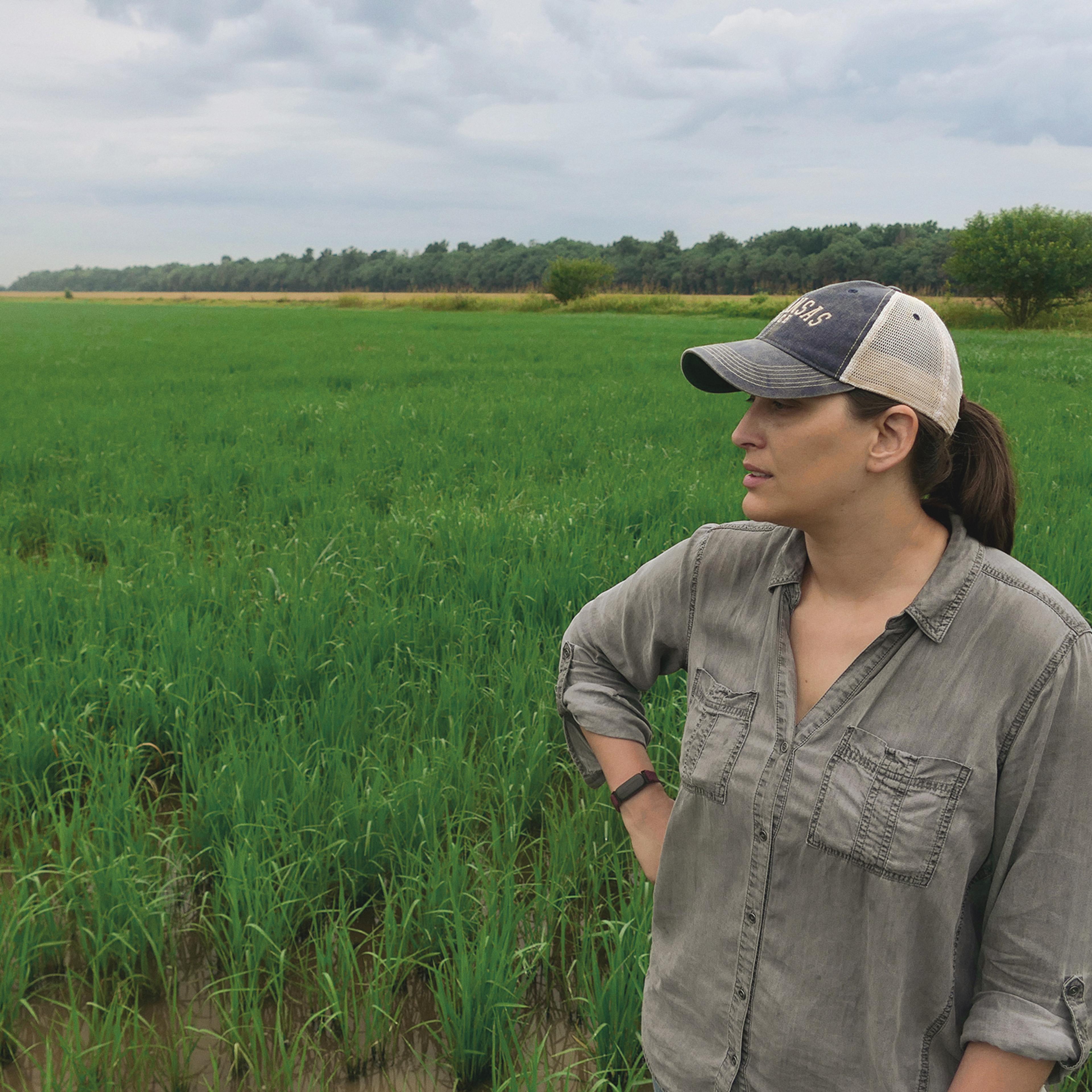
Hallie Shoffner in one of her rice paddies
·Photo by Lela Nargi
“You cannot turn a profit with your standard commodity row crops unless you have huge acreage,” explained Kurnik. Shoffner’s 2,000 acres may sound enormous by Northeast standards. However, “Our neighbors, they have 8,000, 10,000, 20,000 acres,” she said. The only way to get a mill to buy smaller amounts of specialty rice is for Shoffner to team up with other small growers — in the Delta they tend to be Black and by necessity, “scrappier, to turn a profit,” in Kurnik’s words — and sell as one entity. That’s where Delta Harvest comes in.
Delta Harvest (formerly Foodwise Farms) is the name both of Shoffner’s physical farm and her collaboration with five Black farmers to create a supply chain. In this latter capacity, it’s working with several mills and buyers to start to generate a market for its products. And it recently secured its first (still hush-hush) buyer contract for climate-friendly Delta rice that will come online in 2025.
Arkansas’s long history with rice production means that getting its farmers to grow specialty rice is a lighter lift than, say, getting them to grow tomatoes. Delta farmers have both generational experience with rice and some equipment and infrastructure to get it from field to consumer. “We’re trying to bring this to a commercial level so there are more opportunities to scale and profit for minority farmers,” said Kurnik. Another possible easier-lift crop: peanuts, which use some of the same equipment as the 159 million bushels of soybeans Arkansas produced last year, and thrive in heat.
About 25% of the rice Americans eat is considered specialty — think red, purple, Jasmine, sushi, and a high-amylose variety that’s beneficial to people with diabetes. The U.S. imports about 90% of that. Shoffner calls this “leaving money on the table. Plus, it’s not climate-friendly to import something that you can grow right here.”
Bags of specialty rice at Shoffner's farm
·Photo by Lela Nargi
That climate-friendly piece of Shoffner’s plan could prove essential to specialty rice branding opportunities — and it starts with water. Not least because every time a farmer turns on a water pump to wet her fields, her diesel or electric bill soars. Delta Harvest partner farmer Christi Bland-Miller, who grows 400 acres of rice on her 1,400-acre farm in Sledge, Mississippi, explained, “I want to move toward more innovative climate-smart practices. But margins are tight.”
So, Shoffner’s been experimenting with several methods of cutting water usage (and methane production, which is highest in a traditional flood). She’s got multiple inlet irrigation, where fields are filled simultaneously rather than by cascade, where water trickles from one field on to the next then the next; this practice tends to over-water the first field while the last waits (and withers) for its portion. She’s got alternate wetting and drying, where fields are flooded then allowed to dry before being flooded again. She’s got row rice planted in furrows and rotated with soybeans, which gets much more minimally irrigated using polypipe (the tradeoff: higher nitrous oxide production). Shoffner will share data from all of these growing methods as well.
She’s also intrigued by a pilot being run at USDA’s Dale Bumpers Rice Research Center in Stuttgart, Arkansas, where Yulin Jia, the center’s director, has introduced koi to flooded fields of a medium-grain rice called Eclipse. He explained that the fish eat weeds and fertilize rice paddies with their poop, potentially minimizing the need for expensive chemical inputs, which smaller operations can struggle to afford. Additionally, farmers might be able to sell the fish as pond ornamentals, for an additional revenue stream. Dale Bumpers researchers are also instrumental in evaluating rice varieties that might withstand the Delta’s particular disease and other pressures. Last year’s elevated temperatures and relentless humidity, for example, led to a lot of broken rice grains at harvest — “a disaster,” Jia said.
For all the momentum Shoffner has generated around climate-smart opportunities for under-resourced rice growers, significant hurdles to the shift WWF envisions remain. Those tight margins Bland-Miller referred to make abandoning commodity rice a challenge. One big reason is that each rice variety needs to be kept separate from every other variety to prevent cross-contamination — what she calls a “tedious” process that requires time-consuming combine cleaning as well as new grain storage systems that can cost as much as $500,000.
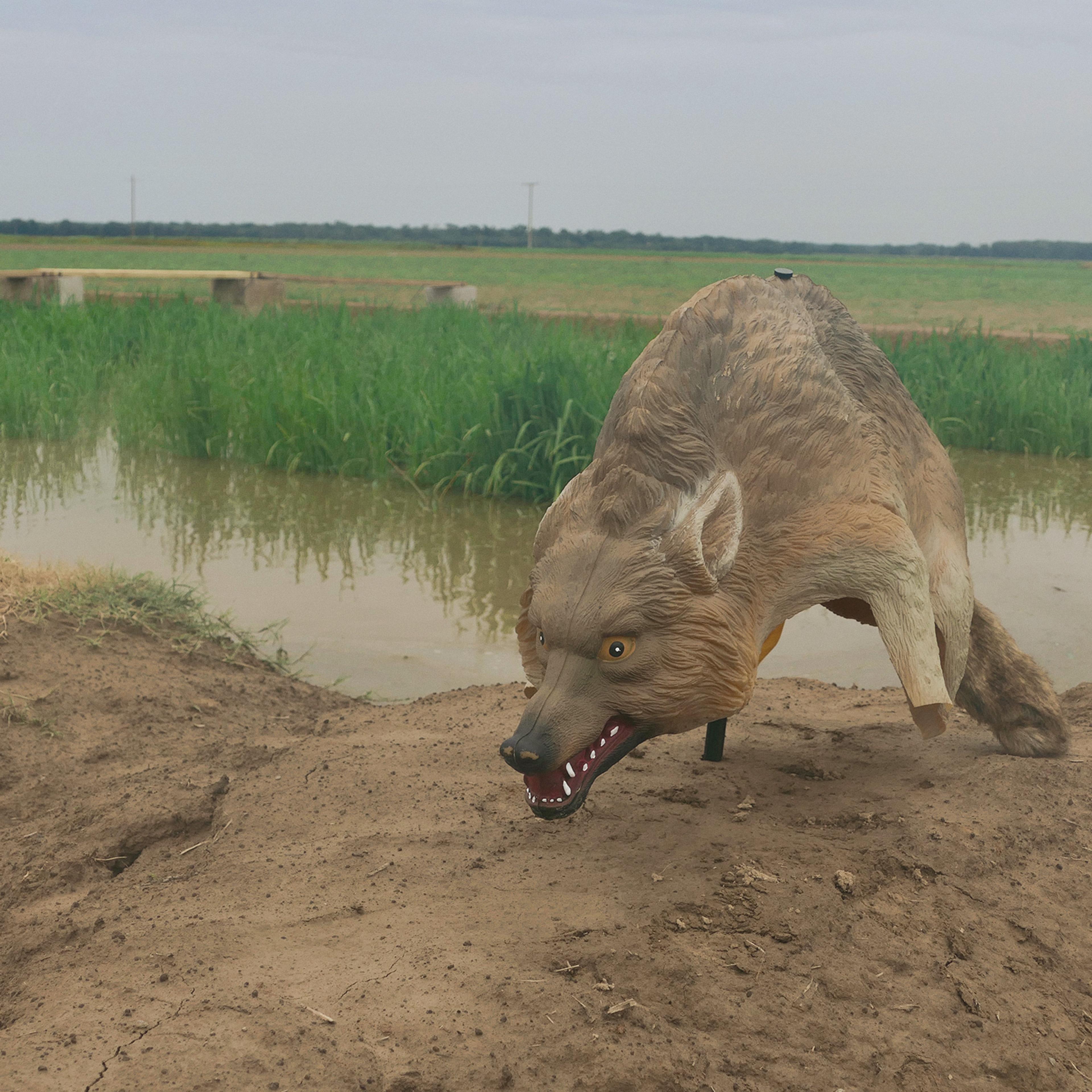
A plastic coyote guards koi in rice paddies from egrets, at USDA's Dale Bumpers facility
·Photo by Lela Nargi
Water conservation techniques — digging ditches and reservoirs to collect and conserve water, leveling fields to ensure its even distribution — are expensive, too. Julius Handcock is director of the Small Farm Outreach Wetlands and Water Management Center at the University of Arkansas at Pine Bluff. The center conducts water management research for rice and other crops, which it shares with socially disadvantaged farmers around the Delta.
Unlike Shoffner and Bland-Miller, some of them are experiencing water scarcity due to continuing drought in Northern Arkansas. Few of them earn enough income to afford water-related operational improvements (let alone, say, koi to release in their fields). And with loans and grants for such upgrades viewed as generally inaccessible to Black-run farms — there’s a long history of accusations of bias against USDA for granting loans to more white farmers than Black — “That means you can’t grow this [rice] crop,” Handcock said. “You have to grow dryland beans or peas, where you don’t need as much water, so you can still make money on your land.”
Bland-Miller, though, sees hope in a USA Rice-Ducks Unlimited Climate Smart Initiative for historically underserved farmers in the Delta — defined as beginning, socially disadvantaged, veteran, and limited resource farmers — funded by USDA and open for enrollment starting this past June. It offers more financial assistance than USDA’s Natural Resources Conservation Service, “for the same practices,” Bland-Miller said. A total of $63 million is available for water efficiency improvements like land leveling, alternate wetting and drying, switching to row rice, pump efficiency evaluation, installing irrigation devices and flow meters, and pump automation.
Shoffner is well aware of the barriers to success for specialty rice farmers in her region. “Farmers like Christi and me, we live on the margins of the ag industry,” she said. But “If we can do identity preservation on a larger scale, and have buyers who are interested in it, we can create a market. On top of that, let’s secure the food supply chain by making sure small farms — women, minorities — stay in business. It’s a great story for buyers. It’s a great story for consumers. It’s a great story for farmers. It works all the way around, if it works.”
Reporting for this piece was supported by a media fellowship from the Nova Institute for Health.
For more than six years, Joe Montello worked for Tractor Supply Co. in Ray Brook, New York. Once the owner of 32 chickens, four ducks, and two peacocks — along with some dogs and cats — Montello was a customer at the big box farm supply store long before he became general manager. He liked the job, and was heartened in 2021 when the company formally introduced Diversity, Equity, and Inclusion (DEI) programming for employees, including a training module. As a gay man, Montello said, “It was really nice to see that they were making an effort.”
But in late June, Tractor Supply did an about-face, eliminating its DEI work in response to a campaign led by conservative influencer Robby Starbuck, who urged his hundreds of thousands of followers to lodge complaints and boycott Tractor Supply. Now the company, which has more than 2,200 locations nationwide, is facing backlash from a different segment of its customer base: Queer and BIPOC farmers nationwide are speaking out and calling for a boycott.
In early June on Twitter (X), anti-trans activist Starbuck berated the company’s inclusion policies, saying “these woke priorities don’t align with our state or @TractorSupply’s customer base.” Weeks later, in an email to staff and a June 27 press release, the company announced it would eliminate all DEI roles and goals; no longer sponsor Pride or voting-related events; cease to report data to the Human Rights Campaign; and withdraw its carbon emissions goals. The change was directly attributed to the complaints, and the company said it had taken “this feedback to heart” and would now “ensure our activities and giving tie directly to our business.”
Montello first caught wind of the news on TikTok, then saw a related email to staff from Hal Lawton, the company’s CEO. Montello says his manager, who knew he is gay, then called and attempted to reassure him. In practice, she told him, not much would change, and the company would still “hire people of diversity.” (Tractor Supply declined to comment for this story.)
Even though he didn’t have another job lined up, it only took Montello a couple days to decide to quit. After growing up during the AIDS crisis, then living through decades of progress for the LGBTQ community, he has watched with dismay over the last several years as political hostility toward his community has grown with renewed energy. The timing of Tractor Supply’s policy change pushed him over the edge.
“That’s why the decision really irked me,” said Montello. “Here’s a company that was being proactive in DEI, and then just turned on a dime to side with this bigoted minority.”
Montello is in good company. Ambrook Research spoke to farmers across the country who were dismayed by the decision, and say they will no longer shop at Tractor Supply. On July 2, the National Black Farmers Association called for Lawton’s resignation. By ending its DEI initiatives, the company “has shown with its broken promises that it has little respect for black farmers,” said NBFA President John Boyd, a Tractor Supply shareholder. A national coalition of farmers and farm coalitions is now launching a national campaign against Tractor Supply, calling for a boycott until Hal Lawton resigns and the DEI and carbon emissions policies are reinstated. Signatories include LGBTQ+ and BIPOC-led farms and farm coalitions and their allies in the farming community.
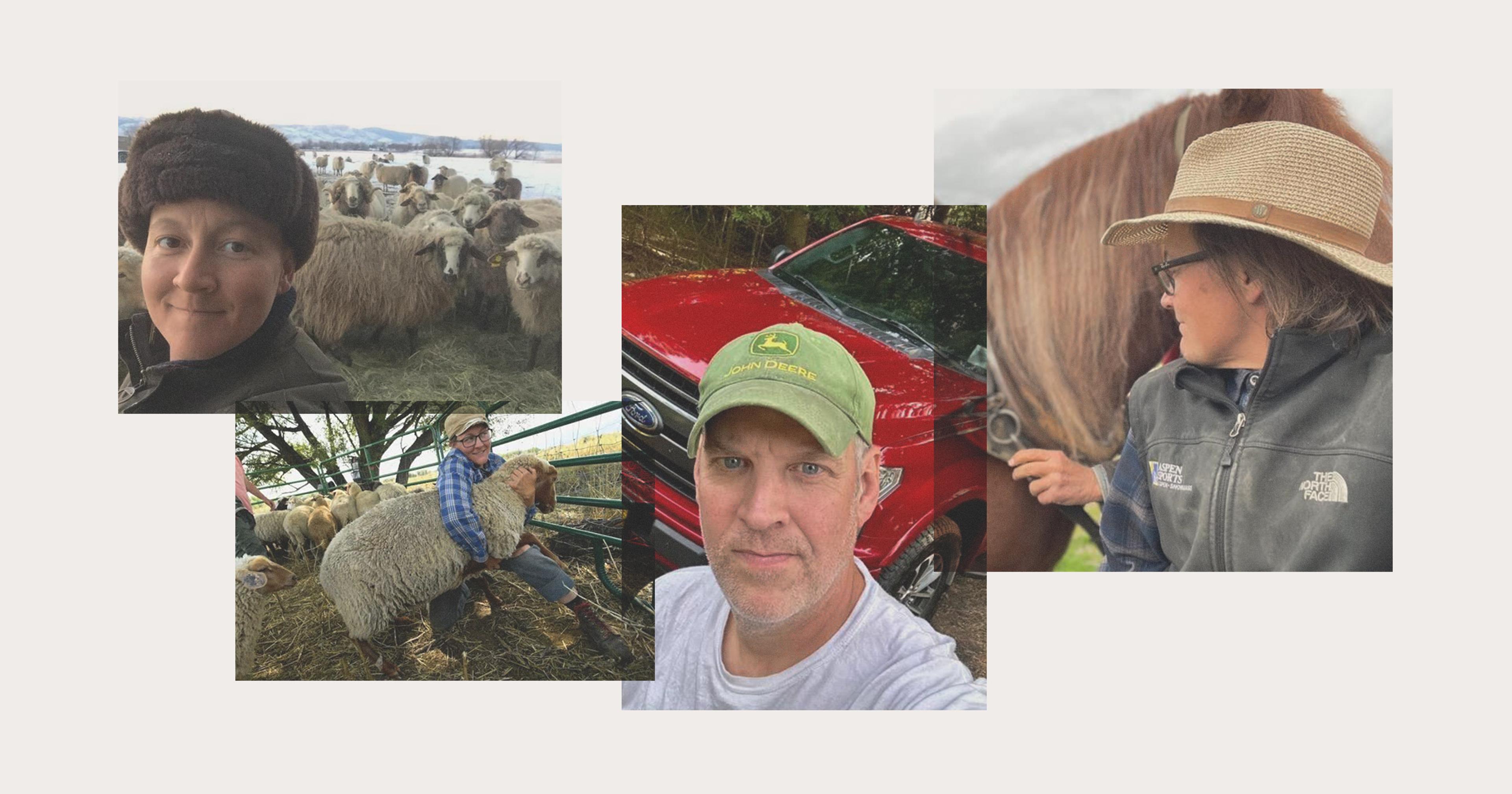
Tractor Supply's customer base is broad (pictured Andie Young and Joe Montello)
Tractor Supply is clearly not the first corporation to land in the crosshairs of a right-wing boycott campaign aimed at DEI initiatives or other inclusive practices. Airlines came under fire earlier this year from conservative politicians and influencers for prioritizing diversity in hiring, some of whom claimed DEI efforts were to blame for recent flight safety incidents. Last year, following a brief partnership with influencer Dylan Mulvaney, Bud Light became the target of a conservative anti-trans boycott campaign. These campaigns arrive in the context of heightened legislative attacks against transgender kids and adults in states across the country, and at a time when presidential hopefuls Donald Trump and JD Vance are hitting the campaign trail trumpeting plans to erode civil rights protections for LGBTQ communities and ban gender-affirming care.
It’s that political climate that makes the timing of Tractor Supply’s announcement particularly troubling to Andie Young, a trans farmer based in Colorado. Young said he will no longer shop at Tractor Supply. “Even if I need a fence bracket and I’m worried my cow might get out because I don’t have this one bracket, I’m going to call Premier 1 instead and wait a day or two,” said Young, referring to an Iowa-based livestock supply company.
“Right now it is so important what you say, and what you take a stand for, because there’s a lot on the line,” Young added.
Other farmers are especially concerned about the company’s choice to abruptly stop reporting carbon emissions. Jack Shultz, a queer and trans farmer who co-owns Untraditional Fruits, an Olympia, Washington-based urban microfarm, said Tractor Supply’s decision betrays a lack of understanding of its customer base.
“Farmers are extremely concerned about greenhouse gases and the impact of climate change on crop yields, water usage, et cetera,” said Shultz. Tractor Supply “clearly doesn’t understand the true challenges that farms face, and worse still, are actively exacerbating those challenges for farmers by reneging on carbon emissions goals.”
Kia-Beth Bennett, a queer farm owner in upstate New York who runs a regenerative agriculture collective, is another Tractor Supply customer who will be shopping elsewhere. Bennett said growing up on a farm, they regularly relied on Tractor Supply because they had specific agricultural products at the ready that might not always be in stock elsewhere. But in their county, they say the farmers they work with are lucky to have plenty of options. Ultimately, the company’s decision is a welcome incentive to support smaller businesses. “It’s sad that Tractor Supply did this, but it’s not surprising,” said Bennett. “What I gained was a little shove to be a little more locally oriented. To have that nudge to say just go to Ryan’s Hardware Store and buy locally, and really commit to that, meant that I had to flip my worldview a little bit.”
“Right now it is so important what you say, and what you take a stand for, because there’s a lot on the line.”
Of course, while some farmers are making plans to shop elsewhere, others are pleased to see Tractor Supply step away from DEI work. On a Tractor Supply subreddit, some users expressed relief. “Hal [Lawton]‘s insistence on hiring based on race and sexual preferences is what caused this controversy,” wrote one commenter on a thread about Montello leaving his job. “His backtrack was good news for those working and shopping at TSC … DEI is devisive [sic] and patronizing.” In another thread, a user wrote “I want to know that you sell quality products & are kind to your employees. Please leave politics out of it!”
Capitulating to the demands of one segment of their customer base will inevitably win back some shoppers, even as the company loses others. Other Reddit users made clear that they intended to end their boycott: “Now I can finally go back to shopping there,” wrote one.
Starbuck, meanwhile, has turned his attention to John Deere’s DEI policies. The beleaguered company, which recently announced another round of layoffs and the hiring of its first Chief Tractor Officer, attracted his ire for sponsoring a Pride event and encouraging employees to use their preferred pronouns. Just a week after Starbuck attacked the company in a video on X, John Deere issued a press release seemingly distancing itself from DEI policies.
Amid “ongoing conversations,” the release stated that John Deere would “no longer participate in or support external social or cultural awareness parades, festivals, or events”; conduct an audit of all training materials and policies “to ensure the absence of socially motivated messages”; and reaffirmed that “the existence of diversity quotas and pronoun identification have never been and are not company policy.” The company also added that it would “continue to track and advance the diversity of our organization.”
On one farming message board, a user lamented that finding an ag company without DEI initiatives would be harder than identifying the ones that do. “A list of major farm equipment manufacturers that are on the non-woke list would be much shorter than the ones on the woke list,” they wrote.
In his own town of Saranac Lake, meanwhile, Montello has been pleasantly surprised by an outpouring of support from former Tractor Supply customers, friends, and community members, many of whom vow to stop shopping there. As soon as word of him quitting got out, messages started pouring in on Facebook, including a job offer in construction. Recently, while taking a hike, he ran into a regular customer: “They stopped me and said, ‘Hey I want you to know I’m proud of what you did, and I will no longer be shopping at Tractor Supply.‘”
“Cattle grazing at its soul is human impact,” said Kristen Redd as the sun set over southern Utah’s famous red rock cliffs. “It’s not about cows, it’s about how humans are controlling those cows.”
Redd resides at the Dugout Ranch, a vast 340,000 acres of rugged rangeland near the southern portion of Canyonlands National Park. The former childhood home of her husband, Matt, the couple have been ranching the property for decades. Now part of The Nature Conservancy’s Canyonlands Research Center, Dugout often acts as a hub for agricultural and scientific research of all kinds centered in the Utah desert.
It’s also one of five ranches selected by the USDA to test out precision ranching technologies — a combination of tools and heritage breeds — on its cattle practices. The Redds and a team of researchers monitor their herds through virtual fencing collars, GPS trackers, pedometers, and trough and moisture sensors, collecting data that could aid an ecologically and economically sustainable future of ranching in the arid Southwest. The Redds say they are most excited about the potential for virtual fencing, a system of customizable digital boundaries that send signals to livestock collars, keeping cattle in designated areas.
Ranchers have run their cattle through southern Utah’s red desert for nearly two centuries, taking advantage of the region’s expansive terrain and abundant native grasses. The landscape sprouts towering cliffs and sandstone arches, but less visible are the essential soil components that make the foundations of this desert ecosystem. “We have biocrust growing on our rangelands and it’s in our best interest not to overly impact it,” Kristen said.
Biocrusts, or biological soil crusts, are collections of cyanobacteria, lichens, mosses, and other organisms that cover the fine, sandy soils of the Colorado Plateau. Collectively, they form layers — crusts — across the desert floor harboring much needed nutrients and moisture for desert plants. Biocrusts essentially hold these desert ecosystems together, preventing erosion and dust. Without them, the landscape would be covered in sandy dunes, and rangeland cattle grazing would be impossible.
But evidence suggests biocrusts are being increasingly disturbed by upticks in human activity — ranching, oil and gas, and outdoor recreation are all culprits. “Biocrusts are very strong horizontally because they hold the soil together. But they have almost no resistance to being stepped on or trampled in any way,” said Kristina Young, a soil scientist and founder of Science Moab in Moab, Utah. The resulting dust from crushed biocrust blows across the region, accumulating in undesirable places. “When dust lands on the Rockies it changes the snowpack,” Young said. “Studies show snow is melting 30 days faster because of dust on snow, which has huge implications for the Colorado Plateau.”
Dust isn’t the only repercussion of disintegrating biocrusts; their disappearance could endanger highly effective carbon sinks present in deserts with abundant grasses and shrubs — like the Colorado Plateau. Less biocrust means more erosion, preventing desert plants from growing and absorbing carbon dioxide. “Biocrusts stabilize the soil in a big way, and plants and seeds need stable soil to grow, and need protection from erosion,” Young said. They retain much-needed water and exude natural carbon and nitrogen into the soil, creating a fertile environment for plants to thrive.
A spotted Raramuri Criollo cow stands among the Dugout Ranch's herd of Red Angus and hybrid Angus-Criollo cattle.
Soil scientists are also studying the role of biocrust itself in the carbon cycle, determining whether its colonies sequester carbon dioxide at the same rates as shrubs and grasses. Considering biocrusts cover an estimated 12 percent of the planet’s landmass (twice the amount as tropical rainforests), losing them could have massive effects on the future of carbon reduction. On top of physical disturbances, climate change and hotter weather are hindering biocrusts’ ability to recover from damage. “Not disrupting it is essential to not disrupting these ecosystems,” Young said. “These intact dry places have a lot of a value.”
One of Dugout’s major goals in testing virtual fencing is to monitor the protection and regeneration of biocrusts on the range. “There’s the benefit of being able to control livestock without a physical structure … or potential for someone to leave the gate open,” Matt Redd said. “It really opens up the options of how you can control livestock and coordinate that with [restoration] goals.”
Virtual fence boundaries can be drawn in an online dashboard in any shape and size, allowing for flexibility when protecting sensitive areas is a priority. The solar-powered collars train livestock by emitting a loud tone followed by a shock when an animal approaches an invisible boundary. Kristen Redd said it takes less than a week to train cattle to heed the tone so they won’t receive a shock, but “there are always some cows that just aren’t with the program.” The collar will only emit three shocks to a disobedient cow. “Then you have to go find them,” she said.
The livestock themselves are also a piece of Dugout’s sustainability puzzle. Part of the precision ranching program includes monitoring a heritage breed of Raramuri Criollo cattle for their impact on desert lands. Originally brought to the Americas by the Spanish, Criollo became isolated among Indigenous Tarahumara communities and naturally evolved over the centuries to adapt to desert climates and foraging. Previous USDA experiments found that they travel farther from water than Angus — the beef of choice in the Southwest — are more active in the heat, and eat hearty shrubs as well as grasses.
Matt Redd checks the location of his cattle on the USDA precision ranching online dashboard.
“Across the Southwest with climate change we’re seeing … diminishment of native grasses and an increase in native woody species of brush,” Matt said. “So if you have an increase in brush and you have an animal that can do well on it, that’s important.” Because Criollo are about 400 pounds lighter than Angus, the Redds are breeding Criollo-Angus hybrids that can potentially have less damaging effects on biocrust and still provide an economically viable product. “If you graze the right breed at the right time and right place, ranchers can save on inputs — save on feed and vet bills,” said Sheri Spiegal, a rangeland management specialist with the USDA.
While virtual fencing isn’t necessarily a new technology, it hasn’t been available for ranches in the West until recently, mostly due to the vast remote territory many rangelands encompass. Reliable data connections remain a persistent issue in our less populated rural areas. “The biggest challenge in these huge ranches is getting the connectivity,” said Spiegal. “We’re trying different connectivity types like radio, white space, and cell data to connect the sensors to the dashboard.” The Redds tow portable towers on trailers when setting up virtual fencing in more remote pastures.
Once they are up and running, Matt sees the potential to not only protect biocrusts and sensitive areas, but also to run the range more efficiently. “Maybe you would spend, out of a year, three months gathering and moving cattle. With the tech that’s cut down to three weeks,” he said. “Because you know exactly where they are, you go to exactly where they are.”
But both Kristen and Matt acknowledge it’s not a perfect system. Real-time data distribution and storage is a concern for many people, ranchers included. Who owns the data collected by these collars and monitors? Should that data be public or private information when these tech programs are supported by the U.S. government? How hackable are the systems? These are questions the Redds and other participating ranches are still trying to figure out with the USDA and private companies that manufacture the technology. And while sensors and collars provide an abundance of information on cattle and rangeland conditions — such as rainfall, plant life, and trough water levels — there could be unintended consequences of moving away from working the range the old-fashioned way.
Black moss and yellow lichen grow along the soil on the Dugout Ranch as part of essential desert biocrust colonies.
“[The system] is giving you more information but it’s maybe not information you want to be solely dependent on. There’s nothing that replaces being out in the landscape,” Matt said. “Right now it’s more of a theoretical or esoteric concern, but over the course of the next several decades it could make our relationship with the landscape better but it could also make us more detached from it.”
Whether focusing on cattle breeds that are lighter on the land or technology that better controls them, the Redds said that each rangeland is going to need its own process to remain relevant in a rapidly changing environment. “I’m not a big believer in silver bullets. I think it’s going to be a lot of things making the difference,” Matt said. “I do see virtual fencing facilitating being a steward of the ecology for ranchers. And as we experience the impacts of climate change, changing land use … economic and ecological health, integrity, and sustainability are almost inseparable.”
Biocrust has been damaged by past overgrazing practices that have been long abandoned, but the scars can be seen in old corrals and trails. It can grow back with time, but the heavier the impact, the more difficult the recovery can be. “We’ve seen in the past when soils are compacted through grazing, through oil and gas and now we’re seeing that happen with [outdoor] rec,” Kristen said. “We can point at cows or oil and gas as being the bad thing, and if we get rid of those things it will solve all of our problems, but it won’t. It’s us. It is us that is the impact on this landscape.”
And while virtual fencing tech is just beginning to take hold, Kristen daydreams that ranching’s human impact could possibly be mitigated because of it. “Maybe we could get rid of all these fences in the West. Which is a nice idea, but we’re not there yet,” she said. “The West without fences would be magical.”
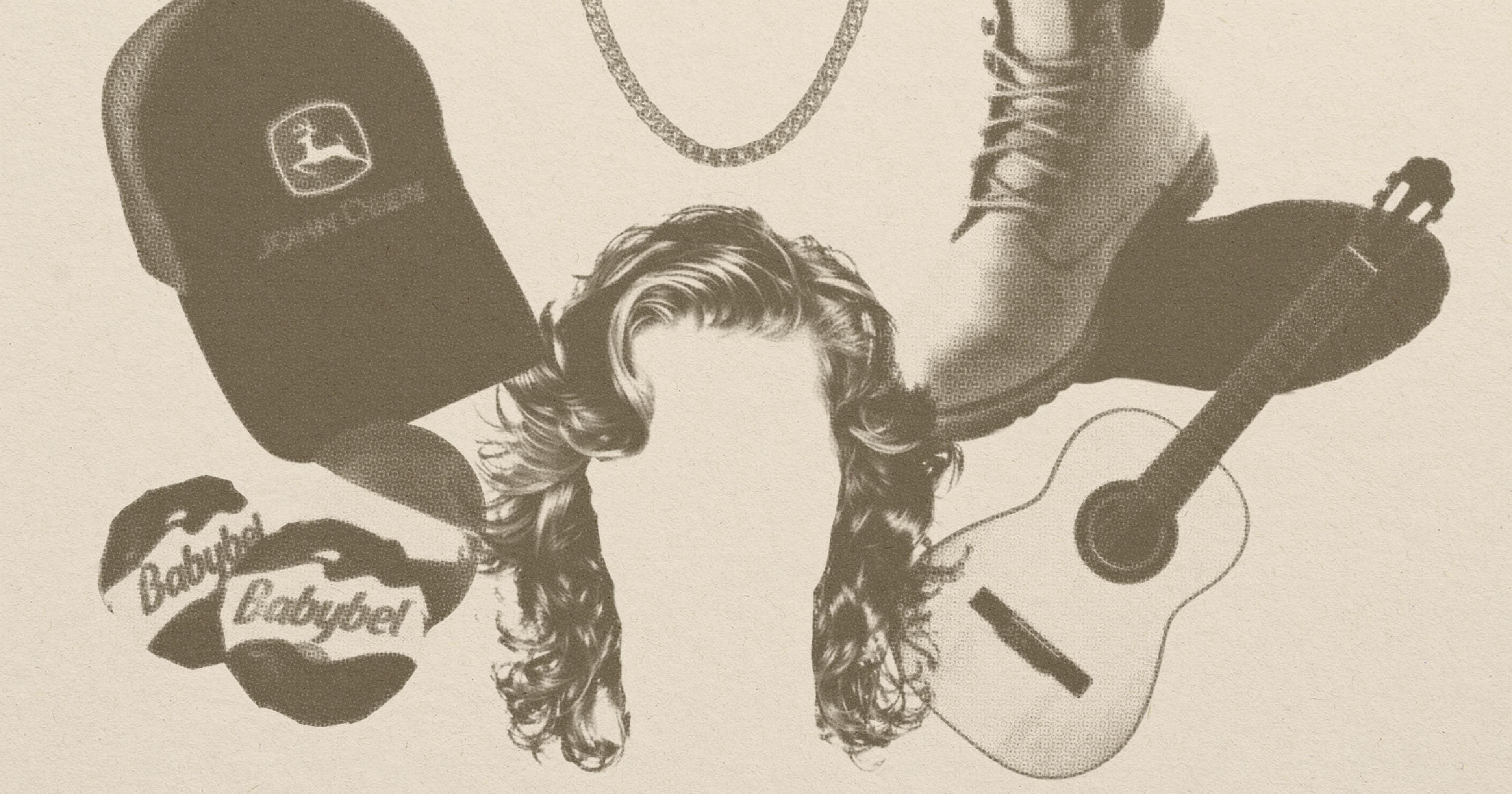
When the marketing team at John Deere announced in April that they were hiring a “Chief Tractor Officer” — a different kind of CTO for any shareholders out there — their intention was not to find a tractor expert. In their search to find the voice of the next generation of farmers and outdoor laborers, they weren’t seeking a fruit picker or a cattle rancher, either. The first-ever Chief Tractor Officer was to be a TikTok star. And this TikToker was to receive $200,000 for a yearlong contract making short-form videos that highlight all the amusing, unexpected ways John Deere products are used to make a living — and, more importantly, that catch and hold the fickle attention of young people online.
The search for the CTO marks the 187-year-old tractor brand’s official foray into TikTok — a platform first embraced by tweens hungry for coordinated dances and lip syncs — and a seismic shift in the corporation’s otherwise buttoned-up presence online.
To drum up excitement for the new role, the iconic yellow and green sought the help of some faces that would be familiar to the TikTok set. Deere launched its campaign with a two-minute video starring the NFL’s favorite nice guy Brock Purdy, perched high on the driver’s side of a tractor, on a quest to fill the role of the “best job ever.” His 49ers teammate Colton McKivitz made an appearance, too, before cameos of other star athletes and social media influencers flooded in to share why they wanted the job.
Deere announced last month that it had selected TikToker Rex Curtiss out of hundreds of applicants, according to PR Week. He’s a recent environmental science graduate from the University of Washington who amassed a following on social media for his sculptures crafted from red Babybel cheese wax; his application for the role was a performance of an original song in which he did in fact make a tractor out of wax. (Representatives of the John Deere marketing team declined a request for comment about the role, and Curtiss did not reply to a request for comment in time for publication.)
Before Deere made its selection, head of marketing Jen Hartmann did an hour-long interview for the Farm4Profit podcast in which she admitted that there have been lots of similar PR stunts from big corporations pandering to younger audiences with click-bait job titles. (Think Red Lobster’s Chief Biscuit Officer or the Chief Beer and Pizza Officer at the Midwestern chain Casey’s.) But Hartmann told the podcast hosts that the CTO search was different because her team was looking for “someone who would be the face and voice for our channel, from their point of view and not corporate, not the company.”
Of course, in an industry where the national median farm income is often a negative number, the CTO’s six-figure salary for TikTokery is pretty shocking. But Zach Johnson, a content creator known to his millions of YouTube and TikTok followers as The Millennial Farmer, says a TikTok-first role like the CTO is a priceless asset in today’s media market.
“I really think that the value is there,” Johnson said via Zoom. “There’s a lot more work in that than somebody would realize.” It may not be hauling bales or fixing a combine, but it’s expected that the production behind Deere’s high-quality reels will take some elbow grease.
The CTO is expected to come up with quirky, out-of-the-box coverage that will engage younger eyeballs, or, in Hartmann’s words, “grab people by the throat and pull them in.”
And while this recent PR push has been a convenient distraction from Deere’s negative headlines this year — remember that $1.1 million racial discrimination settlement, or the wave of lay-offs, or the decline in revenue? — the company’s official position is much cheerier. Amidst a growing sense that young people are disconnected from farming, the CTO is expected to come up with quirky, out-of-the-box coverage that will engage younger eyeballs, or, in Hartmann’s words, “grab people by the throat and pull them in.” There will be a range of subjects in the coming video content, she explained. Maybe one features a potato farmer at a McDonalds where their potatoes are served as fries; maybe person-on-the-street style interviews testing non-farmers’ knowledge of how pistachios are grown; or maybe plowing through snow at the Buffalo Bills stadium.
“We want that person on a plane and out at the field when they’re clearing that blizzard,” Hartmann said.
Johnson, who has maintained a working relationship with Deere over several years, had a cameo in the CTO campaign launch video. He said that in order to engage young people in the industry, it’s important to highlight how much of agriculture in the modern era is actually tech.
“The amount of tech going into today’s farming is unfathomable,” he said, giving the example of his team using electromagnetic waves in the soil to figure out exactly how much nutrients and water one tenth of an acre can hold.
“If people want to farm and be involved in agriculture but they don’t want to crawl around on their hands and knees, there are thousands of jobs out there,” he said. “It’s just such a diverse industry. So much of that would surprise the heck out of people.”
Of course, Johnson is more than a social media phenom: He’s a sixth-generation corn and soybean farmer in Minnesota who grew up on the farm he now owns with his wife. He started making videos for social media because of “misconceptions” he saw about the modernization of his family’s industry.
“To me it makes it so much more personal when you can really connect a human being to the brand.”
“It started in 2016 and it was one hundred percent trying to relate to people about what’s going on on farms,” he recalled. “As somebody who’s actively involved in farming and grew up with it, I wanted to give the view from the ground as a farmer, and show that we’re still the same families we’ve been for hundreds of years but we’re adopting the latest and greatest [tech] like every other industry.”
And though the average age of a farmer is 58 and continues to rise, according to the 2022 USDA Census of Agriculture, the number of beginners who have farmed for less than 10 years is actually on the rise — a trend Johnson has observed anecdotally. His DMs regularly overflow with questions from outsiders who are curious about what it takes to work in agriculture.
“I have conversations everyday with people who want to get involved with farming,” he said.
As for the CTO position, there’s no way to know just yet the impact it will have on youth engagement in agriculture. But if the millions upon millions of hits on the John Deere hashtag on TikTok — a popularity that far pre-dates the CTO campaign — are any indication, there’s no shortage of interest among social media users in tractors and outdoor labor.
“We know the John Deere logo just like we know the Coca Cola and Nike symbol,” Johnson said, reflecting on the influence the CTO could wield on young people curious about farming. “But to me it makes it so much more personal when you can really connect a human being to the brand.”

On the coast of Normandy, in Northern France, in the shadow of the ancient abbey atop Mont Saint-Michel, farmers produce a true delicacy. Flocks of sheep grazing on wide green meadows are destined to be sold as agneau de pré-salé, or “pre-salted” lamb. Thanks to the high salinity content of the coastal grasses, the meat takes on a delicate tang, impressing diners in the highest-end Parisian restaurants and fetching farmers a premium price.
Across the Atlantic, farms at the low, marshy edges of the East Coast are rapidly losing ground as rising sea levels push salty water further into the fields. American growers are beginning to see their own opportunities in reviving a historic salt hay industry.
“I have documentation of salt hay harvests on our farm dating back to the 1600s,” said John Zander, whose Cohansey Meadows Farms is perched on the Delaware Bay in Southern New Jersey. In fact, salt hay was a bustling business in South Jersey and the shores of Delaware, Maryland, and Virginia from colonial times through much of the 20th century.
The native perennial salt meadow cordgrass — primarily a variety called Spartina patens — has historically been used not only as animal fodder, but as a building insulator and a packing material, and turned into paper and textiles. Because it’s naturally free of weed seeds, it makes an ideal mulch for berry and flower growers. Once established, it’s prolific and self-seeding, can be cut up to twice each growing season, and is essentially impervious to rot.
But by the end of the 20th century, most commercial salt hay production had ceased. It grows primarily on the muddy, marshy edges of farms, in places tough to take a tractor. For many modern landowners, that made the harvest more trouble than the crop was worth. But now, rising seas mean salt is creeping further inland, creating unfavorable conditions for most vegetables, fruits, and grains. Zander sees an opportunity: If farmers re-seed those accessible-if-salty fields with coastal grasses, they can plant and harvest the hay with modern methods, restoring the profitability and rebuilding the industry.
A 1975 New York Times article about salt hay farming “dying out” noted that the industry’s biggest boom came after World War I, when large quantities were needed to help cure concrete during federal road expansion. In World War II, it was used in the construction of runways and military structures.
“If you search enough, you can find all these weird little uses for it,” said Scott Snell, an agronomist at the Cape May Plant Materials Center. “One of the stranger ones I’ve heard is insulation for ice houses. I’ve found that there were about 30 producers in southern New Jersey, harvesting 14,000 acres annually, in the mid-1970s. We’re not anywhere near those numbers today.”
By the latter half of the 20th century, salt hay farming was virtually disappearing because of one major drawback: It’s incredibly easy to grow, but equally difficult to harvest. It performs best in marshy areas close to the water, which meant farmers had to cut it by hand, using horses and oxen to haul it out, or loading it onto rafts. By 1945, tractors had officially overtaken horsepower on American farms, and marshes and machinery don’t mix.
Once established, salt hay is prolific and self-seeding, can be cut up to twice each growing season, and is essentially impervious to rot.
“The problem is getting to it,” said Zander. “Years ago, you didn’t have to worry about sinking a tractor in the mud. But once tractors came about, the best time to cut it was when you got a hard freeze over the wintertime. That really doesn’t happen as often anymore: The last time I can remember a good solid freeze was 2018. When you get weeks of single digit temperatures, you can get out there and run a tractor and cut the salt hay really easily. In the spring, summer and fall, it’s kind of like just forget about it.”
But things are changing as saltwater intrusion renders more fields unsuitable for crops like corn and soy. High soil salinity can decrease yields, dehydrate plants, and create nutrient imbalances. A study published last year found that on the Delmarva Peninsula, just across the Delaware Bay from Zander’s Cohansey Meadows, visible salt patches almost doubled between 2011 and 2017. In Maryland, the researchers noted that by the end of that period, 93 percent more farmland was located within 200 meters of a salt patch. And though their observations were limited to the peninsula, the researchers wrote, “Our method is transferable to other regions across and beyond the mid-Atlantic with similar saltwater intrusion issues, such as Georgia and the Carolinas.”
The result on the ground in New Jersey, explained Snell, is that farmers are finding themselves with fields further from the shore, on land firm enough to drive over, but with soil now too salty to grow most things well. “It’s still farmable land,” he said. “They can still get their equipment out there and do all the work. But the traditional crops have too high a mortality rate, or production is just so far down due to the salt, it makes it not worthwhile. That’s where the opportunity lies to produce a salt-tolerant crop.”
Like, for instance, salt hay.
For the last few years, Zander has been experimenting with different planting, propagation, and harvesting methods for salt hay. His fields, planted just a bit further inland than the grasses might typically grow, are producing prolifically. He’s recently been able to expand the operation, thanks to a USDA Natural Resources Conservation Service grant. He cuts, bales, and sells some for mulch, bedding, and fodder, and he hopes increased supply will help reinvigorate the various markets for salt hay. But his main goal is to sell transplants to other coastal farmers.
“We’re cutting it out now like basically rolls of sod,” he said. “We either cut it into plugs or leave it in bigger mats, and it can be transplanted that way.”
The objective is twofold: to provide farmers with a way to maintain profitability in their newly salty fields, and to improve coastal vegetative barriers that could help mitigate worsening seawater intrusion.
“Salt hay helps to prevent runoff and erosion, so you’re capturing nutrients and reducing soil loss from wind and water erosion.”
“These salt meadow cordgrasses are natural buffers,” said Snell. “They help to prevent runoff and erosion, so you’re capturing nutrients and reducing soil loss from wind and water erosion.”
Indeed, added Zander, few things work better to hold a coastline in place. “The root mass is just so dense and thick,” he said. “It just really grips on. I think if we can get some of that into places where we’re having erosion problems, it might be pretty beneficial to some of these coastal farms and towns.”
At the Plant Materials Center, Snell said, the scientists are nearing the end of a three-year study of different varieties of salt meadow cordgrass, looking at biomass production potential and forage quality. The preliminary results, said Snell, lend quite a bit of credence to the idea that salt hay could become a thriving industry again, and offer a significant solution to farmers whose bottom lines have already been affected by sea level rise and salt intrusion.
On his quiet farm on the bay, Zander is working to build up enough salt hay acreage to satisfy what he considers to be inevitable future demand from farms all along the eastern seaboard. Salt hay may be part of his farm’s past, but it’s also, as he sees it, the only way to sustain it in a saltier future.
While his immediate goal is to get other coastal farmers growing cordgrass, part of Zander’s longer-term plan is to re-establish local salt hay fodder markets. Historically, livestock owners in the mid-Atlantic grazed their cattle in the marshes, and “pre-salted” beef — à la France’s distinctively flavored lamb — could just become the next big regional delicacy.
“For me to be able to both restore some economic production at my farm, and also be able to make an impact elsewhere, it was a real light bulb and a very rewarding moment for me,” he said. “I was recently at the New Jersey Agriculture and Climate Summit, and one of the speakers was talking about sea level rise with a projected map along the Delaware Bay. He said, kind of in jest, ‘What are these farmers going to do? Switch over to salt hay like they did in colonial times?’ I felt like standing up on my chair and yelling, ‘Yes! That’s exactly what we’re going to do.‘”

Avocado ice cream isn’t just a staple in the campus dining hall at Cal Poly Pomona (CPP) — it’s a collaborative work of art.
Start with the avocados: They came from an organic university farm where ag students learned in the “original classroom,” growing their own crops instead of learning about it in a book or video. Student teams were then involved in all stages from farm to spoon, from culinary development of the flavor profile, achieving the perfect green tint, designing and packaging cups and pints that illustrate the university’s origin story, marketing the product, and selling it at dining locations and the Cal Poly Pomona Farm Store.
Call it farm-to-college 2.0, a way for students not just to learn about the fundamentals of farming, but also to gain hands-on experience in every aspect of the supply chain. Our food systems are wonderfully complex; learning hands-on about growing, shipping, preparing, marketing, and selling gives college students a holistic, real-world experience. Programs like the one at CPP may well mark the future of ag education.
“Farm to school provides students with access to nutritious, high-quality, local food that supports learning,” said Jiyoon Chon, communications manager for the National Farm to School Network in New York. “It also presents opportunities for schools to procure in alignment with their values; for example, a school may source from a local BIPOC farmer for specific produce that’s culturally relevant for their student body,”
How the Ice Cream Gets Made
Every great collaboration has a point person. Jeremy Mora’s whole job is to act on behalf of both the CPP College of Agriculture and the CPP Foundation — a nonprofit that helps provide on-campus student jobs — to oversee agricultural operations and revenue-generating activities.
“This includes visiting ranches and animal units, as well as traveling to our external [commercial farming operations],” he said. Proceeds from all sales go toward student scholarships, on-campus student jobs, educational grants, and university projects like Cal Poly Pomona Farms Ice Cream. “My team and I manage the labs to ensure they are operational, sustainable, and reflect real-world conditions, creating an optimal learning environment for our students.”
While numerous schools have farm to university collaborations, none are quite as unique as their “salsa project,” he recalls, led by Gabriel Davidov-Pardo, professor of food science in the Huntley College of Agriculture. “This project involves creating a raw ingredient sourcing plan, understanding cost points, shrinkage, master packs, packing materials, and overall Cost of Goods Sold (COGS), making it a comprehensive learning experience that requires the collaboration of the entire team,” said Mora.
Carlo Arceo, assistant director at Cal Poly Pomona Enterprises, a nonprofit supporting the university through financial and facility resources, said they’ve developed an ordering process that supplies fresh ingredients so regularly, they often never make it into the fridge. “Every week I get an email about what’s available for that starting week. Sometimes they get the harvest that morning and we get it that same afternoon.”
CPP’s dining hall is no basic cafeteria as a result — week after week, it reflects seasonality and local harvests. “So currently, right now, like broccoli, cabbage, different types of cabbage, really different types of cauliflower. We have different colors — green, purple, white. We have Romanesco. Normally you only see that in fine dining restaurants,” Arceo said.
What Local Farms Gain
Aside from increased sales, farms have much to gain.
“For farmers, ranchers, fishers, and food processors, farm-to-school can serve as a significant financial opportunity by opening doors to an institutional market worth billions of dollars. Buying from local producers and processors creates new jobs and strengthens the local economy,” Chon said. He points to data including the USDA’s Farm to School Census, where 65.4% of school food authorities reported participating in farm-to-school activities (2018-2019), representing over 67,000 schools nationwide. This is a “significant growth” Chon said, since 2015, when just 42% of districts surveyed by USDA said they participated in farm-to-school activities.
Jill Burkhart, along with her husband Jeff, have owned a dairy farm in Dallas County, Iowa, for decades. Now called Picket Fence Creamery, they produce milk, ice cream, and cheese curds. Jill is an Iowa State University (ISU) alumni, where she now collaborates with her alma mater in what she calls a “win-win” situation.
“The challenges were few — it was just a matter of getting delivery and invoicing set up with the correct personnel. They did a great job helping us get on schedule with both. We have found the ISU staff to be extremely helpful and very nice,” she said. “We’ve had ISU students and staff visit our farm because they purchased our products on campus — it is great to talk to them and answer their questions. Also, we have regular ISU customers who stop by to pick up products to take home for semester breaks,” she said, adding that three local groceries also attract ISU customers for their products too. “This partnership is a great way to promote local, and keep dollars rotating in the local economy.”
Harvesting New Crops of Farmers and Food Workers
Where will the next generation of farmers, food producers, supply chain experts, and food industry marketing professionals come from? Collaborations like these, both colleges say.
“We probably employ more than 1000 students throughout the academic year. And then those students are provided with employment skills that are transferable onto the career that they want,” said Thomas Sekayan, chief operating officer at Cal Poly Pomona Enterprises. “We assign them strategically to certain job roles so they get paid and they learn, and it’s a fantastic resume builder, and they get that degree at the school.”
Iowa State’s original creamery and education program started over 150 years ago, just after the Civil War, thriving until 1969. Then, after a decades long hiatus, former director Stephanie Clark saw a “huge need” in 2009 for experienced students in the dairy industry, both on the farms and in food production industries. In 2020, after a 50-year hiatus, the ISU creamery was reestablished. Though ISU’s program isn’t old enough to have produced ready to work farmer graduates, that’s the primary reason ISU restarted the program.
“We didn’t have students graduating from ISU that had that hands-on experience,” said Sarah Canova, business manager of ISU’s creamery. Now, 20 undergraduates per semester work at the creamery, from formulation of ice cream and cheese, to making it, ordering, doing inventory, and through the retail store process. Another student is in charge of finance, and one manages social media — so it’s not just ag students. One student ended up working for beverage giant Califia Farms after learning about non-dairy product development, for example.
ISU sources cheese from the Burkhart farm, because they are “really flexible and willing to sell us approximately 70 gallons per month, and deliver it to our doorstep. It’s pasteurized, non-homogenized, and already packaged in gallons for us to pour into our cheese vats,” Canova said.
There is a lot of red tape at the university level to start a business like this, Canova cautions, so do your research if you want to start a similar collaboration. “Make sure you’re talking to all of your university partners to understand what you can and cannot do, and where you can and cannot sell,” she said. Most importantly keep the student experience front of mind, so the next generation is “fully integrated” into all aspects — for their own education, and for the future of food production.

Jim Van Patter’s operation in Wisconsin is flush with cash but losing money on milk. At best, the 2700-head dairy he manages in Wisconsin, Nehls Bros Farms, has been breaking even on its central product since milk prices bottomed out in 2023. But Van Patter, like many U.S. dairies, is keeping things afloat thanks to an unlikely buyer — the beef industry.
Five years ago Van Patter exclusively raised, managed, and sold dairy animals. But today half the calves born at Nehls Bro Farms — about 1500 animals — are part beef. The Holstein-Angus crossbreeds are known in the industry as beef-on-dairy and the drought-depleted beef industry is buying them up for a whopping $800 per animal, nearly seven times the value of a dairy calf.
“The [beef cross] calves and culled cows were the only thing turning a profit in the last year,” Van Patter said. The fast cash has dairy producers devoting as many as 70% of their calves to beef crossbreeds, creating the lowest dairy heifer supply in 20 years, and more than tripling the sale of beef semen in the U.S. Experts estimate that beef-on-dairy currently makes up 25% of the U.S. beef supply. In 2024 the most successful dairies are the ones who have aptly adapted to the livestock market.
“Every dairy is a beef cow eventually,” Van Patter said.
That’s always been the case. Dairy animals were in the beef supply well before the recent surge in crossbreeding. Holsteins, mostly culled cows and steers, traditionally make up 20% of U.S. beef. Compared to traditional beef, these calves were sold for rock-bottom prices, needed twice as long on feed, and produced smaller cuts of meat. But in the last six years better breeding technology, packer demands, and a massive drought in cattle country have created an opportunity for dairies to offer a more beef-like animal just when the beef industry needs it.
“With the lowering milk prices, especially the last year, these beef cross calves have been what’s sustaining the dairies,” said Kolton Kreitel, manager of Fullmer Cattle Company, an 80,000-head calf ranch in Syracuse, Kansas.
Calves are a byproduct of mass-producing milk, and Kreitel is in the business of managing that byproduct. His facility takes in dairy calves from two days old so farmers can devote their cows to milk production. But in 2018 a customer called with an unexpected request: Would Kreitel be willing to raise beef crosses instead of dairy animals? The first hundred calves — shorter and blacker than normal — stumbled into his receiving pen a few weeks later. Within a year “it was black calves everywhere,” he said.
Better breeding technology led the pivot into crossbreeding in the mid-2010s. Every year dairymen breed every animal to keep milk production going, but they only need to keep approximately 40% of the calves to replenish their herd. As sexed semen became more reliable and affordable, farmers gained more control. They could almost guarantee their best cows and heifers would have a female calf. But that also meant they didn’t need a calf from the majority of their herd. That’s when genetics companies started suggesting beef semen, Van Patter recalled.
But the sea change really started when the major meat packers weighed in in 2018, according to Ty Lawrence, professor of animal science at West Texas A&M who collaborates with the four major meat packers: Tyson, Cargill, JBS, and National Beef Packing Co. “This began with Tyson, who was the first packer to say, ‘We don’t want to buy a Holstein anymore,’” he said.
Holsteins pose two main problems for packers. First, they’re much bigger than beef animals, so their long carcasses drag the floor when they’re hung for processing. Their enormous size also means they carry more bone and less muscle, therefore make less sellable meat than their smaller Angus counterparts.
“With the lowering milk prices, especially the last year, these beef cross calves have been what’s sustaining the dairies.”
The second problem is Holsteins have a high rate of liver abscesses, a pus or infection-filled mass on the liver usually caused by bacteria from the rumen. Removing the liver abscesses slows down processing and, depending on the severity, the packer can lose $8 to $260 in offal and meat. The processing plants were effectively losing money on these large dairy animals, so once they had an alternative, they stopped taking them, Lawrence said.
Once packers took their stance, the market for purebred dairy calves dissolved while the hybrid price increased. At first, any black bull would do, and the initial beef-on-dairy crosses were wildly inconsistent in terms of size, metabolism, and rate of muscle gain. “The feedlots weren’t into those cattle because of the variance,” Kreitel said. But the genetics companies quickly refined their offerings, narrowing their pool to bulls that were the best crosses for Holstein.
In a six-year period, beef semen sales tripled from 2.7 million to 9 million units. “I’ve got friends at ABS and they have more beef animals than dairy animals now,” Van Petter said of the Wisconsin-based genetics company.
The crossbred calves proved to have some advantages. Thanks to their hybrid vigor they have lower disease rates. Their meat quality grades are higher because of the superior marbling that comes with their dairy genetics. And they put on more muscle with less feed compared to pure Holsteins thanks to their Angus ancestors.
By 2020 a survey of California dairies showed the crosses were commanding twice the price of a Holstein. Van Patter was making $200 on a cross compared to $50 on a Holstein. Then the beef shortage hit.
In January 2023, Kreitel, who was accustomed to paying $200 a head for beef-on-dairy, got a call from a customer who said they’d been offered $300. Appalled at the sudden hike in price for a calf only 24 hours old, Kreitel declined to match it. But the market soon made it clear that the value of all beef was on the rise.
“This began with Tyson, who was the first packer to say, ‘We don’t want to buy a Holstein anymore.’”
Droughts across U.S. cow country forced beef producers to sell off their herds because they didn’t have the grass and forage to sustain them, said Pedro Carvalho, feedlot specialist at Colorado State University. By summer 2023 the price of a day-old beef-on-dairy was up to $600. In spring 2024 with the native beef herd at its lowest since the 1950s, Kreitel bought day-old crosses for $800 and sold them at 450 pounds for $1600.
“That’s a nice profit margin,” Van Petter said. But it’s easy to get carried away. Van Petter said he’s seen some of his neighbors liquidate too much of their calf crop to beef-on-dairy for the quick cash. They won’t have enough replacement heifers when milk does rebound.
And what happens when the beef numbers rebound? “That’s the million-dollar question,” Carvalho said. Experts from different parts of the industry disagree on the future of the crossbreeds.
Carvalho said prices for crosses, and all cattle, will dip when the beef herd rebounds, but beef-on-dairy will still be of high value. They even have the potential to produce high-quality meat more efficiently. Data from Iowa showed beef-on-dairy animals produce more marbling while staying leaner compared to beef industry averages.
“The number of prime on these cross cattle is significantly higher,” Kreitel said.
Lawrence, however, said changes must be made. For all their improvements, the beef-on-dairy still reported higher rates of liver abscesses. “If packers didn’t have to buy them today they wouldn’t,” Lawrence said. “There just aren’t enough cattle to avoid the dairy crosses.”
The beef herd’s rebound is likely still years away. 2024 projections say the U.S. beef supply is likely to decline further, so beef-on-dairy — and all cattle for that matter — are expected to continue to demand a high price for the next couple of years. That may buy experts like Carvalho time to investigate the crossbreed health issues.
“Once the drought subsides, these critters will have less value,” Lawrence said. “It will not go to zero. It will just be less.”
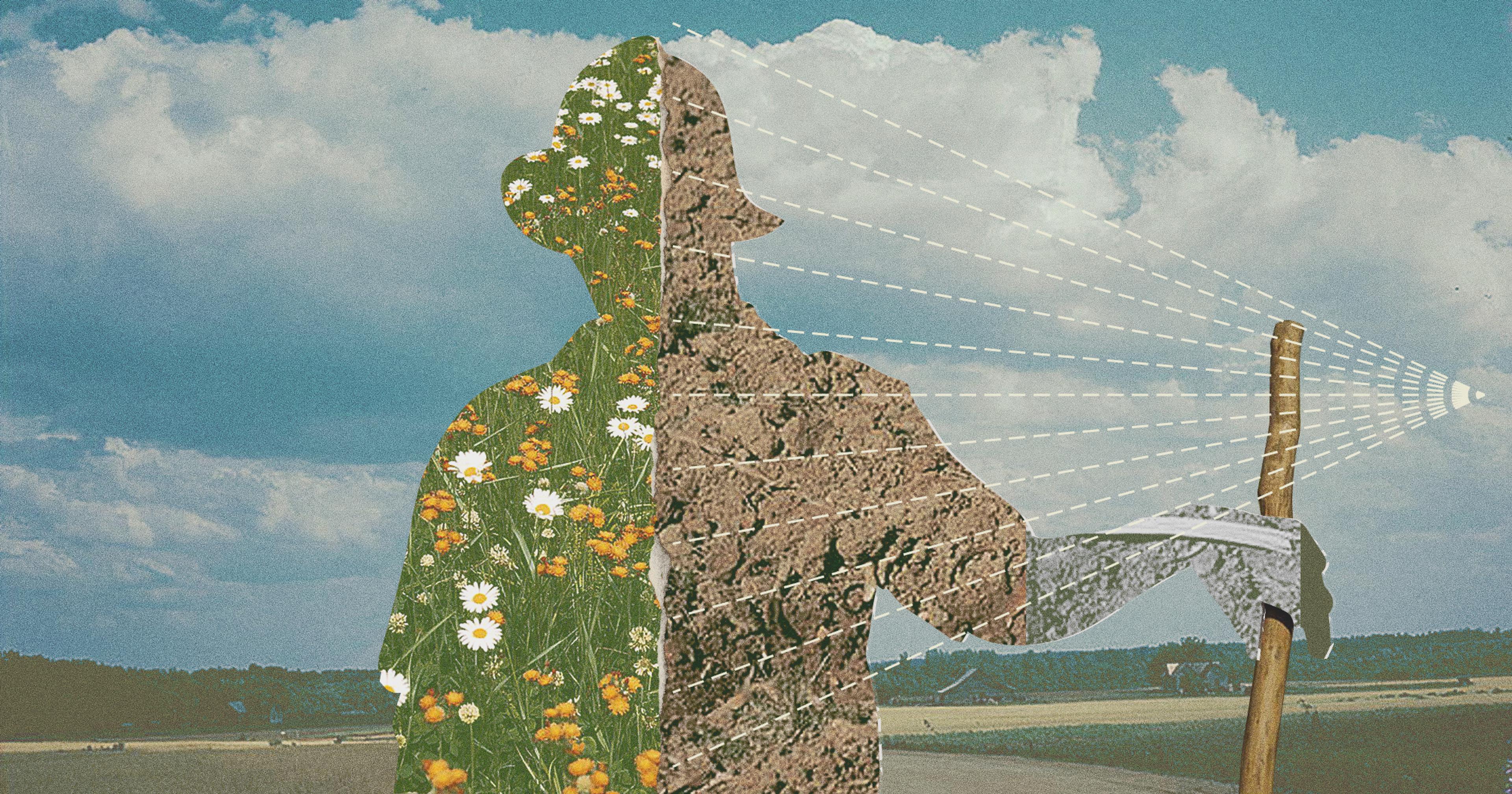
When University of British Columbia professor of biochemistry and molecular biology Deanna Gibson and then-PhD candidate Jacqueline Barnett began researching glyphosate, they hoped their hypotheses would not be true.
“I hoped not to see anything because it would mean that when I banned my husband from spraying Roundup all the years that I was rearing my children, it would have been meaningless,” Gibson said. She’d long feared she would get exposed to the glyphosate in her garden, but it turns out most people are likely exposed through their food. “Because every time I gave them a piece of bread or the lentils that we eat, I unknowingly was causing them damage.”
Glyphosate, of course, is the active ingredient in Bayer-Monsanto’s infamous herbicide Roundup, a weedkiller that has changed the way farmers farm and gardeners garden. According to the Environmental Protection Agency (EPA), glyphosate “is important in the production of fruits, vegetables, nuts, and glyphosate-resistant field crops such as corn and soybeans.”
In 2015, Roundup became a more infamous name when the International Agency for Research on Cancer (IARC) declared glyphosate a “probable carcinogen” to humans. The IARC reviewed 1,000 studies on glyphosate, some of which looked at farmers exposed to the herbicide through their work.
The EPA has maintained that glyphosate is not dangerous to humans. But further research, like the work being done by Gibson and Barnett, is expanding on what glyphosate can do to the gut. Due to the way glyphosate inhibits bacterial pathways, Barnett’s latest research concludes that mice with grandparents exposed to glyphosate develop colitis. This connection has been a burgeoning area of interest in the past few years — authors of one 2013 paper concluded that glyphosate “is the most important causal factor in [the Celiac] epidemic.” Another paper, published in 2023, argued that glyphosate “significantly impacts gut microbiota composition.”
In her latest study, Barnett consulted with a registered dietician to calculate how much glyphosate residue is in our food. That number constituted the first dose she tested on mice. The other dose was set based on the EPA’s “acceptable daily intake” of glyphosate, which the agency claims can be consumed daily without any ill effects.
“Our average American diet dose that we calculated was about 0.01 milligrams per kilogram per day, whereas the EPA currently states that you can consume 1.75 milligrams per kilograms per day. We’re talking about a 175-time difference in doses,” Barnett said. “We found that in otherwise healthy mice, whose grandparents were exposed to glyphosate at these two doses that I mentioned, offspring in the F1 and F2 generation developed colitis. We saw it in that average American diet dose. We saw it in that EPA high level dose. And so that was shocking.”
While the EPA’s numbers may seem high, people are likely exposed to glyphosate in many different ways, the most common being through the fruits, vegetables, and grains we eat. According to the Environmental Working Group (EWG), high levels of glyphosate can be found in everything from hummus to oats. It is also found in the urine of 87 percent of children tested in the United States. In some heavily farmed states, glyphosate can even be found in tap water. EWG claims that the EPA’s high limits for human consumption ultimately allow for not enough regulation, and too much glyphosate residue left in our foods.
Authors of one 2013 paper concluded that glyphosate “is the most important causal factor in [the Celiac] epidemic.”
Barnett also looked at the serum levels of different hormones and different metabolic components in the mice and noticed that these animals had a dramatic decrease in GLP-1, which stimulates insulin secretion. GLP-1 is what Ozempic, the diabetes drug now viral for its use as a weight-loss tool, activates in the body. Without it, the body cannot use sugars as fuel. In her study, exposure of generations of mice exposed to glyphosate subsequently have “very low levels of GLP-1.”
Still, not everyone is convinced that glyphosate is bad for the gut, or really, even, bad at all. In 2023, the EU Commission renewed the approval of glyphosate for 10 years, while Bayer consistently defends the product’s safety in multiple lawsuits. And some argue that the chemical’s agricultural benefits outweigh its potential harms.
“That’s just propaganda,” said Bill Freese, science director of the nonprofit advocacy group Center for Food Safety. “There’s so much propaganda out there on glyphosate.”
Freese explained that other strategies, like crop rotation, can significantly reduce the need for herbicides. Additionally, over 35 different species of weeds have developed resistance to glyphosate, so its widespread efficacy is becoming less of a reality.
In 2020, the Center for Food Safety sued the EPA over their latest approval of glyphosate, claiming that the EPA “did not adequately consider whether glyphosate causes cancer.” In 2022, the courts agreed, striking down the EPA’s human health assessment of glyphosate. Now, the group is suing the EPA again, claiming that glyphosate’s registration is illegal without a thorough safety standard.
Safety is the focus of Barnett and Gibson’s research, and, today, gut health is connected more and more with brain health. Research from Johns Hopkins, Harvard, and the Cleveland Clinic all describe how the gut can influence certain conditions like depression and anxiety. In Barnett’s research, the mice who were descendants of glyphosate-exposed grandparents did not have much interest in exploring their surroundings. Scientifically, the mice also had reductions in kynurenine — a central metabolite which regulates immune response — which helps the body and brain form new memories.
“I think it’s fair to say that there’s a scientific consensus that glyphosate is a carcinogen in particular.”
“I don’t know if there is any pesticide that’s been so heavily marketed as glyphosate as being safe, as being biodegradable, and as being safer than table salt,” Freese said. “It’s just remarkable the degree of deception in Monsanto’s ads for glyphosate.”
It is difficult for a true “consensus” to be reached on causation when bodies are exposed to something over time. This was clear with DDT and with tobacco. As Freese noted, sometimes regulators reach different conclusions than scientists.
“I think it’s fair to say that there’s a [scientific] consensus that glyphosate is a carcinogen in particular,” Freese said, citing a paper signed by almost 100 scientists supporting this claim. “Among regulators, there’s kind of a different view that prevails. I think it’s explained by the fact that glyphosate is a really popular herbicide, and the pesticide companies and the big industrial farming groups have fought back really hard, and they influence the regulators.”
Though glyphosate was initially introduced to the masses in the 1970s, in 1996 Monsanto began selling genetically modified “Roundup Ready” crops that could withstand glyphosate. This “revolution” has resulted in glyphosate being the most commonly used herbicide of all time. Today, almost all soybeans grown in the United States are genetically modified.
Research being done on the connection between the glyphosate and the gut is still preliminary, and in a moment when microplastics, forever chemicals, and alcohol are also being investigated for messing with our guts, it is difficult to fully pin down one culprit. But Barnett believes it is already time for something to change.
“Ultimately, agricultural workers are going to continue to use it until we find something better,“ Barnett said. ”We need something better.”
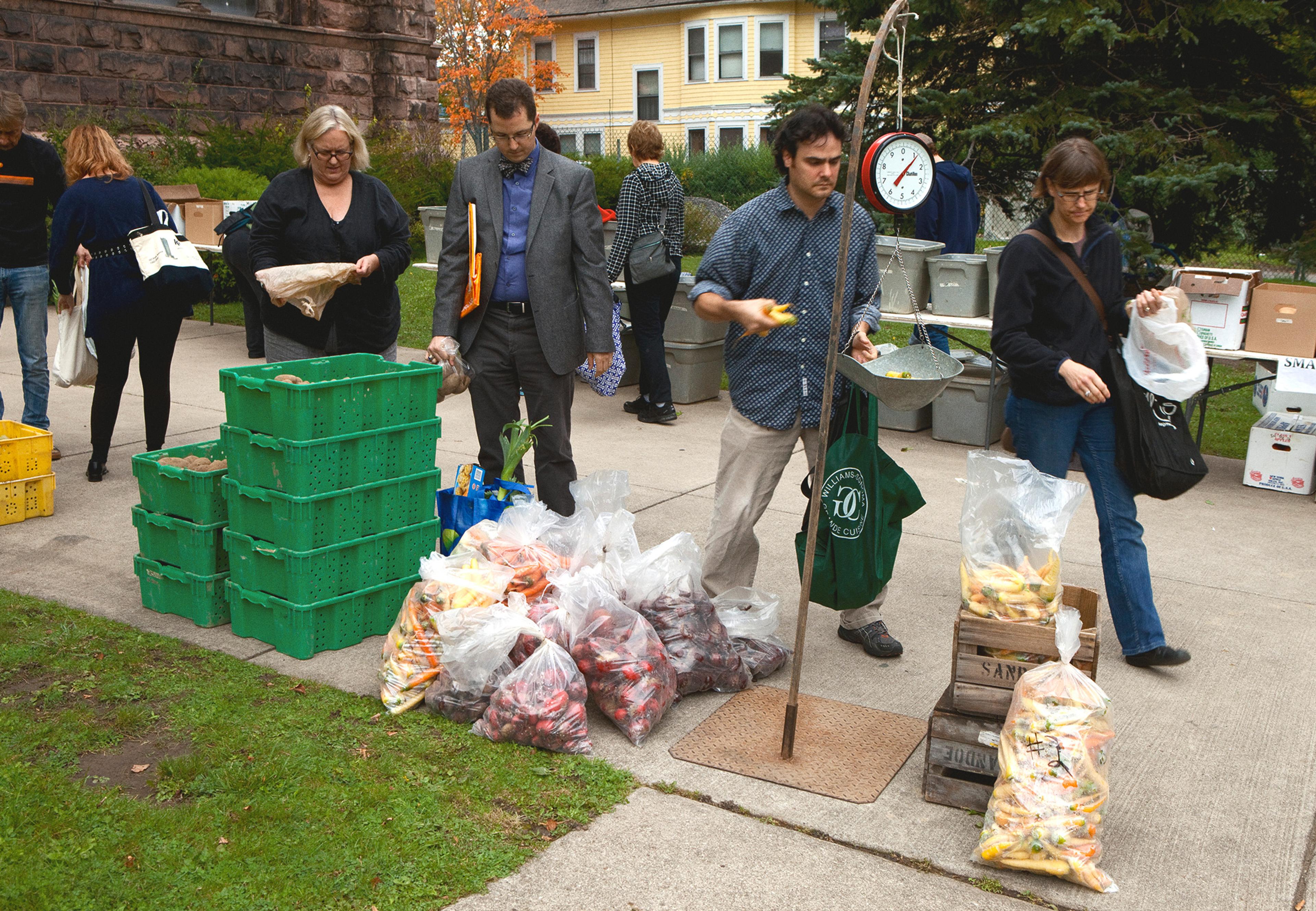
One of the most enduring ways to purchase produce directly from a farmer is through Community Supported Agriculture (CSA), also known as a farmshare. It’s proven a simple and effective model for producers and customers alike. For the farmer, a CSA provides much needed cash upfront before the season begins to purchase supplies and materials. Meanwhile, customers benefit from the sheer abundance of most farmshares, and its attendant cost savings over typical market prices.
But an underlying element of this arrangement is trust. Customers need to be on board with being a de facto investor in the farm, and willing to take the risk that frost or inclement weather can destroy an entire crop. They also have to accept whatever fruits and veggies come their way each week, at amounts that may not be ideal for their household’s needs.
“The traditional model of ‘You get the week’s harvest and abundance of the farm’ is definitely not for everyone,” according to Jennifer Hashley, director for the New Entry Program at Tufts University, “and yet the farmer really relies on that up-front capital to plan cash flow and know they have a market and pre-sold the bulk of their production through a CSA model.”
For roughly the last decade, trend analysts have been noting a flattening, or even an outright decline in CSA sales. The pandemic led to increased interest in the model, but many observers are reporting a subsequent slump. In response, many farmers are offering alternate direct-to-consumer models for purchasing their produce, adjacent to a CSA but with more flexibility.
One of the most popular models is the “market credit” system, where the customer still puts a large chunk of money down at the beginning of the growing season. But instead of weekly surprise boxes, that credit entitles customers to choose what they want on a weekly basis, with each purchase deducted from their original down payment.
“I’ve been involved in many different iterations of CSA models over the years and our current market style credit system is the easiest to run and most stress-free model to date,” said Lauren Nagy, farm manager at Ironbound Farm and Cider House in New Jersey. “This model is easy because we are able to stock our farm market with whatever we have and don’t need to pack boxes or worry about having the right quantity of every item on hand, which is so stressful.”
The market credit, or “market share” model still gives the farm working capital in advance, but allows greater flexibility for choosy customers — if, say, you’re out of town for a week, or are planning to host a large dinner party, you have the option to skip a week or to buy more produce. Plus paying in advance typically earns you a discount over the course of the growing season. “Our market share customers [are] not penalized if they go on vacation for two weeks in the summer — that doesn’t impact the total amount that they get,” said Caitlin Taylor, co-founder of 16-acre Four Root Farm in Connecticut.
Four Root has offered a market share program for years. It “combines what we think are the best parts of the traditional CSA program and the farmer’s market,” according to the farm’s website. “We are able to sell as many shares as we need to in order to do things like buy seeds, equipment and materials in the winter,” said Taylor. “We see our market share customers — about 100 — as our loyal, regular customers at the farmer’s market.” It’s a way to create customer retention since many are already shopping at the market and now you can offer them an added perk to keep shopping there, she added.
“They’re too busy. They can’t create the habit. It’s too expensive. It’s not what they want. They don’t eat enough vegetables. They felt like they were wasting it. They can’t remember to sign up or pick up.”
Andie Donnan started the half-acre Sandhill Farm in Wisconsin with her partner, and began a market share in 2019. The reason was simple— concern about growing sufficient produce each week for a traditional farm share box. “We were freaking nervous — how do you have enough produce and the right kind?” Donnan said. ”We were scared to overcommit.“ A market style helped them figure out how to plan for a traditional CSA. “Once we did the market share, we got comfortable at having a robust farmer’s market stand and feeling like we were good enough to grow X quantity of things.”
Once they got the hang of running their farm, which coincided with the pandemic, they launched a traditional CSA and initially had success. Since then, however, they’ve noticed that retaining customers each year is difficult. “I think we have like a 58% retention rate for our CSA box,” said Donnan. “We get so many one-year customers and there could be a million reasons why — they’re too busy. They can’t create the habit. It’s too expensive. It’s not what they want. They don’t eat enough vegetables. They felt like they were wasting it. They can’t remember to sign up or pick up.”
In fact, she is now pondering why they’re still offering a classic CSA box at all. “Why the hell are we doing this?” Donnan asked. “Why are we doing a traditional?” She finds running a market share easier all-around and with more customer retention, around 75%.
Jenna Untiedt of Untiedt’s Vegetable Farm in Minnesota, a family farm of approximately 2000 acres, ceased their traditional CSA at the end of 2023 — after 13 years. It felt a bit risky, to change what you know after all that time, but so far the results have been stellar. Untiedt, which operates on a relatively large scale, offers 17 locations for customers to shop, without restrictive time windows.
“[Customers] spend $500 and we loaded cards with $600 in value and they can use those cards at any of our retail locations throughout the Twin Cities metro,” said Untiedt. “They can use this card whenever they want and they can use it on whatever they want. So these people that didn’t want to just get a box of random things can choose what they’d like now.”
“These people that didn’t want to just get a box of random things can choose what they’d like now.”
It’s still early in their market credit adoption, but so far so good. Many new customers, who were previously not CSA members, opted to purchase the market share. “We always delivered our CSA on Tuesdays for 13 years because Tuesday was our slowest day of the week for retail or wholesale,” said Untiedt. “We took all the constraints away so now this membership works for a lot of other people.”
Tufts’ New Entry Program has offered a traditional CSA for years, but after customer yearly surveys showed customers asking for more options, combined with a steady decline in CSA sales since 2014, they decided to adapt. In addition to the regular CSA model, New Entry now offers a “CSA Your Way” option. With this option, the customer orders a custom box of produce on a weekly basis, without paying cash up front at the beginning of the season. “We wanted to make sure that we were offering something competitive to people who could pick and choose,” said Hashley.
Still, Hashley admits that custom orders take more work and logistics. “It’s more work on the back end to custom pack an order where someone wants a bunch of parsley, one head of lettuce, three carrots, versus I’m going to pack 300 boxes and they’re all going to be the same,” she said. On the customer end, members who opt for a custom box don’t receive a discount like they do for a traditional CSA — which is ultimately more income for the farm.
“You want to always meet people where they’re at,” said Hashley. “You’re shopping with your dollars and you’re supporting the farm — that’s a good thing.”

Roughly a decade ago, Catherine O’Hare remembers the first time she learned about seaweed foraging from a friend.
“For me, it was this light bulb moment,” said O’Hare, who has a background in sustainable agriculture. “We talk about local vegetables, local meat — all our local food systems — but at the time, I hadn’t heard many people talking about local seaweed. It got me wondering: Could seaweed farming happen in California?”
Around the same time, engineer and “serial entrepreneur” Jules Marsh had her own lightbulb moment while listening to a favorite podcast.
“It talked about how seaweed is so good for [combating] climate change and how aquaculture is really the future. It checked every single box for me, and seemed really exciting,” Marsh said. “So I was like ‘Yeah! I’m going to start a seaweed farm in California.’ I looked into it, and nobody was doing that here.”
As it turns out, there was a reason no one was doing it in California. Both Marsh and O’Hare went on to spend years trying to start their own seaweed farms. Ultimately, however, they each grew frustrated with the lengthy and expensive process, and pivoted towards other businesses. O’Hare said she and her partners “truthfully just got disillusioned. The system in California is not set up to support” seaweed farming.
Her story is far from unique.
Something in the Way
Globally, the seaweed business is booming, with production tripling from 2000 to 2018, according to the UN. Seaweed can be used for everything from food to fertilizer and as an alternative to plastic. California, with its many miles of verdant coastline, cool waters, and desire to be at the forefront of climate action, would seem poised to be at the forefront of the kelp revolution. Yet the state has made the permitting process incredibly arduous, stymying potential seaweed farmers like Marsh and O’Hare.
“It’s nearly impossible,” said Marsh. Instead of farming, Marsh co-founded Kelpful, which hosts seaweed foraging workshops and cooking classes, while O’Hare co-founded Daybreak Seaweed, which creates food products from Alaskan-sourced seaweed.
“Navigating the existing regime, which is highly complex, involves multiple actors, and imposes multiple permitting and other requirements, is very challenging for [aspiring seaweed farmers], and could be a real impediment to the expansion of the field,” said Romany Webb, deputy director of the Sabin Center for Climate Change Law at Columbia University. Webb co-wrote a paper looking at the torturous seaweed permitting process in California.
“It is extremely hard to get a space in the ocean to do anything, whether it’s seaweed farming or anything else.”
Webb’s analysis found that on average it takes 3.5 to 10 years to get a permit for a commercial seaweed farm in California, compared to about a year in Alaska and 1-2 years in Maine. Another report by CEA found that obtaining the permits and authorizations for an aquaculture project in California can cost anywhere from several thousand dollars to over 1 million dollars.
Daniel Marquez is among those who have tried to get the necessary permits to start a California seaweed farm. He took over an existing lease for a 25-acre plot just north of Santa Barbara more than five years ago that had already completed the environmental review process. He’s been stalled since then.
“I’m miles ahead of most people, and I can’t get anywhere,” Marquez said. “That’s the frustrating thing about this … We’ve got to make this so it’s a little more easy and affordable.”
Seaweed Solutions
Randy Lovell, state aquaculture coordinator with the California Department of Fish and Wildlife, argues that California has a unique regulatory system when it comes to the coast.
“I think people don’t understand how complicated our ocean environment is,” he said. “It is extremely hard to get a space in the ocean to do anything, whether it’s seaweed farming or anything else.”
To start an ocean farm in California, seaweed farmers first have to apply for a water bottom lease, which triggers an environmental review process. After that, there are additional state and federal permits that need to be obtained.
When it comes to siting a seaweed farm, factors that have to be taken into account include vessel traffic, migration routes, military activity, and environmental factors like tides, temperature, salinity, and the emissions caused by getting to and from the site.
Though the ocean environment is complicated, Lovell said that seaweed tank farms on land are an option for those looking to grow it for consumption. Still, he said state agencies have been working on solutions to streamline the process for ocean farms, including an online permit portal to centralize the process.
“We know that there’s problems — we’re trying our best to try to fix those,” he said.
His office is also working on implementing a “virtual roundtable” where stakeholders would meet with representatives from all state agencies to address potential issues in advance. Several California agencies are also working on an aquaculture action plan that will lay out guidance and next steps for improving the process.
“We can’t wait another 10 years for something to resolve — we need to be taking action on things now.”
In the meantime, Lovell points to local entities like the Port of San Diego that have used their authority to foster seaweed farms in their jurisdiction by being the ones to take on the state’s environmental review process.
“In some cases, certain bays, certain ports have shouldered or assumed the authority for issuing leases for aquaculture,” said Lovell. Still, that’s not the case everywhere, such as in Santa Barbara, which chooses to defer to the state.
Kendall Barbery, director of partnerships and program development at the ocean farming non-profit GreenWave, said that type of local jurisdiction partnership is what enabled them to start a pilot farm in Humboldt Bay.
“The Humboldt Harbor Conservation Recreation District went through the process of kind of developing a pre-permitted area in the bay,” Barbery said.
She said one reason they’re interested in seaweed farming is because of its potential to aid in the restoration of bull kelp, which has been decimated in recent years. Their pilot project focused on a hybrid model that combined restoration with commercial farming. Barbery said she hopes to see more opportunities like the ones in San Diego and Humboldt Bay.
“I think state regulatory agencies in California understand that it’s a complicated and expensive process, and they’re looking for alternative pathways,” Barbery said. “There’s been incremental movement, but not fast enough. Particularly when we’re thinking about restoration, we can’t wait another 10 years for something to resolve — we need to be taking action on things now.”

Some farmers keep livestock in their barns. Others store off-season equipment. But in Neil Mylet’s rural Indiana barn, you’ll find 10 miles of fiber-optic cable. Mylet, a corn and soybean farmer and tech entrepreneur, has long understood the importance of internet connectivity for rural ag communities — and the frustration with its absence.
Fourteen years ago, then-25-year-old Mylet was eager to show off the prototype of a new invention that would allow farmworkers to monitor and control the loading of grain trucks using an iPad or smartphone. Working with friends, he filmed a promo video to share with the world.
“We shot it in like two hours, and almost wrecked a semi in the process,” Mylet recalled. “I was literally using our forklift as a boom truck for a camera.”
But the technical challenges of shooting the video weren’t the primary roadblock: Mylet didn’t have enough bandwidth to put the video online. “I had to drive practically an hour to upload it to YouTube,” he said. On top of that, lack of fast internet access made his grain monitoring tool less useful. The delay between the video stream and when it showed up on a user’s screen was a problem. “It would pause here and there, and the flow rate that we have for this process is 25 tons of grain per minute. If you have even a five-second intermittent pause or freeze, that’s a really bad situation.”
Today, that early project continues inspiring Mylet to work toward a better-connected future for rural agricultural communities — and the young people who grow up there. He’s spent the last few years working to convert an old opera house in Camden, Indiana, into a tech hub, coworking space, and venue, where he hopes to foster the growth of students and entrepreneurs like himself through internships and access to high-speed internet.
“We already essentially lost or greatly injured a generation of these rural kids,” said Mylet. “When you don’t have [high-speed internet] and you don’t grow up with it at an early age, it’s striking the differences in the way they see the world, the way they think about opportunity, the way they take on an entrepreneurial view.”
Concern for opportunity was one impetus behind a recent study from Michigan State University examining the impact of poor broadband access on rural students. Before the pandemic, the researchers surveyed middle and high school students in rural Michigan, assessing how broadband access impacted “academic performance, educational aspirations, career choices, and general well-being.” The new study illustrates how the improved connectivity gained by some rural Michigan students during the pandemic is now receding.
“One thing the pandemic did do, for all the evils it wrought on this world, is that here in the United States, we finally, finally realized that high-speed, affordable broadband is not a luxury,” said Christopher Ali, telecommunications professor at Penn State and the author of Farm Fresh Broadband: The Politics of Rural Connectivity.
That realization was a silver lining for many Americans without high-speed access in both rural and urban communities during the pandemic. Among other state and federal efforts to increase connectivity, Congress approved the Affordable Connectivity Program (ACP) as part of the 2021 Infrastructure Act, providing 23 million low-income households with a stipend for broadband access.
As connectivity declined, so did the students’ interest in completing college or pursuing careers in STEM.
But for all its success, a lack of infrastructure meant the ACP’s financial subsidy alone couldn’t help many rural families. And Congress let the ACP expire at the end of April, leaving those who were taking advantage of the stipend without support.
“That’s definitely going to be affecting the already significant decline [in high-speed internet access] that we found among adolescents, especially in rural areas,” said Gabriel Hales, a research assistant at Michigan State and co-author of the study.
“Even if it was cheaper, even if it was free, a lot of these households in rural areas don’t even have the ability to go up to an internet service provider and get access because there’s no infrastructure, there’s no ability to get any sort of internet,” Hales continued.
That’s why a crucial part of Hales‘ team’s research entails carefully mapping rural connectivity in Michigan, and identifying which homes have the infrastructure to accommodate high-speed internet. Without this kind of mapping nationwide, Hales said connectivity will remain out of reach for many rural students.
By the end of 2021, rural Michigan student home internet access increased by 16 percentage points, researchers found, thanks largely to schools providing wi-fi hotspots. But by the end of 2022, that access was declining, a downward trend that Hales expects will continue. And as connectivity declined, so did the students’ interest in completing college or pursuing careers in STEM.
“Even if it was free, a lot of these households in rural areas don’t even have the ability to go up to an internet service provider and get access because there’s no infrastructure.”
Lack of high-speed internet access impacts students in both urban and rural settings, but the latter often have fewer options, Ali said. “The difference between being unconnected in an urban community and a rural community is literally distance. Where are you going to get connected? Is there a library within walking distance? Are there other community centers? There’s just more opportunities for connectivity in urban areas.” When access does exist, Ali added, rural, Indigenous, and remote communities often pay much higher prices for subpar broadband.
The benefits students attain through broadband access aren’t just academic. Accessing the internet during the pandemic, even just to play video games or scroll social media, “was incredibly important to make sure that these adolescents kept up that level of well-being and did not feel as isolated,” said Hales. While he acknowledges that research tying teen social media use to poor self-esteem is prevalent, that wasn’t reflected in their findings. And beyond self-esteem and social connection, even just “goofing off for a few hours every day” online helps rural students build vital digital skills, he added.
While the ACP has expired, Ali points out that millions of dollars will be funneled to the states through the Broadband Equity Access and Deployment program (BEAD), also part of the 2021 Infrastructure Act. But that money won’t be distributed to the states for another year. In the meantime, many rural communities are out of luck. “We just have so many gaps, and unfortunately rural communities often pay the price of these gaps,” said Ali.
“How are we going to empower our young people to pursue their dreams?” he continued. “Without access, you can’t apply for a job, get a voter ID card, you could barely book a vaccine. This is the struggle that young folks in rural communities are going through. Let’s make it easier for these kids.”
As the states wait for BEAD funding, Mylet continues to take matters into his own hands. He is now providing high-speed internet for his local library. Caitlyn Baird, director of the Camden-Jackson Library, said the faster internet has been a game changer for young and old library patrons alike.
Baird, who has three kids, said high-speed internet is non-negotiable now that instead of snow days, schools have “e-learning days.” “If we didn’t have the access to run three computers at one time and enough internet to sustain that, I don’t know how we would do their learning,” said Baird. “They’re requiring these kids to be online the whole day … It is very important that they have access.”

There are some who say the water of Monroe County, West Virginia, is the purest and best-tasting in the world — or at least it was in the 1990s. The springs on Peters Mountain, which straddles the border with Virginia, won first prize at the Berkeley Springs International Water Tasting four times in that decade, beating out — as farmer Maury Johnson will tell you — the renowned municipal water of New York City.
Johnson’s family has owned over 200 acres of farmland in Monroe County for 130 years, in the verdant Hans Creek Valley. Coming around the bend of a two-lane road into the valley, you behold a patchwork of dandelion-dotted pastures where small farmers raise sheep, cattle, pigs, and even a paddock of wide-eyed, statue-still deer. Underneath that farmland is a geological formation called karst, which is found throughout the greater Appalachian region.
It is a layer of ancient limestone, made porous over eons by mineral-laden water and riddled with caverns and underground waterways. Precipitation that falls on mountain ridges makes its way into the valley springs below through subterranean creeks that rise at intervals to catch their breath above ground, moving through the earth like a thread through cloth. In karst land, the earth is thin and porous and filled with gateways to aquifers below. That groundwater, the delicious prize of the county, is easily touched and tainted by pollution.
Meanwhile, the Mountain Valley Pipeline is a 303-mile conduit for gas from the Marcellus Shale, and runs from the northern panhandle of West Virginia to a compression facility in southern Virginia. Its six-year construction process — totalling $7.85 billion — has been marred by controversy and delays. It’s faced many legal challenges and significant activist protests.
In June 2023, Senator Joe Manchin (D-WV) tied blanket approval of pipeline-related permits to the passage of the Fiscal Responsibility Act, the bill that addressed the national debt ceiling. This month, the Federal Energy Regulatory Commission (FERC) cleared the pipeline for operation, which is expected to begin July 1. (EQT Corporation, the operator of the pipeline, did not respond to requests for comment on this story.)
When pipeline construction began on Johnson’s property in 2018, he monitored the activity very closely, concerned about violations to the organic integrity of his land. Johnson clears less than $5,000 a year selling agricultural products like hay, corn, and pumpkins, which is not enough revenue for him to seek organic certification for his farm. But he’s implemented exclusively organic practices on it since about 1993. That’s when an over-application of fertilizer on the hay fields poured down the mountainside in a heavy rain and into an aquifer via a sinkhole, contaminating the groundwater. “You could taste fertilizer for a month,” he said. “And at that point I decided, no more chemicals on this property.”
Over the course of the pipeline construction, Johnson meticulously documented any violations he saw on his property that would compromise the aquifer that sustains the farm: trucks refueling over streams, for example, or improper protections against erosion. And during that first year, he began to observe an increase in sedimentation in the water from his wells, especially after a rain. In the spring of 2018, he noticed the water would turn white or brown with mud and grit with each rainfall, and in 2021 he stopped using his own well water altogether. He has no running water in his house today.
“They’ve changed the way the water travels across the property,” Johnson said. “Landowners in at least three counties now have water issues — ponds have dried up, wells have dried up, the wells maybe have become unusable.”
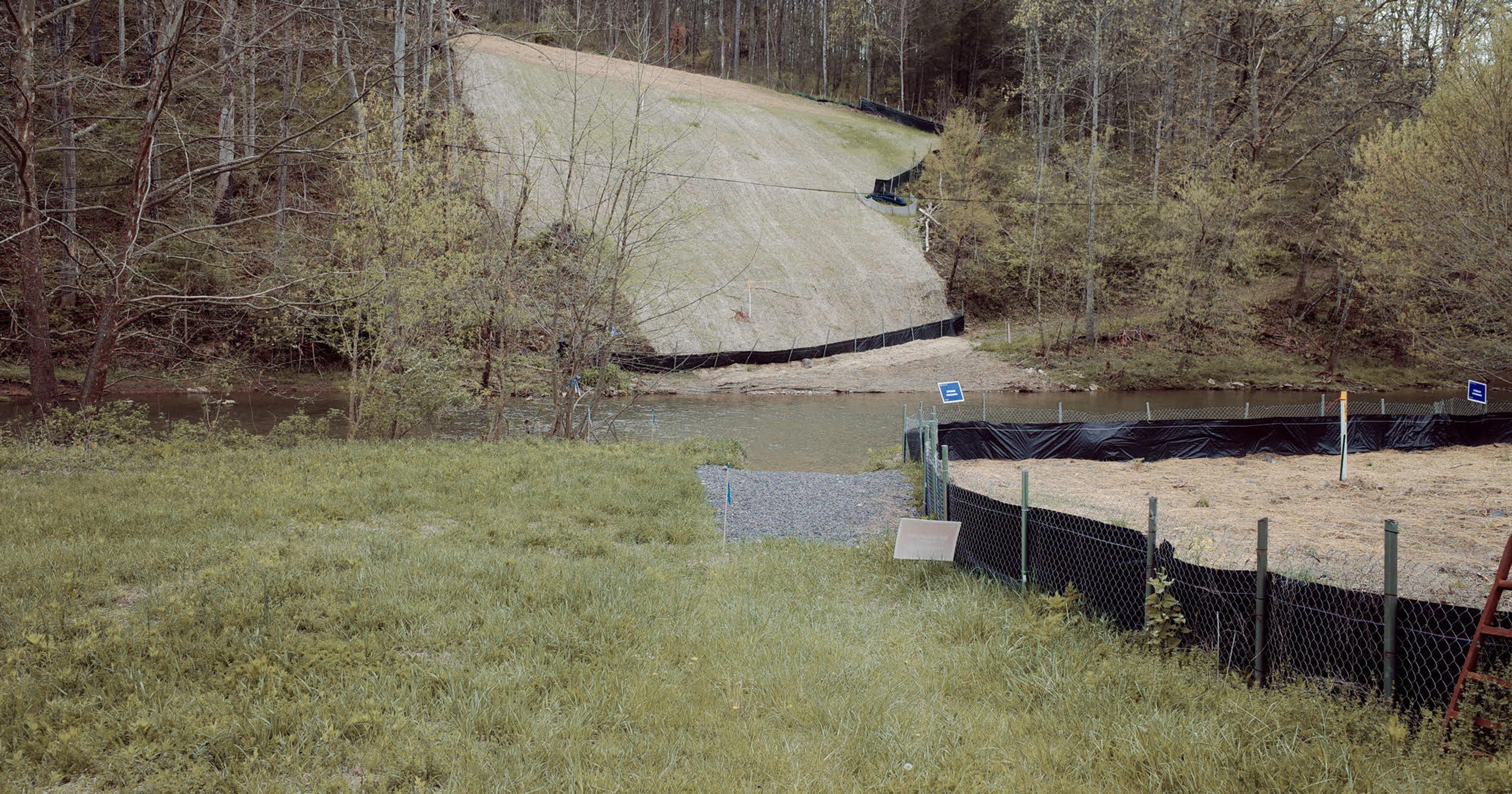
The pipeline crosses Indian Creek in Monroe County, at the site where Maury Johnson was baptized as an adult.
·Eve Andrews
Over the course of this past spring, Johnson has been driving his well-worn minivan across the Greenbrier Valley to meet with other landowners who have experienced issues with their water since the construction began. With the West Virginia Rivers Coalition, he wants to build a body of evidence that the land and water have been altered since the pipeline has been installed. Johnson himself has brought the evidence he’s collected across the region to the attention of FERC, the West Virginia Department of Environmental Protection, Manchin’s office, and the National Organic Standards Board, among many other agencies and government officials. He’s filed about 350 complaints in total.
“A lot of people didn’t know they could complain. They thought: ‘Well, you know, I haven’t heard anybody else having a problem. Maybe it’s just me, maybe it’s something not related,’” Johnson said. “We have to go talk to people and get the data to figure it out. Sometimes things happen and it’s not related to the pipeline, but you got to go out and do some research.”
Since the Mountain Valley Pipeline was first proposed in 2014, community groups, scientists, and environmental advocates have been warning of the potential dangers of building a large natural gas pipeline through the mountains of West Virginia and Virginia.
“It’s true we have tons of pipelines crisscrossing the state of West Virginia, but my research documents the fact that no other pipeline in the country has ever attempted to cross the same amount of high-risk terrain that Mountain Valley Pipeline does, and it’s not even close,” said Jacob Hileman, an environmental science professor at West Virginia University. “We do have techniques for minimizing and mitigating risk in infrastructure projects, but you’re not eliminating that risk.”
One particularly risky aspect of the region’s terrain is the steep mountainsides with highly erodible soil, an issue only aggravated by swift and powerful rains brought on by climate change.
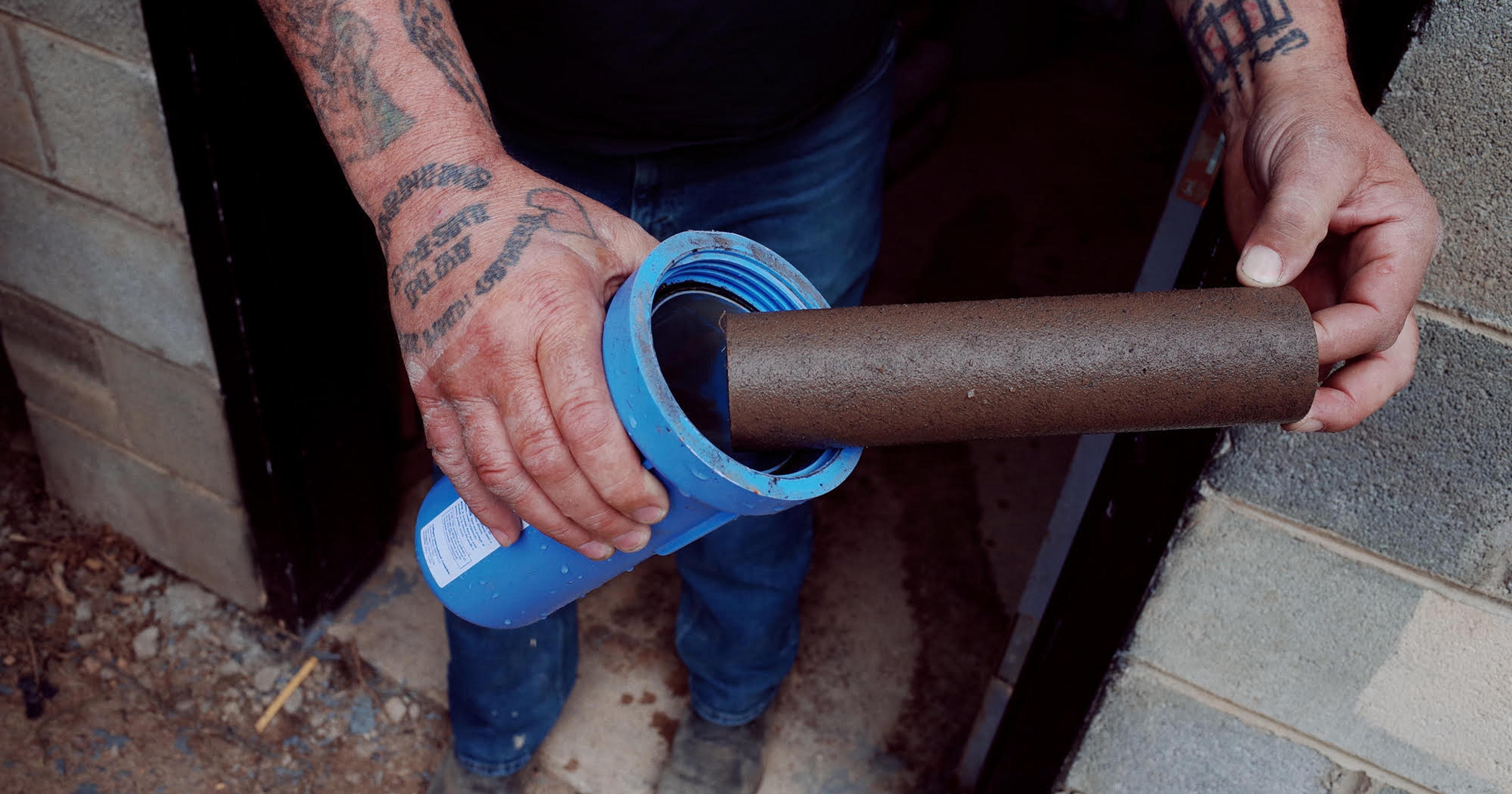
J.R. Gill shows a filter for his well water, which fills completely with sediment every day since his well casing cracked in November.
·Eve Andrews
“When you site a pipeline along an entire ridgeline and remove the trees and disturb the soil, that’s going to impact all of the runoff in the valley below,” said Autumn Crowe, an environmental scientist and executive director of the West Virginia Rivers Coalition. “We’re seeing the runoff increase and the drainage patterns change so that there’s more flooding in areas where there hadn’t been because there were trees and vegetation to soak up the water, and now without that people’s properties are being flooded.”
That flooding can dump contaminants into the karst’s many access points to aquifers. Some residents along the pipeline’s path are also concerned about toxic chemicals like spilled diesel fuel from trucks, or protective coating on the pipe itself, which degrades over time. Underground channels that run through the karst can carry pollution fast and far, potentially miles away in just a few hours.
But the biggest problem so far has been the sediment, which comes from runoff and blasting through rock. It fills stream beds and pours through cracks in karst into groundwater and wells. That can suffocate the wildlife in fragile stream ecosystems, pollute drinking supplies for farm animals, and turn rural water systems unusable.
“The typical protection that people think of when something happens on the land, that it’ll sink down through all these filtering layers of dirt and sand — well, we don’t have that, we’re missing the filtering layers,” said Nancy Bouldin, a resident of Monroe County who has protested and organized against the pipeline. “And it’s a problem because there is no public water service for probably 80 percent or more of the homes in Monroe County that this pipeline goes past.”
Karst is also conducive to sinkholes that cover the land like pockmarks, and can be coaxed open by events like a flood, construction, or the drilling of a well. The Greenbrier Valley, which stretches across three counties along the southeastern edge of the state, has one of the densest concentrations of sinkholes in the world. (The town of Lewisburg sits almost entirely on something called an uvala, a large divot in the earth formed by a compound of sinkholes.) You could say the land is sensitive; it gives way and fractures under sustained pressure.
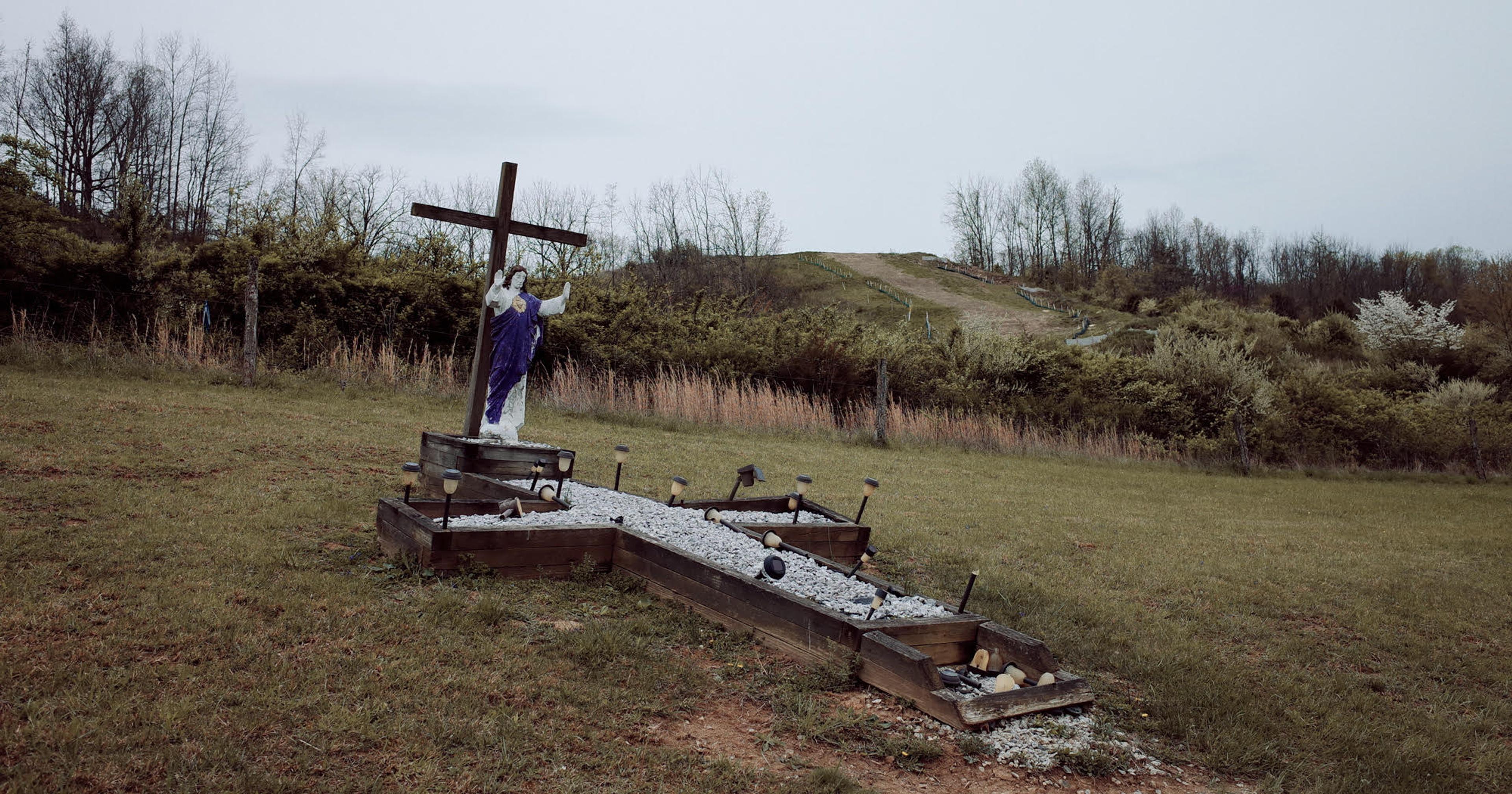
The Mountain Valley Pipeline, its path visible in the background, runs right behind the Lindside Methodist Church in Lindside.
·Eve Andrews
Johnson spends much of his time now making his rounds across the state, climbing narrow mountain roads to meet people who have lost reliable or clean water supply since construction of the pipeline began. One Sunday in April, he invited me to follow along, and brought me to the home of J.R. Gill.
Gill bought his dream property in Pence Springs, just northeast of where the pipeline crosses the Greenbrier River, in September 2018. He built a house from the ground up with lumber cut from his own trees, and over the years installed heat and electric and plumbing connected to a well accessed by a small pump house.
In November 2023, Gill awoke to a boom that shook the whole house. A crew had resumed pipeline construction less than a mile from his home about a month prior. That night, Gill said, workers were blasting — using explosives to clear a trench for the pipe through rock — and that the sound also startled his neighbor in the next holler over.
“That next morning I got up and I didn’t have any water in the bathroom, so I went out to the pumphouse after it turned daylight and checked my pump,” he said. “And that’s when I seen my concrete floor busted around my well casing.”
That concrete foundation slab, which is eight inches thick, had been cracked and pushed up. The well casing itself was fractured. Its filter comes up filled with mud every day, and there are days when no water comes out of it at all. The pipeline company sent its staff karst specialist to look at the damage, and deemed that there was no way the pipeline construction could have caused it.
Drilling a new well will cost nearly $10,000. Gill has contacted Manchin’s office, West Virginia Governor Jim Justice’s office, and the Summers County Commissioner’s office. In April, the county commissioner granted him a meeting to document the well problem. From there, he said, that office will bring the issue to the FERC, the governing body that permits pipelines. But FERC exists to get pipelines approved, not to regulate them, and it’s unlikely that Gill will see any money soon — if at all.
Landowners in the Mountain Valley Pipeline’s path are struggling with the classic dictum of economics: Correlation is not causation. They observe changes to their land, water, and animals, and can say they started after pipeline construction began, but they can’t claim with any certainty that the construction is responsible. And what can they anticipate now that the pipeline is actually going into operation?
“The power imbalance we face, unless you can prove 100 percent beyond a shadow of a doubt that MVP caused these damages, you don’t have any recourse as a landowner to be compensated,” said Hileman. “It’s not enough to just say this has never been a problem in the past but now it is, and that’s unfortunate.”
Becky Crabtree, who owns a farm right next to the pipeline’s path crossing Peters Mountain, said that last year all but two ewes in her flock died, and the surviving ones appear to be barren. Last spring, all of the lambs were stillborn. She’s waiting for the results of water testing of their wells and ponds, in hopes of getting some answers.
“The death of so many sheep was as heart-breaking as it was mysterious,” she wrote in an email. “We may never know [what caused it], but are not going to keep sheep any more.”
Proud, majestic stalks, showcasing plump seed heads, stood proudly outside the kitchen door of the acclaimed restaurant Blue Hill at Stone Barns in Upstate New York last summer. When I mistook the 15 plus-foot high plants for corn, Jason Grauer, Stone Barns’ director of farm innovation, gently corrected me. “That’s actually sorghum,” he said.
“Wow,” I said. “Sorghum?”
It’s a question people in a host of disciplines from haute cuisine to art are asking. This ancient grain from Africa, one of the top five grain crops worldwide, remains relatively unknown to mainstream consumers in the United States. Yet sorghum’s sustainable properties and culinary uses offer appealing alternatives to combat climate change; protect, enhance, and sustain our food system; and even shift society’s approach to land use.
“I’m not a sorghum guy,” said Blue Hill chef Dan Barber. “But I want to be.” He and his team have been working to identify varieties that grow best in their Northeast region and then create culinary pull-through to create a demand for the grain.
“My friend calls me a sorghum influencer,” said Brooke Singer, an ecological artist whose work intersects with social change and technology. Ecological art is a collaborative practice that seeks to find solutions to environmental issues while inspiring connection to nature. She teaches the subject at Purchase College, State University of New York, where she’s an award-winning professor of new media.
Singer also founded Carbon Sponge, an initiative that grows sorghum to develop healthy soil that can sequester carbon and slow its release. Singer’s enterprise gathers soil scientists, agroecologists, artists, and land stewards to spotlight soil’s significance and bring fresh ways of thinking about it to the forefront.
Outside of commodity agriculture, “No one really knows a lot about sorghum,” Singer said. In parts of the South, community syruping festivals are niche cultural events. But she discovered that most of the sorghum grown in the U.S. — from South Dakota to South Texas — is used for animal feed and biodiesel, with less than 2% used for food consumption.
“Why is that the case?,” she asked. “We tell a different story about sorghum and grow and consume it in ways that are very different from that. Growing it locally, regeneratively, to feed humans and the soil, it’s a counternarrative to what is happening in industrial agribusiness.”
Sorghum is non-GMO, gluten-free, possesses a high level of antioxidants, and is rich in protein, dietary fiber, B vitamins and minerals. Sweet sorghum is grown to produce syrup; other varieties are grown for grain and forage. The syrup’s distinctive taste, grassy and saccharin sweet, is sometimes bitter from tannins, while grain sorghum can be ground into flour for baking, popped like popcorn, fermented into beer or spirits, or its chewy pearls cooked into a pilaf.
“Growing it locally, regeneratively, to feed humans and the soil, it’s a counternarrative to what is happening in industrial agribusiness.”
Agronomically, sorghum grows well in poor soil, offers yield stability, has extensive roots, and is drought-resistant but can also resist heavy rain. Varieties with high tannins suffer from fewer pests. Sorghum also creates microbial biomass, which supports soil health, and accumulates silica, which binds to carbon. Its distinctive height, like its cousin corn, offers sizable plant biomass which, as mulch, nurtures soil.
Stone Barns’ work also aims to counter industrial agribusiness, and to make sorghum a vibrant crop with Northeast roots. “There are tremendous opportunities from a culinary perspective,” said Andrew Luzmore, Stone Barns’ director of special projects.
The team has been growing sweet sorghum in order to process green juice, the liquid extracted from its long stalks to make sorghum syrup. They want to “understand what is the most delicious, most utilitarian version,” explained Luzmore. Its super-intense flavor needs to be toned down to a more neutral one appropriate for varied uses.
Grauer suggests looking differently at ingredients like sugar and corn, used constantly and processed throughout the world and the U.S. “Is it possible that we could identify ways to regionally produce things that we rely on in these super-scaled operations that have negative impacts on environmental conditions?” he asked.
Luzmore and Grauer propose substituting sorghum syrup for high-fructose corn syrup, that highly refined, unhealthy ingredient used in a wide range of processed foods. They call it “the whole wheat of syrups” because it is more nutritious, containing higher amounts of minerals like iron, magnesium, and potassium than conventional sweeteners. They argue it tastes better, too.
Taking market share away from corn is “a pretty audacious thought,” acknowledged Grauer, “but one we think would be really viable.” He said replacing corn with sorghum, which is processed on the same equipment, would not be disruptive to the system, producers, or customers.
Taking market share away from corn is “a pretty audacious thought, but one we think would be really viable.”
Singer admits she’s “obsessed” with sorghum: its unusual, striking beauty, how quickly and how tall it grows, and its ability to be a dual crop of grain and cane.
Sorghum was first cultivated in East Sudan at least 5,000 years ago, wending through trade routes to India and China and then to the U.S. via the slave trade. Singer argues that honoring history, the seeds’ route to our hands, and how they’ve developed is pivotal. “Then our idea and understanding of the food, our needs, and the soil develops along with that and becomes more textured, interesting, and vibrant,” she said.
Her “Carbon Sponge Guide: A Guide to Grow Carbon in Urban Soils (and Beyond)” includes instructions to assemble a simple, affordable soil testing kit. Using the kit, farmers have reported increased fungal activity and microbial biomass, which facilitate soil health. Carbon Sponge’s 2018 exhibit at the New York Hall of Science on building carbon in urban soil resulted in a paper that is now under peer review.
The Stone Barns team will soon expand into exploring grain, growing a few sorghum varieties to see which can be regionally adapted for flour and for dishes like ponk, a popular Indian street food made by burning off the grain’s chaff. They’ve also obtained grain from breeders to experiment with cakes and a sandwich loaf made of sorghum and wheat flours. Other pursuits include granulating syrup, also known as sorghum molasses, into sugar; using syrup to sweeten wedding cakes; and nixtamalizing red sorghum and preparing arepas and tamales. Non-culinary uses like transforming byproducts into paper and other items are being explored as well.
Stone Barns grew sorghum for forage and as cover crop for 20 years before shifting to grain cultivation, when a Blue Hill chef connected them to a sorghum grower looking to expand his operation. Twenty-two varieties were tested; eight were successful and will be grown again in the quest for regional adaptation.
Growing sorghum “is based in abundance, community, in a humility in many ways,” said Singer. “It has significant, quantifiable benefits to regenerative ag. And they’re also models and new ways of thinking that are important for us to center.”
In life and in death, potatoes are known for their ability to absorb. When mashed, potatoes become sponges for gravy, and when prodded with metal, they become batteries, acting as a buffer for electricity. Now plant science researchers at the University of Tennessee have exploited yet another thing that potatoes soak up exceptionally well — gamma radiation — to engineer plant-based sensors that could help protect communities from harmful radiation in the event of a nuclear accident.
Co-authors Neal Stewart, a professor in the university’s plant science department, and Robert Sears, then a PhD research assistant, created potato “phytosensors” that glow fluorescent green when exposed to radioactive pollution. If planted in the fields around nuclear energy facilities, they could help signal to first responders and regulators where it is safe for workers and the public.
Before choosing potatoes as their sensors, Stewart and Sears tested the radiotolerance of the plant, observing how four-week-old potatoes responded to a range of gamma radiation doses. Using synthetic biology, the team leveraged the potato’s native DNA damage response (DDR) machinery so that its leaves turn fluorescent when exposed to low-dose ionizing radiation; Sears and Stewart note that the potato’s nuclear genome was ideal because it can be “effectively engineered.” They then tested the sensors using lasers and cameras, demonstrating “full function of the system in a ‘real world’ scenario,” reads the study.
There are a number of reasons potato make sense as sensors: Not only are potatoes happy to grow in a wide range of environments, they’re also less vulnerable to the large-scale disasters that bring mechanical radiation sensors offline or bury them under rubble, as earthquakes and even nuclear accidents like Chernobyl have. While a disaster could damage these sensor potatoes, it likely wouldn’t kill a whole field of them.
“The potato plant is awesome to work with,” said Stewart, who noted that they have wide application for genetic engineering, too. “Also, you can use the potato tubers to asexually reproduce the engineered lines.” Amazingly, potato sensors are self-repairing, self-powering, and wouldn’t need to be replanted every year. Beyond that, they’re cost-effective and don’t require mechanical maintenance. They aren’t, however, perfect: In some climates, winter could kill the aboveground stems, which would then require waiting for new phytosensor stems “to emerge from the tubers belowground as soon as conditions are favorable,” said Sears.
Sears and Stewart also recognize that their bio-engineered potato sensors are slower and less sensitive than mechanical sensors, so mechanical ones would still be needed to direct first responders to the “hottest areas” during a disaster. Afterwards, the potatoes could help regulators determine where it is safe for workers and the public to return.
“The convenient part of using a potato is that it clonally propagates itself through tubers,” said Sears. “You would ideally leave the tubers in the field, where they would continue to grow, produce more tubers, and persist indefinitely.” (However, depending on the USDA’s regulations, they might require the field to be replanted each year so the sensor plants don’t persist in the environment.)
Stewart, a pioneer in phytosensor research, has hoped that more advances in the field of synthetic agricultural biology would translate into the creation of plant sensors that alert farmers to pest or nutrient problems in their field. In 2018, his Advanced Plant Technologies program was awarded 7.5 million dollars from the U.S. Defense Advanced Research Projects Agency, with the goal of modifying potato plants to detect threats like radiation and plant pathogens.
“You would ideally leave the tubers in the field, where they would continue to grow, produce more tubers, and persist indefinitely.”
Thanks to Stewart and Sears’ work, potatoes are the first plant to function as a field-deployable radiation phytosensor. But could scientists turn other plants into gamma radiation sensors? Their study cites the potential of evergreen species, like pines, acting as phytosensors, in part because they wouldn’t die in the winter.
“I mention pines specifically because there is a breadth of information about pine species‘ tolerance of ionizing radiation,” said Sears. “This stems from the environmental research done after the Chernobyl disaster, where there were many pines in the surrounding area. The downfall of our current sensor is that in temperate climates, winter would kill the leaves and stems of potato and annually remove the sensor you are hoping will protect people. Any plant species that can remain alive year-round would work for a given area.” However, the fact that potatoes clonally propagate and are tolerant to so many climates made them the best choice.
Experts expect that the use of nuclear energy will increase in the coming years, as it’s considered a cleaner alternative to fossil fuel energy sources. While modern nuclear energy production is largely considered safe, planting fields of these potato sensors around a power plant could add another layer of pollution detection in the event of an accident. It has only been 13 years since a tsunami caused meltdowns at the Fukishima Daichii nuclear power plant, which killed nearly 20,000 people and destroyed entire towns.
The UT researchers designed the potato sensors with power plant disasters in mind, but Sears is curious about how similar sensors could help us better understand different types of space radiation, “some of which we cannot calibrate our mechanical detection equipment to because they occur so rarely.”
“I wouldn’t mind tweaking the molecular system to see if we could use a plant to detect radon gas.”
In recent years, interest in space radiation has grown for a number of reasons. NASA has invested in radiation-detecting research equipment to better protect crew members on deep space exploration missions, including lofty endeavors like sending the first humans to Mars.
Sears doesn’t know that their current potato-based sensors are most applicable to space, but he wonders if future radiation phytosensors designs in other species could be. “[Radiation phytosensors] can report the radiation ‘stress’ present in space in a more biologically relevant way compared to mechanical sensors,” he said.
Could potatoes be tweaked to sense anything else? It’s possible. “Plant species have a wide range of tolerance, and potato appears to be one of the more tolerant species,” said Stewart. “I wouldn’t mind tweaking the molecular system to see if we could use a plant to detect radon gas.” Radon, a type of radioactive gas that comes naturally from the earth, is the number one cause of lung cancer among non-smokers, according to the EPA.
“I’m a big potato fan — food-wise, anyway,” said Stewart, “so having a potato project ticked a box on my bucket list.”
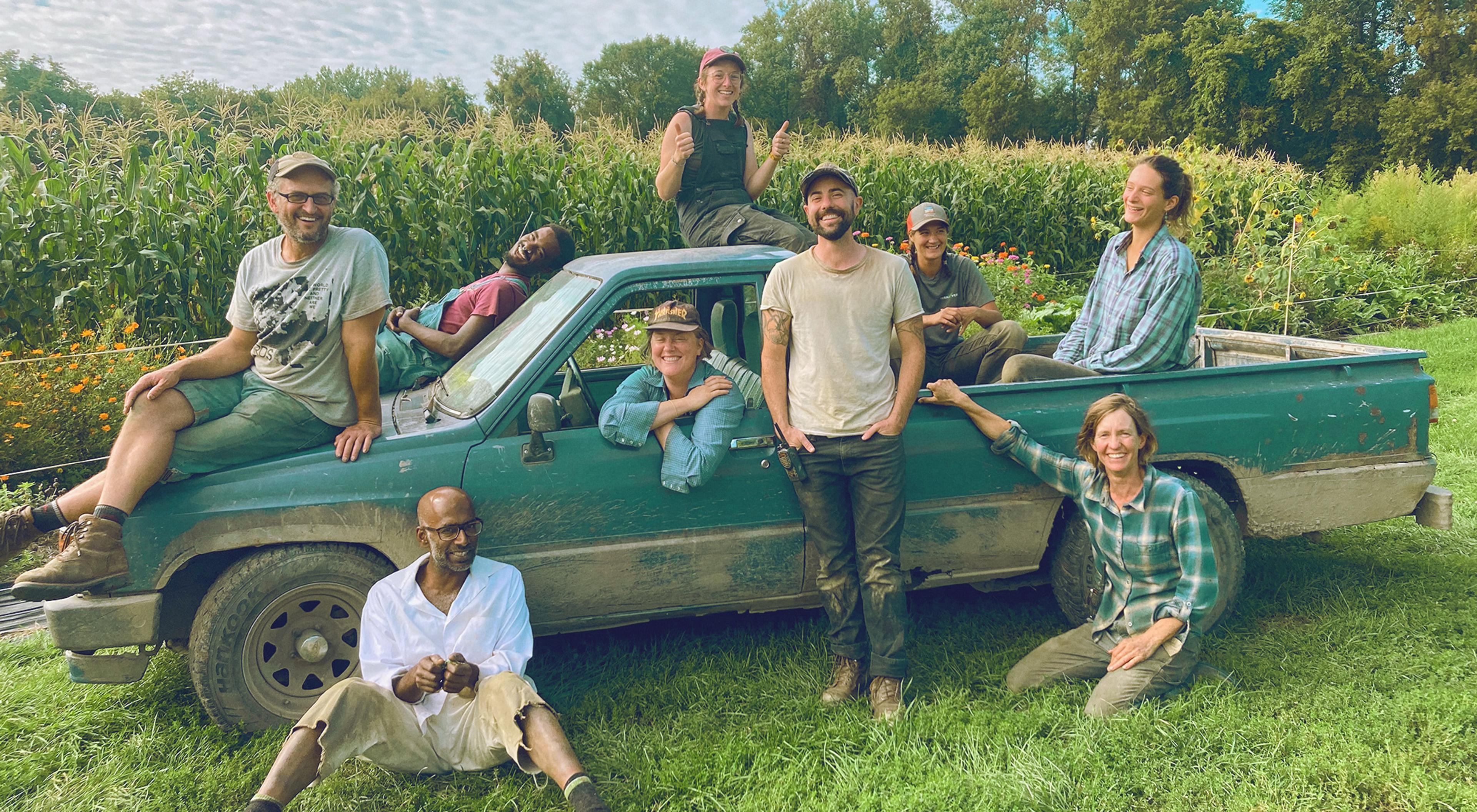
Last summer, Jack Shultz and his husband went tractor shopping for their farm, Untraditional Fruits. When they arrived at the dealership the salesman was having a laugh with another customer, so the couple busied themselves examining a floor model they liked. The salesman shook hands with the other customer, gave him a free baseball cap, and said he’d be in touch soon.
The salesman then approached them, smiling: “Can I help you gentlemen?” Shultz shared the model that “we were looking to buy.” The salesman’s smile began to droop the moment Shultz said “we.” His brow furrowed a bit as he looked from Shultz to his husband. Nevertheless, he carried on with a general line of questioning about how many acres they would use the tractor on, how level the terrain, and how frequently they tilled.
Shultz mentioned an attachment they were also planning to buy, and as he gestured toward the floor model, the man’s stance went rigid. Maybe he noticed Shultz’s wedding ring, or maybe it was a certain fluidity in his wrist. The salesman shoved his hands deep in his pockets, keeping his arms tight to his sides. He looked again back and forth between the two of them, taking it all in, before demanding, “Are you two brothers?”
This is not the first time they’d received this question, but Shultz said he is always astonished by the mental gymnastics that go into drawing that conclusion. Shultz is nearly a foot taller than his husband. His husband is stocky where he is slight. Their skin tones are wildly different. Shultz has straight dark hair, while his husband’s is sandy and curly. There is nothing about their facial structures that hint at genetic similarities.
Shultz and his husband are both trans men. He thought to himself: “Is it safe, standing in a tractor dealership, to come out to a stranger? Is there a safe exit if things get ugly? Do we just lie for the sake of avoiding potential conflict?”
No one knows exactly how many queer farmers there are currently. The national agriculture census that happens every five years essentially tries to get an account of every single farm in the country, but they only ask about gender — are you male or are you female? And as stereotypes go, many assume that queer people only live in urban spaces. And while that may have a bit of truth, as the Movement Advancement Project shows in their report, Where We Call Home: LGBT People in Rural America, millions of queer people live in rural areas. And in that space, queer farmers have existed since the beginning of time.
This is some of the basis of the work that Michaela Hoffelmeyer, assistant professor of public engagement in agriculture at University of Wisconsin-Madison. “The farm, at least in its modern iteration, really took place in the early 1900s as an extension of the state’s needs — but what developed as part of that was women in the household and men on the farm,“ said Hoffelmayer. ”It sort of embedded heterosexuality as the only model of farming.” And as the census shows, farmers are mostly male and white.
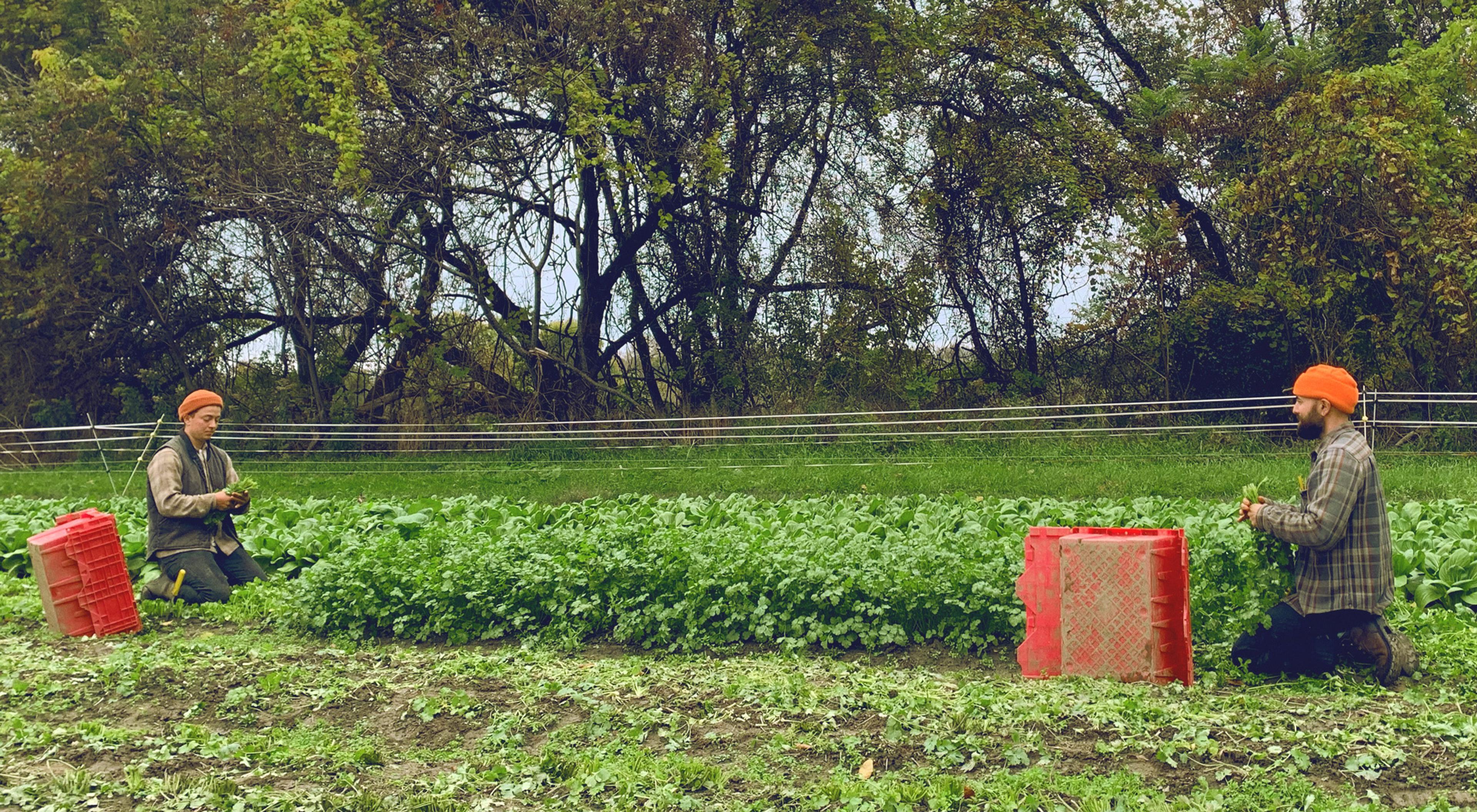
Diggers’ Mirth farmers, Micah and Loach, harvesting cilantro during the 2023 season.
But for queer farmers, before they even decide to get into farming or buy land, they have to first consider the thorny question of whether they are going to be welcome — or safe. “Queer farmers want to be part of a community where they feel like they have a higher chance of being accepted or supported or where there are nearby places that they feel like the customers will support them or buy from them or not discriminate against them,” said Hoffelmeyer.
Hofflemeyer has published various papers and articles dealing with identity (including gender and race) and how they actively shape involvement in farming. With a group of colleagues, she also surveyed queer farmers on how sexuality influences all aspects of agriculture — from getting credit to training to access to land. “We’ve also done a paper on how there is a lower response rate when sexual orientation was added to the Census of Agriculture,” she said, adding that the paper was looking into USDA research in the area.
In the documentary film Out There, Jonah Mossberg looks at the experiences of queer farmers across America and poses some questions: What does queer farming mean? Is agriculture safe for queer people? How does queerness relate to food production? Mossberg ultimately shows us just how complicated (and expensive) farming is, for queer folk as it is for everyone. But without community support, it becomes immeasurably harder.
One of the big issues for queer farmers is exclusion from the spaces where hetero-farmers access community and information. Whether it’s ag trade shows or local grange halls, “It’s just so unwelcoming for queer folks at the moment,” said Shultz. He feels that some of these spaces even bear the threat of violence, far beyond just the standard microaggressions.
The USDA defines “historically underserved” farmers to be beginners, socially disadvantaged based on race, ones with limited resources, or military veterans. But there is no pot of funding tied to the LGBTQ community. There is even a page on the grant websites detailing that queer farmers have “distinct needs.” But how could they understand these specific needs if they are not even accurately measuring queer farmers, or directing funding toward them?
Photo courtesy of Kelpful·
Jules Marsh harvesting seaweed
C Green, a queer and non-binary farmer at Diggers’ Mirth Collective Farm in Vermont, said they are often the only Black or queer person in the room at agriculture conferences and farm trainings. And with this lack of representation two potential issues arise — negative stereotypes can creep in, and can make queer farmers feel invisible and isolated.
To C Green, the solution lies in “government support for more queer-specific farmer training programs, scholarships, ag programs in public schools, and conferences that include the queer community in a more welcoming way.” Green noted that agriculture is facing an aging problem so the industry certainly needs more young people. Therefore they might just have to take whomever is interested — including queer folks.
For Shultz, who started their farm last year, the queer community could bring positive change to agriculture writ large, like giving full-throated support to regenerative, sustainable farming practices: “Not to say that straight folks wouldn’t be thinking this way, but I think it’s very intertwined with our queerness to unravel the status quo for a greater good.”
Jules Marsh, a queer educator and co-founder of Kelpful (a mission-driven, cooperative seaweed company), is actively working on bringing awareness to queer aquaculture. “The only way to shift people’s awareness and perception is to make sure they are regularly engaging with queer farmers,” she said.
Along with her business partner, she has been in hundreds of pitch meetings, sharing very detailed business plans and financial models for what people perceive to be a very male-heavy profession (think “fishermen.”) “We’ve had people say to us they thought we were just ‘silly little girls with a silly seaweed’ business and that’s why we were not securing funding,” Marsh said. “It started to shape how we talk and present ourselves, we had to add a level of confidence and step into these rooms with such power, bringing as much masculine energy as I could muster up.”
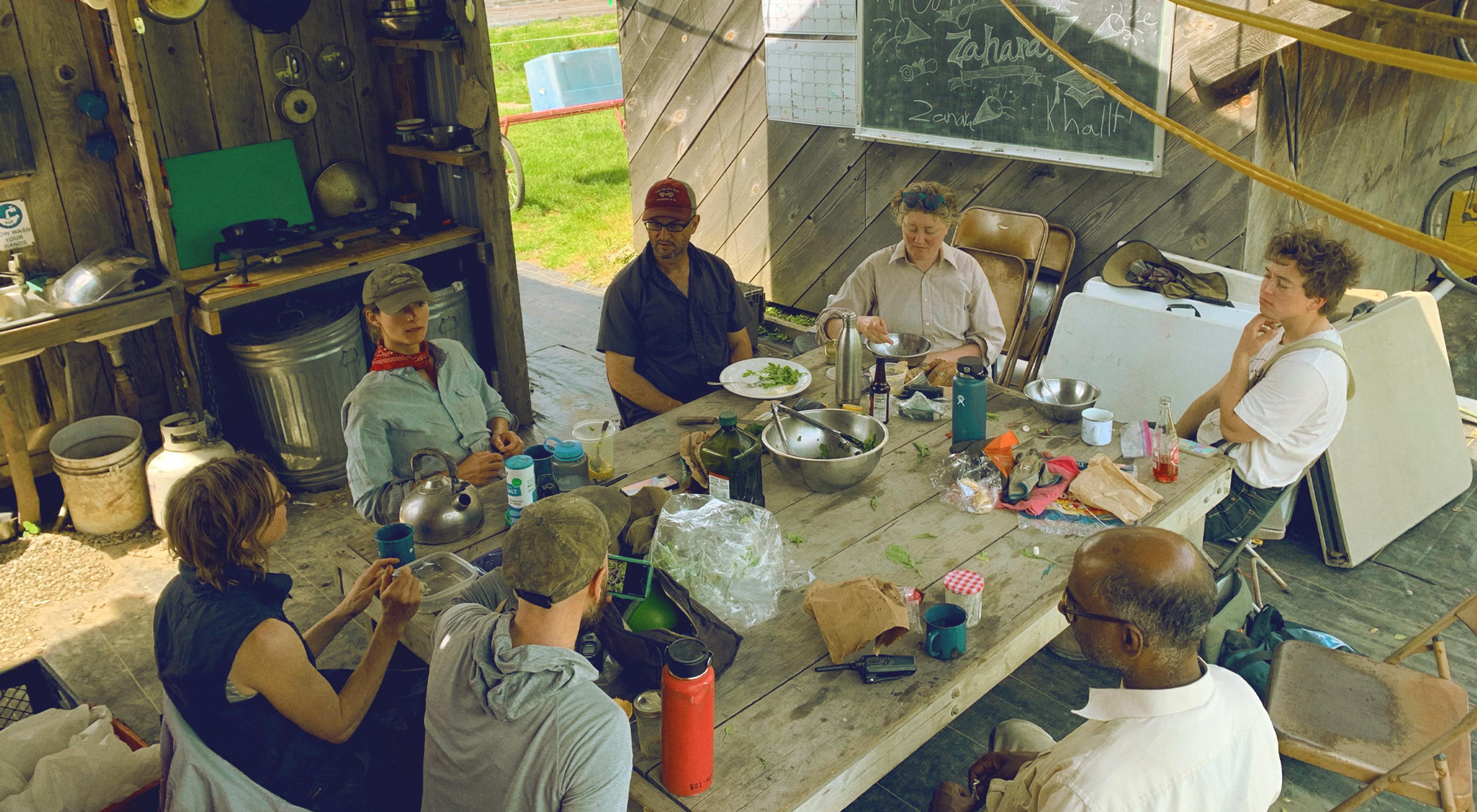
Diggers’ Mirth Collective Farm crew lunch at the beginning of the 2024 season.
So what are the solutions? And how do we get to a more equitable place? For Shultz it is “to be able to call the USDA and not feel microaggressed, to ensure there are anti-discrimination laws that can certainly be enforced, and to have dedicated funding for queer farmers.”
All farmers want to feel part of this incredibly important industry that brings sustenance to the nation. But as Hoffelmeyer said, queer farming needs “normalizing” in all the spaces that farmers engage with the world — from the borrowing of machinery from other farmers in a neighborly way, to land grants from universities, to formal agricultural networks.
And the queer farmers across the country, representing queerness in all its multi-facets, are paving the way for others to join them. Farming as we now know, needs everyone and anyone, but queer people still have to navigate all of this as ‘others’ in the world. Thus they are having to create ways of existing that are simply harder.
But before we do anything else, we could start questioning the very essence of farming and how we have set up this entire system to support such a ‘straight’ way in the world. How do we include queer people in this — and how do we then present solutions to be more inclusive? Because that’s where we can find more equity for all.
And greater good means greater good for everyone, right? “Every time I see those ‘We Need Farmers’ or ‘Support Farmers’ bumper stickers and hats, I just want to rip them off and be like ‘You cannot say this unless you literally mean all farmers,‘” added Hoffelmeyer. “Whether it’s immigrant workers transitioning to farm owners, whether it’s women farm owners, or of course, queer farmers.”
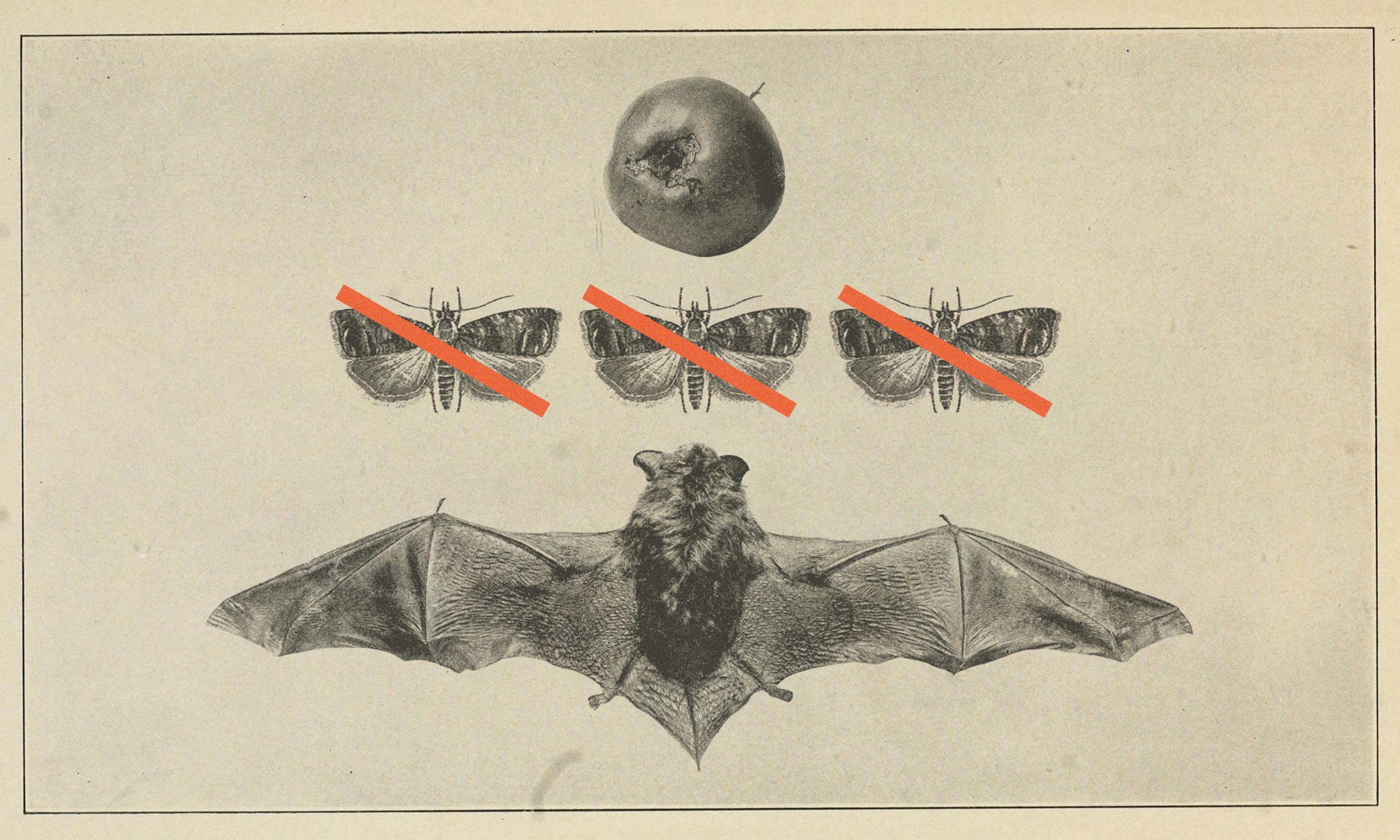
With its bark-patterned, brown wings, the codling moth looks innocuous as it flutters around fruit and nut orchards. But this seemingly innocent little insect is responsible for boundless destruction to orchards around the world.
For codling moth caterpillars do not survive by munching on leaves. Instead, they head straight for the fruit. Once there, they burrow into the flesh, sealing the hole behind it. The burrowing takes less than an hour, but results in an unpleasant surprise: The apple now has a wormy guest, all but ruining its appeal for eaters.
Orchards can experience multiple generations of codling moth hatches in a season. And if farmers leave the pests uncontrolled, they can wipe out an entire crop.
Trying to control the moth takes a big investment of time and money. In apple orchards, it is estimated that 70% of insecticides are used to combat codling moths. But the pest is wiley — it’s been described as “plastic” in its adaptation to pesticides. Case in point: In the 1980s and 90s, orchards in Europe controlled the codling moth with broad-spectrum insecticides, only to be foiled as the moth developed a resistance to the chemicals.
Growers try a gamut of pest control measures, including insecticides, pheromone disruptors, putting nets on developing fruit, and introducing beneficial insects. But one management approach has shown particular promise tamping down the ubiquitous codling moth: bats.
The flying mammals are dynamic and voracious feeders, sometimes consuming thousands of insects in a single night. A lactating female bat can eat 150% of her body weight in insects per day, said Danilo Russo, an animal ecologist at Università degli Studi di Napoli Federico II in Italy. Multiply the number of bats in a colony by the number of insects eaten, and you get an efficient insect assassin.
But while it is clear that bats provide important pest control services to the world, few have attempted to quantify their impact in cold, hard terms. So Russo and his colleagues headed to an organic apple orchard in Italy to test the efficiency of bats for pest control — including a calculation of the economic benefits of the flying predators. They published their findings in the Journal of Nature Conservation.
Within the orchard, they compared two neighboring areas — one where bats hunted freely and one where bats were excluded with night-time nets. The nets were closed before dusk and opened at dawn, to allow pollinators and other animals to behave as usual during the day. The scientists then collected the apples to compare the amount of damaged fruit in bat-hunted areas to those that were excluded from the flying insectivores.
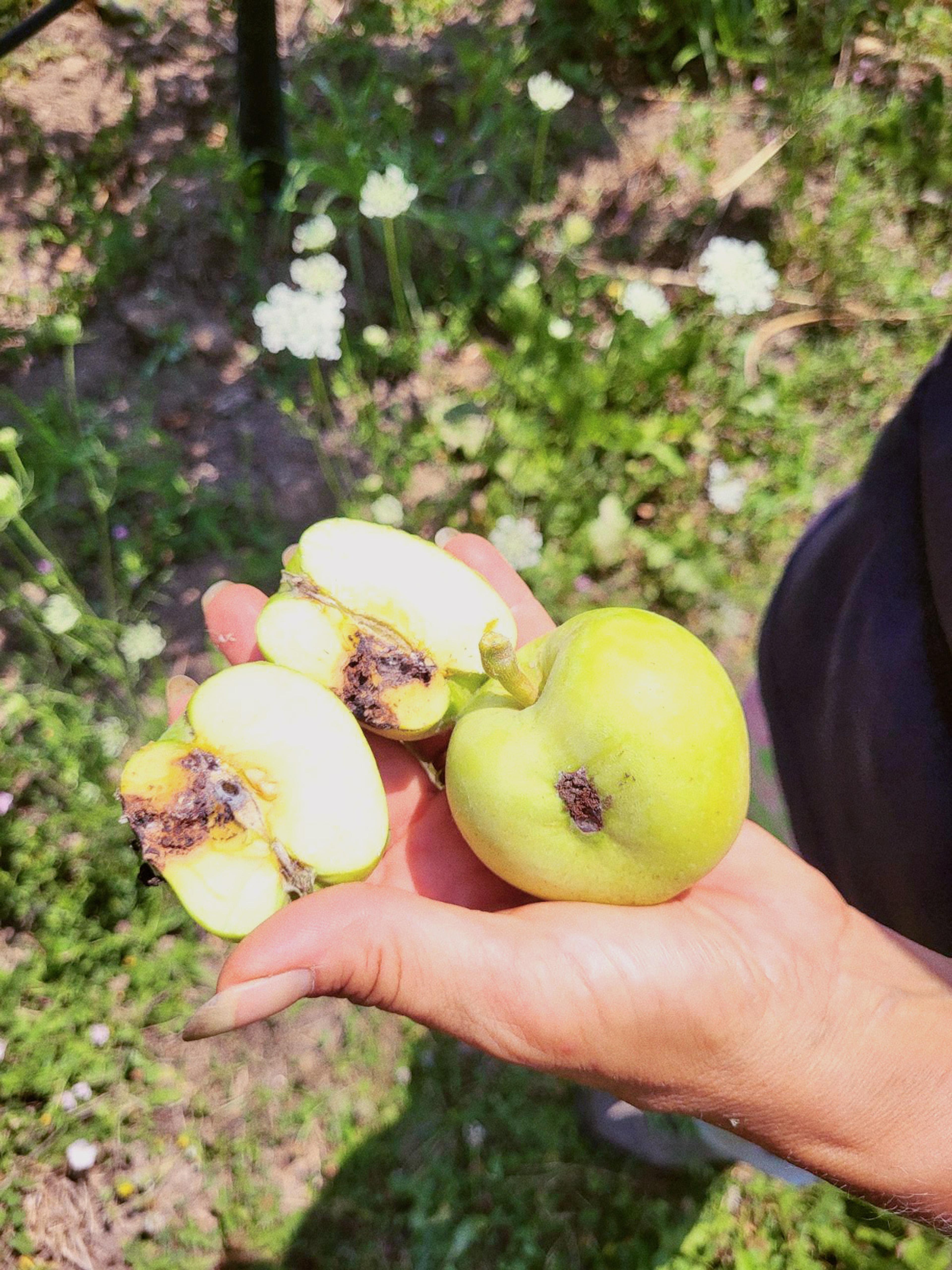
Photo: Michela Ruberto
·Codling moth larvae burrow into an apple, creating an unappetizing snack for consumers
They found that in the area of the orchard where bats hunted, there was a 32% drop in trees affected by codling moths. In addition, the number of damaged apples was cut by roughly half. Russo said his academic collaborators added an economic layer of information to their findings. “The level of damage can be turned into money, which everyone will understand,” he explained. In total, the presence of bats resulted in an estimated savings of roughly $1,470/acre each year in preventing damaged apples.
The rub? Coaxing bats to set up house near orchards.
Jim Koan owns Almar Orchards, a 250-acre, multi-generational farm in Flushing, Michigan. A lazy river flows diagonally through the farm, moving through a 100-acre apple orchard, patches of woodlots, and meadows with native flowers and grasses. In the 1980s, Koan transitioned the orchards to organic management techniques, including silvopasture efforts consisting of pigs roaming through the apple trees.
As part of his commitment to eliminating pesticides, Koan looked to natural pest control. In particular, he wanted bats to tackle the codling and oriental fruit moths, which had proven to be difficult to control. “Bats would be perfect because [the moths] are up in the air flying around and mating — and they’re awkward fliers,” he said. “They would be easy targets for the bats.”
Koen believed that on his farm, the biodiversity, available water sources, and presence of an old barn would create a bat paradise. In a Field of Dreams moment, Koen built a couple of boxes — what he called “bat condos” — to attract bats to his farm. He planned to use bats in addition to his other pest control measures like pheromone mating disruptors (an expensive endeavor, both in terms of money and worker-hours).
He said he “did everything that science said you should be doing,” and yet, no bats settled in the condos. His hopes for the bats being an effective pest control method were dashed. Although there were some bats nearby, he couldn’t coax the populations to increase. He concluded that at his farm, “bats are not dependable predators to significantly control those two major apple orchard pests.”
“A lot of bats are just like, ‘This is not good, I’m not resting there — it’s too cold, it’s facing the wrong way, it’s too small.’”
In Italy, the bats seemed to have already set up house near the orchards and didn’t need any coaxing to settle into the neighborhood. “We didn’t find any roosts,” said Russo, but he suspected the bats were nearby. “We mostly found generalist species, such as pipistrelle,” he said, adding that these bats “are not very big fliers.”
Russo reflected on their findings on bat-driven pest control and what bats could mean for other farms and crops. “The kind of information you get from this study may be easily exported to many other situations,” he said. “Although, we worked on a situation which is sort of an ideal paradise with no pesticides, very biodynamically managed. If we tested the same kind of experiment in a more intensive setting, things might be different.”
Joy O’Keefe, a conservation biologist at the University of Illinois agreed, noting that the research was great, but on a small scale. “It was done in one apple orchard in one part of Italy, so it’s difficult to extrapolate out and say that that’s happening everywhere,” O’Keefe said. She added that she’s excited about the work that’s happening with bats and agriculture, and hopes to see more studies that use multiple methods like plant surveys, bat diet discoveries, and behavior of bats in different settings.
O’Keefe added that some bats will adapt to moving into bat boxes instead of natural places, but the conditions have to be just right.
“Not all bat boxes are created equal,” she noted. “A lot of bats are just like, ‘This is not good, I’m not resting there — it’s too cold, it’s facing the wrong way, it’s too small.’” Even old barns, like the one on Koen’s farm, may not be a suitable home for a wary bat. “Maybe the barn looks good, but it doesn’t have enough space or sun, or a snake is living in the barn.”
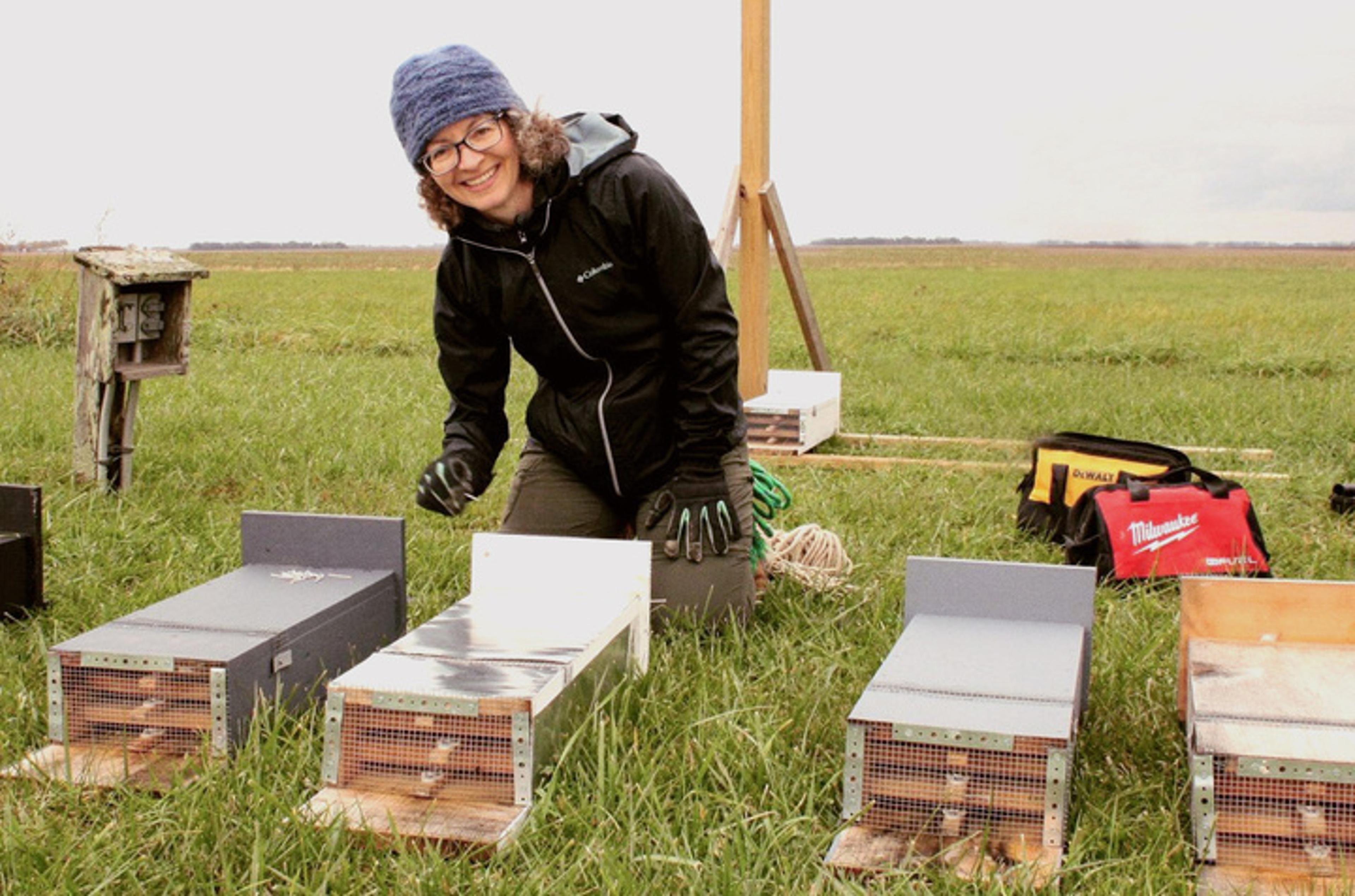
Photo courtesy of Joy O'Keefe
·Joy O’Keefe poses with a few bat boxes that she is helping install on a farm.
Although farmers can buy pest-controlling critters like ladybugs to eliminate harmful insects, the same cannot be said for bats. “It’s pretty tricky to breed bats in captivity,” explained O’Keefe. In addition, many bats are migratory, traveling long distances. “I don’t know what would happen if you brought bats from captivity and you’d like set them in an area — would they stay or would they naturally want to leave?”
While buying bats and putting up condos may not attract bats to an area, Russo and O’Keefe noted that a more holistic approach might help. “What you can do is try to make a place as bat-friendly as possible,” Russo said. He noted that farmers should integrate lots of diversity into their land, both in terms of crops and land use. “Hedgerows, small ponds, tree lines — all the things that too often are sacrificed [with] intensive agriculture, because in intensive agriculture, you want space, you have mechanization, you don’t want obstacles when you move your machines.”
Farmers have a unique opportunity to help bats thrive — and help control their pests in the process. “Farmers and producers have a lot of power to effect positive change for bats because they do have such vast areas that they control and manage,” O’Keefe said, adding that they have skills and expertise in a variety of land management activities. But as Koen’s struggles show, even skilled farmers might need guidance on how to make bats a regular resident.
Agroforestry practices of incorporating trees into agricultural landscapes can go a long way for farm biodiversity and bat support. Treelines or patches of trees can provide bats with alternate places to forage while different cycles of pests emerge throughout the season. She noted that having a variety of crops supports a more robust bat community, including an extended period of insect control.
Russo agreed, noting that farming could take a look at its history for creating biodiversity and healthy ecosystems. He said the small farms in Italy that existed a couple generations ago were a mosaic of patches of cultivation, forests, and wild spaces, mimicing natural systems rather than large monocultural deserts. “I think we should really spend more energy bringing nature back to agriculture, learning from nature to mimic this spatial and temporal pattern to emphasize the effect of natural lands.”
But even when conditions are great, like on Koan’s organic farm in Michigan, bats can be picky about moving in. “Maybe my situation is a little unique,” he mused. “I had this vision of having bats all over the place in just a few years, but that didn’t happen.”
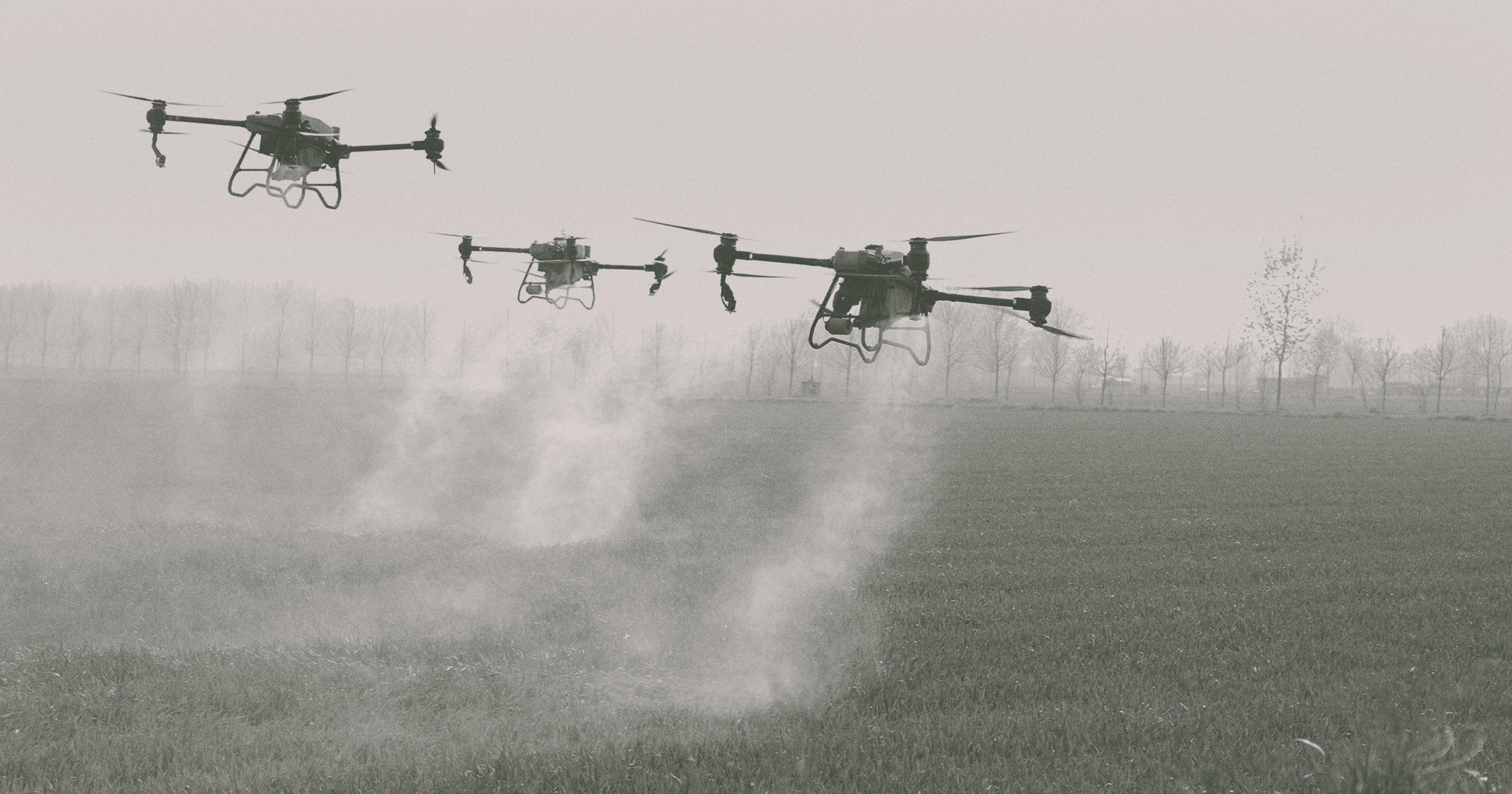
Envision a classic pastoral landscape: wide open spaces, cows grazing, bales of hay. In the distance, a structure — likely a rustic red barn. Or is it a giant metal shipping container abuzz with hundreds of aerial drones?
This is the future drone manufacturers want, and one that’s closer to reality now that the Federal Aviation Association (FAA) has approved the agricultural use of “drone swarms,” or up to three unmanned aircraft flown by the same pilot. Swarms will make agriculture ultra-efficient and give farmers back the time and labor involved in managing their fields via tractor, drone proponents argue. The technology, they say, is needed to keep American farmers competitive in the global economy. But some experts wonder if the industry is hurtling too fast toward automation before swarm tech has been thoroughly tested.
Since the 1920s, farmers have been using aircraft to assist in their fieldwork, tackling some of the tasks that are typically done on the ground — with a tractor or on foot — from the air. Drones, first developed as a military technology and sometimes referred to as unmanned aerial systems (UAS), are the most recent addition, surging in popularity among farmers with large fields who primarily use them to survey for crop disease and damage, drop seeds, and spray chemicals and fertilizers.
Andrew Moore, CEO of the National Agricultural Aviation Association (NAAA), said that the aerial agricultural industry currently treats about a third of the nation’s total cropland, over 120 million acres. Of the more than 1,500 businesses in the country represented by the NAAA, Moore estimated that 3% use drones, a share that is increasing year over year. With the unveiling of more sophisticated drone swarm technology, that number will only continue to climb.
So far, however, the new FAA regulation only applies to Hylio drones, a manufacturer in Texas with mostly agricultural and environmental clients. (Hylio also sells products to defense contractors, including the Virginia-based MITRE Corporation, which launched a drone-detection program in the Middle East last summer.) Though technically swarm flying was allowed prior to the regulation, which went into effect earlier this year, each individual craft had to be under 55 pounds to comply with FAA rules. Most agricultural drones carry a payload of material to drop over fields and have a total weight that is “way over” that amount, according to Arthur Erickson, Hylio’s CEO. He estimated Hylio’s heaviest drone — with a full payload, plus the batteries and the frame — would take off at around 420 pounds.
The new regulation also changes the rules about visual observation. Previously, if you had three drones in a field, you’d need both a pilot for the drones and a second person to act as a visual observer. Now, one operator can serve as pilot and visual observer for up to three drones in the above-55 weight class, which allows farmers to cover a lot more ground with less labor.
“It’s about productivity,” Erickson said. “You can spray thousands of acres per day like you could with a big tractor or airplane. These drone swarms can do just as much if not more than traditional farm equipment.”
Even so, regulators and watchdogs still see a lot of question marks. Concerns tend to fall into three main categories: airspace, cybersecurity, and environmental impact.
“Automation is what’s best for the farmers, what’s best for putting food on people’s tables.”
Stephen “Lux” Luxion, executive director of a research wing of the FAA called ASSURE (The Alliance For System Safety Of UAS Through Research Excellence) at the Mississippi State University said that “low-flying airspace can get pretty crowded,” and “there’s whole rules of the road that have to be developed, all kinds of tech that needs to be created” before larger drone swarms are safe.
Meanwhile the NAAA is urging the FAA to enforce right-of-way laws that favor manned aircraft, because, as Moore explained, “it’s difficult for manned aircraft to spot drones, then track them after they’ve spotted them, since they’re focusing on making the application themselves.” The NAAA is also pushing for drones to be built with “detect and avoid technology” that would automatically get them out of the way if another aircraft is detected, Moore said.
Similarly, there are all sorts of novel technical considerations that manufacturers are exploring regarding cybersecurity and surveillance.
Erickson explained that the U.S. government is pushing to ban foreign-made drones because of potential vulnerabilities to data mining and spy devices that could gather intel about crop locations or even U.S. military positions. As with any new, internet-connected technology, there’s anxiety about bad actors hijacking drones for malicious purposes. Brian Bothwell, a director in the science and technology department of the Government Accountability Office, said these are questions that need to be answered now rather than when it’s too late.
“You’re operating a system that’s going to be vulnerable to hacking, no matter how you’re operating,” he said. “Whether it’s wireless, Bluetooth, whatever, over 5G there’s a chance someone could hack that if you don’t have the right security protocols. People want to invent the really cool stuff and then think about how to protect it later, but that’s something that should be built into the development of a communication system like that.”
If an agricultural drone or network of drones is hijacked, it could do serious damage, Luxion warned, especially those carrying chemicals. “Any time you’re messing with chemicals, there’s always concern that those chemicals won’t end up in the right places,” he said.
But even without nefarious activity, a drone’s standard chemical application raises ecological concerns. A major focus among environmental advocates is the potential for unwanted drift that could cause problems for surrounding ecosystems and neighboring farms.
“Drone swarm spraying would be counterproductive to measures put in place by growers to encourage predatory birds, pollinators, etc.”
In an email, Scott Rice, senior director of regulatory affairs at the Organic Trade Association, said pesticide applications via drone could pose a potential increased risk of chemical drift and direct spraying, “which can disrupt biodiversity and, if not conducted properly, harm farmworkers who are not warned or evacuated from the fields prior to spray events.” He added that “drone swarm spraying would be counterproductive to measures put in place by growers to encourage predatory birds, pollinators, etc.”
At this stage in development, there are different answers about the efficacy and precision of drone spraying depending on who’s asked. Manufacturers like Erickson claim drones aren’t the problem. There’s been an industry-wide push to spray smaller, micronized droplets that can be more effectively absorbed by plants. He said smaller droplets are also more susceptible to drift, “regardless of vehicle.” Drones, he argued, are actually better at mitigating that drift than other aerial vehicles because of their “rotor wash,” vortices of air that push the mist down. “Generally speaking it does a much better job of getting that into the crop.”
But Moore of the NAAA wants to see better testing before the technology becomes any more mainstream among farmers.
There are a lot of claims made about drone spray precision, Moore said, but “there’s a lot more data on manned crafts. The drones just haven’t been tested to that degree.”
The Environmental Protection Agency uses atmospheric models to predict how a product drips after it’s applied, he explained, but they haven’t made a version for drones yet. Regulators in Canada, on the other hand, have taken a more “precautionary approach,” and require modeling for a drone and its drift effects before it hits the market. Until we’ve updated our models here in the U.S., he said, “the effect of the applied materials might be different, it might drift more, it might not.” We just don’t know.
But regardless of the testing lag, the drone industry continues to plow ahead, toward the goal of “removing the human as much as possible,” according to Erickson.
“Not in, like, a bad, dystopian way,” he said, “but all the menial tasks of actually going out and doing the crop scouting and analysis is way too time consuming and there’s not enough people in this country who are willing to do it. So [automation] is what’s best for the farmers, what’s best for putting food on people’s tables.”
Still, Erickson estimates the technology needs another five to 10 years of fine-tuning until drones and their swarms achieve full autonomy — when a fleet could potentially rely on AI to communicate with one another and accomplish different tasks. Cue the drone “hive” housed inside a giant shipping container.
This current iteration of AI might mistake a swath of yellow in a field for a weed infestation when it’s really just a lens flare, for example. “Yes, the AI can recognize patterns,” Erickson explained. “But it doesn’t have the intuition yet of a human.” Whether a swarm of drones will ever be able to predict the “randomness of nature,” as he called it, is still up in the air.
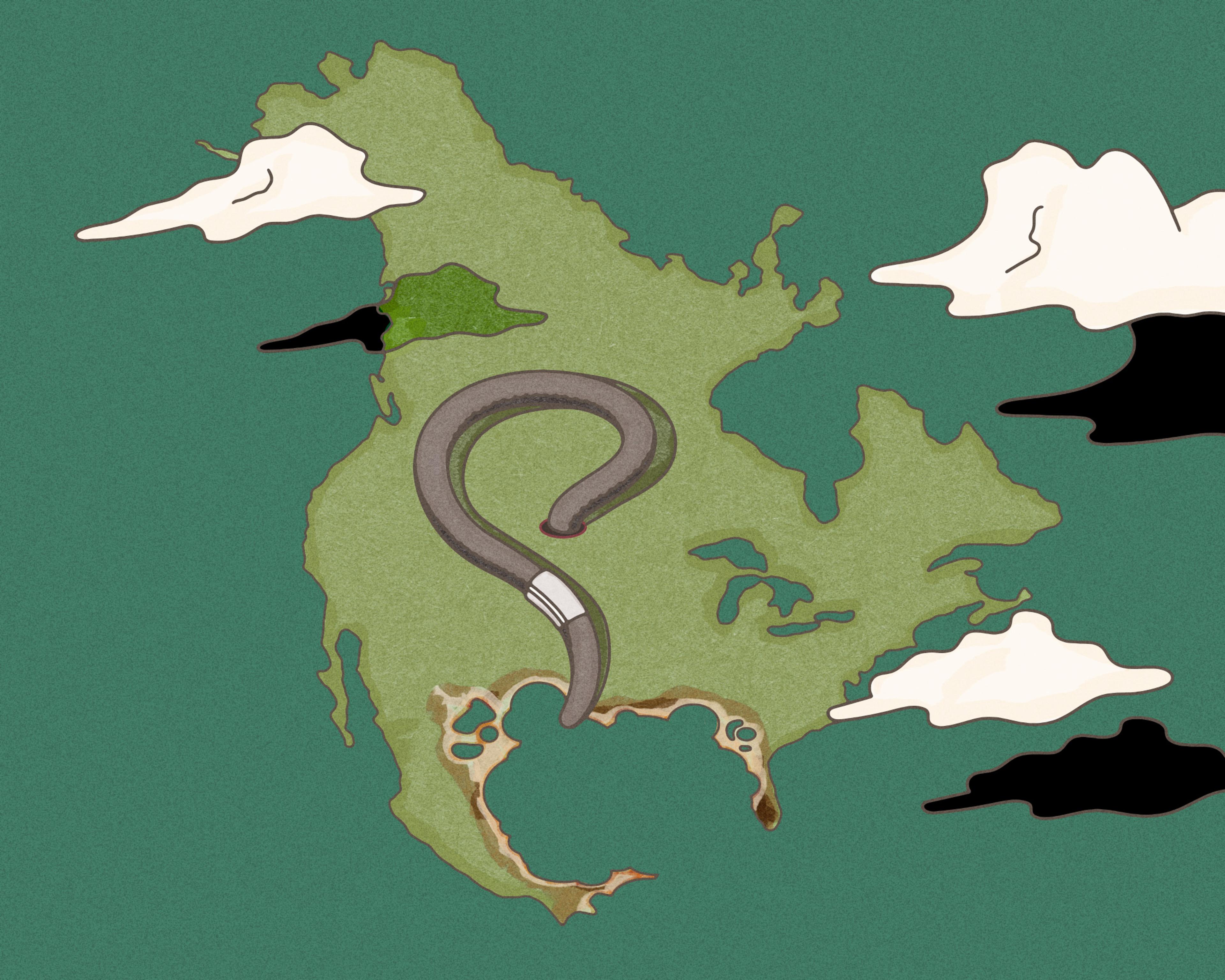
A few years ago, Cory Krieg wasn’t particularly worried about earthworms. That’s not necessarily surprising — the little squirmers are often heralded for their ability to aerate soils and cycle nutrients, especially among gardeners, composters, and farmers. But then Krieg looked at the soil on his family’s small flower farm in Vermont.
The beds were covered in hard, compact balls, he said — these were castings, or worm poop, from an invasive, non-native species known as the “jumping worm” or “crazy worm.” Normally, earthworm castings are fairly benign, even beneficial, to soil health. But Krieg said the hard jumping worm castings make their soil unable to hold water well.
“The soil structure is so trashed,” Krieg said.
Despite the golden reputation of earthworms at large, non-native earthworms are causing trouble. While many of these introduced wrigglers are nearly indistinguishable from the many earthworm species native to North America, experts say that some of the exotic species now chewing through dirt across the continent can behave differently than native species, upending the delicate balance of soil ecosystems. And in places where there were once no earthworm species, like the forests of the Upper Midwest, the rapid invasion of earthworms has had disastrous consequences.
“Earthworm invasions are fundamentally transforming the soil, so they’re fundamentally transforming ecosystems,” said Lee Frelich, an ecologist at the University of Minnesota who’s studied invasive earthworms for about two decades. “And that affects everything.”
Earthworms can be massively beneficial in their native habitats. By chewing through the soil and detritus covering the ground, these invertebrates help recycle nutrients, aerate soils, and allow water to drain — essential functions of a thriving ecosystem.
The trouble arises when humans introduce various earthworm species to areas where they are not native. Non-native earthworms likely first began arriving in North America a few hundred years ago as Europeans began to reach the continent, said Scott Loss, an ecologist at Oklahoma State University. But over time, more and more species have shown up and colonized the U.S., Mexico, and Canada — and a recent scientific study revealed some eye-popping numbers.
According to the paper, 70 different non-native species have now made it to North America, comprising a full 23% of all known earthworm species on the continent. Jerome Mathieu, an ecologist at the Sorbonne University in France and one of the paper’s authors, saw this impact first-hand a few years ago while studying earthworms at a nature reserve outside Stanford, California. “All I found was exotic worms,” he said.
In many ways, a non-native earthworm is still just an earthworm: They chew, they poop, they’re eaten by the early bird. And in some parts of the country, non-native species may have no noticeable impact on plants or ecosystems besides becoming one more addition to the mix of critters rummaging below our feet.
“Earthworm invasions are fundamentally transforming the soil, so they’re fundamentally transforming ecosystems. And that affects everything.”
But Mathieu and his colleagues also describe how many of these non-native species play a different ecological role than the earthworms native to North America. Many native earthworms are “soil feeders,” meaning they mostly stay underground and churn through the subterranean soil. Many of the introduced species, on the other hand, are “litter feeders,” meaning they eat through the layer of fallen leaves and other material that gathers on the surface.
The biggest impact of non-native earthworms has been documented in more northern ecosystems. That’s because around 20,000 years ago, during the last Ice Age, everywhere from New York City through Montana northward was covered in a thick layer of ice. When the planet started to warm up, that ice retreated and the barren ground underneath slowly began to fill up with forests, grasslands, marshes, and lakes. Eventually, animals like moose, bears, beavers, rabbits, squirrels, fish, and birds expanded northward, too — but not North America’s native earthworms, which spread relatively slowly on their own, according to Loss.
So, while the ecosystems south of that glaciation boundary have all adapted to include earthworms in their menagerie of wildlife, the ecosystems north of that line haven’t historically had earthworms. That means any earthworm living north of the glaciation line is a non-native earthworm, even species native to other parts of North America.
It also means these forests operate at a different speed. In naturally earthworm-free ecosystems up north, decomposition tends to happen much more slowly through fungi and bacteria, Loss said. But when earthworms are introduced, that decomposition cycle kicks into overdrive as the voracious earthworms start chomping and chewing through the dirt.
Frelich said you can see the resulting changes as you track an earthworm invasion. In a non-invaded patch of forest, the leaf litter will be inches thick and spongy. Here, you may still seem small ferns growing, as well as native orchids, whose seeds can be eaten by earthworms. But as you start to cross the edge of the earthworm frontier, sometimes within just a few hundred feet, the leaf litter will start to disappear — and as you reach a fully invaded patch of land, the forest floor will often be hard and bare, with little to no leaf litter covering the ground.
These changes may cascade out to other parts of the ecosystem — one of Loss’s papers found that earthworm-invaded forest patches in the Upper Midwest had a lower density of ovenbirds (a small songbird) compared to non-invaded forest patches.
As you reach a fully invaded patch of land, the forest floor will often be hard and bare, with little to no leaf litter covering the ground.
Another species of concern in northern forests is the sugar maple. In 2017, researchers at Michigan Technological University linked the spread of non-native earthworms with crown dieback — when the canopy of a tree starts to die around the edges — in sugar maples in the Upper Midwest. Krieg and his family also have a small group of sugar maples they use for making syrup, and while he said he hasn’t yet necessarily noticed any impact from the crazy worms on the trees, he’s seen earthworms out in the woods, too.
One of the biggest spreaders of non-native earthworm species is discarded and lost fishing bait — Loss said there’s a correlation between earthworm invasions and places where people are likely to be fishing. Officials have been urging people not to buy jumping worms for use as bait or in compost, but many of the other earthworm species sold for composting and gardening are also non-native, sometimes even acknowledging their non-native status with names like “European nightcrawlers” (Dendrobaena hortensis) or “Indian blues” (Perionyx excavatus).
Fishers and composters could try to source local earthworm species instead, but earthworms might be confusingly labeled. For example, the Canadian nightcrawler (Lumbricus terrestris) — despite often being reared and sold in Canada — is likely native to Western Europe. Mathieu said that even in France, these species are often called Canadian worms.
It’s also hard for anyone, save for a trained earthworm scientist, to tell the difference between many native and non-native species based on sight alone. Not to mention, anyone using earthworms north of the glaciation line could be helping to spread invasive species into previously earthworm-free ecosystems.
There are still plenty of remaining pockets of earthworm-free land, especially the further north you go, Frelich said. And the spread could be slowed. To start, fishers could abstain from discarding unused bait outside. In addition, Loss suggests that if you have to buy earthworms for compost, try to buy Eisenia fetida, or “red wigglers.” While this species is native to Europe, they don’t seem to be very good at dispersing, he noted.
But one of the hardest obstacles to overcome in preventing the spread of non-native earthworms may be the years of goodwill that earthworms have built up as soil tenders, farm helpers, and compost heroes. “People who are aware of worms in nature, I mean, 99% of the time they say ‘Okay, I know very well ecology and worms, and I know they are very good for soil,” Mathieu said.
“So first thing I have to say is, that it’s not always true.”
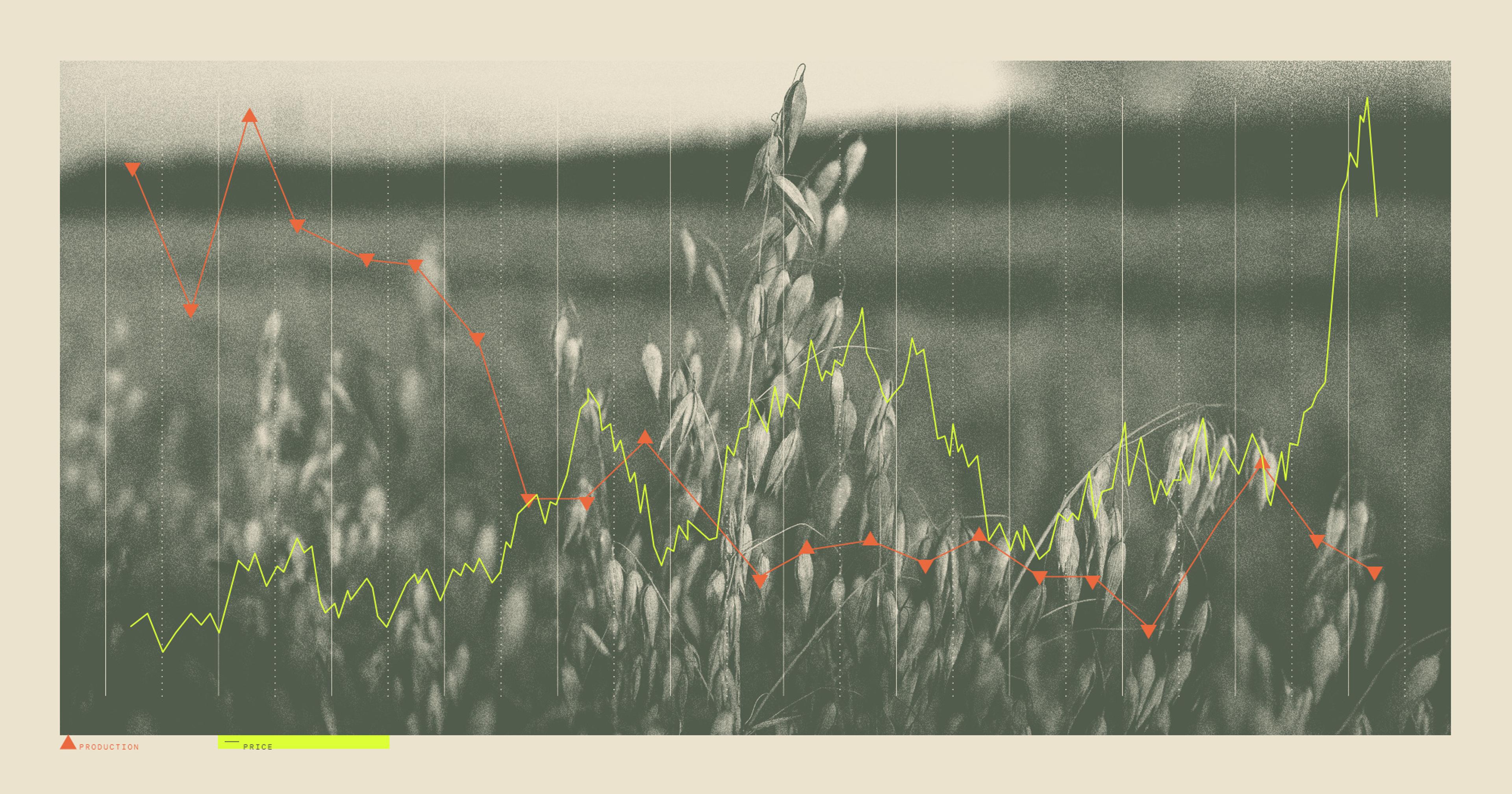
“Oat milk latte!”
“Cappuccino with oat milk!”
A barista’s voice rises above the clamor of a café, as drinks appear on the counter. Scenes like this play out all across America today, with oat milk rapidly catching up with traditional dairy as a caffeinated beverage staple.
The plant-based drink has exploded in popularity in recent years. In roughly the last year, oat milk’s U.S. retail sales ballooned to $695 million, a 28% increase over two years, according to data company SPINS.
Randy Strychar, president of OatInformation — which focuses on oat market research and provides information to traders, millers, and more — said oat milk’s popularity has “taken demand to a new level.”
“Oat milk has certainly been a game changer” for oat crop demand, Strychar said. He estimated the beverage has added between 10% and 15% in additional demand for oats.
Despite the increased need, our fickle oat supply depends on farmers’ incentives and net returns, compared to more established row crops such as corn and soybeans. Demand is growing, but supply is waning due to factors related to the climate and farmers’ motives to grow the crop, putting the oat market in what Strychar described as “a perilous position.”
The U.S. is a small oat producer on the world stage, with less than 900,000 metric tons and contributing just 4% of global production. The country imports the majority of its oats from Canada, which is among the world’s largest producers.
But in the Great White North, supply is “down sharply from last year and the previous five-year average, due to a significant decline in production,” wrote Agriculture and Agri-Food Canada (AAFC). AAFC predicts an oat supply of 3.94 million tons for the 2023-2024 season, well down from 5.58 million tons the prior year.
While acreage is up for the 2024-2025 season, total supply and exports are projected to remain the same year-over year, per AAFC. Western Canada has been experiencing a drought, and oat farmers have little buffer stock left from previous years.
“We have no more cushion,” Strychar said.
Can Oat Supply Keep Up With Latte Demand?
It’s not just coffee shops: Demand for oat milk is up in grocery stores, where it held a 24% share of the retail plant-based milk market in 2023, an increase from its 18% share in 2021, according to Ben Pierce, corporate engagement research analyst at the Good Food Institute.
But while oat milk’s growth has significantly increased demand, the predominant use of oats is still for food items such as cereal and granola bars, Strychar said. In general, consumer demand patterns tend to change slowly over time rather than in dramatic swings — in some sense, oat growers are still adjusting to non-traditional new demands.
Supply, meanwhile, fluctuates greatly from one season to the next. In 2021, a drought hit Canada and the U.S.
“It really affected the supply,” said Melanie Caffe, associate professor at South Dakota State University who leads the university’s oat breeding program. “The price went up like we had not seen before.”
Stocks in Canada fell by nearly half, and oat prices reached record highs of nearly $8 per bushel in spring 2022. Manufacturers like Oatly faced a strained supply of oats, leading it to raise prices.
Then the following year, oat crops rebounded. Canada had record high oat stocks last July, but it’s on pace for record lows this summer and in 2025, according to Strychar.
“It’s concerning for the food and beverage companies, this up and down on the supply,” he said.
The up and down is ultimately in the hands of oat farmers, Strychar said, and has to do with the net returns they get each year on their crop. If one year the returns are on the lower side, “the farmers just say, ‘I’m not going to grow oats this year,’” Strychar said. Then the supply tapers, the price goes up, and the cycle continues.
Ultimately, however, Strychar believes the ability of oat supply to meet demand — whether it’s for food products or oat milk — is in the hands of manufacturers.
“If a food company needs oats, pay up for it,” Strychar said. “That’s how you stabilize the supplies.”
If the Oat Price Is Right
Like any business, farmers want the best bang for their buck. “If the price goes up, we tend to have more farmers willing to plant oats, which makes sense,” Caffe said.
Dan Voss, a farmer in Iowa, said corn and soybeans are his main crops, while oats are a “sideline.” Voss doesn’t sell the crop to food or beverage producers, but for livestock feed. The crops are slightly different; food and beverage producers seek oats with a heavier test weight compared to the oats used to feed livestock.
On a revenue per acre basis, Voss acknowledged that oats don’t yield as much as corn or soybeans. “But your expenses are so much less,” he said. “You don’t need as high a revenue to make a profit on [oats].”
Seed expenses are lower for oats than corn or soybeans, according to Voss. He also said oats require less fertilizer than other crops, which not only reduces costs but is also beneficial to conservation — an important factor for Voss, who won the 2023 Iowa Conservation Farmer of the Year award. Plus, adding oats into the soybean-corn rotation aids soil health: Oats serve as a cover crop.
Yet Voss is an exception in his region. Very few neighboring farms plant oats — a change from 60 years ago, when Iowa harvested more than four million acres of oats, according to the Iowa Farm Bureau. Today, the state only harvests around 40,000 acres.
Even with those declines, Iowa, along with Minnesota and the Dakotas, are among the top oat producing states in the U.S. But it’s a sharp drop from years ago. In North America, Canada continues to dominate oat production despite declines in the latest harvest.
Reversing the Oat Decline
The U.S. government has not subsidized oat planting in the same way it has corn and soybeans. The U.S. Farm Bill has typically focused crop insurance and income support on crops such as corn, soybeans, and wheat.
This means that unlike corn and soybeans, farmers haven’t historically had a good way to insure their oat crops. That changed in late 2022, when the U.S. Department of Agriculture expanded its Small Grains Crop Provisions to offer revenue protection for spring oats for the 2023 crop year.
Researchers are currently developing varietals that make the crop more appealing to farmers. Caffe’s breeding program looks at characteristics such as increased yield, higher protein content, and drought and disease resistance, among others.
Parts of the private sector are taking matters into their own hands to incentivize oat planting. Oatly launched a pilot program with U.S. farmers. The company said on its website — Oatly did not respond to requests for comment — the program could bring new income sources to farmers, healthier soil due to crop rotation and a sustainable supply of oats.
“They’ve been a good crop for me,” Voss said.

Trent Osmon began working at a landlocked Indiana naval base in 1997 while earning his forestry degree. He knew the work might entail long days of walking through the woods to collect data on trees and wildlife. What he didn’t realize when he started the job was that he wouldn’t just be assessing the health of trees; he would be sizing them up for use in the restoration of the world’s oldest warship still afloat, docked in a harbor over 1,000 miles away.
Since 1976, the U.S. Navy has relied on white oak trees grown amid more than 50,000 acres of forest on the Naval Support Activity Crane in Crane, Indiana, to maintain the USS Constitution, often referred to as “Old Ironsides.” The Constitution is the last of six frigates commissioned by George Washington in 1794 to establish the Navy — it first set sail in 1798. Today, the massive ship is docked in the Charlestown Navy Yard in Massachusetts, where hundreds of thousands of people visit it and attend tours led by active duty sailors every year.
The storied warship is almost always undergoing some kind of repair or maintenance, according to Margherita M. Desy, the ship’s official historian employed by the Naval History & Heritage Command Detachment Boston. That ongoing maintenance requires very specific materials, and is the reason the Navy relies on white oak trees from Indiana.
“The procurement of appropriate wood for historic wooden vessels is actually quite an issue in the maritime world,” said Desy. “We’re all always looking for wood of the dimensions that we need.”
In the case of the Constitution, those dimensions are enormous: To be of use for the ship’s hull, the white oaks have to be at least 40 inches in diameter at their base, and at least 40 feet long from base to crown, according to Desy. They also have to be extremely straight. That’s where foresters like Trent Osmon come in.
While today Osmon spends most of his time inside overseeing a team of foresters and environmentalists at Crane, he spent the first 18 years of his career in the field, tending to the forest. Two groves within that forest are predominately white oak; there are also about 120 more white oak scattered throughout the property that Osmon and his team have identified, mapped, and monitored for their shipbuilding potential.
“When we are just in our normal day to day forestry operations, we manage the forest independently of the Constitution just for biodiversity,” said Osmon. “So when we come across a big beautiful tree, we’ll GPS it, and we can go out and relocate them.”
When he first started at Crane in the late 90s, Old Ironsides was undergoing repairs in preparation for its 200th birthday celebration. The naval base sent 78 white oaks to the East Coast for the restoration, and Osmon, a self-professed history buff, was delighted to learn this would be part of his job.
“The procurement of appropriate wood for historic wooden vessels is actually quite an issue in the maritime world.”
“It was big in the news, there was a lot of buzz around here because we knew that Crane had provided the wood,” he said. In 2015, when the next restoration took place, Osmon and his team selected 35 trees for the ship, and he escorted the first load out to Boston.
Beyond keeping an eye for trees that might be candidates for the Constitution, Osmon relished spotting wildlife while bushwhacking through the forest at Crane.
“Sometimes you see some stuff that most people don’t get to see very often, whether it’s bug species or even a snake species or a frog species, or even a little bird,” he said, adding that the scarlet tanager is one of his favorite songbirds to spot.
In their maintenance of the forest, Osmon and his team are also charged with protecting an endangered species: the Indiana bat. During the summer months, these rare little bats roost under the bark of trees like the Shag Bark Hickory, or the shards of bark that loosen on dead trees. Osmon ensures the hickory are never cut down, and his team sometimes intentionally kills damaged trees to create more habitat for the bats. They also refrain from cutting down any trees from April until October, when the bats head into caves to hibernate for the winter.
“Each of those trees is an ecosystem in and of itself,” said Osmon.
Part of Osmon’s job entails negotiating with fellow naval staff who are looking to test military equipment such as electronics and radar equipment. Osmon works to mitigate the environmental impact of this testing; he might require staff to test during the day when the bats are asleep or in the winter when they’re hibernating, for example.
“The perception is a military base is all blacktop and buildings, but some of these bases are enormous.”
Osmon also works closely with the U.S. Fish and Wildlife Services, who act as a regulatory agency when activity at Crane could impact an endangered species. He’s currently working with them to create habitat for monarchs, planting milkweed and prairie plants to accommodate their larvae. And the water in a manmade lake on the base is so clear thanks to the health of the forest, it is populated by a rare freshwater jellyfish otherwise unseen in typically murky Midwestern bodies of water.
This delicate management and conservation of habitats and the broader forest ecosystem may not be what springs to mind for most people when they think of our armed forces, but the Department of Defense (DOD) is charged with tending to ecologically diverse landscapes across the country. While environmental conservationists and the military may seem like odd bedfellows, their goals are often intertwined, even as their core missions diverge. During the Trump administration, for example, former defense secretary James Mattis cited climate change as a major threat to national security.
“Some of the most diverse landscapes are within military landscapes,” said James Lewis, staff historian for the Forest History Society. “The perception is a military base is all blacktop and buildings, but some of these bases are enormous,” he added. “They need training grounds with different conditions.”
While vast swaths of land overseen by the military may be protected from some of the harms of urban development and clear-cutting for agriculture, this stewardship can also come with its own environmental impact. Certain trees at Crane, for example, are full of shrapnel from ammunition testing, according to Desy. Shells and artillery remnants on bases can leech toxins into soil, and military training exercises involving large vehicles can reduce plant cover and leave soil compacted.
For Osmon, the environmental task at hand coexists alongside the hunt for trees for Old Ironsides and his colleagues’ tasks of testing lasers, radars, and other military tools. As private land is developed and species of flora and fauna are pushed onto DOD lands, experts like Osmon are essential caretakers.
“That rapid development outside the fence line is pushing a lot of these species on our property,” he said. “And so the DOD is partnering to try and help preserve those species. As they become more and more endangered it restricts the [military] mission that much more. Kind of an interesting dance.”
Much has been made of the underground mycelial network in forests, superhighways of tiny fungi filaments connecting plants and trees, a shared economy benefitting all the intertwined organisms.
But fungi networks are facilitating human connections, too. Leo Lin, the quality manager of Amish Agriculture in Waterloo, New York, shuttles between cultures. He drives out to the Romulus Amish community in New York’s Finger Lakes region to meet with farmer Sam Peachey, who grows shiitake mushrooms. And he works with his brother, Chinese businessman Mark Lin in New York, and Mid-Atlantic celebrity chef Peter Chang, to bring Peachey’s mushrooms to a largely Chinese audience.
“There’s room for expansion and people interested in going into it,” Peachey said by phone — Leo’s, not his own, because he doesn’t do phones, computers, and most other modern technologies.
Leo Lin facilitates communication, but Peachey knew his brother Mark, former owner of Finger Lakes Tea Company, from New York’s Upstate agriculture scene. Both of their communities prioritized family-owned businesses and regional foods in similar ways, working multiple revenue streams and spitballing new ideas as a hedge against tight margins and shifting consumer tastes.
Mushrooms, especially shiitakes, aren’t historically an Amish thing. So Peachey has taken his mushroom dog and pony show on the road, proselytizing about the profitability of growing shiitakes to other Amish communities. In January, Peachey spoke at the 2024 Mid-Ohio Growers Meeting, an annual gathering of Amish farmers. Hundreds of buggies pulled up at the Mt. Hope Event Center in Millersburg, Ohio, the heart of the state’s Amish country.
“Sam has personally benefited from growing these mushrooms, and he wants to share the good news with others,” Mark Lin said through a translator. “There are different levels of openness in these [Amish] communities. We can’t go and talk to them ourselves, so we rely on Sam to bring the knowledge to others. Now six more communities have signed up to do shiitake mushrooms, in Wisconsin, New York, Pennsylvania, and Ohio.”
A business idea born of necessity and the pandemic, Amish Agriculture and its mushrooms are finding new fertile ground. The collaboration was rooted, as so many are, in urgency. But it flourished due to some high-tech assistance.
Peachey had been mostly an egg man, selling them alongside Amish food products weekly directly from his farm and at farmers’ markets in Manhattan and Brooklyn. The pandemic hit, people stopped knocking on his door to buy eggs, and the outdoor market business got wobbly.
Meanwhile Mark Lin and his network of friends and family were all out of eggs.
“We worked with him on his porch over a cup of coffee, often more than one.”
“I figured I’d call on my friend Sam Peachey,” Lin said. “I went and knocked on his door and he didn’t even know there was Covid going on. He said, ‘I have $100,000 in eggs. If I don’t sell them, I lose a lot of money.’” Lin zoomed into action on WeChat, the Chinese Facebook, helping Peachey sell all his eggs almost immediately in the Chinese community.
First eggs. Next, what? Before the pandemic, Peachey had noticed a fresh mushroom vendor who always had a long line. When his egg business was struggling, Peachey kept thinking about that obvious demand for mushrooms — he decided to give it a shot. With the blessing of his community and the help of the Lin brothers, he launched Amish Agriculture, Inc. Lin believes it’s the first formal Amish-Chinese business venture.
Peachey turned to agricultural experts at nearby Cornell University, consulting with vegetable specialist Judson Reid with the Cornell Vegetable Program and Judy Wright, senior agriculture economic specialist at Cornell Cooperative Extension. He built two long, narrow greenhouses on his property and bought spore-inoculated logs from China.
“We worked with him on his porch over a cup of coffee, often more than one,” Reid said. He helped Sam develop a vertical production system with four levels of racks that stand five feet high.
Because the greenhouses are heated with a coal stove and ventilation is not as precise as with a greenhouse with electricity, there are more peaks and valleys to a harvest schedule, Reid explained. “We can have more consistent fruiting of those logs over the course of a year, but there are fewer environmental controls given Sam’s relationship with technology,” he said.
On the Fourth of July in 2020, Lin visited Peachey with his friend Peter Chang, a James Beard award winner who owns more than a dozen restaurants mostly in Virginia and Maryland.
“This was very much like my childhood. I saw all these children running around barefoot with clothes full of patches and I felt this deep connection with them.”
“I was very moved,” Chang said through a translator. “I come from a rural background, I was a farm boy, and this was very much like my childhood. I saw all these children running around barefoot with clothes full of patches and I felt this deep connection with them.”
He bought a shiit-ton (sorry) of Peachey’s shiitakes. There were some funky-looking ones, sometimes twinsies or clusters that were harder to figure out how to use. At first, Chang made these ones into a sauce, a spin on an XO sauce, that he gave for free to regular customers. Customers raved and demanded more.
Peachey, Lin, and Chang turned back to Cornell for more guidance: putting together a business plan, finding a processing facility, figuring out food safety compliance, even nutritional labeling information. They are all now in the Chinese sauce business, together.
Since then, Peachey and his wife Naomi have visited Chang’s restaurants, both enjoying the Chinese food. They’re now thinking of expanding their business to oyster mushrooms and lion’s mane to feed the mania for premium mushrooms. And Lin sees other options for collaboration.
“Red and green jalapenos, turnips, Chinese cabbage,” he ticked off his wish list, but there are other interesting cultural touchpoints. “Sam was raising all these laying hens. When a laying hen gets old, most Americans don’t want old hens, so he sold them really cheap to a company making chicken broth. But Chinese people love old hen, there are so many recipes for old hen.”
Time will tell if shiitakes will pop up in many of the country’s Amish communities. But Peachey sees it as a path that makes sense. “Growing shiitakes fits into Amish and Mennonite communities with larger families,” he said. “It’s labor-intensive because everything must be picked by hand. But picking mushrooms is not a hard job and it’s a great opportunity for kids, who just need some supervision.”

A decade ago, ransomware and food were two words that one might not think to link.
That was before May 30, 2021, when JBS, one of the world’s biggest beef, pork and poultry producers, was held for an $11 million dollar ransom by REvil, an alleged Russian-based cyber gang.
The attack involved systems essential for the operations of three beef and pork plants in the U.S., Canada, and Australia, forcing them to temporarily shut down operations. Per a media statement released the next day, “The company took immediate action, suspending all affected systems, notifying authorities and activating the company’s global network of IT professionals and third-party experts to resolve the situation.”
To regain control, JBS made the tough call to make a payment. As in any ransom situation, this decision was heavily critiqued, due to concerns that meeting such demands could encourage future attacks. It remains the largest ransomware payout in the food and agriculture sector to date, but is far from the only example.
The same thing happened to two regional farm cooperatives in Iowa and another in Minnesota that year. And just last year Dole took a hit, losing $10.5 million in an attack that stole the Social Security numbers of nearly 4,000 employees. Containing the breach impacted half of their servers and several user-end computers, disrupting a portion of their fresh vegetable processing.
Agriculture and food are by no means digital newcomers. From data-driven farming with satellites and machine learning to packing house optimization software, large swaths of the supply chain operate on a technological plane. But this digital revolution comes with a hidden cost — an elevated risk of cyberattacks that threaten everything from enormous agribusinesses to smallholder farms.
Precision agriculture in particular presents a unique cybersecurity challenge. By integrating the internet into a traditionally mechanical and labor-intensive industry, it vastly expands the potential attack surface. This creates a scenario where common cyber threats can have amplified and far-reaching consequences compared to, say, the insurance or real estate industries.
For example, the privacy and security of farm data is a critical vulnerability. Farmers hold this information dear, as its loss or abuse could have severe consequences. Irreplaceable information, like herd health records, financial details, and field-specific metrics, is susceptible to theft, abuse, and illegal sales. And because so much ag activity is time-sensitive and season-bound, cybercrime that compromises essential data faces immense pressure to be resolved as quickly as possible.
Any delay could lead to supply chain disruptions or the loss of crops and commodities, not to mention the significant financial, emotional, and business harm that would follow.
“Just like adapting to changing weather patterns, small to large growers are going to take the lessons of JBS to heart.”
Farm suppliers and commodity brokers like co-ops which deal with highly sensitive member data carry the added risk of losing their reputations and rapport, as noted by the 2018 white paper Threats to Precision Agriculture by the Public-Private Analytic Exchange Program, produced in conjunction with multiple federal agencies.
“[P]ublic release of information such as confidential pricing and market data of farmers from a supplier, could have catastrophic impacts for the supplier as it would destroy trust and cause customer loss,” reads one section.
The ag industry’s reputation of using outdated, internet-connected legacy systems that often lack security controls has made a harvest ripe for cyber thieves. Worse still, many of their networks are unsegmented, meaning it’s very easy for hackers to gain access to multiple systems.
Kristin Demoranville has had a 24-year career in information security and information technology. She said food industries remain a soft target which is, frankly, “terrifying.” Demoranville, who founded her cybersecurity advisory consultancy firm, AnzenSage, in 2023, is one of a handful of experts specializing in security risk resistance for the food industry.
She observes that, generally, there is a lack of cybersecurity awareness and training for small to mid-sized producers. And on the flipside, the operational technology and industry control systems community aren’t very familiar with the nature of food and agriculture operations. “I am constantly dealing with disinformation and misinformation,” she said, referring to a lack of understanding on both sides.
Demoranville said that in her experience, many smaller food processors and agribusinesses don’t want to accrue the expense of implementing vital security measures. And even giants like JBS can still fall short. The vice president of cybersecurity firm BitSight, which conducted an audit of JBS, summarized their report in an email saying the company’s “overall rating was poor.” (Emails were obtained by the journalism outlet Investigate Midwest, through a FOIA request.) Another company, SecurityScore, found that “1 in 5 of the world’s food processing, production, and distribution companies rated have a known vulnerability in their exposed Internet assets.”
“People don’t get the connection between a cyber incident and their food on their plate. That’s the big problem.“
Thomas Siu, former chief information security officer for Michigan State University currently working at cybersecurity firm Inversion6, observed that food and agriculture, especially at the farm level, “is immature in the ability to resist cyberattacks.” Compared to other industries like banking or healthcare, he notes that even core data rarely has privacy considerations.
Still, he thinks the landmark JBS attack was a big wakeup call.
“The industry as a whole is versant in risk management,” he explained. “Just like adapting to changing weather patterns … small to large growers are going to take the lessons of JBS to heart.”
Part of the problem with food and ag cyberattacks is that the mainstream public doesn’t always recognize their impacts. In the JBS situation, for instance, Australians had a hard time finding beef in stores for some time. That said, Demoranville doesn’t think consumers necessarily made the leap that the scarcity was linked to the attack.
“People don’t get the connection between a cyber incident and their food on their plate,” she said. “That’s the big problem. How do you make someone care if they don’t understand it?”
Another issue is that critical operations systems, originally designed for internal use only, are ill-equipped to handle today’s security demands.
“[These systems] been attached to the internet — which they were never meant to because they didn’t even know the internet existed when those machines were made,” Demoranville said. “Now they are put [online] where there’s no security controls in place.”
“If hackers could falsify or corrupt crop and livestock health information to mimic a disease outbreak, the economic disruption could be catastrophic.”
Todd Janzen of Janzen Ag Law noted that the food and ag space has fewer legal protections in place as well. Many of the current laws in place are meant to protect personal information as opposed to agricultural data, he said. Additionally, investigators likely have less experience working in this space.
“I think in many instances, the criminals get away with it because it is very hard to track them down and prosecute them,” Janzen said. “Your typical state prosecutors are not necessarily set up to go after a lot of cybercrime.”
There may be help coming on the federal level with the The Farm and Food Cybersecurity Act, bipartisan legislation introduced this year in both the U.S. House of Representatives and the Senate. Led by Representatives Brad Finstad (R-MN) and Elissa Slotkin (D-MI), the act is aimed at bolstering cybersecurity measures within food and agriculture’s critical infrastructure sector.
In an email statement, Rep. Slotkin said: “Food security is national security, so it’s critical that American agriculture is protected from these threats. We know that cyberattacks have the potential to upend folks‘ daily lives and threaten our food supply, just like we saw a couple years ago when the meat-packing company JBS was taken offline by a ransomware attack.”
The proposed legislation would also require the USDA and federal partners, alongside state, local, tribal and territorial governments, to conduct annual exercises that simulate food-related emergencies or disruptions. An exercise like this, called CyberStorm, was recently conducted with multiple government agencies and more than 2,000 food and agriculture stakeholders.
“In the food industry, it’s not just about the data. We’re safeguarding human lives.”
These preparations tie in to long-running concerns — which some have said are overblown — that our entire food supply is vulnerable to attacks from bad actors. Incidents like intentional release of a contagious livestock disease or a widespread poisoning event remain a vivid and much-discussed worry in many sectors of government. In the digital space, however, you wouldn’t need to carry out a real-world attack — a hacker could potentially falsify online data to make it seem like, say, a destructive disease is spreading.
“If hackers could falsify or corrupt crop and livestock health information to mimic a disease outbreak, the economic disruption could be catastrophic,” security consultant Mark Montgomery wrote in a Cipher Brief op-ed. “Farmers and health inspectors might need months to confirm whether or not there is indeed an outbreak. In the meantime, herds might be decimated, food prices would soar, and foreign trade would halt.”
While building a robust infrastructure with private entities and governmental support is important, there are other actions that agribusinesses can take to cover themselves if the worst happens. When a cyberattack strikes, Demoranville said swift and decisive action is critical. Businesses would be wise to engage cybersecurity experts to assist with containment, analyze the attack forensically, and guide the remediation process. They can also help devise protocols for how to respond in emergency events.
Ransomware incident response should include accessing the extent of data encryption and weighing recovery options such as restoring systems from backups, or even negotiating with attackers. This is a complex decision, and seeking expert advice is highly recommended. And once the dust settles, Demoranville advises a thorough post-incident review to understand what went wrong and identify areas for improvement.
“In the food industry, it’s not just about the data,” Demoranville stressed. “We’re safeguarding human lives.”
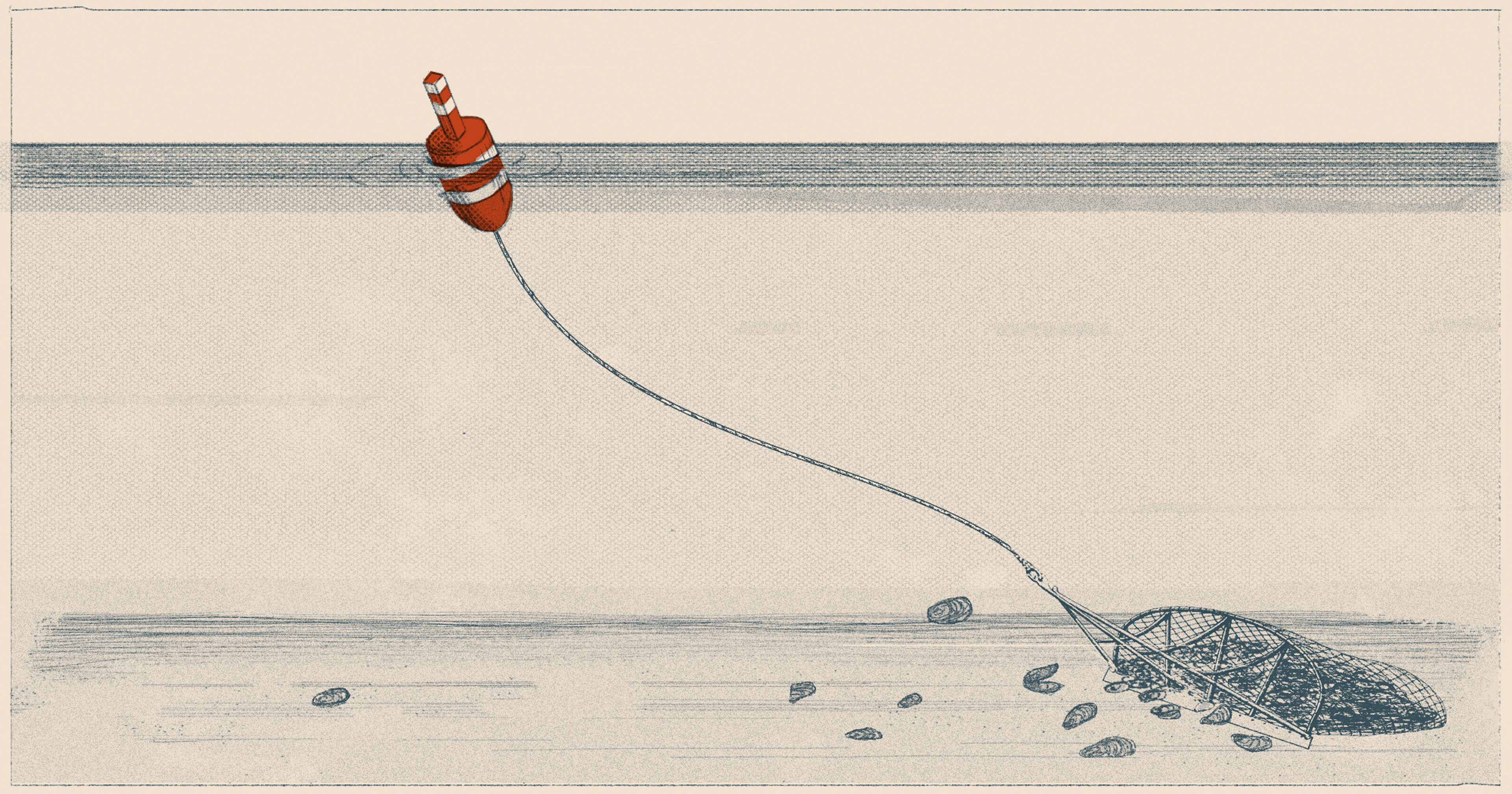
A decade ago, motoring over the shimmering waves on Casco Bay off the coast of Portland, Maine, was a thread-the-needle navigation challenge: nosing your boat carefully in between lobster buoys.
Each buoy marked the location of lobster traps on the seafloor. The array of colors indicated which lobsterman they belonged to, and every morning the bay hummed with boats setting off to collect their haul.
I had not been on the bay in over a decade when my husband and I loaded up a boat last summer for a classic Maine vacation. As we cruised around Whaleboat Island on a hazy early August morning, the navigation was easy: We gazed out over just three lobster buoys bobbing in the waves. In the years since I’d last been on that stretch of water, the lobsters had scuttled north along the ocean floor in search of a cooler environment. But they didn’t leave the bay empty.
Lobster buoys are iconic Maine decor and the state’s coastline can seem empty without them. That is, until you begin to notice the oyster farms. Where lobster pots were once dropped to collect the sea’s crustaceans, clusters of floating oyster cages are now proliferating in the Gulf of Maine. The many oysters are farmed in floating cages held in place by floats. Oyster farmers lease tracts of the ocean for their farms from the state, and their aquatic farms can encompass a few acres of water. The cages sit just under the surface, allowing the sea to flow around them and providing growing oysters with abundant food in the form of phytoplankton on the water’s surface.
Maine’s history is lined with lobster shells, with generations of coastal families depending on the reliable red bug for their livelihood. However, for anyone making their living on the state’s coastlines it has become undeniable that the waters are changing. The Gulf of Maine is warming faster than almost any other ocean surface on the planet, owing to a strengthening of the Gulf Stream brought on by climate change. And Maine’s other staple seafoods started fleeing for cooler waters decades ago: A once vibrant seasonal shrimp harvest has been put on moratorium for over a decade and fish including cod, haddock, and flounder are being caught in fewer and fewer numbers.
*
North Haven, located in Penobscot Bay, is part of the expansive archipelago of islands that may have earned the state its name — sailors likely used the term to distinguish the main(e)land from the neverending series of isles. Twelve miles off the coast of Rockland, North Haven has a year-round population of around 400 people, and a majority of those residents are part of a working waterfront there.
Adam Campbell moved to North Haven almost 40 years ago. Shortly after he arrived, a lobster biologist visited the island for a survey of the lobster population in the Gulf of Maine. Even 40 years ago, scientists were concerned that the Maine lobster population was in trouble, confronting issues of warming oceans and overfishing. The forecast was dire, and the biologist urged Campbell not to invest everything in what might be a dying industry.
“I’m like, well, I better hedge my bets,” Campbell remembers. Change didn’t come right away, though: “It was all doom and gloom with these lobsters, but then for the next 25 years we had the best lobster fishing on the planet.”
Climate change, which would eventually begin to drive lobsters out of the Gulf of Maine, temporarily made its waters a perfect environment for the crustacean. Maine had always been home to plentiful lobsters, but for a couple of decades it was their Valhalla. But like a pot set to boil on a stovetop, the waters off of Maine slowly continued to get warmer and warmer — or, as lobsterman Dave Cousens told The New York Times in 2018, “Climate change really helped us for the last 20 years. Climate change is going to kill us, probably in the next 30.”
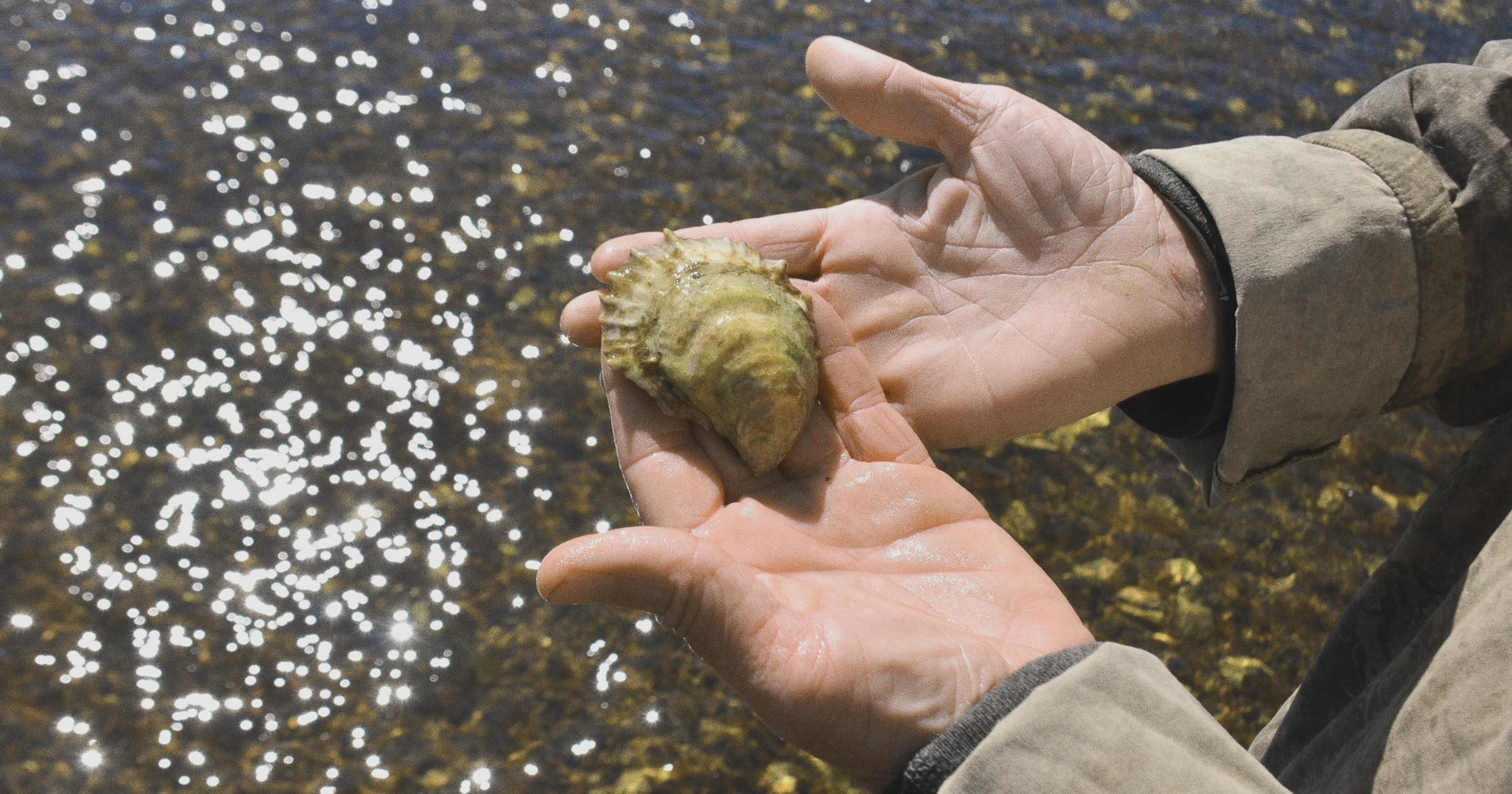
Photo by Kirsten Lie-Nielsen
·Andy Campbell holds a young oyster.
Campbell was ready to pivot. He purchased a lease on a saltwater pond near his home on North Haven, and started his first oyster seed there. As the seed oysters grew, Campbell moved them to the bed of the shallow salt river that connects the pond to the ocean. Unlike farming oysters in cages on the surface of the Atlantic, Campbell’s access to flowing, shallow saltwater has given him the ability to raise oysters in an environment that mimics how they thrive in the wild.
“The quality is off the hook,” Campbell said, giving credit to the perfect conditions offered by the inland island and its outlet. “They’re beautiful. You don’t have to maintain them. You don’t need bags, we don’t have racks or anything like that — it’s like a wild oyster bed down there.”
Campbell still fishes some lobster traps and has numerous side projects on his island homestead. But the oysters have become his biggest success.
“Eventually it turned from a side gig into something that was super serious,” he said. Oysters can take five years to reach maturity, so at first his oyster farm required patience. Within a decade, however, it was turning a profit. “My bookkeeper was like, ‘You made more money on oysters this year than you did lobsters.’ And we’d had a good year with lobsters! So that was exciting.”
*
Jeff Putnam has lived on Chebeague Island, 10 miles northeast of Portland in Casco Bay, for his entire life. He’s been lobstering since he was a kid, starting a full-time lobster operation in 1999.
“I think we’ve been fortunate that the lobster resource and the lobster market was in general good over the last bunch of years,” said Putnam, “but there are definitely some concerns on the horizon. You don’t have to look too far down to the south, like Long Island Sound, where the lobster resource just crashed. That led me to think that I have to have some diversification if I’m gonna stay on the coast of Maine, here on this island that I love.”
Putnam’s oyster farm is not his full-time operation, and currently it brings in a small side income for a bit of extra ocean labor. In addition to the oysters, he also farms kelp, and he says that the combination of these enterprises helps keep him afloat through Maine’s diverse seasons.
“Cash flow from the lobster business is good from July to January or February,” he said, “but there’s not a lot of revenue created by lobsters in April, March, May — and there’s actually a lot of expense that goes out in those months getting traps and boats ready. So having the income during that time of year is huge. It’s not enough to make me slow down lobster, but it’s enough to offset during that time of year.” While Maine’s lobster numbers are dwindling, the Atlantic ocean is still cool enough for a reliable harvest, especially in chillier off-shore waters.
“According to what they say, we aren’t going to know the decline is coming. It will be all of a sudden, and that will be it.”
Putnam farms his oysters in cages at an intertidal site, where they take two or three years to reach maturity. Grants and educational programs through the Maine Aquaculture Association have resulted in many new oyster farms along the Maine coast, and Putnam believes that what sets successful farms apart is good branding and an investment of time. While he is content with his oyster farm as a side business, he says the most successful oyster farms are full-time work for the farmers.
“Oyster aquaculture really needs to be your full-time job,” he said. “You need to really create a brand, create demand for your product, and provide a consistent product most of the year with consistent volume.”
“It’s just a matter of really setting up your farm right from the beginning,” he added. “Oysters are pretty resilient. They’re pretty resilient to ocean acidification, more so than soft shell clams and things like that.”
*
Farther north, the seas that surround Acadia National Park are chillier. Islands big and small scatter off the coast around Acadia, and long peninsulas jut into the sea. Schoodic Peninsula is one of these, less than a hundred miles from the coastal Canadian border.
Joe Young is now 71 years old, and he’s been making a living on the Schoodic Peninsula his entire life, following in the footsteps of generations before him. Young started lobstering in the 1970s, and he said that even then there was talk of diversification and the precarious future of the lobster industry.
“Back then it wasn’t climate change,” he explained. “It was overfishing.”
Maine has implemented various regulations to combat overfishing, but the future of the lobster industry remains uncertain as the waters warm. Like Campbell and Putnam, Young has been interested in diversifying his income for years. In 2012 he began a small restaurant selling hot dogs, lobster rolls, and some of his aunt’s black and white photos of the harbor. Around the same time, he participated in a training program by Maine Sea Grant called Aquaculture in Shared Waters. The program was aimed at introducing fishermen to the idea of farming oysters, mussels, clams, and kelp, and Young was intrigued.
Using the saltwater pond in his backyard, Young was able to start a small oyster farm in 2014. After a few years his first oysters matured, around the same time his small restaurant on the wharf was gaining in popularity. Wondering if he could sell his oysters there, Young decided to take a few of the briny shellfish to a friend’s for a taste test.
Photo by Kirsten Lie-Nielsen
·Oysters growing naturally at North Haven Oyster Co.
“I’d never eaten an oyster, didn’t know what an oyster looked like before then,” said Young. “And I had no intention of eating an oyster. I asked [my friend] how I could get into these things, and she opened it up — I looked at it, it looked disgusting — and then she swallowed it down. So I opened one up, and I’m looking at it, and she’s looking at me, and I’m thinking I’m going to have to eat this. So I did it, I ate that one, slurped it down, and I said … my God that was good!”
Off of Schoodic Point, the seafloor is still home to plenty of lobsters. But even though the industry is still going strong for now, Young says Schoodic lobstermen are aware of the risk to their lifestyle.
“People are still making pretty good money,” he said. “But according to what they say, we aren’t going to know the decline is coming. It will be all of a sudden, and that will be it.”
Young has noticed more and more fishermen diversifying as he did, whether with aquaculture operations or with land-based projects like real estate, rentals, and even boat tours of the harbor.
“More guys my age are just getting out of it,” Young said. He retired from lobstering in 2019. “I was in my late 60s when I got out of it, and that’s young for getting out of lobster fishing.”
*
Lobstermen are pretty matter-of-fact people.
“That’s just the way lobsters are,” Young said. “You catch them one day, then one day you aren’t going to.”
But lobstermen are also innovative and as gritty as their coastline. Despite an ever-warming forecast and dire predictions for the industry, there is optimism up and down the state’s shores as oyster farms and investment in aquaculture continue to expand.
The state of Maine has continued to fund programs to help young people gain a foothold in the growing oyster industry, as well as programs based around other shellfish and kelp farming. Oyster tours have become popular tourist trips, with boats to ferry you from farm to farm to taste the unique flavors of the pillowy soft meat.
Perhaps in the future the iconic image of a Maine dinner won’t be the bright red body of a lobster nestled between corn on the cob and a dinner roll, but instead a tray of just-shucked oysters shimmering under a spritz of lemon.
That is, until Maine’s waters get too warm for oysters.
Subscribe on your favorite podcast app: Spotify, Apple Podcasts, Overcast, Pocket Casts, Amazon, or via our RSS feed: (https://feeds.megaphone.fm/onlythingthatlasts).
INTRODUCTION: Making Homestead Happen
[NAT SOUNDS — Morning]
Sarah Mock: The looming 2024 presidential election has gotten me thinking recently, about a time when political campaigns were, well, a little different than they are today.
1984 Ad: It’s morning again in America. Today, more men and women will go to work than at any other moment in our country’s history. With interest rates at about half the record highs of 1980, today 2,000 families today will buy new homes, more than at any time in the last 4 years.
SM: Employment, interest rates, inflation – these are familiar concerns to us in 2024. Even if the level of political optimism here… is not.
1984 Ad: It’s morning again in America. And, under the leadership of President Reagan, our country is prouder, and stronger, and better.
SM: This ad is called “Prouder, Stronger, Better” but is more widely known as “Morning in America.” And was part of Reagan’s re-election campaign in 1984. Since then it’s been touted as one of the most emotionally resonant political ads of all time.
And it helped establish the idea of “morning in America,” a metaphor for peaceful and prosperous renewal, in the American lexicon. In the last 40 years, politicians and media from Marco Rubio and Hillary Clinton to Hulu’s The Handmaid’s Tale have alluded to the idea.
But I’ve been wondering recently, why “morning again in America?” When was the morning before? Though I can’t speak for Ronald Regan or his ad-men, my candidate for the first morning in America would be that era when European settlers stopped thinking of themselves as European. And Americans decided that their continent was the center of a new universe.
I think that was the first time Americans felt prouder, stronger, and better. Like the sun was shining on them for the first time. On that morning was born perhaps the first uniquely American myth. Because if the land beyond the so-called “English seaboard” was going to be the new nation’s destiny, the people needed a hero to lead them into the wilderness.
And so was born the Western yeoman farmer. The agrarian. The pioneer. The homesteader. This patriot was a citizen called to the land, to be self-sufficient and self-reliant through honorable work, democratic ideals, family values, and unimpeachable virtue. This character proved heroic enough to launch a thousand conestoga wagons, and in his footsteps trod more than a million homesteading pioneers and their families.
America’s yeoman era may be largely behind us now, but the wealth they left behind certainly isn’t. The riches that these pioneers were given during the homestead era, specifically in the form of land wealth, still help millions of people buy houses, go to college, and afford healthcare, often without anyone realizing it.
The homesteaders received about 10% of the U.S.’s landmass in direct transfers from the federal government. At today’s average price per farmland acre, that’s something like $1.1 trillion worth of free land. About 25% of American adults in the 21st century count themselves among the recipients of these gifts, as the living descendants of the homesteaders.
At the same time though, this wealth, and the way it’s held, too often hobbles rural school districts, deprives state and federal bodies of resources, and in many ways, threatens the very anti-Feudal ideas that animated the idea of American homesteading in the first place. This paradox of prosperity and poverty will be at the heart of the stories we tackle today – of homesteads past and present, what they’ve created, what they cost, who benefits, and who pays.
This is The Only Thing That Lasts. I’m Sarah Mock.
PART 1: Homestead History
SM: To shepherd us on our journey into the earlier days of American homesteading, meet Rebecca Clarren, a storied journalist, chronicler of the American West, and author of the book The Cost of Free Land.
Rebecca Clarren: I suddenly started to find myself in this American story because my family were homesteaders like millions and millions of other people currently living in America, I am the descendent of people who got free land from the United States.
SM: The land that Rebecca’s ancestors received, as part of the Homestead Act of 1862, was 160-acre plots made available to American citizens, even new immigrants, almost anyone who was willing to go out into the frontier and claim the land themselves. Much like the Kings land grants of colonial America, these parcels were essentially free once the Locke-ian conditions of “improving the land” were met.
The recipients of this land were overwhelmingly white, mostly because the only immigrants who were allowed citizenship in America at the time were “free white persons,” thanks to a 1790 law. And as Rebecca reports, most European immigrants turned out to be, at the very least, “white enough,” like her Jewish ancestors.
RC: So my great great grandparents, Harry and Faige Etke Sinykin, they had six children and they lived in Russia in the late 19th century, at a time when Jews were not allowed to own land… My great-great-grandfather was beaten to within an inch of his life in a pogrom in 1881. As these pogroms are spreading throughout Russia and peasants and Russian soldiers are indiscriminately beating Jews and burning their homes and businesses, many Jews try to get out.
SM: Getting out meant emigrating, and often, emigrating out of Europe altogether. One of those emigrants turned out to be Harry’s younger brother, who is followed shortly by Harry as they both made their way to America, and then Sioux City, Iowa. Once there, like many Jewish immigrants, Harry became a dry goods peddler, carrying a store on a cart or on his back as he walked from farm to farm in rural Iowa and the Dakotas. It was a hard way to earn a living.
RC: He learns at some point that there is free land for the taking in South Dakota, 160 acres that would be his to keep if he can do what was called proving up, turn that wild prairie into farmland and tame it. And, this is family lore that he writes a letter to my great-great-grandmother who’s still in Russia and tell her, “I can get free land, should I do it?” And these are not people that have owned land before. They have no idea what they’re getting into… and she writes to him, “You have poor health, you should do it, this will be good for you.”
SM: In Rebecca’s eyes, there were many reasons the family was likely drawn to homesteading, despite the fact that Harry had never farmed before. It seems certain, for example, that Harry and his family saw taking this leap as a way to “become more American,” to wash away some of their immigrant status by claiming their role in the mythology of heroic nation-building.
The country they hoped to join was none too friendly to Jews, so the prospect of taking their place among those whom contemporary reporters described as “all that was good, all that was real in America,” delivered financial, social, and cultural benefits. So, they did it.
After receiving encouragement from his wife, Harry spent some time living in a cave as he staked and then proved up his claim, a process that required “improving” the land by building a house and planting at least 10 acres within three years. And after five years of living there, the 160 acres was theirs, free and clear. And with the deed in hand, a new world of possibilities opened up for Harry.
RC: Harry gets, it seems like, a mortgage on this quote unquote free land, and it is that money he uses to bring my great-grandmother and her two youngest siblings over from Russia.
SM: Harry got a $900 mortgage against the value of his land, kind of like a modern-day home equity line of credit, meaning that as long as he repaid the total and the interest, he could have the money now and keep the land. In other words, that free land gave him access in 1907 to nearly $30,000 in today’s money.
As Rebecca’s ancestors likely understood it, this land that had become theirs was empty. It was being wasted, and they were doing an important, valuable thing by making it productive. The problem is, making the high, cold plains bloom is actually a lot harder than they might have expected.
RC: 160 acres on the South Dakota prairie was, as an old-timer told me in the Dakotas, that was enough to starve. It is very hard, it’s so dry. This was a time before there were dams or irrigation of any kind. So you’re really reliant on rain to have your crops be successful.
SM: In many ways, this is the paradox of homesteading in America. On the one hand it’s a myth, told to inspire millions to go into unknown and wildly harsh conditions, to do some of the most mentally and physically destructive work imaginable. And in so doing, to “make it,” to pull themselves up by their bootstraps and achieve the kind of self-sufficiency that that life would require.
But on the other hand, actually surviving on the land, in real life, was… almost impossible. When we look into America’s agricultural history, the main group offering any really resistance or critique of the mythology of the yeoman farmer were pro-slavery Southerns, who obviously had their own abhorrent reasons for these challenges.
However, it’s worth considering the non-romanticized view of the homesteader that they offered, which sounds more like Rebecca’s ancestors’ experience than what yeoman myth pushers insisted was the “abundance of all necessaries of substance” that the fantastical garden of the American interior had on offer.
George Fitzhugh, a slave-owning Virginia lawyer wrote in 1857 that, on the contrary:
“Agricultural labor is the most arduous, least respectable, and worst paid labor of all. Nature and philosophy teach all who can to avoid and escape from it, and to pursue less laborious, more respectable, and more lucrative employments. None work in the field who can help it.”
But despite these kinds of arguments, and the lived experiences of so many homesteaders, nothing seemed to stem the flood of new fortune-seekers who turned to the West often to return eastward in only a few years — usually broke, if not broken.
And yet, Rebecca’s ancestors did not starve, despite their arduous labors and lack of abundance. The fact that you can hear her voice is testament to that. So how did they do it? How did they overcome the myriad ways that homesteading threatens to crush its would-be heroes?
That’s after the break.
[AD BREAK]
PART 2: The Homestead Hustle
SM: Before we can get to the end of Rebecca’s story, we’ve got to take a brief detour to talk about Kirstin Lie-Nielsen. Kirstin, like Rebecca, is a descendant of homesteaders, but her ancestral yeoman was her mother, who homesteaded in Maine in the 1970s. She was part of the “back to the land” movement, a follower of the political homesteading couple the Neerings, who preached politics of protest and stepping out of the system. And homesteading — which over the decades maintained its core tenets of self-sufficiency and self-reliance — became a powerful way to express this doctrine.
Kirstin Lie-Nielsen: My mother, before she went to be back to the land, she told her grandparents who had been like, self-sufficient farmers out in Missouri, Dust Bowl era farmers, and she was like, “I’m gonna farm like you guys did. This is me connecting with my past.” And she says her grandparents were the only people who were like, “Don’t do that. Why would you do that?” It’s got this romanticism if you haven’t done it and then people who have done it are like, but why?
SM: The romanticism that Kirstin is talking about here, the romanticism of self-sufficient agrarian life, is a powerful part of homesteading mythology. And my conversation with Kirstin offered a lot of insight into what that romanticism might have felt like for Rebecca’s ancestors as they were in the thick of living, or trying to live, the myth. Kirstin has this insight not only because she was raised by homesteaders, but because she is a homesteader herself.
KLN: The lifestyle as a whole was just very appealing. There was a romanticism to it too, of we felt we could do it because we wanted to do it. And we thought we can be self-reliant, self-sustaining, we’ll grow all our own food. And so of course we can do it, because that’s what we want to do.
SM: At its peak, Kirstin’s homestead boasted pigs, sheep, a goat herd, and poultry flock, in addition to an apple orchard and garden. All this bounty was primarily for her and her husband’s own consumption, and for sharing with family and friends, which in Kirstin’s mind is the main differentiator between a homesteader and a farmer. Homesteaders work the land as a lifestyle, rather than to make money. Which almost always means that modern homesteaders, Kirstin included, need regular jobs. Though in Kirstin’s case, they also sell eggs, yarn from the sheep, and other odds and ends to supplement their income.
On top of caring for the plants and animals and a 9-to-5, Kirstin and her husband also built their homestead nearly from scratch. Despite Kirstin’s homesteading mother, she didn’t inherit a family place, so she and her husband tackled buying property, reclaiming fields from trees and shrubs, introducing livestock, and planting their orchard and garden themselves, guided mainly by books and the internet. Only after that did they tackle the house, which had no electricity or running water. They spent several years weathering Maine winters in one heated room, and at least one summer lived entirely in a tent.
Funnily enough, this is exactly the way that the original homesteaders, the pioneers, would have tackled these challenges. Here’s William Doolittle, the retired agricultural geographer from UT Austin who we met last episode:
William Doolittle: When I was in elementary school and maybe when you were in elementary school, we learned of the pioneers moving westward, and the first thing they did was build a log cabin. You think about that for a minute. That would be the dumbest thing they could ever possibly do. You’re moving westward in the early springtime, you’re going to start doing whatever it took to get that crop in the ground. So the first thing these people would have done is do some preliminary clearing. It’s going to be a long, hungry winter if you do it the other way.
SM: But setting the “how to” of homesteading aside, the deeper question of “how,” as in, “how the heck do you even start a homestead in the 21st century?” is a much harder question to answer. As Kirstin emphasized, homesteading is not a lifestyle for the faint of heart, or the light of wallet.
KLN: It’s a very hard lifestyle. I would almost say an impossible lifestyle to thrive at financially. You can probably get by, but you’re probably not putting money away. So your initial cost, just land alone, is going to be a huge expense, and then you have, oh just so much that you have to spend money on…
SM: This fact, the tremendous cash expense of modern homesteading, for everything from property taxes to equipment to fencing to seeds, is the thing that, more than anything else, makes truly self-sufficient homesteading feel so impossible. Radical self-sufficiency today would require giving up things like cell phones, most travel, even gas for the car or tractor, unless maybe, you simply start with a lot of wealth. Yet the modern homestead movement continuous to put tremendous emphasis on self-sufficiency, even when, as Kirstin suspects, there are often hidden resources that belie its existence in even the most famous examples.
KLN: A lot of people who seem to be living, I think, a self-sufficient life may be getting more assistance that they don’t talk about or something like that… Even if you look through history, the Neerings would fly South sometimes in the winter, and then Thoreau with his mother doing his laundry and things like that… true self-sufficiency, very difficult.
SM: Today, Kirstin says, social media has exacerbated the obsession with idealized self-sufficiency. Videos and pictures on Instagram and Tiktok can look whole, complete, and sell a compelling narrative about how blissful, dignified, independence is possible, and also beautiful and fun. But in Kirstin’s experience, this is only ever a small part of the real story.
KLN: A lot of aspects of homesteading are probably true in any lifestyle, but they’re somehow exaggerated… like because homesteading is romanticized and… we want to feel like we have this sort of dream life with the open fields and the cute animals and stuff, I think [it’s] even more tempting to not show the other side of it.... And it’s also, like, a very hard lifestyle and it grinds on you mentally because, you don’t get days off and every day there’s something to do and something to fix and you’re, like, tired all the time… And that part of it is also, it’s hard to even share that at all, but people thinking about coming to this lifestyle who haven’t ground away at it for a few years might just see that oh, like, they’re happy.
SM: What Kirstin is talking about here resonates deeply with what Rebecca learned about her ancestors when she dug into the history that was usually shaded in family lore with only ideas like strength, courage, and freedom. There has always been, and still is today, a shiny exterior, the idea of homesteading as a glorious pursuit, one that hides a more nefarious underbelly of hardship, desperation, and the shame that comes with giving it your all and still coming up short of self-sufficiency.
For Kirstin and her husband, the last few years have meant dealing with euthanizing their poultry flock due to the global avian influenza outbreak, risking Lyme disease to fight the tick population that grows more endemic every year, and struggling against droughts one year, floods the next, and a general unpredictability that makes the lifestyle even more overwhelming to maintain all the time.
For this 30-something couple, these questions about sustainability, about money, physical health, children, and aging, even whether or not they’d be able to leave the homestead even to mourn deaths with their family, have led them to begin to step away from the lifestyle– and the losing battle towards self-sufficiency. And yet, despite everything they’ve experienced, Kirstin doesn’t doubt that the heroic homesteader will continue to inspire new generations to go back to the land.
KLN: There was the movement in the 70s and the movement now, but even, I think if you look through history, there is like a call to this kind of lifestyle… and I think there’s almost like a basic human instinct to try and, if you can, try and grow your own food and there’s a reason we romanticize this lifestyle. There’s something about it that is particularly fulfilling and when you do succeed at it, it really makes you feel, it fills your heart in a unique way.
SM: This almost spiritual call of homesteading, of the desire to care of yourself and your family in some of the most fundamental ways, that makes sense to me. But at the heart of the matter, there’s still that paradox. On the one hand, the idea of homesteading as a self-sufficient and self-reliant way of life for anyone willing to put in the effort. And on the other, the impossibility of self-sufficiency, at least in the absence of existing wealth, which puts this path totally out of reach for so many Americans.
PART 3: What Makes the Difference
SM: And yet, Rebecca’s ancestors survived, not just past their proving up years in the 1900s, but throughout the 20th century. A big part of their secret is something that flies directly in the face of homesteading’s obsession with self-reliance and self-sufficiency on the land. Instead, Rebecca’s ancestors turned to a combination of community reliance, and the time-honored strategy of… not farming the land.
RC: Quickly what my family learns is what many families learn is that in the Dakotas, farming is mostly not going to work. And so they decide to become ranchers.
SM: Though 160 acres was not nearly enough space to run cattle, when the community combined all their plots, and shared the labor of their extended families, it worked. And that’s just want Rebecca’s family did, and from that success, Harry’s wife learned a lesson that has been passed down for generations in her family.
RC: My great-great grandmother would tell her sons, “Not only do you have to be successful in America, you need to become multi-millionaires and the land will be the key to that.” She tells them that on her deathbed. She apparently told one of her sons: “Never sell the land.”
SM: Though Rebecca attributes some of this advice to a concern with sheer safety, the fact that wealth and land offer physical and social security to people who’d fled violence in the past, there was another, very practical reason, never to sell the land.
RC: They also leverage their land for all sorts of other opportunities, which is a very American thing to do.
SM: Leveraging land, or taking out loans against the existing value, or equity, is a kind of financial magic trick, especially when leveraging land that was gotten for free. Of course, leverage involves risk of losing the land if the loan can’t be repaid. But for Harry, leveraging his free land allow him to reunite with his family, and later, helped him access more and more and more economic opportunity.
RC: I pulled every single deed off of my family’s land, and then I pulled every mortgage that my family took out on their land and you start to see a pattern, which was that they would take out a mortgage for a relatively small amount of money on the land, and then they would start a new business that wasn’t reliant on weather.
SM: This savvy strategy would see the extended Sinykin family get into other businesses. First saloons and liquor distribution and later pharmacies, urban real estate, and more, and it would simultaneously help the ranch grow to 6,000 acres by the 1950s.
By Rebecca’s calculations, these mortgages would eventually net the family around $1.1 million, plus an additional $1.3 million in increased land value, when adjusted for inflation. In other words, in less than 100 years, 160 acres of South Dakota prairie became nearly $2.5 million in family wealth. On top of the mortgages, the family got loans and other economic support from the federal government over the years, programs to keep farmers on the prairie despite droughts and dust bowls.
But the relationship between Rebecca’s family and the land does come to an end around 1970 or so, and when descendents approached their elders about selling the land back then, the response was extreme, according to Rebecca’s 91 year-old Aunt Etta.
RC: She described the scene of them coming in and sitting their mother down and saying, we need to sell the land. And my great-grandmother becoming furious because to sell the land, to her and her sister Rose, this was the Good Earth. This was the thing that made them feel American, that made them feel free… even though she didn’t live in the Dakotas anymore, that land shone in her imagination, and in her soul.
[MUSICAL INTERLUDE]
SM: In this way, the homestead era was certainly morning in America for Rebecca’s ancestors. It was their moment to seize a “prouder, stronger, and better” life for themselves and their descendants. And it became a valuable source of intergenerational wealth that would help the family become and remain generally prosperous, secure, and free. Free to move around the country, to pursue their passions, even for one of their heirs to become a journalist– not a career with a lot of “multi-millionaire” potential.
But the true legacy of homesteading, and the homestead era, in the U.S. is not the individual legacy of one family or another, it’s the way this historical moment shaped the nation we are today.
PART 4: The Long Tail of Land Wealth
SM: The systemic impacts of the Homestead Act fly in the face of Kirstin’s experience of homesteading as an exercise in financial vulnerability, because for a brief moment, and only a brief moment, homesteading really was a path to wealth and security.
RC: Thomas Shapiro, who is a sociologist out of Brandeis, he looked at policies like the Homestead Act, and he talked about the Homestead Act as a major source of affirmative action for white people. He says very clearly in his work, if you own a home, if you can send your kids to college, if you own a second home, and you’re a descendant of homesteaders, it is probably because you are a descendant of homesteaders that you can do all those things.
SM: There are as many as 90 million people living in America today who descend from homesteaders. This is where it becomes a little clearer exactly how just 1.5 million hardscrabble homesteads, only big enough to starve, could help America become one of the wealthiest nations in the world.
See, homesteads helped make people wealthy not because they were self-reliant, but because land is valuable, and it was given to people for free. It wasn’t really what was built by the historic homesteaders that mattered, not the crops they planted or the livestock they raised. Their hardships and efforts weren’t really very different from the labor of so many other Americans at the time. But unlike, say, those in factories or domestic workers, homesteaders were given the land they worked to own, and that made all the difference.
Land is wealth: It can be sold for cash, sure, but it’s also way more enduring than that. It can be leveraged for cash again and again, and cash can turn, in every generation, into more education, more entrepreneurial opportunities, and more investments. This, fundamentally, is what Kirstin’s homestead is missing.
If she’d been given land for free, it wouldn’t necessarily solve all her challenges, but it would mean no mortgage payment, and the opportunity to leverage the land to help pay for things like tractor fuel and apple trees. Wealth is, in this way, probably the real key to self-sufficiency she’s missing. The original homesteaders were given that wealth, modern homesteaders are not.
Protecting farmland wealth has also been a major project of state and federal governments, essentially since America was born. I mentioned before that Rebecca’s ancestors received loans and payments from the federal government to help them weather the financial and environmental calamities of the 20th century. That’s one good example of how farmland wealth begets more wealth, but there are many more.
Consider (briefly, I promise) the tax code. Unlike some other kinds of wealth, the way farmland passes between generations is unique. It’s a system called “stepped up basis” which allows people who inherit assets that have grown in value to avoid paying taxes on that increased value.
The process works like this: Say your grandparents bought a farm in 1930 for $400 per acre. At the end of their lives, in 2023, they passed it on to their children. Here’s farmland analyst for Ag Economic Insights Randy Dickhut to explain what happens next.
Randy Dickhut: Fast forward to 2023, and that farm is worth $20,000 an acre. Because they give it through a will or trust mechanism, the next generation, their children who inherit it, they put the value of that farm, the basis, on their books at that time of death. So, they get a stepped up basis, they get it appraised at $20,000 an acre. So they could turn around and sell it today at $20,000 an acre and have no capital gains, no tax implication for selling it.
SM: Stepped up basis is a powerful tool for holding wealth generated from farmland, because the alternative, of gifting someone say, $2 million, by way of 100 acres worth $20,000 each, could result in massive tax implications. On the other hand, the reason the capital gains tax exists is because, essentially, the money a person makes through the appreciation of assets, they make at the moment when the asset is sold, and that’s a type of income — and the federal government taxes income.
For an even simpler example, if I bought a share of stock for $10 and sold it for $100, that $90 is taxable as capital gains. But for farmland, if I held that stock until death, then pass it on, stepped up basis means the tax owed on the $90 goes away.
RD: It’s almost like it’s perpetual if you keep holding it… but it’s also why you see most older landowners, farmers, retired farmers, non-operating owners don’t sell land.
SM: This is only one of many reasons why farmland comes up for sale so infrequently, on average, only once every three generations, and why farmland ownership continues to consolidate. Farms also pay significantly lower state property taxes as compared to any other types of land.
A particularly stark example of how this works: Take Facebook Founder Mark Zuckerburg’s 1,400 acre property in Hawai’i. Zuckerburg avoids hundreds of thousands of dollars of property tax because this particular area is considered agricultural land. One 110-acre parcel of this property, worth about $17 million, nets the people of Hawai’i just $780 a year. This is not outside of the norm for agricultural land.
Famously, in 2016, Donald Trump dodged tens of thousands of dollars in New Jersey property tax by bringing a goat herd onto one of his golf courses, which resulted in it being classified as a farm. Maybe this kind of thing feels like the almost comically absurd – though admittedly discouraging – actions of the accountants of the rich and famous. But it’s not.
Rural schools across the country, who often depend on nearby property tax returns to operate, have faced struggles related to the fact that agricultural land is so lightly taxed. And I’ll say that many farmers and agricultural advocates argue that farmland does not utilize public resources like city water, sewer, sidewalks, streetlights, and the like, and therefore property tax benefits make sense, and if anything, they say, agricultural property taxes should be lower still.
[MUSICAL INTERLUDE]
SM: One thing is clear – farmland, and in particular, the legacy of free farmland, has been a source of tremendous intergenerational wealth over the course of American history. And the funny thing is, that’s one thing that the writers and envisioners of the Homestead Act, and the creators and boosters of the American yeoman hero did not want – at all.
Here’s Jess Shoemaker, a University of Nebraska law professor who’s spent years doing legal research on who owns agricultural land in America – and why:
Jess Shoemaker: If you think about the goals of homesteading… which were about, we’re going to be not feudal. We’re going to not have a dynastic land system. We’re instead going to make land ownership open and accessible to new entrants to farming. We’re going to encourage stewardship, right? We’re going to say that you can become a land title owner if you live in the place and make improvements for some period of time. Because we want to build connections to these places and we want to build this rural community where there’s these agrarian stewards and this kind of Jeffersonian ideal of the new democracy.
And that vision, which was we’re going to break free from feudal land ownership in Europe, where you were born into your class status and you couldn’t change it, that is a part that’s also really failed. And when we look across rural America it looks a lot less like that ideal today than the vision was at the time of homesteading.
SM: In Jess’s mind, this failure was baked in to the legal system of property ownership that the Homestead Act advanced– which required “improvement” at first, and so that the would-be property owners were actually present on the land. But after the “proving up” period, that requirement for improvement, or presence, was gone, and the fee simple property — the full and irrevocable ownership of the land — was forever. This everlasting ownership with its few responsibilities beyond paying property tax ended up recreating the very system that envisioners hoped to prevent.
JS: It’s backfiring, right? It’s backfiring in lots of ways. And so the whole vision, right, was that we weren’t going to have dynastic land ownership, but we’ve built a system where today, if you are not born into the birth lottery of a farm family, or born a billionaire, it’s almost impossible to access farmland now. So instead of this kind of widespread, agrarian, stewarding population across rural landscapes, we see increasing absenteeism, increasing land concentration, all of the things that original homesteading designs were supposed to prevent.
SM: Today, many of modern America’s major landowners are hard to distinguish from European lords. They rent out their lands to tenants, charge for the privilege, and unlike the owners of apartment buildings or retail spaces, don’t even have a depreciating asset to maintain. Farmland owners do not fix lightbulbs or replace roofs, nor is it possible to condemn farmland for lack of care or unsafe conditions.
Plus American farmland has, as a general trend, continued to grow in value since the nation began, so that land that was received for free 100 years ago might sell for as much as $34,000 an acre today. In that way farmland holds and grows wealth in the form of land value and also creates wealth in the form of rent. Or as one farmland researcher and author put it, farmland is “like gold with yield.” Like gold that grows food.
There’s a temptation, though, I think, to kind of shrug at the Homestead Act era and say, “Well, it was a long time ago.” And to look at how few Americans now own farmland and assume that the results of the era have largely come out in the wash of passing decades. But Jess – like Rebecca – questions those assumptions.
JS: I think it’s important to also underline all of the ways in which those initial allocations have legacy consequences today. The fact that the fee simple is perpetual, for example, meant that those first generation allocations had way more weight than they would have if they were a shorter term allocation for a person’s lifetime or with conditions of continued use. Instead, it was a vesting of rights from now until forever with no future rights to really be reallocated or reconsidered for new generations or in new ways.
SM: In other words, because the Homestead Act occurred at a single moment in history, but its benefits, at least the legal ones, were meant to last forever, the values of that historical moment, good and bad, are still locked in to our system of farmland distribution. Though our ideas of equality and equity, of who is worthy of economic opportunity, and of who can claim the title of “American” have evolved a lot since this era, the distribution of land, especially agricultural land, really hasn’t. In America’s agricultural heartland, it still looks an awful lot like 1862.
The legacy of the Homestead Act is not in the past: It’s all around us. And not just because the Homestead Act ended in 1986, when the last tracts of available land in Alaska were claimed. One way the legacy persists is the fact that the vast majority of homestead recipients were white, and that today, 98 % of U.S. farmland owners are also white.
Those two facts are directly related, because property rights, and the wealth they granted, were not given freely to everyone. People of color throughout the country– Native Americans, freed Black folks, Mexicans after the Treaty of Guadalupe, and Asian Americans — were excluded, legally or otherwise, from acquiring property rights, even to land they’d lived on and worked for generations.
In this way, the conclusion of Thomas Shapiro is undeniable. Farmland has, for the preponderance of American history, been a form of wealth freely distributed to almost exclusively white Americans, while being actively stolen from and held out of reach of Americans of color. Farmland helped make the white American middle class a force in world markets, and a model on the world stage, like no other group of non-elites had perhaps ever been before.
But to achieve this, many, many others were forced to move, deprived of kin and culture, and often, reduced to poverty. This history is often forgotten or overlooked today, because of intentional policies to erase the unsavory parts of American history. But also because most Americans are now enough generations removed from the farm that they can’t easily trace the source of wealth and privilege to its agrarian beginnings.
[MUSICAL INTERLUDE]
CONCLUSION
SM: And yet, there’s still that call, what Kirstin called that basic human instinct to romanticize the homesteader lifestyle. I think many might be surprised to learn that this is not nearly as common a romanticism in a lot of other parts of the world.
You read or listen to the stories of peasants from other countries, and I think you’ll find more sound like George Fitzhugh and his proclamation that “none work in the field who can help it,” than like modern-day American homesteaders. But then again, maybe some Americans have good reason to romanticize the homestead era.
Never before or since has such an enormous amount of wealth been up for grabs. Never before had a morning dawned in America so pregnant with potential to change one’s circumstances and fundamentally alter one’s trajectory in life. But for the people and families who remember the stories of ancestors being removed from the land– by force, economic circumstances, or other calamity, this same moment was midnight in America.
JS: It happens through law, right? It’s property as violence that is dispossessing Indigenous people and sort of manifesting this myth of a blank canvas on which new Americans are settling.
SM: How dispossession of farmland drives a legacy of intergenerational poverty in America — next time, on The Only Thing That Lasts.
[SIGN OFF]
SM: Before we sign off, I talked through information from a number of sources and experts today, so if you want to dig into it yourself, check out the shownotes, or our website for links.
While you’re there, make sure you head over to ambrook.com/research to stay up on the latest reporting from the Ambrook team on agriculture, land, and environmental issues like the ones we talk about here on the show. After you subscribe to the podcast, don’t forget to sign up for the newsletter, and follow @AmbrookAg on socials for news about upcoming projects and stories. And we can’t wait to hear what you think! If you like what we’re doing, let us know, and don’t forget to share.
The Only Thing That Lasts is an Ambrook Research production. This podcast is written, produced, and mixed by me, Sarah Mock. Our editor is Jesse Hirsch, with support by Ali Aas and Bijan Stephen. Technical support by Dan Schlosser, and general support by Mackenzie Burnett and the whole team at Ambrook.
A final note, Ambrook Research, the media outlet that produced this podcast, is 100% editorially independent from Ambrook, the fintech company that funds it.
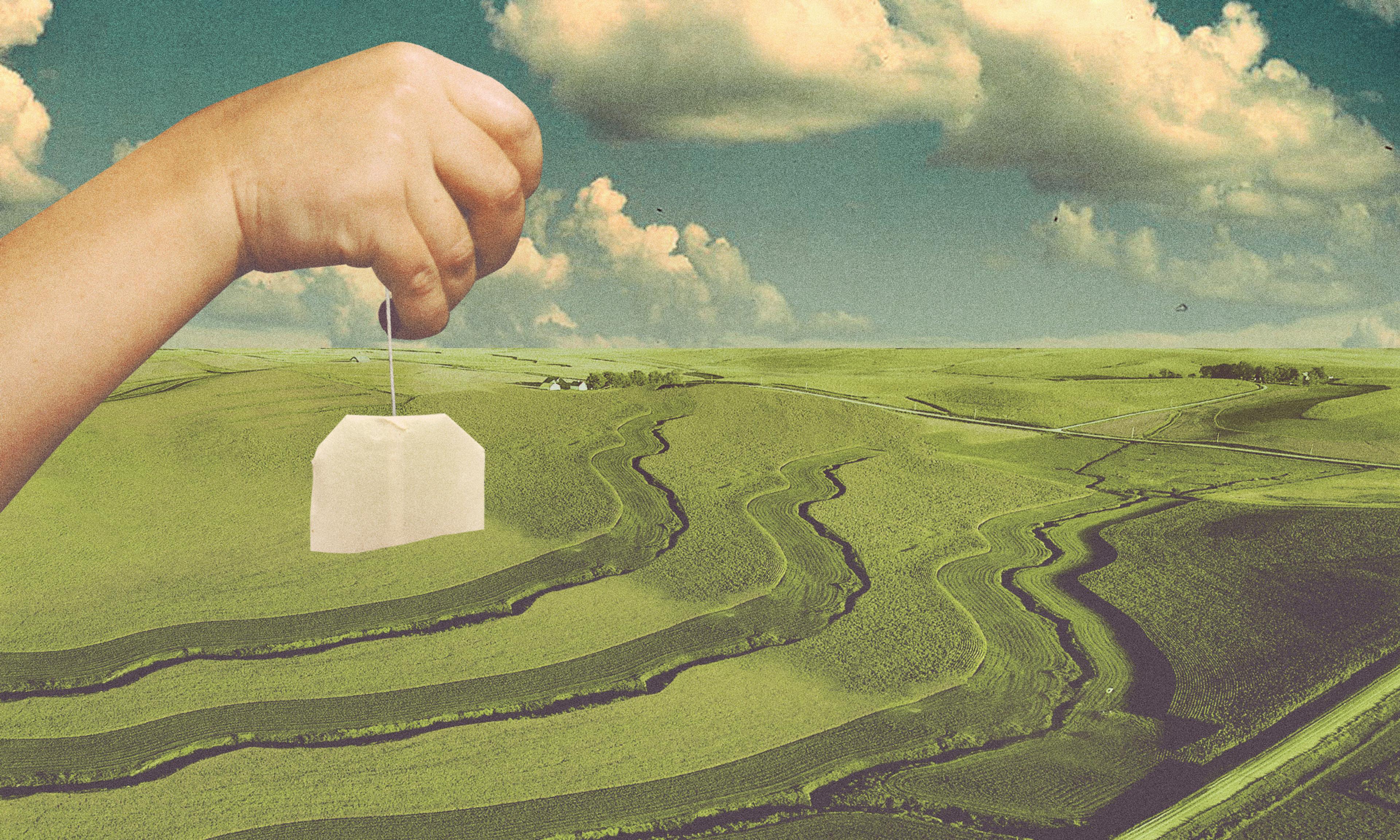
To an American in 2024, green tea carries something of an international mystique, tending to be associated with East Asia, with traditional medicine, and with modern wellness trends. It’s certainly not a connection you’d naturally make with the culture of the American Midwest. And in that way, it suffers a bit from what’s called the “Tiffany problem”: an accurate historical detail nevertheless seeming out of place due to modern assumptions about the past (like a Medieval English woman with a name that feels contemporary: Tiffany).
My grandmother, whose name was not Tiffany but Dorothy, was the daughter of Iowa farmers. She grew up on a plot of land her father leased in a small town outside of Cedar Rapids — a legacy that still shapes our family’s identity, even though Dorothy and her children never became farmers themselves.
I’m not a farmer either. I’ve lived my whole life in two of America’s four largest cities, and while I’ve visited the family farmhouse and I go back to Iowa regularly, my grandmother’s stories of life on the farm highlighted the differences between her childhood and mine — which is why an offhand detail about green tea in one of her stories stuck out the way it did.
I’m a tea drinker. I settled on it as a teenager, likely trying on some kind of “sophisticated” Anglophile affectation. But Dorothy liked tea too, and it turns out that she developed her taste for it at a much younger age. As a little girl, in the early half of the 1940’s, she and her sister would sit in their farmhouse kitchen and eat lunch with the farmhands when they came in from the fields. Afterward, they would all share cups of green tea. Not coffee, not black tea — green tea.
I told this story as a little gem of family oddity for years after I first heard it, but it was only much later that I took the time to wonder why Dorothy’s parents would’ve kept green tea in the house. I assumed it must have been difficult to find, some kind of specialty purchase for idiosyncratic palates.
As it turned out, green tea was neither. In fact, green tea — imported first from China and later from Japan — has had a foothold in the U.S. since colonial times. Tea historian Bruce Richardson, who works for the Boston Tea Party Ships and Museum, said that one fifth of the tea thrown into Boston Harbor on the night of December 16, 1773, was green tea. The taste for it was widespread across the country, but nowhere was it stronger — and more resistant to the encroachment of black tea and coffee — than in the Midwest.
Green with Milk and Sugar, by Robert Hellyer, professor of East Asian history at Wake Forest University, takes an in-depth look at the relationship between Japanese tea growers, the Midwestern consumer, and the mercantile apparatus that grew up to connect them. As European settlers arrived in the U.S., they brought with them the tea culture of their home countries — including a taste for green tea, which spread across the growing nation alongside immigrant communities. Enterprising importers and wholesalers quickly sprung up to meet the demand, many of them based in that early hub of rail transport: Chicago.
Hellyer writes that initially, green tea imports to the U.S. came exclusively from China, but a convergence of factors in the mid-19th century caused a shift. Shortfalls in Chinese production, combined with a rapidly growing American population and the development of formal political relations between the U.S. and Japan, opened the door to importing Japanese tea.
“I found a local newspaper in Galva, Illinois, and looking at ads, for example, in the 1890s, you don’t find black tea — you just find green tea.”
I asked Hellyer whether the U.S. also tried to grow its own tea at that time, to guard against fluctuating supply. He told me that the government spearheaded an effort, beginning in the late 1850s. “They hired tea experts,” Hellyer said, “and were looking to bring tea and tea plants into the U.S. That was 1859.” The Civil War disrupted those plans until around 1870, when cultivation began again, primarily in South Carolina. “But … domestically produced tea could never compete that well with Asian tea on price and quality, and it always remained a niche market.” American growers lacked the tea-processing expertise of their East Asian counterparts, and faced higher labor costs — making domestic tea an unsustainable project.
In 1863, The Chicago Tribune reported that the first ship to carry Japanese green tea directly to the U.S. had arrived, docking in New York. Over the next several years, New York tea merchants and Japanese producers alike would consolidate their offerings under a single brand, for simpler advertising: Japan Tea. Using Chicago as a rail hub, Japan Tea spread across the Midwest, eventually starting to edge out Chinese green tea as American sentiment toward China soured.
Japan Tea, then, would’ve made up a large percentage of the green tea that Midwesterners were getting from grocers and specialty shops at the turn of the century, and the tea that my great-grandparents likely grew up drinking. Make no mistake — if it wasn’t coffee they were drinking, it was almost certainly green tea. “I [found] a local newspaper in Galva, Illinois, and looking at ads, for example, in the 1890s, you don’t find black tea — you just find green tea,” Hellyer told me. “So yes, if people were drinking tea in the Midwest at that time, usually, it was going to be green tea.”
This ubiquity lasted until roughly the 1920s. Coffee and black tea had already made inroads elsewhere in the country, and late in the decade, finally began to compete with green tea’s popularity in the Midwest. Given that timeline, it seems that my grandmother’s family were, by the early 1940’s, some of the last green tea holdouts in the region — carrying on a tradition that had been vanishing for at least a decade.
When I spoke to other members of my family, it seemed the tradition of green tea faded rapidly after that point. My mother, the oldest of Dorothy’s children, remembered being told to drink green tea whenever she was sick. But when I asked my aunt, who grew up in the same household, for her green tea memories, she was stumped. Even Dorothy’s younger sister, who was born at the end of World War II, had no recollection of green tea in the house. Black tea after dinner, yes — but green tea, no.
It seems that war with Japan, and the tea-trade disruptions that came with it, represented a turning point for my own family’s tea habits — and it may have put the final punctuation mark on the wider Midwest’s green tea consumption. By the 1950s, American tea culture had both shrunk as a whole, and pivoted toward South Asian black tea.
“Our soil type is the same as some of the tea-growing regions in China.”
In his book, Hellyer tells the story of Galva, Illinois, native Ann Blout, returning in 1959 from a year abroad in Japan. Sixty years prior, Galva newspapers advertised green tea as a staple. On her return, Blout held an open house to showcase some of her souvenirs from Japan — one of which was green tea, served to guests as an exotic novelty. Midwestern tea culture had come full circle.
“I think if we’d had more of a domestic production of green tea, we probably would still have more of a green tea [culture],” said Timmy Gipson, co-owner of Great Mississippi Tea Company (GMTC), founded in 2011. The company has its own thriving tea farm in Brookhaven, Mississippi, which has grown to more than 40,000 plants.
I spoke with Gipson about the experience of starting a tea farm in the U.S., given America’s relative lack of tea-growing history. He told me that much of the guidance that got them off the ground came from, by necessity, international sources. “When we got started looking at that, it was all pretty much overseas,” he said. “We had to find somewhere that was actually doing tea correctly, and doing it well. So most of that was all overseas.”
But even with expertise from abroad, cultivating tea plants in North America presents some unique hurdles. “Some of the aspects are the same, but then there’s some that are vastly different as well,” Gipson said. “Our soil type is the same as some of the tea-growing regions in China,” he said, but a difference in climate means a different kind of growing cycle for American tea plants. In most tea-growing regions, tea plants — Camellia sinensis — are prevented from flowering by managers who check each plant by hand. This way, the plants remain more consistently productive. “Here,” said Gipson, “we don’t actually have control of that, because Camellia plants naturally bloom when they go dormant. And here, they go dormant because we have a winter.”
Gipson and GMTC co-owner Jason McDonald are compiling these idiosyncrasies of American tea growing in order to build a body of knowledge that other growers can benefit from. The pair have helped multiple new farms to enter the scene in the years after they got their own start. “We’re firm believers that the more the industry knows and is able to flourish,” Gipson said, “the better we’ll all be.”
Part of tea’s enduring appeal is that, as a genuinely ancient tradition, it offers us a way of connecting with our ancestors. When I embraced tea as a suburban teenager, I couldn’t have imagined it would bring me closer to my Iowa farming roots.
In every era, though, tea has also been a tool for building bridges among contemporaries. Whether it’s bringing together neighbors across a street or farmers across an ocean, tea is making the world at once both larger and smaller than we think.

Soybeans have always been a part of Kyle Mehmen’s life. As he grew up on his family farm in Plainfield, Iowa, he watched multiple generations of soybean sprout from the soil and reach maturity, before eventually joining the business himself as a partner in 2005.
Alongside soybeans, Mehmen and his family grow corn — the two most common crops in terms of planted acreage in the U.S. Wanting to distinguish themselves in a crowded market, the family business has always been willing to dabble in an experiment or two. One strategy has been to grow higher value soybeans: those with properties like high protein or oil content.
“We’ve dipped our toe into higher value soybeans a couple of different times,” said Mehmen.
Typically, farmers are paid for the volume of a crop they produce per acre. With higher value soybeans, companies would offer a premium to incentivize farmers to grow them. Benson Hill, an agricultural genomics company, approached Mehmen in 2021, for example, and asked him to grow their non-GMO, ultra high-protein soybeans. In return, the protein content per acre would be factored into his earnings.
Mehmen said that means he doesn’t have to worry about producing the most bushels per acre. “What matters is that I have a quality product,” he added.
While the industry standard protein content for a soybean is at 40%, Benson Hill’s varieties go up to 48% — there’s a market for it.
Major advocacy groups, like the International Panel on Climate Change, stress the importance of moving towards plant-based foods and away from animal agriculture — a sector that is responsible for roughly 20 percent of global emissions and is the leading cause of habitat loss, among other issues.
Some believe the key to that agricultural transition lies in plant-based meat alternatives. Over time, however, crops like soybeans have been bred to favor high yields to the detriment of properties like protein content. Many plant-based meat companies suggest this negatively impacts their taste profile; high-protein soybeans are an attempt to create a more appealing product.
It’s not just about protein or plant-based alternatives either. Corteva has developed soybeans with high oleic content, which, they say, have 20% less saturated fat than commodity soybeans, making them a healthier alternative. Research suggests soybeans could also be improved in other ways, such as by adjusting the amino acid profile of the bean.
“I give more care to these soybeans than I would to my regular soybeans because they’re higher value.”
Mehmen is just one of the many farmers currently working with Benson Hill across Iowa, Illinois, Indiana, and Missouri. Other companies, too, are involved in the quest to build better beans. Corteva pays a premium to farmers for growing higher oil soybeans, and ZealKal also works with farmers to grow higher protein soybeans.
With the premium offered for growing high-protein beans, Mehmen said that it became worthwhile to experiment with products like fertilizers. Though he didn’t give any specifics, he swears that he’s not protecting a “secret sauce” for growing the perfect soybean.
“I give more care to these soybeans than I would to my regular soybeans because they’re higher value,” said Mehmen.
Aside from the extra time tending to the sprouting beans, there’s also more bureaucracy involved in producing high-protein soybeans. On Mehmen’s farm, the paperwork requirements are so heavy that he hires somebody to work on that.
Joe Janzen, assistant professor in agricultural economics at University of Illinois Urbana-Champaign, explained that it has to do with the way commodity crops function. Commodity soybeans from different farms end up mixed together as there’s no real need to distinguish between them, and therefore a paper trail isn’t strictly necessary.
“If we want to preserve specific characteristics [like high protein content], we have to develop identity-preserved supply chains,” he said.
Janzen said that if companies or consumers want these higher protein soybeans, then the incentive structure devised by Benson Hill is likely the way to go.
“I think that’s the way that it has to be done,” said Janzen, “particularly if the production of those soybean varieties comes at a higher cost to the producer.”
“A lot of our soybeans were originally destined for the human food ingredient market, but that market simply didn’t materialize the way that everyone expected it to.”
Commodity soybeans are predominantly used by the agriculture industry as animal feed — most soybeans aren’t fed directly to humans. There are other industrial uses as well, such as in the production of rubbers, plastics, and adhesives. None of these products require a high-quality bean.
Nina Elkadi researches soybeans as a plant humanities fellow at Dumbarton Oaks, a Harvard University research facility. She thinks it’s well past time we started growing better soybeans for human consumption. “Most soybeans today are not turned into food we consume,” she said. “It’s time for a distinction between what we feed animals and what we feed ourselves.”
Some people, Janzen said, envision a food system which is based around producing higher quality crops, but he questions whether a market like that can truly scale. Cost, he believes, is the most important factor for consumers — one survey found that price “highly impacts” food choices for eight out of ten Americans. Growers and others along the supply chain are thus encouraged to favor quantity over quality.
If, for example, there were a range of enhanced soybeans — whether high-protein, oil, or something else — each would have its own paper trail and input requirements. The cost of this system would be offloaded to consumers, raising the prices of things like plant-based meat alternatives.
For his part, Mehmen thinks that high-protein soybean production is unlikely to ever dominate the U.S. market.
“Do I think that these kinds of programs can take over all 90 million acres of soybeans in America?” he said. “Absolutely not.”
“How is it feasible to grow a bean that needs a lot more care and attention, unless there are incentives?“
What’s more, he hopes they don’t either — Mehmen likes being able to distinguish himself with the extra work and transparency that comes with the program. If higher protein soybeans became the norm, they’d be a commodity crop.
The market also suggests that it’s unlikely to happen any time soon. Although the amount of plant-based meat alternatives sold doubled from 2017 to 2020, in the following two years the market stagnated. A number of reasons have been suggested, from the failure to attract repeat customers to inflation pushing consumers to choose cheaper options.
Holly Wang, a professor in agricultural economics at Purdue University, said that her research has found that some consumers are willing to pay for food with environmental or health upsides.
“Many people are willing to pay more for public benefit,” she said, adding that it’s even the case where taste or nutrition are the same. For plant-based meat alternatives, the open question, she said, is whether the amount of people willing to do so justifies the production costs.
In Benson Hill’s case, the answer is no. They recently decided to change their business model to focus primarily on the animal feed market instead.
“A lot of our soybeans were originally destined for the human food ingredient market, but that market simply didn’t materialize the way that everyone expected it to,” said Christi Dixon, senior director of public relations at Benson Hill.
Although they primarily aim to have their soybeans in animal mouths across the country by 2030, part of their income will still come from the human food ingredient market. Starting in two years time, they will license out their high-protein soybeans to third parties rather than working directly with farmers. So, for example, a plant-based meat company could pay a fee to Benson Hill for use of a higher quality soybean and then contract a farmer to grow said soybean.
Not all hope is lost for the high-protein soybean market, and Mehmen hopes to remain a part of it. If a third party doesn’t choose to work with Mehmen, however, or if they don’t offer the right premium, he could end up losing the additional 20-30% revenue that the program brings. In that case it’s back to the drawing board, in the hopes that another company offers him a premium product he’s interested in growing.
“The fiscal component for farmers is key,” said soybean researcher Elkadi. “How is it feasible to grow a bean that needs a lot more care and attention, unless there are incentives?“
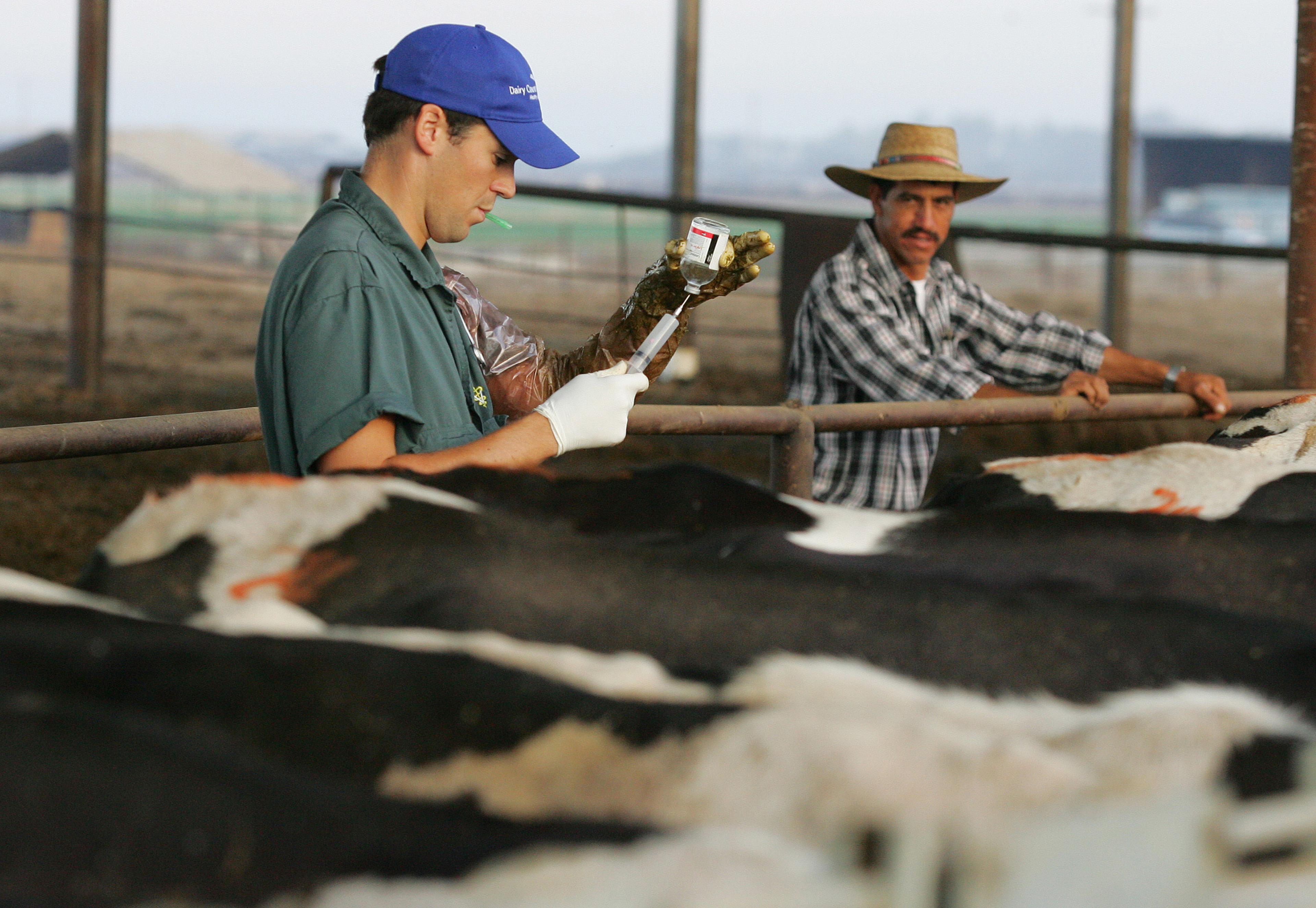
Heidi Helff grew up loving animals. For many veterinarians, it’s a cliche for a reason.
As the 22-year-old grad student tells it, Helff always knew she was going to be a vet. She grew up with Labrador Retrievers and in high school shadowed a veterinarian near her home in Chester, New Hampshire, a town of about 5,000.
Like most of her class, when she enrolled in the animal science program at the University of Vermont, Helff envisioned her future taking care of small companion animals — dogs, cats, hamsters, and the like.
Then she met her first cow. The University of Vermont operates a working herd of dairy cattle aptly dubbed CREAM, or the Cooperative for Real Education in Agricultural Management program. Through this initiative, Helff got her first experience handling large production animals — caring for them, treating them, and waking up at 3 a.m. to milk them — and she relished it. She loved the cows’ personality and the endearing way they craved routine.
“It was truly a life-changing experience,” Helff said. “It set the path for me to want to work in food animal medicine.”
Helff is now in her first year studying veterinary medicine at St. George’s University in Grenada. The school has a working cattle program similar to CREAM, and Helff said for her capstone project she plans to study ringworm in cows and eventually move somewhere in the Western U.S. to practice.
But hers, she admitted, is a decidedly uncommon career path.
“A very small percentage of us are interested in large animal [medicine],” she said of her class.
Veterinary medicine is a difficult field — this is no secret. Speak to anyone in the industry and they will cite everything from poor mental health outcomes, high levels of student debt, long, often unpredictable hours, physical demands, difficult clients, the consolidation of the farming industry, and the general reduction in workforce as huge barriers when it comes to attracting and retaining new vets. These issues have culminated in a well-cataloged shortage of large animal veterinarians across the country.
“There’s so many different factors that there’s certainly not a single solution. It’s a big mess.”
According to a 2023 Johns Hopkins report, the number of veterinarians working with livestock animals has decreased by 90% since World War II, meaning that these types of vets now account for less than 2 percent of the total veterinarian population. In addition, a recent industry survey found that more than 700 counties across all 50 states are experiencing potential large animal veterinarian shortages.
These shortages aren’t just issues for livestock farmers — they can lead to problems like unlicensed or unqualified animal care, as well as threats to food security and safety. Indeed, veterinarians represent the first — and often only — line of defense in the effort to identify and mitigate zoonotic diseases like African swine fever, salmonella, and avian flu.
However, programs like CREAM and several new initiatives are tackling the problem holistically, not only incentivizing prospective veterinarians to enter the industry, but also studying and attempting to address the social and cultural factors exacerbating the shortage.
Oklahoma State University’s College of Veterinary Medicine is piloting a new program that it hopes will help better understand the scale of the issue and offer practical solutions. Known as the Center for Rural Veterinary Medicine, the program takes a three-pronged approach: academic research, education, and training for student vets specific to rural environments (including a service component to communities lacking veterinary practices), as well as community outreach to expose young people to veterinary medicine as a career path.
“As veterinarians, we are problem solvers,” said Martin Furr, assistant dean of clinical programs at OSU’s College of Veterinary Medicine. “We need to approach this problem of the rural veterinary shortage in the same way: a scholarly approach, understanding the problems, the dynamics, what is going on, and then developing a strategy to fix it.”
While the program is still in its infancy, Furr said it has already generated strong interest from both students and local communities.
“I would hope that this would be a model for how other universities start to think about the problem and develop their own approaches so we get more people working on this issue,” he said.
“You work 10 days out of a 14-day period and you’re on-call and you’re putting prolapses in in negative degree weather and chasing horse colics around. It’s kind of a hard sell.”
Part of the problem is that despite their importance, many rural veterinarians say the current landscape of the industry has made their careers unsustainable. Sarah Wagner, who spent five years as a practicing large animal veterinarian in rural Virginia before transitioning into the world of academia, said that the rural vet shortage mirrors other industries’ longstanding struggles to draw newcomers to the agrarian reaches of the country.
“My boss was a good mentor, but I was very lonely,” Wagner said of her experience. “I was never part of the community.”
As the assistant dean and a professor of pharmacology at Texas Tech University’s School of Veterinary Medicine, Wagner has spent a lot of time thinking about the plethora of issues currently plaguing her field. She noted that as women make up the vast majority of veterinarians in the U.S., institutional problems like sexism — particularly in rural areas — and the gender pay gap have become increasingly prevalent.
“There’s so many different factors that there’s certainly not a single solution,” Wagner said. “It’s a big mess.”
Stephen Wadsworth was Helff’s mentor through the CREAM program at UVM. Wadsworth, who has spent more than 40 years as a practicing veterinarian in northern Vermont, said the landscape of both farming and veterinary medicine has changed “radically” since he first entered the field.
While the number of dairy cows and production levels have remained relatively constant, the state has seen the number of farms cut in half since 2012. Consolidation means operations are more geographically spread, leading to more “windshield time” for vets. And without a critical mass of farms in rural communities, practices in those areas have an increasingly difficult time making ends meet, which in turn affects the salary they can offer recent graduates.
“It’s such a multifaceted problem that the solutions are going to have to be similarly complicated and nuanced,” Wadsworth said.
“To leave their comfort of suburban or urban culture and move out to a little country town out in some rural area, that can be intimidating.”
Industry organizations like the American Association of Bovine Practitioners (AABP) and American Veterinary Medical Association (AVMA) have attempted to alleviate the shortage through approaches like student debt relief. According to AVMA data collected in 2023, veterinary students graduate with an average of more than $150,000 in student loan debt. Started in 2010, the organization’s Veterinary Medicine Loan Repayment Program, which repays up to $75,000 of debt for qualified individuals, has placed roughly 800 vets into areas with veterinary shortages.
“It’s not the answer, but it’s certainly a step in the right direction,” Wadsworth said of the program.
Earl Brady, who owns a large animal practice in northern Vermont, said he’s had success using the student debt relief program. But even so, the economics of rural operations are extremely difficult to balance.
“When you’re in school and you have $300,000 of student debt, you have the option to go work for a small animal clinic and make $120,000 working four days a week with no on-call,” he said. “Or you go to rural Vermont and start at maybe $85,000 and work 10 days out of a 14-day period and you’re on-call and you’re putting prolapses in in negative degree weather and chasing horse colics around. It’s kind of a hard sell.”
Beyond the economic considerations, current and former veterinarians stressed the importance of community and human connection when it comes to both attracting and retaining workforce, particularly in rural areas. Less quantifiable considerations like mentorship and peer relationships can play a pivotal role in helping combat the rural veterinarian shortage, they said.
Indeed, a survey of recent veterinary medicine graduates, published by the AABP in 2022, found that peer support and mentorship were key in offsetting the common feelings of “isolation or loneliness often experienced in rural communities where other similarly aged professionals are scarce.”
“You’re on the road or doing work alone, you’re not in an office with colleagues or friends,” Brady said. “It’s so important to have your thing or foundation that keeps you human outside of work. For some it’s church, for some it’s 4H club, or skiing, ice fishing, that sort of thing. Finding that community makes it a sustainable thing.”
“To leave the comfort of suburban or urban culture and move out to a little country town out in some rural area, that can be intimidating,” Wadsworth added. “Many of these young people need some guidance and mentoring and somebody with wisdom who can guide them through the minefield of life.”
Since taking over the practice in early 2022, Brady has nearly doubled the size of his team, hiring three recent veterinary school graduates and expanding the coverage area by 50 miles. He said he’s found some success searching for candidates that have a prior connection to the state, but even so he worries constantly about turnover.
“We’re trying to figure out how to accommodate the clients and not burn out the [staff],” Brady said. “I’ve got to figure out strategies to keep people on board.”

At the beginning of March, I began a 32-day shift that started each evening at 7 and ended the next morning at 5. I spent all my waking hours with cattle. Hi girls, I said over and over as I checked the heifers for signs of impending birth. I tracked the stars across a vast Montana sky, feeling my connection to place deepen while my sense of time was going absolutely batshit.
I was a night calver. Or, to put it in more evocative terms, a midnight bovine midwife.
To answer a frequent question: No, cows do not just calve at night. In fact, if you feed them late in the day, you can largely avoid these late-hour births. Many ranches no longer night calve, given changes in feeding, and the fact that this shift is terrible for anyone with kids or any kind of a life. Our ranch still largely feeds in the mid-morning. Beyond that, my family feels an obligation to our cattle that goes beyond the financial hit of potentially waking up to dead calves or injured mothers. Here, someone always stays up with them.
This year, that someone was me. I traded adjuncting in academia for working a calving lot. I’d been off tasting the world for two decades, now I needed to take care of my home. And so I left New York City in order to stare intently at cow butts. I couldn’t be gladder.
Birth and death tangle; anyone who’s spent time around the former could probably tell you that. During calving season, though, it’s multiplied on a scale that stretches time and thrums your ribcage. Calves slipped into the world in a crash of fluids, making the sound of a wave breaking. I moved quickly to clear the sacs off newborn noses, their first wet breaths on my fingers. Cows chewed afterbirth; the pale membranes swayed in the wind and snagged on tall grasses. Seemingly healthy calves died. Others galloped and tumbled across fields on impossible day-old legs.
It’s a bloody and beautiful world. My return is less surprising than the fact that it took me so long.
The Family Land
My Irish family immigrated to this valley in 1864. We’ve been ranching the thin, rocky soil ever since.
My sister and I grew up making the rounds with my father when he was the night calver. He’d tuck us in on an ancient mattress in the calving shack. The wind howled through the crumpled brick chinking, and through the door when he came in to warm up. Sometimes he’d put us in a wooden, heated box with a sick or rejected calf. It was warmer for us, and it was warmer for the calf. There we’d sleep, a tangle of young animals, Irish pale and black-furred.
Many of my kin, including my father and sister, felt the pull of distant places. In crowded cities, we played at being commissioners, lawyers, political operatives. I lived a life as a Seattle environmental journalist, then another one as a New York academic. The valley always calls us back.
As does a sense of familial commitment. My father’s still strong as a bull, but he’s 78. I can no longer pretend that we will have him forever. At his age, he’s earned the right to sleep through the night.
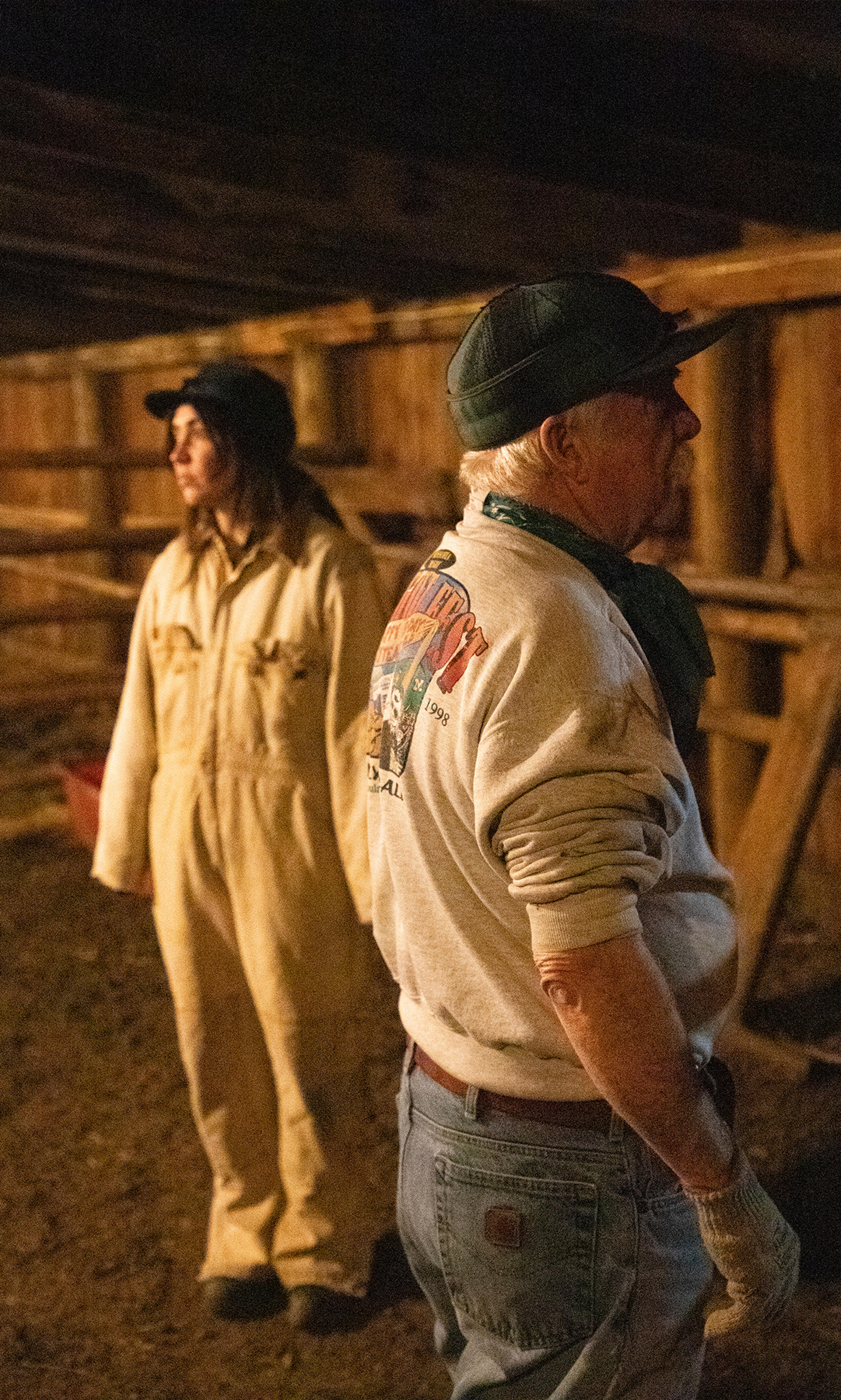
Most people know my dad for his twinkly-eyed friendliness — he’s got a knock-knock joke and a story for everyone. When we work, I see another side of him. He shouts directions and leaps out of the way of 1,300-pound cows. I’ve seen a bellowing heifer toss him over a fence. This season, I stood between him and a charging cow as he tagged her calf’s ear. I shook as I whipped the cattle prod to keep her back. I didn’t fear so much for myself as for the 78-year-old on the ground behind me. This is good work, but it can turn serious quickly.
I’m doing my best to learn, but the decades away put me forever behind where I should be.
Anatomy Lessons for a Late Bloomer
After high school, many of my neighbors studied agriculture and animal science. The other ranch kids had to find outside work, but it all seemed connected: jobs as invasive grass specialists, rodeo pickup men, welders, brand inspectors.
We’re all stepping up as our fathers slowly retire; my old classmates are incredibly capable, whereas I still feel like a kid. Teaching narrative structure didn’t exactly prepare me for how ranch life pans out.
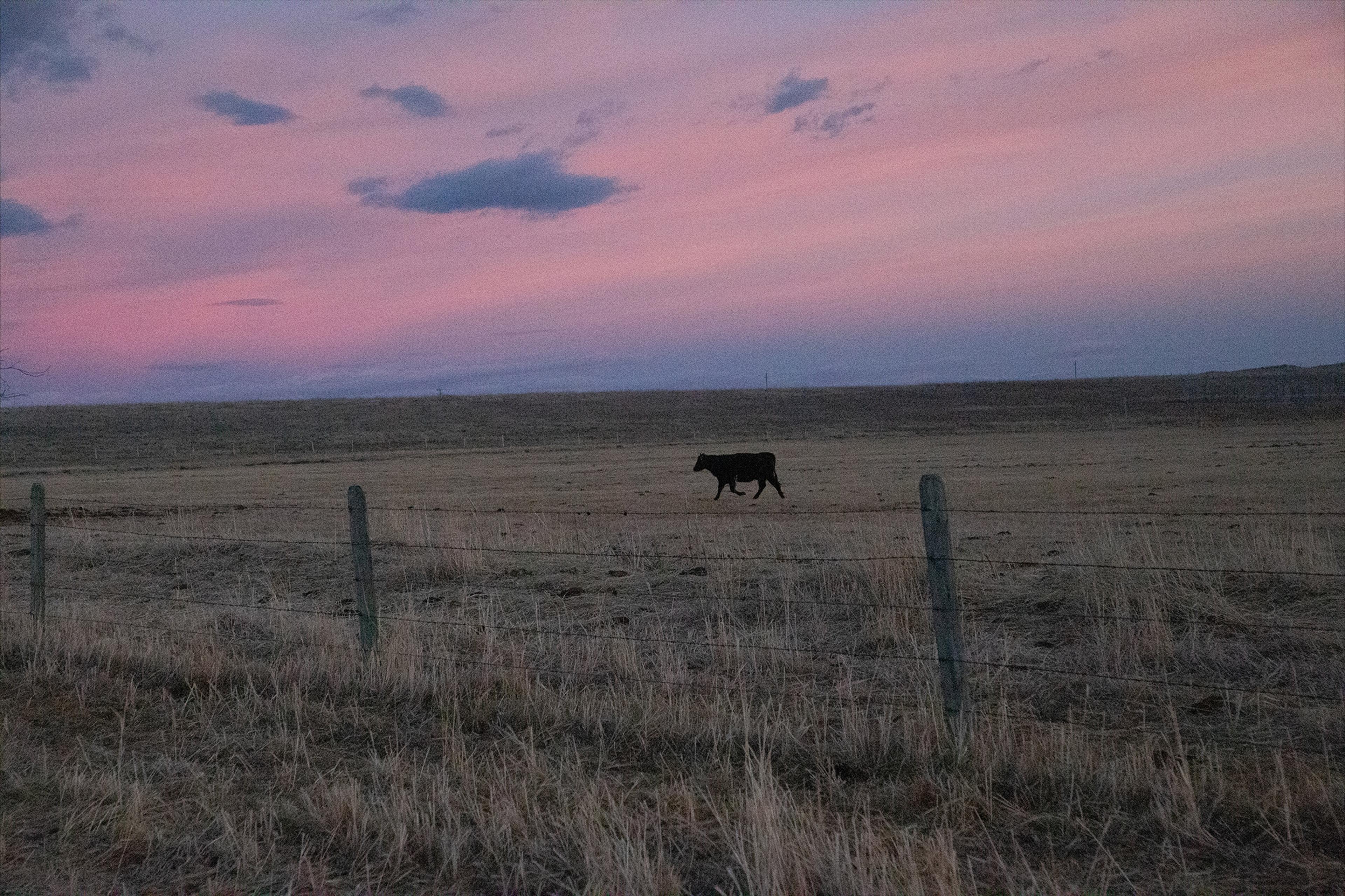
This was especially stark in January when I attended a calving workshop in a nearby town. Many of the attendees were under the age of 12.
We ate dinner as the speaker, a veterinarian, calmly flipped through slides about absolutely everything that could go wrong. Over bites of lasagna, we heard about prolapse, and the care one must take so the cow doesn’t catch her dangling uterine on a fence. Diagrams showed the awkward positions a calf could get stuck inside its mother. The vet described “inside-out calves,” which is every bit as horrific as it sounds. I looked down and wondered if I could finish my plate, let alone handle being the night calver. I glanced around. The other kids seemed unphased.
The vet picked up a life-sized model of a calf. The fake calf’s head flopped back against her arm, and for a moment, the vet resembled the virgin Mary in an agricultural rendition of Michelangelo’s Pietà. She loaded the pre-greased Jesus into a stoic, fiberglass cow. The cow had a large hole in its side, so we could see into her body. The vet arranged the calf into the same stuck positions as the diagrams.

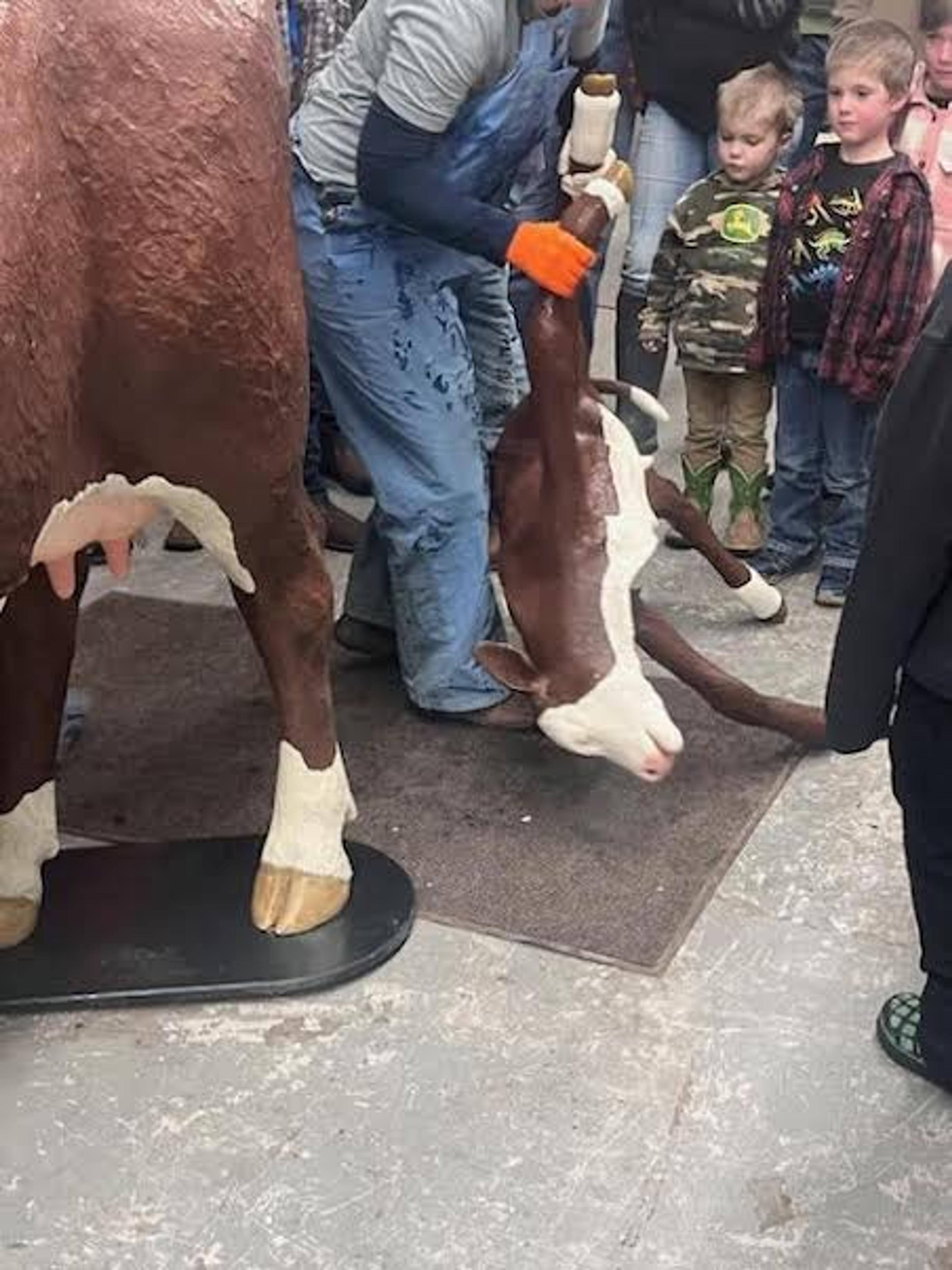
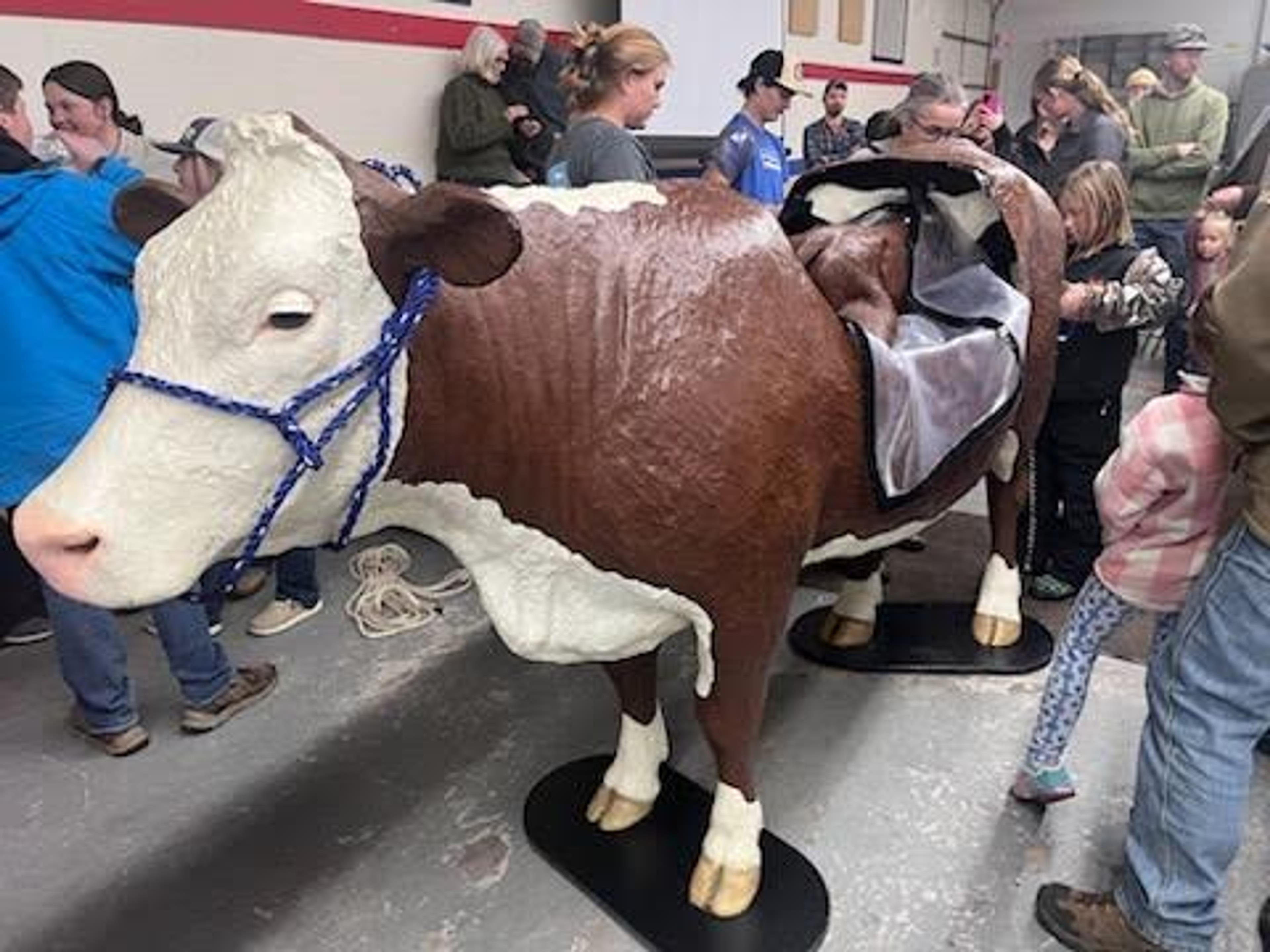
Above two photos by Darby Minow Smith
Then it was time to practice. Calves don’t get stuck frequently; most cows just need time to work through the stages of labor. Still, it’s a reality of calving season. Livestock vets spend spring traveling from distant ranch to distant ranch to work on difficult cases. Outside help is likely hours away. Knowing how to pull calves yourself is key to a well-run operation.
And so the children raced for a chance to pull out the calf as their proud parents looked on. They reached up the fake cow, and we watched their little hands seek to figure out what was going wrong. I didn’t participate in the pulling. I’d grown up with many of their parents, and I felt embarrassed by my lack of experience, unwilling to be shown up by 9-year-olds.
Thirty-two night shifts later and I’ve surpassed the competition, who needed to attend grade school after all. Fiberglass is far from a living, kicking cow, and the kids would need years of supervision and to be much stronger to pull real calves.
Amateur Hour(s)
As the night calver, I watched the heifers — young cows who have never given birth before — for signs of trouble. So many things can go wrong, as their bodies and minds are new to this, and their babies weigh 80 pounds.
Calves can choke on the sacs over their heads, overwhelmed mothers can turn aggressive, wet newborns can be abandoned shivering in the mud. A heifer can become permanently injured or even die, if her calf gets stuck inside and no one shows up to help.
I’ve long liked cows, but I grew to especially love my ward. The heifers rested across the corral, sides bulging like a field of overripe pumpkins. They flung their necks to groom their backs; their tongues barely connected despite grunting effort. They each had a different literal comfort zone, and I tried to avoid entering it so they wouldn’t struggle to their feet. Some stretched dramatically when they got up. One always made such a moaning racket, she sounded like a stiff old hound.
I checked for birthing signs. A subtly “springy” vulva could mean birth within the day. A calf should be on the ground in an hour or so if its hooves are dangling out of its mother.
A raised tail could be a helpful sign, as it gave time to move the heifer before her water broke. Except cows regularly raise their tails to piss, poop, fart. This meant frequently shining a flashlight on a cow butt, watching as her tail lowered inch by inch back into place, then shining the light on the next butt.
If the signs were there, I moved the heifers into a small pen. Then, I gave them space. I needed to observe without being intrusive. I peered over the top of feed tanks, kneeled behind fence posts, and peeked around corners. The heifers strained and stretched out their necks from effort. Sometimes their voices cracked, and they sounded just like they must have as calves.
I itched to help them, but I had to let them be. Despite all of the things that could go wrong, things mostly went right, and the heifers usually didn’t need me. A wet crash, and new life steamed on the ground behind them.
My favorite moments were when the cows first called out to their calves. They all know how to make a deep, sweet mmmmmmm. The heifers heard that noise when their mothers first turned to them, and now, they called it to their own babies.
Observing these births made me feel deeply lucky, but most nights, nothing happened at all.
On those long shifts, I set an alarm for every two hours, and tried to stay awake in my high school bedroom. I flipped through agriculture trade magazines and Anne Carson’s Nox. I watched farm accounting webinars and fell asleep drooling into 30-year-old carpet. The alarm shook me like I’d been out for days, not five minutes. I checked the cows with one eye glued shut from a dry contact. Back in my room, I tried to find the most expensive horse on RanchWorldAds. I laid on my back and looked up at a green ceiling I’d last painted as a teenager, until the alarm blasted me back into the night.
At 5 a.m., if nothing was calving, I left a note for my dad and crawled into bed for keeps. I would wake again when the day was already half over. Later, my parents would go to bed, and my eight hours of solitude would begin.
The Work Turns Serious
Four times this calving season, we needed to pull a calf. Each time, a heifer got stuck at some point in the birthing process. I called my father and answered his groggy but concerned questions. Each time, he got up and came to the corral, where he peered around corners at the struggling animal. In the calving shack, he asked about what happened when. When did I first notice her kinked tail? How long had it been since she tried pushing?
After he confirmed my concern, we moved to help the cow. We took her from the pen into a handmade chute. We trapped her head to hold her in place. And then we started something my dad had done hundreds of times, but was so new to me.
On one of the pulls, my father reached inside the heifer to see what was happening, and pulled out a foot. He looped a chain around it, and handed it to me to keep the foot from slipping back inside. He found the other foot and did the same. We attached small hooks to the chains for leverage. Pull when she pushes, he said. I watched the heifer’s sides puff out and then empty with effort. Pull! She swung to the side, and my dad crashed into me. The heifer roared. Wait for it, wait for it. Pull!
The heifer went down to her knees, and we fell with her. We kept the pressure as everyone struggled back up. Pull! My entire body strained to keep up with my father’s strength. Pull! The calf’s head made it through the pelvis. I could see its face on the other side of taut vulva skin, a fleshy vortex between here and the internal. Pull! The head popped out. Both eyes were open and staring, and its white umbilical cord was in its mouth. My dad kept up the pressure with one arm and cleared its mouth with his free hand. Easy now. The calf slipped so just its hind was inside. The 90-pound baby hovered between us and the cow, until it fell to the ground, and lay there steaming.
We checked the calf, and released the cow. She rushed out, overwhelmed by the pain and confusion. She turned the corner and skidded to a stop. She tentatively licked the top of her baby’s head, and then started working quickly. Mmmmmm, she said and licked. Mmmmm.
My father and I stood there grinning at each other and at the pair. Later, I’d overhear him bragging about my strength and my calmness with heifers.
For now, we needed to give the cow and her calf space. We walked out into the early morning. The day was just beginning for my father, and his night calver needed her sleep.
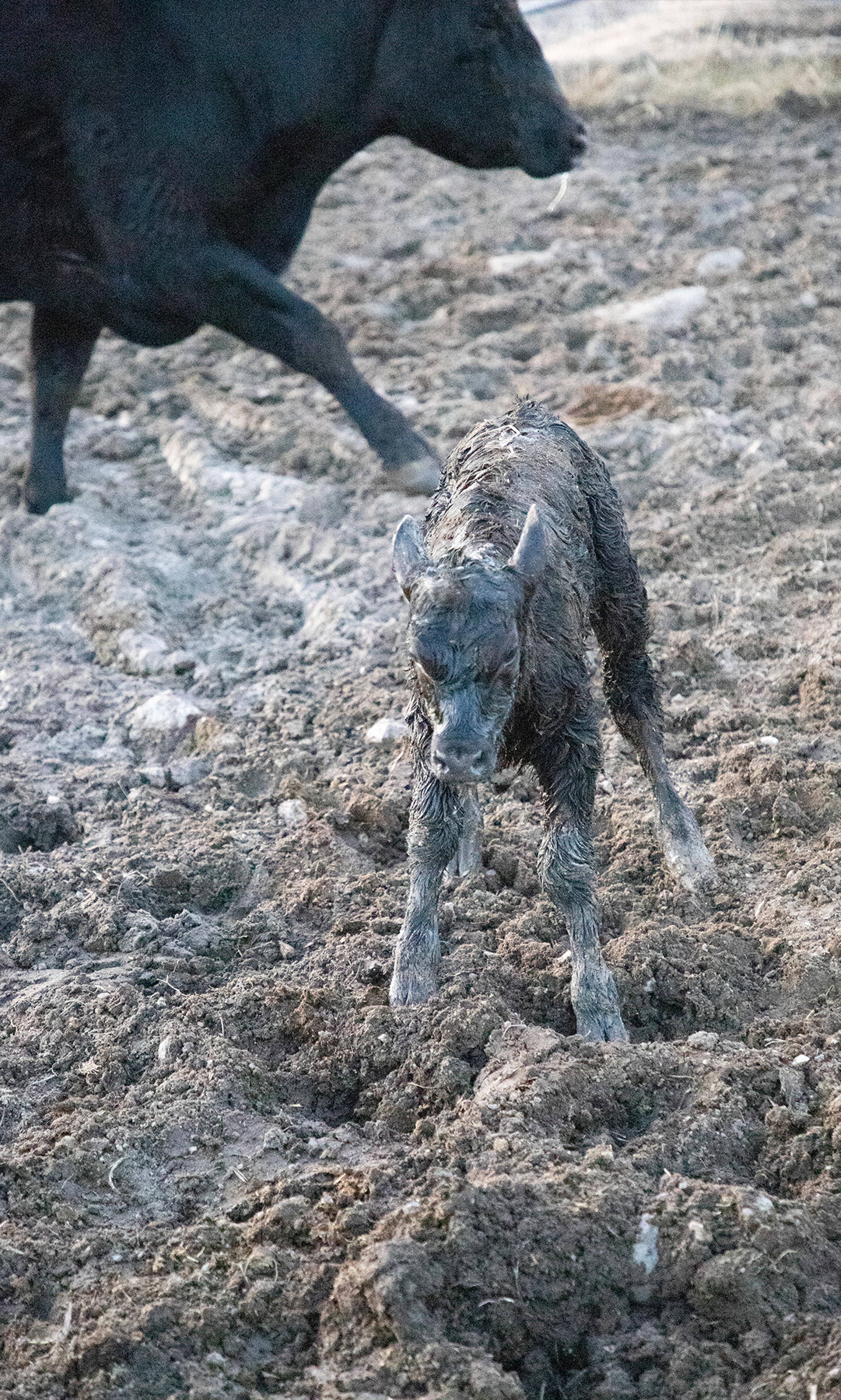
In many parts of the country, it’s become a reliable sign of summer: brilliant blooms of blue-green algae that suffocate wildlife, poison pets, and harm human health.
But when soil scientist Krish Jayachandran assessed the state of okra growing in the greenhouse at Florida International University, he discovered that same destructive algae could do something else: nourish plants.
Blue-green algae — the common name for a group of microbes known as cyanobacteria — are the most ubiquitous photosynthesizers on the planet. They’re also the most ancient: Roughly 2.4 billion years ago, photosynthesizing cyanobacteria created the oxygen-rich atmosphere on which life now depends.
Yet in the more recent past, cyanobacteria have become a threat: It’s not all dangerous, but some species produce toxins. And as the fertilizers applied to crops, lawns, and golf courses have trickled into waterways, they’ve boosted the growth of toxin-producing cyanobacteria living in that water, prompting lethal algal blooms. Cyanobacterial blooms — which also reduce water quality and suck the oxygen from aquatic ecosystems — are now found in freshwater bodies in all 50 states. And, due to climate change-driven temperature increases, those blooms are happening more frequently.
This is true in Florida, where population growth and agricultural runoff have contributed to the foul-smelling mats of cyanobacteria that consistently appear on lakes once the weather turns warm. “Nitrogen and phosphorus get into the system … and [cyanobacteria] take it as fuel,” said Jayachandran. “It’s a major, major problem.”
In some lakes, the situation is severe enough that officials have started attempting to remove some of the algae. Watching one of those harvests unfold on Florida’s Lake Jesup, Jayachandran wondered: Could cyanobacterial blooms — one of modern agriculture’s pernicious side-effects — also help solve the problem?
The initial results of that research, published in Environments in February, are promising.
For the research, a team of scientists took five-gallon buckets of cyanobacterial slurry skimmed from Lake Jesup and dried the slurry until it was solid enough to be applied to soil.
The resulting growth, plant vigor, and yield for okra, when compared to a plot without any fertilizer, were striking, Jayachandran said, and results were also better than those in plots using synthetic fertilizer. The cyanobacterial biofertilizer also had very high levels of iron — an important discovery for South Florida’s naturally iron-deficient soils.
“Nitrogen and phosphorus get into the system … and cyanobacteria take it as fuel. It’s a major, major problem.”
Jayachandran said cyanobacterial biofertilizer isn’t entirely new: It has a long history in South Asian countries, where the (non-toxic) cyanobacteria that grow naturally in rice paddies — help nourish crops.
But in the United States, interest in cyanobacteria’s positive side — and the number of projects investigating cyanobacterial fertilizer — is growing, as the environmental toll of synthetic fertilizers made from nitrogen and phosphorus becomes apparent.
Worldwide, less than half the nitrogen fertilizer applied to crops is actually absorbed by plants. The remainder either washes off into waterways, fueling algae blooms and polluting our water supply, or it breaks down in the soil, producing greenhouse gases. Meanwhile, the production of nitrogen fertilizer requires very high heat and pressure, producing roughly two percent of global carbon emissions.
Ruanbao Zhou, professor of molecular microbiology at South Dakota State University, said cyanobacteria could drive more sustainable agricultural practices. Because some species of cyanobacteria naturally fix nitrogen from the atmosphere — pulling it out of the air and transforming it to a form where it’s usable by plants — they offer an alternative for synthetic fertilizer.
For Zhou’s research, he collected cyanobacteria from the South Dakota Badlands (the bacteria are also found in soil) and grew them in a lab. The results promoted growth in wheat, though not as well as synthetic fertilizers. But unlike synthetic fertilizers, they could be produced at room temperature. “[Bio]fertilizer is a very promising practical application,” he said. Along with a nutrient source, “you just need water and sunlight.”
Still, making cyanobacterial biofertilizer a viable option for growers is complex — not least because cultivating algae that can unintentionally bloom out of control comes with real risks.
“The technical issues we experienced are surmountable, it’s just a question of how.”
Steve Ela, a fourth generation fruit grower with a 100-acre orchard in Western Colorado, has trialed cyanobacterial biofertilizer on his peach trees. Ela was drawn to the opportunity as a way to avoid sourcing nitrogen off-farm. As an organic grower, he said, he’s always pursuing a more balanced and self-contained operation.
“This was an approach to being able to grow nitrogen in a different way,” said Ela. “If we can find ways to extract nitrogen from the atmosphere naturally … and do it on-farm or distributed, it makes for a more resilient agricultural system.”
The trial, which Ela did with researchers from Colorado State University, involved growing cyanobacteria on the farm in tanks specially designed for algae cultivation, and applying it through the farm’s irrigation system.
The results were intriguing, said Ela. Nonetheless, it didn’t make commercial sense to continue, as it was too difficult to keep the cyanobacteria growing.
Michael Massey, an environmental scientist who was part of the Colorado State team conducting the cyanobacteria research, said producing large amounts of cyanobacterial biofertilizer was a hurdle researchers struggled to get past.
The bacteria, which the team sourced locally from the soil, grew well (almost too well, Massey said) in bioreactors in Colorado State professor Jessica Davis’ garden, or in tanks. But their populations would inevitably crash — meaning they’d suddenly die off, after growing rapidly — limiting scientists’ ability to scale up the system. Nonetheless, Massey said the promise of cyanobacteria is still there, especially for those without ready access to synthetic fertilizer.
“The technical issues we experienced are surmountable, it’s just a question of how,” he said. “That’s probably going to take more than a few people working in a professor’s backyard.”
One emerging option is to use wastewater from municipal systems or agricultural runoff to provide the nutrients that boost cyanobacterial growth.
Adriana Alvarez, who studied cyanobacteria as an effective replacement for urea in the growth of spring wheat for her PhD at the University of Minnesota, agrees that the scaling and distribution of cyanobacterial biofertilizer will need to be addressed.
She said one emerging option is to use wastewater from municipal systems or agricultural runoff to provide the nutrients that boost cyanobacterial growth — using the same inputs that fuel unchecked algal blooms in the wild to create a stable supply for agriculture. But despite the growing interest in cyanobacterial biofertilizer, Alvarez said there is still a need for more research, including on safety (cyanobacteria grown on wastewater may produce toxins) and economic feasibility.
“These are alternatives that we can explore, to guarantee we have a supply of nitrogen for our crops, and guarantee that we are producing it in a sustainable way,” she said.
Inadvertently introducing toxins is a real risk. In 2017, for instance, Canadian researchers flagged cyanobacterial contamination of irrigation water for food crops as an “emerging public health issue.”
That’s why researchers, like those at Florida International University, are being cautious. For the cyanobacteria produced from agricultural runoff in Lake Jesup, Jayachandran said the research team has been testing the slurry for toxins, to make sure they’re not adding any to the soil. (Once in the soil, other microbes would eventually break down those toxins, Jayachandran said, but they’re playing it safe regardless).
Researchers are now expanding the biofertilizer work to trials with three urban and semi-urban farms in and around Miami.
Given the number of algae-clogged waterways countrywide, Jayachandran said, there is potential for this kind of system to be implemented elsewhere, turning runaway algal blooms into a resource for a more balanced agricultural system.
Convincing farmers to take it on could be its own challenge, however. In a 2023 survey by South Dakota State University researchers, less than a fifth of Midwest growers reported using biofertilizers from algae or bacteria to reduce fertilizer use (though of course, cyanobacterial biofertilizers are still an emerging tool in North America).
Yet those same farmers reported the greatest interest in biofertilizers as a long-term solution — suggesting that in those slimy mats, there’s the seed of a sustainable future.

The big-city dwellers drink it black, in ceramic mugs with intricate decorative patterns. Sure, it’s a luxury that has to be imported from faraway growers, but no big meeting gets started without the caffeinated buzz it provides.
Is this New York City’s coffee habit? Perhaps. Yet the same language would have worked nearly a millennium ago to talk about the residents of Cahokia — then the largest known Indigenous settlement in the present-day United States — and their appetite for yaupon holly.
Chemical traces on excavated pottery suggest that Cahokians shipped yaupon, one of only two caffeinated plants native to North America, hundreds of miles from the Gulf and South Atlantic coasts to what’s now the St. Louis metro area. There the leaves were brewed into a “black drink” downed before important religious or political events. Early European colonists also took to the beverage, even sending it back to the homeland as “Carolina tea,” and American revolutionaries drank yaupon in protest of British tea taxes.
Yet as competition from imported tea and coffee intensified, white settlers started to associate drinking yaupon with negative racial stereotypes. In 1789, a British scientist gave the plant the unflattering scientific name Ilex vomitoria based on reports of Indigenous rituals involving the drink. Abianne Falla, co-founder and CEO of CatSpring Yaupon in Texas and a citizen of the Chickasaw Nation, said “yauponer” eventually became a derogatory term of poverty and backwardness.
“In the South, most of the people who drank it were Indigenous — who were then forced to relocate and largely eradicated — or slaves, because they couldn’t afford imported caffeine,” Falla explained. “Historically, it’s just been a drink of the marginalized.”
But Falla and a growing number of other producers now believe the plant can reclaim a place in America’s broader caffeine culture, especially as climate change threatens its more popular replacements. Bryon White, co-founder and CEO of Yaupon Brothers American Tea Co., is one of yaupon’s biggest boosters.
Although he grew up surrounded by the shrubby evergreen’s dark leaves and bright red berries in coastal Florida, White didn’t know its beverage potential until he came across Black Drink, an ethnobotanical history of yaupon compiled in 1979. “This must taste like shit, or else somebody else would be doing something with it,” he recalled thinking.
To White’s surprise, his experiments with brewing yaupon leaves like black tea yielded an agreeably earthy flavor, similar to that of South American yerba mate (a close botanical relative). And with caffeine levels per weight about a third less than coffee, the resulting buzz was pleasantly mild.
“This must taste like shit, or else somebody else would be doing something with it.”
“There really was and is no salient reason why yaupon is not popular, not part of the mainstream culture. The main contributing factor is that it’s a consequence of the erasure of Indigenous people,” he said. “Upon learning that, it felt like maybe an obligation to bring this thing back.”
(White is not Indigenous, and he is aware of the plant’s complicated narrative. “Yaupon has been used as an important food, medicine, and ceremonial item by Indigenous people for thousands of years. We want to tell that story in a way that pays respect to native people, and we believe firmly in the native food rematriation movement,” reads the company’s website, noting that 5% of online sales are donated to an Indigenous food systems nonprofit.)
Bryon and his brother Kyle became some of the country’s first modern yaupon entrepreneurs upon starting their company in 2012. Until 2023, the business relied entirely on wild yaupon; the plant is relatively common across its range, and it springs back quickly after pruning. Even today, Yaupon Brothers maintains access to roughly 80,000 acres across Florida with naturally occurring yaupon, and Bryon White said wild harvesting still represents about 90% of the company’s supply chain.
Most other yaupon businesses continue to use entirely uncultivated material. Falla said she sources 50-60 tons of wild yaupon leaves per year for CatSpring, from about 1,100 leased acres of certified regenerative organic ranchland, enough to provide wholesale amounts for national brands like Sweetgreen and True Food Kitchen. “To be totally candid, our long-term sustainability plan is to be clearing yaupon and reintroducing native grasses as we go,” Falla said, noting that many cattle farmers see the plant as a nuisance on their pastures (it’s not great for grazing).
But the labor-intensive harvest process and seasonal variations of wild yaupon led the Whites to explore farming the species. Because yaupon seeds can take 18 months or more to germinate, they partnered with a tissue culture laboratory called Agri-Starts in 2017 to mass-produce clones of two yaupon plants selected from the wild for their particularly robust production and large leaves. The firm can now generate about 40,000 starts every month, enough to plant roughly 13-20 acres.
“Historically, it’s just been a drink of the marginalized.”
Since 2021, Bryon White said, about a dozen farmers across Florida, Mississippi, and Alabama have together put nearly 250,000 yaupon trees in the ground, with the first harvests taking place last year. Each acre of cultivated plants yields about 1,700 pounds per harvest, up from about 700 pounds for a good wild plot, and he anticipates reaching 2,500 pounds per acre from mature cultivated trees.
Yaupon Brothers plans to establish its own farm with 25,000 plants at its new headquarters, a defunct citrus grove in Crescent City, Florida. The company’s long-term goal is to capture 1 percent of the American tea market, worth about $130 million, which will require about 20 to 40 million trees under cultivation.
While White, who is also vice chair of the American Yaupon Association, said yaupon holly has no major disease problems and is remarkably resilient to environmental stressors like drought, he admits there’s much the industry doesn’t know about the crop. The yaupon genome hasn’t been sequenced, and there’s little formal guidance around agronomic practices like fertilization or pest management.
Yaupon Brothers is partnering with the University of Florida to help answer some of those questions. Wendy Mussoline, an extension agent with the university’s Institute of Food and Agricultural Sciences, said that work is still in preliminary stages but that she and her colleagues are particularly interested in how fertilization impacts yaupon’s caffeine levels.
Scientists do know that yaupon’s global competitors are in trouble. A paper published by a team of Brazilian researchers earlier this year, for example, found that up to 75% of that country’s coffee-growing regions could become unsuitable for the crop by 2100 if current warming trends continue. Tea production in major exporter nations like Kenya and China is also coming under stress as humanity’s carbon emissions make temperatures hotter and rainfall less predictable.
Whole Foods named the plant its top food trend of 2023.
And the very act of importing tea or coffee thousands of miles using fossil fuels, instead of relying on America’s own caffeine source, looks ever less defensible in the face of climate change, argued White. “When it gets here, we’re dunking it in hot water for five minutes before dumping it in the trash,” he said. “It’s kind of an extreme example of wasteful consumerism.”
Yaupon appeals to many beverage makers as a domestic option; Whole Foods named the plant its top food trend of 2023. While coffee remains the country’s dominant caffeine source, drunk on a weekly basis by 75% of American adults, many customers show an increasing willingness to explore alternatives like yerba mate and matcha tea.
Infruition Tea in Asheville, North Carolina, also launched a yaupon product last year. Infruition founder Brad Smith said yaupon’s American-grown origins meshed well with his company’s organic, locally sourced focus.
Yaupon is one of Infruition’s most expensive ingredients — Smith buys yaupon from Savannah, Georgia’s, Yaupon Teahouse at about $15 per pound wholesale, compared to about $5 per pound for black tea — but he thinks gaining a toehold in the rapidly expanding market is worth the investment. “I don’t think it would have seemed like a viable option if it wasn’t growing in popularity,” he said.
Infruition’s canned sparkling yaupon blends the plant with strawberry, mint, and keemun black tea. Cahokians might not recognize the effervescent, lightly sweet beverage as a relative of their cherished black drink, but Smith said it has been very popular.
“I have found that most people have not heard of yaupon, but they are very receptive to it due to its sustainability,” Smith said. “If I had to answer how customer response has been in one word, I’d say ‘outstanding.’”

“It was like a lightning bolt.” When you picture postpartum anxiety, you might envision a worried mama hovering over her new baby’s bassinet. But for Julia Rockwell, a California mom, the birth of her second son sent debilitating waves of panic through her body.
“It was very extreme,” she said. And it didn’t go away. Rockwell wasn’t against taking antidepressants, but when her doctor said there was a chance they could make things worse, she wanted another option. “I can’t go with worse — worse would be falling off a cliff.” To her, playing with dosages and finding the right medication seemed more daunting than talking to local herb experts.
Rockwell reached out to her doula (now a yoga instructor) to figure out what to do. Doulas are certified birth workers who help women from the trying-to-conceive process, through pregnancy and birth, into the postpartum years, providing physical, emotional, and logistical support. Sometimes, parents turn to them for unofficial medical advice, which can include determining what herbs might help with various issues.
So, Rockwell was in the right place — the “natural” birthing community, a tightly woven selection of doulas and midwives, therapists and herbalists, that seem to exist in cities across the country when you ask the right person. They connected Rockwell to the most cleanly sourced herbs and plants, and gave her food recommendations to improve her postpartum anxiety (PPA). Years later, she too would become an official part of a sustainable and natural living education, authoring Mothering Earth. But this was the beginning of her journey.
Not everyone believes in the power of these medicinals, and peer-reviewed research is sparse. But for those who swear by them, they can make or break the pregnancy and postpartum journey, a sensitive and vulnerable time for many. For pregnant and postpartum parents who do turn to herbs, there’s never been a more important phase of life to care about clean, safe, and properly sourced selections.
Healing the Birthing Body
Some herbs are called “galactagogues,” intended to increase breastmilk production in postpartum mothers. La Leche League International, a globally recognized breastfeeding resource, shares herbs and foods from barley and basil to fenugreek and turmeric, which have been used for centuries. Around 43% of breastfeeding parents internationally have tried herbs for a variety of breastfeeding challenges, such as trying to produce more milk, or dry up a milk supply that’s no longer needed.
PPA, postpartum depression (PPD), and lactation issues are far from the only reason some birth workers are trying to help perinatal people access clean herbs. Midwives have extensive guides with remedies for diaper rashes, nipple chapping, birth pain, uterus contractions, and more. Multiple studies point to the efficacy of Ashwagandha for PPA and stress reduction, though herb-related claims for new moms are always up for debate.
Rockwell looked to birth workers to advise her on safe and effective remedies that were high-quality, wouldn’t impact the health of her baby during nursing, and might have a dual effect on breastfeeding and PPA. She ended up at a landmark co-op grocery store in San Francisco with an extensive vetting process for herb sourcing.
“It’s good for rebuilding your blood supply after going through the transition of childbirth where there’s a big blood volume loss.”
She said that within a week of taking a combination of Omega 3’s, a multivitamin, lemon balm, and other herbs, symptoms started improving. “I went from feeling like I was being fried at 100 … to within two months, I felt like I was more at a 20. I was a little bit on eggshells, but I felt like I could function,” Rockwell said.
There are numerous other medicinal remedies in the perinatal time period, with debatable results. For instance, garlic is sometimes used by pregnant women as an antidote to heartburn. Or there’s Jujube fruit or red dates, traditionally used in Chinese medicine to help perinatal women nourish the blood. “For the postpartum person, it’s good for rebuilding your blood supply after going through the transition of childbirth where there’s a big blood volume loss,” said Beth Rees, a San Francisco educator, herbalist, and doula.
Not all herbal practices have to heal a major medical condition — some are just for comfort, and connecting to the practice of using herbs. A sitz bath, for example, soothes all the parts strained by birth. Carrie Murphy, Texas-based herbalist and doula jokes she didn’t expect it to help much when she tried it herself, but said it “felt insanely good.”
Careful Sourcing
The traditional medical community warns that some herbs contain “additives and contaminants” not listed on labels, making sourcing a higher priority for perinatal consumers.
“You should be careful where you source herbs in the perinatal time because your body is more vulnerable, and if you don’t know where the herb is coming from, you don’t know it’s actually the herb it says it is,” said Murphy. This population specifically, and the newborns they are nursing, can mean “serious risks” if they purchase counterfeit or mislabeled herbs, she added. Murphy recommends buying from a small scale herb farm where people know what it is and what it can do. “That makes a difference.”
If you ask a birth worker who they trust for herb sourcing, it’s likely they’ll mention Mountain Rose Herbs, a Eugene, Oregon, grower, processor, distributor, and retailer with notably high standards in sourcing. Murphy called it the “gold standard” in herb sourcing and supplying practices.
They have multiple certifications, including OTCO/USDA Organic, Non-GMO Verified, and Fair for Life. The Fair for Life ethical sourcing program reviews the herbs, auditing working conditions, labor practices, environmental programs, social benefits, and company transparency.
“We conduct testing on all of the botanicals we bring in, and each lot is examined to confirm identity, and ensure quality and purity. For expecting and postpartum moms, this is incredibly important.”
Jessicka Nebesni, senior marketing coordinator at Mountain Rose, said moms are a “huge segment” of their client base, and that a large percentage of their customers first come to them when they are pregnant. Other clients include a “wide range of customers which includes healthcare practitioners, nutritionists, home herbalists, the natural beauty community,” she said. But for pregnant moms learning about herbs for the first time during pregnancy, some go on to integrate them as part of their lifestyle permanently.
“We conduct testing on all of the botanicals we bring in, and each lot is examined to confirm identity, and ensure quality and purity. For expecting and postpartum moms, this is incredibly important,” Nebesni said.
Their success in the birthworker community also comes from their extensive commitment to education, from educational events to impact reports that give a “transparent lens” ensuring companies follow ethical sourcing business practices.
Rockwell recommends the San Francisco-based advocacy group Natural Resources for education around sourcing herbs, as they want to help families bring in “gentle herbal allies as part of their self care during the perinatal timeframe.”
“We talk a lot about how to find good sources of herbs, and how to find good sources of herbs based on what modality you’re working with, because Western herbs might be totally different than sourcing traditional Chinese medicine herbs,” she said.
“I think that’s another part of herbs. They aren’t just medication — they also are living things.”
Perinatal parents who simply pick the highest ranking herb blend on Amazon might be missing something. The growing region, the potential for wildcrafting (without depleting the source), the growing process, and the packaging all play into the herb’s safety and efficacy, Rees said.
“Definitely whether or not they are grown organically, or how they are being treated in terms of pesticides, the soils, and heavy metals … mostly because the baby is going to be having an introduction to all of the things they are imbibing,” she added.
Tony and Rachelle Wright, herb farmers in a multi-generation family farm in Munfordville, Kentucky, said most farmers grow herbs based on their own interests and uses. “We grow dill because we consistently pickle cucumbers and eggs for our winters. We grow garlic, sage, basil, parsley, mint, lavender and oregano to integrate into our meals and teas.” They face similar obstacles as other farmers do with any crop. Rachelle said, “Bugs who like the taste of the herb can sometimes give us some competition.”
The Wrights’ focus is on loose, rich soil, and proper weeding so their roots are getting enough water and nutrients. “[The herbs] love dappled sunlight in the middle of the day and full sun in the mornings and afternoons. An optimal plant produces more nutrients, better cell structure, just a hardier, more robust plant,” Rachelle Wright said. She added that soil health and water conservation are top of mind when it comes to sustainable herb growing. “We use manure compost on our soil at the end of every growing season in preparation for the next. When sourcing products we like to know exactly where the seed or plant has come from, for us, the more local the better.”
Educating New Moms
Parents skipping the education aspect of herbal education might have lower success rates with diagnosis, usage, or application. Instead of Googling and guessing, Rees hopes perinatal people seek education surrounding herbs, and their proper sourcing by looking up a local herb store or working with a larger farm that grows fields of necessary herbs sustainably.
Murphy agrees. “There may be questions of ‘How’s it dried?’ Some people dry in open air versus a dehydrator,” she said. “There’s a lot of implicit trust, that some people may feel more comfortable with than others. It’s hard to grow herbs at scale.”
Midwive influencers like Dr. Aviva Romm have taken to social media to educate moms about herbal uses, from St. John’s Wort for severe depression to adaptogens for circadian rhythm. She posts Instagram stories of her walking around in nature, identifying herbs in the roadside fields herself. But for those not working with such a specialist, birth workers hold the knowledge of who to ask next.
Choosing high-quality herbs is also about the intentionality that doulas want their clients to carry with them into motherhood. “It’s a modality that’s really connected to our humanity,” said Murphy. She is also part of a movement trying other medical interventions than traditional medicine offers. “I prefer not to go straight to an antibiotic or painkiller. If I can use an herb before something else, I will.”
“I don’t know if it was the water, or the constituents of the herbs, but just sort of taking this time to mindfully care for myself. I think that’s another part of herbs. They aren’t just medication — they also are living things,” Murphy said. And for those conceiving, growing, birthing, and raising living things themselves, ethically sourced herbs accompany the most natural journey of all.

In August 2017, Pennsylvania deer breeder Josh Newton found himself forced to choose between shooting and starving his herd. Three and a half years prior, Newton had sold a doe to a farm in Bedford County, in the state’s southern hills. When a deer in that herd died in 2017 and returned a positive test for chronic wasting disease (CWD), the state Department of Agriculture depopulated and tested all of the other deer in the herd, including the one Newton had sold. When that deer tested positive for CWD, the Department of Agriculture placed Newton’s farm under a 20-month quarantine — essentially a stop order on all business he could conduct, cutting off income to the farm.
“I ended up having to kill animals because I couldn’t afford to feed them,” said Newton. “It was terrible — you go out, you shoot a healthy animal.” When CWD test results from the dead deer came back from the veterinarian, all 26 were negative.
Pennsylvania has the highest number of deer farms in the United States, with 661 facilities. (About 250 of those have five deer or fewer, and are essentially considered hobby farms.) These operations breed and raise desirable specimens of deer for a number of purposes — for materials used in hunting, like deer urine; for venison; and to stock hunting ranches, where customers can pay to hunt deer on enclosed grounds. Newton’s farm outside of Williamsport is one such operation. And regulations to staunch the rampant spread of CWD in the state, which usually entail the depopulation of a herd, have put about half the deer farms in the state out of business.
Tensions have existed between deer farmers and conservationists since the advent of the industry. The latter has long decried the inhumane nature of a “penned hunt,” popularizing the slogan “Real Hunters Don’t Shoot Pets,” and warned against turning a hallowed American way of life into a luxury sport. And yet a few scholars have pointed to the potential ecological benefits of private deer ranches: Where farmers might suffer economic pressures to lease their land for mining, drilling, or other harmful industry, raising deer herds for hunting offers a profitable way to steward healthy forest ecosystems on their land.
But the explosive rise of CWD, with positivity rates of up to 38 percent in South Central Pennsylvania, has raised another difficult question between the two factions: In a state where wild and captive deer roam their respective woods, which poses more of a threat to the other? Can they safely coexist?
A Disease Unleashed
The late Elizabeth Williams, former professor of veterinary pathology at the University of Wyoming, was the first researcher to identify CWD in 1979. Beginning in 1967, she had observed an illness in captive mule deer in research facilities in Colorado and Wyoming. The deer would show “listlessness, progressive weight loss, and depression … leading to emaciation and death.” They ground their teeth, drooled, drooped their heads toward the earth with slack faces. In 1974, researchers started to perform necropsies on the dead deer, which would show brain and spinal cord tissue riddled with holes and lesions.
They deemed the plague “chronic wasting disease” and placed it in the same category as scrapie, mad cow, and Creutzfeldt-Jakob — degenerative conditions of the nervous system that affect sheep, cows, and humans, respectively. These diseases spread through prions, misshapen proteins that alter the makeup of cells and erode brain and spinal tissue over the course of years.
There’s no firm conclusion on how those first mule deer became ill. Theories include that they could have arrived at the facility already infected from the wild, or they could have contracted a species-jumping version of the scrapie virus from sheep in a shared facility. The first wild deer to be diagnosed with CWD was found in Rocky Mountain National Park in 1981, two years after Williams’ landmark paper was published. In the years that followed, the disease spread across the continent. It was first reported in Pennsylvania in 2012, in a deer that died on a farm in the South Central part of the state, and there have been over a thousand positive cases reported in both wild and farmed deer since.
Farmers buy and sell deer for breeding or to develop herds to hunt, which means there’s more wide-ranging movement among captive facilities than in the wild, and more opportunity for infection to travel. (Josh Newton, like a number of other farmers, has maintained a “closed herd” since 2015 out of concern for CWD quarantine.) It’s also — obviously — easier to test captive deer than wild ones, which results in more positive tests on farms.
“I think many in the wildlife and conservation agencies look at the deer farming industry as an industry that is exploiting wildlife for profit.“
But CWD can make its way to a healthy deer any number of ways. It can transfer between wild and captive herds when captive deer escape, or through the barriers of single-fence (as opposed to double-fence) facilities. It can also travel through smaller and less controllable vectors: carrion birds who eat infected meat, mice and voles, plant matter and soil, even tufts of fur left in the bed of a truck.
“Nobody really knows how it got started, and with any positive detection it’s hard to say how it got there in the first place,” said Andrea Korman, CWD biologist with the Pennsylvania Game Commission.
The spread of the disease has also augmented tensions between hunters and farmers in the state, with each pointing fingers at the other as perpetrators of its spread. “The wild deer resource is in jeopardy, and hunters aren’t happy,” said Kip Adams, chief conservation officer with the National Deer Association, “because once the disease ends up in a new area, all hunting regulations change.”
The Pennsylvania Game Commission has designated seven Disease Management Areas (DMAs) in the state, five of which originated from a positive case on a captive facility. State restrictions surrounding the DMAs include prohibiting hunters from taking high-risk parts of the carcass — like the head and the spine — from outside DMA borders without first sending them to a state-licensed processor for testing. And, of course, the worst-case fear is that CWD could eventually wipe out wild deer populations.
“I think many in the wildlife and conservation agencies look at the deer farming industry as an industry that is exploiting wildlife for profit, and they don’t believe we can do what we do,” said Newton. “Starting from that premise, there’s been an ideological divide — to say deer farming is bad and it shouldn’t be legal, and then you add the CWD into that convo, and it becomes a larger finger pointed, [saying] we’re the reason CWD is spreading.”
The Trouble With Tests
The challenges of containing CWD, especially with regard to the deer farming industry, have to do with testing. A reliable, easy-to-execute test that could be performed on live animals would make movement of deer from farm to farm safer. The most common and reliable test — an analysis of the brain stem or the retropharyngeal lymph nodes — is performed after a deer has died. There are live tests, but they’re invasive and somewhat challenging to execute, and not effective at detecting the disease in its early stages.
Another approach, first implemented to address scrapie in sheep herds in the United Kingdom and the Netherlands at the start of the 2000s, entails identifying CWD-resistant genomes and selectively breeding susceptibility out of herds. Deer farms already make a business out of breeding for size and — somewhat infamously — enormous antlers. It makes them an apt testing ground for breeding CWD resistance.
In 2020 Christopher Seabury, professor of genomics at Texas A&M University’s veterinary school, published a paper identifying genomic traits associated with resistance to the disease. “We find that most of the variation in susceptibility and resistance can be explained by genetics,” he said in an email. “And our research continues to show that less than 1 percent of the farmed white-tailed deer with “resistance genetics” (as defined by our program) ultimately test positive for CWD at CWD-positive facilities nationwide. Moreover, the genetics which afford this ‘resistance’ to CWD are also common among farmed white-tailed deer.”
Using Seabury’s research, Josh Newton has begun to use DNA testing to breed susceptibility to the disease out of his herd. He’ll submit tissue samples from his herd — a small piece of skin taken from a deer’s ear with a tool like a hole punch — to the North American Deer Registry, which uses technology developed by Seabury to identify a number of genetic markers in the tissue’s DNA, including CWD susceptibility.
Josh Newton has begun to use DNA testing to breed susceptibility to the disease out of his herd.
From that report, he can determine how strong of a candidate that deer is to breed. “We have our industry pushing as hard as we can to educate our fellow producers on the value of this and then get them to implement it,” Newton said. “We have this tool today through this technology, that eases our regulatory burden because we’re going to beat or solve this disease.”
Many wildlife biologists are more skeptical of the power of selective breeding to alleviate the disease in wild herds. In April, the Oklahoma state legislature passed a bill that would support a 2026 pilot program where captive deer with CWD-resistant genes would be released to breed with wild ones — which has been met with considerable uproar.
There’s no genome that has proven to be immune to CWD, but deer that are CWD-resistant don’t contract the disease as easily, and live longer once they have it. Seabury points out that breeding for scrapie resistance — not immunity — in sheep herds has been effective in reducing the disease significantly in the United States. That’s in combination with practices like frequent testing and monitoring for symptoms, depopulating infected animals, and controlling the movement of herds.
But it’s obviously much harder to control breeding in wild populations, let alone movement and symptom monitoring. And even as evolution might favor CWD-resistant genes, that process is very slow.
The selective breeding technology “works very well inside a fence,” said Adams with the National Deer Association. “That is not the future for wild deer herds.”
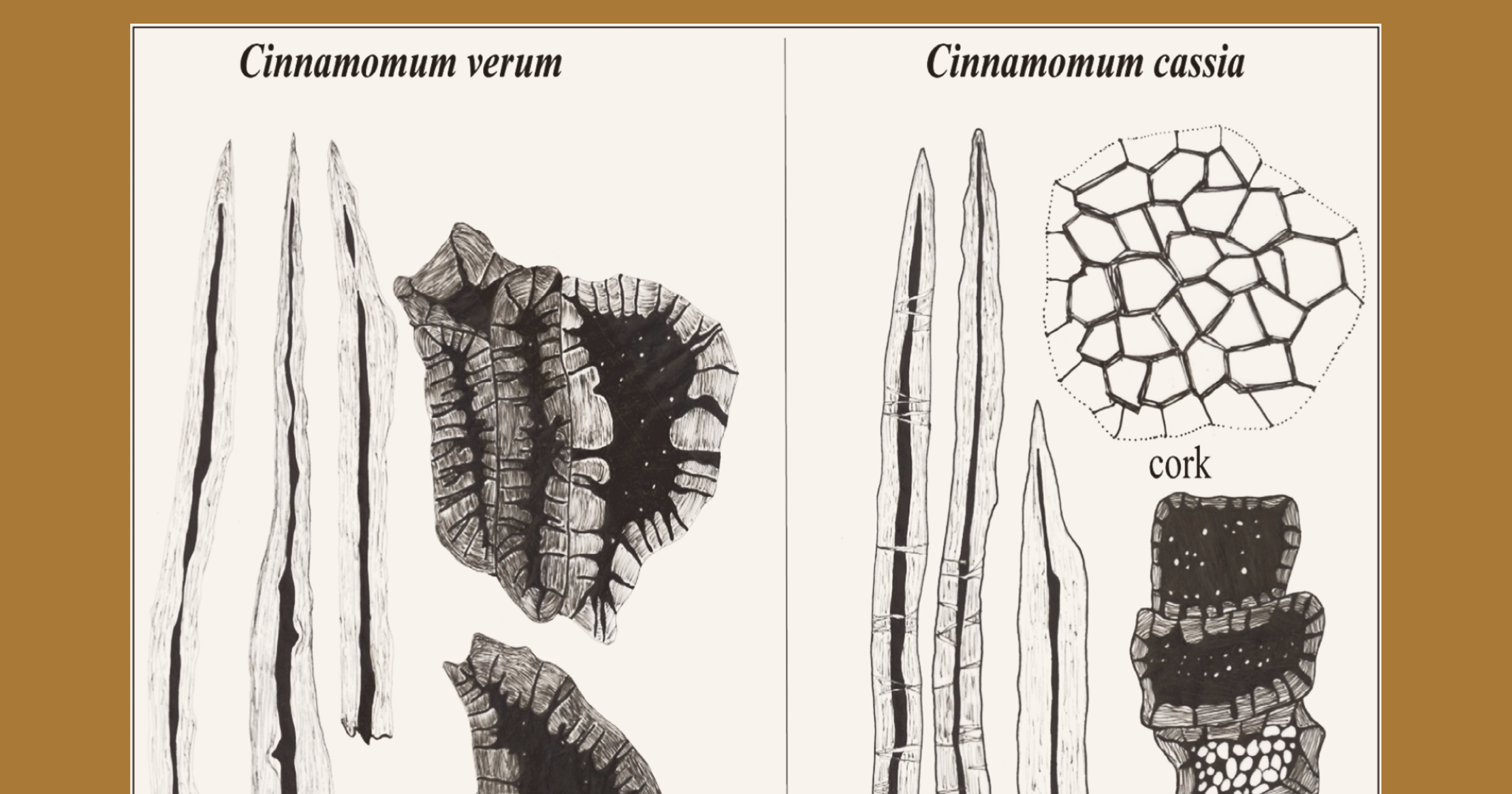
When it comes to which cinnamon to purchase at the supermarket, how much is there to consider? There’s price, size, country of origin … oh, and: “Is it actually cinnamon?” Most mainstay brands in your typical spice aisle don’t offer the real thing. Instead, they sell bark from cassia trees, a cheaper and more easily cultivated plant, under the same name.
In the U.S., regulators allow multiple plant species in the cinnamon family to be marketed as cinnamon, though only one, Cinnamomum zeylanicum, also known as Ceylon cinnamon, is the “real” varietal. You’re far more likely — nine times more likely, in fact — to come across Cinnamomum cassia (from China), Cinnamomum loureiroi (from Vietnam), or Cinnamomum burmannii (from Indonesia), all commonly known as cassia.
Ceylon cinnamon is often called “true” cinnamon and is native to Sri Lanka (formerly called Ceylon under colonial rule). Today, some 80% of Ceylon cinnamon is produced on the island — the rest comes from Seychelles, Madagascar, and northwestern India. It’s made using the inner barks of the Cinnamomum tree. Compared to the hard and hollow cassia bark, Ceylon cinnamon has a pliable texture and can be rolled like a cigar. Its flavor and aroma are extremely delicate and the ground spice is significantly lighter in color.
Cassia, on the other hand, is likely what you picture as “cinnamon”: a ground, reddish-brown powder with a strong, spicy-sweet flavor. And while the U.S. Food and Drug Administration (FDA) acknowledges them as distinct substances, it doesn’t require they be packaged as such. That’s why they both show up in stores labeled as cinnamon.
The traditional processing of Ceylon cinnamon is very labor-intensive. It involves cutting the trees; cleaning and washing them; removing the knots; scraping, rubbing, and peeling the tree; drying the sheets; and, eventually, rolling them into quills — all by hand. A skilled cinnamon peeler can produce four to five kilograms of dried processed cinnamon daily. To achieve this target, the peeler has to peel about 50 harvested stems, working 10 to 15 hours. The generally low-efficiency and high-labor process accounts for around 60% of the cost of production.
Alternatively, cassia cinnamon is made by simply cutting down the tree, removing the bark, drying it, and exporting it. In the global market, cassia outweighs true cinnamon nine to one. This figure has steadily increased over the past decade, largely due to rising prices of Ceylon cinnamon — its per-kilogram price has nearly doubled over the past several years.
Unsurprisingly, many large manufacturers opt for cassia over Ceylon cinnamon. And though price is the foremost cause, local producers’ failure to comply with international food safety regulations has also impacted exports. Since the early 2000s, Sri Lanka has run into problems with high levels of residual sulfur dioxide, which is often used as a fumigant to kill bacteria and preserve the light-brown color of the cinnamon. These hiccups in quality control have impeded growers’ ability to export Ceylon cinnamon to some of the world’s largest markets, including the EU.
“We are trying to bring in legislation to label cassia as cassia and cinnamon as cinnamon.”
“We are trying to improve production processes to make it less costly, look for alternate markets, and currently lobby countries to bring in legislation to label cassia as cassia and cinnamon as cinnamon,” said Ranjith Pathirana, an honorary research fellow at the University of Adelaide who co-edited the book Cinnamon: Botany, Agronomy, Chemistry, and Industrial Applications. Pathirana said the Sri Lankan government is also working to support more cinnamon processing operations on the island so producers can export more of the end product, weeding out “adulterated” cinnamon on American spice racks.
Some manufacturers mix Ceylon cinnamon with cassia and market it as true cinnamon, unbeknownst to the consumer. And once in powder form, it’s nearly impossible to check. A study by the Indian Institute of Spices Research of products labeled true cinnamon in India — one of the U.S.’s largest sources of cinnamon — found that seven out of 10 samples contained cassia. Cinnamon is also sometimes cut with other spices such as pepper and clove, bringing the consumer even further from its true flavor.
Homogenizing and repackaging imported foods under one blanket term is nothing new. Some 69% of the imported olive oils sold on American shelves don’t meet international standards for extra virgin olive oil. Saffron labeling has been found to be frequently misleading or downright fraudulent. And the various varietals of turmeric are all sold under one name. However, in the case of cinnamon, there is a small caveat: All cinnamon varietals contain some amount of a natural compound called coumarin, but the levels found in cassia are considerably higher — 63 times higher in Chinese cassia powder — than those in Ceylon.
“I think it’s important to know that there’s more than one cinnamon. Let’s start with that.”
Adults shouldn’t exceed 0.1 milligrams of coumarin per kilogram of body weight, according to the European Food Safety Authority. While you are unlikely to hit such high levels of coumarin in your diet, a survey of foods did find a few common cinnamon-flavored products, such as breakfast cereals and granola bars, in which the coumarin content in a single serving exceeds Europe’s guidelines for a young child. The EU now mandates that manufacturers distinguish Ceylon cinnamon from cassia following a set of regulations in 2008 limiting the amount of naturally occurring coumarin foods can contain.
Is coumarin toxicity a big concern? Ikhlas Khan, director of the National Center for Natural Products Research at the University of Mississippi, says not necessarily. Coumarin is primarily harmful to people with preexisting health conditions, though Khan still believes consumers should be better informed of the actual products in their pantry. This is especially true for those who are using cinnamon as a wellness supplement.
Meanwhile, true cinnamon is getting special attention. To the delight of Sri Lanka, Ceylon cinnamon was recognized by the European Commission as a protected geographical indication in February 2022, the same designation separating Champagne from other sparkling wines. This status helps differentiate Ceylon cinnamon from cassia and offers a competitive advantage for producers by increasing the potential for more exports and premium prices, said Pathirana. Many hope the designation will help revitalize the livelihoods of true cinnamon producers, which have not recovered since the rise of cassia in global markets. This means that any label stating “Ceylon cinnamon” is true Sri Lankan cinnamon, though it still does not prevent cassia from being labeled as cinnamon, too.
An important question: Is one variety actually better than the other? “I think it’s important to know that there’s more than one cinnamon. Let’s start with that,” said Lior Lev Sercarz, chef and owner of La Boîte, a spice shop in New York City. As raw products, both Ceylon and cassia are two distinct spices within the Cinnamomum family. Each has its own flavor profile and uses. Some say, similar to how prosecco isn’t any less a wine than Champagne, perhaps that’s how cassia should be considered.
“At the end of the day, [cassia] is cinnamon, it’s part of the family,” said Sercarz. “I understand that the people in Sri Lanka have been very protective of the craft and the labor, and I’m all for it. But at the same time, I love both products. The culinary applications are completely different.”
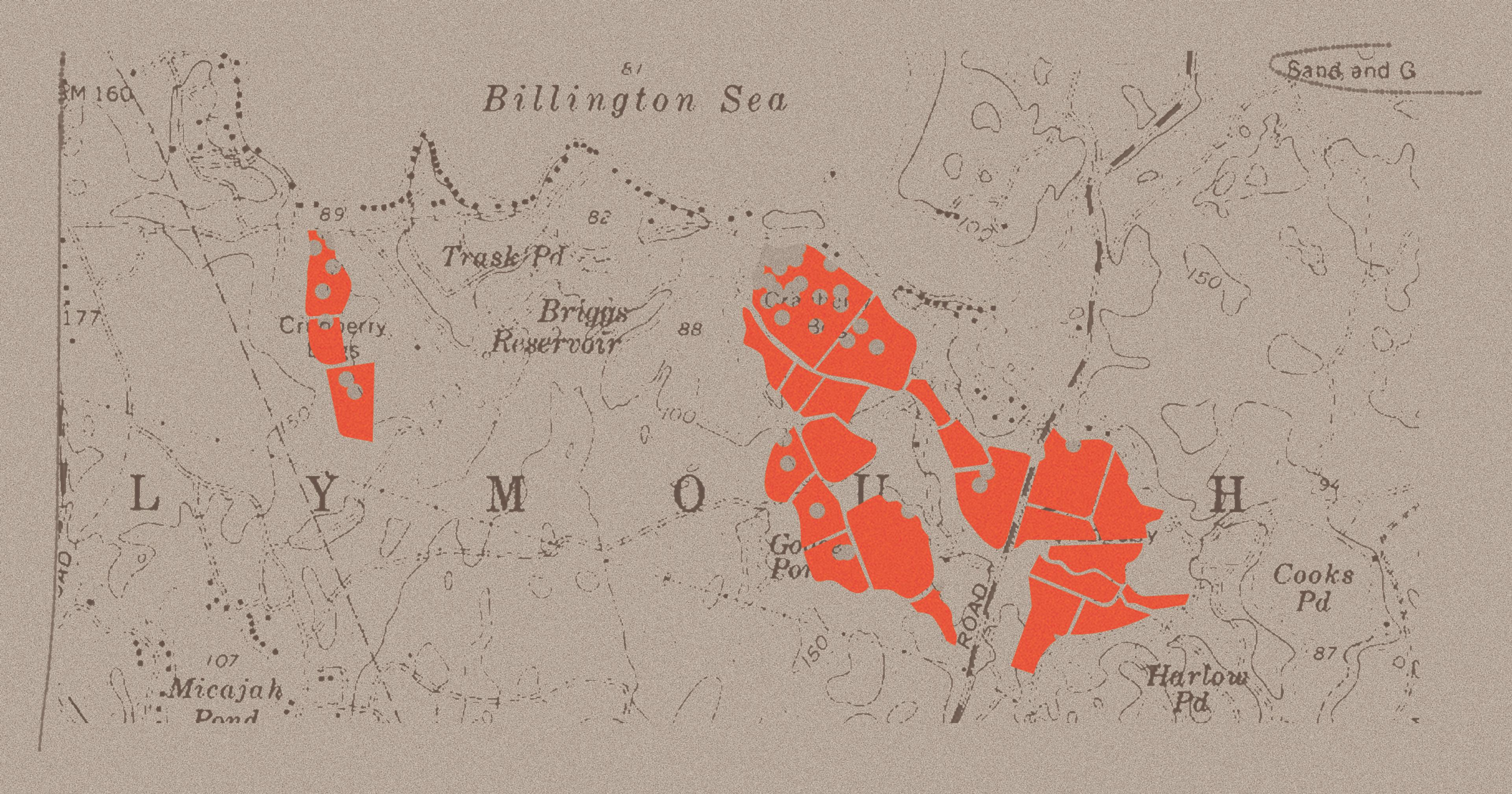
About a decade ago, Jeff Kapell was forced to make a calculation about the cranberry bogs he has owned and farmed in Plymouth, Massachusetts, since 1979. Like so many small growers in the state’s storied cranberry country, Kapell knew he needed to make upgrades in order to rival the rising hubs of cranberry production — Wisconsin, Eastern Canada, even Chile — where newer berry varieties outcompete Massachusetts’ legacy vines.
Making improvements would be costly, however, creating a tough equation in a market where oversupply and rising production costs meant that many farmers weren’t even breaking even.
But Kapell knew he had an attractive asset that could help mitigate his renovation costs. Sandwiched between the 12,400-acre Myles Standish State Forest and another protected forest owned by the town was a 14-acre bog where, he said, “production had fallen way off.”
For more than two centuries, farmers have been cultivating cranberries in Massachusetts, but doing so profitably has become more and more complicated. A flood of berries from other markets has led to dips in prices, while climate change has only added more uncertainty.
To survive, some desperate growers are turning to the state for relief.
Growers like Kapell, who figured that he could take advantage of efforts at the state, federal, and municipal level to compensate farmers for putting land into conservation, restoring it into natural wetlands.
With the advice of a local land trust, in 2020 he applied to the Natural Resources Conservation Service’s (NRCS) Wetland Reserve Program, which selected the 50-acre parcel, including 36 acres of uplands (the uncultivated raised area surrounding the bog) for funding. The agency pays a going rate depending on the state — that year in Massachusetts it was about $13,400 per acre — to place the land in conservancy, meaning that it can no longer be cultivated or developed. The NRCS also sets aside funds in escrow to be used for reconstruction of the wetlands.
Last year, the town of Plymouth, which had already been working with Kapell and the state’s Division of Ecological Restoration (DER) on project design and permitting, purchased the land for $175,000 with a commitment to revert the bog “back to naturally occurring wetlands.” Construction is expected to begin later this year.
The area where Kapell farms is ground zero for conservation of cranberry bog land. Three bog restoration projects have been completed in Plymouth, including Tidmarsh Wildlife Sanctuary, which at 481 acres is the Northeast’s largest finished freshwater ecological restoration project and is now open to the public.
Efforts to compensate farmers for retiring cranberry bogs ramped up in the mid-2010s, when the state legislature formed a committee of growers, politicians, and scientists to study ways to save the industry.
“I had been losing money for four or five years in a row. I had had enough.”
“Cranberry farmers were notifying their legislators that, ‘Hey, we’re really struggling here. We need help. We need options,’” said Alex Hackman, director of ecological restoration at Mass Audubon and former head of the state’s Cranberry Bog Program.
In 2016, the bicentennial of cranberry farming in Massachusetts, the Cranberry Revitalization Task Force laid out in its final report the immense changes needed for the industry’s farmers to survive. To be viable, they concluded, growers needed to increase production by planting newer, more productive varieties of cranberries. And to fund those modernization projects, they needed easy access to loans or grants to invest in their bogs.
Even with such measures, they determined, the state needed to come up with an “exit strategy” for the farmers who were ready to get out. A subsequent study found that 20 percent of currently cultivated cranberry bog acreage in the state is likely to be retired given the aging community of farmers, the realities of the market, and the increasingly disruptive effects of climate change.
“This task force said, ‘If all these farmers are going to retire, we need a way to help them retire,’” Hackman said.
In 2017, the DER created its Cranberry Bog Program dedicated to helping the owners of retired bog land with the arduous process of permitting, project design and “pushing dirt.” It received $10 million from the NRCS in 2020 to “protect and restore over 1,000 acres of retired cranberry farmland” and announced six new wetland conservation projects on top of seven ongoing ones.
David Gould, energy and environment director in Plymouth, said he knows of another three or four current bog owners in the town who are “looking at their possibilities” in terms of retiring portions of their land.
“Cranberry farmers were notifying their legislators that, ‘Hey, we’re really struggling here. We need help. We need options.’”
For the region, where a cranberry farmer wading through their bog is an iconic autumn scene, such a contraction can be hard to stomach. There are still about 13,000 acres of cultivated bog land in the state, the second most of any global region after Wisconsin, but consolidation is occurring in an industry with historically high rates of small farms.
“We don’t always necessarily have the best farmland in southeastern Massachusetts, but farming for cranberries was always a possibility,” Gould said. “It’s one of those things that we grew up seeing being done and I think that history is important. Certainly there are bogs that I hope can remain in agriculture, and then there’s others that have really done significant damage to headwaters and diadromous fish runs and it’s fantastic to see those being acquired and restored.”
Although cranberry bogs may resemble natural wetlands, in many ways they disrupt local environments. Dikes and dams have often been built, affecting runs of fish like herring, and nitrogen runoff can pollute waterways.
Every three to five years, cranberry farmers add several inches of sand to the bogs to improve drainage, suppress pests, and promote growth. Over 100 years or more, those layers of sand add up and need to be dug out for native plant species to take hold again.
Much of the engineering work revolves around hydrology, said William Giuliano, head of the state’s cranberry bog program. Priority sites for the state and environmental groups typically have a natural waterway running through the bogs. The majority of the state’s bogs are in kettle-holes, lowland depressions of peatland formed by retreating glaciers.
“Most of our work deals with reestablishing the correct hydrology. Sometimes we’ll plant but if we get the soil conditions and hydrology right, the plants will usually come back on their own,” said Giuliano.
“We don’t always necessarily have the best farmland in southeastern Massachusetts, but farming for cranberries was always a possibility.”
When the excavators have left the site and the work is done, Hackman said, “it looks like we set a bomb off.”
“But there are clues that we did this well because we’re seeing standing water, rich dark soil, no barriers to how water is moving. The healing has started and nature just takes over at that point.”
For Erik Hamblin, a carpenter on Cape Cod who farms cranberry bogs as a side job, conservation presented an opportunity. He was approached by a local environmental organization about potentially retiring his bogs so they could be used as wetlands to mitigate nitrogen pollution from nearby septic tanks.
“I had been losing money for four or five years in a row,” he said. “I had had enough.” So Hamblin agreed to sell nearly 47 acres of bogs to the group, which will be part of a 78-acre wetland restoration area. He set aside an acre of bog for himself to plant higher-yield cranberry varieties on and some other land that could be developed as a retirement backup plan.
His bogs have been in production since 1849, and their old varieties only produce about 100 barrels per acre, he said, whereas newer ones “can do 400 to 600.”
“Bigger growers can afford to [modernize] and they basically put the smaller growers out of business,” he said.
While retiring bogs is often seen as part of that process of going out of business, organizations involved in restoring wetlands are attempting to make it as beneficial to growers as possible.
“There are clues that we did this well because we’re seeing standing water, rich dark soil, no barriers to how water is moving.“
The National Oceanic and Atmospheric Administration recently awarded a $4.5 million grant to the state, the cranberry grower’s association, and a slew of environmental organizations to target 2,200 acres of current and former cranberry bog land for restoration. The project focuses on farmland “at risk from future sea level rise and storm surge inundation.” Sixty-seven parcels identified as meeting this threshold are still being actively farmed, while more than 200 others have been abandoned.
One unique facet of the project is the proposed employment of growers in the engineering process. The farmers themselves tend to have the necessary equipment for moving large amounts of sandy earth, and the familiarity with the land. So discussions are underway to create a “wetland restoration guild” for growers with expertise, equipment, and interest who could bid and potentially construct the projects.
“We’re trying to be mindful of the economics of making restoration and conservation able to compete,” Hackman said. “And then maybe we start to get a packet of incentives that can rival some of the other kinds of development.”
For Jeff Kapell, the process of restoring his 50 acres of land to natural wetland has been a frustrating one. Years after getting approval for the conservation easement, he and the town of Plymouth are still waiting for final permitting. Navigating the process with a web of agencies has been arduous, and delays have driven up the cost.
“I would say that the regulatory review for this particular project has been about what a strip mall developer in a wetland would receive. It doesn’t reflect consideration for the fact these projects ought to be encouraged,” Kapell said. “Having learned what’s involved, I wouldn’t do it again.”
It seems that all those involved in wetland restoration are aware of the issues with permitting delays and the need to streamline the regulatory process. Giuliano, the head of the state’s cranberry bog program, said that so far completed projects have averaged more than seven years from start to finish — something that the agency hopes to whittle down, along with costs.
Still, in many ways the funding Kapell received has served its purpose. His remaining bogs have now been upgraded with newer high-yield varieties and the business is on firmer ground.
Now in his 70s, despite ups and downs in the industry he has no regrets about purchasing his bogs more than four decades ago after leaving his job as a high-school science teacher.
“It just appealed to me as a way of life. And that has proven to be absolutely correct,” he said.

Stephenville High School senior and FFA (formerly Future Farmers of America) member Charleigh Feuerbacher does not come from a traditional farming background. Her father is a landscaper and her mother works for the government of their central Texas town. But growing up surrounded by farms and her father’s plants, she developed an interest in horticulture.
So when Feuerbacher took Principles of Agriculture as a freshman, she was immediately drawn to the school greenhouse and its hydroponics operation. The 10 soilless growing systems were constructed for less than $30 a piece, using a dark plastic tub and aquarium airline pumps and oxygen stones. “I’m very passionate about the real world effects that these systems have,” she said.
Encouraged by her FFA advisor Savannah Bowers, Feuerbacher decided to do a Supervised Agricultural Experience (SAE), a work-based learning project overseen by a teacher, focused on hydroponics research. The studies she completed — testing the effect of different sugar additives on plant growth and how best to increase the Vitamin C content of greens — earned her the national Proficiency Award in the category of Agricultural Research - Plant Sciences at the FFA National Convention last November.
Feuerbacher’s highly technical, lab-based SAE is a long way from modern stereotypes about FFA — think Napoleon Dynamite taste testing milk. “Kids are raising pigs and sheep and steers and getting their blue ribbons for corn,” acknowledged national program specialist Brett Evans. “But there’s a whole lot more.”
According to Evans and his colleague Madeline Young, the National FFA Organization is continually updating its programming to meet the technological advances, challenges, and opportunities facing 21st-century agriculture. Whether broadening SAE categories or taking steps to attract urban students and students of color, Evans and Young said that the organization is working to ensure it stays relevant and helps grow the nation’s agricultural workforce.
So far, the efforts seem to be paying off. Membership grew 11% in 2023 alone, to nearly 950,000 students. “We’re about to break a million members,” Evans said of the organization. “It’s more important than it’s ever been.”
Growth Areas
Even a brief skim of the 2023 National Proficiency Award winners’ projects demonstrate that today’s FFA students are doing innovative, cutting-edge work that engages with all the latest technology. They are founding their own genetics labs to test ruminant blood for pregnancy, creating podcasts to interview agricultural leaders, flying drones, and breeding hypoallergenic Yorkie Poodles (aka Yorkie-Poos).
To ensure that its Proficiency Awards reflect growing trends in agriculture, FFA’s committees regularly review and update the award’s categories. “Social media has played a huge factor in the things that students are being influenced to do or to try,” said Young. Some of those trends are decidedly old school: “Right now, there’s a huge craze in homesteading,” she said.
One effect of this emphasis on growing your own food, said Evans, is an increase in diversification. On the production side, that could mean a student growing vegetables and raising a couple of cows, whereas a student with a research SAE might want to design multiple studies looking at animals, plants, and machines.
As consumers have become more anxious about the global food supply chain in the wake of pandemic shortages and food recalls, Young said that students are also designing SAEs around foodborne illnesses and even food labeling. She recently read an SAE application from a student comparing consumer impressions of different gluten-free baked goods in terms of taste, texture, and composition.
They are founding their own genetics labs to test ruminant blood for pregnancy, creating podcasts to interview agricultural leaders, flying drones, and breeding hypoallergenic Yorkie Poodles (aka Yorkie-Poos).
Evans noted a rise in SAEs focused on value-added products, a topic that inspired intense debate in his project committee. “If you grow apples, that’s agriculture. If you market apples, that’s agriculture. If you pick apples, clean them, put a sticker on them, and ship them to the grocery store … agriculture, or something else?” They have not decided yet whether to add canning and food preservation as new SAE categories.
It’s also clear that some of last year’s national Proficiency Award winners consider things highly technological that others may consider simplistic. When asked about the role of technology in his award-winning Specialty Crop Production project, for instance, North Huron FFA member Noah Koth doesn’t start with the precision agriculture class he is currently taking as a college freshman.
Instead, this fourth-generation farmer sees the real technology in the sugar beets and turtle black beans that his family plants, harvests, and transports on 1,200 acres in Kinde, Michigan. “Plants almost have their own computer system,” Koth said. “If they’re dry, they’ll shrivel up their leaves so that sunlight is hitting less of the area of the leaf.”
Similarly, Clancey Krahn, last year’s winner in the National Proficiency Award in the Dairy Production - Entrepreneurship category, considers one of the most modern aspects of her family’s five-acre dairy farm in Oregon to be its complete vertical integration — a self-sufficiency common before processing facilities became concentrated among a few large corporations. “We do everything from birthing baby calves, to processing milk, to shipping your milk, all on one property,” she said.
Krahn uses SenseHub monitoring technology to track her cows’ rumination and heat cycles, but the most innovative decisions during her SAE had everything to do with resilience and adaptability. During the online-only education phase of the pandemic, Krahn learned her school might shut down its agricultural program, so she transferred to Scio High School.
“She has a drive and a desire to do well and succeed, as well as a passion for agriculture and the dairy industry that I think is very rare to come by,” said Krysta Sprague, Krahn’s teacher and FFA advisor at Scio.
Diversifying Both People and Projects
Another way that Evans and Young are trying to ensure the ongoing relevance of FFA is to better support non-rural chapters and FFA members of color. When it comes to evaluating SAEs, Evans said, “we are trying very hard to start kids off on a level playing field.”
Even so, none of last year’s four American Star Award or national Proficiency Award winners came from an urban chapter.
“I was surrounded by rural America. So that was what our ag program was,” said former National FFA President Bre Holbert of her experience in high school as a non-traditional agriculture student and FFA member in the city of Lodi, California. Since her school’s SAE pathways prioritized projects suited to students with a rural background, Holbert found it easier to focus on leadership development events like public speaking. This path eventually led her to become the first female African-American national president in 2018.
Holbert now teaches agriculture and is an FFA advisor at Florin High School, a suburban-urban chapter 20 minutes from downtown Sacramento. With over 70 languages spoken, the school has a number of immigrant students still learning English, “which makes FFA a little hard because I think there’s a lot of language barriers to a lot of the contests,” said Holbert.
Given these barriers, Florin’s Ag Academy focuses more on SAEs than public speaking events. To meet the skills and resources of a non-rural student body, the curriculum also emphasizes co-ops, or group projects, that allow students to pool their knowledge. Current co-ops include making and selling goat milk soap, selling eggs, and raising animals to show at fairs.
Then there’s Florin’s drone team, headed by captain Honest Lee, a senior who made it to state finals this year with his SAE project. “Since drones being implemented in agriculture might be a bit foreign to many students, they might be a bit afraid to use it,” he said. “Being able to talk about my project and what I do might have inspired a few students.”
Lee’s SAE involves three major components: performing pre- and post-flight maintenance on the school’s DJI Mavic 2 drones, overseeing flight missions, and providing mapping and photography, primarily for the state’s SLEWS program, which pairs high school students with habitat restoration projects. Lee and his team members have mapped irrigation lines and checked on the status of mulch and native plants.
“We are trying very hard to start kids off on a level playing field.”
A first-generation American whose parents grew up around farmland in the highlands of Laos, Lee wants people to know that agriculture is so much more than farming. For him, this principle encompasses not only his drone project but also the public speaking and leadership experience he gained. “This experience has taught me more how to speak out with passion,” he said.
While Lee made it to the state finals, Holbert acknowledged that Florin’s students rarely become national finalists. With an FFA chapter of 700 students, “we don’t have time here to really sit down with the kids” and help them with applications, Holbert said.
Patrycja Zbrzezny, assistant principal and director of John Bowne High School’s agriculture program in Queens, also cited this issue. Plus, in an inner-city school where at least 75% of students receive educational assistance, affording the trip to the national convention in Indianapolis is itself often a deterrent, she said.
Zbrzezny — herself a graduate of the program in 2006 — prioritizes breadth over depth with her non-traditional students: “We try to open up the world of ag to them to experience it all.” The school’s 3.9-acre farm includes miniature horses, goats, and sheep, as well as 150 laying hens whose eggs the students sell at their agricultural stand. Two acres are for crop production, and their orchard grows 11 varieties of apple. There are hydroponics and aquaponics systems, and rodent, reptile, and amphibian, and exotic animal labs. Students learn agricultural mechanics at the tractor shed, and this spring will see the addition of beehives.
For their SAEs, the program’s 500-600 students work in a variety of non-traditional spaces, from veterinary offices and zoos, parks and botanical gardens, and university labs. Zbrzezny also encourages students to pursue policy-focused SAEs, working with nonprofits like GrowNYC or the recently established Office of Urban Agriculture.
The students may not produce as many award-winning SAEs as better-funded and more rural chapters, but the impact of the program is undeniable. John Bowne’s FFA graduation rates are regularly around 90%: the best out of all the programs in the 3,000-student school, which also has STEM, arts, law, computer science, and health tracks. Each year, the program receives approximately 1,000 applicants for 150 spots; most come from Queens, with some from Brooklyn and even the Bronx. Approximately half of the students are Hispanic, followed in size by African-American, Asian, white, and multiracial students.
Zbrzezny estimates that approximately 80% of their graduates who go on to college pursue degrees related to agriculture. She regularly has alumni come back to share their journey, “to show our students that it is possible for them to get there, too.”
The Future of FFA
According to Evans and Young, the most important factor in shaping a successful SAE is the passion and support of a good teacher. And that is also the biggest challenge the organization faces. “The number one problem we have is not enough teachers,” said Evans. “We have schools that want to open programs, but we are not producing enough teachers to meet the demand.” Of the teachers that are available, he added, not enough are teachers of color.
For Holbert, it’s also important to ensure white teachers are open to non-traditional ways of approaching agriculture, FFA chapter activities, and SAEs. “I came into a time where the organization was moving towards celebrating more diverse spaces and becoming more inclusive,” she said of her time as national president. Yet more than 75% of FFA’s 950,000 current student members are white.
Even with these barriers, Holbert finds that many of her students thrive doing the hands-on work of Florin’s agricultural program. “I’ve seen students that have planted a seed for the first time who do not do not speak a lick of English,” she said. “And they’ve been able to bring it in class and put their name on it, and they were so happy to take it home.”
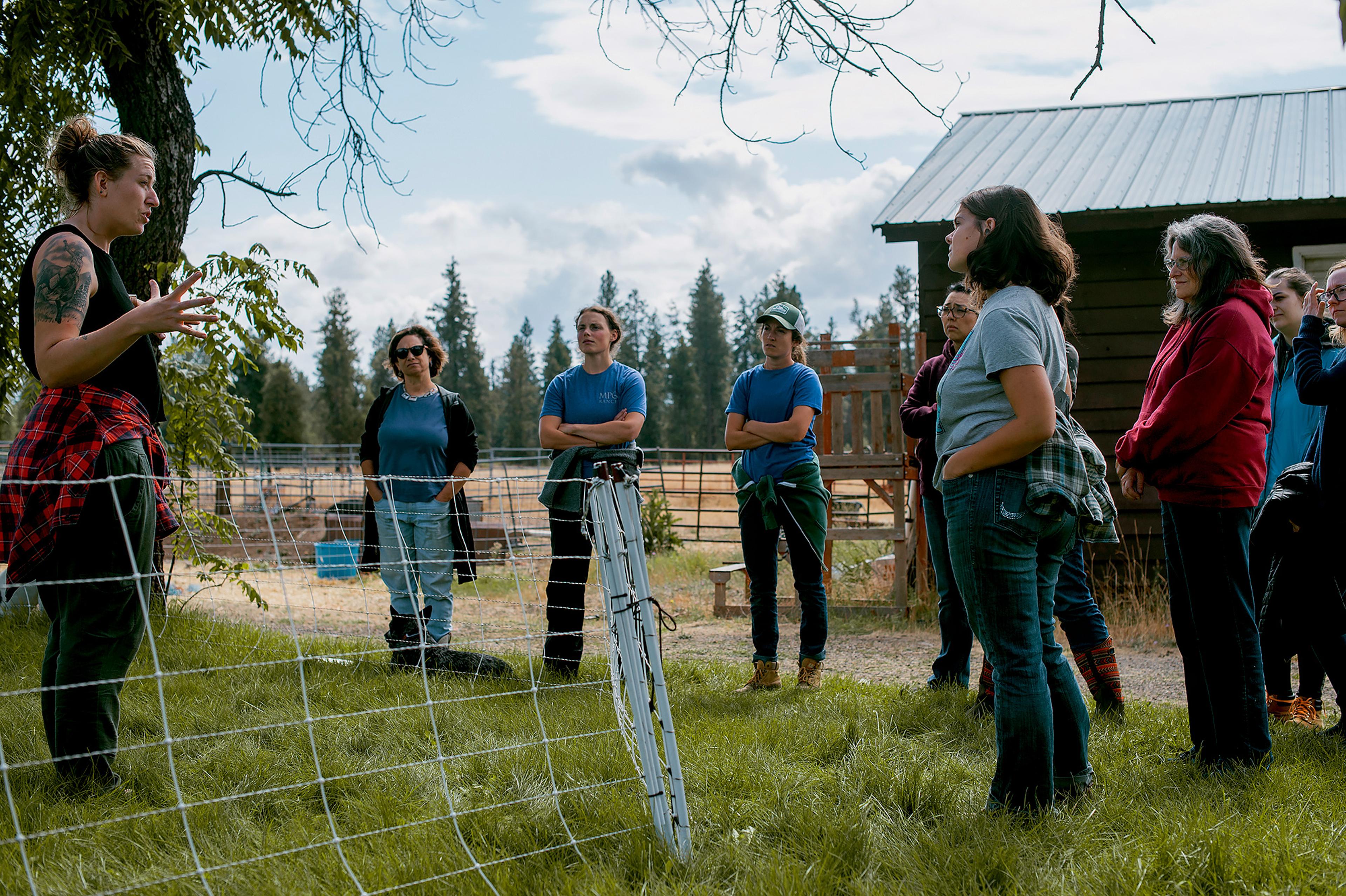
Growing up on her family’s ranch in Eastern Washington, Beth Robinette saw how the community of ranchers helped each other. “My dad had all of these buddies that would help him with stuff,” she recalled. They traded skills like welding and paving, and worked together when needed. But the fourth-generation rancher, who now works alongside her father, also saw firsthand how the industry fails at disseminating information to newer or younger farmers, particularly to women. “I want a cool welding buddy!” she joked.
But Robinette is dead serious about the real issue of a homogenous, aging, and increasingly insular industry. “There are already so many barriers to entry in terms of accessing land and capital,” Robinette added. “There’s all of this knowledge and there’s a lot of gatekeeping.”
To break down those gates, Robinette started New Cowgirl Camp from her own ranch, where she teaches people how to build fences — among a slew of other necessary and practical skills. The idea of the five-day intensive came directly from Robinette’s frustration with the insularity and exclusive nature of the industry and a desire to change that. In doing so, she hopes to change the future of farming.
“I have all the street cred,” Robinette said, remembering how she used to find herself belittled in interactions with other ranchers. As a young woman in the industry, she stuck out at conferences. “It was like I was a small child.”
The average age of American farmers is 57. Ninety-five percent of them are white. Much of the land they work is degrading. “The paradigm is wrong,” Robinette said. As an adherent to the principles of holistic management, she knew she had to look to the root of the issue. “If you can fix the root cause of something, then you don’t have to keep solving that problem over and over again.”
Fortunately Robinette saw a way to fix it: give rancher training to women and others who are historically disconnected from land ownership. “We have really big land management problems to solve and a huge question about who the next generation of land managers is going to be,” she said. “We need to be creating pipelines for them to move into land management.”
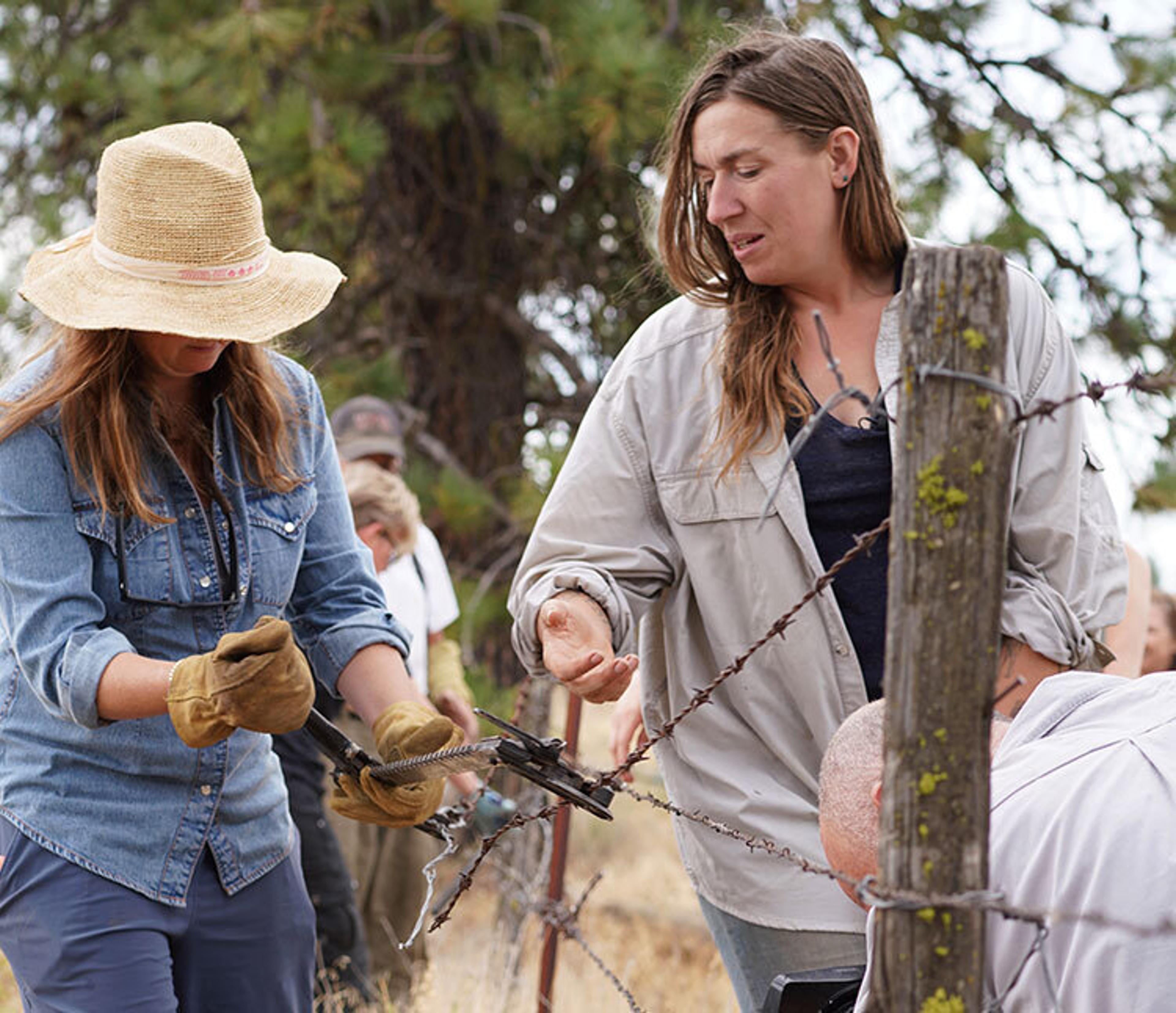
Beth Robinette teaches New Cowgirl Camp participant Kate Gundry how to use a fence stretcher.
New Cowgirl Camp, facilitated by Robinette and Sandy Matheson, a retired veterinarian and rancher, aims to do just that — to help people gain the skills and experiences typically available from family and/or the old boys’ club. While the aging farmer population is part of the issue it aims to solve, New Cowgirl Camp doesn’t focus exclusively on young people, but on opening doors for all women and non-binary people. The oldest participant of the 100 or so students from roughly 10 camp sessions was 67. The youngest was just a few months — a baby tagging along with its mother.
“I don’t think I would have been able to enter into this field any other way,” said Regan Williams, who attended the 2022 session. Williams had previously attended a different holistic land management course and found the difference palpable. Most of the people at the course either already owned land or had the resources to acquire it. Brittany “Cole” Bush, a well-known regenerative agriculture activist and educator, spoke at the course and also taught at New Cowgirl Camp. While Williams found the environment too intimidating to approach Bush at the former, the intimate and welcoming environment of camp allowed her to connect directly — with whom she now works, at Bush’s Shepherdess Land & Livestock Company.
The camp’s $1250 fee covers the expenses to run the camp, food, and kind-of boarding — participants camp out on the ranch. Scholarships from private funders and alumni cover fees for about half the attendees. The framework of holistic land management shapes the broad curriculum, looking at bigger questions such as “What is the world that we’re trying to build?” and using the concept of a triple-bottom-line to make decisions — based on environmental, social, and economic factors. Hands-on sessions teach specific skills: how to check a pregnant cow, make grazing plans, and diagnose soil.
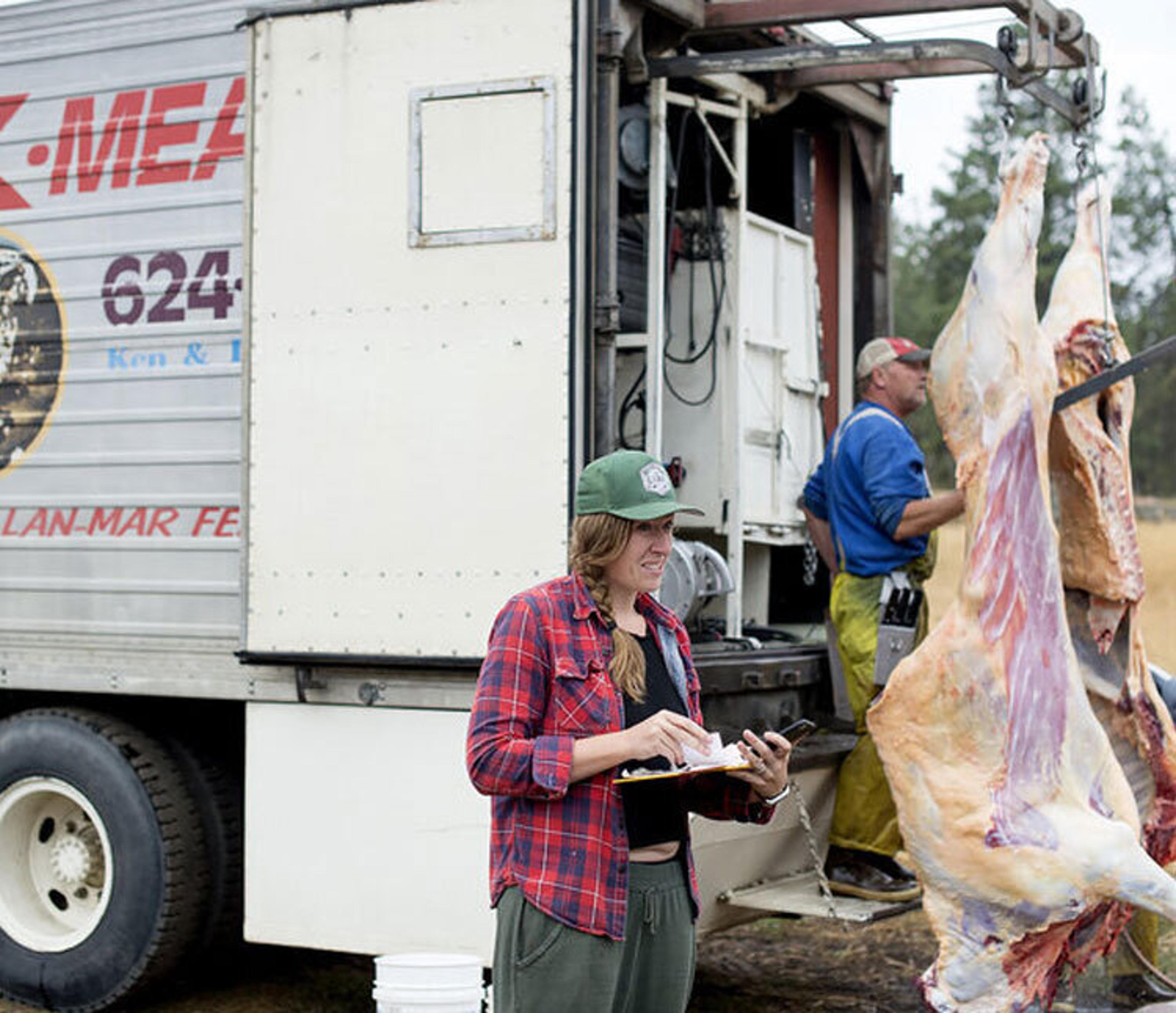
The Robinettes run a custom grass fed and beef business outside of Spokane.
“When we say, ‘Good meat comes from a certain place or certain practices,’ I wanted to see what that meant,” said website designer Kristina Glinoga. For Glinoga, a butcher at the time, learning animal husbandry from Matheson, a retired veterinarian and rancher, gave her the perspective on what that looks like in practice.
Other parts of the course were less relevant to her, but connecting with fellow aspiring ranchers was the most important part. “It was one of those moments that you don’t know that you needed something like this until you were there and you got it,” Glinoga said. Much of the group came from male-dominated workplaces — kitchens, butcher shops, ranches. “To go to a place like that and learn the subject matter in a way that was not deeply entrenched in toxic masculinity in any way, shape, or form, was so powerful and so moving, and I wish that for everyone.”
While Robinette designed the camp to disseminate information, she also aims to create the peer group she lacked and to bring in the voices she hopes guide the future of land management. “There were a handful of other people of color at the cohort I went to, and so that was super-cool to get that level of camaraderie with folks,” Glinoga noted.
Robinette isn’t sure exactly how many of the participants go on to work in the industry, but she doesn’t consider that the only form of success. A few attendees learned ranching is not for them before they get too deep. Some came in with resources that allowed them to enter or continue in the industry. Some, like Williams, found a foothold to start their career.
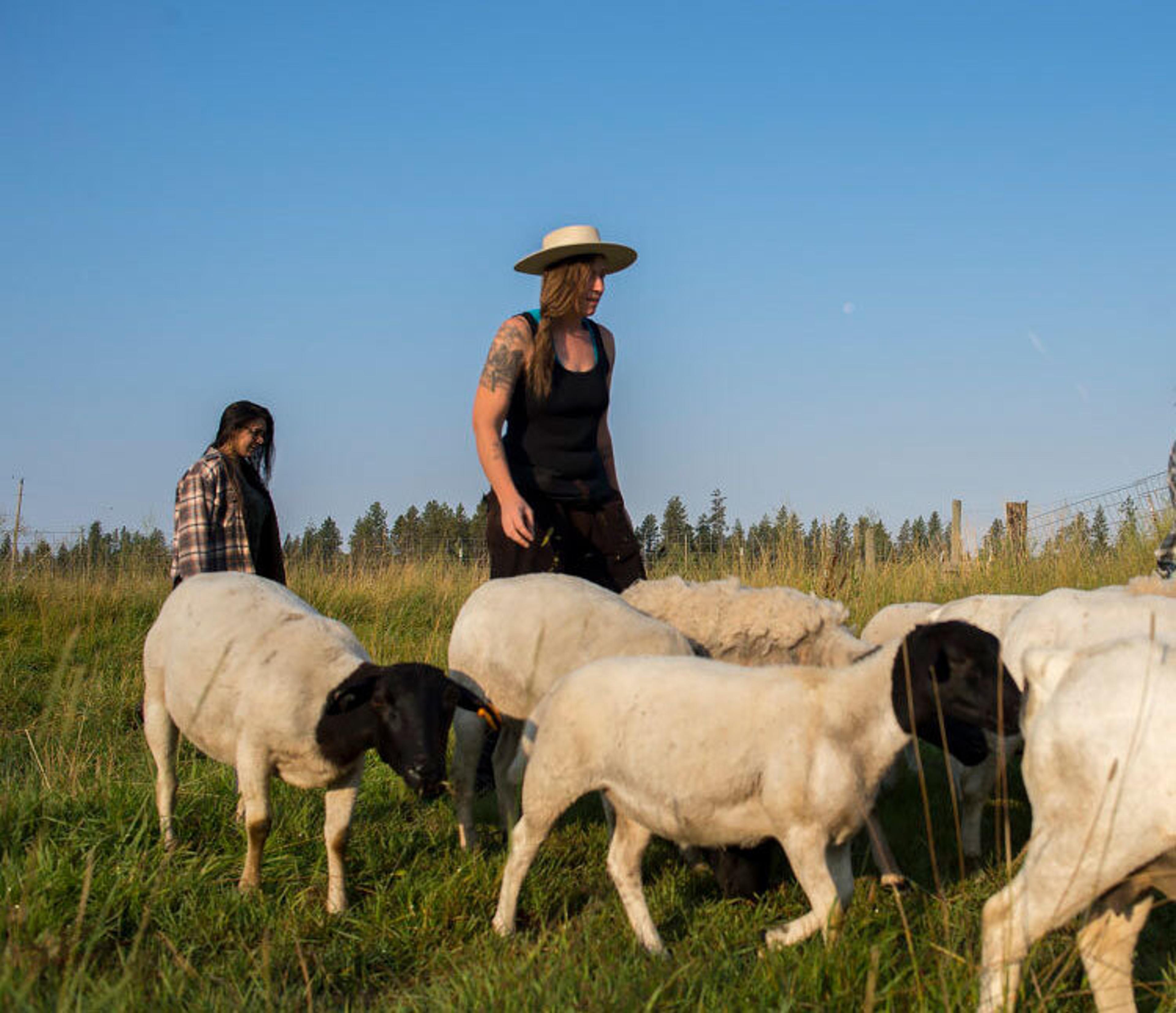
Cofacilitators Beth Robinette and Alex Machado herd sheep.
Others run into roadblocks harder than a male-dominated industry. The price of land, of housing, and the reality of living and surviving in America can still prevent people of all genders from becoming ranchers. “There needs to be more infrastructure that helps create the pipeline of getting these people on the land and actually being able to do stuff,” said Robinette. She is already working on how to advance cooperative models and what the New Cowgirl Camp 2.0 might look like.
In a country with more than three million farmers and ranchers, Robinette knows her program can’t single-handedly change the industry, but she sees it as one element in the ecosystem necessary for wide-scale revolution.
In the meantime, she sees some changes immediately: Each time a new cohort arrives for camp, she creates that peer group her father had — but better. “We’re taking that network, and we’re blowing it up times a thousand, because we have not only people who are awesome welders and construction workers and graziers, but we also have people who’ve done PR, grant management, and consensus facilitation.” While those skills might not have been valued in the traditional model of agriculture, Robinette sees them as important pieces in the puzzle of stemming the effects of climate change, ameliorating soil degradation, and shifting the paradigm with the next generation of American ranchers.
Just over 20 years ago, cultivated truffle farming was virtually unheard of in America. Truffles were an exotic, gourmet crop directly associated with Europe. But that’s changing — and fast. The North American Truffle Growers Association (NATGA), which was established in 2005, estimates that there are currently more than 200 truffle orchards in the U.S. Some experts even suspect the American market will surpass European truffle production in the next few decades.
NATGA’s president Margaret Townsend owns a 25-acre truffle orchard in southern Kentucky, which she planted in 2012. “When I started this project 13 years ago,” she said, “the question was ‘If?’ And I think more and more, the question is becoming ‘When?’ and ‘How much?’ I think we have made that much progress.”
A Crop for Patient People
Foraging wild truffles (truffle hunting) has been the dominant means of truffle collection for most of history, because the science of growing truffles is complex. Few growers are willing to share the details of their process, but the basic recipe alone is fascinating. You start by inoculating tree roots with truffle fungus in a laboratory or nursery. Different truffle species thrive alongside different trees: Black Périgord truffles seem to prefer oak and hazelnut trees, while the white Bianchetto is happiest on the roots of pines.
Next, the inoculated saplings are planted in a very base soil (most truffles require a pH level around 7 or 8) with a light, aerated structure. Truffles grow underground, so they need the space to do so. Proper irrigation is also crucial —truffles like a moist, but not sopping wet, environment.
And then, you wait. For years.
“It seems to take between 8 to 10 years for a tree to start producing its first truffle,” said Olivia Taylor, a grower and researcher with Virginia Truffles, a six-acre farm of hazelnut and oak trees inoculated with Périgords. “It’s definitely for patient people.”
At Burwell Farms, now the largest truffle producer in North America, the owners were told to “expect truffles in 6 to 10 years, if ever,” said plant biologist Jeffrey Coker, president of Burwell Farms.
But three and a half years after the first orchard of inoculated trees was planted, Burwell Farms found its first truffle by accident.
“We weren’t even looking,” said Coker. “Fast forward to our most recent orchard, we knew to look, and we had dogs that were trained to look. In the second year after planting that orchard we found somewhere between 10 and 15 pounds of truffles. In a two-year-old orchard. That’s not supposed to be possible, but it is possible, because we’ve figured out how to farm.”
The Truffle Hierarchy: Subjectivity and Dollars
Not all truffles are created equal. There are thousands of different truffle species, including several that are native to the U.S. “Unfortunately,” said Robert Chang, managing director of the American Truffle Company, “none of the native North American species is really worth a lot economically and that’s because they simply don’t have the aroma and the flavor of the European species that have traditionally been prized by chefs.”
The Italian white truffle, tuber magnatum, is widely considered the world’s best truffle, and it routinely sells for up to $6,000 a pound. While valuable, this truffle is significantly more fragile and finicky than other truffle species, so efforts to cultivate it outside of its wild-growing environment have been thus-far unsuccessful — leaving the supply to what is harvested from the wild and keeping the price point high.
The Périgord black winter truffle, tuber melanosporum, is another highly-prized species that typically fetches around $100 an ounce. This is what American Truffle Company focuses on growing with its partners, and according to a 2022 NATGA survey, this is the predominant species grown in American truffle orchards.
But Burwell Farms grows the white bianchetto truffle (tuber borchii) on its orchards of loblolly pine trees. Burwell sells their Bianchettos at $105/ounce, comparable to the market price for Périgords. “We try really hard not to engage in this conversation about which truffle is better,” said Coker. “Truffle aroma is like 70 to 80 volatile compounds all hitting you at once, and people’s genetics are very complicated around taste receptors and things like that.”
“Truffle production in the United States will be dominated by the Southern states.”
Coker said the idea that Périgords are superior in flavor to Bianchettos is a cultural hand-me-down from Europe. “In Europe, [Bianchettos] are easier to find in nature,” he said. “So culturally, it becomes a little bit less prized, not because of the truffle itself, but because there are more of them.”
The Bianchetto thrives in a wide variety of pH levels and soil structures, and naturally grows on the roots of pine trees, which thrive in the southeastern U.S. Black truffles, on the other hand, are “finicky,” said Coker. They are sensitive to changes in pH and soil structure, and the trees they grow with — oaks and hazelnuts — are prone to blight.
“I’d love to say that it was all because of our farming talent and scientific brilliance,” said Coker. “But the biggest thing is just that it’s a better system … that’s easier than those black truffle systems.”
The simplicity of these connections — loblolly pines thrive in the Southeast, and bianchetto truffles thrive on loblolly pines — has led Coker to believe that the southeastern U.S. will lead the way in American truffle farming. “Truffle production in the United States will be dominated by the Southern states,” he said.
The Promising Future for American Truffles
Europe is currently the largest producer of truffles for the global market, but there is evidence this won’t be the case for much longer. Professor Paul Thomas, chief scientist at the American Truffle Company, published an article in 2018 assessing the future of Europe’s black truffle market alongside climate model projections. He predicts a decline of up to 100 percent in European truffle production between 2071 and 2100.
“The conclusion is that within 30 years, the largest producer of truffles, which is Spain, will have gotten so hot and so dry that it would no longer produce,” said Chang, Thomas’s business partner. “It becomes a great opportunity for American truffle producers … to pick up that slack and shift the center of production away from Europe and more to North America.”
Of course, the author of the study has a clear interest in promoting the viability and promise of the American truffle market, but other trends point toward increased domestic success in the coming decades. For one, NATGA is working to obtain specialty crop status for truffles in the U.S., a goal they hope to achieve as early as this year. Specialty crops are defined by the Specialty Crops Competitiveness Act of 2004 as “fruits and vegetables, tree nuts, dried fruits, and nursery crops (including floriculture).” Earning this status would make it easier for American truffle farmers to obtain federal support, which has been crucial to the development of the now-flourishing truffle industries in countries like Spain and Australia.
“If we had specialty crop status, which we’re working very hard to establish, then [USDA] grants and investments would be so much easier for us,” said Townsend. “If you have been established as a specialty crop, your market, your growers — everything is much more clearly defined and there’s less documentation required. It brings credibility to grant applications.”
This status and increased access to grant money will provide an opportunity for more controlled research and development that can improve outcomes for American truffle farms. “Controlled experimentation is not necessarily the norm with truffle farmers,” said Townsend. “We’re so busy trying to crack the code that it’s very challenging for us to be able to run controlled experiments in our own orchards. It’s very, very important that we have researchers working with us who are working across multiple orchards to design those controlled experiments.”
Between climate change and the impending specialty crop status designation, American truffles could very well be poised for a dramatic increase in production and value — thanks, in large part, to the efforts of a small group of passionate, curious, and incredibly patient farmers.
Not so long ago, genetic engineering was little more than a science fiction fantasy, a “Twilight Zone” nightmare, or a “Seinfeld” punchline. (It’s a pig-man, Jerry!) But in the decades since the early days of cloning sheep, genetic engineering technology has grown vastly more sophisticated — and it’s rapidly transforming our relationship to livestock.
Last year the UK passed a law allowing genetic “precision breeding” technology to be used on any vertebrate animal. Early this month, the first dialysis patient to receive a pig kidney was discharged from a Boston hospital with a clean bill of health. And now, in one of the more imaginative applications of the technology, partnering scientists in Brazil and Illinois have successfully produced human insulin in the mammary gland of a cow — an advancement that may have dramatic implications for both the biomedical and the dairy industries, and the world’s growing population of diabetics.
More than a decade ago, in an attempt to create a bio-based alternative to the expensive synthetic insulins that have saturated the market, researchers from Universidade de São Paulo and the University of Illinois inserted a gene for human proinsulin — the protein building blocks of insulin — into a cow embryo. (In a healthy human digestive system, this protein gets converted into insulin, which regulates the body’s sugar absorption.) That embryo was then transferred to the uterus of a regular cow back in Brazil.
Professor and researcher Matt Wheeler, lead author of the related study recently published in Biotechnology Journal, said that when the transgenic calf reached maturity, his team stimulated lactation using hormones after trying and failing to artificially inseminate her. What they found in her milk — not only human proinsulin but also actual insulin — was surprising.
The goal, Wheeler said, had been to extract proinsulin from the cow’s milk and purify it externally into insulin. But the cow skipped a step and did the purifying herself, wowing Wheeler and his team. “The mammary gland is designed as a protein factory, and it does a really, really good job,” he said. Whether it’s milk or insulin, mammaries are built to produce large volumes of nutrients — the perfect canvas for scientists like Wheeler who see those udders as an opportunity.
These findings have the potential to upend the current insulin industry and transform life with diabetes, one of the fastest growing global health crises — estimated to affect 783 million by 2045 — according to the International Diabetes Federation. Pharmaceutical insulin was once derived from the pancreases of cattle and pigs at slaughter, but as the need rose, drug companies began producing a synthetic insulin derived from bacteria and yeast. This is expensive and requires factories full of specialized equipment, Wheeler said over Zoom. He’d made his screen background a photograph of cows in Tanzania, taken during a work trip. “Whereas this beast that’s behind me,” he pointed to the cow grazing over his left shoulder, “is designed to do it essentially autonomously.”
At the University of California, Davis, researcher Elizabeth Maga has been busy with another kind of milk-based biomedical engineering, but in goats. Instead of insulin, Maga’s lab is interested in producing large volumes of lysozyme, an enzyme with properties that can treat and prevent diarrheal disease, which the World Health Organization notes is the third leading cause of death in children under five years old.
“The mammary gland is designed as a protein factory, and it does a really, really good job.”
Lysozyme is found in all mammal milk, Maga said, but is especially prevalent in human breast milk. Her team tends a small herd of transgenic goats that have received the human lysozyme gene and produce large quantities of the lysozyme-rich milk, which is currently being used in clinical trials with cancer patients in Los Angeles to help stem some of the gastrointestinal side effects of their treatment.
The capabilities of these transgenic animals could mean widespread improvements in quality of life for humans worldwide. If diabetics could someday eat or drink their medicine, for example, it would change countless lives. “Drinking a milkshake or a glass of milk, isn’t that a little more palatable than getting a shot every day?” Wheeler posed. “If I had to choose ice cream or give myself a shot, I pretty much know which one I would pick.”
But environmental advocates, wary of how unchecked genetic engineering could fundamentally disrupt the natural world, aren’t yet convinced. A spokesperson from the RSPCA (one of Britain’s largest animal welfare charities) called the UK’s new “precision breeding” law an “ill-judged policy.”
“Gene editing could be a huge step backwards for animals,” RSPCA rep David Bowles told The Guardian last year. He worried that “invasive procedures are needed to create each line of gene-edited mammals, there is no history of use for this powerful technology, and it can cause unintended changes to the genome, with unpredictable effects.”
So how far is too far? Wheeler asks himself that question regularly. “‘Can we?’ and ‘Should we?’ are two different things,” he said.
In the case of insulin-producing cows, he’s convinced that the humanitarian benefit outweighs any animal welfare concern. He said that the insulin production poses no more threat to a cow’s quality of life than standard dairy farming.
“As long as it was safe for our cows, it would be an honor to contribute to society and help people in such a monumental way.”
His team could have targeted other fluids that would be easier to collect from a cow, such as blood or urine. But they targeted milk in part because “the insulin that’s produced in the milk stays in the milk and doesn’t affect the cow.” It’s isolated to the mammary gland and doesn’t recirculate back into the animal, he said, noting that his team found “the blood levels of insulin were normal” within the transgenic cow. Studies have proven similar results in Maga’s goats.
While the moral and philosophical debate around genetic engineering remains far from settled, transgenic research may mean big changes for farmers. Anne Huebner, a Wisconsin dairy farmer and mother of four, heard about Wheeler’s insulin-producing cow through a friend with a diabetic child. Huebner reached out via LinkedIn to learn more, and the two spoke about Wheeler’s dreams for the future — one in which dairy farmers may someday raise herds for insulin just like milk. And while the “pharmaceutical glass of milk” Wheeler envisions is still a long way out, pending many more rounds of research and clinical trials, the next generation of dairy farmers will be paying close attention.
“A 50-cow dairy herd in Wisconsin is an endangered species,” Wheeler said. “But maybe you have these farms that have 50 cows making insulin. Their job is to make wholesome meat, milk, and fiber, that’s what farmers do. This is just another example of a value-added product.”
Because milk prices are so erratic, Huebner said that she and her husband are focused on creating a “viable business plan” that would allow them to continue farming even through fluctuations in the milk market. Wheeler’s vision of drinkable insulin produced by American dairy farms has a nice ring to it.
“God-willing — we’ve weathered the storms along the way and, as long as it was safe for our cows, it would be an honor to contribute to society and help people in such a monumental way,” Huebner said.
Over Zoom, Wheeler compared his transgenic cow to The Manhattan Project. While it’s certainly not as explosive, genetically engineered livestock does similarly push science to its outer limits and force us to tussle with questions about the sanctity of life.
It may turn out that the world isn’t ready for an insulin cow, he said. “But why not work toward an industry based on good, wholesome food that provides our medicines for us? Mother Nature is much better at making those things than we are. Let her help us.”
You walk into a dim room, lit only by the soft purplish hue of bug lights. Immediately a smell similar to ammonia hits your nose. You look around and notice racks of trays full of what appears to be dirt. But upon closer inspection, the brownish soil seems to rise and fall ever so slowly.
This is a black soldier fly (BSF) farm. And at first glance, these insects look like just about any other fly: about a half-inch long, jet black (minus their legs and a small white patch on their back), and flitting around. You’d probably swat one if it landed on you.
But BSF farmers and researchers believe these unglamorous flies have a lot to offer the world of agriculture and beyond — especially when it comes to the waste their larvae can produce.
Meet Frass
“I started working with black soldier flies in 1998,” said Jeffery K. Tomberlin, D-ABFE Professor and AgriLife Research and Presidential Impact Fellow at Texas A&M University. “And the industry has gone nowhere but up since then.”
Tomberlin was first introduced to these flies for research purposes while working on his PhD. But over the last decade or so there’s been an uptick in interest in frass, the excrement and debris that’s a natural insect byproduct. This is where Chapul Farms, a research company in McMinnville, Oregon, comes in.
Chapul’s team works with BSFs throughout their whole life cycle, which is around 40 days. Once the larvae are five days old, roughly 50,000 are placed in a tray with 100 pounds of food, such as scraps from local restaurants, spent grains from distilleries or breweries, kombucha brewing waste, and just about any other organic matter that would end up in a landfill. They then spend the next seven days eating and excreting.
“During that time they are going through some life cycle changes, like shedding some of their exuviae (outer shell),” said Todd Severson, chief operating officer at Chapul Farms. “And all of that combines into a lovely fertilizer biostimulant mixture that’s called frass.”
In other words, you can have fertilizer in a week.
“There are no shipping costs, it’s a lower carbon footprint, there are little to no heavy metals, and you can reduce food or agricultural waste.”
The frass is then mixed in with soil, in a ratio Severson and his team are still working on. “Over time [the microbes] proliferate,” he said. This means you don’t need to add a ton of frass to your soil.
It’s important to note that the use of frass as a soil amendment is still in the early research stages. And as Laura Ingwell, assistant professor of entomology at Purdue University points out, the current industry of BSF production is centered on larvae being fed a “very optimized diet to maximize the nutritional value.”
For instance, Ingwell explains, if your goal is to use the fly larvae as chicken feed, you’re going to want to give them a high-protein diet — not just your standard kitchen scraps. Whereas if the goal is to produce frass, she explains, you’ll want to exclude items they can’t break down (like corn cobs), manage the feeding times, and monitor soul moisture levels.
With that being said, researchers and farmers alike have some interesting findings.
Natural Pest Control
Take Alexander Butcher, doctoral student at Oregon State University (OSU). He studies horticultural entomology and integrated pest management on specialty crops. Butcher did an internship at Chapul preparing for his PhD and also used their frass in his research at OSU.
One of his main focuses has been on a chemical called chitosan, a derivative of chitin, which is “the amino polysaccharide (sugar) that makes up insect exoskeletons,” he said. And when plants are exposed to chitosan, “it makes them think they are being attacked, so they mount their defenses.“ It operates something like a vaccine. And chitosan is found in frass.
“Frass bolsters the plant’s defenses because it’s been fed with something that’s passed through the gut of an insect,” said Severson. In other words, it acts as natural pest control.
Of course, BSFs aren’t the only creatures with chitosan, explained Butcher. But, “the majority of commercially available chitosan comes from crustaceans,” he said. “So it’s not regionally available in most places.” He also said that crustaceans often contain heavy metals and it’s expensive to remediate those out. Tack on potential shipping expenses from coastal to inland farming regions, and that’s a costly product.
“But what’s cool about frass is it can be made regionally, so there are no shipping costs, it’s a lower carbon footprint, there are little to no heavy metals (depending on what the larvae ate), and you can reduce food or agricultural waste,” said Butcher. “So there are huge sustainability benefits.”
Building Healthy Soil
In addition to offering natural pest control, researchers like Ingwell and one of her master’s students, Catherine Terrell, have also found that soils amended with frass contain higher levels of nitrogen, phosphorus, potassium, and other nutrients, along with varying high levels of organic matter, micronutrients, and soluble salts. (Results varied depending on what the flies ate).
“Organic matter in the soil leads to increases in the microbial community and subsequently an increase in plant growth,” she said. “And broadly speaking, frass performed equally as well as composted cow manure, which is ideally what we would look for,” Ingwell said.
Bryan Berenguer, vineyard management program chair of the Northwest Wine Studies Center at Chemeketa Community College in Salem, Oregon, used Chapul’s frass in the college’s test vineyard starting back in 2022. He concedes they will need a few more growing seasons to fully understand its impact on the vines.
“They take something of no value and create something of value.”
But after adding frass to a weaker block of vines, “We saw growth improvement,” Berenguer said. The grapes from the vines grown on frass also contained “more yeast assimilable nitrogen, which is vital to the fermentation process.”
Others were more indifferent.
Beth Satterwhite runs Even Pull Farms, a small produce and flower farm in McMinnville. She was given Chapul’s frass to experiment with, and she didn’t notice a big difference in the frass plant beds when compared with others planted with different organic fertilizer. That said, “[I]t’s often difficult to note significant differences between crops in an organic system. There are so many factors that impact how a crop fares.”
Others swear by it. Brenda Smola-Foti, owner of regenerative Tabula Rasa Farms in Carlton, Oregon, was also given some frass by Chapul. “The frass is hands down great for building soil,” she said. “Our market gardener uses it whenever he can.”
The Future of Frass
Currently, the cost of frass is keeping farmers like Tabula Rasa from using it as often as they’d like. “It’s very expensive for us,” said Smola-Foti. Researchers like Severson agree that in order to drive costs down, production needs to scale up.
Others like Ingwell agree that large-scale BSF farms are important. But she also thinks we should focus on small-scale or backyard BSF farms. Much of her work centers around urban farmers — what if small-scale BSF incubators were more readily available or people had them in their backyards? Not only would it allow fertilizers to be made locally, but it would save countless pounds of food from ending up in landfills each year.
In that same vein, Chapul is experimenting with mobile units that could take the larvae to wineries during harvest so they could eat the pomace — the spent grape skins, leaves, and stems leftover after pressing. As many in the wine industry know, pomace can be quite expensive and difficult to dispose of. However, if you had more programs like these, farmers could potentially turn their expensive waste into another profit stream.
Additionally, BSFs could potentially be quite useful in waste management. For instance, this this study shows larvae ate human fecal matter with pharmaceuticals and excreted a clean (relatively speaking) frass. Other studies have shown that in certain cases larvae can also eat manure containing E.coli and salmonella and produce frass with diminished amounts of the bacteria.
The industry could go in many directions. But perhaps Tomberlin sums up what people are starting to discover BSFs do best.
“They take something of no value and create something of value,” he said.

For more than a decade, Jody Scott tended shrubs in a dry field in southern Arizona. A lifelong farmer of myriad crops, Scott calls this the most boring thing he’s ever grown. And growing it, he said, “was the funnest job I ever had.”
Guayule, (pronounced “why-you-lee”) is the shrub in question, a resilient native of the Chihuahuan desert. Its woody stems grow about two feet high and produce small, whitish-yellow flowers. It grows wild in parts of Texas and Mexico, but it’s also easy to cultivate and grow on farms throughout the region. Drought-tolerant and disinclined to disease, there’s not much that bothers it. “The only time this plant is vulnerable is when it’s really young,” said Scott. “Birds and insects think the seedlings are tasty, but once it gets up around six inches or so, it’s safe.”
In a range that stretches across the Southwest, Scott said, guayule may be the best erosion control method to “keep the ground from blowing away.” It’s good for something else, too: Grind those stems up and put them through a process of distillation and filtration, and the result is a high-quality natural latex that can be used to make everything from surgical gloves to car parts. This shrub, many believe, is the single best candidate for developing a domestic rubber market.
America consumes a lot of rubber. It’s used in the production of roughly 50,000 different products across manufacturing sectors; in addition to the 330 million or so tires made in the U.S. each year, it’s used for clothing and shoes, an array of household items and sporting goods, medical equipment, and more. And all of it — 1.5 million metric tons or more, worth $2 billion — is imported, mostly from Southeast Asian rubber plantations. But reliance on those foreign markets, and a single rubber-producing plant, could leave the U.S. market vulnerable. Now, scientists, farmers, and major corporations are working together to lay the groundwork for domestic rubber production, with plants like guayule at the center.
Rubber is a polymer made of latex, a substance naturally produced in the sap of a number of plants. Today, though, almost all of the world’s rubber supply comes from Hevea brasiliensis, also called the Pará rubber tree. Though it originated in the Amazon rainforest, native South American populations were largely killed off by an indigenous blight. Today, most rubber tree plantations are in Thailand, Indonesia, Vietnam, and Malaysia.
“There are 2,500 different plants that make natural rubber,” said Katrina Cornish, professor of horticulture and biological engineering at The Ohio State University, “but just by happenstance, it’s all ended up being commercially produced from one species.”
It’s largely shortsightedness, she believes, that led to dependence on a single species and a small growing region: Once a system of production using Hevea was established, there was little motivation to innovate further. But that, Cornish added, puts a nation like the United States in a perilous position. “I’ve spent 35 years trying to get people to understand the risk we’re taking by not being proactive about this,” she said.
“I’ve spent 35 years trying to get people to understand the risk we’re taking by not being proactive about this.”
Increasing global demand is straining the market, and disease poses an even bigger threat. If the South American leaf blight entered Asian plantations, it could rapidly cause catastrophic damage. And in recent years, another fungal infection called Pestalotiopsis has spread. Over the last six months of 2019, it damaged approximately a million acres of trees in seven countries. An estimated 10 percent of the global rubber supply was lost.
“The reason that didn’t just cause an earth-shattering panic across the globe was because that was when Covid hit,” said Cornish. “It closed down all the tire factories, which are the number one consumer of natural rubber. So, demand dropped by more than 10 percent.”
To Cornish, it’s long been clear that reliance on imported rubber, and a single line of cloned Hevea trees, is untenable. She’s the director of research for The Program of Excellence in Natural Rubber Alternatives (PENRA), a collaboration between a number of universities and private companies like Goodyear Tire. Her work centers on building a domestic industry and identifying the plants that could fuel it.
It’s necessary to find alternatives to Hevea, Cornish explained, for two reasons. First, the trees require a tropical clime, and have no frost tolerance at all. “You probably could find a few places in Florida, Hawaii, or Guam where you could grow it,” she said, “but there’s not a lot of suitable land or climate in the U.S. We’re really a temperate country.”
But the bigger issue is labor cost. “Rubber is hand-tapped,” Cornish explained. “A person goes out with a knife in the pre-dawn hours and makes a score in the bark of a tree, puts a cup beneath where [the latex] dribbles out, then goes back later in the day and collects it.”
“We’ve made bushings for Ford pickup trucks, every possible type of glove, condoms, surgical tubing, even animal balloons.”
The top wage for such workers in Southeast Asia is the equivalent of roughly $300 a month, she said. “You won’t find your average Floridian willing to work a grueling job, beginning at dawn, for so little.”
But other rubber-producing plants could be grown in the U.S. — not to mention planted and harvested mechanically, rather than with the arduous manpower required for Hevea — on a massive scale. Cornish’s lab has been focused on a species of dandelion and on guayule. The latter in particular offers a lot of opportunity for farmers, especially in parts of the U.S. that are growing more difficult to irrigate and cultivate.
“Agriculture in Arizona is getting pushed further and further out,” said Scott. “The absolute best soil and water in Arizona all has houses on it. Farmers are pushed out into regions I’m not sure even God intended to be farmed. It’s happening in Texas and California, just everywhere.” And competition for decent farmland, he said, is steep. “You’ve got to compete against alfalfa, corn, cotton, [and] produce.”
But guayule, with its lower water and fertilizer needs, is capable of growing in much less ideal conditions, and can thrive across a variety of geographies. Finnish company Nokian Tyres, for instance, produces a guayule crop in Spain, Cornish said. “It will grow in the Mediterranean, North Africa … South Africa loves it. You get fantastic guayule crops anywhere in South Africa that you put it.” In the U.S., its ideal range is only expanding as climate change pushes North America into an ever more arid future.
Perhaps most importantly, Cornish said, guayule produces latex and rubber that’s more than a substitute for traditional natural rubber: It’s better. “We’ve done lots of prototypes, and we’ve worked with lots of companies,” she said. “We’ve made bushings for Ford pickup trucks, every possible type of glove, condoms, surgical tubing, even animal balloons.” There’s widespread agreement among scientists and consumer product experts, she said, that guayule can create a superior rubber product. A big problem was getting it to produce at the same volume as Hevea.
“It’s an exciting industry because whoever gets this thing ironed out, I mean, they’re going to change the world.”
Recently, researchers in Cornish’s lab published a paper in the journal Environmental Technology & Innovation detailing a method that uses new flocculants — chemicals that separate latex particles from the other plant matter in guayule — to not only simplify the latex extraction process, but significantly increase yields. “You make a ‘milkshake’ and separate out the latex like cream from milk,” Cornish said. “What we found is a way to get twice as much latex as was possible before.”
Streamlining extraction essentially removes a last big scientific hurdle, she said. What’s next is about industry expansion.
“It’s all there, there’s just no processing infrastructure. We’ve got farmers who are willing to grow these crops and lots of companies wanting to buy the latex. We need a full-scale processing plant, and we’re looking at somewhere around a $70 million price tag.” Once it’s refined, Cornish added, rubber made from guayule or any other plant could be used — it could upend our entire rubber supply chain.
Scott’s hopes for the future of guayule and American rubber hinge on a visionary investor who might recognize the potential for a major payday. That person’s not likely to appear, he concedes, unless or until Asia’s Hevea plantations are struck by another calamity that drastically impacts global supply.
“It’s an exciting industry because whoever gets this thing ironed out, I mean, they’re going to change the world,” he said. “But until there’s a shortage, you’re not going to get anybody’s attention.”
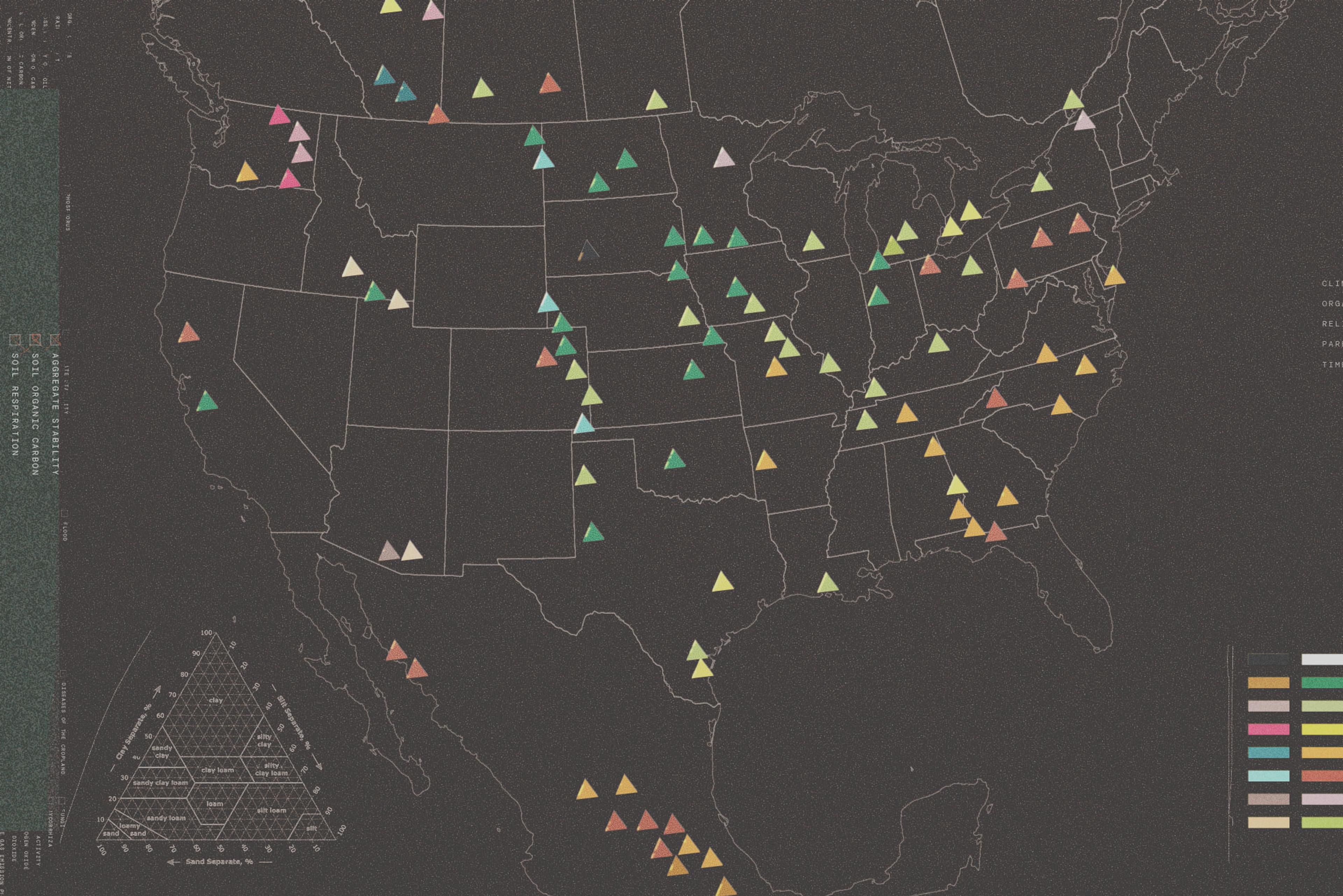
While completing her PhD on forest soil formation, Jenny Bower went to a conference and heard other scientists discussing “soil health.” “I actually laughed a little bit at the concept of soil health when I first encountered it,” she recalled. It seemed vague at best, unscientific at worst. For instance, a desert soil may not seem “healthy” from an agricultural perspective, but it nonetheless supports an arid ecosystem. Bower added, “It’s healthy for the ecosystem that lives on it.”
Today, Bower has done a complete 180; she now works for the Soil Health Institute, aiding Ontario farmers in measuring and setting goals for their soil. While initially skeptical, she now believes soil health to be a useful — and measurable — concept. “We’ve rapidly eroded a lot of the most biologically active part of our soil that feeds us and clothes us,” said Bower. “Having a way to relate the condition of that soil to its capacity to function is really important.”
In recent years, soil health has captured the public imagination, bolstered through documentaries like Kiss the Ground and Common Ground, alongside celebrity endorsements and advocacy. The term has grown to mainstream status, with backing from giants like Cargill and Bayer. But many soil scientists — of all people — initially dragged their feet, cautious to embrace a subjective standard over more quantitative measures.
But now, amid pressures like climate change and degradation of farmland, the scientific community is coming around to the intuitive term. Further, researchers are honing measures of soil health to take it from a fuzzy ideal toward an actionable goal.
While they’ve shied from squishy terminology, soil scientists have long recognized soil as a dynamic, living system. In 1941, Hans Jenny described the factors of soil formation: climate, organisms, relief, parent material, and time, or CLORPT. In a 1959 paper, one scientist defined soil as the “excited skin of the subaerial part of the Earth’s crust.” Yet, in a practical sense, soil has often been treated as an inert medium for farmers, where the primary goal is adding inputs to improve agricultural outputs.
But the last 20 years has seen an adoption of more holistic definitions, with the USDA asserting that soil “is not an inert growing medium — it is a living and life-giving natural resource.” The agency defines soil health as the “continued capacity of soil to function as a vital living ecosystem that sustains plants, animals, and humans.”
Initially, the term made many soil scientists uneasy, because what makes a soil “healthy” is so subjective. “It depends on which function you are assessing,” said Rosa Maria Poch, a soil scientist at Universidad de Lleida in Spain. A water-logged peatland may not grow crops, but it’s a valuable carbon sink. Likewise, a saline soil may shrivel vegetables, but it supports unique plant and animal species.
Even among cultivated soils, defining health is hard. Depending on factors like climate and what minerals make up the soil, its potential reservoir for carbon, water, and nutrients varies — remember CLORPT? And a “healthy” soil is not even always desired. For instance, viticulturists want their vines to be somewhat stressed. In a too-fertile soil, the grape plants will direct nutrients into growing lots of leaves. Hungry vines instead divert more resources to berries, leading to a better harvest, said Ryan Stewart, a soil scientist at Virginia Tech.
“Having a way to relate the condition of that soil to its capacity to function is really important.”
Despite these challenges, recognizing its intuitive appeal to the public, soil scientists are homing in on ways to measure soil health. “It’s got a lot of people excited about soils and the role of soils in the environment,” said Cornell University soil scientist Harold van Es, “because people sort of get it — they understand that this is important.” Much of the public excitement stems from the ability of soil health practices to deliver the added benefit of storing carbon from the atmosphere, aiding in efforts to slow climate change.
The challenge for measuring soil health is two-part: choosing which indicators to use, and defining what’s healthy for a given plot of land.
There are numerous measures that relate to the soil’s function in an ecosystem or farm. One soil health database, for example, includes 42 distinct factors. But, in order to be practical, scientists must narrow down which of these indicators say the most about a soil, while being responsive to management and relatively low cost, explained van Es. “It’s just like human health,” he said. Similar to how a simple measure like blood pressure can nod to cardiovascular health, these indicators can draw a picture of the soil’s overall condition.
One indicator that’s proved to be reliable is aggregate stability — the ability of the cookie crumb-like chunks of soil to remain clumped together when splashed with water. Stable aggregates mean that water can readily seep into soil, instead of running off the surface, and that the soil is resistant to erosion; they also mean the soil is relatively loose and easy to root in. “That tells us a lot about a whole bunch of processes that are important in terms of the functioning of the soil, and therefore, the health of the soil,” said van Es.
Other key indicators that van Es and other researchers have identified include carbon content and respiration — the rate of carbon dioxide produced by microbes in the soil, which shows how biologically active it is.
Now, these indicators are also in the spotlight among policymakers. In 2021, the state of New York passed the Soil Health and Climate Resiliency Act, which requires setting voluntary standards for soil health. Toward that goal, Cornell scientists prepared a statewide assessment, testing soil samples using Cornell’s parameters across pasture, vegetable, grain and orchard systems.
“If they give us 30 things to measure, and it’s gonna cost me $7,000 per acre to figure that out — well, that’s not feasible.”
Recently, the team debuted their tailored approach to soil health, and is currently soliciting the public’s input. Their proposed benchmarks consider a soil’s location in the state, as well as what the land is used for. They argue that land use consideration is key because it’s unfair to compare, say, a pasture to an annual grain system. A pasture isn’t tilled, allowing grass roots to stabilize the soil and add organic matter to it, while the intensive soil turning and harvesting of grain systems depletes soil carbon and structure. The idea is for producers to know, based on their system, what realistic goals for aggregate stability, soil carbon, and other indicators could be.
Elsewhere, researchers are refining soil health assessments, sensitive to the unique properties of their landscapes. In Hawai’i, for example, the soils are formed from volcanic rock and ash, which weather into tiny clay particles with lots of surface area relative to their volume, making them more reactive with organic matter and nutrients, said Susan Crow, a soil ecologist at the University of Hawai’i Mānoa. A “high” value for nutrients and organic matter will be relatively higher in these soils than sandier ones.
Bower’s organization, the Soil Health Institute, is trying to take their approach across borders. The nonprofit team evaluated more than 30 soil health indicators across over 100 sites in North America, observing how each one responded to changes in management such as adding cover crops. They narrowed the indicators to just three: aggregate stability, soil organic carbon, and soil respiration. By making soil health as simple as possible, the institute hopes to inspire widespread soil health monitoring, said Bower.
The hope is that this streamlining will help turn soil health from a vague ideal to a concrete goal for farmers. As farm owner Zaid Kurdieh of Norwich Meadows Farm in upstate New York put it: “If they give us 30 things [to measure], and it’s gonna cost me $7,000 per acre to figure that out — well, that’s not feasible.”
Tying soil health into incentive programs may help. The Hawai’i index will be used in a program paying land managers for carbon sequestration and building healthy soils. “The Hawai’i soil health index allowed us to really lay the foundation for a more holistic definition of what is climate-smart, because so much benefit comes out of a healthy soil,” said Crow. The Soil Health Institute’s test is eligible for coverage by USDA funds, added Bower.
After Cornell researchers tested his farm’s soil health, Kurdieh learned, “We’re doing better than we thought, but it’s never good enough in the sense that it could be better.” He plans to keep building on practices like crop rotations and cover crops to see if he can increase his organic matter further, bringing his soil score up.
A law that flew under the radar in schools for over two decades came bubbling to the surface last year, when California high school student Marielle Williamson was told she couldn’t get soy milk at lunch without a doctor’s note. Williamson argued that her issue wasn’t medical — she was taking a stand against an industry whose environmental toll she could not abide.
Williamson was also forbidden from distributing literature to her classmates about the benefits of milk alternatives unless she also gave out pro-dairy marketing material. The tussle developed into a lawsuit filed against the Los Angeles Unified School District, which ultimately conceded to Williamson’s demands and settled the suit in November.
The initial case may be over but the issue is ongoing — the U.S. Department of Agriculture (USDA), arbiter of school nutrition, continues to enforce strict national standards that mandate cow-based dairy be served at lunch, and that school districts “shall not directly or indirectly restrict the sale or marketing of fluid milk products by the school … at any time or any place.”
The law that prohibits schools and their affiliates from speaking out on this matter comes from an agreement made between U.S. public schools and the USDA in 2000. It applies to any school that participates in the national school lunch program (NSLP), which served nearly 30 million students on a typical day in the 2021-2022 school year. (Public schools are reimbursed for meal expenses through NSLP.)
“The dairy industry has actively used this law in school districts to ensure that no other beverages are promoted over milk in schools,” said Deborah Dubow Press, lead attorney on this case at Physicians Committee for Responsible Medicine (PCRM), the advocacy group that filed the lawsuit with Williamson.
Critics have long portrayed a too-cozy relationship between USDA and the dairy industry. Tom Vilsack, who leads the agency, worked in the industry between terms, and many pro-dairy lobbyists end up working there — and vice versa.
In his thesis at Central European University, public policy master’s candidate Benjamin Levi DeVore unpacked this dairy lobby/USDA revolving door, revealing direct links to dairy industry influence in shaping federal policy.
“[D]eep-seated conflicts of interest present within the USDA … have allowed the dairy industry to dominate in Washington, displayed by their advocate strength, financial superiority, and research prowess,” wrote DeVore. “Over time, this has resulted in a federal government that largely views pro-dairy regulations and legislation as the default position.”
“Deep-seated conflicts of interest present within the USDA … have allowed the dairy industry to dominate in Washington, displayed by their advocate strength, financial superiority, and research prowess.”
The counterpoint is that USDA is simply supporting a vital U.S. industry that includes tens of thousands of farms, and that has suffered major setbacks in recent years like corporate consolidation, plant-based competition, and shifting consumer tastes.
“USDA is committed to helping America’s dairy industry remain competitive, access new and better markets, and keep their family businesses in operation for the long-term,” wrote Vilsack in a press release this January. “At USDA, we are honored to work alongside America’s dairy producers as they provide necessary, nutritious dairy products to communities nationwide.”
Regardless of motive — we reached out to multiple contacts with the USDA and the Dairy Checkoff Program but did not receive a response — it’s clear that the agency is continuing its longstanding push to keep milk a central portion of the school lunch program. For instance, in 2019 the USDA published a policy drafted by the dairy industry stating that the placement of water on the school lunch line should not detract from milk. “The dairy industry saw water as a threat and offered this policy memorandum,” said Press.
It should be noted that vegan and vegetarian options are making inroads into traditionally meat-forward school lunches, with tofu, lentils, beans, and plant-based meat alternatives increasingly showing up in districts around the country. These shifts are coming in response to increased pressure from students and parents, for reasons both dietary and cultural.
But despite the success of Williamson’s lawsuit, milk alternatives have not made much headway into schools. The nutrition requirements set by USDA are not generally met by dairy alternatives; the Food and Drug Administration (FDA) makes it quite clear that plant-based milks do not contain the same levels of calcium, potassium, and other important nutrients. (Advocacy groups have argued that FDA had political motives in releasing a comparative nutritional statement between dairy and non-dairy milks.)
“Too many children who cannot safely or comfortably consume dairy are being forced to accept containers of cow’s milk on their lunch trays.“
The USDA, which reviews its nutrition standards every five years, has acknowledged that fortified soy milk has a similar nutritional profile to standard dairy, but without a doctor’s note, it’s still not available in schools. However, this could change with the passage of some proposed bipartisan legislation.
Introduced last fall, the Addressing Digestive Distress in Stomachs of Our Youth (ADD SOY) Act is positioned specifically to address the needs of lactose intolerant students, particularly students of color. According to the Boston Children’s Hospital, 80 percent of all African-Americans and Native Americans are lactose intolerant. That number is over 90 percent among Asian-Americans, with the least common demographic affected being Americans with a Northern European heritage.
“It is abundantly clear that the current milk substitute system that USDA employs is delivering detrimental impacts on BIPOC school children,” said Rep. Troy Carter (D-LA), one of the bill’s sponsors, in a press release. “Too many children who cannot safely or comfortably consume dairy are being forced to accept containers of cow’s milk on their lunch trays. My ADD SOY Act ensures the health and nutritional needs of all our nation’s students are met. America needs to embrace its diversity at the lunch counter.”
Justin Leyendekker, board member of the Dairy Council of California, argues that lactose-free cow milk is the superior option — he said removing lactose from dairy products does not impact the nutritional makeup of the product. That said, because of the extra processing required, lactose-free milk can cost up to twice as much as regular milks, and it still requires medical permission to be served on a student-by-student basis.
Meanwhile, Press continues to push her organization’s lawsuit, hoping it will be heard in federal court in the foreseeable future. “Schools can’t feed their students without funding from the USDA,” she said, arguing that the case boils down to “the problem of the USDA’s relationship with the dairy industry and their willingness to put the promotion of milk over student well-being.”

Eva Turner anticipated the usual five or six people to attend Cameron, New York’s, March 2024 board meeting. At least 20 showed, filling all the plastic-backed folding chairs in the tight, low-ceilinged town hall. The reason for the surge, mused Turner, a retired mechanic for Philips lighting company, was the vote to extend the town’s year-old moratorium on sludge, the sewage that’s left over after the wastewater treatment process. The vote was first up on the agenda, and representatives from Casella Waste Systems — top sludge distributors in these hilly west-state dairy lands — were expected to attend.
For decades, Cameron residents have been fighting the spread of sewage sludge on surrounding farmland, which they say has been contaminating their water. Last year’s moratorium was hard-won and residents were concerned that its hold was tenuous; Cameronians had packed the hall, prepared to fight on, if it seemed the board might allow Casella to pick up the practice again.
As it happened, the Casella reps were absent and the vote was delayed on a technicality. But Turner, her community compatriots, and Steuben County neighbors from the next-door towns of Bath (which passed a moratorium on sludge then changed its mind) and Thurston (which banned sludge last October and got sued to reverse it) spent an hour venting their frustrations.
Longtime Cameron resident Wayne Wells called Steuben County an “industrial sacrifice zone.” Steven Stewart, a retired farmer from Bath, said he was spending $700 to test his wells because he feared the effects of sludge that were spread on fields adjacent to his land. Cameron native Tim Hargrave, whose creek contains over 24 parts per trillion (ppt) of PFAS, brought up Dickson farm, which spread sludge on some 2,000 acres planted with corn, soy, and hay. He said his land’s value had plummeted.
Environmental Working Group sets a maximum safe limit for toxic “forever” per- and polyfluoroalkyl — PFAS— chemicals in drinking water of 1 ppt. Meanwhile U.S Environmental Protection Agency has just set limits in drinking water for several of 15,000 PFAS chemicals, of between 4 ppt and 10 ppt, while noting that for at least two of these chemicals there is no safe level of exposure. “Put the sludge next to your property to contaminate your [water] and see if you feel differently,” Hargrave said to a board member who’d just equated sludge bans with communism.
Since 2016, more than 19 billion tons of sewage sludge — more politely known as biosolids — have been spread on 20 million acres of agricultural land across the U.S., according to EWG. EPA touts them as containing nutrients beneficial to agricultural lands, despite sludge’s known potential to contaminate soil and water; there are no limits for PFAS in biosolids. Maine banned sludge in 2022 after finding high levels of PFAS in farmers’ milk, beef, and crop-growing soils; PFAS-affected farmers in Texas, Michigan, and South Carolina are raising the alarm all over again.
But to the incredulity of Steuben County residents, New York appears to be ignoring evidence of the pending environmental, public health, and food security catastrophe presented by contaminated biosolids. The state plans to more than double the amount of land-spread sludge by 2050 — despite the fact that “It’s completely not protective of human health or water quality to spread sewage sludge anywhere,” said Laura Orlando, senior scientist at climate impact nonprofit Just Zero. Even more of it could be headed Steuben County’s way, should the towns’ rules falter and Casella manages to enact a plan to truck in sludge from Long Island.
Sewage sludge is what’s left over after municipal treatment plants clean up the wastewater flowing to them from household bathrooms and kitchens, local industries, and the sewer system. Cleaned water is released back into waterways. The residual sludgy material may be incinerated or pressed into pellets and marketed as lawn fertilizer.
Alternately, it’s picked up by a waste management company like Casella that may landfill it, sell it, or give it away to farmers. Since EPA and state conservation offices continue to extol it as an amendment for crop and dairy fields, often “a farmer will approach the state and say, ‘Where can I get this stuff?’” explained Orlando. “It’s a cheap disposal practice.” USDA organic standards, though, have banned sludge on organic farms since the mid-‘90s, for its potential manure ash content — a precautionary measure that now seems both quaint and prescient.
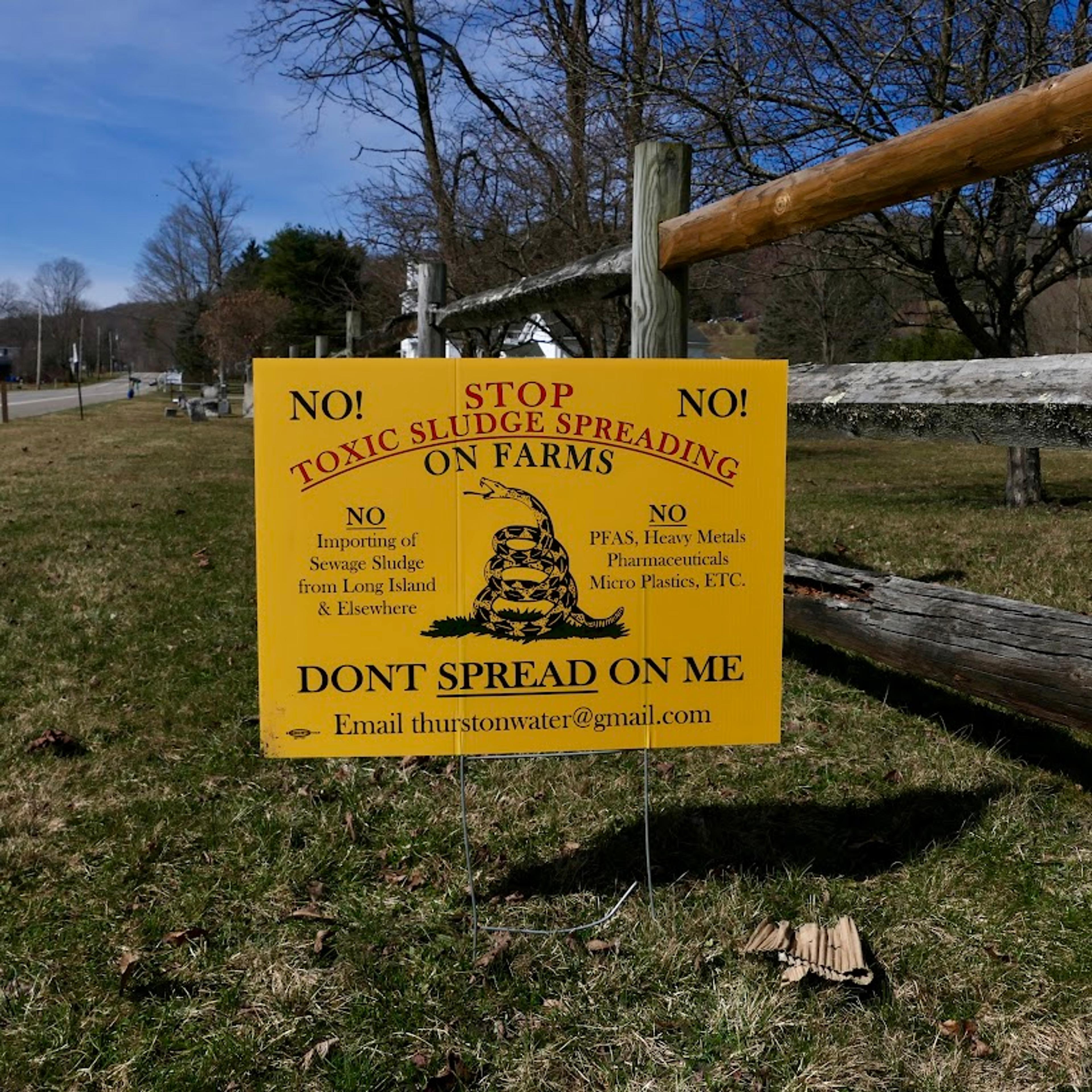
Lela Nargi
·A yard sign in Thurston
Federal rules governing sludge were written before much thought was given to PFAS. But EPA revisits standards every two years to figure out if there are any new contaminants it needs to regulate. Nevertheless, only nine heavy metals are on the list, said Murray McBride, emeritus professor of soil chemistry at Cornell University. Pharmaceuticals, microplastics, PCBs, surfactants, and high levels of phosphorous that might induce micronutrient deficiencies in crops, also appear —and are allowable — in sludge.
The citizens of Steuben County, though, are most alarmed by PFAS, which they know is linked to thyroid, testicular, and kidney cancers, and developmental delays and behavioral changes in children. To help them understand the extent of their problem, last year the local Sierra Club chapter sponsored water testing of 83 of their wells and other water bodies. PFAS contamination was nine times higher adjacent to fields where sludge was spread. One well, on Bonny Hill in Thurston, contained a whopping 82 ppt of PFAS.
Adam Nordell, one of four farmers forced out of business in Maine because of legacy PFAS on his land, said that many producers he knew felt similarly alarmed —as well as duped. “Farmers were told [sludge] is safe, that you’re foolish not to accept it,” he said. “Often contractors did the application so the farm didn’t have to — there’s no wear and tear on the farmers’ equipment, there’s no tax on the farmers’ time, and in some cases the contractors built access roads to handle the heavy equipment, actually investing in farm infrastructure. In hindsight, if it looked too good to be true it probably was too good to be true.”
“Farmers were told sludge is safe, that you’re foolish not to accept it ... In hindsight, if it looked too good to be true it probably was too good to be true.”
Bonny Hill is home base for Casella’s local operation, and the former site of a milking barn for a local farming family, the Dicksons. This family ran a multi-generational dairy operation that moved into sludge spreading some 25 years ago, sold and leased that part of its operation to Casella in 2022, and now raises livestock feed. Their operation was a co-plaintiff with Casella in the lawsuit against the Thurston ban, which they said violated New York’s Right to Farm law that permits the practice. (As of this writing, the case has been discontinued but according to environmental law nonprofit Earthjustice, which represents the town, a new, similar challenge could eventually be filed.)
Referencing the lawsuit, a Casella spokesperson said the company would not spread sludge on Dickson farmland until “all regulatory issues have been resolved,” but pushed back on the notion that PFAS in biosolids were a health concern. Dangers from the chemicals, they wrote, “more likely exist at the beginning of the product life cycle rather than at the end of the waste stream.” (The Dicksons could not be reached for comment.)
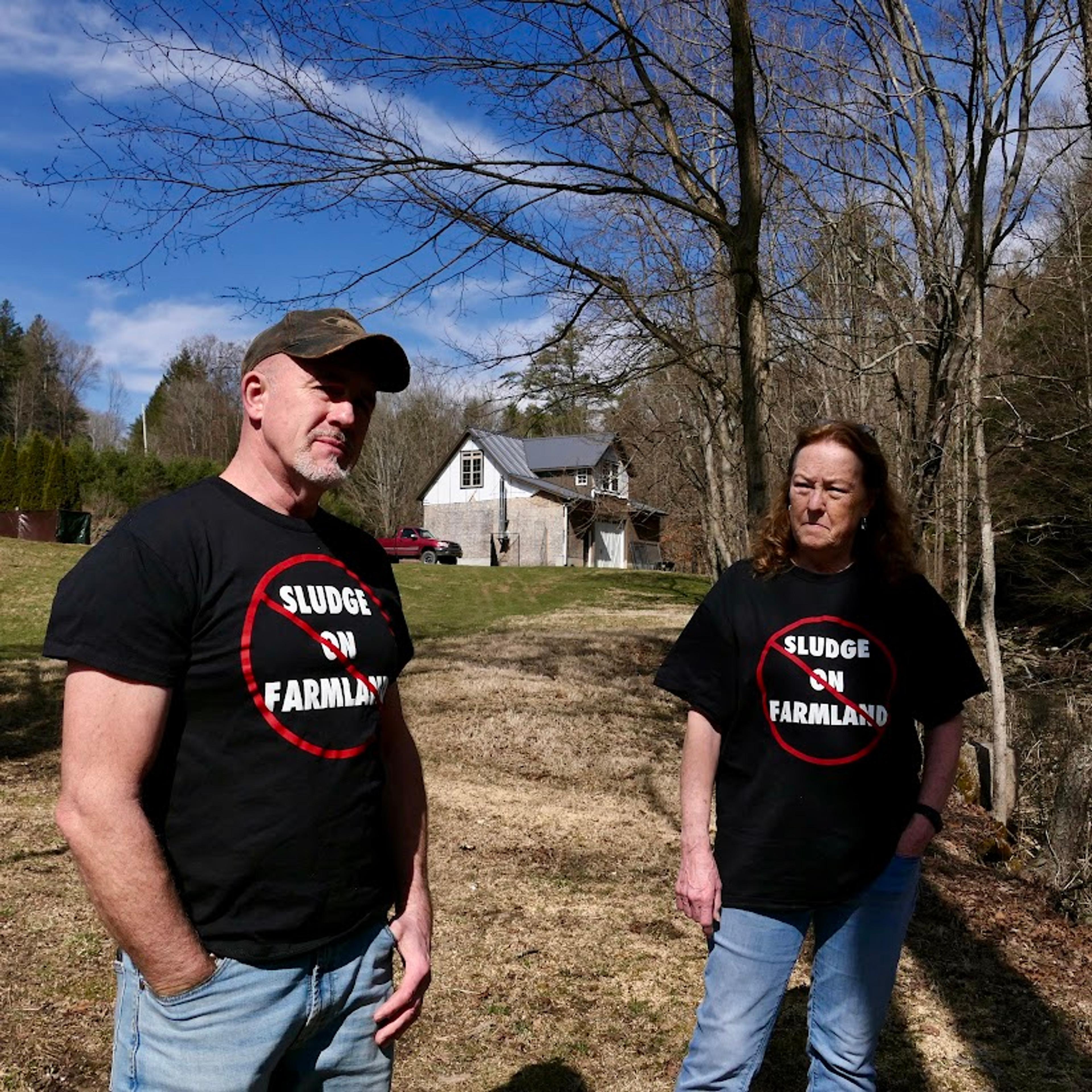
Lela Nargi
·Cameron residents Tim Hargrave and Eva Turner
The day after the Cameron board meeting, a dozen neighbors gathered up the hill from Casella’s office. They were armed with water quality data; maps showing fields permitted for sludge spreading; documents they’d procured through FOIL requests; and articles that tracked their sludge fight back to the ‘80s. They tapped long memories, tracing their erosion of trust in the Dicksons, who they’ve known their whole lives and who they believe overlooked their concerns about the dangers of sludge. “They were respected people in the neighborhood; my grandfather was friends with their grandfather,” said Mary Borhman, who alleged they violated a verbal agreement not to spread sludge on fields she leased them.
Neighbors also expressed a deep frustration with New York’s Department of Environmental Conservation (DEC), which they accuse of both dismissing their concerns about PFAS and ignoring sludge violations (e.g., spreading it on unpermitted land or failing to plant buffer zones to keep it out of streams and creeks). “Their method of operation is just, brush little people off to the side and keep pushing us off,” said Hargrave.
“DEC recognizes the potential for PFAS to re-enter the environment and negatively impact natural resources and public health with the land spreading of biosolids that may contain excessive levels of PFAS,” wrote a spokesperson in an email, while referring to biosolids as “nutrient-rich organic materials.” The agency has “enacted a policy to specifically address biosolid use that includes sampling requirements for biosolids recycled in New York State.”
In an email, Orlando called DEC’s stance an “anti-science and anti-public health approach to biosolids management;” if EPA has said there’s no safe level of certain PFAS in drinking water, how is it that PFAS in sludge — which can leach into drinking water — is not a comparable health threat?
“Their method of operation is just, brush little people off to the side and keep pushing us off.”
Steuben County residents are keeping an ever-growing tally of the ways sludge has upended their lives. A few people have installed costly filtration systems for their wells, although most opt to buy bottled water. Everyone fears that contaminated wells mean they’ll never be able to sell their homes.
Borhman and another neighbor, Jamie Quick, recalled the pigs and cows and chickens most families around here once kept to feed growing families — part of a heritage Hargrave revived 10 years ago, fixing up his Cameron property to raise beef cattle. Although his wells and therefore his cattle water supply contain no PFAS, he said the butcher he intended to sell to “is not willing to take the risk” on the meat, since his property abuts sludged fields. And Hargrave expressed concern that wild deer were likely contaminated with PFAS, too. “That’s a huge impact for the local people that live here if we can’t hunt and consume this meat,” he said.
Much to the relief of Cameron residents, the town board voted to extend the sludge moratorium another year on April 10. But their long fight against it has taken an emotional toll. People are reconsidering family deaths and whether PFAS played a role in them; Eva Turner can rattle off every house in her town that’s been hit by cancer. Leslie Smith will tearfully recount that the pond he’d built for his grandchildren to fish and swim in is off-limits due to high levels of PFAS.
And Wayne Wells worries that the moratoria and bans won’t hold. An 80-year-old Vietnam veteran who should have retired years ago, he was contemplating acts of civil disobedience. After 40 years of fighting the sludge, “I think that might be the only way to stop it,” he said.
Reporting for this piece was supported by a media fellowship from the Nova Institute for Health.
When you think of Ponzi schemes, you might think of offshore banks, Bernie Madoff, or bogus insurance settlements. For North Dakotans, the phrase may now conjure a field of cattle.
In 2021, representatives from a Fort Worth, Texas-based company called Agridime started reaching out to potential investors in the cattle industry, offering a deal that their own website acknowledged “sounds too good to be true.” Across at least 15 states, Agridime reps negotiated investment contracts related to the sale and purchase of cattle, promising 15 to 32 percent returns on the investment. Prices on the cattle market had been steadily rising, making it an enticing time to get in on what sounded like a great deal.
Agridime targeted ranchers who could sell their cattle to the company, people who might be interested in investing in cattle, and beef distributors. When approaching ranchers, the company pitched itself as a one-stop shop: They would take the cattle to their own company plots, feed and rear them, process them for meat, and market and sell the beef. Then, after selling their cattle, ranchers and farmers were reapproached by Agridime, who convinced many of them to turn around and reinvest their profits. The company promised to buy more cattle with that reinvestment, which they said would ultimately bring more money back to the ranchers.
But according to North Dakota Agriculture Commissioner Doug Goehring, who oversees the licensing and bonding of livestock dealers in the state, that money wasn’t going toward more cows or their feed and processing.
“They bought just enough livestock so if somebody showed up wanting to see their cattle, they could take them to the feedlot and show them,” said Goehring, who noted some of those funds were pocketed, while the rest was used to pay back existing investors.
North Dakota was hit especially hard by Agridime’s scheme. In 2023, regulators there and in Arizona issued cease-and-desist orders against the company. But even after those orders were in place, Agridime sold more than $9 million in cattle contracts to North Dakotans, according to the Securities and Exchange Commission. The SEC shut down Agridime in December, and in February, a federal judge in Texas appointed a receiver who took possession of the company’s assets. In total, the SEC alleges that the company raised at least $191 million from more than 2,100 investors. The SEC declined to comment beyond their public filings.
Usually when livestock are purchased, Goehring said, the buyer has to pay the seller within 24 hours, creating a paper trail. But Agridime used a “retained ownership” method, taking the cattle out of state to feed and process them elsewhere, promising to pay after they finished. Because the sellers technically retained ownership, the company was able to buy themselves time and fly under the regulatory radar, according to Goehring.
“They bought just enough livestock so if somebody showed up wanting to see their cattle, they could take them to the feedlot and show them.”
It was a banker who finally put the scheme on the agriculture commissioner’s radar: A customer described the amazing investment they believed they were making by selling their cattle to Agridime, and the banker flagged it for Goehring’s office, recognizing the deal was deceptive.
Agridime struck at a good time in the cattle industry. Prices were rising — a trend that continues today — which sweetened the prospects for potential investors.
“When they started this little scheme, the price of livestock on the hoof were just continuing to go up, and it’s easy to sell that concept and say hey, let’s do another roll, let’s buy some more for later because holy cow, we’re making this thing work,” said Goehring. “It was a perfect storm, it was working in their favor and easier to sell as long as people wanted to keep believing it.”
Prices have risen in recent years as the population of cattle in the U.S. has declined. As of January, the nation’s inventory was the lowest it has been in 70 years, according to the American Farm Bureau Federation. This declining population is largely the product of severe drought: Less rain means less grain and hay, and less grass for grazing, pushing record-high prices for feed that have driven some families out of ranching entirely. But while rising prices mean consumers are paying more for beef, individual cattle producers aren’t seeing those profits.
“Expenses are as high or the highest they’ve ever been too, so the actual bottom line to the rancher has not changed much, or very little at all,” said Justin Tupper, a South Dakota-based cow-calf producer and president of the U.S. Cattlemean’s Association, which lobbies for cattle producers on Capitol Hill. “The perspective is that there’s much more money flowing so they’re making more money, and that’s not necessarily the case.”
“Their product was not good at all. The ground beef came frozen, we thawed it, it smelled bad.”
This opportunity to cash in during a time when most small ranchers and farmers are stretched thin is one reason Agridime’s offer held such appeal. The company also capitalized on a pandemic-driven reliance on smaller meat processors who compete with the “Big Four”: Cargill, Tyson, JBS, and National Beef. When some of these massive companies’ processing facilities had to shut down in 2020, more business was funneled to their smaller competitors. The use of smaller processors and distributors also dovetailed with the growing consumer interest in knowing where their meat comes from, and in keeping it local.
“The way that Agridime talked about the ranchers get paid, you get paid, the product stays in the U.S., I was like oh man, maybe they have something figured out,” said Matt, a partner in a Montana-based beef distribution company that did business with Agridime. “There was a sense of hope.” (Matt asked that we use a pseudonym to protect his and his company’s identity, which is still recovering from the financial and reputational impact of doing business with Agridime.)
Matt’s business partner was initially approached by an Agridime rep as a potential investor. Although his partner wanted to work with them, Matt was skeptical: “For someone to flat out say that we would get a 30 percent return on investment in whatever we invest, whatever cows we buy, was just unheard of to me because the beef market fluctuates so much.” He had no interest in investing in what he called “ghost cows.”
They passed on the initial pitch, but the Agridime rep was persistent. They suggested Matt’s partner come down and see their facilities in Fort Worth, which he did. Agridime was looking to expand their beef distribution presence in the West, and saw Matt’s company as the perfect vehicle. His partner, who was the primary owner of the company, was fully sold on the idea, so Matt begrudgingly felt he had to follow his lead. They proceeded to order more than $100,000 in beef from Agridime, sold to them at competitive prices that were hard to turn down. Then it arrived.
“Their product was not good at all,” said Matt. “The ground beef came frozen, we thawed it, it smelled bad, you could tell it wasn’t a fresh product.”
They tried to sell and move what they could, but started getting complaints from customers. Higher-end cuts of beef had to be ground and sold at a much lower cost.
“They have cussed and swore and called you every name in the book, and your mother some too.”
In addition to losing tens of thousands of dollars, Matt and his partner are still contending with the reputational fallout of trying to sell Agridime’s poor-quality product. Some of their old customers will no longer work with them. He said they are taking the loss in stride and approaching every aspect of their business more carefully.
Schemes of this scale are unusual in the cattle industry, but the broader agriculture world, and particularly the organic sector, is no stranger to scams. Goehring noted that he’d seen similar fraud in the grain industry “more often than you’d care to know.”
Back in North Dakota, Goehring is contending with a lot of frustrated cattle producers. Rather than seeing the intervention of his agency and the SEC as a positive thing, the freezing of Agridime’s assets has angered people who believe they might have gotten paid if only the business could continue operating.
“They have cussed and swore and called you every name in the book, and your mother some too,” said Goehring.
That anger, pain, and embarrassment is understandable to Goehring, a third-generation farmer who has watched the costs of maintaining a farm skyrocket over the years. It’s an industry full of people who work tirelessly to put food on their own tables.
“Anytime that you have these fake schemes or things that take money out of the ag sector, it’s tough on small rural communities and small family farms that tried to better themselves by investing in them,” said Tupper. “It definitely has an impact, it has a ripple effect all the way down.”
Josh Link, co-owner of Agridime, did not respond to a request for comment.
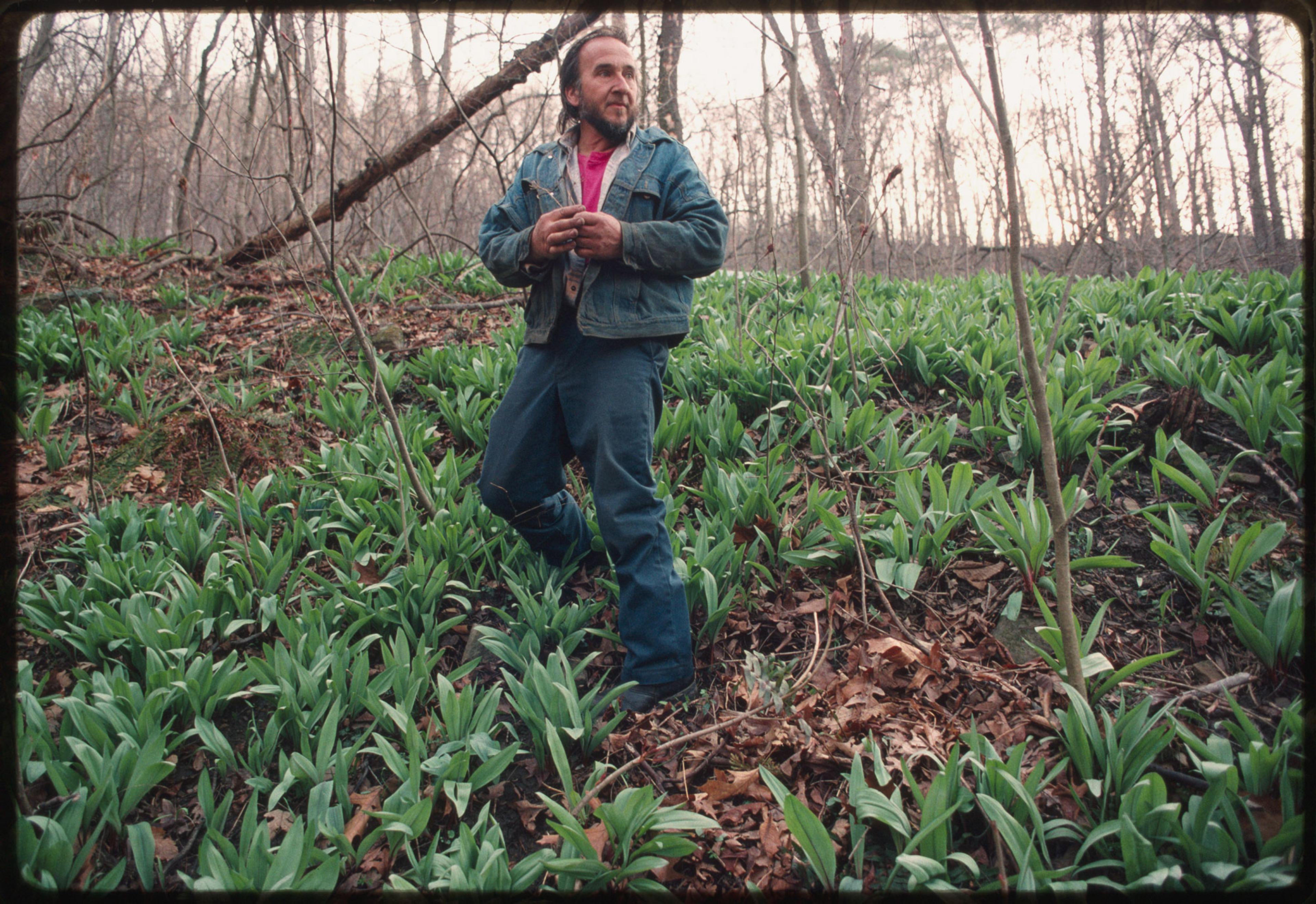
There may be no such thing as a stupid question, but there are certainly unobservant ones. Consider the newspaper reporter, standing among Jeanine Davis’ tidy rows of ramps in Western North Carolina, who asked if it was impossible to cultivate the pungent native leeks.
It was the early 2000s; Davis, a horticultural scientist with North Carolina State University, and her colleagues had recently planted some of the country’s first ramp research plots. “We’re just cracking up,” she recalled. “We’re going, ‘Yeah, Mother Nature put them in these little square beds!’”
In the reporter’s defense, ramps have long carried a wild mystique, which has only intensified in recent years. The emergence of their broad green leaves from the forest floor in late March or early April marks the start of spring, and diggers traditionally forage them from jealously guarded patches in the woods. Appalachian communities like Richwood, West Virginia, and Waynesville, North Carolina, host annual celebrations known as “ramp feeds,” where hungry guests eat hundreds of pounds alongside ham and beans.
Now, thanks to attention from celebrity chefs like Martha Stewart and Rachael Ray, ramps have morphed from regional oddity into hot commodity, with consumers far outside Appalachia paying up to $40 per pound during their limited season. Due to the distributed, often informal nature of ramp sales, Davis said it’s impossible to gauge the true size of the market, but she’s seen demand increase substantially since she started studying the plant. (One 2021 survey by Pennsylvania State University graduate student Cathryn Pugh found a dozen commercial harvesters in Northern Appalachia alone, each foraging between 3,000 and 7,200 pounds annually for sale into major urban centers like New York and Philadelphia.)
Given their lucrative prices and worries about overharvesting from the wild — research by the U.S. Department of Agriculture indicates wild Southern Appalachian populations have slightly declined over the last two decades — ramps seem like a perfect crop for enterprising growers. Davis and others have shown that ramps flourish under forest farming, where a deciduous tree canopy lets in spring light but keeps the soil cool and moist throughout the summer.
Yet farmed ramps remain vanishingly rare. Online direct-to-consumer outlets like Marx Foods and D’Artagnan advertise the wild provenance of their ramps. Mountain Food Products, which serves restaurants throughout the foodie destination of Asheville, North Carolina, contracts with area foragers. Why the mismatch between demand and cultivated supply?
Part of the challenge, explained Davis, is the slow and finicky growth of ramps from seed. While ramp seeds are broadly available from national distributors such as Fedco and Everwilde Farms, they require alternating warm and cold periods to break out of dormancy and can take up to 18 months to germinate. Even under optimal conditions, producing a harvestable bulb from seed takes at least five years, and usually closer to seven.
That means prospective ramp farmers generally look for already established bulbs to jump-start their own operations. Over time, those bulbs will split and produce new plants, just like domesticated onion sets. And once a patch gets established, that asexual reproduction assures a regular annual harvest, assuming the farmer leaves enough ramps behind each year.
“I can fit a couple years of supply in my little tenth-acre shade garden because they can be planted so densely.”
But as with other high-value woodland plants like ginseng and goldenseal, it’s very hard for forest farmers to find commercial quantities of ramps suitable for transplanting. There’s limited economic incentive for plant nurseries to grow out ramps: “You’re probably going to make more money selling them as individual plants or small bundles, as opposed to planting stock,” said Margaret Bloomquist, Davis’ colleague at N.C. State.
Aware of this bottleneck, the Appalachian Regional Commission awarded N.C. State and other partners more than $490,000 last year to develop the forest farming supply chain. “Hopefully we’ll find a way for that nursery industry to be profitable enough that people want to do that part too,” Davis said.
One of the few current bulb purveyors is Devin Bachelder, who operates Gates Hill Farm in northern Vermont. He sells through RampFarm.com, the business he purchased from West Virginian ramp pioneer Glen Facemire in 2020.
The ramp business is a side hustle for Bachelder; he works in the finance department of a local hospital, as well as manages 4,000 tapped maple trees for syrup production. But it’s a bustling one: He’s sold about 20,000 bulbs per year, the limit of what he can supply given his other jobs, with customers paying $90 per bag of 100.
At this point, the majority of Bachelder’s product is still foraged, primarily from the forest floor beneath larger maple sugaring operations. His long-term goal, however, is to establish “a self-sustaining ramp production operation,” with all of his seeds and bulbs grown at Gates Hill.
Bachelder said ramp farming requires a lot of patience but surprisingly little land. His main nursery beds take up about a tenth of acre under artificial shade, and he’s prepared about an acre where those bulbs will be transplanted once they get bigger.
“Fewer ramps per pound, more ramps in the ground” is the slogan he hopes consumers take to heart.
“I can fit a couple years of supply in my little tenth-acre shade garden because they can be planted so densely,” he explained. “It’s incredible how dense ramps are able to grow. You’ll see them in their clumps in the forest, and there can be 40, 50, 60 ramps growing in one square foot. Imagine an acre of that.”
The farmed ramp supply chain may take years to emerge, but Eric Burkhart suggests that thinking in strict terms of foraging versus cultivation misses a big opportunity. A professor of ecosystem science and management at Penn State, he advocates for what he calls “a traditionally informed Indigenous perspective around ramp management” — in other words, foragers helping wild populations to grow and spread.
A managed wild harvest might look like transplanting a few bulbs from one patch to new suitable habitats in the woods, Burkhart said, or judiciously thinning out populations to encourage more genetic diversity from seedlings. He also stresses the importance of waiting until later in the season to harvest, when individual bulbs have had the chance to store more energy for reproduction. “Fewer ramps per pound, more ramps in the ground” is the slogan he hopes consumers take to heart.
It’s a message that works for Steven Goff, the owner and executive chef of Tastee Diner in Asheville. He prefers the more intense flavor of bigger ramps and often incorporates them into condiments like pickles, chimichurri, and green goddess dressing.
Goff added that, while he’d be willing to give farmed ramps a try, there will always be a certain culinary allure to the wild product.
“It feels right,” he said. “When you’re making Southern food, every aspect of it you want to feel like Mama, or that natural state of being that we were in before the super-commercial commodification of everything.“

Rob Larew, president of the National Farmers Union (NFU), contends that farmer stress is on the rise. “That stress is very tied to the financial pressures that farmers feel today,” he said. “As the amount we receive for the goods that we are selling continues to go down, while the inputs that we are having to buy go up, that is a stress, right?”
Larew has a view into the system that few others do: NFU membership totals almost 200,000 American family farmers, ranchers, and rural residents. He notes that the psychological pressures farmers face have their provenance in the financial constrictions that shape their daily lives. Regardless of what they produce or where they live, many farmers are encountering diminished choice as a result of agricultural monopolies. Fewer, and bigger, actors set the terms at essentially every level of the food system, leaving many farmers without much say in their own realities.
In his first book, Barons: Money, Power, and the Corruption of America’s Food Industry, Austin Frerick picks up this thread. He writes, “The American food supply chain — everything from seeds to baby formula — has fallen under the control of a narrow group of individuals, leaving family farmers and local businesses fighting an uphill battle just to stay in business.” Frerick is an expert in agriculture and antitrust policy whose family has lived in Iowa for seven generations. His book unpacks the playbooks of seven monopolies whose owners — modern-day “barons” — have near-complete control over their areas of the U.S. agricultural system.
Frerick takes apart their strategies patiently and methodically, almost as though he is turning an engine upside down to figure out its workings. As Larew points out, farmers in most states, with the exception of Colorado, do not even have permission to fix their own machines due to manufacturing monopolies. Developing and sharing a clear understanding of agricultural consolidation is a way Frerick hopes to draw agency back to farmers.
Among the book’s seven monopolies, some, like Walmart or Driscoll’s, are instantly recognizable to a general audience. Others, like Iowa Select or Reimann’s, may be less so. Frerick examines how the shift towards corporate consolidation coincided with deregulation and the decline of antitrust enforcement. The companies‘ owners moved from being garden-variety capitalists to industrial tycoons not only through individual enterprise, but because they could. Each company only gained power in the last 40 years, taking advantage of new loopholes in the system.
“A lot of stories either focus on the person or on the structure. I wanted to understand — how does someone like this emerge, and what does it mean from a societal standpoint?” Frerick said on a call. “I didn’t just want to be like, ‘Let’s gawk at rich people.’” The barons are windows into the structures that stand behind them. They anchor larger discussions about check-off reform, illogical corn and soy subsidies in the “Wall Street Farm Bill,” and Walmart’s monopoly over SNAP dollars, just to name a few.
Despite the policy focus, this book reports from the trenches of the food industry: fields, hog confinements, slaughterhouses, fluorescent-lit grocery aisles. Frerick addresses how Big Ag intersects with concrete issues of labor, immigration, the environment, food scarcity, and more. One of his most shattering revelations is the death of an immigrant farmworker from Honduras at Indiana’s Fair Oaks Farms in January 2021. During a 12-hour shift, the 47-year-old father of three got pulled into manure equipment and died from asphyxiation.
“A lot of stories either focus on the person or on the structure. I wanted to understand — how does someone like this emerge, and what does it mean from a societal standpoint?”
Worker safety in the dairy industry can be dire: ProPublica recently conducted a year-long investigation into immigrant farmworker conditions after an 8-year-old child died at a Wisconsin farm. Frerick was the first to report on the death of the farmworker at Fair Oaks, however, which is both a behemoth dairy operation and a dairy-themed amusement park. “The person died in the area where they take you through on the tour, and I was there afterwards. It’s a tourist attraction,” he said.
Layers of corporate abuse also make it harder for immigrant farmworkers to speak up. Larew said, “Much of that labor is not self-reporting for fears of retaliation. That is detrimental to the entire food system starting at the farms.”
Frerick noted media complicity in the barons‘ ascent. With their vast coffers of money, companies are free to invest in shaping narratives as they like. Frerick said, “The current state of media means that these barons can create their own realities.” In February, for instance, New York Attorney General Letitia James brought a case against meatpacking giant JBS for greenwashing. JBS had taken out a full-page advertisement in The New York Times claiming that it would reach Net Zero by 2040, without any plan to actually get there. In another instance, Cargill, the world’s largest private company, supported research concluding that organic food was not more nutritious than non-organic food. Frerick devotes chapters to both companies in his book.
“One of my bragging points to this book is that I have nearly a thousand citations,” he joked. Though his writing style is restrained, it simmers with damning facts and figures. Take, for example, his chapter on the Iowa hog industry. Frerick’s family worked in Iowa’s food system, and when he was young, “the landscape was alive.” Now, the same fields have given way to corn and soy monocropping and large-scale hog production — Iowa Select is the worst offender. Using census data, Frerick calculated that 26,000 Iowa farms have stopped raising pigs since Iowa Select launched in 1992.
“Austin’s book is refreshing in how he weaves it by telling these family stories, in how in these examples the industry has become so consolidated,” Larew said. Christopher Leonard, author of The Meat Racket: The Secret Takeover of America’s Food Business, added, “There’s this cluster of people who talk about agribusiness [living] on the coasts, like in D.C. or San Francisco or whatever, and not enough of them on the ground here in the Midwest where the business is rooted.”
“There’s this cluster of people who talk about agribusiness [living] on the coasts, and not enough of them on the ground here in the Midwest where the business is rooted.”
Interestingly, 20th-century deregulation was a bipartisan affair. “Rather than working to limit concentrated power, politicians in both parties have either helped entrench powerful interests or attempted to conduct policy in a manner that is agnostic to power,” Frerick writes. Similarly, he said companies like Iowa Select have avoided accountability by fostering “close relationships with state politicians on both sides of the aisle to roll back regulations.”
This deregulation undid Roosevelt-era antitrust policy under the New Deal, which benefited families like his own. Frerick suggests a return to rigorous antitrust policing of the type Roosevelt would be proud of. After all, his barons are incarnations of the very Gilded Age robber barons that antitrust policy managed to curb. Though we might feel unmoored in the face of consolidated power, Frerick argues that we actually have a template for the fight.
The idea of being in a new Gilded Age is not specific to this book. In the 2023 book Plunder: Private Equity’s Plan to Pillage America, federal prosecutor Brendan Ballou writes about “a twining of big business and big government that finds profits by creating and exploiting legal gaps and obscure government programs.” And Jesse Eisinger, author of The Chickenshit Club: Why the Justice Department Fails to Prosecute Executives, said that the Gilded Age is a “useful comparison to think about where we are today compared to the 18th and 19th centuries for a variety of reasons. We had a period then of rapid economic growth and vast and increasing wealth inequality, and concentrated industries and ownership of those industries, which gave the wealthy disproportionate power in the country.” He went on, “It’s a model for understanding where we are today.”
Across party lines, there is dislike for big business, and momentum for change seems to be building. A January survey by the Pew Center found that Americans agree large corporations have a negative impact on the U.S, with a wholly bipartisan 68% of respondents saying so. Meanwhile, 88% of Democrats and 87% of Republicans believe that small businesses have a positive impact on the country. Monopolies have not fared well in the court of public opinion.
Federal Trade Commission Chairperson Lina Khan, who Frerick cites as a mentor, has taken on large corporations during her tenure and written about how they keep farmers‘ costs high. Larew said that the current government has “given voice to that challenge” to a greater extent than previous ones. In his newsletter, Matt Stoller, author of Goliath: The 100-Year War Between Monopoly and Democracy, writes, “We’ve re-injected the anti-monopoly philosophy into America, and there’s no going back.”
“For a lot of family farmers, it’s not just [about] my farm and my crop this year, but am I going to be able to keep the farm next year.“
As always, the way forward is not going to be easy. In his conclusion, Frerick outlines what could happen if we take action as well as if we continue on our present path. The contrast between change and yet more consolidation, environmental damage, and hollowed-out communities is sobering. Despite that backdrop, Frerick recognizes that the New Deal was not a panacea. White farmers benefited from the deal at the direct expense of Black farmers, driving many off the land. Without reducing policy’s potential for impact, a tension remains at the heart of the book’s framing: the way the period of progressive reform is held up as an example, and the sense that it never actually worked at all.
Perhaps this is inevitable when working with such a fraught national history. But it is important to acknowledge that policy has its limitations — indeed, creating lasting change to the U.S. food system might require a fundamental shift to the political system as we know it. Rather than falling back on the example of the New Deal, we need to fully reimagine the future. “The lands we inhabit — with fractured histories and debts owed — tell stories about ‘pasts’ we do not want to repeat,” Ashanté Reese, author of Black Food Geographies: Race, Self-Reliance, and Food Access in Washington, D.C., wrote recently in MOLD magazine.
“Where some see inevitability, the rest of us see possibility,” Reese continued. There are histories, presents, and futures of resistance, revolt, and reimagination at the grassroots. The future is uncertain.
“For a lot of family farmers, it’s not just [about] my farm and my crop this year, but am I going to be able to keep the farm next year, and keep that hopefully generational support for the farm?” Larew said. As the barons demonstrate, power is difficult to give up. But it doesn’t stick around forever.

With several national space agencies hoping to establish permanent bases on the moon, humans may find themselves sharing the lunar surface with some unexpected fellow explorers: worms.
The common wriggly earthworm just might be the simple solution to a complex problem: Namely, how do you feed a team of astronauts who have set up shop for weeks, months, or years at a time, on a barren orb that is completely inhospitable to plant life? One solution is to send a constant stream of resupply vessels, an option that would be both incredibly costly and also somewhat risky given the number of recent failed attempts to land unmanned probes on the moon.
The other option is both simpler in concept and more difficult in execution: growing food on the moon. While astronauts have successfully grown crops on both the International Space Station and China’s Tiangong space station, those experiments were limited in scope. To sustain the type of long-term missions NASA has in mind for the moon, food would need to be produced continuously and without outside help.
Many species of worms contain bacteria within their guts that can break organic waste into vital nutrients, making their excrement a form of natural fertilizer, and the critters have proven in the past to be resilient to the stresses of space travel: In one 2021 experiment, thousands of tiny nematode worms called C. elegans were sent to the ISS as part of an experiment on muscle degradation in space. With this information in mind, Jess Atkin, a graduate student in agriculture and life sciences at Texas A&M University, set out to establish just how useful worms could be for the colonization of the moon.
In a pre-print paper that has yet to be peer reviewed (Atkin said the plan is to publish soon in the journal Nature Plants), she described how lunar soil is hostile to plant life for two main reasons.
“The biggest one is going to be organic material,” Atkin said. “There is zero organic material on the moon, for a lot of reasons. But that is the main thing we need and also, we don’t have any microorganisms. If you were to go outside and just grab a handful of soil in your two hands, there are more microbes in that soil than there are humans on the entire planet. These microbes facilitate nutrients, degradation, a million other things but they are vital to the rhizosphere, the little ecosystem going on in the soil.”
For her experiment, Atkin grew chickpea plants in soil called regolith, which is designed to simulate the chemical composition of dirt found on the moon. To make the simulated soil more hospitable, she added two components: a fungus known as Arbuscular Mycorrhizal Fungi and a population of red wigglers, worms known for their ability to transform food waste into nutrient-rich compost. The latter two would combine, Atkin hypothesized, to break down biowaste added to the soil and encourage growth in the chickpea plants.
“The fact that we could even get them to produce seed in 75% lunar regolith simulant was just unheard of.”
Several different combinations of dirt were compared: Some samples included only the simulated moon dirt, while others had a mixture of regolith and good, old-fashioned Earth soil.
While plants potted with 100% of the simulated lunar soil didn’t grow, adding just a bit of Earth soil seemed to do the trick. The chickpeas didn’t necessarily thrive like they would on our planet, but they did in fact begin to grow.
“The fact that we could even get them to produce seed in 75% lunar regolith simulant was just unheard of,” said Atkin.
When NASA’s Artemis III mission touches down on the lunar surface, it will be the first time human feet step on the moon in over half a century. The mission, currently scheduled for 2026, is hoped to lead to permanently manned bases, where astronauts will live for extended periods of time. Not to be outdone, China has also announced plans to construct a base on the moon by 2028. But the moon is just the beginning: NASA’s efforts to colonize Earth’s satellite are just one part of a longer term plan called Moon to Mars, with the ultimate goal of landing humans on the Red Planet, possibly sometime in the 2030s.
With such lofty goals in the works, Atkin isn’t the only researcher convinced that worms have a critical role in humanity’s exploration of the solar system. Last year, Steven Elsaid and Annalyn Connor, at the time students at the University of Central Florida, conducted an experiment in which they added a species of worm known as manure worms to soil samples: some designed to simulate lunar soil, while others were designed to simulate Martian dirt. The worms were given manure to feed on and were monitored to see how well they could survive. While the pair have not yet published their findings, they presented an abstract describing their work at the 54th Lunar and Planetary Science Conference and said the preliminary data was encouraging.
“After 12 weeks or so, we saw that they were surviving, and they reproduced,” said Connor.
“I think it’s going to be important if we’re going to grow terrestrial crops to use all the tools that we have on Earth.”
The pair found the texture of the soil itself was transformed, with the Martian simulant also becoming home to some fungus. They hope that further analysis will reveal the presence of vital fertilizing compounds such as nitrogen, phosphorus, and potassium in the worm-altered dirt. But there was one other surprising benefit provided by the worms: Both Martian and lunar soil have high levels of aluminum and other heavy metals, which can be toxic to plants. The worms ate up those toxic elements, according to Connor, sequestering much of the metals away in their bodies and making the dirt much more welcoming to life.
“After just four weeks, they got the levels of aluminum to decrease by, I think, an insane amount,” said Connor.
The encouraging results echo those found in a large-scale, two-week simulation of a mission to Mars. Called ICAres-1, this simulation was conducted in 2017 by LunAres Research Station, a private European lab. Part of the experiment saw European nightcrawlers being placed in simulated Martian soil to see how they fared. While the worms died in pure Martian soil, the researchers found that they were able to survive when that soil was mixed with Earth-like dirt.
But Aleksander Wasniowski, a physician who helped organize the experiment, noted that advances in hydroponics and aeroponics may make soil unnecessary when it comes to growing food on Mars. Even then, he maintained, worms may make for worthwhile space companions.
“If we want to terrestrialize Mars, we cannot omit making the soil because even if we don’t need that to produce the lettuce or carrots or whatever, then we may use it for other things (such as) breeding fungus, bacteria, nematodes, or any other species which may be useful for us, not only as a food but but as a source of medication, as helpers in cleaning, to get rid of the debris and so on and even the plastic.”
While all the positive results may make it seem like space worms are inevitable, much research remains to be done. Atkin noted that her chickpeas were not eaten by humans, but have been sent off for more analysis to check for heavy metal concentrations. It’s also not certain how other crops might fare in a similar setup: She chose chickpeas because of their notorious hardiness, though she has plans to do similar tests on other vegetation in the future.
“I think it’s going to be important if we’re going to grow terrestrial crops to use all the tools that we have on Earth,” she said. “Worms and microorganisms are things that help our plants thrive here on Earth, so I think it would be silly to not employ those in other areas where we’re growing terrestrial seeds.”

As farmers around the country struggle with avian flu infections in their livestock, health agencies raised alarms this week when they confirmed that at least one person had contracted the virus. And while this strain of Highly Pathogenic Avian Influenza (HPAI), also known as H5N1, has long impacted wildlife and commercial poultry flocks, scientists are significantly more concerned with the virus’s jump to humans and domesticated mammal species, including cows in nearly a dozen dairy herds across four states, and a goat in Minnesota.
The Texas dairy worker diagnosed with HPAI is only the second case ever recorded in humans in the U.S. Up until last month, it had never been observed in cows — but as of Tuesday, the USDA confirmed HPAI had been detected in seven Texas dairy herds, two in Kansas, and one each in Michigan and New Mexico, with one other herd in Idaho still pending results from the National Veterinary Services Laboratories.
Richard Webby, director of the World Health Organization Collaborating Centre for Studies on the Ecology of Influenza in Animals and Birds, said that while there’s still a lot we don’t know about the outbreak, the risk for “the average person on the street” hasn’t increased at all. For farmworkers handling livestock, however, it’s another story. The patient diagnosed in Texas worked directly with a sick dairy cow, according to the New York Times, and is being treated for conjunctivitis, or pink eye. To avoid the spread of disease, the CDC is recommending gear like gloves, goggles, and disposable boots.
This HPAI strain has been around since 1996, Webby said, when its “great, great, great grandparents” originated in Southern China. Since then, the virus — which is carried by wild, migratory birds — has mutated somewhat. But in its current evolution, it’s still not very well-adapted to mammal hosts, meaning it’s less likely to be deadly or otherwise severe. Though an 11-year-old girl died last year from avian flu in Cambodia, in the U.S. the most acute cases of mammalian HPAI have occurred in the wild among scavengers that ingest infected birds — think foxes, bears, and raccoons. In humans and domesticated animals, the infections have been much less severe because the virus can’t survive well outside the respiratory tract.
Still, “if there’s any virus I don’t want, it’s this,” Webby noted. And for good reason: For some severely sick wildlife, the virus can migrate outside the respiratory tract to impact other organs, including the brain.
Now that domesticated ruminants like goats and cows are getting infected, more people will be exposed to the virus than in previous outbreaks. But, unlike wild creatures, farm animals live in controlled populations that can be monitored closely — which is exactly what scientists and farmers need to do in order to understand more about and contain the outbreak, Webby said.
Phillip Jardon, clinical associate professor at Iowa State University and veterinarian at the school’s dairy extension, said before the last several weeks, HPAI wasn’t something experts thought to test for in cattle. But after months of attempting to identify a “mysterious” disease affecting milk production in Texas dairy cows, veterinarians and researchers were stumped. Jardon and his colleagues in Iowa were among those tapped to try to figure out what was making these cows ill. But it wasn’t until the carcass of a young goat in Minnesota tested positive for HPAI on March 20 that they even considered testing cows.
Researchers don’t know yet whether certain animal demographics are more at risk than others. In cattle so far, only mature dairy cows have presented HPAI symptoms — including decreased lactation and appetite. And while the standard response to a diseased poultry flock is to cull the animals indiscriminately — at least 2 million laying hens were “depopulated” in Texas this week — the vast majority of infected cattle are expected to make a full recovery. Some farms, however, are killing off cows whose milk production doesn’t bounce all the way back.
Jardon said it’s actually easier to prevent the spread of HPAI in poultry than it is in cows, which are about as difficult to quarantine as “a bunch of kindergarteners.”
“If there’s any virus I don’t want, it’s this.”
It’s harder to keep wild birds out of cow barns and away from cattle feed than it is to keep them out of chicken coops, he said. And while there’s talk of a vaccine for poultry, there isn’t the same push for cattle. “For some diseases, vaccines are magical, like for rabies,” Jardon said. “Some other vaccines are not as effective,” because the virus spreads quickly through a herd and can change rapidly.
The dairy industry is watching closely as events unfold, though so far there have been no dramatic fluctuations in the market. Sick cows produce significantly less milk, and what they do produce must be discarded, but Jardon said roughly only 10% of affected herds are experiencing symptoms. The CDC has strongly advised consumers to avoid raw dairy, which is only legal in a handful of states, because of potential contamination, but Jardon — who grinned and sipped a glass of store-bought milk on camera over Zoom — emphasized that pasteurized products remain safe.
In the shadow of the Covid epidemic, nerves are high. Some are wondering if this outbreak could trigger a global health crisis on a similar scale, or even a mass extinction event. Left unchecked, “that’s absolutely a possibility,” Webby warned. An industry dominated by factory farms focused solely on “the fastest way to convert feed into meat” does “create many more opportunities for a virus to get in and spread throughout that population,” he added.
The “extreme end” of this HPAI outbreak could look like “another Covid-level crisis,” wherein the avian flu virus will mutate enough to be “more able to transmit between humans, and we have another pandemic.”
Webby’s former colleague at St. Jude’s Children’s Research Hospital, Robert Webster, who has since retired, expressed his concern last year that not enough people were taking the “inevitability” of the human-to-human transmission of H5N1 seriously.
“I think there’s an attitude like, ‘This virus has been wrapped for 30 years, so why are we getting our knickers in a twist at the moment?’” he said. “But consider the fact [the virus] acquired the ability to spread throughout the whole world and that hadn’t happened before. I think we need to be ready for anything.”
But while outbreaks like these are scary, they don’t immediately spell doomsday. In the more than 25 years that this virus has been circulating, there have been close to 1,000 human cases overall and infections in several different mammal species. In all that time, Webby stressed, we haven’t really seen much of a change in the virus. It’s not that catastrophe is impossible, it’s just not inevitable.
“There certainly are schools of thought that this particular form of flu can’t be a pandemic virus in humans, but I think it probably can,” Webby said. “I just think the barriers for this virus to overcome, to become a fully fledged human pathogen, are fairly high. It would have to make some changes that this virus really doesn’t want to make.”
Last July was the second wettest on record in eastern Massachusetts, conditions that can leave fields farmed with chemicals all swampy and pocked with puddles. But despite the dumping of more than 10 inches of rain, the fields at Long Life Farms in Hopkinton were puddle-free. All that delicious moisture was soaked up by 2.5 acres of thriving soil, packed with microorganisms and nutrients that vegetable farmer Laura Davis has painstakingly cultivated over a decade to maintain the farm’s organic status.
The soil at Long Life owes its sponginess to a number of factors: For starters, Davis doesn’t till the land. She lets the soil absorb nutrients undisturbed. Over her vegetables, she grows a canopy of cover crops that photosynthesize year-round to keep the microbes in the dirt busy. And she rotates the veggies around her fields to naturally deter pests — growing napa cabbage in one field this season, then relocating it for the next — allowing her to skip the pesticide sprays that kill good bacteria and fungi, what she calls “the little farmers beneath your feet.”
Though the modern organic movement has its roots in the humble “back-to-the-land” days of the 1970s, it’s now globally recognized. Davis works with the Northeast Organic Farmers Association (NOFA), an organic advocacy group that pushed the federal government to establish nationwide standards for organic farming in the early 2000s.
Since then, with greater visibility into conventional agriculture’s reliance on synthetics, consumer demand for organic products has grown exponentially — and far outpaced the number of organic farms in the U.S., which only account for 1% of the country’s total farmland. This has the potential to change, however, with a new and unprecedented investment from the United States Department of Agriculture (USDA). The Organic Transition Initiative is a multi-pronged program with $300 million in funding, designed to address the challenges growers face as they transition away from conventional, mechanized agriculture.
Those challenges are many, and the upfront costs of switching to organic have historically deterred farmers who are hamstrung by already thin margins. Some small organic farms forgo the lengthy certification, operating instead on their customers’ trust. But because of climate change, it’s never been more critical to adopt organic methods on a massive scale: Among other benefits, healthy soil promotes biodiversity, stores more carbon, is more resilient in droughts and floods, and is more resistant to erosion.
Though it can be a moneymaker for farmers in the long-run (organic products earn more at the market, and growers can reallocate the money they once spent on fertilizers and sprays), some see it as a risk — particularly those currently producing large yields of genetically modified crops. Organic farming is especially labor intensive, and USDA certification takes time: Soil needs to be synthetics-free for a minimum of three years before a grower can apply. That transition process sometimes has major hurdles, like how some newly transitioned organic farms may actually push neighboring farms to employ more pesticides to handle the uptick in bug activity, according to a new study.
Matthew Dillon, co-CEO of the Organic Trade Association, said organic farmers face other obstacles including lack of support in weed management, soil fertility, and crop insurance. Some row crop may want to grow organic, for instance, but the nearest certified organic grain elevator — where grains can be stored without non-organic cross-contamination — is hundreds of miles away. This new funding stream from the USDA is primed to solve those and similar problems, he said.
“The system of finance that we have in this country doesn’t have the support for that transition.”
The office of the USDA’s Farm Service Agency echoed enthusiasm for the program, adding that it provides an opportunity to ensure BIPOC farmers have equal access to organic farming and its benefits. Zach Ducheneaux, a cattle rancher from South Dakota and the first Native American to be appointed Administrator of the Farm Service Agency, blames the structure of farm programs since the 1930s for having barred the “generational accumulation of wealth that would allow underserved producers to be fully participating stakeholders” in the organic movement. To properly address that gap, he said, any new USDA initiative needs to prioritize equity.
In that spirit, the USDA money isn’t all funneled directly into fields; chunks of it have gone to community-building efforts like paid mentorship programs that pair experienced organic farmers with those new to organic farming or to farming altogether, and regional groups including NOFA now host regular BIPOC skill-sharing and networking events to boost diverse participation.
Many would argue the large-scale transition to organic is long overdue. But some critics of the USDA worry that organic standards have been so watered down that they’ve lost their meaning, making this effort yet another toothless attempt at sustainability. A major rift in the movement came when the USDA started awarding organic certification to hydroponic farms, which grow crops in an artificial water-based solution instead of soil.
Advocates from groups like the Real Organic Project in New England, including Davis, have protested this development, noting that soil health is the backbone of organic growing. Davis said there’s fear among many soil-based organic farmers that organic-certified hydroponics, which require a fraction of the labor, will put them out of business. The waning trust in “organic” certification has pushed many for a more rigid “regenerative” label, though there aren’t yet nationwide standards for regenerative growing.
Still, Davis stressed, when done with integrity, organic agriculture is regenerative.
She also believes there’s plenty more work to be done. For starters, she wants to see cover crops subsidized in the next Farm Bill. Davis grew up in Illinois and still has an uncle out there who runs a 2,500-acre corn and soybean farm. Like lots of comparable large-scale operations, her uncle’s farm is not organic. He doesn’t plant cover crops. Come winter, his fields are barren and his soil is dormant, making him more vulnerable to the climate change-induced drought that has gripped much of the Midwest in recent years, even threatening another Dust Bowl.
The waning trust in “organic” certification has pushed many for a more rigid “regenerative” label.
Given how much cash Davis has spent on cover crops for her tiny 2.5-acre plot, she knows it would cost her uncle tens of thousands of dollars to make the transition — an investment few business people would be willing to make without an air-tight profit guarantee.
To Ducheneaux, it’s obvious that organic farming is pragmatic farming. But the current financial structure of the agriculture sector forces farmers to opt for Band-aids instead of real well-being. Cover crops aren’t always cash crops. Microbes don’t grow big and ripe on vines like a tomato. It’s hard to make good choices when your vision is obstructed by the bottom line.
“The notion that producers don’t want to produce healthier food that is better for the environment and soil health is at best some type of logical fallacy,” Ducheneaux said. “It behooves producers to engage in things that can increase their productivity and their sale price. But the system of finance that we have in this country doesn’t have the support for that transition.”
Federal subsidies can give farmers the leeway they need to be more pragmatic — much like Ducheneaux’s predecessors before the arrival of Europeans. “We understood microbial action,” he said of his Cheyenne River Sioux ancestors. “We couldn’t see it. But that didn’t mean we didn’t understand it.”
Given time, however, the benefits of organic farming do actually bloom beautifully into sight. Start with just a small plot, Davis said, and eventually the soil will wriggle to life full of earthworms, beetles, and bugs — all signs that big things are happening underground.
Disclosure: NOFA-NJ, NOFA’s New Jersey arm, is one of Ambrook‘s customers.
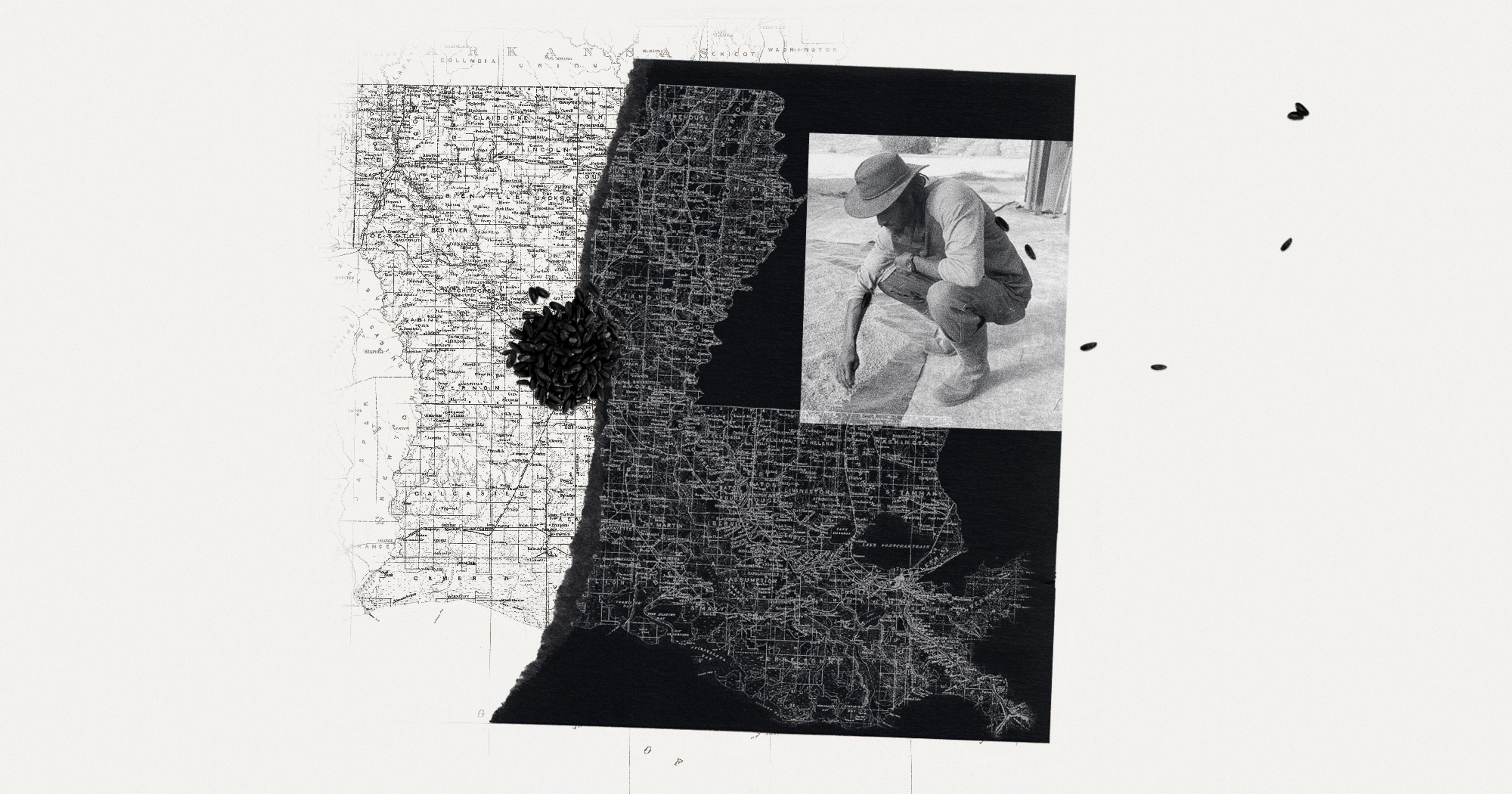
In 1926, Konda Mason’s grandfather fled his prosperous Alabama farm in the dark of night, wife and infant son in tow, to escape being lynched by the Klu Klux Klan. He lost everything he had worked for. His story is all too typical of Black farming’s legacy in America, punctuated with painful stories of lost land and livelihoods.
In 2019, Mason, a serial entrepreneur and economic and social activist, founded Jubilee Justice, an organization that uses regenerative agriculture to foster racial healing and equity. It now runs The Black Rice Project, helping Black smallholder farmers in the Southeast foster repair and reconciliation with an especially symbolic crop: rice.
Before cotton growing, enslaved West Africans produced rice on South Carolina farms, helping propel America to economic wealth and power. Mason said they had developed successful, sophisticated growing methods on all kinds of African topographies — European captors recognized the value of this expertise. “When emancipation happened, African-style farmers immediately got out of the situation they were in and walked away from rice farming,” she said, leaving behind that fundamental part of their identity.
Mason wasn’t planning on forming a nonprofit, but friend and Lotus Foods co-owner Caryl Levine told her about System of Rice Integration (SRI), an agro-ecological methodology employed worldwide that sustainably increases productivity while utilizing less water.
Lotus imports artisan rice from smallholder farms globally but was looking to work with U.S. farms. Mason, who has a permaculture background, recognized an impactful opportunity for Black growers, who in the 1920s totaled 14% of the United States’ agricultural community but who now comprise just 1.4%. They also lost 18 million acres of farmland between the 1920s-1970s, what she calls “an intentional collusion” between the government, the USDA, and private businesses.
Roy Mosely drove a tractor on his grandfather’s farm at age 5. Today he pasture-raises hogs on 16 acres and grows heirloom vegetables and grains on another 40 acres in Portal, Georgia. Moved by Mason’s support, he joined The Black Rice Project three years ago. Jubilee Justice has “taken on the cost to show us how serious they were just to give us the chance to learn,” he said. Mosley initially trialed half an acre of rice; next year he’ll grow between seven and 10 acres.
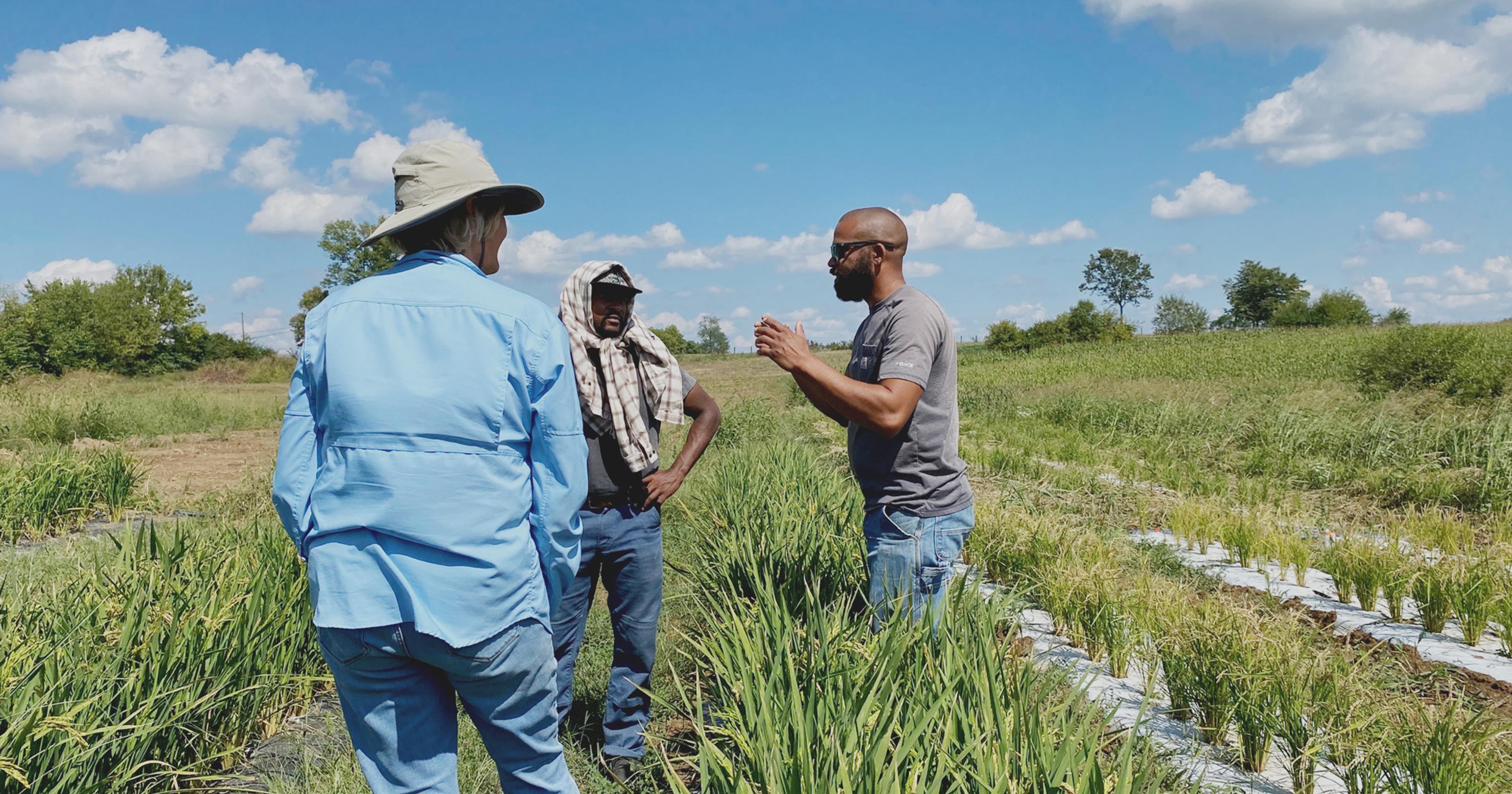
Cornell's Erika Styger, left, discussing SRI planting techniques with Myles Gaines and Brian Chadwell
·Photo by Konda Mason
Mason moved to Alexandria, Louisiana, where the group is headquartered at a former plantation, Inglewood Farms. It’s owned by another friend, Elisabeth Keller, who donated land to the initiative.
The enterprise has made great strides. Ten farmers from Louisiana, Georgia, Mississippi, and North Carolina joined up last year; Mason hopes to add three more in 2024. Over 75 varieties have been trialed; the group identified 7 particularly successful ones and will focus on growing 3-5 of them.
Notably, the group opened the country’s first Black-owned mill last May. Producers keep more money in their pockets by not having to pay a middleman to process the rice. Keller gifted the approximately 5000 square-foot building on the Inglewood Farms property, and it’s been remodeled with solar panels and state-of-the-art equipment.
Collectively owning the mill, the means of production, said Mason, contributes to self-determination in a way that can lead to healthy Black farming communities. The mill is designated as a Public Benefit Corporation, which will be converted to a co-op once its structure is agreed on by the farmers and running smoothly.
Milling trials and plans to process other grains and dry beans are underway. Hopefully a robust crop this year will have the mill humming. Mosely said the mill provides “more incentive to work harder to keep everything going. You feel more a part of it knowing that you’re the owner.”
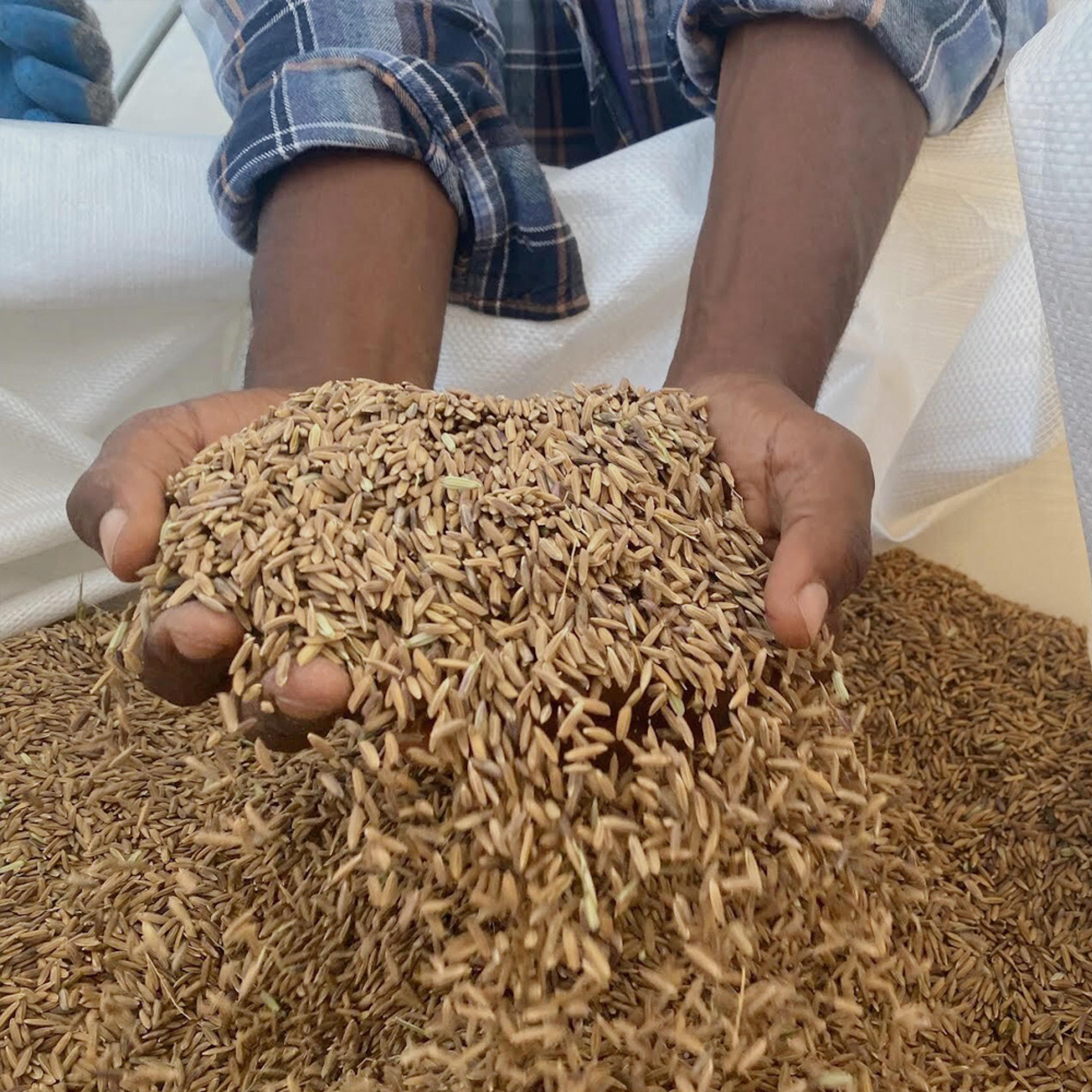
Hands in the harvest
·Photo by Konda Mason
A farmer cooperative is also being formed. The cohort shared their farms’ legacies and experiences at a recent first retreat, by all accounts a meaningful, bonding experience. The project also offers networking and farm education, including a grower’s manual.
Gaining the farmers’ trust didn’t happen overnight. But now, “They really trust the work we’re doing,” Mason said, “because we keep showing up. Everything we say we’ve got to do, we do. And we do it well.”
Collie Graddick grew up on a 200-acre sustainable farm in western Georgia; his father was a founding member of two Black farmer cooperatives during the Civil Rights Movement. Graddick is now growing rice and lending his farming knowledge and work experience to develop the cooperative’s structure.
Mason’s fundraising and support resonate with him, as well as the project’s long-term potential. During the New Deal, Blacks were forced to move from his home county to an area that remains one of the state’s poorest. He sees the lasting effects infusing government money can have on building a community — in that historical case, it was the white community. “I see this as the same opportunity to make a difference in a lot of people’s lives,” he said, “bringing opportunities to a community, a larger community, because we’re gonna rise across the Southeast.”
A co-op Graddick has organized in East Alabama, comprised of young farmers who are heirs and descendants of the Federation of Southern Cooperatives, will grow rice on two leased acres next year. They’ll give their crops to food shelves in East Alabama.
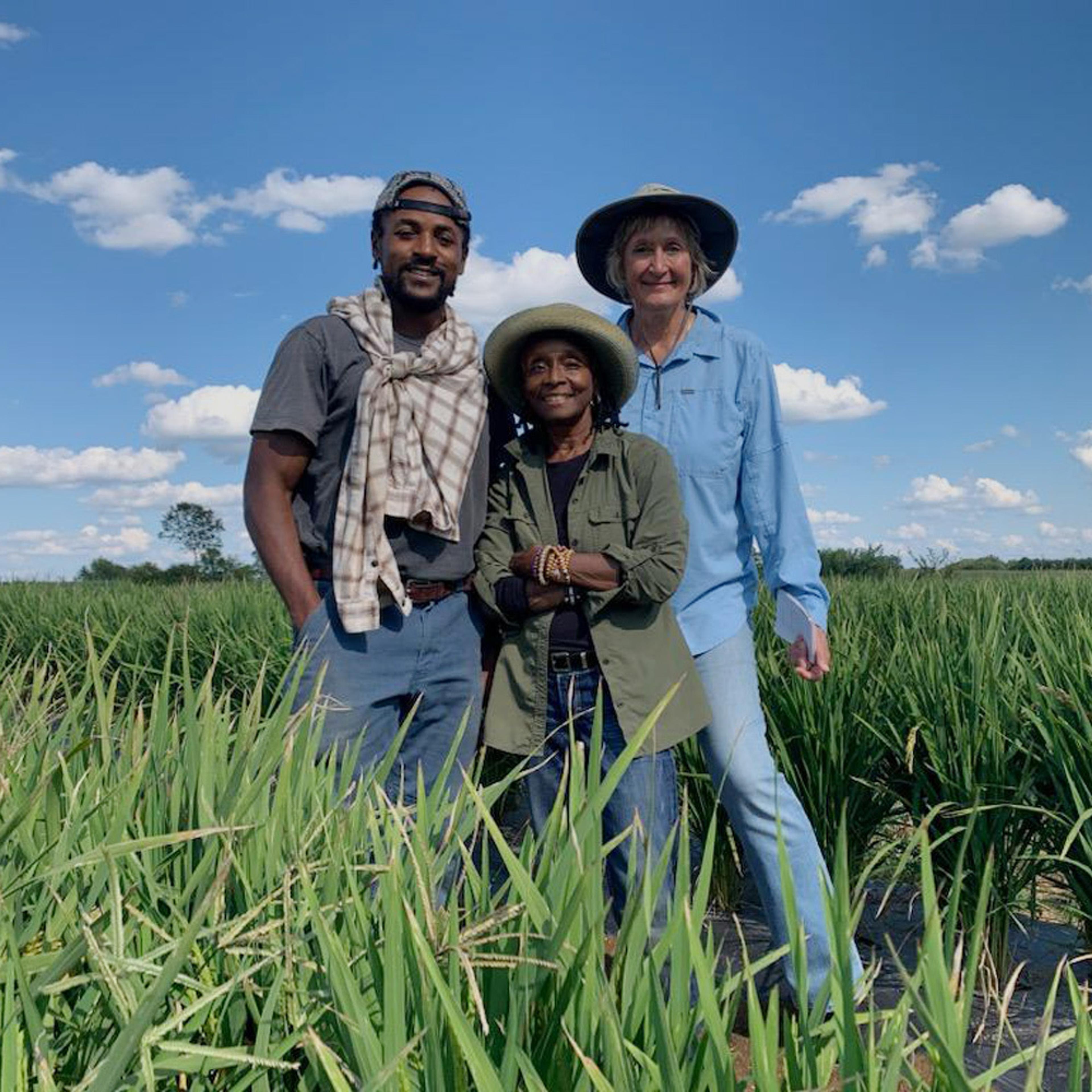
From left, farm manager Myles Gaines, Konda Mason, and Cornell's Erika Styger
·Photo by Brian Chadwell
The farmers are growing specialty rice because they fetch higher prices, and the pigments and fragrances are more interesting than commodity varieties. They include a black sticky, a creole red, and one they’ve branded Jubilee Jasmine, which they’re deciding how to market. Lotus Foods will purchase the majority of all the harvests; some may be sold to chefs or at farmer’s markets. Prices by the pound vary from $1 wholesale to $6 for direct sales.
Mosley said it’s been a steep learning curve; growing rice regeneratively is different than growing other crops, and most rice grown in the U.S. is conventionally farmed. “Not using any chemicals. Just being a student of the crop, certain stuff you do to grow the crops,” he explained. For example, rice, unlike his heirloom corn, does not like having dirt thrown on it to suppress weeds.
Jubilee Justice has also partnered with SRI expert Erika Styger, director of Cornell University’s Climate-Resilient Farming Systems Program. Styger takes a collaborative listening approach with the farmers, tailoring plans and solutions with them. She and Mason hop in Mason’s RV twice a season, visiting each farm to troubleshoot and discuss harvest plans.
The project posed a new challenge for her. “It has been very difficult,” said Styger, to produce enough rice of high quality, “but that doesn’t mean it’s not possible.” The irrigation required is very different. There is trial and error in planning the whole workflow for smallholder farmers, to plant a new crop differently than it was planted before. This is the first time SRI is being used in the U.S. and it can take years to figure out a new way of growing crops.
Now armed with new ecological knowledge and techniques to control weeds and a better understanding of required equipment, Styger’s fairly confident they’ve come up with methods that will scale production in 2024.
“We have heard stories you wouldn’t believe,” she said, “how farmers have been sabotaged … This is an opportunity to reverse this.” Grateful to work on the project, Styger hopes to train Black farmers to take on a technical role. “They have the opportunity to create their own products,” she said. “That’s really beautiful.”
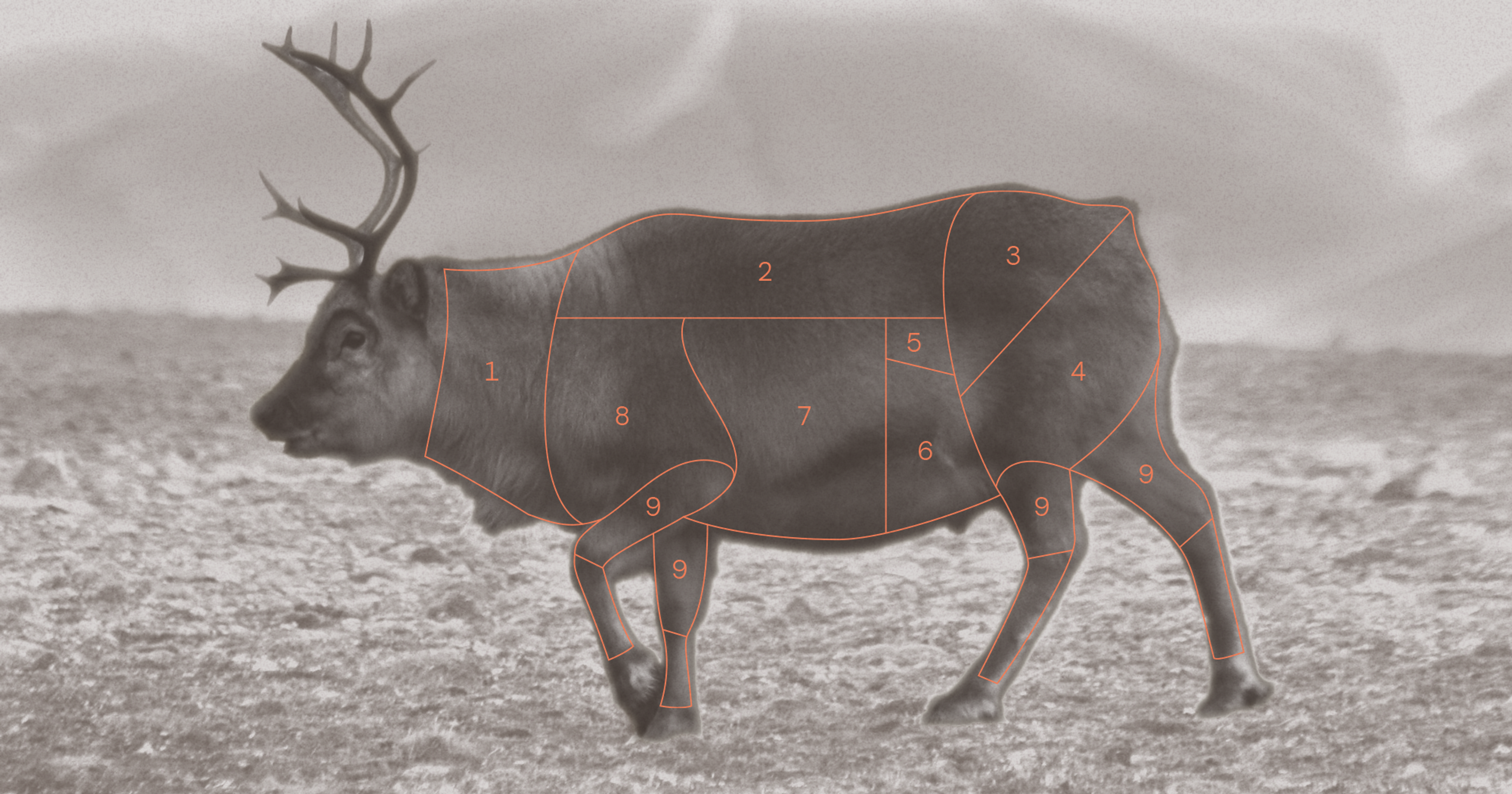
Svalbard reindeer, the northernmost subspecies of Rangifer tarandus, has flesh so richly striated with fat that it forms a sheen around the mouths of those who eat it, leaving visible kisses on the rims of glasses. When fried in a pan, it browns like bacon in its own rendered grease. Stews made with Svalbard reindeer form a thick seal of fat as they cool, as cream rises to the top of fresh milk.
The fat of wild game carries the scent of the animal and what it ate in life, an olfactory memory passed down the food chain. These reindeer taste of the summer tundra of Svalbard, a Norwegian archipelago less than 1,000 miles below the North Pole. The sparse, treeless landscape is dominated by scrubby plants like shrubs, sedges, and mosses in the brief growing period, when reindeer gorge under the midnight sun in the hopes of putting on enough weight to survive the winter. Permanent residents of the archipelago, who have the exclusive right to hunt Svalbard reindeer, often pair it with bracing shots of Norwegian akevitt, the dill and caraway in the liquor echoing the herbal bouquet of the fat.
“They are literally the fattest deer in the world,” said Sam Dwinnell, an American wildlife biologist who is studying the subspecies as a Ph.D. candidate at the University Centre in Svalbard. While other species of deer, such as the mule deer Dwinnell previously studied in Wyoming, can get up to around 20% body fat by the end of autumn, Svalbard reindeer achieve a zaftig 40%. “Fat is really the currency that allows them to survive in the environment that they occur in.”
That environment is changing as the Arctic warms. In the past 30 years, the average temperature of Svalbard has increased 1.6 degrees Fahrenheit per decade, making it one of the fastest-warming places in the world. In the same period of time, the population of Svalbard reindeer has tripled. Dwinnell is studying their foraging behaviors to better understand the reasons for the reindeer boom — and if it can last.
“They’re one of the very few organisms that are actually, right now in this moment, benefiting from climate change,” said Dwinnell. “It just speaks to how complex and dynamic it is.”
An Arctic Feast
Dwinnell’s project is part of UNIS’ 30-year observational study of Svalbard reindeer, which involves capturing individual deer, re-releasing them into the wild, and tracking them via GPS-enabled collars. She and her fellow researchers spend weeks-long stints deep in the tundra, living parallel to the reindeer and monitoring their behavior in minute detail.
While in the field, the researchers are based at Tarandus, a station about 19 miles from Longyearbyen, home of UNIS and most of Svalbard’s 2,600 residents. With no roads outside of town, they can ski or snowmobile if there’s snow; if not, they have to walk. Most of their food and other supplies are dropped off by helicopter, but Dwinnell always brings along some extras, like boxed wine and plenty of cheese.
On a November trip, those extras included a whole chicken and a turkey leg, set aside in preparation for a Thanksgiving feast. “It was her dream to host dinner for U.S. Thanksgiving out there,” confided Canadian-American researcher Maggie Coblentz, who has accompanied Dwinnell on three field trips. “It’s a big deal for her.” Coblentz, best known for her work reimagining the possibilities for food and agriculture in space, brought pumpkin pie filling in a Nalgene and baked tarts at Tarandus.

Inspecting reindeer droppings on the tundra
·Photo by Sarah Gerats
Most days, though, Dwinnell is primarily concerned with the reindeers’ meals. Once she locates a collared reindeer using an antenna, she and her assistants watch it through scopes from up to 400 yards away. One is assigned to note the plants the reindeer eats, which the researchers then find and sample; another notes where it defecates. A third is assigned to find and collect the droppings for analysis. Coblentz, designated pooper-scooper, called it “a very honorable job.”
Her fellow field assistant, Dutch artist and nature guide Sarah Gerats, preferred sampling the vegetation — an activity with a forbidden-fruit appeal on Svalbard, where it is illegal to pick plants without a permit. “That was very strange in the beginning, because I’m always really careful,” she said. “It was especially nice to see the roots, because that is something I never see.” She came to take pleasure in extracting perfectly whole plant specimens, all the hairlike tendrils of the roots intact, and presenting them to Dwinnell like an arctic bouquet.
Those root bouquets and poop samples helped to reinforce an explanation for the increase in Svalbard’s reindeer population. There has been an explosion of biomass on the tundra, especially of native grasses, which “typically respond to warming more readily than other types of plants,” Dwinnell said. She added that reindeer prefer to eat grass over lower-biomass plants like moss because they give them “more bang for their buck.” As a result, these plants are taking up an increasing percentage of the reindeer diet.

Research in the dark
·Photo by Sarah Gerats
Grasses also respond well to herbivory, often growing back in force after they’ve been nibbled. “Through their foraging and through their eating of plants, they can promote more of these types of herbivory-resilient plants to grow,” Dwinnell said. “They can, by just eating it, promote more nutritious grass for them to eat.” The benefits of grass extend into the winter, when the tall blades poke through the surface of the snow, preserved in a film of ice like herbivore popsicles that sustain reindeer until the thaw.
Other reindeer subspecies have not been so lucky. In the volatile winters of a warming Arctic, rain sometimes falls on top of snow, where it freezes into an impenetrable shell. Reindeer are used to digging through snow to find the vegetation preserved below, but they can’t break through the ice, and many starve as a result. Though ice-on-snow events also take place in Svalbard, the reindeer there have so far shown an ability to withstand them, in part because of their evolved ability to fast and their fat stores bulked up by the summer smorgasbord.
“Right now, they’re in this kind of Goldilocks phase, where the conditions are just right for them to be doing well … but we need to remember that these animals are cold-adapted, so they evolved to extremely cold conditions,” Dwinnell said, noting that observational data suggests that Svalbard reindeer may begin to experience heat stress at just 10 degrees Celsius (50 degrees Fahrenheit). Last July was Svalbard’s first month on record to have an average temperature above 10 degrees Celsius. “We’re continuing this research to be able to capture if there are these sort of breaking points that the population will meet.”
“A Breath of Fresh Air”
The explosion of biomass on the archipelago reflects similar patterns across the circumpolar zone that may have an impact on how people grow food in a warming world. Though most high Arctic farming now takes place in greenhouses (including the Svalbard initiative Polar Permacultures, which supplied local restaurants with vegetables from 2013 until it filed for bankruptcy in 2021), rising temperatures are prompting more outdoor farming on the tundra. As climate change disrupts agriculture in temperate latitudes — the IPCC predicts that a global temperature increase of 1.5 degrees Celsius will strike out 8% of existing farmland — there may be a time when the Arctic becomes our Goldilocks zone, too.
For now, Svalbard’s plants are off-limits for human foraging, but its residents can consume their biomass second-hand through the reindeer. Permanent residents are allowed to bag one reindeer per season from six designated areas after passing a few qualifying exams, including a hunting proficiency test and a shooting proficiency test for big game. (Visitors to Svalbard can also get hunting permits, but they are limited to other game, like ptarmigans and ringed seals.)
Inspecting the forages
·Photo by Sarah Gerats
Dwinnell, an accomplished big-game hunter who has stalked elk across the Rockies, could get a reindeer hunting permit if she wanted to, but has so far demurred. “The hunting is so easy in Svalbard that it felt a bit unfair,” she said, comparing it to “shooting fish in a barrel.” Evolved for a world without predators, Svalbard reindeer are short-legged and slow-moving, too chubby to leap across fields like their southern cousins.
But she has no qualms about eating reindeer that others share with her. Soon after her return from the November trip, we both attended a dinner party where the pièce de résistance was Svalbard reindeer pinnekjøtt, a traditional Norwegian Christmas dish usually made with lamb. “This is some of the best meat I’ve ever had,” I heard her declare, grease-slicked fingers gripping a rib.
“Seeing how much fat was within that pinnekjøtt, that makes me appreciate how special these animals are,” she told me later. “In this kind of hopelessness of doom and gloom, it’s nice to have at least some stories of like, ‘Hey, right now, actually, these guys are doing OK.’”
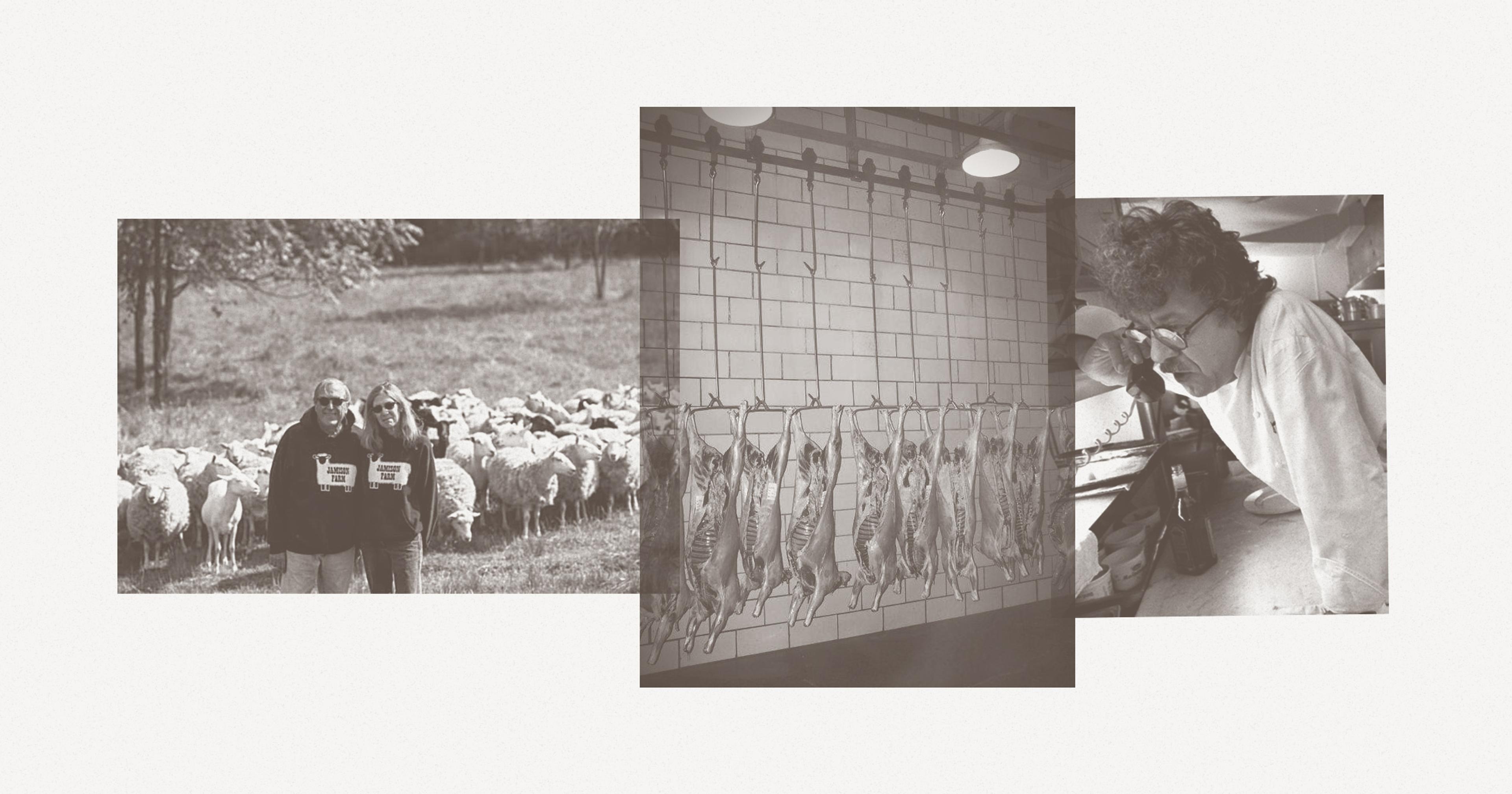
Sukey and I did not come from a farming background. When we first bought our farm — by accident, really — we had roughly zero idea what to do with it. We had simply wanted to buy a beautiful old stone house, built in 1798, to restore over the years. The problem was that the seller would not sell us the house without the 65 acres of prime farmland that went with it.
Fortunately we found a neighbor who was happy to raise crops and keep purebred Ayrshire Heifers at our place. To keep the cows company, Sukey — a true “Earth Mother” in her heart — decided it would be fun to get a few sheep as a 4-H project for our kids. We bought one ram and a handful of ewes. We weren’t sure how it would go, but after some trial and error in the world of lambing, Sukey and the kids were learning to become very good shepherds.
Still, the idea to actually make money from our fuzzy new friends didn’t come right away. I was traveling around the country, selling coal, while Sukey had a local catering business. The sheep were still a hobby.
Things changed after one of Sukey’s customers, a high-powered Pittsburgh lawyer, wanted lamb for a dinner party. Sukey looked all over the area, but could not find any at local stores. On the verge of giving up, she realized the solution to that catering puzzle was right in our backyard. We brought some of our little brood to a local slaughterhouse; lamb was back on the menu! The lawyer loved our meat, and told all his friends. This was the beginning of something big, even if we couldn’t see it at the time.
Our launch into retail was still fairly modest. We started selling “freezer lamb” to some of our neighbors — whole lambs cut for storage. Over the next 10 years or so, we sold freezer lamb and purebred breeding stock on the side, but I didn’t quit my day job.
What kept me interested was the production advantage we had with our grass. Our area of Pennsylvania has some of the greatest grasslands in the country, which had supported large, highly profitable Merino flocks in the 1900s. As we say on this western ridge of the Appalachians, you can sit on the porch in May, drink a beer, and listen to the grass grow.
We were hoping that by fencing and utilizing these pastures, we could fatten our lambs without resorting to feeding them overpriced grain. Somehow utilizing these powerful grasses with hungry ruminants, our little 4-H project got out of hand.
We got into a discussion with Sukey’s father, a longtime television executive and a wary supporter of our dive into the sheep business. While he had initially supported purchasing an old stone house with 65 acres, he was not so keen on going into farming full-time. We were learning about sheep through trial and error, but we had not produced a true business plan.
Sukey — a true “Earth Mother” in her heart — decided it would be fun to get a few sheep as a 4-H project for our kids.
Her business-savvy father said that we needed to create a focus, centered on one product from the sheep. Wool was considered, but ultimately rejected — the profit margin seemed too thin. We went for the meat. We loved the meat! Lambs would be born in the spring, graze throughout the summer months, and be ready for market in the fall. Sounds easy enough, minus one tiny little issue: How would we sell it? Our rural corner of Pennsylvania was a wonderful place to raise animals, but a terrible place to sell them. There was simply not a big enough market.
Having wasted much of my youth reading comic books — or what the young folk now refer to as graphic novels — I was always a sucker for the ads on the back page. They always sold things like X-ray glasses, or 100 toy soldiers for a dollar. All these treasures could be sent directly to me; it was magic, the magic of mail order.

What if lamb could be sold in the same way as my childhood trifles? It seemed like a worthy experiment, to pay our mortgage and feed our ever-growing family. We started a mail-order business.
Like farming, we had no idea how we were going to ship frozen lamb through the mail. In 1985, the local UPS people, try as they might, could not figure out how to successfully and legally ship dry ice. We ended up taking our issue to the UPS Higher Ups; after some experiments in Styrofoam packing, we were in business.
Now that we had figured out how to ship it, we had to sell it. Knowing we had a superior product, naturally raised, coming from a small farm, my idea was that our market was full of customers on Park Avenue in New York. We’d reach them with little ads in the magazines they favored. As I imagined it, these fancy city shoppers were going to come home from work, pour a Martini, pick up their copy of Smithsonian or The New Yorker from the coffee table and peruse the ads.
Our rural corner of Pennsylvania was a wonderful place to raise animals, but a terrible place to sell them.
We established a small customer base from this technique, but our real break came from unpaid media exposure. A New York radio station and The New York Daily News both did features on us, with the novel angle of a couple of inexperienced yuppies breaking into the farm world. We’ll take it! This was free advertising, more effective than what you could pay for.
By the late ‘80s, we had developed a following of retail customers for a brisk Christmas and Easter mail-order business. Still, the rest of the year was tricky. We sold sheep fencing and catered events to fill the financial gap between mail-order seasons. After the Easter/Passover season, things were tough. We needed a new plan.
After an exhaustive review of our family connections, I was able to land a meeting with a big-time food authority in Pittsburgh, a chef by the name of Byron Bardy. Chef Bardy was the head of research and development at H.J. Heinz at that time, not to mention an experienced classical chef. If anyone could help, I figured it was him.
I launched into a rant about our lamb being a special product that nobody could appreciate because it was too expensive, too small, and too mild to be accepted by the mainstream; Chef Bardy listened politely. If I’m honest, I was meeting him because I saw no future in the lamb business; I wanted his negative opinion so I could find another career before I was too old.
I started to worry I would never be understood by a king of bottled ketchup, when Bardy said, “There will be a huge market for products like yours in restaurants.”
A New York radio station and The New York Daily News both did features on us, with the novel angle of a couple of inexperienced yuppies breaking into the farm world.
I disagreed. “You gotta be kidding me! I’ve been verbally and physically abused by every chef in Pittsburgh because it’s too small and too expensive. They told me, with raised voice: ‘This is Pittsburgh, kid. People want Flintstone-sized steaks. Plus, yinz price is outta line. Get owwt!‘”
But Bardy told me that restaurant food in this country was changing rapidly. There were chefs, he said, who were looking for special products from smaller producers. With Pittsburgh as my nearest culinary destination, a classic surf and turf (carp and kielbasa) town, it was very hard for me to see such a leap.
Chef Bardy went on, “Look, John. I am in charge of a fundraising dinner for the Children’s Hospital in October. The best chefs in the country will be there. It will be a perfect place to showcase your lamb.” I thought, here we go. We’re going down the tubes — let’s donate a bunch of lamb for a fundraiser, so we can go broke just in time to miss our mail-order season.
But Bardy kept going; he dropped exotic names such as Palladin, Prudhomme, and Puck, along with Ferdinand Metz, then-president of the Culinary Institute of America.
It was starting to sound intriguing, especially for Pittsburgh, but I still wasn’t convinced. At that point, the only restaurant I was selling to belonged to my childhood friend, who I suspected was trying to humor me.
We had gone from 14 ewes and 1 ram to selling almost 5,000 lambs a year.
I waited a week before I sent out PR letters to all the chefs on the list, stating we would be supplying lamb for the event. I asked them, “But in the meantime, would you like a sample order? Can I answer any questions?” Within two weeks, I had orders from Jean Banchet in Chicago and Larry Forgione in New York, not to mention Prudhomme and Puck! This restaurant business looked like it just might work. The phone started ringing; the business took off.
Within the next few years, we begged, borrowed, and stole in order to buy our own USDA slaughtering plant which enabled us to satisfy the demand created by weekly restaurant sales and seasonal retail sales. A few years after that, we were profitably producing value-added products which allowed us to utilize the whole carcass. Now we were truly vertically integrated, controlling quality throughout farming, processing, and sales. We also bought a bigger farm, nearly 212 acres. We had gone from 14 ewes and 1 ram to selling almost 5,000 lambs a year.
We were quite lucky, as I consider it. Sukey was a debutante from Cincinnati who now owned and operated her own slaughterhouse. I was a proper preppie who started business life as a banker, and was now slaughtering lambs myself. We had been destined for a corporate life with country club leisure, but things just didn’t work out that way.
Sukey was enamored with cooking, while I became fascinated with both grass production and animal processing. At first we listened to land grant professors tell us what and how we should feed the animals, then we followed our own path of grazing and listened to chefs suggestions for producing the best tasting lamb available. As our chef mentor Jean-Louis Palladin told me many times, “My only job in cooking your lamb is to not eff it up.” That’s quite a legacy to reflect on.
Subscribe on your favorite podcast app: Spotify, Apple Podcasts, Overcast, Pocket Casts, Amazon, or via our RSS feed: (https://feeds.megaphone.fm/onlythingthatlasts).
INTRODUCTION: Making Farmland, Making Private Property
[NATURAL SOUNDS — Spirit Farm]
Sarah Mock: I visited a farmer recently, a few dozen miles outside of Gallup, New Mexico. The farmer, James Skeet, toured me and a couple of other visitors around his farm, and we sloshed through the February snow-mud to learn about his animals.
[NATURAL SOUNDS]
James Skeet: These are my main breeders. That’s Junior … Junior! So Dewayne is making like a hogan, you know an octagon?
SM: There’s plenty of pigs, Junior included. There’s chickens, ducks, and turkeys, a few cattle. And then there’s the sheep, including some of the rarest, and most threatened sheep in the world: the Navajo Churro.
JS: The Churro still has a wildness in them, from the Spaniards [who] brought ‘em in and the Navajos loved them because they could easily take ‘em right into the blankets. And this one right here is an ancient line that comes from, they think it was bred with a bighorn. [Other voice: “It’s possible.”] Yeah, so there was a whole religion, only the medicine people would eat. Eat the meat of that. So there’s some ancient stuff. And when the Navajos were rounded up to go to Bosque Redondo, they led them in the canyons, and when they came back, they were still there. {Voice: “Wow.”] So there’s an affinity, a relationship there.
SM: The relationship that James is talking about here isn’t just between the Navajo Churro and the Navajo. He’s talking about a relationship between the sheep and the land.
See, Navajo Churros were able to survive on the land without much human intervention. European livestock in North America, on the other hand, required a high degree of care. Which was fine with colonists. Herding sheep, like planting wheat, milking cows, and feeding chickens, was a key part of the agrarian culture they brought with them.
And it was from practicing this culture that Europeans extracted something world-changing from the land: private property. Private property is not really a thing we think of as having a history, per se. It often feels almost like a fact of nature, like it has always existed. But private property, like and alongside American farmland, was actually made. The story of how private property came to be in the U.S. starts with farmland.
Because land to farm was the original possession wrenched from quote unquote wilderness on America’s shores. That’s the story we’ll explore today, here on The Only Thing That Lasts.
[Interlude]
PART 1 : Original Farmers w/James Skeet
SM: After the tour, James and I ducked inside the hogan, the octagonal building at the center of his farm that serves, among other roles, as a community meeting place. This afternoon though, it’s empty but for us, as he tells me a bit more of his story.
JS: My name is James Skeet, and I’m on the Jah Klash Sheh clan, which is on my mom’s side. It’s the Red Cheek clan. Ki ya ah nee ay bah shish cheen. I’m born from my father, which is the Leaning Tower negotiators. My mom’s clan is, they’re lawyers, they’re fighters, they raise hell, they speak the truth. And then the Ki ya ah nee, it is the bridge builder, the diplomat, working with the system. I’m out of a place called Vanderwagen, close to Cousins Road. We have a farm there called Spirit Farm.
SM: James’ homecoming to this farm, and the land it occupies on the Navajo Nation in Western New Mexico, wasn’t a simple taking up of his inheritance. The farm, unlike the Navajo Churro, had not thrived in the absence of caretakers. And so after his parents had passed on, James returned to a land in crisis.
JS: The land was speaking to us and saying that, I need help. Because of the plowing and the conventional farming that my grandfather had done. The land was in dire straits. You could almost feel it. The voidness of living things. It was very desertified. There was a junkyard here There was a lot of thistle, what we call hyphe. It was hot. It flooded. And when we came, I had this covenant that I’d made with the land, as I was singing on the land, as I was praying, as I was drumming on the land, that the land was saying to me: When you leave this earth, make sure this land is in better shape than when you came in. Which seemed very difficult and impossible to do.
SM: James’ challenge, to shape and reshape the landscape to make it healthier, more habitable, and abundant, was an intensely personal challenge for him, but it is also one of humankind’s oldest traditions. His aim was not simply to farm a crop, but to grow farmland where there was now a void.
For him, the first step was to focus on what was possible for the land itself. He and his wife looked to the soil on which everything lived, and began to understand its capabilities. Then they set to work, not to wage war against thorns or floods or heat, but to repair what previous farmers had destroyed.
JS: Working with the microbiome in the soil, working with our own health, with our own healing, understanding that there is, things that we can do to remediate the dirt into soil, using compost, using techniques that could help speed up this almost 60- 70-year detriment to the soil that my grandfather had done. We started seeing things like plants that we didn’t see come out in the springtime. We saw that the flooding was less and less. We saw that there were animals and birds that did not show themselves since I was a kid, start showing up, and we started seeing an oasis.
SM: This transformation took years of work by James, his wife, and a litany of human, plant, and microbiological helpers. And it was several seasons before they were even able to plant beans, potatoes, and green chilis, our regional staple crops. In the meantime, as the soil was slowly undergoing its transition, the Skeets were exploring livestock — starting with the Navajo-Churros.
Today the Skeets are continuing a long Indigenous tradition of transforming landscapes into farmland in the Americas. Literally making farmland. And it’s really hard to overstate how long this tradition is. In fact, if you want to talk about the first North American landscapes transformed for farming, you better be ready for a very long ride in a time machine.
PART 2: Agricultural Geography
William E. Doolittle: There are a bewildering variety of agricultural landscapes in North America prior to 1492.
SM: That’s William E. Doolittle, a recently retired professor at the University of Texas at Austin, where he was a professor in the Department of Geography and the Environment.
WED: The indigenous people of the Eastern woodlands, from the Atlantic coast into the Appalachians. These people were farming land and they were clearing the forests, and planting maize and beans and squash, all in the same fields together. And that was a practice throughout most of North America.Not only in the Eastern woodlands, but also in the riverine areas down the Ohio River, along the floodplains of the Mississippi River near St. Louis, Missourim and up the Missouri. There were agricultural people farming those riparian areas, that in their natural state would have been rather heavily wooded.
SM: William has spent half a century studying these kinds of historic and prehistoric agricultural landscapes in North America, with a special focus on the farmland modifications made by Indigenous peoples. And what it took to turn natural environments into cultivated ones.
WED: If there is one thing that sort of underlies a great deal of my thinking on agriculture and agricultural land, it is that agricultural land does not exist until it’s made. We often look at farmland, land under cultivation today, and go, wow, this is great farmland, forgetting the fact that at one time it wasn’t farmland, and it only became farmland when people made it farmland.
SM: And it was the Indigenous inhabitants of the continent, members of the more than 1,000 distinct civilizations that existed before 1492, and whose descendants, like James Skeet, are still here, who made much of this nation’s farmland. Whether the task was the more simple project of clearing trees or leveling land, or the radical changes involved in building terraces or irrigation canals, what’s clear to William from the geographic evidence across North America is that humans have been farming here for a long time. And like humans the world over, they’re always looking to make farming easier and more efficient. Some of these Indigenous alterations were so advanced, in fact, that we’re only just now beginning to understand how they work.
WED: Up in Wisconsin, and in Michigan, farmers built a series of, God, there’s hundreds of these in those states, some of them still existing. A series of ridged fields, where they literally excavated ditches and piled the dirt up into a series of ridges. And for a long time, nobody knew exactly what they were used for or how they were used. But then some archaeologists did some experiments and discovered that by elevating these planting surfaces, a foot to 18 inches, facilitated cold air drainage. You know, hot air rises, cold air drops. By planting on top of these ridges, they could extend the growing season about 60 days.
SM: But not all North American peoples were felling forests and building great earthworks.
Many others found that the easiest and most efficient way to procure what they needed from the landscape was with strategies that, in many ways, challenge our ideas of what agriculture even is.
WED: The Owens Valley Paiutes for a long time have been excavating irrigation canals to irrigate stands of wild grasses. So here you have wild grass, but people are irrigating it. So is that agriculture? The Ojibwe in northern Minnesota and Wisconsin had a method of going through dense stands of wild rice in their lakes. And collecting the grain by raking it over the sides of the canoe and connecting it in the canoe. It’s wild grass, wild rice, okay? But they got so good at it that they wound up after harvest, going back through the lakes, throwing some of the rice back in for next year’s crop, okay? So you might say, they were gathering rice. But by virtue of throwing some back, they’re planting rice.
SM: William makes the case that there is tremendous gray area between “agriculture” and wild harvesting or gathering. He’d argue that if I found a stand of wild blueberries in the woods, and broke off a branch of an overhanging tree so that it gets more light, I’m now farming these blueberries. I’ve committed a cultivating act, by altering the landscape to encourage the land to produce more.
For William then, it’s clear that for hundreds if not thousands of years, much of North America was being actively farmed, for food, fiber, fuel, and other supplies. William actually worked with Charles Mann — author of 1491, a watershed text on Indigenous peoples in the Americas — to map thousands of sites all over the continent, where evidence of farming and farmland pre-date European contact.
And yet, despite what we’ve learned about Indigenous efforts to turn land into farmland all over the country, private property, at least in the modern sense, didn’t arrive on the North American landscape until Europeans did. So what secret did these invaders know, about turning the alchemy of turning farmland into *your* farmland?
That’s after the break.
[Ambrook ad]
Now, back to the show.
PART 3: How Europeans “Improved” Their Way to Property
SM: So Indigenous peoples of North America, in the past and even today, had plenty of farms and farmland. In fact, Europeans who first made contact with Indigenous populations in the Americas were constantly recording and reporting back what they’d witnessed and learned about Indigenous agriculture. And it was … a lot.
We can be pretty confident that Europeans understood what they were seeing, because Western thinkers have been philosophizing on the nature of private property since Plato and Aristotle debated the virtues of collective vs. individual ownership. But it was in the 15, 16, and 17 hundreds that Europeans started to really wade into clarifying how they believed property worked. At least, theoretically.
[Classical music overlay]
John Locke was perhaps the preeminent property theorist of his day and a thinker whose arguments still hold sway in academic and legal spaces today. The core of his argument around ownership went something like this: The fundamental property of all people is their own person, specifically their labor. Then there’s the Earth and everything on it which — and I’m paraphrasing Genesis here — God gave so that people would have dominion over it. And so when a person adds their labor to the unclaimed, undominated world, then the thing that they’ve labored on — or to use Locke’s term, “improved” — is now their private property.
John Locke’s theories, and others like his, were key to motivating and justifying European, especially British, colonial actions all over the world. And deep down, they’re at the core of how we explain owning property even today.
And Europeans were hungry for justification. Because in the first century after contact with the Americas, plenty of Europeans came down on the side of Indigenous property rights. Case in point, in 1532 a theologian in Spain declared that, “Indians were true owners … of the lands they occupied.” Shortly thereafter, Pope Paul III officially agreed, saying that “Indians are by no means to be deprived of the possession of their property.”
For many colonists hungry for resources like wood, tobacco, cotton, or at least the profit to be made from selling these commodities, the idea that all the “unimproved” land in the Americas was not free for the taking, was unacceptable.
But philosophies like Locke’s, alongside religious and pseudo-scientific racial theories, gave European colonists legal and intellectual cover to take Indigenous land for themselves. See, Locke argued that Native Americans were not rightful owners of their continent because they were only “hunters and nomadic people,” and thus not true improvers of land.
Virginia DeJohn Anderson: Well it’s interesting because of course the English come over and say, oh, there are no people here.
SM: That’s Virginia DeJohn Anderson, a retired professor of Early American History at the University of Colorado, Boulder.
VDA: The phrase they would often use is the Indians roamed over the land like deer. Even as these English see Indian cornfields. So depending on the reason for what record they’re keeping, they’re either acknowledging Indian agriculture or not.
SM: I wanted to talk with Virginia about how Europeans — specifically Brits in New England — started to transform ideas into deeds. To the ground, that is. And in the beginning, it was the king of England, not philosophers, who mattered most.
VDA: When the first English settlers come over, they’re assuming everything they see is English land on the basis of John Cabot’s 1497 voyage. And they, in Massachusetts, let’s say, they have a right to this land because the king gave them that right through the Massachusetts Bay Company, which becomes the Massachusetts General Court, the legislature.
SM: These agents could then distribute this land to settlers, and often all it took was the coming together of a group of men who promised to settle and be industrious — make improvements, in other words. With that commitment, the court would grant them a tract of land to divide amongst themselves, totally free of charge.
This was utterly revolutionary — many of these colonial settlers would have never, in their wildest dreams, had the opportunity of ever owning land in Europe. Though some of these settlers would have been farmers in England, they were almost certainly tenants, rentiers, as their families had probably been for generations. In fact, even the word “to farm” originally meant something more like “to rent out.” As in, when a lord, a great landholder, would bring in farmers, or people who pay for the right to use the land. In Europe farmers were, by definition, tenants.
Indigenous groups in the area, of course, did not have this same historical baggage around land tenure.
VDA: Again, the native people saw land as a resource that was something they used, not owned in the same way. There were native groups like the Wampanoags up where, who met up with the pilgrims in the Cape Cod area. They would have territorial claims to a section within which they would be Native villages. But an individual Native person never owned a piece of land in the way an individual English settler did.
SM: Given that there were thousands of distinct Indigenous groups, each with unique rules and taboos around everything from land inheritance to control, and that colonists destroyed holders, histories, and records of this knowledge, it’s really difficult to generalize about Indigenous property ideas. But there are a few things that historians are pretty confident about. One of them is that, for Indigenous people, ownership over a territory or region was often collective, not individual.
Yet individuals and families could often control all the land they were able to farm within the territory. But, if the individual stopped tending their land, it would then revert to community control, to be redistributed or turned to other uses. This tenure system — what’s called a “use claim” system — was not unknown to Europeans. In fact, systems like this share many similarities with both the “common” system — which were once extremely common in Europe — and corporate ownership.
But there was one particular outcome of the use claim system that many Europeans found unappealing. Namely, it prevents massive accumulation of land by individuals, and therefore the intergenerational building of land-based fortunes.
But the fact that Europeans had established ideas about private property and that Indigenous peoples relied on ideas of collective and use-based land tenure, was not the major focus of conflict between these two groups at first. The problems started, on the settler side, with their strategy for colonization.
VDA: Well, they came thinking they could simply replicate what they had been doing in England. There’s a lot of discussion in some of the early materials that, oh, this is just like England, the climate. The landscape needs development because there are these woods and unplowed lands. But, we can figure this out for ourselves. We can turn this into something that we can use. And so they brought agricultural tools, and they brought livestock — cows, pigs, horses, sheep — and just assumed they would have their farms growing food.
SM: These Englishmen, however, were in for a rude awakening. Wheat, the touchstone of the English diet, doesn’t grow very well in New and not-so-England. And the livestock they’d brought with them were also not growing like they always did on the English Commons.
VDA: It takes them a while to realize the natural grasses in New England will keep a cow alive, but not necessarily sort of fatten it up because they’re less nutritious for livestock than the grasses grown in England. And because it’s less nutritious, you need a lot more land with those grasses growing on it to feed your livestock.
SM: The amount of land needed for animals to graze was far too much to fence, so the colonists went with a completely different strategy.
VDA: So what they do, ultimately, is fence in their croplands, to keep the marauding animals out and then let the animals run free. They have to bring them back in New England in the winter ,because otherwise they’d freeze to death. But nine months out of the year, ten months out of the year, livestock are roaming free. And that’s not what they had intended to do. And that’s the source, of course, of a lot of the conflict with Indians.
SM: These conflicts ran the gamut, but one specific issue was particularly common.
VDA: Livestock created problems that showed up in the public records. Principally trespassing.
SM: That’s right, trespassing. See, unfenced cattle and pigs tend to go places they’re not supposed to go, and when they’re there, they can destroy a lot of stuff. Especially the tasty and nutritious crops grown by nearby Indigenous people.
But that wasn’t actually the biggest part of the problem. The larger issue was that, when Native people dealt with these cattle and other livestock in their fields, as they had always dealt with pests — by killing them — angry colonists would often come after them.
VDA: This crucial English idea of a domestic animal, which is that this creature is property that is yours, and nobody can take it away from you. And if an Indian shoots a cow in his field, he has taken away the property, he has stolen the property of an English settler. Native peoples did not have this same sense of, certainly not property in living animals. So we find in the records Native peoples being prosecuted for shooting a cow, and you have to kind of imagine what it was like for that, especially that first Native person dragged into an English court, by the way, they use their legal system to prosecute as they would prosecute an English settler.
SM: In this way, cattle and pigs became the tip of the spear of colonialism, and of private property. These animals, which were seemingly neutral beings wandering the landscape, were in fact living property. It’s right there in the name — live stock — as in living product, live possession.
These animals were physical embodiments of European ideas of ownership that, as they trod the land, transformed it. By physically changing the environment, by destroying crops and triggering conflicts that led to the impoverishment of Native communities, and essentially expanding their owners‘ claim of property wherever they went.
John Locke’s theory argues that property is created when people exert their labor on the land, when they improve it — a word which originally meant “profit from.” And livestock became a potent agent of that work, extending European property claims wherever they wandered. And critically, livestock often did not have to wander very far.
VDA: One of the things is that the Indians were omnipresent. I don’t think you lived in a New England town throughout the 17th century without encountering Native peoples all the time. They weren’t separate. Trespass wouldn’t have been a problem if these villages were 15 miles apart. These are not separate people. The Native people certainly have not died out. They’re adapting.
SM: Part of the problem is that even as migration from England slowed, the population of Europeans in New England exploded because they had huge families. And in order to feed those families, livestock populations were also exploding.
VDA: It compels the English to push against Native peoples and keep pushing them out. So the Native peoples never disappear from the settlement areas, but their role is diminished over time as they’re forced to relocate.
SM: As decades passed, Europeans seemingly got more and more turned around by their own mental gymnastics. For example, a movement was afoot from early days to encourage Native populations to adopt domestic livestock husbandry, since the English believed raising cattle was one of the ultimate civilizing forces. But evidence shows that when Native peoples did start raising livestock, specifically pigs, and selling them in English markets at competitive prices, colonists got mad, and did their best to shut them out of the marketplace.
But this isn’t, by far, the worst of it. Indigenous groups that encountered the English in New England may not have been raising livestock in the 15 and 1600s. But James’ people, the Dine‘ of the Southwest, certainly were. And yet, neither the Spanish nor other European colonists
respected their ownership rights to their own ancestral land, despite the fact that these people were doing the exact same things that had earned these rights for European settlers.
In the end, the English determined that their own agricultural practices were property-worthy, while the landscape transforming and community nourishing farming practiced by their Indigenous neighbors was not. The main difference? English products were profitable in European markets.
[Interlude]
SM: So this was the milieu in which our modern concepts of property began to solidify.
It would be more than a century later that the early crafters of American law would start to establish their vision for a country not united by “love of God and King” but by love of “life, liberty, and property.” Except strike the property part, Thomas Jefferson. It sounds much more noble to say “pursuit of happiness,” doesn’t it? Though arguably, for Europeans at the time, the difference between property and happiness was marginal at best. Because especially for poor Europeans, many of whose families had likely been poor for centuries, this was the first time in history, they’d had an opportunity to fundamentally alter the trajectory of their lives, and the lives of their descendants.
Of course they first had to abandon their ancestral place, cross an ocean, appeal to the king or his agents for permission to settle, and then usually go through the process of proving up a claim. Providing evidence that they had indeed exerted their labor on the land in a way that had transformed it into their private property. This could be by clearing trees, plowing fields, building fences. And once this was done, they might have to pay a somewhat token purchase price. Then the land was theirs. And with it, a duty to king and country to pay taxes.
But what does it actually mean for land to become a persons’ private property? Well for one, private property comes with rights. Under the U.S. legal system, this is a whole package of rights. The right of possession — to say something is yours and for it to be yours. The right of control — to use it as you see fit. The right of exclusion — to prevent others from using it. The right of enjoyment, and the right of dispossession. To sell it, to destroy it, to transform it, whatever you want. This package of rights is enshrined in common law and in state laws, and perhaps most powerfully protected by the 5th Amendment of the Constitution. That’s right, pleading the Fifth isn’t just about avoiding self-incrimination. Your Fifth Amendment right also prevents private property from being taken for public use without just compensation, through what’s known as the Takings Clause. The Takings Clause itself can be traced to origins in the Magna Carta, but property rights in the American colonies and the early United States proved particularly potent even compared to those in Europe.
Why? I think this is a question with many answers. But to me it seems that Americans developed some of the most aggressive property right laws of its age frankly because, they had to. The founders of the U.S. built an agrarian nation, one specifically tied to the land, on that was only theirs by virtue of claims by European kings. And on land which was already occupied by Indigenous peoples. This was an incredibly delicate needle to thread, and it required the establishment of unquestionable property rights that throughout U.S. history have time and time again required protecting through violence and bloodshed.
Simon Winchester, in his book Land, argues that the most essential American property right boils down to this: having the right to call the police and have anyone you want forcibly removed from what’s yours. Our story today bore out this argument.
We saw colonists use the right to have people punished for violating property to push Indigenous people of their own lands when they killed livestock. Then once the land was emptied, defined, titled, and owned, exclusion was used to great effect. It took powerful laws to deprive the Native people of North America of what many Europeans agreed was rightfully theirs. And today those same laws continue to protect real property, or real estate.
But alongside our modern concept of private property, which is rooted in this history and since then has expanded in pretty much every direction, other ideas about land tenure, and the human relationship with the landscape, persist in the minds and hearts of people like James Skeet of Spirit Farm.
JS: And we began to almost write a new story about who we were on the land. Before that, we were just existing on the land. But now we are coexisting with the natural cycles on the land itself. And the land has become us. And we become the land. We no longer own it. The land owns us.
SM: I’ve spent a lot of time working with James, but I still haven’t gotten use to the casualness with which he is able to upend conventional, and I should say, white or Euro-American wisdom about property.
For the Skeets, however, their labor has not entitled them to private property. Their land, like reservation land across the country, is owned by the Bureau of Indian Affairs, which today still holds 56 million acres of Indigenous land “in trust.” The Secretary of the Interior, the federal department under which the Bureau of Indian Affairs sits, has to approve most actions on this land, whether it’s to be sold, developed, or otherwise altered. And perhaps expectedly, this permission is often very hard to get. Plus when reservation land is interspersed with private land in a “checkerboard” pattern, as the Skeets‘ property is, it’s often even more difficult — next to impossible, for the people on the land to make decisions about how it’s used, or how it might be altered.
But this fact hasn’t prevented James and Joyce from doing what they can, to keep the covenant they’ve made with the land. The land that, despite the legal boundaries that would keep him at a distance, James does not see as separate, or separable, from himself.
JS: I try to go back and say, what does it mean to be a part of this land? What does it mean to have my origins? Or in other words, as Navajos would say, what does it mean to have your umbilical cord buried on the land?
SM: Today, our conversation has centered on the idea of private property. How land, through the alchemy of profit-making, becomes personal possession. But here, James offers up a different kind of magic that transforms land. Not into something owned, but into something sacred — the vault not only of our ancestors, but of a part of ourselves. This idea resonates with me deeply, as a person who’s moved around too much, who’s craved the ability to settle, to put down roots, to feel at home with all the safe, secure, nested feelings that come with finding a place to stay.
And we did it, we bought a house. Or technically, the bank bought it, and we’re in the process of buying it from them. But, according to the state and the IRS, we have acquired property. It was a long, hard road, involving sacrifice, stress, and a lot of luck. I’m proud to have reached this milestone that, for so many in my generation, seemed impossible. And my dream was just a little house and a yard. For many who dream of farming, and one day owning the land they tend, the odds are way longer.
And yet, my property is part of someone else’s ancestral homeland. At different times, Pueblo, Navajo, and Apache peoples have called this same patch of Earth home since time immemorial. Rights to their property were neither justly recognized nor ever discharged. And I can’t help but feel that that leaves us in something of a historical lurch. Today, I somehow have more rights to my mortgaged home of two years than James Skeet has to the farmland he’s created, on land where he could claim to be perhaps a 50th or 100th generation farmer.
So does that mean that I, and millions of others like me, am in possession of stolen property, a notable crime under U.S. law? And if so, what recourse is there for those whose land was stolen so long ago? Legally, these questions have been answered. Morally and ethically, they’re still wide open.
CONCLUSION
SM: But what we’ve talked about today is just the beginning of the story, of how owning property got so wrapped up in the American dream, and how that dream became so unattainable for so many. For the rest of the story we’ll have to skip ahead, to the era when a young nation turned away from Europe to look inward, and decided that the “backwoods” beyond the Appalachians would be backwoods no more, but instead the great American interior. An agricultural Eden, the Garden of the world. To unlock this garden would require the largest transfer of land, perhaps ever, in the history of the world. But it wasn’t just the farmland itself that was affected, it’s the people who did, and didn’t own it.
Rebecca Clarren: The United States starts to add this “free land” for this experiment in homesteading, and my family like so many others, many of them immigrants, many of them not even American citizens yet, were allowed to get in on these 160-acre parcels.
SM: How a legacy of free farmland drives American inequality — next time, on The Only Thing That Lasts.
SIGN OFF
Before we sign off, we talked about a lot of data today, if you want to dig into it yourself, check out the show notes, or our website for links.
While you’re there, make sure you head over to ambrook.com SLASH research to stay up on the latest reporting from the Ambrook team on agriculture, land, and environmental issues like the ones we talk about here on the show. After you subscribe to the podcast, don’t forget to sign up for the newsletter, and follow @AmbrookAg on socials for news about upcoming projects and stories. And we can’t wait to hear what you think! If you like what we’re doing, let us know, and don’t forget to share.
The Only Thing That Lasts is an Ambrook Research production. This podcast is written, produced, and mixed by me, Sarah Mock. Our editor is Jesse Hirsch, with support by Ali Aas and Bijan Stephen. Technical support by Dan Schlosser, and general support by Mackenzie Burnett and the whole team at Ambrook.
A final note, Ambrook Research, the media outlet that produced this podcast, is 100% editorially independent from Ambrook, the fintech company that funds it.

When Justin Robbins, a sixth-generation cattle farmer from Scranton, Iowa, walked into this year’s annual Cattlemen’s Association Banquet, he was pleasantly surprised. The room was full of new faces, young faces, and more overall bodies than they’d seen in quite a few years.
“These were people wanting to be involved. And that to me is exciting, because cattle producers are aging out globally,” said Robbins.
As it turns out, beef producers aren’t the only ones getting older. A recent study from Tulane University in New Orleans found that 12 percent of Americans account for 50 percent of beef consumption in the U.S. Most of this consumption is done by middle-aged males, while beef consumption is lower among younger consumers and college graduates. The study is sparking concerns — and hopes — that America’s population could be aging out of beef.
It’s certainly true that cultural attitudes towards beef have been shifting. Cattle production has come under fire for everything from farmland destruction to rising greenhouse gas emissions, poor health outcomes and more. On top of that, the market for plant-based meat products continues to grow, offering consumers new alternatives to beef.
Mark Rifkin, senior food and ag policy specialist at the Center for Biological Diversity, which helped fund the Tulane study, said that, perceptions aside, beef intake is still forecast to grow globally.
And overconsumption, even if by a small subset of the global population, remains a concern when it comes to environmental protection. “If everyone in the world ate the diet of an American, we’d need 2.5 Earths to provide that much land,” said Rifkin. “We simply don’t have the land.”
Still, if a small subset of America’s population is doing the majority of beef consumption, why do global averages continue to grow? Studies show factors like increasing global wealth and rising populations are driving beef consumption worldwide.
America currently exports around 38% of its beef, with countries like Japan, South Korea, and Mexico being the largest importers — countries where beef consumption is on the rise. Changing attitudes towards beef at home could simply push American-made beef into new markets.
Even if interest in beef does decline, consumption of other meat products, particularly chicken, is growing. The U.S. Department of Agriculture’s (USDA) 2022 Census of Agriculture reported more than 7 billion chickens on mega factory farms in America. Chicken farming contributes to toxic waste run-off, rampant Avian Flu, global greenhouse gas emissions, and more.
“If everyone in the world ate the diet of an American, we’d need 2.5 Earths to provide that much land.”
While large, industrial farms bear the brunt of the climate responsibility stateside, a new wave of regenerative cattle farms, like Robbins Land & Cattle, operated by Justin Robbins and his wife Lacie, believe not only that the practice can be done responsibly, but that raising beef cattle can have a positive impact on farmland. “If you let the cows go out and graze it, they are fertilizing it and mixing up that top bit of ground … creating life,“ he said.
“I would love to see every farmer have 20-40 cows,” added Robbins, “because I think every farmer has certain pieces of ground that need to be left alone and not farmed traditionally.”
However, the reality of American farming isn’t always green grass and sprawling fields. Industrial farms can hold as many as 150,000 head of cattle at a time, and grazing these animals sustainably just isn’t possible. In addition, the waste created on these farms is a threat to soil, not a boon. It’s estimated that factory farm animals release 1 trillion pounds of manure annually.
Diego Rose, lead researcher of the Tulane study, has been studying food access and sustainable diets for nearly two decades. He agrees that beef is “an environmentally taxing food source,” especially when it comes to large-scale feedlot operations.
Rose’s study began as an exploration of the “highest carbon eaters” in the American population. Alongside his team, he collected dietary data from 17,000 Americans, using a 24-hour recall method, and connected it to an extensive database of food-related environmental impacts.
“It’s the working class people that show up to our farm. That’s who’s buying the beef.”
Rose said he wasn’t surprised to find that disproportionate beef eaters were the worst environmental offenders. “Beef is 8-10 times more impactful [on the environment] than chicken on a weight-to-weight basis, and 50 times more impactful than beans,” he said.
Still, while 12 percent of the population eat more beef than the rest, 45 percent don’t eat beef at all on a given day. Rose’s team also found that most beef consumption was in mixed dishes like pasta sauces, burritos, and casseroles, which gives him hope that substitutions can be made. Ideally, these substitutions involve more plant-based options, as recent reports show that lab-grown meat may have a worse carbon footprint than farmed beef.
Back in Iowa, Robbins said that despite the findings of the study, he doesn’t see his younger clientele, or the new generation of Cattleman’s associates, slowing down. Though he understands how college kids might have shifting perceptions around eating beef, he blames any downward trends on growing debt and shrinking incomes, rather than a wider ethical shift. “It’s the working class people that show up to our farm,” he added. “That’s who’s buying the beef.”
He does notice more questions from the public around beef impact and future viability, recounting a recent conversation with a woman who asked him: “Why do you farm beef cattle if it’s so bad for the environment?”
Robbins isn’t insulted by these questions. In fact, he’s happy to debate cow farts, plastic milk bottles, and overspent farmland any time. He is, however, quick to reassure any dissenters that cattle can be part of sustainable farming practices. “I wholeheartedly believe beef is a sustainable food if it’s raised properly,” he stated. “It’s no different than living within your means.”
For Rose, it’s unclear whether a future exists without beef as a mainstay of the American diet. Still, he said, “We really weren’t trying to pick on people, we’re just trying to see how it shakes out, and what information might be useful to those that want to educate folks.”
“Not everybody is going to change their diet, and we aren’t suggesting a ban,” he added. “But the planet is on fire … so we need some people to step up and do something about it.”

If Holly Buckler, a commercial waterwoman based in Maryland’s Patuxent River wanted to, she could go out on the water right now and catch hundreds of pounds of blue catfish. In fact, she’s confident she could catch 2,000 to 3,000 pounds each and every day and not even make a dent in Chesapeake Bay’s population.
The problem is that blue catfish are so pervasive, their supply often eclipses their demand. She could catch all of those fish, but be stuck with nowhere to sell them, or nowhere to sell them at a fair price. When Buckler’s commercial processor becomes flooded with product, for example, the price per pound of blue catfish sags until the fishery shuts down completely to process the stock.
One day when Buckler was stuck with catfish to offload and nowhere to sell them, local restaurants reached out and said that they were happy to buy them directly so long as she could process them herself — no one wanted to puncture the pesky, ill-tasting mud vein.
While fileting fish one by one, Butler decided to slice open the bellies of a few just to see what they happened to be eating. In their guts she found American eels, broken oyster shells, and crabs.
“Blue catfish are generalists, they feed on just about anything they can get their mouths around,” said Bruce Vogt, the Ecosystem Science and Synthesis Manager in the National Oceanic and Atmospheric Administration (NOAA) Chesapeake Bay Office and a member of the Invasive Catfish Workgroup.
That means that clams, mussels, American shad, blueback herring, and other species that NOAA are actively trying to recover from population decline, according to Vogt, are also threatened by voracious blue catfish. Furthermore, there’s evidence that blue catfish are preying or occupying the core habitats of eel, as Buckler saw in her dissection, and Atlantic sturgeon.
The problem isn’t that the fish are eating any one species — it’s that they are threatening the entire balance of the ecosystem.
Blue catfish were introduced into the James, York, and Rappahannock Rivers in Virginia by recreational fishermen in the 1970s. Since then, their population has exploded across the Chesapeake Bay with profound effects — they’re large, apex predators with robust appetites and a knack for rapid reproduction. Between 2012 and 2022, the harvest rates for blue catfish rose 287 percent. Meanwhile, the harvest yield for more profitable fish like yellow perch, striped bass, and American eel are on the decline.
The problem isn’t that the fish are eating any one species — it’s that they are threatening the entire balance of the ecosystem.
The blue catfish invasion has gotten so bad that in 2023 politicians in Maryland sent a letter requesting federal funding to incentivize fishermen to solely hunt blue catfish, along with marketing dollars to sell the catch to consumers.
“In areas where blue catfish have been established in the Bay, they comprise up to 75 percent of the total fish weight in that tributary … As this situation continues to evolve, it is becoming more clear that economic relief for our fishing communities is needed as they work to transition from fishing on native species to targeting invasive animals,” wrote Maryland Governor Wes Moore in his plea to the U.S. Department of Commerce.
But with a seemingly endless stock of low-cost, delicious fish swimming throughout the Chesapeake Bay for commercial and recreational anglers alike to catch, a pesky question emerges: Why can’t Marylanders and Virginians eat their way back into a balanced Chesapeake Bay? What’s stopping people from eating more catfish?
Buckler has been fishing blue catfish with her husband for the past six years, though they originally focused on catching striped bass and white perch. That changed when they noticed massive blue catfish had started tearing apart their $300 to $400 specialty nets. The writing was on the wall, and Buckler figured if she couldn’t beat the blue catfish, she would shift her business and harvest them instead. She started employing trotlines and gillnets to zero in on the largest catfish.
Buckler said that she can typically get between 80 to 90 cents per pound on blue catfish, so a 20-pound fish will net her about $17. But when the market is nearing a shutdown, the price plummets to 55 cents per pound and that same fish will bring in only $11. When the price gets too low, it’s simply not worth the effort for commercial fishers like Buckler to go out on the water.
“Right now blue catfish are cheaper than other protein options … We need to communicate its value as a food source.”
As a recent example, a few weeks back a wholesaler came to Buckler’s residence to pick up fish. After they were sized and scored, she received her check for the catch. For 1,298 pounds of blue catfish, she received $693. After paying for gas to run both her boat and to power her truck to haul them, she had netted less than $300 for more than half a ton of product.
“It’s not fair. Grocery stores are selling filets at $12.99 a lb, and [you can get] four to five pounds of filets off a 25 to 30 pound fish. The grocery stores and wholesalers are making out and us as the little guys, we’re getting screwed,” she said.
Buckler said grocers should consider stocking only wild catfish instead of farm-raised. But according to butchers she’s spoken with, visual appeal is the issue . Farm-raised catfish is pinkish, while wild-caught is pale and white.
Beyond getting more wild blue catfish into grocery stores, people simply need to be eating more of it. The challenge, both Buckler and Vogt say, is that catfish have a mixed reputation due to their mud vein, also called a mud line.
If someone cuts the mud vein while butchering filets, the fish will taste, well, muddy. But if they don’t, the flavor is light, crisp, and extremely versatile. Vogt points to local initiatives, like schools making fried fish cakes and feeding them to students, as a means to introduce the fish at an early age. Plus, there are clear economic benefits to blue catfish as a protein source in the face of sticky inflation.
“We will not get rid of every catfish. They’re here, we’re not going to eradicate them, and there will always be negative consequences.“
“Right now [blue catfish] are cheaper than other [protein] options … We need to communicate its value as a food source,” said Vogt. “Chefs have picked up on it [and we] see it more in restaurants, but still there is work to do.”
But even with more fishermen on the water hunting catfish, Vogt isn’t confident that that there are enough people — or processors — to target the rampant population. If the population were to reach crisis levels without a market for human consumption, the next steps would be to process the fish for pet food, compost it, export it to China and elsewhere, or simply throw it away, which is clearly not ideal.
“The focus has been making sure a product comes out of removal,” Vogt said.
Even so, the casual introduction of a blue catfish by an angler half a century ago will more than likely have repercussions for decades to come.
“We will not get rid of every catfish,” said Vogt. “They’re here, we’re not going to eradicate them, and there will always be negative consequences, but we’re moving in the right [direction] to make [it] positive.”
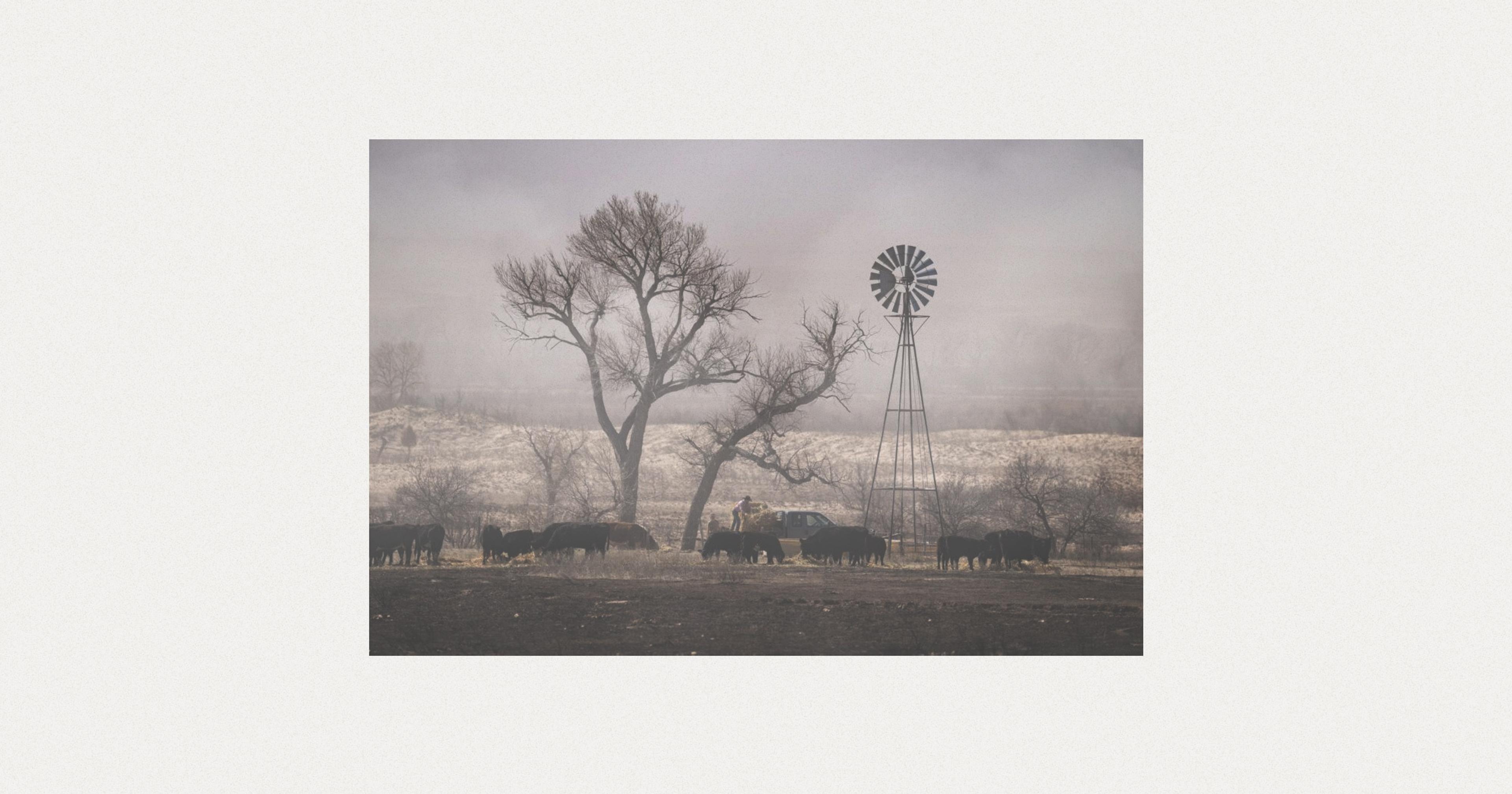
Shortly after the massive Smokehouse Creek fire had ravaged the nearby landscape near Canadian, Texas, Andy Holloway went to meet a rancher.
“He collapsed into my arms, sobbing,” said Holloway. “He lost hundreds of mother cows … only one survived.”
Holloway, county extension agent for Texas A&M AgriLife in Canadian — population of around 2,500 — said the devastation was too sudden and too much to bear. Most of those affected, understandably, do not want to talk about it.
“I’m not too old and too big to admit it, but there’s been a lot of tears with all of this,” he said. “I’ve had to stop my pickup and just get out and weep. These are people we go to church with and see at the grocery store.”
Holloway said the Panhandle-centric fire burned 70% of 600,000-acre Hemphill County, home to Canadian, and said that out of the county’s estimated 22,000 mother cows, between 6,000 and 8,000 died in the inferno. Holloway described it as “a warzone,” while Texas Rep. Ronny Jackson of the state’s 13th District said in a Twitter video that, “There are dead animals everywhere.”
The overwhelming number of injuries contrasted dramatically with the number of veterinarians who could respond quickly across a vast swath of charred Panhandle ground. With an acknowledged shortage of rural veterinarians nationally, animal specialists from outside the area swooped in to collaborate with local vets whose plates were quite full. They made the difference, in so many cases, between animal life and death.
Small towns‘ infrastructure, including Canadian’s, were largely spared, while farmhouses and ranches around them were lost, said veterinarian Deb Zoran, professor of veterinary medicine at Texas A&M and director of its Veterinary Emergency Team (VET). The team deployed to Canadian for 10 days as part of a seasoned group of university professionals who helped triage emergency care through five counties.
Three veterinary practices operate in the immediate Canadian area. One was destroyed by the fire, though that vet continued to help local residents. Zoran said veterinarians from the towns of Miami, Wheeler, and Lipscomb also joined forces to help.
“It’s a bit of a delicate dance, for in the immediate aftermath, we were there to give local veterinarians a hand as support, and not to take business away by doing things they can do for their clients,” Zoran said.
“It’s a bit of a delicate dance, for in the immediate aftermath, we were there to give local veterinarians a hand as support, and not to take business away.“
According to a Texas A&M School of Veterinary Medicine & Biomedical Sciences news release, the VET team estimated visually checking 672 cattle and examining or treating 271 animals: “cattle, horses, donkeys, dogs, cats, a pig, and a goat.”
Zoran said “the first wave” were those so badly burned, they needed to be euthanized. Others were burned and could be cared for. Still others with hooves damaged by heat, and burns to lower legs and feet, sometimes showed dire injuries after four to seven days. If hooves slough off from heat, the animals can’t stand and must be euthanized. On top of that, much of the livestock suffered from lung damage.
“Respiratory injuries are terrible for cattle, and some may be culled and sent to slaughter,” Zoran said.
“Chemicals released in the smoke can cause inflammation of the trachea and lungs, which can eventually lead to respiratory disease,” wrote the Texas Animal Health Commission in an email. “The long-term effects on animal health cannot be predicted,” it said.
Multiple voracious fires wreaked havoc on the Panhandle at once this year. That includes the two largest, the Smokehouse Creek and Windy Deuce fires, along with the 687 Reamer fire, Grape Vine Creek fire, and Magenta fire.
Texas A&M Forest Service said that, at time of publication, 1.06 million acres had burned in the Smokehouse Creek fire, the largest in the state’s recorded history, and the second largest in U.S. history. More than 144,000 acres had burned in the Windy Deuce fire, both fires having moved through multiple Texas counties and into Oklahoma.
“Just because it’s not a dog or cat on the living room couch doesn’t mean cattle weren’t cared for or weren’t emotionally important to these people.“
For ranchers who need to find help or explore disaster relief options, or readers who want to donate money or supplies, a comprehensive list of vetted options is available at AgriSafe, Texas Farm Bureau, and Texas A&M AgriLife Extension. Holloway said there’s also a Venmo: @FireReliefFund. General needs include hay and hay-hauling equipment, fencing supplies, salt blocks, and cattle cubes comprised of at least 20% protein.
Texas Farm Bureau director of communications Gary Joiner said the Canadian area lost 120 miles of power lines and that disabled water pumps, creating another set of formidable challenges.
Ranchers with available land have responded. “They’re reaching out saying, ‘I have land available, I have corrals,’” he said, stressing the need for fencing supplies. They’re needed not just for cattle, but also horses, and sheep and goats that may be 4-H projects.
Pets have been part of the loss equation, too. Loretta Tebeest, co-founder and director of the nonprofit animal rescue Gracie’s Project in Amarillo, Texas, traveled to Fritsch in Hutchinson County to rescue injured pets. She said those efforts were confusing sometimes, since some farm pets roam free outside all the time.
“It was a workday, and a lot of people weren’t home, so there wasn’t time to remove any animals,” said Dana Huff, publisher and editor of The Eagle Press in Fritsch. Her closest friend lost three dogs in the fire, and another friend lost four, but her two cats ultimately returned home.
On thousands of Panhandle acres, animals run for their lives, and it can be weeks until they’re found, Zoran said. “Cats can be smart and wily, hiding in culverts when fire comes.”
“When circumstances go beyond our control, it can sometimes tip the scale beyond our own coping mechanisms.”
With so much sorrow to process during and right after the initial event, ranchers and farmers will find “it all reverberates for a while,” said nurse practitioner Tara Haskins, total farmer health director for the AgriSafe Network and an advanced holistic nurse focused on mental health programming.
“The destruction of animals can translate into trauma,” Haskins said. “This is brought on by the massive depopulation, the conditions of those still suffering, the triaging of animals, removal of carcasses, and the burnout — producers manage all these moving parts, which can include financial devastation.”
She said ranchers feel an obligation to care for their animals, even when ultimately raising them for food. “They feel a connection with that, and they’ve invested so much time knowing it provides a livelihood for their family. Then when circumstances go beyond our control, it can sometimes tip the scale beyond our own coping mechanisms.”
All of it could be “incredibly, horribly traumatizing,” said Zoran. “Just because it’s not a dog or cat on the living room couch doesn’t mean cattle weren’t cared for or weren’t emotionally important to these people.
“Now, in one fell swoop of Mother Nature going crazy, that’s been lost,” she continued. “But with Mother Nature, life will find a way.”
Ed. Note: AgriSafe operates the AgriStress Helpline at 833-897-2474, a free, confidential crisis and support line. AgriStress specialists understand and empathize with the culture, stressors, and lived experiences of agriculture workers.
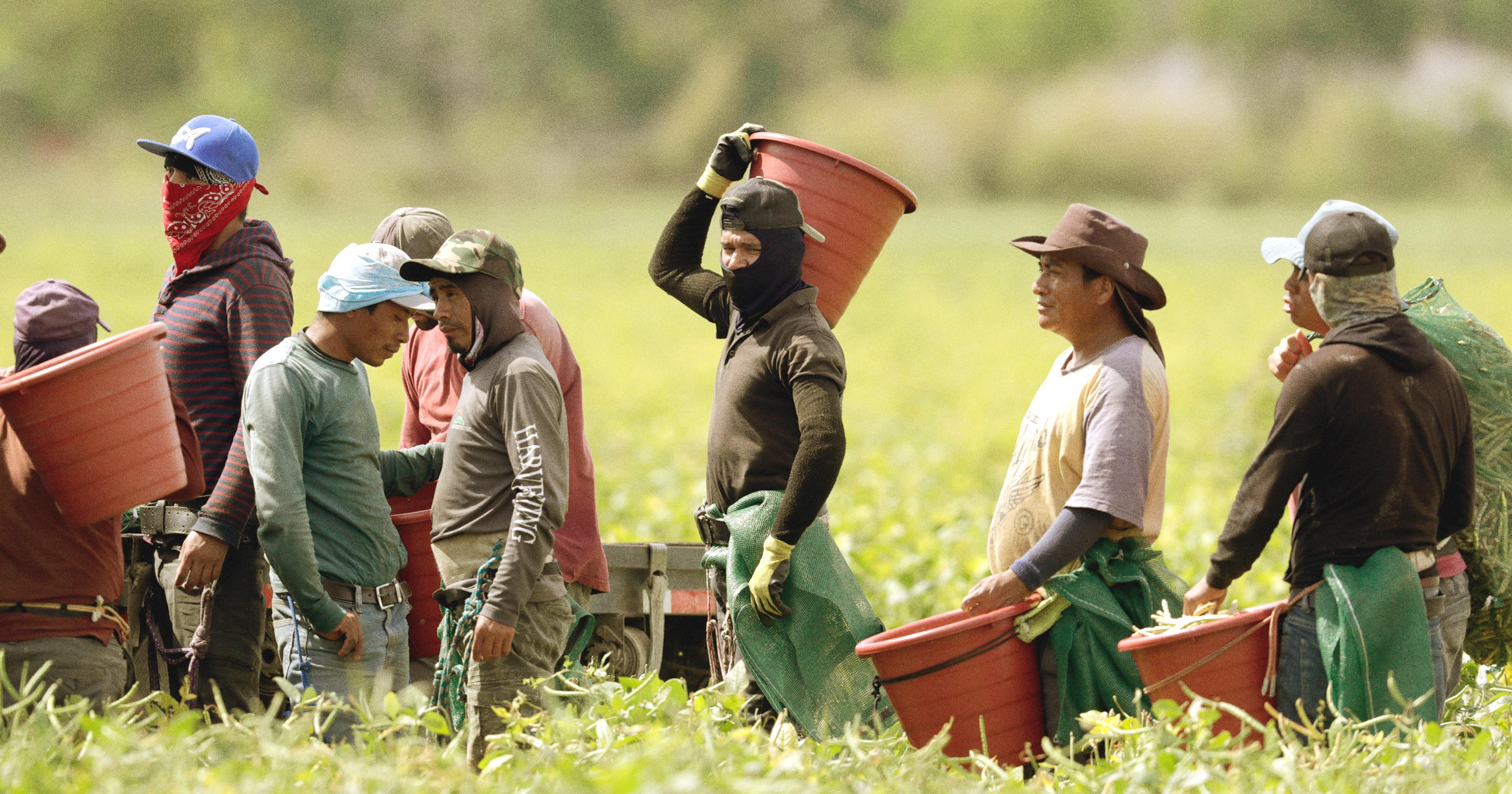
It was August 1998 and Letty Pineda felt the beginnings of heat stroke. She was 26 and working in an ornamental plant nursery. She’d emigrated from El Salvador to Boston five years earlier; it was too cold, so she went to Florida. But on that summer day in 1998, the Florida sun — magnified by up to 30 degrees in the greenhouse — got so hot that Pineda lost her breath. She had been cutting ferns for hours straight when a tingling spread through her body. She felt paralyzed, like she could barely move her hands.
“I told my coworkers ‘I don’t feel good, I can’t breathe,’ and they say ‘you’re okay, keep going,’” she recalled. She felt suffocated and panicky. Not long after, she quit.
Today, there are an estimated 2 million outdoor workers in Florida — the hottest state and the nation’s leader in heat injuries. But regardless of the risks, the state has no mandated heat protection policies. On March 6, Florida’s Republican-led Senate passed a bill stripping local governments of their ability to implement their own.
The bill was a partial response to an ordinance proposed in Miami-Dade County, which would have created a “heat standard” for outdoor workers by setting fines for employers who fail to provide water and rest breaks. It would have also mandated that employers post multilingual educational materials related to dangerous heat exposure. But Republican senators argued that municipalities don’t have the authority to instate regulations beyond what’s devised by the federal Occupational Safety and Health Administration (OSHA), which also has no mandatory policies around heat exposure.
Jeannie Economos, long-time coordinator at the Farmworker Association of Florida, has studied the impacts of extreme heat on farmworkers extensively. She was devastated by the Senate vote last week. “Farmworkers doing the work that feeds the rest of us? You can’t even give them information about heat stress?” she said.
The state of Florida has acknowledged the threat of heat exposure in the past, and even took swift action to mandate protections for student athletes after a teenager died in 2017 after a football practice in 90-degree heat. Now, Florida schools must have “cold tubs” filled with ice water available to submerge overheating students. But when it comes to the state’s majority-Hispanic and Black agricultural laborers, Florida has repeatedly failed to respond to the mounting crisis.
Over a decade ago, Economos pioneered a partnership between the Farmworker Association and Emory University in Atlanta to build a body of research on the subject. Of 198 farmworkers enrolled in one study, they found a third experienced “severe” symptoms of heat-related illness like muscle cramps and dizziness, and over half experienced the “moderate” symptom of headaches. In a related study, they found over 80% of workers were dehydrated post-shift, while one-third of them had endured acute kidney injury.
Armed with their research, the Farmworker Association drafted what staffers there refer to as the “good bill,” which offered training on how to prevent heat-related illness and recommended workers have consistent access to water and shade. The bill itself was a compromise, with “no legal component” stipulating when and why growers could be sued, the association’s climate justice organizer Dominique O’Connor said. It was introduced in 2018 and sat untouched for four years, until it was unanimously approved by the Senate Agriculture Committee in 2022. It was then sent to the Health Policy Committee where it was once again ignored.
There’s a culture of fear preventing workers from tending to their own bodily needs, and a lack of accessible information about the dangers and symptoms of heat stress.
This year, the “good bill” was reintroduced and, until last week, finally seemed to be gathering steam, as organizers in Miami-Dade County advocated for their related ordinance. But after what Economos described as industry pushback, the county’s ordinance was stalled and Gov. Ron DeSantis now has the Republican-backed bill waiting for a signature on his desk.
That bill’s supporters, including sponsor Jay Trumbull (R-Panama City), and Ray Royce, executive director of Highlands County Citrus Growers, argue that existing OSHA regulations are enough to hold employers accountable. (Trumbull’s office did not respond to a request for comment.)
“I deal with men and women that are employing frontline workers, and they want those frontline workers to be just as productive and attentive to the task they’ve been assigned as possible,” Royce said in a phone call. Most growers know that “it’s counterproductive to work someone into a state of heat exhaustion,” so the additional guardrails were “overkill.”
In 2021, after a scorching summer that left dozens of outdoor laborers dead nationwide, the Biden Administration announced that it would add protections from extreme heat to OSHA’s agenda. But the regulations still have not been finalized and aren’t expected to take effect for at least another six or seven years. In the meantime, farmworkers in states like Florida and Texas, which recently passed a similar law, continue to get seriously ill and die.
Royce believes allowing individual municipalities to set their own mandates is a slippery slope for employers. “Those things get out of hand, and all of a sudden you’re gonna say now we have a water break and a bathroom break and a voluntary smoking break,” he said. “It gets to where the government is involved in something that goes beyond the safety of the workers.”
Many people may start to experience symptoms in the field, finish up their work day, and go home, where their symptoms progress.
But as Pineda points out, the issue is often systemic. Even if a supervisor doesn’t explicitly deny workers bathroom breaks, rest, or drinking water, there’s a culture of fear preventing workers from tending to their own bodily needs, and a lack of accessible information about the dangers and symptoms of heat stress.
OSHA can levy fines for worker deaths that get reported. But many go unreported in Florida’s agriculture sector, which relies on the cheap labor of undocumented people who make up nearly half of its workforce, and whose fears of deportation and lack of community support systems often render their struggles invisible.
The fines OSHA has doled out in Florida over the last couple years — including $15,000 to an Okeechobee contractor who allowed a 28-year-old visa holder to die from heat exposure in January 2023, on his first day on the job — involve workers who collapsed in the field. But, Pineda says, collapsing in the field is rare. Many people start to experience symptoms in the field, finish up their work day, then go home, where their symptoms progress. Those cases are much less likely to make it to OSHA.
Pineda turns 52 in late March, just before the start of Farmworker Awareness Week, which commemorates Cesar Chavez’s birthday. In the 30 years since she arrived in the U.S., she’s known dozens of people who have gotten seriously ill and experienced kidney failure.
After that terrifying day in 1998, she found work at another nursery nearby, where she could spend part of the day in an air conditioned space. It also came with two 10-minute breaks, plus a lunch break at noon. At the old nursery, it was common to work “all day straight,” with no breaks. There, she remembers her coworkers telling her not to drink too much water because she risked not being hired back if she disappeared to the bathroom too many times.
The new nursery paid $4 per hour, down from her current wage of $4.75. But Pineda had a 3-year-old at home. She felt she needed to take the job at the new nursery, like both their lives depended on it.
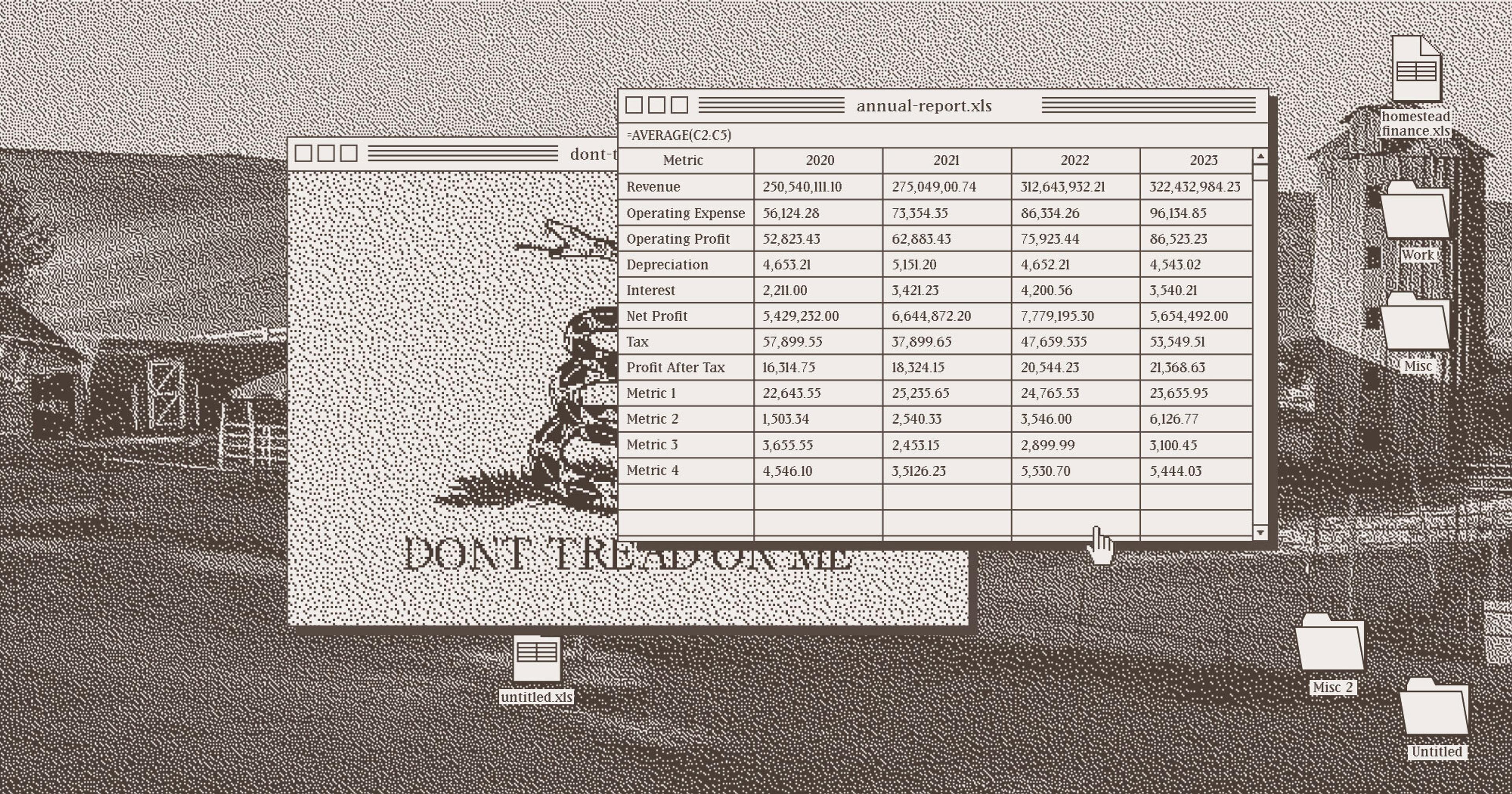
Much of the history of American homesteading movements is punctuated by visions of shared abundance and a spirit of collectivism. While they often don’t fit neatly into one belief system, many quests for off-grid agrarian living have leaned left, politically.
And yet, it would be an oversimplification to view the tendency towards agrarianism as inherently progressive. Interspersed throughout the hippie communes and ecosocialist experiments dotting the American countryside, religious separatists, libertarians, and other conservatives have been putting down roots for some time.
Whatever the ideological particularities — distrust of corporate power on the left, wariness of state intrusion on the right — rural living can be an enticing prospect for those tired of industrial society.
When the Covid-19 pandemic drove people indoors, many into confined city apartments, it inflamed anti-urban sentiments that were already latent with the ideological right. The ensuing proliferation of remote work meant that those feeling city claustrophobia could now more realistically exit for the country.
RidgeRunner, a real estate firm based in Kentucky, is offering opportunities in Appalachia, marketed squarely to aspiring conservative homesteaders. Their latest undertaking is the “Highland Rim Project,” a land development centered around a rural Tennessee town — they plan to disclose the specific location in late 2024/early 2025, working until then to acquire properties and gin up demand. Many of these plots will be marketed to those who want to, at least in some capacity, “live off the land.”
RidgeRunner was created in partnership with the conservative venture capital firm New Founding. Nate Fischer and Joshua Abbotoy, both managing partners at NF, have deep connections to the Claremont Institute, an important think tank for the intellectual wing of the Trump movement. Its president, Ryan Williams, told The New York Times last year that, “We wanted to speak to a younger audience, to try to understand and influence the New Right in its varied factions and cultivate that audience for the better.”
The Highland Rim Project is the first, or at least most visible, example of the “New Right” carving out a community of their own on the homesteading frontier. Documented a year ago by James Pogue in Vanity Fair, this recent formation of the conservative movement takes pride in holding unorthodox views, favors a confrontational rhetorical style, and is composed mainly of disaffected professional class knowledge workers. They are a young and hyper-online cohort.
Like many reactionaries throughout history, they view America’s cities — where many of them live — as becoming hostile and unlivable. Their pessimistic view of the modern city identifies liberalism writ large as responsible for homelessness, crime, and drug addiction.
“The holler is your own little fortress, where you have a water source, space to grow crops, run livestock and shoot deer.”
Abbotoy, who is also a partner at RidgeRunner (which he runs with his father), painted a bleak picture of American cities during a recent podcast with his business partner, Santiago Pliego. Reflecting on those early days of the Covid-19 pandemic, Abbotoy recalled:
“I think part of it was with the lockdowns … you’re under this kind of oppressive condition where, if you leave the front door of your house, you’re subject to all of these rules, and the public eye is on you. And, if you have your own land, you do what you want.”
When federal, state, and local governments responded to Covid-19 with restrictive measures on economic and civic life, many on the right saw this as the perfect expression of an overly-centralized state.
While conservatives like Abbotoy bristled at the lockdowns, these policies are what spurred on the meteoric spread of remote work. Ironically, this ultimately created the conditions of professional class hypermobility required for the Highland Rim Project.
Dona Brown, a historian of back-to-the-land movements at University of Vermont, has found that homesteaders throughout history and across the political spectrum share one common outlook: “I think there’s always been a powerful tendency for back-to-the-landers to be in one way or another decentralists, to try to pull back the power and the technology and the skills to the individual or the collective homestead level.”
“You’re under this kind of oppressive condition where, if you leave the front door of your house, you’re subject to all of these rules, and the public eye is on you.“
For the men involved in the Highland Rim Project, this relocation of power away from the state is helped by the physical geography of the Appalachian region. The post at the top of RidgeRunner’s Twitter account (or “X”, as it has been rebranded by Elon Musk — a favorite ideologue of the New Right) reads:
“Sometimes people ask us what a “holler” is.
It is a magical little Appalachian valley.
Ideally, you own all of it - ridgetop to ridgetop and the holler is your own little fortress, where you have a water source, space to grow crops, run livestock and shoot deer.”
Above the text is drone footage of bucolic farmland, hugged by wooded hills and a trickling creek. The property, ostensibly one of RidgeRunner’s, is undeniably beautiful. As promised in the tweet, this land looks and feels private — tucked into tree-dense ridges, a person (and their family) could indeed build their “own little fortress.”
They query their prospective customers:
“Why not buy a holler farm from RidgeRunner? Given their natural beauty and diverse range of potential uses, it’s an incredible value. Work from home, hunt, farmstead, and let your kids run free on your own hundred acre domain.”
The New Founding website spells out very clearly the main demographic that they are courting: “Remote work enables a revolution in where people live and how they organize themselves into communities. People are, especially since Covid, proactively seeking communities that align with their values and way of life.”
In most ways, the demographic slice that the Highland Rim Project is speaking to — the right-wing remote worker — is a new class, particular to this moment in history. Interestingly, when I asked Brown what most homesteaders had done for work in the past, she laughed and said, “The job they most often used to support their back to the land enterprises was writing books about going back to the land.”
In the not-very-distant past, a move to the country almost always meant a compromise to one’s income. RidgeRunner and New Founding are curating opportunities for people tired of the city’s concrete, the social challenges, its liberal culture — but who want to (and now, can) bring their jobs with them into the homestead.
“When I have choices about businesses to try to lure in, I want the business that says I want to do high-end Appalachian charcuterie.“
With the Highland Rim Project, a grass-fed beef farmer — a profession revered by Abbotoy and his peers — could now support an ordinarily hard-scrabble livelihood with a tech-worker’s earnings.
Abbotoy is clear-eyed in his assessment of who exactly his primary buyer will be. Apart from political persuasion, they are, as he told me, “likely to have higher incomes than the people who are on the ground right now,” and sees the importance in appealing to their “coastal tastes.”
He recognizes that the native culture of the areas that RidgeRunner is developing might not offer enough for the transplant coming from New York City or Silicon Valley. “When I have choices about businesses to try to lure in, I want the business that says I want to do high-end Appalachian charcuterie, like country ham. And people who want to do products or services that are kind of prepared in traditional ways, are resonant with the local culture, but also, at times we’ll have an opportunity to elevate that.”
At the cultural level, the online right has identified numerous features they see in urban life that offend their tastes. The politics of the Black Lives Matter movement, a progressive view of immigration, and the growing support for trans rights, are some of the developments popular in the city that animate their reaction. (The New Right follows a long tradition of conservatives ignoring the actual diversity found in rural communities.)
In the podcast with Pliego, Abbotoy voiced a concern heard commonly in his quarters: “If you’re in California, the state can take your kid and trans them without your consent. For me, I don’t really think somebody with kids should live there.”
Abbotoy is likely referencing California legislation, introduced in September 2023, which would have directed courts in the state to consider a parent’s attitude towards affirming their child’s gender identity (amongst many other factors) when deciding custody. That bill was vetoed by Governor Newsom later that same month, well before the podcast with Abbotoy and Pliego dropped in January 2024.
The New Right-wingers might be new in their updated brand of conservative populism. But in at least one key way their attitude is much like their forebears: Both real and imagined threats to traditional cultural norms can make them want to build up a fortress. It seems Tennessee has some pretty good hollers for that.
Turmeric, such as we know it, has been reduced to powder. Whether for cultural celebrations, cosmetics, cooking, or homeopathic remedies, most people have grown accustomed to this humble rhizome in its dusty, mustard-hued form. But for the fortunate few who venture to cultivate turmeric in its natural state, a dazzling array of variety and color exists.
The Utopian Seed Project, a non-profit tackling climate change through crop diversification and plant migration, is unearthing the origins — and diversity — of the spice enriching your Golden Milk Latte. On a modest plot of land in North Carolina, they grow five varieties of turmeric, each with their own use, flavor profile, and color. According to director Chris Smith, the simplification of turmeric is indicative of our entire food system.
“Most crops, despite their diversity, are only represented by one or a small number of varieties or cultivars. That’s really worrying because that makes them prone to disease and collapse. But it’s also super-sad, because there’s so much diversity that exists and we, as consumers, only get to experience one of them.”
And turmeric is an experience. It comes out of the ground as a quirky, dirt-laden stem that resembles a rock with arms, but when sliced open, a mesmerizing, geode-like interior is revealed. The flesh of the red and yellow varieties bear a squash-like hue, while the more exotic black and blues evoke a watercolor of the night sky. And the green turmeric appears downright radioactive.
We sat down with Smith for some background on this dazzling visual feast.
Ambrook Research: Why aren’t people aware of how much turmeric diversity there is?
Chris Smith: Most folks only knowing and being acquainted with this one golden powder is pretty indicative of what we see across the whole global food supply. Bananas are a great example, where pretty much every banana that is eaten outside of the tropics is just one single cultivar. The same is true of turmeric. And so when we share that picture of all the different colored turmerics, it’s the same reaction as you had, Ali. It’s like, “Oh, I didn’t even know that all this existed, let alone that I was missing out on all of these things.“

AR: What are the flavor profiles for the different colors of turmeric you grow?
CS: I wish you could smell it or even taste it. The blue and the black turmeric, I describe it as a menthol type overtone. It smells and tastes way more medicinal in that regard than the yellow and the red. The green turmeric is somewhere in the middle. It’s almost got a fruitiness to it. But I’m not sure if that’s just my brain convincing me that because it’s luminescent green then it must taste something like that. And then the white mango one is interesting because that’s quite mild. I would chew on that in the field — it has kind of a citrusy light, fruity overtone to it, which is why I assume it’s called the mango turmeric.
AR: What do you think has driven people to grow turmeric in North Carolina? What’s the particular appeal there?
CS: Ah, that’s a good question. I don’t know the initial personal reason why somebody was like, “I wonder if we can grow turmeric here,” but I know there were already people doing it when I first moved here 10 years ago. I think the appeal is, you know, it’s a high-value winter storage crop that’s fairly easy to grow.
There’s still a little bit of a myth that you need to grow it in a high tunnel to be successful, but we’ve been growing it in open field cultivation for years and it’s totally fine. It definitely carries a high value. And that’s certainly part of the reason people are motivated to grow it. We’ve got a pretty big herbal community and a fairly progressive food scene and I think that attracts farmers who are willing to take risks on alternative crops.
AR: It seems like turmeric cultivation already has a strong path for growth, because people are already using it for a variety of things.
CS: It’s definitely a known quantity in a way that some of the other crops have been earlier in time. Like sweet potatoes. I think they are a great example of a tropical perennial that is so adapted to our region now — it gets to a point where people don’t even think of the origins. Now it’s just like, of course we grow sweet potatoes in the South. I do think turmeric is still a little, I don’t know if exotic is the right word? It’s still got that feeling in the food system that’s like, “Ooh, you grow your own turmeric” but at some point people will just assume it’s a natural part of our food system. Everything’s on a different part of the spectrum, right?
AR: Absolutely. Thanks so much for speaking with us, Chris.
This article first appeared in the Ambrook Research Journal V. 01, a limited-edition print publication.


Dwane Roth left the army in the late ‘80s to be the fourth generation to farm row crops in West Kansas. Back then there was plenty of water. Wells across the 6000 acres his family owned or leased extracted 1000 gallons a minute from the Ogallala Aquifer — a hallmark of abundance.
But the supply dwindled. Over the decades well yields fell to 800 gallons a minute, then 700. It was still enough to irrigate but slowing water was a disturbing pattern. Then in the mid-2010s, the decline seemed to intensify.
“A lot of these wells don’t have the capacity they had in 2015,” much less a generation ago, Roth said.
It’s a tipping point, one that could mean an increasing number of West Kansas producers can’t get enough groundwater and become increasingly vulnerable to drought. Without conservation changes, the same will be true for other communities across the plains that sit on dangerously thin water.
Today well yields are lower — with the worst at Roth’s operation barely scraping by at 200 gallons per minute. He and his nephews were able to adjust, reducing all wells to far below their capacity. But some of their neighbors fared worse, forced in the last 10 years to stop irrigating altogether and revert to dryland crops.
New research published in Nature Water combined 30 years of water data with corn and soybean yield data to confirm the phenomenon that Roth and his fellow growers are experiencing: Parts of High Plains Aquifer, including the well-known Ogallala aquifer, have a point of no return — some farms and communities have already crossed it — and the damages that ensue can come with little warning.
According to the research, when the aquifer first begins to thin the impact on yield is negligible. Just like in Roth’s case, well yields — the rate at which a well can pump water — wane from abundant to plentiful to enough, with little effect on crop yield. But as the aquifer is drawn further and further down, it becomes too thin. Once the water drops beneath a threshold, production challenges and losses start to escalate. Even as the aquifer appears to have plenty left to give, it becomes increasingly difficult or impossible to extract water at the rate that crops need it.
“At the point your wells tell you that you have a problem, you have very little time to intervene,” said study author Nicholas Brozović, director of policy at the Daugherty Water for Food Global Institute at the University of Nebraska. And if you “wait until you’ve seen the negative effects, you’ve waited too long — too long to bring back the resource.”
To be clear, water scarcity is no secret in Kansas. Everyone in the region knows groundwater is in short supply — that current farmers could very well wipe out irrigation within a generation. It’s the tipping point that can still catch growers by surprise, Brozović said. After decades of irrigating the same way, a grower can find themselves unable to sustain their crops and facing permanent water loss.
When a producer has to turn off their pivot, the value of their land decreases by as much as half.
The trouble is that the effects of a thinning aquifer get progressively worse. Water use that worked for years can become impossible as the aquifer wanes too thin to sustain it. For example, water shortages and yield loss are more severe when the aquifer is depleted from 100 feet thick to 50 than from 200 feet to 150. According to the data, even if a producer uses groundwater at a consistent rate, water shortages and crop losses escalate. This is what makes already-thin areas on the aquifer so vulnerable.
Severe thinning can even ramp up in a single season. Katie Durham, manager of Western Kansas Groundwater Management District No. 1, has seen it happen. Wells pumping modest amounts of water start to rattle mid-season — the telltale sign that a well is pumping air.
A producer farming crops atop 40 feet of aquifer might estimate they have 40 years of irrigation left because the average West Kansas drawdown — or reduction in water level — is about one foot per year, according to Kansas State extension agent and water resource engineer Jason Aguilar. But the new analysis suggests producers can’t consistently drain the aquifer to zero — it will become too thin to meet their demands long before it’s emptied.
Already, thousands of irrigated acres across Kansas had to be converted to dryland rotation, which relies solely on soil moisture and rain. It’s a transition that tends to be an economic hit for the whole community.
Irrigation is the economic driver of western Kansas, according to Jim Butler, senior scientist in the Geohydrology Section of the Kansas Geological Survey at the University of Kansas. Where there is water underground, there tends to be economic flourishing and larger communities above ground, Aguilar added.
“At the point your wells tell you that you have a problem, you have very little time to intervene.”
But when a producer has to turn off their pivot, the value of their land decreases by as much as half. Dryland crops only bring a fraction of the profit producers get with water-intensive crops. And without irrigation, crop insurance costs skyrocket. Whole communities feel the change in cash flow, Aguilar said.
It’s a problem that will only be exacerbated by climate change. The thinning aquifer will leave irrigators more vulnerable to drought just as they need more water to combat rising temperatures and lengthening dry spells. “It’s a huge generational inequity,” Butler said.
The only option, based on the data, is for farmers to willingly restrict their water usage now, before they have to, Brozović said. But change can be slow.
Roth’s operation — which he transitioned to his nephews — is now in the 8% of U.S. farms that rely on special technologies to conserve water. Like many of his peers, he was initially skeptical. The first time a salesperson suggested a $1300 water probe to track soil moisture, Roth suggested the salesman shove it up his ass.
But in 2017, after hearing a lecture on the water crisis and with the help of his landlord, he enrolled in a water conservation program that gave him a few probes for free. Within the first year, he’d saved the equivalent of $60 per acre. Over five years he reduced water usage by 15%.
“There’s a window of opportunity we have, but that window is not going to be open much longer.”
“We never lost yield. I wouldn’t say it increased it, but we knew we could grow more with less,” he said. And if you’re talking profit, Roth said, reducing inputs is always a more reliable strategy than aiming for a bumper crop.
Others are right behind Roth. Since 2017, Western Kansas Water Management District No. One has cut water usage by 39%, Durham said. The thinning aquifer is a challenge, but producers are finding creative ways to reduce waste, she said. They must if they want to see their “sons and granddaughters have an opportunity to farm.”
Still, Roth works alongside many growers who continue to be frivolous with water, never turning off their pivots, pumping out of the aquifer even during abundant rain, he said. “Socially that’s unacceptable, but it’s not illegal.”
The trouble is not limited to Kansas, experts say. There are thin spots on the aquifer all across the plains, particularly in states south of Nebraska, at risk of the same water crisis. If those regions don’t take steps to prolong the life of the aquifer they’ll also lose the ability to irrigate.
“It’s not all doom and gloom,” Butler at the Kansas Geological Survey said. “There’s a window of opportunity we have, but that window is not going to be open much longer.”
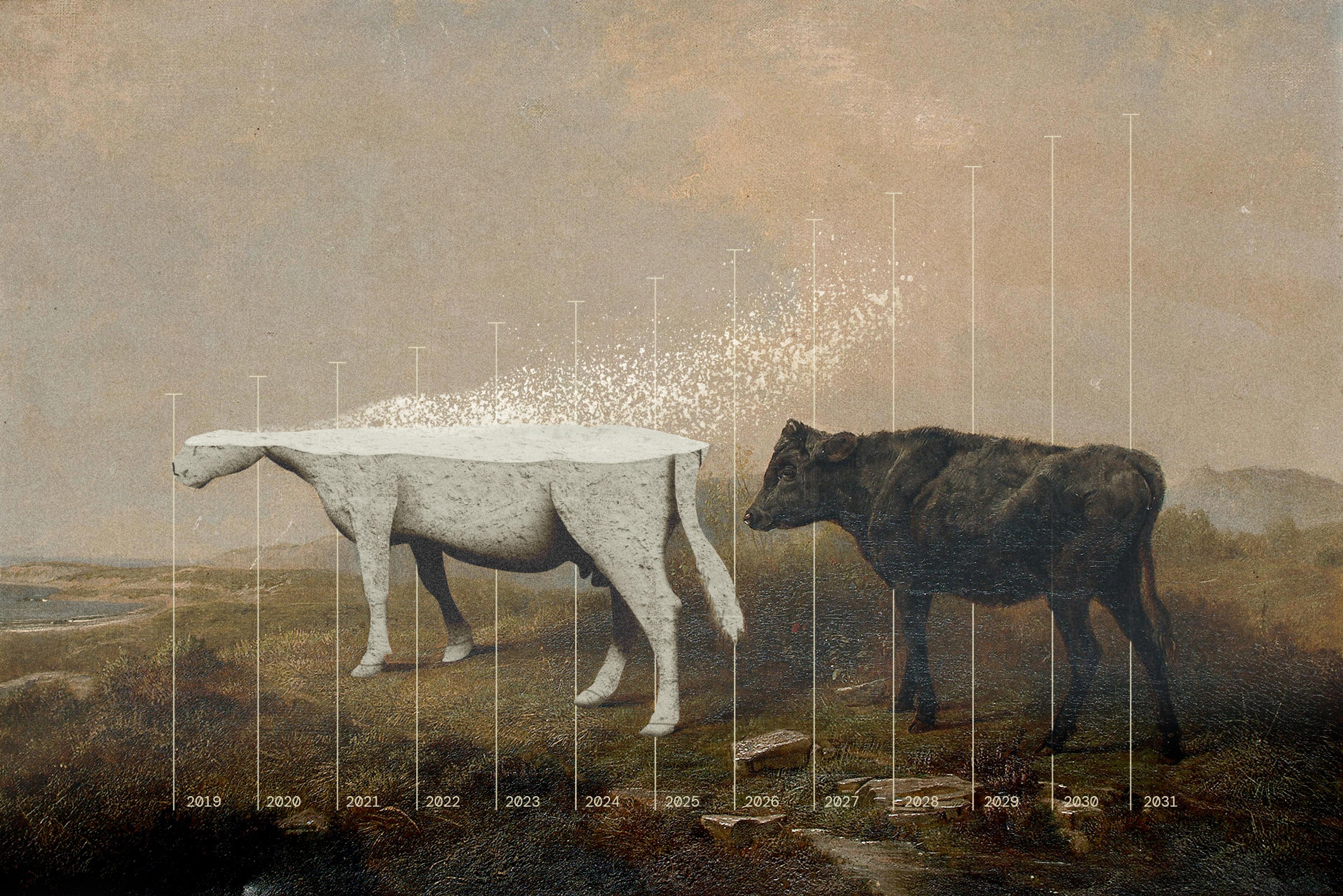
Capri Debiccari starts each day with the wafting scent of watermelon. The 29-year-old marketing strategist isn’t cutting up fresh fruit or melting down a bowl of Jolly Ranchers — she’s preparing her morning supplement: a drink made with powdered cow colostrum, the gloopy milk-like secretion produced from a cow’s udder when she gives birth. First Debiccari dumps the pink, watermelon-flavored contents of a packet into a cup of room temperature water. Then, with a milk frother, she swirls it into an airy, sweet-smelling foam.
“It’s fallen into, like, a ‘little treat’ category, which is weird for a supplement,” she said over Zoom. “I actively look forward to drinking it.”
Debiccari, who lives in Boston and whose long-suffered gastrointestinal issues worsened when she got Covid in 2022, is no stranger to self-medicating with dietary supplements. “I’m a Goop-apologist, all of that shit,” she said, in reference to Gwyneth Paltrow’s infamous health blog and product empire.
In the last several months, young people like her — especially those with similar health concerns — may have noticed a wave of targeted online ads from colostrum brands like ARMRA, Ancestral, and WonderCow. Colostrum itself isn’t anything new, but reaching the mainstream market is, at least in the U.S.
The antibody- and protein-packed substance, which delivers vital nutrients to baby mammals in their first hours of life, once held a niche foothold among athletes, appealing to body-builder types who would pound it like whey protein. But today it’s trickled down into the realm of prestige wellness, promising a panacea for gut and immunity deficiencies and all the downstream benefits of fixing them, like clearer skin and thicker hair.
Until recently, the Paltrow-inclined wellness cabal pushed a different narrative, scapegoating dairy for the very health issues that colostrum is now supposed to heal. Some loud voices in the wellness space are now wondering: What if the problem is that we’re not getting enough dairy? Or at least, not enough of the right kind? Entrepreneurs in the burgeoning colostrum market are counting on just that.
The Saskatoon Colostrum Company Ltd. (SCCL) is one of the largest veterinary colostrum suppliers in the world. But CEO Michael Chubb says there’s a lot of opportunity for adjacent nutraceutical brands (selling superfoods to humans) to better understand and market the product’s benefits. The challenge for those marketers, he said, is that when you list all the possible merits — from gut recovery to beneficial cholesterol fats and prebiotics — it sounds like you’re peddling “magic dust.”
But the potential benefits show promise, at least anecdotally. Colostrum is used to restore gut function in cows, goats, and dogs, Chubb said over Zoom. If it works in all these other mammals, “there’s an intuitive leap to say maybe it can help humans.” Still, Chubb acknowledged that clinical studies are insufficient and often funded by supplement companies, raising questions about their rigor.
The medical jury may still be out on bovine colostrum, especially its long-term efficacy and safety, but the restorative properties of human breast milk are less ambiguous. Lars Bode runs the world’s first Human Milk Institute at the University of California, San Diego. His research focuses primarily on oligosaccharides, a complex sugar that’s found in the milk of all mammals. That compound, he said, can potentially protect against cardiovascular disease and reduce heart attack and stroke.
“It’s fallen into, like, a ‘little treat’ category, which is weird for a supplement.”
The goal of the institute, he stressed, is not to commercialize human milk, but to emphasize that it is “extremely powerful” and chronically under-researched. There are enough similarities between human and cow colostrum, Bode explained, that insights about one can illuminate certain things about the other. Understanding more about milk in general — regardless of the mammal producing it — is important, he said.
Human breast milk, and especially colostrum, is already in short supply for the human babies who rely on it as a matter of life and death. That’s why Bode wants to use the institute’s learnings about the naturally occurring properties of breast milk to develop synthetic versions for pharmaceutical use. The same could be done for bovine colostrum, he argued, so that the nutrient-dense organic substance is left entirely for calves, as nature intended.
But unlike humans, dairy cows do actually produce an excess of colostrum, according to calf health expert Hayley R. Springer, associate clinical professor at the University of Pennsylvania. And because it’s the excess that gets sold, the commercial industry poses minimal threat to calf health, she said in an email.
Chubb explained that a typical Holstein will produce about 15 liters of colostrum, though her calf only needs to consume less than half of that within its first several hours of life. The calf can certainly eat more — and Chubb encourages farmers to continue feeding colostrum for longer if possible — but few farmers have the means to adequately and safely store the excess.
“Can it all go to the calf? Sure could,” Chubb said. “Will it? Probably not.”
“It’s very trendy now because of Covid, which made everybody in the world curious about what might help [with immunity].”
Colostrum isn’t sold as milk and therefore can’t be tossed into the farm’s bulk tank with the rest of the raw dairy. So when a cow gives birth, farmers have a choice. If they have the proper equipment — that is, not an “old Coke bottle,” Chubb cautioned, but a sterile container — they can freeze the colostrum for future use, ensuring that it isn’t contaminated. They can also sell it, either to a buyer for a commercial brand or to a colostrum replacer like the SCCL, which produces a shelf-stable powdered colostrum for situations when calves are unable to get it through natural means, like if the mother cow dies giving birth.
“The amount of money a farmer can earn for her extra colostrum is pretty small compared to what they would receive as a milk check,” Chubb said, “but it is extra revenue, which is appreciated by a lot of producers.”
The global bovine colostrum market is growing most rapidly in Asia and the Pacific, according to a report by Straits Research, though Chubb noted that it’s been a popular delicacy in many countries for generations. Scandinavians have been eating kalvdans, a pudding-like dessert made from unpasteurized colostrum, since at least the late 1600s. In India, kharvas is a popular milk sweet made from cow or buffalo colostrum.
As of a decade ago, the only North Americans regularly consuming colostrum were mostly “meat-heads” and the whey protein enthusiasts, Chubb said. (Brian “Liver King” Johnson, a fitness influencer who recently admitted to taking steroids, sells cow colostrum and beef liver capsules through his brand Ancestral Supplements.) But the latest formulations have a much stronger emphasis on immunity.
“It’s very trendy now because of Covid, which made everybody in the world curious about what might help [with immunity],” Chubb said. Is it going to reach the ubiquity of vitamin C or fish oil? “Probably not. But I don’t think it’ll fade out.”
Some loud voices in the wellness space are now wondering: What if the problem is that we’re not getting enough dairy?
Steph Robinson, a holistic nutrition coach and influencer, has been taking ARMRA colostrum daily since October. She had been searching for something to stabilize her gut, heal acne, and boost immunity when a “functional doctor” — or alternative medicine specialist — recommended she try colostrum. Originally from Toronto, Robinson had been living a dairy-free life in Los Angeles for the previous five years, where she said even a glug of cow’s milk in her latte would leave her crampy. But, intrigued by ARMRA’s promise to “optimize” her microbiome, she gave the powder a try.
“I didn’t even really understand the whole concept behind colostrum, just that it’s, like, the first thing that we actually consume as babies,” she said over Zoom.
The supplements have been “super beneficial,” she said. She’s since moved from L.A. to London, where she said dairy — processed differently than in the U.S. — has been much easier on her stomach.
“I don’t have anything against dairy or animal-based proteins by any means, I just think the quality is the most important thing,” she said.
Debiccari has tried to bring friends and family into the colostrum fold with minimal success. Her mom thinks it’s gross. But her live-in partner — who works with teenagers and regularly brings home their upper respiratory infections — got some colostrum packets under the Christmas tree this year. He’s been taking them consistently since January — almost long enough to start seeing results, Debiccari said. As for her, she hasn’t gotten sick in months.
So is watermelon-flavored bovine colostrum the fountain-of-youth elixir that we’ve all been searching for? Will it Benjamin Button our guts? “I don’t know,” Debiccari said. “Right now it’s just my little treat that I think keeps me from getting sick.”
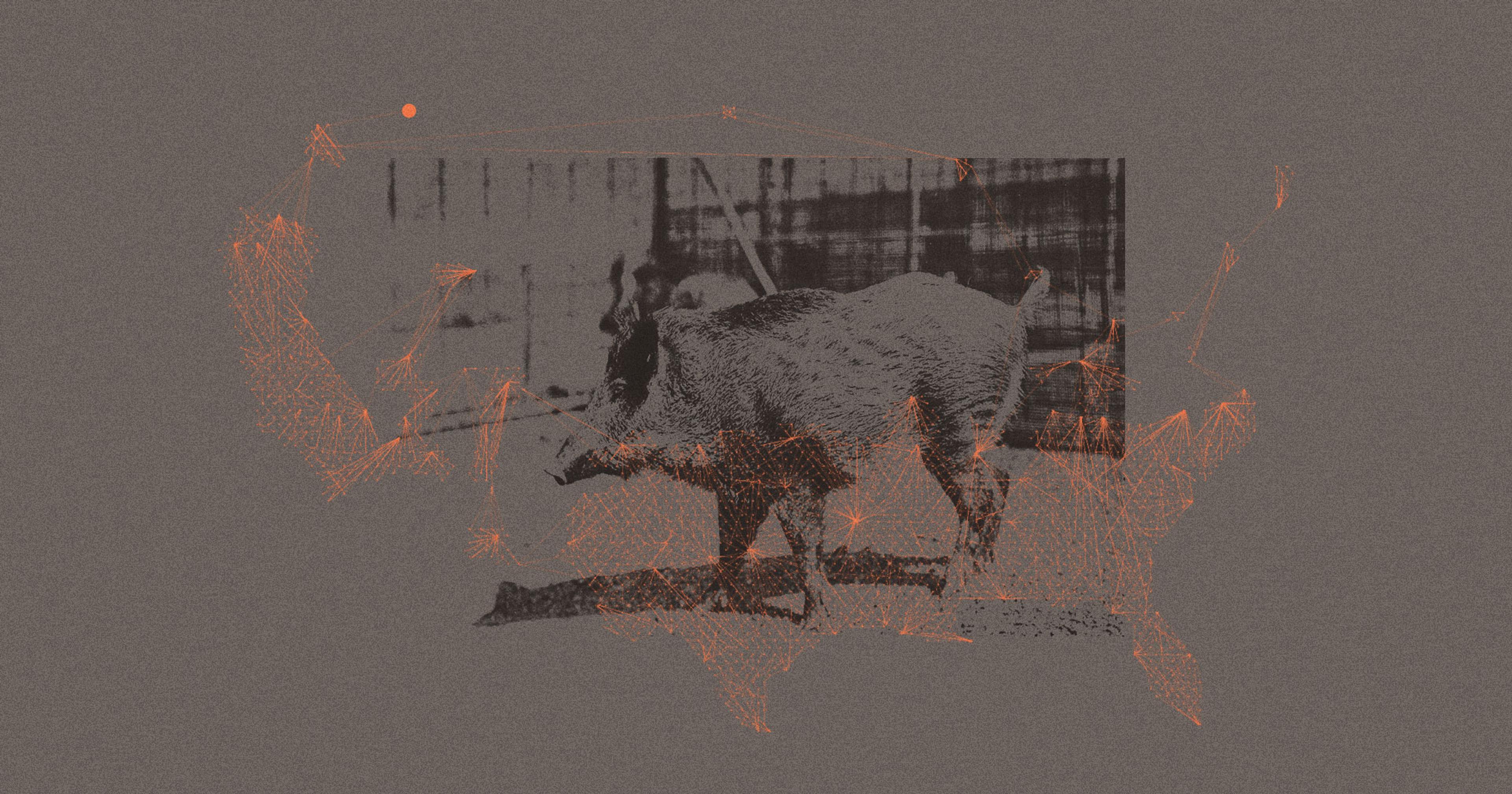
Last October, experts and stakeholders from across the Northwest gathered in Spokane, Washington, to discuss a pressing issue of national security. They ran simulations, teased out scenarios: How would they coordinate between various state and federal agencies and tribal populations in the event of a potential threat? For two days, groups discussed the ins and outs of this critical issue inside the convention center, in what’s known in emergency management circles as a tabletop exercise.
On the agenda: emerging pig diseases like African Swine Fever (ASF), and the potential for feral hogs to help spread them.
Feral swine are a notoriously damaging invasive species that can quickly impact agricultural facilities and products. They hunt small animals that live or nest on the ground, threatening endangered or threatened species. They compete for resources like food, water, and habitat, displacing resident creatures. They’re “ecosystem engineers,” changing the environment around them by degrading water quality and wetlands, and altering plant makeup in an area. They’re known to “strip a field of crops in one night,” among other threats.
“It’s remarkable how destructive they are,” said Vienna Brown, a biologist with the U.S. Dept. of Agriculture’s (USDA) Animal & Plant Health Inspection Service (APHIS). “In many ways, they’re just this unstoppable creature that is, from a human perspective, the worst-case scenario of swine.”
But all this destruction pales in comparison to a quick-spreading and deadly pig pandemic. The tabletop exercise in Spokane was concerned about pigs as a viral vector, potential carriers for disease that obey no laws of humanity — whether property lines, state lines, or international borders. Wild pigs are known to transmit parasites and diseases like pseudorabies, brucellosis, and tuberculosis. But most troubling in recent years is African Swine Fever (ASF).
ASF, which kills close to 100% of infected pigs, is a growing problem globally. It’s endemic in parts of Africa, and has spread rapidly in Europe and Asia. It’s never been detected in the United States, but spread since 2018 has heightened concerns, when it jumped from Eastern Europe and Africa to Belgium before rampaging through Southeast Asia, according to Brown.
It’s important to note: ASF cannot currenly be transmitted from pigs to humans. But it’s one of the top threats to U.S. pork production, which exported $7.7 billion of product in 2022.
Eleven European Union countries have documented ASF in wild boars as of a 2023 report, and researchers have warned the animals can serve as a reservoir that can spill over into domesticated herds. This makes feral pigs not just a damage concern, but a food security issue. As the Covid-19 pandemic demonstrated, the modern global market and frequency of air travel allows for the rapid spread of disease. Shutdowns disrupt supply chains, which can lead to price spikes or shortages at the grocery store, and disaster for producers.
The USDA estimates as much as $15 billion in losses from a two-year ASF outbreak scenario, or as much as $50 billion if it couldn’t be eliminated in 10 years.
“They’re just this unstoppable creature that is, from a human perspective, the worst-case scenario of swine.”
The tabletop exercise was held in Washington, where there are not any known standing populations of feral hogs, though they have been found and removed in the past. Feral swine are also in neighboring Oregon, and to a greater extent, California. There are concerns wild pig numbers could be growing in British Columbia following record wildfires. Outside the Northwest, large numbers of feral swine have expanded across the Southern U.S., with the USDA estimating a total population of about 6 million.
Any ASF detection would trigger immediate shutdowns in the pork supply chain. A single infected domestic or wild pig could lead USDA to pause all live pig and semen shipments for 72 hours to try and contain it, a massive stoppage considering we have a million hogs on U.S. roads every day. And being shut out of international trade, even temporarily, is a serious concern.
“As we’ve seen already in some of the places where African Swine Fever has hit, it would just be devastating to not only the economy, but to our producers and to the businesses out there,” said Kevin Morgan, acting deputy assistant director for the Health, Food and Agriculture Resilience Directorate of the Office of Health Security, part of the U.S. Dept of Homeland Security (DHS).
The Office of Health Security was created in 2022 as “the principal medical, workforce health and safety, and public health authority” for the department, building on lessons learned from the pandemic. Officials are currently working on a multi-year risk assessment for the agricultural sector.
“The new national defense strategy for the first time actually elevated issues such as food security and health security to the national security level, as recognition that these things — significant disruptions as we saw with COVID — that can disrupt the food supply, could easily turn into a national security issue if not anticipated, prepared for, and addressed in an all-of-government manner,” Morgan said.
“You get [ASF], it’s an immediate depop, every hog is put down. It’s scary, I don’t care what business you’re in.“
National Security Memorandum-16 (NSM-16), signed by President Biden in 2022, directs federal agencies to ensure the American food system is prepared for future threats. For the Office of Health Security, that means operations like the PNW tabletop exercise, with the goal of building connections and resilience. They’ve run similar gatherings in the Southwest for simulated drought scenarios, and one for Arizona, New Mexico, and California discussing a foot and mouth disease outbreak in cattle.
“We need to get better at shared awareness across borders, because these types of emerging pathogens — there’s no line on a map that they respect,” Morgan said. “We’re in this together, in ways that we can’t afford to be restrictive about that type of thing. We need to be on the same page on surveillance and early warning.”
As the saying goes: You don’t want to be handing out business cards in an emergency.
Beyond building connections, officials are also looking to help producers protect their herds at a local level. Paul Klingeman Jr. runs Pure Country Farms in Ephrata, Washington, an outdoor, antibiotic-free, non-GMO operation of about 400 sows. He’s watched other regional producers go under for years.
But he persists, as his family has for generations. And in some ways, the lack of colleagues is also an insulator. “It’s sad to see, but it’s kind of a blessing,” Klingeman said. “Pig diseases don’t move around as much, because I don’t have to worry about walking into the grocery store and 10 other people having hog boots on, and maybe carrying something back to my farm.”
“How many people are going to think they might get this if they eat pork?”
Still, he takes precautions. He makes 90% of his own feed to reduce the risk of contamination. He runs a closed herd: nothing in or out without supervision. People can’t see other hogs within 48 hours of a visit, and everyone wears special booties. Klingeman also counts on the outdoor setting of his operation to reduce spread of any disease. Workers can’t wear the same boots to fairs, or visit other pigs. It’s extensive.
ASF is not something you can take lightly, Klingeman said. “You can be in business one day and be out of it the next,” he said. “You get it, it’s an immediate depop, every hog is put down. It’s scary, I don’t care what business you’re in. That’s saying your lights are on one day, and your lights are off the next. So it’s a pretty serious ordeal.”
For operations like his, he doesn’t think feral hogs are the number one threat of ASF introduction (contamination of feed would be more likely, he believes). Still, there was a group of feral pigs in the Potholes region a few years back that drew attention. Klingeman more fears the consumer perception impacts of any outbreak — whether human or wildlife driven — much like the Mad Cow crisis in the ‘90s. “How many people are going to think they might get this if they eat pork?” he asked. “I guarantee you pork sales will be down. It’s going to affect everything. It will cause grief on all of us.”
At a higher level, federal officials are running an education campaign to prevent an ASF introduction, reminding travelers that “Pigs don’t fly.” Brown’s team at USDA is also running active ASF surveillance across 12 states — the entire U.S./Mexico border, and the Florida Gulf Coast. But she admits, people’s actions are difficult to anticipate, and disinformation can be a powerful adversary, as they discussed at the PNW tabletop exercise. “It’s hard enough to communicate science to the lay public, much less when you’re competing against social media and Q-Anon conspiracy theorists about how it happened,” Brown said.
This is why relationships could prove to be the most important line of defense if African Swine Fever comes to American shores. Controlling an outbreak would involve not just ecology and epidemiology, but also getting a handle on the unpredictable human component that drives the spread of disease worldwide, especially one with characteristics like ASF. “It’s just a tough bug,” Brown said.

This year’s early February chill soaked in shortly after I’d shorn my Shropshire ewes in preparation for lambing season. I’d shed my own winter coat before shearing, so I grabbed a wool sweater from the truck and pulled it over my base layers.
Instantly, I was warmed and uplifted. Wearing the sweater as I cleaned my shearing area was like being hugged by a fluffy Shetland sheep.
A few minutes later, I deposited 30-gallon trash bags of Shropshire wool along the outside of the barn — a pit stop before the compost bin.
While Shetland wool is prized and crafted into colorful clothing, there are meat breeds like the Shropshire where it’s often not worth trying to sell the wool — prices for their coarser fleece is simply too low. Though we’ve done well selling Shetland wool on Etsy, the Shropshire fleeces often remain unsold.
This excess wool is sometimes called “waste wool”; shepherds like me are looking for ways to use it instead of throwing it away. One potential solution: the Indiana Sheep Association (ISA, where I am secretary) purchasing a wool pelleting machine that turns raw fleece into soil amendments.
Wool pellets are made from low-quality wool that can’t be sold, whether because of vegetative matter buried in the wool, its staple length, breaks in the fiber, or the big diameter of each fiber, as in a Shropshire’s coarse fleece. A pelleting machine transforms the fleece’s long strands into cylinders that can more easily be handled. The pellets are then sold as soil amendments, providing water retention, nutrient recycling, and soil aeration.
For sheep producers, selling pellets reduces fiber waste, provides a safe and sustainable soil amendment for their communities, and opens up a new revenue stream. All of that has caught our attention.
The week following shearing day, ISA hosted a webinar with Anna Hunter, shepherd at Long Way Homestead in eastern Manitoba. She buys excess wool from other shepherds, pelletizes it, and markets the pellets through various venues.
The webinar filled up quickly. More than 100 people signed up within a few days of initial registration, and we scrambled to open more slots. The event drew interest from as far away as Australia.
During the webinar, Hunter said that while wool has been used for thousands of years in multiple ways, Wild Valley Farms in Croydon, Utah, was the first to sell wool pellets.

Wool pellets, ready to be used as a soil amendment.
·Elise Koning
The University of Vermont, a leader in wool pellet research, was one of Wild Valley’s first customers. UVM researchers originally focused on finding ways to use wool for construction needs such as building insulation, but the project pivoted to wool pelleting for vegetable farms.
“There’s only so much wool you can throw on your own garden,” Hunter said.
I could relate to that. My husband Jeff and I tried applying raw wool to the base of our Christmas trees in place of mulch or compost. But when he mowed in between the tree rows, the fibers were flung from the tree base across the field or got caught up in the machinery.
ISA board member Gerald Kelly, who manages the Sheep Unit at Purdue University’s Animal Sciences Research and Education Center, has encountered the same problem. “[The wool] could wrap on the manure spreader beater and plug up the equipment,” he said.
Fleeces with a longer staple also biodegrade slower than short fleeces and stay in the compost or manure longer. Kelly said these fleeces used to be good for selling, but that’s not the case any longer. When Mid-States Wool Growers Cooperative in Ohio closed last year, many Indiana producers lost a place to sell their fleeces. Prices have plummeted as well.
Wendy Feller of Silver Valley Farm near Crawfordsville, Indiana, has experienced those plummeting prices. She and her husband Scott raise Hampshires and Border Leicester/Blue-Faced Leicester crosses, selling lamb and wool products at a local store.
“Throwing wool away is kinda like throwing food away.”
“We keep the very best fleeces, and every two years, I send that in to be made into yarn,” she said of her wool breeds.
The rest of the fleeces, on the other hand? “We sold 320 pounds to the shearer and received a check for $3.20.” That nowhere near covers the cost of shearing, which has risen to $9/head, Feller said, not to mention feed and care costs for the sheep.
Kelly said that because of those low prices, sheep producers often end up with excess wool that either can’t be sold or used in the current markets. “Throwing wool away is kinda like throwing food away,” he said.
But shepherds across the country are starting to reclaim the waste wool and running their own wool pelleting businesses, creating one pound of pellets per pound of raw wool.
The extra income is welcome to wool producers, Hunter said. On her website, she offers several weights of wool pellet bags, such as 2.2-pound bags that sell for more than $18. That’s in stark contrast with selling 2.2 pounds of raw wool for around 19 cents.
“This is revolutionizing the wool industry,” she said. “The margin on wool pelleting is very good.”

Asparagus growing amongst the wool.
·Elise Koning
Even with a good margin, Hunter said she needed to build her market first. She promotes her smallest bags as “houseplant bags” and sends educational materials to greenhouses. Her website includes a section with information on using wool pellets.
Building a market will be the next step for ISA, as well. Member Whitney Schlegel and her husband Kip run Marble Hill Farm near Bloomington. They worked with the North Central Sustainable Agriculture Research and Education program to purchase a wool pelleting machine and provide the soil amendment for local garden shops and specialty crop farms.
Schlegel said that there are a lot of advantages for the vegetables growing in those soils: Growing time can be reduced and hard clay soils softened by the pellets. Slugs and snails don’t like crawling over the wool fibers’ microscopic scales, so they leave the plants alone. The pellets also release water slowly so that even in dry weather, plants can still receive water.
“We’re sequestering carbon into the soil, offering water holding capacity.”
Schlegel said wool pellets can be spread on top of the ground with a measuring cup or integrated into the soil. The pellets hold 20 percent of their weight in water and are made up of 50 percent carbon.
“We’re sequestering carbon into the soil, offering water holding capacity,” Schlegel said. “It keeps the soil warmer in the winter and insulates it in the summer.”
The list of benefits for gardeners and sheep producers is long. The one that caught my attention most was keeping the soil warmer — that sounds like just the job for a fiber that can create toasty sweaters. “A sweater for the soil”: I like the sound of that.
And so do many of my fellow sheep producers. The wool pelleting process is showing the sheep industry that waste wool could make a comeback. Feller said she’s optimistic, too.
“I’m seeing that we could go back to it,” Feller said, “that it’s possible. Wool is valuable; it just needs more resources and ways it can be used.”

There’s one thing Chief Chris Rohwer loves to see when his department is fighting a field fire in his hometown of Pitsburg, Ohio: other farmers rushing over to help.
“They’ll bring some of their equipment out and start tilling the farm ground to create fire breaks around the fire. That way it doesn’t spread,” Rohwer said. “So we work hand in hand with them to help mitigate some of these incidents and in turn, they help take care of themselves.”
The extra support is essential in Rowher’s small rural community, where field fires are the “bread and butter” of his department — and where all-volunteer staffing is extremely low.
“Daytime responses seem to be the worst, because a lot of our members work out of the area for their nine-to-five jobs, so they’re not around,” he said. “So daytime responses, we may only get two, possibly three members that are able to respond.”
The shortage is not just limited to the Pitsburg area — this is a national issue. According to experts, volunteerism for rural fire departments is at a historical low, and updated equipment for fire and rescue can be hard to come by. Firefighters around the country say farmers can — and should — set themselves up for success, knowing that when they call 911, help may be a ways away. Recruiting fellow farmers is also a key strategy for rural departments.
The shortage of help has led to farmers in this western Ohio community setting up to fight their own fires.
“We’ve actually got a lot of local farmers that have gone out on their own and started putting some type of water storage tank, either in their pickup or on a trailer,” Rohwer said, “so they can at least try and get that knocked down while we’re being dispatched.”
Dan Neenan is director of the National Education Center for Agricultural Safety. He has also been a volunteer firefighter since 1991; Neenan is a lieutenant and a paramedic with the volunteer fire department in tiny Epworth, Iowa.
“Volunteerism is at a low point right now and then, exacerbating that, most small towns don’t have a lot of … industry,” he said. “So if you live in that small town, you may work in a neighboring bigger town. During the daytime, having enough folks is becoming a big issue to deal with.”
Departments often have to rely on mutual aid from surrounding counties, as well as centralized, multi-county 911 dispatch centers, which can hamper response time.
“Calling up 911 and saying, I’m at the old Joe Smith farm ... what worked back in the ‘70s and ’80s doesn’t work anymore.”
“So, calling up 911 and saying, I’m at the old Joe Smith farm ... why, what worked back in the ‘70s and ’80s doesn’t work anymore,” Neenan said.
“We have to make this personal for people in our communities,” said Steve Hirsch, chair of the National Volunteer Fire Council. “Do people in your community want to wait a half hour for a firetruck to show up when their house is on fire? Do they want to wait 45 minutes for an ambulance to show up when they’re having a heart attack? Do they want to wait an hour while you’re hanging upside down in a car with a seatbelt still attached? Or would you prefer to volunteer so that you can help out your neighbors when they need help the most?”
Derek Hommer is an Iowa farmer living and working in the community he grew up in, about 30 miles outside Des Moines. He runs a cow calf operation on 350 acres and grows clover, long-stem grass, corn, soybeans, and oats.
He’s also a firefighter and paramedic, with a recruitment story familiar to many small rural communities.
“When I was younger in my twenties, the fire chief in town was also the guy that owned our wrecker service,” Hommer said. “And I was in there one day getting the oil changed to my pickup and he said, ‘We really need some young guys on the fire department, can you help?’” He’s been a volunteer firefighter ever since, giving him knowledge that has helped keep his own farm safer.
“So we try really hard on our farm to carry at least two or three fire suppression methods when we’re in the field. But I think there’s a lot of people that don’t have any, right? Something catches on fire and you’re calling for the fire department. And the tough thing is, whether it’s a volunteer department or a staffed one, you’re going to be waiting,” Hommer said.
“Do you want to wait an hour while you’re hanging upside down in a car with a seatbelt still attached? Or would you prefer to volunteer so that you can help out your neighbors when they need help the most?”
The slower response time also makes fighting any potential fire much more difficult. “For most of the farms around here, by the time we get there, the barn is well involved and there’s just no saving it,” Rohwer said.
Rural fire departments also may not have expensive equipment specific to farm operations, for example grain bin rescues.
“If you’re in the bin with that auger running, if you step out just a little bit towards the center, you can get pulled down,” Neenan said. And “if you were trapped to your waist, it’s going to take over 300 pounds of pressure to pull you out of that grain.”
A farmer’s best shot at rescue is a grain bin rescue tube, which is placed around the victim to ease some of the pressure. But each rescue tube can cost thousands of dollars.
“So talk with your local folks and see as far as ag rescue equipment, what do they have? What might they need?” Neenan suggested. “Not looking for you to fund it for ‘em, but if you got together with some other folks in the farming community, maybe [you] can do a fundraiser to get that grain rescue tube.” Neenan also recommends farmers or firefighters enter a contest his organization is running to give away dozens of rescue tubes.
Farmers can also help themselves — and strapped local departments — by preventing fire and injury before they happen. Neenan recommends wearing your seatbelt in a tractor, given that “tractor rollovers are still the number one cause of injuries and fatalities.” He also recommends keeping an eye on wet hay that can overheat and start a fire, as well as making sure farmers replace the panel over any electrical work that they do themselves.
“If you got together with some other folks in the farming community, maybe you can do a fundraiser to get that grain rescue tube.”
“I think keeping stuff clean is a really big part of it,” said Hommer. “Most of the combine fires that I have responded to are a result of dry material that’s catching on fire.”
Rohwer said the same, recalling an experience when machinery caught fire in a field and spread. “It burned 86 acres, burned woods, a house, and a shed in the backyard. It was extremely dry and it was extremely windy out and it was just kind of the perfect storm for a very small fire … [it] turned into about an eight-hour incident,” he said.
In addition to preventative safety measures, just being able to call for help is a key factor for successful fire and rescue operations. Older farmers especially often need to be reminded to take their phones into the fields with them, just in case they need to call 911.
“Maybe the problem with some of the younger generation is you can’t get their phone away from ‘em. But the problem with the older generation is they don’t want to take their phone!” Hommer said. At his farm, “we have chargers in all the tractors because their phones go dead or people leave them in the tractor.”
But even with phones, spotty cell service can make calling for help more difficult. Without staying on the line with a caller, it can be difficult for rescue workers to find exactly where on a sprawling property they are.
Neenan has one other bit of advice: Farmers should get to know their local fire departments before an incident takes place, even if they aren’t able to volunteer themselves.
“Invite your fire department to come out, take a look at your facilities,” Neenan recommended. “What confined spaces do you have? Where is your electrical at? Where are your chemicals at? Where are they stored at? That way if they do respond out to your facility, they’ve got kind of an idea of what and where it’s located.” If farmers do want a visit, they should schedule well in advance, and at the flexibility of strapped local departments.
At the end of the day, it’s important for farmers and rural firefighters to rely on each other.
“I know I’ve responded before where bystanders have started CPR before we got there,” said Hommer. “I’ve had to grab bystanders from an accident before to help me carry somebody up out of a ditch … In the rural part of the world that I live in, people are always ready to help.”
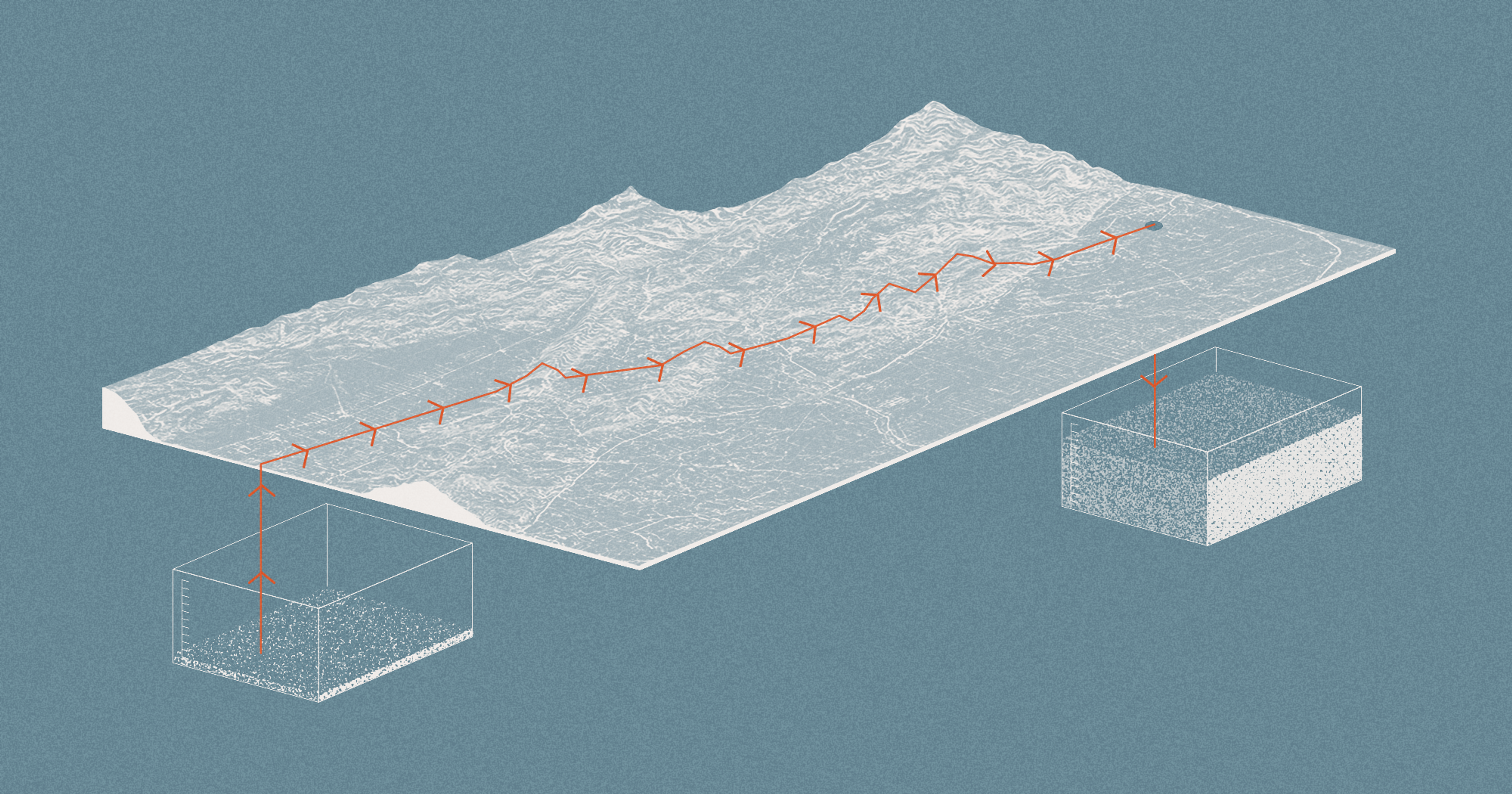
This southern Colorado valley is dry and dusty. The sun bakes the topsoil relentlessly, and powerful winds haul up from the West grabbing sand as they go, depositing dunes on the eastern flank. The center-pivot circles of potatoes growing along its 100 by 50-mile expanse are dots of color on a muted palette. When I need to run errands I make a day of it, driving hours in various directions to get to a Home Depot or a Target. In between the San Juan and the Sangre de Cristo mountain ranges, there’s not much other than a handful of small towns and a lot of agriculture.
Underground, though, the San Luis Valley has something that much of Colorado lacks: water.
South of the Saguache-Alamosa county line this groundwater feeds the Rio Grande as it flows out of the mountains and heads for New Mexico. But to the north, the water that runs off the western flanks of the Sangre de Cristos sinks into a closed aquifer, which irrigates farms and ranches and the largest cooperative cannabis park in Colorado, as well as drinking water for Saguache County.
I moved here in 2021 as a compromise. I wanted to farm peppers; my partner wanted to climb mountains. This was an alright place to do both. The swath of 14-thousand-foot peaks that lines the east side of the valley like a massive predator-proof fence was the first thing I noticed when we arrived.
The second thing I noticed was the ubiquity of the protest stickers. “RWR,” they read, protesting in black letters with a big red circle-and-line superimposed on top. They’re on trucks and EVs; they’re taped up on windows of local stores and slapped on the backs of stop signs. You can buy them for a couple of dollars at local retailers across the valley. It didn’t take me long to corner a neighbor who sported one and ask her what the deal was.
“Oh, that,” she said, before explaining. “They’ve backed off for now, but not for long.”
RWR stands for Renewable Water Resources. The group is spearheaded by former Colorado Governor Bill Owens and his chief of staff Sean Tonner. Their goal is to purchase enough water rights in the San Luis Valley to pump 22,000 acre-feet of water from the aquifer and pipe it northeast, over several mountain passes, to Douglas County, a rapidly growing suburban area south of Denver.
The project, its proponents state, would be beneficial to our local economy. The “benefit”? Water rights purchased at a premium from local farmers, at the cost of their irrigation systems. It would provide drinking water to an area of the state that is growing unsustainably, with houses built faster than the county can provide resources for them.
The San Luis Valley is a quiet place, with a light reputation for weirdness. We have a UFO watchtower and an alligator rescue. Hot springs bubble up all over. We’re home to the Great Sand Dunes National Park, a beachy landscape that looks very out of place in the middle of the high country.

Maggie Gelbwak
A lot of food grows here. The sunshine makes it a perfect location for sunflowers. Decades ago, lettuce and barley were the biggest exports, but potatoes became king due to the sun, the soil, and the giant aquifer. There’s no lack of animals, either. Herds of cattle graze between the farms, interspersed with yak ranches, goats, and bison.
It’s also poor. Poverty rates here are estimated to be over 21%, and two of the counties that make up the valley grapple with persistent poverty. Other than tourism from the Dunes and the annual sandhill crane migration, there’s not much fueling the economy outside of agriculture irrigated by the aquifer.
Colorado’s water rights are governed by prior appropriation. “First in time, first in right,” the state calls it. This means that whoever was granted their right to water from a certain stream or river last is the first to lose it if the stream’s volume decreases.
For this reason, farms with older water rights are worth a lot of money. And if a farmer in Colorado wants to make some cash, selling those water rights — or leasing them for a royalty — can net a significant amount.
The Colorado River Compact, written in 1922, allocates the water moving through that basin into equal portions for both the Upper and Lower river basins. In times of drought it requires the Upper division to send “one-half of the deficiency” down to the Lower division. And it mandates that usage by Upper division states — Colorado, Utah, New Mexico, and Wyoming — cannot cause the river’s flow to be depleted below a certain amount for the states downstream.
At the time of the compact’s signing, there were no provisions in place for things like megadrought, environmental conservation, or the fact that the writers of the Compact were misunderstanding the amount of water that flows down the Colorado River every year.
People have been living and farming here for longer than the State of Colorado has existed.
The Colorado River is on the other side of the continental divide from the San Luis Valley. But the ripple effects of the Colorado River Compact echo throughout Colorado’s landscape. Every year that the drought gets worse, cities along the front range find themselves at risk of water shortages. Douglas County is made up of these cities: wealthy suburban neighborhoods, bedroom communities for Denver and Colorado Springs.
RWR seeks to solve these drinking water woes. As Douglas County grows, its population will need to harvest water from somewhere. The South Platte River, which flows out of the mountains through Douglas County, is already tapped by states and municipalities to the east and north.
The humble aquifer underneath the San Luis Valley, though, seems like a massive deposit of water for a comparatively small population. And because of the physics of the closed aquifer, this water doesn’t really go anywhere. One could be forgiven for imagining that it’s not already being used.
People have been living and farming here for longer than the State of Colorado has existed. People have been speculating about the valley’s water for just as long.
Before there was RWR, there was a group called American Water Development Inc. In 1986 AWDI applied for a permit to pump water from the San Luis Valley and pipe it over the mountains to Denver. After a long legal battle, which included testimony from geologists and conservationists about why the plan was impractical at best, the permit was denied. Now, 40 years later, a different former governor and a different water speculation group wants to try the same thing.
“The water security challenges in the Valley are difficult enough as is and the consequences of shipping water out of the Valley just exacerbate the challenges exponentially,” said Republican state Senator Cleave Simpson, a fourth-generation farmer and rancher and San Luis Valley native. “Not good for our community and not good for the state of Colorado.”
In a rapidly aridifying American West, every drop of water is precious, and none of it is affordable to lose.
There’s very little local support for the project in the San Luis Valley. There’s no pro-RWR version of that bumper sticker that’s so ubiquitous around here. Even on RWR’s website, the only praise they can advertise is damning: “When people learn about the full project, local support climbs to more than 42 percent.”
I asked around at the local market and at the post office, to see if I could find someone who would give me a positive quote about the project. Nobody could. The most common sentiments I heard were indignation and bewilderment. Sure, RWR would offer landowners a premium when buying the rights to their water. But at the cost of depleting our own resources, it doesn’t seem worth it.
“Our agricultural producers are already facing incredible long-term drought and over pumping,” says Liza Marron, Saguache County Commissioner. “We surely don’t need to… sell our water out of our basin and end up relying on a prison economy to survive.”
If the water gets diverted, the farms suffer. If the farms suffer, the valley suffers. It’s a simple equation to those of us who live here. Already drought worries us. In recent years the snowfall is below average, and the snowmelt coming down the mountains decreases in kind. The San Luis Valley’s annual precipitation is some of the lowest in Colorado. The aquifer’s ability to replenish itself from surface water is starting to come into question.
In 2022, Douglas County rejected RWR’s pump-and-pipe proposal. The county’s attorneys “…said the proposal did not comply with the Colorado Water Plan, which favors projects that don’t dry up productive farmland and which have local support.” Within a year, RWR began funding candidates for one of the county’s water board elections, donating tens of thousands of dollars to an election that usually sees candidates self-fund for far less. And now, Sean Tonner, one of the principal investors of RWR, has been appointed to Douglas County’s new water planning commission. While the proposal itself has been shelved, the group is still working, and there are sure to be new developments as demographics and governments change.
What is the worth of a rural agro-economy? When do the wants and needs of a metropolitan area supersede those of the people and the landscape far away from it? The aquifer underneath the valley is already in use: by potato farmers, by cannabis growers, by locals with their vegetable gardens and the elk and sandhill cranes. In a rapidly aridifying American West, every drop of water is precious, and none of it is affordable to lose.
It’s easy for Valley locals to turn up their noses at the Douglas County prospectors, to tell them to get water from their own aquifer, but they have none. Someone will eventually have to share.

Standing on the edge of a newly blooming almond grove in Southern California, Chris Hiatt observes his honeybees dip and flit around the soft white flowers that coat the season’s latest crop. Soon, the pollination cycle will be complete, and Hiatt and his nearly 20,000 hives will pack up and move to Washington for apple season, then on to North Dakota to harvest summer honey.
It’s not an easy life, said Hiatt, president of the American Honey Producers Association. He’s a bachelor for nearly seven months of the year while his wife and kids stay in North Dakota for school. The hives need to be constantly on the move if they want to pollinate the country’s rotating crops. “It’s rewarding, though,” Hiatt said. “Because you take care of the bees, and usually they take care of you.”
Still, going from field to field, farm to farm, exposes honeybees to a variety of uncommon chemicals. Fungicides, insecticides, and sprays like Roundup threaten not just Hiatt’s productivity, but his entire colony of bees.
A recent study from researchers at Cornell University backs up Hiatt’s fears — it found widespread pesticide contamination in beeswax from managed honeybees. Other products, including honey, bee pollen, and wax in cosmetics may also be exposed to these pesticides, the study reported.
“It’s not really a surprise,” said Hiatt, about the study. He’s no stranger to losing honeybees, sometimes entire hives, to contamination issues. Last year, nearly half of all U.S. honeybees died, alternately attributed to pesticides, parasites, starvation, and climate change. Yet 35% of the human diet relies on insect-pollinated plants — and honeybees are responsible for 80% of that pollination.
Hiatt noted that bees tend to collect and bring insulative materials back with them. This often includes straw, pottery, and wood, but Hiatt said he’s seen things like roofing materials in tow, which can hold a variety of toxic chemicals.
However, the biggest contamination threat comes directly from the pesticides, fungicides, and insecticides that are also widely used in American farming. Though their use is regulated by the United States Environmental Protection Agency (EPA) and other regulatory agencies, misuse still occurs. And, even when products are used as instructed, they can have harmful effects on pollinators — in some cases disrupting birth rates by up to 75 percent.
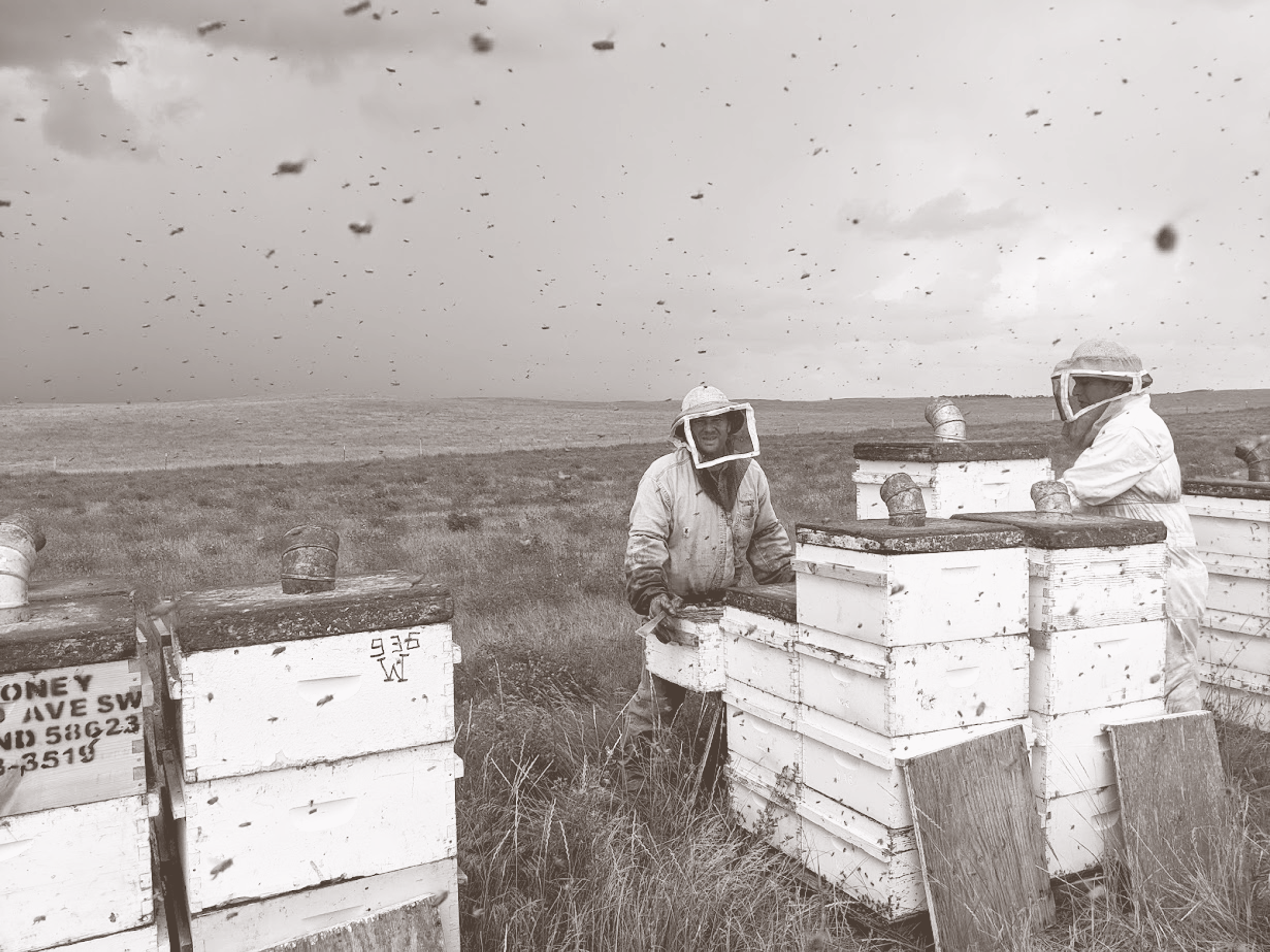
Image courtesy of Hiatt Honey
Hiatt has contracts in place meant to protect his bees while they work on specific farms. “You can’t spray while [plants] are in bloom,” he said. “And spraying midday is worse than spraying in the morning or at night.” Still, he’s had to warn big growers in the past that if they spray and kill his bees, he’ll break contract and leave. “For the most part, you’re safer under contract,” he said. “But, as soon as it’s done, they start spraying again, and we get exposed soon after that.”
The Cornell study found that beeswax from commercial beekeeper colonies contained the most chemical residues, compared to hobbyists and sideliners. That said, every sample tested contained some mix of pesticides. “[Commercial bees] are exposed to a lot of different crops, and farmers may use different pesticides for each,” said Karyn Bischoff, the study’s lead author, in a press release.
Recent years have seen an influx of neonicotinoid pesticides, or neonics, on farms, often used to grow corn, canola, and soy. Research shows neonics harm honeybees and wild bees, yet widespread use continues. Studies warn that, due in part to neonic use, the amount of harmful insecticides in farmland and nearby areas has grown 50 times larger over the past 20 years.
“There’s only a certain region that you really need [neonics],” said Hiatt. “And only in one out of every four or five years. But instead they’re actively using it over and over again, risking resistance, plus exposing all the water, soil, and bees to pesticides.”
“Someone could take a fat sample from our bellies and there would be a whole plethora of scary things in us.”
Cornell’s researchers found the most common pesticide in its tested samples was Piperonyl butoxide, a common insecticide and herbicide used on agricultural crops and livestock. Neonics such as acetamiprid, clothianidin, imidacloprid, and thiamethoxam were also found. Imidacloprid — which has been known to actually repel bees from flowers — and clothianidin have been banned by the European Union. Neonic effects on human health have been studied, though the science is still out on their long-term risks.
Jerry Hayes, a long time beekeeper and bee health advocate who previously partnered with Monsanto to attempt to end the varroa mite plague currently decimating American bees, said that while contamination is inevitable, the question of risk should always focus on concentration.
“Someone could take a fat sample from our bellies and there would be a whole plethora of scary things in us, because we are exposed in so many different ways to chemicals,” said Hayes. He noted that EPA, Food and Drug Administration (FDA), and state regulations all have allowable concentration limits. Hiatt agreed, noting, “In all our food we eat … there’s leftover stuff in everything. A lot of it is parts per billions. It doesn’t mean it’s going to do anything to you, but it exists.”
While Cornell’s study did find a higher-than-average number of pesticides in its beeswax samples, researchers noted concentrations were similar to those found in previous studies. “Because pesticides can accumulate in wax, it’s important for beekeepers to keep removing old wax every few years and having the bees replace it to make sure the colonies and the bee products remain healthy,” said Bischoff in Cornell’s press release.
Still, with beeswax used in everything from cosmetics to food production, and even in animal feed for cows and sheep, there’s reason to pause when thinking of mounting chemical concentrations. Neonic pesticides have also been found widely in honey samples from around the world, though researchers say levels remain below those allowable for human consumption.
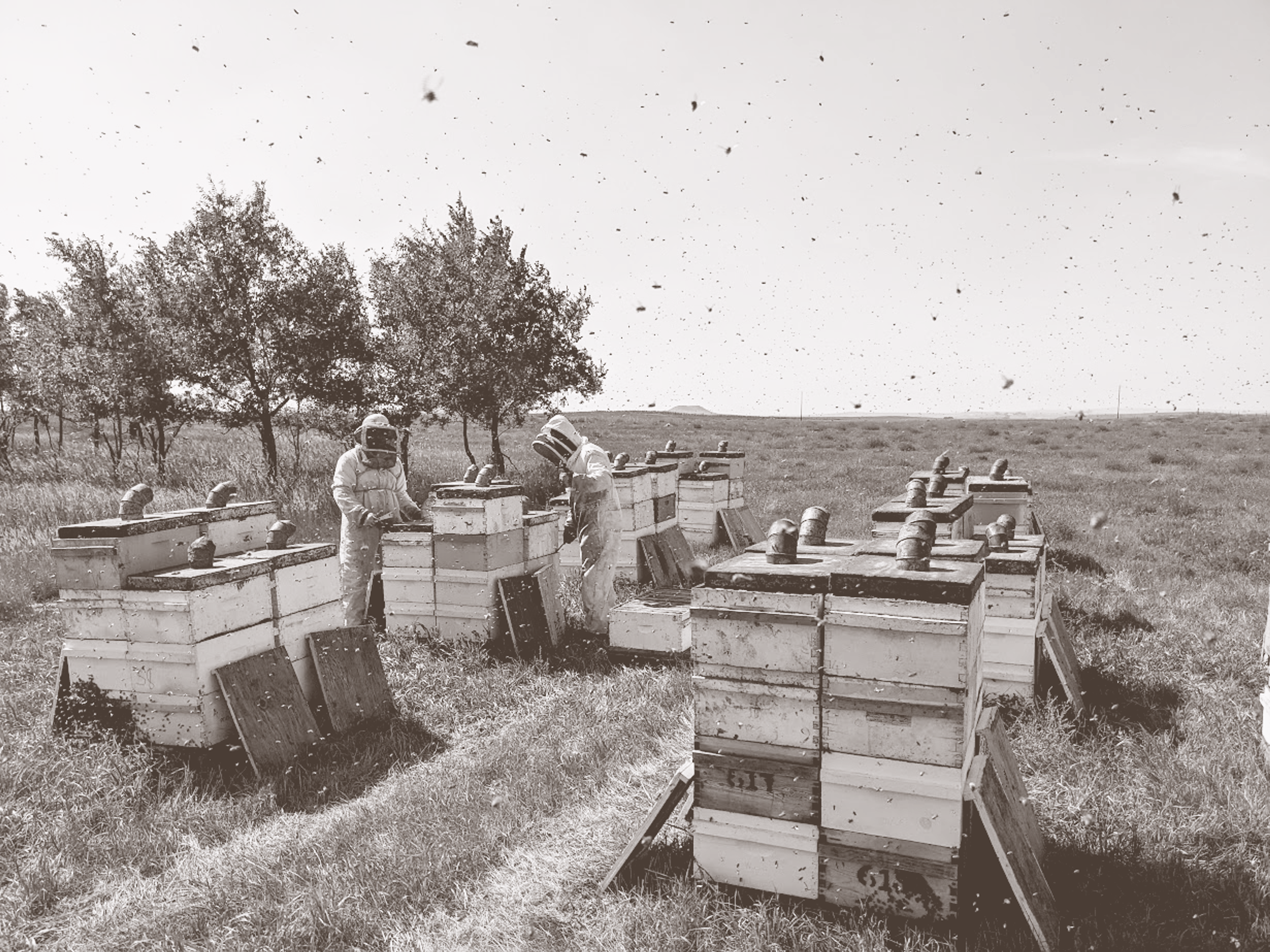
Courtesy of Hiatt Honey
In Hayes’ mind, the biggest threat is actually backyard gardeners. “We’ve got 50 million acres of suburban lawns in the U.S., taking in about 18 million pounds of chemicals,” he said. “I’m much more concerned about some guy pumping out his backyard garden sprayer … and when it says put in 2 parts per gallon, he puts 4.”
Off-label use of chemical products, which includes over-mixing, over-diluting, and unauthorized use does pose a serious risk to honeybee health. New York State began restricting the use of neonics for lawn care in early 2023, in an effort to protect pollinators. A number of states soon followed, including Nevada, Colorado, and Maryland.
“It all comes down to our federal government taking samples and seeing what’s in the samples,” said Hayes. “If you don’t do that you don’t know, and if you don’t know you can’t tell beekeepers to stay away from an area or crop.”
For Hiatt, the beekeeping industry is up against more than just backyard gardeners. “I’m really worried for the future of bees,” he said. “The varroa mite is just getting worse, viruses are getting more viral, and the annual losses are just staggering.”
“Every third bite of food you eat is a result of a honeybee,” he added. “We need to find a way to protect them.”

In 1975, farmer Annie Warmke was digging a ditch on her family’s 100-acre cattle farm in southeastern Ohio. As she dug, she tried to keep an eye on her 6-month-old daughter sitting in the grass nearby. Suddenly, she heard a peculiar noise.
“She had sucked a worm into her mouth like it was a spaghetti noodle,” said Warmke.
This is the story that immediately springs to mind when Warmke is asked whether women farmers experience different stressors than their male counterparts. Where was her then-husband while her kid was eating a worm? “He did nothing, it was ‘not his job,’ as they say,” she said. “I don’t even think he ever changed a diaper.”
Today, Warmke is the co-owner of Blue Rock Station, a sustainable living center and farm. She mentors younger women interested in farming and sustainability, and is an active member of the Women, Food, and Agriculture Network, which connects and supports women farmers.
Though the worm incident took place decades ago and the gender dynamics of parenting continue to evolve, the challenge of juggling caretaking with farm work — among many other stressors — is quite familiar to female farm owners and managers today. Recent research from the University of Georgia examining how gender intersects with stress, resilience, and alcohol use on the farm suggests the weight of these many responsibilities are taking a toll on women in particular.
While the study is not the first to sound the alarm about stress and substance use in agriculture, the use of alcohol among women stands out. The research, led by Christina Proctor, assistant professor at the University of Georgia’s College of Public Health, found women farm owners and managers not only reported “significantly higher” levels of perceived stress than their male counterparts, but also lower resilience — and a higher prevalence of binge drinking.
“Overall, alcohol consumption among women was lower, but when they did drink, they were heavily drinking,” Proctor said.
Proctor and her colleagues reached 987 farm owners, managers, workers, and spouses across the United States through an online survey. Most respondents identified as male, while roughly 29 percent of respondents identified as female, and 0.01 percent identified as nonbinary. The average age of survey participants was 33 and a half — much younger than the average age of farmers in the U.S., according to the USDA’s most recent Census of Agriculture. Proctor attributes this to the survey’s distribution over social media and through QR codes.
Still, the data about women and binge drinking surprised the researchers; Proctor is now conducting a series of interviews with women farmers to build on this research and get a clearer picture of their relationship with alcohol.
Briana Hagen, CEO and lead scientist of the Canadian Centre for Agricultural Wellbeing, has conducted extensive research examining occupational stress, mental health, and coping mechanisms among Canadian farmers. While earning her PhD at the University of Guelph, Hagen and her colleagues conducted surveys of Canadian farmers in 2016 and 2021 assessing mental health outcomes and substance use. The second survey, conducted during the pandemic, found more than twice as many female respondents reported seeking mental health or substance use support during the pandemic than men.
“We’ve only got five minutes to get slop shit drunk and recover before we have to get up the next morning and birth the lambs or milk the cows or whatever.”
While Hagen’s research found similarly high levels of stress and lower resilience among Canadian women farmers, her findings did not suggest a high prevalence of binge drinking among this demographic. Still, Hagen was not shocked by Proctor’s findings.
“Stress among women who farm is only going up, so I’m not surprised that coping mechanisms that are readily available are being used,” said Hagen.
The research also aligns with studies of gender and alcohol use among the overall U.S. population. In the last few years, the gender gap between men and women when it comes to alcohol consumption — particularly excessive alcohol consumption — has steadily narrowed. During the pandemic in particular, alcohol-related deaths increased across genders, with a sharper rise among women. And research has found that women are more likely than men to respond to acute stress with excessive drinking.
Both Hagen and Proctor emphasize that the unpaid labor of caregiving is just one of many stressors women farm owners and managers contend with.
“The stress of farming compounded with the stress of being a woman working in a male-dominated industry, where you do have sexual harassment, stereotyping, and then on top of that the expectation that you’re also supposed to to do all these things we traditionally associate with women, creates a vicious cycle of stress,” Proctor said.
Warmke recalled briefly serving on her county’s Farm Service Agency Board. She ultimately quit because of the sexual harassment and discrimination she said was her lot as the sole woman on the board. She went on to co-found a networking group for women in agriculture called Women Grow Ohio. Members often shared stories of men coming onto their farms asking to speak to the farmer, assuming a man must be running the place. It happened so often that Warmke’s group began selling buttons to women farm owners and managers that said “I’m the farmer.” They were incredibly popular.
“Isolation is the main contributor to substance use disorder and alcohol use disorders, any kind of addiction behaviors.”
“Women would give us five bucks for these buttons,” Warmke said. “That is today’s farm life for women.”
In spite of these obstacles, Warmke herself doesn’t drink. After being raised by parents who drank, and surviving an abusive relationship with an alcoholic partner, she said it doesn’t hold any appeal; she wants to be fully present for her life. But Warmke understands completely why her fellow farm women would lean on booze for relief. And binge drinking in particular fits with her experience of life on the farm for women: There is simply no time to linger over a glass of wine.
“I think we binge drink because we only have certain times to do it, because the rest of the time we’ve got to be responsible,” said Warmke. “We’ve only got five minutes to get slop shit drunk and recover before we have to get up the next morning and birth the lambs or milk the cows or whatever. It’s an escape mechanism.”
Proctor said that research has shown that women in other male-dominated jobs such as fire-fighting, policing, and the military have developed similar binge drinking and alcohol consumption patterns. These occupations are not only primarily held by men, she noted, but can also be physically taxing.
The stress of managing and living on a farm can sometimes be compounded by their rural settings. Heather Majewski, a recovery coach and peer advocate who serves rural communities, grew up in a tiny town outside of Buffalo, New York. She began drinking in her teens, and was later prescribed opioids for chronic pain, taking them for more than a decade.
“About halfway through that, I realized I could take one for my physical pain, and one for my emotional pain,” Majewski said. The insular nature of her rural community didn’t help matters: “Isolation is the main contributor to substance use disorder and alcohol use disorders, any kind of addiction behaviors,” she said.
Women in other male-dominated jobs such as fire-fighting, policing, and the military have developed similar binge drinking and alcohol consumption patterns.
Today, Majewski is sober and co-managing a horse farm. She attributes her sobriety to God, and to her religious community. She encourages women in rural areas who may be struggling with substance use to seek connection.
“Finding that sense of community, in grange halls, in a church, or someplace where you feel really connected, for me is the most important thing,” said Majewski. “There’s so many people just waiting with open arms.”
For farm owners and managers who need help for mental health or substance use, the nonstop nature of their work can be a major impediment to seeking that care. Finding time in the day to make an appointment, much less go to it, is a challenge. Hagen emphasized that mental health providers need to recognize the particular challenges farmers face and adjust accordingly. She recommends making virtual services available when possible, particularly for women who may be caregiving on top of their farm work.
Of the farmers she surveyed, meeting with providers who didn’t understand agricultural work and lifestyles was a deterrent to getting help. One dairy farmer she spoke with recalled finally seeking support for severe anxiety and depression, only to be told by the provider to take two weeks off work — a nearly impossible ask for a farmer.
“They walked out and never came back,” said Hagen. “There’s a need for agricultural literacy among therapists and counselors … Once you get them in the door, you have one shot, and if you aren’t able to meet them where they’re at, they’re not going to come back.”
Proctor emphasized that her team’s research is just a starting place, and is not necessarily representative of farmers nationwide. “One research article isn’t enough,” said Proctor. “We need to do this multiple times, in different populations.”
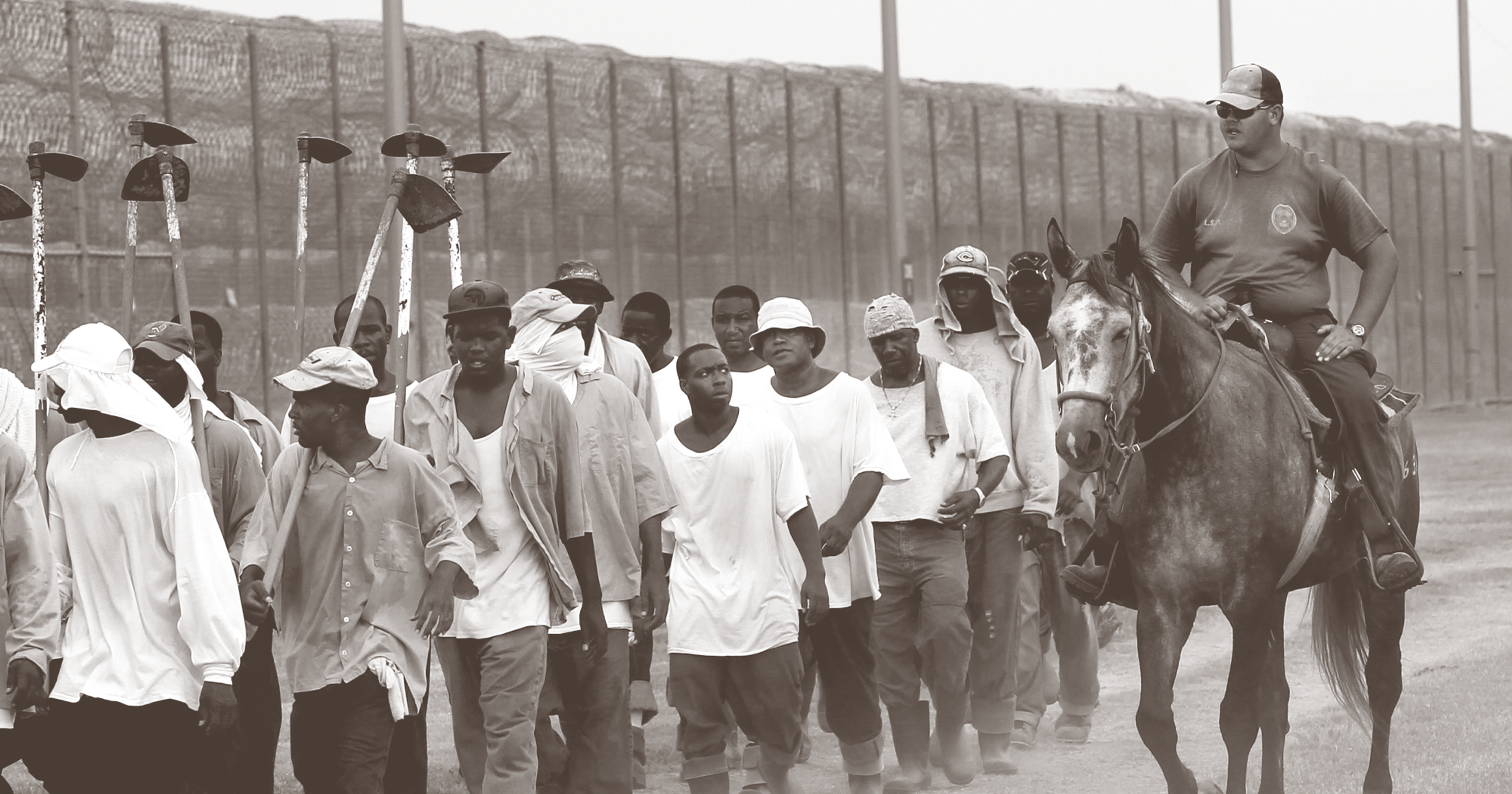
When lawyers Lydia Wright and Claude-Michael Comeau were looking into cases of medical abuse at Louisiana’s infamous Angola prison, they started hearing stories about compulsory farmwork.
Through letters and phone calls, the attorneys from the New Orleans-based nonprofit legal center Promise of Justice Initiative heard about prison officials forcing the prison population to work in brutal conditions. For instance, there are times when the workers don’t have access to clean drinking water, they are forced to work even if they are disabled or sick, and they have to work the farms without protective gear. They work with their hands and are denied modern agricultural tools. The lawyers also found workers were routinely denied sunscreen and water, and forced to keep working in the fields even if they needed medicine.
In September of last year, Promise of Justice filed a class action lawsuit against the prison, the state’s corrections department, a for-profit state agency that runs the farm program, and several officials who oversee its implementation. Attention on Angola’s farm line abuse compounded early this year, when the Associated Press published a two-year investigation that tracked prison labor being used to provide massive quantities of food across the nation.
Agriculture in prisons has long been sold as rehabilitative, reconnecting the incarcerated to nature, improving work ethics, and developing skills that could be used after release. But as new programs pop up across the country, academics and legal NGOs are publishing reports of major violations of human rights abuses on prison farms.
Louisiana’s use of farm work in prisons is particularly stark, highlighting how agriculture can be used as punishment and profit in state-run programs. At Angola, for example, the crops grown and harvested by prisoners are later sold on the open market in what the state bills as a positive process of offsetting the cost of incarceration. But according to legal experts and academics that have investigated these types of prison agricultural programs, the problem runs deeper: The labor is inherently punitive rather than beneficial.
Oregon, for example, runs a farm program across 12 facilities since 2014 that its state corrections agency touted in a blog post last year, writing the program “provides educational materials about the art and science of growing and caring for plants to educate and teach sustainable organic gardening practices.” A recent effort in Maine, meanwhile, received attention from a Vice News team for training incarcerated men to cultivate crops and cook in prison. And a Tennessee program received attention from trade publication Farm Flavor, which quoted the guard overseeing the project touting the benefits: “We try to instill a work ethic in the inmates,” manager Doug Griffith told the publication in 2022. “We also want to teach them a skill — whether it’s the greenhousing, operating equipment, or learning how to grow food.”
But researchers like Josh Sbicca of Colorado State’s Prison Agriculture Lab argue that research shows these programs are more connected to slavery than radical, skills-based solutions.
“The rehabilitation pitch is not new,” Sbicca said. “The rehabilitation pitch really begins during the progressive era.”
“If it actually was geared towards rehabilitation, then the incarcerated men would be using agricultural tools to actually cultivate the produce.“
Along with fellow professor Carrie Chennault, Sbicca researches the historical and social context of these types of programs and has published several papers arguing the state is creating a workforce based on discrimination. He is working on a new book looking at how agrarianism gets woven into the prison system and makes the case that in the late 1800s, the presentation of prison-based farm work changed to appease liberal attitudes.
“So this is sort of coming off the heels of the convict leasing system and a lot of the North being really aghast at what was going on in the South and the nationwide turn against what was considered neoslavery institutions,” Sbicca said. “And then this idea that prison could be this reformative, rehabilitative space really kind of comes from a lot of progressive reformers.”
The history of Angola, where the Promise of Justice lawsuit focuses, mirrors this finding. The 18,000-acre property was the site of a large plantation during slavery that was converted first into a convict-leasing operation before becoming a prison in the early 20th century. Now, under the management of Louisiana state-run, for-profit agency Prison Enterprise, the prison grows wheat, corn, soybeans, cotton, and milo. They sell this primarily on the open market, from Angola and other farms they operate across 8 sites in Louisiana.
In terms of rehabilitation, Prison Enterprises’s mission statement specifically features the goal of reducing recidivism and providing work to those incarcerated, stating they prioritize “enabling offenders to increase the potential for successful rehabilitation and reintegration into society.”
Angola’s workers often receive little to no wages. They aren’t eligible for pay in their first three years of working the Farm Line, and only after that they might get paid $0.02 per hour, according to the 2023 complaint. “Louisiana has among the lowest incentive pay rates for incarcerated people working in correctional industries,” it reads.
For Wright, the structure of Louisiana’s system focuses on punishment and profit over teaching any skills.
“The rehabilitation pitch is not new. The rehabilitation pitch really begins during the progressive era.”
“If it actually was geared towards rehabilitation, then the incarcerated men would be using agricultural tools to actually cultivate the produce, they would be consulted about decisions regarding planting crops, what crops to plant and how to harvest them … they would not be sent outside, when the heat index in the Louisiana summer can exceed 130 degrees, without sunscreen or clean water.”
If workers fail to do as they are told on the farm line, they could be put in solitary confinement for an arbitrary amount of time or cut off from communications with their community outside the prison, according to the complaint. Both practices have been documented to harm chances of success upon release, violating Prison Enterprise’s stated mission to build skills for reentry.
“When you dig a little deeper what you get is it’s really a system that’s trying to legitimize itself by using language and tweaking programing to remain in existence, which is not to discount any personal benefits to incarcerated people … being out in a garden is better than being in a cage,” Sbicca said, arguing that states use this clear benefit to frame agricultural work as more positive.
Ken Pastorick, communications director at Louisiana’s Department of Public Safety and Corrections, provided a statement calling the lawsuit “frivolous and entirely without merit.” Noting the prison’s bloody history, the statement argued the state’s efforts have “transformed” farm line programs to become rehabilitative.
“Since the 1980s and 1990s, the Department has transformed the prison by implementing large-scale criminal justice reforms and reinvestment into the creation of rehabilitation, vocational and educational programs designed to help individuals better themselves and successfully return to communities,” Pastorick’s statement read.
Comeau, who investigated Angola’s farm practices alongside Wright, pointed to reports that showed agricultural work neither made money nor prepared those incarcerated for a growing industry.
“We look forward to our day in court.”
“There are jobs where people find ‘Hey, this is a skill I have, I can really take this out of the prison, I can do something with this when I come out,’ and the agriculture job is just not it,” Comeau said. “If you ask people — formerly incarcerated people — they’re not finding that they’re doing farm work outside of Angola. They’re just not, they’re doing other things.”
One state audit from 2019 found that while the program did meet its broad goals of offsetting the cost of incarceration by selling agricultural and material products, the farm line was specifically under-performing. “[N]early 40 percent of the offenders working for PE are serving life sentences,” the audit read. “This means many of the offenders working for PE may not be learning job skills that could help them after they are released.”
For Wright, the state’s framing is a product of its connection to slavery. If the state wanted to rehabilitate its younger population, she argued, they would be sending them to get GEDs instead of working the farm line.
“It’s an institution that’s so deeply rooted in slavery in a place that is so deeply rooted in slavery that the state just doesn’t seem to be able to contemplate moving past it,” Wright said.
Both the state and Promise of Justice Initiative plan to take the case to trial. While motions are still being filed, Wright was direct about her firm’s chances: “We will win,” she said.
Pastorick’s statement also highlighted a desire to sort out the issue via trial: “We look forward to our day in court.”
When West Virginian apple farmers were faced with more than a 16-million-pound surplus this September, some orchards worried their only option was to pile up their fruit and burn it. It wouldn’t have mattered that Feeding America estimates one in nine West Virginians go hungry each year. There’s simply a limit to what a single orchard can do with that volume of fruit.
Luckily for those farmers, however, the West Virginia Department of Agriculture sought a partner in The FarmLink Project, a national nonprofit started in 2020 by a group of college students in Southern California who’d seen TikToks of farmers dumping millions of pounds of onions and milk when the supply chain buckled during the pandemic. Those same college students were also seeing news reports of growing food insecurity, and food banks under unprecedented strain. With their summer internships on hold, they mobilized to perform agricultural heroics: transporting more than 10,000 eggs from a farm outside Los Angeles back to food banks in the city.
Four years later, the FarmLink team now has dozens of similar stories to tell — just swap in onions for eggs. Or potatoes. Or apples. By January 2023, the organization had rescued over 100,000,000 pounds of food from farms and delivered $5,400,000 in financial relief to farmers and truckers, according to their 2022 annual report.
FarmLink’s team estimates the recent apple operation — which distributed 13.5 million pounds of apples to more than 80 anti-hunger charities — was one of the largest harvest rescues ever performed in the United States. That said, it’s still a drop in the bucket of on-farm food waste.
Farmers regularly have to deal with surprise surpluses that eat into their labor and planning costs. It’s a problem, and not just because of the pressure those surpluses put on farmers: The U.S. Department of Agriculture (USDA) estimates that nearly 13% of US households are food insecure. At the same time, 108 billion pounds of produce go to waste in the U.S. annually, according to the Farmlink report, accounting for 58% of our landfill methane emissions. And while food waste has become a hot topic — growing hotter everyday thanks to those greenhouse gasses — the related issue of food loss, or food that’s lost before it even makes it to the consumer, is less studied and less understood.
Jean Buzby, food loss and waste liaison at the USDA, said there’s a prevailing notion that “food loss” is an issue isolated to developing nations — where agricultural infrastructure may not be robust enough to keep up with production — whereas “food waste,” which refers to food thrown away at the consumer level, is what kids in 2010 might have called a “first-world problem.” But on-farm food loss represents a significant challenge in the U.S., where roughly 42% of the edible food grown never makes it out of the field — often due to labor shortages, cosmetic imperfections, and market fluctuations — according to studies conducted by food loss expert Lisa K. Johnson.
And while consumer food waste has enjoyed steady attention from governments and institutions, the federal government may soon take food loss as seriously, too. One hint: USDA’s National Institute for Food and Agriculture is investing $15 million in grants to help link food producers to food recovery and emergency feeding organizations, according to December’s national strategy proposal for reducing food loss and waste, co-authored by the EPA, USDA, and FDA.
“They’re running a farm. They’re not always able to sit down at a computer and research options for what to do with their extra crops.”
Those relationships are critical to the food rescue efforts happening on a local scale, where the need for fresh, affordable produce remains enormous. In eastern Massachusetts, a food rescue ecosystem has sprouted. Now farmers, food pantries, gleaners, and distributors are working to get local produce into hungry mouths instead of dying on the vine, being re-tilled into fields, going straight to compost, or rotting in a landfill.
But like many ecosystems, this one is fragile. And it’s being pushed to its limits by growing demand from food-insecure neighbors.
“A lot of what we’re hearing from our recipients is, ‘It’s great. Can we just get more?’” said Rachel Albert, executive director of Food Link, a Boston-area food rescue nonprofit serving 90 anti-hunger agencies. (Food Link is unaffiliated with FarmLink.) “The need just keeps growing. We’re finding that all the food rescue organizations in our area have waitlists now, including us.”
Food Link receives some food donations from area farms directly, but will often get them through the Boston Area Gleaners, a separate nonprofit headquartered in nearby Acton.
David Wadleigh, co-owner of Kimball Fruit Farm in Pepperell, Mass., said he’s been working with the Gleaners and their corps of volunteer harvesters for over 15 years. In addition to free help in the field, the Gleaners can provide trucking services to farmers who are unable to transport their own big hauls. That came in especially handy when last season’s biblical rains gave way to a massive crop of cucumbers.
“We had guys coming in from picking, like, ‘I don’t know why there’s so many cucumbers,’” Wadleigh explained over Zoom. “And the Gleaners did end up taking them, but there was a couple of times where they didn’t know if they could use all of them because there were so many.”
The perishability of fresh produce means some food rescue missions are ticking time bombs.
The Gleaners have also trucked away large quantities of their McIntosh apples — a one-time favorite cultivar in New England that’s since fallen out of fashion to make room for its crunchier cousin, Honeycrisp. There have been years at Kimball Fruit Farm where the Gleaners have left with around 400 bushels of unsellable McIntoshes, which Wadleigh said are naturally squishier than other varieties and go bad quicker in storage.
The perishability of fresh produce means some food rescue missions are ticking time bombs. “It’s got a matter of days, maybe weeks in some rare cases, where it’s got to go,” Reilly said of the produce they recover at FarmLink. Carting off and distributing large amounts of even the sturdiest veg involves a lot of moving parts and helping hands — and farmers like Wadleigh rely on the support of an increasingly diverse set of food rescue programs to do it without hemorrhaging money. Donations aren’t nearly as lucrative as retail, but farmers can recoup some expenses with tax write-offs.
Alyssa Ciolfi, the Gleaners’ communications manager, said part of their mission is to take logistics off farmers’ proverbial plates. “They’re running a farm. They’re not always able to sit down at a computer and research options for what to do with their extra crops. They just don’t have the time,” she said. “And it’s an art, not a science. You don’t know what weather is going to be like one season over another. It’s very unpredictable.”
Even in controlled agriculture settings — where the growing is a carefully monitored science — some degree of excess produce is still inevitable. Isabelle Amlicke of Little Leaf Farms, a hydroponic lettuce grower in Devens, Mass., explained via Zoom that natural factors like sunlight can increase their yield, but volatile market conditions dictate what they can sell. She can tweak the water’s pH and the greenhouse temperature all she wants, but a dip in demand means excess lettuce. Instead of throwing it out, Little Leaf donates to partners like Food Link, which handles the distribution to local anti-hunger groups.
For the founders of FarmLink, any meaningful solution to food loss starts and ends with partners on the ground who are trusted in their communities. Moving 13.5 million pounds of apples to food pantries is a feat. But if those apples don’t get into the hands of hungry people, all that fruit is still a waste.
“We want to empower the organizations who have the community’s trust and who have set up a system to hand out food with dignity,” Reilly said over Zoom. “That is one of the lasting ways that we can have structural changes.”

Bart Jones, a livestock producer on the Kentucky-Tennessee line, says that when his cattle give birth, the vultures are often lurking. The scavenger birds will head right for the fresh afterbirth — as might be typical for a bird that feeds on carrion and other already-dead flesh. But Jones says the birds want a piece of the newborn calf, too.
“We’ll drive up to the field, we’ll see those vultures on the ground and the cow will be circling the baby calf,” he said. “And she’ll be trying her best to protect that baby calf because they will get a baby calf as well.”
Black vultures (one of the three vulture species in the U.S., along with turkey vultures and California condors) live in habitats ranging from forests to grasslands to the suburbs. And in addition to feasting on the rotting carcasses of dead animals, the birds are known to snag a living creature every once in a while, too — including animals that matter to people, like baby cattle.
But scientists say that while black vulture attacks on cattle can happen, the real scope of this conflict still isn’t clear. And it might be in everyone’s interest to keep these vultures — and their ecological role in cleaning up dead animals — around and thriving.
“Having healthy black vulture populations, on the whole, is really advantageous,” said Marian Wahl, a PhD candidate at Purdue University.
Black vultures aren’t really equipped to take down an adult cow or bull, said Wahl. But they’re certainly capable of killing a very young calf — the birds can stand about two feet tall, with wingspans nearly five feet wide, and beaks designed to rip apart soft flesh. For a newborn calf, that can be a sizable threat, especially if they’re facing off against multiple vultures at once.
According to a report from the U.S. Department of Agriculture (USDA), vultures were responsible for the deaths of more than 24,000 calves in 2015. That would make them the second-most deadly predator of livestock in the country, below coyotes but higher than dogs, wolves, mountain lions, bears, or eagles.
But just because vultures have been blamed for killing a calf doesn’t mean they were actually responsible for killing that calf. Many of the calf deaths blamed on vultures may very well have been stillbirths, Wahl said, with the vultures blamed because the birds had already started eating by the time someone got to the birthing scene. Telltale signs of vulture feeding include damage around the soft tissues of the eyes, tongue, or anus — but even damage to those areas might simply mean that the vultures had started scavenging an already-dead body, Wahl said.
Many of the calves that are killed by vultures are probably those that had a difficult birth, Wahl said, leaving the calf weak or the mother unable to fight off the birds. But determining the true cause of death on a vulture-ravaged carcass can be difficult. Bryan Kluever, a wildlife biologist at USDA, said that scientists can perform a necropsy to determine whether a calf was killed by vultures or died of some other cause, though that necropsy would need to happen quickly.
“When you work so hard to try to get this young calf on the ground and then something or somebody takes it away from you, it hurts.”
“Because [the vultures] feed in these large numbers and they’re so bold, a 24-hour delay and it means they’ve functionally eaten all of the evidence,” Wahl said. (The reason why closely related turkey vultures aren’t often blamed for cattle deaths is that they aren’t as bold as the black vultures, experts said.)
Part of the reason why this conflict has made headlines in recent years may also be that some livestock producers are having to contend with vultures for the first time. Both Audubon and The New York Times report that while black vultures were historically isolated to the southern U.S., they’ve recently moved up into the Midwest, possibly due to climate change.
Yet for many producers, any attack on a calf is a potentially huge loss. “When you work so hard to try to get this young calf on the ground and then something or somebody takes it away from you,” Jones said, “it hurts.” He also pointed out that even just having to defend themselves against the birds could stress out a calf or mother cow, potentially leading to other health issues.
To protect their cattle from vultures, some livestock producers might be tempted to simply kill any roosts that hang out near their fields. But in the U.S., black vultures are protected under the Migratory Bird Treaty Act, which prevents the unlicensed killing of most native bird species, regardless of whether they’re considered endangered or not.
Some producers can acquire a kill permit, either through the federal Fish and Wildlife Service or select state agencies. But those licenses will probably only allow killing a few birds at a time, and black vultures sometimes roost in groups of dozens.
One bill recently introduced in Washington would make it easier for livestock producers to kill black vultures without a permit. But mass vulture slaughter may not be good for anyone in the long run. While black vultures seem to be thriving, many vulture species around the world are on the razor’s edge of extinction, Wahl pointed out. Some vulture species in Africa and southern Asia have seen their populations drop precipitously over the past few decades, often due to both intentional and accidental poisonings.
Just because vultures have been blamed for killing a calf doesn’t mean they were actually responsible for killing that calf.
And this collapse may come with consequences. In parts of India, local vulture populations started plummeting in the 1990s due to secondary poisoning from a cattle painkiller. Some researchers say that as a result, livestock carcasses piled up, leading to a higher population of feral dogs, which now had plenty of food to eat. In turn, those feral dogs may have helped spread rabies to people across the country.
As Jones noted, livestock producers should have a system to make sure they aren’t simply leaving carcasses lying about their field. But vultures can also clean up dead wildlife that landowners might miss, including roadkill.
“They’re basically nature’s garbagemen,” Wahl said.
And mass killing of vultures isn’t the only option for preventing vulture attacks. To start, producers might simply try to keep a close eye on any birthing cows. This conflict seems to affect pastured cattle more than dairies or feedlots, because the closer the cattle are to human activity, the less likely it is for vultures to attack them, Wahl said.
Of course, keeping an eye on livestock may not always be possible with wider-ranging herds, but producers can make it easier by having a dedicated, scheduled birthing season, she added. Similarly, trained guardian animals can be useful in keeping vultures away.
Fascinatingly, killing one or a few birds — and hanging the dead body up as a warning — might also be effective as a way to scare the birds away. These “vulture effigies” don’t seem to be universally effective, but the birds may take them as a sign that something in the area isn’t safe, Wahl said.
Last year, Wahl, Kluever, and their colleagues published a study that asked livestock producers in Indiana and Kentucky about different vulture management strategies. Sixty-two percent of the producers reported using at least one strategy to deter vultures, most commonly harassment, guard animals, carcass disposal, and moving the birthing cows closer to people.
Simply harassing the birds was not particularly well-regarded — just 47% of the producers who’d tried harassing the birds said that this was effective at mitigating livestock losses. But of the producers who’d tried hanging vulture effigies, 74% said that these gruesome warnings were effective deterrents. In addition, 85% of the producers who used guard animals found them to be effective. Perhaps unsurprisingly, 96% of the producers who’d attempted lethal control of the vultures said that killing the birds was effective at mitigating livestock losses.
Finding a sustainable resolution to this conflict will likely require getting wildlife advocates and livestock producers to work together on solutions, for everyone’s benefit. This doesn’t have to be contentious, Wahl said.
“We have a little bit of a tendency towards this adversarial relationship where we treat it as either protecting wildlife or protecting livestock,” she said. “And we really need to shift the way that we look at things, so that we’re looking at protecting both of them.”
For more than 20 years, cockfighting — where metal spurs are affixed to the legs of two roosters for a fight to the death — has been illegal in Oklahoma. A statewide election in 2002 resulted in 56 percent of voters approving the ban.
But the story doesn’t end there. If anything, the drama has simmered and intensified over the years.
Now, two decades years after the vote, the spurs are on and the fight is getting bloody. Animal rights activists have been trying to sound the alarm that law enforcement is essentially permitting the state’s underground cockfighting scene to flourish. Meanwhile, sympathetic legislators are trying to reduce penalties for the roughly 5,000 farmers raising gamefowl in the state.
Feathers Ruffled
In late January, an alleged cockfighting operation with 77 roosters was uncovered by Norman Animal Welfare, during a failed attempt to rescue nine puppies from a barn fire. First responders in the Oklahoma City suburb found the roosters in “deplorable conditions alongside evidence of brutal training and exploitation of the animals for fighting purposes,” according to police reports. This was not an isolated incident.
In August 2023, seven men were charged with felonies after a cockfighting pit was busted in Ratliff City. One of those men was in a leadership position with the Oklahoma Gamefowl Commission, a powerful cockfighting advocacy and lobbying group. In another instance, a man and his wife in a rural area near Oklahoma City were charged with 59 felony counts after they were caught with “a large number of roosters” tied to stakes on their property. The Oklahoma City Animal Welfare Division confiscated the “game-type” birds and more than 150 eggs. If convicted, the couple faces 10 years for each count — 590 years in prison.
Despite the busts, you’d be forgiven for not thinking the state’s position on cockfighting is clear. Oklahoma’s Republican governor, Kevin Stitt, sent a glowing video message to members of the state’s gamefowl (read: cockfighting) community last November. Released directly in advance of the Oklahoma Gamefowl Commission’s annual meeting, Stitt warmly stated, “I wanted to take a moment to cheer you on from the sidelines. You all know Oklahoma’s long and storied history with gamefowl. From statehood to today, Oklahomans like yourselves remain dedicated to the spirit of competition and camaraderie that runs deep in our communities.”
“We need to protect the nearly 5,000 gamefowl farmers across Oklahoma,” he added, going on to express hope that the state’s next legislative session would enact reforms to relevant state laws.
The video, shown during the gamefowl commission’s annual legislative meeting, accompanied efforts to not only reduce penalties for cockfighting to misdemeanors for the first two instances, but also require proof of cockfighting to be more clearly defined. YouTube pulled down Stitt’s video after a few days, saying it violated the company’s community guidelines by promoting cruelty to animals. (It’s still available on Vimeo.)
The video created an instant backlash from animal welfare activists. Former Oklahoma governor Frank Keating said in a press release, “Cockfighting is every bit as cruel and backwards now as when I actively supported the ballot initiative 20 years ago, when voters decisively outlawed knife fights between animals.”
In Plain Sight
Despite several high-profile cockfighting busts last year, animal welfare groups say Oklahoma authorities are quite lenient on the underground industry. Just this week, Animal Wellness Action said evidence of a large cockfighting derby was uncovered in Adair County, but that investigators were unwilling to investigate.
“Attempts were made to get local law enforcement to shut down the illegal operation but without immediate success,” reads an organization press release, “a reminder that getting enforcement of even the existing laws against cockfighting can be frustratingly difficult.”
Accusations against Oklahoma regulatory agencies range from low-level “turning a blind eye” on cockfighting to outright corruption. Former Oklahoma attorney general, legislator, and gubernatorial candidate Drew Edmondson said, “When it goes on as openly as it’s going on in Oklahoma today, you have corruption of law enforcement. That can range from actual payoffs to an unspoken agreement to stand back and let it go on.”
According to the Oklahoma District Attorneys Council, Oklahoma averages 1.75 busts a year for cockfighting from 2004 to 2022, with only 29 instances leading to arrests. But gamefowl advocates claim that penalties remain too high, and enforcement too broad.
Farmers in the Spotlight
Oklahoma’s 5,000 gamefowl breeders largely claim that their birds are being raised for export to countries like Mexico and the Philippines. While it’s technically illegal to export for cockfighting purposes, the party line is that they are being sold for breeding and showing. And once they’re sold, farmers say they can’t be held responsible for what the buyers do with the roosters.
Multiple Oklahoma gamefowl farmers declined to be interviewed for this story, but their situation is at the forefront of current attempts to modify Oklahoma’s cockfighting laws. The Oklahoma Gamefowl Commission is currently lobbying for legislation that would reduce penalties for these farmers, and increase the burden of proof on investigators. Commission president Anthony DeVore claims that current laws are not defined well enough. As written, he said anyone who owns roosters — including students who show fowl at livestock shows — runs the risk of being charged with a felony.
“Let’s say a storm comes in and blows a couple of pens over, and those roosters get out and start fighting each other. All roosters will fight as soon as they hit puberty,” DeVore said. “The wrong person sees that and interprets that it’s a cockfight, and you’re a felon. What about FFA kids showing roosters at a show? The way the law is written, they could be charged with felonies.”
Brendan Hoover, coordinator for political advocacy nonprofit Kirkpatrick Policy Group, said the current law includes an exemption for producers raising fowl for agricultural purposes and for human consumption, including showing at agricultural shows — he thinks that DeVore’s argument is ridiculous. “If they are legitimately producing roosters and game cocks that are going to be used for producing chickens, eggs, and poultry meat, the law addresses that,” Hoover said.
The gamefowl commission has given $70,000 to Oklahoma legislators, including $2,000 to Governor Stitt, according to The Oklahoman. Stitt said his support for the commission stems from his support for farmers. “The governor of course does not support animal cruelty,” a spokesperson’s statement claimed. “He supports Oklahoma agriculture and often records videos for ag groups around the state.”
In the state’s last legislative session, multiple pro-cockfighting bills stalled out without resolution. One of the most prominent bills, from Republican Rep. Justin “JJ” Humphrey, would have reduced the penalty for cockfighting from a felony to a misdemeanor for the first two instances, also stipulating that the birds would have to be fitted with artificial spurs to warrant a cockfighting arrest. And his bill would have given the decision to reduce penalties over to individual counties in the state. The measure passed out of the Oklahoma House of Representatives by one vote, but was stalled when it reached the Senate for consideration.
“The penalties are too harsh,” Humphrey said, recounting the story of the couple who could face 590 years in prison for owning game birds that were not fighting at the time or being sold. “If they are going to risk doing something illegal, then they risk being convicted,” Humphrey said. “But, let me ask you. Do you want that guy in the penitentiary for 590 years for owning roosters while a guy who’s selling fentanyl that’s killing your kids gets to walk free and get a misdemeanor after misdemeanor after misdemeanor? The punishments don’t fit the crime.”
Humphrey, who said he has never attended a cockfight, said many of his constituents raise fighting cocks as show birds, which brings in big income. They sell roosters and hens to Puerto Rico and Guam for alleged breeding purposes, though he admits that many of the birds sold could also be used for fighting. “I’m trying to do what I think is right. I’m not trying to legalize cockfighting — I’m trying to make it a misdemeanor because I truly believe with all sincerity that that’s the right thing to do,” Humphrey said.
In January, Humphrey re-introduced House Bill 2530 and Senate Bill 1006. Oklahoma’s 2024 legislative session will open this week — the gamefowl commission is hopeful this is the year their wishlist makes some headway. Meanwhile, the sport’s critics remain resolute in their opposition.
“It is an embarrassment to me that any elected official seeks to turn back the clock on this morally settled issue,” Gov. Keating said in a statement. “Talk of decriminalizing cockfighting is toxic to the idea of economic development and forward progress for our great state.”

Cyberpunk was once a thriving subculture that emerged from the science fiction scene of the early 1980s, a reaction to the utopian vision of scientific progress that was popular in the 1950s and ’60s.
Art, entertainment, and media had convinced Americans that the glossy, tech-forward future portrayed in The Jetsons or Star Trek was right around the corner. Cyberpunks posed a counterpoint, that the future we were heading for was bleak. If we didn’t do something about it, its proponents suggested, our lives would be consumed in neon-drenched urban sprawls where unchecked technological progress ultimately destroyed us. In the 1980s and ‘90s, this vision resonated with the masses. And in a way that many don’t realize, it still does. Even if cyberpunk art has fallen out of fashion, its perspective is now so ubiquitous that it’s arguably our de-facto vision of humanity’s future.
The cyberpunk movement’s success is as much a blessing as a curse. We were woken up to the truth with enough time to take action. Yet in many ways, cyberpunk made most people too pessimistic to think we could change things. By cementing our image of the future as a dystopic one where the outcome always favors the oppressors, it made the masses lose hope in any attempt to fight back.
This is where solarpunk comes in. Though both movements accept the danger of unchecked technological advances, solarpunk makes a conscious choice to envision a plausible world focused on spirituality, craftsmanship, community, and natural/technological harmony — all powered by renewable energy.
Solarpunk is what people in the science fiction community label as “low-sci-fi.” This means that solarpunk fiction’s focus is not on futuristic tech. Instead, the social aspect of the setting takes center stage, and how generally positive tech advancements have influenced communities. Notably, writers either use realistic science only a couple of years away from our futures, or they opt for speculative futures where beneficial tech we already have is in widespread use.
Since our environment is intrinsically tied to human development, one of solarpunk’s core missions is advocating for a transformative approach to agriculture. In a true green revolution, rooted in the principles of solarpunk, farms wouldn’t just focus on production but on cultivating a sustainable, symbiotic relationship between technology and nature that prioritizes our planet’s — and its inhabitants‘ — collective health.
So, what does solarpunk farming look like when practiced by real-life adherents?
To Navarre Bartz, former Charlottesville director of the Thomas Jefferson Soil and Water Conservation District, “Solarpunk farming has to be regenerative. Whether through permaculture, healthy soils, or something else, solarpunk agriculture keeps biological cycles going and ideally leaves the land and water around it healthier than when you started.”
“We’re finally starting to realize traditional and Indigenous farming methods that work with the land and not in dominance over it are the way to go.”
Bartz now runs the YouTube channel Solarpunk Station, hoping to spread his movement to the masses with his material science and engineering background. Since solarpunk is decentralized and there’s no single text anyone can point to, his videos answer questions the average person wonders about when first encountering the movement. And even if it doesn’t fully hit the mainstream, Bartz is optimistic about the general trajectory of agriculture in recent years, feeling that it falls in line with the solarpunk ethos:
“It’s taken a long time and a detour through the ’Green Revolution,’ but we’re finally starting to realize traditional and Indigenous farming methods that work with the land and not in dominance over it are the way to go.”
Other voices in the solarpunk community focus on spreading solarpunk farming techniques through social media. Farmer Andreas George, known to his followers as Solarpunk Farmer, has amassed tens of thousands of followers across all his accounts, with whom he shares videos explaining how the average American can implement these practices on their farms.
George launched his social media identity to promote small-scale aquaponics technology, initially his primary focus. This methodology involves farming fish and plants in a recirculating aquatic ecosystem without using soil. However, many of the practices he now teaches and advocates for (such as cover crops, companion planting, sheet composting, and deep mulching) fall under a “regenerative agriculture” umbrella and are seeing a rise in popularity — no matter what name they fall under.
“People are beginning to realize just how easy and effective covering your soil with mulch is at retaining water and conserving nutrients, for example,” said George. “Cover cropping, which greatly improves soil health and supports insect biodiversity, is a traditional farming practice dating back thousands of years, which is now displacing the use of factory-produced fertilizers and soil amendments in home gardens and giant industrial farms alike.”
While George still advocates for aquaponics, he only considers them solarpunk when applied in an urban setting on a small scale. (There are plenty of disputes as to what is and isn’t true solarpunk on Reddit’s r/solarpunk, a 129,000+ member subreddit.) To condense his thinking, aquaponics and hydroponics are simply too costly when scaled up. They are only practical and environmentally responsible when used in limited, clean soil spaces for serving individual communities.
“I think that as long as you’re trying to improve your surroundings by growing things, that makes you [a solarpunk farmer].”
When the Covid-19 pandemic started, George realized that somebody should integrate existing infrastructure (like public water systems, electricity, and global supply chains) into solarpunk farming practices. The practices he now advocates for are sourced from diverse practitioners and researchers worldwide. This is tied to his growing interest in reviving traditional ecological knowledge practices and a restoration-focused approach to agriculture. One specific practice he has promoted is JADAM organic farming.
JADAM is rooted in the Korean peninsula’s Indigenous farming systems. It was established in the ‘90s by agricultural scientist and organic farmer Youngsang Cho to challenge agrochemical giants‘ growing dominance and increasing input costs. Another practice George has been exploring is syntropic farming, a fusion of Swiss and Indigenous Brazilian farming practices that systematically approach “restoration by use.” In essence, it involves restoring an ecosystem in an area by interplanting a succession of food plants and local native species that evolve their own ecology.
But regardless of which of the methods George promotes, he explains that they all tie into the broader goal of empowering any farmer or gardener to divest from mainstream consumer growing. As he explained it:
“Given [consumer farming]’s reliance on the fossil fuel economy, control of nature through ecocide (i.e. monoculture, herbicide, and pesticide use), and costly, disposable products, the modality it represents is everything we are seeking to fight against as solarpunks.”
To those out there worried that solarpunk farming may not be for them, farmers from all over the existing community insisted that even if one does not have a farm, practically anyone can garden. Bartz, in particular, went as far as to say:
“Some people might quibble over distinctions of gardener versus farmer based on the size of your operation, but I think that as long as you’re trying to improve your surroundings by growing things, that makes you one.”
It’s important to note that the farming techniques mentioned here are not exclusive to solarpunk; many are in use in farms all over the world. What makes solarpunk important, however, is that it offers farmers an ethos, a philosophical underpinning promoted through its art that could guide agricultural movements into the brighter future we’re all dreaming of.

Even a farmer whose produce grows entirely indoors can sometimes find himself at the mercy of the weather.
Gared Hansen looked a touch frazzled, yet still upbeat, as he Zoomed with me from the cabin of his truck in mid-January. A winter storm the previous week had knocked out electricity for tens of thousands of customers across the Pacific Northwest, including Uptown Fungus, the facility he owns and operates east of Springfield, Oregon.
“We’ve already been out of power so long that the generator ran out of propane,” he said with an exasperated chuckle. “I’m going to be taking a little hit in my production until I get power back.”
Thankfully for Hansen, his crop is perfectly happy to spend extended periods without the lights on. Uptown Fungus exclusively produces Psilocybe cubensis, the best-known species of psychedelic “magic mushrooms” — no photosynthesis required.
The business is one of just seven growers Oregon has approved since launching the country’s first psychedelic access program last year, an effort approved by the state’s voters in 2020. Although magic mushrooms remain outlawed at the federal level, any Oregon resident or visitor over age 21 can now legally take them at one of 21 licensed service centers under the eye of a trained facilitator.
Both clients and prospective psychedelic workers have shown overwhelming interest in the new industry. EPIC Healing Eugene, the state’s first service center, has roughly 3,000 people on its waitlist, each willing to pay up to $3,400 for a guided, legal trip. Angela Allbee, who leads psychedelic regulation for the Oregon Health Authority, said her staff has received over 1,050 applications for different licenses under the program, including 34 from would-be mushroom growers. (There is no cap on licenses, so everyone who works through the process should eventually get approved.)
At the heart of this rapidly expanding market, emphasized Allbee, is an agricultural product. “We don’t allow for chemical synthesis [of psilocybin, the main psychedelic compound in mushrooms],” she said. “As we wait to learn more from research on natural products, we’re able to really move forward with what has been used for centuries in the unregulated space.”
Hansen became quite familiar with the unregulated mushroom industry through his previous job as a police officer in San Francisco. But toward the end of that career, he said, a group of friends shared with him the powerful healing and spiritual experiences they’d had using psychedelics. He’d been starting to explore spiritual traditions like tantra and energy work, and he soon became enthusiastic about mushrooms as part of that journey.
Looking for a fresh start after retiring to Oregon in 2021, Hansen saw a chance to bring healing to others via psychedelic production. A hobbyist vegetable gardener with a penchant for tomatoes, he’d never before grown shrooms, but he brought himself up to speed by consulting with a professional mycologist and researching the process online.
“Is there any way you can get up here in the next few days? Our clients are just really eating through mushrooms!”
Uptown Fungus received its state license in April and now provides product to eight service centers, the only entities permitted to buy directly from manufacturers. Hansen estimates his current monthly sales at about $15,000, with prices averaging $4.25 per milligram of psilocybin those mushrooms contain. (A single dose is usually 20-30 mg, or about $85-$128 at wholesale.)
Mushroom growing itself, Hansen said, is relatively simple. His entire operation fits in a wood-walled outbuilding with about 500 square feet of floor space, divided into a larger workroom and smaller grow room.
Hansen inoculates soaked grain with Psilocybe spores, adds that spawn to plastic bins filled with coconut husk fibers, and waits about three weeks for the fungus to transform those raw materials into mushrooms before harvesting, drying, and packaging. His biggest challenge is contamination from ambient mold, a “green fuzz” that he says claims 5-20 percent of his crop despite careful sterile technique.
One of Uptown Fungus’s biggest clients is Fractal Soul, a service center in the Portland metro area that opened in October. Kat Thompson, the center’s director and CEO, said she recently placed her largest mushroom order yet, about $3,500, in anticipation of an uptick of demand for late winter.
All of Fractal Soul’s prospective suppliers offer a similar range of dried mushrooms; although extracts and mushroom-infused edibles are allowed under Oregon law, they require additional permitting through the state Department of Agriculture, which no manufacturer has yet completed. Hansen distinguished himself in the marketplace, Thompson said, through responsive customer service and a willingness to roll with the growing pains of a new business.
“I’ll take my chair into the mushroom room, sit, and try to bring up energy through my body and impart it into the mushrooms as a kind of healing energy.”
“I’ve had to send a few late-night emergency emails when we’re going through product faster than we thought we would,” Thompson recalled with a laugh. “‘Is there any way you can get up here in the next few days? Our clients are just really eating through mushrooms!’”
While service centers can also be licensed as manufacturers, potentially allowing them to supply themselves and cut costs, so far only one, Satya Therapeutics, has pursued that vertical integration. Thompson said mushrooms only represent about 15 percent of Fractal Soul’s overall expenses, and she’s happy to let dedicated farmers like Hansen handle production so she can focus on working directly with clients.
As Oregon’s experiment continues to unfold, other states are watching closely — particularly Colorado, whose voters approved legalizing mushrooms in 2022. Shannon Gray, spokesperson for the Colorado Department of Revenue, says Oregon’s regulators have willingly shared their expertise, and the state hopes to finalize its own rules for mushroom growers by October.
Some pain points have already emerged in Oregon. Only two labs are licensed to perform the legally required potency and safety tests for each batch of mushrooms, meaning the entire industry could bottleneck if those facilities were to shut down.
A manufacturing license is also relatively expensive, at $500 to apply and $10,000 each year, a potential obstacle for former black-market growers looking to join the legal industry. (Similar issues with access to capital have also arisen in states with legalized marijuana programs.) Allbee, Oregon’s head psychedelics administrator, said veterans and low-income applicants are eligible for reduced fees; the state also doesn’t consider certain prior convictions for mushroom or marijuana production in its applicant background checks.
Yet for Hansen, the chance he took on the mushroom industry is paying off. His sales have steadily gown, and he plans to bring on a part-time employee soon. He’s gearing up to renovate his facility and get approval for new offerings like mushroom chocolates.
And he believes what he’s doing represents more than just an agricultural business. The Uptown Fungus facility includes a small shrine with a tantric statue of a woman sitting in a man’s lap, both meditating — a focal point for a key part of his growing process.
“I’ll take my chair into the mushroom room, sit, and try to bring up energy through my body and impart it into the mushrooms as a kind of healing energy,” Hansen explained.

Out of all the elements on the periodic table, phosphorus could have the most checkered — gothic, even — past. Phosphorus mostly does not appear in a pure form in nature. Yet it is a remarkable catalyst for plant growth, and has long been tapped into as fertilizer. To extract it, humans have performed a variety of unsavory tasks, many entailing Faustian bargains. In 1815, after the Battle of Waterloo left tens of thousands of corpses behind on the lowlands of western Europe, reports emerged of disturbances to the dead. Grave-robbers dug the bodies up and sent them to England, where their bones were in demand as — in a salient twist — fertilizer.
Although the English had previously used animal bones and manure for phosphorus, they needed more, and they found it in human corpses. Mills pulverized the bones into powder, then sent it to be scattered on fields. This grisly supply chain led to unprecedented crop growth, fueling England’s rise as an industrial and colonial power in the 19th century. In The Devil’s Element: Phosphorus and a World Out of Balance, Dan Egan presents readers with this history before laying out the massive impact phosphorus had over the following centuries.
An environmental journalist, Egan visits communities from the American Midwest to northern Germany that have deep ties with phosphorus fertilizer — the production of which has moved from bones and manure to extractive phosphate mining. His interviewees detail how fertilizer overuse and runoff have impacted the world and its people. They vividly narrate mysterious ailments and waterways that have turned a ghastly green.
Egan writes, “Phosphorus is the elemental link that completes the circle of life.” Written for a general audience, his book is full of lively anecdotes that propel new understandings of the world’s food system. He juggles explication with a keen sense of the bigger, heavier questions that surround phosphorus use.
Phosphorus follows the law of conservation of energy: Indestructible, it persists by shifting from one form to the next. Historically extracted from bodily waste and remains, it never loses its potency, activating a perpetual cycle of pollution. This element is volatile. It can as easily stimulate growth as cause profound destruction. Egan notes how some have weaponized this destructive quality in the form of phosphorus bombs, whether in Germany or Ukraine. More recently, Israel used white phosphorus against Gaza and Lebanon. Egan writes, “Whether in water, on land, or toggling between the two, the phosphorus atoms let loose in the world entered a timeless tick-tock between the living and the lifeless.”
For newcomers, Egan’s evocative framing creates a context for the large body of phosphorus research being produced today. A 2023 Idaho study traced the impact of glyphosate, a phosphorus-containing pesticide that has elsewhere been used in chemical warfare, on 40 pregnant women. Phosphorus exposure caused shorter gestational lengths and reduced fetal growth. Consuming an organic, glyphosate-free diet for one week did not make any difference to their exposure.
“If you live close to a field during the spray season, you’re getting so much of your exposure from that residential proximity that your diet is a drop in the bucket,” said Cynthia Curl, one of the scholars driving the study. After reading Egan’s assessment of how phosphorus mediates the cycle of life and death, it is difficult not to see it animating the data.
When phosphorus spills into water bodies, it continues to catalyze exponential growth. In particular, it fertilizes blooms of cyanobacteria, a distinctly green algae that chokes aquatic life and makes water unsafe for drinking or swimming. Egan documents how algal blooms have created dead zones from the Great Lakes to the Gulf of Mexico. Since it spreads across watersheds, cyanobacteria makes a surprisingly effective narrative device. A Wisconsin resident, Egan writes movingly about how cyanobacteria has infiltrated the waterways of his youth. He speaks to farmers and other locals with similar laments.
“The phosphorus atoms let loose in the world entered a timeless tick-tock between the living and the lifeless.”
“It is undeniable that we have cracked the circle of life and turned it into a straight line, and that line has an end,” Egan writes. Despite the labored metaphor — it’s hard to square a line with the shape-shifting character of phosphorus — the stakes are clear. At times he gets lost in glibness. His brief accounts of environmental racism leave a good amount to be desired and showcase the limits of Egan’s scholarship. But when he dives deeply into a place or story, he does manage to bring readers to unfamiliar terrain while illuminating sometimes stupefying relationships.
Donald Boesch, a marine science professor at the University of Maryland, said, “As a scientist, you’d like to see details. But I think [the book] does a very effective job of telling an interesting story and bringing people into it.” Phosphorus research reveals plenty of startling arcs.
Boesch has spent his career studying the Chesapeake Bay, which suffers acutely from legacy phosphorus. “We actually see, despite the efforts, some recent trends where runoff of phosphorus is increasing,” he said. Boesch said fertilizer has accumulated so much in regional soil that reducing use does not necessarily result in decreased runoff.
The gap between research and policy motivates this book. Egan talks about how farmers can voluntarily reduce fertilizer consumption but that the environmental impacts don’t provide sufficient incentive. “Voluntary has not worked yet,” said Donald Scavia, a professor emeritus of environment and sustainability at the University of Michigan who formerly served in the National Oceanic and Atmospheric Administration. “It needs to be something more than voluntary.”
Boesch suggested that the money for incentives exists, but ought to be redirected. “Different federal policies … provide lots of money to pay farmers to farm more effectively and efficiently. That’s the power of that money and how we use it could be enormously influential,“ he said.
Solutions are certainly easier to come up with than to implement.
Solutions are certainly easier to come up with than to implement. In the last section of his book, Egan advocates for better wastewater treatment of human excrement for use as fertilizer, delighting in the shock value of a solution that doesn’t align with typical conceptions of hygiene. Yet the most sizable phosphorus polluter remains animal waste. Although it is far from easy to condense the past, present, and future of the element into a short read, there could have been a more balanced analysis of solutions.
Scavia emphasized the importance of outcomes in developing solutions. “It’s hard to measure phosphorus coming off of an individual farm, but you can monitor it in the larger watershed. One of the ideas is you bring all that group of farmers together, and you tell them, ‘If you reduce the nitrogen and phosphorus coming off the watershed, you will get aid,’” he said. Farmers don’t need to be told how to reduce nutrient runoff, just rewarded for achieving results.
When alchemists synthesized pure phosphorus in the 17th century, they knew that they were playing with fire. After his defeat at Waterloo, Napoleon was exiled to the British possession of St. Helena. He went from globe-spanning ambition to confinement on an island used for guano mining — a symbolic emblem of the hubris swirling around the tale of phosphorus. One of Egan’s choicest quotes comes from the German chemist Justus von Liebig. Of England’s phosphorus extraction, Liebig said, “Like a vampire it hangs upon the breast of Europe, and even the world, sucking its life-blood without any real necessity or permanent gain for itself.”
Now, we must grapple with the fallout at a scale stretching beyond the scope of U.S. foreign and domestic policy. At the end of the day, the profile of phosphorus is very human. It tells of greed and nutrition, industry and depravity. Its attraction lies in its reward and its risk. As Egan shows, this leaves us sitting uncomfortably with our own responsibility.

Atlantic herring — small, silvery fish caught off the Northeast coast — are causing a splash in the U.S. Supreme Court. Now, a local case that started with a focus on funding for a federal herring monitoring program will now dictate the future of federal regulatory power.
The case was brought on behalf of Rhode Island-based fishing company, Seafreeze Ltd., by conservative organizations Cause of Action Institute and The New Civil Liberties Alliance. It calls into question who is responsible for funding federal observers that hitch a ride on commercial fishing trips to collect data needed for conservation and management of the fishery.
The language of the program, which is implemented and overseen by the National Oceanic Atmospheric Association (NOAA) and the National Marine Fisheries Service, allows the federally run operation to bill fishermen for the work of the observers. The fishermen think the government should pay.
This case, which is being bankrolled to the tune of millions of dollars by the powerful Koch brothers network, is turning out to involve much more than fishery insider baseball. Some are calling it a red herring, set up to significantly weaken the power of federal agencies.
The arguments evoke a doctrine called the Chevron deference that requires courts to defer to an agency’s reasonable interpretation of ambiguous laws passed by Congress. Overturning the decades-old Chevron precedent would be a win for those looking to limit the regulatory power of federal agencies — like the conservative legal organizations that backed the case — and could change the very fabric of the American administrative state.
Proponents of the Chevron deference, including groups like the American Cancer Society and the Environmental Defense Fund, regard it as a vital means for federal agencies to enforce their regulations — like the environmental regulations at the core of the original Chevron case.
Those critical of the doctrine argue smaller stakeholders like this case’s plaintiffs don’t have a fair day in court as long as the deference stands.
The Supreme Court, which heard oral arguments on the issue on Jan. 17, is still deliberating on whether to overturn the doctrine or uphold it. Let’s take a closer look at the fishermen’s case that got us here.
Rough Waters
At the core of the case is a program initiated in 2020 to prevent at-risk herring from overfishing. It required fishermen to carry observers on some of their expeditions to track fishing limits and related operations. The rub? Fishermen and fishing companies had to pay for the observers out of pocket.
Originally, funding from Congress was there to cover the cost. But since the agencies expanded the program, and didn’t receive expanded federal funding, who would pay the balance became a point of contention. More specifically, the language of the regulation states that to deploy the number of observers they want to, the National Marine Fisheries Service can require the fishermen to pay.
On board, these federal observers take fishery samples, count fish, take weight and age measurements, and monitor enforcement of the regulations fishmen must comply with. The estimate to pay for these onboard enforcement agents falls at about $710 per day. Because these trips can run 7 to 10 days or longer, the price of these observers can add up quickly.
And that’s not all. The fishermen are also subject to fines the observers can charge for things they see on the trip, adding financial insult to injury.
“The government’s economic analysis said they expected 20 percent of the annual return … would have to go to pay for these enforcement agents,” said Meghan Lapp, fisheries liaison and general manager for Seafreeze, Ltd. “On certain trips, it means that we can be paying that onboard government enforcement agent more money per day than a crew member is going to make.”
“The government allows financial exemptions for itself, but not for the fishing industry.”
The Atlantic herring fishery is historically profitable for the U.S. In 2022, commercial catches of Atlantic herring totaled around 9.4 million pounds and were valued at $4.5 million, according to NOAA.
Today, the Atlantic herring population is considered “previously overfished.” Regulations requiring the fish are sustainably managed and responsibly harvested mean the current state of the population is on the mend, and the fish aren’t considered overfished today. Part of those regulations include the observer program.
The program has had unstable funding for years. In addition to not being able to cover the salary of all the observers, federal funds cannot cover the administrative costs to process and store the data they collect. As a result, the entire industry-funded monitoring model has been on hold since April 2023.
“What the government did in the development of the regulation was say that if it didn’t have the finances to cover those administrative costs, then the whole program would get suspended until it was able to do so,” said Lapp. “The government allows financial exemptions for itself, but not for the fishing industry.”
Righting the Ship
Still, when it comes to thoughts on the case and the program, not all fishermen are in the same boat.
Director of the Alaska Longline Fishermen’s Association Linda Behnken told Alaska Public Media that her emphasis on sustainable fishing practices leave her wary of the implications of dropping the Chevron deference.
“It sounds like there’s a pretty deliberate attempt to dismantle federal agencies and their authority to manage resources,” she said. “And yes, that causes me some concern.”
In terms of the fishing companies at the core of this case, their issue isn’t the monitoring itself — they are simply hoping for an outcome that relieves them of the financial burden.
“We’re required by Congress to take fisheries observers. We don’t contest that at all,” said Lapp. “But paying for it is a whole different story. The government should pay for its own programs.”
The court’s ruling is expected by this summer.

Step into any American steakhouse and you’ll see the standard offerings: filet mignon, strip steak, ribeye, sirloin, you know the drill. Most of this meat comes from Angus cattle, the most common breed of beef cattle in the U.S. Occasionally you might see a Charolais or a Hereford, but ask for a Jersey or Holstein steak and you’ll be laughed out onto the street.
Dairy cow meat? The host will jeer. No one wants that.
Culled dairy beef, generally sourced from retired dairy cows who can no longer calve or produce milk, has a low-value reputation among red meat lovers. Often accused of being too tough or too lean, it’s typically reserved for cheaper, commodity beef items: ground beef, striploins, tenderloins, and the like.
Dairy farmers themselves will sing a different tune. Judy Gifford was born and raised on a small dairy operation in Connecticut. Gifford bought her first Jersey heifer at 12 years old, using quarters she saved from babysitting and a small loan from her sister. Now in her 60s, Gifford runs St. Brigid’s Farm in Kennedyville, Maryland.
“It’s all we ever eat,” Gifford said of dairy cow meat. “Jersey beef, specifically, is very good. It’s got internal marbling, and a yellow fat which comes from the beta carotene in their milk.”
Some farmers and chefs argue that dairy cow meat simply faces a branding problem. Most of what we value as good traits in a steak, such as lean, tender meat, and soft, white marbling, can be achieved in dairy cows if they are given the right food and lifestyle, and harvested at the right age, in the right health.
Blue Hill at Stone Barns in Tarrytown, New York, even goes as far as claiming dairy cow meat is “better than Wagyu” when done right. Blue Hill’s head chef, Dan Barber said in a written response that, “It’s [about] giving the cow, who might not be an Angus or Wagyu or an esteemed beef cattle breed, the chance to put on fat and muscle and develop pronounced and idiosyncratic flavoring.”
Barber believes dairy cow meat is misunderstood, sent to the cultural wayside by Western standards and the rise of industrialized farming. “Tender cuts with colorless fat from young beef cattle are the American standard. We’re hoping to change what diners are coveting,” he wrote.
On the Blue Hill menu, though it changes daily, you’ll often find former milkers taking center stage. These are finely tuned — not to mention expensive — plates, boasting titles such as retired dairy cow with root-to-leaf celeriac, dairy cow figatellu, and even something Barber called “Dog Food”, a meatloaf made from dairy cow meat and potatoes cut to resemble rice.
“Tender cuts with colorless fat from young beef cattle are the American standard.”
“There’s a wealth of untapped potential in this meat,” Barber noted. “Sure, you have to chew it a bit more, and sure, the fat is yellow, but it’s damn good.” Perceptions aside, cull dairy cow meat makes up nearly 10 percent of national beef production in the United States.
Barber believes there’s even more market to be gained by repurposing culled cows into high-quality beef, and he’s not the only one looking to give dairy cows a seat at the table. Clifford Pollard founded Mindful Meats in 2011, and later Cream Co. Meats in 2016, a farm and later butchery focused on beef from retired dairy cows.
“There’s nothing convenient about it,” Pollard told Modern Farmer in 2019. “It takes a long time to raise … There’s a lot of handling and a lot of aging to actually get it to the point where it’s going to be this incredibly special experience.” Convenience aside, Cream Co. Meats recently raised $4 million in funding to expand its operations.
As culinary movements continue to push towards more sustainable and ethical farming practices, dairy cows have become an unlikely hero in the fight against food waste. “Retired dairy cow meat takes what we already know about the benefits of grass-fed beef one logical step further,” Barber added. “It’s possibly the most regenerative and resource-conscious beef out there.” (An investigative series from Eater accused Barber of misrepresenting the products on his menu, though he claimed to us: “These were false allegations and provably so.”)
In addition to reducing waste, selling cull dairy cow meat to upscale restaurants does unlock new revenue generators for dairy farmers. “Normally the only way for a farmer to get value out of a culled cow is if she goes into the food chain,” said Dan Schaefer, an animal and dairy sciences professor at UW-Madison. “If she dies or is euthanized and is picked up by a rendering company, it has become the case that one probably pays to have her picked up.”
Consolidation has also hit the dairy industry hard, with over 43 percent of farms closing or consolidating since 2012. While most culled dairy cows are sent to auction or directly to a packing plant — if they don’t succumb to illness or transit injuries before they get there — returns for these cows are generally low. This, along with record high feed costs have forced many farms to get creative in how they market and sell their products.
“When they go to market you don’t know what you’re going to get for them.”
Yet, even in cases where the meat is picked up by a chef, beef sales remain a relatively low margin business for dairy farmers. According to Schaefer, the contribution of cull cow revenue generally amounts to around 4 percent of total dairy operations.
When a farmer can sell a culled cow, which is only possible if she died relatively young and healthy, how much they get paid is pretty opaque, and prone to market forces. Culled cows are generally sent to packing plants for processing, due to United States Department of Agriculture (USDA) regulations, and farmers receive a check after the carcass is harvested. The value of the check is based on internal grading methods and standards, which are not publicly available or even communicated to farmers.
“You are paid for their weight, and you’re a price taker,” said Gifford. “When they go to market you don’t know what you’re going to get for them.” Anything else, the blood, the hide, the ears, the hooves, is generally referred to as “the fifth quarter.” “None of that is compensated,” Gifford added.
Schaefer said this lack of transparency holds farmers back from recouping the full value of their animals. A culled carcass can have value far beyond its weight. If they harvest a cow and she happens to be pregnant, the packer could extract blood serum out of the unborn calf — a high value product often used in cosmetics and pharmaceuticals. If the cow had gall stones they can be sold on the Chinese market as an aphrodisiac — often at nearly $65 per gram.
“At this point there is very little communication back to the dairy farmer once the cow leaves the farm, except for a check,” said Schaefer. “But not much information on why the value is what it is.”
“You open an envelope and you don’t know what the check is going to be,” noted Gifford.
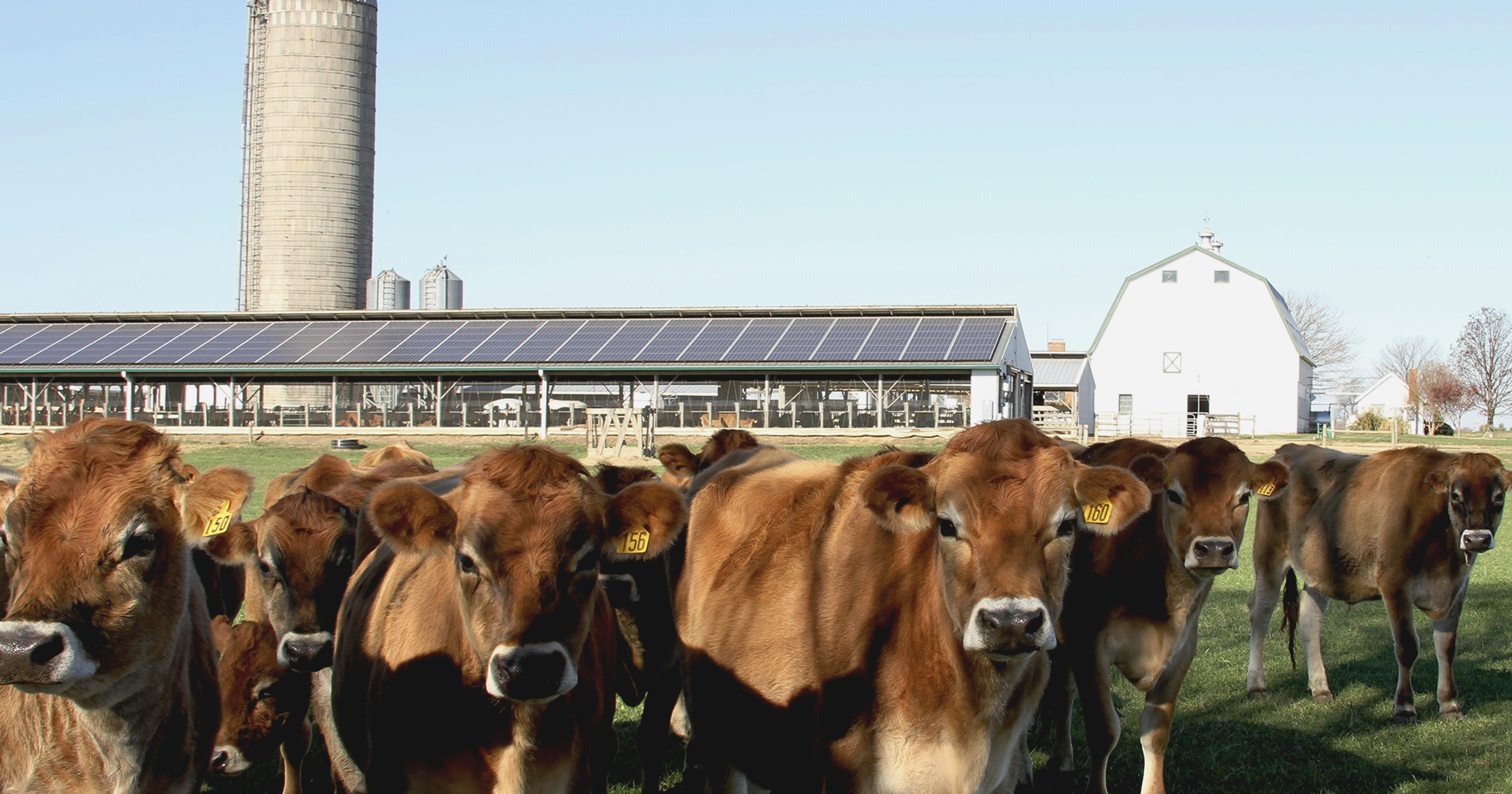
Photo by St. Brigid's Farm
St. Brigid’s Farm previously sold meat directly to a number of high end restaurants in Baltimore and Washington, D.C. Though, Gifford claimed those relationships have since been spoiled. “The high-end restaurants are shit,” she said. “They treat you like a rock star, but all of a sudden they change their protein, and there’s these cows in the pipeline with nowhere to go.”
Today, St. Brigid’s focuses more on direct-to-consumer beef sales, using a local slaughterhouse. Last year, the farm sent 20 cows to slaughter and made around $450 per head by selling the meat themselves. If they’d sent them to the commercial slaughterhouse market, she would have made around $300 per head. “It’s not free money because of the work of getting the animal back in boxes, dealing with marketing, customer service, and so on,” Gifford said. “That’s all pretty much uncompensated time.”
When asked about the quality of cull dairy cow meat, Schaefer said it really depends. He once authored a paper that followed 222 cows through a packing plant, and of those cows, 10 percent qualified for USDA choice grade. “It’s not a center plate entrée,” he said. “But it’s still choice.”
Subscribe on your favorite podcast app: Spotify, Apple Podcasts, Overcast, Pocket Casts, Amazon, or via our RSS feed: (https://feeds.megaphone.fm/onlythingthatlasts).
Transcript
Transcript
Sarah Mock: One occupational hazard of being an agricultural reporter is that from time to time people at parties want to talk to me about Bill Gates. It’s not always Bill Gates — he just got a lot of traction in the last couple years when he became the largest private owner of farmland in the U.S. This story was a rare farm-related bit of news that broke out of the ag world, or really, the real estate world, and into the mainstream. It was covered everywhere from the AP and Fox News to Popular Mechanics. That’s how the question, “So what do you think about Bill Gates buying all the farmland?” has become the kind of question that strangers ask to impress — asking it says, “Hey, I know a thing about your thing.”
The funny thing about that question is that the billionaire of it all doesn’t seem that interesting to me. Don’t get me wrong, I see the conspiracy theory appeal. That Bill Gates could somehow parlay his ownership of farmland into dictatorial control of the U.S. food supply, has a certain sci-fi je ne sais quoi. The reality is, Bill Gates might own the most farmland, but he’s nowhere near owning most farmland, let alone having meaningful control over whether or not you or I get to eat tomorrow.
The more interesting thing about the “who owns the farmland” question to me is why we’re all so interested in it in the first place. It seems to resonate even with people who’d probably say ‘I don’t know anything about farming’. There’s something intuitively compelling, and worrying, about farmland and I wanted to put my finger on what that is.
So when I went to a party recently, I took my trusty recorder, and rather than awaiting the inevitable mention of a certain Microsoft founder, I asked people what they know — or think — about farmland. I’ll note, this was a food and ag party — hosted by Ambrook, actually — so no retirement bashes or bridal showers were ruined in the making of this podcast.
Anyway, here’s Landon, who distilled a lot of what I heard:
Landon: Something that so many people want a little slice of, um, whether they know how to get it or not. Think just… an idealization of, man, I just want a house and a couple acres, like, away from the hustle and bustle... having land and being able to take care of yourself or your family and get your hands dirty, is a deep yearning that many people probably couldn’t even put their thumb on but it is there.
SM: I’ve felt this yearning. I grew up on a farm in Wyoming and since I left have spent a lot of my time, professionally and otherwise, pinning down what these kinds of feelings mean for myself and for the wider decisions that determine how we’ve built, and continue to build, our food system.
I’ve been reporting on farms and farmland for the better part of a decade, having worked variously as an award-winning TV, radio, and print reporter, covering everything from ag policy on Capitol Hill to the state of the farm financial system and the history of commercial chicken breeds. I’ve dug my hands into the top layer of the land on farms across the country, and written two books about my experiences doing it.
All of that has brought me here — to a hunger to dig deeper than the people, animals, plants and soil that make a farm — to learn more about the land that’s underneath it all. And not just as a type of real estate or as a given to farm production. Because farmland, I’ve discovered, is so much more than that. In fact, it’s played a hidden role in everything from public school budgets to the price of rent, from the safety of city water to the structure of insurance policies.
That’s what we’re going to do here.
We’ll hear stories about American farmland past, present and future to understand what it is, what it does, and how it quietly but irrevocably shapes our nation. And most importantly, we’ll learn how farmland impacts your life right now.
This is The Only Thing That Lasts — where we’re unraveling the mysteries of American farmland to understand its impacts on the future of America’s food, farms, and people. I’m Sarah Mock.
[INTERLUDE]
Introduction: Food & Food Security
SM: Elsewhere at the party, I heard other — perhaps more practical and immediate, answers to the question, “What do you know about farmland?”:
Sekhar: That it takes up a lot of our country, and uses a lot of water, but it also supplies our food supply, and is a great asset of the United States.
Jaclyn: So, there seems to be a big disconnect where it’s like everyone needs to eat, but no one seems to be really thinking about how like producing what we need to eat is becoming more and more risky.
Robert: I mean, the soundbite, is this like farms? They grow all the food there. Yeah. So “No Farms, No Food” — I think we’ve got the fridge magnet.
SM: That was Sekhar, Jaclyn, and Robert respectively. All three of these folks (and most others I spoke too), mainly think of farmland as the place where food is grown. They’re not alone in this, nor in their concern that risks to farmlands — Sekhar mentioned water, Jaclyn noted soil erosion — are existential not because we yearn for farmland, but because we need to eat, and farms and farmland are where food comes from.
Because I heard so much about eating — I wanted to start our journey here, with understanding the relationship between our food and farmland. But this is an essential starting point for another reason too. In my experience, “everybody eats” is an insanely powerful card to play and it gets played a lot in the toughest conversations about our food and farm system. History has shown that people — Americans included — have justified a lot of costs and accepted a lot of crummy outcomes because it’s worth it to keep food on tables and groceries in stores. In other words– there’s no point discussing and debating about byproducts of farmland if the main outcome — feeding the country — can justify just about anything. So we’ll aim to determine how directly the U.S.’s farm ground and our nation’s food security are related, and what that means about what our future might look like.
In the wake of the early pandemic, I think it’s easier for us to imagine things like empty grocery store shelves and how rising food prices can eat into a family budget. And considering what we heard from our party friends — about water, about risk, about the idea of “No Farms, No Food,” it’s not as hard to imagine that in the future, a similar situation might arise because something bad is happening to our farmland. But I’ve found the relationship between farmland and food is far less one-to-one than we think. The idea that U.S. farmland and U.S. food are one and the same… It’s kind of a myth. Or at the very least, it’s way more complicated than it seems.
But I’m getting ahead of myself.
Before I could tackle the questions about food and food security, I needed to understand what, exactly, is going on with U.S. farmland right now. So I turned to the very organization that made Robert’s “No Farms, No Food” fridge magnet — a group called the American Farmland Trust.
Part 1: American Farmland Trust
John Piotti: Without an abundant supply of farmland and ranchland, and without a thriving community of farmers and ranchers who are deeply committed to improving that land, feeding our communities, and our nation. Without all these things, our future is dim. Jobs, schools, and houses of worship will leave rural communities, we will not be able to clean up our water, we will not be able to combat climate change, and we will be in much worse shape the next time our food system is sideswiped by a pandemic or a drought or a recession or a heatwave.”
SM: That’s John Piotti, the President of American Farmland Trust, or AFT. That’s a snippet from the release of one of the organization’s flagship studies in 2020 — one that involved tracking farmland loss in the U.S.
AFT has been around since 1969, and since its founding it’s been sounding the alarm on farmland loss — which you can define pretty simply as “starting to use farmland for something that’s not a farm” for roads, stripmalls, you name it. Over the decades, AFT has helped shape ag policy across the country, from the national level all the way down to local ones .
The 2020 AFT report had a surprising claim in it: that millions of acres of farmland have been lost in the last decade and a half alone. Here’s John Piotti again:
John Piotti: Our analysis shows that between 2001 and 2016, 11 million acres of the nation’s irreplaceable agricultural land was lost or compromised. That’s equivalent to all the land in the U.S. that was used to produce fruit, vegetables and nuts in 2017.
SM: 11 million acres. That’s a lot of land. To give you a sense of just how big that figure is: an NFL football field is about 1.3 acres. Now imagine 2,000 of those, side by side, and you’ve got how much land AFT estimates the U.S. lost every single day in the first 16 years of this millennium.
That sure feels like a lot of land, and a heck of a lot of food too, especially if it’s equivalent to all the U.S. farmland growing fruits, vegetables, and nuts. It sure seems like we are making a serious gamble on our ability to feed ourselves in the long term by turning our precious farmland over to development.
But I was suspicious that this equation might be more complex than it seemed. So I sat down with the folks at AFT to understand more about this farmland we’ve lost and what it could all mean for our ability to feed ourselves in the future.
Sam Smidt: My name is Sam Smidt. Uh, my title at American Farmland Trust is, uh, National Director of Land Use and Protection Research.
SM: Sam lives in Gainesville, Florida and in his neck of the woods, he has a front row seat to many different kinds of farmland loss.
SS: The one that’s easiest just to conceptualize is urbanization. So as cities grow, they sprawl. And as they sprawl, they generally consume farmland. And what we mean by consumption of farmland is farmlands get sold, to developers, for example, and they turn into, um, to urban areas. There’s also other ways, um, in Florida in particular, for example, where I’m from, we have hurricanes. Hurricanes can wipe out, um, farms. So there’s, there’s natural threats. There’s things like sea level rise. Um, we also have, uh, like in our orchard citrus greening disease, there’s natural pressures, pests, things that can wipe out farms. And so it’s not just a development threat, but there’s, you know, environmental threats too. And so all of those things factor into, um, pressure on how our farms currently operate.
SM: So there’s urban sprawl, there’s destructive climate impacts, and there’s other types of development like alternative energy. With all of those pressures weighing on US farmland, how close are we to losing it all?
SS: One of the things that is, I think, important to communicate in the farmland loss story is the U. S. has a ton of farmland. Um, when you look at, you know, what percentage of the country is made up of farmland, it’s massive. And when we talk about what percentage of that farmland is being consumed by urban sprawl, for example, it’s very small.
SM: There Sam is right — that 11 million acres lost? That only represents about 1% of total U.S. agricultural land. Most of America, in other words, is still farm or ranch land.
What’s more, research shows the total area of U.S. agricultural land has only declined by about 50,000 acres in the last 22 years. Why the discrepancy? It’s because in many cases, farmers or other landowners have access to land in non-agricultural uses– forests, ponds, wetlands, and grassland– that can be transitioned to agricultural use.
So the answer is, we’re not at all close to running out of farmland overall, but that doesn’t mean there’s nothing to worry about. The simple fact is, not all farmland is created equal. Sam explained it like this:
SS: So soils build up over thousands of years. They’re not something that we necessarily can view as renewable. Some soils grow crops better than others. For example, all farmland is important, but some soils are more optimal for crop production. And if we lose those soils, we don’t get them back. And so the idea of having this nationally significant lands, really what we’re showing is that these are the soils that are most suitable for the future of agriculture, when it comes to say crop production.
SM: These lands are the ones AFT is most worried about, because these acres have the most productive soils, best suited to feeding the nation for years to come.
They also worry because, when this land is developed, farming is sometimes pushed elsewhere. To land that’s less productive, versatile, and resilient, and where farmers face higher costs, lower crop yields, and more economic risk. Not to mention the fact that sprawling developed land emits many times more carbon than farmed land.
But it still wasn’t clear to me what exactly all of this means for America’s food security, for the food available in our grocery stores today, and what might or might not be there in the future. I was surprised to hear that the impact all that farmland loss has had on our food system is. Essentially none. Sam explains:
SS: Food is a very small footprint in our overall agricultural landscape, and I don’t think people necessarily track that. And so, agriculture plays into lots of other aspects of our daily life, more than just food.
SM: This idea — that U.S. farmland is about “more than just food” is a bit of an understatement really. Consider that all U.S. fruits, vegetables, and nuts are grown on about 11 million acres, snd at the same time, we grow 200 million acres of corn and soybeans, almost none of which go directly to human consumption.
In addition to corn and soybeans for feed and fuel, U.S. farmers also grow fiber, like cotton and hemp. They grow trees for paper and for celebrating Christmas. They grow all kinds of plants — an even some animals (hello, horses), that have nothing to do with the food we eat.
As it turns out, food production takes up way less space than all these other uses.
[INTERLUDE]
After hearing from AFT, I felt like I had a much clearer picture of the actual relationship between U.S. farmland and the food we eat. We learned that America is mostly farmland. And though we’ve lost some, for a bunch of different reasons, we still have plenty left, enough that we use most of it for non-food purposes.
Yet I still couldn’t kick this nagging sense of worry. Worrying about farmland loss has a familiar logic to it as well. Who doesn’t have an older relative (or the lived experience) of remembering when some area — on the way to the beach or the mountains maybe, used to be all farmland, but now is all built up? When we pair that anecdotal evidence with the idea that the U.S. population is growing — that increasing numbers of people are depending on a decreasing amount of food production — that certainly seems alarm-worthy.
One so resonant that even the casually farm-curious at a party are familiar, that despite we’ve learned, that farmland is still fundamentally at risk, and there’s still some existential vulnerability lurking in our farm system. One that, as Jaclyn worried, “no really one seems to be thinking about.”
So where does this angst come from, and what is it trying to tell us about the future of our food system? That’s after the break.
[BREAK]
Now, back to the show.
Part 2: Why all the farmland angst?
SM: When I went looking for help understanding the farmland angst, it was Bruce Sherrick, a professor at the University of Illinois Urbana-Champaign and the Director of the TIAA Center for Farmland Research, whose perspective lit up the issue for me. He did this by introducing the possibility that our collective angst about farmland might not be about the specific loss or quality of farmland at all.
Bruce Sherrick: The land disappearance for things like building subdivisions or putting in a wind turbine, which really doesn’t disturb that much land. It’s a very tiny fraction ... It’s a really important question about the relationship between an individual and their property rights.
SM: This idea — that the question of farmland loss is essentially a question about the rights associated with private property, had not really come up in any of my conversations with farmland preservationists. Which is wild, because the fact that most farmland in the U.S. is private property, and most of it is owned by individuals or families, is an essential part of this whole discussion.
It’s one thing to be worried about public property, or the distribution of collective resources, and how it relates to something — like food — that’s important to everyone. But “U.S. farmland” is not some public good in public hands, which the general public can make decisions about. Which means whatever the public costs or benefits of farmland might be, it is individual landowners who have the final say over their land.
But when you’re not looking right at it, I think it’s actually easy to lose track of this fact. For example, imagining a farmer who say, owns a swath of resilient, productive farmland. I think it’s easy to assume that well, obviously that farmland should remain in farming. And surely that’s something that everyone is on board with, not least the farmer themself.
But in reality, the farmer or landowner is often not onboard with that idea at all. Because an individual or family’s top priority isn’t usually stuff like “national well-being” or “food security.” A farmland sellers top priority is, very likely, getting the best price. Bruce explains it like this:
BS: So if I were about to sell my house, I don’t think you’d object to me selling to whoever wanted to pay the most for it. And if it turns out they wanted pay the most for it because they wanted to paint all the interior walls sparkly pink and raise unicorns, great, we don’t really care. We separate the public impact of that from the property rights that you gave me. But for farmland, we somehow treat differently.
SM: I think the reason we treat farmland differently, is because it has a tremendous amount of public value and meaning. Because farmland is, at the broadest level, finite — and its finiteness is directly related to our national borders.
And on the other end of this finite resource is literal human hunger, a thing that is definitely not finite. And the tension created between these two things makes it incredibly angst-inducing when we’re faced with the reality of the market motivations.
BS: If my highest and best use for the land I own is to develop a subdivision, and there’s a really strong demand for housing and the people who say we need more houses. We need more houses. We need more affordable houses. And I’m building some low cost condos on the edge of the property that are going to be great for people who are just breaking into the housing market. One group is going to say that’s fantastic. And another group is going to say you’re ruining our farmland. And how we work out that exchange and where we draw the line between the public and the private interest is especially acute with farmland because we associate it with a lot of other things that tie directly to our heartstrings. So we are eliminating farmland in the U.S.
SM: This right here is the angst. It’s not just the friction between limitless hunger and a finite resource. It’s the fact that at the end of the day, we’ve left it up to the market, and really, to individuals, to decide how to manage that friction on behalf of us all.
We — the angsty public who feel the veiled threat from the No Farms, No Food magnet — actually can’t do all that much about the fact that when people sell farmland, they’re generally free to sell to whoever, to be used for whatever purpose.
The funny thing is, the transition of farmland out of production, though it’s inspired plenty of angst, has not actually led to the crises we’ve feared. In fact, total U.S. cropland peaked in 1930, and has been declining gradually ever since. And in the last 90+ years, agricultural productivity and the U.S. population have both increased significantly.
And yet, less farmland and exploding population has led to exactly zero widespread food crises. This points to the part of the U.S. ag story that’s obscured when we only look at farmland — the fact that farmers have clocked huge productivity gains that have allowed fewer farmers to feed more people on less land.
Given that efficiency, it makes sense that we’d have less land in agricultural production. And less farmland could even be a good thing. If you’ve ever appreciated the mountains and hills of New England or the peaceful woodlands of the Southeast and mid-Atlantic — many of those were once heavily farmed, and their conversion to non-agricultural uses is something that a lot of people are into.
In another context — Silicon Valley, in the not too distant past, was mostly dominated by agricultural uses. How would our world be different today if farming had been prioritized, and the era-defining tech companies had been turned away?
I broached some of this with Bruce, the sense that we — the eating public — have a stake in U.S. farmland, a vision even, of how it could or should be used for our collective food security benefit. I was surprised that he responded with a warning, that the ways that public players interfere with markets, can sometimes lead to … less than ideal results.
BS: It’s when we get sort of overly romanticized about an outcome that then somehow costs everybody in the system more. And that ends up transferring from one group that we didn’t identify in advance, consumers usually, to somebody who’s a smaller collection of people — farmers. Sounds like a great thing we should all be able to support. You have to be very careful about what the less identifiable structures or conflicts or transfers embedded in that would be.
SM: Bruce’s point here is one that is totally counterintuitive to the average worrier about food security. He’s saying that a possible outcome of meddling in, say, the farmland market, can end up costing us, the general public, more.
One possibility — when we set aside farmland for farms, and prevent it from being used for anything else, that means less land for development. That might push up the price of everything with a geographic footprint — from houses to public utilities to small businesses.
That increase in land prices is passed on — to home buyers, to utility customers, and to patrons who frequent local businesses. In short, there’s always, always, always a tradeoff, and when we collectively decide to treat one thing, like farmland, differently, there’s always a cost. The only question is, who pays?
[Interlude]
There’s one last question, in all of this, that’s still weighing on me. Where exactly does all our food come from then? This question was also one that came up more than I expected at the party. Here’s Robert again:
Robert: They got signs all over. It’s like, well, this one is from here, and this one is from Chile, where it’s summertime and it’s wintertime here, so they can grow berries there right now. Sometimes it’s like, oh, yeah, I guess they can’t grow. I couldn’t grow a tomato in this weather. It’s cold. So someone’s growing up, I guess.
Justin: I have this perception that, I don’t know if this is actually true, but when I was a little kid. My mom would not let us get certain fruit unless it was like, in season. Not as like a rule, but it’s just, the peaches are bad now because they’re not in season. And I feel like that’s not a thing anymore. Which seems bad. Like I can get strawberries all the time, which seems false. Like I, there should be seasons to these things.
SM: That second voice was Justin, and between these two, they’re actually doing a pretty good job getting at the answer to, “where exactly our food comes from.” Because though plenty of it does come from American farmland, depending on the season, your geography, annual conditions, and other factors.
And plenty of our food also comes from — everywhere else in the world. Overseas imports are a huge part of the US food system, and they have essentially nothing to do with farmland here in America. A case in point, USDA data shows that the amount of U.S. land used in fruit and vegetable production is actively falling. But grocery stores are rarely out of tomatoes or strawberries or anything else, because imported produce offsets essentially all of the decline.
The world of food purchasing — for fresh foods but also for ingredients to make stuff like canned soup and cereal, is insanely complex. One day the grapes are coming from California, the next from Mexico. One week organic oats in the granola were sourced from Nebraska, the next from Eastern Europe, and on and on. Purchasers at grocery chains and wholesale food companies are navigating these changes and relationships constantly, and they are just one link in a complex value chain.
The relevant answer about where our food comes from then is that our diets are not dependent on U.S. farmland alone. We don’t produce all our own food because we don’t have to, and because we like eating things that grow better elsewhere, and at times of year we otherwise couldn’t have them. That’s why empty shelves at the grocery store or climbing food prices are far more likely to result from a falling out with a global neighbor than farmland loss.
And if you’re still wondering (like me), if something were to happen and we had to grow all our food domestically, would we be able to — as far as I can tell, the answer is both yes and no. Yes, there is enough farmland in the U.S. to grow enough calories to feed our population. However, making this switch would likely require radical transformation of our diets, our farm systems, or both.
So if we’ve determined that the farmland equals food equation is way less direct, then the “No Farms, No Food” magnet implies, where does that leave us? Well, I’d argue that we challenged the given wisdom today, and in doing so, called the bluff of agriculture’s ultimate trump card.
We learned that all farmland is not equally vital, that every acre is actually not essential to stave off future famines, and that we actually can discuss and debate how farmland is used, how it impacts nearby landscapes, who owns it and who doesn’t, and more, without being silenced by the claim that “whatever we do on farmland is right, good, and necessary, because everybody eats.”
These tough discussions are what we’re tackling for the rest of this season, as we look beyond the food-farms paradigm to the more subtle, and if I do say so myself, interesting ways that farmland affects all of us — farmers and non-farmers alike — in our daily lives.
[Interlude]
Conclusion
I think the best place to start tackling the deeper questions about farmland is figuring out a question that has sat in the corner of my mind throughout this “are we losing farmland” discussion. Because even the idea of farmland scarcity is weird because it’s an extraordinary about-face from the last 500 years of North America history.
Much of the last 200 years, in fact, has been defined by how abundant, cheap, and accessible agricultural land is in North America– at least to some people. So abundant, in fact, that the government was still giving it away as recently as the 1980s.
So what happened? How did we go from being the country of near infinite land wealth to the country counting every acre that gets built on? For that answer, we’ll have to step back in time to the era when people began cultivating America, and then when working the land, in a process of economic alchemy, unlocked the secrets of property.
Or as agricultural geographer William Doolittle told me:
William Doolittle: Farmland doesn’t exist until it’s made.
SM: How we make farmland, and how farmland made America — that’s next time, on The Only Thing That Lasts.
Sign Off
The Only Thing That Lasts is an Ambrook Research production. This podcast is written, produced, and mixed by me, Sarah Mock. Our editor is Jesse Hirsch, with support by Ali Aas and Bijan Stephen. Technical Support by Dan Schlosser, and general support by Mackenzie Burnett and the whole team at Ambrook.
A final note, Ambrook Research, the media outlet that produced this podcast, is 100% editorially independent from Ambrook, the fintech company that funds it.
Subscribe on your favorite podcast app: Spotify, Apple Podcasts, Overcast, Pocket Casts, Amazon, or via our RSS feed: (https://feeds.megaphone.fm/onlythingthatlasts).
Transcript
INTRODUCTION - Unlikely Bedfellows
Sarah Mock: If I asked you to guess about the political leanings of the majority of rural America, what would you say?
What if I narrowed the scope a bit- what about people in the rural South? What about people in rural Georgia? If you’re guessing that rural Georgians are a group that skews conservative, you’re right. Parts of rural Georgia have been won by Republican candidates in recent elections by as much as 80%. In fact nearly all farmland in the state is located in counties that reliably lean right.
Senator Raphael Warnock: And among those Georgians was my then 82 year old mother. She grew up in Waycross, Georgia. Do you know where that is? It’s way across Georgia. She grew up in Waycross, Georgia, where she picked other people’s cotton and other people’s tobacco. But because this is America, the 82-year-old hands that used to pick somebody else’s cotton and somebody else’s tobacco picked her youngest son to be a United States senator.
SM: That was Reverend Raphael Warnock, and he’s not a conservative at all. In fact, after he took office in 2021, after a hard-fought election, he became the first Black Democrat ever elected to the Senate from a Southern state. On first blush, his words here might seem kind of wasted– if this story about a rural Georgian voting for a Democrat is meant to inspire others to do the same, that message, well, might be falling on deaf ears. Because rural Georgians, overwhelmingly, don’t vote for Warnock’s party.
Of course, the point of this anecdote isn’t really to persuade rural Georgians as much as it’s an illustration of local bonafides and a heartwarming story of generational advancement. But the reason it caught my attention was because it harkens to another moment in history, a time when many of the modern pillars of the Democratic party platform would have been popular in farm country, in Georgia, or anywhere else. If anything, today’s Democrats probably would have been seen by many farmers as insufficiently radical, too friendly to business, not beneficial to those who tend the land and the rural communities that support them. In this era, small farmers, tenant farmers, farmworkers, and their communities were so angry, so politically active, and so progressive, that they created one of the few powerful third parties America has ever seen. And for the better part of 40 years, the People’s Party, also called the Populist Party, was the vehicle by which America’s agrarians pushed and prodded the nation towards stricter regulation, the creation of state-run industries, and even fundamental shifts in the nation’s financial system.
The agrarian roots of populism in American politics is what we’ll cover today, and from the often obscure history of rural radicalism, we’ll track the long arc of its impacts, from the turn of the last century right through to today’s political platforms on both sides of the aisle. At the core of this movement was, and is, questions about farmland and wealth, the powerful few and the poor many, owners and labor, that still resonate with rural and urban communities today, not just in Georgia, but throughout the country. And the answers to these questions may well shape America’s political future.
This is The Only Thing That Lasts. I’m Sarah Mock.
PART 1: Populists Rising
SM: The story of agrarian populism in America begins, like many of the stories we’ll talk about today, with a meeting of farmers.
Robert Cherny: In the 1870s, the Grange was started as essentially a rural counterpart to something like the Masonic Order. It was a secret society, but it was for farmers, and it was launched with the hope that it would help farmers to become educated to current practices in farming.
SM: That’s Dr. Robert Cherny, professor emeritus of history at San Francisco State University. Robert spent much of his early career studying Nebraska politics of the late 19th and early 20th century. He’s talking here about an important Nebraska staple, the Grange, a group that, from its founding in the late 1860s, was focused on issues affecting agricultural and rural lives.
And this was a wild time to be a small farmer in America. In the aftermath of the Civil War, the nation entered an era of unprecedented uncertainty. Reconstruction began in earnest in 1865, setting off a wave of optimism. But by 1873 the first Great Panic struck, when the government shrunk the U.S. money supply with the stroke of a pen, setting off a devastating economic depression that would last for six years.
Just 15 years later, the economic Depression of 1893 would cause the unemployment rate to stay above 10% for most of the decade. This era, from the 1870s to the 1890s, later became known as “the Long Depression.” And it meant that for a generation, wages were stubbornly low, jobs were scarce, and prices for farm commodities slipped lower and lower. The struggle for small farmers, who at the time comprised about half the U.S. population, seemed endless. In the face of the Long Depression, American farmers hung on for a while, until, unfortunately, the weather turned in their favor.
RC: In 1889, in Kansas and Nebraska, they had a bumper corn crop. And, with a big bumper corn crop, farmers thought, oh boy, you know, I’m gonna be able to pay off the mortgage this year. But what happened, of course, supply and demand, supply went way up, prices went way down. And prices really got so low that in some parts of Kansas and Nebraska, it wasn’t even reasonable for them to sell their corn.
SM: When Robert says it wasn’t “reasonable” to sell their corn. This is in part because the price was so low, they couldn’t even justify harvesting it. The price was too low to in turn be able to afford the mortgage, or seed for next year. But another big reason it wasn’t reasonable was because it might well cost more to ship it to market than the corn was actually worth.
RC: The rates that railroads charged farmers were a source of concern to many farmers, that they felt they had to pay railroad rates to ship their goods to market. They had to pay railroad rates on the equipment and the supplies that they had to buy, and they felt the railroads were gouging them.
SM: In a given rural area, railroads were shipping monopolies, and cash crop farmers had no choice but to work with them, and pay whatever fees they might charge. Grange members, called Grangers, agitated for railroad rates to be regulated, often at the state level, and many of these so-called Granger Laws became official.
While the Grange may have been the prototype of early agrarian radicalism, the forces they unlocked were much bigger than one organization or one issue. As the movement began to take shape in the 1880s especially, radical newspapers were established across the countryside, to air grievances, share information, and to amplify the messages shared by the growing number of activists and organizers that were sprouting up on farms all over the place.
RC: One of the campaigners for the Farmers Alliance and then the Populist Party was Mary Ellen Lease. And she was quite an orator, best remembered for telling the farmers, “Raise less corn and more hell.”
SM: Mary Ellen Lease was a fixture at populist parades, events which would prove wildly popular and effective. Farmers would paint the sides of their wagons and wave signs and flags as they marched through town, loudly demanding regulation of monopolies, even as they passed by the office of the railroad or the local bank. These parades would end at picnic grounds or schoolhouses, where public meetings led to heated political debates. The activism this created was unprecedented, especially for rural communities, a population that had in the past prided itself on being anti-government intervention.
But the Grange, along with another formative group taking shape at the time, the Farmers Alliance, was triggering a change in how these farmers saw themselves, and in whether their value came from being landholders or land-workers.
RC: The Grangers and other groups later saw themselves as producers. Producers in the sense that labor produces value. So urban workers, as well as farmers, are part of the producing class. But who is not? Landlords, bankers, lawyers. All of these people were seen as not producing value, but only transferring value. Transferring the value that the producers created, and of course, keeping some of it for themselves. They were parasites.
SM: If this is starting to feel a bit radical to you– you’re not alone! Though these agrarian organization of the late 19th century didn’t book themselves as radical, these were the concepts that they held dear– that they wrote about in their newspapers, talked about when they climbed on their soapboxes at rallies and parades, even wrote catchy campaign songs about, like the populist anthem “A Hayseed Like Me,” sung here by Pete Seeger:
Pete Seeger: I once was a tool of oppression
As green as a sucker could be
And monopolies banded together
To beat a poor hayseed like me.
The railroads and the old party bosses
Together did sweetly agree
They thought there’d be little trouble
In working a hayseed like me
In working a hayseed like me
In working a hayseed like me…
SM: By 1891, members of the Grange, Farmers Alliance, and other groups founded a national political organization, the People’s Party. By the following year the party had hundreds of thousands of members and won dozens of congressional elections, in addition to holding majorities in multiple state houses, largely in the Midwest. The party’s platform was decided at the 1892 Omaha Convention: It demanded government ownership of the railroads, since, in their view, regulation hadn’t gone far enough. They wanted credit from the government, rather than through private banks, because like the railroads, many banks operated as local monopolies, able to reportedly charge farmers as much as 35% interest for things like mortgages and operating loans.
RC: So they were seeking through their new political party to use the power of government to address the kinds of problems they were facing, and there was a third dimension to this. They thought the government had to be more directly under the control of the people.
SM: For the sharp-eared listeners out there, this era and movement are the origin of the word “populism.” The central tenet of populism was a desire to make things more democratic. In many cases, that was by way of state-owned industries, be they railroads or banks, which they believed needed to be more swayed by the needs and desires of the populace, rather than the ambitions of the rich and powerful few.
This vision extended well into the government itself. Another key goal of the populists was direct elections of senators and presidents, which was not the case at the time. Senators in this era were chosen by state representatives, and their selection was often heavily influenced by the very industries the populists despised. All of these aims, and a few others, made it into the populist platform, unified by the goal of protecting producers against those trying to benefit from their labor.
These policies which appealed to farmers particularly in the midwest also resonated with other laborers, like miners in Nevada and Colorado, helping spread the movement even further afield. The party drew enough support to nominate a candidate for President on multiple occasions, the most popular of which was William Jennings Bryan, who first won both the Democratic and the Populist nomination in 1896.
His barn burning speech at the convention that year – entitled Cross of Gold– attacked what he, and many others, understood to be the root cause of two decades of rural struggles: the Coinage Act of 1873 that, in short, abandoned a joint silver and gold standard. In Bryan’s view, the crime of abandoning silver, and shrinking the U.S. money supply, which he called “the Crime of 1873,” not only crashed the economy and helped impoverish a generation of workers, it also favored the rich, urban holders of government bonds at the expense of poor and especially agricultural laborers.
William Jennings Bryan: They tell us that the great cities are in favor of the gold standard. We reply that the great cities rest upon our broad and fertile prairies. Burn down your cities and leave our farms, and your cities will spring up again as if by magic. But destroy our farms, and the grass will grow in the streets of every city of the country.
If they dare to come out in the open field and defend the gold standard as a good thing, we will fight them to the uttermost, having behind us the producing masses of this nation and the world. Supported by the commercial interest, the laboring interest, and the toilers everywhere, we will answer their demand for a gold standard by saying to them, “You shall not press down upon the brow of labor this crown of thorns.”
You shall not crucify mankind upon a cross of gold.
SM: As Bryan delivered this last line, he extended his arms straight out to the sides, offering himself as a Christ-like sacrifice. Among the thousands in the crowd, you could hear a pin drop. He lowered his arms, and descended from the podium, and there was only silence.
When the cheering started, it took nearly 25 minutes to regain any kind of order in the hall. The Washington Post reported that, “bedlam broke loose, delirium reigned supreme.” William Jennings Bryan, at only 36 years old, had just made one of the most important political speeches in American history, because for many poor and disaffected farmers in the crowd, they had never heard a politician speak so directly to their interests and experiences, never heard a leader promise to fight for them against the rich and powerful.
But despite his Midwestern and Western popularity, Bryan did not win the election in 1896, nor in 1900, nor in 1908. William Jennings Bryan never became president, but he did become Secretary of sSate under Woodrow Wilson, and he and other Populist leaders would be instrumental in establishing the federal reserve system to help regulate banks. They pressured Teddy Roosevelt to establish regulation of rail rates, and under both these administrations populists help advance antitrust regulations on a national level.
As the millenia turned, the Populist and Democratic parties became increasingly entwined, and the meteoric rise of populism began to wane.But still, the Republicans took notice. The fact that rural homesteaders had turned on them marked an unwelcome sea change for the Grand Old Party. Homesteaders had traditionally stuck with the Republicans, not least because it was Lincoln who’d signed the original Homestead Act that enabled them to get their land in the first place. But for the first time, something other than religion, identity, and historic loyalties was motivating American voters.
RC: What I found was that in the 1890 Census, that low farm income was the best predictor of Populist voting on a county by county basis. The higher-income counties still split between the Republicans and the Democrats based on ethnic identities. But the Populists were motivated by economics. And as you see the progression of American politics, that becomes an increasingly important part of political identification.
SM: Today the idea that people vote with their pocketbooks seems almost too obvious to point out, but at the time, it was a revolutionary act. Though Robert is quick to point out that this movement stopped far short of later critiques of American political and economic systems.
RC: It wasn’t at all a critique of capitalism because they were small capitalists, right? They were property owners. They weren’t about to threaten the ownership of private property. They wanted to protect the ownership of private property. Wanted regulated capitalism.
SM: This fact– that groups advocating for this radical populist agenda might have been poor, but were also landowners, and therefore capitalists, is one of the key paradoxes of the American agrarian radical movements.
PART 2: Tenancy, Populism, and Sharecroppers
And at the same time, however, while many small farmers did own their land, many others didn’t. Consider that in 1900, many small farmers were homesteaders and their direct descendants. They’d received the land handed out by the government, and the land being sold by private companies and the railroads. But many that came after that were tenants.
When the free and high quality farmland was largely claimed, farmland owners who’d managed to buy up large spreads, or in some cases, who’d gamed the Homestead Act programs to assemble huge swaths of private property, were generally limited in their ability to put all that land to use themselves. These landowners rented out their excess, so that by 1935, about 30% of all farmers in America were tenants, owning no land of their own.
Regional variations were significant. In the South, more than 50% of all farmers were tenants, and nearly 75% of all cotton farms in the country were tenant-operated. And the thing is, this precarious tenure system, and the system of sharecropping that went along with it, was not a given after the Civil War. There were other visions of how farmland would be held in the South.
Alex Lichtenstein: Formerly enslaved African Americans across the South aspired to own their own land, and some did gain their own land. This is the great aspiration of Emancipation and Reconstruction, right? Forty acres and a mule.
SM: That’s Alex Lichtenstein, professor of history and American studies at Indiana University.
AL: Which was a kind of shorthand for saying, to make freedom a reality for Black people in the South, they, we, they would say, need land, because that’s the only thing that will keep them independent from the power of white landowners.
SM: This assumption would prove correct, and when the promise of “40 acres and mule” gave way, and wealthy, white cotton planters held on to their grand plantations, the landless farmers of the South became, to some witnesses, little more than slaves, as part of the sharecropping system.
There’s a key distinction here between traditional tenants and sharecroppers. Where tenants pay their landlord annual rent, generally in cash, sharecroppers, especially Southern cotton sharecroppers, had a more insidious deal. Landowners owned their sharecropper’s houses, “lent” them seeds and equipment, sold them food and clothes in the plantation store, and at the end of the season, the farmer and landowner then quote unquote “shared” the profits. Which for the vast majority, meant the farmer ended every season in debt, or if they were really lucky, they broke even, and ended up with nothing. Sharecroppers and their families toiled in the fields from dawn till dusk, and for their efforts, the vast majority were too poor to afford school, clothing, shoes, or food. They and their children were starving to death picking someone else’s cotton.
The sharecropping system took root before 1900, but what happened after the turn of the century made things worse. The 1910s and 20s were the dying days of the Gilded Age, and brought massive wealth to the titans of major industries, profits of which often went to acquiring land. When the third event in 60 years to claim the title “The Great Depression” kicked off, it led to a massive amount of foreclosures and evictions of small farmers, especially in the South where the bottoming of cotton prices hit farmers hard.
AL: If you look at simply tenancy rates in this region, that is in eastern Arkansas from 1880 to 1920 in 1880, most of the people, Black and white in these counties, 75 percent of them own their own land. And by 1920, only 25 percent of them do. So that sort of progress of land loss and then consolidation and big holdings was a real social transformation in this region.
SM: Large land owners bought up some of this newly available land, but even more was snapped up by timber cutters, insurance companies, and banks. This double era of consolidation and disinheritance led to a massive population of tenants and day laborers in the South. And for many of these tenants, their new land insecurity was a fundamental injustice. It was the key factor that motivated them to consider unconventional alliances.
So at the same time that the Farmers’ Alliance and the Populist Party were petering out, a new type of agrarian radicalism was brewing amongst the sharecroppers. A revolt, some might call it, led by a group that Alex has studied intimately:
AL: The Southern Tenant Farmers Union, which was an interracial movement of sharecroppers and tenants and particularly spoke for and to the most dispossessed people really in the country in the 1930s, which were the deeply impoverished sharecroppers and tenants working other people’s land. Especially on large plantations in the Cotton Belt.
SM: Especially for the Black sharecroppers and tenants in this union, the dangerous and deadly work of bringing this organization together was, in Alex’s mind, an act of hope, of striving for the aspiration that their grandparents and great grandparents had at the dawn of freedom– to own their own land instead of working someone else’s.
There were also white sharecroppers in the Southern Tenant Farmers Union, which made this organization incredibly unique. In the years before, the Farmers Alliance had had to form separate white and Black Alliances in the South in order to maintain the strict racial segregation that Jim Crow norms demanded. But the Tenants Union members, desperate to reclaim some measure of power in a system that was literally starving them to death, resisted.
Howard Kester, journalist and activist, recorded the union’s first meeting where an unnamed Black man stood and argued that quote, “The same chains that holds my people holds your people too. If we’re chained together on the outside we ought to be chained together in the union,” unquote. This was surely not an easy argument to make, or for many in the room to hear.
AL: in this region of Arkansas in 1919, so we’re talking only 15 years before. So this is definitely within most people’s living memory. There had been a racial pogrom carried out by whites against a Black farmer’s organization in a town called Elaine, Arkansas. And this was a vicious pogrom that killed over 200 black people. And it was carried out by whites at the behest of white landowners, but plenty of poor whites joined.
SM: But despite the barriers between, Black and white tenant farmers did come together in the Southern Tenant Farmers Union, not least because they had a lot in common. Both were at the mercy of landholders and their violent riding bosses. Both were effectively disenfranchised– Black people by Jim Crow, and poor whites by the poll tax. And perhaps most importantly, both felt fundamentally abandoned by Department of Agriculture programs that were meant to help them.
These programs, part of the nascent New Deal, paid landowners to reduce the supply of cotton, by plowing up fields that had already been planted. The letter of the program required that landowners pay tenants their share of this government relief payment, though enforcement of this requirement was nonexistent. In practice, this program was a windfall for wealthy planters, and an eviction notice for tenants who often were not only denied their money, but were thrown out of their houses and off the property, since the landowner no longer needed them to harvest their plot.
Though sharecroppers of all races often faced this kind of ill treatment ,and the extreme poverty that came with it, there are many ways in which the experiences of Black and white sharecroppers were not similar. White sharecroppers still had the many privileges their skin color granted them in a deeply white supremacist culture, and white sharecroppers were less likely to be murdered due to their work in the Union.
AL: People who joined the Southern Tenant Farmers Union, especially if you were black, you were risking your life to participate in it. And which also meant it was very unusual in that white and Black people in the rural South, they interacted a lot, but it was always in positions of subordination and dominance by the white people, no matter how poor.
SM: The Southern Tenant Farmers Union was officially incorporated in July of 1934, and was initially dismissed by planters who were quoted as saying that, “Sharecroppers are too lazy and shiftless to ever amount to anything worthwhile.” It wasn’t long before the tide started to turn against them,
As the organization began to look beyond demands for New Deal payments, towards goals of becoming a collective bargaining organization, and eventually, an avenue to recover lost land, in 1935 the STFU carried out its first strike, which allowed cotton pickers to refuse the 41 cent wage the planters offered, winning for them 75 cents after a few days, and in some cases a dollar.
But after this first action and more organizing efforts, planters began to respond with violence. News reports of the day note that union members and organizers were regularly harassed, and in multiple cases threatened and murdered, by planters and their agents, in retaliation for their work with the union.
The challenges for the STFU continuing their work were many. For one, most sharecroppers were too poor to afford to eat, let alone pay union dues. But more fundamentally, the union was simply not a very effective tool, for attaining what most of the membership wanted– land.
Part of the STFU did join with a larger federation, leading to a name change, and many more evolutions in the years to come. The other part of the STFU largely disbanded during World War II, when the union encouraged its members to leave the land and migrate north to newly in-demand factory jobs. Department of Agriculture payments, which many planters used to invest in labor-replacing tractors, hurried this exodus.
Even though the Southern Tenant Farmers Union did not reach its goal of getting land for its members, its work marks a critical mid-point between the Civil War and the civil rights movement. And calls for land sovereignty and food sovereignty for BIPOC communities continue to be essential components of civil rights activism through today.
Tenant farmers, too, are still part of the landscape of rural America, though a much smaller part of that landscape than they’ve perhaps ever been. Though around 40% of American farmland is rented today, the vast majority is rented by farmers who also own land. Today only around 10% of farms are operated by tenants, according to USDA. That means a century ago there were nearly 2.4 million tenant farmers in America. Today, there are fewer than 200,000.
The rural radicalism of the Southern Tenant Farmers Union was distinct from that of the Grangers, the Farmers Alliance, and the Populists, but the commonalities between these movements are striking. They were both part of a rural political awakening that occurred between 1870 and the 1930s, during which poor, vulnerable, and often landless farmers realized that they might be individually powerless in the face of extraordinary wealth and influence, but together, they were not.
To my mind, this explains the unity of the populist movement, but not the radicalism. Only one thing explains why these people and groups were willing to buck longstanding tradition, resist social norms, and in some cases put their life on the line: Land. The possession of land is what egregious rail rates and predatory mortgages threatened, and the possession of land was the dearest hope of tenants throughout the country. Whether land was being threatened or promised, the possibility was enough to radicalize, at times, a majority of the American countryside.
Arguably no other issue in the nation’s history has so united ordinary people, leading them not into an existing political tribe but to create something totally new. Something that defied the two-party state that ruled U.S. politics before and since this era. But what can America’s history of rural radicalism teach us about our current political moment and the future of rural politics?
That’s after the break.
[BREAK]
PART 3: Populism 2024
SM: Today, rural politics are not synonymous with populism. Both Bernie Sanders and Donald Trump have been widely labeled as “modern populists,” which for most will probably raise some eyebrows about what the modern definition of this word could possibly be.
On one hand, “populist” is a word that is often sloppily, used to simply mean “popular,” as in favorable to a wide swath of the population. Another similar idea is that a modern “populist” is simply a volatile candidate, willing to change their stance on a given issue to align with thinking that’s perceived to be popular. Neither of these usages align with the agrarian populism we’ve discussed today, but there are modern American politicians that claim that older populist title. One such politician is J.D. Scholten.
JD Scholten: You felt this movement happening in places that, traditionally Democrats were, either bullied or scared in these rural areas. They were putting yard signs, barn signs. And it was a whole movement.
SM: J.D. currently represents Iowa House District 1, serving the people of Sioux City as a state representative. But his experience running for office started with a different race, one for a highly conservative congressional house seat in one of America’s most agricultural districts. A seat that, at the time, was held by a long-sitting congressman, Representative Steve King.
JDS: And there’s this assumption that, oh, he just ran against Steve King and people don’t like Steve King. That’s part of it, but it’s also this populist message. And I always, every town hall, I talked about fix, fight and secure, fix healthcare, fight for an economy that works for everyone and secure our democracy from the special interests that are dictating it right now. And I felt that really resonated.
SM: For all that this populist message really resonated in JD’s district, these ideas were not the main focus of our national discussion about rural America in the years after 2016. Mostly because there was another issue that many people were hearing about for the first time, and that many believe explained so much of what happened in that historic election. That issue: the urban-rural divide.
This idea of the urban-rural divide is that while no one was looking, the social, cultural, and economic distance between urban and rural spaces had grown so large that citydwellers and country folk not only could no longer see eye to eye, but did not even occupy the same reality.
Analysts pointed out that rural counties and political districts in many areas never really recovered from the economic devastation of 2008. Rural communities had hollowed out due to the lack of opportunity, limited by closing factories and mines and cratered ag commodity prices, which brought them so low that they were at times on par with what farmers’ fathers might have received in the 1980s and 90s. Any of this sound familiar yet?
This was the stage set for JD’s return to his childhood home in Sioux City, Iowa, where he was the first in his family to grow up in town. In the late twenty-teens, JD’s grandmother had told him it was time to come back and take care of the family farm, and after feeling inspired in the wake of the 2016 election, he was ready to do something more in the community that raised him.
By his own admission, JD was a little naive, so he jumped into campaigning for Steve King’s seat, following his instincts to get his boots on the ground, buying a used Winnebago RV to spend all his time traveling around the large and rural district. He went into that process with some personal beliefs about universal healthcare and getting money out of politics, but beyond these core ideas, he was ready to hear and platform what his constituents were telling him.
JDS: In 2018, we had five consecutive years of low commodity prices. And the number one thing I heard from farmers was health insurance. And that was a light bulb to me. And then I started doing some more research and seeing like, Oh, farmers are getting squeezed on the input side and on the market side. And Oh, it’s these corporations that are getting these huge profits and bragging about their profits. And you’re just using our farmers as pawns and using our land but you’re extracting all the wealth.
SM: The more people he talked to and the deeper he dug, the more he realized that the common theme amongst all these issues was not that there was too big of a divide between ordinary urban and rural people, but that corporations have too much power, that they are using that power to extract wealth from farms and rural communities, and that no one was doing anything about it.
The formal Populist Party may have failed in the early 20th century, but populist ideas and politicians continued to flourish without the official trappings. JD is part of that legacy, and he found it to be a successful strategy that translated across the urban-rural divide. Being able to talk about the cost of medical debt, the need to invest in public education, and in particular, monopoly power in agriculture, and how it’s hamstringing the independence of America’s farmers and endangering the stability of America’s food system.
JDS: Our farmers complain all the time that, you know what, we finally get a decent price on corn, and all of a sudden our fertilizer price goes up. And you just hear the sense, and Oh, you know how many people own seeds, corn seeds, or how many companies own seeds? And it’s three or four. How many companies own a fertilizer three or four? That’s a monopoly, and light bulbs go off.
SM: Obviously, this does not resonate with every farmer, especially not in the ruby red district that JD ran in. But he was quick to enlighten me that despite the stereotype, farmers, even large, conventional farmers, are not a monolith.
JDS: I would say, a mentor politician of mine said you’ll work your tail off for farmers and 75 percent of them will vote against you almost every single time. And I found that to be true. But the reality is when you just talk about these things that I’m mentioning, these populist things, being anti-monopoly, knowing that corporations have too much power, knowing that there’s too much special interest, all this stuff, they are almost a hundred percent on board with all that stuff. And it’s only when you get into the cultural wars or the labeling of Democrat or Republican, that’s when there’s the divide.
SM: This, I’d argue, is a fundamentally populist idea. Agrarian radicals across the spectrum believed that they had more in common with urban labor than they did with the representatives of monopolist power in their rural communities. They believed that if there was an urban-rural divide, it was a question of culture and preference, and not a question of fundamental concerns.
William Jennings Bryan felt confident saying that “toilers everywhere,” workers across the nation, would stand against the elite in the interest of free and fair markets and an equality of opportunity. In part this is because even in agriculturally dense areas like the Iowa district where JD lives, there are more people employed by Dollar General and Walmart than there are farmers today. And rural workers and urban workers have a lot in common.
To skip to the middle of the story, JD did not win the election for one of the staunchest Republican congressional seats in Iowa. But he did learn a lot, and he landed in the state house, where he continues to raise hell about things like John Deere sending Iowa jobs to Mexico, and the need to help Iowa farmers do more to feed their fellow Iowans.
JDS: Sioux City is the fourth largest city in the entire state. And yet we don’t have a food hub. What is helping that local farmer have more of a market to do something different to diversify a little bit and to have that urban-rural connection, and that’s money that stays in the community too. I feel we need to create that infrastructure.
SM: As I wrapped up my conversation with JD, we talked a bit about the challenge of using the term populist today, when pundits and academics often mean it as a warning or an insult. JD’s not too worried about the label, but he thinks the different ways that major parties and political figures traffic in populist ideas is something to watch.
JDS: I talk about these issues because the people are there, the people are ready for this movement to happen. It’s out there. I did an event about a fertilizer merger. And we had over a hundred people show up at an event that was thrown together last minute. And it was just, it was, people are feeling it. And it was on fertilizer prices, like not the sexiest topic out there. But at the same time, like when people feel things, that’s when you know, okay, there’s something here. So where do we go from here? I don’t think anybody knows. But at the same time, we’re reliving something that happened over 100 years ago.
SM: Now as ever, populist ideas are often painted as anti-capitalist, anti-free market, even anti-American, despite the long history of American populism, and rural populism in particular. Alongside these critiques and rebukes from across the political spectrum exist populist institutions. In North Dakota, the political descendents of the Grange and Farmers Alliance
managed to establish a state-owned bank and flour mill, both of which still exist. In Nebraska, similar groups created the state-owned power system. In these conservative strongholds, the paradoxical existence of these government-owned industries are accepted generally without question. They are the legacy of small farmers, farm tenants, and farmworkers, and the rural communities which both supported them and that they supported.
The assumption in our modern political landscape is that farmers, and rural America more broadly, are a monolith. Of course, if the recent history of politics in this country has taught us anything, it’s that no group of Americans is a monolith, and that the more fervently their uniformity is talked about and the more certain the way they vote is assumed, that’s the exact moment that they surprise you by changing their minds.
Farmers have changed their minds before, and radically so, along countless lines– owners and tenants, rich and poor, Black and white. And as long as farmers have been changing their minds, they have been a source of great political power in the U.S., not least because farmland, as much as any other kind of wealth, is a tremendous, and very direct source, of political power in this country.
Most Americans have probably been confronted once or twice in their life with the fact that Wyoming, with its half million or so residents, and California, with its 20 million plus, have the same amount of power in the U.S. Senate. Voters in more rural and agricultural states, which in turn have lower populations, have outsized power, then, to shape federal politics. And without question, they use it.
And there is no better evidence about the long term impact of populist values than the fact that populists remain successful, often unexpectedly so, today. JD is not alone. An independent candidate in Nebraska, Dan Osborn, a union mechanic and economic populist, has been neck and neck with GOP Senator Deb Fischer who, in this staunchly conservative state, was expected to win handily.
And what’s more, the fact that rural and agrarian communities are not monoliths ,is often what makes a swing state a swing state. Republicans might be confident in winning most rural parts of Michigan, Wisconsin, Minnesota, even Georgia, but the reason these sections can swing the other way, is because there remain rural voters and communities who are motivated by the party that promises most fervently to fight for the small farmer, for union workers, for toilers everywhere, against the industrialists and monopolists who prey on their labor. And sometimes, that desire to be seen, to have someone stand up and talk about your issues, your needs, your dreams, it leads to some, well, some unlikely bedfellows.
JDS: I have several Republican farmers who reference my Substack. And I think that’s the greatest thing. They’re like, do you read this? He talks about this stuff every week and I warned them all, I’m like, you know, I’m a Democrat, right? Just be like, Oh yeah, yeah, we’re no, you’re good. You’re good.
SM: JD’s newsletter on Substack, which I’ll link in the shownotes, is called You’re Probably Getting Screwed.
[MUSICAL INTERLUDE]
Pete Seeger: But now I’ve roused up a little
Their greed and corruption I see
And the ticket we vote next November
Will be made up of hayseeds like me.
PART 4: Conclusion
[MUSICAL INTERLUDE]
SM: America’s politics, like its economy, in many ways is a product of American farmland. Since the homestead era, rural radicalism and populist sentiment has ebbed and flowed. Populists have won victories and suffered defeats, accomplishing important work that’s helped protect and enrich agricultural interests, and falling out of favor when the eye of the nation turns elsewhere.
Despite the fact that formal Populist Party was on its deathbed in the 1930s, this was certainly not an era where the country’s attention was turned elsewhere. In fact, President Franklin Delano Roosevelt, in the midst of crises at home and abroad, took time not only to deliver a Fireside Address on agricultural issues, but actually toured around the Western United States, visiting farms and ranches, meeting with farmers and their families who were suffering the catastrophic ravishes of the Dust Bowl. But the ‘30s were no time for dwelling on what was lost, and FDR, along with his young, populist-rooted Secretary of Agriculture, Henry A. Wallace, stepped up to the plate without the prompting of a rally, a parade, or a song.
Franklin D. Roosevelt: No cracked earth, no blistering sun, no burning wind, no grasshoppers are a permanent match for the indomitable American farmers and stockmen and their wives and children who have carried on through desperate days and inspire us with their self-reliance, their tenacity, and their courage. It was their father’s task to make homes. It is their task to keep these homes. And it is our task to help them win their fight.
SM: How the first Farm Bill transformed American agriculture, and how it fundamentally transformed farmland, food, and the American economy. Next time, on The Only Thing That Lasts.
SIGN OFF
SM: Before we sign off, I talked through information from a number of sources and experts today, so if you want to dig into it yourself, check out the shownotes, or our website for links.
While you’re there, make sure you head over to ambrook.com SLASH research to stay up on the latest reporting from the Ambrook team on agriculture, land, and environmental issues like the ones we talk about here on the show. After you subscribe to the podcast, don’t forget to sign up for the newsletter, and follow @AmbrookAg on socials for news about upcoming projects and stories. And we can’t wait to hear what you think! If you like what we’re doing, let us know, and don’t forget to share.
The Only Thing That Lasts is an Ambrook Research production. This podcast is written, produced, and mixed by me, Sarah Mock. Our editor is Jesse Hirsch, with support by Ali Aas. Technical support by Dan Schlosser, and general support by Mackenzie Burnett and the whole team at Ambrook.
A final note, Ambrook Research, the media outlet that produced this podcast, is 100% editorially independent from Ambrook, the fintech company that funds it.
Subscribe on your favorite podcast app: Spotify, Apple Podcasts, Overcast, Pocket Casts, Amazon, or via our RSS feed: (https://feeds.megaphone.fm/onlythingthatlasts).
INTRODUCTION - Wine of Wrath
Sarah Mock: 13 years after John Steinbeck published his literary classic The Grapes of Wrath, he sat for an interview to update the story. He did this in part because– though Grapes of Wrath is a work of fiction, the story was not crafted from whole cloth. It was partially gleaned from the dispossessed farmers he met from Arkansas and Oklahoma who fled economic depression and blinding dust storms in the 1930s.
After the novel’s publication, Steinbeck revisited the region and attempted to reconnect with the so-called Harvest Gypsies that inspired his characters. And his readers were hungry for an epilogue– where, and how, were these people now? The interviewer asked him one question that I found particularly striking.
John Steinbeck Interviewer: The people who left and as you say, went to California looking for a living, seemed to take with them a kind of a hate and loathing for the land, which was probably understandable in terms of what the land had done to them through this calamity. Do you find when you went back through that part of the central part of the country, that there was a different attitude on the part of the people toward the land that provided their living?
JS: The word hatred I find a little strong. They had not so much a loathing as they had a feeling of sorrow that they’d been let down by the one thing they depended on. They never lost a feeling for land as such. They may have gained a kind of a distrust for that particular land.
SM: I don’t want to spoil the story here, for anyone who hasn’t read it in the last 100 years, but what Steinbeck is talking about– this feeling for land– is one of the propulsive forces of the story’s central Joad Family. They’re forced from their homestead land in Oklahoma at the height of the Great Depression by a combination of failing crops, unpayable mortgages, and the dehumanizing pressure of technological progress. That pushed the Joads with thousands of other destitute farmers towards California– the land of supposedly bountiful work, milking cows and picking oranges.
But despite the tough conditions on the plains, the Joads are not happy to leave. Steinbeck’s tenant man cries, “But it’s our land…Even if it’s no good, it’s still ours.” What makes it theirs– “being born on it, working it, dying on it. That makes ownership, not a paper with numbers on it.” But nice as this sentiment is, it has no power to resist the bank, the sheriff, or worst of all, the inhuman tractors owned by distant, faceless, moneyed men from coming, as Steinbeck says, like “insects,” like locusts. With the driver not looking like a man, but “like a robot in the seat.”
This driver, a disposable part to the powers that be, “could not see the land as it was, could not smell the land as it smelled; his feet did not stamp the clods or feel the warmth and power of the earth.” “He did not know or own or trust or beseech the land… The land bore under iron, and under iron gradually died; for it was not loved or hated, it had no prayers or curses.”
[MUSICAL INTERLUDE]
The Grapes of Wrath, first published in 1939, captured the story of one family, and a nation, beset by a plague of crises. Environmental crises, economic crises, war and political crises, an onslaught that left ordinary Americans feeling lonely, desperate, and unmoored from the ideas, and the places, they thought they knew. Radical agrarian activism was all but forgotten by this time, overwhelmed by the dawning of a new world where people, farmers and workers of all stripes, were being rendered obsolete by technology.
In many ways, this moment was a tipping point, when every aspect of American agriculture seemed to be buckling under the weight of flawed stewardship– including the land itself, and in the face of this onslaught, the federal government stepped into the fray on a scale never before seen, and with decidedly mixed results.
Today we’re going to take a second look at this prophetic past, at the Dust Bowl, the worst manmade environmental disaster in history, at the Great Depression that lasted twice as long for farmers as for anyone else, and at the Farm Bills fashioned to rescue farmers and their families from this oblivion. On the heels of this came the Second World War, during which America’s farmers turned an arsenal of swords to plowshares, and remade the American landscape in the process.
The changes made to American agriculture during the 1930s and 40s, especially those changes wrought by federal farm policy, redefined the ways that farmers and the American public understood and related to farmland. And they continue to shape the way we deal with agricultural spaces today. It’s a story about the successes and failures of our imperfect democratic system, and the ways we do (and don’t) deal with them, reactions that at times made the good great, and at other times made the bad worse.
This is The Only Thing That Lasts. I’m Sarah Mock.
PART 1: Disaster
SM: If you are anything like me, the Dust Bowl is one of those historical events that you technically know about– but also, you don’t really. The cliff note version then– the Dust Bowl was a decade of wind erosion-fueled dust storms in the 1930s, caused by drought and fed by exhaustive farming practices. It sent clouds of topsoil into the air thick enough to blot out the sun for miles. It was a grim enough period that Dorothy needed a concussion to see Technicolor– because the only color they had back in Kansas was brown.
The stories of human suffering during the Dust Bowl are as many and varied as the millions of people who experienced it– from the houses, cars, and bodies sandblasted– left paintless or burned, to the children who died from dust pneumonia, to the terror people felt everyday as two hundred-mile wide mountains of dust- black blizzards, they were called- engulfed their whole world.
For many who lived it, this era felt like the end was nigh, so when we talk about the Dust Bowl, it can sound like it was an act of God, wholly unpredictable. Like our agricultural worldview didn’t yet include the possibility of devastating wind erosion, or the possibility that these conditions might strike the Great Plains. That is not accurate. The problem wasn’t that we didn’t know about the deadly combination of wind and drought. The problem was, scientists thought they’d uncovered a kind of agricultural cheat code that would save us.
Gary Libecap: You had this idea, rain follows the plow, how wonderful is that. You can actually cultivate your way to more soil moisture.
SM: That’s Gary Libecap, a professor emeritus of Economics at the University of California, Santa Barbara. What he’s referencing here– the idea that rain follows the plow– suggested that as people settle the Great Plains, plow the soil and continue to cultivate it, farmers could essentially re-engineer the local climate. Agricultural production itself, the theory went, would affect the flow of moisture in the soil and lead over time to adequate rainfall.
This theory became a key assumption in the late homestead era, when the plains of Oklahoma, Texas, Kansas, and points West were all that was left to be distributed and settled. The U.S. government continued to give away the same small allotments that were considered just big enough to survive on in the much wetter Midwest, and the “rain follows the plow” mantra helped them justify this.
What those who advanced this notion seemed to lack was real familiarity with the land they planned to “re-engineer.” They did not take into account the thin, rocky soil of the Plains, the harsh sun, violent wind, and long, frigid winters, or the effect of the Rocky Mountain rain shadow, which regularly made this area, technically, a desert. Instead they relied on the idea that somehow, water could be conjured magically from dust, if you could only turn it over enough times.
As farmers turned the dirt on their new homesteads, they were plowing up the few organisms that had thrived on that landscape for millenia. In doing so, they were unwittingly destroying the very things keeping this landscape intact. In effect, their efforts to conjure lifegiving precipitation summoned catastrophe instead.
Gary Libecap: So you have hundreds of thousands of small farms in the western Great Plains. and then in the early 1930s, the drought began, and it began in the northern part, and gradually moved south, and so you’d have year in and year out, limited precipitation and the area always has wind so the combination was the potential for terrific wind erosion.
SM: Despite the fact that the Great Plains region is one of the most drought-prone areas of the country, a catastrophic Dust Bowl was a new phenomenon, created in no small part by the fact that there were far too many small farms on the plains.
Gary Libecap: You wouldn’t have had it if it had all been in grass, and everybody been raising cattle, but 160-acre homesteads aren’t going to give you many cows. They have to cultivate the whole thing.
SM: The droughty nature of the region and the need to cultivate every arable inch are not separate.
Low levels of precipitation curb crop yields, which means farmers must plant more of a given crop to achieve the same level of production. What that meant in practice is that these dryland farmers had to plant every inch of available space to their cash crop, usually wheat, to eke out enough to feed their families and the markets. So these impoverished plains farmers plowed up all the prairie grass and when it didn’t rain once in March of 1932, what remained for each of them was 160 or so acres of bare dirt.
It was the uniformity of small farms that made the Dust Bowl inevitable. It was not one farm, or a few farms, that fed mile-high dust storms, it was mile after mile of bare farmland, each acre cultivated the same way. As Gary describes it– it was a massive coordination failure, where even larger, more diverse farms couldn’t survive.
Gary Libecap: If they’re surrounded by lots of small farms, then as the wind blows across these plowed lands, those larger particles are going to just come across to smother my crops. Larger farmers were in a position to survive, but they weren’t going to survive if they were surrounded by a bunch of small farms.
SM: It’s not exactly like these realities were unknown at the time either. In 1928, just four years before the Dust Bowl got underway, a highly influential publication entitled “Soil Erosion: A National Menace” was published.
So why were the scientific and policy communities taken in by the promise of “rain follows the plow?” There are likely many reasons– from the cynical and shrewd to simple ignorance. But one common reason this mantra was relatively unchallenged was simple wishful thinking. Settling the American hinterland was a national economic priority, but how could a nation of mostly farmers settle a desert? It must have seemed so perfect, then, very “chosen people,” very “manifest destiny,” to have the scientific community discover that– if you farm it, the rain will come.
But despite the paradox, while some scientists were expounding on “rain follows the plow” others were talking about erosion and declining soil fertility, and promoting scientifically sound strategies to prevent it. Strip cropping was one solution, where crops like corn and hay are planted in alternated strips, rather than in large continuous, single crop fields.
Gary Libecap: Strip cropping, the idea is it not only lets the soil rest between crops, but also as the wind blows across the surface of land it hits those stalks and drops the particles. And basically, that’s the end of the erosion problem.
SM: The problem with strip cropping is that to do it effectively, farmers would need to plant something other than grains on at least a third of their farm– essentially fallowing a large part of their very small property every year. No small homesteader could afford to do that.
The other recommended prevention measure in this era– planting shelterbelts or windbreaks, was also a non-starter for farmers on the edge of economic survival.
Though the record indicates that prediction and prevention of the dust bowl were possible given the scientific knowledge at the time, agricultural science might not have actually been the biggest problem in this era. The problem was that small farmers had plowed up the prairie, and then they were impossible to coordinate when the drought began. So even though people had knowledge that continuing cultivation was making matters worse, there was no way, in the early 1930s, to get this mass of independent farmers aligned. Plus individual property rights and tax bills made farmers desperate to produce whatever they could to keep what they had.
Hypothetically, even if you were the richest, most progressive, and environmentally minded farmer on the plain, and you did everything right, your efforts would still likely prove fruitless– because your neighbor’s topsoil could smother your crops, even if yours stayed in place.
Gary Libecap: So I’m a small farmer and I decide, I’m just going to do this. I’m going to put a third of my farm into fallow. If you strip crop it and I’m going to put up shelter belts where I can and so forth and so on. But my farm is so small that the downwind benefits, I’m not going to be capturing those. So there are a lot of upfront costs. I’m not going to get much. My neighbor, just down from me, that person is going to get all the benefits of my action and not have to do anything, essentially. So there’s this huge free riding problem.
SM: All of these factors; the size of allotments, the poverty of the region, and the inability of farmers to take individual action to improve their own condition, contributed to the collective action problem that defined the Dust Bowl.
The good news is that, at some level, farmers and the powers that be understood this collective action problem, even at the time. This realization helped lead to the formation of new, local soil conservation districts, which helped to organize farmers to take collective action to avoid soil erosion.
But it also led to much grander actions, at the highest echelons of power. Congress and FDR’s secretary of agriculture, wanted to do something more to arrest the carnage on American farmland. They wanted to create a federal policy that would align farmers, with a combination of carrots and sticks, in an effort to ensure that the enormous agrarian class would not be brought to its knees environmentally or economically again.
So they set out to write the nation’s first Farm Bill.
[MUSICAL INTERLUDE]
PART 2: Do Something
SM: When we think about modern versions of the Farm Bill, it’s easy to forget that this is the era that gave rise to this legislation, and that this moment had a very specific influence on how the Farm Bill worked back then, and how it works today.
Jonathan Coppess: The first Farm Bill was flat-out emergency legislation.
SM: That’s Jonathan Coppess, former administrator of the USDA’s Farm Service Administration and associate professor of agricultural policy and law at the University of Illinois, Urbana-Champaign.
Jonathan Coppess: If you go back and look at the text of this, it basically was, the sky has fallen. And Mr. Secretary, here’s just broad authority. Do what you think you gotta do to improve crop prices and farm incomes and help farmers out.
SM: There were many reasons why Congress was anxious to help farmers in this era, the Dust Bowl was certainly one– but the other ongoing crisis– the Great Depression– inspired similar urgency.
See, before the land started buckling under the weight of exhaustive farming, the markets had. Since 1919, when the First World War ended, prices for agricultural commodities had cratered. It was a simple case of supply and demand– the global conflict, which destroyed massive amounts of agricultural production in Europe, sucked up America corn, wheat, and cotton like nothing ever had before. Farmers planted more and more, and the war had made it profitable to do so.
And then the war ended, and prices plummeted. And farmers planted more and more and more again, because when corn goes from $1.30 a bushel one year to $0.47 a bushel the next, farmers need a lot more bushels to make the same income. So in the markets too, farmers suffered from their inability to coordinate their action, and on the glut of ever-growing supply, prices kept sinking lower. By the time the rest of the nation experienced the market crash of 1929, farm country had been mired in a Depression for a decade. And then came the drought, and the wind.
So Congress came together to face this two-headed monster, and dreamed up a policy that– as Jonathan referenced– empowered ag secretary Henry Wallace to do something, anything, to relieve the suffering in the markets and on the land. So Wallace turned to the familiar strategies of his era to craft a revolutionary policy.
Jonathan Coppess: The best description I’ve heard of it is that it was an industrial policy for agriculture. So, you think like Ford Motor Company and Ford Motor Company has too many cars on the lots and in production, what do they do? They’re going to lay off workers and idle plants, right? They’re going to pull down productive capacity until demand improves and they go back, right? You can’t do that in agriculture because you had millions of farmers. And so each one has a motivation to maximize their production and overproduce the market. What we can do is create a policy that does something similar through USDA. And so the idea was effectively to lay off farmland.
SM: How this farmland layoff program worked is key. The government didn’t send stooges to force land out of production; it instead offered to “rent” farmland, just like a tenant would.
And the government was, to most, an ideal tenant. It never haggled over rent and it didn’t gripe over broken fences or depleted soils. Like an ideal roommate, the government never even came around, but they paid just the same.
The goal behind this policy for lawmakers was that, by giving farmers rent, you could get them to fallow, or set aside, say 50 acres of every 160-acre corn or wheat farm– the end result would mean significantly fewer commodities in the market, which should, in theory, raise the price.
Jonathan Coppess: The practical reality was it didn’t work. That ultimately what you did was, they applied it to three major crops, corn, wheat, and cotton, but it meant that you had to plant, say, less cotton, but you could move those acres to corn or wheat or some other crop.
SM: Acreage shifting was possible because the policy only determined what farmers could not plant–
a given acre of cotton, the program would say, must no longer be planted to cotton. But the policy did not determine what else farmers could do on that acre. After all, the government had handed over that control when it distributed private property. To wrest it back now would, at least to some, be a constitutional affront.
So farmers simply stopped planting cotton on a cotton acre, and planted corn instead, which undermined the fundamental goals of the policy. It meant that, rather than actually reducing the supply of corn, cotton or wheat, production just shifted around to different acres and regions, meaning the land that was meant to be fallow, and creating anti-erosion benefits, was instead just being used to grow some other cash crop. The South had a particular advantage when it came to acreage shifting– because they could grow corn and cotton in Georgia, but the same was not true in, say, Illinois.
But then, in 1936, the Supreme Court decided that the production control measures in the ‘33 Act were invalid anyway, on the grounds that the federal government had no right to regulate the local business of farming. So just three years after the first Farm Bill was passed, it was dead in the water.
Congress took another crack at a Farm Bill in 1936, not least because the Dust Bowl had been raging for four long years. Prices were still low, the economy was in shambles, people were starving. And the second Farm Bill was given a green halo– it was called the Soil Conservation and Domestic Allotment Act. But at its heart, it was the same policy, and it failed, just like the first one.
By 1938, it was time to try something different, and the key feature of the third bill was the creation of marketing quotas, which represented a switch from just laying off acreage
To actually controlling how much farmers could sell. The goal being to hold grain off the market during boom years, and release stored grain during poor years.
Jonathan Coppess: This was Secretary Wallace, his grand concept of an ever-normal granary so that the USDA could not only manage the acres of production, it could also manage having like this emergency supply in case a drought hammered the Western Wheat region again.
SM: Henry Wallace’s ever normal granary was the brainchild of an idealistic prairie populist. He believed in the New Deal, in science, in the collective power of farmers and rural people, and that USDA, his department, could combine these things to better society for all.
Jonathan Coppess: But underneath there’s a lot of naivety about how it’s going to work. And so Southern members of Congress who controlled the committees, controlled the gavels, wrote the legislation, they very much wanted to use it as, and this is just awful, to drive people out of farming to drive particularly sharecroppers out of it and basically consolidate land holdings and use it as a way to subsidize their own modernization.
SM: If you remember last episode– and the desperate actions of the Southern Tenant Farmers Union, this is what lay behind so many of their grievances. It wasn’t just Jim Crow, and the Depression, and the horrifying violence of cotton harvesting itself. It was the fact that the levers of political power were being brought to bear against them. These Farm Bills were, to many, a declaration of war, the haves against the have nots.
This was also the experience of the Joad family in the Grapes of Wrath. They were broke, evicted when they couldn’t pay the mortgage, and chased off the land they’d homesteaded in part by the tractor and its robotic driver, which was bought and paid for with the generous assistance of the U.S. Department of Agriculture.
[MUSICAL INTERLUDE]
In the fall of 1939, lightning struck twice for American agriculture. Rain returned to the Western plains, ending the Dust Bowl. And the Second World War started in Europe, bringing back voracious demand for U.S. crops, and the urgent need to fallow acres and reduce production evaporated overnight.
But the fundamental problems of the Farm Bill would outlast the war, and by the 1950s, the convenient advantages the South had carved out for itself would lead to a collapse and reconstruction of the Farm Bill Coalition.
But Jonathon points out that despite the many years and Farm Bills that have passed since this time, elements of those original policies persist in the Farm Bill legislation of today. The earliest Farm Bills were a desperate response to twin crises, but the problem with early legislation is that it very quickly becomes the status quo. This, despite the fact that these Farm Bills failed to bring about the desired effects of normalizing production to protect farmers from massive price swings and reducing the damage of exhaustive farming practices on the landscape.
Farm policy makers and advocates are still struggling today not just with the fallout of these decisions, but from the consequences of the many fixes and repairs we’ve tried to make along the way.
But the raging Dust Bowl, the struggling markets, and a flailing Congress and USDA were not the only factors affecting families like the Joads in this era. In fact, the face of their misery was not weather, prices, or politicians. Their plague was the tractor– and the rising tidal wave of labor-replacing tools that were about to be turbocharged by a global war to end all wars.
How America’s farms and farmers were broken and repaired by a new generation of weapons, turned to agtech. And how farm policy helped them buy it all.
That’s after the break.
[BREAK]
Intro:
This podcast is made possible by Ambrook. Ambrook builds financial management software for farms, ranches, and businesses across the American supply chain. It’s an all-in-one platform that simplifies accounting, record-keeping, and payments workflows while empowering operators with visibility into the health of their business. Here’s Dan, co-founder of Ambrook, on what customers love about Ambrook:
[NEW AD]
Outro:
That was Dan on how Ambrook grows with its customers. Tune in to the rest of the season to hear from other members of the Ambrook team on why they chose to join and what motivates them to build the financial layer powering American farms.
Now, back to the show.
[END BREAK]
PART 3: Paying to Win the War
SM: For all that FDR’s Secretary of Agriculture Henry Wallace may have believed in the power of the people and of agrarian values, he was also a man of science and industry. He actually started a seed company in 1926 called Hi-Bred Corn Company which became Pioneer, the world’s first and largest hybrid seed company. Wallace brought his interest in ag science and technology with him to the office of the Secretary of Agriculture, along with a firm belief that advancing agricultural science and tech would make the world a better place for everyone– farmers most of all.
It’s not hard to imagine then, that at the start of World War II, when markets and weather started to turn in American agriculture’s favor, he and many of his contemporaries were thrilled to see what kind of investments farmers would make with their windfall of income, especially investments that would make their farms more productive and profitable.
Anne Effland: Not only is agriculture really booming during the war, but so is industry.
SM: That’s Anne Effland, a retired USDA researcher and historian, who spent 25 years in the department’s Economic Research Service in the office of the chief economist.
Anne Effland: So industry has developed all of these capacities to make poisons and other things that have been used in the war for one reason or another. Also, some of that nitrogen production that’s used in munitions can now be turned to fertilizer. So all of a sudden, there’s this industrial capacity and need for a market for all of these manufactured chemical inputs.
SM: Perhaps the most famous of the poisons that Anne is referring to here is di-chloro-di-phenyl-trich-loro-ethane, or DDT. DDT was initially discovered in 1825, but its insecticidal properties weren’t identified until 1939. And not a moment too soon, as DDT proved vital to controlling insect populations that might have otherwise ravaged Allied Forces’ troops with typhus, malaria, and dengue fever.
And as the war began to ramp down, DDT-makers like Dupont and Monsanto had good news. There were peacetime uses for this tool as well, as it proved to be a broad spectrum insecticide.
The saga of DDT was just one of countless stories of how wartime technologies were primed to transform agriculture. Anne also mentioned nitrogen production for munitions– which during peacetime promised to replace all the manure and guano that was too rare and expensive on American farms with enough synthetic ammonia to feed the world’s most productive crops.
On top of this add advances in plant and animal breeding, in rubber tires and other synthetic materials, in engines and countless machines that would help make farming faster, more productive, and more profitable.
It wasn’t just farmers who were eager to see these advances either. The federal government, fighting the second total war of the century, was also concerned about maintaining high levels of agricultural productivity even as they tore millions from the land, either directly to work as soldiers, or indirectly through purchasing, which spurred factory work.
Anne Effland: Manufacturing has also grown. It’s pulling labor off the land, some of it, more happily than others, but in fact it creates a situation where the return to the land after the war is far less likely.
SM: When the war was over, initiatives like the 1944 GI Bill meant many would-be farmers could now go to college, buy homes in the suburbs, and abstain from the vulnerable, back-breaking labor of farming or farm work, in favor of jobs in factories and offices that came with protections and benefits.
On the other hand, federal programs were pumping money and support into the ag economy, and so the calculus for farmers was simple: Replace people, whenever possible, with technology.
I think it can be easy to look back on this tumultuous period in agriculture and see it as the moment when farmers, at the behest of USDA, took a wrong turn. When some started to think of farms as factories, when manure and the weeding hoe were replaced by chemicals, when farmers stopped planting many things in favor of the efficiency of mono-cropping, and started to move away from livestock– unless it was confined. This era marked the beginning of industrial agriculture. But Anne reminded me that back then, this did not feel like a wrong turn.
At the time, Americans were in the midst of the second worldwide conflict of their generation. At war’s end, the threat of the Cold War and then the conflict in Korea led many to believe a third global conflict was at their doorstep. The starving times of the Depression haunted people.
The idea of having enough to eat was not the given it is for many today; it was an idea that was still struggled for regularly, and insects and weeds, the vagaries of horse-driven plows, and the fertilizer they produced, those things were obstacles in the way of security.
The art of farming was being replaced by a science, and many Americans both within agriculture and without, were happy about it.
As the war waned, wartime demand for agricultural commodities did too, but farmers did not fall into an economic depression as they did after the first world war. In part because there was still a Farm Bill in place. So interest in acreage controls, or laying off acres, returned, not to protect topsoil or reduce wind erosion this time, but to raise prices.
The problem of course, was that prior issues with the Farm Bill had not been fixed, and now they were being compounded by all the improvements in productivity that had been made on American farms since the start of the war.
Anne Effland: Part of that policy requires setting aside some land because to control the surplus, we reduce acres. So a supply control system that only reduces land provides an incentive for increasing yields on other land. So you get this situation where least productive land is set aside, most productive land is encouraged to produce even more through these inputs and new machinery and consolidation and larger fields and specialization of your cropping.
SM: Again, the land layoff strategy was flawed from the get-go, but as farmers got more and more productive, it became more and more problematic. Farmers could set aside acres, get their federal payments, and use the income to increase their productivity on the acres still in production. In effect, a farm might set aside an acre that would have yielded 20 bushels of wheat, and use the funds to buy fertilizers, seeds, and equipment that can help wring 50 bushels from the acre next door, more than doubling total production even on fewer acres.
In short, federal set-aside programs were acting like lighter fluid, enflaming overproduction of commodity grains even while they were ostensibly meant to quench the fire. And American agriculture, and the Farm Bill, have been battling with overproduction ever since.
[MUSICAL INTERLUDE]
PART 4: History Repeats
SM: In the middle of the 20th century, American farmers survived an era of crises. The collision of the Dust Bowl, two decades of agricultural depression, and the Second World War, might have doomed American agriculture, and the American economy more broadly. And to prevent this, the federal government stepped in time and time again to try and improve the conditions on the nation’s farmland with the policy tools they had at their disposal.
We live with the impact of these efforts today. They’ve given us a market of partially managed production, heavily influenced by the availability of government-backed lending, and technologies and practices that the government helped pay for. It is not, by any stretch of the imagination, a “free” market. It is– in a way that might have pleased some populists– very much a market with guardrails, with safety nets in place to protect farmers from economic or environmental harm.
But over the intervening years, it’s also proven to be a gamable market, where big farmers have reaped massive rewards, and many small farms have disappeared. We’ve had almost 100 years of Farm Bills since the very first one (and there’s one up for renewal or re-writing as I’m recording this episode), and I think a lot of people would argue that most of them have failed.
Since the first Farm Bill, essentially all of America’s sharecroppers and small tenants have been kicked off the land. Thousands of farms have gone bankrupt. Thousands of vibrant rural communities and many feet of topsoil have been lost. If the goal of the Farm Bills was to prevent these calamities, they failed.
On the other side of the ledger– America fed itself through two World Wars, and its ability to feed itself and its allies through the Cold War was certainly an element of victory. Productivity on American farms has skyrocketed. Farmers in 1900 could feed about 10 people with an acre of land, today, they can feed 165. America’s farmers are richer, more efficient, and more secure than at any other time in U.S. history. So, if the aim of the Farm Bills was to advance those goals, they have succeeded.
This conclusion– that the Farm Bills have done some good, some harm, felt like something of a cop out to me. I wanted something more concrete– a discerning expert’s opinion on whether the Farm Bill deserves to be saved, or whether it might be best to cut our losses and start over again from scratch. I put the question to Anne, and she offered a perspective on the evolution of the Farm Bill that I hadn’t considered before.
Anne Effland: I really do think that, if you look at other sectors of the economy, what we have are very large, very concentrated, corporate structures that produce most of the material things that we live with. We never tried to maintain one shoemaker per community. We never tried to maintain one hardware store per community or a blacksmith or the old artisanal aspects and one of the effects of policy has been to slow down that consolidation in a certain sense so that although what we see is a family farm now, maybe thousands of acres, but it’s still family operated. I think because of all this price support, we have not seen the move towards giant corporate, non-family owned types of farming that we’ve seen in other sectors.
SM: When Anne first presented this argument to me, I balked. Consolidation is a huge problem in agriculture, and though many farms in America may not be “corporate-owned,” they’re still multi-million dollar businesses. But setting aside my own bias here, Anne is actually making a valid point. To understand it though, requires us to think about scale.
Many people, including folks like Jonathan Coppess, would point to the Farm Bill as a cause of consolidation in agriculture– and I think that’s right. But it could also be true that Farm Bill programs have arrested consolidation at a certain scale, especially when we compare it to other industries.
Almost all American industries have seen consolidation in recent decades. But where once there was a local bank, a local hardware store, a local cafe in every town in America, today, in most towns, it’s a Wells Fargo next to a Home Depot next to a Starbucks. Anne argues, accurately I think, that the level of consolidation in agriculture is not as severe as the level of consolidation in other sectors. There are many towns and counties in America that are not home to a single locally owned bank, hardware store, or cafe. But every county in America is likely home to at least one family-owned farm. And most, to many.
Perhaps it seems like this fact is true in spite of the Farm Bill, and not because of it, but Anne would argue otherwise. Without the protections of the Farm Bill, with its commodity payments, conservation programs, and crop insurance, every drought, every freak derecho, hurricane, or pest outbreak of the last 100 years would have led to a crush of farm bankruptcies and failures. And by now, most of the families that still own farms would have lost them and been forced by bad luck or desire for security that simply would not exist on the land without the Farm Bill.
And yet I think plenty of people would still argue that it would be better if the Farm Bill had preserved a smaller scale of farm, and that today’s Farm Bill should be altered in such a way that
larger farms, family-owned or not, get less federal support, and smaller farms get more.
This seemingly straightforward aim, Anne says, perfectly illustrates why it’s so important to study policy history, and to carefully think about all the potential impacts of policy changes before we make them.
Anne Effland: I think we need to consider if our policy were intended to reduce consolidation by way of no longer supporting those large-scale farms, what the potential consequences of those kinds of changes are important to consider ahead of time. And so if the tie between large-scale farming and government policy is completely broken the outcome might not be back to more 500-acre farms. It might be to global farming operations. We might have 16 mega-corporate farms with land in three continents. And control of the markets and transportation.
[MUSICAL INTERLUDE]
SM: Today, our lawmakers may be mulling these exact kinds of tradeoffs as they scheme about the current Farm Bill. But in the meantime, life goes on.
The USDA is still using its authority under the most recent 2018 measure, and other appropriations since then, to carry out farm programs. The department still rents farmland acres, though mostly now for conservation purposes, mainly through what’s known as the Conservation Reserve Program, where farmers can apply to have certain acres set aside, generally because they are marginal or have some environmental significance, and the USDA will pay for this.
But in recent years, USDA has intervened in American ag for a much bigger purpose– with the stated aim of helping American farmers improve their resiliency to climate change. These so-called “climate smart” ag programs garnered $4 billion in funding under the Biden administration, and some funded projects would not have been out of place in the wake of the Dust Bowl. One project I looked at– led by a private company called Sustainable Oils, proposes to help farmers grow camelina, a plant that kind of looks like sesame or flax, with a head of fine oil seeds at the top. Camelina can be grown as a winter cover crop in places like Kansas and Oklahoma– the heart of the former Dust Bowl, providing a shield to help keep dirt in place when the dry winter winds blow.
Allen Schrag: So last year we planted our camelina, I think the day before Thanksgiving,
SM: That’s Allen Schrag, a Kansas farmer who’s participating in this Climate Smart program.
Allen Schrag: And we got a very nice stand, and we had an unusual winter. We actually had a big snow, and we haven’t had much big snow for the last 15 years. And only then did we find out that camelina doesn’t like its feet wet.
SM: I reached out to Allen because I wanted to get a sense of how federal programs, especially programs that advance the creation or adoption of ag technologies, are still, to this day, shaping the way that farmers make decisions about the way they use their farmland. Allen is certainly an example of this. He’s tried other experimental crops in the past, but without Sustainable Oils pitching this new seed, and without their USDA-supported agronomist coming out to give advice, and without the arrangements the USDA-supported coalition had made to ensure a market for the stuff once it was grown, Camelina would likely not have been worth trying for Allen. And that’s saying something, because Allen’s farm has been using cover crops for eight years, and they are no strangers to evaluating a new opportunity.
Allen Schrag: We decided this would be a fit, because if camelina would work like it does on paper, you go plant four or five hundred acres Thanksgiving day instead of eating turkey and harvested all the last week of May, where we’re not doing any harvest, you have full season beans, you actually end up with two fairly good cash crops off the same acre. And the market, the camelina oil goes to aviation fuel. So that should be an unlimited market, but you got to make it work before you plant 500 acres.
SM: Allen still has his doubts on this last point– learning a new crop takes time and trial and error, and given the limitations on moisture in his area, and the current pricing structure for camelina
he’s not confident it’ll always make sense to grow it as a cash crop. But he does think the crop has appeal as a cover crop alone– it gave the soybeans that followed it a yield boost. So he’ll go on running the numbers for now, and USDA will go on trying to help.
[MUSICAL INTERLUDE]
The funny thing about the early Farm Bills is that they really just represented the latest iteration of America’s ongoing efforts to shape and reshape the American landscape. Without provoking the political third rail that is “land reform.” Here’s Jonathan Coppess again:
Jonathan Coppess: As we spent billions of dollars from 1956 through 1970 paying farmers to remove acres from production for basically controls and conservation type things, then in Earl Butz’s 1970, early 70s push, we put all that acres back into production only to have to pay to pull it back out again in the 80s.
SM: Policy, as Jonathan told me, is always reactionary. It does not blaze trails into the future, it responds to the recent past, it tries to make improvements, and it often creates twice as many new problems in the process. Farm policy is no different. The science we pay for today will one day look silly. The bills we write today we might one day come to regret. Every small change in today’s thousand plus page farm bill comes with countless unintended consequences, and that is what’s important to remember when anyone promises that reform will make things better. Because it might get better and it might also get worse.
The funny thing about this whole period, and the time that came after, is that it gave people who actually lived through it hope. Not just any people either. It gave John Steinbeck, whose grapes, I don’t have to remind you, were full of wrath. Steinbeck’s righteous anger on behalf of the Joad family and the real life people they represented, touched the hearts of the nation. He was a man who traveled with the dispossessed people he likened to the tribes of Israel, he witnessed their persecution, poverty, and in some cases, their deaths in the false land of milk and oranges that was California.
He believed that the changes that followed this era of crises, specifically, the political changes– were positive, revolutionary, and made America a stronger, better place for many.
John Steinbeck Interviewer: Well, do you think that there’s any one thing that was responsible for bringing about this, this really revolutionary change? Is there any one thing to which it can be attributed?
Steinbeck: Oh, yes, I think so.I think that we suddenly, through necessity, achieved a government which was responsible for all of its people. And I think this had not happened before. This had, I think, very little to do with administration. I mean, with the political administration of the time. I think any party that had been in then would have been forced to make such arrangements or to have disappeared it. The fact that we were able to make it, is one, I think, of the proofs of our safety. The responsibility, I think, and the spreading of responsibility, the lack of islands of safety, in actual warfare against other islands of population, I think that’s what did it. And I also think that it can’t ever be lost. We still have many problems. But, I think the safe thing is that we have solved so many of them and that the solutions have been the product of ourselves, the product of our own people, working together. They have many more to solve, but at least we’re on the way there.
[MUSICAL INTERLUDE]
CONCLUSION
SM: Between the Depression, the Dust Bowl, and the Wars, the relationship between America and its farmland would never be the same. Going into this era, farmland, for most, was home. Homestead and community, work and school, family and trusted friend. It was fields and woods, ponds and prairies at sunrise, gardens and bird nests. It was the final resting place of the honored past and the promise of the future.
But coming out of this period, farmland was shredded and torn into pieces. To the farmer, there was the homeplace, and there was the rest, some rented ground nearby, the dirt for growing a crop. This was working land, not to be trusted too readily. To the nation, farmland was a source of economic distress and vital nourishment, something to be carefully managed. To the American people, farmland was newly an extension of nature for all, something that called out for conservation and protection. Before this era, farmland contained all these elements, and something more sacred too, but the calamities of the 1930s and 40s broke it apart, so that these aims could be pursued separately, by specialized groups, and in the unwinding, something sacred, something that the Joad’s knew about, was lost.
In the last few episodes of this podcast, we’re going to tackle three of the things that farmland became after the end of the Second World War. An idea, a target for conservation, but firstly, and perhaps most importantly, it became an asset, an investment, something, in some ways, more valuable than gold.
Howard Halderman: The blue chip nature of it is, it provides that consistent annual cash return, and historically speaking, a 4-5 percent appreciation. So the Corn Belt is going to generate a 2 to 3 percent return today cash yield and a 4 or 5 appreciation. It’s an all in 6, 7, 8 percent returning asset and it’s like widgets coming out of a factory in that regard.
SM: How farmland became a more reliable investment than Wall Street, and how your retirement account farms its value— next time, on The Only Thing That Lasts.
SIGN OFF
SM: Before we sign off, I talked through information from a number of sources and experts today, so if you want to dig into it yourself, check out the shownotes, or our website for links.
While you’re there, make sure you head over to ambrook.com SLASH research to stay up on the latest reporting from the Ambrook team on agriculture, land, and environmental issues like the ones we talk about here on the show. After you subscribe to the podcast, don’t forget to sign up for the newsletter, and follow @AmbrookAg on socials for news about upcoming projects and stories. And we can’t wait to hear what you think! If you like what we’re doing, let us know, and don’t forget to share.
The Only Thing That Lasts is an Ambrook Research production. This podcast is written, produced, and mixed by me, Sarah Mock. Our editor is Jesse Hirsch, with support by Ali Aas and Bijan Stephen. Technical support by Dan Schlosser, and general support by Mackenzie Burnett and the whole team at Ambrook.
A final note, Ambrook Research, the media outlet that produced this podcast, is 100% editorially independent from Ambrook, the fintech company that funds it.

Around 45 years ago, produce distributor Organically Grown Company (OGC) was started by small-scale growers in Eugene, Oregon, on little more than sweat, a dream, and a dirt-cheap loan from a local hippie co-op. This was long before most mainstream consumers had ever heard “organic” and “kale” in the same sentence. Most of their early customers were local hippies.
But the company wasn’t just a business — it was a mission. OGC’s young, idealistic founders believed that growing and selling food without chemicals was an answer to many ills. ”We wanted to change the world,” recalled David Lively, who’s held key roles at OGC since 1980. They approached their business dealings with that in mind. “Living dangerously in the face of conventional wisdom,” is how Lively describes it. That meant everything from subjecting themselves to rigorous environmental reviews to supporting progressive causes.
A few years ago, OGC leaders had a keen sense that the business was looking attractive to potential buyers. But rather than being eager for a payout, many of them were consumed with worry — how would they ensure their values would be maintained, even after they gave up control? They were so concerned, in fact, that they began a no-stone-unturned search for a new ownership model.
They wound up becoming a pioneer in a new-to-the-U.S. business model called a Perpetual Purpose Trust. It’s a legal structure that allows companies to protect their mission, forever. In short, the company creates a trust which will then become the company’s owner. The trust is legally bound to operate the company for a specific purpose (or purposes) which the company defines. It’s also prohibited from selling the company.
None of this was clearly laid out in the mid-2010s, when OGC began completing an ownership shift, though. It took a lot of determination to get there.
By the time OGC started thinking about ownership shifts, the organic marketplace had changed considerably since the hardscrabble early days. Organics had gone “from a food stamp marketplace to a soccer mom marketplace,” Lively said. That was great. But OGC’s strong, steady growth — and market valuation — was beginning to feel like a temptation that could undermine their values.
They had seen other organic companies gobbled up by corporate giants intent on sending more profits back to Wall Street by nickel-and-diming employees and squeezing producers. They had seen some of their peers’ businesses bought and then relocated or even closed, leaving the local community poorer.
By the mid-2010s, almost half of OGC’s owners were near (or beyond) retirement age. They were facing an existential dilemma: If your business is like your baby, if you’ve nurtured it into existence, building it carefully and adhering to core values, how do you get out without selling out?
To find an answer, they enlisted the help of Minneapolis attorney Ron McFall. Over a long career working with agriculture co-ops, he’d had many clients ask similar questions, but didn’t have a fully satisfactory answer. Working closely with OGC, he developed a novel solution. Essentially, he found a way to take laws that normally help protect the estates of the very wealthy and turn them into a multi-pronged tool for businesses that want to maintain long-standing values.
“A lot of businesspeople would tell you what we did was absolutely insane.”
How does a PPT do this? To answer, first consider the alternative. With a traditional business ownership transfer, new owners would expect the bulk of profits to go to themselves. (In fact, there are times when a public company that does otherwise could face shareholder/owner lawsuits.) A PPT still aims to turn a profit, like any business; it just directs profits first to its purpose, which is designed to reflect its longstanding values.
In OGC’s case, it transitioned to a PPT in 2018, and the owners were paid for their shares via both debt and equity from like-minded investors.
“It provided that fair market value exit and also locked in the mission of the business for the long term,” McFall explained. One of the novel parts of his legal analysis was finding a way for the trust to have multiple beneficiaries, or purposes. That groundwork helped pave the way for other businesses to adopt the structure. And it’s not only for retiring business owners; a PPT can also be a way to take on growth capital without sacrificing values.
In selecting its purpose, OGC hewed to its original mission of promoting health for people and the environment through organic agriculture. A PPT is stewarded by people closest to the businesses, rather than distant shareholders. To that end, OGC identified five stakeholder groups: employees, growers, customers, community, and investors. Now, through various means, these groups not only help steward the company according to its purpose, they share in the company profits.
“A lot of businesspeople would tell you what we did was absolutely insane,” Lively said. But it worked. Since then, according to CEO Brenna Davis, OGC has paid off the debt it took on to buy out the original owners. Equity owners have received around a 5 percent return each year, and there’s profit-sharing with the other stakeholders as well.
Profit-sharing isn’t a requirement of PPTs, and, in fact, other PPT businesses have chosen different purposes and different structures. Some PPTs have chosen to lock in employee welfare as their purpose; others have included adhering to certain ethical standards, or providing jobs in a struggling community. When the $3 billion outdoor clothing brand Patagonia converted to PPT ownership in 2022, its defined purpose was fighting climate change.
“I’m more excited about this than anything I’ve ever gotten involved with … It has huge potential to do good in the world.”
Unlike a corporate owner, a trust won’t need to pay unsustainable returns to investors. OGC can never decide to chuck the organic thing altogether and instead sell conventional produce. Power will never be concentrated in the hands of C Suite execs with short-sighted aims; when you focus on purpose, you’re in it for the long game. That also means you don’t want to get too granular on the fine details. For example, although OGC wants to reduce the use of fossil fuels and continue its advocacy for regenerative agriculture, the legal agreements don’t spell out exactly how that will be accomplished. Instead, the stakeholder/stewards guide the company based on principles, such as local stewardship, advocacy for organic agriculture, and profits benefiting the mission.
As a trust, OGC can never be bought, and it’s legally required to maintain its mission in perpetuity. That’s different from most other ownership structures — many of which OGC had tried at some point in its long history. For example, under an Employee Stock Ownership Plan (OGC’s prior form of ownership) the employees could vote to sell the company to the highest bidder — they’d seen that happen up the road, at a beloved local brewery. A nonprofit board could decide to take the work in a new direction. Co-op structures are not uncommon in agriculture, but OGC had tried that before and determined it wouldn’t do what they aimed. (In an ag marketing co-op, for example, the majority of sales must be from members, Lively said, and that wasn’t the case at OGC.)
A PPT, like any of these ownership models, has its own set of pros and cons to consider, including tax implications, set-up costs, and maintenance expenses, all of which can be significant, but are too complex to describe here.
Susan Gary, a University of Oregon law professor emeritus specializing in trusts, said when she first considered OGC’s ownership structure, it was so different from the typical concept of a trust it was hard to wrap her head around. But it didn’t take her long to see its implications. She’s since helped rewrite Oregon’s laws to address PPT ownership, and has worked to spread the concept among lawyers nationally.
“This type of structure isn’t going to work for every business,” she said. But for family-owned businesses, where the mission is more than purely financial, it can provide a much-needed option to lock in values forever. It can also help preserve the values of businesses that have become institutions in rural communities, or retain minority-owned businesses, she said. “In a way, I do think it’s a way to reshape our capitalist system,” she said. “I’m more excited about this than anything I’ve ever gotten involved with … It has huge potential to do good in the world.”
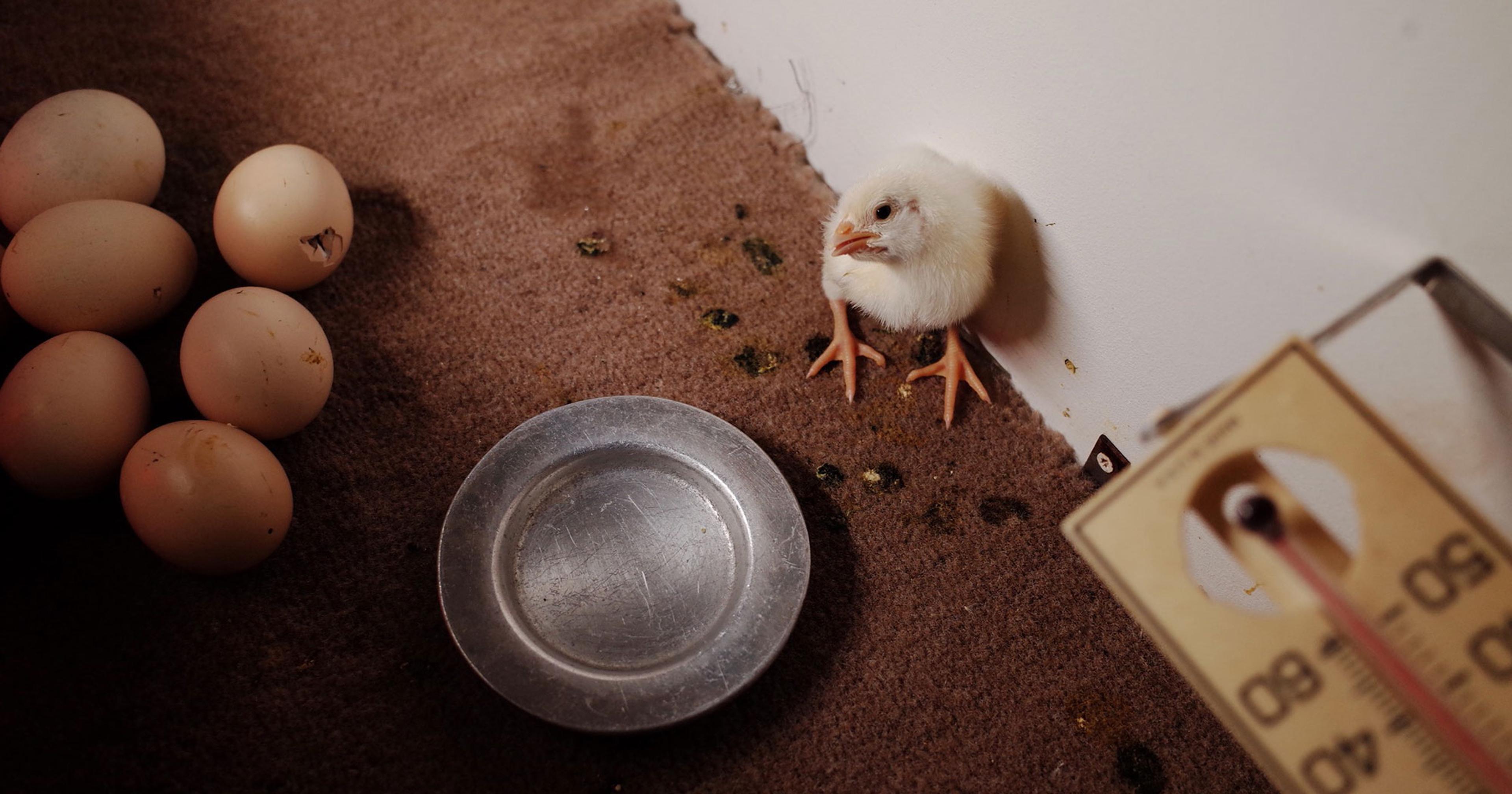
The eggs may have perished. The day that they were transported to Tim McGowan’s wood-paneled basement in Myerstown, Pennsylvania, a storm tore across the state that shattered trees and turned fields into brown lakes and burst the banks of the Susquehanna River. Power lines are no match for 50 mile-an-hour winds, and the electricity went out overnight. When McGowan came down to the basement in the morning, he found that the incubator that was housing 90 eggs had gone cold. There was nothing to do but wait and see if they’d hatch.
The story of a possible mass egg mortality event in a civilian basement technically starts in South Carolina in January 2022. That’s when an American wigeon died of H5N1, the current strain of avian influenza that’s threatening flocks all across the nation. Or alternatively, the origin of this story can be found in China in the fall of 2021, when that strain was first discovered. You could even trace it back to 1878, when avian influenza — then deemed “fowl plague” — was first identified as the culprit for the deaths of several Italian flocks.
But for the sake of simplicity, let’s stick to recent history. Once it was discovered in South Carolina, it took three months for H5N1 to make its way to Lancaster County in southeastern Pennsylvania, which has the highest concentration of poultry farms in the state. Between April 2022 and July 2023, 4.6 million chickens in 67 flocks died from avian flu there.
The Pennsylvania Department of Agriculture’s logical response was quarantine, a term that most post-2020 Americans regard with a sort of PTSD-afflicted weariness. Flocks could not come in contact with each other; sanitation procedures had to be observed before entering facilities with eggs or live chickens; waste had to be sequestered and carefully disposed; and, of course, poultry shows were verboten.
In early December, the Pennsylvania Department of Agriculture confirmed that the 2024 Pennsylvania Farm Show in Harrisburg would, for the second year in a row, feature no live poultry and eggs. Judging of the poultry competition would be limited to printed photos, pinned rather tragically to a wall of empty cages.
The chick-hatching exhibit, where fairgoers can watch live chicks emerge from their eggs, is beloved. That could be simply because chicks are very cute, and human instinct makes us fond of baby animals. Or it could be because it adds a poetic cycle-of-life element to an agricultural fair, where it is difficult to ignore that the majority of the animals that are being petted and admired and prized are destined for slaughter. Perhaps the antidote to that revelation is to showcase the start of life: a dandelion-soft baby chick, fighting its way to join the world.
And yet even if they escape a power outage or an avian pandemic, the chicks born at the Farm Show will be distributed to farming families and largely raised for meat. Animal husbandry requires reckoning with raising an animal from birth — even loving it — before killing it to feed yourself or your customers. And to get the true philosophical experience of farming at the Farm Show, you ought to be able to see the chick be born within walking distance of the stand where you buy three chicken tenders for $6.
Organizers of the 2024 Pennsylvania Farm Show deemed that the opportunity to witness the miracle of birth would not be sacrificed to the current wave of highly pathogenic avian influenza. It would have to go remote.
Eve Andrews
Dana Lape is something of a poultry consigliere in the Lebanon Valley. He’s president of the Lebanon Valley Poultry Fanciers, Lebanon County’s 4H Poultry Club leader, and serves on the board of several local farm shows. Lape coordinated the first remote egg-hatching in the region for the Lebanon Area Fair in 2015, due to an outbreak of avian flu that the U.S. Department of Agriculture deemed the country’s “largest animal health emergency.”
The local paper, the Lebanon Daily News, offered to host an incubator and run a livestream from its office, broadcasting slow cracks and emerging beaks on the paper’s website and social media pages. (“It was funny because that was the last year they were at that building,” said Lape. “It sort of closed out the Lebanon Daily News building.”)
In 2022, when the current strain of avian flu barred live birds from the Lebanon Area Fair, they moved the incubator to McGowan’s studio and live-streamed from there. (McGowan is a photographer, videographer, and co-coordinator of entertainment for the Lebanon Area Fair.) And when the Pennsylvania Department of Agriculture announced that live birds would not be invited back for the state’s 2024 Farm Show, McGowan offered his services.
When I arrived at McGowan’s studio on that tempestuous night in January, smack in the middle of the Farm Show week, I found him tending to a chick who had been born the day before with a crooked neck. The head extended from his tiny fuzzy body at an angle, which affected his equilibrium — if not his temperament. When he ran, he did so eagerly in spite of frequently falling over, flailing briefly on the floor of the incubator. McGowan had separated this chick from the others that had been born around the same time because they were bullying him — “chickens are very smart, and ruthless” — and sequestered him to the hatching chamber.
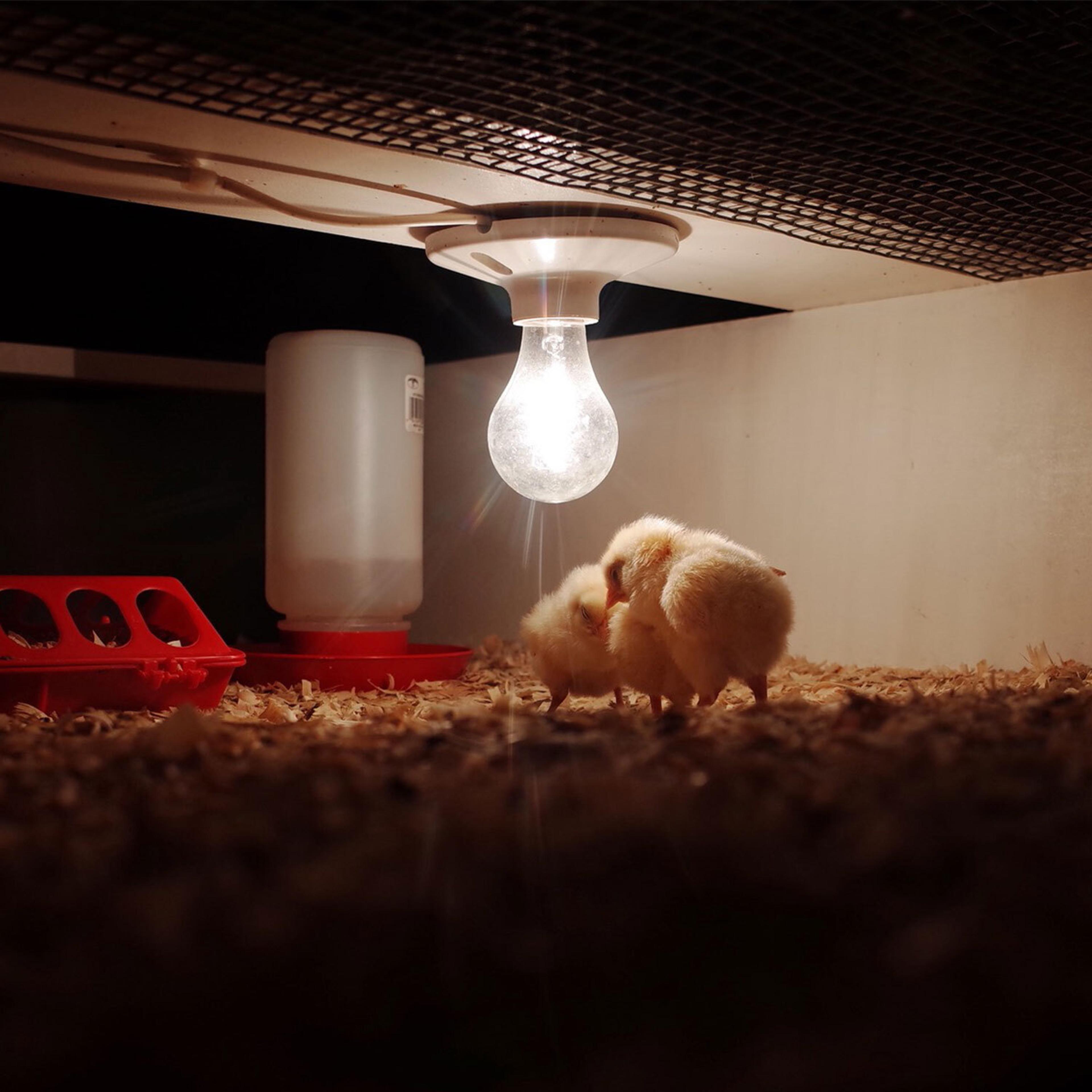
Eve Andrews
The incubator, carefully constructed in 1998 by the late Lebanon carpenter Ben Bensinger for farm shows past, has two chambers: one in which the eggs hatch, and the other in which the newborn chicks can feed and snuggle together for warmth. Two cameras positioned over each chamber streamed the chicks to both a Facebook feed and a screen at the Farm Show campus, 40 miles away in Harrisburg.
But the hatching chamber was nearly empty, and due to be refilled. McGowan was carefully vacuuming bits of eggshell and excrement from around the off-balance chick when Lape arrived, carrying three trays of fresh eggs that he’d driven over from a nearby hatchery in the torrential downpour. One or two had tiny fissures from where the sharp appendage on a chick’s head — its eggtooth — had started to pierce through the shell, just beginning to push its way out.
The three of us stood around the incubator, watching the chicks chirp and cluster and fall into each other. In the neighboring compartment, a few eggshell fissures expanded, just barely. McGowan was describing how scammers had found his Facebook stream, and were trying to charge people to view what the Farm Show was broadcasting for free.
“It’s amazing, really, with the avian flu and with COVID, it’s created a whole industry of things for protection, protocol,” said McGowan. “It’s almost like when computers came out, and created an industry of virus protection and everything else.
“So it’s something we’ll get used to, and later we’ll look back on history and say: Well, did we do it the right way?”
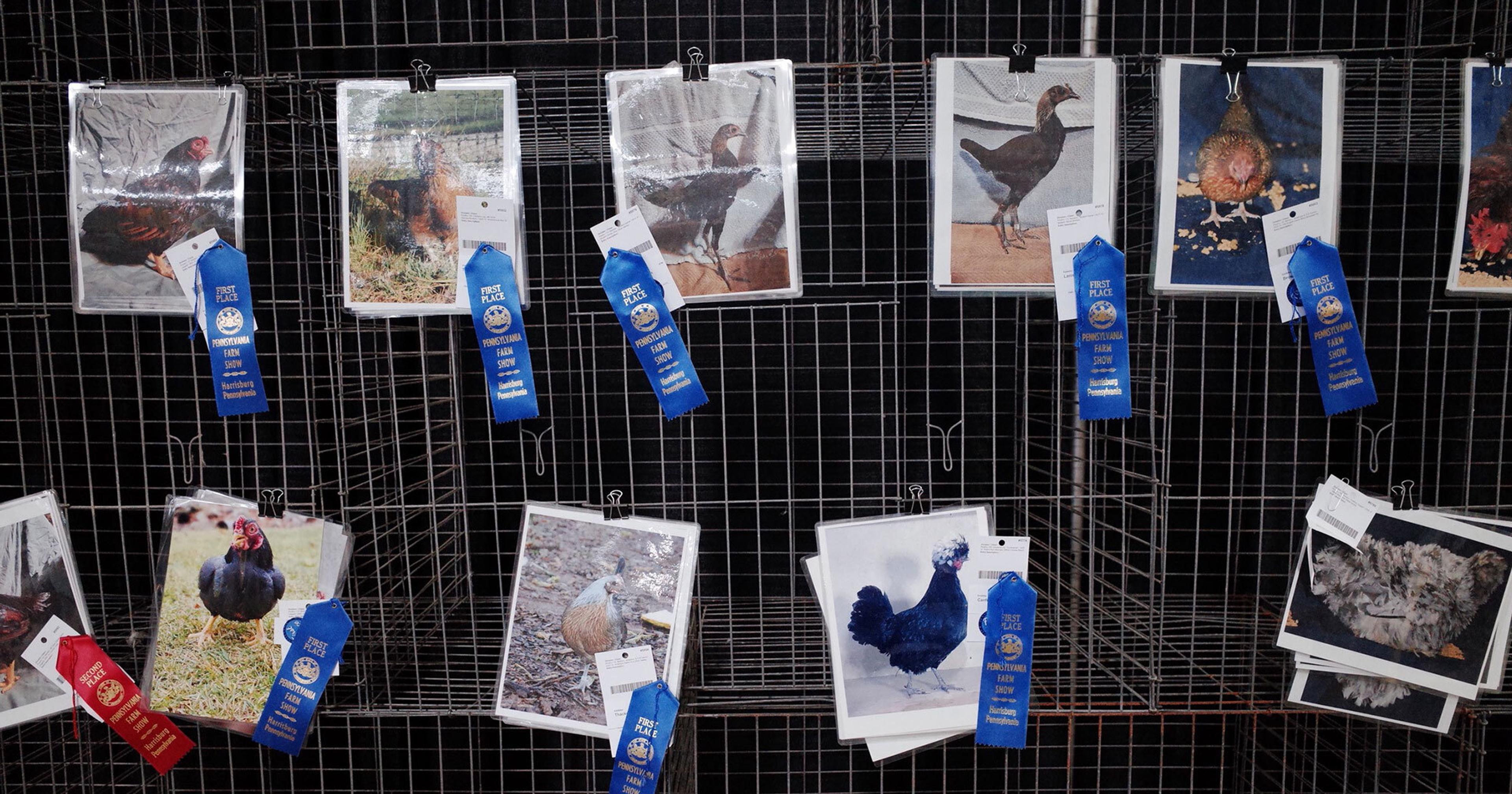
Eve Andrews
I wanted to see the chicks the way that every other attendee of the Farm Show would see them, so I drove to Harrisburg the following morning. I walked through four expansive halls to get to the poultry section of the show — notably absent of poultry. There was the quietly melancholy wall of chicken photos, a magic show and children’s book reading, a game where you shoot rubber ducks along a chute with a water gun, another game where you fish them out of a kiddie pool, and a six-by-ten-foot screen showing beaming an image of about a dozen white eggs across the crowded room. Many passersby paused to watch and see what would happen on-screen, but many did not.
It wasn’t until several hours later, checking email at a turnpike rest stop, that I learned the eggs delivered to McGowan’s basement the night before had potentially died, and the eggs and newborn chicks that I’d seen on the screen at the Farm Show were from a prerecorded feed. The power outage in McGowan’s neighborhood cut off any streaming capabilities along with the heat source in the incubator.
The following day, McGowan wrote to me to tell me good news: The eggs had survived the cold night, and the chicks were thriving. Avian flu, COVID, and winter storms be damned — the chicks would push themselves into life, beak first, for an audience they’d never see.
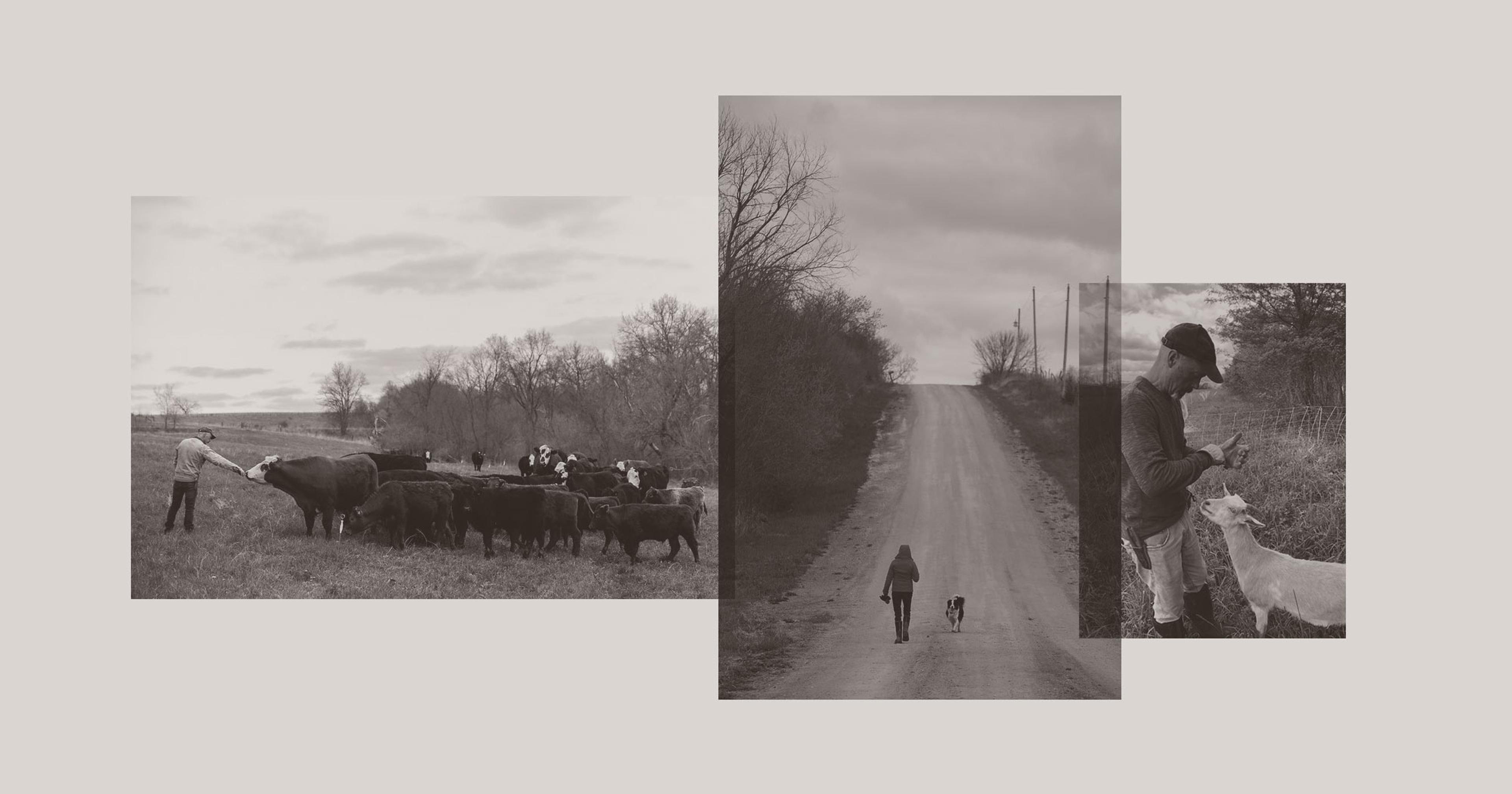
At the far end of the large white room sat the casket, my father-in-law Leroy inside, pale as a literal ghost, a man who would have turned 91 on this day. At the other end of the room was a table, shiny Happy Birthday balloons bobbing in the dim light, refreshments poured and plated. John, my husband, and his sisters had given the ok for balloons at the visitation — it seemed innocent enough to “celebrate” Leroy’s birth as well as his death.
A cake with Leroy’s face on it (the kind digitally created from a photo and laid out as frosting on a cake) had been given the thumbs down. Yet there it was beside the balloons, someone having missed the memo forbidding the cake. The hushed, reverent crowd circled back one by one and two by two after visiting with the body and cut a slice, enjoying a piece of his shirt or the background, not a single one daring to eat the dead man’s face.
There were maybe 100 or more who attended the viewing. My stepsons flew in from the Bay Area and many of John’s cousins arrived from around the state and the region. And of course, there were neighbors, those who had lived nearby or gone to church with Leroy for at least part of his 91 years. Neighbors he had helped when their cows were loose or their equipment broke down; neighbors from whom he bought seeds or loaned a tractor. Neighbors whose parents or grandparents Leroy had paid his last respects to — in much the same manner they were paying to him now.
But some in attendance also came to support John and me, even though we were semi-recent transplants to Iowa. The DeCooks, for example, were now our friends too, people we rely on and who we share meals and crack jokes with. Some of John’s high school friends were there from the big city, as were men who farm on either side of us and went to preschool with John.
At the time of Leroy’s passing last January, we had lived in Iowa for five years, moving back to John’s family farm after decades in the Bay Area. We had transitioned the farm from Leroy’s leadership to ours (a transition I talk about in detail in my book Bet the Farm: The Dollars and Sense of Growing Food in America) and called it Whippoorwill Creek Farm. John had helped take care of the animals as a kid, wandering the nooks and crannies of the creeks and forests of this land for as long as he could remember. I, however, was brand-spanking-new, both to Iowa and rural living. I had reported on food and agriculture for 20 years by the time we moved to Iowa, but I had never lived on a farm.
Suffice it to say that life — and farming — were challenging. We were trying things on the farm that weren’t just new to us and Leroy, they were largely new to the area’s conventional farming community. As a result, there were numerous false starts and giant failures, alongside our wins.
We bought goats and put them to work clearing out invasive weeds, a practice that yielded results almost immediately. We rotated cattle daily at first, then slowed down to every other day or so to give ourselves a break on the excessive labor rotational grazing demanded. We planted an enormous garden to feed ourselves and started to sell the excess. And most recently we built a “Barn-House,” a re-erected 1880s barn turned into a demonstration kitchen and a two-bedroom apartment for people to visit the farm and learn more about it.
As the five years quickly passed, it was clear that — although we were now two exhausted mid-50-year-olds — the land was happy about the transition, as were the animals. Even Leroy had grown accustomed over the years to our new normal, and he seemed impressed with John’s decisions — at least some of them.
But what did the neighbors think, my family, friends, and book readers always wanted to know. How did they react to our grass-finished beef ways, our no-chemical crops, our weed-eating goats? Did the community look at us askew because I came from the city and our farming techniques were so unconventional?
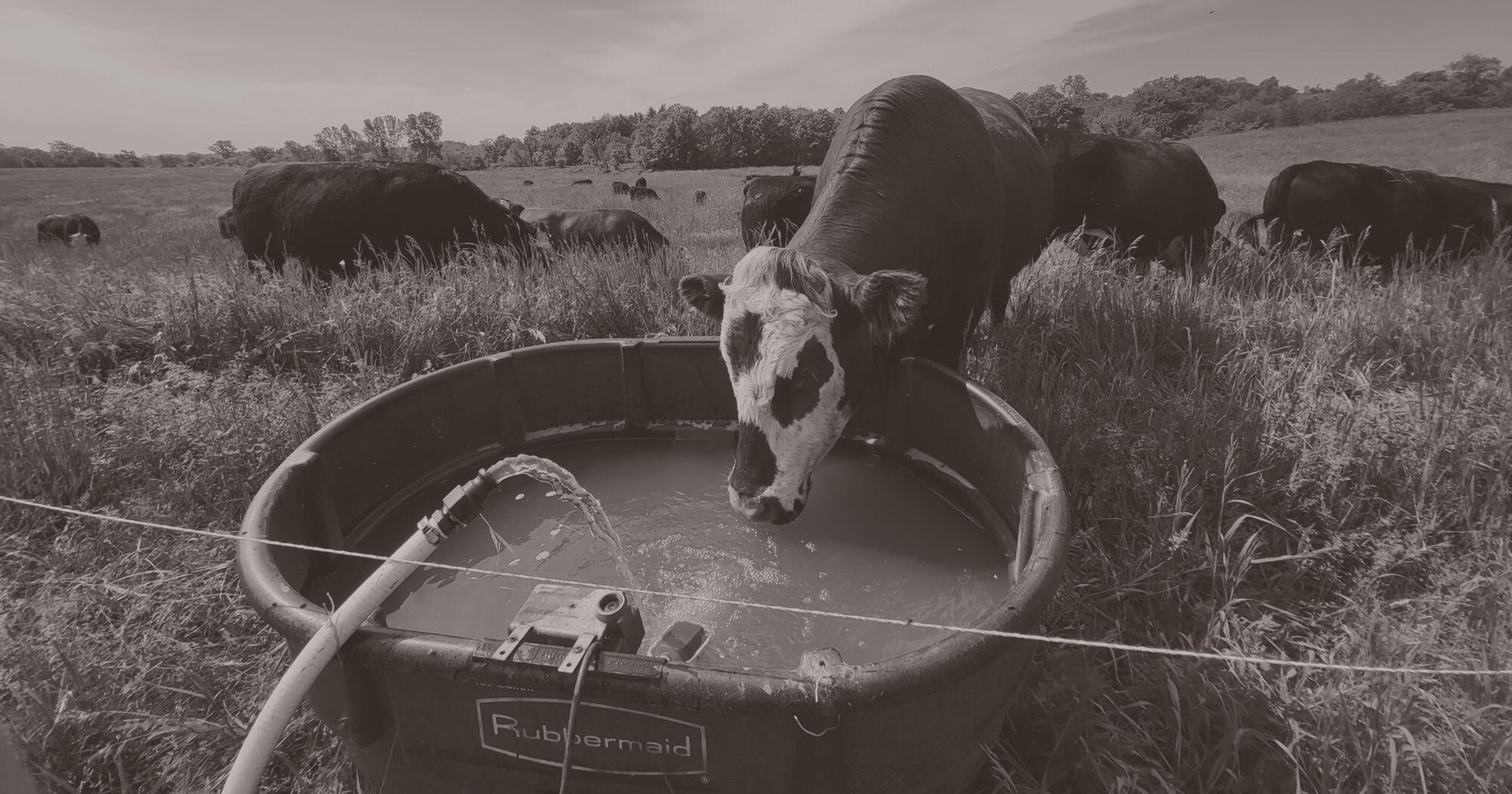
It was a strange set of questions, when I finally sat down to think about it. Never before had anyone asked what my neighbors thought — not when I lived in San Francisco, or New Jersey, or even when I lived in Salt Lake City. When I lived in those places, maybe there was an unspoken assumption that all city dwellers were similar in thought, or at least more accepting of different practices in their midst.
Yet maybe the questions stem from the fact that rural communities are small. Everyone knows everybody else’s business, don’t they? Isn’t it true that farmers are always craning their necks over the fence to see what their neighbors are doing?
“That building you’re building out there, that’s pretty neat,” our neighbor Pat said to us at a bonfire in my sister-in-law’s backyard. We were sitting around the fire with blankets on our laps in the cold of the late fall, the men chatting about corn yields and cattle prices. It had been almost a year since Leroy had passed away. Pat was referring to the construction of our Barn-House. It’s a dang good-looking building, in an area of the country where typically metal and vinyl-sided Morton buildings are built. Add to that the fact that we processed much of the wood on a mobile mill outside of the building … and well, I refer to the building as a man magnet — the guys all seem to have mill-envy.
But it is more than just that. Another neighbor and our postal carrier, David (who John has known since he was in diapers), also commented on the barn a while back, when it was just a skeleton of timbers and roof rafters.
“It is nice to see someone out here who gives a shit,” he told me. “You guys are putting money and energy into this place and I think that’s great,” he commented and walked away quickly so the conversation would not get too mushy.
“It is nice to see someone out here who gives a shit.”
His comment took me by surprise. I had been asked many times by then — by people outside the community, mostly — as to what the neighbors thought of our farming operation, our agricultural practices? I hadn’t considered that the more important part to them was that we were simply here and gave a shit.
To Midwestern families and those who live in most of rural America, the driving question in agriculture today is not about how someone farms, which chemicals are used, or if there should be more conservation programs. The main concern is if anyone will be left farming and living in the area, if there will be any neighbors to care for the land and communities in the future.
The number of U.S. farms has fallen precipitously over time, from a peak of 6.8 million farms in 1935 to 2 million in 2022. But since the 1970s the number of farms has decreased at a very slow rate. In Kentucky for example, in 1988 there were 2,201 farms; in 2002 there were 2,158. What changed dramatically, however, is that no one lives on the farm; most of it is all leased out to farmers who live elsewhere. Fewer and fewer people are actually living on the land, taking care of it and overseeing how it is managed.
“I like having good neighbors and you guys are good neighbors,” Pat told me when I asked him and AJ, his wife, what they think about our farming techniques. “We don’t farm the way you do, but that doesn’t make any difference to us.”
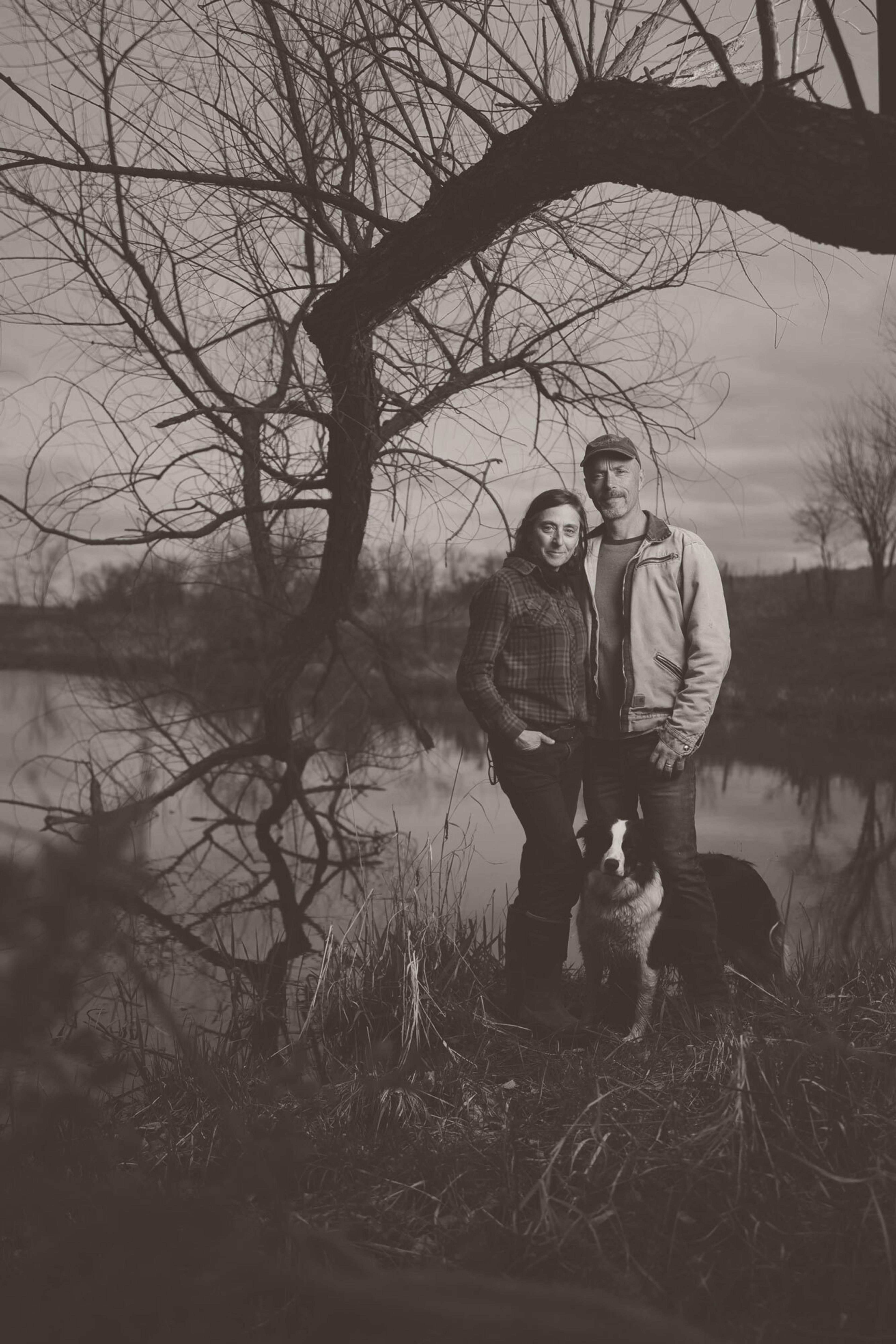
While our legislators spend time creating laws to keep foreign companies — particularly those from China — from owning too much land, the issue is more basic for those who live in rural America. The problem is absentee land ownership, and it doesn’t matter if those owners are from China or Chicago, Rio or St. Louis — what we all need is people. People to live here and to care for the land, to raise animals and crops and kids, and to be a part of a community.
But that doesn’t happen very often anymore. As of 2022, 55 percent of Iowa’s farmland is now owned by someone who does not farm. Who owns the land? Family members who inherited the land or investors, neither of whom have ever lived on a farm, and now lease it out to farmers. Given that a full two-thirds of the state’s farmland is now owned by those over 65 (and 37 percent are over 75) it is likely a problem that will only get worse. Much worse.
In our neck of the woods, land is hard to come by, not because of housing development or because we have great corn-growing land (we do not). Our cash cow is hunting. One of the largest bucks ever shot was felled in our fair county in 2003, and to this day, land for sale is often marketed as hunting ground — not for farming.
A man in his late 60s drove up to our house the other day from a few towns over, explaining that he and his family have hunted for generations on the farm, with Leroy’s blessing. I had met him at the funeral, and he was now checking in with John, the new farm manager, to see if they could hunt next week.
“Oh and I really liked your book,” he added.
“You did? What did you like about it?” I questioned, surprised he had read it.
He told me about how he could relate to John coming back to the farm because he had done the same. He bought his own family’s farm from cousins and siblings upon someone’s death, and now leases the land out to a farmer raising corn and beans. “I am improving the farm for future generations,” he told me.
“It takes crazy to make change.”
“So, do you think we are crazy, the way we are farming?” I asked. “Would you be looking over the fence, thinking that the changes we’ve made are ridiculous?”
“It takes crazy to make change,” he responded.
Like a lot of things these days, agriculture is often presented as a divisive world with two sides of a single coin. You are either a conventional grower or an organic/regenerative/rotational/(fill in the wholesome term of your choice) one, when in fact agriculture is a long, wide continuum.
All farmers make small, incremental changes every year, trying this new seed or that conservation practice. Our neighbor Pat put in his first cover crops last year in areas that are erodible. And David talks about how he wants to raise chickens again because “I don’t know what they feed those chickens in the grocery store.”
With only contract farmers on the land and investors owning it, that kind of incremental change will be impossible to make. How would you know the erodible places on your farm if you don’t witness the erosion? If you don’t drink the water, would you care how polluted it is?
The luncheon at the end of Leroy’s funeral was packed, the church basement full of friends and neighbors eating ham balls and potato salad. I hope I get a chance to know half as many people in this area, I thought to myself. With only a handful of homes still lining our gravel road, the chances are slim. But we are injecting new life into this farm, bringing out young employees and curious visitors.
And, even if I didn’t know it, just the fact that we are here and care about this land is appreciated more than I knew. I may be new here and we may farm differently, but maybe there will be enough people at my funeral to eat a cake too.

In the 19th century, across 320 million forest acres from southern Maine to central Mississippi, springtime brought the flowering of pollen-coated catkin clusters on billions of American chestnut trees. “Visually, the trees were a sight to behold, turning entire mountainsides a creamy yellow and then, as the catkins began to release their pollen, a sugary white that from a distance resembled snow,” wrote Donald Davis in his 2021 environmental history of the tree, The American Chestnut.
That “glorious” sight, and the ecological, cultural, practical, and financial benefits it heralded — food for humans, wildlife, and livestock; wood for houses, fences and railway ties; extract for tanning leather; an important feature in Native creation stories — was all but extinguished by a fungal blight, Cryphonectria parasitica, by the early 1900s. Biologist James Hill Craddock called the loss of 5 billion trees and their 2 billion tons of biomass the “greatest ecological catastrophe since the last Ice Age.” It increased carbon levels, helped push some woodland species closer to extinction, and deprived waterways of the trees’ cooling powers.
For decades, scientists have been toiling to make a blight-resistant American chestnut tree. One prominent project, of the State University of New York’s College of Environmental Science and Forestry (SUNY-ESF), was showing great promise in developing a genetically modified tree — until that effort suddenly unraveled.
This past December SUNY admitted a major error with a variant known as Darling 58. This caused its research and financial partner, the American Chestnut Foundation (TACF), to pull its support of D58; skeptics to opine about the futility of restoration efforts; and critics to clamor about allegedly nefarious aims by the researchers. Indigenous groups especially have opposed GM trees as an infringement of their food sovereignty. The ensuing brouhaha “highlights the challenges of understanding the impacts of introducing long-lived organisms into the wild,” according to a press release from the Campaign to Stop GE Trees.
There are three distinct methods to pursuing a blight-resistant American chestnut. One, used by the American Chestnut Cooperators’ Foundation, seeks to breed resistance into 100 percent American chestnut trees. Another, undertaken by the American Chestnut Foundation (TACF), is a backcross in which American chestnuts are cross-bred over and over with Chinese chestnuts to impart the latter’s blight tolerance into a hybrid tree. The third — and most controversial — is genetic modification. SUNY inserted a wheat enzyme called oxalate oxidase, or OxO, into a chestnut that’s grown to a seedling in a lab. Then that seedling is used to pollinate wild trees whose progeny carry the OxO that can set off blight resistance.
“It’s not that the mistake was made, it’s that we weren’t told about it.”
After years of fiddling, SUNY put the first transgenic chestnut trees in the ground in 2006; there are now thousands of younger trees planted under permit in several locations. In 2019, SUNY considered the project sufficiently robust to file a petition with the U.S. Department of Agriculture’s Animal & Plant Health Inspection Service (APHIS), to have D58 deregulated. If approved, this would theoretically make the trees available for distribution to the public.
Just as everyone was checking their watches and imagining federal approval must be imminent, in early December 2023 it was disclosed that SUNY had goofed up variations of its breeding line. Instead of using D58 to pollinate trees in its research plots, it had accidentally used D54, which has OxO DNA inserted into a different part of its genome; almost all those thousands of transgenic trees are D54s, not D58s. Newhouse insists it’s not a big deal, equating the different position of OxO to a word in a novel that’s turned up in one chapter instead of another. “They’re all the same phenotype. They all have the same new DNA. It’s not a mix of genes or a bunch of unknowns,” he said.
TACF, though, withdrew its support of the APHIS petition and the trees themselves, saying they’d already noticed “disappointing performance results” and expressing irritation they’d learned about the gaffe from researchers in Maine rather than from SUNY. “It’s not that the mistake was made,” they told The Washington Post. “It’s that we weren’t told about it.” APHIS put the petition on pause so SUNY could present additional details about D54; it was apparently reviewing these details at the time this story was written.
Regardless of which breeding line is listed in the petition, Davis thinks they’re equally problematic. In both, the OxO gene “is constantly turned on, and that means all their energy is going towards fighting blight as opposed to growing the tree,” he explained. As a result, trees grew stunted and covered in cankers. He speculates that the D54 mix-up was a convenient excuse for TACF to withdraw its support because there’s another breeding line in the works, called win3.12, whose blight-resisting powers are only activated when it comes in contact with Cryphonectria parasitica. But Davis also calls this maneuvering “bad poker”: Approval for the Darling lines would grant approval for win3.12 and any other transgenic chestnuts containing OxO — so why push back?
“Even people who used to be fans of the American chestnut would say it had its chance, it had its place in history.”
He sees other problems with the GM restoration endeavor. Though most of the 430 million American chestnuts growing wild today succumb to blight before they mature, there are full-grown trees that have somehow avoided this fate. So far, the transgenic American chestnuts that cross-pollinate with wild trees pass down their blight resistance only 50 percent of the time, and they’re also susceptible to other blights. That means, were they to cross-pollinate with still un-blighted trees, it could wreak havoc on remnant populations, making them extinct once and for all.
Additionally, the transgenic trees have only been tested for blight resistance for a few years. “Baby trees are not the same as 200-year-old trees,” said Rachel Smolker, co-director of renewable energy nonprofit Biofuelwatch, and as they age, they might begin to show less resistance, or other negative traits. “We know that an organism’s genomes behave differently at different stages of life and with exposure to different environments, and that there’s no way that just testing baby trees that have been grown in controlled conditions proves anything to us whatsoever,” Smolker said. Biofuelwatch believes the biotech industry has been quietly supporting transgenic chestnut efforts in order to soften public opinion for plantations full of (still elusive) transgenic pines and poplars — these in the pursuit of liquid biofuels made from wood.
While chestnut blight may have been the nail in the coffin for the American chestnut, the tree had other problems before the fungus arrived on imported Japanese trees. One was ink disease, Phytophthora cinnamomi, which wiped out chestnuts in the southern part of their range by the Civil War; it can’t survive the cold but could move north with climate change. The transgenic trees are not currently resistant to ink disease; at least one backcross breeder, though, has focused on making chestnuts resistant to more than one disease.
Not that hybrids are a faultless alternative to transgenics. “There are lots of exotic varieties of plants that have been hybridized that are really vulnerable to pests, and then they introduced a pest to a native species. So that’s not benign either,” said Smolker.
The restoration challenges are so steep that “even people who used to be fans of the American chestnut would say it had its chance, it had its place in history,” said Davis. “They say now we need to move on to species that are going to be more likely to survive in new environmental conditions.” In the moment, a blight-resistant American chestnut of any sort seems a long way off, despite the anticipation of its potential revival.
Note — After this story published, Ed Greenwell, president of the American Chestnut Cooperators’ Foundation, wrote in with this information:
We have been successful in breeding trees with durable blight resistance/control. Our oldest trees were planted in 1976, so are coming up on 50 years. Perhaps another point of significance is that our program has bred five generations of pure American chestnuts that show durable blight resistance. Many of these trees are growing upwards of 60 feet tall, are nut producing and exhibit excellent blight canker response.

Anyone who has heated their house with wood or tried to start a campfire is familiar with the process. You build up a bed of newspaper, twigs, and kindling, settle a few smaller logs on top and try to light it in the right spot so it sparks into a bright flame, quickly growing tall with satisfying snaps and crackles. But, as often as not, getting that fire crackling this requires a few rearrangements of the pile and quite a few strikes of the matches.
That is, if you haven’t heard of “fatwood,” aka dried pinewood full of resin. The material is also known as fat sticks, heart pine, or lighter wood. The colloquial term fatwood is used to describe how these small pieces of wood are so saturated with resin that they overflow with the sticky and highly flammable sap. While today it is most commonly used as a firestarter, fatwood can be carved and is sometimes burned down to produce pine tar.
“When I first started out,” said Peter Forrester of Forrester Bushcraft, a teacher of primitive living skills with a popular Youtube channel, “the first thing I learned was you have to go into boggy areas where a pine tree has died, and all the sap has dripped down into the roots. But that way, you have to pull it out of the bog and dry it. I think that’s the most traditional way of harvesting it.”
Fatwood develops where a tree has broken or been damaged and the sap of the pine tree rushes to the wound to help the tree heal. As the branch or tree dies, this resin settles and creates deposits of fatwood, where the resin content of the wood is much higher than a typical tree branch. It can take up to five years for the resin to thicken and harden into what is harvested as fatwood. While foragers typically look to the broken branches low in a tree for fatwood deposits, commercially available fatwood is often gathered from stumps left behind as waste after a logging operation.
Fatwood was first popularized as a commercial export in Scandinavia, with Sweden harvesting it for pine tar production in the 17th century. This is thanks largely to simple geographical happenstance, as Sweden has largely coniferous forests that are more than 35 percent pine. Anywhere you can grow most pine tree species, you can produce fatwood.
“Most pines have fatwood,” explained Shlisa Shell, who goes by ‘The Fatwood Queen’ on her Youtube channel and the Etsy shop where she sells fatwood bundles. She explains that fatwood deposits can be found in most places where pine trees grow, although the quality of the fatwood depends on the species of tree. The more resinous the genus of pine, the better the fatwood, said Shell.
“The main way to find it,” said Forrester, “is to look for those dead branches on the bottom of a tree. That is the easiest way to get it. You don’t get a lot of them, but it’s enough to start a little fire.”
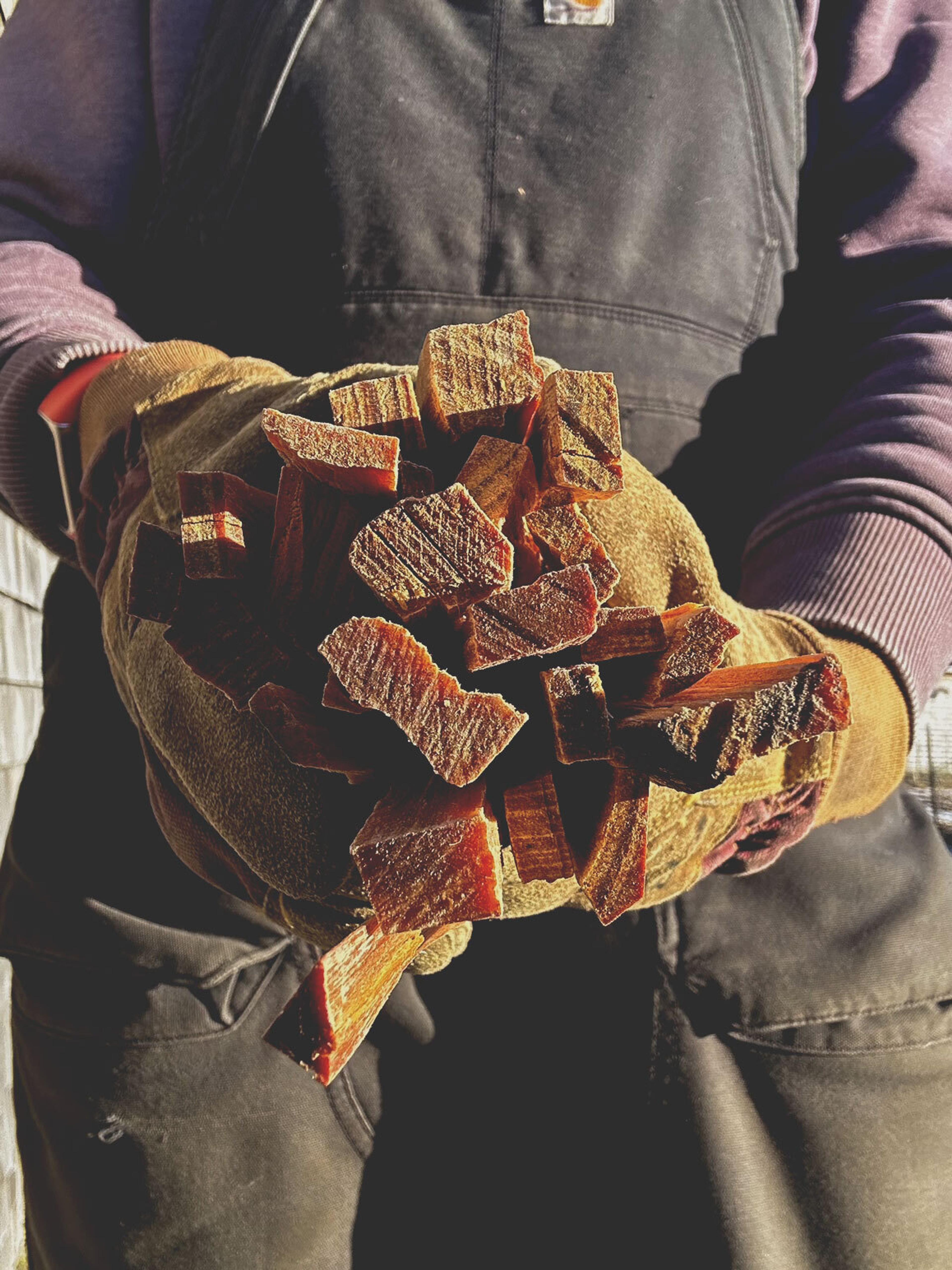
Photo by Kirsten Lie-Nielsen
“Sometimes you’ll see these little flat pieces of wood sticking out of the ground,” said Forrester, “and when you feel them they are hard, even though they look rotten. Give them a squeeze. They’re really rock solid. So you can cut those open, and there’ll be these rich deposits of fatwood in there.”
Fatwood can help you start a campfire in the wilderness, but its ability to get a home woodstove going is what makes it a lucrative target for the forager. Shell, the Fatwood Queen, sells one-pound bundles on her Etsy shop as well as larger single pieces for carving. Rather than struggling to sell the bundles, her greatest difficulty is keeping up with demand. “I am not always sure where I’m going to get the next batch,” she admitted.
While many people don’t know about fatwood, those that do are crazy about it, and Shell is part of an online community which carves, burns, and collects fatwood. The material carves and whittles down fairly easily and can be used to make spoons and bowls that have a translucent glow of pine resin. Shell has carved faces into small chunks, and says a thin piece of fatwood makes a striking window decoration as it glows in the sunlight.
As a purveyor of fatwood, Shell said the biggest challenge is finding enough of the material.
“Some people have it, and they just don’t know how to find it or they don’t realize they have it,” she said. “It took me 10 months here in Michigan to really realize that I have it everywhere. I imagine for some people, it’s all around and they just don’t notice it if they don’t know what they’re looking for.”
Commercially available fatwood often comes from South America, said importer Mark Hoogstra. There, fatwood is a waste material of the logging industry. Large packages of fatwood for the homeowner can be purchased from places like Lowes, Home Depot, LL Bean, and Orvis. These are mostly imported from Honduras, according to Hoogstra.
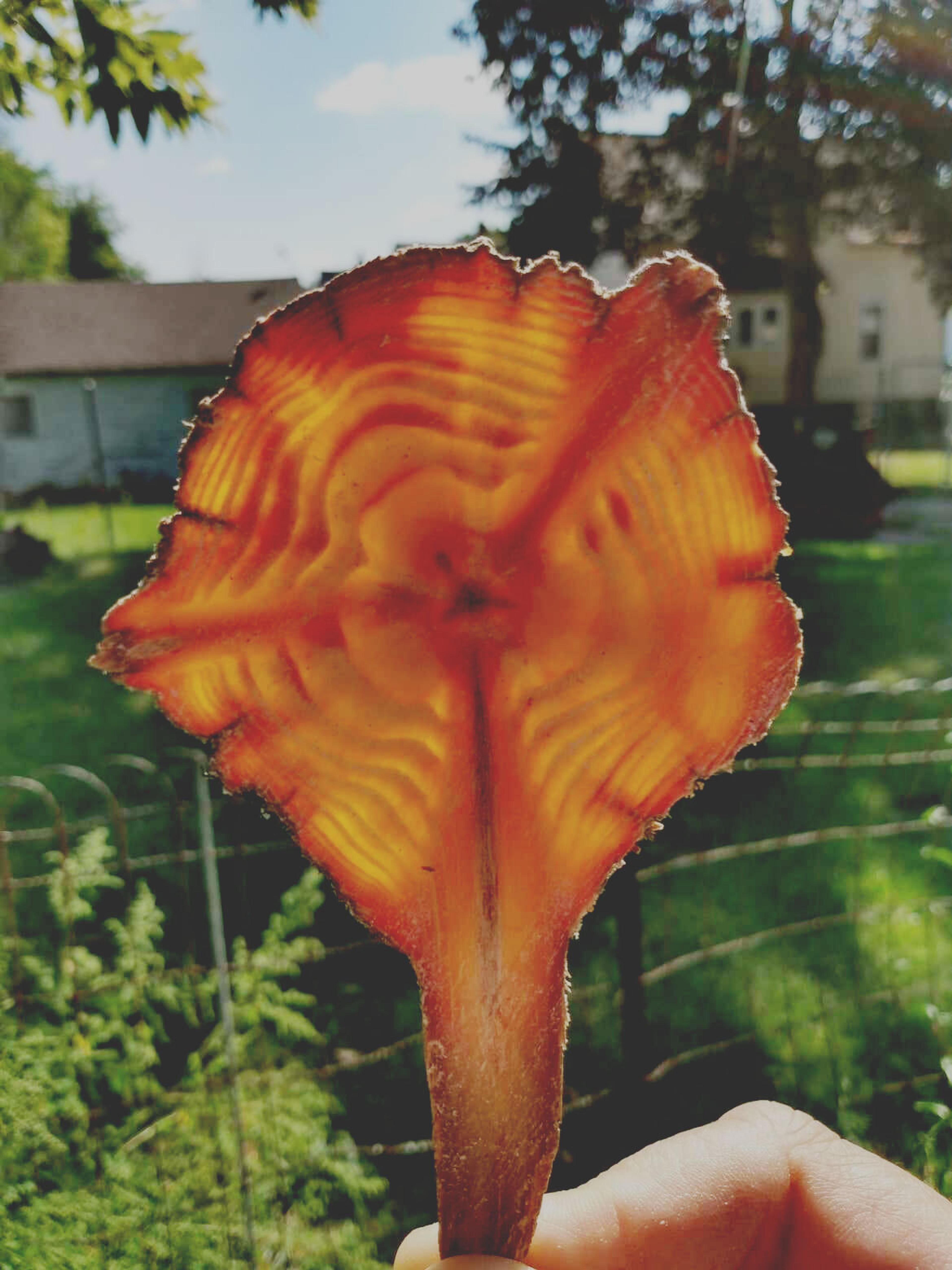
Photo by Shisla Shell
When it comes to lighting a fire, you want to use two or three sticks of fatwood to get the flame going and then add your traditional firewood. Using fatwood as firewood is impractical at best, given its small quantities and the fact that, because it is so resinous, it smokes heavily.
“It’s for just getting the fire going,” said Forrester, “It is literally one of the best things you can find in nature. It is absolutely fantastic stuff and there’s no downsides to it at all — even when it is wet it will burn.”
Forrest has done experiments starting fires in the rain with fatwood, and even dunking the sticks underwater and then lighting them. They still light up.
For her Etsy business, Shell visits five properties to scout for fatwood. She admits the wood could be cultivated, but it would take too much time to become harvestable to be considered a sustainable enterprise. Instead, she mostly walks the forest looking for broken off, dead branches. Ideal spots include areas along the highway where trimmers are used to keep the woods cut back, creating new damaged pieces of wood as they go.
Because of the time it takes for damaged pieces of pine to develop into fatwood, the material is difficult to cultivate at a scale, and foragers can struggle to find a dependable source of the material. However, it can be a profitable side hustle for a forager or anyone with access to pine forests. Etsy, farmer’s markets, and Facebook have plenty of small-scale sellers of fatwood, and enthusiasts of the outdoor lifestyle search their land and provide themselves with this unique, all-natural lighter wood.
Whether you’re desperately trying to start a campfire in the wilderness or just hoping to get the fireplace roaring for a holiday meal, fatwood never fails to impress. Just don’t tell too many friends, or it’ll be even harder to find.

Three decades ago at the University of Maryland Medical Center (UMMC), microbiologist Alexander Sulakvelidze was consoling a colleague who had just lost their patient to a drug-resistant infection. Sulakvelidze, a recent immigrant from Georgia, asked if the doctor had tried using bacteriophages to treat the infection, a widely used medical treatment in his home country. To his surprise, the doctor had no idea what he was talking about.
Bacteriophages, also known as phages, are microscopic viruses that can be used to selectively target and kill all kinds of bacteria, including E. coli, salmonella, listeria, Staphylococcus aureus, and more. Phages, unlike other viruses, can’t infect humans. Every phage has a specific bacteria it is designed to find and kill, and it can only operate and replicate within those explicit cellular walls. They can be administered orally, topically, or through intravenous, intranasal, and intramuscular channels.
Phages have been used therapeutically in human and animal medicine in Eastern Europe for decades, often in lieu of traditional antibiotics. Sulakvelidze himself had taken them as a child without much thought. But upon arriving in the United States, he realized phages were not being used in Western medicine at all.
“It really hit me at that moment,” said Sulakvelidze. “Somebody’s father, brother, or friend, just died in the most developed country in the world ... from a simple infection that could have been treated in a developing country like Georgia,” he continued. “It just made no sense.”
Unlike antibiotics, phages are effective at much lower doses, and also less prone to resistance as they don’t disrupt bacterial processes. Even in cases where antibiotics fail, phages have shown their ability to successfully combat bacteria and save lives.
Yet, for nearly one hundred years, antibiotics have been the go-to weapon in the fight against bacteria. Today, urgent concerns of antimicrobial resistance (AMR) are on the rise. According to the World Health Organization (WHO), AMR was directly responsible for 1.27 million global deaths in 2019.
In the United States, approximately 80% of all antibiotics sold are used in animal agriculture. Growth promotion in feed remains a primary antibiotic use case, despite United States Department of Agriculture (USDA) and Food and Drug Administration (FDA) pushback. Thus phages are being touted as a potential alternative, for both medicinal and growth uses. Companies in Europe and Thailand have already raised millions of dollars to implement phage therapy on livestock farms.
Paving the Way for Antibiotic Alternatives
In the U.S., research into bacteriophages as a potential substitute for antibiotics has been underway for nearly a century. Yet, traction has been slow to build. Sulakvelidze claimed that phages aren’t used in Western medicine because, unlike the more resource-strapped Soviet Union, the West had easy access to penicillin, a highly effective broad-spectrum antibiotic.
By contrast, phages are very specific, he said. A phage that kills E. coli won’t kill listeria, for example. If a patient has an unknown infection and is treated with phages, it’s likely to fail if the bacteria isn’t identified correctly. “Antibiotics were less finicky and more controllable,” he said. “So, why try something else?”
Other factors were at play here, including the West’s deep suspicion of anything Soviet-supported, and a lack of understanding of phages, which led to improper storage and preservative use that impacted their efficacy. In the 1930s, pharma giant Eli Lilly created a gel-based phage product to treat staphylococci and E. coli. The product worked initially, but became less effective over time. Later, researchers found preservatives had impacted its performance.
Still, phage research in the U.S. gained traction in the agricultural sector during the late 1990s. Todd Riley Callaway, a career ruminant microbiologist, studied phages for close to nine years at USDA, between 1999 and 2008. The aim was to commercialize phage use for the agricultural market, specifically for cattle, swine, and poultry.
One of the challenges Callaway and his team faced was the detective work needed to identify specific bacterias causing infections, as well as protecting the phages from being destroyed in the guts of ruminants like cows and sheep. “There are a lot of proteins and carbohydrates in phages, so you have to find a way to get the phage past the acid [of the] stomach,” said Callaway.
Resistance to phages can also occur, but can be reduced through the use of phage cocktails, a mix of different phages that can tackle multiple bacteria at once, which broadens the usually narrow spectrum of a single phage. Phage cocktails have proven effective in a variety of agricultural uses, including in the treatment of mastitis, a common bovine disease that is one of the main drivers of antibiotic overuse.
The U.S. Environmental Protection Agency (EPA) has also approved some commercial phage products for crop plants, such as topical sprays for tomatoes, citrus fruits, pears, and apples. But things get more complicated when you are dealing with a huge microbial population of food animals, said Callaway. “[Phages] have potential to be used [in livestock], but they have to be used wisely ... they are not something you can just throw at a problem the way you can with antibiotics.”
Pioneering Phage Technology in the U.S.
After his conversations at UMMC, Sulakvelidze would go on to found Intralytix, a U.S.-based company aimed at proving phage technology in the West. While initially geared towards human medicine, Intralytix quickly shifted its focus to food safety, due to strict FDA regulations on human and veterinary phage use. To date, no FDA-approved veterinary phage therapy exists in the U.S., and most USDA research has long since fizzled out.
Intralytix has been able to produce and approve multiple food safety phage products, including a phage spray for cow hides to reduce E. coli contamination before slaughter, and another that targets listeria, salmonella, and shigella contamination in food processing facilities. The company is working on expanding its offering to veterinary applications, such as salmonella infections in poultry, if they can secure FDA approval.
As AMR fears increase, and antibiotic use continues to be reigned in, researchers in the academic sector are trying to increase awareness of phage therapy in the marketplace. Microbiologist Dwayne Roach runs Roach Lab at San Diego State University, which focuses solely on phage immunology and pathogenesis. Roach contends that, both in healthcare or agriculture, phages can help us reduce antibiotic use. The only barrier is scale.
“We’ve gotten so good at using antibiotics that scaling them up is cheap,” he said. Roach explained that current agricultural applications of phage therapy could be 10, 20, or 30 times more expensive than antibiotics, and no subsidies exist to promote phage use. “Farmers’ [margins] are tight, and the government isn’t stepping in to compensate [phages], like they do for electric cars, or preventing greenhouse gasses.”
However, he believes phages can scale, given the right investment. Making phages is relatively easy — you can create 10,000 gallons of them in just a few days. That said, infrastructure for storage and transport remains a barrier. While antibiotics have had 100 years of application, phages are still in their early days, at least when it comes to widespread use. “We haven’t brought down the cost to have it [widely] adopted,” Roach added. “But the price will come down, it’s inevitable.”
When asked if phages could replace antibiotics in agriculture all together, Roach was firm. “No, that’s a no go. It will not be a replacement, it will be a supplement.” While phages are highly effective in the fight against multi-drug resistant bacteria, their narrow range means they might miss other, dangerous bacteria that antibiotics could simultaneously eliminate.
The focus should be on expanding our toolkit, said Roach. “For a long time, we only relied on antibiotics and didn’t really need to expand our repertoire of antimicrobials,” he explained. “But now, with the rise of AMR, we need to incorporate different tools like phages, vaccination efforts, and other methods into our arsenal.”
“Phages are the most abundant biological entity on the planet,” he added. “They outnumber everyone. We just need infrastructure to tap into that.”

Thirty years ago, an article in Nebraska Farmer magazine changed the course of Larry Petsch’s life.
Petsch grew up farming wheat, corn, and alfalfa on land in the southwestern part of the state, not too far from the Colorado border. The work was hard and the finances predictably unpredictable — fluctuating alongside commodity prices and the seemingly ever-rising costs of equipment.
To make ends meet as a small farmer, as Petsch put it, “you better figure out something else to do along with what you’re doing.”
In search of that something, Petsch came across the article in Nebraska Farmer about hunters paying farmers to use their land during the hunting season. With more than 4,000 acres of land scored by miles of river bottom, Petsch’s property was littered with deer, pheasants, and, more recently, turkey. Spurred by what he’d read, the 62-year-old started leasing to hunting outfitters. His land was a hit — making appearances on hunting shows like Southern Backwoods and Monster Bucks.
Petsch is part of an industry dating back nearly 100 years, when Texas trappers would reach paid agreements with landowners to let them use their land. Nowadays, the land leasing business is booming alongside the continued growth in hunting popularity, with annual leases for hunting rights tallying billions of dollars. The growth has brought farmers a secondary source of income — another form of “stacked enterprise” like crop diversification, adding new livestock, and leasing other rights like oil and gas.
According to U.S. Fish and Wildlife Service survey data, in 2022 more than 14 million people went hunting in the United States, up from 11.5 million in 2016. Hunting expenditures totaled $45 billion, an increase of nearly $20 billion from 2016. More than $13 billion of this was spent on land leasing and licenses.
An entire cottage industry has emerged from this growth, with companies like the American Hunting Lease Association (AHLA), its sister organization Base Camp Leasing, Hunting Land Rentals by Owner, and LandTrust helping farmers with all aspects of short-term, AirBnB-style rental or longer term leases, from advertising their land to insurance to perks like installing game cameras.
“Access is a commodity,” said Sean Ferbrache, chief operating officer of AHLA. “The fact is for farmers, you have something that is of great value to someone and you should be compensated fairly for that.”
“This is a supply and demand game like everything else, and right now demand for access to quality habitat far, far outweighs supply,” he added.
The allure for hunters is straightforward. Leasing private land means avoiding other hunters, along with the competition for game and added risk they might bring to public land or even state regulated hunting preserves. Ferbrache has his own lease: 160 acres of prime deer hunting habitat in southern Indiana where he takes his family every year.
“This is a supply and demand game like everything else, and right now demand for access to quality habitat far, far outweighs supply.”
“When I go down there, there’s nobody else there,” he said. “I can take my grandson safely and know that we’re not going to have any run-ins with anybody.”
Individually directed game management is also appealing to hunters, Ferbrache added. With a recurring annual lease, he can pick and choose which bucks to let walk another year and which to hunt hard. Over the years, he’s developed a relationship with the landowner, who lets him hang stands on the property, plant food plots, install game cameras, and even forage mushrooms or shed hunt for antlers — all of which is spelled out in the lease.
“I treat it like it’s my own by taking care of it,” Ferbrache said of the land. “It’s all surrounded by this lease agreement where communication is laid out in plain text for everybody to understand.”
For farmers like Petsch, agreements with hunters present a relatively low stakes, low overhead source of supplemental income. Petsch reckons he’s spent several thousand dollars sprucing up his property with box blinds and bow stands, but the money he’s made from renting and leasing has far outstripped that.
One analysis of recent leases in North Carolina and Virginia found hunters paid roughly $27 per acre. The two biggest factors in determining pricing? Game availability and the length of the lease, with longer agreements (more than eight weeks) pushing the price down.
“Most landowners already know about it, but what I don’t think they know is how much they can make,” Ferbrache said. “If you have a 300-acre operation, that’s $15,000 potentially. That’s a good chunk of money.”
“If you have a 300-acre operation, that’s $15,000 potentially. That’s a good chunk of money.”
“It makes a lot of sense, especially when your farming operation relies on things out of your control,” he added. “You can control this, and it’s a lot less work.”
Petsch has split his acreage into several different parcels with prices ranging in the thousands of dollars per person for a multi-day hunting excursion. Many of his hunters are repeat customers: A few groups come up regularly from Utah, and one group from Louisiana makes the 1,200-mile drive every year. Petsch prefers the short-term rentals to the annual lease agreements due to the added flexibility and ability to block off certain times if he needs to, such as during the busy alfalfa harvest. (He once had to turn away an Oklahoma man who offered him $20,000 for a single hunt — under the condition Petsch could guarantee him an extremely rare 200-inch deer.)
On top of the revenue, for farmers the agreements include added benefits, like having extra sets of eyes checking up on all corners of their property, spotting things like downed trees or broken fences. One of Ferbrache’s clients is an Indiana farmer in her mid-80s. Ferbrache said her sons have told him they have more peace of mind now that she has a hunting lease in place as it means there are more people checking in on their mom.
Hunters can also alleviate pressure from invasive species, like wild hogs in Texas, or even turn nuisance like deer into food for those in need. But there are drawbacks, too, like hunters pushing to overharvest in violation of the terms of their lease, building blinds or stands where they shouldn’t, or otherwise treating the property poorly. Hunters have also voiced their concern about a system that they see reducing access to only a wealthy few.
“A lot of my farms are active working farms, and that comes first. Sometimes the hunters don’t understand that,” said Ed Griffin, western manager and Missouri leasing agent at Base Camp. “You could be in the tree stand and they’re out there cutting the corn or checking on the cows. You have to step a little bit lighter.”
One important role leasing companies play is to protect both the farmer or landowner and the hunter from liability, said Robert Branan, extension agricultural and environmental law specialist and associate professor at North Carolina State University. Sealing these types of agreements with a signature on a legal document rather than a handshake can make it easier to parse responsibility and, if needed, culpability.
“A lot of these farms are active working farms, and that comes first. Sometimes the hunters don’t understand that.”
“Things have changed as a lot of this land has passed out of families and people have a heightened sense of their liability for people being on their land, particularly with firearms,” Branan said.
In Branan’s view, a comprehensive agreement should include things like general liability insurance, specific language determining responsibility when leasing or renting to hunting clubs or outfitters, details about exactly where on the property hunters can go, what firearms they can use, and clauses that ensure all hunters are complying with the game laws and state-specific land use laws.
“It’s good public policy to have clarity,” Branan said.
For his part, Petsch hopes to expand his relationships with hunters and take advantage of the demand for high-quality land. He built ponds for ducks and geese, and plans to stock more pheasants in the near future. He’s become acutely aware of how the changing weather and climate affect not only his crops, but wildlife too, like how the state’s recent drought has impacted deer populations. The financial boon, which Petsch described as “huge,” has helped offset the rising costs of equipment, labor, and seed. And getting into the hunting lease business has spurred some other, less quantifiable, benefits, such as the personal relationships he’s built with hunters like the group from Louisiana.
“That’s not somebody I would meet in any other realm other than this,” he said. “We’re friends, one way or another.”
As more farmers and landowners cotton on to the mutually beneficial interpersonal and business potential of hunting agreements, Griffin said he expects the industry to continue to grow.
“We’re not making any more land, but we’re making more hunters every day,” he said.
The key will be to ensure that the relationship between landowners and hunters remains symbiotic, Ferbrache said, noting that the more they understand the value the other provides, the more both can get what they want.
“I hope farmers and the landowners of this country who literally and figuratively hold the keys to the future of hunting understand the importance and history behind what we love to do,” Ferbrache said. “If they provide us a way to do that, we’re happy to compensate them.”
Lew DePietro doesn’t remember how, exactly, his family’s produce farm in southern New Jersey started growing heirloom tomatoes — maybe some of the seeds got mixed into their order by accident or maybe his late stepfather had ordered some seeds to try them out — but the heirlooms would show up in their harvest.
“We used to do probably 20 acres of tomatoes,” he said. “And we would get maybe a couple of baskets of these bright pink tomatoes.”
At the time, DePietro said, nobody was really growing heirlooms. South Jersey had become synonymous with tomato farms in the 20th century as the Campbell’s company, headquartered in Camden, boosted the local industry and the development of new commercial tomato varieties like the Rutgers tomato. Tthat’s mostly what the family grew: commercial varieties. But DePietro sold these odd, pink tomatoes at their farmer’s market stand nonetheless, and customers took notice.
“There were certain people that just loved them, and they said ‘You got any more of them pink tomatoes?’” he said. But despite their robust flavor, DePietro’s stepfather didn’t want to grow the heirloom tomatoes — they were too fragile to pack and ship out.
In the mid-20th century, as the food supply chain industrialized, horticulturalists started developing tomato varieties to fit that supply chain — meaning sturdier, more uniformly round and red fruits, grown on plants with higher yields and greater disease-resistance, said Denise Tieman, a tomato horticulturist at the University of Florida.
Over time, these efforts were successful, and Tieman pointed out that without these advances, we wouldn’t have tomatoes in the grocery store for the low prices we’ve grown used to. Yet in selecting for the features that made tomatoes easier to grow and sell, horticulturalists let another feature fall by the wayside: flavor.
Now, tomato scientists are trying to develop a best of both worlds scenario to supply commercial and flavorful tomatoes across the country, year-round. But when it comes to creating an “ideal tomato,” science may only be part of the equation.
No one ever set out to make tomatoes bland. But over the past few hundred years, the fruit has changed significantly. Wild tomatoes, native to western South America, grow small berries and were eaten by Indigenous Americans thousands of years ago. After Europeans arrived, they brought these tomatoes back home with them, though rarely ate them, out of fear that they were poisonous. Yet slowly, Europeans started incorporating tomatoes into their diets, and with that came the development of the varieties we now call heirlooms.
Today these heirlooms are often prized for their flavor, compared with the relatively bland newer varieties now sold widely in grocery stores. But in addition to being more finicky, heirlooms can grow in strange or imperfect shapes and colors, which can be a turnoff for some customers who are used to buying picture-perfect red spheres.
Many current research efforts are trying to keep all of the new features that made the new tomatoes commercially viable and visually appealing, while restoring some of the flavor typical of many heirloom varieties. And flavor, said Jay Scott, an emeritus tomato breeder at the University of Florida, basically comes down to just three things — sugar, acids, and aromatic volatiles.
Some people like much sweeter tomatoes while others like less sweet tomatoes — no one tomato variety will ever be a “perfect” tomato to everyone.
That’s not to say scientists can just flip a few switches and pump up the flavor. Sugar, acid, and aromatic content may be determined by a host of different genes, making “flavor” a nebulous and slippery trait to account for. We know what some of those genes are — a 2017 paper co-authored by Tieman, for example, catalogued the chemistry and genetics of nearly 400 varieties of tomatoes to determine some of the specific genes that account for good flavor. But finding the right combination of those genes to make a real-life tomato that tastes great is harder than it sounds.
When you cross two plants to try and select for traits that you like, you form a whole new combination of genes, which might end up tasting good, or might not, though new gene editing techniques could speed up that process. Tieman also pointed out that different people like different types of tomato flavors — some people like much sweeter tomatoes while others don’t. No one tomato variety will ever be a “perfect” tomato to everyone.
But providing any flavor profile might be better than having little to no taste at all. And tomato varieties that check many of the boxes you’d need for a commercially viable, extra-tasty tomato do pop up now and then. In the 2000s, for example, Scott developed the original Tasti-Lee variety, which grew sweet, firm, bright-red fruits, and was heavily marketed as a better-tasting tomato.
Tomato flavor isn’t solely defined by genetics, either — growing conditions can make a big difference. For example, tomatoes grown during longer, sunnier days will generally photosynthesize more sugars and acids, helping to boost their flavor, said Randy Gardner, an emeritus tomato horticulturist at North Carolina State University. In addition, tomatoes grown with less water will grow smaller fruits, which concentrates the sugars and acids in those fruits. On top of all that, different varieties can fare better or worse in different climates, meaning a sturdy, tasty Florida tomato may not be a sturdy, tasty New Jersey tomato.
The thinking among many tomato scientists is that success is a matter of degrees — growing a genetically flavorful tomato in less-than-ideal conditions will probably still result in a tastier fruit than a genetically bland tomato grown in those same conditions. And with new varieties, we’ll likely get more tomatoes that can grow well and taste good to more people, in broader climates.
“Was the tomato that good? Or was it just the good time you were having at grandpa and grandma’s house?”
But there’s one factor of the growing process that even genetics may struggle to overcome. Many commercial tomato farms pick the fruit right at the end of the green stage, maybe with a little pink showing, but well before it is fully ripe. This creates a sturdier fruit that can be packed, shipped, and sprayed with ethylene to ripen on schedule. But a lot of the tomato’s natural flavor is pumped into the fruits during the ripening process on the vine — meaning a picked-green tomato will likely never taste quite as good.
As a result, part of the original branding agreement for Tasti-Lee tomatoes involved a stipulation that farmers had to pick the fruits ripe, Scott said. But for many commercial growers, this simply isn’t an option when the time between picking and ending up on someone’s table could be weeks. In that sense, even if researchers do develop more tasty, commercially viable tomato varieties, the need to pick green may still leave grocery store consumers wanting more.
Don’t despair: Improving grocery store tomatoes is far from impossible. Distributing more locally could limit shipping times — and Tieman said that the spread of greenhouses could allow growers to let their fruits ripen longer on the vine and ship shorter distances. In addition, David Francis, a tomato researcher at Ohio State University, pointed out that many grocery stores now sell a wider variety of tomatoes than they did a few decades ago, due to improvements in genetics and production systems.
But to get an “ideal tomato,” many consumers may need to grow it themselves or pay a higher price for a specialty product. After his stepfather passed away, DePietro started regularly growing more heirloom varieties, like Old Germans and Purple Cherokees. He sells most of his tomatoes at farmer’s markets and farmstands, which allows him to pick the fruits vine-ripened.
Homegrown tomatoes are almost universally ripened on the vine, which definitely adds to their appeal. Yet those home gardens may be part of the tomato flavor equation in a more nebulous way, too. Suppose you have a memory of being a kid and eating a delicious tomato that your grandparents grew in the garden, Scott noted.
“What’s the memory of that tomato?” he asked. “Well, was the tomato that good? Or was it just the good time you were having at grandpa and grandma’s house?”
All throughout America, people wake up each morning and spread cow across their faces.
Most of them probably wouldn’t put their daily beauty routine in those terms. But the phrase would be an accurate, if flippant, way to describe applying collagen cream.
In the United States, the key ingredient in the popular cosmetic — as well as the countless collagen supplement powders, capsules, and liquids that promise plumper, smoother skin — is usually derived from byproducts of bovine agriculture like hides, bones, and tendons. (Other animal sources of collagen, primarily pork and fish, are more popular in Europe and Asia.)
Demand for collagen has recently exploded, said Leo Manning, director of sales and marketing for the North American branch of global manufacturer Nitta Gelatin. The U.S. collagen market grew by a consistent compound annual rate of about 15 percent over the past five years. Research firm Global Market Insights placed the world collagen market at about $4 billion in 2022 and predicts ongoing compound growth of roughly 8 percent through the coming decade, in line with Manning’s own projections.
Yet supplies of collagen derived from American agriculture, noted Manning, haven’t kept up with domestic consumption. He estimated that only about 30-40 percent of bovine collagen produced in the U.S. can be sourced from cattle raised in the country. The rest comes from South American or European animals, including nearly all collagen advertised as “grass-fed” or “pasture-raised.”
As the collagen boom continues, many people are looking for new ways to meet domestic demand closer to home. Whether by tapping underused parts of the cattle supply chain — or by developing processes that don’t rely on animals at all — they’re looking for their own piece of an attractive market.
Collagen is currently produced from what farmers call “the drop,” everything that’s left from an animal once it’s been harvested for meat. In cattle, the drop accounts for roughly half of a carcass’s total weight, and depending on market conditions, represents about 10-20% of its value.
Lee Schulz, an agricultural economist with Iowa State University, said the drop is critical for the business model of large meatpackers. Companies with centralized slaughterhouses like Tyson and JBS USA can collect huge numbers of cattle hides and turn a tidy profit selling them to collagen manufacturers like Nitta.
“They’re able to offset their costs for the animal and get higher values for all of these products,” Schulz said of the big meat processors. “It also allows them to keep meat prices lower, because they’re able to capture more value from that system.”
“A lot of collagen buyers want much larger volumes, truckloads at a time, and it would take us half a year to get there.”
Yet the majority of America’s slaughterhouses are much smaller. Of the 776 federally inspected facilities operating in 2022, 499 harvested less than 1,000 cattle, and another 185 harvested less than 10,000. Because they don’t generate the volume needed to access industrial-scale markets for collagen and other byproducts, Schulz explained, many of these facilities have trouble getting the full value of their drop.
Some of those processors, he added, even find the drop to be a liability due to the lack of smaller-scale buyers, paying for its disposal rather than selling it at profit. That drives down the prices processors can pay to the locally oriented farmers they service, in turn driving up the costs of local meat.
Hickory Nut Gap Meats, just southeast of Asheville, North Carolina, is a midsized producer struggling with its drop. The business farms beef, pork, and chicken on its own land, in addition to marketing pasture-raised meat from over 90 other farmers across the Southeast.
Ann Sitler, the company’s director of operations, said it can successfully offload many drop products — if they’re edible. Local restaurants want marrow bones and pig ears for applications like ramen broth; Hickory Nut Gap’s own “Vital Blend” ground beef incorporates hearts and livers. But about half of the drop still consists of products like cattle and pig hides, prime sources of collagen, that often go without buyers.
“A lot of [collagen buyers] want much larger volumes, truckloads at a time, and it would take us half a year to get there,” said Sitler. “Then you’d have to pay for the storage, and then it doesn’t make any sense, because you’re not getting enough to cover your costs.”
Some see greater potential in the drop of producers like Hickory Nut Gap. Mark Kleinschmit co-founded Minneapolis-based Other Half Processing with his brother, Jim, in an effort to bring small livestock farmers into the supply chain for hides and other byproducts. (Jim is also the project administrator of Growing GRASS, a five-year, $35 million effort focused on byproducts and funded by the U.S. Department of Agriculture’s Partnerships for Climate-Smart Commodities program.)
“Collagen is super on-trend. If you can say that your product was produced via fermentation, which is more sustainable, that’s also super on-trend.”
Other Half verifies producers as using regenerative agricultural practices, aggregates byproducts from many of those farms to achieve the volume buyers want, then sells those materials at a premium — up to double the commodity price for cattle hides — to companies that want to make sustainability claims. The business has taken off with leather: Boot manufacturer Timberland and handbag maker Coach have both been consistent customers, Mark Kleinschmit said.
The brothers initially thought that collagen would be a good fit for the Other Half model, given the product’s market of health-conscious consumers and concerns over the sustainability of international sourcing. An investigation published by The Bureau of Investigative Journalism in March, for example, found that many Brazilian cattle providing the raw material for collagen sold in the U.S., including the Nestlé-owned Vital Proteins brand sponsored by Jennifer Anniston, were raised on farms that had clear-cut tracts of Amazon rainforest and displaced Indigenous people.
But although demand definitely exists for regeneratively raised, U.S.-sourced collagen products, said Kleinschmit, the logistics of gathering enough raw material from distributed sources have so far proven impossible to work out.
“It’s a misfit in scale. What they’re used to working in and what’s interesting to them is just very different from what we’ve been able to come up with,” Kleinschmit said of collagen manufacturers.
Meanwhile, other businesses are turning from the slaughterhouse to the laboratory in their attempts to supply the collagen market. Rather than capturing more of the cattle industry’s byproducts, startups like Jellatech, Aleph Farms, and Geltor are raising millions of dollars to produce pure collagen from scratch.
New Jersey-based Modern Meadow uses genetically modified yeast that ferment plant-based sugars into a variety of proteins, including its trademarked Bio-Coll@gen. Jason O’Neill, Modern Meadow’s senior vice president and general manager of beauty and wellness, said the product is already in use by South Korean beauty brand AHC, and offerings from other brands are expected in January in partnership with the ingredient supplier Evonik.
A kilogram of lab-grown collagen costs tens of thousands of dollars, compared to about $12 per kilogram for bovine collagen.
“With beauty, the business is all about being on trend,” O’Neill said. “Collagen is super on-trend; if you can say that your product was produced via fermentation, which is more sustainable, that’s super on-trend. We see that driving demand.”
Lab-grown collagen makers still have a long road to travel before they could meaningfully displace existing sources of collagen in the market, especially in food and nutritional supplements. Modern Meadow’s current beauty product is based on human collagen and promotes the body’s own collagen production, but it doesn’t have the triple-helix molecular structure that gives animal collagen its stability.
O’Neill said the company has developed a way to replicate that structure in the lab but is still a ways out from commercial deployment. (He also acknowledged that it’s unclear if lab processes have a substantially lower carbon footprint than harvesting animal byproducts, although they generally need less water and land.)
Perhaps more importantly, the company’s production costs are orders of magnitude higher than animal-based manufacturers. A kilogram of Bio-Coll@gen costs tens of thousands of dollars, compared to about $12 per kilogram for bovine collagen. “We wash that down the drain every minute,” said Manning of Nitta Gelatin, about the limited amount of product firms like Modern Meadow are currently producing.
O’Neill nevertheless argued lab-grown collagen could represent 5-7 percent of the broader wellness market by the end of the decade. He pointed toward the history of hyaluronic acid, another popular skincare ingredient. Traditionally derived from rooster combs, it’s now largely produced by the biotech industry after 20 years of research and development drove down costs.
“I don’t see any of this ever wiping out animal-based collagen,” he said. “I think you’re just going to see a segmentation in the market where you’re giving consumers more options.”

“I’ve been constantly trying to understand how protein from food waste can be revalued and repurposed,” Raffaele Mezzenga, a trained physicist, said on a recent video call. He played quietly with a yo-yo in his brightly lit Zurich office as we spoke.
Mezzenga has spent 15 years of his nearly 30-year career exploring how to turn worldwide food waste into viable, upcycled products. Together with his team at ETH Zurich, a public research university in Switzerland, he has discovered ways to use dairy waste in water purification systems and to turn discarded protein waste into biodegradable plastics. More recently, his team had a breakthrough discovery, creating clean hydrogen fuel cells out of chicken feather waste.
Chicken feathers are made up of 90 percent keratin, a fibrous protein also found in hair, hooves, and horns. They are considered a byproduct of the poultry industry and, unlike goose or duck down, lack the necessary fluff and length to stuff pillows and jackets. Globally, an estimated 40 million tonnes of chicken feathers are incinerated each year, which contributes sulfuric dioxide into the atmosphere — an indirect greenhouse gas. The U.S. alone creates 50 million tons of chicken feather waste annually.
Traditional hydrogen fuel cell membranes are both toxic and expensive, made from perfluorinated compounds (PFCs), which share common features with controversial polyfluorinated substances (PFAS), also known as forever chemicals. These membranes can cost upwards of $2,000 per square meter, said Mezzenga.
Using their collective knowledge of protein science, Mezzenga and his team extracted keratin from the chicken feathers and transformed it into an ultra-thin membrane that conducts protons. This membrane can then be used as an electrolyte in fuel cells, which produces clean, green energy when combined with hydrogen and oxygen.
The Zurich membrane starts as natural waste, making it more readily available and cheaper to produce in the lab than current synthetic membranes. It’s also biodegradable, solving the problem of disposal and potential environmental contamination. Mezzenga claims their technology “closes a cycle.”
Potential use cases for hydrogen fuel cells are narrow but growing. Today, they are mostly used in oil refining and steel production, but there is deep interest in adopting the cells for power grids and electric vehicles. The biggest obstacle for adoption is lack of infrastructure and cost — so far, only around 16,000 hydrogen cars are being driven in the U.S. Mezzenga hopes that his research will help make fuel cells more affordable, and widely available. For now, his membrane is only a few centimeters wide, and has been used to power an LED lamp, spin a fan, and move a toy car.
“We turn a disadvantage into an opportunity, basically.”
Creating energy from a farmed waste product might not seem like a comprehensive solution to the ongoing energy crisis, but Mezzenga’s feelings are measured. “The biomass [from chicken feathers] already exists,” he said. “We turn a disadvantage into an opportunity, basically.”
Research into recycled chicken feathers and their applications has been present in the U.S. for decades, and has resulted in all kinds of products, from polyester to circuit boards, even diapers. However, applications in the U.S. have all but stagnated.
Justin Barone worked as a research chemist at the United States Department of Agriculture (USDA) in the early 2000s, where he focused on finding new uses for agricultural waste, including chicken feathers. At that time, the U.S. had an estimated 4 billion pounds of chicken feather waste annually, and USDA was looking for innovative ways to repurpose them.
Barone and his collaborator, Walter Schmidt, worked on developing methods to create biodegradable plastics from chicken feathers. They made plastics, air filters, car parts, flower pots, and more. They even sought and won a patent for their technology, leading Barone to open Eastern Bioplastics, a poultry feather bioplastic company, in 2008.
Yet today, none of these applications are widely used, and Eastern Bioplastics has shut its doors for good. Barone said it is not from a lack of interest. “The industry has always been interested,” he said, but added that chicken feather technology, while promising, faced challenges competing against petroleum-based options already on the market.
The challenge lies in basic logistics and infrastructure, said Barone. The current systems and facilities are set up to convert fossil fuels, not feathers. “So, for us to come in and say we’re going to use poultry feathers instead of that, it was really difficult,” he explained.
Chicken feather technology has long faced challenges competing against petroleum-based options already on the market.
Sourcing feathers was equally challenging. In the U.S., most chicken feather waste is sold off to rendering plants, which process it into products like pet food and fertilizer. “They have a market,” he said. “It’s just a very low-value market, and it was difficult trying to compete with that.”
Mezzenga and his team have focused their sourcing efforts on Singapore, which discarded more than 7 tonnes of chicken waste daily. They also plan to look further into Asia and South America as they scale up their operations.
We attempted to reach some of America’s largest chicken processors for comment, including Tyson, Pilgrim’s Pride, and OSI Group — none responded to requests for comment. Perdue declined to comment through a spokesperson.
The Zurich team’s next steps include commercializing their technology with an industrial partner. Mezzenga and his colleagues have already begun talks with stakeholders, investors, and chicken feather suppliers to bring their technology to market, but are aware that challenges lay ahead. Benchmarking their membrane against existing synthetic options, as well as further testing for stability and design, will be crucial in demonstrating its viability and competitiveness.
When asked about the potential application of this technology in the U.S., Barone is skeptical. “The market forces today aren’t there,” he said. “When petroleum gets expensive, this stuff becomes more attractive, more viable. But right now, as of today … there’s no incentive.”

As owner of Philadelphia Bee Company, part of Don Shump’s job is to remove hornets, bees, and wasps from his clients’ property. An admitted bee lover, Shump shies away from chemicals in the process, in an effort to prevent harm to honeybee colonies. Instead of using chemicals for bee removal, he uses a vacuum-type instrument. A few years ago, after removing and then processing a hive, he noticed a distinct, “smoky bacon” scent in the air. “I don’t always have a sure sense of the nectar source, but sometimes it’s obvious,” Shump said.
As an experienced beekeeper, he can often identify spring honey from a locust or oak tree, for instance, with its lighter hues and hints of vanilla. Or in the fall, a darker version from goldenrod. Each has a distinct color and taste, and experienced beekeepers generally have a good idea of what they are harvesting and from what source. Bees will feast on nectar and pollen they collect from nearby flowers and trees, producing the more common versions like clover, acacia, or wildflower honey.
When Shump tasted the dark, smoky honey in 2019, he was curious. “I called the state inspector to ask about it, and he told me everyone in Southeastern Pennsylvania was reporting the same thing,” he explained. “I sent my samples to a Penn State extension that was testing honey for DNA.”
It turns out that Shump’s new type of honey had an interesting origin: the invasive and damaging spotted lanternfly.
Eating invasive species — or in this case, a product thereof — is something of a growing trend. From garlic mustard to knotwood, even snakehead fish in Maryland, invasive species are making their way onto plates as a method of helping mitigate their damage. This differs from the widespread messaging to East Coasters on spotted lanternflies, which is to “see it, squish it, report it.” In other words, it’s one of the first invasive species that state governments have coached the public to flat out kill.
The spotted lanternfly arrived in the United States in Berks County, Pennsylvania, around 2014, probably hitching a ride on a shipment of stones from China. They’ve since spread out to at least 13 states, largely in the Northeast and Mid-Atlantic regions. An agricultural pest, the bugs are harmful to several types of trees, such as tree of heaven, oaks, and black walnut. They can be particularly devastating to grapevines, however. “Because trees are larger, they can recover from the damage,” said Robyn Underwood, a Penn State Extension educator in the department of entomology, and one of the nation’s leading experts on the lanternfly. “Grapevines, however, can outright die from the damage.”
The flies suck on sap and then excrete honeydew, a sticky, sugary liquid. When the insects with red, white, and black features reach adulthood, they produce honeydew at scale, which then morphs into a sooty mold as it lingers on trees and plants. This, in turn, prevents photosynthesis. Impacted plants like grapevines struggle, and often die.
If there’s a silver lining to be had, however, it’s that honeybees love lanternfly honeydew.
A Sticky Circle of Life
Underwood understands well the lanterfly’s relationship to honey production. “In 2019, I collected around 200 samples of this new honeydew honey,” she explained. “Our biggest concern was that when the honeybees collected the honeydew, they might also be collecting the pesticides used in an attempt to kill the lanternflies.”
These insecticides are systemic, which users spray on the plants where lanternflies congregate; the bugs then ingest the poison while drawing sap from the tree. While the insecticides do kill the pests, they have not successfully halted their spread in any meaningful way. Underwood wanted to ensure the insecticides were not harming either the honeybees who ingested the honeydew off these trees, or humans via honey consumption. “We rarely found pesticides in the honey samples, and if we did, it was in parts per billion,” she said. “That’s not enough to hurt a bee, much less a human.” While Underwood is uncertain the reason for this, she said it may be that the samples were highly diluted, or that people sometimes collected from untreated trees.
Underwood and Penn State’s analysis also confirmed that the lanternfly was indeed the reason for the new honey. “We’re not sure yet, from a chemical perspective, why this honey is different from other sources normally harvested in the region,” said Underwood.
In Europe, honeydew honey isn’t the novelty that it is in the United States, but its source is aphids. There, aphids feed on oak trees, as well as various conifers, leading bees to produce a dark, intense, sometimes “woodsy” flavor. But while aphid honeydew isn’t harmful to plants and trees, lanternfly honeydew is. The difference is in how the insects release it from their bodies.
Aphids produce a slow, small amount of the substance that usually accumulates on their abdomens, serving as a tasty treat for other animals to lick off their tiny bodies. The lanternfly, in contrast, produces vast quantities of honeydew, which they shoot out of their abdomens and in turn, coat nearby trees and plants.
A Beneficial Novelty
For some beekeepers, the lanternfly contribution has led to a boon in production. Bill Vondrasek, who works for the national park service at Baltimore’s Fort McHenry, has been a hobbyist beekeeper for about a dozen years. “This year, I noticed a different kind of honey that showed up in between our normal spring and fall harvests,” he said. “I never stopped harvesting this year, when I would normally take a break over summer.”
Where Vondrasek usually extracts around 300 pounds of honey each year, this year he counted over 700 pounds. The color was darker, too, which got Vondrasek to wonder what was causing the difference. “I had read reports about the spotted lanternfly invading Maryland, and then I started seeing them,” he says. “A lightbulb went off and I realized they were probably behind the new harvest.”
While Vondrasek hasn’t marketed his new honey any differently than other jars he sells on his website, Shump jumped at the opportunity. Dubbing the new honey “Doom Bloom,” it has become his bestseller. “Not long after I tried it, we did a honey and cheese pairing in Philadelphia,” Shump said. “We paired Doom Bloom with blue cheese, and it was the hit of the night.”
Like anything, taste is subjective. “I personally can’t stand the flavor,” laughed Underwood, “but when we did a blind taste test at Penn State’s agriculture progress days, 90 percent of tasters said they liked it or loved it.”
The lanternfly honey’s benefits may not end with increased production for beekeepers, either. Underwood is currently collaborating with a researcher from the University of Texas in San Antonio to see what the honey’s medicinal value might be — some medical facilities turn to honey for wound care in cases where skin infections prove resistant to antibiotic ointments. “So far it’s showing more antimicrobial properties than manuka honey,” she says.
While lanternfly honey is proving its mettle, even the beekeepers would like to see a solution to the harmful pest behind it. “It’s an unexpected benefit for beekeepers,” said Vondrasek. “But I’m an environmentalist, and I wish they weren’t here.”

Every morning when Shelby Watson-Hampton wakes up on her southern Maryland farm and vineyard, with chores to do, animals to feed, and a toddler to take care of, she does something else first: yoga.
“It’s not a regular practice … but every morning I make myself do a series of moves just to wake my body up,” she said. “Some of my moves probably aren’t real yoga moves,” she added with a laugh.
For a farmer as busy as Watson-Hampton, those few minutes at the beginning of each day set a very crucial tone. A burst of yoga sets her up for success in the rest of her work — especially the repetitive physical movements on her farm and vineyard.
“We do almost everything in the vineyard by hand. There’s very few things that can be done by tractor,” she said. “So that’s up and down, up and down, in and out motions, and a lot of it is really repetitive.”
According to the National Institute for Occupational Safety and Health, many farmers and farmworkers are at risk of musculoskeletal pain from repeated actions, which can lead to inflammation, carpal tunnel syndrome, and arthritis. Watson-Hampton, along with her husband and her farmer friends, are already feeling the impact of the years.
“A lot of us grew up on farms and we’ve been doing manual labor or hard work or outdoor work for decades now, and it’s not unheard of to have people in their 30s and 40s who have knee problems and back problems, neck problems,” said Watson-Hampton. “And I’m like, God, we sound old and we’re really not. And farming is hard on the body, I mean physically, and if you’re not taking care of yourself, it’s harder.”
According to leading agricultural health experts and practitioners, yoga is becoming more popular within farming communities because of its benefits for treating and preventing ag work’s unique, intense strains on the body. Peer -reviewed medical studies have proven that “yogic practices enhance muscular strength and body flexibility, promote and improve respiratory and cardiovascular function … reduce stress, anxiety, depression, and chronic pain, improve sleep patterns, and enhance overall well-being and quality of life.”
Similar to professional athletes, farmers can stretch and their musculoskeletal system through yoga and prevent repetitive stress injuries. According to the National Institutes of Health (NIH), research has shown that a regular practice can help relieve chronic pain, improve mental and physical health, and overall well-being.
“Your body is your first tool. Everything you do, even if you buy the most expensive thing, maybe a tractor or a broad fork or whatever it is, if your body is not working properly, nothing is going to work properly,” said Julie Bradley-Low, who lives and works on a family farm in southern Canada raising livestock, growing CSA produce, and tending to an orchard. “To be fit for farming is not just a random or lucky thing. It’s putting time and energy into the proper tools to function well.”
“It’s not unheard of to have farmers in their 30s and 40s who have knee problems and back problems, neck problems.”
Bradley-Low is also a certified yoga teacher who runs classes for other farmers, who often have not only aches and pains but the mental block that yoga isn’t for “people like them.”
“There is nothing inaccessible [about] doing yoga,” said Bradley-Low. “Yoga is only stretching with mindfulness. It’s nothing more than this … you don’t have to be flexible or anything, it’s just that practice of being present in your body while you’re giving it relief.”
Preconceived notions about yoga and who it’s for has been a problem in spreading adoption of the practice through the agricultural world. Experts said that they especially face resistance from older male farmers — the biggest demographic in U.S. farming today. National farming organizations, especially those focused on safety and health, are beginning to get creative as they promote yoga to their members, hoping that the practice can reduce injuries and support a healthier workforce even for the reluctant.
For example, the national nonprofit AgriSafe, which is dedicated to promoting safer agricultural practices, faced some internal questions when starting a promotional push about yoga a few years back.
“Initially even some of the Health and Safety folks [at AgriSafe] kind of looked at me, slant eyes and like, you sure this is going to fly?” said Linda Emanuel, community health director for AgriSafe and farmer on a fifth-generation Nebraska farm. “And yes, there was some pushback, especially from the males. But the females, they were intrigued and they would step forward.”
“I wish we could come up with a better phrase than self-care … but more like taking care of yourself.”
Soon, she said the benefits of yoga practice began to speak for themselves for farmers of all stripes, thanks in part to a series of YouTube yoga videos and handout posters teaching farmers and workers how to do yoga without leaving their land.
“We know that farmers and ranchers are not going to walk away … from their farm and report to a studio or a gym four or five times a week,” said Emanuel, who is featured on the yoga posters. She got into yoga herself later in life, when she was looking for some way to keep her body healthy with the pressures of farm work and her nursing career.
“It was like, let’s figure out an exercise that they can do using their own tools on the farm, like a shovel or a fence post. Or in our YouTube video, there’s one of a male farmer stretching alongside of his pickup, something that they can incorporate easily into their day.”
AgriSafe yoga’s initiative is working, with more and more farmers blending stretching and practice into their daily lives, with another side effect: positive mental health impacts.
“Of course the physical benefits are there, but yoga can be used as a stress outlet that deep breathing and the mental focus of yoga offsets the emotional stress that can happen throughout our day,” Emanuel said.
“Of course the physical benefits are there, but yoga can be used as an outlet that offsets the emotional stress.”
Bradley-Low has also seen the positive mental health impacts among her own students.
“We can really have compassion for each other to understand this is a tough job, not only physically, but mentally and emotionally because we’ve been through many seasons and even the best farmers face things that they can’t control, like the weather or whatever,” she said. “I really see yoga for a farmer as the best way to sustain people’s farming, and not only physically, but with presence, you can access the mental and the emotional. I think it’s as important as the rest because you’re the human in the center of your operation.”
Watson-Hampton, who is also the director of the Southern Maryland Agricultural Development Commission, echoed that point. She pointed to her morning yoga practice as something that grounds her throughout the entire day, something she wishes other agricultural workers could also have.
“Farmer mental health is a massive issue,” she said. “And I wish we could come up with a better phrase than self-care … but more like taking care of yourself.”

Behind this publication is a talented tech team that’s working to build a financial management platform for farmers. We are editorially independent, so you don’t often hear from all the sharp minds who work on Ambrook’s other side. That’s why I asked them to weigh in on their favorite stories of the year — every voice counts! I really appreciate these thoughtful picks.
Vedant Mehta, Engineering
I had a delightful experience reading Requiem for a Pig by my colleague Eric. The piece was a surprising blend of emotional resonance and what felt like scientific insight. Its narrative, centered on a Brooklyn guy unexpectedly immersed in a pig harvest, was humorously absurd and enlightening in equal parts. It deepened my appreciation for the meticulous and respectful approach required in mindfully butchering and preparing pork.
Adam Dixon, Graphic Designer
I really enjoyed Kirsten Lie-Nielsen’s story on Somali farmers finding liberation through farming. It’s a story of pretty stark contrasts in a lot of ways. Hearing how the Bantus are land cultivators who need permanence to grow crops but have been forced to uproot and find new ways to apply their knowledge is compelling. I also loved learning about their method of land division and cooperative growing and how counterculture it is.
Mackenzie Burnett, CEO and Publisher
I loved Eve Andrews‘ first-person piece from the print journal, unpacking her conflicted feelings as a former “climate advice columnist.” It’s darkly funny, and it resonated on a personal level. As someone who cares deeply about climate change and the natural world, I also don’t know how to always live by my own values.
Eric Jasinski, Product Operations
My favorite story of 2023 was Kirsten Lie-Nielsen’s oral history of the U.S. homesteading movement, They Were As Gods. As a fan of Walden, I think that going off the grid and becoming self-sufficient are super appealing notions. It was really compelling to get a peek into the experiences and adventures that didn’t always go as planned, especially with direct quotes from former and current homesteaders. Maybe someday I’ll get to try it for myself, but it’s helpful to have a reference for how hard it can actually be!
Jesse Hirsch, Editor
Sara Murphy’s story about the supply chain for witches was such a treat. It took the subject matter seriously, not relying on cheap tropes or mocking her subjects, but still managed to be fun and engaging. Plus I’m a big fan of answering questions readers didn’t know they had: “How would a witch get ahold of the obscure herbs and other botanicals they need to cast spells?”
Danny Garcia, Engineering
Sara Murphy’s story From Fieldworkers to Farm Owners left me hopeful for the future of Hispanic farmworkers in the U.S. I’ve known several people who — along with their children — spent their lives laboring without ever achieving equity. I deeply appreciate writing that may encourage these workers to take risks, challenge prevailing perceptions, and strive for prosperity. The images could have been a photo essay on their own; they vividly humanize those often perceived as faceless.
Brian Shin, Engineering
I loved my colleague Landon’s first-person story about meeting Wendell Berry. Even though my role at Ambrook doesn’t bring me as close to agriculture in the day-to-day, the themes of community and of caring for our common stewardship of the land are ones that I could draw personal parallels to.
Paige Wyler, Product Operations
Eve Andrews‘ reported piece Where Soil Is Holy, and Climate Change is Seldom Mentioned* resonated deeply for me. She perfectly captured the tone of conversations between farmers deeply ingrained in the regenerative movement — farmers I met considered the Ray Archuletas of the world as nothing short of gods. Eve wove this dynamic into first-person stories from these farms that maintained a light tone on a serious topic.
Side note: I’ve been struck by the common values I have with farmers who have a very different political leaning. One farmer I visited in Oklahoma — who at the time was planting kernza, an experimental perennial wheat variety — called me a “libtard” while simultaneously talking about his latest cover crop setup and his passionate feelings about soil health. That’s a big part of why this piece felt so personal.
*Paige wasn’t the only one who loved this story — several others chose it as their runner-up for the year.
Maika Koehl, Business Operations
Lela Nargi’s story on the federal government’s controversial “checkoff program” is a fascinating window into the weird public/private amalgamation of American agriculture. Having worked in different sectors of the food supply chain, my favorite reads dig into the “invisible” (to people like me) systems and incentives like checkoffs. Lela does an excellent job of giving high-level context on what these programs are, and also unearthing a lot of complexity within a short piece.
John Slinkman, Engineering
I enjoyed the story Indoor Ag Faces a Reckoning quite a bit. It’s an interesting tale about tech-driven hype running into the harsh reality that it is hard to “disrupt” a sector that’s literally millennia old. On a personal level, it makes me optimistic about Ambrook’s positive sum approach to agriculture. Because our incentives are aligned with those of existing farms and ranches, we don’t have to disrupt — we just have to help.
Landon Frye, Sales and Partnerships
It is tough to choose just one as this publication covers such a wide breadth of subject matter, but I particularly appreciated Lela Nargi’s reporting on Congress trying to block foreign ownership of U.S. farmland. I didn’t know much about the topic going in, but Lela clearly laid out the facts, figures, and gave a sharp picture of the overall landscape. We were early to the punch on this one, as stories about the legislation unfolded all summer.
Ali Aas, Creative Director
It’s a tough story, but I really appreciated Lela Nargi’s recent story about Valley Fever, a disease that’s disproportionately hitting California farmworkers. It is startling that it’s possible to live in this country and be completely unaware of a disease that is both endemic and devastating to the community that ensures we eat.
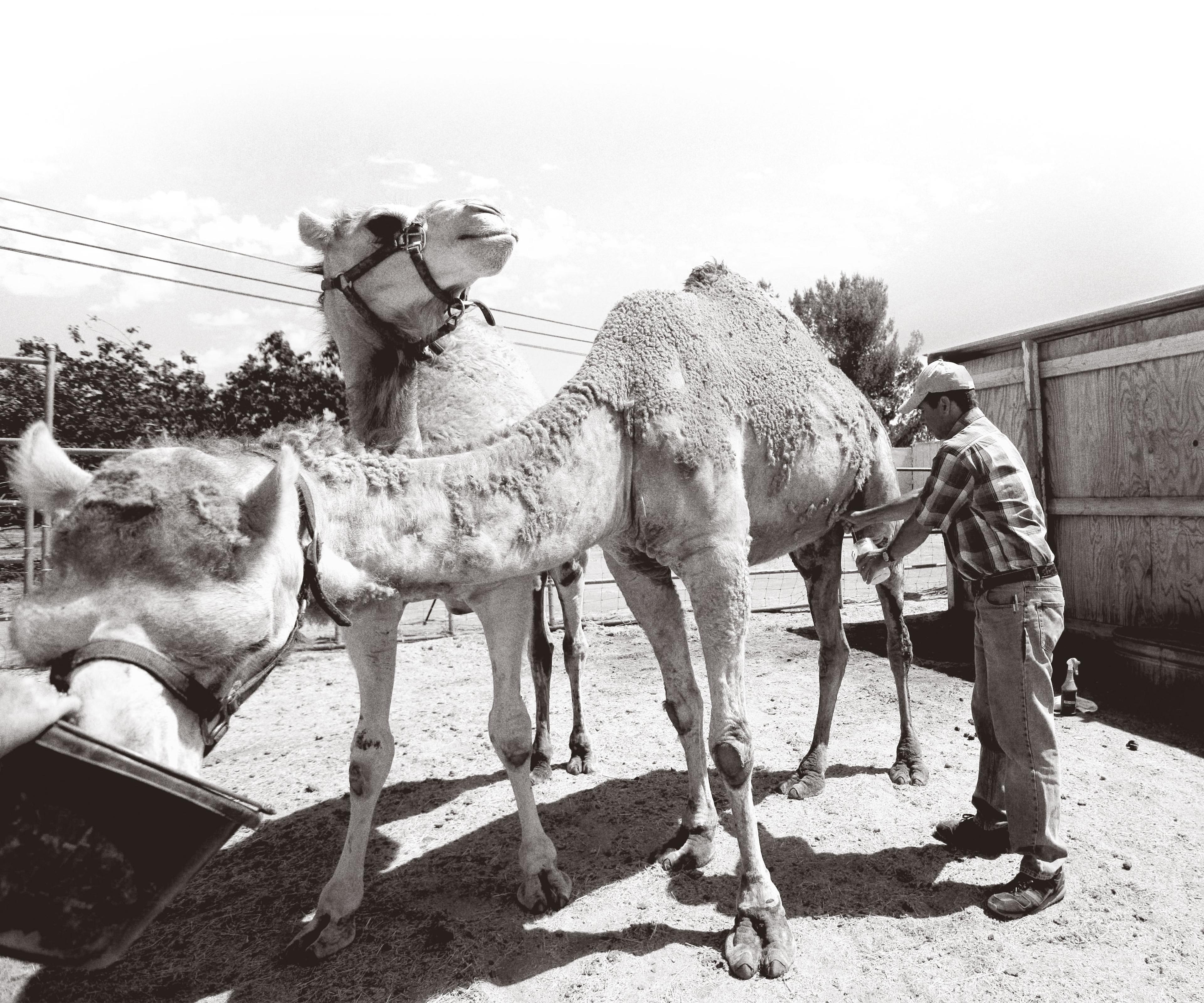
Camel milk is coming to a shelf near you. It may even be there already.
In the United States, a nation dominated by cow dairy, camels might seem like an uncommon milk source. But that is not the case globally.
“Here in the U.S., of course, we just think cow’s milk is drank throughout the entire world,” said University of Minnesota Extension dairy educator James Salfer. “Other areas of the world drink a lot of different milks than we do.”
Camel milk has been a crucial part of people’s diets for thousands of years in Africa and the Middle East. Camels, unlike cows, are well-suited for the arid or semi-arid conditions in these regions.
Now, more and more people in the U.S. want a taste, too. It’s even making lists of 2024’s hot food trends.
“We get calls all the time from people who are looking for it,” said Luke Blakeslee of River Jordan Camel Dairy in Kosciusko County, Indiana. Blakeslee, who runs the dairy with his wife Amber, doesn’t sell the milk. Instead, they use it to make lotions and soaps, and offer camel fibers for sale, too.
Obviously, Indiana isn’t Africa. A camel farmer in, say, Kenya might keep their camels in dry lots — fenced-off areas with limited vegetation — or other types of primarily outdoor enclosures. In four-season regions of the U.S., outdoor-only wouldn’t be a camel’s ideal climate. “You have to think about how you’re going to handle them in the winter. I’m not sure you could open lot them very well in our weather,” Salfer added.
As far as feed, camels aren’t too different from dairy cows in the eating department, at least on a farm. “They’re not exactly ruminants, but they’re forage digesters,” said Salfer. “For all practical purposes, they ruminate like a cow does.” Camels typically have a less rich diet and need a lot more salt, but all in all it’s comparable.
When it comes to milking, however, camels require significantly more finesse for significantly less output.
“With camels, one of the big challenges is that small-scale production is tricky because there’s a lot that goes into getting a regular supply of milk,” said Blakeslee. In the U.S., cows have been bred to produce more milk. Camels? Not so much. Even in the right conditions, production for a camel will be 15 to 20 pounds a day — or about 2.5 to 3 gallons, according to Salfer. By comparison, the typical cow on a dairy farm in America may be producing closer to 9 gallons.
Camels mature more slowly, have longer gestation periods, and take more time after birthing a calf to start milking — all factors that keep production levels lower.
Along with lower production, camels mature more slowly, have longer gestation periods, and take more time after birthing a calf to start milking — all factors that keep production levels lower.
Further, camel dairies are subject to all the challenges of other dairies, like acquiring USDA approvals, dealing with a perishable product, and shipping their product nationwide, all with less milk to begin with.
“If you don’t have the numbers, then you’re not going to be able to supply a customer base,” said Blakeslee. He and his wife don’t have the goal of a large milk-production dairy.
Another challenge is basic biology — camels don’t make their milk nearly as available as cows.
“Our cows have been bred to naturally let down their milk without a calf around,” said Salfer. “They’ll walk into the milking parlor and they’ll hear milk pumps running and with maybe a little prep, they let it down.”
The milk letdown process refers to the ejection reflex that moves milk from sacs within the mammary glands to the teat of a cow or a camel, where farmers can access it. With camels, the calf must be present or the mom will not let down her milk.
“We’ve really spent a lot of time making sure that the calves are healthy and that the mother and calf are very well-bonded. Because if anything messes that up well, there goes the milk supply,” said Blakeslee.
According to a study published in Animals, camels require only half the water input of cows.
So, how hard is it for the American consumer to find camel milk as it stands today?
“It depends how close you live to a Whole Foods,” said Blakeslee.
The grocery chain carries pasteurized camel milk, and despite the U.S. hosting only two camel dairies that are licensed to sell milk to consumers, it’s reasonably accessible to buyers online. That said, with the limited number of suppliers — there’s one camel for every 18,000 cows in the U.S. — and high costs of production, those who want it have to pay. The cost of a single pint of camel milk online hovers around $20 (not including shipping), compared to just over $1 for the same amount of cow milk.
Camel milk goes for $11.99 at the Middle Eastern grocery market near this reporter’s Minneapolis home. Like the price, I did not find it comparable to cow’s milk in flavor. The camel milk is bright white and has an almost grassy smell. The weight of the milk is heavy on the tongue, silky and thick, more akin to half and half or cream. To the slightly sugared note that cow’s milk carries, camel milk has a more savory offering. Camels require a high level of salt intake, and it heavily presents itself in the milk’s flavor profile. Where cow’s milk has a mostly one-noted, subtle sweet flavor that drops off quickly, camel milk is more complex. The saltiness gives way to an earthy aftertaste that lingers longer than any flavor cow’s milk offers.
Would I say cow’s milk and camel’s are similar, tastewise? No. Would I reach for camel milk again? Yes! For the sake of objectivity, I even shared with my household’s pickiest palettes — my dogs. They couldn’t get enough.
Camel milk has other benefits, too: It is a solid source of vitamins and minerals. In fact, reports have found a serving of camel milk contains three to five times more vitamin C than cow milk. Iron is a prominent mineral in the milk, with six times higher concentration than in cow dairy. It’s low in sugar and cholesterol and is said to be more easily digestible than cow milk for those who are lactose-intolerant. While the potential medical benefits remain unproven, proponents of the healing properties of the milk claim it can aid drinkers with diabetes, asthma, autism, and more.
“Most people who are pursuing camel’s milk are doing it for some sort of medicinal purpose,” said Blakeslee.
“The greatest, the most healthy camel’s milk that most people are pursuing is unpasteurized, and that, of course, you will not find in a store.”
The medicine seekers, typically, are on the hunt for raw camel milk, which is harder to get.
“The greatest, the most healthy camel’s milk that most people are pursuing is unpasteurized, and that, of course, you will not find in a store,” said Blakeslee.
Like cow’s milk — and any other animal’s, for that matter — camel milk is subject to stringent regulations, leaving it a part of the ongoing raw milk conversation. In many cases, to get your hands on the raw stuff, said Blakeslee, “you’d have to have a relationship with a dairy and you’d have to be part of a herd share or private member agreement. And those vary state by state as to what is allowed.”
For example, only Missourians can order raw camel milk to their doorstep from Desert Farms, a web-based company that sources milk from small camel dairies and ships a variety (raw, pasteurized, frozen, powdered, etc.) nationwide.
In addition to potential health benefits, camel milk has deep cultural connections in Africa and the Middle East and holds religious significance for some Muslim communities. In the U.S., these communities are searching for local access to culturally significant foods, like camel milk.
For example, a group of Somali community leaders recently traveled to Camelot Camel Dairy — one of the nation’s largest, located in Colorado — in hopes of starting a similar operation in their state. The group, with the University of Minnesota’s Regional Sustainable Development Partnerships, wants fresh camel milk in Minnesota, which hosts a population of around 76,000 people of Somali descent.
While operating a camel dairy may come with challenges, one potential pro for choosing camel as livestock is sustainability. According to a study published in Animals, camels require only half the water input of cows. On the flip side, the animal’s ammonia emission — a toxic byproduct from the decomposition of animal waste — is just 10-15 percent of cows. Camels are also pals to anyone looking to “clean rangelands invaded by brambles, thistles, and nettles,” the study said, as they will happily eat that up.
Regardless of why consumers go in search of the milk, it seems like more and more of them will be able to find it in the coming years. According to FoodDive, worldwide camel milk sales are valued at $1.34 billion now, and are expected to increase 4.1 percent through 2032.
Could there be a time in the future when we see more camel dairies all across the U.S.?
“You know, almost anything’s feasible. It’s going to be a lot different style of dairying,” said Salfer, “But I think there’s clearly a market for these products.”
It takes an enormous amount of confidence — delusion, probably — to tell people how to live. This is the perennial conflict of the advice columnist, who reviews the pleas of desperate individuals and attempts to give knowledgeable, compassionate guidance on their most pressing issues.
In the realm of climate-related advice, my remit at the media outlet Grist for about five years, most people would be very happy if some reliable authority figure simply told them what to do. I believe that when you write to an advice columnist, you are asking another person to simplify a complex problem. But the maddening thing about climate change is that every action that mitigates carbon emissions carries unsatisfying caveats or uncertainties — and usually, a presumption that you will have to change ingrained personal habits.
This advice column had existed for over a decade before I took the reins. The older, beloved version offered counsel on individual choices one can make to lead a climate-conscious lifestyle, from the least-toxic household cleaners to the proper disposal of sex toys. Under my authorship, the column would suggest, gently: Perhaps there are systemic causes of ecological collapse that would be more deserving of mental and emotional energy than the merits of making your own coconut oil lube.
I felt an enormous amount of guilt when it came to questions of consumer responsibility. It’s not because I am a particularly reckless or profligate shopper, but I do have a hard time caring about the environmental virtues of one laundry detergent versus another, or the climate consequences of a dead vibrator languishing in the landfill. And yet hundreds of readers had written in over the years because they did care, which made me wonder what was wrong with me, an ostensible environmentalist.
Questions of eating — grocery shopping, meal planning, food waste — do feel like they bridge the gap between consumer responsibility and systemic overhaul. Agriculture occupies an enormous segment of national carbon emissions, and is responsible for any number of crimes in the realm of water contamination and air pollution. And if demand dictates the market, a meaningful consumer movement could theoretically usher in the widespread use of environmentally responsible ag practices.
I fielded many questions about which vegetable has the lowest ecological footprint; which forms of dairy are acceptable for a consumer worried about methane; whether seafood is the most climate-sustainable form of protein. I would look at charts and tables and call academic experts and research things like carbon soil sequestration, the relative water intensity of crops, and the sins of various fertilizers. I would respond to curious readers about the best farming practices to preserve soil and climate and water tables, with the helpful guidance that one should seek out food that was grown using those methods.
Therein, the problem. The unfortunate truth is, as a consumer, the main indicator of how a potato is farmed or a cow is raised is the produce sticker or package label. These labels are famously amorphous and unreliable. Gallons of ink have been spilled over the utter meaninglessness of the “natural” label, the debatable virtue of “organic,” the ambiguity of “cage-free” and “pasture-raised,” and the unverifiability of “regenerative” or “low-carbon.” And even if you accept that such signposts are fallible, you may be discouraged to learn that even the farmers with the most environmentally conscious intentions are, for example, relying on rather tenuous and theoretical calculations to certify their fields as carbon-positive.
Not very satisfying! And if grocery store aisles are a sea of lies, where do you go? There was an oft-used dictum in the early days of the Slow Food movement: “Know your farmer.” You may have seen it on a canvas tote bag in jaunty serif font. The implication was that one could have faith in the environmental and nutritional integrity of one’s food only by understanding its source, a feat presumptively accomplished by shopping at farmer’s markets, researching direct-purchase farm shares, and getting deeply involved with your local co-op.
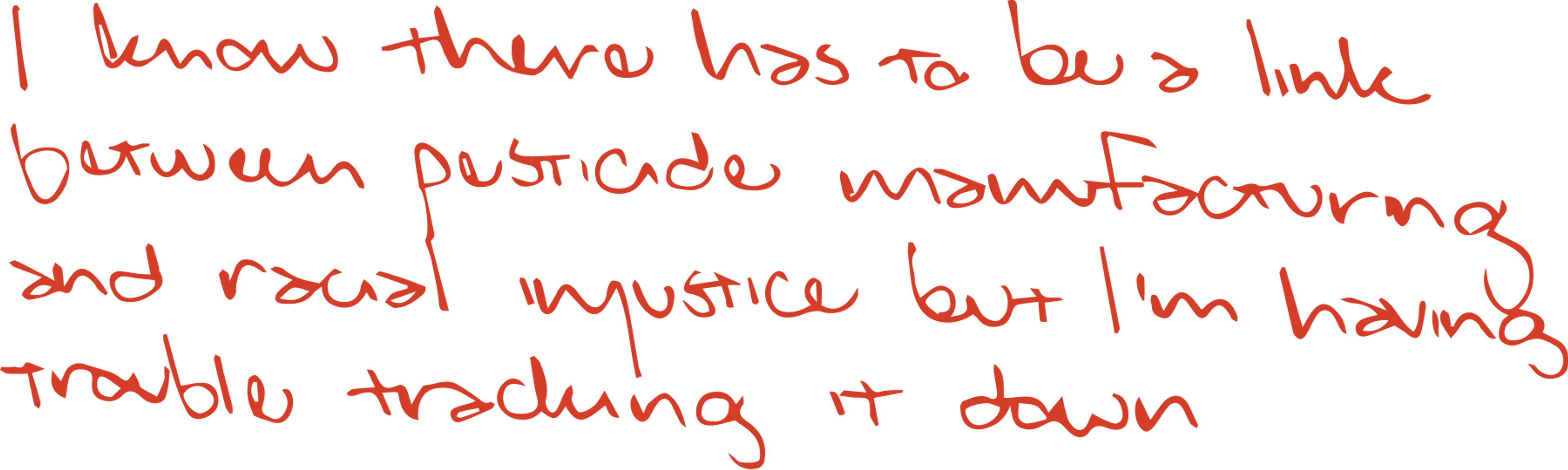
This school of sourcing doesn’t necessarily accomplish a more climate-friendly food system. It does, however, suggest a more decentralized one where consumers and farmers are separated by fewer, more transparent middlemen. This would, in theory, allow for a true free-market exchange: Consumers could convey their desires for more environmentally conscious farming practices to producers, demonstrating that an eager market exists for such products.
But recommending this rather boutique and high-effort method of food shopping, I grew to realize, only fit a fairly passionate segment of the American public — and boy, did I try to join that segment. I believe that if you’re going to give advice, you should at least try to live that advice. Since I was not going to become a farmer, environmentally motivated or otherwise, I started attempting to be the model food shopper.
I carried home pounds of farro from the co-op on my bicycle. I spent a shocking amount of money on meat, poultry, and eggs from small, (ostensibly) sustainable farmers, which partially inspired me to try veganism for a month. I went to two farmer’s markets a week to purchase locally grown produce. I tried CSAs and plant-based meal kit delivery services, and then canceled them due to the expenditure of carbon emissions in transportation and packaging waste. In the ultimate opportunity for the free-market exchange of consumer-producer preferences, I briefly dated an organic farmer and desperately tried not to be bored when he explained his cover crop methodology.
And I began to feel annoyed! I wanted to buy the Perdue chicken because it was cheap and the conventionally farmed supermarket lettuce because it was closer to my apartment, and sometimes I wanted to be lazy and sleep in on Sunday mornings and not walk to the farmer’s market in the relentless Seattle drizzle. I wanted to eat a cheeseburger at a bar and not care about where it came from! I didn’t want to talk about alfalfa on a date! I love food and I love cooking and I wanted it to be easy, not a source of guilt over my own hypocrisy as an alleged expert on climate-friendly lifestyles.
I realized I was building a lot of resentment around maintaining a climate-conscious diet. Conscious is really the operative word here: You can wring hands and shake heads over fast food and Instacart and prepackaged meals of inscrutable origin, but the cultural shift to easy, no-thoughts-required meals has already passed. It is a hard sell to ask someone to go from putting very little work or thought into a basic survival skill (feeding oneself) to devoting hours to research and sourcing.
Yes, among the little segments of our daily lives, the one occupied by food has potential for real planetary impact. And because eating is such a basic part of life, it feels like a logical starting point for reducing one’s carbon footprint. But food is not basic — every bite you take is intricately wrapped up in emotion and habit and comfort and craving. And all of the opacity of the American food system burdens the pursuit of an environmentally sound diet with disheartening and frustrating questions: Why does it require so much extra effort? Why does this cost so much?
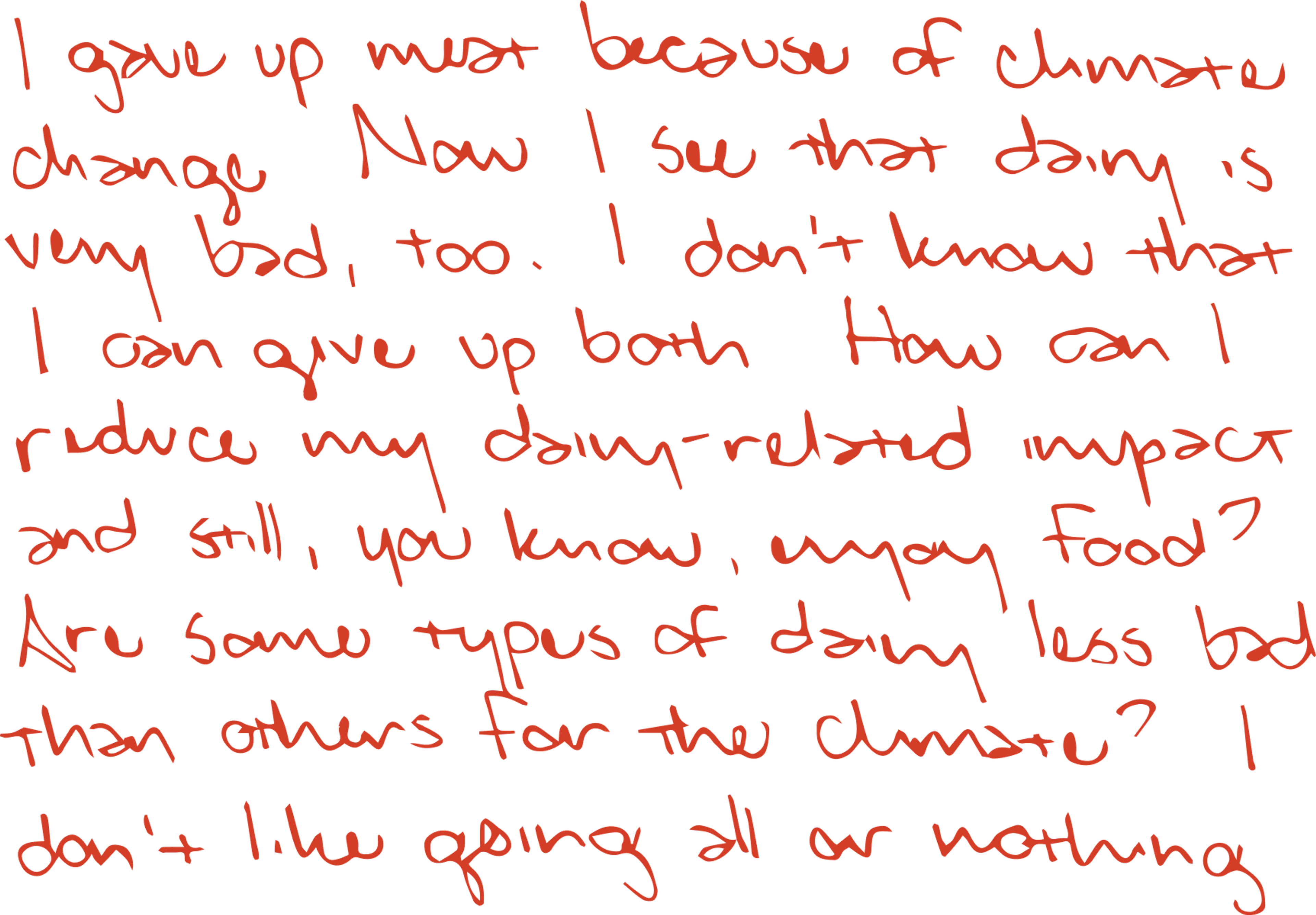
As it turned out, I ended up proving to myself the whole point of taking over the column: Placing the onus of staving off climate change on consumer choices is a self-defeating proposition. Convention and ease — to say nothing of affordability — are tempting mistresses, and when you succumb to them you feel disgusted and defeated that the system has won. It’s too much psychological drama to go through for a salad!
In a refreshing departure from the rules of the advice column, there is no tidy lesson or teachable moment here. I only offer the suggestion that a system as Byzantine and beset by problems as American agriculture is not fixed by the insistence that consumers hold the supreme power of change. It’s also a philosophy that embodies a certain sort of hubris, that the one who buys is driven by purer motives than the one who produces. But that, unfortunately, is not as easy to sell on a tote bag.
This article first appeared in Ambrook Research Journal V. 01, a limited-edition print publication.
Subscribe on your favorite podcast app: Spotify, Apple Podcasts, Overcast, Pocket Casts, Amazon, or via our RSS feed: (https://feeds.megaphone.fm/onlythingthatlasts).
Transcript
Sarah Mock: They say there’s only one thing in the world worth working for, worth fighting for, and worth dying for. It’s not love or money, not vengeance or virtue. It’s land.
Here in the US, we have a particularly long history of working and fighting for land, though the way we do it — and think about it — has changed somewhat over the years.
Bruce Sherrick: If my highest and best use for the land I own is to develop a subdivision, and there’s a really strong demand for housing and the people who say: “We need more houses. We need more houses. We need more affordable houses.” and I’m building some low cost condos on the edge of the property that are going to be great for people who are just breaking into the housing market. One group is going to say that’s fantastic. And another group is going to say you’re ruining our farmland.
SM: So we fight — because even though there is a lot of farmland in the US, there’s not infinite farmland. And every day a little bit disappears, beneath houses, roads, and strip malls, even beneath the ocean. And despite the US’s huge landmass and our comparatively low population, space on the land is hard for the average person to acquire, which can impact everything from housing access to what’s available at your local market. So one group says “that’s fantastic” to the new subdivision. And another group says “you’re ruining our farmland.”
The reality is, everything from retirement accounts and insurance policies to the quality of local public schools and your favorite beaches are often entwined with the current and future state of US farmland. Not to mention that going forward, we’re making big bets that farmland can help save us from climate change by sinking carbon in soils without putting our national food security at risk.
So to understand how the existence, value, costs and benefits of our agricultural lands affects us all, join me, ag journalist Sarah Mock, for a journey into America’s mysterious farm landscape. Along the way, we’ll unpack the memory and emotion that are wrapped up in the land around us, and understand why our countryside is such an enduring source of myth and motivation, to work, to fight, and even to die for.
The Only Thing That Lasts, an Ambrook Research production, coming this Winter wherever you listen to podcasts.
Credits
The Only Thing That Lasts is an Ambrook Research production. This podcast is written, produced, and mixed by me, Sarah Mock. Our editor is Jesse Hirsch, with support by Ali Aas and Bijan Stephen. Technical Support by Dan Schlosser, and general support by Mackenzie Burnett and the whole team at Ambrook.
A final note, Ambrook Research, the media outlet that produced this podcast, is 100% editorially independent from Ambrook, the fintech company that funds it.
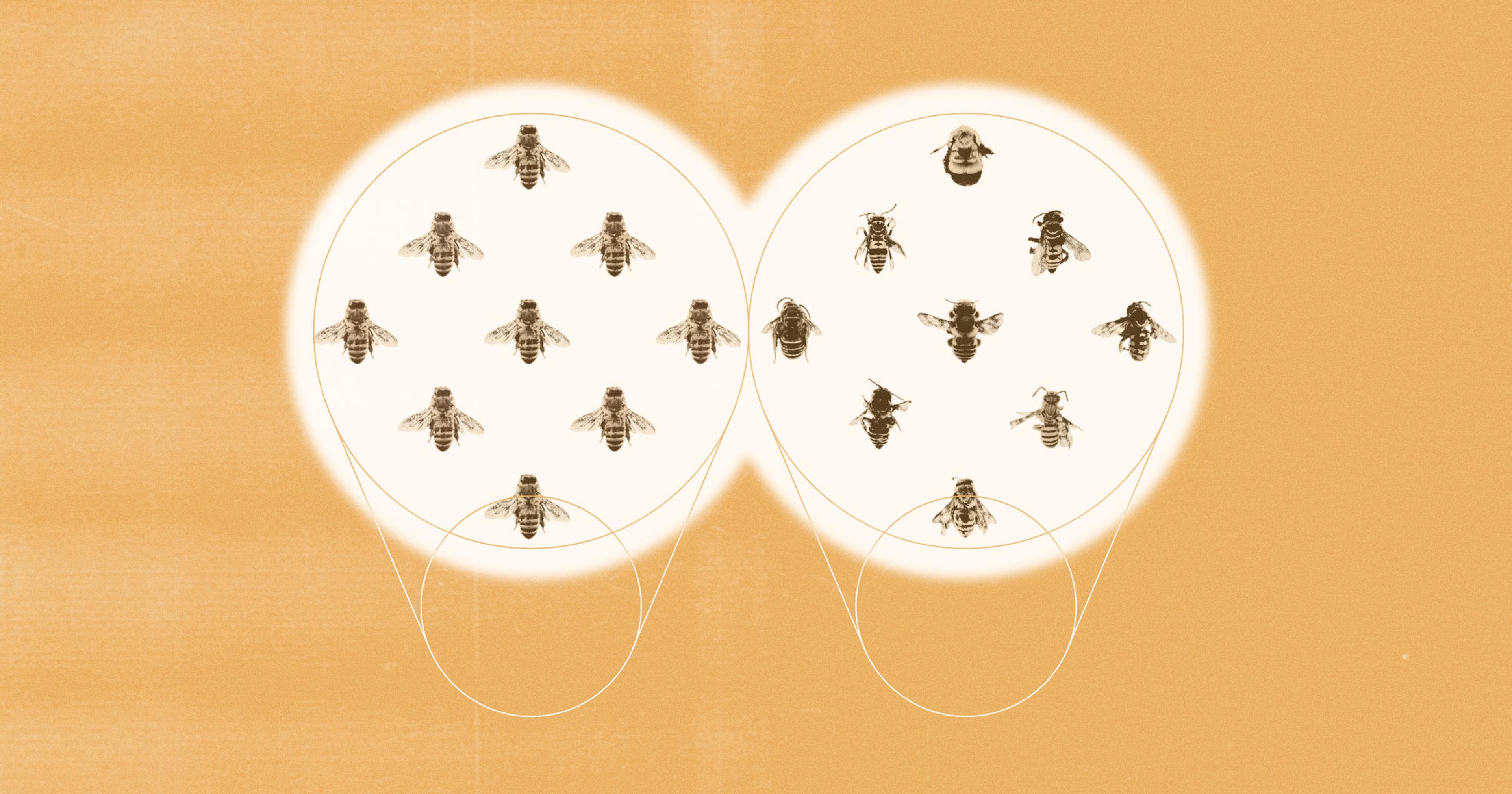
When I told friends and family I was heading to Maine to study bees last summer, everyone assumed I meant honeybees. I think they were picturing me in a white protective suit, stylish metal smoker at the ready. Beekeeping is a popular back to the land hobby in both my rural hometown and New York City, where I now live. There are hives with informational signs in Bryant Park, two blocks from Grand Central Station, with a public bee-cam you can monitor from anywhere. Beehives have been offered as a luxury apartment building amenity; pollinator gardens are cultivated in every borough and all over the country. Through media reports and outreach efforts, many people have learned that bees are in trouble and they need our help.
That said, though keeping urban honeybees has been widely promoted as a conservation activity, I’d recently seen dissenting voices in the naturalist community. I was going to Maine to learn about wild bees instead.
“We’re saving the wrong bees,” instructor Nick Dorian said bluntly, calling honeybee hyping efforts “beewashing.” According to Dorian, one hive of honeybees can consume the nectar and pollen that could feed 100,000 wild bees. Supplementing diverse wild bees with the unhealthy, voracious honeybees in a recreational hive can seriously impair a biodiverse ecosystem.
Native bee species do have special skills as native plant pollinators, but putting a dollar sign on those skills may be counterproductive. The intrinsic value of a given bee’s existence and the unplumbed interdependencies between co-evolved plant, fungi, and animal species cannot be priced. When illnesses are introduced or species endangered, we stand to lose much more than the cost of a pint of blueberries. Such is the toll of cultivated hives.
My bee school was offered at the Eagle Hill Institute in Steuben, Maine, a few towns north of Bar Harbor. Led by PhD students Dorian and Max McCarthy, The Natural History of Native Bees: Biology, Ecology, Identification and Conservation promised an education in everything bee-related — as long as it wasn’t a farmed bee.
Although I’m an experienced birdwatcher, before signing up for this class I’d never really thought about varieties of bees. I knew there were honeybees, the species I would soon learn as Apis mellifera, and some yellow fuzzy bumblebees who seemed angry most of the time. Turns out there are 4000 different North American bee species!
“We’re saving the wrong bees,” Dorian said bluntly.
They come in gorgeous blues, greens, and reds as well as good old yellow and black. Most native bee species are solitary and nest in single cells dug in the ground or plant stems, not communal hives. Unlike honeybees, these species don’t have queens or drones. A third of bee species specialize in eating pollen, not gathering nectar. Fifteen percent are “cuckoo” bees who don’t make their own nests at all, instead sneakily laying their eggs into another species‘ nest. They range widely in size and preferences for food, nesting habitat, and temperatures, and they are only active and likely to be seen at particular months or weeks of the year. As in birdwatching, these differences help watchers identify bee species.
The course was Sunday to Saturday; from 9 a.m. to 9 p.m. we’d move from lecture to microscopy, to field work, back to lecture, then finish with evening discussions and movie viewing. Everyone at Eagle Hill shares a passion for natural history so at each meal I learned about my classmates’ gardens, research projects, and studies.
Dorian and McCarthy took inspiration from ornithologists in writing a new online field guide, Field Guide to Wild Bees, and in designing the class. Birdwatching is no longer a private list jotted down in the back of a book; more and more birders contribute to the international research database behind the EBird and Merlin apps. Bird lovers have been using increasingly powerful citizen science tools to document their research-grade field observations.
The interest in urban beekeeping and pollinator gardening show how much people already love bees and want to help. But my instructors insist that to save wild bees, you shouldn’t start a rooftop apiary or buy a butterfly bush. Instead, watch carefully and use the INaturalist app to document and identify. Once you see what bees are around, you can help them stay healthy and raise their families.
Whenever I hear the buzz of a bumblebee I consider how I used to be afraid the bees were angry at me.
“No one who has seen a bee nesting in a stem will want to cut that down. Once they see it, they’ll guard it with their life,” Dorian explained, miming an older gardener he had worked with, looking stern while covering the stem with a tomato cage.
The first morning of class I learned about the bumblebee’s buzz. They are sonicating — vibrating their wings as they fly. When they land on plants, their vibration is just the right frequency to release pollen from crops like tomatoes, chilis, and peppers. Without the buzz, there would be no blueberries.
In the afternoon there was a break in the rain and the bumblebees, lovers of sun, came out. For the first time, when I heard their buzz I knew they weren’t warning me off like a rattlesnake; they were doing their incidental job of pollinating while feeding themselves and their families. I recorded my first two field identifications of bee species, the two-spotted bumblebee (Bombus bimaculatus) and half-black bumblebee (Bombus vagans), and I felt my experience of being outside shift and deepen.
How to Help
Our wild bees are being threatened by widespread habitat destruction and hit hard by climate change. Their life cycles are highly dependent on temperature and the timing of emergence from hibernation, when their food and nesting conditions are ideal. The ubiquitous use of pesticides, fungicides, and herbicides can imperil all of this — and put our food supply at risk.
“If it kills a mosquito, it kills a bee,” said Dorian. “Wild bees are critical for production of crops like blueberries, pumpkins, and apples, and loss of wild bees from farms means that farmers face greater risk of not having enough pollination services.”
Once I learned about the pressures on our wild bees, I understood that local rooftop honey was not going to be the solution. Happily, city dwellers like me can help support the wild bee diversity around us while enjoying our time outside.
If you garden at all, even just in a flower pot on a stoop, you can keep the needs of pollinators in mind. Provide food in the form of native species that flower at different times of year. Make mini nesting habitats by leaving leaves and stems over the winter. Refrain from using pesticides, fungicides, and herbicides, even the organic ones.
But can you help bees by hanging out in urban parks, or simply taking a summer walk? Yes! When I got back to New York City after bee school, I noticed wild bees foraging in scruffy street side weeds and in cultivated flower beds. Yet for most bees scientists lack basic natural history data, i.e. where bees are, when they are active, and what they are doing throughout their life cycles. Through INaturalist, citizen scientists like me (and you?) can make meaningful contributions by recording in detail what we see, a valuable contribution to both scientific research and pollinator advocacy.
Now whenever I hear the buzz of a bumblebee I consider how I used to be afraid the bees were angry at me. I think of the blueberries, pumpkins, and peppers that exist because of this special vibration. I consider the tiny baby bee larvae, fed by pollen. And how every part and behavior of each wild bee species evolved over millions of years to work in competition or cooperation with the other living and nonliving parts of their ecosystem. The bees would be right to be angry, because our human actions are destroying this system. It is time to listen to what the bees are actually telling us — and to take action.
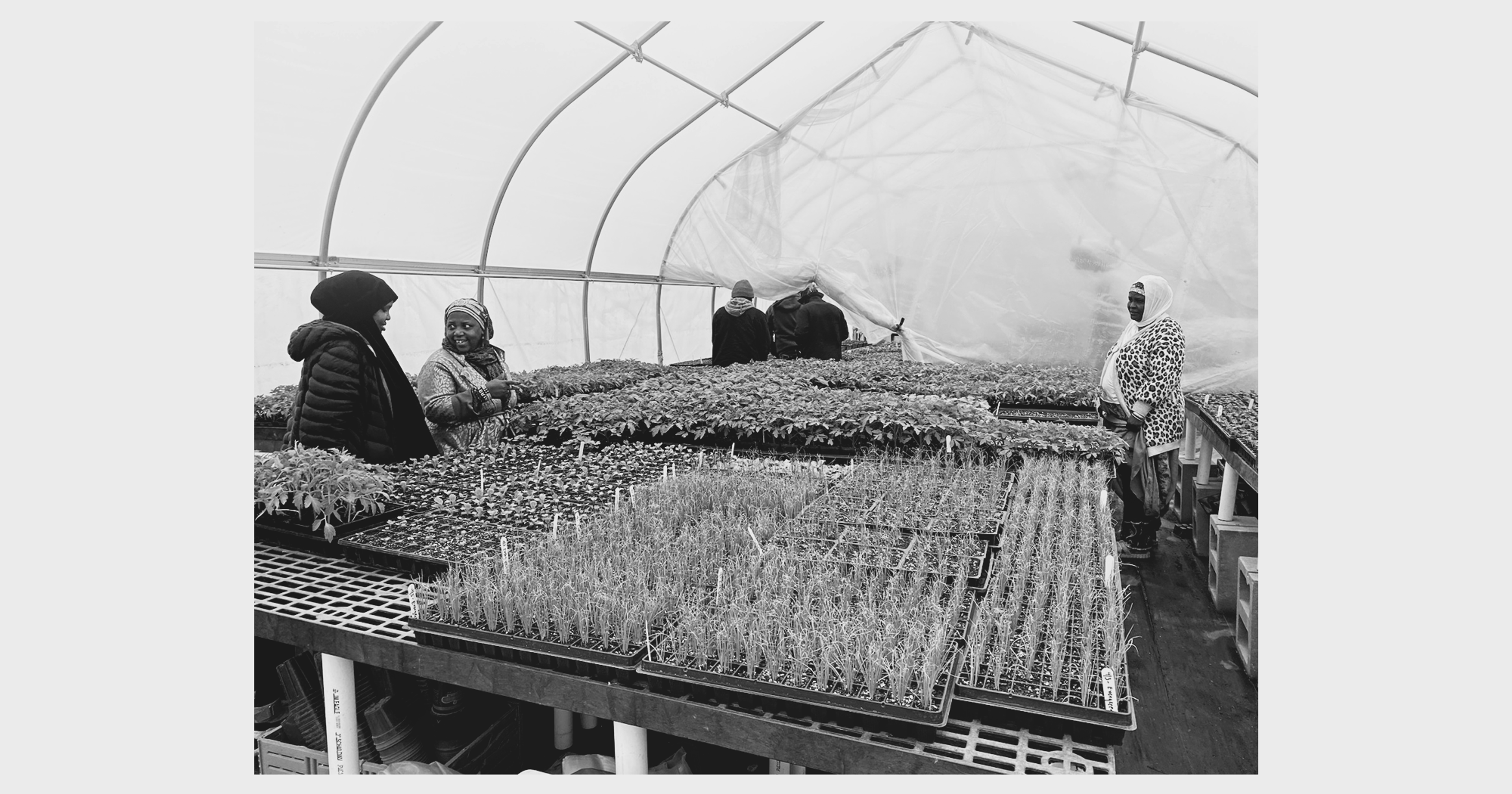
Throughout Maine’s growing season, over two hundred Somali Bantu families travel the state’s winding back roads to the tiny town of Wales. They bus and carpool back and forth from the urban center of Lewiston, 20 minutes away. Their destination is a 103-acre farm of rolling hills, covered in waving stalks of flint corn. As this year’s season comes to its close, Muhidin Libah sits in the farmhouse surrounded by seedling catalogs, planning the farm’s crops for the next growing season.
Many of the crops grown at their Maine farm are familiar to the immigrants from their farms in Somalia, although their cultivation is modified to accommodate Maine’s shorter growing season. “In Somalia we grew yams,” Libah explained, gesturing to where a list of the farm’s crops and profits from the previous season cover one kitchen wall. “We grew all kinds of tomatoes, hot peppers, bell peppers. Swiss chard was wild in Africa; we never grew Swiss chard but we had it as a wild plant.”
Maine holds the dubious distinction of being one of the whitest states in the U.S. As of the 2020 Census, 90.8% of Mainers were Caucasian; it is not unheard of for a Maine child to grow up without meeting a person of color. So when the Somali Bantu community began to arrive in the Lewiston area in 2001, some Mainers did not welcome them with open arms. In 2002 the mayor of Lewiston wrote an open letter to Somali immigrants asking them to stop coming to his city. In 2006, a severed pig’s head was thrown into a mosque in Lewiston.
While many in Maine did embrace the arrival of the Somali refugees and supported the community in the face of this hostility, many still wondered: Isn’t Maine awfully cold for people from an African nation? Why would they want to live here of all places?
Maine was attractive to Somali immigrants for the same reason that it appeals to transplants from Washington, D.C., or California. The state has a low crime rate, good public schools, and affordable housing. Somali immigrants believed that Lewiston would be the best place to restart their lives.
“Lewiston had a bias,” explained Libah, executive director of the Somali Bantu Community Association (SBCA) of Maine, “They had a myth, saying that ‘Oh these people are coming to Maine because of the welfare system.’”
“They had a myth, saying that ‘Oh these people are coming to Maine because of the welfare system.’”
Somalia has been a country of conflict for generations, its current civil war raging since 1991. The Somali Bantu, a minority ethnic group, are a subsistence farming population who live in small villages. The Bantu are a peaceful people whose settlements are often destroyed in the conflicts of other ethnic groups.
Libah arrived in Syracuse, New York, from Somalia in 2004, after growing up in Kenyan refugee camps. A proficient English speaker, he was able to understand the complex forms and paperwork of this new country, leading to requests from refugees in Lewiston to help them organize and form a group to help support each other.
“I started loving Maine,” he admitted. “I started staying longer, bringing my wife with me — and she loved Maine, so she said you know what, we are moving.”
The displacement of the Bantu people in Somalia eventually led to the resettlement of Bantus across the United States, including the large settlement in Lewiston, Maine. Today there are over ten thousand Bantus in the small Maine city, whose overall population is just 38,493.
“The Bantus are land cultivators, they grow food,” said Libah. “They may have a sheep or a goat or a cow, but they are not animal rearing communities. We live in permanent settlements, we don’t move. On the other side, the people who are now the powerful people in the country are the camel herders, cow herders, and goat herders.”
Libah helped to found the Somali Bantu Community Association to help refugees resettle and understand how to live in the United States. The first challenges were teaching Somali immigrants how systems worked within the U.S. “In Somalia you have a simple life,” Libah said. “You don’t have to pay for anything, if you need land you just go to the chieftain and he assigns you a piece of land, and it is yours forever.”
“They said farming, farming, farming. We need a piece of land to farm, we need to farm.”
When he asked the community what they needed, the answer was universal.
“They said farming, farming, farming. We need a piece of land to farm, we need to farm.”
The Somali refugees had largely been relocated to urban areas such as Lewiston, even though their culture is one of land cultivation and agrarian lifestyle. The act of farming reminded the Somali Bantu refugees of their homeland and the lifestyle they lived before their world was torn apart by war. It also gave them control over their food source.
“Think about the refugee resettlement process and what that means for an agrarian culture,” Ashley Bahlkow, a program adviser for the Somali Bantu Community Association, told Katy Kelleher for Down East magazine, “It’s resettling folks with few resources and in urban settings, because that’s where some of the few resources we do offer exist, like public transportation.”
Libah set about trying to find farmland. In 2014 they were able to lease a small plot of farmland in North Yarmouth, Maine, enough to accommodate 20 farmers. The next problem was what to grow.
“I was scrambling just to get some seedlings, doesn’t matter what kind,” remembers Libah. “But I did not know that people had corn seeds in their luggage from Africa. I saw something sprouting, coming out of the ground, and I said what is that? That’s corn, they said, from Africa!”
That first year, the developing farm operation grew African flint corn or maize, a crop that can be eaten or ground down to make flour. Soon they found more land to lease, and were able to accommodate 42 farmers in a plot in the nearby communities of New Gloucester and 36 more at a farm in Sabattus. But all of the driving was taking its toll.
“It was driving all day long, just to see what is going on at the farm,” said Libah. Because they were leasing the farmland, rather than owning it outright, they were unable to add infrastructure such as a wash station to prepare their produce for market. They were also unable to amend the soil — often necessary for a successful crop in Maine’s mixed terrain.
After years of moving from one farm to another while searching for land, the SCBA was finally able to sign a 99-year lease in Wales. The new farm could accommodate all of the interested growers in the Somali community. With this acreage, Libah has been able to offer land both to those wanting to grow for themselves and those interested in growing for market.
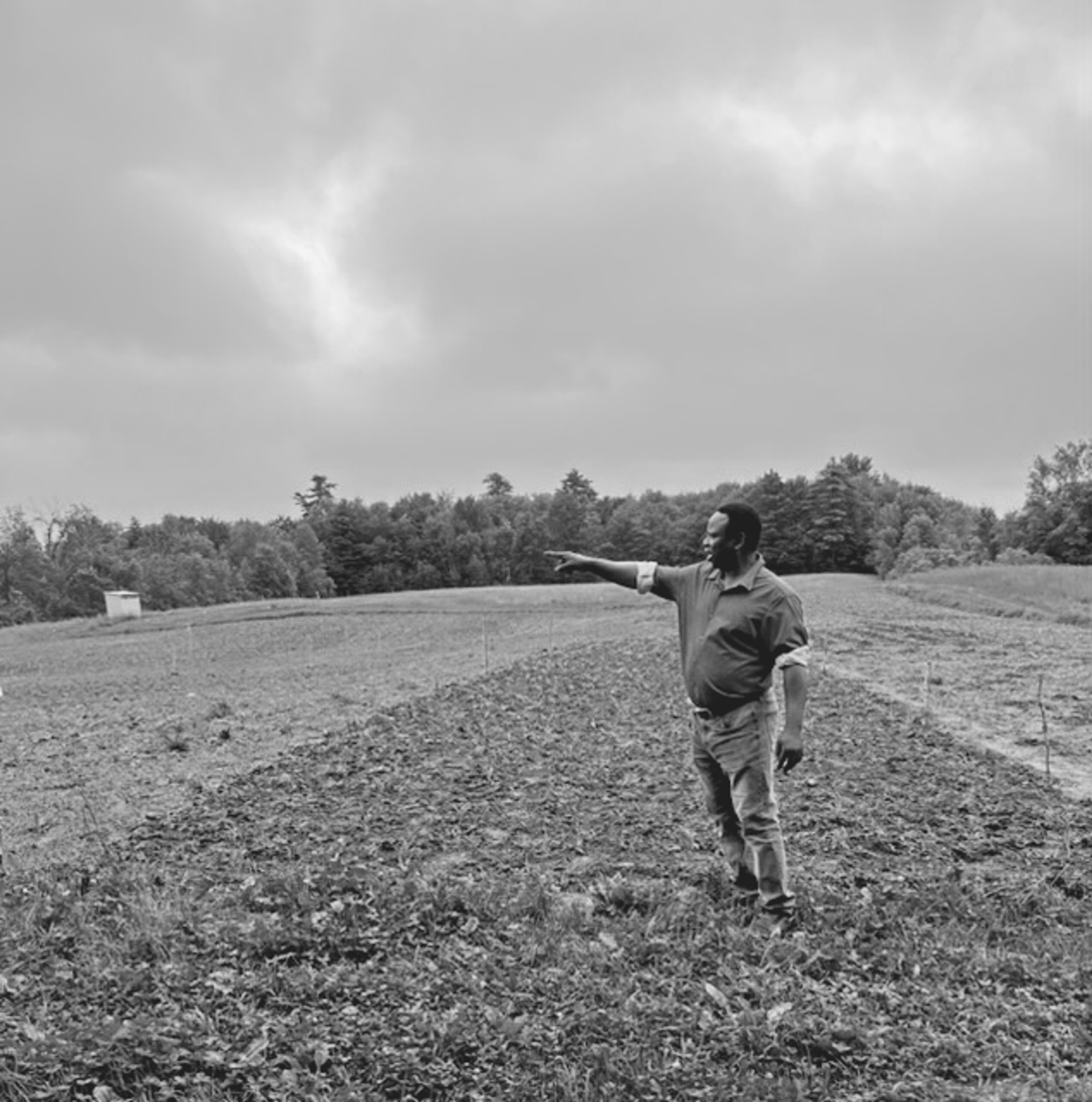
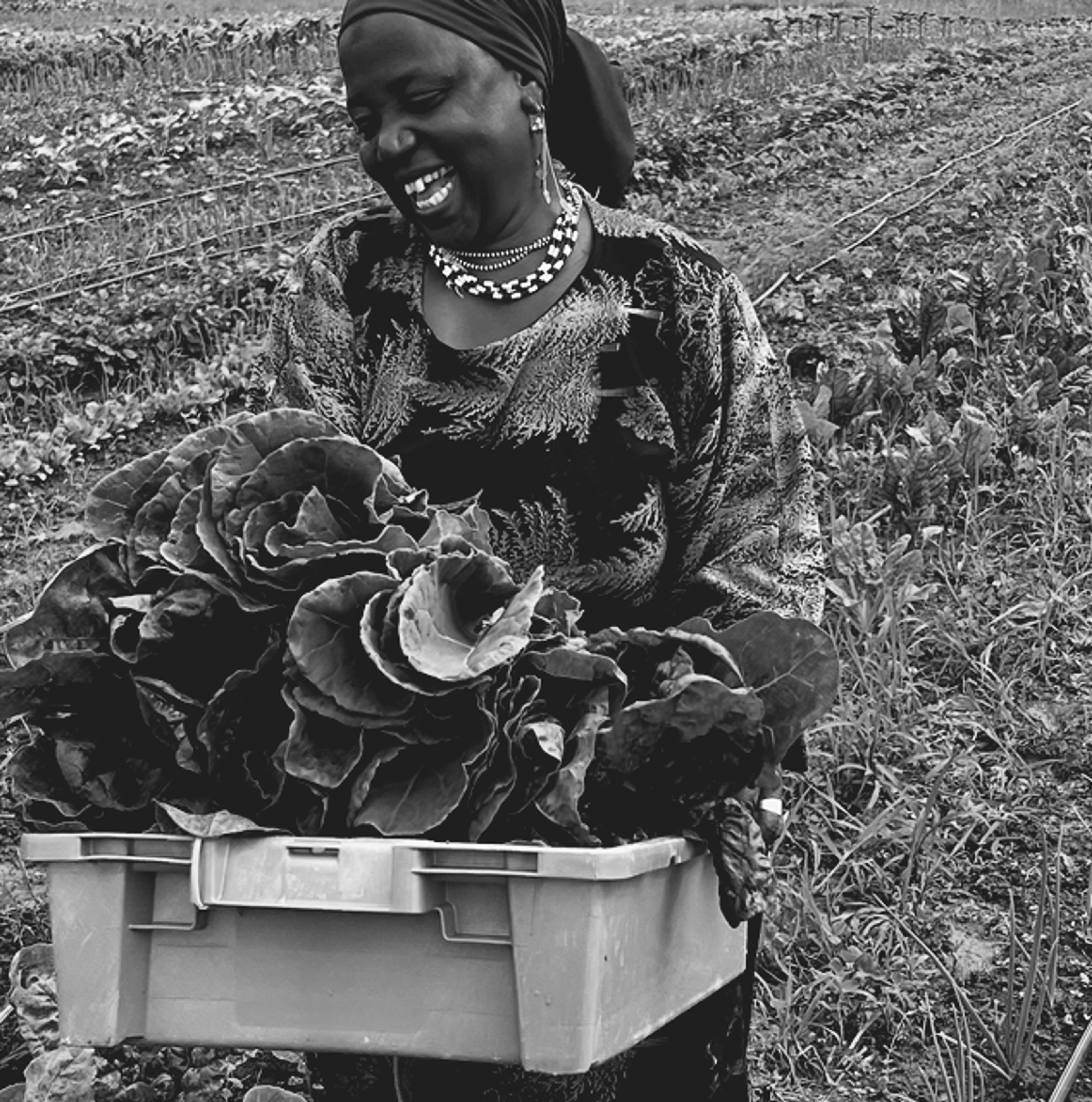
Muhidin Libah gesturing over the fields of Liberation Farms. Photo by Kelsey Kobik.
·Habiba Salat showing off harvest of Swiss Chard & greens. Photo by Somali Bantu Community Association.
“One portion is the community garden,” Libah explained as he walked across the sloping terrain of the land they have named Liberation Farms. “We prep the land, divide the land, and we put names on the stakes. People will come and access the land. Everything they grow we have no control over, they produce whatever they want, and they take it home. If they have more than they can consume, they can contact us and we sell it for them.”
But Libah is most proud of the cooperative growing system at Liberation Farms. There are 45 farmers who are part of the cooperative, which grows produce to be sold in their farm stand and at local farmers markets, as well as corn that is used by a host of companies along with the community’s own flint corn tortillas sold directly across the state of Maine.
Growing in Maine is challenging even for farmers who have grown here their entire lives. The Somalis admit that 2023 was a rough season; unusually high rainfall damaged some of their corn crops.
“We never had to amend the soil back home in Africa,” he said, “The river would bring fertile soil annually, so the soil was rich forever. We had nine months worth of growing in Somali soil — summer is the three months you cannot grow, it is so hot and the wind is blowing. Here we only have 120 days worth of growing so we are not growing nine months, we are growing three months — it is upside down.”
In spite of the challenges of growing in Maine, the Somalis are able to apply traditional companion planting methods for a bountiful crop. “I’ve noticed that some farmers have the most beautiful way of growing corn,” Lana Cannon Dracup, Somali Bantu Community Association’s farm operations manager, told Down East, “with five feet between each cluster. Then, they interplant things underneath: tomatoes, squash, hardy greens, melons, onions.”
The farm is also home to a small herd of goats and a flock of chickens, which the community uses for meat. They have added a washing station to prepare and package their produce, operate a farm stand during the summer months, and have built three high tunnel green houses since taking over the farm. The neighbors may have been skeptical when they arrived, but the community has thrived in the tiny town.
“The farmers are also setting aside space for cultural events,” notes Kelleher’s Down East piece, “like drumming and dancing, gatherings that can be difficult for a community that largely lives in Lewiston-area apartment housing.”
Visiting in late November, I found Libah focused on planning for the next growing season, while outside in the fields the last ears of corn were being harvested and dried. The farm was preparing for a traditional African market: a gathering of the community where the goats not being kept for breeding the next season are bartered along with other goods.
The farm has grown since the Somali community arrived and now has hoop greenhouses for starting seeds in the spring and drying corn in the fall. Chickens and goats are butchered at a halal slaughtering station and a full washing and processing area has been built for vegetable harvests. Like the hardy flint corn flourishing in their fields, the Somali farmers at Liberation Farms have proven that they can thrive on Maine’s rocky soil.

Sharp’s at Waterford Farm sits nestled into the lightly sloping hills of western Howard County, Maryland. At 530 acres, the expansive property has grown all manner of fruit, vegetables, and meat animals over the decades. Throughout high school and college, I worked at Sharp’s, starting my days with early morning harvests, driving the farm truck out into the fields just before sunrise, headlights guiding my way through corn stubble and irrigation ponds.
In summer 2008, the Sharps, a multigenerational Howard County farming family known locally for their agricultural expertise and willingness to experiment, planted their sweet corn in two different fields. On one parcel, the farmers grew the crop conventionally, relying on the usual arsenal of synthetic sprays and fertilizers.
The second crop was grown using a GMO seed variety, engineered to express one or more genes from the bacterium Bacillus thuringiensis (Bt). With this genetic modification, the corn is made resistant to a range of insects, particularly species of burrowing caterpillars. Sprays with Bt as their active ingredient are commonly used on organic farms. It is by far the main pesticide that I have used over the years, when I’m in a pinch. It’s the pesticide I feel most comfortable using — it targets bad bugs while (mostly) sparing the good ones.
But while Bt is an allowable organic pesticide, Bt corn is not permitted for USDA Organic Certification, which stipulates against the presence of any GMOs on certified farms. Bacillus thuringiensis is found naturally in soil, which allows for its use in organic farming as a pesticide. But once it has been bred into the seed itself using GM technology, it is no longer permitted as an organic input. Once a Bt bacterium has been subjected to the “unnatural” process of transferring its genetic material into a corn seed, it is off-limits for the organic farmer.
The USDA clearly states, “The use of genetic engineering, or genetically modified organisms (GMOs), is prohibited in organic products. This means an organic farmer can’t plant GMO seeds, an organic cow can’t eat GMO alfalfa or corn, and an organic soup producer can’t use any GMO ingredients.”
This commitment to the exclusion of any GMO materials from USDA certified organic operations has been reaffirmed over the years. In both 2016, and again in 2017, the National Organic Standards Board (NOSB), a USDA Federal Advisory Board, voted down the possibility for GM products to be considered for organic approval.
Throughout the 2016 report which preceded the vote, the NOSB makes very stark the wariness both producers and consumers have held for this advanced form of ag tech. The title of the statement, “Report to the USDA Secretary on Progress to Prevent GMO Incursion into Organic,” perfectly captures this circumspection. Indeed, the word “incursion,” meaning “an invasion or attack, especially a sudden or brief one,” appears six times throughout the three-page paper to describe the threat of genetically modified material finding its way into organic systems.
What accounts for this total rejection of GMOs from the world of organics? In an article from 2019, The Cornucopia Institute, a consumer watchdog organization working to ensure “an organic label you can trust,” identified a number of key reasons. To begin with, they point out that “the majority of genetically engineered crops currently on the market have been modified to withstand synthetic pesticides.” It has been estimated that a total 81 percent of GM seeds that are commercially available are engineered for this purpose, and a majority of these seeds are specifically developed to withstand Roundup.
“An organic farmer can’t plant GMO seeds, an organic cow can’t eat GMO alfalfa or corn, and an organic soup producer can’t use any GMO ingredients.”
Notorious for its toxic effects on natural ecosystems and people, glyphosate (branded as Roundup), is synthetically derived, barring it from the USDA’s list of approved inputs on organic farms. It is understandable that with so many GMOs designed to effectively increase the global output of Roundup, organic advocates would be skeptical of the technology as a whole.
That said, not all GM seeds grow into herbicide-resistant plants. One of the most celebrated examples of the application of GMO technology is the papaya. After papaya ringspot virus became endemic to Hawaii, the development of a disease-resistant variety all but saved the industry on the island. Now, the vast majority of papayas grown in Hawaii are genetically modified. In fact, much of the research into new GM crops centers around disease resistance.
Besides corn, Bacillus thuringiensis’ genetic code has been inserted into a variety of other crops to protect against insects, like cotton, soybeans, and eggplant. The cultivation of these transgenic crops does not result in increased herbicide spraying and has been shown to reduce the overall usage of conventional insecticides.
In July of 2019, Under Secretary of Agriculture Greg Ibach spoke at a House Agriculture Subcommittee hearing to recommend the inclusion of genome-edited crops in organic agriculture. Gene-editing methods represent a newer form of GM. These practices rely less often on the insertion of foreign DNA into genetic code (the “transgenic” method), and more on tools like CRISPR to make changes to the native genetic material of a seed (the “cisgenic” method).
Going up against most organic proponents, Ibach presented his case:
“I think there is the opportunity to open the discussion to consider whether it is appropriate for some of these new technologies that include gene-editing to be eligible to be used to enhance organic production and to have drought and disease-resistant varieties, as well as higher-yield varieties available.”
“There’s a fear, if you bend the rules some, people won’t be willing to pay the premium for organic, which you absolutely need in order to make organic sustainable financially.”
Many of these gene-edited crops make alterations to seed that could be achieved through the organic-approved and time-tested method of selective breeding, albeit much more rapidly. In fact, foods that contain gene-edited crops are not required by law to be labeled as such, unlike the more commonly grown and consumed transgenic GMOs. This is because “current regulations say gene-edited foods are analogous to traditional selective breeding and therefore, do not fall under the same review process as GMOs.”
However, setting aside the ongoing debate around whether gene editing should fall under the category of GMO, the organic industry has so far not shown signs it is willing to consider it as a separate issue. When you buy a product marked USDA Certified Organic, you can be assured that there are no GMOs present, whether transgenic or cisgenic, bred using CRISPR or older technologies.
In 2018, a study by the Hartman Group found that nearly half of Americans would still prefer to steer clear of GMOs in their diets. Interestingly, another study from the prior year showed a wide divergence between public opinion and the scientific community, which largely views GMOs as safe to eat.
With these newer forms of GM crops flying under the radar of regulatory agencies, it is not surprising that many organic champions are not keen on relaxing the rules on GMO, and, in doing so, potentially eroding the trust that consumers give to the label. It is the customer with their purchasing power that ultimately has more say on the matter than the scientist.
The public skepticism of GMOs gets at the core of why we won’t see organic farmers planting Bt eggplant, mosaic virus-resistant zucchini, or gene-edited mushrooms that don’t brown — at least anytime soon. Denise Sharp, one of the head farmers at Waterford Farm (and my first boss), points out that even organic farmers who might be open to growing some GM seeds face pressure from their customer base to keep things the way they are:
They may not put it this way, but many organic consumers are ready to accept their Bacillus thuringiensis on the outside, not the inside.
“There’s a fear, if you bend the rules some, people won’t be willing to pay the premium for organic, which you absolutely need in order to make organic sustainable financially.”
In the 2016 NOSB report, the board states that, “one message has consistently, repeatedly, and abundantly been made clear: consumers across the country have expectations there will be no GMOs in their organic food.” The organization implores the USDA to, “develop policies to address shared responsibilities for GMO contamination.” The board uses the same phrase, “GMO contamination,” in their 2017 follow-up report.
It is clear that the NOSB members see their role, in large part, as defending the public demand. And while that demand might slowly be shifting toward a warmer view of GMOs, a study showed that as recently as 2020, only 26 percent of social media posts surveyed demonstrated explicitly positive attitudes on the matter. It seems likely that this consumer pressure precludes even the possibility for discussion among regulators.
A couple years ago, I worked as a field hand at an organic farm in southeastern Pennsylvania. I remember one morning laying plastic mulch for the spring-planted potatoes. The flimsy and cheap-feeling material stretched across the acres in straight narrow bands. It was bound to end up in a landfill at the end of the season. I had come to understand after untold hours spent cultivating by hand that our use of plastics for weed control was all but necessary to reduce labor and keep us paid a living wage. The head farmer lamented the situation he found himself in. He wasn’t permitted by the USDA certifiers to use the biodegradable plastic. It was made using GMO corn.
Whether or not some GMOs could offer organic farmers another tool, it is apparent that the current paradigm positions these technologies and ecological agriculture as diametrically opposed. The customer is king, and for now, they want to know that when they spend that extra dollar for the certified organic sweet corn, they are nowhere near a GMO. They may not put it this way, but many organic consumers are ready to accept their Bacillus thuringiensis on the outside, not the inside.
I
Turning onto a country road, I had the uncanny experience of being in two places at once. On the left side of my windshield yawned the moonscape of the New Mexico desert, a mesa of shifting dust and rock with a sprinkling of parched sagebrush. But on the right spread a canopy of trees: cottonwoods, mulberries, thickets of wildrose, and the occasional juniper. This road, on the outskirts of the northern New Mexico town of Española, seemed to exist in two different worlds, one lush and abundant, one desolate and dying.
It wasn’t until I turned into Rick Martinez’s driveway that I understood why. Under the thick canopy of trees on the right, water flowed, muddy and calm, through a four-foot wide creek. It looked every bit a streambed shaped by water, earth, and time. Which it is, but with one additional, vital ingredient: community.
Rick met me in the driveway of his small farm, excited to tell me everything he’s learned in the seven years he’s been an active irrigator on the Salazar Ditch, that creek I’d just crossed. This particular acequia is one of the 22 Rio de Chama Acequia Association ditches, a series of hand-dug and community-managed irrigation systems along the Chama River. The association collectively holds the second-oldest water right claims in the nation, after Indigenous claims. This ditch was dug around the year 1600, and has been maintained and operated by one of North America’s oldest continuous democratic institutions ever since.

Rick’s role in the acequia is twofold: He’s a commissioner, partially responsible for some decision-making and administration, but more importantly he’s a parciante, a holder of a right to a share of the acequia water. Parciantes aren’t just physical irrigators, they also have voting power — they elect their leaders and must agree to collective decisions. In the past, parciantes remained in good standing by providing peons, workers, but today few ditches require parciantes themselves to clean the ditch in the spring or make repairs during the summer irrigation season. Dues now act as a substitute for work, and annual fees are used to hire backhoes.
The Salazar Ditch is just a few miles long, with parciantes numbering in the dozens. And yet farmers along this acequia use the river’s meager flows to turn riverine lowlands into agricultural oases. In the space between the acequia and the river, the high desert is transformed from bare rocks and scrubland into pasture, orchards, bean and chili fields, the odd lawn and flower bed. Even more striking is the non-agricultural landscape, the cottonwood stands, the quaking aspens, the thick brush dusted with flowers and berries. Most years, there is water for all. Beyond the acequia, desert stretches to the horizon.
II
For most of human history, if you wanted to build a city that lasts, the middle of the desert was your best bet.
Today, many look at cities like Phoenix, Las Vegas, Albuquerque, even small towns like Española, and marvel at the stupidity of putting down roots in the parched terrain of the American Southwest. But to our oldest agrarian ancestors, nothing would have made more sense. First, if the aim is to settle and become dependent on labor-intensive, sedentary crops, your nomadic, pillaging neighbors just might show up for a raid at harvest time. Thus, having a hot, desolate desert barrier is a powerful security measure for farming communities. Second, many food crops thrive under bright sun and suffer from disease and insect pressure in moist conditions. Deserts have plenty of the former and much less of the latter, so as long as humans supply water, many plants thrive in desert conditions.
In the desert, of course, water rules. Desert civilizations rely on rivers for every aspect of their existence, but most importantly — to feed themselves. Irrigation was an early follow-along of the agricultural revolution, but how to bring the river everywhere that needs water, and do it fairly and effectively, is still very much an open question.

Nowhere has the debate raged more fiercely in the U.S. than along the banks of the Colorado River. This 1,450 miles of liquid property stretches from the Wyoming Rockies all the way to Baja California, watering much of America’s high and low deserts with the melted snow of countless mountaintops. The flows rushing through this artery, like the waters of the Nile and the Tygris, don’t whisper about the agricultural possibilities they can support. They roar.
People in the Southwest have responded to that call since time immemorial. This region boasts evidence of some of the earliest North American civilizations and today, Pueblo peoples carry on that legacy of Indigenous settlement. Europeans heard the call too, first the Spanish, then Euro-Americans. John Wesley Powell — the famed Colorado River explorer — and his contemporaries saw the river and marveled at the tremendous opportunity it promised.
To unlock that promise, today we hand over as much as 80% of the Colorado to cultivated plants and animals. We do this in many ways, but mainly we pump water out of the river using fossil power, and haul it across the desert in pipes, hoses, or cement-lined ditches. The aim is that not one drop be diverted to a non-right holder. Once this water arrives at its destination, often dozens or hundreds of miles from its source, the crop is watered: by sprinkler, drip hoses, or open pipes that flood water along rows of lettuce, alfalfa, or cotton.
From this distant, shrinking river, plants drink, and what remains sinks into distant underground water tables. Or, more likely, it disappears into the blinding white air.
III
Acequia is a Spanish word, borrowed from Arabic, as Spaniards learned the practice of carving their own streams from the desert-dwelling Moors. And there was a lot to learn — the engineering required to build your average acequia is stunning, a fact I learned from Don Bustos, who farms on the other side of the Española Valley from the Salazar Ditch.
“400 years ago, someone stood here,” he told me, gesturing around at his farm, perched on a hillside overlooking the Rio Grande Valley, the Sangre de Cristo Mountains in the distance. “They said, ‘There’s the Rio, but we’re going to go to the Santa Cruz River, and dig a seven-mile long ditch using hand tools, getting the water to travel north in some places, to bring it to this land.’” Such an endeavor took considerable ingenuity, but also a village’s worth of labor to create and maintain it — a resource truly by the people, for the people.
Today, New Mexico’s state constitution formally recognizes the autonomy of acequia associations, and that recognition, along with centuries of community organizing, has helped to keep water flowing into more than 700 ditches across the state. Though acequias once existed all across the Southwest, those found in neighboring states never received the same level of recognition; most have faded from memory.
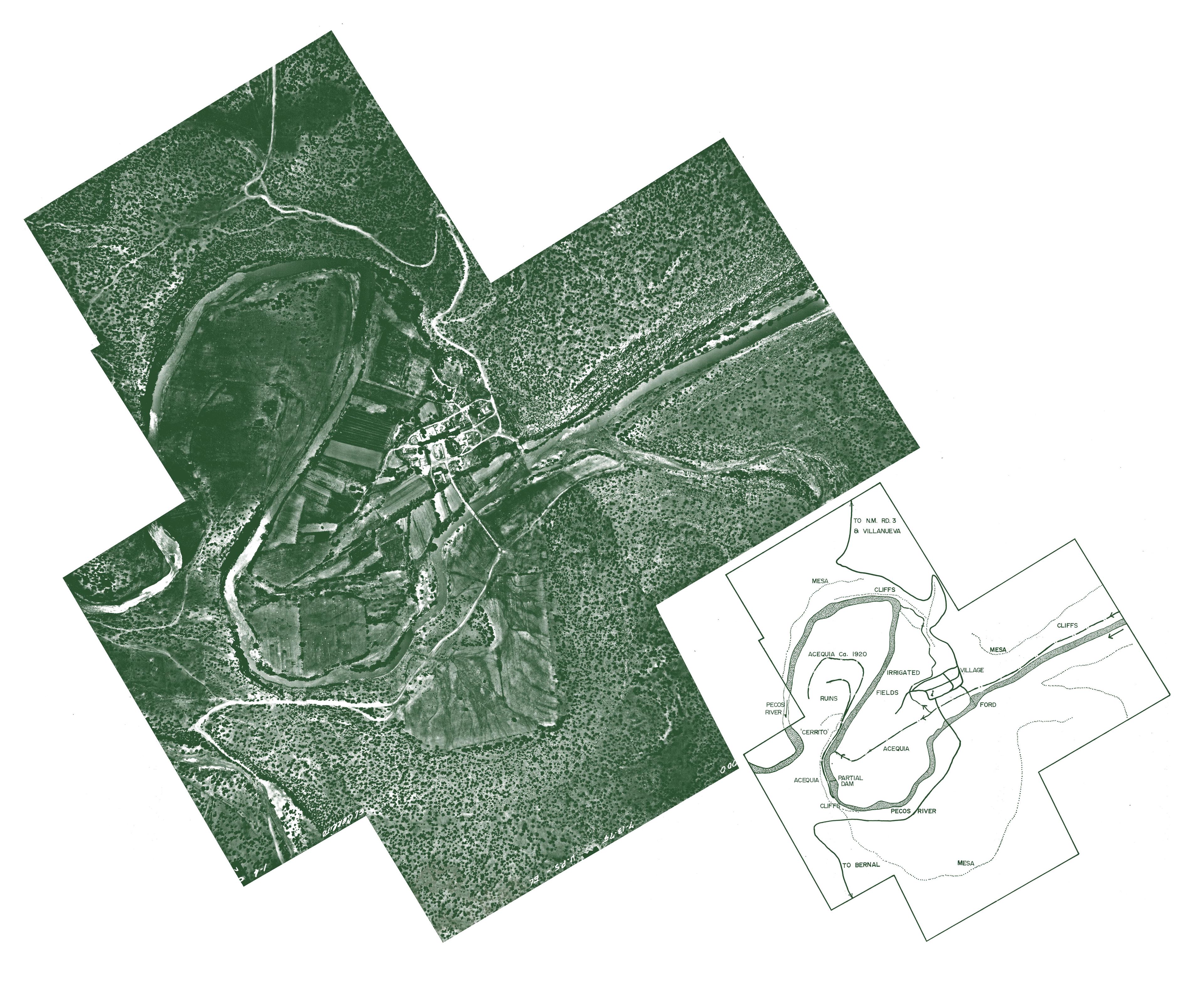
A saving grace of New Mexico’s acequias is that they mostly draw water from the Rio Grande and its tributaries, rather than the Colorado. The Colorado is, even in the heart of the Arizona desert, a monstrous being, disgorging around 22,000 cubic feet of water per second. The Rio Grande, at its fiercest, holds about one-tenth of that. But New Mexico’s relative water poverty has likely shielded it from the periodic blue-gold rushes that have plagued its western neighbor. There’s simply not a quantity of water worthy of waging billion-dollar, decades-long, multi-state wars over.
Beneath the notice of economic giants, an entirely different way of thinking about water and farming survived along rivers and creeks like the Chama and Santa Cruz and Rio Grande. And as climate chaos advances into what is already the hottest and driest region of the country, acequias stand as a reminder that our newest ways of thinking about water are neither the only nor the best.
Take, for example, the governing principle of Western water law, the prior appropriation doctrine, the “first in time, first in right” idea that, as John Oliver once quipped, is basically an elaborate system of “dibs.” This principle essentially provides senior rights holders the most significant and secure access to water, ensuring that if your ancestors occupied a geography first, you would be the last forced off the land due to drought (though for the last two centuries, those Indigenous groups with the oldest claims of all were, naturally, excluded). Prior appropriation is a very practical legal principle, or it would be, if humans were perfectly rational economic actors with no sense of community or desire to work, live, and connect with others.
The acequia system offers an alternative. The principle of repartimiento, or shortage sharing, requires parciantes themselves to determine how much everyone will cut back to ensure that water still flows all the way through a given ditch and back into the river. The repartimiento schedule might be drawn up by leaders, but it has to be approved by a quorum of the association. Similar rationing plans are negotiated between acequias who share the same river. Without a doubt, shortage sharing can be a fraught business, sparking inter- and intra- ditch feuds that span generations, leading at times to folkloric levels of conflict. But in the end, the gravity of acequias, with their historical and physical ties that bind parciante to parciante and community to community, has for centuries outlasted droughts and dam-breaks, floods and fistfights.
It’s vital to note: Water in the acequia is used by the parciantes, but it is not owned by them. In the North African desert, where acequias originated, to deny a person water was tantamount to murder. In such a tradition, water is the right of all. So parciantes own the ditch, that parabola of empty space a few feet deep and a few miles long, and have a right to some share of the water that flows through it — which is not assumed to be a fixed, annual amount. A share of the water requires a share in labor costs and shortage, and how exactly that sharing works is a question that parciantes must decide together.
A few hundred miles west, the legal doctrine that has governed the Colorado River for less than 200 years is already starting to unravel. The river states have spent much of the last decade playing a high-stakes game of chicken over sharing an ever-depleting quantity of water, while the lives and livelihoods of tens of millions of Americans and Mexicans hang in the balance. Already, individuals, states, companies, and even nonprofits are sniffing around the edges of Western water law, looking for loopholes and technicalities that will allow them to buy water rights, stockpile them, and generally profit from future water scarcity.
It’s telling that even Powell, the Euro-American who did more than anyone to bring attention to this region, believed that the only way humans could flourish in the Southwest was if water was managed by its users, at a relatively local level. Powell returned from one of his final expeditions with a map of the West, divided, as he envisioned it, into dozens of states where today we have fewer than ten. Powell’s states’ borders followed watersheds, proposing to unite highland timber users, mid-altitude grazers, and lowland farmers and cities both politically and aquatically. Together, he believed, watershed-bound communities that share a common resource could negotiate through scarcity. He also prophesied that creating boundaries that arbitrarily split watersheds between states would lead to nothing short of a “heritage of conflict and litigation over water rights.”
IV
Downriver, far below where the Salazar Ditch rejoins the Chama, and the Chama and Santa Cruz reach the Rio Grande, the Arenal, Armijo, Atrisco, Los Padillas and Pajarito acequias are like unbraided threads of the Rio as it winds through the Atrisco land grant. The land grant, along with two adjacent grants, are part of the wider Albuquerque area that could best be described as the opposite of ex-urban (perhaps in-rural?), consisting of swaths of farmland and countryside intermixed with strip malls and fast food joints, a mere ten minutes from Albuquerque’s skyscraping downtown.
“For a long time here in New Mexico, we have existed within a clash of civilizations. On one side, we have our farming traditions, our culture, our ways of participating with the land and water and each other. On the other side is industrialization.”
Jorge Garcia has done much to preserve and rehabilitate the land grant acequias as part of his work as the founder of the Center for Social Sustainable Systems, which aims to preserve the traditions and science-based practices of local and Indigenous communities related to land and water. He does this work because, despite their long history and relative success, many New Mexican acequias are struggling. Not for lack of water, but lack of community participation.
“For a long time here in New Mexico, we have existed within a clash of civilizations,” Garcia said. “On one side, we have our farming traditions, our culture, our ways of participating with the land and water and each other. On the other side is industrialization, which requires the state to come and distribute the resources.” When it comes to water in an industrialized worldview, Jorge argues, people assume that the state acts on their behalf and in their best interest.
But how can the state, Garcia challenges, simultaneously act in the best interest of an Española parciante, an Albuquerque city-dweller, and a southern New Mexico mine operator? We all need water — more all the time — and the quantity is limited. Like a painful game of rock-paper-scissors, the questions go round and round. Does an ancestral claim to water for subsistence agriculture outweigh the hope of new mining jobs in an economically depressed region? Does the need for clean drinking water in a growing metro area outweigh the demand of thirsty industrial uses? Which state bureaucrat could possibly decide whether it’s more important to honor our past, enjoy our present, or invest in our future?
These questions are being answered across the Southwest, and as always, the conclusions are vigorously and bitterly disputed. Blood runs thick and hot in these deserts, where rivers flow not along boundaries, but through the heart of the problem. Acequias don’t offer a silver-bullet solution, but they do offer a human-scale avenue to address them, which in turn creates space to account for things we value beyond dates on land deeds.
Acequia Profiles
·Diagram from Library of Congress
What might some of those other valuable outcomes be? Some recent research by acequia scholar Devon Peña suggests that acequias not only cut through desert landscapes; they reshape them. His ecological studies have illustrated how acequia architecture, which relies on earthen ditches, allows some amount of diverted water to seep into surrounding ecosystems, expanding the riverine footprint to
provide more habitat for native species, and over time, transforming soils, plant life, and even helping raise groundwater tables, all without the use of carbon-based energy. Perhaps it will not be a great leap for new studies to find that, with more water in the landscape, acequias also help arrest the advance of climate-related impacts like aridification.
In this way, acequias literally expand the livable space, not just for humans, but for animals and plants too. Left to its own devices, the Rio Grande would race unrelentingly through the dry mountains of northern New Mexico, acting as an effective drain. Acequias arrest that rush, sending parts of the busy river off its course for a few miles at a time, allowing water to infiltrate the soil, helping create homes for aspens and roses, muskrat and crawfish, Rick Martinez and Don Bustos, and thousands of other New Mexican farmers. These intertwining threads of water have bound these communities together for hundreds of years, creating an ecosystem strong enough to resist desolation even in the very heart of the desert.
This article first appeared in Ambrook Research Journal V. 01, a limited-edition print publication.


Years after Valley fever’s symptoms have subsided, former patients and their families still hold vivid memories of the pain and anxiety they endured. In 2017, Gloria Gaytan’s farmworker husband Dionicio likely contracted the fungal infection while tending almond trees in California, while she awaited immigration papers back home in Mexico. She remembers his teary phone calls as he attempted to “be strong” and work through “immense fatigue,” she said, not wanting to lose any wages.
Another worker, José Vasquez, got sick in 2011 and recalls the intense pain caused by his fluid-filled lungs, and his fears about money when he could no longer manage to drive and unload trucks filled with nuts. His wife, Patricia Cruz, came down with Valley fever in 2020 and suffers from it still. But she has no outside help caring for their two young daughters, one of whom has Down syndrome, on days when she struggles to breathe or muster the strength to move.
All three (who spoke to us through an interpreter) live in California’s San Joaquin Valley, where Valley fever is endemic, and where it was discovered in 1894 — hence its full name, San Joaquin Valley fever. Only 40 percent of patients will become symptomatic; they may seek medical care for mild, flu-like symptoms, or for more significant ones like chest pain, dizziness, trouble breathing, and rashes. But in socially and economically vulnerable rural ag worker communities — with low incomes, scant access to healthcare, and little information about services they’re eligible for — contracting Valley fever, said Leslie Wilson, a professor of health policy and economics at the University of California, San Francisco (UCSF), “can devastate families.”
Wilson contributed to a cost-of-illness study that found the most severe cases of Valley fever can cost one Californian $1,023,730 over their lifetime, not including lost wages — “quite a significant burden for the individual,” the researchers wrote. The annual mean wage for farmworkers in California is $34,790. Many are uninsured.
Valley fever is caused by a fungus called Coccidioides, which grows out of decaying rodent bodies in their burrows. It proliferates during the rainy season, and is released into the air when the soil is disturbed, by digging or operating heavy machinery; construction workers are among those most susceptible to contracting the disease. Over the past two decades, it has spread outside its traditional Southwestern boundaries, into Oregon, Washington, Idaho, Colorado, possibly as a result of the warming climate.
The number of cases has also risen precipitously. There were fewer than 2,000 cases in California in 2001; there were 9,004 in 2019. Stats are somewhat higher in Arizona, and together the two states account for the brunt of cases tallied each year (20,003 in 2019), hospitalizations (nearly 2,000), and deaths (200).

Data Source: Centers for Disease Control
Any outdoor worker who inhales spores carried on the region’s copious dust runs a risk of contracting it, as do family members living in poorly insulated housing amid the region’s abundant fruit and nut acreage. Farmworkers working close to the ground, tending root and bulb crops, are significantly more likely than those undertaking tasks like pruning grape leaves to become ill, according to a 2018 study. Study participants reported a median loss of 18.5 workdays — or 10 percent of their annual average.
Said Royce Johnson, medical director of the Valley Fever Institute at Kern Medical, “If you’re laid up for three months, that’s an economic catastrophe for families that don’t have a bank account, and we certainly see that frequently.” Kern Medical is what Johnson called a “safety net hospital” whose administrators will attempt to get patients enrolled in an insurance plan or otherwise find funding to treat them, when other hospitals turn them away.
In a small percentage of patients, Valley fever can lead to chronic pneumonia, life-threatening meningitis, multiple hospital stays, and long courses of expensive drugs. Johnson said he’s been treating one such long-term patient since the 1970s.
Vasquez was sick with profuse sweating, pain, and dizziness for three months, during which time he was hospitalized for 22 days; he recuperated at home for another 15 days. When almond season ended, he’d planned to harvest melons but was too sick to work and did not apply for unemployment benefits, even though he was entitled to them, fearing retribution for abandoning his job. Additionally, Vasquez was unaware that under California law, he was eligible for disability benefits. Although his medical care was paid for by Medi-Cal — California’s version of Medicaid that covers families of four with annual incomes under $36,156 — he fell behind on other bills. “My family went through financial hardship,” he said, causing him to sign up for several months working in Alaskan fisheries.
“I had to sleep sitting upward because I felt like I was drowning.”
Wearing N95 masks is effective at reducing risk. “But the reality is, it’s 110 degrees out there in the summer and [people] get hot wearing them,” said Katrina Hoyer, who runs a Valley fever lab at the University of California, Merced. She pointed out that workers might also carry dust home on their clothes and infect family members that way. It’s possible this is how Cruz contracted it. There’s not yet a preventative vaccine for humans — although a vaccine for dogs is soon to be released.
Despite the fact that Valley fever has long been known in the Southwest, many patients are initially misdiagnosed; doctors fail to recognize its symptoms and order the proper blood tests for it. False negatives also run high, and false positives are possible, too. Cruz was first hospitalized for bacterial pneumonia and prescribed a round of antibiotics, delaying antifungal treatment for three weeks. In the meantime, “I had to sleep sitting upward because I felt like I was drowning,” she said. Antifungals are expensive — around $1 per pill; Cruz has been taking two pills a day for three years. They also cause side effects like diarrhea, headaches, and dizziness. “Even if they get treatment, it’s not a good situation,” said Paul Brown, a public health professor at UC Merced.
“Patients get anywhere from one to three rounds of antibiotics before they’re properly diagnosed,” Hoyer said, and no one’s sure what effect those might have on recuperation. But for people sick enough to require treatment, a delay in prescribing the correct one puts off recovery and increases medical visits and their attendant costs. On the plus side, contracting Valley fever once probably affords future immunity.
“They’re contract workers and go from place to place. People fall through the cracks.”
To improve healthcare outcomes for farmworkers, Brown sees a need to focus on more testing. “People come through getting treated for pneumonia that’s not clearing up, getting treated again, getting kicked around from place to place until finally they find somebody who tests them for Valley fever,” he said. Additionally, many farmworkers live in medically underserved rural areas where doctors are few and far between. “Some farmworkers get [care from] mobile clinics that come out and do testing, but a lot of them don’t because they’re contract workers and go from place to place. People fall through the cracks,” Brown said.
Improved health insurance coverage might help. In 2024, Medi-Cal will be offered to undocumented farmworkers who fall below 138 percent of the federal poverty line. However, said Hoyer, “Our estimates are that that will raise the coverage rates for farmworkers by about 3 percent — a lot of farmworkers make more than 138 percent. Also, Medi-Cal is not great. [For starters], if you change counties, you have to change medical providers,” as well as find new doctors. She’d like to see farmworkers covered through the state’s insurance marketplace, Covered California, “because that tends to be more portable, and it tends to be for a whole year. The problem is that unless they give subsidies, it’s just too expensive.”
Both the state of California and the National Institutes of Health have increased funding for Valley fever research, which might eventually lead to a vaccine for humans. In the meantime, Wei-Chun Chin, a professor of material science at UC Merced, is working on a new Valley fever test that looks for the fungus rather than a body’s response to it. The test could be used in-clinic and provide results in a half-hour — as opposed to shipping samples out to a lab and awaiting results for two to three weeks.
UC Merced has also begun a program that will train clinicians to recognize locally endemic diseases like Valley fever, and keep them and their knowledge in the community. This year, it admitted its first students to an eight-year program that will grant them a Bachelor of Science degree from UC Merced, then an MD from UCSF’s medical school. “The whole time, they will be very aware of the social determinants of health, and the kinds of healthcare issues that occur in our region,” said Hoyer. “This will be huge.”
Lewie Pugh began his trucking career in the U.S. Army Reserve in 1992. Stepping fresh off his family farm where he had raised cattle and sheep and packed square bale hay, he would go on to drive more than 2.5 million safe, accident-free miles behind the wheel of commercial trucks.
For Pugh, trucking and farming were flip sides of the same coin. Long hours, arduous working conditions, and merciless weather were just part of the job. “Interstate highway to a trucker is like land is to a farmer,” he said. “That’s what we make our living off of.”
It’s no secret that trucking and agriculture are deeply intertwined. Commercial trucks deliver seeds, fertilizer, livestock, and machinery. They are responsible for moving products from farm to market, field to slaughter, and connecting farms to their increasingly widespread customers. On any given day, an estimated 13.5 million trucks can be found coming and going across American highways. Flatbeds, semi-trailers, step decks, dry vans, and more move some 70 percent of the nation’s freight every year.
Any disruptions to the trucking supply chain can have a significant impact on farmers’ bottom lines. In 2021, the National Milk Producers Federation (NMPF) estimated supply chain disruptions cost American dairy exporters nearly $1 billion in the first half of the year.
Now, new legislation from the Federal Motor Carrier Safety Administration (FMCSA) is looking to impose speed-limiting mandates on commercial trucks, in an effort to reduce large truck crash fatalities — which killed 5,398 people in 2022, and injured another 76,298. Opponents like Pugh, the American Farm Bureau Federation, and the Livestock Marketing Association, say slowing trucks down won’t bring the safety gains FMCSA promises, and will further hurt the supply chain, which could have disastrous economic effects on American farmers.
“It slows everything down,” said Pugh, who now works as the executive vice president of the Owner-Operator Independent Drivers Association (OOIDA). “Around planting time you have a very small window to get stuff in the ground … you’re fighting rain and mud, you need your seeds on time.” He continued, “Same thing with livestock. Cows can’t be on [the trucks] forever. You need to feed them, water them, and take care of them.” Truckers already face tight, often unrealistic delivery timelines and are paid by the mile, meaning any stops refueling, feeding livestock, or even bathroom breaks go unpaid.
This isn’t the first time trucking regulations have sent farming organizations spinning. Last year, when the California Air and Resource Board’s (CARB) Advanced Clean Fleet Regulation was introduced, which aimed to transition California’s medium to heavy-duty trucks to zero-emission, fully-electric vehicles, dozens of agricultural organizations voiced concerns. Still, the regulation was passed this spring.
Central to the FMCSA’s proposed legislation is the use of electronic engine control units (ECUs) in commercial trucks, which limit their maximum speed. The agency says these devices already exist in most commercial motor vehicles manufactured since 2003, though many carriers opt not to use them. Speed-limiting devices have been mandatory in Europe since 2002, restricting speeds to around 55 to 60 miles per hour (mph).
“Around planting time you have a very small window to get stuff in the ground … you’re fighting rain and mud, you need your seeds on time.”
Many commercial trucks are also now equipped with advanced safety features such as blind spot detection systems and advanced driver assistance systems (ADAS). Though, again, use is determined by individual carriers. Earlier this year, the Biden administration proposed a rule mandating automatic emergency braking for all commercial vehicles over 10,000 pounds.
Safety is the primary driver behind implementing these devices, with the FMCSA reporting that 20 percent of fatal crashes occur at speeds between 70 and 85 mph. Between 2020 and 2021, there was a more than 18 percent increase in fatal crashes involving large trucks. In the last 10 years, large truck crash fatalities have increased by more than 50 percent.
“When large trucks don’t travel at high rates of speed, they are involved in fewer crashes, and the crashes that do happen are less serious — less death, less injury,” said Zach Cahalan, who heads up the Truck Safety Coalition, a victim’s rights group advocating for survivors of large truck crashes.
Cahalan laughed when asked about how speed-limiting devices might impact America’s farming supply chain. “You tell me, how much time do you shave off whether you’re driving 65 or 70? The difference is marginal.” He added that faster speeds also use more fuel, which means more time lost stopping to refuel. “I have to think any marginal gains you have by going 5 miles per hour faster are offset by the fuel lost,” he said.
For Cahalan, truck crashes are a public health crisis, as well as a labor crisis. “If you’re paid by the mile, when you’re not moving it creates a perverse incentive for drivers to make up for that lost time,” he said. Improving working conditions and compensating drivers for time spent at loading docks or pulling over during bad weather is another piece of the road safety puzzle. “These folks are trying to make a living, they should be treated with dignity and paid well for the service they provide,” he added.
According to various research, high-severity large-truck crashes can be attributed to a range of issues, including driver distraction, alcohol use, and emotional factors like risky passing maneuvers. Another study found defective brakes, lights, and general maintenance issues, alongside driver error, increased crash rates by nearly double. With so many factors at play, opponents like Pugh argue that speed-limiting devices don’t see the whole picture.
“If you’re paid by the mile, when you’re not moving it creates a perverse incentive for drivers to make up for that lost time.”
A small number of U.S. lawmakers have introduced legislation to prohibit the FMCSA’s decision, citing economic disruption and government overreach. The DRIVE Act in the House has won 30 cosponsors, while the Senate’s bill S2671 has nine. Central to their argument is that speed limits should be left up to individual states to set.
“Montana truckers play an essential role in the Treasure State’s economy, and ensuring they stay safe on the job is one of my top priorities,” said Senator Steve Daines (R-Montana), one of the bill’s sponsors, in a public statement. “Overreaching, out-of-touch D.C. mandates oftentimes make truckers’ jobs harder and can even put their lives at risk. I’ll keep fighting for Montana truckers and against big government.”
FMCSA agreed to provide a written statement for this article. At the time of publication, no statement has been received.
Relationships between farmers and truckers are already under strain, as prices for commercial transport have climbed in recent years. Some farmers have opted to start their own transportation companies, even setting up cooperatives to take back power in shipping.
Truckers like Pugh feel speed-limiting mandates could make matters worse, citing increased operational costs, highway congestion, which leads to longer transit times, and ultimately increased costs on consumer products — all of which are bad for farmers. Still, he understands the victim’s argument, noting, “People have lost family members, and my heart grieves for them.”
Today, Pugh’s gone back to his roots, operating a small farm in Holden, Missouri. “I have some feeder pigs, a couple of goats, and a collie dog,” he said. “It’s more of a hobby farm. My brain-drain farm, I call it.”
He no longer drives commercially, though he stays active in industry discussions through OOIDA. Despite disagreements on the speed-limiting mandate, Pugh believes truckers, farmers, and government agencies share a common goal — ensuring America’s goods move safely and efficiently. He stated, proudly, “No one in this world cares more about highway safety than the American truck driver does.”

Have you heard of Wendell Berry? That question has come out of my mouth a dozen times in the last year.
I was raised in a setting as rural as they come, a sixth-generation farm kid on both sides of the family. Mom’s side is farmers all the way back to Norway; dad’s side stretches back to Germany. We still operate a corn, soybean, and popcorn farm in the sandy, irrigated soils of Mason County, Illinois, but I moved away after getting a degree in agricultural economics at the University of Illinois. I’ve since worked at multiple agribusinesses, finally ending up here at Ambrook.
For most of that time, I had never heard of Wendell Berry.
In June of 2023, I made my way down winding narrow roads in the river-lined Kentucky foothills to visit Wendell and his wife Tanya at their farm. But this journey really started a few years prior, while loading brush.
In 2016, my brother Logan, a 24-year-old beginning farmer, needed help clearing an unkempt patch of trees. During a long, labor-heavy Thanksgiving weekend, we got into the usual brotherly skirmishes over the best way to do the job. It was the sort of banter that makes manual labor fun; we had decades of practice. In gratitude for sprucing up his new land, my brother gave me a gag gift on Christmas morning: Berry’s The Art of Loading Brush.
Our family’s Christmas gifts have a way of celebrating, sometimes tongue-in-cheek, the highlights of our lives the prior year.
Logan hadn’t read the book but based on its title, he felt it was the proper way to school me on clearing a field. It was a textbook of nonfiction, fiction, and poetry, written by Wendell Berry. It was the first time I’d heard of him.

For those who don’t know, Wendell Berry is both a gifted writer and a farmer from Kentucky. His first work was published in 1968 after a fellowship at Stanford, before he became a Guggenheim Fellow in Europe. He was climbing the academic ranks on the tenure track at NYU, when in his early 30s, he gave it up and moved back to Kentucky. He taught a little, read and wrote a lot.
In the decades that followed, his work produced its own evangelists — he is something of a prophet for the organic, sustainable, regenerative food movements. I challenge you to read a farm or food book, watch a farm or food documentary, or dig into the background of a sustainable agriculture company and not find a nod to Wendell Berry. (In fact, you’re reading Ambrook’s nod to him right now.)
That’s who Wendell is. But it is his profound beliefs, not his pedigree, that provoke so much widespread adoration. He believes in our inescapable, spiritual belonging to living on earth; he cares deeply about how we use its resources to sustain ourselves and our neighbors. The more we rely on things further from our home, and our neighbors, the more broken things become. He speaks with force against our modern, highly tech- nical economy, a sentiment that has earned him both acolytes and detractors.
But I didn’t know any of that when I opened The Art of Loading Brush. My brother’s gift went right on the shelf, accidentally placed with the front cover staring whenever I passed by. It took three years before I had an unexpected open space to read for myself. With peace and quiet I’d not enjoyed since summer break in high school, I reviewed all the unread works in my house, evaluating what would help me learn and grow. I picked up Wendell Berry.
I did not jump right into Wendell’s lesser-known brush-clearing book, instead going for his seminal nonfiction work, The Unsettling of America. I was immediately floored. I kept going back to confirm the copyright year was 1977 — I couldn’t believe it. The perspective seemed modern and timely, as did the problems he pinpointed. I proceeded to mark up every page with notes and quotes. It felt vivid and real and important, with virtually no indication it was written decades ago. Nothing new under the sun.
In Unsettling, he laid out a vision, or a revision, of what had progressed in farm country after World War II. He detailed what had been left behind from a culture that valued people as neighbors and cooperators, producing products for their own community first. He laid out all the ways in which macroeconomic forces reversed those steps, producing for the economy first and making neighbors and community an afterthought.
It all hit pretty close to home. Wendell Berry looked at agriculture critically, while the farmers I grew up with looked at the outside world critically. I wanted more of my friends to read his work. That book Unsettling — and the subsequent ones I devoured — made me wonder who else may have encountered his ideas. Have you heard of Wendell Berry?
Many of my peers had not read him. But there were a handful, typically friends from more urban circles, or anyone who studied literature in college. For those who have read Wendell Berry, the mere mention of his name evokes a way of viewing our place in the world and our connectivity to it.
Eventually, word of my Wendell evangelism got around. A friend of a friend reached out and asked me to plan a Wendell Berry evening. This guy was another farm-kid-turned-city-dweller — he was filled with questions about Wendell’s work. Along with a few others, we spent a night discussing the trade-offs we had made.
Across his nonfiction, poetry, and his fictional universe of Port William, Kentucky, Wendell keeps coming back to the notion of community. What does it mean to be raised by a village of people? How does the nature of that upbringing differ outside of rural America? What gets lost? We got the sense that it’s increasingly hard to replicate what we had in our small farm towns 30 years ago.
At some point I decided to send a letter to the man himself — I had a lot to ask, and much to share. He received my first letter warmly, promptly writing back and inviting me to visit sometime. The only condition was that I stop by when I was already passing through Kentucky. As a forefather of modern-day environmentalism, he couldn’t support burning fossil fuels for a special trip just to see him. So I waited for a chance when I’d be passing through.
This past spring, I was invited to a wedding near Wendell’s farm. I wrote to him weeks ahead of time, asking if I could stop by. He obliged — suddenly it started to feel real. Before visiting, I crammed. I read a few of his essays that talked at length about the decisions that led him back to his family farm.
On the meandering drive from Lexington, the blue sky and the steep green hills rising up from the riverbank starkly contrasted the flat, wide-open cropland of Illinois. I had questions about Wendell’s origins in this land: What took him away, and what was it, exactly, that brought him back?
I wasn’t lucky enough to have kitchen-table conversations with any of my grandparents, all farmers. But on a remarkable June day in Wendell Berry’s kitchen, I got to learn about the life and times of those that came before me, an agriculture once known, but now mostly forgotten. After years of distant admiration, followed by a lengthy written correspondence, we would have a three-hour conversation about the nature of farming in America, the beauty of Creation, and the expectations of our culture, our families, and God, on how we should best steward the land.
Through the pages of his books and the moments shared at his table, I discovered a profound kinship. This was a man who understood that tending to the earth and nurturing the bonds of community are not just acts of sustenance, but acts of love that shape our souls.
When my brother and I tend to the next project on his farm, I’ll have a renewed appreciation for how we work the earth, figuring out how to do it together, working in tandem toward a common goal. And as I work to build the bonds of my own community, both near the farm and away from it, I will keep asking.
Have you heard of Wendell Berry?
This article first appeared in Ambrook Research Journal V. 01, a limited-edition print publication.


Just five years ago, the U.S. school lunch landscape was still pretty stuck in its traditional, meat-forward past — think burgers, chicken tenders, pepperoni pizza. Dominic Machi, who spent decades as director of food nutrition services at the Mount Diablo School District in northern California, said the notion of serving plant-based meals was, at best, a blip on the radar. At worst, it was something actively resisted by parents and school staff.
“I remember we tried serving some vegan chicken nuggets and the kids loved them, said they were better than McDonald’s,” Machi said. “But we had some workers who refused to serve [the nuggets] because they were nervous, weren’t sure what was in them, if it was safe or healthy for the kids.”
Now it’s 2023, and the memory feels distant, quaint even. In the U.S., the retail market for plant-based foods has topped $8 billion and continues to grow annually. Meat alternatives are ubiquitous at Burger King, Taco Bell, Wendy’s — McDonald’s even launched a line of “McPlant” offerings. And hundreds of school districts across the country are now offering a range of vegan and vegetarian entrees, once unheard of in the staid confines of public school meals.
“We’ve seen a lot of cultural shifts, and I think that’s the driving force,” said Machi, who launched a bakery called Dos Pisano’s this year, focused on providing vegan and vegetarian options to schools. “We have millennials that are parents now, with a whole different set of priorities than their parents had for them,” he said.
Reports also indicate that even moderate shifts in meat consumption can have significant climate impacts. Machi added, “[Today’s students] are more environmentally conscious, they’re more health-conscious. We also have a huge influx in the United States of students from Asia and other parts of the world, who were raised in cultures that don’t allow meat.”
Kristie Middleton, who spent years in sometimes-frustrating school nutrition advocacy work before joining plant-based company Rebellyous Foods, is amazed by the rapid cultural shifts she‘s witnessed. For instance, Middleton recently attended a state meeting of the Indiana School Nutrition Association.
“I was an exhibitor at the show, and was really impressed by the number of people stopping by the booth, willing to try our products — a few years ago, that never would have happened,” said Middleton, Rebellyous’ vice president of business development. “This is Indiana, a state with a lot of traditional farming, a big dairy state, but we didn’t hit any resistance. These days I don’t even have to do a lengthy pitch on why plant-based makes sense; most people are very familiar!”
To satisfy the burgeoning school district demand, plant-based companies like Rebellyous, Dos Pisano’s, and Better Chew have been muscling into the market. Seattle-based Rebellyous in particular has pursued an ambitious path to the institutional foods space, pitching their products to schools, hospitals, corporate cafeterias, and military bases; their plant-based chicken alternatives are now served in 202 school districts around the country.
“We have millennials that are parents now, with a whole different set of priorities than their parents had for them.”
In the popular imagination, vegan school lunch may seem like the exclusive provenance of big cities like New York, where Meatless Mondays were enacted in 2019, or progressive bastions like Berkeley and Boulder. And while communities like these may have been early embracers of plant-based school food, the tide appears to have shifted significantly in much of the country.
Nora Stewart, who works on California school food initiatives with the advocacy organization Friends of the Earth (FOE), believes a lot of the momentum and increased demand for plant-based options is student-driven. Gen Z has received much attention for its vegan leanings; these trends appear to be shifting younger and younger. “School districts are really trying to feed the students that they serve,” said Stewart. “There’s been just a tremendous interest from students for more plant-based options. So I think [districts] are trying to meet that need, as well as address the growing interest around the climate impacts of plant-based options, and the health benefits as well.”
The U.S. Department of Agriculture (USDA), long the arbiter of acceptable school nutrition, has been shifting its dietary requirements, with an eye toward serving more of both culturally appropriate and vegetarian items. Frank Castro, director of child nutrition services for California’s Dublin School District, said roughly 60 percent of his district is Asian (including a significant Indian population); he thinks districts like his helped USDA broaden their approach to acceptable school meals.
“A lot of the kids here are very menu-savvy,” Castro said. “You know, more vegetarian, more vegetables and fruits, more things made from scratch. We’ve been able to experiment more with that here, where maybe some of the other districts didn’t.”
Castro hits on a distinction between his district and many others — the ability to cook from scratch. Lacking full kitchen setups, but with a need to serve hundreds of students each day, many schools are looking for simple heat-and-serve options. That’s where Rebellyous has been able to thrive: The company’s plant-based “chicken” nuggets and tenders are peak simplicity. Rebellyous CEO Christie Lagally said students rate them highly in side-by-side nugget taste tests.
But despite positive feedback from kids, there are other boxes to check before a product can be served in schools, like does it contain enough protein to be considered an entree, and does it meet the district’s budgetary needs — often under $2 per meal. Lagally said that many of the buzzier meat alternatives — think Impossible or Beyond Meats — actually have a higher price point than real meat.
“These days I don’t even have to do a lengthy pitch on why plant-based makes sense; most people are very familiar!”
“If you’re familiar with plant-based meat, about 90 percent is made in meat processing facilities using meat processing equipment,” she said. “So all that wonderful equipment that we designed for processing animals, is also being used to process plant-based meat, much to its detriment. When you use off-the-shelf meat processing equipment to make plant-based meat, you end up with having to use the equipment for three times as long, three times as much labor.”
Additionally, companies like Impossible have taken heat for being highly processed, containing too many additives, and essentially for being just as unhealthy — if not worse — than their meaty counterparts.
Lagally said her team, largely engineers, built production equipment from scratch, specifically tailored to produce soy-based chicken. The goal was efficiency and consistency, and though the company doesn’t employ official chefs or culinary advisors, Lagally said their sales are the best proof of a quality product.
Conversely, some advocates would prefer if foods with less processing and more sustainable ingredients could find a foothold in school lunches. Rebellyous also uses traditionally farmed soy as its main ingredient, a global commodity with its own climate issues.
“Rather than promote the fake meat meals, we generally encourage schools to incorporate entrees that use whole, plant-based ingredients in their menus.”
“Our position is that, rather than promote the fake meat meals, we generally encourage schools to incorporate entrees that use whole, plant-based ingredients — which is beans, lentils, and tofu — in their menus,” said Kari Hamerschlag, deputy director of food and agriculture at FOE. “Don’t get me wrong: We don’t oppose [processed meat substitutes]. We understand that there’s a role for easy-serve items for school districts that don’t have scratch cooking facilities. But we definitely … want to help get school districts more support and funding to provide whole plant-based meals to their students.”
Hamerschlag and others interviewed noted that the flood of federal funding to provide universal school lunch during Covid was certainly a factor in encouraging district experimentation and broader menu options. Some states have followed up with funding of their own to keep the pandemic menu expansions going. California in particular has received accolades for allotting $100 million toward promoting plant-based and sustainable food options in its schools.
Despite all the momentum, Hamerschlag and her colleagues feel like there’s still a lot of work to be done. Plenty of school districts are getting pushback for a lack of vegan options (see this op-ed from a Maryland high school student); the fight to include plant-based dairy alternatives is just beginning; a large portion of school lunches still incorporate highly processed meat products; and USDA’s nutrition guidelines haven’t fully caught up with the plant-forward future.
“Take tofu, for instance. [USDA] requires that you have to offer 4.4 ounces of tofu to qualify as an alternate protein source, which is just a very large portion. You can serve a much smaller portion of chicken to meet that requirement, so that’s what a lot of school districts are going to do,” Hamerschlag said. “And that’s just one example, maybe a result of meat industry lobbying, maybe just outdated guidelines. But USDA is still taking comments on its proposed nutrition updates, and we’ve already had a lot of luck in achieving our goals. We’re hopeful.”


I used to call the Central Park Children’s Zoo every couple of months with a grim question: “Would you happen to know if Othello the cow has died?” It was always a weird conversation, but I needed to know.
Before I go on, it should be noted that Othello was technically not a cow. He was a male bovine, also known as a bull (steer if he’s been castrated). No rancher would ever call him a cow, but I did, in an article I wrote for the Wall Street Journal way back in 2010. This led to an angry scattershot of comments from farm country: “Look at this city idiot, can’t tell a cow from a bull!” That kind of thing.
The story was about how Manhattan, once home to a thriving dairy industry and a meatpacking district where countless heads of cattle met their end, now housed only one cow — err, bull. He lived next to two alpacas and a polar bear. It was supposed to be a cute local story, equal parts “This bull has no friends” and “New York City sure has changed.”
This was one of my first freelance stories, and certainly the most impressive at the time. Even my mom had heard of the Wall Street Journal! I hadn’t anticipated the barrage of peevish ranchers, upset that some urban reporter got it wrong, yet again.
But despite my verified, citified ignorance, the article caught the eye of a book editor. And not just any editor — Susan Rich, a big muckety muck in children’s literature, who’d edited Lemony Snicket and other books you’ve heard of. She thought Othello’s story could make a great children’s book; I wanted to believe her.
“She thought Othello’s story could make a great children’s book; I wanted to believe her.”
I think Susan’s optimism stemmed from And Tango Makes Three, an award-winning children’s book based on other residents of the Central Park Zoo: two gay male penguins and the baby penguin they raised together. There was a proven market for quirky, reality-based Central Park Zoo stories.
However, when And Tango Makes Three was released, the central characters were alive and thriving; the book’s launch party was at the zoo, a major driver and beneficiary of visitor traffic. But Othello was 14 — quite old for a bovine of any gender. Susan feared he’d die before publication, turning the release into a major bummer.
“This is odd, I know, but what if we held off until Othello is, ah, replaced with another cow?” That’s how I ended up on Othello Death Watch, annoying the zoo receptionist for years until he finally died. He was in fact replaced — by a zebu, a more exotic bovine typically found in India. Thus, the book’s premise died with Othello.
The zebu’s presence does beg one question: Why did Manhattan’s zoo ever have such an ordinary farm animal amongst the polar bears and the alpacas? The answer appeared in my original article — Othello was rescued from an Upstate dairy farm, intended to help NYC students understand where their milk comes from.
Today, as a seasoned reporter with more than a decade of experience in ag journalism, I feel confident in asking: How does a bull teach kids about milk?
This article first appeared in Ambrook Research Journal V. 01, a limited-edition print publication.
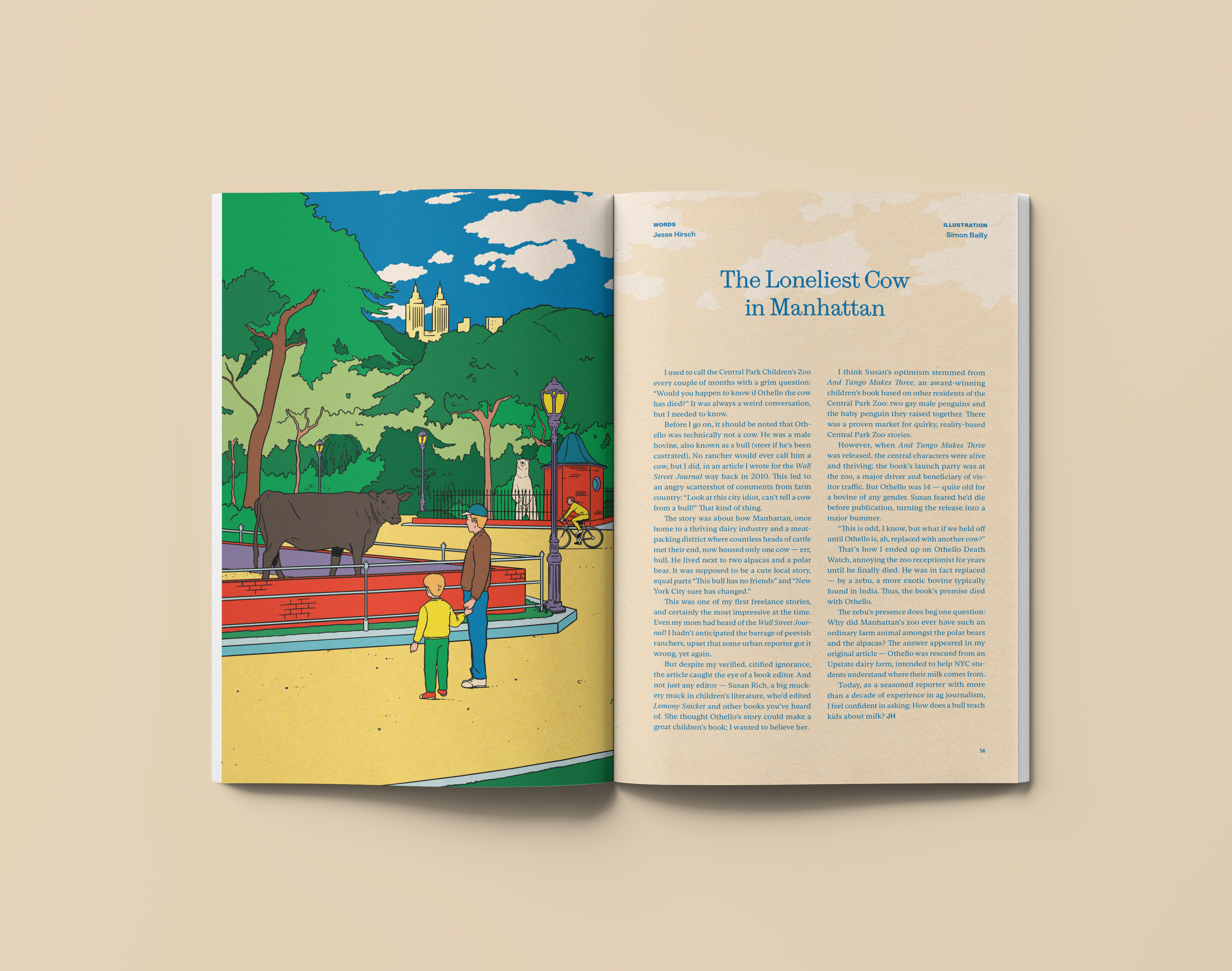
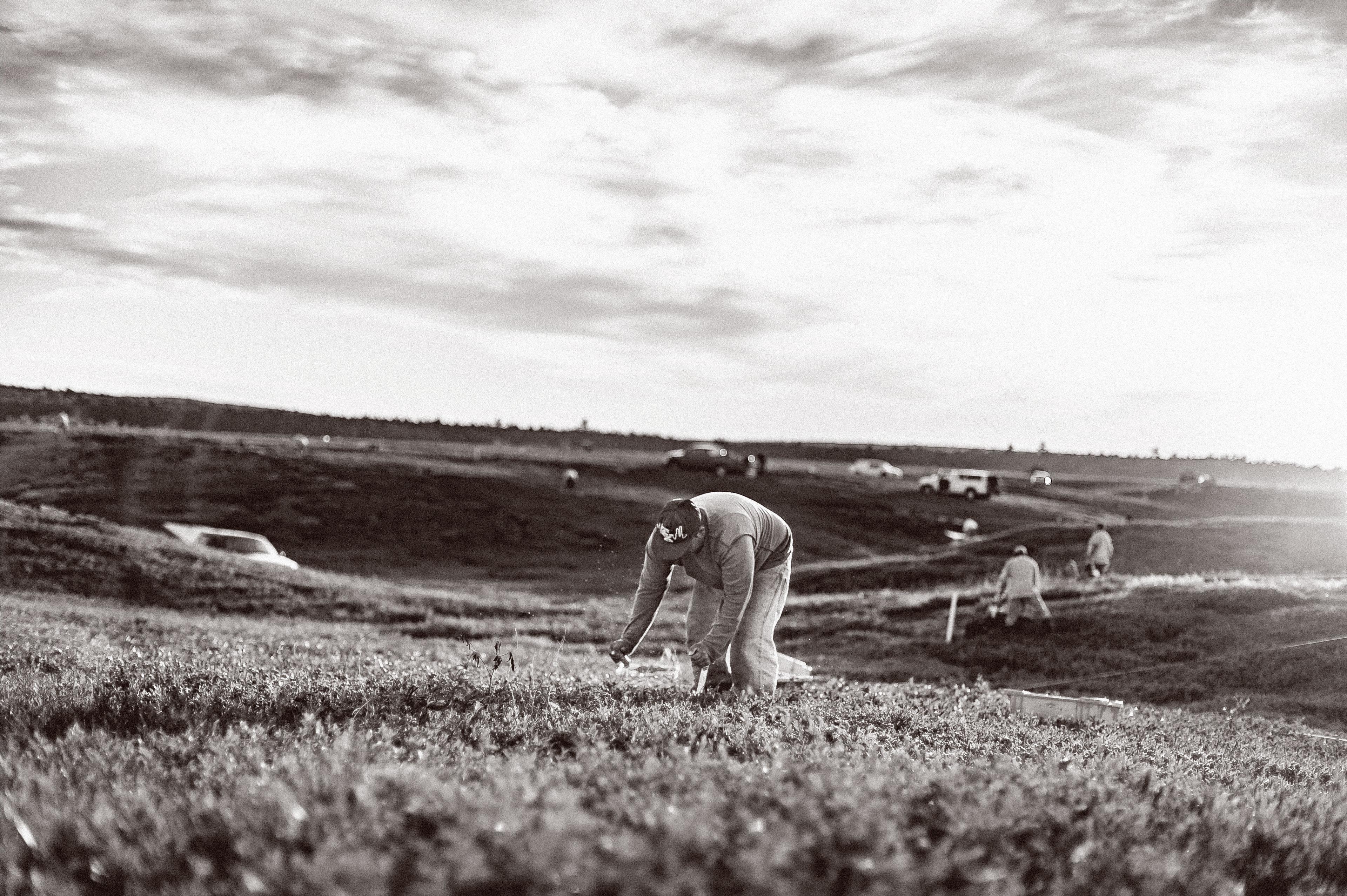
Milbridge, Maine, is pretty quiet for a lot of the year. A handful of businesses dot the downtown, which runs for less than half a mile along Route 1 as the road winds its way toward the Canadian border. With fewer than 1,400 residents, Milbridge doubles its size in the late summer and then again in the fall — first for blueberry season and then for wreath processing in October. Another key industry is the nearly year-round processing of sea cucumbers, which can help make stocks for stews.
When Juana Rodriguez-Vazquez got here with her family in 1998, she was in elementary school — one of only about 150 kids her age in Milbridge at the time — but she’d already seen much of the U.S. Orange season in Florida, apple harvest in Michigan, blueberry picking in Maine. The farms around Milbridge are dependent on people like the Rodriguez-Vazquez family because there aren’t enough residents to support the workload.
“When I was a kid, when we were traveling, I remember being out there in the fields with apples and oranges and green beans,” Rodriguez-Vazquez said. “A lot of the housing for employees, their housing is pretty much out in the fields.”
This October, about 1,000 workers arrived in the Millbridge area for the wreath season, just as the state’s Department of Labor (DOL) was hosting hearings and discussions on whether farmworkers should be included in the state’s minimum wage law.
They have long been excluded from the state’s regulations for minimum wage, an issue that lawmakers sought to address by passing a law that would have raised the base pay from the federal rate of $7.25 per hour to $13.80 per hour. But although the law passed, Democratic Gov. Janet Mills vetoed it earlier this summer, opting instead to write an executive order that would create a committee to make recommendations about how to compromise on the issue by increasing the minimum wage while maintaining industry desires, like a potential youth exception.
It’s the second time Mills has vetoed a bill that would have added minimum wage protections for farmworkers. But advocates for workers argue the process is flawed from the start, failing to provide legal protections for workers that speak out — favoring employers, who have freedom to speak publicly about their needs and who have the legal ability to fire workers who advocate for higher wages.
As a teenager, Rodriguez-Vazquez worked during each season that came up. Raking blueberries, making wreaths for a company that at the time supplied L.L. Bean, and processing sea cucumbers.
“They’re still getting the same pay that I got when I was 15,” Rodriguez-Vazquez said of the wreath workers working in Washington County.
“They’re still getting the same pay that I got when I was 15.”
She doesn’t work in the fields anymore. Since 2012, she’s been working with the Milbridge-based nonprofit Mano en Mano, which provides basic services to the local population of migrant farmworkers — this past year she was named executive director. In the past few months, she said, the state government has put farmworkers in a position where they can’t speak up.
“I think we all know there are some power dynamics played by employers in terms of their ability to speak up, and if they do, there is retaliation in terms of loss of employment,” Rodriguez-Vazquez said. “Farmworkers haven’t had the ability to do that in a way that would feel good for them.”
The issue of minimum wage exemptions for farmworkers certainly isn’t unique to Maine. At the federal level, farms have to pay the $7.25 per hour minimum wage only if they employ “500 man-days” within a three-month period, and family members are exempt from minimum wage — a major benefit for Maine farmers, given that many are family owned and operated.
According to the National Agricultural Law Center (NALC), 22 U.S. states don’t mandate a minimum wage higher than the federal rate. Seven of those are states that actually have passed higher minimum wage laws for the state in general, but exempt agricultural workers. Massachusetts splits the difference: It generally requires employers to pay workers $14.25 per hour, but farmworkers only get $8.00.
In New York, the question of wages has pitted workers against employers in a battle that has played out in both state budget proposals and federal court rooms. In Washington and Oregon, workers won the right to overtime — in Washington, they sued the state to achieve this — and were met with strong opposition from industry groups. And at the federal level, advocacy groups like Farmworker Justice want to end the exemption that keeps farm laborers from getting minimum wage nationally.
In Maine, farmworkers find the starkest wage contrast in the nation, according to NALC’s data. The minimum wage was just increased to $15.00 per hour this summer, but farmworkers have once again been excluded. Despite the exemption, workers are still coming to Maine.
“It translates into certain farmers getting pitted against farmworkers that muddies the more systemic issues: that our model of food economics are just incredibly brutal to farmworkers and small farms alike.”
“They’re coming here and they’re able to make more than back home most of the time,” Rodriguez-Vazquez said. “They’re grateful and they don’t want to mess up anything. That can be hard as an advocate and not have a lot of say because we follow the lead of the community.”
Thom Harnett worked with migrant and seasonal farmworkers in the 1980s as a lawyer with United Farm Workers, then later pivoted to local and state politics. He was serving in Maine’s House of Representatives in 2019 when he initially introduced two bills to deal with this problem. The first would have included agriculture in the state minimum wage and added overtime protection. The second would have allowed workers to participate in collective bargaining without fear of reprisal.
On his first try, the bills didn’t even reach a vote. It was only after several key worker protections were removed, he said, that the bills were able to be passed after being reintroduced early this year.
“The minimum wage bill was continually amended by us giving up issues like overtime,” Harnett said. “It would also have made available to farmworkers an unpaid 30-minute rest period every six hours, which is what all employees in the state of Maine get … and it would have limited overtime to no more than 80 hours of mandatory overtime in a two-week period, meaning that you could not force people to work more than 160 hours in a two-week period.”
The Maine Organic Farmers and Gardeners Association (MOFGA) put out a statement after Mills’ summer veto saying they were “astounded” at her decision and casting doubt on her desire to find a compromise, noting that her opposition came from the amendments to the bill and not the plan to increase the minimum wage itself.
“It is impossible to accept this explanation of her action,” said MOFGA executive director Heather Spalding. “It is disingenuous for her to say that she supports minimum wage for farmworkers when she won’t even allow a stripped-down bill with many exemptions for agricultural employers to pass into law.”
The DOL declined several requests for an interview on the topic, and the governor’s spokesperson did not respond to an interview request. The state is in the middle of hearing input in its committee about how to resolve the issue. They are hearing from farmers, the AFL-CIO, MOFGA, and lobbyists from associations that represent every major crop in the state.
“They’ve never really been treated as employees. They’ve been a class of their own. And that’s not fair.”
But to Rodriguez-Vazquez, there is a fundamental flaw in the approach: Without protections for workers themselves, they can’t actually speak about their own experience.
“I think it’s hard when there’s a system where you see the resources, the power, the protection, the privilege that farm owners, farm employers have over their employees,” she said. “They’re working for an employer that basically has a lot of power over their hours, their housing, their wage, everything … Farmers, they can speak up, they have nothing to lose in terms of being able to speak up.”
The Maine AFL-CIO has been participating in the DOL’s committee hearings, and executive director Matt Schlobohm said he felt the executive order Mills issued indicated a desire to include farmworkers in the state minimum wage.
That said, the issues he’s noticed in hearings so far is the way farms and lobbyist groups are concerned about specific circumstances, like wanting to carve out an exception for youth workers. He said farmers and agricultural lobbyists have also voiced a desire to ensure that the minimum wage protection isn’t included in the same section of state law that covers minimum wage generally.
Lobbying groups have routinely pointed to pressure from clients like grocery stores as the price fixers in agriculture, saying that meeting the minimum wage will drive farms out of business because they can’t raise the prices supermarkets and restaurants will pay.
The Maine Farm Bureau, one of the groups that opposed the bill before it was vetoed, has used the committee process to advocate for carve-outs rather than fully opposing a minimum wage increase.
Julie Ann Smith, the bureau’s director, told the Maine Morning Star in September that her group supported the effort in general but wanted there to be a smaller minimum wage for youth workers and protection for piece-rate systems where they exist. She also opposed overtime protections for workers.
“You can make all the compelling, feel-good arguments you want, but certain things are just worth certain amounts. You can’t force it.”
To Schlobohm, the fundamental economics of agriculture — particularly in a state like Maine with shorter harvest seasons — can exacerbate tensions for workers.
“It in part translates into certain farmers getting pitted against farmworkers that muddies the more systemic issues: that our model of food economics are just incredibly brutal to farmworkers and small farms alike,” he said. “There are times where I’m frustrated, at times I don’t feel like I have an answer. Obviously we should have a minimum wage, but how can we have a healthy, sustainable food system? Because that’s obviously not what we have now.”
Beyond the industry perspective being heard in Augusta, Maine’s deeply mixed political environment can also prove complicated. Jeff Spinney owns the small family-run Albee Farm in Alna that his wife has managed since they bought it several years ago. He primarily has family work on the property to cultivate fruits and veggies, which they sell locally, but regularly brings in outside employees when there is a larger project.
“You cannot artificially — from the government — say that you have to pay a certain rate for a certain thing that just isn’t worth it,” Spinney said, arguing the market for farm labor couldn’t sustain $15 per hour. In his view, he said, farmworkers simply aren’t worth that amount of money. “You can make all the compelling, feel-good arguments you want, but certain things are just worth certain amounts. You can’t force it.”
He called the problem one of entitlement and argued that it was less about the economics of agriculture and said it was employees “own fault” if they were stuck in a job that didn’t pay well.
“Those workers need to figure out if it’s sustainable to them,” he said. “If it’s not sustainable to them, then quite frankly they shouldn’t do it, they should go do something else.”
Despite the challenges of operating on tight margins, not all Maine farmers share Spinney’s view. MOGFA and other Maine farming groups have come out in support of the wage increase, while farmer Glenn Shourds of Bowdoinham told a local CBS affiliate, “If they’re going to work as hard as they do, they deserve equal pay.”
“They’ve never really been treated as employees. They’ve been a class of their own. And that’s not fair,” he continued.
The final committee hearing will take place in Augusta on December 11, and the DOL will then put together a report with suggestions. Schlobohm said he thinks the 2024 legislative session will end with farmworkers included in the minimum wage, even if other worker protections are still missing. Both Schlobohm and Rodriguez-Vazquez noted the state hadn’t provided a way for farmworkers to speak in support of the minimum wage without fear or retaliation.
Rodriguez-Vazquez, in reflecting on her own journey from working on farms to educating the children of migrant workers — and now advocating for them formally — said she still fears reprisal when she speaks out due to the mentality that protection for workers is bad for business.
“I think for me it’s hard, my family is a business-owning family in the town of Milbridge,” she said. “For me to speak up, there is retaliation even to me and my family. There are employers that are against this … Anything that’s out there that I’ve said can come back to hurt my family and I don’t want to do that.”

Growing food is in Arya Royal’s blood. She was raised in Missouri, where her mom had a vegetable garden big enough to feed their whole family through the summer. Royal grew up with her hands in the earth.
“The first picture we have of me is in the garden eating mint and strawberries,” she said with a chuckle.
As she grew up, Royal received a full-ride scholarship to the University of Virginia and left home, losing touch with those roots — temporarily. It wasn’t until her father suddenly died this year that she found her way back to the dirt.
“When my dad passed away, I found that I was so much lighter in nature,” she said. “I realized I couldn’t keep going on the sort of path I was on.”
But Royal knew it would be incredibly difficult to find available, affordable farmland. Across the country, farmland within driving distance of towns and cities is being snapped up, especially after Covid, by folks who often want to get out of urban areas.
Scroll through Instagram and you’ll be hard-pressed to escape romanticized images of farm life: rolling hills, broad wrap-around porches, oddly clean baby goats. #Farmhousestyle is trending on social media with 4.6 million posts on Instagram alone. Celebrities often fuel the trend, snapping up farmland and talking about their new life on talk shows. But absent from almost all of that beautiful photography is actual farming work, which is seldom picturesque.
“What we see is that folks oftentimes are very interested in the rural landscape, the rural aesthetic, and at the same time, we have fewer and fewer farmers,” said Cari Watkins-Bates, director of land conservation for Scenic Hudson, a nonprofit dedicated to conserving farmland in New York’s Hudson Valley.
The popularity of the farm aesthetic and farmhouse lifestyle is creating real estate problems among working farmers, especially younger and newer ones who already face challenges in finding affordable land across the country.
Royal quit her job in Washington, D.C., and instead of purchasing her own land, moved to her partner’s family farm in Central Virginia. She instantly felt at home planting carrots, beets, and chard, and caring for the animals. Soon, she’d taken over most of the day-to-day responsibility.
The next step for Royal seemed clear: to start her own farm. She could have leased land, but as a young Black woman whose grandfather was a sharecropper and ancestors were slaves, she did not want to work someone else’s land.
“My dad’s dad was a sharecropper. You can still see the whip marks on his back,” Royal said. “I think just being at the mercy of someone else in that regard is not something I would be willing to do.”
“What we see is that folks oftentimes are very interested in the rural landscape, the rural aesthetic, and at the same time, we have fewer and fewer farmers.”
But she soon realized buying her own land would be extremely difficult, especially in her area — within an easy drive to Washington D.C. and the bucolic college town of Charlottesville, Virginia.
“The pressures from the city and kind of in the ex-urban area here are very real in terms of competition and pressure on available agricultural land for agricultural use,” she said.
“Since Covid, we’ve seen the prices creep up, people trying to get out of the city, people looking for fresh air,” agreed Dan Heisey, a real estate broker and owner of New York Land Quest, a real estate firm.
“So what I’ve found is the people buying the farmland are not going to utilize that land to generate any income or have the ability to do so or know-how. I had some folks from Brooklyn yesterday come out,” he said. “They love the idea but have no idea how to utilize it or how to generate income from that land.”
There is often a fine line between aspirational urbanites who want to try farming and those who are in it for aesthetics alone. But regardless of the intention, the farmhouse trend is making it harder for actual farmers to afford land.
According to a 2022 national survey from the National Young Farmers Coalition, 59 percent of young farmers (defined as under 40) said finding affordable land to buy is “very or extremely challenging.”
“I had some folks from Brooklyn yesterday come out. They love the idea but have no idea how to utilize it or how to generate income from that land.”
“This challenge can be stronger around urban areas because that’s a place where people are perhaps more interested in buying second homes,” said Holly Rippon-Butler, land policy director for the National Young Farmers Coalition. “People who just maybe want to live a little bit outside of the city but still be close [are] looking at farm properties as attractive options.”
Rippon-Butler grew up and still lives on her family’s multi-generational farm in upstate New York where she also runs a small ice cream stand. She’s seen this dynamic at play herself.
“There’s been just across the board kind of a huge shift over the last few years that farmers [and] those of us who work in this space and who are tracking these things are seeing and paying attention to,” she said.
According to USDA data, farmland has already been increasing steadily in price since the 1980s, but has spiked over the last few years. But farmers and policymakers aren’t necessarily blaming folks who want to live in their beautiful areas.
Rippon-Butler doesn’t want to pass moral judgment, “to say certain people are more right for having access to land than others,” she said. “[It’s] just really tricky territory. But I do think that there’s a role for a lot of different ways of moving through life in rural spaces.”
Some people are moving to so-called “agrihoods,” developments anchored by a farm worked by people other than the homeowners. Another way to navigate that relationship is for new landowners to lease land to local farmers, but arrangements like this are often difficult to maintain.
“We hear over and over again that those kinds of rental situations are overwhelmingly extremely difficult for the farmer and that they don’t lead to long-term land tenure or security or stability,” said Rippon-Butler.
“So what I’ve found is the people buying the farmland are not going to utilize that land to generate any income or have the ability to do so or know-how.”
Watkins-Bates has seen similar difficulties in the Hudson Valley.
“Leases [can be] challenging for both parties, particularly when one party doesn’t have a background in agriculture,” said Watkins-Bates. “So I might like the aesthetic of agriculture around me, but say, I don’t want dairy manure spread on the fields right near my house. So while someone might be willing to lease their farm land to another farmer, they might have very clear ideas and want out of that lease.”
Scenic Hudson is working to combat the problem through conservation easements.
“They are a tool that we use that keeps, in its simplest terms, farmland available for farming forever,” Watkins-Bates said. Her organization, Scenic Hudson, works to conserve land at 150 farms that cover 20,000 acres in the area. These easements are in use around the country, especially in areas facing similar rural migration challenges.
“Here in Maine, we are definitely one of those areas where because of the pandemic, lots of people wanted to take advantage of a different, more rural lifestyle,” said Adam Bishop, vice president of programs for the Maine Farmland Trust, an organization dedicated to preserving farm property in the state. “So the price of farmland and farms here in Maine since 2020 has increased a lot.”
“[It] is really designed to prevent estate-type buyers from coming in and saying like, Hey, I don’t really care that there’s these restrictions on this property. I’d still love to live here. I’m going to use it as my summer home, but I’m not going to farm, but I’ll just keep the fields mowed and that’ll satisfy the conservation easement. We don’t want that.”
About 400 farms are under conservation easement in Maine, according to Maine Farmland Trust.
Meanwhile in Virginia, Arya Royal is still saving up for farmland, keeping an eye on new listings and getting ready to make the leap. She thinks about her late father, who would always joke about wanting his “40 acres and a mule,” and about her father’s father, a former sharecropper.
“So to be able to go from that to potentially owning my own land someday is just so…” she trailed off, searching for the right words. “I can’t even explain how incredibly significant that feels to me.”
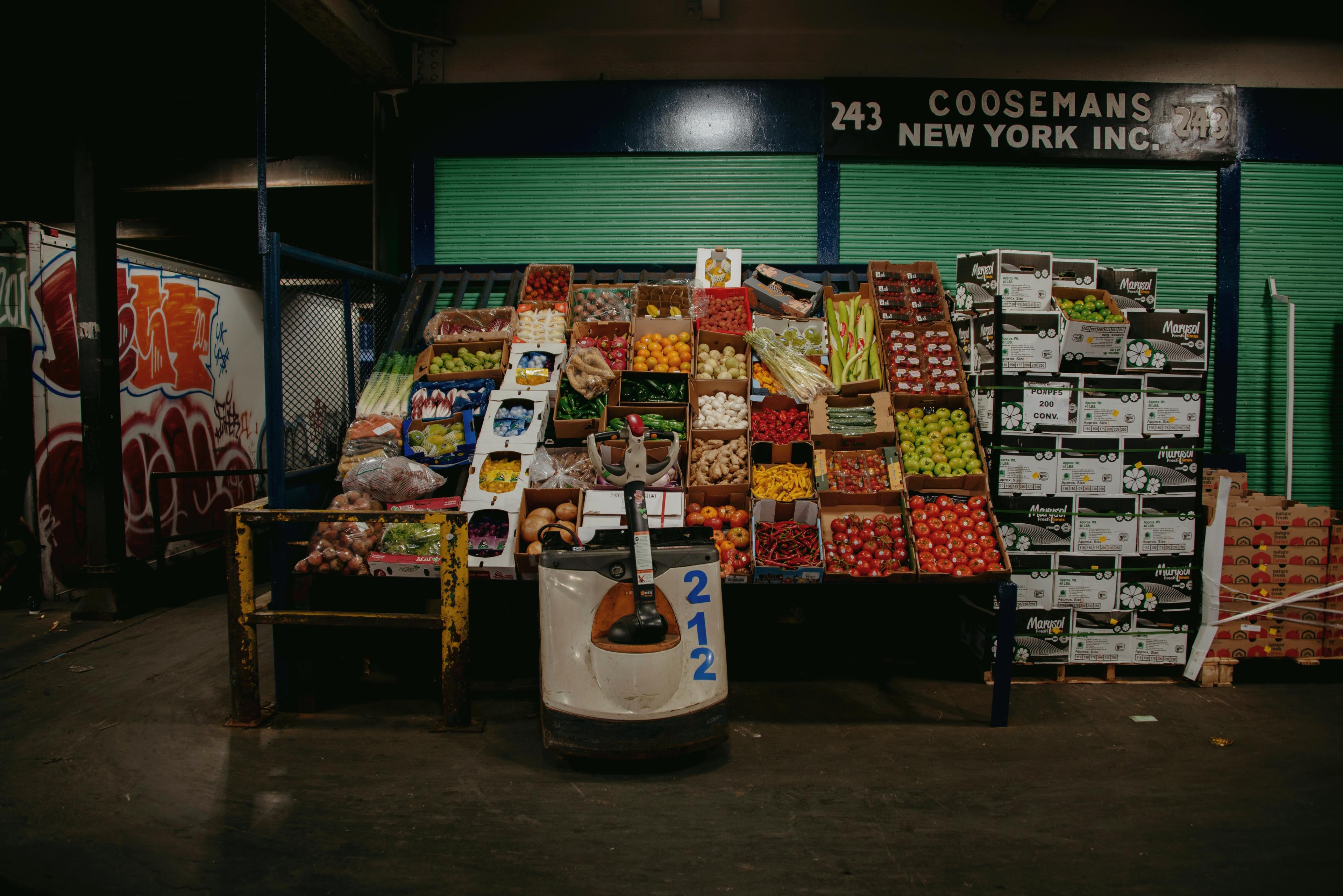
On a map, the New York City Produce Terminal Market resembles the four tines of a fork, angling toward the single-strand Bronx River as though ready to swirl it up like a loose noodle. Glimpsed through the chain link fence on Halleck Street at around 10 a.m. on a Monday in June, it looks like a vast, slumbering truck depot, or some sort of light industrial facility.
This quartet of low-slung buildings is so drab, so unremarkable, so anti-monumental, that you’d be forgiven for heading right past it without a second glance. But within these unassuming structures, a vast hoard of fresh fruits and vegetables sit in chilled rooms, waiting until nightfall, when they will be dispersed among the city’s tens of thousands of grocery stores and restaurants.
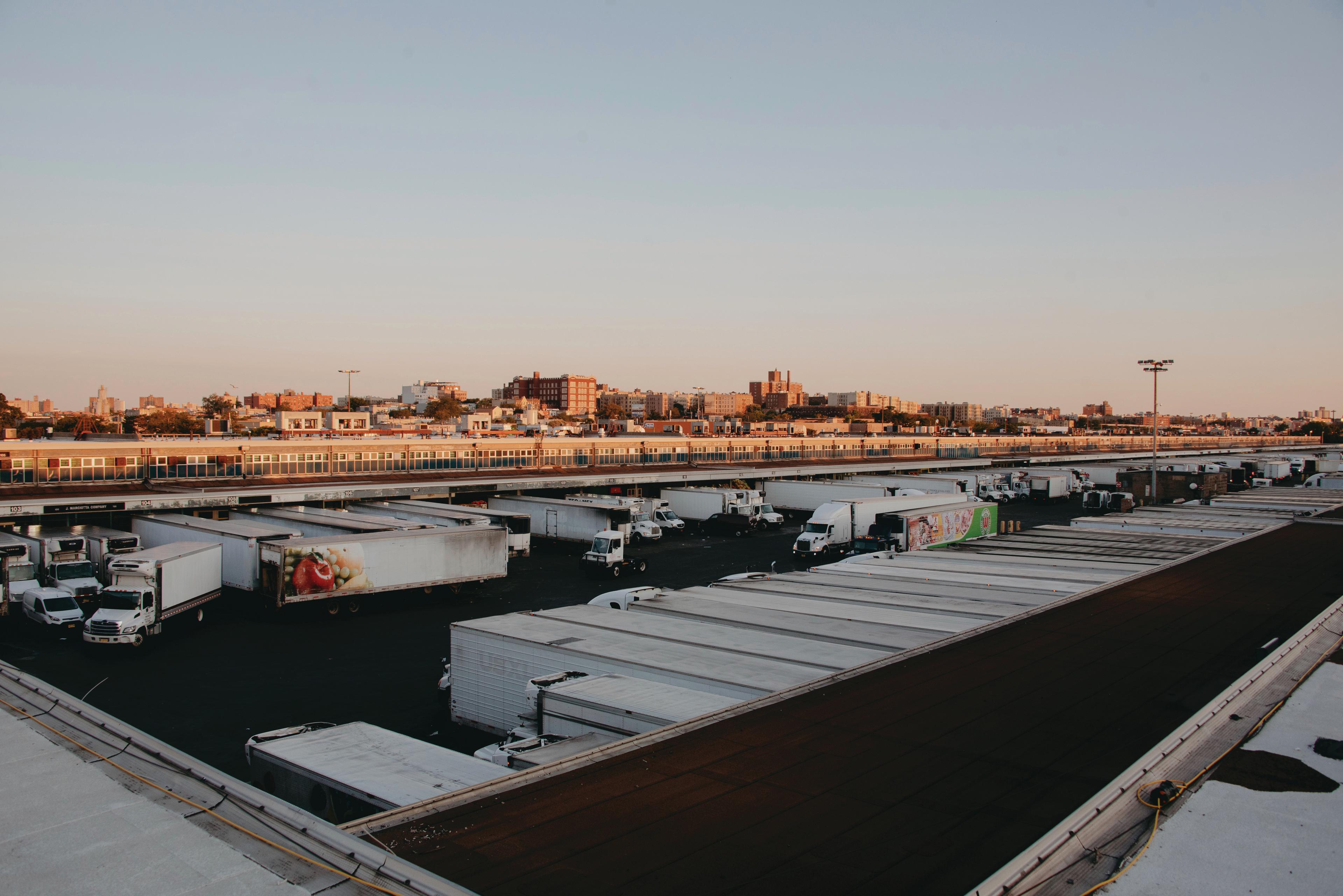
Trailers line the decks of the New York Terminal Produce Market at dawn, the end of the market day.
The market — everyone here calls it “the market” or just “Hunts Point” — is the first stop for much of the produce that is bought, sold, and eaten in New York City. By some accounts, it’s the largest wholesale produce market in the world, supplying nearly two-thirds of the fresh fruits and vegetables consumed in the five boroughs. More than two billion pounds of produce, from across the U.S. and 55 other countries, are bought and sold here every year. The bargain-priced blackberries at your bodega; the nopales and epazote at a Mexican grocery in Queens; the scarlet-speckled Castelfranco chicory in the salad you order at a bougie pizza place — all likely passed through the market, sold by one of 30 or so wholesalers in the million-square-foot facility.
The produce market is the culmination of a vision for public markets that was born in the 19th century and realized in the 20th. These markets represented an aspirational commitment by civic leaders to make fresh food accessible and affordable for urban residents. Along the way, wholesale terminal markets — so called because they were integrated with railway terminals — helped invent the modern food system. They became critical hubs in the infrastructure of abundance, mobilizing national and global supply chains dedicated to satisfying our appetites, regardless of the seasons, for better or for worse.

New York City Mayor Robert Wagner and U.S. Secretary of Agriculture Orville Freeman look at an architect’s drawing of the new Hunts Point Market during groundbreaking ceremonies in the Bronx in 1962.
·Image from Library of Congress
The market is also, in many ways, a relic. When it opened in May 1967, the publicly financed facilities were state-of-the-art, and a huge leap forward from the shambling, traffic-clogged marketplace that persisted in downtown Manhattan for more than a century. But now, nearly six decades later, the market’s infrastructure is creakily out of date, with consequences for the wholesalers who do business there, the stores and consumers who depend on them, and the residents of Hunts Point.
Hunts Point is no longer the necessary institution that it once was. National food retailers like Whole Foods, Costco, and Wegmans largely sidestep the terminal market, maintaining their own distribution centers and warehouses. Other large supermarkets and restaurant chains are supplied by private companies with their own distribution centers (think Sysco, or US Foods).
But for independent grocers and restaurants, and large-volume buyers like the school system and the city’s jails, Hunts Point is irreplaceable. “If the market went away, probably most of the small businesses — especially the small grocers in New York City — would also vanish, because they can’t buy their produce in the bulk orders that a food distributor requires,” Karen Karp, founder of an eponymous consultancy specializing in food systems innovation, told me.
As the market embarks on a campaign to rebuild — the price tag on necessary upgrades and a hoped-for expansion runs upwards of $600 million, about half of which has already been pledged by federal, state, and city officials — it’s worth considering how Hunts Point came to be the reservoir for New York City’s fresh food, and what its future may hold.
“The Variety of Fruits and Vegetables Will Astonish”
The produce market is the original, and the largest, tenant in New York City’s dedicated Food Distribution Center (FDC), a 300-plus-acre zone in Hunts Point, a stubby peninsula in the South Bronx. The FDC includes both public markets — the wholesale meat market and the New Fulton Fish Market — and private enterprises such as restaurant supplier Baldor and an Anheuser-Busch warehouse.
Historian Helen Tangires has called terminal markets “the gated communities of the food trade.” Despite their key role in the economic and gastronomic life of cities, these semi-industrial sites — usually located far from downtown areas, operating at night and selling in wholesale volumes — are easy for ordinary eaters to overlook.
This wasn’t always the case. For much of American history, municipal laws restricted where food could be sold, and who could do the selling. In early America, the market was literally a farmer’s market — places set aside for producers to sell directly to consumers. Wholesalers and other middlemen were regarded with suspicion, as agents who increased the price of food and profited at the expense of ordinary citizens.

Produce Exchange
·Image from Library of Congress
As cities grew, so did the volume of perishable food moving in. “It was a logjam,” Tangires told me. “You needed a process to redistribute it and get it to other places. Cities found they couldn’t solve this problem alone.” New York and other cities ultimately relaxed some of their restrictions. Food wholesaling and distribution became economic sectors.
Wholesale and retail public food markets stretched across Manhattan’s lower west side in the 19th century. Slaughterhouses and meat markets defined what became known as the Meatpacking District, and fish and seafood were sold south on Fulton Street. Washington Market, in what is now the financial district, was the hub for fruit and vegetable wholesalers. In the 1880s, as many as four thousand farm wagons arrived each day, choking surrounding streets with traffic.

Produce Exchange
·Image from Library of Congress
The result was squalor, disorder, and disarray — but also abundance, novelty, and deliciousness. “There are no markets in the world equal to the markets of this City,” pronounced The New York Times in 1879. If a visitor could only look past the filth and clamor, “the variety of fruits and vegetables will astonish him ... At all seasons he will find a variety of vegetables unknown to any other market in the world, and find them, too, months in advance of their regular seasons.” Wholesalers masterminded this flow of goods — buying tomatoes from Bermuda in early February, and from Southern farms in the spring, until local crops came in — weaving a continuous supply of tomatoes stretching from late winter to summer’s end. They were not simply feeding the city’s residents. They were stretching the apparent limits of the seasons, and reshaping urban appetites to crave fresh food from distant places.
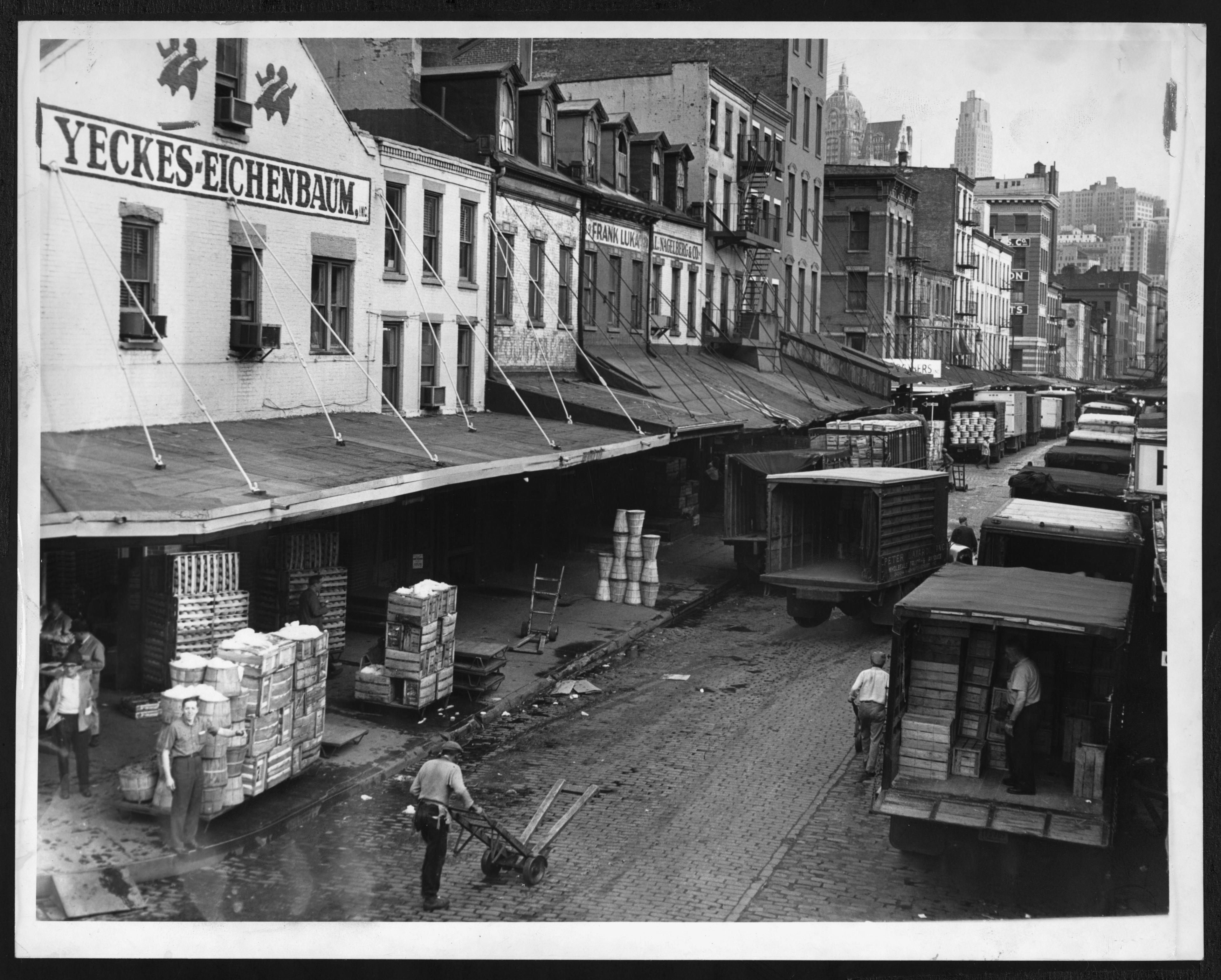
Trucks being loaded with produce at Washington Market
·Image from Library of Congress
These changes accelerated with the introduction of the refrigerated railcar and frigid, temperature-controlled warehouses, links in the robust network of chill that we now know as the cold chain. This is when public markets started to be re-envisioned as terminal markets — fully integrated with railway terminals, and linked to the network of rails fanning out across the continent. In 1929, Walter Hedden, former head of the New York Port Authority, calculated that fruits and vegetables noshed by New Yorkers traveled an average of 1,500 miles. Increasingly, food consumed in the city meant food from far away.
As the city’s hungers outgrew the capacities of the region’s farms, the market also outgrew its downtown location. For decades, city planners had pleaded for a modern, dedicated, and centralized hub that could efficiently distribute food across the city and its suburbs. As land values in Manhattan spiked, city power brokers wanted the market out. Officials had a city-owned site in the South Bronx in mind: Hunts Point.
“It’s Always Good Morning at the Market”
As I tried to understand the market and how it works, it became clear that visiting during the day would never give a full picture. The logistics of large-scale food distribution require a topsy-turvy schedule, laboring through the night in order to restock stores before they open for business. The vision of abundance we enjoy during our waking hours is maintained by workers and truckers hauling produce while we sleep.
“It’s an adrenaline rush,” Matthew D’Arrigo, CEO of D’Arrigo New York, one of the market’s largest wholesalers, told me. “It’s a very different world here at night than it is during the day.”
“We can’t wait. We can’t stop. We can’t hold on to stuff too long. As soon as it’s picked, it starts to die.”
During the day, the market resembles a warehouse. By night, it’s revealed to be a way station, a place where fresh food pauses on its journey. Being in the perishables business means keeping things moving.
Stefanie Katzman is executive vice president at S. Katzman Produce, started by her great-grandfather. “We can’t wait. We can’t stop. We can’t hold on to stuff too long.” She lays down the tragic truth at the center of this business: “As soon as it’s picked, it starts to die.”
I arrive at the market just before four in the morning. The June night is clear, a few stars barely visible in the washed-out urban sky.
The market is a 24-hour operation, but it's busiest in the middle of the night.
I meet Phillip Grant, the produce market’s general manager and CEO since 2019, and his deputy and finance manager, Alex Gomez. Grant — who came to the market after a decade at the New York City Economic Development Corporation, essentially the market’s landlord — radiates competence and political acumen. Gomez, a native of the Bronx, is more subdued, with a nerdy charisma and a deep knowledge of operations. Both look remarkably crisp and alert, belying the dismally late hour.
Four a.m. Tuesday night — make that Wednesday morning — is the tail end of the business day. By daybreak, the line of 18-wheelers streaming into market will have thinned to a trickle, and maintenance crews will be busy sweeping up detritus from the evening’s frenzies: crushed tomatoes, splintered pallets, discarded water bottles.
The platforms hum with activity, as workers haul thousands of pounds of perishable produce while wholesale buyers examine the goods and negotiate their prices.
A grinning man buzzes by on a yellow HiLo forklift, hauling crates of green cabbage stacked higher than our heads. “Good morning!” he calls out with a wave. We are now on PMT — Produce Market Time — where it’s always good morning, even in the dead of night. “That’s the market for you!” laughs Grant.
The market comprises four long, low buildings — each two stories high and a third of a mile long — evocatively labeled A, B, C, and D. Offices are on the second floor, above the loading platform and cold storage units. On one side of the platform, like suckling piglets at a mama sow, refrigerated trailers are hitched up to the platform; some are waiting to be loaded, some are waiting to be unloaded. Others are used for supplemental cold storage, or for charging forklifts — a symptom of the market’s strained capacity. Across from them on the platform are cold storage units, warehouses of chilling produce.
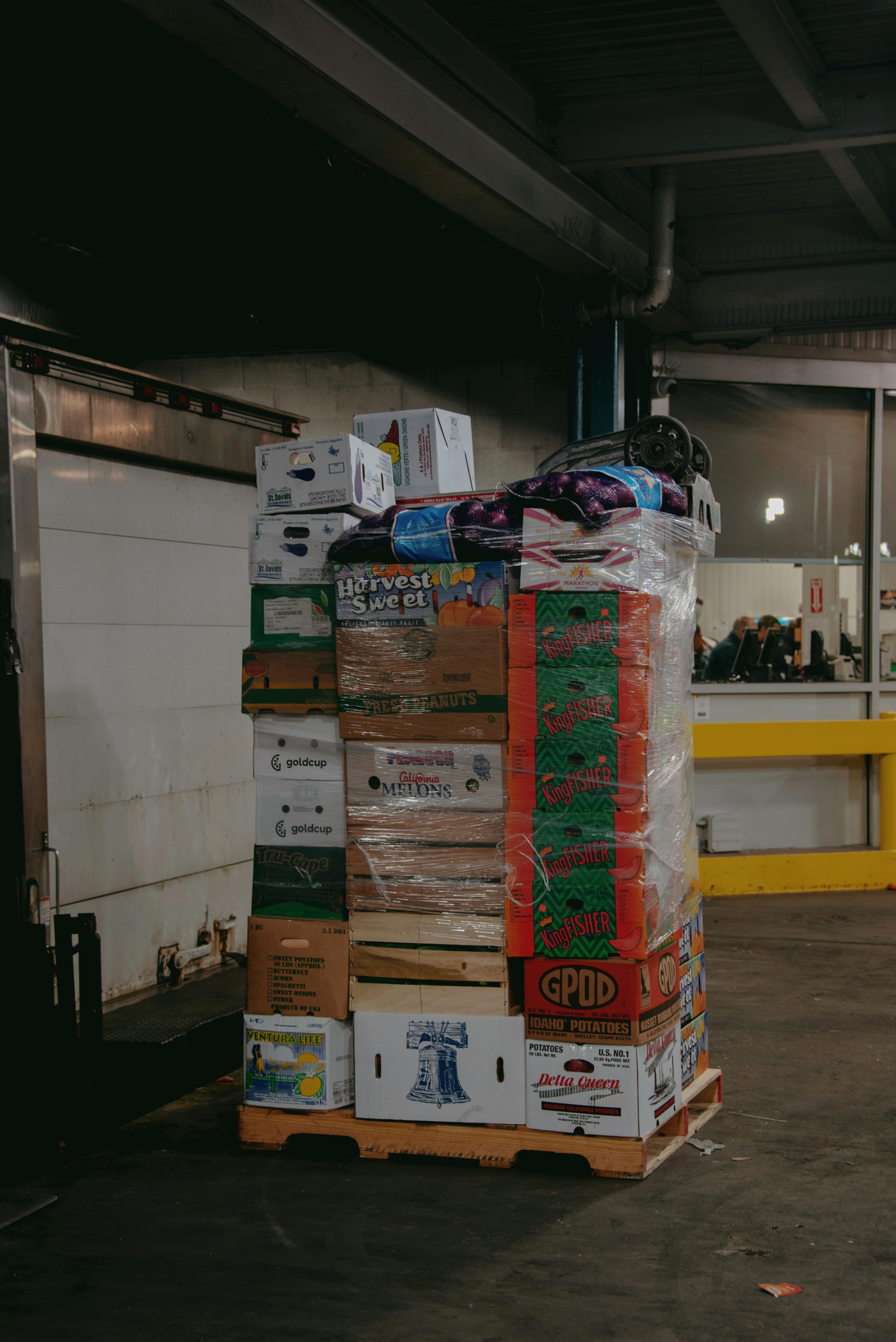
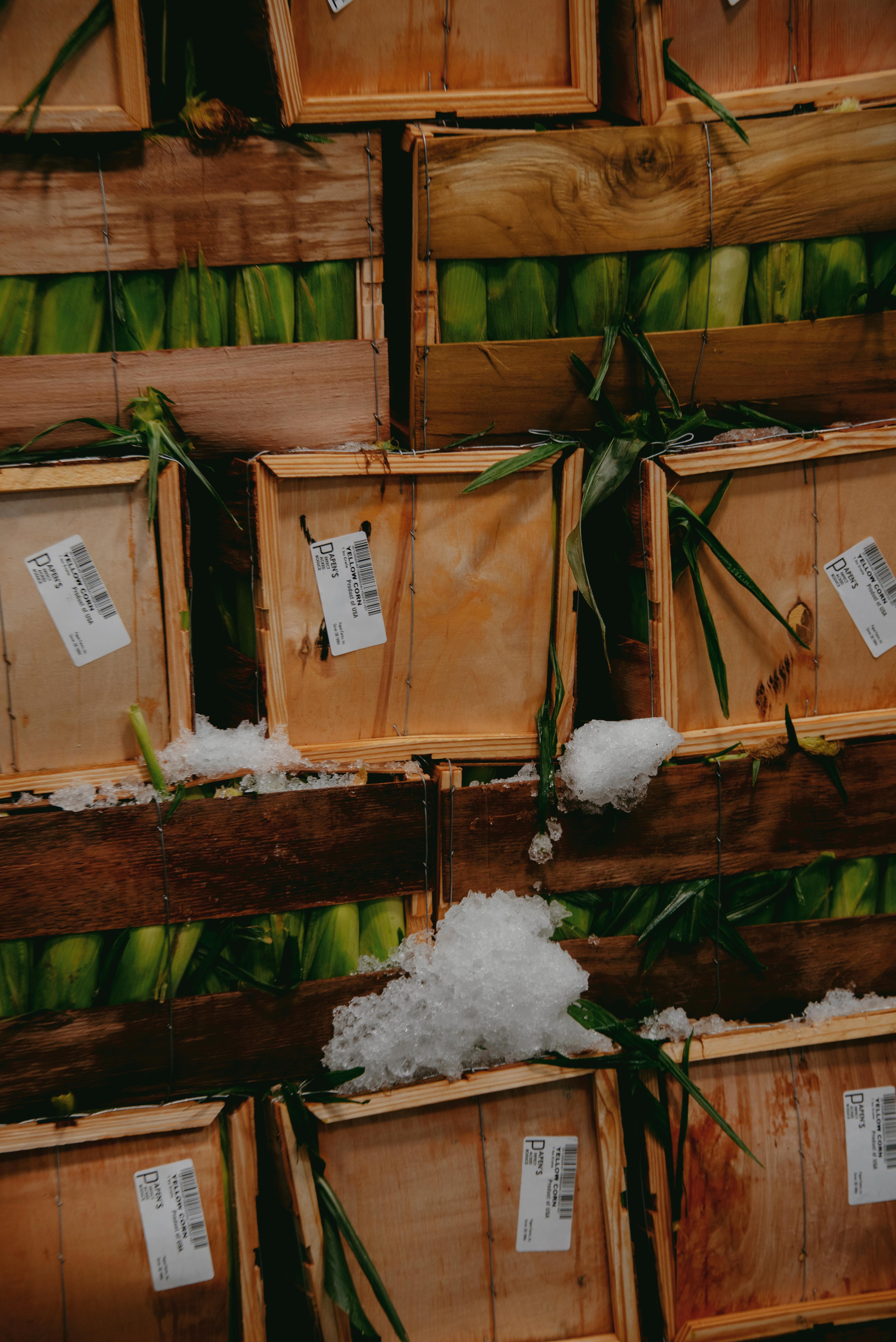
A variety of packaged produce waits for a forklift to transfer it to its next destination. (R) Crates of fresh corn leave a trail of crushed ice as they are transferred from the trailer of an 18-wheeler to cold storage.
The platform — it couldn’t be much more than 20 feet wide — is where the action happens. As we walk its length, many thousands of pounds of produce of varying perishability criss-cross in front of us, from fragile raspberries and strawberries in plastic clamshells to 50-pound sacks of hardy California walnuts. Workers push pallet jacks loaded high with cardboard boxes of Van Gogh mangoes (“Nature’s Masterpiece”) and Honeyglow pineapples; they drive forklifts bearing crates of fresh corn, leaving a breadcrumb trail of crushed ice.
“C Deck is rocking and rolling!” Grant announces with glee.
On B Deck, I meet Tony LoVerde, an older, gray-haired man in glasses, perusing cartons of romaine.
“Excuse me, are you a customer?” I interrupt his lettuce survey. “A customer?!” he barks in mock indignation. “I’m a complainer!” LoVerde runs a grocery store in Borough Park, Brooklyn: Circus Fruits. He’s been coming to the market for 30 years — every night, or nearly — to stock his store’s shelves for the following day.
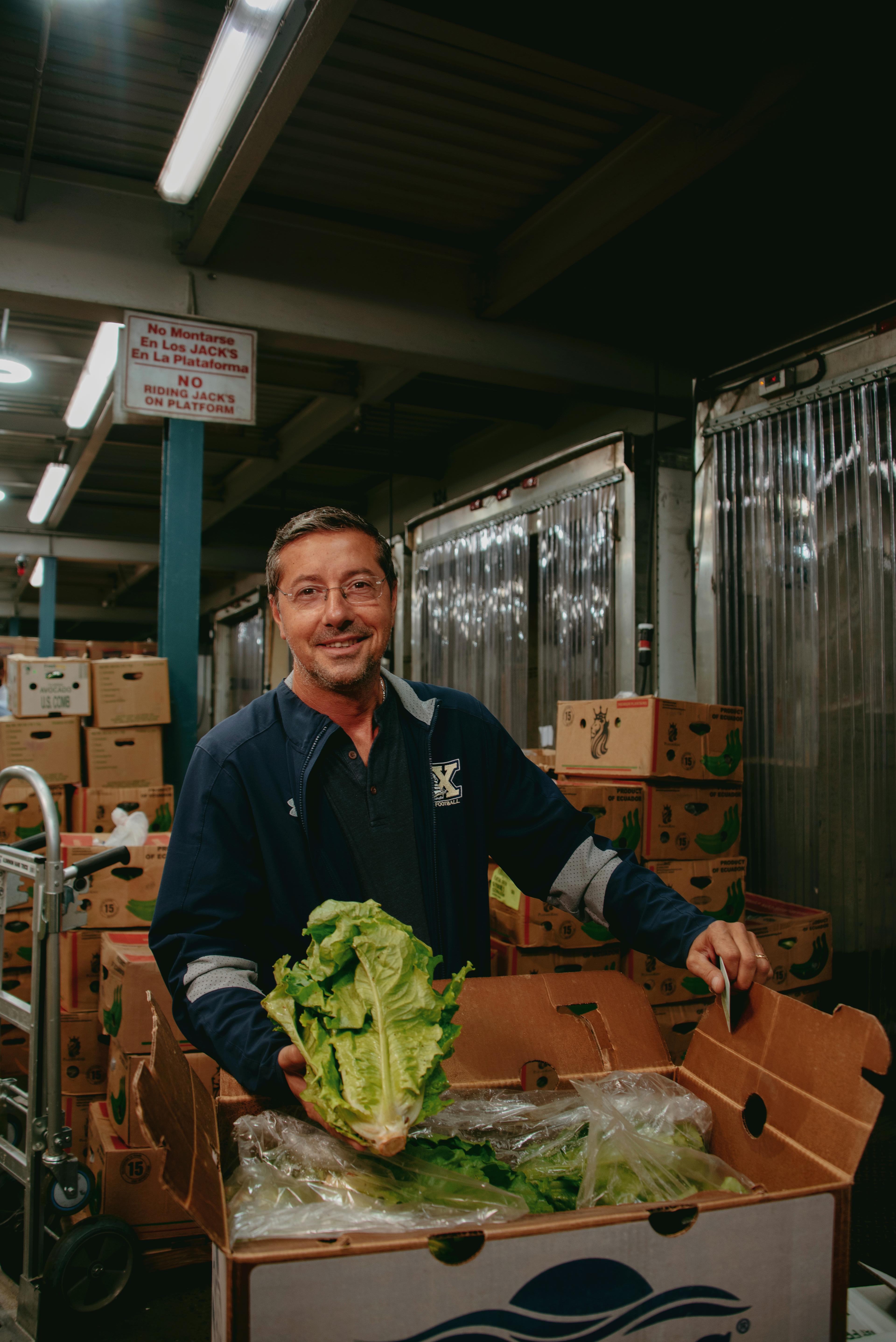
Tony LoVerde of Circus Fruits inspects lettuces on B Deck.
I ask him how, among all the bounty of produce around us, he makes his choice. “If I want to buy, my customer wants to buy,” he says. It’s that simple. But the price he pays — and thus the price the shoppers at his store will pay — is not so simple.
Hunts Point is an open price market. Everything is negotiated, and negotiable. This is one of the biggest differences between wholesale public markets and private alternatives. National supermarket chains — the Walmarts and the Safeways — make advance contracts with growers, fixing prices, volumes, and other details, often before the planting season even begins.
Nature doesn’t always play along. Farmers sometimes have a surplus. Retail chains sometimes have a shortfall, or a gap in their supply. In these cases, they turn to terminal markets — to the wholesalers who will find buyers for the farmer’s surplus goods, and locate growers who can fill in a store’s inventory.
But the lifeblood of the market, its core customers, are independent grocers like LoVerde. In a high-rent city like New York, grocery stores often don’t have the square footage to maintain large inventories. The market is here for them, essentially serving as a warehouse, allowing them to restock as needed.
Some buyers — such as street carts or bodegas — may be looking for past-peak goods, priced to move fast. Some may be looking for premium produce, pricey perfect peaches for tiny restaurants and high-end grocers. Others may be looking for specialty items to serve a growing immigrant community. In any case, if they can’t find what they need at one wholesaler, they can try another one on the next platform. The wholesalers, who are organized as a cooperative, maintain a (mostly) friendly competition with each other. “In this market, it’s professional buyer versus a professional seller,” D’Arrigo explained to me. “It’s a hard-bargain market.”
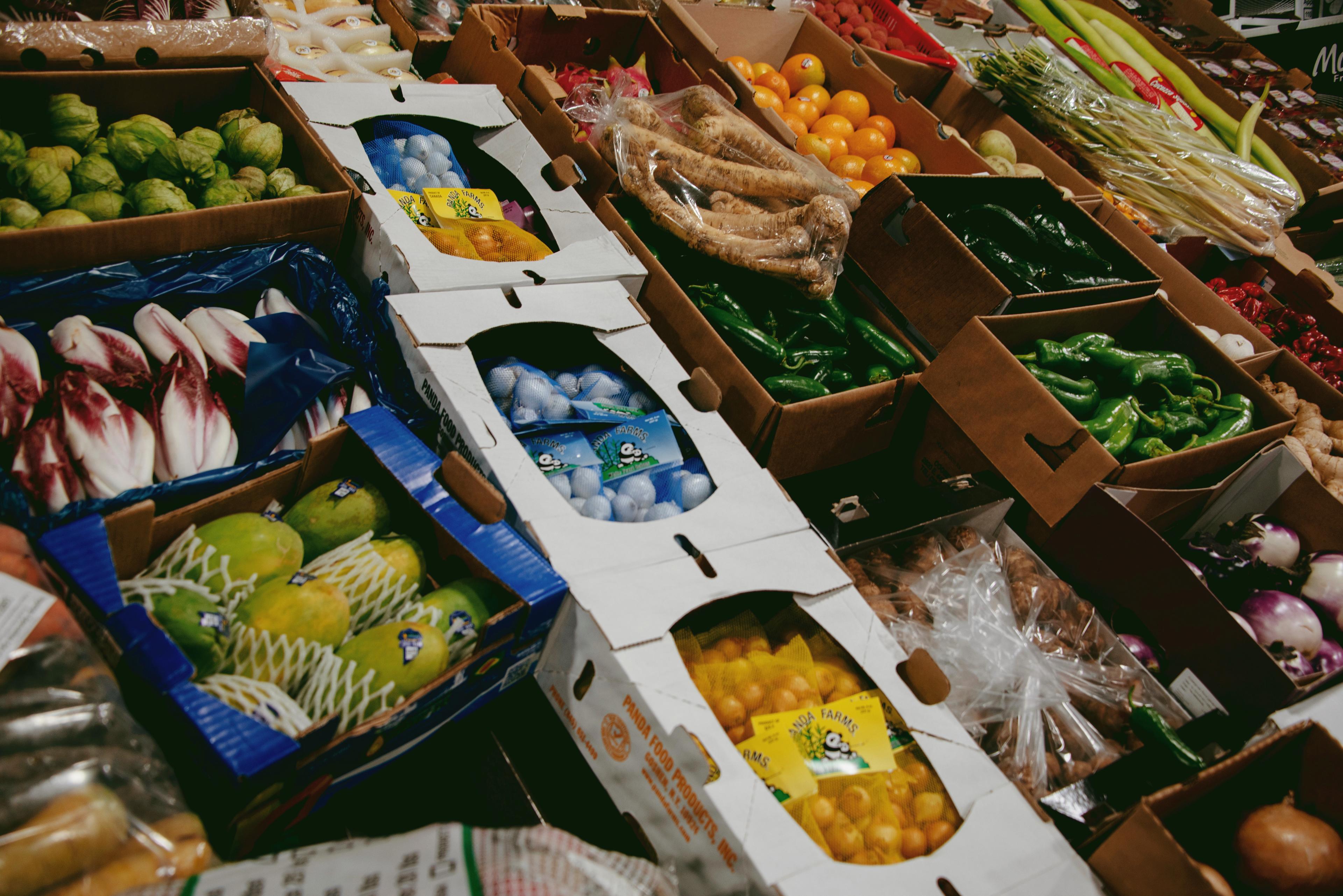
Each vendor displays their produce offerings, enticing a range of customers to purchase.
I ask Anthony Andreani, sales manager at S. Katzman Produce, what it’s like negotiating with buyers. He makes an expansive gesture. “We’re like a married couple,” he says. “We laugh, we joke, we bicker. At the end of the day, they leave happy, we’re happy.” He adds, a bit ruefully: “Some of these customers, I see more than my own wife!”
His father, Mario Andreani, the COO of S. Katzman, is supervising action on the platform from a few feet away. He has been with the company for 37 years. “To be in this business, you’ve got to have heart,” he instructs. “You’ve got to have it here, running through your veins!” I ask him about the changes he’s witnessed in his years here. “We used to get 100 percent of our revenue from customers who came to the market,” he says, with a trace of sadness. “Now it’s more like 60 percent. People call in their order, we deliver.”
This is confirmed by other vendors I speak with in the market. More and more of the orders are transacted by phone. This lessening of the vitality, the hectic energy of the market, feels like a loss.
“There Have Been Fistfights”
The New York Times reporter at the market’s opening day in 1967 interviewed Mark Yeckes, one of more than 100 produce merchants who relocated to the South Bronx. Yeckes, who spent five decades at the old Washington Street Market, is basically panting with excitement at the new space: “So clean. Everything is so neat and efficient. Spotless. The trucks come up, have all the space they need to back in, get out, and another comes in.”
That enthusiasm quickly fizzled. Wholesalers like to joke that the market outgrew its new home five years after it opened in Hunts Point. Trucks lie at the heart of that problem.
Trains cars sit quietly at the terminal.
When the market was designed in the 1950s, planners expected that a substantial portion of perishable produce would arrive by rail, then the dominant means of transporting food. Trucks were mainly used to transport produce within the city, delivering to individual stores and restaurants.
What changed was the interstate highway system, a federal initiative kicked off in 1956, which rapidly revised the logistics of shipping food. As long-haul trucking became faster and cheaper, trucks began to overrun the market. The trucks didn’t just multiply; they grew. When the market opened, refrigerated trailers — reefers — were 33 feet long, sometimes stretching to 45. By the 1990s, reefers extended 53 feet, the 18-wheelers now standard on our highways.
Fifty-three-foot tractor trailers are too hulking to maneuver in the spaces between decks; trailers generally have to be moved in without their engines. “There have been fistfights between drivers, literal fistfights over a parking spot because they need to get in and get their product and get out,” D’Arrigo told me. “It doesn’t happen that often, but when the market’s busy, the market’s busy.”
The highways that transformed the food distribution system also severed Hunts Point and its residents from the rest of the borough — especially the Bruckner Expressway, completed in 1973. For decades afterwards, the neighborhood languished.
Truck at the loading dock of the Hunts Point Market
·Image from Library of Congress
Although the neighborhood has become greener and safer in recent years, largely due to the tremendous efforts of the residents themselves, they still reap few benefits from being the market’s home. The South Bronx neighborhood has repeatedly been described as a “food desert,” with some of the highest obesity rates in the city.
The constant stream of diesel trucks serving the Food Distribution Center and other industrial facilities in the community also generate alarmingly high levels of particulate air pollution, contributing to concurrently high asthma rates. Kids in Hunts Point and neighboring Mott Haven are hospitalized for asthma at a rate more than double the city average. This situation has remained unchanged for decades.
“We have to work with the facility we have, to create the facility of the future.”
As Grant and Gomez show me around the market, they point out innumerable small changes and improvements. Bright LED lighting has improved visibility and safety. A recent partnership with the nonprofit Sharing Excess helps redirect food waste away from landfills. They point out refurbished electrical panels, and a repaired bit of rubber mat around a rail line. These may seem like small potatoes, but Gomez reminds me: Wholesalers operate with slender margins of two percent. Any savings are significant.
Both repeat hopeful slogans. “Fixing the market while it is still operating is like building a car while you’re driving it.” “We have to work with the facility we have, to create the facility of the future.” “We have to act like the market we want to be.” Their vision for a rebuilt, revitalized market includes not only wider, safer platforms, improved energy efficiency, and technological improvements (like digital infrastructure and electric truck charging stations), but a deeper and more sustaining relationship with the surrounding community. Rebuilding the market and revitalizing the neighborhood go hand in hand.
“Imagine the Potential”
It’s difficult to grasp just how large the market is, even when you’re in the middle of it on a busy night. This is because the market is always in flux, forming and reforming itself around the constant flow of precious, perishable produce. No matter how vast the load of lettuce, or the bounty of berries chilling within a million square feet of cold storage, we ultimately experience its goods on the most humble, intimate scale: as the components of the meal in front of us.
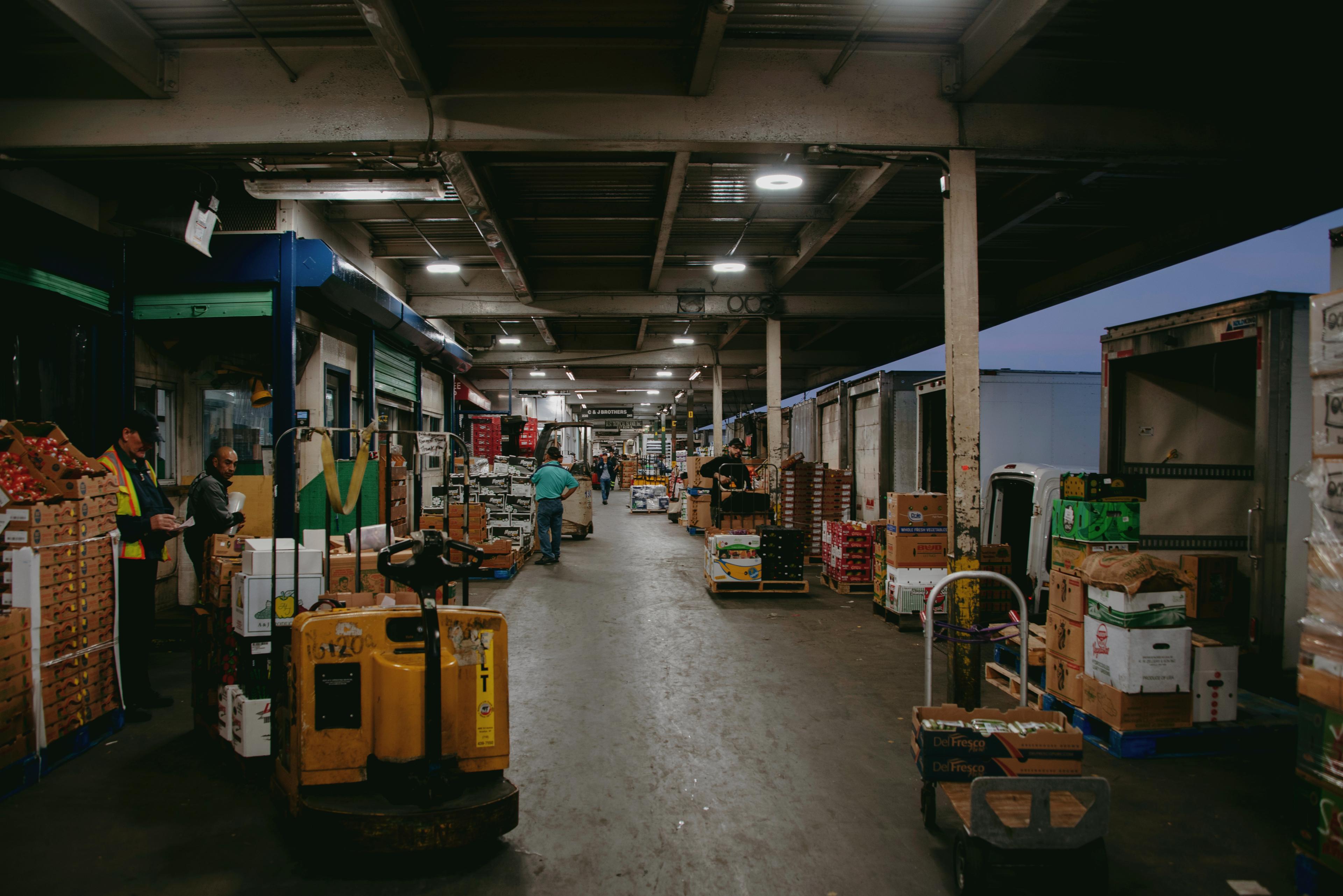
Looking down B Deck as the late-night hustle and bustle winds down.
It wasn’t until my second visit to the market at night, in early August with this article’s photographer, Lila Barth, that I began to grasp the market’s spread.
Grant and Gomez wanted to show off one of their recent green initiatives: the new “cool roof.” We followed them into a stairwell, up a ladder, and through a hatch, and emerged into the fresh clarity of dawn. The flat roofs of the market buildings had been coated with a dazzlingly bright white paint, specially developed to reflect heat and UV rays. By lowering temperatures in and around the buildings, Gomez explained, the paint would reduce the burden on air conditioning and other energy-intensive systems — potentially saving tons of atmospheric carbon. “When it’s finished,” Grant said with pride, “this will be the largest commercial cool roof installation in the city.”
The market stretched out below me, a luminous white fork. Manhattan’s towers reached up to the south. To the north, Hunts Point was slowly coming to life, the grid of its streets sloping up to the Bruckner Expressway. The Bronx River, silvery and calm, glimmered to the east. Once one of the most polluted waterways in the country, through decades of concerted efforts by community groups and environmental stewards, its salubrity has been largely restored. Kids now learn how to canoe and sail in a park right next to the market.
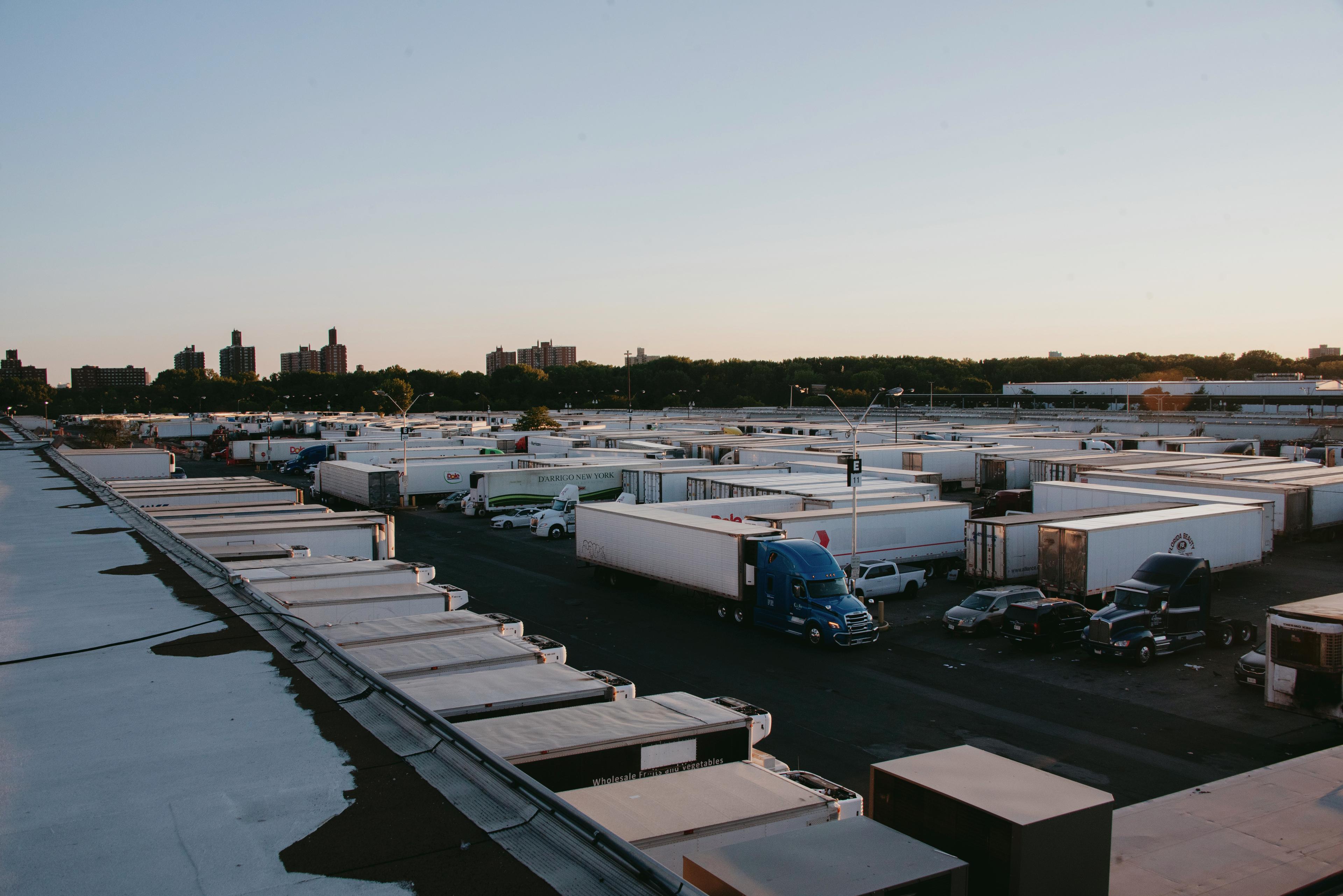
Looking north form the roof towards the Bronx's Soundview neighborhood.
The market, I realized, isn’t a place apart, a closed-off “gated community.” It is an integral part of this variegated, divided cityscape, key to its functioning and survival. And perhaps also to its renewal and flourishing.
Tangires, the market historian, describes public markets as essential civic institutions in 19th and 20th-century America. These were places where community values became municipal policies. Public markets are also points where the levers of the food system — that unthinkably vast and abstract thing — can be reached and shifted, and the system reshaped in response to emerging priorities and diverse needs.
“Imagine the potential,” Grant says. “We do wonders with what we have, but imagine the potential.”
This article first appeared in Ambrook Research Journal V. 01, a limited-edition print publication.
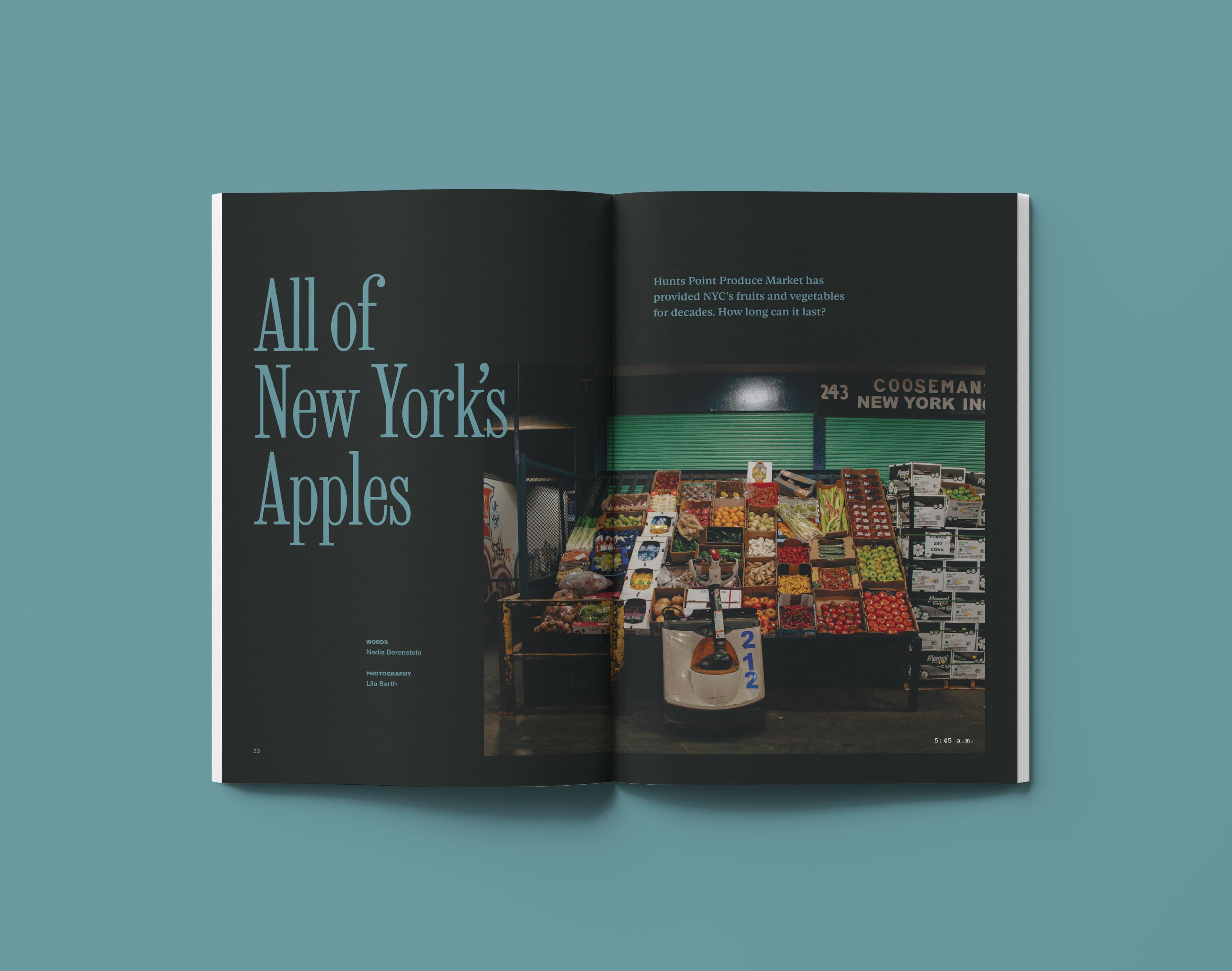
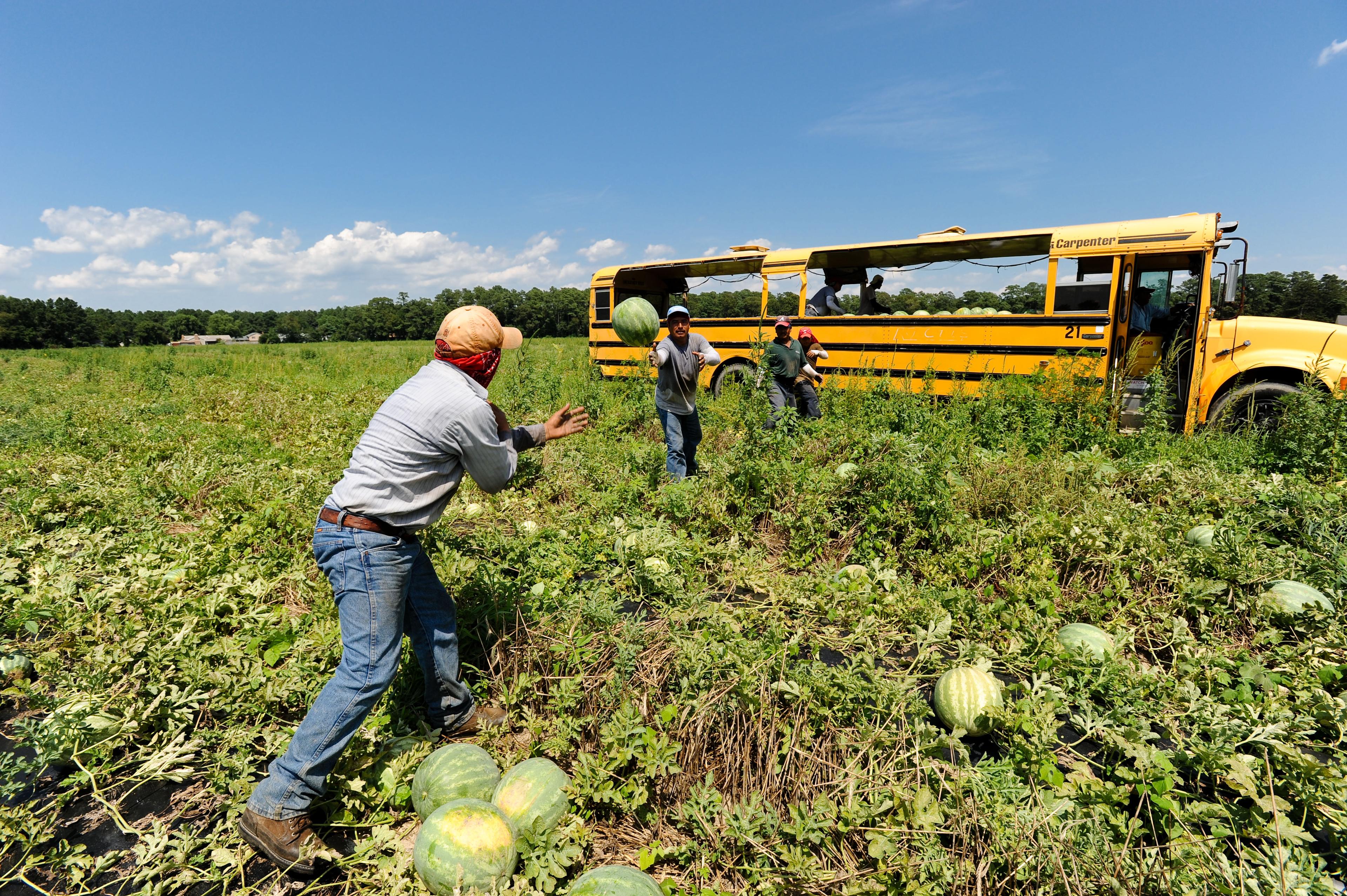
This summer while traveling on Interstate 95 in South Carolina, I noticed a strange sight. As I headed south, a virtual parade of perhaps a half dozen old school buses was headed in the opposite direction. Well, they used to be old school buses. Now they were something different.
The buses had large holes cut into their sides and roofs and were painted white. They also had “Jose Gracia Harvesting” hand painted on the side. The aesthetics immediately caught my eye — they still resembled a bus but were clearly no longer being used for their original purpose. They reminded me of some kind of do-it-yourself project, perhaps a homemade attempt at an RV, but the customization seemed to be standardized among the fleet.
I snapped a slightly blurry photo of the buses when they passed; my curiosity was stirred. Once home, I began to do some sleuthing, which led me on a journey talking to farmers and harvesters across the southeastern United States.
It turns out that the small caravan of buses I happened to pass are a somewhat hidden lynchpin in the complex process of getting food — melons, specifically — from farm fields to tables. In fact, for watermelon farmers and harvesters, used school buses seem to be the dominant way to transport their delicate fruits out of the fields.
The growing of watermelons, like many food crops, has become less labor-intensive over time, with plastic used in the fields to control weeds and drip irrigation to automatically water the plants. But the harvest process is still incredibly manual by nature — watermelons bruise quite easily. Several workers typically act as a human conveyor belt, passing melons to each other and ultimately loading them into a vehicle for transport. Many large farmers turn to third-party harvesting companies for labor and equipment to get the watermelons out of the fields, into packing facilities, and ultimately onto store shelves.
Dustin Land is co-owner of D&M Farms in the Florida Panhandle. He grew watermelons for several years, though he has recently transitioned his land away from melons to focus on other crops including peanuts, cotton, and corn.
Watermelon unloading in Immokalee, Florida
“Watermelons are a very high-risk, high-reward crop. About one out of every five years you’ll do really well,” Land explained. This is because watermelons are especially vulnerable to rainy weather, which can cause rot or even exploding fruit. But Land also found that suppliers would often reject watermelon shipments for tiny defects.
“If you have a bad year, you’ve just lost all your money. We lost $700,000 in 2021. Just from watermelons.”
At the height of his watermelon growing, Land estimates that he devoted 200 acres to watermelon production, yielding around 80,000 pounds per acre. With only five to seven employees, there’s no way that he could have handled that volume of watermelon without a third-party harvester, especially considering how short the harvest season is in Florida. “Somewhere around the 5th to the 10th of June is when we would start harvest. And then we’d pick up to about the 3rd of July,” he said.
Jose Gracia, whose buses I first spotted on the highway, is the owner of Jose Gracia Harvesting in Frost Proof, Florida. Gracia has been in the business of harvesting watermelons for nearly 40 years. The half dozen of his buses that I happened to pass over the summer are but a small part of his fleet.
“We got about 300 school buses,” he recently told me by phone.
Gracia remembers a time before buses were so dominant in the industry. “It’s been at least close to 20 years since we started using buses. Before we used wagons or field trucks.”
“It takes maybe one day to, you know, have us strip down the bus, cut it, take the seats out and, you know, and have it ready.”
Gracia and others in the industry began to move towards buses because the cost for a used bus is “anywhere from $2,500 to $5,000,” a steal for any piece of farm equipment. When he buys a used bus, he pays a body shop an additional $1,200 to remove the seats and cut large holes in the sides, which makes it easier to load watermelons in the field.
Harvesting companies begin the season in the South and tend to move northward as the ripening season changes.
According to Gracia, the drier weather further north leads to a longer harvest season. “North Carolina, you got 10 weeks. Delaware, you got 10 weeks. Georgia, you got seven, eight weeks. In Florida, you’re talking about six weeks.”
(In 2022, Gracia’s company was ordered to pay $249,000 in back wages and fines by the U.S. Department of Labor for providing unsafe and unsanitary housing and working conditions. Citations like these are especially common among third-party contractors like Gracia’s, which provide incidental labor to farmers, with 70% of investigations conducted between 2000 and 2019 resulting in violations.)
Manuel Barajas, owner of TM Harvesting in Lake Placid, Florida, has been in the harvesting business for 24 years. Barajas’ crews also travel with the harvest season. “We start in May in Florida, Central Florida, then in June we’re in Georgia, and mid-July to August we’re in Maryland.”
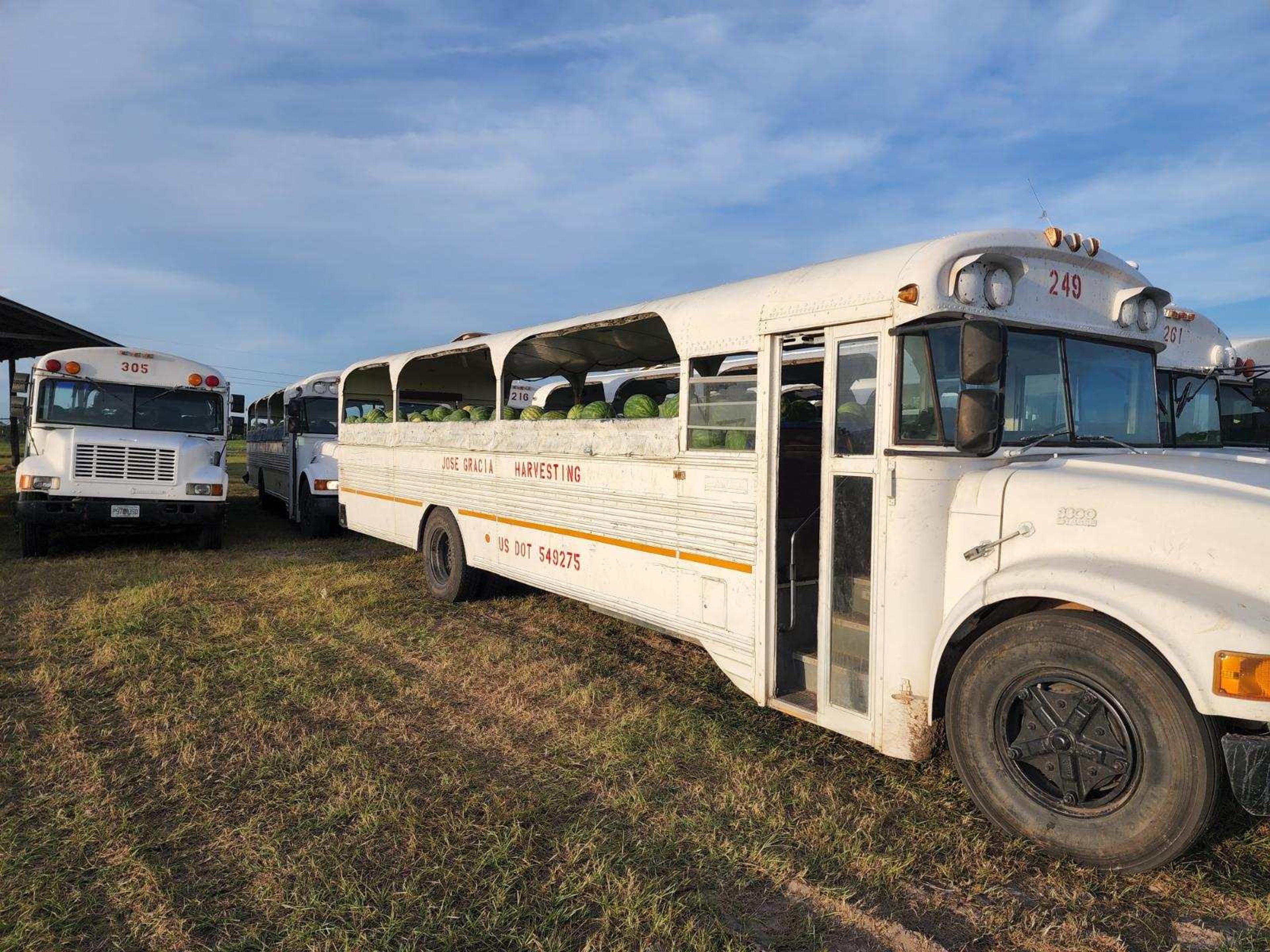
Photo courtesy of Jose Gracia
It can vary by the acreage of the farm, but Barajas sends a crew of about 50 people to a farm at a time, and that crew remains at that farm during the harvest cycle before heading north to work the next farm.
Barajas estimates that his fleet is about 27 buses, which he stores locally in the states where he has crews working rather than transport the vehicles between cities.
Barajas explained that used school buses are really just truck engines and chassises with a different body style. “If I’m going to buy a [used] truck, like a flatbed truck, that truck with the same motor, same horsepower, same transmission, it’s going to be about $10,000. And if I buy a school bus, because it’s been sold by the school board, by the government, I can get it for $3,000.”
Barajas usually has his own team transform a bus from a student hauler to a watermelon carrier. “It takes maybe one day to, you know, have us strip down the bus, cut it, take the seats out and, you know, and have it ready.”
When Barajas is in the market for a new (used) bus, there are certain features that he’s seeking.
“We try to avoid the handicapped buses. We try to get away from them because they have the doors on the side, and that makes the body weaker. So when you load them with watermelon, it’s really heavy. They start to bend from the back.”
“Any little glitch, it doesn’t work and you gotta find a sensor and the regular mechanic doesn’t know how to fix it ... that’s why we try to buy nothing newer than 2002.”
He also prefers older buses because new buses are loaded with too much technology. “Everything is a sensor. And then, you know, any little glitch, it doesn’t work and you gotta find a sensor and the regular mechanic doesn’t know how to fix it. You gotta take it to the dealer and they gotta put a computer in it and all that kind of stuff. So that’s why we try to buy nothing newer than 2002.”
Barajas said that buses are common in the watermelon industry, but he’s also seen them used for other crops. “A lot of people in North Carolina use them for sweet potato hauling. The farmers use them for a lot of things. They cut them off and make them water trucks. You cut them off and you put like a flatbed and then they put little boxes on the buses.”
Unmodified school buses with the seats and walls intact are also sometimes purchased by the harvesters and used as transportation for farmworkers. Barajas described to me how he often will start with a transport bus and eventually convert it to a hauler as it ages. “If I have a labor bus four or five years, I might turn that one into a watermelon bus and buy a newer labor bus. And then I might retire one of my older buses and make use [of it] for parts.”
A pickup truck or tractor could substitute for the bus, but they wouldn’t hold nearly as many large melons and would require many more trips. It’s representative of the creative problem solving facing farmers and agricultural workers. Tight margins lead to solutions that make smart, cost-effective reuse of scrap materials.
I suspect that most people in the general public have no idea where their busted-up old bus goes after dropping off its last student. Conversely, everybody in the watermelon industry seems to take it as a matter of course.
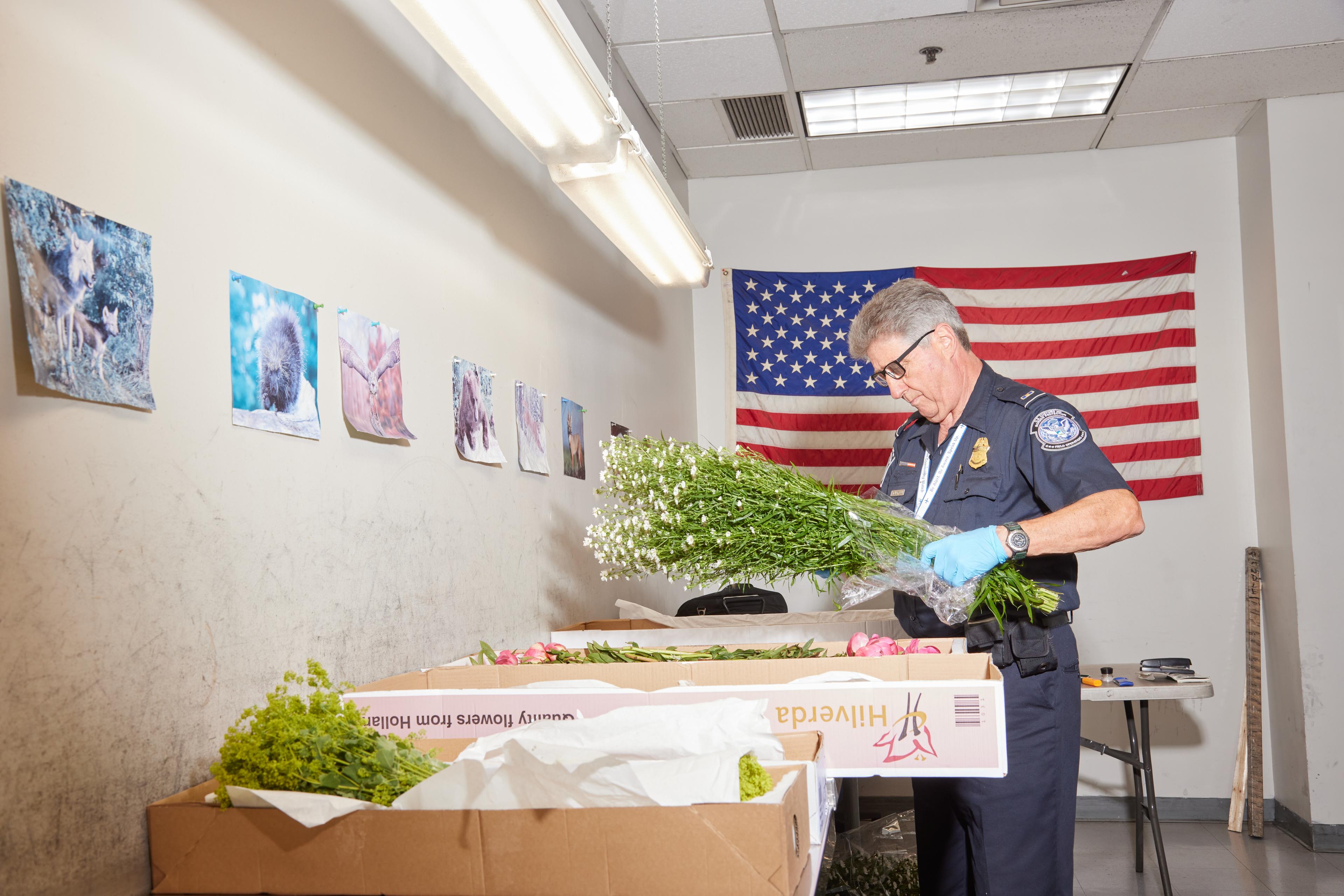
There’s a modest room inside Cargo Build- ing 79 at John F. Kennedy International Airport, a dizzyingly massive hub for American Airlines’ cargo shipments. It’s a windowless little space, quite plain save for an oversized American flag, a row of stainless steel tables, and a desk.
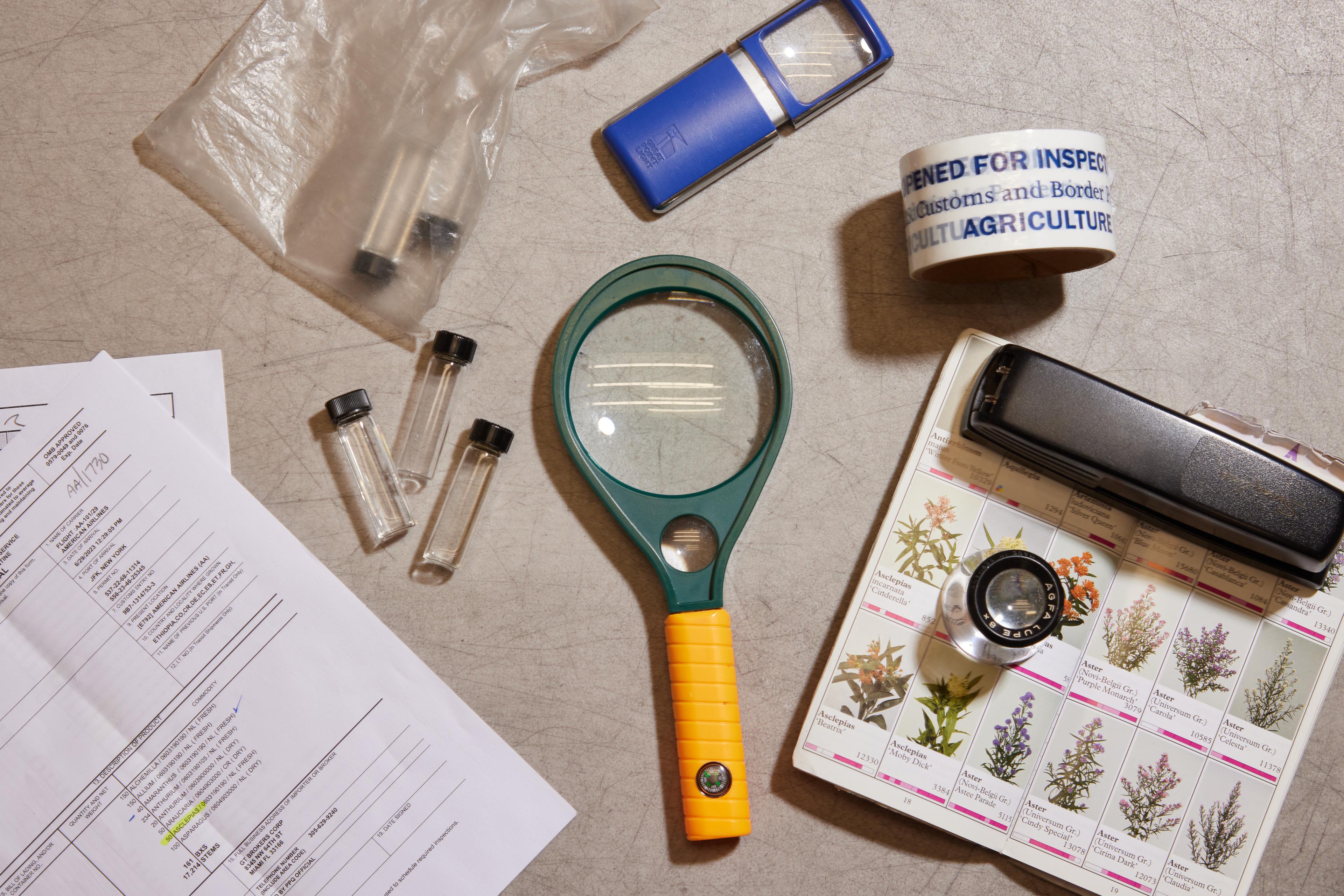
Tools of the trade.
Inside the desk is an array of old-timey accouterments that Wes Anderson might choose to give a private detective in one of his films: magnifying glasses, vials, tweezers, faded field guides to botany. But these are no props, and if they seem a bit worn it’s not from neglect — it’s from daily use. This is the toolbox of the agriculture specialists at Customs and Border Protection (CBP), tasked with the sacrosanct duty of keeping invasive pests and diseases from entering the United States.
“One bug, just one or two millimeters long, can hold up tens of thousands of dollars worth of product,” said CBP supervisory ag specialist Ralph Johnson, while eyeballing an array of high-end peonies, fresh off a flight from the Netherlands.
It’s not surgery, but inspecting high-end flowers does demand a certain degree of delicacy.
Johnson and his cohort do not carry guns; street drugs and immigration are not in their purview. Rather, these agents serve as frontline protection from pests and pathogens with the potential to all-but-decimate the American food supply. Take hoof and mouth disease, that infamous livestock malady which could cost the U.S. more than $200 billion if we see another outbreak, according to the USDA. Or massive African land snails, which likely entered the U.S. in Miami and have since been merrily destroying Florida’s croplands.
At JFK, the ag specialists work on two fronts, passenger and cargo. Inspecting the latter has business impacts that can frustrate shippers and wholesalers, but comes with the territory. But when a CBP agent confiscates some passenger’s precious lemons, picked from a grandmother’s tree in Sicily for a family celebration thousands of miles away, that’s when it gets personal.
While many confiscated items are no more interesting than a tangerine, there are also ostrich eggs and sheep horns and giant snails. (Pictured: Branch chief Rose Andretta)
“Taking people’s food is very intimate,” said Ginger Perrone, a CBP agriculture supervisor on JFK’s passenger side. “They often don’t understand why we’re doing it ... there’s been a lot of tears.”
Perrone’s team destroys huge batches of edible contraband every day: prosciutto and peppers, pork buns and pineapples. They know their mission is vital, though it can be hard to steward such waste. “People think we take home all the food we confiscate,” said Rose Andretta, agriculture passenger branch chief at JFK. “It’s actually just sad to throw it all away, but we are the first line of defense in protecting our nation against harmful pests and diseases.”
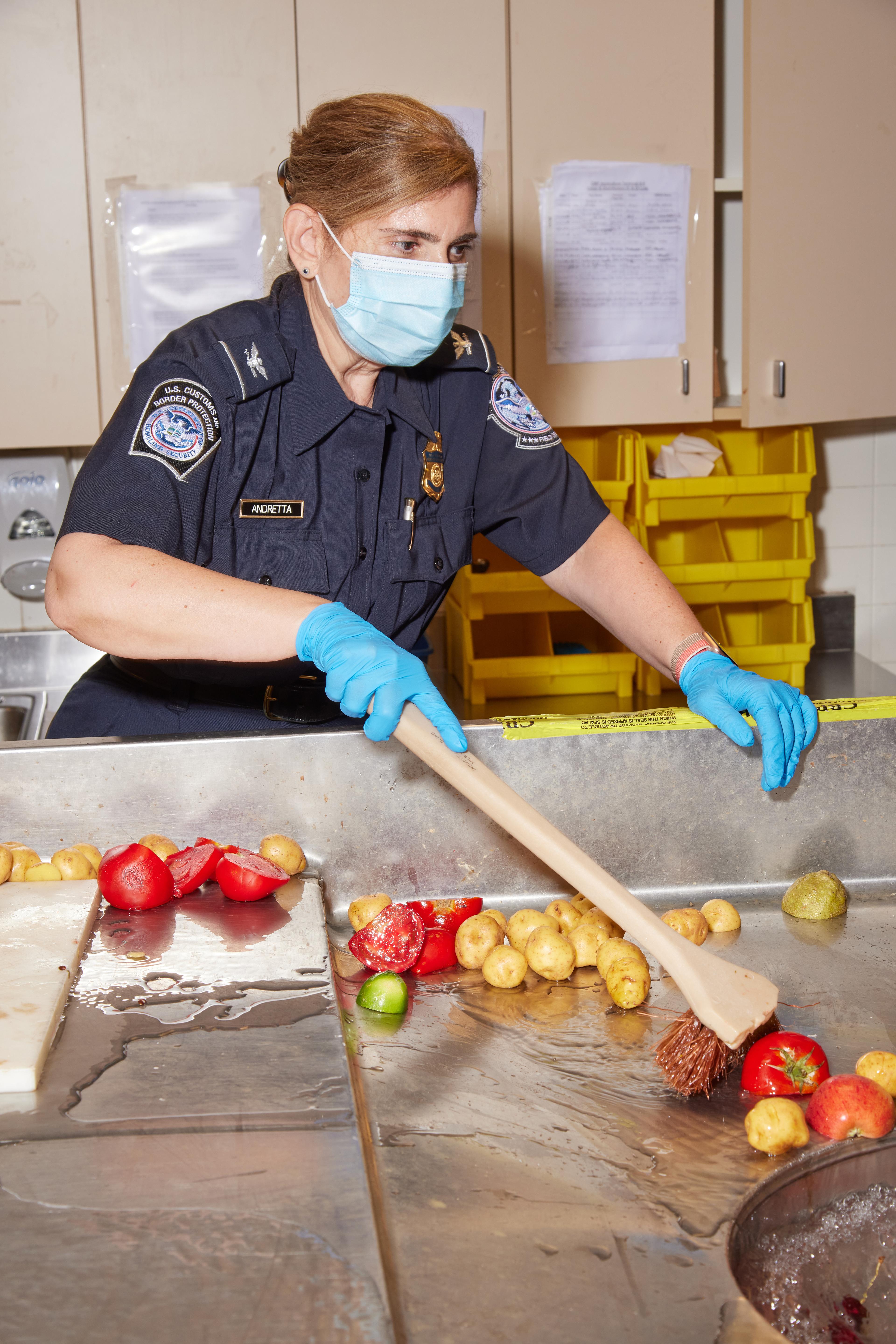
Branch chief Andretta chops up charcuterie and fruit before washing it down a huge garbage disposal.
Back in the inspection room in Cargo Build- ing 79, Johnson’s colleague Peter Pramberger has just finished thrashing bunches of purple larkspur, scouring for unwanted hitchhikers as a shower of petals drifts to the floor. It’s meticulous, repetitive work, using eyeballs, knowledge of botany and entomology, and a set of crude, analog tools. But Pramberger loves it.
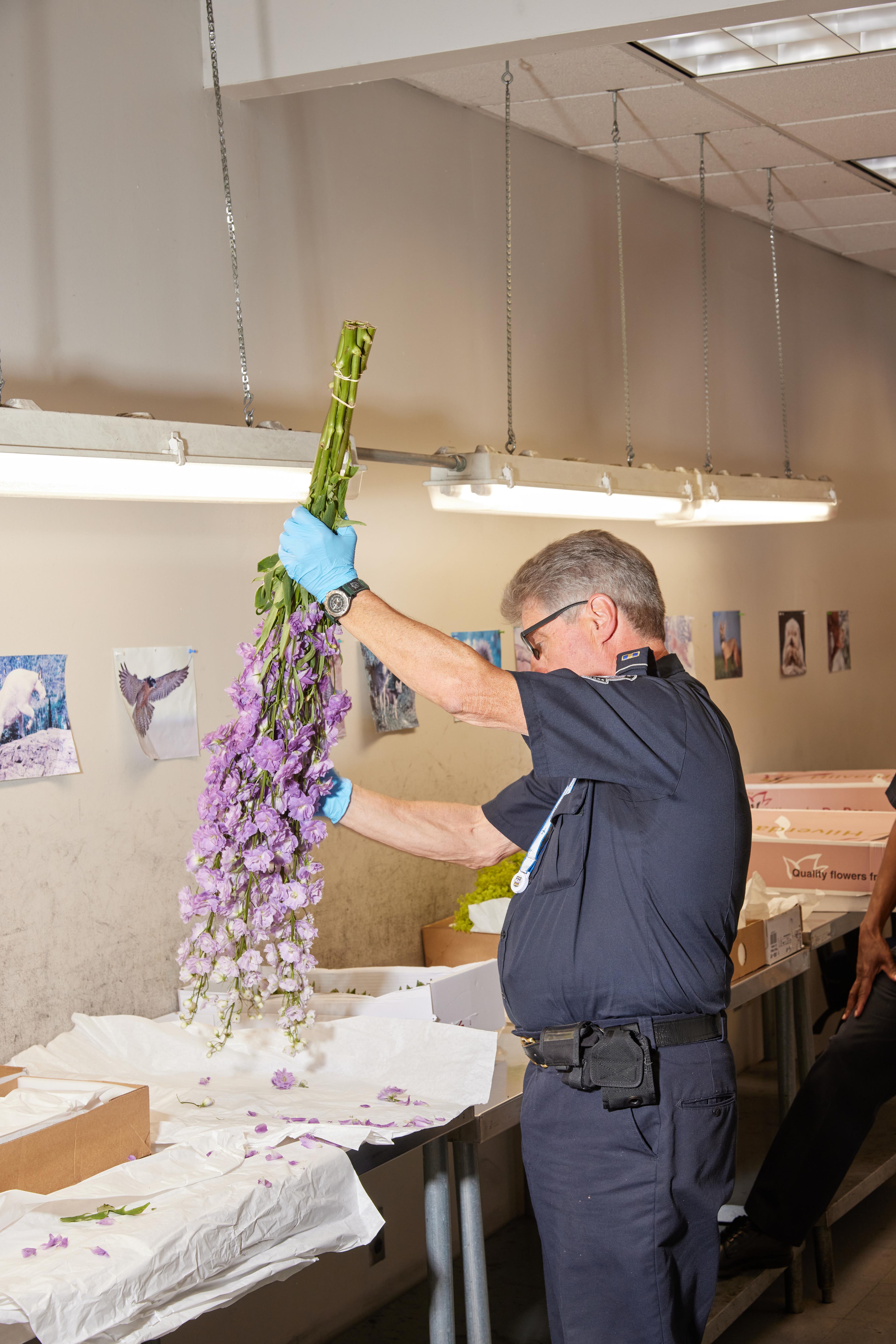
Purple rain: Ag specialist Pramberger looks for hitchhik- ers as petals drift slowly to the ground.
“The work we do is so important,” he said, “but I also just love smelling these flowers.”
This article first appeared in the Ambrook Research Journal V. 01, a limited-edition print publication.
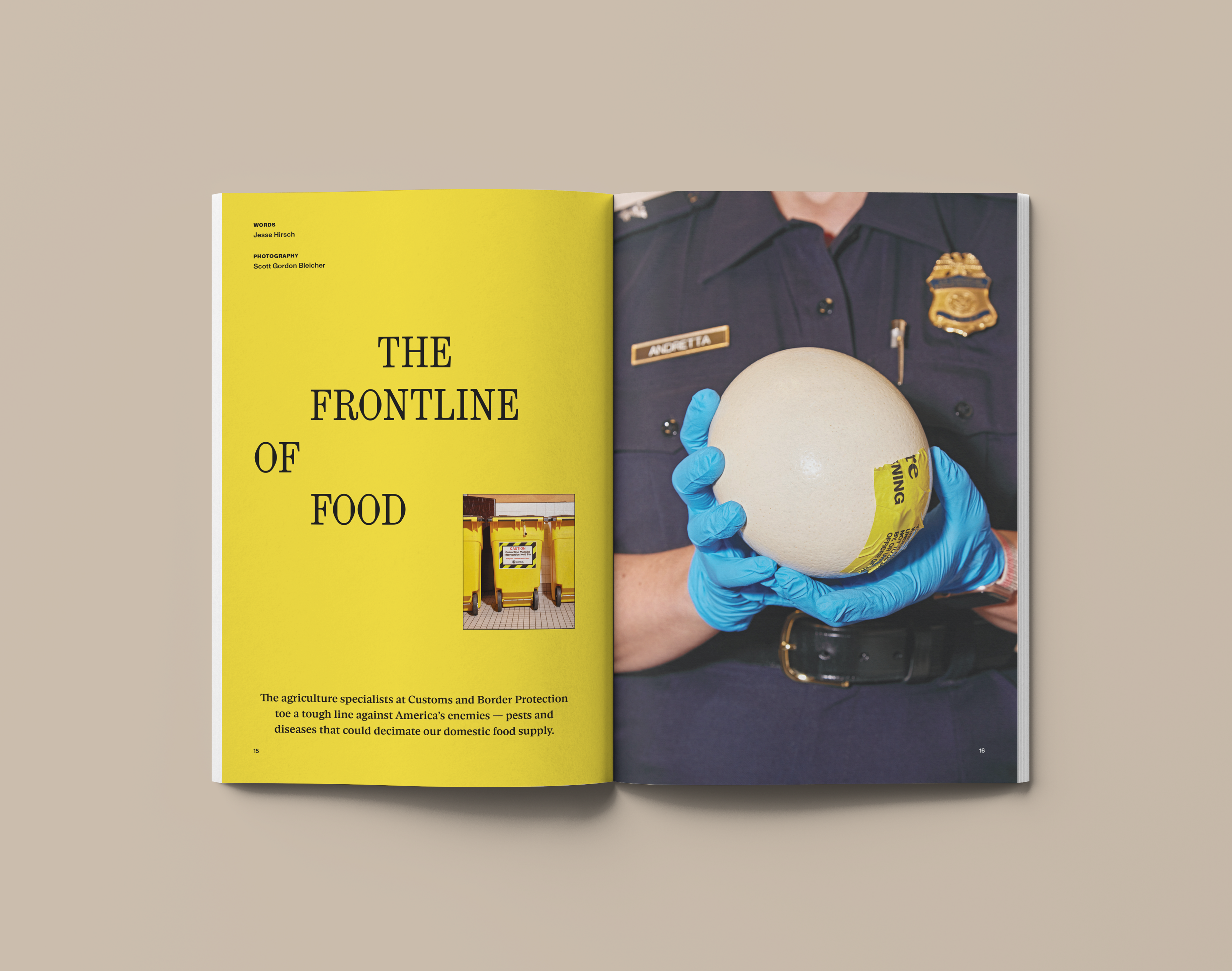
Graphic by Ali Aas
In the summer of 2022, row crop farmer Vance Ehmke looked out at his fields of wheat, rye, and triticale and only one word came to mind: dry. Kansas was in the midst of a record-setting drought, and Ehmke’s farm in Healy would see only 8.75 inches of precipitation that year — less than half of its annual average. It was “pure, bone-crushing dry weather,” according to Ehmke.
In Ehmke’s industry, rain is money. Without it, crops don’t grow, seeds don’t germinate, land is wasted. And Kansas wasn’t the only state suffering through last year’s drought. 2022 was the third-driest year in U.S. history, and the combined Western and Central droughts cost the country $22.1 billion. Globally, drought remains the primary cause of agricultural loss and is a major threat to food security.
To keep farms afloat, many farmers are turning to drought-resistant and drought-tolerant crops. Lima beans, jet barley, kamut, Lebanese light green squash, and more are naturally resistant to dry, hot weather. Some widely used grain crops, like triticale and rye, also offer natural drought resistance. Triticale, a cross between wheat and rye, needs less water overall and can be grown through the cool months of the year. Rye is similarly accustomed to low rainfall, hot weather, and sandy soil. Used in both human and livestock feed, grain crops are the main source of energy worldwide.
Cross-breeding or selecting drought-hardy genes produces tougher, more resilient seeds. For example, breeding winter-hardy rye and fast-emerging spring triticale can create long-lasting, drought-ready grazing crops. Ehmke farms and sells wheat, rye, and triticale blends with drought-resistant properties. “One of the ways to clap back at global climate change is through planned breeding,” stated Ehmke.
Researchers also are working to make traditional row crops like corn more drought-resistant through gene editing, genetic engineering, and selective breeding. Corn is traditionally very susceptible to drought, due to its small root systems and sizable water requirements, though some varieties fare better than others. Carlos Messina, professor of horticultural sciences at the University of Florida, and a senior scientist at Corteva Agriscience, studies drought-tolerant corn and gene editing.
Messina explained that gene editing differs from genetic modification of plants, often referred to as genetically modified organisms or GMOs. Gene editing involves fine-tuning a plant’s DNA, which is essentially the instructions that tell a plant how to grow. It’s similar to what happens in nature, where plants slowly evolve to survive in different environments. If you need a crop to better withstand drought conditions, you might tweak its DNA so it grows longer roots. Or, you could ensure that its reproductive female flowers sustain longer during dry periods. “Gene editing just speeds up this process using biotechnology,” said Messina. “You’re mimicking what nature is already doing.”
Peggy G. Lemaux, a researcher at University of California, Berkeley, who’s been studying genetic crop improvements for over 30 years, argues that every plant is genetically modified, in some way. Natural mutations and generational advancements are just slower, natural iterations of the same science. “With editing, you can make that modification directly in the variety you want to use. It’s much faster, and genetically it’s not any different,” she said.
It’s worth noting that tweaking a plant’s genes to help it survive drought isn’t always straightforward. Drought resistance in plants involves various factors, such as the timing of drought and the plant’s size. It’s not always clear which traits do what.
“One of the ways to clap back at global climate change is through planned breeding.”
As well, droughts — and their effects — change every year. Jonathan McFadden, research economist at the United States Department of Agriculture (USDA), noted that dry weather and lack of water are only surface-level symptoms of drought. Other problems, like pests and weeds, can create double-stress environments. “When this happens,” he added, “it’s less likely you’ll get a good [crop] outcome.”
McFadden agreed that singling out drought-tolerant genes can be difficult. “There is not one gene that is responsible for how the plant responds to drought. Or even a set of genes — it’s very complicated.”
Overall, however, drought-resistant varieties can improve yields, said McFadden. He explained that the vast majority of drought-tolerant corn currently farmed in the U.S. has also been genetically engineered for other traits like insect and glyphosate resistance. Because of this, these varieties tend to perform better under mild to moderate stress conditions than non-engineered varieties.
For farmers, drought-hardy crops can offer resilience, survival, and potentially some profit. “Growing triticale, you make more money than with corn,” said Ehmke. His crops and seeds are generally sold as cattle feed, a market that values high protein content and steady supply. “You use a lot less water. Part of that is because corn grows in the hottest months of the year when you have high evaporation loss.” A crop like triticale, which can be grown with low water in the cold season, is especially attractive in states like Kansas, which is rapidly running out of water.
Drought-resistant corn has been a popular crop in the traditionally dry western Corn Belt, both in genetically modified and non-genetically modified varieties. However, the most recent USDA data, which only spans to 2016, found drought-tolerant corn made up just 22 percent of total U.S. planted corn acreage.
Corn and soy remain top sellers in the U.S. However, recent data from Kansas State University covering northwest Kansas, where Ehmke operates, found that soy and corn offer meager returns for farmers, when compared to more profitable drought-resistors like wheat and grain sorghum.
“There is not one gene that is responsible for how the plant responds to drought.”
Both Messina and McFadden believe there is more to creating a drought-resistant, climate-ready farming industry than just editing crop genes, or selling new seeds. Conservation or no-till practices, as well as reducing greenhouse gasses emitted from agriculture, will also be necessary.
Traditional breeding methods should not be understated either, said Messina. Tactics like mass selection, recurrent selection, and top crossing have been used for a long time to improve drought tolerance. While these methods may not result in big, immediate breakthroughs, they can lead to steady progress over time.
Still, gene editing will continue to play a significant role in protecting crops from climate change. “The promises are huge,” Messina stated, “but it needs to be done responsibly. This means understanding the biology of plants before we edit them.“
Even now, farmers like Ehmke feel advances in gene editing are moving rapidly, and some are having trouble keeping up. “There’s a new wheat variety every two to three years,” he said. McFadden calls this the “R&D treadmill.” As pests and conditions evolve, you have to fix your sights on next year’s variety, and the variety after that. Whether it’s weeds, insects, water stress, or heat stress — the goalpost is always moving.
Wise farmers are paying attention to university data, finding the highest-yielding drought-tolerant varieties, and adapting quickly, said Ehmke. “Farming is a mature industry characterized by extreme competition and tight profit margins,” he declared. “If you want to stay in the game, you have to adapt immediately.”
Urgency is the name of the game in the ever-drying American plains. All evidence points to an uncomfortable truth: Droughts are only likely to increase. Ehmke’s advice? “Adapt or die, that’s where we’re at.”
For about five years now, Jayme Murray, CEO of Cheyenne River Sioux Tribe Buffalo Authority Corporation, has been lobbying the United States Department of Agriculture (USDA) for the ability to bid on bison meat contracts. USDA policies that favored a large-scale, national distribution model had long prevented smaller, local producers from bidding on those coveted contracts.
That is no longer the case.
Thanks to the work of Murray and others, last month the USDA announced its Bison Pilot Program. The initiative is exploring how to overturn the agency’s longstanding distribution model by incorporating meat purchased from small- and mid-sized herd managers into the food package program and delivering it directly to local tribal communities.
Starting later this month, Cheyenne River Sioux Tribe Buffalo Authority Corporation will be sending out its first 750-pound-a-month bison shipment to the Rosebud Sioux and Sisseton Wahpeton tribes purchased via the USDA’s Food Distribution Program on Indian Reservations (FDPIR). The program, which is similar to the Supplemental Nutrition Assistance Program (SNAP), provides USDA-sourced foods to Indian households on reservations and other designated areas that fall under specific income guidelines.
The company received two out of five contracts awarded as part of the new program. Together, they add up to nearly $67,000, almost a 10 percent increase in business.
“We’ve been really pushing for a long time, like, why can’t we bid on these contracts?” said Murray. “To actually see it come to fruition is gratifying and to be able to actually get a few of the contracts is like icing on the cake.”
Native producer Brownotter Ranch, which operates on the Standing Rock Sioux Reservation in South Dakota, received a $162,360 contract. Akicita Consulting, owned by the Lower Brule Sioux Tribe, got $14,079. The largest sum was awarded to Dakota Pure Bison on the Rosebud Sioux Reservation for nearly $255,000.
These contracts are the latest USDA’s efforts to incorporate traditional foods into Indigenous diets across the country; in some ways, this pilot program is the most significant and groundbreaking. Though bison was already in the program, modifications were made to allow the agency to source from smaller, largely Native-run purveyors who raise their meat more in line with longstanding cultural customs.
In 2021, the agency launched an Indigenous Food Sovereignty Initiative in collaboration with tribal-serving organizations to rethink foodways from an Indigenous lens. Those efforts have included providing resources for tribal youth, communities, and Native agricultural producers such as a manual on “Transitioning from Cattle to Bison,” the purchase of six seed cleaning/fanning mills to assist in the launch of Indigenous seed-saving hubs, videos on foraging wild and Indigenous plants, and recipes and cooking videos on how to use those kinds of ingredients.
“The concept is how do we purchase more local food and get them into the food system — how do you get the buffalo across the road?”
These efforts as restoring ancestral diets have been a big change from previous programs, but the Bison Pilot Program is upending the way the USDA operates. It’s a step away from large, national producers toward local businesses.
“Tribes had asked for more local buffalo and tribally raised buffalo to be incorporated into those food packages, but the challenge we had is that the federal government purchases in a manner that’s not conducive to local and tribal producers,” said Heather Dawn Thompson, USDA’s director of tribal relations. “Smaller and local tribal producers cannot fill those very large orders.”
Thompson said this is the agency’s first attempt at relying on more localized, smaller producers for the buffalo included in the packages. It costs the agency more than filling large-scale orders with big commercial producers, but the rewards aren’t necessarily financial.
“The concept is how do we purchase more local food and get them into the food system — how do you get the buffalo across the road?” said Thompson. “It’s challenging to purchase locally and can cost more than large, consolidated purchases.”
While the purchasing portion of the pilot is significant, it’s not the only change being explored. The agency has also adjusted purchase timeframes to follow Indigenous principles that favor infrequent animal handling and traditional field harvests in the fall (as opposed to year-round as many of the larger commercial producers do).
“Tribes generally manage their buffalo as wildlife on large landscapes where some commercial buffalo producers have theirs on feedlots and have time slots for processing,” said Troy Heinert, executive director of Intertribal Bison Council. Tribes generally don’t have that ability, nor do many want to follow that model given the historical relationship with the animals, added Heiner: “The cultural element is the most important, and that’s why tribes manage them the way they do.”
There are already talks about creating salmon and seafood pilot programs for tribes in Alaska and other areas.
The cultural connection to the process is also enabled by the agency’s switch to allowing state inspection of buffalo, rather than solely relying on USDA inspection facilities. Those federal facilities can be few and far between for common livestock like pigs and cattle, as has been discussed with the shortage of slaughter facilities around the United States. It’s even harder — and can be far more expensive — to find those scattered facilities that will process exotic (non-amenable) species, like buffalo, which are not federally required to be USDA inspected for regular sales. However, in spite of the federal government approving bison sales without USDA oversight, the USDA did require its own inspections for bison purchased for the FDPIR program prior to the pilot.
Though the process is very similar, many purveyors, like Murray, get state-certified inspections because it’s easier, cheaper in terms of transportation and other costs, and less stressful for the animals. Murray thinks there might be a USDA facility in South Dakota that takes buffalo, but more than likely he would have to drive his animals to North Dakota or as far as Colorado to adhere to the USDA’s former guidelines for the FDPIR program. “Under the old way, the USDA did their contracts, it required everything to be processed in a USDA facility,” said Murray.
If successful, USDA’s program could pave the way for similar efforts that prioritize the needs of tribes across the country. Though there’s not yet a formalized plan, there are already talks about creating salmon and seafood pilot programs for tribes in Alaska and other areas.
Though Murray is elated with the progress that’s been made with the pilot, he and many others are hoping that these efforts to incorporate more local, traditional foods from Indigenous purveyors continue to grow. “I really hope this is a stepping stone to keep expanding on it,” he said. “If tribes were able to take more control and source local products for these programs, it would be a very powerful way for us to achieve a level of food sovereignty.”

In June, AeroFarms, perhaps the most famous indoor agriculture grower in the world, filed for Chapter 11 bankruptcy after 20 years in business. Six weeks later, creditors and competitors made their bids for what remained of another vertical farming giant, AppHarvest: three mega-greenhouses, equipped with artificial intelligence and robotics, were on the auction block. The two companies were previously industry giants, operating nine industrial-scale farms between them, having received nearly $400 million in total funding ($238 million for AeroFarms alone).
It was a sharp turn for two darlings of what seemed to be an indoor growing revolution, promising year-round fresh, local produce, free from the perils of winter and climate change. Now, they’re just the latest casualties of an industry in decline.
A tumultuous two years of rising energy prices and interest rates inevitably led to widespread layoffs, shuttered facilities, plummeting stock prices, and bankruptcies. Meanwhile, the excitement of the indoor growing boom has quelled; venture capital investment at the beginning of 2023 fell 91 percent compared to last year. Vertical farms and greenhouses are now strapped for cash, competing over extremely limited available capital.
But on a deeper level, experts say, the struggles across indoor agriculture point to major identity issues. Many indoor ag companies were pitched, funded, and run as tech companies, which ultimately got them the money they needed. But that money came with venture capital expectations — essentially, the ability to reach full capabilities fast while making huge amounts of cash in the coolest-sounding way possible.
What Happens When Farms Become Startups?
To some degree, idealism is what initially made indoor growers attractive to investors. Their pitch: to transform the world’s oldest industry, to grow food locally, to shorten and secure the supply chain. And at the time there was plenty of money to go around. But that money inevitably came with strings attached.
Indoor ag supplier Tim Higgins said venture capital brings costs to a farming business — which notoriously run on razor-thin margins, if there’s profit at all — that wouldn’t normally be there: namely, C-suites and attorneys.
“You cannot just use fancy technology without making the product more attractive.”
Many indoor growers use as much as 80 percent of their budget for R&D and flashy production lines, according to Shamim Ahamed, who runs the Controlled Environment Engineering Lab at the University of California, Davis. “You cannot just use fancy technology without making the product more attractive,” he said. Just like new tractors and irrigation systems don’t sell more produce, Higgins added, consumers are unlikely to care deeply about whether lettuce was grown inside or out.
VCs were “starry-eyed” about the prospect of disrupting a very important industry, said Ari Ginsberg, professor of entrepreneurship at New York University who studies VC trends. Enthused and flush with cash, VCs were bought in. But “they didn’t do their homework on the economics and how long it would take [to reach profitability],” he said.
When the capital was abundant, high-tech growing systems and large executive teams weren’t a problem. But no one, indoor growers nor VCs, anticipated the economic downturn, Ginsberg said. “VCs in general have pulled back and are demanding more resilient business models,” he said.
Growing Tomatoes on a Tech Timeline
Though they maintained very different business models, both AeroFarms and AppHarvest pointed to unsustainable expenses as a reason for their bankruptcy filings. AeroFarms was doling out a substantial R&D budget to study high-value crops and sustain a research facility in Abu Dhabi. AppHarvest built four high-tech greenhouses — 165 acres under glass — in a three-year span.
To industry insiders, neither filing was a surprise. AeroFarms called off a SPAC deal, which would have eventually taken the company’s shares public, in 2022. Meanwhile, AppHarvest’s Q3 2022 earnings disclosed that the company had only $36 million on hand, alongside a $270 million deficit. Leadership reported “substantial doubt” about the company’s ability to continue.
“The primary issue was ramping up production and revenue across the four-farm network quickly enough to become self-sustaining,” AppHarvest communications officer Travis Parman said. It was a challenge made all the more difficult as available capital decreased and interest rates increased, he said.
To their credit, AeroFarms and AppHarvest were up against really tough odds, said Tom Stenzel, produce industry veteran and executive director of the CEA Alliance, a trade association for controlled indoor farming. “Anybody who knows ag knows it’s a long haul.” But most investments in indoor growing weren’t from the agriculture sector.
“It’s too much short-term thinking, and agriculture isn’t a short-term game.”
“In North America, if you can’t show a 3- to 5-year ROI no [VCs] will invest in you,” Higgins said. So the strategy for many startups has been to grow large and fast to make that five-year timeframe. By contrast, the financing for successful high-tech greenhouses in the Netherlands, which served as models for AppHarvest, was based on a substantially longer 10-year ROI, Higgins said.
More time could have made a difference for AppHarvest, Parman agreed. But not just time. Without more funding, the company had no way to remain operational, let alone become profitable.
Unfortunately, there’s a lot of emotion at play, according to Leo Marcelis, a vertical farming expert at Wageningen University in the Netherlands. “Where the investors were first too optimistic, now they are too pessimistic.” It’s too much short-term thinking, and agriculture isn’t a short-term game, he said.
But that’s the nature of venture capital, according to Ginsberg. Indoor ag’s boom and bust is not unlike the dot com bubble of the early 2000s. VCs were infatuated with the future while entrepreneurs were “overly optimistic about the amount of time it’s going to take to get there,” he said.
And venture capitalists don’t really have more time because their own financial backers are looking for quick and exceptional returns. They need to make an exit in five to six years, Ginsberg said. Indoor growers weren’t yet ready to “move at the pace that [VCs] need them to,” he added.
Back to Basics
At the two-and-a-half day Indoor Ag-Tech Innovation Summit this summer, Stenzel witnessed an industry shift. Instead of tech innovation, presentations and conversations revolved around good economics. The key message was shockingly simple: The indoor growing industry should focus on growing produce and being profitable — the core business of farming. “It was funny,” Stenzel said.
While it’s unlikely indoor farming will ever keep pace with Silicon Valley, experts say this form of agriculture can still be a viable, even profitable option — as long as expectations are set appropriately.
Even AppHarvest and AeroFarms are not entirely done. AeroFarms used a restructuring tactic to exit bankruptcy; an investor purchased the company’s newest indoor facility in Danville, Virginia. Operations started ramping up in September.
Yet they’ve trimmed away much of the work they were doing, targeting the core business of growing and selling greens, according to Marc Oshima, AeroFarms’ marketing and communications director.
While AppHarvest will not continue as the entity it is now, all four facilities have been purchased and are expected to be profitable. “It’s a difficult situation for everyone, but they built some good facilities,” Stenzel said. “You won’t see [them become] white elephants in Kentucky. They will be a part of the industry.”
“I’m still wondering — how can they reduce the cost? I don’t think they’ve yet been forced to make it as cheap as possible.”
But experts agree, the way forward is an unwavering commitment to profitability. Higgins points to urban greenhouse grower Gotham Greens as an industry standard. Their greenhouses are far smaller than the likes of AppHarvest, but growth has been strategic and steadied by their expanding partnership with Kroger. They just opened their 11th facility and are set to open two more within the year. They’re first and foremost a food producer, Higgins said. “They never talk about the equipment they are using,” they talk about the food they grow, he said.
New York-based leafy green grower Bowery Farms also appears to be staying above the fray. The company boasts big-name customers including Amazon, Whole Foods, and Walmart; their greens and salad kits are now in more than 1,800 grocery stores. They expanded into strawberries last year, and launched a brand redesign this summer.
These companies are getting their products out there and increasing their volume, according to Eric Stein, executive director of the Center for Excellence for Indoor Agriculture and Penn State business school professor. “From an identity perspective, they are trying to be farms,” not tech companies.
New crops will likely be more attractive to consumers than fancy grow algorithms, anyway. Several indoor groups are investing in berries. And there’s also been talk of higher-value crops like hemp and cacao.
The U.S. government may also have a role to play, Ginsberg said. It has a history of investing in aviation technology, nanotechnology, and other innovative projects with no expectations for short-term success.
“I’m still wondering — how can they reduce the cost?” Marcelis said of the U.S. indoor ag industry. “I don’t think they’ve yet been forced to make it as cheap as possible,” he said in a nod to the Dutch greenhouses with a reputation for extremely lean operational costs.
Indoor agriculture will continue to demand risk and investment — just like field agriculture. But the initial excitement, the rush to invest, to be first, to be biggest has quieted, Stenzel said. People saw this industry as the thing that would revolutionize the agriculture industry. And one day, it likely will, he said. “But revolutions usually don’t take place that fast.”
The year is 1975. An overloaded UHaul pulls into a clearing in the remote Maine woods. In one corner of the clearing, a bare-bones plywood shack crouches. Out of the truck clambers my mother, a skinny blonde in a bulky sweater with a sleeping baby girl clutched to her hip, and her first husband, a full beard and long hair spilling down his back. In the back of the UHaul are some dairy goats, bleating pensively, and every object that made up their young, newlywed lives.
My mother was part of the back-to-the-land movement of the 1960s and ‘70s, a generational exodus to the countryside that was so noticeable it changed census statistics. In sleepy Waldo County, Maine, where I now live, the population grew by more than 20 percent between 1970 and 1980. People around the country went rural — there were movements in the Ozarks and along the West Coast — but Maine and Vermont served as something of a Mecca for aspiring homesteaders.
Lie-Nielsen's mother poses with sunflowers in her garden in the 1970's.
Who Were the Homesteaders?
The modern self-sufficiency movement arguably started in the mid-1800s when Henry David Thoreau published Walden, his seminal reflection on two years of solitary self-reliance. In the 1930s and ‘40s, homesteading grew in popularity as part of Franklin Delano Roosevelt’s Subsistence Homestead program and the recovery from the Great Depression. And we’re currently in the midst of a self-sufficiency renaissance, where increasing numbers of urban Americans are attempting to make a go of it on their own. There are consistent themes to all of these movements but in the 1960s and ‘70s, going back-to-the-land was part of the broader counterculture movement, rejecting many of the trappings of mainstream society. In the 1970s alone, over one million people were inspired to move to the country.
“Everywhere you looked the counterculture movement was going on,” said my mother, “snd a lot of it had to do with going back to the land.”
It’s no fluke that Vermont and Maine became homesteading destinations for so many — it’s all about one couple named Helen and Scott Nearing. The Nearings started homesteading in rural Vermont in 1932, decades before the so-called hippie movement took off. The seminal work of the homesteading movement, the Nearings’ Living the Good Life: How to Live Sanely and Simply in a Troubled World, was published in 1950.
In 1952 they moved to Brookside, Maine, where they established a homestead that would eventually become the Good Life Center. Yet it would be more than a decade before the homesteading movement really took off, fueled by disillusionment with modern society and politics and embracing the ideals of environmentalism and personal freedom at all costs. Living The Good Life was republished in 1970 by Schocken Books. The new edition of the book became a sensation, inspiring a generation of back-to-the-landers, many of whom arrived at the Nearings’ homestead hoping to learn from the masters of simple living.

Stewart Brand, writer and editor of the counterculture magazine The Whole Earth Catalog, captured this newly embraced understanding of our environmental impacts and personal sovereignty in saying, “We are as gods, and might as well get good at it.” The back-to-the-landers were dropping out of what they saw as a broken society, taking up life as stewards of the land and masters of their own needs.
Maine Beckons
Eliot Coleman arrived in Maine in 1968, frustrated with the status quo and in search of adventure. “A lot of the things that we saw back then frustrated us,” he said, “Like the war, and the way people treated each other. It seemed almost insolvable: We were just small nobodies up against this massive disconnect. But all of a sudden in agriculture, in growing food organically, we were able to disprove the dominant paradigm.”
Coleman came to Maine with his first wife, Sue, and $5,000 in savings. They visited the Nearings, and after a year Scott Nearing sold them 60 acres of wooded land for $2,000, reflecting the price that Helen and Scott had paid for the land 20 years prior. Coleman — now a household name among modern small-scale growers — would perfect the art of organic gardening in Maine’s harsh, seasonal climate.
Kal Winer and Linda Tatelbaum came to the sleepy, forested village of Burkettville in 1977. They found a piece of land in a clearing choked with milkweed, where a house had stood a hundred years before. Their first summer they built a temporary house, moving into it on a cold October night in 1977 when the frost forced them out of the camper they had stayed in over the summer.
“We dragged our mattress from the trailer in the middle of the night,” Tatelbaum remembers, “just to sleep inside the house.”
They intended for their first attempt at home-building to be a temporary structure, but over the decades they added living space to the building, rather than starting over again. Both Tatelbaum and Winer worked part-time, and spent the rest of their time working on their homestead projects.
Meanwhile, further north in Addison, Maine, my mother Karyn and her first husband, John, still had plans to build their own home instead of making camp in the old hunting cabin. “After a few years,” my mother said, “it was like … we aren’t building this house. We didn’t have the money to buy the materials. I thought we were going to build a stone house like the Nearings, but we hadn’t collected the stones.”
This guy, who I married, he really had an idea about building a log house and growing food — he made it sound so fabulous that I just would go anywhere with him.
My mother and her husband had come to their clearing in the woods with a dream and no money or backup plan. While my mother’s husband worked odd jobs in town, she would occasionally work as an interpreter for the deaf and taught preschool for a few years at the local school. But living the good life proved a challenge for them.
“I was 19 [when we moved to Maine],” my mother said, “and this particular lifestyle was on the cover of Life magazine, feature stories in other magazines. Everywhere you looked the counterculture movement was going on and a lot of it had to do with going back to the land. And this guy, who I married, he really had an idea about building a log house and growing food — he made it sound so fabulous that I just would go anywhere with him.”
Off-Grid Frugality
Most of the back-to-the-landers, including my mother and her husband, Tatelbaum and Winer, and the Colemans, embraced an entirely off-grid lifestyle.
“I was living in an interesting little house,” Eliot Coleman recalls. “My first wife and I built it for a thousand dollars back in ‘68. It wasn’t big, but it was simple and warm. We heated with wood, we had a well that we dug that we got water from, we dug a root cellar where we stored food over the winter. We didn’t have electricity, we didn’t have a phone — talk about economics! Without those bills coming in, there was nothing that could stop us.”
Coleman thinks that the frugality and unconventional lifestyle of some back-to-the-landers was a big part of their success. Trying to make a go of homesteading with a mortgage and bills to pay made it difficult, but fully “dropping out” of modern society could mean a whole new way of thriving. For Coleman, the way around these challenges was to eschew modern conveniences entirely. He had no mortgage for the land he bought from the Nearings, no electricity bill, and no heat bills for his woodstove.
“There were years we earned money growing vegetables,” Coleman said, “but it would run out by the middle of March. And so how are we going to get through until June, when we have crops to sell again? We had wheat in the grain bin, we had a grinder, and we had all these vegetables in the root cellar. So we would just eat and work for the next two and a half months, until we opened the farmstand. There were no bills coming in that we needed to pay, so the fact we had absolutely no money was just a really interesting way of looking at it.”
The Nearings had preached frugality in Living The Good Life and set an example of an off-grid homestead. Scott Nearing was a radical political activist who had published numerous pamphlets on communism and social revolution. When he sold his woodlot to Eliot Coleman for $33 an acre, he was reflecting the price he had paid for the land 20 years prior.
We were very much committed to living by the tenets and principles laid out by the Nearings. Pay as you go, vegetarianism, and self-sufficiency. We lived by them, even when our lifestyle was different from theirs.
“They were honest socialists who believed in living their talk,” Coleman recalls of the Nearings. “And we wouldn’t be here today if it hadn’t been for the Nearings making land available to us. A piece of land allows you to do all sorts of things that you can’t do without it.”
While Tatelbaum and Winer were still working part-time and had some bills to cover, they grew everything that they needed to eat at their Burkettville homestead.
“Especially in the early years,” Winer said, “we didn’t buy vegetables in the supermarket, even if we wanted them. To buy a head of broccoli in the middle of winter would’ve been nice, but we didn’t. We were eating what we had — and by spring we were pretty tired of it!”
The back-to-the-landers largely did not seek to enter into commerce with their farm, beyond perhaps a modest roadside farmstand. Few had ambitions of a large commercial crop or becoming the next big thing in agriculture. They just wanted to provide enough food for themselves and their families, and live peacefully alongside nature.
“We were very much committed to living by the tenets and principles laid out by the Nearings,” said Warren Berkowitz, who arrived in Maine with his wife in the early 1970s. “Pay as you go, vegetarianism, and self-sufficiency. We lived by them, even when our lifestyle was different from theirs.”
Community Support Systems
Berkowitz and his wife were part of the Maine Organic Farmers and Gardeners Association, which was founded in 1971, and participated in early Common Ground Fairs, an annual gathering of homesteaders that began in 1977. Their move to Maine was inspired by reading Living The Good Life, and it began with a visit to the Nearings’ Brooksville homestead, where they connected with more back-to-the-landers.
“The great thing at that time was there were literally hundreds and hundreds of people our age doing the same thing up here,” Berkowitz remembers. “I didn’t have support from my family back in New York — they thought I was crazy. So sharing child rearing, sharing all our homesteading activities with friends really made a huge difference.”
Past artwork for the Common Ground Country Fair.
·Archive Images from Maine Organic Farmers and Gardeners
“It was fun to compare notes,” Coleman said, remembering his homesteading neighbors. “It was like being on an unexplored planet, and we’d just gotten off the spaceship and we had a lot to learn.”
Some back-to-the-landers embraced the idea of community to the point of creating communes for like-minded people to share the fruits and labors of homesteading. Nearly 2000 communes existed across 34 states by 1970, according to a New York Times article at the time. By spreading the toils of self-sufficiency across a community, communes sought to make the back-to-the-land lifestyle more achievable. But they were often predicated on shared values systems, which could lead to their dissolution. Some communes have survived until today, but most were lost over the decades.
Parents Just Don’t Understand
Many homesteaders faced resistance or confusion from their parents, who had provided all the modern comforts they could to their children.
“My mother used to refer to it as ‘when you went crazy,’” Coleman said, recalling his mother’s skepticism at his back-to-the-land leap. His mother’s opinion only changed when he started publishing books. “Now she could say ‘my son the author,’ not ‘my son the deadbeat who lives in the country.”
Lie-Nielsen's mother working in her garden in the 1970's.
My mother had left behind two deaf parents in Missouri who did not understand the uniqueness of a homesteading lifestyle in the hearing world, but her maternal grandparents were acutely familiar with farming.
“My grandparents,” she said, “I thought they would be thrilled because they came from farms ... I thought, they’re going to love this, I’m going to do what they did, and I respect what they did. But they did not understand why anyone would choose to do such a thing.”
Risk of Failure
Not everyone thrived when they attempted to go back-to-the-land. Christopher Hirsch* drove from San Francisco’s Haight-Ashbury neighborhood to Maine with his two brothers in 1969. After a pit stop at the Library of Congress to research “how to farm,” they ended up at a derelict half-acre in the Maine woods that had been used as a trash dump.
“Looking back, it was extraordinary that we were able to clear the trash,” Hirsch said of their first spring in Maine. By the time September rolled around, he and his brothers had been joined by many of their San Francisco friends, bringing along their guitars and psychedelics.
“It just became somewhat insane,” Hirsch recalls. “Several of us had to go out and get jobs because we had to support a larger group.” He remembers a beautiful crop of tomatoes they protected from frost one night by burning old tires. But eventually he realized that his fellow back-to-the-landers “weren’t really interested in living off the land.”
“I decided to leave because the scene became unbearable,” Hirsch admits, and he was not the only one to do so.
“A lot of people lived through the winter and left,” remembers Warren Berkowitz. “It wasn’t without coming and going. A lot of people who read [Living the Good Life] came with expectations that were not going to be met.”
Today’s New Homesteaders
Today, Berkowitz is a steward at the Good Life Center, a nonprofit organization on the former homestead of Helen and Scott Nearing. He lives in an on-the-grid, 1950s house in the nearby town, but remains committed to the legacy of the Nearings.
“Their books still resonate with people,” he said, “People still kind of look at it as a sacred pilgrimage. People who visit literally leave in tears, they are so moved by the place.”
Still, he admits that not everyone was prepared for the challenges of the back-to-the-land lifestyle in the 1970s.
“It wasn’t easy, growing your own food,” he said. “It’s not an easy kind of lifestyle, and I think people romanticized it. We all did to a certain extent. But I think the harsh realities got to a lot of people — in February, when you’re freezing your rear off and it’s not a lot of fun. Most of us came from middle-class, comfortable backgrounds, and it was definitely a step into a lifestyle that wasn’t meant for everybody.”
Barbara Damrosch, in 1977 with a chicken.
Today, self-sufficiency is once again in vogue. After the coronavirus pandemic and ensuing supply chain concerns, many people began to research growing their own food and rural land sales increased. For inspiration, today’s homesteaders turn to organic gardening icons like Eliot Coleman, a now-prominent figure in his own right. He met his second wife, Barbara Damrosch, at the Nearings’ homestead and they married six months later. Between the two of them, they have authored numerous best-selling books on organic farming, encouraging countless others to adopt their methods.
“I feel an obligation to a lot of the people who I visited,” Coleman said. “Who put up with me, put up with all of my endless questions — I’m just paying that back by passing that information on.”
The ‘60s and ‘70s may be long gone, but the desire for self-reliance continues to grow. Today’s homesteaders are less bound together by a common political movement, but they are deeply concerned with the origins of their food.
“Young people are definitely wanting either to farm, or to do something with food,” said Warren Berkowitz. “It’s obvious there is another back-to-the-land movement; I think our kids’ generation is very food-related.”
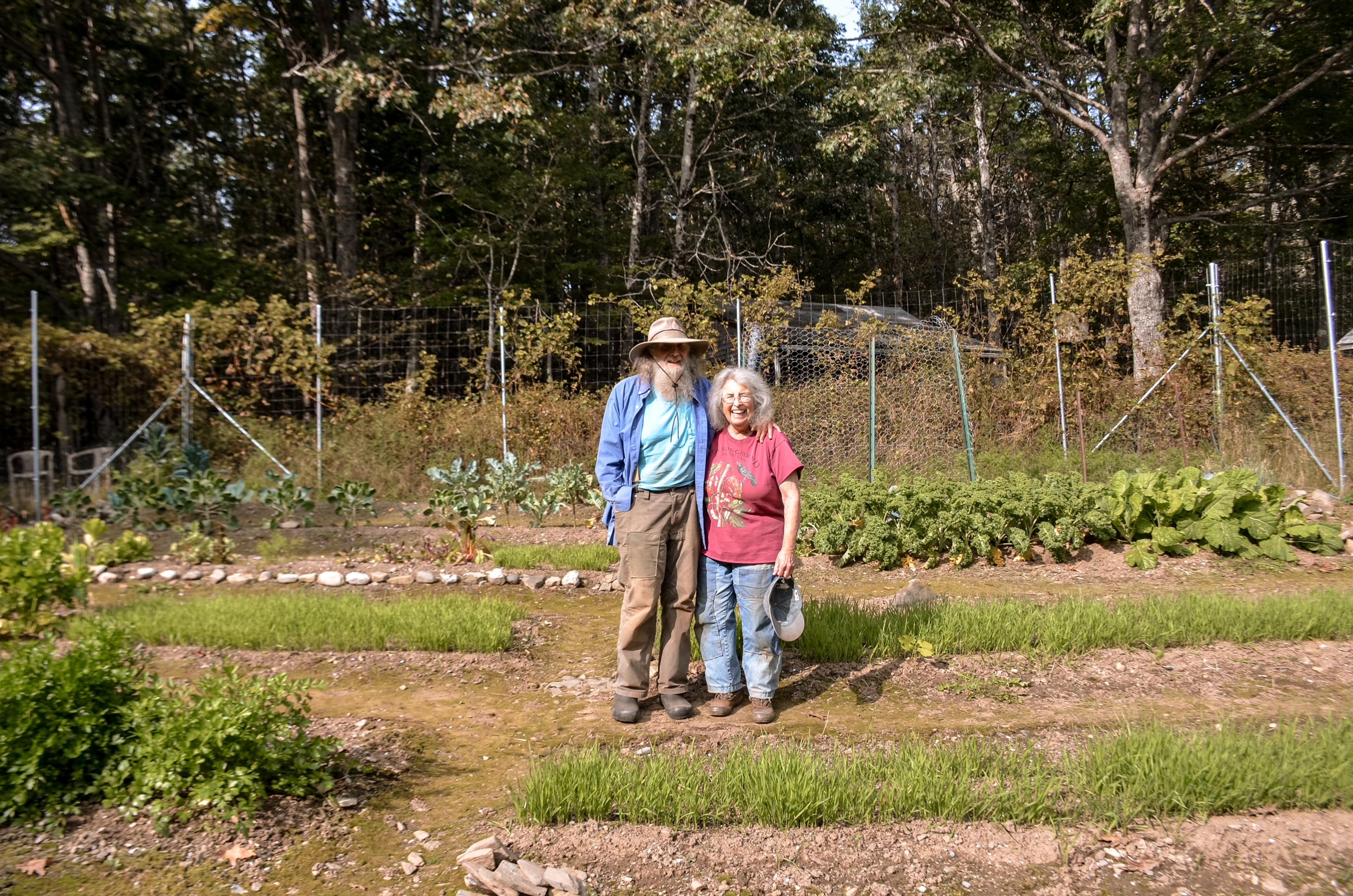
Kal Winer and Linda Tatelbaum today, still working on their homestead every day.
Don’t Say It’s Over
Winer and Tatelbaum had just finished harvesting their potatoes for the coming winter when I spoke to them. For the 46th year in a row, they’d put up enough food from their garden to feed themselves through Maine’s long winter. Now 75 and 80, they still work on their homestead every day. Their handbuilt house collects electricity from solar panels, but is connected to the grid for the use of a heat pump on chilly winter mornings.
“The question of both of us is how long will our bodies hold out,” admits Winer. “Maybe they’ll hold out for our entire lives, but maybe they won’t.”
“But we are really healthy, and we don’t have any debt.” added Tatelbaum, who still speaks with love about the challenges of homesteading. “I guess some people just got tired of it. But we stayed because we liked it.”
You were participating in your own life. There are plenty of people who are alive, but because of the ease with which they’ve managed to find a space for themselves, they aren’t really participating in their life.
My mother left Addison for a teaching job in a coastal town in the late 1980s. Today she enjoys the comforts of a central heating system, humming electricity, and a nearby grocery store. But she has carried with her from her days in the Maine woods an appreciation for growing food, and in the years since has cultivated a remarkable green thumb. She remembers it fondly, as something that changed the entire path of her existence.
“It was real,” Eliot Coleman said. “You were participating in your own life. There are plenty of people who are alive, but because of the ease with which they’ve managed to find a space for themselves, they aren’t really participating in their life. It’s sort of passing them by, I think.”
*Father of editor Jesse Hirsch
In terms of fashion, natural fibers bear a timeless appeal, but it’s not just about the look and feel — consumers are increasingly avoiding synthetics for sustainability reasons. Amidst this shift, wool is experiencing a well-earned renaissance, not only for its comfort and biodegradable properties but also as a key player in the narrative of climate-conscious agriculture.
At Outlaw Valley Ranch, first-generation ranchers Alex and Kelsey Karol are putting into practice regenerative ranching methods and seeing the land respond. Settled on 346 acres in hilly Santa Maria, California, about three hours up the coast from Los Angeles, they raise 100 percent grass-fed, heritage cattle and sheep, producing meat, wool, and sheepskin. They rotationally graze their Navajo-Churro sheep, allowing for the animals to trample vegetation and manure into the soil surface with their hooves.
This is extremely important for the soil, Alex Karol explained: “When the grass is trampled down, it’s touching the soil, feeding all the microorganisms in the soil, building topsoil.” The aim is to maximize the drawdown of carbon from the atmosphere. Stored in the soil, the carbon will not re-enter the atmosphere as carbon dioxide or methane.
Rotational grazing is integral to this process; if given the whole ranch, the herd tends to stay in certain spots. This doesn’t give vegetation the chance to grow tall and be trampled into the soil. When the sheep at Outlaw graze two acres, for example, the rest of the ranch is resting and growing anew, allowing the cycle to continue on. The Karols have been able to increase soil carbon levels, improve the water-holding capacity of the soil, and enhance biodiversity on their ranch.
By choosing wool from farms like Outlaw Valley Ranch, consumers participate in a larger story — one that values a commitment to the health of our planet. It’s a narrative that the Karols are knitting into every wool product they produce, offering a blueprint for a future where fashion and environmental stewardship are seamlessly intertwined.
Rotational grazing at work: on the left, a grazed pasture. On the right, the pasture has been left to rest and grow, and is now ready for grazing. The 346-acre ranch is broken up into 10 hard-fenced pastures as part of a grant from the Natural Resources Conservation Service (NRCS), a branch of the U.S. Department of Agriculture.
The flock of Navajo-Churro sheep at work grazing. A hearty breed, they thrive in the dry terrain of Santa Maria.
Above left, sheared wool, ready to be sent off to the mill for processing. The sheep are sheared twice a year, once in the spring and then again in the fall. Some excess wool is dumped in drainages on the ranch to help slow down water runoff and add organic matter to the soil.
Above right, these two geldings are mainly used for moving the 35 cows in the hills, where the ground is too steep to reach with a quad. According to Alex Karol, “Cows especially really respect you when you’re on a horse. There’s no better tool for moving cows in the hills.“
Outlaw Valley sheepskins are particularly popular as a baby accessory, as wool helps regulate infants’ temperature, increase circulation, and soothe inflamed skin.
Above left, as an alternative to the dryer sheet, their 100 percent wool dryer balls help take the moisture out of clothes, and keep clothes lint-free and low in static.
Above right, a freshly sheared sheep. Alex Karol and a friend sheared the flock of 232 sheep in two days. It takes them an average of three minutes to shear one sheep.
Outlaw Valley Ranch yarn comes in an assortment of natural colors. Once sheared, the wool is cleaned and carded at Morro Fleece Works and then spun into yarn at Valley Oak Wool Mill. It is processed without dyes, bleaches, or chemicals.

In the summer of 1990, on the east side of the Sierra Nevada mountain range, Richard Karban, an entomologist at the University of California, Davis, could be found communing with wild tobacco and sagebrush.
Karban was here to study the natural defenses of wild tobacco, a close relative of the tomato plant, in an effort to decode the way plants analyze, predict, and respond to external threats. “Gaining an understanding of how plants do such a good job, so much better of a job than we are able to do, is ultimately going to [help us] protect our agricultural plants,” said Karban.
Today, technology is rising to translate these plant languages, and offer farmers a way to better predict and react to potential dangers. Vivent, a Swiss company working on translating bio-cues from plants, has developed sensor technology that captures and measures electrical signals plants give off under stress. Another company, Hortiya, based out of Germany, is using large language models (LLMs), the same technology that powers generative AI tools like ChatGPT, to decode plant behavior.
“What GPT does to text, we want to do to plant data,” said Marc Weimer-Hablitzel, Hortiya’s CEO.
The Sagebrush Speaks
The proximity of sagebrush in the wild tobacco field made Karban pause. He had recently read a study by Edward Farmer and Clarence Ryan, two early plant language pioneers. Their research showed that placing a cut sagebrush plant next to a tomato plant in a vacuum jar, sealed and left to incubate for two days, increased the tomato plant’s defenses against insects. “[The study found] we can damage one plant in a pot and observe an increase in resistance in another … without a root or physical connection between the two,” Karban said.
Farmer and Ryan speculated that a certain plant hormone, jasmonic acid, was being transferred by air from the sagebrush to the tomato, passing information and protective chemicals from one plant to another.
Karban was fascinated by this development and itching to test this theory outside of the lab. He began lopping the tops off the sagebrush plants, wafting their sweet, fresh aroma across the tobacco fields. He soon found the wild tobacco that neighbored the clipped sagebrush sustained less damage from local herbivores, which his research found was due to the volatile compounds released by trimmed sagebrush branches.
Karban would go on to study sagebrush for the next 30 years and become a global expert on plant language. Today, the study is a dense, rooted subject. We now know plants communicate in a number of ways: through electrical signaling above and below ground, by way of volatile organic compounds in the air, through common mycorrhizal networks, and even through sound.
Plant Wisdom for Farmers
A deeper understanding of the way plants speak, behave, and warn of danger, has the potential to transform modern farming methods and protect crops from damaging disease, infestation, and annihilation.
Carol Plummer, Vivent co-founder and CEO, said, “Plants have a lot of internal control mechanisms to help them adapt to the environment.” She continued, “They know if a fungal infection or a pest is attacking them, [and how to] mount a defense.”
Vivent’s technology is currently being piloted by a number of farms in Europe and North America. It’s already helped one Italian sugar beet farmer detect a root-based cutting worm days before the effects were visible on the plant leaves. Though, Plummer said, it didn’t save the crop, partly because the farmer was skeptical about the data they presented and didn’t heed the warning early enough.
In Canada, Vivent’s sensors also helped one farmer understand the benefit of a new misting system in his indoor greenhouse. “We could show him the crops inside the misting compartment were more resilient,” said Plummer. “He couldn’t see it with his eyes, but by the end of the crop cycle, the yields in the misting section were better. In the end, he invested more in the misting system because of that.”
Plummer said she is constantly amazed at the deep, intelligent communication between plants. “If you were an alien flying above the earth, looking for intelligent life, you would choose plants over people … they make up 80 percent of biomass on earth, have existed longer than us, and will exist far longer,” she said.
“If you were an alien flying above the earth, looking for intelligent life, you would choose plants over people.”
She noted that, in the past, much of our understanding of plant language has led to the development of pesticides that indiscriminately target plants, sick or healthy. She hopes that Vivent’s technology can reduce the need for preventative spraying, and move towards a more curative approach.
Hortiya uses sensor technology, much like Vivent, to observe and collect plant data in greenhouse settings. This data is then fed into the company’s “green brain,” or AI model, which then contextualizes and translates the findings into actionable steps for growers. “Machine learning and AI that we currently see are universal translators that can be applied to a variety of fields,” said Weimer-Hablitzel.
These kinds of AI models are crucial to understanding plant language at scale, said Paco Calvo, a professor of plant cognition at the Universidad de Murcia’s Minimal Intelligence Lab (MINT Lab) in Spain, due to the enormity of the datasets needed to accurately track and monitor plant behavior.
To truly anticipate stressors, behavioral changes, or disease, sensors must monitor plants 24/7, year-round. If humans were to analyze this data manually, it would take decades.
So far, Hortiya’s model has helped greenhouses better manage light control, heat, fertilizer, and watering. Weimer-Hablitzel said his ultimate goal is to aid food security and production, and to create better models for reducing the climate impact of agriculture.
Concerns remain about the environmental impact of generative AI models, often built of resource-heavy, carbon-saturated models. Weimer-Hablitzel claims Hortiya’s intelligent model will need less data as it grows, making onboarding new crops easier with each new iteration. He hopes his technology brings light to the capabilities of plants, as well as how far we are from understanding them in current practices. “We always assume plants are like machines, you have an input and predictable output,” he said. “But they are complex and highly adaptive organisms.”
Rethinking Nature’s Bounty
While technology has come a long way, some scientists are skeptical that a desire to exploit nature will bring humans the rewards we’re hoping for. “Plant systems are complicated,” said Karban. “And the expectation that there is going to be some simple switch that we can throw to ‘turn on’ defense or resistance, is kind of naive and unlikely to be possible.”
Karban explained that many of the problems modern plants face, especially those used for agriculture, are manmade. “There are ways of manipulating crop plants so that they function better in these weird agricultural environments, where we grow them under a set of conditions that they did not evolve to face,” he said. “But it’s not going to be a simple, silver bullet situation.”
In many cases, Karban said, closing one problem door may only open another. “If you take an aspirin because you have a headache, it might reduce your headache, but it has consequences in physiology. That is also true for plants.” A simple gene modification, or hormone introduced by air, can reduce a plant’s ability to produce beneficial bacteria, or it could promote resistance in target pests. Still, Karban admits, “I think over the long term, understanding how plants are doing this successfully will lead us to better solutions.”
For Calvo, unraveling the complex language of plants means deconstructing our preconceived notions of what plants are, and beginning to see them as subjects as well as objects. “Agriculture treats plants as resources to be exploited more or less, and if we continue to do that we will miss the plot.”
Not missing the plot means reevaluating our relationship with the wider, green universe. “It’s about giving careful thought to why we need technology for a certain purpose,” Calvo said. “Do I need this [plant] in my fridge? Just because we have the technology to grow it?”

When Rebecca Beyer saw her Unitarian Sunday school teacher take a bowl of dough and toss it into the woods of Princeton, New Jersey, she was entranced. “I felt a deep excitement and resonance watching her,” she recalls. Her teacher explained that she was making an offering to the four directions, a practice associated with pagan and Native American traditions.
At 12 years old, it was Beyer’s first introduction to magic — and she has never looked back. Now based in western North Carolina, Beyer researches, teaches, and practices what she calls Hedgecraft: a term that encompasses Appalachian folk magic and ethnobotany, primitive skills and foraging, and traditional witchcraft.
Motivated by a desire to reclaim her ancestors’ knowledge about the natural world, Beyer also pursued a bachelor’s degree in soil science from the University of Vermont. “I love phytochemistry,” she said. “Some of my students call me the science witch because I have a degree.”
At this point, witchcraft and magic have become not just acceptable but arguably mainstream; The New York Times even declared “We have reached peak witch” in 2019. And witches who use botanicals — substances made from plant parts including roots, flowers, bark, seeds, and stems — are an increasingly visible section of our booming wellness industry. Market research estimates that the botanical sector, which includes foods and beverages, beauty and personal care products, and dietary supplements, earned an estimated $107.2 billion in 2022.
For witches like Beyer, how they source their plants matters deeply, both physiologically and spiritually. Some forage or grow their own. Others source from spiritual elders, small farmers, and ethical companies. Many use a combination. “Knowing what plants are right outside your home, and walking that line between the domesticated and the wild, to me is the work of the witch,” said Beyer.
Foraging and Farming
Beyer forages plants nearly everywhere, rejecting what she calls “the myth of purity,” or the idea that there are areas of the world untouched by pollutants. “Nowhere is pure anymore,” she said. “Everybody has been touched by the toxins of civilization.” For her, what matters more is foraging as locally as possible. She forages in the city, in the forests, on the fields around Asheville, and on nine acres of land she owns collectively with friends near Pisgah National Forest. The only areas she avoids are roadsides and housing sites due to possible lead poisoning. “People want fast and hard rules for everything, when there’s never going to be something like that — a blanket rule [for foraging] you can apply to every place,” she said.
Erika Fortner, a witch who claims European and Indigenous ancestry,* owns Queen Meb, a metaphysical shop in Portland, Oregon. Queen Meb sells nearly 200 products, including herbal tea blends, extracts, and bulk herbs and resins. She tends to trust herbs wildcrafted in nations like Mexico — where she sources her damiana, a herb used as both an aphrodisiac and to calm anxiety — more than those in the U.S.
However, there are small and large farms in the U.S. that provide high-quality, organic botanicals. Farmer Sophia Steinwachs of Mckinleyville, California, discovered herbs as a way to treat acne and anxiety in her late teens. “It had a significant impact on my overall wellbeing,” she said. She took various herbalism classes and, after working at a local herbal store for years, started Woven Hearts Herb Farm in 2019.
“She works with all the land spirits. She harvests on the full moon.”
“I love the botany side of herbalism: remembering plant families and Latin names, picking up on patterns in growth habits and smelling a plant that brings back memories,” Steinwachs said. Along with supplying herbs to small business owners — including a few witches — she sells her own teas, extracts, and salves. It’s her seasoning mixes, however, that she finds are the best way to introduce people to the medicinal benefits of plants. “There is a reason why these herbs found a place in the kitchen so long ago,” she said.
Approximately 150 miles northeast from Woven Hearts Herb Farm is Pacific Botanicals in Grants Pass, Oregon, which has been growing and sourcing botanicals since 1979. The company grows between 35 to 40 different varieties on 150 acres, according to purchasing and sales manager Nate Brennan. “I can walk out of my office, and I’m in the middle of a field,” he said.
Many of the company’s botanicals, especially the flowers, are hand-picked. When they use machines, it’s modified farm equipment: a blueberry rake for some flowers and an onion digger for roots. As Brennan said, “It speaks to the lack of equipment in the United States for medicinal herbs.” His wishlist includes specialty harvesters and post-harvesting equipment like air aspirators and machines that separate stems from leaves. “There’s a huge barrier for entry into the market on a larger scale, because there’s just not the equipment like there is in the EU,” he said. The company recently purchased a chamomile harvester from Europe, but due to supply chain issues, it took 18 months to arrive. Parts also have to come from Europe, which can add further delays.
High-quality and regenerative plants start with healthy soil, Brennan said, ensuring plenty of bacteria and fungi that encourage deep root structures. They also take cover cropping and rotation seriously: “Once we harvest that plant, we will move and keep cover crop on that field for seven years before we plant back into it, to be sure to give the soil enough time to recuperate,” he said. The company recently received a silver level regenerative organic certification from the Regenerative Organic Alliance. The quality control continues to the drying, milling, and cutting processes. “I’ve seen wonderful material that’s being grown out in the field. But then when it comes to getting dried down, it turns to brown or loses its vibrancy and its color,” said Brennan.
Sourcing and Selling
Monique, who goes by The Kitchen Bruja, practices Afro-Cuban Santeria and is a Mambo — or priestess — in Sanse. (In these spiritual communities, it is common practice to not to share full names.) Her spiritual awakening began in 2013, answering the ancestral call of her heritage: Puerto-Rican and Cuban on her father’s side and American Indian on her mother’s. “I come from a long line of traditional healers,” she said.
In 2017, the Kitchen Bruja began learning at the feet of elders, as both Santeria and Sanse are primarily oral traditions. Once certified as an herbalist, she began making the soaps, clearing sprays, oils, and other products that she sells in her spiritual apothecary, Honey Pot Herbals, and her botanica (a religious and spiritual goods shop). A friend who is also a healer thought of The Kitchen Bruja name, after noting that was where she cooked up most of her products.
In Santeria and Sanse, “we believe that when you’re treating an illness, it starts first in the spiritual realm,” said The Kitchen Bruja. “Then it manifests itself into the physical realm.” To heal, both must be treated. Often, the physical and spiritual effects of botanicals align. Take peppermint: its ability to ease digestive distress makes it a calming herb from a physical standpoint, and “from a spiritual aspect, it does the same thing. It relaxes,” she said. Peppermint is one of the herbs Monique would use in a spiritual white bath to bring tranquility to someone feeling anxious. (A spiritual bath is a blend of herbs, oils, perfumes, water, and other materials over which incantations or prayers have been spoken to heal, cleanse, or attract.)
Some of The Kitchen Bruja’s herbs — including peppermint — come straight from the garden at her Ann Arbor home, where she’s also currently growing hyssop, rue, and rosemary. Other plants, especially those used in Santeria and Sanse that flourish in southern climates, she gets from trusted sources in Miami. Her godfather grows and forages plants for her, like almácigo or mastic tree (said to be good for pursuing justice) and plants like quita maldición and rompe saraguey to ward off negative energy. She also has a trusted babalawo, or priest, who has his own nursery and performs oriki — songs of praise and enchantment — that go with each plant.
“They wake it up,” she said. “They make the plant stronger.” When the Michigan weather permits, the priest sends plants for her garden. The Kitchen Bruja even journeyed to Cuba so she could learn how to work with tobacco where her ancestors did. “Before I could get the spiritual license to work with tobacco, I had to be formally introduced to the plant,” Monique explained. “That’s the main thing right there: the respect for the plant and the love that you put into it.”
In Fortner’s case, she buys local whenever possible. For instance, she purchases Japanese mugwort from an elderly Ainu woman — a member of Northern Japan’s Indigenous people — who comes into her shop. “She cares about what’s happening to the land,” said Fortner. “She works with all the land spirits. She harvests on the full moon because that’s part of her Indigenous practice.”
“Before there was Western medicine, there was folk herbalism. I see it as the backbone to what has become Western medicine.”
She also sources a lot of her herbs from Starwest Botanicals, based out of Sacramento, California, since 1975. She said they source many of their non-local plants from Eastern European nations like Croatia and Bulgaria, which have historically used fewer pesticides and fertilizer inputs. Fortner also trusts their lot testing — something that Pacific Botanicals takes very seriously, since it sells over 250 plants sourced from other farms both nationally and internationally. They carefully vet suppliers, visually inspect at least 30 percent of every product shipment they receive, test for toxins, and regularly remove extraneous material to ensure that their margin for error is less than the 2 percent industry standard. In fact, many outside companies consult their quality control team, according to Brennan.
Fortner also has Food and Drug Administration regulations to consider. “As a physical store, I am responsible for where my herbs are sourced, what was in the soil,” she said. Each product label must list the country of origin, as well as a website or address that the FDA can contact in case of any adverse reactions. She also has a Legal for Trade scale to ensure that her measurements are accurate.
These requirements are one reason why she rarely stocks any products made by smaller online crafters. Even those with successful Etsy shops rarely include this level of information; often, Fortner said, that’s because they sell such a small amount of products that the FDA does not police them as carefully. Similarly, Fortner has to follow both federal and state laws about the amount of grain alcohol she purchases for her tinctures, or extracts of plant or animal materials in alcohol. “It goes back to the old laws of stilling,” she explained.
“As a physical store, I am responsible for where my herbs are sourced, what was in the soil.”
She also cannot claim to treat any medical conditions, though she can indicate what symptoms various herbs have been known to mitigate. “It’s important to remember that before there was Western medicine, there was folk herbalism. I see it as the backbone to what has become Western medicine,” Fortner said.
“There’s tons of scientific evidence that plants have healing compounds in them,” Beyer said. For example, she pointed to a study that found an Anglo-Saxon recipe containing garlic and leek might kill the antibiotic-resistant bacteria MRSA. However, she said the field needs more literature or systematic reviews compiling separate studies into one paper. She suspects a key reason these reviews don’t exist is that botanicals do not make as much money as pharmaceutical drugs. “Plants are incredibly cheap, free, and easy to use in conjunction with Western medicine,” she said, noting that she is vaccinated and has used pharmaceuticals to treat serious medical conditions.
Beyer believes that people often get turned off by botanicals because they use them incorrectly and then draw the wrong conclusions. “A lot of people don’t take enough herbs for long enough. They don’t dose correctly, because they don’t work with an experienced practitioner,” she said.
Or, as Fortner noted, they go in the wrong direction and take too much. Even a plant as seemingly benign as chamomile can produce adverse reactions like nausea and vomiting, or can be contraindicated with important medications like blood thinners. Given the importance of dosage, Fortner recommends people start with teas, because the botanicals are very hard to overconsume in that form.
The Herbal Pulse of the Country
After over a decade of tracking sales, Brennan has seen how the popularity of specific herbs at a given time offers a window into society’s psyche. “During Covid, everyone was really focused on immunity herbs. And then, a year afterwards, everyone was really looking for sleep, just wanting to calm down. So valerian and chamomile and passionflower were extremely popular during that time.” He is now seeing an uptick in interest in plants like rhodiola and ashwagandha, which have adaptogens, or ingredients that can regulate cortisol levels to lessen anxiety and increase clarity.
No matter what purpose they are used for, everyone interviewed suggested that sustainability will be vital to the future of botanicals. First of all, it’s what consumers want. As Fortner said, “It’s definitely going towards eco-conscious, sustainable, less big business, less monocrop.”
The climate will also demand it. “There’s a lot of pressure on herbs and plants right now. It’s important for people to realize that it’s something that could just go away,” Brennan said.
And for witches, botanicals will continue to be a means of connecting with the ways and traditions of Indigenous peoples and/or their ancestors. That’s why, for Beyer, it’s just as important to know the lore around individual plants as their medicinal benefits. “It helps us remember who taught us the use of the plants,” she said, “who to honor and who to say thank you to.”
*Note: This story originally stated that Fortner has Indigenous ancestry; we were later given information that questioned this heritage. As such, we have changed the wording to reflect this is the source’s claim, which we can not independently verify.
This year, all the hopes Walt Hagood held for his Texas cotton farm were contained in dark seeds, so small they could spill through his fingers. In a normal spring, he would have planted them in soil readied by winter rains, where moisture would have seeped through the coats, softening and swelling the embryos. The primary roots would have stretched down, emerging from protective coverings. Expanding cells would have straightened, pulling free into a first glimpse of light above the surface. But a newly unfurled seed is fragile — too much moisture or not enough, too much heat or too little, and the miracle will end before it begins.
The winter in Lubbock County, Texas, was stubbornly dry. Months passed with essentially no precipitation. Then in late spring, it poured — tipping from one problem to another. Hagood, who has been farming for 44 years, was patient, waiting for the soil to dry until he thought the cotton would stand a chance. At first, it seemed to have worked. The seeds worked their magic; the stems toughened and grew. “We were in better shape than we thought we would be,” Hagood said.
But in July, a record-breaking heatwave began. For 46 days this summer, the mercury never dropped below 100 degrees in Lubbock County. Hagood watched weather forecasts closely as the soil baked. Most of his farm is not irrigated. “I was thinking, ‘Please rain, please rain.’” As the heat refused to break, his plants began to wither where they stood. “At that point, we started burning up,” Hagood said. “It just reached a point we knew it was over.”
It’s the second year in a row Hagood’s crop has failed, after an extended drought in 2022. “We’ve been through a lot of tough years,” he said glumly. “That’s why we talk so much about a safety net.” Like many commodity growers, Hagood buys insurance through the Federal Crop Insurance Program; though it won’t fully cover Hagood’s losses, it aims to help farmers survive this kind of season.
But as the climate crisis intensifies, more and more growers are finding themselves repeatedly in Hagood’s situation — jacking up the pricetag for taxpayers and straining the system in the process. A new report by the nonprofit Environmental Working Group found that extreme weather linked to warming triggered at least $118.7 billion in crop insurance payments in about two decades. Weather-related payouts have skyrocketed since 2001 — heat-related payments for losses like Hagood’s, for example, have grown by a factor of 10. The crop insurance program plays a huge role in federal agricultural policy. Yet despite mounting losses, its policies are failing to help farmers adapt to rapidly changing conditions.
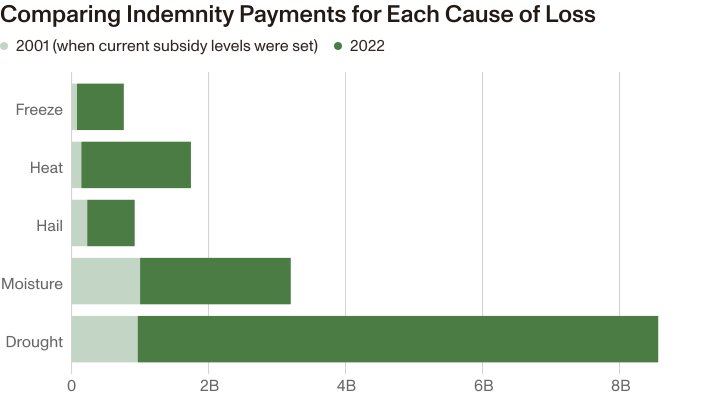
Data Source: Environmental Working Group
“We found there are hotspots, or areas with disproportionately high payouts,” said the report’s author, Anne Schechinger, Midwest director at EWG. Drought, the leading cause of weather-related loss, cost the crop insurance program $56.6 billion. The majority of these payments went to just 10 states in the central United States. Meanwhile heat-related losses — which increased nationally by 1,000 percent since 2001 — were scattered across the country in places like California and Kansas. Schechinger said that the geographic distribution shows the losses are correlated with specific weather changes, not just where agriculture tends to be practiced.
No matter which peril — heat, freeze, excess precipitation, drought, or hail — the Lone Star state was near the top of the list. “Texas is in a really unique position, where they’re being impacted by so many extreme weather conditions,” Schechinger said; the state’s crop insurance payouts totaled over $15 billion. “Asymmetric impacts,” a spokesperson for the United States Department of Agriculture (USDA) wrote in an emailed response to questions, are “one of the largest identified program risks to making sure the program operates properly for all.”
The EWG report joins a growing body of research sounding the alarm about how quickly agricultural losses are growing — and the increasing costs for taxpayers. “We are all paying for this,” Schechinger said. Unlike a private insurer, the federal program can’t go bankrupt, but its claims have spiked 500 percent in the last two decades. A 2021 study out of Stanford University found that “global warming has already contributed substantially to rising crop insurance losses in the U.S.” It looked at a slightly earlier period, from 1991 to 2017, and calculated that higher temperatures caused $27 billion in losses.
People may be more likely to accept risk if they don’t have to pay for the full consequences — driving more recklessly if they have car insurance, for example.
Even more troubling is research that suggests crop insurance programs may actually be making the problem worse by incentivizing farmers not to adapt. Counterintuitively, counties with higher crop insurance coverage actually see worse yield impacts from extreme heat, said Rod Rejesus, professor of agricultural economics at North Carolina State University.
Rejesus suggests something called a “moral hazard effect” may be part of the problem. The concept predicts that people may be more likely to accept risk if they don’t have to pay for the full consequences — driving more recklessly if they have car insurance, for example. Similarly, if farmers think their losses will be covered by crop insurance, they may be less likely to adopt costly practices to become more resilient to warming temperatures.
To qualify for the federal crop insurance program, farmers must comply with certain guidelines, for example, like following recommended planting dates, as well as federally approved standards called Good Farming Practices. These guidelines mean that even in regions with depleted groundwater, some growers can actually lose their insurance if they switch to relying on rain, rather than irrigation.
“We’re paying to keep farmers on this treadmill of planting crops that require irrigation,” Schechinger said. “And yet we’re still paying out a bunch of money in these counties for heat and drought [losses] — because there’s not any water there.” Another example of how farmers are discouraged from adapting is that they can also lose their insurance if they don’t follow strict USDA guidelines when they plant and remove cover crops.
“Cover crops can improve resilience to climate change, and also have the potential to sequester carbon,” Rejesus said. Yet perhaps because crop insurance requires strictly adhering to sometimes arduous guidelines, his research found that farmers in counties with higher crop insurance coverage were slightly less likely to use cover crops. As Civil Eats reported earlier this fall, for example, farmers hoping to plant multiple crops together, like growing wheat in grasslands — a practice that can help prevent erosion — are denied coverage.
“The business-as-usual of how people farm — it’s just not going to work with the extremes going forward.”
For small farmers, or those who grow diversified crops, it can be even more difficult to access insurance. The USDA offers insurance policies for these kinds of operations through the Whole Farm Revenue Policy, but they are less heavily subsidized, and many growers find they can’t afford the premiums.
Both sides of the political spectrum agree that current crop insurance policies aren’t meeting the program’s goals. The USDA predicts that 2023 farm income levels will drop by 22 percent, while expenses continue to rise. Hagood doesn’t blame climate change — “I don’t want anything that I say to come across as political, as much as just practical,” he said.
But he’s also seen firsthand how expensive insurance premiums are, and has been stuck paying for uncovered losses, either because the policies were too expensive to purchase in the first place or because many claims don’t end up paying out in full. He sees the impacts just driving around Lubbock, where every year more growers retire or go out of business. “You can tell there’s a lot of stress and a lot of financial pressure,” Hagood said. “We have to find a way to reform crop insurance.”
Yet a deadlocked Congress did not manage to pass a new Farm Bill before the last one expired on September 30. The Inflation Reduction Act had designated around $20 billion for conservation programs that would pay to help farmers become more resilient, and Republicans are now lobbying to repurpose that funding to provide higher subsidies to commodities like corn and cotton.
Schechinger, on the other hand, thinks larger reforms to the program are needed, as agriculture grapples with the scale of challenges to come. As temperatures rise, the costs of crop failure will only continue to grow. Models predict that as soon as 2030, crop yield failures will be 4.5 times higher, while by mid-century, major staple crops like rice or wheat might be failing every other year. Farming conditions in the near future will look very different, she said.
“Can we keep growing the same crops in these areas, that frankly, are not going to have water in the next few decades?” she asked. “The business-as-usual of how people farm — it’s just not going to work with the extremes going forward.”

“I love to stand in the woods and listen to the people screaming.”
For Randy Bates (no relation to Norman), owner and managing director of the Bates Motel and Haunted Hayride, that screaming is the payoff. Last year, for its 33rd season, 60,000 people came to his family’s working Arasapha Farm in Glen Mills, Pennsylvania, to experience the attraction’s 125 actors prowling 25 sets for victims. One of the oldest and most elaborate of these modern haunted attractions (outside of theme parks), the Bates Motel and Haunted Hayride has been featured on numerous best-of lists.
It’s hard to say when farmers first began hitching wagons to tractors and driving people through dark fields for a taste of Halloween heebie-jeebies. University of Southern California film professor Rebekah McKendry credits the United States Junior Chamber of Commerce for popularizing haunted attractions in abandoned homes and fields in the 1970s, right when movies like 1974’s Texas Chainsaw Massacre channeled people’s fears about rural isolation into box office success. America Haunts, a website promoting some of the most popular haunted attractions in the nation, estimates that there are currently over 1,200 attractions nationwide generating $300 million in annual ticket sales, not including theme parks. Many of these are on farms..
Agritourism in general, which encompasses farm tours, U-pick operations, fall festivals, barn weddings, and more, brought in nearly $950 million in revenue nationwide in 2017, according to the USDA Census of Agriculture. Post-Covid studies indicate that farms that survived the pandemic became more resilient by improving and adapting their agritourism offerings.
Haunted attractions have proven a handy way to save some farms from the scaffold, like Boyette Family Farms in Clayton, North Carolina. Some, like the Bates Motel, have become multi-million dollar businesses, making what was originally a side hustle the farm’s primary moneymaker.
However, as farm manager Anna Boyette — whose late father Glenn started Clayton Fear Farm in 2001— stressed, “it’s hard work.” Because Boyette Family Farms is a working farm, they have to balance the needs of the farm with those of the attraction. That means that, in the off-season, they’re preparing the indoor sets while still using the farm buildings. To protect the fields, they put the parking, ticketing, and concessions up front by the buildings so that the only disturbance is the trail for the hayride tractors. Add on props and costumes to purchase, and makeup artists and actors to hire and train, and it’s a positively frightening to-do list.
“I tell our [prospective] employees, whenever they apply, this is a labor-intensive job. This is not just a ‘boo’ kind of scare,” said Boyette. However, she said it’s well worth it from both an economic and emotional perspective. “People coming out of either the slaughterhouse or the farmhouse, they are just dying laughing at somebody else that got scared in their party, and they are all just having a good time,” she said. “That’s what we want.”
Raising Farms From the Dead
The first year at the Bates Motel and Haunted Hayride was horrific for all the wrong reasons. Bates spent $10,000 on payroll, props, and costumes. He and his staff — made up of friends and family — hand-painted displays and recorded four cassette tapes of spooky audio tracks. For a 15-minute hayride, he charged $2 per person.
Bates made about $300 that year.
He didn’t give up, though. The family farm, which included sheep and a large produce stand, needed something new. Of its 80 acres, only 60 were tillable, and Bates wasn’t sure 60 acres of row crops could be financially sustainable. “It was really my mom’s hobby farm,” he said. “She never really ran it like a business.”
1996 was a real turning point. First, Bates visited TransWorld’s Halloween & Attractions trade show to garner ideas for upping the fear factor. Then he and his wife Anne visited Salem, Massachusetts, that spring and saw how much people loved its “hokey” Dracula’s Castle attraction. Bates knew he could outdo it. He opened the Motel that year and, between ticket sales and giveaways, got 25,000 people to come. “This business has saved our family farm. There’s no money owed,” said Bates. They now run year-round events, including a choose-and-cut Christmas tree farm. “I’ve got almost 30,000 Christmas trees in the ground,” he said.
Clayton Fear Farm is now in its 22nd season, but at its start, Glenn Boyette reached out to Bates to get advice on setting up his own haunted attraction. “People thought that he was crazy to even consider trying to open that up,” Anna said of her father. “I’m glad he stuck to his guns.”
In the beginning, staff pulled levers and pushed buttons. Now, it’s all motion sensors and timed releases. But while tech can make everything more efficient and realistic, it has its downsides, according to Kelly Carrigan, who runs Carrigan Farms with her fifth-generation farmer husband Doug in Mooresville, North Carolina. “There is a large initial investment and a large learning curve. Every year there are maintenance costs, costs of new sets and equipment, and labor costs” she said. “Scarrigan Farms,” a haunted trail that includes spinning tunnels and strobe lights, has been in operation for about 20 years.
Though Boyette shrugs off any comparisons to theme parks like Disney, she acknowledges that “the electrical, the air lines, the animatronics, the customers, the employees — it’s the exact same. But we’re just on a smaller scale.”
Though exactly how small is up for debate. Last year, Bates debuted a Wild West set with zombie cowboys lurching around 15 buildings, a covered wagon, and life-sized horse statues. One of his favorite sets is a collapsing mine shaft he designed on a napkin about 15 years ago. As the tractor drives through a tunnel, lights suddenly flicker amid sounds of cracking timber — and then fiberglass beams start to fall from the ceiling. It’s so realistic that one year, a new actor contacted staff in a panic because he thought the set had actually buckled.
Covid Chills, Community Thrills
When the Covid-19 pandemic first hit, most haunted attractions were shut down. However, the lockdowns ultimately encouraged people to look for outdoor recreation like farm tours in rural areas, said John Salazar, professor and coordinator of hospitality and food industry management at the University of Georgia. “Agritourism is booming across the country, and a large reason for that is Covid,” he said.
The pandemic also forced Bates and Boyette to innovate in ways they say have improved the customer experience. “It was the best season we’ve ever had,” Bates said of last year, the attraction’s first post-Covid season that they could bring back the hayride. (For the two years prior, they shifted to a walking trail.) Both attractions — and many others — implemented timed ticketing, which pleased customers by reducing wait times and lines. Boyette closed three of Clayton Fear Farm’s seven “haunts” to pour more energy into the slaughterhouse, black hole, and farmhouse sets, and the haunted hayride.
For rural communities, haunted attractions and other forms of agritourism can offer jobs — actor, set designer, makeup artist, ticketing, and concessions — that may not otherwise be available, said Salazar. In fact, his research shows that 8 to 10 percent of jobs in Georgia’s rural communities are in the tourism and hospitality sector — a percentage on par with the state as a whole. It’s one of the reasons that the University of Georgia has one of only three hospitality extension programs in the country.
Haunted attractions also provide an important influx of capital to rural areas. “I’ve got six or seven families that rely on this for their entire annual income,” said Bates. During the seasonal peak, they have about 320 people on the payroll. That includes his own family, as most of his and Anne’s six children and five of their 19 grandchildren now work for the business.
“It is a family-run business, and we still have that whole family aspect,” said Bates’ daughter Veronica Brown, who currently runs the concession stand, gift stop, and payroll, and is preparing to take over the accounts when her mother Anne retires.
At Scarrigan Farms, employees often come from within the same family. “Many of our actors are the same crew who work at our farm in the spring and summer as lifeguards, waitstaff, farmhands, and restaurant staff at our farm-to-table restaurant. We also have a lot of their children, moms, dads, aunts, uncles, and friends working,” said Carrigan.
Dreadfully Successful Diversification
When not providing frights, Boyette Family Farms grows produce, sorghum-sudangrass, and other grains, along with a vineyard. They continue to raise a few hogs and chickens, and they hope to add cattle in the future. “Everybody’s always going to need to eat,” said Boyette.
This diversification is a crucial strategy for Carrigan Farms, too: “We never want to put all our eggs in one basket. That’s why we grow multiple crops, and have multiple activities throughout the year — so that if weather or crop failure takes out one event, there are others,” said Carrigan. Their 275-acre farm offers everything from weddings and corporate events to multiple U-pick seasons — strawberries, apples, and pumpkins — and even summertime swim days at the lake in their quarry. They’re currently harvesting pumpkins and planting strawberries.
As different as farming and hospitality are, they do require similar skill sets. Both require the ability to adapt quickly to unpredictable weather, Boyette said, and manage complicated budgets. She and Salazar noted, however, that directly engaging customers at the farm can be a new experience. “The market is coming to them specifically, and so they have to create an ambiance of engagement,” said Salazar. Yet, his research has shown that younger farmers are often drawn to that aspect of agritourism. “The farm that they run today doesn’t need to be grandpa’s farm,” he said.
A Fright-Filled Future
All signs point to these haunted attractions continuing to grow in popularity — and complexity. When asked what the future holds, Bates named the rise of digital light shows. He has not invested in it yet, since a used laser can run $30,000 — and a good show often requires five or six of those. “Last time I priced it, doing a show in front of a haunted house was $200,000,” he said.
However, sometimes the simplest scare can be the most effective. “I love people riding through our sudangrass field,” said Boyette. “People are terrified. They don’t know what’s in the grass. They’re terrified of the dark. The only thing you hear is the tractor going through.”
At these farms, coming up with better ways to scare people is a family tradition. And, given how much work it can be — from ensuring zoning permits are in place to keeping up with ever-evolving safety standards — enjoying it is a crucial part of the equation for a successful season.
“You just have to have a really well-oiled machine, a really good staff, and a great team,” said Bates.
“Anytime people are out having fun, enjoying the outdoors, it’s good for the community,” said Carrigan. “Fun is the whole reason we do this.”
Sarah Lasswell initially planted willow in 2018 to prevent erosion in one of the bottom fields of her North Carolina flower farm, Moss & Thistle. A year later, however, she came across an image of a woven willow casket on social media. “Gobsmacked” is how she described her reaction. “That saying goodbye to someone could be done in such a beautiful, loving, natural way was just a revelation,” she said. “From that point, I started looking into green burial.”
The Green Burial Council defines green burial as “a way of caring for the dead with minimal environmental impact that aids in the conservation of natural resources, reduction of carbon emissions, protection of worker health, and the restoration and/or preservation of habitat.” (In the absence of state or national laws defining green burial, the GBC’s standards are widely used.)
At a minimum, this means green burials must inter unembalmed bodies in biodegradable containers, in plots without concrete vaults. According to New Hampshire Funeral Resources, Education, and Advocacy, 418 cemeteries currently offer green burials in the United States and Canada. These include hybrid cemeteries that blend conventional and green burial sections, natural cemeteries containing only green burials, and conservation cemeteries — nature reserves held by a conservancy or land trust that contain burial grounds.
As more people become aware of the option, green burials are having a moment. According to a 2023 report by the National Funeral Directors Association, 60 percent of consumers expressed interest in the practice. Many are drawn to its environmental benefit; the GBC estimates that green burials sequester 25 lbs of carbon as bodies release nitrogen and other nutrients into the soil through decomposition. In comparison, conventional vault burial emits as much as 250 lbs of carbon per person, with cremation ranging between 250 lbs to 540 lbs.
Once Lasswell realized she wanted to weave willow caskets in 2019, she reached out to Carolina Memorial Sanctuary in Mills River, North Carolina, a conservation cemetery within 60 miles of her farm. l. They were thrilled. At the time, Lasswell said, there were only two weavers selling willow caskets in the country: Mary Fraser in Turners Falls, Massachusetts, and Maureen Walrath in Port Townsend, Washington.
Through their work, Fraser, Lasswell, and Walrath lower green burial’s carbon footprint even. Whenever possible, they grow or wildcraft their own willow. They weave their vessels for local populations, lessening the need for imported biodegradable caskets. For Lasswell, it was the willow casket that brought her to green burials, and it is the plants, the creations she makes from them, and the connections she makes with those grieving that keep her inspired.
Green burial, she said, “offers so much for the person being buried, for the family saying goodbye, for the community surrounding the cemetery, for the very earth itself.”
Communing With Ancestors, Forging New Bonds
For Fraser, it took a trip to her ancestral homeland of the United Kingdom to encounter her first woven burial vessel. Immediately taken with it, she made her way to northeast Scotland to train under weaver Karen Collins.
Walrath, too, journeyed to the land of her ancestors — Ireland this time — to learn the art. As she was weaving her first coffin, she later learned, her grandmother — whom she never met due to her father being adopted — died in Germany. “It became this spirit vessel for her,” Walrath, an interdisciplinary artist, said of the coffin. When she weaves, she feels connected to a “lineage that goes back and back and back into generations that I can’t even touch or remember but can feel through working with the willow.”
Lasswell also planned to journey to the British Isles to learn casket weaving; when the pandemic scuttled her plans, she instead reached out to Fraser. Though she had resisted teaching coffin weaving before, Fraser made an exception for Lasswell and one other woman.After quarantining, all three women gathered for two intensive weeks in Vermont in the fall of 2020. This past April, she taught Michael Schofield, a farmer and weaver in southern Michigan, how to make coffins, urns, and burial trays for shrouded bodies.
“I am hoping that we’ll greatly increase the coffin weaving community in the next few years around the country, so it’s more accessible, and people can support a local economy and not be buying imported coffins,” said Fraser.
Cultivating Willow
“Every stick is precious,” Walrath said, contemplating a bundle of sticks harvested last year in her studio. “Every one has been touched and cut by hand and bundled and touched again and sorted by size.”
“Willow is an amazing plant,” agreed Lasswell. Compared to flowers, which need harvesting daily or every other day, willow is also incredibly low-maintenance. “You plant by cuttings, and the cuttings take four to five years to reach maturity. You harvest it every single year while it’s dormant. And that’s it,” explained Lasswell. She has approximately 4,000 plants on a half acre, with plans to expand to a full acre. A pond provides gravity-fed irrigation, and neem oil and the soil bacteria Bacillus thuringiensis eliminate pests. Lasswell has also interplanted clover as a cover crop, which she flails regularly so that the clippings decompose and return nitrogen to the soil.
Planting her own willow also helps keep weaving economically viable, as the crop is in high demand and short supply. Only two main sellers exist: Living Willow Farm in Ohio, and Appalachian Willows & Brooms in West Virginia. For dried willow, prices range from $12 to $15 per pound. Cuttings, Lasswell said, can be $2 each, sometimes more.
Fraser currently sources the estimated 400 lbs of willow she uses each year from Appalachian Willows and Willow Grove Farms in southern Indiana, but she will soon have more local sources. Basketmaker Sandra Kehoe has planted 9,000 willow plants in upstate New York that Fraser will help harvest this winter, and a farm across the river from Fraser in Gill, Massachusetts, planted some last spring for her on otherwise unusable land between a field and a swamp.
Walrath has never worked with commercially grown willow. Instead she has wildcrafted, or foraged, wherever she has lived, including Oregon, the Hudson Valley, and Missouri. Even when she was visiting her hometown of Chicago, she found mowed sandbar and coyote willow beneath power lines near Joliet and Channahon, Illinois, on the edge of a road near an oil refinery.
At her current home on the Olympic Peninsula, she both wildcrafts and tends a patch planted five years ago using cuttings she received from other weavers and growers. “My practice has been strengthening along with the willow patch, and so it’s just been something that I’ve allowed to grow along with the willow,” she said.
Returning to the Earth
In Cedar Grove, a rural town in the Piedmont of North Carolina, sits the 87 acres of Bluestem, a nature preserve and cemetery run by co-founders, co-directors, and friends Heidi Hannapel and Jeff Masten. Veterans of the conservation movement, Hannapel and Masten decided to found Bluestem after each had helped a parent die peacefully at home. “What we’re doing is actually reclaiming an old tradition,” said Masten. “We’re providing an alternative to what’s currently readily available as a burial option.”
They purchased the land from a farmer whose family had owned it for more than a century; the presence of a family cemetery on the property was a crucial icebreaker, said Masten. Having worked in farmland conservation, he was sensitive to any suggestion that the project was taking away good farmland, especially since the farmer and his kin own the surrounding land.
Masten was therefore pleased to see the benefits Bluestem has brought to the ecosystem. Besides the carbon sequestration of the burials, he estimates that millions of pollinators have been attracted to the reserve’s native plants and then visit surrounding crops. Bluestem — named for the prairie grass they have planted to help restore the early successional grassland habitat — has also become a haven for birds, with birders having spotted over 133 species.
“The former landowner will drop in now and then, and he’ll want the latest statistics,” said Hannapel. She also regularly sends texts and Instagram updates to the farmer’s niece, herself a fifth-generation farmer who owns 40 adjacent acres, currently used for hay. “We’re building trust,” Hannapel explained.
Building trust is important not only with the farmers but also the families that bury their loved ones at Bluestem. Lasswell noted that commercial funeral homes are increasingly trying to capitalize on the success of green burial, whether or not they embrace or understand the principles behind it. Just last week, 189 improperly stored bodies were removed from a funeral home in Penrose, Colorado, that advertised green burials. (Notably, Colorado is the only state in the nation that does not require any license or certification to open a funeral home.)
“It’s even more reason why our values are so important,” Masten said when asked about the Colorado incident. “Economics are part of the equation, but we’re not driven by it. We’re driven by values. And I think that’s a difference between how many businesses operate.”
The Power of Community
An often overlooked benefit of green burials that everyone interviewed mentioned is how the process builds and strengthens community. Even though Bluestem only opened in November of last year, they have already matched their projections for their fourth year of operations with 25 burials and over 1,000 visitors. “It’s affirming to our vision, that there is a hunger within the community for this alternative,” said Masten.
On their end, Fraser, Lasswell, and Walrath are starting a weaver’s guild so that they can promote the craft and ensure that people looking for woven vessels can connect with the nearest weaver. Walrath is also on a local board hoping to create a conservation burial ground that not only includes indigenous communities in the decision-making process but also offers them no-cost burials.
Fraser and Lasswell also invite people to help weave. “That time between a death and a burial, you’ve got this few days where you often feel very helpless,” said Lasswell. “It’s very meditative. It’s quiet, it’s tactile, it’s beautiful.” Some people have woven their own caskets — and use them in the meantime as storage vessels, coffee tables, or even a bookshelf with removable willow shelves.
The larger the media footprint of green burials, Lasswell said, the more people can discover that this traditional way of burying loved ones is both legal — while laws vary, all states allow some form of green burial and 44 allow home burial — and accessible.
“These practices of being with our dead and dying have been systematically taken out of our hands,” said Walrath. “We have these other kinds of choices. I want people to know about their choices.”

Suet, lamb liver, grass-fed beef tongue, paleo grind. These are just a few of the products on display at Acabonac Farms, which has raised livestock in Long Island’s Montauk hamlet since 2015.
Acabonac’s lineup of offal, pluck, and organ meats might be a turn-off for those used to more standard butcher offerings like sirloin steaks and lamb chops. Yet these are some of the farm’s best-selling products, according to Stephen Skrenta, Acabonac’s owner and operator.
Consuming a meat-heavy diet, often rich in organ meats like liver and heart, has come to be known as the carnivore diet. You may have encountered it on social media, with influencers like The Liver King performing shock-value feats like drinking blood and eating raw bull testicles in the name of health and wellness.
Eating organ meat is certainly nothing new. Historically, conserving every element of an animal was largely a necessity. As well, many non-Western cultures celebrate offal dishes, like Ecuadorian librillo, a tripe-based soup, and chakna, a Hyderabadi dish made from a medley of liver, kidney, intestine, and tongue.
But for farmers like Skrenta, the trending popularity of these oft-discarded meats comes as a welcome surprise. “If I raise an animal, the whole animal needs to be sold. I can’t throw away cuts … we wouldn’t be able to survive if there were any waste,” he said.
The economics of small-scale farming are indeed fraught, with many farmers taking second jobs, or turning to social media to improve their farm’s income and reach. Products catering to the carnivore diet, it seems, may offer farmers another way to increase profitability.
Doyle Karr, an independent agricultural consultant who previously worked at the Keystone Policy Center, has been studying the impacts of consumer trends on agriculture throughout his career. Karr said this type of hype cycle is familiar. Consumer demands, alongside improved research in climate and health, have helped amplify product innovations like organic produce, cage-free eggs, and antibiotic-free labeling.
“Consumers want what they want and will find a way to get it,” said Karr. “And, there is probably a farmer who will grow it for them, if they can be paid for it.” It all comes down to the math, he said.
“Consumers want what they want and will find a way to get it. And there is probably a farmer who will grow it for them, if they can be paid for it.”
However, riding waves of consumer trends don’t come without risk. Farmers need to weigh whether or not following consumer whims will come at a cost to their existing farm practices, said Karr, versus the predictability of what they already know.
“Many farmers have been burned chasing after trends like these,” he said.
Acabonac’s demand for organ meats does often come from its customers, said Skrenta — they often call the farm and make requests. That’s how suet, the fat around beef liver, ended up on the Acabonac menu.
“We also get requests for products we don’t have the ability to get out of our USDA facility, like beef cheeks, or tripe,” he said. Both beef cheeks and tripe require special processing to avoid contamination, the equipment and methods used in this processing are not available at all USDA facilities. Skrenta said he’s working on getting approval from his co-packing partners to process and sell these cuts.
As with most hype cycles, early adopters have the best margins in a new market, said Karr. As more producers enter the fray and supply goes up, prices will come down. That said, he noted that the carnivore diet differs in that its products are already in plentiful supply from traditional sources. This makes the barrier to entry low, but also opens the door for larger companies to swoop in and undercut smaller producers.
Acabonac farm prides itself on being a small-scale, regenerative farm, aimed at improving soil health, animal performance, and profitability — “in that order!” said Skrenta. However, an increased demand for animal products means an increased demand for animal husbandry, something the global climate may not be able to bear.
“Many farmers have been burned chasing after trends like these.”
Jason Hill, a professor of bioproducts and biosystems engineering at the University of Minnesota, warns against the environmental impact of increasingly carnivorous diets. “Agriculture and food are major contributors to climate change globally,” said Hill. “Between a quarter and a third of global greenhouse gas emissions are linked to what we eat.”
Hill’s research has shown that the worst climate offenders are ruminants like cattle, sheep, and goats. The manure they generate is damaging to water quality and air quality, not to mention the large land footprint needed to rear these animals and their feed.
“Generally, if you are moving toward more animals you are moving toward worse environmental impact,” said Hill. “Plant-based diets tend to be healthier and have a lower environmental impact,” Hill said.
Climate change is a detriment to farmers, not only in the destruction of land, soil health, and increasing natural disasters but also to farmer health. Hill said that while he understands farmers are a diverse group, full of differing motivations, it’s important to consider both short- and long-term profitability.
This doesn’t mean we can’t eat meat or raise livestock, he said, simply that reducing consumption of climate-heavy products like beef will be better for social, climate, and health outcomes.
Yet, Skrenta sees demand for more nutrient-rich, grass-fed products as a positive for both human health and the environment. “I hope people focus on what they are eating and where it comes from … and see the value of what they are consuming,” he said.
“My fear is that people are excited about this because of someone on social media, who probably was not being entirely honest with their followers.”
Jacob T. Mey, a nutrition and metabolism fellow at the Pennington Biomedical Research Center in Louisiana, likens the carnivore diet to other popular fad diets like keto, paleo, the dash diet, and the Mediterranean diet.
In 2021, Mey co-authored a survey-based study on carnivore diet followers, asking them to report their health changes over the course of a year. “Most said they started [following the diet] for health reasons,” said Mey, “and most say it improved those issues.”
Mey noted this data was self-reported and only extended over the course of one year. The study’s primary purpose was to characterize people who adopted the diet. “It’s rare that we see a unique, off-the-wall diet, like the carnivore diet, explode in popularity like this,” he said. “A lot of social media influencers were popular very quickly.”
He cautions against following any diets that make blanket statements about good and bad foods. “We know so much of the benefits of [plant-based foods] … so it’s hard for me to say excluding plants is just a blanket good idea.”
Skrenta believes most of his customers are driven primarily by supporting local agriculture, though many carnivore followers claim everything from weight loss to skin health as diet drivers. He acknowledges not all of his customers are buying organ meat for the right reasons. “My fear is that people are excited about this because of someone on social media, who probably was not being entirely honest with their followers,” he said. Carnivore influencers have repeatedly faced reckoning in the public forum, from the famed Liver King’s lawsuit-ridden fall from grace, to controversial psychologist Jordan Peterson’s family fanatacism with consuming meat, meat, and only meat.
To improve customer awareness and boost sales, Skrenta makes an effort to educate customers about the products they purchase. Tips on how to cook liver, what differentiates grass-fed products from factory-farmed products, and even the benefits of raw organ meat in dog food, go a long way in making people care about the process — not just the product.
For now, it’s working. Acabonac’s organ meats continue to fly off the shelves. “I wish that out of each animal, we got more [organ meat],” said Skrenta. “Because it does sell very well.”

The first time a newly erected concrete highway barrier caused Richie Devellier’s 900-acre cattle ranch to flood, during Hurricane Harvey in 2017, it was considered a once-in-a-lifetime event.
The flood, which transformed the fourth-generation-owned Texas property into a lake for days, was devastating. Devillier lost his recently paid-off home, dozens of cattle, innumerable calves, a colt, and seven beloved horses his family had for years. He had to evacuate his octogenarian parents, who had lived on the property in Winnie, Texas, for most of their lives, via boat.
“We’ve never seen anything like that,” said Devillier. “We’ve never had water close to our house.”
Days later, when Devellier asked the Texas Department of Transportation what they were going to do to ensure the highway modifications wouldn’t inundate his land with water again, they assured him Harvey was a freak incident.
Two years later, it happened again.
Devillier and many of his neighbors filed suit against the state of Texas. But what seemed to some like it should have been a very cut and dry case of the government paying for private property that it has damaged, has turned into years’ worth of legal wrangling between state and federal courts. The lifelong rancher is now at the center of a Supreme Court case, focusing on a clause in the Constitution, and whether or not state governments should be held accountable for damage they cause.
At issue is the U.S. Constitution’s Fifth Amendment’s Takings Clause, which essentially says that if the government takes your property, you must be compensated. Devillier’s case asserts that the concrete barriers created de facto stormwater storage sites on his property. This case is especially relevant now, given that the Texas Department of Transportation has plans to elevate other sections of the interstate, potentially impacting even more Texas property owners.
A couple of decades ago, the Texas Department of Transportation expanded and raised a section of Interstate 10. A concrete barrier was built in the median, which Devillier and his neighbors allege was erected as a sort of dam to hold water back in the event of a flood. That solid barrier caused all the surrounding properties on the north side of the highway to become inundated with water for days. But the state claimed that it is not responsible.
In response to Devillier’s motion for partial summary judgment, state attorneys argued that the flooding that took place during Hurricane Harvey and Tropical Storm Imelda was something “which no one could have predicted” and that “the center median barrier was not designed to retain water; it was added between the new lanes to prevent potential cross-interstate head-on collisions.”
“The last time they saw their house they were walking through it in waist-deep water searching for anything to save and take with them.”
Devillier disagrees. “It is literally a dam that holds water,” he said. “We drove [the highway] and on the downstream side of it, traffic was able to go back-and-forth, while across the concrete barrier waves were lapping over it — it looked like an ocean.”
The Fifth Amendment states, “nor shall private property be taken for public use, without just compensation.” The clause dates back all the way to the Magna Carta to prevent governments or from its time of origin, the crown, from taking private property without immediate compensation. “It was to recognize you can’t take people’s property without paying anything,” said Suranjan Sen, one of the attorneys working on the case for the Institute for Justice.
Not only did Devillier and his neighbors lose a ton of money from the damage, but all the land north of the freeway has effectively become one big retention pond that will continue to flood whenever there is a major storm — which will likely happen more frequently as climate change intensifies extreme weather events.
But Texas dismissed their claim due to a legal loophole that states are “immune” from these kinds of lawsuits because they have not consented to be sued for violating constitutional rights — a rule that wouldn’t apply to municipalities, counties, or other non-federal government entities. In essence, the state is not even debating the merits of Devillier’s claims, they’re simply saying he doesn’t have the right to bring them. (The Texas Attorney General’s office did not respond to requests for comment.)
“Texas is arguing that maybe we took his property, maybe we didn’t but you don’t get to come into court about it,” said Sen. “We should all find much more frightening than the immediate question of whether this person in this specific case deserves compensation — anything but a victory for Richie could be a signal to states across the country that these rights you have in the constitution are just suggestions.”
“Texas is arguing that maybe we took his property, maybe we didn’t but you don’t get to come into court about it.”
Ilya Somin, policy scholar for the libertarian Cato Institute, said this creates an unconstitutional Catch 22. In an amicus brief to the Supreme Court, he wrote, “If the citizen sues in federal court, the government will argue that there is no federal cause of action, but if the citizen sues in state court, the government will just remove to federal court.”
On September 29, the Supreme Court agreed to take on the case, which includes more than 70 petitioners.
Devillier’s attorneys and other legal scholars are hopeful for a positive outcome, given that the Supreme Court has already ruled in favor of other recent takings cases. For instance, in 2019’s Knick v. Township of Scott, the court reversed an earlier ruling that required plaintiffs with takings claims against state and local governments to first seek state-court solutions before heading to federal court.
But even if Devillier and his neighbors ultimately win, that does not mean they will receive the $1 million each they sought in the initial case. A favorable ruling only means that they will be legally allowed to argue their case for compensation in court.
“The fact that it takes years of litigation and a U.S. Supreme Court opinion is very sad but hopefully we win and, at the end of the day, the precedent can be better for everybody,” said Sen.
For his part, Devilier said he is resolved to continue the fight for his children, one of whom is a horse trainer who would like to take over the ranch, and his parents, who never were able to return to their family home. His father passed away about six months after he was forced to evacuate and his mother died last year in Oregon. The storm and subsequent flooding “just deflated my parents,” said Devellier. “It’s so surreal that the last time they saw their house they were walking through it in waist-deep water searching for anything to save and take with them.”
Warning: The imagery in this piece is graphic as it fully depicts the process of harvesting and butchering a pig.
Brandon Sheard refers to himself simply as a “mobile slaughterman,” but I think that’s a bit modest. He’s a literal renaissance man — Brandon has a graduate degree in English Renaissance Literature and can reference works from Thomas Aquinas and George Orwell alike. Meanwhile, through his business Farmstead Meatsmith, Brandon roams the country teaching folks about animal harvesting as it was practiced in the 16th century. He posts educational videos on YouTube, manages an online community for aspiring meatsmiths, gives presentations all over the country, and is working on a new book about charcuterie.
Brandon’s many layers weave together seamlessly in a colorful two-day show with the billing “traditional pig harvest,” some combination of sermon, science class, and stand-up routine. This was not a show I ever expected to witness.
I had been working here for about two weeks when I got a casual Slack message: “Do you want to go to a traditional pig harvest with a few other Ambrookers?” Like any eager new employee my response was, “Of course!” It wasn’t until the next morning that I thought to look up what a pig harvest actually is — it’s not like harvesting apples.
I was surprised, but not put off. Bacon is my go-to breakfast food and “hotdog” was my first email password — I couldn’t pass up this opportunity. And, like the old saying goes, “No better way to get to know your coworkers than butchering a hog together.”
Excluding my crew, everyone who attended the class was there to learn about the practical techniques — and the virtues — of pig harvesting, specifically from Brandon Sheard. To quote one attendee, “When I saw he was doing a class in the Northeast I booked it immediately. I figured he might not be back this way again.” Some guests were considering raising their first pigs and needed the full lesson, start to finish. Others had been raising and harvesting pigs for a while and wanted to refine their craft. One attendee didn’t own any pigs at all; he was simply enthralled with this iconic meatsmith.
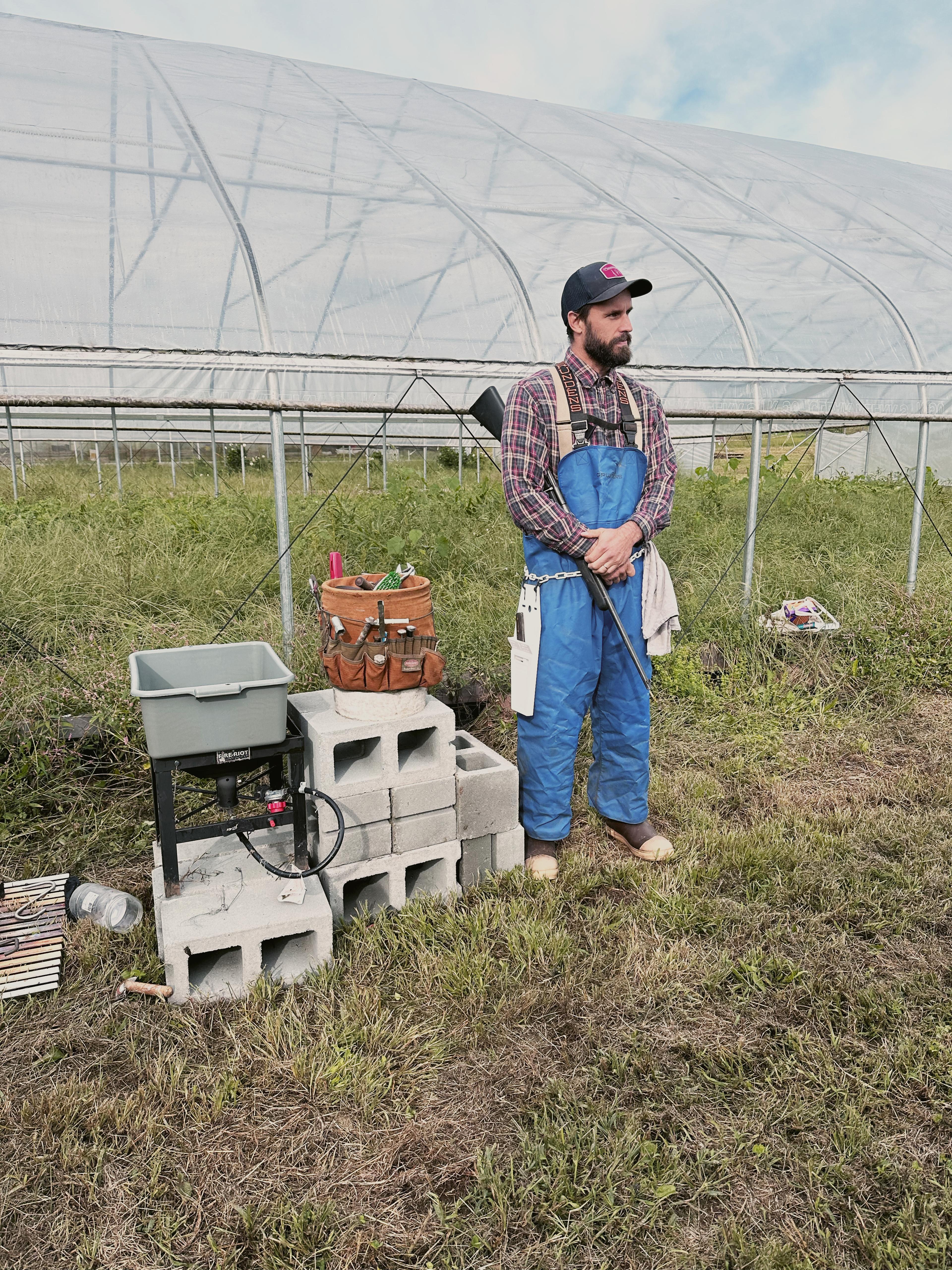
Brandon Sheard
A traditional pig harvest starts with Brandon’s mandate to “maintain tranquility.” Tranquility is a hard thing to define, especially from the perspective of the pig, but the idea is to minimize the amount of stress an animal feels before dying. The process centers on “discerning the nature” of the pigs. For example, when doing a harvest Brandon chooses to do the slaughtering in front of the herd because “pigs don’t fear death, they fear being alone.” He identifies the alpha (“Boss Pig”) in the sounder to make sure it is slaughtered last. That’s the pig who’s least likely to freak out in solitude and attempt an escape.
Tranquility is both the means and the end when you’re actually performing a kill. If you have to slaughter an animal, a bullet to the brain is the best way to minimize pain. That said, a pig’s brain is roughly the size of a tennis ball — if you miss, chaos ensues. So patience is key. Put another way: “The only thing harder than shooting a pig once, is only shooting a pig twice.”
As Brandon circled the pen and stalked his target it was so quiet you could hear a pig pee (we did). It’s one of the few times that a pig sits still. Brandon would lean in for the shot, something would shift, and he’d start circling again. Watching this dance for seven long minutes felt like an hour but, after a split second and a deafening bang, it was over.
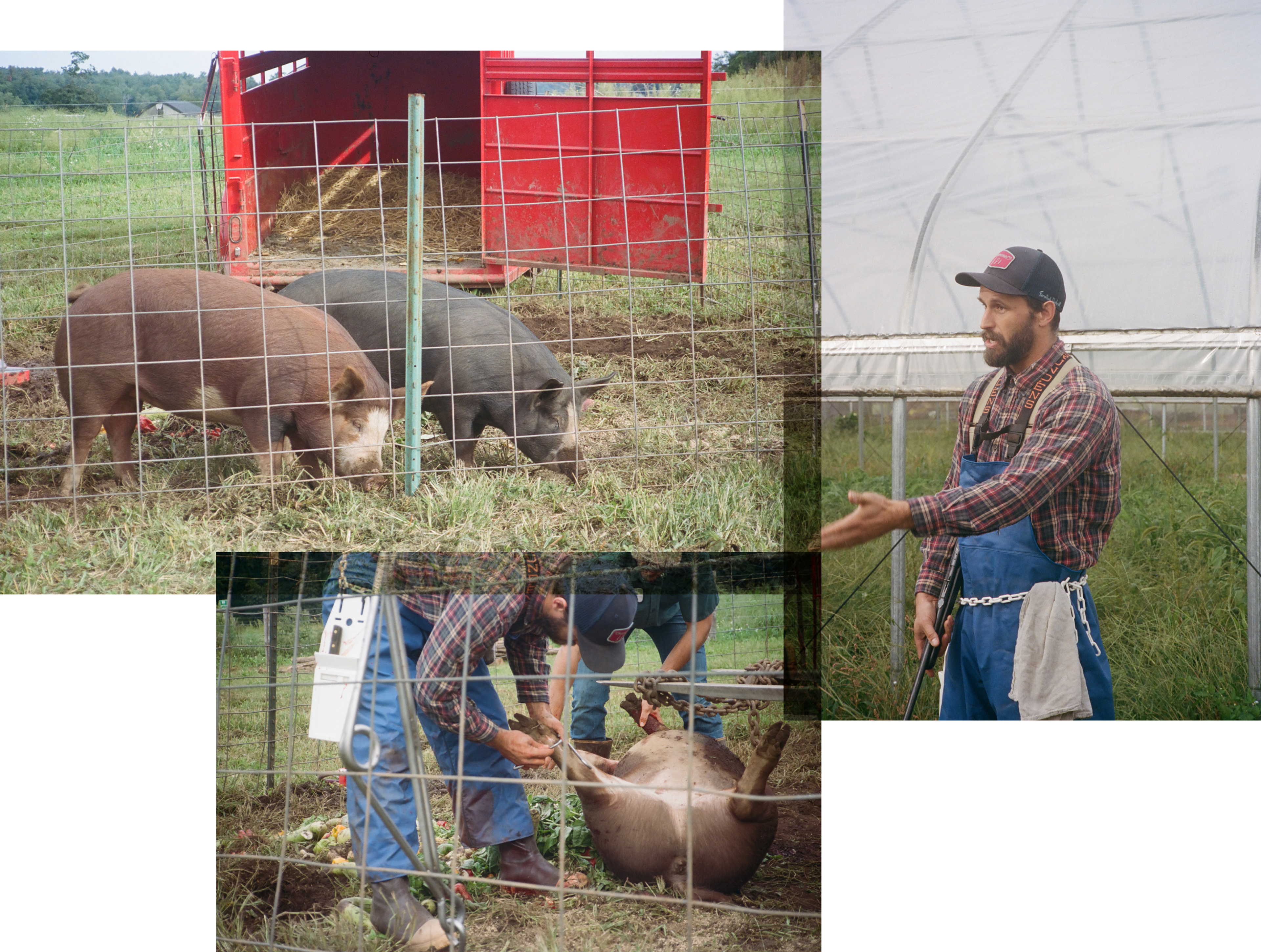
After the slaughter, my classmates and I were put to work scalding the pig and removing its hair, learning technique and breaking a sweat along the way. My Ambrook colleagues removed toenails and sawed bones in half (team bonding?). A small older woman bearhugged the head and yanked it right off. Then we got to what Brandon affectionately referred to as “gut town.” I thrust my bare hands into the town and came out with a trachea and lungs. Brandon taught us that you can fully reinflate the lungs by blowing through the aorta — not a party trick for all audiences.
While all this was happening, Brandon continually invoked food to remind us of the purpose behind the pig slaughter. Blood becomes boudin noir, the head becomes torchon, small intestines become sausage casing, liver becomes pâté, eating the pizzle is optional. We loaded our handiwork onto the bed of a pickup truck and covered it up with garbage bags to avoid shocking the farm’s CSA customers. Lots of people want farm-to-table food, but if you haven’t seen the process up close it’s easy to forget that there are gruesome, possibly traumatic steps in between.
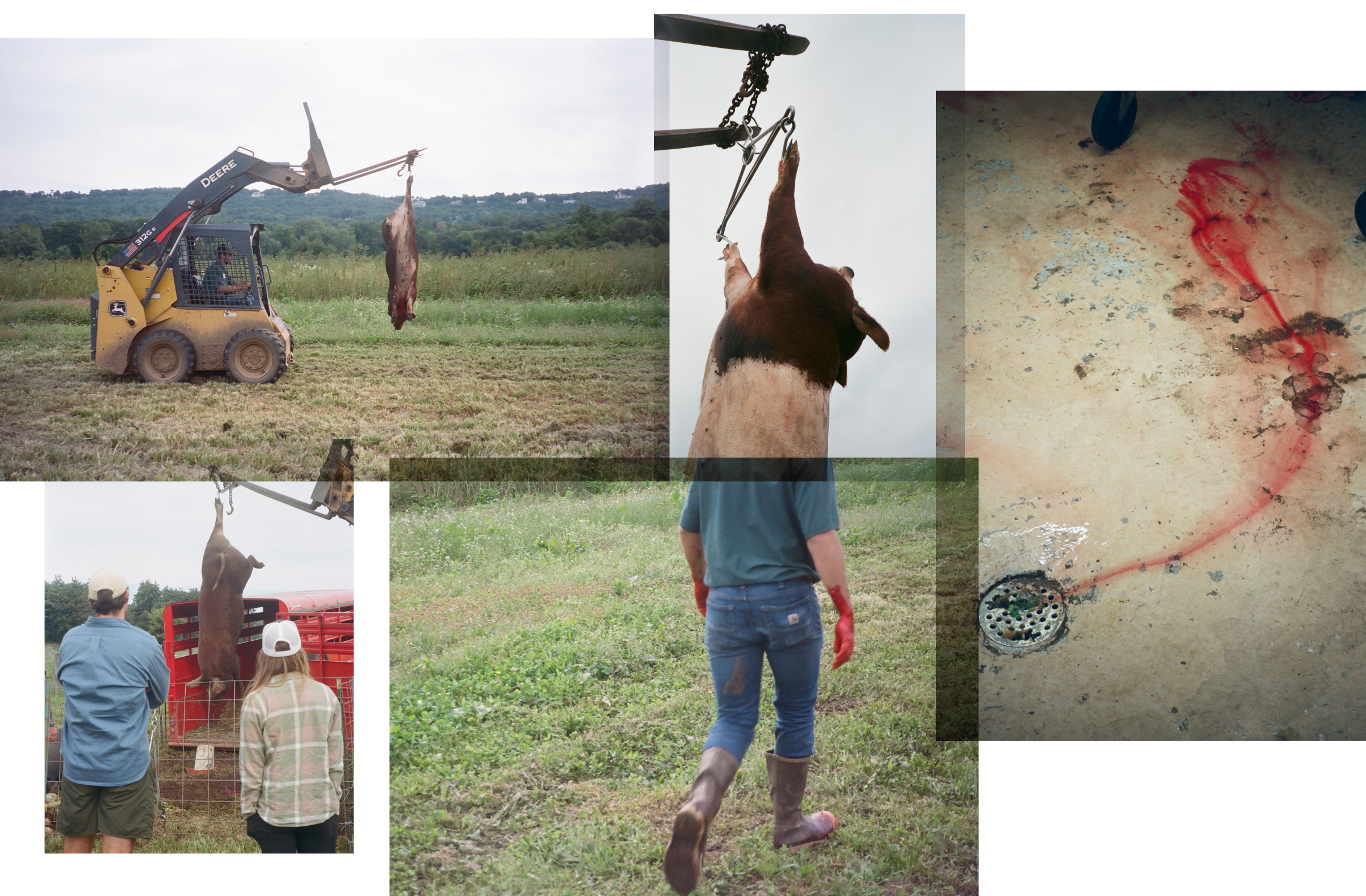
The second day of class focused on butchery and charcuterie; we learned that both skills are more art than science. According to Brandon, people who come to the class without prior knife-wielding experience can sometimes experience “cut anxiety” — the fear of making a wrong slice and ruining the integrity of the meat. Alleviating this anxiety is just a matter of perspective. So long as the end product is a piece of meat that can be braised, boiled, or roasted, you’ve achieved success. And, if worst comes to wurst, spare cuts can be ground up for sausage mix, because “sausage … is forgiveness.”
The philosophy for curing is similar, with the rule of thumb being, there are no rules. Recipes are to be generally disregarded. You mix your salts and spices in a ratio, apply roughly 2 percent of the mix by weight, and let the cosmos take care of the rest. (Brandon frequently references the cosmos in his running sermons.) In Spain, they have folks whose job it is to know when a jamón is done based on the smell. There’s no recipe, just God-given instinct. A cure can take anywhere from two to five years depending on the meat — and the inclination of the nose in charge.
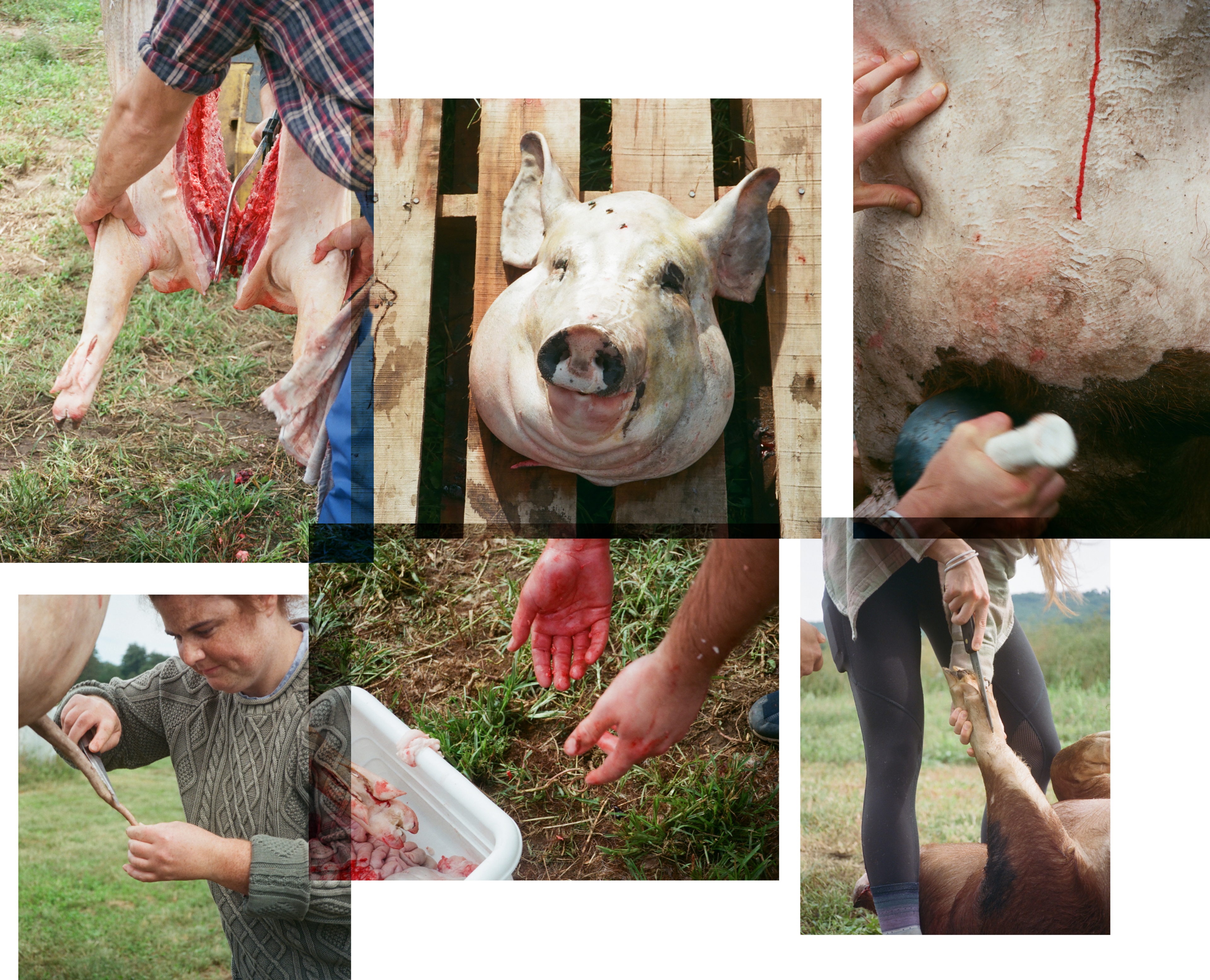
In the weeks following the harvest, I had the feeling I had seen something profound. Still, I was having a hard time putting words to the experience, so I went to Brandon’s YouTube channel. As he puts it, the virtue of pig killing is that “it gives you a context that actually is in harmony with the natural order.” For Brandon, the natural order refers to God’s natural order. The “traditions” of pig harvesting are organized around days on the liturgical calendar because that is when people had time off from work. The notion of harvesting your pig in November and eating bacon all winter — when you can’t grow plants outside — is a submission to seasonality as God created it.
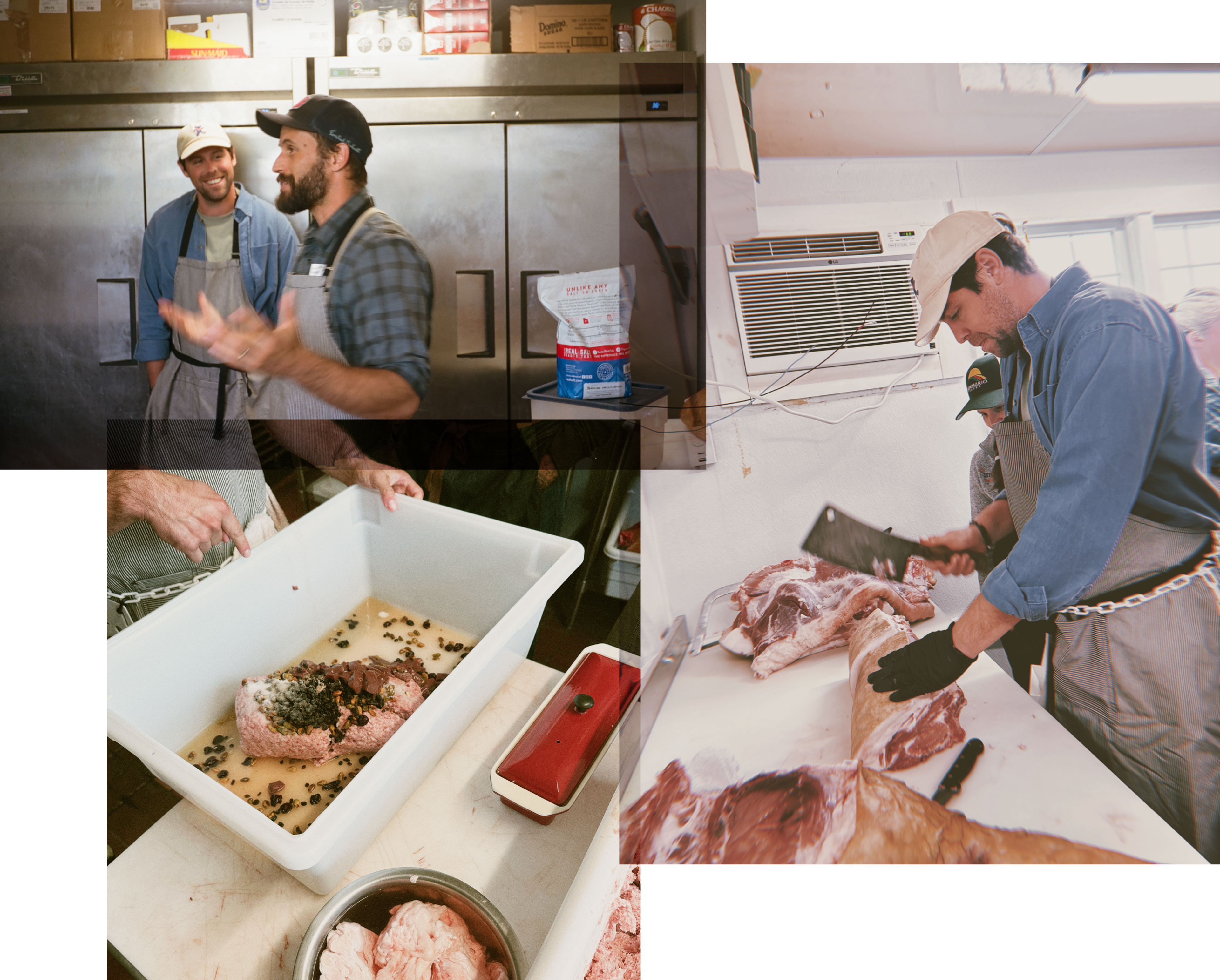
I’m not religious. When I was younger I was politely excused from Sunday School for asking the question “why?” too often. What I loved about Brandon was that “why” was never an issue, it was actually the point. Partaking in a pig harvest brought up all kinds of thematic questions for me: the spiritual (Is it okay to kill a pig?), the political (Why has our food system turned away from these methods?), and the practical (What do I do with all this extra fat?). Brandon has given all these questions serious thought and is refreshingly open to engaging. I can’t say I agree with him on every subject, but I can appreciate his thoughtfulness — his devoted following appreciates it too.
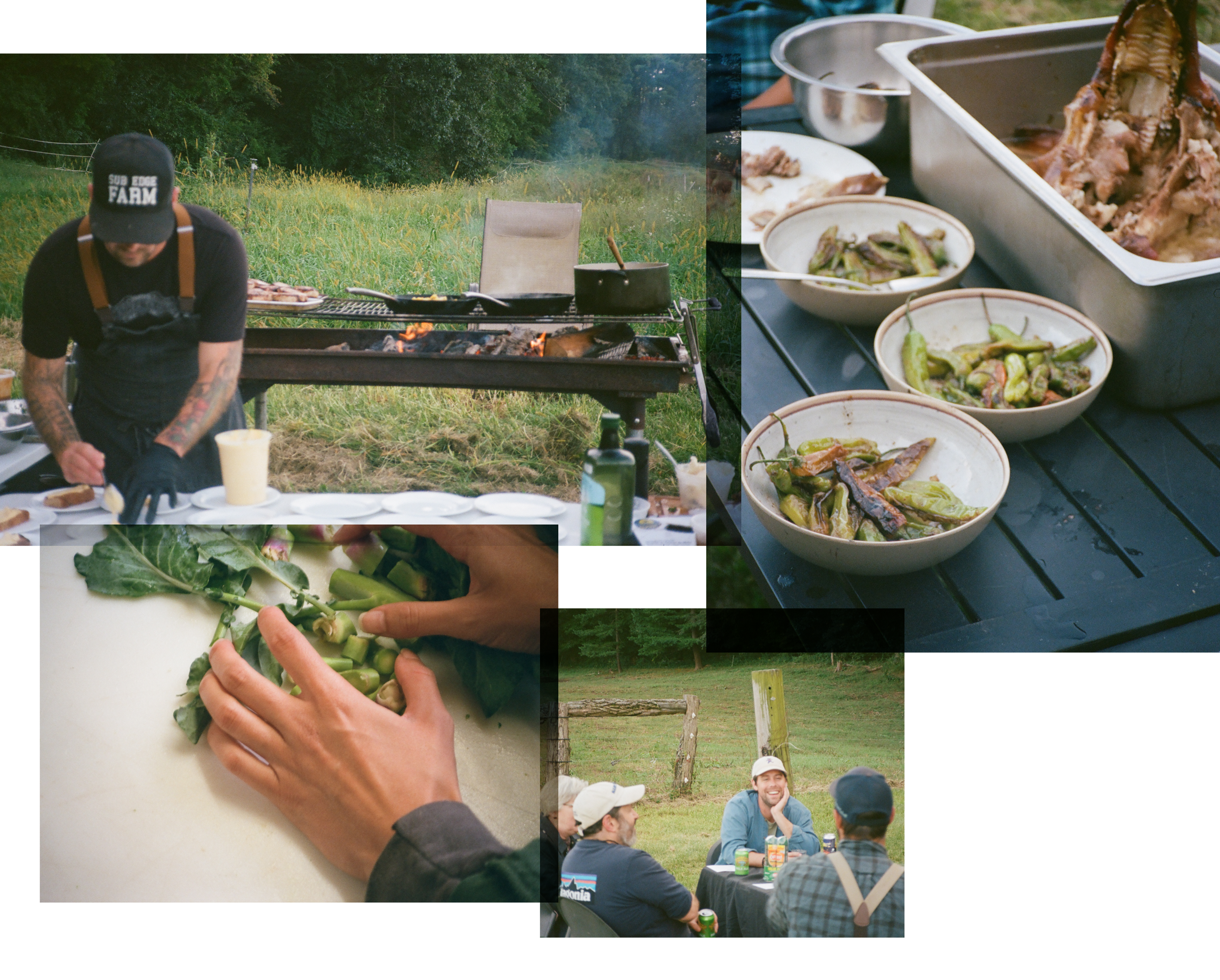
At our last, pork-heavy supper, I asked Brandon if he was going to take any detours on his drive back home to Oklahoma. He replied, “I’ll probably drop by a couple great churches in the mornings.” I would be looking for bars or barbeque. In many ways we couldn’t be more different, but ultimately we share some core values: craftsmanship, care, community, sustainability. We may have very different ways of living up to those values, but isn’t that the whole point of living?
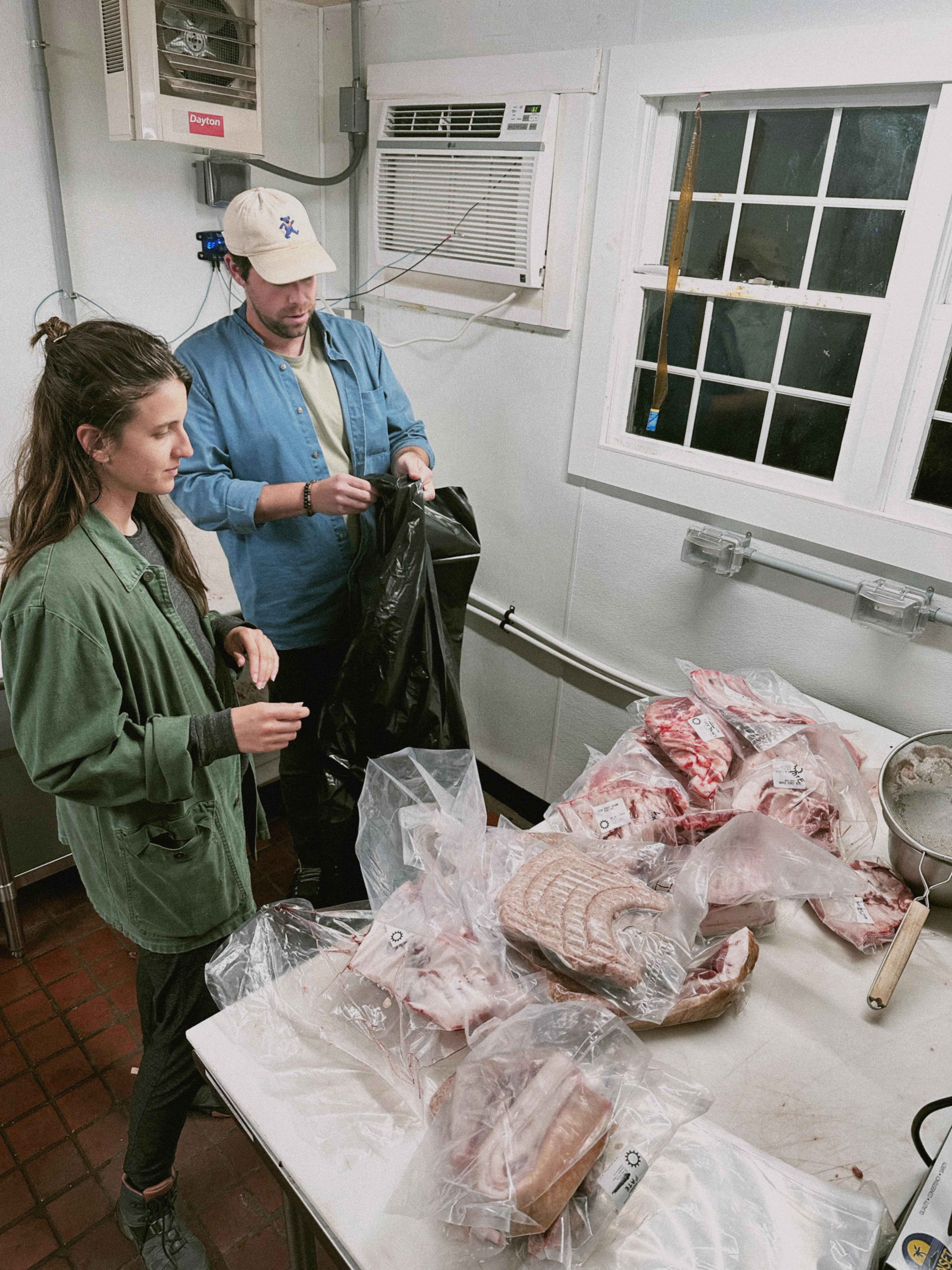
After the event, I lugged 50 pounds of pork and 10 pounds of lard onto the Northeast Regional Amtrak, to bring friends and family sustenance for the impending New York winter. I felt different than I had before — and I’m grateful for that.

Les Seiler is driving a black Chevy pickup along Fulton County, Ohio’s dead-straight roads, cutting sharp edges through endless plots of corn and soybeans. He’s giving me a tour of the patchwork of Seiler lands, a combination of what he and his brother have put together through purchase or rent over the past 37 years.
Pulling into the driveway of the farm he grew up on, across the street from his brother’s home, Seiler points out nature-based interventions he’s implemented on the old property: a cluster of honeybee hives behind a barn, an unpruned band of native plants and wildflowers that runs alongside a stand of trees. But what he really wants to show me is a patch of soybeans in the front yard.
There’s a clear line through it, demarcated by an abrupt incline in the crops’ topography. Suddenly the round-leafed plants jump in height by about a foot, like a seventh-grade class photo where half the kids have hit puberty and half are still waiting. This, Seiler tells me, is because the land under the taller stretch of plants was never farmed for crops, but a pasture where cows would sometimes graze. The soil under the more stunted crop, he explains, was stripped and weakened by decades of conventional farming; he’ll be waiting years to get that quality back.
From there we pull into a clover field, deep green dotted with lavender, and Seiler pulls up a plant to shake the dirt off and examine a cluster of white roots. They’re legumes, he explains, and their narrow white cones take nitrogen from the atmosphere and use it to enrich the soil.
Seiler started converting his lands to an entirely no-till system in 1986, and he’s become something of an evangelist for this style of farming. He speaks at conferences, he participates in a program with the Nature Conservancy to share practices with other farmers. He rhapsodizes over the importance of “working with Mother Nature,” fostering life in farmland ecosystems, and the all-important foundation of rich, healthy soil. The way he puts it, he doesn’t “want to be a miner of the land.”
But Seiler would not describe himself as a climate activist — in fact, he says climate change is not a major motivating factor for his nature-informed, land-stewarding school of farming.
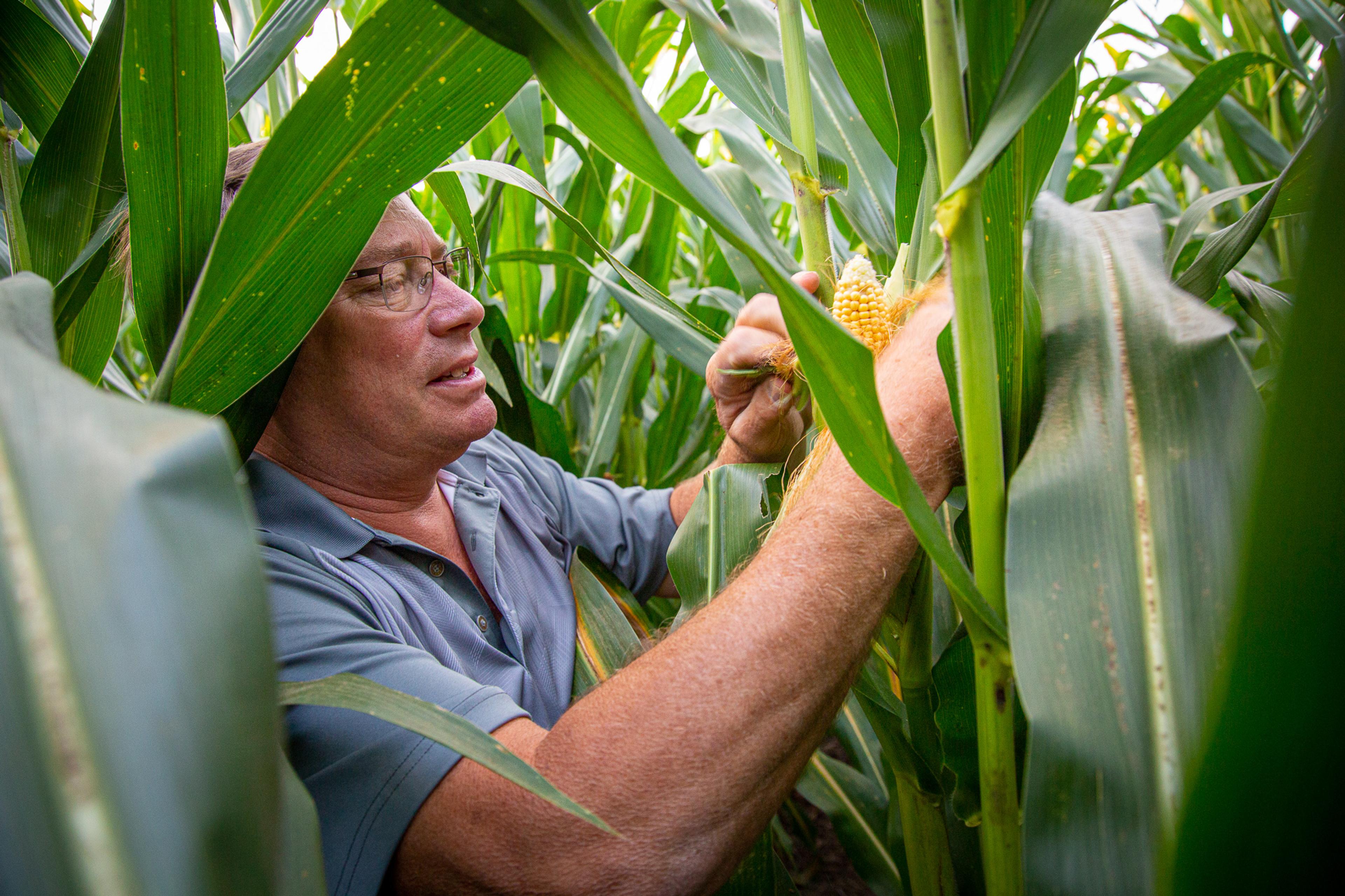
Les Seiler inspects his corn crop.
·Photograph by David Ike Photography
Climate change — particularly as a political cause — is rarely mentioned on Seiler’s farm, and not eagerly discussed. In an early conversation, when I asked him about his position on climate change, he said: “Do I think climate change is real? Yes. I also think the climate has always changed.”
To the climate-conscious, it may be unnerving to hear a talking point frequently employed by climate deniers — particularly from someone so deeply invested in caring for his local environment. And Seiler is not a climate denier; he recognizes that extreme weather events are more frequent due to climate change, and talks passionately about the importance of sequestering carbon in the soil and the perils of rampant deforestation. But it is the political tone of the issue, he says, that makes him shy away.
Those concerned with the climate impacts of agriculture are desperate for more farmers to adopt the practices that Seiler has carefully and passionately implemented on his land for decades. But what happens when those very farmers are turned off by climate politics and the culture surrounding them?
All Eyes on Soil
Soil health has, perhaps unexpectedly, become a rather hot topic in our national conversation on climate mitigation. President Biden’s Department of Agriculture recently committed $3 billion to “climate-smart” ag, funding programs that incentivize farmers to adopt much of the same practices that Seiler uses on his farm. Furthermore, a poll by the Yale Center for Climate Communications found that such incentives are the most popular piece of climate policy across constituents of both political parties, with 82 percent of respondents expressing support for funding of cover crops and other soil carbon-boosting practices. It’s one of very few proposed climate policies to receive such bipartisan support.
Robyn Wilson, a researcher with Ohio State University, studies behavior change among farmers with regard to climate-positive interventions. “Our data show that 70-75 percent of our farmers believe climate is changing, not a question,” said Wilson. “They just question the role of humans, [especially] relative to the U.S. population at large. What we’ve found to be useful is to engage around adaptation and the question of resilience: How are you going to continue to produce food under changing conditions in a way that provides yields in the way you’ve been doing, but also sequesters carbon and protects water quality and protects climate at the local level?”
As a voting bloc, farmers tend to lean conservative. Fulton County, which is mostly agricultural, is a reliably deep red stronghold. Sara Nicholas of the Pennsylvania farming organization Pasa Sustainable Agriculture said that it’s less likely that farmers will identify with so-called progressive issues. “And progressives are out talking about climate change or saving the planet. Some of these folks literally just recoil from that, and say ‘that’s not me.’”
“Progressives are out talking about climate change or saving the planet. Some of these folks literally just recoil from that, and say ‘that’s not me.’”
In 2022, Pasa sent a survey to its members that asked if they used or would be interested in using a number of climate-positive farming interventions — agroforestry, cover crops, riparian buffers — without leaning on the phrase “climate change.”
“And we got a tremendous response,” she said. “Not only were people doing these practices already, but there was a real hunger for doing more if there were funding and technological assistance available. We also knew if we said, ‘Do you want to be a climate protection farmer?’ we probably would have gotten a different result on the survey.
If you ask Seiler why he started doing no-till farming, it was the erosion. When he and his brother started farming conventionally in the early 1980s, they noticed that they were losing a huge amount of earth from their lands every season. Soil from bare fields would blow away or wash into waterways. Deep gullies would form in the clay earth, trapping tractors and other machinery. It was simply not sustainable. As a farmer, soil is the foundation of your entire business, and you can’t afford layer after layer of it shrinking away every year.
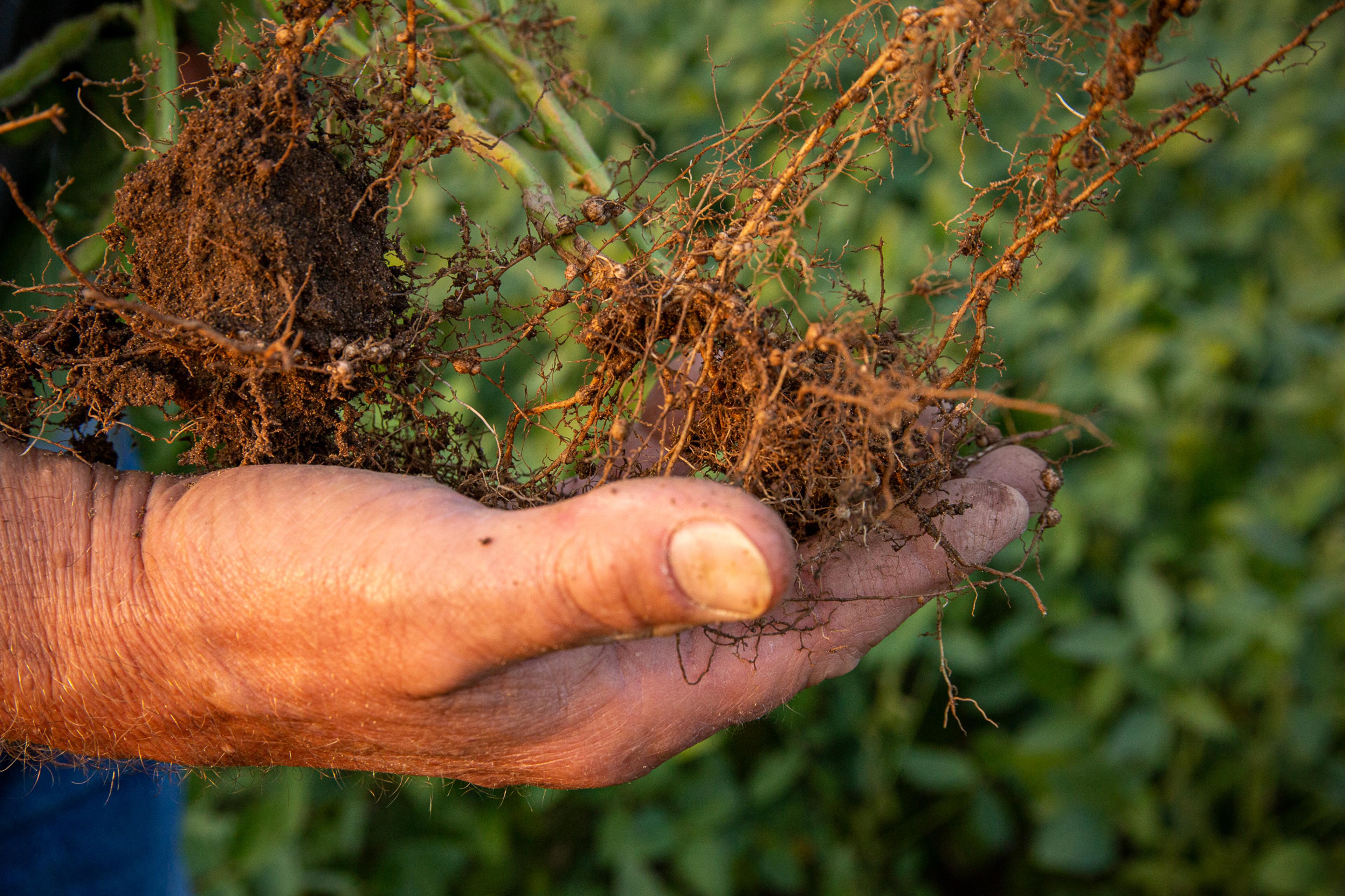
Seiler shows off his healthy soil.
·Photograph by David Ike Photography
Seiler had first learned about no-till at a conference, and bet that reducing disturbance to the soil would keep more of it intact. He bet correctly.
“It was instant, the erosion thing stopped,” he told me in his office, which is festooned with badges and mementos from years and years of no-till and regenerative agriculture conferences. “But then when we started putting cover crops into the land, we found out we could build our soils up better than what we ever thought we could.”
It was pollution in Lake Erie, however, that made Seiler more acutely aware of the environmental ramifications of conventional farming. One morning in August 2014, the city of Toledo, Ohio, awoke to a warning that they could not drink, bathe in, or even touch water from the municipal supply. An algae bloom in Lake Erie had produced dangerous toxins that had migrated into the city’s water plant, threatening to poison a half million people.
“Because you’re thinking climate change, we’re thinking the next level down. We’re thinking cover crops, keeping the land green, improving the soil.”
The Maumee River anchors the largest river basin in the Great Lakes watershed, and 80 percent of the land in that basin is farmland — including roughly 1700 acres of Seiler land. The tributary runs from Fort Wayne, Indiana, into Lake Erie, and farms all along its length have leached in tons and tons of phosphorus from commercial fertilizers. Lake Erie began to develop a neon-green, oil-slick algae bloom due to the phosphorus imbalance, which led to the Toledo water crisis of 2014.
“No producer around here can say they didn’t play a role in that,” said Seiler. “And that really resonated with me — we were part of that problem, and I just look at that as a bad deal. We can’t do that to people.”
Seiler has implemented a number of interventions on his land to prevent contamination of the watershed: phosphorus monitors, installed and tracked by Ohio State University; two-stage ditches to guard against erosion; a mechanism that turns off drainage when fertilizers are put down or pesticides are being sprayed. But the health of his soil, he said, keeps his need for commercial fertilizers low, and the continuous “armor” of cover crops limits runoff. When it rains, the water that runs over the top of his land is clear; the water that runs out of the drainage tile is clear.
Most of these are climate-positive interventions, insomuch as they strengthen the ability of the soil to sequester carbon. But when I asked Seiler if carbon sequestration in the name of climate mitigation is at all a motivating factor for the type of farming he does, he said: “I don’t know that there is one factor that motivates me at all, I just know it’s what we need to do.”
Lonely but Sustainable
The community of farmers who use regenerative methods is pretty small in Seiler’s corner of northwestern Ohio. He’s in a low single-digit percentage of farmers in the area, by his estimate, and they’ve formed a fairly tight-knit network to share their experiences. One morning I met Seiler and his friend Kent Sonnenberg, who farms corn, soybeans, and dairy about 30 miles south, for breakfast at the Blue Ribbon Diner in Wauseon.
Seiler and Sonnenberg met at a no-till conference about 10 years ago, and forged a friendship on their shared commitment to regenerative farming practices in their region. Both of them have given public talks and had private conversations to explain the rationale for their practices to neighboring farmers, and they’ve both been somewhat disappointed by the interest it’s generated.
There is an almost proselytizing quality to the way Seiler and Sonnenberg discuss their method of farming. Seiler, at one point, describes the process of soil testing for nutrients and pollutants as a sort of religious ceremony. Prominent figureheads in the movement like Alan Savory and Ray Archuleta are discussed in reverent tones. David Brandt, an early and well-respected adopter of regenerative farming in Ohio, tragically passed away this spring, and Seiler eulogized him as “a god for us to worship.” Sonnenberg explained his own motivation for preserving soil health with phrases that wouldn’t be out of place on a church marquee: You want to leave something better than what you started. You want something for the next generation.
Seiler's truck sends a message.
·Photograph by Eve Andrews
But farmers are driven by increasing yields, and with a conversion to a no-till cover-crop system, some can expect an initial drop in productivity as the land adjusts. (Notably, critics of no-till as a climate solution posit that the potential expansion of farmland necessitated by smaller yields could actually erase any climate benefits accrued by carbon sequestration in the soil.) Seiler and Sonnenberg describe how they’ve seen farmers take money from federal and state programs that incentivize experimentation with environmentally conscious farming, but when that funding dries up they may just return to their old methods.
And invoking the urgency of climate change, certainly, does not seem likely to earn any converts.
“I don’t bring these things up, it’s not a good conversation,” said Sonnenberg. “It’s more like, how much rain did you get? We got this much on this farm, this much at that, down the road we got six-tenths. That’s a conversation we’ll have. We won’t have: ‘What do you think about climate change today?’”
Midnight Reflections
In a couple of phone conversations in advance of meeting in person, Sonnenberg haltingly answered my questions about his opinions on and understanding of climate change. He asked if I was familiar with William Happer, the Princeton physicist who believes that the vast majority of global warming can be attributed to natural causes and not growing levels of carbon dioxide in the atmosphere; he also expressed concern that climate change was used by politicians as a ploy to accomplish other goals. But he seemed largely reluctant to discuss the issue at all.
On a brilliantly clear morning, after our breakfast at the diner, Sonnenberg drove me around all corners of his farm. He invited me to pet calves in the dairy barn — “I find the women like to do that” — and he dug up shovelfuls of soil to show me, in the palm of his hand, the difference between what was tilled and what was not. We talked about the dynamics of passing a family farm from generation to generation, the environmental hazards of an underfunded rural plumbing system, and the musical Fiddler on the Roof (he’d played the role of Tevye, the Jewish milkman protagonist, in a local production). When I tried to ask a question or two about climate change, he demurred.
I was surprised to get a call from him early in the morning a couple of days after my visit to his farm. He said that he found himself awake in the middle of the night wondering why he’d avoided my questions.
“We do what we want to do, and you don’t want to get in a political discussion with your neighbors that’s negative,” he said, after some more hesitation. “Our goal is to have a better environment, a better place to live, a healthier society, and a free world. That’s all what we want, I think, anyhow. We want to live a good life, and have the next generation do the same.”
Life as we know it wouldn’t exist without fungi. Not only were mushrooms some of the first drivers of evolution on land — creeping out of the ocean upwards of a billion years ago — they are also the foundation of the planetary biodiversity we see today.
Mycorrhizal fungi are among the most prominent microorganisms in natural soils, and it is their sprawling networks that catalyze a variety of life in nearly every ecosystem on Earth. Healthy soil fungal communities hugely benefit crop yields and resilience, rendering them invaluable to agriculture. They break down waste and transfer nutrients from one life form to another, shepherding the flow of energy within and between ecosystems. And plant–fungal associations are thought to be one of our most potent opportunities for carbon storage to combat climate change. You may be wondering, “What can’t fungi do?”
Beyond the ceaseless thrum of ecosystem services the Fungi Kingdom provides without human intervention, right now there’s a white-hot enthusiasm for the potential of mushroom-based solutions to modern environmental dilemmas. From plant-based protein to biodegradable plastic, this climate-friendly industry is, well, mushrooming.

A lamp made entirely from mycelium.
Photo by MycoDesign
Mycelium Meat
The mycology-curious are probably already familiar with mushrooms as a meat alternative, but today’s fungal fare has advanced far past portobello burgers. Whole-food protein producer Eat Meati makes animal-free cutlets and steaks whose texture is remarkably similar to muscle tissue. Meati’s key differentiator is mycelium strain Neurospora crassa, which the brand’s founders have dubbed MushroomRoot. They selected this particular strain (there are an estimated 5.1 million unique species of mycelium on earth) for its nutritional content, flavor, texture, and adaptability.
“We need more food sources, period, and we need food that delivers on whole-food nutrition,” said Christina Ra, Meati’s VP of marketing, Mycelium — grouped masses of fungal strands that branch underground like tiny roots — are unmatched when it comes to how quickly and efficiently they grow. The largest single organism on the planet is indeed a fungus in eastern Oregon, which spans nearly 10 square kilometers.
Given that animal agriculture is among the largest contributors to greenhouse gas emissions, occupies a third of the planet’s non-ice land surface, and uses over 15 percent of the global freshwater supply — a nourishing plant-based product with a fraction of the footprint could be a serious step forward for climate change mitigation. (Next up: mycelium-based “seafood.”)

Flexible material made from mushrooms.
·Photo by MycoDesign
Fungi Fashion
Biotechnology company MycoWorks began production on a new manufacturing facility in South Carolina this fall, set to grow millions of square feet of its reishi-based leather alternative to meet demand from luxury fashion buyers. Since launching at New York Fashion Week in February 2020, MycoWorks has caught the industry’s attention with their patented biomaterial — appraised to be on par with gold-standard calfskin leather. Used by legacy runway brands and high-end independent makers, their flagship product is grown in California as sheets of interwoven mycelium, and finished by heritage tanneries in Europe using chrome-free dying technologies.
Leather production poses far-reaching consequences in terms of resource consumption and pollution runoff, in addition to the environmental tolls associated with raising livestock. Traditional leather processing methods yield only 200 kilograms of usable leather per metric ton of raw material, and leaves more than 60 percent of waste material contaminated with heavy metals; including highly carcinogenic chromium, colored compounds, salts, and putrefying suspended matter.
As technology and design applications for mycelium continue to advance, opportunities for mass production will grow as well, hopefully enabling a more accessible range of price points.
Materials made from mycelium.
·Photo by MycoDesign
Propagating Health
The cultural appreciation for all things mushroom has its tendrils in the wellness industry now too. “We have thousands of years of history to look back on where humans have used mushrooms as medicine,” said Roger Holden, agricultural technician and co-founder of Fruiting Bodies — a line of organic tinctures and supplements made from functional mushroom extracts.
A small but growing body of research suggests that these remedies could have significant therapeutic potential. Medicinal mushrooms exhibit antiallergic and anti-inflammatory properties, may improve depression and digestive issues, and are thought to help maintain immunomodulation and homeostasis in the body. The health-promoting effects of mushrooms are supported by generations of wisdom from traditional Chinese medicine, Ayurvedic medicine, Indigenous medicine, and other non-Western healing systems; but there is still a lag in clinical trials to substantiate these claims.
Fruiting Bodies prides itself on rigorous third-party testing, according to the company’s other co-founder, who professionally goes by Ken Mycelium. Mushrooms are bioaccumulators, which means that toxins from the environment in which they are grown get collected and concentrated within the organism. So it’s extra important to ensure that any mushrooms meant to be consumed have been cultivated safely. “We are trying to elevate what the standards are, because right now the supplement industry is so unregulated,” said Ken Mycelium. “These mushrooms have incredible healing benefits, and we want people to have access to safe and high-quality products.”
“I wish we would start teaching kids at five years old about mycelium.”
Fruiting Bodies products are made with mushrooms grown organically in the U.S. and formulated for maximum absorption and bioavailability. In order to free the bioactive compounds from their non-digestible cell walls, mushrooms are zapped with ultrasound waves in a process known as sonication. This technology, Robert explains, wasn’t made affordable until it found its use in the cannabis industry, whose funding exceeds that of functional mushrooms by many orders of magnitude.
For Ken Mycelium, the case for more mushrooms goes farther than the pharmacological. “I wish we would start teaching kids at five years old about mycelium, how important they are in our environment, and learning how to grow them in the classroom,” he said. “I think we would all be better off.”
‘Shroom Supply
Canada-based Myzel is working to strengthen the nascent industry with greater transparency, sustainability, and cost-effectiveness. They operate in an old Ontario poultry facility, which the company retrofitted to minimize energy consumption and carbon output. The building is powered by solar panels and a geothermal heating and cooling system, and captures rainwater to repurpose for mushroom production.
Myzel is attempting to shift the narrative from what they call a “once mycophobic culture” — educating consumers about the mushroom life cycle and the benefits of each stage so that they can make well-informed decisions about the products they purchase.
“The industry is so diverse these days, with mushrooms touching practically every consumer segment,” says Andrea Wood, Myzel’s head of marketing. “Not just supplements and foods, but also homebuilding, environmental remediation, and clothing; it’s a really interesting spot to be in — to be both a player and a witness to all the change.” Operating as a bulk supplier, Myzel is keeping an eye on downmarket trends and how interest and innovation continues to evolve. “We’re excited to see how products find the right balance between health benefits, shelf life, and palatability,” Andrea said. “The options are endless.”
Infinite Adaptability
From wearable electronics and low-power batteries that prevent e-waste, to fire-resistant roofing that precludes toxic fumes emitted by plastic cladding, a fervor for fungi is popping everywhere you look. . Ecovative is one company leading the charge on mycelium-based biofabrication, creating natural sustainable alternatives to ecologically harmful materials. Their trademarked technologies can be used for building, construction, packaging, insulation, and more. Major corporations including Ikea and Dell have partnered with Ecovative to move away from notoriously un-recyclable styrofoam for their shipping needs.
The stage of mushroom cultivation in which mycelium begin to spread through whatever medium they are growing in is typically called “colonization,” but Ken Mycelium thinks the term is ill-suited. “Mushrooms are the connectors of the natural world,” he said. “We have so much to learn from them about how to live in community.” He prefers the neologism “myceliation” — an apt descriptor for both the growth of fungal threads and the burgeoning of sustainable innovation.
Every year during the third weekend in August, as farming communities and small towns put on their yearly festivals and fairs, Banks, Oregon (population 1,829), hosts a special summer event: the combine demolition derby. It’s a traditional demo derby with farming flair, pitting harvester against harvester in a lumbering clash of the titans.
As part of the larger Banks Truck and Tractor Pull BBQ Weekend, combine drivers enter the arena to raise money for the town’s privately owned park. The wider BBQ event has been going strong for 77 years, and as far as anyone can remember — there’s some dispute on the origin — Banks’ combine demolition derby sprung up roughly 25 years ago. This year, veteran and newbie drivers alike rolled six well-seasoned combines into the pit. Here’s a look at their unorthodox event.
Colin Burton
Profession: Farmer — grass seed and fruit trees
Years driving in the derby: 7
Combine: Big Red
Burton has been involved with the derby since he was a teenager, with a high school job helping to fix combines before they entered the event. “When I turned 18, [my bosses] helped me build Big Red and got me started,” he said. “It takes a lot of time [to build combines] either during work hours or after work hours. People take a lot of ownership in them.” This year, Burton made it past the first round and was able to restart his combine with little effort to drive it home after the carnage. “Most of the time, I’m first-place loser,” he said. “Growing up watching the derby as a kid it was always something to look forward to. And it’s the one time to go out and be a redneck.”
Mike Mosier
Profession: Electrician
Years driving in the derby: 1
Combine: Attitude Adjuster
After a buddy dropped out of driving in the derby, Mosier took the steering wheel for the first time. “I don’t think I’ve ever actually attended the derby before,” he said. “It was just luck that I got to drive this year.” Figuring that because he’s driven tractors before, a combine wouldn’t be too hard. “I got a three-minute tutorial right beforehand but figured it out,” he said. “I was doing pretty good until I lost all steering at one point — so that was worrying.” Luckily, he was able to use the steering brakes and whip himself around before doing damage to anything that wasn’t a combine. “I’d drive again in a heartbeat,” he said.
Jared Rigert
Profession: Mechanic
Years driving in the derby: 18
Combine: Silver Bullet
Rigert became interested in driving a combine in the derby because “as a young country boy, you’re always interested in destroying stuff you don’t have to fix after.” As a mechanic, he’s pulled trucks and raced, so combines seemed like a natural transition. “My first year, I tipped over,” he said. “I was fine. I don’t think anyone has ever gotten shut-the-show-down hurt. I can guarantee everyone has sore muscles and scratches after.” The derby makes Banks stand out from other small towns, he said. “You have to have something different to bring people in. Everyone has barbecues, but not everyone has combines crashing.”


Cole Duyck
Profession: Farmer — grass seed, small grains, wheat
Years driving in the derby: 18
Combine: Duyck Dynasty
The way drivers and owners name their combines incorporates parts of their personalities, Duyck said. “It’s kind of like a WWE name.” He took over driving in the derby after his uncle gave up the wheel, and the rest was history. “I tell myself every year that I won’t do it again, but I always get the itch,” he said. He was able to drive his combine home this year, though some welding needs to be done to make it roadworthy again. “Still have some work to do for next year, but we got it back on three wheels,” he said. The fourth wheel was not fixable until it got to a shop.
The tractor pull and other weekend events draw sizable crowds, he said, but once it’s combine time, the seats sell out. “The whole event is one big fundraiser that keeps the park going — keeps the grass green. It’s also huge economically for the area,” he said. Once boasting a lineup of over a dozen combines, participants have dwindled to just six or so each year. “It would be great to have another generation that would be interested in it. There’s so much work that goes into it that people get burnt out. It’s also a generational thing. Being in ag, there’s a big age gap. But it’s a lot of fun and a good show for the community.”
Scott Scholbrock
Profession: Excavator
Years driving in the derby: 1
Combine: “No name, it’s just old.”
After watching a few clips of the derby on YouTube, Sholbrock thought he’d give it a shot. “I’ve been a motosports junkie my whole life. I’ve never seen a combine derby before,” he said. His employer has two combines in the derby each year, which gave Scholbrock the opportunity to try something new. “I’ve driven cars, trucks, school buses — never a combine. I did two practice runs in my yard beforehand.”
Compared to more traditional derbies he’s participated in, driving a combine differs because they’re so much higher. “It makes the hits you take feel even harder,” he said. After having brief second thoughts while waiting for the derby to start, Scholbrock can’t wait to participate again next year. “I want to get better, and now I have a couple of ideas on how to protect myself and make better hits,” he said. “And when you see the eyes of the kids, it’s so cool. When you’re little, everything is just larger than life. It’s a really big thing for the town.”
AJ Lewis
Profession: Farmer — fruit, corn, grass seed
Years driving in the derby: 5
Combine: Armed & Hammered
Combines can get pretty mangled, and the process of piecing them back together can be Frankenstein-esque. Lewis said he’s able to source spare parts from other combines to get his working each year. “The derby’s been going on long enough that you can just call around and ask for parts,” he said. If you lose an engine or transmission, it’s done. “You don’t want to spend a lot of money on these. You fix them as best you can — do a lot of welding.” If you can salvage enough parts, you’ll be good for next year.
Yesica was pregnant with her daughter Magdalena when she was transferred to a pesticide mixing position at the Central Florida ornamental plant laboratory where she had been working.
She was not provided personal protective equipment. Fearing the potential health risks for her and her unborn baby, Yesica (who requested to keep her last name anonymous for fear of retaliation) tried to safeguard herself by covering her face with a T-shirt. It likely did not help.
A couple of months after Magdalena was born, she was diagnosed with craniosynostosis, a condition in which the bones of the skull prematurely fuse together, causing issues with brain and skull development. At four months old, Magdalena’s skull was cracked open to fix the problem. For an entire year, she was forced to wear a helmet to protect her growing brain.
The experience was grueling for Yesica, both emotionally and financially. “My plan was to have the baby and go back to work in the nursery,” said Yesica. “When I realized my baby was going to need special care, I had to stop working — and I was already living in a difficult financial situation.”
Yesica can’t know for sure if Magdalena’s health problems were related to the chemicals she was mixing, but a growing body of research has been correlating exposure to pesticides with a potential array of health problems — and possibly death — in both the agricultural workers who are directly exposed and their children. In spite of increasing evidence of problems, little is being done to protect them.
While there are laws intended to help protect workers and local communities from exposure, overall pesticide oversight is a hodgepodge of regulations between state agencies and the Environmental Protection Agency (EPA). Most enforcement ends up falling on individual states, creating inconsistencies in compliance across the country. A report by Vermont Law and Graduate School’s Center for Agriculture and Food Systems and Farmworker Justice found that current regulations not only fail to sufficiently protect workers from harmful exposure but that “compliance with current protections appears woefully low.”
Oftentimes, the report found, workers like Yesica are not provided with personal protection equipment as required or not trained on how to handle pesticides the way the regulations say they should be. Required periods of re-entry to recently sprayed fields are not followed and decontamination stations with soap, water, and disposable towels are often not available.
In the rare cases where penalties have been levied against growers for violations, repercussions are minimal. Of the 984 penalties levied specifically for agricultural violations in California between December 2019 and December 2021, “86 percent were at or below $500,” according to the report.
This lack of compliance and enforcement is rooted in larger systemic issues in agriculture. Farmworkers, many of whom are undocumented or on H-2A guest worker visas, rarely report exposure incidents and suspected violations due to “fears of deportation or blacklisting if they speak out against employer abuse,” according to researchers.
“Compliance with current protections appears woefully low.”
And even if workers do report violations, experts claim that existing rules aren’t strong enough to sufficiently protect them in the first place. But a new slate of bills is attempting to fill in some of those gaps.
In December, the fifth update to the 2004 Pesticide Registration Improvement Act mandated additional improvements and funding for programs paid via a fee paid by pesticide companies. It provides direct funding to community-based farmworker organizations and other programs to help train farmworkers on the risks and proper handling of the pesticides they are applying and for the diagnosis and treatment of pesticide-related illnesses. The most significant change, however, is that it requires pesticide companies to phase in bilingual labels to help make Spanish-speaking workers more aware of these risks and how to prevent exposure.
This new labeling requirement, which is slated to start going into effect in December 2025, could have helped Yesica during her time at the nursery. She still does not know what pesticides she was mixing during her pregnancy or if she was following the proper protocol. “If the labels were in Spanish, I could’ve been able to read the precautions and maybe I would’ve been able to protect myself better,” she said.
Even so, many farmworker advocates say far more needs to be done to protect laborers from the dangers of pesticide poisoning including bans on the most toxic chemical groups. One of the main targets right now is a complete ban on a class of pesticides known as organophosphates.
The pesticides, which were created in the mid-1800s but didn’t become popular in agriculture until the late 20th century, are one of the most widely used in the market. They’re sprayed on a wide range of crops including celery, bell peppers, strawberries, grapes, spinach, lettuce, cucumbers, domestic blueberries, potatoes, and many fruit trees.
It is estimated that 3 million people around the world are exposed to organophosphates each year, accounting for around 300,000 deaths. According to the Center for Disease Control’s National Environmental Public Health Tracking Network, there were over 93 thousand reported pesticide exposures and 17 deaths in the United States in 2017 alone. While the CDC’s numbers include chemicals found in household products, at home, in the environment, and poisonings from foods and beverages, the majority tend to come from agricultural pesticides.
“It’s especially bad for farmworkers who don’t have healthcare, aren’t wealthy, and don’t have access to special programs for children with these issues.”
During World War II, the Nazis developed organophosphates as neurotoxins for chemical warfare. “They function the same way in both their target and humans,” said Margaret Reeves, a senior scientist for Pesticide Action Network North America. “They disrupt the body’s ability to block acetylcholine, a fundamental hormone that regulates nerve action.”
Exposure — which most often happens through the skin but can also occur through aerosol drift, food, or contaminated drinking water — can lead to immediate diarrhea, nausea, vomiting, sweating, muscle tremors, and confusion. This can happen within minutes and take weeks to resolve. Proper safety precautions, such as personal protective equipment, adherence to required restricted-entry intervals, and decontamination sites, could prevent these exposures. However, these legal requirements oftentimes aren’t followed or enforced due to murkiness in the pesticide regulatory structure.
The lack of enforcement is one of the reasons why advocates and the Vermont Law report have called for Congress to restore partial jurisdiction over pesticide-related occupational regulations to the Occupational Safety and Health Administration (OSHA), which currently cannot regulate areas where other federal agencies (in this case the EPA) are required to enforce standards affecting occupational safety.
Another report published last spring in the journal BMC Public Health also called out the EPA’s domination over OSHA when it comes to agricultural safety standards and the inherent conflicts of interest in its oversight. “The very fact that the agency in charge of approving pesticides is the same one that’s in charge of establishing and enforcing worker standards is troubling to say the least,” it said.
More bad news: While these kinds of health risks have always been an issue, climate change is exacerbating the effects. Higher temperatures make it easier for chemicals to penetrate the skin and personal protective equipment. The higher threat of heat stress makes it even more difficult to wear these protective layers — if it’s even supplied.
Long-term organophosphate exposure can cause infertility, birth defects, memory loss, depression, and personality changes. Some studies have found links between exposure and lymphoma and leukemia in both adults and children, though a definitive link has never been found. A systematic review of 27 different studies found that organophosphate pesticide exposure in children correlates to neurodevelopmental problems, especially for cognitive (including autism), behavioral (like attention issues), and motor functions.
“We know the realities in Congress.”
“This is horrible for anyone but it’s especially bad for farmworkers who don’t have healthcare, aren’t wealthy, and don’t have access to special programs for children with these issues,” said Jeannie Economos, pesticide safety and environmental health project coordinator for the Farmworker Association of Florida.
Organophosphates are not the only class of pesticides that can pose such deleterious health effects — pollinator-killing neonicotinoids and the fumigants commonly used for strawberries and tomatoes are other classes activists are trying to address. That said, bans for organophosphates have already been in place for use around homes, schools, daycares, and other places where kids might be exposed. Children who live in agricultural areas do not have those same protections.
Some legislators have aimed to bridge that gap with new pieces of legislation aimed at protecting farmworkers and their kids.
Last year, Congresswoman Nydia M. Velázquez (D-NY) introduced the Ban All Neurotoxic Organophosphate Pesticides from Our Food Act. The bill would simply prohibit all use of organophosphate pesticides in food. And this year, Senator Corey Booker (D-NJ) reintroduced the Protect America’s Children from Toxic Pesticides Act of 2023. It includes a ban on organophosphates, neonicotinoids, and the highly toxic herbicide paraquat known to cause Parkinson’s disease.
Booker’s bill, which would amend the Federal Insecticide, Fungicide, and Rodenticide Act, would eliminate many of these pesticide poisoning problems plaguing farmworker communities if enforced effectively. However, activists are skeptical it’ll go far. “We know the realities in Congress, which is why the ban on organophosphate pesticides bill is very important,” said Economos.
After a year of Yesica finagling trips to the hospital 30 minutes away from her home with no car or driver’s license, Magdalena is mostly okay — though she still suffers from conditions including eczema, sleep apnea, and a misshapen head. But the daunting experience, which pushed Yesica out of agriculture and into a role at the Farmworker Association of Florida, has prompted her to speak out about her situation, unlike many farmworkers she knows who are too afraid.
“They don’t talk about their situation because of fear,” said Yesica. “Fear of losing their job, fear of being turned into immigration — there are so many [people] who have been in a similar situation.”
Marc Arnusch, a third-generation farmer, has spent his career raising sugar beets, onions, and barley grains in Colorado’s Prospect Valley. Recently, when his seventy-year-old friend and neighbor reached out because he was considering exiting the farming business, Arnusch found himself consulting an unexpected ally for advice: ChatGPT.
Arnusch wanted to investigate every outcome before offering guidance on such a personal and life-altering decision. ChatGPT helped Arnusch lay out a strategy, with options for changing markets, leaving the industry completely, or selling the farm for a stake.
Eventually, his friend decided to rent his farm holdings to Arnusch’s son and nephew — the fourth generation of Arnusch Farms. Now, the two farms are in business together. “I feel ChatGPT brought us to a point where we had a really good conversation and drove the principal pieces of that discussion,” said Arnusch. “It’s almost like a robotic business coach that I’m learning to confide in.”
Arnusch is part of a small but growing number of farmers leveraging artificial intelligence (AI) and large language models (LLMs), like ChatGPT, to tackle daily tasks. He’s used it for everything from drafting employee evaluation questions to researching Colorado’s wolf recovery initiatives. “I’ve been blown away by the information it can kick out in a host of different areas,” he said.
Still, Arnusch says he’s wary of using the tool for questions related to his farming products. “When I ask it about animal agriculture, sustainability, or GMOs, it produces things I don’t agree with as a farmer, or that are blatantly false,” he said.
Earlier this year, Farmers Business Network (FBN), an ag-tech data research platform based out of San Carlos, California, released its own version of ChatGPT called Norm. Norm is built on OpenAI’s GPT-3.5 model, and uses public data like weather reports, soil data, and product labels to answer ag-related questions. It also taps into FBN’s exclusive agronomic data and assets from the USDA’s National Agriculture Statistic Service, in an effort to avoid some of the common misinformation its predecessor has become known for. Referred to as hallucinations, instances of misinformation occur when a model generates incorrect information but presents it as fact. OpenAI, ChatGPT’s creator, has already faced legal challenges due to these hallucinations.
Kit Barron, head of data science and analytics at FBN, said the company recognized the dangers of getting farming information wrong early on. “You do not want a chatbot hallucinating recommendations for highly regulated products that have a significant impact on the viability of your family farm,” Barron said.
While still in beta testing, Norm is trained to answer animal health, crop protection, and product usage questions for farmers across North America. Barron said the kinds of questions Norm receives range from mundane to serious. “[At first], there were a lot of novelty questions, probing, having fun with it,” Barron recalled. “One farmer was even asking us to help him write his wedding vows.”
“You do not want a chatbot hallucinating recommendations for highly regulated products that have a significant impact on the viability of your family farm.”
“Over time it’s become more of a useful tool, we’re seeing a lot more seasonally relevant, directed questions. People are treating it as an ag advisor, or another trusted consultant on their farm. Now, they’re asking about post-harvest [tactics], fertilizer regimes, or herbicide applications, and that’s been really great to see.”
Digital Green, a global development organization, created a similar tool, Farmer.CHAT, which is currently in use in India and Africa. This multilingual chatbot was also built on GPT-3.5. The app aims to close information gaps for rural farmers, who often lack access to real-time agricultural information.
With a simple text or voice query on WhatsApp or Telegram, Farmer.CHAT answers questions such as, “What do I do if there are white flies on my chilies?” or, “How do I know when my onions are ready to harvest?” Its knowledge base is trained on proprietary Digital Green data, much like FBN’s Norm, to ensure only the most accurate information is passed on. Digital Green stated that, to date, the app has reached 5.2 million farmers.
Jona Repishti, head of global gender programs at Digital Green, feels that bridging agricultural information gaps is one of the best applications of the GPT technology she’s seen. She envisions a future where AI and LLMs could be used in predicting yield measurements, market timing, and pricing. “AI technology just has so much potential. It’s so transformative,” she said, “but one of the things that we see is that the landscape is lumpy, in terms of adoption, in terms of availability and equity of access to the latest technologies.” She continued, “Some sectors are further ahead than others.”
Repishti also emphasized that quick access to agricultural information is even more crucial in the face of climate change. Around the world, farmers face mounting climate threats, including wildfire, drought, and flood, as well as negative mental health effects from living in an increasingly unpredictable environment.
Joseph Walton, a research fellow in arts, climate, and technology at the Sussex Digital Humanities Lab, isn’t convinced of generative AI’s efficacy in the agricultural sphere just yet. Generative AI models have negative environmental impacts, which trickle down to agriculture, said Walton.
“Everyone is rushing to embed generative models in everything, without talking about what the long game is.”
“While it can be tempting to think of AI as this ghostly, magical thing, it has a physical basis,” said Walton. “It runs on servers built out of copper, steel, gold, silver, palladium, and cobalt. It took energy to extract those materials and twist and twirl them into servers.“
He continued, “Training and deploying AI models is computationally intensive, and that has implications for embodied carbon in data center hardware, electricity usage, water for cooling, e-waste, and so on.”
“Tech impacts climate and climate impacts agriculture,” he said.
One study, conducted by researchers from AI firms like Hugging Face, aimed to quantify the carbon impact of a machine learning model called Bloom. The study found Bloom’s training emitted enough carbon to power an average American home for 41 years. The same study reported that models of a similar parameter size, such as OpenAI’s GPT-3 model, emitted nearly 20 times as much as Bloom.
Polina Levontin, an environmental policy researcher at Imperial College London, has a more optimistic perspective. She sees AI as a cost-effective way to offset agriculture’s existing carbon footprint.
“There is enormous potential to use agriculture to regenerate soils, capture carbon, use less water and nitrogen, and only apply chemicals when really needed,” she said. “AI will make all this much easier and cheaper ... and, combined with robotics, will limit exposure for farm workers from heat waves and [the like].”
Her concern lies with who will benefit from the adoption of these AI tools. “AI will benefit all farmers, small and large, but it is likely to benefit larger farmers a lot more, exaggerating existing inequalities,” she said.
Still, farmers like Arnusch are already getting creative. He hopes AI can help take the guesswork out of decision-making, and make it easier for smaller farms like his to run a profitable business. “I appreciate the value it has in understanding alternatives that maybe weren’t as obvious to me as I would have thought,” he said.
Walton notes that LLMs aren’t the only AI tools being used in agriculture. Deep learning systems, which use large datasets to recognize patterns and make decisions, are also increasingly popular. These models can be used for crop disease detection, weed control, and yield prediction. Researchers have also found ways to use AI to assess animal emotions, a practice some think will have positive impacts on global animal welfare.
However, he warned against thinking of AI as a silver bullet solution. “We’ve really seen this gung-ho attitude this year … where [suddenly] everyone is rushing to embed generative models in everything, without talking about what the long game is.”
There are also still big gaps in tech companies‘ commitments to climate change and the energy-intensive worlds they are creating, said Walton. “Technology is going to be an important part of how we address climate change. Techno-solutionism is not.”

David Hurn
Though international shipping has made it possible to eat Sardinian figs in New York and Vietnamese cashews in California, it’s come at a cost: Much of the food in our fridges or lining our grocery store shelves got to us via ships that burn fossil fuels, which are contributing to the current “boiling” of the planet.
Transportation is responsible for nearly one-fifth of all the carbon emissions in the food system, and between 75% and 80% of all goods are transported via sea freight, which typically relies on container ships powered by dirty bunker fuel. Despite international agreements forged this summer to slash global shipping emissions by at least 20% by 2030, the past 10 years have shown “no progress in terms of actual emission reductions” from the industry.
What’s the solution? According to brothers Olivier and Jacques Barreau, the answer is simple: Bring back sailboats.
The twin brothers’ business Grain de Sail transports chocolate, coffee, and wine between Europe, North America, and Central America via sailing cargo ship. But it started very simply as “a way to reduce the carbon footprint of maritime transportation,” said Stefan Gallard, the company’s marketing director. “Our vision for the industry is that wind propulsion … becomes a truly viable and deployed solution,” said Gallard.
Grain de Sail isn’t alone in looking back at the history of marine transit for inspiration on how to build a lower-carbon future. Fairtransport, a Dutch company founded in 2007, has built a niche business ferrying organic goods like olive oil and tuna back and forth across the Atlantic via sailboat, starting with a World War II boat refurbished with sails. There are also a host of companies trying to use wind power not to totally supplant engines and fuel, but to supplement them and reduce overall emissions — take Ayro, a French startup founded in 2018, which raised 19 million euros in September to fund OceanWings, a kind of sail that can be added to fuel-powered cargo ships and yachts.
Agricultural giant Cargill also announced a collaboration this August with BAR Technologies, Mitsubishi Corporation, and Yara Marine Technologies to pilot WindWings, another form of “wing” sails that can be added to existing fuel-based cargo ships, on the ship Pyxis Ocean.
“We estimate that the sails could help cargo ships cut energy use and carbon emissions by 30% or more while saving a commensurate amount on their fuel costs,” said president of Cargill ocean transport Jan Dieleman. “We don’t need to wait for futuristic technologies ... We can go a long way towards our goal using only technologies that are available today.”
The Economics of Sailing
Wind-based cargo is more expensive than fuel-based cargo. Rather than risk building a boat and having nothing to fill it with, the Barreau brothers decided to become their own first shipping client. They set up a brand focused on coffee, wine and chocolate (the latter of which now accounts for 90% of their business), and sold products shipped the conventional way in French grocery stores for six years before finally signing a contract with a shipyard in 2018. In 2020, the newly completed ship took its maiden voyage from France to New York. The ship now makes two trips a year, bringing chocolate and coffee beans from Central America to Europe, and wines from Europe to North America on the return trip.
As of now, wine is the only product Grain de Sail is transporting for other companies, but the founders plan to expand that part of the business with the buildout of their second boat, which has roughly 10 times the capacity of the first and which will be operational in 2024. With the new boat, the company hopes to begin managing more freight for external clients.
According to Gallard, the company’s cautious approach means that it was profitable from day one, which has been crucial to avoid the fate of other wind-powered shipping projects that have come and gone, like the Vermont Sail Freight Project, which fizzled after just a year of transporting agricultural goods up and down the Hudson River.
Even so, there are plenty of barriers to wider adoption.
The first is price: When using wind-based cargo ships, “your per-ton cost is much higher,” said Gallard. Grain de Sail’s business is built around the kinds of products that can absorb a larger transport cost, like high-end chocolate and coffee (potential future freight clients the company is in conversation with include luxury perfume and leather goods brands). But that means lower-margin food products aren’t likely candidates for wind-only shipping.
The other potential barrier is time. Sailing ships aren’t as fast as traditional cargo vessels, and according to Aparjit Pandey, shipping decarbonization lead at environmental non-profit RMI, “it’s going to be very, very difficult to go from the speed that we’re used to being having goods delivered to us to the speed with which goods would be delivered to us if we were using sails.”
But based on the way that cargo ships work right now, said Gallard, the time question is actually a bit of a red herring — though it technically takes longer for a sailing ship to cover ocean distances, the time spent in the port is much shorter, because sailing ships are necessarily smaller and thus more efficient to load and unload. Plus, the rules of maritime law dictate that a sailing ship has right-of-way over a fuel-powered ship at the port, which means that sail cargo can bypass the port congestion that can keep cargo ships sitting for days or even weeks before they are unloaded.
“When we explain all that to people who are in the logistics business, they say ‘Oh, actually you’re faster.’ We’re probably 10 days faster [than traditional cargo ships], even though we’re slower on the navigation side,” Gallard added.
The Future of Sailing Cargo
With Grain de Sail’s expansion to manage freight for other clients, there could soon be a wider range of high-end products on the market that can honestly claim to have been transported with almost zero emissions.
But for commodities and other lower-margin goods, wind-assisted propulsion that adds sails to fuel-powered ships, like the kind that Cargill and Ayro are investing in, is a more likely bet. Where a ship like Grain de Sail’s is more than 90% wind-powered, Cargill and Ayro’s are closer to 30% — but that’s still a worthwhile emissions cut to make, according to Cargill’s Dielemen.
“A retrofit solution that is capable of decarbonizing existing vessels through wind technology is a great place to start, given that 55% of the world’s bulker fleet are up to nine years in age and most remain in service for decades,” he said. That’s not just good for the planet — it’s also good for the bottom line. “This can translate into vessel owners saving heavy fuel oil at $800 per tonne, which will become even more important when saving against future fuels which will undoubtedly cost a lot more.”
Ultimately, thoroughly decarbonizing shipping is a goal that will take more than one strategy to achieve, from greening fuels to overhauling port infrastructure to optimizing shipping routes, said Pandey. Wind propulsion isn’t a silver bullet, but it could be one powerful tool in a suite of solutions.
“The time has come to move out of the research phase and into widespread adoption in the real world. The technology is ready, and the urgency is here,” Dielemen said. “Once it has been demonstrated successfully, we’re confident that other owners will get on board.”

When Arizona native and former farmer Kelly Saxer was ready to reenter the agricultural world after having a child, she reached out to a workplace with a rather dreamy name: Agritopia. Founded in 2005, the 160-acre community in Gilbert, Arizona, is located on a former farmstead and is the result of a collaborative effort between the Johnston family, the town, and developers. For residents, Agritopia essentially offers a farm in your own backyard — while someone else does the work of farming it.
Having farmed nearby from 2001 to 2014, Saxer knew the farm offered its employees a built-in clientele of residents who purchase CSA boxes and patronize the neighborhood’s restaurant and cafe, supplied by the farm. “There is a good population of people immediately around the farm to provide a solid customer base,” she said.
Welcome to the seemingly idyllic world of agrihoods. In its 2018 report Agrihoods: Cultivating Best Practices, the Urban Land Institute (ULI) defines these planned developments as “single-family, multifamily, or mixed-use communities built with a working farm or community garden as a focus.” The institute estimates that more than 200 agrihoods currently exist in the United States. Like any development, they come in all shapes and sizes — urban, suburban, and rural. Many include farms, but some offer only community gardens. Rancho Mission Viejo in California even boasts a cattle ranch.
Daron Joffe, founder of Farmer D Consulting and a contributing author of the ULI report, says agrihoods fall on a spectrum: On one end are developments that include a community farm primarily as a marketing tactic to sell higher-priced homes. On the other are developments that prioritize land conservation and work with local governments and nonprofits to provide healthy local food to residents and the wider community. Some agrihoods charge homeowners one-time or annual fees to support the farm — but plenty of them don’t.
“Everywhere and anywhere we can incorporate more farms and gardens in communities, it’s a good thing,” Joffe said. “But it can also be a greenwashing thing.”
Most agrihood stories focus on real estate concerns, especially affordability and equity. Yet the experience of farmers has been overlooked, even though they are arguably the most vital component to making an agrihood work.
“It’s a great career pathway for people interested in agriculture,” said Joffe, who adds that farmers can often make as much as, if not more, working for agrihoods than working on traditional farms. He also stressed the community ethos that agrihoods can create. “It creates jobs in the ag field that are less isolated, more community connected, less risk.”
Community, Consistency, and Clientele
On the French Broad river, 6.7 miles from downtown Asheville, North Carolina, sits Olivette Riverside Community and Farm, a 411-acre agrihood with miles of walking trails, community gardens, an outdoor pavilion, and even a goat paddock for the residents living in geothermally heated and cooled homes.
The heart of the development is the 5-acre Olivette Farm, managed by married couple Daniel Pettus and Lauren Penner. Residents can buy a traditional CSA box or use a prepaid card to purchase organically grown vegetables a la carte.
Most farmers in agrihoods — including Pettus, Penner, and Agritopia’s Saxer — are salaried, offering a more stable income than owning their own independent farm business. In some cases, this structure frees farmers to focus more on the farming itself. Carol McQuillen, co-founder and director of nonprofit Common Roots, which runs the farm at an agrihood in Burlington, Vermont, called South Village, said this is also the kind of support she hopes to provide. “We do things like manage the finances and plan the marketing that farmers would have a hard time doing all within themselves if it were simply a family farm.”
While Pettus and Penner are responsible for creating their yearly budget, they like the autonomy that the developers give them. “We’ve come to learn that it’s actually almost like having our own farm, and we treat it that way,” said Pettus.
“It’s a really independent situation that we have here, which is something that Daniel and I thrive in,” Penner added.
For all of these farmers, working within a community makes a real difference. “Farming is a challenging career, and I think [doing it] in isolation can be at points really difficult,” said Pettus. When an Olivette resident drives by the farm – which sits right near the entrance to the community — and thanks him and Penner for their work, it mitigates the everyday stresses of farming. “It’s just an added benefit that I think a lot of farmers don’t get to hear,” he said.
Trouble Putting Down Roots
Yet there are challenges that come with farming an agrihood, beginning with decisions made long before farmers ever arrive. “Developers aren’t usually farmers,” Joffe said, and they may not set aside the most fertile land for agricultural use. The farmland at South Village is an example. “It’s really not a farm that a single person could easily make a living off [of] because the land base with heavy clay is not that phenomenal,” said McQuillen. To supplement the farm, Common Roots set up the Farmstand store, where residents and non-residents can shop for fresh, organic vegetables in the neighborhood. The majority of the farming occurs on four nearby acres.
“The size of the farm is a really important piece to the Agrihood puzzle,” said William Johnston, CEO of Agritopia. “If we could go back, we might modify some of the layout of the row crop parcels, but all in all, the size (11.5 acres) seems to be good,” he added.
At Agritopia, the farm was always central to the vision because the Johnston family had owned and farmed the land since the 1960s. As Saxer noted, however, its urban location presents a challenge when it comes to equipment. “Designing an urban farm around nearby housing, it’s important to ensure there is ample room to maneuver machinery,” she said.
Machinery has been an issue for Pettus and Penner as well. Pettus recalled worrying about disrupting the residents when using the tractor late on weeknights. He and Penner are also careful not to leave equipment in unsightly piles. “We have an audience,” as Penner put it.
Ironically for community developments, the biggest challenge for many farmers is housing. Saxer lives in an apartment complex across the street from Agritopia, and Pettus and Penner rent a nearby house from an acquaintance, at prices comparable to the area. McQuillen especially attributes the high turnover of farmers at South Village over the last decade to a lack of affordable housing. However, Common Roots is working on this issue, and she said that the current farmer at South Village “will be the first farmer coming back a third year because he knows we’re working on farmer housing.”
Future Potential
Joffe believes the future of agrihoods lies in the growing involvement of local governments, creating public-private partnerships with developers and nonprofits. “We don’t really support the culture side of agriculture. It’s more the production side,” Joffe said. “And I think we’re missing a huge opportunity … If we really want to make an impact, and do it quickly, I think it has to be at the county level.”
Ben Breger, a transportation planner in Northampton, Massachusetts, who completed his master’s thesis on agrihoods in 2020, agrees. He emphasized the power of local governments to incentivize farmland preservation and affordable housing in agrihoods through zoning requirements and density bonuses.
However, Breger also suggested that a think tank like the Urban Land Institute should consider not just suggesting best practices but putting together certification guidelines. Potential requirements Breger would like to see include mixed-income and multigenerational housing, permanently protected farmland, and a requirement for planting or producing a certain amount of food per acre.
For both residents and the farmers, however, the power of community emerges as one of the most promising aspects of agrihoods. “The farm was definitely an aspect that drew us to the neighborhood. However, the neighborhood’s ethos of knowing your neighbors on a deeper level and having everything at your front door was the real reason why we landed here,” said Katie Critchley, an Agritopia resident who is now the farm director for the Johnston Family Foundation for Urban Agriculture. Many agrihoods incorporate frequent community events, from dinners to holiday celebrations and even educational classes like cooking and foraging.
At Olivette, residents see Pettus and Penner working long and hard every day to grow food for the community. Penner is glad that her work is so visible: “They see what it takes for this food to get to their plate and they have a greater appreciation for it.”
Disclosure: Ambrook has consulted on branding for The Agrihood Collective, a group which Common Roots belongs to.

Olivette Farm, a 5-acre market produce operation outside of Asheville, North Carolina, sits well over 400 miles south of the Canadian border. So Lauren Penner, who manages the farm with her husband, Daniel, didn’t think much of the haze that had settled over Olivette from Canada’s wildfires earlier this year.
“There was just a film in the air. You could tell there was a contrast between the mountains and the sky, because the color of the sky was so obviously smoky,” Penner recalled. But there were weeds to pull and veggies to harvest, and she put in a full day of work regardless.
“Oh, it’s so far north, it can’t affect us too badly,” Penner remembered thinking. Her chest felt a little tight as she went to bed; she chalked it up to the general exhaustion of summer farming.
When she woke up the next day, her brain rang with a pounding headache, and her limbs felt as sluggish as if she’d been drinking the night before. Those symptoms weren’t normal, and she realized that her hours of inhaling the wildfire-tainted air were to blame. “It’s pretty wild. I’ve never experienced that before,” she said.
“Smoke brain” — brain fog associated with increasing wildfire pollution — made headlines this summer as a symptom beyond the expected lung and heart effects. Farmers generally don’t have much choice about whether to go outside when wildfires are blazing, and that makes them particularly susceptible to air pollution — not only from burning trees in the Canadian forest, but also from the results of their own work. Tilling, planting, and harvesting fields kicks up substantial amounts of dust, while fertilizer and animal waste release ammonia, which combines with other pollutants to form fine particles.
A new study recently published in JAMA Internal Medicine suggests that farmers, along with everyone else who breathes air contaminated by wildfires and agriculture, may have more to worry about than Penner’s hazy hangover. A team led by scientists from the University of Michigan found that exposure to pollution from those two sources is especially likely to increase the risk of developing dementia.
The researchers looked at a nationwide survey that tracked the cognitive health of nearly 28,000 U.S. residents over 50 years, then correlated new cases of dementia during the survey period with levels of fine particulate matter at participants’ home addresses. That type of pollution, known as PM2.5 — particles less than 2.5 microns in diameter, or about 35 times smaller than a grain of sand — can enter the lungs and bloodstream and is known to cause a variety of health problems.
Using a sophisticated computer model, the scientists estimated how much PM2.5 at a given location was due to each of nine different sources, such as traffic and coal-burning power plants. That let the team analyze the degree to which increases in each pollutant were tied to greater dementia risk.
When they crunched the numbers, agricultural and wildfire-related PM2.5 clearly stood out as the most concerning. Regarding agricultural pollution in particular, lead study author Boya Zhang stated that the likelihood of new dementia went up by 17% for every 1 microgram per cubic meter in 10-year average exposure before the case. (For comparison, the federal Environmental Protection Agency’s standard for annual PM2.5 levels is 12 µg/m3. During the peak of the Canadian wildfires this June, the average U.S. resident faced 27.5 µg/m3.)

Data from epa.gov
The study’s authors point to previous research associating ammonium with dementia, which they say may be related to agricultural emissions. They also suggest that the use of pesticides, many of which are known to be neurotoxic, could explain the agricultural link. Wildfires, they add, “release components that are likely to be highly toxic because they incinerate natural and synthetic materials in an uncontrolled manner.”
Previous studies have shown that residents of rural areas are at greater risk for cognitive decline. “The difference in exposure to agriculture and wildfire-related PM2.5 might partially explain the disparities,” Zhang said.
The science tying air pollution to mental health is fairly recent, said Marc Weiskopff of Harvard University. He wasn’t involved in Zhang’s study, but he published a review of available research on the pollution-dementia link earlier this year, all of it conducted over the last decade.
“I think generally the attention was on effects on the respiratory and cardiovascular systems, because these can be obviously, directly impacted by air pollutants,” Weiskopff explained. “There has been increasing understanding now, though, that air pollutants can potentially go much more directly to the brain through the olfactory system, bypassing the lungs and circulatory system.”
The U.S. has made some headway toward reining in PM2.5. Since 2000, overall levels of fine particulates have decreased by 42%, largely due to cleaner vehicles and power plants. The EPA has proposed reducing its annual standard for PM2. to 9-10 µg/m3, which the agency estimates would prevent up to 4,200 premature deaths in 2032 alone.
But that trend could be reversing, and primarily through the PM2.5 sources flagged as dementia risks by Zhang and colleagues. Climate change driven by the burning of fossil fuels has made wildfires more intense; a recently published study in Nature found that those stronger fires have eliminated about 25% of the country’s progress in reducing PM2.5 since 2020.
Climate change may also increase agricultural PM2.5. As temperatures get hotter, notes a 2022 review in the Journal of Environmental Management, livestock farms are likely to emit more ammonia — a key PM2.5 precursor — especially through manure storage and concentrated animal feeding operations.
“We work through everything, because the farm doesn’t take a break for you.”
Given these challenges, said Harvard’s Weiskopff, scientists need to step up their measurements of specific PM2.5 sources like agriculture and wildfires. Zeroing in on the origins and movement of this pollution would help federal regulators take more targeted actions to protect public health.
“The main issue is that right now, the EPA regulates PM2.5 as a whole,” he pointed out. “You could in theory reduce sea salt levels to reduce PM2.5 and get into compliance with EPA regulations, but that may do nothing to reduce the population risk for dementia.”
Back at Olivette Farm, Lauren Penner said she’s concerned about the potential for more days like those of the hazy summer under a changing climate. But there’s little she can personally do to adapt her work, she said, besides tying a wet bandana over her mouth and hoping for the best.
“Farmers are extremely hard workers, and we have to get a lot done in a short amount of time to make any money,” she said. “We work through everything, because the farm doesn’t take a break for you.”
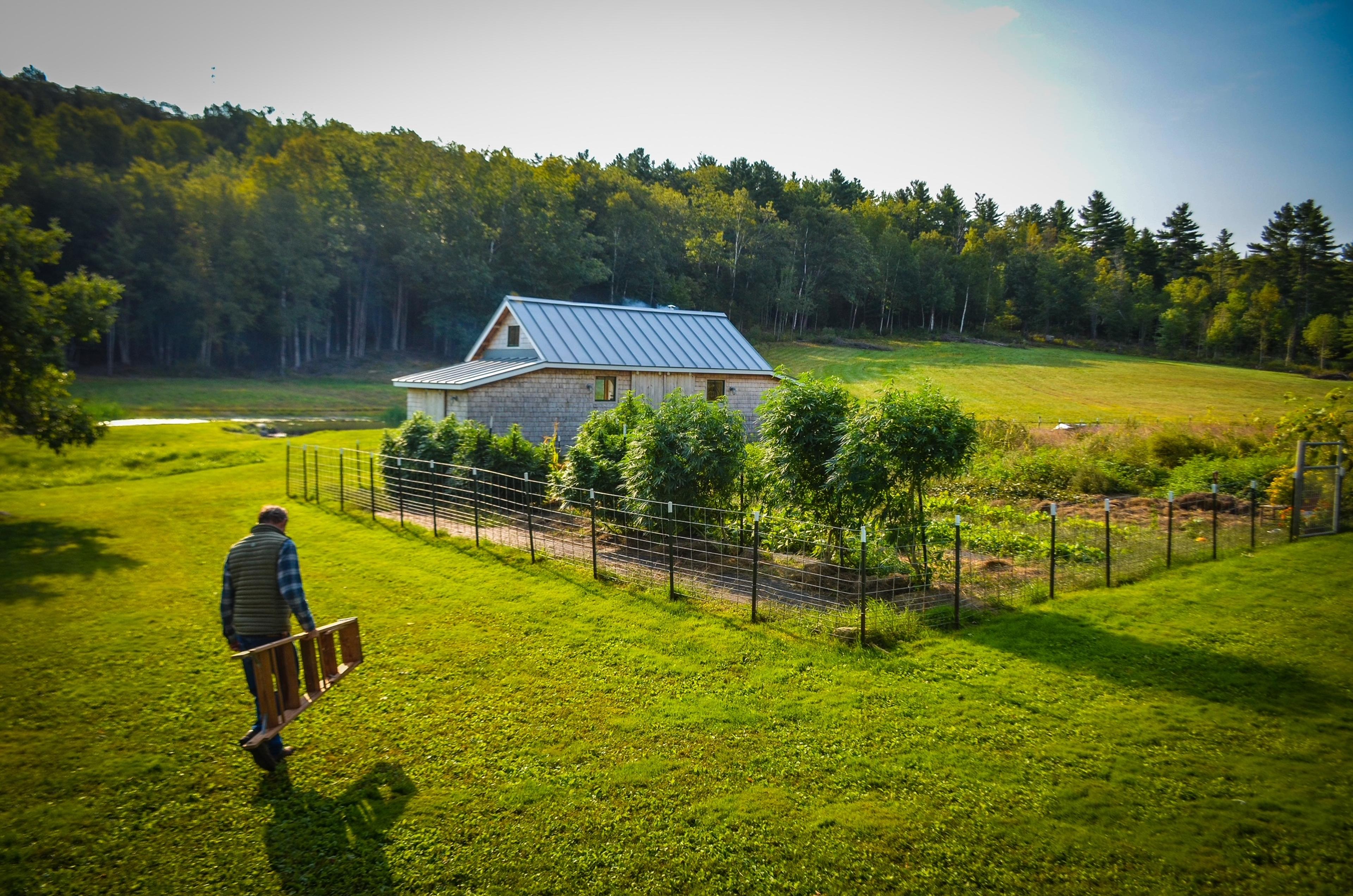
It’s September in Maine, and the year is 2016. The leaves of the swamp maples are beginning to turn transparent gold, and while the days remain dusty and hot, the nights are crisp with frost. Most people’s gardens are being put to bed, the last of the tomatoes picked and the pumpkins harvested. It is time to start processing the cannabis crop.
Growing cannabis for recreational use was illegal in Maine in 2016 — but that did not mean it wasn’t grown. If you grew cannabis there, it is likely you did so in one of two ways. You could have an indoor grow operation that would produce year-round, with lights and heaters and air conditioners all humming away. Indoor grows at this time were often large, clandestine operations filling an abandoned chicken coop or an old warehouse, but they could be as small as a single plant in a cultivator’s closet.
You also might grow outdoors, an easier and more environmentally friendly method. Maine’s climate does not allow for year-round growing, but it does produce beautiful seasonal marijuana. Most outdoor grows were nestled in woodlots and forests at the ends of walking paths or ATV trails. These operations, too, could be anywhere from a couple of plants to several dozen. The paths into them were hidden, unmarked, and their locations kept secret except to the growers themselves.
But the most bold — or foolhardy — growers might just put a few plants in their garden. Nosy neighbors were a concern, because a rubbernecking passerby could make a phone call to law enforcement, and land the grower in jail for growing even one cannabis plant.
In November of 2016, Maine voters approved the limited legalization of recreational marijuana in Maine. It was one of four states to approve ballot measures on recreational growing that year, following Colorado and Washington which passed legalization measures in 2012. Today, recreational growing is legal in 24 U.S. states.
“If you were lucky you could get a pound off a single plant, so with five or six plants you could pay your bills, cover the mortgage for another year, or take a nice vacation.”
In Maine, you can now grow three mature plants per adult in your household, smoke cannabis if you are over the age of 21, and purchase recreational marijuana from dispensaries and storefronts. The impacts of legalization have been far-reaching and often unexpected. When you walk down the street you might catch a whiff of weed from someone’s joint or you may spot a plant in someone’s backyard. You will notice an explosion of head shops, cannabis stores, and growing supply companies in legal states, all hoping to make it rich in the “green rush.” Large commercial grows have appeared in open fields and empty spaces. But somewhere in between the hundreds of plants that make up a commercial grow and the one or two in someone’s backyard, there used to be a medium-sized grower making a small profit.
Before legalization passed, backyard growers were putting themselves at risk. But many of them were also generating income. You didn’t have to run a large operation to benefit from black-market marijuana: Even a grower with a few plants in their backyard could make several thousand dollars a year in tax-free income.
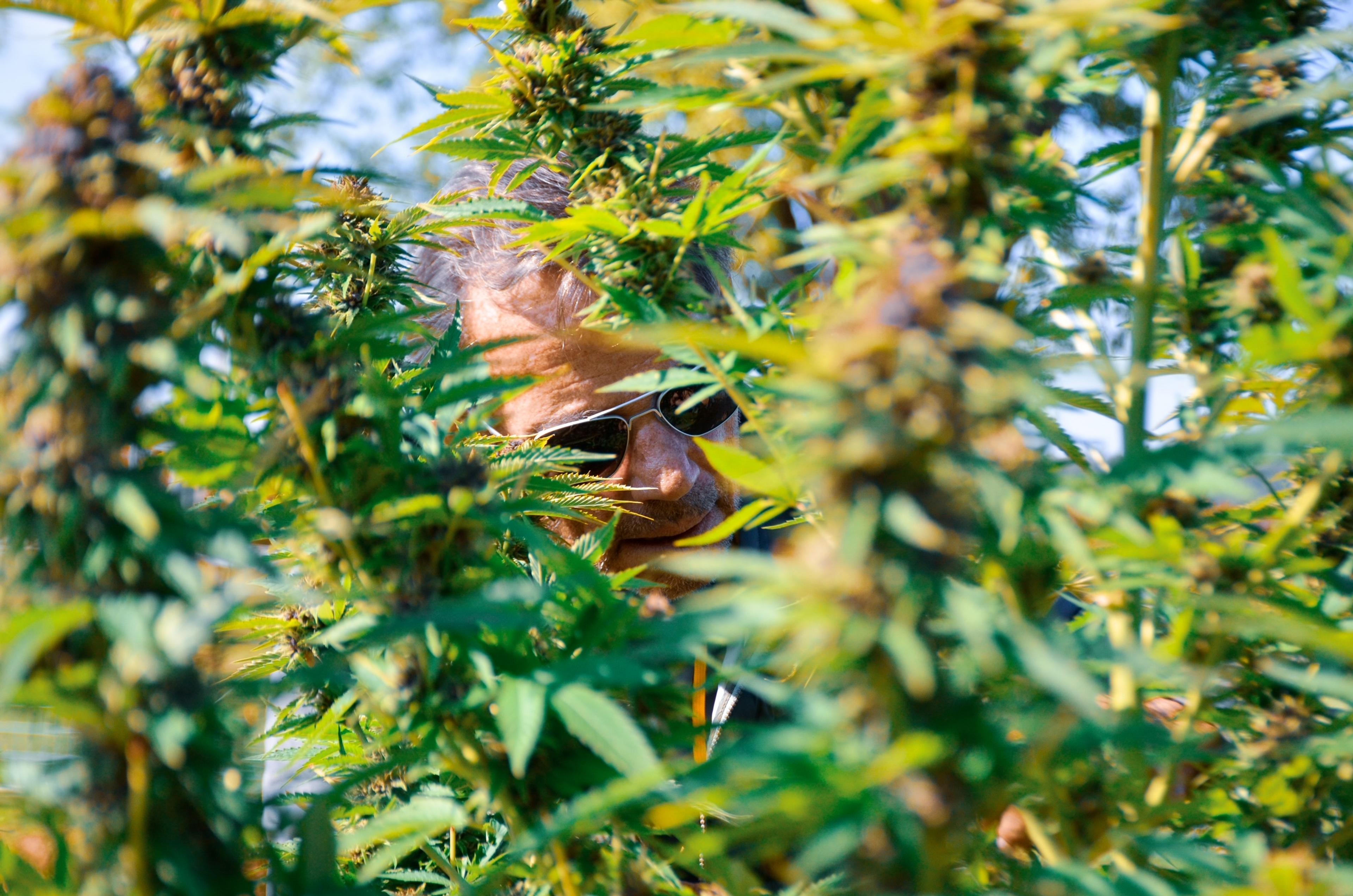
“Back then, a pound of cannabis was worth over $2000,” a former grower who wished to remain anonymous explains. “If you were lucky you could get a pound off a single plant, so with five or six plants you could pay your bills, cover the mortgage for another year, or take a nice vacation.”
“It was easy to get used to that income,” the source admits. “Now if you’re just trying to sell on the street you’d be lucky to get a quarter of what you did back then, if you can sell it at all. Everyone has leftover weed; you can’t give the stuff away.”
If a former black-market grower wanted to become legal in Maine, they’d have to pay a $100 application fee and get approval from the state of Maine. Maine growers can apply for one of four tiers depending on how often they wish to renew their license and how much growing space they are going to use. If approved, a Tier One grower then has to pay $9-17 per plant as they grow.
California legalized growing recreational cannabis in 2016, after having medical growing laws since 1996. You might expect that the famous mecca of weed, Humboldt County, would be overjoyed by their freshly legal status. After all, they didn’t have to hide what they were doing anymore. But former illegal growers have hesitated to embrace their new legitimacy.
“If you’re a small grower, you’ll always have struggles because you aren’t the one with the capital to invest.”
A comprehensive 2021 study for the Journal of Rural Studies found that of the cannabis growers in California who didn’t apply to go legal, almost half made that decision because they couldn’t see a financial incentive. To gain legal status as a grower and seller of marijuana in California, the application process is lengthy and expensive with fees well over $1000, depending on the number of plants you intend to grow. According to the study, growers believed that the application process was biased against small and “legacy” (former legal medical) growers.
Some Maine cannabis growers agree with this sentiment. “If you’re a small grower,” said Amy McFarland, former president of Maine Cannabis Union and head of Independence Farm, “you’ll always have struggles because you aren’t the one with the capital to invest.”
The majority of commercial marijuana is grown indoors, where the environment is controlled and cannabis can be grown year-round. The infrastructure behind an indoor grow starts with a large floor space, either in warehouse buildings or purpose-built greenhouses. A 2017 study with Oregon State University found that land prices and competition for farm labor had increased with legalization, as had competition for leased greenhouse space.
But assuming you don’t want to turn a profit, the fundamental change from black-market growing to legal status has been a liberating one. A spokesperson for Harry Brown’s Farm in Starks, Maine, said that the biggest impact they’ve seen “has been that [Harry] can grow cannabis in his garden instead of the woods, and his farm has not dealt with the DEA and Maine State Police flying over his farm.” Harry Brown’s Farm, while not a commercial growing operation, has been a gathering place for Maine cannabis growers and enthusiasts for over 30 years.
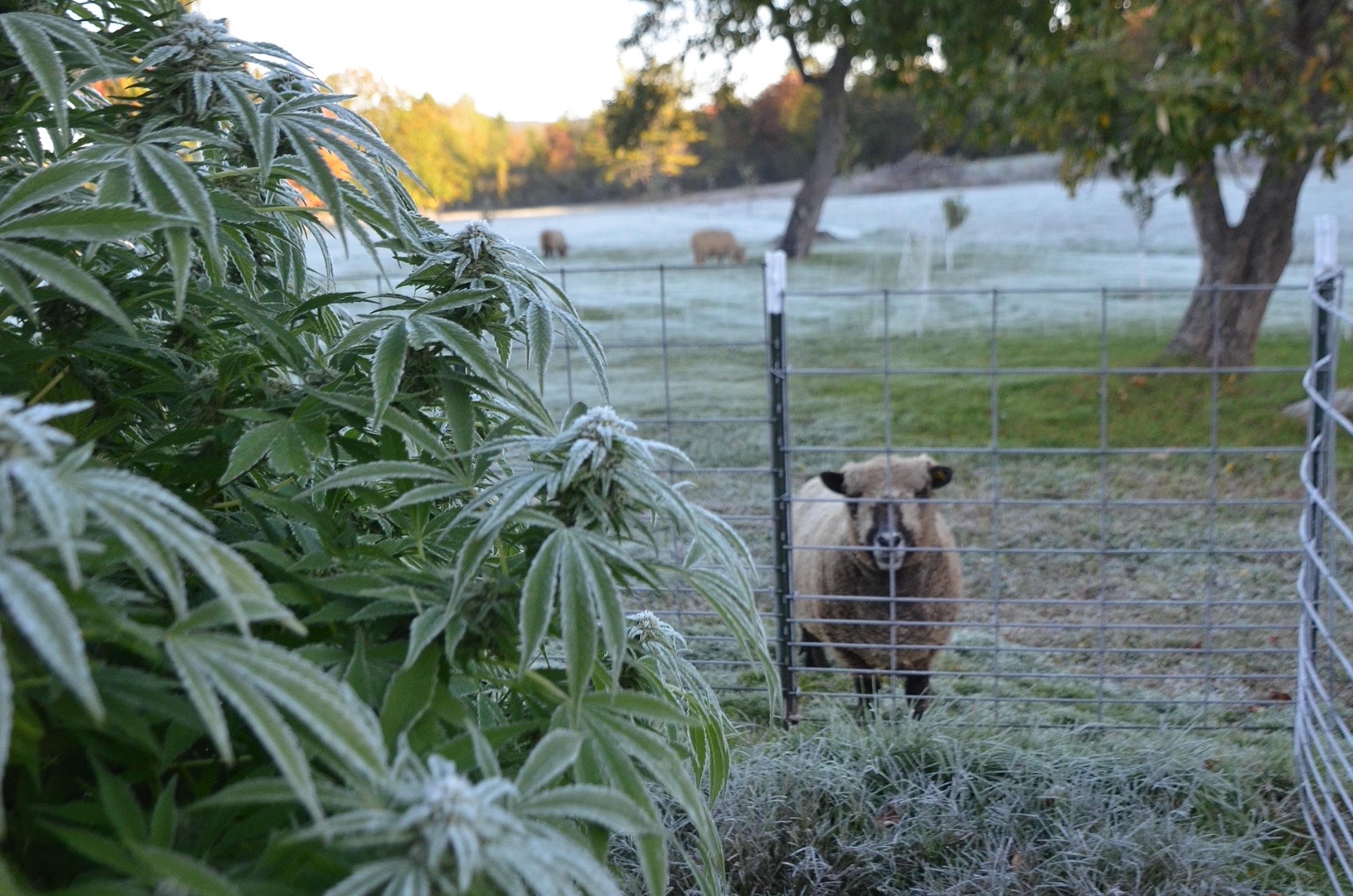
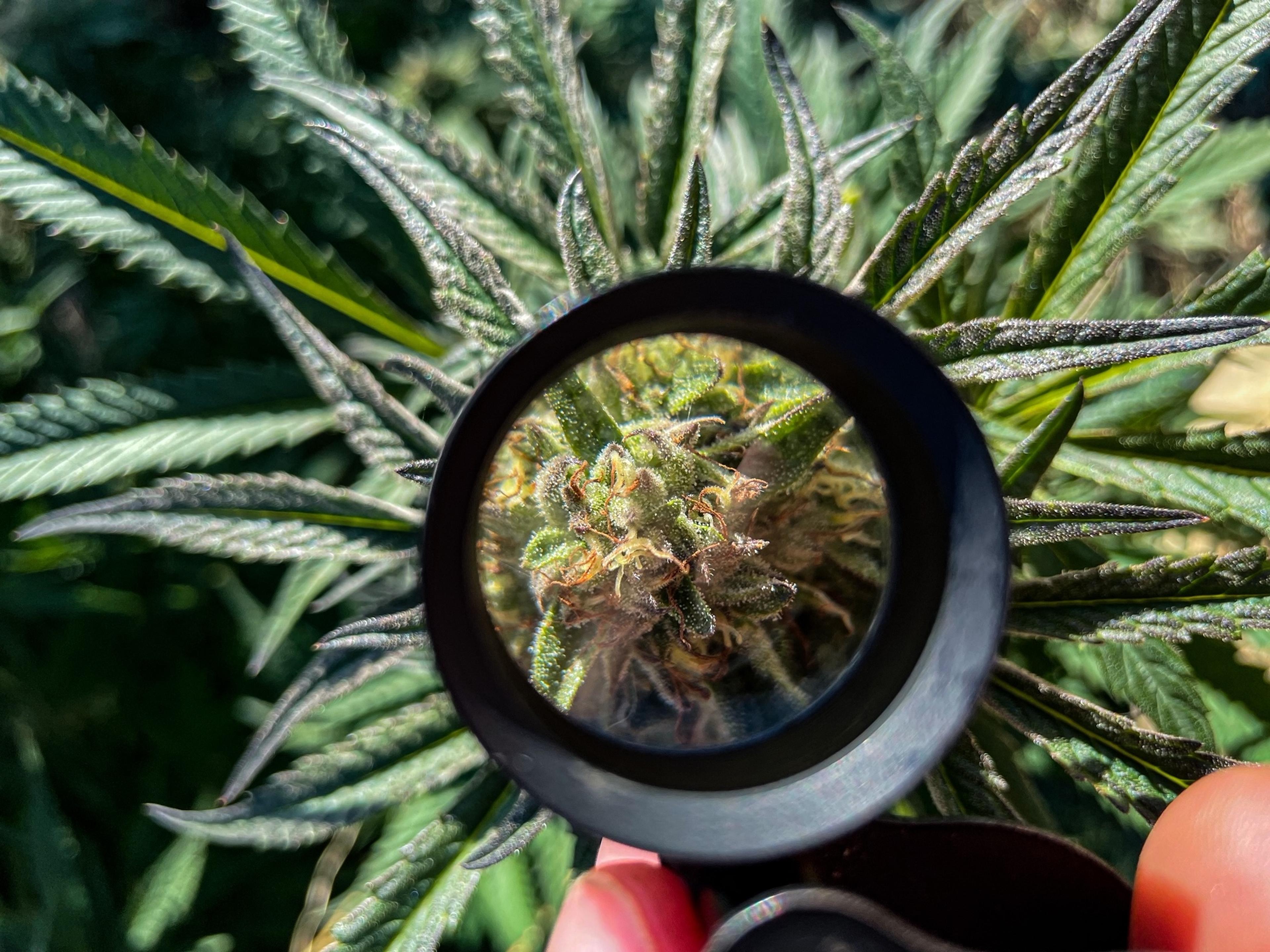
As September rolls around again, many Maine growers are once again headed out to tend their marijuana plants, now nestled next to their homes or in their kitchen gardens. Cannabis requires care and attention just like tomatoes and potatoes. The eager grower is currently staking the large branches up and removing excess fan leaves to allow light to filter through and help it develop the largest possible buds: the pride and joy of any marijuana grower.
While some cannabis growers are doing this under harsh grow lights in warehouses full of thousands of plants, plenty of today’s cultivators are everyday gardeners stepping off their back porch with garden clippers in hand, making their way through their zinnias and cucumbers, unafraid of snooping neighbors or potential calls to the law. By late September, as everything else in the garden withers and turns brown, the cannabis plant will be brilliant green and heavy with purple, gold, and white buds ready for harvest.
The legalization of cannabis has brought about a sea change in every state it has been ratified in. If you step into a dispensary or storefront, you’re likely buying from a large corporate grow operation, with little connection to whoever farmed it. But backyard growers know exactly where their cannabis comes from.
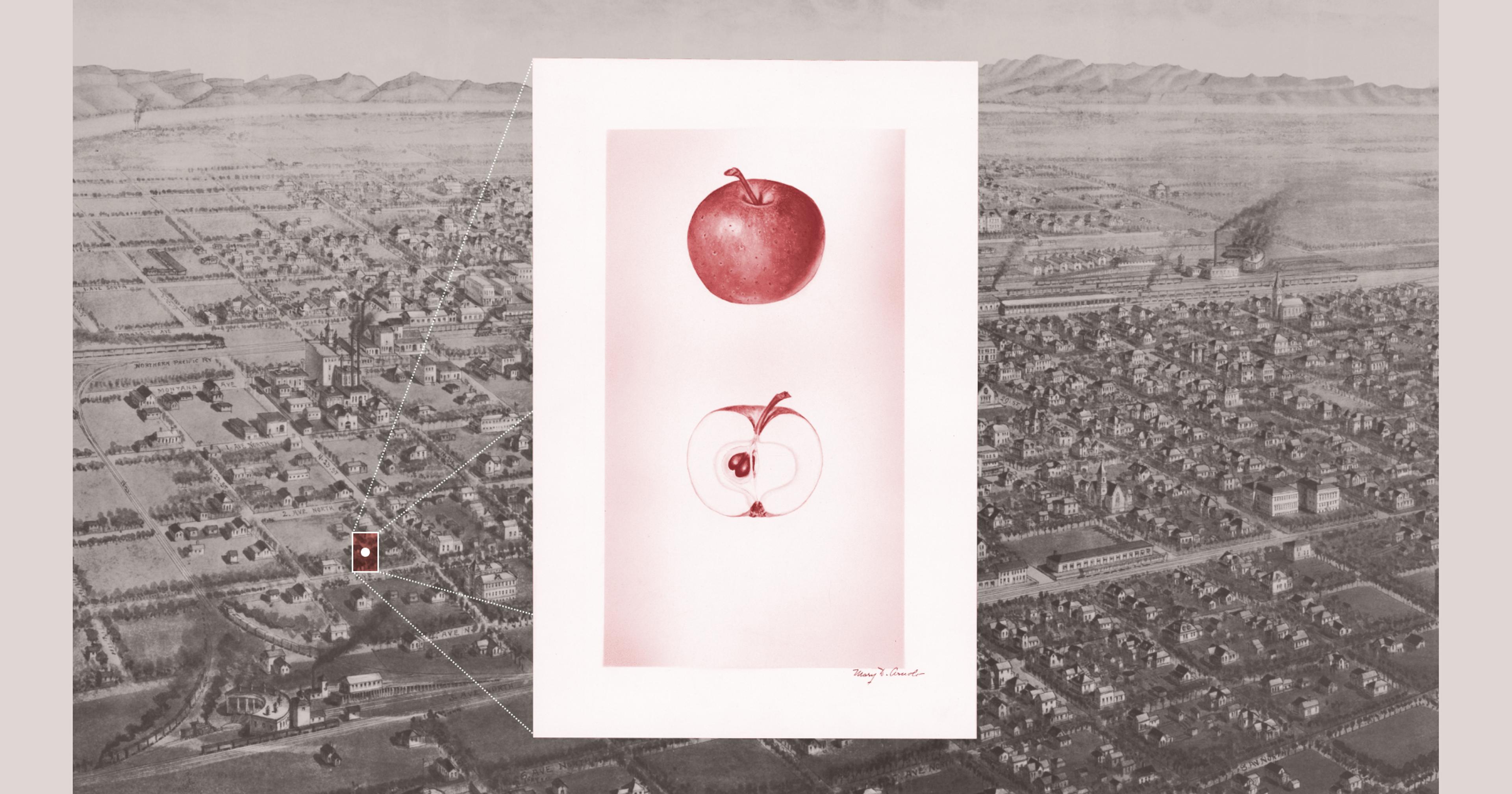
In 2018 Billings, Montana, had a couple of divergent problems on its hands.
In the quickly growing city, nearly 20 percent of its residents have been labeled as “food insecure.” Many of those people were clustered in the South Side neighborhood, where nearly half of the area’s population lives below the federal poverty line.
At the same time, there was an embarrassment of crabapple trees dropping fruit, making a mess of its public parks and sidewalks.
Those two conflicting issues, sitting at very different ends of the importance spectrum, came together at the tip of a robust movement to connect communities with the wild foods in their own backyards. What if the city’s underused fruit trees could be used as a resource for local residents who lacked access to fresh foods?
In 2018, Billings’ municipal government began identifying fruit trees within its park system and mapping them on FallingFruit.Org, arguably the largest database of edible plant locations in the world.
Launched by avid foragers Ethan Welty and Caleb Philips in 2013, FallingFruit’s interactive map has become one of the easiest access points for city dwellers who want to dig into the world of foraging — a movement that took off during the peak of the Covid-19 pandemic. A decade into the groundbreaking site’s existence, foraging has moved from the periphery toward the mainstream, inspiring forward-looking municipalities to embrace its benefits.
Here’s how it works: Users either type an address in the app’s search bar or zoom in to a neighborhood on a map. There you’ll see an array of dots; each one names a variety of fruiting bush or tree that’s been pinned. Click on one and a box pops up with a fuller description that tells you the best month to harvest the produce, whether it’s entirely or partly on public land, and, in some cases, offer harvest reviews. It also links to the U.S. Department of Agriculture’s species profile. One newer feature allows users to narrow their search to invasive species that are available for the picking.
During the height of pandemic lockdowns, internet traffic on foraging skyrocketed by up to 500 percent in the United States. FallingFruit’s traffic jumped roughly 40 percent from 2019 to 2020 due to this surge. “It’s complicated to forage,” said Welty. “[FallingFruit] is a way of communicating how much food one can find in their city — it’s a way of reframing the city.”
More than two million users in 214 countries have viewed FallingFruit’s free website and 99-cent mobile app that pins fruit trees, berry bushes, and other plants. For freegans, it also highlights diveable dumpsters, which can be illegal to glean from but nevertheless follow the site’s guidelines of urban harvesting. It boasts more than 1.5 million locations, at least 60,000 of which have been added organically by users.
“I think that’s the reason this program has survived 10 years without funding to be honest,” said Welty, who moderates the site in between child care and his full-time career in glaciology. He hopes to launch a harvest calendar and other useful features in the near future. “It’s really, really being used by people.”
The site has incorporated nearly 1.5 million pins of municipal data from around 50 cities, but Welty is currently trying to figure out an easy way to add tree inventories from 1,000 more.
“It’s bringing more of a neighborhood feel, so they feel like more of a community.”
Some city governments, like in Austin, Texas, and Billings, have directly sent their data to FallingFruit in an attempt to encourage residents to take advantage. These partnerships show shifting perceptions in how cities can provide food assistance, a concept that urban planners are starting to realize may provide numerous benefits. Studies have shown that urban foraging boosts social-ecological resilience — the complex dynamic between humans and their environment, especially in reaction to climate, economic, and disease disruptions like Covid-19.
Though increasing access to fresh foods is an important component of Billings’ Parkland Gleaning Project, another goal has been to get the community to spend more time together in nature. Anyone can pick fruit from approximately 100 trees, which includes apples, pears, plums, and cherries, all of which are pinned on FallingFruit’s map. “It gets people to come to the parks who normally wouldn’t come,” said Mike Pigg, director of Billings Parks and Recreation. “It’s bringing more of a neighborhood feel, so they feel like more of a community.”
Officials are still working toward identifying additional spaces to expand access to the program. “We will definitely plant more fruit trees and have more gleaning spaces,” added Pigg.
Some organizations, like The Berkeley Food Institute, have voiced support for these kinds of municipal projects and actions. In a 2017 policy brief, it found “foraging could provide a supplementary food source within the urban and peri-urban landscape as part of a multi-pronged strategy to help address socioeconomic inequities in access to nutritious foods. ”
“She really believes in eating in a way that’s not only connected to the earth but also is really nutrient-dense and better for you. It’s like an ancestral form of eating.”
Even before the current uptick in interest, foraging has long provided supplementary nutrition for many people, especially in some immigrant communities.
Food writer Dakota Kim has written about her experience growing up poor in rural central Illinois, and feeling ashamed by her mom’s foraging traditions. She remembers pulling stalks of asparagus from plants her mother found on the side of the railroad tracks. “I did not think it was cool,” she said. “It was embarrassing to me because I felt like none of the other kids at school were doing this.”
As foraging has become more popular, she developed a deeper appreciation for her mother teaching her these ancient traditions. During the pandemic, the pair regularly went out searching for wild foods in Kim’s upscale Southern California neighborhood, picking up ingredients like gingko nuts and acorns for traditional dishes like jook and acorn jelly. “She really believes in eating in a way that’s not only connected to the earth but also is really nutrient-dense and better for you,” says Kim. “It’s like an ancestral form of eating.”
The mother-daughter duo have also found and dried persimmons and loquats in South Pasadena for tea, to the envy of some. “It’s definitely seen as very cool now in some circles,” said Kim.
“There’s also been a lot of unease about someone using that space for sustenance — it feels inappropriate to a lot of people.”
Still, not everyone gets it or understands the laws on urban gleaning. While Kim likes to use FallingFruit anytime she’s strolling a new neighborhood, she is always careful to follow local rules. She follows a foraging code of conduct to not take anymore than is needed (or ⅓ to ¼ of what’s available, depending on the forager being asked) and, to avoid potential racial confrontations, dresses nicely and avoids foraging anything from private property if there is no one to ask permission. Public property, however, is fair game. “My mom knows this too,” said Kim. “It’s okay as long as it’s hanging over a public area.”
Access and understanding the gray area between public and private lands are the two areas that stir the most controversy when it comes to urban foraging. As FallingFruit continues to spread — half of its users and locations are now outside the U.S. — advocates like Welty hope that larger adoption will help suspicious neighbors to reconsider what is considered edible. Welty considers the addition of dumpsters to dive, edible fruit grafting projects, and invasive plant initiatives as important milestones for the site.
“Ten years ago, urban foraging felt fringe,” he said. “I had a lot of personal experiences where people were often amazed and interested in stumbling along someone foraging, but there’s also been a lot of unease about someone using that space for sustenance — it feels inappropriate to a lot of people.”
In Billings, there’s still a long way to go in educating locals about the free food sources located within its city parks. But Pigg has seen firsthand how locals react when they do realize the abundance of fresh fruit that dots their city landscape — an initiative that has been strongly influenced by the widespread adoption and technology-driven data of FallingFruit. “Once they start to realize, they get excited about it,” he said.
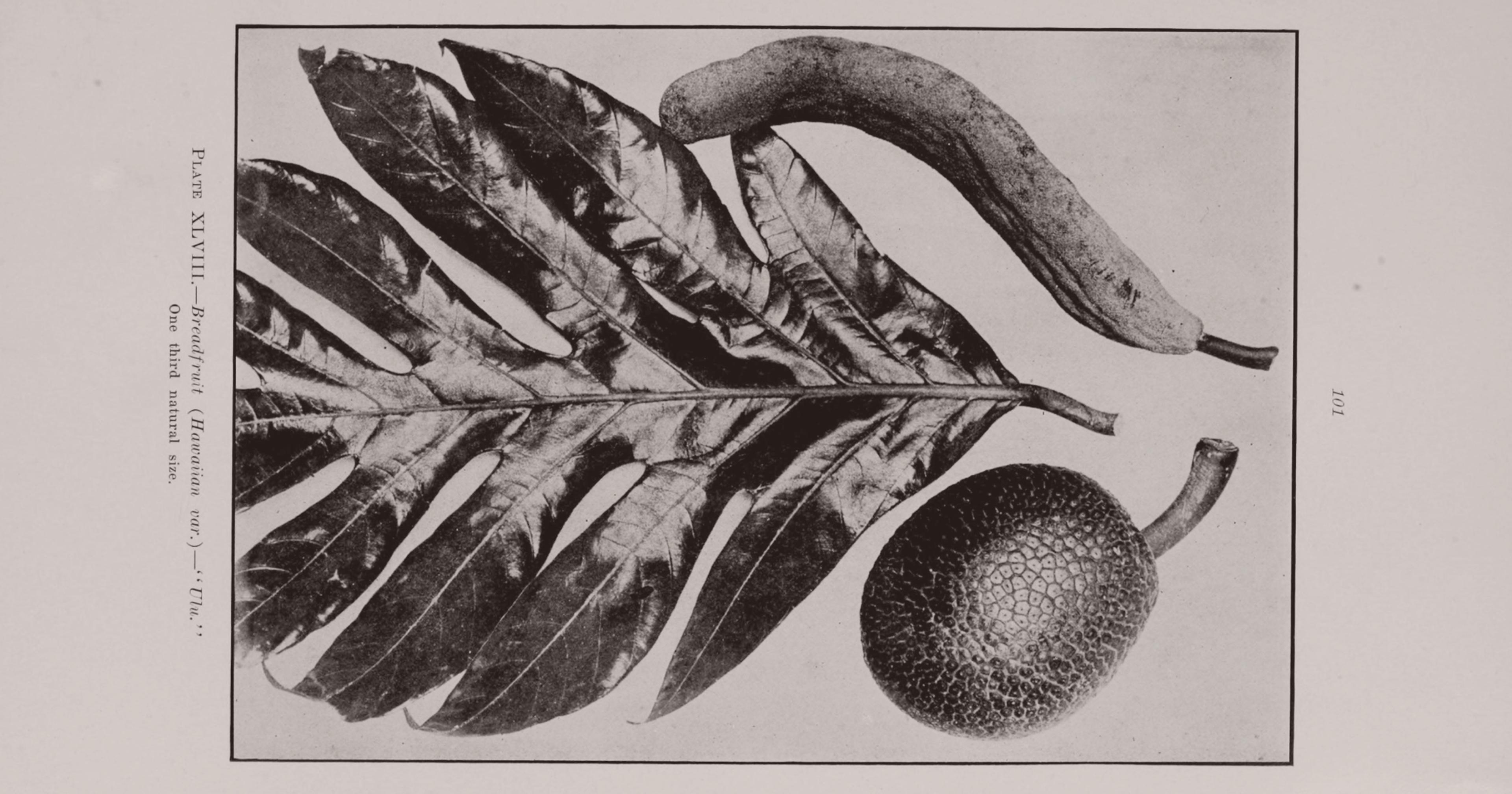
Hawaiʻi has long faced persistent twin problems: pricey imported food and unhealthy soil caused by centuries of large-scale, industrially farmed plantations. In response, more farmers — Indigenous and otherwise — are finding the solution in a gradual return to traditional Hawaiian agriculture.
Before Europeans first arrived on the islands in 1778, “what was Indigenous agriculture was a lot more clear,” said Noa Kekuewa Lincoln, associate professor of Indigenous crops and cropping systems at the University of Hawaiʻi at Mānoa. He identifies as both kanaka maoli (Native Hawaiian) and kamaʻāina, which means to be a Hawaiʻi local, regardless of race.
“You had Indigenous people growing Indigenous crops, using Indigenous agro-ecosystems,” he said. But once colonized, Hawaiʻi’s system of agriculture was replaced with a “Eurocentric model of what they thought agriculture should be.”
For European crops and ecosystems, “those systems made a certain degree of sense,” Lincoln said. But they “just don’t work” in Hawaiʻi, as the tropics are subject to higher rates of rainfall, higher levels of heat, and weaker soils.
Centuries later, Hawaiians and their lands are struggling with the repercussions of colonization. Proponents of traditional farming, like nonprofit Hawai‘i SEED, argue that industrial agriculture weakened the islands’ soil, with the sugar and pineapple plantations of yesteryear sapping it of its health.
And because Hawaiʻi imports about 85-90 percent of its food today, those products are slapped with a higher price tag than locally grown alternatives, according to the state’s Department of Business, Economic Development, and Tourism. In an increasingly expensive state, one in eight people — and one in six kids — go hungry, Feeding America reports.
The movement to embrace traditional Hawaiian agriculture aims to address the problem of overpriced imports and food insecurity, while repairing the land, growing staple foods, and rebuilding a sense of community through farming.
Historically, agriculture “was the common practice that everybody did,” Lincoln said, “whether you were a canoe maker, whether you were a warrior, whether you were a chief.”
The dominant forms of agriculture in Hawaiʻi once included permanent food forests, managed agroforestry, flooded wetland systems (similar to rice paddies), and intensive dryland systems. Native Hawaiians utilized different agricultural practices, depending on the area’s ecosystem.
Historically, agriculture “was the common practice that everybody did, whether you were a canoe maker, whether you were a warrior, whether you were a chief.”
“Arguably, Hawaiʻi is one of the most ecologically dense locations on the planet,” Lincoln said. “You go a half mile down the road, and you’re in a whole different ecosystem and you have to do something different to grow food.”
In some sense, it can be difficult to even define traditional Hawaiian farming. For instance, an Indigenous person might grow kale — a non-native vegetable — using Indigenous methods or, alternatively, grow the Hawaiian root vegetable of kalo, or taro, but rely on fertilizers and pesticides. Lincoln’s working definition of the present-day version of traditional Hawaiian farming involves stewardship of the ʻāina (land), protocol and traditions, but, most importantly, community.
That’s a far cry from the approach that American businessmen took throughout the 1800s in setting up fruit and sugar plantations on Hawaiʻi, according to the Library of Congress.
Well before the U.S. annexed the islands at the turn of the 20th century, the first sugar plantation established by foreigners opened in 1835 in Kōloa, Kauaʻi. Although pineapple isn’t native to the islands, the crop came to define the Hawaiian economy, with James Dole shaping the industry after he started the Hawaiian Pineapple Company in 1901 — the predecessor of the Dole Food Company.
“Large gang ploughs and caterpillar tractors were set to work 24 hours a day, turning hundreds of acres of soil and preparing it for planting,” Richard Hawkins wrote in The Hawaiian Journal of History. “Water was distributed through an elaborate pipe system.”
In 1961, Daisy Akuna Goodall, now 82, picked pineapples in the Dole plantation’s fields as a seasonal worker. On summer mornings, she and her sister Mary would join an all-female crew harvesting the fruit.
They’d don goggles and gloves to protect their hands from pineapple needles. By the end of her shift, a truck would brim with the fruit. Dole paid Goodall around $3 per hour, and she’d clock four to five hours daily.
The value of Hawaiian lands are “basically tied to their development potential.”
But “it’s not hard work,” she said. “Taro patches are hard work.”
Born in Keʻanae, a village in the Maui countryside, Goodall and her 14 siblings — all kānaka maoli — would work with their parents, farming their personal kalo patch traditionally. They’d plant taro huli, or cuttings, in a patch similar to a rice paddy.
After some time and care, the family would harvest the root, then cook it in an outdoor fire pit. Once cooled, they’d peel it, scraping the roots off with the shells of ʻopihi (a mollusk). Finally, they’d grind it into poi, a starchy paste and staple food.
Lincoln notes a recent, albeit “slower” revival of traditional farming. He attributes that gradual pace to financial reasons, with labor and inputs generally costing more than more modernized techniques.
Land access is another perpetual issue for aspiring farmers and Indigenous people. Because the value of Hawaiian lands are “basically tied to their development potential,” they’re often worth less for farming when compared to building a hotel, Lincoln said.
“You’re basically pitting agriculture against the most extractive and capital-intensive forms of money-making,” Lincoln said.
Lincoln and his wife Dana Shapiro farm the native crop of ʻulu, or breadfruit, at their 3.8-acre farm, Māla Kaluʻulu, in South Kona on Hawaiʻi Island. The couple’s farm is designed as a restoration of the historic kaluʻulu, the area’s ancient breadfruit belt, and it relies on Hawaiian agricultural methods.
“The way you gotta feed a nation is teach them how to grow their own food.”
Although Shapiro isn’t kanaka maoli or kamaʻāina, she recognizes that “it’s valuable to have living examples of these traditional cropping systems.” Instead of relying on chemical fertilizers, pesticides or herbicides, “we’re just using what’s on the land.”
After she and Lincoln started Māla Kaluʻulu in 2015, they ran into challenges like lower initial yields, invasive pest pressures, and the seasonality of their main crop. The farm hasn’t yet reached its goal of profitability.
But in 2016, the Hawai‘i ‘Ulu Cooperative was born, with nine founding members and two goals: “To revitalize ‘ulu as a viable crop and dietary staple in Hawaiʻi, and, then, ultimately, to increase Hawaiʻi’s food security,” Shapiro said.
The co-op aims to provide its producers with a guaranteed market and stable prices. It sells ‘ulu wholesale to schools, hospitals, restaurants, and other customers. They compete with imported starches like rice, potatoes, and bread.
Robert H. Pahia of Hawai‘i Taro Farm in Wailuku, Maui, started growing kalo 33 years ago, although he swore “that was the last thing I wanted to do” as an adolescent growing up in a kalo-farming community in rural O‘ahu.
But he and his wife Juanita were drawn to the crop as a way to build food sovereignty and security among Hawaiians. His mission as a kanaka maoli farmer is to educate others on growing their own kalo and to make poi more inexpensive for Hawaiians, who often turn to rice as a substitute.
“Our people over here on the islands cannot afford to eat our Native food,” Pahia said. “They’ve been priced out of even our cuisine.”
“As a society, we’re trying to re-educate ourselves on what an ʻāina-based way of understanding agriculture looks like.”
He started farming with a “conventional” mindset, but has transitioned to regenerative agriculture, foregoing synthetic fertilizers and herbicides. Pahia notes that regenerative models follow “basically the same principles” as traditional Hawaiian agriculture.
Pahia is experimenting with no-till farming, but currently plows the majority of his production. He grows several varieties of kalo, planting at least once a month — usually a dozen 300-foot rows at one time, with 200 plants each.
But it’s an uphill battle for farmers, as they compete with the tourism industry and military for water and land access, Pahia said. He points to a lack of political will to financially support local producers.
“They subsidized sugar and pineapple [industries] for so many years, and, yet, do you think they subsidize the local ag industry?” Pahia said. “No, they don’t.”
But he’s been happy to notice a jump in the number of small farmers. He said Hawaiian youth are also showing enthusiasm for the profession and its dedication to aloha ʻāina (love of the land).
“The way you gotta feed a nation is teach them how to grow their own food,” Pahia said.
Ethan McArdle works as the farm operations manager at Ho‘okua‘āina in Kailua, Oʻahu — an organic farm and nonprofit that mentors youth, striving to reconnect its visitors to the ʻāina. The farm grows kalo as its main crop, but also produces ‘ulu, bananas, cacao, and more.
He credits Hawai‘i’s younger generations with furthering the movement to return “to the land,” even when the opportunities to do so are slim.
“It’s really expensive to live in Hawai‘i, and to afford land is extremely difficult,” said McArdle, who’s kamaʻāina without kanaka maoli ancestry.
“As a society, we’re trying to re-educate ourselves on what an ʻāina-based way of understanding agriculture looks like,” McArdle said. “It’s a constant learning process for everyone.”
Author’s note: Megan Ulu-Lani Boyanton is kanaka maoli, and her grandmother is Daisy Akuna Goodall.
This spring, Iowa legislators decided to allow small producers to sell unpasteurized milk products directly to customers beginning on July 1. That same day, Georgia started allowing raw milk sales for human consumption. A similar law in North Dakota went into effect in August.
In spite of objections from public health officials, these new state laws are gaining momentum due to increasing consumer demand. The uptick has been driven by a wide mix of factors, from influencer endorsements and skepticism of public health agencies to Covid-related food shortages and growing disenfranchisement with the industrialized food system.
Raw milk sales are now legal to one degree or another in all but four states and Washington, D.C. Residents of 14 states can be raw milk from retail outlets. Some states only allow milk to be sold for pets, while others require a herdshare, a contractual agreement in which customers technically buy a share of the milking herd. A 2022 survey found that 4.4 percent of U.S. adults had consumed raw milk at least once in the prior year.
Advocates claim raw milk is easier to digest and helps to treat or prevent health conditions like asthma, allergies, eczema, and respiratory infections. Beneficial bacteria don’t get killed off during the pasteurization process, as their argument goes.
But public health authorities say there’s little evidence to back these claims, and that many of the perceived benefits of raw milk are linked to living in a farm environment rather than consuming a beverage. Studies on Amish children — raised on unpasteurized dairy — have found that conditions like asthma, allergies, and dermatitis are nearly unheard of in the community, while that hasn’t been found in every raw milk-consuming population. “Some people would have you believe that is because of raw milk consumption, but it’s not,” said John Lucey, professor of food science with University of Wisconsin-Madison’s Center for Dairy Research.
Lucey warns of the potential dangers raw milk can pose, especially for young children and pregnant women, due to potential contamination of dangerous bacteria like E. coli, salmonella, and listeria. “It’s a very strange and interesting process that’s going on right now — I don’t always know the motivation for them to pass these laws and bills,” said Lucey, who grew up on a dairy farm. “From my science point of view, I think this is nuts.”
One study on the link between foodborne illness outbreaks and changes in state law found that between 1998 through 2018, areas where raw milk was legal had 3.2 times more outbreaks than in areas where it was not. But a more recent study found that these raw milk-associated outbreaks have been declining since 2010, effectively decreasing by 74 percent since 2005 in spite of increasing legal distribution.
Dairy sales, in general, benefitted from the rise in home cooking that arose from pandemic lockdowns. But raw milk sales have skyrocketed even further — retail sales jumped 27 percent, from $12 million in 2021 to $19.4 million this year, according to data from the Raw Milk Institute.
Raw milk sales have jumped 27 percent, from $12 million in 2021 to $19.4 million this year.
“Covid increased demand and the infant formula shortage also increased demand,” said Pete Kennedy, a consultant for Weston A. Price Foundation, which campaigns for raw milk. “People are going direct to the farm for their food sources as part of a longer term trend that has accelerated in the last few years.”
Last spring, when Abbott Nutrition, the biggest U.S. supplier of powdered infant formula, recalled several of its products, creating a massive formula shortage across the country, some frantic parents began exploring raw milk as an alternative. According to Kennedy, web traffic on a Weston A. Price recipe for raw milk baby formula went up 1,000% percent according to Kennedy.
Raw milk’s burgeoning popularity may also be partly driven by a rejection of our industrial food system, as opposed to specific health claims. “What’s driving [raw milk sales] is people want to know where their food comes from and they want to have relationships in their community with the people who are producing what they eat,” said raw milk producer Sonia Lopez of Two by Two Farms just outside Atlanta.
Georgia is one of the states that recently opened up legal direct-to-consumer sales of raw milk for human consumption. While Lopez already sells the roughly 28 gallons a week of raw cow’s milk and 22 gallons of raw goat’s milk she gets for pet consumption, she won’t be changing her operation for humans under the new law. She can’t afford the costs for licenses and retrofits that would be needed to meet the regulation requirements without scaling up significantly. “Just because I have the demand doesn’t mean I’m going to pop another two to four cows on my 10 acres,” said the eighth-generation farmer.
While raw milk lobbyists have won some major victories of late, they’re still working hard to make it easier to obtain the product in more states. Up next? America’s Dairyland.
Last winter the state’s Farm Bureau flipped its previous stance against raw milk due to increasing consumer demand and voted to support sales at its convention. Now there’s a strong chance that one of the country’s biggest dairy producing states will amend its laws next. “Wisconsin is very much in the middle of change right now,” said Mark McAfee, chairman of Raw Milk Institute. “A bill is drawn up and a sponsor is being sought.”

While the average American likely understands that their food comes from farms, they probably aren’t focused on how — exactly — that food gets from a field to their kitchens. But for farmers, the transportation puzzle is often a core part of making the business work. Sure, you can grow 100 acres of corn, but where are you going to send that corn, and how are you going to get it there?
The answer almost always comes down to trucks, and the American agriculture industry depends heavily on the presence of the trucking industry to move products all the steps between field and market. But recently, some farmers have been complaining that trucking options can be either hard to find or prohibitively expensive — while at the same time, trucking hasn’t necessarily been easy for the drivers, who often face grueling work conditions and high job turnover.
In Wisconsin, one group of farmers is now pioneering a new model of agricultural trucking which, while imperfect, may offer hints at how to smooth out one of the core features of the country’s farm-to-table pipeline.
“The primary movement for food that’s eaten by human beings is via truck,” said Michelle Miller, an economic anthropologist at the University of Wisconsin. “That’s why it’s so important to have those trucking services.”
The Wisconsin Food Hub Cooperative, started in 2012, is a collective organization of farmers in the state, designed to help them get their products sold and marketed efficiently. Sarah Lloyd, a Wisconsin dairy farmer, supply chain researcher, and the cooperative’s director of development, said that the idea for co-op started when fresh produce farmers were “bumping into each other” at grocery stores as they sold their food. Each farm was individually responsible for its own sales and distribution to retail outlets, Lloyd said — but by banding together, the farmers could save time and money by selling and distributing produce as a unit.
This cooperation includes a lot of transportation logistics, and at first, the co-op contracted out all of their transportation needs. But by 2018, Lloyd said that they couldn’t find refrigerated trucking (vital for shipping produce) at a reasonable rate during the harvest season. So the co-op decided to start their own in-house trucking company, and now leases a few trucks and employs drivers full- and part-time to help ship their members’ produce.
The trucking and agriculture industries can butt heads in some fundamental ways. For one, agriculture is seasonal, meaning farmers are going to have a lot of shipping needs come harvest season and few shipping needs during the off-season — but truckers need employment year-round.
Some sectors of the trucking industry also go through these boom-and-bust cycles, where shipping rates go up and down as the trucking industry grows and shrinks, said Steve Viscelli, a sociologist at the University of Pennsylvania who’s done a lot of research on the trucking industry. When rates are high, that may be tough for agricultural producers, but that’s when trucking companies are booming — and vice versa, he said.
The Wisconsin Food Hub Cooperative’s trucking business model could reduce some of this friction. Each year, Lloyd said, the co-op helps their farmers forecast harvests and plan out trucking routes to pick up produce, eliminating some of the uncertainty. In addition, the trucking business is run at cost, or close to it, she added, reducing a lot of the overhead that might come with shipping through a traditional trucking business or a broker who would charge a connecting fee. During the off-season, the co-op’s trucking company takes on other, non-agricultural work to keep drivers on the payroll even when there’s no produce to move.
“We did not find evidence of a shortage of people interested in becoming truck drivers, but we did find strong evidence of a retention problem.”
One food supply chain problem may not be solved by this new model, however. Lloyd said that they’ve had trouble finding and retaining truck drivers, a sentiment that seems to be shared in other parts of the country. One recent story in New York, for example, talked to farmers who perceived a driver shortage. Dairy farmer Keith Kimball told Spectrum News that it even caused him to start trucking his own product. “We started hauling our milk about two years ago, and the main reason was because of the driver shortage,” Kimball said.
But Viscelli said that the current trucking labor situation is more complicated than a simple shortage of drivers. In the past, many truck drivers were union members, drove local or regional routes that got them home most nights, and made decent money. “They were excellent blue-collar jobs,” Viscelli said.
Today, a lot of drivers get their start in long-haul routes, which can be extremely demanding and difficult, with days or even weeks spent away from home — causing a lot of drivers to burn out of the industry, Viscelli added. So instead of a driver shortage, there’s really just a whole lot of turnover in the driver market, he said.
A recent study on agricultural trucking in California, which Viscelli co-authored, found this exact dynamic. “We did not find evidence of a shortage of people interested in becoming truck drivers,” the study noted, “but we did find strong evidence of a retention problem.”
This research was primarily focused in the long-haul section of the trucking industry, and a lot of these issues arose after the industry was deregulated in the 1980s—which may not have affected farmers quite so directly, since agricultural trucking has always been deregulated. But Viscelli said that the current system could hurt regional trucking markets if people who are interested in becoming truck drivers get pulled into this high-burnout, long-haul pipeline instead of taking a local trucking job. His recent study suggested that California develop truck driver training programs that could place drivers locally, which could feed both permanent and seasonal trucking needs.
Lloyd said that she’s not entirely sure what has led to driver turnover at the co-op. But she did note that their drivers mostly have daily routes to bring produce around the region instead of overnight, long-haul operations. Not only is this likely a better job for the drivers, keeping food systems regional is likely more sustainable all around — especially after the supply chain chaos that stemmed from Covid-19.
“The one silver lining of the pandemic is it really showed us how we can’t rely on these really big, brittle systems,” Lloyd said.
“Food is an essential part of people’s lives. From an economic development, economic vibrancy perspective, we need small- and medium-sized farms in our rural communities,” she said. “And we need the businesses that can support them.”

Twenty years ago, Frog Hollow Farm grew heaps of Bing cherries.
Located an hour’s drive east of San Francisco, the farm grows mostly stone fruits, from apricots and plums to pluots and cherries — including the ever-popular Bing variety. In recent years, however, farmer and founder Al Courchesne and his team have been forced to move away from Bing cherries for one simple reason: It’s not cold enough.
“Old varieties we used to love in California, those require around 800 chill hours every year, but in Brentwood we’ve been getting less and less in the last 20 years,” said Rachel Sullivan, farm operations manager at Frog Hollow. “That’s happening statewide.”
With the changing climate bringing warming temperatures to California, several of the state’s growing regions have been experiencing a twofold impact. Fewer cold days in the fall are affecting many crops’ ability to properly flower come spring. And on the flip side, fewer cold days in the spring may translate to a decreased need for frost mitigation measures.
Findings from a 2020 study from researchers at USDA, the University of California, Davis, and the University of California, Merced, back Sullivan’s experience. The study focused on the reduction in frost hours (time between roughly 28 and 35 degrees Fahrenheit), as well as the reduction in chill hours (time between roughly 32 and 45 degrees Fahrenheit).
The California researchers found that the state is set to experience fewer and fewer spring freezes. Using climate data and predictive models, researchers forecasted that by the middle of the 21st century, the state will experience on average 63 percent fewer frost hours. The paper highlighted three high-value perennial crops and found that the majority of almond and orange crops could experience 50 to 75 percent less frost exposure, while avocado acreage may see more than 75 percent fewer frost hours.
Lauren Parker, lead author on the study, as well as a project scientist at UC Davis affiliated with the USDA California Climate Hub. called the projections a double-edged sword. She noted that warmer winters and springs will reduce the risk of frost but increase the risk of other problems like insufficient chill accumulation and pest pressure.
“Within the climate change context, there will be winners and there will be losers and there will be everything in between,” she said. “And most of us will be a little of both.”
Like almonds and many other fruit and nut trees, cherries require a certain period of cold weather in the fall in order to properly develop and resume normal growth, flowering, and fruiting in the spring. While this chill requirement varies depending on species, age, and other factors, many varieties such as Bing need hundreds of cumulative cold hours in order to bear the most fruit.
Moreover, while crops are budding in the spring, they are particularly sensitive to temperatures below freezing. And surprise frosts can be costly — an ill-timed freeze in California’s Central Valley in 2018 resulted in more than $40 million in crop damages. Elsewhere, a record-breaking late spring freeze in Vermont earlier this year damaged thousands of acres of crops, including 50 percent of primary bud loss in many vineyards across the state.
“Within the climate change context, there will be winners and there will be losers and there will be everything in between.”
One common strategy used to protect crops from frost is to irrigate them with water, a process that generates a small amount of heat. The study noted that fewer frost hours could lead to water savings for farmers, as well as reduce the amount of CO₂ released via irrigation pumps. However, the authors were quick to note that any potential savings in these departments would likely be offset by an increase in water and energy demands due to rising temperatures. The greenhouse gas savings would also represent a drop in the bucket compared to the roughly 9 million metric tons of CO₂ emitted per year by the state’s crop-growing industry as a whole.
A spokesperson for the Almond Board of California also cautioned that the variability in both California’s many microclimates would make it difficult for growers to capitalize on any potential benefits from a warming climate.
“The adverse consequences of climate change, including increased disease susceptibility, challenges in synchronizing blooming between different almond varieties and pollinizer trees, and issues related to water availability, are likely to far outweigh any benefits gained from frost avoidance,” the spokesperson wrote in an email.
Fewer cold days will also likely lead to an increase in insects like the navel orangeworm, an invasive pest that, according to longtime grower and nursery consultant Ed Laivo, has “never been a worse problem.”
“I don’t think the warming of the climate is beneficial at all,” Laivo said. “If anything, it just creates a broader environment for these organisms to multiply and sustain themselves.”
“There’s not one magic bullet that’s going to save ag. It’s going to take a lot of effort in different respects.”
Flooding, drought, smoke, fluctuating temperatures — the unpredictability brought on by climate change has made it increasingly difficult for farmers across the country to maintain healthy crops and produce consistent yields year after year.
“[Growers] really want to be able to say ‘I’m going to plant this variety and it’s going to be there the entire time I’m doing this,’” Laivo said. “That’s what they hope for, and it’s never the case.”
At Frog Hollow, farmers have planted newer cherry varieties developed by nurseries to require fewer chill hours. But this strategy represents an expensive, time-consuming investment that isn’t guaranteed to pay off, Sullivan said.
“When you plant a new orchard, you have to wait three years before you can get a significant crop from those trees. If you pull out an old Bing tree that you might get a crop on once every five years, is that going to be more expensive than ripping out the whole orchard?”
“It’s a lot of time and money. But it is a solution.”
Other potential solutions include building more accurate models to help farmers plan for or react to weather events, said Jodi Johnson-Maynard, head of the Department of Crop and Soil Sciences at the University of Georgia. This includes a set of online risk management tools for farmers based on crop and location-specific data, built by the frost study researchers.
And, Johnson-Maynard added, all these efforts — toolkits, new crop development, scientific study, and policy implementation — need to be engaged collaboratively in order to give farmers the greatest chance of success.
“You have to think about the market at the same point in time you’re thinking about the agronomy and the biology and how to grow that crop,” she said. “Because if there’s no market for it, it’s not going to help the farmer. Those things have to be developed side by side.”
“There’s not one magic bullet that’s going to save ag,” Johnson-Maynard added. “It’s going to take a lot of effort in different respects.”
Any experienced swine farmer knows this, but maybe you don’t: When pigs roll around in the mud, it’s not because they are filthy, uncouth beasts. Rather, they are large and prone to overheating, without the evolutionary benefit of sweat glands. Mud gives them an ad hoc cooldown, like a bird splashing in a puddle.
“Think about a human’s behavior response to heat — you’ll probably try to go inside an air conditioned building,” said Jay Johnson, an animal scientist who leads USDA’s Livestock Behavior Research Unit in West Lafayette, Indiana. “Pigs use what they have available, so that’s why you’ll see them wallowing in mud or some other water source.”
But a natural cooldown is not always available, or sufficient, for overheating hogs. These animals are particularly ill-suited to coping with extreme heat, a concern producers have grappled with for years: USDA researchers estimate that heat stress costs American pork producers nearly a half billion dollars per year.
Farmers were so persistent and vocal about their concerns, they eventually prompted USDA to create HotHog, a cheekily named phone app to help detect when your pigs are overheating.
HotHog was released this summer, but its history goes back to 2017. Johnson and an interdisciplinary team of government and academic researchers set out to create a state-of-the-art tool to specifically address heat stress in pigs. Johnson’s team looked at breeding sows, as heat is known to have particularly negative effects on reproduction in pigs and other livestock. Pigs have a different range of temperature needs and preferences from other mammals, though (see: cows), so the HotHog research focused on pinpointing exactly what the thermal indices are.
According to Lindsey Robbins, senior animal care analyst at the Department of Homeland Security, this project was one of the first to test sows’ behavioral preferences for different temperatures, not just physiological. In other words, they observed how much heat a pig likes. It’s like pig farmer Phil Borgic told Illinois Public Media in 2021: “Pigs can’t talk to us, but we can listen to them, and we can do that by … observing their habits.”
Robbins’ team helped construct a 40-foot-long, six-foot-high containment facility, heated differently throughout. Then they simply observed sow behavior within the structure: which parts the animals preferred, which they avoided, and whether their behavior shifted during different activities like feeding. Robbins, who was at Purdue University when the study was conducted, said there was little precedent to this work.
“Usually, instead of asking sows what temperature they prefer, they tend to estimate it based on backfat ratios, based on size, and based on old research,” she said. “So a lot of the research that does exist ... was done in the 1950s.” Robbins added that pig genetics have changed quite a bit since then.
““This is a production issue, but it’s also just an animal welfare issue.”
Robbins said her portion of the project was kind of a “stepping stone” to learning about heat stress, simply determining preferences before a pig reaches extreme conditions. Allan Schinkel, an animal sciences professor at Purdue who also worked on HotHog, said his research looked at pigs’ physiological responses to heat. Namely, he helped find the “break point,” when their labored breathing gave preliminary indications of heat stress. Precision was key.
Schinkel said heat stress causes an array of detrimental effects that both make life unpleasant for the pigs and lose money for their owners. For instance, it reduces its feed intake, leading to reduced, slower growth, and eventually leading to lower profits for producers (something pig farmer Borgic also noted). “This is a production issue, but it’s also just an animal welfare issue,” said Schinkel.
The HotHog app is tied in to a user’s local weather, and gives six simple, color-coded categories for how your pigs are probably feeling: cool, comfortable, warm, mild heat stress, moderate heat stress, and severe heat stress. You can then check on the behavioral and physiological signs a sow typically exhibits in different temperatures, and learn about various mitigation strategies. Ventilation, fans, sprinklers, and cool drinking water are among the more basic suggestions, while long-term strategies may include costly equipment upgrades.
Johnson said HotHog is very much a work in progress; they intend to release versions that focus on boars and infant pigs, as well as a Spanish-language version coming soon. As to why the staid USDA went for such a lighthearted app name? (Another USDA app is called the “Land Potential Knowledge System,” for instance.) “At first we thought of some of the more, I don’t know, rigid names for this kind of thing,” said Johnson. “Then I was driving to work one day and it hit me: HotHogs! What a great way to catch people’s eye, let them know this isn’t just a run-of-the-mill app.”
At the turn of the 20th century, petroleum started powering tractors, making workhorses, steam engines, and manual cultivators obsolete. Now, when green and yellow John Deere tractors plow fields and International Harvesters clog up county roads, they’re powered by fossil fuels.
But as industries nationwide have set their sights on decarbonization, the fate of gas-powered tractors, invented in 1892, is fraught. The public and private transportation sectors have recently transitioned to electric vehicles. Shipping and logistic companies have slowly adapted to EVs, all pushing to reduce carbon emissions and air pollution. Personal vehicles and work machinery are also transitioning to electric power, just as petroleum replaced steam and horsepower over a century ago.
When it comes to farming, however, it is uncertain if the hum of an electric battery will soon replace chugging diesel engines. Farm equipment must walk a tightrope of being powerful and long-lasting, all while emphasizing minimal impact on the land.
As of now, electric tractors and other farming equipment are much harder to find on showroom floors. Deere isn’t projected to have a fully electric model until 2026. Other manufacturers like Massy Furgeson and Fendt are still developing electric tractors and are expected to hit the marketplace in the coming years.
New Holland, the agricultural machinery manufacturer owned by Case International Harvester, or Case IH, announced its first fully electric tractor a few weeks ago, the first of the large, familiar brands to bring this technology to market.
Electric farming equipment is among a group of industrial machines converting to electric batteries, from forestry to mining, that is projected to become a combined multi-billion dollar industry. That said, according to the clean energy nonprofit CALSTART, sales of electric tractors currently make up a mere fraction of yearly tractor sales.
The significant push for personal-use electric vehicles has grown as climate-conscious consumers take advantage of federal rebates for individuals to buy EVs, such as the Inflation Reduction Act’s $7,500 rebate program. But unlike with cars, there is no federal program to help ease the burden of producers wanting to purchase electric tractors and transition away from gas-powered machines. According to Steve Heckeroth, founder of Solectrac, an electric tractor manufacturer based in California, this lack of incentive is a roadblock for farms to decarbonize.
“It’s much more difficult for farming without incentives, and as a whole, agriculture is a much more conservative community,” Heckeroth said. “It’s a very hard sell in a lot of places.”
Outside of affordability, equipment size and weight are significant issues for electric tractors.
Solectrac specializes in electric tractors used on smaller farms or operations without intense planting and harvesting needs. Heckeroth said some of his company’s primary producers are organic farms, horse and hay farms, and a growing California vineyard customer base.
California is one of the only states to create a rebate program to ease the cost of purchasing electric tractors or other machinery for agriculture or commercial businesses. The state’s Clean Off-Road Equipment Voucher Incentive Project, or CORE, aims to replace farm equipment, freight trucks, landscaping equipment, port equipment, and even forklifts. Under the $40 million rebate program, certain electric tractors qualify for up to $30,000 in discounts.
Colorado offers a similar Clean Diesel Program, where businesses can replace diesel engines with lower or zero-emission machinery. As of last year, Oregon began testing a rebate program for electric and low-emissions farm equipment, but the program has yet to materialize.
Heckeroth said that this year’s massively important and ever-changing Farm Bill should mirror the California program. Solectrac was among the numerous organizations and businesses who marched in Washington D.C. earlier this year to urge federal lawmakers to make climate change and clean energy in agriculture a component of the legislation.
Outside of affordability, equipment size and weight are significant issues for electric tractors. Compact tractors like the ones Solectrac manufactures can use the added weight of the battery as an advantage when it comes to gaining traction. But when it comes to already-massive combines, harvesters, and tractors, adding electric batteries will increase the equipment’s weight and threaten soil health. Heavier equipment has been a trend for decades, said Rattan Lal, a soil scientist at Ohio State University.
According to his research, modern farming equipment can weigh as much as sauropod dinosaurs, the world’s largest land-walking creature (now extinct). In some cases, tractors can weigh up to 15 tons, which could harm the soil they are meant to cultivate.
“I don’t believe the battery technology is there for a big tractor. Even if it was, people would be nervous about the weight.“
New Holland’s recently announced T4 Electric Power tractor has an equivalent of 74 horsepower and was built with utility and small-scale tasks in mind. While the T4 has a battery life of roughly four to eight hours on one charge, the model is certainly heavier than its diesel-engine counterpart.
“Added weight in agriculture is not necessarily a bad thing. We get more traction with the tractor when it weighs more,” said Lena Bioni, New Holland product marketing manager.
That said, when soil is compacted, water and air are squeezed out of its pores, making it dense and dry. These conditions create a lack of air for plants and increase shallow roots. Lal noted that compacted soil also releases greenhouse gasses such as methane and nitrous oxide, contributing to climate change.
“Soil compaction with heavy machinery is a serious problem,” Lal said.
Lal is energy-agnostic regarding farming equipment — he is more concerned about the weight of a vehicle and how that weight is distributed. But, as seen with personal-use EVs, batteries are heavy and have significantly increased a car’s weight. He said that increased weight on soil is hard to reverse, too, and can have long-term effects.
“A heavy load, like a 20-ton grain cart on a single axle, can have an adverse impact on crop production and crop growth for five to seven years,” Lal said.
This reality is top of mind for major tractor manufacturers. In an interview earlier this year, John Deere’s chief technology officer Jahmy Hindman discussed the future of electric, lithium-ion-powered tractors, saying electrification was reserved for smaller, low-horsepower machinery.
Tractors are expected to last long days out in distant fields and currently, gas-powered machines can do just that.
“When I ran the numbers on it, if you power that with a lithium-ion battery today, it’s twice the volume, twice the weight, twice the mass, and four times the cost. That just doesn’t pencil,” Hindman told AgWeb.
This assessment was based on John Deere’s 8R tractor model, which, according to the company’s website, has a base weight of 25,800 pounds. Hindman’s estimation would place an electric 8R tractor at nearly 26 tons. (Representatives for John Deere did not respond to an interview request.)
Heavyweight tractors are crucial for farmers like Bryce Hediger. He operates a 4,000-acre millet and grain farm in Colorado. A fourth-generation operation, the land has previously seen various types of gas-powered equipment; electric-powered machines and tools have now become commonplace at the farm.
“We’ve bought into the electric thing pretty hard,” Hediger said.
Hediger said work trucks and vehicles used on the farm are electric, the storage buildings and warehouses have electric pallet jacks and forklifts, and numerous farm and yard tools on the operation are battery-powered.
But gas still reigns supreme at the Colorado grain farm when it comes to heavy-duty jobs.
“I don’t believe the battery technology is there for a big tractor,” Hediger said. “Even if it was, people would be nervous about the weight. We don’t want to be hauling huge amounts of weight out in our field and creating compaction.”
He said electric tractors currently suffer from a lack of long-term battery life and increased weight, endangering soil health. Hediger currently limits the fuel he has to use and opts for energy efficiency when it comes to gas-powered equipment.
Reliability is critical when it comes to heavy machinery. Tractors are expected to last long days out in distant fields and currently, gas-powered machines can do just that. Bringing extra fuel along is commonplace if a tractor runs out miles away from the operation or a gas station. Currently, some Solectrac models can last 3 to 8 hours, depending on the use, off a full battery charge. Another electric tractor manufacturer, Monarch Tractors, claims to support 14 hours off a fully charged battery. But, going back and forth between charging stations and fields is less appealing when farmers are dealing with long working days.
According to New Holland, the T4 is not intended for traveling long distances. “The fact that the utility tractor, in most cases, returns to the farm every night or maybe doesn’t leave the farm at all means they’re the perfect size for electricity. They’re always going to be close to a power source where they can easily recharge,” Bioni said. Orders for the T4 will be opened up in coming weeks.
While clean energy is slow growing for every facet of a farm, Hediger currently operates a wind turbine and solar panels. It’s a small operation, but he said the power is enough for his electric vehicles if the primary power grid becomes unreliable.
“I would lean more towards making my own power, just to be more reliable on my own resources and having more control over the things I need rather than relying on power companies or government intervention,” Hediger said.
In 2017, two farmworkers hid in the trunk of a car to escape a forced labor camp in Pahokee, Florida.
The workers, who were brought to the United States on temporary agricultural visas, were coerced into insurmountable debts, isolated on labor camps fenced in by barbed wire, and threatened with arrest and deportation if they tried to leave. Five years after their escape, the farm labor contractor responsible for the abuses was sentenced to 118 months in prison and $175,000 in restitution by a federal judge.
The details of the case may sound shocking, but this sort of modern day-slavery is far too common in agriculture. Many of these abuse scenarios, however, fly under the radar — surveys by worker-based human rights organization Coalition of Immokalee Workers (CIW) show pervasive coercion throughout the agriculture sector.
For consumers, it’s hard to know whether the produce they’re buying has been picked by workers who are subject to these kinds of labor abuses — the watermelons in the Pahokee case were sold on Walmart, Kroger, and Sam’s Club shelves.
Now, a growing slew of farmworker-friendly food labels aim to help grocery store customers navigate the issue, but they aren’t all created equally. Additionally, consumers are increasingly grappling with “compassion fatigue” — can more food labels actually grab their attention?
CIW’s Fair Food Label combines worker rights education with rigorous auditing, 24/7 complaint resolution, market-based enforcement mechanisms, and bonuses paid to farmworkers through a retailer premium. The Agricultural Justice Program’s (AJP) Food Justice Certified label ensures fair contracts for farmers, fair wages and working conditions for workers, and comprehensive environmental stewardship on the small- to mid-sized farms it certifies via third-party audits. The Equitable Food Initiative (EFI) Responsibly Grown, Farmworker Assured label focuses on social and food safety criteria and reduced pesticide use through certified auditors, as well as worker bonuses from a premium paid by retailers. Finally, Fair Trade USA’s Fair Trade certified label is meant to indicate fair working conditions, pricing, and eco-friendly cultivation.
Collectively these programs cover ample ground. CIW estimates it impacts 35,000 workers. EFI affects 60,000 workers under its active leadership teams. The AJP currently certifies four family and community farms and, in 2022, provided social justice funding to another five (three of which are BIPOC-led) to seek Food Justice Certification.
Though the reach of these programs is growing, currently consumers seem more focused on issues like pesticides, food safety, and animal welfare than fair treatment of workers.
According to a survey from EFI, 51% of consumers are concerned with unfair or poor working conditions for workers when purchasing fresh produce, while 64% are concerned with pesticide use and 63% worry about food recalls and illnesses. Meanwhile, a 2018 survey of 1,000 US consumers found 70% paid attention to animal welfare labels and 78% believed an objective third party should be ensuring farm animal welfare.
“I don’t think people in general know [about mistreatment of farmworkers] and I don’t think it’s high on their priority list of things to consider,” said Cheryl Queen, former Compass Group vice president of communication and corporate affairs, who helped usher agreements between CIW and Compass, one of the largest foodservice providers in the world. “But I think it’s a powerful story to tell and one that really resonates.”
An Effective Coalition
The Coalition has been at the frontlines of telling these tales since the early 1990s. Its Fair Food Program, which launched in 2011, was one of the earlier food justice schemes to forge partnerships among farmers, farmworkers, and retail food companies to ensure humane working conditions and better wages via legally binding agreements. To be part of CIW’s program, retailers must agree to only purchase produce from growers who have implemented its human rights-based Code of Conduct and pay an extra penny per pound for tomatoes (and varied prices for other crops) that gets passed down directly to workers in the form of a paycheck bonus. Since the program was implemented, it has paid $42 million in premiums to workers.
In 2014, CIW rolled out the Fair Food Label, which indicates that a certain crop was picked on partnered farms, with a large-scale marketing campaign in grocery stores like Whole Foods, Giant, and Stop & Shop, to help make consumers more aware of farmworker human rights abuses. Their labels now cover peppers in Florida, tomatoes in Tennessee, peaches and corn in Colorado, cut flowers in Virginia, California, South Africa, and Chile, and more. While the income bonus is a big part of the program, it also ensures its code of conduct is being followed by growers with audits — including more than 30,000 interviews with farmworkers in the fields — and a 24/7 complaint resolution line that addresses issues like sexual harassment, lack of heat protections, and stolen wages. The program has recovered $587,718 in stolen wages since its inception.
This complaint resolution hotline aims to eliminate retaliation from supervisors, covering everything from unpaid wages to sexual abuse and slavery; it has resolved more than 3,500 complaints to date. Every complaint is investigated by the Fair Food Standards Council human rights investigator. If it is a code violation — like 35% of the complaints filed between November 2011 and October 2020 were — the council works with the growers to find a resolution. If a grower is unwilling to address one of its three zero-tolerance code violations, which include forced labor, sexual assault, or child labor, it can no longer sell to the large-scale buyers (like Taco Bell, McDonald’s, and Trader Joes) which participate in the program.
Lupe Gonzalo, who worked in the fields for decades but now works directly for CIW, has seen first-hand what a difference the hotline and subsquent investigations have made, especially in terms of sexual harassment — one of the most common abuses in agriculture. A Human Rights Watch report found that nearly every one of the 47 female farmworkers interviewed had personally experienced sexual violence or harassment, or knew of another worker who had.
In one particularly memorable case, a supervisor at one of the farms where Gonzalo worked had been harassing female farmworkers for years. A worker reported the behavior to the Fair Food Standard Council, which brought it to the farm’s attention. If the farm chose to let the supervisor stay, it would lose its ability to sell to buyers in the Fair Food Program. After decades of harassment, the supervisor was finally fired.
This complaint resolution process paired with market-backed enforcement of standards is what CIW says makes its program more effective than others.
Murkier Standards
Fair World Project’s 2016 Justice in the Field report concluded that Fair Trade USA is a program “to approach with caution as [it has] some strong standards but weaknesses in enforcement and governance.”
The U.S.-focused labeling initiative for Fair Trade International, which independently certifies that producers and businesses have met internationally agreed upon social, economic, and environmental standards like living wages and safe working conditions, was not recommended in the report.
Equitable Food Initiative’s label, which is available in Costco and Whole Foods, received a recommendation with qualifications because “there is less emphasis on democratic organization of workers and on wages than some other programs.” Like CIW, EFI also charges a premium to retailers that gets returned to workers on participating farms. Since it began in 2015, $21 million in premiums have been collected through the program, of which $18.6 million has gone directly to workers.
Farmworker organizations including United Farm Workers were involved in the formation of EFI, along with growers and retailers, to create a multi-stakeholder approach to addressing food safety and fair working conditions. One of EFI’s main tenets is its extensively trained leadership teams, which are built to represent the diversity of the farm by including women, Indigenous workers, and contract laborers, to help create a safe outlet for workers to voice their concerns. Once a leadership team is in place on a farm, they work toward implementing EFI standards, before calling for a third-party audit of the operation.
To ensure farms continue living up to its standards, EFI performs yearly audits, 50% of which consist of farmworker interviews that are picked at random. The organization includes non-retaliation guidelines in its standards that call for additional worker and leadership team interviews along with document reviews if retaliation is suspected on a farm.
While Fair World Project’s report was mostly commendatory of EFI, it cited the lack of worker representatives present during interviews as an “area in need of urgent improvement.”
In another report published late last year, cultural anthropologist James Daria accused EFI and Fair Trade USA of “fairwashing”, due to allegations of involuntary overtime without overtime pay and fear of retaliation at Rancho Nuevo, a EFI-certified berry farm in Mexico that sells to Costco. One anonymous farmworker said, “The representatives of the EFI group are people close to the bosses or the foremen.”
EFI representatives said auditors increased the number of interviews at Rancho Nuevo after Daria’s report. In July 2022, 36 workers (7%) of the 512-person workforce were interviewed. In 2023, auditors spoke to 28 workers (4%) out of 699. The organization said it has found no evidence to back up Daria’s claims.
Peter O’Driscoll, EFI’s executive director, said the report is related to a recent interunion struggle between farmworker organizations in Baja California; he questions motives of the individuals interviewed, along with the overall findings. “EFI has never proposed to anybody that EFI certification is a guarantee of perfection,” said O’Driscoll. “But we try to establish a structure in our worker-manager leadership teams where workers can feel safe bringing their concerns.”
EFI’s stated goal is to build trust and create a collaborative environment between workers and management on the farm. Say there’s an issue — like a need for better access to water or shade in the fields, not enough toilet paper in the bathroom, or fallen produce creating slippery conditions — workers are advised to voice their concerns to EFI-trained leadership team members. If workers are not comfortable approaching those team members, they could go to someone at HR (or its equivalent) at any one of the 55 farms it certifies. If that doesn’t feel safe they can send a direct complaint to EFI.
A Third Way
The Agricultural Justice Project’s formal grievance process goes a step further by incorporating immigrant workers’ rights organization, Farmworkers’ Support Committee (CATA), into the fold. The New Jersey-based organization, which was founded in 1979, has a long history addressing issues like wage theft, discrimination, unfair firings, unsafe working conditions, and collective bargaining protections. When a formal complaint is filed with AJP, CATA representatives review it and assign investigators.
It is the only worker-led program other than CIW’s Fair Food that the Fair World Project highly recommended in its report. While it’s geared toward smaller family and community farms, some have hailed the certification as the “gold standard” in fair farmworker labels due to its strict environmental and health protections and its farmworker representatives that are involved in governance and on-farm monitoring and enforcement.
It’s hard to scale up when your standards are high, which is why so few farms have been certified by AJP. Its farms and food businesses must offer workman’s comp, disability, unemployment coverage, Social Security, unpaid sick leave, maternity/paternity leave, and high environmental standards — with USDA Organic certification at a minimum.
The Farmworker Association of Florida got involved with AJP shortly after it launched its worker-justice-focused certification and labeling back in 2011. “We believe in it because it also includes organic,” said Jeannie Economos, pesticide safety and environmental health project coordinator for the Farmworker Association of Florida. “We believe you can have the best fair labor standard label you want, but if they’re still using pesticides it’s still a big problem, because farmworkers are exposed to those pesticides.”
As many as 20,000 farmworkers are affected by acute pesticide poisoning (direct exposure resulting in immediate symptoms like headache, vomiting, or rash) in the United States each year. Numerous studies have shown that this exposure leads to higher rates of birth defects, developmental delays, leukemia, and brain cancer among farmworker children.
Obviously, there are numerous aspects of farm work that urgently need to be addressed. While there is still plenty of room to grow in terms of access, these worker-led programs have been paving the way for better labor conditions on participating farms. The two farmworkers that escaped enslavement in Pahokee did not work under any of these programs, all of which existed at the time of their exploitation.
As one UC Berkeley study found, these “market based initiatives can be a promising mechanism for improving farm labor conditions” when implemented well. That said, the most important component of ensuring their long-term success — and better working conditions for more North American farmworkers — will be getting consumers to understand what they mean and why they exist.
There’s not a lot of research documenting how much consumers care about the treatment of farmworkers when purchasing fresh products. But studies have shown that the more familiar consumers are with a certification, the more likely they are to trust the label.
Those involved in farmworker justice initiatives are hopeful that recent attention on farm laborers and the struggles they face will help guide grocery store shoppers to start considering social justice labels in their purchases. “I think that’s, dare I say, one good thing out of the pandemic, farmworkers became visible as essential workers,” said Economos. “Will it stay that way? We’ll have to see.”

White Oak Pastures is a sixth-generation, 156-year-old farm in Bluffton, Georgia, that made the bold decision nearly 30 years ago to transition away from industrial agriculture. After decades of crowded barns and antibiotic-laden feed, fourth-generation farmer Will Harris was ready to undertake some radical revisions.
Today, the farm’s animals roam free, grazing on grassy fields and rooting their stout noses in the dirt. All White Oak livestock is raised without antibiotics or hormones. Their products sport labels like Non-GMO, Certified Humane, and Raised Without Antibiotics.
Harris‘ ethics reflects a deeper shift in industrial farming practices that began showing face late in the 21st century. While antibiotics are often attributed to illness prevention, their use became popular in the 1940s as a growth enhancer in livestock feed. Farmers could rapidly raise animals double the size, while using a fraction of the resources.
This “non-therapeutic” antibiotic use was economically rewarding, but concerns about drug residues and antimicrobial resistance began to rise in the 1960s. Antibiotics in food, water, and soil can make their way into our bodies, leading to resistance in human medicine. Antibiotic resistance has been identified by the WHO as “one of the biggest threats to global health, food security, and development today.”
Calls for the gradual phasing out of antibiotics in livestock started back in the ‘60s, though it took some time to see regulatory movement. Today, the use of these drugs in American livestock is managed by both the Food and Drug Administration (FDA) and the U.S. Department of Agriculture (USDA). The USDA is in charge of testing meat and managing on-package labeling, while the FDA regulates non-medical antibiotic use.
These regulations led to the 1996 establishment of the National Antimicrobial Resistance Monitoring System (NARMS), which tracks antimicrobial resistance in foodborne and enteric bacteria. Over the past two decades, the FDA has also banned unapproved uses of cephalosporins, used to treat diseases like pneumonia, and fluoroquinolones, used in respiratory and urinary tract infections, as well as other medically important antibiotics. Additionally, antibiotics are now forbidden to be used for growth promotion (though the jury is out on how effective the rule has been). Today, thanks to FDA intervention, many over-the-counter, medically important antibiotics now require prescriptions or veterinary authorization for use.
Through the USDA, adding labels like “Raised Without Antibiotics” or “No Antibiotics Ever” to meat is a voluntary process. Producers may submit a one-time application to be reviewed by USDA inspectors, who may conduct further testing in the future.
Yet, a 2022 study by the Milken Institute found that 15 percent of “Raised Without Antibiotics” beef samples came from feedlots that tested positive for antibiotics — critics argue USDA’s oversight is lacking in this area.
This June, USDA revealed it would be taking steps to ensure greater accuracy of antibiotic-related labels on meat products. The agency now plans to conduct a sampling project in the “Raised Without Antibiotics” market. It also said its Food Safety and Inspection Service (FSIS) will strengthen the guidelines related to the documentation companies submit when verifying animal-raising claims.
“Tyson’s change is not some high-minded reevaluation about what it is to have medically responsible use.“
Meanwhile, Tyson Foods, America’s largest beef, chicken, and pork producer, recently reported it would begin reintroducing certain antibiotics into its chicken supply chain, dropping its long-held “No Antibiotics Ever” tagline. The Wall Street Journal reported Tyson’s decision is based on data indicating that the drugs they use, called ionophores, are not considered by the World Health Organization (WHO) to be medically important for treating human illnesses. Ionophores are mainly used in poultry production to control a disease called coccidiosis.
Yet, Michael Hansen, a biologist and senior staff scientist at Consumer Reports, said in an interview that new data is becoming available that links ionophores to medically important antibiotics. “Even if [an antibiotic] is not used in human medicine, if it’s in the same family, then [scientists] are concerned about it,” he said. “Because antibiotics in the same family all work fundamentally the same way.” He continued, “When one becomes resistant, the others do too.”
Hansen said the USDA’s improvement goals are positive, spurred by consumer sentiment and increased scientific data. “People had a suspicion things were just being said, that weren’t necessarily true,” he said. Now, with increased testing and inspections, Hansen believes we’ll see greater verification of label claims.
Grocery giant Whole Foods is also facing a class-action lawsuit after an independent laboratory found antibiotic residue in “antibiotic-free” meat purchased from one of its stores. Since 1981, Whole Foods has claimed that every animal within its supply chain is raised without antibiotics.
Andrew deCoriolis, executive director of Farm Forward, an animal advocacy non-profit that first brought the lawsuit against Whole Foods, said it’s no coincidence that Tyson’s backpedaling on its antibiotic-free claims comes when the USDA is taking steps to strengthen its labeling policy. He noted that, “Tyson’s change is not some high-minded reevaluation about what it is to have medically responsible use. [It’s] purely recognition that they knew antibiotics were in their supply chain, and they weren’t going to pass a rigorous testing program.“
Scientists believe that 60 percent of known infectious diseases, as well as 75 percent of all emerging infectious diseases, are transmitted between animals and humans.
DeCoriolis added that responses like Tyson’s are a step forward, insofar as the antibiotic-free label will be meaningful to consumers. That said, he believes it’s a step back for public health and animal welfare.
The real problem, said deCoriolis, is that companies like Tyson are unwilling to change their farming practices in the ways necessary to stop using antibiotics. This means that a significant amount of antibiotics will continue to be used, and the underlying conditions leading to the need for antibiotics — such as overcrowding, poor sanitation, and bad genetic health — will remain unaddressed.
Hansen agrees that while there have been calls for the elimination of antibiotics in meat products for decades, the fundamental problem rests within industrial meat production. “If you wanted to raise the animals in a way that minimizes the use of antibiotics, you wouldn’t be packing them together in such large numbers, or having genotypes that go from egg to harvest in 35 days.”
He continued, “Some of these chickens grow so big, and their breasts are so large, they can’t even stand up. They have leg defects. They’re packed together, so the high ammonia levels in the air cause respiratory problems, and then antibiotics are used to treat that bacteria.”
“[If] you can give the animals adequate space … that minimizes the chance they’ll be stressed out, or living in conditions that increase their risk of illness,” he said.
For decades, scientists have warned that current industrial farming practices run the risk of exposing new superbugs and sparking a long-term zoonotic pandemic. Scientists believe that 60 percent of known infectious diseases, as well as 75 percent of all emerging infectious diseases, are transmitted between animals and humans.
“Consumers have an imagination for what good animal farming should look like.”
White Oak’s Will Harris said free-range feeding allowed his animals to stay healthy without antibiotics. “When I made the first decision [to go free-range], the second decision was made for me,” said Harris, speaking on his shift to organic, open-pasture farming. “I didn’t need [antibiotics] anymore. I just turned those cows out and let them start eating grass. The freedom from antibiotics was a bonus.“
For Harris, antibiotic labeling is just one part of a larger, corrupt food cycle. As industrial farms get bigger, and food prices fall, we push costs over into other areas, said Harris, — the environment, the welfare of animals, the livelihood of farmers, and the economic productivity of rural America.
DeCoriolis echoes this sentiment, saying there should be more to consumer and producer values than just antibiotics. Despite their fallibility, he said, “Catch-all claims like ‘All-Natural’ and ‘Antibiotic-Free,’ … invoke something for consumers about the wholesomeness of the product. Consumers have an imagination for what good animal farming should look like.”
“Unfortunately,” said deCoriolis, “antibiotic-free labels are not going to ensure [good animal farming] alone. Even if the verification goes into place, and [antibiotic-free] becomes a meaningful label, that may just mean that you’ve got a chicken company that’s willing to let 30 percent of its birds die so they can market you a premium product.”
Tyson, in the Wall Street Journal, claimed its approach, “was made with the best interest of people and animals in mind.”

As recently as the 1990s, vast flocks of monarch butterflies would head north each spring to visit parks, backyards, and farms across eastern North America. But over the past few decades, the eastern monarch population has dropped precipitously, at least somewhat connected to the loss of milkweed plants, where the butterflies lay their eggs.
Over the past 20 years, public awareness campaigns have rallied the public to the cause of protecting pollinators, and many landowners have started planting milkweed and other pollinator-friendly plants to support our insect neighbors. And as these habitats started popping up in gardens, schools, parks, and businesses, they’ve become home to mating butterflies rather quickly — one Illinois resident recently told the Chicago Tribune that monarch eggs showed up the first year she planted milkweed in her garden.
Agricultural lands are bound to be part of the monarch’s recovery — one study found that without “substantive” milkweed planting around farms in the Midwest, the monarch population will never be restored to stable levels. But planting pollinator habitat on farms comes with extra complications. To keep the monarchs safe, some experts have recommended planting these new habitat patches far away from any fields sprayed with pesticides. One monarch habitat assessment guide from the U.S. Department of Agriculture, for example, gives a higher “score” to habitats at least 100 feet from any area sprayed with insecticides or herbicides.
That may seem like an obvious step to take, as pesticide use has been linked to population declines in pollinator species all over the world. Yet some research is now questioning whether, for monarch butterflies at least, that “buffer zone” is always necessary. In a country with so much land dedicated to farming, might it be more effective to plant a lot more habitat all over the place — even if those habitats are near pesticides?
“The monarch’s going to do better if you put in habitat anywhere you can,” said Steven Bradbury, an emeritus professor of environmental toxicology at Iowa State University and one of the scientists behind this new research.
The U.S. contains a lot of potential farmland that could be used to restore habitat for monarchs and other native pollinator species, and there are a lot of initiatives to promote — and even pay for — pollinator habitat on working lands. But efforts to limit pesticide exposure could severely cut down on the potential land available for this restoration. In corn- and soybean-rich Story County, Iowa, for example, the research team at Iowa State calculated that restricting monarch habitat to more than 38 meters (125 feet) away from sprayed fields would exclude 38% of non-crop land and 84% of land by the road, areas that are often open and usable for planting new pollinator habitats.
But these buffer zones are suggested for good reason. If pesticide exposure in a single location kills enough insects, this could create what ecologists call a population “sink” — a place with more butterfly deaths than butterfly births.
The Iowa State researchers wanted to determine how to manage these trade-offs. In 2021, they focused on Story County and developed an ecological model using monarch biology, toxicology studies, and habitat to forecast the monarch population in different scenarios.
If landowners planted habitats everywhere they possibly could, their model showed the local monarch population absolutely skyrocketing.
Assuming landowners planted a moderate amount of new milkweed habitat while staying outside of that 38-meter buffer zone, their model predicted a slight increase in the number of monarch eggs laid in Story County. But if people planted a moderate amount of new milkweed both outside and inside that buffer zone, the predicted numbers of eggs increased even further — despite some of that habitat lying closer to sprayed fields. If landowners planted habitats everywhere they possibly could, their model showed the local monarch population absolutely skyrocketing.
In another paper published last year, the Iowa State team summarized this study and some of their other work, and predicted that “adult monarch recruitment can be enhanced even if new habitat is established near pesticide-treated crop fields.”
But this doesn’t mean pesticides can’t harm monarchs. The 2021 paper predicted that monarchs would reproduce the most when fields were sprayed only one out of every 10 years, and the least if fields were sprayed every single year. Different pesticides also changed the population growth projections. With thiamethoxam, a pesticide occasionally used on cotton and soybeans, for instance, their model predicted relatively low monarch mortality. But with chlorantraniliprole, which is used on some orchards, they projected many more monarch deaths.
Yet even when these researchers simulated a hypothetical pesticide that killed 100% of the monarchs downwind of a sprayed field, more habitat still outweighed the risk of exposure — not all the new habitat would be downwind of the fields.
“It can’t get any worse than [100% mortality],” said Bradbury. And even with that, he added, they still didn’t forecast creating population sinks.
“The potential impacts of pesticides and pesticide drift into habitat patches are going to be much greater for species that are not as mobile as the monarch.”
Monarchs tend to move around the landscape, he noted, meaning that the concept of a population “sink” may not apply for this species. But new habitat patches will likely become home to plenty of other insect species beyond monarchs — and those species may have different behaviors, and face more of a threat from pesticide drift.
“The potential impacts of pesticides and pesticide drift into habitat patches are going to be much greater for species that are not as mobile as the monarch,” said Emily May, a pollinator conservation specialist with the nonprofit Xerces Society who was not involved in this new research.
May noted, for example, the rusty patched bumble bee, an endangered species native to eastern North America that may be declining in part due to pesticide use. The 2021 monarch paper notes specifically that “these findings cannot be assumed for other species” — and pesticide use has been linked to declines in species like bees and butterflies.
This monarch research was also based on a model, so these conclusions could change if science reveals new information on how pesticides interact with insect biology. Vera Krischik, an entomologist at the University of Minnesota who was not involved in this research, said that the Iowa State team did a good job using all the existing data that they could — but she also doesn’t think that scientists as a whole have done enough research on the potential long-term impacts of pesticides.
No matter what, habitat with less pesticide exposure is going to be more valuable to pollinators, May said. But some farmers may also just plant pollinator habitats wherever is most convenient to do so. Jim Fitkin, a corn and soybean farmer in northwest Iowa, planted some pollinator habitat right next to his fields — which he sprays with herbicides and fungicides. That habitat went in a few years ago, and so far, it seems to be a success.
“In the evenings there’ll be, oh I mean there’ll just be like, monarch butterflies, dragonflies and other small insects flying all over,” Fitkin said.

Let’s start with some grim news: Every year in America, approximately 300 million male chicks are gassed, ground up, and disposed of, simply because they don’t lay eggs.
America’s poultry industry is divided by production type. Egg producers raise egg-laying hens and meat producers raise meat birds, also called broilers. In the broiler cycle, both male and female birds are used for meat production. Yet, in the egg-laying cycle, only female birds are required.
Male chickens are considered an egg-industry byproduct; egg producers currently don’t have the resources, or infrastructure, to grow and slaughter for meat. Thus, male chicks are culled en masse, often only a few hours after birth.
It’s a controversial practice that pulls the heartstrings of consumers who know of it. However, according to a new survey by Silicon Valley think-tank Innovate Animal Ag, most Americans have no idea this is going on.
Run by former Google engineer Robert Yaman, with a communications arm headed by former political pollster Sean McElwee, Innovate Animal Ag found that only 11 percent of U.S. consumers know that male chicks are culled immediately after hatching. Another 48 percent believe that male chicks are raised for meat, a practice uncommon in the U.S. — at least when they are hatched from laying hens.
The numbers suggest a serious disconnect between consumer beliefs and industry practices — one Silicon Valley is looking to fix. The hope is that male chick culling can be reduced or eliminated by adopting new technologies, such as in ovo sexing.
In ovo sexing is a process in which the sex of the chicken embryo can be determined while still inside the egg. This enables producers to identify and sort eggs before incubating, eliminating the need for culling altogether.
The technology is already being used in Europe, a response to countries like Germany, France, and Italy banning chick culling in recent years. In ovo sexing has also been adopted by the largest hatchery in Norway, Steinsland & Co., independent of any government mandate.
Unsurprisingly, America is still dragging its feet. Though the United Egg Producers (UEP) called for the elimination of male chick culling in 2016, U.S. egg suppliers have yet to discard the practice. UEP said in a 2021 press release that its members have been committed to research and development in the field.
“I think oftentimes the conversation when it comes to animal welfare can be very zero-sum. It can be, either we make more money, or we do this welfare intervention.”
According to data from the United States Department of Agriculture (USDA), 631.7 million egg layers are produced annually, which would equate to the same number of eggs needing to be sexed. By contrast, Respeggt, the company behind the in ovo sexing technology Steinsland uses, has only sexed about 20 million eggs collectively, in Norway and Germany.
The lack of progress is concerning, especially for groups vying for change. Innovate Animal Ag’s survey found that consumer sentiment largely favors a shift towards more humane egg-production practices, with 61 percent of buyers uncomfortable with male chick culling and 73 percent agreeing that the egg industry should find an alternative.
Yaman and McElwee are looking to use the Silicon Valley ethos of innovation and scale to encourage the U.S. to follow Europe’s lead. They want the industry to see the business incentive in adopting in ovo sexing technology. This includes increased profits, as consumers demand more “humane” eggs.
“I think oftentimes the conversation when it comes to animal welfare can be very zero-sum,” Yaman, who previously worked in the cultivated meat sector, said. “It can be, either we make more money, or we do this welfare intervention. And, as a result, those conversations can be very antagonistic.”
“In the U.S., there’s such a robust consumer base of folks that are willing to pay a premium for better welfare practices,” he continued. “That sort of strategy, I think, is possible for a number of agricultural technologies, including in ovo sexing.”
“In the U.S., there’s such a robust consumer base of folks that are willing to pay a premium for better welfare practices.”
Innovation in the field does seem to be picking up pace. This year, researchers at the University of California published a study claiming to be able to tell the sex of an egg through a mass spectrometry sniff test. Agri-AT, an ag-tech company based in Germany, also invented a machine that uses noninvasive imaging to look inside the egg. The machine can determine the sex by day 13. Agri-AT’s technology is currently in use in hatcheries across Europe.
Yet, in April of this year, the $6 million Egg-Tech prize — aimed at advancing technology related to egg sexing technology — went unclaimed. Yaman said the prize was focused on “noninvasive solutions, and non-gene editing solutions,” that “worked early in incubation, before day seven.”
“Since then the science around chicken embryos has advanced, and [that criteria] is no longer the right threshold, in my opinion,” said Yaman.
Still, in ovo sexing isn’t the only way to stop the practice of male chick culling. There’s also the possibility of integrating the egg and broiler industries — at least on a smaller scale — and raising male chicks for meat. Kipster is a Dutch-owned farm that raises male and female chickens without sexing or culling. Kipster has three farms in the Netherlands, and one in Manchester, Indiana.
Ruud Zanders, a Kipster co-founder, said one of the main reasons industrial egg producers don’t use rooster meat is because they don’t get as big and meaty. In other words, they make less profit.
If farms can spend less money on manufactured feed, then raising additional birds for meat — i.e., roosters — may not seem like such a hefty investment.
Yet, Zanders said if farms can spend less money on manufactured feed, then raising additional birds for meat — i.e., roosters — may not seem like such a hefty investment. Kipster raises all of its chickens on food waste, rather than traditionally manufactured grain feeds. This includes bakery waste, fruit and vegetable pulp, coffee grounds, and more. “We only feed them things that we cannot and do not want to eat anymore as humans,” Zanders said.
Critics also argue that roosters are generally more aggressive, prone to pecking hens until they are injured or distressed. Consequently, they are often unwelcome at egg-producing farms. Zanders said Kipster farms are full of enrichment activities, such as pecking blocks and alfalfa hay bales to discourage this behavior.
In ovo sexing wasn’t available when Zanders started Kipster. And, either way, he said, his farm’s ethos extends beyond simply eradicating chick culling. They want to improve animal welfare in the poultry industry as a whole. Stopping the conventional broiler production cycle is an important part of Kipster’s wider farming mission.
While it’s easy to think a single, technological solution can turn industrial animal agriculture on its head, reality isn’t always so simple. Zanders said, “In my view, [ovo sexing] is a technique that lets the world go on with what we’re already doing.” He added, “I think we have to change the whole system.”
Indeed, while ovo sexing might save male chicks in the present, the life of those chicks in industrial farms remains controversial. Many states still use battery cages to produce eggs. Cramped and unsanitary, these conditions are prone to disease and suffering.
For Yaman and McElwee, welfare-focused agtech has the potential to be the next solar panel, or the next Tesla. “Ultimately, I feel like [ovo sexing] technology has a lot of potential to shift the paradigm and find solutions that are good for everybody. Good for producers, good for consumers, and good for animals,” Yaman said.
Whether this approach to improved poultry welfare can scale or not remains to be seen. For now, in ovo sexing is just another promising idea waiting to hatch in America.
Correction: An earlier version of this story implied the egg company Steinsland was conducting in ovo sexing itself. The earlier text also said 10 million eggs had been sexed in Norway and Germany, when the actual number was roughly twice as high.
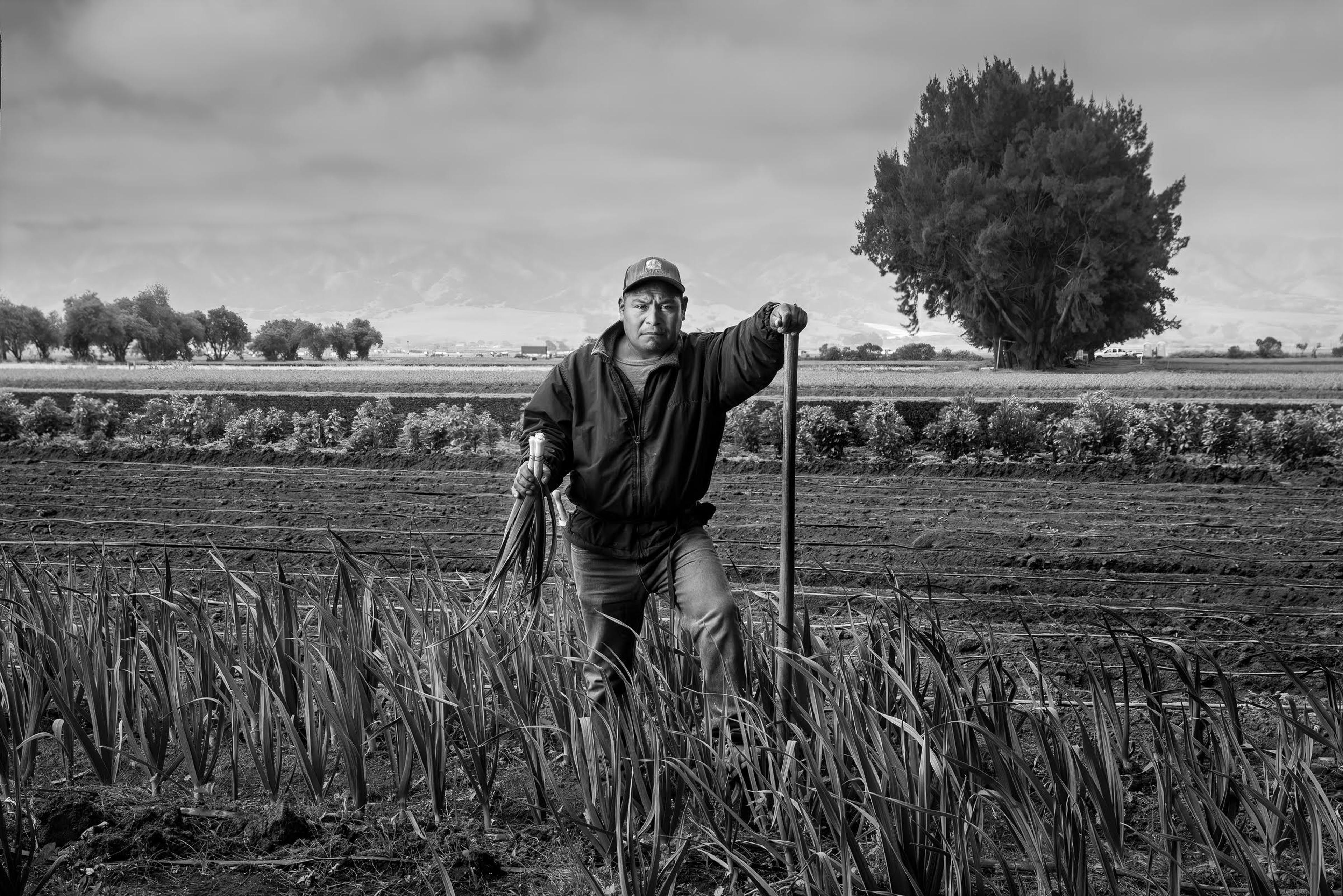
Whenever Delia Jovel places her hands in the soil at Tierra Fértil Coop, the worker-owned one-acre farm she founded three years ago in Henderson County, North Carolina, she feels connected to her late father, a farmer in their native El Salvador. “Farming, it’s a legacy,” she said.
Growing traditional food like tomatillos and cilantro is also a way for Jovel to literally root herself in her second homeland. “As an immigrant, it’s hard to be able to have that feeling of belonging,” she said. “I am not from this country, but at least this land I am working gives me permission to be part of it.”
As a co-owner of Tierra Fértil, Jovel is one of the 3.3% of all farm owners who identified as Hispanic (a reflection of language spoken, not country of origin) on the 2017 USDA Census of Agriculture. This low number is all the more striking considering that data from the 2019-20 U.S. Department of Labor National Agricultural Workers Survey (NAWS) estimated that Hispanics make up 78% of farm workers.
As white owners of small- and mid-scale farms in the U.S. retire — in 2017, the average age of farmers was 58 — the large number of foreign and U.S.-born Latino farm workers are well-positioned to become the next generation of U.S. farmers, researchers insist. “They know how to farm sustainably,” said Laura-Anne Minkoff-Zern, associate professor of food studies at Syracuse University and author of The New American Farmer: Immigration, Race, and the Struggle for Sustainability. “They have the knowledge that I think our food system needs.”
Yet linguistic, economic, legal, and cultural barriers can make it difficult for Latino farmers to access capital, purchase land, and break into markets. As organizations across the country work to overcome these challenges, these farmers are redefining who the traditional American farmer is and rejecting stereotypes that see them as workers, not owners.
As Jovel said, “Our community has been seen as labor, people who work for somebody else. And that’s the narrative that we want to change.”
A Farm of Their Own
Since 2003, the Latino Economic Development Center (LEDC) in St. Paul, Minnesota, has helped would-be farmers tackle what agricultural program director Aaron Blyth considers the three most significant, interrelated challenges facing them: access to capital, markets, and land. “It’s hard to do any one of those without the other,” he said.
Beginning farmers of all races and ethnicities wrestle with high land prices and difficulties acquiring loans. However, many Latino workers also lack documentation — 41 percent of all Latino farm workers between 2018-2020, according to NAWS estimates. Undocumented people can legally own businesses, Blyth said, but traditional institutions like banks usually consider them too high-risk to lend to.
In 2013, the LEDC became a Community Development Financial Institution, eligible for federal funds earmarked for low-income and underserved populations. When possible, the organization provides loans to undocumented farm owners. Unfortunately, a significant number of the grants that make up the center’s loan pool stipulate that the money has to go to official U.S. residents. When feasible, the LEDC encourages undocumented farmers to work with a legal silent partner, like a family member. He is hopeful that money from a recent $2.5 million grant from the Farm Service Agency will be more flexible in its lending capacity.
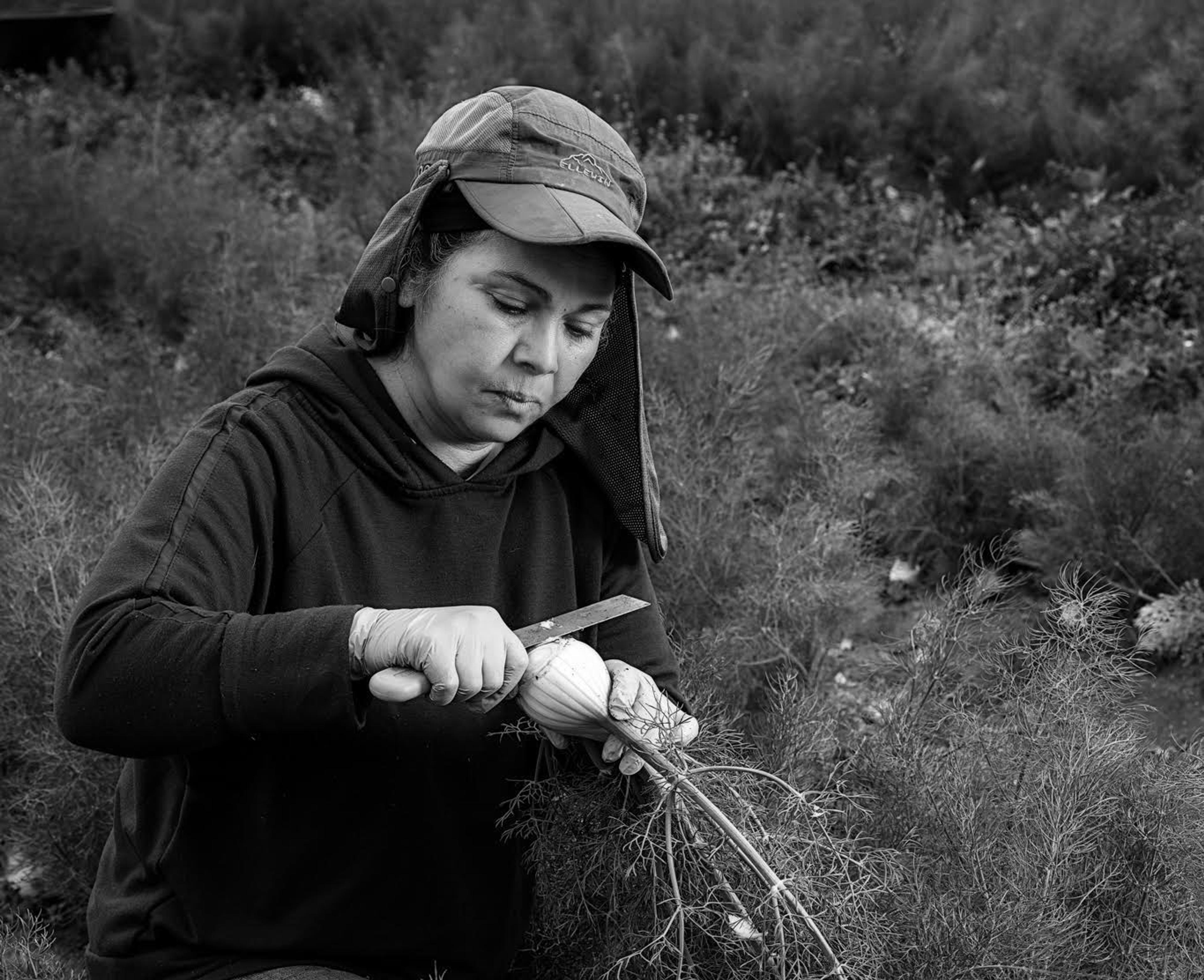
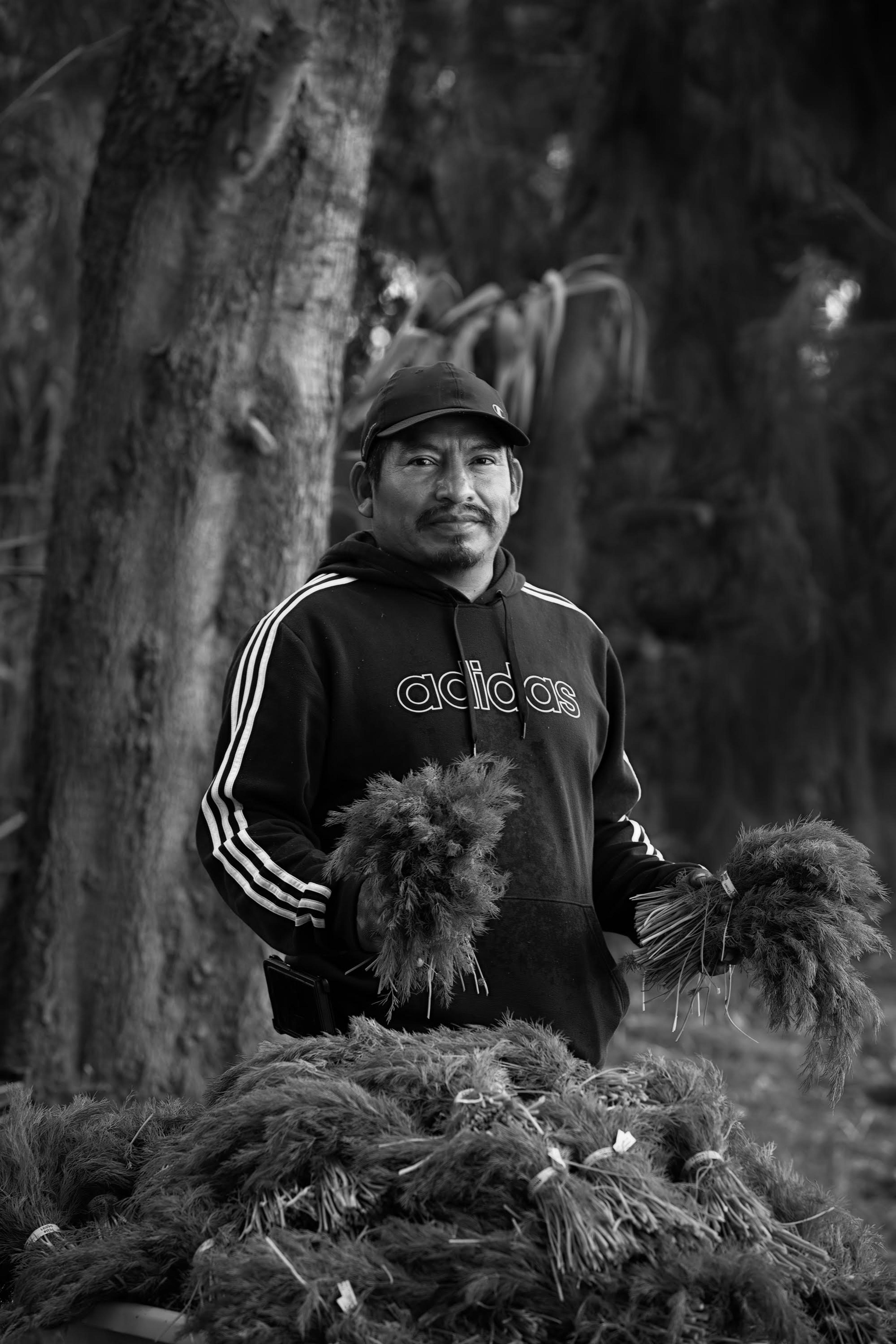
L-R: Guadalupe Quintero, Carlos Daniel de Jesus
·Photos by Mark Tuschman
As owner of a successful 46-acre farm in Turtle Lake, Wisconsin, and an agricultural trainer at LEDC, Rodrigo Cala sees his role as first and foremost helping would-be farmers change their mindset to see themselves as business owners. He talks to them about creating multi-year business plans, factoring in equipment costs, and even about owning land.
Cala, who grew up on a farm in San Andrés Mixquic outside of Mexico City, added that owning land doesn’t just improve a farm’s economic prospects. It also has a powerful impact on the farmer’s belief in — and passion for — their farming business. “As soon as they start owning the land, you can see the transformation,” Cala said. In the last five years, Blyth has noticed a significant increase in Latino farmers coming to the LEDC seeking assistance to buy land, having established their business enough to take that step.
In Salinas, California, where the Agriculture and Land Based Association (ALBA) has assisted limited-resource farmers since 2001, program director Nathan Harkleroad explained that few of these farmers can afford to purchase land outright; the group tends to focus on leasing opportunities. ALBA’s strength lies instead in the success of its five-year Farmer Education and Enterprise Development (FEED) program.
Over 95 percent of the approximately 75 students who enroll in FEED each year are Latino, and two-thirds are immigrants, Harkleroad estimates. After participants learn how to launch and operate an organic vegetable and strawberry farm in the yearlong farmer education course, they can lease land and equipment on ALBA’s 100-acre incubator farm at heavily subsidized rates. In a survey of course graduates for the organization’s 20-year anniversary impact report, 56 percent of Mexican immigrants and 37 percent of U.S-born Latinos reported owning their own farm. Sixty-nine percent of all Latino-owned farms in the survey also reported above $50,000 in sales — triple the rate reported by the 2017 agricultural census for all farmers nationally.
“We’re pretty happy with that success rate,” Harkleroad said.
Adapting to the Future
Both ALBA and the LEDC focus on helping farmers grow organic specialty crops, primarily because organic markets are more lucrative. Plus, many Latino immigrants are already familiar with organic principles like rotated crops and minimal pesticide use, having used them in their home countries out of necessity.
“Many people from other countries, they eat and grow organic food. But they don’t know that until they get here,” Cala said.
Cala has even gone beyond organic farming to embrace regenerative agriculture. After his brassica plants were decimated by excessive rain in 2020, he realized he needed to farm more resiliently. Since then, he has added chickens, hogs, and sheep onto his farm. They not only diversify his offerings but allow him to practice rotational grazing that improves the condition of the soil for the tomatoes, peppers, onions, and winter squash he grows.
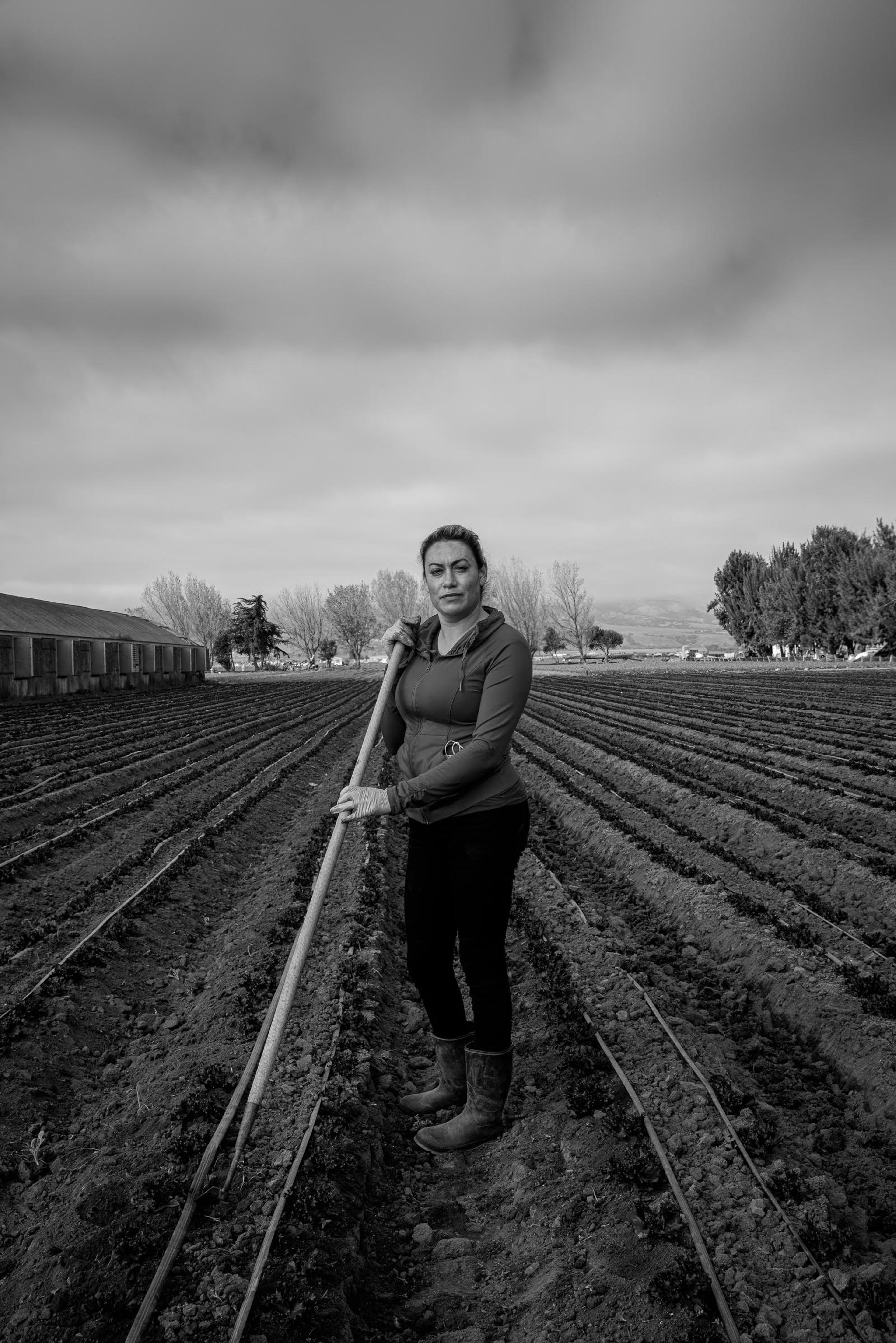
Pictured: Isabel Rosas
·Photos by Mark Tuschman
“If you have the ability to set up those systems in your farm, I think you’re going to have more chances to succeed in the future,” he said. “Start yesterday, because everybody is late right now about climate change.”
This experiential knowledge of organic and resilient farming is an aspect of Latino farms and farm owners that Minkoff-Zern feels is often overlooked. “Immigrant farmers coming from small-scale farming in places like Mexico, they know how to farm sustainably. They don’t need to go to agroecology schools to figure this out,” she said.
However, Harkleroad and Blyth stress that these farmers may also know industrial farming due to their work experience here, and some want to incorporate those practices on their own farms. “They are just as diverse of a population as anyone else,” Blyth said.
Changing Perceptions
In addition to owning their own farms, former Latino farm workers are also branching out into other aspects of the agricultural industry.
At ALBA, even participants who do not finish the first year of the FEED program frequently increase their income, Harkleroad said. They may become supervisors or transition into quality control, food safety, or logistics. In addition, many second-generation participants whose parents started a farm in the U.S. participate in FEED as part of college coursework that prepares them to play a larger role in the family business.
Cala also encourages children of the farmers he works with to consider working in agricultural technology. “You can design apps, you can design programs, you can design greenhouses, you can design tractors,” he tells them. Plus, as multilingual speakers, he suggests they can work as translators or salespeople.
Leaving the fields and farms for office and laboratory jobs not only offers more job opportunities; it also changes perceptions about Latino farm workers in the U.S. Cala said this demographic is often praised for being hard workers, a stereotype that pigeonholes his community into being seen as employees — not employers or entrepreneurs. “We are hard workers, but then we have the skills to run businesses, too,” he said.
Meanwhile, the Tierra Fértil farm is looking for land. Currently, they lease their one-acre plot from a small farm that is itself on a lease, and they also lease space for a high tunnel and raised beds from an Episcopal church an inconvenient distance away. But Jovel refuses to let these challenges diminish her ambitions for the co-op. In her vision, Tierra Fértil is what she calls “an economic ecosystem” that would include a variety of diverse operations, including a certified kitchen and shop for value-added products, as well creating and selling compost. “Hispanic community members need to be recognized as people who provide a lot of wealth,” she said.
“For myself, and for my community, farming is a way to advocate for ourselves.”
By the time Goose, a fluffy white Great Pyrenees puppy, had turned 10 months old, he had killed nine cats, three chickens, and had gotten into serious scuffles with other livestock guard dogs on the ranch where he had been living.
This behavior was a bad omen for the job he had been bred to do — protecting farm animals from predator attacks.
Goose had been passed from place to place before he wandered over to Amy and Danny Singleton’s hobby farm just outside of College Station, Texas. Rather than reclaim him, Goose’s last owner decided it would be best to surrender the aggressive roamer to the Singletons. “He kept running off and ended up at our little farm,” said Danny Singleton. “I fell in love with him on day one.”
Livestock guardians are one of the best tools to manage predators in a nonlethal manner and are often hailed as a quick fix to livestock depredation. But sometimes the animals — which can also include donkeys, llamas, guinea hens, and others — can turn on the animals they’re supposed to protect. Modern farmers are increasingly turning to livestock guardian specialty trainers and Facebook groups for help in managing these potentially deadly situations.
Predators killing livestock, specifically smaller animals like sheep and goats, is a huge, expensive issue across the United States. In 2019 alone, 71,440 sheep and 155,470 lambs were lost to predators according to the USDA, at a loss of nearly $30 million. Around half of those deaths were due to coyotes, which livestock guardians, especially dogs, are particularly effective at defending against.
Since dogs — which have been used by shepherds in Europe and Asia for thousands of years — are the most common livestock guardians, they tend to have the most problems. (Though both donkeys and llamas have also been known to harass, injure, or kill livestock too.)
There’s a common belief among ranchers that if you throw a livestock guardian dog (LGD) into a pasture, instinct will kick in and they’ll know what to do. That’s rarely true. Like all working animals, the right breed needs to be used for the right situation, and they need proper socialization and training to learn their job.
“In this country, 30 percent of livestock guardian dogs fail and most of those are euthanized,” said Cindy Benson, an Oregon-based certified trainer and Maremma-Abruzzese Sheepdog breeder. “Almost all of that is learned behavior due to management decisions or the owner.”
When not handled properly, these giant canines can become overly aggressive toward humans, livestock, working dogs, and other canines who live on their property, or non-predatory wildlife. Some LGDs also are known to roam far beyond the borders of their property, leaving their stock unattended and open to predation.
Like all working animals, livestock guardians need proper socialization and training to learn their job.
Though Goose’s roaming and reactivity issues are not uncommon, his start in life was anything but average. At a very young age, he was turned out with chickens without supervision. When he killed them, he was beaten and shot with a shotgun. At one point, he was covered in motor oil, Singleton assumes due to an old cowboy’s tale that it cures mange. (It does not.) Eventually, one of the men who owned him gave up on the aversive “training” techniques they had been using and dropped him off at a rescue.
In one sense, Goose was lucky. There are plenty of cases where these dogs — breeds such as Great Pyrenees, Kuvasz, Akbash, and Anatolian Shepherds — end up getting put down by their owners for perceived aggression.
This is especially true when guardian dogs are found eating dead lambs, kids (the goat kind), or other animals. Many ranchers who come upon these grisly scenes believe the dog is responsible for the death and, while that can be true, many of these dogs do have the instinct to clean up anything that might attract scavengers or predators to their territory including fluids like after birth.
“People assume that a dog is killing and they might need to shoot that dog — that isn’t necessarily true,” said Bill Costanzo, researcher for Texas A&M AgriLife Research livestock guardian dogs program. “There have maybe been four times [out of many calls] when a rancher actually saw a livestock guardian dog chase and grab a lamb or kid and kill it.”
Most of the time these dogs — which were selectively bred with a minimal prey drive — hurt another animal, it’s due to teenage rowdiness, said Costanzo, who oversees the only program dedicated to the study of livestock guardian dogs in the United States. Where most working dogs are mature enough to start learning the basics of their job at six months to one-year-old, livestock guardian breeds are about six months behind in their maturation process. Most issues with animal aggression show up between eight to 18 months of age.
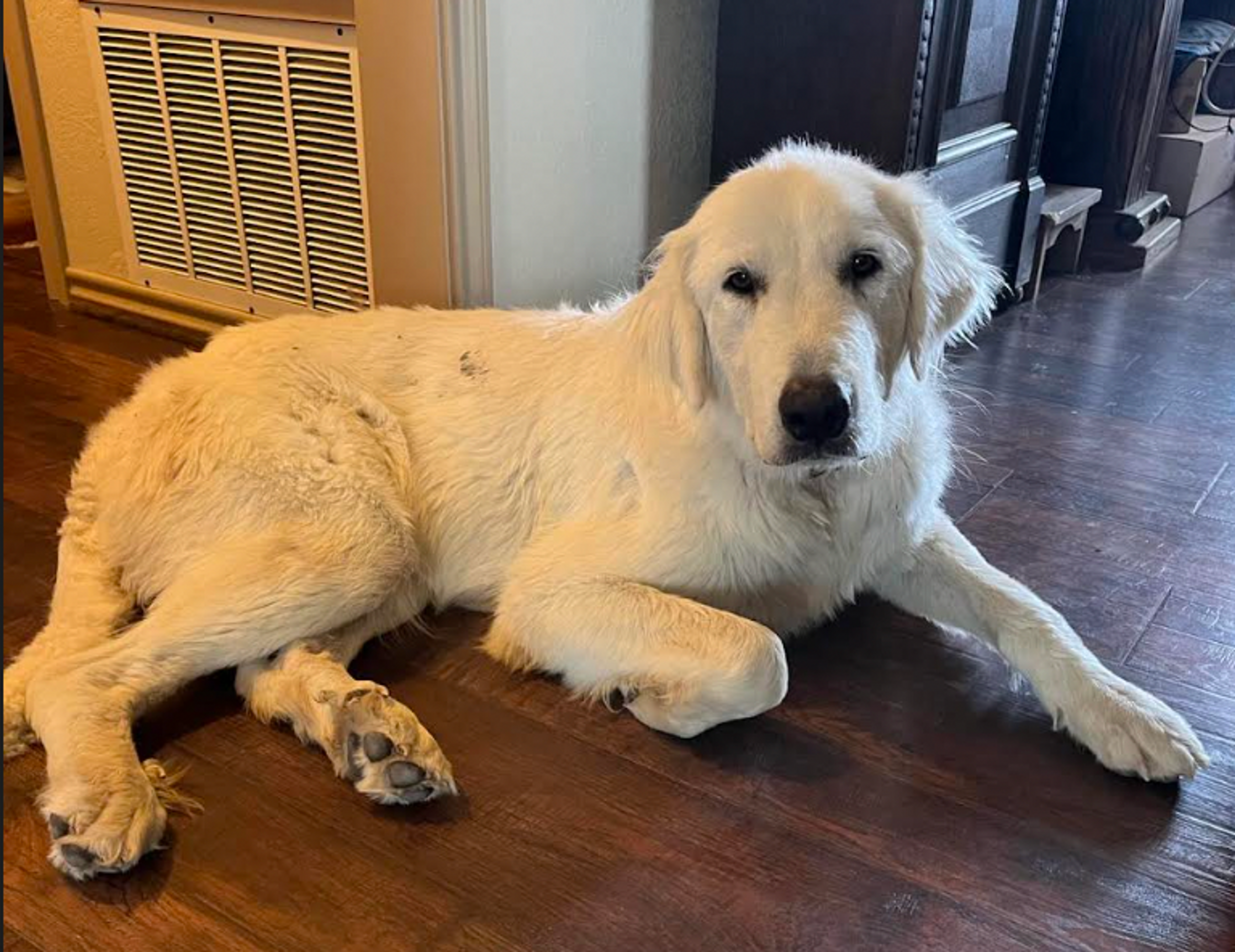
Photo by Amy Williamson
·Goose: Trying to be a good boy.
“During that time, a lot of dogs will chase sheep, chew on kids‘ ears or tails and do a bunch of bad things adolescent dogs do,” said Costanzo. “75 percent of the phone calls I get are about adolescent issues.”
To ensure success, producers should expect to offer focused management to livestock guardian dogs until they reach two years of age. This could mean using game cameras to make sure dogs aren’t roughhousing with other animals and herd leaders aren’t picking on the dogs — which is a big reason these dogs react and fight back. It’s also important to ensure dogs are properly bonding with their flock. They need to be supervised while they are being socialized to things like adding new members to the herd and, especially, lambing and kidding — which can be very confusing for an inexperienced pup. “All of a sudden their stock is distressed and this raises the concern of the dog, like what’s wrong, and then a bloody lump falls out of it,” said Tarma Shena, a Central Maine-based trainer, writer, and breeder of Anatolian Shepherds. “The dog has no experience with what’s going on.”
Tarma and other trainers like Benson advocate for using safety lines when introducing puppies to these kinds of novel situations to give them freedom to make good decisions while enabling handlers to protect all animals from potential overexcitement or stress.
The goal of training is to help the dogs to bond with the flock and their shepherd, so they can learn how to effectively do their job. When that bond isn’t present, issues are more likely to arise, like learned aggression and — one of the more common problems with livestock guardians — wandering. “We believe the main cause of roaming, or one main cause, is because dogs are not properly bonded to livestock as a puppy,” says Costanzo.
Goose may not have had that prime bonding time with stock in his early days, but the Singletons have been working hard with a positive reinforcement trainer to solidify their bond with him and safely socialize him with their horses, cattle, goat — they’re leaning heavily on a kennel and lots of leash work. Within a couple of months, Goose has learned important commands, such as “Leave it.” So, when he has gotten overly excited by their rowdy Nigerian dwarf goat, he now knows he’s expected to control that impulse. Though the couple has no plans to leave him unsupervised around their animals anytime soon, they do anticipate he will mature into a good working dog who will be able to keep their cattle and high-value horses safe from harassing coyotes and other threats.
“I totally intend to let him do his job,” said Amy Singleton. “I believe these are some of the most misunderstood dogs on the planet — they’re getting labeled as bad dogs but it’s really just bad training.”

This article was published in collaboration with Nexus Media News.
At Vaqueria El Remanso, a small dairy farm in the hills off the north coast of Puerto Rico, the cows are different — they have a freshly shaven, suave look. Their short hair is the result of a natural mutation known as “slick,” which Rafael López-López, who runs El Remanso, has been breeding into his cows for decades.
“In hot, humid conditions, the slick cows have an advantage,” López-López said on a scorching spring morning, walking among his herd in the shade of the milking barn. The genetic mutation that gives slick cows a shorter coat and more active sweat glands helps them maintain a healthy body temperature — an asset on our heating planet.
Cows are most comfortable in temperatures between 41 and 77 degrees Fahrenheit; livestock around the world are struggling to cope with hotter and longer summers. Over the span of just two hot, humid days in June 2022, an estimated 10,000 cows died in Kansas. This year, during the hottest July on record, hundreds of cows across the U.S. died of heat stress. Experts say it will only get worse.
In dairies, decades of breeding cows for increased milk production has made them even more susceptible to heat.
“How do they produce more milk? They eat more, they metabolize more,” said Peter Hansen, a professor of animal sciences at University of Florida who studies the slick mutation. “So any cow that’s producing more milk is going to be producing more body heat, which makes it harder to resist heat stress.”
When a dairy cow’s body temperature rises above her normal range of 101.5 to 102.8 degrees Fahrenheit — which happens when the heat index is greater than 72 — she experiences heat stress, meaning the ability to regulate her internal temperature is compromised. She grazes less (eating about 3-5% less per additional degree of ambient temperature) and has greater difficulty getting pregnant. That, in turn, compromises her milk supply. Heat stress also suppresses the immune system, leaving a cow more susceptible to disease.
Heat stress costs the U.S. dairy industry as much as $670 million annually, and scientists predict it could cause a 6.3% drop in milk production by the end of the century. To cope, farmers spend thousands of dollars running massive fans, sprinkler systems, and even fog machines to keep their cows cool.
Cows with the slick mutation, however, are managing relatively well. The mutation has been identified in at least six different cattle breeds around the world, including Carora cows in Venezuela and Senepol cows on the Caribbean island of Saint Croix.
“It must be a good mutation or it wouldn’t have been naturally selected so many times,” said Hansen. In natural selection, individual animals with traits that give them an advantage are more likely to survive and reproduce; the slick mutation appears to have presented an advantage for various cow species in hot, humid climates.
“I get 1,800 pounds [more] of milk per lactation from these cows and they reproduce more effectively.”
But it’s the slick Holstein in particular, first identified in Puerto Rico, that has dairy farmers paying close attention. Holsteins are the top milk-producing cow in terms of volume, but the temperate breed that originated in the Netherlands about 2,000 years ago isn’t well-adapted to heat and humidity.
Studies have shown that Holsteins with the slick mutation are able to keep their body temperature about 1 degree Fahrenheit cooler, meaning their milk production and fertility don’t drop as much during the hottest months.
“I get 1,800 pounds [more] of milk per lactation from these cows and they reproduce more effectively,” said López-López.
López-López started actively breeding the mutation into his herd in the late ‘90s and now about half of his 155 cows are slick. He also breeds and sells slick bulls to other farmers; he bred the world’s first commercially available slick Holstein bull that was homozygous. This meant he had two copies of the gene, guaranteeing that 100% of his offspring would also be slick.
Over the last five years, the genetics of that bull López-López sold have been used by American artificial insemination companies to breed more slick bulls. They’re selling the semen to farmers in southern U.S. states like Kentucky and Florida and in South and Central America, Indonesia, Thailand, and Qatar.
Research is still in its early days — scientists and farmers say that larger sample sizes will help them better understand under what conditions the mutation is most helpful. (A 2020 study comparing slick calves in Florida and California showed that the advantages of the mutation were more pronounced in the humid heat of Florida than the dry heat of California.)
Even still, it’s already widely seen as a promising strategy; breeding for the slick cows is listed among the adaptations to heat stress in livestock in the IPCC’s Sixth Assessment Report.
Breeding for the slick cows is listed among the adaptations to heat stress in livestock in the IPCC’s Sixth Assessment Report.
“Hot parts of the world are getting hotter, and parts of the world where heat stress was just an occasional problem are going to find that it’s a more severe problem,” said Hansen. “The more the climate is such that cows are exposed to a lot of heat stress, the more important the [slick] gene is going to be.”
The slick Holstein likely originated when Holsteins from the U.S. were brought to Puerto Rico in the 1950s to address malnutrition and increase milk production in the island’s dairy industry (which produces about 200 million liters of milk each year, making it the island’s top agriculture commodity). The Holsteins were crossed with Criollo cows, a breed raised for both beef and dairy that’s become heat-tolerant in the centuries since Spanish colonists brought them to the island. Researchers suspect that these cows already had the slick mutation and passed it on to the Holsteins.
Puerto Rican farmers called these glossy black and white cows rabo fina, meaning thin tail, and, at first, they were thought to be inferior. “When I was young, I used to see really beautiful slick heifers,” said Héctor Sánchez-Rodríguez, professor in the department of animal sciences at University of Puerto Rico (UPR) and author of a comprehensive review of the mutation’s history on the island. “Cattlemen would sell them because they weren’t purebred.”
But after now-retired University of Florida professor of animal breeding Tim Olson identified the mutation and partnered with scientists in Puerto Rico to conduct research in the early 2000s, farmers started learning about the value of the gene through university extension programs, artificial insemination companies, and word of mouth.
Researchers also think slick cows may be better able to produce reproductive hormones because they’re not spending excess energy releasing heat from their bodies. Esbal Jiménez-Cabán, professor of animal sciences at UPR pointed out that — in both humans and animals — reproduction is among the first functions to be compromised in adverse conditions.
“If a guy is stressed, his sperm count goes down. If women don’t eat well, the menstrual cycle goes crazy,” he said. “A wild-type animal, when it’s fighting the heat in the summer, it will prioritize staying alive.”
The goal has been to breed cows that are slick and also have other traits that farmers look for, like decreased risk of disease and high milk production.
A study from 2013 to 2016 comparing slick and wild-type cows (those without the mutation) on Lopéz-Lopéz’s farm showed that the calving interval — the time between when a cow gives birth and when she is able to get pregnant again — of the slick cows was about 1.6 months shorter than those without the mutation. And that’s valuable for farmers, Jiménez-Cabán explained. “If you have an animal who is not producing, you are [still] spending a lot of money on that animal — so you want to shorten that time as much as you can.”
In the mainland U.S., researchers and breeders say the slick gene is still nascent, with a small number of Southern farmers breeding it into their herds. But since López-López sold his bull Sinba to a breeder on the mainland, more U.S. breeders and artificial insemination companies have started working with the mutation. The goal has been to breed cows that are slick and also have other traits that farmers look for, like decreased risk of disease and high milk production.
Though Sinba had a higher tolerance for heat, he didn’t have the genetics American farmers typically value. “Sinba was a local boy from Camuy, Puerto Rico, a humble guy,” López-López joked. “Suddenly, they bring him to the states and he marries the daughters of the Rockefellers and the Kennedys.” All Sinba’s offspring are slick, plus they have more of the desirable traits the heifers have long been bred for.
This improvement in genetic scores, based on a combination of economically important traits, has taken time, which is why adoption of the mutation among American farmers has been slow, said Jeffrey Bewley, a breeder in Kentucky who sells slick embryos.
Bewley has spent much of his career focused on cattle housing and cooling technologies. (Most dairy cattle in the U.S. are housed in barns with fans — just 20 percent of lactating cows have “some access” to pasture.)
“Despite all of our efforts to try to cool the cow, there’s still effective heat stress,” Bewley said, noting that cows experience heat stress about 150 days of the year in Kentucky. “What really resonated with me was the idea that we might be able to breed for an animal that’s better able to handle the heat, instead of just changing their environment.”
“If something happens and we’re isolated here, those cows will feed us.”
About five years ago, Bewley started selling embryos to farmer David Corbin, who manages 300 dairy cows in Campbellsville, Kentucky, and sells their milk to Borden. About 10 of his cows are slick, two of which are milking. Anecdotally, Corbin has noticed a difference.
“She was just laying in her free stall chewing her cud,” Corbin said of one of his lactating slick cows, while the other cows were cooling down by the water trough. “I don’t have no way of telling you that this cow’s cooler than the rest of the cows, but she seems to be more at ease with it.”
He plans to keep growing the number of slick cows on his farm, especially since he’s seen good milk production from the first two he’s been milking. “If you can get that trait and you don’t have to give up the other stuff, why wouldn’t you?”
Despite its promise, breeders, farmers, and researchers agree the slick mutation is not a cure-all for heat stress. They say it should be used in combination with other cooling strategies, like planting trees to provide more shade on pastures.
It’s also worth noting that the dairy industry is contributing to exactly the climate impacts farmers are trying to combat. Livestock is the second-largest emitter of methane (28 times more potent than carbon dioxide in terms of its warming impacts) in the U.S., behind natural gas and oil systems. Even excluding methane, the climate footprint of dairy cattle is 10 times that of beans and more than 20 times that of peas for the same amount of protein.
Which raises the question: Is the slick gene enabling the expansion of an industry that should be rapidly declining?
Is the slick gene enabling the expansion of an industry that should be rapidly declining?
The answer depends on where in the world you are, said Philip Thornton, emeritus fellow at the International Livestock Research Institute. “Consumption [of livestock products] in the global North has to decrease massively and faster, whereas in the global South it needs to increase for a sustainable, just, healthy diet.”
Comparing the circumstances of dairy farms in the U.S. with those in Puerto Rico is a bit like looking at a microcosm of the global North and the global South.
Mainland U.S. farmers continue to spend more running fans and cooling systems in indoor ventilated barns, increasing costs and climate impacts. And the average American consumes about three times the amount of milk as the world average (and five times the average in developing countries). But it’s notoriously difficult to get consumers to change eating habits, and there seem to be very few good examples of policies or taxation regimes that have been effective, said Thornton.
“It’s a real massive conundrum,” says Thornton, “And the longer we leave it, the more challenging problems become and the costs of adapting and mitigating become even higher than they already are.”
In Puerto Rico, as in the global South as a whole, farmers are dealing with more severe impacts of heat stress on their herds and have fewer resources to adapt. At the same time, the dairy industry provides about 25,000 jobs and accounts for about 23% of the island’s gross agricultural income; it’s a critical aspect of Puerto Rico’s livelihood and food security.
“We’re self-sufficient in fresh milk,” said Guillermo Ortiz-Colón, professor in the college of animal sciences at UPR who’s leading a series of climate adaptation courses for farmers on the island. “That’s like the last straw — everything else [85% of food] gets imported. If something happens and we’re isolated here, those cows will feed us.”
With the warming experts predict is ahead, adapting is only going to get more challenging and costly for dairy farmers around the world. “In the U.S. or in Europe, costs of production may increase, but you still have the wherewithal to do that,” said Thornton, whereas the adaptation options for farmers in developing countries are much more limited.
“This just goes to show that we need to mitigate global greenhouse gas emissions as quickly as possible,” he added. “It always comes down to that bottom line.”
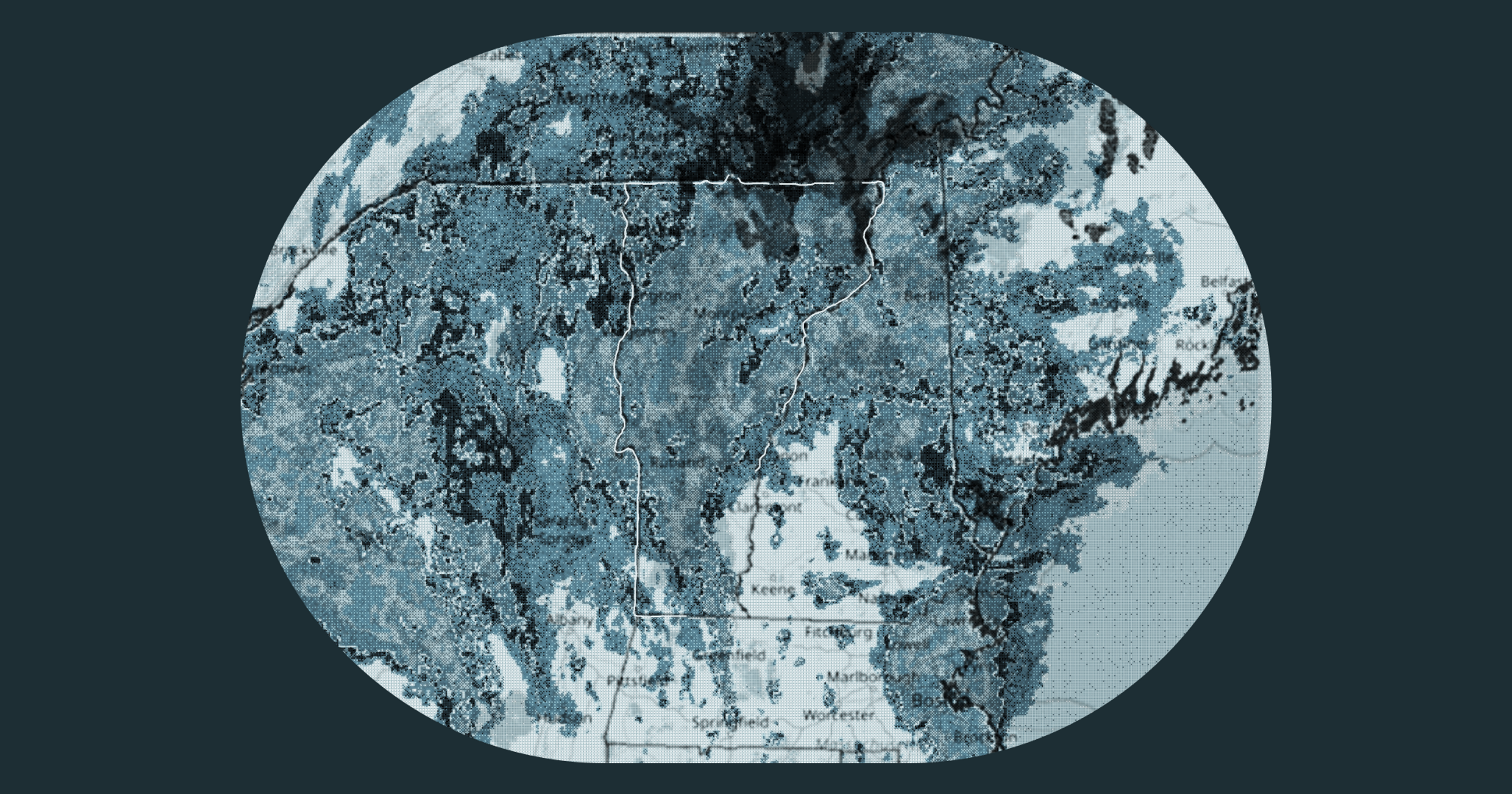
Three weeks after the Great Vermont Flood of 2023 dumped nine inches of rain in 48 hours on parts of the state, Rachel and Jim Bigelow stood under the eaves of their farmstand shed and watched black clouds muscle in between green hills. Rachel had just pointed out the lettuces she’d replanted to replace a sodden crop lost to those earlier storms; Jim wondered aloud whether the ground was finally sufficiently dry to cut his overgrown alfalfa, clover, and timothy for hay. Seconds later, the clouds loosed a new torrent of rain over already-soggy fields. This summer, “It just feels like you’re doing twice as much work to get half as much crop,” Rachel Bigelow said.
July’s disastrous and unprecedented rains caused an estimated $12 million worth of damage to the agriculture sector in Vermont — a state thought to be relatively protected from the intensifying effects of climate change. But listening to local farmers rattle off a litany of challenges besides rain (after the hottest month ever recorded on Earth, no less), it’s obvious agriculture here is vulnerable. Vermont farmers know they need to bolster their operations. But unpredictable weather makes for planning uncertainty. How do you prepare for the possibility of everything?
On the Bigelows’ 190 White River-abutting acres in South Royalton, Rachel reported her most difficult year growing vegetables and flowers. “Early on in the season, it was really, really [hot and] dry so there was very uneven germination,” she said. This, on top of previous years’ dry conditions, had been serious enough that she’d considered installing irrigation. But after an unusual late-May frost that necessitated covering plants in an unheated hoop house with frost blankets, came “lots of rain,” Rachel said. “You can’t really get in there with the tractor to cultivate when it’s so wet, so there’s horrible weeds. Now that the soil’s so wet, it’s just like cement. And there hasn’t been that much sun, so things aren’t growing well.”
Another component to the low-sun equation: smoke drifting in from wildfires in Canada, the particulate matter from which means “there’s nothing [for plants] to photosynthesize,” said state representative David Durfee, a Democrat and chair of the state’s House Committee on Agriculture, Food Resiliency, and Forestry. There’s “an enormous scope of potential issues that we’re still trying to wrap our heads around.”
Still, the Bigelows consider themselves lucky this year. They have some remaining produce, chicken, and duck eggs, beef raised by Jim and his brother, and value-added products like rhubarb chutney to sell to a steady stream of farmstand customers. And they have 10 CSA customers who won’t complain about boxes overstuffed with one surplus veg or under-representing some seasonal favorite. This is in contrast to other area farmers whose acreage was completely submerged by river waters, who experienced such extensive crop loss and damage that they have little or nothing to sell.
Floodwaters from the Winooski River rose in the Intervale — an 870-acre fertile floodplain in Burlington — higher in late July than they ever have in the past. That includes back in 2011 when Hurricane Irene hit, according to David Zuckerman, Vermont’s lieutenant governor who just so happens to be a diversified organic crop farmer.
Federal law stipulates that crops that have come in contact with floodwaters, which might be contaminated with pesticides and/or bacteria from livestock operations and sewers, are unfit for human or animal consumption — an increasing problem in California and elsewhere across the country. River-flooded farmland requires a resting period of at least 30 days so that bacteria in the soil have a chance to die off. (Although health concerns around crops that have experienced flooding also include contamination from metals and toxic chemicals, “which actually linger longer,” Zuckerman said.)
How do you prepare for the possibility of everything?
What was devastating about the flooding was the timing. It was late enough in the season that “squash are forming on the winter squash vines and sweet potatoes are vining out a lot and … [farmers] were just getting the Walla Walla [onions] out” of the ground, Zuckerman said. “Fall harvests are slightly possible; people are gonna be able to grow some greens, depending on soil [contamination] and where they are in Vermont. But honestly, both ends of the season just got wiped.”
Bill Cavanaugh, farm business advisor at the Northeast Organic Farming Association (NOFA)-VT, said over 200 Vermont farmers had been impacted by weather events. “Sure, there was that acute flooding event in July,” he said in mid-August, “but it really hasn’t stopped raining; it’s absolutely pouring right now.”
The hay Jim Bigelow hadn’t been able to cut and which he sells to “horse people and cattle people … just lays right down [in the field] when it rains hard,” making it susceptible to mold, “so who knows what kind of quality it will be,” he said.
“Some of my farming friends who have heavier soils said they went out to pick what looked like beautiful carrots and an inch below the surface they were mush,” Zuckerman said. “In our fields [in Hinesburg], we’ve never had this kind of problem in our watermelons … as far as diseases and loss of fruit. And we haven’t harvested lettuce or spinach or arugula or any small leafy greens in weeks because in our sandier soil, all the water-soluble nutrients have leached to a much deeper level far out of reach of the roots of the plants, so we have very yellow or terrible-tasting plants.”
Some aid has been made available. The state of Vermont has made a “relatively modest” $1 million available to farmers, “to replace documentable losses of equipment or structures, but not to replace the loss of revenue,” said Durfee. “It’s very easy to imagine that disappearing very quickly and there being much more demand than there is money.” And the U.S. Department of Agriculture (USDA) announced that it would offer a variety of “flexibilities” to flood-impacted farmers. Although, “It’s a hard process to navigate and one thing we’re seeing now with this crisis is a real lack of crop insurance,” said Cavanaugh. “It doesn’t pay out well at all for small specialty crop producers. If they can get anything at all it’s frequently pennies on the dollar.”
And the question still remains: Even with money to rebuild and rebound, how can farmers protect themselves against future crises? The Bigelows learned some lessons from Irene. “I had applied for a grant for this greenhouse and the location that we put it was weather-related, because [Jim’s] brother wanted us to put it” in a lower field, said Rachel. “That’s where the river had flooded during Irene.”
“To feed everyone … we need to shift our mindset on how and where we grow our food. And we’ve got to have that conversation immediately.”
“Farmers are really looking for technical expertise in overall land management — thinking through how to irrigate [when it’s dry] or how to design systems,” said Cavanaugh. “We’re really lucky up here, we’ve got really good technical experts [from the University of Vermont and through NRCS] in those realms, but not enough of those people to go around to consult on bigger issues.”
Cavanaugh said NOFA-VT had been concentrating its efforts on offering up to $2,500 resilience grants. He said a lot of grants went toward building community farmstands, to help with food access when town groceries get flooded out but farms are still generating food. This year’s grants also awarded money for building high tunnels and hoop houses to protect against extreme weather events; adding rotational grazing to improve soil fertility; adding a permaculture corridor on land not suitable for crops; and generally diversifying the types of crops grown.
Other than that, “There’s been a lot of talk about water, both getting more of it and getting rid of too much of it,“ Cavanaugh said. ”A lot of folks are having to dig new wells or dig deeper on existing wells, because prior to this year, every year [for] the last few years we’ve had a drought. Then some farms have been putting in drainage ditches and swales to stay ahead of water events“ like this year’s. One farmer, he said, got a resiliency grant a few years back “just to do landscape shaping to try to avoid flooding; it sounds like it worked perfectly in this event.”
Landscaping is on Zuckerman’s mind, too. “With our rolling hills, how can we grow in a more terraced way?” he asked. “It’s a way of managing water flow so you can grow on moderate hillsides without having it all washed away with a heavy downpour, which we’re expecting more of as climate change happens.” He also mused over ideas like vertical and indoor farming as possible future strategies; the possibility of extending the growing season due to warmer winters; and relocation efforts.
“The larger mitigation question is not only for farmers, but for anyone in low lying areas, where we see a lot of lower-valued properties like manufactured homes,” Zuckerman said. After Irene, Vermont bought some of those out and relocated them, restoring the land beneath to floodplain. Irene was also one of the first times the Federal Emergency Management Agency (FEMA) “got pushed to reimburse states for, not just replacing what was there, but rebuilding to be more resilient. We built a lot of culverts larger, built a lot of bridge abutments wider, to allow the water to not get blocked up … and flood. Vermont is looking to do more of that now. But to feed everyone … we need to shift our mindset on how and where we grow our food. And we’ve got to have that conversation immediately.”
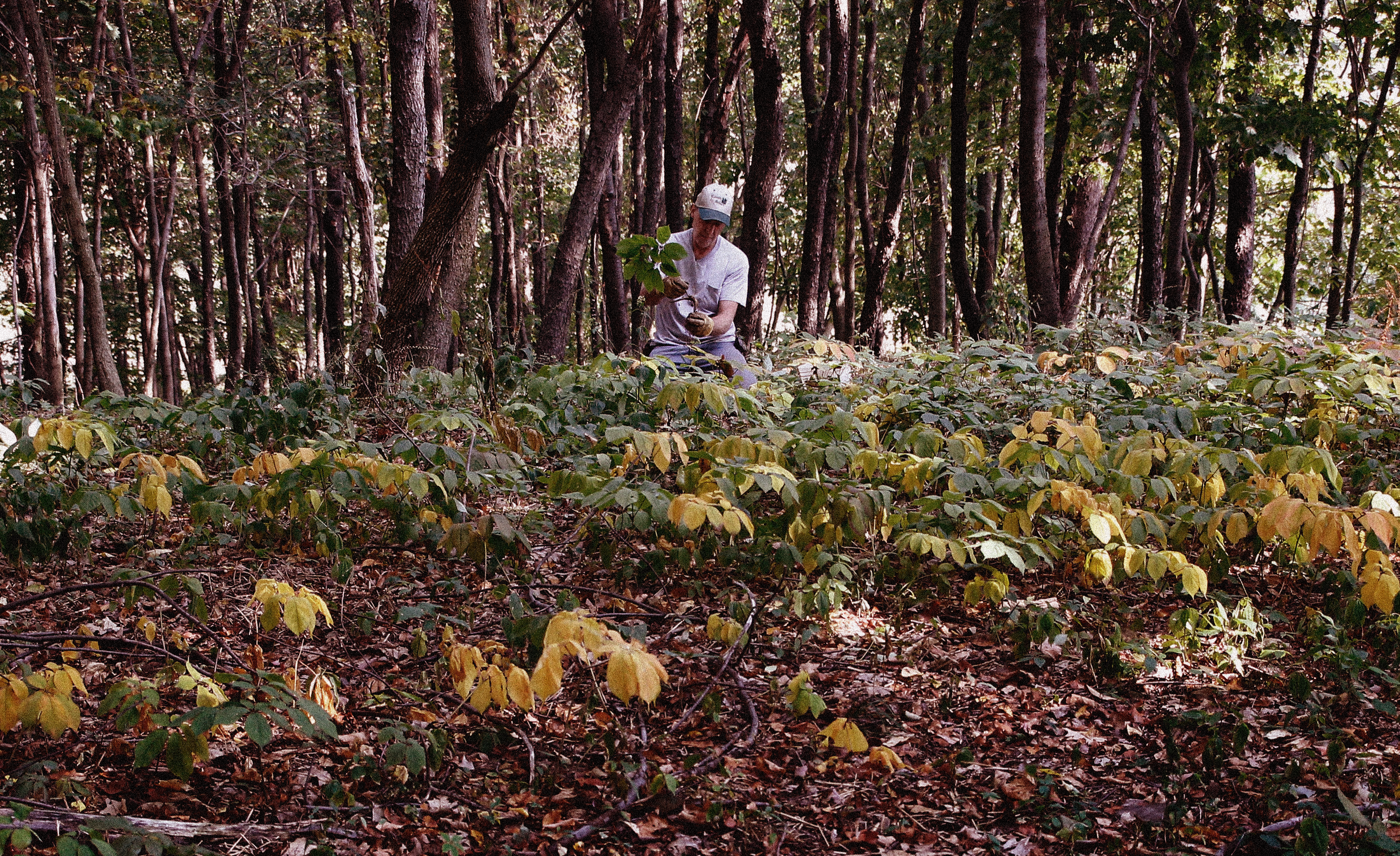
“It’s not that I talk to plants. I listen to plants. It’s a difference,” said Lorri Bura. And those voices have been drawing her into the woods.
Bura’s long, white braided ponytail bobs as her feet, shod in pink Crocs, walk under the trees just steps behind her home west of Asheville, North Carolina. The house sits on about 20 acres in the foothills of the Blue Ridge Mountains; she manages the property as Green Heart Gardens, raising medicinal plants for the tinctures and salves she sells under the Herb Mamma brand.
She still grows many herbs in the gardens’ rich flatland along Hominy Creek. But over the past decade or so, Bura has moved much of her work onto the slopes, cultivating high-value medicinals beneath the forest’s canopy.
There’s Solomon’s seal, an ingredient in Bura’s popular pain-relieving salve, which she says benefits the body’s bones and connective tissues. There’s goldenseal, widely used as an immune-system booster, and wild yam, often employed to treat the symptoms of menopause. And there are dozens of seedlings of ginseng, one of Appalachia’s most highly prized herbal medicines, sold to Asian markets for hundreds of dollars per pound.
Although those plants are regularly harvested from the wild, Bura said, the approach of planting and tending them intentionally together with tree cover — forest farming — has only recently started to gain traction. She’s been leading classes and workshops as a member of the Appalachian Beginning Forest Farmer Coalition (ABFFC), a more than thousand-strong network of growers, landowners, academics, and nonprofit advocates.
Forest farming itself isn’t new, said Margaret Bloomquist, associate director at ABFFC and a horticultural researcher at North Carolina State University. Indigenous people throughout Appalachia have long tended plants under the canopy for food and medicine. Those descended from European settlers, she added, have their own tradition of growing lucrative patches of ginseng as a kind of savings account for big expenses.
As an object of study, however, forest farming hasn’t easily fit into established fields like horticulture or forestry. The ABFFC, founded in 2016 through a grant from the U.S Department of Agriculture’s National Institute of Food and Agriculture, was among the first formal efforts to advise and support new growers.
“It’s kind of been at the periphery of a lot of folks’ mandates for a long time,” Bloomquist explained. “It encompasses so many people and communities and angles that it’s taken some consistent, central administrative support to bring those conversations together.”
Yet with forest farming’s multidisciplinary nature comes multifaceted benefits. On the purely economic side, growers can tap into a domestic market for forest-based medicinal plant products estimated by the U.S. Forest Service in 2017 at over $1 billion annually. Bloomquist’s colleague at N.C. State, Jeanine Davis, has estimated net profits for forest-farmed ginseng and goldenseal to be as much as $40,000 and $25,000 per acre (after nine and four years of growth, respectively).
“There’s this holistic human connection to each other, to the planet, and the ability to really steward the earth in a meaningful way.”
For farmers used to annual crop cycles, the practice can provide a less stressful change of pace. Setting up growing areas in the woods can be labor-intensive, said Bura, and planting seasons tend to be very short in the early spring or fall. But once established, most forest-farmed medicinals need little maintenance beyond the occasional light weeding and scouting for disease.
And from an ecological standpoint, forest farming can help keep existing woods standing by giving landowners an income option besides timber harvest or property development. With medicinal plants in particular, Bloomquist said, there’s the potential for “conservation through cultivation.”
Wild populations of ginseng, for example, are dropping due to widespread overharvesting and are listed as endangered or vulnerable in several states. If more of the plant were grown in managed environments, those wild plants would face less pressure.
The effort to promote forest farming, Bloomquist said, is at a major turning point. The ABFFC and partners from across the country are hosting a conference next spring in Roanoke, Virginia, where they will propose a charter for an American Forest Farming Association. She said the new group will serve as a broad professional organization, with resources for marketing and economic development to help growers implement the practice.
Karam Sheban is part of the ad hoc advisory committee helping to shape the AFFA. The Yale University doctoral student leads the Northeast Forest Farmers Coalition; he said institutions outside of Appalachia have been slower to explore forest farming. When he arrived in 2018 at Yale’s forestry graduate program, the country’s oldest, the school had just begun to offer its first agroforestry class.
“There were things happening in Appalachia that were totally off the radar of institutions like Yale,” Sheban said. “And I felt like that was something that should probably be changed.”
A national effort like the AFFA, Sheban continues, could help build a community for forest farming in regions like the Pacific Northwest and Southeast that have historically had even less formal support. He believes the practice is ripe for takeoff, citing growing interest in his coalition’s mentorship program — particularly among groups that are often underrepresented in agriculture, such as younger people, women, and growers of color.
“I’ve done lots of reading and research online, but nothing beats being able to go out into the woods and actually touch and work with the plants themselves.”
Those groups also tend to have less access to land, Sheban noted; only about a third of his mentees are currently landowners. While he’d like to see more support for aspiring forest farmers to put down roots, he said many mentees are eager to apply the practice even on shared spaces like community gardens.
“In the face of climate change or economic uncertainty, I think forest farming is very empowering,” said Sheban. “It’s not that difficult to start, and it’s a way to make a positive impact on a little piece of forest land that you control, that you can feel and see.”
One obstacle to forest farming’s broader adoption, noted Lincoln University’s Raelin Kronenberg, is a lack of familiarity among those who might teach the practice. She found forest farming to be the least well-known agroforestry technique among natural resource professionals in her state of Missouri, even though it was ranked the most desirable type of land use in a survey she conducted of Missouri landowners.
To help address that issue, Kronenberg is gearing up to plant a demonstration site at Lincoln this fall, where farmers and extension agents can see how forest farming works firsthand. “I’ve done lots of reading and research online, but nothing beats being able to go out into the woods and actually touch and work with the plants themselves,” she said.
As forest farming becomes more popular, Kronenberg added, she hopes it can serve as an alternative in more ways than just producing economic value. Growing under the canopy can conserve wild plants that are rare or endangered; it can provide the raw materials for herbalists and others who practice traditional methods of healing; it can encourage a slower, smaller-scale approach to life.
“There’s this holistic human connection to each other, to the planet, and the ability to really steward the earth in a meaningful way,” Kronenberg said of forest farming. “That’s what draws me in, and I hope people can keep sight of it as it grows.”
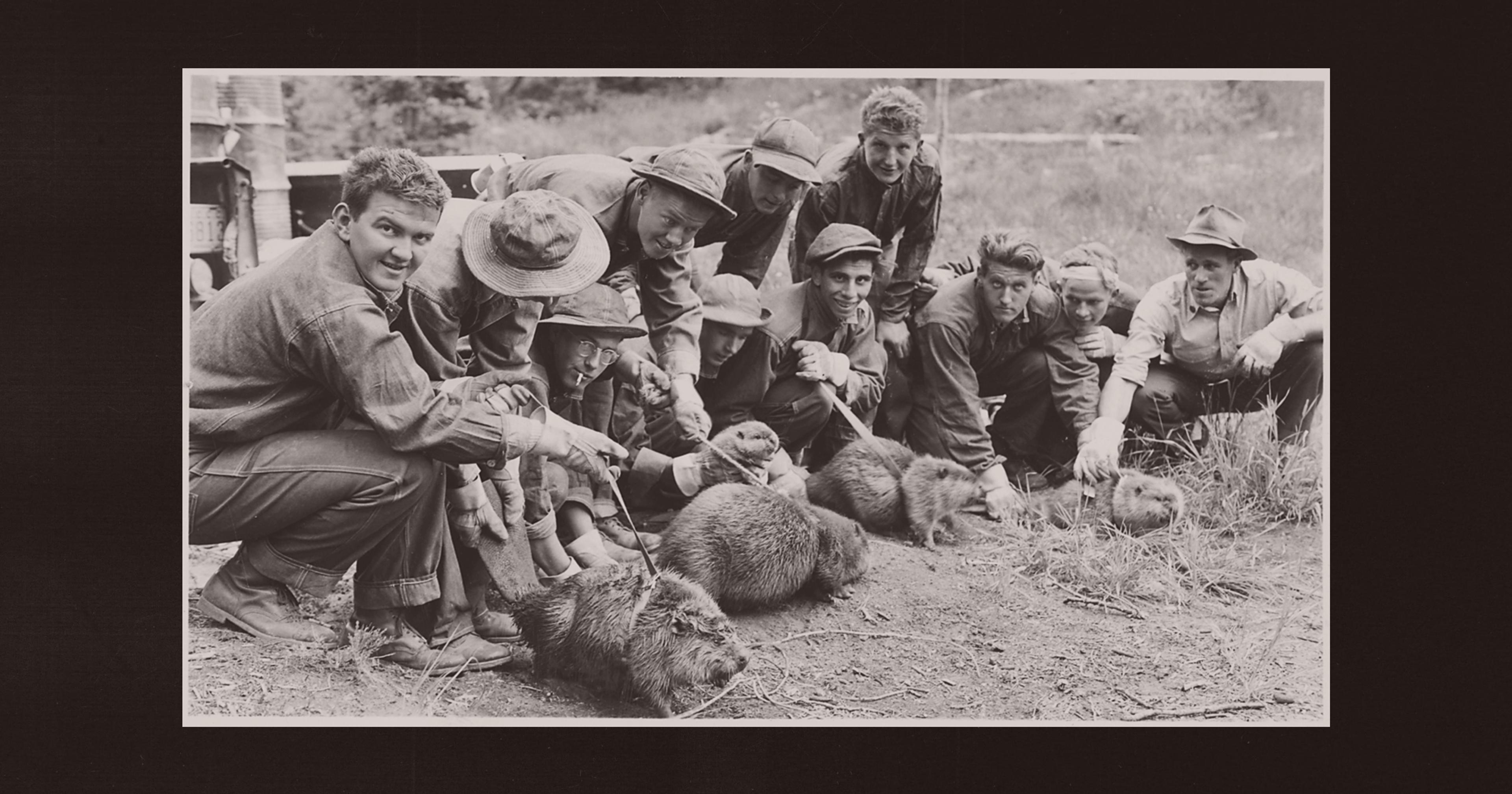
Glenn Elzinga was psyched the first time he spotted a newly built beaver dam blocking a stream in Alderspring Ranch’s grazing allotment.
That pile of freshly felled willow and birch sticks held together with mud were proof that the regenerative restoration efforts on his grass-fed cattle ranch in Idaho were working.
Elzinga’s adoration of the buck-toothed rodent is far from the norm among his ranching peers. Beavers — which were nearly trapped to extinction for their furs in the 19th century — have long been considered a nuisance on ranches across the West. Their dams can flood homes, roads, timber forests, and other areas human inhabitants want dry. “A lot of ranchers see beavers as a rival for water and causing problems, so they hate them,” said Elzinga. “But I love beavers.”
As evidence continues to grow that beavers provide a wide range of biodiversity and climate resilience benefits, a slowly growing slew of progressive ranchers like Elzinga have started welcoming the web-footed eco-engineers back to the landscape.
There is a reason many property owners dislike beavers. As rodents are wont to do, they’ll set up shop in the most inconvenient places for their human neighbors. In spring 2021, beavers chewed through a cable that left an entire British Columbia town without internet. Around the same time in Quebec, 200 dams near Grenville-sur-la-Rouge flooded 10-square miles of the town — a now-persistent problem that costs hundreds of thousands of dollars to fix every year. Around the world, they’ve flooded countless farm fields and roads. “They’ll find the one ditch next to the piece of property you really don’t want to flood and that’s where they put their dam,” said Caroline Nash, hydrologist and principal at consulting firm CK Blueshift, who works on drought resilience with ranchers.
In 2021, there were so many complaints about the semi-aquatic rodents, the U.S. Department of Agriculture’s Wildlife Services killed nearly 25,000 of them.
Beavers use logs, mud, and whatever else they can find to block the flow of water in a river or stream, creating deep ponds where they can build the underwater entrance to their homes, colloquially referred to as “beaver lodges.” These ponds and the canals they dig to search for food keep them safe from predators like coyotes, bears, and mountain lions.
They also benefit the larger ecosystem. Because these dams slow the flow of water, they also help increase organic matter in the soil. Every 1% increase in organic matter gives soil the ability to retain up to 25,000 gallons of water per acre. This raises the water table and provides a number of other helpful environmental impacts.
“They’ll find the one ditch next to the piece of property you really don’t want to flood and that’s where they put their dam.”
“There is some growing shift of tolerance for beavers when it is seen they can have a restoration benefit,” said Nash. “The difference we see is the level of risk different ranchers are willing to take on, and the level of opportunity they see [in having beavers around].”
For Alderspring Ranch, the return of beavers had helped to create more wet meadows, retain water during dry season, create more fish habitat, and produce more grass for Elzinga’s cattle to graze on. “I just wish I had more,” he said.
Beyond Elzinga’s anecdotal findings, there’s ample research showing other ecosystem benefits from beavers.
One study in Nevada found that when beavers returned to streams and built dams the overall water level increased, with a flow that lasted into the dry season and during drought years. Another study found that actively maintained wet beaver meadows store more carbon than ones that have been abandoned — nearly a quarter more, in fact. And another paper that focused on beaver dam’s potential to curb the spread of wildfires found that riparian areas with beaver dams are far less likely to be charred by wildfires. “Areas without beavers averaged three times more damage than those with beavers,” Emily Fairfax, a renowned California-based ecohydrologist who authored the paper, told The Washington Post. “Where you don’t have beavers or rain, plants dry out and become crispy fuel for fires.”
Because of these recently emerging benefits, the Bureau of Land Management (BLM) and some state agencies have started working with partners across the West to build dams in hopes that beavers will claim them. These human-made dams have been successful at both attracting beavers and saving wetlands from drying up.
“Where you don’t have beavers or rain, plants dry out and become crispy fuel for fires.”
Just outside of the town of Crane in Oregon’s high desert, nine human-made beaver dams made of wood and rock were erected in 2015 in an attempt to protect a 40-acre meadow from aridification and encroaching Western juniper trees. Land managers feared the meadow could shrink down to just a few acres if they did nothing. Six years later, those dams (along with a mile’s worth of willow trees) have preserved the wetlands far better than anticipated. It is now a lush corridor of greenery surrounded by shrub-dotted desert. “It’s amazing how green everything is and how much wetland — it’s a bigger wetland than we had originally anticipated,” said Lindsay Davies, the BLM fisheries biologist who helped manage the project, in a release.
BLM wildlife biologist Travis Miller hopes beavers will take advantage of the deep waters created by the dams, which will give the creatures a better chance to evade predation, and turn the structures into long-term habitat. “It would be really good to see those populations rebound and establish in these systems,” he said in the release.
Last year, California’s Department of Fish and Wildlife earmarked $3 million for beaver-related restoration. And just last month, the state enacted a new policy to encourage landowners and agencies to find solutions for damage-causing beavers before seeking permission to kill them — though, officials said, depredation permits will still be issued as needed. It also announced pilot projects to relocate nuisance beavers to places where they can be more beneficial such as the Tulare River, where the Tule River Indian Tribe has been trying to reintroduce the animals for nearly a decade. Tribe members hope to see beavers relocated to the area later this year.
Meanwhile, Elzinga hasn’t had to relocate any beavers to Alderspring Ranch. He credits his intensive grazing management techniques, where cowhands actively shepherd cattle away from the riparian areas, for encouraging beavers to take up residences. Since changing their technique in 2015, he’s counted 17 active colonies on just one creek. Elzinga couldn’t be more pleased with the water- and ecosystem-saving services they provide. “We see them as perfect partners in regenerative restoration,” he wrote on his website. “And that benefits even us, as ranchers — the harvesters of grass. Because where there is more water, there is more grass.”

Morgan Gold of Gold Shaw Farm in Peacham, Vermont, starts his day like most farmers: with the rising sun and a long list of chores. Each morning he feeds the chickens, pigs, cats, and dogs; moves the cattle to fresh grazing pastures; waters his gaggle of geese; and cleans out the brooders for the chicks he rears.
Yet unlike many of Gold’s peers, he has supererogatory responsibilities — documenting and filming it all for his 4.5 million social media followers. For Gold is a farming influencer, one of the growing number of farmers leveraging social media for an audience interested in — but largely removed from — agriculture and homesteading.
It’s a surreal juxtaposition: gum boots, mud-caked overalls, shining ring lights, an always-on smile. By day, Gold works his hands in the soil, and by night he edits YouTube videos, manages sponsorships, and engages his legion of fans. “It’s a full sprint,” he said. “From 5 a.m. to 9 p.m., every day, trying to cram in as much as you can.”
The rise of farming influencers comes at a time when American farms are consolidating. According to the most recent USDA data, there were only 2 million U.S. farms in 2022 — a substantial fall from 6.8 million in 1935. Similarly, the 2017 Census of Agriculture showed that young farmers (ages 35 or younger) accounted for only 9% of the 3.4 million agricultural producers in the United States, underscoring the impending shortage of new producers.
Today, we see fewer small, family farms and more large-scale commercial producers. In this landscape, social media serves as a bridge between the disconnect rural and urban populations feel, offering an intimate look into a profession many no longer personally know.
While American farm numbers continue their downward trend, a legion of young farming influencers are racking up staggering views. On TikTok, videos using the hashtag #farming have been watched more than 15 billion times. Gold Shaw Farms‘ most popular YouTube video has 6.9 million views.
Mark Riley, a professor of human geography at the University of Liverpool, and Bethany Robertson, a rural sociologist at the University of Leeds, have spent decades studying farming and identity in the United Kingdom. Riley said online portrayals of farming are creating new, younger cultures around the profession. They inspire fashion styles, merchandising, and offer a network of global role models to aspiring farmers. “A culture that was once very geographically limited to the Young Farmers Clubs of the past has now opened up,” he said.
Riley’s research found that online communities can offer young farmers a way to combat loneliness and generational isolation, especially those in remote areas, or those with no family link to the profession.
Gold said that last year he was able to quit his day job, running the marketing arm of a small insurance firm — something most farmers can’t afford to do.
Social media may also offer a way to bypass traditional barriers in agriculture, said Robertson, such as access to land and capital. Those without long-standing industry networks now have a direct line to educational resources, mentorship, and an active audience that can be leveraged for income.
“By becoming an influencer, these young farmers have been able to stop a second unrelated job they had just to make ends meet,” she said. “Now they’re able to use social media [to make money] in something related to farming.”
The financial possibilities of social influencing are, admittedly, attractive. Gold said that last year he was able to quit his day job, running the marketing arm of a small insurance firm — something most farmers can’t afford to do — thanks to the income he earns from sponsorships and digital ad revenue. Meanwhile, in 2022, his farm brought in just $18,500.
Still, for all of social media’s connective power, the underbelly of influencer culture is not all apple orchards and daisy fields. With an onslaught of perfectly curated posts showing only the idyllic face of life on a farm, it’s easy to forget that raising animals and managing a homestead is hard work.
Kirsten Lie-Nielsen of Hostile Valley Farm in Liberty, Maine, was one of Instagram’s early farming influencers. She and her husband, Patrick, started raising chickens in 2012, posting images of egg-laying and gardening for a small but dedicated fanbase. By 2015, they bought a 93-acre rural farm and began documenting the transformation from abandoned, overgrown land into a thriving homestead.
Lie-Nielsen said her biggest grievance with the world of “farmfluencing” is that it often makes things look prettier and easier than they are. “It’s very difficult, dirty, hard work,” she said. “Social media discourages you from sharing the full picture because even if you wanted to share the downsides, it doesn’t fit. You only get this one side of it.”
“Social media discourages you from sharing the full picture because even if you wanted to share the downsides, it doesn’t fit.”
Jacqueline Sperling, a clinical psychologist at Harvard Medical School and author of “Find Your Fierce: How to Put Social Media in its Place,” said that piecemeal, performative sharing styles can create an artificial sense of connection, but often leave users feeling worse than before. This includes things like using filters, staging a photo, and only showing the positive side of a product or lifestyle.
“Influencing is tricky,” she said, “because [an influencer’s] income is based on how many sponsors they have, or how many followers. They might have reservations about saying anything negative, or think it will lead to fewer opportunities. They may speak only to the positive aspects, which limits consumers‘ perspective about what is offered.”
It’s a sentiment echoed by Gold, who said farming influencers need to be honest and transparent about failures, or risk hurting their viewers.
“I think whether your perception [of farming] is coming from social media or a book, or even just a guy at the farmer’s market; all of those things can make it seem simple,” said Gold. “But get ready for some steep learning curves. Get ready for some significant failures.”
Indeed, online audiences are starting to demand more from farming influencers. Recently, Utah’s Ballerina Farm, run by former Miss New York and Julliard graduate Hannah Neeleman, came under fire when followers discovered Hannah’s father was the CEO of JetBlue airlines, and worth a cool $400 million. Claiming they were deceived by a narrative of farm-girl modesty, fans accused Hannah of exploiting the concept of the “pull yourself up by your bootstraps” narrative.
In a recent Substack Q&A discussing the fallout around Ballerina Farm, culture critic Meg Conley argued that the romanticism of rustic living has led to farmland being scooped up with wealthy city money, often pricing out existing agricultural producers. Others, like Toni Smith, a cultural studies and post-colonial researcher at Vancouver Island University, complain that the most visible influencers are overwhelmingly white and middle-class, and their influence purports a version of rural life that is unavailable to most.
“I have a traditional dairy farmer friend who says, ‘Hey, man. All I want to do is milk my cows and grow corn … I don’t want to deal with all this nonsense.’”
In an interview, Smith said fantasizing about agrarian life is nothing new. History presents cyclical “back-to-the-land” movements, from America’s early West-settling pioneers to the homesteaders of the Great Depression.
Catastrophes, she said, have a tendency to transform white, middle-class, urban dwellers into rural, romantic dreamers. We saw this again during the Covid-19 pandemic, when waves of suburbanites fled cities, racing to start an urban exodus. “It’s always about opting out of the modern world,” she said.
Gold and Lie-Nielsen paint a picture of virtue, where city-folk-turned-country are applauded for their efforts to preserve and expand the rural. Being a farming influencer isn’t for everyone, said Gold, but it is a viable business angle for small farms looking to sustain themselves.
“Whether you’re doing agrotourism or goat yoga, it’s all about having a way to create a deeper connection with your customer base and create different ways for people to experience your farm,” he said. “Those sorts of experiences [help] smaller farms compete.”
Speaking about the pressure farmers now feel to post and document their life and work, Gold said he understands not everyone has the time and skills to do so. He spent his previous career as a chief marketing officer in Washington, D.C. Before that, he worked in corporate video production. This work, at least for him, comes naturally.
“I have a traditional dairy farmer friend in the area who says, ‘Hey, man. All I want to do is milk my cows and grow corn … I don’t want to deal with all this nonsense,’” said Gold. “But I don’t think that model of business is sustainable anymore, not like it was for his parent’s generation.
He continued, “I think grappling with that makes some folks angry … [but] for younger folks, it’s easier to accept that as the norm, and that there’s going to have to be different elements to [their] business.”
“It’s really about recognizing where your personal tastes and preferences are,” he said, “and then trying to shape your farm business to match that. I think that’s the question that a lot of farmers should be asking themselves as they think about the diversification part, and saying, ‘Well, what do I like to do?’”
Today, one of Lie-Nielsen’s recent Instagram posts announces she’s taking a break from social media. After a decade of vlogging, rearing, and shearing, she said she’s struggling to reconcile if the investment in her platform has been worth it.
“The algorithm [changes] have definitely made things much harder, it takes much more work now,” she said. “It’s become, like, this other job, and you find yourself wondering a lot more: Is this actually worth the benefit?”
For those who stick with it, however, the connection between the pastoral and the digital can be powerful — and increasingly profitable. Will this idealism save America’s farms? Maybe not. But through the lens of a farming influencer, simplicity and community seem only a click away.
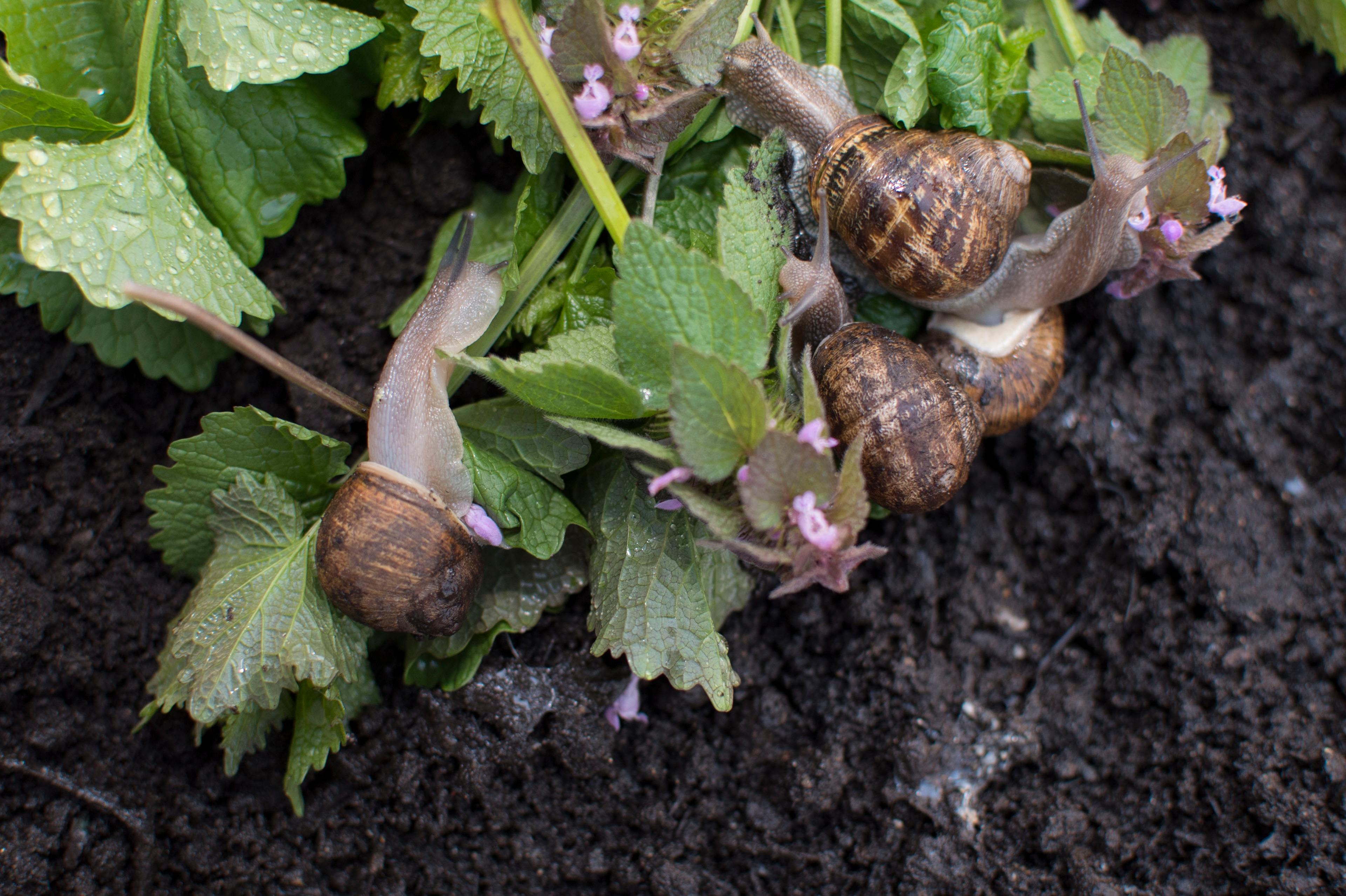
Taylor Knapp isn’t quite sure he’s a farmer. He wouldn’t define himself as a rancher either. What would you call someone who raises, processes, and sells fresh snails?
A chef by training and alum of Noma — widely considered one of the best restaurants in the world — in 2017 Knapp launched his snail business, Peconic Escargot. Based in Cutchogue, a small hamlet on the North Fork of Long Island, the operation is his first foray into the world of animal husbandry. For now, he’s trying out the title “snail wrangler.”
The snails he wrangles (thousands at a time) are housed in a 300-square-foot greenhouse that uses a few fans and the occasional misting of water to keep them at the correct temperature and humidity. Knapp likes to note that there is no book on indoor snail farming in the U.S. In fact, there are few active snail operations in the states — Ric Brewer’s Washington-based Little Gray Farms is the only domestic counterpart Knapp has come across. So the Indiana native has leaned on the advice of foreign farmers, as well as a healthy dose of trial and error.
If you’ve eaten a snail in this country, odds are it came from overseas. In 2021, the United States imported 385 tons of snails, two-thirds of which came from two countries: France and Vietnam. France alone reportedly has around 400 active snail farms. What Knapp is offering is an alternative: a fresher, local product that chefs can point to as a selling point for their dishes. But without a playbook to guide him and mired in incipient bureaucracy, the 35-year-old has been forced to find his own way.
Early on, for example, Knapp fed his snails cornmeal. What he didn’t realize at the time was that cornmeal found in the U.S. is much more coarse than the cornmeal used by his European snail farming counterparts. The result? Hundreds of constipated snails swelling up like balloons.
“That was just one example of something going horribly wrong,” Knapp said.
One community has proved a surprising wellspring of useful information: pet snail owners. Unlike international farmers, who typically keep their snails outdoors, pet snail enthusiasts have sussed out the best practices for indoor snail care such as humidity requirements and optimal feeding schedules.
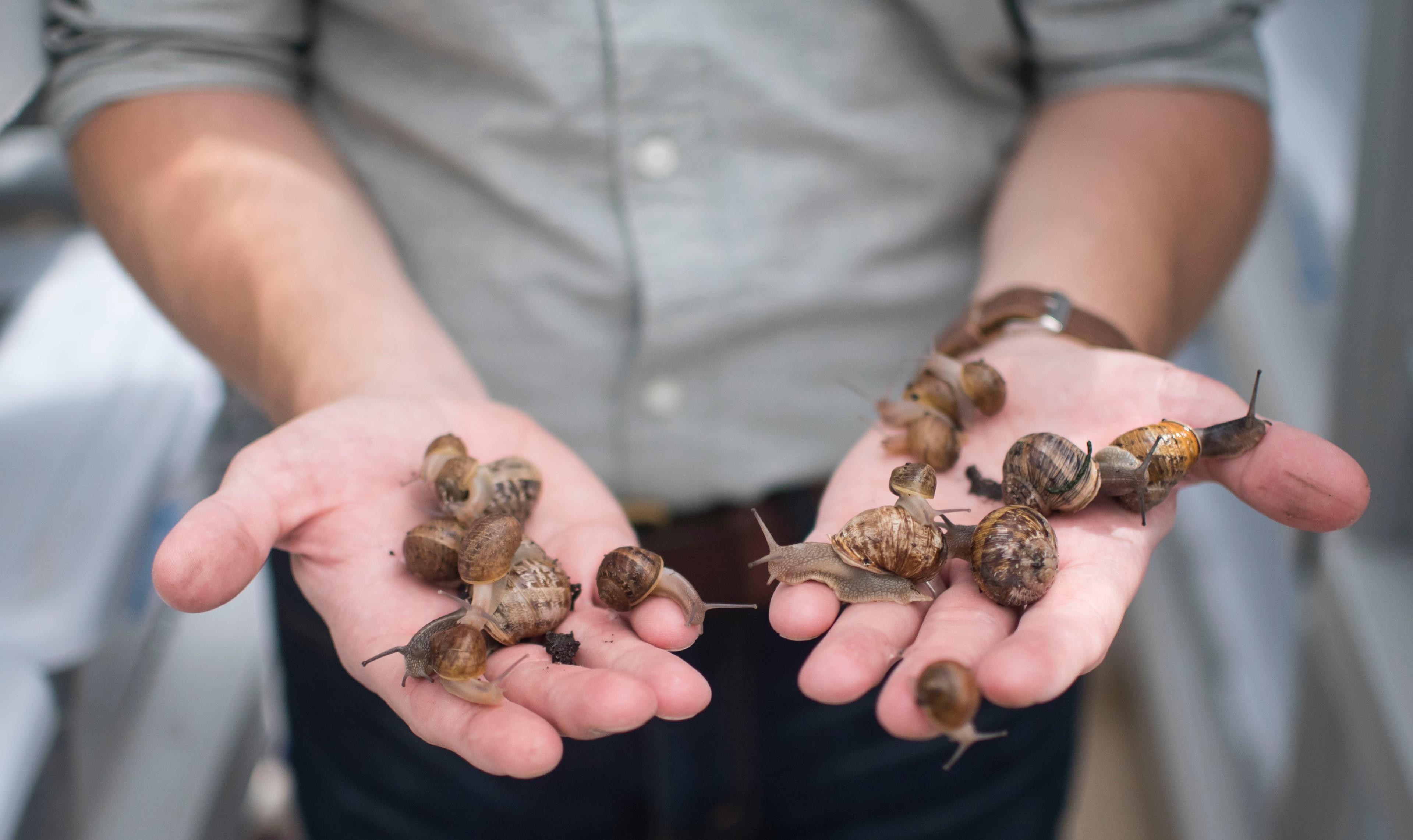
Handfuls of petit gris snails
·Photo provided by Peconic Escargot
Much like bees, snails are fairly self-sufficient. Peconic feeds its snails a mixture of dirt, spent brewery grains, and greens like dandelion, mugwort, burdock, and clover. The terroir affects the flavor in a big way, according to Knapp, giving the finished snails an earthy, nutty, herbaceous taste.
It’s difficult to put an exact date on when humans began eating snails. Archeologists have found evidence (Read: piles of crushed snail shells alongside ash and fire-cracked rock) at various European sites known to be occupied by humans 10,000 years ago. Some historians have even suggested that snails were the first animal domesticated by humans.
In the words of British historian Felipe Fernández-Armesto, author of “Near a Thousand Tables: A History of Food,” it makes sense that our ancestors viewed snails as an easily cultivated source of calories.
“Compared with the large and intractable quadrupeds who are usually claimed as the first domesticated animal food sources, snails are readily managed,” Fernández-Armesto wrote.
“[Snails] can be raised in abundance and herded without the use of fire, without any special equipment, without personal danger and without the need to select and train lead animals or dogs to help. They are close to being a complete food.”
In North America, there is also historical evidence of snail consumption at a variety of archeological sites across the continent, said Timothy Pearce, assistant curator of mollusks at the Carnegie Museum of Natural History. In the 1800s, Europeans migrating to America brought with them various non-native species, which have resided here ever since.
“Snails can be raised in abundance and herded without the use of fire, without any special equipment, without personal danger and without the need to select and train lead animals or dogs to help.”
Pearce estimates there are roughly 500 native species of land snail (including slugs) in eastern North America alone. When we spoke, he had just received a request to peer review a paper regarding a newly discovered snail species.
“There are plenty of reasons why we should care about snails,” he said. “They are really important in the food web. If you think about mother birds in the springtime, she’s going to lay a clutch of eggs and the eggs are coated with calcium carbonate. Where are they getting all that calcium carbonate? It’s from eating snail shells.”
Although not exactly a staple of American cuisine, outside the U.S. snails remain a popular food in dishes from Malta to Morocco. Unlike Knapp’s operation, most of the farms that raise and harvest the roughly 80,000 tons of snails consumed globally each year are outdoors. More space means higher volume and better scaling. Knapp would prefer to work outside too, but the USDA won’t allow it.
The agency considers petit gris — the species Peconic raises, a smaller relative of the large Burgundy snails found in most classic French restaurants — a non-indigenous, herbivorous mollusk. As a potential invasive species, anyone who wants to farm them must first acquire a permit (specifically a PPQ 526) and perform their entire operation in a contained, APHIS-inspected indoor facility.
The USDA’s caution in this situation is not without reason: Invasive snails have a history of damaging ecosystems in the U.S. In June, giant African land snails were spotted in Florida, marking a return for the species which has been described by the state’s Department of Agriculture as “one of the most invasive pests on the planet, causing agricultural and environmental damage wherever it is found.” Petit gris, too, have been found to damage native grasses and act as a vector for disease.
“People who want to grow snails, who generally want to grow non-native species,” Pearce said, “they’re butting heads with the feds, the U.S. Fish and Wildlife Service, who doesn’t want these non-native snails to escape. Fish and Wildlife discourages snail farming. And if they are going to allow it, then they put heavy regulations in place.”
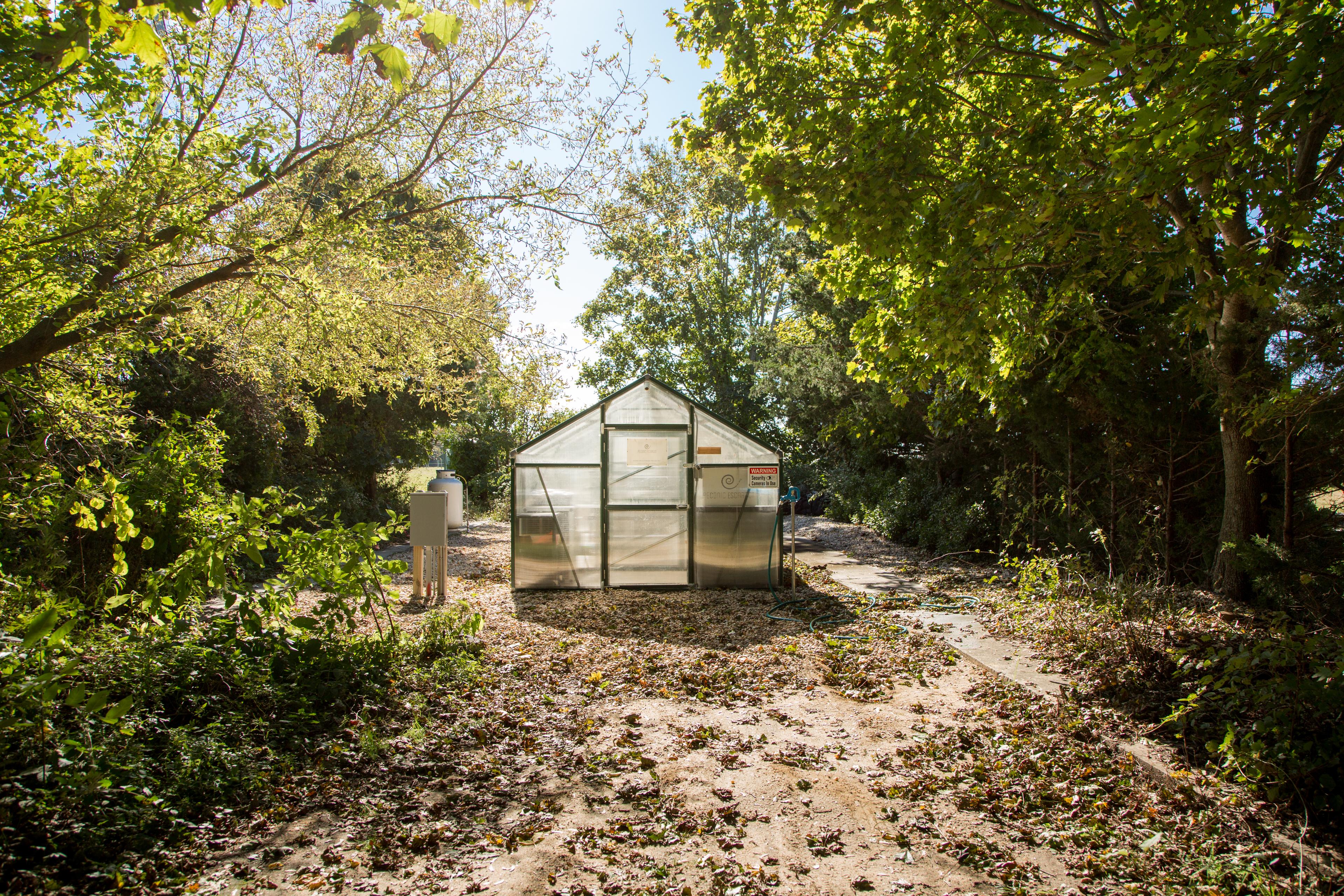
Indoor greenhouse for raising snails
·Photo provided by Peconic Escargot
Given the size of the current market, using a greenhouse and otherwise following USDA containment protocol hasn’t posed a problem for Knapp. But the barriers to entry for any aspiring heliciculturalist means that the domestic industry for fresh snails has remained small, keeping prices high. Knapp hypothesizes that having more domestic snail farmers could lead to greater demand and adoption on American plates, though considering the often sclerotic nature of cultural dietary preferences, it’s unclear how this would actually play out.
“Imagine if there were three oyster farmers in the entire United States. How many people would be interested in eating those things? Probably not many because they (would be) hard to get ahold of and expensive,” Knapp said.
Kevin Brighton, who runs the website Escargot World, said that he’s seen a marked uptick in interest in snail farming, particularly during the depths of the COVID-19 pandemic when people were turning to hobby farming.
“The fact that you can grow snails in a farm with a very low footprint, especially compared to cows and pigs and poultry, it makes a lot of sense,” Brighton said.
“It seems like something special or exotic to us, but data shows people were eating snails in prehistoric times. In Italy and Greece, we’ve spoken to people whose grandfather’s grandfather’s recipes had snails in them,” he added. “It’s not something new, it’s just getting more popular as time goes by.”
On the heels of the pandemic, Peconic has just recently regained its footing in terms of sales figures. Niche, alternative ag operations are generally going to be more sensitive to upheaval in the food industry, Knapp said, and COVID was a perfect example of this. Needing to cut costs and entice customers back, restaurants and chefs leaned into safe comfort foods, shying away from anything experimental or out of the ordinary.
“No one goes to the grocery store and has escargot on their shopping list.”
“There’s nothing wrong with that, but it seemed like before COVID restaurants were more willing to bring on these scarier ingredients,” Knapp said. “I’m hoping the more we get COVID and all that craziness in the rear view mirror, we start to see restaurants branch out again.”
While restaurants make up the majority of his customer base, Knapp is working to expand his offerings to retail consumers. This has proved a tricky proposition because, as he put it, “no one goes to the grocery store and has escargot on their shopping list.”
As part of this effort, Peconic is experimenting with products like a ready-to-bake tin of snails in Bourguignon butter. Then there’s Peconic’s popup restaurant on Long Island, which features an eclectic snail-forward menu. The company is also exploring diversifying to other markets, including harvesting snail slime, or mucin, for use in cosmetics. It even sells a children’s book called “Let’s Eat Snails!” But shifting the dial when it comes to an entire country’s food culture feels at times a Sisyphean struggle, Knapp said.
“Figuring out how to reach that audience that has never tried a snail and is on the fence about it is really the most crucial thing,” he said. “Are you hanging out by the pool on a Saturday with a bottle of champagne? Throw some of these in the oven and have some baguette ready with your cheese plate.”
Knapp is quick to get comparative when it comes to his farm, thinking about where the operation could or should be. But when he finds himself slipping into that mindset, he reminds himself of the reason he got into the industry in the first place.
“Getting really fantastic-tasting snails that are incredibly fresh to our chefs week in, week out without fail is the most important thing,” he said. “Anything we can do on top of that is icing on the cake.”

Over the last century, temperatures across much of the United States have risen by two degrees Fahrenheit — in Alaska they’re up three — yet the Midwest has managed to skate by with just a 1.5-degree uptick. In fact, some Midwestern counties haven’t experienced any temperature rise at all.
The expansive region, which is surrounded by rivers and lakes and includes vast croplands and forests, is often billed a climate haven due to its insulation from sea level rise, destructive hurricanes, and wildfires, not to mention its abundance of water.
Turns out that bounty of water — regularly pulled out of the ground to grow the dense fields of crops that blanket the region — may be why it’s stayed cooler than climatologists projected. Research has shown that large-scale irrigation has been mitigating the effects of climate change in many parts of the United States. But while this cooling effect sounds like a boon to a rapidly warming world, if farmers run out of water to irrigate crops, the effect could quickly be canceled, or even reversed.
“When you add water it cools the surface temperature, so it isn’t surprising at all that irrigation would cool the climate,” said David Lawrence, a scientist in the federally funded National Center for Atmospheric Research’s Climate and Global Dynamics Laboratory. Lawrence has published multiple studies on the topic. “In some parts of the world, cooling due to irrigation has been offsetting all of the warming you’ve been getting from greenhouse gas increases.”
In some regions, heavy irrigation has zeroed out and, in some areas, even reversed the effects of global warming on the hottest days of the year, benefiting approximately one billion people around the globe, according to one study led by researchers at ETH Zurich.
Nebraska is a prime example. The state boasts some of the few areas in the United States that have not experienced any warming in summertime temperatures over the last few decades. Researchers say that this is likely because it is the most vastly irrigated state in the country, tapping into its vast, thick reserves of the Ogallala Aquifer, a 174,000-square mile underground body of water that stretches from South Dakota to Texas.
A working paper published in February examining the impacts of large-scale Ogallala irrigation found that regional center-pivot irrigation systems (the kind that create those round green circles seen from airplane windows) cool downwind temperatures up to as much as five degrees Fahrenheit during the month of August. The benefits are palpable for human lives and livelihoods. “Two of the most widely found effects [of water-moderated temperatures] are on human mortality and crop yields,” said Columbia University economist Wolfram Schlenker, one of authors of the study.
Schlenker and co-author Thomas Braun found that these cooler temperatures help plant growth overall and increase yields by avoiding those harmfully scorching days in downwind areas to the economic tune of $7 billion. Overall, this enhanced heat tolerance for the crops grown in the area — mostly corn and soybeans — equates to $26 billion in inflation-adjusted market value. This cooling effect could protect up to 9% of total corn production and 12% of total soybean production in certain areas during hotter years.
“In some parts of the world, cooling due to irrigation has been offsetting all of the warming you’ve been getting from greenhouse gas increases.”
Cattle grazing in areas downwind of these irrigation systems benefitted, too. Researchers found fewer illnesses and deaths as well as higher comfort in cattle during heat episodes.
But there’s another economic and social benefit, too. Their model found that human mortality costs related to irrigation-fueled cooler temperatures worked out to $240 million in overall savings in the immediate area as well as downwind counties. These mortality costs include hospitalizations from outdoor laborers who need treatment for heat exhaustion and other similar heat-related ailments, people who have suffered severe burns from touching blistering concrete and other surfaces, and serious complications from existing medical conditions. It is believed that heart attacks spurred by spiking temperature are responsible for about half of all heat-related deaths.
One of the major hitches in these findings, though, is throwing humidity into the equation, thus complicating the story for human and animal comfort.
Another study that looked at the impact of irrigation on humid heat extremes found that even when irrigation is cooling the local environment, that does not necessarily mean the conditions are safer for human inhabitants. In hotter regions, like the Mississippi Valley, irrigation can increase the number of days with dangerously high wet-bulb temperatures, which refers to the temperature at which a wet cloth can cool a thermometer. If the air is humid, it will take longer for the water from the cloth to evaporate and the thermometer will take longer to cool, similar to sweat on human skin.
If heat and humidity are too high, it becomes harder for the human body to cool down via sweating, the natural mechanism for removing heat from the skin and other organs. Irrigation also increases evapotranspiration — what many refer to as “corn sweat” — a combination of water evaporating from the surface of the ground and transpiring from plant leaves. This natural process, which has been exacerbated by climate change, means it can feel a whopping 15 degrees hotter in a cornfield than outside it.
This can be dangerous for farm laborers and, if it spreads beyond the field, it can impact local residents, too. “If you’re thinking about stress on the body in terms of heat and humidity, there tends to be more stress if it’s humid,” said Patricia Marie Parker, assistant research scientist for the National Aeronautics and Space Administration (NASA). “How that will affect total stress going forward is an open question.”
Farmworkers and local residents in Nebraska may not feel the same cooling effects as locals in dry Arizona or California’s Central Valley.
So, while irrigation will most likely benefit crops and yields during hot spells no matter the region, the farmworkers and local residents in Nebraska may not feel the same cooling effects as locals in dry Arizona or California’s Central Valley.
The other major question is whether our water resources will last long enough to continue mitigating the increase in temperature long-term. All of these studies have looked at the impacts of inefficient irrigation methods, like center pivot systems, that pump huge amounts of water into relatively small areas. More efficient systems, like drip irrigation, do not boast the same heat-mitigating impacts.
And once irrigation has been reduced, all of that cooling gets reversed, warming can increase, and it can kickstart a new cycle of drought and aridification that exacerbates the warming effects of climate change.
In the Texas Panhandle, which has pumped out massive amounts of water from its portion of the Ogallala aquifer, the water table has been falling so much that farmers in the region have had to cut back on irrigation. While this year’s unusual rains helped the region to stay cooler longer, it’s still far from out of the woods this season. In spite of receiving 130% more rain than usual this year, the area surrounding Lubbock is experiencing the ninth-warmest period on record. Hopefully, all that rain will help replenish the local portion of aquifer to prevent even more water-use reductions that could make that warming even worse.
“As soon as you stop irrigation you get a warming effect that bounds us back,” said Schlenker. “There’s a beneficial effect while you do it, but it’s very hard to sustain.”
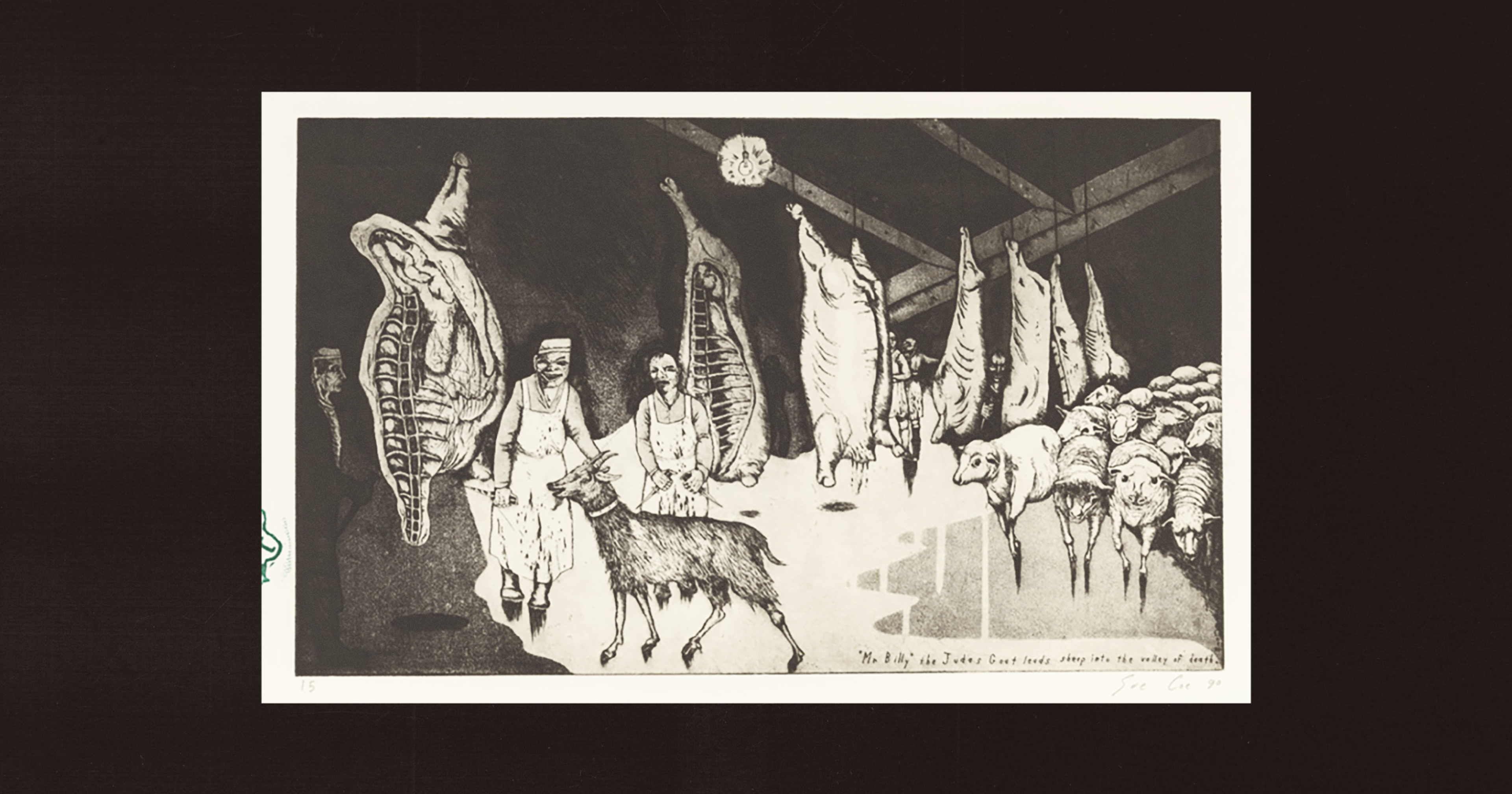
In the American meat processing plants of yesteryear, sheep destined for dinner plates didn’t follow humans to their final destinations. Instead, they trailed behind aptly named Judas goats, trained to “betray” other livestock by leading them to slaughter.
In a move meant to keep the sheep docile, the plant’s live-in Judas goat would receive training to routinely lead the flocks to their fates like a four-legged pied piper, stepping aside after completing the job — and often earning a reward of a cigarette to munch. The natural instinct of sheep makes them prone to follow a leader, even to their demise.
With a bell around its neck and tobacco in its belly, the goat would carry out its duty, time and time again at the slaughterhouses of the 20th century. The Judas goat’s harsh moniker was given because it leads fellow animals to their deaths, though today’s agriculture experts would be more likely to characterize them as leaders.
Today, its legacy lives on as they and other lead animals continue to herd on smaller scales nationwide.
By 2023, the practice of training goats to lead animals at abattoirs had somewhat fallen out of vogue, due in part to higher consolidation in the meatpacking industry that forced smaller players out. Still, from Texas to Hawai’i, farmers and government officials rely on Judas goats and other lead animals for duties that humans can’t fulfill.
The Hawai’i Volcanoes National Park on the Big Island currently serves as home to three Judas goats — the final agents of an effort first launched in 1981 to protect the local ecosystem, said park spokesperson Jessica Ferracane.
Because goats are considered invasive and destructive mammals on the islands, the government tried to rid them from the park in the 1980s through fencing and other methods of removal. The park staff’s initial success meant only around 250 goats remained, but they lived in small groups across remote areas spanning a total of about 80,000 acres, Ferracane said. They were exceedingly difficult to track.
In order to wipe out those herds, employees turned to Judas goats to lead them to the rogue animals. They fastened radio-tracking collars to kids, which are more likely to find the other goats “because they don’t want to be alone,” Ferracane said. Although the technique isn’t entirely foolproof — for instance, the Judas goats might stay solo or their collars could malfunction — she called it “a cost-effective method” for the job.
Across the Pacific Ocean, officials on the Galápagos Islands also embraced Judas goats at the turn of the 21st century as their solution to exterminating its non-native goat population, which was wreaking havoc on the islands’ habitat. In an effort similar to the Hawaiian initiative, Judas goats led them to the other goats, with the project considered a success by 2006.
They fastened radio-tracking collars to kids, which are more likely to find the other goats “because they don’t want to be alone.”
In addition to tracking other goats, they’re also still used to herd livestock. Dana Stewart of the Martin Cattle Company in Judsonia, Ark., first witnessed Judas goats at work a few years ago at a sheep and goat auction in Texas.
“It was very fascinating to see sale animals follow the lead goat, or Judas goat, into the ring,” she said. “Watching these Judas goats work was like watching a well-orchestrated system of moving parts — livestock and people working together.”
The Judas goats would bring groups of animals into the ring, then lead them into pens or outside of the arena following transactions. “This went on throughout the sale, sometimes with another Judas goat offering relief to the others, like subbing players on a sports team,” she added.
Stewart, 40, counts as the sixth generation to reside on her family’s beef cattle farm. Her great-great grandfather purchased Hereford cattle in 1936, intending to raise registered seedstock and sell bulls to other ranchers. Five years ago, the family also began selling goats to 4-H and National FFA Organization students, with about 60 in their herd right now.
“Having a trained animal to lead the herd is a smart move,” she said. “If there’s not a leader, it takes more manpower to gather the animals and move them to where they need to go.”
Instead of opting for Judas goats, Stewart’s farm uses individual cows to drive each pasture group when it’s time to eat or move. Often, an animal naturally leads the herd — a cow “that, without fail, is always the first to come” when called. “If you can get one or two moving in the right direction, most of the herd will follow,” she said.
For instance, in a natural goat herd, the group relies on a pecking order of dominance that results in a top buck and a top doe, according to Cornell University. The doe’s responsibility is to lead the herd to graze.
Some slaughter plants and feedlots still utilize Judas goats, although “good facilities should negate the need for them.”
In a domestic herd, if a human takes on the role of feeding the goats, “the herd may attempt to follow you wherever you go,” Cornell reports. “This becomes a problem when you try to send the herd out to pasture and they keep trying to follow you home.”
And among sheep flocks, commercial operations use Judas sheep from the farm to transportation to marketing to processing, said the American Sheep Industry Association’s Amy Hendrickson. She called the term Judas sheep “simply another name for a ‘lead’ sheep,” noting that sheep will easily follow a leader.
“These sheep live for years on an operation, providing wool but obviously no lamb production,” Hendrickson said. She called the use of lead sheep “simply another management tool, similar to herding or protection dogs.”
Casey Kammerle, spokesperson for the North American Meat Institute, described sheep as gregarious, making them “more at ease following a lead animal, which limits the need for human handlers, which could cause additional stress.”
Many farms depend on leader animals — “not necessarily goats” — to guide the others, said Susan Schoenian, sheep and goat specialist emeritus at the University of Maryland Extension.
Some slaughter plants and feedlots still utilize Judas goats, although “good facilities should negate the need for them,” she said. This can be achieved through intentional design. “With pens and corrals, the animals can be moved naturally from one point to another, following the one ahead of them,” Schoenian said. “There are specific ways to design facilities to move animals through slaughterhouses naturally.”
Although the role of the Judas goat has evolved over time, and expanded to include other lead animals, some can recall its original purpose. Even without an agriculture background, Allan Musterer, 80, ties a distinctive moment in his childhood to Judas goats. In the 1940s, his father brought him and his brother to a Hoboken, N.J., slaughterhouse run by a fellow church congregant.
After taking them to a corral of lambs, his dad fed several cigarettes to the flock’s lone Judas goat — a bell hanging around its neck, Musterer said. A noisy signal at the plant spurred the goat into action, gathering the livestock and marching them onward.
“They just kept following and following, lamb after lamb, until all the lambs were in that chute,” Musterer said. “The goat came out, the door closed, and the lambs went off to slaughter.”
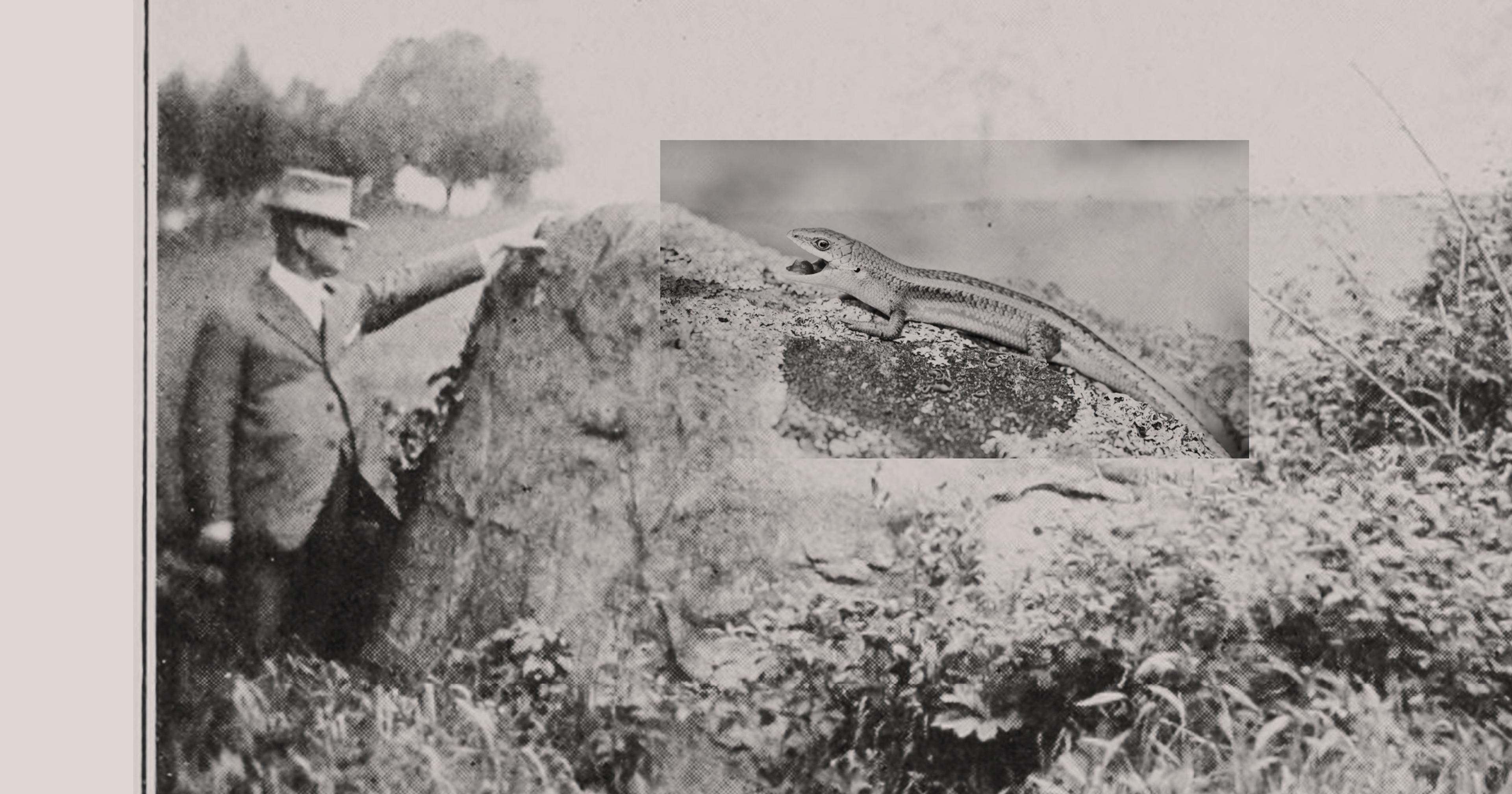
The rolling hills outside Sydney, Australia, are filled with a checkered landscape of green and yellow fields, where farmers grow wheat and grapes and ranchers graze cattle and sheep. Recently, in 10 of those grazing fields near the rural community of Cowra, researchers set up traps to try and snag some lizards.
The researchers found species like eastern striped skinks, southern rainbow-skinks, and pink-tailed worm-lizards, a species listed as “vulnerable” to extinction under Australian law. But these reptiles weren’t evenly distributed — some of the fields they studied had vastly more reptiles than others.
The difference? The researchers had dotted those reptile-rich fields with rocks, which the animals could slip under, bask on, and dart around.
Boulders, rock piles, stony outcrops, and other rocky features provide important microhabitats for reptiles and other wildlife. But in many outdoor areas, from sprawling farmland to modest backyards, rocks have been removed to make way for cultivated landscapes.
Dumping a pile of stones on the ground probably isn’t going to magically recreate a thriving, diverse ecosystem — and farm owners shouldn’t be expected to cover their fields with rocks to support local wildlife. But protecting and strategically restoring rocky landscapes could be an important part of holistic ecosystem conservation on many working lands.
Flip over a rock anywhere in the world, and you’ll likely spot animals like worms, spiders, lizards, or salamanders enjoying the darkness and wet soil of the near-subterranean environment. Rocks can play plenty of important roles for wildlife, providing places to hide, find food, cool down, and warm up, said JJ Apodaca, executive director of the U.S.-based Amphibian and Reptile Conservancy.
That can be true for rocks of all sizes, not just giant boulders or towering outcrops. In Australia, for instance, “even a rock the size of a fist … is critical habitat for a whole host of reptiles,” said Damian Michael, an ecological researcher at Charles Sturt University in New South Wales, and one of the scientists on the study looking at how added rocks affected reptile communities on grazing lands.
Australia is home to dozens of reptile species that rely specifically on rock cover, Michael said, and most of the research looking at rocks on farms and ranches is coming out of that country. But rocky microhabitats are used by reptiles all over the world, who might slither into obscurity below a boulder in the forest or sun themselves on an outcrop protruding from tall grass. In the southwestern U.S., for example, rocky shelters are key sites for species like Gila monsters — and Apodaca said that collared lizards, which range from the Southwest into the Great Plains, also rely on rocky outcrops and habitats.
For many farm owners, however, rocks are a nuisance. Stones scattered over cropland can break combine headers or puncture wheels, rock outcrops can take away precious growing space, and rocky soils can make planting, plowing, and harvesting a hassle. That’s why farmers go through the trouble of removing rocks from their fields, either by hand or mechanically.
“Even a rock the size of a fist … is critical habitat for a whole host of reptiles.”
Recreating some of those rocky microhabitats could start to restore parts of the reptilian ecosystem in landscapes where rocks have been removed. But this wouldn’t require covering every square yard with stones and boulders. Farmers interested in restoring reptile habitat could leave rocks along corridors or in the corners of a field, Apodaca suggested, similar to how some people plant rows of wildflowers to attract pollinators or tend forest patches to provide deer and bird habitat.
Farmers could even use the rocks they remove from the fields to create these microhabitats around the edges of their land, instead of going through the trouble of hauling them offsite. Other materials can offer similar functions to rocky shelters, too — Apodaca said he’ll often recommend that people leave brush piles on their lands to support herpetological diversity.
There are plenty of reasons why a farmer would want to support that diversity. Reptiles play an important role in many ecosystems, especially as predators of pest species like mice and insects. They are also a key feature of many local food webs as prey for larger animals like birds and mammals, and in some places, they can even act as seed dispersers and pollinators.
But scattering rocks over a field will not single-handedly create a reptile paradise. In Michael’s recent study, every single one of the fields they looked at also had an existing, more natural outcrop of rocks nearby — which likely served as a source habitat for the reptiles they found in their rock-supplemented fields.
And protecting existing rock formations might be even better than trying to artificially replicate rocky habitats. Brian Alexander, who runs a custom grazing business on his family’s ranch in southwest Kansas, has been managing his land with conservation in mind for years — such as protecting streams, using prescribed burns, and rotating his cattle. As a result, he said the property is full of wildlife like deer, northern bobwhite, and beavers, along with reptiles including prairie rattlesnakes, horny toads, and legless lizards.
“If we just gently nudge nature, and provide her with gentle guidance, that result is so much more successful than trying to brute-force an approach.”
Alexander also has a quarry on the ranch with some rocks around it. But in that area, with all the human activity and general disturbance, he doesn’t see that much life. Mostly, he said, he’ll spot rock-loving reptiles along the more natural rock formations that dot his land.
That may be because reptiles usually don’t solely require rocks to live — they also need vegetation, water, food, and all the other components of a healthy ecosystem. And by managing land for conservation, or judiciously restoring rocky microhabitats in specific places around their land, farmers and ranchers can provide more holistic support to their local reptile communities.
“A strip of rocks and wildflowers is going to be a lot less effective for biodiversity if it’s in the middle of an island of thousands of acres of cornfield,” Apodaca said. “It’s going to be a lot more effective if it’s next to some woods or wetlands or streams or whatever other habitat types might house those sorts of species.”
Determining the best way to protect reptile communities on working lands is always going to come down to the specific needs of the local ecosystem and the land, Michael said. “The farmers need to have a general understanding of what sort of biodiversity is present in their landscape to make those planning decisions,” he said.
Similarly, Alexander noted that land management should be “contextually appropriate” — and warned against relying on quick-fix solutions.
“If we just gently nudge nature, and provide her with gentle guidance,” he said, “that result is so much more successful than trying to brute-force an approach.”

Emma Baxter never intended to become an expert in artificial intelligence. As an associate professor of animal and veterinary science at Scotland’s Rural College, her work is focused on breeding swine and improving the environments in which they are raised. But when a software company needed a pig expert to help validate an automated livestock feeding system they had in the works, they called her.
The company’s goals for their project were relatively straightforward: They wanted to use facial recognition to enable their feeders to provide individualized diets for specific animals. And by the end of the project, Baxter said, they had developed a neural network that could identify individual pigs with 97% accuracy using a basic webcam.
Baxter, however, came to believe that the software could do more. If the network could identify pigs based on minute facial details, then it might also be able to tell what the pigs were feeling emotionally based on tiny changes in facial expression (technology that is also being explored for humans).
“We ourselves can see changes in their body posture and facial expressions, so we were quite confident that this would show up,” Baxter said.
Baxter started with a relatively simple experiment — measuring stress in first-time mother sows when introduced into pens with larger, more experienced sows. Older pigs are often domineering and bully their younger neighbors, providing researchers with an opportunity to observe distress without subjecting animals to excessively inhumane circumstances. Before long, they had trained a computer to detect distress in pigs with 92% accuracy as compared to human assessment — a figure that has since improved with additional experimentation.
Around the world, a small but growing number of researchers and technologists are building similar technologies: machine learning-based systems that monitor farm animals and determine whether they are happy or distressed. Most, like Baxter’s system, employ cameras to look for subtle changes in expression or posture that may indicate how an animal feels. Others draw on additional sources of input: infrared cameras to monitor body temperature or microphones to collect vocalizations.
Many of these AI models have astounded the researchers developing them in terms of their ability to consistently and accurately identify nonverbal signs of emotional wellbeing. But the AI doesn’t always produce the results researchers expect — and many of the same researchers developing this technology have begun to develop misgivings about how it might be used.
Reading the Animal Mind
The study of animal emotions dates as far back as Darwin, but the field has seen a resurgence of interest since 1995, according to Dominique Blanche, associate professor of agriculture at the University of Western Australia. Since then, studies have demonstrated that animals can have similar brain structures and display parallel activities with many human emotions. Sheep — Blanche’s personal species of choice — have been shown to have measurable physiological stress responses to novel experiences and to the degree of control they have over their lives. Ducks appear to experience frustration, with a measurable change in body temperature, when prevented from doing something they want to do. Cows not only bond with other specific friends within their herds, but have a lower heart rate and show signs of feeling relaxed when they are near these preferred individuals.
Whether or not animals experience consciousness or feel and interpret emotions the same way humans do remains a matter of fierce debate, Blanche said. But there is no question, he continued, that farm animals like pigs, cattle, sheep, and even poultry have physiological experiences that resemble our own emotional responses.
There is also a growing consensus that more content animals are more productive animals. Like humans, when animals experience long-term stress, they seem to grow prone to chronically poor health, said Caroline Lee, principal research scientist on the animal behavior and welfare team at Australia’s national science agency, The Commonwealth Scientific and Industrial Research Organisation. Stressed and anxious animals invest more energy in managing those emotional states, which leaves them with less energy to grow. It also erodes their immune health, making them more prone to disease. And in general, Lee said, farmers report that calmer animals are easier to handle, which cuts down on labor.
All that seems to point toward an obvious use-case for AI systems trained to identify emotional states in animals: Make the animals happier to improve their productivity and decrease farm costs.
Mammals like pigs and cows tend to show their emotions in ways that might be more familiar to humans: ear posture, changes around the eyes and lips.
The potential has brought a variety of software developers and researchers to the field. But first they had to figure out how to interpret animal emotions themselves.
Fortunately, scientific research has already greatly expanded our understanding of animal emotions and expression, Lee said. Researchers have used pharmaceuticals to induce particular states in animals like anxiety, depression, and even happiness — though Lee notes that last one is somewhat difficult to manipulate reliably with pharmacological means. Once the emotional state is physiologically validated, scientists can then observe the animals to associate behaviors with specific emotional states.
Some of the results are what you might expect. Anxious animals tend to be more vigilant, holding themselves in an erect posture with their heads held up. Distressed animals will make higher-pitched vocalizations.
Researchers like Suresh Neethirajan, a professor at Dalhousie University in Canada, have taken this process one step further, inducing emotional states in animals and then training artificial intelligence to recognize them. Neethirajan and his team used stimuli such as loud noises or toys to prompt certain states in farm animals while using cameras and other sensors to record their responses. The software can now reliably identify 13 emotional states in cows and pigs, Neethirajan said.
The software can now reliably identify 13 emotional states in cows and pigs.
Chickens, Neethirajan said, are a little bit harder, but they’re on the AI to-do list as well. Mammals like pigs and cows tend to show their emotions in ways that might be more familiar to humans — ear posture, changes around the eyes and lips. Chickens have fewer facial muscles, making them less expressive and harder to read. But they do behave and vocalize differently, depending on what is going on in their environment.
“The data clearly show that chickens do have emotions, and the emotions can be easily measured by changes in respiration rate — there’s a sudden drop of temperature in the beak region, and the model clearly shows that when they are under stress, the birds become quiet,” Neethirajan said.
All that may sound rather straightforward, but some of his research has come to rather disturbing conclusions as well. In one experiment, Neethirajan said, his team monitored the reaction of pigs who were being shipped from one farm to another, and another group of pigs being sent to the slaughterhouse. And even though they had no reason to know where they were going, the pigs en route to the slaughterhouse showed greater distress than those moving between farms.
“We still need a bit more concrete evidence,” Neethirajan said, “but I have a hunch based on the preliminary data that they have an understanding — that these animals can somehow sense they are going to be killed.”
A Moral Quandary
Any discussion of emotions in animals may have, for understandable reasons, a tendency to become tricky or uncomfortable for some animal producers. Indeed, no full-time animal producers responded to requests for comment on this story.
On the whole, Lee said, she believes producers want to do the right thing by their animals and maintain high standards for animal welfare. But there is also a fear that society will impose regulations on them that would make farms difficult to manage profitably, she said.
Neethirajan, for his part, opted out of the system altogether: He went vegetarian after the findings from the slaughterhouse experiments. But he recognizes a need for animal products in the human diet. We don’t yet have the ability to feed the global population with plants alone, and he himself still eats eggs and dairy. And yet he remains conflicted about the use of the technology he’s helped to create. The obvious application, Neethirajan said, is to reduce labor costs and increase the productivity of farm animals. But should we really be focused on profit when we’re talking about living, thinking, feeling beings?
There’s also a disconnect, Baxter said, between what technologists believe AI can do, and the reality on the ground. Sure, you can get AI to read animal facial expressions via a camera. But farm animals don’t always look up at cameras, and they love to chew equipment.
Although AI has proven itself effective at monitoring signs of basic emotional states in animals, it’s proven challenging to use computers to monitor more nuanced emotional expression. Older animals, Baxter said, are more difficult for the AI to read than younger animals. And while the rate of accuracy for using AI to detect negative emotions such as stress and fear is relatively high — approaching 99% accuracy compared to human and physiological measures in some trials — positive emotions, like happiness, have proven more difficult to parse.
Farm animals don’t always look up at cameras, and they love to chew equipment.
Going beyond the emotional state to try to interpret specifics about farm conditions or animal behaviors is also tricky, according to Rick D’Eath, a colleague of Baxter’s at Scotland’s Rural College. Outside the college’s work on facial recognition, D’Eath collaborated on a system intended to predict a seemingly intractable issue on pig farms: tail biting. Unhappy, bored pigs will bite each other’s tails, leading to injury and infection. So D’Eath and his team set up a computerized camera system intended to monitor pigs for signs of a potential tail-biting outbreak.
The theory behind the system was relatively straightforward: When the pigs start to worry about being bit by other pigs, they will tend to hold their tails closer to the body and back into corners to protect themselves. So the camera system was intended to detect these behaviors and alert the farmers when signs of tail biting emerged.
At first the system worked perfectly, D’Eath said. But as time went on and they tested it at more farms, the system started to flag a growing number of false positives. Tail posture, it seems, wasn’t exclusively related to tail biting.
“We initially thought we could produce a system that we could say, this is an early warning system that will warn of tail biting outbreaks,” he said. “Now we have a system that can tell you there is something amiss in that pen and you should go check it, but we can’t be specific what it is.”
That, as you might imagine, is not the winning sales pitch that D’Eath started with. And it raises questions about the potential for increased mistakes and animal welfare concerns — particularly if AI is used to reduce the ratio of human farmers to animals on farms.
Monetizing Welfare — A Different Approach
As an advocate for animal welfare, Sarah Ison, head of research at advocacy group Compassion in Farming, has her own concerns about the use of artificial intelligence on farms — especially if it leads to more factory farming and decreases the connection between people, farmers, and the animals they raise for food.
But she also sees potential benefits. Many species of animals, especially farm animals, will naturally try to hide signs of pain and vulnerability. The inability to know with any certainty whether an animal is in pain has led to recommendations for veterinarians to give all animals with the same condition a standardized dose of pain meds, which could lead to over- or under-treatment, depending on how an individual animal responds. AI monitoring systems could give us the ability to better understand when and how to manage pain in animals, Ison said.
AI could also give farm animals a greater sense of autonomy, allowing them to signal when they want to go inside or outside, Ison said. Or the benefits could be as simple as recognizing animals by their faces alone, eliminating the need to mutilate animals with ear tags for identification, Baxter said.
He can envision a world where AI monitors and interprets how animals are feeling — and then uses that information to generate welfare reports for consumers.
And while no one denies the potential for AI to accelerate trends toward fully robotized and dehumanized farming, Neethirajan believes it could have the potential to increase our connection to farm animals. If we could get beyond the obvious applications, he said, he can envision a world where AI monitors and interprets how animals are feeling — and then uses that information to generate welfare reports for consumers.
Ison notes that farmers have already begun to parlay consumer concerns about animal welfare into improved prices for their products, charging more for cage-free eggs, free-range chickens, and grass-fed beef. But it’s not always clear what these labels mean or how they are verified.
AI, Neethirajan said, could bring true transparency to these labels by monitoring whether an animal truly led a happy life and generating a comprehensive — and reasonably independent — report on which consumers and retailers could base their purchasing decisions.
The current gold standard for animal welfare monitoring is someone who “goes and looks at a farm, and it’s a one-day visit,” D’Eath said. With AI, “we are talking about 24-7 monitoring. But we’re not there yet.”

Restoring sagebrush ecosystems across the Great Basin is a critical tool for curbing the spread of wildfire-prone invasive grasses, protecting threatened species, and supporting grazing animals like cattle and sheep that have long been emblems of the American West.
“Sagebrush is an ecological and cultural keystone species,” said Karen Hall, ecological education program director with the Institute for Applied Ecology. “If we lost all of the sagebrush habitat in the world today, ecosystems and human systems wouldn’t function — it would mean the loss of hundreds of species and the loss of livelihoods for people in those habitats and beyond.”
To supplement what’s been lacking in the commercial native seed market, a recent crop of prison projects have stepped in to offer unique ecosystem restoration solutions. Hundreds of incarcerated people across Western rangelands are growing difficult-to-cultivate sagebrush plugs that are improving the ecosystem while building valuable skills.
The Sagebrush in Prisons Project is active in nine prisons across five different states that span the Great Basin. Incarcerated crew members sprout local sagebrush varieties from seed and care for the delicate plants by watering, weeding, thinning, and fertilizing throughout the spring and summer months. Come fall, those seedlings are boxed up and sent to various Bureau of Land Management restoration sites. These areas were previously scorched by massive wildfires, including the Martin Fire in Nevada, Paisley Fire in Oregon, Gas Hills in Wyoming, and Soda Fire along the Idaho-Oregon border.
The issue of restoring these rangelands is so critical, it’s brought together a diverse coalition of interests — ranchers, environmentalists, hunters, governmental agencies, and others — who don’t typically see eye-to-eye on public land issues.
Working together to sow this aromatic shrub across the sagebrush steppe seems like an easy win, but there’s just one major hitch. Finding the seeds and plugs to replant has been extremely difficult. That’s where these prison projects come in.
“I’ve never been more excited to be part of something more far reaching than myself than when I volunteered to participate in this sagebrush project,” wrote Lynn Huffman, a sagebrush program participant at Lovelock Correctional Facility in Nevada, in an open letter. “I am truly grateful to those beyond the prison for bringing this stage of the project to the inside.”
After wildfires, the lack of native flora opens the door to invasive cheatgrass and other pernicious, fast-growing weeds that quickly fill in the vast sea of bare land left in the wake of these infernos. These fine, flashy fuels dry out much earlier in the wildfire season than native sagebrush, helping to spur more intense fires more often, creating a vicious cycle that leads to even more loss of sagebrush and healthy rangelands.
“It’s not a sea of sagebrush anymore. We are losing it. It is going away and it’s really depressing.”
“It’s not a sea of sagebrush anymore. We are losing it. It is going away and it’s really depressing,” Caleb McAdoo, a biologist with the Nevada Department of Wildlife, told NPR.
The sagebrush seedlings reared in these prison programs help the ecosystem to recover more quickly after the blazes, thereby preventing (or at least limiting) future wildfires. These young plants also help to provide critical habitat for threatened sage-grouse, an umbrella species that acts a barometer for the health of the rangelands. Ensuring the health of sagebrush rangelands is important for local ranchers, too, because the plant increases water retention in the soil, protects grasses and forbs from overgrazing, and helps to maintain forage production for cattle and sheep.
This is why ranchers across the sagebrush steppe have been increasingly working on conservation measures to preserve the precious plant and overall ecosystem of their grazing lands. “It doesn’t happen overnight,” said cattleman John O’Keefe of Adel, Oregon, at a public meeting several years back. “But [ranchers] see what happens, you know — if they look over the fence and see these junipers going away and seeing this rangeland opened up — and the benefits you get from doing these things, and it kind of sells itself.”
There are multiple species of sagebrush, so each of the prisons working on this project cultivates varieties that are indigenous to the specific microregion. For example, at the Washington State Penitentiary in Walla Walla, the program focuses on growing sagebrush from Central Washington that’s adapted to an elevation of somewhere between 1,000 and 3,000 feet.
Last year, incarcerated program technicians and SPP staff grew 35,000 plugs that have been sown densely in the area that surrounds Ellensburg. The hope is that these plants will spread out to expand its habitat and curb the spread of cheatgrass. This year, the organization is on track to produce around 50,000 plants for the region. “The state is focusing on this range and a couple others because of frequent wildfires,” said Carl Elliott, conservation nursery manager for Sustainability in Prisons Project, which partners with the Insititute for Applied Ecology on the Sagebrush in Prisons Project.
Across the West, the Institute for Applied Ecology’s programs have been growing roughly half a million sagebrush plugs per year, adding up to around 3.5 million since its inception. The benefits go far beyond ecosystem restoration.
“They have real knowledge to be able to work with plants in the future.”
The crew members who are involved in these programs get paid for their work. It’s a paltry fee — $1 per hour in Washington — that’s dictated according to state guidelines. But these sorts of voluntary programs are not about cheap labor, say the people involved. The organizations running them want to bring the benefits of education, training, and other positive impacts. These benefits include reducing idleness, which has been associated with higher levels of depression and anxiety, and giving them the ability to make decisions in an environment that strips away basic freedoms. Having some sense of agency in prison has been shown to boost self-esteem and improve psychological outcomes. “I hear they come out to work on our crews because it’s a space where they can have some autonomy,” said Hall. “They live in an environment where all variables are controlled.”
Studies have also shown that correctional education programs improve outcomes for incarcerated people once they are released. A report by RAND Corporation found that incarcerated individuals who participate in vocational skills and education training had a 43% lower chance of recidivating than those who did not.
Plus, the crew members involved in the Washington state efforts, which are overseen by The Evergreen State College’s Sustainability in Prisons Project, can receive up to 18 college credits at no expense to the student. The Institute for Applied Ecology is currently working toward establishing college credits for its crew members across the states (outside of Washington) in which it offers programs.
This sort of training could potentially lead to careers in farming or nursery work post-release — if formerly incarcerated people are actually given the chance. “Our students receive extensive nursery education and training like integrated pest management, proper watering and fertilizing, and introduction to ecology of shrub steppe ecosystems,” said Kelli Bush, co-director of the Sustainability in Prisons Project. “Ecological horticulture is the basis, so they have real knowledge to be able to work with plants in the future.”
So far these organizations haven’t had much opportunity to maintain contact with sagebrush crew members after their release (though they have been able to stay in touch with crew members from some of their other ecological restoration programs). Representatives from both organizations say they’re working toward making that easier. But Hall recently learned that one 82-year-old formerly incarcerated individual who worked at Warner Creek Correctional Facility’s program went on to start a sagebrush farm after completing his sentence.
Stories like that are a win for these ecosystem restoration efforts and all the people who have dedicated their lives to these programs. “We don’t expect that all crew members will be released from prison and then walk into a job in the horticulture industry,” said Hall. “But when it happens, it feels good.”
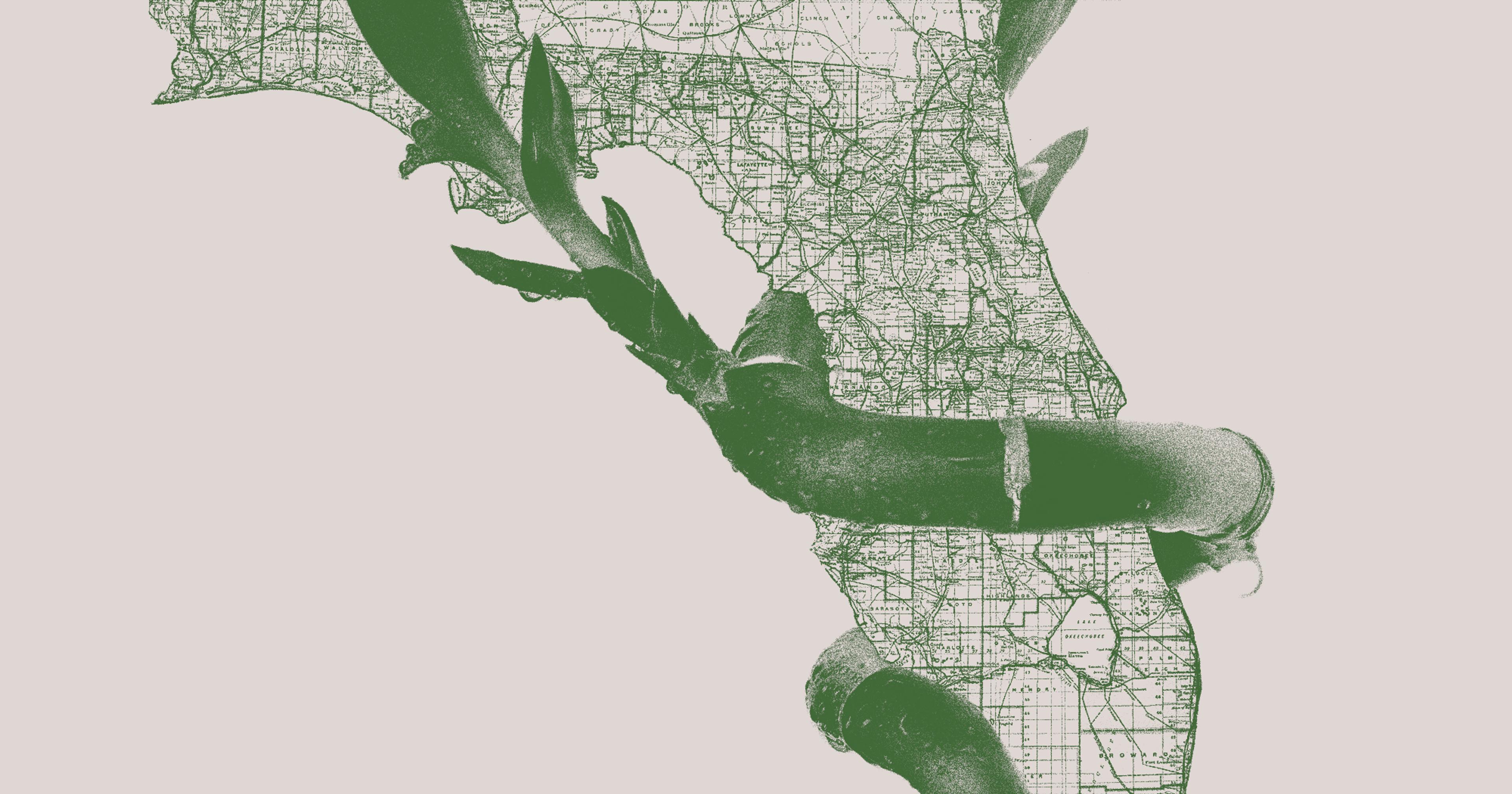
“Bamboo farming in America is a terrific idea,” exhorts a blog post from a bamboo consultant in California. Not only does it grow well on land that farmers have traditionally planted corn on, it “holds great promise for American farmers looking to diversify their acreage.”
Similarly rosy assessments have been turning up lately among a handful of small U.S. companies. They vociferously encourage farmers to start planting this “green gold,” which they tout for being sustainable, easy to grow, and quickly profitable — the perfect material for making hundreds of products, from chopsticks to toilet paper, cutting boards to fabric, roofing to tea. “With a little investment in growing and harvesting bamboo, you could turn a profit while helping the planet,” promises one such outfit on its website.
This enthusiasm appears to be supported by reputable science: Some of the more than 1,600 grass species in the Bambusoideae subfamily can sequester carbon both while they grow and after they’re turned into long-lived products like furniture. And they can thrive on otherwise degraded forest lands, climate impact researchers at Project Drawdown report.
But there are caveats to all of this — big ones. And you begin to get an inkling of them once you notice hardy bamboo stalks pushing up paving stones in dusty city corners where no one planted them, or tight bamboo thickets claiming roadsides across the Southern U.S. “I’ve seen it grow underneath interstates, then pause, then come up the other side,” said David Coyle. “I’ve seen it grow into the pipes and up into the toilet in a house. It’s incredibly aggressive and the minute you stop containing it, it’s going to grow outside its field boundaries.”
Coyle is an assistant professor of forest health and invasive species at Clemson University in South Carolina. Along with extension professionals in Alabama, Florida, and Georgia, he’s been spreading the word — in his case, with impossible-to-misinterpret absolutism — about the ecological dangers of planting certain species of bamboo that are not native to the U.S., which is to say pretty much all of them. “It’s a horrible idea. It’s just a horrible, horrible idea. I just can’t think of a worse idea,” he said unequivocally.
Regions of this country are already contending with the ramifications of planted species gone invasive: kudzu’s vine-y takeover of the South, for example, and in the Northeast and Midwest, head-high phragmites grass running amok. Along with Paulownia trees (which have conquered parts of the Pacific Northwest and the Eastern seaboard), they’ve displaced countless native plant species, abolished habitat and food resources for wildlife, and proved all but impossible to eradicate.
“It’s just a horrible, horrible idea. I just can’t think of a worse idea.”
Coyle and colleagues say some types of bamboo could represent the same danger — in fact, one species is already spreading from Texas to Florida and up into Kentucky and Virginia. “From an ecological standpoint, it essentially creates a dead zone. If you’ve ever been in a patch of bamboo … not even birds go in there,” Coyle said. Bamboo species that are of the greatest concern are “running” bamboos, whose underground rhizomes can spread far from the original plant.
The researchers warn that for U.S. farmers, bamboo’s invasive potential is not its only drawback. They point out that there’s virtually no infrastructure here to process bamboo or turn it into products — aside from the relatively simple operation of harvesting shoots for consumption. U.S. enthusiasts crow about the $60 billion international bamboo market and its projected growth to almost $100 billion by 2031.
But that market and pretty much everything to support it is dominated by China, where many commercial bamboo varieties are endemic and therefore ecologically appropriate, said Lucy Binfield, a PhD candidate researching bamboo forestry at the University of British Columbia in Vancouver. “There’s already this relatively cheap and abundant source of bamboo in China, so you’re competing directly with this other huge market that’s [been] established … since the late ‘70s.”
China has also built plenty of processing and manufacturing infrastructure close to its almost 7 million hectares worth of bamboo plantations. After preliminary processing, where it may be treated with a borax solution to remove sugars and harden it, the material gets diverted into “different value chains for different products,” Binfield said. “There’s machines that will cut your bamboo culm into lots of little strips, there’s machines which will cut it in half and then flatten it, there’s machines which will chop it up.”
Almost none of this exists in the U.S., but that hasn’t prevented companies eager to tap into the lucrative bamboo market from making big promises to American farmers. OnlyMoso reportedly sells three species of bamboo to farmers; two of them are “running” Phyllostachys species predicted to have a high risk of invasiveness in North America while one is “clumping” Dendrocalmus asper, whose invasive risk potential here requires further evaluation.
There’s virtually no infrastructure in the U.S to process bamboo or turn it into products.
Cedric Coley, a businessman affiliated with OnlyMoso in Alabama, said that the company will sell bamboo seedlings to farmers for $10,800 per acre and might buy a harvest back for upwards of $22,000 per acre — although he couldn’t say whether the harvest was processed then manufactured in the U.S. or sold to companies overseas; what products it was made into; or how many farmers in Alabama or elsewhere had signed on for this service. (OnlyMoso did not respond to a request for comment and confirmation of these details.) The company has been sued at least once, by a company in Louisiana that alleges that OnlyMoso knowingly sold them bamboo that is not suitable for cultivation in that state.
“We actually tried to call one of those outfits … and they were not very forthcoming with their information,” Coyle said. “But what we got was basically, when you sign on to grow the stuff, all of the risk and work is transferred to the grower and the company assumes nothing risk-wise.”
Deah Lieurance is an extension scientist in the agronomy department at the University of Florida who’s conducted and published risk assessments of bamboo. OnlyMoso’s return-on-investment estimates are “not realistic,” she said. Not only that but many extension specialists who might knowledgeably advise farmers about other crops “aren’t educated in invasion science or invasive species management [and] they wouldn’t know the risks,” she said.
Bamboo companies are currently trying to convince Florida citrus farmers to come aboard. That’s because the state’s orange, lemon, grapefruit, and lime groves have been under a 20-year siege from huanglongbing, or citrus greening disease, for which there is no cure once a tree is infected. Radio station WLRN reported that the 2022-23 growing season — which was also impacted by hurricane damage — will yield only 16.1 million boxes of Florida oranges. That’s down from 240 million boxes in 2003-04, leaving growers desperate for longterm replacement crops. With invasive-species permits necessary to grow more than 2 acres of bamboo in Florida, however, this is unlikely to be a salvation crop for the citrus industry; Connecticut and at least one county in Virginia also have restrictions on bamboo planting, and many other municipalities and states have considered similar actions.
In South Carolina and other southerly states, Coyle said bamboo was being pushed as a replacement for pine plantations, which produce trees for timber. In some instances, these plantations are plagued by a type of bark beetle called the Southern pine beetle, which kills trees when it tunnels into their tissue, disrupting their flows of nutrients. Still, this pest can be controlled with good management, Coyle said, leaving intact a plantation. Then — unlike a bamboo stand — it can generate additional income via livestock grazing through it, interplantings of fruit trees, or “a lot of people just manage their stands for hunting. The only thing I’ve seen people do with bamboo is figure out how to get rid of it because once it takes over a spot, that land is essentially useless.”

This spring in King County, California, Dusty Ference watched the weather forecast in fascinated horror. First, a series of atmospheric rivers dumped rain. Then, record snowpack in the Sierra Nevada mountains began to melt.
The waters quickly overtopped dams and surged past levees. “It was wild,” Ferrence said, “unlike anything I’ve ever seen.” Every day to get to his job as the executive director of the King County Farm Bureau, he had to cross a rushing creek, keeping a change of clothes and emergency supplies in his pickup in case he couldn’t get home again. The massive flood soon covered more than 90,000 acres of farmland as Tulare Lake refilled.
Tulare was once the largest freshwater body of water west of the Mississippi River. But for decades, it’s been dammed and drained and planted, as the former lakebed grew to support a $2 billion dollar agricultural industry. Now that it’s back, the water isn’t likely to recede anytime soon. “Probably it’ll be a minimum of a year from now before the lake is dry,” Ference said. There’ve been at least $140 million dollars in direct losses of crops like winter wheat and alfalfa so far — but those impacts will be compounded over the summer, as farmers would normally have planted what is now a turgid lake.
The water itself is also now contaminated. In addition to fertilizer and pesticide runoff, floodwaters are often tainted with fecal waste from nearby commercial animal operations, along with parasites and antibiotic-resistant bacteria and pathogens, said Anne Schechinger, agriculture economist and Midwest director at Environmental Working Group. Last year, Schechinger analyzed factory farms in North Carolina, finding many of the large facilities operate in flood plains like Tulare Lake. She said flooding near these kinds of animal operations risks unleashing health hazards like manure and carcasses.
In California’s Central Valley, this year’s deluge will likely exacerbate what was already a widespread problem. “There’s a lot of debris, there’s a lot of agriculture, and agriculture leaches a lot of nitrate into local aquifers,” said Angel Fernandez-Bou, a climate scientist with the Union of Concerned Scientists who focuses on sustainable land use. Exposure can cause health effects like blue baby syndrome, a condition that can lead to suffocation, and has also been linked to preterm births and cancer. According to the United States Geological Survey, nitrates can persist for decades, accumulating over time.
Nitrogen and phosphorus runoff from farm fields can also cause algal blooms to explode. “These algae blooms can be toxic,” said Schechinger, “and once it gets into the water, it’s really hard to remove.” In Toledo, Ohio, for example, a cyanobacteria bloom — which can cause vomiting, nausea, and serious neurological problems — tainted the water supply for half a million people in 2014.
“There’s a lot of agriculture, and agriculture leaches a lot of nitrate into local aquifers.”
Near Tulare, the extent of the current nitrate contamination is difficult to determine, as many in the region rely on domestic wells for their drinking water, which are less frequently monitored than municipal drinking sources. But in a 2012 survey, about one in 10 water samples from wells in the Tulare Lake basin exceeded the drinking water nitrate standard.
When the nearby San Joaquin Valley flooded this spring, Fernandez-Bou said, you didn’t need expensive testing to know there was a problem. “The smell was horrible,” he said — especially around the dairies without covered waste ponds. “It’s kind of a disaster now, because agriculture has disturbed everything so much. The region has lost its natural resilience to cope with these extremes.”
Across the country, flooding events like these — as well as drought — are becoming more common, as climate change disrupts weather patterns. That’s a problem for farmers of all scales, said Grace Oedel, the executive director of the Northeast Organic Farming Association, Vermont (NOFA-VT). After parts of the state recently saw 9 inches of rain in 24 hours, she said growers are reeling. “Floodplain is good soil to farm in,” she said. “That’s where great farming has happened historically, is along rivers.” That’s because water channels meander over time, depositing fertile soil. But Vermont has now seen multiple 100-year floods within the last five years. “What is the frequency with which we can tolerate this amount of flooding, and continue to farm on floodplains?”
Oedel is also concerned about the possibility of contamination. She said that soil tests are now available from the state for free, but testing doesn’t actually help farmers get back into the field. “What happens if you learn there is contamination?” she asked. “What is the plan?” In Maine, for instance, the discovery of PFAS in water and soil last year permanently shut down multiple farms; the owners were not adequately compensated for their lost livelihoods. What happens to support farms that face issues is an important question, she said. “Any fallout from the flood isn’t an individual farm problem, it’s a collective problem.”
“The region has lost its natural resilience to cope with these extremes.”
Research from the American Farm Bureau Federation suggests that nationwide, disasters caused $21.5 billion dollars in crop losses last year. Only half of those were insured. There may never be a good time of year to have a flood, but Vermont’s rains came at a particularly bad time: In early July, many farmers have heavily invested in their season, but have yet to harvest. Now, Oedel said, “they are deeply in debt.” Even before the floods, many of Vermont’s farmers were already struggling.
Those departures translate into the upheaval of families and communities, said Ference. In King County, for example, farmers hoping to wait out the water will have to rely on savings. “We don’t have another industry,” he said. “You can’t just go to town and find another job.” Farmworkers, many of whom are seasonal employees, face even steeper challenges. The majority are undocumented, and their housing is often tied to their job, making it more difficult to access resources like disaster assistance or unemployment insurance. “The work conditions are often very precarious,” Fernandez-Bou said.
The increasingly erratic weather makes it crucial to refine strategies for supporting farmers during floods. Last year, the Farm Service Agency announced a new emergency relief program to help offset these kinds of losses, but it is targeted at commodity and specialty growers, not the small-scale farms that NOFA-VT works with in New England.
In the meantime, crises abound. Shortly before the flood, Odel was helping growers navigate the wildfire smoke from Canada. “Now our food is underwater, and the water itself is polluted with runoff,” she said. “The government needs to understand that they need to adapt much more quickly to the reality that we’re living in — which is a very intense, ongoing climate crisis.”

Myron Edwards’ Clover Hill Farm in Cleveland County, North Carolina, has seen a lot of change over the 160 years that his family has owned it. Before Edwards took over the farm from his ailing father in the ‘70s, the business had transitioned from a cotton cash crop to beef cattle, soybeans, and grains. From an original size of about 1,000 acres, the land at the foothills of the Blue Ridge Mountains was steadily sold off until it reached its current size of 192 acres. “This is the last of the last,” Edwards said.
But perhaps the biggest change came in 2017, when Edwards, now 72, put the land in a conservation easement, an agreement between a landowner and a land trust or government agency, designed to protect the land from future development. In most cases, the agency or trust purchases the development rights — leaving all other property rights in the hands of the farmer — at a lower rate than the market would dictate. When the farmer passes on, the land, now protected from development in perpetuity, can then be sold at that more affordable rate to future farmers. Edwards neither married nor had children, so he had no direct heirs.
“I thought that was the best way that I could preserve the land and the place here and keep it free for future generations,” he said. He even donated a portion of the land, as many landowners do, to lower the total cost for the conservation agency.
Whether an aging farmer has no kids, kids who don’t want to farm, or kids who want to farm in new ways, succession planning is often tough. Andrew Branan, an agricultural lawyer who now serves as extension agricultural and environmental law specialist and associate professor in agricultural and resource economics at North Carolina State University (NCSU), said farmers often fear that the land will no longer stay in the family to be farmed as earlier generations did. As Maureen Purcell, an only child who will inherit her father’s Wisconsin dairy farm wrote here, “At times, the land and the tradition of farming feels like the only connection I have to my family: my immediate family and my ancestors.”
To address this issue, land-grant universities, nonprofits, and government grants are emphasizing alternatives to traditional land succession from one family generation to another. Conservation easements, which first arose as a means of protecting wildlife habitat in the 1930s, are increasingly being used to protect farmland from development. More recent programs like NCSU’s FarmLink and LandLink in Maryland’s Montgomery County stem farmland loss by matching landless farmers with agricultural landowners. But these methods are not without their challenges, especially when it comes to building bonds across generations and across bloodlines.
A Matter of Trust
For Edwards, a conservation easement that would keep his land in farming offered a relatively straightforward solution to the problem of having no heirs. Even so, the process took a couple of years. “It’s not a fly by night thing,” Edwards said. He worked with Foothills Conservancy of North Carolina, which has conserved over 68,000 acres in eight counties across Western North Carolina since 1995.
According to stewardship director Ryan Sparks, the most common cause for delay is the funding process from the North Carolina Agriculture Development Farmland & Preservation Trust. Applications can only be submitted once a year, and they require a significant amount of documentation, from property deeds to land surveys and conservation plans. Easements that pursue additional federal funding can take even longer, due to a backlog of applications and short staffing.
Still, organizations like Foothills find working with farmers on their own can sometimes be much smoother than working with farming families. Sparks recalled a recent visit to check on a recent easement where the children, including a son who worked on the farm, “didn’t know a lot about the easement and didn’t know a lot about the process.”
For farmers who either have no children or know their children will not want to farm, there are other options. Jess Laggis, farmland protection director of the Southern Highland Appalachian Conservancy (SAHC), which has conserved over 80,000 acres in Western North Carolina and Eastern Tennessee since 1974, has found two particular models of land transfer to be particularly helpful.
“None of this land is meant to be in people’s families forever.”
The first is a deed of trust, in which land ownership is transferred before the full amount is paid. Laggis noted that two families in Sandy Mush, a township outside of Asheville, North Carolina, used this means to transfer land. Once the deed of trust was recorded at the courthouse, SAHC could pursue an easement with the new owners. Using the compensation they received from the state for relinquishing their development rights, they were able to pay it off.
Laggis stressed, however, that a deep connection between the families already existed. “These families had known each other for years and had the faith that they would be paid back,” she said. Even though the land reverts back to them if the new owners fail to pay the full amount, landowners may hesitate to enter such agreements if they do not know a farmer and their operation well enough to be certain it will succeed.
The other model of land transfer is a straight bequest of the land to SAHC after a farmer’s death. Since Laggis began her tenure in 2018, two farmers without children — both still living — elected to do this. For farmers who do not need compensation during their lifetime, bequests avoid the work of applying for an easement, leaving that task for the conservancy to complete as the ultimate landowner.
“We don’t try to acquire farmland for the most part, because of the maintenance, because we don’t have the staff capacity to farm it, because then we need to find farmers,” Laggis said. Current plans for these bequests include expanding the acreage of their Farm Incubator Program, where beginner farmers can spend up to five years gaining experience, or selling the land outright to beginner farmers at greatly reduced rates.
Convincing Legacy Landowners
Andrew Branan has worked on intergenerational farmland transfer since 2003, including through his own agricultural law firm. Now at NCSU, one of his jobs is to introduce landowners to options beyond familial land transfer.
In information sessions he calls “land summits,” Branan joins tax officials and energy company employees to present on a variety of topics to farmers. His role, he says, is to speak to legacy landowners like Edwards, whose land has been in the family for generations, about land succession. Some families can trace their land back all the way back to King’s grants in the late 17th century. As a result, they struggle to reconcile the desire to keep the land in the family with the desire to keep it farmed if their children want to pursue other professions.
Branan’s task is to get them to see it differently. “None of this land is meant to be in people’s families forever,” he tells them. “You’ve got a lot of youth … out here that wants to farm the same way your grandparents started out. Give them a chance.” He advises these families to cut off a manageable parcel of land, about 25 acres or so, to either sell or lease to a younger or beginner farmer.
“It feels like stretching your hand into the future and saying, do these things as I want them done.”
How many farming families take him up on this offer, however, is open to question. “Frankly, this is a theoretical suggestion,” Branan admitted. Branan’s colleague, Stephen Bishop, NC FarmLink director for the western half of the state, could only recall one farmer who had considered doing so. However, when we reached out to her, she explained that, though she and the prospective farmer appeared to share ideas about how to steward the land, their practices ultimately did not align, and the collaboration subsequently fell through.
“That just goes to show how delicate and tenuous farm succession scenarios can be,” Bishop commented via email. Even so, he pointed out that unsuccessful matches can help young farmers clarify their goals and older farmers better understand the legacy they want to leave. “That’s why it’s so important to start succession planning early — it will often take years to know whether or not the process was successful,” he added.
Unease With Easements
Journalist-turned-farmer Beth Hoffman and her fifth-generation farming husband, John Hogeland, initially planned to invite a young farming couple to come work a small plot of land on their farm in southwestern Iowa. However, they quickly realized that the learning curve was too steep for a young farmer to immediately start producing on land they had no experience with. “There’s no other field that we expect people to go from intern to, you know, owner,” she said.
Instead, they have hired a couple to work and live on the farm, which sells grass-fed beef and goat, so that they can get to know the current livestock operations on the land. Moreover, it allows both couples to figure out if their visions and values align.
“I’m obsessed with thinking about who’s going to get the farm,” Hoffman said. While she sees the benefits of conservation easements, she personally feels uncomfortable with setting constraints on how land should be used without knowing what the future holds. “It feels like stretching your hand into the future and saying, do these things as I want them done,” she said.
As an alternative, she is in conversation with the nearby Meskwaki tribe, a nation that has successfully reclaimed land since the mid-19th century and is considered a leader of #Landback, a movement focused on tribal land reclamation. It’s not as simple as giving them the land, however. The tribal members have to conclude it is in a location and has qualities that they would want.
“I would love for it to be ultimately like its own business entity, nonprofit entity, trust entity,” Hoffman said of the farm. Exactly what that entity will look like, however, she does not know.
A Changing Future
Innovative approaches to farmland succession will continue to arise in the coming years. They will have to, Hoffman suggested, as the growing impact of climate change puts unprecedented pressure on the social order. Put simply, she does not trust existing structures like easements to “safeguard everything when everything turns sour.”
Laggis, too, has changed her language when she described easements. “I used to say forever. I try to hedge that a little bit now,” she said.
Demographics are also changing. According to the 2017 Census of Agriculture, the average age of the nation’s 3.4 million farm producers was 57.5 years, up from 56.3 years in 2012. With family farms making up 96% of all farms in the U.S., intergenerational land succession will continue to raise the kind of thorny questions facing Purcell as she prepares to inherit her father’s farm.
Yet, as Edwards’ case shows, a respect for family tradition can be the motivation to look beyond blood when transferring land. “The reason I [did] it is because it’s family land, you know, and it’s been in the family so long,” he said. “It kind of sounds noble, but shucks — you know, I just wanted to do what I needed to do to protect it.”
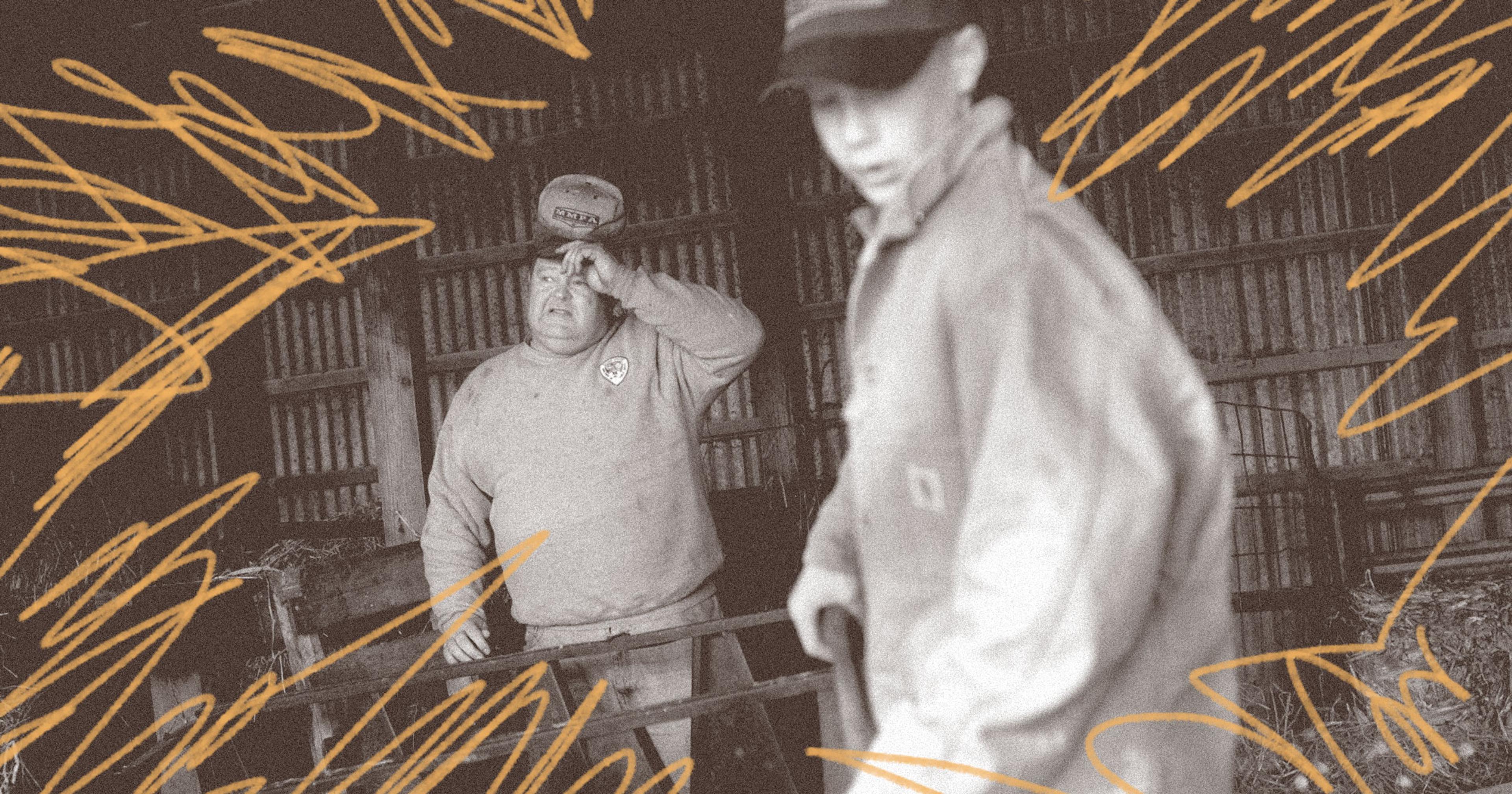
“In farming, there’s this culture that being stressed and overworked is a badge of honor. So kids, especially during busy times on the farm, like planting in the spring and harvest in the fall, they see this idea really being normalized and with maybe not much priority placed on vacations and rest and just taking time to relax.”
These are the words of Emily Krekelberg, an educator for farm safety and health at the University of Minnesota Extension, who trains people in everything from accident avoidance to suicide prevention. Though headlines abound about the American crisis in adolescent mental health, Krekelberg was speaking about youth in rural farm communities, and the potential stressors driving their anxiety, depression, and suicidality. These are communities where “resources across the board really seem to be stretched to their limit right now,” she said.
The Centers for Disease Control and Prevention (CDC) has spent decades tracking children’s mental health. Over the past 20 years, it’s recorded a progressive uptick in the number of kids aged 6 to 17 experiencing anxiety and/or depression: from 5.4% in 2003, to 8% in 2007, to 8.4% in 2011-12. From 2016 to 2019, it reported that 5.8 million, or 9.4% of, kids had anxiety and 2.7 million, or 4.4%, of kids had depression. Alarmingly, CDC also found that 18.8% of adolescents aged 12-17 seriously contemplated suicide between 2018 and 2019; 8.9% actually attempted it.
To top it off, the isolation ushered in by Covid-19 exacerbated mental health challenges for kids already experiencing “concerns about social media, mass violence, natural disasters, climate change, and political polarization — not to mention the normal ups and downs of childhood and adolescence,” according to the American Psychological Association’s 2023 Trends Report. But farm kids have other issues spread thickly over these stresses — including those that come along with being, in some cases, young migrant children working in agriculture.
“We know that the agricultural work environment causes psychosocial stresses and those come with negative mental health outcomes,” said Josie Rudolphi, assistant professor and extension specialist in the Department of Agricultural and Biological Engineering at the University of Illinois, Urbana-Champaign. Rudolphi just released the first results of an ongoing five-year study — funded by the National Children’s Center for Rural Agricultural Health and Safety — looking into the correlation between farmer-parent depression and adolescent depression, and its roots in financial burdens like farm debt.
Said Rudolphi, “I grew up on a farm. I knew what the commodity prices were. That really inspired this project in thinking about children, who are present and active in the [farm] workplace and undoubtedly not immune or naive to what’s going on.” There’s also research that shows that all kids — regardless of background — can absorb stress and anxiety around family debt and low income.
For this first stage of the study, Rudolphi and her co-researcher sent questionnaires to 122 farmers and their adolescent children aged 13 to 18, in Illinois, Iowa, Wisconsin, Minnesota, and Iowa. They asked the adults about the nature of their farm business; their physical and mental health; their economic hardships and additional stressors; and social supports they were experiencing and receiving. They asked the teens about their own stress, mental and physical health, what sorts of risky behaviors they engaged in, and their experiences with the pandemic.
For example, they asked both groups about the frequency of depressive symptoms like poor appetite and low energy; they asked adults about their ability to make ends meet in the past 12 months; and they asked teens where they were experiencing stress (i.e. home, school, among their peers), and risky behaviors like self-harm and substance abuse they may have been engaging in.
She encourages adults to grapple with their own wellness challenges first — like putting on their own oxygen mask before helping with their child’s.
Both groups experienced anxiety and depression at “relatively high rates,” the researchers found. Interestingly, adolescent depression rates were virtually the same as those for adults — 60.6% and 60.7% respectively — indicating that there is some relationship between parents’ and kids’ low feelings. However, “Do parents’ depression lead to adolescent depression? Or vice-versa? How much of what we are seeing is genetic?” asked Rudolphi. General anxiety was considerably higher among adolescents, however: 45.19% versus 24.9%. This is higher even than the rate of anxiety disorder among all American adolescents, which is estimated to be around 32%.
This doesn’t come as a surprise to Krekelberg. After all, she pointed out, adolescent brains are still developing and very often, “You feel upset, but are you sad, are you mad, are you frustrated, are you scared? They know they don’t feel right but they can’t fully identify what that emotion is. Whereas with adults, we’re a little better at going, ‘Yeah, I’m really frustrated by this.’” Adequately putting words to a feeling isn’t a guarantee that someone will look for help. But “being able to talk a little more openly about what those feelings are, how they affect [kids], and being able to name things, we have found is so effective,” Krekelberg said.
Unfortunately, getting kids to talk about feelings can be an uphill battle. In a separate project, Rudolphi surveyed agricultural youth leaders in groups like 4-H and FFA to find out how often they talked about mental health. “What we found is that there’s almost no conversations happening around suicide, anxiety, and depression, which we consider the leading public health issues in adolescents right now,” Rudolphi said. This despite the fact that Gen Z actually feels less stigma than previous generations in talking about these issues.
There’s also a shortage of trained professionals. Even though kids are “increasingly struggling with their mental health, what I hear from school social workers is, ‘We need 10 more of us,’” Krekelberg said. (By one estimate, the U.S. is short 8,000 mental health professionals, with 160 million Americans living in areas that have far too few — most of them rural.)
“What I hear from school social workers is, ‘We need 10 more of us.’”
And really, it’s schools that are the most logical places to increase mental health offerings for rural kids, for a variety of reasons. There are kids for whom parental support isn’t forthcoming; “Sometimes that’s why the kid is suffering, because the parents’ stress is bleeding over to them or they have their own stresses that they can’t talk about at home because home is a whole ‘nother mess of stress,” Krekelberg said.
A teenager also may not have access to a car to visit a private therapist’s office. Teletherapy is increasingly an option, at least to “augment” one-on-one meetings, said Rudolphi. But “there are issues with internet access in rural America — it’s still a barrier.” A kid may want therapy but their parents don’t support it, “And if they’re a minor, there’s not much they can do to get it for themselves,” said Krekelberg. Plus a kid may be afraid to ask for therapy because of the expense of it. Krekelberg can relate: “I grew up on a dairy farm in southern Minnesota and even though your parents may not say right to your face, ‘We’re struggling with money,’ you’re aware of it. That can impact how kids make decisions, like, I don’t want to say I need therapy because that’s gonna cost us money.”
Rudolphi is getting set to tackle the next phase of her study; she’ll be recruiting a larger, non-farm cohort to try to ease out whether depression and anxiety are more a product of rurality than farm life specifically. Meanwhile, Krekelberg continues to educate the adults in farm kids’ lives. She runs trainings for teachers and other school personnel about how to recognize suicidality, depression, and anxiety in their students. “The number one thing I hear is, ‘How do I know if this kid is actually in trouble or if they are just being dramatic?’” she said. “I understand people who work with kids every day maybe get a little jaded by some of their antics. But we know it’s real and we’re not just gonna write off a kid.”
With farm families, she encourages the adults to grapple with their own wellness challenges first — like putting on their own oxygen mask before helping with their child’s. “If we’re having a conversation about stress or mental health, I talk a lot about, ‘Your kids are seeing this too.’ If we are working to better ourselves then consider all of your relationships and family structures. Adults benefit from being more mindful of these things. All of us can benefit. There’s no downside.”
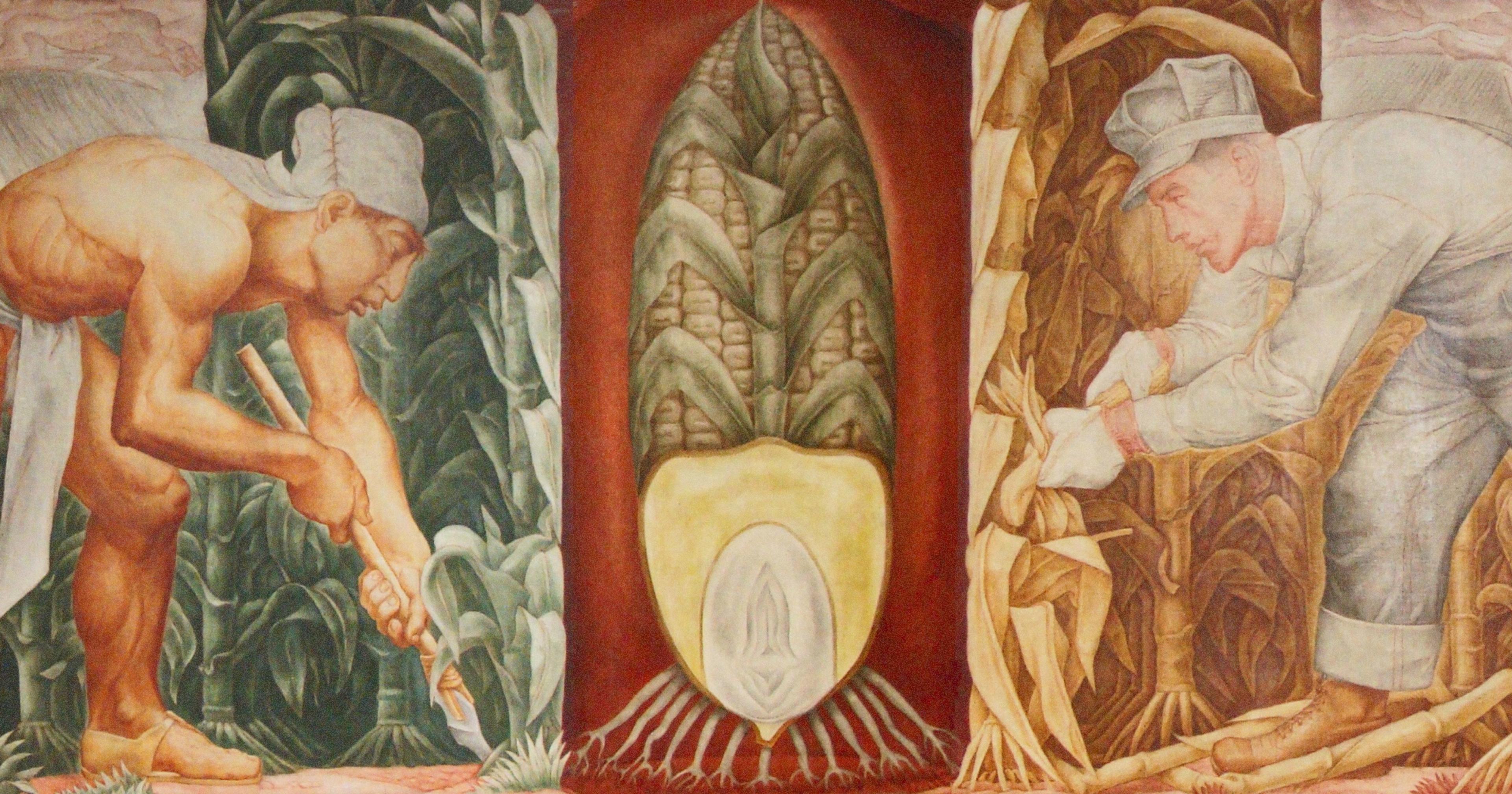
In December 2020, Mexican President Andrés Manuel López Obrador signed a decree to gradually ban glyphosate, one of the world’s most common herbicides, and all genetically modified (GM) corn, by January 31, 2024. The Mexican government holds that glyphosate, widely used on GM crops which are engineered to be resistant to the herbicide, is harmful to human health. It was a bold move from the second-largest importer of U.S. corn, most of which is genetically modified, but it wasn’t until last November, with the deadline fast approaching, that the U.S. began to push back.
U.S. Agriculture Secretary Tom Vilsack met with López Obrador to express “deep concerns” and threaten to file a formal complaint under the United States-Mexico-Canada Agreement (USMCA). Mexico voiced concerns over GM corn’s impact on human health, a position the Office of the U.S. Trade Representative claimed was “not grounded in science” and threatened “to disrupt billions of dollars in bilateral agricultural trade.” Still, the Mexican president wasn’t backing down. But in February 2023, after enough pressure from U.S. agriculture officials, farmers, and the industry’s biggest lobbying groups, Mexico gave in.
López Obrador issued a new decree which eliminated the previous January 2024 deadline to ban GM corn for livestock feed (imports will still be banned for human consumption). Without a set date for the complete substitution of U.S. GM corn imports, the new rule simply says Mexican authorities will carry out “the gradual substitution” of GM feed. Still, the U.S. was not satisfied with this watered-down version of the decree and in March requested formal trade consultations. Negotiations failed in June, according to the U.S. Trade Representative’s office, and so, backed by Canada, the U.S. asked to open the USMCA’s dispute process against Mexico.
Mexico’s move to ban genetically modified corn is part of a decades-long fight to protect the country’s many varieties of native corn against the global agroindustry’s push toward GMOs. Mexican activists are celebrating the essence of the decree, less so its failure to set a concrete date on the ban. They are aware of the enormous pressure Mexico’s trade partners are exerting and intend to keep pushing back.
Corn is a staple of the Mexican diet and an integral part of its heritage, culture, and traditions. The United Nations Educational, Scientific, and Cultural Organization (UNESCO) put corn on its Intangible Heritage of Humanity list for its role in Mexican culture and gastronomy. As such, corn is being defended from many different fronts. Along the same lines, the Mexican government is attempting to prove that glyphosate and GM corn are dangerous for human consumption and health, introducing alternative agricultural practices and herbicides that are sustainable and culturally appropriate.
The dispute over corn between the two countries is not only guided by economic principles but also with what corn fundamentally represents for the trade partners. “We weren’t satisfied with the new mandate because for us, corn for industrial use and livestock fodder is still corn for human consumption,” explained María Leticia López, director of the Asociación Nacional de Empresas Comercializadoras de Productores del Campo (ANEC), a national farmers’ organization. Though corn in the U.S. is mostly used for livestock production and industrial use, she continued, corn is not a commodity in Mexico. That’s the fundamental difference: “We eat corn and Mexico is obligated to preserve the health of its population.”
White corn makes up almost 87% of Mexico’s corn production, some 22 million tons a year, most of which is for human consumption. Mexicans eat on average around 432 pounds of white corn per year, largely in the form of tortillas. On the other hand, while the U.S. is the world’s largest producer and consumer of corn, less than 2% is for human consumption, according to the World Resources Institute.
“Mexico could make up for its deficit of yellow corn for industrial and fodder use but it won’t be easy or short-term.”
Mexico is home to about 60 native varieties of corn, a product which was domesticated through human selection in what is now south-central Mexico some 10,000 years ago. In pre-Hispanic times, Indigenous peoples worshiped maize as a deity and today, their descendants have preserved the respect for this sacred plant. Communities across Mexico hold celebrations and rituals around maize’s agricultural cycle: the selection of the seeds and the plot of land, the rituals asking for rain, the harvest of the first corn, and the final harvest.
“The free exchange of seeds has paved the way to so many varieties and it is an inalienable right of Indigenous peoples,” said Cristina Barros, a renowned researcher of Mexican traditional cuisine. “What transnational GM companies want to do is create a dependency on their seeds so that farmers have to buy them every season, plus their biotech package to grow the crop, at whatever price they want,” she said. “Indigenous peoples have a right to their heritage.”
Corn continues to be an intrinsic aspect of Mexican life, culture, and history. From its tamales and the different iterations of tortillas — sopes, tlacoyos, tostadas, gorditas, and totopos — to traditions like the Day of the Dead celebration, maíz is present.
“[The decree] is not about defending one type of corn over another,” said Barros. “It is about defending our millenary cultural traditions, our health, and ancestral forms of living.” Mexico’s move to ban GM corn is not based on a whim or the romanticization of the past, she said, but on the fact that Mexicans have domesticated corn, protecting its biodiversity and making it a main source of nourishment for centuries. As such, Mexico is self-sufficient in producing enough white corn for human consumption. It’s meeting Mexico’s many other corn needs that creates a problem.
Since the signing of the North American Free Trade Agreement (NAFTA) in the mid-1990s, Mexico’s agricultural sector has been undergoing significant changes. NAFTA essentially opened Mexico’s doors to low-cost U.S. corn producers which resulted in the 17 million metric tons of annual corn imports today. Even if Mexico had stood its ground against the pressure from its trade partners with the recent decree, the country is not yet able to make up for U.S. GM corn imports on its own.
“There are corn producers in the U.S. who are willing to change their GM corn for non-GM corn. We are fighting the same fight.”
“Mexico could make up for its deficit of yellow corn for industrial and fodder use but it won’t be easy or short-term,” said López. To start off, Mexico needs policies that promote the restoration of natural resources, she said. “We have to restore the damage and contamination of the soil, desertification, deforestation, lack of water, and more.” That implies an additional cost that producers shouldn’t absorb, she added. ANEC is leading efforts to do exactly that by teaching practices and new technologies to farmers so that they can regenerate their lands and grow crops more sustainably. A transition is feasible, said López, but it won’t come from a magic trick.
As it stands, the decree is just a piece of paper, explained Malin Jönsson, coordinator of Fundación Semillas de Vida, an organization that preserves maize’s biodiversity. It needs public policies to address issues of traceability, for example, to make sure that GM corn doesn’t end up in flour and tortillas. Traces of GM corn have been found in corn tortillas even though the planting of GM corn for commercial use is banned in Mexico. To prevent this from happening, in late June, López Obrador introduced a 50% tariff on white corn imports, which it imports in really small amounts, and on July 19, modified Mexico’s regulatory standards to ensure that tortilla makers only use non-GM white corn.
In 2001, researchers raised concerns over the contamination of GMOs on the genetic diversity of Mexico’s native crops. Native varieties such as bolita corn, used to make tlayudas, or cacahuacintle corn, used to prepare pozole, tamales, pinole, and tortillas, could be at risk of contamination or substitution by GM crops. It wasn’t until 2013 that Mexico’s Supreme Court banned the planting of GM corn to protect the country’s biodiversity.
Mexicans have grown corn in milpa, the traditional polyculture of maize that includes other crops like squashes, tomatoes, beans, and more, as opposed to the monoculture that often takes place with GM crops. The 2013 decision halted GM corn permits like Monsanto’s applications to plant some 2.5 million hectares of GM corn, an area almost the size of Rwanda, according to Reuters. Transnational companies like Monsanto, Syngenta, PHI and Dow have appealed the decision since but to no avail.
The presidential decree is the latest in this decades-long battle to ban GM corn, but a full victory for the activists could still take some time. “Until we see the profound changes we can’t say how big of an achievement it is,” said Jönsson. “If it really goes to the root of it and challenges GMOs, then it’s a success.”
Jönsson, López, and Barros are all part of Sin Maíz No Hay País, a campaign that began in 2007 when over 300 organizations of farmers, Indigenous communities, consumers, and researchers came together in defense of Mexico’s food sovereignty. Sin Maíz No Hay País is hopeful that U.S. farmers and politicians will also see it as their own fight. “Mexico’s position is not to go against the imports of U.S. corn,” explained Barros, but rather substituting GM corn imports particularly. Back in October of last year, Deputy Agriculture Minister Víctor Suárez told Reuters, Mexico would seek deals with U.S. farmers to buy non-GM corn from them, a possibility Barros is on board with.
“There are corn producers in the U.S. who are willing to change their GM corn for non-GM corn and there are farmers already growing non-GM corn,” Barros added. “We are fighting the same fight.”

Phosphorus, an element present in all living things, is an essential nutrient for growing crops; conventional farmers have relied on it as a main ingredient in the fertilizers that fuel their soil for many decades. But rock phosphate, the raw material that is mined and transformed into fertilizers, is a non-renewable resource in high demand — and supply is not abundant.
On the path toward more sustainable use of the finite phosphorus supply, a new study by North Carolina State University polled a swath of phosphorus stakeholders — think farmers, fertilizer executives, environmentalists, and policymakers — to gather their thoughts on how sustainable, or not, the current system for managing the resource is, and what could stand to change.
As it turns out, they are concerned.
More specifically, the results of the study showed that the majority of participants had significant doubts about the long-term sustainability of existing phosphorus management systems. Participants were concerned about the existing challenges of capturing and reusing phosphorus — much of it washes out of fields and into waterways — and the fact that phosphorus is a finite resource. The scarcity of the substance will only continue to grow.
Slightly over 30% of study respondents found the current “mining, use, transport, recovery, recycling or disposal of phosphorus and materials containing phosphorus” completely unsustainable. One step below unsustainable, as the language of the survey put it, was “slightly sustainable,” and another 45% of participants said current practices fell within that category.
One respondent — all participant feedback was anonymous to the researchers — summed up their concerns and said, “Relying on a mined, non-renewable resource for an essential nutrient for all life, while the excess is lost to landfills and water bodies is just not sustainable.”
For farmers, especially those who grow heavily phosphorus-reliant commodity crops like corn and soy, this leaves them with a market in which it’s been increasingly difficult (and costly) to get their hands on phosphorus fertilizers.
According to a global assessment by Our Phosphorus Future, a project that came from a partnership between the UK Centre for Ecology and Hydrology and the University of Edinburgh, “1 in 7 farmers cannot afford sufficient fertilizers to maintain fertile soils, impacting their ability to produce food.”
Khara Grieger, an assistant professor of environmental health and risk assessment at North Carolina State University, co-authored the new research. The team sent out a 14-question survey, with the idea that to develop systems and policies that lead to long-term phosphorus sustainability, first there needs to be an understanding of everyone’s needs, wants, and concerns.
“Our current systems for managing a finite resource of phosphorus are no longer sustainable.”
“The reason why we’re investigating this is because of something we’ve known now for quite a while, I would say at least a decade or 15 years; that our current systems for managing a finite resource of phosphorus are not no longer sustainable.” said Grieger.
Multiple factors are at play in the unsustainable nature of how we use phosphorus. First and foremost, Grieger described the system as linear — meaning there is not a lot of recapturing phosphorus. For example, on a farm, phosphorus-based fertilizer is used in the field, but much of it is washed away by water. And once it’s out of the fields and into the waterways, it’s lost.
In fact, according to a study published in Nature Plants, it was estimated that less than 20% of the phosphorus applied in agriculture contributes to the food we eat. The remainder runs off from cultivated land and often ends up in aquatic ecosystems. That runoff can cause environmental impacts, like increased growth of algae and compromised water supplies. And for farmers, it’s a key resource literally washing away.
For an input that so many farms rely on, the phosphorus market is historically unstable. Not only is the supply finite, the suppliers aren’t abundant either. In the U.S., much of the available phosphorus is sold by just one company— leaving farmers and retailers limited purchasing options. Additionally, large amounts of the phosphate rock that’s extracted for fertilizer is mined overseas, the major producers being China and Morocco, meaning its pricing can be impacted by tariffs.
Additionally, that mining process can be brutal and requires clearing large areas of land. The mining and the subsequent fertilizer production process comes with significant environmental consequences, leaving wildlife displaced, changing the natural landscape, even producing radioactive waste leakage.
Despite this pollution potential, getting rid of it all together would greatly impact crops yields globally. While some farms stay away from chemical phosphorus fertilizers, and instead rely on natural sources of the stuff — like manure — the fact is plants need the nutrient to grow.
This leaves the industry at a standstill of how exactly to move forward.
“It’s a wicked problem.”
According to Paul Westerhoff, a regents professor of civil, environmental, and sustainable engineering at Arizona State University, “It’s a wicked problem.” He told Arizona State University News, “At one level, it’s an environmental pollution issue. But it’s also about the cost of food. Simply cutting back on the use of phosphorus in fertilizer could decrease crop yields and raise the price of almost everything at the supermarket.”
And in the meantime, farmers are left to deal with the consequences.
John Settlemyre, who operates a fifth-generation corn and soy operation with his family in Warren County, Ohio, was five days into the 12-day task of fertilizing his fields this spring when he found out the phosphorus order they were waiting on was no longer available. Settlemyre told Farm and Dairy that to keep going, his family was forced to switch to a different product that was available, which contained a lower concentration of phosphorus, and cost 25% more.
“It basically added about $35,000 to our fertilizer cost for this spring from that shift,” he said.
Market prices for phosphorus — and, in conjunction, fertilizers — have spiked significantly twice in the last two decades. In 2008, the prices soared 800% higher due to low inventory and high demand. Then, in 2020, in part due to the pandemic, there was a 400% increase in phosphorus commodity prices.
As conventional agriculture relies so deeply on phosphorus to produce crops, researchers for the study focused on the ag industry as one main group of stakeholders to survey. But because the reach of phosphorus is so great, identifying who to survey was complicated. The team ended up with a group that included the fertilizer, agriculture, mining, food processing, and chemical manufacturing sectors as well as policymakers, wastewater treatment facilities, and environmental groups.
“What we found is that there’s not a silver bullet solution, that there’s going to be a range of different possible solutions.”
“On one hand, you could argue that everyone is a stakeholder because phosphorus is a key component in the fertilizers that we use to produce food today. Our food supply systems and agricultural systems heavily rely on phosphorus,” said Greiger.
Because the resource is so crucial to the food system and overall life in general, many research projects are underway try and solve the phosphorus sustainability problem. Some suggest restoring wildlife populations to revitalize a natural cycle of phosphorus, while others dig into plant genes that could make crops more resilient to phosphorus deficiency.
But Greiger said this study is the first to capture the opinions of everyone involved in the phosphorus sector; it could serve as a stepping stone to actionable industry changes.
“To the best of our knowledge, our study is really the first that has actually documented … that these are the views of different stakeholders, and these are the challenges, and this is what we need to go forward,” said Grieger.
In the hopes of a more sustainable future for phosphorus, more than 50% of respondents reported that new, improved, or different regulations are needed, improved management practices and procedures are needed, and new technologies are needed.
“What we found is that there’s not a silver bullet solution, that there’s going to be a range of different possible solutions,” said Greiger. “And this study can be used to help identify research priorities and decision-making priorities moving forward.”
This article was produced in collaboration with Nexus Media News, part of a series on climate change and the 2023 Farm Bill.
When Mike Rosmann, an Iowa farmer and psychologist, heard his phone ring on a spring morning in 2019, he knew he had to answer. In the previous four months, his state had experienced the wettest period in its recorded history; farmers in the region were in crisis. A week earlier, one of Rosmann’s patients had lost his entire stock of corn when floodwaters breached a storage barrier, threatening to bankrupt him. Rosmann knew the man was in a dark place.
When he picked up the phone, his patient’s wife was on the other end: “He said he’s going to kill himself.”
The climate crisis is wreaking havoc on farms across the United States. Wildfires in California are burning avocado and citrus trees to a crisp, drought in the Midwest has eroded corn and soybean production, and unseasonal Arctic fronts are killing maple blossoms across the Northeast.
These impacts are only getting worse. A 2022 survey by the National Young Farmers Coalition found that more than half of young farmers said they experienced climate impacts either very or extremely often. For farmers, wildfires, drought, floods and pests are not just an inconvenience — they are an existential threat. A 2022 study published by the Giannini Foundation of Agricultural Economics at the University of California found that extreme heat is “positively associated” with farmer suicide. A 2021 study by a Colorado-based suicide prevention group found that when drought conditions increased in the state so did the suicide rate among farmers.
It’s a phenomenon occurring around the world, from India to Australia.
“This is what climate change is doing,” said Rosmann. “It’s putting people in a place of extreme apprehension, where they feel there is no way out.”
Experts say they have witnessed a rise in farmers struggling with anxiety and depression as climate impacts have worsened in recent years. The farmer crisis hotline run by Farm Aid, for instance, has seen a significant increase of calls from farmers during natural disasters linked to climate change.
“When climate disaster strikes, or an ongoing disaster such as drought is occurring, the toll on farmer mental health is high,” said Caitlin Arnold-Stephano, a farmer and program manager at Farm Aid. “Often a disaster can push a farmer over the already-thin margin or edge that existed.”
“It is putting people in a place of extreme apprehension, where they feel there is no way out.”
In recent years, the federal government has woken up to the mental health crisis affecting farmers. The 2018 Farm Bill was the first to direct funding toward farmers‘ mental health, by providing grants for the Farm and Ranch Stress Assistance Network (FRSAN), which connects farmers, ranchers and agricultural workers with mental health assistance programs and resources.
Advocates hope that the 2023 Farm Bill will offer even more support. Bipartisan legislation, led by Senators Joni Ernst (R–Iowa) and Tammy Baldwin (D–Wisc.), would reauthorize the FRSAN to establish helplines, provide suicide prevention training for farm advocates and create support groups for farmers and farm workers. The bill would increase funding for the program, authorizing $15 million per year for the program for the next five years, up from $10 million allocated in the last Farm Bill.
“We need to push for the network to be expanded,” said Rosmann, who helped write the 2018 legislation. “The bill is the major way we can bring about change on this issue.”
Even before climate change began taking its toll, farmers already faced severe mental health issues. The rate of suicide among farmers has historically been three and a half times higher compared to the general population, according to the National Rural Health Association. Farmers often work under precarious and psychologically taxing conditions due to weather variations, changing policies and economic tariffs, as well as fluctuating food prices. In the 1980s, American farmers faced an economic crisis that saw a quarter million families lose their farms, destroying businesses and decimating rural communities. Yet despite these challenges, farmers are less likely than the general public to have access to mental health services.
Rosmann, who grew up in Iowa but spent several years studying and practicing psychology out of state, observed this firsthand when he moved back to his home state in the early 1980s. When word got out that he was both a farmer and a psychologist, his phone did not stop ringing.
Climate change is not only an economic stress — it’s an existential threat to farmers’ very identities.
“People started calling me at all hours of the day and night,” he said. “There was clearly a need for someone who understands the culture of farming and gets what they are going through.”
Over the past five decades, Rosmann has come to intimately understand the toll farming takes. He has stayed on the phone with a woman who tried to kill herself by swallowing too many pills. He has climbed up a 60-foot ladder in a corn crib to stop a friend from jumping.
Now, Rosmann says climate change is exacerbating this crisis. “Practically every farmer is concerned about it,” he said. Some of his patients have lost an entire season’s crop to floods, heat or other climate-related disasters. In other cases, subtly worsening weather conditions simply means more work without an increase in pay, resulting in physical and mental exhaustion amongst farmworkers.
“There is so much burnout in this community,” said Bridgette Downer, who runs a family vegetable farm in Maryland. “The economic pressure is too much nowadays; people just say, ‘I can’t do this anymore.’”
Another stressor is that farmers often feel they are blamed for climate change.
“Livestock and dairy farmers in particular are often singled out as ‘destroying the planet,’ with their cows being blamed for their methane emissions,” said Greg Mruk, executive director of New York FarmNet, an organization affiliated with Cornell University that offers financial and emotional counseling to farmers. “Yet, farmers feel that they are stewards of water, land and air.”
Many farmers, however, struggle to access mental health services, which are often not readily accessible in rural areas. And when services are available, they are not always tailored to farmers needs. Traditional mental health services can be alienating to farmers, who sometimes come from communities where mental health is highly stigmatized.
“To effectively reach farmers, you have to have culturally appropriate care.”
“To effectively reach farmers, you have to have culturally appropriate care,” Rosmann said.
Experts say that for mental health interventions to be effective, therapists need to either come from farming communities or be aware of the farming culture.
“Farming and agricultural culture comes with a lot of ‘boot-strap individualism’ and ‘blue-collar worldview,’ which often includes feelings of power, control, self-reliance and dominion over the land,” said Krista Bajgier, a therapist in Maryland working on mental health and nature. “When you’re talking about climate change, you’re talking about forces seemingly beyond their control.” Bajgier said that if therapists want to support farmers, understanding this worldview is critical. It helps explain why climate change is not only an economic stress — it’s an existential threat to farmers’ very identities.
For farmers and workers from marginalized groups, such as Hispanic migrant farmworkers, experts say it is also critical that therapists be from the same cultural background. Organizations running mental health hotlines have found that Hispanic farmers and farmworkers are more likely to call back if their counselor shared the same culture and language.
Another strategy is to organize group meetings in local community centers, such as churches, where farmers — who often work in isolation — can share their experiences together. Rosmann, who organized these workshops in his hometown, said they are an effective way of teaching people how to ask for help. “These workshops are touching,” he said. “A lot of tears are shed.”
Mental health interventions have increased significantly thanks to the 2018 Farm Bill. Since the legislation was passed, four regional centers established through FRSAN have increased training to recognize signs of depression or anxiety, created support groups and expanded access to hotlines.
If passed, the 2023 bill would increase funding available to the program to hire more behavioral health specialists, particularly those trained to work with different farming populations, including veteran farmers and farmers of color.
But unless the federal government takes action to address the root causes of farmers‘ distress — the economic precarity, the lack of support, the increasingly unpredictable weather — many experts are concerned farmers will continue to struggle.
“The stage is set for another major troublesome era,” said Rosmann. “Farmers are worried about that.”
Farmers say that what they need is not only greater support from the government but more agency and autonomy in developing adaptation strategies to climate change.
“More than anything, farmers want to be given a chance to be part of the solution, a chance to figure it out,” said Mruk. “Let’s not be of the ‘sky is falling’ mindset. We need to take a proactive approach.”
If you or a loved one are struggling, call the Suicide and Crisis Lifeline at 988.
Dina Brewster’s journey to the seed shortage started with the bug shortage. The Connecticut farmer learned that her blueberries and tomatoes were gradually becoming less juicy due to the shortage of pollinator visits. And the pollinators weren’t visiting as often because of the shortage of native plants in her area. So Brewster went hunting for native seeds, and made an unpleasant discovery.
“I said, ‘Great, we’re going to restore our native plants to our farms and to our neighborhoods and we’re going to save all these bugs,’” said Brewster. “So I went to [a local expert] and said I needed native plants for this region. She said, ‘I’m so sorry, no one is making them.’ I was like, ‘There’s no plants!’”
Across the country, there are hundreds of small and large-scale ecological restoration projects underway, attempts to undo the damage of climate disasters, pollution, and unchecked human development. The goals are varied: supporting pollinators, preventing species loss, shoring up against the effects of climate change. But securing seeds for the plants that are native to particular regions — that have adapted to local soils and climate conditions over many years — has become a surprisingly challenging hurdle to overcome.
The National Academies of Sciences, Engineering and Medicine released a report this year, detailing the urgency of building a native seed supply chain. “As the vulnerabilities of humans, wildlife, and critical ecosystem services … grow, the need for ecological restoration in the 21st century will continue its trajectory toward an unmatched scale,” the report reads. “In the United States just as elsewhere in the world, a limited supply of native seeds and other native plant materials is a widely acknowledged barrier to fulfilling our most critical restoration needs.”
Not Just Any Plants Will Do
It’s probably no surprise that many of our native ecosystems are ailing, battered by centuries of human disruption, exacerbated by ever-increasing climate disasters like wildfires and flooding. In recent years, a broad cross-section of government agencies, academic institutions, and nonprofit organizations have recognized that ecological restoration needs to be one of our foremost priorities.
For instance, in parts of the West, as wildfires continue to ravage our open lands, a vicious cycle is in place: The fires return each year, burning off local flora which is replaced by non-native grasses. This leads to increasingly big and intense burns; an entire ecosystem is at risk. “The increasing magnitude and frequency of such climactic mega-disturbances is straining not only our economy but the recovery capacity of ecosystems, in synergy with other unceasing stresses including invasive species, energy and mineral extraction, urbanization, and land conversion,” reads the recent report.
Rebuilding an ecosystem can look very different depending on what part of the country you’re operating in and what type of damage you’re trying to undo. Restoring marshlands in the Southeast has a very different flavor from tending to degraded Midwestern prairie landscapes. But there’s a common thread to much of the work: the need for more native plants, essential building blocks to rebuilding healthy ecosystems.
“We believe we’re [at] the beginning of a kind of exponential growth curve, in terms of [native plant] needs,” said Susan Harrison, lead author on the National Academies report and chair of the Environmental Science and Policy department at the University of California, Davis. “Climate-driven events get more and more frequent, more and more severe. We’re already in a place of not having enough [native seeds] to do proper restoration, and it’s very possible to imagine that situation really getting out of hand.”
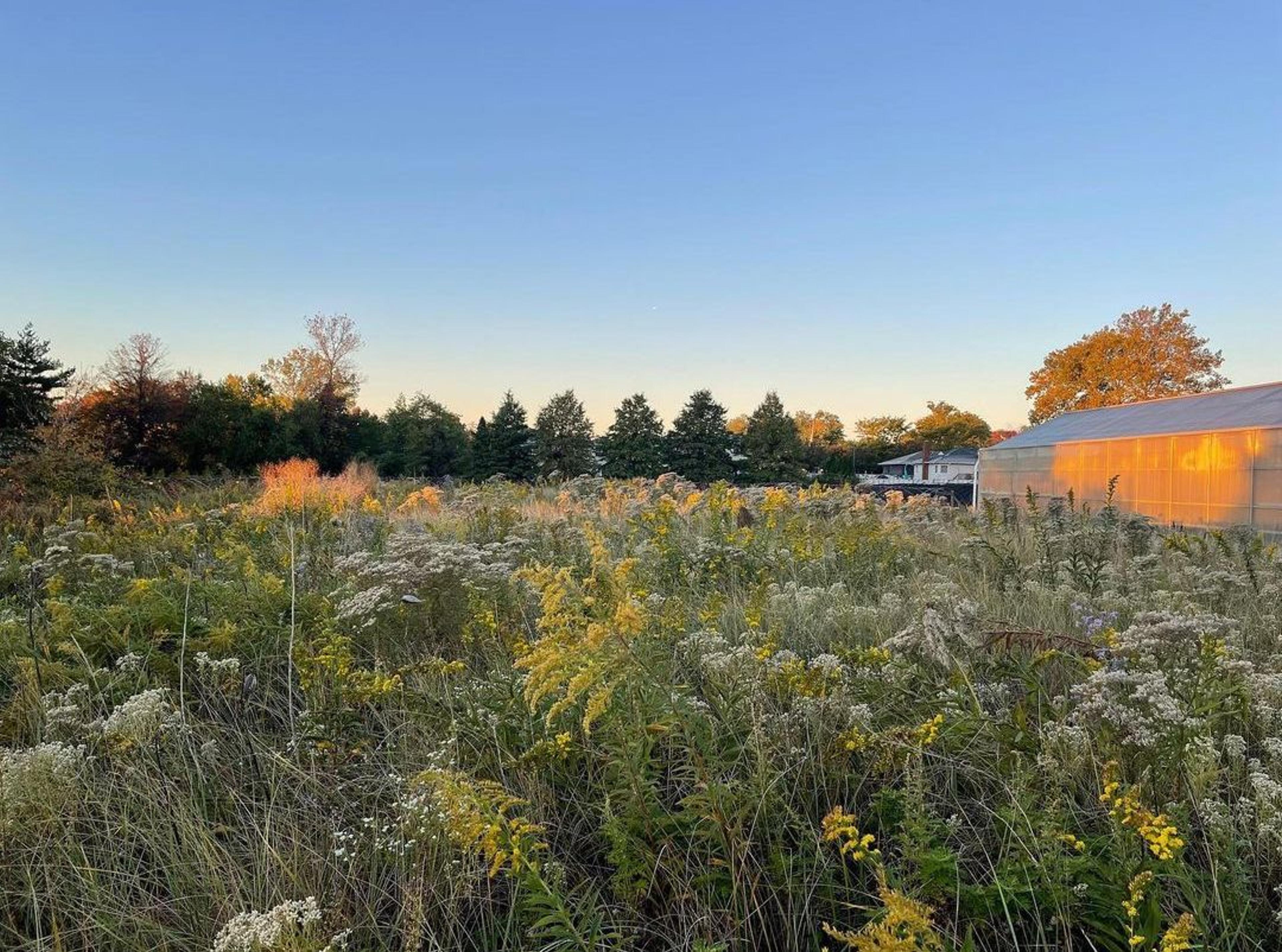
Greenbelt Native Plant Center | Photographed by Samantha Bachert (via Instagram)
The shortage does not have one simple root cause; supply chain issues abound. For instance, many of the hyper-local plants needed for these restoration projects are not available from commercial seed breeders. Say you’re looking for a specific type of bunchgrass for a California restoration project that requires securing some wild seeds, then investing the resources and time to produce many more of those seeds in a controlled environment. Considering how localized and relatively small these projects can be, they may not seem like a sensible investment for seed companies to make.
This can force ecologists into difficult situations, where they end up using a plant that’s similar to what they need for a restoration project, but ends up unable to thrive in a particular environment — or worse.
John Campanelli, a Ph.D. student in plant science and landscape architecture at the University of Connecticut, has been working to restore native plants growing alongside New England highways. He noted that using seed ecotypes from outside the area that aren’t adapted to, say, local soil pH levels, not only can lead them not to thrive, but they may then cross-pollinate with existing native communities and genetically weaken local plant populations. “Not only might these plants not persist, they could end up weakening the plants that are already there,” Campanelli said.
Even more concerning, sometimes a non-native plant can end up acting invasively, choking out local fauna and ultimately requiring further restoration to reverse the damage it’s done. “Anything that’s a cultivar or not native to an area is kind of an untested experiment,” Harrison said. “There are times when things really go wrong, and a cultivar might not function so well or might even function too well, at the expense of other species.”
Building a Supply Chain
There may not be an adequate supply of many native seeds, but there is certainly a demand. The U.S. Bureau of Land Management (BLM)’s massive restoration efforts in the West have made it one of the largest purchasers of seeds in the Western Hemisphere.
“It’s kind of a staggering statistic,” said Elizabeth Leger, Foundation Professor in the Department of Biology at University of Nevada, Reno. She was surprised — in a positive way — to find out just how large the native seed demand is for restoration projects.
Keeping up with the demands of government restoration efforts is easier said than done, however. Harrison said it is typical for agencies to work on funding cycles that are too short to mesh with the needs of seed production. They’ll put in a bid for mass quantities of seeds for a project, but are unable to do so with adequate lead time for seed breeders and growers to produce the product.
“With a few policy changes they could … get this virtuous cycle going that benefits growers and makes these projects successful,” she said — a tactic already occurring when the government collaborates with businesses. “If BLM and other agencies are able to shift … toward a more proactive model of restoration, giving growers the necessary lead time of several years, it could allow them to expand their operations to fill a need that is very clearly out there.”
Left: Greenbelt Native Plant Center | Photographed by Nikita (via Instagram) · Right: Native seeds - collected and cleaned, sorted and stored | Photographed by Jim Russell (via Instagram)
To help fill in the gaps of native seed availability, an ad-hoc network of public and private initiatives has been growing across the country. Take Ed Toth, director of the nonprofit Mid-Atlantic Regional Seed Bank (MARSB). Toth is a now-retired 36-year veteran of the New York City Parks Department. Years ago, Toth struggled to find local flora to populate restoration projects in NYC’s parks and other green spaces. This led to the creation of the successful Greenbelt Native Plant Center, a 13-acre greenhouse, nursery, and seed complex on a former Staten Island farm, committed to providing all the seeds and plants necessary for city restoration projects.
Toth notes that replicating such wide-scale solutions to the national native seed shortage would require a total overhaul of business as usual. “I think the challenge is that it’s rather ad hoc and incomplete,” he said, noting that while many efforts are often “well-intentioned, and often very innovative and dedicated,” they simple aren’t comprehensive enough.
“You can’t address [just] one part of the supply chain if there are roadblocks with other parts of the supply chain that stymie the whole effort,” he said. “So the challenge is to develop the supply chain in its totality.”
Brewster, the Connecticut vegetable farmer, took it upon herself to start a small seed company on her property. Named Eco59, the “farmer-led seed collective” is focused on producing seeds to help in Northeastern restoration projects. It’s a private enterprise, but still has the feel of a small-scale, mission-driven grassroots operation.
“So we are growing seeds from this region. Everybody then sends the seeds back to me,” she said. “I am very quickly learning how to clean and test all of the seeds for strength … Then that seed either goes out to homeowners in cute little packets or it goes to nursery growers who want to create a supply chain of plant material for the Northeast.”
Make it Holistic
Eve Allen is program director at the Ecological Health Network, a nonprofit working at the intersection of ecosystem restoration and human health and wellbeing. Her work is focused on “reinforcing and building network connections among private, public, and non-profit stakeholders to help strengthen the U.S. Northeast’s native seed and plant supply chain,” according to the organization’s website. Allen’s work is precisely what Toth suggested — figuring out how to wrangle all the convoluted, ad hoc native seed supply chains into a cohesive whole. It’s complicated work.
“We need to develop all of the key steps of the supply chain simultaneously,” she said. Allen said 28 partners and members of the newly formed Northeast Seed Network recently collaborated to generate an initial list of native plant species that should be prioritized for seed collection, storage, and, ultimately, production in the region. “This process of generating consensus required the input of individuals who are engaged in every step of the supply chain, including botanists, ecologists, farmers, nursery professionals, landscape managers, and restoration practitioners.”
Seed harvesting time at the Greenbelt Native Plant Center | Photographed by Desi Alexis (via Instagram)
Allen has her work cut out for her, but is hopeful a network-based, holistic approach can pay dividends for the future. “It is important to avoid oversimplifying seed and plant material supply chains as circular or linear systems. We assume that supply and end-use of seed and plant material are two sequential steps in the chain. Rather, seed supply chains are complex social networks. Yes, we need to focus on developing more bulk seed and containerized plants. Even more importantly, we need to figure out how to fix asynchronous supply and demand,” Allen explained. That last part refers to the frequent mismatch between restorationists in need of seeds for one specific project and “producers of native seed who want to grow at a large scale and distribute their products to as many markets as possible.”
Despite the challenges, Harrison is hopeful that a streamlined native seed supply chain is an achievable goal — her committee’s National Academies report was intended as a roadmap for possible ways to get there. Harrison’s hope is for some federal intervention that makes it easier for the commercial seed industry to adapt the market to the needs of restoration projects.
“I keep saying this, that there could be a lot of capacity out there to supply a product that there’d be a lot of potential demand for that product, but you need a little bit of intervention in the market, which is usually by large federal buyers,” she said. “If society decides that it’s something that they want, whether it’s solar panels or electric cars, you can probably take this all the way back to the Industrial Revolution. A little bit of the federal government using its massive power to be a better customer for that product and to give a little bit of technical help and infrastructure help to the private sector to produce it. And then you can have this flourishing private sector that benefits everybody because business makes money off of it and the public gets, in this case, better restoration on our public lands.”

Every summer, people flock to farms to pick their own fresh cherries, berries, peaches, and plums. When autumn rolls around, they head to orchards for apple picking and pumpkin patches in search of the perfect porch gourd and, of course, capturing plenty of Instagrammable content along the way.
Pick-your-own (also called U-pick) farms might be widespread and ubiquitous now, but that hasn’t always been the case. The concept first emerged during the Great Depression of the 1930s, when prices for fruit and vegetable crops reached historically low levels as war-torn countries began to recover and no longer relied on U.S. exports. For many growers, it was cheaper to leave their crops in the field to rot than it was to harvest them and sell them for a pittance. That’s when a ragtag bunch of cherry growers in Wisconsin decided to offer their fruit directly to the public for pennies a pound. The only catch was they’d have to come out to the farm to pick the cherries themselves. And so the bustling pick-your-own industry was born.
Today, U-pick programs often make up just one part of a farm’s operations, a far cry from their original role as a sort of Hail Mary — and they’re certainly more lucrative than they were in the 1930s. Pick-your-own operations now exist in every state, luring urbanites and families out to the country to spend a wholesome weekend. Advancements to automobiles and road infrastructure have helped pave the path, too.
Agritourism has boomed over the last two decades, with revenue more than tripling from 2002 to 2017. According to the USDA, agritourism revenue grew from $704 million in 2012 to $950 million in 2017. Pick-your-own farms have played a key role in that growth, attracting customers to farms to pick or cut their own fruits, vegetables, flowers, or Christmas trees out of fields — and charging them to do so.
The U-pick business model reduces a farm’s reliance on labor for harvesting, and eliminates the need for working with distributors, giving farms immediate access to the profits. “Getting the fruit out of the field is great. You’re getting cash flow coming onto the farm earlier, so that’s helpful,” said Anu Rangarajan, director of the Cornell Small Farm Program, and former owner of a pick-your-own strawberry farm in Freeville, New York.
As with every corner of agriculture, however, running a U-pick operation comes with its own unique risks. “There are lots of pros and cons of U-pick,” said Megan Bruch Leffew, a value-added agriculture marketing specialist for the Center for Profitable Agriculture at the University of Tennessee. “Bringing the customer to your farm and them doing the labor of picking can be a savings to [farmers] so they don’t have to pick all of it and transport it to market. On the flipside of that, consumers don’t often know how to appropriately pick and can damage plants, so there’s a loss aspect that needs to be built in when folks are pricing product.”
“When you bring people out to the farm, you need some added risk management and insurance.”
While plenty of consumers embrace the opportunity to pick their own fruit, and are happy to pay to do so, others have critiqued the idea of being charged to do labor. But as Leffew points out, there are hidden costs associated with U-pick fruit and vegetables that more commercial operations don’t have to factor into costs. “When you bring people out to the farm, you need some added risk management and insurance,” she said. “So there’s costs associated with that, as well as the costs of providing customer comfort. People are going to need access to a restroom, handwashing, and other things.”
And then there’s the unpredictability of weather, a factor that farmers of all kinds deal with, but one that has the potential to wipe out an entire crop for a U-pick farm, causing a trickle-down effect on the farm’s overall profits. “Pick-your-own farms oftentimes have an on-farm retail market where you can buy pre-picked fruit and value-added products like fruits, jams, and salsas,” said Leffew. But if there’s no pickable produce, or even if the weather is just unpleasant, agritourists might not trek out to the farm at all, delivering a one-two punch to the farm’s sales.
This year, fruit growers across the country have experienced significant crop loss after erratic weather. Georgia lost more than 90% of its peach crop this year due to an abnormally warm winter. Powerful rainstorms in California flooded hundreds of acres of strawberry fields. And in the Northeast, orchards and vineyards suffered damage from a late May frost that wiped out the large majority of this year’s crops.
At Rose Hill Farm in Red Hook, New York, co-owner Holly Brittain estimates the frost wiped out 95% of this year’s cherry crop. A portion of the fruit grown on the farm — which includes apples, strawberries, blueberries, peaches, cherries, plums, apricots, nectarines, grapes, and more — goes to the U-pick side of their business. But more importantly, the fruit is needed to fuel their lucrative cider and winemaking operations. That’s led the farm to not be able to offer pick-your-own strawberries or cherries to the public this year, which means those would-be visitors might not make it out to the farm, where they’re likely to spend additional money in the tasting room.
“Our culture is starving for connections to nature. This is one more way that people can feel connected.”
“We couldn’t open those for pick-your-own, which is pretty devastating because cherries as a unit cost do pretty well, and that’s our first fruit of the season. Folks are excited to come back [for cherries], and people drive from as far as Long Island and New Jersey. So that was a big ouch for the beginning of the season,” said Brittain, who acknowledges these unexpected and hard decisions come with the territory of running an agritourism business.
A lack of early-season fruits hasn’t seemed to dull interest in the farm’s other pick-your-own offerings — which will help support the farm as it awaits support from federal disaster assistance programs to help offset costs incurred from a devastating late-season frost. Rose Hill recently opened its blueberry fields to U-pick, and the seasonal flow of tourists has resumed.
However, the power of a pick-your-own business extends beyond their ability to lure customers onto a farm. “Our culture is starving for connections to nature. It’s one more way that people can feel connected — connected to their food, connected to where they live,” said Rangarajan. “U-picks do a huge service for connecting people to our food system, and especially the seasonality of food … and [gives farmers] the opportunity to have important conversations with people who can support agriculture more actively.”
This article was produced in collaboration with Nexus Media News, part of a series on climate change and the 2023 Farm Bill.
For years, Michael Prado has provided bottled water to his neighbors in Sultana, a town of about 785 people in California’s Central Valley. That’s because most wells in town have been contaminated by runoff from agriculture, said Prado, who is president of the Sultana Community Services District. Only one meets state standards for safe drinking water — he’s glad they have it, but it’s not enough.
“We’ve been crossing our fingers and toes that this drought [wouldn’t] dry our well up. Due to the fact that we live in an agricultural area and this is a little community, we would be devastated,” he said. Prado worries that if the town’s remaining up-to-standard well gives out, even more residents would have to boil water before using it or rely on bottled water. “We are in dire need of a new well,” he said.
Millions of people in the U.S. lack access to safe drinking water. Rural communities of color like Sultana, which is majority Hispanic, are disproportionately affected by this crisis. There, some families spend up to 10% of their monthly income on water. And yet the federal government underfunds communities of color when it comes to water infrastructure, according to a recent report from the Community Water Center, a California advocacy group.
“These racialized disparities in access to safe drinking water and effective wastewater services are occurring because of decades of disinvestment,” said Jenny Rempel, co-author of the report and a Ph.D. candidate at the University of California, Berkeley. In California alone, 300 towns do not supply safe drinking water to residents, the report found.
Advocates say the Farm Bill, a massive piece of legislation that is voted on every five years and determines how the U.S. Department of Agriculture (USDA) disburses billions in federal funding, is a chance to finally invest in these communities’ water systems.
“The Farm Bill has funding that can really help address a lot of these gaps,” said Susana de Anda, executive director of the Community Water Center. She said the legislation should increase investments, particularly grants, in rural Black, Indigenous, and People of Color (BIPOC) communities; fund an annual audit of the USDA to determine which communities actually receive water infrastructure funding; and push the agency to deepen relationships with community-based organizations to ensure long-neglected populations have a voice in the planning process.
“It’s clear that [low-income people of color] have been left out of water planning, and more importantly, they’ve been left out of intentional funding designed for them to really meet their needs and solve the issue,” de Anda added.
“The Farm Bill has funding that can really help address a lot of these gaps.”
When reached for comment, a USDA Rural Development spokesperson said that the administration is “committed to addressing the infrastructure needs of America’s most historically underserved communities” and added that the agency is “strengthening its efforts to provide technical and financial support to BIPOC communities and historically underserved areas that need it most.”
The racial and rural water gap has its roots in historic neglect. For decades, the Central Valley has attracted migrant farmworkers, many of whom were forced into temporary housing without basic resources like electricity or running water. Many of these settlements, like Sultana, became permanent, but never received municipal services.
Rural communities of color were historically excluded from being annexed into cities, where utilities were, a phenomenon known as “municipal underbounding,” said Camille Pannu, an associate clinical professor at Columbia Law School who has studied water access issues in California.
This has led to communities like Sultana remaining unincorporated and lacking many public services — like adequate wells and water treatment systems. “You end up having this upside-down water system where you have the lowest-income people paying the highest bills for terrible water,” Pannu said. She said that weak water infrastructure often forces residents to build their own private wells or purchase bottled water.
In agricultural communities like Sultana, water isn’t just hard to access. When it comes from the ground, it’s often contaminated with nitrates, arsenic, and pesticides; these contaminants are linked to cancer, lung, and heart disease, among other ailments. Treating that water can add hundreds of dollars to residents’ yearly water and sewer bills, according to a recent report from the Environmental Working Group.
“You end up having this upside-down water system where the lowest-income people pay the highest bills for terrible water.”
Federal funds can help ease the burden, but only if these communities are able to access them, said Rempel, the doctoral researcher. “Communities need a lot of capacity and resources to be able to apply for and access these federal funding programs,” Rempel said. “There’s a huge opportunity for technical assistance to start to close this gap.”
Even Prado, who has worked in community services for over 25 years, said he has struggled to navigate the system of applying for federal loans and grants. “Nobody really knows about USDA funding,” he said.
Despite these obstacles, Prado has seen the benefits of federal assistance. In 2017, the USDA helped to fund a $2.1 million project to drill a new community well for Monson — one of Sultana’s neighbors — supplying more than 200 homes with safe water. That same year, Prado, with help from a local nonprofit, applied for $7 million in funding for a well in his town.
Now, more than six years later, Sultana is slated to get the new well it so desperately needs. Construction crews broke ground in May, and the well is slated for completion in May 2024.
Prado said he’s excited about the new well — but access to clean water isn’t something he and his neighbors should have had to fight for.
“I keep telling the state: what they need to do is get off their chair, come to the valley, and see all the rural communities,” Prado said. “See what their needs are, hold outreach meetings, and start finding out what they need here. I don’t think there’s enough of that really going on.”
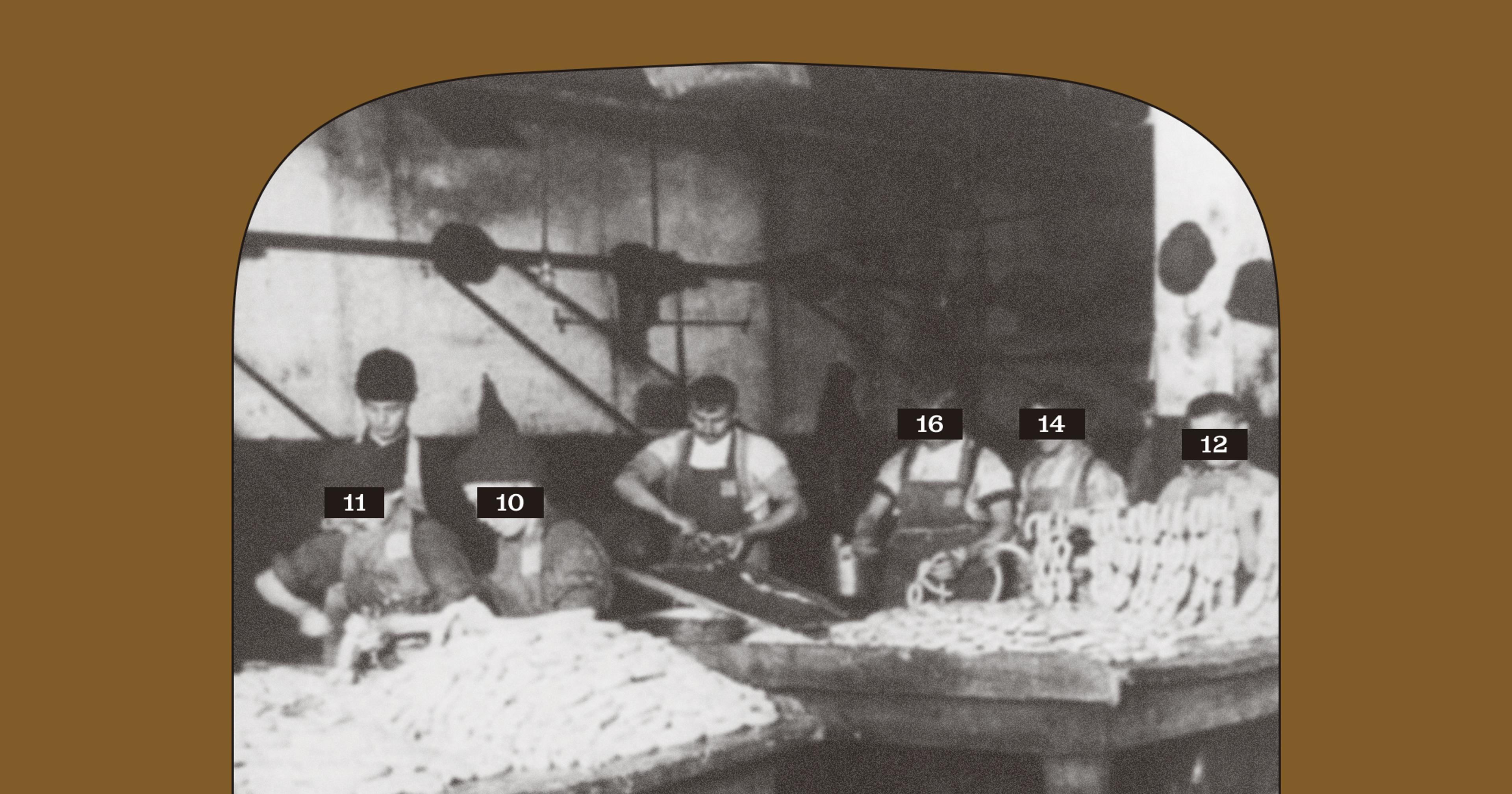
This past May, Iowa Governor Kim Reynolds (R) signed into law a bill that would sharply decrease protections for child workers in her state, while making it tough to impose penalties on employers for related violations. Touted by supporters as a way to address Iowa’s labor shortages — and afford kids “valuable” work experience — starting the first week of July 2023 it opened the door for meatpacking plants to hire apprentices as young as 14 to work on meat processing lines, for example, as well as for kids to work 6-hour night shifts during the school year.
As this bill made its way to the governor’s desk, 13 other states have introduced — and in some cases advanced — similar rule-loosening pieces of legislation. Meanwhile, concerns about the dangers posed to kids placed in high-risk work environments have been brushed aside. What could possibly go wrong?
At least part of an answer came as Iowa’s new law took hold, when a 16-year-old worker was killed in a sawmill accident in Wisconsin. And a Michigan meat processor just pled guilty to hiring a 17-year-old who lost a hand as he operated a meat grinder while under supervision — a stark rebuke of the notion that adult oversight can prevent injury in hazardous work environments.
Although the hiring of child workers in both cases contravened laws in their respective states (as well as federal law), these incidents serve as potential omens for Iowa, as well as Arkansas, which is getting set to implement its Youth Hiring Act to remove “arbitrary burdens” to parents around obtaining working papers for kids under 16. And while that may sound less fraught than what Iowa’s about to do, it sets a precedent. “Without work permit requirements, companies caught violating child labor laws can more easily claim ignorance,” points out Fortune magazine.
Whether they’re hired legally or illegally, anyone under the age of 25 is twice as likely to be injured on the job as those 25 and older, according to OSHA. Such stats prompted U.S. Solicitor of Labor Seema Nanda to tell States Newsroom that it’s “irresponsible for states to consider loosening child labor protections.” Instead, “federal and state entities should be working together to increase accountability and ramp up enforcement,” she said.
Since 2021, 14 states have loosened their child labor laws, or tried. New Jersey has permanently increased summer working hours for 16- and 17-year-olds to 50 hours per week, and for 14- and 15-year-olds to 40 hours per week; it’s also abolished the need for parental consent for working papers. New Hampshire has done away with a prohibition on night shifts for 16- and 17-year-olds and extended their school year work hours to 35 per week; it also lowered the age when kids can bus restaurant tables served alcohol, from 15 to 14. And Michigan has lowered the age for serving alcohol and working in liquor stores. These loosenings have been billed as a way to address our post-pandemic labor shortage.
Lawmakers in Ohio, Missouri, Wisconsin, and South Dakota introduced bills to try to increase work hours for kids; some of these are still pending. Maine, Nebraska, and Virginia all took a shot at paying minors less than minimum wage. Georgia legislators tried to do away with work permits for kids under 18 and to make it legal for 14-year-olds to operate lawn and garden-care machinery. And Minnesota legislators want to allow 16- and 17-year-olds to work in construction, the 15th most dangerous industry, according to the U.S. Bureau of Labor and Statistics. Meanwhile, over in Congress, the Future Logging Careers Act introduced by Senator James Risch (R-ID) seeks to make it federally legal for 16- and 17-year-olds to work in logging, America’s fourth most dangerous job.
Labor experts say there is a throughline between these child labor law rollbacks and the agriculture sector.
Labor experts say there is a throughline between these child labor law rollbacks and the agriculture sector — the third most dangerous industry in the U.S. — where federal exemptions have long allowed kids to perform a range of risky tasks like operating heavy machinery. The U.S. General Accountability Office says it’s by far the most deadly profession for children.
“Look at what’s happening in U.S. agriculture: It’s a preview of what is going to happen if these [new state] laws remain in effect,” said Margaret Wurth, senior researcher in the Children’s Rights Division of Human Rights Watch. “Kids are going to get killed at higher rates. They’re going to be exposed to repetitive motions and heavy labor that can affect their developing bodies. They’re going to be exposed to toxic chemicals that can affect their developing brains.”
As many as 500,000 children, some as young as 10, work on U.S. farms, according to the Association of Farmworker Opportunity Programs. Health threats to this group come from extreme heat, pesticide exposure, and most of all farm machinery. As AFOP reports, about 20 percent of all farm fatalities occur among children — some 300 kids in agriculture die per year — and more than 10,000 kids aged 10 to 15 incurred on-farm injuries in 2006.
Of course, not all farmwork is dangerous. Many would argue the agricultural labor exemption exists to benefit farm families who are teaching their children a valuable trade and getting some valuable help all at once. At a 2022 Congressional hearing on reforming agriculture’s child labor laws, agricultural policy attorney — and former farm kid — Kristi Boswell warned that the exemption helps preserve an invaluable way of life. “My niece and nephews would not have been able to detassel corn at ages 12 and 13, despite their parents knowing they were mature enough to handle the job,” Boswell said in her testimony. “It is critical now more than ever that our policies develop our next generation of farmers and ranchers, rather than discouraging them.”
Outside of agriculture, labor experts express concern that loosened laws in Iowa, Arkansas, and wherever else they pass will make these populations even more vulnerable. That’s because they may prove the most likely to accept this kind of work, and the least likely to push back against long hours, low pay, and dangerous conditions.
“Instead of strengthening our labor laws and protecting workers rights, we’re putting kids at risk.”
“They have families who are very poor” and they take jobs “out of desperation,” Reid Maki, director of child labor issues at the National Consumers League’s Child Labor Coalition, said in February. This also puts them at higher risk for trafficking; the discovery of 31 children, some as young as 13, working to clean a Nebraska meatpacking plant in 2022 triggered a Department of Homeland Security investigation into whether some of those children had been forced to work to pay off trafficking debts.
Reporting by Jacob Bogage and María Luisa Paúl in the Washington Post implicates conservative lobby group Foundation for Government Accountability in a concerted national push to advance laws stripping child workers of protections. Experts at the Economic Policy Institute and elsewhere have been quick to point out that these state laws are in violation of federal law.
USDA Secretary Tom Vilsack sent a letter to 18 meatpacking companies in April, strongly encouraging them not to employ children in their facilities. “The use of illegal child labor — particularly requiring that children undertake dangerous tasks — is inexcusable, and companies must consider both their legal and moral responsibilities to ensure they and their suppliers, subcontractors, and vendors fully comply with child labor laws,” Vilsack said in the letter.
However, it’s not the USDA’s jurisdiction to police labor laws in food and agriculture, and it appears unlikely that federal enforcement will present any challenge to the shifting state laws. According to an article in Bloomberg Law, the Department of Labor “can educate the public about the law and use its extremely limited resources to focus its enforcement in states. But it can’t compel state labor officials … to enforce federal rules on their own.”
This is not the news child labor experts are likely to embrace with enthusiasm. “Of course, it’s good for kids to work when they reach an appropriate age but not in dangerous jobs like meatpacking plants and mills,” said Wurth. “And not in agricultural work that could lead them to be severely injured for life … What’s most damaging and cynical about these laws [is] instead of strengthening our labor laws and protecting workers rights, we’re putting kids at risk.”
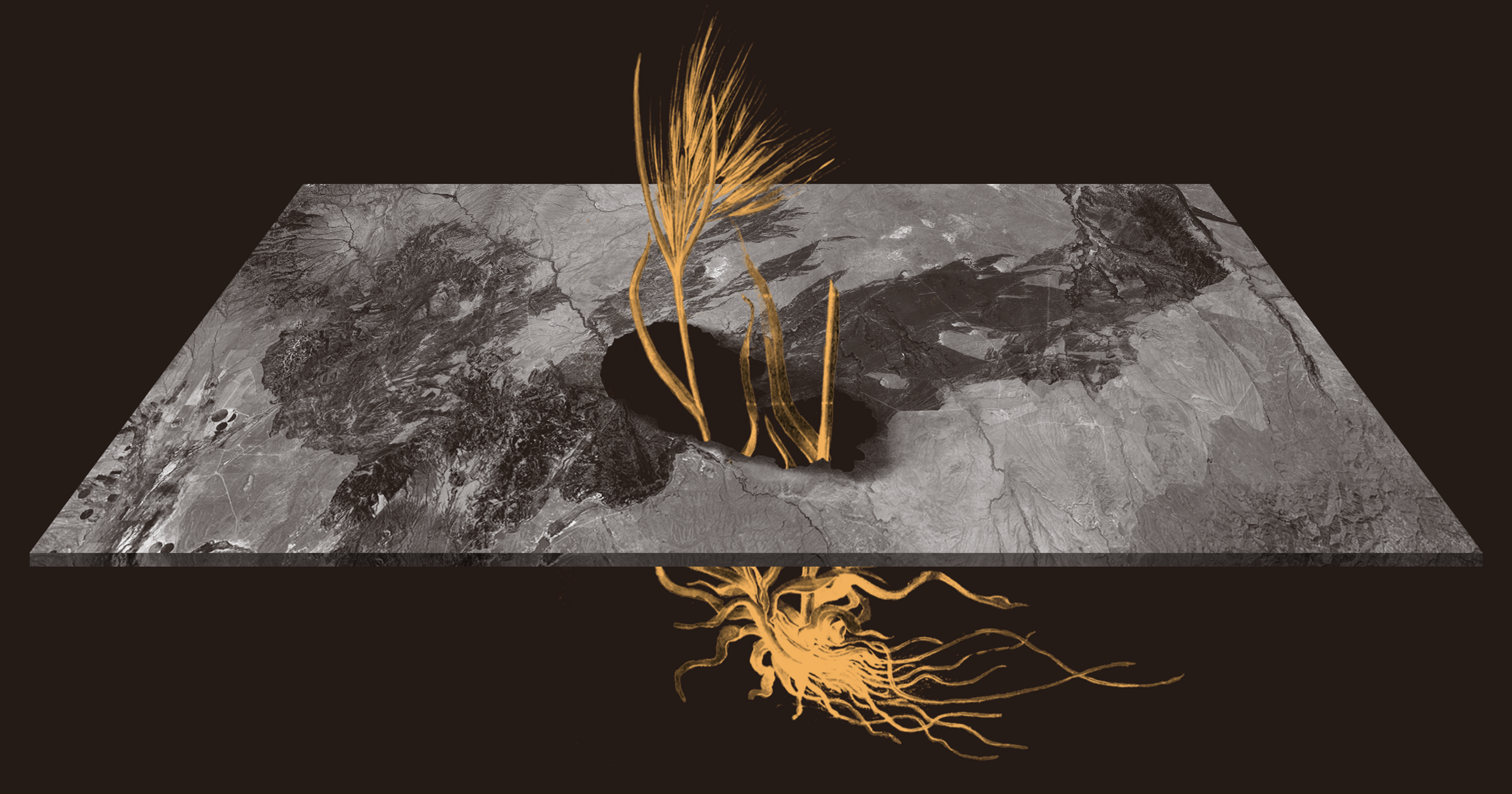
On July 5, 2018, sparks ignited just outside the rural town of Paradise Valley, Nevada. The small fire quickly exploded across the landscape with 40-foot flames and a smoke plume so huge, it was visible from space.
The Martin Fire ended up being the largest in Nevada history, consuming more than 431,000 acres. It blackened prime grazing land and critical sage-grouse habitat.
While the specific cause for the inferno is unknown (it was likely caused by fireworks or campers), experts are well aware of what helped launch it out of the canyon where it started to spread across 11,000 acres within an hour — a brittle ladder of cheatgrass growing up the sides of those canyon walls.
Cheatgrass, also known as downy brome, now covers well over 100 million acres of land in the United States. Over the past century, this non-native annual grass has sowed itself across the Great Basin and intermountain west, usurping rangelands that had been degraded from overgrazing and populating fields abandoned during the Great Depression.
It is one of the most problematic weeds in the West, depriving grazing animals of consistent, quality forage and killing off native bunch grasses and sagebrush that provide habitat for wildlife. As native flora struggles to survive in the face of increasingly frequent, hotter fires that are exacerbated by cheatgrass, the invasive weed gets even more space to spread out. The problem is so extensive that ranchers and governmental agencies have forged an unlikely wartime alliance to eradicate (or at least curb the spread of) cheatgrass.
The winds were fierce and temperatures were scorching when the Martin Fire erupted. It had been the second wet winter in a row, which led to a dry sea of grasses that had grown somewhere between 200 to 1,000 percent more than usual. The native perennial grasses were essentially waiting to explode, and the cheatgrass that had inserted itself into what would have been bare soil — that could’ve helped to slow the inferno — added flashy fuel to the fire.
“Historically rangeland would have gaps to slow down fires,” said Jacob Powell with Oregon State University’s agricultural extension faculty in Sherman and Wasco counties. “With cheatgrass filling in those gaps, there’s a continuous fuel bed once a fire gets started.”
Cheatgrass poses multiple issues for ranchers. Increased fire risk is the most obvious, but it also outcompetes native bunch grasses like wild rye and Indian ricegrass. These bushy stands grow in clumps with fibrous root systems that help to control soil erosion, sequester carbon, and retain moisture into the dry summer months. Native bunch grasses stay green well into the fire season, offering livestock a longer timeframe for grazing.
Cheatgrass can be grazed while it’s green; however, that window lasts a couple of months at most in the spring and should be done at specific intervals to help eliminate it and prevent it from spreading. Once it starts to turn purple, its barbed seeds can cause abscesses and wounds in animals’ mouths.
“There’s a heck of a lot higher chance fires will start from roads if there’s dense cheatgrass.”
After more than a century of unfettered spread, cheatgrass is now considered in all project planning efforts that involve public lands and has become a vital element within the National Environmental and Policy Act (NEPA) process. The first major environmental law in the United States, it requires federal agencies to assess the environmental effects of proposed actions in all decision-making processes. In the case of cheatgrass, if a project might spread the invasive plant via machinery or, say, a drilling company was applying for permits in an affected area, mitigation measures must be incorporated into the plan in order to gain approval.
In particularly fire-prone regions, government agencies have been using aircraft to spray herbicides like Imazapic and Rejuvra on extensive areas. This includes 1,000 acres of BLM-managed land on the Yarmony Mountain area of northern Colorado and 9,200 acres that were burned by the 2020 Mullen wildfire in Wyoming.
Because the cheatgrass problem is so extensive, agencies have to carefully consider the most effective places and methods to attack it.
In southeastern Oregon, as part of a wildfire mitigation bill, 70,908 acres of private, tribal, state, and federal lands have been aerially sprayed with pre-emergent herbicide. Some of these applications have been directed toward protecting healthy bunch grass communities from encroaching cheatgrass. In other areas, the efforts have been aimed at eradicating swaths of invasive perennial grasses along roadsides. “There’s a heck of a lot higher chance fires will start from roads if there’s dense cheatgrass,” said Katie Wollstein, rangeland fire specialist with Oregon State University’s Forestry & Natural Resources Extension Fire Program. “It’s thinking about how invasive grass communities may function to spread fire across the landscape and taking a large-scale approach to managing fire risk.”
Though these aerial and on-the-ground sprays have become a popular and effective way to cull large spreads of cheatgrass and other similarly flammable invasives, the weeds are incredibly skilled at populating or repopulating bare ground. So, these sorts of chemical treatments are most effective when paired with reseeding native and immigrant bunch grasses.
Southeast Oregon’s fire resiliency plan also included seeding 300 acres with grass and shrub seeds including native plants that have been collected from Harney County and neighboring Malheur County. “Things like herbicide are a valuable tool, but unless you can get something desirable growing back in its place, you’re going to end up having to control the weed again,” said Dustin Johnson, extension rangeland scientist at Oregon State University.
“Things like herbicide are a valuable tool, but unless you can get something desirable growing back in its place, you’re going to end up having to control the weed again.”
These reseeding projects are one area where governmental agencies and ranchers have been working together across the West. Stakeholders in Oregon’s wildfire resiliency efforts are now planning to collaborate with landowners to grow those hand-collected seeds for ongoing restoration efforts. Similar reseeding projects using both native and non-native grasses have taken place in Utah after the Goose Creek Fire, following the The Pony and Elk complex fires in Idaho, and many other areas.
These projects have required a change in mindset regarding who is responsible for managing rangelands and how to do so in a way that best protects communities and the environment. “Lands in the American West have checkerboard ownership with private and public lands,” said Wollstein. “We need to work better across those ownership boundaries because invasive annual grass control is a collective action problem.”
Withers Ranch, a cattle ranch outside of Paisley, Oregon, has been hit with three different fires over the past five years, starting with the Watson Creek fire of 2018. It lies right on the edge of the Great Basin on the sagebrush steppe, bordered by conifer-heavy Fremont National Forest to the east. Though cheatgrass has not been the main driver for the fires that have swept through from different directions over recent years, owner Daniel Withers has been aggressively trying to contain it and similarly invasive medusahead from the bare ground where the fires burned. He has reseeded with a mix of crested wheat, wild rye, intermediate wheatgrass, and some forage kochia. “We’ve been pretty aggressive about seeding everywhere we could, both mechanically and aerially, to keep cheatgrass and medusahead out,” said Withers.
This reseeding is not only helping to make the land more fire-resistant but also is better at holding the soil together, which helps to support forage and water-holding capacity. Plus, it gives Withers a much longer window for grazing. He plans his grazing to take advantage of the cheatgrass while it’s still green and palatable to his cattle before it dries out. But he has to be fast. “The time with cattle is pretty short,” said Withers. “Maybe two weeks.”
Though BLM and other governmental agencies are now addressing cheatgrass from multiple angles including mechanical removal, herbicides, and prescribed burns, well-managed grazing is a critical piece of the problem that crisscrosses private property, grazing allotments, and other public lands. In some areas, virtual fencing has been used to contain cattle grazing cheatgrass along fire-prone roadsides. These sorts of efforts can play a huge role in preventing wildfire from spreading uncontrollably to neighboring properties. “Coordinating livestock grazing is an important treatment tool to address this really complex problem,” said Wollstein. “Ranchers are an important part of this.”
The first time I visited Little Wild Things City Farm, smoke from wildfires hundreds of miles away clogged the air, the AQI hovering near 300. When I arrived, no one was there. They had sent their farmers home early to avoid the worst of the smoke; many walk to and from the farm’s location in Washington, D.C.’s Trinidad neighborhood. But the farm itself wouldn’t be affected by the smoke and other increasing extremes of climate change: It was all indoors.
Little Wild Things is a 3,000-sq ft, windowless second-floor space, rented from the hardware store downstairs. Rows of microgreens growing out of dirt are stacked five levels high, and you hear the constant whir of a hydroponic tank pumping water to two rows of edible flowers. It’s a commercial operation, one of several small vertical farms in the D.C. area.
These farms — and others like them across the U.S. — operate out of spaces very different from both conventional urban farms and large vertical agriculture operations. They’re neither scrappy, low-acreage outdoor lots run by schools and nonprofits, nor are they the slick enormous operations that have been the visible face of vertical farming.
Most of the growth — and the investment — in vertical farming in the past few years has been in the latter: mass-production businesses growing hydroponically in football-field sized warehouses.
It’s been sold on a compelling premise. By lowering the amount of produce shipped from California and globally, these farms cut transportation costs and emissions, and promise fresher, more nutritious food closer to large population centers year-round. They also boast about their protection from the elements, and how little water and land they use compared to a conventional field.
Inside, Little Wild Things is protected from the “freak accidents of nature” that can ruin a crop, farm manager Brittany Gallahan said, and workers aren’t exposed to UV radiation for long hours under the sun.
Smaller vertical farms also offer the shortest-distance between farm and consumer possible. Across the river from Little Wild Things, Area 2 Farms delivers its produce to CSA members within a 10-mile radius, but the larger goal is to place many more small vertical farms as close as possible to where people live and work.
“Our whole entire mission is to move the farm, not the food,” Area 2’s community partnerships manager Jackie Potter said.
Little Wild Things is protected from the “freak accidents of nature” that can ruin a crop.
Housed in a small industrial strip across from a dog grooming business and an auto body shop in the densest suburbs of Virginia, underneath Area 2’s two-story high ceiling are several vertically stacked, mechanical moving scaffolds the company calls a silo. As a first step to its expansion, Area 2 is planning to place a display version of the silo in Union Station, Amtrak’s hub in downtown D.C., ultimately hoping to turn it into a working farm.
The climate impact of vertical farms is complicated and widely differs from farm to farm. While the produce typically travels far shorter distances, vertical farms consume a giant amount of energy compared to conventional fields.
While some indoor farms either purchase zero-emissions energy or install renewables onsite, the carbon pollution impact of high electricity usage is otherwise dependent on a farm’s regional grid. A 2020 World Wildlife Fund study modeled the environmental impacts of lettuce grown hydroponically in St. Louis versus being shipped from California. The indoor lettuce used less water and land, but had higher greenhouse gas emissions — even factoring in nitrogen fertilizer use and transportation.
How much more energy these farms use depends on what particular mix of technologies are being used: LED lighting, cooling and heating, water pumps. A 2021 industry survey by indoor farm consultancy Agritecture found that vertical hydroponic farms were using eight times more electricity per kilogram of food than sun-dependent greenhouses.
Large vertical farming companies remain a black box in many ways. Proprietary elements — genetics, growing technology, and other “trade secrets‘’ — abound, making it hard to fully assess the environmental benefits and drawbacks of each farm. Even 70% of growers in the Agritecture survey said they believed the industry was “susceptible to excessive greenwashing.”
Planting 500 trays a week indoors is like “regular farming, sped up.”
Small urban vertical farms are a mix of soil and hydroponic outfits, although most shipping container farms are hydroponic. Both Area 2 and Little Wild Things are soil-based, although the latter uses a hydroponic system to grow edible flowers. Neither said electricity is a major cost for them, in part because of what they’re growing and how they’re doing it.
At Area 2, Potter explained, each silo rotates the crops upward throughout the day, then drops them down to two layers without lights, mimicking a day-to-night cycle.
“It’s just like your house: Your basement is cold and upstairs is warmer,” she said, adding Area 2 only controls the temperature in one area. “We’re cutting down so much cost by just lifting it up and using natural heat rising.”
The small farms’ business models are also different from the warehouse vertical farms. Each of the D.C. businesses have a different approach, but they don’t sell to grocery stores, even ones looking for local vendors.
Area 2 only sells through a CSA and grows in rotations that mimic traditional seasons: items like fresh tomatoes and basil in the summer, root vegetables and bok choy in the winter, plus greens year-round. Their model was built in response to what its lead grower, Tyler Baras, experienced working at other indoor farms.
Growing “hundreds and hundreds” of heads of butterhead lettuce and selling it to grocers like Whole Foods for 10 cents of revenue a head was “not a profitable system for the farmer at all,” Potter said. Instead Area 2 eschewed investment into mass hydroponic systems — but also monocropping and harvesting enough of the same produce each week required to sell to grocers.
“Now that the bad years are gone … a lot of people are moving in and buying land, and they’re going to displace those farmers.”
“The reason why we don’t go to grocery stores is the whole point,” she said. “We’re growing so many different varieties of things and in a smaller quantity.”
That variety is somewhat of an outlier in the industry. The Agritecture report indicated not even a third of vertical farms grow something other than greens, microgreens, or edible flowers. This especially seems to be the case for smaller urban ones.
Fresh Impact, a hydroponic farm wedged between a massage spa and a halal supermarket in a strip mall on one of Arlington, Virginia’s busiest roads, sells microgreens and flowers almost exclusively to restaurants — their client list is a who’s who of D.C.’s most well-known and celebrated places to eat. Other small vertical farms located around the U.S. — in cities like Detroit, Phoenix, and Boston — are exclusively greens-focused.
It’s here that small urban vertical farms start to overlap with their outdoor cousins. Economically viable farms in urban areas without other revenue streams often have to rely on high-value, quick-succession crops like salad greens to make up for their small size, a 2019 Cornell report by Anu Rangarajan and Molly Riordan found.
Little Wild Things can’t give up part of their limited space for months in order to grow tomatoes, Gallahan said, nor do they have intense enough lights to replicate the summer sun. The quick turnover does allow them to be responsive when certain crops aren’t selling well, farm manager Gallahan said. Planting 500 trays a week indoors is like “regular farming, sped up.”
Their business model has shifted out of necessity as well. Little Wild Things launched a CSA only after the pandemic lockdown, when the Dupont Farmers Market was suspended indefinitely. But their CSA has been losing customers.
“If there’s a pandemic, a shock, a natural disaster, our food is not coming from miles and miles away.”
The farm now has a retail space inside the Union Market food hall, selling salads created with their indoor-grown microgreens. They’re hoping to retool their CSA to offer something similar: more leafy greens, carrots, and radishes.
Small vertical farms face similar economic pressures as their outdoor city siblings: balancing the availability and affordability of space with the sometimes conflicting goals of increasing food access and security for nearby residents. Specializing may help ease the financial pressures of small indoor farmers, but it limits who is interested in and can afford to buy their produce.
D.C. has long had non-profit, teaching, and community farms, well-established CSAs and farmers market vendors that have served local food enthusiasts for years. Area2’s CSA runs about $40-50 a week, while Little Wild Things’ is $30. Both are comparable in price to CSAs from outdoor urban farms or ones further afield of the city.
Many American urban farms rely on other revenue sources to be financially sustainable — farm tours, educational programs, grants and foundation support, even event rentals. The Cornell report found a significant minority of the farms they studied did not primarily rely on direct sales.
Urban farming has seen an increase in federal and local investment in the past few years. Many grants and other efforts on behalf of urban farms in the 2018 Farm Bill arrived around the same time early pandemic lockdowns exposed the brittleness of supply chains. This fueled a surge of interest in local food sources, said Vanessa García Polanco, policy campaigns director for the National Young Farmers Coalition.
“How can we bring about any amount of food security? I think that’s where this type of farm becomes really attractive.”
The USDA has also opened a raft of county committees specifically for urban agriculture, including indoor farms. But the expansion of urban agriculture in U.S. cities is hugely dependent on local factors, Polanco said, especially city ordinances.
She points to Detroit as a good example of where local government efforts encouraged urban farmers, seeing them as an asset in a city with lots of open land. But she sees potential trouble ahead.
“Now that the bad years are gone … a lot of people are moving in and buying land, and they’re going to displace those farmers,” Polanco said.
Little Wild Things itself has hopscotched across the city, including a spot near Union Market, before extensive redevelopment there made the rent unaffordable.
Vertical farms can go places that outdoor ones can’t, and some pitch this as a win-win for urban spaces in need of a post-pandemic lifeline after. Arlington County, dealing with an office vacancy rate north of 20%, recently rolled back rules preventing vertical farms, among other things, from operating out of office spaces.
But Fresh Impact’s owner, Ryan Pierce, doesn’t think his industry is going to be a quick solution for high office vacancy rates.
“How can we bring about any amount of food security? I think that’s where this type of farm becomes really attractive.”
“Offices are designed for people. Right?” he told a local broadcaster. “Making something comfortable for people is totally different from making something comfortable to essentially manufacture plants.”
For Polanco, urban farms are speaking to the need for a more redundant food system. “If there’s a pandemic, a shock, a natural disaster, our food is not coming from miles and miles away,” she said. “For me, it’s a matter of resilience.”
Despite being indoors, Little Wild Things and Area 2 see themselves as part of the local farm community. As some larger vertical companies begin to stumble with unhappy investors, the future of smaller operations may be more tied up with nearby outdoor farms than the indoor farming industry at large.
“When you look at urban spaces, you say, “Okay, how can we bring about jobs in the agricultural sector?” Gallahan said. “How can we bring about any amount of food security? I think that’s where this type of farm becomes really attractive.”
She knows her farm can’t grow everything, and thinks partnering with other urban farmers is one way to expand what they do.
“I want to know the other farmers. I want to know what their struggles are. I want to share resources. I want to share networks. I want D.C. food to be as local as it can be.”
Clarification: An earlier version of this story quoted a source who misstated both the revenue and the name of the buyer in Tyler Baras’ experience growing lettuce for other indoor farms.

Vineyard Manager Ruben Solarzano decided to try an experiment with his workers at Stolpman Vineyards in Los Olivos, California. He gave his crew of 15 a two-acre plot of vines to completely manage by themselves.
Though Solarzano was always happy to answer questions or offer advice when asked, the crew made every farming decision on the block: how to prune and shoot thin, when to vertically position the vines, whether to drop fruit. The employees did not earn extra income from the project, but they did become far more engaged in their work. “Ruben saw an immediate difference,” said partner Peter Stolpman, who took over operations from his father Tom in 2009. “The crew not only took way more pride but became more engaged about the entire vineyard.”
Two years after starting this worker-managed project, Solarzano’s boss Tom Stolpman was lamenting that they were the only two employees drinking the wine they at a company barbecue. At that time the crew mostly hailed from Jalisco, Mexico’s tequila capital, and had limited exposure to wine culture. Solarzano decided it was time to tell Tom about the initiative and offered an idea — what if we made wine from that block as a gift for the workers who tend to those grapes?
In 2003, Stolpman bottled its first vintage of La Cuadrilla, named after the Spanish word for the small block run by the workers. That year, they produced 300 cases of wine as a gift to the 15 full-time employees — far too much wine for them to consume with friends and family. The next vintage, Tom and Solorzano decided to split up those cases, giving some to the employees to drink and selling the rest to fund a cash bonus. Two decades later, what started as a small year-end bonus has since morphed into a full-on profit-share that returns 10% of all the company’s profits back to its farming team.
Profit-sharing is still far from the norm in the wine industry — and agriculture, generally — a sector that is notoriously asset-heavy, cash-poor, and has long relied on a low-paid migrant workforce to turn a profit or just break even. It can be challenging for many wineries to implement; however, various forms of the profit-share concept have been on the rise among enterprising companies that have the available resources — and will — to share dividends with their workers.
In Santa Barbara County, Grassini Family Vineyards gives back a portion of the profits from its Equipo Red Blend to its farming team. Turley Wine Cellars and Trinchero Family Estates in Napa Valley contribute a share of its profits to employee retirement funds. And in South Africa, Chris and Andrea Mullineaux have opened up an entirely separate employee-owned wine brand for the workers.
These wineries are joining a larger economic wave that’s been growing in many industries since Japanese-run manufacturing multinationals like Nissan began moving toward team production models in the 1980s, according to Harvard Business Review. Crop share leases with hay and grains, like corn and wheat, where the landowners and tenants split farming expenses and profits, have existed for decades. And employee stock ownership plans have been slowly growing among diversified vegetable farms. But profit sharing seems to be particularly taking off in wineries, giving other agriculture sectors a potential model to look toward.
Well-executed profit-shares are helping wineries solve major crises including labor shortages, rising costs, critiques of exploitative working conditions, and cost-of-living issues faced by workers earning meager salaries in some of the most expensive places to live in the United States.
“We want to put our money where our mouth is. We have the best crew and they need to get paid for it.”
Studies have consistently shown that employee share ownership plans tend to garner more loyalty and longevity as well as increased yields. “We are highly confident that profit-sharing companies have higher average productivity,” said Douglas L. Kruse, acting director for Institute for the Study of Employee Ownership and Profit Sharing at Rutgers University.
For the first five years of La Cuadrilla’s production, Stolpman’s vineyard workers were earning an average $500 in bonuses per year. The amount wasn’t huge, but combined with the company’s commitment to only employ full-time workers — a stark contrast to the migrant workforce that has long been common in the wine industry — they were able to maintain a loyal, steady crew.
This continuity has been a huge boon to the company, which produces 25,000 to 30,000 cases per year from its estate and another 25,000 to 30,000 cases from outsourced grapes. They’ve never faced the labor shortages that have become an increasing problem in agriculture and the larger economy.
Stolpman’s team meticulously prunes, thins shoots, and hand-picks 174 acres of vines on the estate. This keeps the plants healthier and productive decades longer than the 15 or so years many other vineyards are able to get out of their vines before having to replant and start over. “We have people who care about our vines and can see potential problems to fix them on the fly,” said Stolpman. “We literally have 34 viticulturalists out in the field every day.”
If these employees choose to move on, their extensive training at Stolpman Vineyards will help them land well-paying jobs in the wine industry. However, the supportive workplace culture that allows them to engage in problem-solving to bolster their immediate income makes staying at Stolpman far more attractive. These factors are integral to a successful employee share ownership plan, said Joseph Blasi, the J. Robert Beyster Distinguished Professor at Rutgers‘ School of Management and Labor Relations: “You can’t expect people to be motivated by profit-sharing if they have no involvement in solving company problems that could affect the profit.”
“You can’t expect people to be motivated by profit-sharing if they have no involvement in solving company problems that could affect the profit.”
Through decades of research Blasi and his team have found that successful profit share plans must start with a fair base wage, a sense of job security, and be significant enough to garner employees’ attention. While many companies offer 2% to 5% shares on top of wages, the institute has found the rate needs to be closer to 10%.
In South Africa, Chris and Andrea Mullineaux’s Great Heart Wine gives back 20% of its entire sales — not just profit — directly to its 42 employees. Their concept takes the employee share ownership plan to a whole other level, giving workers complete say in an entirely separate brand that uses their existing winemaking, distribution, and marketing systems. Anyone who works for Mullineux & Leeu Family Wines for two years automatically becomes a shareholder and receives dividends from the sales once or twice per year. “In the first year some of the staff who have been with us longer than 10 years got an extra four months salary,” said partner Chris Mullineaux. “Two of the guys bought land in their villages to build homes.”
Each team, from vineyard and cellar to sales and marketing, work together to elect a board of directors who represent the various sectors of the organization and regularly meet to make decisions on all aspects of the business. Eventually, the goal is to earn enough profit from the sales that the employee-owned company can purchase its own vineyards.
Currently, land-ownership is a very contentious issue in South Africa given its long history of colonialism and apartheid that lasted until the 1990s. Most of the other winery profit-shares in the country have focused more on subdividing land for employees, which — given the difficulties of farming especially in a region prone to extreme drought — doesn’t necessarily translate into cash-flow, said Mullineaux.
Stolpman’s profit share system did not take off nearly as quickly as Great Heart’s due to a series of economic and personal hardships including banking issues related to the Great Recession of 2008 and the founder’s bout with cancer. That said, by 2018, the amount of money in the bonus coffer became so significant they began to split it up throughout the year. And starting in 2020, a $3-per-hour bonus started getting added to farmworkers’ paychecks, followed by another year-end payout. While new cars often show up closely after the post-harvest profit-sharing distribution party, the majority of workers use that extra money toward savings and helping to support their families.
“We want to put our money where our mouth is,” said Stolpman. “We have the best crew and they need to get paid for it.”
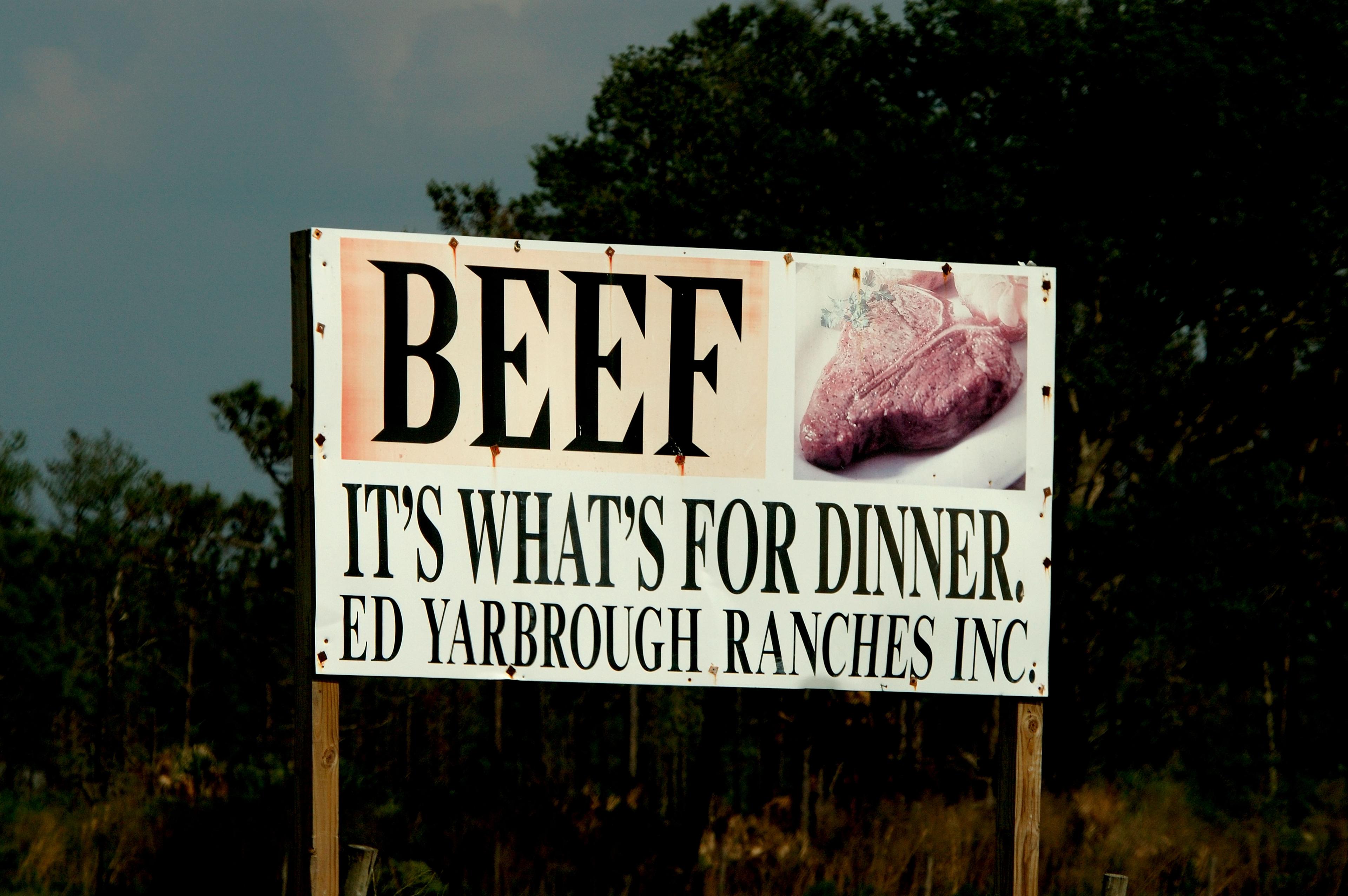
“I don’t know how anybody can argue with accountability,” said Wes Shoemyer. “I don’t know how they can argue with transparency.”
The Missouri farmer, who plants some 3,000 acres of corn and soybeans and the occasional few acres of wheat, was talking about the Opportunity for Fairness in Farming (OFF) Act. Introduced into the Senate in February 2023 and the House a month later, bipartisan coalitions of lawmakers hope to get the act written into the 2023 Farm Bill.
It’s part of a decades-long attempt to reform agricultural checkoffs, which force farmers of certain commodities to contribute a portion of their earnings to pay for industry research and advertising. The U.S. Department of Agriculture-run programs (via USDA’s Agricultural Marketing Service, or AMS) are meant to grow consumer desire for products like beef and pork, milk and cotton, watermelons and popcorn, and yes, corn and soybeans (the latter two often in the form of biofuels).
When checkoffs first originated in the 1930s, farmer participation was voluntary — a way to “pool their resources and boost the overall sales of their product,” according to anti-monopoly group Farm Action Fund. They began to morph into their current, compulsory form in the 1985 Farm Bill, and are now at the center of a contentious battle between the farmers who are obliged to pay for them and the trade groups some say are using checkoff money for their own gain.
Currently numbering 22, the programs are supposed to give agricultural producers “the power to maximize resources [by] promoting a commodity as a whole instead of by individual businesses,” according to a checkoff webpage. “Everyone in the industry benefits through increased sales, consumer awareness, and higher overall demand.” Ever heard the oddly generic slogans, “Beef. It’s what’s for dinner,” or “Got milk?” or “The incredible, edible egg?” They were paid for with checkoff dollars. (Whether they’ve actually made American shoppers yearn for beef or milk or eggs is a question for another story.)
Many farmers, ranchers, and organizations both in and out of agriculture maintain that checkoffs are rife with abuses. They say the programs exact what amounts to a steep mandatory tax (and potentially steeper penalties for non-compliance) — Shoemyer pays a penny a bushel on all the corn he sells, adding up to about $2,000 a year — whose expenditure farmers have no say or sway over.
Some still remember when checkoffs were not mandated. “That’s why they’re called checkoffs, because farmers would check a box on their sales slip if they wanted to contribute,” explained Angela Huffman, vice president of Farm Action Fund, which is leading calls for reform. “That provides a lot more incentive for the checkoffs to be more accountable to the people paying into them,” Huffman said. Shoemyer and other farmers would like to see all checkoffs reestablished as voluntary.
It should be mentioned, if farmers in some states don’t approve of what their checkoff dollars are paying for, they can apply for refunds. For instance, Shoemyer doesn’t like how his corn checkoff dollars are being spent — he gets “galled” when the checkoff works with partners that fight counties trying enact clean water protections — he can apply for a refund to the state of Missouri, which manages his particular checkoff. He’s had some success in getting money returned.
“We are actually funding our own demise.”
Checkoff boards stand accused of various violations: for lobbying; failing to make their meetings public; neglecting to submit financial reports to farmers or to Congress; embezzlement; instances of assault; and allowing their coffers to fund things like overseas vacations. The OFF Act would prohibit checkoffs from contracting with lobby groups and engaging in conflicts of interest or anti-competitive and “deceptive” acts.
For their part, some trade groups that currently contract with checkoff boards — these include the National Cattlemen’s Beef Association (NCBA), the U.S. Dairy Export Council, and the National Pork Producers Council — dispute claims that rules governing checkoff programs have been abused. NCBA CEO Colin Woodall went a step further on the Agribusiness Radio Network, saying the OFF Act is a ploy by animal rights activists to push an anti-meat agenda. (Cory Booker, D-NJ, is a Senate sponsor and a vegan.) The OFF Act is “actually about animal activists attacking us as beef producers,” Woodall said.
An independent assessment of checkoffs, released in 2017 by the Government Accountability Office, found that USDA’s oversight of the programs had improved in the five years since an earlier report was released. But it acknowledged that USDA’s ability to “prevent misuse of funds is impaired” and that it may miss “an opportunity to ensure that stakeholders have access to information on program operations and effectiveness.”
Chief among producer complaints is that checkoffs bolster consolidation in meatpacking and put smaller producers out of business; by paying into them “we are actually funding our own demise,” said Judy McCullough, who runs a 14,000-acre calf-cow operation in Wyoming. She pays a dollar into the beef checkoff program every time she sells a calf to a backgrounder, who raises cows in the months between weaning and finishing. The backgrounder then sells that calf to a finisher, who fattens it to sell to a packer like JBS or Cargill or National Beef; both the backgrounder and the finisher are also each obliged to pay a dollar into the beef checkoff — but none of them reap the rewards of beef advertising or research.
Bill Bullard is CEO of cattle industry nonprofit and lobbying group R-Calf USA, which has sued USDA twice in the last 20 years over alleged checkoff abuses. “You have an animal upon which $3 to $5 is collected during its lifetime,” from every producer along the supply chain, he said. This generates about $80 million per year, split between state beef councils and the federal checkoff, the latter of which he said contracts mainly with NCBA to spend its portion of funds — although Bullard said in both instances, producers are granted no say in how their checkoff dollars are used.
Checkoff dollars only promote commodities generally; for instance, they make no distinction between cattle raised regeneratively or on 100% pasture. Said Huffman, “Environmental groups have really been complaining that the beef checkoff is promoting how sustainable and good for the environment beef is but they’re representing the interests of CAFOs, not ranchers who are doing grass-fed beef and actually improving the soil.” Nutritionist Marion Nestle in May called attention to potential beef checkoff greenwashing on her Food Politics blog. Responding to a New York Times ad in which “land without cattle” was equated with “land without butterflies and deer,” Nestle wrote that beef checkoff participants “generally raise cattle in CAFOs … the antithesis of grazing or regenerating land.”
“In a perfect world, there’d be no checkoff. We can advertise our own product … We don’t need them to do that for us.”
Meatpackers near the tail end of the supply chain don’t have to pay any money into the checkoff program (unless they’re importing meat, according to Huffman) — even though checkoff reformers say they, and their trade org partners, stand to benefit the most from it. They can set the price they pay for a cow they buy from a finisher, which has negative ripple effects all the way back down the line to McCullough and other producers. And they can set the price of beef they sell into the marketplace — which is why they were investigated by the Department of Justice for price-fixing; JBS settled for $52.5 million in February of 2022, and for another $25 million in April of 2022.
Even a checkoff-funded research project that “invented” the flatiron steak in 2002 “benefited the packer, because that was a leftover meat cut and I don’t sell beef, see, I sell calves,” said McCullough. “In a perfect world, there’d be no checkoff. We can advertise our own product … We don’t need them to do that for us.”
Neither last nor least, since proponents of reform cite numerous complaints against checkoff programs (go further in-depth here and here), Bullard, Huffman, and others say USDA itself is to blame for checkoff failures, and is little inclined to fix them. “You have a government-mandated program and the government wants to continue operating the program because it means more employees and more salaries,” said Bullard. (AMS did not immediately respond to a request for comment.)
Relatedly, points out Huffman, checkoff board members are appointed by USDA’s secretary of agriculture; the once-and-current secretary, Tom Vilsack, was president of powerful lobby group U.S. Dairy Export Council in between secretarial stints. “There’s a revolving door between USDA and [lobby groups] and there’s just not a good incentive for USDA to have accountability with these folks when they’re basically in bed with these industries,” Huffman said.
Nevertheless, calls for reform are amping up and making for some odd bedfellows: among them, various independent cattlemen’s groups; the Union of Concerned Scientists, a nonpartisan science advocacy nonprofit; right-wing think tank the Heritage Foundation, which has ties to the Koch brothers; and the National Taxpayers Union, a fiscally conservative group that lobbies for constitutional limits on taxes and government spending.
But will their collaborative effort finally engender change? Corn and soy farmer Shoemyer isn’t so sure. “It’s a lot more fun for those folks involved with [the checkoff] to go hanging around with folks in suits and ties and Learjets than it is to come out and sweat your tail off trying to figure out how to make a [crop] field make more for you,” he said.

Picture a small field of dry, rocky soil, dotted with workers. They’re busy hand-scattering a mixture of seeds throughout, without regard for the neat rows of single grains that are emblematic of modern agriculture. The farmworkers’ movements look casual, almost haphazard, but in fact are quite deliberate. At a time in agriculture when envisioning the future may mean looking to the past, a forgotten method of farming may provide some solutions to climate change’s many challenges.
Maslins are both a method of planting and a cereal species mixture that can include the seeds of wheat, barley, rye, and other grains. In this seemingly unconventional ancient practice, a mixture of those seeds are hand-broadcast throughout a field. Sowing maslins fell out of fashion with the advent of the Industrial Revolution, as mechanized equipment and standardized farming methods transformed global agriculture to produce more uniform commodities.
Yet in countries like Ethiopia and Greece, some smallholders are still farming as their forebears did, sowing maslins into soil of varying conditions. No matter how wet or dry the growing season, those farmers are almost always able to produce grain, ensuring they can feed themselves and their families. Maslins use light and soil more efficiently than a single crop does, taking advantage of nutrients, light, and water at different times. For example, barley uses sunshine earlier in the season and wheat later on.
That’s why maslins are of particular interest to researchers, intrigued by the possibility that their risk tolerance and unique adaptability can be used by modern-day farmers as bulwarks against climate change.
Maslins are perhaps the original state of grain crops, said Alex McAlvay, the Kate E. Tode assistant curator of the Institute of Economic Botany at the New York Botanical Garden. “If you go to the Fertile Crescent and look at wild wheat, you rarely find it without wild barley,” he said. “It’s co-evolved for tens, hundreds, or thousands of years together in the wild. When people domesticated them, it’s no surprise they are somewhat compatible with each other and tend to co-occur.” It actually takes work to keep them separate, he added, because barley will invade a wheat field if you’re not careful.
McAlvay broadly defines maslins as any mixture of a small cereal or small grain. He learned of them when he was still a student in 2011, on a research trip to Ethiopia with fellow post-doc and graduate students .
Maslins are unlike the most familiar Western polyculture, growing different crops like corn, squash, and beans together — known as the Three Sisters method — said Alison Power, a professor in Cornell University’s Department of Ecology and Evolutionary Biology. She studies insects and diseases and how they are buffered by certain types of cropping systems.
The students who visited Ethiopia had been conducting research in Power’s lab. She said most people working in the agroecology field in the U.S. are not aware of the practice, but that the historically common system makes sense. “Under the expectation of climate change and unpredictability of moisture regimes, having the two mix together in a field offers some true advantages,” Power said. The grains have some complementary characteristics, like different depths of roots due to differences in drought and waterlogging tolerance. And different crops have varying needs for soil depths or nutrients, which allows them to coexist.
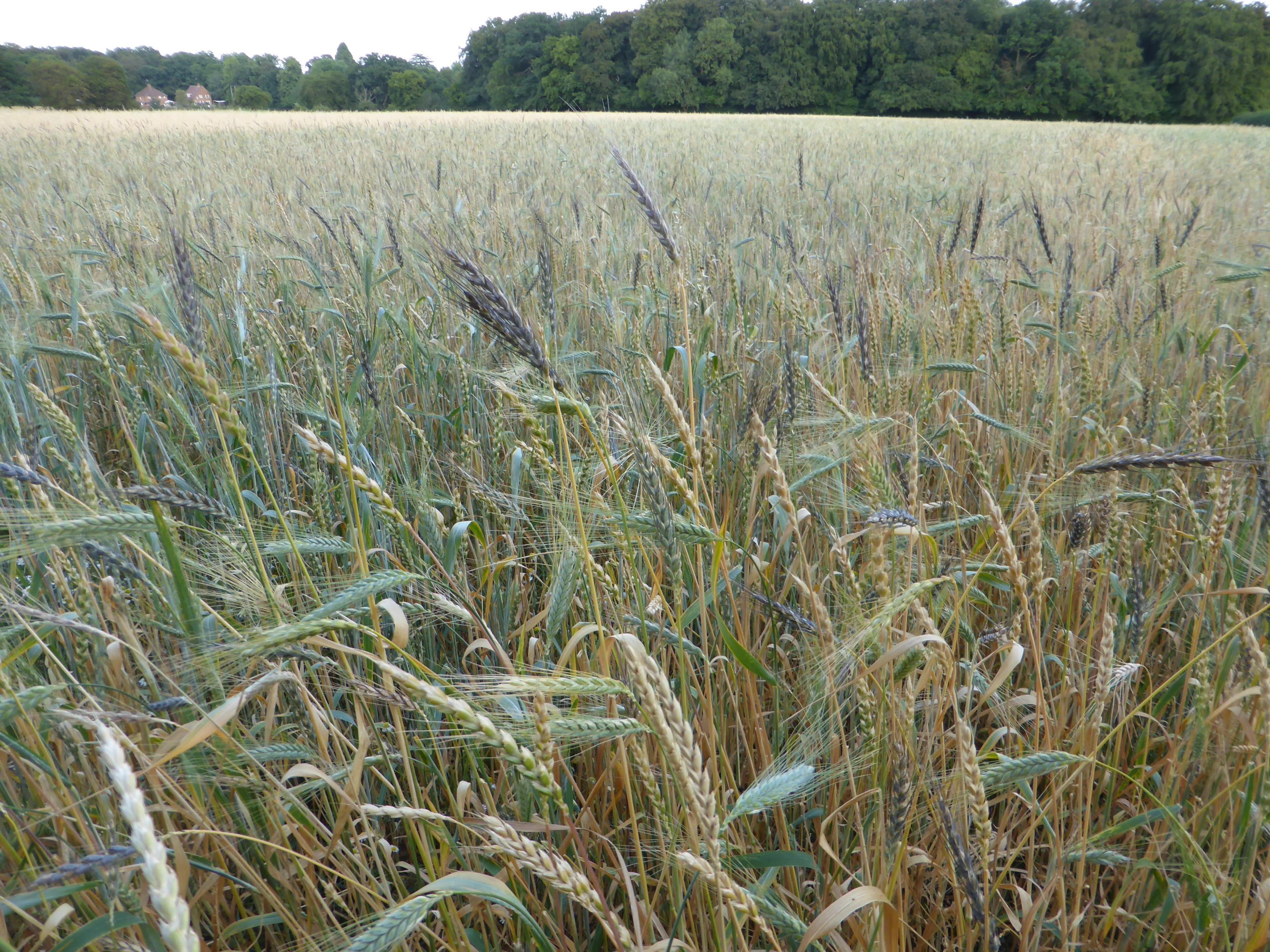
A mixed field of over 100 spelt and emmer wheat varieties
·Photo provided by John Letts
Ethiopian farmers said they preferred the taste and texture of the mixed grains, that they are more resistant to fungal diseases — specifically rusts — and are more drought-tolerant. Wheat and barley mixtures were the most widespread. Farmers in the country of Georgia have made similar observations, despite the two countries’ considerable climate and cultural differences.
Spurred to investigate further, McAlvay and colleagues published a lit review last year, consolidating agronomic and cultural information, including an intriguing fact that during the Ottoman Empire, taxes of mixed crops of wheat and barley were extracted from Serbia and Croatia. Current research projects include farmer interviews and field experiments in Ethiopia to learn more about insect and fungal resistance; drought-tolerance; productivity and yield stability; and the possible nutritional benefits of these staple crops.
McAlvay is also in the midst of a three-year experiment with Georgia’s Scientific-Research Center of Agriculture, its equivalent of the USDA, testing mixtures to potentially reintroduce to farmers there. Georgia was once the world’s epicenter for maslins, said McAlvay, as well as the center of wheat diversity, but the practice is no longer used there.
A third initiative, in Lebanon, where wild wheat still grows with wild barley, is in early stages, exploring how the relatives of these crops have co-evolved. Also on the agenda: how the components’ complementarity can improve yield, and how the mixtures adapt.
“The adaptation piece is even less studied and a unique feature of variety mixtures and maslins,” said McAlvay. One year’s environment influences the proportions planted in the next year. If more barley is harvested one year and that seed is saved and proportions not readjusted, more barley will be planted the next year. But if there is a gradual climate change, like getting a little drier, mixtures might track that change without a farmer having to intentionally adjust proportions.
“To me, conventional farming is no longer possible.”
It’s unclear why a mixture would not revert to a monoculture, but McAlvay said maslins seem to be self-balancing. Power doesn’t think reverting to a monoculture will occur in the short term because of weather anomalies, but doesn’t rule out the possibility; no experiments have yet been done to prove it.
Another important element is how one grain compensates for the other. When wheat has a poor growing season, perhaps because of a drought, the barley will grow well, and vice versa. It’s still in the early days of understanding the mechanism for these and other benefits, said McAlvay.
Early research offers promising information regarding disease resistance and tolerance. Unable to travel to Ethiopia in 2020, Anna DiPaola, a graduate student in Power’s lab, conducted an experiment at Cornell’s research farm in Freeville, New York. Her research established proof of concept that planting maslins in comparison to monocultures has an effect on aphid behavior and subsequent barley yellow dwarf virus (BYDV) spread. One of the mixtures did not get infected the same way that one of the monocultures got infected. The identity of the varieties planted also really matters, said DiPaola, who will submit her results for publication this fall.
While the concept of maslins came as new information to McAlvay and others, John Letts in Oxford, England, said he’s a black sheep who has been growing grain mixtures for over 25 years.
Letts is by training a paleo ethnobotanist, someone who studies human uses of plants through time. He began farming with grain mixtures to recreate the genetic diversity of the past, growing crops as they were produced in the Neolithic period using a low-carbon approach. Using no inputs, he said he is mimicking a natural grass ecosystem to foster and promote a sustainable way of farming.
“To me, conventional farming is no longer possible,” said Letts. “We have a lot of mouths to feed, but if we keep doing it this way, we’re all gonna die. Somewhere along the line, we’ve got to use science, our brains, justice, and equality at an economic level to feed everybody.”
“You need a sustainable solution. That’s got to be about genetic diversity, resilience, low input, carbon sequestration, feeding the soil biome.”
Letts’ eureka moment came when he was gifted a box of medieval thatch, dried grasses that were mixtures of ancient grains used to create roofs of buildings hundreds of years ago. It led him to develop what he considers true landrace grains using his find and thousands of seeds obtained from gene banks. Letts said in England, maslins are called mixtures or populations, and are strictly mixtures of wheat and rye.
His mixtures are resilient, genetically diverse, don’t require chemicals for disease prevention, and access moisture from different soil depths depending on the grain. Each plant’s unique differences pull together, acting as a buffer against environmental pressures.
For Letts, growing mixtures can reduce yearly yield because he doesn’t use chemical fertilizers. However, Letts said his yield is up to three times that of an organic system. He grows in the same field every year, planting clover as a cover crop to fix nitrogen in the soil and foster a “funky mycorrhiza,” he said, to support the plants. His goal is to obtain the system’s highest yield, not that of the annual crop.
Now focused on plant breeding, Letts oversees the select farmers growing his mixtures for his company, Heritage Harvest, which sells flour to bakers and soon to consumers. He is also executive director and head of farming and sustainability for the award-winning spirits at Oxford Artisan Distillery.
Liquor behemoth Diageo, which owns brands including Johnnie Walker and Tanqueray, recently made a minority investment in Oxford for Letts to conduct R&D in sustainable grain growing for the distillery.
With Diageo’s global reach and his ability to create new grain populations, Letts is hoping to play a role in transforming cereal production. Ultimately, he said, “I want to feed people.”
Letts ignored colleagues who said mixtures were not the future of farming. “You need a sustainable solution. That’s got to be about genetic diversity, resilience, low input, carbon sequestration, feeding the soil biome,” he said. “How do you do that in cereals? This is the best system I can figure out.”

Hey kids: Who wants bugs for dinner?
At this point, most U.S. children — and for that matter, their parents — would likely answer in the negative. Sure, some people could muster up the courage to try a candied ant or a mealworm taco at a glitzy food festival, but in terms of making it a staple protein, we’re not there yet.
But a vocal, motivated group of environmentalists, activists, and entrepreneurs have been attempting to broaden the fickle American palate to include some of Earth’s 1,900+ edible insect species as part of their regular diet. Chances are you’ve seen some headlines like “Get Ready for Our Bug-Eating Future!” in the past decade.
From a sustainability standpoint, the pitch is strong: According to the United Nations Food and Agriculture Organization (FAO), the world’s growing population will need to increase agricultural production by around 70% to meet the needs of the world’s projected population — 9.1 billion people by 2050. And while the vast majority of the world’s farmland (about 80%) is used for livestock, products from that livestock only meet roughly 20% of the world’s caloric needs.
Livestock production also accounts for an estimated 15% of global greenhouse gas emissions. Insects like mealworms and crickets are high in protein and minerals like iron and magnesium, and use up magnitudes less space and energy than their clucking, oinking, and mooing counterparts. It is estimated that insect farming uses about 50% less water and emits 75% less carbon than livestock farms.
That said, the current market for edible insects in the U.S. is worth around $30.9 million, according to the most recent numbers from Data Bridget Market Research. Compare that to beef: In 2022, U.S. beef sales hit $30.6 billion, while overall meat sales reached $87.1 billion. Size-wise, it’s like comparing a fruit fly to a cow — the domestic edible insect market is a mere 0.38% of its meaty competitors.
There is clearly room to grow, but the question that no one is yet able to answer is: How will that happen, and how quickly?
Not a Bull Market
One recent survey by YouGov showed that 18% Americans would be willing to eat whole bugs, and 25% would be willing to eat food made with insect ingredients. But it’s still a minority — not to mention that “willingness to try” is a far cry from daily behavior. To wit: Considering how broad the edible insect hype machine is, and how many edible insect products are already available on Amazon, when’s the last time you and a few friends got together over a nice bowl of mealworms?
“Look, it’s an interesting market, and one that has been around for thousands of years in much of the world,” said Garry Michael, founder and owner of online sustainable food retailer Farm2Me. With tens of thousands of brands in the network, there are just two on Farm2Me’s site offering edible insect products. (And one is aimed at pets.)
Healthy Living Market — a thriving regional market with locations in Saratoga Springs, New York, and Burlington, Vermont — is focused on sustainably farmed and produced, eco-conscious whole foods. Naturally, it seems like the market would be ground zero for edible insects. But, like other environmentally focused retailers with slim margins and serious overheads, there are no bugs to be found.
“We know insects are vitamin- and mineral-rich, packed with protein, fiber, omega fats, and iron,” said Amanda Bradley, Wellness Category Manager at Healthy Living. “There are also many potential climate benefits.”
So why doesn’t Healthy Living sell edible insects or edible insect products? Simply put, there is not yet a market for it. “I believe a large cultural shift would need to take place before they become a mainstream ingredient,” Bradley said.
The entrepreneurial space for food is tough — according to market analysts, about 70-80% of products launched in the grocery sector fail. And that includes things that American consumers are currently inclined to put in their mouths. For insect companies, that percentage is surely higher.
“I believe a large cultural shift would need to take place before they become a mainstream ingredient.”
“I’ve seen a lot of companies focused on edible insects either shut down or change what they’re doing,” Michael said.
Chapul, Bitty Foods, Seek, and Neo Bites are just a few of the high-profile edible insect companies that have either pivoted to other products in the insect space or shut down operations in recent years.
Laurie Beyranevand, director of the Center for Agriculture and Food Systems and a professor of law at Vermont Law School, said that while she believes that eating more insects would do the planet good, she simply doesn’t see the market revving up as quickly as many would like.
“You never see edible insects on shelves in the grocery store,” Beyranevand noted. “To me, what’s happening in the legal space around edible insects is very telling.”
Or, as she explains it, what’s not happening. Despite the ready online availability of insect snack products, she said the Food and Drug Administration (FDA) is essentially not regulating the industry.
“The market is so small, and I think the FDA is just turning a blind eye to it,” Beyranevand said. “I think if and when the FDA actually comes out with a formal way to regulate the market … that will mean the market is big enough for the FDA to pay attention to it.”
But despite its tiny retail footprint, one thing the edible insect movement does have is a vocal cross-section of chefs, environmental advocates, and entrepreneurs, all banging the drum on our buggy future.
All the Buzz
If you’ve paid even a little attention to the edible insect marketing push, you’ve likely come across the name Joseph Yoon. Yoon’s a former chef and freelance performer who now bears the lofty title of chef advocate for the U.N.’s International Fund for Agricultural Development, as well as founder of media darling Brooklyn Bugs.
“When I first read the FAO report on edible insect’s role in creating food security, I was inspired and motivated,” Yoon said. He started Brooklyn Bugs as a one-day food festival on Labor Day 2017, focused on education and culminating in a grand 10-course tasting starring edible insects. The response from the buzz-hungry public and media essentially launched an entirely new career for him.
“Talking about and making meals around edible insects is about so much more than just the meal itself,” Yoon said. “It’s sustainability, science, food production. Changing our food system is not a linear process. It’s more like interdisciplinary calculus. We need chefs, entrepreneurs, food manufacturers, scientists, and marketers all working together on different pieces of the puzzle, including changing the way many people think about eating insects.”
That last part is the rub. For all of Yoon’s — and many others’ — tireless advocacy, eating bugs is still largely a novelty in the U.S. That said, it’s worth noting that much of the rest of the world is already convinced. More than 2 billion people consume insects regularly, according to the FAO, and they are widely considered to be one of the most sustainable and nutritious ways to get dinner on the table.
So perhaps it’s merely a matter of time before edible insects take up a substantial part of our diets — there was a time when eating raw fish would have been unthinkable for many. Yoon says that celebrity buy-in and a steady drum-beat of experiential opportunities, coupled with reality checks from the FAO and other environmental agencies, is having an impact.
“Changing our food system is not a linear process. It’s more like interdisciplinary calculus.”
“I’ve personally seen the narrative change,” Yoon said. “A lot of my colleagues feel like there’s not enough progress being made, but considering how personal eating is, and how many people in the West are afraid of insects and have never been exposed to them as something potentially edible and delicious, I think we’ve come a long way. It’s not simple.”
One glimmer of promise? The seemingly greater willingness to try insects if they are simply an ingredient tucked into some other food, like cricket flour or ground ant tortilla chips. As Farm2Me’s Michael said: “It seems doable.”
“The most successful and promising projects … use insects as an ingredient in things like cheese puffs and snack products,” Michael said. “Americans eat a lot of processed foods, and by using insects as a big component in them, there’s an opportunity to make them healthier and more sustainable — and also a lot more marketable than whole edible insects might be.”
Yoon agrees, noting that his advocacy encompasses more than whole-insect consumption. “Look at the peanut or the tomato,” he said. “We don’t just snack on peanuts and tomatoes. We eat them in so many different ways: spreads, sauces, as flavoring components in a range of products and dishes, and as building blocks for snack bars and other items.”
Eco-Industrial Insect Farming
While the edible insect market may still be struggling for humans in the U.S., what about our pets, and the livestock we end up eating? There’s an emergent market in raising bugs to feed animals, and its sustainability is worth noting for that future moment we might decide to swap bugs for beef.
Many of the top producers in the industry, like Yoon, were inspired to get into the market following the FAO’s call to action. “The lion’s share of emissions created in the agricultural industry are from the feed animals get,” said Sean Madison, director of business development at Innovafeed, a company founded in 2016 by French engineers. “Chemical inputs on soil is also a big problem.”
Choosing one insect to focus on is common for large-scale farms like Innovafeed. Madison explained they chose the black soldier fly because it produces a digestible and healthy oil and a balanced protein, while also being highly scalable. The team grows and harvests the insects, and then gives the raw materials to companies that manufacture animal feed, pet food, and fertilizer.
“We can feed them with either wheat- or corn-based feed stocks, and they have a short life span of 45 days,” he said. “We typically harvest them at two weeks [of age]. They also are perfect for vertical farming because they’re silent and they like to congregate.”
The company started with a symbiotic-industrial-scale model in France that they have since exported elsewhere, including Decatur, Illinois. Here’s how it works: The team sets up a factory next to a large wheat or corn manufacturer. They use that factory’s organic byproducts, sent through a pipeline, to feed the flies. Innovafeed also sets up close to green energy plants, and uses a combination of their waste energy and renewable energy to power their operations. The company currently has three factories, and plans to have 10 by 2030.
“With a growing interest in protecting our planet, anything is possible.”
Ynsect, also based in France and founded in 2011 by scientists and environmental activists, just opened its first farm in the U.S. The Nebraska-based facility focuses on mealworms and, like Innovafeed, raises the bugs as animal and fish feed, pet food, and fertilizer.
“Today, our biggest market is pets,” Ynsect’s president and CEO Antoine Hubert said, adding that their products end up in several animal nutrition brands. Mealworms are the insect of choice, Hubert explained, because in addition to a very high (72%) protein content, they are highly digestible, hypoallergenic, and have been shown to decrease the incidence of skin diseases.
Plus, raising them uses “98% less land than traditional farmers, while significantly reducing its carbon footprint for protein production.” Ynsect plans to aggressively scale up, with an eye on human eaters too.
“Our ambition is to build a dozen vertical farms worldwide by 2030,” Hubert said. “In 2022, we signed an agreement with [flour milling company] Ardent Mills to build sites together. Future U.S. farms will be designed to meet growth in the animal feed market, as well as demand from the human nutrition market.”
Eating chickens and salmon that have dined on insects or feeding your dog bug-infused chow still remains more palatable than eating it ourselves. Insect flours and similar camouflage may be the best entry point for fickle consumers — but we’ll see how that plays out at dinner tables.
Of course, the stakes couldn’t be higher: The planet is facing a food and climate crisis that could be significantly deferred and rerouted if we all start making sustainable choices like eating bugs. Insects can also, as Ynsect and Innovafeed demonstrate, feed the food we eat, the pets we love, and the soil that grows our produce and grains.
There is no silver bullet when it comes to bug farming for the betterment of the planet. Instead, as Yoon said, “interdisciplinary calculus” must be utilized in the production and marketing of edible insects if we want them to be successful in the long-term.
And, as Bradley said, “With a growing interest in protecting our planet, anything is possible.”
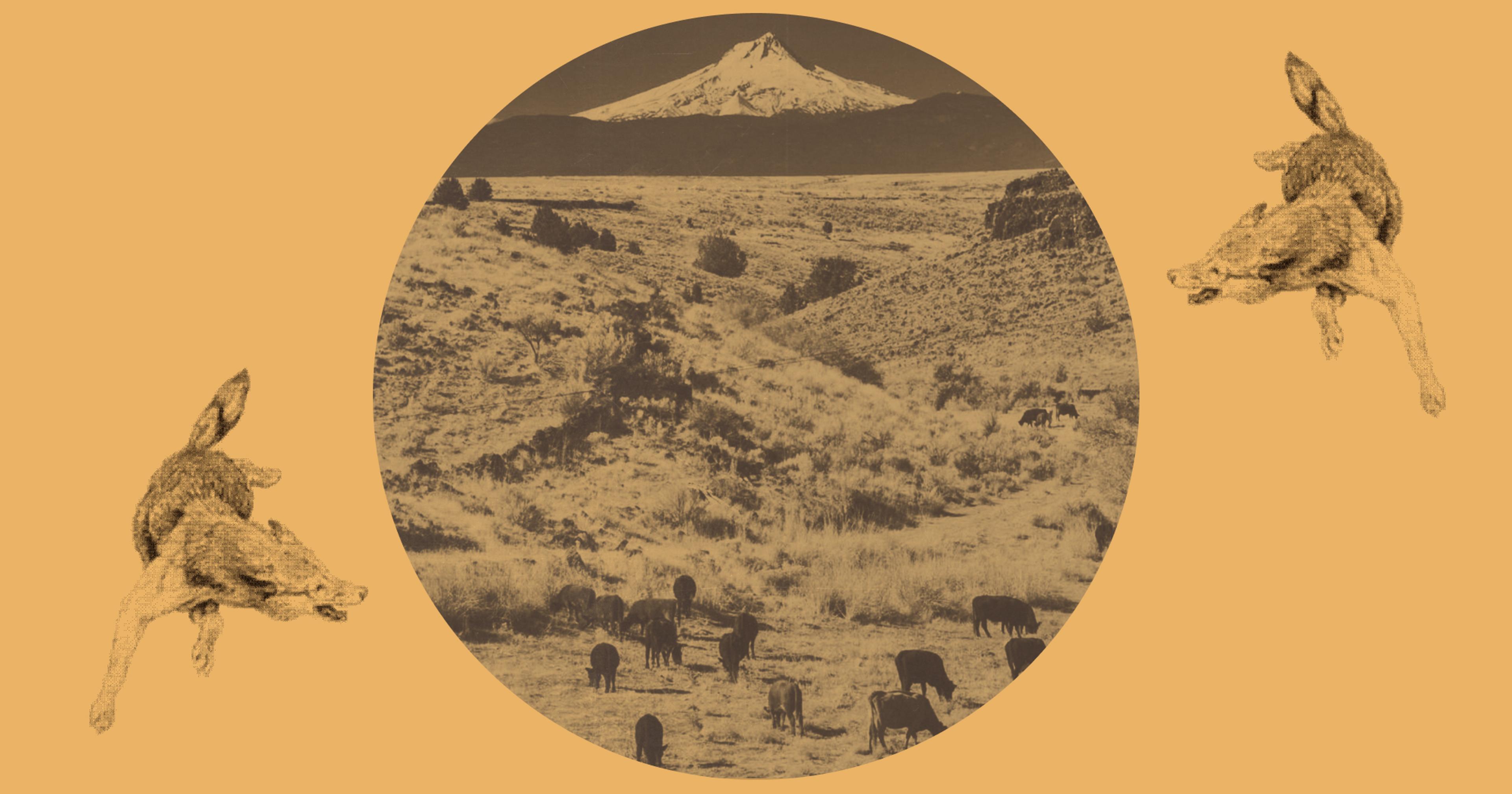
Ranchers in Western states have had a predictably rocky relationship with predators like wolves and grizzly bears. In particular, livestock owners in wolf territory have to remain on high alert to protect their herds and their livelihood.
In some states, like Montana, Idaho, and Wyoming, ranchers can shoot wolves on sight if they are threatening livestock. In others, like California, killing wolves is illegal — they were relisted as endangered last yeard — and ranchers and wolves must learn to coexist.
In an effort to aid the ranchers who deal with the impacts of wolf presence, states like New Mexico, Oregon, and California started programs that pay them back for financial burdens of losing their animals The programs offer reimbursement for direct livestock loss due to wolves or non-lethal on-ranch tools — like fences, guard dogs, or even extra staff.
Now, thanks to an expansion of California’s pay-back policy, ranchers are entitled to more wolf dollars than ever.
California’s program — originally launched in February 2022 by the California Department of Fish and Wildlife (CDFW) — took an extra step last month, offering ranchers reimbursements for indirect impacts of the predators’ presence. These impacts include wolf-induced stress that can result in reduced weight or breeding problems — no other payback program is so comprehensive.
When CDFW originally launched the Wolf-Livestock Compensation Program, ranchers could get payments for direct livestock loss, meaning if they found one of their animals injured or dead thanks to a wolf, the program would provide compensation. The exact payout for each animal is based on what it would sell for at full market value, which can be dependent on weight and type. For example, the payout for a typical head of cattle can be worth anywhere from $2,000-$3,000, and sheep around $100-300.
If they implemented special structures like fencing, hired extra help to protect herds, or bought guard dogs, reimbursement was available for that too. And if a rancher’s guard dog falls victim to a wolf, they would be repaid for it, too.
There are also more colorful techniques to deter the wolves. A method called fladry, for example, involves stringing brightly colored flags around the perimeter of the livestock. The flags fluttering about leave the wolves wary, and can be enough to keep them away. Some ranchers double down by stringing the flags along electrified wires.
Vicky Monroe, the department’s statewide conflict programs coordinator, said the CDFW “understands that livestock producers operating within wolf territories may be impacted directly and indirectly by wolves.” For the indirect loss, the state uses a calculation that pays for up to 3% of an animal’s value if that animal resides in wolf territory. So, say a rancher has 10 $2,000 cows living in a wolf pack’s main stomping ground, a rancher may be entitled to $600 per year in compensation for the cattle’s potential stress.
“We’ve got one rancher that’s lost nearly 20 animals since these wolves came.”
Even though wolves only account for 1% or less of accidental livestock deaths around the country, some ranchers are impacted more than others. That’s certainly the case for wolf territory in northern California like Siskiyou and Lassen Counties, where the Cascade mountain range region houses an abundance of both wolf packs and ranches.
Pat Griffin, once Siskiyou County’s agricultural commissioner, currently serves as the region’s wolf consultant. A cattle rancher himself, he has never lost any livestock to wolves, but he’s seen how hard it can be for ranchers who do. “If you look at it on a statewide basis, there’s a very small percentage of ranchers who are affected. But for those ranchers here locally that are impacted, it can be significant. We’ve got one rancher that’s lost nearly 20 animals since these wolves came.”
Other states, like New Mexico and Oregon, also have reimbursement programs. But California’s program is the only one in the nation that covers ranches for all three types of reimbursement: direct loss, indirect loss, and the use of non-lethal wolf deterrents.
Programs in other states also have less funding to work with, meaning payments have to be split or prorated amongst all qualifying applicants. “Here, right now, they’re doing 100% payment for the approved applications. I don’t think any other state has the level of funding that we have,” said Griffin.
That being said, California’s program is not permanently funded. Instead, it is a pilot program, based on $3 million of allocated state funding. As of now, the program only runs until June 30, 2026, or until all funds are used.
If a rancher discovers one of their animals killed, they have to ask for an investigation into that death.
To receive funds, ranchers have to submit applications to the CDFW website for approval. Repayment requests for non-lethal deterrents are the most straightforward. If a rancher pays for any equipment or structures to deter wolves, they fill out a form and submit receipts to get the money back.
A rancher seeking reimbursement for direct wolf-related losses needs to come bearing proof. If a rancher discovers one of their animals killed, they have to ask for an investigation into that death. And factors like finding a carcass too late, or never at all, can make proving a wolf killed the animal more complicated.
Griffin explained that when a rancher requests an investigation, either county trappers, wildlife biologists with CDFW, or he himself can carry that investigation forward. “If there’s evidence that shows that it was a wolf kill, that rancher can be reimbursed for the fair market value of that animal at the normal time of sale,” said Griffin.
The “normal time of sale” is another important aspect of the reimbursement program. With that language, even if a rancher lost, say, an 80-pound calf that was worth only hundreds of dollars at its time of death, the rancher can get paid the thousands, or whatever market value it would have been worth when fully grown. That is, of course, as long as it’s a “confirmed or probable” wolf-related death, approved by the program.
For the new, indirect part of the program, the state uses calculations based on the wolves usual whereabouts to determine what the region’s “core area” for the predators is. Through the program, ranchers are entitled to payments ranging from 2-3.5% of each individual animals’ market value, if that animal is living on or near wolf territory. This hopes to cover the harder-to-quantify, indirect impacts of the wolf’s presence — a gray area that’s still being researched.
“Once you compensate me for the wolf kills, it’s like agreeing that it’s okay.”
Tina Saitone, a UC Davis Cooperative Extension agricultural economist leading a study to quantify the impact of wolf presence on cattle performance and grazing behavior said in a statement, “Fear of prey stimulates cortisol production, so high concentrations of cortisol after leaving high-elevation ranges could suggest that wolf presence is correlated with cattle performance and indirect economic consequences.” She noted that stress also impairs cattle’s immune system and reproductive abilities.
For some ranchers, taking the state money feels less like a solution, and more like accepting a preventable problem.
Billie Roney, a cattle rancher with her husband Wally in Lassen County who no longer runs calves due to multiple wolf depredations, told Ag Alert, “Once you compensate me for the wolf kills, it’s like agreeing that it’s OK. The other side says, ‘It’s no big deal,’” Roney said. “That’s the part I’m not OK with.” Presumably, Roney may favor a shoot-on-site policy like in Wyoming or Montana.
Still, the program is considered popular, a compromise that allows for the protection of an endangered species while easing the financial pain of livestock owners. Monroe said that, to date, the CDFW has processed a total of 42 applications from 21 individual ranchers seeking over $750,000 in payments.
And Griffin said despite the mixed opinions, he can see the program’s potential as a source of solid payment for ranchers.
“Some ranchers … are pleased to get it, but not everybody. And I’m not sure everybody’s going to apply. But it could be a significant payment,” said Griffin. “I think ranchers really need to look at it as a means to offset the extra burdens they are having to bear to have these animals present.”

On 14 acres of rented land in central Ohio, first-generation livestock farmers Kerissa and Charlie Payne raise chicken, cattle, pigs, and lambs. The couple also has two young children, a newborn and an almost-two-year-old. That’s a lot of lives to care for.
It’s not always easy, especially considering how hard it can be to find affordable childcare. After giving birth to her first child, Kerissa jumped right back into her farm duties at Covey Rise Farm. “I had her on a Tuesday, and I was at the farmer’s market working on Saturday,” she said. Now, since having their second baby, the couple has had to cut several of the markets they participated in, missing out on thousands of dollars in sales. “You can’t take on another farmers’ market if you don’t have childcare for your kids. And most of the time, you can’t find reliable help.”
Nationally, 74% of farm families have experienced childcare challenges due to cost, availability, and distance to care. The lack of available options can hinder farm growth, forcing farmers to choose between growing their business and keeping their kids safe.
Could help soon be on the way? For the first time in history, the American Farm Bureau and the National Farmers Union have included affordable childcare in their priorities for the 2023 Farm Bill. A bipartisan bill that’s connected to the Farm Bill and sponsored by senators in several states, called the Expanding Childcare in Rural America (ECRA) Act of 2023, aims to direct funding towards opening and sustaining childcare centers in rural communities. “The men and women who work tirelessly to feed, fuel, and clothe us all deserve to raise their families in a healthy environment full of opportunities where children can grow and learn,” said Rep. Tracey Mann (R-Kansas) one of the seven members of Congress supporting the bill.
Of course, the challenge of finding affordable and quality childcare is not unique to the agriculture sector. Across the country, the childcare crisis is worsening — in rural areas, in suburbs, in cities. Waiting lists at daycare centers are getting longer, qualified staff are leaving for better paying jobs, costs are soaring, centers are closing.
“This is not a they or them problem, like farmworkers versus farmers, or even rural versus urban. This is a we problem for all Americans,” said rural sociologist Florence Becot, associate research scientist in Marshfield Clinic Research Institute’s National Farm Medicine Center.
That said, there are factors unique to farmers that further complicate their childcare woes. “One of the first things that we actually have to reconcile and start talking about is that yes, farm parents are working parents,” said Shosanah Inwood, associate professor of rural sociology at
Ohio State University. More often than not, both parents are performing farm duties, with some even taking additional off-farm jobs for reliable income and healthcare benefits.
“I had [my first baby] on a Tuesday, and I was at the farmer’s market working by Saturday.”
“The reality is, most farms in today’s world require both mom and dad to be working. It takes both parents to be on the farm. What worked 20 or 30 years ago isn’t what’s working now,” said Kerissa Payne, who oversees marketing, deliveries, and order fulfillment for the farm while also caring for her newborn full-time. The couple rents farmland that’s about a 10-minute drive from where they live, so farming duties can’t easily be completed during naptime. “I dream of the day when I can put my kids down for a nap and go outside and work and have the baby monitors watching them.”
Farming duties also don’t fit neatly in the hours of the traditional workday. “When you’re a farmer, your work hours are much longer. You can work weekends, evenings, very early in the morning. If you have livestock, if you have dairy, you’re milking two to three times a day. It’s nonstop,” said Becot.
Most childcare centers are set up to accommodate the 9-to-5 workweek schedule. “But we know that farming operates in the 24-hours-a-day, seven-days-a-week, non-traditional mode,” said Inwood.
Farms are not especially safe places for young children either. The number of large farms is increasing, as is the use of farming equipment that is much larger than they used to be, with greater potential to cause harm to small bodies during accidents. Every three days, a child dies in an agriculture-related injury, and at least 33 children are injured on the farm per day, according to the 2022 Childhood Agricultural Injuries Fact Sheet. “There’s really all these great things that are wonderful about growing up on a farm. But the reality is that farms are also very dangerous places to be,” said Inwood. She emphasized that for the last 20 years, farm safety experts have argued the best way to prevent agricultural injuries to children is for them to have a dedicated, off-the-farm caretaker.
After working on Wall Street for seven years, corn and soybean farmer Adam Alson moved back to Jasper County, Indiana, to take over his family farm. He looked forward to raising his family in the rural community he grew up in. But when the only licensed childcare center in town closed in 2018, he and his wife, Carlee Tressel Alson, were faced with a dilemma. Carlee, a freelance writer, was working on an important project while pregnant with their second child.
“It takes both parents to be on the farm. What worked 20 or 30 years ago isn’t what’s working now.”
“We started trying to figure it out, asking ourselves ‘Is there a different way that we can do this? Is there a way for there to be affordable, quality childcare, that we can financially sustain?’” said Adam Alson.
Then they had a wild thought: What if they opened their own childcare center? In Jasper County, roughly 70% of children ages 5 and under live in a household where both parents work. “Those kids need somewhere to go,” said Alson.
Earlier this year, Appleseed Childhood Education, the nonprofit Alson co-founded, opened its first early learning center, called AppleTree, with funds raised through local philanthropy, USDA rural development grants, and a large dairy who invested in the center “because they see that having quality childcare in a place that’s 15 minutes away from where they are trying to attract talent is important,” said Alson. Of the 75 seats AppleTree has for pre-K aged children, he estimates around 30% are from families with some connection to agriculture.
Alson is hopeful that the model can be replicated in other rural communities across the country — especially if the USDA Rural Development receives authorization and funding in the Farm Bill to build and staff more facilities in rural communities, in addition to helping to subsidize the cost of childcare (on- and off-farm) for farming families.“We’ve cobbled care together before, but now we don’t have to,” said Alson.
Not all farm families are as lucky. This fall, the Paynes will move their operations to Kansas due to increasing land values in Ohio. They said the lower cost of childcare there will help them be able to continue to farm. The family’s dream of growing bigger, however, may have to wait indefinitely.
“I wanted a big family, but the reality is, I don’t know if we can afford any more kids unless we can find sustainable childcare,” said Kerissa. “The farming industry is gonna die if we don’t fix it. Unless we have childcare, it’s not going to work.”
It’s something of an annual tradition. Most years, right around this time, local news stories pop up about dairy farmers dumping thousands of gallons of milk down the drain or out in the field. One year it’s Utah. Another year, Georgia. This year it’s Wisconsin and Minnesota. It’s tragic imagery, a visceral depiction of senseless waste, and it makes great headlines. But what’s actually going on here?
“I think the simplest way to explain it is to think of a factory, you know, that produces socks,” said Jared Hutchins, assistant professor of agricultural and consumer economics at the University of Illinois, Urbana-Champaign. “One year your buyers say, ‘Oh, you know what, we have enough socks,’ then you say, ‘Great. I’ll turn off all the machines making socks.’ Now think about dairy. That’s not possible. If your buyer says they have enough and don’t need anymore, you can’t go to your cows and say, ‘Hey, girls, you know, we have enough milk, you can stop producing now.’”
It’s a simple enough explanation, compounded by hundreds of complicating factors related to the supply chain, consumer demands, labor shortages, weather, even Covid — during the first year of the pandemic, millions of gallons of milk were dumped.
But some might ask, if there’s so much excess milk, why are prices continuing to rise? At $4.042 in May, a gallon of milk is slightly more expensive this month than last, and 15.2% more expensive than this time last year. And aren’t there ways to avoid milk waste by, say, turning milk into cheese, or donating it to hungry people in need?
It’s not always so simple.
The Spring Flush
For dairy farmers, right now is a funny time of year. Starting in March, “spring flush” is the time when milk production is at its highest, owing to the rhythms of cow biology. Those milky times will slow down by summer, but in June, there’s an annual struggle. School is closed for summer break, meaning one of the country’s most reliable dairy buyers — roughly 7.5% of the national supply — has closed up shop. Meanwhile, cows are still putting out peak amounts of milk.
“When you’re in this period of the calendar, where schools have by and large let out, the demand for fluid milk, because we don’t have school lunch, is going down,” said Scott Brown, interim director of the Rural & Farm Finance Policy Analysis Center at the University of Missouri. “At the same time, it’s seasonally when we tend to be producing the most milk on the farm. So when those things don’t exactly match up, you find yourself in these situations where you see some milk dumped.”
But given that this is an annual event, aren’t there safeguards that can be put into place to find a home for all the surplus milk? Not always.
Take this year’s situation in the Upper Midwest, where farmers have been forced to dump thousands of gallons of milk — a situation Minnesota dairy farmer Mitch Thompson told RFD-TV was a real “kick in the shorts.” The key factor in this situation is processing capacity — one Minnesota production facility was shut down for 30 days, leaving other facilities maxed out. There’s simply nowhere to bring the milk; Thompson’s product was dumped on the rye fields of a neighboring farmer.
“I really can’t afford to drive a truck full of milk very far before it’s just not worth hauling it.”
Further, dairy farmers rarely have enough storage on-site to keep stockpiling milk when cows are at their most productive — and it’s a highly perishable product. Compounding the problem, if a farmer wanted to send raw milk for processing outside their immediate area, it gets really expensive, really quickly. “It’s the ratio of weight to value that really matters here,” said Daniel Sumner, professor of agricultural and resource economics at University of California, Davis. “This means I really can’t afford to drive a truck full of milk very far before it’s just not worth hauling it.”
Exacerbating the issue, truckers are in short supply right now, an issue that significantly worsened during the pandemic and hasn’t much improved. “I keep hearing it is just tough to make sure there’s enough trucks and drivers,” said Brown, “to make sure all milk is distributed on an everyday basis.”
And that means it’s difficult to get that milk anywhere, whether it’s intended for sale or donation.
What’s the Crisis Level?
You may have heard that Americans — particularly younger consumers — are drinking less fluid milk, possibly because of competition from plant-based alternatives. “It’s not huge, but it’s significant,” said Christopher Wolf, E.V. Baker Professor of Agricultural Economics at Cornell University, referring to the dent that alternative milks have made on the dairy industry. “It’s like 5 or 6% of the beverage milk market would be the alternative milks. So it’s definitely true that it has affected [dairy farmers].”
But year over year, our dairy consumption — and subsequent production — continues to rise. Slumping liquid milk sales are more than made up for by the yogurt, cheese, ice cream, and other dairy we consume. “In the last five or six years, we’ve kind of moved from drinking the milk to eating the dairy products,” said Wolf.
That’s not to say there aren’t significant industry struggles, as corporate consolidation drives smaller dairy farmers out of business, and as climate issues impact milk production. But none of the experts we spoke with for this article see milk dumping as a canary in the coalmine for any bigger issues.
Additionally, the farmers will continue to get paid, despite the dumping. The vast majority of dairy farmers in the U.S. are member/owners of a dairy cooperative, like Thompson, who noted he would still get paid for his dumped milk. Additionally, Sumner noted that the federal government steps in to subsidize dairy farmers when prices dip.
“Here’s his bulk tank full of milk, and he’s being told to go open the spigot and put it in the lagoon.”
But that doesn’t mean it’s an easy thing for farmers to see their product wasted, considering all the effort and resources that go into producing it, and the natural value of the product. “Here’s his bulk tank full of milk, and he’s being told to go open the spigot and put it in the lagoon,” said Brown. “Yeah, that’s the last thing they want to have happen. That is a very, very sad day.”
Joe Knolle, Jr., who owns Knolle Dairy Farms in Sandia, Texas, had to dump milk out more than once in the past. During the pandemic, he described the frustrating feeling of people coming to his property looking to buy milk, only to turn them away because the product wasn’t bottled for sale. “It was really frustrating,” Knolle said. “We had all this milk, and we couldn’t give it to people who wanted it.”
Sarah Schmidt, vice president of marketing with Associated Milk Producers, the largest cheese co-op in the U.S., said it’s painful to farmers when all the hard work of dairy production ends up down the drain, and the “nutritious product can’t go to someone who needs it.”
To be clear, despite how viscerally jarring it is to see images of perfectly good milk poured out in a cornfield, this is not a huge percentage of our dairy supply. Even in April 2020, when things were at their diciest, the amount of milk dumped hit just 2.5%.
That said, “If any dairy farmer had the option of donating it to somebody, I think they would be absolutely happy to do that,” Hutchins said. “Especially when the alternative is that they have to dump it down the drain. This is a bad situation for everybody.”

Spend enough time with farmers and you’re likely to hear a number of recurring gripes: about, say, the heavy burden of government regulations, or non-farmers’ failure to understand agriculture’s challenges. Among small farmers and ranchers, who are often struggling to operate on the slimmest of margins, a dearth of federal monetary support — despite billions of dollars available from the U.S. Department of Agriculture (USDA) — is at the top of the gripe list.
In theory, small producers are eligible for at least some of that USDA money. But in practice, say experts, they’re greatly disincentivized by the application process. Those who do figure out how to wade through what can be 100-plus pages of paperwork often report being denied for reasons they don’t understand. As a result, some turn to independent consultants for help. Consultants can’t guarantee funding “wins,” but in some instances they might increase the odds of a windfall.
To its credit, similar to the IRS trying out ways to help Americans file taxes for free, USDA has recently attempted to elucidate the process of applying for loans, grants, disaster assistance, and the like, particularly for “historically underserved” farmers and ranchers. A 2022 Get Started guide offers essential information. It outlines what money is available for what practices and emergency scenarios; who qualifies for it; and where to start trying to access it — namely, by visiting one of several thousand local USDA service centers (there’s one in every county) that offer free guidance.
It sounds simple. The reality is a lot less so.
The local service centers tasked with helping farmers parse the USDA funding landscape are not all created equal. Some of them have grazing or agroforestry or energy experts on staff who can assist with the plans necessary to support an application; some don’t. And that’s just the start of the challenges.
Applying for money is “a networking game. If your USDA rep knows you, you’ll be more plugged in and likely to get funding,” claimed one producer on the website of a farmer-funding app called FarmRaise. (USDA did not respond to requests for information or comment in time for this article to run.) And who’s winning that game?
A 2022 report from the Institute for Agriculture and Trade Policy showed that larger, industrial farms receive the majority of particularly conservation program funding. Said Ryan Nebeker, a research and policy analyst at non-profit food advocacy publication FoodPrint, “There’s a strong institutional bias towards helping larger farms first. The thinking there is that small changes on your biggest operations will go the furthest when money is limited.”
Ambrook, the parent company of this publication, started helping farmers apply for USDA money a few years back, by developing software that automatically filled in portions of forms — and there can be a lot of these, especially for first-time grant-seekers. This simplified applications for the Coronavirus Food Assistance Program (CFAP), which didn’t require business plans or tax forms or on-site audits. But most USDA applications are significantly more complicated and arduous, prompting Ambrook to focus its next efforts on building tools that would enable farms to have stronger financial records in order to better apply for funding.
“There’s a strong institutional bias towards helping larger farms first.”
Outside involvement in the grant application process seems to raise the hackles of some USDA county office staffers, even though there’s nothing strictly illicit about it. In addition, say industry insiders, USDA prioritizes farmers who’ve gotten big grants before, because they’ve proven they are good stewards of USDA money.
Matt Wilson is technical service program manager at agroforestry nonprofit Savanna Institute. He said staffers at USDA service centers “have a good handle” on what pots of money are available for cropland, wildlife, and pasture plans, and so on. That said, they may not always be aware of what practices are eligible to receive this money — another reason farmers might reach out to independent consultants.
“If you go into a [Natural Resources Conservation Service, or NRCS] office in corn and bean country, they’re going to be really familiar with cover cropping and crop rotation, which they work with large producers on,” he said. “If you say, ‘Hey, I’ve got a market garden operation,’ or ‘I want to do agroforestry,’ they might go, ‘We don’t have anything available for that’ — even though technically those things are available. [There can be] unfamiliarity at the local office and it changes every time the Farm Bill gets updated. A big part of our job is just helping NRCS staff get up to speed on what’s available.”
NRCS runs many programs that are the source of USDA money small farmers are eligible for — at least on paper. It may create plans — for pasture management, forest management, and transitioning to organics, for example — that provide the framework for the application a local center files on behalf of a farmer. If there’s no existing management plan, such as for agroforestry practices in Wisconsin, a local office might contract with a technical service provider (TSP) like Wilson to help develop one for a farm’s very specific needs (again, at no cost to the farmer). If an application is approved, a TSP is needed to help a farmer implement her plan; the NRCS office pays the farmer 75% to 90% of this fee to then pay the TSP.
TSPs like Wilson are in short supply around the country, though, because they often need specialized backgrounds and training to qualify and Wilson said the process is complex — even if you do have the right training. In Wisconsin where he works, “We have more demand than we can service.” This has led to a backlog when “there’s definitely a growing need” for more people to help farmers with applications, said Juan Whiting, an independent consultant hired by farmers to both identify potential funding opportunities and write applications. The process, he said, “is a lot of work — the equivalent of writing a dissertation. There are a lot of people that are like, ‘I’m gonna do it on my own,’ and I’m like, ‘Do it on your own and you’ll never do it again.’”
“There are a lot of people that are like, ‘I’m gonna do it on my own,’ and I’m like, ‘Do it on your own and you’ll never do it again.’”
Whiting prefers to work with larger producers or organizations, since an application for a $20,000 loan is just as much work as one for $2 million, he said. This highlights another way smaller farmers are disincentivized, whether they’re approaching paid consultants or USDA staffers and TSPs. Said FoodPrint’s Nebeker, this agency-wide staffing crisis means that helping a smaller farmer access a smaller grant looks “really time-consuming and ineffective per hour of staff time. Unless you have staffers who are really passionate about helping small farms, they’re probably just not a priority.”
Still, if a farmer can find a consultant to help either for an up-front fee or a percentage of an eventual win, the expense may be worth it. According to FarmRaise, small farmers may be unaware that USDA has an application ranking system that it uses to determine whether or not to fund, and the system is hard to crack if you’re not an expert. Furthermore, USDA websites might contain out-of-date information; funding cycles can be short and farmers late to finding out about them; and individual USDA service centers often have different requirements for how paperwork needs to be filled out and filed. A consultant who is constantly researching and assessing USDA’s funding availability and parameters likely has a better grasp on how to make a farm look worthy of a grant or loan, and what the timeline is.
Janet Everly runs a grant-writing and consulting business in Indiana with her husband, Bruce, who’s also a TSP specializing in energy audits for seekers of REAP grants to improve energy efficiency. Janet said the company has a 92% success rate in helping their clients, including farmers, secure these grants to partially reimburse the cost of things like grain dryers and solar panels.
Any producer with a project over $10,000 is welcome to apply for a REAP grant but an application “can easily be 150 pages. We’ve had some that were almost 400 pages,” Everly said. “The application process is complicated and it took us many years to provide a product that is consistently good. We like to think that having a consistent product makes it easier for the USDA to navigate and score the application, which can take them many hours to process.”
Regardless, Everly said there are limits to how much even their decade-plus of expertise can translate into improved outcomes for farmers. USDA “changed the program recently and there’s a whole lot more competition; it used to [reimburse] 25%, now they’ve bumped up to 50%,” she said. “We really don’t know what our odds are this year.”
The concept of using toilet water to irrigate crops isn’t new: California has been recycling wastewater for more than 100 years. But the demand for such water is growing in the U.S., as long stretches of drought — which scientists predict will continue to be exacerbated by climate change — drag on.
Not only are Western states parched, but normally water-flush ones, like those in the mid-Atlantic, are also experiencing water issues. New Jersey, where I live, had one of the driest Mays on record this year — a problem for the “garden” in the Garden State.
Ensuring there’s enough water to safely irrigate crops has become a pressing agricultural need, especially as federal money flows into water-related infrastructure projects. In a time of intensifying drought, re-using both the water and nutrient content otherwise flushed down the toilet could become bigger parts of meeting our agricultural needs.
Rethinking Toilet Water in a Drought
We send a lot of clean water through our toilets in the U.S. They are the main source of water use in the average American home, making up 30% percent of our indoor water consumption, according to the EPA.
Modern sewage systems were set up to be water-intensive, for the sake of sanitation. Before indoor plumbing became the standard in the U.S., things like hookworm, typhoid, and dysentery were routine problems. Clean, sparkling toilets, with plenty of water to flush our effluent away, were a win for public health.
“You have this system designed to just throw the water away in most places,” said Chelsea Wald, author of Pipe Dreams: The Urgent Global Quest to Transform the Toilet.
Dedicating so much water to flushing (and it’s still a lot, even after a 1992 ruling that reduced toilet capacity from about 3.5 gallons to 1.6 gallons per flush) has increasingly become a problem in a climate-changed world. The Colorado River, which provides drinking water to 40 million people and supports a $15 billion agriculture industry, is drying up. In May, the government of Arizona announced that it would begin to limit construction in the Phoenix area because there’s already not enough groundwater to support projects already approved. While flushing toilets is far from the only reason for these water crises, they certainly don’t help.
“We’re seeing groundwater depletion creep up the East Coast, which will eventually challenge farmers on their water needs.”
Other parched areas of the world have already embraced recycled water. In Israel, for example, 90% of the wastewater is reused, most of it in agriculture. In Tunisia, which the World Health Organization says is one of the most water-scarce countries in the world, a $60.6 million wastewater recycling facility is treating wastewater to be used on crops while keeping untreated sewage from polluting the Mediterranean Sea. In 2020, for the first time in years, its Raoued Beach was deemed healthy enough that it was opened back up for swimming.
For farmers, water scarcity means their wells might be going dry and, for those on the coast, seawater intruding into those wells. Salt can poison crops, thus making those wells unusable. “It’s the reality. It’s why more farmers have accepted it,” said Marcus Mendiola, water conservationist and outreach expert at the Pajaro Valley Water Management Agency (PVWMA), about the wastewater they’ve been recycling in partnership with the city of Watsonville, Calif., since 2006.
The PVWMA facility provides recycled wastewater to farmers in two counties, where the agriculture value tops $1 billion, according to Mendiola.
Well water has traditionally been cheaper than piping in water from a facility like PVWMA’s, but times are changing, “More of their wells have been intruded from seawater in the past 10 to 15 years. They need an alternative or it becomes exceedingly challenging to farm along the Central Coast,” said Mendiola. That’s also helped farmers who might have once said they didn’t like the idea of using water that had once been in a toilet. Until recently, the “ew‘’ factor was still too strong.
“We have to get over the notion that the way we’re doing things is the right way to do it.”
Their facility can recycle about 6 million gallons of wastewater every day, with about 5,000 acres per feet delivered in a three-county water zone, which still only meets about half the demand in the area where PVWMA could deliver water.
Regulations about using recycled wastewater are handled at the state level, with EPA playing a supporting role through their water reuse program. Twenty-eight states have water use regulations or guidelines for agriculture, but not all allow it on crops grown for humans to eat. Pressure for water is also mounting for farmers in other parts of the U.S., including states like Delaware, Rhode Island, and Georgia, that currently allow recycled wastewater to be used in some capacity for irrigation. This includes feed crops for animals, but not on food crops for people.
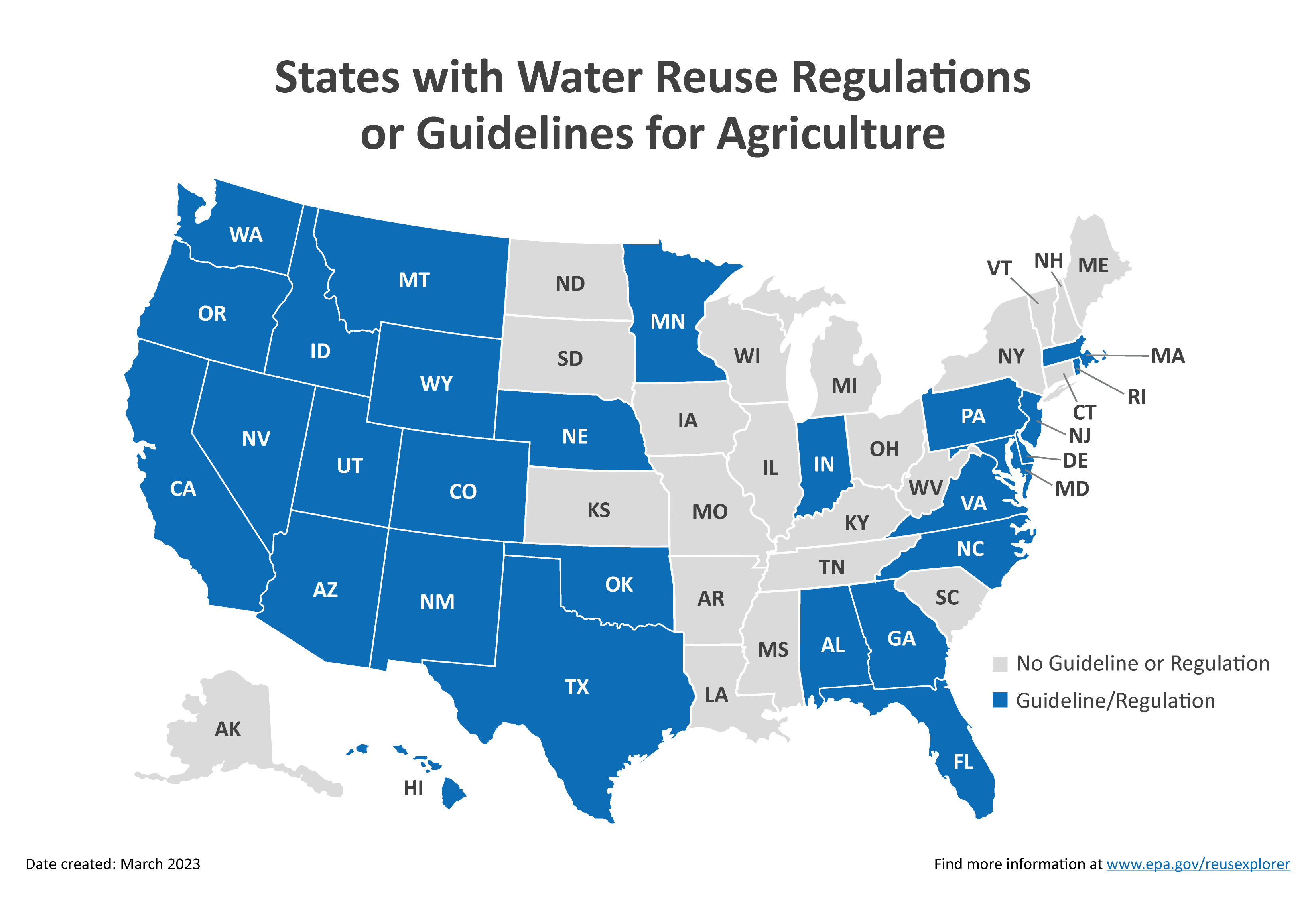
“There really hasn’t been a need for farmers to worry about their supply,” in these areas of the country, said Patricia Sinicropi, executive director of the WaterReuse Association, a trade group of utility companies and businesses that support the use of recycled water and recycled water projects. “That will change because we’re seeing groundwater depletion issues creep up along the East Coast, which will eventually challenge farmers on their water needs.”
Setting up systems that can treat wastewater and convert it into irrigation water aren’t built overnight. To help, the Bipartisan Infrastructure Law directed $50 billion to the EPA to improve drinking water, wastewater, and stormwater infrastructure — the agency is currently working with state and local governments to connect their projects to that funding.
Waste Not, Want Not
There is also a movement to stop being so wasteful with our water flushing, not to just save that water, but also to recycle nutrients from our waste and turn them into something useful — instead of being flushed out and polluting bodies of water.
Doing so is relatively simple in a closed environment, said Wald, who has also covered this topic for Nature. “Urine has few pathogens, and doesn’t need to be as carefully managed” as feces, she said. Pharmaceuticals may come out in our urine, but they’re too diluted to be a concern, per the USDA. That’s why it’s a no-brainer for urine in a hyper-controlled environment, like the International Space Station, to be recycled into water again.
But when urine is flushed away, it’s then mixed in with everything else in the water, including feces, wipes, and household and industrial chemicals. That makes the extraction of those nutrients to be turned into something useful (like fertilizer) much harder.
Strides have been made towards figuring this out, including innovations like waterless urinals and urine-diverting toilets, which direct urine just about exclusively where it needs to go. But they’ve been small — a proverbial drop in the toilet bowl. To do this on a massive scale would take entirely rethinking how we handle our effluent, said Wald, which would also be costly to implement. Even as investments are being directed toward addressing aging sewer and water infrastructure in the U.S., that’s to fix what we have — not rip out and replace the whole thing.
It’s one of the reasons her book is called Pipe Dreams, emphasis on the “dreams” part. “It’s a really big lift. We just have to get over the notion that the way we’re doing things is the right way to do it,” she said. Public sewer systems have been a massive benefit to public health, “and thank goodness for them,” she said. But, at the same time, “We have to let in the idea that there’s a better way to do things.”
Correction: An earlier version of this story said the PVWMA facility provided recycled wastewater to farmers in three counties,

At last count, more than 58 million chickens, turkeys, and other birds have died in this year’s outbreak of avian influenza, the worst in our nation’s history. Globally that number is in the hundreds of millions. And beyond the staggering loss of life and significant trade disruptions, another fear looms large among infectious disease specialists — human contagion.
“My great worry is whether it will mutate so it can be transmitted human to human,” said Robert G. Webster, an infectious disease specialist at St. Jude’s Children’s Research Hospital in Memphis who has spent his career researching avian flu. “That would be a catastrophe — it would be worse than the 1918 flu.”
Many researchers would argue a catastrophe is already upon us. The most recent outbreak of highly-pathogenic avian influenza, or HPAI, has been found in every state except Hawaii, and more than 70 countries around the world. Its spread has been rapid, and outside our livestock populations, it’s been killing wild birds — including endangered species like condors — which significantly hastens its spread. There was even one human death this year from HPAI, an 11-year-old girl in Cambodia. And, though the current outbreak appears to be winding down, there is a grim certainty we’ll be facing a new strain soon enough.
As with the global human pandemic we still haven’t really overcome, the word on many lips is “vaccination.” The White House indicated earlier this spring that this path is being seriously considered, while the U.S. Department of Agriculture (USDA) has been trialing multiple poultry vaccines on an expedited basis. Additionally, the U.S. Fish and Wildlife Service (FWS) just kicked off a pilot vaccination program for condors in the wild.
But as much as a Pfizer quick fix might seem like the obvious solution, there are a host of practical hurdles standing in the way of a widespread vaccine program.
The virus that’s currently causing the global havoc is a particularly virulent strain of the notorious H5N1. It spreads bird-to-bird via saliva, feces, and nasal secretions, and has alarmed virologists by infecting a larger-than-expected number of wild birds and mammals, including foxes and bears. Eleven humans have been infected with avian influenza since December 2021, including one in the United States.
“This type of H5 has been around since the 1990s, so people have gotten used to hearing about it,” said Richard Webby, another bird flu expert at St. Jude’s. “I think that’s led many people to underestimate just how different the last 18 months have been with regards to [avian flu]. This isn’t like anything we’ve seen before.”
Yuko Sato, a poultry veterinarian and associate professor at Iowa State University, said we’ve learned a lot since 2015, the year of the biggest-so-far avian flu outbreak in the U.S. Commercial poultry producers heightened and streamlined their biosecurity protocols, the federal government fleshed out its own preparatory measures, and “everyone became much more well-versed in, you know, who is doing what, do we have the resources to do it, and what, exactly, are we doing?”
“I think it’s sort of pushing the ‘easy’ button for a lot of people. They know what a vaccine is, and they can relate to that.”
One thing we’re doing more this time around is seriously exploring vaccine options. There are currently several licensed vaccines (administered by shot) for avian flu, but it’s unclear how effective they will be against this current strain — if at all. As anyone who’s gotten a flu shot knows, what’s effective this year may be all but useless the next.
Samantha Gibbs, a wildlife veterinarian at FWS, is coordinating her agency’s condor vaccination efforts. This year, HPAI killed as many as 21 wild condors, an alarming figure considering there are fewer than 600 of them worldwide. Gibbs said the decision to attempt vaccination on condors makes sense in terms of protecting an endangered animal, but also because it’s a heavily monitored wild bird population. That means it will be easier to monitor the vaccine’s success rate — thus, whether it would be effective with our livestock and other birds.
Still, Gibbs takes a measured tone when discussing the vaccines — which were created for chicken populations — making clear that she thinks her work should have zero impact on global trade. “I think it’s sort of pushing the ‘easy’ button for a lot of people. They know what a vaccine is, and they can relate to that,” she said. “I would say they’re just one small piece of a much bigger pie in terms of preparedness and prevention. It’s not a silver bullet. We’re not even sure if it’ll work in the condors at this point.”
Currently, if H5N1 is detected in, say, a broiler hen facility, the typical response would be to “cull” all the facility’s birds and dispose of the bodies — essentially a mass slaughter event. Though many chicken deaths have directly resulted from avian flu, this culling is responsible for the global six-figure bird death numbers since last October. “If an industry can only remain by culling millions of animals it is not sustainable,” Arjan Stegeman, professor of veterinary medicine and epidemiologist at Utrecht University in the Netherlands, told The Guardian. That’s a big reason why researchers are working so fast to develop effective H5N1 vaccines.
When it comes to vaccinating domesticated poultry populations, further complications emerge. Most countries will not import vaccinated birds, though the logic is a bit convoluted. Essentially, because it would be harder to detect whether a vaccinated bird is an H5N1 carrier, countries are wary of taking the risk that vaccinated imports will infect their native poultry populations. You could call it an abundance of caution.
“Right now I think a lot of places are operating out of fear. And nobody is going to drop their objections unless we do it first.”
For this reason, the National Chicken Council has vocally opposed vaccinating domestic chickens — the council predicts billions in export losses, and the loss of 200,000 farm jobs. (The U.S. Turkey Federation does not oppose a vaccine, but is encouraging the federal government to develop new trade agreements with regards to vaccinated exports.)
Carol Cardona, Pomeroy Endowed Chair in Avian Health at the University of Minnesota, thinks the U.S. should start importing poultry from countries that currently vaccinate against avian flu — China, Egypt, and Vietnam are a few examples. “Right now I think a lot of places are operating out of fear,” she said. “And nobody is going to drop their objections unless we do it first.”
For now, it’s something of a moot point, as an effective vaccine has not been developed against this strain of H5N1 — though USDA announced preliminary results of their vaccine tests this week. Researchers looked at two commercially available vaccines and two they had developed in-house, all of which had positive preliminary results. That said, a USDA spokesperson told us, “USDA continues to estimate an 18-24 month timeline, under a best case scenario, before having a vaccine that matches the currently circulating virus strain, available in commercial quantities, and that can be easily administered to commercial poultry.”
Webster, who has been referred to as the “pope of avian flu,” points out that if and when a good vaccine is developed, it will need to be regularly updated to combat new strains, much like the flu or Covid. Cardona adds, “We now have the disadvantage and the advantage of knowing that next spring, we’re going to see the same clade of viruses. Now we’re confident it’s going to be this same [HPAI] again and again and again.”
And of course, the urgency of developing a vaccine is exacerbated by the looming specter of human-to-human transmission. The World Health Organization points out that this has never occurred, but considering there have been 875 human cases of H5 bird flu since 1996, some researchers think it’s only a matter of time. Webster, who has called eventual human-to-human transmission “inevitable,” said he’d like to see a greater sense of urgency in the general public.
“I think there’s an attitude like, ‘This virus has been wrapped for 30 years, so why are we getting our knickers in a twist at the moment?’” he said. “But consider the fact [the virus] acquired the ability to spread throughout the whole world and that hadn’t happened before. I think we need to be ready for anything.”
There’s a meme that says, “If you’re an eldest daughter, you might be entitled to compensation,” a play on those class action commercials for mesothelioma or mesh bladders or Camp LeJune water. I’m an eldest — and only — child, a daughter of dairy farmers. I should be entitled to a lot of compensation, when I reflect on the process I’m mired in.
This process is farm succession, and wow is it hairy.
My parents are in their early 80s. Thankfully, both are mentally capable and mostly mobile. My dad’s 60 years as a dairy farmer has chewed up the cartilage in his knees; my mom, who spent 30 years as a registered nurse, has two titanium knees which serve her well.
We had a dairy farm for my entire childhood, which was small even by Wisconsin standards: 35-40 cows milking at the most, about 10 yearling heifers, and 6-8 calves at any given time. Currently, we have 13 Red Angus cattle who are rotationally grazed. Besides the cows, our farm included a stanchion barn with a pipeline setup for moving the milk to the bulk tank, two border collie mixes, and a healthy number of barn cats. For cropland, we own about 100 acres of rolling hills, one sinkhole, a weedy pond that my mom swore had such fragile banks that I would immediately fall in if I set foot near it, and one weird forested ridge where a skunk family perpetually denned.
Technically, I am a fifth-generation farmer. As someone who excelled in school and music, who was sorta interested in the farm but not always, I have a particular relationship with my dad: He is somewhat open to my opinion, but he makes the final decisions. This makes sense — he’s 82 years old, and has the experience of being a full-time farmer since he was 20.
Compared to other farm friends, I had a relatively easy early life. I chose if my chores were inside (doing dishes) or outside (bottle-feeding calves) during the school year. During summer I added in 4-H projects and unloading hay wagons. I enjoyed the land and the animals, but had an uneasy truce with the rest of it: the uncertainty of the weather causing my parents stress, the machinery that always broke at the exact wrong time, the volatility of the markets.
In high school, as I became more interested in genetics, my dad listened to me about which bulls from the artificial insemination catalog to breed our cows with. I showed calves and cows at our local county fair through 4-H; one year, Lisa, a homebred heifer, won both her yearling class and a showmanship class. When my parents retired from dairy farming to have a small beef herd, Lisa was the only dairy cow who lived out her days on the pasture.
I took over evening milking while I was in college, from starting set-up to walking the last cow out of the barn. This gave me confidence in dairy farming, and confidence in general. Though my dad and I came as close to a partnership as we ever did those summers, we never directly talked about me taking over the farm. Milk prices were low, the work was hard, and I was good at school. At the time, farming seemed like something you did if you had to, not because you wanted to; I see now this is not true for all farm families.

The author with her mother and father in 1982.
I became a teacher, found fulfillment in that for 14 years, until I made a career change to work in state-level government. Now I work from home while considering what I want to do with the farm. I think about what I want for my life, how the legacy of my farm family fits into that, and if I’m honest, how the pull of the land and the animals fits into who I am.
In 2016, we attended a ceremony at the Wisconsin State Fair for families whose farms had been owned by the same family for 100 or 150 years. It was maddening. We listened to speeches from muckety-mucks about how “farming is a way of life” to be celebrated, as we ate pancakes on Styrofoam plates. Minutes earlier, my dad had looked at me outside the tent and said, “I didn’t think I’d be around to see this.” It was 7:30 am and I had been up since 4. “Excuse me, dad?” “I went to this fair with your grandma when the farm was 100 years old. I didn’t think I’d make it 50 years.”
After that abrupt emotional vulnerability, I wasn’t ready for anyone’s empty words about supporting farmers. The speakers were politicos who could, say, fix the broken milk pricing system, yet chose not to. They would still break their arms patting themselves on the back while repeating clichés about farming to people who actually farmed.
Wisconsin had lost many dairy farms that year — it ended up being the beginning of the most recent dairy crisis in the state, and here they were telling us how much we mattered. I think affordable health care or higher milk prices might be a better topic, but what do I know?
This is all background to where I am now. All that I carry with me into succession planning — my complex feelings around the farm, my parents and their lives, how farmers are treated, and what a legacy means. What does it mean to have 100 acres of farmland entrusted to me, close enough to a city where it is attractive to developers? I’ve already received one clumsily written letter from a high school classmate’s brother who asked if we ever thought about developing the land.
The author's dad in the 1981 Wisconsin State Journal.
Sometimes I think about my ancestors who farmed because they needed to and what they would say if I explained my job now — an information worker who clocks most of her hours from home. Would my great-grandfather say, “Let me get this right, you can work inside and don’t have to do manual labor? Of course you should work inside! Sell the land, get a nice boat, and enjoy life! This is what success is!”
I think about the over-romanticization of “working the land” and the lore of farm families — even the idea of celebrating a farm that’s been in one family for 100 or 150 years. What does that actually say about land? Wrapped up in this, too, is how Wisconsin stole the land from Indigenous people and then my ancestors bought that stolen land. I think about that also. I don’t know what to do with it, but it’s there.
I think about how I could use part of the land as a teaching farm for people who want to learn how to farm, particularly to rotationally graze cattle. Or I could rent part of the land out for beginning vegetable farmers, or turn it all into pasture and expand the beef herd and have a direct-to-consumer business.
The hard part is that when I mention new ideas to my dad, he points out all the negatives. He’s risk-averse, I get that — he has shepherded this farm through multiple crises, including our barn burning down in 1997. I’m in this push-pull space of wanting to learn from my dad, needing his knowledge, but not getting to try out any new ideas because he’s still in charge and isn’t open to change. Yet, I fear he will be gone soon and I won’t get to ask him any of the questions I have.
In terms of succession, moving the estate to the next generation is functionally easier with just one child. In terms of what I am going to do with the land, that’s much harder. It feels like there’s such an opportunity here to do good in the world and not just make money. My family has never been about that — my grandma was a one-room schoolhouse teacher, my grandpa, a farmer. At times, the land and the tradition of farming feels like the only connection I have to my family: my immediate family and my ancestors.
My grandparents’ home farm is on a road named after our family, specifically, my great-great-uncle who owned the first farm on it when the town was formed. I can see the privilege I have in inheriting this land, the farming tradition, the knowledge, and the tangible machinery and tools. I am balancing maximizing the good that can be done with recognizing how hard this life can be. I’m trying to honor what I’ve been given from the past with who I am as a person, now in the present.
In fields across Florida, ripe tomatoes, lettuces, and strawberries are rotting away under the sun’s relentless glare. Around the state, untold numbers of farmworkers have stopped showing up for work, fearing discrimination and deportation in the wake of a new state law that aims to crack down on illegal immigration.
The legislation (Senate Bill 1718), signed by Governor Ron DeSantis on May 10, makes it illegal to transport undocumented people across state lines. It requires hospitals to collect data on a patient’s immigration status and submit quarterly reports to the state agency that administers Medicare. It voids out-of-state driver’s licenses for those without proof of citizenship. And, perhaps most significantly, it requires companies with 25 or more employees to verify worker citizenship status through the federal E-Verify system, which is operated by the U.S. Department of Homeland Security — something that agricultural employers have been exempt from in the past. Now, if anyone hires a worker who is considered an unauthorized alien, they could face penalties of up to $1,000 per day.
Two weeks after signing the bill, DeSantis announced he was running for president, with curbing illegal immigration a centerpiece of his campaign.
While the law doesn’t take effect until July 1, its repercussions are already being felt — including by those who supported the bill. “I’m a farmer and the farmers are mad as hell,” Republican state representative Rick Roth, who voted in favor of the anti-immigrant bill, told the crowd at a recent event. Roth all but begged workers to not leave Florida: “We are losing employees. They’re already starting to move to Georgia and other states.”
Florida is home to an estimated 772,000 undocumented workers, who play a vital role in the state’s agriculture, construction, hospitality, and transportation industries. It’s estimated that noncitizen immigrants account for somewhere between 37% and 47% of Florida’s agricultural workforce. Last Thursday, some of those immigrant workers and their supporters held a day-long strike throughout Florida to protest the new law.
Neza Xiuhtecutli, director of the Farmworker Association of Florida, estimates that there are about 300,000 farmworkers who live in the state illegally. Immigrants “are all over the agricultural industry,” he said. “We employ primarily farmworkers from other parts of the world, and not just Hispanic, but also Haitian and Jamaican farmworkers.”
The law is expected to have a cascading effect on the Florida food system. “If nothing changes, there will most certainly be sharp decreases in production affecting not only farmers and farmworkers, but the rural communities in which we operate who depend on agriculture,” said Adam Lytch, regional manager at L&M Farms in East Palatka, Florida. Lytch highlighted the important role skilled foreign workers play in American agriculture during his testimony at a recent Senate Judiciary Committee Hearing.
“I’m a farmer and the farmers are mad as hell.”
Many expect to see the number of temporary H-2A workers increase as a result of the legislation. The H-2A guestworker program allows farmowners to — legally — bring nonimmigrant foreign workers to the U.S. to perform temporary agricultural labor. While migrant workers have the opportunity to earn more than they could in their home countries, it requires them to leave their family for long periods of time. While working in the U.S., they rely on their employers to provide housing; many are housed in temporary labor camps.
As domestic workers have found jobs outside agriculture, the H-2A program has grown rapidly in recent years. In 2022, the U.S. Department of Labor certified around 370,000 H-2A workers — more than seven times the number certified in 2005, and double the amount in 2016.
Xiuhtecutli is worried that a further increase in H-2A workers in Florida will lead to significant steps backwards for farmworkers’ rights. “It puts workers in a very vulnerable position because they depend on their employers for food, transportation and housing, and isolates them from the outside world,” he said. “So they have little chance of actually learning about their rights … what they can expect and what the law protects them from.”
Furthermore, it “would displace workers who are already here,” said Xiuhtecutli. “They know the system, they’re climatized, they’re skilled in local agricultural work.”
“There will most certainly be sharp decreases in production affecting not only farmers and farmworkers, but the rural communities in which we operate.“
Under the new law, farms are out to lose, too. After Georgia passed its E-Verify law in 2011, sixth-generation blackberry farmer Gary Paulk witnessed 300 farmworkers flee, which he expected would force him to “abandon about 25 percent of his 125 acres,” accounting for “a projected loss of $250,000” that year. According to an estimate from the Florida Policy Institute, this new employment verification mandate could cost Florida’s economy $12.6 billion in one year.
“It costs a lot of money and it doesn’t really make you any more. It just allows you to play the game … It’s burdensome on the growers,” said Gene McAvoy, a former extension agent who now consults with growers across southeast Florida. “When I started working with growers in South Florida 27 years ago as an extension person, I answered technical questions related to growing — fertilizers, what to do about insects. The past couple years, my job has really transitioned to helping farmers comply with all [these regulations].”
How agricultural operations will look under the new law is still unclear. “Everybody’s taking a deep breath. We’ll really start to see the impact next month in mid-July when it’s time to prepare land and then start planting in August. That’s when we’re gonna see what’s what,” said McAvoy, who compared his expectation to the plot of the controversial 2004 film “A Day Without a Mexican,” in which all of California’s Latino residents mysteriously disappear, and leave “rich people in Beverly Hills trying to cut their own lawn and make their beds.”
For undocumented Florida farmworkers, however, the threat is here — and it’s real. “We’re already seeing the effects now. People are already afraid for the future of their families … people are already being discriminated against,” said Xiuhtecutli. “It’s not about what we can expect when the bill is implemented. It’s already happening.”
Minnesota farmer Cindy VanDerPol had her last doctor’s appointment to check the progression of her breast cancer in April. The timing was fortunate — it was right before her family got kicked off their health insurance in May.
VanDerPol, who runs Pastures a Plenty, a third-generation livestock and organic alfalfa farm with her husband, has been farming for more than two decades. Access to affordable health care has been a struggle the entire time.
Farming is a dangerous job, compounded by the typical lack of access to affordable health insurance. As largely self-employed individuals, farmers have no access to work-based insurance, leaving them subject to marketplace prices. According to a 2015 study, 65% of commercial farmers named health insurance as a serious threat to their farm’s livelihood.
On May 24, Minnesota passed legislation hoping to address this problem, for farmers and other Minnesotans without access to affordable health care through their workplace. Minnesota is one of two states — joined only by New York — that adopted a state-administered health care option, called MinnesotaCare, which is available to residents with incomes below 200% of the federal poverty level, but earn too much to qualify for Medicaid. Now, thanks to the new legislation, even more Minnesota residents will have access to that program.
This option will change the lives of farmers like the VanDerPols, who have fluctuated between insured and uninsured for years. During the pandemic, they were able to stay on MinnesotaCare thanks to special protocols that inhibited the insurance from kicking individuals off regardless of income increases. Without that, VanDerPol said her cancer treatment bills would have bankrupted the farm. Now, the moratorium has ended, and the VanDerPols are uninsured again.
“Hopefully, in September, when I have my next appointment, I’ll have insurance. Fingers crossed,” she said. As of now though, their on-paper income is too high to qualify for any programs they could afford. “Our income last year looked good on paper, but not in the checkbook.”
The new bill offers something called the MinnesotaCare Public Option, which allows more Minnesota residents the chance to buy into MinnesotaCare. Instead of the current income cap for MinnesotaCare coverage — $27,180 per year for an individual or $55,500 for a family of four — residents at any income bracket could choose to buy into the program, paying sliding-scale premiums based on their income. After paying the income-based premiums, there will be no deductibles and out-of-pocket maximums, like there are in insurance programs on the individual market.
“Hopefully, in September, when I have my next appointment, I’ll have insurance. Fingers crossed.”
Paula Williams is a health care organizer at the Land Stewardship Project, a farm-focused non-profit in Minnesota that created a branch of their organization specifically to advocate for this health care bill. So how does this new option help farmers?
Health insurance is consistently one of the biggest expenses in the profession. Anne Schwagerl, vice president of the Minnesota Farmers Union and an organic grain farmer herself, said her members lament about it all the time.
“We’re disproportionately purchasing our health care on the independent market, and that ends up being more expensive for less coverage because we’re not in an employer pool,” she said.
Gary Wertish, president of the Minnesota Farmers Union, agreed that the issue was top of mind for the union’s members. In a statement, he said farmers often tell him, “If we really want to help agriculture, you can do something about health care — not only to help current farmers but to pass on to the next generation.”
To stay insured, farmers can be left facing difficult decisions.
“We had to limit the size of our farming operation in order to continue to qualify for public subsidies for health care.”
In an effort to avoid getting kicked off the affordable insurance plans, some have been forced to purposefully keep their farms less profitable, and control their income level so they remain under the low-income insurance cap — something both VanDerPol and Schwagerl said they had to do on their farms.
“There are farmers, myself included, who for many years, we had to limit the size of our farming operation in order to continue to qualify for public subsidies for health care,” said Schwagerl.
VanDerPol has also had to watch her farm’s finances closely. Even in the years her farm’s profitability increased on paper, that didn’t mean her family had those funds left over to pay thousands of dollars in deductibles.
“[The income] looks good on your taxes,” said VanDerPol. “The taxes say ‘You have this much income and you’re in this tax bracket,’ but that money is not in your checkbook, because you’ve put it back into your farm, because that’s how farming works.” So the years they didn’t qualify for the state-subsidized option, they went without insurance.
In addition to keeping their operations small to stay on their health care plan, some farmers opt to take off-farm jobs in hopes of acquiring affordable health insurance. In fact, according to a U.S. Department of Agriculture survey, “the majority of farm households have an operator or spouse employed off the farm,” and that’s how they get their insurance coverage.
This, said Williams, is a large reason the Land Stewardship Project got so involved, hosting events, hiring employees specifically to campaign for the bill’s passage, and advocating for health care options for farmers — to keep them on the farm.
The years they didn’t qualify for the state-subsidized option, they went without insurance.
“We decided we would fight for the ability for farmers to stay on the land, work on the land, and really do well at it, not stay under the poverty line, which a lot of our farmers do,” she said. The Land Stewardship Project offers programs primarily focused on regenerative farming practices, which require a lot of farmers’ time and energy. “You can’t do regenerative farming practices, you can’t implement cover crops, you can’t implement all these new things that require more time and energy just to get them implemented if you have to work off of the farm.”
Another aspect of the bill particularly helpful for farmers is allowing undocumented immigrants access to the state’s affordable health care program — regardless of immigration status and income level.
“Immigrants, undocumented or documented, are an integral part of our food and farming systems,” said Williams, which is a large part of why the Land Stewardship project championed the immigrant inclusion policy. According to the Minnesota Department of Health Services, approximately 300,000 Minnesotans are uninsured, 17% of whom are undocumented.
For Minnesota, the next step is to conduct something called an “actuarial analysis,” a large study to determine how much the implementation of the program will cost. That step will also produce predicted numbers of how many Minnesotans will sign up for the program, and what the income-based premiums will cost, exactly. But no matter the outcome of this analysis, the bill’s passage won’t be impacted. The downside? The plan won’t go into effect until 2027.
Despite the wait time and remaining uncertainty around the details of the program, the bill’s passage is considered a win for Minnesota farmers and the organizations like The Minnesota Farmers Union and the Land Stewardship Project that have been pushing for this for years. There are years to go before Minnesota farmers will see the bill’s benefits but, in the meantime, it can offer hope.
“I’m just very thankful that this is … becoming a reality,” said VanDerPol. “Maybe not in time for my husband and me, but for our kids, our grandkids. I hope they don’t have to have the same worries that we did.”
Washington’s farm-filled Quincy Valley is so flat that even through a haze drifting down from late-spring Canada wildfires, you can see clearly from one orchard- and vineyard-planted hillside to its opposite 30 miles away. In between, feedlot cows lie glumly on bare hillocks of dirt and a dragonfly-shaped helicopter zips low to the ground, spraying crops. Somewhere in the middle of all this, along a road so straight there’s nowhere to hide and no way to get lost, stretches Eric Williamson’s 6,000-acre vegetable farm. In an area where “everybody’s in agriculture,” he said, “we’re seen as a little bit on the ‘green’ side.”
Williamson is a conventional farmer raising sweet corn, green peas, lima beans, carrots, and bell peppers for the frozen and pickling markets, as well as grass seed, canola seed, and seed garlic. Although there are a few organic farmers working throughout the valley, Williamson, who talks breezily and assuredly about the pros of glyphosate, is not one of them.
What he is is a proponent of building soil health, in a sandy region plagued by winds strong enough to scatter your growing medium and ruin your crop. “When I was a kid, there would be drifts over the road, like snow drifts, but it was just blowing sand,” he said. For Williamson, improving rather than “mining” the soil means raising eight or nine crops rather than just potatoes or rice or onions, because “It’s good for the ground to have different kinds of roots, different kinds of organisms.”
It also means figuring out how to reduce tillage, which can lead to soil erosion and compaction; Williamson no-tills or strip-tills where he can, in the latter instance disturbing only the rows where seeds will go. It means cutting back on the chemical inputs that can kill off much-needed soil organisms. It means growing cover crops on almost every acre, to keep the soil anchored and add to its nutritive value. And all of that, believe it or not, means bringing in some cows.
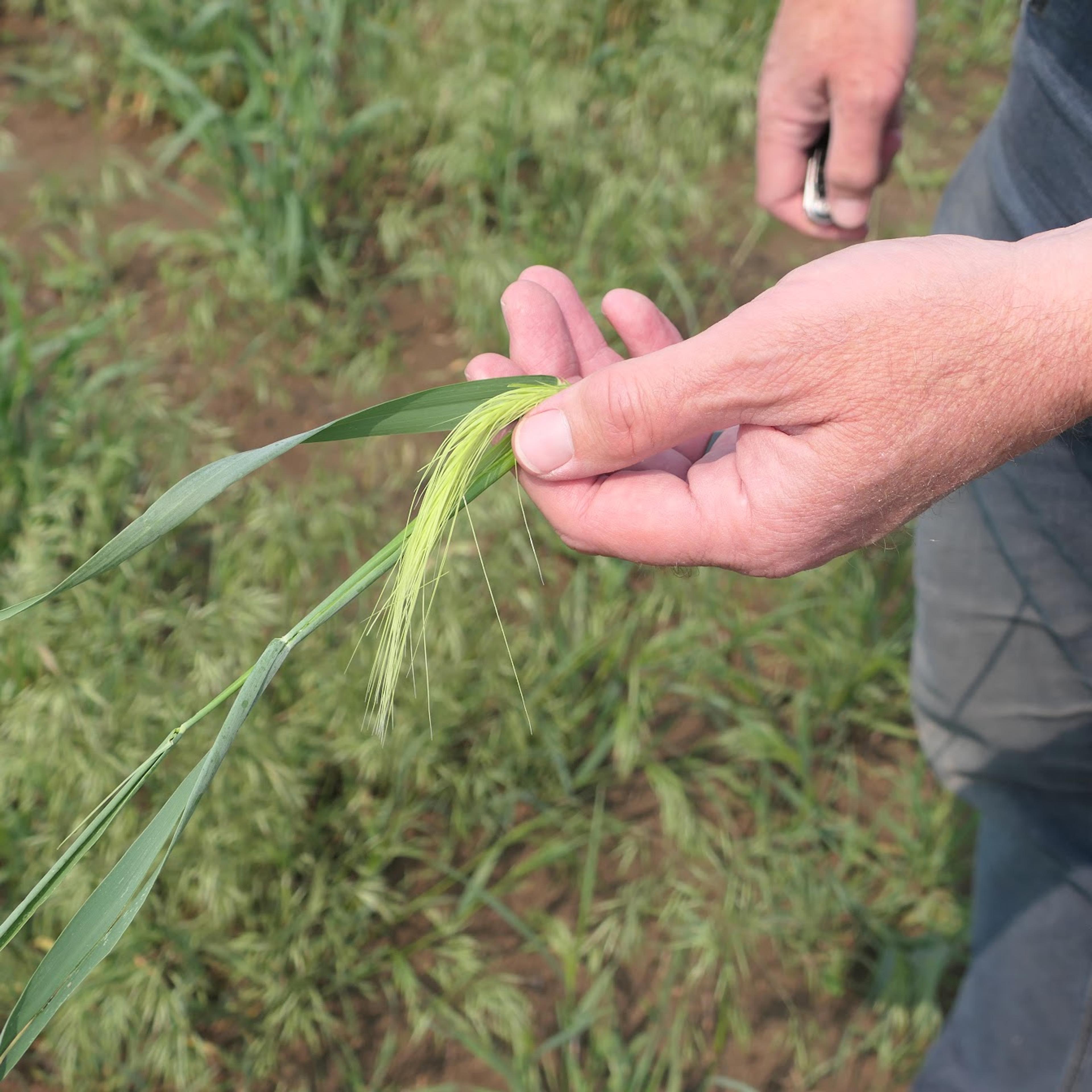
Eric Williamson displays some cereal rye, one of the cover crops he uses on his 6,000-acre farm.
·Photo by Lela Nargi
Every winter, as many as 2,500 heads of cattle are sent to Williamson by ranchers who are fellow members of a regenerative-certified collective. These are beef cattle that will graze and forage their way through their two years of life — no grain finishing, no feedlots. Williamson gets the bovines in the winter months, when the grasses on their home ranches in Washington, Oregon, and Montana are sparse; in summer they cycle on from too-hot Quincy to other, cooler parts of the Pacific Northwest.
“A lot of the ranches that [the cows] come from are set up for summer grazing and they have a lot of good grass through the summer,” said Williamson. He also sometimes purchases calves of his own, to make up for gaps in the collective’s cattle slaughter and keep production consistent; like other collective members, he is paid a set price for the meat when it’s processed. But in between vegetable growing seasons is an opportunity for those cows to graze when grasses have died down — and for some of his 20 full-time workers to stay employed caring for them in the off months. “If it weren’t for the farm, the cattle business probably wouldn’t work very well here,” Williamson said. “In the wintertime, when there’s nothing growing here, the cattle utilize underutilized resources.” Those resources? His cover crops and the abundant crop residues left over after harvests.
Williamson started cover cropping in the early 90s, “before it was popular,” he said. “Then we thought, we can either harvest this for hay, or cattle can graze it.” Cover crops like the wheat and triticale he grows help with soil fertility “and you can use them to capture deep nitrates [in the soil] and bring them up where the cattle can graze, and they redistribute the nutrients around the field.”
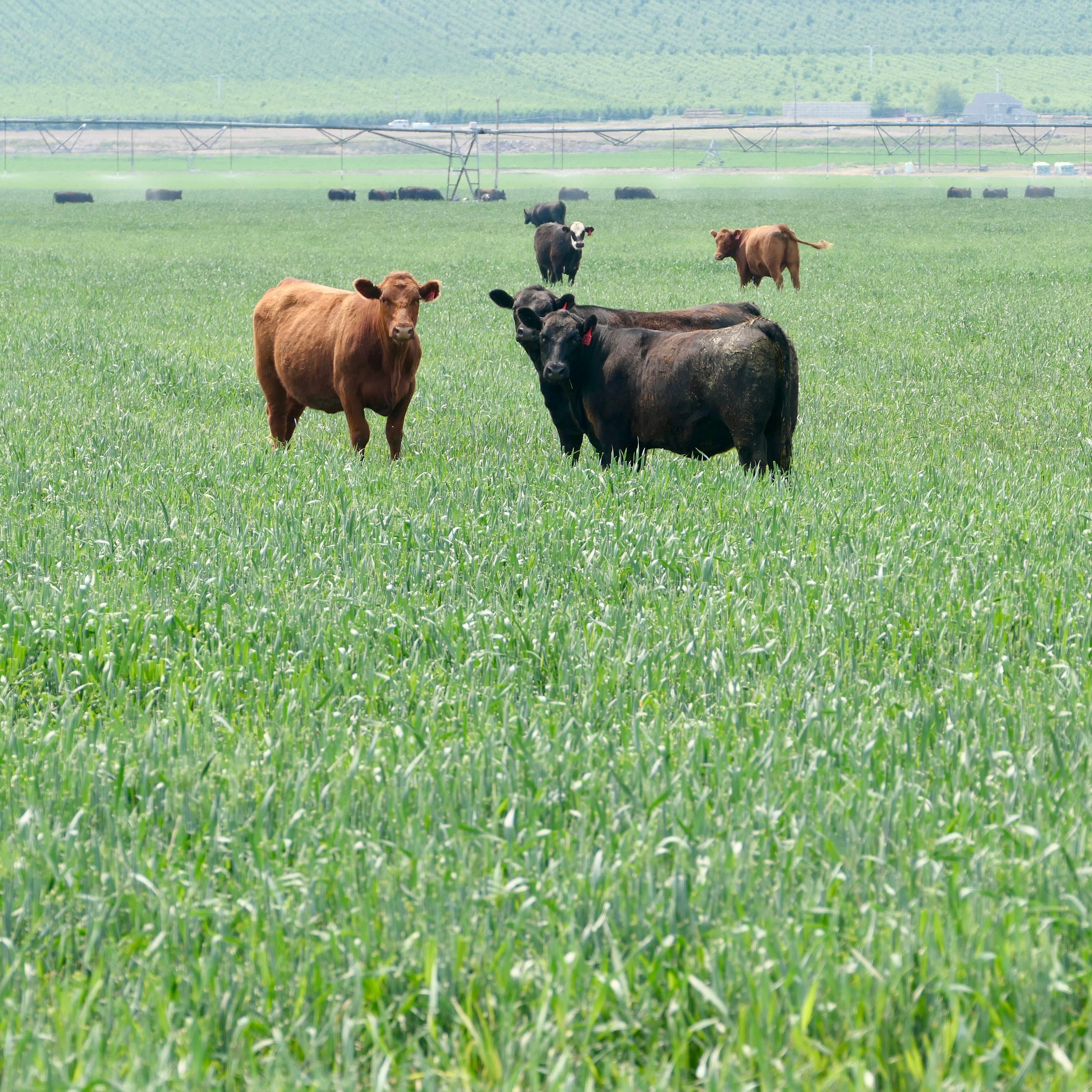
Some of the cows that overwintered on Williamson's acreage.
·Photo by Lela Nargi
He also began reducing tillage where he could — although some crops, like carrots, need to be grown in raised beds and intensively tilled so their greens can be efficiently sliced off before chopping and freezing. Still, Williamson explained, with all the cover cropping and grazing and minimized tillage inherent in the system he’s been hashing out over the last 20 years, “The water-holding capacity of our soil has probably doubled and our organic matters have really improved. That actually allowed us to grow crops we couldn’t grow before, such as peppers and garlic that have shallow root systems, so they need a good reservoir of moisture.”
Cattle also forage certain crop residues that might otherwise gunk up farm equipment and increase the need for tilling. This includes copious amounts of green leaves left behind after the harvest of high-yielding sweet corn. “If you can have cattle graze that residue to reduce the load a little bit,” Williamson said, you can make one or two tillage passes on a field and stir up the soil a lot less.
Williamson’s sweet corn crop follows a rotation of green peas. Similar to the residue left behind by the corn, the way the pea vines leave a thick windrow behind the harvester “makes it almost impossible to plant the corn without doing tillage. But we can avoid [that] by harvesting the vines laying there in a big thick row, and they’re pretty good cattle feed.”
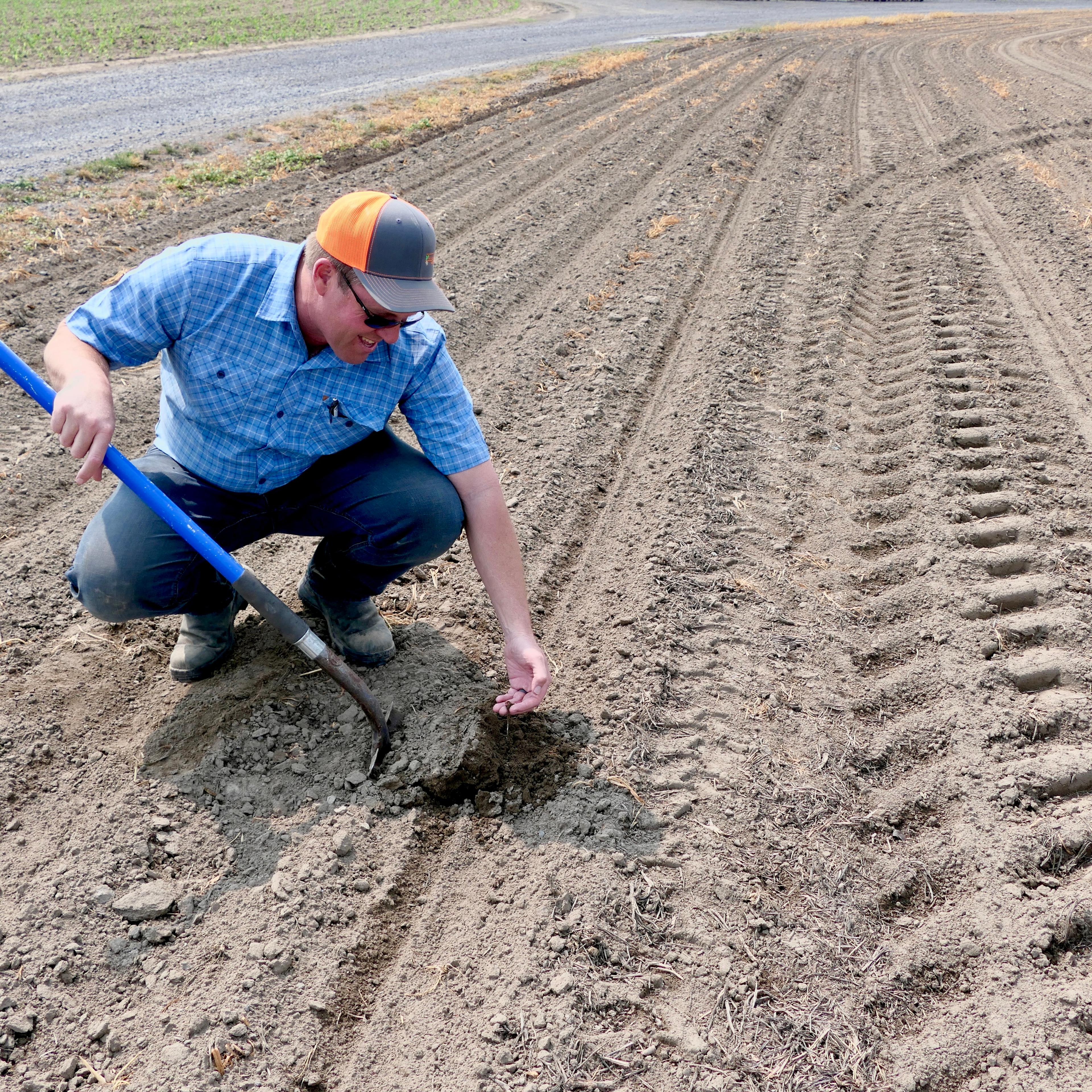
Williamson digs up a sweet corn sprout from compacted soil.
·Photo by Lela Nargi
Donald Llewellyn, a ruminant nutritionist and livestock extension specialist at Washington State University Extension, said that there’s lately been renewed interest in reintegrating livestock into cropping systems. With grass-fed cattle, much of their protein, energy, mineral, and vitamin nutrient requirements can be met by crop residues. “And if it’s done by grazing, that has the extra benefit of reduced labor and returning nutrients to the soil,” he wrote in an email.
Each year in the Columbia Basin, which encompasses a wide swath of Washington and Oregon, “many acres of corn stubble [are] grazed … When cattle graze corn stalks they will have access to the leaves, some corn grain on the ground, maybe a bit of cob that escaped the combine, and the stalk itself. Each of these components have a different nutritional value, and they select the best part that they like first (usually the leaves and the corn on the ground) then move on to the other parts.”
In a valley where everyone knows everyone else’s business (and farming methodology), Williamson said some neighbors have begun to take notice of what he’s up to — although there are limitations to implementing his practices. Farmers raising leafy greens need a two-year resting period if they have cattle grazing through, so they don’t risk outbreaks of E. coli. And plenty of farmers, who don’t have a full-time farm crew to support, would rather take a much-needed break in winter than work their way through it.
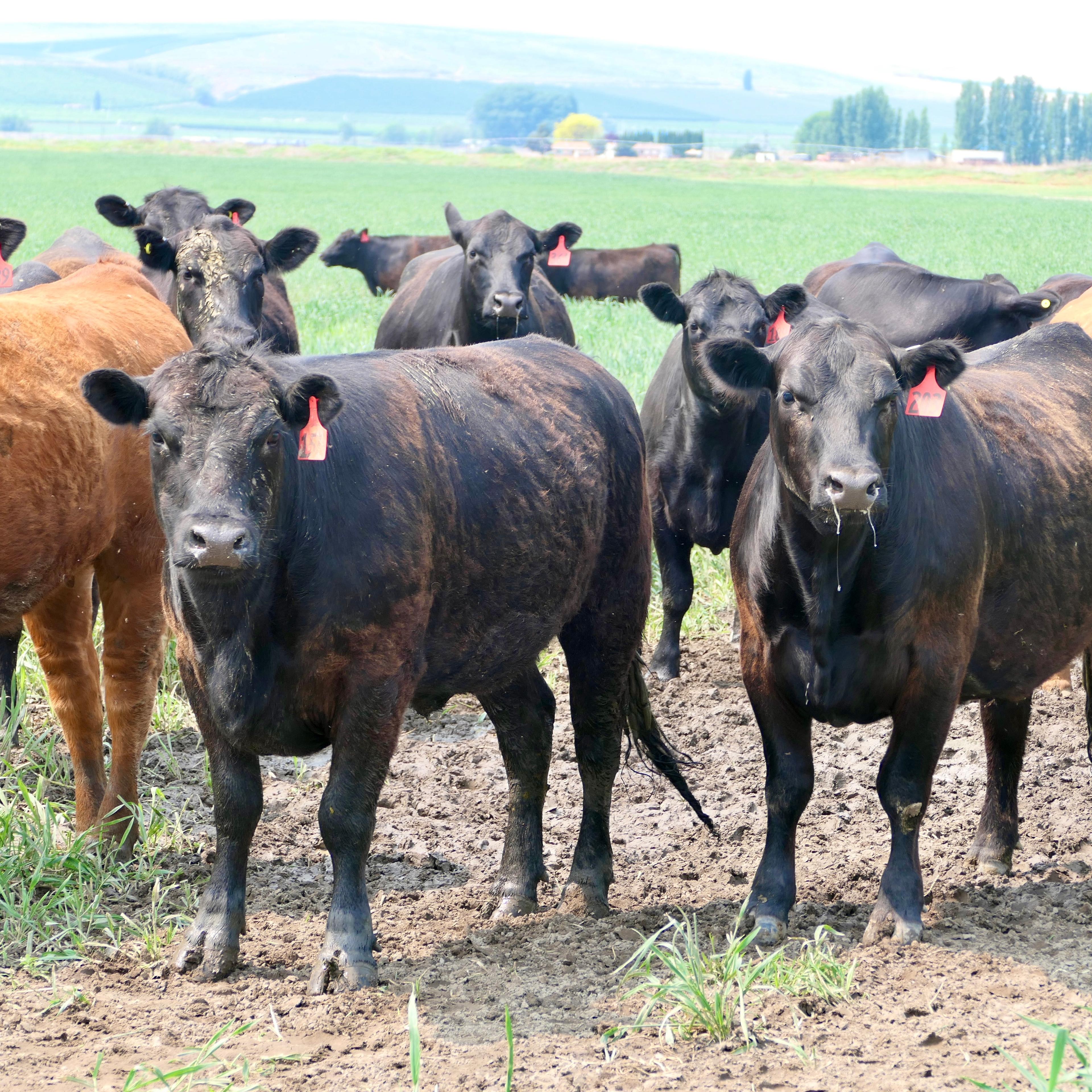
The day after this photo was taken, these cows would be shipped to another farm in Washington where they could graze all summer.
·Photo by Lela Nargi
Still, he sees that there’s more and more interest in bringing in cattle to build up soil health, “and I know one other guy in our area has started integrating cattle when he grows vegetables,” Williamson said. He also noted that a few “cattle guys” have begun renting fields from vegetable farmers who want their residues grazed but don’t want to purchase the corrals, stock trailers, and other trappings needed to raise livestock. “It’s not a widespread adoption at this point but there’s movement that way. Farming is a really competitive business, it can be really challenging. And I think people are always looking for a way to do it better.” He’s increasingly finding ways to farm better, too. He’s noticed that in denuded fields, “you can concentrate your cattle feeding on that area and really build it up and make it grow.”
“We have a little bit of an advantage being totally integrated, because we can determine what can be grazed and whatnot,” Williamson continued. “Margins are tight and everybody needs to find a way to save a dollar. But I think we’ve also gotten a bunch of other benefits of this, too.”
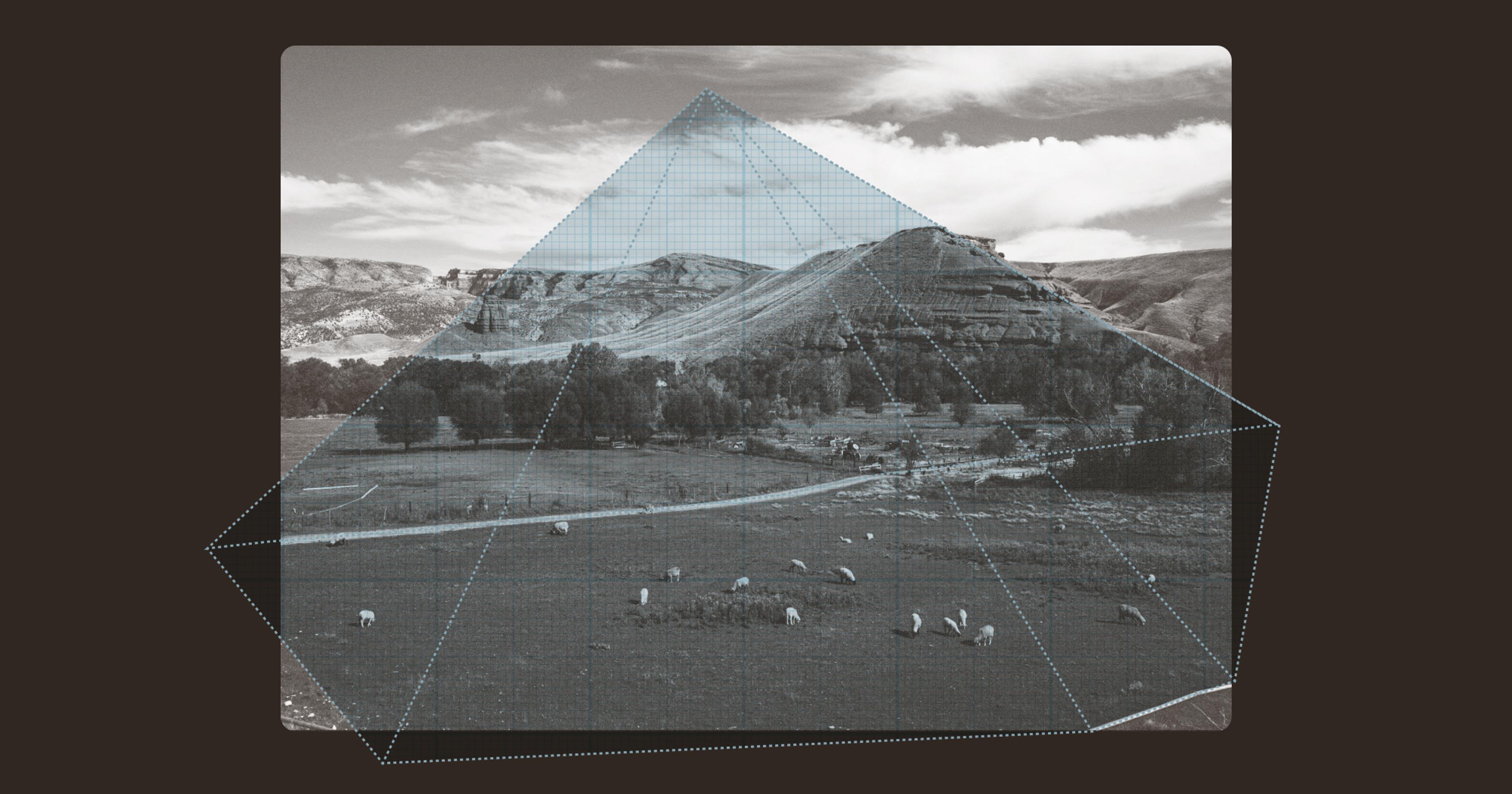
Tepusquet Canyon is one of the most picturesque spots in California’s Santa Barbara County, with sweeping views of the Pacific Ocean and the surrounding mountains. But on a 110-degree day last summer, Jenya Sarah Schnieder didn’t have time to admire the scenery.
She was there with Cuyama Lamb, the company she owns with her partner Jack Thrift Anderson, on a contract with the county. Schneider’s company had been hired to graze sheep on wild vegetation that increases the area’s high fire risk. To keep the sheep where they’d do the most good, her small team was painstakingly installing fencing on the area’s steep, treacherous slopes.
As the crew trekked up and down the chaparral-dotted mountainside, hauling rolls of electric netting and dodging poison oak, Schneider hit a breaking point. “I remember thinking, ‘This is not what sustainability looks like,’” she said. “Using grazing animals for fire fuel mitigation is wonderfully sustainable, but it’s not [sustainable] for the people providing the labor.”
This season, Schneider is awaiting a shipment of 100 GPS-enabled collars from Norwegian company Nofence, which launched its first U.S. virtual fencing pilot program this year. Instead of spending hours climbing hillsides to lay fencing, Schneider can create an invisible barrier with the flick of her finger on a screen. She’s reimagining how the tech will help Cuyama Lamb target areas too steep or thick with brush to fence on foot. “I could never walk through it, but I can draw a line on my iPad through it,” she said.
The concept of virtual fencing — controlling the movements of animals without the use of a physical barrier — dates back to the 1970s. In fact, the technology used to keep pet dogs in yards without physical fencing came first, when Invisible Fence founder Richard Peck patented that system in 1973 (though a cable had to be buried around the perimeter of the property). In 1987, researchers at Montana State University first experimented with virtual fencing and cattle, using Invisible Fence gear to show proof of concept.
But it took decades for GPS functionality, wearable tech, and our understanding of animal behavior — pushed forward by experts like USDA researcher and “cattle whisperer” Dean Anderson — to catch up with the need for real-time land management that virtual fencing provides. Only in the past few years have these systems started to become commercially available to farmers and ranchers in the U.S.
As producers — from small-scale dairies to cattle ranchers to targeted grazing operations like Schneider’s — get their hands on virtual fencing, the benefits are coming into focus: saving labor on farms, protecting natural lands, maintaining higher-quality pasture, and sequestering carbon. But so are the current challenges to the technology’s widespread adoption.
A System Advances
Livestock in virtual fencing systems wear collars fitted with GPS trackers and solar-powered rechargeable batteries. As an animal approaches the virtual boundary, its collar emits a high-pitched audio cue, which gets louder as the animal gets closer. If the animal reaches the boundary, the collar delivers a mild electric shock similar to bumping a snout against electric fencing — which quickly teaches the animal to heed the audio cue. When it’s time to move the animals to a new area, a farmer can simply redraw the barrier on a computer or mobile device.
“It’s going to be a huge savings for us,” said goat farmer and cheesemaker Molly Kroiz, who owns Georges Mill Farm in northern Virginia with her husband Sam. After reaching out to Nofence a few years ago, hers is one of 45 farms in its U.S. pilot program; the company also operates in Spain, the U.K., and its native Norway. Sam estimates the system is already saving 20 labor hours each week and helping the couple manage pastures more effectively.
“It’s allowing us to be a little more agile, too,” she said. “We can move the goats more quickly through places where we might have had to leave them longer before, just because of how long it would take to put the fence up.”
“Pastoralists have so much knowledge about the range and how to manage it. It’s intriguing to find how they will use them best.”
Virtual fencing isn’t a perfect solution — the troublemakers in Kroiz’s herd will still sometimes slip through — but unlike physical fences, the technology doesn’t deter animals from coming back inside the boundary after they escape. And because GPS locations can be somewhat imprecise, the virtual “line” is actually more of a 15-foot zone — so in certain areas, like along roadways or the path leading into the barn, the couple still sets up temporary fencing.
As GPS and solar technology continue to improve, companies have hurried to bring a commercial product market. Nofence, founded in 2011, claims to be the first to make virtual fencing available to farmers; they’re the only one on the market currently offering collars sized for small ruminants like sheep and goats — not just cows. New Zealand-based fencing giant Gallagher recently acquired its eShepherd virtual fencing technology from an Australian startup, and in 2022 Merck Animal health purchased Vence, a U.S.-based startup offering collars to farms and ranches with 500-plus head of cattle.
While the concept is basically the same, Vence and eShepherd require the purchase of a base station to communicate between the collars and the farmer’s device. The base station can drive up startup costs and must be moved when animals are relocated significant distances; Nofence relies only on cellular networks. Another U.S. startup, Corral, which is geared toward small farms and ranches raising beef cattle, will send collars with a directional audio feature to its first customers later this year.
Addressing the Imperfections
Availability is one challenge to adopting virtual fencing’s benefits on a wider scale. Eli Mack, who raises beef cattle, sheep, and poultry on pasture outside Pittsburgh, works as a product specialist for Kencove Farm Fence Supplies, offering consults to fellow grazers on holistic pasture management. He sees a lot of potential in virtual fencing — once more producers can get their hands on it.
“There are a lot of products out there that work great for open pasture applications, but the more somebody gets into ecological grazing or silvopasture, where we’re trying to establish trees and keep the animals off of them, that’s where a lot of those products kind of meet their limitations,” he said.
“Our concentration right now is getting collars to farmers,” said Allysse Sorenson, who works in U.S. sales for Nofence and runs her own goat-powered targeted grazing company in Wisconsin. “We’ve been approached with different ideas for integrating other things into the collar and the app itself, but there’s still so many people that are just trying to get the functionality that it has today.”
Virtual fencing also doesn’t deter predators the way an electric fence can.
Another challenge is cellular dead zones, which can cause animals to disappear on a farmer’s tracking app until they come back into range (though the boundary remains intact). Corral is adopting a satellite-based system next year to ensure producers can track their animals even in areas with poor service.
Virtual fencing also doesn’t deter predators the way an electric fence can, though livestock are able to flee more easily than they would with a physical barrier — and systems like Nofence can alert a farmer to the herd fleeing. Plus, many farmers already use dogs or permanent fencing around their property line to protect animals. Rather than supplant physical fences outright, virtual fencing replaces temporary farm fencing and allows the creation of barriers in places where rough terrain, conservation aims, or sheer distance would make any kind of barrier impossible.
There’s also the issue of animal welfare. The collars, which have been designed with animal behavior in mind, rely on audio cues first to teach animals to stay away, then deliver a deterrent shock similar to that of physical electric fencing. Studies have shown that collars used in virtual fencing systems don’t impact animal welfare any more than contact with a physical fence does. Still, Nofence had to get a special dispensation to use the tech in places like the UK where shock collars for animals are banned outright.
And then there’s the cost. Collars for cattle run $250 to $300 each, and most companies charge an annual subscription fee of around $40 to $50 per animal. If the system involves a base station, that equipment can start at $10,000. That puts the technology out of reach of many producers, though some, including Sorensen and Schneider, received grant funds to cover upfront costs.
“We’re trying to democratize access to the technology.”
That inaccessibility is a problem Mario Herrero, professor of sustainable food systems and global change at Cornell University’s College of Agriculture and Life Sciences, is hoping to mitigate. He and his team will use a new $9.9 million grant from the Bezos Earth Fund to create and distribute their own low-cost virtual fencing tech to pastoralists in middle- and lower-income countries over the next five years.
“We’re talking about 20 dollars in materials cost per collar for virtually the same thing” as what’s on the market, Herrero said. “We’re trying to democratize access to the technology.” The project will also release open-source plans to build the collars; Herrero plans to design a system that works well with audio cues only — no electric shock.
Better range management can support the implementation of silvopasture by allowing ranchers and herders to virtually fence off tender new plantings from hungry ruminants. Keeping animals off overgrazed areas can help rehabilitate degraded grasslands: when vegetation has a chance to rest and regrow, the result is higher-quality feed, which can reduce methane emissions by as much as 17 percent without impacting production. “We’re not coming only from the climate perspective,” Herrero said. “We want farmers to see the benefits of increased productivity and increased incomes and nutrition if possible.”
Herrero is particularly excited about gathering data and feedback and using it to learn and improve their system, which anyone in the world will be able to build on. “Pastoralists have so much knowledge about the range and how to manage it. It’s really intriguing to find out how they will use them best,” he said. “I think we would learn a hell of a lot.”

Editor’s Note: After this story was published, news broke that Iowa State University would use its own funds to keep the water sensors operative.
Agriculture is huge in Iowa, where farmland covers nearly 90% of the state’s acreage. Iowa is the country’s largest producer of biofuel and the top corn-growing state. But look beyond those infinite rows of corn and you’ll find a state drowning in water pollution issues.
With such an intense agriculture system comes ecological consequences. For decades, the quality of Iowa’s drinking water has been diminished by extensive use of fertilizers, conventional tillage, monocropping, and more. The state leads the nation in cropland soil erosion rates, which has only exacerbated its nutrient runoff problem.
To keep track of these consequences, a network of sensors in Iowa rivers and streams have been collecting data on the quality of the water flowing through them for the last decade — but they might soon be pulled out. The sensors measure things like temperature, pH, and turbidity (how clear or cloudy the water is). More importantly, they monitor levels of nitrates and phosphorus, both common ingredients in commercial fertilizers that have a tendency to leach well beyond the fields they’re applied to, contaminating water supplies near and far.
This month, as many as 22 of the 60 sensors have measured nitrate levels above 10 mg/L, the U.S. Environmental Protection Agency maximum contaminant level for nitrates at the same time. Any level above that can cause a slew of negative health effects, including nausea, dizziness, and headaches, as well as more extreme conditions such as cancer and “blue baby syndrome,” a potentially fatal condition that starves infants of oxygen.
Anybody can access the interactive sensor maps to get real-time updates on water quality — local government and researchers, yes, but also residents concerned about the safety of their drinking water. However, funding for the water quality sensors might soon be drying up, a move that could prevent scientists and citizens alike from accessing the important environmental data.
Earlier this month, Republican lawmakers approved a budget bill (SF 588) for agriculture, natural resources, and environmental protection that would cut $500,000 from the Iowa Nutrient Research Center (the organization that oversees the sensors) in FY 2024, the same amount it takes to run the project for a year. The cuts were specifically targeted toward the water sensors.
If the center doesn’t find another way to fund them, they’ll be pulled out of the water by July.
“To lose these sensors is losing a really important tool to try to understand that we’re not making the progress and that we do need to change course,” said David Cwiertny, professor of civil and environmental engineering and director of the Center for Health Effects of Environmental Contamination at the University of Iowa. “Without it, I think the intent is to make sure that we don’t change course.”
“We know that Iowa has an intense production system, 70% of our land planted to corn and soybeans ... This is very intense agriculture, like nowhere else on earth.”
Ten years ago this month, Iowa passed a plan known as the Nutrient Reduction Strategy, which aimed to reduce its annual contribution of contaminants transported to the Gulf of Mexico — nitrogen by 45% and phosphorus by 29% — by the year 2035.
“We all know that Iowa has an intense production system, with 70% of our land [planted to] corn and soybeans. One out of every three hogs in the United States lives in Iowa. We’re the largest egg state, with 80 million laying chickens. We have about four million beef cattle, five million turkeys, and 220,000 dairy cattle. This is very intense agriculture, like nowhere else on earth,” said Chris Jones, who recently retired from his post as a research engineer in the University of Iowa’s Institute of Hydraulic Research. His new book, The Swine Republic: Struggles With the Truth About Agriculture and Water Quality, was released this month. “As a consequence of that, we have some environmental impacts that we don’t like very much, and that includes our impaired waters.”
It might only occupy 4.5% of the land area in the Mississippi River Basin, but the state contributes 29% of the nitrogen and 15% of the phosphorus found in the Gulf of Mexico. “We’re a big contributor to the Gulf of Mexico dead zone,” said Jones. “We are contributing to water quality degradation at the continental scale.”
When excessive nitrate is coupled with high levels of phosphorus in water, the contaminants can lead to harmful algae blooms that deplete waterways of oxygen, producing toxins that are harmful to both humans and aquatic animals. And all that agricultural runoff happening in Iowa has a literal trickle-down effect on other states and growing regions down the river.
“In-stream sensors are being defunded at the same time that ag groups are ‘celebrating’ 10 years of so-called progress on the Nutrient Reduction Strategy.”
The Nutrient Reduction Strategy was implemented to change that. But 10 years in, what sort of difference is it making, if at all? According to the 2018-19 annual progress report, the last one released by the Iowa Nutrient Research Center, the nitrates leaving the state had actually increased significantly. In 2000, 101,298 tons of nitrates flowed out of Iowa. In 2018, that number had spiked to 426,416 tons.
There are now online dashboards available to track the progress, but the information the reports contain is dense and difficult to interpret — and nowhere can you find real-time readings like the water sensor system offers.
It would seem that the water quality sensor network would be an important tool to have for tracking the state’s progress to its lofty goal of nutrient reduction. So why is it being defunded? According to the bill, Republican senators instead want to divert the money to the Iowa Department of Agriculture to fund nutrient reduction projects like bioreactors and saturated buffers, which reduce nitrate levels in water that passes through them. In other words, the money would go towards managing the problem’s consequences instead of solving its root cause: excessive application of commercial fertilizers.
“It’s not lost on anyone working in the water quality space, or the Iowans who pay attention to this work, that the in-stream sensors are being defunded at the same time that ag groups are ‘celebrating’ 10 years of so-called progress on the Nutrient Reduction Strategy,” said Iowa Environmental Council water program director Alicia Vasto in a statement. “Defunding progress reporting and monitoring is not the direction we should be going in our approach to nutrient pollution in Iowa.”
Jones has been especially outspoken about Iowa’s water contamination problem, and until last week, managed the network of water quality sensors across the state. For nearly seven years, he also authored a blog that drew attention to the state’s poor water quality and the political and industrial players involved in its demise — a blog that, according to Jones, upset two state senators.
“Keeping the public in the dark should make anybody feel uncomfortable. We should know what’s in our waterways.”
The researcher alleges that Republican Senators Tom Shipley and Dan Zumbach pressured University of Iowa officials to stop him from posting on the university-hosted website, threatening to pull the plug on state funding that supported the water monitoring project. Jones offered his resignation shortly after.
Zumbach — whose son-in-law runs a 11,600-head cattle feeding operation on Bloody Run Creek, where one of the sensors is located — denied the allegation, and told the Iowa Capital Dispatch that it was “reckless and possibly defamatory.” Neither Zumbach nor Shipley responded to a request for comment.
If the sensors are removed, Jones said large agribusiness concerns will gain more control over the narrative about the quality of Iowa’s water. “The industry and state government is wanting to message progress towards nutrient strategy goals in a positive way. The sensor network generated data that contradicted that,” he said. It seems “the objective here is to get control over the messaging so the industry can deliver messages to the public that paint this all in a positive way. And that’s certainly a lot easier to do without the sensors and without me.”
Without real-time data tracking the levels of pollutants in water sources, it becomes more difficult to track the source of a contamination — and harder to hold that source accountable. “What the sensors were doing was essentially facilitating the monitoring of improper behavior,” said Silvia Secchi, professor in the Department of Geographical and Sustainability Sciences at the University of Iowa. “If manure is improperly applied, you don’t have to wait three days for the fish to die because the sensor immediately tells you and you could send the [Department of Natural Resources] people there [to investigate].”
“By taking away the sensors that give us a chance to show if we’re making any progress [in nutrient reduction], then we’re basically flying blind. You can’t manage what you don’t measure,” said Cwiertny, who emphasized that the consequences of defunding the water sensor network extend far beyond one man’s career.
“Keeping the public in the dark should make anybody feel uncomfortable … We should know what’s in our waterways. To have that data taken from a very public display to no longer being accessible is problematic. We can’t have data like that be taken away, be hidden, because we have a right to know,” he said. “We should be making environmental quality data more available to citizens, not less.”
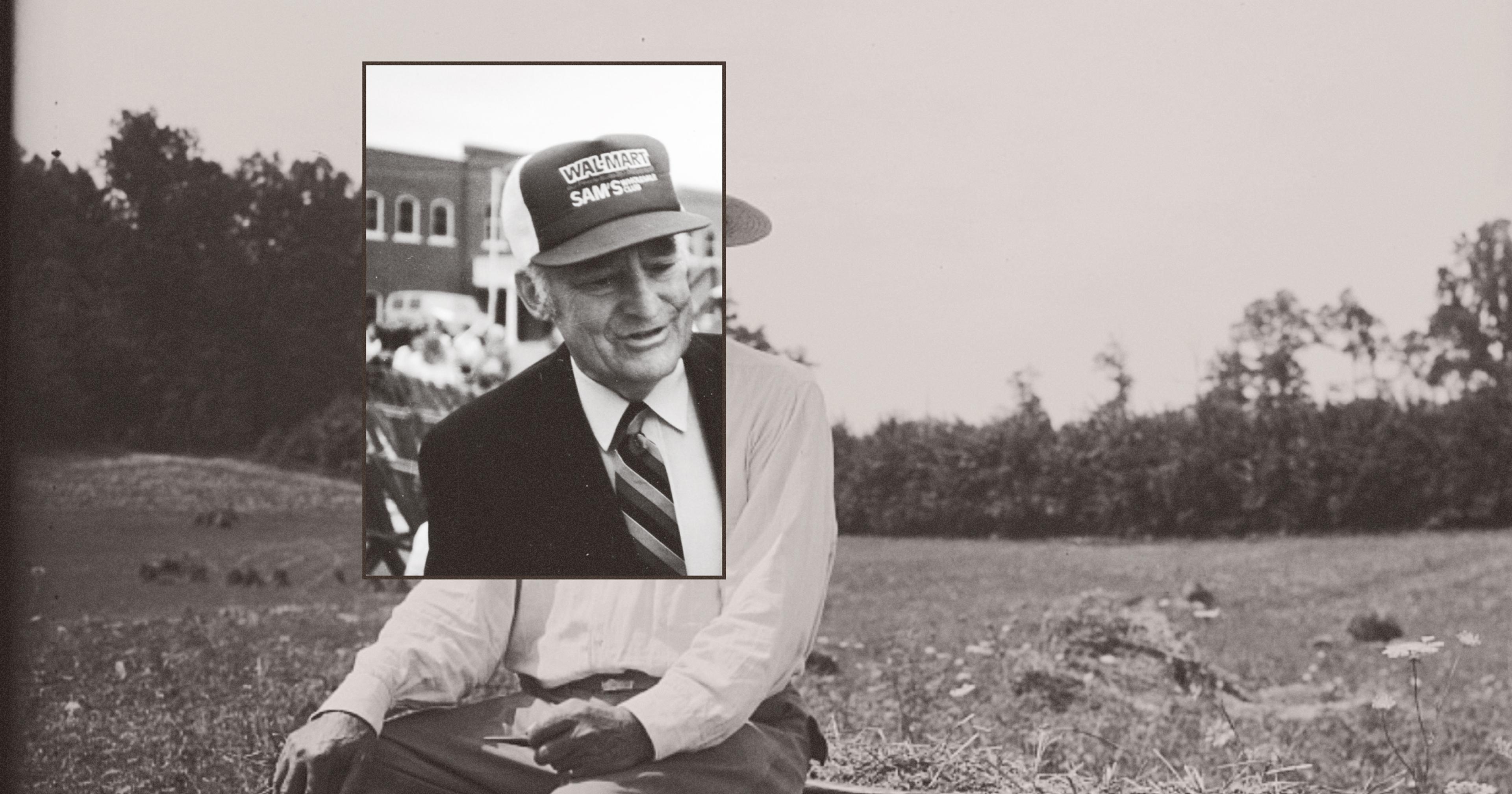
More and more investors want to know the climate impacts of companies in their portfolios.
This, coupled with a push from the U.S. Securities and Exchange Commission (SEC) to track emissions on publicly traded companies, is turning into a fight from farming and ranching groups.
The SEC is circulating a ruling that would require publicly traded companies to start reporting their greenhouse gas emissions by 2026. The ruling is aimed at large companies — businesses with less than $250 million in publicly owned shares or less than $100 million in annual revenue would not need to report. The collected data would be available to investors and present a “complete picture of the climate-related risks” associated with a company’s operations and financial future.
Since the ruling was proposed last year, large industry groups, from the American Farm Bureau to the National Pork Producers Council, have opposed the ruling, saying it is cumbersome and will hurt small businesses, including family farms.
In an April letter to the SEC from a variety of livestock and agriculture business groups, the authors ask the federal agency not to include the ag sector in emissions tracking, or completely remove their pending rule. The groups wrote that this tracking will “inevitably require farmers and ranchers to track and report their emissions” to the larger, publicly traded companies.
“Family farms, particularly smaller ones, will be hardest hit, with the rule driving greater consolidation and fewer family farms,” the letter said.
The heart of the fight is focused on something known as Scope 3 emissions.
A variety of industries track their climate impacts using Scope 1 and 2 emissions reporting. Scope 1 emissions are the pollutants coming from sources that a company directly owns, such as fuel burned by a logistics company’s tractor-trailers. Scope 2 emissions are ones caused indirectly by a company’s source of power. This generally refers to emissions produced by energy companies and utilities that a business uses to power its operations.
“Pretty much every farmer at some point is touching a public company’s value chain, whether it’s fertilizer, seeds, or pesticides.”
Scope 3 emissions are ones caused up and down the supply chain for a single business. A bag of shredded Kraft cheese may not have released methane at the production plant, but how much methane did the dairy cow that made the milk emit? This is the type of reporting that Scope 3 tries to capture; it tends to make up a huge chunk of a company’s portfolio, with research showing that Scope 3 accounts for 65 to 95% of a single company’s emissions.
Since the initial proposal and subsequent pushback, SEC Chair Gary Gensler has said the Scope 3 requirements could be pared down in the final ruling announcement, which is expected later this year. He said the requirements weren’t “well-developed,” leaving the future of Scope 3 reporting requirements uncertain. A group of Democratic lawmakers wrote to the SEC in March, saying that weakening Scope 3 reporting would continue to allow fossil fuel companies and other big polluters to evade regulation.
Travis Cushman is deputy general counsel for the American Farm Bureau. He said the proposed SEC climate rules will be burdensome on small, private farms, despite being intended for large public companies.
“Pretty much every farmer at some point is touching a public company’s value chain, whether it’s fertilizer, seeds, or pesticides,” he said.
But Steve Suppan, policy analyst at the Institute for Agriculture and Trade Policy, said the notion that farms will go bankrupt because they have to report on their emissions is false, as the majority of smaller farmers aren’t interacting with massive, publicly traded companies.
“The Farm Bureau seems to think that by taking a bullet for JBS or ADM or for any other company that does not want to comply with the rule that they will be doing themselves a favor,” he said.
“It was never the intent of Scope 3 to be looking at small farmers.”
Suppan also said Scope 3 monitoring isn’t as hard as opponents have made it out to be. The Environmental Protection Agency and the Greenhouse Gas Protocol, created by global research group World Resources Institute, have tools for large companies to track emissions.
Additionally, nonprofit organization Ceres has created tools for large, publicly traded companies to adopt Scope 3 reporting.
“It was never the intent of Scope 3 to be looking at small farmers,” said Steven Rothstein, managing director at Ceres.
Rothstein said that in its draft rulings, the SEC included language that estimated 1.3% of suppliers were responsible for 85% of emissions, and this would likely be replicated so that only a small sliver of farms would be responsible for reporting their emissions.
“There are a few large suppliers that are going to be significant,” Rothstein said.
In its fight against the SEC ruling, an age-old marketing scheme has come into play from large agribusiness groups. Groups opposed to the SEC ruling say that it would harm family farms, a loosely defined term at best. These groups have equated the term “family farm” with small and medium producers.
“It’s a pretty well-trodden path to use the idyllic imagery of family farmers and ranchers as sort of a smokescreen for the impacts of industrial agriculture.”
United States Department of Agriculture data shows that almost every farm in the country is owned by a family and has been passed down for generations. But while the majority of farms in this country are small, they make up a small sliver (around 21%) of the value of overall agriculture production.
This evocation of family farm to mean small producer would be as if Walmart, owned by the illustrious Walton family, began arguing they should be minimally regulated like the mom-and-pop corner store down the street.
Tyler Lobdell, staff attorney for the advocacy organization Food & Water Watch (FWW), said agriculture business groups are using fear tactics that Scope 3 would be overburdensome to small and medium-sized farms.
“It’s a pretty well-trodden path to use the idyllic imagery of family farmers and ranchers as sort of a smokescreen for the impacts of industrial agriculture,” Lobdell said.
Lobdell said there is already active, voluntary Scope 3 reporting happening for major food and agriculture companies. He said that while some see this reporting as a risk and burden, FWW sees fully developed Scope 3 reporting as an opportunity for producers to pinpoint their emissions problems and allow real sustainable producers to benefit from an open marketplace.
“Requiring this sort of transparency for investors who are more and more interested in supporting less-harmful companies and products through their investments,” Lobell said, “and being able to accurately identify ones that are working with agricultural good actors is empowered through real disclosures.”
For years, Paul Danbom let good fertilizer go to waste.
On his 900-head dairy farm in Turlock, California, he was buying fertilizer for his distant cornfields. Meanwhile, he paid to dispose of millions of gallons of perfectly good “brown gold” because there was no easy and ecologically friendly way to get it from his cattle to these fields.
Storing and transporting wet manure via tanker trucks to use for fertilizer can be a costly logistical challenge. The manure on Danbom’s farm was what is known as slurry, a heavy mix of wet and solid waste that requires special trucks and technology to move and pump onto fields.
That heft makes it expensive to transport, which creates incentives for farmers to over-apply manure directly on their nearest fields, polluting nearby waterways. Danbom said that’s precisely what was happening on his farm: He was applying more waste to fields closer to his cattle and paying for fertilizers or waste transportation farther afield.
About three years ago, Danbom invested in a separator system that would allow him to easily transport dry waste to those distant fields and apply the remaining liquid closer to the source, all while curbing emissions and preventing toxic runoff.
“When I separated [dry waste from wet manure], it allowed me to get manure to [fields] where I couldn’t get it before,” Danbom said.
Manure is a messy, costly hassle for livestock farms. It’s also the agriculture sector’s biggest climate culprit.
Waste makes up roughly 11% of the industry’s greenhouse gas emissions, according to the Environmental Protection Agency (EPA). Manure is also a primary polluter of groundwater, streams and drinking water, with nitrate and phosphorus runoff leading to aquatic dead zones across the country.
The federal government knows this. In its 2021 Methane Emissions Reduction Action Plan, the Biden Administration outlined how programs funded by the Farm Bill should “adopt new practices that improve manure management and can substantially reduce methane emissions.”
Ahead of this year’s Farm Bill, a massive piece of legislation approved every five years, advocates are asking for increased funding to do just that.
The Status Quo
There are currently three major ways livestock farmers deal with waste. The first is manure lagoons, where wet, slurry manure is held on the farm property. Though widely used, they contribute to groundwater contamination, odor pollution, and methane emissions.
Inside manure lagoons, waste isn’t exposed to oxygen and the natural process known as anaerobic digestion begins. This process eventually results in the release of methane, the primary ingredient in methane gas, a major driver of climate change.
The second way farmers deal with livestock waste is through anaerobic digesters. Digesters have grown in popularity in recent years, allowing farmers to capture methane emitted from manure then sell the gas as a fuel source to utilities. Instead of trucking the wet waste, it is captured and placed into a giant, covered building, triggering the digestion process.
Digesters, from poultry operations in Delaware to hog farms in North Carolina, were once heralded as a major solution to the industry’s emissions problems, but they’re expensive, still cause groundwater pollution, and still release methane (though not as much as lagoons).
And last, there are dry manure management systems, like Danbom’s. These practices significantly reduce methane production, as the waste is not deprived of oxygen, so the natural anaerobic process can’t begin.
Danbom’s separator works in the same way California gold panners screened for deposits in the mid-19th century: It funnels wet waste onto a screen that separates nutrient-dense solids from liquid, and the dried waste is used as fertilizer. Separating liquids from solids halts the methane-producing process of waste decomposing in a liquid environment. The process also prevents runoff into the watershed, as the dirty wastewater is reused to clean out the separator system.
Like roughly 150 other farmers in his state, Danbom received funding from California’s Alternative Manure Management Program (AMMP) to implement a separator system that he uses to create bedding and fertilizer for his farm. This state-run pilot program helps livestock producers move away from the old standards of manure management; it’s estimated that it has reduced the equivalent of 1.3 million metric tons of emissions in the past five years.
But for non-California farmers looking to switch their farms to these practices, the necessary changes and technologies can be costly. Separators can cost anywhere from $500 to $1,000 per head of cattle. On the other hand, digesters are estimated to cost anywhere from $400,000 to $5 million “depending on the size, design, and features.”
Who Will Pay?
There are some piecemeal efforts to help farmers shoulder the financial burden of adding separators to their operations. For instance, the Idaho Department of Agriculture recently awarded grants to some of the state’s largest Concentrated Animal Feeding Operations (CAFOs) to implement dry management systems. And Ben & Jerry’s has funded separators for some of the farms they source their dairy from. Democratic lawmakers from New Mexico and Maine have pushed for making manure management programs, like California’s, accessible nationwide.
But given the promise of the technology — and the urgency of the climate crisis — advocates say more farmers across the country should implement dry manure management. The Farm Bill could help.
Renata Brillinger, executive director of California Climate and Agriculture Network (CalCAN), an advocacy group that helped found California’s AMMP program, said separators are “a prime candidate for inclusion in the Farm Bill. If producers use technologies that avoid or minimize the anaerobic conditions in the first place, then we don’t create methane.”
Cathy Day, climate policy coordinator for the National Sustainable Agriculture Coalition (NSAC), said that as farms become larger, more operations see waste as a potential commodity. She agreed with Brillinger that alternatives to wet manure management are prime practices to be included in the Farm Bill. NSAC wants legislation that includes more funding for dry and other non-digester practices.
The two organizations have been pushing for a national model for non-digester manure management practices based on the California pilot program. “There would be a lot more of these alternative manure management projects on the landscape if there was more money for them,” Brillinger said. “The waiting list is long and the interest is really high.”
“There would be a lot more alternative manure management projects on the landscape if there was more money for them.”
Digesters were originally touted as a way for farmers to cash in on their waste, but in recent years, some farms are halting their digester operations because they’re expensive to maintain and the revenue is often modest. Digesters have largely become a means for very large operations to make money, now with the help of fossil fuel companies like Chevron and BP.
Some smaller farms have figured out ways to make digesters work for them financially, but it often involves soliciting outside waste. At Barstow’s Longview Farm in Hadley, Massachusetts, the digester on their 600-head dairy operation is not owned and operated by them. The farm rents the land to a local energy company that manages the operations so that they can focus on farming. They also allow local food producers to discard their waste into their system. “It mostly runs on food waste,” said farm stand manager Denise Barstow Manz.
When it comes to separators, the path to profitability is more promising, but it also allows for more options on the farm. Farmers can use the dried solids as bedding for livestock or fertilizer on their fields. This can help reduce costs on the farm, especially as the price of fertilizer keeps increasing. Brillinger and Danbom also said they’ve seen California farmers sell extra dried solids as bedding and fertilizer to other farms as well as use the dried solids for their own operations.
“I’ve gotten better crops on my [fields] where I couldn’t get manure water before,” Danbom said.
He said using the separator throughout the year allows him to stockpile compost for the winter months where it is applied to his almond trees. Healthy crops help the farm revenue remain diversified, all while incorporating manure back into the operation.
Given calls for “existential shifts in agriculture” when it comes to addressing climate change in this year’s Farm Bill, Day said there needs to be a shift in how dry manure management is seen within the agencies and programs that have historically funded lagoons and digesters, expensive systems prone to spells and methane leaks.
“There’s a focus on containing the side effects of wet manure management systems,” Day said. “There needs to be help for farmers shifting toward dry manure management.”
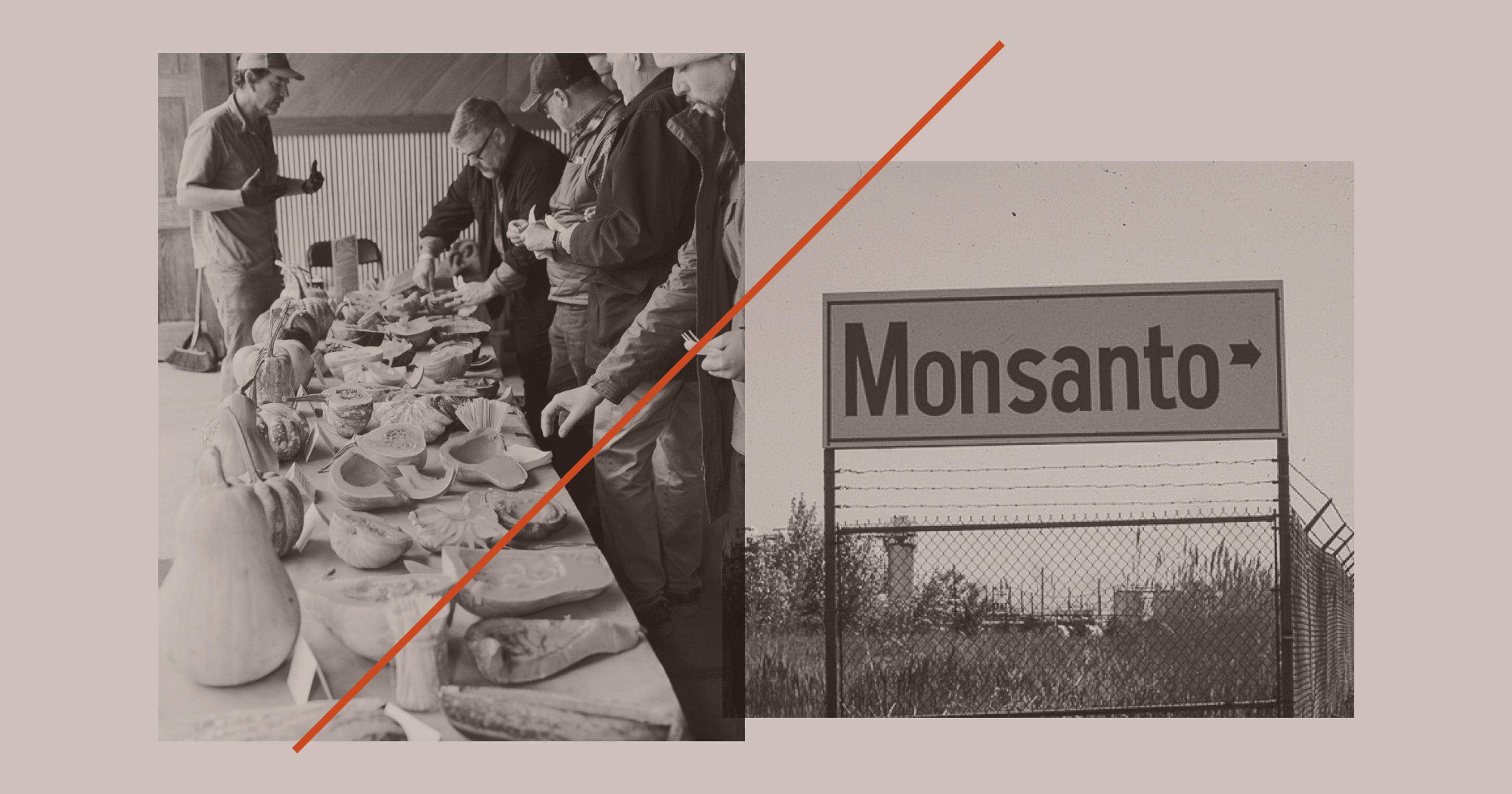
The concept of a seed may seem simple. Collect it from a crop, plant it in the ground, and watch it grow. But it’s so much more than that.
In pursuit of the most bountiful, beautiful, durable, or delicious final product, seed breeders have been adapting and adjusting seed genetics for centuries. And depending on who produces a seed, its genetics may be a) up for grabs or b) tightly controlled intellectual property.
Public plant breeders — often academics at land grant universities — are typically focused on creating plant and seed types that remain in the public domain, meaning the final product is available to any interested researcher or farmer.
But public breeders are becoming all the more rare.
“I’ve witnessed a continuing and accelerating decline in public plant breeding,” said Bill Tracy, a professor in the Department of Agronomy at the University of Wisconsin, Madison, who has worked in public corn breeding for four decades.
Commercial seed breeders work for large agribusiness companies, researching and breeding seeds for international distribution. The seeds are typically patented — or not allowed to be reproduced and not permitted for use in public breeding programs. This means the farmers growing these crops have no ownership rights over their seeds. Due to patent laws, farmers growing these crops are typically not allowed to collect seeds and use them to replant, which forces them to continue buying seeds year after year.
“Because you can’t save [the seeds] yourself as a farmer, you’re basically passing off any level of seed sovereignty to a corporation,” said Chris Smith, executive director of the Utopian Project, a nonprofit that focuses on crop diversity in the food and farm system. “Those corporations are obviously driven by a profit motive and not the farmer’s interests, necessarily.” And these companies aren’t shy when it comes to suing farmers for breaking patent laws.
Meanwhile the public sector breeds seeds not primarily for financial returns but to help farmers, improve the quality of seeds, and boost the agricultural industry as a whole. This sector of breeding results in returns like lower on-farm inputs, higher crop diversity, protection of natural resources, and more.
And it’s disappearing.
When Funds Dry Up
Public plant breeding was once taxpayer-funded and implemented through government programs. That changed throughout the 80s and 90s, when state budgets for universities were broadly reduced. Lower state budgets meant less money to go around, and federal grants became highly competitive. Much of the available grant money was funneled into other agricultural research.
One reason for this is the grant structures. They are often short-term, meaning the grants are awarded on a 1- or 2-year basis — public breeding projects often take much longer to complete. Today’s funding, according to Tracy, has more opportunities than when the situation was at its worst a few decades ago. Still, the inconsistency caused the public breeding sector to take such a hit, it has never fully recovered.
Tracy said that now, even when programs get an influx of cash, the money can often get stuck filling gaps that lack of past funding caused, as opposed to broadening the sector. “We lost large numbers of faculty and when you lose faculty members, you lose people who are training new plant breeders. So that’s one thing. We also lost infrastructure. We essentially have no infrastructure left to start [new projects].”
Another issue: A significant portion of seed breeding program leaders are older (not unlike farmers). When program leaders retire and there is not enough younger staff to take over, the program often ends. Nick Rossi, policy specialist at the National Sustainable Agriculture Coalition, who works to advocate for increases in public funding for agricultural research, said, “Across land grant universities, there are significantly less plant breeders on staff.”
Research conducted by Washington State University in 2018 that surveyed 278 public sector plant breeding programs across the country found a 21.4% drop in the programs’ full-time employees — mainly program leaders responsible for designing, planning, managing, and conducting breeding activities.
And that costs farmers.
Commercial Control
With profits on the line, commercial seed companies tend to focus on a final product that results in a high yield. Of course, higher-yield crops benefit a farmer, but other traits that can save farmers cash or achieve sustainability goals — like a crop that requires lower or even no pesticides — often fall to the wayside.
Globally, four giant companies sell more than half the world’s seed supply, according to Rossi, and are generally focused on commodity crops. The U.S. Department of Agriculture (USDA) found that across U.S. markets, the top four seed corporations own 97% of canola, 95% of corn, 84% of soybean, 51% of wheat, and 74% of cotton intellectual property rights. The companies control major seed-breeding programs, which then patent and restrict other breeders from access to the crops’ genetics — resulting in fewer and more expensive options for row crop farmers.
“The farmers are not the winners at all. I mean, they’re the survivors, but they’re not the winners.”
Before seeds were commoditized and subject to such strict control, farmers were free to collect, store, and share seeds as they felt fit. They weren’t even always expected to buy their own seeds. When the USDA was first founded in 1862, one of its main jobs was to package and disseminate seeds across the country, free of charge.
Farmers, of course, want their crops to succeed, and seeds that go through the breeding process can become more hardy to weather or pests. But the lack of diversity in commercial seed options and the dwindling number of public breeders leave farmers with fewer choices — and they’re paying more. Seed prices rose 700% over the last two decades for genetically modified (GM) seeds, and around 200% from non-GM seeds.
When it comes to the current seed breeding situation, Tracy said, “The farmers are not the winners at all. I mean, they’re the survivors, but they’re not the winners.”
Charting a New Path
In a recent report by the USDA that addressed the issue of a fair and competitive seed market, the department recommended investment in future public seed breeding. The report encouraged more funding for “public sector plant breeders to work in crops or regions that are currently underserved by the private sector and where innovation is needed for farmer choice and resilience.”
Farmers aren’t the only group with fewer options here. Because private sector breeding often results in patents, public breeders are unable to experiment with most seeds a private breeder produces — leaving some wary.
“The privatization of actual genetic traits is really troubling,” said Smith. “I should be allowed to work with purple carrot genetics without worrying about being sued. And that’s not our current reality, which is really scary to me.”
According to Rossi, in the midst of the tension between the plant breeding sectors, he has noticed a wave of “cooperative grassroots organizations” that don’t necessarily fit the traditional idea of a public plant breeder. These organizations are breeding their own crop varieties for the sake of diversity in seed stock — like the Utopian Seed Project, the Open Source Seed Initiative, and the Ujamaa Cooperative Farming Alliance.
“I should be allowed to work with purple carrot genetics without worrying about being sued.”
Smith explained his nonprofit does some “low-level breeding” work to encourage and offer resources for more farmers in their region (the Southeast) to grow more varieties.
Unlike commercial breeders, the Utopia Seed Project isn’t looking for the highest yield. Instead, they use the diversity of their crops as a buffer for when conditions aren’t hospitable to some crops but may be fine for others — something that will become ever more important both in the face of our changing climate and further consolidation in the seed industry.
Smith said, when it comes to breeding, “Anybody can be a plant breeder, and traditionally everybody was a plant breeder.” To him, keeping plant genetics unpatented and available for breeders to experiment with is important for the future of crops. “There are almost infinite genetic possibilities that seeds could offer. If those genetics get locked off by patenting individual genetic traits or whole varieties, then you’re removing that possibility and part of that plant’s future from a plant breeders toolkit.”

This month, the Washington State University Meat Judging Team — a student group that attends competitions for evaluating cuts of beef, pork, and lamb — hosted a novel fundraiser. They sold grilled, German-style sausages to drum up travel funds for future events. But these sausages have a twist: They’re the first genetically edited pork that the Food and Drug Administration (FDA) has allowed to enter the U.S. food supply.
Tinkering with animal genes has generated no shortage of funky headlines in recent years. Did you hear about the goats implanted with spider genes? Glow-in-the-dark cats? Or how about the genetically edited pigs that grew kidneys for human organ transplants?
The pace of these advances has been a bit dizzying, so you’re forgiven if you thought gene-edited meat was already on supermarket shelves. But these sausages, the product of two years of work from a team of WSU researchers, are a significant first. They come from five male pigs that were sterilized, then implanted with stem cells to produce sperm with desirable traits they can pass on to their progeny. The research team refers to this as the creation of “surrogate sires.”
The researchers used CRISPR, a much-hyped technology that’s been referred to as “molecular scissors,” wherein very specific DNA can be deleted and replaced with desirable traits from animals in the same species. Some liken gene editing to the more traditional process of selective breeding, with the advantage of greater precision and much quicker results. Others say it’s essentially genetic modification — with all its attendant fears and baggage.
Jon Oatley, professor of molecular biosciences at WSU and leader of this research project, is in the former camp. He argues CRISPR is only used to advance traits that would arise in nature anyway. Oatley believes this is distinct from “transgenic modification” — the process many associate with typical GMOs — which inserts genes from one species into another. “Typically, livestock producers would be screening millions of animals for changes in DNA that confer a certain trait or characteristic — it can take millions of dollars and decades to accomplish,” he said. “And once they find a rare individual in a population, they just use [artificially] selective breeding to propagate it. We don’t have to do all that with CRISPR.”
Meanwhile Kevin Wells, an associate professor in University of Missouri’s Animal Sciences Research Center, has been genetically engineering livestock for decades. Wells considers CRISPR, which he has utilized in research projects himself, in no way meaningfully distinct from other types of genetic modification. There is “an artificial parsing of language such that genetic engineering using one technique is claimed to be appreciably different from genetic engineering through the use of another technique,” he said in an email.
Either way you look at it, the FDA places enormous regulatory burdens on any food product that bears a whiff of genetic alteration. It should be noted that only the five pigs in the WSU study are allowed to be sold and eaten — this very specific allowance was considered “investigational,” meaning it was provisionally permitted for research purposes. And even these allowances were not easy to obtain; Oatley said WSU paid $200,000 to obtain limited FDA approval, and this was a discounted academic rate.
Alison Van Eenennaam, extension specialist in animal biotechnology and genomics at UC Davis, isn’t hopeful that genetically engineered meat will be sold anytime soon in the U.S. She blames an outdated regulatory structure that doesn’t account for the rapid scientific advances made in recent years. “We need a different language because when the Food, Drug, and Cosmetic Act was written, what, 40 years before the discovery of DNA, they were not envisioning genome-edited animals,” Van Eenennaam said. “To me, the only thing that’s going to change this is that Congress has to go and say, ‘This is stupid’ … and they have a few other things on their plates right now.”
“When the Food, Drug, and Cosmetic Act was written, 40 years before the discovery of DNA, they were not envisioning genome-edited animals.”
Oatley shares her concerns, though perhaps is a bit more optimistic. Though the five pigs in his research project were edited for particular reproductive-related traits, he envisions any number of CRISPR uses with food animals — he hopes these sausages are just the beginning. “At Washington State University, we’re trying to use biotechnology like CRISPR to impact food animal production in a variety of ways, whether it’s their resiliency or their welfare, or growth efficiency.”
In a sense, this recent project was a test balloon, a way of showing the public — and regulators — that gene-edited meat is safe, to open the door for future projects. Pigs could be bred to avoid respiratory disease, cattle bred without horns, chicken eggs bred to avoid massive culling. “On the most basic level, there should be no concern about consuming a gene-edited animal,” said Brad Ringeisen, director of the Innovative Genomics Institute at UC Berkeley. “We have been modifying the genomes of livestock for millennia to make them tastier, healthier, or more productive.”
That said, there is still a significant way to go in convincing a still-skeptical populace that any kind of genetic modification is safe or desirable. For instance, GM salmon is something of an outlier, gaining approval from FDA but still facing significant battles in the court of public opinion. Though those salmon were transgenically modified as opposed to gene-edited, the distinction may be lost on the average consumer.
“As important as it is to understand the basics of what CRISPR can do, it’s just as important that consumers and farmers see the value in it,” said Ringeisen. “If it’s just used to increase the profits for a large corporation, there will probably be pushback. If it helps farmers adapt to a changing climate, improves animal welfare, or helps put the food that people want on the table more cheaply and sustainably, then it will be a lot easier to help people understand the value.”
Broad ethical implications aside — how were the gene-edited sausages? At the fundraising barbecue for WSU’s Meat Judging team, meat scientist Blake Foraker manned the grill. “We smoked these during the cooking process, so that’s where you see the nice mahogany brown,” Foraker told Oregon Public Broadcasting. And, according to the OPB reporter, the finished product was “smoky, and mildly salty. A good snap to the casings. Just like regular pork.”
This article was produced in collaboration with Nexus Media News, part of a series on climate change and the 2023 Farm Bill.
On a clear morning in April, after milking his seven cows, Tim Sauder looked over the pasture where he had just turned them out to graze. Like many dairy farms, Sauder’s fields swayed with a variety of greenery: chicory, alfalfa and clover. But they were also full of something typically missing on an agricultural landscape — trees. Thousands of them.
Between 2019 and 2021, Sauder planted 3,500 trees at Fiddle Creek Dairy, a 55-acre family farm in Lancaster County, Pennsylvania, where he and his wife raise cows to produce yogurt, cheese and beef. Today, young willow, hickory, poplar, pecan and persimmon trees stud the pastures, and on a crisp spring morning, rows of honey and black locusts, bur and cow oaks, were beginning to leaf out, casting shadows on the long grass below.
Sauder said planting trees has always been a priority; before he filled his pastures with them, the farm was home to a small fruit orchard as well as riparian buffers — trees planted along the creek to prevent erosion and safeguard water quality. But the trees that his cattle now graze beneath represent a fundamental shift in his operation.
The Sauders are betting the farm, as it were, on silvopasture, the ancient practice of raising animals and growing trees and pasture on the same piece of land (silva is forest in Latin). In a silvopasture setup, farmers carefully manage each element to benefit the other — relying on manure to fertilize trees, for example, or fallen fruit to feed the livestock — resulting in a system that’s greater than the sum of its parts.
It’s an old idea that’s gaining modern traction. Last year, the USDA awarded the Nature Conservancy and multiple partner organizations a $64 million grant to advance agroforestry — the umbrella term for agricultural practices that incorporate trees — by providing technical and financial assistance to farmers looking to make the switch. This year’s Farm Bill could mean another infusion of funding as well as the expansion of existing agroforestry programs to more explicitly include silvopasture.
“The USDA is doing a lot, but a lot more could be done,” said Jabob Grace, communications project manager with the Savanna Institute, a nonprofit that promotes agroforestry practices. His organization is advocating that the 2023 Farm Bill increase appropriations for the National Agroforestry Center, the only government agency dedicated to the practice, from $5 million to $25 million (Grace said the Center has been chronically underfunded, never receiving more than $2 million annually). They’re also pushing for the establishment of regional agroforestry centers, the development of a USDA technical assistance program in agroforestry, and more grant money dedicated to helping farmers like Sauder establish a silvopasture system.
In Sauder’s pastures, “each tree has multiple benefits,” he explained. Mulberry leaves have more protein than alfalfa, and the seed pods that fall off the honey locust every autumn are packed with sugar; those trees were chosen to supplement the animals’ diet. Sauder chose other tree species with leafy canopies to protect his herd’s health. “Come August, there will be shade here when the cows need it.”
Providing shade may seem like a matter of comfort, but it can actually be one of life and death. Last summer, thousands of cattle died in Kansas, after the area was racked by historic heat and humidity. As the climate heats up, researchers think mortality events like the one in Kansas will become more common. But even when cattle survive brutally hot summers, the impact of heat stress can wreak havoc on a farm’s bottom line.
“Come August, there will be shade here when the cows need it.”
Grace said the farmers he works with are worried about what hotter temperatures mean for their livelihoods.
“When we talk to our producers about silvopasture, the first thing they’re interested in is shade,” Grace said. “They’re noticing the hotter temperatures. Their cattle are uncomfortable, they’re not putting on weight. Cash is almost directly flowing out of that farmer’s pocket when they have overheated cattle.”
A lot of cash, in fact. A 2022 study from Cornell University predicted that losses of cattle herds due to heat stress will total $15 to $40 billion a year by the end of the century. To avoid these losses, the authors note that “tree–livestock systems can be highly effective in reducing heat stress.” And Farm Bill funding could help more farmers get started.
Shade is one way silvopasture cuts down on costs, but there are others. Some poultry farmers use the method to shield their flocks from birds of prey. Vineyards and Christmas tree farms are increasingly turning to grazing animals to mow and control weeds.
But a silvopasture system can do more than simply save farmers money; it can help them diversify what they grow. Perhaps one of the oldest — and most profitable — examples of silvopasture is the dehesa system of southern Spain, where Ibérico pigs wander among towering oak trees, feasting on acorns and fertilizing the soil, resulting in some of the world’s most expensive ham and a cash crop of cork. While livestock health and revenue are compelling reasons for farmers to practice silvopasture, perhaps the method’s most convincing advantage is its potential as a climate solution.
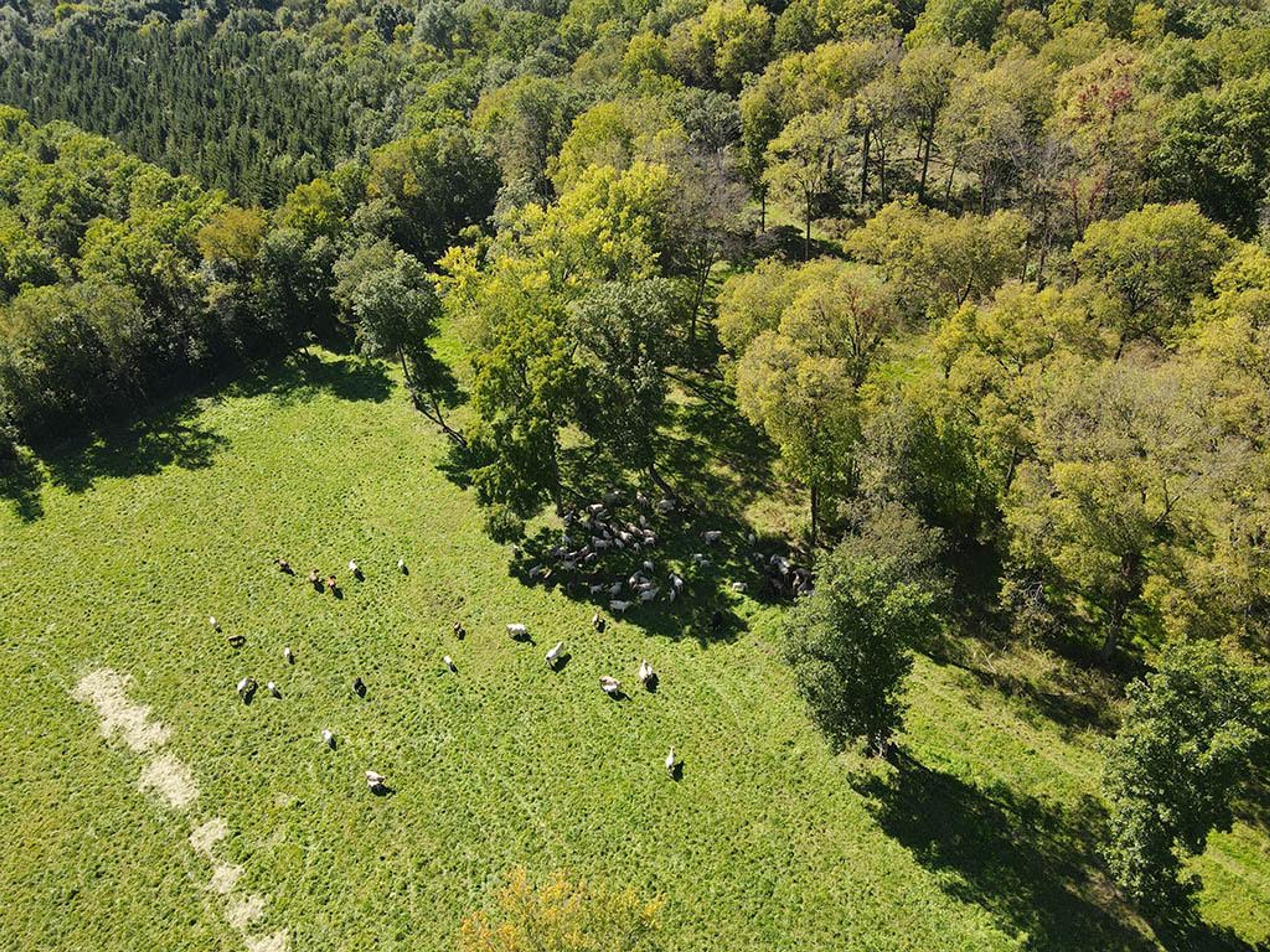
Drone photo provided by Savanna Institute
Project Drawdown, a nonprofit that analyzes climate solutions, ranks silvopasture as the 11th most effective carbon-capturing practice — well ahead of solar panels, recycling and electric cars — finding that pastures with trees sequester five to 10 times as much carbon as similarly sized but treeless pastures.
The perennial roots of a silvopasture system can also help stabilize the soil, preventing erosion as well as the flooding that’s becoming more common with heavier rains. Additionally, a well-managed silvopasture operation can reduce wildfire loads — thanks to carefully spaced and pruned trees as well as grazing animals that control the shrubby understory — and increase biodiversity.
What’s more, when livestock get to eat the forage that’s right in front of them, the gas-guzzling farming equipment and trucks typically used to get food to feedlots can stay in park. “Cutting back on harvesting and transporting means a significant reduction in greenhouse gasses,” Grace explained.
According to Grace, large swaths of the American Midwest used to be covered by a natural silvopasture of sorts, an oak savanna ecosystem where grazing animals like bison dined on prairie beneath fruit and nut trees. Many Indigenous cultures embraced and benefited from this form of land management, until European settlers got to work deforesting the region, eventually building farms that worked more like factories.
This emphasis on efficiency led to widespread monoculture and annual cropping systems where, Grace said, “for a good chunk of the year, not much is happening.”
Today, only about 1.5% of farmers in the U.S. (approximately 31,000) practice any form of agroforestry, including silvopasture.
Today, only about 1.5% of farmers in the U.S. (approximately 31,000) practice any form of agroforestry, including silvopasture, a 2017 USDA survey revealed. But as summers get hotter and climate predictions more dire, interest in the practice is booming. Matthew Smith, research program lead at the USDA’s National Agroforestry Center, said “the demand for silvopasture knowledge and information is higher than anyone can provide.”
That’s because silvopasture is more complicated than turning livestock loose in the woods; it requires choosing the right trees and forage for the local climate and constantly moving livestock from one place to another.
“If folks are interested in silvopasture, they really should have expertise in rotational grazing beforehand…which is hard to learn,” Smith said. “Things can go wrong quickly when all your crops are in the same place.” Livestock left in one spot too long can damage trees, for example, and plants grown too close together can outcompete each other for light and nutrients.
There are other challenges. For one thing, silvopasture systems require a large area of land and more hours of labor — at least at first — to maintain. Additionally, it takes trees many years to grow and begin to provide meaningful benefits. But, by far, the greatest obstacle for most farmers who want to practice silvopasture is the high price of purchasing, planting and maintaining trees.
The vast majority of silvopasture operations rely on grants and cost-sharing programs from organizations like the Natural Resources Conservation Service and the USDA, programs that advocates like Grace say badly need the boost in funding and staff that this year’s Farm Bill could provide. Grace said that the handful of existing agroforestry programs, such as the Conservation Reserve Program and the Environmental Quality Incentives Program, are vague in their wording and need to be tweaked to more explicitly fund silvopasture projects and provide additional cost-sharing opportunities to farmers.
Funding remains a “major barrier to farmers hoping to pursue silvopasture.”
Savanna Institute ally and climate NGO Carbon 180 is recommending that the 2023 Farm Bill increase federal cost share to 75% for agroforestry practices to help defray upfront costs and ensure farmers can access high-quality, regionally appropriate trees and shrubs.
In the meantime, funding remains a “major barrier to farmers hoping to pursue silvopasture,” said Austin Unruh, owner of Trees for Graziers, who helped Tim Sauder secure money from the Pennsylvania office of the NRCS. Unruh, whose business has helped about 25 farms implement silvopasture in the last three years, said helping farmers pay for them “has been frustrating. It’s a different source of funding each time, different hoops to jump through.”
For Sauder, the financial assistance from the state was paramount. He said that without it, the trees in his pasture simply wouldn’t be there, “at least not for the next 20 years or so.”
He admits that the new system has been a lot of work upfront, but that he expects it to pay off in the form of healthier pasture, soil and cows — and hopefully his land’s ability to support more of them.
And yet, it’s working in tandem with nature that inspires Sauder the most. Running his farm with the health of the ecosystem top of mind, he said, is like making up for the mistakes of his ancestors, Mennonite immigrants who displaced Indigenous people and bent the land to their will.
“I’m reimagining what would have happened if they had arrived here and said instead, ‘What’s the best way to live in this place?’”

On a small patch of land just outside Asheville, North Carolina, experimentation is the name of the game. In recent years, the half-acre plot has yielded typical Southern crops like okra, collard greens, southern peas, and peanuts, as well as plants you’re more likely to find in the tropics, such as cassava, chayote, ginger, turmeric, and taro.
The micro farm, fittingly called the Experimental Farm, is tended by the Utopian Seed Project, a nonprofit dedicated to reviving heirloom crops and increasing biodiversity in Southern agriculture. The organization is doing what many for-profit farms cannot: experiment and test new crops without a guarantee they’ll be profitable. Farmers often don’t have time and money to test out a new crop without knowing they’ll be able to make money from it, and agriculture research at academic institutions is often focused on commodity crop markets. As a nonprofit that receives grant funding for crop research, the Utopian Seed Project aims to help fill this gap.
In addition to honoring the past with seed-saving projects to preserve historically important varieties of okra and collards, executive director Chris Smith has his eye on the future, driven by a curiosity for what might one day thrive in the warming region.
“Every year, it feels like it’s getting a little bit warmer, our seasons are getting a little bit longer. And obviously, that trend is set to continue,” said Smith, author of the James Beard Award-winning The Whole Okra: A Seed to Stem Celebration, who launched the Utopian Seed Project in 2018 with support from local gardening company Sow True Seed. “Yes, we need to mitigate climate change. But we’re pretty stupid if we don’t think about adaptation strategies to climate change, because we’re already there.”
As the length of North Carolina’s growing season has increased, Smith has found that some crops native to the tropics have the potential to thrive there, too. To date, he’s planted arrowroot, cassava, chayote, roselle (in the hibiscus family), taro, turmeric, water chestnuts, and more. The experimental crop trials have shown that what grows as a perennial plant in a tropical region makes a suitable annual crop in another.
Take ginger, for example, which doesn’t grow well when exposed to temperatures below 50°F. The plant might not make it through a cold winter to see another year’s season, but it can certainly grow to maturity in regions with longer growing seasons and then be planted again after winter frosts subside.
Some of the project’s crop trials have yielded better results than others. Taro, a root vegetable that’s a staple in many African and South Asian cultures, is especially promising. “In this region, you can grow it with less externalized inputs. It doesn’t need as much irrigation, fertilizer, or pesticides. It doesn’t have any pest predators in this region at the moment … From a farmer’s perspective, it’s pretty much as easy to grow as potatoes,” said Smith. Taro is also a versatile ingredient that can be prepared in similar ways to a potato, a key factor for its future success. “Anything you can do with potatoes you can do with taro.”
“Yes, we need to mitigate climate change. But we’re pretty stupid if we don’t think about adaptation strategies to climate change, because we’re already there.”
On the other hand, cassava (often referred to as yuca) seems to want just a slightly longer growing season than what’s currently available in western North Carolina. All the batches Smith has grown simply do not grow large enough to be a viable food crop. “If we just had another month in our season, cassava would be a perfect crop,” he said. “It’s just agronomically not quite making sense for us yet.”
Still, Smith says it’s a category of crops worth exploring. For one, North Carolina’s demographics are changing. According to the most recent Census, foreign-born residents now make up 8% of the state’s population, and have brought rich cultural food traditions with them. Between 2010 and 2020, North Carolina’s Asian-American population grew 64%, according to data collected by the UNC Asian American Center.
“A spin-off benefit of [tropical crops] is that it really creates niche opportunities for traditionally underrepresented farmers, immigrant farmers, African-American farmers. The people that get really excited about taro are people who have experienced it because they’re from West Africa, or the Caribbean, or from Asia,” said Smith, “and that gives an opportunity for the farmers to supply those restaurants … It doesn’t have to be limited to that, and I don’t think it should be limited to that. But certainly, they’re the first people who respond positively to it and that could be really useful.”
Additionally, Smith believes that it’s important to start growing these plants now in order for them to be regionally adapted by the time there’s a need to plant them more widely. “It’s going to be much harder to grow the crops that we traditionally grow, and we’re going to want other crop options for a changing climate,” he said.
While North Carolina is considered a temperate climate, changing weather patterns already show the state is getting warmer, wetter, and more humid. “We’re still temperate, we still have seasons,” explained David Suchoff, alternative crops extension specialist and assistant professor in the Department of Crop and Soil Sciences at North Carolina State University. “But that being said, when you look at our summers, and our soils, we’re almost kind of a subtropical system … we can grow crops almost year-round.”
“It’s not like an iPhone, where you can just have a marketing campaign and release it. It’s agriculture, so it’s slow.”
Academic researchers like Suchoff are similarly looking for alternative crops to introduce to North Carolina farmers, many of whom can no longer depend on tobacco for a steady, reliable source of income. “We want to look for crops that are resilient, crops that have the ability to withstand a lot of the seasonal variation that is becoming a lot more prevalent with climate change,” he said.
One of the alternative crops that Suchoff sees great promise for is sesame, which is widely cultivated in tropical and subtropical parts of the world. Currently, only a small percentage of sesame is grown in the U.S. — North and South America combined account for a measly 4.3% of the world’s supply — and almost all of it is grown in Texas and Oklahoma. It’s low-input and highly drought-tolerant, a crop that could diversify income sources for commodity farmers who already grow corn and/or soybeans. “There’s a huge [global] demand for sesame that’s not being met,” he said. “There’s a lot of interest in trying to expand production into the Southeast, because there are a lot of similarities and aspects of our climate that are a good fit for that crop.”
Finding a new crop that’s suitable for a region’s changing climate is the first step. Integrating it into the local food system is the next hurdle, and arguably the most important part. After all, without demand for a crop, what’s the point in growing it? Just because taro or arrowroot or water chestnuts grow well in North Carolina doesn’t necessarily mean there will be buyers.
“It’s not like an iPhone, where you can just have a marketing campaign and release it,” said Smith. “It’s agriculture, so it’s slow. There needs to be a supply chain, and it needs to be ongoing. It’s complicated.”
That’s why the Utopian Seed Project spends as much time building a network of cooks and chefs interested in the experimental crops as they do growing them. With taro, for example, the organization conducted public taste tests and dinners, as a way to assess the tuber’s viability and popularity among consumers. The taro chips, whipped taro, taro hash browns, and steamed taro that were served received positive feedback. The organization also partnered with the student farm at Elon University, which grew taro and supplied it to the college’s dining program.
Of all the plants being trialed in rows on the Experimental Farm, Smith is especially psyched about the future of taro, which he hopes will serve as a model for how to grow tropical crops in a temperate region and successfully integrate them into the food system in a smart and meaningful way. “It’s definitely got the potential to have the culinary businesses excited about it, consumers wanting to eat it at home, and farmers being able to make money from growing it,” he said. “I don’t think it’s going to become a cash crop, but it can become a profitable crop.”

Last year, Danny Wood invested in a new combine for his family’s 8,000-acre grain farm. He was excited to put it to work harvesting wheat and had just begun that task when the combine broke down. “The diesel exhaust system wasn’t working and when we called the dealer to get it repaired, they told us it would take five days to fix,” said Wood. “It sat on the side of the field waiting. When it’s time to harvest wheat, you can’t afford to delay the process.”
Luckily for Woods, beginning in 2024, he won’t have to depend on dealers or manufacturers to repair his equipment — he lives in Peetz, Colorado, which just became the first state to pass a farmer’s right to repair bill. Authored by State Rep. Brianna Titone, the Consumer Right to Repair Agricultural Equipment was signed by Gov. Jared Polis late last month, and promises to now serve as a model for the rest of the country.
The bill represents two years of work to get it across the finish line. The fine print will require a manufacturer to provide parts, embedded software, firmware, tools, diagnostic equipment, and repair manuals to the farmers who need them. According to the Public Interest Research Group (PIRG), the Colorado bill alone will save farmers $44 million in avoided downtime and $17 million in repair costs. If launched at scale on a national level, PIRG estimates those savings at $4.2 billion.
Colorado’s success gives hope to Kevin O’Reilly, PIRG’s Director of the Campaign for the Right to Repair, that this is just a start to similar legislation across the nation. “We believe that this is the first crack in the dam, one that will lead to a flood of these bills around the country,” he said. “Colorado represents a wave of momentum for farm equipment right to repair bills.”
It also represents the first victory in what O’Reilly admits has been “tough sledding” with similar legislation. “We’ve had fierce opposition from dealers and manufacturers, who have a vested interest in maintaining control of repairs,” he said. “They want to control the diagnostic tools and authorize repairs, and charge what they want, when they want. It’s a bad deal for farmers.”
Ultimately what may have helped Colorado pass the bill was uncoupling the farmer’s right to repair from other items, as well as the success of a right-to-repair electric wheelchair bill that passed in last year’s session. In 2022, Titone sponsored a right-to-repair bill for wheelchair users, which passed as the first of its kind in the nation. “That put some meat into a similar statute for agriculture,” she said. “Between the Rocky Mountain Farmers Union and other related groups, it galvanized people to talk about it.”
Currently, there’s no similar proposed legislation at the federal level, but an additional 16 states are considering farmer right-to-repair bills, according to O’Reilly. West Virginia’s Senate passed a similar bill this session, but its House failed to take up the bill before the end of session. In Minnesota, a comprehensive right-to-repair bill passed two assigned committees in the House, but was temporarily held up in the Senate as opponents worked against it. State Senator Jordan Rasmusson introduced an amendment to remove farming from the legislation, but it has now advanced to a stage of reconciliation and will likely come to a vote before the session ends around May 22.
There’s no similar proposed legislation at the federal level, but an additional 16 states are considering farmer right-to-repair bills.
“Colorado is a giant step in the right direction,” O’Reilly said. “Polling across the country demonstrates this is something Americans want, and that translates to state legislators.”
Ultimately, it may lead to a national level law, too, said O’Reilly. “Senator Jon Tester of Montana is a farmer, and has been a strong advocate for a bill like this,” he explained. To date, Tester hasn’t succeeded in getting a bill off the ground. The Biden administration has issued an executive order on the topic, but it didn’t have the teeth of some of the state-level efforts.
“We’ll continue to push on the state level, however, and hope to build enough momentum so that one day, all farmers can fix their own equipment,” said O’Reilly. “Right now there are two million farmers outside Colorado looking in.”
For Wood, who is on the inside looking out, the new law changes everything. “Today’s farming equipment is great because of the electronics, but they are also its downfall because the sensors can go bad and need programming,” he explained. “But now we’ll be able to get all the information we need and fix the issues without lengthy downtime. It’s going to save us a ton of money.”

This article was produced in collaboration with Nexus Media News, part of a series on climate change and the 2023 Farm Bill.
In August 2017, as wildfires raged across British Columbia, a blanket of smoke settled over the neighboring state of Washington, turning the sun blood-red and filling the air with grit and ash. At Sarbanand Farms, a blueberry orchard in Sumas, Washington, a 28-year-old seasonal worker named Honesto Silva Ibarra collapsed and later died. His fellow workers attributed his cardiac arrest to long hours working in the smoky heat.
Silva’s death triggered a series of strikes across the state, including a 70-worker walkout at Sarbanand Farms, to demand safer working conditions.
“We knew something had to be done around wildfires and heat and smoke,” said Edgar Franks, who worked in the fields for years before eventually becoming political director of the Washington-based union Familias Unidas por la Justicia. “Every year after that, it’s just getting hotter and hotter and more unpredictable.”
The climate crisis has made farm work more dangerous and precarious. In the U.S., at least 384 farm workers died of heat-related causes between 2010 and 2020, according to a 2021 investigation by NPR and the Columbia Journalism School. The number of days in which extreme heat poses a risk to field laborers’ physical safety is expected to nearly double by 2050.
Extreme heat, wildfires, and floods also endanger farmworkers‘ livelihoods. In California, an unusually wet and cold winter has left fields soaking and frost-ridden, leaving workers with little option but to wait for conditions to improve without pay — and leaving farmers with less income to pay them. A 2021 analysis by the Union of Concerned Scientists estimated that outdoor workers in the U.S. risk losing a collective $55.4 billion in earnings each year to climate-related extreme heat.
The U.S. Department of Agriculture (USDA) does not have the jurisdiction to create or enforce traditional labor protections, which fall under the purview of the Department of Labor and the Occupational Safety and Health Administration. But advocates say the 2023 Farm Bill, legislation that determines how USDA distributes billions of dollars over the next five years, is an opportunity to bring life- and livelihood-saving protections to these workers.
“Regulators, legislators, and companies have spent so many decades with this traditional belief that the Farm Bill isn’t about workers,” said Ademola Oyefeso, International Vice President of the United Commercial and Food Workers Union, one of a handful of advocacy groups that is proposing a “labor-focused” Farm Bill. “We have to break through that noise and explain that you can do everything you can to stimulate the farm industry, but if you don’t take care of the workforce, you won’t get anything from it.”
Oyefeso said the upcoming Farm Bill could incentivize employers to take care of their workers by only providing business or funding opportunities to those with strong records of worker safety. “What you have in the Farm Bill is the opportunity to regulate who gets money,” he said. “You don’t want a company with a lot of labor violations, where workers are getting hurt constantly, to get these contracts that are coming up.”
“In the same way the USDA provides emergency assistance to farmers, it can step in to provide emergency grants to organizations serving farmworkers.”
Franks, the union political director, said that the USDA could set aside money that farmworkers could access when extreme heat, wildfire, intense flooding, or a surprise frost prevents them from working. “We would think that if there’s potential danger to your health, work should stop, and funding should be available if workers need to stop,” he said. California’s Sonoma County, for example, is currently piloting a program that offers a one-time payment to farmworkers for lost wages due to unprecedented spring floods.
Emma Scott, clinical instructor at Harvard University’s Food Law and Policy Clinic, said that the pandemic revealed both how vulnerable farmworkers and other essential workers were to illness and economic shocks, but also how quickly and effectively emergency funds could be distributed to protect them. Scott works on the Farm Bill Law Enterprise Project, a coalition across several top law schools that wrote proposals for the 2023 Farm Bill. Those proposals include disbursements to protect farmers’ livelihoods in periods of climate disaster, and USDA funding for research into climate- and stress-related health risks.
In 2021, USDA launched the Farm and Food Workers Relief Grant Program, providing nearly $670 million to state agencies, tribes, and nonprofits that support or provide relief to farm or meatpacking workers. Scott said that the Farm Bill could fund a more comprehensive and faster-acting version of that program.
“In the same way that the USDA provides emergency assistance to farmers, it can actually step in and act swiftly to provide emergency grants to organizations serving farmworkers to help when disaster strikes that disrupt agriculture,” she said.
Advocates are also seeking funding for research into a variety of health issues that affect farmworkers. Those include the results of exposure to toxic pesticides, both acute and long-term impacts of heat stress, or anxiety and depression from the volatile nature of farm work. “By incorporating farmworker needs and priorities into these requests for applications, we could see more opportunities for folks who are doing community-based research for farmworkers around these health and safety issues,” said Scott.
Some Washington-based farmworker groups are seeking training from the state in forest cleanup and controlled burning.
A labor-focused Farm Bill could also enable workers to obtain land and start their own farms, said Amy Tamayo, national policy and advocacy coordinator for the California-based Alianza Nacional de Campesinas (National Alliance of Women Farmworkers). That, in turn, could facilitate the adoption of more climate- and worker-friendly farming practices.
“Addressing some of these inequities means increasing the opportunity for more sustainable, pesticide-free producers to be in the market,” she said. “A different type of farming practice [could] produce food that is healthy for our bodies and the land.”
The 2008 Farm Bill created a farmworker coordinator position at the USDA; expanding that position into an office would make the agency — and its opportunities for farmers — more accessible to farmworkers, she added.
Franks also noted that the climate benefits of a worker-oriented Farm Bill could extend beyond the field. Some Washington-based farmworker groups are seeking training from the state in forest cleanup and controlled burning, practices that help mitigate the risk of more intense and widespread wildfires.
“There’s an opportunity within the Farm Bill to really start funding these kinds of programs and listening to people who have been on the frontlines and the ones that hardly get listened to,” Franks said. “It’s a chance to get creative.”

We’ve entered a therapy-friendly age: Online mental health companies ran ads during the Super Bowl and the Olympics, while a meme poking fun at people who resist counseling just went viral. It can be easy to forget that this is a relatively recent development, and that for many, therapy — and its attendant admission that all is not well — still carries a heavy stigma. This can be particularly true for older Americans, farmers, and rural residents (three groups with a lot of overlap).
In farming communities, “mental illness is not considered an illness. In many cases, it’s considered a character flaw,” said New York dairy farmer Jeff Winton, founder of the mental health nonprofit Rural Minds. “It’s considered a personality weakness.”
Winton speaks from experience — he founded Rural Minds after his 28-year-old nephew, also a dairy farmer, took his own life after years of suffering alone. Winton spends a lot of his time traveling the country, talking at Grange Halls and 4-H meetings, trying to encourage those in rural communities to seek the help his nephew never received. “We’ve got a lot of work to do,” he said.
Research from the Centers for Disease Control and Prevention has found that farmer suicide is up to 3.5 times more common than in the general population; they also suffer high rates of anxiety and depression. These findings may not be surprising, given deep-rooted challenges like rural isolation, farming’s immense financial and physical toll, and an all-too common resistance to seeking help. Alarming headlines on the topic have been commonplace for years; good news feels hard to come by.
Yet recent research across several arenas shows that online therapy is becoming an increasingly potent tool in combating the rural mental health crisis.
Cynthia Beck is a grain farmer and cattle rancher in rural Saskatchewan. She also has a master’s degree in clinical psychology — farmer mental health is highly personal for her. Beck recently undertook a study of 34 Canadian farmers who were suffering from significant mental health issues, engaging them in eight weeks of Internet-delivered cognitive behavioral therapy (ICBT). The results were stunningly positive, surprising even Beck and her fellow researchers.
“Some of these folks told us that this was the first time they ever reached out for help, and they were dealing with severe, severe, severe anxiety and depression,” said Beck. “We saw clinically and statistically significant improvements for reduced depression, anxiety, and perceived stress. It’s really remarkable.”
Before digging deeper into the results, it’s worth noting how the study was set up, and what hurdles the researchers were hoping to overcome. First, there is a dearth of trained mental health professionals in many rural areas. If you’re a struggling farmer, already hesitant about receiving mental health services, the idea of spending hours in the car for a therapy session could make the notion totally untenable.
“Most of the therapists that people have access to are in cities, and have nothing in common with people like me and my family.”
“It’s not only because of the cost of fuel for traveling and paying for the cost of the appointments,” said Beck, “but the cost of the loss you absorb because you don’t have somebody on the farm. Like during calving season, a producer will rarely leave the farm in case something major happens while they’re gone.”
Of course, the demands of this work can tie into the very reasons a farmer may be suffering to begin with. Jessica Beauchamp, a therapist with the Wisconsin Farm Center, said that being tied to your operation like that can take a significant toll. “You’re literally working 365 days a year. You live on the property, you look out your window and see the farm. You practically need a farmhand just to go get groceries,” she said. “There’s no break from it.”
Another benefit of online mental health treatments is anonymity. Considering the stigma still attached to getting help, visiting your small-town psychiatrist — assuming one exists — can feel like a vulnerable proposition. “I tell people that one of the best parts about living in a small town like mine is that when a tragedy happens, like what happened in my family, that people rally around and you have more tuna casserole than you know what to do with,” said Winton. “The flip side of that is if you have to seek help for a mental health issue, and your pickup truck is seen parked outside that therapist’s office, before you know it that news is going to travel like wildfire.”
That said, Winton also said a downside of online therapy is that rural residents, often suspicious of outsiders, may not warm up to the idea of pouring their heart out to a stranger. “They want someone they sit across the table from, someone they know and trust.” In particular, farmers tend to want someone who is familiar with the particular flavor of their challenges: isolation, financial precarity, vulnerability to the elements. “Most of the [online] therapists that people have access to are in cities, and have nothing in common with people like me and my family,” Winton said.
That’s why Beck created a farmer-specific guide to ICBT, which the two urban, non-farmer psychologists who helped conduct her study read in detail before providing treatment. It included facts about mental health and agriculture, and stories of recognizing signs of anxiety and depression in producers — Beck said it was a crucial element in establishing trust. “I [worked to remove the farmers’] preconceived perceptions that therapists without an agricultural background were not credible,” she said.
“The fact that they don’t have to leave the farm, change out of their clothes and get showered — they can just take a break from the skid loader for a bit. That is huge.”
Of course, technical challenges can also be a hurdle. Considering a large swath of U.S. farmers still don’t have access to reliable internet, online therapy can’t be taken for granted. Some of the participants in Beck’s study completed all eight weeks using only their cell phones — it worked, but it’s not ideal. “Without broadband, [online therapy] isn’t the panacea it is in urban and suburban areas,” said Winton.
And, naturally, despite the positive results in Saskatchewan, there will likely still be holdouts who resist the notion of online therapy. Monica McConkey, a Minnesota counselor who works with many farmers both in-person and online, said she insists her first sessions are face-to-face. “There are several advantages of in-person [treatment]. As a counselor it gives me better insight into what they are experiencing through their non-verbals such as body language, posture, eye contact, etc.,” she wrote in an email. “Another reason is that many farmers have hearing loss and struggle to read lips or understand what is being said virtually.”
McConkey added there is a “disconnect and/or discomfort with navigating technology” among many of her older clients, leading many not to participate in online therapy. In his 60s himself, Winton thinks it may take years for a generational shift to take place, with younger people shedding the old prejudices against seeking help. Winton may be on to something: A 2022 study out of Tennessee showed that the stigma surrounding mental illness in rural areas may be lessening significantly, particularly among younger generations.
While online therapy is no quick fix to the complicated and urgent issue of farmer mental health, it’s surely a step in the right direction. Beck said that 100% of the farmers in her study believed that it was worth their time, and recommended it to other producers. One participant, who runs a large farm with multiple employees, got direct feedback from his staff that he seemed highly improved in just eight short weeks.
And Beauchamp, who provides online and in-person therapy out of the Wisconsin Farm Center, a state-funded community resource, said that she has seen more and more farmers attending her remote sessions. “I think it’s really changing everything,” she said. “The fact that they don’t have to leave the farm, change out of their clothes and get showered — they can just take a break from the skid loader for a bit. That is huge.”
If you or a loved one are struggling, call the Suicide and Crisis Lifeline at 988. Rural Minds also has a comprehensive list of rural-specific mental health services on its website.
In early March, just in advance of a new planting season, a spirited debate broke out on an agriculture job listserv. At issue was a listing for a farmworker “apprenticeship” that offered free room and board and a stipend that averaged out to somewhere below the federal minimum wage of $7.25 an hour. In exchange, trainees would receive hands-on regenerative farming experience. The original poster and supporters maintained that small farms contending with slim margins could not afford to pay more and that the apprenticeship’s educational component tilted the balance to a more-than-fair trade. Critics pointed out the model’s potential for exploitation and Department of Labor (DOL) violations, its economic non-viability for underprivileged workers, and other related problems.
What to pay (or not) a much-needed worker — who happens to be in need of training — has been a contentious topic in ag circles for years. Among farmers young and old, stories abound on the travails of so-called internships and apprenticeships. These terms can comprise what Wendy Chen, a food and agriculture Fellow at the Vermont Law and Graduate School, called “convoluted” distinctions between types of workers. That murkiness is layered on top of (some say unjust) exemptions for small U.S. farms which, under the Fair Labor Standards Act (FLSA), don’t have to pay minimum wage to agriculture workers. (Some state laws might override this.)
After finishing a year of courses and training at the University of California, Santa Cruz, Center for Agroecology 12 years ago, Anita Adalja took an apprenticeship on a 20-acre vegetable farm. The position offered a $1,200-a-month stipend and a trailer to share with three other apprentices. “It was not a pleasant experience,” said Adalja, who founded the farmworker advocacy group Not Our Farm in 2019. The farm crew worked at least six days a week from 6 a.m. to 6 p.m., using headlamps to harvest in the dark. They weren’t allowed to wear gloves despite bitter cold “because it would damage the greens.“
Adalja got frostbite on several toes and began to develop arthritis. The 100 or so farmworkers in the Not Our Farm network have their own stories, of mold-infested housing, of no bathroom to use during the workday, of working long hours for very little pay. Some of those experiences may constitute labor and/or housing violations under state or local laws, or the Migrant and Seasonal Agricultural Workers Protection Act. The problem, said Chen, is enforcement.
The FLSA deems a farm small if it used less than 500 “man days” in any quarter of the preceding calendar year; that’s considered the rough equivalent of having seven full-time employees. An “agricultural” job is exempt from minimum wage (small farms) and overtime (farms both small and large), although as a bunch of Vermont farmers found out the hard way, just because a job is on a farm doesn’t mean it’s necessarily exempted.
As the Vermont news outlet Seven Days reported, “Milking cows? Ag. Turning that milk into yogurt or kefir? Nope. Sowing wheat? Ag. Milling flour in the granary? Nope.” Meaning, yogurt-makers and millers are entitled to both minimum wage and time-and-a-half over 40 hours a week. H-2A laborers — 73% of the U.S. farm labor force are migrants — actually must be paid at least as much as U.S. workers, to ensure their hiring doesn’t adversely affect American farmworkers, said Chen.
“We had too little labor, which meant there was too much pressure on our employees and ourselves and we expected way too much for the amount that we were paying people.”
“Intern” and “apprentice” are similarly muddy terms. According to DOL, in most cases an intern is someone who agrees to non-payment in exchange for hands-on training tied to credit in a formal education program. Basically, said Chen, “The employer can’t get any direct immediate benefit from it. You want to train somebody to grow crops? You can do that, but you can’t realistically say in order to learn to do that, [they] have to weed for three days straight because that’s just using deep labor.” It’s a distinction not limited to farming; deviations from this kind of rubric have arisen in other fields as well (notably, in journalism) where use of unpaid interns in exchange for college credit have run afoul of ethics standards.
Meanwhile, “apprentice” isn’t a distinct employment classification unless it relates to an apprenticeship program, such as at UC Santa Cruz, or Wisconsin’s FairShare CSA Coalition, that’s registered with a state or federal labor board. Such a formal program “is usually several years long with a vocational or trade school with credits toward a job and pretty formalized training,” Chen said. No minimum wage or overtime is required here by federal law, but the programs often work out their own standards for fair compensation.
Still, “intern” and “apprentice” might be used interchangeably and have none of this meaning attached to them. Small farmers sometimes maintain that they seek to hire so-called apprentices and interns because they can’t afford skilled workers, and that they don’t have the time, energy, or resources to teach them formally. People at FairShare have heard from farmers who’ve said they didn’t get into farming to be HR managers; that production and not education is what translates into farm stability; and that there’s only so much they can raise prices to meet constantly rising costs — including for labor.
These stressors are familiar to Katrina Becker, who farms 5.5 acres of organic vegetables in Athens, Wisconsin. During Covid, when finding and retaining workers was near impossible, “We had a reckoning as a farm in terms of employment,” she said. “We had too little labor, which meant there was too much pressure on our employees and ourselves and we expected way too much for the amount that we were paying people.” But she also pushed back against the idea that underpaying employees, no matter what you call them, is a necessary practice; she pays at least $15 an hour.
It’s fair to argue that an apprentice requires more energy and resources than a skilled farmworker but, “If you don’t have money to pay someone at baseline minimum wage,” Becker said, “it means there’s other issues with your business.”
It’s fair to argue that an apprentice requires more energy and resources than a skilled farmworker.
FairShare partners with the Wisconsin Department of Workforce Development and the Wisconsin Technical College System, the latter of which offers two semesters of courses, between two seasons of on-farm work at organic vegetable farms. This includes learning about farm systems, financial management and marketing, and greenhouse work and pest ID. “People can see, by the time I’m done with this program I will have reached competency in these core skill areas,” said Sarah Janes Ugoretz, FairShare’s apprenticeship manager. Farmer mentors from 22 farms agree to pay at least $7.25 an hour to start, at least $10.50 an hour to finish, including for time spent in the classroom.
It’s worth noting that farmers — including Becker, who felt she had the bandwidth to take on her first apprentice only this year despite working with the program since 2015 — helped design this program from start to finish. In addition to providing extensive resources to help apprentices succeed, as well as inspecting farms for their suitability, Ugoretz also mentors the mentors. She helps address their concerns about how to make time and space for apprentices, and to better help them understand how to succeed.
FairShare is one of only a handful of similar programs across the country, and it’s currently near capacity, with 10 apprentices signed on for this year. But there are other ways to find a decent, less “official” apprenticeship or internship opportunity. Not Our Farm partners with search board Good Food Jobs, which mandates that any posted job pay at least $15 an hour — although, “If you’re not offering housing and your farm is in a really expensive place [for rentals], $15 an hour might not be nearly enough,” said Adalja. She calls the issue of housing “tricky,” since many farmers themselves “aren’t living on the land that they’re farming on and don’t have access to housing.”
In addition to creating several other resources, Adalja has also been working on a toolkit with FairShare that aims to help potential farm apprentices identify red flags during the interview process. Asking questions is important: “Is there a formal structure to it? Is there compensation and are those details laid out? Is there a curriculum and a schedule to guide that training? Are expectations clear? Is there an agreement that is signed? Does that exchange of your labor and that knowledge and compensation feel fair?” said Ugoretz. “Keeping those questions front and center can help people understand and decide, ‘Is this something I want to put myself into?’”
For decades, the U.S. Department of Agriculture (USDA) and U.S. Customs and Border Protection (CBP) have relied on highly trained canines to sniff out prohibited agricultural products in passenger luggage and packages — preventing them from crossing the U.S. border.
The group of dogs, nicknamed the Beagle Brigade, spend their shifts stationed at airports, border crossings, and international mail and cargo facilities, searching for packed-away items that could harbor foreign animal diseases and potentially invasive pests — to the detriment of the American agriculture industry.
Today, the Agriculture Quarantine Inspection Program (AQI) — the umbrella program under which the Beagle Brigade falls — relies primarily on user fees collected by the USDA’s Animal and Plant Health Inspection Services as a source of funding. This can become a very unstable source of funds, like in 2020, when the pandemic caused traveling numbers to tank, along with the AQI’s funding.
Now, the program may get a permanent stamp of authorization, meaning reliable funding through Congress, thanks to the Beagle Brigade Act of 2023.
The act — a bipartisan bill introduced by Democratic Michigan Congressman Dan Kildee alongside Representatives Sanford D. Bishop, Jr. (D-GA), Drew Ferguson (R-GA), and Adrian Smith (R-NE) — would provide permanent authorization for the National Detector Dog Training Center, located in Newnan, Georgia, where the program’s dogs and handlers are trained.
The National Pork Producers Council (NPPC), which ensured the program had enough cash flow in the past when user fee funds were low, is pushing for this legislation to succeed.
“We’ve been working really hard over the years to keep [the program] funded to make sure they’re properly staffed up,” said Andrew Bailey, science and technology legal counsel at the NPPC. “Whether it’s a cruise ship terminal, a trucking terminal, or an airport, they’re really that first line of defense against foreign animal diseases, which is what we’re mostly concerned about.”
With the rise of livestock diseases like African Swine Fever — highly contagious, with an extremely high mortality rate for both wild and domestic pigs — the timing of the act feels especially pertinent. The disease has not yet entered the U.S., and ideally, it would stay that way. But the canine program has been around for decades.
Meet Boscoe, a very good boy.
·Photo provided by U.S. Customs and Border Patrol
The detector dog program was set up in the 1980s as a part of the AQI — an inspection program that closely monitors agricultural imports at the nation’s 328 land, sea, and air ports of entry. The brigade, once administered entirely by the USDA, is now run in conjunction with CBP.
And the dogs are highly successful. In 2022, the agricultural canine program was responsible for the interception — and subsequent confiscation and inspection — of more than 150,000 agricultural items.
The dogs’ keen sense of smell is notable, which is why humans have relied on them to detect landmines, cattle disease, escaped prisoners, and dropped kitchen scraps for many years. But their hidden superpower here is speed, a vital quality when processing hundreds of thousands of bags a day.
Thanuja Hall, agricultural operations manager at U.S. Customs and Border Protection, has worked within the program for nearly two decades and handled two beagles herself. She described the dogs as walking X-rays. “It’s almost quicker than any … mechanical technology you could come up with because they can sniff … 100 bags in seconds,” she said. And while technology can glitch, a dog’s nose always knows.
On the job, the dogs sniff baggage, packages, and other cargo, looking for anything from a pack of sausages that could contain contaminated pork — even if the disease is not transferable by consumption, it still poses transferable risk through handling — to an apple that may harbor an invasive pest.
Often, the very good dogs of the brigade find run-of-the-mill items — think trash bags full of fruits, vegetables, and meat products. But there are days when the contraband is more confounding.
Like when Mox, a beagle working at the Hartsfield-Jackson Atlanta International Airport, found a Giant African snail alive in a suitcase traveling from Nigeria to Texas. The snail, a species that can carry parasites and also wreak havoc on agricultural vegetation if let loose to reproduce, was confiscated. In a separate incident, oddly at the same airport, rescue Beagle Brigade member Hardy sniffed out a whole, roasted pig’s head that a traveler from Ecuador had in their bag.
Confiscating and destroying animal products can protect from diseases like foot and mouth disease, classical swine fever, ASF, and avian flu. Produce and plants can also carry pests or diseases that threaten U.S. agriculture, like the Asian Citrus Psyllid, which can cause serious damage to citrus plants with diseases like citrus greening.
When the dogs smell something, they simply sit, said Hall. Say, for example, there are multiple pieces of luggage in question when the dog sits. The handler simply requests “show me,” and the well-trained dog will gently place a paw on the bag that contains the unapproved item.
The dog’s training process, which all takes place at the Georgia facility, starts with basic training. Here the dogs learn to recognize and detect five basic odors: apple, mango, citrus, pork, and beef. These five scents have been most heavily associated with potentially invasive pests and diseases. Later, when the dogs are assigned a port, they may learn other important, region-specific scents to identify.

Dextris, a true patriot.
·Photo provided by U.S. Customs and Border Patrol
After training on smells, the dogs are introduced to their handlers. Happy dogs are the best workers, so the goal is to match a dog with a like-minded handler. Once it’s determined the handler and dog are a good fit, the pair works together as the dogs get their final certification.
Currently, the number of dog-handler teams operating in the U.S. is hovering at just over 150, though that number fluctuates. Dogs graduate from training regularly, and when they turn nine years old, they retire. According to Hall, they often end up permanently homed with their handlers after their working years are over.
Like any job, the program has very specific requirements it looks for in four-legged employees.
For new trainees, “the dog needs to be between one and two years old,” said Hall, although she mentioned there is a little leeway in the age bracket. “They have to be more of a higher energy dog that will work for treats.” The dogs can’t be shy or timid, but they also can’t exhibit aggression — the only thing the public should fear about these pups is how much they wish they could pet them. Beagle’s general behavior fits the bill. Paired with their small stature and general pleasantness — the dogs aren’t likely to be seen as intimidating or strike fear — the breed is perfect for the position.
Still, contrary to the program’s nickname, the dogs do not need to be beagles. While the program mainly consists of beagles, the smart, sporty breeds also include beagle mixes, labradors, and labrador mixes.
Regardless of breed, the dogs should be willing to be paid in treats, but they can’t be too food-motivated or food-aggressive. They do, of course, spend their days sniffing out food, often meats, as well as produce that they will not get to eat. Confiscated items go into a quarantine and inspection process, designed to make sure any contaminated product can be properly disposed of — and not by a hungry beagle.
In fact, the Beagle Brigade is unique in rewarding its furry employees with treats. Their bomb- and drug-sniffing cousins, trained to detect very highly indigestible substances for dogs, are instead taught to associate the smell of their contraband with toys. If you ever see a dog bust a traveler carrying drugs, the pup will be thanked with a toss of a toy as opposed to a snack.
While many contraband agricultural products are sent or carried innocently, the accidental introduction of disease is anything but harmless. According to Bailey, “There’s all sorts of ways that things could come into the country, you know, even unintentionally right now,” he said.
If a certain disease, like ASF or foot and mouth disease — a highly contagious, viral livestock disease — is detected within the nation, it could be catastrophic for agricultural exports.
“Generally speaking, there are certain diseases that if we get them, within 24 hours, our exports shut off.” Something like foot and mouth disease, he explained, would immediately impact $20 billion in annual exports of pork, dairy, cattle, and sheep products.
Rep. Kildee said he is “proud to partner with Republicans and Democrats to introduce the Beagle Brigade Act so we can strengthen the inspection of food imports.” He added, “Michigan’s farmers work hard to feed our families every day, and this bill will help to protect our local food supply. This legislation will help defend American agriculture from harmful diseases like African Swine Flu that could decimate our livestock and increase food prices.”
The Beagle Brigade Act was originally introduced in 2022 but was not voted on in time — before new representatives took office. Supporters hope the popularity of the Beagle Brigade throughout the ag industry and beyond will result in a different outcome this year.
“One of the reasons there’s so much support for the beagle brigade is that it sort of touches all agriculture,” said Bailey. “Whether it’s pork or beef or crops or even people generally concerned about … stopping invasive species from being smuggled in the country. It’s a pretty important program.”
An added bonus of the brigade? “The beagles are extremely cute,” said Bailey.
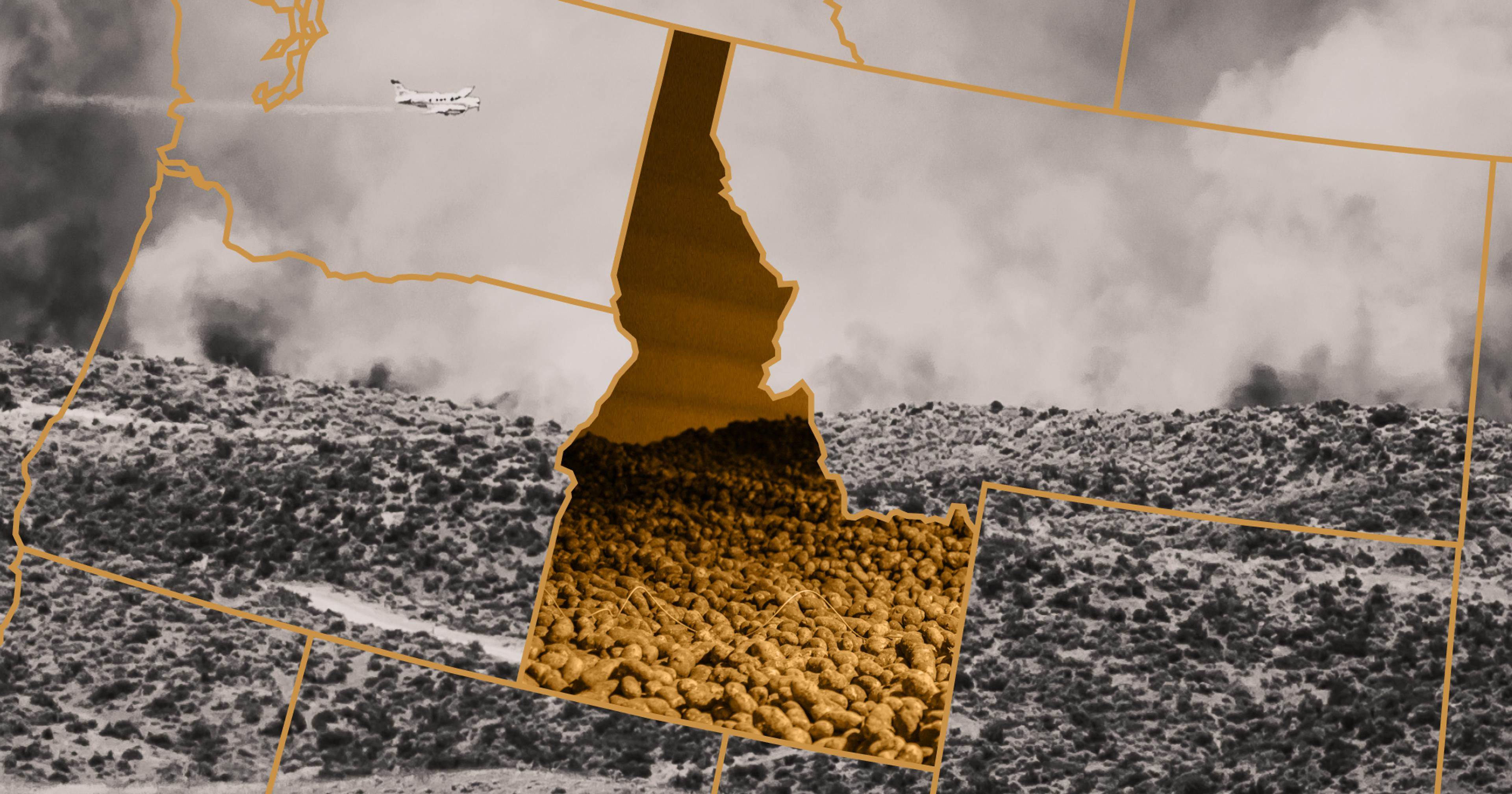
Wildfires in the West are growing larger and more frequent, making smoke exposure an increasing threat to farmworkers, as well as a number of different crops. In recent years, smoke pollution has impacted the quality of wine grapes in states like California, Oregon, and Washington, and has factored into reduced milk production in dairy cows. How harmful it is to other crops, however, is still unclear.
Similar to how it affects humans, smoke can block out sunlight and inhibit photosynthesis, causing plants to have trouble breathing. When it comes to wildfire smoke in Idaho, the primary crop concern is, of course, potatoes. The state leads the nation in production, growing more than one-third of all U.S. potatoes, and is responsible for processing the vast majority of the country’s frozen and dehydrated potato products. Idaho potato growers brought in a record $1.3 billion last year — a significant contribution to the state’s economy.
As wildfires in Idaho and its neighboring states increase, so do threats to the state’s top crop.
“We’ve had, probably seven out of the last 10 years, some pretty extensive periods where we’ve had pretty heavy concentration of wildfire smoke over our potato growing regions in southern Idaho,” said Mike Thornton, professor of plant sciences at the University of Idaho. “Growers had noticed that in some of those years, their yields were down and the potatoes did not store as well.” After an intensely hot summer last year, potato farmer Doug Gross told the Globe and Mail that he estimated his yields were down 10-15%.
In an effort to get a better grasp on the problem — and offer possible solutions — Thornton has teamed up with Boise State University chemistry professor Owen McDougal to determine exactly how wildfire smoke affects certain potato varieties. The researchers are studying how smoke changes characteristics such as taste, size, yield, and storage potential.
The deep, seemingly unaffected by smoke, roots for the project were first planted in 2012, when Addie Waxman, now an agronomy manager for the world’s largest potato manufacturer, McCain Foods, was walking through hazy potato fields in Washington. “There was so much smoke, it was just unbelievable,” she said. “That’s when I noticed that some potato plants just kept living, and others appeared to suffer under the canopy of smoke.” In addition to what Waxman observed about varietal difference in the field, she also heard anecdotal reports that potato stocks in cold storage centers were far more prone to disease and degradation if they had been grown under a canopy of smoke. She started wondering about the varietal difference in the plants’ response to the smoke, and how the heavy smoke affected yields.
“I noticed that some potato plants just kept living, and others appeared to suffer under the canopy of smoke.”
It took a number of years to get the right research team together, and even more to fund it. But Waxman believed in the importance of the study. “Idaho is well known for growing potatoes and we want to maintain the quality of the potatoes produced and the quality of the Idaho potato name,” she said. “So if we can help growers choose a variety that is more resistant to the smoke impact, then it’s better for our industry.”
Last year, researchers planted the first trial plots, over which Thornton simulated wildfire smoke using materials native to the region such as wood chips and pine needles, exposing the potato fields to several hours of smoke a day starting in mid-July through the third week of August. “That’s when we are more likely to have wildfire smoke, and we’re trying to mimic actual conditions as best we can,” explained Thornton.
The current study is focused on three French fry cultivars: Russet Burbank, which makes up almost half of all plantings in the state; Clearwater Russet, a new variety that’s popular for its heat resistance; and Alturas Russets, a late-maturing and high-yielding potato. Preliminary results already show that certain varieties might fare better than others. When exposed to heavy wildfire smoke, all three varieties had a decrease in marketable yield. Russet Burbanks responded by becoming misshapen, which keeps growers from fetching a premium price. Clearwater Russets yielded smaller potatoes.
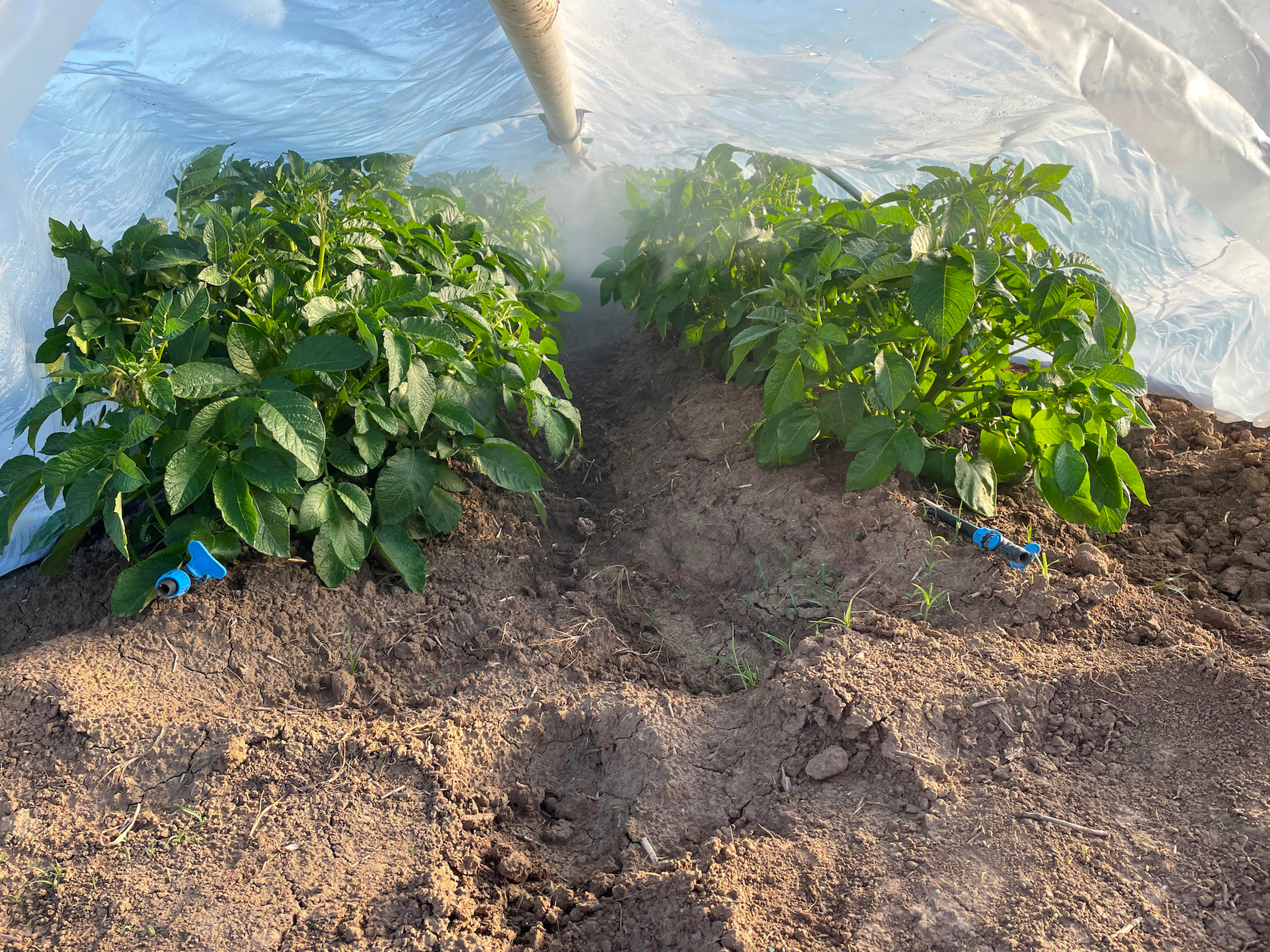
Potatoes being exposed to smoke treatments.
·Photo provided by Mike Thornton
Thornton will fine-tune and repeat his experiment again this summer, after which he hopes to offer farmers and processors suggestions for the best cultivars to plant during smoky years. “We don’t want to just tell the industry ‘Hey, you got a problem when it’s smoky.’ We want to be able to say ‘okay, if smoke is going to be a constant issue, here’s something you could consider,” he said.
On the chemistry side, MacDougal is looking at how smoke exposure might affect potatoes’ storage resilience, including their sugar levels, which are key when it comes to achieving the perfect fry color — and there are very strict criteria for color that potatoes need to meet during processing, as researchers are well aware of when it comes to crafting the perfect potato chip. “When you have a canopy of smoke and you have a lot of subgrade potatoes — they’re not the right size, they’re not the right shape — they get rejected,” he said. “If they go through the parfried process, after they’ve been washed, after they’ve been peeled, after they’ve been sliced, and then they get fried, they can gray. And that graying means that they can’t be sold. So you lose again, economically, if your processed potato is compromised.”
While he hopes the study’s findings will have a positive impact on Idaho’s potato industry, MacDougal also sees a growing need for expanding the body of wildfire smoke-related research in order to better understand how it affects other plants and livestock. “What we’re seeing is a greater number of extreme events. When there is a wildfire, it’s big, and the influence and impact is severe,” he said. “We picked potatoes [to study] because in Idaho, there’s appreciable funds to support that. But it definitely extends to a multitude of other crops.”

A prevailing irony perpetuated by the United States Department of Agriculture (USDA) is that its definition of a “specialty crop” has nothing to do with produce grown for a niche market — açai berries or rambutan, finger limes or bamboo shoots. Instead, the term distinguishes regular old fruits and vegetables, as well as legumes and nuts, from commodity crops like corn, soy, and wheat. Its usage highlights just how much USDA has historically back-burnered many food crops, said Sarah Carden, a Rochester, New York, organic vegetable farmer and senior policy advocate at anti-monopoly nonprofit Farm Action.
As you likely know, 2023 is a Farm Bill reauthorization year, a once-every-half-decade event in which billions of dollars ($428 billion in 2018) are funneled by Congress into USDA coffers to run agriculture and food programs. On the mind of some progressive legislators and food security advocates is how to make the Farm Bill more nutrition-centric. They’re beginning to talk about specialty crops and how better supporting the farmers who grow them — over the production of corn for ethanol, soy for cattle feed, and wheat that ends up in processed foods — could help Americans eat more nutritiously.
“Farmers who … have an interest in growing food that addresses the nutrition crisis need a farm bill that will empower them to produce” fruits and vegetables, Carden said. She and other progressive policy wonks are optimistic that Americans are itching for this kind of change. But what could that look like in practice?
In 2018, less than 0.5% of Farm Bill funding went to one of 12 sections, or titles: the Horticulture title, which is where most funding for specialty crop and organic growers comes from; it gives grants to support farmer’s markets, for example. By contrast, 80% of Farm Bill funding went to the Nutrition title, which supports food assistance like the Supplemental Nutrition Assistance Program (SNAP, formerly food stamps) and the Emergency Food Assistance Program.
Five percent of funding went to the Commodity title, which gives direct price and income supports to producers of “staple” commodities like corn, soy, and wheat; these producers, as well as meat producers, also benefit from the Crop Insurance title, which accounted for 8% of Farm Bill funding; smaller and speciality crop farmers can be eligible for funding through this title but according to Carden, it works “far better” for commodity growers, who use up the bulk of its resources.
“There’s a reason why none of us are eating enough vegetables and it’s more than just people don’t like to eat them,” she said. “The Farm Bill has a huge amount of control over who farms, what they farm, how they farm, and, by extension, what people eat.” By way of example, she mentions her corn- and soy-growing neighbor: “It’s not that he’s like, ‘I love corn and soybeans.’ But he loves farming, he loves to make a living, and that’s the smart way to make a living doing farming,” she said, due to the money USDA makes available to producers like him. On the other hand, the “mission-driven” organic vegetable farm she and her husband run has never received crop insurance or subsidies. Additionally, “I have very little access to the kinds of technical assistance I need,” she said. Farm Action is calling for Farm Bill changes that would allow her better access to all three.
“Helping [consumers] to eat more healthy foods also means increased dollars going to the farmers who grow them,” said Christina Badaracco, a registered dietician and co-author of the book The Farm Bill: A Citizen’s Guide, which explains the bulky, sometimes arcane legislation for a lay audience. “When we look at our systems of subsidies and crop insurance, we need to think about expanding the types of producers who are eligible.” That should better include smaller farmers of so-called specialty crops that are “really what just about everybody would think should be filling the largest portion of people’s plates,” Badaracco said.
“When we look at our subsidies and crop insurance, we need to think about expanding the types of producers who are eligible.”
William Hoagland is senior vice president of the Bipartisan Policy Center and a former administrator at USDA’s Food and Nutrition Service. “Should we be providing more subsidies … to smaller producers of fruits and vegetables? That would be beneficial from a nutrition perspective,” he said. “But I don’t think you’re going to convince traditional farm organizations like the American Farm Bureau and the American Soybean Association that” their members are not producing foods important to American consumers.
The American Farm Bureau Federation, which The Nation points out “positions itself as the voice of the farmer,” released a survey showing that Americans trusted farmers and wanted Farm Bill reauthorization, although its questions made no distinction between row crop and specialty crop producers. A 2022 Farm Bureau market report outlined some of the frustrations of specialty crop producers and concluded that “it is important to consider the unique market challenges facing specialty crop producers and the current farm bill provisions in place to make informed future recommendations” — although it stopped short of openly advocating for them. The Farm Bureau did not respond to a request for comment but in a press release, its president, Zippy Duvall, said, “Thanks to the farm bill, farmers and ranchers can hold on through the tough times to keep the nation’s food supply secure.”
The 2018 Farm Bill was considered status quo by Farm Bill watchers, including Hoagland; it didn’t manage to shake up Farm Bill business-as-usual or shake off the heavy lobbying arm of Big Ag that Hoagland alludes to. Carden, however, believes there’s a chance to make change in 2023. “This farm system that has prioritized corporate interests … has failed us. [2020’s] empty shelves scared people,” she said.
Already, she pointed out, legislators have introduced what are known as marker bills — meant to garner Congressional support in advance of trying to write them into the Farm Bill — that challenge the ag lobby: Sen. Cory Booker’s (D-NJ) Farm System Reform Act that shifts resources away from industrial animal production; Rep. Chellie Pingree (D-ME) and Rep. Dan Newhouse (R-WA)’s Local Farms and Food Act, meant to strengthen local food systems and boost parts of the Nutrition title; and Rep. Earl Blumenauer’s (D-OR) Food and Farm Act, that would increase investment in regional food systems, cap commodity crop subsidies, and expand crop insurance for specialty crop producers, among other reforms.
The issue of crop insurance is especially relevant to helping non-commodity farmers get and stay in business. The 2014 Farm Bill included Whole Farm Revenue Protection (WFRP); it initially served farms with up to $17 million worth of insured revenue, which was expanded recently to $34 million. However, said Carden, this provision is “not very cost-effective for farmers because it’s got this big paperwork burden, and [insurance] agents are not all that incentivized to sell it because it’s really complicated to write and they get more money by acreage.” She said some of the paperwork load had been lately eased but that Farm Action was advocating for more.
“Purchasing foods that are less processed helps ensure a greater percentage of each dollar goes back to the people who actually grew the food.”
Still, actually paying farmers to grow nutritious food could use a boost. The Gus Schumacher Nutritional Incentive grant program (GusNIP) was introduced in 2018 under the Nutrition title; among other things, it gives grants to provide veggie prescriptions to low-income people with certain diet-related diseases. It has so far distributed $257 million and Badaracco thinks it could do some heavier lifting. “A lot of us are hoping GusNIP will be scaled up in [2023] for produce prescriptions in particular, because that involves a specific linkage between … healthy foods and people who are in need,” she said.
In an email she elaborated that nutrition assistance programs more broadly “can help strengthen markets for small, diversified farms because the funds are used to buy foods that are more wholesome and nutrient-dense … Also, purchasing foods that are less processed helps to ensure a greater percentage of each dollar goes back to the people who actually grew the food.” She also pointed out that the Senior Farmers’ Market Nutrition Program funded by the Nutrition title provides benefits to use at farmer’s markets, “which thereby help the local farmers who sell at them.”
Carden agreed that GusNIP has not only shown “really positive health outcomes, but if we keep it tied closely to local procurement and scale it up, it has a lot of potential to support farmers and local communities.” She thinks there’s a good chance it will receive increased funding in the 2023 Farm Bill, along with crop insurance reforms.
Still, not everyone is so bullish about Farm Bill reauthorization prospects. “I don’t think there’s going to be a Farm Bill [until late] in this 118th Congress — after the presidential elections, in a lame duck session in 2024,” said Hoagland, although he said that if Republicans gain the Senate and/or the White House, reauthorization might not happen then, either. He believes that the partisan fighting that’s already broken out over whether to lower SNAP benefits and increase work requirements around the program are a harbinger of what’s to come. It’s “going to create chaos and make the polarization that already exists out there even worse,” he said.
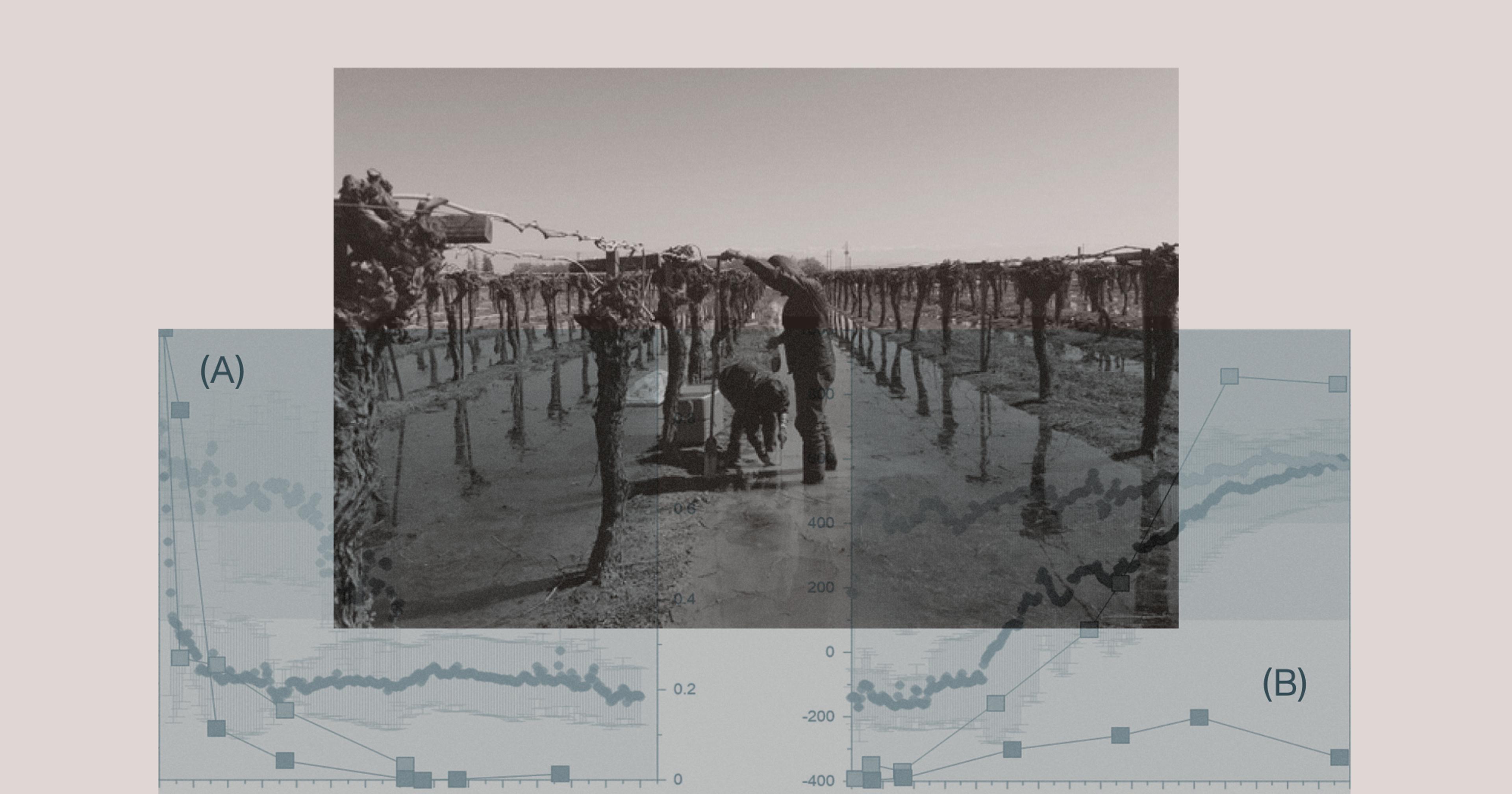
Like much of California’s Central Valley, the small town of Dunnigan, located 35 miles northwest of Sacramento, has a history of groundwater depletion and resulting land subsidence, or sinking. They wanted to find a way to begin replenishing. So last year, the district applied for a grant through California’s Sustainable Groundwater Management Act to create the Dunnigan Area Recharge Program, and started flooding rice fields. “We saw the groundwater come up seven or eight feet very quickly,” said Bill Vanderwaal, general manager of the Dunnigan Water District.
Flooding farmland to restore groundwater — known as agricultural managed aquifer recharge, or Ag-MAR — has been in the spotlight lately, because of California’s record-breaking snowpack and subsequent floods. It’s seen as one of the most promising tools for addressing the state’s increasingly extreme precipitation events, as well as its over-drafted aquifers.
But the practice has also sparked concern about nitrogen leaching into groundwater, contaminating drinking water and causing health problems like blue baby syndrome. A new study by researchers from University of California, Davis, published in Science of the Total Environment, confronted these questions head-on, finding that the way nitrogen reacts to flooding is more complicated than just leaching.
Historically, the Central Valley flooded seasonally. “The land has been very accustomed to recharge and flooding, and we’ve taken that ability away by building levees and reservoirs,” said Helen Dahlke, a hydrologist at UC Davis and one of the authors of the article. This year, with more snowpack than reservoirs can hold, she said, “We’re remembering that the farmland used to be flooded, and saying, ‘Why not do that again?’”
During the last week of October 2022, Vanderwaal’s Dunnigan district applied 300 acre-feet (around 325,000 gallons) of surface water for flood recharge. From early February 2023 to mid-April, they repeated the flooding with an additional 1200 acre-feet, achieving a 92% percolation rate in some fields. Next season, he said, they plan to expand the managed flooding to 500 acres of fields, including those planted with wheat and other row crops in addition to rice. But they’ll avoid one crop: tomatoes, because of the high quantities of nitrogen fertilizer the crop receives during the growing season.
For decades, the Central Valley’s main land use has been agriculture, which has often included intensive application of synthetic nitrogen fertilizers. There’s residual nitrogen in the soil, and it’s at risk of leaching into the groundwater if the soil is flooded. This poses a concern not only because of the quantities in which farmers apply it, but also because nitrate, the form of it most common in fertilizers, is highly soluble. Since it doesn’t easily attach itself to grains of soil, “whenever there is water coming by, it will be easily dissolved and transported to wherever that water is going — and of course the main pathway is downwards toward the groundwater table,” said Dahlke.
That’s an issue for surrounding communities, many of whom depend on wells for their drinking water. Nitrogen contamination can reduce the body’s ability to carry oxygen, especially in babies, small children, and the elderly, and can cause chronic diseases. Already, up to 2 million Californians rely on drinking water from nitrate-contaminated sources.
“In extreme years like this one, there is so much water that we really don’t know where to put it.”
Previous research has suggested that grapevines are particularly apt crops for on-farm recharge, because they can tolerate excessive moisture around their roots, and because they receive relatively low applications of nitrogen fertilizer. To understand how managed flooding affected nitrogen in the soil, Dahlke and her team flooded two vineyards, one for two weeks and the other for four.
To measure the nitrogen, they took soil samples in the field and brought them to their lab, where they dried out the soil; mixed it with a solution that extracted all the nitrogen from the dry particles over the course of eight hours; then inserted vials of those solutions into a tool called a photometer to read their nitrogen content. “It’s still a fairly involved process — it would be nice if scientists would develop a more easy-to-use sensor,” said Dahlke.
The researchers found that while leaching dominates in the first few days of managed aquifer recharge, once the water is shut off, other processes dominate, including denitrification and immobilization, processes in which soil microbes transform nitrate into nitrogen gas or organic matter instead of letting it leach into groundwater. This series of events — first leaching, then other processes — held steady across across the two sites in the study, and also matched Dahlke’s observations at alfalfa and almond fields where she has conducted prior research about recharge.
The question remains, however, of how to optimize that balance — to minimize leaching during the first few days and promote microbial transformations later. While the order that the processes happen is similar across sites, Dahlke said, the amount of nitrogen being leached versus transformed depends on a variety of site-specific factors, such as how much fertilizer a farmer has applied, soil texture, and the amount of precipitation the farm received that year.
Soils that filled with water faster — that had a “high infiltration rate” — saw the most leaching and the least denitrification, because the saturated conditions meant there was no carbon dioxide to provide energy for microbes. Addressing that need requires restoring soil carbon. “Adding more carbon to the soils,” said Dahlke, “would provide microbial communities with the resources they need to do the work.”
The most successful programs incorporate lessons learned through trial and error about the best-suited soils and geologic constraints in their districts.
Joseph Choperena, Water Resources Project Director for the organization Sustainable Conservation, agreed with Dahlke. His group has been partnering with irrigation districts and other agencies on managed aquifer recharge since 2011. “There are certain crops where you will see generally higher nitrate levels that could get flushed when you’re doing recharge,” he said. “But it really just depends on the management practices of the grower.”
Sustainable Conservation is collaborating with environmental justice organizations on drinking water quality, and has made a series of best-practice documents available on its website. Choperena emphasized that the most successful programs are those that have incorporated lessons learned through trial and error over the course of years about the best-suited soils and the geologic constraints in their districts.
This long-term learning is important because the need for managed aquifer recharge in agriculture is only increasing. In March, California Governor Gavin Newsom issued an executive order allowing water managers “near-blanket” permission to undertake managed aquifer recharge.
“I don’t see any other way,” said Dahlke, of the need for on-farm recharge. “In extreme years like this one, there is so much water that we really don’t know where to put it. Groundwater is a perfect storage place. Now the question is, how are we going to get it in there?”
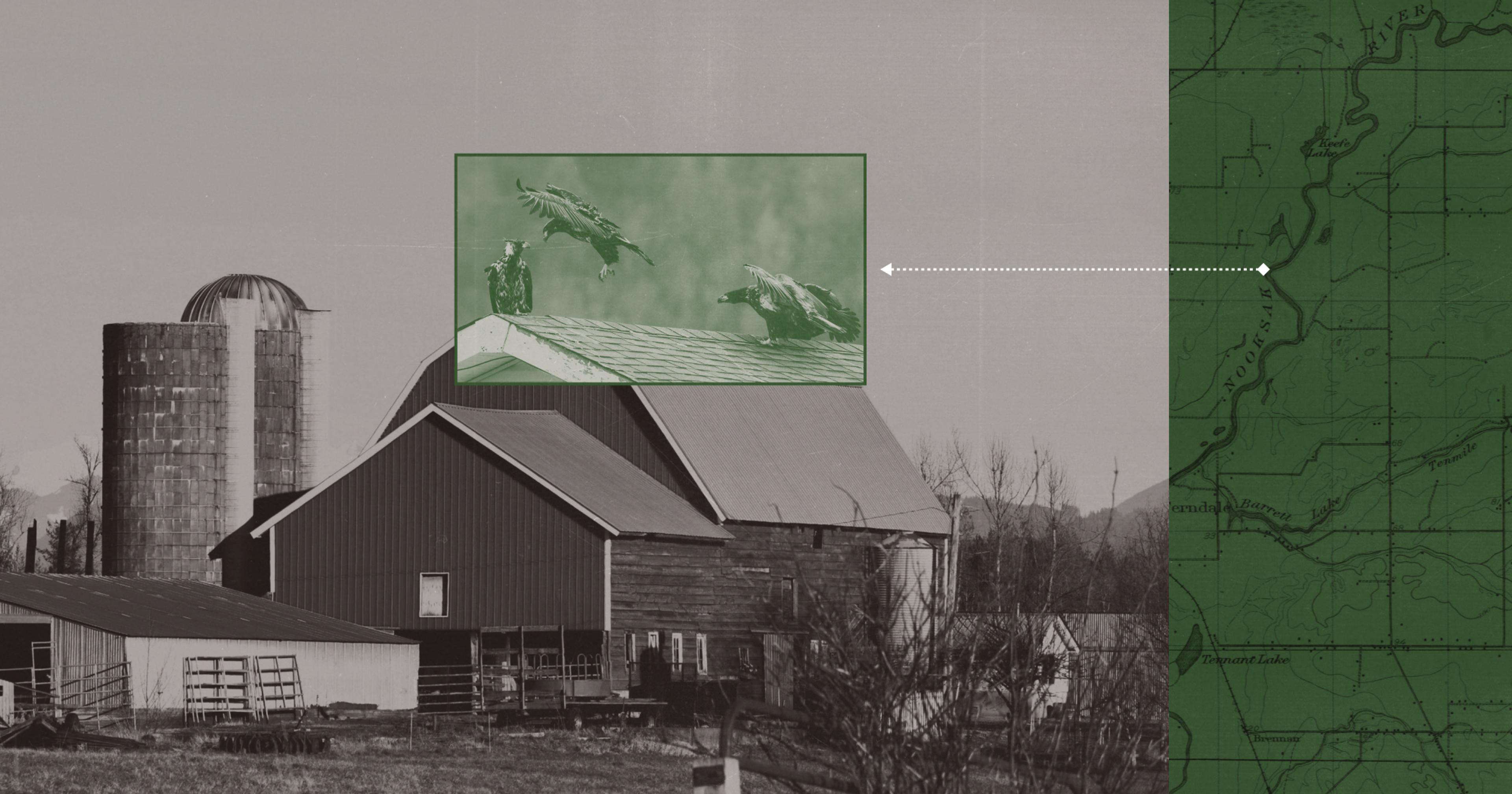
When Ethan Duvall heard that hundreds of bald eagles flocked to the rivers of northwestern Washington to feast on the salmon spawning in the water, he wanted to see it for himself.
A Washington native and doctoral student in ecology and evolutionary biology at Cornell University, Duvall explained that, historically, bald eagles have relied on salmon runs in these rivers as an abundant winter food source. However, thanks to climate-induced shifts, salmon now tend to run up the river and spawn earlier in the year, disrupting the birds’ seasonal food supply. The eagles that fly to the region for food were forced to look elsewhere, and Duvall wanted to know where that was.
“We found them on the farms,” he said.
In a new study published in Ecosphere, Duvall teamed with researchers from the University of Washington and Trinity Western University and discovered that the eagles have found a food source on the region’s abundant dairy farms. “We learned that the bald eagles are so abundant on these dairy farms because they’re able to feed on the byproducts of the dairy industry, which are the placenta of the birthing cows as well as the carcasses of the dairy cows,” Duvall said.
For the farmers, the birds act as free waste collectors, clearing the birth byproducts and ridding farms of carcasses that dairy farmers sometimes have to dispose of after stillbirths or other deaths — creating something of a symbiotic relationship between bird and farmer.
Some Washington farmers now leave carcasses — which normally can cost up to hundreds of dollars for commercial removal — or birth byproducts in their fields, using the eagles‘ presence to deter seasonal waterfowl like geese, swans, and other creatures that can destroy cover crops and increase soil erosion and runoff into streams. Some reported they purposefully placed placenta near feed piles or berry crop acreage, mitigating the number of pests like starlings.
For their research, the team held face-to-face interviews with 20 of the 78 dairy farms in Whatcom County — where the team focused their study — each of which reported that bald eagles were frequent visitors. Bald eagles are so prominent in the area that every farmer reported the birds on their property — 70% said the eagles’ presence was year-round.

An eagle feasts on a cow's remains.
·Photo by Nick Balachanoff
Normally in the summertime, explained Duvall, most eagles would migrate from the area, leaving only a small number of breeding birds that established territories. But here, they are present in higher numbers all year, and none of the farmers reported any problem with them.
“There seemed to be no conflict between eagles and the dairy farmers. And that was something that has contradicted a lot of other media on eagles and farmers in other types of agricultural settings,” said Duvall.
The region is rich with both salmon-spawning rivers and dairies — Whatcom County and Washington state being some of the largest dairy-producing areas in the Pacific Northwest. Yet it is virtually void of agricultural operations like poultry farms, making the area uniquely positioned to benefit from the eagles.
Unlike conflict between the wild birds of prey and other farming operations — like poultry farmers that lose their flocks to birds of prey — researchers found that when it comes to dairies, not a single farmer they spoke to saw the bald eagles as a nuisance, or wanted them off their land.
At Karen Steensma’s small Whatcom County dairy, milking around 200 cows, you can almost always find an eagle perched on the property’s oldest tree — a towering Sitka Spruce — year-round. The family pastures their cows, which means they have calves born outside often, especially in the warmer months. It’s a food source the eagles fully appreciate.
The birds, however, are not new at Steensma’s dairy farm, which she has operated with her husband for around 40 years. Steensma said the birds have been around for years, but have been growing in numbers over the decades, thanks partially to conservation efforts.

A bald eagle surveys the farm.
·Photo by Nick Balachanoff
On their property, she watched the population of eagles grow alongside her family. “When my kids were still in school, they woke up to eagles chirping outside their windows,” said Steensma, who is also a professor of biology at Trinity Western University and assisted Duvall and his team with the study.
In the dairy-dominated area, the bald eagles have found plenty to feast on when the salmon is scarce. Depending on the size of a dairy farm, calf births can happen on a daily basis, meaning there is an ample supply of placenta. Steensma recently looked out her window to see six eagles flock to the placenta almost immediately after a calf’s birth. “Eagles are really opportunists, and they’re scavengers,” she said.
Calves and cattle are too big for eagles to pose any major issue, but 10% of the farmers mentioned eagles preying on domestic poultry. Steensma said she has lost a few of the domestic ducks she keeps on the property to eat the slugs out of her garden, but they learn quickly to avoid the raptors. “The ducks are mostly smart, and run and hide if they hear or see an eagle flying overhead,” she said.
Ultimately, she still welcomes the eagle’s presence, as do all the other Washington farmers asked as part of the research. To her, there is no reason why her dairy farmland can’t also provide for wildlife.
“Farmland is providing incredible habitat, even though it’s being farmed, it’s working ground, but it has all these edges,” said Steensma. “There’s a lot of habitat. The grass provides habitat for voles, which feed the eagles and hawks and it becomes a nice agro-ecosystem.”
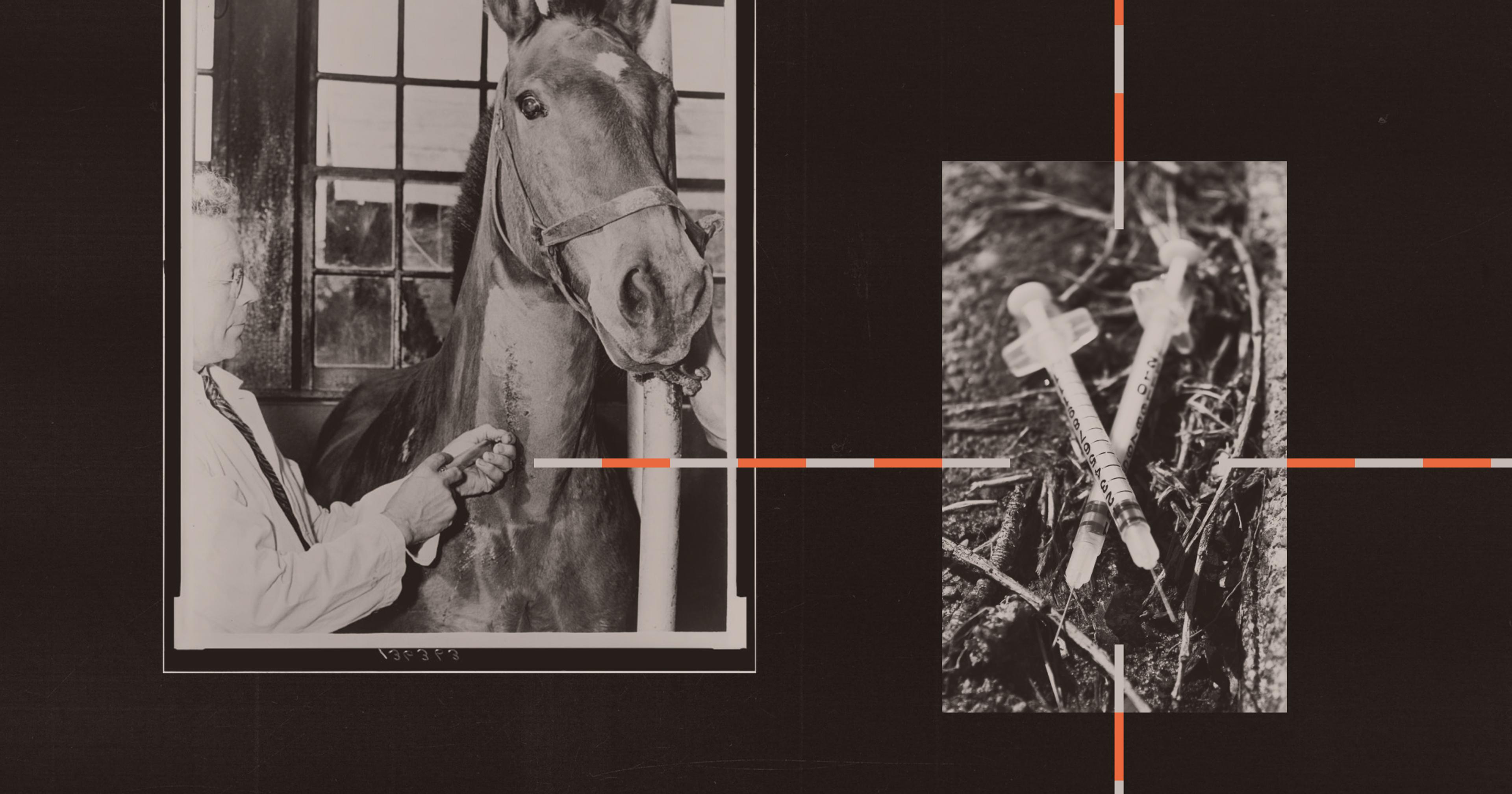
Are you familiar with xylazine, recently declared an “emerging threat” by the White House? On the street, often mixed with fentanyl, it’s known as tranq dope, sleep cut, or zombie heroin. Besides significant overdose risks, it has the potential to cause festering open wounds, necrosis — sometimes described as “rotting skin” — and eventual amputations. It’s turning up in 50-90% of street drug samples in many parts of the country, including Pennsylvania and Western Massachusetts.
It’s also one of the most commonly used sedatives for large-animal veterinarians in the country.
“We want horses to have calm experiences with veterinary procedures,” said Sally DeNotta, an equine veterinarian at the University of Florida. “There isn’t really any reason in modern day veterinary medicine to be performing procedures on animals that are scared or physically restrained. It’s really not humane. So we use xylazine for both the benefit of the animal and the safety of the people [in the room].”
Yet on the streets, the drug is a clear danger to humans: On April 12, the Biden Administration declared fentanyl mixed with xylazine as an “emerging threat to the United States.” The report cites a recent spike in overdoses — a 1,127% increase in the south, 750% in the west, more than 500% in the Midwest — as the motive behind the declaration, which will lead to an interagency working group and an eventual “national response plan.”
Xylazine is also the target of newly proposed, bipartisan legislation introduced by Senators Catherine Cortez Masto (D-Nev.), Chuck Grassley (R-Iowa), and Maggie Hassan (D-N.H.) Among other things, the Combating Illicit Xylazine Act would classify the drug as a Schedule III controlled substance, and enable the Drug Enforcement Agency (DEA) to “to track its manufacturing to ensure it is not diverted to the illicit market.”
In veterinary medicine, xylazine was first introduced in the 1960s as a sedative during veterinary procedures. It fell out of favor as a treatment for smaller animals some years back, and is primarily used now with horses and cattle, according to Bernd Driessen, professor of anesthesiology at the University of Pennsylvania School of Veterinary Medicine. “Xylazine is a very valuable sedative, and centrally acting muscle relaxant,” Driessen said. Though there are a couple of alternative sedatives for horses — detomidine and romifidine — there’s nothing comparable for cattle.
The drug’s emergence as a fentanyl companion has been rapid and relatively recent — DeNotta said she’d never even heard of the possibility for human use prior to a few months ago. “My understanding for most of my veterinary career was that the alpha two agonist sedatives were very dangerous for humans,” she said. The conception is affirmed by Driessen, who says humans are about 10 to 20 times more sensitive to xlyazine than animals.
DEA stats reveal that In 2021, xlyazine was connected with at least 1,281 overdose deaths in the Northeast and 1,423 in the South. Because the animal tranquilizer is not an opioid, an overdose can’t be reversed by naloxone, also known as Narcan. Atipamezole, which can reverse the sedative’s effects, is used in veterinary medicine, but has not been approved for human use by the FDA.
Given the clear danger to people, it may not be surprising that the American Veterinary Medical Association (AVMA) has endorsed the federal legislation that would reclassify xylazine as a controlled substance, a designation that would add significant layers of security to its veterinary procurement and usage. Before signing off, however, the organization engaged in efforts to ensure veterinarians would still have access to the drug, and that it wouldn’t be “scheduled federally at a higher level than necessary.” (Schedule III would classify xylazine at the same level as ketamine and anabolic steroids, one level below fentanyl, opium, and methamphetamines.)
This bill “ensures that folks like veterinarians, ranchers, and cattlemen can continue to access these drugs for bona fide animal treatment,” said Sen. Grassley in a statement, a sentiment echoed in quotes provided by Cortez Masto and Senator James Risch (R-Idaho), another bill cosponsor.
A significant open question is whether the xylazine on the streets was diverted from the veterinary supply chain, or manufactured specifically for human consumption. The AVMA claims it “does not believe there is substantial diversion of xylazine from veterinary channels,” while an epidemiological study in Philadelphia theorized that people started obtaining it during the pandemic using online veterinary prescriptions and other supply chain diversions. Driessen said his understanding is that the xylazine is being produced from labs in Asia and Eastern Europe, not “being provided/sold by vets criminals or stolen from trucks of LA vets.”
“Vets have to keep track of how they use the drugs they order and if they were to sell xylazine to illegal entities, it would be quickly noted that their order amount is rising,” he said. “That alerts folks quickly.”
“I would predict that many vets stop using it because the bookkeeping is too complicated for them and also difficult to handle in a field practice situation.”
Whether or not the xylazine problem is stemming from our current veterinary supply, there is no question that scheduling it as a controlled substance would add non-trivial burdens to the veterinarians who rely on it. A quick scan of the comments on AVMA’s announcement reveals sentiments like “We don’t need another controlled drug!” and “Veterinarians shouldn’t be saddled with more paperwork that does nothing to stop drug abuse and will only make it harder and more expensive to use xylazine.”
DeNotta, who works out of a hospital, said she could adapt to new regulations, just as she has with veterinary drugs like ketamine that were labeled controlled substances due to human abuse. Her sympathies lie with “ambulatory veterinarians,” who would need to implement significant security procedures when traveling with xylazine to treat cattle in the field, for example. Driessen thinks that might be enough to put mobile vets off using it at all.
“I would predict that many vets stop using it because the bookkeeping is too complicated for them and also difficult to handle in a field practice situation,” he said.
Whether or not the Senate bill ultimately passes, the current White House and DEA focus on xylazine means that we’re likely to hear about more enforcement efforts in the months ahead. There are also new efforts to reduce xylazine overdoses, like a project out of Brandeis University that is cataloging the drug’s prevalence on the street and conducting research on how to mitigate its harms. (There are currently no approved reversal options such as naloxone.)
For her part, DeNotta is saddened by the whole situation. “I think that the illicit drug problem in this country is disheartening,” she said. “And it’s unfortunate that it changes the medications that we use much to the benefit of our profession and our patients. It’s unfortunate when they become more difficult to use or even acquire because people are using them for unsafe, unlawful reasons.”
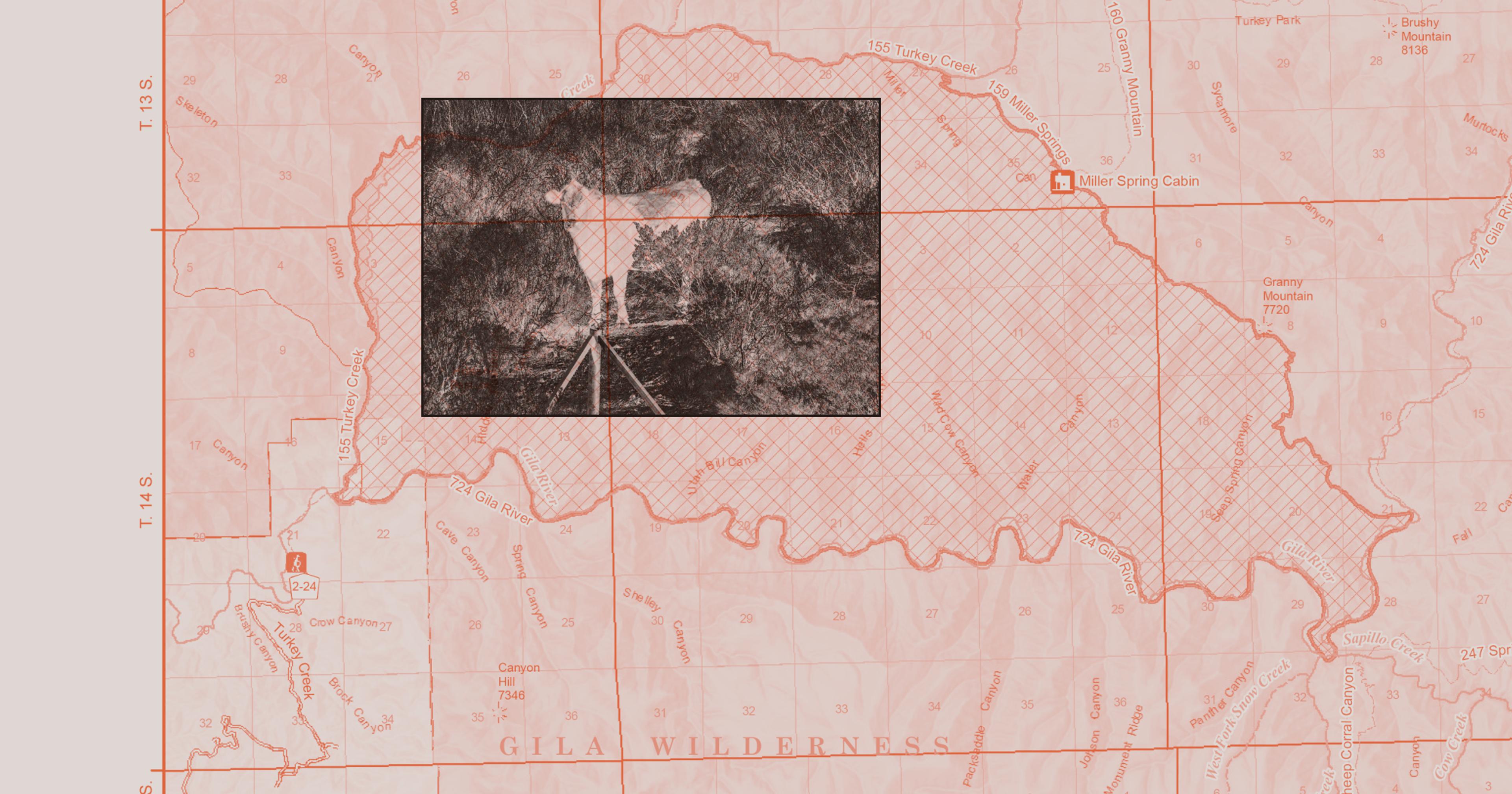
As we’ve previously reported, the U.S. government is shooting cattle from the air and leaving the meat to rot.
In February, a New Mexico District Judge granted the U.S. Forest Service permission to gun down “approximately” 150 head of cattle in a remote, back-country area of New Mexico known as the Gila Wilderness. The motive was ecological: These cattle have demonstrably harmed Gila’s water supply, flora and fauna, and overall environment.
Both ranchers and animal activists are concerned about what they consider to be government overreach in the management of domestic and wild animals on public land. Beyond that, these uneasy bedfellows can’t agree on what the root problem is — or the best way to fix it.
Why Ranchers Object
Ranchers have been fighting the kill order from the get-go.
“Ever since they started shooting cattle two years ago, we’ve been fighting back,” said Loren Patterson, president of the New Mexico Cattle Growers Association. “We have tried to stop them with temporary restraining orders, and last year the government offered a settlement and opportunity to agree. We’ve been going back and forth for a year, and explaining the many other options of dealing with it.”
The preferred solution that Patterson and other ranchers presented involved the association, along with nearby ranchers, going into Gila to round up the cattle, ensuring they didn’t belong to anyone, then purchasing them from the New Mexico livestock board at a discount. The ranchers would ultimately be able to sell them for a profit.
But Patterson said that the Forest Service opted to leave the negotiating table and grab their guns. He argues that the agency never did its due diligence, leaving the root of the problem festering for decades.
“The whole issue got started about 50 years ago,” Patterson explained. “Over the decades, ranchers with grazing allotments have left or have been removed from the area, and while most of their herds were removed, a handful were left.” Over the decades, that handful “did what they do well, and that’s reproduce,” Patterson continued. While the government has gathered up hundreds of cattle over the years, there’s always a core handful that remain and reproduce.
“Plus, there are plenty of branded cattle that get in there too, because the Forest Service doesn’t properly maintain fences or corrals,” Patterson said. “So even if this inhumane slaughter eliminated all of the cattle there now — which I don’t believe it did, seeing as they only got 19 out of the alleged 150 they said were there — the same problem will crop up again soon enough because cattle will get in there without proper infrastructure and protection.”
Why Animal Advocates Object
Animal advocates are less focused on this one incident than the broader context of animal rights in the U.S.
“The slaughter was stark and troubling to be sure,” said Delcianna Winders, director of the Animal Law and Policy Institute at Vermont Law School. “But in the grand scheme of things, it’s a relatively small number of animals, and I think it’s important to look at the broader context of animal rights that this case raises.”
Winders said she thinks it’s “interesting” to see the cattle industry so quick to defend animal rights in the case.
“This is an industry raising millions of cattle every year unprotected by federal laws,” Winders said. “They are routinely subjected to dehorning and castration without pain medication, they are weaned too early, and many remain conscious for several minutes after they’ve been strung up and had their throats cut.”
Winders said she and other animal rights advocates are concerned that the dramatic story of cattle being gunned down obscures larger issues. In addition to the day-to-day treatment of cattle, Winders said the government’s overly permissive approach to allowing ranchers to graze cattle and sheep on federal land needs to be addressed.
The Bureau of Land Management grants 155 million acres of grazing land to ranchers; close to 18,000 permits and leases are held by ranchers who graze their livestock on more than 21,000 allotments.
“The cattle industry is essentially being propped up by the American taxpayer in terms of land grants and subsidized feed from the soy and grain industry,” Winders argued. “Ignoring the day-to-day suffering of these cattle while bringing up the inhumanity of gunning down animals is hypocritical. At every turn, these ranchers get funding from the government, but despite their claims of concern over animal rights, what these ranchers are really motivated by is money.”
Inaction Not an Option
According to the Forest Service, the decision to remove the feral cattle using lethal methods was the only viable solution to what the agency describes as a threat to public safety and endangered species habitats. While interview requests with the Forest Service went unanswered, representatives did issue public statements repeatedly to that effect. Gila National Forest Supervisor Camille Howes argued that it was, in fact, the only viable solution.
“This has been a difficult decision, but the lethal removal of feral cattle from the Gila Wilderness is necessary to protect public safety, threatened and endangered species habitats, water quality, and the natural character of the Gila Wilderness,” said Howes. “The feral cattle in the Gila Wilderness have been aggressive towards wilderness visitors, graze year-round, and trample stream banks and springs, causing erosion and sedimentation. This action will help restore the wilderness character of the Gila Wilderness enjoyed by visitors from across the country.”
If the cattle were left alone, they would continue to breed, and the potential for a visitor fatality or permanent damage to sensitive ecosystems would increase, federal officials and environmentalists argue.
In a statement, Todd Schulke, co-founder of the center for Biological Diversity applauded the “hard decision to use the most effective tools for removing feral cattle from the Gila Wilderness. We can expect immediate results — clean water, a healthy river, and restored wildlife habitat.”
No Easy Answers
Jennifer Best, Wildlife Law Program Director at Friends of Animals, is quick to say that while her organization is not involved in the case, she sees it as a symptom of a much larger, pervasive problem.
“We began to see a shift around 2017 in the way the federal government was approaching the treatment of animals,” Best said. “Both domesticated and wild … We have worked on several cases regarding the removal of wild horses from public land in favor of grazing cattle or sheep.”
And while Best said the government “should not be using cruel and unusual methods to shoot down animals on public land,” it should also “not be subsidizing the cattle and sheep on public lands.” While there are no easy solutions, Best said with an increased spotlight on the issue, she’s hopeful that advocacy groups and members of the public will take the government and other parties to task, ultimately “calling for more accountability.”
The spotlight has indeed been more intense of late. In addition to dozens of articles on the subject, and a flurry of press releases issued by environmental, ranching, and advocacy groups, even New Mexico Governor Michelle Lujan Grisham (D) spoke out on the subject.
“I am disappointed in their lack of meaningful, long-term engagement with New Mexico stakeholders on controversial matters like this one,” Grisham said in a statement. “Whether debating prescribed burns or wildlife management, it is imperative that New Mexicans who live and work in and near impacted areas are allowed the time to be meaningfully involved in these decisions. When that does not occur, it fosters a continued climate of distrust and hinders progress toward our shared goals of a healthy environment and a thriving rural economy.”
In an ideal world, Patterson said area ranchers could have helped or advised the Forest Service on how to “round up the stray cattle. Branded cattle could have been returned to their owners, and the unbranded, as per New Mexico livestock code, could have gone to a livestock market and sold.”
“In another year or two, there will be a whole new population of feral cattle to contend with because the Forest Service isn’t getting to the root of the problem.”
But as Best alluded to, the government has been increasingly quick to use lethal measures to eliminate what it sees as problematic populations of animals — both wild and domestic.
In recent years, the Forest Service and the U.S. Department of Agriculture have been authorized to use so-called cyanide bombs to kill coyotes, foxes, and other animals considered to be threats to ranchers and farmers; wildlife officials have been granted permission to gun down wild hogs with AR-15s; and the Bureau of Land Management has been rounding up wild horses and burros, which spawned a trade in cross-national horse meat.
On the topic of meat, could those 19 slaughtered cows have been used for food? New Mexico has one of the highest rates of food insecurity in the nation, with 1 in 5 children there facing hunger, according to Feeding America.
“The meat from those cows could have been used to feed people,” Patterson said. “It would have taken some extra steps, and some extra time to ensure the meat got collected and processed with all of the state statutes in mind. But we could have found a solution if they hadn’t been in such a hurry.”
A hurry, Patterson continued, to put a thumb in a dike riddled with holes. “In another year or two, there will be a whole new population of feral cattle to contend with because the Forest Service isn’t getting to the root of the problem,” he said.
It’s a blanket statement many would likely agree with — even if, again, a definition of the problem and its potential solutions would be up for debate.

Contract farming within the poultry industry is a now-common practice for its biggest companies. As first envisioned decades ago, it was effectively outsourcing labor — large processors provide fertile eggs to a sprawling network of small farmers, who then send back grown chickens for processing and sale.
For some farmers, though, the steady work can also be deeply restrictive and open them up to predatory practices. And since the 1990s, the evolution of this system has led advocacy groups like Farm Action to argue that companies are able to “legally and discreetly put out of business” farmers that speak out against abusive practices.
Georgia farmer Etta Lee watched her father, P.M. Lee, come to regret the contract work. She says he didn’t like all that power consolidated in one client, leaving him powerless to set prices or push back against unreasonable demands.
“They were the only ones that could buy your chickens,” Lee recalled. “That made him mad.”
Lee’s family found the contract system for poultry farmers to be predatory enough that they stopped participating years ago. Etta Lee, who now runs Annie’s Farm in Dupont, Georgia, still sells eggs and poultry — but directly to consumers, and on her own terms. Her position foreshadowed a larger reckoning that would come to the industry years later: the revelation that major companies abused these contracts to create a “tournament system” jockeying poultry growers against each other, and a set of price- and wage-fixing cases that kept farmers from negotiating higher rates for decades.
The issue is severe enough that the USDA proposed a rule change in 2022 that would require corporations to share expected earnings and better pay transparency for farmers. That proposal is still winding its way through bureaucratic channels. Meanwhile, federal prosecutors have unearthed a series of conspiracies and collusion within the poultry industry in an attempt to derail what they call “anticompetitive” behavior that left chicken prices high and worker payments low.
On the flip side, antitrust regulators have allowed massive companies to merge and increase their market share. As a result, according to legal experts, antitrust advocates, and economists, these contradictory realities raise more questions than answers about where the poultry industry is headed.
Biden on Offense
Emails were just the beginning, but provided the biggest paper trail. According to a Department of Justice (DOJ) mid-2022 complaint, there were shared datasets, secret meetings, private investigators, and more, all proving that major poultry processing companies had spent 20 years knowingly breaking the law to pay their employees and suppliers as little as possible.
The conspiracies documented by the DOJ laid out a complex system meant to share information between competitors, so that contract growers and workers couldn’t negotiate for higher wages. This played out for decades, according to the DOJ’s findings, dating from “2000 or earlier.” On top of clandestine meetings and communications, the scheme even involved hiring outside companies to compile information about worker salaries that could be shared to companies that were supposedly in competition.
Defendants Cargill (the largest privately held corporation in the U.S.), along with Mississippi-based Sanderson Farms and Georgia-based Wayne Farms (both multi-billion dollar poultry companies), all settled out of court last year, agreeing to pay $85 million. They entered into a consent decree with the DOJ that barred them from communicating about salary and supplier prices with competitors. It also ordered them to adopt and follow the USDA’s proposed rule change for poultry growers, as well as increase their pay for full-time employees.
“There’s been a tremendous amount of consolidation ... and a tremendous amount of abuse.”
These cases were neither isolated within the industry nor the largest examples of financial wrongdoing. In 2022, Tyson Foods, Pilgrim’s Pride, Perdue Farms, and 19 other companies paid $35 million to settle a price-fixing suit against them in Washington state. And in 2020, poultry processor Pilgrim’s Pride pled guilty to price fixing charges brought by the DOJ, agreeing to pay nearly more than $110 million in fines.
The Biden administration has made a clear priority of targeting the poultry industry. In several lawsuits in the past couple years, DOJ lawyers have outlined an industry that has harmed its workers and customers with impunity, mainly through tools like collusion among big major players.
“No surprise at all that the food and agriculture markets were high on the list,” said Diana Moss, president of the nonprofit American Antitrust Institute. “There’s been a tremendous amount of consolidation in those markets that make up the supply chain and a tremendous amount of abuse.”
When they published the consent decree with Cargill, Sanderson, and Wayne, the DOJ also pointed out that they have a campaign dedicated to investigating aspects of the poultry industry, implying that more lawsuits may be coming. While those haven’t materialized yet, questions remain about the department’s strategy for reining in the poultry industry’s “anticompetitive” behavior.
Anticompetitive Culture
“It’s that time of year already,” a Wayne executive wrote to eight of the company’s competitors, according to court records, including executives at Sanderson and Cargill. It was 2010 and budget season for the companies. The employee then requested the other companies’ “projected salary budget increase recommendation.”
The conversation from there got hyper-specific. Beyond just basic salary info, the companies began to request how wages might change in different situations.
In 2015, an executive from an unnamed company emailed the group to ask, “what your starting rate is for these kids hired right out of college?” In 2016, the conversation shifted to overtime. “That reminded me that I had a question for the group also,” wrote the director of compensation at an unnamed co-conspirator. “We are trying to determine what is reasonable for salaried employee [sic] to be compensated for working 6 and/or 7 days in a work week when the plant is running … Do you pay extra for these extra days worked for salaried (exempt) employees? If so, how is that calculated?”
Altogether, there were 18 other companies that participated in these exchanges alongside Sanderson, Wayne, and Cargill.
The DOJ described in their 2022 complaint a culture of poultry companies that set up email chains, gatherings and one-on-one meetings of poultry executives, spreadsheet wage tracking, and more. It depicts an elaborate scheme that would normalize prices across the industry and effectively take money out of the pockets of laborers. The DOJ alleges that these companies built a tournament system, where underperforming suppliers would be “penalized” by getting less income, even though the companies themselves could boost those results through their “inputs … such as chicks and feed.”
“This conspiracy suppressed competition in the nationwide and local labor markets for poultry processing,” the DOJ wrote in a court filing. “Their agreement distorted the competitive process, disrupted the competitive mechanism for setting wages and benefits, and harmed a generation of poultry processing plant workers by unfairly suppressing their compensation.”
Ninety percent of chickens grown and sold within the U.S. are produced under the contract system.
Meanwhile, consumption of poultry products has dramatically increased in recent decades. Market research firm IBISWorld published data showing that as of 2023, there are 113 pounds of poultry available for each person within the U.S., a nearly 20-pound increase from 2013. And USDA data shows that in the past decade, poultry outgrew beef and pork to become the largest meat industry in the country.
The increased market share of major companies like Cargill has given them massive control of this sector. According to the National Chicken Council, there were 9.2 billion chickens produced in 2022. The organization also found that 90 percent of chickens grown and sold within the U.S. are produced under the contract system, meaning they come from a small handful of huge processing companies like Cargill and Tyson Foods.
The National Chicken Council refers to “vertical integration” as a major boost for the industry. The concept involves businesses acquiring ownership of several parts of their supply chain in order to make it more streamlined and profitable — a system the government has sought to restrict. Yet the chicken council has published reports saying the model of corporations owning every step of the growth, processing, and distribution process is the future of all agriculture.
Industry trade publication Watt Poultry found in 2019 that consolidation within the top 10 poultry producers continued to centralize market power among an increasingly small group. Between 2005 and 2015, for example, the number of chicken processing companies shrank from 840 to 706. The same report found that small processing companies collapsed from 9% of the market to 4%.
A Contradictory Environment
The strategy of aggressively targeting poultry companies is a break in recent norms for the poultry industry. Before the Biden administration began looking into lawsuits, the main voices raising concerns were nonprofit advocacy organizations like Farm Action. This is enough of a shift that proponents of big-business agriculture have taken note.
“Efforts from the Biden administration to roll back the previous administration’s regulatory easing has us all concerned for our futures,” wrote Lucius Adkins, the president of the United Poultry Growers Association in a 2021 newsletter, praising the Trump administration’s prior rollback of regulations.
At the same time as the regulatory crackdown, however, the Biden administration has taken a light hand in actually breaking up massive industry players and blocking acquisitions that allow them to control more of the market.
The exact same week that the DOJ announced its settlement with Cargill, Wayne, and Sanderson, the defendants were given a green light by the agency to move forward with a $4.5 billion acquisition. Cargill, in a joint venture with Continental Grain, combined Sanderson and Wayne Farms into a new privately held business. According to Washington Monthly, this allowed them to grow their market share of the poultry industry from 46% to 51%.
In the eyes of antitrust advocates, this means companies like Cargill are still free to operate with impunity.
One Missouri-based agriculture nonprofit responded to the news by calling it a “bad deal” for farmers in a newspaper editorial. “Why conspire with your competitors when you can just merge?” wrote communications director for the Missouri Rural Crisis Center Tim Gibbons.
In the eyes of antitrust advocates, this means companies like Cargill are still free to operate with impunity.
“They now have a consent decree, requirements about not sharing information, but the companies that were in that case now have even more of an incentive to share information because they’ve now gotten even larger,” Moss said. “When you allow a merger between two firms that concentrates the market … they will have even more power now to violate the terms of the consent decree.”
Economist Jason Winfree, professor at the University of Idaho, said consumer prices are lower due to the economies of scale afforded by huge agribusiness concerns. Although he expressed reluctance to break up these firms, he acknowledged the potential for abuse inherent to single companies controlling large sections of a market.
“Where there are examples of big firms using their market power to increase prices, then the DOJ should consider using antitrust laws to keep prices low,” Winfree said.
More Questions Than Answers
In other sectors, Biden’s antitrust approach has had more notable wins, including an effort to block JetBlue’s takeover of Spirit Airlines and Microsoft’s attempt to buy Activision Blizzard. But, because of this success, the former “czar for competition policy” Tim Wu has warned antitrust advocates that they shouldn’t celebrate prematurely, suggesting that there could be “blowback” from corporations.
Moss sees a darker shift due to the DOJ’s decision to allow Cargill’s acquisition of Wayne and Sanderson farms. She isn’t sure why the DOJ would have made this choice, but her first guess was that they had limited resources and must have felt the consent decree was more important. The DOJ did not respond to an interview request for this story.
“This was a really uncomfortable set of outcomes,” she said. “Kudos to them for bringing that case, but what the heck is going on in this merger? … It really undercut the enforcement that they took in the wage-fixing case.”
Meanwhile, New York University law professor and antitrust expert Eleanor Fox maintains confidence in Biden’s DOJ: “The Biden administration really stands for more aggressive antitrust.” She assumes investigators must have had confidence that the increased market share Cargill, Sanderson, and Wayne would get as a result of their merger wouldn’t be harmful. “I don’t think they would have allowed it if they thought it was going to hurt competition,” Fox said.
For Moss, it is too early to tell how effective the DOJ’s strategy has been, and what the impact will be for poultry consumers and workers.
“They are trying new things and they are seemingly committed to an enforcement program, but I don’t think we’re at a stage yet where we can evaluate,” Moss said. “We don’t have enough data points yet.”
Meanwhile, farmers like Lee are seeing the benefits of a more independent approach, giving them freedom to adapt and maintain side projects. Free of the contract system, she was able to make changes to her farm during the pandemic and produce a much wider range of food. She said she’s even been able to sell her local, free-range poultry at a lower cost than supermarket chickens.
“I don’t have the overhead, I have a niche market,” Lee said, pointing out that she wasn’t used to seeing herself as competition for big poultry companies. “I guess if there’s enough people like me they might want to put us out of business.”
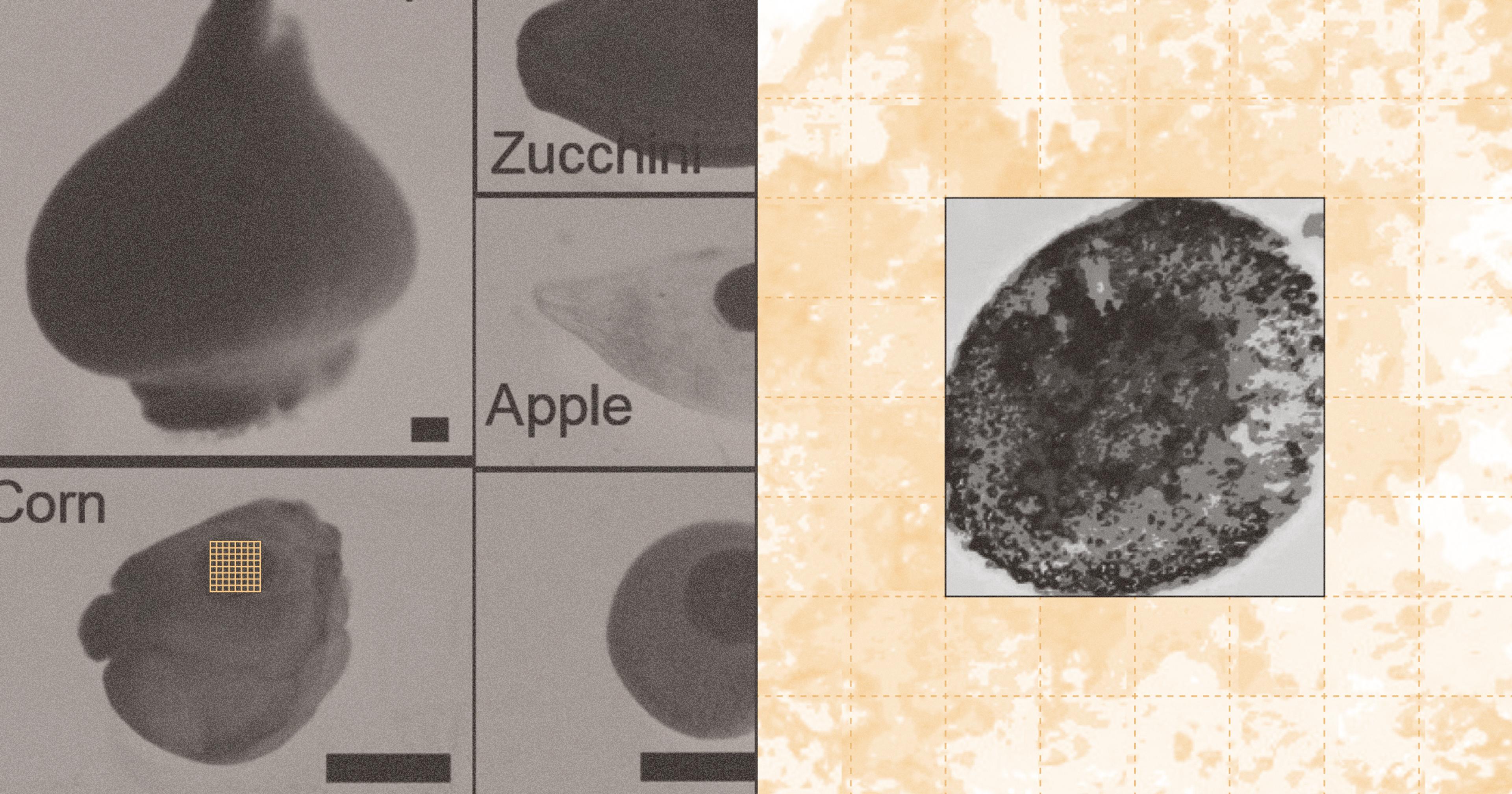
In 2018, a coalition of Black farmers from the Memphis area filed a lawsuit against Stine Seed, the largest independent seed producer in the world. The claims were straightforward: Farmers who attended a Memphis farm conference the year before were sold more than $100,000 in counterfeit soybean seeds. Plaintiffs alleged that they purchased what were supposed to be high-yield, certified Stine soybean seeds which were swapped out for inferior seeds before delivery.
“We were anticipating thoroughbreds, and we got sold a donkey,“ said one of the plaintiffs, David Allen Hall Sr., at a press conference announcing the suit. (Stine denied all wrongdoing.)
Seeds are big business, at an estimated market size of $61.2 billion in 2021 expected to grow to well over $100 billion by 2030, according to analysis from Zion Market Research. With commodity crops like corn and soy, there is a range of quality in the market, from top-shelf certified seeds like the ones allegedly on offer in Memphis, to low-quality “bin-run” seeds that produce lower yields and can bear disease risks.
And, as with any lucrative consumer good, there’s a significant difference in the profit margin between high- and low-quality seeds. Large agribusiness companies like Bayer spend significant resources combating counterfeits to ensure their trademarked products are the real deal.
The fake Stine seeds were a bit of an anomaly — here in the U.S., counterfeit seeds on the agricultural market are less of an issue, especially for commodity crops like corn and soy. Federal regulations are so strict, and major seed manufacturers so litigious and protective of their IP, that the odds of commercial seed buyers getting duped are much slimmer. But in many parts of the world — particularly in countries where agriculture products are more likely to be purchased via informal markets — a robust trade in fraudulent seeds persists.
In fact, the World Bank estimates that up to half the seeds sold in many African nations are counterfeit, a figure that inspired researchers at the Massachusetts Institute of Technology (MIT) to create a system for creating “unclonable” seeds. Using a popular technique for combating fraud in luxury goods and medicine called “physically unclonable functions,” or PUFs, a team of MIT scientists have created a kind of tiny biodegradable tag that can be applied relatively easily and cheaply to seeds themselves. And, perhaps most crucially, they can’t be easily copied.
The PUFs use the same logic as fingerprints — randomly generated patterns from nature that create a unique, irreplicable signature. “The idea is, it’s almost impossible, if not impossible, to replicate it, or it takes so much effort that it’s not worth it anymore,” said Hui Sun, a postdoctoral student in MIT’s Laboratory for Advanced Biopolymers.
“We were anticipating thoroughbreds, and we got sold a donkey.“
Sun and her colleagues created a system whereby miniscule dots of a silk-based material can be applied to seeds, with a unique chemical signature that would be extremely challenging to clone. Anyone with a cell phone camera macro lens could then access that signature in the cloud, to find which company the seeds came from, how old they are, and, crucially, a verification of quality level.
Mariam Gharib, a doctoral student in agricultural economics at Kansas State University, said that verification is sorely lacking in many parts of the world. Gharib studied the prevalence of seed fraud in Kenya for her master’s thesis while at the University of Delaware. She spoke to more than 260 small-scale Kenyan maize farmers about their seed purchasing patterns, and found that many have been conditioned to spend less money on seeds thanks to counterfeits.
“It is very common for lower-quality seeds to be repackaged in what might seem like an official pack from a trusted seed company, then sold for higher prices,” Gharib said, similar to what the Memphis farmers alleged. “But when those seeds end up giving a low yield, or not growing at all, farmers are unwilling to spend higher amounts for ‘improved’ seeds.”
The World Bank estimates that counterfeit seeds in sub-Saharan Africa are responsible for rice yields that are less than one-third of their potential, and maize yields less than one-fifth. Beyond Africa, counterfeit seeds have confounded authorities in India, China, Ukraine, and beyond. The MIT researchers see the potential for their work having outsized impact on global food security.
“We think our technology can be used to build trust,” Sun said. “It’s pretty simple: These farmers should be able to know what they’re purchasing.”
The researchers don’t envision every seed sold would get its own silk tag. Rather, each bag would contain a handful of seeds with PUFs — what MIT doctoral student Saurav Maji calls “golden seeds.” Ideally, seed purchasers could scan those golden seeds as verification that the product is what it claims to be. And not having to mark every seed keeps manufacturer cost lower, so farmers buying verified seeds wouldn’t be priced out. With no microscope or special equipment required to verify them, almost any farmer should be able to take advantage of the golden seeds.
“It’s pretty simple: These farmers should be able to know what they’re purchasing.”
Here in the U.S., where most seeds are purchased from official retailers, the potential for Maji’s accessible solutions may appear less clear. After all, Christopher Deegan, Wisconsin plant health director for USDA’s Animal and Plant Health and Inspection Service (APHIS), said that seeds sold on the retail market typically go through multiple levels of verification before being sold. For instance, Deegan’s team visits retailers to ensure that seeds are being properly labeled with expiration dates, germination info, species viability, and all other required technical info.
But what about those fake Stine seeds? They certainly weren’t the first or only domestic opportunity for seed malfeasance. For instance, heading into the pandemic, right before a nation of housebound hobbyists started gardening for the first time, a curious phenomenon emerged. Online shoppers started getting offers for exotic fruit and vegetable seeds: blue strawberries and rainbow roses and ginseng (a root) that grows from a tree. The only issue? None of these seeds were real.
The fake seeds were part of a convoluted global supply chain, routed through marketplaces like Amazon, sold to consumers directly without regulatory oversight. Deegan noted that even for commodity seeds that come through more typical supply routes, customs inspectors may not have the tools to ensure products are authentic.
“The inspector will look at it and say, ‘Okay, it says corn seed. I’m looking at the seed. Yep, that’s corn.’ And it has all the germination and technical information on the label. That’s pretty much where the customs inspection will end,” Deegan said. “They’re not going to do a genetic test on the seed to see if it has the GMO qualities or branding that it claims.”
Moving forward, Maji said there is still significant work to be done, in terms of figuring out the best way to scale up and distribute their anti-counterfeiting system. For her part, Gharib welcomes any improvements to the verification process, but cautions that it could be an uphill battle to regain farmer trust.
“At this point many farmers do not believe claims about seeds they might buy, so if you’re going to introduce a new system, it will need to be combined with dispatches of information to the target audience,” she said. “They’ll need to be retrained on what they assume … even to know these [verified] seeds exist will require very clear communications.”

Anybody who’s taken a stroll down the baking aisle knows how valuable real vanilla — not the low-rent imitation stuff — is. Whole vanilla beans can fetch anywhere between $6 and $8 each, and more if they’re organic. That’s a premium price that most American farmers aren’t able to capitalize on, since vanilla orchid vines require tropical environments with high temperatures and humidity in order to thrive.
Today, the vast majority of vanilla comes from Madagascar — responsible for producing more than 75% of the global supply, and where smallholder farmers have gotten “richer than their wildest dreams” in recent years — followed by Indonesia, China, and Mexico. Very little of the niche crop is grown in the U.S., the world’s largest importer of vanilla. Any existing American vanilla farms are in Hawaii. But a group of Florida researchers and growers see a greater potential for establishing domestic vanilla cultivation in other subtropical regions such as southern Florida, Puerto Rico (where vanilla grew until the 1950s), and the U.S. Virgin Islands.
“Growers, especially in South Florida, are always looking for the next big thing. They’re not your typical row crop growers. The cost of the land and labor is so expensive in South Florida that to stay profitable, a lot of these growers [rely on] super high-quality specialty crops like mangoes, avocados, and rare Asian vegetables,” said Alan Chambers, assistant professor of tropical fruit genetics and breeding at the University of Florida (UF), and one of the lead researchers pushing to establish a domestic vanilla industry. “Vanilla fits into that niche. Except vanilla has that global appeal. We can never grow enough of it as a planet.”
Cultivating a domestic vanilla supply is not only good for farmers, but for consumers, too. In 2017, a combination of climate change and extreme weather events in Madagascar, as well as the rise in crime and exploitation that followed the country’s big economic boom, drove the price of vanilla to record highs. Building a supply chain that avoids imports could help alleviate some of that volatility in the future.
Clinical aromatherapist and botanical formulator Stephanie Webb sources plants of all kinds from farmers around the world. “Anything I can get domestically eliminates a headache,” said Webb, whose past struggles with sourcing organic vanilla led her to launch Sunshine State Vanilla, a wholesale supplier of vanilla plants and beans, in 2020. “Sourcing vanilla stateside means the shipping could be within a couple of days instead of having to plan weeks in advance.”
Developing a local vanilla supply chain might not seem like a high-priority mission at first. After all, it’s not a crop that will solve world hunger. But it is a ubiquitous staple ingredient used in everything from baked goods to beauty products to prescription medicines. Last year, the U.S. imported $338 million worth of vanilla for its food and beverage, cosmetics, and pharmaceutical industries. Shoring up the vanilla supply chain would not only drive costs down, it could help minimize risk to the American companies that depend on a steady supply of it.
“If there was no vanilla tomorrow, no one would starve,” said Chambers. “But when Madagascar has a major weather event, like a cyclone or hurricane, that will send our prices through the roof because supply drops. Who that hurts is the American consumer, because either they can’t get natural vanilla extract or the prices are really high and that has knock-on effects for everything else, for all those products that bring a little joy to our plate — the desserts, ice cream, even pharma and cosmetics.”
“Growers, especially in South Florida, are always looking for the next big thing. They’re not your typical row crop growers.”
To make even the tiniest dent in the vanilla supply chain, however, there first needs to be enough planting material available to American growers. “There’s a lot of excitement all over the value chain for domestic vanilla. The biggest problem, though, is you can’t just get plants, put them in the ground, and harvest,” said Chambers. “If you want to buy hundreds of acres of apple trees or citrus or whatever, there’s a place you can go because those markets have been developed.” That’s not the case with vanilla, clippings of which you won’t find at your local nursery — at least not yet.
At UF, Chambers and other researchers are leading several research projects that aim to develop high-yielding, disease-free vanilla cultivars. “We’re trying to figure out which DNA lends itself to better quality beans — longer beans, more aromatic beans, and more disease-resistant plants — so that the plants can take care of themselves,” said Chambers.
That’s been an especially challenging task because of the limited genetic material he has to work with. While all real vanilla is safe to consume — beware of global counterfeits — the FDA mandates that the term “vanilla beans” can legally only be used for those derived from Vanilla planifolia and Vanilla tahitensis plants, despite there being over 110 different vanilla species. This federal standard of identity was established in the 1960s in response to adulterated vanilla — a problem that still exists today. Chambers believes this definition is “a little too narrow,” an oversight that “left out aromatic species that have been used for centuries in North, Central, and South America.”
Cultivating a high-quality vanilla bean can be an arduous task. What we call a vanilla bean is actually a pod-shaped fruit that grows on a climbing orchid vine. Outside of Mexico, where the plant originated and where it has native pollinators, orchid flowers need to be pollinated by hand. The pods, which don’t grow until the vine is several years old, require an additional 9-10 months before they can be harvested, at which point the green pods undergo a 3-4 week curing process to become the pricey black and shiny beans we know them to be.
“There’s a lot of excitement all over the value chain for domestic vanilla. The biggest problem, though, is you can’t just get plants, put them in the ground, and harvest.”
To help streamline the process, Florida researchers are working to develop best growing practices for these vanilla cultivars, including recommendations for inputs, native pollinators (so the orchids don’t need to be pollinated by hand), and farming techniques. There are two main ways to grow the crop. For growers looking to maximize the output of their land, shade-house cultivation is recommended. “Most people, especially in Florida, are looking for this high-density production. Because even a small amount of land can be profitable with vanilla,” said Chambers.
Vanilla vines also thrive in an agroforestry system, where the vines grow up existing trees — a low-input, low-output growing method that is arguably more sustainable, albeit less fruitful. “You can use an existing mango or avocado or other fruit tree to grow your vines, and then you’ve got two crops, and vanilla becomes a secondary crop,” explained Chambers. For Florida orange groves afflicted with citrus greening disease, for example, intercropping with vanilla could help ensure those acres remain profitable.
It’s still too early to measure the potential success of vanilla in Florida. Some of the first commercial plants were put into the ground in 2018, and it usually takes five to seven years to ramp up pod production. But early projections look promising — and profitable. According to Chambers’ calculations, a Florida farmer can turn a profit on vanilla even if they sell it at $150 per kilogram, far less than Madagascar’s set export price of $250 per kilogram. The vanilla crop “would still be producing more than twice as much [gross income] per acre compared to things like passionfruit and strawberries, which are some of our highest grossing commodities per acre,” he said.
Webb estimates she’s sold vanilla vines to somewhere between 75 and 100 different growers — a diverse group of people that includes everyone from first-generation farmers to seasoned growers, as well as former airline pilots and lawyers. “I’m still shipping to new farmers every day,” said Webb, who looks forward to the day when she can source real vanilla ingredients without having to go overseas. “Having it stateside is just massive. It could definitely change the dynamics of vanilla trade.”

The water allotments for California’s Sacramento Valley rice farms are in and things are looking up for 2023, with everyone (so far) on tap to receive full shares. For the region that produces most of the medium-grain sushi-style rice in the U.S. — over 500,000 acres of it in all — last year’s growing season was marked by extreme, unprecedented water cuts due to continuing drought conditions.
Rice farming is the fourth-largest user of water in the state after alfalfa, almonds and pistachios, and pasture. Growers in the Sacramento Valley are largely reliant on federal allotments of irrigation water from the Central Valley Project (CVP), a more than century-old system of water rights that are parceled out by the United States Bureau of Reclamation and delivered via a series of canals and aqueducts.
The water dearth is over (for now) thanks to 17 atmospheric rivers — storms dumping huge amounts of precipitation — that inundated the state between last December and this March, replenishing vital snowpack in the Sierra Nevada and boosting water levels in rivers and reservoirs. Rice farmers in the Glenn-Colusa Irrigation District, which gets CVP water from Lake Shasta, will receive 100 percent allocation; for comparison, these farmers received 0 to 18 percent of their usual water allotments last year.
Even producers with allotments on the higher side decided not to plant a crop in 2022 and in all, some 300,000 acres were left fallow. That resulted in an almost $1 billion loss. Steven Sutter, CEO of the rice company California Heritage Mills, told the Wall Street Journal, “In the rice industry in Northern California, no one has ever seen anything like this.” Rice farmer Jeff Sutton noted that 2022 was the first year his farm — which dates back to 1870 — had produced zero rice.
This year, “There’s a lot of optimism out there,” said Luis Espino, rice farming systems advisor for Butte and Glenn Counties at the University of California Cooperative Extension. But figuring out how to conserve water is, unsurprisingly, top-of-mind. To quote California rice farmer Matthew Garcia in an interview last year: “Without the water, we have dirt. It’s basically worthless. It’s very depressing.”
When there’s no water, there’s no rice, and no one is naive enough to believe that drought will never come again or that the state’s rice production is saved forever. “Growers have to think about this as the new normal, where some years we have water and some years we don’t,” Espino said. Which means strategies abound for ways to prepare for upcoming water shortages in order to become more resilient.
Rice fields are usually flooded in advance of planting — rice seed then gets dropped in by plane — and are replenished with a constant trickle of irrigation water throughout the growing season to keep weeds from taking over. This uses plenty of water in a state that typically gets little if any rain in spring and summer and is becoming more prone to water shortages; according to the University of California, a typical rice field requires 5 acre feet of water in a growing season. (An acre foot is about 326,000 gallons, which covers one acre of land to a depth of one foot.)
Still, there are some ways farmers can reduce their water usage. First, said Espino, they can use a rice varietal that doesn’t take as long to mature and harvest: “That way, instead of 150 days you’re in the field 140 days and that’s [10] days you don’t have to keep the field flooded.”
“Without the water, we have dirt. It’s basically worthless. It’s very depressing.”
Another option: Let the water subside from a field by a couple of inches before adding more water to it. This practice has its limitations, though; Espino pointed out that growers with high-salinity soils have to keep the in-and-out water flow constant, so that salts don’t accumulate and “hurt the rice.”
Number one (long-grain) rice producing state Arkansas saw record levels of drought in 2022, too. But there, rather than fields fed by surface waters and canal systems, farmers “have historically relied on pumping from underground aquifers,” said Anna McClung, research geneticist at USDA’s Dale Bumpers National Rice Research Center. Recent research shows that counties with high rice acreage are also the ones with critically low water levels.
Arkansas rice farmers have responded by laser leveling their fields, for a more uniform spread of water; and by spreading water via poly pipe to allow good control of where water flows in a field. This contrasts with “what’s called cascade irrigation [on sloped land], where you start to water at the top and it flows all the way down to the bottom,” which is inefficient, McClung said.
Farmers in California adopted precision leveling for their land some years ago, although, for reasons he’s not quite sure about, Espino said poly pipe systems never caught on in his state, possibly due to their steep cost. Although farmers in both states recognize the need to conserve water, they still have concerns about, “what’s going to be the consequences if you don’t have a flood,” said McClung. First concern: weed control, since keeping weeds in check is one of the main reasons farmers flood their rice fields in the first place. McClung said herbicide-resistant rice strains are making this less of an issue in Arkansas; according to Espino, a resistant strain will be on the market in California for the first time in 2024.
Second concern: loss of crop yields, although here again, McClung said, “We’ve found that if you do close management of your water, you do not lose yield.” That means making sure water remains at an even depth across a whole field, and that applies to farmers in California and Arkansas alike. In Texas, which grows about 225,000 acres of (mostly herbicide-resistant) long grain rice annually and whose farmers will likely not be allocated Colorado River water for the second year in a row because of continuing drought, these discussions are currently moot. Nevertheless, McClung said Texas farmers haven’t adopted many water-saving techniques, preferring to do things like reduce acreage instead.
“We found that if you do close management of your water, you do not lose yield.”
Back in California, Espino said that crop insurance — an increasingly divisive topic in conversations about the Farm Bill — has become of paramount importance in helping rice farmers weather drought. “That way you can at least survive [fallow] years,” he said. Last year, some rice farmers recouped some losses by selling their scant water to almond and other tree growers.
A novel way rice farmers can help survive drought years has the side advantage of helping native bird populations. Farmers can tap into conservation funds from sources like USDA’s Natural Resources Conservation Service and the California Winter Rice Habitat Incentive Program. In some cases, said Espino, farmers “might not be able to grow a crop, but they might have just enough water to flood a field to provide habitat.”
Central Valley is a critical nesting and foraging area for both endemic birds and those migrating along the Pacific Flyway. About 92 percent of the Valley’s historic wetlands have been lost to farms and other development, making rice fields extra important places for birds to land, to nest, and to eat waste rice that’s scattered after harvest. (Don’t believe the myths.)
The way it works, said biologist Kristin Sesser, the California Rice Commission’s wildlife programs manager, is that a program may pay a farmers anywhere from $15 to $80 an acre, depending on the practice and the time of the year, to put some water on their fields “to act as surrogate wetlands.” This practice has additional benefits for farmers, since water helps break down rice stalks, and the birds “mucking around” speeds that process along, Sesser said. Of course, if there’s zero water available — like last year on Sacramento Valley’s west side — rice farmers and birds all lose. “That isn’t something anybody wants to see again,” Sesser said.
Meanwhile, continuing spring showers in California have led to another problem: rice fields too soggy to plant. If seed’s not in by June 1, that means “lower yields and a very high risk of harvesting during fall rains that make harvest very difficult,” Espino said.
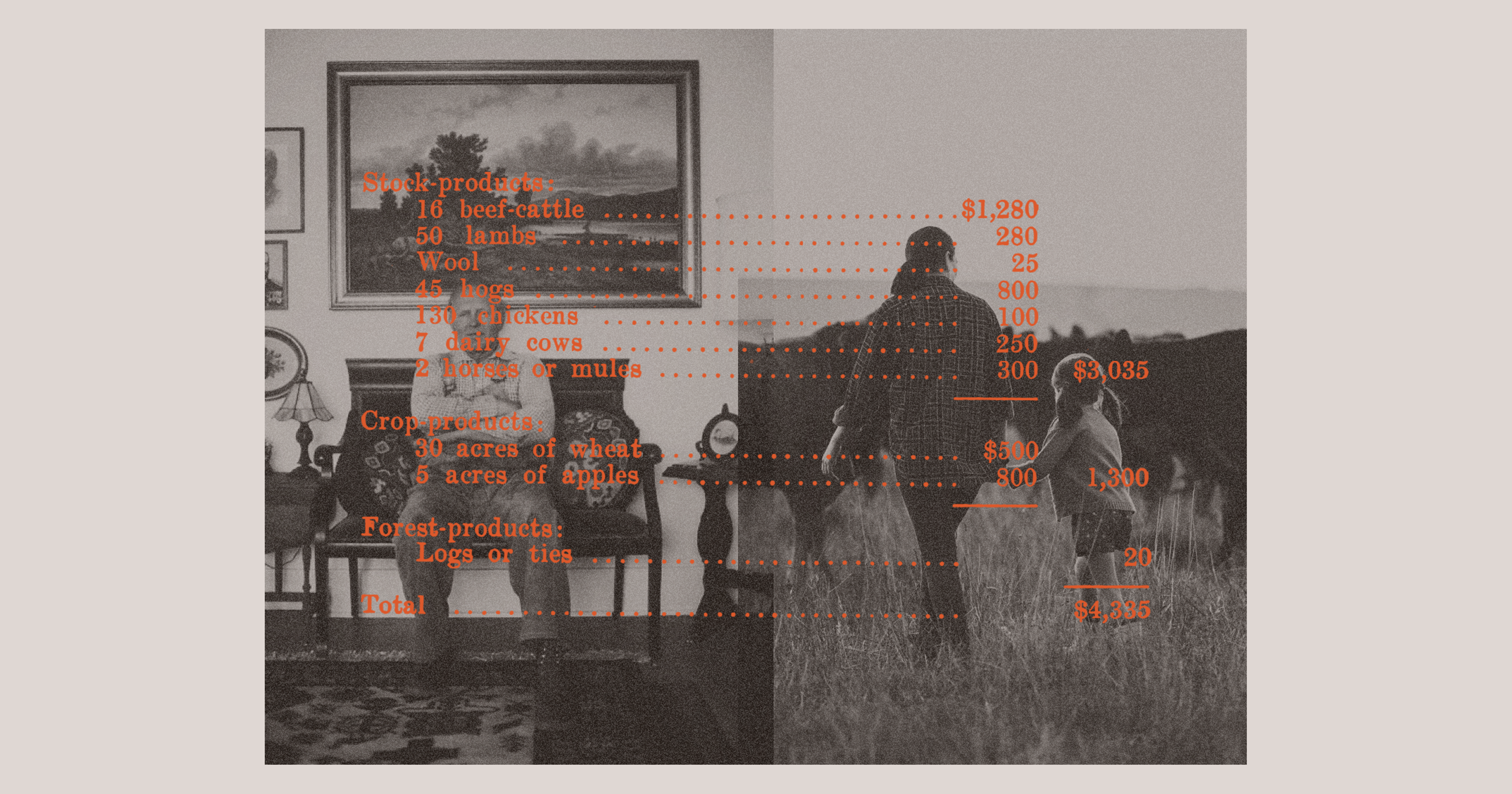
For the untested, the romance of farming may lie in the rolling hills of cropland, building bonds with livestock, pursuing lofty ideals as stewards of the land. But anyone working the land knows that farms are, first and foremost, businesses — and not easy ones.
The state of Ohio is looking to aid new farmers with that hard reality. In an effort to boost resources for beginning farmers — and hopefully increase the number of producers in the field — Ohio began a new program this year, offering tax credits that act as reimbursements for new farmers who attend financial management education programs.
Boosting the number of these young producers is a high priority for Ohio because of the agricultural industry’s outsized impact on the state. “Food and agriculture is a vital industry in Ohio — contributing roughly $124 billion annually,” said Sarah Huffman, executive director of Ohio’s Office of Farmland Preservation.
The finances are a vital area to focus on, as the business side of farming often comes with the most complications — and young farmers are particularly vulnerable to financial stress.
Instead of spending most of their time tending to their farm, the Marsiglios — a couple that left their teaching careers behind to produce meat, vegetables, and eggs on an old dairy farm in the Catskills — spent hours poring over invoices and expense reports. As Dan Marsiglio told Modern Farmer, “The farm needs are endless.” The couple said the farm grossed $40,000 annually, all of which was reinvested. This means the two amassed no savings, couldn’t hire any help, and had to take off-farm jobs to make ends meet.
Ohio’s tax credit program seeks to mitigate beginning farmers‘ financial woes by offering free financial planning and business courses. Other states have also recognized the benefits of a strong agricultural industry for their economy. The structure of Ohio’s program is modeled after existing programs in five other states: Nebraska, Minnesota, Kentucky, Iowa, and Pennsylvania.
According to U.S. Department of Agriculture (USDA) data, agriculture, food, and related industries contributed more than $1 trillion to the U.S. gross domestic product (GDP) in 2021. The industry is also responsible for a high level of job creation, meaning more farmers is a net win for the country as a whole.
The tax credit programs in Ohio and other states also seek to address the ever-aging farming population in the U.S. According to USDA, the average age of farmers rose to nearly 58 years old in 2017, and as these farmers reach the time to retire, they need new producers to take their place — and stay there.
The two amassed no savings, couldn’t hire any help, and had to take off-farm jobs to make ends meet.
Huffman said Ohio hopes granting new farmers access to educational courses will not only incentivize them to start their own farms, but also to keep them viable in the long-term (a significant concern). In these financial courses — offered by a range of educational institutions — producers can learn farm business planning, marketing, financing, and other skills they’ll need to build a successful operation.
A financial management course is required as a part of the certification process for Ohio farmers to qualify as “beginning farmers,” which can open them up to more aid opportunities — like the U.S. Farm Service Agency’s beginning farmer loan program. In addition to financial education, to earn the official title, producers need to be residents of the state, have a household net worth under $800,000, and have been operating a farm for less than 10 years.
Andrew Hanson-Pierre, who operates Clover Bee Farms with his wife Margo, said it was a huge help to take a business and finance course before they got their operation — a small-scale vegetable farm in Shafer, Minnesota — up and running in 2015. “To have the business side of things, having that knowledge to fall back on, like learning to build your plan and how to run your farm, that is crucial,” he said.
When the pair took the course, the state of Minnesota hadn’t yet enacted its 2018 tax credit program, reimbursing farmers for taking financial education courses like in Ohio. Still, the two would highly recommend financial education to any new farmer.
They said said networking and building the confidence to start a farm were among the most pressing challenges at the start of their farming careers. Throughout the 12-month class, meeting other beginners in their area and planning the business end of their operation helped to solve both of those challenges.
In addition to the proper financial planning, one of the most urgent issues farmers face when it comes to starting up is acquiring land. USDA data shows that, on average, the cost of cropland in the country was $5,050 an acre in 2022, up more than $600 per acre from 2021. In corn belt states like Ohio, that percentage is even higher, with land costing 15.3% more in 2022 than it did the previous year.
It’s getting harder for farmers in Ohio, and nationwide, to afford land to farm.
Rising costs mean it’s getting harder for farmers in Ohio, and nationwide, to afford land to farm — something Ohio’s new incentive program hopes to address.
In addition to the tax credit for financial education programs, the new legislation provides an income tax credit to both individuals and businesses that sell or rent farmland, livestock, buildings, or equipment to beginning farmers. This part of the program aims to preserve farmland, and encourage current farmers to sell their land to future farmers — as opposed to developers or other industries.
“I think for the established farmers, you know, as our farming population ages, they’re all looking to transition at some point, and not every established older farmer has family members who want to take on the business,” said Huffman. And that’s where the second piece of the legislation comes in.
Under the program, an established farmer who transitions assets or enters into a rent share or lease agreement with a beginning farmer is entitled to a tax credit for 3.99% of that transaction. In Minnesota, where the same program has been active for around six years, these tax credits seem to be successful.
Jenny Heck, a rural finance authority with the Minnesota Department of Agriculture, said the asset owner credit program is “one of our most popular programs at the agency as far in terms of dollars. The state has given out between 500 to 600 credits each year since 2018,” she said. “Last year we did close to 628 asset owner credits.”
In Ohio, it’s still too soon to tell how useful the program will be. “It’ll be interesting to see, you know, in a year, where the tax credits are falling in terms of the financial management program costs versus asset transfer credits,” said Huffman. “We just don’t have that information yet.”
Ohio’s program, as the language of the legislation currently stands, will continue to serve the state’s farmers until January 2028, or a total reimbursement amount of $10 million — whichever comes first.
“I think it’s important for the future of farming to have new folks who are interested take it on and have the foundation and the tools necessary to succeed,” Huffman said.
Oregon’s fertile Willamette Valley is one of the most diverse agricultural regions in the country, with plenty of room to grow a wide array of crops. That is, every crop except canola.
Since 2013, canola cultivation in the valley has been restricted to a 500-acre area, a tiny portion of the region’s 1.58 million farmed acres, which are planted with more than 170 different crops, including wine grapes, berries, hazelnuts (known locally as filberts), grain, grass seed, and hops. But it’s not the wineries and orchards that are anti-canola. Rather, it’s the region’s powerful network of specialty seed growers pushing for permanent restrictions. That’s because canola, primarily grown for its oil-rich seed that’s crushed to make cooking oil, margarine, and biodiesel, is said to readily cross-pollinate with other vegetable seed crops grown there.
The Willamette Valley isn’t the only place in the world where canola grows well. Canada is the world’s top producer, and the majority of American canola fields are planted in the Northern Plains; North Dakota leads the pack with 80% of all U.S. production. But farmers who grow wheat and grass seed in the Willamette Valley — crops that occupy more than half of the total harvested cropland in the region — say that adding canola to their rotation of crops would come with many benefits, including improved soil health, crop diversity, and weed control. Harvesting canola also yields additional income, and is processed regionally into food-grade oil and livestock meal, helping to fuel a local food system.
They want to know: Who gets to say which crops are more important?
Currently, canola growers within the protected district must apply for a permit to grow canola, which must be planted at least three miles away from any vulnerable crops. The limited planting regulation was first allowed for Oregon State University (OSU) researchers to study cross-pollination, pests, and disease. Those temporary limits were expanded in 2015, changing the purpose from research to commercial. In 2019, the 500-acre limit was again extended for another five years, and those regulations are set to expire on June 30.
Now, a new bill in the state Senate (SB789) aims to make the near-complete ban on growing canola permanent, reigniting a decades-long debate between specialty seed growers and canola farmers. Supporters of the bill say it’s needed to protect family seed farms from the threat of canola. Opponents say the bill is unnecessarily limiting farmers, and prioritizes the interests of powerful seed companies.
The specialty seed industry in the Willamette Valley is a lucrative one, responsible for upwards of $25 million in revenue each year, according to a recent report from Highland Economics, an environmental and natural resource economics consulting firm. The vast majority of the world’s supply of Brassica seeds — a family of vegetables that includes cabbages, mustards, kale, and turnips — come from the Willamette Valley. Canola is also in the Brassica family. Organic vegetable seed producers are especially concerned about the risk of cross-pollination between the two crops, as 90% of all canola grown in the U.S. is genetically engineered for herbicide resistance, which can affect the purity of seed crops and make them unsuitable for some markets.
“Vegetable seeds are grown on genetic purity,” explained third-generation Willamette Valley seed grower Garth Mulkey. “Cross-pollination with other Brassicas [such as canola] changes the end product that the user is purchasing, and if they don’t get what they pay for, they won’t come back for more.”
Who gets to say which crops are more important?
Whether or not canola is, in fact, detrimental to the purity of vegetable seeds is still hotly debated. But the GM nature of most canola is a notable part of the debate. Specialty seed growers are concerned that any additional acres planted with canola will heighten the cross-contamination risk to their seed stock. “If we get an outcrossing of a GMO gene into our vegetable seeds, we will lose our customers,” said Mulkey. “I hesitate to even say that, because I certainly don’t want to be the face of anti-GMO. But my biggest concern is that our customers are going to see that there’s GMO brassicas growing in my neighborhood, and they’re not going to come back to my neighborhood for vegetable seed production.”
According to plant scientist Carol Mallory-Smith, professor emeritus in the department of crop and soil science at Oregon State University, there’s no reason the two crops can’t co-exist. “There are no biological or agronomic reasons that canola should be treated differently from other Brassicaceae crops or be prohibited in the Willamette Valley,” she recently submitted in written testimony related to SB 789. “There are enough available acres to increase canola production as long as it is grown in a manner that is compatible with Brassicaceae seed production.”
Farmers who cultivate grass seed want a profitable rotation crop. Canola is an excellent solution, said Kathy Hadley, a Polk County farmer and member of the Willamette Valley Oilseed Association, because it helps break up the soil and reduce tillage, bees love it, and it’s profitable. “Grass seeds are our main crop, and we need a rotation crop. If we have a rotation crop that we at least break even on, it has value to us,” she said. “To have one that we make money on is a huge benefit.”
Unlike vegetable seed crops, canola thrives on non-irrigated ground — an important aspect to consider as climate change takes its toll on the state. Out of the Willamette Valley’s 1.58 million farmed acres, only 284,849 are irrigated, meaning most farmers don’t have the resources to cultivate high-value vegetable seeds. And yet, the new bill focuses on protecting the small amount of acreage available that can.
“It’s basically a rule that’s based on markets, and certain markets [that are deemed more important, such as specialty vegetable seeds] not wanting canola around them,” said Hadley. “So what’s lost is mine and other growers’ ability to choose what crop works best in our rotation.”
“If we get an outcrossing of a GMO gene into our seeds, we will lose our customers.”
As the recent Highland Economics report — commissioned by the Organic Seed Alliance and Oregon Organic Coalition — highlighted, the value of brassica seed crops is much higher per acre than canola, especially for organic seed crops. “If I was to quit growing vegetable seeds and grow canola, my net income would drop considerably,” said Mulkey.
Even if canola is less profitable, is that enough reason to regulate and restrict it? If passed, the bill “will set a precedent that one agricultural crop is valued more by the legislature than another,” said Republican state representative and farmer Anna Scharf, who is in opposition to the bill. “Why not ban turnips since they are also a brassica crop and there are tens of thousands of acres of them grown each year? Because turnips are primarily grown under a contract with a seed company who makes money off the backs of farmers. Canola is a commodity crop. It is grown by the farmer and sold by the farmer — no middleman or seed company needed.” (It should be noted: Turnips are not genetically modified, while canola typically is.)
The bill will soon head to the Senate floor for a vote, where it is expected to pass. It would then go to the House for a hearing. Until then, farmers on both sides of the debate are anxiously awaiting the outcome.
“It’s a tough situation. I don’t really want to be the guy telling his neighbors what they can and can’t do,” said Mulkey. “But I also don’t want their practices to affect what I can and can’t do.”
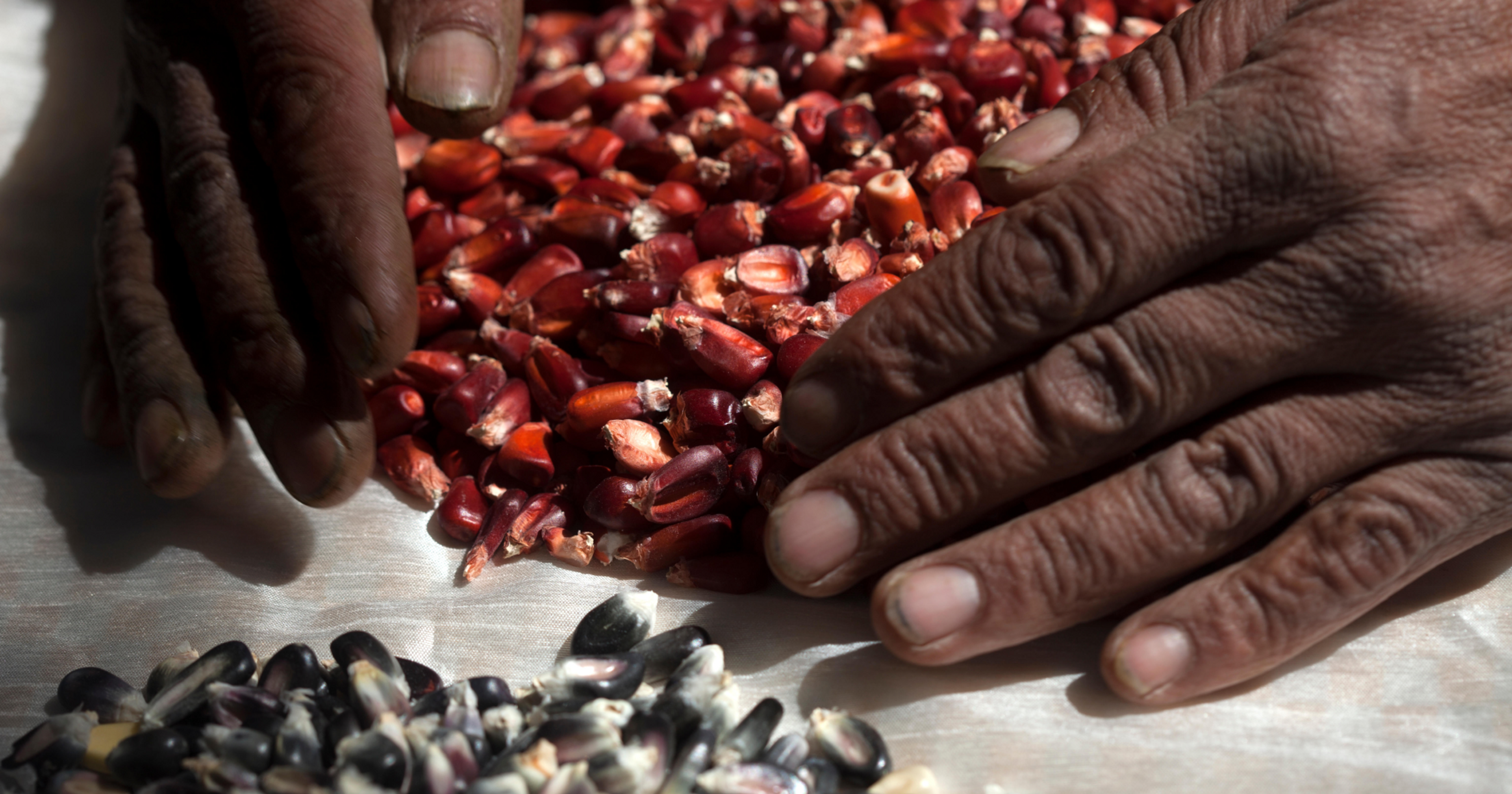
The U.S., a world leader in corn exports, has met an international trade roadblock that boils down to a recurring question in modern agriculture: Are genetically modified crops bad for people and/or the planet?
Mexico, the second-largest importer of U.S. corn, has pursued a fight over genetically modified (GM) corn, to safeguard the country’s food sovereignty and environment. Mexican President Andrés Manuel López Obrador first elevated this conflict with a series of decrees in 2020. Come early April, if left unresolved, formal free trade agreement arbitration will start.
U.S. agriculture officials and its largest lobbying group want to stop the ban altogether, which is not new. The conflict goes back decades and has been propped up by U.S. agribusiness, politics, and industry influence from biotech companies.
Both countries have until April 7 to meet and come to an agreement. Otherwise, the dispute will become formal under the United States-Mexico-Canada Agreement (USMCA), the 2020 free trade agreement signed by both countries.
Corn is an immensely important cultural, historical, and even religious crop in Mexico; there are at least 60 different varieties of corn native to the country. López Obrador’s decrees are rooted in protecting these diverse strains, promoting food sovereignty, and rebuilding the country’s rural economy — small and medium-sized Mexican farms were crushed by previous international trade agreements.
During his 2018 inaugural speech, López Obrador foreshadowed this fight, pointing to the nation’s lack of independence in its food systems. “Corn, this sacred plant, is from Mexico — yet we are the nation that imports the most corn around the world,” he said. In addition to corn, the Mexican president’s decrees have also put the controversial pesticide glyphosate, known as Roundup, in its sights, with plans to ban the chemical inside Mexico by 2024.
At the beginning of March, López Obrador moved forward with the ongoing plans to prevent the import of GM corn. One goal of the ban is to reduce cross-contamination from GM corn.
Mexico’s demand for U.S. yellow corn hinges on feeding its domestic livestock, which has increased dramatically in recent years. Mexico buys the second-highest amount of corn from the U.S., coming in at over 17 million metric tons a year. Mexico mainly grows domestic corn to feed its people; it’s projected that the country won’t be able to shore up the loss of imported corn if the ban goes through.
According to data from the USDA, nearly all corn, cotton, and soybeans planted in the U.S. are genetically engineered. Mexico has never allowed the commercial planting of GM corn. But, as a large buyer of imported corn, past studies have shown that 90 percent of tortillas in the country have traces of GM corn in them.
“We remain firm in our view that Mexico’s current biotechnology trajectory is not grounded in science.“
Initial conversations included a total import ban on GM corn from the U.S. — for livestock and human food alike. López Obrador has since retracted this decree and will only be banning GM corn planned for human consumption. According to Grain Council data, U.S. imports of corn to Mexico for human consumption is roughly 16%, which would have been just under 3 million metric tons last year.
Despite López Obrador walking back a total ban, U.S. officials and farmers aren’t pleased with the continued power struggle.
“While we appreciate the sustained, active engagement with our Mexican counterparts at all levels of government, we remain firm in our view that Mexico’s current biotechnology trajectory is not grounded in science, which is the foundation of USMCA,” U.S. Secretary of Agriculture Tom Vilsack said in a March 6 statement. “We remain unequivocal in our stance that the science around agricultural biotechnology has been settled for decades.”
Lance Lillibridge, a farmer from Benton County, Iowa, the nation’s top corn-producing state, splits his 2,100 acres of corn between roughly 60% GM corn and 40% non-GM corn. He said this practice is “good stewardship” to not build resistance to certain insects or chemicals. The Iowa farmer believes the ongoing corn kerfuffle lacks a basis in science.
“There’s no scientific proof to show that genetically modified corn is harmful for human consumption,” said Lillibridge, chair of the Iowa Corn Growers Association.
Research from the Food and Drug Administration, Purdue University, and the USDA, among others, affirms what Lillibridge says: There is no proven harm to human health by GM corn. But when it comes to the corn’s effect on the environment, it gets tricky.
“If the U.S. doesn’t win this, there’s a risk that other GM crop issues are going to come up.”
On one hand, some research cautions there may be untold ecological impacts from “gene flow” between GM and non-GM corn, like crops evolving into weeds or losing desirable genetic traits. Conversely, GM corn can require less sprayed pesticide application throughout the growing season, allowing for easier transition to no-till practices.
“Our soil health has been getting better and better and better, and that’s because of GMO corn,” Lillibridge said. “If we go away from that, we’re going to have to go back to the way we used to plant and grow corn, and that’s going to require a lot of tillage.”
With planting season around the corner, Lillibridge said he’s not concerned that the trade dispute will greatly impact his operations — as it stands, the decree put forth by López Obrador still allows for imports of American corn used for livestock. But the decree would disrupt the agriculture sector in the big picture, such as crop transportation and grain storage in elevators.
“It is going to create more harm to them than it is us,” Lillibridge said, “but it will be harmful to us.”
While the U.S. corn sector could take a hit if the ban goes through, Ian Sheldon is more interested in the precedent set by a formal dispute process. Sheldon, chair of Agricultural Marketing, Trade, and Policy at Ohio State University, said the fight is an important proving ground for the ways the U.S. will solve future trade problems.
“If the U.S. doesn’t win this case, there’s a risk that other GM crop issues are going to come up,” Sheldon said.
In 2015, almost 30 countries in the European Union, including France and Germany, banned the growth of GM crops in their borders, but many of them still accept those crops by way of imports. Depending on what happens with Mexico, Sheldon believes other countries may start considering GM corn import bans.
“We are asking for agricultural production that doesn’t use agri-chemicals or GMO, and also respects human rights.”
He said that if the talks fail, an independent panel would be created and a regulatory review process would begin, which could take upwards of 150 days. After that point, Sheldon said that the trade dispute could eventually end up with the U.S. enacting retaliatory tariffs on Mexican agricultural imports such as fruits, berries, and avocados.
He also noted that this continued battle will help understand how future disputes over GM crops could play out, as the USMCA is a relatively new agreement, without a large track record. “For agriculture, it’s probably the most important case that’s come before the dispute settlement mechanism since it was put in place,” Sheldon said.
For advocates of the Mexican decree, importance has been placed on resilience. Viridiana Lázaro, food and agriculture campaigner for Greenpeace Mexico based in Mexico City, said that protecting the country’s biodiversity is key for Mexican growers in the face of changing climate and markets.
“The better way to (grow corn) is to leave it in the hands of the farmers that have been taking care of the corn for many many years,” Lázaro said. “They have been rebuilding the seeds and adapting.”
The future of Mexican agriculture could be found in these seeds, which, due to their massive genetic diversity, can help improve resiliency to pests and harsh weather conditions. These conditions are snowballing because of climate change; Lázaro said that Mexican farmers can become resilient in the face of flooding, heat, and soil health if they have independence from American agribusiness.
“We are asking for agricultural production that doesn’t use agri-chemicals or GMO, and also respects human rights,” Lázaro said. “Don’t harm the soil, don’t harm the people, don’t harm the water and the air.”
She said that GM corn contributes to increased pesticides in the seeds, which can harm native seeds and make their way into the soil, harming the country’s agricultural future.
“For us, corn has many meanings — it’s not just a commodity,” Lázaro said.

In December 2014, an agent from the pipeline construction company Energy Transfer Partners came to Steve Hickenbottom’s farm outside of Fairfield, Iowa, and asked him to sign over an easement that would allow them to construct part of the Dakota Access Pipeline through 170 acres of his land. That conversation “started out nice,” he recalls now, but at the end the agent gave him two options: “Sign this over voluntarily, or we’ll take it via eminent domain.”
Hickenbottom didn’t sign, and true to its word, the company filed a condemnation enforcing eminent domain. Over four days in the summer of 2016, he watched a cohort of bulldozers, welding trucks, and excavators dig a 30 foot-by-30 foot trench, bury a pipeline in it, and cover it back up with soil. Hickenbottom grows soy, oats, and hay for cattle on about 1,000 acres that have been in his family for nearly five generations. He estimates damage to his land from those four days at about $200,000, and that doesn’t account for loss of productivity.
“When you give them eminent domain, or rather when they take it from you, you lose control of the land,” he said. “It’s just like legal thievery, I don’t know how else to explain it.”
When a similar agent from a company called Navigator CO₂ Ventures appeared at Hickenbottom’s door last summer, he knew it was time to fight back — he and his fellow farmers would have to get organized. “They bulldozed their way through the first time, and we didn’t know anything about it,” he said. “But now we’re way better off this time as far as getting things filed and talking to representatives and senators.”
The Inflation Reduction Act, the Biden Administration’s historic suite of climate legislation, included new and lucrative tax credits to limit the greenhouse gas emissions for fuels, and with those incentives came new business opportunities. Navigator is one of three companies, along with ADM-Wolf Carbon Solutions and Summit Carbon Solutions, that are seeking to construct a network of pipelines across the state of Iowa.
These pipes would transport carbon dioxide (CO₂) captured at industrial facilities that produce the climate-warming gas — primarily ethanol plants — and deliver it to North Dakota or Illinois for sequestration. Taking advantage of the new tax credits by building a proposed network of pipelines could deliver $2.16 billion to the Iowa ethanol industry, according to an estimate commissioned by the industry group Iowa Renewable Fuels Association.
To the casual observer, these pipelines represent a kind of multilayered boon: stimulate American industry, support farmers who grow corn for ethanol, and reduce carbon emissions. But the true climate benefits of such a pipeline are very much up for debate, and farmers whose land has not yet recovered from construction easements for the Dakota Access Pipeline are skeptical of letting a new company come in and tear up their fields for profit. This proposed carbon dioxide pipeline, which has been touted as both a climate solution and a path for Iowa corn to remain valuable, has forged a rather unlikely alliance between environmental activists and a sizable contingent of Midwestern farmers who have organized to block it.
“It’s not like this coalition hasn’t happened before, but the thing that’s really unique about this is we’ve got even more diverse characters involved: QAnon and far-right Trump characters, mainstream Republican fiscal conservative folks, urban liberals, a lot of Democrats, Independents, a lot of environmentalists,” said Mahmud Fitil, land defense director with the Indigenous activist group Great Plains Action Society, describing the movement opposing the pipelines. “And so far in Iowa it’s taken shape as focusing at least legally on the vein of private property rights, which is the hallmark of conservative values in the Republican party.”
Issues With Ethanol
The climate-saving potential of ethanol has long been the subject of substantial debate. In 2005, the Bush Administration passed the Renewable Fuel Standard to incentivize the domestic production of ethanol and other biofuels as a supplement to gasoline. This legislation was framed as a helping hand to farmers that would create a more valuable destination for corn harvests, and also as a way to mitigate greenhouse gas emissions.
Ethanol is far from an emissions-free fuel; both its production and combustion emit carbon dioxide. Ethanol advocates argue that this is offset by the CO₂ that gets sequestered in the soil in the process of planting and growing corn. But the effectiveness of that sequestration varies wildly according to factors like farming methods and land use, which results in a wide range of appraisals of the fuel’s sustainability.
The U.S. Department of Energy, for example, cites 40% carbon savings from using ethanol in lieu of gasoline; whereas one study from the University of Wisconsin-Madison Center for Sustainability and the Global Environment estimated that the carbon footprint of ethanol is actually 24% greater than that of conventional gasoline, due to the losses of carbon-sequestering forest or grassland that have been converted to grow corn.
Just as the climate benefits of biofuels are disputed, so too are those of the methods of carbon storage and usage incentivized by the Inflation Reduction Act. The geologic burial method, in which liquid carbon dioxide is injected deep into the earth, presents some risk of earthquakes or leakage of CO₂ back into the atmosphere. More controversially, the Inflation Reduction Act’s tax credits can apply to the practice of using carbon dioxide to more efficiently flush oil from wells, which has obvious negative implications for the climate. Many climate advocates point to carbon capture and storage as a practice that enables polluting sources of energy.
“They shouldn’t need any reason beyond: ‘This is my land and I don’t want the pipeline going through it.’”
To that end, the Sierra Club’s position is that investment in carbon capture and storage to support the continued or increased production of ethanol is a “false climate solution.” Furthermore, they argue that the proposed carbon dioxide pipeline poses a threat to the rural communities it runs through. It’s a relatively new innovation in hazardous material transport, with 5,000 miles of carbon dioxide pipeline currently operational in the United States. The “hazardous” designation is due to the risk of highly pressurized liquefied CO₂ exploding out of a leak in a pipeline, where it can displace oxygen and potentially suffocate bystanders. In 2020, a carbon dioxide pipeline explosion in Satartia, Mississippi, hospitalized 45 people.
Meanwhile, ethanol industry groups and their supporters argue that one pressing reason to construct these pipelines is that businesses in other states are already utilizing the Inflation Reduction Act’s new tax credits, leaving Iowa ethanol plants at a competitive disadvantage. Furthermore, a growing list of states that includes California and Oregon have legislated a low-carbon fuel standard to go into effect within the coming decade, which would exclude ethanol plants that do not use carbon capture and storage technology from those markets. There’s also growing demand for low-carbon ethanol in the development of “sustainable aviation fuel.”
Pipeline proponents say that if Iowa ethanol plants begin to get shut out of the national market, corn farmers in the state will lose a lucrative destination for their crops. (Roughly half of Iowa corn goes to ethanol production.) In March, the Iowa Renewable Fuels Association commissioned another study that estimated that profit losses to Iowa corn farmers without the opportunities afforded by the proposed pipeline would average 85% by 2030.
“If the loss in competitiveness was so large that grain ethanol plants started closing, that would have a tremendously negative impact on this part of the country — there’s no doubt of it,” said Robert Brown, professor of agricultural engineering at Iowa State University, adding that he wasn’t sure whether low-emissions fuel standards will actually lead to plant closures.
Pipeline Popularity
In an era in which farmers face both increasingly slim profit margins and erratic growing conditions, one can imagine that anything that would stave off an alleged threat to farm income would be incredibly popular in a state like Iowa. And yet, the carbon dioxide pipeline is exactly the opposite: A poll in March showed that 78% of Iowans oppose the use of eminent domain to build it.
“It should be a bedrock conservative principle that you don’t take people’s use of their land away from them,” said Donald Ray, a retired teacher and small-scale farmer who raises sheep and cattle in Ringgold County. “And the Republicans should be very against that, only using it as a last resort.”
State Senator Jeff Taylor, a Republican who represents a deep-red district in Iowa’s northwest corner, has sponsored a number of as-yet-unsuccessful bills in the state senate that would either block or provide significant hurdles to the use of eminent domain in the construction of this pipeline. He sees the use of eminent domain to enable the construction of a pipeline that yields no public benefit or service to Iowans in violation of the fundamental Republican value of “respect for the Constitution and property rights.”
“These are private projects for private gain and they have no business qualifying for eminent domain,” he said. “Ultimately my argument is that no matter if the concerns of the landowner are justified or not, or whether you or I think they’re good, they shouldn’t need any reason beyond: ‘This is my land and I don’t want the pipeline going through it.’”
Jessica Mazour, conservation coordinator for the Iowa Chapter of the Sierra Club, further attributes opposition to the pipeline to an increased wariness of corporations’ desire to profit at the cost of community safety. That’s a recurring theme in the letters of opposition that 23 Iowa municipalities have sent to the Iowa Utilities Board urging it not to approve the use of eminent domain for construction. They cite the pipeline’s proximity to schools and homes, and the lack of emergency services to deal with the potential fallout of a leak like the one that happened in Satartia. Norfolk Southern’s unpopular response to the disastrous train derailment it caused in East Palestine, Ohio, in February has only augmented these concerns.
“There’s all this concern that Norfolk Southern isn’t being honest about what’s in the air, is the water safe,” said Mazour. “And that’s what’s gonna happen here? We’re gonna have to trust these private companies to say, ‘You’re fine?’ There are a lot of similarities, bringing hazardous chemicals to people’s communities where we don’t have adequate safety regulations.”
Fighting Back
On March 22, Steve Hickenbottom drove from his farm to the Iowa House of Representatives in Des Moines to join about 100 other protesters who wanted to have their voices heard as the House debated a new bill related to pipeline construction. It would require the companies constructing the carbon dioxide pipeline to obtain voluntary easements from 90% of property owners before being able to enact eminent domain. The protest was organized by the Sierra Club, but he estimates about three-quarters of the attendees were farmers and landowners.
The bill passed the House with a 73-20 vote, and will now proceed to the Iowa State Senate, where Sen. Taylor predicts it will have an “uphill battle,” due to some legislators’ allegiance to ethanol interests.
This is a rather remarkable state of affairs that demonstrates the continued political influence of the ethanol industry, given that the Iowa state legislature is Republican-controlled and the issue of using eminent domain to construct pipelines is evidently unpopular among Republican constituents. Former Iowa Governor Terry Branstad is now a major spokesperson for one of the pipeline companies. Branstad also nominated two of the three members of the Iowa Utilities Board, which has the power to implement eminent domain to construct pipelines.
But energy around the opposition campaign remains strong. Mazour said that the key difference between the Sierra Club’s campaign against the Dakota Access Pipeline and its efforts against these proposed carbon dioxide pipelines have to do with the organization of landowners. With Dakota Access, individual farmers were seeking individual legal representation and there wasn’t much of a cohesive effort among concerned parties. For this case, the Sierra Club has helped hundreds of farmers across Iowa gather together under representation by the law firm Domina Law Group, based in Omaha, Nebraska, which used a similar group lawsuit model to fight the Keystone XL pipeline.
“I guess what really sparked people’s interest in fighting back this time was just: We don’t want this to happen again, we’ve seen what happens,” said Mazour.
“The Dakota Access Pipeline really left a bad taste in everyone’s mouth — for the Indigenous nations for sure, and the white landowners as well. They came in and ran roughshod over everybody,” said Mahmud Fitil. “And now there’s this large groundswell of grassroots organizing even among conservatives, which you don’t normally see.”
As for Hickenbottom, I asked if this fight to protect his family’s land was an emotional issue for him. He responded: “Well, that might be one of the greatest understatements of the year so far.”
When the last flax processing mill in the U.S. closed in the 1960s — a casualty first of cotton and then synthetic textiles — the nation’s centuries-old flax farming tradition faded with it. Now, a costume designer and a vegetable farmer have teamed up to help revive this field-to-fiber supply chain.
Heidi Barr and Emma Delong, co-founders of the PA Flax Project, have spent the last three years planting test plots; researching flax’s labor-intensive processing requirements; educating consumers; and networking with farmers, industry, and potential investors. Their goal is to recenter textile production on Pennsylvania farms, creating economic opportunity and reshaping the textile industry in the process.
“Flax for linen in North America is gaining a lot of momentum, and we’re one of the groups pushing it forward,” Barr said. With a new natural fiber processing facility opening in Southeast Pennsylvania later this year — the first to exist in the U.S. for six decades — the co-op’s efforts to produce a large-scale crop have kicked into gear.
Barr, a dancer turned costume designer, fell in love with flax when she began using deadstock linen to make napkins, tablecloths, and other household goods for her business Kitchen Garden Textiles. A mutual friend connected her with Delong, a farmer who was looking for someone to make a wedding dress. The dress never materialized, but the pair bonded over a shared love of linen.
“Within an hour of meeting, we started talking about linen as an agricultural product,” Barr said. In the early days of the pandemic, they planted their first flax crop by hand on a sixteenth of an acre of the poorest soil on Kneehigh Farm, the four-acre property outside Philadelphia where Delong grows organic vegetables and cut flowers.
Delong had experimented with growing indigo for dye, but this was her first time growing plants for fiber. “I was amazed at how we really did nothing” and got a usable crop, she said. “We made sure there was good soil-to-seed contact, and just let it go for three months.” As the project grew, she and Barr collaborated with Oregon-based organization Fibrevolution and received support from Pasa Sustainable Agriculture to help spread their message and connect with growers.
The strong, durable bast fibers, or phloem, of the flax plant — a long-stemmed flower with pale blue blooms — are the oldest textile in the world. Archaeologists have found twisted, dyed flax fibers that date back at least 30,000 years. Linen, the delicate fabric made from weaving spun flax into cloth, has long been valued for its breathability, softness, and antibacterial qualities.
Pre-colonization, some Indigenous groups harvested wild flax to make cordage, baskets, and fishing nets before Europeans brought cultivated flax to the continent. Colonial-era farm families, including the Germans who settled in Pennsylvania in the 17th century, typically grew their own flax, completed the elaborate process to transform the plant into fiber, spun the yarn, and wove the cloth to make garments and household textiles.
The strong, durable fibers of the flax plant — a long-stemmed flower with pale blue blooms — are the oldest textile in the world.
But flax’s status as the nation’s go-to plant fiber began to decline in the 19th century as cotton — with simpler processing and cheaper prices driven by the labor of enslaved people — proliferated. World War II-era government subsidies offered a boost, but flax couldn’t compete with new synthetic textiles in the postwar market. Farmers stopped growing flax, and the last U.S. scutch mill — where dried, partially decomposed flax plants are processed into soft, smooth fiber that can be spun into linen yarn or thread — closed in the 1960s.
“We have an opportunity that other groups don’t have, which is that Pennsylvania is getting a mill,” she said. “That accelerates our ability to push forward in phase one of our project, which is seed to harvest.”
Barr and Delong’s plan — to establish a farmer-owned flax cooperative and eventually a worker-owned mill — ramped up when they connected with Tarit Chatterjee, director of operations for Natural Textiles Solutions. The fiber processor, which has mills in Europe and India, was in the process of opening a facility near its corporate headquarters in Pennsylvania’s Lehigh Valley. The mill, funded primarily with investment from sustainable textile company BastLab, will process hemp and flax into spinnable fiber.
As the company planned the relocation, Chatterjee began scouting for flax growers in the region. “We were looking for flax, but everything was about hemp,” he said. Chatterjee can’t commit to purchasing a crop until he’s sure it will meet the company’s specs, but all parties see the benefit of having supplier and processor so near each other. For now, Barr can point to Natural Textile Solutions as a source of demand for future harvests as she seeks funding. When the time comes, Chatterjee can source product from several growers through a single entity.
Today, flax in the U.S. is primarily grown in the Northern Plains for seed, not fiber; farmers harvested 268,000 acres in 2021. Around 80% of the flax grown for longline fiber, which makes the highest-quality linen, is cultivated in Europe, particularly Belgium, France, and the Netherlands. But extreme weather caused by climate change — drought in France in 2020, flooding in Belgium in 2021 — has damaged recent harvests, reduced seed stocks, and inflated prices for raw materials.
“We were looking for flax, but everything was about hemp.”
“It’s almost getting to a point where there are only specific geographical areas [in Europe] that can produce textile-grade flax, and that’s why we’re seeing higher prices,” Chatterjee said. He noted that demand for flax is higher than for other natural fibers because it can be made into finer textiles without the environmental footprint of raw materials like cotton and bamboo. The global linen market is expected to grow 11.2% through 2026, according to a 360 Research report.
In spring 2023, the PA Flax Project will trial 10 acres of flax, spread over several small and midsize farms eager to onboard with the co-op and scale up. Once growers have confirmed the crop can do well on their land and meet Chatterjee’s specifications, the co-op’s goal is to produce 5,000 tons of flax in the 2024 season.
The movement to revive North American flax fiber production, Barr noted, isn’t new. Advocates in the Pacific Northwest, the Midwest, and Nova Scotia have spent the last decade-plus laying the groundwork. Through the North American Linen Association (NALA), of which Barr is a board member, they’re sharing resources and combining their efforts to bring the crop and large-scale processing capabilities back to the continent.
The idea of reviving a supply chain that begins with fields of shimmering stems and ends with rustic tablecloths and summer dresses might seem like a romantic notion, but flax’s value proposition — for growers and for a more sustainable textile industry — is strong. It doesn’t require high fertility, irrigation, or pesticides, and co-products generated by processing can be used for everything from construction to horse bedding.
Flax is less resource-intensive to process than other natural fibers, and unlike synthetic textiles — which make up more than two-thirds of global textile production — linen is biodegradable. Reviving flax growing and processing could help reduce the 5% to 10% of global greenhouse gas emissions attributed to the textile industry each year.
For crop farmers, flax can fit easily into a rotation with grains like corn, soybeans, alfalfa, and wheat. In the Mid-Atlantic, it can go in the ground as early as April 1 without ill effects from late frosts. Growers can harvest flax in early July, then plant spring wheat. And because the crop is pulled from the soil by the root, fields don’t require additional prep before the next planting goes in.
Once growers have confirmed the crop can do well on their land, the co-op’s goal is to produce 5,000 tons of flax next year.
Flax shares many beneficial properties with much-hyped hemp, including the potential to remove heavy metals like lead from contaminated soil. But hemp requires more nutrients than flax, and hemp fabric is coarser and less versatile than linen.
Flax also doesn’t come with hemp’s regulatory hurdles. “One of the benefits of flax is you don’t have to worry about permitting, testing, any of that stuff,” said Drew Oberholtzer, co-founder of Coexist Build, a producer of hemp-based construction materials. “It’s a different type of engagement with farmers, customers, the marketplace, and investors.” He’s working with the PA Flax Project to plant a half-acre trial plot on his fiber research farm in Southeast Pennsylvania this year and is eager to explore using flax’s co-products as a green building material.
“Flax could be a big benefit because it’s just getting shipped off the farm for a check,” said Jeremy Dunphy, owner of Pasture Song Farm, who grows corn, soybeans, hay, and small grains for his pigs, chickens, and cattle on around 160 acres near Delong’s farm. “If we could make that work in our region, it’d be a pretty big benefit to people’s rotations.”
But growing a crop for the first time and growing it well are two different things. While the PA Flax Project has half a dozen growers on deck, the USDA only offers crop insurance for flax if it’s planted as a small grain, not as fiber. The North American Linen Association is lobbying to change this, along with getting flax designated as a specialty crop in the 2023 Farm Bill. This year’s trials, and guidance from NALA’s grower training series, will give the co-op knowledge and tools to grow to Chatterjee’s specs with its founding members, then expand to other farms.
In the meantime, Barr is focusing on fundraising to cover admin and specialized harvesting equipment costs — and proving to the world that flax has a place on Pennsylvania farms. “The most inspiring thing about this is that it’s a very achievable solution to a huge problem,” she said. “Textiles were taken off the farm and brought into the oil industry, and this is a way to reclaim our textile agriculture.”
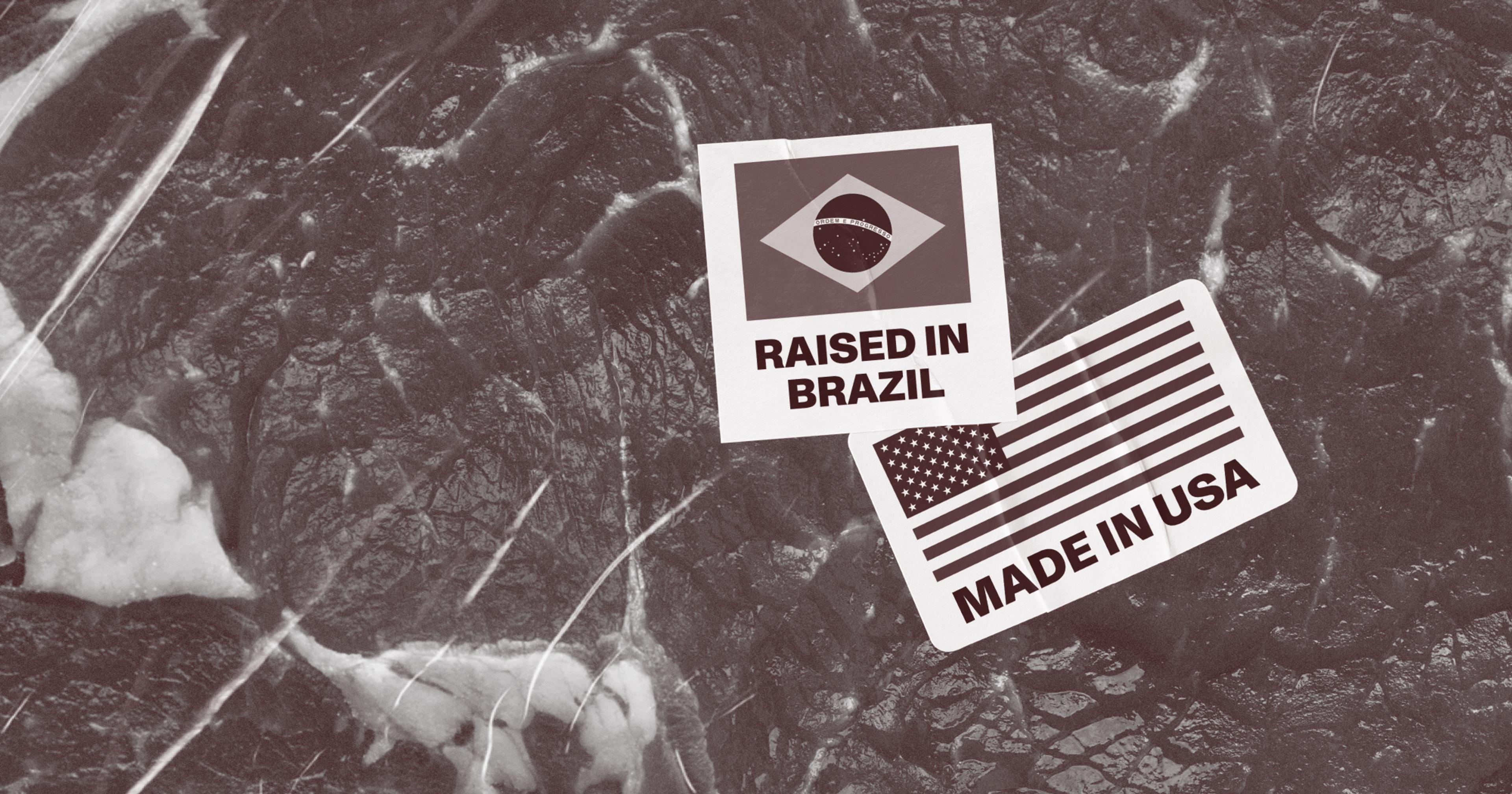
Any close follower of food labeling laws knows that there are all sorts of deceptive landmines in our grocery aisles: “Natural” foods aren’t necessarily natural; “free-range” chickens might not go outside; and food made by “independent family farmers” may actually come from big, faceless agribusiness.
So while it may seem like a fair assumption that a product of the USA would actually be produced here, the truth is much murkier. “Turns out most meat managers don’t even know,” Montana rancher Gilles Stockton said. “They assume that if a product says ‘Product of USA’ then it actually came from here.”
Stockton is a leader in the Northern Plains Resource Council, a nonprofit organization that supports grasslands conservation and family agriculture. He said some of his fellow council members have been visiting local supermarkets to get a sense of how meat is being labeled for retail sale, and how much the public knows about the rules.
The U.S. Department of Agriculture (USDA) is attempting to tamp down this confusion by tightening the rules surrounding voluntary labels that state “Made in USA” or “Product of USA” on meat and eggs. As it stands, that label can be stuck on steak from a steer that spent its entire life in another country, as long as the beef was processed or even just packaged here. Origins are even more obscure when it comes to hamburger or other ground products, as producers can easily mix foreign- and American-sourced meat without proper labeling.
“American consumers expect that when they buy a meat product at the grocery store, the claims they see on the label mean what they say,” said USDA Secretary Tom Vilsack in a recent press release.
The USDA conducted research last year that showed consumers are vastly uninformed about the loopholes in these types of origin labels. In response, the agency has proposed they can only be affixed to meat and eggs “when they are derived from animals born, raised, slaughtered, and processed in the United States.”
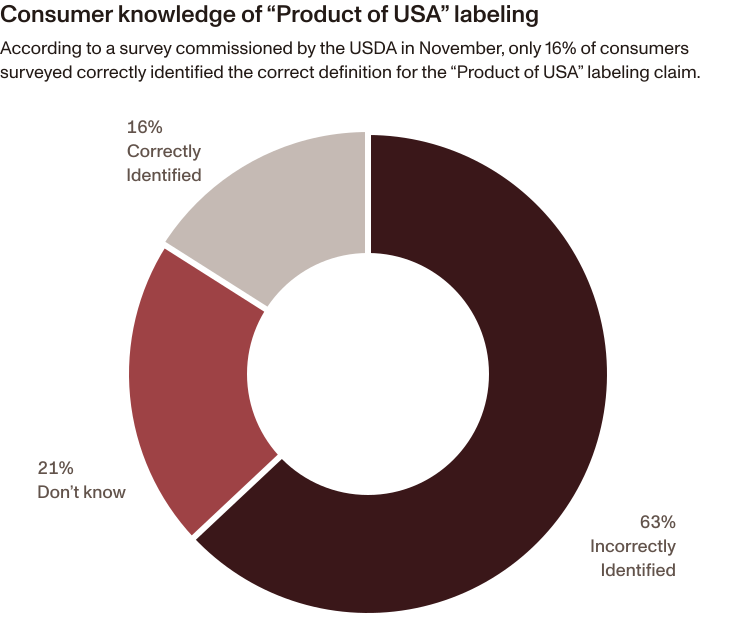
As it stands, meat sold by the “Big 4” processing companies — Tyson Foods, JBS, Cargill, and Marfrig — is sourced from many links in a global supply chain. Brazilian-based JBS, for instance, is the largest meat producer in the world. Though its U.S. headquarters is in Greeley, Colorado, a significant amount of their globally sourced meat only ends up in the U.S. for final production and sale — what some have called “cattle laundering.”
“People should be able to understand, ‘Oh that steak came from Brazil and I don’t like the taste of it’ or maybe they do like the taste and that’s what they want to buy next time,” said Bruce Jackson, an Arkansas rancher who runs more than 500 head of cattle with his son Thomas. “Either way, people should know what they’re getting.”
Montana’s Stockton would take that sentiment a step farther, arguing that “USA is a brand” with positive name recognition that is being exploited by foreign competitors. “Not only are we competing for sales with imported meat,” he said, “but then they get to sell their beef with a sticker that says it came from here? That’s just fraud, plain and simple.”
It should be noted that USDA’s current rulemaking pertains to voluntary labels, and is not related to mandatory Country of Origin Labeling (COOL) laws that were enacted in 2009, then repealed six years later. Under these laws, a cut of meat would be required to bear a label reading, for instance, “born in Canada, raised and slaughtered in the United States.” They were repealed in 2016 after Canada and Mexico claimed they were unfair and threatened to enact retaliatory tariffs.
Bill Bullard is CEO of R-CALF USA, the lobbying and trade association for independent cattle producers. While he supports USDA’s rule changes as a step in the right direction, his organization is focused on reviving COOL. “The mandatory country of origin labeling law required all imported beef to retain its foreign label through retail sale, meaning all the way to the consumer,” said Bullard. “Whereas the Product of USA label rulemaking doesn’t require anyone to label anything in the marketplace. It’s a voluntary label.”
“They get to sell their beef with a sticker that says it came from here? That’s just fraud, plain and simple.”
Bullard also argued that without mandatory labeling laws on country of origin, the “USDA Inspection” sticker — required on all meat products sold here — creates significant consumer confusion. R-CALF is focused on lobbying for the American Beef Labeling Act, a bipartisan bill that would restore COOL labeling laws.
Glynn Tonsor, a professor of agricultural economics at Kansas State University, helped draft a 2015 economic analysis of COOL’s impacts for Congress. He said the pushback wasn’t just from foreign countries but also from domestic meat producers who claimed the labels were onerous and expensive. Tonsor also cited research that there was little evidence COOL provided economic benefits to U.S. meat producers (though he notes not everyone agrees with this assessment).
“You can find ranchers that are both for and against COOL then, and I’m sure you can find ranchers that are both for and against the kind of proposed adjustments to the voluntary [Made in USA] label,” he said.
While Tonsor’s research showed that there were no tangible economic benefits to American meat producers from country-of-origin labeling, plenty of ranchers claim otherwise. Take Alan Shammel, another rancher who works with the Northern Plains Resource Council. Shammel told The Daily Yonder his annual profits increased by $210,000 when COOL was instated.
“It was a loss to the entire community when our ranch lost that extra money [after COOL’s repeal]. And when you multiply that by all the other ranchers in the area, it’s just tremendous,” he said.
The USDA public comment period is open until May 12.

For Minnesota corn and soybean farmer Mike Seifert, erosion is obvious. On his family’s 100-acre farm south of the Twin Cities, there’s a marked difference between the pastureland and the cultivated areas. “If you stand at the fencerow, you’ll be two or three feet higher than the surface of the field next to it,” he said. “You can tell that at one point in history, that field was at the same height, and it’s not anymore.”
Fencelines like Seifert’s exist all over the Midwest — clear evidence to many that decades of intensive agricultural production have had a substantial impact on the region’s topsoil. But how do erosion rates from agriculture compare to the erosion that would have occurred naturally? A new study, published in the journal Geology in December, quantifies the difference between the two. The results are staggering: Erosion from agriculture, the researchers say, is taking place 10 to 100 times faster than natural processes, suggesting an urgent need for practices such as no-till farming and cover crops.
To get to that calculation, the researchers used a novel — and cosmic — method. First, the team collected soil samples from holes augered two to four meters deep in the ground at 14 native prairie sites around the region. Then, at the Purdue Rare Isotope Measurement Laboratory in Indiana and Lawrence Livermore National Laboratory in California, they processed portions of that soil to generate quartz. From that quartz, they could extract and measure Beryllium-10, a rare type of atom created when particles from space collide with earth’s atmosphere.
Isaac Larsen, the paper’s senior author, explained what space collisions have to do with soil erosion: “Stars exploding in the Milky Way produce high-energy particles that move through space and strike earth’s atmosphere. They smash into atoms and set off a chain reaction of things bouncing off of each other, and when they interact with oxygen and mineral atoms, they are so energetic that they smash them apart and produce Beryllium-10.”
Since there’s no other process on earth that creates Beryllium-10, researchers can use its quantities in soil to infer how rapidly or slowly a landscape is being eroded. In an area that’s being denuded fast, the minerals in the soil will have moved to the surface rapidly, and won’t have accrued much Beryllium-10, while slowly-eroding soils will accrue more of the element. By measuring the amount of Beryllium-10 in native prairie soils, the Geology paper provided an estimation of the Midwest’s natural erosion rate since the Ice Age: 0.04 millimeters per year.
They compared this number to an agricultural erosion rate that they calculated in another paper published in February 2022, with a method similar to Seifert’s observations on his farm. Using high-resolution GPS devices, the researchers surveyed the drop-offs at 20 fencelines between native prairie and farm fields. They divided those heights by the amount of time since the land had transferred from the federal government to homesteaders, and found that agricultural erosion rates ranged from 0.2-4.3 millimeters per year — 10 to 100 times higher than the natural erosion rates measured using Beryllium-10.
Based on this comparison, the researchers argue that the U.S. Department of Agriculture’s (USDA’s) soil loss tolerance standards, also known as “T” values, are too high in the Midwest — and that Beryllium-10 measurements should be used as the benchmark for new ones.
“If you sum up the effect of the erosion across the region, it results in several billion dollars of economic losses for farmers because of lower productivity,” said Larsen, adding that that figure doesn’t even include the cost of additional nitrogen fertilizer needed to offset the losses.
“If you sum up the effect of the erosion across the region, it results in several billion dollars in losses for farmers.”
Richard Cruse, director of the Iowa Water Center and a professor of agronomy at Iowa State University who has conducted research about soil erosion, agreed in an email that if the ultimate goal of the T-value is to have no soil deterioration, then the current tolerated soil loss “is much too high.” However, he added, the USDA also has to foster farmer engagement, and some worry that decreasing acceptable soil loss aggressively would discourage farmers from participating in conservation programs.
Both Larsen and Cruse agreed that soil conservation-minded farming practices play an important role in stemming the Midwest’s erosion problem. “No-till farming essentially will stop the erosion rates or reduce them to rates comparable to the [natural] rates,” said Larsen. “The next step is to get carbon back into the soil where it’s been lost. That’s another level and gets into soil-regenerative farming techniques that are not widespread at all.” This includes cover crops, crop rotation, and stopping the use of synthetic fertilizer.
Cruse seconded the need for cover crops. “Keep the soil surface covered at all times,” he wrote, “and armor [with grassed waterways] areas that are especially susceptible to water runoff in channels.”
Seifert, who is now in his fifth year using no-till farming practices, is the fourth generation of his family to farm the land. Of his farm’s 100 acres, 65 are cropland; the rest is a diverse mixture of wetland, pasture, and transition zones between them. There are also multiple different soil types. “There’s a lot going on in a small space,” he said.
For many years, the farm was diversified, with hogs, laying hens, and a large dairy herd. When his father took over, he got rid of the hogs and hens and focused on the dairy herd. “It was the ‘get big or get out’ era,” said Seifert. But after barely staying afloat during the 1980s credit crisis, his parents were ready to be done. They sold the herd and his dad went into construction, growing corn and soy on weekends and in his spare time.
“I wish I had started no-till 10 years ago, but I’m glad we’re five years in.”
“He was doing very conventional agriculture — chisel plowing the soybean residue and stubble, moldboard plowing the corn, spraying whenever it was advised, and doing lots of tillage passes in the spring,” said Seifert.
The land performed well for a series of years, until it didn’t. In particular, the topsoil was coming off of the hilltops and going into the lower areas, leaving them bald.
Seifert became interested in those types of practices through the teachings of North Dakota farmer Gabe Brown, who argues that farming in a more ecologically sound way leads to increased profitability. Seifert asked his dad whether he might be interested in trying something similar on their farm, and was surprised when he said yes. In 2018 and 2019, they transitioned the farm to no-till and cover crops — specifically winter rye — and started applying compost and compost extract to the soil, and diversifying their crops beyond corn and soy.
It was a particularly challenging year to transition to new practices, because 2019 was unusually wet. The Seiferts discovered another damaging effect of years of tillage: the tillage tools had compacted the soil into a hardpan about 8-10 inches below its surface. That meant that the rain couldn’t percolate into the soil, and it took a long time for the water to drain out of the muddy fields.
Seifert decided to trust that with time, the cover crop roots and the increased microbial activity in the soil would break the hardpan and improve the fields’ drainage. After all, he emphasized, extreme conditions like those are evidence of why farming practices focused on soil conservation are so necessary.
“Of the last four years, three have been extreme. I think this is what we can expect going forward — we’re not suddenly going to hit a string of typical years,” he said. “Weather events are getting more volatile. Our soil systems have to be more resilient. I wish I had started no-till 10 years ago, but I’m glad we’re five years in.”
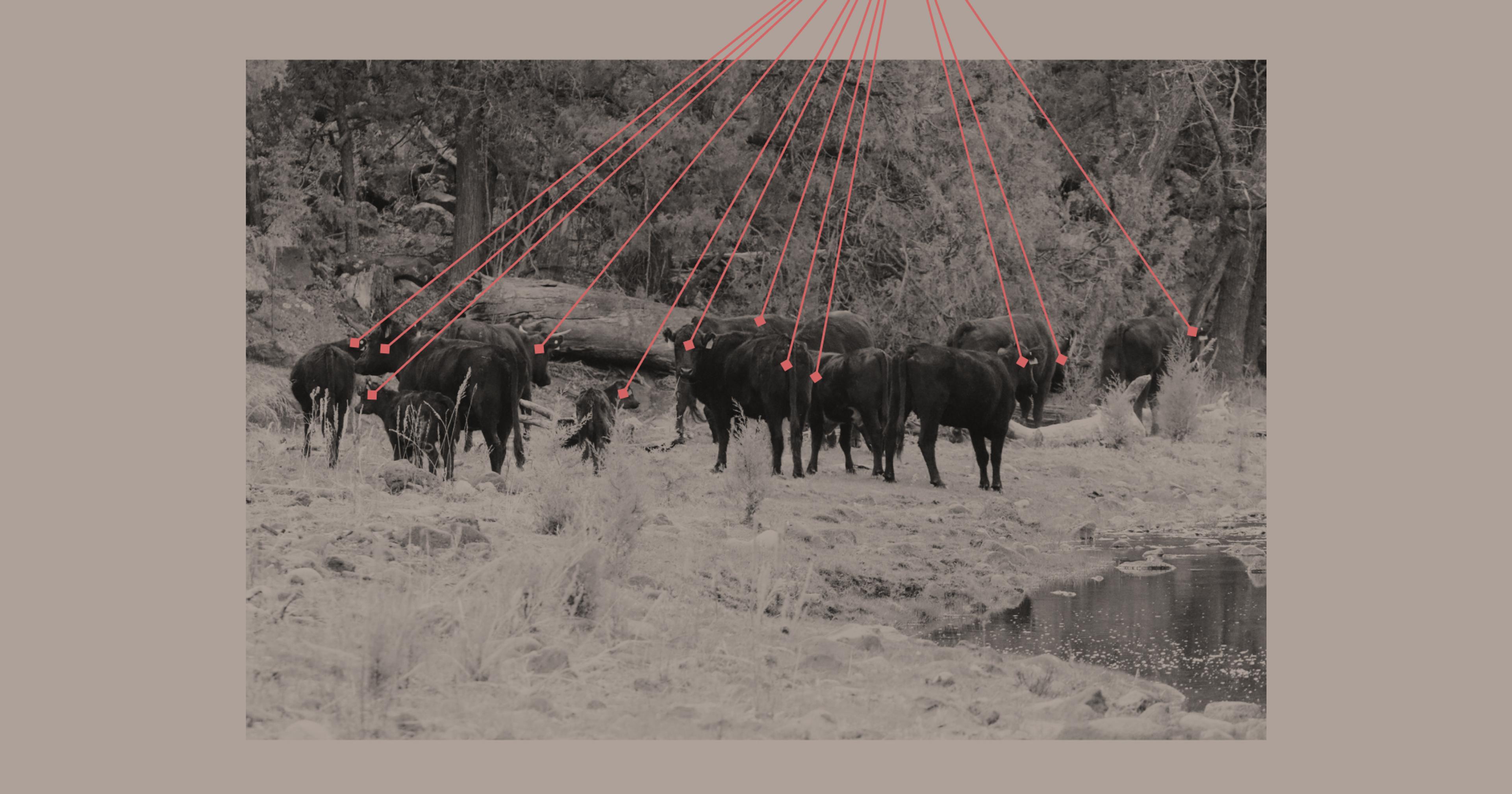
Flash back to the 1950s, and New Mexico’s Gila National Forest, the sixth-largest national forest in the nation, set aside some of its land for domesticated cattle to graze. Two decades later, stray cattle, likely either lost or abandoned, began to wander the wilderness uncared for.
Ever since, the descendants of the abandoned herd have roamed the area and reproduced, leaving locals uncertain what to do with them.
The U.S. Forest Service, along with the Center for Biodiversity, point to the cattle as a harm to the endangered species and environment within the wilderness. The groups said the cattle have a negative impact on the riparian forest surrounding the Gila River, as well as the water quality of the river itself. In the absence of cattle, environmentalists believe the health of the ecosystem would improve dramatically and quickly — leaving them eager to rid the area of bovines.
In the latest effort to remove the cattle that have openly wandered the Gila Wilderness for nearly four decades, the Forest Service made the decision to shoot the herd of “feral” cattle from helicopters flown above the forest, and leave the carcasses to rot. The action, which took place most recently in February, left at least 19 dead cows — and folks in the cattle industry up in arms.
Loren Patterson, president of the New Mexico Cattle Growers Association (NMCGA), is among the ranchers who have been working to stop the aerial shootings.
“We’ve been consistent in opposing it. And a reason why is some of those cattle could belong to a breeding allotment,” said Patterson. The wilderness, he said, is “not particularly far from working ranches.” Because the fences that keep ranchers’ cattle separate from the feral cows are often broken down — thanks to damage from recent forest fires and the area’s high population of elk — ranchers are concerned that some of these cattle are not, in fact, feral at all.
The February aerial action is not the Forest Service’s first attempt to rid the wilderness of the cattle. Ground-based and aerial removal efforts to reduce the cattle population — which has been hovering around an estimated 50-150 cattle, based on on-the-ground surveys — have been underway since October 2021.
“They’ve taken out a bunch of cows over the years, but the problem is that they haven’t gotten them all. So they just reproduce and the herd keeps growing,” said Todd Schulke, cofounder of the Center for Biological Diversity.
Along with the cows’ waste polluting waterways, their presence on the riverbed causes erosion.
Last year, he added, the Forest Service’s aerial gunners and on-the-ground round-up team each got about 65 cattle. This spring, during the aerial shooting, gunners got 19 cattle — accounting for a total of around 150 cattle removed by the Forest Service over the years. It’s unclear how many remain.
Schulke said that as the Gila Forest is relatively dry, the cattle have congregated closely to the river. Along with the cows’ waste polluting waterways, their presence on the riverbed causes erosion, impacting the endangered loach minnow and the spikedace, two small fish native to the Gila River Basin. Schulke added, “The cows eat the young trees, the shoots and the saplings … So they’re interrupting the long-term health of the forest part near the river by basically halting regeneration.”
In an attempt to get an accurate headcount and then exterminate the cattle, the “Animal and Plant Health Inspection Service (APHIS) flew the project area four times with thermal imagery and visual observations, as well as flying the periphery,” Wade Muehlhof, a national press officer from the Forest Service, said in an email. “Due to snow storms during the operational period, it was easy to track animals as they came out for grazing. No new tracks were observed in the fresh snowfall.”
Shad Sullivan, a rancher who sits on the board of R-CALF — a cattle industry lobbying group — shares the NMCGA’s concern, and said he has problems with aerial slaughter.
One of his main concerns, in addition to the issue of who may or may not own the cows, is that inaccurate shooting from above can lead to slow deaths. “When shooting cattle out of helicopters, it cannot be proven that they die,” he said. Sullivan heard reports of cows left injured but alive from the first round of shootings.
In an effort to offer alternatives to killing the cows, Patterson said the association made a directive that would work within the New Mexico livestock code, in which the neighboring allotment owners could go into the wilderness and gather those cattle. They would still have to present them to the livestock inspectors to make sure they didn’t belong to anybody. If they were deemed unowned, ranchers could then purchase those animals from New Mexico’s livestock board at a significantly reduced rate.
“When shooting cattle out of helicopters, it cannot be proven that they die.”
“Basically,” he said, “the reduced rate covered the cost of the inspections and the time. And then they could sell those cattle.” He said that this year, the association did have one of our neighboring allotment owners go to gather some of the cattle, which resulted in almost as many removed as the Forest Service shot.
That being said, on-the-ground gathering of the cattle is no easy task. In fact, that is one thing the two groups do agree on. Rounding up the cattle means at least a 15-mile trip on horseback, with no resources to rest the cattle along the way. This led to a high number of cattle deaths due to stress and self-injury, according to both the Forest Service and Patterson.
Still unable to come to an agreement on the right way to deal with the cows, the NMCGA is continuing with legal action to halt any future shootings. That said, having come out victorious in past lawsuits filed by the NMCGA and others opposed to the slaughter, the Forest Service plans to continue on its path of cattle removal.
“We need to do another survey to see how many remain on the ground, but 154 cattle have been removed since 2021 through ground and aerial operations. The Forest Service plans to move forward with monitoring to assess if any additional actions are needed in the future,” wrote Muehlhof.
And the NMCGA plans to keep fighting that path.
“Everybody thought, you know, that there were better ways to do this. Our state legislature, our governor even made a statement,” said Patterson. “And we should as a state, we should as locals, have a say. And it’s that simple. And that’s why we’re going forward with the lawsuit.”
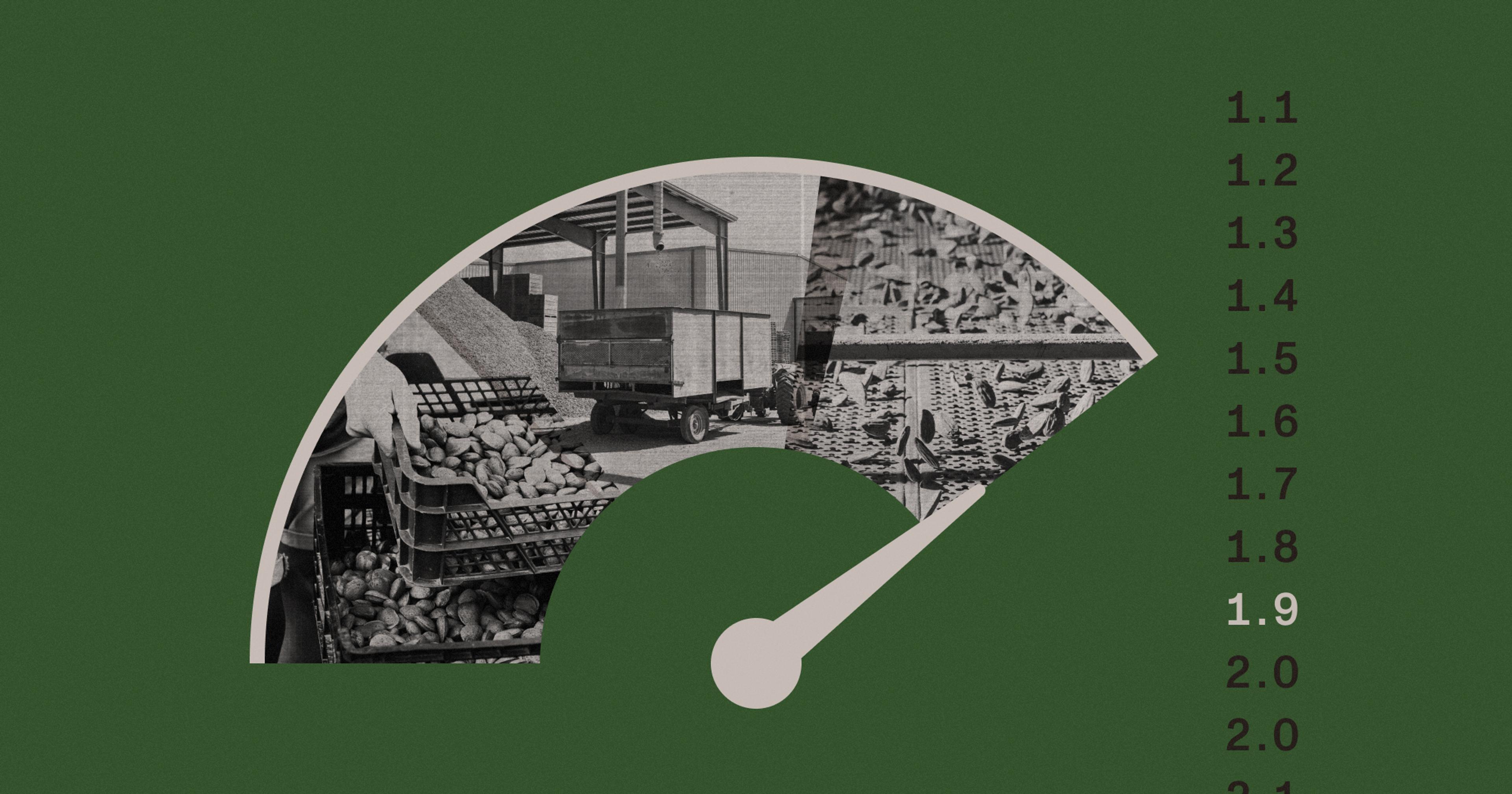
Last September, Google announced that at some unspecified “soon” point, its platform would offer users searching for recipes a breakdown of the climate impacts of ingredients, using data from the UN — seemingly referencing a composite of metrics produced by the Intergovernmental Panel on Climate Change (IPCC) and other sources. Google presented this feature as an expansion of its efforts to reduce its own corporate footprint (and did not immediately respond to a request for more details about it).
With beef shown to be the highest emitter of all ingredients by a longshot, followed by lamb, shellfish, cheese, fish, pork, poultry, and eggs, American ranchers were (unsurprisingly) none too pleased about Google’s accounting. They blasted the tech company for neglecting to account for livestock’s environmental benefits, like preserving greenspace.
But Google did receive accolades from sustainable agriculture advocates, as ClimateWire reported, who applauded the presentation of emissions information to the general public as a generally good idea. Lots of food companies agree; Numi Tea, Oatly, Just Salads, and Unilever’s food brands are now reporting, or will report, greenhouse gas emissions data on labels. The question is where all this data is coming from, and what it actually means when it’s tallied.
That question has been on the mind of Emily Moberg, a director in the World Wildlife Fund (WWF)’s Markets Institute. She authored a new report highlighting that the ways companies account for their greenhouse gas footprints often don’t add up. The problem is exemplified by the food sector where, the researchers wrote, 70 percent of emissions “come from farms, [so] companies need to collect data and calculate impact far upstream from buyers” — what are called Scope 3 emissions. (According to the Greenhouse Gas Protocol, Scope 1 means a company’s direct emissions like running its trucks; Scope 2 means emissions from energy a company buys to light its offices, say; Scope 3 means emissions elsewhere along the supply chain, such as from growing and transporting and processing food and getting the finished product into the hands of consumers.)
How do you account for all that, mused Moberg, when “food is produced from 500 million or so farms globally, with lots of different flavors, and thousands and thousands of processing plants? You can’t do a full lifecycle assessment for every single farm and every single product, every month of the year — that’s just infeasible. How do we get some of that information in a way that’s credible and comparable?”
Many companies rely on averages. In some instances, these are global “proxies to say an average cow, no matter where it lives, produces x amount of methane simply by its biology; or an average cow drinks 50 gallons of water per day,” said Irina Gerry, CMO of food tech company Change Foods. In addition to these “big picture numbers,” researchers say there’s sometimes enough available data to factor in regional or even country-specific info — not as detailed as farm-level data but also not as broad as those global averages.
Even so, wrote the WWF researchers, “When companies estimate or aggregate emissions from suppliers using different methods, the results are apples and oranges. Comparing emissions measured with or cobbled together with different ‘yardsticks’ does not yield decision-relevant insights or monitoring for impact, because measurement differences mask real performance differences.”
Such broad averages aren’t necessarily terrible, said Dave duVerle, CEO of a climate impact analytics company called Tenko, as long as they’re “taking into account things like producing the wrapper, waste, using fossil fuels. This is a framework that tells you you should take into consideration all these things from the whole life cycle assessment, from the production to everything around it.” This can at least get you in the ballpark of what you need to know about the impacts of a specific food or food product.
“Even foods that are looking pretty good are going to need deep decarbonization.”
Elaborated Richard Waite, a senior research associate with research nonprofit World Resources Institute (WRI), “There’s certain food types that have higher emissions and there’s certain food types that have lower emissions,” and that can be a starting point for companies to see where and how they should begin to reduce their footprints. (Moberg pointed out, though, that such broad accounting detracts from the reality that “even foods that are looking pretty good are going to need deep decarbonization” to get the planet anywhere near keeping global warming below 2 degrees Celsius in the next decade.)
Averages solve for an enormous problem, which is the cost and monumental effort of accounting for every ingredient in a supply chain. When you “track it down to the source, right to the farm, you can say this farm has this many cows in this environment — this is how much water, how much land, how many emissions per pound of milk or meat it’s producing,” said Gerry. “It’s almost untenable because this farm is different than that farm is different than that farm, but as a manufacturer, I might have 500 of these farms in my supply chain. I cannot go ahead and do this kind of in-depth analysis on all of them,” which means assessments of emissions are incomplete.
Explained duVerle, “Carbon accounting is hugely context dependent.” Many researchers would like GHG accounting to incorporate increasingly better regional, then national and sub-national information, to measure the impacts of a cow in water-stressed California versus one in damp New York versus one in Brazil — which deforests the Amazon to accommodate cattle. Companies accounting in this way “can have a huge, huge impact,” said Moberg.
But again, a lack of standardized metrics makes it difficult to “compare footprints and progress against emissions targets between companies that use different standards for the same products,” the WWF researchers wrote. Without standardized standards, “We have this huge gap,” Moberg said.
WRI’s Waite is part of a team that’s developing a greenhouse gas accounting standard for the agriculture and forestry sectors. “Basically, it’s accounting guidance that’s supposed to apply to all companies trying to measure the greenhouse gas emissions in their operations or in their supply chain,” he said.
“There is nowhere near enough land to plant trees in the world to offset even a fraction of what people want to offset.”
This might also help with the issue of food companies’ use of carbon offsets to factor their GHG emissions. “Most accounting standards are clear that companies shouldn’t use offsets in their product or corporate accounting to show progress on decarbonization or climate targets, but clearly many companies are doing so,” wrote Moberg in an email. Using offsets can amount to greenwashing, since companies might rely on these rather than actual changes to operations to claim they’re lowering emissions.
Jonas de Lange is growth marketer for food and beverage carbon accounting company CarbonCloud (which calculated Oatly’s emissions). CarbonCloud does not factor in offsets, he wrote in an email, because, “1, There are too many uncertainties around the quality of carbon credits for us to recognise them as a well-functioning tool. 2, Credits are technically outside of the lifecycle of a product and is thus an add-on to the footprint not a part of it.”
Said Tenko’s duVerle, “There is nowhere near enough land to plant trees in the world to offset even a fraction of what people want to offset.” Even in good-faith scenarios, “when you claim that you are going to plant an acre of forest to develop an acre of forest, you’re relying on a lot of hypotheses that are just not verified.” Not to mention, he continued, “the irony of California, where you literally have carbon credit forests that have gone up in ashes due to wildfires.”
While agriculture and other industries wait for standardized emissions data, let alone for any governmental regulations that might see them implemented, “If you’re a company with a climate commitment, you should be thinking about reducing your emissions as quickly as possible, by 90 percent,” said Waite. “If you’re using industry average data, okay, at least you’re measuring it and that’s good. But you can start thinking about actions that you could do to lower it.”
When Niyi Balogun arrived in Maryland from his native Nigeria in 2018, he brought with him 12 years of farming experience. He loved working the land and couldn’t imagine doing anything else in his new home. But living just outside the D.C. beltway, he didn’t believe it was possible. With the help of his wife, Tope, however, Balogun learned of an initiative called LandLink, sponsored by The Montgomery Countryside Alliance. Something of a matchmaking service, LandLink helps landowners lease or donate land to aspiring and experienced farmers alike.
Today, Niyi Balogun farms a one-acre plot in Brookville, Maryland, donated by a local, retired couple with land they wished to see used as a farm. On the plot they named DodoFarms, Balgoun cultivates a wide array of organic produce, native to both the MidAtlantic region and Nigeria. His wife, in the meantime, manages the books. Together, they’re seeing their dreams and visions for a life in America come true.
DodoFarms’ land serves as one of 500 acres that have been matched to date. LandLink launched in 2011 as an initiative by the Alliance, which promotes land-use policies aimed at preserving the environment, open spaces, and rural lands within and near the Montgomery County’s 93,000-acre Agricultural Reserve. While unique in the D.C. region, LandLink models itself off on similar programs, including those in the states of Vermont and Pennsylvania.
With the triumvirate of landowner, small farmer, and the Alliance, the LandLink program is helping restore local food production, reduce land access inequity, and help fill local food banks with nourishing, culturally relevant foods.
Make Me a Match
A look at Montgomery County demographics will tell you it’s one of the nation’s most diverse, yet also one of its most expensive. Just 20 miles away from the bustling center of power that is Washington, D.C., land comes at a cost. But in the early 1980s, recognizing small family farms were increasingly threatened by development, the county formed the sprawling Ag Reserve, today encompassing a full one-third of the county’s land, zoned for specific uses.
Today that reserve is home to traditional beef and dairy farms, as well as equestrian enterprises, pumpkin patches, and more. Rules of the reserve include the development of only one house per 25 acres, and the land is home to more than 550 farms. The county has worked hard to keep the land protected. “Even within the most successful farmland protection in the country, we have to battle back against development threats all the time,” explained Kristina Bostick, senior conservation associate for the Alliance. “There are many people and entities vying for land. But once you give that up, it’s gone forever.”
LandLink operates within the county, some of which falls under that protected acreage, filling the need to help small farmers get a start. The county prides itself on progressive values and has long since been at the forefront with diversity, equity, and inclusion (DEI), especially in recent years. “The twin commitments to DEI and farming the land in the county meet at the crossroads of food justice and land access for small farmers,” Bostick said. “Local food is a never-ending demand, and we’re lucky to have the reserve to place new farmers here.” While the Alliance doesn’t specifically recruit underserved BIPOC farmers, the group does want to remove barriers for them to get farms up and running.
To understand the cost of land in the county, consider Bostick’s example: “A farmer starting out here makes about as much as a new teacher. If a teacher can’t afford a townhome in the county, how can someone afford farmland?”
“If a teacher can’t afford a townhome in the county, how can someone afford farmland?”
Getting matched on LandLink is a straightforward process and costs the prospective farmer just $30 to register. Applicants list their desired type and size of farm, length of desired lease, and any other details they’d like to share. Registered landowners also create a profile listing and reach out to farmers who look like a good fit for their available land. To date, the largest plot LandLink has matched is a 90-acre regenerative grazing operation, currently serving as a pilot project. “Most landowners are more likely to select farmers with experience,” said Bostick, “and with a large influx of immigrant farmers applying, they often find matches with decades of experience.”
Bostick said that the program modeled itself off of other similar programs, including one based in Vermont and another in Pennsylvania. The program is staffed by 1.5 people, and Bostick said that it “stands on the shoulders” of giants in concept. “We’ve worked closely with similar programs,” said Bostick, “and they’ve been really helpful as we’ve refined our program over the years.”
Nia Nyamweya is among the successful farmers to take advantage of LandLink. While she didn’t have a background in farming, her Kenyan grandparents did, and her father owns a landscaping business. Nyamweya had spent her career in foundation work, focused on racial equity and believed starting a small farm would allow her to combine a passion for both.
She began by completing farmer training through a program called Future Harvest in 2019, and in 2020, found her match in landowner Susan Davis. When Davis met Nyamweya, she found a “kinship” in her vision for her land use. It sometimes takes time to find both a practical land use vision, as well as a philosophical one. “Susan was the first person I interviewed, and we discovered we had shared values on environmental stewardship,” said Nyamweya. “I began with 1/8-acre paddock that had been grassed over for sheep grazing.”
On that stretch of land formerly used for sheep grazing, after a year of tilling and nurturing the soil, Nyamweya planted both produce and flowers, with an emphasis on African heritage. For her part, Davis has been inspired by Nyamweya’s efforts. “Quality of soil creates quality of food, and with her methods, Nia has woken up this soil and brought it back to life,” she said. “We need to move away from a monoculture and unsustainable practices, and Nia is helping with that.”
“Nia has woken up this soil and brought it back to life.”
Like many participants in the LandLink program, Nyamweya contributes large quantities of her produce to local food banks, which takes on special meaning because of the produce’s African heritage. In this step, LandLink joins a nationwide movement. “It’s important because when you look at who the recipients are, they are primarily people of color,” she explained. “When the recipients are immigrants, they often don’t have access to foods they know and love.”
The Baloguns also donate a portion of their harvests to local food banks and food assistance programs, in addition to selling produce at farmer’s markets. “We don’t believe food should be a luxury,” said Tope. “We researched the health outcomes of various demographics in the United States, and BIPOC people are at the bottom. When incomes are low and you have no access to natural foods, you suffer poor health.”
For most of the farmers participating in LandLink, farming is not yet a full-time job, but can serve as a launching-off point for full-time farming. “For the majority, this is a second or third job,” explains Bostick.
But in the case of the Baloguns, Niyi devotes all his time to the farm. For Nyamweya, LandLink has been the catalyst to move from full-time philanthropic work/part-time farming to the opposite. “This is my third season farming, and now I’m leasing 10 acres from the state, regenerating soil on six of those acres,” she said. “LandLink meant possibility for me.”
Looking Ahead
LandLink has grown by leaps and bounds since starting, matching over 400 acres of land since 2011, and demand from small farmers continues to grow. That said, Bostick has hopes to expand on LandLink’s work by creating an incubator program, something the county tried but failed to get off the ground several years ago. Such a program would provide centrally located, small-scale plots of land, programming, education, and equipment sharing. “We’re dusting off that plan because the time is right to bring it forward,” she said. “There’s been a 50% increase in food insecurity since the start of the pandemic. LandLink has been a good second option, but now we need to expand on its impact.”
The Baloguns hope that their future will include larger scale farming as well, but remain grateful for all that LandLink has provided. “Without LandLink, we wouldn’t be farming here,” said Tope Balogun. “For me that is the biggest plus.”
Balogun would like to see the Alliance work out an arrangement to hold the land leases, rather than the farmers. “Unfortunately, small farmers are still subject to the landowners’ whims, so if they decide to change course, we lose access to the land,” she said. “If the Alliance holds the lease, they could make it long-term and provide more security to the farmers.”
As LandLink and the Alliance evolve, the involved parties hope to grow their impact on the local community. “The hunger from these farmers to get on the land is huge, and we’d like to secure long-term leases as part of that,” said Bostick. “The program has produced farms that wouldn’t exist otherwise, but this is just one part of a broader solution for strengthening our local food system going forward.”

The dairy industry — and the politicians who support it — want to stop producers from labeling almond, soy, and oat milk as “milk,” in the wake of federal guidance that would allow for this terminology.
The Food and Drug Administration (FDA) released draft guidance in February for how plant-based alternative food products should be labeled. According to the draft document, the agency would allow companies to continue using terms like milk, as long as the source of the liquid, — such as nuts or soy — is clearly defined.
While the FDA already had a defined definition for milk, established in 1973 as the “lacteal secretion, practically free from colostrum, obtained by the complete milking of one or more healthy cows,” the agency cited First Amendment freedoms when it comes to naming products. The agency’s draft decision said free speech in products should only be restricted when labeling is “inherently false or misleading.” Additionally, the FDA asserted that consumers are savvy enough to know that nuts and oats can’t be physically milked.
“Studies indicate that consumers understand that plant-based milk alternatives do not contain milk when shopping for various types of products labeled with the term ‘milk,’” the agency wrote.
Since this draft document was released, dairy producers have taken aim at the federal agency.
In Minnesota, the director of the Minnesota Milk Producers Association told MinnPost that the new guidance is “theft” for dairy farmers’ way of life and that “dairy farmers are offended that someone would try to steal their whole livelihood.”
Meanwhile, the executive director of the Wisconsin Cheesemakers Association said the new policy was full of tortured logic and claimed that the FDA decided that “almonds do lactate,” a reference to former FDA commissioner Scott Gottlieb’s infamous retort.
The movement to keep the word “milk” securely attached to secreting mammals has made strange bedfellows in American politics. For instance, progressive Democratic Senator Tammy Baldwin from Wisconsin has echoed similar ideas as ultra-conservative political commentator Nick Adams.
This legislation mirrors state-level efforts to keep meat alternatives from using terms such as burgers or sausage.
In the wake of the FDA’s draft decision, Baldwin said the guidance goes against her state’s dominating dairy industry and piggybacks on the hard work of more than 6,000 dairy producers in the state. In response to the FDA’s draft language, Baldwin reintroduced a 2017 bill that would prohibit seed, nut, plant, and algae products from using the words “milk,” “yogurt,” or “cheese” in their labeling.
“Wisconsin’s dairy farmers produce second-to-none products with the highest nutritional value and imitation products have gotten away with using dairy’s good name without meeting those standards,” Baldwin said in a statement. “The Biden Administration’s guidance that allows non-dairy products to use dairy names is just wrong, and I’m proud to take a stand for Wisconsin farmers and the quality products they make.”
This legislation mirrors past state-level efforts to prevent meat alternatives from using terms such as burgers or sausage to brand their products, which proponents said would prevent consumers from making purchases under false pretenses. Baldwin’s Defending Against Imitations and Replacements of Yogurt, milk, and cheese to Promote Regular Intake of Dairy Everyday Act, otherwise known as the DAIRY PRIDE Act, has bipartisan support from co-sponsors representing Vermont, Iowa, Maine, and Idaho.
For Linda Ceylor, a 50-head organic dairy farmer in northern Wisconsin, this bill is an affirmation that Baldwin is looking out for dairy farmers in a competitive market. Ceylor, who produces grass-fed milk, said labeling plant-based products as alternatives or imitations would help consumers understand more about where the beverages come from.
“It’s not really milk, it’s more of a refined product because nobody has milked a cashew or an almond or soybean,” Ceylor said. “It’s a win for us to have a voice.”
But according to Nicole Negowetti, vice president of policy and food systems with Plant Based Food Association, a trade organization that represents major dairy alternative producers like Oatly and Califia Farms, the DAIRY PRIDE Act is a “solution in search of a problem.”
Plant-based milk products such as almond milk have grown drastically in consumption, reaching over $3 billion in annual domestic sales.
Wisconsin holds a huge part of the dairy market, producing 31.7 billion pounds of milk in 2021. It’s the second-biggest dairy-producing state, while California leads the country’s almond supply, producing a majority of the nut across the world.
Plant-based milk products such as almond milk have grown drastically in consumption in recent years, reaching over $3 billion in domestic sales this past year. Consumers have sought alternatives to dairy for a variety of factors, but according to consumer studies, the main reasons are lactose intolerance, concern for animal welfare, and environmental stewardship.
Madeline Cohen is a regulatory attorney with the Good Food Institute, a nonprofit group that advocates for alternatives to dairy, eggs, and protein. She said the organization commends the FDA’s new guidance for its focus on consumers’ ability to understand the difference between plant-based milk and cow’s milk. She said that consumers choose these alternatives for a variety of reasons and oftentimes “specifically because it is not cow’s milk.”
Additionally, Cohen said, this new guidance goes in the face of the country’s climate goals, particularly regarding the dairy industry’s share of methane emissions that contribute to global warming. According to the USDA, almost 30 percent of warming in U.S. agriculture comes from the methane produced by cows, sheep, and goats.
“If the U.S. is serious about meeting its climate commitments, imposing arbitrary regulatory hurdles that disadvantage the plant-based dairy industry is the last thing the FDA should be doing,” Cohen said.
While some plant-based brands have co-opted milk-adjacent packaging and verbiage, the industry has a simultaneous history of showcasing health and environmental problems associated with dairy consumption.
FDA did recommend that dairy alternatives voluntarily include language to explain that the product has a lower nutrient amount than milk. If bills like Baldwin’s aren’t passed, plant-based beverage companies will be able to continue the use of the word “milk” for their products once the FDA guidance becomes final.
For Becky Tamez, CEO and co-founder of Isle Acre Farms in Leander, Texas, her land is everything. It explains why Tamez, whose operation primarily grows eggplant, cherry tomatoes, and carrots, has proactively set up her operation to endure extreme weather — and, more specifically, extreme temperatures.
“In the last few years, we’ve seen significant freezes even into negative numbers, in which vegetables cannot survive,” she said “At this point moving forward, we’re going to try to implement a more significant grow season during the spring, summer, and fall and try not to even attempt farming during the winter.”
Texas, America’s most-populous Republican state, has long pushed back against climate mitigation initiatives, even as localized climate and weather events increase in severity. Yet following recent record-breaking drought conditions and extreme cold spells, the Texas Department of Agriculture (TDA) released a food access study linking climate change to its potentially crippling effects on the state’s food supply.
The study, coordinated by TDA and the University of Texas Rio Grande Valley, interviewed a host of professionals working in the food system across Texas to evaluate the state’s most pressing needs. This included members of the grocery industry, state and federal government employees who work on food-related programs, academics, advocates, and agriculture specialists. The goal was to assess various factors leading to food insecurity in the state — climate issues were front and center throughout the study.
For instance, the report noted that “‘climate instability’ is strongly associated with soil loss, water quality, droughts, fires, floods, and other environmental disasters,” all of which affect the state’s food supply.
In total, Texas received similar amounts of rainfall in 2022 as 2021, but the majority of it came all at once during the end of the summer. The average daily temperature in the state has slightly increased over the last four years, and 2022 was one of the driest years on record for Texas, with roughly 49 percent of the state still in drought conditions at the end of December.
“As long as climate change continues, the tendency for worse agricultural drought conditions will continue,” said John Nielsen-Gammon, Texas State Climatologist and regents professor at Texas A&M University. “[T]here will still be good and bad years and decades, but the bad years will tend to get worse over the long haul.“
Nielsen-Gammon added that natural variability makes it hard to be a crop producer in Texas, as there are large swings between wet and dry years.
“It would be easier if farmers could just assume that all trends are temporary, but that’s no longer the case.”
“It would be easier if [farmers] could just assume that all trends are temporary, but that’s no longer the case,” he said. “Climate change may require a permanent switch to crops that are more heat-tolerant and drought-tolerant, with lower but more reliable yields, or crops that grow notably better under higher carbon dioxide conditions.”
Released this past December, the report listed supply chain stability and climate-related stability as primary concerns, exacerbated by the Covid-19 pandemic. The study also noted that climate-related migrants have increased, similar to displaced residents from Hurricanes Katrina and Harvey. Concerns were expressed regarding droughts, drying up of artisanal wells, water use restrictions, fire threats, and dangerous conditions for farmworkers, all of which led back to food supply concerns.
In response to these challenges, the report recommends farmers work alongside researchers and policymakers, improving water quality and building stronger communication networks in local agriculture.
“Agricultural producers rely on intimate knowledge of their own land and how it responds to variations in the weather,” said Nielsen-Gammon. “If the weather becomes different, with hotter and more rapidly developing droughts, that valuable experience becomes a little less valuable.”
Nielsen-Gammon declined to discuss Texas’ overall resistance to green policy initiatives, and how that may impact the state’s agriculture and food supply moving forward. But politicization is to be expected.
Consistent resistance from Texan lawmakers has made it challenging for climate-forward legislation to pass.
Texas Governor Greg Abbott blamed green energy during the historic winter storm of 2021 that left millions of Texans without power, but the state runs on fossil fuels. He signed an executive order in 2021 that would “direct every state agency to use all lawful powers and tools to challenge any federal action that threatens the” energy sector in Texas. And in December of 2022 Republican lawmakers interrogated investment companies for shifting to climate-friendly portfolios, arguing that these companies are not following Senate Bill 13, which prohibits the state from contracting with or investing in companies that divest from oil, natural gas, and coal companies.
The consistent resistance from Texan lawmakers has made it challenging for climate-forward legislation to be passed. But for those looking for more immediate change, the stakes of climate change mitigation are more important than ever.
“Another source of tension is the state and local governance willingness to work closely with industry rather than community-driven organizations,” said climate activist Joey Gonzales, a native of Corpus Christi, Texas.
Gonzales most recently held the title of community organizer for Chispa Texas, an organization that advocates for healthier environments in Latinx communities. Chispa is one of many groups on the ground, fighting for structural change.
But it’s not just progressive advocacy organizations who recognize the stakes are high for Texas. The Texas Farm Bureau, a large legacy organization for farmers and ranchers in the state, lists sustainability and climate-related issues as a top policy priority. While acknowledging some practices might be costly or challenging to adopt, the organization encourages farmers to reduce their carbon footprint through management practices that sequester carbon dioxide, utilize no till-farming, and implement the planting of cover crops.
“At some point in the near future, the agricultural industry will not be able to keep up with increasingly erratic and severe climate fluctuations.”
“Agriculture is eager to be part of the solution,” said Texas Farm Bureau President Russell Boening. “As farmers, we play a leading role in promoting soil health, enhancing wildlife habitat, and conserving water and natural resources as we grow our crops and raise livestock.”
The Texas Farmers Union (TFU) is even more outspoken on these issues, strongly arguing that climate change poses an existential threat to the state’s agriculture industry and food supply. “Farmers have, for the most part, been able to compensate for previous climate shifts with a combination of technology and innovative management,” reads their most recent policy document. “But at some point in the near future, the agricultural industry will likely not be able to keep up with increasingly erratic and severe climate fluctuations.”
Attitudes about climate change are slowly shifting, and more mitigation efforts might be on the horizon as more Texans acknowledge the realities. Almost 81 percent of Texans say they believe climate change is happening, according to new research by UH Energy and the University of Houston Hobby School of Public Affairs. Slightly lower percentages said they believe the change is driven by human activities.
For their part, Gonzales believes in Texans’ ability to create “alternative futures and realities, where we don’t have frequent water boils, where we can breathe easier, and where we don’t have oil spills in our bay,” said Gonzales. “With the current change of culture, I have hope for these futures and realities.”

Last Friday, Kendra Janssen answered 10 crisis calls made to NY FarmNet’s 1-800-547-FARM helpline. “This is our busiest time of year,” she said. “In March, most people are not planting. They’re not working the farm. They’re sitting and they’re planning, or they’re sitting and they’re thinking ... This tends to be when our phone line is really busy.”
Founded by Cornell University in 1986 in response to the national farm crisis, NY FarmNet started as a free service for farmers who needed financial planning assistance and help dealing with economic turmoil. Over time, the organization realized the urgent need to provide mental health caseworkers as well as financial consultants. NY FarmNet “works in a holistic approach to help the farmer. Financial problems also lead to stress, and stress is a major issue that affects our mental health,” said office administrator Janssen, who has worked in agriculture her entire life. Having the financial and mental health consultants visit farmers together “creates the best case scenario for the farm.”
In addition to the 24-hour crisis hotline, NY FarmNet offers free, confidential, on-farm support to all New York farmers, ranchers, farmworkers, and other agribusiness professionals such as veterinarians, truck drivers, and feed producers. Last year, the program served more than 6,000 people in the New York agricultural community. They had 755 open cases, activated within 24 hours of a farmer reaching out — 325 of whom had never received NY FarmNet services before. They answered 678 incoming calls to the helpline, plus additional submissions made through an online form. And those numbers just represent what’s happening in one state.
Farming Takes a Toll
The mental health crisis affecting agricultural and rural communities across the country has been well documented. Farming is a physically and emotionally demanding profession that requires long hours and a high risk of injury, often in exchange for little pay. Farmers juggle a number of unique stressors, such as fluctuating feed and input costs, volatile markets, dependence on unpredictable weather, heavy debt loads, physical isolation, and demanding workloads that sometimes leave little time for personal care or relationships.
Studies have shown that farmers and farmworkers have a higher prevalence of anxiety and depression than the general population. Nationwide, farming and ranching also has one of the highest suicide rates of all occupations. Farmers are twice as likely as people in other professions to die by suicide, according to recent data from that Center for Disease Control and Prevention (CDC).
Of course, while they can sometimes overlap, mental illness and suicide are not always connected — especially if a farmer has never spoken with or had access to a mental health professional. “We know that not every [farmer] who died by suicide had a documented mental health disorder. We often think of linear relationships … but what we find is that correlation — the association between mental health disorder and a suicide attempt and/or completion — is not as strong,” said Josie Rudolphi, an assistant professor in the department of agricultural and biological engineering at the University of Illinois, and co-author of a recent study that looked at 15 years of data collected on suicide among farmers and ranchers. Other risks involved include uncertainty and a lack of control, self-blame and poor coping mechanisms, and access to lethal means.
“Unfortunately, the need exceeds what’s available.”
While the nature of death by suicide makes it difficult to draw any hard conclusions, the researchers found that older farmers were more at risk than younger ones. “We hypothesize that perhaps as farmers age … they feel they no longer have a place on the farm, they don’t perceive themselves to be as useful as they once were or not as physically able to do the work,” said Rudolphi. “So much of their identity is tied up in farming that we’re wondering if as people age that they start to sort of feel as though their purpose in life has been taken away, which may lead to thoughts and actions around suicide.”
Young farmers who died by suicide, however, were more likely to have had relationship problems than older ones, perhaps influenced by the stress of supporting a family after several consecutive bad crop years and when margins are tight.
There are plenty of other unique stressors to the farming profession — isolation, tight margins, weather-related volatility — though existing research has not drawn a definitive correlation between these factors and poor mental health. To quote a 2021 analysis of suicide risk factors in the farming population, “Data related to producers is inconsistent and limited, and while risk factors for producer suicide are widely discussed in popular media, research studies are scant.“
But even if the direct causes remain somewhat speculative, mental health issues in the farming community are undeniably real.
Are Farmers’ Pleas Being Heard?
Efforts to reduce the stigma associated with mental illness continue to spread — including through agricultural communities. “State and federal governments are starting to recognize that there is a major mental health pandemic going on in this country,” said Ohio farmer Nathan Brown, a trustee for the Ohio Farm Bureau Federation who recently attended the funeral of a neighboring farmer who died by suicide. “We need people to get trained in mental health first aid, particularly in the agriculture industry. Knowing what to say or what to look for could help save a life,” he wrote in a recent op-ed published in Progressive Farmer.
For many farmers, accessing individual counseling remains a hurdle. “We know that mental healthcare is a challenge nationwide, not just in rural and agricultural communities,” said Rudolphi. “Unfortunately, the need exceeds what’s available.” To further complicate the widespread shortage of therapists, residents in rural areas are disproportionately affected by a shortage of mental health professionals, making them less likely than urban residents to seek professional help for psychological distress. And because rural areas are less likely to have a reliable internet connection, that means virtual telehealth counseling — which has boomed since the start of the pandemic — isn’t always available, either.
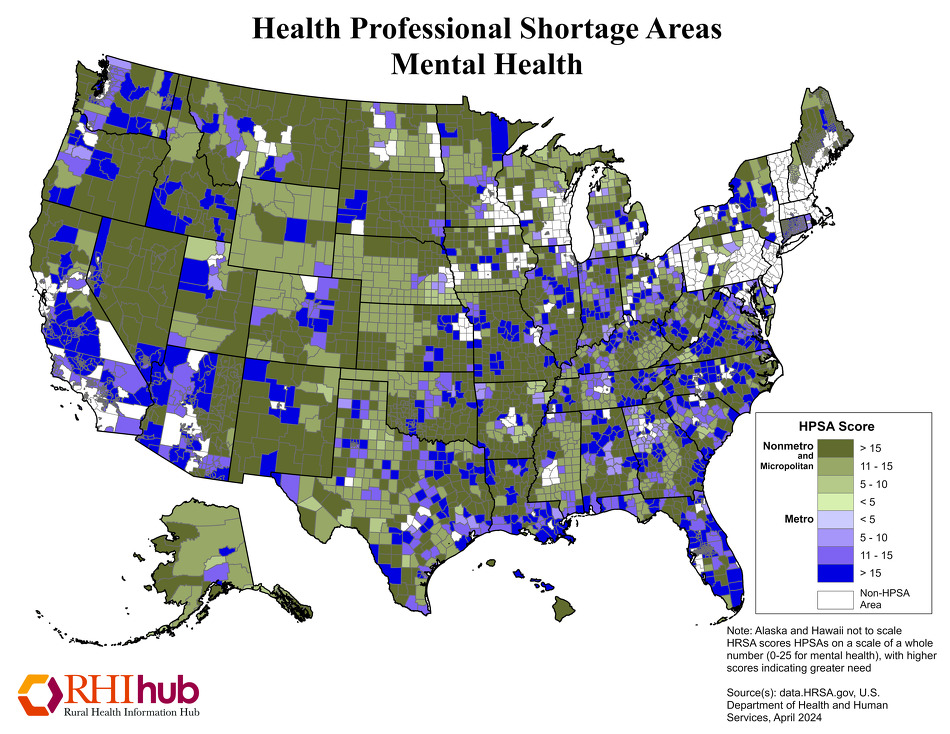
“There has been such a stigma around mental health for so long that a lot of those resources have left, or never were in our rural communities as much as they should have been,” said Brown.
Now, thanks to a wave of funding and support from the federal government, outreach and crisis programs similar to NY FarmNet are cropping up around the country. Last June, Florida launched the statewide Farmer Stress Awareness Initiative. A few months later, the new, multi-state AgriStress Helpline for Ranchers and Farmers (1-833-897-2474) launched, which Texas is currently seeking more funding to sustain. Mental health issues affecting farming communities were a rising concern long before the Covid-19 pandemic, but the additional stressors that producers experienced as supply chains crumbled have perhaps helped draw more attention to the crisis.
“We’ve got to get farmers to see they are more than their farm. They’re more than the acres that they run, they are more than the livestock that they run.”
One major driving force behind current farmer mental health initiatives is the Farm and Ranch Stress Assistance Network (FRSAN). Reauthorized by the 2018 Farm Bill, FRSAN awarded three-year continuation awards totaling $28.7 million to four regional entities (North Central, Northeast, Southern, and Western regions) to help ensure vulnerable agricultural producers and their families had access to supportive services. Grants secured through the FRSAN have supported the launch and/or expansion of regional farmer stress programs in New Hampshire, Maryland, Maine, Minnesota, Michigan, and beyond. Funding goes not only to setting up helplines and support groups for farmers, but more importantly to training any and all individuals who interact with them — bank loan lenders, inspectors, drivers, and more.
The University of Maryland Extension’s Farm Stress Management program, for example, offers training for therapists to better understand and treat farmers. “Because farming is such a unique occupation, you can’t say, ‘You’re stressed, you should probably take a day off.’ If it’s planting season, or harvesting season, or if you have cows, you can’t just take time off easily,” said Emily Zobel, a UMD extension agent. “What the program does is teaches mental health care providers about the culture of farming, and the uniqueness of it so that when a farmer comes to them, and they sit down and have therapy sessions, or reach out for mental health, they know a little bit more about where the farmer’s coming from.”
“What we want to do is make sure there are resources and services for everybody on the spectrum. If you need professional behavioral health, we want to try to get you into that. If you need someone to talk to in the here and now, we want to make sure that’s available,” said Rudolphi, who leads the FRSAN efforts in its North Central region, an area that encompasses North Dakota all the way south to Kansas and Missouri and as far east as Ohio. “We want to build capacity so that agricultural communities are able to respond in the absence of professional mental health resources and services.”
For farmers like Brown, a national commitment to addressing mental health issues in agricultural communities can’t come soon enough. “It’s never too late,” said Brown. “We’ve got to get [farmers] to see they are more than their farm. They’re more than the acres that they run, they are more than the livestock that they run. They are fathers, brothers, sisters, family members, neighbors, and everything else they do in the community.”
Happy cows are typically healthier cows, something every farmer and rancher wants.
“Farmers, of course, want their calves to be as happy as possible because that means healthier and they grow better,” said Joe Armstrong, a cattle production systems educator at the University of Minnesota ... You know, everyone wants happy cows.”
In the search for ways to increase the health and happiness of dairy calves while reducing stress-related behavior, researchers at the University of Florida just released a new study, digging into the potential impacts of human contact on the cows and their well-being.
For the study, lead researcher Emily Miller-Cushon from the University of Florida Department of Animal Sciences, looked specifically at what the research refers to as “abnormal” or “non nutritive” oral behaviors, meaning cows sucking or biting on their pens, their bedding, other calves, and humans during the period of time they are being weaned off of milk and on to solid food — something the study associates as a sign of frustration.
For each day of the study, shortly after the calves were fed, a person went into their pen to scratch their necks. The goal was to mimic the social grooming or licking behavior that is considered normal between calves, hoping the interactions would mitigate the presence of the pen-biting behaviors.
“We saw that calves housed individually spent more time sucking on the pen, which is maybe not surprising because they have relatively less to do in their environment,” Miller-Cushon said. In comparison to the calves that got no added human interaction, she added, “The presence of somebody scratching and having some contact with them reduced the duration of those pen-directed sucking behaviors, particularly for the individual housed calves.” The human contact also seemed to increase the time calves spent lying down after feeding, suggesting they were maybe more calm, according to Miller-Cushon.
Because dairy calves are often housed alone or with just one other calf for up to 12 weeks after birth, the animals don’t always get a huge amount of socialization. The researchers’ driving hypothesis was that a little added socialization at the hands of a human may curb the oral behaviors.
Miller-Cushon explained that the baby cows are often housed either individually or in paired pens to avoid a higher risk of infection across herds of young dairy calves.
Reducing the risk of disease in the calf is also one driving factor behind the common practice of removing dairy calves from their mothers shortly after their birth — along with the fact that separating them early can reduce weaning anxiety at a later age and set the cows up for better independent eating later in life.
“We’ve got Jersey cows, so they chew on just about anything they can get their mouth on.”
Removing the calves from their mothers and putting them in pens, sometimes alone, at such a young age is not without its controversy. Wild calves wean themselves from their mothers’ milk at around 10 months old, while farmed calves are removed from their moms almost immediately, and weaned off of milk within seven to nine weeks — a practice some people see as cruel.
As far as most dairy farmers are concerned, however, these practices are in place to improve the calves’ likelihood of growing up healthy. Keeping the calves isolated does leave a lack of physical enrichment for the cows — an area that many studies like this one seek to better understand.
For example, in a study that focuses on how physical enrichments in their pens can impact calves’ growth, results showed that access to physical enrichments for individually housed or paired calves — think stationary brushes, plastic chains, rubber teats, and nets filled with strawberry-scented hay — may have a positive impact on their growth.
In the case of Miller-Cushon’s study, while the researchers looked at oral behaviors as a sign of frustration, they are not definitely proven to be a sign of distress, leaving some skeptical about the results.
Armstong said, “We don’t know that [these behaviors] are an indicator of stress. We don’t know if they are a bad thing or not.”
At Molly Brook Farms, a small, organic dairy farm in Vermont, Rhonda Goodrich is currently caring for 10 dairy calves. She said she has noticed chewing behaviors, but is not concerned by them. “We’ve got Jersey cows, so they chew on just about anything they can get their mouth on,” she said.
“A calf barn might have 25-30 calves on milk. If you want them to spend five minutes with each calf, every day, it’s just not possible.”
In fact, some suggest that the chewing and biting behaviors aren’t a bad thing at all. Instead, they are a habit leftover from the cow species’ undomesticated days when they used to eat and chew much more often than they do now. The behaviors might even be beneficial, and boost brain development, “like improved memory, increased arousal, and increased cognition,” according to The Ethogram.
Miller-Cushon contends that these oral behaviors are a concern because they suggest that the calf isn’t able to fully perform all of the behaviors that it’s motivated to perform, which can reflect poor welfare. “Generally, with fewer opportunities for behavior to be expressed,” she said, “these behaviors will develop more. So it’s associated with poor welfare, but it’s not completely clear what’s causing the behaviors to develop.”
One area of particular concern is when cows paired in a pen exhibit a behavior called cross-sucking, or a calf biting on its one mate. This a more extreme behavior than normal social grooming, and, according to the Canadian livestock site CalfCare, “calves sucked by other calves are believed to suffer hair loss and inflammation,” and are at a potentially higher risk of developing abscesses.
Still, the study did show the oral behaviors — whatever may be the driving cause behind them — were reduced after five minutes of quality time with a human.
Armstrong said he is also wary of the practicality of applying the tactics tested in the study. Dairy farmers, realistically, do not have the time to sit with each calf. “Let’s say you’ve got a 500-cow dairy, which is not a super big dairy but not a small dairy either. A calf barn might have 25-30 calves on milk. If you want them to spend five minutes with each calf, every day, it’s just not possible,” he said.
As easy as it is to say “Scratch a cow, you’ll make it happy,” the research offers no such closure.
He added that to get a farmer to take time, and put in that kind of effort, the research would need to be connected with strong positive results related to things that farmers can quantify, like increased growth over time or stronger individual eating habits. The preliminary nature of this study does not offer that information.
The unlikely feasibility of the practice isn’t lost on Miller-Cushon, who acknowledged that for a lot of dairy farms, if you suggested that somebody spend five minutes scratching every calf, “They would say, ‘Well, of course, that’s not feasible because we’re all busy.’”
But the practice isn’t impossible. On small dairy farms like Goodrich’s, for instance, it is possible to spend time with each calf.
Goodrich said that her farm, which she runs with her husband, used to raise a larger number of dairy cows, sometimes caring for upwards of 30 calves at a time. Since they have downsized, she is able to spend more time in the pens with young calves — much more than just five minutes per day. “I personally think that contact with farmers is very important,” she said.
And while the contact isn’t the exact format of that in the study — instead Goodrich is in the pen often changing bedding, freshening water, or just generally greeting the calves — she said she has noticed a difference in the calves’ overall demeanor now that they have more time for each of them, something that carries over into adulthood. “I do think they’re healthier now. I think that when you’re focusing on them longer, their productive life is longer. I think our heifers adjust well to their first milking. They trust us.”
A hard and fast conclusion that this kind of physical interaction can lead to a calf’s overall happiness is not what the study signifies, however. As easy as it is to say, “Scratch a cow, you’ll make it happy,” the research offers no such closure. Instead, Miller-Cushon said the takeaway of the research should be more generalized as a first look into something that could potentially benefit a calf.
“I think it more generally illustrates the fact that there’s always more work to do, you know, there are more ways to try to allow for more natural behaviors for calves and to meet some more of their needs.”
Some crops and places, inevitably, are more vulnerable to the effects of climate change. Take wine grapes. Scientists writing in the Proceedings of the National Academy of Sciences warn that the area considered suitable for growing these grapes could shrink by 56-85% in the coming decades if current warming patterns persist.
In the past few years, winemakers across the globe have faced massive crop losses due to wildfires, freak hailstorms, frost events, and persistent drought. Unusual weather patterns also bring new diseases and pests. You may have heard that the invasive spotted lanternfly, for example, is headed West — after decimating vineyards in 14 states on the East Coast and the Midwest.
While some growers double down and utilize more chemical inputs to keep pests away, others are responding to an abundance of studies that show pesticides not only don’t solve for long-term pest and weather problems, they can contribute to the acceleration of climate change.
In addition, many are eager to reduce tractor passes, or eliminate machines altogether, in a bid to improve soil health and reduce their carbon output — in recent estimates, the EPA reports that off-road agricultural equipment releases about 100,000 metric tons of carbon dioxide.
Obviously nixing chemical pesticides and equipment like tractors is far from a simple procedure. Without alternative, effective, affordable ways to eliminate pests and farm the land in place, harvests would suffer considerably.
That said, the situation is challenging, but certainly not hopeless. Wine growers are finding a surprising array of creative ways to enlist the flora and fauna all around them.
Bring in the Bugs
Daou Family Estates in Paso Robles, California, manages an 856-acre estate; they farm organically, and use cover crops to create habitats for insects, sequester carbon, and control soil erosion, said Daniel Daou, co-proprietor and winemaker.
The team also installed two standalone bug hotels and four small insectaries fixed on end posts dotted across the vineyard to “attract beneficial insects and spiders that will feed on pests,” Daou said. “We also seed a native wildflower blend around our reservoir to attract bees and provide them with an ample supply of pollen.”
This, along with their overall integrative approach, Daou explains, is designed to not only create a more “resilient and sustainable environment for grape growing, which will in turn allow the vines to express their full potential and make better wines,” but to help combat the startling decline in insect populations across the world. (A comprehensive review of 73 historical reports published in Biological Conservation showed that 40% of the world’s insect species face extinction in the next few decades; the main causes are intensive agriculture, urbanization, and pollution due to synthetic pesticides and fertilizers.) It should be noted that while beneficial bugs are being brought in to eliminate harmful bugs in the vineyard, this will not lead to a decline in their populations across the board.
At Treasury Americas, a sprawling collection of wineries across California with 6,000 acres under vine, working “with nature, rather than against it,” is their modus operandi, said Emily Kern, Treasury’s sustainability manager.
Beginning to use insects, wild birds, and/or farm animals instead of chemicals and tractors requires, at the very least, a mental adjustment.
“We avoid blanket spraying of chemical inputs not only for the good of the environment and human health, but because this kind of application also kills off the good insects and bugs that help us care for our grapes,” Kern said. “When you kill off everything, it opens the doors for outbreaks of other, bigger problems.”
Instead, their holistic approach to farming includes recruiting help from the insect and animal kingdom.
“We plant hedgerows and insectary rows to provide shelter, food, and protection for insect predators and parasites that eliminate harmful pests we’d need to otherwise spray off with insecticides,” she said.
Strategically placed insectary rows, planted with flowering plants in bloom from January to September provide stable food, habitat, and protection for large, multigenerational populations of beneficial bugs, Kern explained. They also ensure long-term natural suppression of harmful insects — no chemical intervention needed, or machine passes for pesticide application.
These methods at Daou and Treasury suppress populations of mealybugs, sharpshooters, leafhoppers, spider mites, and other harmful insects. Unchecked, they can spread Pierce’s disease or plant viruses like leaf roll and red blotch.
At Ehlers Estate in St. Helena, California, with 40 acres under vine, the team has erected a worm hotel to help combat California’s daunting drought conditions — the worst the state has faced in more than 1,200 years.
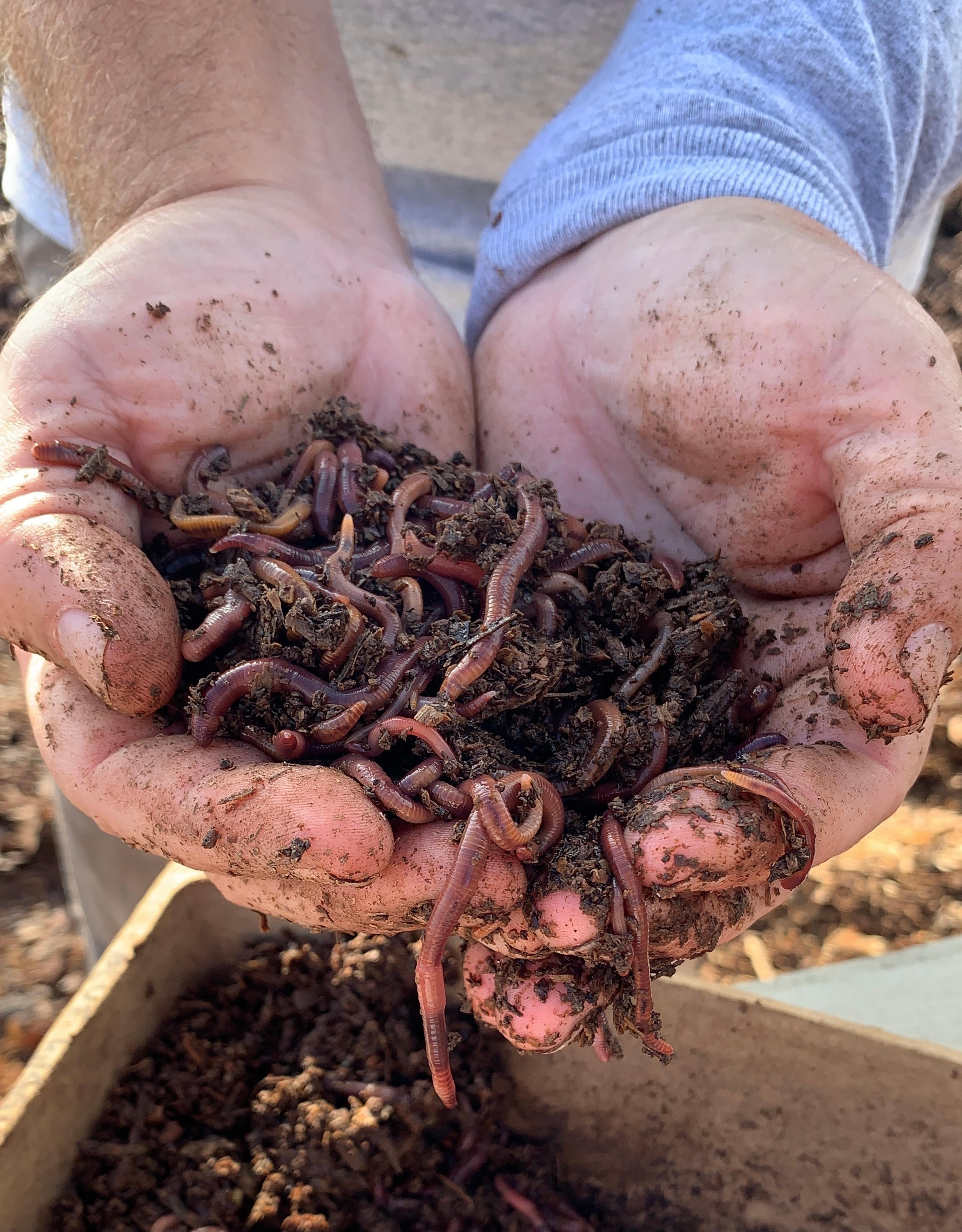
In 2021, Ehlers installed a two-story, rectangular worm unit (about the size of an 8x10-foot rug) that turns unusable wastewater from their operations into gray water that can be used to hydrate the vineyards, explained winemaker and general manager Laura Diaz Munoz.
The system, designed by worm-powered waste-solution company BioFiltro, essentially supplies worms with water that has been “used” in the winemaking process. It contains larger organic compounds like grape skins and seeds that would otherwise make it into the waste stream, according to BioFiltro’s chief impact and sustainability officer Mai Ann Healy.
After breaking down and digesting the wastewater, the worms excrete a microbial-rich casting; microbes from these castings form a biofilm, or a layer composed of billions of microbes and bacteria, which then capture and digest soluble and smaller nutrients in the process water. Over time, the castings build up, and every three or so years, can be removed and used as a beneficial soil amendment.
At peak harvest, the worms can handle 1,200 gallons per day, and this treated water can then be used in dripline irrigation — instead of tapping into California’s strapped supply of groundwater.
Winged Predators Take Flight
Wine growers eager to combat insects and rodents without chemicals are finding allies in the sky — bird and owl boxes are increasingly regular sights at vineyards.
At Chappellet Vineyard, with 104 acres under vine in the Napa Valley, all the farming is done organically to support worker and environmental health, said vineyard manager Andrew Opatz. His team has erected boxes for bluebirds, swallows, barn owls, and kestrels to combat pests. The smaller birds eat insects, while the barn owls and kestrels target rodents, which can feed on grapes and grapevines and disrupt their root systems. One family of owls can eat as many as 3,400 rodents a year.
Opatz hopes to maximize the bird’s bug-nixing power by teaming up with scientists on a comprehensive study of their efficacy this year. Chappellet is working with University of California Cooperative Extension Wildlife and Cal Poly Humboldt “to help us identify the best way to distribute our bird boxes,” said Opatz. “We will be tracking the birds’ flight patterns and examining their diet to study what they are consuming and when they are consuming. The goal of this study is to be able to maximize these natural resources, because creating a balance between beneficial wildlife and pest insects and diseases ultimately also helps us ripen the grapes to the standards we need.”
At Lodi, N.Y.’s, Silver Thread Vineyard, owner and winemaker Paul E. Brock II uses seven chickens to till, weed, and eat insects on his seven-acre vineyard.
The smaller birds eat insects, while the barn owls and kestrels target rodents.
“We will be expanding to 15 to 20 birds this season, and plan to include ducks, geese, and guinea hens,” Brock said. “The chickens are great at tilling the soil around the vines, and geese are great at eating grass. … Ducks and guinea hens are also excellent insect-eaters.”
But like the pesticides many of these creatures replace, they are not a panacea. Brock estimates that their disease control is now “over 90% organic or biological.” But instead of going for organic or biodynamic certification, he reserves the ability to use chemical interventions when absolutely necessary, and instead refers to their approach as “biointensive.”
The hungry birds, vintners say, also often eliminate the need for automated weeders and tractor passes.
Nathan Wood, vineyard manager at Johan Vineyards, a 175-acre estate in Oregon’s Willamette Valley, focuses on biodynamic and regenerative agriculture, both of which prioritize biodiversity writ large as the healthiest and most effective way to combat unwanted pests.
“By having half of our land under vine with many native forest breaks, [it allows] native wildlife, and natural farming systems to interact,” Wood said.
Wood uses 60 chickens to manage the insect population and reduce the presence of boring beetles, plus birds of prey to control rodent populations — his favorite being the Great Blue Herons that hunt vine-munching voles — and 40 sheep to weed and improve soil health.
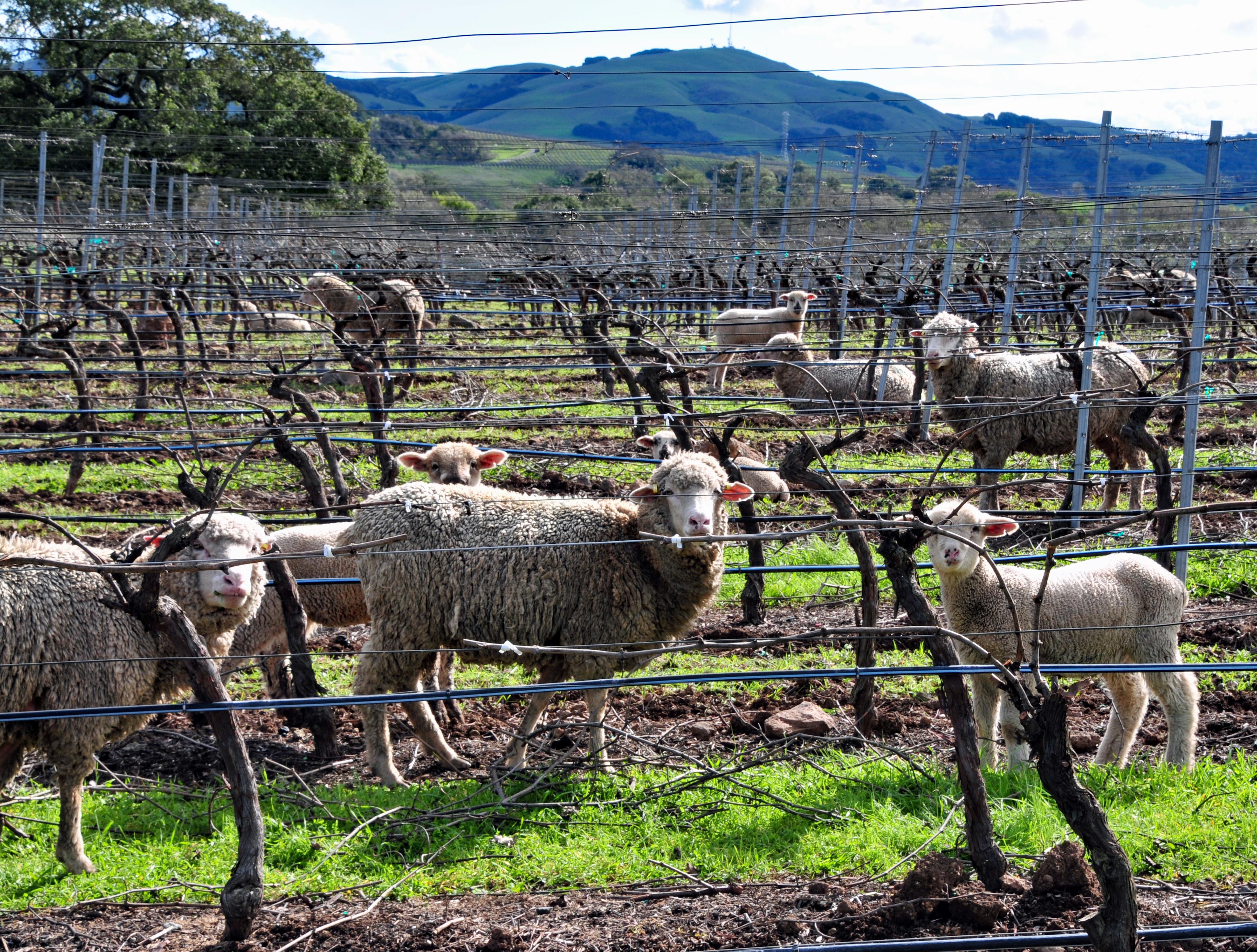
“We are entering our third year of grazing-based viticulture,” Wood said. “We have seen many benefits on soil health and systems benefits already — a few being decreased tractor use and less compaction. We are looking forward to a few more years of data to start to understand some of the changes in soil organic matter and fruit composition from implementing this approach.”
Other studies support his observations: A 10-year study conducted by University of California Cooperative Extension (UCCE) and UC Davis of vineyard sites in California showed that sheep grazing boosts organic carbon sequestration, microbial biomass, and increases levels of both nitrogen and phosphorous in the soil — key nutrients for healthy grapes and tasty wine.
But like Brock, he agrees that there is no silver bullet when it comes to farming approaches — and that his methods aren’t cheap in the short-term.
“Keeping the vineyard on the edge of natural systems and encouraging interaction helps keep rodents and insect populations living in balance with the system, rather than becoming a dominant problem,” Wood noted. “Though there is a significant cost to these approaches, we feel the cost of destroying our soil and the microbial balance would be even more costly to our planet in the long-term. Hopefully, these decisions will also produce better grapes and better wine.”
Hiring Farm Animals to Do the Heavy Lifting
Other wine-growers are recruiting a variety of animals for tasks around the farm usually designated to machines — often at a significant cost. At the 30-acre Osmote Wine in the Finger Lakes, winemaker Ben Riccardi said he used a team of pigs to help clear a one-acre block he wants to plant.
“They root and clear paths so we can get in there and continue to pull trees,” Riccardi said. “They have helped take a lot of weedy biomass out, and have added a lot of nitrogen to the soil through their waste. The pigs have saved some tractor passes, and the need for a bulldozer or forestry grinder.”
Moraga Vineyards, with seven acres under vine on steep hillsides in Bel Air, California, brought in sheep to clear the land.
“Our steep hillsides don’t allow us to use tractors, so we relied on chemicals or manual brush clearing, which is time-intensive and raises safety concerns,” said Moraga winemaker Paul Warson. “We recently decided to bring in sheep to weed, and we hope that they will improve our soil structure and add nitrogen to the soil, which will also reduce the amount of future inputs we need.”
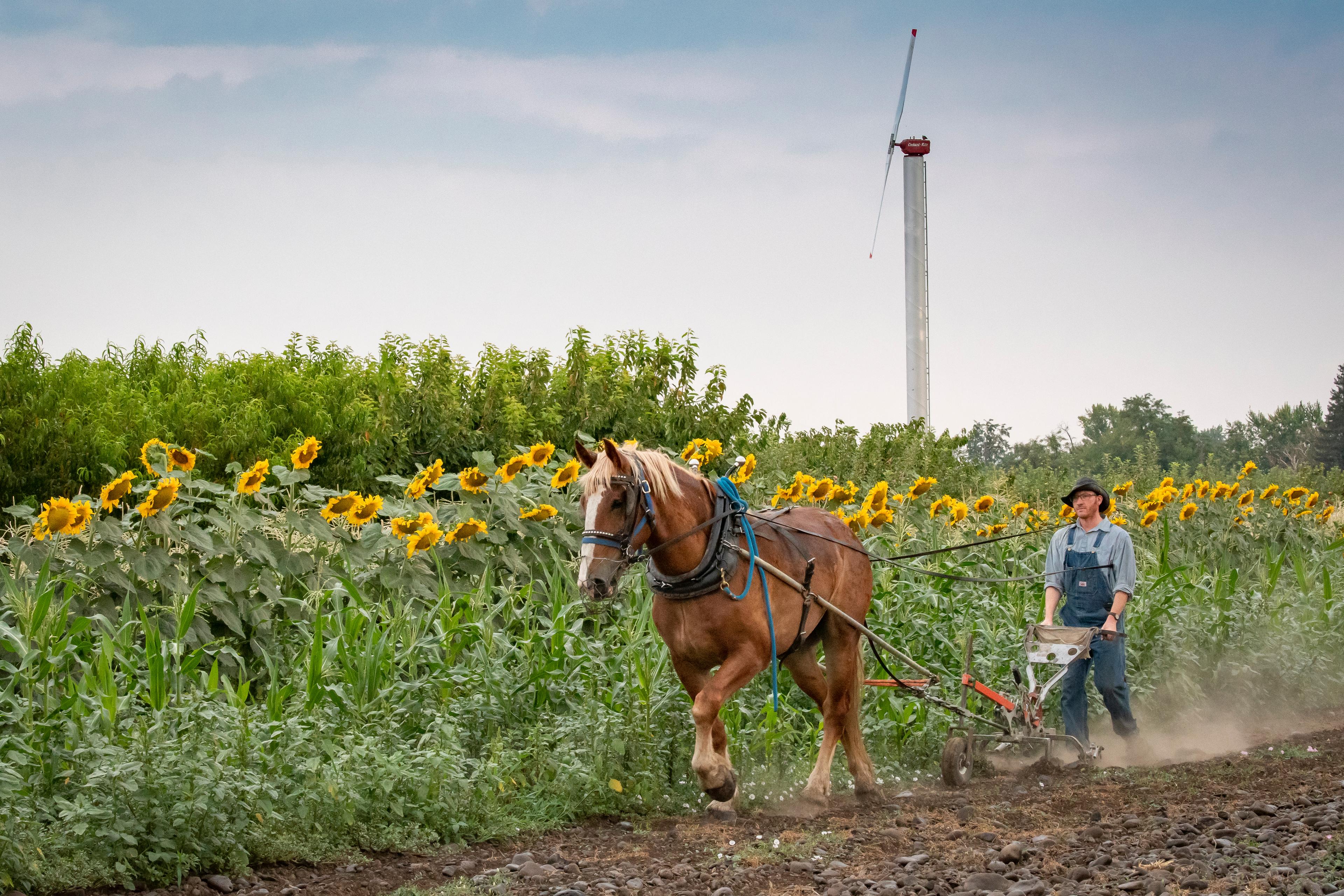
At Treasury Americas, sheep are also used to weed and reduce their carbon footprint by eliminating tractor passes. The team has also brought in goats and cows.
“All three work together to mitigate risks from wildfires,” Kern said. “Goats and sheep eat their way through flammable brush and debris, and clear the way for removals of more fuel, like dead wood. This creates a shaded fuel break, which mitigates fire risk while maintaining healthy and mature trees. Cows are also grazing the hillsides … to eliminate excess fuel.”
As catastrophic wildfires — 2021’s wildfires in California caused an estimated $70 billion in damage alone — fueled by climate change threaten life and property, more and more state parks, preserves and farms are using goats to mitigate risk.
Horsepower Vineyards in Walla Walla, Washington, meanwhile, uses horses to farm vineyards inhospitable to machinery. Founder Christophe Baron deploys six draft horses across just over 18 acres, on slopes so steep tractors are not an option. Plus, using horses in lieu of tractors means less soil compaction, and erosion reduction.
“People said I was crazy, that I’d break my equipment and waste my time and money.”
“People said I was crazy, that I’d break my equipment and waste my time and money,” Baron recalls. “But I knew that vines need to struggle in poor ground in order to provide their best.”
Using horses, he also knew, was a viable option if the machines most farmers rely on couldn’t hack it. Plus, using horses to farm is a key part of his biodynamic farming philosophy.
For many, beginning to use insects, wild birds, and/or farm animals in the vineyard instead of chemicals and tractors will require, at the very least, a mental adjustment. And while adding insectary rows and bird boxes probably doesn’t require such a huge philosophical shift or a hefty financial outlay, recruiting a herd of sheep to do the weeding or trading horses for a tractor does.
“I could buy a new Ferrari a year for the cost of running these stables,” Baron admitted. “The Ferrari has a horse on it, but that’s not the horse I’m interested in having! We use the horses in the vineyards because it enables us to use high-density plantings. Aside from adding the animal element to the property, by bringing back the horses in the vineyards, we are closing the biodynamic circle.”

What makes a good potato chip? For starters, it should be crispy and satisfyingly crunchy, emerging from the bag fully intact without any shards. It should be perfectly golden, without any green spots or burnt edges. It should taste good, too.
For a chip with these qualities, not just any potato will do. Spuds destined for chips, referred to as “chippers” in the industry, require different traits than the russets on your dinner table. “Chippers have to be a certain size and shape to fit through processing machines so they can be sliced appropriately and form the right sized potato chip,” said Jessica Chitwood-Brown, assistant professor of potato breeding and genetics at Colorado State University, who also consider qualities like shape, coloring, sugars, yield, and disease resistance when cultivating new varieties. These details could make or break a potato’s popularity among processors — and, more importantly, consumers.
One of a dozen growers, processors, and researchers participating in the National Chip Program (NCP), Chitwood-Brown is competing in a race to breed the next great chipper potato.
With an annual budget of nearly $1 million, the coast-to-coast initiative is part collaboration, part competition, and is funded by Potatoes USA, a national organization whose mission is to promote potatoes.
It might seem like investing so much money specifically into breeding potatoes for chips is small potatoes. However, the U.S. is the world’s leading chip producer, with about 60 million cwt (6.7 billion pounds) of the annual crop supporting the country’s potato chip industry, valued at more than $22 billion. “We’re talking about potato chips, which you don’t think about as a major food source for the world,” said Chitwood-Brown. “But potatoes really are a staple crop.” And the lessons she and her competition learn from breeding chipping potatoes could be applicable to modernizing and/or improving production of other potato categories.
Potatoes are the most grown vegetable in the United States, followed by tomatoes, sweet corn, and lettuce. They’re also growing increasingly threatened by rising temperatures, which can lead to a drastic reduction in yield. In 2022, the U.S. grew an estimated 397 million cwt (44 billion pounds) of potatoes, the first time since 1866 that the annual potato production declined for five consecutive years. Last year, Idaho — which grows more potatoes than any other state — saw its lowest yield since 2001. In recent years, heat and drought in the West have hindered potato production so much that Maine sent millions of pounds of the crop to Washington processors in need of supply.
“The stuff that’s generated here in Idaho, it might not do well where it’s a lot more humid or hot, like in Florida.”
The NCP researchers’ shared goal is to ensure a year-round chipper supply that is strong and resilient, not easily disrupted by climate-related issues such as drought and floods. They share research findings, trial fields, and materials, and collectively wish to see more fields planted with potatoes resistant to diseases such as late blight, which caused the Irish potato famine in the 1840s.
The collaborative nature of the program is key to pushing breeding trials along. Each participant evaluates potato varieties based on 20 different factors, including yield, storage qualities, and fry color (nobody likes a dark brown potato chip). What thrives in one region might not grow well in another.
“We can come together, put the varieties into these trials, and see how well they do in different areas,” said Rhett Spear, assistant professor and potato variety development specialist with the University of Idaho Extension. “The stuff that’s generated here in Idaho, it might not do well where it’s a lot more humid or a lot more hot, like in Florida, and stuff that grows down there might not do as well where it gets colder, since it has less of a growing season here. So it’s good to see, you know, how they do in different areas.”
In Colorado, where farmers have in recent years been punished by drought and water restrictions, Chitwood-Brown is especially focused on breeding for drought resilience. As we’ve seen with the USDA’s $15 million Klamath agricultural project — which aims to restore and manage the Klamath River that flows through Oregon and northern California, an important breeding route for salmon and suckerfish — water is a precious and increasingly limited resource. Further, as Grist recently reported, federal authorities seem more concerned with supporting the thousands of acres of potato farms in the basin, which sell to major companies like Frito Lay and In-N-Out Burger, than rebuilding and sustaining wild fish populations.
“They’re America’s favorite vegetable, and outsell every other vegetable by a landslide.”
“Water is becoming more and more of an issue in all potato-growing regions, but especially in the West. And potatoes need water — potatoes are made of water — but there are ways to grow and varieties to use that require less water,” she said. “Having plants that are more tolerant and capable of maintaining themselves and being grown with less input is incredibly important for the sustainability of agriculture everywhere, but especially in our country.”
The fruits (or tubers?) of their labor might not be seen right away. “We have anywhere from 12 to 15 years, from the time that the varieties are crossed to the time that we’re able to release them and name them and the industry can get a hold of them,” said Spear.
Since being formed in 2008, the NCP trial has generated four new chipping varieties — Lady Liberty, Manistee, Hodag, and Mackinaw — that are now being grown on 7,785 seed acres, according to John Lundeen, research director for Potatoes USA.
When it comes to potato chip innovation, market needs are generally the force driving a breeder’s efforts forward. But for plant breeders like Chitwood-Brown, the work holds a deeper meaning. “They’re America’s favorite vegetable, and outsell every other vegetable by a landslide,” she said. “The potato growers here in my state are also my friends. This is their business, this is their livelihood. If their farm collapses because they don’t have potatoes that can be grown in certain conditions … I’m thinking about those things, too. The plants and the research that I’m doing actually helps to support a whole economic system. People’s lives and livelihoods depend on that.”
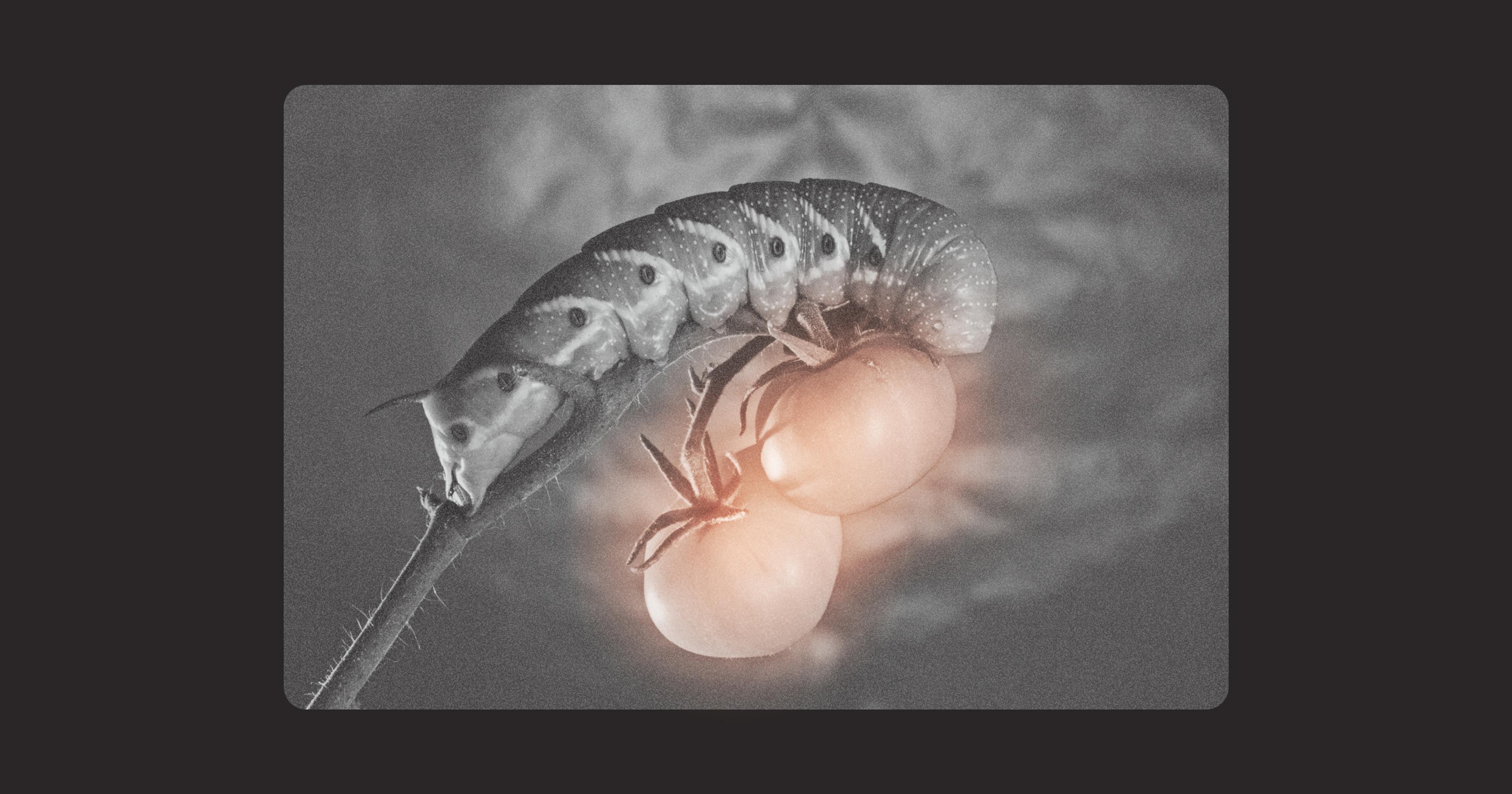
After more than 30 years of research, plant breeder and geneticist Martha Mutschler-Chu is about to successfully hand off new lines of pest-resistant tomatoes to any interested seed company, where they can ultimately be bred for commercial sales.
For producers, this could mean less crop damage and loss at the hands of insect-induced viruses and less reliance on pesticide sprays to keep the bugs away.
Beginning in the ’80s, Mutschler-Chu set out to transfer a trait from a wild tomato variety, which naturally produces an insect-repelling substance on the plant’s surface, into commercial tomatoes. By May of this year, she will have completed her part of the research.
The driving question for most of her endeavors, she explained, is figuring out how to mitigate the need for chemical additives in producers’ fields by breeding traits into the genes of the crop itself.
“The question is, ‘What are they spraying in the fields, and why are they spraying it?’ And if you can get a natural resistance there, you no longer have to spray,” she said.
For this project specifically, researchers looked to the pest-resistance trait in a wild tomato variety native to Peru — the Solanum pennellii. Mutschler-Chu explained that when it comes to tomatoes, fruit can get damaged or destroyed through infection from insects. Put simply, if a bug is infected with any kind of virus, then feeds on a tomato, that fruit will likely get infected too.
“The insects pick up the virus and then they fly to another plant and transmit the virus by feeding. It’s very common, and in … warmer climates, it is the major biotic challenge. The insect-transmitted viruses are a major limit on production,” she said.
On every above-ground surface of the wild tomato plant Mutschler-Chu studied, tiny hairs called trichomes excrete droplets of sugar compounds called acylsugars — and the acylsugars repel insects naturally.
While the insects will still land on the plant, these little droplets change their behavior radically. Instead of sticking around to feed, they become agitated, groom excessively, then leave the plants, according to Mutschler-Chu. And if they leave before feeding, the chance of infection leaves with them.
If a bug is infected with any kind of virus, then feeds on a tomato, that fruit will likely get infected too.
So the researchers spent years isolating the gene responsible for that trait, and then bred it into a tomato variety meant for eating — in this case, the East Coast slicer tomato.
In the resulting fruit, Mutschler-Chu kept the desirable acylsugar genes while removing most of the other wild genes that produce unwanted traits such as an abundance of branches, small fruit, and an undesirable flavor. To be exact, the final lines of the tomatoes contain only 2.5 percent of the wild tomato DNA.
Traditional cross-breeding techniques like this are a slow process. The trial and error of breeding out these traits of the wild tomato that are unattractive to producers while maintaining the level of acylsugars needed to deter pests was meticulous — meaning getting the tomato just right took decades.
The process of transferring the gene can be applied to any type of tomato: processing tomato, cherry tomato, greenhouse tomato, etc. The droplets also protect from a wide array of very different types of insects, according to Mutschler-Chu, and, unlike sprays and other pesticides, it doesn’t kill the bugs.
For tomato farmers like Derek Azevedo of Bowles Farming Company in the Central Valley of California, the concept of cultivating crops bred with viruses and other resistances isn’t new.
Over the last 10 years, the total losses add up to upwards of $1 billion.
“The disease packages bred into the current tomatoes now are helpful. As they say, you can’t hold a good virus down. So, we’re always looking for things that are going to help protect our crops.” The varieties — both processing and market tomatoes — which Azevedo plants now have genetics bred into them to protect from a myriad of viruses or fungus like powdery mildew and Verticillium.
While Azevedo noted insects aren’t the most consistent issue on his farm, he said when they are, it can be bad. As an example, he offered sugar beet leaf hoppers, which spread curly top disease. “The sugar beet leaf hoppers are flying in looking for sugar beets. They’ll descend upon a tomato field, feed for two to 10 hours and then leave, and within a minute or two of eating a plant, they can infect it with the virus.”
According to Zach Bagley, the managing director of the California Tomato Research Institute, which helped fund the research, curly top disease has caused huge losses in tomato fields for years — one reason the institute was interested in Mutschler-Chu’s study.
“2013 is the most recent year where we’ve had major losses, and the numbers used for 2013 … are close to $100 million of losses across the industry,” he said. Over the last 10 years, he explained, the total losses add up to upwards of $1 billion.
So stacking on insect resistance may be intriguing to tomato farmers, Azevedo said. “We’re very accustomed to genetic resistance or immunity to various pathogens. And so, I would say the farmers would be very open-minded to it.”
On the consumer side, confusion about the science can leave people wary of eating the resulting produce.
Cross-breeding and gene editing can help farmers cultivate heartier and more abundant yields, but on the consumer side, confusion about the science can leave people wary of eating the resulting produce.
Ray Yeung, who grows processing and fresh market heirloom tomatoes at his farm near Sacramento, said he could see the pros and cons of a pest-resistant tomato. “From the standpoint of having less insect problems and not having to spray, that would interest us. But then there’s a certain segment of the population who might think that eating something that was modified might cause harm. So if you can’t sell your tomatoes because they put this gene in here because someone thinks that, then that’s a problem, right?”
As far as Mutschler-Chu’s tomato is concerned, the process of creating it is considered traditional cross-breeding, not genetic modification. That said, Yeung’s concerns reflect the fact that consumers have been hesitant about GMOs for decades — which is why there was such a push for labeling regulations, despite a lack of evidence of GMO-related health issues. And the nuances between cross-breeding and genetically modifying can be difficult to dissect.
“In terms of this particular genetic package, this would not be considered something different than what we’ve been doing in processing tomatoes in a commercial, professional research way for at least the last 70 years because it’s traditional breeding,” explained Bagley.
The true definition of a genetically modified organism involves adding genes from a different organism into another — think the Indigo tomato, which contains a set of genes from a snapdragon, creating a purple-fleshed fruit with unusually high antioxidants. That’s not the process that created this tomato. The cross-breeding in this line of tomatoes goes through a different process, in which desirable traits from the same fruit but different varieties are embedded into the final product — a hybrid rather than a GMO.
Azevedo said there are many misconceptions surrounding how producers can use science-based practices like crossbreeding without compromising the quality and safety of the final crop. Each year, Azevedo plants a few rows of heirloom tomatoes — meaning the seeds have never been crossbred or optimized for disease resistance, as a good reminder, he said.
“They’re like the canary in the coal mine. You plant your heirloom tomatoes and then they just get riddled with diseases of all kinds, or some of them aren’t too bad. But, you know, it gives you a good example of what disease pressure is present and, and how susceptible they are,” he said.
She is hopeful that the results of the research can have a broader impact on more crops in the future.
As for the next steps for Mutschler-Chu tomato lines, she referred to herself as a pre-breeder, which she said means “you discover and transfer the traits so that seed companies can put them into their varieties rather than making final hybrid varieties myself.”
So while her part of the research and development is nearing its end — the university plans to release the final lines to seed companies in May — the next process could still take a few years.
After investing decades in this research, Mutschler-Chu feels a great sense of satisfaction to finally be sending the seeds off to their next steps, and she is hopeful that the results of the research can have a broader impact on more crops in the future. Scientists and plant breeders have bred disease resistances into plants before. Mutschler-Chu’s approach is novel, however, in that instead of focusing on a trait that makes a crop heartier against infection, the trait she selected prevents the tomato from harm in the first place.
“Having proven that [breeding in a natural pest-deterring trait] works for one crop, it’s likely that it will work with others,” she said. And while the trait may not have to do with acylsugar, she said the fact the cross-breeding process worked in tomatoes bodes well for other researchers to obtain funding for similar research on other crops.
“Think about it,” she said. “It’s better for the farmer because it lowers their cost of production. They don’t have the labor or the material involved in spraying the pesticides. That’s important. It helps the grower and the crew because they don’t have to be around the chemicals. It helps the environment because the chemicals are not around. And it helps the social insects who are killed by the pesticides along with the targeted detrimental insects.”

“This is a sick, sick bill,” said Mark Lauritsen. “Any legislator in the state of Iowa that thinks this is an okay thing to do has got a real serious problem in their head about what’s really important in life.”
Lauritsen is international vice president at United Food and Commercial Workers International Union (UFCW), which in Iowa alone represents some 15,000 meatpackers at six large-scale plants owned by companies like Smithfield and Tyson. His strong words were directed at Iowa Senate File 167. Introduced in January by Republican state senator Jason Schultz and currently making its way through the legislature, it proposes to allow children as young as 14 to work in meatpacking plants, on meat-processing lines and at loading docks, for example.
If eventually signed into law by Republican governor Kim Reynolds, the bill would allow 14-year-olds to “apprentice” not just in meatpacking but also in industries like mining, construction, and demolition. For this to happen, the state’s department of workforce development would have to approve the “apprenticeship,” supervision would have to be available, and the work couldn’t interfere with a kid’s health, wellbeing, and schooling (although the bill doesn’t stipulate how those interferences would be determined). The legislation would also allow kids to work until 9 p.m. instead of 7 p.m. on school nights — as federal and Iowa law both currently stipulate — and drive themselves up to 50 miles with a special minor’s driver’s license.
The bill is “sloppily” worded, said Iowa Federation of Labor AFL-CIO president Charlie Wishman and is seemingly “in conflict with federal law ... If passed in its current form it’s going to leave a lot of confusion out there for consumers, for workers, for businesses.” The Fair Labor Standards Act of 1938 prohibits anyone under the age of 18 from working in hazardous environments and limits the weekly hours kids under the age of 16 can work.
According to Jen Sherer, senior state policy coordinator at the Economic Policy Institute (EPI), federal law still trumps state law for most private and all public companies. She also pointed out that the federal law allows children as young as 10 to work in agriculture, the most dangerous field of all. But she’d rather “end the two-tier system for youth work,” she said, than lower the standard for kids in other industries.
Most egregious with the Iowa bill, according to opponents: It would let employers off the hook in the event a kid got injured on the job, liable only in the event of “gross negligence” or “willful misconduct.” Reid Maki, director of the Child Labor Advocacy National Consumers League and coordinator of the Child Labor Coalition, calls this provision “very cynical” and the bill itself “probably the worst I’ve seen in 15 years because of its scope.”
Schultz and other backers claim it’s necessary to solve for labor shortages and, as a bonus, allows children to gain valuable work experience. “This bill is an incredible opportunity for everybody involved,” Schultz told The Gazette. “We’re going to end up with a generation of skilled leaders because of these efforts.”
“If you put kids in a dangerous situation, there will be injuries.”
If they make it to adulthood in one piece. According to Lauritsen, working in a packing plant is fraught with dangers, even off the kill floor. “I don’t care where you’re at … there’s fat on the floor, there’s blood,” Lauritsen said. Workers wear hardhats and layers of PPE such as non-skid boots; they also remove earrings, watches, or “anything that can get caught in the machines” and cause the loss of a finger, hand, or arm. (Amputations are common in the industry.) “If you put kids in a dangerous situation, there will be injuries,” Maki said.
Even lifting heavy boxes at the loading dock makes still-developing bodies prone to repetitive stress injuries. These injuries usually fall under the auspices of workman’s compensation, which Lauritsen said has been stripped over the years in Iowa to be “not nearly what it should be.” It’s unclear if injured child workers would be eligible even for what benefits remain.
Maki also takes issue with the extended hours the bill would allow kids to work — for under-16-year-olds, six hours a day and 28 hours a week during the school year, eight hours a day and 40 hours a week after Labor Day. “There’s going to be consequences to that,” he said, mentioning research that shows kids working over 20 hours a school week suffer lower grades and school completion rates, among other negative outcomes. He’s also concerned about exhausted kids driving home late at night.
The bill is the latest in an ongoing series of controversies in which Big Meat is implicated in threats to the health and safety of its workers, child or otherwise. This month, contractor Packers Sanitation Service was fined $1.5 million by the Department of Labor for employing at least 102 children as young as 13 during overnight shifts at meatpacking plants, some of whom sustained chemical burns.
“There’s this belief that you can hire a kid to work for minimum wage because they’re not trying to support a family.”
Tyson and JBS disavowed knowledge of these practices, but Wishman said the case highlighted the fact that the risks of child labor are “much, much more massive than anyone knows.” There’s also a history of it. A 2008 raid of a kosher meatpacking plant in Postville, Iowa, found 32 children working with power shears and circular saws. And it was an issue all the way back when Upton Sinclair wrote The Jungle, his seminal work on meat industry working conditions; some credit the book for helping usher in what labor protections we have now.
Most people in need of these sorts of jobs — and therefore most vulnerable — are Latino immigrant kids with “families who are very poor,” Maki said. “They’re at the bottom of the labor market, and their opportunities are somewhat limited, and they’re taking this job out of desperation.” He also has concerns about the potential for trafficking child laborers, a specter raised after the raid of four auto supplier plants in Alabama last year, where children as young as 12 were working.
Meat companies have also come under fire for failing to protect (adult) workers during Covid — refusing paid sick leave and proper in-plant safety strategies, as well as enlisting the Trump administration to help justify keeping plants open. Even before the pandemic, though, workers were notoriously exposed to dangerous working conditions, assaults, threats, wage theft, and more.
Would the big meat companies wade purposefully into a legally fraught employment landscape and expose themselves to more potential blowback? Tyson did not immediately respond to a request for comment. A Smithfield representative wrote tersely in an email, “We require employees at our processing facilities to be 18 or older,” in response to a query about whether child workers were necessary to overcome labor shortages.
“It’s the latest variation on the push that industry lobbyists have been making since the beginning of the Fair Labor Standards Act.”
“There’s an effort to look for cheaper labor” among meatpackers, said AFL-CIO’s Wishman, pointing out that Iowa minimum wage is $7.25 an hour versus the $21 per hour that starting adult union workers make in an Iowa packing plant. “There’s this belief that you can hire a kid to work for minimum wage because they’re not trying to support a family.”
EPI’s Sherer said that the Iowa bill, “shocking and extreme” as it is, fits a larger trend emerging in multiple states — eight by current count, including New Hampshire, Wisconsin, and Minnesota — “to roll back child labor protections,” she said. “It’s the latest variation on the push that industry lobbyists have been making since the [beginning of the] Fair Labor Standards Act.” The Iowa senate bill was lobbied for by the state’s restaurant association, the Home Builders Association of Iowa, and the Iowa Association of Business and Industry. The restaurant association’s CEO told the Des Moines Register that the bill was necessary to update “outdated” jobs like shoe shining that the law currently allows kids to perform.
Lauritsen of UFCW said that even “high” wages often aren’t enough to retain workers at processing plants. “Meatpacking is physically hard work; $23 an hour with a little bit of overtime is enough to attract people … but I’ll leave that job for five bucks less an hour” if it’s easier, he said. “Kids is not the answer, that’s just stupid.” If the Iowa bill passes, he said the union “would have to strongly push to have contractual language that says nobody works in these plants under 18 years old.” (Although this would apply only to workers in unionized plants.) Failure to ban child workers at the bargaining table would mean the union would seek other actions. “Because we’re not going to have children work in our plants,” Lauritsen said.
Bjorn Solberg, a vegetable processor in Halstad, Minnesota, doesn’t always get to see where his yellow, red, and russet potatoes end up. But thanks to a farm-to-school lunch program that connects local farmers to schools in the Minneapolis school district, he found himself in the lunchroom while children enjoyed his potatoes — for some, he said, it was the first baked potato they had ever had.
Solberg — who owns Hugh’s Garden, a storage, washing, and packing facility focused mainly on potatoes — said he enjoys knowing that his participation in the program helps provide nutritious, local food for students. “I believe in food access, and unfortunately, a lot of families and kids don’t have healthy food access. So when you have students in one place such as a school, it’s the best avenue to ensure that they’re at least getting one or maybe two meals that are healthy,” he said.
Farm-to-school programs prioritize getting locally produced, minimally processed products onto students’ plates in states like Maine, Minnesota, and New York. Now, Oklahoma has launched its own Local Food for Schools (LFS) program — but with a twist.
As one unique goal of the program, the Oklahoma Department of Agriculture, Food and Forestry (ODAFF) is focusing on connecting schools specifically to farmers in underserved populations to help boost their exposure and bottom lines. The USDA defines the underserved population as beginners, socially disadvantaged farmers, veterans, and others with limited resources. This encompasses farmers of color, those who have been operating ranches or farms for less than 10 years, and those who have a total household income at or below the national poverty level for a family of four.
With the new local food program, launched in January, ODAFF is homing in on this group of farmers. In Oklahoma, 13% of the population, or roughly 523,360 Oklahomans, are Native American — the second highest in the country behind California. The LFS program is specifically pinpointing the state’s Native farmers and ranchers — classified as a socially disadvantaged group under the USDA — in hopes of connecting them to schools in the region.
While the program is still in its infancy, Lee Benson, a public information officer with ODAFF, said that his department is working with Langston University Ag Extension to help promote the LFS program. So far, they have sent information about the program to multiple tribes in the state — including the Choctaw and Padawan Nation — to assist in getting their products into school meals.
And as the 8th-poorest state in the country, the program offers an opportunity for both farmers and families struggling financially to reap the benefits. Studies have shown that for low-income students, the school cafeteria can be their sole source of nutritious food, making the program all the more important.
And even the schools get a cost cut thanks to the new program.
As the 8th-poorest state in the country, the program offers an opportunity for both farmers and families struggling financially.
The program is the product of a $3 million cooperative agreement between the U.S. Department of Agriculture’s (USDA) Agricultural Marketing Service (AMS) and Oklahoma Department of Agriculture, Food and Forestry (ODAFF).
Unlike an earlier Oklahoma farm-to-school program, this one offers financial reimbursements for participating schools, allowing more schools the ability to afford fresh local food for their student lunches. With the reimbursement aspect, the departments are adding financial incentives for schools to adopt the program — meaning the school can save money while offering their students local fare.
In order to qualify for the financial aid, the products schools purchase must be sourced from farms in Oklahoma, within a 400-mile radius from the school in question. Only schools that are part of the National School Lunch Program — a federally assisted meal program that serves low-cost or free lunches to over 30 million children each day — can apply.
In states like Minnesota, similar programs have already proven their ability to positively impact both schools and underserved farming populations.
Matt Frank, market specialist at Big River Farms in Minnesota, said that although his state’s food-to-school program did not start with a specific goal of serving historically underserved farmers, the program now seeks to do so. “We’re a nonprofit incubator farm for beginning farmers, primarily farmers of color, immigrant and refugee farmers, and female farmers,” he said. “Those are the folks who are still disproportionately oppressed or marginalized within food and farming systems that lack as much access to things like land and market educational resources.”
“The producer can benefit because it opens up the market for them that they otherwise would not have had.”
So far in Oklahoma, more than 20 farms and seven schools have signed up for the new LFS program. Doug Ratzlaff, a small-scale cattle rancher who operates Hilltop Ranch and Cattle near Enid, Oklahoma, with his wife Amy, recently signed up for the new LFS program.
He said that while the deal is, of course, beneficial as a steady, reliable stream of revenue for the ranch — Hilltop provides schools primarily with ground beef and burger patties — it’s the educational and community building aspects that they love most.
“I think what got my wife and I both excited about it is, there’s an education piece, so it gives us an opportunity to go into the school,” he said. Each school can do it differently, and while some just buy the local products for the kids, many actively involve farmers in the students’ education. Ratzlaff said they have participated in “meet the farmer” days at schools, showing the children slideshows and teaching them about their ranch while they enjoy Hilltop burgers.
With these programs, children receive both locally produced, minimally processed foods — for some, the healthiest food they get all day — along with an education about where their meals are coming from. And farmers gain access to new markets for their products and a reliable stream of income — something the ODAFF sees as a win-win.
“One of the ideas is that a connection can be made between a local producer and a school district. The producer can benefit because it opens up the market for them that maybe they otherwise would not have had,” Benson said. “It’s designed to strengthen the relationship between local farmers and ranchers, local producers, and school districts. And so that way, they can make sure that nutritious foods are in each of these school districts, and not just for this school year, but for years to come.”
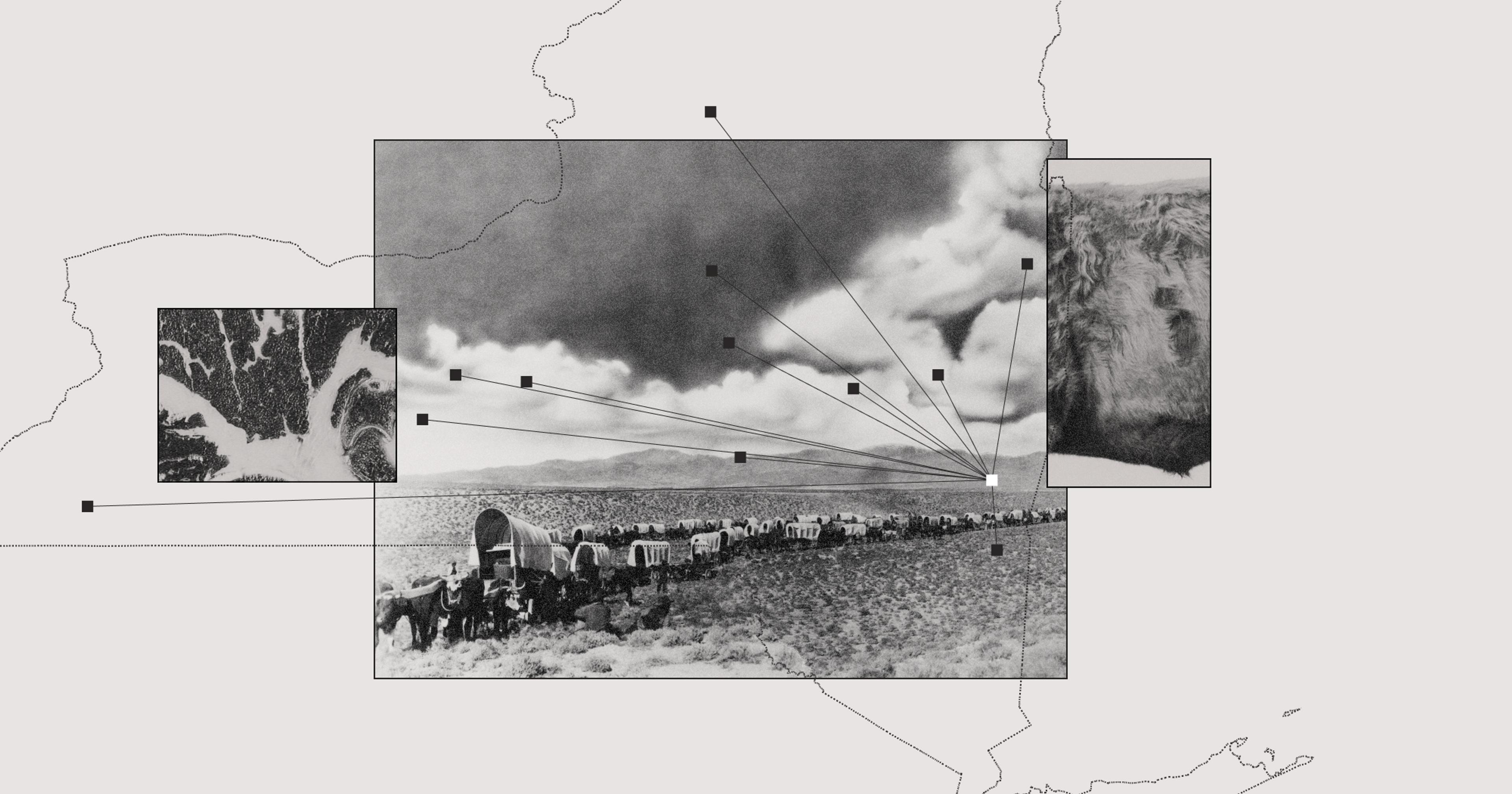
Haywoods Fresh is a livestock farm in Upstate New York, producing grass-fed beef, natural pork, and pasture-raised chickens. They staff a stall every Sunday at a Brooklyn farmer’s market, but over the past couple of years, they’ve repeatedly had some version of this conversation with their regular customers:
“Can I have a package of pork chops?”
“We don’t have any today.”
“How about ground beef?”
“Nope.”
“Stew meat?”
“Sorry.”
The reason for the dearth is well-known to many small livestock farmers around the country. For at least the last two decades, and exacerbated by Covid starting in 2020, there’s been a shortage of USDA-certified meat processing plants where animals can be slaughtered and butchered into their various cuts. This has led to processing backlogs significant enough to threaten sales and the financial health of some farmers’ operations.
It’s also prompted calls to expand U.S. processing capability, particularly by upping the number of smaller processors who can serve smaller farmers. To wit: the Strengthening Local Processing Act, which is soon to be reintroduced by a bipartisan group of congresspeople and senators, led by Rep. Chillie Pingree (D-ME) in the House and Sen. John Thune (R-SD) in the Senate; both versions of the bill were first introduced in 2021.
If passed, the bill will attempt to solve for scenarios like the one that’s ongoing in the part of Columbia County, New York, that serves Haywoods Fresh; the processing pipeline can get so booked up that it can take months for farmers to schedule times to bring their animals in. The next-closest processor is too many miles away for easy animal transport — and it’s overbooked, too. The problem is hardly limited to Upstate New York, or even the Northeast. A recent report on Minnesota meat processing found a “severe lack” of poultry processors in particular in that state; “any processing plant closure can have consequences [that] radiate through local food systems,” the authors wrote.
This isn’t a new problem; federal agencies have been trying to fix it for years. USDA has offered various grants, loans, and other assistance programs that attempt to mitigate the situation, most recently with $223 million made available through the Biden Administration’s American Rescue Plan, which overall will invest $1 billion to expand “independent processing capacity” as a means to lessen consolidation in the meat industry.
As a White House press statement points out, the top four processors in beef, pork, and poultry control 85, 70, and 54 percent of their respective markets; they also saw record-high profits last year. This results in “food supply chains [that] are susceptible to shocks,” the statement reads. “When COVID-19 or other disasters such as fires or cyberattacks shutter a plant, many ranchers have no other place to take their animals. Our overreliance on just a handful of giant processors leaves us all vulnerable, with any disruptions at these bottlenecks rippling throughout our food system.”
“For all the USDA money that goes out every year, most of it goes to Big Ag.”
The proposed fixes (and wads of cash) sound great on paper. But Jon McConaughy, owner of a livestock farm in Hopewell, New Jersey, said it’s not that simple. “We all know that it’s needed but for all the [USDA money] that goes out every year, most of it goes to Big Ag,” he said. USDA money will only help “if it finds its way to where it needs to be” — in the hands of legitimately small operators.
The Pingree bill makes the case that where money needs to be is in communities. “Chefs, retailers, and consumers want to buy locally raised meat, and they’re frustrated by how difficult it’s become to get it,” said Pingree in a press statement; in fact, consumer interest in locally sourced meat has been growing since the pandemic began. On the flip side, livestock producer livelihoods “depend on having somewhere to take their animals” to meet this demand, “but under the current system, their options are severely limited.”
Provisions of the bill, if passed, would offer grants to existing small processors to help them expand, as well as to those looking to start new small facilities; it would also offer grants to boost training programs. (There’s an attendant shortage of butchers in the U.S.)
McConaughy is skeptical that the bill would achieve its intended purpose. He said that USDA, which would be responsible for distributing grant money, pays lip service to smaller farmers, even going “so far as to have a hotline for small producers. But they don’t have enough staff, which means it’s easier for them to get an inspector to a facility that’s got 20,000 hogs than one that’s got 10.” That means “there’s a disconnect between what the administration wants and how it’s implemented with USDA. They’re suffering from the same plight as most of the food industry, which is that it’s very, very hard to find labor.”
Rebecca Thistlethwaite is an extension outreach specialist at Oregon State University and director of its Niche Meat Processor Assistance Network. She also sat on the National Sustainable Agriculture Coalition committee that helped develop language for the Pingree bill. From processors she works with on the West Coast, she’s heard that the pandemic demand that led to meat processing bottlenecks has largely subsided — to the point where some processors are folding because they don’t have enough business. As a result, Thistlethwaite said she believes any new approach to assisting small farmers and processors “has to be a little bit different” than what the Pingree bill in its current form is proposing.
Farmers and ranchers must work to build markets for their product before adding more processors makes sense.
She’d like to see legislators create a “longer-term funding mechanism of ongoing small grants for both existing and startup processors,” she said, noting that there will come a time when the one-time grants and loans offered under the American Rescue Plan are tapped out. However, Thistlethwaite pushes back against the idea that merely expanding processing capacity will solve meat supply chain issues. Farmers and ranchers must work to build markets for their product before adding more processors to the mix makes any sense — something she educates producers about. “You don’t build manufacturing plants before you have contracts to buy those products, and the same is true for meat processing,” she said.
Thistlethwaite also emphasized the shortage of butchers to staff processing plants as a limiting factor. Researchers for the Minnesota report found that among the 57 processors they interviewed there was strong demand for financial help to offset the cost of training employees, and for offsite management skills training to happen in places like community colleges; the Pingree bill would create grants to support workforce training in these sorts of educational settings.
Here again, though, Thistlethwaite sees a problem. Young people don’t want “to work in manufacturing or processing or agriculture in any facet of it, unless they’re making TikToks about it,” she said. “I think a better opportunity there is to expand the agricultural visa program to include year-round [foreign] workers to work in processing,” as long as their rights are protected; and retraining willing packing plant employees as butchers.
McConaughy built one of only two USDA-inspected on-farm processing facilities on his farm. The benefit, he said, is “you have control of processing, there’s less stress for your animals, there’s increased flavor, there’s more flexibility, and you [don’t] have supply chain issues when there’s a disruption.” Such a model only makes financial sense if you process enough animals to offset the price of sending them to an offsite processor, though. The Pingree bill might theoretically help others like him to build such processing plants.
Still, McConaughy said USDA needs to ensure that small farmers receive money before it’s awarded to industrial-scale producers; and that information be made available to farmers so they can understand how to complete applications — he has no idea what he did wrong on his two grant applications for USDA to turn them down. “Make a grant-writer available, free of charge,” he suggested, “for anybody that wants to apply.”

Over the last several years, the dairy industry has faced a multitude of challenges — shifts in supply and demand, price fluctuations, consolidations, labor shortages, and more. The number of dairies across the country continues to fall, declining by more than 55% from 70,375 in 2003 to 31,657 in 2020.
Could allowing more sales of raw milk, priced anywhere between $7 and $18 a gallon, be part of the solution? In December, delegates for the Wisconsin Farm Bureau — an organization that represents farmers in the country’s second-biggest milk producing state — flipped their stance on raw milk sales, which have long been prohibited in America’s Dairyland. The bureau even supports “giving farmers more access to consumers through the sale of raw milk” — a major shift for the organization.
What you’ve got is a complete, chaotic, hodgepodge mess of 50 different states of disorder.
Currently, raw milk can only be purchased legally at retailers in 12 states, including California, Idaho, Nevada, Arizona, Pennsylvania, and South Carolina. Despite its legalization in these states, public health experts maintain the consumption of raw milk, which hasn’t been pasteurized, isn’t safe. That’s the stance currently taken by the CDC, which names raw milk as “one of the riskiest foods,” linked to preventable foodborne illnesses and outbreaks every year. And that’s why, in 1987, the FDA mandated the pasteurization of all milk and milk products for human consumption, effectively banning the shipment of raw milk across state lines.
Meanwhile, states like Wyoming and Mississippi have introduced bills that would overturn bans or allow the expansion of raw milk sales. “What you’ve got is a complete, chaotic, hodgepodge mess of 50 different states of disorder,” said Mark McAfee, an organic raw milk producer in California who founded the Raw Milk Institute in 2011. “Things are changing quickly … Consumers want [raw milk] badly.”
And consumers are willing to travel to get it. “There are people in New Jersey that go to Pennsylvania because they believe raw milk has benefits. So while it’s not easy to get raw milk in New Jersey, it’s certainly not impossible, either,” said Rutgers University food scientist Don Schaffner, highlighting the slippery nature and lack of enforcement on such bans.
The debate over raw milk (sometimes called “fresh milk”) is nothing new — and it never fails to elicit a strong discussion. Most of the milk you find in grocery stores today has been pasteurized, which involves heating liquids such as beer, juice, eggs, and, of course, milk, to a high enough temperature for a long enough time to kill harmful pathogens such as salmonella, E. coli, and listeria.
“The pasteurization of milk was one of the great public health boons of the last century,” said Schaffner. It helped eradicate public consumption of bacteria that caused tuberculosis, diphtheria, typhoid fever, and other foodborne illnesses. “Proponents [of pasteurization] believe it would be a giant step backwards to allow people to sell raw milk.”
Raw milk advocates, however, say it’s time to rethink the relevance of century-old standards. Proponents like McAfee say that raw milk is not only tastier, but also easier to digest and more nutritious than pasteurized milk because it still contains beneficial enzymes and bacteria that get killed off during the pasteurization process. “When properly produced, raw milk has a 20-day shelf-life and is absolutely delicious, like melted ice cream,” said McAfee, who also argued that raw milk is “one of the most anti-inflammatory foods on Earth.”
One of the dairymen behind the shift in Wisconsin, Travis Klinker, emphasized that “we’re not farming in the 1920s and ’30s anymore,” during the Farm Bureau’s December meeting. While no raw milk bills have yet been introduced to the Wisconsin Legislature, Klinker proposed implementing standards from the Raw Milk Institute as a way to assure consumers will get a clean, quality product. “We don’t just want anyone cracking a valve on their bulk tank and putting milk in a dirty jar,” he said.
McAfee, who helped write those standards, expects the raw milk market “to continue to grow explosively.” He’s currently working with a Richmond, California-based lab to develop an on-farm pathogen-testing system that would allow raw milk producers to test and track their own milk samples during a shortened time period. “That will be the replacement for the kill-step of pasteurization, in my opinion,” said McAfee. “Pasteurization was an 18th-century solution to an 18th-century problem. We can — and will — do a whole lot better.”
Despite a steady rise in interest among consumers, the raw milk movement still has hurdles to overcome — including hesitation among existing dairy farmers. When Danone, the company that owns Horizon Dairy, terminated contracts with 89 organic dairy farms in New England and eastern New York in August 2021, McAfee reached out to the affected farmers in an effort to entice them to switch over their production. “Those 89 dairies could have shifted to raw milk production, but they didn’t,” said McAfee. “One did, is thriving, and is doing great … but the others were not really willing or interested in shifting.”
The public mindset around raw milk is disjointed, too. “If you poll food scientists and food microbiologists like me around the country, I think you would find that almost overwhelmingly, people like me are opposed to raw milk,” said Schaffner. “If you want to drink raw milk, that’s your business … If you want to go sky-diving, go for it. But don’t fall on my house.”

As anyone who has used grow lights can attest, using differently colored lights to encourage plant growth isn’t new science. But a recent computer model shows that farmers can use colored lights to optimize both solar energy and crop production — assuming the right type of solar panel becomes more accessible.
To rid America’s power grid of carbon emissions, the country needs more solar power. A lot more. Federal estimates indicate that the amount of solar energy needed to achieve complete decarbonization would require about 10.3 million acres of land — roughly 1.15% of America’s current total farmland.
Installing that much solar will require convincing more farmers to let developers install solar panels on their working farmland — a buzzy synergy referred to as agrivoltaics. To that end, Majdi Abou Najm, one of the researchers behind a new computer model, thinks their results could prove persuasive.
Abou Najm, professor of soil biophysics at the University of California, Davis, recently co-published a research article in Earth’s Future with Fulbright visiting scholar Matteo Camporese, describing how key plant productivity factors change when a plant is exposed to different light spectra.
“Most of the existing yield and crop models that are available today that we use in agriculture assume that we have a full light spectrum,” said Abou Najm. By contrast, their model lets researchers input different light spectra, the visible energy-intensive wavelengths we see as colors, and estimates critical factors like transpiration, carbon assimilation, stomatal opening, and water-use efficiency.
The model draws from existing, published research on hydroponics and indoor agriculture, applying it to an arid California agricultural climate. While it doesn’t estimate exact yields, it does confirm that red lights — which have longer, less energy-intensive wavelengths — are more efficient for crop growth, while solar generation benefits more from blue lights, which have shorter wavelengths and greater energy.
Eventually, Abou Najm wants the model to help translucent solar panels take advantage of blue light for energy production and shine red light on crops for optimized growth. The work builds on earlier data supporting an agrivoltaic future, such as a 2013 study published by French researchers, who found that crops under solar panels grew at a similar rate with or without solar panels overhead, and studies on shading plants to prevent sun scalding.
“This will be transformative; I call it the second generation of agrivoltaics.”
To test the model in the field, Abou Najm began a “very small, focused experiment” last summer using tomato plants; he is currently analyzing that data and intends to publish the results this year. More species-specific data on plant responses to different light treatments is needed to confirm the model, and this summer, he and his team will conduct further experiments to see how much natural sunlight reaches crops grown under opaque panels.
“What we’re hoping for is that our data will inspire a newer generation of those solar panels that will also become mainstream that you can buy and install,” said Abou Najm. “That will be transformative; I call this the second generation of agrivoltaics.”
To actually filter the different light spectra in an agrivoltaic array, Abou Najm envisions translucent panels would need to be manufactured to optimize solar power generation and the development of specific crops. The U.S. Department of Energy notes that the part of a solar panel that converts solar radiation into heat can be color-adjusted in a newer technology called organic photovoltaic cells, which can be used on building facades — but at the moment, there isn’t a wide commercial availability of such sheer panels.
Sheer are currently around three times more expensive than traditional, opaque panels, according to Ian Skor, co-founder and chief executive officer of Sandbox Solar, a solar power developer based in Fort Collins, Colorado.
That said, solar panels that aren’t completely opaque could benefit crop yields even without filtered lights, according to Skor. His company is piloting the crop yield impact of solar panels that are about 40 percent transparent with researchers at Colorado State University’s Agricultural Research Development Education Center.
There isn’t enough of a current need to build enough semi-transparent solar panels to make them less expensive.
Their research found that “many crops respond very well to partial shade conditions without hindering growth,” according to the project’s profile on AgriSolar Clearinghouse.
“Since then, we’ve been conducting studies every year … starting out with specialty crops the first year like tomatoes, cilantro, peppers, and a couple other leafy greens,” explained Skor. The team found “only a minor reduction in yields” underneath the semi-transparent panels, which Skor said are typically less than 8% transparent depending on the manufacturer. With 40% transparent solar panels, “there was actually an increase in yield.”
Even with promising yield results, Skor said there isn’t enough of a current need to build enough solar panels with different levels of opacity to make them less expensive. Additionally, he said, it can cost tens of thousands of dollars for testing certifications of new electrical products to be approved in the U.S.
The feasibility of the panel technology becoming commercially viable is one question; whether farmers will embrace agrivoltaics is a separate issue. “I had a problem figuring out if solar was actually going to be a good deal,” said Colorado corn and soybean farmer Thomas Wishall.
While “higher yield is the language that farmers speak,” getting them on board for agrivoltaics projects is nonetheless “tricky” because of the questions around what the business model looks like for both solar developers and farmers, said agrivoltaics consultant Alexis Pascaris, founding director of AgriSolar Consulting.
Overstating the value of currently available information would damage community trust.
“As the farmer, do I own this system? Do I own the rights to all of the sale of the crops? Do I care about an increased yield, or is the developer gonna take a share of those profits?” said Pascaris. “Those are the complexities being worked out in real time right now.”
In her experience, one of the main drivers for farmers adopting agrivoltaics is the revenue diversification. But even for some economically driven farmers, it’s hard to embrace such an endeavor when it’s still unclear whether they’ll make enough money to justify the effort, she said.
For that reason, Pascaris said it’s vital to ensure farmers feel empowered to make informed decisions that secure their farms for long-term profitability. She’s quick to note that with any research that specifically ties increased yields to the use of different light spectra through solar panels, there needs to be “a lot more data validation before we bring those claims in front of agricultural communities“ as the industry trudges through this “touchy phase of deployment.”
Abou Najm and Camporese acknowledge in their study that more research is needed to “assess which crops and climates are more suitable” for optimal food, water, and resource use. So overstating the value of currently available information would damage community trust, Pascaris adds.
“I don’t want us to be telling a Michigan bean farmer that he’s going to double his beans by doing it under solar panels, but I will want to sell an Arizona tomato farmer on that concept,” said Pascaris.

Once relegated to the back of the pantry, dry beans are back in a big way — and farmers want in on the craze.
The chaotic availability of food during the pandemic, coupled with a growing interest in plant-based nutrition and home cooking, helped boost bean sales by as much as 400 percent in 2020. But even before the novel coronavirus started making headlines that March, causing people to panic-purchase shelf-stable grocery staples like beans, flour, and yeast, consumers were revealing a budding obsession with the humble legume.
It’s impossible to talk about the American dry bean revival without mentioning Rancho Gordo. Since launching in 2001, the Napa-based company has played a pivotal role in leading a revival of interest in heirloom bean varieties such as Rio Zape, Ayocote Blanco, and Mayocoba — going from selling 200 pounds of beans in 2003 to more than half a million in 2018. People wait years for a coveted spot in the Rancho Gordo Bean Club, a curated quarterly shipment of dry heirloom beans grown in Central California, Oregon, Washington, and New Mexico.
Now, researchers are working to help farmers in other regions capitalize on the big bean boom. As rising fuel prices continue to affect the cost of transporting goods, building localized supply chains is not just important, it’s necessary. If the dry bean yield in North Dakota significantly drops due to drought or other weather conditions — as it did in 2021 — researchers want to build a broad, resilient range of sources. Plus, farmers are always seeking out more valuable crops to add to their rotation.
Bolstering the local bean economy in Northeastern states like New York, Vermont, and Maine is the focus of a new $3 million bean project led by Cornell University. As recently as 1965, nearly half the dry beans produced in the United States came from central Michigan and western New York, where the first ration of dry beans for retail sale in the U.S. were sold in 1836. These days, the Empire State plays but a minor role in the bean industry, producing an estimated 2% of the nation’s dry edible bean crop.
North Dakota currently leads the way in dry bean production, followed by Michigan, Minnesota, Nebraska, and Idaho. The large majority of beans grown in those states are farmed conventionally, according to the project’s lead researcher Sarah Pethybridge, associate professor of plant pathology and plant microbe biology at Cornell AgriTech. “Whereas the niche market in the Northeast seems to be organic [demand] driving production,” she said.
Over the next four years, Pethybridge will lead a team of researchers who aim to build a sustainable organic dry bean industry in the Northeast and upper Midwest, where citydwellers are hungry for local bean sources. “There’s a general push toward increasing the frequency of pulses and legumes within people’s diets, and especially towards more of the heirloom varieties,” said Pethybridge. Similar to the heirloom tomato craze, heirloom beans are beloved for their rich flavor and texture, which devotees argue are superior to their mass-produced cousins. “You’re seeing a lot of organic dry beans at farmers’ markets, which we didn’t really see several years ago,” Pethybridge said.
“The biggest challenge that organic bean producers deal with is weed management.”
Beyond the excited bean crowds at the farmers’ market, researchers are excited about the potential for pulses (a category that includes chickpeas, lentils, dry peas and beans) in urban school cafeterias. Starting July 1 of this year, New York City agencies are required to have at least one serving of plant-based entrees per week. “The [city] wants to source a lot of their protein locally and organically, so there’s certainly market opportunities for organic dry bean growers that are close to those big city institutional locations,” said Pethybridge.
Before they can meet that demand, farmers must first overcome a host of challenges. When the Cornell researchers surveyed growers, 72% of them expressed an interest in increasing their production of dry beans but lacked proven strategies to effectively manage disease and environmental stresses.
“Certainly the biggest challenge that organic bean producers deal with is weed management,” said farmer and plant breeder Kristen Loria, who grows half a dozen different varieties of dry beans every year in Danby, New York. Most conventional bean growers rely heavily on soil tillage, turning over the soil mechanically, to manage weeds and diseases. But a major goal of the Cornell research project is to drastically reduce tillage in dry bean production in an effort to boost soil health.
Another major issue for farmers is the multi-step harvesting process most bean varieties require. “Harvesting dry beans, in general, is trickier than with some other crops,” said Loria. “[It] requires special equipment and more knowledge to be successful.”
“Harvesting dry beans is trickier than some other crops. It requires special equipment and more knowledge.”
The traditional two-step bean harvesting process involves an involved process of pulling and windrowing plants prior to combining. “You cut them off at the base, then you put them in a pile to dry on the field, and then come back with a combine to separate the plant residues from the dry beans,” explained Pethybridge. That requires a lot of time and labor — something prospective bean growers might not have a lot of.
To overcome those hurdles, the Cornell researchers are focused on breeding bean varieties that can be directly harvested by a single pass through the field with a combine. “That’s going to be a major factor in influencing the profitability of organic dry bean production,” said Pethybridge.
If the biggest challenges can be mitigated, the future for Northeastern bean growers looks bright. According to data from the U.S. Bureau of Labor Statistics’ Consumer Price Index, the price of dried beans has steadily grown over the last 25 years. At the end of 2022, the average price (including organic and non-organic) was $1.70 per pound, up from $0.67 per pound during the same time in 1995. When you consider the nearly 3 billion pounds of edible beans the U.S. grew last year, that profit difference is impactful to farmers.
Farmers like Loria are committed to reviving New York’s storied bean industry. In 2021, she and two other growers joined together to launch a local bean collective called Buttermilk Bean, which, similar to Rancho Gordo, showcases a diverse array of dry beans in a seasonal bean club — except these are all organically grown in the Finger Lakes. (Two years after launching, there are now five farmers growing beans for the club.) In addition to marketing their product together, the self-proclaimed group of “bean nerds” shares equipment, too, helping to lower each other’s barrier to entry.
“There is such an amazing history of bean-growing in the Northeast,” said Loria. “It’s something that we lost a lot of, so rebuilding all of those nodes is something we have to do largely from scratch.”

Roughly a decade ago, Chinese national Mo Hailong caught the attention of the FBI and the DOJ because he was stealing corn seeds. In a scheme that played out for five years before his conviction in 2016, Mo was sending seeds from the Midwest, where he owned two farms, back to China.
“Contained within the stolen inbred seeds — which, unlike common hybrid seeds, can be replanted year after year — were the valuable trade secrets of U.S. companies DuPont Pioneer and Monsanto,” the FBI wrote of the case in a later blog post.
According to the agency, they spent four years tracking Mo, a Chinese citizen with legal permanent residency in the U.S. The case “led agents on cat-and-mouse surveillance operations across the Midwest and took them on a deep dive into the biotechnology of proprietary corn breeding,” they wrote.
FBI officials had originally been contacted by DuPont security staff, which led them to launch an investigation. It was one of many cases where federal law enforcement targeted Chinese nationals in an attempt to protect U.S. agribusiness interests — a tension reinforced just last week when the Air Force declared a plan for a Chinese company to purchase a North Dakota corn milling plant “a significant threat to national security.”
Seeds are big business for a handful of U.S. corporations, who spent decades fighting for the ability to copyright their seeds’ genetic information. In the years since, courts have routinely protected the ability of companies to sell GM seeds to farmers under the strict condition that they must buy more each year, rather than plant the seeds that come from their crops. Many of the federal government’s cases against Chinese nationals involve protecting these very types of seeds.
Several high-profile convictions of scientists and academics helped clarify the picture that U.S. prosecutors have attempted to paint: Chinese spies were targeting the intellectual property of seeds to undermine the competitiveness of American farmers. Federal officials have directed a lot of money and manpower into protecting this IP — and the huge corporations that hold their patents.
Costly Contracts
Courts and federal agencies in the U.S. have routinely argued for the importance of protecting the IP of seeds developed by large corporations, on the basis that reproduction of these seeds by foreign interests amounts to unfair business practices.
For many domestic farmers, these genetically modified (GM) seeds are a vital to ensuring they can compete within the U.S. economy. GM row crops are built to ensure higher yields and protection against pests or herbicides; many farmers said that buying copyright-protected seeds is simply one of the consequences of the business.
That said, all a grower needs to do is open a package of seeds to enter into an agreement with the company that they will only use the seeds for one year’s planting. And in order to protect their patents, seed producers have been willing to sue farmers.
In 2013, Monsanto brought a case all the way to the Supreme Court against an Indiana farmer who was accused of replanting its seeds. The highest court ruled unanimously in Monsanto’s favor, reaffirming the idea that biological organisms are subject to IP laws.
“I don’t want to go to court, so I do things the way I’m supposed to.”
Interviewed by Purdue’s student newspaper during the case, a nearby Indiana farmer said he was committed to pay Monsanto’s fees because he didn’t want to get sued. “I don’t want to get in this guy’s situation and I don’t want to go to court, so I do things the way I’m supposed to,” row crop farmer Larry Gamble told a reporter from the Purdue Exponent. At the same time, Gamble lamented, “[Monsanto has] made too much money on us.”
Of course, some farmers have resisted genetically modified seeds. An early survey by a Penn State Law School researcher found that farmers were mixed on these types of seeds because they allowed for higher profit margins, but also forced farmers to rely on pricey corporate seeds instead of reusing ones they collect from their crops.
Mollie Engelhart, owner and chef at Sow a Heart Farm in Fillmore, California, said she’s had to buy more expensive organic seeds because of IP rules that drive up prices. At the same time, she considered seed prices less of a problem than the ways corporate agriculture forces small farms to “get bigger and bigger” to remain competitive.
“The only reason I exist at this point is because I’m the end user and I own a restaurant,” Engelhart said. “There’s limited ability for any of us small farms to compete anymore.”
Can You Even Own Seeds?
The government protecting seed IP is a relatively new phenomenon; for millennia, farmers reused seeds to cultivate their crops each year. The U.S. government for decades actually preserved and distributed seeds for free with the aim of supporting agriculture. This process constituted about one-third of USDA’s early budgets in the 1860s — they distributed more than 1 billion packages of seeds.
“It wasn’t until about the early 1900s that companies decided they could make money off of seeds and plants and wanted more protection around that,” Karen Stevenson, a licensing associate at the University of Idaho, told the state’s wheat commission in 2019. It would take those companies about 70 years to realize the goal of enforcing patents on seeds.
The Plant Patent Act passed in 1930, but that law only applied to new plants that were a product of asexual reproduction — the law explicitly excluded patenting seeds. In the years afterward, according to to the Center for Food Safety, an organizing group that has routinely brought litigation against companies like Monsanto and DuPont, the farmer-friendly exclusion for seeds was maintained. Eventually, a separate law was created —1970’s Plant Variety Patent Act — which allowed companies to patent “novel” sexually reproducing plants, but still allowed farmers to save and replant their seeds.
“It wasn’t until the early 1900s that companies decided they could make money off of seeds and plants and wanted more protection around that.”
Then in 1980 a Supreme Court case ruled that proprietary bacteria could be patented, foreshadowing a shift in how the highest court would handle seed IP. The court ultimately ruled in 2001 that seeds could be registered under utility patents. Since then, companies like Bayer and DuPont have routinely sought to register their seeds under utility patent rules, allowing them to bar farmers from replanting seeds, effectively upending millenia of agricultural practice.
Now, activists argue that farmers can unknowingly or mistakenly violate that IP just by having similar seeds, and expose themselves to lawsuits. Farmers are safest if they buy their seeds, as opposed to saving and replanting, because they can be sued even if they accidentally grow IP-protected crops.
Just four multinational biotechnology corporations now account for at least 50 percent of sales in the global seed market. In 2019, seeds and plants cost U.S. farmers a total of $21.2 billion, according to the USDA, nearly 6 percent of their operating budgets. And IP-protected seeds — along with the big money they command — have become a significant piece in the contentious relationship between China and the U.S.
Seeds of Change
For the past decade, the executive branch of the U.S. government has folded agriculture into its escalating tensions with China, arresting multiple people accused of stealing or helping steal trade secrets on behalf of Beijing’s government. This was partly due to official Chinese statements: Agriculture is listed as one of the key areas they want to expand.
Though the arrests started under the Obama administration, the situation dramatically spiraled under former President Donald Trump when he set off a trade war with China. Trump’s DOJ also launched the China Initiative, which led federal officials to target suspected Chinese collaborators in many industries, including agriculture.
The Biden administration, meanwhile, has taken several steps to reduce the trade war pressure that ramped up during Trump’s time in office. First, citing arguments from human rights groups, Attorney General Merrick Garland closed the China Initiative at the Department of Justice, which was created to target Chinese officials operating within the U.S.
Then in January, USDA announced a new approach: collaboration instead of trade war.
“We are operating on two levels with China.”
“We’re reinvesting in that relationship,” Undersecretary for Trade and Foreign Agricultural Affairs Alexis Taylor told reporters during an announcement that the administration plans to use diplomacy to work out tensions and focus on innovation. As to whether that approach can hold, especially in light of increasing political tensions between the two countries (See: spy balloon), it’s anyone’s guess.
“We are operating on two levels with China,” wrote Washington Post columnist Fareed Zakaria earlier this week. “One is geopolitical, where tensions have been growing rapidly. But the other is commercial, and it is determined largely by Chinese and American consumers and firms, not governments. That relationship remains deeply intertwined and interdependent. Can these two realms continue to move forward while working at cross-purposes? It seems highly unlikely.”
The seeds of change may be afoot.

According to figures from the U.S. Department of Labor’s Bureau of Labor Statistics, eggs were one of the single most inflationary items in the entire country in 2022, ending the year with a full-year inflation rate of 32%. Electricity rose less than half as much at 14%, housing costs only 7%, and new cars — whose supply was famousimperiled by chip shortages — grew a paltry 6%. Egg prices, on the other hand, have been rising so fast that it’s not uncommon to see grocery stores with blank stickers where the price should be, like retailers don’t really know what they’re worth — or they don’t want to put up a label that they’ll just need to change tomorrow.
Records have been broken: December 2022 saw the highest wholesale egg prices ever recorded, according to the monthly Livestock, Dairy, and Poultry Outlook report from the USDA’s Economic Research Service. They averaged $5.03 per dozen, 247% higher than they were in January of the same year, peaking at $5.40 the week before Christmas. In some areas the increase was even higher — these already-high numbers mask substantial regional variation. In New York, it’s not unusual to see a dozen eggs for $9.99 or more; a Massachusetts restaurant owner told PBS Newshour that his egg costs were up 220% from the previous year.
What’s causing this spike? According to many experts, it’s a perfect storm of several factors impacting all at once — higher costs to producers and a disease-driven decline in chicken populations, hitting at a time of high overall inflation, all for an increasingly popular staple product.
Egg producers have said their input costs have risen across the board, contributing to high consumer prices. Emily Metz, president and CEO of the American Egg Board, told the Associated Press in a recent interview that feed costs for farmers were up as much as 60%, and “labor costs, packaging costs — all of that ... those are much much bigger factors than bird flu for sure.” A USDA report found farm wages rose by 7% in 2022.
Beyond basic inflation, you’ve likely heard that the U.S. has had a large decrease in its chicken population thanks to an outbreak of highly pathogenic avian influenza, or avian bird flu. By the end of December 2022, the disease had killed more than 43 million birds, or around 11% of all egg-laying hens in the country. According to a report from the USDA’s National Agricultural Statistics Service (NASS), this caused December 2022’s egg production to drop 6% year-on-year.
Eggs are also a classic case of what economists call inelastic demand, meaning demand stays relatively stable even with large changes in price. It also means that a dip in supply, even just a small one, can have dramatic ramifications on price and availability, because the same number of people still want the same number of eggs (though of course some consumers end up getting priced out). Suddenly, there simply aren’t enough to go around, which can cause empty shelves and skyrocketing prices.
Speaking of demand, the holiday season is also traditionally the time of year with the second-highest demand for eggs (Easter is first), which are a key ingredient in both holiday baking and big family breakfasts. The increased demand coming during a time of lowered supply — while the country was also suffering record inflation — was too much for the market to bear.
“Farmers don’t set the price of eggs — the market does.”
“You have three factors that hit at the right time that have caused prices to go up,” said Benjamin Campbell, an associate professor in the University of Georgia’s CAES Department of Agricultural and Applied Economics. “You had supply going down, you had demand going up, and you had input prices going up as well. So you had three things just hit the system and prices went sky-high.”
In a prepared statement shared by Center Fresh Group (the country’s seventh-largest egg supplier), the American Egg Board wrote, “Farmers don’t set the price of eggs — the market does. Volatility and uncertainty because of inflationary pressures and the continued impacts of bird flu have disrupted the egg market, which results in higher egg prices.”
Still, not everyone is convinced that these price spikes can be explained by simple market forces. Indeed, not all egg producers have raised their prices.
Dan King owns and operates New York’s Rexcroft Farms along with his brother Nate. Rexcroft has about 400 hens laying 230 to 260 dozen eggs per week, all of which they sell at a single Brooklyn farmers’ market.
“The whole egg price situation, it’s frustrating,” King said. “We’ve all had some increase [in costs], and if prices went up 10, 20, even 30%, okay, I could see that. But these prices doubling or tripling? It doesn’t make sense.” King is still selling a dozen eggs for $6 (a bargain in New York City), in part for philosophical reasons. “Eggs are an inexpensive protein,” he said, “and that’s what a lot of people rely on. I wasn’t going to jack the price up just because my costs have gone up a little.”
“I wasn’t going to jack the price up just because my costs have gone up a little.”
In recent weeks, some politicians and lobbying organizations have been pointing the finger at major egg suppliers, who they accuse of doing just that — unjustly increasing prices. Indeed, there’s a precedent for behavior like this. In 2018, a jury found several large egg producers guilty of a conspiracy to limit production and drive up prices.
Advocacy organization Farm Action recently sent a blistering letter to Federal Trade Commission (FTC) Chair Lina Khan, alleging a “collusive scheme among industry leaders” to “extract egregious profits reaching as high as 40 percent.”
Another consumer group, Groundwork Collaborative, agrees with Farm Action. Rakeen Mabud, its chief economist and managing director of policy and research, said that egg producers are using “the excuse of avian flu, alongside their market power, to rake in record profits on the backs of consumers.”
Senator Jack Reed (D-RI) has written his own letter to the FTC, asking it to “open an investigation into potential price gouging and other deceptive practices by the country’s largest egg companies.”
Many of these allegations center on Cal-Maine foods, by far the largest egg producer in the country, controlling 20% of the U.S. egg market with 70% more hens than its closest competitor. At the end of November 2022, Cal-Maine reported that its year-on-year profits had gone from $50 million to $535 million, a tenfold increase. According to a January 2023 investor presentation, during the same period its production costs only rose 20%.
Egg producers are using “the excuse of avian flu, alongside their market power, to rake in record profits on the backs of consumers.”
Cal-Maine didn’t reply to Ambrook’s requests for comment but told the Associated Press in late January that the “domestic egg market has always been intensely competitive and highly volatile even under normal market circumstances,” and it is “doing everything we can to maximize production and keep store shelves stocked.”
For now, several indicators show the crisis somewhat abating, though it’s unclear if the avian flu crisis is even over yet. Deaths ping-ponged through the end of the year from 4.9 million in September to 1.1 million the very next month; December deaths were 3.9 million. And avian flu has continued to spread around the world, even sparking concerns of a jump to humans as it began spreading between other mammals. At the same time, egg production is making a fitful recovery, though still lagging behind 2021 levels. And wholesale prices are down, too, with January’s average of $4.12 more than a dollar lower than December’s. For these reasons, some experts see a retail price decrease on the horizon, though we haven’t gotten there yet.
“Now we’re rolling into Easter, which is one of the biggest egg demand times,” said Campbell. “My expectation is that we’re going to see prices stay relatively high for the first quarter until we get through some of the Easter season and we get down for demand. And then once we get some birds back in the system, you’ll start seeing prices come down.”
The USDA agrees. Though it’s been revising estimates upward as prices continue to stay high, it’s currently projecting a nearly 30% drop between Q1 and Q2 2023, roughly after Easter. It’s projecting the average price for 2023 will be 30% lower than 2022.
“Prices will come down,” said Campbell. “It’s just a matter of time.”

When researchers Florence Becot and Shoshana Inwood started hosting focus groups on raising children while maintaining a farm, they hoped for a modest number of volunteers. Within days, they had triple the participants they were aiming for.
“Our goal was to recruit 36 women in the three states of Vermont, Wisconsin, and Ohio, and we gave ourselves five weeks,” said Inwood, an associate professor of community, food, and economic development at Ohio State University. “In five days, we had 108 women. We had to shut down registration.”
The two had clearly tapped into an issue farmers were eager to discuss, and as they conducted the focus groups, they immediately noticed common themes and shared experiences. “Women actually started to see and say, you know, ‘I didn’t realize that the issues that I have as a dairy farmer are the same as women who are vegetable farmers,’” said Becot, an associate research scientist at the National Farm Medicine Center.
The focus groups are just one part of a five-year study that Becot and Inwood launched in 2020. Now, the two have used the information they collected to formulate a comprehensive online survey for more farmers to share their experiences.
Throughout their conversations thus far, they’ve heard many accounts of farmers struggling to maintain a financially viable farm and a family. The high price of childcare along with limited rural availability stretched many American farmers thin. Additionally, lack of access to affordable healthcare — all the more important when raising children — forced many farmers to leave farm work entirely.
“While there are a lot of joys of raising children on the farm, and people really love doing that, there’s also the reality that we need to talk about this. If America wants farmers, then American farmers need help with childcare,” said Inwood.
With the average age of farmers in the U.S. climbing, the researchers note that helping young, new-parent farmers access more support — like childcare and affordable health insurance — could be one tool to help change that.
The survey — live now and available to any farmer across America who both operates a farm and is the primary caregiver to a child — allows farmers with children to share their lived experiences. The researchers hope to illuminate areas where farm parents could use the most help, and then use the research to push for more systemic support. The survey will remain open until March 15, with no limit to how many farmers can participate.
“If America wants farmers, then American farmers need help with childcare.”
Children need a different level of attention at every age; farmers with kids must frequently adapt to new phases of parenting. Even as children get older and more independent, raising them is still a full-time commitment — just like farming.
Katie Kulla, a farmer and mother who operated a commercial organic vegetable farm in Oregon for 15 years with her husband, knows firsthand both the rewards and challenges involved. Since the pandemic hit in 2020, the two have stepped away from the commercial side of things, operating their land as a homestead.
“The kids got to a certain age where I could do some field work with them out there with me,” said Kulla. She would try to bring them out while she harvested, then they would need something like snacks or a trip to the bathroom — it was always a balance.
Becot said she has heard farmers describe plotting their fields not necessarily where the soil was best, but closer to their homes to allow easier back and forth with the kids.
“It’s really one of the only occupations … where people kind of assume that it’s something their kids will also be engaged with or at least physically be with them, which is possible, but it’s challenging,” said Kulla.
“From what we know, no one has ever asked these questions, and not at this scale for sure.”
For many farmers, cost and distance are the biggest hurdles when it comes to off-farm childcare. For Kulla, both of those factors put it out of reach so she kept her two kids home. She stepped away somewhat from the physical labor side of farmwork, and she and her husband hired an employee to pick up the extra hours she could no longer manage. Now the kids are older and more independent, allowing more free time for her to operate the homestead and work on her current project — publishing a book about farmers’ experiences raising children.
Shannon Varely raised two kids while operating a small-scale vegetable, flower, and herb farm, first in Maryland and then in Vermont. For her, neither childcare nor hiring a farm employee was an option her family could afford. “I was the primary caregiver for our children, and I was also the primary farmer,” she said. “I think in theory, I thought those two things go hand in hand ... that it would be an easier task to have kids with me while I was farming. The truth is, it was really difficult.”
With the survey building on their prior research, Inwood and Becot hope to broaden the conversation about how to properly support farmers as parents, something that has not been done historically.
“This is the first national level assessment of what it’s like to raise children on farms or ranches,” said Becot. “From what we know, no one has ever asked these questions, and not at this scale for sure.”
“More access to affordable childcare would eliminate a lot of stress for this particular demographic.”
While the initial focus group homed in on mothers’ experiences — both because of conventional societal norms and because female producers account for one of the fastest-growing groups of farmers — the broad nature of the new survey is intended to capture all parents’ experiences. “We’re hoping to hear from anyone, and that’s not just biological parents. They might be stepparents, they might be foster parents, or adoptive parents,” said Becot.
The pair plans to have the first set of data analysis from this survey completed by May 2023.
“We are going to work really hard, especially because this is a Farm Bill year, to get that data analysis done really quickly, and be able to share it with legislative staff and farm organizations,” said Inwood. The researchers are currently in discussion with the National Farmers Union and the American Farm Bureau.
Parenting and farming together come with plenty of sacrifices, and a parent must constantly choose between prioritizing their livelihood and their family. This, of course, is the case for parents in many professions. Still, the 18-hour days during harvest season, lack of affordable and accessible healthcare, and extremely tight margins make it particularly tough for producers. But you’d be hard-pressed to find a parent who says the challenges aren’t worth it — and farmers are no exception.
“I think that it’s not for the faint-hearted. And that it comes with all sorts of challenges, but it also comes with lots and lots of rewards,” said Varley. “I was happy that I got to be with my kids every single day and every hour.” Still, she said, even access to affordable help a couple of days a week could have made a difference. “I think it would be helpful for us in this position to have more access to affordable childcare and it would just eliminate a lot of stress for this particular demographic.”

There’s been a whole lot of brouhaha lately about foreign companies investing in U.S. farmland. This past October, 130 Republican House members penned a letter to the Government Accountability Office (GAO), tasking it with investigating (especially) Chinese farmland purchases and their potential impacts on our national security and food supply. (GAO’s looked into this sort of thing four times before, starting in 1978, and says it will do so again now.)
Then last week, the Foreign Adversary Risk Management (FARM) Act, introduced in October of 2021 in the House, by Rep. Ronny Jackson (R-TX), and in the Senate, by Sen. Tommy Tuberville (R-AL), sparked back to life, with more lawmakers on both sides of the aisle signing on to try to push legislation through. This seeks to amend the Defense Production Act of 1950 to “prevent harm and disruption to the United States agriculture industry by protecting against foreign influence over agriculture production and supply chains.” Newcomer to the effort Rep. Abigail Spanberger (D-VA) referred to it in press materials as vital to protecting the “American ag industry from foreign interference, including from the Chinese Communist Party.”
Then just yesterday a bipartisan bill was introduced in both the House and Senate by Rep. Elise Stefanik (R-NY), Rep. Rick Crawford (R-AR), Rep. Jim Costa (D-CA), Sen. John Tester (D-MT), and Sen. Mike Rounds (R-SD). Titled the Promoting Agriculture Safeguards and Security (PASS) Act, this legislation would prohibit China, Russia, Iran, and North Korea from purchasing U.S. agricultural land and agricultural companies, and requires a Presidential waiver for any exceptions. “Food security is national security, and I am proud to stand up against our foreign adversaries as they attempt to exploit any potential vulnerability and assert control over our agriculture industry,” said Stefanik in a statement.
Also this week, the Air Force declared a proposed corn milling plant owned by a Chinese company a “significant threat to national security” for its proximity to a North Dakota Air Force base; some of the state’s politicians have called for the building plan to be scrapped. Montana Republican State Senator Kenneth Bogner took to Twitter to tout his Bill 203, which prohibits the purchase of Montana farmland by China and other “foreign adversaries.”
Is this xenophobia at its loudest, or is there something more to see here?
Probably some of both. “I do think that there is a point to be made that if foreign entities are buying land in the U.S. there can be accountability challenges,” said Jordan Treakle, national programs and policy coordinator of the National Family Farm Coalition (NFFC) — such as when community members face challenges in holding to account, for example, manure-spewing (Chinese-owned) hog farms.
The charge is being led by Wall Street investors and other financiers “looking for a place to park their money.”
Treakle points out, though, that Canada, not China, is the largest foreign holder of American agricultural land by far (31% vs 1%). What concerns him is that “If we look at the data on who are the leading investors in farmland, those are U.S.-based individuals and corporations,” Treakle said. This includes individuals like Bill Gates, the largest private farmland landholder, and corporations like financial services company TIAA, the largest institutional farmland holder.
NFFC recently partnered with the Vermont Law School’s Center for Agriculture and Food Systems (CAFS) on four reports. These look at what the researchers call land grabs — although they also apply to things like the purchase of water rights — which they define as “often corporate-led attempts to control land, water, profits, and other resources” that are “focused on maximizing profits — not increasing agricultural production or sustainably managing natural resources.” The charge, they say, is being led by Wall Street investors, pension funds, and other financiers “looking for a place to park their money.”
The issue as it’s been raised by Congress, “ignores the real issue, which is that farmland is being purchased by these big pension funds, like TIAA and multinationals from the U.S., and that that’s what’s harmful to our agricultural system,” said Francine Miller, senior staff attorney and adjunct attorney at CAFS, who contributed to the reports. “The foreign ownership is in some ways the least of it.”
Whether investors are foreign or domestic, it’s all part of the same complex issue — namely, massive consolidation in all parts of agriculture. Treakle said adding farmland to investment portfolios increased after the 2008 financial crisis, as institutional investors “tried to forge this new asset class for agriculture as a stable investment over the long term,” hedging against the volatility of the stock market; there’s now even an investment fund started by a group of professional athletes for the sole purpose of buying — and making money off of — farmland.
Investors have a fiscal reason to want land values to remain high, which acts as a barrier to farmers staying in or entering agriculture.
On a practical level this means that investors have a fiscal reason to want land values to remain high, which acts as a barrier to farmers staying in or entering agriculture. Investors might also have zero interest in making sure the land they’ve invested in is ecologically sustainable. “That’s a food security issue,” said Miller.
Figuring out who owns farmland is not an easy task. According to the NFFC/CAFS reports, USDA hasn’t been given enough resources by Congress to regularly track or disclose farmland ownership trends. The few USDA surveys that exist ask whether the owner is a “corporation,” but researchers say there’s no way to distinguish between a giant multinational and a farm family incorporating their business as an LLC. A special review done by USDA in 2014 identified corporate ownership of 4.3% of U.S. ag lands; two others, mandated by the 2018 Farm Bill, found that number had risen to 7.9%. But, said Treakle, these were based on old data and are likely significant undercounts.
When it comes specifically to foreign ownership of U.S. farmland, federally, there’s currently no restriction. Tracking it falls under the purview of the Agricultural Foreign Investment Disclosure Act (AFIDA), in which individuals and companies are tasked with reporting land purchases. Treakle called this law “flimsy.”
Miller elaborated in an email: “The ‘foreign person’ is required to notify [a] state department of agriculture regarding the transfer or purchase of agricultural land, [but there’s] no enforcement mechanism and although it is ‘required,’ it is really voluntary.” What non-U.S. farmland ownership does turn up on the record puts it at 1% as of 2018 — again, a likely undercount, say the researchers.
“Our land governance laws are just not up-to-date with the amount of investment that is flowing into the country,” said Treakle.
“Only focusing on foreign corporations does not acknowledge the full scale of the problem.”
There are about 14 states with laws on the books to prohibit the foreign purchase of farmland. But, said Loka Ashwood, a sociologist at the University of Kentucky, “The laws are really egregious on anti-corporate farming and in fact, sometimes they’re used to make corporations further exempt from culpability.” An Iowa law states that a foreign entity can own less than 320 acres of farmland for non-farming (although they’re free to lease it out for that purpose). But Ashwood said that for a few hundred dollars, a corporation can form multiple LLCs to hold parcels of land under a stated threshold, “and nobody investigates whether they’re connected financially.” She said many state laws, like Indiana’s, also make exemptions for foreign-held animal operations. Existing state laws, Treakle said, “have been under attack in the courts, and … there is a general trend towards big business trying to roll back these pretty basic protections.”
The FARM Act touted by some members of Congress doesn’t much impress Miller. “If Congress was really concerned about foreign ownership of agricultural businesses, they would be looking at Smithfield, JBS and other multinationals in the food industry owned by foreign entities,” she wrote.
What else could be done to strengthen anti-corporate ag laws? For one, Ashwood said the Farm Bill already provides money to land trusts to conserve land for agriculture. She’d like to see more of this, as well as a push for disclosures about who the beneficiaries of landholdings are. There’s been some movement to do this under 2019’s Corporate Transparency Act. “That’s a simple solution right there, if you [implement it] all across the country,” she said. It “allows the disclosure of foreign-owned shell companies’ ultimate beneficial owners to the Financial Crimes Enforcement Network, and separately, requires federal contracts to disclose ultimate beneficial owners. We need to use this same language, but require it for land purchases and allow the public access to this information.”
On a grassroots level, Treakle sees benefit in getting USDA to support community-based land access initiatives, particularly for new, beginning, and historically underserved farmers, with grants, policy, and pilot projects. He also sees a need to continue to defend anti-corporate farming laws at the state level. And, he said, “Only focusing on foreign corporations does not acknowledge the full scale of the problem, and actually risks exacerbating consolidation trends led by domestic multinational corporations that we see in land ownership and vertical integration in areas like food processing.”
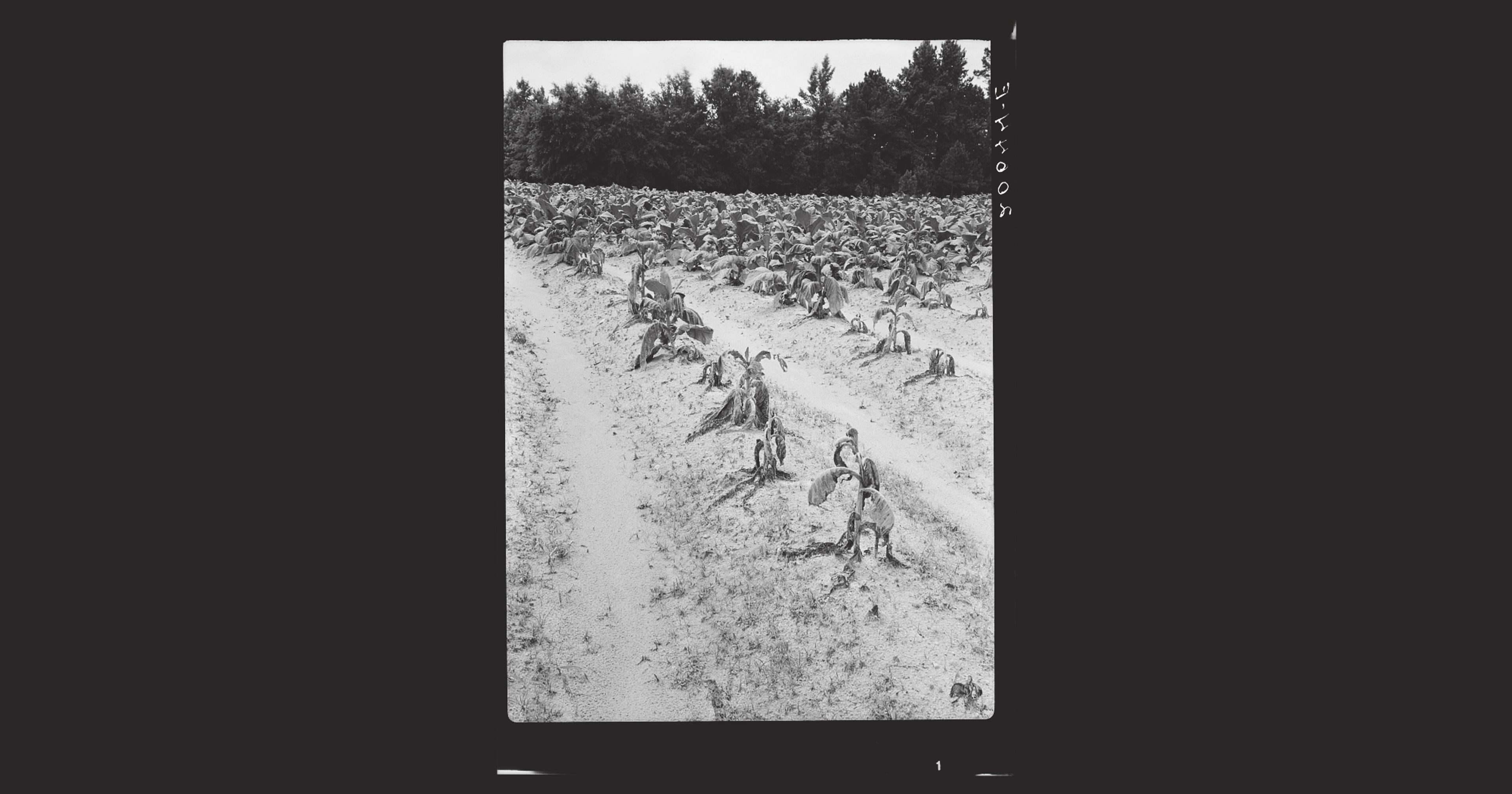
In its heyday in the 1950s, North Carolina grew nearly one billion pounds of tobacco, a profitable crop that its farmers continued to rely on for decades. But even as the state’s production levels reached an all-time high, the American tobacco industry was already beginning its decline. It began with the emergence of health-related articles warning against the dangers of smoking cigarettes in 1957, followed by the first Surgeon General’s report on smoking and health in 1964, which held cigarette smoking responsible for a 70% increase in the mortality of smokers over non-smokers.
The report served a devastating blow to North Carolina’s economy, which was primarily fueled by agriculture — most notably tobacco. As smoking rates have fallen 68% among adults since 1965, so has the planted acreage of flue-cured and burley tobacco, which account for more than 90% of all U.S. tobacco production. Last year, 116,000 acres of tobacco were harvested in the Tar Heel State, totalling nearly 250 million pounds. That’s a lot of tobacco, especially when you consider the fact that there’s between 0.65 and one gram of tobacco in a single cigarette.
And yet it’s a small fraction of what the state once grew.
“It’s been my livelihood my entire life … and it’s been real important to our part of the world,” said Mack Grady, a third-generation tobacco grower in Seven Springs, North Carolina, who doesn’t use any tobacco product himself. “It’s a long-lived crop, but it’s dwindling.”
North Carolina is still the nation’s largest tobacco producer, followed by Kentucky and Virginia. But tobacco is no longer the most profitable crop, and the landscape is rapidly changing. Drive through almost any county in the central and southern parts of the state, and you’ll see formerly abundant tobacco farms that have been developed into housing subdivisions, shopping centers, and wide-laned expressways.
In an effort to keep their farming operations afloat, hopeful farmers like Grady are trialing a new tobacco crop — cigar wrapper tobacco leaves. Known as Connecticut broadleaf, this type of tobacco is traditionally grown in areas of the Connecticut River Valley, which stretches from Hartford, Connecticut, across the border into Massachusetts, including parts of southern Vermont. Broadleaf tobacco is a relatively new crop to North Carolina, planted for the first time in 2018, but farmers and researchers alike are excited about its potential — and long for a solution that doesn’t involve selling their land to developers.
“Our farmers are competing not only in the commodity that they’re growing, but also they’re competing with the housing market and development,” said Will Strader, N.C. Cooperative Extension director for Rockingham County. “So they’ve been hit from multiple directions.”
Could growing broadleaf tobacco help lift these farmers up? Unlike cigarette tobacco, the market for broadleaf tobacco is still strong, correlating with cigar sales that have steadily increased since 2015. For many cigar enthusiasts, high-grade broadleaf tobacco is among the most prized leaves used to make dark maduro cigars. But tobacco farms aren’t as prevalent in the Connecticut River Valley as they once were, causing a supply issue that has been further compounded by several consecutive bad growing years.
“It could potentially be even more profitable than the tobacco traditionally grown in the state.”
Tobacco growers in other states are now facing an opportunity to fill the gap. “There’s more [broadleaf] tobacco needed than the existing grower base could produce. North Carolina, as well as Virginia, Kentucky, and Tennessee, have all picked up on that and tried to see if this is a style of tobacco that can thrive here since we’re all familiar with different styles of tobacco already,” said Maggie Short, a crop and soil sciences doctoral student at North Carolina State University who’s working to develop nitrogen and potassium fertility recommendations for the new-to-N.C. crop.
“It could potentially be even more profitable than the tobacco traditionally grown in the state,” said Short. But first, she and other researchers need to learn how the new crop — which wasn’t bred to thrive in North Carolina — will react to disease and pest issues in a southern climate.
Grady harvested his first acre of broadleaf tobacco last year, a decision he made after realizing he wouldn’t need to purchase any new equipment to do so. “You use the same planter, the same plow, the same tractor. You can start growing it without a lot of new expenses because you’ve already got the infrastructure in place,” he said.
That said, unlike its flue-cured and burley cousins that are grown for cigarettes, cigar wrapper tobacco requires heightened management and care. A more labor-intensive crop with plenty of risk involved, its leaves have to be perfectly intact — no holes bitten by pests, no sunburn, no blemishes, no rough handling that could lead to tears. “One caveat is that it’s going to be a high-input crop … It takes a lot more tender love and care to grow this crop than other styles of tobacco that we’re used to,” said Short. “We really have to handle it with a velvet glove from planting all the way to curing, not just harvest but beyond that.”
“It takes a lot more tender love and care to grow this crop than other styles of tobacco that we’re used to.”
Short is no stranger to the tobacco industry. Her dad and uncle farmed tobacco in Guilford County, where it was first planted in 1610, until 2004, when the Tobacco Transition Payment Program (colloquially referred to as “the tobacco buyout”) allowed farmers to receive federal funds through the USDA with the goal of helping them exit the dwindling industry. After that, the brothers transitioned the family farm into mostly hay production and had to find off-farm jobs to continue to support their families.
Now, she’s hoping to give other farmers a different fate. “With the decline in tobacco production in North Carolina, we do see some farmers looking for alternate sources of revenue, and we definitely see [broadleaf tobacco] as an opportunity for our growers to not only diversify farms, but hopefully find a profitable crop, maybe more so than other things they might be growing,” said Short.
Not every tobacco farmer is onboard. After watching what happened with the failed promise of hemp, some growers are wary to jump on the broadleaf bandwagon. “Years ago, we saw the hemp boom come and go. And there were a lot of growers that tried that,” said Short. “Quite honestly, I don’t know that there’s any farmers in North Carolina growing hemp anymore.”
Perhaps learning lessons from the hemp bust, researchers and extension agents aren’t recommending farmers go all-in on broadleaf tobacco production. Instead, they’re encouraging farmers to plant a small amount to start while still farming the flue-cured and burley varieties they know well. “It’s not going to replace flue-cured completely. Hopefully it will help them supplement and provide another source of income,” said Strader. “It’s not gonna fit into every operation because of the intensive management that’s involved, but it is a good alternative for certain growers.“
It’s too early to tell if introducing cigar wrapper tobacco to farms will be a boon or a burden. “There’s moving variables, like any business, and I can’t say that it’ll still be here in 20 years,” said Grady. But one thing is certain: “People are still gonna smoke cigars and cigarettes all over the world.”

When it comes to keeping livestock healthy — or any living creature, really — gut health is a top priority. Researchers at Cornell had that in mind when they asked themselves if they could repurpose apple pulp and pomace — the fibrous apple bits left over after juicing the fruit — to boost the gastrointestinal health of broiler chickens.
“I would say for most farmers that have livestock, gut health is a big part of what they’re managing,” said Tom Gilbert, who owns and operates Blackdirt Farm in Vermont, which produces pasture-raised eggs, meat birds, garden compost, worm castings, and field crops.
The results of the Cornell study showed that — thanks to phytochemicals and prebiotics within the apples’ chemical makeup — the introduction of apple fiber offers gut bacteria-boosting benefits, which can create a healthier microbiome within a chicken’s GI system. “We can improve poultry’s intestinal functionality by potentially combining pomace in their diet,” said Elad Tako, an associate professor of food science at Cornell and a senior author of the study.
To be clear, chickens didn’t eat apples as part of the process. Instead, researchers used apple pomace to concoct a liquid extract, which they then injected into the amniotic fluid of a chicken embryo in vivo. During a chicken embryo’s incubation period, Tako said, one final phase before hatching involves the embryo drinking the embryonic fluid — effectively triggering its systems to wake up and crack into the world.
“The embryo will then orally consume [the apple extract], and then we can test the effect on the [chicken’s] system,” Tako said. Once the chickens hatched, the team collected samples to test the apples’ success.
Fostering a healthy gut microbiome — the trillions of microorganisms that live inside the intestinal tract — plays a crucial role in the overall health of all creatures. In chickens, a healthy gut increases the animal’s productivity and can boost a bird’s nutrient production, help the immune system mature, and protect it from pathogens.
The study’s core findings suggested the presence of apples — thanks to compounds like pectin, a soluble fiber in apples that can curb digestive issues and help control cholesterol levels — could speed up the transport system for amino acids in the chickens, and the bioavailability of iron. It also had the potential to increase the population of immunity-boosting microbes in the animal’s large intestine and support the growth of good gut bacteria. And for poultry, a diverse gut microbiome is closely linked to their health as part of a sustainable meat supply.
While feeding chickens table scraps is not a novel practice, producers appreciate this type of research, which helps guide them to the most nutritious options.
“If we had a cider maker that was nearby, I would prioritize having those apples come back here.”
At Blackdirt Farms, the chickens have long enjoyed upcycled food waste as a form of feed. The farm collects about 250-300 containers of discarded food a week from more than 100 businesses and institutions — think grocery stores, local schools, nursing homes, and prisons — within about 40 miles of their land. Instead of feeding the scraps directly to the birds, the farm pre-composts it, or brings it up to 120 degrees before they feed their flock. And Gilbert said research like this is a welcomed resource.
“If we had a cider maker that was nearby, seeing a study like that, I would prioritize having those apples come back here,” Gilbert said.
The chickens‘ health isn’t the only positive outcome of the study. The authors, Tako explained, had another goal in mind when they began their research: reducing the quantity of potentially hazardous food waste. According to EPA data, an estimated 35.3 million tons of wasted food went to landfills in 2018.
Taking into consideration apple pomace alone, nearly 175,350 metric tons of fibrous waste is produced annually and most often ends up in landfills, according to the study. As it breaks down and ferments, the sugar content of substances like apple pomace can alter the carbon-nitrogen ratio of soil, harming the soil’s health. Additionally, the decomposition of food scraps releases methane, a key contributor to greenhouse gas emissions.
Gilbert explained Blackdirt feeds chickens food scraps because it aligns with the farm’s ethos of regenerative agricultural practices and the creation of sustainable food systems, and it honors the chickens’ instinctual eating habits — which are more diverse than just grain. “The premise of this whole thing is not just to utilize waste byproducts, which is a good thing but is really primarily driven by trying to mimic the bird’s natural habitat and foraging tendencies.” The practice also provides practical benefits, Gilbert added, like reducing his feed costs.
“If we can achieve [healthy gut support] in a more natural way — that’s what we are after.”
Tom Watkins, co-owner of Murray McMurray hatchery in Iowa, said that he often feeds table scraps to the 200 chickens he raises at his home. He said studies like this one helps to validate the fruit and veggie-heavy feeding choices for his personal free-range chickens.
Still, both Watkins and Gilbert pointed out the potential pitfalls of apple pomace as chicken feed on a large scale. Gilbert mentioned that apple processors who are not connected to an orchard often buy their apples wholesale, meaning each apple comes with the little sticker you’d find pressed on fruit in your local grocery store. The stickers are notorious for causing issues for composting, and according to Gilbert, they can end up laced into large-production apple pomace, leaving traces of plastics he would not want to feed a chicken.
Watkins noted that on a large scale, there could be more hurdles to work through when using the apple byproduct. “Apples tend to spoil,” he said. He worries that in order to keep a product like apple pomace from rotting on a commercial scale, manufacturers may have to highly process it or add preservatives — he wouldn’t want to feed that kind of product to his chickens.
That being said, local partnerships between cider makers and chicken farmers that reduce long shipping distances and the need for longer-term shelf stability could make the use of apple pomace feasible.
Watkins said most of the hatchery’s clientele run small-scale coops in backyards as opposed to larger operations, and he thinks that is where an apple pomace product could really excel. “I’d love to see feed formulated with [apple] byproducts or something like that. On a smaller scale, I think it’s great, and it’s good for both you and the chickens.”
For now, the research is still in its preliminary stages, Tako cautioned. The next steps will include the addition of apple pomace to feed for already hatched chickens, and that stage will get more into the feasibility of otherwise wasted apple pomace as a larger-scale supplement for chickens’ diets.
“If we can achieve [healthy gut support] in a more natural way, and not by necessarily using antibiotics or other factors that can infiltrate into the food system — that’s what we are after,” he said.
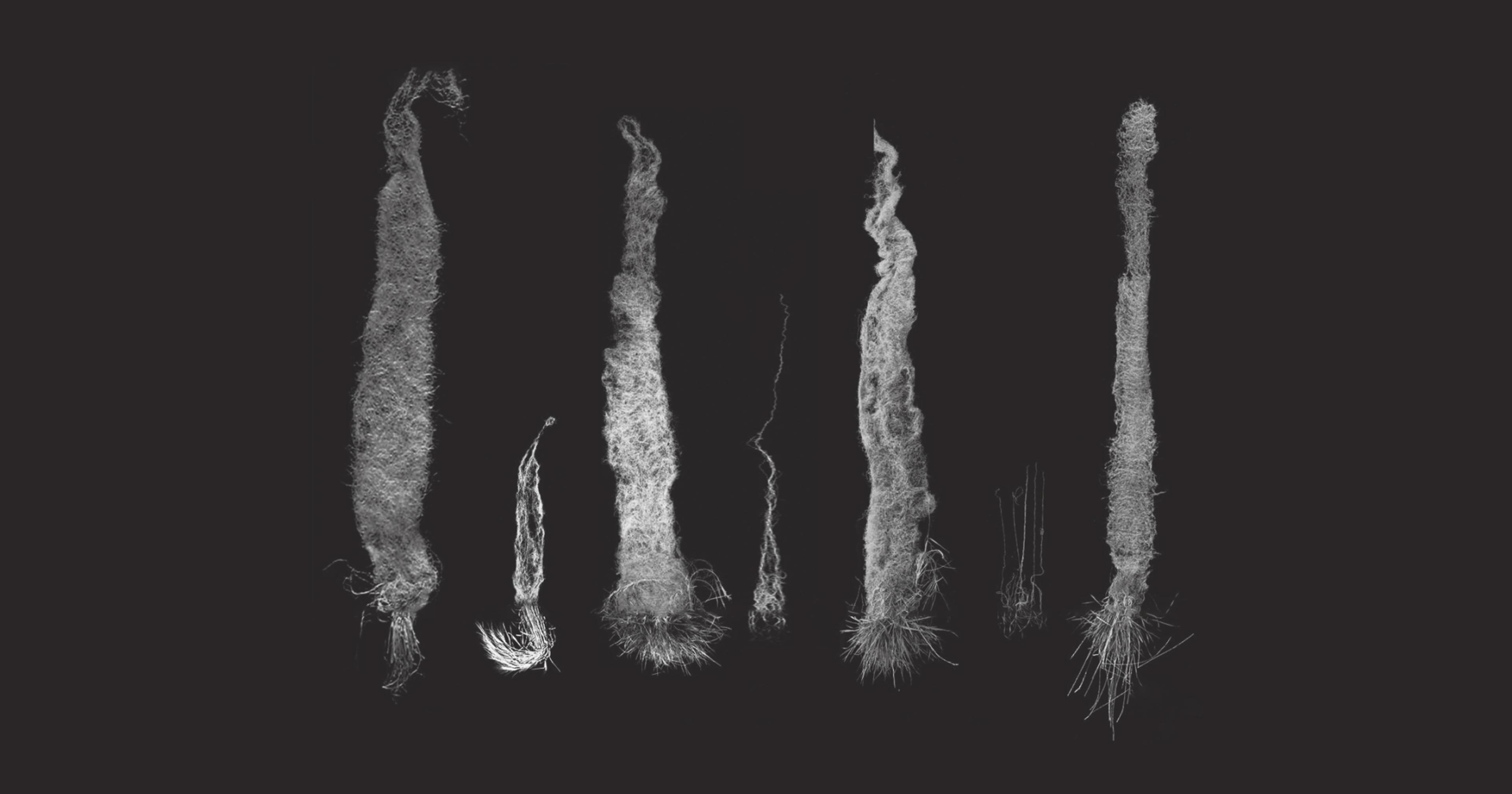
Since blasting onto the scene in the early 2010s, the perennial wheat known as Kernza has seen no shortage of press. It is regularly lauded as a vital weapon in the fight against climate change, touted as a “tiny new grain” that could save the planet and end food insecurity. In recent years, major brands such as Patagonia and General Mills have promoted craft beers, breakfast cereals, crackers, and pancake mixes made with the “revolutionary” new grain.
It’s easy to see why the sustainable narrative associated with perennial grains gained traction. Nearly all the wheat currently cultivated in the U.S. is an “annual” variety — it must be planted every year. This typically involves tilling the soil, a common practice that has come under increasing scrutiny of late.
A perennial wheat such as Kernza (the trademark name for the grain of an intermediate wheatgrass), on the other hand, grows year after year, sustained for at least three growing seasons before it needs to be replanted. This helps to minimize soil disturbance, which releases the carbon stored within the soil into the atmosphere. This allows plants to grow deep roots, enriching the soil’s nutrient properties and the plant’s resilience to drought.
“We want to reduce the negative impact [of annual crops] on the environment, and eventually for farmers, reduce some amount of labor because they don’t have to replant as much seed,” said Robin Morgan, a PhD student at Washington State University’s Bread Lab, a center for wheat and grain researchers attempting to transform the food system. Morgan worked on the team that developed a wheat-wheatgrass hybrid perennial grain called Salish Blue, which was designed to thrive in the Northwest. “Food shortages are real … we need to seriously invest in ways that allow us to diversify our cropping system and food supply, and to do that in a way that doesn’t destroy natural resources, namely soil,” Morgan said.
At first glance, the concept of planting more perennial crops makes sense. “Even if a person is not involved in agriculture, they can see that it might be a good idea to develop a perennial grain crop,” said Morgan. After all, every hobby gardener knows that planting perennials is key when cultivating a low-maintenance garden.
The biggest problem with allegedly promising perennials like Kernza, however, is that they aren’t very productive. According to The Land Institute, the Kansas-based research nonprofit that developed Kernza, the grain yields “about one-third of what conventional wheat does.” Tammy Kimbler, the institute’s director of communications, said their “goal is to have a yield on Kernza that’s similar to conventional wheat in the next 15 to 17 years, which in plant-breeding terms is incredibly fast.”
Some say that isn’t fast enough. “If you’re talking about a niche market, high-value crop for health food stores and rich people in Marin County or the Hudson Valley, then this is a wonderful thing,” said Ken Cassman, professor emeritus of agronomy at the University of Nebraska. “But if you’re trying to suggest that this perennial grain will be an important component of human food supply in 20 years, there’s no chance. And even in 30 or 40 years, there’s no chance.”
“If you’re trying to suggest that this perennial grain will be an important component of human food supply in 20 years, there’s no chance.”
There’s not even enough Kernza to meet the demand of the corporations advocating for it. In 2019, not long after announcing the rollout of a new cereal made from the grain, General Mills pulled back its plan after a lousy 2018 Kernza crop, releasing a much smaller batch than expected.
Today, there are about 6,000 acres of Kernza planted across the country — significant growth since 2019’s 500-acre harvest. Still, that’s a tiny drop in the bucket compared to the 35.5 million acres of conventional wheat harvested in the U.S. last year. “It’s a wonderful plant that produces a very nutritious grain,” said Cassman. “But it’s not a crop that grows on millions of hectares or acres that is important to the human food supply.”
Last year, Cassman co-authored a paper published in the peer-reviewed journal Outlook on Agriculture, highlighting how little evidence supports the argument that perennial plants could be a viable wheat alternative. “At a time when we really need to be focusing on how we should invest our research and development dollars to deal with climate change, water pollution, and soil conservation, we don’t have a 30-to-40 year time frame to work with,” Cassman said. “You can have narratives running in the news, the popular press, that are completely divorced from reality. This is a case of that.”
Proponents, however, argue that the point isn’t to rip out all the fields of conventional wheat to plant perennial varieties. “They have a lot of benefits for soil, but don’t necessarily yield a big harvest most of the time,” said Morgan, who sees perennial plantings such as Kernza and Salish Blue not as a replacement for annual wheat, but as companion crops that could be integrated as a cover crop, for example.
The Bread Lab’s overall vision is not necessarily to replace millions of acres of annual wheat with perennial wheat. “It’s more about integration, how they can be complementary to each other,” said Morgan.“It’s an attempt to integrate practices that we know can benefit the agroecosystem in the longer term.”
“If we can figure out perennial analogs to grains that are regionally adapted around the world, that would be huge.”
The Land Institute, however, is focused on the long-term. “Conventional [wheat] is going to be here for a while. There’s no lightswitch. We’re on a 20-year trajectory of getting a lot of these [perennial grains] on the landscape that are viable,” said Kimbler, who emphasized the importance of developing crops that are both better for the environment and more durable in the face of climate change.
Of course, the perennial grain discussion extends far beyond wheat. China already has released a perennial rice that can yield harvests as plentiful as conventional, annually planted varieties. The Land Institute is also researching and developing perennial varieties of sorghum, legumes, and oilseeds such as silphium, a plant in the sunflower family that’s native to the Great Plains and other parts of North America. “Grains make up about 70% of our calories,” said Kimbler. If we can figure out perennial analogs to those that are regionally adapted around the world … that would be huge.”
The Land Institute expects the next 10 years to be big for the perennial grain movement. (To be fair, that’s been the same message since Kernza was first trademarked in 2011.) Together with researchers from the University of Minnesota, the organization is currently in year two of a five-year, $10 million project — funded by the USDA — that’s aimed at scaling up the production and marketing of Kernza. “I think it is going to help change the trajectory of perennial grain agriculture in the U.S.,” said Kimbler.
But skeptics like Cassman aren’t convinced. “There’s very little evidence that perennial grains could make a substantial difference,” he said. “There [are] lots of niche crops that make good money for growers, but to promulgate a narrative that it could be a game changer for our food supply is just a bridge too far.”

USDA is getting set to crack down on fraud in its National Organic Program with a lengthy suite of new regulations. Officially and collectively known as the Strengthening Organic Enforcement (SOE) final rule, these regulations address what USDA’s Agricultural Marketing Service identifies as, “Organic supply chains [that] have become increasingly complex, reducing transparency in the market and leading to documented cases of organic fraud.” The regulations were enabled by language written into the 2018 Farm Bill and have only now been finalized; they’ll go into effect next March and will apply to all organic products.
The events leading to the rule date back roughly to 2015, after the EU turned a more stringent regulatory eye on falsely labeled organics from Eastern Europe that then began to make their way to the U.S. Some American organic farmers began asking for protections from what The Washington Post referred to as “cheap — and fraudulent — organic imports” of corn and soybeans intended as livestock feed, and complaining of lax USDA oversight and enforcement.
Millions of pounds of non-organic grains flooded in from former Soviet Bloc countries, mostly via Turkey, whose organic acreage, a Cornucopia Institute white paper found, did not match up with the amount of tonnage they were exporting. At least one Turkish exporter lost its U.S. organic certification.
An earlier, $46-million grain scam undertaken by a Wisconsin farmer, and another by a Missouri man, had already shown the vulnerability of organics even to domestic imposters (the Wisconsin farmer is charged by the Department of Justice (DOJ) with three counts of wire fraud). Part of the problem: “Any inspection, however principled the investigator, is likely to be cursory,” reported The New Yorker about the Missouri case; in some cases, inspectors may specialize in food processors rather than farms, and they might spend little time diving into paperwork or processes.
More recently, the DOJ indicted two Dubai-based companies on charges of conspiracy, smuggling, and wire fraud for their part in the deception, in which they sold non-organics at premium prices that can be 50 percent higher than conventional.
“The low prices I get for my organic grain make it harder to pay my bills, to maintain and update my equipment, and to earn even a meager profit.”
In response to all the high-profile fraud, organic trade organizations such as the National Organic Coalition (NOC) actively pushed for the 2018 Farm Bill to mandate reducing “the types of uncertified entities in the organic supply chain that operate without USDA oversight, such as importers, certain brokers and traders of organic products.” NOC also provided a lengthy list of recommendations to USDA during the comment period for proposed regulations back in 2020, noting that problems with organic fraud — especially grain — have been a problem for over a decade and threaten organic integrity. On its website, NOC said it “strongly supports provisions in this rule that will give USDA and certification agencies more authority to crack down on bad actors.”
That’s because, for farmers on the ground, the repercussions of fraud can be stark. “Simple supply-and-demand economics means that fraudulently expanding the supply of organic feed grain (or anything, for that matter) will depress the prices at which that grain is sold, directly taking money out of the hands of the legitimate producers (like me) that have to sell into that same, fraud-depressed market,” farmer Pryor Garnett wrote in an email.
He’s an Oregon-based grower of organic grains such as wheat, barley, rye, and triticale for animal and human food. “For me, personally, the low prices I get for my organic grain … make it harder to pay my bills, to maintain and update my equipment, and to earn even a meager profit.” Longer-term, Garnett suspects that stories of fraud cause skepticism about organics in consumers. He said the new SOE rule is “incredibly important” to farmers.
About the new rule, “My only critique is, gosh, we should have done it sooner,” said Adam Warthesen, director of government affairs for organic dairy co-op Organic Valley, who calls the complete document’s 282 pages “perhaps the most significant changes to the organic rules that we’ve seen since they were published” in 2002.
“There’s always room to improve.”
It’s not just farms that need to be certified by what are called organic certifying agents. That said, previously, many businesses along the supply chain didn’t legally have to bother — vulnerable places for fraud to take root. Warthesen said he’s encouraged by a “narrowing” of who will continue to be exempt from certification: mostly retailers, and transport and customs brokers.
But traders, importers, some warehouses, distributors, and brokers, for example, will all have to seek organic certification now, and more frequent reporting of data from these operations will also be required. Warthesen also welcomes standardization of the type of information accredited certifiers need to submit for each organic certificate they issue. “Our co-op uses 33 different certifiers throughout our farmer base and we’ve seen a lot of variation about how they characterize a farm or type of product,” he says.
California Certified Organic Farmers (CCOF), one of almost 80 organics USDA-accredited certifying agents, released a statement through its CEO, Kelly Damewood, that said the organization was currently reviewing the entirety of the rule to “determine its impact to our members and our processes.” Overall, wrote Damewood, “We appreciate many of the proposed changes that will strengthen organic control systems, improve farm to market traceability, and provide robust enforcement of organic regulations.”
A spokesperson for the Organic Trade Alliance (OTA) wrote in an email that the organization was “generally very pleased” about the SOE rule, calling out mandates for import certificate requirements and supply chain traceability. They also expressed optimism — as did Warthesen — about USDA’s launch last year of a $300 million Organic Transition Initiative, meant to better build markets for organic producers. The group is also looking to build on gains made in the 2018 Farm Bill as the new one, for 2023, looms. “There’s always room to improve,” they wrote.
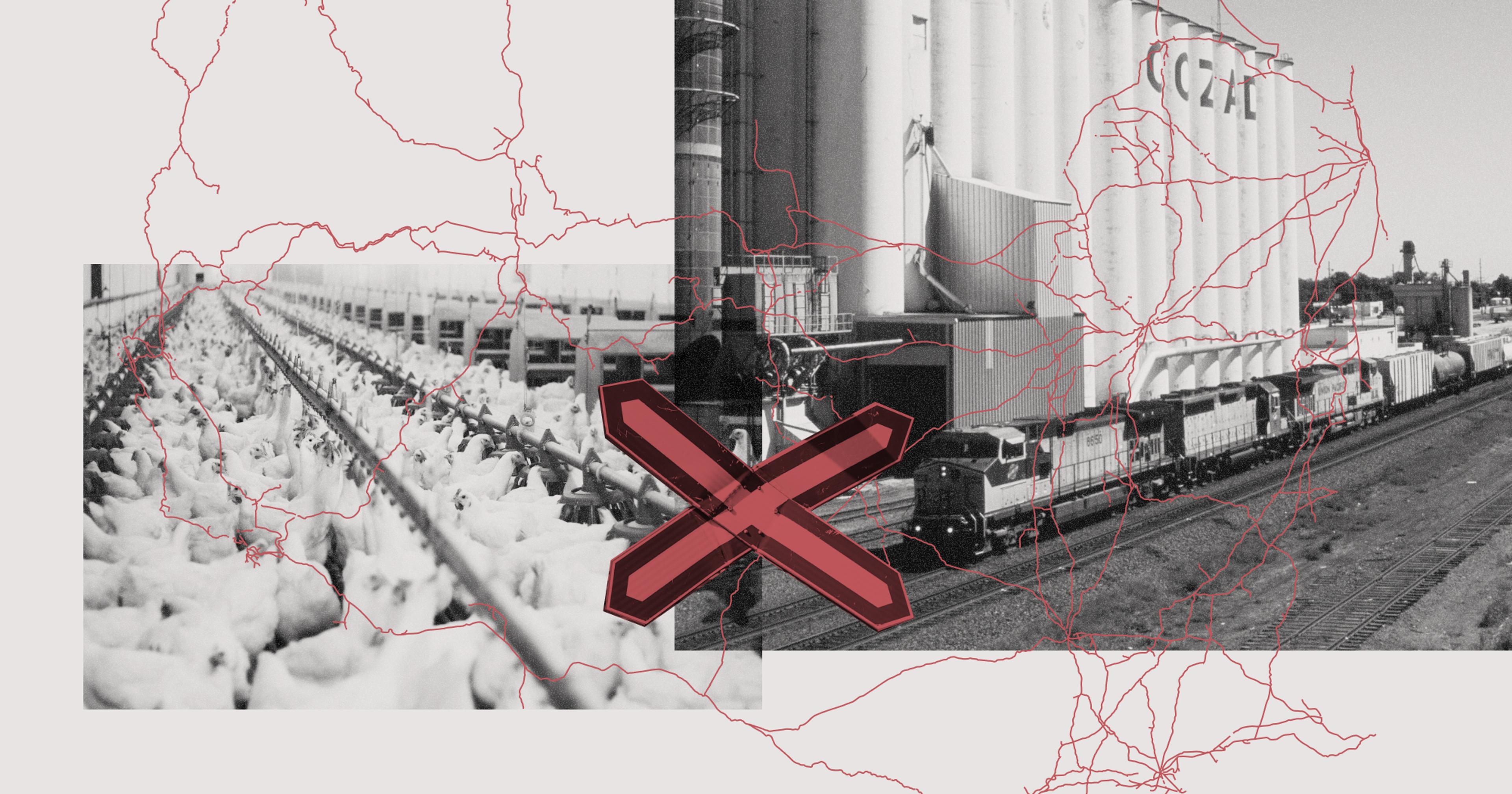
While Americans watched the price of eggs skyrocket, another chicken drama has been playing out in the background. In December, Foster Farms, the largest chicken grower in the Western U.S., which processes roughly 1 million chickens and 12,000 turkeys a day, warned that millions of birds would starve if their shipments of grain feed were not delivered by Union Pacific Corp. as soon as possible.
This game of supply chain chicken would end up stretching well into January.
Foster Farms accused the rail company of “service failures” dating back to February 2022, according to a letter they sent to the U.S. Surface Transportation Board (STB). Union Pacific, the second-largest railroad in North America, blamed the weather. But Foster Farms had also called on STB to intervene back in June over the same problem.
Foster Farms said they needed help — they were running out of feed and time. On December 30, STB stepped in again, ordering Union Pacific to make the delivery, which they did on January 14. A spokesperson from STB said this kind of intervention is incredibly rare — though it should be noted it happened twice within a year — but they will do so again if they have to.
Disaster averted, but all is not copacetic. Rail’s problems are not over, as they continue to work through a pandemic-related backlog exacerbated by years of cost-cutting measures that put profit over reliable service. While grain can be moved by barge and truck, there isn’t enough capacity — nor is it cost-effective — to cut rail out of the transportation picture.
“Rail is a very efficient way to move a lot of stuff a long distance, and it’s irreplicable,” said Richard Rushforth, assistant research professor in the School of Informatics, Computing, and Cyber Systems at Northern Arizona University.
Fixing this irreplaceable part of how food and food for food moves is urgent. The domestic $46.1 billion poultry industry depends on it.
In an emailed statement, Foster Farms wrote, “We have a long working relationship with Union Pacific, and it is our hope that more reliable service standards can be maintained, and further disruptions minimized. Foster Farms appreciates the consideration of the Surface Transportation Board and its ongoing monitoring of grain shipments.”
Union Pacific did not reply to a request for comment.
Moving Grain by Train
It’s easy to think that the country’s food supply chain runs on tractor trailers. They’re easy to spot on the highway, and in supermarket parking lots and delivery bays.
But rail is “the backbone” of our nation’s food system, said Rushforth. “Moving food the last mile of the food chain is very truck-dependent … but grains and commodity crops and inputs into agriculture, like fertilizer, move by train.” While perishable foods for humans often move by truck, grains and crops are still train-reliant.
There’s just too much of it to be moved any other way, as commodity crops support a massive domestic and global product. The value of the U.S. poultry industry alone — which includes broiler chickens, eggs, and turkeys — was $46.1 billion in 2021, up 31% from 2020, according to the USDA.
This isn’t just to meet domestic demand, either. The U.S. is the second-largest poultry exporter in the world, accounting for about a quarter of the world’s poultry exports, according to the USDA. The agency credits the availability of domestic feed sources like soybean meal and chicken meal as giving the U.S. a competitive international advantage.
One typical freight train can carry about the same load as 525 trucks.
And movement of those domestic feed sources — for chickens but also other kinds of livestock — requires rail. Railroads transport about 750,000 carloads of grain-related products a year, according to the Association of American Railroads (AAR), including 400,000 carloads of grain mill products, like corn syrup, flour, and animal feed, and 260,000 carloads of processed soybeans.
There is no reliable backup when rail service falters, said Bobby J. Martens, associate professor of economics and Iowa Institute for Cooperatives Endowed professor of economics at Iowa State University. One typical freight train can carry about the same load as 525 trucks, he said.
“We already don’t have enough trucking capacity” in the U.S., he said. “To be able to think we could put it on a truck and service a major buyer is really not realistic.”
It’s not just a capacity problem either, added Rushforth. Railroads are also three to four times more fuel-efficient than trucks on a ton-mile basis, according to AAR, and can move one ton of freight about 500 miles on one gallon of fuel.
Precision Railroading Bites Back
Rail travel has faced the same problems as other modes of transportation during the pandemic, including unstable global supply chains, a tight labor market that’s made it difficult to fill empty jobs, and more frequent and extreme weather events.
But railroads also found themselves in a precarious position before Covid emerged, said Christopher Fagan, partner in Moore Colson, a tax and consulting firm that works with mid-market and Fortune 500 companies.
“If you look at the overall economy in the last 15 to 20 years, certain industries were very sexy to invest in,” he said, like the technology, healthcare, and social media sectors. In comparison, what he called blue collar industries, like railroads and manufacturing, were left behind.
“We need railroad in agriculture. We don’t operate without it.”
Railroads weren’t able to raise capital, even though they had a positive cash flow. So they tried to make themselves an equally attractive investment by implementing “precision scheduling railroading.” That meant cutting the size of the workforce (in part by not replacing retirees, Martens said), but also reducing the numbers of trains on the rails.
“They’re trying to move shipments en masse with one 100-car train as opposed to shipping a 15-car train just to get someone product,” said Fagan. It makes sense, from an efficiency perspective. But that also means those 15-car trains aren’t there to pick up the slack — or deliver something like chicken feed to one enormous processor.
When Covid hit, precision scheduling failed to meet the moment. The pandemic-related economic shutdown created a backlog that still hasn’t been worked through. “When you’ve cut head counts and you’ve got congestion at ports, that takes months and months to recover from,” said Fagan.
Laying Track for the Future
Getting American rail back up to speed to keep American poultry and livestock suppliers stocked with food and feed is not going to be easy. Despite Foster Farms ultimately getting its latest batch of feed, pressures on railroads have not waned. Part of Union Pacific California’s line between San Francisco and Los Angeles shut down mid-January due to an unstable bridge. The company also imposed an embargo on rail travel in four Midwestern states due to weather. They tried to test run a train with a one-person crew, but that move that was halted over safety concerns.
Hiring and training new railroad workers also takes time, said Martens. “You don’t just put someone in the engine of a train.” Labor strife doesn’t help make railroad jobs look attractive either. In December, Congress imposed a new contract on railroad workers to prevent a strike, which kept trains running but angered railroad unions.
But rail CEOs may be getting the message, Martens said, adding that he was encouraged by a January speech by Alan Shaw, CEO of Norfolk Southern, another Class I railroad. In essence, Shaw admitted they’d messed up. “A company can’t expect to provide sustainable growth if it provides its customers with lousy service products every three years,” Shaw said, according to Trains, and added that they’d no longer be furloughing crews and tightening spending during downturns, and would continue to focus on recruitment and hiring. After the speech, Norfolk Southern’s stock price rose (though it has subsequently dropped again).
Moving away from some of the cuts made by precision scheduling will make a difference, said Fagan, to getting service — including to American poultry and livestock growers — back on track. Imports are slowing at the moment, which will help rail companies continue to move through that backlog.
Keeping the status quo isn’t an option, or situations like what Foster Farms faced will keep cropping up, and may not be solvable by a government order. “We need railroad in agriculture. We don’t operate without it,” Martens said.

It’s easy to see why the proposed Kroger-Albertsons mega-merger would be unpopular among consumer advocates — grocery retail inflation is already high due to ongoing supply chain issues, staffing shortages, last year’s deadly avian flu outbreak, the war in Ukraine, and other erratic changes. But why are farmers and farmworkers so concerned? A growing group of agriculture associations is fighting to make their voices heard.
In October, the Kroger Company agreed to buy Albertsons for $34.10 per share, for a deal valued at about $24.6 billion. Kroger, which operates grocery banners such as Ralphs, City Market, Harris Teeter, and others in 35 states, is the country’s second-largest grocery. Albertsons — whose subsidiaries include Acme Markets, Kings, and Safeway — is the fourth-largest, after Costco. Combined, the retailers would account for 15.6% of the U.S. grocery market share, second only to Walmart, which captures $1 out of every $3 spent at American grocery retailers.
According to Kroger’s official statement, the merger is expected to enhance competition, “relieve the inflationary pressures facing shoppers,” and further advance the company’s mission by “expanding our footprint into new geographies” and providing “fresh and affordable food” options.
Sounds nice, but farm groups aren’t buying it.
In early December, the National Family Farm Coalition, National Farmers Union, Farm Action, and an assortment of regional grower associations sent a letter to the Federal Trade Commission (FTC) expressing their opposition to the merger, which they said would “create a new mega-grocery buyer with exceptional buyer power to squeeze its suppliers, shrinking farmers’ and workers’ share of the food dollar.”
Some worry that Kroger-Albertsons’ buying power would leave farmers with little room for contract negotiation.
A few weeks later, a host of grower associations representing farmers in the Western U.S., where the merger could cause conflicts with overlapping markets — Western Growers, the California Fresh Fruit Association, and Colorado Fruit & Vegetable Growers Association — submitted an additional letter to the FTC. In it, the groups pointed to the Albertsons’ acquisition of Safeway in 2015 — after which the company awarded contracts only to its largest produce suppliers, leaving smaller farmers to sell elsewhere — as an example of the negative outcomes that can be expected with a merger of this size.
Those who oppose the merger worry that Kroger-Albertsons’ buying power would leave farmers with little to no room for contract negotiation. If they’re not able to supply the amount of produce needed, or they’re not able to supply it year round, the mega-grocer will find somebody else who can — even if they have to go overseas to do so. This sort of “take it or leave it” contract would be a huge blow to American farmers of all kinds.
Smaller farms, which have already struggled with the cycle of supermarket consolidation seen in recent years, are in crisis. Farmers routinely sell their crops for less than what it costs to produce them. The pressure of farming with such small margins has led “members to farm less acreage, move production to other countries when feasible, or leave farming altogether,” the letter from the Western grower groups read. If the Kroger-Albertsons merger is allowed to continue, competition among buyers will shrink, leaving farmers with fewer customers (in this case, grocery retailers) to work with. As third-generation Georgia Vidalia onion grower Shad Dasher told Civil Eats, “the circle is getting smaller and smaller to sell to.”
Despite most produce being seasonal, only grown during specific windows, the biggest grocery chains insist that farmers can provide year-round supplies. For example, asparagus is a spring vegetable, but consumers expect grocery stores to have those green stalks stocked at all times. And stores such as Kroger require the farms they contract with to always be able to supply them — even if the domestic farmers have to import the produce from other hemispheres. As Dasher explained to Civil Eats, “Growers [were told] directly that they could either start importing sweet onions from South America in the off season themselves, or the store would bypass them and buy from elsewhere.”
The trade organizations that oppose the merger emphasize the harm done to American farmers as grocery retailers continue to source more foreign producers, “who are ready, willing and able to undercut American producers on operating costs and price they will accept from the retailer … That is harmful for farmers, farmworkers and rural communities that depend on a robust agriculture industry.”
“The buying power of the newly combined Kroger entity cannot be understated.”
Just before the Thanksgiving holiday, lawmakers called on the FTC to “closely evaluate” the Kroger-Albertsons merger deal. “This acquisition threatens to create competition-stifling concentration in markets across the country, hurting consumers, workers and small businesses,” the letter said.
In November, attorneys general in California and five other states filed lawsuits to stop Albertsons’ from paying nearly $4 billion to its shareholders until regulatory review could be completed, but the federal court declined to review the case. Shortly after, a Washington court issued a temporary restraining order, which was lifted yesterday.
While not opposed to the Kroger-Albertsons merger, even the National Grocers Association (NGA) has expressed concerns about grocery consolidation, “which has enabled dominant grocers to use their economic power to disadvantage smaller competitors and shut out rivals,” said Laura Strange, senior vice president of communications and external affairs at NGA. The merger “will only increase the influence that a handful of grocery power buyers wield over food suppliers unless clear guardrails are in place that limit their market power.”
Farmers and farmworkers aren’t the only ones who stand to lose big in this situation. Grocery workers do, too. “Profiteering stands out at Kroger and Albertsons, with profits far outpacing worker wage growth or the cost of food. Their outsize price hikes are at least partially responsible for inflation. Even while they were competing with each other, these companies jacked up prices and had record profits,” wrote Daniel Fleming and Judy Wood in an op-ed in CalMatters. They estimate the total job loss in the Los Angeles region alone will be close to 5,750 jobs. “If they merge and no longer have to compete with each other, they will be less constrained and free to be more rapacious.”
As the letter written by the Western grower groups emphasized, “The buying power of the newly combined Kroger entity cannot be understated.”

Farming equipment like combines, tractors, harvesters, and anything else made from steel — basic machinery which many farmers need to function — that once lined dealer lots across the country have become not only more difficult to afford, but to find entirely.
“If you look around at the farm equipment dealerships here in the state, their lots are as empty as I’ve ever seen them,” said Walter Schweitzer, president of the Montana Farmers Union and third-generation farmer and rancher in Geyser, Montana.
The lack of available equipment is a result of steel shortages and supply chain problems that have left manufacturers in a range of industries reeling. And as the nation grapples with the shortage, farmers are facing the consequences.
When assigning blame for the shortage, don’t expect one singular issue to point a finger at. Instead, the current state of the agricultural machinery market has been close to a decade in the making. Falling commodity prices hit the industry hard in 2013, resulting in less demand — and, therefore, production — of new agricultural machinery.
But it’s been the last four to five years that the industry has suffered its biggest blows. The steel industry had a major setback in 2018, when a 25% tariff on steel imported into the U.S. from other countries resulted in higher prices across the market.
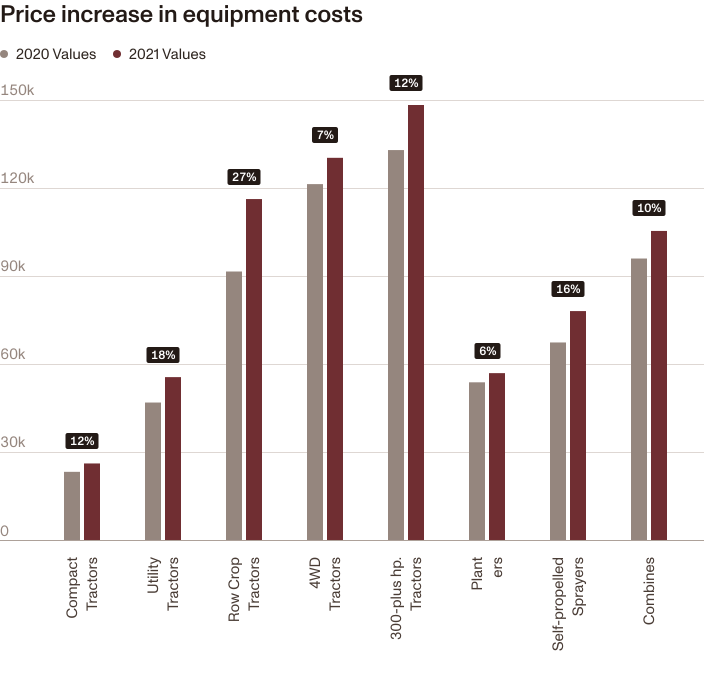
“A whole lot of our steel in the United States comes from China or certainly comes from overseas,” said Curt Blades, senior vice president of agriculture services and forestry at the Association of Equipment Manufacturers (AEM). “So that created some pricing challenges within steel that we’ve been feeling for quite some time.”
Then the pandemic made matters worse. Covid-related closures and canceled orders from manufacturers slowed steel production, so when the demand for machinery rose again, prices skyrocketed and supply struggled to keep up. Between 2020 and 2021, values for common farm machines like sprayers, tractors, and combines rose anywhere from 6-27%.
Like many other industries, post-pandemic labor shortages and transportation challenges are also prominent in steel manufacturing — all factors leading to an outcome that most in the industry today have never seen before.
“This is an anomaly,” said Blades. “That’s what our members are telling us, is that this is just something they’ve never experienced.”
“Our members are telling us that this is something they’ve never experienced.”
Manufacturers, dealers, and customers all took a hit in light of the lacking steel supply. For ag machinery dealerships, the shortage resulted in low inventory and empty lots, and left them scrabbling to supply customers with machines.
Kim Rominger, president/CEO of the North American Equipment Dealers Association, said the impact of the shortage on dealerships was nationwide. “With very few exceptions, every dealer had to face a lot of this,” he said.
At times, the waiting period for new machines was as long as 8-12 months. And farmers can’t afford to wait. Farmers need proper machinery at every phase of operation, from planting to harvest — leaving them particularly vulnerable to machinery shortages.
“The window in which we use the equipment is very, very tight,” said Blades, who also operates a 5th-generation grain and cattle operation in Missouri with his family. He explained that the steel shortage impacts agriculture uniquely, as many producers can’t function without the necessary equipment. “The timing windows are very specific. In other words, you’ve got to have combines available for harvest. You’ve got to have planters available for planting. You need to have tillage equipment available for tillage. If you missed that window, you missed it for a year. That puts some pressure on it.”
Of course, not all farmers rely on large machines and tractors to work their land. Those producers, usually operating smaller-scale farms, can add not relying on potentially volatile steel markets to the list of advantages of not using large machinery.
“If you truly need that new piece of equipment to get your job done, it can be disastrous.”
In fact, the reliance of agriculture — and other industries like automotive and construction — on steel might fade in the future. Thanks to the volatility of steel market prices over the years, some manufacturers are looking to other raw materials to supplement the metal. Lower manufacturing costs, reduced weight, and better corrosion resistance are reasons some manufacturers have been switching from metal to plastic for certain parts. Researchers are spending time developing new materials with the goal of higher hardness, lower density and higher corrosion and erosion resistance — with the potential to replace steel in the future.
But as of now, when it comes to agriculture, much of the necessary, heavy-duty equipment is made from steel — meaning the shortage is particularly challenging for the industry. Without the right machine, farmers can’t do their job. And limited options leave some farmers to make tough decisions.
“If you truly need that new piece of equipment to get your job done, it can be disastrous if you’re not able to harvest a crop or get your crop planted,” said Schweitzer. Without access to new machinery, he added, “In most cases, you’re just forced to fix and spend money on an older piece of equipment and risk it breaking down in the field.”
Thanks to supply chain uncertainties, even when buyers were lucky enough to secure new equipment through a dealership, they sometimes had to put deposits down with no guaranteed final price — or delivery date.
According to Rominger, this caused a unique issue for dealers and farmers, as even the producers who secured a new machine had to wait indefinitely for its delivery. In the meantime, some farmers were forced to continue to use the old machines that they had leveraged as trade-ins for their new rigs — effectively depreciating their value in the process.
“The only solution to all of this is time.”
“When a dealer’s customer purchases the unit, generally speaking, they take a trade. So they value that trade based on [the machine’s] current condition at the time of the sale,” said Rominger. That means if the new machine doesn’t come in time and a farmer has no choice but to use their old one, the dealer takes the monetary hit when the agreed-upon trade is no longer worth as much money.
However, the shortage did solve one woe on the side of equipment dealerships, said Rominger. Instead of the overstock of used machinery that many dealers struggled to move off their lots before the shortage took hold, the lack of newly manufactured options led to a surge in used equipment sales.
“A couple of years ago, we were overstocked with used,” Rominger said. “It was a real burden on the dealers to solve that problem, at least in the short term.” Now, high-quality used equipment stock has gone from replete to rare. It’s a godsend for dealers — for farmers, not so much.
Just as the cause of the shortage is complex and layered, forecasting its end is equally complicated. Fortunately there are signs it has been slowly letting up. Rominger said he is getting fewer concerned calls from dealers across the nation, and stockyards are slowly filling back up with inventory. But a clear end date to the steel shortage is still not on the horizon.
According to Blades, time is the only thing that will untangle the many moving parts of the problem entirely.
“The only solution to all of this is time,” he said. “We might see some signs of life towards the end of the year,” he said. “When we’re talking about labor shortages, they are with us for a while. Talking about transportation challenges, they’re with us for a while … It just takes a little bit of time for these things to work themselves out.”
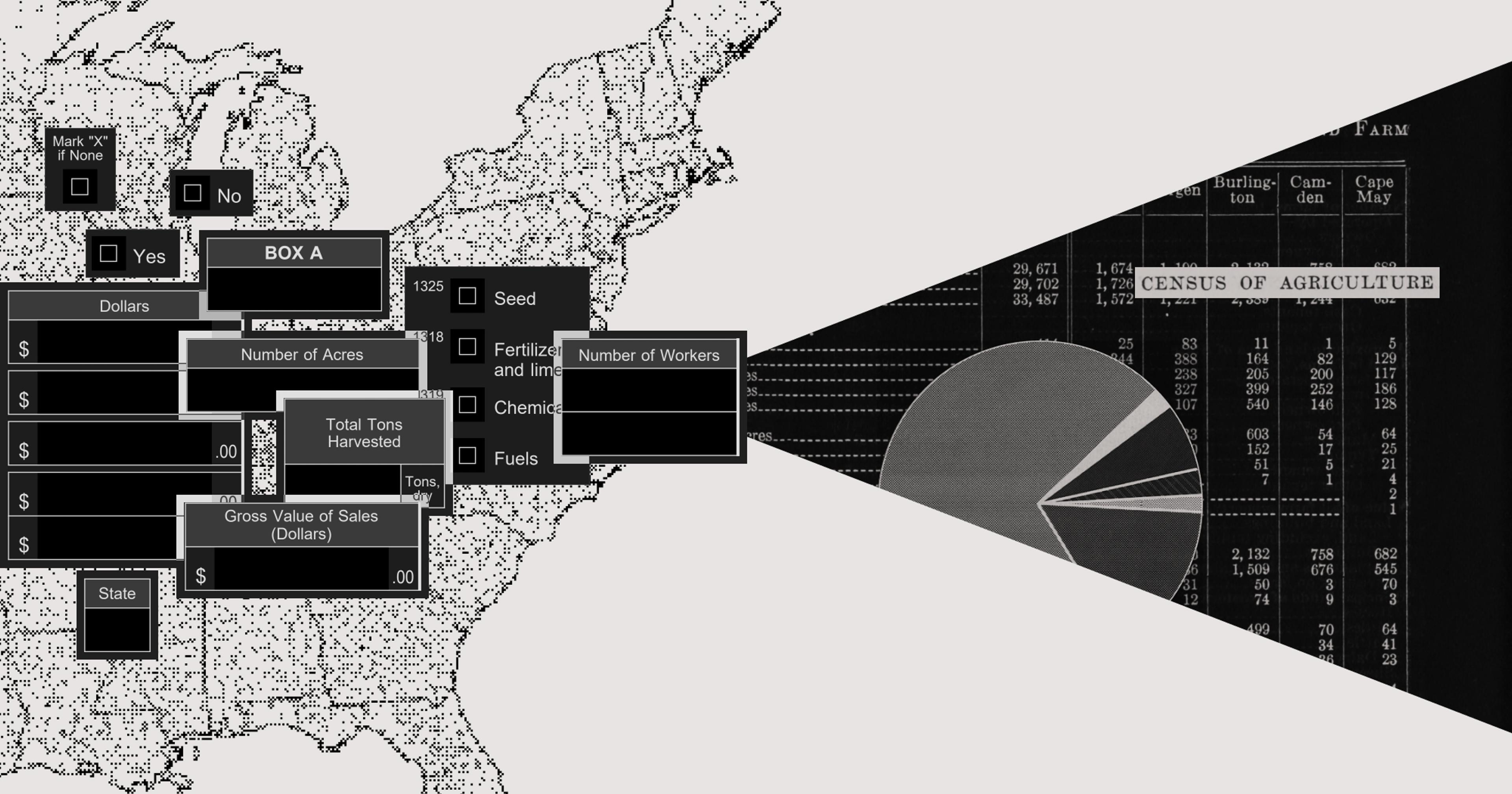
The deadline for the U.S. Department of Agriculture’s (USDA) 2022 Census of Agriculture is fast approaching. Due February 6, the census is the only comprehensive count of all United States farms, ranches, and the people who operate them. The survey includes a wide range of questions, covering topics such as land use, crop insurance, irrigation, pesticides, and food marketing practices.
The 2022 Census of Agriculture has been mailed in phases, first sending out survey codes with an invitation to respond online, followed by paper questionnaires sent this past December. Farmers need only respond once, either online or by mail. Farm operations of all sizes, urban and rural, which produced and sold $1,000 or more of agricultural products in 2022 are required to complete the census.
According to Barbara Rater, NASS Census and Survey Division Director, “You may be surprised to learn that a farm is defined as any place, urban or rural, that produced and sold, or normally would have sold, $1,000 or more of agricultural products during the census year. So many people who do not think they are farmers actually are, according to this official definition. If you have horses, backyard chickens, urban or rooftop gardens, etc., you may qualify for the ag census.” It also includes agritourism, such as a corn maze or petting zoo, which may be a major source of revenue for some.
Collected since 1840 and now conducted every five years by USDA’s National Agricultural Statistics Service (NASS), the Census of Agriculture attempts to paint a complete picture of American agriculture today. It highlights land use and ownership, producer characteristics, production practices, and income and expenditures, among other subjects. In a USDA press release, Agriculture Secretary Tom Vilsack relayed the importance of completing the survey, saying, “I strongly encourage all farmers, no matter how large or small their operation, to promptly complete and return their ag census. This is your opportunity to share your voice, uplift the value and showcase the uniqueness of American agriculture.”
Inspirational words, but what do they actually mean? What, exactly, does USDA do with the information it collects? Quite a bit, as it turns out.
A quick scan of online farmer message boards turns up a range of perspectives, from “It’s easy and fast to complete” to “This census makes a good firestarter.”
In California, for instance, by filling out the survey, farmers can help record the impact of the 2020-2022 drought — currently the driest three-year period for California on record. Gary Keough, Pacific region director and California state statistician with the USDA, told The Fresno Bee, “This will probably be the best chance to record the amount of fallow land by county.” He also noted that any changes in cropland usage — particularly changes in the acreage of fallow land, fruit, and nut trees — will be closely watched in light of the drought.
And much like the broader U.S. Census, this data is a valuable source of information on our nation’s shifting demographics. Black farmer Bre Holbert recently penned a piece encouraging farmers of color to complete the survey. “The data presented in the census can also provide policy makers and constituents with information on how they could vote to improve operations’ growth,” she wrote. “Be represented. Share your voice. Offer information so we can collect data that reflects the real face of all populations working and growing the agricultural industry.”
A quick scan of online farmer message boards turns up a range of perspectives on the census, from “It’s easy and fast to complete” to “I’ll tell them everything except my financial details” to “This census makes a good firestarter.” It should be noted, however: Responding to the census is required by law — something not every farmer seems to know.
Jim Patterson, a grain farmer in Pennsylvania, commented, “Do not recall seeing it, have never used it,” when asked about his experience with the census. This law also requires all information collected by NASS to be kept confidential, with the data only used for statistical purposes, and only published in aggregate form in order to keep individual producer and farm operation identities private. NASS will release the data in early 2024.
A.C. Shilton, a first-generation farmer in Tennessee, received a postcard in December with a code to fill out the survey online, and then received the full paper survey in the mail a few days later. Filling it out online seemed to be the easier option, and she completed it in about a half hour. “It’s cool to see how small I am compared to everyone else,” she remarked, and is “thankful the data exists to give me some kind of reference.”
“Be represented. Share your voice.”
Between census years, NASS contemplates revisions to the survey to document the industry’s changes and emerging trends. The 2022 questionnaire has been updated to include questions about the use of precision agriculture, hemp production, hair sheep, and changes to internet access. When making these changes, NASS considers feedback from stakeholders, like that received at the annual Data User’s Meeting. Making improvements to the survey every cycle allows for broader changes in U.S. agriculture to be accounted for and accurately represented in the data.
For instance, Rater noted, “This year NASS is asking, “At any time during 2022, did this operation have internet access, either on the operation or at an operator’s residence?” And of course, this is a resonant, hot-button issue at the moment, considering how many farmers still can’t access reliable internet. Answers to questions like these can help determine how and where the federal government should invest its resources.
And even if some questions don’t seem relevant to your particular operation, Shilton, for one, is glad the census asks questions touching on many different kinds of farms. “I do want to know what other farmers are doing with their land, whether they are doing the best practices. I think that is important.”

On January 8, John Deere, the largest farm equipment manufacturer in the world, signed a memorandum of understanding with trade association American Farm Bureau Federation (AFBF). It promised, among other things, to “continue to enhance the ability of Farmers to timely control the lawful operation and upkeep of Agricultural Equipment,” in the MOU’s language.
Such a “right-to-repair” agreement should have been welcomed as a long overdue development in a business where increasingly high-tech agricultural machinery that requires steep repair and replacement part costs from affiliated dealers — as opposed to independent repair technicians or farmers themselves — has become the norm. Actual farmers and farm advocates, though, received the news with frustration and a fair amount of scorn.
“There’s no specificity of language,” said Jared Wilson, a farmer who raises cattle and row crops on 4,000 acres in Butler, Missouri. Wilson’s also a pugnacious proponent of right-to-repair, having filed a complaint against Deere’s alleged anti-repair practices with the Missouri Attorney General as well participating in an antitrust suit against the company in federal court; a furious letter he penned to AFBF on January 9 accused the organization of potential corruption and incompetence in signing the MOU.
The document, he told Ambrook, “provides so much leeway for John Deere to be as bad an actor as they’ve already been.” Wilson is referring, for example, to the company’s failure to make good — along with AGCO, Kubota, and other manufacturers who are part of a West Coast farm equipment dealers association — on right-to-repair provisions agreed upon in 2018 with California’s Farm Bureau.* That earlier agreement “took the wind out of the sails of a right-to-repair bill that was moving through” the state legislature, said Kevin O’Reilly, right-to-repair campaign director for nonprofit Public Interest Research Groups (PIRG). By now, he said, farmer trust that Deere is acting with best intentions “has worn thin.”
By now, he said, farmer trust that Deere is acting with best intentions “has worn thin.”
Peek into the tractor shed of a small- or medium-scale farmer and you’ll likely find decades’ old equipment that’s well-worn but assiduously cared for. That’s because new farm equipment doesn’t come cheap — sprayers and combines might come in at over $500,000 each. “They all have electronic control units on them, [with] software that’s operating in tandem that has to be maintained,” Wilson said.
When something breaks, official Deere vendors use Service ADVISOR, a diagnostic system that O’Reilly called a “key tool” to figure out what’s gone wrong and where. The 2018 California agreement promised that farmers and independent technicians would get access to some of Service ADVISOR’s exclusive, proprietary diagnostics. Not only did that not happen, but in the interim, O’Reilly said, “Deere made what they call Customer Service ADVISOR available to farmers and to the public. You buy an annual subscription, which is about $2,400 a year, plus you [once needed to buy] a special laptop, and this, that, and the other thing, so it’s like $4,000 to $5,000 just to get your foot in the door. But it does not provide the same levels of access that dealer-level Service ADVISOR does.”
For example, certain diagnostic codes may come up that can only be accessed by a technician at dealerships affiliated with Deere, who Wilson said charge $180 an hour for labor in addition to expensive parts; recently, Wilson paid $4,500 for a hydraulic valve block whose electronic sensor had failed.
The current MOU between Deere and AFBF does not specifically make mention of Customer Service ADVISOR but “states that Deere is going to give farmers access to make more repairs on their own,” O’Reilly continued. “Question is, is this the same Customer Service ADVISOR tool that farmers already have access to? Or are they expanding permissions to actually allow farmers to completely fix their tractors?” The language of the MOU is unclear.
Willie Cade, anti-monopoly nonprofit Farm Action’s local leader, expressed even greater skepticism about the new MOU. “I say that 98% of what’s in the MOU has already been declared by John Deere so there’s nothing there,” he said. “They reiterated that they are going to at some point in 2023 give people who use Service ADVISOR with customer permissions the ability to download embedded software for free.”
He did not elaborate on why a voluntary MOU would be preferable to something enforceable and clear.
But Cade said he interpreted this to mean that, since Deere’s pricing is based on what they determine to be fair and reasonable, “they can change it at any time,” he wrote in an email. He called Deere a “formidable foe” that works against right-to-repair whenever it rears its head. Why bother? “Monopolized repair is anti-cyclical to new sales — if your new sales are going down, you can pick up revenue on repairs,” he said.
In fact, as journalist Cory Doctorow points out on his blog, the MOU promises that AFBF will “encourage” state Farm Bureaus to “refrain from introducing, promoting, or supporting federal or state ‘Right to Repair’ legislation that imposes obligations beyond the commitments in this MOU.” Sam Kieffer, AFBF’s vice president of Public Policy, said this restriction was “nothing new” and claimed that the MOU, which he called a “good first step,” was undertaken at the direction of its members who “preferred a national level MOU over state or federal legislation.” He did not elaborate on why a voluntary MOU would be preferable to something enforceable and clear.
The wording of the MOU also keeps the door open for the John Deere company to “enforce a trademark, copyright, or other claim of infringement regarding [Deere’s] intellectual property.” An Australian hacker who goes by Sick Codes, who recently made news for “jailbreaking” a Deere tractor, asked if that clause meant that the company was “excited to pursue” people like him. Answers are not forthcoming.
“The whole purpose of it is just to avoid regulation; a forced version of this [memorandum] would take more power away from John Deere and give back to the consumer,” Sick Codes said in a phone interview. “And the fact that the Farm Bureau doesn’t want that is kind of of an issue.”
Why don’t farmers just buy equipment from other manufacturers? Rather than make consumer-friendly equipment that is easier to repair, Wilson said equipment manufacturers are “more than willing to live in the shadow of John Deere’s policies and continue to collect their margin rather than try to give up some margin and increase their market share. That’s part of what signifies that this is such a broken system, that we’re not seeing some upstart company come out and be a market leader and develop more user-friendly ways to repair this stuff.”
Still, he and O’Reilly see hope in legislation pending in several states, including Colorado and Georgia, and in the Senate, where Democrat Jon Tester of Montana introduced a bill last February. “In an ideal world, you would be able to 3D print your own part, but that’s not really what right-to-repair is about right now,” O’Reilly said. For the moment, state and federal laws need to pass “to make sure that the basic principle of farmers fixing 100% of their tractor is the law of the land, and then make every manufacturer abide by [it].”
*The California Farm Bureau Federation did not respond to a request for comment; representatives of John Deere were unavailable for comment.
This article has been updated with quotes from Sick Codes.
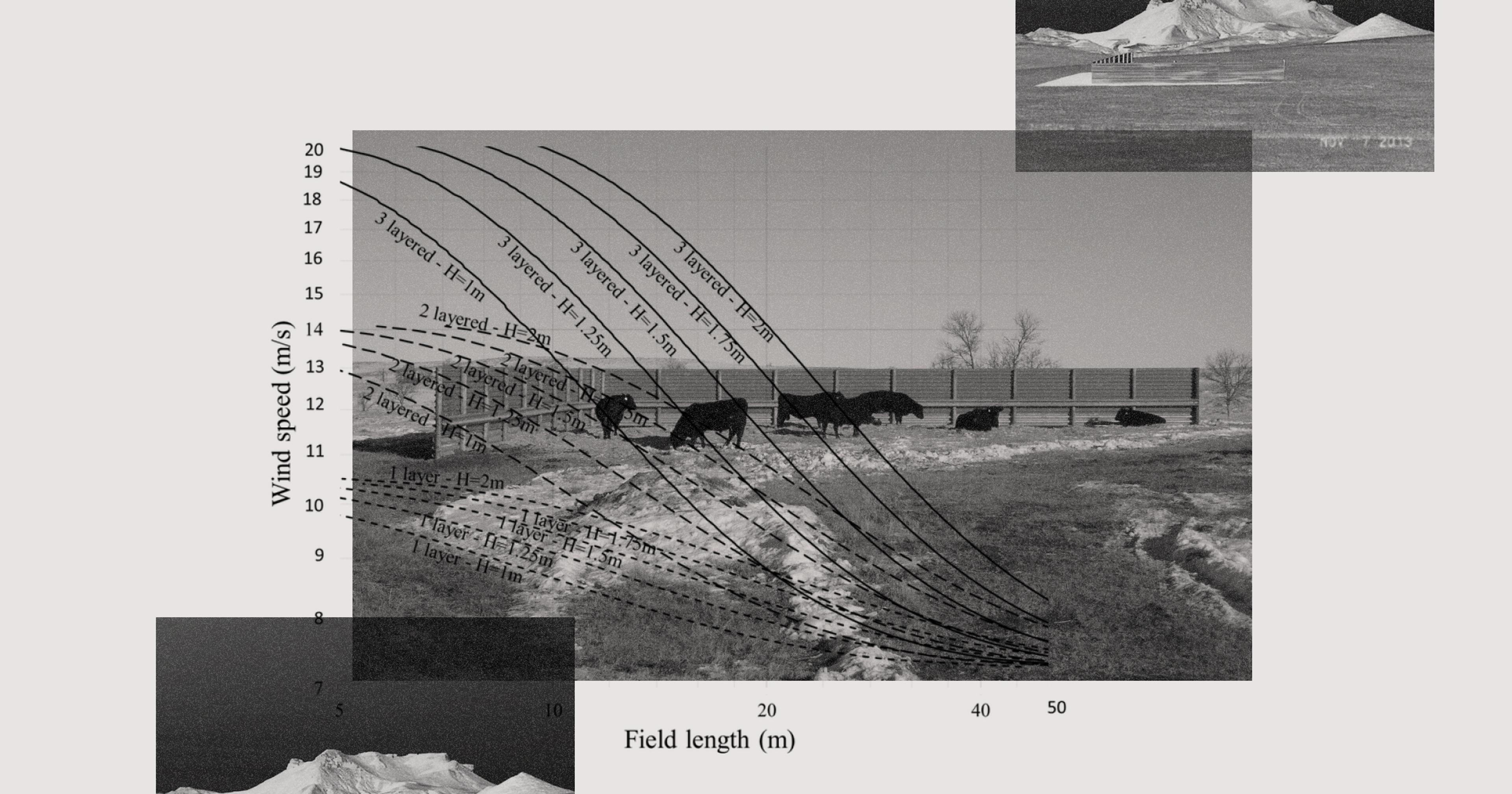
Nearly a decade ago in South Dakota, an early October winter took cattle ranchers and their herds by surprise.
Snowflakes spun so violently in 70-mile-an-hour winds that some cattle suffocated. Four feet of snow caused cows, still wearing their summer coats, to get caught up by snow drifts. Freezing rain coated rocky cliffs with ice, and cattle slipped. Some simply froze.
The results were catastrophic.
The unexpected storm left so many cattle dead that the state’s then-governor, Dennis Daugaard (R), issued an executive order that circumvented the weight limits for truckers who hauled dead cattle carcasses off of ranches, to speed up the process. The early blizzard ended up taking the lives of around 20,000 cattle and costing ranchers collectively tens of millions.
That nightmarish scenario is what every rancher hopes to avoid. With livestock like grass-fed cattle, which are often outwintered — left outdoors for the cold months — ranchers need to be prepared to help herds survive extreme cold, snow, and other winter weather woes.
Staying Prepared
When it comes to keeping cattle alive in the cold, preparation is key. That makes early-season storms the most deadly — particularly those that arrive without warning. Without time to grow winter coats and gradually acclimate to dropping temps, Paul Beck, associate professor of animal and food sciences at Oklahoma State University, said cattle are at their most vulnerable. “Cows are much more resilient to weather when they have a heavy winter coat. Cows with a summer coat, shortly after we’ve had warm weather, are at the most risk to be the first storm victims,” he said.
Non-farmers may pass by herds of cattle braving cold weather without winter outwear — like the blankets sometimes seen on horses — and feel badly for them. But the right nutrition and shelter are all cattle require though the winter months.
When they have had time to ease into cold weather, cattle are extremely hardy creatures — ask any rancher. The cows’ thick winter fur, alongside their anatomy — a digestive system that acts as an internal fermentation chamber to generate heat — allows a good deal of cold tolerance.
A cow’s lower critical temperature, or the coldest it can handle without added calories to burn, rests right around 32 degrees F. To get cattle to tolerate colder temperatures, ranchers must increase their food supply to ensure they have enough sustenance to generate heat. Beck explained that for every degree colder than a cow’s critical temperature, it requires a 1% increase in energy to survive the cold — the colder it gets, the more a cow needs to eat.
In extreme cold, cows are burning through nutrients fast to keep up their core temperature.
At a certain point, say it’s -30 degrees F with windchill, there will be a limit to how much feed a cow can physically eat. This solidifies the importance of supplying cattle with supplemented nutrient intake before and after the height of a winter storm or a rapid drop in temperature. This is the case for all cattle, whether they are grass-fed only or grain-fed. For grass-fed cows that graze during warm months, ranchers supply hay when the ground is covered with snow and ice.
But it’s not just how much the cattle consume — quality is key.
In extreme cold, cows are burning through nutrients fast to keep up their core temperature. Without the right balance of protein and other energy sources provided by high-quality hay or feed, even a cow with a full stomach could suffer. “You have to be careful with quality,” said Joe Armstrong, cattle production systems extension educator at the University of Minnesota. “If you feed poor enough quality hay … you can have an animal be physically full and they can still starve to death.”
Shelter From the Storm
In addition to dietary preparations, ranchers have to focus on how to set up places for cattle to find refuge from winter winds, snow, and ice storms.
In the Blackfoot Valley of Montana, Logan Mannix and his family spent frigid weeks in December making sure their herd of around 400 grass-fed cattle could survive the cold. The state experienced a week in late December with temperatures that dropped lower than -40 degrees F with windchill — the coldest weather the region had seen in nearly three decades. Luckily, the Mannix ranch had enough warning and were able to set the herd up for success.
“We moved several herds into our most sheltered pastures and bale-grazed one of those groups there and they came through the storm just fine. We didn’t lose any of that we know of due to the cold,” said Mannix.
“Just like people, if they’re wet, it’s going to make the cold even worse.”
To survive winter, cows need windbreaks to shelter them from icy gusts as well as warm, dry places to rest, called bedded packs. Armstrong said it’s important to offer the cows a spot as dry and shielded as possible to seek shelter. “If it’s going to be really cold, we need a spot for [the cattle] to lay down that’s clean and dry. Because, just like people, if they’re wet, it’s going to make the cold even worse.”
Usually made of straw or corn stalks, bedded packs are deep piles of the bedding material, with a dry, fresh layer added daily. While trees or buildings can act as windbreaks, ranchers also build their own. Effective windbreaks need to be tall structures that let small amounts of air through to avoid downward drafts as the wind passes over.
When preparing cattle for incoming cold, centralizing their resources and shelter to keep cows from straying is a key to keeping them alive. Keeping the packs sheltered by the windbreak is the most successful way to shelter herds in winter. Water and food should be placed behind the windbreak to encourage cattle to stay close to the shelter.
Complications Abound
Water is another complicating factor, as it is difficult for ranchers to keep tanks from freezing up in the cold — owners are often left checking water systems multiple times a day in extreme temperatures. Fortunately cattle are crafty — Mannix said they can survive for a while even without getting their water provided.
“A lot of cattle won’t travel to water during those storms. They’ll get by on snow for quite a while. So a lot of times, you’ll see that even if you keep the water open in the storm, they just huddle up and eat some snow and hay. Then when it clears up, we’ll see them visit the water tank again,” he said. This, of course, is only an option in snowy conditions. Dry, extremely cold weather leaves ranchers responsible for keeping a close eye on water tanks to ensure they don’t freeze over and leave the cows thirsty.
Even with an all-inclusive area set up for the cattle, Mannix said it’s still the best practice to fence off potentially dangerous bogs, streams, and other water sources. Confusion caused by cold-induced stress can lead a cow to wander, so it’s important to keep cattle away from icy waterways, in case they attempt to walk across thin ice and fall through.
In winter weather, cattle can enter cold stress — when their coats and natural metabolic process are no longer enough to keep them warm and their core body temperature drops. This stress can cause cattle to change their behaviors, leading cattle to seek out shelter, which, if not provided, can lead to issues. In the past, said Mannix, the ranch has lost cattle to cold snaps thanks to this cold-stress-induced behavior. Although the ranch has avoided it so far this year, wandering cattle have broken through the ice of streams or springs, ultimately leading to their deaths.
The choice between personal well-being and caring for livestock can prove difficult for many ranchers.
Snow drifts offer another potential winter death trap. Mannix said snow drifts have been known to endanger cattle and ranchers. “I’ve heard stories of cattle being killed when they seek out a draw or something like that for shelter, and then are drifted in with snow. Or when ranchers were so drifted in that they couldn’t get to the cattle to feed or water them,” he said. Fencing off and avoiding areas of a field at higher risk for drifts can help with this issue.
Throughout all the thought and effort ranchers put in to maintain their herds’ health through the cold, Armstrong noted the hardest part is often getting the ranchers to prioritize their own well-being in extreme weather.
Cold stress isn’t unique to cattle. Even bundled in layers to keep in body heat, ranchers risk hypothermia, frostbite, and other health concerns themselves when facing extreme winter weather. In a perfect world, said Mannix, “you feed the cattle and get them tucked in before the worst part of the storm hits.” But reality sometimes leaves ranchers outdoors tending to herds in high winds, fierce blizzards, and frozen rain. The choice between personal well-being and caring for livestock can prove difficult for many farmers and ranchers.
“People have such a strong connection to their animals, and they feel a huge responsibility to take care of them, and they should,” he said. “At some point, if the weather’s bad enough, you have to prioritize your own safety. And that’s something that ranchers have a hard time stopping and thinking about before they race out to take care of their animals.”

It was four years after 9/11 and more than two decades since a bombing in Beirut had targeted United States military forces. Arlen Specter, a former district attorney from Philadelphia who became a long-serving centrist senator — he bobbed back and forth between parties — had been captivated by the threat of terrorism since the 1980s.
Specter saw agriculture as a particularly vulnerable piece of key infrastructure. He proposed a bill that would criminalize violence specifically targeting U.S. crops and livestock. It wasn’t the first piece of legislation to attempt this: In December 2001, Sen. Tim Hutchinson (R-AK) introduced a similar bill.
Both bills died in committee. But they helped identify vulnerabilities in the food supply to threats of pathogens, cyberattacks, and disruptions to the supply chain. For U.S. officials and academics, this fear has only grown in the decades since.
While neither of these bills became law, the executive branch didn’t wait for Congress to tackle the problem of agroterrorism more broadly. The Strategic Partnership Program Agroterrorism (SPPA) Initiative was announced in August 2005 to enhance collaboration between government agencies to address agroterrorism.
Ever since, the SPPA has morphed into the government’s main avenue for targeting agroterrorism threats. Various agencies apply their own scope, from studying how food could be impacted by a biological weapon to checking produce at the border and intervening against nefarious plots.
Everything from extreme environmentalism to politically driven violence from foreign agents is seen as a threat.
This past November, the Biden Administration directed federal agencies once again to address threats to the food supply, with an effort to be headed up by the Department of Homeland Security.
“As a whole, we just wanted to … point out that the food and agriculture sector does have unique threats to it,” an official told reporters at the time. According to experts within the government and in the private sector, there is a broad range of vulnerabilities in the sector. This includes the possibility of deliberate introduction of a pathogen that could harm crops or animals, especially something incredibly transmissible like foot-and-mouth disease; cyberattacks that target massive corporate farms; physical attacks on agricultural property, a threat often attributed to animal rights activists; and intentional derailment of the supply chain.
As a result, the massive amount of research, funding, and discussion going into agroterrorism studies across the country each year groups together diverse vulnerabilities. Everything from extreme environmentalism to politically driven violence from foreign agents is seen as a threat.
Farmers, meanwhile, say they have more immediate concerns, like potential theft, natural pathogens like the avian flu, and the ever-present financial challenges inherent to modern agriculture.
Declaration of War
In 2005, the U.S. population was gripped by two fear-driven wars overseas — Americans held a core belief that they were no longer safe. Several notorious legal decisions by President George W. Bush’s team pushed the government to surveil its own population and build extralegal “black sites” and prisons across the globe where suspected terrorists were held without trial.
At the time, Specter’s home state of Pennsylvania was home to a large population of farmers concerned about their livelihoods. In the wake of 9/11, Specter held four forums on the issue of terrorism that could target our country’s food infrastructure. He directed his team to introduce a piece of legislation that would protect farms by criminalizing “agroterrorism.”
The staff produced a bill that would define and criminalize agroterrorism as violence against not just people, but crops and livestock.
“As a nation, we cannot take for granted that our food supply will not be susceptible to terrorist activities,” he said on the floor of Congress while introducing his bill. “Without question, the time has come for concerted action to ensure the protection of American agriculture.”
“As a nation, we cannot take for granted that our food supply will not be susceptible to terrorist activities.”
Part of the problem, according to Tom Dower, Specter’s legislative director at the time, was that there were too many competing antiterrorism priorities to deal with legislatively. The bill had been something the team turned around quickly. In fact, Dower didn’t remember it 20 years later — he had to contact former colleagues to answer questions about the legislation.
“The terrorism angle, that you then had to parse out among all of the departments and agencies, is almost never-ending,” Dower said. “It’s easy to identify a lot of problems, but it’s really hard to get enough attention to your particular issue to see it over the finish line.”
Nearly two decades later, the legal framework combating threats to the U.S. agricultural sector is just as vague as it was then. Each year, though, several federal agencies publish reports detailing the money and time they spent identifying threats to the food system and taking action against perceived threats at the border.
An Abstract Issue
Agroterrorism is defined by the Congressional Research Service as “the deliberate introduction of an animal or plant disease with the goal of generating fear, causing economic losses, and/or undermining social stability.” Part of what makes the definition fraught is the inclusion of “terrorism,” a legal concept that feels clearer in the abstract than it is in practice to regulate.
To Andrew Rose, a marketing consultant who works with farmers and food companies, the threat is far greater than that scope. Rose argues that terrorism can include everything from animal rights and environmental activism to cyber attacks and threats from foreign nations.
Rose was working at an agricultural bank almost 10 years ago when he decided to do an exercise with his staff. They imagined a doomsday scenario — a cybersecurity attack — and simulated the fallout on communities across the U.S. His takeaway from this exercise was that there were gaps in the food supply but little protection of the agricultural system by the government.
Rose now is a marketing consultant and runs a business giving talks to companies and in public about these threats. He calls it his civic duty to research this topic and talk to companies and groups across the country about it.
“For every story you see in public, there’s probably 19 or 20 others exactly like it or worse that aren’t public,” Rose said, arguing that predatory scams and a range of external threats fall under the banner of agroterrorism. “This is endemic.”
Rose argued that predatory scams and a range of external threats fall under the banner of agroterrorism.
Government sources define the problem differently. A book published by the Air Force in 2020 examined the history of agroterrorism and found that not only had there not been any major examples of this kind of attack disrupting an entire society, but that the closest example comes from the U.S. military targeting Vietnamese forces in the 1970s. (Consider the military’s use of Agent Orange and other herbicides.)
Quick to clarify that he’s not working on behalf of any government agency or company, Rose said there are all kinds of threats to farmers out there that are actively happening — not just ones that are speculative. Animal rights activism, he argued, was particularly problematic to farmers, and he expressed concern that a recent ruling in favor of Direct Action Everywhere activists in Utah accused of stealing pigs opens the floodgates for more violence against farms.
“In general, the nature of bureaucracy is people in silos,” Rose said. “Certain things are no longer your problem, you focus on those things that fit squarely into your wheelhouse. If we have a fixation only on the cybersecurity threats to the agricultural community, and we don’t couple that with the animal activists, with nation states, with other things … the threats are converging.”
Those wildly various groups, he said, understand that the U.S. might not be prepared for all potential threats and their efforts to destabilize the food system might get through. Therefore, the U.S. needs to respond to a “blended threat environment.” Farmers we interviewed displayed some skepticism.
Bigger Fish to Fry
Seth Nitschke, “head cowboy” at Mariposa Ranch in California, said he’s never heard the term agroterrorism in his many years in farming. He’s much more concerned about theft than he is acts of terrorism.
“That’s just regular old-fashioned crime, I don’t think they’re trying to terrorize us,” he said. “As far as I know, if there’s a plot out there to disrupt our food system, it’s not one that has been made apparent to us.”
On top of that, Nitschke said biosecurity is something farmers already do — no matter where the threat is coming from.
“If we get some pathogen that’s going to disrupt the pork supply, that’s a whole lot of money,” he said. “There’s already a system that we’ve put in place to combat that entire thing, but that’s got very little to do with ISIS.”
Nitschke is also skeptical of the government’s framing to begin with. “It’s almost as if they’re coming up with a reason to create a security state,” he said.
“If there’s a plot out there to disrupt our food system, it’s not one that has been made apparent to us.”
An Amarillo, Texas, beef rancher, interviewed on background because he was concerned about blowback to his business, said that farms have increased their surveillance operations in recent years — especially big corporate farms. But bioterrorism isn’t the primary concern here; rather, it’s about protecting against hunting and theft.
Meanwhile, former FBI agent turned corporate corruption investigator Ren McEachern said that while he was working for the police agency, agroterrorism was not something he ever encountered. “I don’t recall any cases specifically, and I was on the joint terrorism task force for a few years down in Florida, which obviously has a massive orange and lettuce industry,” he said. “But food supply and supply chains around them have always been a concern, because it’s a good way to attack a lot of people — ever since there were wars, you basically try to destroy peoples’ ability to get food.”
For others, the situation is more about education than anything else. Keith Tidball, anthropologist and assistant director at Cornell Cooperative Extension, said the technology definitely exists to attack the agricultural sector and those vulnerabilities are real, but farmers need a realistic sense of which issues to take seriously in order to make the best policies for their own livelihood.
“It is impossible to predict whether past incidents illustrate possible future incidents.”
“Even an understanding of the genetics of what you’re doing and the environment in which you’re doing it are probably more important to your survival as a farmer than that camera you have on the field edge,” he said.
For Tidball, the biggest problem is pathogens.
“The problem is a lack of a complete knowledge or a complete understanding of the biology of our foodstuffs,” he said. “If somebody is bent or intent on finding a loophole in something that we eat,” he added, “there are way more vulnerabilities in that space than there would be in, say, metallurgy, where you’re building parts for something, or some other industry.”
While there are task forces and state and city-level reports on the topic across the country, there are still gaps in how much of that information reaches farmers.
A Matter of Time?
One key area of contention with agroterrorism is that it hasn’t really happened before, making all of this policy work speculative. For the experts who warned about the dangers of the food system’s vulnerabilities, they compared it to Covid — that eventually it would happen and the government would regret failing to deal with the loopholes earlier.
“There are multiple scenarios at play right now, some of which are out in the public and some of which are probably classified, where, if it happens, we’re in trouble,” said Tidball. “That’s just it. We don’t have an answer for that, and let’s just make sure we try to do what we can on the physical security side.”
Meanwhile, even the Air Force book on the topic says that no matter how you spin it, agroterrorism has never been a popular choice to cause harm.
“Almost all known terrorist attacks on agriculture employing chemical or biological agents have been small-scale, consisting of a single attack inflicting limited damage, or multiple small-scale attacks, generally ineffective,” wrote military historian and government consultant Reid Kirby and Seth Carus, a professor at the National Defense University.
Regardless of who’s talking about it, the definition of agroterrorism remains vague; many farmers say they are more concerned about immediate threats. But the interconnected nature of the food supply means that pathogens and derailment continue to pose serious risks to public health.
For researchers, despite the fact that history demonstrates little to no threat in this area, attackers could always change their mind and target the food supply. “It is impossible to predict whether past incidents illustrate possible future incidents,” Kirby and Carus wrote.
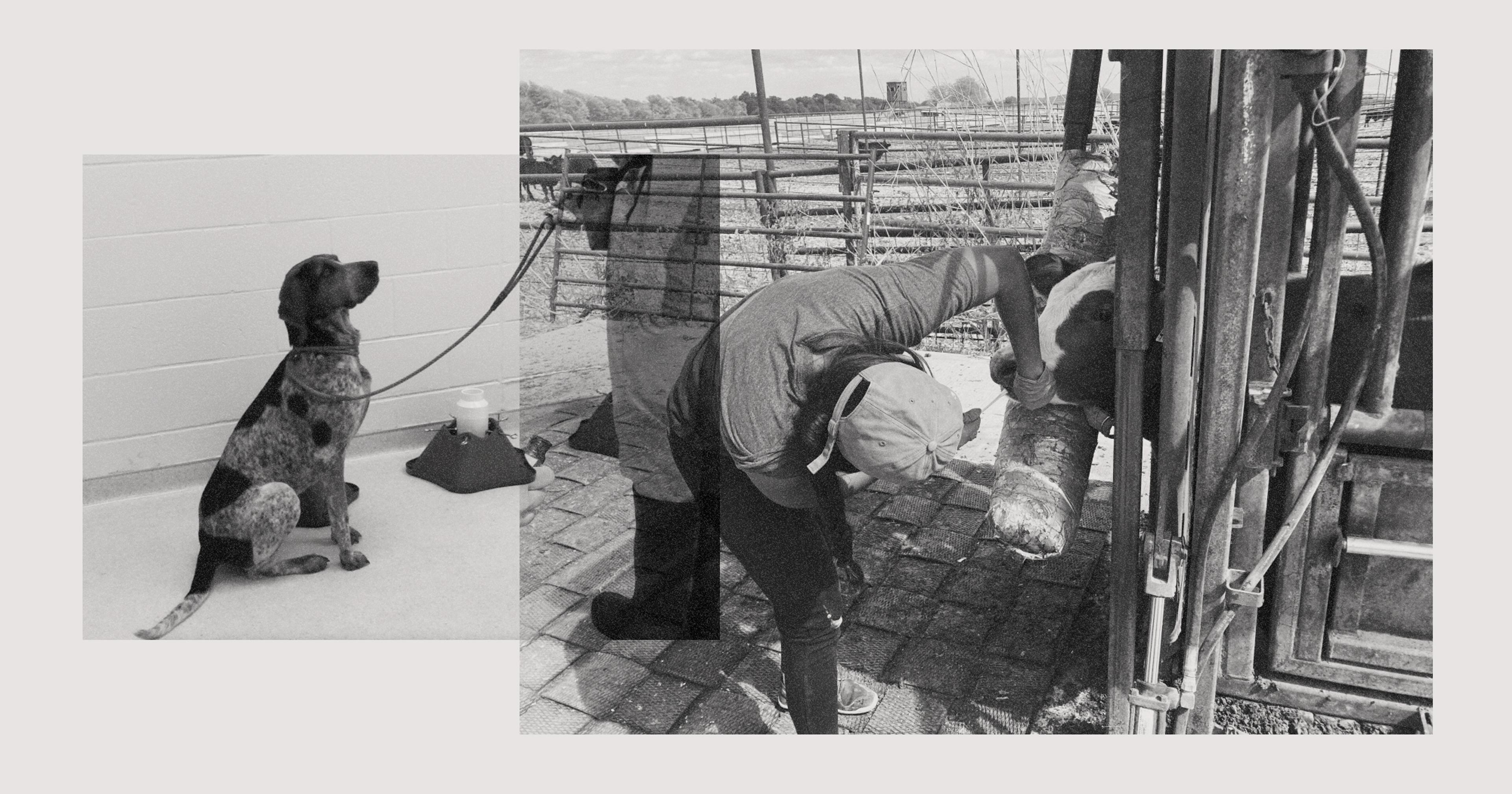
By some accounts, bovine respiratory disease (BRD) is both the deadliest and most costly issue affecting beef cattle today. It’s also quite prevalent, affecting upwards of 16% of cattle on feedlots.
“The No. 1 struggle I have in farming is BRD. I believe it’s the biggest problem in the beef industry,” Indiana farmer Aaron Holt told Drovers in 2020.
But for all its destructive capability, BRD detection and targeted treatment remains a significant challenge for clinicians. Though some futuristic technology has shown promise, they haven’t solved the issue yet. The reasons are varied — cattle are adept at hiding illness, testing can take multiple days, symptoms aren’t always visible, new tech is expensive — but the outcomes can be grim. And the favored approach of treating large swaths of cattle with preemptive antimicrobials has helped put antimicrobial resistance on the World Health Organization’s top 10 most pressing concerns.
Enter the hounds.
At Texas A&M University, a cross-discipline pilot study recently set out to discover whether working dogs, with their superior olfactory senses, could be used as early BRD detectors — just as other dogs have detected cancer or low blood sugar in diabetic humans. Using two hound dogs, Runnels and Cheaps, that were initially bred by the Texas Department of Justice for use in correctional facilities, a team of researchers spent months training the pooches to sniff out infected nasal swabs. It was a small study, meant to determine if more research is warranted.
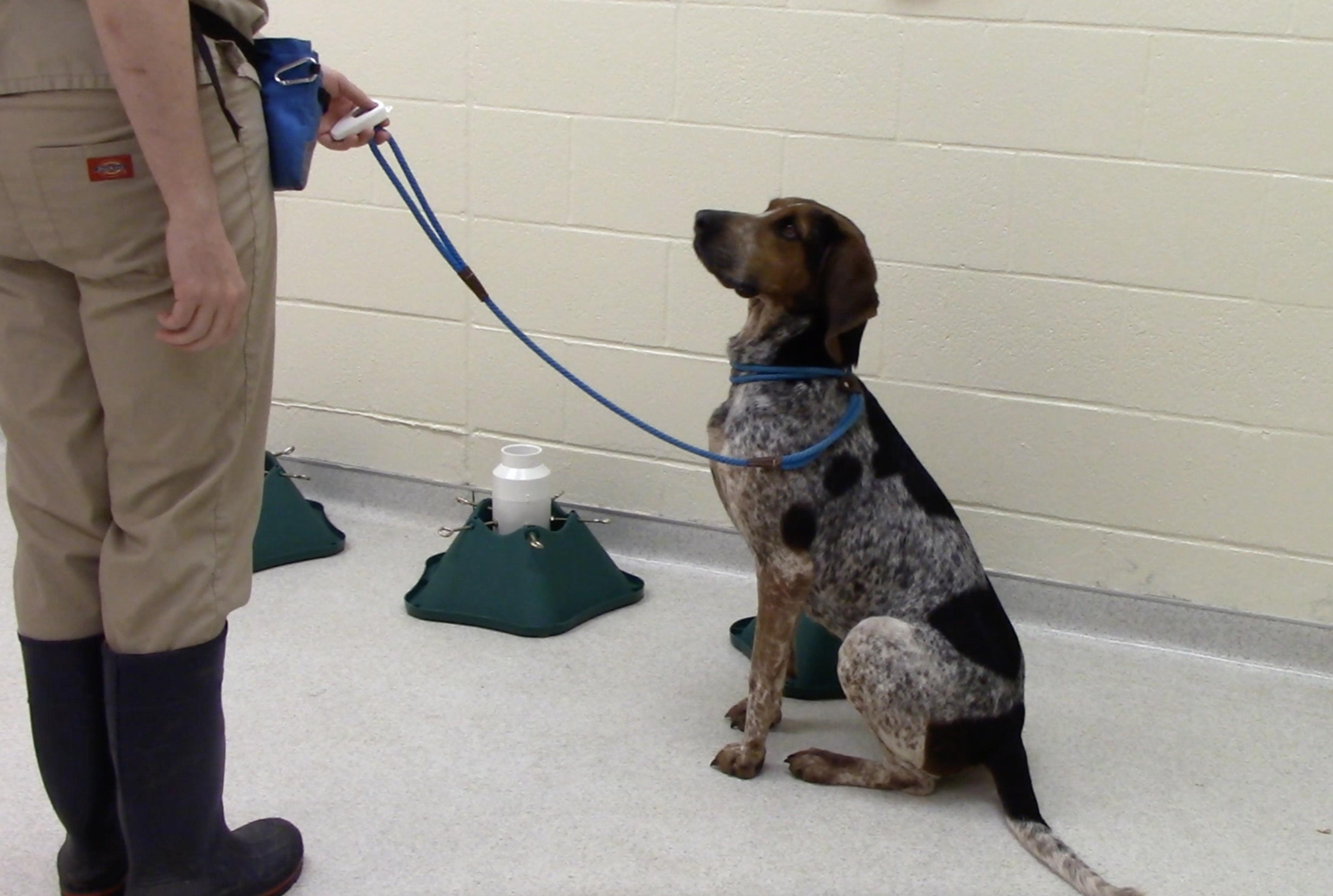
“Because of the predator-prey dynamic that happens between humans and cattle, cattle are really good at masking when they don’t feel very well,” said Courtney Daigle, animal welfare specialist at Texas A&M, explaining what prompted the pilot study. “But cattle also communicate a lot through olfaction. And dogs have an excellent sense of smell, and we have a pretty good means of communicating with dogs.”
It’s a fairly straightforward hypothesis, but testing it out proved to be an elaborate and novel procedure (a variation on training used with other disease- or bomb-sniffing dogs). It started with three Christmas tree stands, placing food in one of them — an easy starter test. Next they switched to a novel artificial scent (the team used banana); the dogs were trained to sniff it out in increasingly faint levels on one of the stands. Finally they moved to nasal swabs which they’d kept in a deep freeze for months, from both cattle believed to be healthy (more on that below!) and BRD-infected cattle.
After many trials comparing one particular set of clean and infected swabs, the researchers were able to get up to 82% accuracy with one dog, and 65% with the other. But despite this eventual success rate with a specific set of samples, the dogs didn’t fare nearly as well when given only two chances to distinguish between a BRD-infected swab and a clean one.
“One of [the dogs] was 45% accurate, and one of them was 39% accurate in picking out the right one, where what we’d see by chance is 33%,” said Aiden Juge, a doctoral student who helped carry out the experiment. “So they were slightly better than chance but not great.”
That said, Juge noted that the experiment may have been marred by some of the very difficulties it was setting out to address — namely, clinical detection of BRD remains imperfect. “Since it is so hard to visually identify those cattle that are sick, it’s quite possible that some of the ones that we labeled as healthy might actually have been sick to a certain extent and not showing symptoms,” he said. “Which means that it’s possible there wasn’t really a clear, healthy reference to train the dogs.”
“From a veterinary perspective, why would I medicate an animal that doesn’t need an antimicrobial?”
Additionally, BRD isn’t caused by one specific type of bacteria; Daigle noted that “there are dozens of viruses and bacteria involved and different sorts of concentrations and combinations.” Some are more common causes than others, but Daigle said they didn’t want to pigeonhole one particular pathogen over another. Rather, the infected swabs weren’t traced back to specific causes; they simply came from cattle with clear visual signs of BRD — an imprecise art.
The team is working on refining these variables and others — mixing samples from bulls and castrated steer may have added a hormonal variable to the results as well — but remain hopeful that it’s a fruitful scientific pursuit. John Richeson, a BRD expert who also worked on the study, said the primary goal would be to provide more targeted antimicrobials to feedlot cattle.
“Right now we determine whether cattle need an antimicrobial on a mass basis when they arrive at a feedlot, depending on the history of the animals, how they were purchased, different factors that determine the risk of a group,” said Richeson. “The hope is that a dog could allow us to go within a higher risk group and find the individuals that really need antimicrobials for control.”
And of course, reducing the broad use of antimicrobials and antibiotics is a shared goal of much of the veterinary profession. Ron Tessman, principal research scientist at the animal health company Elanco, said he was excited to hear about this potential new tool in BRD detection and antimicrobial reduction.
“From a veterinary perspective, why would I [medicate] an animal that doesn’t need an antimicrobial, with the potential that there may be some adverse consequences to that?” he asked. “Not to mention it doesn’t make sense from a pure economic perspective. I welcome anything that could make us more accurate at diagnosing the animals that actually need antibiotics.”

Growing plants inside isn’t exactly a novel practice — greenhouses have provided farmers an indoor, climate-controllable option for centuries. But the future of food grown indoors may look a little different.
In recent years, we’ve witnessed the rapid rise of technology-driven indoor farming systems that allow crops to grow hydroponically — relying on a water-based nutrient solution rather than soil as a growing medium — and aeroponically — building a soil-free environment that relies on mists and air to supply plants with nutrients.
But the broader picture of soilless farming is not without its downsides, and its structural hurdles. To dig into the potential of these soilless indoor growing systems, the World Wildlife Fund (WWF) spent the past couple years researching the practice, and what these systems could mean for the future of the food supply chain. The nonprofit recently released a comprehensive report, highlighting major pros and cons of this type of farming.
Instead of large swaths of outdoor land or access to sunlight, these growing systems typically exist in more urban spaces, often within converted warehouses and on rooftops. Rather than traditional crop rows in the ground, the produce here grows on rows and rows of shelf-like units, stacked from floor to ceiling — aptly named “vertical farming.” Instead of sunshine, technicians rig up precision lighting systems that provide the right rays to satiate the plants.
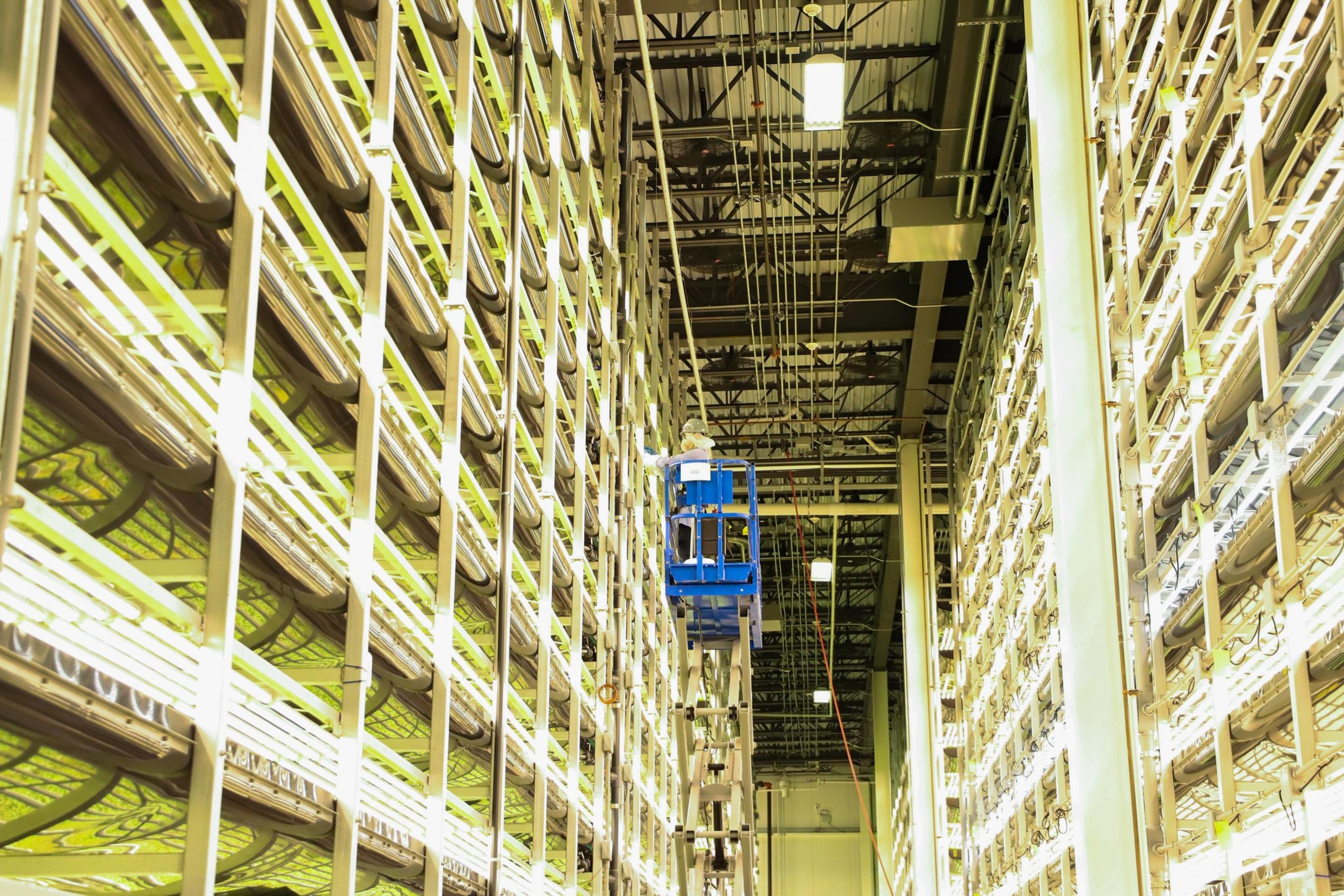
“Plants don’t need sunlight, they need a specific spectrum of light and we can deliver a lighting array that is very targeted with LEDs,” said Marc Oshima, co-founder and chief marketing officer of AeroFarms, a large-scale commercial indoor farming company with locations across the U.S and internationally. No soil, no sunlight, no problem.
Vertical farming systems, according to WWF’s report, require upwards of 95 percent less water use — a major talking point for their proponents. The controllable nature of the growing environment also allows indoor vertical farmers to eliminate the need for pesticides. And with full ability to control the climate, vertical farmers have no risk of losing yield thanks to extreme weather events.
Advocates also note that because of the urban setting of many of the farms, harvests often have less distance to travel to consumers, resulting in a lower carbon footprint and reduced food waste. The indoor operations also have the potential to decrease land-use pressure. According to Oshima, an AeroFarms operation can yield “up to 380 times greater productivity per square foot than the field farm on an annual basis.”
To date, most vertical farming operations focus on leafy greens — currently the most profitable crop to grow indoors. By focusing on greens, often high-end, higher-priced boutique options — think micro broccoli greens, baby romaine, micro arugula — the farms are able to swing a profit despite high operation costs and energy needs. This does, however, mean higher prices on grocery shelves — as WWF points out, this complicates the opportunity for vertical farm produce to address food security across income classes.
According to the report, the high energy footprint of indoor farms remains the biggest hurdle facing the industry. With reliance on LED and other artificial light rays to grow the plants, the operations require quite a bit of electricity. And all those lights also generate heat, so to keep the environment at a stable growing temperature requires even more energy.
The high energy footprint of indoor farms remains the biggest hurdle facing the growing industry.
These farms often commit to creating their own unique lighting and growing technology — meaning they are often just as much a tech company as a farm. This means high start-up costs that could be restrictive to a small-scale farmer who may want to dip their toe into profitable hydroponic or soilless growing.
“Right now most [vertical] farms are sort of investing in everything,” said Julia Kurnik, WWF’s director of innovation startups. “So they’re a farm but they’re also investing in developing their own growing system. It’s a huge learning curve for every farm because they’re both a tech company and a farm and it’s hard to be both.”
While there is no denying the operations require a lot of electricity, Aric Nissen, chief marketing officer at Kalera, another large-scale vertical farming operation, claimed that a look at the “bigger picture” of the farms’ overall carbon footprint offsets the energy need.
“95% of the leafy greens in the United States are grown in either Arizona or Southern California and are consumed elsewhere, which means they travel a lot of miles to get there,” he said. “You look at the carbon footprint of a lettuce grown in, let’s say California, and shipped to Orlando, Florida versus grown in Orlando, Florida. There’s a carbon benefit of being grown in Orlando, even with all of the electricity being used.”
Kurnik also highlighted that in addition to the benefits of less travel time for leafy produce, vertical growing systems scattered around the U.S. provide a buffer in case of crop recalls in prominent greens-growing regions. According to the Centers for Disease Control and Prevention, between 2019-2021 nine multi-state foodborne illness outbreaks were linked to leafy greens.
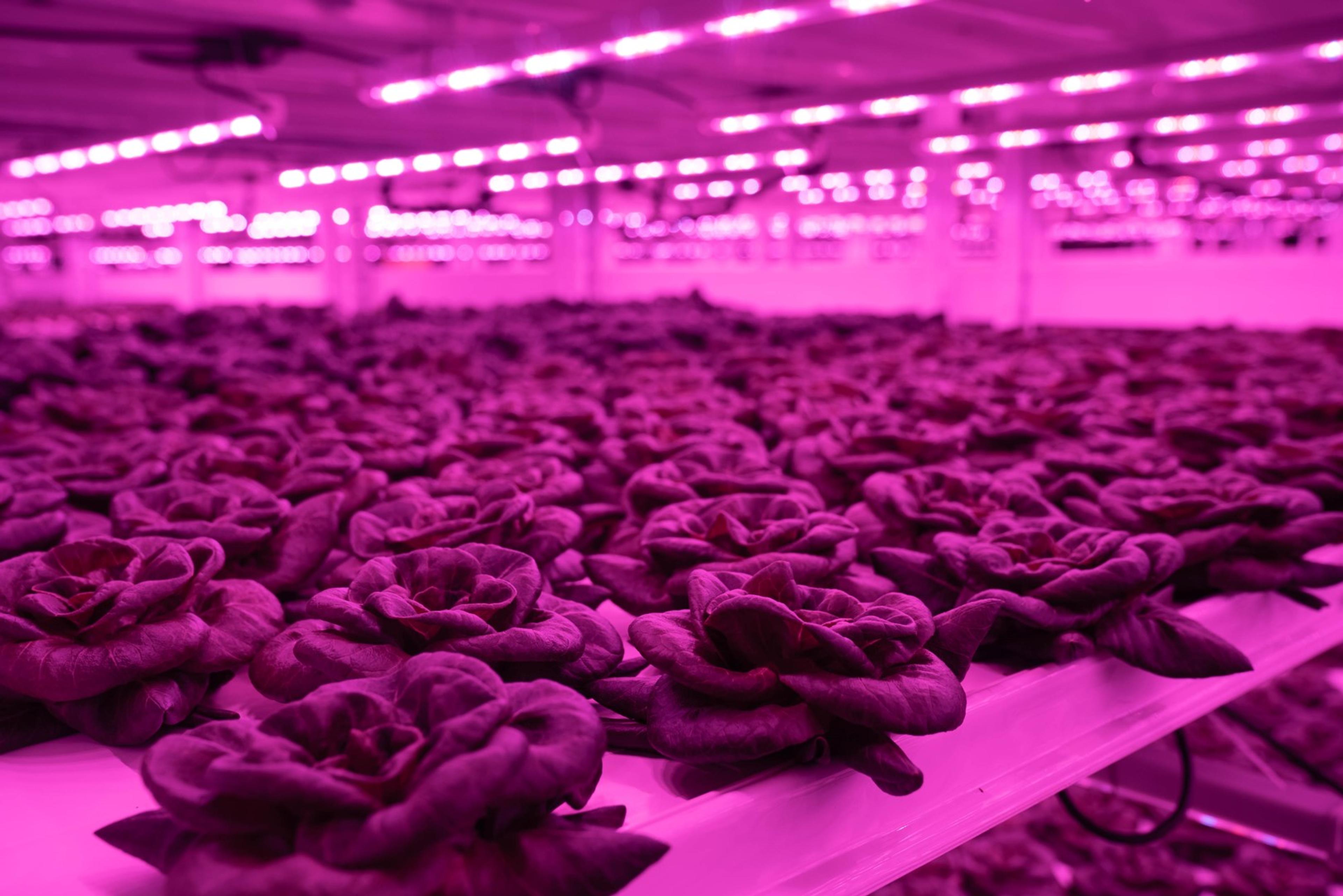
“There have been recalls nearly every year for the last handful of years,” said Kurnik. “You might remember when there’s no Romaine to be had anywhere for a month. So being able to diversify that supply chain is a big value add.” (While supply chain diversification is a worthy goal, it should be noted that indoor farms are not immune to foodborne pathogen outbreaks.)
Another current limitation of soilless growing is crop type. Large-scale operations like Kalera and AeroFarms remain mostly leafy green-focused and have contracted deals for these products with grocery chains like Whole Foods and Kroger.
That said, researchers are working to broaden the scope of what indoor farms can grow. At AeroFarms, entire growing sites are dedicated to research and development, in labs that specialize in optimizing other crops like berries and tomatoes for indoor growth. The goal, said Oshima, is not to outgrow the traditional ways of in-the-dirt farming, but to streamline farming no matter what medium.
Still, Kurnik doubts there will ever be a time that large-scale commodity crops like wheat or soy will be practical to grow inside. “Things like rice and soy and wheat, you can grow them indoors, but you need so much of them and they’re very, very low-margin crops. I don’t know that you will ever see a time that those are profitable to grow inside, not at the mass scale we need them,” she said.
Kurnik doubts there will ever be a time that commodity crops like wheat or soy will be practical to grow inside.
In 2020, organic farmers, the Center for Food Safety, and other stakeholders filed a lawsuit in response to the USDA’s decision to grant hydroponic farms the ability to label their produce organic. The opposition stems from the core of what, exactly, “organic” means. A major pillar of traditional organic farming is intentionally building up the fertility and health of soil. Because the vertical systems operate without soil at all, the suit claims it is impossible for the systems to be truly organic.
The lawsuit has since failed, and soilless operations could potentially label their products organic — though Kalera, AeroFarms, and many other large growing operations still don’t technically meet USDA’s organic requirements at present. At Kalera, that’s not the company’s current focus. “It would require a shift,” said Nissen. “Basically, the fertilizers have to be water soluble, and our systems are very fine-tuned right now. So that would require some change, but it’s certainly possible.” Still, some tension between traditional outdoor farms and vertical indoor operations remains.
Instead of an either/or, the brightest future for indoor farming would be to provide a reprieve of pressure on outdoor farms, with both types of growers working together to strengthen the food system as a whole.
“Controlled environmental agriculture is going to grow leaps and bounds faster than traditional,” said Nissen. “We’re experiencing higher highs and lower lows, and more and more violence in terms of weather. To support larger markets and larger urban communities is the goal. And we’re going to need both conventional and controlled agriculture for that,” said Nissen.

In Maine, researchers are on the hunt for ways to keep the state’s iconic wild blueberry industry from shriveling up.
For the past three years, drought conditions have dried out blueberry fields — the majority of which don’t have irrigation systems installed — causing the lowbush berries to ripen too quickly and fall to the ground before they can be picked. In 2020, Maine’s wild blueberry crop was less than 48 million pounds, the lowest number since 2004. And while the 2021 harvest experienced a much needed boost, 2022 brought another drought that severely impacted blueberry yields.
“The yield last year was low, the year before even worse,” blueberry farmer Lisa Hanscom told The Maine Monitor this fall. “I just hope to break even, to stay in the game.”
Of course, Maine’s water woes aren’t unique. Last October, nearly 82 percent of the country faced abnormally dry conditions, according to the U.S. Drought Monitor, marking the highest percentage since the drought monitor launched in 2000. It’s clear that farmers across the country are in need of water collection and retention solutions.
“Typically, you can just install irrigation systems to buffer drought and protect crops,” said YongJiang “John” Zhang, assistant professor of plant physiology at the University of Maine, who estimates that only about 30 percent of the state’s blueberry lands have irrigation systems. “But if you have to install an irrigation system, that’s a big investment.”
For many of Maine’s small-scale wild blueberry growers, installing costly irrigation systems just isn’t in the cards.
For many of Maine’s small-scale wild blueberry growers, installing costly irrigation systems just isn’t in the cards. So instead of relying on added irrigation to keep the crop afloat, Zhang and his research team are looking for ways to help growers reduce their reliance on water — an already scarce resource. One possible solution is to introduce a centuries-old soil amendment called biochar to aid with the process.
Made by burning organic material from agricultural and forestry wastes (known as biomass) in a high-heat, low- or no-oxygen environment called pyrolysis, biochar is a highly porous charcoal-like substance with sponge-like qualities. “That porous structure can increase the water holding and nutrient holding of the soil,” explained Zhang, whose team was recently awarded a grant for more than $74,000 from the USDA’s Natural Resources Conservation Service (NRCS) to determine how biochar made from local Maine forestry biomass can benefit the state’s wild blueberry growers.
While wild blueberries are not Maine’s largest crop — that would be potatoes — they are arguably the most important to the state, which grows the vast majority of the country’s blueberries. “They’re a cultural heritage here in Maine,” said Zhang. Local indigenous people were the first cultivators of wild blueberries, which unlike their cultivated cousins, are tinier, sweeter, and more nutrient-dense. Wild blueberries are not planted, they are managed, meaning the 40,000 acres in which they grow are located in areas where they have grown naturally for thousands of years.
As producers of all kinds grow more concerned about the relationship between soil health and drought, biochar is picking up steam in fields and on ranches, and for good reason. Biochar is especially beneficial to plants like blueberries that thrive in easily drained sandy soil — not exactly the ideal soil type to have when water is scarce. Sandy loam soil has a water holding capacity of 16% — measly when compared to clayey soil’s 45-55% — but that increases dramatically when biochar is added to the mix. According to a 2013 study that looked at the impact of biochar on sandy soil, the amendment can help double the soil’s water holding capacity.
“You’re valorizing what might otherwise be a waste product, what would otherwise be releasing CO₂ and other greenhouse gasses.”
In addition to absorbing water, moisture, and nutrients, biochar has been shown to reduce leaching of PFAS, or forever chemicals, from soil — especially important for Maine farmers, some of whom were recently affected by high levels of PFAS contamination. And because it’s made from agricultural and forestry waste, including timber, leaves, and even manure, the process of creating it helps sequester carbon, keeping harmful emissions caused by plant decomposition out of the atmosphere. Supplementing livestock feed with biochar has been shown to improve animal health, including improved growth performance, egg yield, and reduced methane production.
Beyond agricultural uses, landfills are being topped with biochar to control the release of harmful greenhouse gas emissions. In construction, biochar can be added to building materials such as brick and tile, reducing greenhouse emissions and pollution caused during the production of plastics and concrete.
“You’re valorizing what might otherwise be a waste product, what would otherwise be releasing CO₂ and other greenhouse gasses,” said Wendy Lu McGill, interim executive director of the International Biochar Initiative. “And that’s an additional benefit on top of what you’ve already done in creating the biochar.”
For many indigenous cultures around the world, burning organic matter to incorporate into soil and to feed animals has long been recognized as an important practice. The use of what’s now called biochar can be traced back to indigenous Amazonians, who used the char to revive nutrient-depleted soil. This practice is believed to have played a pivotal role in converting infertile, red-color soil into the desired darker-colored Terra Preta soils found throughout the Amazon Basin. But it’s only been since 2005, when the term “biochar” was coined by the late New Zealand scientist Peter Read, that modernized Western agriculture began to appreciate the substance and its many benefits.
Zhang is already thinking about how to apply this research to other important crops like potatoes and strawberries.
The popular narrative surrounding biochar is that it’s “the thousands-year-old technology you’ve never heard of,” said Lu McGill. But that’s starting to shift. Not only is biochar production and use increasing, but so is support from politicians and government agencies.
Early last year, the USDA’s Sustainable Agriculture Research and Education (SARE) program awarded $175,724 to Vermont’s Rich Earth Institute and $154,586 to Arthur’s Point Farm in Ghent, New York to study the effects of biochar application. In September, the bipartisan Biochar Research Network Act was introduced to Congress. If passed, the bill would establish a national biochar research network that would test the impact of biochar across various soil types, creating more opportunities to study how its use could benefit farmers and increase crop production.
Until then, all eyes are focused on the newly developed USDA NRCS Soil Carbon Amendment, Conservation Practice Standard Code 336, which was adopted last month. Both Code 336 and the original Code 808 practice standards are in effect this year, adding compost, biochar, and other carbon-approved amendments to the list of conservation practices that farmers can receive federal funding for. The U.S. Biochar Initiative, which has worked with the U.S. Forest Service to promote the sustainable use of biochar, expects the bulk of applications for Code 336 to open in late summer or early fall. Many hope that this will compel more farmers to introduce biochar to their operations.
“We expect farmers to do certain things, but they also have almost no margins, so out of necessity they have to be very risk-averse,” said Lu McGill. “So I’m really excited about that support for [people] using biochar as part of regenerative or sustainable practices.”
In the wild blueberry research fields in Maine, researchers are already excited by the results of early-stage tests, which are “showing that biochar can really help protect wild blueberries during drought events,” said Zhang, who’s already thinking about how to apply this research to other important crops like potatoes and strawberries. “It’s a very promising material.”

Many people have a romantic ideal of how wine is made. Perhaps they’ve visited a winery for an afternoon tasting, where they’ve gazed out upon lush vines planted on picturesque slopes, sipping pensively from their glassware. If they came during harvest season, they might have seen a crew of workers handpicking the grapes, gently tossing the bunches into bins to be carted off to the winery for pressing.
It’s an idyllic image, and one that you’re likely to witness at many vineyards around the world — for now, that is. As renowned wine regions such as California’s Napa Valley and Oregon’s Willamette Valley continue to grapple with mounting labor shortages, rising temperatures, extreme drought, and wildfire, many wineries are counting on the latest advancements in technology to modernize this centuries-old industry.
Compared to other crops, the stakes are especially high for wine grapes, the highest value fruit crop in the U.S. This crop is high reward, but high risk — unlike corn, wheat, or soybeans, grapes are not subsidized. If there’s a bad year, such as when a late frost kills all the grapevine’s buds, or wildfire wipes out an entire vineyard, that year’s grapes could be a total loss. Even if crop insurance — which is growing increasingly more expensive — covers the cost of the grapes, it means that no wine gets made that year.
In California, where 85% of American wine is made, there are a total of 4,795 producers, covering nearly 90,000 acres of vineyards. The Golden State’s wine industry generates more than $88 billion per year in total economic activity, according to a recent economic impact study from the National Association of American Wineries. It is also responsible for more than 513,000 jobs across many sectors: farming, banking, packaging, and transportation. And when you consider a bottle of Napa Valley Cabernet Sauvignon sells for anywhere between $75 and $5,000, it’s easy to see how much wineries have to lose if they don’t adapt to modern challenges.
After all, most oenophiles won’t find a robot grape harvester romantic.
Wineries have long relied on some elements of technology to make great wine, such as tank sensors to provide real-time data for oxygen, temperature measurements, and brix (the sugar content of a liquid solution). This has helped winemakers refine their fermentations, improve a wine’s aromas, flavors and textures, and get a better grasp on its aging potential. This sort of technology, once new and novel, is arguably what helped put the U.S. on the global wine map. But while wine production technology has been embraced, normalized even, vineyard practices have been slower to modernize — after all, most oenophiles won’t find a robot grape harvester romantic.
“As farmers have done for centuries, the work was about walking your vines, and looking at your canopies and seeing what blocks need water, what the soil looks like, what is happening based on what you could see,” said Chris Kajani, winemaker and general manager of Napa’s Bouchaine Vineyards.
Now, vintners are finally recognizing that A.I. and modern hardware can be helpful when dealing with the effects of climate change, labor shortages, and other challenges. But installing all that new technology requires a big investment — one that some wineries aren’t sure will ever pay off.
Vineyard Precision
Despite being resilient and robust perennials, grapevines can be finicky creatures, especially in a warming climate. They grow best in soil that has good ventilation and drainage, but the soil must also have good water retention. They like environments with a large temperature difference between day and night, which is when they accumulate nutrients. They need enough sun to produce the right levels of acid, sugar, and pH, but not so much that they burn and shrivel into raisins. When those levels are just right, it’s time for harvest, the moment that winemakers and grape growers patiently await each year, making daily vineyard visits in the leadup to harvest — and sometimes multiple times a day — to taste and run analysis on the berries. Pick too soon, or too late, and that decision can have a cascading effect on the quality of the wine.
To assist these delicate plants on their journey, a host of players has been busy researching and unveiling new agricultural innovation. Much of the progress is being made in wine regions in and around the Bay Area, the epicenter of tech innovation and experimentation. Ambitious startups and established technology giants alike are working to develop products that meet the needs of grape growers and wineries, who contend with a unique set of challenges that differ from other agricultural sectors.
“The ability to put data behind all the things that we were already looking at, but literally just looking at it with our eyeballs — it’s been a really wild ride.”
The industry has seen many advancements in grape-harvesting machines, which do a much better job of picking grapes than in the past, and with less damage to the vines. And to better understand their vineyards through data, wineries are installing weather stations, soil moisture and temperature sensors, and flying drones with infrared technology to get a sense of how healthy their vines are (the more red, the more drought-stressed they are). This has helped viticulturists significantly cut down on irrigation, especially in drought-ridden regions in the West.
During the 2020 pandemic lockdown, Bouchaine Vineyards began working with Cisco — the tech company known best for its computer networking products — to create virtual tasting experiences. At the time, Cisco’s IoT division was rolling out new weather sensors and asked Bouchaine if they could use their vineyards “as a sort of living lab,” said Kajani. She welcomed experimental equipment that would measure temperature, humidity, wind speed, and soil moisture in the 87 acres of vineyards she oversees. “The ability to put data behind all the things that we were already looking at, but literally just looking at it with our eyeballs — it’s been a really wild ride.”
Part of what made the new system so appealing was having access to a dashboard that digests and stores all the data gathered from multiple sites and vintages, which can be accessed from any location — not just while Kajani or her team stood in the vineyard. “It’s going to continue to upgrade our grape-growing and what we decide to do based on what Mother Nature throws at you year-to-year,” she said. Winemakers having such rich records of data could someday come in handy if and when they decide to sell their vineyards — which is happening more now than ever before.
Beyond John Deere
Tom Gamble, a third-generation farmer and proprietor of Gamble Family Vineyards in Oakville, California, who has witnessed Napa Valley’s decades-long transformation into a prestige winegrowing region, believes that tech will be key to Napa’s future success. He’s especially excited for what may be the buzziest toy in wine country right now, which is neither a drone nor a robot. It’s the Monarch Tractor, an electric, self-driving tractor that’s equipped with geofencing technology and an array of sensors and cameras that monitor each vine as it moves through the rows, looking for leaf discoloration or other damage, which can be signs of ill health or a pest infestation.
“It’s going to be able to tell you that there’s something up that you can’t see yet on a vine-by-vine basis. That could be super important for vine health reasons, such as detecting a virus or bacterial infection going through the vineyard so you can get on top of it,” said Gamble. “And just like in people, early detection is always better.”
Last year, John Deere announced the release of the first fully autonomous version of its 8R tractor. But the company focused mostly on equipment that would benefit row crops, which make up the majority of America’s farm acreage. Unfortunately, the size and width of John Deere’s 8R tractor is no match for narrow vine rows. Monarch Tractor’s MK-V model, on the other hand, was designed with the wine industry in mind. It’s smaller than your typical Deere tractor (so it can fit down those narrow vine rows) but larger than a driveable lawn mower. It’s also more affordable — $68,000 compared to John Deere’s starting price of $272,000 for its autonomous tractor.
“How can I afford to not do this? We’ve got to replace tractors all the time. So we’ll do this, and we’ll live and learn.”
“I fully expect it to be like the iPhone 1.0. There’s going to be updated versions, but going electric is going to be super important,” said Gamble, who’s excited to order one when the time comes. “How can I afford to not do this? We’ve got to replace tractors all the time. So we’ll do this, and we’ll live and learn.”
There’s only one problem: Autonomous tractors are currently banned in California. In June, California’s Occupational Safety and Health Standards Board ruled against the use of driver-optional tractors. Critics of Monarch’s driverless tractor say the company has yet to prove that they’re safe enough to be operated without a human operator.
That hasn’t stopped Monarch from testing their pilot series at Wente Vineyards and Crocker & Starr Winery under a temporary experimental license. The company has also been taking orders from some of the largest wine companies in the world, including Constellation Brands, which plans to put the tractors to work in one of California’s most esteemed vineyards. “It’s often that the bigger companies are the first adopters of labor-saving technology,” said Gamble. Earlier this month, as the first production units of the Monarch Tractor MK-V model rolled off the assembly line at the company’s headquarters in Livermore, California, the company was still petitioning to update the state’s agricultural equipment regulations.
Outside Napa
It might seem like younger, less-established wine regions — such as Virginia, New Jersey, and the Finger Lakes in New York — would rely more heavily on technology to catch up to their bigger, more established counterparts. But as Mike Beneduce, winemaker and vineyard manager at Beneduce Vineyards in Pittstown, New Jersey, points out: “Most of the vineyards on the East Coast are too small-scale to benefit from some of the more prevalent A.I. and automated technologies. The price point on some of that stuff is hard to justify unless you’re managing like 1,000 acres.” Instead, it’s the larger conglomerates out West that have more to lose if they don’t take advantage of all technology has to offer them, and more to gain if they do.
That hasn’t kept researchers from seeing how robots and A.I. can help vineyards in other parts of the country. A new project led by Cornell researchers aims to combine plant pathology, computer vision, A.I., and robotics to help New York grape growers better understand their vineyards and modernize their agriculture practices. Applied roboticist Yu Jiang is in the process of developing an autonomous robot that can roll through vineyards, using cameras and sensors to evaluate the vines, leaf by leaf. That data would then be used to detect grapevine diseases, determine ways to reduce their applications of fungicides, and help develop new cultivars. “The whole purpose is that we want to reduce the use of any chemicals so that we can provide both economic and environmental benefits,” said Jiang.
“The price point on some of that stuff is hard to justify unless you’re managing like 1,000 acres.”
The rise of automation in agriculture has fed into worries over robots and computers taking our jobs. But we’re not there yet. When Jiang brought his robot to Fox Run Vineyards in New York’s Finger Lakes region, co-owner Scott Osborn wanted to believe in its potential. But he found it wasn’t built to operate in his region’s rocky terrain. “The equipment may work on a beautifully trimmed smooth vineyard in California, but once you get into the reality of most vineyards in the U.S., the equipment is not effective,” he said.
So is technology going to be the great salvation for wine grape growers? It depends on who you ask.
“Technology is a tool to improve your craft,” said Gamble. “So far, there’s no all-in-one Swiss Army knife app that does everything … and I don’t think there’s anything that replaces walking the vineyard, but with data, your experience and judgment can make even more informed decisions.”
Kajani, who installed more Cisco monitoring systems after the experimentation phase ended, sees it as simply another important tool in her winemaking toolbox. “Technology is incredibly helpful. It’s not going to replace a person, but that doesn’t mean it’s not insanely helpful,” said Kajani.
Beneduce is less convinced. “Time will tell. My sense is that some of the technologies will be a good fit for our industry and others won’t,” he said. “It’s pretty hard to beat an experienced grower that spends a lot of time in the vineyard.”
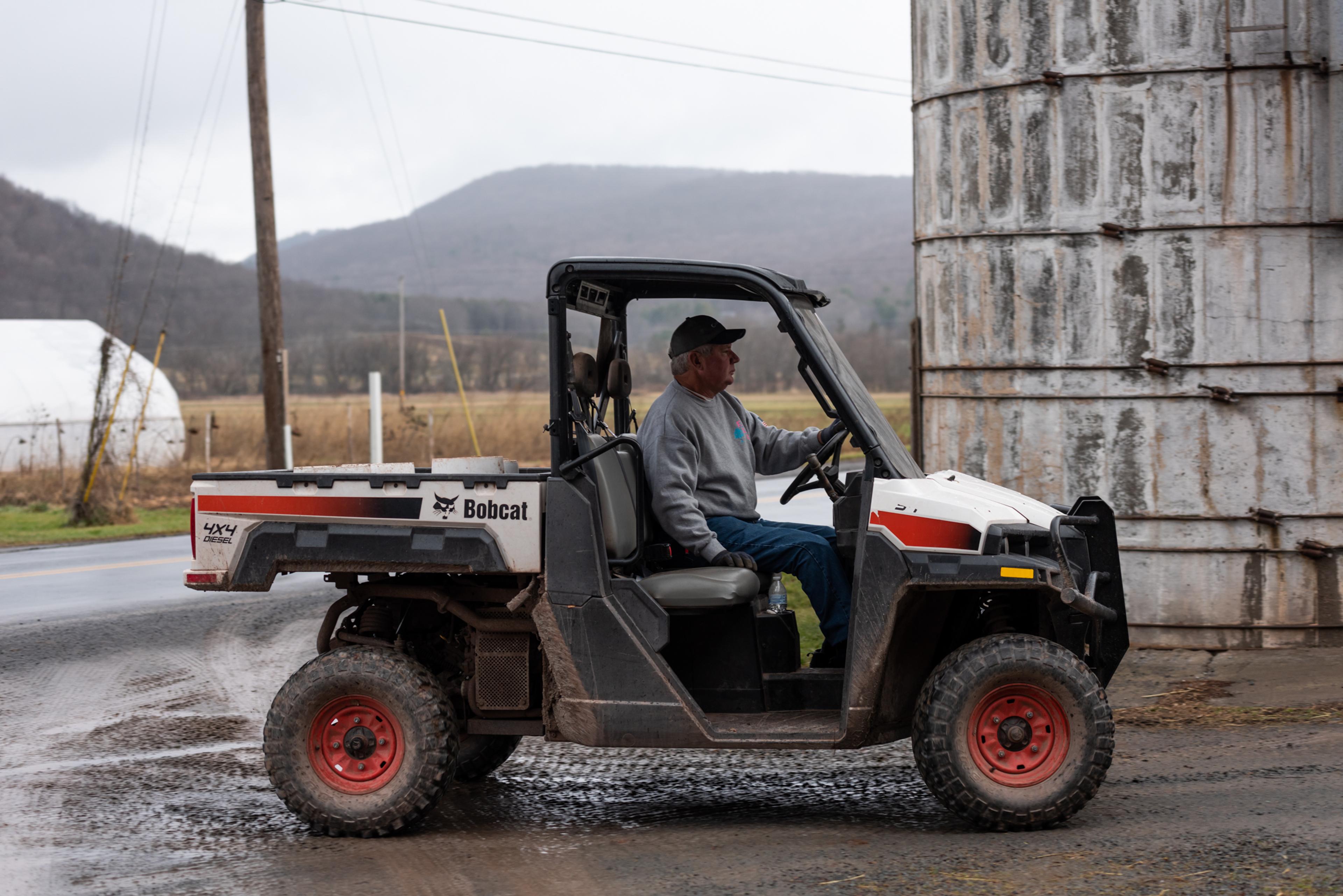
Under a December morning sky, strung with clouds and a cold sun setting frosted hillsides a-sparkle, Mark Stillwell remembered a moment when this landscape showed its dangerous side. Stillwell, who raises and trains racehorses on 200 acres in Central New York with his wife, Kimberly, was collecting hay from the fields at the end of a long day. Attached to his 46-year-old Ford tractor was a baler to compress the cut hay, and a heavy wagon that was stacked high with bales.
Rather than returning to empty the wagon back at the barn, “I got lazy,” said Stillwell, and headed down a steep slope to pick up the last 100 feet of hay before calling it quits. Then, “Everything started to come undone”: The heavy wagon careened into the baler and snapped off one wheel hub and another piece of the machine; fortunately this acted as a brake before all that machinery could create more havoc. “Luckily, I was able to outrun it and head back up the hill before the baler could have flipped the tractor,” said Stillwell, who managed to escape the incident without injury.
Tractor flips result in about 130 deaths per year in the U.S., making them the leading cause of on-farm fatal injuries. But they’re hardly the only hazards; by some accounts, agriculture is the most dangerous profession in the country. Limbs get entangled in gears; unloading silos results in suffocations; livestock regularly injure their owners. Adaptations can be made to some equipment and property to make them less treacherous, as well as to help farmers with injuries continue to work with less pain or restriction. Few farmers bother, though, and the reason is simple: money. For smaller, cash-strapped producers there’s usually some other expense that seems more immediately important than installing a $1,600 rollbar on one of your tractors, for example. But once Stillwell forked out $1,200 to repair his baler and considered how close he’d come to physical catastrophe, he contacted the New York Center for Agricultural Medicine and Health (NYCAMH) and learned he could get all but $500 of a tractor rollbar installation covered. “It was a big relief,” he said.
NYCAMH is one of 12 federally funded organizations across the country that conduct agriculture health and safety research. NYCAMH also provides safety training to farmers and farmworkers, on everything from using personal protective equipment to proper handling of chainsaws and manure. It’s attached to Bassett Healthcare Network, a system of hospitals, health centers and other health-related partners. This means it has the capacity to offer other things, like mental health services, in-clinic checkups, and onsite visits to administer Covid vaccines, across eight New York counties and up New England into Maine. It also helps farmers access pots of money from New York’s Agriculture and Markets department. Some of this is to install those tractor rollbars; some is to pay half the cost of on-farm safety-related repairs and upgrades. For disabled farmers, that might include stairs and lifts to get into their tractors, handrails, and bump gates that don’t require them to get off their tractors to adjust.
Over NYCAMH’s three decades of existence, “There’s a network of farmers that has benefitted from our services, and word gets out to other people in the community — it’s been a tremendous success,” said Heather Chauncey, a clinical case manager at Bassett. To date, 3,251 farmers have gotten rollbars and 176 safety projects have been completed. These projects include upgrading wiring to prevent fires, and installing cattle chutes and corral systems to keep farmers, workers, and veterinarians safe when working with loose livestock.
Like Stillwell, two years ago organic dairy farmer Jim Miller took NYCAMH up on its offer of rollbar assistance for two of his three tractors. “We got some terrible hills here and because it’s pasture, we mow ’em all,” said Miller of the 450 acres he grazes his cattle on in Richfield Springs, New York. A rollbar “is kind of a no-brainer, because there reaches a point where you could roll over without even trying.” In fact, his wife’s cousin died in such an accident just this past fall.
But Miller listed other concerning safety issues on his property. Some of them defy easy solutions, like the open power shafts that transfer power from a tractor to the equipment attached behind it, like a baler. “They spin at 540 rpm and you just have to be really careful around them,” Miller said. “We have a good friend who lost his leg and another one caught his coveralls around the shaft and it ripped them off, like a magician.”
Some safety issues do have easy fixes, though, like the slippery slope leading out of Miller’s barn. It sloped sharply downhill “and it was blacktop, so that made it rough,” traction-wise, Miller said. “When the cows came out twice a day, they’d slip and fall, or we’d slip and fall,” especially in the winter when the ground iced over. No farmer wants slipping cows; a fall can result in the animals breaking bones or “splitting” themselves — their back legs splay out and rip their muscles, preventing them from rising. If a cow is unable to walk a farmer usually opts to euthanize; Miller put three injured cows down last year, jeopardizing milk production, as replacing one organic dairy cow can cost upwards of $2,000.
So when NYCAMH offered to help Miller access $5,000 of the $11,000 he needed to replace slippery blacktop with grooved concrete, first he wondered, “What’s the catch?” Then he gratefully took the organization up on its offer. “For any of these projects, when somebody helps you, you appreciate it,” he said. So far, no slips, either for cattle or humans.
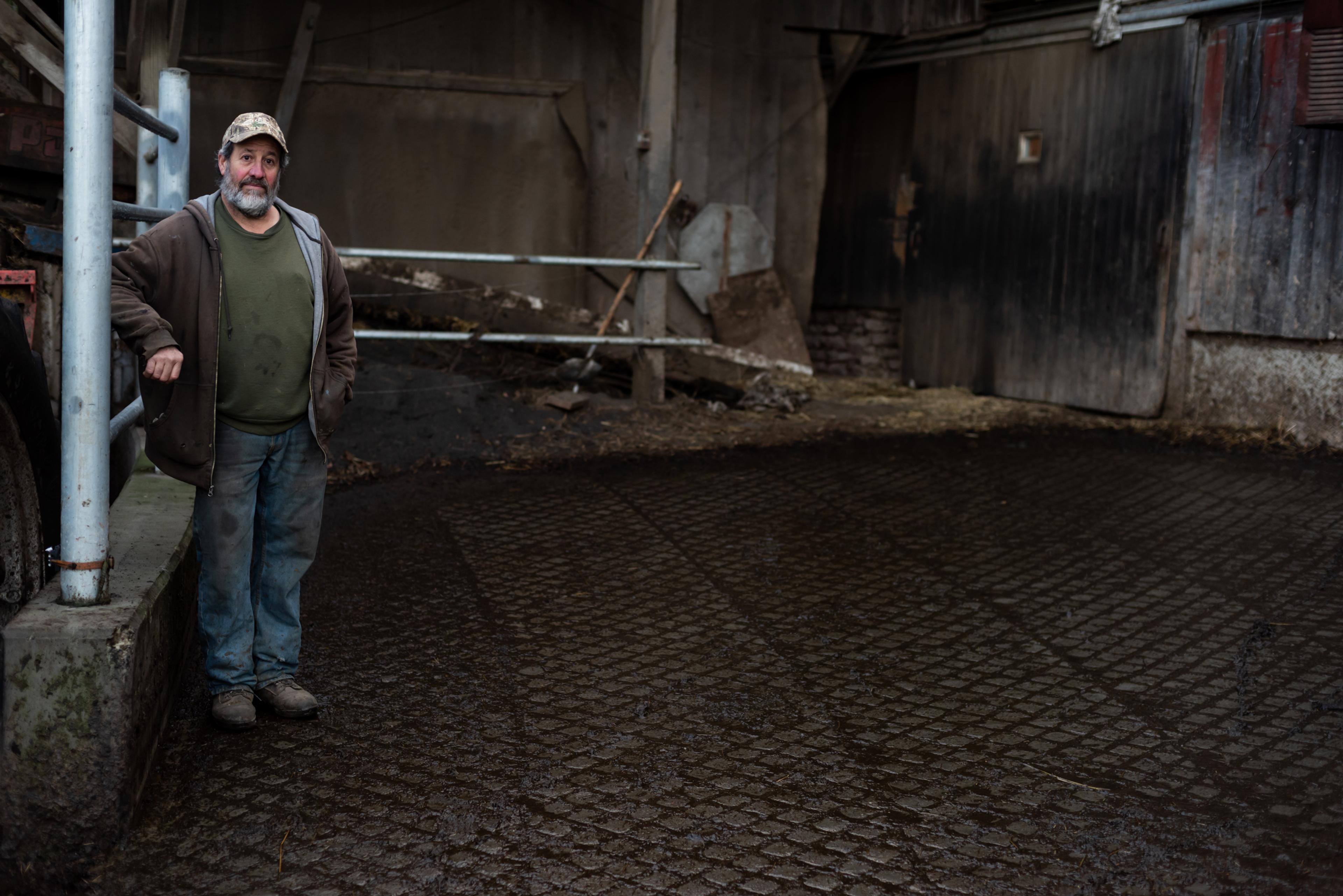
Farm hazards ratchet up several notches when you’re disabled. Ernie Hanselman, a third-generation dairy farmer in South Kortright, New York, lost both his legs to amputation in 2002 and 2003, due to complications from diabetes. In the intervening years, he’s become skilled at getting around on prosthetic legs, although there are some jobs — like milking — that by necessity fall to his wife, Barb, or three of his grown children who’ve returned to the farm to work. “I’d have to be on my feet too much and it wouldn’t be good,” Hanselman said. What he can do is what he’s always liked to do, and that is take care of the field work from his tractors: baling hay, disking fields, chopping haylage. “I don’t know what we would’ve done if he couldn’t,” said Barb.
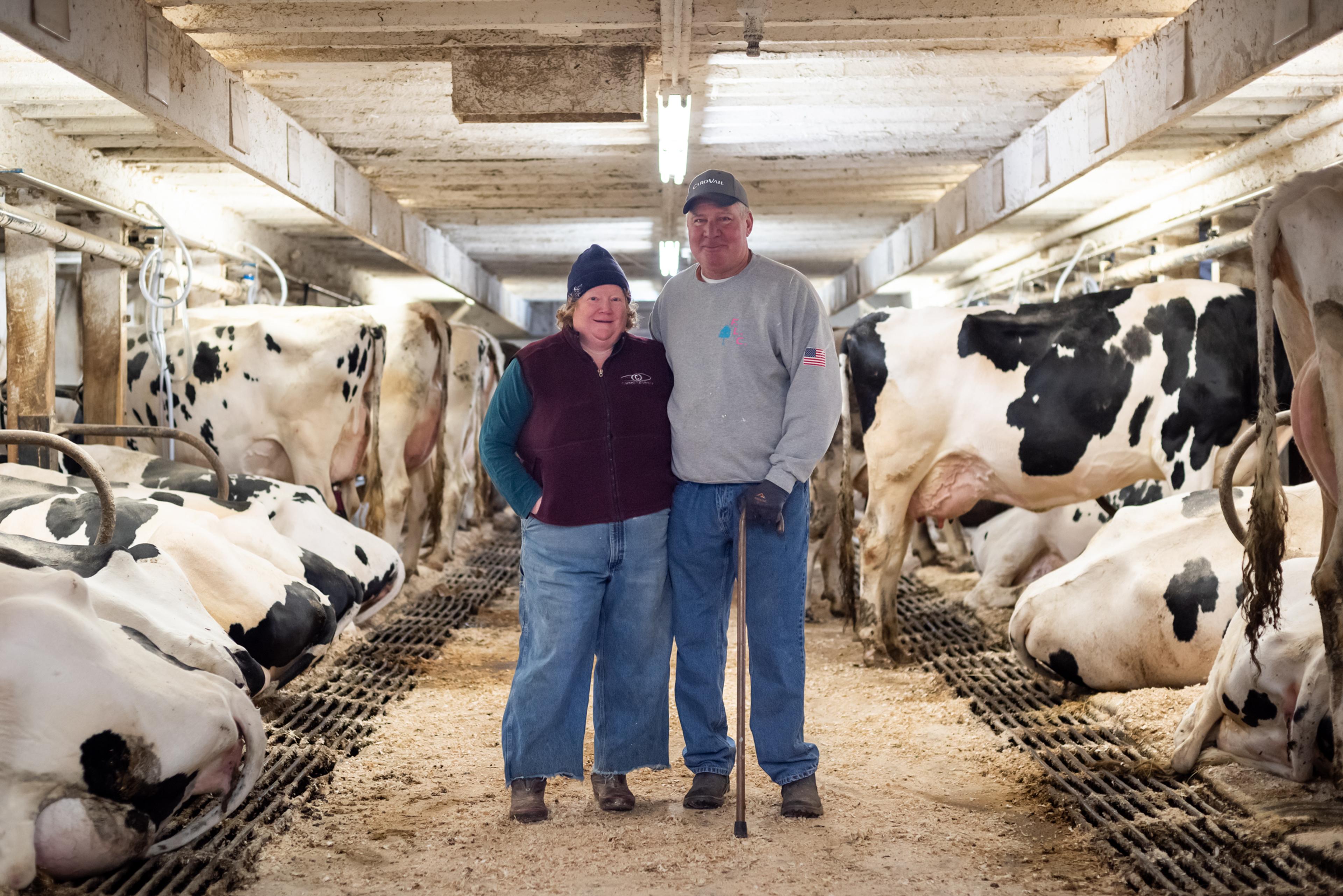
But as Hanselman has aged, “There are limitations,” he admitted. One is crossing the busy road that intersects his property quickly enough to feel safe from speeding cars, necessitating an ATV to get around. Another is getting up into tall tractors designed for someone a lot more limber. One of his sons added steps and grips to six of these; two others were adapted by Hanselman’s father, who suffered from Parkinson’s before he passed away. NYCAMH helped Hanselman put additional steps on the remaining two tractors in the shed. “Piece of cake!” Hanselman announced as he demonstrated one such retrofit.
Still waiting for help with farm adaptations is DJ Grady, who raises cash crops and beef cattle on 300 acres in Scipio Center, New York, and knows firsthand how dangerous his chosen profession can be. Thirty years ago, Grady was hit by a farm wagon; the resulting injuries led to a stroke then a coma that left him paralyzed on the left side of his body. He’s somehow managed to work all these years but like Hanselman, “My age is catching up with me. There’s getting old and feeble besides stupid,” he said with a laugh. Climbing ladders and getting on and off equipment have become especially challenging. The combine is the worst, he said, followed by his tractors: “We’re gonna have to do something about those.”
Bassett’s Chauncey has been following up with him regularly, trying to convince him that the money is there for the asking, and even assisting with filling out paperwork. Disabled or not, farmers “don’t generally like to accept help, because they prefer to be self-reliant,” she said. But as Hanselman and others have discovered, it pays, in life-altering ways, to take it.
Photography for this article was shot by Ari Scott.

On a recent Sunday afternoon, Southern Vermont cut-your-own Christmas tree farm Elysian Hills Farms was overrun with rosy-cheeked young children holding steaming mugs of apple cider. Parents hiked off into the woods to saw down their own little piece of holiday magic, before farm staff expertly wrestled each tree on top of their cars. It was a scene straight out of Norman Rockwell, or maybe a Lexus commercial.
“I always say it’s like bagging a vegetarian deer,” said Elysian Hills owner Jack Manix, who bought the farm with his wife eight years ago. “They cut the tree and they all stand around and take a selfie for their Christmas card, and the tree goes in the back of their truck.”
Manix is a 73-year-old New Englander with a mop of white hair whose primary business is a farm stand and garden center whose business he describes as “phenomenal.” In the warmer months, he runs a 35-acre organic vegetable farm which has been in his family since 1770 where he grows everything from artichokes and strawberries to Carolina Reaper peppers. Manix got into the Christmas tree business on a whim, when he and his wife were buying their own tree one snowy day and found their lives upended by an inconvenient attack of Christmas spirit. When asked about how that decision has been playing out, he laughed.
“Anybody will tell you a Christmas tree farm is not a huge money maker,” he said. “A huge, huge pleasure maker,” but not a particularly lucrative one.
Tough Business
Many farmers and industry experts agree that the Christmas tree farming business — you could melodramatically call it the lifeblood of our nation’s holiday cheer industrial complex — is labor-intensive, with thin margins, incredibly long lead times, and bonus opportunities to disappoint adorable children.
People in the Christmas tree business are not shy about telling you there is no money in the business. At the time Manix bought Elysian Hills, its owners had actually tried to transition it to three other couples, all of whom failed. When asked why, he laughed and said, “Maybe they found out how much work it is and how little the return is.”
The first thing to understand about Christmas trees is that they don’t grow particularly fast. A tree you find in the store is anywhere from five to 14 years old, depending on its size and variety, grown with seedlings purchased from suppliers. One of the main pressures a Christmas tree farm faces is not overselling in any individual season so that they have enough trees to sell next year. Easy in theory, but hard in practice when you’re standing in front of a field of Christmas trees and telling a family they can’t have one.
“People go, ‘We can go in there and cut! There are some good ones in there!’” Manix said. “I say it’s like cashing in a savings certificate early and paying a penalty. A lot of these could be cut, but next year they’ll be a foot taller and 20 bucks or more. It doesn’t really make sense to sell all the little ones.”
“And then you have to harvest the tree, and the expense isn’t just cents per tree, it may be a dollar or two per tree to get that tree out of the field and stored.”
The long growing period for trees also means many visits by farmers — labor costs which add up substantially over time. “A farmer or farmworker has visited, walked past that tree, drove past a fir or to spray for weeds or to mow or whatever over 150 times,” by the time it’s harvested, said Jill Sidebottom, a seasonal spokesperson for industry trade body the National Christmas Tree Association (NCTA) and an integrated pest management specialist at North Carolina State University.
“And then you have to harvest the tree, and the expense isn’t just cents per tree, it may be a dollar or two per tree to get that tree out of the field and stored where it’s not going to dry out. And of course you need to do that no matter what the weather is. It’s just kind of a herculean effort.” The vast majority of Christmas tree farmers need a supplemental off-farm income.
This is one reason there’s a big difference in the number of farms which are “Christmas tree farms” and those which grow Christmas trees in addition to another, more primary business. According to USDA data, there are only 2,880 farms which qualify as Christmas tree-first farms, but a full 15,000 growing and selling at least some Christmas trees.
Seasonal Swap
Another odd aspect of Christmas tree farming is that the absolute busiest time of the year — the month from Thanksgiving to Christmas — is traditionally the off-season for most farmers. For Manix, this is one of its best features. “I wanted to keep my crew employed longer,” he said, and the Christmas tree farm gives another month of work to staff from his other operations.
Around the country, Christmas tree farms serve a similar purpose in the agricultural labor market, said Sidebottom, providing work at a time when it can be harder to come by.
“When harvest comes, Christmas tree farms pick up a lot more people, who are migrant workers who have been working on other things. In North Carolina, apple or sweet potato pickers move over to Christmas trees.”
The work itself is not easy. Christmas trees weigh anywhere from 20 to 50 pounds, and weather in December is unpredictable. Laborers can be “knee deep in mud, it could be raining or snowing,” said Sidebottom, as they load hundreds or thousands of trees into trucks for shipping.
The majority of Christmas trees are purchased at either big box retailers like Walmart and Home Depot, or at bucolic “choose and cut” farms, industry argot for places which let you saw down your own tree (and also sell some pre-cut ones if you’re just visiting for the holiday ambiance), according to the 2021 season recap survey by the NCTA, which polled Americans about their Christmas tree buying habits.
According to data collected by the USDA, the United States has an inventory of 118 million Christmas trees, either in the ground waiting to be harvested or sitting on a lot right waiting for purchase. Oregon is the country’s largest producer, with nearly 300 farms creating an inventory of 35 million trees. The country’s largest farms can ship as many as 100,000 trees in a season; Elysian Hills sells only about 700-900 trees grown on the farm each year.
The U.S. also imports trees, especially from Canada. According to data from the Canadian government, our northern neighbor exported 2.2 million Christmas trees here in 2017 (the latest year for which data is available), valued at $46 million CAD. (To put that number in perspective, that same year, Canada exported $6.44 billion CAD worth of canola oil seeds, $1.5 billion worth of soybeans, and $1.46 billion worth of prepared or preserved potatoes.)
Roots of a Shortage
This year, like many of the past several, we’ve been hit with a barrage of headlines screaming about a shortage of Christmas trees. In fact, this year’s inventory was set years ago when the trees were planted — so is next year’s and the year after that. So to untangle the problem of this “shortage,” we have to wind the clock all the way back to the 2008 financial crisis, explained Sidebottom.
“At that time there was an oversupply of trees and especially large trees,” because of a lack of demand during the economic collapse, she said. “It took several years for that oversupply to come into equilibrium with demand. And so growers were planting fewer trees. The industries that grew the seedlings weren’t selling seedlings, and a lot of them went out of business.” When the economy began its tentative recovery, it took several years for the seedling business to bounce back, sparking a lowered supply of trees which wouldn’t be felt in the market for eight to 10 years.
These factors contributed to a 3% fall in the dollar value of annual sales from 2014-2019, again according to the USDA, even as average prices of Christmas trees have been rising. Just this year, the NCTA predicts retail price increases of 5-10% as farmers deal with inflation. At the same time, Sidebottom said demand has shifted earlier in the season, as the temporal heft of Christmastime in the American imagination has grown and grown, creeping to Thanksgiving or even before.
“When our industry here in North Carolina started in 1957, they would have their annual meetings the 10th of December because nobody was cutting trees until a week or two before Christmas,” she said. Now, it’s common for growers to be completely sold out by the week after Thanksgiving.
Now it’s common for growers to be completely sold out by the week after Thanksgiving.
Exactly on schedule, one week after Thanksgiving, Vermont’s Jac Frost Farm was sold out. Owner Ashley Reherman purchased the farm just two years ago to give her mother her own “little Hallmark movie.”
“This was never anything in my wildest dreams,” she said. “If you had talked to me three years ago when I was a wedding photographer in Baltimore and told me this is what I’d be doing, there’s no way.”
Reherman moved there with her mother, who wanted to retire “somewhere with animals” after years of caring for her wife with Alzheimers. As we spoke, her husband and son were loading the car for the six-hour drive back to Baltimore, where they both still live and where he has a full-time job. Like Manix, she admits the farm wouldn’t work without his supplemental income. But her love for the business transcends simple economics.
“It’s just a very nice way to interact with people,” she said. “This is a very tight-knit community, everybody knows everybody. And people remember you and they remember how you made them feel.”
In a world where our actions are monetized by forces outside our control in ways we barely understand, it is refreshing to find that something which is a reliable part of a certain sector of American life — something which can perennially be counted on to be in serious demand — is mostly operating outside typical capitalist imperatives.
Manix put his motivation very simply: “I dunno. I just love Christmas!”

Urban farmers with ground-level growing experience are presented with a unique set of challenges when they attempt to farm on buildings. Each rooftop operates as its own microclimate, impacted by different temperatures, sun exposure, and varying levels of wind speed that can lead to soil erosion — all causes of potential harm to the plants. Turning that space into a productive farm isn’t easy, but a new study may have found a way to help rooftop crops thrive.
Repurposing carbon dioxide expelled from building exhaust pipes could enhance the productivity and health of crops grown in rooftop gardens and farms, according to a new study conducted at Boston University. The process makes good use of the exhaled breaths of people within the building below, which accounts for the high CO₂ concentrations of the rooftop vent air.
For the study, led by scientist Sarabeth Buckley (now at the University of Cambridge), a team of plant researchers attempted to use CO₂ as a sort of fertilizer for plants grown on rooftops — often not the most hospitable growing environments. Conditions like high wind and solar radiation exposure, along with drier soil, can lead to smaller and less healthy plant output for rooftop farms, an issue Buckley’s project sought to address.
And it worked.
Buckley planted corn and spinach on the rooftop of a high school in Boston, and monitored the plants’ growth — measuring plant size and number of leaves as they grew, and overall biomass levels after harvesting. She grew some of the crops directly next to the exhaust vents while others were planted next to a control fan for comparison. The spinach grown next to the exhaust vent produced four times the biomass of the controls. The corn grew between two and three times larger.
“We’ll go up there in February ... and there will be marigolds blooming around our vents.”
“The big takeaway is there is a concentration [of carbon] in building, it does make it out of the vents on the rooftop and then when you apply it to plants, it definitely increases growth,” said Buckley.
Tracy Boychuk, founder of The Roof Crop, a foundation that manages more than a dozen rooftop gardens in Chicago, said she has noticed the benefits of exhaust vents — even without intentionally using them. “We’ll go up there in February or in early March just to see how frozen things are and start preparing for the spring plans, and there will be marigolds blooming around both vents. And it’s February in Chicago so like, there’s not marigolds blooming anywhere,” she said. While she noted that the year-round nature of the rooftop flowers is partially due to the heat the vents give off, CO₂ likely adds to the robust blooms that surround the exhaust fans.
From an agricultural perspective, rooftop gardens present a unique opportunity for urbanized areas to produce food locally and lower our overall carbon footprint. And according to an emerging body of research, rooftop farms could offer the capacity to meet high levels of urban produce needs, if they are prominent enough. In a study focused on rooftop production capacity in Bologna, Italy, results showed that if the city used all rooftop spaces that meet the proper requirements to grow crops, the output could satisfy 77% of the area’s vegetable needs.
In terms of logistics, Buckley explained the first step of the experiment was testing the theory that CO₂ would exit building exhaust pipes at high enough levels to potentially work as a fertilizer. Once the team found that the carbon concentrations were viable, they chose the produce.
Buckley said they picked spinach and corn because the crops have different sensitivity to CO₂ levels. Because of the particular way it photosynthesizes, spinach was more likely to benefit from added CO₂, so the corn acted as a control to see if other elements — like increased temperature thanks to the vent air — were responsible for growth improvements. As another control, corn and spinach that were not exposed to the CO₂-rich exhaust air were also fanned, to make sure air movement wasn’t the source of success.
“If this can just be one thing that adds to coating cities with greenery, that would be beautiful.”
Even with the success of the plant growth, Buckley said further research is needed to solidify the results of her experiment. Because the corn — which should have benefited less from exposure to CO₂ — also thrived, Buckley noted that CO₂ fertilization was likely not the only factor that played into the plant’s growing advantage. Additionally, a more high-tech system would be needed to implement the fertilization on a larger scale.
The trickiest challenge, she said, is finding a way to distribute the air from the exhaust vents over larger spaces. The plants in Buckley’s study were grown directly next to the vent, something that wouldn’t be possible for all crops on larger rooftop farm operations. A large-scale system would need pipes or tubing to pump the exhaust air across an entire rooftop, and factors like air pressure would need to be addressed. Specifically, if air from the vents hits the plants with too much speed, it can cause more harm than good, resulting in decreased growth — an issue that would need to be worked out when scaling up. “You’d need a mechanical engineer to really design the system,” she said.
Boychuck said finding more creative ways to repurpose otherwise wasted resources, like the CO₂ from exhaust vents, is something her organization is actively working towards — with the help of a team of developers. “These are some of the things that we’re talking about, like how do you use that energy that comes out of vents and the CO₂,” she said.
While more research is necessary to weed through other factors that could have boosted the plants’ growth, the CO₂ fertilization process offers significant potential for bolstering the output of rooftop farms in the future — something Buckley hopes will increase the number of these farms worldwide. Even the World Economic Forum is touting the promise inherent in this research.
“If you’ve got something that increases growth, figuring out how to use it could at least be one small factor in making rooftop gardens more appealing because the plants are more likely to succeed,” Buckley said. “If this can just be one thing that adds to coating cities with greenery, that would be beautiful.”

Along the banks of the Wabash River in southwestern Indiana, farmer Lance Unger and his family raise 8,000 acres of corn, soybeans, and wheat — staple row crops across the Midwest. But Unger, a third-generation farmer, has differentiated his farm from most by joining a relatively new trend: selling carbon credits.
Six years ago, Unger chose to “farm carbon” in a partnership with Indigo Ag, an enormous, well-funded agtech startup that pays farmers to implement practices purported to store carbon in the ground. This includes planting cover crops and reducing the amount of tillage on a parcel of land. By implementing these practices, farmers generate carbon credits (one credit per ton of CO₂ stored in the soil) that brokers like Indigo sell to other companies, which then offset their own carbon and market themselves as greener.
Joining the program made sense to Unger, since he was already planning on making his practices more sustainable — implementing no-till and cover crops — when Indigo approached his farm. “In our mind, it was money for stuff we were already doing,” he said. “The stars aligned.”
To fulfill his contract with Indigo, Unger keeps careful track of the practices on his farm: where and when crops are planted, how often they’re tilled, and when manure is spread or pesticides are sprayed. Then he turns that data over to Indigo, which verifies that his practices are leading to storage of carbon, then pays Unger for his work.
Most of Unger’s acreage is enrolled in Indigo’s program. Since partnering with the company, he’s added cover crops (plants meant to cover fields in-between growing seasons), and decreased the intensity of tillage on his corn and soybean fields. For his wheat crop, he doesn’t till at all. Unger said joining Indigo was a secondary benefit to his farming philosophy: Reducing tillage and growing cover crops is simply how he ensures high soil quality.
Indigo is one of many companies that offer so-called “carbon farming schemes,” acting as brokers between farmers who promise to sequester carbon in their soils and large corporations looking to offset carbon footprints. But while joining the carbon market made sense for Unger, complicated contracts, dense science, and a volatile market mean that such programs won’t work for everyone. Plus, scientists say the length and details of the contracts could limit the environmental impact such programs can have, especially while climate culprits like fossil fuel burning still exist. And any farmers involved in these schemes might have implemented sustainable practices anyway, meaning they’re being paid for carbon storage that would have happened regardless.
Still, practices supported by such schemes have few environmental downsides, and can offer farmers another stream of income so long as they’re willing to wade through the paperwork and understand what’s required to “farm carbon” effectively.
What, Exactly, Is Soil Carbon?
Agtech startups, farmers, and large companies are interested in soil carbon as a way to reduce carbon emissions from agriculture in an attempt to slow climate change — or at least make it seem like they’re trying.
According to Gregg Sanford, a scientist in the Department of Agronomy at the University of Wisconsin, Madison, soil carbon is one of the multiple “pools” of carbon that contribute to the global carbon cycle, by which carbon is continually exchanged between the atmosphere, living organisms, waste products, and fossil fuels. Other pools include carbon in the atmosphere, “biologic” carbon that exists in plants and animals, and carbon dissolved in the ocean. The amount of carbon in soil, globally, is more than the atmospheric and biological carbon combined, meaning that adjustments to soil carbon can have a big impact on the atmosphere and, therefore, the global climate, Sanford said.
Practices like no-till, low-till, and cover cropping have been promoted by both ambitious startups and the U.S. Department of Agriculture (USDA) for helping sequester carbon. But Sanford cautions against the use of the word “sequester,” which he said could imply that carbon, once in the soil, stays there permanently. That’s not the case — rather, carbon is always being lost from soil as microbes break down organic matter. The goal, said Sanford, is to help carbon accrue in the soil faster than microbes are breaking it down and releasing it.
No-till and low-till practices are purported to keep carbon in the ground by slowing decomposition rates and reducing the frequency that soil is aerated. But, said Jennfer Pett-Ridge, soil scientist at the Lawrence Livermore National Laboratory in Livermore, California, the science doesn’t fully support the claim that such practices increase soil carbon that wouldn’t naturally accrue. The practices simply “hold the carbon that’s there,” she said. That means carbon farming schemes could be paying farmers for helping solve a problem — carbon loss from soils — that might not exist had that land never been farmed in the first place.
“I think we’re at a state where we need to start with, ‘Let’s just not lose carbon.”’
Planting cover crops in between growing seasons increases the amount of time photosynthesis — the mechanism by which carbon accrues in soil — is happening on the field. As cover crops grow, they pull carbon dioxide from the air. When those plants eventually die, some of that carbon stays in the soil. Both reducing tillage and planting cover crops can also reduce erosion, improve soil quality, and lead to other environmental benefits like cleaner water, pollinator habitat, and biodiversity, said Sanford.
However, soil scientists say the depth of such changes is important to ensure any benefits to the climate. Most of the carbon lost from soils in the Midwest and Great Plains region, where much of American farming takes place, is lost from soils in the “deep horizon,” said Sanford — a layer of soil below that which commodity grain farmers usually manipulate.
Even though farmers can make improvements to the top layer of soil, said Sanford, loss from deep layers can offset any carbon gains. This means that even farms that are making carbon gains in the upper layers could still be losing carbon on the whole. Unless farmers or carbon programs are sampling the carbon levels in those deeper layers — not necessarily standard practice — it’s impossible to determine a farm’s net performance.
The recommendations for carbon monitoring by the IPCC are based mostly on studies that only measured top 30 centimeters of soils; carbon farming schemes rarely measure carbon in the deeper layers. “This is kind of baked into the way that we evaluate soils and soil carbon,” said Sanford.
Pett-Ridge urges caution as well. “There’s a lot of folks that are really bullish on the soil carbon increases,” she said. “I think we’re at a state where we need to start with, ‘Let’s just not lose carbon.”’
“There will always be snake oil salesmen.”
While cover crops and reducing tillage could prevent carbon loss from upper layers of soil, there are other targeted practices that could be considered in future carbon schemes. For instance, planting perennial crops with more extensive root systems could help hold carbon in the deeper layers of soil. Perennials stay green longer than annual plants, too, which means their potential to capture carbon through photosynthesis is greater.
There’s emerging scientific evidence to support other carbon sequestration methods as well, like the addition of biochar (charred organic material meant to trap carbon in soil long-term) or mycorrhizal additives (fungal amendments that increase the surface area of root systems). Pett-Ridge said she’d like to see more evidence that such strategies are effective at increasing soil carbon.
As with any emerging market, said Sanford, buyers should be cautious: “There will always be snake oil salesmen.”
However, said Pett-Ridge, carbon farming of any kind, no matter how effective, is usually a movement in the right direction. “I personally see more upside than disincentive,” she said. In the case of cover crops, especially, she said there are no downsides in terms of soil health.
Pay to Play
Multiple brokers currently offer farmers payments for generating carbon credits. In the U.S., some of the bigger players include Indigo (which is partnered with Corteva AgriScience), a program run by Land O’ Lakes called Truterra, Bayer’s Carbon Farming Program, and Cargill’s RegenConnect program. The bread-and-butter of these schemes is that certain changes in practices are verified by a third party and placed in a registry. Brokers work with the registry, the verifier, and the farmer, selling companies carbon credits generated by the changes in practices. The buyers are usually big brands like Walmart, Target, and others looking to offset their carbon footprint and make themselves more attractive to eco-conscious consumers.
The payments these programs offer farmers can take two forms, the first — and most common — being action-based payments, which reward the farmer for implementing a certain practice on a set number of acres. Then, based on approximations of the amount of carbon already in the soil in that region, and the amount of carbon the chosen practice can sequester, credits are generated.
The alternative payment structure is results-based, whereby brokers reward the farmer for measured changes in soil carbon. Results-based payments are typically higher, since action-based payment programs must reserve funds in case a farmer falls short of their carbon storage goal. Bayer, Indigo, Truterra, Nori, and Cargill all run action-based programs, though Cargill also offers results-based payments.
In 2022, Truterra paid farmers up to $25 per carbon credit, the same payment that Cargill is offering for 2022-2023 enrollment. Nori and Indigo pay $20 per credit. Companies that buy these credits then pay a slightly inflated price; for example, Nori sells credits at a 15% upcharge.
Jerome Dumortier, an agricultural economist at Indiana University, said action-based payments may be more prevalent since results-based payments require measurement of soil carbon before and after the change of practices, which can be “very difficult” to achieve since carbon storage varies from acre to acre. Measurement strategies also vary in accuracy; while some brokers verify results with actual soil sampling (the “gold standard,” said Sanford), others use modeling techniques based on soil type, climate, and other data. Soil sampling is expensive and can be logistically challenging, but Sanford said they are an absolute necessity for accurate verification.
Action-based payments can also offer reassurance to farmers, said Alyssa Cho, a member of Bayer’s agronomy team. “There’s a guaranteed payment for the grower. They don’t have to worry about how much carbon they’re actually going to sequester year over year.” Viewed differently, this means they are also less accountable for achieving results.
Paying farmers for practices they’ve already implemented is not “the purpose of a carbon payment.”
However, said Sanford, in order for action-based payments to stand up to scrutiny, they must be verified by soil sampling from time to time and must be compared against a baseline measurement. Bayer, for example, takes soil samples in year one and year five of a farmer’s contract.
For a farmer, the choice between an action-based or results-based payment program depends on the farm, the location, the soil type, and the amount of risk a farmer is willing to take on. If the farmer is in an area with high potential for carbon sequestration, said Cho, it might make more sense to go with a results-based program, but an action-based program can insulate a farmer in case the farm can’t sequester as much carbon as expected. “Some growers want that certainty and predictability,” she said.
Some companies, like action-based brokers Nori, Truterra, and Indigo, pay farmers for practices that have already happened, called “historical” or “vintage” credits. Nori rewards farmers for up to four years of changes in practices that have been made since 2012, while Truterra offers a lower payment for practice changes made since 2019. Nori also plans to offer farmers payments in the form of a blockchain-backed token.
Some experts say paying for historical changes in practices defeats the point, since no additional new carbon is being sequestered in the soil. Dumortier, for example, said paying farmers for practices they’ve already implemented is not “the purpose of a carbon payment.” Still, these programs surely hold some allure to farmers, in that they might not require drastically changing their practices in the future.
Considering a Contract
Lawyers, agricultural economists, and other farmers caution that joining carbon schemes might not make sense for every farm. Alexis Stevens, a fifth-generation Iowa farmer who grows 600 acres of corn and soybeans, has chosen not to enroll any of her acreage in carbon farming programs.
Stevens said the reason is simple: The numbers just don’t work. She believes that the cost of putting in cover crops, as well as the yield she expects she’d lose from no-till or low-till practices, means there’s little financial incentive for her to participate in the carbon market. With already tight margins, she’s hesitant to take the risk.
Reducing tillage can save farmers money on fuel, labor, and machinery costs, and cover crops can provide long-term economic benefits associated with improved soil quality. However, some research does suggest that no-till and low-till practices may decrease yield, and cover crops are an added up-front expense. That’s why, said Unger, the farmers choosing to sell carbon credits are generally those who are already implementing sustainable practices, or farmers for whom changing practices already makes financial sense, regardless of the carbon market. That means that brokers could be taking credit for storing carbon that might have been stored anyway.
That said, Indiana University’s Dumortier said there is huge potential for the voluntary carbon market to become the primary climate solution for farmers. He’s “optimistic” that they’ll be successful at a large scale since farmers are generally entrepreneurial and will jump at the chance to generate a new income stream. He also expects there to be a growing pool of money available for implementing climate-smart practices, whether it comes from the government or from corporations who want to market their products as climate-smart.
Corteva AgriScience projects that by 2030, farmers could make $60 per credit, while Bloomberg analysts recently wrote that they expect a $190 billion market by the same year. However, huge potential in early days means the market is crowded and unstable right now. There is currently no single carbon price offered by these different schemes, which Dumortier said leads to inefficiency in the market and uncertainty for farmers.
“Some years are good and others are a struggle. No need to think that this market will be any different.”
That volatility of the market, along with the number of different programs offered, could eventually be detrimental to the actual amount of carbon in the soil — if farmers have an incentive to break their contracts and switch between programs, once-sequestered carbon could be re-released, said Dumortier.
Additionally, said Dumortier, soil gets saturated with carbon at a certain point, meaning that payments would stagnate eventually for some farmers in results-based schemes. Depending on how the carbon farming scheme is structured, farmers could have an incentive to till up all their soil carbon and start anew, too. Some schemes have penalties for this, but Dumortier said “there would be no farmer” who wants to enroll in a program where payments would stop if soil became saturated.
Many components of the contracts required to join carbon farming schemes can scare off farmers, as well. Contracts with carbon farming programs range from one year (Cargill) to a minimum of 10 years (Bayer). Farmers may not want to commit to longer contracts since the market is so new and volatile; a contract a farmer signs now might prevent them from signing a new contract if the price of carbon rises rapidly in the next decade.
Additionally, commodity prices for crops change quickly, meaning that while one year it might make sense to take land out of production or change practices for carbon credit payments, the next year a hike in corn prices could make conventional farming more profitable. “It’s still the wild, wild West,” said Stevens.
“There’s a lot of rapid changes, and new faces coming to the table every day with new offers,” said Cho. “It’s a very confusing time for growers.”
Unger, on the other hand, said a volatile market is something farmers are used to with the grain market. “Some years are good and others are a struggle,” he said in an email. “No need to think that this market will be any different.”
Some farmers have been frustrated that large corporations are getting the glory for sustainable practices done by farmers.
Lawyers urge farmers to negotiate their contracts to lessen the penalties they’d face for switching contracts and to shift the costs of transitioning their farm’s practices to the broker. “From a producer perspective, there are a lot of changes I would want to ask for in the majority of the contracts that I’ve seen,” said Tiffany Dowell Lashmet, an agricultural law expert at Texas A&M.
In a white paper offered as a decision-making guide to ranchers, Dowell Lashmet and other agricultural law experts advise farmers to evaluate their production risk and potential: Since all farms have different soil types and climates, some may have a higher potential to accrue carbon than others. It may be less risky to join carbon farming schemes for farms with higher capacity to accrue carbon, they write. “It’s really important to understand the potential for sequestration in your own fields,” said Dowell Lashmet, adding that farmers in the Texas panhandle, for example, have far less carbon-storing potential than elsewhere in the country.
They also advised farmers to consider if any penalties exist in the contract in the case that the farm doesn’t accrue as much carbon as expected. Such clauses are called “no-reversal” clauses, and penalties could include termination of the contract, fines, or even return of prior payments, depending on the contract. Dowell Lashmet also said farmers should make sure they are able to appeal any determinations made about how effective their practices are.
Most programs, said Dowell Lashmet, require extensive data collection, and some even require aerial photography of farms in order to measure soil carbon and verify practices. “Farmers really value their privacy,” she said, “You’re basically going to open up your farm records, your farm books, all that kind of information. That has to be something you’re willing to share.”
The authors write that farmers should compare and contrast carbon farming contracts with other opportunities, like government programs and private payment systems, as some contracts don’t allow for the same acres of land to be enrolled in multiple programs at once (though, notably, Cargill allows farmers to involve their acreage in public payment programs alongside its scheme).
Given the many unknowns currently facing the system, said Stevens, many farmers have chosen to wait and see how the market shakes out; if the system becomes more standardized, more farmers might be interested. Some farmers may be expecting more government programs to start offering carbon-based payments, contributing to the hesitancy, said Dowell Lashmet.
Stevens also said some farmers she works with have been frustrated with the idea that large corporations are getting the glory for sustainable practices done by farmers. “I think they want a little bit more recognition,” she said.
Unintended Consequences
Some agricultural experts worry that carbon farming schemes might be preventing the agricultural system from transitioning toward even more transformative change that could make a bigger difference for climate and biodiversity. For example, Silvia Secchi, an agricultural economist at the University of Iowa, worries that participating in the carbon market gives farms an excuse not to cut back on other pollution- and emissions-generating practices, like fertilizer application. Carbon farming schemes, she said, “prolong the life of unsustainable systems.”
Sanford agrees. “There are many agricultural systems in the U.S. that are fundamentally not working well,” he said. “One of the big issues I have with this is that it’s a political kind of easy road to take, because it doesn’t ask us to challenge the prevailing agricultural paradigm to think about how we could farm.” Carbon farming, he said, allows farmers to keep planting corn and soybeans instead of exploring other ways to increase biodiversity and pollinator habitat.
“We shouldn’t convince ourselves that it’s a permanent solution, or even the most essential solution. The gorilla in the room is the combustion of fossil fuels,” said Sanford.
Dumortier, on the other hand, said voluntary carbon markets are the most realistic next step for adapting farming in the U.S. to a new climate reality. “We are driven by incentives,” he said. “People are not going to change out of the goodness of their heart.”

In Conrad, Montana, grain farmer Ken Johnson relies on a range of technology-driven equipment to oversee operations on his 4,500-acre farm — much of which relies on a steady connection to the internet.
Located 23 miles away from what he calls “a huge town of 2,600,” Johnson is lucky to have fiber-optic internet service in his home. But not every farm in the area — or across the country — is served as well. In fact, Montana has some of the country’s poorest internet in both coverage — 69.2% — and download speed — 20.3 megabits per second (Mbps). (For comparison, the state with the best internet, New Jersey, clocks speeds of 52.0 Mbps.) Other low-ranking states include Mississippi, Arkansas, Oklahoma and Wyoming — a fair representation of America’s rural broadband internet problem.
Lack of reliable internet access has a trickle-down effect on farmers. Without connectivity, producers can’t conduct basic tasks that come with running a modern business. In an increasingly online world, producers rely on the ability to search online for the best input prices to help boost profit margins, shop for replacement parts for their equipment, apply for funding, and run platforms that rely on direct-to-consumer (DTC) marketing. In the field, improved connectivity at high-speed thresholds has been shown to correlate with higher crop yields — but that all depends on the robust upload and download speeds that modern farm equipment relies on to function efficiently.
“Things are moving more and more towards technology to drive the decisions that we make. The more data the better,” said Johnson, referencing everything from soil sensors to smart tractors to online accounting systems. “Everything is moving to the cloud, and you need internet access for that.”
According to the most recent Farm Computer Usage and Ownership report, published every other year by the USDA, 18% of farms have no access to the internet at all. Further, only half of internet-connected farmers access broadband (DSL, cable, fiber optic) to connect to the internet, with others relying on cellular or satellite connections to conduct their operations.
And as innovations continue to sprout up in the agricultural sector — autonomous tractors, laser-weeding robots, wireless temperature and soil moisture probes — connectivity is more important than ever. The rise of precision agriculture has the potential to boost yields and profit margins, while lessening reliance on fertilizer and other inputs, among other benefits. But none of that is possible if farmers can’t access the new equipment’s programs through the internet.
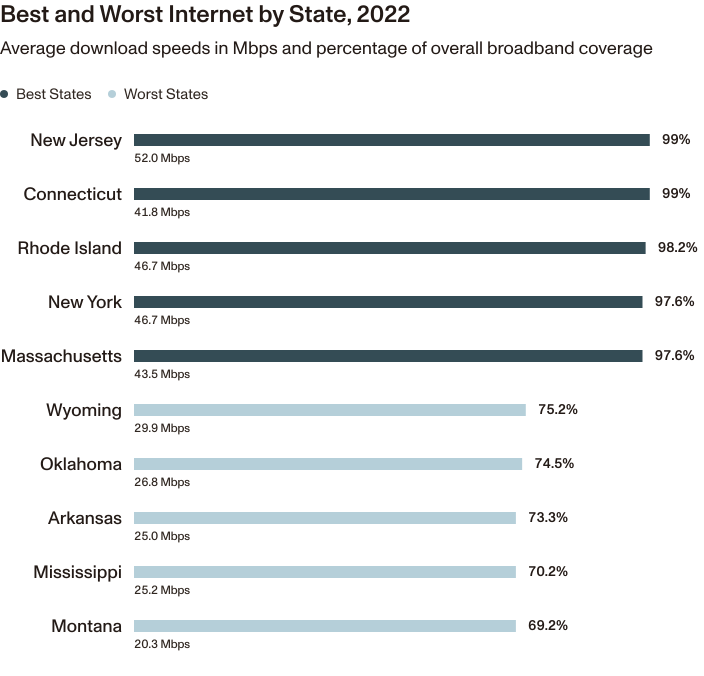
The Federal Communications Commission (FCC) defines broadband as having download speeds of a minimum of 25 Mbps and upload speeds of at least 3 Mbps, and can include everything from WiFi and satellite to fiber-optic cables. As the industry shifts to autonomous machinery, it’s estimated that farmers will need 300 Mbps download and upload speeds for the technology to function as intended.
In agriculture, producers are generally less concerned with download speeds; the speed of uploading data to the cloud is more vital. A farmer might have many sensors and devices installed across their fields, all of which need to transmit the real-time aggregated data to the cloud. That’s a lot of information moving in one direction.
A host of programs and initiatives aimed at improving rural America’s internet deficits have launched in recent years. Passed in 2021, President Biden’s Infrastructure Investment and Jobs Act (IIJA) dedicated $65 billion for broadband funding and other activities that close the digital divide through four programs. This included funding for the Internet for All initiative, which allocated $45 billion into providing affordable and reliable high-speed internet for everyone in America by 2030. The monies were provided to states and tribal communities, which were left to determine how to allocate the funding.
Earlier this year, the Biden-Harris administration announced an additional $502 million in loans and grants to bring high-speed internet development to rural and remote areas across 20 states, including to tribal lands and people in socially vulnerable communities. Since its inception in 2018, the USDA’s ReConnect Program has also provided nearly $2 billion in funding for the construction and improvement of broadband service in rural areas.
“Some of the the underserved areas don’t get the money because [internet providers are not going to make any money there for a very long period of time.”
But some say those funds haven’t been distributed fairly. “Part of the problem we see with rural broadband is a lot of times they’ll throw money at a state. And they’ll service the already serviced areas … whereas some of the the underserved areas don’t get the money because [internet providers] are not going to make any money there for a very long period of time,” said Johnson, who’s also the former Montana Farm Bureau District 8 director. “So it’s kind of frustrating to watch the really underserved areas not get the money that should have been spent there.”
In Indiana, Dennis Buckmaster, hobby farmer and professor in agricultural and biological engineering at Purdue University, is also frustrated by the rollout of broadband funding programs. “[The lack of connectivity] needs to be solved; it shouldn’t be ignored. The funding shouldn’t still go to places that already have [internet] while there’s still a place that doesn’t have anything,” said Buckmaster, who spoke to me over a Zoom call using a WiFi hotspot, which requires a personal cell phone signal booster to amplify an otherwise weak signal, because he doesn’t get internet access in his home.
In order to determine which areas are unserved or underserved, and thus who receives funding, a lot of these programs rely on detailed broadband maps provided by the FCC, the latest update of which was released on November 18.
However, not everybody is pleased with the maps, which provide a picture of where broadband internet is available based on fixed locations, such as homes and businesses, but overlook the acres and acres of fields in which farmers rely on connectivity to conduct and improve their work.
The importance of expanding connectivity “goes beyond bingeing on Netflix.”
It turns out the broadband maps may not be entirely accurate, either. When Kenny Sherin, broadband access and education coordinator for NC State Extension, looked up the home address for his parent’s farm on the map, he found a glaring inaccuracy. “They have farm buildings around the property, including an old chicken house that we now use for storage. Their residential location dot for their address was on that chicken house. Their home did not have any dot on it,” said Sherin. “In FCC land, their home doesn’t matter because it’s not a dot on their page.” So he filed a location challenge on the map, and implores others to check the map for accuracy and file a complaint if they notice any discrepancies.
“In the farmer residence, where the farmer lives, it’s important to have coverage,” said Sherin. “But their farm office might not be in their house, it might be in their shop, which needs to be indicated with a dot on the map, too.”
Getting broadband internet to all Americans is an ambitious endeavor, but the livelihood and businesses of farmers across the country relies on it. The importance of expanding connectivity “goes beyond bingeing on Netflix,” said Sherin. “We’re talking about how do we increase our earnings? How do we learn something new? How do we connect to telehealth resources? How do we earn, learn and be well through digital resources?”
For Buckmaster, efforts to improve broadband in rural areas won’t be a complete success until the entire map is covered. “It can’t just be to the house or the office or the barn. It’s got to cover the landscape,” said Buckmaster. “Do you have connectivity to every field in that township in that county? If you don’t, you haven’t provided broadband connectivity to agriculture — not until essentially it’s in every field in every township in every county in every state.”

Over the last few years, shoring up our supply chain has been the subject of much concern, conversation, and federal investment — especially when it comes to the food supply. But one particular link in that chain, arguably one of the most vital, has managed to escape much scrutiny: There is a woefully scarce number of veterinarians to care for food animals in rural America.
“We have counties in Mississippi that don’t even have a large animal veterinarian, and that’s really what we’re hearing across the entire country,” said Sen. Cindy Hyde-Smith (R-MS) at a press conference earlier in the week. “Our nation’s food security and economic security are put at risk without sufficient veterinary oversight to ensure the health of animals in the food supply chain.”
Hyde-Smith was keynote speaker at the unveiling of a comprehensive new report titled Addressing the Persistent Shortage of Food Animal Veterinarians, prepared by Clinton Neill of Cornell University’s College of Veterinary Medicine. In the report, Neill starkly details the core shortage, what led to it, and the startling effects it can have on America’s food supply
“This is not a new problem,” said Neill, who has spent years on this line of research. “What is changing is the sense of urgency. It’s something that’s going to affect the long-term ability to have a really robust food safety system in the U.S. Because veterinarians, especially food animal veterinarians, play a vital role along the entire food chain.”
Forty years ago, food animal veterinarians were the largest single category in the profession, with a full 40% of practitioners focused on livestock. But a confluence of factors, including a persistently steady increase in the need for pet medical care — as well as the promise of higher income from that sector — has led to a precipitous dropoff over the years.
“Finding someone who wants to live in the middle of nowhere and have such a demanding schedule is hard.”
Food animal vets are now only 5% of a profession currently suffering from low overall numbers — a percentage that Neill predicts will keep decreasing as older practitioners retire. Of the thousands of veterinary school graduates each year, only 3-4% are choosing a food animal-focused practice. Neill said it can be a hard sell, convincing a young vet to set up shop in our nation’s rural areas, where the vast majority of food animals are raised.
It’s certainly not the only profession to suffer from the urban/rural brain drain of highly educated professionals, but the impacts on food production and rural livelihoods are acutely felt.
“Out here in western Kansas, there isn’t much around, and vets are hard to come by,” food animal veterinarian Kacey McDaniel told Successful Farming in 2019. “Finding someone who wants to live in the middle of nowhere and have such a demanding schedule is hard.”
“The reality is that veterinarians who do that kind of work don’t get the same salaries as vets in metropolitan areas, and the call structure is not appealing,” added Kansas vet Chase Reed, echoing another finding from the report. “I’m on call 180 days a year, any hour of the day or night. It takes a special person to come out here and persist in this style of practice.”
In 2020, only 11.7% of veterinary businesses were in counties with 20,000 people or less, while in counties with populations less than 2,500, this number was a mere 2.3%. With so few vets in certain regions, it’s not uncommon to spend many hours on the road for each farm visit. Neill’s report details the challenges to rural economic growth this situation poses, as well as the potential impact on both food security and food safety.
With so few vets in certain regions, it’s not uncommon to spend many hours on the road for each farm visit.
“This shortage can lead to dire consequences at the producer level,” said Stephanie Mercier, senior policy advisor at the Farm Journal Foundation, which commissioned Neill’s study. “If a farmer has to wait several hours for a vet to be able to show up and look at an animal, it raises the risk that not only will that animal get sicker and die, but also potentially infect the rest of the population.”
Take, for example, the deadly avian flu, a recent strain of which appears to now be affecting mammals. Rural vets are on the frontlines of detection and outbreak prevention; when a disease this destructive can spread so quickly, it’s not hard to imagine what happens with a lack of trained professionals on hand. This same argument could apply to African swine fever, salmonella, and all manner of infectious disease.
Mercier added that there’s a failure among politicians and the general public to connect the dots between, say, rising meat prices and the lack of food animal vets. Her organization is currently working to educate more members of Congress about the stakes of the issue, starting with Hyde-Smith, whose daughter is in veterinary school.
Neill’s report isn’t all gloom and doom. He lays out a multi-tiered plan for increasing numbers of food animal veterinarians, much of it focused on financial incentives. This could include the federal government improving its loan forgiveness program for rural vets, and otherwise subsidizing one of the less lucrative corners of veterinary medicine.
“What can we do at a community level to create a more welcoming environment for veterinarians to not just relocate but to stay?”
In terms of quality of life issues, Neill is less certain how to make rural living more appealing to new graduates. In particular, he sees an issue with enticing young people to build a family in areas with limited professional and social opportunities. “How do you build a system that can help with that? I’m not sure I have the answer.”
On the upside, Mercier said her organization recently put together an advisory group, composed of working veterinarians and other adjacent professionals, to help brainstorm that very issue. At their most recent meeting they analyzed the question of “What can we do at a community level to create a more welcoming environment for veterinarians to not just relocate but to stay?”
Mercier’s question may appear to be an innocuous one. But with our food security and the economic viability of rural America itself at stake, it appears to be in urgent need of an answer.
Mercier continued, “It’s not just whether we can provide some financial assistance to acquire the equipment and the technology [a veterinarian] needs to run his office, but how can we help improve the social environment? If that veterinarian is married, can we help their spouse find a job? It’s not an easy problem to tackle.”
Ed. Note: An earlier version of this story said Sen. Hyde-Smith’s daughter was a veterinarian, but she has not yet completed veterinary school.

For producers hoping to pull their ledgers into the black by adding petting zoos, pumpkin patches, or barn weddings — commonly considered a surefire way to increase cashflow — the reality is not always easy, or profitable.
Agritourism is a catch-all term for any on-the-farm activity that invites outside guests — think corn mazes, cafes, or overnight farmstays — and many producers use it as a way to pull in extra cash. According to the 2017 Census of Agriculture, 28,575 farms across the country offered agritourism and recreational services of some sort on their land — generating $949 million in sales.
Implementing these side hustles, however, is far from simple. A new study on the agritourism issues facing the aspirational farmer shows that the challenges are many; local bureaucracy can be a major hurdle; and many producers find themselves without any guidance. In short: Agritourism is easier said than done.
“Let’s say that you are a small or medium-sized agricultural operator who would like to move into tourism. This isn’t necessarily something that’s in your toolbox,” said Jane Kolodinsky, director of the Center for Rural Studies at the University of Vermont, which conducted the new research. “If you are a producer, you might be entrepreneurial in production, but you certainly might not have the skills to actually set up how to run a tour, lodging, transportation, etc … There’s a whole set of regulations there.”
Twenty-six percent of farmers that reported agritourism on their land also reported zero profit from the operation.
Throughout the country, farmers struggle to understand and operate through the intricacies of local zoning and permitting laws that dictate what they can and cannot do on their land.
“It’s an issue all over the U.S.,” said Lisa Chase, natural resources specialist at the University of Vermont Extension. “As farms develop creative enterprises that educate visitors and bring more visitors to their properties, it goes outside the boundaries of what’s typically understood as farming. So that can cause issues for neighbors and their towns as well as on the state level in terms of what’s allowed to take place on a farm and what isn’t.”
Different counties and municipalities have their own land-use laws farmers need to consider when starting up tourism operations, as permits to host guests, serve food, etc., may not be available. Depending on local laws, many activities on land zoned for farming can be prohibited.
Scottie Jones, who started Oregon’s Leaping Lamb Farms with her husband in 2002, said that crossing a county line can be the difference between if activities — like allowing campers on farms — is allowed or illegal. She added that neighbors wary of new development next door can be another unforeseen obstacle. “I usually tell people, ‘Before you do anything, go talk to your neighbors and tell them what you’re going to do.’ Because if you want somebody to tank an application to the county for a permit, your neighbors will do it faster than anybody else can if they don’t like what you’re doing.”
Even after completing the often-arduous setup process, profit is never a guarantee. According to a survey conducted as part of the UVM research, 26% of farmers that reported agritourism on their land also reported zero profit from the operation. This means that just over a quarter of respondents said they brought in revenue from agrotourism operations, but it wasn’t enough to exceed operating costs and pull in a profit.
“It’s extremely important to be properly insured as a business ... I can’t afford to lose my farm because of the guests.”
Decades ago, Beth Kenneth and her husband Bob were early agritourism adopters at their Vermont dairy, Liberty Hill Farm. In 1984, the two opened the doors of their 10-bedroom farmhouse and began to host guests for overnight stays and farm-to-table dinners in hopes of generating enough revenue to stay afloat.
“I needed to diversify the income in order for our farm to survive. And over the last, you know, 39 years, that need to diversify the income has never really ended,” Kenneth said.
UVM’s research found liability issues as a top challenge when opening an agritourism operation just about anywhere in the country. Proper permits and insurance are integral to safeguarding farmers who open their land to visitors or conduct operations outside of typical farming. “You open yourself up to tremendous risk and liability. So it’s extremely important to be properly insured as a business if you’re taking people to your farm into your home. I can’t afford to lose my farm because of the guests,” Kenneth said.
Producers assume responsibility for visitors’ safety when they invite them onto their property, and the activities they offer can impact insurance premiums. For example, if a farmer wanted to add a higher-risk activity like horseback riding tours, they’d need to make sure insurance would cover possible accidents — and pay more for that insurance.
In 2004, Kansas became the first state to enact a liability protection law for producers that offer agritourism activities on their land. Since then, 31 states have put limited liability agritourism laws in place that offer farmers and ranchers immunity if a visitor is hurt while on the farm. Still, each state’s liability laws define agritourism differently and come with a unique set of exceptions to the farmer’s immunity. Producers need a solid understanding of the laws within their state if they want proper liability protection — and that understanding can be hard to come by.
The pivot from farmer to host, marketing manager, travel booker, and tour guide can cause challenges long past the initial business setup.
The marketing and travel booking side of things also isn’t always second nature for farmers, said Jones. For success in agritourism, “You need to understand the world of travel booking and the challenges that can present. If you insist on old-fashioned email and phone calls for communication, it’s likely this will just stay a hobby and never really flesh out into a viable business operation,” she explained. “You need a website. You need social media.”
Farmers listed time management and marketing as the additional top challenges of agritourism, the university’s research showed. In a sense, farmers are entering the hospitality business, putting them in a direct customer-facing role — one that may be new to them. The pivot from farmer to host, marketing manager, travel booker, and tour guide can cause challenges long past the initial business setup.
In Marietta, New York, Evelyn Luebner and her family operate a dairy farm with multiple agritourism attractions, including a pumpkin patch, corn maze, brewery, and bakery. Luebner, who is more comfortable with the cows than the guests, said the customer service side was a learning curve for her.
“Customer service is not my strong suit. I like working with animals,” she said. “I’ve definitely had to make a strong suit over the past few years, and that’s definitely been a struggle for me.”
In an effort to start mitigating these challenges for farmers, Chase and other researchers channeled the results of their studies into a guide to navigating Vermont’s agritourism regulations — something they hope to see nationwide.
“The goal is to actually develop programming that’s tailored enough to meet everybody’s needs, so that they can look it up,” said Kolodinsky. “Problems with permitting? Go here. Need help marketing your operation? Go here. It’s just like any other business, especially if it’s a small business: Entrepreneurs have to be Jack and Jills of all trades. They need to know where to find the information specific to their questions.”

Just over 800 miles from the North Pole lies the world’s northernmost settlement, the town of Longyearbyen on the Svalbard archipelago. With average summer temperatures of 3 to 7 degrees Celsius, and more than three months of complete darkness, surrounded by freezing fjords and glaciers, the town is not what most people would think of as hospitable.
None of Longyearbyen’s 2,000 residents was born there — they include researchers, scientists, adventurers, chefs, miners, students, expert trekkers, businesspeople, and others from more than 50 nations who traveled to this remote Norwegian outpost in search of adventure and an extraordinary life. Most people spend an average of seven years in Longyearbyen before moving on.
Situated on Spitsbergen, the largest island on the archipelago, about 900 km (559 miles) north of Norway in the Arctic Ocean, Longyearben gets about four months of complete sunlight and four months of total darkness. The harsh climate and periods of irregular sunshine make traditional agriculture all-but-impossible. Almost 100% of the food in Longyearbyen is imported, and costs about 20% more than food on the mainland.
“The imported food we get in Longyearbyen is not such good quality and we see a lot of rotten vegetables in supermarkets.”
“The imported food we get in Longyearbyen is not such good quality and we see a lot of rotten vegetables in supermarkets,” said Polina Wilmann, a Russian native who spent two years living in Longyearbyen in the years before the Covid-19 pandemic.
Flying goods into the Arctic is an expensive proposition — and one that leaves behind a huge carbon footprint. If Longyearbyen were a country, it would top the list of CO₂ emissions per capita, with emissions higher than Qatar.
Classically trained American chef Benjamin Vidmar, who lived in Longyearbyen for around 13 years, first moved to Svalbard in 2008, when he got a job as a chef at the Radisson Blu Polar Hotel. He soon realized that the quality of produce and other ingredients — all brought in from mainland Norway, potentially after being shipped there from other parts of the globe — weren’t up to his standards.
“We would pay a lot of money but the imported stuff wasn’t very high quality, and a lot of it would go bad before it got to us,” said Vidmar.
Growing Food on Svalbard
At the base of Plateau Mountain, one of Longyearbyen’s most popular hikes, Vidmar set up the town’s first and only “farm” — a purple greenhouse dome, about 100 square feet in area. This was where he grew tomatoes, cucumbers, potatoes, lettuce, herbs, leafy greens, microgreens, edible flowers, and mushrooms, at various points, to supply to the town’s restaurants and supermarket. Supplementing this was an indoor lab where he used a controlled temperature, along with imported seeds, soil, and fertilizer, to grow a variety of fresh produce and greens.
Seeds were first sprouted in the indoor lab facilities with the support of LED lighting and aquaponics, and eventually moved to the greenhouse. During winter, spanning those many months of constant darkness, most of the greens would remain indoors in the lab.
“It was super-challenging to operate in winter because in Svalbard they have three months of total darkness. So you have to use a lot of energy to try and heat [the greenhouse],” said Vidmar. “But that is also the slowest part of the year, and people don’t need as many vegetables then. So we decided to basically only use [the greenhouse] in the summer,” he added.
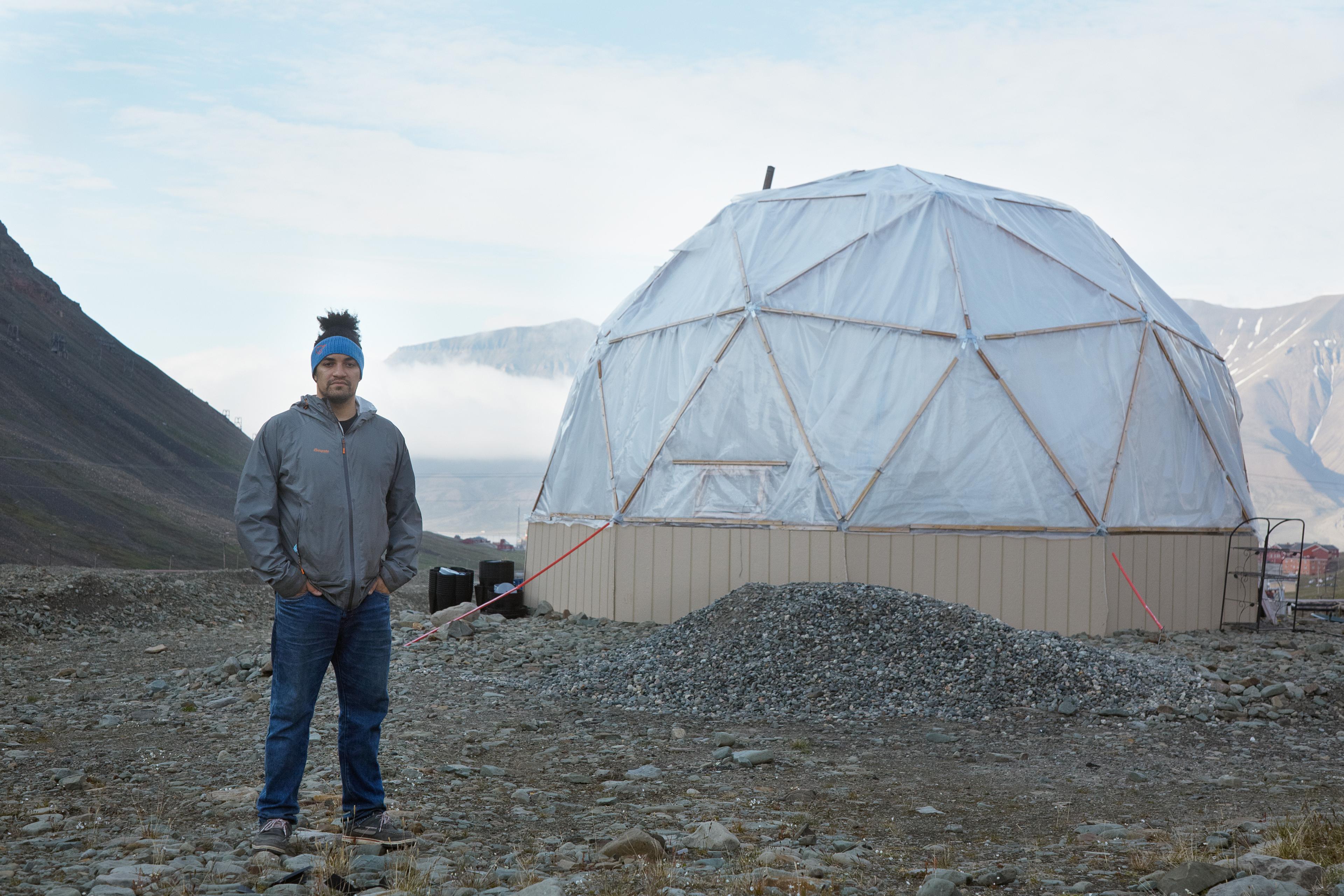
Neelu Singh, a vegetarian environmental researcher in Longyearbyen, said people back home in India ask how she makes do in the Arctic without eating meat. “I just laugh and say you can get everything there except a few specific vegetables [to cook with],” she said.
At its peak, Vidmar’s company was producing about 15 to 20 trays of microgreens per week, along with a mix of other vegetables — to be supplied to local restaurants and the town’s only supermarket.
Prior to Vidmar’s bold initiative, there were practically no documented attempts to grow food on Svalbard. While the harsh climate and soil conditions play some role in this, the transient nature of the community and the lack of a business incentive were also major contributors.
“Weather conditions on Svalbard are not conducive to large-scale agriculture. Historically the North depended on hunting and gathering and raising livestock for its food (for instance, reindeer farming in Lapland),” said Adrian Unc, a Polar agriculture expert based in northeastern Canada.
“Agriculture on small, protected plots is not culturally local but rather an activity brought here by the southern colonists,” he added. Accelerated warming of the poles has now made the area more conducive to farming than it was decades ago.
Carbon Footprint Reduction and Financial Viability
Polar Permaculture tries to be as zero-waste as possible, composting their own food scraps, and collecting waste from restaurants to compost; before Vidmar’s initiative, waste on Longyearbyen used to be piped into the sea, or exported to Sweden or Norway.
“Everything was shipped here at a huge premium, and then all of the solid waste was shipped back to Norway and they processed it on the mainland,” said Vidmar.
The carbon footprint of importing food and other essentials to Longyearben is significant; moreover, much of the food rots before it can be consumed and has to be thrown away. Logistical challenges in transporting goods to a region with few flights, and delays caused by unexpected events such as the Covid-19 pandemic, mean that the food supply chain is inherently unreliable on Svalbard.
“If I could grow food in one of the most challenging and remote locations in the world, I can do it anywhere.”
Growing produce locally uses 32% less energy than importing vegetables in the winter, and 50% more in the summer (according to a local feasibility study), but also uses up waste as compost. This waste would otherwise have to be imported, another significant wastage of energy.
“Removing, or lowering the amount of imported food also lowers the pressure on southern food systems, a benefit to all. Agriculture based on improvement of marginal soils is key to carbon-smart northern agriculture,” said Unc.
He added that the use of locally grown and adapted crops is essential to keeping this method sustainable. “Growing local plants is only one step removed from harvesting wild produce.”
Climate Change and Growing Food in the Arctic
The world warming by 0.18 degrees Celsius a decade (and the Arctic warming two to four times faster) has made agriculture possible in many places it wasn’t before. “Global warming will increase the size and abundance of agriculturally favorable pockets, by both increasing the average temperature and increase the length of the season,” said Unc.
He added that “a slow creep of the northern edge of the current agricultural regions” has been noted, especially in central Canada and Siberia.
“We all felt [climate change] there — but for a farmer that’s a good thing,” said Vidmar. “And that’s why many people around the Arctic are now starting to grow their own food — I’ve noticed this in Alaska, the Arctic regions of Canada and Greenland and Russia. That’s kind of what inspired me.”

In addition to growing and selling produce, the majority of Polar Permaculture’s business came from the food experiences and bus tours they conducted, where tourists were served meals made with produce fresh from the greenhouse. But during Covid-19 lockdowns, a drop in tourism and a lack of support by the local administration, which only helped Norwegian-owned businesses get back on their feet, Polar Permaculture had to shut down operations indefinitely.
However, Vidmar’s initiative continues to benefit the town of Longyearbyen in many ways. Inspired by Ben’s zero-waste approach to composting, the Longyearbyen government initiated a campaign trying to make a circular economy, the local airport is now trying to create biogas out of waste, and a local brewery in Longyearbyen is trying to grow produce in a similar fashion.
“My objective now is to use my experience and what I learned there and help set up projects in other places,” said Vidmar. “If I could [grow food] in one of the most challenging and remote locations in the world, I can do it anywhere.”
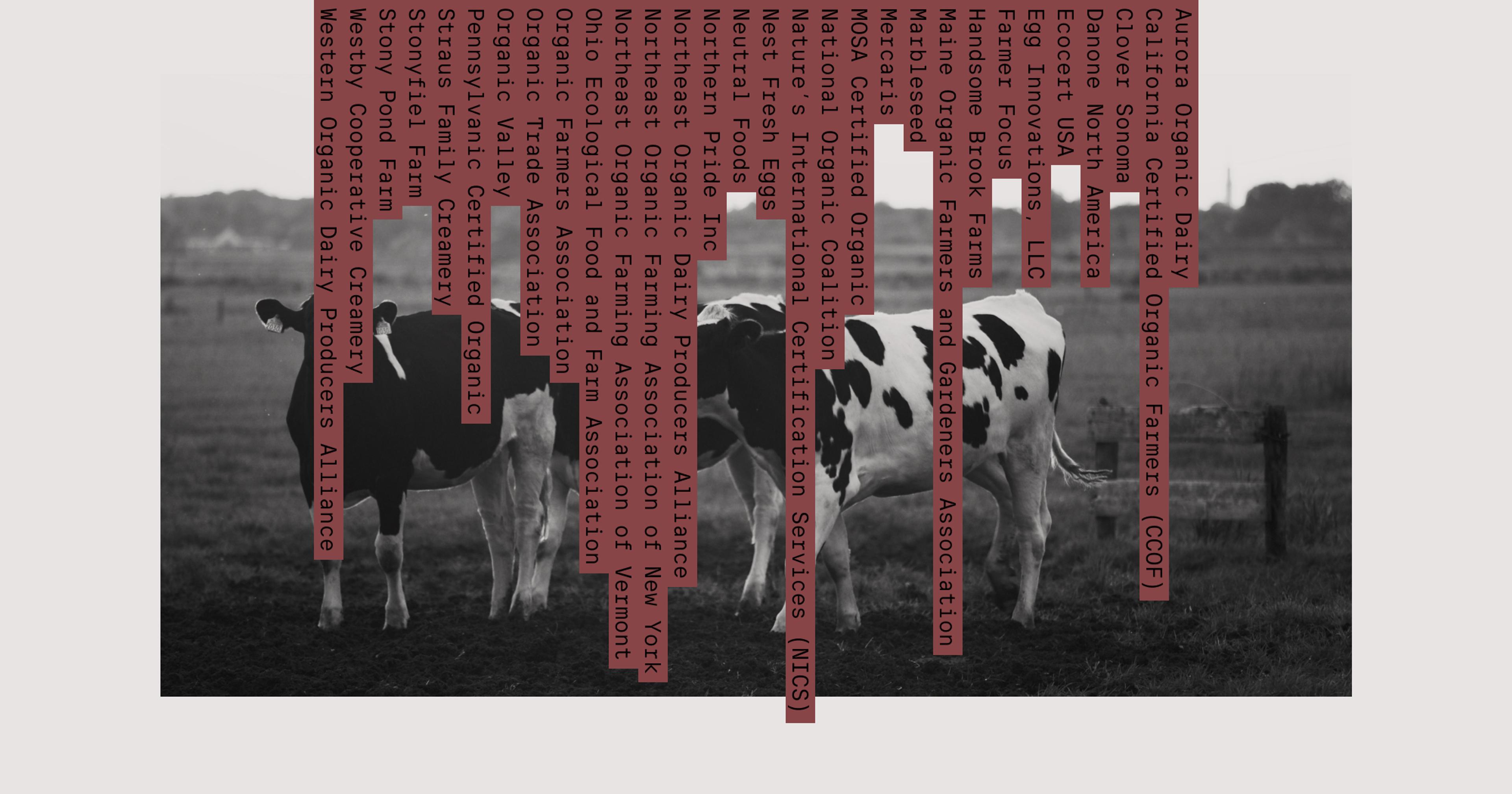
In a letter to lawmakers sent this week, 13 farm groups pleaded for aid targeted to help organic farmers as rising costs of production and lower prices threaten to force them out of business.
The letter, organized by the Northeast Organic Dairy Producers Alliance (NODPA), calls for disaster relief payments allocated to organic livestock producers in light of recent price increases for necessary inputs like organic feed and diesel fuel.
The war in Ukraine, a large exporter of organic feed crops, and controversy in the U.S.-India soy meal trade — India accounts for 43% of the U.S. organic soy meal market — has proven to be a huge factor in the limited stock of organic feed. Catastrophic drought in the western U.S. and other supplemental feed-producing regions has also diminished grain crop yields. And of course, inflation also plays a role, as higher costs in fuel increase overall production costs.
The letter called the current challenges a “perfect storm,” and claimed that without emergency aid, the economic challenges will be catastrophic to organic producers.
“There’s been a slow eroding of [organic producers’] ability to sustain themselves and to improve their farms,” said Ed Maltby, executive director of NODPA. Maltby explained that for dairy producers, the current economic challenges compounded a preexisting price problem. In 2017, an overproduction of organic milk after many conventional farmers switched over, resulted in a crash to the milk pay price — the average price producers received per hundredweight of milk. It never fully recovered.
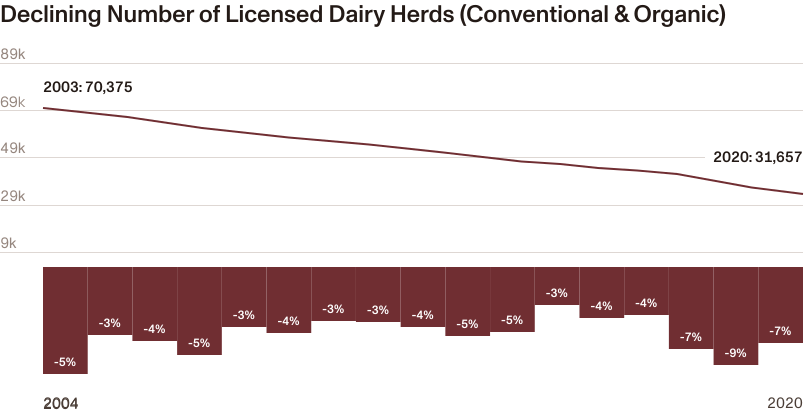
This has left organic farms that operate on tight budgets and don’t have a lot of equity unable to meet their debt coverage. Some farmers have had to cut down on how much they feed livestock or have sold their farms altogether.
For organic egg producers, production costs have gone up by around 60 cents per dozen, causing practical problems for farmers, according to John Brunnquell, president and CEO of Egg Innovations, an organic egg producer in Wisconsin. “A lot of producers live on a laggard type of recovery cost,” he said. That means if production costs increase, even if a buyer is willing to pay the producer more to account for that increase, farmers won’t see higher payouts for months at a time.
Within that timeline, farmers can run out of cash. “The national organic egg inventory, year over year, is down 40%, which means people have left, at least temporarily, if not longer. They’ve left production,” said Brunnquell.
According to Maltby, the situation for Northeastern organic dairy farmers has been particularly dire; a lack of buyers in the market has forced farmers to accept low pay prices, leaving many farmers with only a fraction of the profit they’d need to stay in the black.
Danone, the major organic milk buyer in the area, received backlash for dropping nearly 90 small production organic dairies in Northeast states in August. The company, one of the three largest milk companies in the world, cited transportation and freight issues as the reason it terminated contracts in the region.
“The price of [organic] soy meal went from about $750 a ton to $1,550. And it did that very rapidly over the space of several months.”
Liz Bawden runs an organic dairy farm in St. Lawrence County, New York, with her husband and son. She said she’s been feeling the economic strain acutely. “If we do a good job as farmers, that should be enough to cover our costs of production, and we should be able to live. And so it’s frustrating when that’s not the case,” said Bawden.
The farm has been tightening its budget for years, but the recent spike in input costs forced the family operation to make tough decisions. “In the last year and a half, we’ve seen just this enormous price increase in absolutely everything that farmers need to be able to make a living,” said Bawden, whose farm has 100 cows. “Quite frankly, it became impossible to pay our grain bill every month.”
In an effort to decrease their farm’s feed cost, the family stopped buying grain feed altogether. Instead, the Bawdens rely on nothing but grass and forage.
Of course, supply chain problems are not unique to the organic sector. Conventional dairies are also facing shortages including a lack of workers to process and transport products. Even packaging like gallon jugs is harder to come by. But for organic farmers, supply chain issues are especially hard, as their options are limited even in a healthy supply market. Organic producers need to follow strict guidelines as to what to feed their livestock, and the already shallow pool of options has shrunken even more.
“The price of soy meal went from about $750 a ton to $1,550. And it did that very rapidly over the space of several months,” said Brunnquell. “It really put an extensive burden on producers.” In some cases, according to Maltby, containers of organic grain feed have increased in cost by 400 percent.
According to the letter, the nation “is at serious risk of losing today’s organic livestock farmers unless some urgently deployed disaster relief is provided.” The signers did not specify a dollar amount for the aid.
A decline in organic producers, specifically dairy, would bolster an already declining national market. According to the USDA data, the number of licensed U.S. dairies — both organic and conventional — has steadily declined for years, decreasing by more than 55% between 2003 and 2020, from 70,375 to 31,657. The farms that remain tend to be larger and more consolidated.
“What we’ll have is more milk coming in from these larger operations that can produce it for a lot cheaper, which is something that may be acceptable for consumers, but it devastates the rural community,” said Maltby. “The younger farmers that have come into organic dairy, they’re the ones which will be the first to go because they can’t finance their operations. They’re the ones that we don’t want to lose.”

As a researcher who has spent more than 20 years studying the problem of methane emissions from cattle production, Ermias Kebreab still remembers when he came across some early research on the red seaweed asparagopsis in 2016.
“I’d seen a lot of papers published … that showed big mitigation potential, but when it was done in real animals, it didn’t really work,” said Kebreab, associate dean of the College of Agriculture and Environmental Sciences at the University of California, Davis. Potential feed additives like sulfates, nitrates, and even some spices all theoretically had the capacity to reduce emissions from cattle — in practice, it was hard to feed these options at scale without harming the animals.
But asparagopsis seemed different. So Kebreab called up a colleague to ask for help getting funding to test this new red seaweed. The potential, he said, was simply too great to ignore.
Enteric emissions — releases of methane gas from the fermentation that occurs when cattle eat — accounted for 27% of all U.S. methane emissions in 2020, according to the Environmental Protection Agency. That number is quite significant once you understand how methane works, Kebreab said.
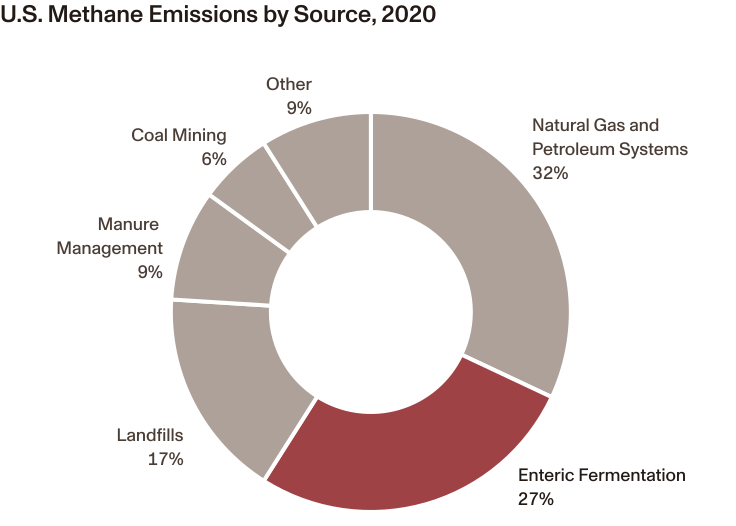
Unlike carbon dioxide (or CO₂), which stays in the atmosphere for thousands of years, methane dissipates relatively quickly, which means that its impacts on global climate are relatively short-lived. But this doesn’t mean it’s more important to address CO₂ than methane, Kebreab said. Methane’s short lifespan means that eliminating it has a more immediate, visible impact on the environment.
In trials by Kebreab and others, asparagopsis has been shown to reduce methane emissions from cattle by up to 80%, with no ill effects for the animals. And now that the first versions of other, comparable feed additives have begun to hit the market, a sizeable chunk of methane from agriculture could disappear from Earth’s atmosphere within 10-12 years if these additives are fed to enough cattle worldwide, Kebreab said. (It could take thousands of years to feel the effects of reducing CO₂ emissions by a comparable amount.)
“Basically in the next decade we could see a slowing down of global warming,” Kebreab said. “We have to get off fossil fuels one way or another, but the methane issue — if you do something about methane now, you will have quicker results in the near future.”
Nutrient Cycling
The development of feed additives to reduce emissions from cows has moved surprisingly fast since research began in earnest a mere five or six years ago, Kebreab said — asparagopsis is no longer the only feed additive to show promise in curbing methane. An organic compound called 3-NOP (or under its brand name Bovaer) has shown similar results. Multiple trials have shown that a quarter teaspoon of 3-NOP per day per cow reduces overall enteric methane by an average of 30-45%, according to Mark van Nieuwland, vice president for Bovaer at manufacturer DSM. Bovaer has been authorized and sales are underway in more than 40 countries, including in the European Union and in major cattle-producing countries such as Brazil, Chile, and Australia (but not the United States).
3-NOP is synthesized in a lab by combining nitrate and alcohol. But it mimics other chemicals that exist in nature, including those in asparagopsis, according to Tim McAllister, principal research scientist at the Lethbridge Research and Development Center in Canada. In plants, these chemicals could serve as a defense mechanism that discourages herbivores like cattle from eating them by interfering with digestive processes. Some chemicals within this group, such as tannins, are known to reduce feed intake in cattle. Others, like the nitrate from which 3-NOP is derived, can be toxic to cattle in high doses.
But in the right dose or combination, these natural chemicals may have a number of benefits, including the significant reduction of enteric methane, McAllister said.
There is still no long-term research on consuming these feed additives for extended periods of time.
Not every compound shown to mitigate enteric methane has the same effect on cattle digestion, but 3-NOP and asparagopsis happen to work in similar ways. Both reduce methane by binding enzymes that are responsible for combining carbon with other gasses in the rumen to form methane. But when it’s not released into the atmosphere as a gas, the carbon doesn’t just disappear. Instead, under some conditions it appears that the left-behind carbon may act as an extra source of energy, improving milk and meat production.
Feeding 3-NOP increased animals’ productivity by some 4% across multiple trials, according to DSM. “What we’re really talking about is nutrient cycling, and capturing more of those nutrients toward more productive purposes than atmospheric emissions,” McAllister said.
It’s not yet clear just how far you can go with this particular set of additives. Some studies have demonstrated emissions reductions as high as 80 to 90% — and this with no observed negative effect on the animals. But it’s important to note, McAllister said, that there is still no long-term research on consuming these feed additives for extended periods of time.
And even if you can use something like asparagopsis to cut emissions from cattle by 80% indefinitely, McAllister doesn’t believe it will be possible to achieve a 100% reduction with feed additives alone. As promising as these new feed additives may sound, he said, it’s still important to consider other avenues for reducing greenhouse gas emissions and combating climate change.
Expanding Access
In spite of the accelerated pace of research into feed additives that address enteric methane, there remain some unsolved challenges. Scale, in particular, remains a barrier to widespread production and distribution. Asparagopsis, for example, has never been grown or produced at industrial scale. And while producing a lab-made compound like 3-NOP at scale may be more straightforward, this product is intended for use within specially formulated animal feeds.
Of all the emerging solutions, none has yet been adapted for use with, say, grass-fed beef cattle, in less industrialized settings where there is no controlled diet to which to add a powdered feed additive, McAllister said.
Australian startup Rumin8 is one of the companies looking to create products to address these more diverse use cases. In doing so, they — with the help of funding from the Australian government and several international investors — hope to make the benefits of these products more widely accessible, particularly in low- and moderate-income countries.
“If we are going to provide solutions that are widely adopted, and as a result of that have a material impact [on climate change], we’re going to need to achieve two things,” said Rumin8 co-founder and CEO David Messina. “They need to be available at a cost that producers [can afford], and they need to be available in a range of different formats so that producers have a choice as to how they integrate them.”
To market its products in the U.S., Rumin8 must undergo a regulatory process that will span five years at minimum.
Rumin8 is currently looking at three possibilities. The first is a relatively straightforward granule product containing the active ingredients from asparagopsis. The granule could be easily added to any feed mix or supplement with relative ease so it would be similar to the dried asparagopsis products featured in most scientific trials to date — but it wouldn’t require figuring out how to grow seaweed on a mass scale.
The other two options take the Rumin8 concept a step further. One option involves creating a slow-release capsule that could mitigate emissions without daily feeding. This is more technically complicated than the granule and is taking longer to develop, Messina said. But were Rumin8 successful in creating such a product, it might provide free-range producers with an option for mitigating methane emissions that doesn’t require daily feeding.
The final idea, Messina said, involves incorporating the compounds from asparagopsis into a powdered product that could be dissolved into drinking water. Early tests of this product by Rumin8 show great promise, Messina said — so much so that the company has shifted its focus from the more straightforward granule to focus on the powder.
“We’ve just seen the first lot of results come through, and they’re very encouraging,” Messina said. “We’re getting high efficacy rates, and we’re about to start a large-scale animal trial here in Australia where we will dose our product in a water trough. That opens up a whole range of opportunities for producers in a setting where they are grazing … so that may be closer than we thought even a few months ago.”
Once some larger-scale trials are complete, Rumin8 can begin to scale up production in earnest, Messina said. They aim to have their product fed to five million cows in the next two to three years, and hope to reach 100 million cows within a decade.
But the timeline to reach producers within the U.S. looks somewhat longer, Messina said. When a company like Rumin8 or DSM claims to have a product that reduces methane emissions, U.S. regulators view that product as a drug intended to treat a health condition — federal climate change priorities haven’t quite caught up with our regulatory infrastructure. And that means that currently, for Rumin8 to market its products in the U.S. they must undergo a regulatory process that will span five years at minimum, Messina said.
Regulatory Delays
With sales of 3-NOP already underway in some 40 countries outside the United States, including the European Union, the lengthy regulatory process required by the Food and Drug Administration (FDA) has become a source of angst for both manufacturers like Rumin8, and for environmentally conscious dairy and cattle producers. Emissions-reducing feed additives — in any form — are not expected to become available within the United States any time soon.
“The U.S. tends to lead the way, particularly when we talk about technology, but this is an area within agriculture where the FDA is … holding up innovation and holding up the ability of American producers to mitigate their methane emissions,” Messina said. In many other comparable countries, he said, the approval process Rumin8 must undergo is expected to take about two years. In New Zealand, he notes, the process has been expedited to help producers comply with a methane tax that is expected to take effect in 2025.
“It’s an absolute contrast,” Messina said. “The U.S. is the standout market because of the scale, the number of animals.” That said, he thinks that FDA’s pathway to market and registration is “completely out of line with the rest of the world.”
A spokesperson for the FDA said the agency is currently evaluating how its policies can be “updated to reflect evolving scientific knowledge and promote innovation,” and that the agency has sought public input to that end. The agency held a listening session on feed additives this October and solicited written comments from stakeholders in November.
“As animal food and veterinary medical sciences advance, we are working to address practical challenges presented by our regulations,” Dr. Steven Solomon, director of the FDA’s Center for Veterinary Medicine, said during the listening session. “Our regulatory decisions should be based on the best science available, while ensuring the safety of the products that our animals are consuming and the foods that we are eating ourselves.”
“When you try to solve a key problem like this you want to take as many approaches as possible.”
In the meantime, some animal and animal feed producers seem to have taken matters into their own hands, Cathryn McCandless, senior environmental scientist with California’s Department of Food and Agriculture, told the FDA during the session. McCandless testified that California regulators have already encountered animal feeds containing asparagopsis, 3-NOP, and other additives intended to curb methane emissions in spite of the fact that these products are not yet FDA-approved. Farmers in California may feel pressure to adopt as-yet unapproved products in order to comply with an aggressive state-level policy that aims to reduce methane from livestock by 40%, McCandless said.
There are some solutions available to U.S. producers that don’t require a special feed additive. Research in Canada — a major producer of canola oil — has determined that adding canola or other vegetable oils to feed formulations will reduce methane emissions from cattle. Other strategies like improving the quality of rangeland vegetation may also reduce cattle emissions, as will most efforts to improve feed efficiency, McAllister said. In general, if you reduce the need for feed or improve its digestibility, it will reduce the carbon intensity of the final product.
But each of these strategies comes with drawbacks of its own, McAllister said. You can’t control the weather, which means you don’t have complete control over the quality of your rangeland, for example. And some effective strategies for reducing methane emissions, such as the use of hormonal implants that help cattle grow faster with less feed — and therefore fewer digestive emissions — have proven unpopular with consumers and activists who argue that more “natural” means of livestock production are better for human and animal health.
There is also the reality that these strategies don’t achieve nearly the same scale of emissions reductions observed in research studies of asparagopsis. Canola oil, for example, will cut methane emissions by just 4% for every one-part-per-hundred of oil added to the diet — and there’s only so much canola oil you can add to cattle diets while maintaining optimal digestion.
U.S. dairy farmers are losing ground to competitors from countries that have approved emission-mitigating feed additives on international markets.
So while these options certainly exist, regulatory barriers are currently stymying livestock producers with achieve climate-related ambitions, according to Jamie Jonker, chief science officer for the National Milk Producers Federation, told the FDA in October. Jonker said members of the federation have committed to achieving greenhouse gas neutrality by 2050.
“There are a variety of things that we can do today to help reduce enteric methane emissions per gallon of milk produced, but there are other things that need additional research and, frankly, the ability to have a regulatory approval pathway that is not prohibitive,” said Jonker, who also noted that U.S. dairy farmers are losing ground to competitors from countries that have approved emission-mitigating feed additives on international markets.
Climate change and carbon emissions, McAllister said, are big problems, and not easy to solve, “so generally when you are trying to solve a key problem like this you want to take as many approaches to developing a solution as possible.”
In the long-term, doubling up on emissions strategies may prove not only effective, but essential for eliminating the methane that is still left over when cattle feed on asparagopsis. And the growing number of options has Messina, in spite of his frustration with the FDA, feeling optimistic about the future of climate-friendly agriculture.
“I think we learned from Covid that when we take the global approach and combine resources, that we are able to come up with some pretty exciting things,” he said. “Have we started later than we should have? 100%. We have some catching up to do if you want to come anywhere near meeting [carbon emissions] goals. But are we going to get there? I think so.”

During this past summer of intense heat, drying winds, and drought, the cotton farmers of northwestern Texas took an estimated $2 billion beating. Plants that should have matured into fluffy seed cotton balls withered. Those that did manage to bloom grew to a quarter or a third of their normal size, causing some farmers to simply leave them on the fields, forgoing the expense of a weak harvest. The result: a 58% drop in production for the state that grows almost half the cotton in the U.S., according to Phys.org, and possibly the worst cotton-growing year there in three decades.
Another crop, hemp, has been touted as potentially more drought resistant than cotton, leading to speculation by hemp enthusiasts that it could replace the world’s most widely used natural fiber. The versatile crop has shown promise in boosting the sustainability of textiles by replacing polyester fibers in blends, farming systems, even construction. (Meet the green building material called hempcrete.) If you imagined, though, that we’re nearing an era of hemp clothes everywhere — as touted by celebrities like Woody Harrelson and Emma Watson — we’re still a ways off.
It’s a crop that requires a license to grow, which is a hassle. Despite its versatility, there’s limited infrastructure to support fiber hemp and few markets into which to sell it, making many farmers wary of taking the risk. Even the rumor of hemp’s superior drought tolerance needs more research. “There’s a lot of work that still needs to be done in terms of understanding [hemp’s] resilience or drought susceptibility,” said David Suchoff, alternative crops extension specialist at North Carolina State University and director of the FFAR Hemp Research Consortium. He said that while fiber hemp crops survived a dry North Carolina June, in parts of Texas it got pummeled just like cotton this year.
Nevertheless, fiber hemp is beginning to show how it might have an important role to play in the future of sustainable materials. The trick: finding just the right cultivars for just the right and willing regional farmers, and building out the supply chain, bit by bit.
Seeding the Industry
Fiber hemp is grown exclusively for its stem so maximum plant height is desirable; the outer stem is gleaned for textiles while the core might become fuel or mulch or animal bedding. But domestic research into cultivars that do well in U.S. crop systems is lagging and, “We’re not at the point where we have a good domestic supply of seed,” said Suchoff. At the moment, most fiber hemp seed being used in the Southeast hails from China, the global leader in hemp production, which has been cultivating the crop for thousands of years. It’s cheaper and easier to procure seed from the EU, but these varieties flower too early in North Carolina or Texas, resulting in stems that are only two feet tall.
Some U.S. seed breeders are beginning to make headway on domestic production. But for the moment, the cost of imported seed, on top of its uneven performance, “inflates the input costs on the farmer to grow this crop,” Suchoff said, which makes it a hard sell. So does the fact that THC levels in Chinese seed “tend to be above the 0.3% levels that are [allowable] to meet federal guidelines here,” said Calvin Trostle, a professor and extension agronomist at Texas A&M AgriLife. Trostle is hoping the 2023 Farm Bill might expand the regulation from the 2018 bill that almost entirely addressed cannabinoid hemp meant for CBD production, an industry that bottomed out in 2020 — not the stuff grown for stalks and fabric. (Any crop with over 0.3% of THC has to be destroyed; “That should be moot for a fiber or grain crop,” said Trostle.)
Amping Environmental Benefits
In Texas, North Carolina, Kentucky, and elsewhere, farmers are experimenting with plots of fiber hemp, trying to figure out its effects on soil health and other benefits. A lot of that depends on where the hemp is grown, “what variety you’re growing, the soil you’re in, when you’re harvesting it, and the type of system you’re producing — if it’s grain, if it’s fiber, if it’s dual crop,” said Suchoff. “There’s preliminary evidence showing that it does leave a pretty robust root system after harvest, and in rotation … folks will say that my wheat crop, my corn, my soy, did better after hemp.”
No one’s quite sure why, yet. When fiber hemp is harvested, its woody stalks are left to break down on the field so the bast fibers needed to make textiles are easier to separate from the stem’s woody core. “Those nutrients are going back into the soil, almost akin to how we manage cover crops,” Suchoff said. “The crop that is planted afterwards might be getting the benefit of the residual nutrients; the hemp root system may be able to tap into nutrients deeper in the soil, bringing them up closer to where more shallow rooted crops can utilize them; it could be improving the structure of the soil, allowing for better movement of water.”
Like all plants, hemp also pulls carbon out of the atmosphere and stores it in all its various parts and in the soil, potentially important for mitigating climate impacts. Unlike corn or soy but similar to trees that are harvested for their wood, long-lasting industrial hemp products — fiber or construction materials such as hempcrete — store carbon too, Trostle said.
On the downside, there are currently no herbicides that are labeled for fiber hemp use. But seeds can be planted very close together and they grow fast enough, in some instances, to out-compete weeds. Also, said Trostle, “There were some early beliefs that hemp was a more drought-tolerant crop than cotton and would use less water. But farmers in my region [of Texas] say that to get to the level of production that you need for fiber, you’re probably looking at 25% more water than what you would put on that piece of land if it was a cotton crop.” Trostle and others are currently researching this but he said in places that get plenty of rainfall (as opposed to arid places like Lubbock that rely heavily on irrigation), this shouldn’t matter.
The Processing Dilemma
Fiber hemp requires rigorous and highly specific processing methods, as described in the figure below.
| How fiber hemp is harvested and processed: |
|---|
| 1. At harvest, crop is cut and stems are retted, i.e., left to break down in the field for a few weeks to aid separation of the bast fibers — what’s used to make fiber — from the woody core of the stalks called the hurd (used to make products like hempcrete). |
| 2. Stems are crushed in mechanical rollers in a process called decortication. |
| 3. Bast fibers are de-gummed, with heat, pressure, or other methods, to remove lignin and hemicellulose. |
| 4. Remaining cellulosic fibers are spun into hemp fiber. |
North Carolina has several facilities in place but elsewhere, the lack of that infrastructure is one of the biggest hurdles in getting farmers to plant it. Currently across the U.S., a little over 54,000 acres of farmland are planted with industrial hemp (versus almost 12 million acres for cotton). Bryan Wilson, co-founder of Environmental Living Industries, has spent the last few years scraping up $50 million to build a hemp processing plant in Dumas, Texas. Rather than starting from scratch, Wilson approached a Belgian manufacturer and made a deal to purchase $20 million of processing equipment from them.
It’s been complicated. “When you’re breaking ground on a new industry, going from zero to one is always the hardest part,” Wilson said. “But this is the same thing every other agricultural industry has had to go through whenever it starts industrialization.” When Wilson’s facility opens in late 2023, he said it will be able to process 12 tons of hemp fiber per hour; eventual capacity will be 80,000 tons per year. First, though, Wilson looped in two large-scale local farmers to grow 100 test-crop acres of an Australian strain of fiber hemp called MS-77 — it’s low in THC and proved high-yielding in Texas panhandle conditions. Wilson located harvesting equipment in Lithuania, “basically building out the entire supply chain all the way up to offtake,” he said. But the next challenge: “Who wants to buy this product from us right now, even before we get started building?”
Wilson said demand for industrial hemp products currently exceeds the processing potential of all U.S. facilities combined — what he calls a chicken-and-egg problem: “The industry is limited by the scale of processing, and processing is limited by those willing to risk establishing [off-taking] agreements with processors that are in their infancy.” Even when the industry does manage to scale up, Trostle, Suchoff, and Wilson don’t foresee a future for hemp-only garments — hemp, though durable, isn’t as soft as cotton. Said Trostle, “Even if things went really well, the scale of hemp fiber production would probably be only 1% or 2% of what Texas cotton acreage is.”
What experts do see for the future of the industry is “fiber hemp being a replacement for synthetic polyesters that they’re putting in cotton blends — that’s where I think that you’re going to see synergies between the two,” said Suchoff. Once infrastructure and markets are in place, he envisions farmers growing them both, possibly even in rotation, lending biodiversity to what would otherwise be a monoculture system for cotton farmers, and giving those farmers a second source of income. “I would love to see industries develop circular economies [that] flourish around this crop,” Suchoff said.
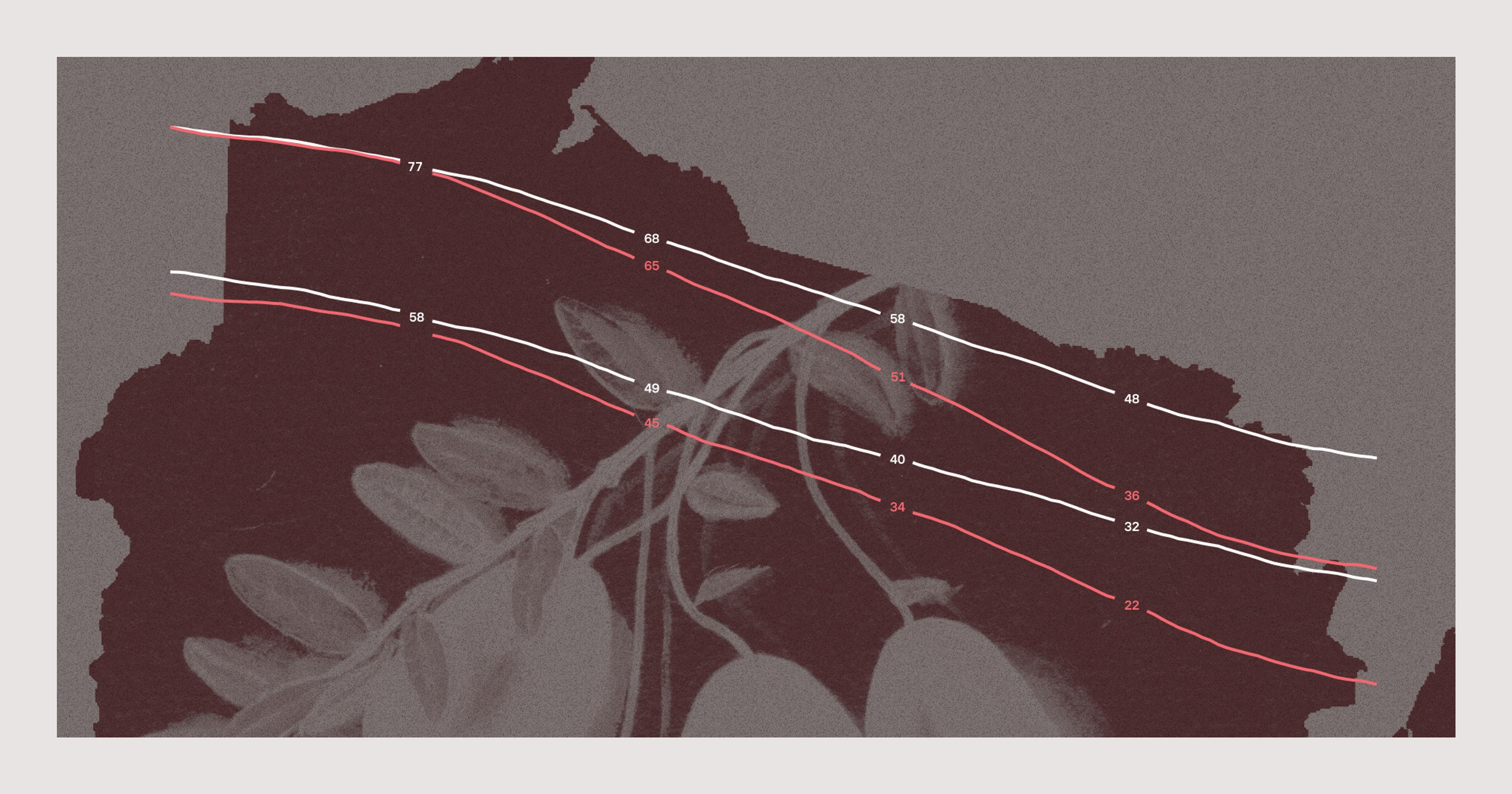
After contending with years of unpredictable weather and market conditions, some cranberry growers breathed a sigh of relief in the lead-up to Thanksgiving. The 2022 harvest was a relatively fruitful one, with crop yields expected to surpass last year’s. But some of our biggest cranberry-growing regions have shown signs of struggle — an ongoing trend that is beginning to raise concern.
While native to North America, cranberries can’t grow just anywhere. The finicky plant requires a perfect cocktail of environmental factors: sandy soil, loads of water, not to mention sufficient chilling hours during its winter dormancy period. That perfect trifecta can only be found in a handful of places, many here in the United States. The U.S. is the world’s leading producer; together with Canada and Chile, we account for 97% of the global cranberry supply. We’re also the world’s top buyers, consuming nearly 400 million pounds of cranberries (mainly in the form of juice) each year — 20% of which happens during the week of Thanksgiving.
But as a shifting climate raises temperatures and triggers drought, causing the country’s annual cranberry haul to steadily drop since peaking in 2016, researchers and growers are reevaluating the crop’s future. Meanwhile our northern neighbor Canada is upping production to fill gaps in the global supply.
“If you take cranberry plants and grow them in Arizona, they’ll grow up nice and bushy and green and healthy, but they’re never going to produce fruit.”
Cranberry cultivation in the U.S. dates back to 1816, when farmers on Cape Cod realized that the area’s wild cranberry vines grew better in sand and began converting swamps and wet meadows into bogs. From 1885 to 1900, the number of cranberry bogs under cultivation in Massachusetts tripled. It was here that the first cranberry research center was established in 1910, and where Ocean Spray — a cooperative now owned by more than 700 cranberry farmers nationwide who are responsible for 65% of the world’s supply — was formed in 1930.
The cultivated cranberry industry migrated to New Jersey by the 1830s, Wisconsin by the 1850s, and the Pacific Northwest by the 1880s. Yet Massachusetts remained the top producer of cranberries and cranberry products like juice and Craisins (dried cranberries), first invented and marketed by Ocean Spray in 1989. That is, until Wisconsin surpassed the state’s cranberry yields in the 1990s.
Wisconsin, whose state fruit is the cranberry, now accounts for more than 60% of the nation’s crop, and more than 50% of the world’s cranberry supply (despite the efforts of Massachusetts’ Cranberry Revitalization Task Force). According to the latest USDA report, this year’s national cranberry crop is estimated at 7.44 million barrels, smaller than any of the previous three years. Wisconsin is expected to produce 4.3 million of those barrels, leaps and bounds above similar predictions for the second and third largest cranberry states, Massachusetts (2 million barrels) and New Jersey (550,000 barrels). Smaller amounts are expected from Oregon, Washington, Maine, Michigan, Connecticut, and New York.
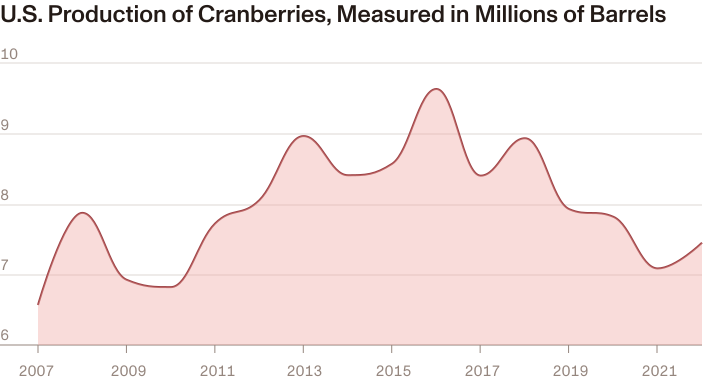
Positioned well for the future, Wisconsin, with its abundance of lakes and rivers and reliably cold (for now) winters, offers an ideal habitat for the hardy cranberry vine to thrive in. That’s because the perennial plant requires a certain number of chilling hours — hours of temperatures that fall between 32ºF and 45ºF — to complete its dormancy period.
“If you don’t have enough chilling hours, the plants will not blossom,” explained Allison Jonjak, cranberry outreach specialist for the agricultural extension program at the University of Wisconsin, Madison. And without any blossoms, there will be no berries. “If you take cranberry plants and grow them in Arizona, they’ll grow up nice and bushy and green and healthy, but they’re never going to produce fruit.”
Even minor temperature changes can hinder the success of a cranberry crop. That means cranberry bogs in New Jersey’s Pine Barrens region, historically a mecca for cranberry growers, are more fragile in the face of climate change. As are those on or near Cape Cod, where cranberries have long been an important part of the local economy.
Until this year, cranberries were the top earner of Massachusetts’ agriculture industry, with an annual crop value of $66 million. As reported in Leafly’s 2022 cannabis harvest report, cannabis has now overtaken cranberries as the state’s most valuable crop, responsible for $362 million in annual wholesale value. That’s partly due to the state’s cannabis’ legalization in 2016 and its thunderous popularity, but it also comes at a time when the lowly cranberry is struggling. Not to mention that most Massachusetts cannabis is grown indoors, meaning growers don’t need to contend with the changing weather patterns that cranberry producers do.
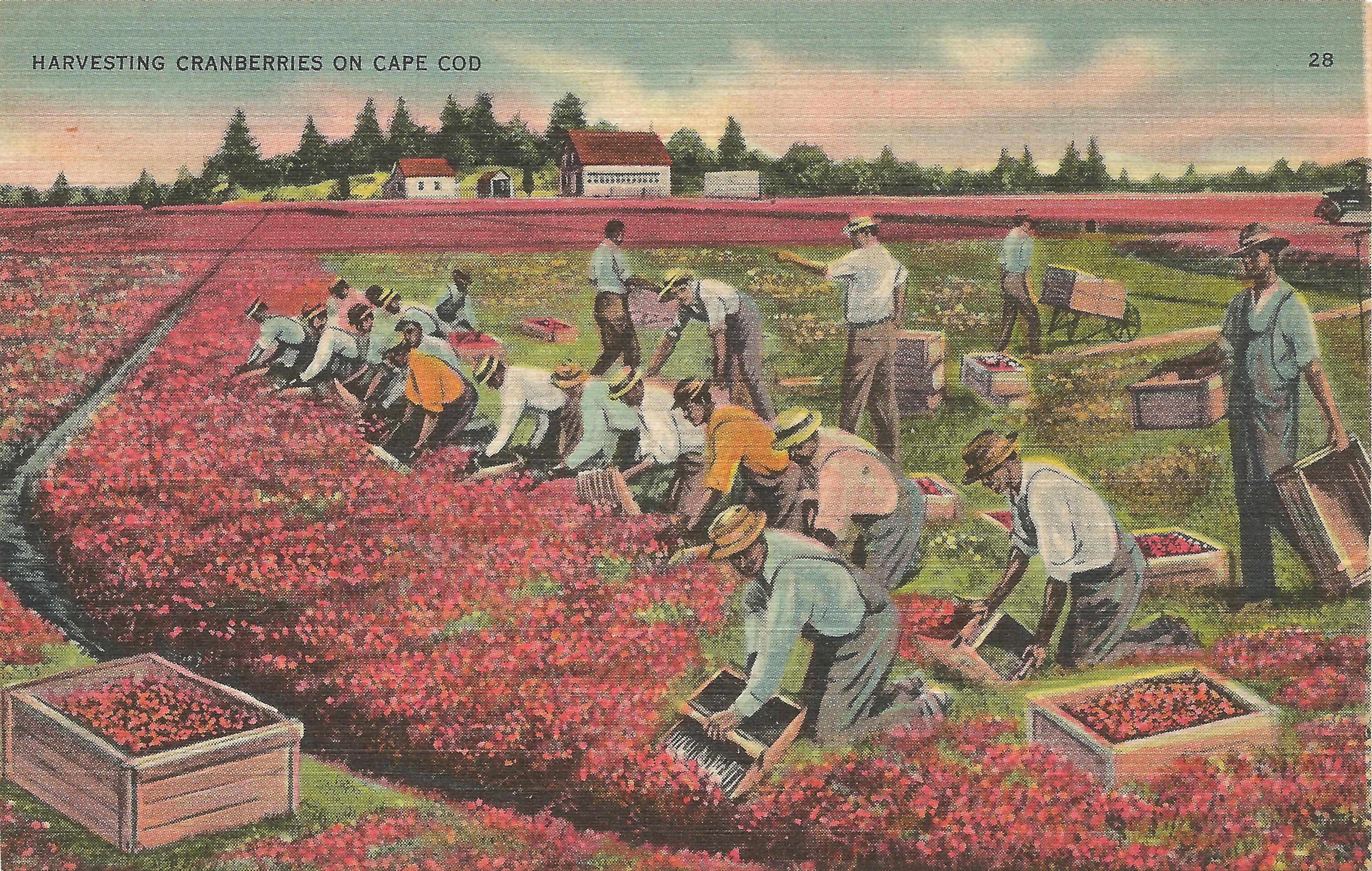
And it’s those unpredictable patterns that have growers concerned. “Farmers wake up every day and they have to face whatever the weather is going to present to them — that’s farming,” Brian Wick, executive director of the Cape Cod Cranberry Growers’ Association, told Grist in September. “But it’s quite clear in talking to many growers over the past several years that this change in climate is very real and it’s really starting to impact how they farm.”
Massachusetts’ warmest years on record have all occurred in the last 20 years, with average air temperature in the Northeast rising at a rate of 0.5ºF per decade since 1970. Meanwhile, the Garden State’s average temperature has warmed faster than any other state in the last 100 years, according to a 2021 report based on data collected by the National Oceanic and Atmospheric Administration. During milder winters, it becomes difficult for a cranberry plant to experience those crucial chilling hours.
“For the past 10 years, one of the most significant challenges has been the high nightly lows in the fall,” said Hilary Sandler, director of the UMass Cranberry Station in East Wareham, Mass. “In 2017, we had three nights in September that got down to only 70, when we really need to have temperatures in the 50s. When you’re having a low of 72 on September 12, you know, you just want to shoot yourself.”
In Wisconsin, by comparison, temperatures during that vital point in the growing season have remained on average much lower. Despite the state also experiencing a gradual increase in daily temperatures, September nights have remained much cooler than in the Northeast.
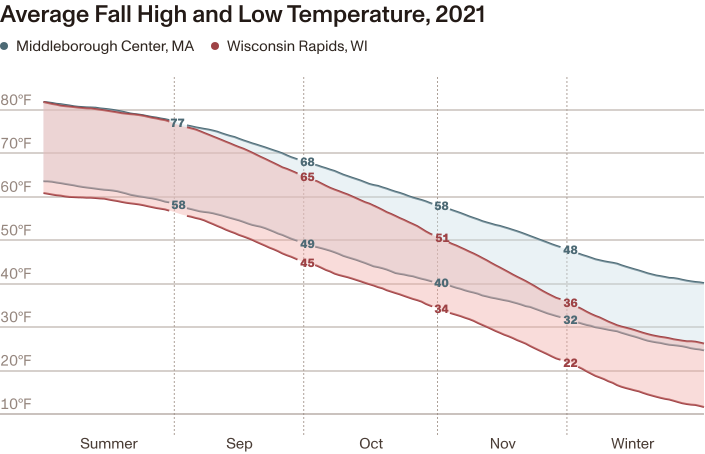
Inconsistent temperatures can also make it difficult for the berries to achieve their bright crimson color. If it doesn’t cool down enough after sunset, cranberries won’t fully mature, instead staying pale pink or white in color. “If I’m Ocean Spray, and I’m making juice, if I’ve got 100 berries, and five of them are white, it all comes out in the wash,” said Sandler. “But if 60 of them are white, then I might start seeing a color alteration in my final product, and that’s not acceptable for the consumer.”
Warmer temperatures also mean the plants are at a greater risk for disease. “Another benefit of having a cold winter is that the cold kills pathogens. The milder your winter, the more pathogens you have survive year to year,” said Jonjak. “So it’s kind of a compounding effect that gets worse and worse.”
To further complicate issues, because one-third of the U.S. cranberry crop goes to the export market, growers must comply with agricultural regulations in the countries they sell. “That’s a whole ’nother layer that growers have to deal with,” said Sandler. The EU — the largest importer of American cranberries — has a long list of pesticides and fungicides that cannot be used on agricultural crops. But if warmer temperatures and ongoing drought causes invasive insects and plants to move further north into cranberry bogs, and growers can’t use fungicides to fight them off, then growers have to find new ways to battle them.
“There’s such a limited list of acceptable fungicides for export into every country,” said Jonjak. “As a grower, you really like being able to rotate what fungicide you’re using year to year so the [pests] do not become resistant. But so few are legal … so we kind of feel our hands are tied.”
“When you’re having a low of 72 on September 12, you know, you just want to shoot yourself.”
Perhaps the most important resource for cranberry cultivation is water. On average, cranberries need about an inch of water a week to grow. Farmers also use water to protect the berries from frost and hot weather, and again to harvest, when they flood the bogs with up to one foot of water. Cranberries have little air pockets inside, which causes them to float up to the top, making them easier to collect. Anybody who’s watched an Ocean Spray commercial knows what this wet method of harvesting — now the norm for about 95 percent of all cranberries — looks like.
But without enough water to pump through the bog systems, typically from grower to grower, harvesting cranberries gets complicated. From start to finish, each acre of cranberries will use seven to 10 feet of water to meet all production, harvesting, and flooding needs. So when a region is battling a persistent drought — as has been the case in Massachusetts — cranberries suffer.
“Rising temperatures seem like something that’s pretty adaptable for most crops. If we shift everything two miles north every decade, we can keep pace with it,” said Jonjak. “But the thing that’s harder to plan for on shorter notice is the changing precipitation patterns. And there’s a lot less you can do to adapt to a lack of water.”
So will producers someday need to move operations further north? It depends. “We in Wisconsin are a long way off,” said Jonjak, who predicts the state is “basically going to be the last man standing.”
While Wisconsin cranberry researchers are currently studying and developing ways to adapt and mitigate the effects of climate change — including breeding disease-resistant cultivars and minimizing water requirements — the most severe effects won’t be felt for a while. “Even the worst predictions of climate change don’t have us in Wisconsin having a not dramatic enough winter [to sustain cranberries] for another 150 more years,” said Jonjak.
In Massachusetts, Sandler is cautiously optimistic that changing weather patterns won’t completely eradicate her state’s cranberry industry. “The sort of joke is that Massachusetts is going to become the new New Jersey,” she said, referring to rising temperatures. “What does that mean for New Jersey? I don’t know.”

If you’ve ever walked into a cornfield on a summer day and felt like you were entering a much stuffier world than the one you just left, you’ve probably experienced what is sometimes called “corn sweat.” And while that increased heat and humidity might result in perspiration beading up on your upper lip or rolling down your back, it’s not your sweat that gives the phenomenon its name — it’s the corn’s.
Corn sweat refers to the way these plants and the soil they’re planted in release moisture into the atmosphere. The scientific term for this is “evapotranspiration,” a combination of water evaporating from the ground surface and transpiring from the leaves of the plant itself.
While evapotranspiration is a normal part of plant growth, the increase in corn sweat is a muggy side effect of climate change — and it means hotter, more humid conditions in cornfields, which can have dangerous implications for farmers and workers.
Hazardous Harvests
The United States grows more corn than any other crop, which means it has an outsized effect on the agricultural industry. And while it doesn’t require as much labor as many other crops, humans are still involved in the harvest. That can be unfortunate for anyone working in those fields, given that it can feel 15 degrees hotter in a cornfield than outside it. According to professor Suat Irmak, head of agricultural and biological engineering at Penn State, if you’re working in a cornfield, “You are going to sweat a lot, and sometimes you might feel like it’s difficult to breathe because it’s so humid, so hot, and there’s a closed canopy.”
That may not have too big of an impact on a farmer driving a combine from an air-conditioned cab. But when maintenance, detasseling, hand-picking sweet corn, or other work requires spending time on the ground, that heat index difference can add up to significant — and potentially fatal — health risks for farm laborers.
That was the case for Cruz Urias Beltran, who died tragically from heat stroke while working in a Nebraska cornfield in 2018. Beltran is just one of hundreds of farmworkers who have died from heat-related issues in the U.S. over the last decade, where federal protections for farmworkers have lagged behind the rate at which growing seasons are getting hotter.
“As temperatures continue to rise, farmworkers are already working in the fields through record-breaking heat and in dangerous temperatures. This is a major factor in agriculture being one of the deadliest industries for workers in the United States today,” said Antonio De Loera-Brust, director of communications for the United Farm Workers (UFW).
“We have seen a notable increase in growing season temperatures across the U.S. In Illinois, all seasons have warmed over the last hundred years,” noted Illinois state climatologist Trenton Wayne Ford. “With that increase in temperature generally comes an increase in evaporation. Everything else being equal, under higher temperatures, the corn is going to sweat a little bit more.”
There are other non-climate factors contributing to increased corn sweat, too, like the fact that there’s been an increase in total acres planted — USDA estimates that U.S. farmers plant about 90 million acres of corn per year, the majority of which is used in livestock feed or ethanol production. More corn means more total corn sweat, regardless of temperature.
“In some cases, we’re talking about 3,000 to 4,000 gallons of water per acre that’s going into the air every day.”
Clearly, health-threatening heat isn’t a problem caused or perpetuated exclusively by corn sweat. Climate change means temperatures are rising, and warmer air holds onto more moisture, making it harder for peoples’ sweat to cool them off — regardless of whether there’s any corn around. Still, corn sweat can amplify other heat stress-causing factors.
“A cornfield provides an environment that may elevate heat index values more than where those heat index values are actually measured,” said Ford. In other words, there may be a significant difference between what a “producer sees on the [weather app on their] phone, and what they experience in the cornfields.”
Because heat indexes are often measured at airports, he noted, they don’t reflect how stifling a cornfield can be. “Every single leaf in existence” releases water vapor thanks to photosynthesis and transpiration, said Irmak. But corn’s high water output, and the overwhelming amount of it now being grown, have combined to give the crop a unique reputation in this regard.
“When corn is actively growing and at its peak, it’s probably taking out anywhere from about a quarter of an inch to maybe a third of an inch of water [from the ground] on a daily basis,” said Illinois state master naturalist and climate change specialist Duane Friend. “So it’s pumping a lot of moisture into the air. In some cases, we’re talking about 3,000 to 4,000 gallons of water per acre that’s going into the air every day.”
Sweat Solutions
Ultimately, evapotranspiration is a natural part of a corn plant’s life cycle, and not something that can — or should — be halted. But that doesn’t mean there aren’t ways to mitigate its negative repercussions for farmers and farm laborers.
Irmak suggests investing in soil moisture monitoring and evapotranspiration measurement technology when possible. This can help farmers minimize water usage — and even determine how far apart to place individual plants for maximum growing efficiency.
Though transpiration itself can’t necessarily be slowed, evaporation — the other half of the corn sweat equation — can be. Irmak recommends reducing tillage, and leaving corn stalks and residue to sit on the ground after the harvest is finished. The following spring, planting can happen without removing the debris. (The side benefit of this method, he noted, is that leaving the prior year’s residue in the field also helps with weed suppression.)
“When you don’t disturb the soil, and you maintain a great amount of residue on the soil surface, it minimizes evaporation losses,” he said.
Ultimately, corn sweat isn’t going anywhere.
When it comes to worker health and safety, “guaranteed access to shade, water, and breaks” are crucial, noted De Loera-Brust. “As farmworkers continue to do their essential work while on the frontline of climate change, we need strong, enforceable heat protections in the workplace.”
While UFW continues to fight for federal policy that will protect such rights for workers, growers can start integrating these practices on their own right away, regardless of federal law.
Part of what can help growers make responsible choices regarding worker safety — not to mention their own — is better heat index monitoring, which might start to shrink the gap between what the forecast says and what it actually feels like in the field. Friend and Ford are currently collaborating on initiatives that could help move that forward in Illinois.
“We’re hoping we can put in more evapotranspiration monitoring in the state, so that we can maybe give a few days advance notice in certain situations,” Friend said. “It’s mainly a matter of looking at what people are doing outdoors, and then being aware of what’s coming down the road and being prepared to take whatever action is necessary to protect themselves or to protect those workers.”
Ultimately, corn sweat isn’t going anywhere. But learning to manage it, and prioritize worker health and safety in the midst of it, is possible, said De Loera-Brust. “The workers who feed us deserve nothing less, regardless of the crop being planted, tended, or harvested.”
For years, livestock producers have had access to over-the-counter antibiotics, thanks to a loophole in the Food and Drug Administration’s (FDA) guidelines. That will change come June.
In 2017, FDA set out rules which required prescriptions for antibiotics administered to livestock through feed in a ruling called the Veterinary Feed Directive (VFD). That ruling, also known as Guidance for the Industry 213, made sure that any medically important antibiotics — meaning those used in both humans and animals — given to animals in the form of feed or water require “oversight” from a licensed veterinarian.
In other words, a prescription.
It did not, however, cover those same medications when administered in any other way — say, injections — leaving a significant loophole for farmers and ranchers to access meds over the counter. The intention of the “loophole,” as it’s often referenced, was less of an accidental caveat and more of a step-by-step way for the FDA to ease producers into a hard truth — they would need to be consulting a vet for future antibiotic use. With the 2017 directive, the FDA focused first on where the highest use of antibiotics was: in feed.
“What they did was they went in order of what was being used the least judiciously,” said Joe Armstrong, a licensed veterinarian and cattle production systems extension educator at the University of Minnesota. When it came to antibiotic use in feed, there was “more widespread use and less data behind the use. That’s why they started that and then left injectables on the table,” he said, careful to note this was simply his own view on the matter.
Poultry farmers never had this loophole, and have already been forced to grapple with the restrictions.
In a June 2021 decision called Guidance for Industry 263, the FDA took the next step and set a June 11, 2023, deadline to require prescriptions for all forms of antibiotic treatments. The decision is intended to help prevent current and future antibiotic resistance in animals and humans. When bacteria becomes immune to a drug’s effects, illness becomes extremely hard to treat. If antibiotic resistance spreads widely, the results could be catastrophic.
The focus on antibiotic restrictions comes in conjunction with annually increasing numbers of “superbugs,” or strains of bacteria that have evolved and grown resistant to antibiotics — infecting around 2.8 million Americans and killing nearly 35,000 annually.
“The reason this is coming out is just to make sure that we are using our antimicrobials and antibiotics judiciously to ensure that the technologies remain viable for the future,” said Jesse Fulton, extension educator at the University of Nebraska, Lincoln, and director of Nebraska Beef Quality Assurance.
Under the new ruling, any medically important antibiotic administered to animals through feed or water that is covered under the VFD is now going to require oversight from a licensed veterinarian, no matter how that antibiotic is given.
Beef and swine producers will be most impacted by the decision, as all antibiotic administration in poultry — outside of the hatchery — occurs in the feed or water, meaning poultry farmers never had this loophole, and have already been forced to grapple with the restrictions.
“If that area doesn’t have enough cattle or enough people to support a veterinarian, that’s where we’re going end up in trouble.”
While some champion the new ruling as a way to prevent antibiotic resistance and ensure producers are using these medications as judiciously as possible, the coming change leaves some producers worried about access to critical medical care for their livestock — which can be hard to come by in rural areas. In fact, according to 2019 USDA data, 44 states are experiencing shortages in large-animal veterinary care, an issue even more prominent in remote regions.
According to Armstrong, it’s less of an overall “shortage” of vets and more an issue of keeping vets in remote areas. “There are areas that cannot support a veterinarian realistically with a lifestyle that doesn’t cause you to burn out,” he said. But whether or not you characterize it as a shortage, the fact remains that remote areas often rely on one vet to cover hundreds of miles — an unfeasible ask if there are too many producers in need. “If that area doesn’t have enough cattle or enough people willing to work with a veterinarian to support a veterinarian, that’s where we’re going end up in trouble,” Armstrong added.
Producers that once relied on easy, unfettered access to these medications will need to have new plans in place by June, when the new regulation kicks in. When that happens, producers will need a prescription from a licensed veterinarian with which they have a valid veterinary-client-patient relationship (VCPR) to access them.
A VCPR has differing definitions state-to-state but implies that the vet in question has general knowledge of what kind of animals a producer has, their livestock’s medical history, and what kind of illnesses they deal with. This means that in order to access antibiotics come summer, farmers will have to have a relationship in which the vet knows their animals personally (as personally as you can know hundreds of heads of livestock). Not only does the vet need to have seen the animal in question in person, but is required to maintain regular visits — at least once a year — in order to keep the relationship valid. Those without a current VCPR may be left scrabbling to establish this relationship in time, especially in the areas where large-animal vets are in short supply.
Armstrong said in cases where vet visits would require long drive times, rural or small-scale producers may need to get creative. “The drive time is the most daunting thing for a veterinarian. I think people are going to have to talk to their neighbors. They’re going to have to coordinate schedules. They’re going to have to figure out a way to make it worth that veterinarian’s trip,” he said.
In addition to addressing antibiotic resistance, the new restrictions on antibiotic use may also create a new milk market.
Producers with a strong standing relationship with their vet, who already purchase medication from a pharmacy, may not even notice the change. However, when stores not set up to act as pharmacies start pulling the soon-to-be restricted antibiotics from shelves, those who relied on over-the-counter options will have to pivot.
“There are producers that don’t have a very good relationship with their veterinarians, and those are the people that might have some challenges at first,” said Fulton.
But according to Fulton those challenges can be mitigated by forging a strong relationship with a vet as soon as possible. Barring full-blown, unforeseeable emergencies, if a producer has a relationship with their veterinarian, Fulton says they should be able to proactively anticipate the animal’s medical needs and make sure those producers have prescriptions on hand in a timely manner. “There are some people that are a little worried about it now,” he said, noting that it will likely not be a major calamity come June.
The new regulation is in line with consistently stricter policies on antibiotic use over the past few years. In a similar move in 2017, the FDA banned a practice known as growth promotion, in which farmers give livestock antibiotics to make them grow more quickly.
While the practice is now illegal, the use of antibiotics to promote growth in livestock has a long history in America. The process became prominent in the U.S. after scientists at a lab in New York discovered that adding the meds to livestock’s feed not only sped up their growth but also cost less than conventional supplements for feed. It wasn’t until the 1970s that concerned citizens began lobbying for antibiotic-free farming, arguing that the antibiotic-laced feed in food-producing animals could lead to antibiotic resistance in humans.
“It’s going to force some tough conversations to happen about management practices.”
In addition to addressing antibiotic resistance, the new restrictions on antibiotic use may also create a new milk market.
According to a study by the College of Veterinary Medicine published in the Journal of Dairy Science, consumers would gladly purchase milk specifically made from cows only treated with antibiotics when medically necessary — as long as the prices weren’t too much higher than other milk. Robert Schell, the first author of the study, told Morning Ag Clips the study’s findings could lead to a new potential product for dairy farmers.
“What this means is that there could potentially be a large market for RAU (responsible antibiotic use) milk as long as the price isn’t much higher than conventional milk, so it’s a possible new option for conventional farmers,” he said.
Even with hesitations from some livestock producers, from a vet’s perspective, Armstrong says this ruling is a good one. “It’s going to force some tough conversations to happen about management practices and how to get more on the preventative side and avoid the use of antibiotics,” he said. “It will cause a lot of butting of heads but overall, it’s going to push the industry forward and be better for everyone.”
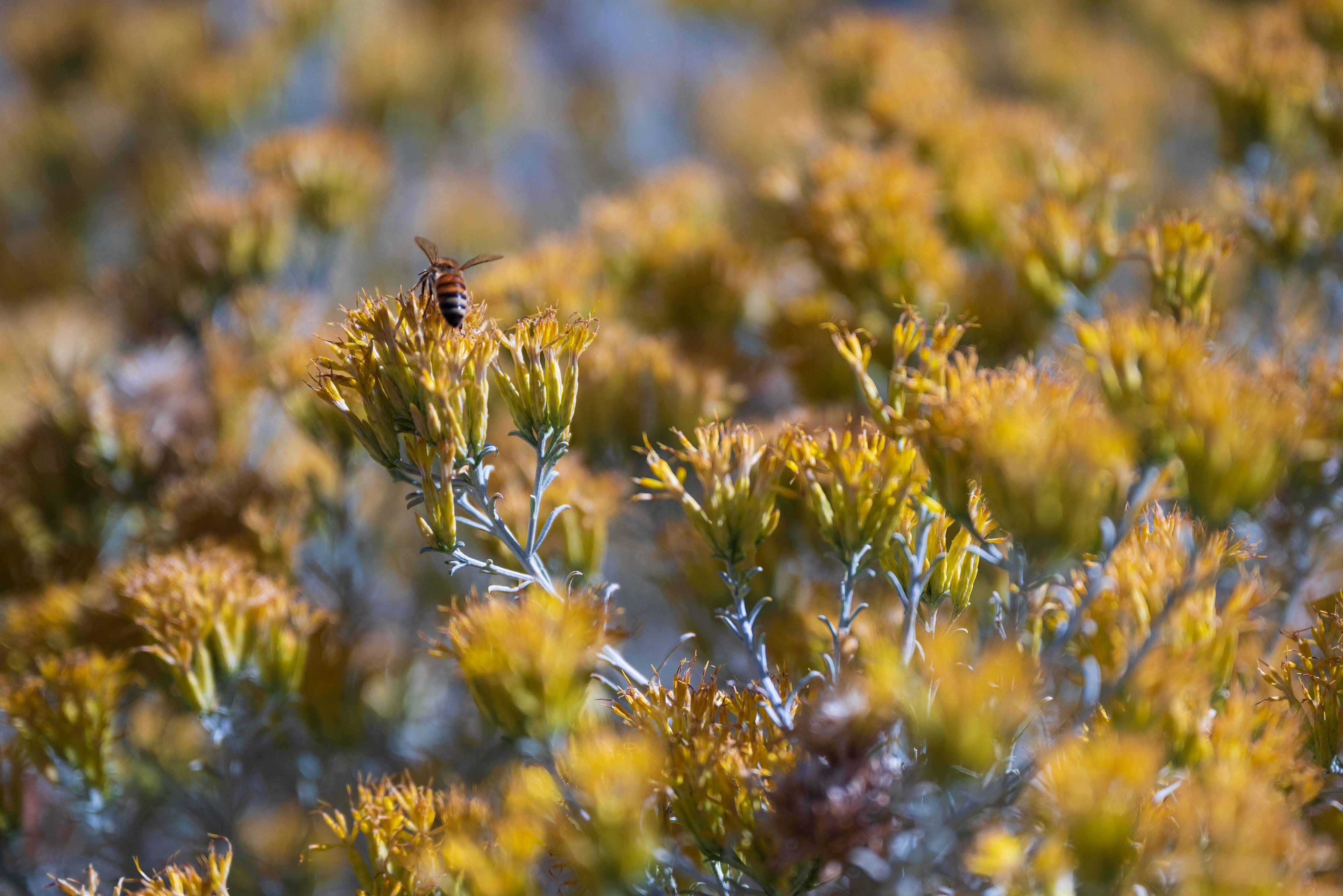
What once was a typical American lawn now hosts a myriad of native plants. Flowers bloom from the early spring through the first fall snow. Climbing up from a bed of wood chips are tall, top-heavy stalks of lavender and bright spears of rabbitbrush. Leaves and underbrush squeeze themselves into the empty spaces between flowers. You may not notice at first, but there are two yard signs tucked in among the overflowing plants. These particular placards are not advocating for a political candidate — they’re for bugs. The signs are the forward-facing symbol of a national grassroots movement that is making moves to protect pollinators.
One in three bites we eat is made possible by pollinators. By seeking the nectar of flowering plants, insects move pollen from flower to flower. This then leads to the fruiting of virtually every fruit and vegetable we consume. From butterflies to bees to moths, they play a pivotal role in our natural ecosystem and our food supply. However, as you’ve likely heard, pollinator populations are declining — and fast.
Community organizers are now working across the nation to weave together a safety net for pollinators, a net that employs many levels of action. First order of business: promoting the conversion of lawns to pollinator-friendly native flowers and shrubs. There are also now food labeling certifications for farms that abide by a set of protective rules. Groups have devised citizen pledges encouraging people to commit to protecting pollinators. And there is a nationwide push to establish bee-friendly cities. Through a national certification program, any city can take steps to recognize, support, and encourage pollinator conservation. All of these projects have their sights on building a robust network of pollinator-friendly habitats across the country. The motive is clear: Pollinators help produce more produce, ultimately benefiting farmers and eaters alike.
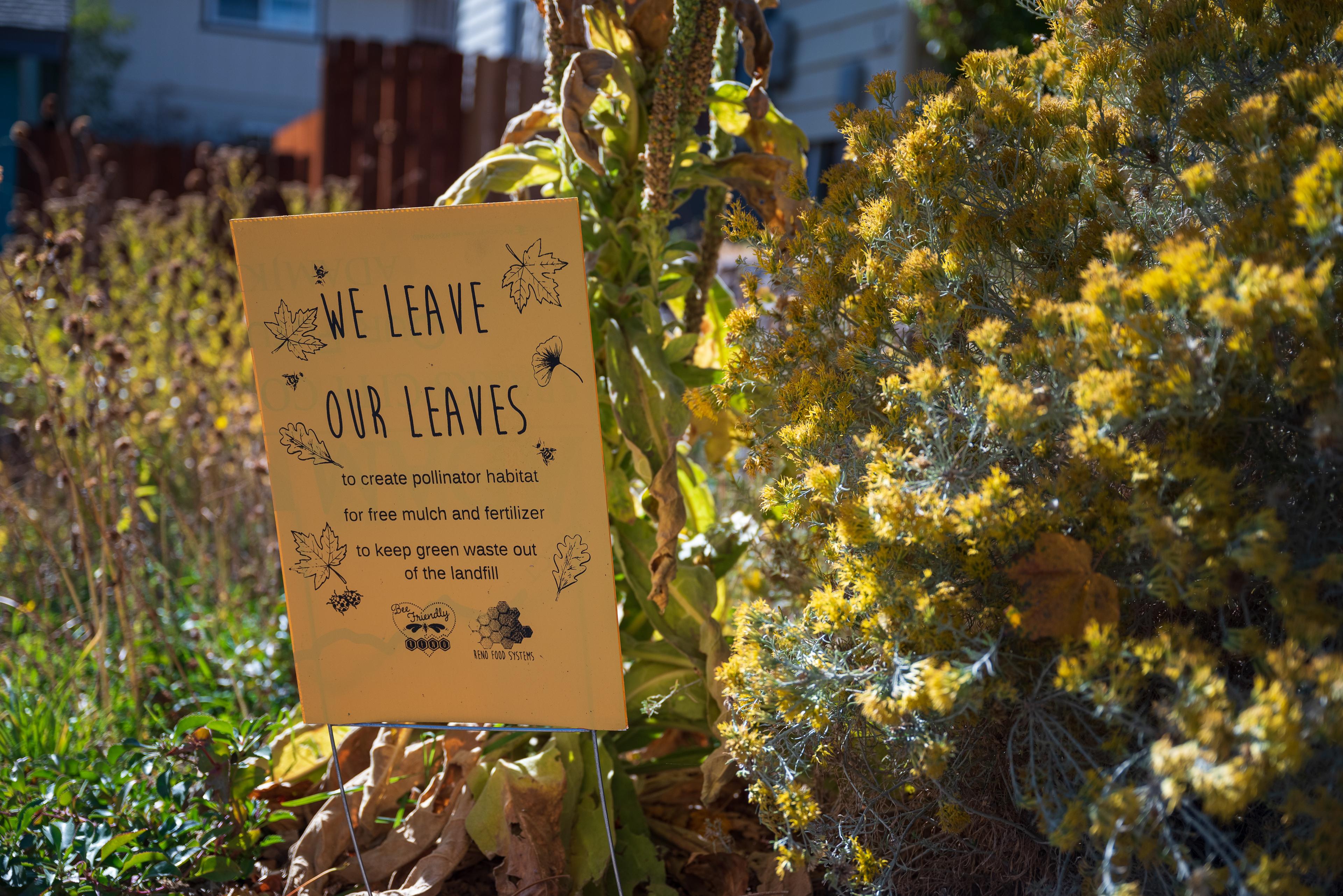
“A lot of people have this prejudice that people who let their dandelions grow are lower class,” said Melissa Gilbert, founder of the Nevada nonprofit Bee Friendly NV. Based out of an urban vegetable farm in Reno, this proactive group of farmers and community members has launched a campaign — one of dozens across the country — to build and defend habitat and inform everyday citizens about the importance of protecting pollinator populations.
Gardeners, homeowners, and renters alike can all take a pledge with Bee Friendly NV that commits them to cultivate habitat for pollinators. One of the first items on this pledge is not weeding out the dandelions, one of the first flowers to bloom each year, and a vital pollinator food source. Nevada is home to a quarter of the nearly 3,600 native bee species in North America. The region is also an important corridor for other pollinators such as monarch butterflies.
“Some of the biggest factors that are leading to these declines are pesticide accumulation, exotic species, and light pollution,” explained University of Nevada, Reno, professor of biology Matthew Forister. His work focuses on the change in insect populations and plant-insect ecology (while his academic profile photo shows a butterfly perched on his cheek).
One 2019 survey showed 95% of respondents wanting to help pollinators, but only 34% were confident they knew what to do.
Forister’s research also found a 1-2% decline in butterfly populations each season. Correlated with other studies, Forister said it is safe to assume all pollinators are facing a similar fate. This concerns him because, compounded over 20 years, pollinator populations have declined almost 30%.
By many accounts, people are increasingly aware of the pollinator plight, but largely unaware of what they can do to fix it. One 2019 survey showed 95% of respondents wanting to help pollinators, but only 34% were confident that they knew how to do anything useful.
“Once you put a sign up in your yard that says, I’m standing for the bees, it always makes you more aware of all of your actions,” explained Bree Kasper, one of Bee Friendly NV’s first pledge takers who has been working to establish a pollinator-friendly garden and yard. Kasper is driven by the knowledge that protecting pollinators is a vital step to ensuring our food supply’s long-term sustainability.
One family of commonly used agricultural chemicals has proven particularly harmful to pollinating insects — neonicotinoids, or neonic pesticides. Recent research has also found some fertilizers repel pollinators. Yet a blanket ban on neonic pesticides is not without its downsides. For example, a recent ban in the state of New York has some agriculture experts concerned about the corollary effects of prohibition, and the lack of comparably effective pest control alternatives. Solutions aren’t simple, which is why pollinator advocates are working on many fronts.
“We basically want to meet you where you’re at and help you improve,” said Laura Rost, communications director at Bee City USA, an initiative of the influential Xerces Society for Invertebrate Conservation. This organization is working on expanding the safety net for pollinators across the country by providing a plug-and-play framework for U.S. cities to embrace. They have classified almost 170 cities across 45 states as bee-friendly, with many more to come. To become certified as a Bee City, a community’s governing council must pass a resolution committing to pollinator protection. In practice, the city then has to implement tangible steps to maintain certification.
“The big thing is developing an integrated pest management plan for the city, an idea that is not just about pollinator health through pesticide reduction,” said Rost. Beyond reducing reliance on pesticides, cities and communities must work to increase low-fi initiatives like manual weed pulling and pollinator-friendly habitat creation. Together with grassroots groups, Rost said communities have “the tools to actually make these changes,” emphasizing that this is a pragmatic movement, focused on actual, realistic solutions.
“We don’t need perfect roses, we need functioning ecosystems.”
Another Xerces initiative is Bee Better Certification for farmers, which evaluates whether a given farm meets certain criteria like maintaining pollinator habitat on at least 5% of its acreage and developing a pest control program that is less pesticide-intensive. Compliant farmers get to use a Bee Better seal on their food labels. Currently 20,000 acres of farmland have been certified nationwide.
To prevent a collapse of our food systems, pollinators “need protected nesting sites, and they need protection from pesticides,” said Rost. Effectively, they need more habitat. And through a multifaceted approach that focuses on increasing proper weed management and community education, Bee City-certified communities are establishing a nationwide network of pollinator habitats.
For her part, Kasper has printed out detailed flyers and knocked on doors to educate her neighborhood further. “The campaign … is just bringing awareness to your neighbors and having a really good conversation with the people around you,” said Kasper. “Don’t give me credit; give the pollinators credit.”
Forister believes a big part of the challenge is shifting our national mindset away from the idea of perfect horticulture. “We don’t need perfect roses, we need functioning ecosystems,” he explained.
Forister would love to see more widespread dissemination of vital pollinator information. For instance, some of his more recent research has found nurseries across the country selling milkweed seedlings — a vital plant to butterflies — contaminated with dozens of pesticides. Many of the plants were labeled as pollinator-friendly.
After learning about Forister’s research, Gilbert was stunned. “We’re trying to launch a bee-friendly certification for our nurseries,” she explained, adding that the program’s aim will point people towards uncontaminated seeds and seedlings. Gilbert believes that sharing relevant, useful information as broadly as possible is a key plank in the pollinator advocacy agenda.
Another key component of every pollinator campaign is to spread the word about habitat loss. Bree Kasper relies on the accurate, research-based information from Bee Friendly NV and the Xerces Society, when she takes it to the streets. A veteran canvasser, she prints out Xerces flyers and takes them door-to-door.
For Kasper, it is about much more than having a beautiful yard. The flowers blooming almost year-round on her property become a statement, a message affirming that she believes in the protection of pollinators. “This is something that everyone can support,” she explained. “We should be doing things like creating events, creating momentum, and getting the information out there.”
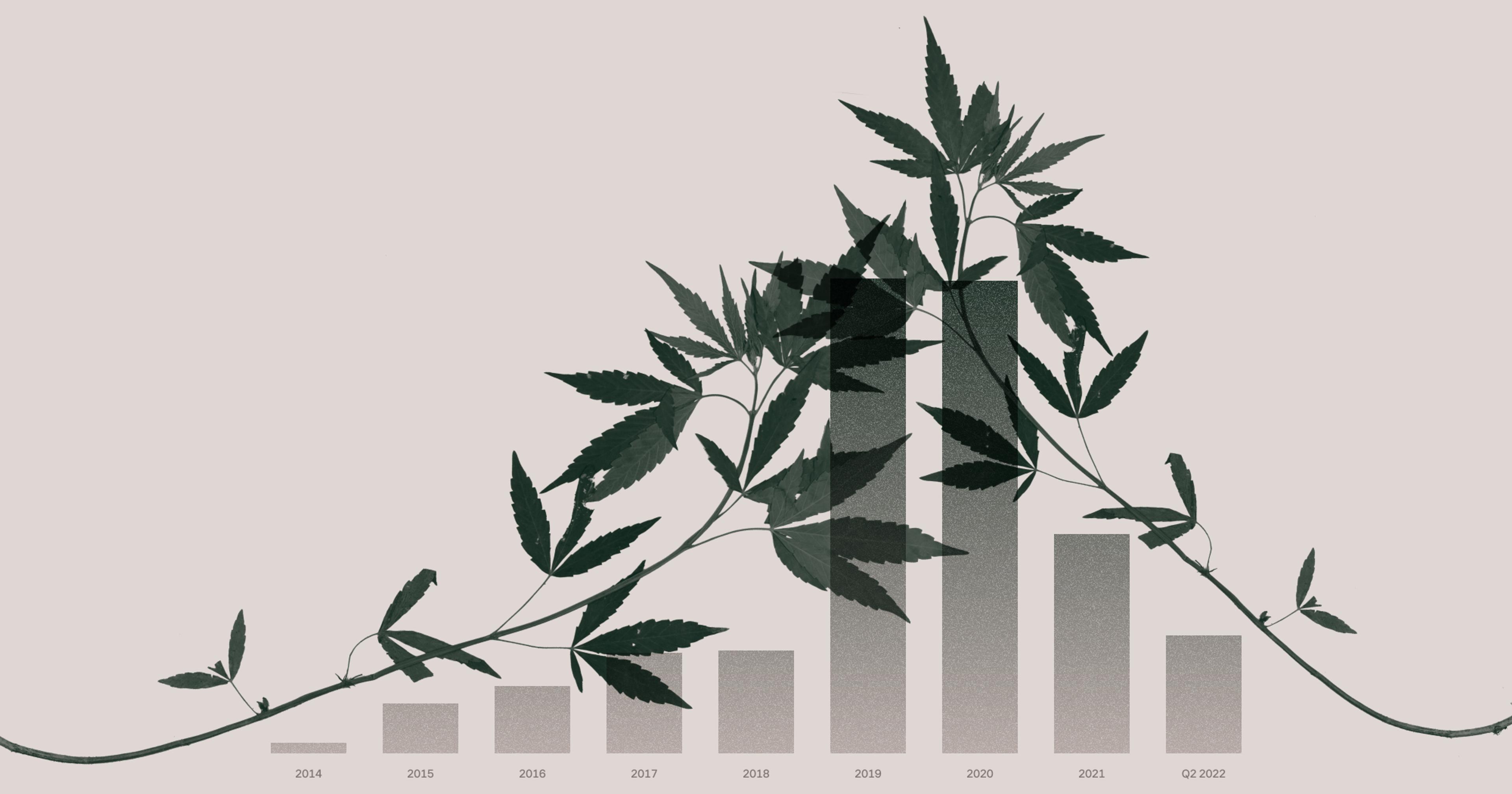
In April of 2019, Senator Mitch McConnell took a victory lap around his home state of Kentucky. In photos posted to Twitter by state agriculture commissioner Ryan Quarles, McConnell grinned widely as he toured the facilities of GenCanna, one of many companies that had sprung up to process hemp into profitable CBD extracts. The state began exploring commercial cultivation in 2014; five years later, McConnell had helped make hemp federally legal, and he was busy touting its limitless potential. In a speech that day, Quarles thanked McConnell for “making hemp great again,” and in an accompanying press release McConnell is quoted as saying, “I knew Kentucky would be at the forefront of hemp production. It didn’t take long for GenCanna to prove me right.”
Hemp was flying high, but it was about to come down hard. Eight months after McConnell’s triumphant event, GenCanna was being sued by farmers who said it owed them $13 million in back payments. In January of 2021, it was involuntarily placed into bankruptcy and had its assets sold off to pay creditors. And GenCanna’s story isn’t unique.
As the bottom fell out of the hemp market over 2019 and 2020, companies with names like Bluegrass Bioextracts and Elemental Processing also faced massive class-action suits, liens, and bankruptcy, amid allegations that they hadn’t properly paid the farmers they contracted with. Then of course, there are the farmers, who took a big gamble on a crop that was a big loser for many.
Before the collapse, farmers had signed contracts with processors for as much as $40 per pound of hemp. After the smoke cleared, the lucky ones were able to sell their crops for one dollar per pound. Kentucky farmer Bobby Huff estimated that he lost a total of $120,000 farming 10 acres of hemp. In the end, he ground up much of it to feed his cows.
What happened? How did so many people go broke selling hemp?
The New Tobacco
Given its close ties to marijuana, hemp is in many ways an unlikely cash crop for a conservative state like Kentucky. Indeed, lawmakers like McConnell were hesitant to support its legalization because they didn’t want to be viewed as soft on drugs. Joseph Hickey, an activist and entrepreneur who’s been working on legalization since the 1990s, remembers McConnell saying: “I can’t even be seen with you. Everybody’s going to think I’m trying to legalize marijuana.”
What exactly is the difference? According to the USDA, the only way to legally distinguish the two is by measuring the level of the psychoactive chemical THC. Anything above a concentration of 0.3% is marijuana, and anything below is hemp. (Cannabidiol, aka CBD, is the second-most prevalent active ingredient in marijuana, but is also present in hemp.) Anecdotally, advocates will say hemp is hardier, grows more easily, and has plants of a slightly different shape. Historically, hemp is a simple crop which has been used to make rope and cloth for much of human history. Marijuana is its fussier, newer cousin — imagine the difference between a traditional, low-alcohol beer and a 12% ABV microbrew you can now find in artfully decorated cans.
Kentucky was uniquely involved in the legalization of hemp, and uniquely impacted by its downfall, for one simple reason: its longtime reliance on tobacco, a crop once central to the state’s economy that was badly in need of replacement. Since the federal government ended its price support and quota system for tobacco in 2004, its profitability has been in freefall. According to an analysis by the University of Kentucky, tobacco farmers’ expected returns per acre have declined from roughly $1,000 to just $100 over the past 20 years.
Advocates saw hemp as a solution. It grows plentifully in Kentucky’s climate and, in a seemingly fortunate twist of fate, utilizes almost exactly the same machinery and processes as tobacco. As calls for legalization grew louder, and organizations like the politically conservative American Farm Bureau joined the cause, more politicians saw the benefits. Some credit Rep. James Comer (R-KY) with winning over McConnell, who put language into the 2014 farm bill allowing states to establish pilot programs to study the industrial production of hemp.
Kentucky was one of just four states to begin its program in 2014, alongside Colorado, Indiana, and Vermont. (By 2018, the total of states studying hemp production had grown to 22.) In the Farm Bill’s 2018 iteration, Congress removed hemp from the DEA’s schedule of drugs, freeing it from stringent oversight and clearing the way for widespread farming. And, it seemed, they’d done it just in time — in 2017, the CBD industry was worth $350 million and looked poised to continue its rapid expansion.
Just before the pandemic, America had a brief but passionate affair with this low-THC cannabinoid extract that’s supposed to deliver the relaxing and pain-relieving effects of smoking pot without actually getting you high. Its specific benefits could be hard to pin down, but that didn’t stop its groundswell of popularity; as one meme account memorably described CBD: “It’s like weed but it doesn’t work.” For much of 2019, it felt like every cafe was offering CBD lattes and every local wellness place briefly replaced its crystals with CBD creams. A combination of popularity and relative scarcity drove extract prices through the roof, promoting wild speculation in the space.
Jumping into something relatively unknown like hemp was an easy decision for farmers like Huff, who followed his father and grandfather into running a diversified mid-size farm spanning several kinds of crops and livestock. “The farming landscape’s been pretty tough,” he said. “The cattle market’s been in the shitter for probably six, seven years now. I was in the chicken business, I had broiler houses and they were struggling … nothing’s great.” When asked what attracted him to the hemp business, he laughed dryly before saying, “Just the sheer money.”
“It was always a gamble, but the money was prospectively really good, and we had the chance to get in on the ground floor of something and figure it out before everybody else did,” said former Kentucky tobacco farmer Taylor Jones, explaining why he first decided to grow hemp.
“If you talk to these farmers about growing hemp again, they’ll run you off the farm.”
And a gamble it was. In 2019, tobacco was selling for a little over $2 a pound, according to USDA data, whereas hemp was contracting for as much as $40 per pound. For many like Huff, deciding which crop to plant was easy. More than 1,000 farmers were approved to farm 60,000 acres of hemp in the state that year, a 460% increase in number of farmers over the previous year and a 370% increase in acreage.
Up in Smoke
Problems began to show almost immediately. In a clear-eyed analysis of the nation’s various pilot programs, a USDA report wrote that “most States had fewer than five people to implement and oversee the pilot programs … this creates challenges in supporting a new industry with elevated regulatory and reporting standards.” In other words, the burden of handing out hundreds of licenses, verifying the THC content of tens of thousands of plants, and advising many hundreds of interested farmers was being handled by fewer people than are usually behind the counter at an Apple store. According to the same report, Kentucky’s 1000 hemp farmers and 200 processors were overseen by just three full-time and two part-time staffers. Even at this low level, Kentucky actually had one of the country’s better-staffed programs: Tennessee, Vermont, Virginia, Washington, and Wisconsin all had no full-time employees.
In some ways, oversight of the industry was minimal, but in others it was onerous and bureaucratic. A state spokesperson confirmed that there were no bonding requirements for processors, who were only required to pay a fee of at most $3,000 (and in many cases only $500) before they could begin granting multimillion-dollar contracts. In other words, they weren’t required to carry any type of insurance guaranteeing they could actually pay out the money they promised. There were no limits on the number of farmers who could grow, and no limits on the amount of hemp they could produce. But in order to prove their crop was below the legally required 0.3% THC levels which separate hemp from marijuana, a state representative had to visit a farm, take clippings, and verify their THC levels — reasonable in theory but difficult in practice, according to Hickey.
“It takes control out of the farmer going, ‘Okay, this is the perfect time to harvest. We need to start today or tomorrow.’ But before that, you’ve got to call the state, and they say, ‘Well, we can’t get out there for two weeks,’” said Hickey. “Then you’ve screwed everything up.”
At the same time, the state was actively promoting the industry to farmers, though often with a note of caution. “These warnings informed applicants about the unstable market and the risk of new companies and buyers. Applicants were advised to not invest any more into this new industry than they could afford to lose,” said a Kentucky Department of Agriculture spokesman.
Some farmers, like Jones, tried to remain cautious. “There were a lot of people that had literally millions of pounds contracted at $40 a pound,” he said. “And you’re sitting there evaluating, you see [a processor] has never done any business, never created millions of dollars worth of sales, and you’ve got $40 million worth of liability coming this fall?” It didn’t seem like a wise gamble.
According to Keith Rogers, chief of staff at Kentucky’s Department of Agriculture, recent analysis shows that farming around 80,000 acres could supply the entire United States with enough CBD for the current market. At its peak in 2019, according to the USDA, there were more than 146,000 acres of hemp planted in the United States, with 26,000 in Kentucky alone — though some argue the nationwide figure was undercounted, and in fact could be up to five times higher.
“We were growing enough CBD to last every man, woman, and child in the whole United States for 10 years,” said Hickey.
According to industry group Hemp Benchmarks and as reported by Cannabis Business Times, in the year between spring 2019 and spring 2020, prices for hemp CBD biomass declined by an eye-popping 79%. As these prices cratered, the choke point in the system turned out to be processors who could turn a hemp plant into CBD oil. They’d promised astronomical sums to farmers, but suddenly found themselves unable to actually sell at a price which would allow them to pay what they owed. They suddenly needed extra time to take delivery, found mysterious contaminants, or, worst of all, simply took farmers’ crops and never paid.
“Processors were leaving the state, going to states where they could do more, or they were threatening to leave the state,” said Katie Moyer, owner of processing company Kentucky Hemp Works and president of the Kentucky Hemp Association. “Sometimes we would see bad actors that just left the state because, well, Florida legalized medical marijuana and they were gonna go down there and try to cash in on that. And they just left our farmers holding the bag.”
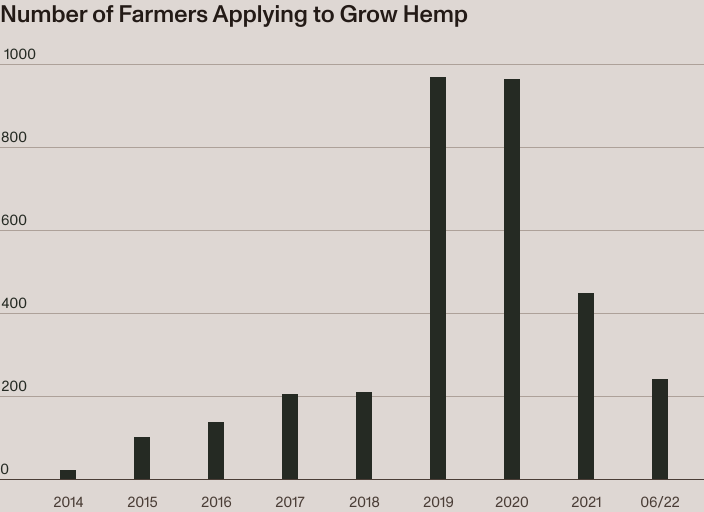
This overproduction certainly tells part of the story of hemp’s collapse, but not all. Rogers and others in state government point fingers at the Food and Drug Administration (FDA), which never established a formal framework for selling and regulating CBD. This left the market unstable and unattractive to major corporations, according to Rogers. “They’re not going to go down this road until FDA acts,” he said, obliquely referring to major companies who might otherwise market CBD oils, lotions, even drinks. At the same time, consumer demand for CBD never quite met projections. “Whatever percentage of the public who are open to trying or regularly taking CBD, obviously, that group is much, much smaller today than predictions were back in ’17, ’18, ’19.” Even reputable processors, he argued, couldn’t meet their contracts because they weren’t making the sales to support them.
“Unfortunately the consumer demand did not increase at the same rate that the excitement to grow this plant increased,” said Kentucky Hemp program manager Doris Hamilton in a video presentation for the University of Kentucky’s Hemp Field Day on Dec. 8, 2020. “Exactly what the true demand is, we don’t know yet. This is an industry that’s still in its infancy.”
“The bottom just completely and totally fell out,” said Jones. “A lot of guys invested $10,000 an acre into growing the stuff. At a hundred acres, that’s a million-dollar investment. If you don’t bring anything in on that, it’s a pretty serious situation.”
Unsurprisingly, this has severely suppressed the once-ravenous appetite for jumping into Kentucky’s hemp industry. In 2021, the number of farmers applying to grow hemp fell by more than 50%, to just 450. In 2022, the number fell further, to 240. By 2022, approved acres plummeted from their 2019 peak of 60,000 to 5,530.
“It’s a black eye, I think, for the farming industry in general.”
“You can talk to any of these farmers that grew hemp,” said Hickey. “If you talk to them about growing hemp again, they’ll run you off the farm.”
Industry advocates point out that this is a lightly regulated developing industry, and with proper direction it will continue to grow.
“Really I do think that things are getting better,” said Moyer. “If you ask around in the industry here and you ask them, how did you get through the last two years? They’ll tell you by the skin of my teeth with bubble gum and glue. It’s not like we are coming out on top like champions, but also the ones who survived are still here, still trying to do a great job.” When we spoke, her organization was celebrating a victory against the state in the battle over Delta-8, a more intoxicating variety of hemp the state was fighting to keep illegal. She now calls Delta-8 the “biggest growth market” in hemp.
“The demand’s still there! People are still buying,” said Hickey, pointing out that a brand called Charlotte’s Web was recently named the official CBD of Major League Baseball. “There’s just fewer [farmers] that had the money to withstand this crash.”
Huff, for his part, said his hemp crop was “a total loss.” He ruefully remembers a conversation with his brother from just before he began cultivating hemp. To his brother’s suggestion they only grow one test acre, Huff said, “Dude, we’ve got a contract. The state is promoting the crap outta this thing.” He was sure the processors had been vetted and “could pay their bills if it didn’t work out.” As it turned out, they weren’t vetted, and they couldn’t pay their bills. Huff sighed deeply. “It’s a black eye, I think, for the farming industry in general.”

California is on a mission to phase out the use of trucks that use fossil fuels and replace them with more environmentally friendly, zero-emission electric vehicles — all within the next couple of decades. The California Air and Resource Board’s (CARB) Advanced Clean Fleet Regulation aims to tackle air pollution and greenhouse gas emissions by transitioning 100% of the state’s medium- to heavy-duty trucks from fossil-fuel to fully electric.
But not everyone is happy with the proposed legislation.
The proposal, which is not yet set in stone, is already causing tension between those who praise the plan for its positive environmental impact and industries that depend on the use of big trucks. California’s farming community — heavily reliant on trucks and other heavy-duty machines to supply more produce than any other state in the country — is particularly wary of the new regulation.
With set implementation dates but uncertainty surrounding necessary infrastructure, industry voices are expressing doubts about the feasibility of a switch to electric vehicles and how it could impact their products and bottom lines.
“Agriculture deals with perishable commodities, so having to incorporate charging time into transportation time would just be very crucial for our product,” said Katie Little, policy advocate for the California Farm Bureau. Electric trucks require longer, much more frequent stops than combustion vehicles — electric trucks typically run around 500 miles before needing a recharge, compared to around 2000 miles on diesel. Thus, Little said there is concern the charging times could negatively impact the transported goods. And while extra travel time are not guaranteed to wilt leafy greens and other perishables, the added hours will surely add higher costs to their transport.
The transportation sector is the highest producer of California’s greenhouse gas emissions and impacts on the ozone — 41% of total statewide emissions.
California is no stranger to sweeping statewide regulations with impacts on both local and national agriculture — consider the state’s differing milk standards and livestock confinement laws. The state ranks number one in agricultural product sales in the country, leaving proposals like this one with broad industry repurcussions.
Despite the concerns, there is no denying the positive impacts the proposal would have on pollution. The transportation sector is the highest producer of California’s greenhouse gas emissions and impacts on the ozone — totaling 41% of total statewide emissions.
In an open letter to CARB, signed by a multitude of agricultural organizations across California, signers aired their unease about the proposed plan. As the letter states, the coalition of organizations has concerns about “vehicle availability (at scale) and supply chain issues that intensify affordability concerns, the necessity to incorporate workable emergency response exemptions, obvious infrastructure readiness questions, regulatory timing and process concerns (including transparency for determining ‘commercially available’ vehicles), and the need for flexible low carbon fuel alternatives, amongst others.”
The proposal sets big goals for implementation, starting over the next decade. Currently, just under 2,000 zero-emission medium- to heavy-duty vehicles are out on California roads — mostly consisting of buses — a far cry from the state’s stated goal of over 500,000 vehicles by 2035, and nearly 1.6 million by 2050. CARB’s proposed regulation would require all new trucks and buses sold in the state to be zero-emissions by 2040.
Opponents of the plan aren’t convinced the infrastructure needed for zero-emission vehicle success will be implemented in time.
Sydney Vergis, division chief at CARB, said a smooth transition will be possible thanks to the previously adopted Advanced Clean Truck Regulation, which required truck manufacturers to create more zero-emission options. There are now over 500 types of electric trucks on the market, which Vergis said should mitigate any complaints on lack of availability.
Under the proposal, any California company’s existing fleets of buses and trucks would also need to undergo a switch away from fossil fuel-burning rigs, eventually requiring the purchase of zero-emission vehicles to replace old trucks and buses by 2042. And for some companies, the deadlines come even sooner.
State agriculture groups argue that the proposal’s deadlines are cause for worry, as they aren’t convinced the infrastructure needed for zero-emission vehicle success will be implemented in time. In order to switch from fossil-fuel-reliant vehicles to electric models, chargers for the vehicles will need to be widely installed, especially in remote regions.
“We are vastly in rural areas, which may mean we’re farther away from charging infrastructure,” said Little. “What does that mean for transportation times and transportation limitations and charging limitations? So, you know, the rural factor is also a big concern. Is it going to affect how we transport our products?”
On the issue of infrastructure, Vergis said the board is cognizant that the changeover to electric is not a switch that’s flipped overnight. The board is working with state agencies and heavy-duty truck manufacturers to make sure that building out the necessary infrastructure gets done statewide.
“California runs a number of incentive programs that are meant to help with that [electric vehicle] purchase price.”
California Assemblywoman Blanca E. Rubio (D) addressed some of the questions that have been coming across her desk in a direct letter to CARB. In the letter, she expressed concern about power grids supporting the chargers — as the state already outsources 30% of its power needs — as well as implementing them in remote areas. “Heavy construction and agricultural equipment service vehicles operated by such fleets also have no ability to charge their vehicles remotely. These vehicles will require high-voltage DC chargers that are unavailable at remote sites and along the highways in convenient locations,” the letter reads.
Upfront costs for new zero-emission vehicles — currently much higher than combustion trucks — are a further sticking point for agricultural businesses worried about already-tight profit margins. To address this, Vergis said the board has options to financially aid farmers and others in need of complying with the regulation. “California runs a number of incentive programs that are meant to help with that purchase price, Vergis said. “This year our funding plan is going to have about $2 billion in investments that really are meant to help with that.”
Meanwhile, environmental groups and residents of highly polluted areas are championing the proposal for its potential impact on public and environmental health. “About 12 million Californians still live in areas with unhealthy air,” said Vergis. In addition to addressing poor health caused by this pollution, the proposal could account for big savings when it comes to health costs.
“The health benefits of the regulation in terms of savings from things like avoided asthma and premature death is quantified at over $57 billion,” she said. Vergis added that the proposal saves cash in other ways, with a $22 billion net cost savings in light of lower maintenance and fuel spending once the vehicles are in use, according to CARB’s analysis.
As far as the fate of the proposal, there are multiple meetings to come before any implementation.
October 27 marked the first public hearing on the plan, where nearly 200 citizens, both for and against the proposal, gathered to discuss its implications. A secondary public hearing is scheduled for the spring. Once the board makes its final decision, the earliest compliance deadline for the proposal would be set for the end of 2023.
Researchers have been tracking and tallying the toxic chemical effects of synthetic agricultural inputs on both managed and wild bee pollinators for more than a decade. Insecticides in particular have been shown to both kill bees outright (these chemicals are designed to poison insects, after all) and to engender sub-lethal effects like inhibited foraging, navigation, and reproduction. Fungicides and herbicides have been linked to molecular and genetic changes in pollinators; additionally, they eradicate flowering non-crop plants that ensure that these critters have enough nectar to forage. Combinations of fertilizers and other chemicals sprayed on crop fields have also been shown to be more toxic to bees than single chemicals.
Such studies have given rise to support for bans on pesticides such as neonicotinoids; calls for increased support of the organic sector’s comparatively chemical-free systems; and guidance from extension agents about how to minimize pollinator risk by adjusting when and how much of a chemical is sprayed. Until now, the relevant research has looked at the long-term effects of chemical inputs on bees. A new paper published today in PNAS Nexus considers the ways in which common fertilizers and the insecticide imidacloprid affect the physical rather than chemical interactions between flowers and bumblebees, by changing the physics surrounding flowers. For the first time, this paper shows that these popular agricultural inputs actually repel bees and keep them from landing on treated blooms.
The findings have to do with static electrical fields (E-fields to the researchers). This is where a physical interaction between bees and flowers happens. The atmosphere surrounding flowers is positively charged (as are bees), while flowers and pollen are negatively charged, explained Ellard Hunter, a biologist at the University of Bristol and the paper’s lead author. A flower’s E-field is one of the things that draws a bee to it, in addition to color, scent, shape, and texture. When chemical fertilizers are sprayed across a crop field, they modify the E-fields around flowers in a way that “turns out to be not that trivial,” said Hunter.
“If you are small and have hairs all over your body, the electric fields are way more profound.”
As the PNAS paper explains, this can “manifest itself as an immediate behavioral response wherein bumblebees decide not to land while hovering around treated flowers.” That might have significant implications for pollination services; if bees won’t stop on a farmer’s fields to drink nectar and bring pollen from flower to flower along the way, that could lead to poor crop yields.
What’s making this repulsion happen, said Hunter, is that the chemicals stress the plants, which triggers a change in the dynamics of their surrounding E-fields. “Like, we have vision and can see light but if you look into the sun, you have too much light in your eyes and then you don’t see anything,” Hunter said. How this change is perceived by bees is akin to the static electrical field around an old television that might make a person’s skin prickle. “You would not feel comfortable standing in front of your television all day, that kind of sensation … But especially if you are small and have hairs all over your body, the electric fields are way more profound,” Hunter said.
The good news is that this change is temporary, lasting for maybe 20 or 25 minutes after a chemical is sprayed. The bad news is twofold. For starters, Hunter discovered quite by accident, when he meant to reapply a chemical mixture to some flowers in his lab but reached for plain water instead, that adding water on top of fertilizer (as would happen when it rains) makes the bee-repellent effect happen all over again. He’s not sure of the mechanism that causes this but it might have to do with a memory reflex in the flower.
“You could be designing your fertilizers in a way that doesn’t trigger too much of a response in the plant.”
There’s another reason that even a short-term negative effect of the chemicals becomes more relevant, Hunter said: If bees visit a field and find it unsatisfactory for whatever reason, they’ll seek out fields “where there are no negative associations and also communicate their negative experience to the other bees.” Basically, some unhappy bees give the equivalent of a bad Yelp review and doom a field to pollinator irrelevance.
Although the PNAS study looked at the effects of only a few synthetic inputs, and only on bumblebees, Hunter’s earlier work considered the effects of these chemicals on honeybees, which he said were even more sensitive; this opens the possibility that the negative effects of changing E-fields could be felt by many or all pollinators. It’s also possible that other synthetic chemicals could cause the same reactions in flowers and bees — Hunter found that even organic fertilizers can stress plants.
One possible practical outcome of this paper, Hunter speculated, could be applying more “crude” types of inputs, like seaweed, directly to soil. Or it could drive pesticide companies to find ways to derive alternate, less stress-inducing formulas for their product. That way, “You could be designing your fertilizers in a way that doesn’t trigger too much of a response in the plant,” Hunter said.

Ever since a small New York tech company offered paid “climate leave” in 2017 — a response to employees displaced by wildfires and a hurricane — the idea has slowly gained traction as a voluntary employer benefit. But after a tornado killed six on-the-clock Amazon workers last December, Rep. Cori Bush (D-MO) drafted legislation that would mandate this perk; employers would have to give paid time off (PTO) and other worker protections in the face of climate disasters.
This type of employee perk is not unheard of for white-collar workers, typically clocking shifts in cushier office environs. But as the frequency and intensity of this type of disaster continues to ramp up, labor advocates are highlighting a group that would directly benefit from the proposed Worker Safety in Climate Disaster Act: farmworkers. “Outdoor work in agriculture, heavily dependent on the state of the natural environment, puts its workers in a disproportionate level of precarity,” said Lucas Zucker, policy director for Central Coast Alliance United for a Sustainable Economy.
Just this fall, agriculture workers in California have contended with the latest batch of wildfires, while Florida farmworkers were pummeled by Hurricane Ian and its aftermath. If a farm owner is forced to hit pause, that typically trickles down to a lack of income for their workers. But if operations do continue, it can force workers to make an uncomfortable binary choice: keep working despite risks to health and safety, or stay home and lose a vital paycheck.
“For anyone involved in the citrus industry, whether you’re an owner or an employee or an H2A contractor, there’s not a single damn positive about a situation like [Hurricane Ian],” said Ray Royce, president of the Highlands County Citrus Growers Association, whose county sat squarely in the eye of the hurricane. “Everybody gets hit.”
“If you’re asking a farm owner to compensate a worker when the farm owner just lost their stream of income, then that’s just not sustainable, right?”
Some embattled farmers have tried to create their own version of this proposed legislation. Jim Strickland, a Florida cattle ranch owner who typically manages 10-15 employees at a time, was able to access USDA funds to assist with his farm’s recovery during Hurricane Ian. Though his margins are tight, he did not need to cease paying workers. But he acknowledges that he has been lucky: “We made damn sure everyone got paid, because they need it,” said Strickland. “But there are a lot more unfortunate farmers than this guy you’re talking to.”
Many farmworkers are undocumented and thus exempt from typical social safety nets — which means a climate disaster can be particularly precarious. That’s precisely what this proposed legislation intends to address: “As the climate crisis continues to accelerate, extreme weather and climate disasters have become more frequent and more severe, putting frontline workers and communities at the highest risk,” said Rep. Bush in a statement. “The safety of our workers, especially our most marginalized workers, should always be top priority.”
Bush also noted that “big corporations” were the main target of this legislation; it includes an exemption for businesses with fewer than 50 employees “when the imposition of such requirements would jeopardize the viability of the business as a going concern.” Considering that farm-business-as-usual would be all but impossible during a climate disaster, this particular provision could be the subject of some lively debate.
“If you’re asking a farm owner to compensate a worker for something when the farm owner him or herself just lost their stream of income, then that’s just not sustainable, right?” said Federico Castillo, environmental and agricultural economist at the University of California, Berkeley.
“A grassroots organization cannot be FEMA.”
There are other details that would need to be settled as well. Who determines what qualifies as a full-blown climate “disaster?” How would agriculture workers, many who are paid by piece rather than hourly, be compensated for days lost? Bush’s office was not able to provide details in time for story publication, but questions remain.
While some parts of the legislation still need to be hammered out in committee — and it’s far from certain that it will even pass — the bill’s intention is to cover undocumented and documented workers alike. In addition to two weeks of PTO, it mandates employers inform employees of impending climate disasters, and to not penalize workers in any way for seeking shelter or caring for family members.
“During [Hurricane] Irma, workers would take turns going to work and one family member — usually a woman — the member would stay behind and take care of the children so that they wouldn’t have to pay for childcare,” said Neza Xiuhtecutli, executive director of the Farmworker Association of Florida (FAF). But this type of stopgap measure still puts workers in danger and is not sustainable in the long-term; Xiuhtecutli noted that more government assistance is sorely needed.
As it stands, Xiuhtecutli said that his organization and other forms of farmworker mutual aid provide a minimal safety net for this vulnerable community — but that it isn’t sufficient, or sustainable, in times of disaster. Zucker, who interviewed a range of California farmworkers after the Thomas Fire in 2017 for a research study, also notes the limitations of philanthropy and mutual aid. “A grassroots organization cannot be FEMA,” he said.
But when even FEMA struggles to supply funds, it remains to be seen whether Bush’s legislation will be the long-term solution farmers and workers need. “The devil is in the details,” said Castillo.

It’s Farm Bill season again, that twice-in-a-decade opportunity for congressional agriculture committees to allocate federal money — almost half a trillion dollars in the 2018 bill — mostly around the production and distribution of food. The first Farm Bill, enacted in 1933, aimed to reduce surplus crops and raise agricultural product prices to give farmers a boost during the Great Depression. In the intervening years it has morphed into an extensive package of legislation that sets the price of commodities; funds agricultural research and training; maintains federal nutrition programs like the Supplemental Nutrition Assistance Program (SNAP); provides crop insurance and credit to growers; and supports forestry efforts, conservation, and rural development.
With the current Farm Bill — aka the Agriculture Improvement Act of 2018 — set to expire in September 2023, stakeholders are already visiting members of Congress and pushing ideas about what the next Farm Bill could or should look like. A number of policymakers and researchers see an opportunity to bring conservation and climate resilience to the forefront, especially after a destructive 2022 growing season in which climate-related disasters obliterated Texas cotton, tanked corn and rice yields, and provided scant water for crops across the West. Congress now has the chance, argue authors of a report for Illinois-based think tank Farm Foundation, to pass a “revolutionary” Farm Bill in which the food and ag sector might be leveraged to “reduce environmental concerns.”
What might such a Farm Bill look like? To find out, we spoke to Chris Adamo, co-author of the Farm Foundation report and adjunct professor at Vermont Law School; Trevor Findley and Emma Scott, clinical instructors at Harvard Law School Food Law and Policy Clinic, who contributed to a Climate & Conservation report for the Farm Bill Law Enterprise (FBLE); and Kathleen Merrigan, executive director of the Swette Center for Sustainable Food System at Arizona State University, who lent her expertise to a report making the case for organic agriculture as a climate solution.
Although none of these sources would hazard a guess as to how revolutionary Congress might behave, they remained cautiously optimistic that existing Farm Bill programs could provide a route to getting some resilience-focused initiatives written into the next bill. Findley noted that the current Farm Bill incorporates minimal requirements for conservation. But “when we think about the seriousness of the [climate] crisis we’re facing,” he said, now is the time to consider ways taxpayer funded-programs can boost “agriculture as a public good.”
Support perennial practices like agroforestry
Agroforestry, where fruit- or nut-bearing trees are grown in conjunction with other crops, not only diversifies farms and provides an additional revenue stream; it also has the potential to sequester a lot of carbon, control erosion, and improve water quality. For the authors of the FBLE report, it’s one of several perennial practices, like the growing of non-annual rice and kernza, that could be amped up in the next Farm Bill through the Environmental Quality Incentives Program (EQIP) and Conservation Stewardship Program (CSP), the mechanisms under which USDA funds working lands.
Despite the proven benefits of these systems, which are efficient at removing abundant greenhouse gas carbon from the atmosphere and storing it in roots, trunks, branches, and leaves, as well as providing resilience against drought, erosion, and flooding, the FBLE authors write that very little funding has been devoted to them in recent Farm Bills. They note that boosting funds to “increase staff training about the benefits … and enhance producer outreach” would be necessary complements for farmers to implement these types of practices.
“As we consider long-term solutions to the climate crisis and conservation of our country’s natural resources, we need existential shifts in agriculture,” said Scott. “There are a lot of ecosystem services that can be supported through agroforestry systems, carbon sequestration being a big one of those. We talk a lot about carbon sequestration in soils but carbon sequestration in [tree] biomass is something we can put a bit more stock in.”
Reform conservation compliance
Out of the four broad goals outlined in the FBLE report, the authors call this one “controversial.” That’s because, where most conservation-related Farm Bill funding is tied to voluntary practices, the report suggests a mandate: for Congress to “require that all farmers receiving taxpayer support to implement several practices that aim to advance natural resource conservation or climate change mitigation.” From FBLE’s perspective, said Scott, “One of the things we should be thinking about more holistically is the investments we’re making in agriculture. Maybe it’s not practical to have a full-scale conservation plan that does everything under the sun to mitigate climate change that is within a farmer’s capacity. But there are additional steps that can be taken beyond very minimal [existing] requirements.”
To that end, Findley and Scott brainstormed the idea of USDA’s Natural Resources Conservation Service “coming up with a list of available practices within a region and then having farmers choose a selection … that makes the most sense for their operations and also involves a fair amount of farmer choice,” said Findley, calling this approach “incredibly impactful.” Common conservation practices currently funded by EQIP include things like nutrient management, conservation tillage, and cover cropping.
Another way to go, said Findley and Scott, is to use USDA’s Soil Conditioning Index as a baseline metric for soil health achievements farmers would need to reach in order to participate in government programs, including crop insurance. Better funding for technical assistance — which Findley and Scott called “severely under-resourced” — would be necessary for either approach to work.
Link SNAP to sustainable farming
The Farm Bill not only supports producers; it also allocates funds to public programs that combat hunger and food insecurity, like SNAP. But what if those objectives could be linked? According to the Farm Foundation report, “[A] revolution in Farm Bill policy could see SNAP expanded to help drive climate adaptation throughout the food supply chain.” This would mean giving SNAP recipients extra benefits for buying sustainably raised foods, jumping off from the existing “double up” model in which SNAP benefits are worth twice as much when used to buy healthy foods at the farmers market. (In a similar vein, in 2020 and 2021 USDA purchased fresh foods from farmers and ranchers to support them during Covid shutdowns, to supply food banks and other nonprofits serving low-income U.S. residents, as part of the Farmers to Families Food Box Program.)
Adamo sees this as a way to temper the ongoing furor between “People saying, ‘Why should federal [SNAP] dollars go towards unhealthier foods [like snacks and soda]?’ And on the other hand of the debate, hunger advocates saying, ‘Let’s not have a parochial state that is demeaning and tells poor people‘” what they should eat. And helping provide climate solutions simply would make it all the better.
Although Adamo admits that what is considered “sustainable” in terms of farming practices is up for interpretation and would need to be hashed out, “A traditional offering in the more sustainable realm might be organic products, which tend to have a premium associated with them,” he said — he’d also be happy to see any third-party verified standard included. Adamo continued, “Nothing says [people] can’t use SNAP benefits now to purchase organic but obviously if you can improve their purchasing power for more sustainable products, that could be a market driver.”
Incentivize organic
Organics were first introduced into the Farm Bill in 1990 and ever since, advocates argue, they’ve been severely underfunded and far-from-embraced across USDA’s 17 agencies and hundreds of programs. This in spite of the fact that organic strategies support climate resilience via soil health and biodiversity, favoring practices such as crop rotation, cover crops, and composting, as well as minimal use of synthetic inputs. As the ASU report highlights, organic yields are 40% greater than conventional during drought; and organic crops show a 26% greater potential for long-term carbon storage. Additionally, 41% of conventional agriculture’s energy consumption comes from the production of synthetic fertilizers; since organic systems prohibit these inputs, they generate significantly fewer greenhouse gas emissions.
“When we’ve looked at most of the programs at USDA that dole out money, less than 1% goes to organic,” said Merrigan, even though 6% of Americans say that most of the food they eat is organic. She added that the current allocation is “not accelerating at the rate that we need, given the climate crisis that we face.” Merrigan would like to see statutory language added to the Farm Bill that requires 6% of the funding in multiple Farm Bill programs go to organics, in order to be commensurate with the amount of organic food being purchased. “Then the world would just radically change,” Merrigan said.
Funding for organic is currently confined to the National Organic Program within the Agricultural Marketing Service, as well as a scattering of other outposts at USDA, such as the National Institute of Food and Agriculture. “I think it’s time to be showcased again” in the Farm Bill, Merrigan said, to “help young farmers get a foothold in American agriculture ... put more wealth in rural communities, and … help our country meet climate and international sustainable development goals.”
Why not have the Farm Bill mandate that USDA buys 6% organic food?
Like Adamo, she sees opportunity to boost organic within government procurement programs. “The USDA buys tons of food for distribution in the school feeding program: school breakfast, lunch, after school, summer feeding, as well as other nutrition assistance programs and meals ready to eat. They buy a lot of food.” Why not have the Farm Bill mandate that it buy 6% organic, she argued, calling a USDA purchase of California peaches to protect farmers from plummeting prices due to overproduction “a big step in the right direction.”
Another place in the Farm Bill she sees 6% for organic as being “really impactful” is in research. “Organic farmers over the decades have out of their own pockets done a lot of the basic trial and error on their farms and it’s been to the benefit of all American agriculture,” Merrigan said. “But there could certainly be a lot more investment in that area. USDA research laboratories, sometimes they’re co-located at universities, sometimes not, but the people who work in those laboratories are USDA scientists and they do almost no organic research at all.”
Merrigan sees support for organic as closely tied to another Farm Bill mission, which is supporting rural development. Merrigan mentions “organic hotspots,” counties with high percentages of organic production that don’t just do the important task of supporting climate goals; they also have better economic indicators than surrounding, low-organic counties. “Do we know enough about that right now? No. Could rural development dollars be invested to figure more out? Yes. Could rural development programs be tasked with putting more investment in organic?” Merrigan asked. “That could really make a difference.”

When it comes to fruits and vegetables, a staggering level of waste on the growing field is practically a given. For instance, a snapshot report of the 2017-2018 growing season found that a full 41% of fresh tomatoes in Florida, 40% of fresh peaches in New Jersey, and 56% of romaine lettuce in Arizona were left on the field.
But U.S. commodity crops like corn and soy have long been hailed as models of efficiency, with near-zero levels of harvest waste. “Between the technology on these combines and the level of detail that’s gone into modifying these crops so there’s low levels of damage, we have pretty minimal loss at harvest,” said Carlos Campabadal, an instructor in the grain science and industry program at Kansas State University.
However, recent research has revealed the loss to be significantly higher than expected: $2.6 billion worth of corn and soy each year, according to a new report from the World Wildlife Federation (WWF). Noting that most commodity grain research focuses on increasing yield, WWF’s researchers instead turned their sights on grain loss.
“When we looked at specialty crops [like edible produce] a couple years ago, we found that there were much higher levels of waste than growers predicted — just gigantic amounts, upwards of 40 or 50%,” said Leigh Prezkop, senior program specialist for food loss and waste at WWF. “We thought it was worth doing that same kind of investigation with other crop systems like corn and soy.”
The team’s methodology included reviews of available public data, interviews with farmers and extension specialists, and time spent observing a representative sampling of Midwestern farms. But why study commodity grains — and why now? The answer lies in the vast scope of corn and soy harvested in the United States — in 2021 alone, that was 15.1 billion tons of corn and 4.4 billion tons of soy. This staggering amount of product requires a lot of land, too: 92 million acres of corn and 83.8 million acres of soy planted in 2020. That’s a full 22% of American farmland; farming these crops is one of the biggest contributors to greenhouse gas emissions every year (a major factor in why these crops are so interesting to WWF).
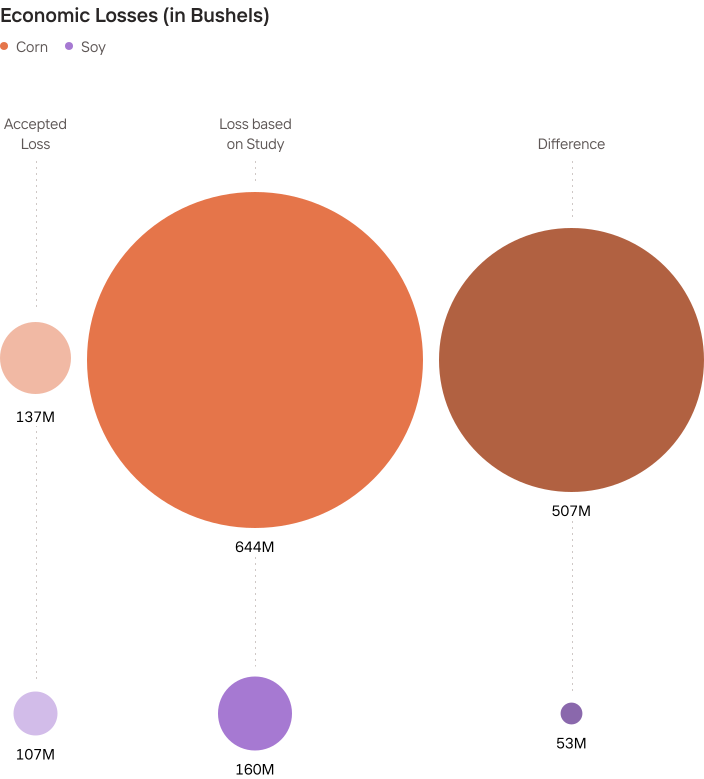
Given the amount of land used and its level of impact, even a small percentage of wasted grain can bear outsized consequences. For corn, the expectations were for a 0.65% level of loss — extension agents encourage farms to aim for no higher than 1%. And for soy, the projected industry loss is around 3% each year. WWF’s researchers found significantly higher loss percentages: 4.7% of corn and 4.5% of soy are being left on the field. So this report has been met with some surprise.
“The most common reaction was like, ‘Oh gosh, I didn’t realize that it really added up to that,’” Prezkop said, referring to the farmers involved in the research when they were shown the study results.
Specialty crop waste stems from a wide host of causes, everything from labor shortages to lack of sufficient market demand to overripeness — fruits and veggies are famously perishable. But just two main factors accounted for the vast majority of corn and soy loss, according to WWF: older, inefficient harvesting equipment, and equipment operators with insufficient experience.
For farmers who are using older or less efficient combines, the idea of a costly equipment upgrade to a flagship model can be daunting. To mitigate this, WWF encourages more equipment sharing among farmers, an increasingly prevalent practice on the ground. “The larger farmers have the most advanced flagship models of combine harvesters and they have less loss where medium scale producers are less likely to have those advanced combine harvesters,” said Prezkop. “We’d certainly like to see more exploration of equipment-sharing programs.” Additionally, WWF is encouraging better training for combine operators on all sizes of farm.
It should be noted that annual grain loss may be much higher than this study shows. WWF’s specific focus on post-harvest loss doesn’t account for corn and soy lost during the growing season, or loss during storage and processing. Moving forward, Prezkop would like to see more research on pre-harvest grain loss. Also on the research wishlist: grain loss during storage and after.
“Just during storage, you can see insect infestation, you can see mold, you can see all kinds of things that can lead to damage and loss,” said Campabadal. “There’s a good amount of waste all the way from the drying stage to the end user.”

If you’re an Iowa row crop farmer, weeds like Palmer amaranth and waterhemp are known quantities: herbicide-resistant invasive weeds that can all but ruin a year’s harvest. But what happens when a previously unfamiliar weed starts infesting fields, and you learn it’s a known crop-killer in Asia, Australia, and parts of Europe?
Meet Asian copperleaf, a non-native invasive species which was spotted for the third time on an Iowa farm during this year’s harvest.
“Even if it’s not posing a huge threat yet, this is the time to stop it in its tracks, before it can establish a seed bank,” said Robert Hartzler, professor emeritus in the agronomy department at Iowa State University. “The only way to eradicate a weed is to catch it early.”
Asian copperleaf, aka Acalypha australis, is native to China, Japan, parts of eastern Russia, and the Philippines. In the past couple of decades, it has rooted itself in far-flung parts of the globe, including Turkey, Ukraine, Italy, and Australia. But prior to 2016, it was virtually unknown in the Western Hemisphere besides a single anomalous appearance in New York City.
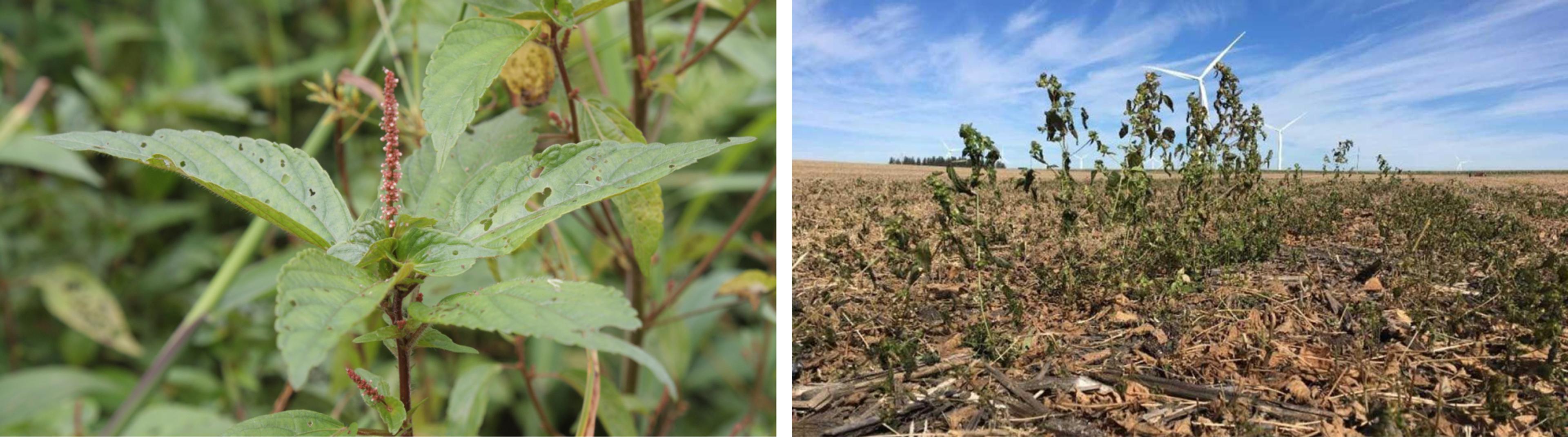
When it showed up in a large Iowa seed corn field in 2016, no one knew what they were looking at. The weed resembles Virginia copperleaf and three-seeded mercury, which are more innocuous, but has a few distinctive characteristics that set it apart. Hartzler was stumped, his colleagues were stumped, a local botanist was stumped — until she narrowed it down as a member of the spurge family of plants. “[The botanist] brought it to an expert on this type of plant, who was excited to identify it,” said Hartzler. For his part, Hartzler was more concerned than excited.
The weed showed up two years later in another Iowa cornfield, raising concern levels somewhat higher. Then, during this year’s harvest, it was found occupying roughly 100 acres of a soybean farm, almost 30 miles from the first infestation. Meaghan Anderson, a field agronomist at Iowa State University Extension, said that even though the Asian copperleaf plants were not extremely tall, the fact that they had made it all the way through a growing season is “a serious concern.”
“If it has the capability of adapting to our herbicide programs, or has already adapted to them and can build up a seed bank, it’s absolutely going to be a significant concern for us,” Anderson said.
“The only way to eradicate a weed is to catch it early.”
For Anderson and Hartzler, one of the most distressing things about Asian copperleaf’s appearance is just how little we know. There are reports of a rapid spread throughout Asian farmland, indications it might be herbicide-resistant — and it carries a reputation as a row crop destroyer, too — but concrete facts are hard to come by. Hartzler said China is alleged to be ground zero for Asian copperleaf damage, but that it’s tricky to elicit any actionable information from there.
This much is clear: The weed appears to do well in Iowa’s natural climate, and it doesn’t need a lot of sunlight to survive. Anderson notes that the most recent batch was found thriving unseen beneath a crop of soybeans, until harvest revealed the infestation. “It wasn’t just there — it was fairly thick and consistent underneath the canopy,” she said. “I think that was what gave farmers first alarm, and that’s really what alarms me about it.”
Another puzzler: Where did it come from? Anderson said the NYC appearance makes a little more sense, as the city is host to so many global travelers; an Asian copperleaf seed could’ve hitched a ride on someone’s luggage or even their clothes. But as to how it ends up in Iowa corn and soy fields? “I have absolutely no idea,” said Hartzler.
While it’s not a full-blown invasive crisis on the level of Palmer amaranth, Iowa’s Department of Agriculture is taking it seriously, and is asking for help. Anyone who thinks they may have spotted Asian copperleaf (USDA identifying info here) is urged to report it to the Iowa Department of Agriculture and Land Stewardship at 515-725-1470, or email entomology@iowaagriculture.gov.
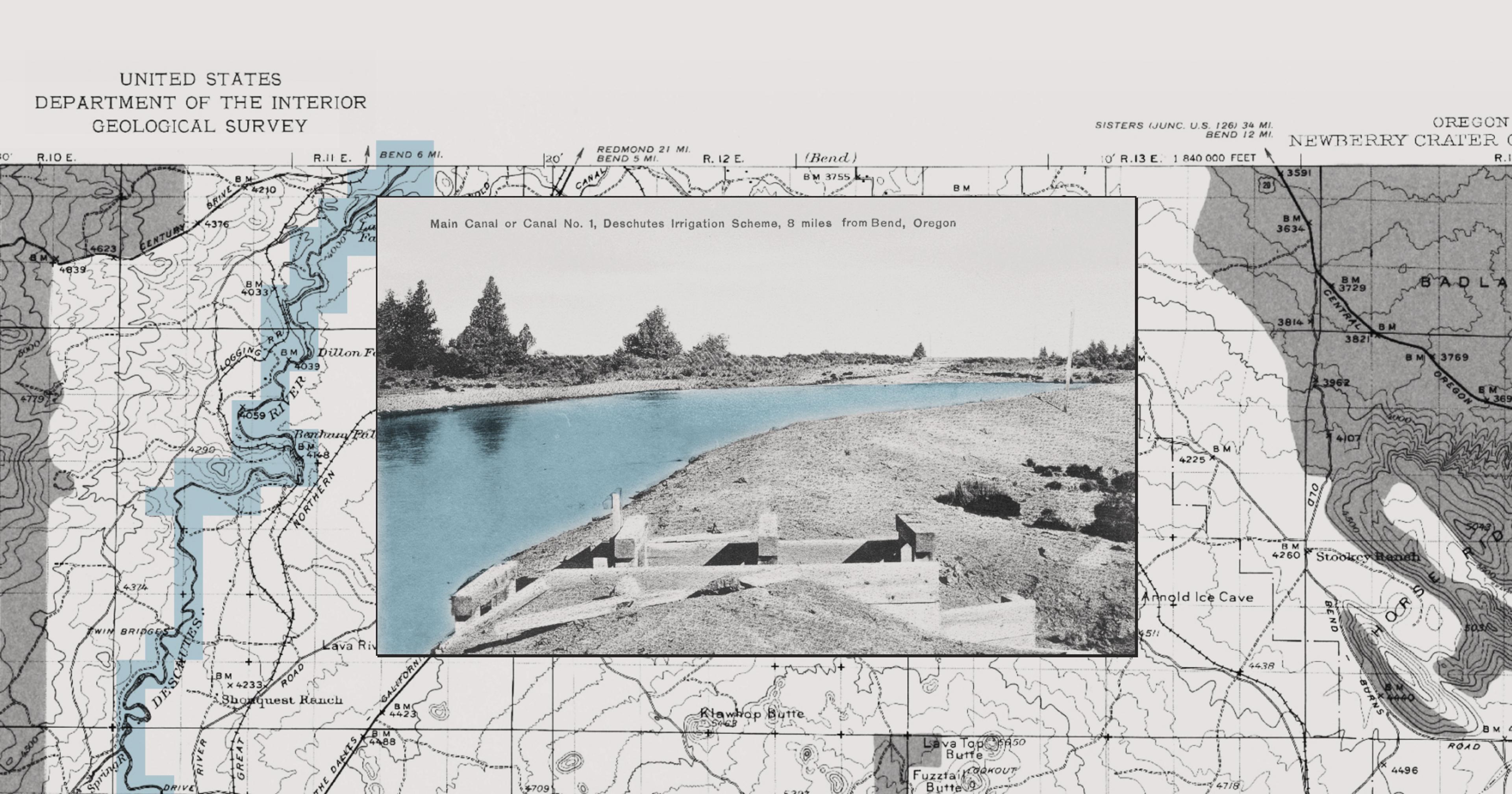
In the early 20th century, with an eye toward expanding cattle grazing and farming its high central desert, the state of Oregon, funded by the federal government, began to build its first large-scale irrigation systems. Rivers and streams were dammed to create reservoirs; unlined and open earthen canals were dug (or in some cases, wood flumes were built) to divert river water and release it over thousands of acres of farmland. Historically, Central Oregon has relied on about 80 inches a year of melting snowpack to recharge its rivers in spring; because of its otherwise low precipitation, agriculture would have been impossible here without irrigation.
Now, some of these systems in Oregon and elsewhere in the West are more than 100 years old — and their age is beginning to show. They serve water to communities of farmers and ranchers organized into irrigation districts — eight districts in the case of the Deschutes Basin. Farmers pay each district for water allocations that can run $100 or more per acre per year. The systems’ open irrigation canals also lose between 30 and 50% of their water to seepage and evaporation before it even reaches farm fields. The underlying infrastructure of these irrigation systems “worked out really well but [they] are aging and starting to show their wear and tear,” said Shiloh Elliot, a data scientist at the Idaho National Laboratory (INL), a federal Department of Energy (DOE) lab that researches renewable energy solutions.
Many of them are due for costly overhauls but how to both tackle and afford them are daunting questions. Under the auspices of the DOE’s Water Power Technologies Office, INL and a sister DOE lab have devised software intended to help districts figure this out. They’re working off an Irrigation Modernization Program devised by a nonprofit called Farmers Conservation Alliance (FCA), which works with districts across the West to modernize irrigation systems. The hope of all involved: to create an irrigation model that can be “one size fits all, or at least is scalable,” Elliot said.
Leaky Systems
There were 1.7 million farm acres in Central Oregon as of 2017, mostly used for cattle and wheat, as well as for crops like potatoes and melons. Water in the region is becoming more and more of a precious resource, forcing farmers to seek emergency use permits from the state to pump groundwater. Because of climate change, “The natural environment that existed when those systems were established doesn’t exist anymore,” Elliot said. Snowpack from the Cascade Mountains has been dwindling, which means waters in the Deschutes River and elsewhere have been, too; this year, the state declared a drought state of emergency for Deschutes County for the third year in a row.
Complicating matters, the Deschutes River is home to three threatened species accorded federal protection under the Endangered Species Act: the Oregon spotted frog, bull trout, and steelhead. Under the terms of a Habitat Conservation Plan drawn up by the U.S. Fish & Wildlife Service to accommodate public and private interests, Deschutes’ irrigation districts and other stakeholders have agreed to increase the River’s flow by almost 200% by 2028, according to Oregon Public Broadcasting.
This is one reason “there’s such an urgency and emphasis for these districts on, how do we prepare ourselves for these changing conditions,” said Marla Keethler, who works on FCA’s communications team. Mandates to protect federally listed species are often seen by farmers “as hurdles, and not received well. But what if we can open up opportunities for funding to support those species returning to levels that they need, and that funding benefits [farmers], too?”
In creating their software, which the INL website describes as “a decision-making tool … to help inform key decisions about modernization,” the DOE labs mined information collected by the U.S. Department of Agriculture (USDA) and the U.S. Geological Survey to understand things like “How much water is actually being lost out of a canal due to seepage? How much hydropower potential is there to this particular canal modernization?” Elliot said. That data can be used to understand what the components of modernization should look like. In some cases, it makes sense to replace a district’s open canals with underground pipes to eliminate water loss.
Additionally, depending on a district’s needs, dams might be removed to improve river flows, or special screens might be installed that allow districts to divert water without harming fish. The labs also help identify place-specific “multi-sector benefits, and what I mean by that is, do we have the potential to reduce some of the vulnerability of a remote community that may lose its power during fire season, because big transmission lines have to be turned off to prevent wildfires?” said Elliot. Laying pipe offers the chance to also lay down electrical infrastructure and/or establish microgrids to support community energy use.
Hydropower might also be introduced to bring in secondary revenue to an irrigation district. “If you can stick a turbine in a [water] pipe you can generate power,” said Elliot. Most of all, she said the group wants to figure out: “How do we make irrigation modernization approachable for the people who actually need to modernize the systems?”
Challenges Ahead
Finding money — and a lot of it — is essential because it costs about $1 million per mile of laid pipe to carry these projects out. FCA helps districts apply for local, state as well as federal funding, such as from USDA’s Natural Resources Conservation Service’s (NRCS) Watershed Planning and Flood Prevention Program; they also secure private funding from companies like Google, which provided $120,000 to prototype a data management tool that tracks real-time water usage.
Still, the expense of updating is great enough that it renders the one-size modernization model impossible to fit to all — at least for the moment. For some cash-poor districts, a less long-lasting solution is to line canals with concrete or plastic membranes, to prevent seepage; and to cover them with solar panels, to cut down on evaporation.
Troy Peters, a biological systems engineer at Washington State University Extension, said that some communities rely on canal seepage to recharge their aquifers, making piping in these instances a non-starter. And piping can have unintended negative consequences. Years ago, farms in the Snake River Basin modernized their irrigation infrastructure. Afterward, “The aquifer started to drop a lot so some of these people that relied on these aquifers, like fish farmers, were like, Where’s my water? And they sued,” Peters said.
Peters sees benefit in educating farmers to use less water, no matter what sort of modernization an irrigation district opts for. “A lot of times they’re using more water than they need and leaching nutrients from their fields,” he said. “It’s definitely not in their interest to be over-irrigating, but it’s difficult for them to figure out when to turn the water on and when to turn it off.” Extension, state conservation districts, and to a lesser extent NRCS, are adept at passing this knowledge on — if only farmers will seek and heed their advice. Irrigation scheduling apps, such as one Peters developed, can also help determine things like crop water use rates and soil water holding capacity.
“Once you start to fix old systems and rethink how we’re managing water in that space,” said Keethler, “everyone gets some benefits from these modernization projects.”
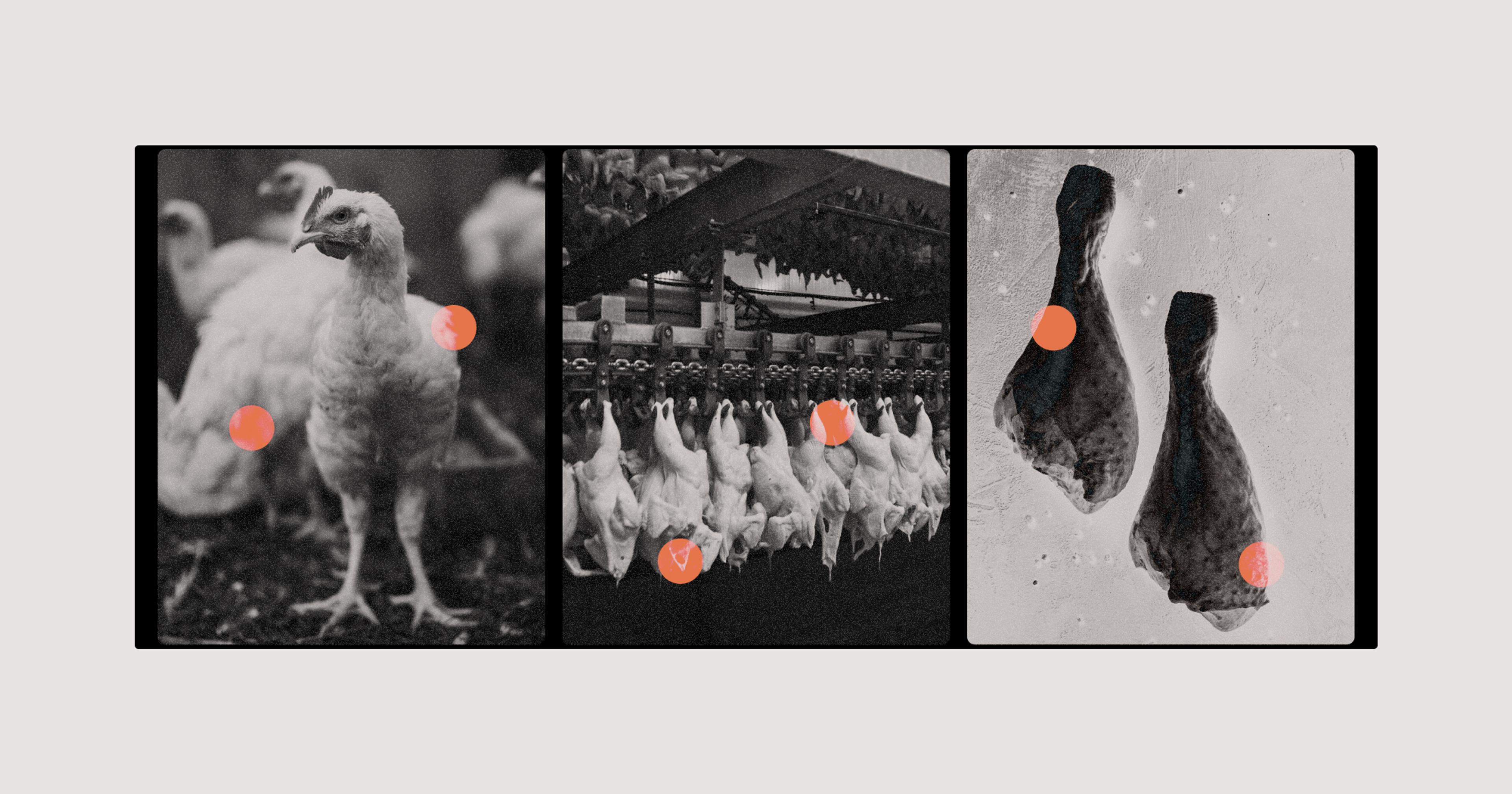
Salmonella infects roughly 1.35 million people in the U.S. each year, leading to about 26,500 hospitalizations and 420 deaths, according to the Centers for Disease Control and Prevention. And for some time now, roughly one quarter of those infections have stemmed from contaminated poultry products. Just this month, the U.S. Department of Agriculture (USDA) announced a sweeping bloc of proposed salmonella reforms.
“Ultimately what we want to have in place is an ‘end product standard’ so we can better ensure that poultry products contaminated with salmonella — either at the levels or the particular serotypes that make people sick — aren’t allowed to be sold,” said Sandra Eskin, USDA’s deputy undersecretary for food safety.
But though USDA’s ultimate goals are to ensure a safer product for consumers, the proposed changes start on the farm. Eventually the agency wants poultry flocks to be tested for salmonella before reaching the slaughterhouse — a departure from current practices. “Creating an end product standard pushes everything all the way back to the farm in terms of pressure to reduce contamination,” Eskin said.
Some consumers might have assumed there were already safeguards in place to prevent infected poultry from being sold or consumed. But before these proposed changes from the USDA, there have been long-standing obstacles to putting such protections in place. Salmonella is a very common bacteria, for one, and the vast majority of its nearly 2,500 serotypes, or particular strains, are not harmful to humans. If restrictions are painted with too broad a brush, it could block sales of poultry that is perfectly safe to eat. Similarly, salmonella concentrations below a certain level are unlikely to pose any threat. In part, that’s how Eskin explained the agency’s longstanding reluctance to declare salmonella an “adulterant,” which would give much broader powers to regulate and recall contaminated poultry.
Now widely recognized as a potentially dangerous contaminant, E. coli was on the backburner for much of America’s agricultural history. That is, until 1996, after a deadly mass food poisoning incident stemming from ground beef sold at the fast food chain Jack in the Box. Public outcry led to USDA declaring E. coli serotype 0157:H7 an adulterant in ground beef, which led to the creation of a vigorous product testing regimen. Ultimately the goal was to prevent sales of any ground beef that contains traces of the pathogen.
Large poultry producers like Perdue and Tyson have come out in support of USDA’s reforms.
“It took over 90 years for USDA to modernize its beef inspection process in terms of E. coli,” said Mitzi Baum, director of the nonprofit group STOP Foodborne Illness. The proposed salmonella changes are “yet another step in that process of continually modernizing based on current science,” she added. This time, USDA’s actions aren’t the result of one jarring incident; they come from years of careful evaluation and sustained public pressure.
The agency’s proposed approach to handling salmonella features three basic prongs. It starts with mandatory flock testing before animals move “downstream,” in industry parlance. Next, it suggests greater Food Safety and Inspection Services (FSIS) monitoring during slaughter and processing. Finally, USDA is attempting to devise a final, enforceable standard for the end product — determining which salmonella serotypes, at what levels, will be declared unacceptable adulterants in raw poultry products. The agency is already taking action to declare salmonella an adulterant in breaded, stuffed, raw chicken products, the source of repeated outbreaks in recent years. Eskin said these products are merely a starting point.
Despite a track record of not always cooperating under legal pressure, large poultry producers like Perdue and Tyson have come out in support of USDA’s reforms. (They’ve also worked in conjunction with STOP Foodborne Illness and other food safety advocates to modernize salmonella monitoring.) Yet not everyone is on board with USDA’s sweeping new proactive approach.
The industry group National Chicken Council (NCC) has been particularly vocal in its dissent. “[USDA] is formulating regulatory policies and drawing conclusions before gathering data, much less analyzing it. This isn’t science — it’s speculation,” said Ashley Peterson, NCC’s senior vice president of scientific and regulatory affairs in a statement. “We continue to be disappointed that the agency has failed to use science and research to drive its regulatory policies.”
The statement also noted that guidance from the Centers for Disease Control and Prevention suggests heating poultry to 165 F will kill salmonella and other pathogens. The council encouraged “[i]ncreased consumer education about proper handling and cooking of raw meat” to help prevent further outbreaks. (The NCC did not respond to requests for further comment.)
Eskin said that common cooking guidance has proven to be less than reliable. “We’ve encountered cases of people thoroughly cooking their food as directed and still getting sick,” she said. Additionally, even if the 165-degree rule were wholly dependable, that safety burden shouldn’t rest solely on consumers, according to Dr. James E. Rogers. Rogers is a former USDA microbiologist and current director of food safety at Consumer Reports*, one of the organizations that has repeatedly petitioned USDA for salmonella reform.
“The question I’ve always asked is whether these companies do a financial analysis to say, ‘We can absorb a certain amount of loss each year from food poisoning outbreaks.’”
“We have seen in a number of studies — including studies done by the USDA — consumers don’t wash their hands regularly. Consumers do not clean their countertops. Consumers do not use separate cutting boards, they do not use regular hygiene in the kitchen consistently enough to protect themselves,” he said. Rogers believes that upstream salmonella prevention efforts can work in conjunction with increased consumer education. “We advocate that you send [consumers] clean, safe products first.”
Part of the issue, according to the NCC and other industry critics, is that poultry farmers will be newly responsible for a demanding — and potentially expensive — burden. USDA plans on incentivizing poultry farmers to “reduce the level of incoming Salmonella contamination or mitigate the risk of a particular serotype entering the [slaughter] establishment,” according to the FSIS proposal. Eskin said the “incentive” may simply be that it’s in a farmer’s best interest to ensure their end product can make it to market.
Rogers agrees, noting that the current recall structure, where products are pulled only after they’ve been well-proven to make people sick — and even then only voluntarily — is clearly not working. “The question I’ve always asked,” he said, “is whether these companies do a financial analysis to say, ‘We can absorb a certain amount of loss each year from food poisoning outbreaks. They don’t come that often, right?’”
But considering how many hospitalizations and deaths continue to stem from salmonella every year, and how many consumers and advocates have demanded stronger regulation of pathogens in the food supply, USDA has determined it’s an unacceptable level of loss. The new salmonella initiative officially launches with a public hearing on November 3, followed by the ambitious goal to get interim regulations in place by mid-2023 and final rules by 2024.
*Disclosure: The writer of this article was once employed by Consumer Reports as an investigative food editor.

A few years ago, an unusual weather event struck the Midwest: intense, late-winter rainfall. When heavy rains accumulated on snow, the subsequent early melt resulted in the Midwestern Floods of 2019, devastating 14 million people and crops across the heartland. The likely lost revenue from corn sales alone was more than $6 billion.
“I would say 50% of the farmers in our area will not recover from this,” Iowa grain farmer Dustin Sheldon told CNN at the time.
Though rain-on-snow used to be a relative rarity for Midwestern farmers, 2019’s floods are the result of an increasingly common winter weather event. Now, researchers at four state schools in different parts of the United States have collaborated on a new body of research around the increased winter run-off brought about by a warming climate. And what they found wasn’t just more water — there was also concentrated pollution at much higher levels than what results from more typical rainfall.
“We found that winter weather events are carrying a lot more nitrogen and phosphorus and other nutrients downstream than during the growing season,” said Carol Adair, associate professor in the environmental sciences program at University of Vermont, and one of the researchers working on the study.
Nitrogen and phosphorus are, of course, key components commonly used in farm fertilizers. So Adair, along with researchers from University of Colorado, University of Kansas, and University of Michigan, used geospatial datasets to look at the rising impacts of rain-on-snow events on parts of the U.S. with higher concentrations of these nutrients, which tend to be agricultural areas. They found that winter runoff from farms is putting water supply at risk in more than 40 states.
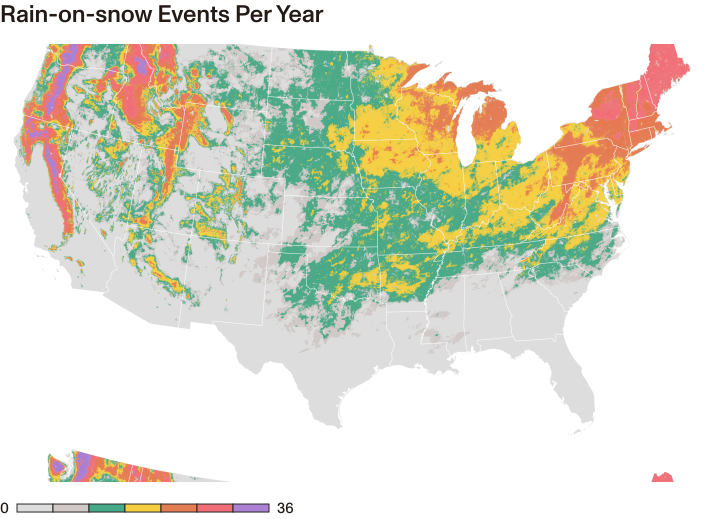
The team’s research started in Vermont, where Adair said winter snowmelt and rainfall was occurring at much higher frequencies but that “no one was measuring it” — or its impacts. They went on to look at public data from those great Midwestern Floods of 2019, which confirmed a suspicion — that the flooded Mississippi River carried a level of nutrient pollution that was significantly higher than similar events during the growing season. This pollution was a major factor in the creation of the Gulf of Mexico’s eighth-largest dead zone on record.
Farmland fertilizer runoff has garnered headlines in recent years for its contributions to water issues like algal blooms, fish die-offs, and contaminated drinking water, which can be particularly harmful to infants. What’s novel about the new research is the seasonality and the scope: A full 40% of land across the contiguous United States is at risk of nutrient pollution from rain-on-snow events.
There are multiple potential reasons why winter rains may be more damaging than, say, April showers. Erin Seybold, an assistant scientist and hydrogeochemist at the University of Kansas and lead researcher on the study, said that vegetation — whether in the form of crops or wild plants — is obviously more prevalent during the warmer months. “Plants, as well as microorganisms or microbes in the soil, are important ‘sinks’ for nitrogen and phosphorus in the soil, retaining the nutrients that are now being transported downstream,” said Seybold.
Researchers believe that pinpointing this problem could help us develop greater monitoring in parts of the U.S. where rain-on-snow events and chemical concentrations are highest.
So, plants keep more nitrogen and phosphorus in the soil. They also happen to function as an actual physical barrier, helping to prevent moving water from running downstream so quickly that it causes damage.
When there’s nothing standing in its way, water doesn’t just carry nutrients with it; it also carries along loose dirt. Adair pointed out that these winter weather events speed up soil erosion — another agriculture issue of pressing concern. During typical winters of the past, snow insulated the soil through the season, keeping it stabilized and immobile. “If the soils freeze and thaw a lot that can cause more erosion and soil loss. Now we’re breaking up the soil … and everything gets very waterlogged,” said Adair. “Then runoff just carries the soil away.” This kind of soil erosion is harmful for natural ecosystems and farmers alike.
The study isn’t all bad news: The researchers believe that pinpointing this problem could help us develop greater monitoring in parts of the U.S. where rain-on-snow events and chemical concentrations are highest.
“If we can implement different land management practices that minimize negative effects and help to promote good water quality year round … that’s a really important area to direct resources and policies that can help farmers manage these impacts,” said Seybold. “Hopefully our research can encourage thinking about that and in collecting data to help inform those conversations.”
Those conversations can’t come too soon, as the patterns indicate winter weather events will continue to become more frequent in the coming years. “In addition to winters being the fastest warming season in the U.S., the longest cold snaps are becoming shorter, and the number of days with temperatures below 32°F is expected to continue to decline across the country,” according to a statement from the researchers. Not to mention that this new study was primarily focused on only one type of precipitation.
“I would say that our analysis is actually a fairly conservative estimate, because there are really three kinds of increasing winter weather events leading to dangerous runoff: there’s straight rainfall, snowmelt, and then rain-on-snow,” said Adair. “We were just looking at rain-on-snow, and the other two are going to increase over time throughout the U.S.”
Editor’s Note: The Supreme Court ultimately upheld California’s Proposition 12. Justice Gorsuch wrote for the majority: “While the Constitution addresses many weighty issues, the type of pork chops California merchants may sell is not on that list.”
The U.S. Supreme Court has heard cases of enormous consequence to wide swaths of the country this year — and as National Pork Producers Council v. Ross makes its way onto this week’s docket, it will be no exception.
“This is a case with potential ancillary impacts that could go far beyond animal welfare into everything from climate to consumer protection to every element of economic regulation,” said Chris Green, director of Harvard’s Animal Law & Policy Program.
The case centers on a contentious California law, Proposition 12, a ballot measure that passed in 2018 with the support of more than 60% of the state’s electorate. Prop 12 mandates that whole pork sold in the state must come from pigs born to sows with 24 square feet of space.
This amount of space is required to prevent treating the pigs “in a cruel manner, [...] that prevents the animal from lying down, standing up, fully extending the animal’s limbs, or turning around freely,” according to the ballot initiative.
There are no federal animal cruelty laws when it comes to livestock, and the majority of the nation’s sows are housed in much smaller enclosures — about 14 square feet, according to the National Pork Producers Council (NPPC), the group challenging the law.
“Pig farmers cannot believe these attacks,” wrote Illinois pig farmer Thomas Titus, in an op-ed published on the NPPC site. “They have dedicated their lives to providing the nation with a healthy source of protein and other nutrients at a price ordinary families can afford — and doing it ever more humanely.”
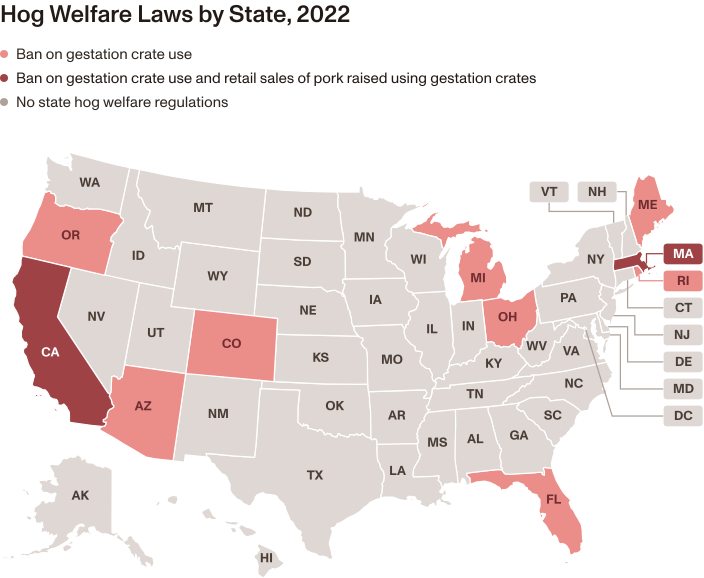
Nine other states require farmers to raise pigs by standards similar to California’s, but only for pork produced in-state. And that’s the core issue in this week’s case — not whether typical hog confinement is or is not cruel, but whether voters in one state can make commercial demands with potential industry-wide reverberations. Does California have the right to set standards for pork sold within its borders — if it comes from Iowa?
It’s a novel case, with a range of intricacies and potential implications. We spoke with Green and David Favre, the Nancy Heathcote Professor of Property and Animal Law at Michigan State University, to get a sense of what’s at stake in NPPC v. Ross.
California Calling
The NPPC is balking at the idea of forcing two standards on its producers: Pork produced for California consumers — and pork for everyone else. “Californians account for 13 percent [Ed. Note: Some sources cite this figure as 15%] of the nation’s pork consumption, but raise hardly any pigs,” the group wrote in its legal brief, arguing that California is aiming to regulate farmers in Minnesota and North Carolina, both of which produce millions more pounds of pork per year.
This argument was soundly rejected by a three-judge court of appeals, and rightly so, according to Favre. “No one has an inherent right to sell their product in any given state,” he said. “Selling pork — or anything else — in California is a voluntary act, and it’s within California’s rights to determine the conditions of the sale.”
California already has stricter standards for other products sold in-state, like its rules for milk composition, or its longstanding vehicle emissions standards. Green noted that these cases and others (see: foie gras, eggs) have all withstood multiple courtroom challenges. “Every single court that has heard these cases has said there’s just no constitutional question here,” he said, “which makes it surprising that the Supreme Court is taking this case on at all.”
Dormant Discrimination?
Plaintiffs in the case are leaning on a federal statute known as the Dormant Commerce Clause, which prevents states from enacting special restrictions or alternate pricing structures on out-of-state businesses, in an attempt to give a leg up to its own businesses. (Say, for instance, the state of Indiana mandated that all tomatoes sold from out-of-state farms had a minimum size requirement which its own farmers were exempt from.)
“States used to put extra requirements on out-of-state producers to give advantage to in-state producers,” said Favre. Proposition 12, on the other hand, imposes the same requirements on California pig farmers as anyone else — a fact emphasized in the legal response from Rob Bonta, California’s attorney general.
“National businesses and producers have had to adapt to state requirements plenty of times already.“
It’s California’s size and economic clout that give its laws an outsized national impact, according to the NPPC. Pork producers can’t afford to ignore such a large market, not to mention that only 13 to 15% of U.S.-produced pork originates in California. “The massive costs of complying with Proposition 12 fall almost exclusively on out-of-state farmers,” according to the plaintiff’s brief.
That doesn’t make the proposition discriminatory, though, according to Green and Favre. Green noted that out-of-state farmers and businesses have managed to comply with California’s other commerce requirements, or Michigan’s particular food labeling requirements, which are stricter than national standards. “National businesses and producers have had to adapt to state requirements plenty of times already,” Green said. “I think most legal scholars would agree that the constitutional question is clear.”
Yet the case’s outcome is far from assured, unsettling states like Massachusetts which voted to implement very similar standards to California for both in- and out-of-state producers. That law has twice been put on hold as they wait to see how the Supreme Court rules here.
Uncertain Terrain
Neither Green nor Favre know why this case was taken up by the Supreme Court at all, or what legal issue actually merits review. But that open question is precisely why they can’t confidently predict the outcome. “If I knew why they took it, then I might be able to say something about the various motivations for what they want to do with the case,” said Favre. “I think all of us are at sea on this one.”
Though NPPC v. Ross seems to be a classic “animal welfare versus money” debate, as Favre puts it, the underlying legal question is about upholding state’s rights. Justices Gorsuch and Thomas have consistently punted such decisions back to the state level including a woman’s right to choose. “It’s hard to imagine they reverse their own personal position and throw all that out the window for one case,” said Green.
That said, Justice Alito has aligned himself with the Dormant Commerce Clause in past cases, while the liberal-leaning Justice Kagan has ruled in favor of national pork industry interests in the past.
With so much in the air, even basic next steps seem to be in question. What if the court makes no ruling? Then the California law simply stands, and producers in other states — even other nations — will have to decide whether it’s worth modifying their practices to do business in California. Is it possible these producers will raise pigs in a two-tiered “for California” and “not for California” approach? Maybe, though Favre thinks it is more likely that California’s stricter approach would be adopted by other states — and already has been, in Massachusetts — and could eventually even lead to a national animal welfare standard.
But if the NPPC wins? Green’s program released a 60-page report speculating on this hypothetical, among others. In short, a ruling in favor of the plaintiffs could severely hinder the ability for states to adopt their own rules pertaining to commerce. “They’d basically be jeopardizing the core ability of states to ensure their own health, safety, and welfare standards,“ said Green. He then cited other commercial areas that could be affected, like energy production, alcohol, firearms, and automobiles.
“Anyone who says they know what the court is going to do is fooling themselves,” said Green. “No one knows.”

When NASA Earth scientists recently visited the Flickner Innovation Farm in Moundridge, Kansas, as part of the agency’s new “Space for Ag” listening roadshow, visiting farmers were engaged and excited. Perhaps most thrilled were Ryan Flickner’s children, 8-year-old Owen and 5-year-old Miles, both wearing NASA logo-emblazoned t-shirts.
“They know NASA, but they didn’t know NASA knew anything about agriculture,” said Ryan, who is the sixth generation involved in the 850-acre Flickner Farm, working with his father Ray who grows corn, wheat, and soybeans.
NASA is typically associated with looking outward toward the moon, the planets, and the stars, and, more recently, with crashing a rocket into an asteroid. But for everything it works on, the agency is not usually associated with earthly issues like agriculture and resource scarcity. Yet NASA maintains dozens of Earth-observing satellite missions and other sensors. These instruments focus on observing environmental conditions here on Earth, including collecting data about water resources and the hydrological cycle, which can help farmers plan better during the drought and other extreme weather conditions.
About half of the continental U.S. is currently experiencing drought, with about 30% in severe drought, according to the most recent U.S. Drought Monitor map. This drought “is a doozy,” according to Mark Svoboda, director of the National Drought Mitigation Center (NDMC), which produces the Drought Monitor in partnership with the U.S. Department of Agriculture (USDA) and the National Oceanic and Atmospheric Administration (NOAA).
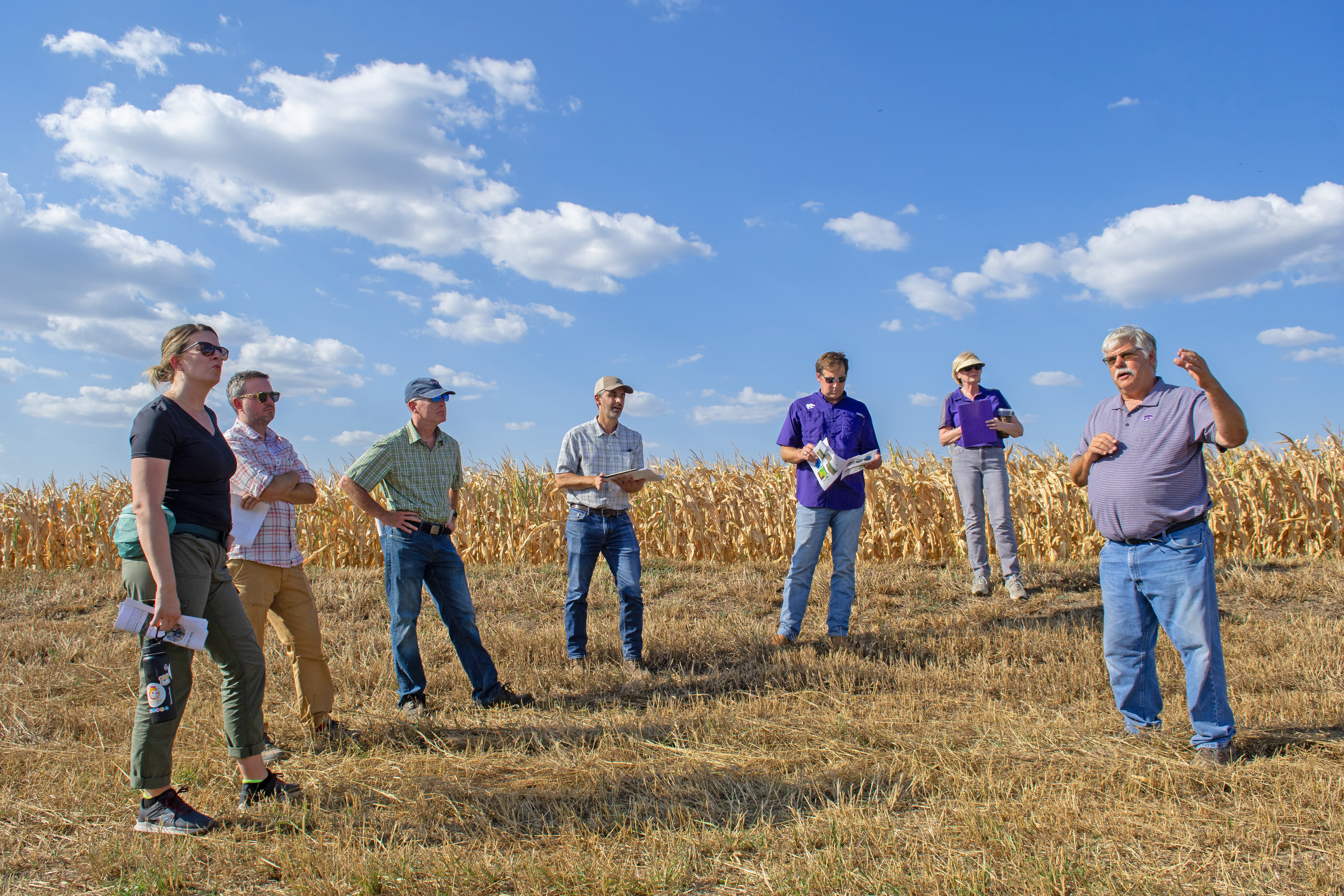
Although NASA is not an official NDMC agency partner, NASA data related to soil moisture, groundwater, and other aspects of the hydrological cycle also feed into the Drought Monitor. NASA’s tools “are helping us portray the drought situation more accurately on the weekly Drought Monitor map,” which is crucial for decision makers and individual farmers, Svoboda said.
NASA often funnels its data through other agencies and to the private sector — with little or no credit — for them to make that information available to the agricultural community, said Brad Doorn, program manager for water resources and agriculture in the Applied Science Program of NASA’s earth science division. That’s because agencies other than NASA might be responsible for water and irrigation management, for instance, according to Doorn. “NASA isn’t designed to provide operational support for the ag industry; USDA is designed to do that,” said Doorn. He added that NOAA is designed to provide weather forecasts, the Department of the Interior and the U.S. Army Corps of Engineers are designed to support water management, and the private sector is set up to provide support to producers.
During the listening tour, which signals a more direct approach for NASA, Doorn and others met with farmers in Nebraska and Kansas to learn about the challenges farmers face and information gaps they need filled. They also told the agricultural community about NASA’s longstanding involvement with farming.
“This nation’s space agency has an agriculture program, and the ag community needs to own it.“
Doorn said that NASA “has always been there” for the agricultural community, starting from the first weather satellites that helped improve weather forecasts. NASA’s other tools include a number of satellites such as the Landsat satellites and the Soil Moisture Active Passive (SMAP) observatory; OpenET, which provides satellite-based estimates of evapotranspiration for improved water management; and the NASA Harvest Mission, which works to improve food security in the U.S. and worldwide. In the works is a Harvest-like program specifically geared toward U.S. agriculture.
“This nation’s space agency has an agriculture program, and [the ag community] needs to own it,” Doorn said.
During a recent briefing, NASA Earth Science Division Director Karen St. Germain explained that the agency is “increasing the scope of our work in the agriculture sector because of the potential impact climate change may have on our nation’s ability to feed itself.” Doorn said that an additional factor in NASA’s increasing focus on agriculture is the evolution of NASA’s data and the concurrent demand on the ground for the data.
Farmers “are keenly aware that they are making use of satellite-informed decisions every day,” said Susan Metzger, associate director for agriculture and extension at Kansas State University, who has helped introduce NASA scientists to members of the ag community. Metzger added that she is less certain whether farmers are aware of the connection between NASA and the satellites.
For producers to be successful, especially with the scale of agriculture in the Midwest, they make use of data and technological tools at a robust scale, she said. Without that satellite information and other tools, “you wouldn’t be successful.”
Brothers Brandon and Zach Hunnicutt operate Hunnicutt Farms in Giltner, Nebraska, another site which NASA scientists visited.
“When it comes to NASA being the beginning of much of the weather data, I don’t think we had thought about it.”
Prior to the listening tour, the brothers had been somewhat aware of NASA’s importance, particularly regarding GPS. However, Brandon Hunnicutt noted, “When it comes to NASA being the beginning of much of the weather data, I don’t think we had thought about it.”
He added, “Really, everything that we’re doing on the farm starts with NASA. It starts with a satellite array somewhere up there.”
“The everyday, behind-the-scenes importance of NASA is something that we don’t recognize, but it’s hard to overstate,” Zach Hunnicutt said, pointing, for instance, to soil moisture estimates provided from NASA instrumentation.
In addition to NASA’s current tools, he — and others — would like more actionable information from NASA, including more accurate 14-day forecasts and improved spatial accuracy, and better ways to use the data.
“We are drowned in data” from satellites and from ground instrumentation, as well, said Ray Flickner. “Data for the sake of data can become overwhelming.” It’s got to be in a format that can actually provide information to make management decisions, he said.
“We have heard time and time again that the information has to be accessible, cost-effective, and make [farmers’] lives easier,” Metzger said. She and the farmers said NASA appeared to be listening to the ag community, and that there is promise for a continuing dialog. Ryan Flickner said he thinks NASA “very much wants to plant its flag, so to speak, within the agricultural space” and be an additional resource that producers and others can rely on.
Doorn and others at NASA said they hope the agency’s emphasis on actionable and applied science, and on solving real problems, can further help the ag community. “If we see farmers using our data, whether they know it’s NASA data or not, and are solving problems with that, that’s great,” he said.

This past July, with the war in Ukraine hampering U.S.-bound shipments of wheat and other grains, the U.S. Department of Agriculture (USDA) announced what it hoped would be a workaround. For farmers willing to raise two crops, one on the heels of the other, on the same land in the same year — a practice known as “double cropping” — it would expand the availability of crop insurance into new parts of the country, to cover some potential losses. In all, 1,500 counties where corn and sorghum can be grown after winter wheat is harvested are now eligible for insurance; these are prevalent in central regions on eastward. The aim of the expanded coverage: to “ease [financial] burdens on American farmers and lower [food] costs for American families,” in the words of USDA Secretary Tom Vilsack.
While this sounds like a win-win for farmers and consumers, double cropping can be a lose-lose for sustainability and the environment. Fields on which two crops are grown in succession can become depleted of nutrients and more susceptible to insect pests, diseases, and weeds, requiring the use of more chemical inputs, as demonstrated in a 2014 report from USDA’s Economic Research Service (ERS). In dry regions, double cropping can also put a strain on irrigation water. Still, some experts believe that beyond alleviating current grain import snafus, well-managed double cropping might help diversify farms and increase soil health.
“The additional wheat production is obviously a short-term goal [of the USDA], but it can contribute to soil health rather than detract from it,” said David Lobell, an agricultural ecologist in the department of earth system science at Stanford University. Despite the USDA putting their support behind it for years, the practice has been stubbornly unpopular in the U.S., used on only about 2 percent of American farmland acres from 1999 to 2012. “A big part of the reason was the difficulty of insuring, which the new USDA rule changes, so this will be an interesting area to watch as I … think it holds significant adoption potential for U.S. agriculture,” Lobell said.
Types of Multi-Crop Systems
One of double cropping’s main selling points has been its potential to increase farmer profits without expanding farm acreage. It’s also one of four kinds of multi-crop systems that keep living roots in the soil in addition to keeping the surface covered — potential boons for erosion prevention and carbon storage, among other plusses. The current darling of regenerative agriculture, cover cropping, is a multi-crop system in which crops are grown — but typically not harvested — in order to improve soil health. There’s acreage that’s grazed by livestock before or after harvest, in integrated crop-livestock systems. Then there are systems that incorporate trees, such as those in which livestock graze through timberlands (silvopasture), or fruit- and nut-bearing trees are added to croplands (agroforestry).
On most double-cropped acreage, soybeans are planted on the heels of winter wheat, or to a lesser extent, rye. There are also systems where corn follows winter wheat or rye, alfalfa for hay, oats, or grasses such as clover; crop insurance will now also cover wheat and sorghum rotations. Some double-cropped acreage grows corn after corn, or soy after soy; these can be particularly destructive for soil health, a continuation of large-scale monoculture practices that are low on diversity and require chemicals to manage pests and disease. The American Southeast, with its long growing season, is the region with the most double-cropped acres; the cooler Northeast, where the ERS finds that “growing season constraints can be overcome with alternative combinations or growing practices,” is the region with the highest proportion of farmland that’s double-cropped.
Conducted thoughtfully, however, double cropping can check a number of soil health boxes, according to Kristopher Reynolds, Midwest regional director of American Farmland Trust. Reynolds said that in his area of Central Illinois it’s common to have a soy-wheat-soy rotation all in one year, which keeps living plants and roots in the ground for longer than traditional corn/soy rotations. Farmers no-till their wheat after the first soybean harvest in October, then “want to get the next round of soybeans planted into wheat stubble” in late June or early July, Reynolds said. “We are reducing the amount of [herbicides] that are being used because it’s a winter annual so it’s naturally suppressing weeds. We’re also maximizing cover, and we’re no-tilling into that system so we’re leaving the residue on the surface. We’re also reducing soil erosion, especially where we have marginal rolling farmland.” To top it all off, “Farmers that can produce 90 to 100 bushel wheat and follow that with 40 to 50 bushel soybeans, that’s a pretty good gross income on that land for that year,” he said.
“Certainly, before adding another crop to the rotation, you need to know if it’s better for the land and better for the health of the soil.”
To all that, Allison Thomson, AgMission program director at Foundation for Food & Agriculture Research (FFAR) added the fact that since soybeans fix nitrogen — that is, take it from the air and convert it to a form that can be used by plants — some double-cropping systems can forgo synthetic nitrogen; and small grains that follow corn especially also take up excess nitrogen. “That’s one of the reasons they’re used for water quality improvement: They can take off excess nutrients so those won’t be lost directly into the water,” she said.
Reynolds’ soy-wheat-soy example could be an improvement over growing just one corn or soy crop per year, which leaves the soil bare before and after; or double-crop corn after corn or soy after soy, which deplete vital nutrients. Still, double cropping is only feasible in regions that get enough warmth and sunlight to sustain back-to-back crops. “So, it’s not something that’s going to be a widespread solution for lots and lots of different farmers,” Thompson said.
Since even a soy-wheat-soy rotation is growing the same crop on the same land twice in a year, which can increase disease and pest pressures, “It’s even more important to make really good management decisions in regards to the varieties of soybeans you’re planting,” said Reynolds while owning that disease and pests are still a concern here. Still, “You’ve got another crop in between, which is certainly much better than planting soybeans after soybeans … where the chances for soil erosion and nutrient loss are even greater, especially if you’re doing any type of tillage.”
Steps to Diversify
Thompson said there are currently some attempts to diversify the Corn Belt in order to bring back much-needed soil health. Several research projects are looking into how to add back to rotations some of the small grains that used to be grown in the region — first as cover crops then “down the line, if [farmers] can get an increased revenue stream from harvesting,” she said. However, this is contingent on there being a market for these grains. “A farmer’s not going to grow it if he can’t sell it somewhere,” said Reynolds. In Kentucky, he said there is an effort to build such a market for cereal rye grown as a cover crop, to support the state’s bourbon industry, which currently imports rye from Canada and Germany.
Another crop getting some interest is field pennycress, which is being studied for its double-crop potential with soybeans, to be used as a “sustainable” aviation fuel. Although Reynolds admits that much more research is needed to understand how sustainable such a system would actually be. “What is that entire carbon footprint? What is the environmental impact, whether it’s positive or negative?” he asked. “Certainly, before adding another crop to the rotation, you need to know if it’s better for the land and better for the health of the soil.”
Even with expanded crop insurance, not everyone will be able to double crop. Only some crops in some regions lend themselves to an additional, late planting. Many farmers don’t have the access to the necessary technical support, or to proper equipment to sustainably double crop. “Because we’ve gotten away from small grains, farmers don’t have drills like they used to to plant [no-till] wheat,” says Reynolds. Smaller farmers especially might lack access to financing to purchase a second round of seed and likewise, might just lack the bandwidth; “A lot of smaller farmers have off-farm jobs,” Thompson said. “It really only makes sense for the farmers who have the capacity and resources to do it right — and that means expensive equipment.”
Nevertheless, she said, “Planting multiple crops in a given year is not bad when it comes to sustainability. It does have to be managed with an eye for resources, and preventing erosion and excess nutrient loss. But that’s true of all major row crop farming these days.”

It’s a farmer’s dream: rich, deep, black soil that grows abundant and healthy crops; soil that hosts a complex web of microbial life, and can absorb inches of sudden rainfall without eroding; soil that gets healthier, and more weed-free, every year. For many curious farmers, this is the promise offered by a transition to no-till farming.
Over the past several years, the no-till approach has been increasingly adopted by organic market gardeners, who typically grow intensively on a handful of acres and sell their produce through farmer’s markets, CSAs, and roadside stands. Through conferences, webinars, word of mouth, and several recent books, no-till has become a discussion item on the level of compost and soil testing.
Similarly, there has been an increased push toward no-till among larger, conventional row crop farmers, albeit with methods requiring increased chemical applications and costly specialized equipment. But so far, adoption of no-till methods among larger produce farms — those working 10 or more acres — has been relatively slow, and the techniques that work well on the small scale provide challenges when farming larger acreages.
Why not till?
Tilling soil — the widespread practice of turning over and breaking up soil — has well-documented harms in terms of soil health. Tilling breaks down the aggregates that provide pores for holding water and air, needed by both plant roots and soil microorganisms. The churning also breaks up fungal hyphae, the threadlike extensions that form a storage and transport network for beneficial fungi.
Tilling brings buried weed seeds up to the surface, where they can sprout, grow, and set seed. A single invasive pigweed plant can shed over 100,000 seeds in its lifetime, each of which remains viable for up to four years. The downward force of the tiller tines (or the moldboard plow) compacts the soil below, creating a “plow pan” that reduces root penetration to deeper soil layers. Moldboard plowing — the most aggressive form of tilling — churns the top 6-10 inches of soil to bury weeds and crop residue from the prior season. This in turn leaves the soil surface rough and uneven and requires additional tillage to smooth the soil surface before planting.
Finally, tilling hyper-aerates the soil, speeding oxidation and loss of valuable soil organic matter (SOM). For example, “the average level of soil organic matter in Massachusetts cropland is one to two percent,” according to Caro Roszell, soil health specialist with American Farmland Trust, “while among market gardens,” especially those who have converted to no-till practices, “it’s pretty typical to see eight percent or higher.”
Conventional vs. organic
Large-scale, conventional no-till or reduced-till growing has been on the rise for more than a decade, with an increase in acreage of 36% since 2012, according to the U.S. Department of Agriculture (USDA). In 2017, the latest year for which figures are available, there were over 100 million acres in the U.S. managed without tillage. In conventional no-till systems, herbicides are used not only to kill weeds, but to kill cover crops without plowing; according to the Environmental Protection Agency, about 280 million pounds of glyphosate (the most commonly used herbicide) is applied to American cropland annually.
Without tillage, many conventional farmers are forced to increase their herbicide application. This usually comes in the form of a “burndown” treatment — an additional, direct application before planting. A 2021 study by the Environmental Defense Fund found burndown herbicide purchase cost $9.97 per acre for corn and $15.62 per acre for soy. And while the reduced tillage that herbicides make possible can increase SOM, opinions are mixed on whether that level of chemical exposure is good for the soil, the farmer, or the consumer.
The organic approach to no-till is radically different. For farmers growing produce on a few acres or less, it usually involves the addition of significant amounts of compost to permanent growing beds, which replenishes nutrients, builds SOM, and buries weed seeds to reduce or prevent germination. Corinne Hansch, who, with her partner, runs the two-acre Lovin’ Mama Farm in Amsterdam, New York, applies several inches of a peat-compost mix every year, spending about 7% of the operation’s gross sales.
“My gut sense is that I think it has the potential to be less work, but it has not worked out that way yet.“
“Some people might consider that expense really high, but I think of it as an investment, and it has come back to us tenfold. It can be terrifying at first, but when you see the result — when you see no weeds, and the labor savings and the yield increase, all of a sudden you see it is worth every penny.” Hansch applies not only compost, but mulch as well, another common market farming approach.
Larger farms that grow organically without tillage often use a system developed by The Rodale Institute. The cover crop is terminated just before seed set using a roller-crimper, a heavy drum with rows of blunt blades that crimp the stem of the crop, rapidly killing it to leave a thick bed of mulch. The cash crop is then planted with tractor-drawn seeders or transplanters, modified to penetrate the mulch and reach the soil.
This system works well for large-seeded crops like corn and beans, which can grow up through the mulch, but is a challenge for crops with smaller seeds, like carrots. And as Rodale points out, “timing is everything” — rolled too soon and the cover crop will sprout up; too late, and seed will have set, interfering with the cash crop. Hot, dry weather at rolling time is ideal, while cool, wet weather may prevent full termination of the cover crop.
Challenges of transition
Larger organic farms have tended to look for solutions developed for tractor-based growing. “Equipment is probably the biggest challenge for larger-scale farms,” Roszell says. “A lot of this equipment is so new and unfamiliar to produce farmers that it feels like a big risk to be the first in your area to try it out.”
This equipment purchase is by far the largest cost in transitioning. Air seeders, no-till drills, and retrofitted tractors can all enable no-till farming, albeit at very different costs. A 2003 Oregon State University study analyzed equipment purchase strategies of 11 successful long-term no-till farmers. Farmers purchased, leased, or even retrofitted no-till drills at home for costs that ranged $21,508 to $102,662 (inflation-adjusted from 2003 USD).
Additionally, research has shown a common three-to-five-year period where a conventional farmer transitioning to no-till can experience a significant dip in yields, likely caused by shifts in the microbiome as the soil switches from bacterial to fungal dominance. Studies show that use of cover crops may help mitigate the yield dip during transition to no-till, but further research needs to be conducted. In the meantime, costly yield reductions can be enough to potentially scare larger farmers off from experimenting.
“I ... expected a point where the yields and economic benefits reached their peak, but they continued to rise. It was jaw dropping.”
For large-scale organic farmers, these challenges are compounded because they cannot use traditional herbicides to combat weeds. The Rodale methods aim to help, but these techniques are ineffective in some areas, and for some crops — it often requires a good amount of experimentation to figure out a workable approach. If farmers can apply several inches of compost all at once, they may be able to bury most annual weed seeds at one go. Applying less has its risks, though, as Hansch found out: “In our first year, we didn’t lay on enough compost, and got the worst of both worlds — horrible weeds, and horrible plant growth.”
The soil itself can also become challenging to work with during the initial transition. Farmers may see a significant increase in soil hardness as their perennially pulverized, low organic matter soil no longer receives its annual fluffing. The details differ by farm and soil type, but “it takes about five years for the biological processes to be able to restore good soil structure,” Roszell said, and if you need to add new practices to mitigate that increased hardness, such as subsoil ripping, “that might raise your costs.”
Additionally, the transition period can be quite labor-intensive. Jeremy Barker-Plotkin, who co-manages Simple Gifts Farm in Amherst, Massachusetts, is going into his 24th year of farming, his 17th at Simple Gifts, and third year of growing vegetables primarily without tillage. He uses two main systems: an “intensive” one that replicates the typical market garden, with farm-made leaf compost as a prime fertility source, and an “extensive” one, in which part of the acreage is set aside to grow a nutritive mulch (typically rye/vetch or oats/peas), which is then chopped, harvested, and applied to growing beds.
“My gut sense is that I think it has the potential to be less work, but it has not worked out that way yet,” said Barker-Plotkin, noting the additional labor involved in cutting and moving mulch, applying compost, and terminating crops without tilling.
Paydirt potential
For farmers that are able to ride out the challenges of transition, adoption of no-till practices can have significant long-term benefits. For instance, after rebounding from initial dips, many no-till farms experience yield — and profit — increases over time. A 30-year study out of Michigan State University, looking at commodity crop farms in the Upper Midwest, found that timeframe has a huge impact on no-till profitability. A third of farms in the study experienced initial profit dips during the transition to no-till, but after 13 years all farms achieved higher profitability than they had with conventional management. Study co-author Nick Haddad wrote in a press release, “Every year for more than 30 years, the yield in no-till treatments increased versus the yield in tilled treatments — every year. I would have expected a point where the yields and economic benefits reached their peak, but they continued to rise. It was jaw dropping.”
DeAnna and Kelly Lozensky, small grain farmers in North Dakota, were able to wean their 2600 acres off chemical inputs altogether following a decade of no-till. After testing the soil organic matter on their farm, the Lozenskys decided to stop fertilizing any field with over 3.5 units of organic matter. In the remaining fields, they executed a five-year plan to reduce fertilizer application by 20% each year until the soils were completely weaned off fertilizer — a significant cost reduction, with net benefits to overall farm sustainability.
Profits aside, one huge, self-evident benefit of no-till farming is the improvement to soil’s overall quality and resilience. Healthy, untilled soil not only holds more water than tilled soil, it also resists erosion from wind and water by as much as 80% more. Eric Odberg, a fourth-generation small grains farmer in Idaho, said his region’s recent drought put his soil resilience to the test. Last year when the Palouse region experienced its worst drought in 44 years, Odberg said many of his neighbors lost half their crop. His yields, however, remained 10 bushels higher than average. “They estimate we get an extra inch of water in no-till soils,” Odberg said.
The potential benefits are clear, but the challenges to a full transition remain daunting for many farmers — particularly large-scale produce farmers, who have fewer positive examples to learn from. In particular, organic farmers, who do not have the benefit of herbicide usage, may find no-till a challenge. Roszell anticipates that more large-scale farmers with positive no-till experiences will help provide examples for curious colleagues to emulate. DeAnna Lozensky remembers feeling nervous during her own farm’s switch, but after more than a decade of markedly improved soil quality, increased profits, and five years without fertilizers, she feels more confident than ever in her family’s practices. “We’re not only no-till,” she said, “we are never-till.”

Dave Hill has faced sometimes-massive debt since 2010, when he started raising grass-fed beef and growing corn and soy on 150 acres of rented land in Holy Cross, Iowa. His father taught him to drive a tractor and bale hay — “the mechanics of farming,” as he puts it — but farm finance has been a learning curve, to say the least. So for the last decade, Hill hasn’t just been a farmer; he’s worked full time as an engineer, while his wife has provided supplemental income as a part-time claims adjuster.
“I thought I might need a full-time job for five years, six tops, just until we paid down our initial debts. I never thought my wife would need a second job,” Hill said. “This is not how I thought things would go.”
Hill’s experience working essentially two full-time jobs is not novel or unique — far from it, according to new research out of the University of Missouri. Working with reams of data from the U.S. Department of Agriculture’s Economic Research Service (ERS), researcher Alan Spell and a team of agribusiness specialists compiled a revealing picture of the increased reliance on second and third jobs for many farmers today.
“It’s not a new phenomenon that farmers may need outside income to make ends meet,” said Spell. “But the number of farmers who rely on off-farm jobs, how important those jobs are to their farm’s survival, and how that has shifted the definition of the rural economy — that was really interesting to see.”
The recent report, titled “The Importance of Off-Farm Income to the Agricultural Economy,” was funded by COBank, a part of the national Farm Credit System. Its goal was not only to investigate farmers’ reliance on secondary income sources, but also to examine what those income sources are, how far people are commuting for off-farm work, and how these patterns are leading to shifts in the texture of rural America.
The farther from a city your farm is, the more precarious your financial situation is likely to be.
In 1974, only 37% of farmers held a primary job off the farm. That number has steadily risen over the decades, up to 56% as of 2017. These numbers are even higher for younger farmers — nearly two out of three rely on off-farm income. Tellingly, a full 82% of farm household income comes from off-farm sources.
“Just about everyone we know is doing some other kind of work on top of farming. And if they aren’t, well I honestly don’t know how they’re making it work,” said AC Shilton, who, in addition to working as a journalist and TV producer, manages to produce grass-fed beef and lamb, pastured turkeys and eggs, and honey on 45 acres in rural Tennessee. Since buying their farm four years ago, Shilton and her husband have both held full-time, non-farm employment. “There is absolutely no way we’d be able to pull this off without outside income.”
Spell’s team dug into some of the underlying reasons for this increased reliance on off-farm work. One particularly stark revelation was that for nearly a decade, from 2011 to 2019, the national median farm income was a negative number almost every year. And the only year that number was positive, 2019, the median was a meager $296.
“Looking at this ERS data was really a lightbulb,” said Spell. “I knew farming was hard, financially. But to see that the typical farm, on a typical year, does not have positive farm income, well that is eye-opening.”
The report also details that farm operators are commuting increasingly longer distances to work, and that the farther from a city your farm is, the more precarious your financial situation is likely to be. Mark Peterson, who farms 500 acres of corn and soy in Stanton, Iowa, said he knows farmers who spend hours commuting to and from their off-farm jobs, like his neighbor who travels well over an hour to teach auto mechanics at a community college. Peterson, who drives tractor-trailers in addition to other off-farm income sources (county supervisor, school bus driver), said he’s lucky his boss lets him keep a truck on his property.
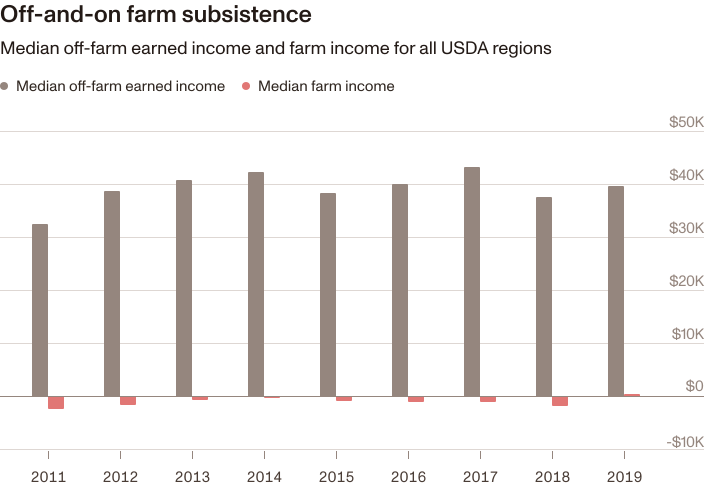
“If I had to head into Omaha every time I got a new [trucking] job, well I’m not sure the economics would make sense,” he said.
Another crucial factor in the need for off-farm employment? Health insurance. In addition to “reliable income,” health care benefits were the top reason for farmers to keep outside jobs — especially important in a profession that’s consistently rated as one of the most dangerous.
“My wife and I just went to the funeral this weekend of her best friend’s son, who was killed in a farming accident,” said Hill. “This is definitely not a job you want to do without health insurance.” Hill said this issue is a constant part of the discussion regarding whether he or his wife can ever leave their outside jobs.
For Spell, an applied social sciences extension professor, some of the most interesting data in his team’s report is how off-farm employment is redefining our understanding of rural and urban life. “When you have so many farmers traveling into cities for work, and urban economies are so reliant on neighboring farmland for their food supply chains, the line between rural and urban gets a lot more blurry,” he said.
Additionally, the very term “rural economy,” which once was used interchangeably with “agricultural economy,” increasingly encompasses a broader, more diverse range of industries. In particular, service industry jobs have outpaced farming as the major source of income in rural areas — especially considering the continued decline in manufacturing jobs.
“Working a second job is nothing new for farmers,” said Spell. “But how that looks now has changed quite a bit.”
Read the full report here.
From the perspective of the American farmer, a concentrated and globalized agricultural market carries inherent vulnerabilities. Arguably the most widely reported of these have emerged from a concentrated meat sector, where the Big Four meat companies (JBS, Cargill, Tyson, and National Beef) control some 70% of the market. Because the system is so consolidated, disruptions — whether from a pandemic or from Russian hackers — can lead to downstream losses on the order of billions of dollars, along with hundreds of thousands of wasted animals.
While it may not grab as many headlines, there is an increasing awareness of the impacts of concentration — and its attendant dependency on foreign materials — in the fertilizer industry. For example, 40% of the world’s potash, a key component in fertilizers which provides soluble potassium for growing crops, comes from Belarus and Russia. As a result, the war in Ukraine has significantly increased the global premium on potassium-based agricultural fertilizer. As with the meat sector, disruptions in the global supply chain have revealed deeply entrenched problems with concentration in the fertilizer industry. In response, the United States Department of Agriculture (USDA) has made it a priority to support a diversified, homegrown fertilizer sector in America, announcing $250 million in available funding for the development of these products.
Since 2020, fertilizer prices have gone through the roof. In October of that year, nitrogen fertilizer was $450 per ton; today that number is higher than $1,400. While nitrogen has seen the most dramatic increase by far, potash and diammonium phosphate are both more than $400/ton over their rate in mid-2020. Like every other major fertilizer, monoammonium phosphate hit an all-time high this April, at over $1,000/ton. But the rise in nitrogen prices is especially impactful, as nitrogens constitute some 50% of fertilizers used on the average farm. This leaves conventional farmers and economists worried about farm profitability in the coming year.
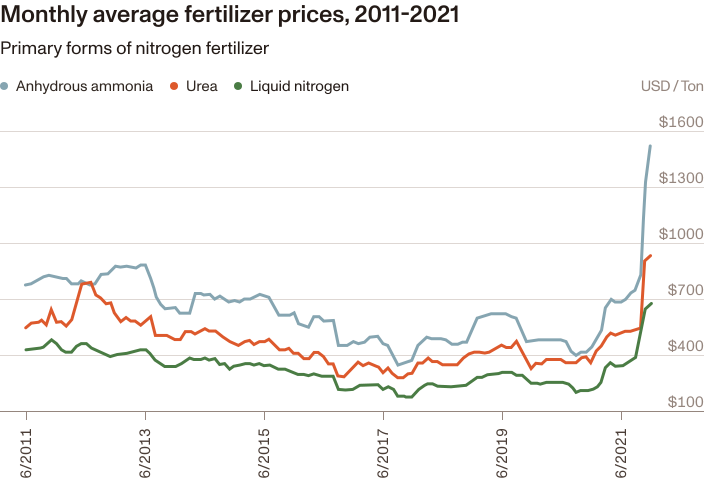
The nitrogen fertilizer industry has seen its own major consolidation. The number of firms in the market has reduced from 46 to 13 since the 1980s, and four companies now control 75% of the market. In terms of international volatility, nitrogen fertilizer carries its own concerns, as its key component is natural gas, the market dynamics for which are shifting daily with Russia as the world’s leading exporter. In addition to resources for producing these products being imported from foreign sources in volatile regions, America’s finished fertilizer products are largely foreign imports, with the majority of nitrogen fertilizers and 80% of potassium fertilizers coming from abroad.
Our current wave of fertilizer consolidation began in the early 1980s, when floundering commodity markets meant one-sixth of American farmland went out of production and demand for fertilizer plummeted. This drop in demand, combined with an increase in input costs for producing fertilizer, led to closed production plants and the exit of many small firms. Then as markets picked up in the new millenia, the handful of remaining companies expanded to fill the gap. This was largely due to increased government support for fracking, which opened up a key new source for the natural gas essential to producing nitrogen fertilizers. This, combined with the explosion of ethanol production (which depends on nutrient-intensive corn growing) thanks to government subsidies and high oil prices, also contributed to the rise in demand.
In light of the Covid-19 pandemic and disruptions caused by instability in countries holding the resources used to create agricultural fertilizers, Biden’s USDA has sought comments from the public pursuant to EO 14036 on promoting competition. Additionally, the agency pledged $250 million in March to fund alternative U.S.-made fertilizer options for farmers.
Corn prices have more than doubled since September 2020, and soy per bushel is up more than $6 dollars from $10.21 in that same month, but fertilizer input costs have outpaced this price growth, with the input cost per acre of corn rising from $94 to $232 and cost per acre of soy rising from $46 to $106. At the same time, this year is expected to see rising costs for labor, equipment, and seeds, and rise in fertilizer prices is only expected to continue.
Fertilizer companies have blamed the hike in raw material for rising prices, but raw material costs are up 30%, well below the percentage increase in fertilizer prices. It is also the case that, while energy costs are rising, less energy-intensive fertilizers are rising at similar rates to nitrogen fertilizers, which rely heavily on natural gas. This suggests energy costs are not a sufficient explanation for rising prices.
Clear answers about whether fertilizer companies are abusing their market power and gouging farmers are not presently available.
Other supply chain holdups, residual from the pandemic, may be contributing to high prices, but the trend has been continuing for several years. An increased global demand may also be driving high prices, as countries like India require increased fertilizer loads. Finally, with higher crop demand year over year, fertilizer demand rises domestically, which means prices will rise. In order for farmers to turn a profit with rising input costs, prices will likely have to rise even further this year. This, in turn, can create a vicious cycle where higher food prices then contribute to the growing inflation problem in the U.S.
Farmer groups are feeling the pressure of mounting input costs and have expressed concerns that the large fertilizer companies are abusing their market power and artificially raising prices. In addition to USDA, Iowa Attorney General Tom Miller has pursued an investigation into these pricing issues. These investigations are ongoing, and clear answers about whether leading fertilizer companies are abusing their market power and gouging farmers are not presently available. What is certain is that conventional farmers are feeling the pressure and looking for relief. In a market that has been consolidating for decades, few American-made alternatives to the major companies are available, and emerging fertilizer companies are not presently in a position to provide other options to hurting producers.
Whether the fertilizer companies are artificially inflating their prices or not, farmers don’t have many places to turn for alternative product. In this sense, a lack of competition limits farmer options, leaving those producers to look for ways to decrease their application and utilize other techniques for decreasing fertilizer reliance. The rate of fertilizer price increase may outpace benefits in yield, meaning that a farmer might choose simply to decrease application, or apply a spare amount early in the season and only re-apply as needed.
This, at least, could be seen as a silver lining of the current rise in prices, because lower fertilizer application means fewer nutrients leaching into waterways and causing problems for water quality and aquatic life. Production, not just application, of fertilizer comes with its own environmental concerns, including its energy-intensive manufacture, some of which depends on fracking for natural gas.
Still, conventional farming methods at present cannot escape the need for fertilizers in order to reach the desired yield. Consistent applications of the key nutrients contained in the major fertilizers is necessary to keep yield high in modern commodity farming. Although sustainable practices for retaining nutrients are available and organic inputs for increasing soil nutrients are being explored, they are not positioned to present a full alternative to the current fertilizer industry in the near term. Reducing application may not be enough to counterbalance the burden of these high prices.
Whether consolidation is the main driver of soaring prices or not, there is an opportunity for creative entrepreneurs who could create cheaper, American-made alternatives as prices become untenable for farmers at their current level. Furthermore, the current disruption caused by conflict in Ukraine points out the security need for producing a greater quantity of these essential inputs domestically.
To that end, the USDA accepted comments on how to utilize the announced $250 million in funding for fertilizer diversification through June, and expects to announce grant funding later in the year.
In January 2023, the state of New York will begin restricting the use of three neonicotinoid pesticides for most outdoor lawn and garden use. The action is meant to reduce harm to the honeybees and other wild native pollinators vital to producing our food crops — many of which are experiencing precipitous population declines.
Although it’s less prohibitive than the proposed Birds and Bees Protection Act that passed in New York’s State Assembly, any restriction of ubiquitous neonics — let alone bans or even gradual phase-outs — faces pushback from members of the farming community. The trade publication AgDaily, for example, questioned whether bees actually encountered dangerously high volumes of neonics as they foraged — an opinion echoed by some farmers.
“Applying minute amounts of neonics as a seed treatment assures that corn and soybean growers will get a viable crop each year,” dairy farmer and Northeast Dairy Producers Association board member AJ Wormuth told Morning Ag Clips in April. And as Birds and Bees awaits possible reintroduction to the Senate — and neonic restrictions take hold in other states — some researchers are encouraging adjustments to how these chemicals are used, rather than wholescale prohibitions like Europe has adopted.
Which of course begs the question: What actions does the science support?
A team of researchers at Cornell University spent two-and-a-half years looking into this very question, using data from 5,000 field trials and analyzing over 400 peer-reviewed studies. Their 432-page assessment considers the benefits of neonics to farming and attendant risks to pollinators (though not to other animals or humans). “I took on this project knowing that the answer probably wasn’t going to be simple,” said report co-author and entomologist Scott McArt. “What we found is there’s actually some pretty clear results both in terms of risk and benefits,” both for and against the use of neonics in some contexts.
Neonics 101
Neonics are the most widely used insecticides in the world. Currently in the U.S. we deploy imidacloprid, thiamethoxam, clothianidin, dinotefuran, and acetamiprid, which can be sprayed on leaves of row crops and orchard trees, doused onto the soil around plants, or injected into tree trunks. They can also be applied to vegetable seeds as a coating, but by far their most common use is as a seed coating on field crops like corn and soy, which take up the most acreage in U.S. agriculture.
The risks and benefits differ among these chemicals, how they’re applied, and for what reason. The sub-category known as nitroguanidines last a particularly long time in the environment, they’re proven to be highly toxic to bees, and they’re taken up by every part of a plant including its pollen and nectar. They kill honeybees, the pollinator species we have the most data on, although ground nesting bees — making up 54 percent of New York state’s wild bees — are thought to be especially vulnerable to neonic-contaminated soil. The Cornell review also found that neonics affect honeybee behavior and reproduction in addition to killing them outright.
“What do we do other than just ban all pesticides, which obviously we’re not going to do unless we fundamentally overhaul how we do agriculture?”
Full-scale bans of neonics can be a tough sell, though, because they’re relatively non-toxic to humans compared to, say, the older insecticides class of organophosphates. Additionally, “For many New York fruit and vegetable crops,” wrote the Cornell researchers, “soil- and foliar-applied neonicotinoid products provide consistent benefits for farmers and are important components of insecticide rotations. For a handful of important pests, such as root-form phylloxera (grape), root weevils (berries), boxwood leafminer (ornamentals), and thrips and Swede midge (cabbage), there are few or no effective chemical alternatives available in New York. In cases where there are effective alternatives, they may be more expensive, require greater safety protection for applicators, or need to be applied more frequently.”
Acetamiprid, imidacloprid, and thiamethoxam will be restricted in lawn and garden use in New York this January; only people certified to apply these pesticides will be allowed to do so in various landscaping situations (applications in tree trunks and around the base of trees and shrubs are exempt), and they’re banned from consumer use. Still, the Cornell researchers found that acetamiprid is about two to three orders of magnitude less toxic to bees than imidacloprid, thiamethoxam, and clothianidin. Banning its use “is going to likely introduce more toxic alternatives that could actually do more harm than good” for pollinators, according to McArt.
Weighing risks and benefits
The Cornell researchers found that using imidacloprid, clothianidin, and thiamethoxam on cucurbits created reproductive impacts on honeybees 85 percent of the time. EPA only studies honeybee mortalities but McArt called this methodology “inadequate, from a risk assessment perspective — like approving the Covid vaccine but only checking if it kills you or not.” For example, a Swedish research team recently discovered that solitary bees exposed to clothianidin were slower and produced smaller strawberries crops because of reduced pollination performance.
The most damning evidence of harm to pollinators was connected to neonic-coated field crop seeds. The U.S. stopped tracking percentage data in 2014, “But every indication from non-systemic reviews is that it’s somewhere around 90 to 100 percent of [conventional] corn in New York and somewhere around 50 to 70 percent of soybeans,” said McArt. (Wheat seeds are also coated, but McArt said he hasn’t found percentage estimates.) According to Dan Raichel, acting director of the Pollinator Initiative at the Natural Resources Defense Council (NRDC), a U.S. farmer looking for uncoated corn seeds might have to hunt to find them.
As many as 74 percent of known exposures to these treated field crops result in adverse effects to pollinators. However, “The economic benefits to farmers are very fleeting and very small, if they exist at all. That’s the most important conclusion of the entire report,” said McArt. “Probably less than 10 percent of farmers are actually getting economic benefits from using these seed treatments.” EPA’s own research from 2014 supports this conclusion with regards to soy, as does a 2017 Purdue study regarding corn.
Paths to safer pesticide use
McArt said one way to reduce seed coating usage would be developing better modeling and monitoring, so that farmers have more accurate data when trying to determine whether and when to use coated seeds; New York’s agriculture and markets department is already exploring this by funding its integrated pest management (IPM) program. This is “To better develop models for, and also monitor and try to predict, when economically important pests will be a problem on fields,” said McArt.
“Most farmers are losing money by having these coatings on their seeds; at best they’re breaking even, and the use is a very harmful one,” said Raichel, pointing out that only about 5 percent of the coating on a corn seed gets into the target plant; the remaining 95 percent persists in the soil and moves around when it rains or crops are irrigated. “These are the obvious next step to target.” The Birds and Bees legislation would work toward doing just that, by banning the sale and distribution of coated field crop seeds, in addition to phasing out non-ag uses of neonics.
“Most farmers are losing money by having these coatings on their seeds; at best they’re breaking even, and the use is a very harmful one.“
This would be more restrictive than legislation passed, for example, in New Jersey, which will restrict use of neonics in most landscaping situations starting this October; and Maine, which in 2021 banned dinotefuran, clothianidin, imidacloprid, and thiamethoxam in residential landscaping, such as on lawns and ornamental plants. In California, proposed legislation would ban neonics for lawn and garden use; it passed the state legislature and is now awaiting signature by Governor Gavin Newsom. EPA is also currently undertaking risk assessments for four neonics.
Raichel said the alternate pesticide category diamides could be an incremental improvement over neonics. “They’re about 1,000 times less acutely toxic for bees, 10 times less acutely toxic for people, and they’re also 10 times less toxic to birds. Are they still a concern for the environment? Absolutely. But on a number of factors they’re not as nearly as pernicious as the neonicotinoids.” Still, he said, “We can’t afford to make the same mistake we made with neonics … and we don’t know what we’ll know about diamides in 25 years.”
Neonics can be extremely effective and therefore difficult for time-strapped farmers to exclude from their rotations. “So, what do we do other than just ban all pesticides, which obviously we’re not going to do unless we fundamentally overhaul how we do agriculture?” asked McArt. NRDC is in favor of more acreage for organic crops. Raichel’s colleagues Allison Johnson and Lena Brook wrote in an email, “Organic is a time-tested alternative to conventional systems that use neonics. Organic producers are required to source untreated seed, and several consistent decades of growth in organic are a testament to the viability of organic farming systems.”
McArt said the greatest threat to bees is widespread environmental contamination. So, “The biggest thing that anyone can do is really think about when you need to use a pesticide.” At minimum, legislation like the Birds and Bees Protection Act would force farmers to confront that question head-on.

That the world’s oceans are under threat from climate change, pollution, and overfishing is no great secret — and consumers around the world have responded with demand for more sustainably produced seafood.
Yet even as sustainable aquaculture has grown by leaps and bounds, the ultimate fate of this industry may be tied to a critical fishery located hundreds of miles from the nearest ocean, in the middle of one of the world’s harshest deserts.
Utah’s Great Salt Lake produces up to 45% of the world’s supply of artemia, a tiny crustacean also known as brine shrimp. It’s also, industry leaders and academics say, one of the best-managed natural fisheries in the world.
But while you might be able to get artemia from some other location, what you can’t do is raise species like shrimp, prawns, and sea bass commercially without them. The tiny shrimp of the desert is the only easily procured food these popular species of fish will accept during certain phases of their lifespan.
So naturally, with the Great Salt Lake sitting at a record low water level amid the historic drought gripping the American West, fish farmers all around the world have begun to take notice. Should the lake continue to shrink, experts say, there’s a not-insignificant chance that the world will lose nearly half its capacity to produce some fish species in captivity.
“Artemia are therefore an irreplaceable ingredient for successful and sustainable aquaculture,” said Geert Rombaut, product manager for artemia at global aquafeed distributor INVE Aquaculture, one of the founding members of the Great Salt Lake Brine Shrimp Cooperative that oversees harvest on the lake. “To use them wisely and with maximum efficiency is therefore not only nice to have but a must-have for us ... One could simply say, without artemia, [there is] no shrimp or marine fish aquaculture.”
A record no one wants to break
The water level of the Great Salt Lake fluctuates naturally. As a terminal lake — a body of water that doesn’t ultimately flow into the ocean — water only leaves the lake via evaporation. For the level of the lake to remain stable, the amount of water that enters the lake from its tributaries must be roughly equal to what evaporates out. But natural systems are rarely this precise; in a typical year, the Great Salt Lake gradually expands in the spring and winter when precipitation in the surrounding mountains increases, and shrinks slightly in the hotter, drier months of summer and fall.
But for the last several decades, evaporation has, on balance, exceeded new water entering the lake. Experts say the cause of this decline is twofold: Drought, particularly in the last few years, has decreased the total rain and snowfall that would otherwise feed the lake. And while the water in the lake itself is too salty to drink, human water consumption from its tributaries prevents a growing proportion of this precipitation from reaching the lake.
The lake hit a new low on July 3 this year, falling to an elevation of 4,190.1 feet above sea level. Records dating back to Mormon settlement of the Salt Lake area show that the lake has dropped 11 feet — 48% of its total volume — since 1847.
“This is not the type of record we like to break,” Utah Department of Natural Resources executive director Joel Ferry said in a statement accompanying the announcement of the new record. “Urgent action is needed to help protect and preserve this critical resource. It’s clear the lake is in trouble. We recognize more action and resources are needed, and we are actively working with the many stakeholders who value the lake.”
Water levels are expected to continue to drop this fall in line with natural weather patterns, potentially reaching as low as 4189 feet. The lowest lake elevation contemplated by the state’s current management plan is 4188, according to Laura Vernon, Great Salt Lake coordinator for the Utah Department of Natural Resources.
“We would need several consecutive years of average, two-foot increases [in the lake level] to get us back to a sustainable elevation.“
“If we get there this year, we’re not going to have management prescriptions for when the lake gets any lower,” Vernon said. “So now we’re going to start looking at impacts to resources when the lake goes even lower.”
This isn’t to suggest that impacts haven’t begun — fishers on the lake have already had to dredge harbors and channels at a cost of millions of dollars per year in order to access the shrinking lake, according to Thomas Bosteels, CEO of the Great Salt Lake Brine Shrimp Cooperative. But he added that the size of the lake isn’t the primary driver for the artemia population: The critical issues are salinity and nutrients. And the shallower the lake gets, the saltier it gets.
“There is a minimum [salinity] needed for the brine shrimp population to survive, but as the salinity increases, brine shrimp spend more energy to survive,” Bosteels explained. Tired brine shrimp produce fewer offspring, which means smaller harvests. And while the state is able to manage the salinity of the lake to a certain extent by moving water from one end of the lake to the other, additional efforts must ensure adequate water and nutrients reach the lake, Bosteels said.
Brine shrimp on the Great Salt Lake begin to suffer from the effects of excess salinity at 4191 feet, according to Vernon — nearly a foot higher than the current elevation. Maintaining a sustainable brine shrimp population long-term, she said, likely requires a lake elevation of at least 4192.
“We would need several consecutive years of average, two-foot increases [in the lake level] to get us back to a sustainable elevation,” Vernon said. “We’re typically losing two feet per year, so you can do the math of how long it would take to get back up to a specific elevation.”
Even so, the aquaculture industry is holding out hope for the world’s largest, but rapidly shrinking, saline lake. The brine shrimp industry has faced crises on the lake in the past, they say, and they expect the lake will pull through once again.
The instant coffee of fish food
The Great Salt Lake may be a remnant of an ancient Lake Bonneville that dried up before human history began, but its critical role in global aquaculture supply chains is relatively new. In the 1930s, a handful of specialist companies began to harvest artemia as food for hobbyists who raised tropical pet fish, according to Gilbert Van Stappen, a professor who works for the Laboratory of Aquaculture and the Artemia Reference Center at Ghent University in Belgium. But brine shrimp wouldn’t be harvested at scale until the 1970s and 1980s, when demand for seafood began to exceed natural supplies and commercial aquaculture started to take off.
The Great Salt Lake isn’t the world’s only source of artemia. But the lake, which boasts a salinity two to seven times greater than the ocean depending on the year, contains far greater quantities of artemia than virtually all other places where the brine shrimp can be found. Fish and other predators that limit the artemia population in ocean estuaries and other saline environments can’t survive in water with a salt content exceeding 10 to 12%, so the tiny crustaceans have the Great Salt Lake all to themselves, Bosteels said.
The Great Salt Lake is also prone to long, cold winters. So as part of their strategy to survive in this extreme environment, brine shrimp can produce encysted embryos colloquially called “brine shrimp eggs.” These cysts can survive cold temperatures and even long periods of time without water in a dried form that resembles sand. The cysts can then be “hatched” within 24 hours by returning them to an appropriate aquatic environment, a capacity that has made “Sea-Monkeys” — a particular breed of artemia — a popular novelty pet.
Brine shrimp fill a specific niche of being the right size, containing the correct nutritional composition, and having the capacity to swim away to trigger a predator-prey reflex.
“So you have this ideal food that is in a way, the instant coffee of live feed in marine hatcheries,” Bosteels said. “You can keep it stored in a dry form for a long period of time, and when you need it you can hatch it quickly and feed your marine fish and shrimp to close the cycle of fish rearing in captivity.”
Not every fish we raise in captivity requires artemia as a food source. Freshwater species like carp would have no idea what to do with a crustacean from a hyper-saline environment, Van Stappen explained. Herbivores like tilapia are, well, vegetarian, and even carnivores like salmon and trout that spend time in freshwater environments don’t eat artemia. But for some of the most popular marine species, including shrimp and prawns, several species of crab, sea bass, snapper, and many tropical fish, artemia is an essential food source.
In total, aquaculture produces more than 10 million tons of these species per year, accounting for roughly one-sixth of the world’s fish and crustacean production, according to Bosteels.
Even though the young of these species are tiny, Bosteels said, they still require live prey. Brine shrimp fill a specific niche of being the right size, containing the correct nutritional composition, and having the capacity to swim away to trigger a predator-prey reflex. According to marine biologist Francesco Lenzi at Maricoltura di Rosignano Solvay, a fish farm in northern Italy, artemia may also act in a manner similar to colostrum in mammals, providing not only nutrients but enzymes and even bacteria that jump-start the digestive system and boost immune function,
“Fish, like other animals in the first stages of life, are building their future,” Lenzi said. “Like all species, if you don’t feed them well at the beginning, they will have problems their entire life.”
Necessity breeds sustainability
Like any industry, aquaculture was none too keen to have such a critical input coming from a single natural source. So in the 1990s, the industry began to explore natural and manmade alternatives to the Great Salt Lake in the former Soviet Union and China, according to Van Stappen. Today each region produces about a third of the world’s artemia, he said, though production varies from year to year and the Great Salt Lake consistently remains the world’s largest single source.
But even before global conflict called access to supplies in Eastern Europe into question, producers had a reason to prefer artemia from the Great Salt Lake to those from other sources, Van Stappen says: The Utah lake is by far the most sustainably managed source of artemia.
“They have worked out this model so they know how much [artemia] they can take out of the lake without compromising the long-term survival of the species,” something that is essentially unique in the artemia industry, Van Stappen said. “Other places don’t even come close to doing it.”
The companies harvesting brine shrimp from the Great Salt Lake voluntarily initiated the creation of these harvest regulations in the 1990s, after the collapse of the Newfoundland cod fishery brought concerns about overfishing to a head.
Fortunately, hitting a record low lake level has inspired action among local officials.
“A lot of people in the industry were connected to these natural fisheries, and really concerned” that something similar could happen elsewhere — including in the Great Salt Lake, Bosteels said. The brine shrimp fishers agreed to pay higher fees to fish on the Great Salt Lake in order to fund a program, administered by the state of Utah Division of Wildlife Resources, that would monitor the brine shrimp population and determine how much could be fished out of the lake each year.
“The harvest management model is based on the need to leave an optimal escapement stock to repopulate the lake each spring,” Bosteels said. “The way the population survives is by producing encysted offspring. The live brine shrimp die in the winter, so there needs to be an optimal amount to reseed the lake in the spring.”
The state’s research teams have also devoted time to investigating the needs of the migratory birds that rely on the brine shrimp as a source of food for migration, and on the impact to the lake from other human activities. And it is this past success that has the global aquaculture industry hoping the Great Salt Lake artemia will find a way to make another comeback.
Fortunately, hitting a record low lake level has inspired action among local officials, Vernon said. The state legislative session this past winter yielded an unprecedented number of measures intended to reverse the decline of the lake, including the creation of a water trust, a revision of the state’s water laws, and an allocation of $40 million to protect the lake.
The level of action has Bosteels feeling hopeful about the future of the lake and of the industry — but his optimism remains measured.
“We have a lot of the potential measures in place to maintain an ideal environment in the lake, but at the end of the day, there is a drought out there,” he said, “and it’s not enough to just build a framework. The framework has to be used.”
But even with the lake under threat, Van Stappen doesn’t believe aquaculture producers are likely to stop rooting for the Great Salt Lake artemia any time soon. Losing the lake would do more than strain global aquaculture production, he said — it would also represent the loss of a critical example of sustainable fishing amid a growing need for inspiration.

With Oregon Gov. Kate Brown signing a law in April phasing out the state’s agricultural overtime exemption, the state joined California and Washington in passing overtime protections for farmworkers, a group long excluded under federal law. The new rules will phase in over several years, with the entire West Coast on a path to a potentially industry-changing legal standard.
Oregon’s law takes effect in 2023, and mandates a time and a half pay rate past 55 hours a week through 2024; beyond 48 hours in 2025 and 2026; and 40 hours in 2027. More than 1000 people submitted testimony as it moved through the legislative process. Washington requires overtime rates beyond 55 hours this year, 48 hours in 2023 and 40 in 2024, the result of a state supreme court ruling mandating overtime for dairy workers.
California has required overtime pay (beyond 8 hours/day, 40/week) for ag employers with 26 or more employees since the start of 2022; the rules will extend to smaller operations in 2025.
Ana Cruz has worked on farms in Washington state for 18 years, most recently on apple orchards in Prosser. She speaks Spanish, and shared her experience through an interpreter on the phone. She said though Washington’s overtime law isn’t fully in effect until 2024, her employer is already limiting workers to 40 hours.
“It really isn’t an economic argument. It’s a referendum: Is a farmworker’s life worth the same as other workers, or is it different?”
“A lot has changed,” she said, noting the limits have impacted her ability to earn as much as before, though she appreciates the chance to spend more time with her family.
Anne Krahmer-Steinkamp runs one of the larger blueberry operations in Oregon’s Willamette Valley and Columbia County. She hires about 200 people to hand-pick berries through the season, totaling 60,000 to 100,000 pounds a day at peak. She’s concerned that buyers aren’t willing to pay higher prices to make up for the increased labor costs.
“We’ve been talking to our marketers every year, and we’re like ‘Hey, [our costs] are going up,’” Krahmer-Steinkamp said. “They’re already showing us prices for blueberry season that are going to be really hard to make money back, just because the grocery stores want to have low-price fruit on the shelves. That’s what we have to compete with.”
She said her pickers earn a piece rate — a wage priced per unit of produce picked — which works out to effectively $25 to $45 an hour.
“Then you add time and a half on that, with already a slim margin that I’m getting back, and there’s just no way I can afford it,” Krahmer-Steinkamp said.
Elizabeth Strater, director of strategic campaigns at United Farm Workers, notes some other states — like Colorado, New York, and Minnesota — have overtime laws covering farmworkers, but no true parity with other industries covered under the federal Fair Labor Standards Act, which mandates time and a half pay past 40 hours.
“It really isn’t an economic argument,” Strater said. “It’s not a mathematic argument. It’s a moral question, right? It’s a referendum: Is [a farmworker’s] life worth the same as other workers, or is it different? So that’s the question that we ask.”
“We’re increasingly seeing a lot of competition from countries that have much, much lower labor costs, and lesser environmental standards.”
On the ground, Strater said overtime rollout is a “mixed bag” for workers, as growers implement the changing standards in various ways.
When Washington enacted its overtime law in 2021, President Joe Biden issued a statement of support, and called on Congress to extend overtime to farmworkers nationwide.
“For too long — and owing in large part to unconscionable race-based exclusions put in place generations ago — farmworkers have been denied some of the most fundamental rights that workers in almost every other sector have long enjoyed, including the right to a 40-hour work week and overtime pay,” Biden said.
“Why should the agricultural industry have a special exemption to push people?” Strater said of the physical stress from long hours. “Ultimately, overtime is a health and safety protection.”
On the point of equity for workers, Krahmer-Steinkamp said she understands, but struggles with how her operation will complete the necessary work.
“I get what they’re saying, but they’re talking about an industry that’s so different from all the other industries,” she said. “The farming industry is completely [dependent] upon Mother Nature.”
That can mean some periods when the weather allows for little work, Krahmer-Steinkamp said, and then races to get her product out of the field when conditions improve.
Mary Anne Cooper, vice president of government and legal affairs for the Oregon Farm Bureau, said her employer asked for modifications like a higher hourly threshold and seasonal exemptions.
“Overtime pay is not going to be the thing that breaks the camel’s back. I cannot believe that that would be true.”
“Most of our products here are commodities that are also grown elsewhere in the global marketplace,” Cooper said. “And we’re increasingly seeing a lot of competition from countries that have much, much lower labor costs, and lesser environmental standards. So it became very apparent that as well-intentioned as the policy is, if we move to an overtime threshold, especially at 40 hours, our producers were not going to be able to afford it.”
A blog post from University of California, Davis, shared by retired Agriculture and Resource Economics professor Philip Martin, outlined a survey of California farmworkers in 2020. Of those who reported working fewer hours, 40% said they spent more time with family. However, 40% said they spent less money, with basic necessities — clothing and food — as the top cutbacks. Under 15% took additional jobs.
That same UC Davis blog cites a Western Growers Association survey from 2016 in which “most growers” said they would cut hours instead of paying overtime wages. That’s one of the expectations, said Zachariah Rutledge, an assistant professor of Agricultural, Food and Resources Economics at Michigan State University, who worked on research with Martin.
“Basically what that means is if an employer requires a certain amount of work to be done, that work will have to be done with more workers, as opposed to fewer workers working longer hours,” Rutledge said.
His research focuses on how labor supply constraints impact production, and he believes reduced availability could suppress output. He adds: Some farms may find themselves in difficult positions, unable to charge more of unwilling buyers.
“If we want to keep our workers going forward, we’ve got to find a way to do it equitably and fairly, or they’ll go away.“
“If the profit margins are such that they are unable to pass on higher labor costs to consumers or to the buyers of their products, then it’s possible that there are some farmers that simply just cannot afford it,” he said. “It could be that more affluent or potentially larger agricultural employers may be in a position to absorb those costs. Whereas a small farmer that only employs a few workers or something may not be able to absorb that cost.”
Molly McCargar of Pearmine Farms in Gervais, Oregon, echoed that concern. She said area buyers have consolidated in recent years, complicating the sale of her hops, cherries, grass seed, cauliflower, and squash.
“I am afraid to see that continue, because if it does and we have fewer and fewer options of places and companies to grow for, overtime is going to be harder to deal with because we won’t have negotiating power,” she said. McCargar expects to see operations make difficult choices because of labor cost changes, potentially moving to less labor-intensive crops.
Other researchers foresee a move away from labor-intensive crops grown in the U.S., and toward improved labor efficiency through mechanization. Martin recently co-authored a paper with USDA agricultural economists Linda Calvin and Skyler Simnitt for the department’s Economic Research Service, “Adjusting to Higher Labor Costs in Selected U.S. Fresh Fruit and Vegetable Industries.”
They note farm labor costs rose faster than non-farm costs over the last decade, and are expected to continue increasing. But they believe if and when farms reduce production, it could help ease the revenue issue as reduced supply commands higher prices for produce.
They identify overtime as just one of several factors with the potential to limit farm labor supply in years to come, and outline three primary solutions farms may pursue: mechanization to save labor, increased H-2A guest workers, and reducing labor-intensive crops.
“The world is going to have to pay for this, not the farmers.”
“It is safe to predict there will be more labor-saving machines and productivity-increasing mechanical aids in U.S. fields and orchards, more guest workers, and more imports by 2030,” they write.
With that trend towards adaptation in mind, some producers welcome additional regulation in the name of equity. Pat Dudley is co-owner and founder of Bethel Heights Vineyard outside Salem, Oregon. She testified before the state legislature supporting overtime rules.
“If we want to keep our workers going forward, we’ve got to find a way to do it equitably and fairly, or they’ll go away,” she said. “Why wouldn’t they?”
That said, she’s still working out the details of implementation for the business. She has a full-time crew of 14 to 18 people year-round, and staffs up to as many as 30 around harvest. She added: The permanent crew divides their time between Bethel Heights and a neighboring vineyard, with split payroll.
She recognizes cost will be a challenge for some operations, especially if overtime regulations only apply in select states instead of widespread adoption.
“There’s no magic bullet here for anybody,” Dudley said. “Farming is hard. But that shouldn’t be taken out on the backs of the people who do the work. That’s just a fact. The world is going to have to pay for this, not the farmers.”
She observed that pressures like this are always part of agriculture: adapting to changing market conditions, whether it be overtime, inflation, or climate change.
“You have to figure it out,” she said. “And some will go out of business, no doubt. Others will figure it out, stay in business, and keep producing. But overtime pay is not going to be the thing that breaks the camel’s back. I cannot believe that that would be true … there’s a million things that are much more costly for farmers now than the prospect of overtime.”
As for the future, Rutledge’s advice: It’s difficult to predict the momentum of overtime legislation in other states, but the impact on operations could be extensive, so it’s an industry trend worth following. For her part, Cruz is glad for the change.
“We started in California, now we’ve won it in Washington,” Cruz said. “I think all the farmworkers in every state should have it.”
Martin said he expects more states will take up some variation of agricultural overtime laws, though he doesn’t expect a federal change “anytime soon.”

The Lay of the Lakes
The eastern ramparts of England’s Lake District rise gradually and then suddenly, shifting from rolling hills to craggy uplands. At their confluence lies the Haweswater Reservoir, a crescent-shaped lake large enough to supply a quarter of northwest England’s water. All along its shores are signs that something unusual is afoot. Sheep, usually a staple of Lakeland valleys, are scarce, and saplings sprout from waterline to summit. Butterflies flit through fecund meadows, and birdsong burbles from the shrubbery.
The source of this mystery is Naddle Farm, a collection of barns and pastures near the base of the reservoir. Naddle is the headquarters of Wild Haweswater, an ecological restoration initiative that employs a combination of sustainable agriculture and landscape-scale conservation. The effort began in 2012, when the Royal Society for the Protection of Birds (RSPB) took on the tenancies of Naddle and Swindale Farms which, alongside their associated grazing land (commons), cover about 7,400 acres. The RSPB now works alongside United Utilities (UU) to produce high-quality livestock, enhance local ecosystems, and sequester carbon. Restoration efforts include tree-planting, bog rewetting, and the “re-wiggling” of Swindale Beck, the largest water feature on the site. The key to Wild Haweswater’s success in these projects has been its attunement to the needs of local ecosystems and communities. Its example shows that successful restoration projects need to be tailored both to their landscape and their political context.
The model of “agricultural wilding” employed at Haweswater has parallels in the US and across the UK. American examples include the National Audubon Society’s agricultural policy program — which focuses on the conservation of prairies and wetlands and the protection of marginal lands from intensive crop production — and the Nature Conservancy’s Regenerative Food Systems program. However, agricultural rewilding is particularly common in the UK, where ecological restoration often accompanies animal farming. Haweswater uses a mixture of traditional grazing practices and newer approaches such as agroforestry and the introduction of feral livestock. Restoration efforts in the US and elsewhere can learn from this model, which seeks to combine ecologically sound traditional practices with new techniques customized to suit the unique ecological and political context of the Lakes.
Agricultural rewilding is particularly common in the UK, where ecological restoration often accompanies animal farming.
“We use the term rewilding sparingly here,” said Lee Schofield, senior site manager of Wild Haweswater and author of Wild Fell, in an interview. “Our work is all about getting natural processes flowing again. It doesn’t have to involve reintroducing carnivores and certainly doesn’t involve booting anyone off the land. We’ve always been managing landscapes to meet human needs, and while our methods are different, our goal is to restore ecosystems while opening up new opportunities for people.”
The Haweswater Model
Haweswater is located in an upland ecosystem, which covers only 12% of England’s land but is estimated to contain 70% of the country’s drinking water, 25% of its woodland, 29% of its beef cows, and 44% of its breeding sheep. Uplands are crucial for both ecology and agriculture, and what happens on them cascades to the plains below. The RSPB manages 170 sites across the UK, many of which have an agricultural component. However, Haweswater is distinct because of its reliance on commonage — pasture grazed jointly by the flocks of multiple farmers. As a result, it must tailor its restoration efforts to a very different landscape and social context than comparable projects in the British lowlands or the US, which generally involve either a single owner or multiple properties, each with its own owner.
The example of Haweswater and other commonage conservation projects shows that buying into local communities rather than buying them out increases a project’s durability and reduces the likelihood of public backlash. This is borne out in many of the most successful restoration projects in the US, such as agricultural rewilding projects on the Great Plains that have used the return of bison to provide a cultural, environmental, and economic boost to tribal communities. What these success stories share with Haweswater is a commitment to finding methods rooted in local ecology and community.
Wild Haweswater operates in a politically charged environment where farming traditions are sacrosanct. Cumbrian shepherds sometimes talk about how the sheep breeds they herd date back to Viking times. In most farming communities, both in the UK and the US, agriculture is imprinted in local culture. This can make it difficult to implement policies, such as scaling back agriculture in marginal land, that make economic sense but run contrary to ingrained custom. This is especially true of the Lake District, where some traditionalists seek to preserve the land in a time capsule.
When a UNESCO committee visited the region in 2017, it described Haweswater as a “wart” on the face of the Lake District’s bid for World Heritage status because of its unconventional farming practices. Schofield says that working with local farmers is largely a matter of recognizing and accepting who is amenable to collaboration and who is not. “We need to work out who we can work with and who is in a different place. Some farmers are not happy with what we’re doing here, while others are excited about regenerative farming. The key is that farming up here has always been an ongoing evolution.”
In past decades, England’s farmers have achieved remarkable success in meeting the central demand of society: higher output. Since the 1970s, they have achieved a rise in productivity of more than 50%. However, this success has come at great environmental cost — the Lake District, like nearly all rural parts of the UK, is being degraded by current land-use practices. Seventy-seven percent of the protected sites in the Lake District are classified as in “unfavorable condition,” according to a conservative estimate from the government.
Wild Haweswater is making two main changes to its grazing operation. First, it is bringing limited numbers of belted Galloway cattle and feral ponies, which will break up bracken thickets and clear space in the understory. Second, it is decreasing headage. Naddle Farm had 3,500 breeding ewes at its peak in the late ‘90s, but the herd is now down to 300. Schofield argues that these reductions make economic and environmental sense. “Our plan is to reduce inputs and farm within the land’s carrying capacity,” he says. “We won’t bring in costly treatments, pesticides, feeds, or fertilizers. We’ll use what the grass and sun can freely provide. That will make the operation if not profitable, then at least much less loss-making.”
Financial Constraints
Haweswater is open about the fact that its livestock operation, like the vast majority of upland farms in the UK, would make a heavy loss without subsidies. Average yearly sales from 2013 to 2016, the period covered by its latest economic report, were £55,272 with associated costs of £217,403 per year. Government grants averaging £278,939 per year turned this into an annual profit of £95,808. The RSPB invests an additional £52,000 a year to cover the full costs. Meanwhile, UU provides capital grant funding for on-site infrastructure projects through their Sustainable Catchment Management Programme. This harsh reality helps explain why most rewilding projects across the UK — the Knepp Estate, Affric Highlands, Wild Ken Hill, WildEast, and Wild Ennerdale — have arisen through some permutation of private wealth, NGO support, and government backing.
From an economic standpoint, Haweswater and its peers have limited relevance to American farmers seeking to implement similar practices. Farmers who lack such institutional support can learn from the regenerative farming practices and focus on local issues at Haweswater, but they cannot look to it as a financial model. This outlook could change if federal and state governments create new incentives for regenerative farming, for instance through the 2023 Farm Bill, or if independent carbon credit schemes become more accessible and profitable to farmers.
Over the coming years, the Haweswater staff will keep reducing the size of the sheep flock and bring in more belted Galloways and fell ponies. Schofield also envisions diversifying into ecotourism by building a visitor center, science hub, and bunkhouse — though these projects will require funding from the RSPB or other sources. They have also examined carbon sequestration as a potential income stream. Some studies show that in relatively unproductive areas like the uplands, carbon storage and sequestration may be more profitable than grazing. Wild Haweswater already sequesters carbon through tree-planting and bog restoration and measures the resulting drawdown.
The catch is that as tenants of United Utilities, the carbon they sequester most likely belongs to the company. This would not be a problem on the vast majority of US farms, which are overwhelmingly privately owned, but it could complicate efforts to bring carbon credit schemes to public grazing lands in the West. Haweswater’s cross-analysis of potential diversification strategies shows that the methods that make economic, environmental, and political sense are dependent on local context. The main takeaway from Haweswater’s diversification efforts for farms outside the Lakes is that identifying which strategies are appropriate requires a close analysis of local conditions that may rule out approaches that would be lucrative elsewhere.
To date, Wild Haweswater and similar restoration projects have not demonstrated the capacity to operate unless a series of economic stars align. However, this is a watershed period for the economics of the Haweswater operation and British agriculture more broadly. In the wake of Brexit, the UK government is shifting from the EU’s Common Agricultural Policy (CAP), which paid farmers a “Basic Payment” for the amount of land under cultivation, to a new approach based on ecosystem services. The new Agricultural Land Management Scheme (SFI) will pay farmers to produce both food and public goods such as water quality, biodiversity, and climate change mitigation.
From 2021 to 2027, the government will phase out CAP-style direct payments. This approach has come under fire from some farmers, who argue that it unduly limits food production and threatens to outsource environmental harm to other parts of the world. Some studies suggest that new payments are unlikely to fully cover the shortfall left by the exit from CAP, and most farms cannot afford a significant reduction in subsidies. Although the new system is an opportunity for farms like Naddle and Swindale that already pursue ecosystem restoration, they could not afford even a slight drop in payments.
Lessons for the States
In the US, there is no near-term prospect for a comparable transformation of agricultural subsidies, though the 2023 Farm Bill could create new incentives and strengthen existing ones. There are multiple federal programs that encourage sustainable farming, such as the Agriculture and Food Research Initiative, the Conservation Reserve Program, and the Agricultural Conservation Easement Program. Each has its shortcomings. For instance, the Conservation Reserve Program, which pays farmers a yearly rate to remove “environmentally sensitive” cropland from production, has been hampered by high prices for agricultural commodities, as well as competition from a USDA insurance program called Pasture, Rangeland, Forage.
There is greater potential for reform at the state level. Examples include Colorado’s Soil Health Initiative and the Texas Department of Agriculture’s conservation division, which has worked to restore grasslands in Gulf Coast prairies and the Lower Rio Grande Valley, among other target areas. California, meanwhile, has created incentives for farmers to reduce their carbon emissions. These include its Healthy Soils Program, which helps farmers restore soil health by offering loans, grants, outreach, and education, and its Farmland Conservancy Program, which works to establish agricultural conservation easements and land improvement projects.
State initiatives are a vital tool for farmers seeking to grow food more sustainably. They often match federal grant dollars, helping to cover the cost of transitioning to new practices. However, they have two serious flaws. First, they are not large enough to engineer a large-scale shift to regenerative practices. Even in states with relatively robust sustainable farming initiatives, current support networks are too insubstantial to provide a comprehensive solution. When the California Energy Commission launched its Renewable Energy for Agriculture Program, which subsidizes the installation of renewable energy technologies on farms, program funding was exhausted within a few months. Second, the myriad of state, federal, and independent schemes is disjointed and convoluted.
Some state schemes have sought to address this problem. The Oklahoma Carbon Program combats fragmentation by overlapping existing conservation programs offered by state and federal agencies, including the USDA Natural Resources Conservation Service, to incentivize farmers to voluntarily sequester or avoid emissions. However, such efforts to expand and streamline incentives will have to go much farther to make sustainable farming convenient and financially feasible at scale.
This need for a larger, more integrated support network makes the changes currently underway in UK subsidy schemes relevant to the US. Both the federal and state governments can learn from how the UK’s new system affects agricultural output and ecosystem health. Its success or failure will be especially instructive given that the UK and the US currently rank similarly on metrics of food sustainability.
Another aspect of the UK’s Environmental Land Management (ELM) scheme that Americans can learn from now is the need for a tailored, localized approach to ecosystem restoration. Some of the most successful pilot schemes in the rollout of the ELM system, such as in the Yorkshire Dales, Dartmoor, and Cranborne Chase, have been designed to give farmers flexibility in how they provide ecosystem services. Meanwhile, the success of Wild Haweswater in restoring local ecosystems has depended on techniques specific to the British uplands, such as re-wetting moors, ending “muirburn” of heather, and extending treelines to higher altitudes. At the same time, strategies such as reforestation, regenerative grazing, and soil carbon sequestration, are widely applicable. They just take a somewhat different form in Haweswater’s unique ecology.
A Difference in Goals
Many of the techniques deployed at Haweswater are used in the US, but what about the goals of the project? Is there something distinctly British about its model of ecosystem restoration? Part of the difference lies in the UK’s population density — 700 per square mile versus just over 90 in the US — which precludes “wilderness” of the kind found in North America. Since over three quarters of the UK is farmland, it may be a better analog for the American Midwest or California’s Central Valley than for less intensively farmed regions. Europe may be a more helpful model for the northeast, as both regions have experienced large-scale farmland abandonment, which is still uncommon in the UK.
Britain’s lack of extensive open land means that its protected areas must cater not just to nature, but also to farming and rural industries. Haweswater shows the importance of finding a more effective equilibrium between human needs and ecological integrity. This is an important lesson for the US, where there is a tendency to focus on preserving tracts of wilderness rather than thinking about how to treat the land we already occupy better.
The Haweswater model is a product of economic, cultural, and political circumstances unique to the Lakes, but its successful adaptation to these conditions can inform projects in very different landscapes and political contexts. While Haweswater does not present a viable financial model for US farmers, it offers a lesson in the importance of tailoring ecological restoration to local communities and ecosystems. In addition, it and the UK agricultural system more broadly can inform US efforts to expand and streamline government support for regenerative agriculture and, in doing so, bring human needs into closer alignment with ecosystem health.
Haweswater is in many ways a landscape of ghosts. The RSPB first arrived in the valley in 1969 to protect Britain’s last breeding pair of golden eagles, the most recent of many enigmatic species — lynx, wolves, moose — to disappear from the site. Some of these “holes in the map,” as Schofield calls them, such as pine martens, beavers, and eagles, may yet return, but their homecoming will not require humans and their livestock to become ghosts in turn. If the Wild Haweswater succeeds in its mission, they will find a landscape that belongs just as much to them as to the people who farm it in accordance with its unique needs and qualities.

Climate change has cost the U.S. Department of Agriculture (USDA) billions of dollars in federal crop insurance payouts to farmers over the past decades, according to several recent studies.
What is difficult to determine, however, is how much farmers will have to pay in the future for higher farm insurance policy premiums due to climate change impacts from phenomena such as severe storms, rising average temperatures, and extremes in precipitation.
Some experts do say there will be an increase in the cost of farm insurance premiums, but determining the premiums for the federal crop insurance program (FCIP) involves multiple complex variables, including climatic conditions, crop yield performance history, and other factors. These premiums aren’t borne by farmers alone — taxpayers subsidize crop insurance premiums by a little over 60% on average, according to the USDA.
Climate change comes at a significant cost to farmers and taxpayers alike, according to the Environmental Working Group (EWG), a nonprofit organization based in Washington, D.C. A January EWG report shows that U.S. farmers received more than $143 billion in federal crop insurance payouts from 1995 through 2020. Drought and excess moisture, which EWG says are exacerbated by climate change, accounted for more than 61% of all crop insurance payments – referred to as indemnities – during that period, according to the group. Payments for drought skyrocketed 400% between 1995 and 2020, while payments for excess moisture increased almost 300% during that time period, though some of those spikes were due to other factors, such as increases in the value of crops and more acreage planted.
“Climate change is already having an impact on the crop insurance program.“
“Climate change is already having an impact on the crop insurance program. This is something that is just going to increase costs in the future, and it is very likely increasing costs already,” according to Anne Schechinger, EWG’s Midwest director and agricultural economist, who authored the analysis.
Schechinger said that climate change also is very likely to increase the costs of the crop insurance program to farmers, because farmers pay about 40% of their crop insurance premiums on average. “When premiums go up because of increased risks from climate change, then we know the farmer payment part of the premium will also go up,” she said.
An August 2021 Stanford University study found that “global warming that has already occurred has contributed substantially to rising crop insurance losses in the U.S.” The study, which analyzed the cost of the crop insurance program from losses (but did not look at the cost of the crop insurance program to farmers), found that higher temperatures attributed to climate change increased payments from the federal crop insurance program by $27 billion between 1991 and 2017, and contributed nearly half of the $18.6 billion losses in 2012 alone. Global warming contributed 19% of the cumulative national-level crop indemnities of $140.5 billion during that period, according to the report.
“Our results strongly suggest that global warming is already causing financial costs,” said the study’s lead author, Noah Diffenbaugh, professor of Earth System Science at Stanford. Even so, Diffenbaugh said that the increases in total indemnities over that time period are much larger than those caused by global warming, and that it would be inaccurate to claim global warming was the primary cause of the overall increases.
“We can be confident that additional warming, all else being equal, will cause those [premium] costs to rise,” he said. Extreme years climatically have a much bigger contribution to crop payouts, he said, adding, that “the odds of there being more extreme years is going up as a result of global warming.”
“The odds of there being more extreme years is going up as a result of global warming.”
Joseph Glauber, senior research fellow at the International Food Policy Research Institute, agrees that climate change has driven up indemnity payments to agriculture. “There is no question that climate change will increase. To the degree that it affects yield variability, it will have an impact on rates, which are the underlying premium costs for farmers. Those rates will go up,” he said. But he also said that many factors have made crop insurance more expensive.
Because the crop insurance program is so heavily subsidized, farmers will only feel a portion of any increase, said Glauber, former chief economist at the U.S. Department of Agriculture, and former chair of the board of directors of the Federal Crop Insurance Corporation.
Glauber said that although the process of setting crop insurance rates is arcane and slow, USDA’s Risk Management Agency, which manages the crop insurance program, constantly reviews and revises rates to adjust for changes that are occurring. Climate change impacts on yield variability will ultimately be reflected in crop insurance rates, he said. However, these could be gradual rate increases because the agency looks at several years’ worth of data, Glauber added.
Glauber said the crop insurance program’s premiums have been sufficient to cover the indemnities. “The program has been on an actuarial sound basis for 20 years now,” he said. “The rating methodology works pretty well.”
Crop insurance incorporates changing risks over time to charge producers actuarially fair premiums, according to a USDA spokesperson in the department’s Farm Production and Conservation Mission Area. “Risks from climate change, and any other factors, are automatically incorporated as part of normal program maintenance. This helps the program adapt to locations, crops, and practices that are more or less vulnerable to climate impacts in a fair manner,” the spokesperson said.
“Risks from climate change, and any other factors, are automatically incorporated as part of normal program maintenance.”
The USDA spokesperson said farmers may encounter higher costs from rising climate-risk-related farm insurance prices, depending on their individual circumstances. “Some producers may have lower insurance premiums due to minimal climate risk but strong technological innovation reducing risks. Others may have the opposite effect. Since the premium reflects all changing risk factors, not simply climate change, there will likely be significant variation across the program and over time,” according to the spokesperson.
A 2019 USDA report indicated that climate change could affect the federal government’s fiscal exposure from the FCIP, “as premiums and subsidies adjust with changing growing conditions. Adverse weather could make yields more variable from year to year, causing losses to happen more frequently.”
A recent report by the risk modeling company Verisk indicates that simulated yields across the U.S. Corn Belt between 2046-2055 were 20-40% less than yields simulated between 1991-2000 due to the impact of climate change on weather. The overall modeled corn response to global climate model-projected climate change over the period 1991–2055, averaged across the four GCMs over the entire Corn Belt “was a reduction in yield of about 7% per °C summer warming in the Corn Belt,” according to the report.
However, determining changes to insurance premiums “is a multi-dimensional problem,” said Julia Borman, manager of the regulatory and rating agency client team at Verisk, and an author of the report. For instance, she said lower yields could move crop prices higher. “When yields go down and prices go up, then your actual revenue can be quite close to your expected revenue, and you won’t necessarily trigger your [insurance] policy,” she said.
“When yields go down and prices go up, then your actual revenue can be quite close to your expected revenue, and you won’t necessarily trigger your [insurance] policy.”
Eric Belasco, associate professor in the Department of Agricultural Economics and Economics at Montana State University, Bozeman, noted another challenge to making linear projections: farmers are constantly modifying their behaviors and often invest in technologies that could help to mitigate climate impacts.
Joe Glauber summed up the question about insurance costs to farmers. “The basic story is that with climate change you are going to have higher premium costs. That means a higher cost to farmers,” he said. It also means “a higher cost to the government in the sense that they subsidize insurance costs.”

When Illinois corn and soybean farmer Mike Wishall first started looking into the idea of installing solar on his land more than eight years ago, he wasn’t sure if it was worth the hype. Working on about three thousand acres, Wishall was interested in generating enough energy to power his operation, but wasn’t totally convinced he’d be paid back for his investment.
But after visiting the one person in his area at the time who had an array on her land and finding that she “couldn’t say enough good about it,” he decided to take the risk and start with one small solar installation on his property. “The first one we put in was in the summertime, and the next power bill, we bought zero power from the utility. We actually sold power back to them,” he said.
“The first one we put in was in the summertime, and the next power bill, we bought zero power from the utility.”
He went on to add two more small systems over the next two years. Today, Wishall’s solar installations generate 90% of the power he uses on the farm each year. Despite his initial hesitancy, he’s become so convinced that solar is a winning proposition for farmers that he now represents the solar company he bought his systems from to his neighbors. “I had a problem figuring out if solar was actually going to be a good deal at the start,” he said, explaining he’d been skeptical of claims from solar companies. “But it did work; the incentives are real. The systems will basically pay for themselves.”
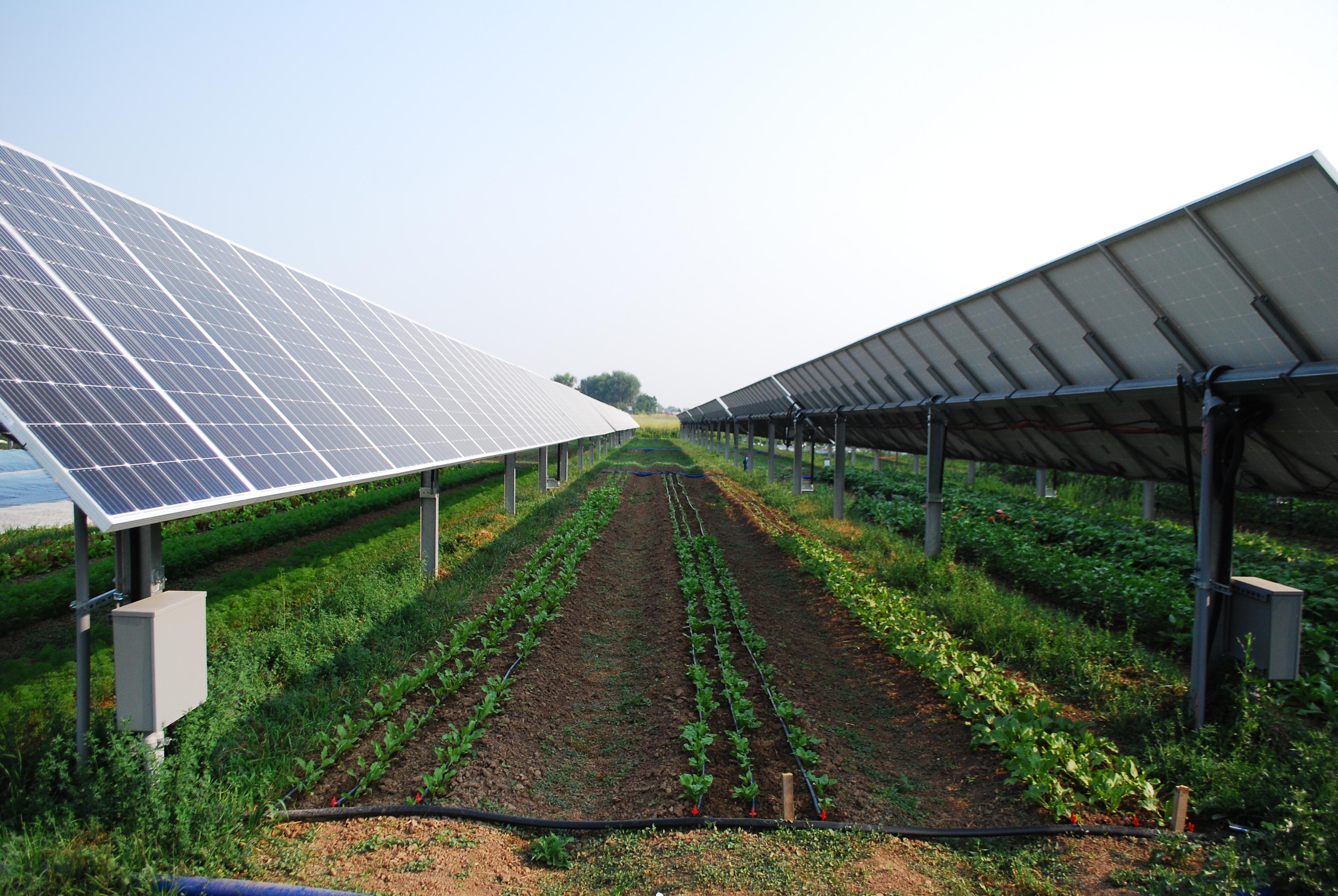
Wishall is one of a growing number of farmers across the United States who are integrating solar and agriculture. Research from Cornell found that in New York, 40% of current solar energy capacity has been developed on farmland, and 84% of land considered suitable for future solar development is also farmland. Though there’s a lack of solid data tracking those numbers across the rest of the country, there’s reason to believe the New York study may be indicative of a wider trend.
“It did work; the incentives are real. The systems will basically pay for themselves.”
“Solar developers are looking for lands that are flat and cleared of vegetation, reasonably close to roads and close to power infrastructure,” explained Dr. K. Max Zhang, a professor in the Sibley School of Mechanical and Aerospace Engineering at Cornell who researches the nexus of solar and agriculture. “Farmland fits all those criteria.”
Solar can be financially enticing for farmers, too. Some, like Wishall, may look to small systems to gain energy independence and lower their power bills. Others may sell or lease larger field-sized plots of land to solar developers as an additional revenue stream. According to Joel Tatum, the Midwest solar specialist at American Farmland Trust, a non-profit dedicated to protecting farmland, farmers can make “substantially more” per acre on solar than they are making on crops, “with zero input and zero labor attached.”
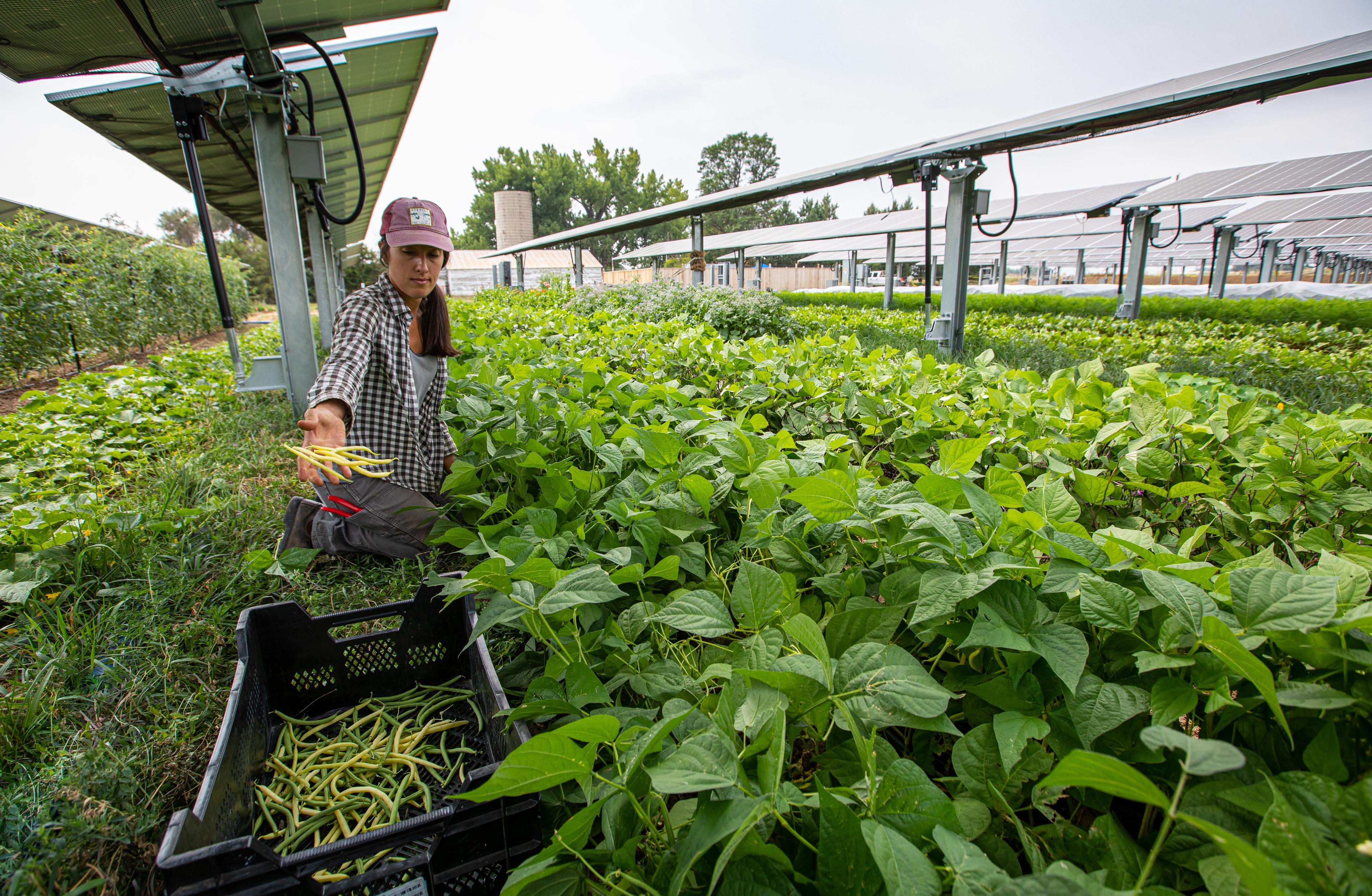
“Say the farmer doesn’t have a next generation that’s going to take over the land, and the farm ultimately would be for sale. The solar path is very attractive,” he said. But while American Farmland Trust doesn’t want to “negate that opportunity for the farmer,” the organization also doesn’t want to see all the country’s prime farmland diverted away from growing food, either — so Tatum and his colleagues are dedicated to helping people find a way to incorporate solar without giving up agriculture.
One of the simplest ways to balance the two is to follow Wishall’s example and install solar in spaces where agricultural production isn’t currently taking place, whether that’s marginal land or a barn roof.
This is the kind of system that Straight Up Solar, a solar energy design and installation company that services Missouri and Illinois, most frequently installs on agricultural properties. According to Straight Up’s VP of development Shannon Fulton, the area’s geology allows solar panel mounts to be driven directly into the ground without concrete, subsurface pilings, or any additional support. That’s a boon, she says, because it means solar panels can be more easily decommissioned at the end of their 25-30 year lifespan.
“From an agricultural perspective that’s great,” she said, “because at some point, if you want to reclaim the land for growing food or whatever else, that should be fairly simple to do.”
“If you want to reclaim the land for growing food or whatever else, that should be fairly simple to do.”
Tatum also finds himself increasingly advocating for and trying to educate farmers about agrivoltaics. In agrivoltaic systems, solar and agriculture are combined on one plot of land — think crops growing beneath elevated solar panels.
Thomas Hickey is currently researching agrivoltaics both as a graduate student at Colorado State University and as the R&D lead at Sandbox Solar, a solar company based in Fort Collins, Colorado. Like Tatum, he sees the benefits of agrivoltaics as a partial solution to the problem of competition for land. Much of the land that solar companies would consider “low-hanging fruit” has already been developed, he notes, and developers are increasingly looking to agricultural land for expansion.
But agrivoltaics provides other benefits beyond minimizing land competition, Hickey says: combining agriculture and solar can actually benefit the operations of both.
“Solar panels operate more efficiently with cooler temperatures underneath. So when there’s transpiration happening from the plants underneath, it actually cools the panels, allowing them to be more efficient,” he explained. The shade created by the solar panels also creates cooler air beneath during the day and warmer air at night, which encourages moisture retention in the soil.
“From the agricultural side, you’re using less water, which is huge, especially here in the West and Southwest,” he added. “Agriculture currently consumes 70% of all water in our country. We need it to produce the food, but if we start to cut that by certain percentages, it adds up.”
Byron Kominek, who runs the largest commercially active agrivoltaic system in the country, has seen this benefit firsthand at his operation in Longmont, Colorado. Kominek’s farm includes Jack’s Solar Garden, a five-acre plot that integrates produce, pollinator habitat, and raised solar panels that produce energy Kominek sells to local utilities.
“This April was one of the driest months on record for Colorado. The brome and alfalfa underneath my solar array was brighter, greener and bigger than what I have on my other pastures outside of the solar array — that stuff is still dormant or brown,” Kominek said, noting that this is true despite the fact that there’s no irrigation underneath his solar panels.
“The brome and alfalfa underneath my solar array was brighter, greener and bigger than what I have on my other pastures.”
He’s partnering with researchers from Colorado State University, the National Renewable Energy Laboratory, the University of Arizona and other organizations to gather and disseminate information about agrivoltaic best practices that might be useful for other farmers, and he created the non-profit Colorado Agrivoltaic Learning Center to educate the public about their findings.
His hope is that, armed with the right information, solar companies, farmers and the government can come together around a shared understanding of what responsible land management might look like.
“All too often developers are just looking at the next year — they’re going to build this thing as cheap as they can, sell it off, then they’re off to the next project. They’re not really considering what the land is going to be like for the next 30 or 40 years,” he said. “But that’s what government and community should be thinking of — not just short-term turnaround for some business to get rich while the community deals with thousands of acres that are unusable.”
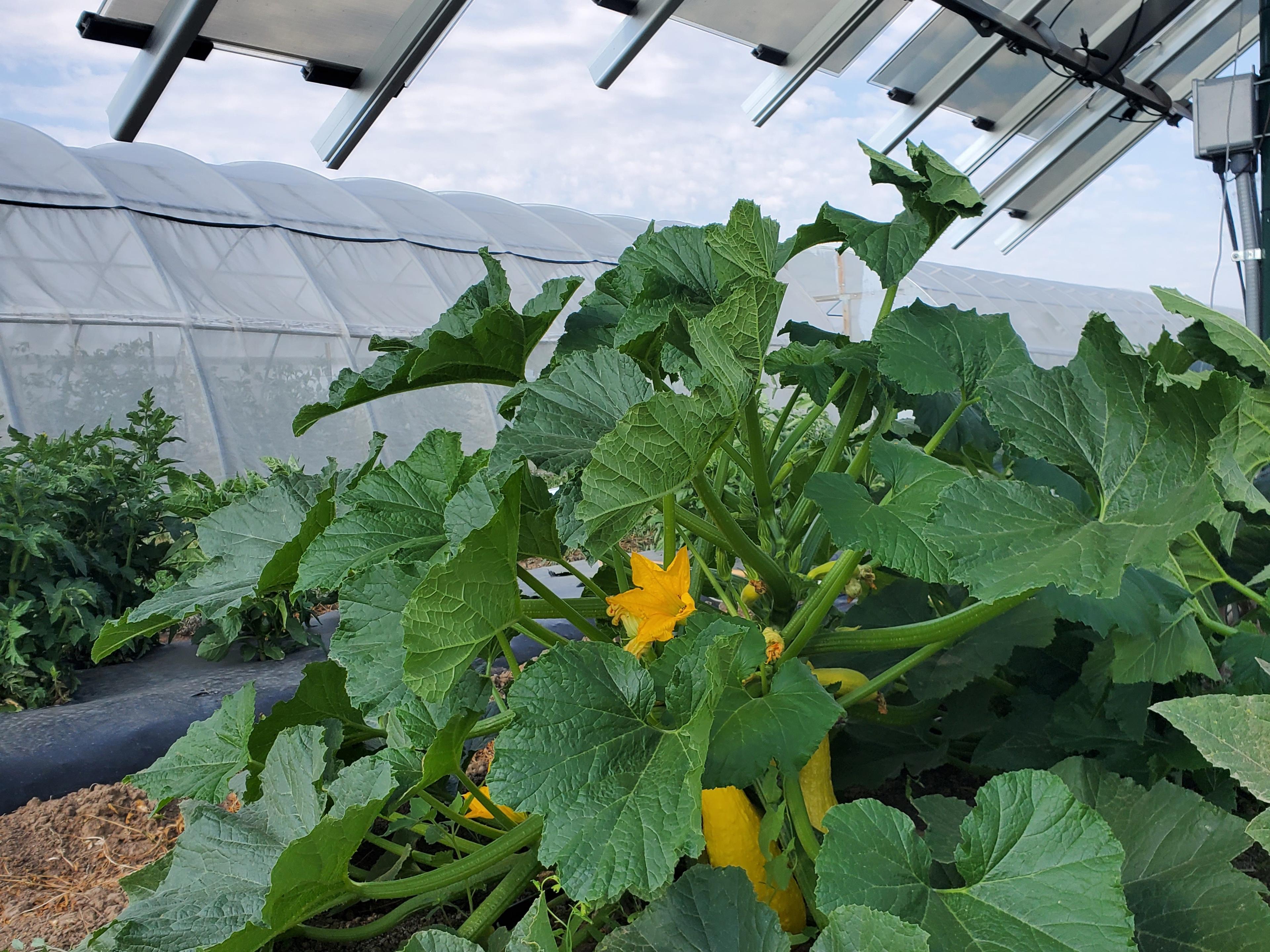
That sense that land being converted to solar means a loss for farming communities can represent a real obstacle to the buildout of solar in rural areas. Locals who perceive solar as an eyesore, connect development to an assault on their identity as a farming community or feel that solar under-delivers on its promise of financial benefits understandably resist it.
That’s one reason why, said Dr. Zhang, agrivoltaic approaches represent such a positive opportunity: they may be a win-win for renewable energy champions and agricultural communities alike. But for that win to be possible, Zhang believes education about agrivoltaics has to improve.
“If the public cannot distinguish between those two types of solar farms” — meaning single-use land that’s just developed for solar, versus agrivoltaic systems that combine farming and solar — “there’s not going to be much incentive for a developer to do anything different [than install solar arrays on single-use land],” Dr. Zhang said. He also believes that government incentives could make it more appealing for developers to collaborate with farmers on joint land use, rather than just installing panels and spreading gravel underneath.
Though Kansas State University associate professor of agricultural policy Jennifer Ifft sees the appeal of combining solar and farming, she cautions against treating agrivoltaics as the right option for every farmer everywhere. So many different factors need to be taken into account: is the land in question suitable for solar development? Is it near the right kind of energy infrastructure? What local laws exist that might restrict the size of system a farmer can install? Does the farmer have the capital necessary to invest up front in installation? These kinds of questions deserve careful consideration before making the leap, she notes.
Government incentives heavily shape the viability of solar installations for farmers. The foremost among these incentives is the USDA’s Rural Energy for America Program (REAP), which can provide grants that cover up to 25% of equipment and installation costs and loans that cover up to 75% of total eligible project costs. Other incentives vary widely from state to state and can change over time. It took Wishall longer to be paid back for his solar investments eight-plus years ago, but he said that the incentives available in Illinois are so favorable now that most of his neighbors who install solar today “have gotten 100% of their original investment back within one tax cycle.” Tatum, from the American Farmland Trust, said he’s typically seen a five- to seven-year return on investment; Fulton of Straight Up Solar estimates the number at less than five years in Illinois, and closer to ten years in Missouri.
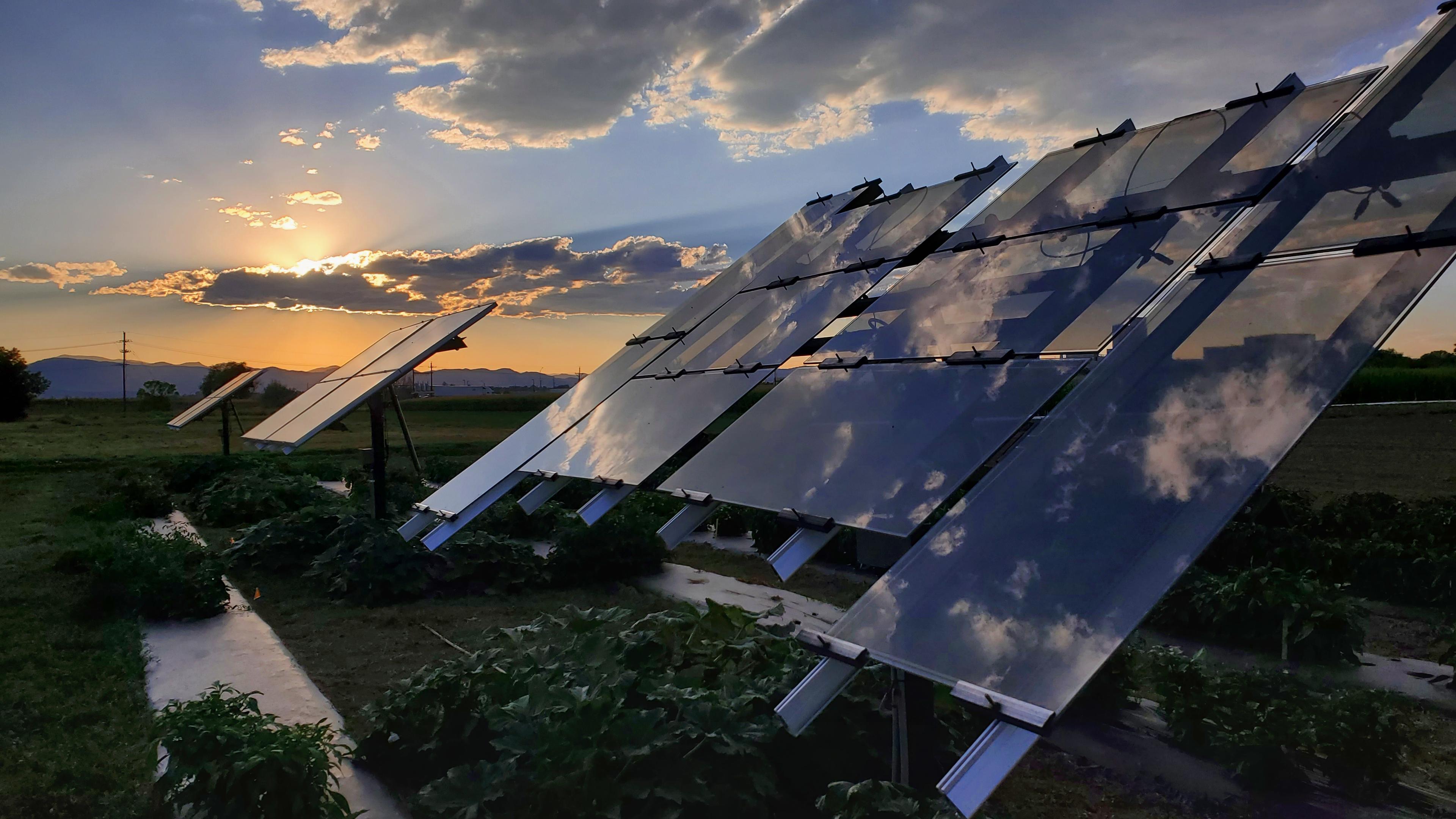
In short, the numbers vary depending on where you are. Hickey recommends interested growers check out the Database of State Incentives for Renewables and Efficiency (DSIRE), a project run out of North Carolina State University, for exploring what’s available near them. Another useful resource is the AgriSolar Clearinghouse, a project funded by the Department of Energy, which provides agrivoltaics expertise to businesses, farmers and researchers. The organization maintains an extensive library of relevant information online, runs a peer-to-peer mentor group, and fields calls from farmers who are looking to get into solar.
Dr. Stacie Peterson, the Montana-based manager of AgriSolar Clearinghouse, said that the goal is to equip growers with information that’s as relevant to their area as possible. “I got a call from a person in Texas yesterday, and they’re trying to decide whether to switch their oil and gas lease to a solar farm,” she said. “So the first thing we do is try to figure out what their goals are, what type of crops they have, what type of water… Everything’s really customized; it’s about trying to figure out who best to connect them to within our organization.”
“Five years ago, there were only a couple of these types of projects, and there are hundreds now.”
For all the excitement about integrating solar and agriculture, more research will go a long way toward helping growers decipher what makes the most sense for them based on the particularities of their operation. But Dr. Peterson said momentum is building.
“I’m seeing rapid adoption. Five years ago, there were only a couple of these types of projects, and there’s hundreds now — and a lot more are coming within the next five years,” she said. “As there are more studies and more understanding, I think that this will start to be part of more and more solar as it’s built.”

East of the Sierra-Nevada mountain range and sandwiched between two marshes lies Fallon, a small community which brands itself the “Oasis of Nevada.” Despite the dry alkali soil, this small community bustles with growing activity in the spring, summer, and fall.
The Derby Dam diverts water from the Truckee River, making the dusty region a hub for alfalfa, corn, wheat, melons, and more. But Fallon is also the home to an experiment—over a decade ago, an alfalfa farmer planted a little known grain in lieu of wheat. Eragrostis tef, commonly known as teff, is a species of grass native to Ethiopia that has become increasingly popular as an alternative grain in the United States.
“It is a very, very fine textured grass with very small seeds,” said Jay Davidson, the crop specialist at Desert Oasis Farms. A pound of teff contains about 1.3 million seeds. Davidson, previously an Alternative Crop and Forage Specialist for the University of Nevada, is largely responsible for bringing teff from Ethiopia into the high desert of Nevada. Historically in the United States, this annual grass was grown as a nutrient-rich forage. “It’s a very high quality hay, primarily for horses,” says Davidson.
At Desert Oasis Teff & Grain, however, teff is grown for human consumption. The grain is gluten-free and packs a nutritional punch. High in iron, teff also contains substantial resistant starch, which feeds beneficial bacteria in our digestive system. It also has a low glycemic index, making it popular for diabetics.
“As a grain crop it competes well or exceeds the value of other commonly grown grains at a lower production cost,” said Davidson. He believes the higher sticker price, coupled with the nutritional aspect of the grain, led to the breakthrough in the American market. In addition, a farmer can sell both the forage and grain, boosting financial yields.
John Getto owns Desert Oasis & Teff and has been successfully growing the grain for almost 15 years. His son, Myles Getto, works alongside him, often planting the season’s crop on their 800 acres. He will become the fourth generation Getto to operate the family farm. The Gettos began growing teff in 2009 after being approached by Davidson, who had developed a variety of teff that thrives in the high desert.
“We grow ours almost exclusively for grain,” said Davidson, noting the market demand for gluten-free grains has skyrocketed in the past several years.
“[In Ethiopia], we ate teff morning, noon and night. It’s an absolutely incredible grain to them.”
Initially, their customer base was Ethiopians living in the United States. Teff is a major aspect of many east African diets, and Davidson traveled to Ethiopia to study growing practices. “It was interesting, I knew it was important to them, but when I was over there, we ate teff morning, noon and night. It’s an absolutely incredible grain to them,” said Davidson.
The plant itself is a tall lanky annual grass that grows quickly, from seeding to silo in about 100 days. Under the right conditions, teff can grow up to ten feet. Getto uses an air broadcast seeder to lay down the seed around the middle of May, then flood-irrigates the fields through the middle of August.
“It uses a lot less water, maybe two-thirds to half of what alfalfa does,” said Davidson. Fallon receives about five inches of rain a year, making water-smart crops the best choice for farmers. “Most of the lovegrasses have a very interesting adaptation, in that if for some reason you don’t get water on it after it’s up and growing, it will look like it’s dead, it will go brown,” elaborated Davidson. This adaptation helps the plant survive periods of drought. “As soon as we put water back on it, within literally an hour or two, you’ll start to see it green up and start growing again.” But this adaptation is not without risk; as the grain goes dormant, it lengthens the growing season.
“If you didn’t get water on it for three weeks, there is virtually no growth for three weeks,” said Davidson. This puts the growing season that much further behind. In northern Nevada and many parts of the high desert, freezes can arrive as early as September. Teff is very susceptible to cold weather, making Davidson’s irrigation management critical.
They seed about two pounds to the acre and focus on sound management of weeds and irrigation throughout the growing season. “Under good conditions and proper management, we’ll harvest 2,000 pounds a hundred days later,” explained Davidson.
“Under good conditions and proper management, we’ll harvest 2,000 pounds a hundred days later.”
With these yields and prices fluctuating around $0.50 per pound, income from the grain alone could be around $1,000 per acre. Davidson explained teff has become an important crop in their rotation. He said the margins often surpass what they have seen with alfalfa. He said there are not many crops that produce these kinds of yields, making the economics of teff a strong bet. He estimates the region produces about 1,600 to 1,800 pounds per acre.
“We like to be up around a million or two million pounds each year,” said Getto. Teff costs about $142 per acre to grow in Nevada, placing margins anywhere between $600 and $800 per acre. When you include the fodder sales and reduced water needs, the economics favor growing teff over almost any other crop in the high desert.
The most expensive input for Getto is water. Unlike teff farmers in the Midwest, all of their fields are irrigated. The cost of water adds up and will most likely increase in the future. While these margins seem alluring, climate change could throw a wrench into the plan.
Climate Challenges
“This area where we grow has undoubtedly warmed over the last 15 years and we’re having problems with army worms,” said Davidson. Insects were never a challenge for Getto and Davidson in the past but with warmer temperatures, they are now relying on more insecticides than before. Nevada is also one of the fastest warming states in the country, and northern Nevada, where Getto is growing teff and alfalfa, is a particularly effected area.
In the past few years, a new challenge has presented itself: wildfires. As fire season across the intermountain west continues to lengthen and worse, the smoke has begun to settle into the valley for weeks, if not months at a time.
“We’ve seen a reduction of solar radiation here,” explained Davidson; that reduction has affected their yields and bottom line. As climate change has driven wildfires to greater intensity and size, the impact of smoke on agriculture has become more widespread. As smoke and drought have become 21st century challenges, Getto has turned towards trying new tactics.
Innovation pushing the limits of teff production
“It uses low amounts of fertilizer, usually 60 pounds per acre of nitrogen,” said Davidson. “Fertilizers are currently much higher priced than in the past.” The University of Nevada, Reno, which leads the study of teff in the region, estimates that the application of the herbicide 2-4-D costs about $12 per acre.
Davidson said the biggest limitation to the crop are grass weeds. Since they directly compete with teff and are genetically similar, there are few chemical options for treatment. “We did get a broadleaf herbicide labeled [for use] and that helped us dramatically,” he said. This usage reduces the number of seasons they can grow teff on a given plot due to accumulation in the soil so they use it sparingly. Another management strategy utilized is only growing teff two years in a row on a plot.
The University of Nevada, Reno has been studying teff for several years. Before Davidson retired, he was working on a study of over 350 varieties of the grain. “We were looking at trying to select plants that were two things: more drought resistant and had a stiffer stem,” he explained.
Because of teff’s height and weak stem, it tends to lodge when the seed matures — a condition where the plant falls horizontally to rest on the ground, sometimes making harvest difficult. The tests led to a dozen varieties they tested in the field to determine if traits favorable to stiffer stems and drought tolerance could be realized in practice.
“The big issue here for farmers is that they face an uncertain future in terms of water availability.”
“The big issue here for farmers is that they face an uncertain future in terms of water availability,” said Dr. John Cushman, a biochemist at the university. The west is experiencing a multi-year drought that has reduced snowpack. In conjunction with the high value grain and forage of teff, the grain’s drought tolerance is another driving factor of his research. He tested for chronic and acute drought stresses and was able to isolate a few drought tolerant varieties. “We are now doing more detailed field testing to show they are actually drought tolerant,” said Cushman. He suspects these varieties could be available to farmers within three to five years.
Cushman is also working on the lodging problem. When teff lodges, yields could be reduced by 40%. He is building upon the work of Norman Borlaug to target two genes that affect the grass’s stature. Borlaug and his team were able to find semi-dwarf varieties of wheat and rice through natural selection, a process that took years to realize. “We could do that with teff, but it would take a long time,” said Cushman. He is using CRISPR technology to find ways to reduce the stature of teff.
“If you reduce the stature, it increases the ratio of seed to overall biomass,” explained Cushman.
Getto and Davidson are hopeful for advances in the grain. If lodging can be reduced, their two step harvest process can be cut in half. “We could just go through and cut it one time…that would reduce costs for everybody,” said Davidson.
Getto and Davidson remain optimistic and hopeful that average temperatures stay steady, the impacts of smoke decline and the popularity of teff continues to grow. As John Getto’s son continues to learn the ins and outs of operating a modern teff farm, the future for a fourth generation family farm in Fallon, Nevada is becoming a reality.
As the U.S. faces a period of historic inflation through the first part of 2022, agricultural producers are feeling unique market pressures and rising input costs. At the same time, experts are advising caution for the coming months.
Data from the U.S. Bureau of Labor Statistics (BLS) shows consumer prices up 8.6% for the year ending in May, the largest 12 month increase since December 1981. That comes on the heels of a 7.9% rise from Feb. 2021 to 2022, and 8.5% March to March. Core inflation, which traditionally excludes more volatile food and energy prices, was up 6% May to May, and BLS data showed energy prices are up 34.6% overall, with gasoline up 48.7%.
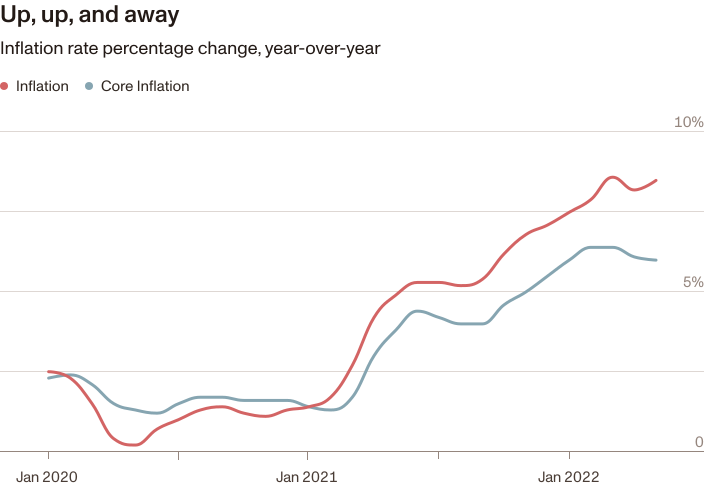
After previously marking record-setting numbers in March, it appeared inflation was easing a bit in the April to April numbers at 8.3% overall, and a core increase of 6.2%. Now though, the May rate shows the upward trend has continued. That’s created a difficult situation for farmers like April Clayton and her husband, who own Red Apple Orchards in Orondo, Washington.
“Inflation is a huge concern for our business,” Clayton said. “Not only is it the price of diesel going up, because we have to go up and down those rows with sprayers, it’s also the impact of the cost to get the fertilizer and other supplies to our farm. That price increases, and that’s another hit in our budget. We’re already seeing low margins, so this really has an effect. So much so that we have to think, is it going to be cost effective to harvest this crop?”
“Inflation is a huge concern for our business.”
Clayton said she worries about other costs rising beyond fuel, like labor and other operational supplies. Their organic fertilizer for cherries virtually doubled in cost, she said, so they chose to go with a synthetic option instead.
“So yes, we are already feeling the punch of inflation,” she said. “And we’ve had to change how we farm due to that.”
Another concern: the costs are rising for each step of the process that gets fruit from the farm to grocery store shelf. With each one taking another, larger bite of the metaphorical apple, it leaves less to cover Clayton’s costs.
“We’re the last one to receive payment,” Clayton said. “So as inflation rises, that means all throughout the chain the price is going up, which means even less is coming back to us.”
“We’re the last one to receive payment.”
The Farm Bureau reported in March that USDA data shows farm production expenses were increasing 5% in 2022, after a 9% increase in 2021. One of the biggest line-item spikes was fertilizer, up 12% from 2021-2022, after a 17% rise 2020-2021.
Red Apple is not alone in suffering those impacts. University of Kentucky Extension professor Will Snell noted in a blog post that while past data suggests agricultural commodity prices rise with inflation, so do input prices — like seeds, fertilizer, livestock and equipment. It can create a risky balancing act for growers while crops are in the ground or on the trees.
“Inflationary pressure in the economy can put upward pressure on farm commodity prices, but higher commodity prices increase the demand for farm inputs, including the cost of borrowed funds,” Snell wrote.
Snell pointed out that years of high inflation in the 1970s helped lead to the crash of the U.S. farm economy in the 80s, when many family farms were forced to close in the “worst financial crisis since the Great Depression.” Dr. Daniel Sumner, professor of Agricultural and Resource Economics at University of California, Davis, echoed that point: when commodity prices came down rapidly, farms fell on tough times.
“Inflation is one thing that causes stress, but what causes even more stress in agriculture tends to be the elimination of inflation,” said Sumner.
“Inflation is a curvy road,” he continued. “If you borrowed money at 15%, assuming that your output prices were gonna go up by 15%, and they didn’t, people just went belly up.”
“If you borrowed money at 15%, assuming that your output prices were gonna go up by 15%, and they didn’t, people just went belly up.”
With that in mind, he advises caution in the coming months. In March 2022, the Federal Reserve raised rates for the first time since 2018. At the time, regulators noted Russia’s invasion of Ukraine was causing “tremendous human and economic hardship,” and that while uncertain, “in the near term the invasion and related events are likely to create additional upward pressure on inflation and weigh on economic activity.”
In May, the Fed raised rates again, and just this Wednesday they announced another .75% rate increase, the largest since 1994. Officials have signaled more are likely to follow.
“Prices are continuing to go up. . .but it’s not going to continue forever,” Sumner said, adding a warning to farmers about rising interest rates. “And then the other thing is particularly in agriculture, not all prices go up in sequence. So pay attention, look for things you can do within your business to minimize the individual impacts.”
Federal regulators have previously said a 2% rate of inflation is generally ideal, and “is most consistent with the Federal Reserve’s mandate for maximum employment and price stability.” For years prior to 2021, the U.S. economy has hovered around that, ranging between 1.7% and 2.2% annually since 2012 (omitting food and energy, not seasonally adjusted). But now the issue is some experts worry attempts to reign in inflation could lead to a recession, though only time — and data — will tell.
“If we can survive this inflation, we’ll be set up to be in a good place.“
In the meantime, Clayton is looking to weather the storm. At Red Apple Orchards, they’re already debating whether to skip harvesting some blocks of lower yield cherries, believing the sale wouldn’t cover the costs. They’re also re-grafting less-profitable apple tree varieties to those with a greater profit margins — choosing Honeycrisps over others like Red Delicious or Galas.
The process takes two or three years, so while it’s an expense now, they save harvest costs during the transition, and are looking to the future.
“If we can survive this inflation, we’ll be set up to be in a good place,” Clayton said. “We’ll have the right varieties, that are hopefully kicking in the right amount of money to be profitable, but it is going to be about surviving inflation right now, with the margins.”
On the first day in February, the USDA announced it would be opening a pop-up container yard in partnership with the Port of Oakland. Farmers had been unable to ship millions of dollars worth of product due to a lack of empty containers over the past two and a half years, and the pop-up yard, officials claimed, would give them speedy access to empties.
But that didn’t happen. Three months after the yard opened, activity is inconsistent at the yard, and farmers are still in need of containers to export their product. They wonder whether USDA funding will be efficiently used, and what authorities have planned to alleviate the supply chain issues. But the powers that be are short on answers, leaving farmers and industry groups wondering whether to wait for some semblance of pre-pandemic “normal” to return in order to sell their crops at full capacity.
“We have good people. We have good product that’s ready to go. But we’re hitting the point of seeing price degradation on product and losing global market share if we don’t get products back into stores around the world,” said Aubrey Bettencourt, President and CEO of the Almond Alliance of California.
“We have good product that’s ready to go. But we’re hitting the point of seeing price degradation on product... if we don’t get products back into stores around the world.”
The pop-up container story highlights how many players are involved in the American produce supply chain, and how difficult it is to align their incentives. The yard was meant to support farmers, but has encroached on land used by truckers, and has required a delicate negotiation between the companies that deliver containers, those that operate shipping yards, and those that direct truckers. Each has faced varying incentives that constrain the pop-up yard’s usefulness to them. Some container companies are now using the yard as a staging area for empty containers, but many have refused to participate. Truckers fume the yard makes it harder for them to service the port. And American farmers who route through Oakland still report difficulty getting their products into containers headed overseas.
The Port Promise

Plans for the yard were announced with much fanfare. A collection of industry groups, truckers, container lines, and farmers had participated in weekly meetings for at least two months, offering their insight. January press releases from the USDA and Port of Oakland reached several local outlets who forecasted a bright future for the yard. U.S. Transportation Secretary Pete Buttigieg and U.S. Agriculture Secretary Tom Vilsack were quoted on the releases.
“This partnership with the Port of Oakland builds on our aggressive approach to addressing challenges within the supply chain,” Vilsack said, “and sends a strong signal that we are committed to working across the Administration and with state, local and private partners to mitigate complex port capacity and congestion issues and to keep American agriculture on the move.”
Agricultural exports made up approximately 37% of the Port of Oakland’s exports in 2019, worth about $21.7 billion. According to the Port, that’s historically made up for approximately half of containerized exports leaving Oakland. However, the Port said agriculture increased to about 45% of total containerized exports in 2021.
That’s because overall exports of all types of commodities were also falling. By the end of 2021, total exports (measured in “twenty-foot equivalent units,” or TEUs) were approximately 8.4% lower than they were in 2019. In the case of almond farmers, Bettencourt says the inability to ship-out product has resulted in a $1 per pound decrease in median pricing — an overall loss of about $1 billion, industry wide, since just September of last year.
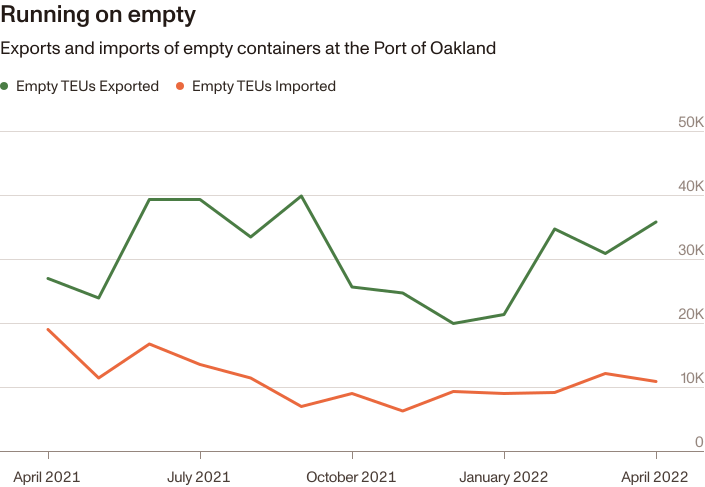
According to the Port and USDA, the container yard would give agricultural entities expedited access to empty containers. Carriers, who had been shipping empty containers all the way back to Asia because that was cheaper than dealing with backlogs at the Ports, would be more incentivized to drop-off containers because there would be a clear, accessible area for them to do so. Truckers would be also incentivized to pick up these containers because they didn’t have to wade through traffic at marine terminals to get them.
A Solution in Search of a Problem
The Port chose the old Howard Terminal, a small marine terminal which many of today’s larger container ships have outgrown. Port of Oakland officials argue the 22 acres of waterfront land are otherwise useless. “It’s not super busy or anything like that, not crowded by any means,” said Robert Bernardo, the Port’s director of communications. “It’s just a 22-acre yard that is pretty much open to be used.”
But many truckers would likely disagree with that statement. Truck companies rent space at the Terminal and park between occasional containers. Signage at the Terminal indicates that it is a “Seaport Truck Parking & Container Depot.” In January, about a dozen of the smallest trucking companies were evicted from the land, weeks before plans for the pop-up container yard was announced. At the time, those truckers didn’t point their finger at the pop-up yard. Instead, they said they thought they had time — they knew they would be evicted eventually, they said, but in a few years when the city begins to build the new Oakland A’s stadium, also proposed for the site.
Bernardo did not respond to requests to comment on whether truckers were evicted for the creation of the pop-up yard. He also did not respond to questions about a potential connection between the pop-up yard and the Port’s desire to build a new A’s stadium at Oakland Terminal.
That’s what was planned. But plans don’t always equate with reality. Two months after the yard was announced, it’s taken on a new form. In addition to holding boxes, the space is also used as a staging area for empty containers waiting for exports. “Inventories are always in constant flux,” said Bernardo. “Currently there are enough empties to cover demand.”
But trucking and agricultural sources we spoke with disagree. They say the yard has had little impact on agricultural exporters struggling to move their product, and is being used for other purposes. A significant portion of the containers stored at the yard are from carriers who do not have locations ready for importers to return empties once they offload their product, especially those from Wan Hai and Hapag-Lloyd. (Hapag-Lloyd says they have rerouted 1,605 empties for export supply since the yard opened). The company which the Port of Oakland has contracted to operate the yard, Pacific Crane Management Company, did not respond to numerous requests for comment. Neither the USDA or the Port of Oakland would provide a target budget, nor how many containers would be moving through the yard if it were successful.
The yard isn’t solving agricultural exporters‘ problems in part because the very conditions which made the yard seem necessary have changed. While containerized export volume fell 16.7% from March 2021 to March 2022, the imports of empty containers have shrunk even more, at 19.6%, while imports of full containers have only increased 3.2%. Under these conditions, agricultural exports have reached 60% of the port’s overall containerized exports, according to Bernardo — a higher percentage of overall exports than had left the Oakland pre-pandemic, and a number that slowly remakes the losses of the past two years.
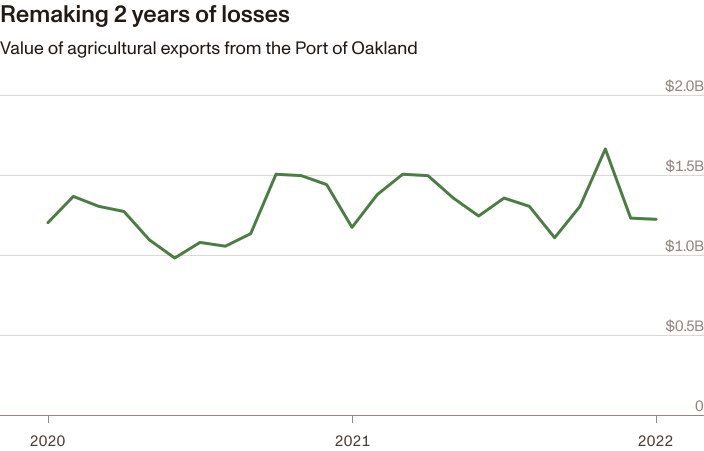
Container line bottlenecks
Container lines have also started bringing containers back to the port through other avenues. Ships which began skipping Oakland in an effort to make up for lost times after historic logjams at the southern California ports of Long Beach and Los Angeles during the pandemic, for example, were convinced to begin calls at Oakland again. Hapag-Lloyd, for example, restored service to Oakland along its AL5 service. So have MSC and ONE.
Nils Haupt, corporate communications director for Hapag-Lloyd, also said the company has begun routing containers by land from Chicago. Haupt said the company brings about 200-300 containers per vessel along the Al5 service, which arrive at Oakland every Wednesday, and approximately 150 containers from Chicago every two-to-three weeks. He also says that he no longer sees congestion at the Port of Oakland, which is at 80% utilization.
But some carriers aren’t so cooperative, says Bettencourt, who argues that the main issue is container lines which, as international companies, cannot be forced to honor their contracts with agriculture or to participate in the pop-up container yard. Several carriers have pulled out of participating in the container yard, she says. Others simply refuse to communicate well with farmers who are economically reliant on them, but who do not have leverage over the container companies. Whether or not there is a place for carriers to drop-off empty containers has little impact on whether they will spend time and energy doing so, Bettencourt explains.
“If they say they’re going to arrive and be receiving for four days, they need to stay there for four days. They can’t call us and say ‘oh, nevermind, it will be four hours,’ which has happened,” she says. “We need to sit down with the carriers, and we need the leadership of federal and state officials to help us do that — because if there’s something the carriers need, we want to know that.” She notes government entities have been fairly supportive as-is. MSC, ONE, Evergreen, and CMA-CGM did not respond to requests for comment.
“If [carriers] say they’re going to arrive and be receiving for four days, they need to stay there for four days. They can’t call us and say ‘oh, nevermind, it will be four hours,’ which has happened.”
Chassis rules, which indicate which types of chassis a carrier allows their containers to be carried with, create additional, lingering bottlenecks. Fewer chassis that can be used for a diverse range of containers are available than last summer, trucking and chassis companies say. “We simply do not have Daily Rentals available,” said Greg Moore, Chief Commercial Officer at Flexi Van. “Demand and Utilization in pools is at an all time high.”
Devine Intermodal President Karen Vellutini says that truckers must now spend additional time coordinating the right parts before traveling down to the Central Valley. “It’s put a crimp in our overall productivity,” she says. “The goal is to get trucks in and out of the Port twice a day, and now we only hit that goal two or three times a week.”
“The goal is to get trucks in and out of the Port twice a day, and now we only hit that goal two or three times a week.”
Unfortunately, there’s been little progress made on changing box rules or establishing better communication between trucking companies, carriers, and industry groups. Both the House and Senate recently passed companion bills called the Shipping Reform Act, which attempts to require international maritime shipping companies to comply with US regulations when charging late fees. Supporters say this would require carriers to give legitimate reasons for declining shipping opportunities at US ports by requiring carriers to prove adequate reasons for the charges. Critics, however, say it’s largely toothless, because the carrier data often used to make these decisions is not independent or unbiased — and drayage truckers, forwarders and shippers often do not have the resources to provide their own data as a counterpoint.
Bettencourt supports the Act, but worries critics may be right. She also says that, like all federal laws, it will take some time to take effect. The USDA and Port of Oakland were unwilling to suggest other potential solutions, and the USDA, which promised to fund 60% of the project, says the budget is not yet finalized.
In response to emailed questions as to whether the pop-up yard was operational for agricultural use, the USDA did not reply.
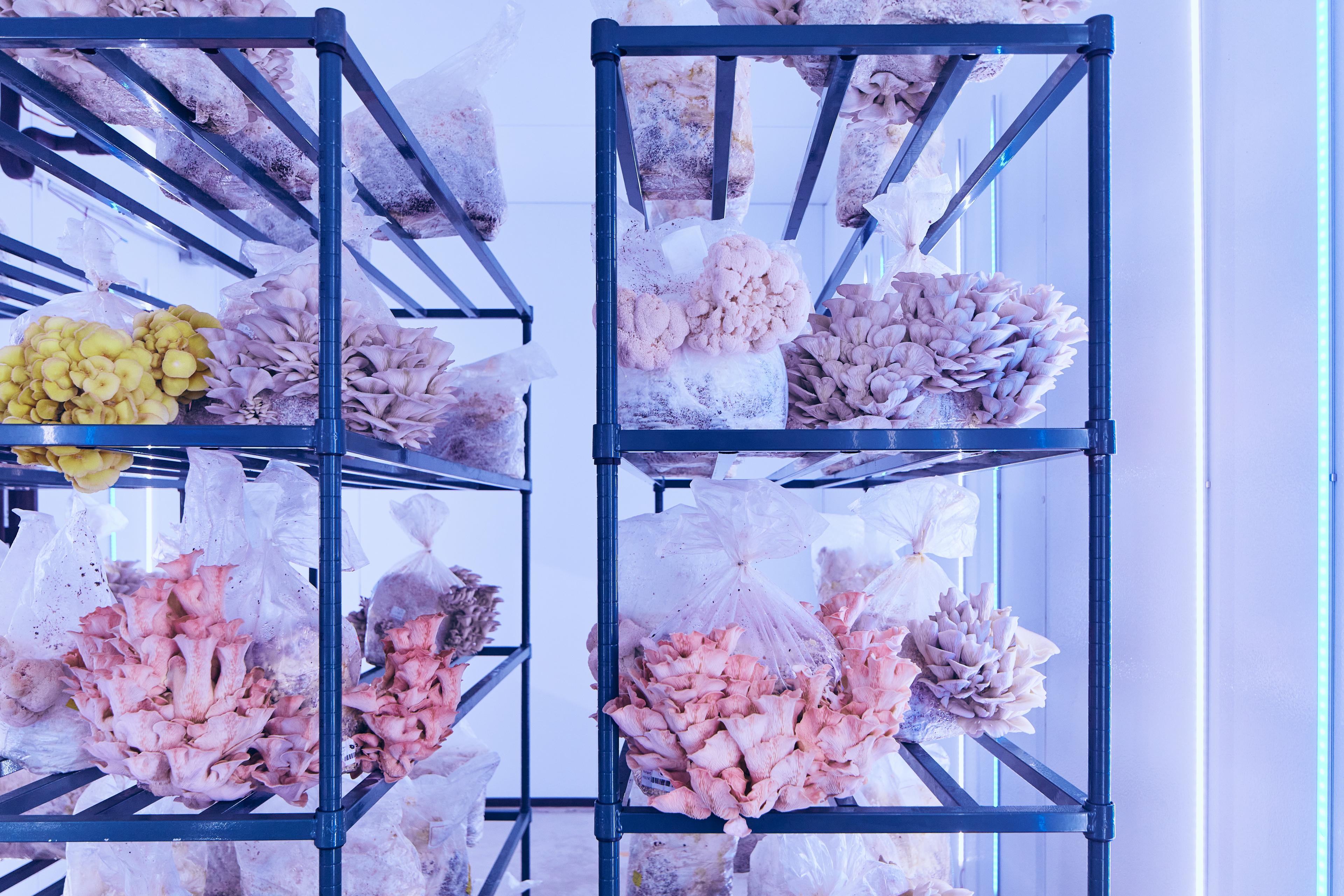
Driven by increased interest in meat alternatives and unique health benefits, the mushroom industry has boomed in recent years. The global mushroom market reached a value of $45.8 billion in 2020 and is expected to reach more than $63 billion by 2027. But despite increased buzz, supply chain challenges make it increasingly difficult for mushroom farmers to ship enough product to turn a profit. While farmers of all kinds face COVID-related shortages, mushroom farmers have encountered special difficulties accessing essential inputs in time for rapid mushroom yield cycles.
Successful mushroom cultivation starts with mineral rich compost, primarily made using agricultural byproducts from wheat, chickens, almonds, corn and cotton. With shortages and increased competition in the industry, raw materials are becoming increasingly limited. For example, one of the primary ingredients of mushroom compost is wheat straw. Prior to recent shortage fears, farmers were already experiencing increased prices and a limited supply due to droughts. Without a steady supply of straw, farmers have been forced to change their compost recipes, which poses risk of unexpected crop threats and decreased yield.
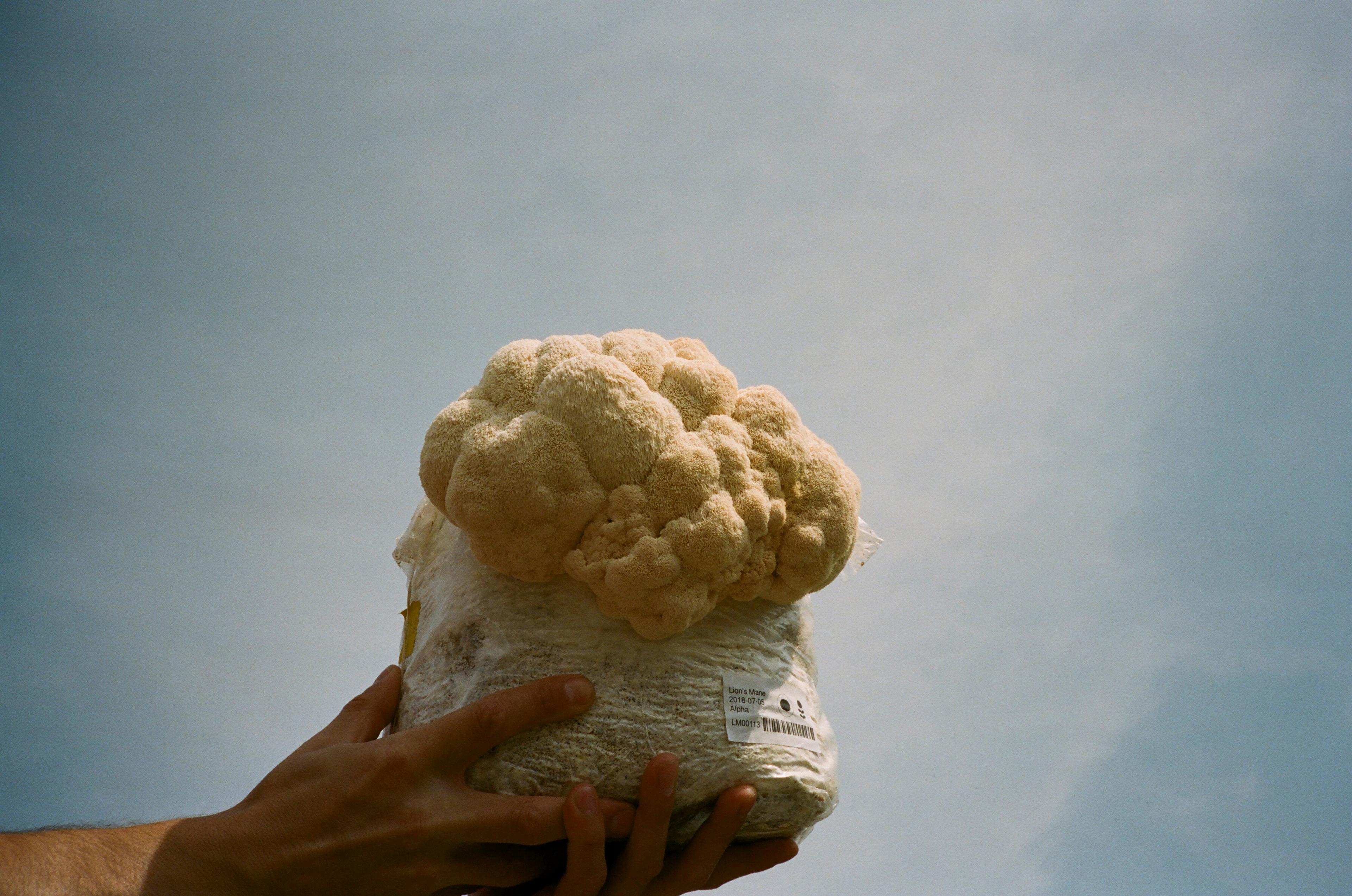
While compost is widely used in farming, its centrality in mushroom cultivation makes raw material shortages especially devastating. Compost is the primary grow medium used in commercial mushroom production. Like crops without soil, these mushrooms cannot survive without the compost on which they feed and grow.
In addition to compost materials, mushroom farming relies on a steady supply of peat moss. Called a ‘casing layer’, peat moss is mixed with limestone and water before it is placed on colonized substrate (compost mixed with inoculated spawn). This layer serves to maintain the moisture necessary to produce strong, consistent yields. “Peat moss shortages have been widespread, with prices increasing over 80%,” said Sean Steller of Phillips Mushroom Farms, a leader in U.S. mushroom production.
These shortages are a result of poor harvests and a spike in demand. Canada, which supplies over 90% of the U.S.’s peat imports, experienced a hurricane and severe summer storms in 2021, leading to overly damp peat and limited harvests. At the same time, peat moss sales spiked due to consumer interest in gardening and landscaping during the pandemic. “When the quality of peat moss differs from the norm, mushroom yield and quality can be impacted,” said Steller, pointing to size and texture. “This leads to the dual-threat of decreased production alongside rising input costs.”
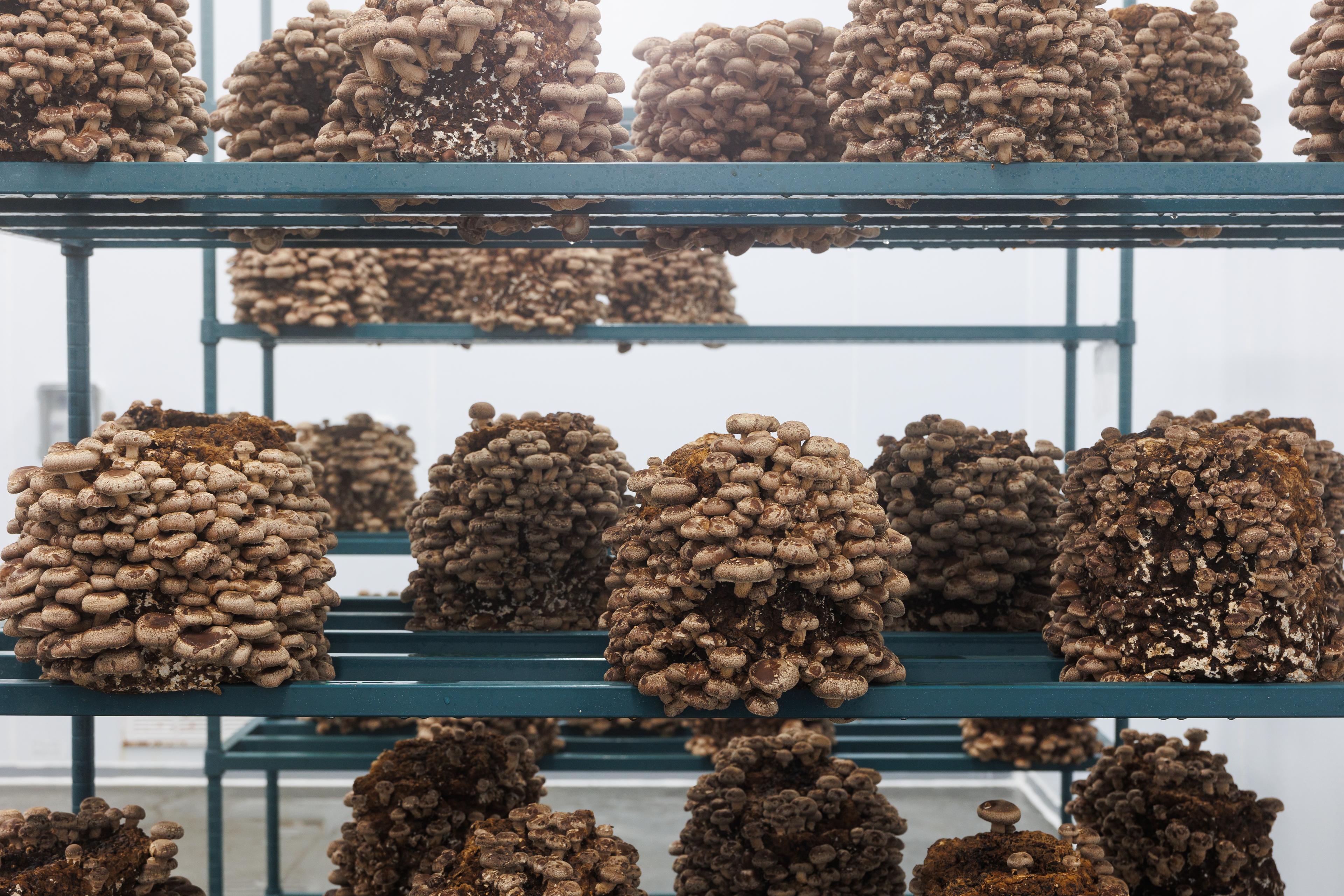
Beyond the difficulty acquiring raw materials, labor shortages have plagued the mushroom industry in recent years. According to Steller, “There are countless factors impacting the labor market, but a few specific to mushrooms include intense competition and specialized skill requirements.”
Mushroom harvesting is an extremely manual process that requires handpicking and delicate handling – bruising the produce could make it impossible to sell. Consistent, experienced labor is needed to manage the mushrooms with care and keep up with quick growing cycles.
Mushroom industry executives in California blame state-level regulations for shortages. Roberto Ramirez of Mountain Meadow Mushrooms cites increased minimum wage and changes to overtime laws as his biggest challenge in recent years. While overtime used to kick in after 60 hours per week, it now kicks in after 40 hours, significantly reducing the amount of harvesting that can be achieved before paying overtime. Ramirez noted, “All agricultural employers I know of have either reduced their output or invested in some sort of mechanical way to reduce labor cost.”
“All agricultural employers I know of have either reduced their output, or invested in some sort of mechanical way to reduce labor cost.”
Increased minimum wage and changes to overtime laws aren’t the only government regulations that may affect producers. Since they operate year round, mushroom farms don’t qualify for the H-2A temporary worker program, which allows farmers to hire temporary immigrants to work seasonal jobs.
Without the ability to apply for this program, many farms are operating 25% below capacity. The Farm Workforce Modernization Act of 2021 could alleviate this issue – if passed, the law would allow farmers to utilize H-2A for non-temporary workers, which could reduce labor gaps.

Some mushroom farmers are attempting to meet growing demand by investing in new technology and expanding into new lines of business. While mushroom picking robots may be a few years out, Phillips Mushroom Farms is focusing on improving efficiency and automation in harvest, supply chain and packaging.
Other companies, such as Smallhold, are using technology to rethink the entire mushroom growth and distribution process. The company sets up ‘minifarms’ in restaurants and grocery stores. These cloud-controlled containers regulate temperature, light, oxygen levels, and moisture to create the ideal climate for their mushrooms to grow. By installing these minifarms in restaurants and grocery stores, Smallhold provides hyper-local mushrooms that eliminate the need for additional transit and distribution once harvested.

Mushroom farms are also diversifying their portfolios by entering the specialty mushroom market. While the majority of the mushrooms in the U.S. are Agaricus Bisporus, or Button Mushrooms, producers have begun growing new varieties as the industry expands. Specialty mushrooms are drawing interest for their higher margin returns, shorter growing cycle, and use in medicine.
Mountain Meadow Mushrooms, for example, has increased their mushroom offering from three to eighteen different varieties, including specialty and medical mushrooms such as Lion’s Mane, Cordyceps, Turkey Tail, and Reishi. Many of these get sold as powders or tinctures. Farmers look to specialty mushrooms to provide them with new channels of revenue, beyond the traditional produce model.
While mushroom farmers face many challenges, the industry remains hopeful due to potential changes in government regulations, innovation and continued consumer excitement about mushrooms. Exciting advancements such as mushroom leather in cars, faux bacon, packaging materials, and building materials suggest market demand will continue. Whether farmers will have the resources to meet that demand, however, remains to be seen.

Ninety-eight percent of marketable meat in the United States is processed at a mere 50 facilities. These large facilities move several thousand head of cattle or hogs a day, with carcasses humming down the production line on their journey toward store shelves and restaurants. You can imagine, then, the destruction that happens when one of these few facilities is closed even for a day. During the first spring of the Covid-19 pandemic, a number of facilities had to shut down for days or even weeks as the result of disease outbreaks among workers, resulting in a 45% loss of capacity nationally for pork and cattle processing. The result was catastrophic in scale. Most immediately, meat became scarce on store shelves and meat prices shot up across the sector, with prices up 18% in May 2020 over May 2019. An analysis from Oklahoma State and the National Cattleman’s Beef Association in April 2020 estimated $13.6 billion in losses across the beef sector. Millions of slaughter-ready animals were euthanized, because there were no facilities available to process them.
Facility closures, alongside Russian hacks of meatpacking giant JBS, revealed the vulnerability in highly concentrated industry. JBS and the other “Big Four” meat companies (Cargill, Tyson, and National Beef) control as much as 85% of the beef market. In 2020, as a result of the massive bottlenecks caused by the closures of major processing plants, farmers looked to get their animals booked at independent plants and small, local meat lockers, which generally process a small quantity of animals for private consumption. For processors, this meant being overwhelmed with orders. By late 2020, many Nebraska processors were booked out through 2022 for cattle and hog processing. This wait time and uncertainty made it impossible for small producers to plan financially. With processors swamped, cattle producers were considering selling off and getting out of the market. “I can’t really plan, you know,” one Nebraska farmer told me, “I have cattle that are ready for slaughter now but the lockers are all full. This might be our last year.”
“I can’t really plan, you know,” one Nebraska farmer told me, “I have cattle that are ready for slaughter now but the lockers are all full. This might be our last year.”
In the wake of these events, a number of states have started grant programs, like Nebraska’s Independent Processor Assistance Program (which still awaits funding appropriations), to help small processors expand their operations. These programs offer funding for independent processors to increase shackle space, expand their facilities, purchase equipment, and train workforce. Without greater shackle or freezer space, a small processor has a definite cap on how many animals it can move through. The pandemic closures demonstrated, however, that these independent processors are the only backstop when the major packers suffer disruption. Many small meat processors saw a 30%-40% year-over-year increase in business during the first year of the pandemic. These operations provided necessary flexibility in getting meat to local markets.
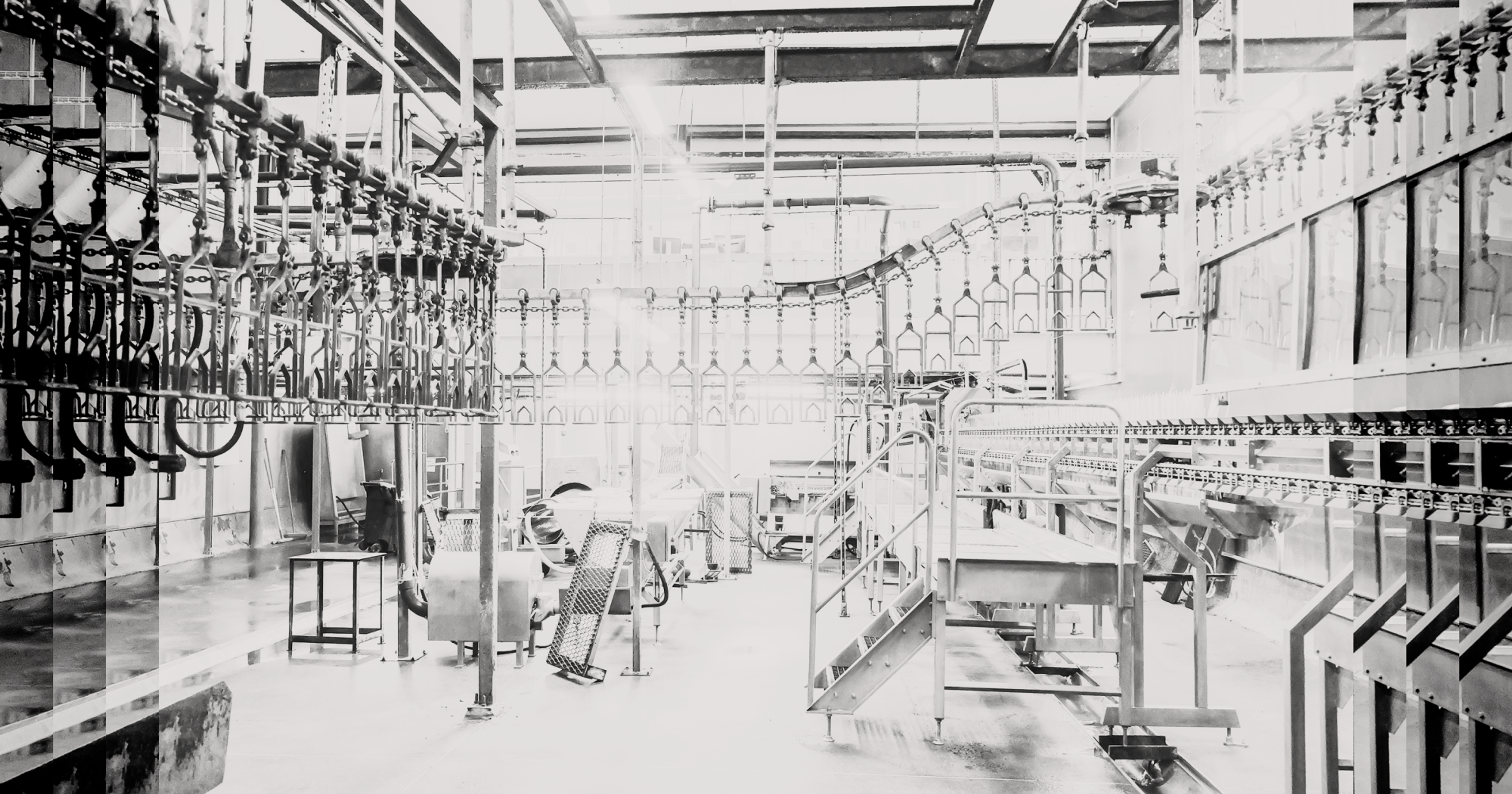
As a result of the continuing effects of the Covid-19 supply chain disruptions, the federal government is also working to spread American processing capacity beyond the big four companies, beginning with a 2021 Executive Order 14017 on America’s Supply Chains. In response to exposed vulnerabilities in the agricultural supply chain, the order called for supply chains that are “secure and diverse — facilitating greater domestic production, a range of supply, built-in redundancy.”
In February of this year, USDA released a major study pursuant to the terms of EO 14017. Chief among USDA’s recommendations are policies that promote competition and transparency in meat markets. For this purpose, USDA and DOJ have created www.farmersfairness.gov, a reporting system where farmers can notify the agencies of anti-competitive practices. In 2021, Chuck Grassley and a number of cosponsors introduced the Special Investigator Act and Cattle Price Discovery and Transparency Act in an effort to uncover exploitative practices on the part of meatpackers that lead to low prices for cattle producers. Negotiated and cash purchases for cattle have been increasingly replaced with formula contracts, where cattle will be signed away at a price to be determined according to a formula by the purchaser at the time of sale, rather than a price negotiated at that time. Without clarity on these formulas, the buyer can stiff a producer. 15 years ago, negotiated or cash sales accounted for more than 50% of cattle sales; today they’re only 20%.
At the same time as members of Congress are pushing for competition, and therefore better prices for a wider set of cattle producers, USDA and states are focusing on regional meat markets. The portion of U.S. agricultural markets dedicated to local and regional sales is small, at around 3%. But it’s on an upward trajectory, growing more than $3 billion in annual sales between 2015 and 2017. Farmers and ranchers are showing increased interest in direct and regional sales, since a larger portion of the revenue in these sales go to the producer than in traditional supply chains. Among these regional support initiatives are the state-level programs mentioned above, a movement to promote Cooperative Interstate Shipment, which allows state-inspected facilities to sell across state lines, and $500 million from USDA in grants for small processors.
In order to promote competition, the USDA is seeking regulatory reform on “Product of USA” labeling through a thorough review of agency practice and FTC enforcement standards, so that foreign products packaged in the United States no longer qualify. It has also launched a new grant program, the Meat and Poultry Processing Expansion Program, for eligible processors to apply for up to $25 million in order to build out facilities, train workers, or otherwise expand capacity.
Another avenue for supporting small processors consists in helping them to bring their plants up to inspection standards. The process of shifting from custom processing, where a butcher processes an animal for private consumption, to inspected processing can be expensive and confusing, and small outfits benefit from assistance in receiving their federal grant of inspection, while the market benefits from a processor’s ability to sell to commercial markets. The USDA will make further grant funding available under the Meat and Poultry Inspection Readiness Grant (MPIRG), and is increasing funding to a program that supports new food supply chain start-ups.
However, farmers and small businesses often have difficulty accessing USDA funds. Grant opportunities often aren’t communicated to their intended audience, and small business owners may have difficulty navigating a complicated application process. For livestock farmers looking to get into processing or farmers interested in opening a cooperative processing facility, for entrepreneurs, and for existing independent processors looking to expand their capacity, a great deal of funding and assistance is now formally available. Whether it will be accessible is another question.
The weakness and vulnerability of the American meat sector was thrown into sharp relief by the pandemic, which has drawn attention to decades-old negative trends for farmers, customers, and independent small businesses. A more diverse set of supply chains in the meat market could provide farmers better profits, customers better meat, and the country a more secure food system.
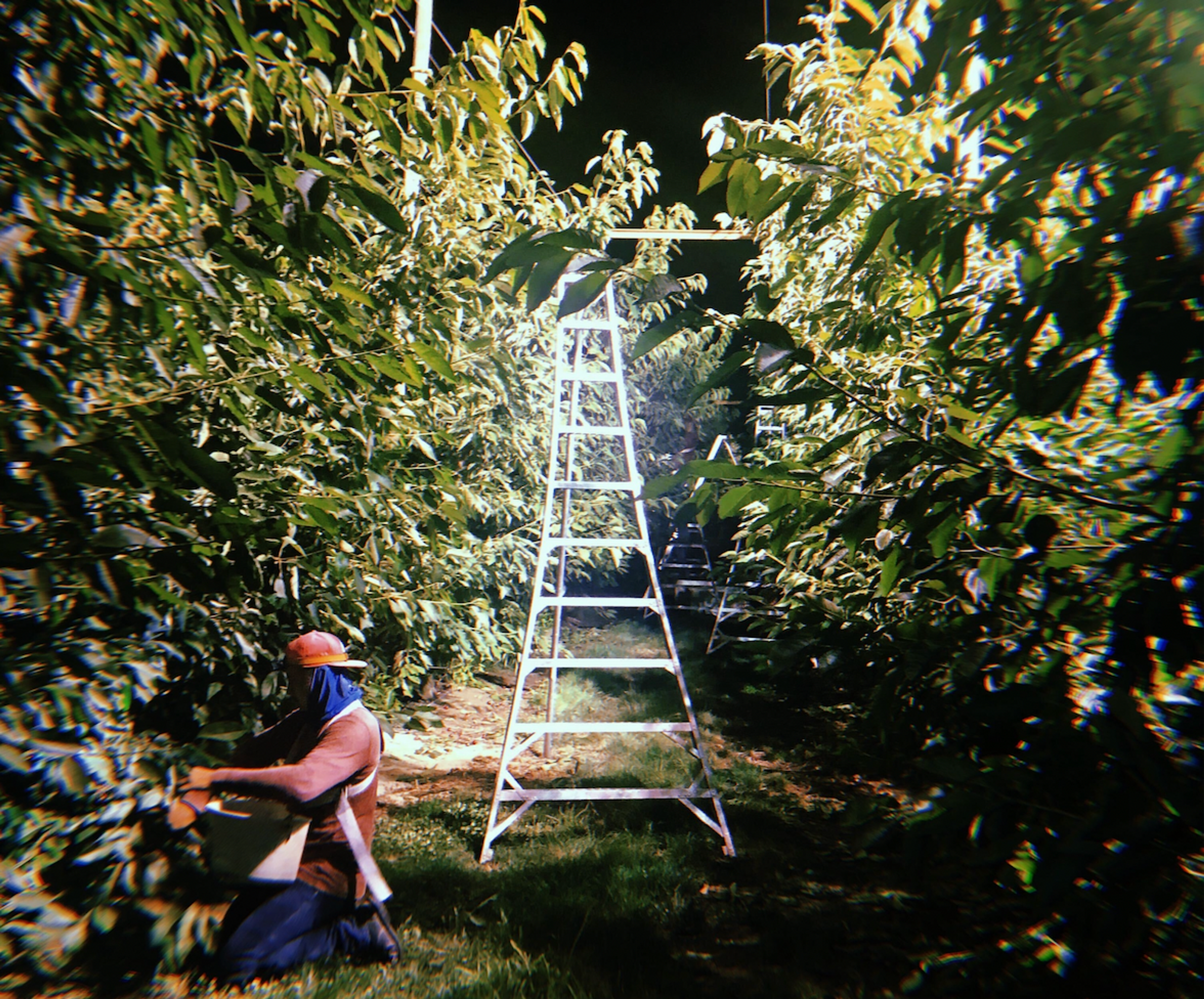
Farmers are facing increased pressure to adapt to a changing climate after suffering a summer of record-setting heat in the Pacific Northwest that damaged crops and caused production complications.
It’s a growing problem as climate change drives more frequent severe weather. The record heat event illustrates the immediate threat, especially in a region known for its mild climate. In June of last year, temperatures soared to record highs in the Northwest. Seattle recorded a new all-time high of 108 degrees, and Portland saw 116 at the peak, while recording several days above 100.
In Washington’s agricultural region east of the Cascades, that meant a scramble for growers to protect valuable fruit crops. Washington is the number one producer of apples and sweet cherries in the United States.
Dan Plath is president of orchard operations at the Washington Fruit and Produce Company, which grows apples and cherries in Grant County. “Nobody had ever experienced anything like it before, with a few days at 115 degrees or hotter at a lot of locations in eastern Washington,” he said. “And we had some high temps during our cherry harvest too, even before that extreme heatwave hit.”
That record-setting heat came with significant risks to operations like Plath’s. If cherries are harvested at too warm a temperature, the fruit risks bruising and “pitting” of the surface. Apples can face sunburn, which ruins their value on the fresh market. “Certainly with the cherry crop, the stakes are that you can lose your crops,” Plath said. “And we did walk away from portions of some blocks.”
“Certainly with the cherry crop, the stakes are that you can lose your crops.”
While the record setting temperatures were a statistical abnormality, research shows climate change is already making extreme weather events more frequent. NOAA climate data shows excessive heat covering more than 50% of the Northwest happened just three times in the first 90 years of data, but already occurred six times in the last 20 years.
Jim Keller manages the orchards of Apple King in Yakima, Washington. He thinks they made out better than most because their higher elevation orchard topped out at a slightly milder 108 degrees. Apple King did increase application of Surround, a clay-based coating to protect apples from sunburn, as a precaution. Still, they lost yield, especially in the cherry crop.
“Normally when we’re packing our cherries we’re between 88 and 92% pack out,” he said. “And this year, we started that way on the first few days, and then every day the heat stress got more and more to them, and we finally quit picking some blocks when we got down around 60% pack out. So we’d lose 30%.”
He also noticed the heat changed the harvest timeline, bringing fruit grown at higher and lower elevations to ripen at the same time, which flooded the market and suppressed prices. While most of his apple crop escaped significant damage, he did discover some sunburn issues. He also believes the fruit was about 10% smaller overall, as heat stress pushed trees to focus on survival over fruit production, and individual apples lost size.
Summer heat is nothing new to farmers, but industry experts say the unseasonable timing and extreme highs made the situation especially difficult. “So to see those [temperatures] in June was earlier than many folks were expecting and prepared for,” said Jon DeVaney, president of the Washington State Tree Fruit Association. “That carried with it a couple of big concerns for people producing in agriculture, particularly for tree fruit.” He estimates that 15-20% of the statewide cherry crop was lost to heat damage.
“There certainly were quite a few growers who really had very substantial losses and would not have any fruit that they could harvest,” he said. “For apples, the damage was not as consistent, which was good for those producers. But it did still cause them some lost fruit, and additional complexity in harvesting where fruit around the perimeters of the tree could be damaged.”
It’s not just tree fruit crops at risk in a changing climate, says NASA ecosystem researcher Shashank Konduri. “Whatever repercussions we all noticed in the Pacific Northwest in this particular case, actually applies to a broader category of all crops and how they respond to growing season increases in temperature, as well as these spikes in extreme weather patterns that we are noticing across the globe,” he said.
In 2020, he authored a research paper that found extreme weather events have enough impact to warrant inclusion in yield modeling projections, thanks to the effects of climate change. “That is also an associated increase in the likelihood of an increase in the intensity and duration of heat waves and extreme precipitation events,” Konduri said. “So with the growing occurrence of these extreme events, there is a greater chance of declining crop yield, not just in the U.S., but across the major breadbaskets of the whole globe.”
Heat is not the only climate threat agriculture faces now, and in years to come. Massive wildfires along the West Coast have blanketed the region in smoke several times in recent summers, making it more difficult for apples to develop proper color, Plath said. Some producers have reported smoke taint of grapes, rendering them useless for winemaking.
Northwest farmers also worry about winter precipitation in the mountains that falls as rain instead of snow. This moisture quickly disappears instead of contributing to snowpack, which melts well into the drier summer months and provides water for irrigation.
In response, individual producers are working to adapt and improve resiliency. In the 2021 heatwave, Northwest fruit growers used a variety of methods to protect their products. Increased irrigation was used where water was available. Plath said his operation continues to expand their use of shade cloth, though it is costly. Overhead water cooling and misting helped as well.
His operation and Apple King also had crews pick fruit at night, sparing both people and produce from the peak daytime heat. “The night harvest really didn’t cost us that much more,” said Jim Keller. “We had to go buy headlamps. And the guys liked it a lot better because it was cooler. Actually, some of the pickers told me it was easier to pick because you’re more focused on where you’re picking, because the headlamp is shining right where you’re at. They thought they picked more at night than they did in the daylight.”
“It made me nervous because I worried about people falling,” he added. “But it worked out OK.” But DeVaney noted many of these mitigations came with an additional financial cost that may not work for all operations.
“I wouldn’t say it is likely to be an existential threat to the whole industry, because there’s the ability to adapt where and how you plan things,” DeVaney said. “But for individual producers, that can mean the location of their orchards or the need to replant to a different variety at great expense. It takes about $50,000 per acre to replant an apple orchard, for example, to a different variety. That is a huge cost. And not every producer, especially a very small producer, can afford to make those costly adaptations. And so for that producer, it definitely would be an existential threat.”
“And not every producer, especially a very small producer, can afford to make those costly adaptations.”
Konduri also noted that some of the more successful interventions – like shade – are only feasible in certain cases. “But some of them may not be applicable to row crops, or cereal crops that are grown across the U.S.,” he said. “And some of them also require a lot of investment.”
Still, growers like Plath and the Washington Fruit and Produce Company are looking to stay ahead of the curve. He wants to ensure that as a fourth-generation farmer, he isn’t the last in his family to do this work. “We’ve been around for 105 years, and we’d like to be around for another 100 years,” Plath said. “So we try and stay the course and do the right thing today.”
“Adapt or die,” he added.
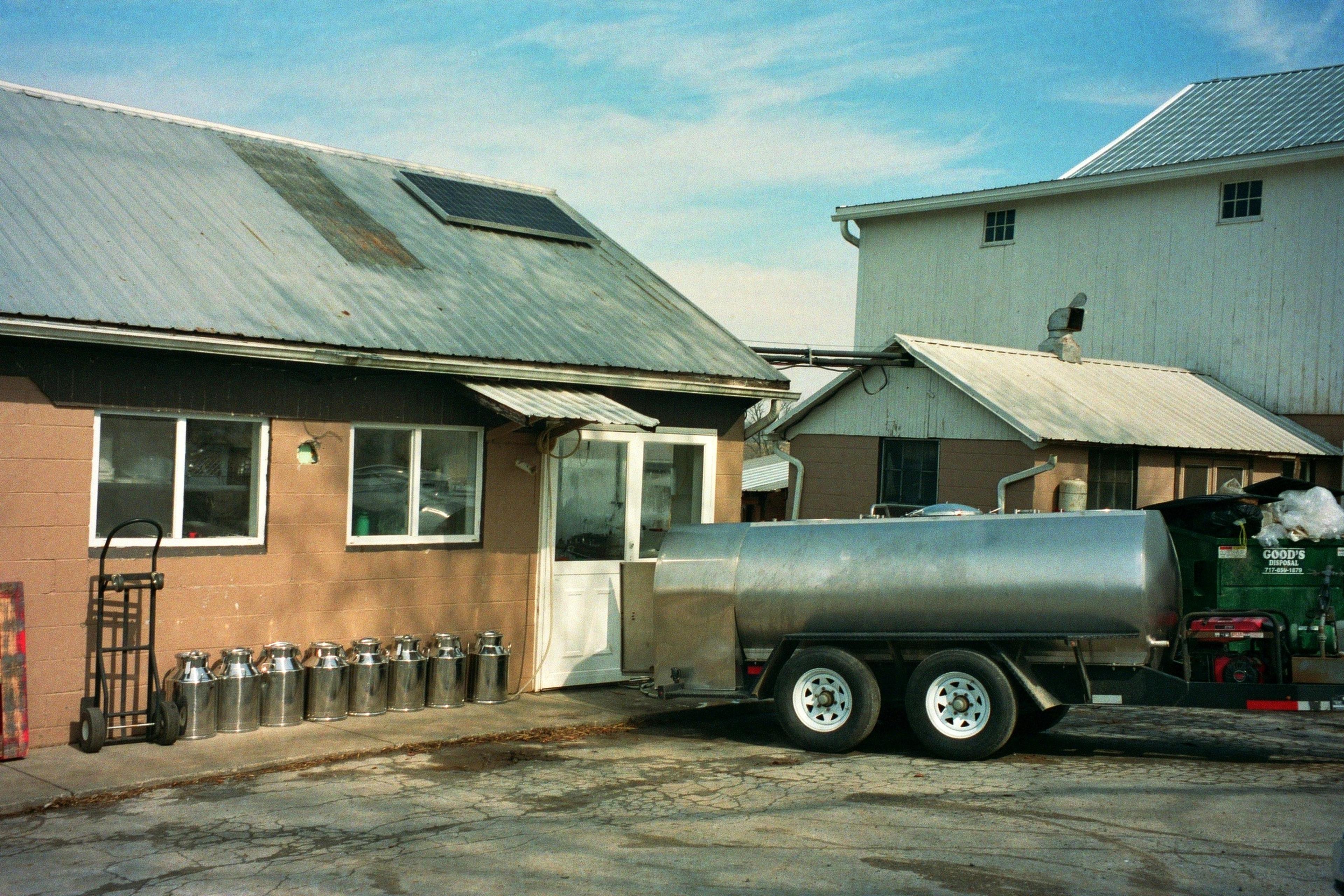
Upon my arrival at Dutch Meadows Farm, I was greeted by two excited blue heeler puppies and chickens clucking noisily. Tucked away in the heart of Pennsylvania Amish country, the farm is a haven for regenerative farming. But it’s also a bulwark for small farms attempting to maintain their independence in an industry increasingly dominated by scale. The farm’s distribution business, Dutch Meadows LLC, works with a couple dozen farms in the region, enabling them to drive a variety of organic foods directly to consumers in major American cities. The result is a robust logistical network that enables Dutch Meadows to fulfill its mantra of “rebuilding our communities and restoring a vibrant food system.”
While the farm specializes in dairy – specifically raw milk – it also offers a wide assortment of products, such as pastured meat, soy- and corn-free eggs, and raw honey. These products come from a close-knit group of Lancaster County family farms. Dutch Meadows handles the packaging of bulk products like eggs into smaller quantities for the end customer. The farm strictly vets the farms it works with, focusing on regenerative farming practices and avoiding pesticides, herbicides, and artificial growth hormones.
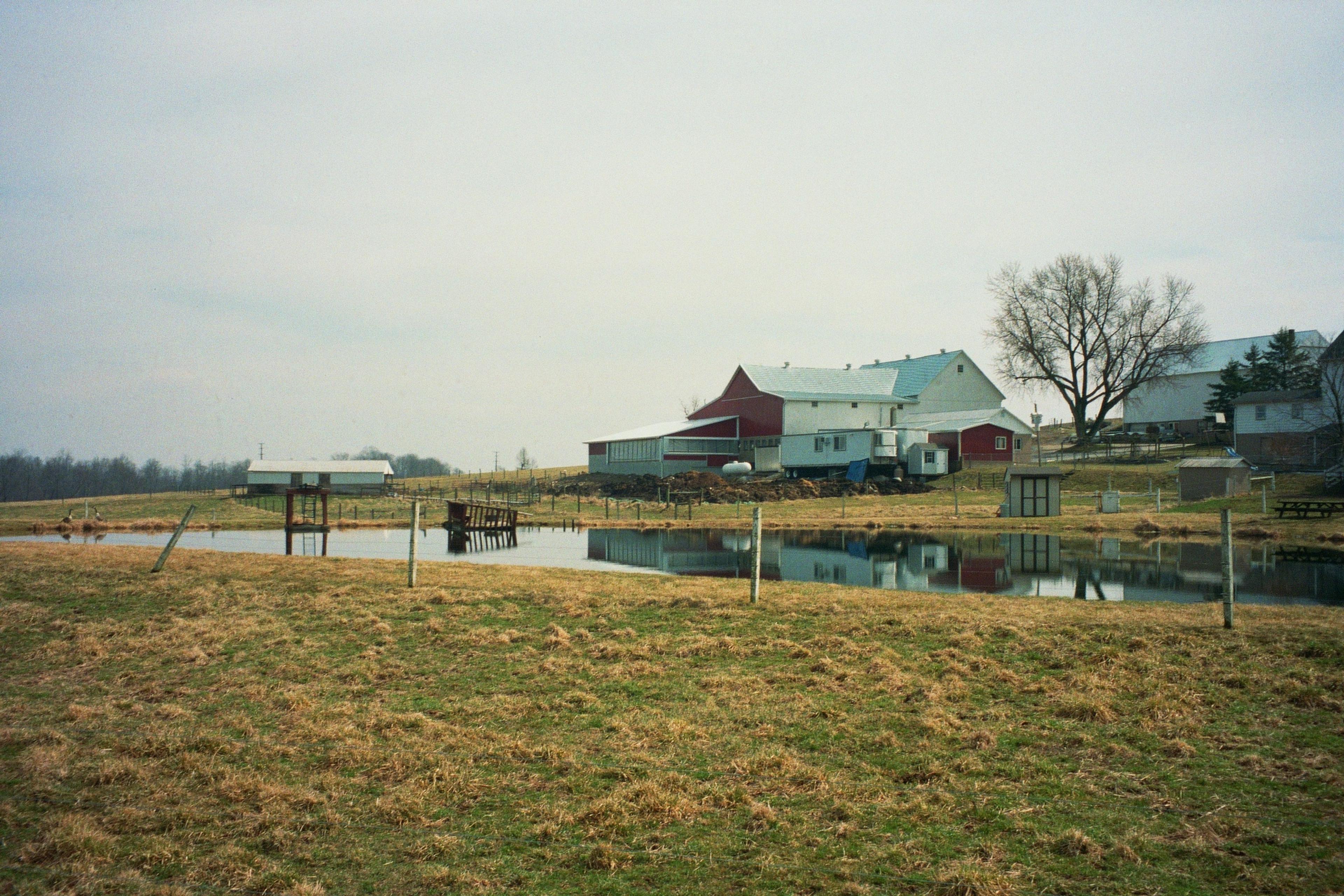
Although visiting the farm store is idyllic, customers usually request delivery. The Dutch Meadows distribution network has helped smaller farms in Lancaster County access a larger, urban customer base in Philadelphia and New York City for locally grown products. Often, Dutch Meadows will draw on its direct-to-consumer experience to suggest a particular food for a new farmer to raise. By selling through Dutch Meadows, farmers are able to sustain themselves from the start, without worrying about finding the customer. Dave Stoltzfus, the third-generation Amish farmer who runs Dutch Meadows, explains, “They meet our protocols or better, and we sell more product for them.” The farm works with several dozen farms to provide ample product: off the top of his head, Stoltzfus lists four dairy farms, three beef farms, four broiler growers for meat chickens, and eight smaller egg layer farms.
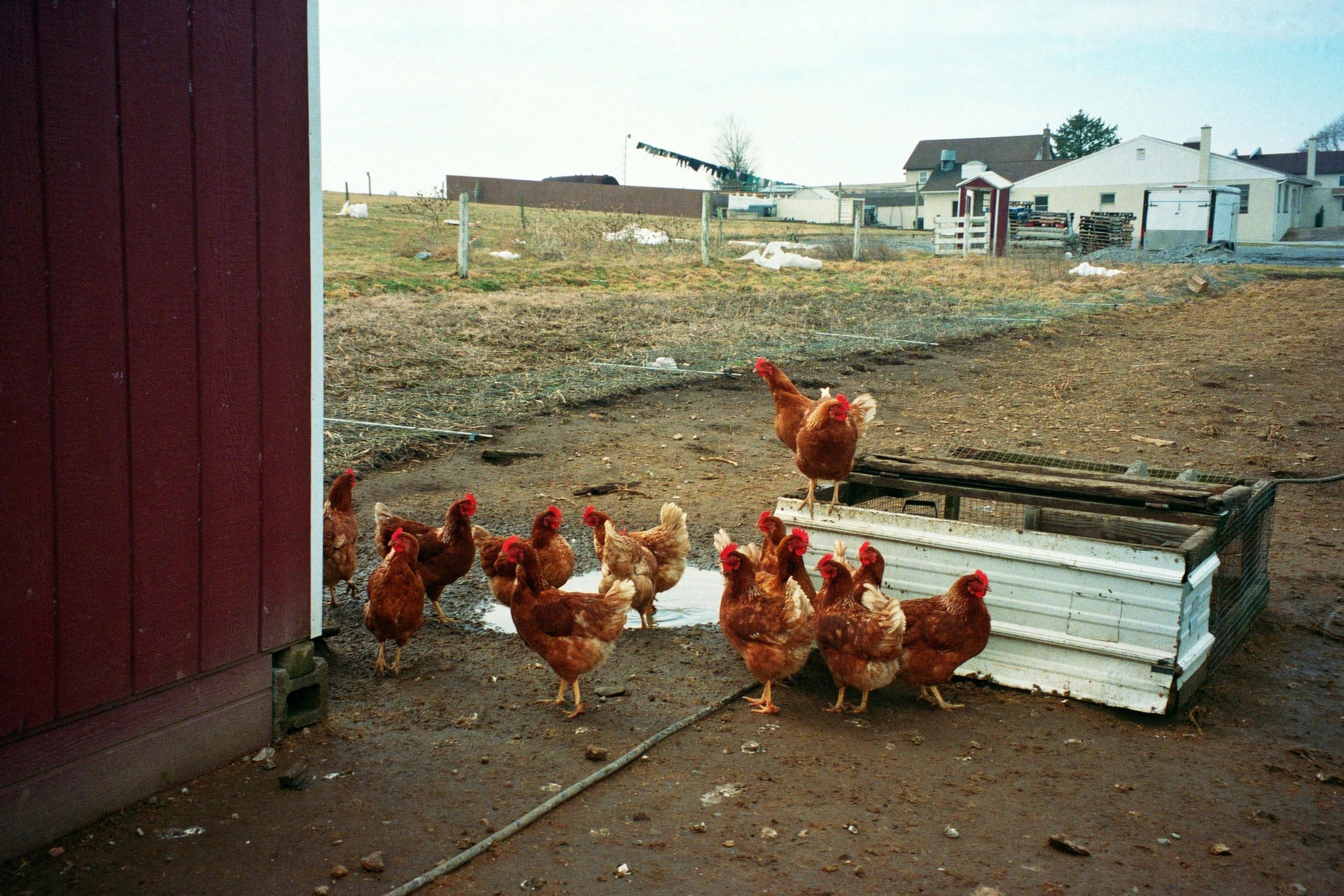
The Dutch Meadows model is helping small farms maintain their operational independence, even as the national landscape has seen broad consolidation among farms. In 2018, the USDA Economic Research Service reported that over the last three decades, cropland acreage has continued to shift to fewer, larger farms. In 1987, 15% of all cropland was on farms with over 2,000 acres of cropland. That percentage rose to 36% by 2012. Dutch Meadows believes investment in a robust, independent distribution network creates a way for small to midsize farms to sustain themselves.
Stoltzfus claims his logistical network of farms benefits every farm in the network. “That’s why we don’t do everything on one farm. We would never be able to supply everything from the farm, so we strictly focus on dairy. That way other farms can focus on their category, like beef, pork, chicken. They can get good at that, and we can get good at dairy… We get together, we share ideas, they know our protocols and standards, and we pay them a premium price for what they do.” Although Stoltzfus believes his model of consolidating distribution is being copied in the region at a smaller scale, he notes that Dutch Meadows is also copying best practices from larger farms. “It’s all about sharing knowledge and helping each other within the community,” he says with a laugh.
“That’s why we don’t do everything on one farm…That way other farms can focus on their category, like beef, pork, chicken. They can get good at that, and we can get good at dairy.”
The farm services a handful of stores with dairy and eggs, but mainly sells via pickup locations and local home deliveries around Pennsylvania. Stoltzfus tells me he realized he could sell directly to consumers for pickup in the 1990s, when friends from Philadelphia began driving to the farm for the creamy raw milk. Stoltzfus began delivering directly to them, and demand grew through word of mouth. More recently, Dutch Meadows has employed direct marketing tactics through their website and social media, enabling them to cut back on wholesale partners and improve their margins. During the pandemic, Dutch Meadows expanded to include direct-to-door deliveries, delivering straight to the consumer at their home, which Stoltzfus says is the most popular option. He estimates direct sales account for 75-80% of Dutch Meadows’ sales.
Two or three Dutch Meadows trucks run four days a week to Philadelphia and New York City, while UPS ships to regions they can’t reach. “It’s a challenge to keep the wheels moving and the trucks running,” Stoltzfus remarks. “In the last few years we’ve learned a lot, and are still learning… With very dedicated drivers, a fleet of refrigerated vehicles, and mapping software [Routific], it works, but you have to keep on top of it.”
The move toward organic has given small Lancaster County farms a new lease on life. The Organic Trade Association reported that in 2020, U.S. organic food sales jumped 12.8% to a new high of $56.4 billion. For Dutch Meadows in particular, interest in raw milk has steadily risen despite restrictive regulations on its sale. In 1987, the FDA outlawed interstate sales of raw milk, but many states have moved towards increasing access in the last two decades. In 2004, raw milk was illegal in 19 states; as of 2022, it’s dropped to six. Today, 10 states have legalized retail sales, and 17 allow direct farm-to-consumer sales. Seven allow herd share agreements, where consumers buy an ownership stake in a cow or herd, and are able to obtain milk proportionate to their share. Although national-level consumption data is hard to come by, both the number of raw milk dairies and their reported customers have increased dramatically in the past three years. In Washington state, where retail sales of raw milk are legal, the number of raw milk licensed dairies grew from just six to 32 from 2006 to 2019. In the same time period, New York’s on-farm sale permits grew from 12 to 37.
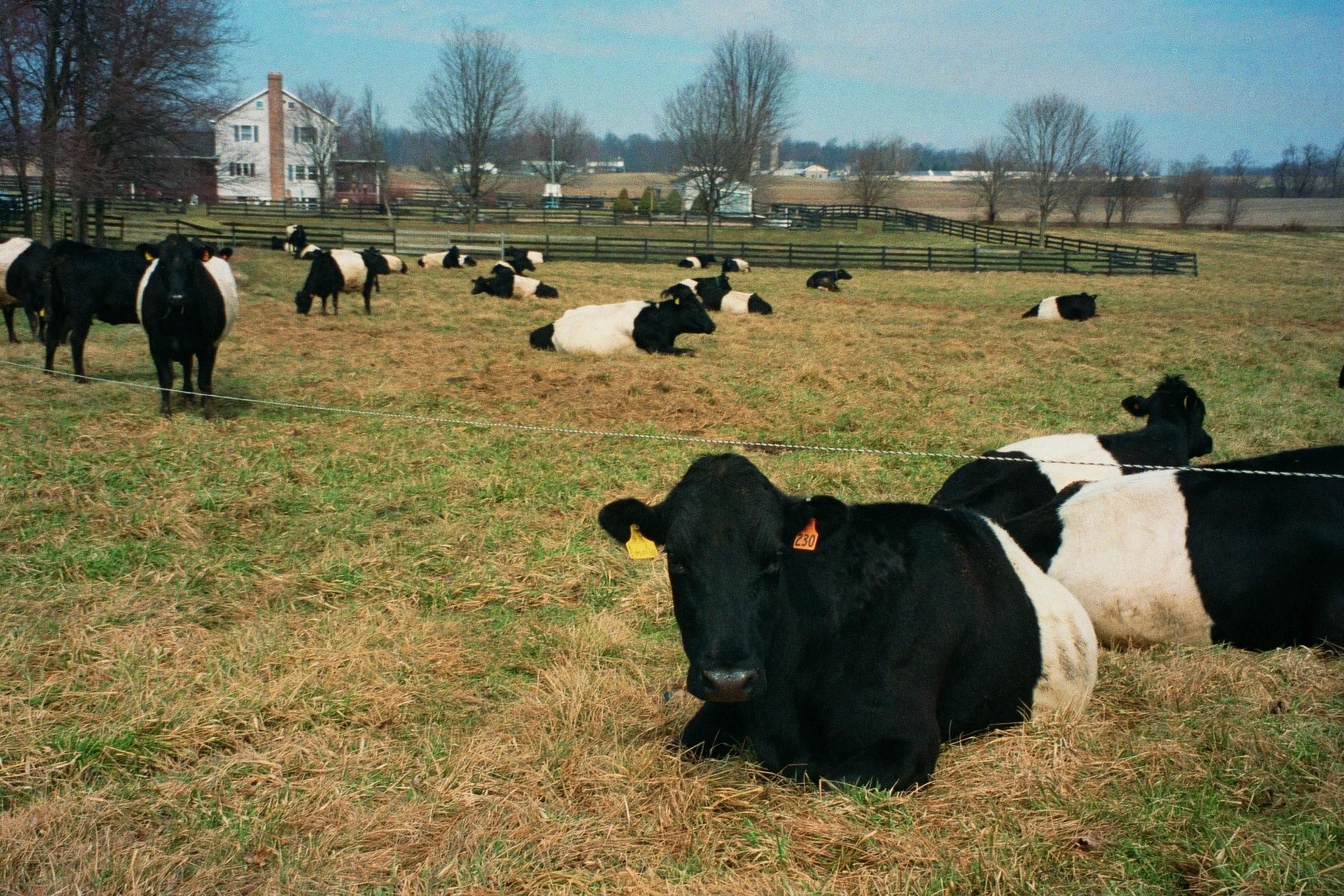
Switching from conventional to organic raw dairy has helped some farmers survive the “dairy crisis,” which has been marked by the rise of alternative milks and plummeting cow milk prices. By selling organic raw milk instead of participating in the traditional commodity market, dairy farmers gain bargaining power. Raw milk consumers are willing to pay a higher price for improved taste and touted nutritional benefits.
Dutch Meadows’ raw milk is state-inspected and certified, and they avoid New York state restrictions on raw milk retail sales by processing online purchases from consumers and delivering directly to a pickup location. The milk comes from the farm’s strikingly beautiful herd of rare Dutch Belted cows. There are only around a thousand pure Dutch Belteds in the world, and Stoltzfus touts their longevity and excellent grazing as qualities that help keep replacement and grain costs down for the farm. Stoltzfus is optimistic that increased consumer interest in raw milk will eventually push states to fully legalize raw milk sales. For now, though, his complex distribution system is enabling several dozen small farms to resist consolidation. If Stoltzfus is right that corporate supply chains will struggle to respond to a post-COVID world, and increased demand for raw milk and organic products continues, that distribution system may be a model for small farms nationwide.
Seventeen years ago, Jennie and Hans Schmidt tried something new on their 2,000 acre family farm in eastern Maryland. Designating a 100-acre section for organic crops, the couple spent four years transitioning the land to earn the USDA’s certified organic designation on the grains growing from it. Such a transition requires farmers to comply with a long list of USDA regulations, conceived to ensure that crops certified as ‘organic’ result from “an ecological production management system that promotes and enhances biodiversity, biological cycles, and soil biological activity.”
But after seven years of organic farming on those 100 acres — four years to make the transition, followed by three years producing certified organic corn — the Schmidts found the organic farming hadn’t paid off. They decertified the organic portion of the farm and replanted Bt corn, a genetically modified crop. Their story highlights the challenges some farmers face when attempting to meet organic certification standards while still profiting from and caring for their local environment.
“It was an economic decision,” notes Jennie, referring to both the creation and demise of the organic section of the farm. “The yields were down, and if your overall yield is so reduced compared with biotech corn, it’s an overall loss.”
Hans Schmidt serves as Maryland’s Assistant Secretary of Agriculture for Resource Conservation, making the Schmidts especially attuned to sustainability concerns on their farm. But their difficult experience with organic agriculture is not unusual among farmers. Surveys from the past two decades suggest that a substantial number of farmers move away from organic agriculture after becoming certified, despite consumer demand for organic food steadily driving up organic production. In 2012 survey data from sixteen states, 36% of 234 farms reporting organic status had been organic, but then had dropped certification. In 2008, a UC Davis study reported that 20% of California organic farmers had dropped organic between 2003 and 2005.
In the American regulatory system, GM or transgenic crops and organic certification are mutually exclusive: a farm or farm section can grow genetically modified crops or be organic certified, but not both. Farmers interested in organic techniques are therefore often hamstrung, as studies suggest organic farming produces lower yields compared with conventional agriculture. Farmers must balance the benefits of genetically modified crops against the premium price attached to crops bearing the organic certification.
The financial decision to transition to organic farming is characterized by a series of tradeoffs. Broadly speaking, organic products require fewer inputs, exhibit lower yields, and command higher prices than their conventional counterparts, and it is therefore common to make a holistic comparison on the basis of net return per acre planted. Examining this metric across farms in the US, the Center for Commercial Agriculture at Purdue found that organic corn producers received a greater net return per acre than conventional producers on average, but the magnitude of the improved return varied greatly by the sophistication of the farming operation. The top performing decile of organic corn growers achieved almost five times the return of their conventional counterparts, whereas the lowest performing decile of organic corn growers on average achieved only double their conventional neighbors’ return.
Some studies suggest that GM crops may make agriculture more sustainable by reducing use of land and consumables as well as production of greenhouse gases. A recent German analysis of agricultural data claims the European Union could decrease its agricultural greenhouse gas emissions 7.5% by expanding the use of GM crops and. The researchers calculate that a shift to more GM crops would prevent the release of 33 million tons of CO₂-equivalent gases, largely by avoiding the development of more land for farming.
The Schmidts encountered other sustainability challenges in their organic transition. Their farm sits on Maryland’s Delmarva peninsula, where coastal soils are loose and vulnerable to erosion. As a result, the Schmidts have historically practiced no-till farming, which releases less carbon from the ground than tilling methods. The Schmidts crimp the cover crop down to form a thick mat of residue on the soil surface in hopes of suppressing weeds. But practicing no-till while attempting to keep the organic certification proved difficult, as weeds outcompeted the crop. The Schmidts eventually switched to tilling their organic land, which exacerbated soil erosion. The Schmidts would have preferred to maintain an organic certification without tilling, but most herbicides don’t qualify as organic. Compared to their non-organic colleagues, organic farmers can avail themselves of far fewer herbicide options. “The biggest drawback to organic farming for us was the damage that tillage does to the soil,” says Jennie. “If no-till organic production had been successful, I think we’d have kept that farm in organic production.”
To protect their organic corn, the Schmidts sprayed it once or twice per year with Dipel, an organic insecticide made of the bacterial species Bacillus thuringiensis. The bacteria produce Bt protein, which kills the corn earworm. Bt is harmless to mammals, including humans, because we lack a receptor present in the insect worm’s digestive tract. In contrast, the Schmidts’ GMO corn, known as Bt corn, is genetically engineered with the Bt gene. It produces its own internal Bt in amounts large enough to kill the earworm, and is a more successful pest-killer than spraying organic corn externally. Since Bt corn is a transgenic crop, however, it’s a disqualifier for organic certification.
Since switching back to Bt corn, the Schmidts have resumed no-till farming.
Demand for organic products will likely continue to rise. It remains to be seen whether family farmers like the Schmidts will be able to benefit from that demand.

The Russian invasion of Ukraine has driven a global spike in wheat prices, both in futures and regular markets. However, global food prices were already trending upward, driven by the omni-crisis of COVID-19, drought, and a resultant cascade in supply chain issues. Even in the unlikely event of a quick resolution to the war in Ukraine, the background factors that drove wheat prices up will continue to shape global and American markets.
One way to assess these global background factors is to look at the Food and Agriculture Organization’s (FAO) tracking of food prices pre-Ukraine crisis. This data source tracks the aggregate food price index based on all the other food indices, so it’s useful for getting an overall sense where food prices globally are headed.
Founded in 1945 under the United Nations (UN), the FAO manages the UN’s agriculture-related initiatives to reduce hunger and increase global agricultural productivity, including teaching farmers about soil productivity and dealing with the impacts of desertification. To track global food prices, the FAO maintains indices that track a basket of food prices such as cereal, vegetable oil, dairy, meat, and sugar. These prices are aggregated into a master food price index, with each part weighted slightly differently. To actually construct the indices, the FAO tracks multiple prices for a given commodity, and uses a Laspeyres index with the set of collected prices to construct a new index for a given year. To track if prices go up or down, the FAO sets a “base year” price of 100 for comparison with the current year.
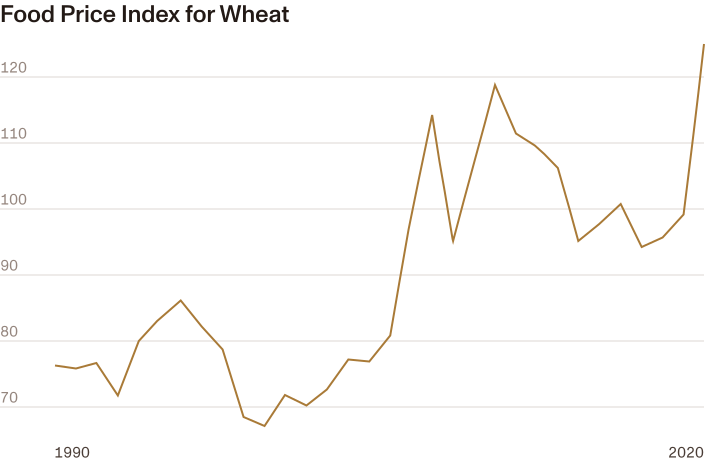
The price of wheat has skyrocketed from supply chain issues and drought driven by climate change. In 2020, the price index for wheat was 103.1. In 2021, it jumped to 131.1, a 27% increase.
Increases in the price of food in the U.S. have become a major political issue, with new records in food inflation at home driving consumer frustration. In December 2021, the Bureau of Labor Statistics (BLS) tracked a 6.3% yearly increase in prices. But the problem has largely been driven by global adjustments to COVID-19. The FAO tracked a South Korean food price increase from 103.39 in January 2021 to 109.10 in January 2022. In India, food inflation rose 4.05% in December 2021.
In the U.S., the BLS and the Department of Agriculture (USDA) both measure food prices. These food price baskets are created from data collected on families and households, which are then aggregated and weighed based on importance. Sub-indices based on the data collected are created for categories from residency in a rural or urban area, to specific population groups.
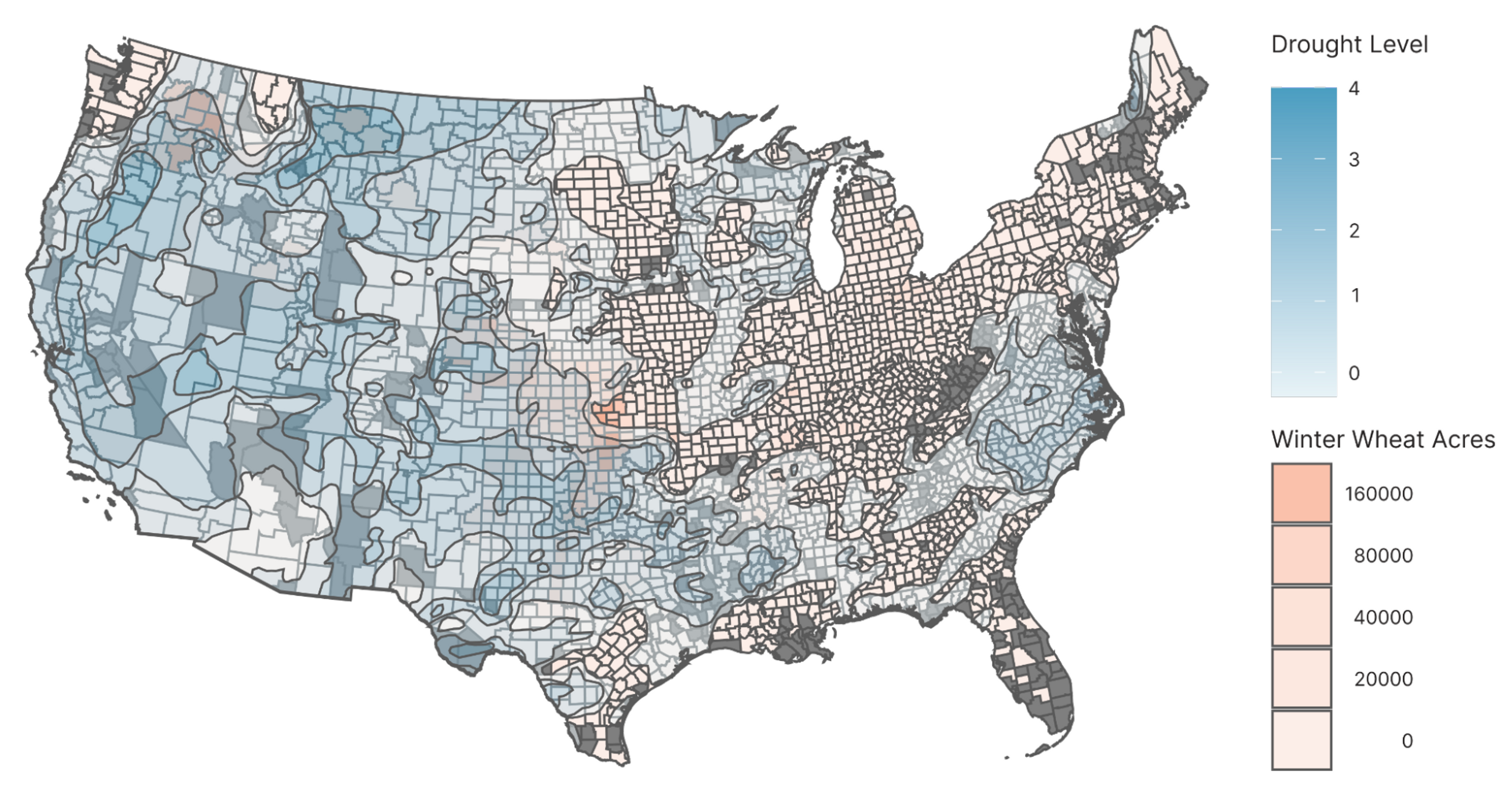
Food prices were already spiking globally for multiple interconnected reasons. Increases in oil prices make it more expensive to produce food, leading to costs being passed directly to the consumer via increased food costs. Despite high prices, farmers are concerned about their bottom line; in a February 14-18 poll from the CME Group and Purdue University, 47% of farmers polled said high input costs were their biggest worry. Droughts, including in wheat-growing areas of Russia, are contributing to an increase in food prices as well.
In the United States, wheat prices skyrocketed as a result of the Russian invasion of Ukraine, which has sharply constricted supply. The invasion poses a global problem because of the EU’s heavy reliance on Ukrainian food production; in 2020, Ukraine was the fourth largest supplier of food to Europe. Prices will likely continue to spike as the war continues.
But even before the war, drought and COVID-19 effects were driving prices up. At the end of 2021, severe droughts and pests caused a poor harvest in spring wheat. It did not help that the cost of various goods to produce wheat, such as fertilizer, have gone up as well over the past decade. The most recent spring wheat planting had record lows in bushels harvested. A 2022 USDA report notes that drought is currently affecting wheat production in the United States: American wheat exports have reached a six-year low and a near-record low due to droughts in the Northern Plains and Pacific Northwest.
American wheat supply isn’t going to suddenly collapse; the United States exported some 810 million bushels of wheat for 2021/2022. But 2021 was the second lowest year for total American wheat exports since the 1970’s. 55% of spring wheat, including 78% of Durum wheat in 2020, was farmed in a region with drought.
The increasing global volatility in food prices mirrors what happened during the 2008 financial crisis, when food costs only went up in tandem with global increases in unemployment. Since all major food groups except sugar tracked by the FAO face price increases, it is challenging for consumers to reduce food spending by engaging in consumption substitution. As COVID-19 recedes and supply chains stabilize, prices should slowly come down. But this latest bout of food inflation tells us that our globalized food price regime is quite unstable, and consumers will feel pain in their wallets for some time yet.

The Russian invasion of Ukraine is sending ripples of uncertainty through nearly all global markets. As war intensifies, turbulence in the agricultural sector is significantly shaping grain, fuel and fertilizer prices worldwide.
In recent years, the Black Sea region has come to play an important role in the global food supply. Russia is the world’s leading wheat exporter; combined with Ukraine, the two countries account for about 23% of global wheat exports. Ukraine alone exports nearly half (46.9%) of the world’s sunflower oil and 16% of its corn.
Mediterranean, Middle Eastern and African countries rely heavily on Black Sea grain exports to feed their populations: Egypt imports 85% of its wheat from Russia and Ukraine, while Turkey, Pakistan and Madagascar all import more than half of their wheat from the two countries.
But as Russian forces advance through Ukraine, Ukrainian farmers will be unable to sow, harvest, or ship wheat as they have in previous years. And as sanctions on Russia from around the globe mount, demand for its exports will certainly diminish.
Already, the conflict is posing logistical challenges for agricultural shipments from the region. On February 24, a cargo ship chartered by international agribusiness corporation Cargill was struck by a missile in the Black Sea off the coast of Ukraine.
Port closures, too, are posing challenges for Black Sea agricultural exports. Last week, the Ukrainian military paused shipments from all of its ports — including the key grain exporting hubs of Odessa and Chornomorsk. And Russia closed the Azov Sea, which contains smaller ports that export grain mainly to neighboring countries, to commercial shipping. Shipments of Ukrainian sunflower oil to India, the world’s largest consumer of the cooking oil, are also facing disruptions.
Sanctions from the West have not yet banned food imports from Russia. But those taking the heaviest punitive steps, like the U.S. and E.U., have never been significant markets for Russian grain. As Western nations bar Russian banks from international financial infrastructure, like the global money transfer system SWIFT, Russia’s ability to participate in global trade will be severely restricted.
Around the world, markets are reflecting this turbulence. On March 2, wheat futures on the Chicago Board of Trade rallied to a 14-year high and have continued to spike at the time of publication. In Paris on February 25, milling wheat prices rose 16% to reach a record high. But will American farmers, or producers in other grain yielding nations like Argentina or Australia, realize any benefits from high grain prices? In the short term, it’s likely: farmers with grain in storage will be able to sell now or lock in favorable futures prices. Over the longer term, climbing fuel costs and conflict-driven turmoil in the fertilizer market suggest it’s unlikely that American farmers will see sustained gain in margins despite rising grain prices.
Intervention from China could soon bolster demand for Russian wheat. Historically, China has restricted Russian wheat imports due to concerns over plants infected with Tilletia controversa, a pathogenic fungus that causes dwarf bunt disease, which leads to stunted growth and crop loss. On February 25, the Chinese government eased restrictions on wheat imports from Russia — a move that could alleviate pressure from Western sanctions on Russia and ultimately shift grain markets back toward pre-conflict equilibrium.
Fertilizer markets are experiencing volatility too. On February 24, U.S. Secretary of Agriculture Tom Vilsack warned fertilizer suppliers against price gouging over the Russia-Ukraine war. Vilsack called the potential for fertilizer companies to take advantage of circumstances “my biggest and deepest concern.”
And understandably so: sanctions on fertilizer imports from Russia could prove a disruptive force in markets around the world. Russia, the world’s largest exporter of fertilizer and a producer of key inputs ranging from potash to natural gas, exported $8.85 billion worth of fertilizer in 2019, according to OEC data. And the U.S. is the third largest importer of Russian fertilizers, behind Brazil and China.
Most concerning for global fertilizer markets is the availability of potash — a critical input for nitrogen fertilizers, of which Russia produces 20% of the world’s supply. Only Canada produces more. Belarus, a leading potash producer and Russian ally also facing sanctions, diverted potash from a Lithuanian port to Russia, further strengthening the Kremlin’s grip on fertilizer supply chains.
While North American fertilizer prices have risen from pre-conflict levels, according to the Green Markets price index, Brazil will likely feel the greatest effects of international sanctions on Russian fertilizer exports. Brazilian farmers depend heavily on nitrogen fertilizers — about 85% of which are imported — for corn, coffee and soybean crops. And throughout the country, fertilizer retailers are reporting record sales as farmers scramble to scoop up supplies. As Brazil competes with America for market share in commodity crops, this dynamic may benefit American farmers in the short term.
As in nearly every other sector, rising gasoline and diesel prices are also increasing production costs in agriculture. Russia accounts for about 11% of global oil production. As Russian forces moved into Ukraine, oil reached $100 per barrel, an eight-year high. While prices have fallen slightly since, sanctions on Russian oil exports will likely mean sustained high fuel costs.
Commodities markets are global. And while foreign nations that rely heavily on Russian grain, fertilizer, and oil will see the greatest conflict-related negative effects, American markets will also experience volatility. The coming days, weeks and months will likely pose more questions than answers.
The United States Department of Agriculture (USDA) has a broad mandate, seeking to achieve concurrent goals through its various agencies and initiatives. Two such goals are represented by the programs at the core of our analysis: (1) conservation and (2) risk management.
These goals are both among the USDA’s highest priorities. Risk management keeps food producers in business through highly variable farming seasons, thus retaining farming expertise and providing security for the nation’s food supply. Conservation protects the nation’s watersheds and allows depleted soils to recover, ensuring that there are fertile farmlands for future generations. The two goals are not inherently at odds, but individual programs can inadvertently compete for the same producer pool’s attention and farmland.
In this new article, we use a cutting-edge econometric analysis to take advantage of the natural experiment created by the rollout of PRF insurance to find evidence that these two USDA programs are indeed cutting into each other’s enrollments. These programs have significant budgets, and it is possible that the competition between them is raising the total cost to the USDA to meet both its risk management and conservation goals.
Conservation Reserve Program (CRP)
The Conservation Reserve Program was created as a result of The Food Security Act of 1985. CRP participants cease agricultural production on portions of their land that have been deemed “environmentally sensitive” in exchange for rental payments from the government. Halting this production is meant to aid in the recovery of soil health, water quality, erosion, and wildlife habitats. CRP expanded from a limited application window now known as the “General sign-up period”, and has added an additional “Continuous enrollment period” for land that is particularly important for certain environmental concerns. This analysis includes acreage from both the General and Continuous CRP sign-up periods.
Pasture, Rangeland, and Forage Index Insurance (PRF)
Pasture, Rangeland, and Forage rainfall index insurance began in 2007 as a pilot program developed by the Federal Crop Insurance Corporation (FCIC). Its goal is to provide insurance for livestock producers who were traditionally underserved by existing federally-subsidized crop insurance.
PRF insures livestock producers against below average rainfall that would reduce hay and pasture yields. This can trigger a cascading series of effects for ranchers: increasing costs by requiring additional feed purchases and/or reducing revenues by forcing earlier-than-anticipated sales.
A livestock producer can enroll any pasture or hay acreage in PRF so long as it is utilized to feed livestock, but—relevant to our analysis—acreage enrolled in CRP is not eligible.
Unlike traditional crop insurance products offered by the FCIC which are structured around producers’ observed yields, PRF is structured around an index—AKA an average—of historical rainfall data. Rainfall in insured acres is compared to this index, and the policy holder receives payment if observed rainfall drops sufficiently below the historical average.
This technique lowers the cost of program implementation and decreases the time it takes producers to receive payment when a loss occurs because insurers do not need to expend resources measuring and verifying a producer’s yield.
The Rollout of PRF Created a “Natural Experiment”
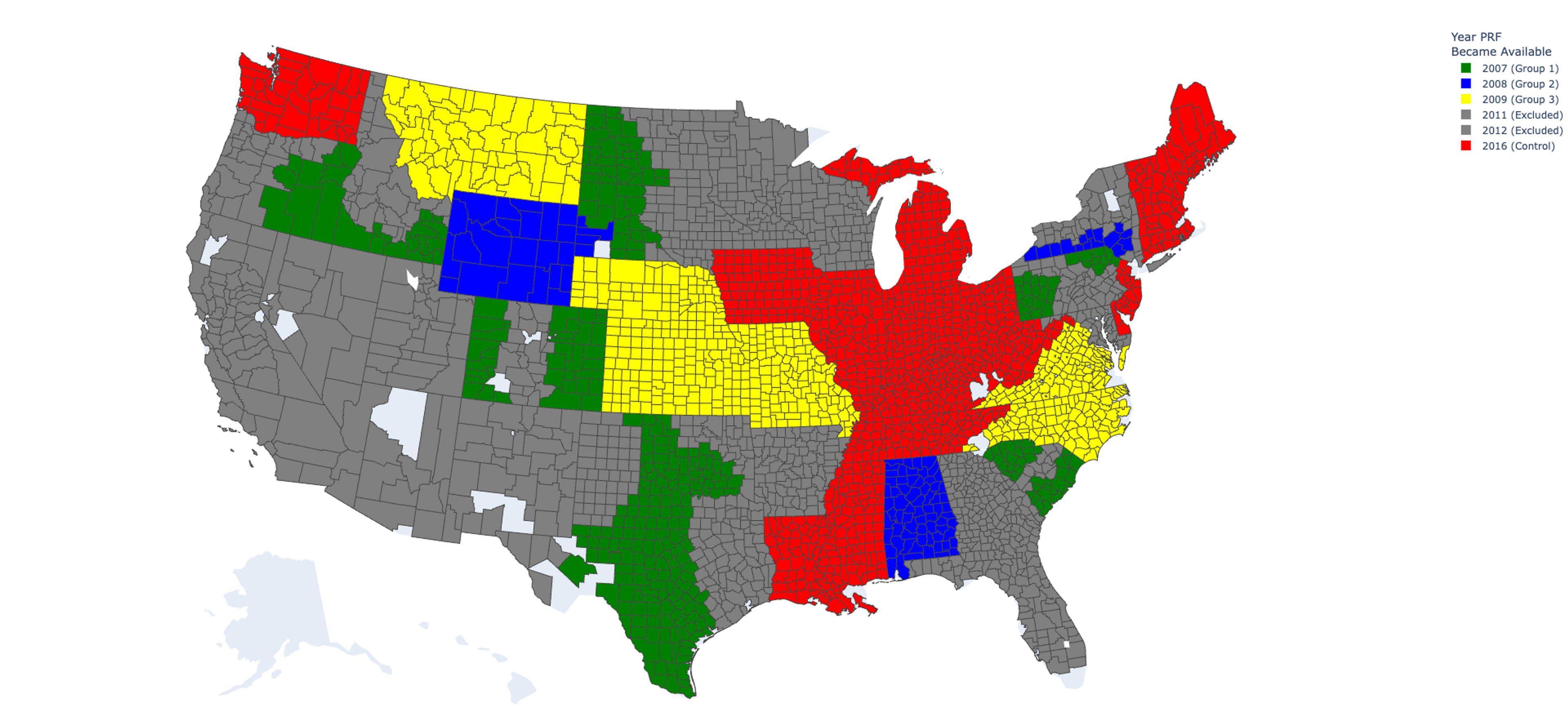
The groups visualized above will be referred to throughout the analysis.
In economics and other social sciences, it is rarely possible to conduct a controlled experiment to directly answer a research question because when large groups of humans are the experimental subjects, most experimental treatments are neither feasible nor ethical. Economists instead seek out so-called “natural experiments”, where an event coincidentally separates the research population into subsets that resemble treatment and control groups.
As visualized in Figure 1, the PRF insurance product was introduced to select counties starting in 2007, and increased its footprint year-by-year until it was available to all counties in the US for the first time in 2016. CRP was available nationwide during this entire time period. These conditions constitute the desired “natural experiment” and create a treatment group (counties with access to both CRP and PRF) and a control group (counties with access only to CRP) for each year between 2007 and 2013. By comparing these groups, we can measure the effect of PRF availability on CRP enrollment.
Data
We compiled panel data of county-by-year observations for CRP enrollment, PRF availability, and the below covariates from 2007 through 2015. Because CRP began to be limited by its acreage cap in 2010, we exclude counties that gained access to PRF between 2010 and 2013 from our treatment groups. Table 1 summarizes the variables of our dataset.
| Dependent Variable | Description | Sample Mean | Sample Standard Deviation |
|---|---|---|---|
| Share of cropland enrolled in CRP | CRP Acres / All Cropland Acres | 5.5% | 8.3% |
| Independent Variable of Interest | |||
|---|---|---|---|
| Availability of PRF in county | True or False | Not Applicable | Not Applicable |
| Additional Control Variables | |||
|---|---|---|---|
| Historical CRP Share (10-year average, as of 2006) | CRP Acres / All Cropland Acres | 5.4% | 8.1% |
| Historical Average Precipitation (April - September 10-year average, as of 2006) | Millimeters | 544 mm | 183 mm |
| Historical Average Temperature (April - September 10-year average, as of 2006) | Degrees Celsius | 20.0 ℃ | 3.5 ℃ |
| Total Cropland Acres | Acres (2002 Census) | 144,726 Acres | 149,232 Acres |
| Share of Cropland that is Pastureland | Pasture Acres / Cropland Acres (2002 Census) | 21.6% | 19.8% |
Our main hypothesis is that introduction of the PRF program reduced the share of CRP acreage. Thus, the outcome of interest is the county-level annual share of CRP acreage, which is measured by active CRP acreage divided by each county’s total cropland acreage. We leverage the “natural experiment” of PRF’s rollout to test for causality. Therefore, the first year of PRF availability in a county is our key experimental variable.
The additional control variables are meant to capture potential systematic differences between the groups of counties that were given access to PRF in different years. For example, PRF was available to most Texas counties in 2007, but PRF was not open to New York counties until 2008. We suspect these two states likely enroll in CRP at different rates for reasons other than PRF availability, and thus use the broad pasture-agriculture-related variables above to define and adjust for those differences.
Methods
With a “natural experiment”, one can use a “Difference-in-Differences” approach to estimate the effect of a treatment, like the introduction of PRF insurance. The “Difference-in-Differences” family of models are so named because they seek to show causality by:
Eliminating factors that are constant over time within the treatment group by subtracting the treatment group’s end state from its beginning state (Difference #1).
Eliminating factors that are constant over time within the control group by subtracting the control group’s end state from its beginning state (Difference #2).
Subtracting the control group difference (Difference #2) from the treatment group difference (Difference #1) to eliminate all time factors and be left with only the impact of the experimental variable. (Hence, the final estimate is a difference between two differences.)
In the current analysis, we are interested in the difference in CRP enrollment over time as impacted by the difference in availability of PRF insurance over time. Estimating a “Difference-in-Differences” model with the two-way fixed effects estimation is most statistically sound when the data has only two time periods—before and after an event of interest—or the effect of the intervention is assumed to be equal across units. In this analysis, however, we have multiple time periods among which our experimental groups change sizes—PRF was made available to more counties every year until it was available nationwide—and it is reasonable to expect the differences in the treatment effect across counties. In such a formulation, the standard two-way fixed effects estimation has the potential to be biased.
A new econometric technique described by Callaway and Sant’Anna (2020) has been introduced as an alternative. This technique solves the multi-period problem—In our specific case caused by the staggered rollout of PRF—by estimating unique treatment effects, or ATT, for each group-time pairing. Thus, in our main analysis, the Callaway and Sant’Anna method estimates a total of 27 average treatment effects: 3 groups of counties with effects measured across 9 years of observations, including placebo effects during the pre-event periods. It’s difficult to draw conclusions about broad trends with such specific estimates, but Callaway and Sant’Anna provide aggregation techniques so that one can aggregate the group effects for broader interpretation. In the current analysis, we focus on a simple weighted average of the effects among all treated groups during the post-event periods and a dynamic aggregation where we aggregate the effects by length of treatment exposure—the years since PRF was introduced.
As discussed in the earlier section, one may worry about the fundamental difference between the 3 groups and the control group. Thus, we conduct an adjustment and reweight the observations using the additional control variables in Table 1. The procedure of the doubly robust estimation follows that of Callaway and Sant’Anna (2020).
Results
We found that (1) a county’s access to Pasture, Rangeland, and Forage index insurance causes less acreage to be enrolled in the Conservation Reserve Program and (2) the effect becomes stronger the longer both products are available. Our main model gives the following estimates for the group-time effects of PRF availability on each group of counties:
CRP enrollment is reduced when PRF insurance becomes available
While the direction of the individual group-time estimates suggest that PRF insurance substitutes for CRP, the estimates in Figure 3 are small and only statistically significant for the final group. As discussed above, these estimates can also be interpreted broadly when the groups and times are aggregated. When we aggregate across both, we arrive at an estimated effect of -0.0065 which is significant at the 95% confidence level. These estimates are in the units of the dependent variable—CRP share of all cropland in the county—and therefore that total effect can be interpreted as follows: The availability of PRF insurance reduced the CRP enrollment share by 0.65%. With the average CRP enrollment share at only 5.5%, this 0.65% represents a 12% decrease in average CRP enrollment.
The longer that PRF insurance is available, the more CRP enrollment is reduced
Another way to aggregate the estimates above is by time, specifically by the amount of time that has passed since PRF was made available in a group of counties. Figure 4 plots those aggregated estimates. This aggregation shows a statistically significant impact that grows over time: the availability of PRF reduces CRP enrollment by 1% after 3 years, and almost 2% after 7 years.
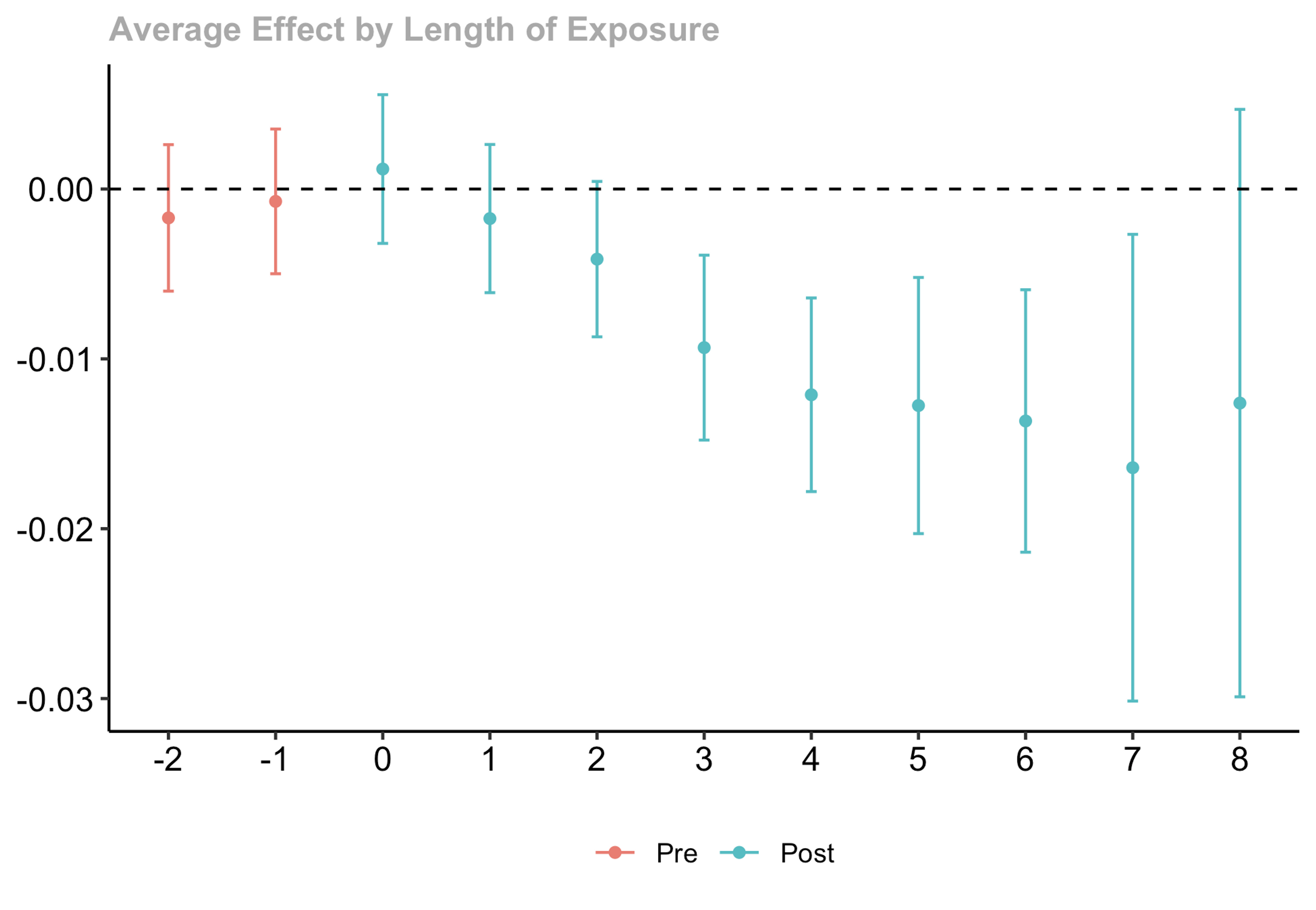
Implications
In this analysis we have found that (1) a county’s access to Pasture, Rangeland, and Forage index insurance causes less acreage to be enrolled in the Conservation Reserve Program and (2) the effect becomes stronger the longer both products are available.
Economic incentives of the two programs are conflicting: PRF is a subsidized insurance program that requires producers to keep using their pasturelands for haying or grazing in order to benefit, whereas CRP is a conservation program that incentivizes producers not to utilize their lands. As CRP participation is for terms of at least 10 years, but PRF participation is annual, we observe a pattern of lower CRP enrollment that increases over time as more CRP contracts end.
An implication of our findings is that unrelated policies can interact with each other’s objectives in unintended ways. Policymakers and the administrators of these programs may decide these interactions are positive, negative, or neutral, but their existence should be intentionally considered so as to most efficiently allocate taxpayer resources.
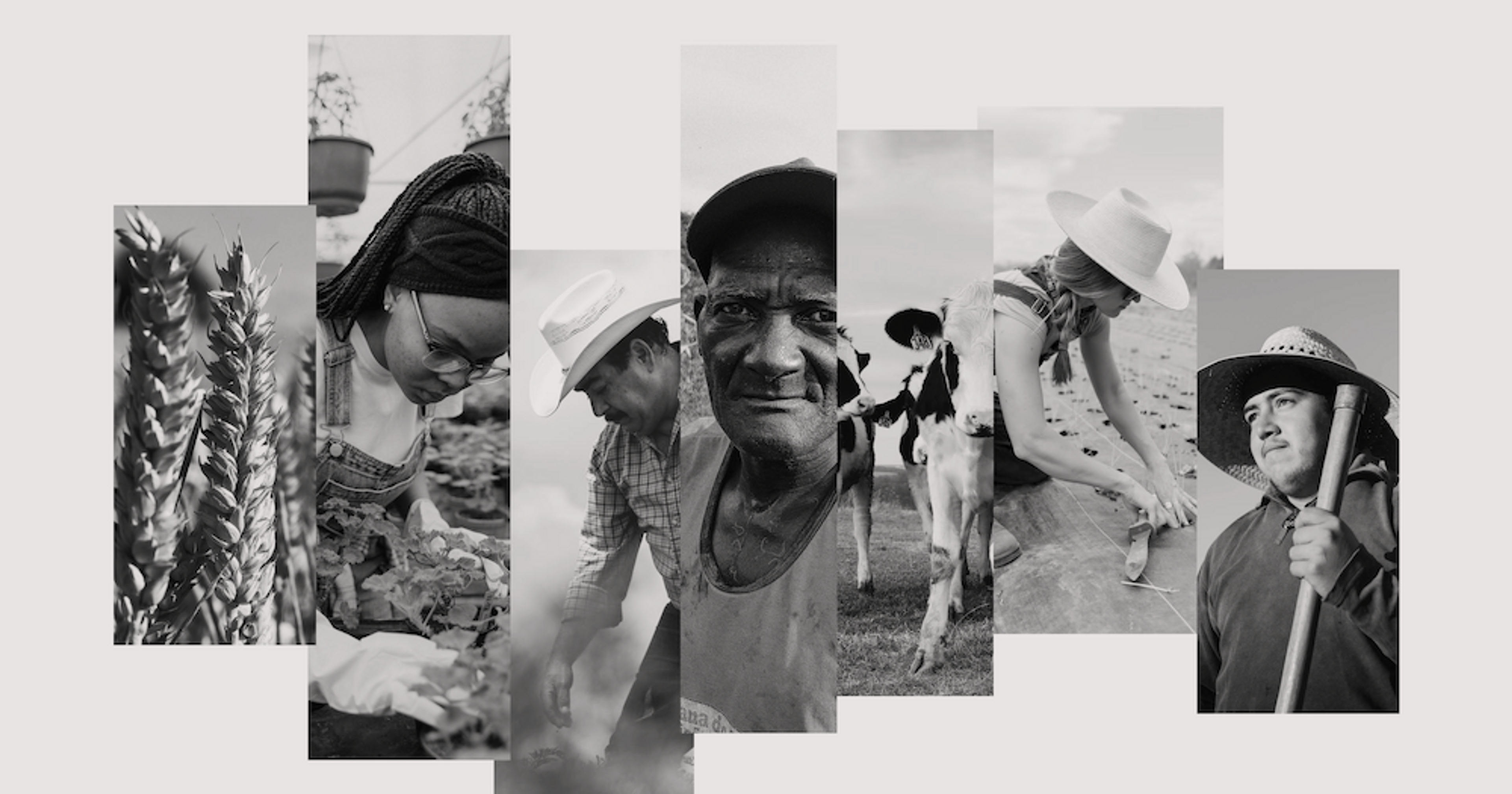
With a $146 billion annual budget, the USDA is one of the biggest agencies in the US federal government. Programs under the USDA umbrella include direct cash assistance programs, loan programs, cost-sharing programs that incentivize conservation agricultural practices, and even social welfare programs like SNAP. Access to USDA programs can make or break livelihoods, especially those directly related to agriculture.
In this post, we explore (1) how farm aid funding is distributed and (2) how different application channels are affecting accessibility. To measure how new access channels are changing the beneficiaries of USDA programs, we have to first measure a baseline. Who are the farmers who already have a relationship with the USDA? The USDA answers this question every five years with the Ag Census — a mail-based survey of US farmers administered by the National Agricultural Statistics Service (NASS). The most recent Ag Census was conducted in 2017 and the respondents are summarized in Table 1 below.
| Category | Percentage of US Producers | |
|---|---|---|
| Sex of Principal Producer | Male | 71% |
| Female | 29% | |
| Income from Farm Sales | Less than $100k | 82% |
| $100k to $500k | 11% | |
| Greater than $500k | 7% | |
| Race | No Person of Color | 93% |
| Any Person of Color | 7% | |
| Operation Type (At Least One) | Field Crops | 48% |
| Specialty Crops | 12% | |
| Livestock | 61% |
The Ag Census results show a dearth of farmers from historically disadvantaged populations. This snapshot of farmer demographics in 2017, however, does not show the difficult history that these groups have had with farmland ownership. For example, while farmers of color accounted for only 7% of operators in 2017, the peak of their participation was in 1910, when farmers of color (mostly black farmers) operated about 15% of US farms. It is with that history in mind that the USDA has faced criticism for the low participation rate of these populations in USDA farm-aid programs.
The USDA is taking action to engage historically underserved populations
Starting in the 1990s, the USDA has created programs and benefits specifically for these underserved populations, who are collectively known to the agency as Socially Disadvantaged Farmers and Ranchers (SDFRs). The FSA also created an outreach program with goals to improve communication and trust between the FSA and SDFR communities. Under the Biden administration, Secretary Vilsack’s USDA has taken some additional steps, including:
a $2M grant for non-profits and community organizations who could help SDFRs apply for USDA programs;
resources and process reforms to help people who inherited land without clear documentation resolve estate issues and get clean title on their land; and
a Federal Notice Requesting Public Input, penned in response to President Biden’s Executive Order on Racial Equity, that solicited comments on how the USDA can “make all USDA programs, benefits, and services equitable, and to address the cumulative effects of systemic racism.”
Notably, even measuring the extent of the situation has been difficult. A 2019 GAO study of the Farm Credit System found that it could not draw conclusions about the success or failure of the USDA’s outreach programs because lenders are generally prohibited from asking their clients for demographic information. Even where the USDA can ask for demographic information, producers are often hesitant to give it.
The COVID-19 pandemic necessitated increased digital access to the USDA and its programs
The ongoing COVID-19 pandemic has had an immense impact on agriculture. Among price shocks and meat-processing shortages, however, a relatively unassuming change was born of the pandemic; the USDA started advertising fully digital applications for some of its federal aid programs.
Digitalization has a mixed record of reducing bias, but it has a strong record of increasing accessibility, especially in rural areas. Could this relatively innocuous change increase engagement from farmers more used to doing business on their smartphone than in person at the local USDA service center? And could that accessibility make it easier to serve the Socially Disadvantaged Farmers and Ranchers that the USDA is struggling to reach?
We can look at Ambrook’s users as an initial point of comparison. Ambrook’s Funding Library launched in January of 2021 and invites users to describe their operation to learn about relevant funding opportunities. It asks for some of the same information that is asked for on the NASS Ag Census, but all its users are digital-only, and over 70% of users access the website exclusively through a mobile device.
| Category | USDA % | Ambrook % | |
|---|---|---|---|
| Sex of Principal Producer | Male | 71% | 62% |
| Female | 29% | 38% | |
| Income from Farm Sales | Less than $100k | 82% | 87% |
| $100k to $500k | 11% | 10% | |
| Greater than $500k | 7% | 3% | |
| Race | No Person of Color | 93% | 90% |
| Any Person of Color | 7% | 10% | |
| Operation Type (At Least One) | Field Crops | 48% | 32% |
| Specialty Crops | 12% | 31% | |
| Livestock | 61% | 83% |
While the comparison is not perfect, it does provide some evidence that easy digital access can increase engagement with historically underserved populations. Aside from race and gender, the Ambrook Funding Library has a significantly bigger audience among specialty crop and livestock producers relative to the U.S. farming population at large. A possible explanation is that these crop producers may not have the time or staff needed to interface with the USDA in person but do have the time to check in on their smartphones between other tasks. The USDA’s 2021 survey on Farm Computer Usage and Ownership corroborates that more farmers use smartphones than desktop computers to access the internet.
The recent USDA Notice Requesting Public Input on systemic racism provides some anecdotal support for this conclusion. Code For America submitted a detailed comment citing statistics that Black, Hispanic, and low-income households are more likely to use a mobile phone as their only internet-enabed device and therefore “Mobile accessibility is essential in creating equitable and accessible benefits experiences for non-white audiences.”
These data points are relevant, but do not directly measure the accessibility of farm assistance programs. To address that question more directly, we’ll examine data on the distribution of the Coronavirus Food Assistance Program and especially its positioning as one of the first fully-digital USDA aid applications.
Distribution of the Coronavirus Food Assistance Program (Rounds 1 and 2)
The distribution of CFAP gives an opportunity for a more direct comparison between the subset of users who applied to CFAP entirely online via Ambrook and those that applied to the USDA through their various direct channels. For additional context, Ambrook marketed its service mostly on Facebook, and did not specifically target any race or gender with its marketing. The ‘Race’, ‘Sex’, and ‘Ethnicity’ data below, on both the Ambrook and USDA side, are calculated only where that demographic information was provided by the applicant. This distinction is important because about 88% of Ambrook applicants did not provide demographic information when asked, in comparison to only about 5% of USDA applicants. Therefore, where the USDA data can be fairly applied to the rest of the population who do not give demographic information, the Ambrook sample really only has explanatory value for the population who do give that information.
| Category | % of Ambrook Applicants | % of General USDA Applicants | |
|---|---|---|---|
| Sex | Male | 49.0% | 84.0% |
| Female | 51.0% | 16.0% | |
| Race | Black | 12.1% | 1.0% |
| Indigenous (Native American, Alaskan, or Pacific Islander) | 8.6% | 1.9% | |
| Asian | 0.0% | 0.3% | |
| White | 67.2% | 96.4% | |
| Two or More | 12.1% | 0.4% | |
| Ethnicity | Hispanic or Latino | 18.4% | 1.5% |
| Not Hispanic or Latino | 81.6% | 98.5% | |
| Products Raised | Field Crops | 12.4% | 46.6% |
| Specialty Crops | 22.1% | 5.0% | |
| Livestock | 77.5% | 48.4% |
These numbers show a staggering difference in the participation of SDFRs in CFAP via Ambrook’s portal compared to normal USDA channels. If the biggest difference between these two datasets is that Ambrook applications are a digital-only subset of all USDA applications, then a possible explanation of the increased SDFR participation is that the benefits of a 100% digital application increased accessibility for those applicants.
To address the question of digital access even more directly, we have data on the Ambrook side showing that a majority of applicants filled out applications for CFAP via the Ambrook website entirely on their mobile device. While we don’t have the USDA data to compare within subgroups, Figure 1 below shows strong demand for a mobile interface with USDA.
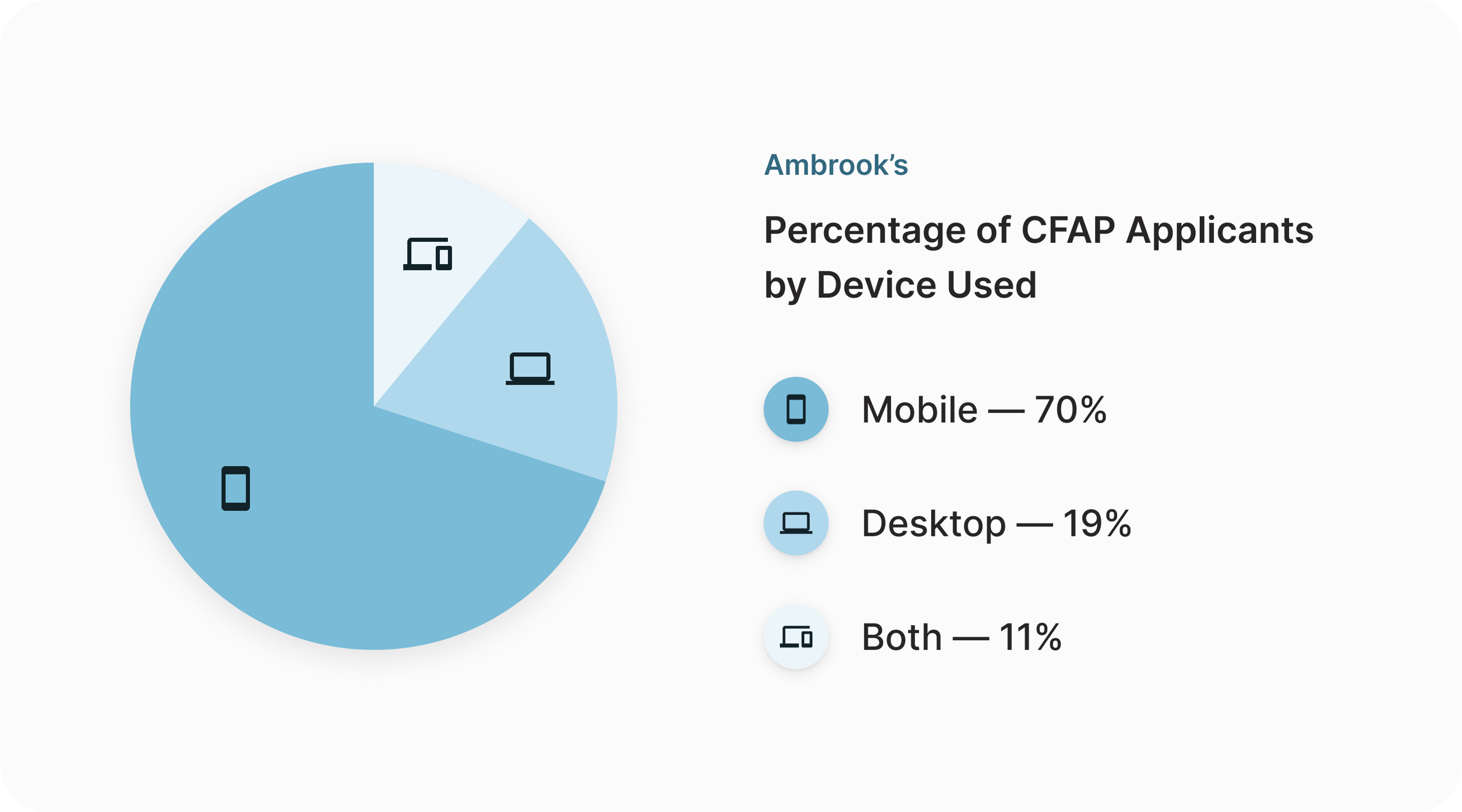
Conclusion
We have provided some preliminary evidence to suggest that digitalization has increased general accessibility to USDA programs and has had particular benefits for the participation of SDFRs. The distribution of CFAP and CFAP2 via a completely online process opens the door for the USDA to do even more of its business of farm aid online where some systemic barriers to SDFR participation may be lessened. There are indications that the FSA is indeed headed in this direction, such as the recent addition of farmland records and map management via farmers.gov.
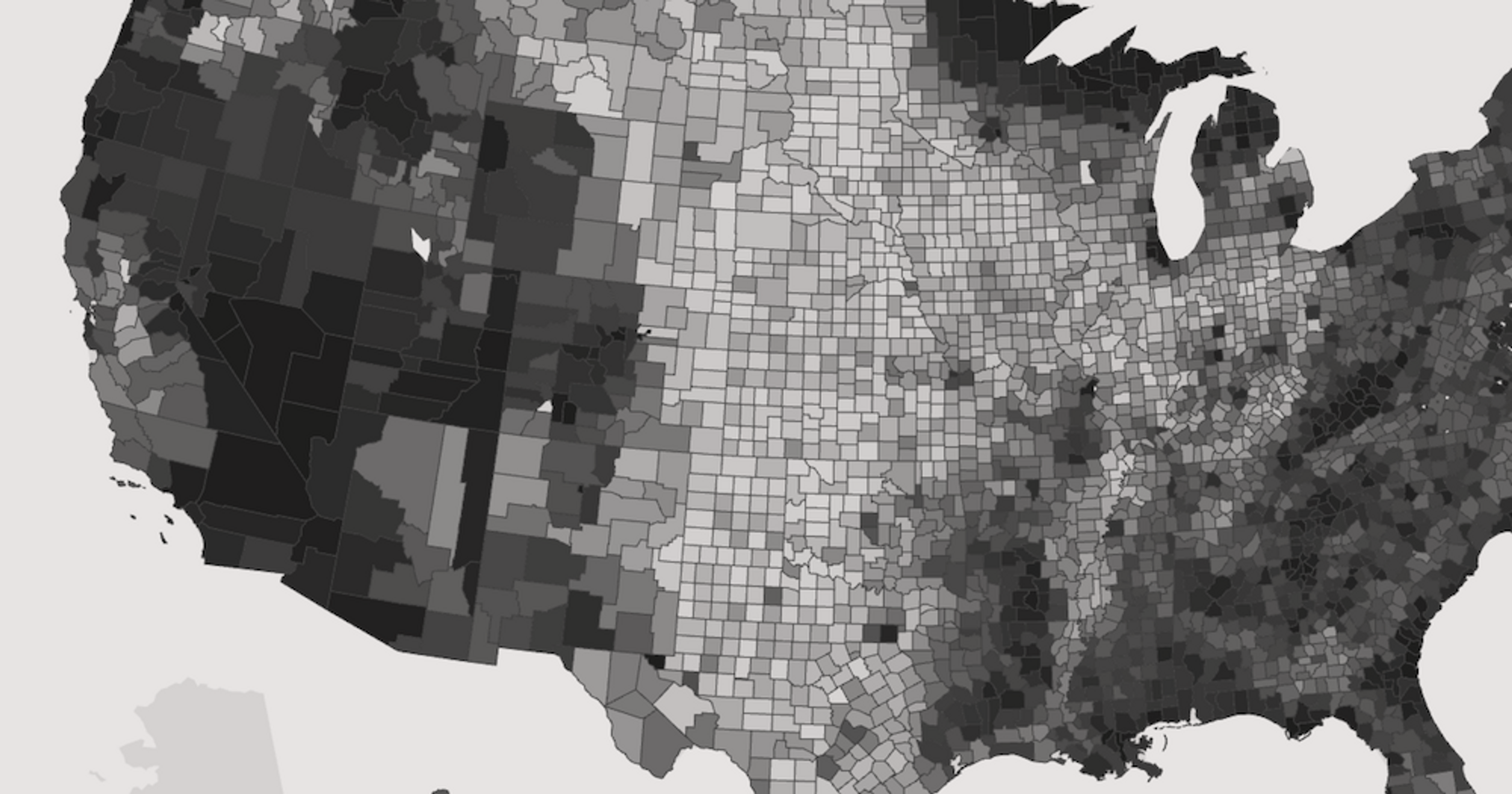
While great strides in technology have made it possible to grow food indoors and in otherwise occupied spaces , the vast majority of farming requires land—and a lot of it. In the US, the agricultural sector is going through a time of succession with an aging farming population looking to sell or lease their land to younger generations. Whether due to this demand or other market forces, farmland has been rising meteorically in price. In real terms, farmland in the US has doubled in value in the last 20 years—from an average of $1,500 per acre to $3,000. We examined publicly available data from the USDA to examine how farmland is distributed and to map out where the cost of farmland is best justified by its expected agricultural output.
Where do farms already exist?
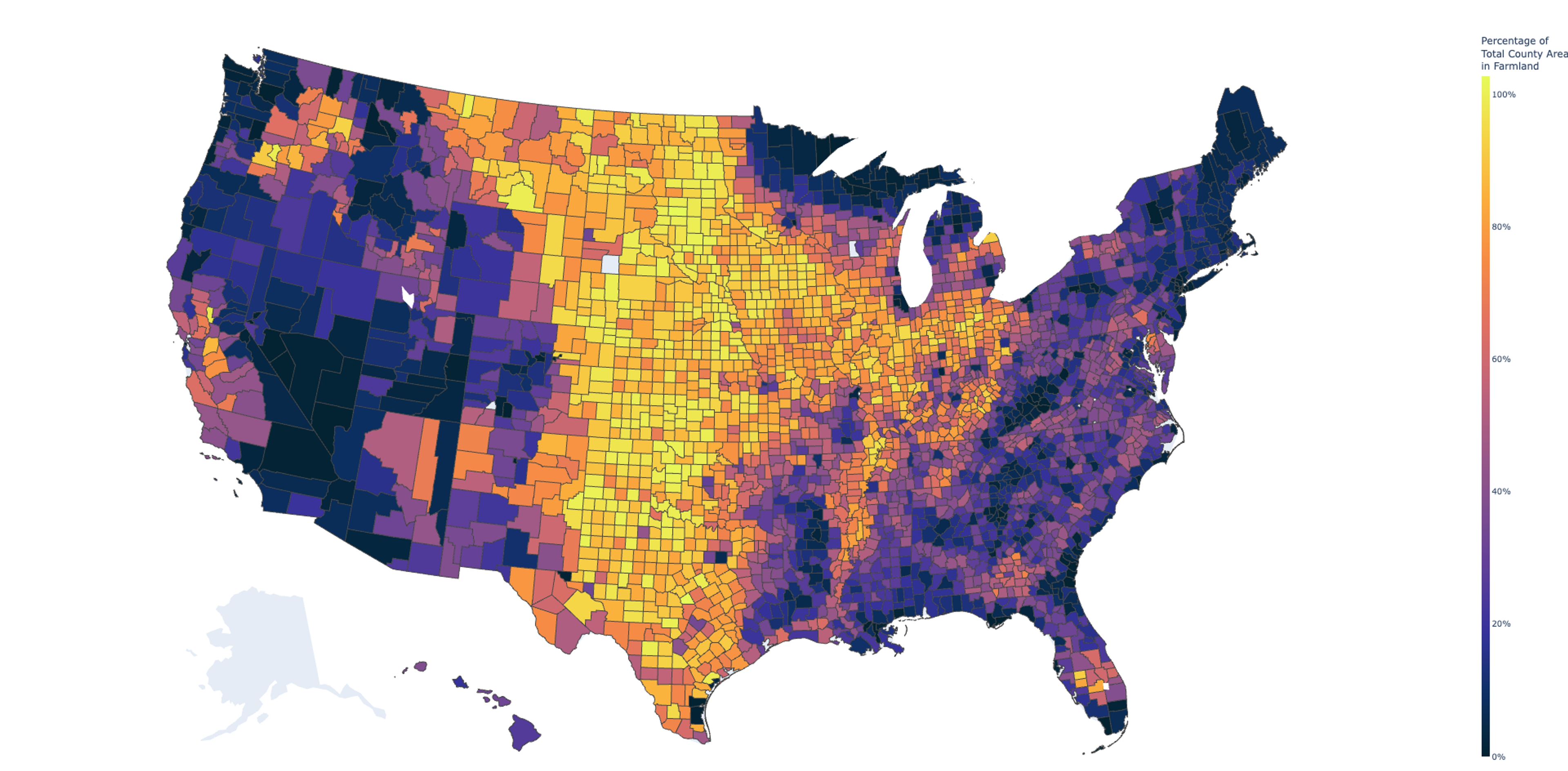
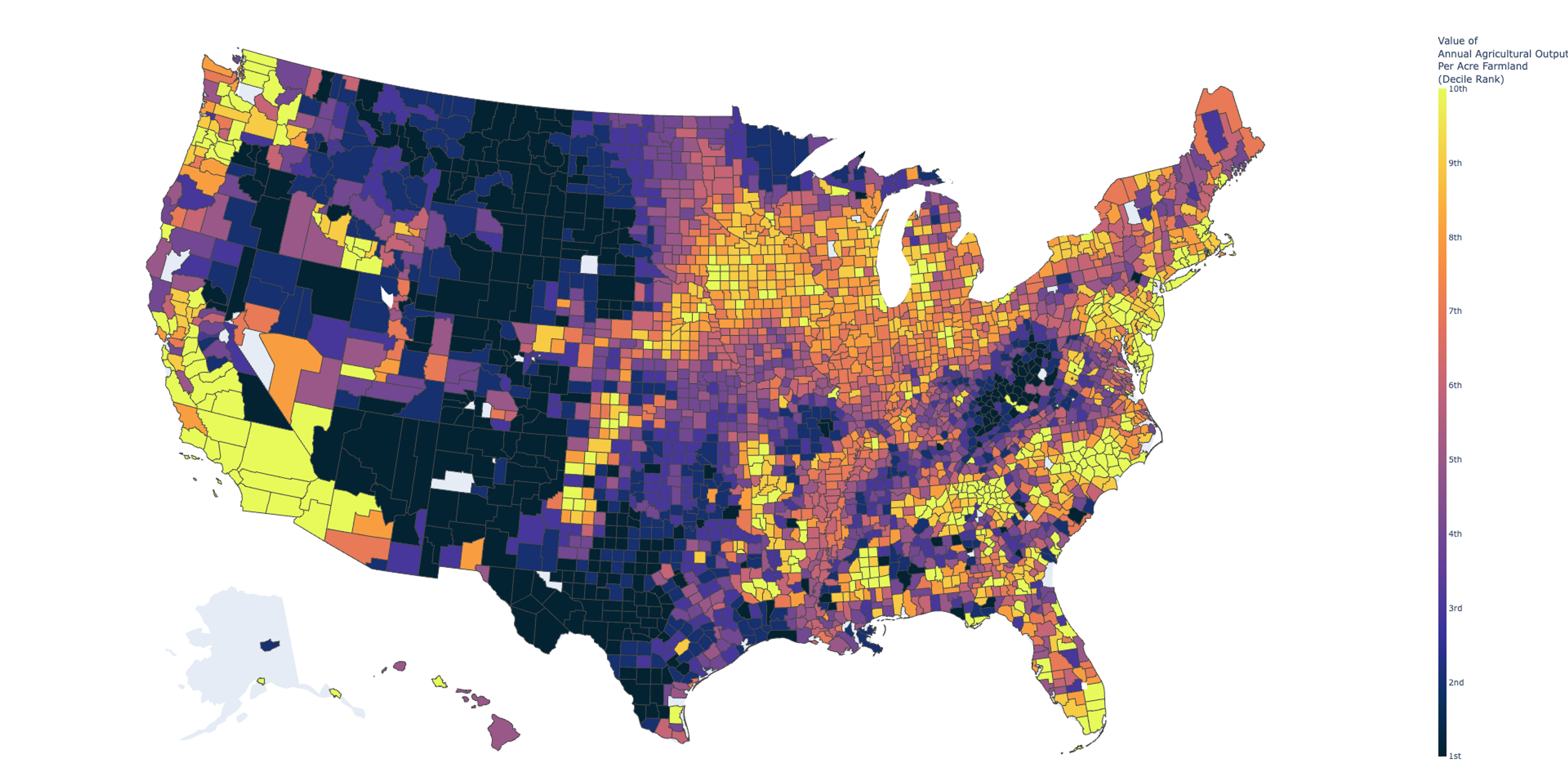
The distribution of farmland in the United States has been driven by complex factors such as soil quality, population density, policy, and the availability of irrigation technology. The map we see today is the result; the vast majority of intensively farmed counties are in the middle of the country, with smaller regions of intensity on the East and West Coasts. When examining the distribution of farms by agricultural value per acre, we see a more even distribution of farming across the country, with gaps only in the most mountainous and arid regions.
While farmland value is certainly driven by its agronomic attributes, such as soil health and climate, the price of farmland is often related to factors that have nothing to do with agriculture. For example, a plot of farmland near a city has more value because it could be turned into a high-value residential neighborhood. Thus, a hypothetical new farmer with no preference about where they want to start farming should locate a parcel of land whose price is not inflated by non-agricultural influences. That’s not to say being near an urban area has no agricultural value. It is well-documented that proximity to an urban area can help a farmer’s bottom line through reduced transport costs and access to a premium-priced market. We’re going to look for those places using a ratio of the annual value of a county’s agricultural produce to its raw land value.
A Ratio of Land Cost to Annual Agricultural Revenue
The National Agricultural Statistics Service ( NASS) routinely gathers farmland statistics, and its most robust data comes from the bidecadal Census of Agriculture (AKA Ag Census). We retrieved the following data from the 2017 Ag Census the following data:
| Name | Description | Unit |
|---|---|---|
| Value of Agricultural Land and Buildings | Current expected market value of farmland and buildings | Dollars per Acre in County ($/Acre) |
| Total Acres of Agricultural Land | All acres of land used for agricultural purposes in the county. | Land area per County (Acres) |
| Revenue from Agricultural Operations | Gross market value of produce before taxes and production expenses of all agricultural products sold | Dollars per County ($) |
| Net Income of Agricultural Operations | Net Income of farm after operating expenses | Dollars per County ($) |
We further constructed the below variables from that data:
| Name | Description | Unit |
|---|---|---|
| Percentage of County Acreage used for Agriculture | County Acreage in Farms divided by County Total Acreage | % |
| Revenue from Agricultural Operations per Acre | Revenue from Agricultural Operations per county divided by the number of acres of agricultural land in that county. | Dollars per Acre per Year ($/Acre-Year) |
| Net Income from Agricultural Operations per Acre | Net Income from Agricultural Operations per county divided by the number of acres of agricultural land in that county. | Dollars per Acre per Year ($/Acre-Year) |
And finally we arrive at the ratios of interest:
| Name | Description | Unit |
|---|---|---|
| Land Value to Annual Revenue | Value of Agricultural Land and Buildings divided by Annual Revenue from Agriculture | Unitless. Meaningful only for comparison across counties. |
| Land Value to Annual Net Income | Value of Agricultural Land and Buildings divided by Annual Net Income from Agriculture | Unitless. Meaningful only for comparison across counties. |
Through mapping these ratios, we can identify counties where the value of the land’s expected agricultural output is high relative to its cost—in essence, where you can get the biggest bang for your buck if all you care about is profitable farming.
Mapping the Ratio
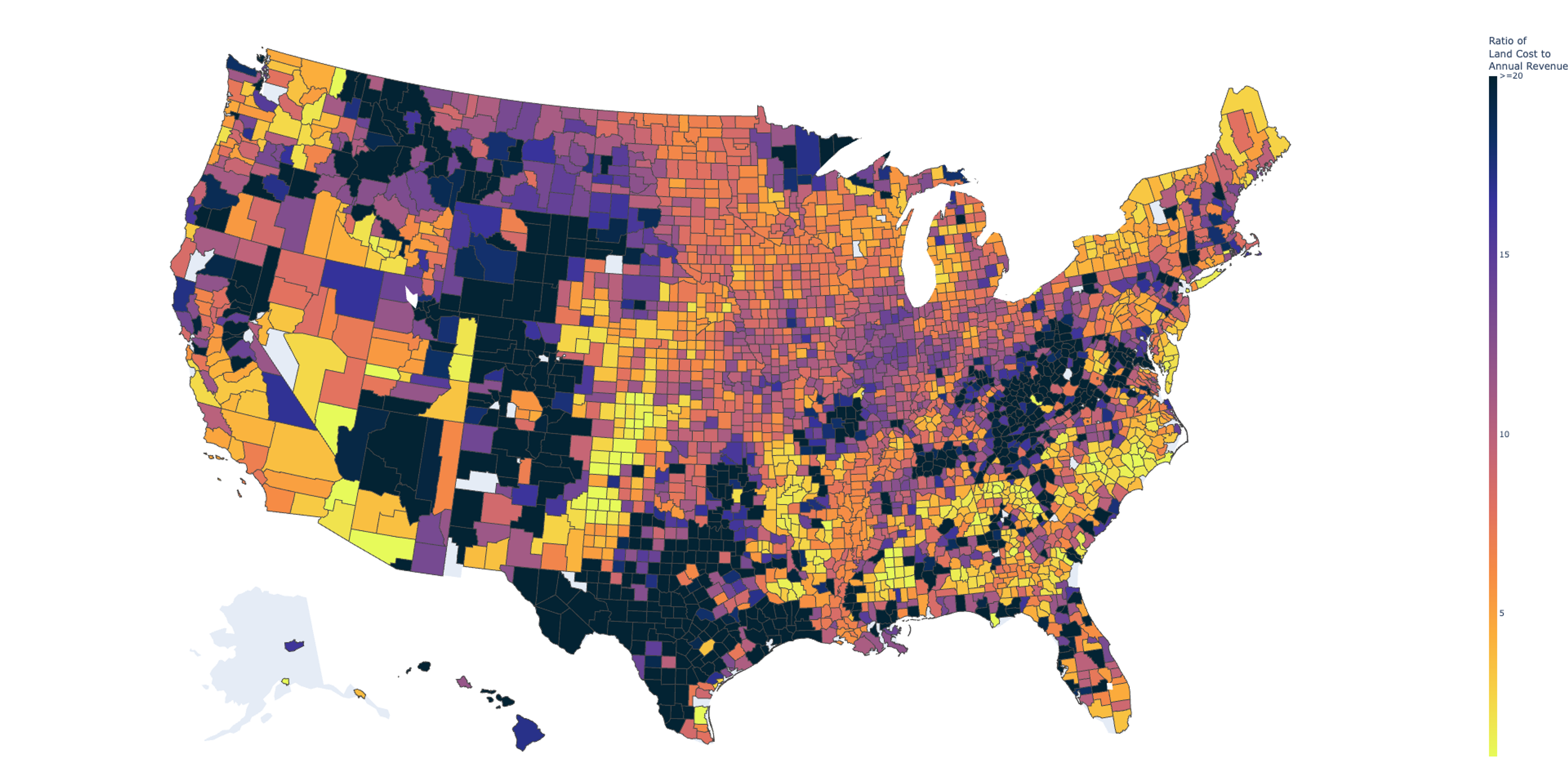
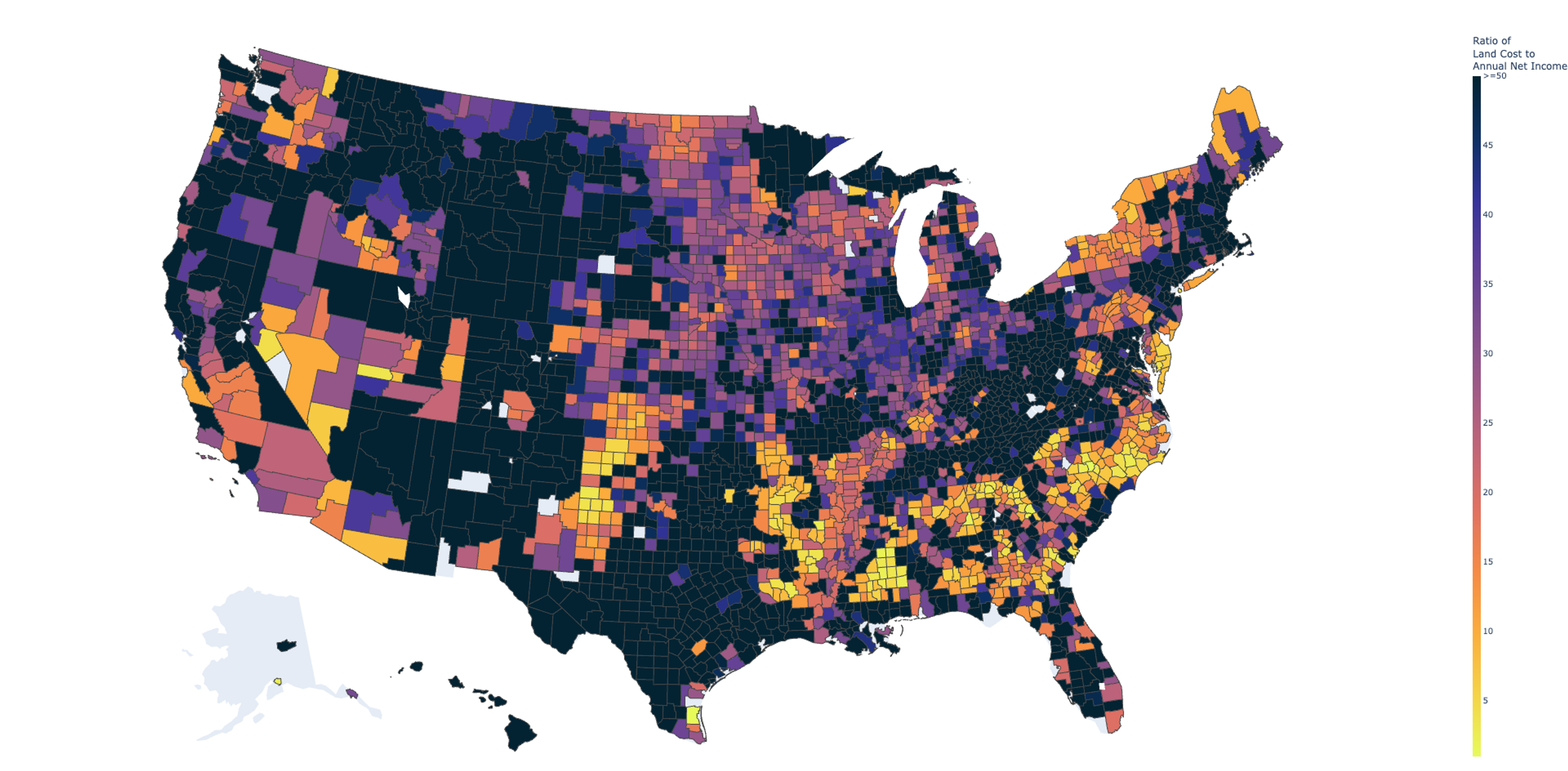
Considered on its own, Figure 2 is a way to visualize a cost-benefit analysis of buying land in one of these counties for agricultural production. Table 1 below shows the top 5 counties in the US with the lowest ratio—where the cost of land is very cheap relative to average annual agricultural revenue:
| County | Ratio of Land Cost to Rev. | Land Cost ($/Acre) | Total Farmland (Acres) | Annual Rev. ($/Acre) |
|---|---|---|---|---|
| Kenedy, TX | 0.09 | $737 | 2,452 | $8,036 |
| Richmond, NC | 0.29 | $4,365 | 12,435 | $15,213 |
| Haskell, KS | 0.48 | $1,527 | 363,751 | $3,187 |
| Clark, NV | 0.52 | $3,109 | 2,130 | $5,939 |
| Beaver, UT | 0.55 | $2,226 | 63,597 | $4,057 |
Exploring Figure 2 above shows a pretty similar pattern to Figure 1, but it’s where these two maps differ that are the most interesting. If a county is in the upper deciles of agriculture revenue per acre (brightly colored in Figure 1), but its land cost to revenue ratio is still high (darkly colored in Figure 2) that could indicate the land value is being driven up by non-agricultural factors. Conversely, if a county is in the middle or lower deciles of agriculture revenue per acre (darkly colored in Figure 1), but its land cost to revenue ratio is low (brightly Colored in Figure 2) then it may be a place to find land that is not attractive to, and therefore not priced for, non-agricultural uses.
We can find the biggest of these divergences by ranking each county by these two measures, and finding the counties with the biggest differences across the two rankings. For example, Napa County (the biggest agricultural county in Table 3 below), is ranked 147th of all counties for Annual Revenue per Acre, but falls to 2495th when land cost is considered. This is a tumble from the Top 5% to the bottom 20%. In Table 2, we see the hidden gems—counties that are not attractive when looking at revenue per acre, but become much more attractive relative to their cost of land.
| County | Rank Change | Annual Rev. ($/Acre) | Ratio of Land Cost to Rev. | Annual Rev. Rank | Ratio of Land Cost to Rev. Rank |
|---|---|---|---|---|---|
| San Juan, UT | 2,213 | $107 | 3.43 | 2,549 | 336 |
| Lea, NM | 2,131 | $99 | 4.15 | 2,589 | 458 |
| Chaves, NM | 2,020 | $174 | 2.71 | 2,249 | 229 |
| Apache, AZ | 2,007 | $43 | 6.35 | 2,881 | 874 |
| Luna, NM | 2,001 | $138 | 3.74 | 2,392 | 391 |
| County | Rank Change | Annual Rev. ($/Acre) | Ratio of Land Cost to Rev. | Annual Rev. Rank | Ratio of Land Cost to Rev. Rank | |
|---|---|---|---|---|---|---|
| Philadelphia, PA | -2,555 | $1,287 | 45.60 | 331 | 2,886 | |
| Bristol, RI | -2,420 | $1,875 | 24.05 | 183 | 2,603 | |
| Napa, CA | -2,348 | $2,241 | 19.70 | 147 | 2,495 | |
| Passaic, NJ | -2,283 | $1,512 | 21.13 | 252 | 2,535 | |
| Nantucket, MA | -2,156 | $2,536 | 15.43 | 120 | 2,276 |
With the below tool, you can explore these comparisons visually:
State Comparison Tool
Limitations
NASS surveys only active farmland, so this map will not capture the potential of land that was not reported as part of a farm in 2017. Similarly, the revenue and net income measures reflect the type of agriculture that existed at the time of the survey. It may be that a farmer could take land in one of these counties and make more revenue by growing different crops or applying different farming techniques.
Furthermore, farmland has an incredible breadth of variation even on the acre-level of granularity, so the county-level average ratios presented here will not accurately represent every parcel within the county and they won’t express the other local issues of an area. For example, a number of New Mexico counties appeared on our Top 5 list (Table 2) above; our further research showed that those counties’ farmers and ranchers are not worried about land costs, but they are worried about where their water is coming from season to season. In the opposite direction, New Jersey farmland is extremely expensive, but the state has a very attractive tax structure for agricultural businesses that has allowed farming to stay there. An aspiring farmer should take this map as an invitation to look at counties with low land-cost-to-revenue ratios but applying due diligence to any particular parcel will remain essential.
Conclusions
Choosing where to buy land to start a farm is rarely a decision driven only by a profit motive, but farmland seekers should consider whether they are paying for non-agricultural drivers of land value. The tools and maps presented here have attempted to provide a preliminary filter to determine which regions are relatively better priced for their productive potential.

Welcome to the first blog post from our initiative to explore key questions on agricultural finance and sustainability through data-driven research.
Today, we have teamed up with Aleks Schaefer, PhD (an Assistant Professor in Agricultural Economics at Oklahoma State University) to explore the plight of those farmers and ranchers who may miss out on funding opportunities because they do not have reliable access to the internet. Specifically, we will examine whether farmers without strong internet connections may have missed out on payments from the Coronavirus Food Assistance Program (CFAP), a Covid relief funding program for farms.
The US is in Dire Need of Improved Internet Infrastructure
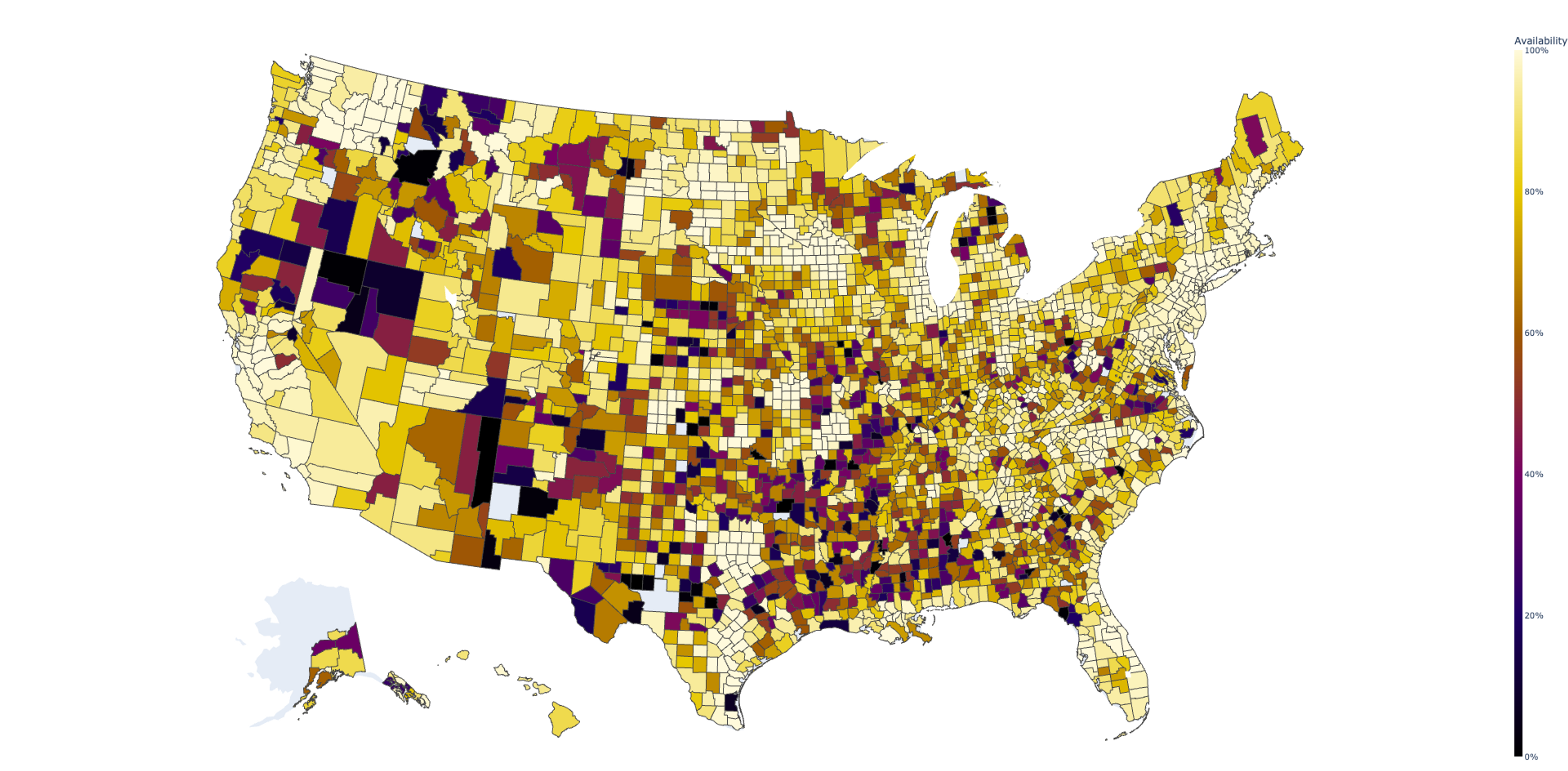
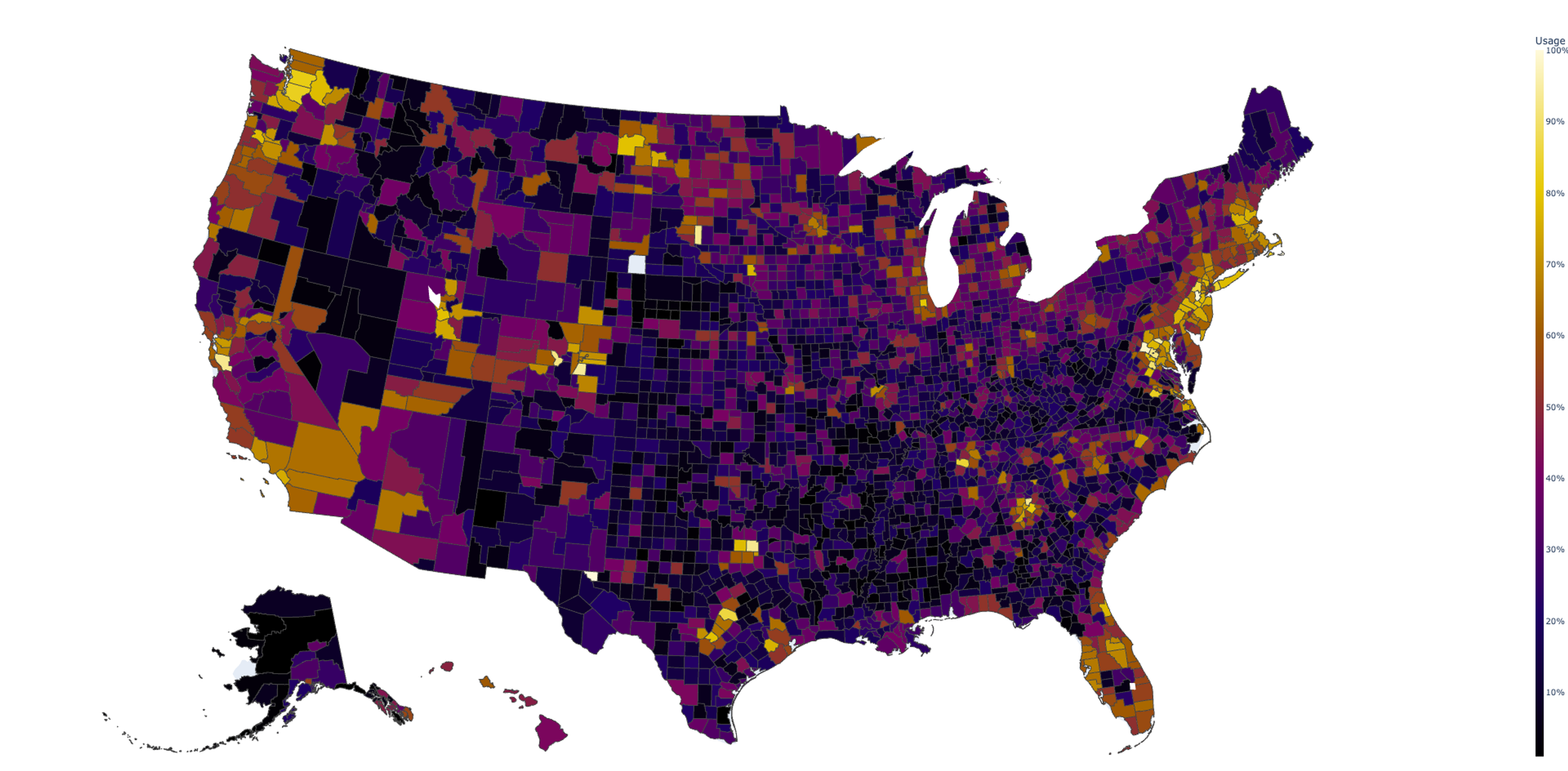
The FCC regularly measures the percentage of Americans who have access to ‘Broadband Speed’ internet. This benchmark represents the minimum speed at which a user can “originate and receive high-quality voice, data, graphics, and video services“, an ability deemed necessary by Congress to participate in modern life on the internet. This benchmark has skyrocketed in importance during the COVID-19 pandemic when internet access has become a lifeline for work, school, and recreation.
Indeed, the Infrastructure Bill, currently awaiting a vote in the US House of Representatives, includes $65 Billion to bring better broadband access to underserved, especially rural, areas. That decision may have been driven, in part, by the FCC ‘broadband access’ data presented above -- according to which the average county lacks broadband speeds for 24% of its residents. The true extent of the disparity, however, may be even more severe. The other dataset visualized above was gathered by Microsoft and measures broadband usage. Whereas the FCC data is reported by the Internet Service Providers themselves and purports to measure the speeds available to consumers in each county, the Microsoft data measures the speeds at which consumers actually accessed the internet -- whether a consequence of missing infrastructure or affordability.
The Microsoft ‘Broadband Usage’ data, portrayed here as the percentage of people who used the internet at or above ‘broadband’ speeds, describes a situation far more grim -- on average, 75% of the nation’s residents did not use the internet at broadband speeds, with rural areas being much worse off than urban ones. If the FCC data truly represents available broadband, then the difference between the FCC and Microsoft data represents broadband that is available but not used. A possible explanation for that difference is that internet access is both an affordability issue and an accessibility one.
CFAP Payment Distribution
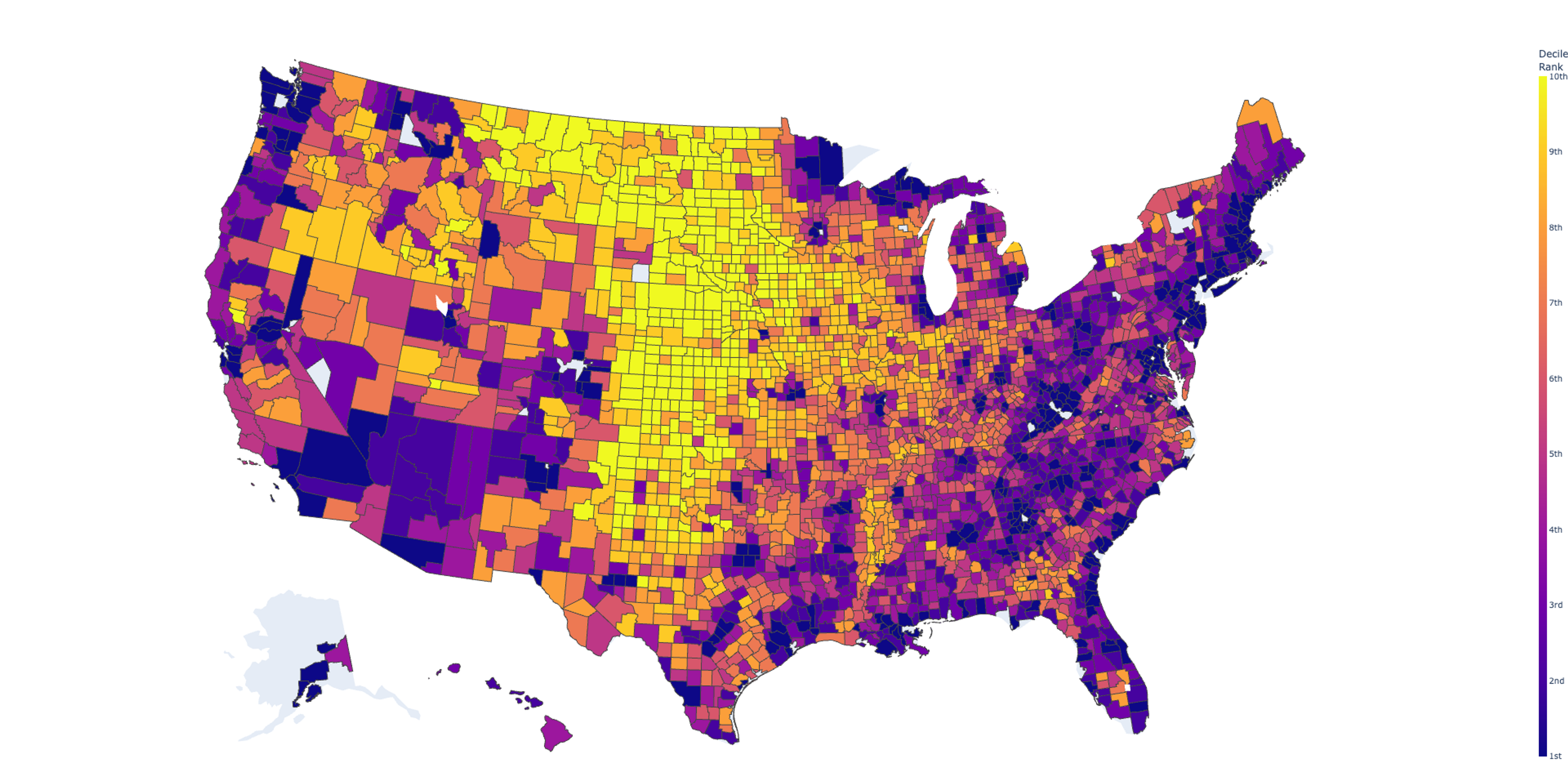
The second piece of data we considered was the total payments made to farmers and producers in each county from the two rounds of the Coronavirus Food Assistance Program (CFAP). We predicted that better access to the internet would help in learning about, and applying for the program. CFAP is a good candidate for analysis because across the two rounds, almost every farming operation in the US was eligible for one or the other or in some instances both. Despite having the same name, CFAP1 and CFAP2 were different programs and farmers could therefore apply to and receive payments from both.
The map above shows that CFAP funds were most intensely distributed to the midwest where most of the country’s row crops are grown. Other agricultural hotspots, such as the CA Central Valley and NY Hudson Valley, received a large amount of CFAP money, but much less relative to the population of those counties.
The two rounds of CFAP were slightly different:
CFAP1 was funded by the CARES Act and the Commodity Credit Corporation (CCC) to the tune of $16B and paid out only to producers who were harmed by a 5% or more price decrease because of loss of demand due to the COVID-19 pandemic. Application to CFAP1 was open for 108 days: From May 26th, 2020 to September 11th, 2020.
CFAP2 was funded entirely by the CCC with a $13B budget, and paid not only for crops that faced a 5% price decrease (“Price Trigger Commodities”), but also paid producers a flat rate for losses on the sale specialty crops (“Flat Rate” and “Sales Commodities”) based on the producer’s 2019 sales. Application to CFAP2 was open for 81 days: September 21, 2020 until December 11, 2020.
While CFAP2 increased the list of eligible products, the same counties benefited from both rounds of the program.
A Model of the Impact of Internet Access on CFAP Payments
We built our model using CFAP payment data, broadband access data, each county’s Rural-Urban Continuum Code, and other demographic data to measure the impact of internet connectivity on CFAP payments. All data was standardized to the US County level.
Our Model is a Linear Regression Model specified as follows:
| Dependent Variable | |
|---|---|
| CFAP payments per capita received by county residents ($) |
| Independent Variables of Interest | Expected Impact |
|---|---|
| % of County Population Who Use the Internet at Broadband Speeds (>25Mbps) | Positive |
| County’s Rural-Urban Continuum Code | Positive |
| % of County that Voted for the Republican Candidate in the 2016 Presidential Election | Positive |
| Independent Control Variables | Expected Impact |
|---|---|
| County Area (Sq. Miles) | Positive |
| % of County Population Employed in Agriculture | Positive |
| Income per Capita ($) | Positive |
| Dummy Variables Representing the State in Which the County Resides | Positive |
We settled on this model after experimenting with various sets of independent and control variables. The final variables chosen exhibited statistical significance that were robust to variations in the specification.
Model Findings
Our main model yielded the below coefficients, all but one of which were statistically significant at the 99% confidence level:
| Variable | Coefficient |
|---|---|
| % of County Population Who Use the Internet at Broadband Speeds (>25Mbps) | 426.6385*** |
| Income Per Capita ($) | 0.0210*** |
| County Area (Sq. Miles) | -0.0237* |
| % of County Population Employed in Agriculture | 135.3075*** |
| Rural-Urban Continuum Code | 22.7194*** |
| % of County that Voted for the Republican Candidate in the 2016 Presidential Election | 666.7697*** |
Broadband Usage was related to increased CFAP payments
The most striking result from this model is the large and statistically significant relationship between being able to access the internet at broadband speed and an increase in CFAP dollars received: Every additional 1 percent of a county that uses broadband was associated with a $4.26 increase in CFAP funding per capita. At a more relevant scale: a county where 50% of the population uses broadband speed internet could expect to receive $42.60 more in CFAP payments per capita than a county where only 40% of the population uses broadband speed internet. That is almost a third of $132, which is the median county’s CFAP payment per capita.
CFAP1 payments were more sensitive to Broadband Usage than CFAP2 payments
Beyond our base model, we found that the size of the effect of broadband usage on CFAP2 payments was less than the size of the effect on CFAP1 payments. A possible explanation for this is that the program was better publicized or just better known in the second round, and therefore more who do not use the internet at broadband speed were able to apply. It is also possible that CFAP2’s broader eligibility created more word-of-mouth marketing.
Broadband Usage was most impactful for the most rural and the most urban counties
A final interesting finding was that the size and significance of broadband usage’s effect on CFAP funding varied greatly based on whether a county was more rural or urban. The chart below shows that broadband usage had the biggest impact on CFAP payments for the most rural counties (8 and 9 on the Rural-Urban Continuum or RUC). This is not surprising because the most rural counties have many farming operations and are known to have poor internet connectivity. What is more surprising is that the next largest effect is seen in the most urban counties (1 and 2 on the RUC), where broadband speed is certainly available, but perhaps unaffordable to the least affluent subset of the population or inaccessible for other reasons. The peri-urban and suburban counties in the middle of the spectrum showed small-to-non-existent relationships between broadband usage and CFAP payments.
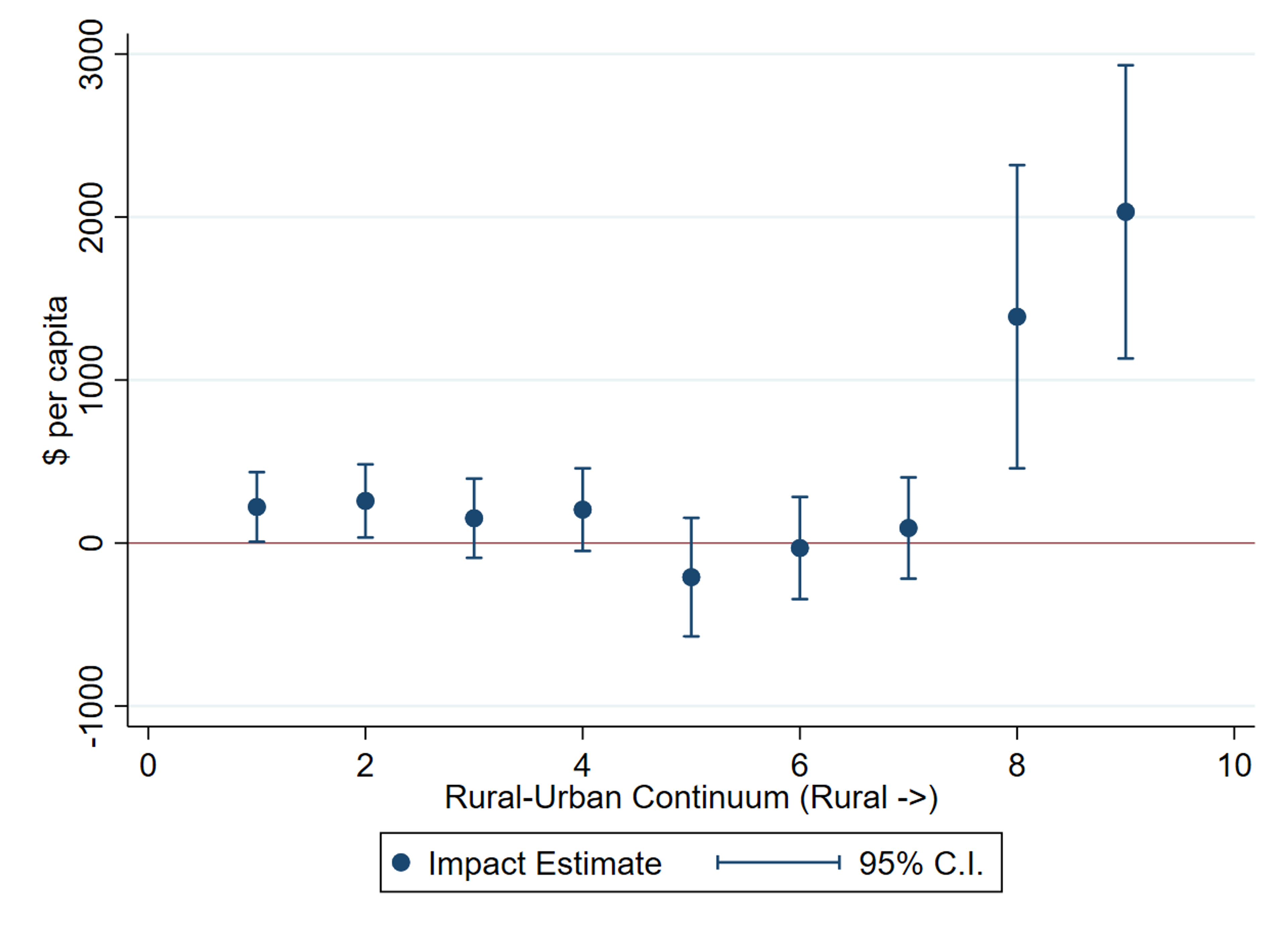
Conclusions
Although it is difficult to claim a causal relationship from non-experimental data, it is clear that access to the internet has a strong and significant correlation to the distribution of CFAP funding to farmers. The results of this model support the thesis that strong digital infrastructure built on a backbone of fast, affordable internet may provide important support to disadvantaged farmers and ranchers. Large agribusiness operations will usually know about farm aid and have the staff and scale to apply for it, but the difference between CFAP1 and CFAP2 shows that smaller operations may take more time and outreach to elicit applications. Rural counties may be especially vulnerable to missing out on USDA services due to lack of good internet. If the pending infrastructure bill passes, those given authority over the investment in internet infrastructure improvements should be careful to consider affordability as well as accessibility.