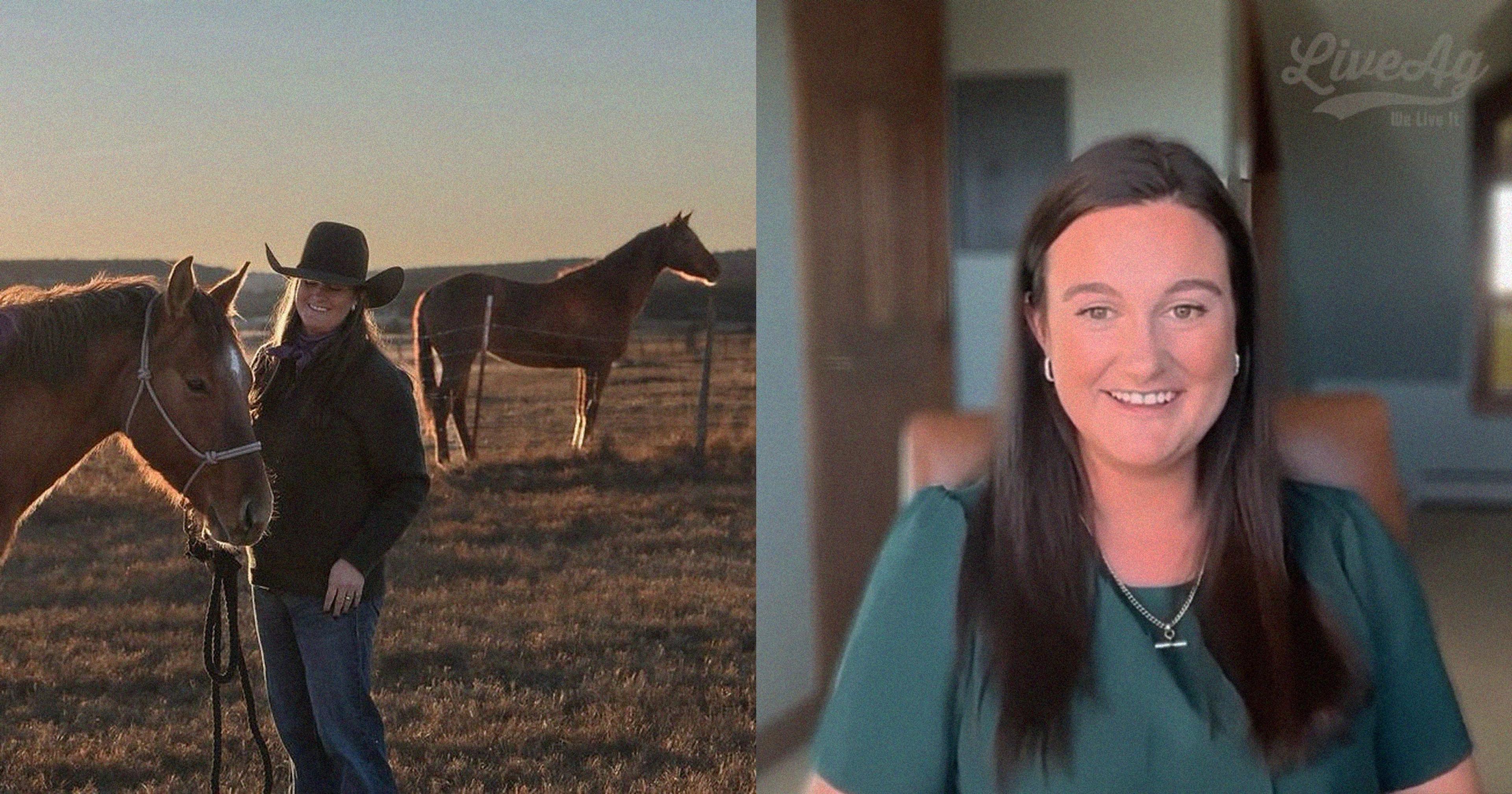
Alex Thompson: The more time that we have to either work cattle, talk about cattle, think about cattle, the better our decisions are going to be. So it saves us—I mean, it should save us all time by making your bookkeeping easier, cleaner, faster. One of the things that I always say is like, if you were running a business, any other type of business, and making the decisions that we make on any given day, there’d be an accountant, there’d be an analyst, there’d be a couple lawyers. I mean, when you’re making big decisions for your business like ranchers make every day, you normally have this whole team. We obviously don’t have that for most people in ag, right? So Ambrook can kind of be that and give you those numbers that that team, if you were running a Fortune 500 company, gives you.
LiveAg: That’s a head off. We Live It, the Live Ag podcast. Quality cattle deserve premium prices. Consign to a Live Ag video auction and capitalize on today’s strong market demand. Our upcoming auctions are on your screen and available online at live-ag.com. Contact your local rep to get started. Now, here are your hosts, Ty Cordova and Casey Mabry.
LiveAg: Welcome back to the We Live It podcast. Here we are here in the studio with Casey Mabry and myself, Ty De Cordova. And we are joined by Alex Thompson from where in Colorado again?
Alex Thompson: Right now we’re in Norwood, Colorado.
LiveAg: Norwood, Colorado. She is—Ambrook is a new software—uh, software keeping track of your stuff. She’s going to explain all that to you in just a second.
LiveAg: He’s trying to get all techy.
LiveAg: I was really trying to get techy and I don’t get techy very good. But no, we’re joined with her. But we want to thank everybody for joining us today and also we thank you, Alex, for joining us. You want to give us a little bit of a background of where you grew up, where you’re from, the industry you grew up in, and kind of how you are where you’re at today?
Alex Thompson: Absolutely. So first off, thank you guys so much for having me. My story is a little odd. I actually grew up in Rhode Island.
LiveAg: First person I’ve ever met from Rhode Island.
Alex Thompson: Me too.
LiveAg: How do you even get there from here?
Alex Thompson: It’s real hard to find. Sometimes drive right by it.
LiveAg: Okay. Yeah.
Alex Thompson: But I grew up in Rhode Island, moved out to Colorado after college and met my husband who is a fifth generation rancher here in Norwood. Had background with horses and grew up showing horses but had never really been around cattle in my life and managed to fall in love with a cowboy. And got a crash course pretty quickly. Then just sort of realized that I really—like, I loved it. So I worked in real estate for a while. I worked in some property management, ran a horse boarding facility for a while, and then saw the opportunity at Ambrook and realized that it was sort of an opportunity for me to work with and help other producers. So I jumped on that pretty quickly. A little bit about what my husband and I are doing now. So we are, like I said, in Norwood, Colorado. We raise a little bit of a mix of commercial and then some registered Limousin and Lim-Flex cows. Our home place is at—I think we’re at about 7,600 feet.
LiveAg: Cold. [laughter]
Alex Thompson: And summer pasture—
LiveAg: No.
Alex Thompson: We run about 10,000. So that’s kind of, you know, the Limousin do really, really well up here, especially since black-hided cattle tend to sell where we are a little bit better. So the Limousin can handle A) black-hided and B) they can handle the altitude. So we do that. We raise some colts. We have some really great family in Texas that send us some really, really nice colts every year that we have a little bit of business doing. And then some dogs, but mostly just cows and horses and everything that comes with it.
LiveAg: Did you say 10—you do—y’all summer at 10,000 feet?
Alex Thompson: Yes, sir.
LiveAg: Wow.
LiveAg: Hey, that’s high. I couldn’t breathe up there. I [laughter] walked about two steps up.
Alex Thompson: Yeah, we’ve—yeah.
LiveAg: So, well, that’s cool. That’s that. So you didn’t grow up in the livestock industry, but you grew to love it, and now here you are. Whether you liked it or not, you fell in love with a rancher, and here we go. So that’s just kind of a typical—
LiveAg: She could be in worse places, though. She sounds like she’s living a vacation.
LiveAg: Yeah, she does. I mean, 10,000 feet, grazing cows, has dogs and horses. I mean, I don’t know what else you dream of.
LiveAg: Yeah. So whenever you imagine that, you’re thinking about green grass at 10,000 feet, not—
LiveAg: 10-foot snow drift. That’s all I think about is 10,000—
Alex Thompson: I would say, you know, the one thing I could do with this, a vacation somewhere on an island. [laughter]
LiveAg: Yeah, a beach. Yeah.
Alex Thompson: Exactly.
LiveAg: Yeah. Now, so, okay, now give us a little background on Ambrook. You know, you are doing a really good job on targeting ads, it looks like, because every time I open like my social media, I’m like, “What is Ambrook?” So I read through it and I see it. I’m like, it’s pretty neat. You started seeing it ever since Katie told me that we was going to do this with y’all. Every time I turn around, there’s a Facebook feed or Instagram feed or whatever and it’s Ambrook, Ambrook, Ambrook. So kind of dove into it a little bit and it looks like a souped-up version of QuickBooks to me that would really help a rancher and make it simple for a rancher and someone like simple-minded as I am to understand that. Does that make sense?
LiveAg: Yeah. I mean, you get into QuickBooks and you’re—part and you’re not in—you’re in our business.
LiveAg: It’s foreign. It’s foreign. Yeah. So yeah. So tell us about Ambrook.
LiveAg: Yeah.
Alex Thompson: Absolutely. So the first part of that question, we have some team members who are amazing with creatives that you’ve seen on Facebook and other places. They do a really, really great job and we’re sort of glad that we’re getting in front of the right people. But a little bit about Ambrook. So we have three really, really great founders who, sort of around the time of the pandemic, were looking into some things that like farmers and ranchers and American industry were really struggling with. And they were working honestly back then to help procure grants for farmers and ranchers. And sort of what they realized was, you know, we all run really balance sheet heavy businesses. And so you could go—you can go look at my bank account tomorrow and you’d say, “Oh goodness, like [laughter] that girl’s got nothing.” But, you know, everything we have is tied up in the equipment, the cows, the land, all of those fun things. So when you go and, you know, whether you’re trying to get funding or a loan or a grant or anything like that, producers were having a really, really tough time kind of showing that they could back it. So rather than, you know, try to fix the problem for each individual producer, they kind of started with what the real problem was, which is accounting and bookkeeping for agricultural businesses was not easy. And there wasn’t a program out there that was useful for it, right? QuickBooks isn’t designed to be balance sheet heavy. A lot of the other accounting softwares aren’t meant to be balance sheet heavy. So that’s where they kind of came up with the idea of Ambrook. One of the things that I always say is like, if you were running a business, any other type of business, and making the decisions that we make on any given day, there’d be an accountant, there’d be an analyst, there’d be a couple lawyers. I mean, when you’re making big decisions for your business like ranchers make every day, you normally have this whole team. We obviously don’t have that for most people in ag, right? So Ambrook can kind of be that and give you those numbers that that team, if you were running a Fortune 500 company, gives you. You can have that information in Ambrook so we can all make better decisions.
LiveAg: So pretty much it’ll simplify it. It could be like us having our own financial team and all it is is the input. We input it in your system, in this Ambrook system, and it does all the backside, the back office stuff for us.
Alex Thompson: Yep. It’s going to turn it into any like report that you might need, give you a look at—you can compare year-over-year. You can pull your balance sheet. You can pull your profit and loss. You can do a lot of—even your payments, you’re processing through Ambrook. So what it really simplifies—I mean, most importantly, it gives us more time to be focusing on what we should be focusing on, which is cattle, right? The more time that we have to either work cattle, talk about cattle, think about cattle, the better our decisions are going to be. So it saves us—I mean, it should save us all time by making your bookkeeping easier, cleaner, faster. And then on top of that, when you do need to go pull a report at the end of the year or you need to go get funding, it should be right there at your fingertips.
LiveAg: Yeah. So the terminology when we’re looking at it, I mean, you open it up and I mean, again, Ty and I’ve talked about this multiple times in different aspects of it. Most producers don’t have finance backgrounds. There’s obviously been some finance people that maybe gone into agriculture. But again, we’re really good at producing. We’re really good at managing our business and, you know, making sure that having all of these accounting things detailed and organized are good. And if it’s confusing and it’s cumbersome and it’s hard, you know, we’re probably not doing it. But you’re saying Ambrook has found us a way to make those things easier and the terminology fit farmers and ranchers more so than the other competing products out there from an accounting software standpoint.
Alex Thompson: Absolutely.
LiveAg: Thinking about buying cattle or expanding your herd? You need a financial partner who understands the cattle business. ATexas Farm Credit offers flexible loans for pasture, rangeland, and operating expenses. Their local lenders understand agriculture because they live it too. As a cooperative, their borrowers share in the success through patronage dividends. Whether you’re buying your first set of cattle or growing a legacy operation, ATexas is your partner every step of the way. Visit atexas.com to learn more and get started today.
Looking to buy or sell farm equipment and ranch equipment? Join us for the Live Ag Equipment Auction December 16th, featuring quality machinery and trusted sellers from across the country, all in one place. Browse listings, bid online, or make an offer without ever leaving your home. Save time, save travel, and find the tools your operation needs with confidence. Have equipment sitting idle? Consign by December 8th to be part of this nationwide sale. Call Justin Stelzer today at 817-533-6699. [music] Then press three or visit live-ag.com to get started.
LiveAg: Your background, how is that—what you do today? How does that help you relate to your customers and to your target customers? I mean, you live it every day. So now you can walk them through it because you’re doing—you’re on both sides of it.
Alex Thompson: Definitely. I actually think—I mean, it’s my favorite part of my job is that I get to spend—you know, I was actually looking today. I think I spent six hours today on face-to-face calls with our customers, right? And I get to sit there and talk about their operations, help set Ambrook up to their operations. So that way, you know, they can hop in and it’s not a big cumbersome lift to do their bookkeeping. It should be easy. It should flow. So it’s really awesome for me to get to, you know, talk to other producers all day. I will also say I’ve learned a ton from producers that we have on the platform. I mean, it’s always sort of fun, right? Where we live out here, sort of in the middle of nowhere. So it’s always fun to get to talk to other producers in other parts of the country, see what they’re doing. And then hopefully I can bring a little bit of my expertise, A) with the product side and B) with how my husband and I have set our operation on Ambrook to help them get the most out of the platform.
LiveAg: So that’s something that’s huge in my mind right there. Like, so think about it in the world of AI, you know, and where we’re at. Like, so you can get on Ambrook and you’re going to be able to talk to Alex wherever we go to set it up.
LiveAg: Yeah. And the thing about it is it sounds like you can customize it to fit your program. It’s not a—not a cookie cutter. You can customize your dashboard. You can customize everything about it and she’ll walk you through it. Is that—am I hearing that right?
Alex Thompson: Absolutely. So we work really with—I like to say sort of American industry. So it’s not just ag and ag-adjacent, but majority ag and ag-adjacent. But there’s no two people who run their cows similar. There’s no two people who really run their operation the same, and we’re used to that. So, you know, come to us, tell us how you’re doing it, and we can absolutely fit it to anybody’s operation.
LiveAg: She can kind of be your Alexa, but it’s Alex. [laughter] You can ask Alexa, but you ask Alex, right?
LiveAg: Yeah. And then she’s got all your finance stuff. She’s got cows.
LiveAg: And she’s got cows.
LiveAg: And she’s a human. Yeah. And you can actually talk to her. So we’re not having to talk to—
LiveAg: He is going to be so excited because I have been Alexa in his phone since the day we met.
Alex Thompson: That’s funny.
LiveAg: Exactly. So, say—so, say—okay, so, hello Alexa. How do we—how can we—how can you help me today? So, but I love the human aspect to it and the customizing that you can customize it to fit anybody’s program.
LiveAg: Yeah. That way you’re not trying to take something else and try to make it fit this. It’s like it fits it. But—
LiveAg: All right. So, Alex, how—I mean, like—
LiveAg: You almost caught her, Alexa, didn’t you? [laughter]
LiveAg: So, Ty mentioned earlier that it’s been popping up all over our social media and stuff like that, as mine too. And you guys have done a good job of that. Besides that, like, if I wanted to, you know, trial, do you guys have a trial program that somebody can run, you know, side by side? I know that if somebody—in somebody’s spouse or whatever has spent the last 26 years managing it one way and it’s been a pain and this is a better way. How do they—how do you get some—what would you suggest somebody to do? A) first one is somebody that’s been doing this forever. So what’s the easiest way to get in touch with you guys, do it, and get started?
Alex Thompson: Yeah. So go to the website, which is ambrook.com. Everybody gets a 30-day free trial in Ambrook. That 30-day free trial includes a call with someone like me to help you get set up. I would say honestly, we’re in a really great spot right now. So if you’re up to date on your books on 2025 and you’re not panicking for tax season, start Ambrook now, try it now when it’s not 2026 yet, right? So you have this like month and a half that is not only like a free trial in Ambrook, but it’s also just a trial where you’re not moving your whole bookkeeping system over and there’s not super high stakes. So you can run them side by side, figure it out, figure out how you like your Ambrook set up. Get every single question that you have answered and then come January 1st, 2026, you’re off and running in your books. So if you haven’t done it before—
LiveAg: And you want to get—
Alex Thompson: Let’s say you’re in a bind and you’re waiting till the last minute.
LiveAg: Say you’re kind of like me and Casey and you’re just lost in our books—bookwork’s look like, you know what—and you need something to fix it. How does that look?
Alex Thompson: Do the same thing but reach out and hit the “schedule a call” button a little bit sooner. [laughter] Get on a call with one of us. So there’s a couple different options there. So the first thing is to get on a call again with somebody like me, who—and we can talk through your situation, talk through where you are. There’s a lot of tools in Ambrook that we can use to make automations, do bulk tagging, you know, really knock out big chunks of your bookkeeping all the way back to the beginning of the year relatively quickly. I know all those tricks. I’m happy to share them with everybody. We also have a couple different like options where we do have plans where you can have either like a specific person who’s sort of helping you catch up or catch up and plan for the future. So we’re really, you know, think of us as your sort of partners in bookkeeping. The one—I mean, one of the things that I always say is like, we are all very aware that—I mean, me especially—like, I have better things to be doing than bookkeeping. [snorts] We are very aware of that. So think of us as sort of like your partners in bookkeeping at Ambrook. You know, our goal is to make this easy, painless, quick, and like let producers spend more time doing what we actually need to be doing. So we do have a couple different plans where we can sort of jump in and help you. Or, you know, if you feel comfortable doing it yourself, you can just hop on. Again, like a call with me is included and I can walk you through some of the ways that we can knock some of it out pretty quickly.
LiveAg: So can you tie your bank accounts to this system? Do you have APIs that we can link that up? See, you didn’t know I knew that, did you? [laughter]
LiveAg: See, I got this.
LiveAg: That right there.
LiveAg: That was impressive, wasn’t it?
LiveAg: So do y’all have an API to hook up different banking structures to your Ambrook deal?
Alex Thompson: Yep.
LiveAg: Because that would have been very, very helpful for me today. I was needing to send a wire and I text my banker to send a wire this morning or yesterday and I get a phone call a while ago and the wire has been sent. So that could have been handy for me today.
Alex Thompson: So we do have a payment system in Ambrook and it’s called Ambrook Wallet. You can do kind of both ways. You can send payments. So specifically like a wire, we can send from Ambrook Wallet. And you can—it’s super easy to do that. You can actually just like send a picture, either email or scan a picture of a bill, and then send the payment out.
LiveAg: But now I got to call and talk to some service department to send a wire instead of getting on Ambrook and pushing a button.
Alex Thompson: Yep.
LiveAg: Yeah, I need to try this.
Alex Thompson: You can do it all from your phone, your computer, whatever works best for you. I do a lot of my bookkeeping sitting in a side-by-side.
LiveAg: Yeah.
Alex Thompson: Typically when my husband and the dogs are off somewhere.
LiveAg: Yeah, normally when I’m sitting in the side-by-side by myself and my husband and the dogs are off somewhere and I’m supposed to be standing—
LiveAg: Like, I’ve been tempted to sign up for this. I mean, honestly, because I’ve seen it popping up on my Facebook, but I’m like, uh, I’m like actually probably—
LiveAg: I’m probably not going to be the one that signs up for it, but my wife is going to get a crash course when I get home tonight about—
LiveAg: Call—
LiveAg: And I’m going to be like, uh, phone Alexa and she’ll walk you through everything. So—
LiveAg: Now this is neat. I have been intrigued really. Y’all have done—I don’t know who does your marketing or whatever, but y’all need to pat them on the back because they’ve been on their game for the last 30 days. So that’s just—
LiveAg: Well, they know they’re in your brain and they know that you’re—
LiveAg: You’re behind the ball.
LiveAg: Yeah. They know me that they know I need it.
LiveAg: Yeah.
LiveAg: So, but what else kind of—we need to touch on there? Did we miss anything on the special features of it or is there—
LiveAg: Sounds like it’s a lot more simple than what we’re talking about.
Alex Thompson: It’s way simple. It sounds like ambrook.com. Is that right? Is—and they can—can they email you direct or can they find you directly on that site or they just ask for—
Alex Thompson: Just shoot an email to alex@ambrook.com is the easiest way to get in touch with me. Or there’s sort of a bunch of different places on the website where you’ll get reached out to. We’re a really, really small team. So even if it’s not necessarily me, one of the other girls or people that’ll reach out to you is like, you’re in good hands. It’s definitely one of the things that we are super proud of is we are all US-based. So you will be speaking to somebody here.
LiveAg: So, so I don’t have to learn how to speak another language to get this done is what you’re—
LiveAg: Going to be talking to somebody that’s got cows. That’s which is cool.
LiveAg: Yeah.
Alex Thompson: Exactly.
LiveAg: Now, she’s from Rhode Island.
LiveAg: Yeah. And that’s kind of—
LiveAg: I don’t know. Is that local?
LiveAg: That’s not local.
Alex Thompson: That’s—yeah. I didn’t know it was—yeah.
LiveAg: Yeah. That’s far.
LiveAg: It’s up there in that—up there in—
LiveAg: Up that—yeah. In that thing.
LiveAg: The arm.
LiveAg: So what did you do? And I mean, we’re going to get off topic for a second, but it intrigued me. You said you grew up riding horses in Rhode Island. What did you do? Were you—was it a hunter jumper? Was it—is that what it was?
Alex Thompson: Yep. I was super, super lucky that I grew up—my mom rode her whole life and managed a show barn. So I just kind of fell right into it and was really, really lucky to ride with some really great trainers up and down the east coast and spent most of high school traveling to horse shows and doing all those fun things. So—
LiveAg: Where did you go to college?
Alex Thompson: Another really small school in a really small state. I went to Salve Regina University, which is in Rhode Island. It’s a super small Catholic college—or well, university—in Rhode Island.
LiveAg: Huh? Never heard of that.
LiveAg: What’d you say it was called?
Alex Thompson: Salve Regina.
LiveAg: Can you spell it? Okay. [laughter]
LiveAg: I probably—get Regina.
LiveAg: Regina. You get Regina, right? Okay.
LiveAg: Well, we want to thank you, Alex, for being on with us today. It’s been awesome to visit with you. I know me and Casey get a little silly sometimes, but the product that you’re offering, it really looks like it’s intriguing to me. And I’m not BSing about going home tonight and having my wife look into it because we do use QuickBooks right now, but sometimes it’s not handy. And then with these banks changing up like they are, I mean, it’s just so hard to get anything done with a person nowadays. It would be really handy to have a system like this that you can trust in that would tie to your bank account that you could send payments out and receive payments through and keep track of it as you do it. I mean, that’s one thing that I really lack in is keeping track of all of our inventory and what cattle we got scattered around everywhere and my banker—I’m my banker’s nightmare. He hates to see me call, I think. But—
Alex Thompson: I think you’re not alone in that. So if there’s something that makes life easier for all these guys—
LiveAg: Yeah. And then if you can—if you can make this—like this—as we talk to these different financial institutions on this show to educate other people about financial stuff, a system like this is what they’d love—what they’d love to see. If you show up to get a loan, you show up to get a—if you want to get a revolving line of credit to start your cattle business or whatever, if you show up with something like this and show them your records, they’re going to be like, “Oh, this guy—this gal—knows what they’re doing. They’re on top of their stuff.” And so we would really highly recommend doing something sorted like this that it’s an awesome product. So—
Alex Thompson: I will say I think the biggest benefit that it’s been for my husband and I is being younger. Him, granted, his family’s been in this for five generations, right? And there’s a lot of really important knowledge there and a lot of really important things that have been passed down. But we’re also sort of in a day, I think, in ranching where there’s more product, more help, more resources than we’ve ever had. And sometimes, you know, we’re sitting there, we’re like, “You know what, that seems like a really good idea,” or “That’s something that we really want to try.” And in the past, we really didn’t have a good way to measure that and to see if that like experiment was actually useful. Right? We went to the sale barn and we had tried a different vaccination protocol. We went to the sale and we were like, “Well, we think it worked,” or “We don’t think it worked.” The really great thing, my favorite thing about using Ambrook is the fact that I can now compare, hold on to the knowledge that is coming from, you know, Talon’s grandfather and his parents, which is super valuable, and mix that and compare that with real numbers and these sort of experiments that we’re trying as younger producers and sort of trying to make our hole here and kind of get a foothold. It’s been really helpful to have Ambrook and look and say like, “Hey, that worked,” or, “Hey, you want to—that was a really cool idea that we were both really excited about, but that one didn’t actually pay off at the end of the year.”
LiveAg: Yeah, it can be data-driven instead of emotional-driven. And anything—anytime you want to measure those metrics, you want it to be data-driven, not emotional-driven. So—
LiveAg: That’s pretty cool link there.
LiveAg: She lives it.
LiveAg: She does live it every day.
Alex Thompson: Yep.
LiveAg: Yeah.
LiveAg: At 10,000 feet. And she’s cold.
LiveAg: Yeah. I imagine it’s cold right now.
LiveAg: Yeah.
Alex Thompson: We actually—it is still summer here, unfortunately.
LiveAg: Maybe we need to go up there. I got cold down here the other day. Lord have mercy.
LiveAg: Oh, hell.
LiveAg: All right, Alex, we enjoyed it. Thank you for being on. Ambrook.com is the website or alex@ambrook.com for email address. If y’all have any questions more about Ambrook, just reach out to her. But if you have any questions for us, it’s live-ag.com or you can send those to Katie@live-ag.com. If you want to join one of the shows or ask us questions, Casey loves to answer questions. He don’t like to talk about his body appearance, but he loves to answer questions. So if y’all leave the way he looks out of it, that would be great. But reach out to us at live-ag.com. Once again, we appreciate y’all watching us. Hit subscribe and like and all of that. And Alex, thank you so much for being with us. God bless and we live it.
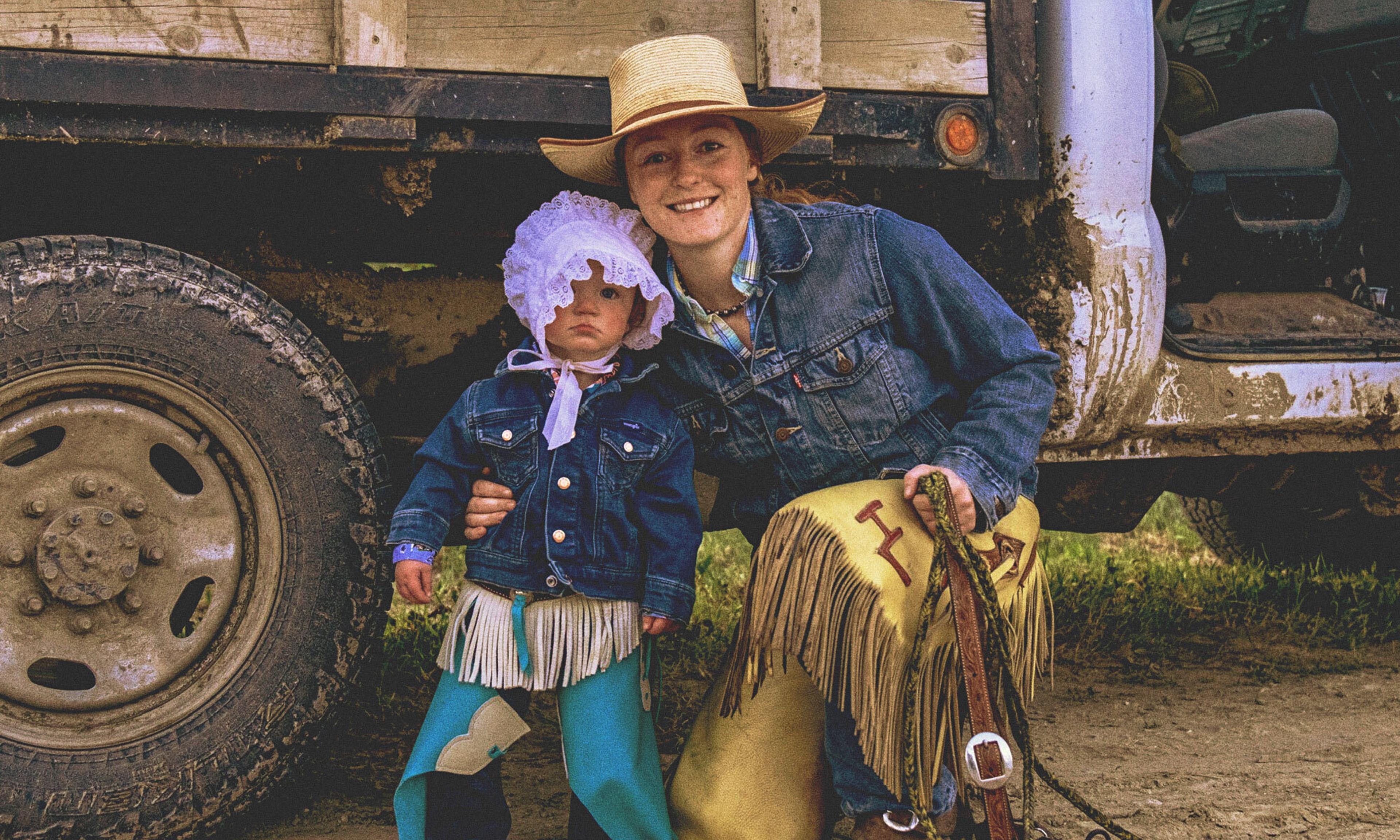
Starting at Ambrook, I quickly realized I was stepping into completely unfamiliar territory: tech, AI, and accounting all at once. On my first day, I had to ask how to connect a second monitor to my Mac. I’d never even used a Mac before; my previous computer was several years old. Complex AI tools and accounting concepts felt completely out of reach, a foreign language I didn’t understand.
The learning curve was steep, but I was determined to figure it out. Honestly, part of that determination came from having no other option: I knew I had to make this work. Ambrook took a chance on hiring me and gave me something I didn’t think existed — competitive pay and the flexibility to work from home with my kids. I wanted to prove that they were right to bet on me learning software.
Growing up in North Dakota, I was immersed in ranch life from a young age. The heritage of ranching runs through my family, guiding my upbringing and inspiring the values I intend to share with my children. My great-great-grandfather began that legacy working as foreman livestock superintendent for the Marquis de Morés historic Badlands Ranch in Medora, North Dakota.
I moved to Montana during a college internship and easily decided that was where I belonged. The feeling that you get when you wake up to see snow on the peaks or trot your horse into sagebrush in the morning cannot be easily replicated. Today, my family and I split our time seasonally: From June to November we work on a cow camp, caring for cow-calf pairs and yearlings. The rest of the year, we’re on my husband’s family ranch, where I don’t just care for the animals, but actively participate in raising calves. I love being on horseback — especially when I get to swing a rope.
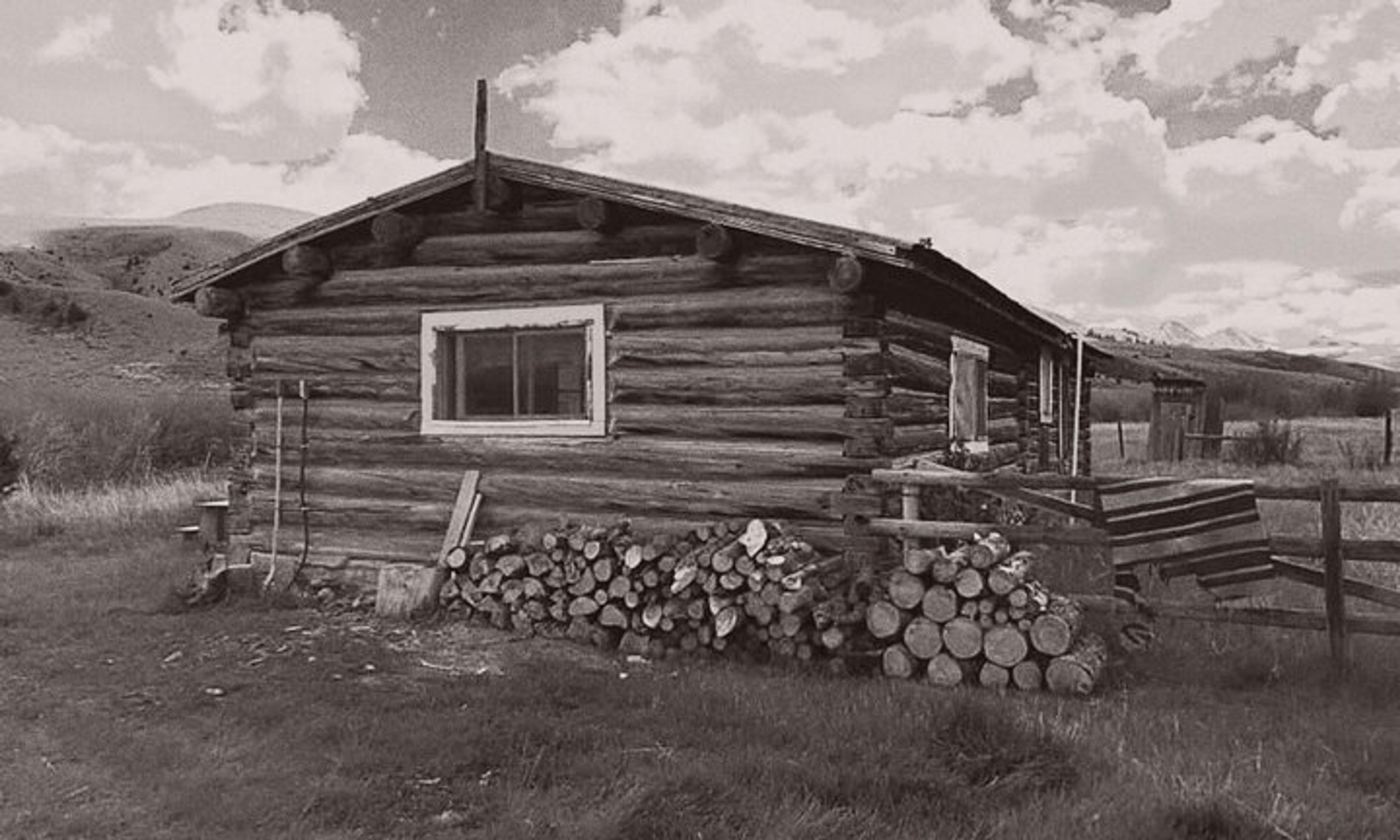
Ledford Grazing Cabin, Summer of 2025
Shortly after my youngest daughter was born, I reached an inflection point in my life. I was miserable with my day job in the insurance industry, something I wasn’t passionate about. I was determined to get back into agriculture, where my passion has always been, even while facing the challenge of working remotely. While flipping through Working Ranch magazine, I spotted an ad describing Ambrook as “QuickBooks for Cowboys.” I hadn’t heard of the company before, so I went to their website and watched a video by the CEO, Mackenzie, explaining the mission. It resonated immediately.
Here was a company working to support family-run agricultural businesses — the same goal I had — but from a different perspective. For me, it was about building something for my daughters, while Mackenzie’s work and family history with the USDA shaped her perspective on supporting agriculture families.
Here I am today, and the journey has been truly profound. I now help customers put together their balance sheets, use tools like Claude to make sense of tricky documents, and really embrace the tech side of things … mostly. I even teamed up with a coworker to create a tech dictionary so I can instantly tell whether ‘AI’ means artificial insemination or artificial intelligence, or whether ‘cadence’ is about the tempo of a horse’s footsteps or a schedule.
Life on a ranch doesn’t always come with a perfect office setup. I’ve done Zoom meetings from the camper to avoid interruptions from my kids, presented from my car when I was on the road, and learned to make even the most modest spaces work. In fact, prior to Starlink, my current work would have been unattainable simply because of my remote location. Those experiences taught me how to stay adaptable and keep moving forward, with our Ambrook team supporting me along the journey.
This growth has taught me that no matter how steep the learning curve, dedication and curiosity make it possible to master most things. It’s also reinforced that blending my agricultural knowledge with modern technology can create meaningful solutions for family-run businesses across the country. The empathy I’ve gained through that experience allows me to bring valuable insight back to our team. It aids shaping what we build and how we communicate with the people who make up rural America.
Blending my agricultural knowledge with modern technology can create meaningful solutions for family-run businesses across the country.
Joining Ambrook isn’t just about loving accounting, numbers, or tech. It’s about something much bigger: leaving agriculture better for the next generation. Without knowing our numbers, we can’t make the decisions to run profitable operations. And without clarity, resilience isn’t possible.
I get to bring my ranching experience to a team building tools specifically for America’s family-run businesses. Working alongside people who understand these challenges and are committed to helping family operations thrive is incredibly rewarding. The decisions we make today will literally affect our grandkids, so yes — balance sheets are pretty exciting.
Every day reminds me that stewardship is more than a word, it’s an action. Whether I’m managing livestock or working with a company building tools that empower agricultural families financially, I feel proud to contribute to both legacies. Ranching is in my blood, and supporting those within the agriculture community is my calling.
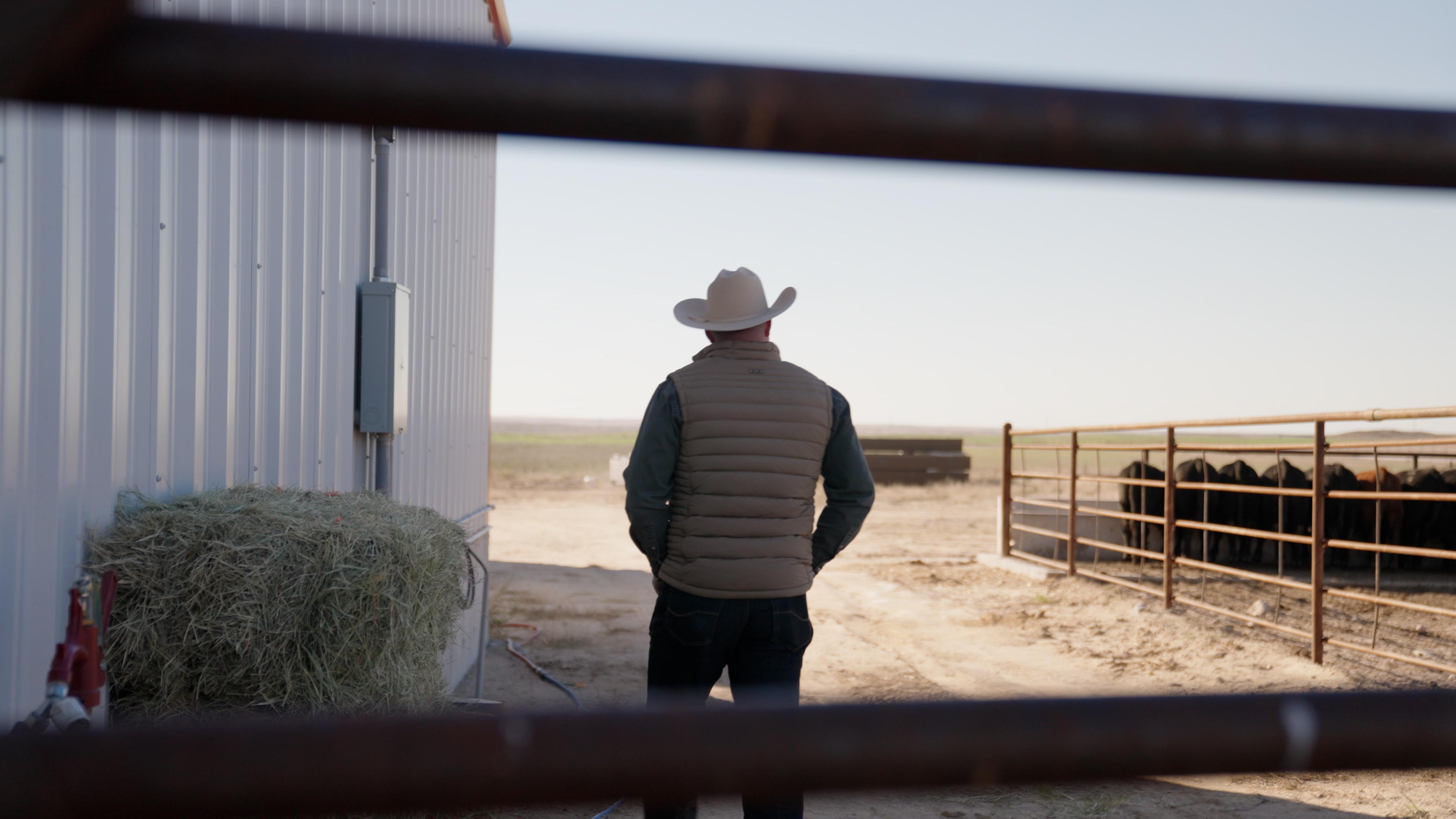
Inventory, finally connected to your books
For many operators we work with, managing inventory is their business.
It’s what drives assets, costs, margins, cash flow, and ultimately the success of their operation.
But when inventory lives outside your accounting system, your financials only tell part of the story. Balance sheets leave out real asset value. Labor, supplies, and operating costs get scattered across tools, making it hard to see what a unit of inventory actually costs to buy, sell, or produce. To understand what the business truly earns, operators end up re-entering the same information—once in spreadsheets, again in operational tools, and again in their books.
That’s why we’re launching Ambrook Inventory: to tie inventory directly to your accounting, so your books reflect what you have, what it costs to produce, and what your operation is really worth today.
Let’s dive in.
The cost of accounting & inventory not talking to each other
Many operators track their inventory in one system and do their accounting in another—not by choice, but by necessity.
Operational tools are great for tracking detailed production data like breeding records or planting schedules, but they aren’t specifically built for accounting. And generic accounting platforms like QuickBooks weren’t designed to represent the value producers are building over time—a calf putting on weight, a crop maturing in the field—just what’s been bought and sold.
So many producers end up bridging the gap themselves. They re-enter invoices, reconcile counts by hand, and rebuild cost of production in spreadsheets. The result is a balance sheet that understates assets, a P&L that doesn’t reflect true costs, and lender conversations based on estimates not evidence.
Over time, that gap turns into real risk. You don’t fully trust the numbers. Your banker doesn’t either, and every decision—from buying feed to taking on more debt—comes with more guesswork than it should. And in low-margin industries, the cost of getting those decisions wrong is too high to gamble.
Ambrook Inventory: Bringing inventory and accounting together
Ambrook Inventory connects what you produce, what you buy, and what you sell to your books. It keeps quantities, costs, and values accurate and your financials complete, with far fewer steps.
For producers: Represent production in your financials
On a ranch, value is created long before a sale happens. Animals gain weight. Feed, labor, and health programs accumulate into cost of production over months or years. But most accounting tools only capture the endpoints, what you bought, what you sold, but not the value being built in between.
Josh McKinney runs McKinney Land & Cattle, a 30,000-acre cow-calf and feedlot operation in Oklahoma. Before Ambrook, he had detailed herd data but no reliable way to translate it into accurate financials.
“We didn’t have a good way to tie it all together,” he said. “We had an idea, but we weren’t accurate.”
With Ambrook Inventory, producers like Josh can track self-produced goods and see true cost of production reflected in their books—so inventory shows up as assets on the balance sheet, costs roll up correctly in his P&L, and numbers stay in sync with what’s actually happening in the field. That accuracy matters when it comes to growth and expansion.
“Now, with Ambrook Inventory, we’ve been able to get really accurate on what it costs us to raise a calf. That accuracy has been a game-changer. It’s helped us earn our bank’s trust.”
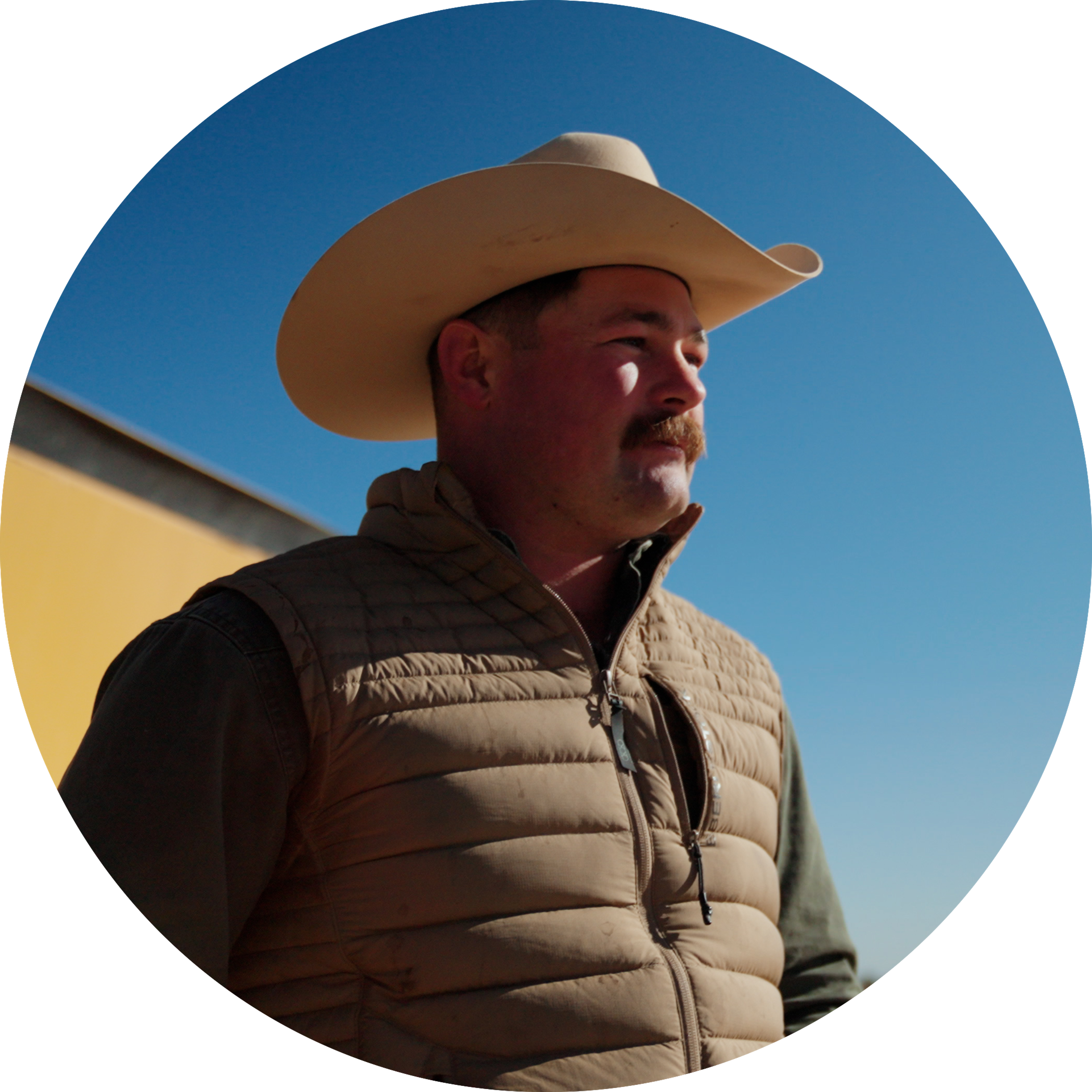
Josh McKinney, McKinney Land & Cattle, Oklahoma
For retail operations: Know what’s on hand in real time
In wholesale retail and resale operations, inventory doesn’t sit still, and can often move faster than the books. Stephanie Nussbaum owns Cattleman’s Ag Supply in Montana, where feed, salt, and tubs might be sold in-store, delivered to a customer, or loaded out in the field—sometimes all in the same day.
When sales, bills, and inventory live in separate systems, basic questions take a long time to answer: What’s actually on hand? What sold today? What needs to be reordered?
“We’re making over 100 transactions a month,” explained Stephanie. “To do that all in Excel? No way. We don’t have the time.”
Now, Ambrook Inventory keeps stock levels, sales, and accounting in sync—so Stephanie’s books can reflect what’s on hand in real time, without hours of manual reentry.
"Ambrook makes everything work together. My husband can load out feed, invoice it right from his phone, and nothing gets lost. I can glance at the inventory and know what we need to reorder. It keeps us on track."
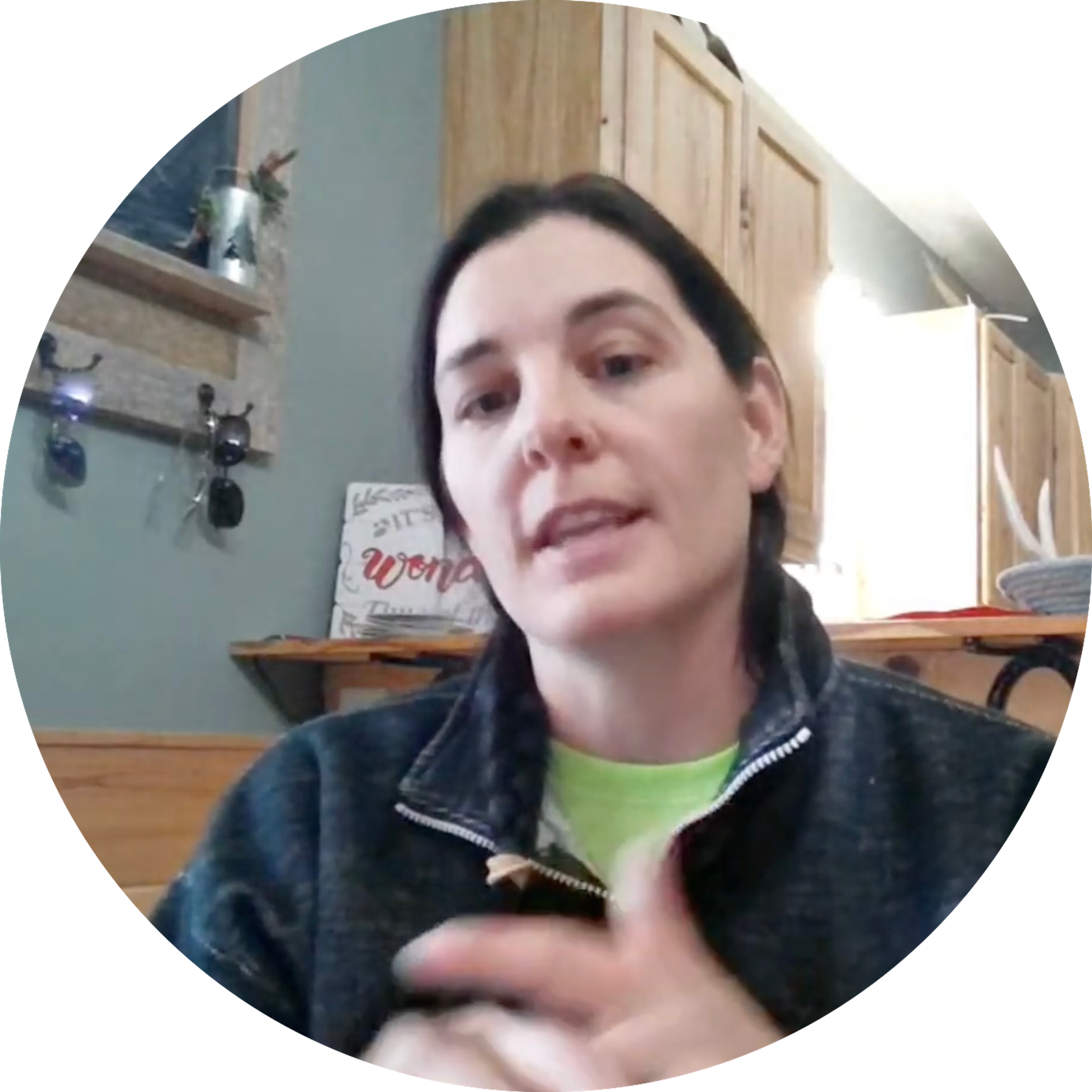
Stephanie Nussbaum, Cattleman's Ag Supply, Montana
How inventory works with Ambrook
Now that inventory’s built into Ambrook, quantities update automatically and all your assets flows straight into your financials, keeping your books accurate without manual reentry or cleanup.
Here’s how it works.
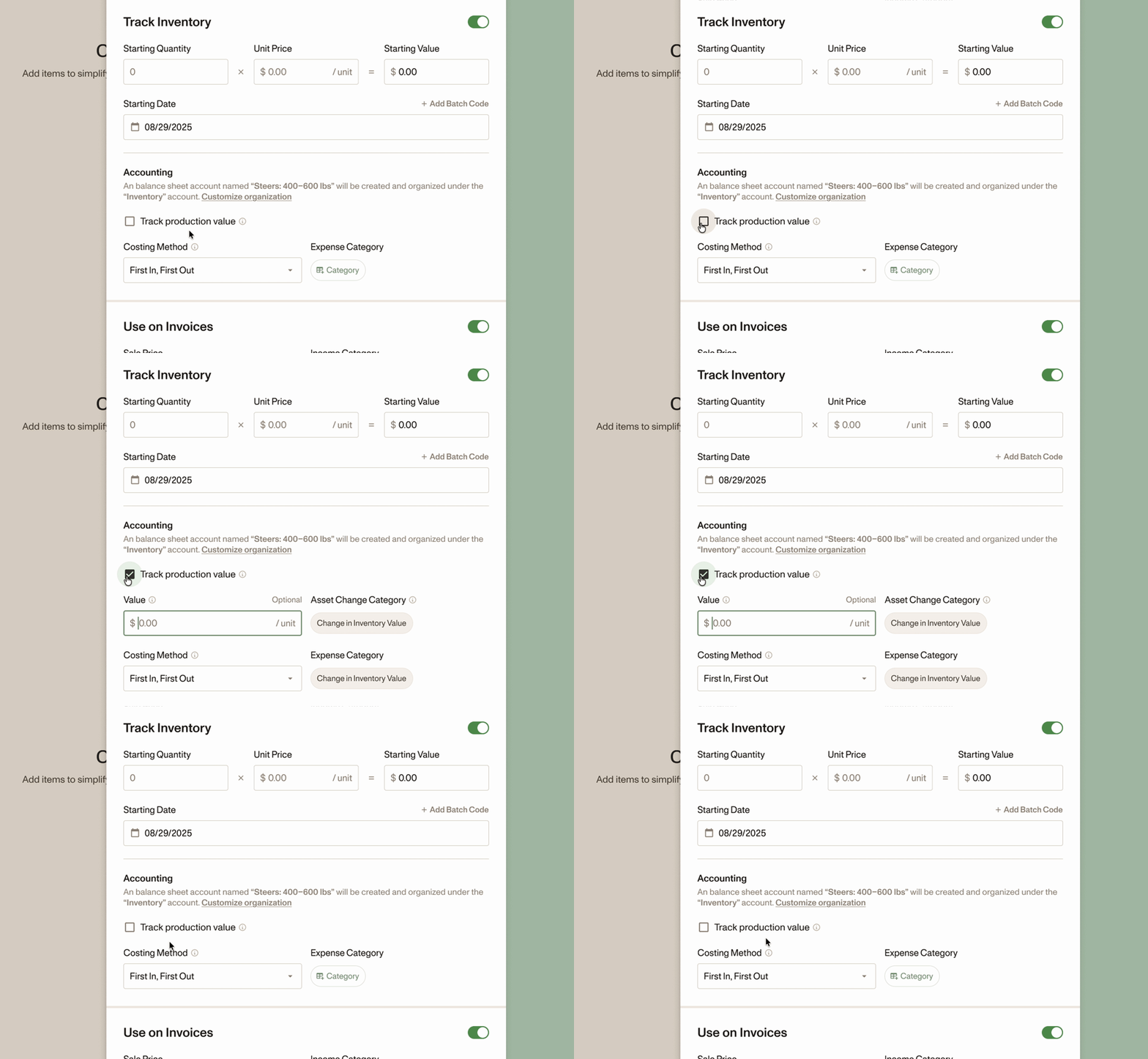
1. Set up the items you buy, sell or produce
Every inventory workflow starts with getting the foundation right. When items are set up correctly, your balance sheet doesn’t need to be rebuilt later.
In Ambrook, inventory starts with items—calves, hay bales, grain, feed, retail products.
Each item includes:
A name and group
A unit of measure
A costing method (FIFO or weighted average), which determines how COGS is calculated
If you produce the item yourself—like a calf born on your ranch or hay you put up—you check Track Production Value. That checkbox tells Ambrook this wasn’t purchased from a vendor; it came off your operation, and its value should be tracked accordingly.
Most accounting systems can’t represent that distinction. Ambrook makes it foundational.
2. Record purchases, sales and production
Inventory updates in Ambrook in two ways: automatically through transactions, and through quick adjustments for real-world events.
Bills and invoices update inventory automatically when you buy or sell. For retail operations, this keeps stock accurate as sales happen—in store or in the field.
Tagged transactions link feed, vet work, fertilizer, baling, or other input costs directly to the items you produce.
For events not tied to a bill or invoice—births, harvests, usage, death loss—you record an Inventory Change. Enter the quantity and reason, and Ambrook assigns or removes value accordingly.
No other accounting system connects production activity to inventory value this cleanly.

3. Have lender-ready financial statements
Once production, purchases, and sales flow through Ambrook, your financials will keep current without manual work.
Your balance sheet stays up to date.
Every inventory change updates your balance sheet in real time. Cattle on hand, feed in storage, grain in the bin all appear as assets—so your balance sheet reflects the complete picture of what you have, not just what you’ve spent or sold.
COGS, done for you.
When inventory is sold or used, Ambrook automatically calculates cost of goods sold using your chosen costing method. Your P&L reflects true production costs, real margins, and enterprise-level profitability—without manual cleanup.
Market Value Balance Sheets for lender conversations.
You can now generate a balance sheet that shows book value and market value side by side, giving lenders a clear picture of what your operation is worth today. Market updates are tracked as Change in Market Value, so your underlying books stay clean and intact.
What’s Next
For some operations—like Cattleman’s Ag Supply—Ambrook now serves as both the inventory and accounting system, with everything seamlessly integrated. For others with more complex production workflows like McKinney Land & Cattle, Ambrook works alongside already strong tools like Performance Livestock Analytics—bringing the inventory those systems track into complete, reliable financials.
Looking ahead, we’re focused on continuing to build on this foundation so Ambrook can support even more complex production activity and higher-volume retail operations.
Either way, the goal is the same: making sure what you raise, grow, buy, and sell shows up accurately in your books.
We’re working toward a future where operators:
Walk into bank meetings with complete, bank-ready financials
Grow without gambling—making expansion decisions based on numbers, not guesswork
Build businesses their kids and grandkids can step into with confidence
As Josh McKinney put it: “I just want to get rural America back to making a living.”
We hope Ambrook Inventory is another step toward that.
Try it out. Tell us what you think. Help us keep building it the right way.
Availability
Starting today, all Ambrook Pro plan customers have access to our new inventory features in their account.
If you’re on a Build plan and are interested in inventory, reach out to us for more information on how to upgrade to Pro.
See our pricing for more information.
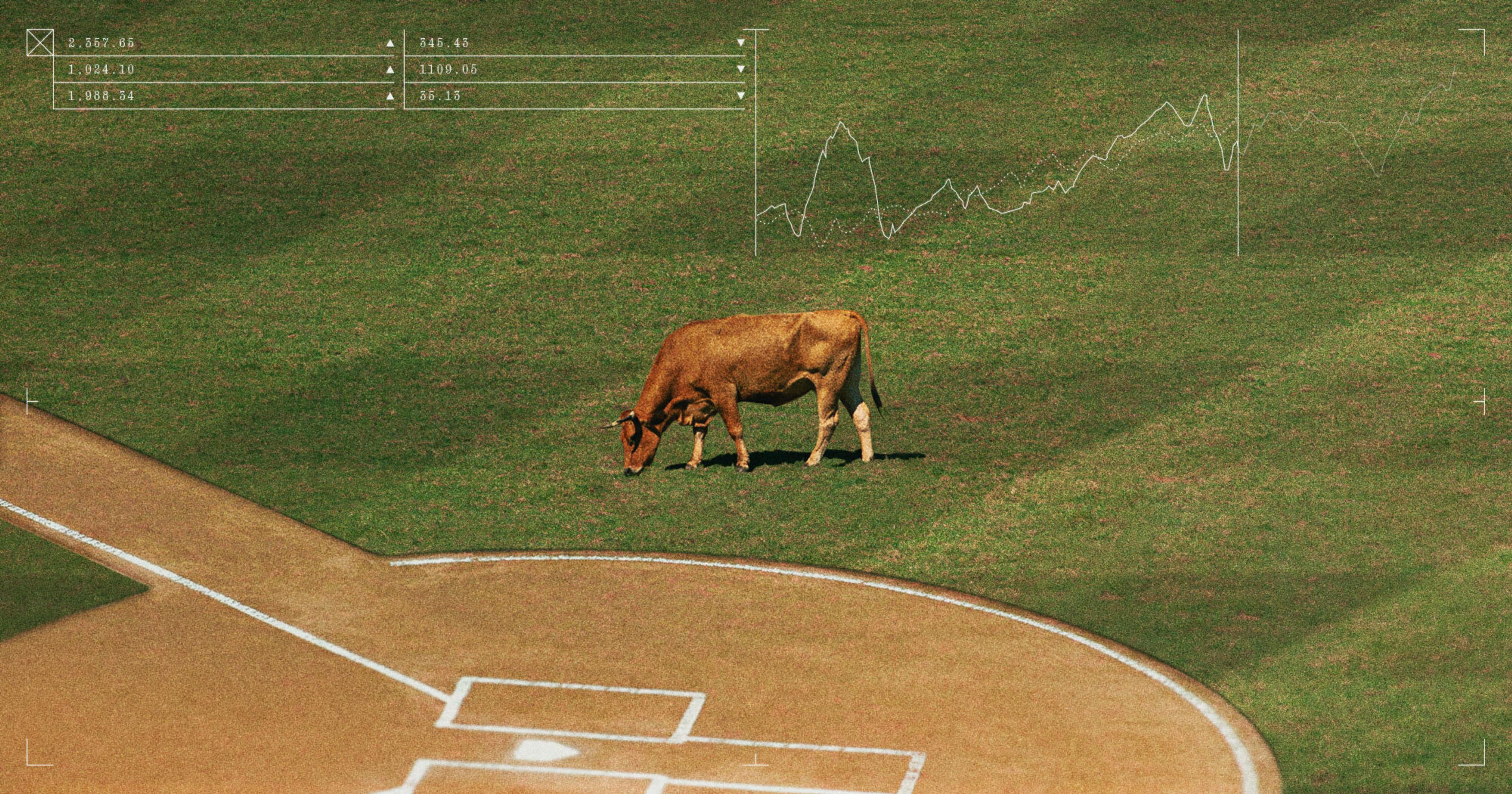
A pivotal scene in the 2011 movie Moneyball ends with the punchline, “How can you not be romantic about baseball?” The moral was that while baseball was moving towards statistics and quantitative analysis, everything still came down to people. For all the averages and benchmarks, on any given at bat a human drama was unfolding.
Over my two years at Ambrook, that’s how I have come to feel about accounting. On the surface, you have a ledger with debits and credits or incomes and expenses. Underneath you have a story: risks and rewards, trials and tribulations, choices and constraints. Most importantly, it’s a story about people.
At Ambrook we spend a lot of time working with people. Some are entrepreneurs getting a business off the ground, some are transitioning family-run businesses, some are striving to make the world a better place. The product we make helps people understand and tell their stories. And, when the timing is right, we help people make important business decisions that will shape their futures. The numbers are only one small part of the story, but they have a big impact. When you see a concept click for someone — their eyes light up and they start to talk excitedly about the future — the value proposition is undeniable.
Despite my enthusiasm for accounting, I wouldn’t try to claim that it’s fun: The value is in the process, not the product. Like so many lessons — in baseball or in bookkeeping — the most important learnings come from getting practice and reps. Getting your hands dirty and doing the books helps you get a sense for what is actually going on with a business. Accounting for a loan helps crystallize how money flows back and forth between the balance sheet and the income statement. You build intuition that helps you figure out when something seems incorrect. Before I started at Ambrook, I would have said that I know how accounting works; now I think I know how accounting feels.
The core idea behind Moneyball is that before analytics were popularized, people were looking at the wrong things. Scouts would go to college games and index on swing mechanics or if a pitcher had good stuff. As a result, talented players would go unnoticed and overlooked. In many respects that’s the case with agriculture today — the first sector we’ve focused on serving. In an industry steeped in culture, doing things the way they have always been done feels safe.
About a year ago, I visited a ranch customer in Southern California. I had helped set them up on the app, spent time cleaning up the balance sheet, and learned about their business in detail. I knew how the prior year’s income had been impacted by rainfall and why the question of “how many replacement heifers should I keep this year” is actually non-trivial. I had read extensively about livestock accounting and talked to industry experts about best practices for ranch financial management.
This was all well and good, but the story truly clicked when I was on the ranch at 5:15 am on a crisp October morning and I finally met the calves. In accounting terms, the calves didn’t exist. They were farm-raised, so according to conventional accounting methods they had no value. (Cash-basis businesses aren’t required to go through the exercise of capitalizing the expenses to raise these animals onto the balance sheet.) But in practical terms, they were an asset. They represented years of hard work. There’s no way to be out on a ranch, look at a calf crop, and think that those animals don’t matter.
So, we went about upgrading the accounting. Using Ambrook features like enterprise tags and pulling from livestock accounting practices, we figured out exactly what those calves were worth, in terms of the expenses laid out to raise them. We were able to calculate the breakeven price for calves and compare the profit margin of selling at commodity market prices versus selling direct to consumer. Retaining half the herd went from looking like a major net loss on a cash basis to looking like a sensible investment in the future.
An overused adage you might get in the classroom is that “accounting is the language of business,” but it is directionally correct. In baseball you can compare a pitcher to an outfielder using a statistic known as wins above replacement — in accounting, we have return on assets. Financial metrics are a way to look at two completely different things and try to make a statement about which is better, while still acknowledging that “better” is a human term. Better for what, or better for whom. Some folks want to maximize cash, others want to minimize risk.
The thing I have valued the most working at Ambrook has been having the chance to talk about what better means for hundreds of people all across the country. Accounting is just a useful entry point to the conversation. The learning has been that there’s no right answer. We can help with a cost of production analysis, or scenario planning, but the best option is all about the people we serve. When you think about a job in those terms — how can you not be romantic about accounting?

I like feedback in the way everyone likes feedback: constant positive affirmation and validation. I’m joking (well, kind of). But it’s true that many of us carry a cultural aversion to honest feedback, especially at work. This is likely a mix of some people being uncomfortable delivering criticism and others taking it too personally.
The irony is that we all crave feedback. It’s the only real antidote to those pesky feelings of uncertainty: What do you actually think about me? How am I doing? How can I get better? And, just as importantly, it’s how we feel seen. After all, validation for effort and achievement can be equally powerful as critique for improvement.
At Ambrook, we’ve learned that real feedback becomes easier, more productive, and, dare I say, even enjoyable, when it’s embedded into the very way we communicate. It’s not just a singular event or a formality but rather a shared language and a daily habit. Our culture of radical honesty is built on three things:
A language toolkit: Learning how to give feedback clearly and empathetically.
Low ego: Staying open to feedback, regardless of your title or experience.
Reciprocity: Treating feedback as a conversation, not a one-way delivery.
These values show up everywhere: in how we train, how we communicate, and how we check in. I’d like to share a few of Ambrook’s feedback mechanisms that have helped us build a culture rooted in trust.
Learning to Talk About Hard Things: LiT Sessions
Our “LiT” (Leaders in Tech) sessions are where most Ambrookers first learn the language of feedback. Built on the framework founded by Carole Robin at Stanford GSB and developed into a program for startup founders and operators, Ambrook has adopted LiT as a more formal space for giving and receiving feedback, built around small, intimate groups of teammates who work closely together.
These sessions are structured as a feedback circle: Everyone gives feedback to one person at a time, and unlike in-the-moment feedback, you’re asked to wait until each person has fully shared before responding. While the format can sound intimidating, the majority of feedback shared is sincerely positive. My first LiT session took place in the backyard of my teammate Katie’s family ranch in Montana, a casual setting that made it easier to talk about difficult things. There, we practiced using phrases like:
“When I see you do X, I feel Y. The story I tell in my head about what’s going on is Z.”
LiT teaches that there are three realities: my reality, your reality, and our shared reality. I can only observe my reality and our shared reality — I have no idea what’s going on in your reality! But so many times, we use language that assumes we know what another person is thinking or feeling. That’s usually why people feel defensive — they could be misunderstood, or not like the identity you’ve asserted for them. Observe the difference between:
“You’re always upset when I do X.”
vs.
“When I do X, I notice you make a face. The story I tell in my head is that you’re upset. Is that true?”
By staying in your observed reality, and offering the other person a chance to clarify your assumptions, you’ve both been able to deliver feedback and do it in a way that minimizes the chance that someone else feels misunderstood or defensive. LiT calls this “staying on your side of the net.”
At first, this kind of language feels unnatural, almost like corporate therapy-speak. But I came to appreciate it, especially when giving constructive feedback that I worried could be interpreted negatively. It lets me describe my experience without assigning blame, which makes the conversation feel more open and less defensive. And when I’m on the receiving end, it is way easier to hear feedback when I know it isn’t loaded with assumptions. One of my favorite phrases that came out of LiT is:
“I feel strange math when you do X.”
“Strange math” describes those mixed, hard-to-articulate emotions that come from everyday interactions when something is both appreciated (+1) and frustrating (-1) at the same time. Critically, the strange math is that they don’t cancel each other out. Both are valid at the same time, and worth bringing up as feedback.
I felt this mix of emotions acutely during my team’s recent restructuring meeting. Part of me felt unsettled and unsure during the process, and I was thrown by how quickly everything shifted. But on the other hand, I was also grateful for the new clarity and the opportunity to articulate where and how I wanted to grow within my new team “pod.” This co-existing feeling of discomfort and gratitude is just one example of the many ways strange math can manifest.
Another useful concept is the “pinch” — a small, subtle twinge of discomfort that you may not yet have the words to fully describe. Pinches are easy to dismiss because you want to stay constructive, and without clear language it can feel simpler to say nothing. But they accumulate. Naming and raising small pinches in the moment prevents them from compounding into something larger and harder to work through later.
Feedback as a Habit: How Slack Shapes Communication
At Ambrook, feedback doesn’t just live in formal spaces like LiT: It shows up everywhere. LiT gives us a shared framework and vocabulary that naturally shapes our day-to-day interactions, often without us even realizing it. And because we care (a lot) about hiring genuinely empathetic, emotionally intelligent people, that foundation carries into every quick exchange, making informal feedback feel natural rather than daunting. You can see this most clearly in the habits and norms we’ve built on Slack.
We emphasize communicating in public channels rather than DMs. This transparency allows everyone to learn from each other whether they work in Marketing, Engineering, or Customer Success. We see everything from shoutouts to constructive callouts, where people surface issues or misunderstandings and work through them in the open.
This only works because of the shared ethos behind it:
Try not to assume negative intent.
Seek understanding before judgment.
Treat mistakes as part of the process of building something complex together.
When those norms are modeled by leadership, public communication stops feeling exposing and starts feeling empowering. I’ve learned not to take feedback personally and instead view it as a natural part of iterative improvement and personal development. And because this culture goes both ways, I also became comfortable giving honest feedback upwards — something that surely isn’t the norm everywhere!
Turning Feedback Into Support: Weekly 1:1s
Feedback also happens in smaller, more personal spaces. I have weekly 1:1s not just with my manager, but with several of my peers. These meetings range from structured check-ins to casual coffee walks near the office.
In my 1:1s with Paige, our Head of Customer Success, she’ll frequently start by asking: “What feels hard?”
It’s such a simple question, but it reframes “I’m struggling” into a safe invitation to problem-solve together. It shifts feedback from evaluation to collaboration and reminds me that we’re always on the same team. And in a distributed team, this matters (Paige and I work on opposite coasts). Managers can’t sense how I’m feeling unless it’s communicated, and my peers can’t support me without visibility. Practicing feedback regularly keeps that loop open in both directions.
How Feedback Builds Trust and Yields Better Results
Ultimately, the biggest outcome of a feedback-oriented culture is trust. And trust is what allows teams like ours to do hard things together; it also drives tangible results. Take Bug Day, a weekly initiative where our entire engineering team spends the day addressing customer pain points identified by the CX team. As Paige and Tom described in their article about it, Bug Day exists because of feedback both external (from customers) and internal (between teams).
Customer Success might prioritize a bug based on sentiment and impact, while Engineering has to weigh technical difficulty and bandwidth. Instead of competing priorities, feedback helps bridge perspectives. Regular syncs and open conversations create context and shared understanding, leading to faster problem-solving and better outcomes for everyone.
A culture of feedback isn’t built by mandating transparency or scheduling quarterly reviews. It stems from how we talk to each other, how we listen, and how we stay curious about what others experience. Feedback as a shared practice is what makes Ambrook a special place that allows us to do meaningful work — while also experiencing the kind of personal growth that’s rare to find at many companies.
In college, my design professor scolded a classmate for taking a marketing course. I always imagined he felt he needed to prepare us for a lifelong battle where we were trained to uphold creativity and novel thought in opposition to the cold hard numbers people. So when in Spring of 2024, I was tasked with co-leading our paid ads strategy for Meta, I couldn’t help but worry I’d feel like the sellout my professor warned me about. But this was exactly why I’d joined Ambrook, to connect design more directly to business impact. Now, as Creative Director, I had the opportunity.
So with our product ready for general availability, it was time to start pumping out social media ads to build awareness. It had been years since I used Instagram or Facebook and I honestly wasn’t thrilled about designing for the feed because it’s temporal and filled with trash. When you create a poster or even a marketing website, there needs to be conviction in what you are making and launching. With social media, it’s there and then it’s gone. That made me unsure if quality mattered. But surely I could bring taste to social media advertising.
We started simple, following the same strategy the founders had used when they produced ads for our first product, a funding application tool. Back then, stock photos of stereotypical farming scenes had been effective.
For our first test, we used a mix of stock photography and our own film photography. Both produced a modest amount of leads.
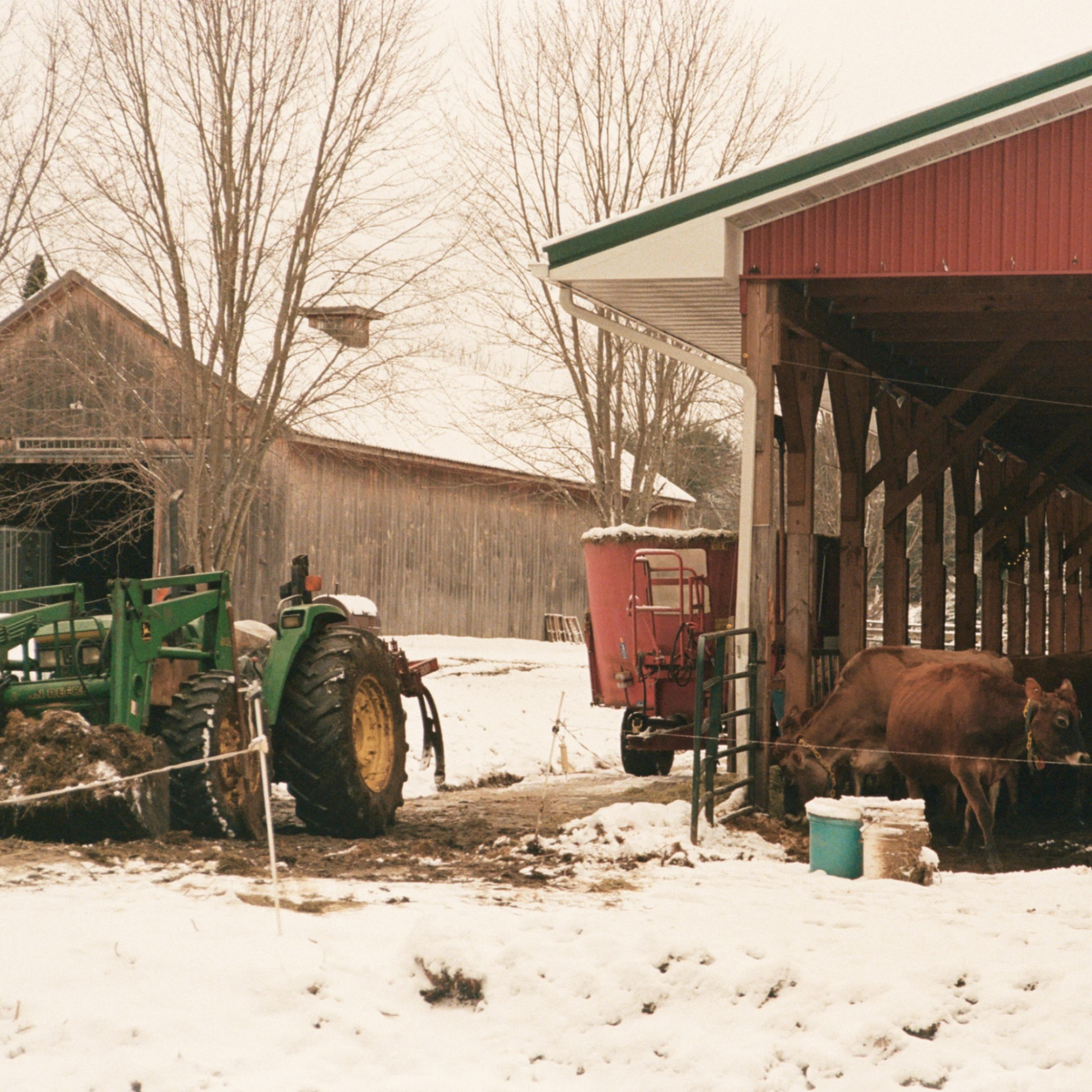
Now before we break down why or why not creative works, it’s important to acknowledge that Meta is a fickle siren. You put your creative into the black box and Meta determines its fate. This can mean the ideas you are bullish on may never get pumped out to the masses if Meta’s algorithm determines it’s “not winning creative”. Or creative that you deem ugly, silly, or lackluster gets major distribution. You can adjust the knobs and switches, but mostly you are at the whim of a mysterious binary code that somehow knows the human psyche and artistry. And out the other side you get copious data, like thumbstop rate and click-through rate, that you combine with instinct to figure out what is working.
In the case of our first photographic tests, I think they found success because people yearn to have their way of life represented. In short, it’s important to make it immediately clear who you are serving. For Ambrook, our target audience is the backbone of America: farmers, ranchers, and rural operators, a group that has often been overlooked by both modern software and design.
After a few rounds of photography, we decided to add additional elements to our photos.
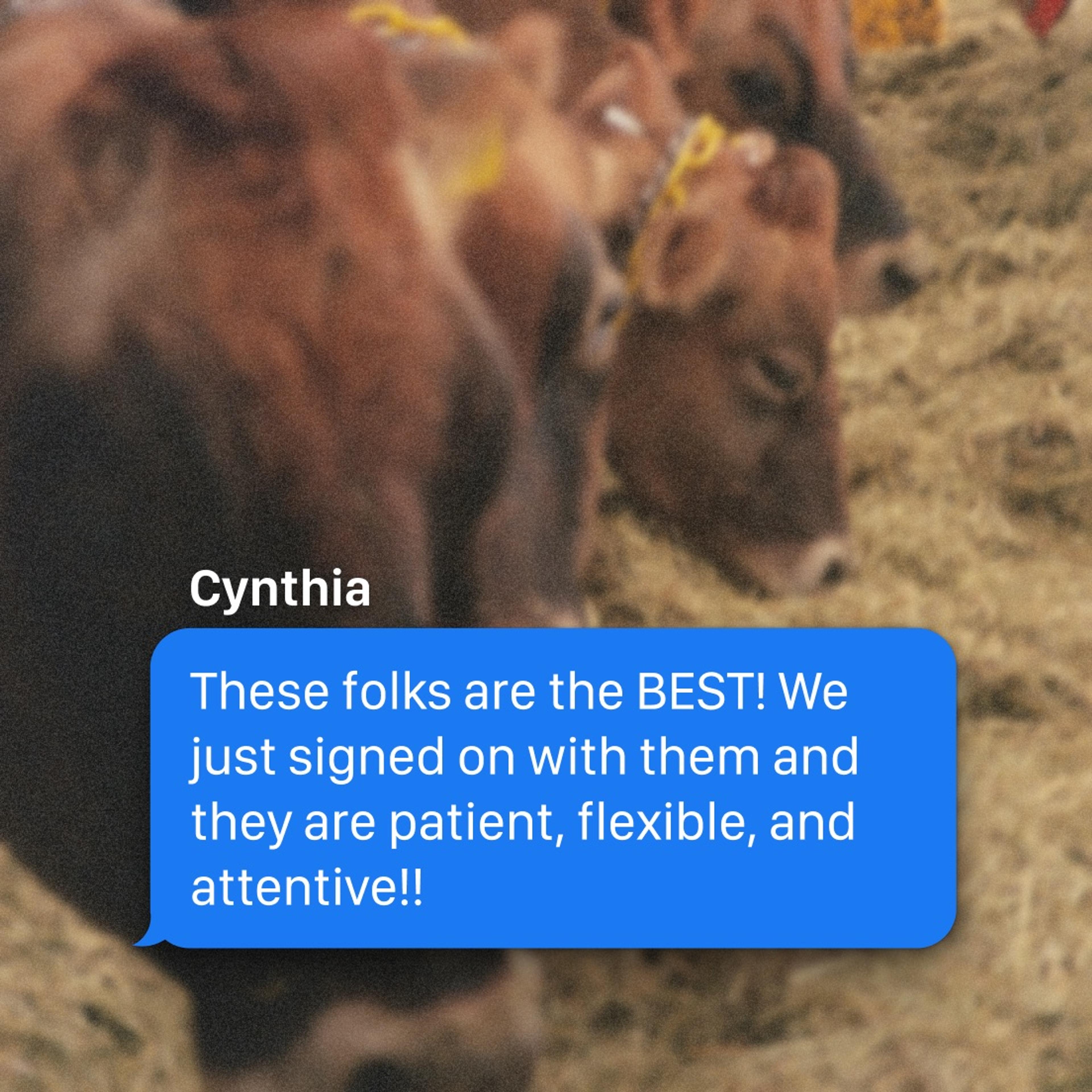
Our second test featured customer quotes in chat bubbles, overlaid on photography. The hypothesis was that customer credibility would improve the performance of agricultural imagery. The results: zero leads. There are a multitude of reasons to blame for this ad test floundering. Maybe the campaign was configured incorrectly. Maybe folks didn’t know what it was marketing. Maybe Meta thought the creative was poor. Homing in on the actual reason may be impossible, but I think a contributing factor was we hadn’t yet established a winning hook. No one really knew about Ambrook. Awareness needed to come first. Enter QuickBooks.
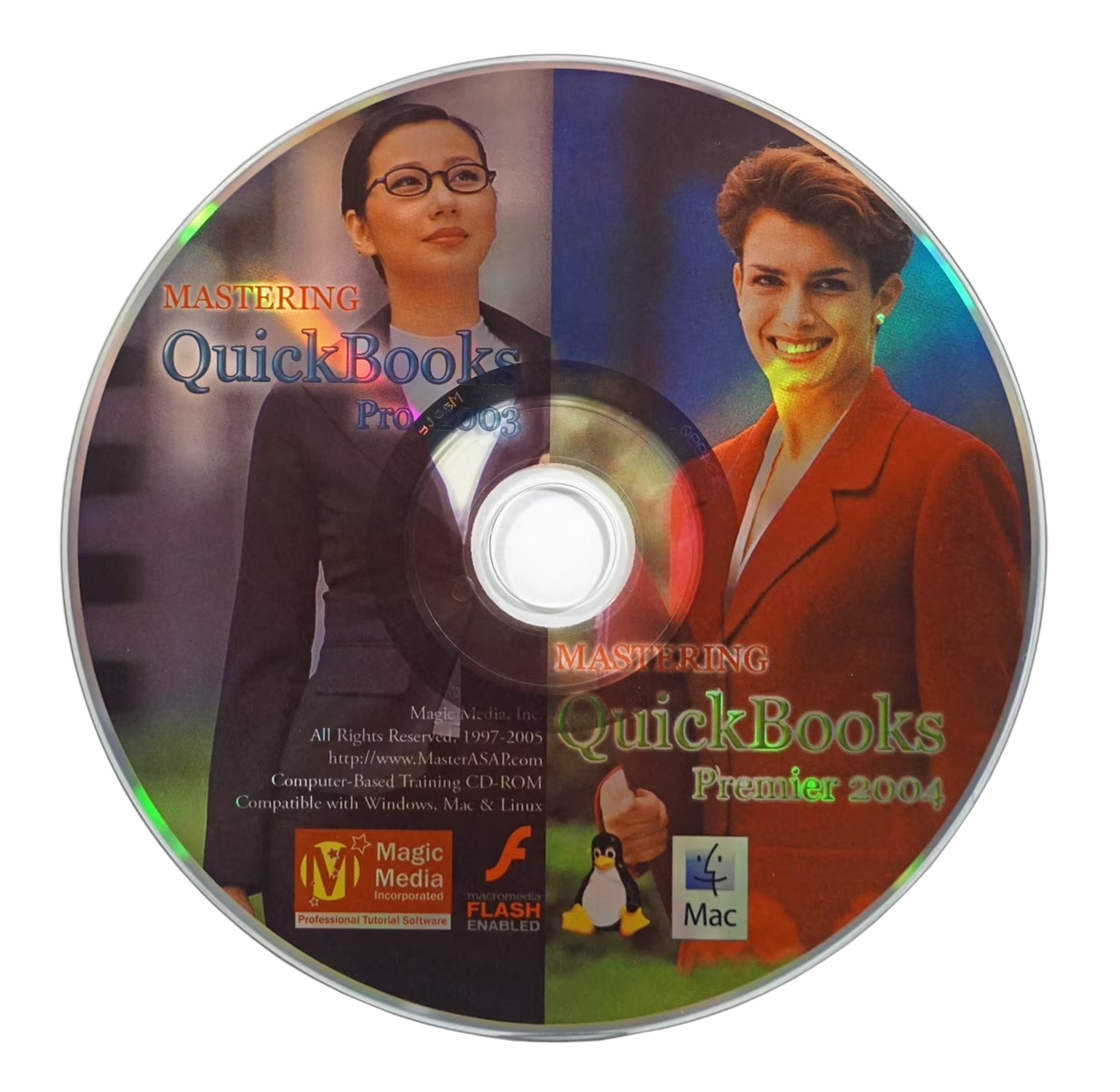
If you run a business in America, you know QuickBooks. For over 30 years, it’s dominated SMB accounting software. Older farmers adopted it when it was a simple desktop product you bought once and owned forever. Younger farmers either inherited it or chose it because it’s the default.
There are QuickBooks loyalists — we know because they comment on our ads — but many operators of complex, family-run businesses feel abandoned by today’s QuickBooks. That resentment became our cheat code for breaking through.
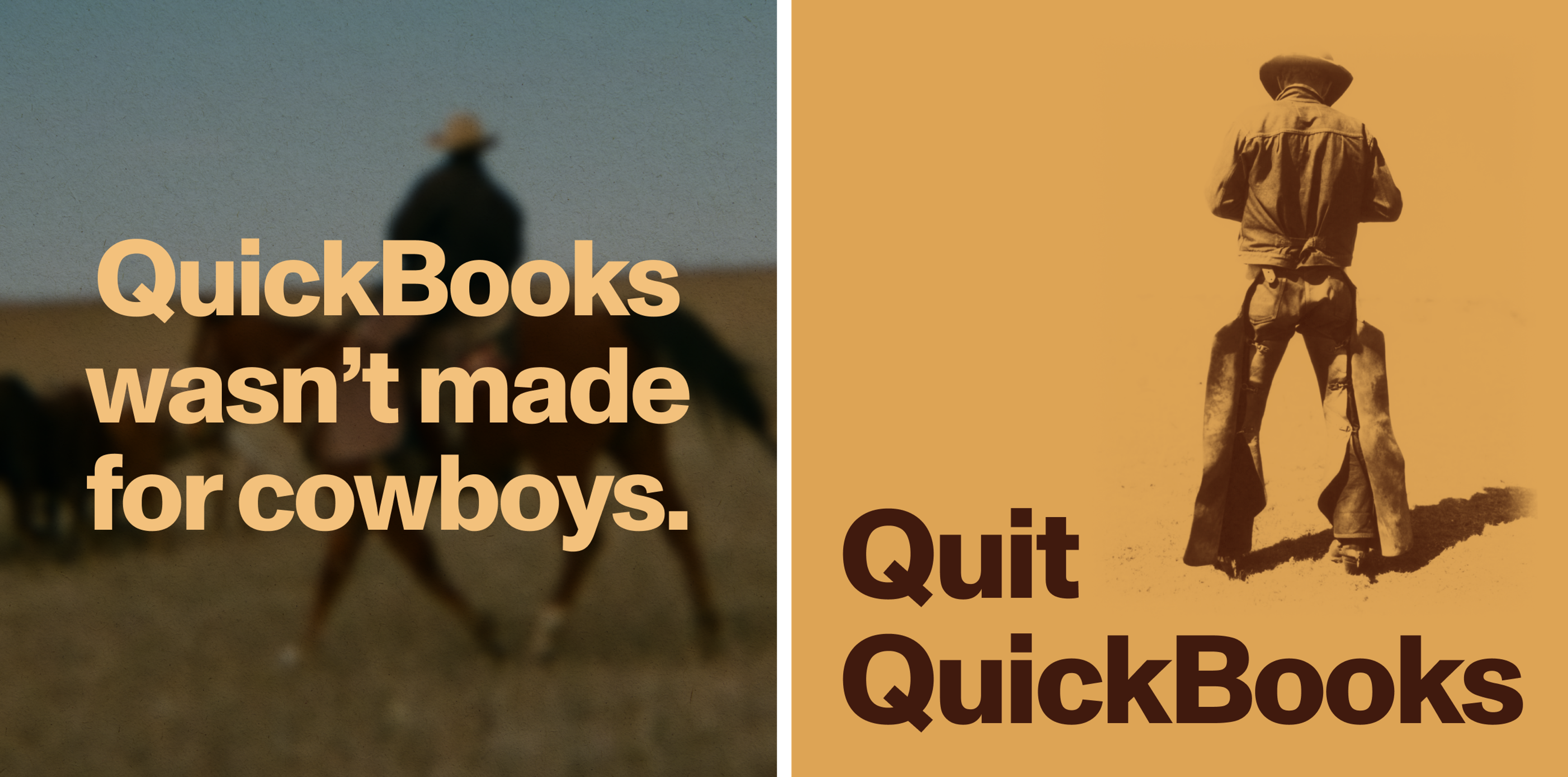
These two ads changed everything for us. By leading with identity over features, we were able to get to the core. The cowboy imagery made our target audience unmistakable. Each ad worked for a different strategic reason. “QuickBooks wasn’t made for cowboys” positioned farmers and ranchers as too specialized for generic software. And “Quit QuickBooks” served as a call to action that put control back in the operator’s hands. The message across both was simple: Another option exists.
Getting anyone to stop scrolling on social media long enough to read is hard. Getting them to remember your ad copy verbatim is rare. When we visited a ranch customer in Montana, he introduced us to a fellow operator by saying “These are the folks that run the ‘Quit QuickBooks’ ad.” And an influencer we later hired referenced “QuickBooks wasn’t made for cowboys” without being prompted.
An even more surprising outcome was that folks running non-ag businesses also loved the ads because they too felt frustrated with QuickBooks. That’s why in addition to farms and ranchers, we also have customers who operate in construction, trucking, and processing and even the main street mainstays, like salons and churches. When people think of family businesses, it’s easy to think the operations are small and simple. But what draws people to Ambrook is this understanding that your business is unique and you deserve to represent it how you see it.
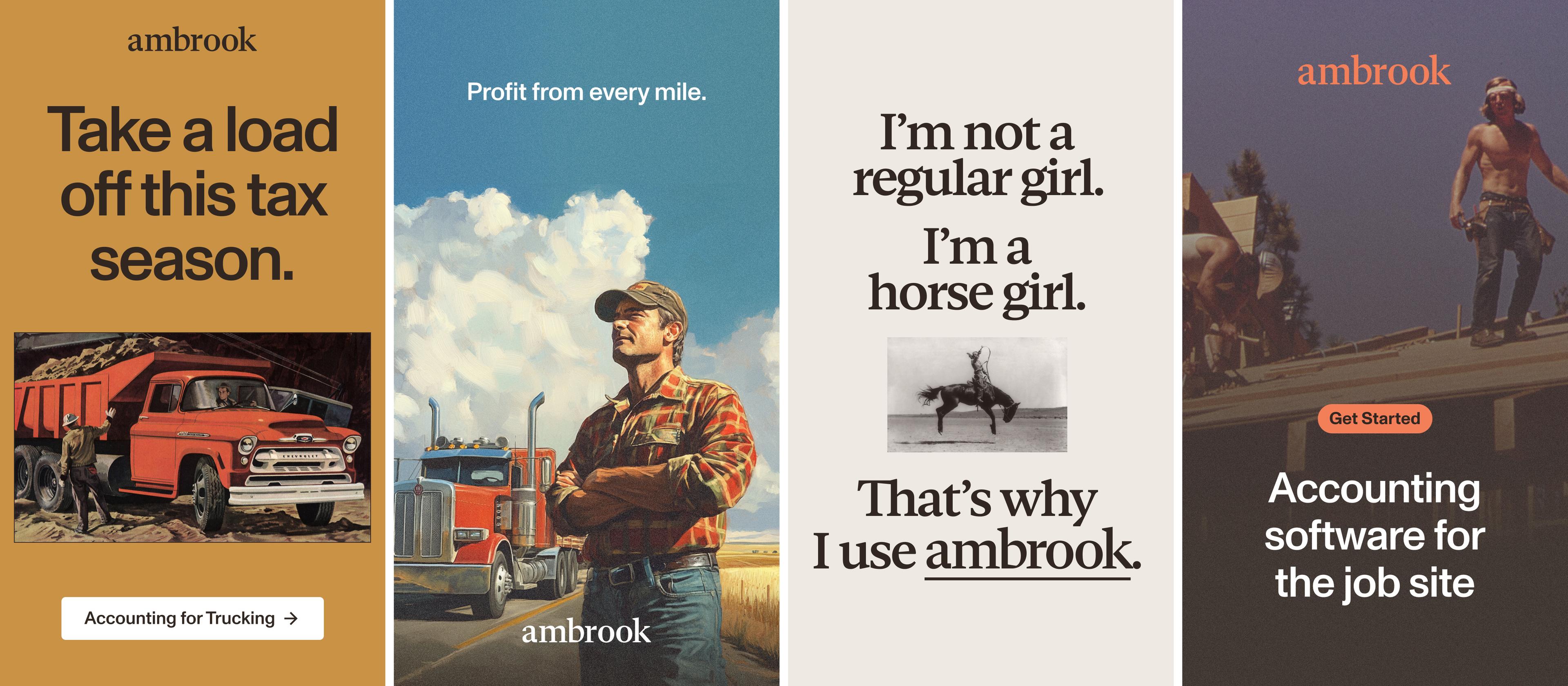
With a hook resonating, brand awareness building, and tax season approaching, it was time to go crazy with testing. The beauty of performance marketing is you can throw ideas at the wall fast and let the data decide. We tested everything: Targeting different ag segments — dairy, equine, ranching. Different demographics — young farmers inheriting operations versus older farmers planning succession. We targeted people frustrated by changes to their QuickBooks plan; created comparison charts; filmed demo videos; collected user-generated content; explained features; and showed before-and-after transformations. If we saw something working in the wild, we tested our version.
This period of rapid experimentation coincided with AI image generation, and a shift in my own creative philosophy. Before Ambrook, I’d been Creative Director at a design studio where every piece we produced lived neatly within the brand guidelines because we were creating it in a vacuum. Now in a world where ugly sometimes wins and rapid creative testing was paramount, I realized I had to abandon perfectionism to unlock potential.
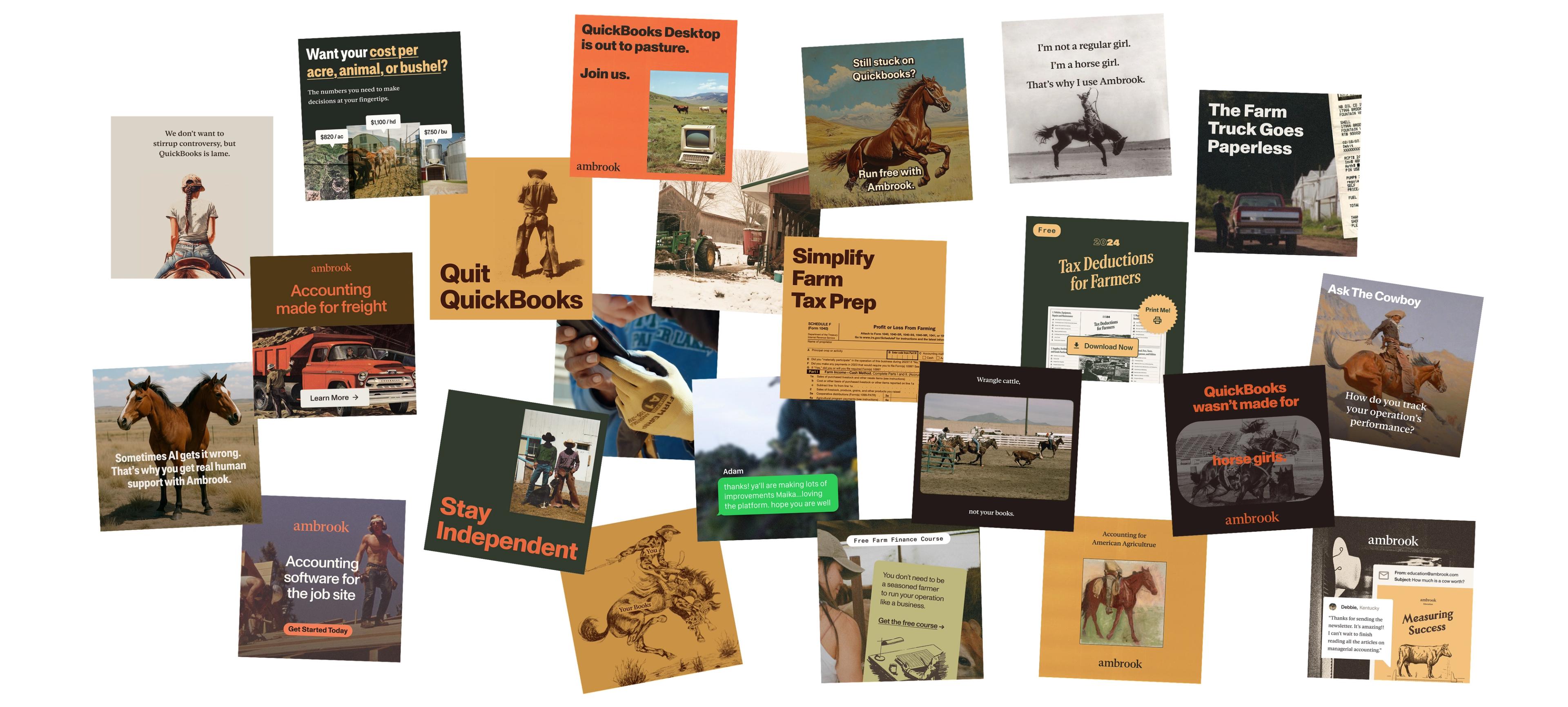
Counterintuitively, this loosening of creative control taught us more about our brand expression than any style guide ever could. When you’re forced to create 50 ad variations in a week, you quickly learn which messages resonate and which visual elements actually matter to your audience.
Counterintuitively, this loosening of creative control taught us more about our brand expression than any style guide ever could.
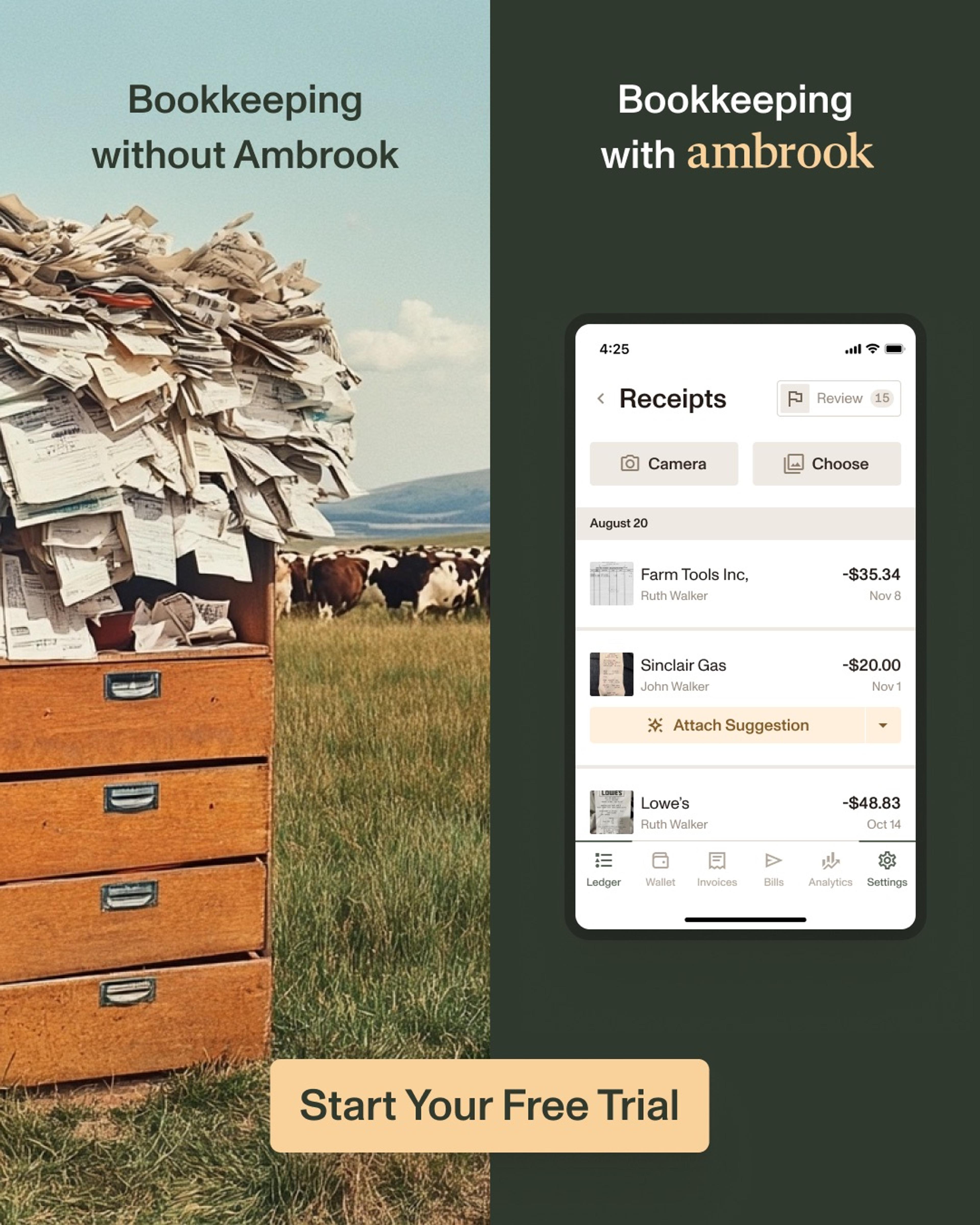
A popular early ad from this iteration period focused on how Ambrook helps operators wrangle paper records. At the time of creation, I was still wrestling with what role AI image generation would play in a brand that’s so heavily anchored on authenticity, so I staged my carpenter husband’s work van to look like a chaotic mess of papers. (Really I just staged what was already there.) It gained traction, so I began iterating on the concept using AI. I had previously dreamt of having an editorial-style photoshoot with a messy desk in a field and now, in a few keystrokes, I was able to make that concept real. This effort also started to codify my usage rules for AI at Ambrook: It fits into our brand when we use it for surrealist images.
It wasn’t just image generation that was unlocking ideation. It was the number of new tools coming out to facilitate creative tasks that previously required dedicated experts and lots of time. We began using Descript to create videos with AI generated voiceovers. And Jitter helped us lightly animate static concepts we made in Figma.


And these weren’t just tools I employed. Anyone on our team who had an idea for an ad was encouraged to try to make it. This was empowering for folks like our Sales team, whose daily conversations inspire ideas. Instead of tossing them over the fence to me, they could try and produce them independently. Even our CEO Mackenzie joined in; she has some winners still live as of this being published. As the person responsible for how Ambrook presents itself in the world, I embraced the vibe of “try anything” and thrived on the rapid feedback loops we were able to achieve because the tooling allowed everyone to work at hyperspeed.
This effort also started to codify my usage rules for AI at Ambrook: It fits into our brand when we use it for surrealist images.
One quick turn ad, for example, originated from a comment a stoked customer left on another ad. We took his comment and within an hour had transformed it into a ridiculous AI mess — and it was cooking on Meta within a day.
Almost two years later I now have my hands less in the making of ads and more in the enablement and assessment. At Ambrook, we call this evolution derisk and delegate. Be resourceful and figure it out yourself and then empower and collaborate with others on the maintenance. By being in the trenches, I had a crash course in letting go of perfectionism in service of learning and keeping my pulse on the business outcomes to decide what to test next.
The biggest lesson? Don’t look down on any function in a company. Where would Ambrook be if I’d decided this work was beneath me? Where would we be without “QuickBooks wasn’t made for Cowboys”? Design is a vehicle for feeling, message, and impact. Without that purpose, it’s just art for art’s sake — which is fine, but I’m here to build a business. And that makes me a marketer too.

I ran Ambrook’s first engineering internship this summer with a simple goal: Build a repeatable early-career pipeline. I’m a software engineer at Ambrook — joined two years ago — and I’d been wanting to bring on interns since the beginning.
We’d hesitated in past years. Interns are an investment; as a small team we weren’t convinced we had the mentorship capacity, interview bandwidth, or project scaffolding to do it right. Last fall, I pitched the idea to the team: Treat it as a pilot, prove the value, and build something repeatable. We would bring on interns to ship real customer-facing work and establish a repeatable process we could scale for internal onboarding and early career recruiting. This summer we finally ran the experiment, setting out to bring on two engineering interns but ultimately bringing on one.
I made a candidate guide, posted on LinkedIn and Twitter, and waited. I didn’t know what to expect, maybe a few hundred applications?
Over 3,000 students applied between December and March. We manually reviewed more than a thousand, interviewed dozens, and ultimately hired Sam (who was incredible). Here are field notes on what I learned.
Why This Was Worth Doing
Our hesitations were real: Bringing on a few interns for the summer costs about the same as hiring one full-time engineer. That’s a tall ask for an early-stage startup! Add in interview time, selling the role, and structured onboarding, and you’re committing 1-2 engineers per intern across mentoring, managing, and onboarding. When you treat interns as overhead, you’re focused on what you’re giving up: time, resources, short-term velocity.
But that’s the wrong way to think about it — this was an investment in team capacity to train and uplevel each other. We wanted to codify what we’d been handling ad hoc — clear interview rubrics, a manager/mentor model with defined responsibilities, better onboarding documentation. The program would force us to build these systems, and I’d own it end-to-end: internal buy-in, sourcing, interviewer calibration, closing candidates, and creating repeatable processes. The hypothesis: Investing in a structured program would make all future onboarding less brittle and give our team reps in mentorship and leadership.
We ended up applying everything we learned to this year’s recruiting cycle and it made a massive difference. This time we started earlier in the recruiting cycle, focused heavily on outbound from day one, and pre-blocked engineering calendars into sprint windows for interviews. Instead of 3,000+ applications drowning us in noise, we got 150 targeted applications and moved fast.
The results: 50 intro calls, 20 technical assessments, 6 onsites. By the end of September (just 20 days after posting!) we extended 2 offers to candidates we were genuinely excited about.
Last year the process took over three months. This year we went from job posting to accepted offers in three weeks. The learnings from last year helped us turn what felt ad hoc into something repeatable.
Recruiting
When I first started last year’s recruitment process, my first mistake was thinking high volume meant a healthy pipeline. Within hours of posting the application, we received hundreds of applications. Over the first few weeks, we received thousands. But that didn’t mean there were thousands of qualified applicants.
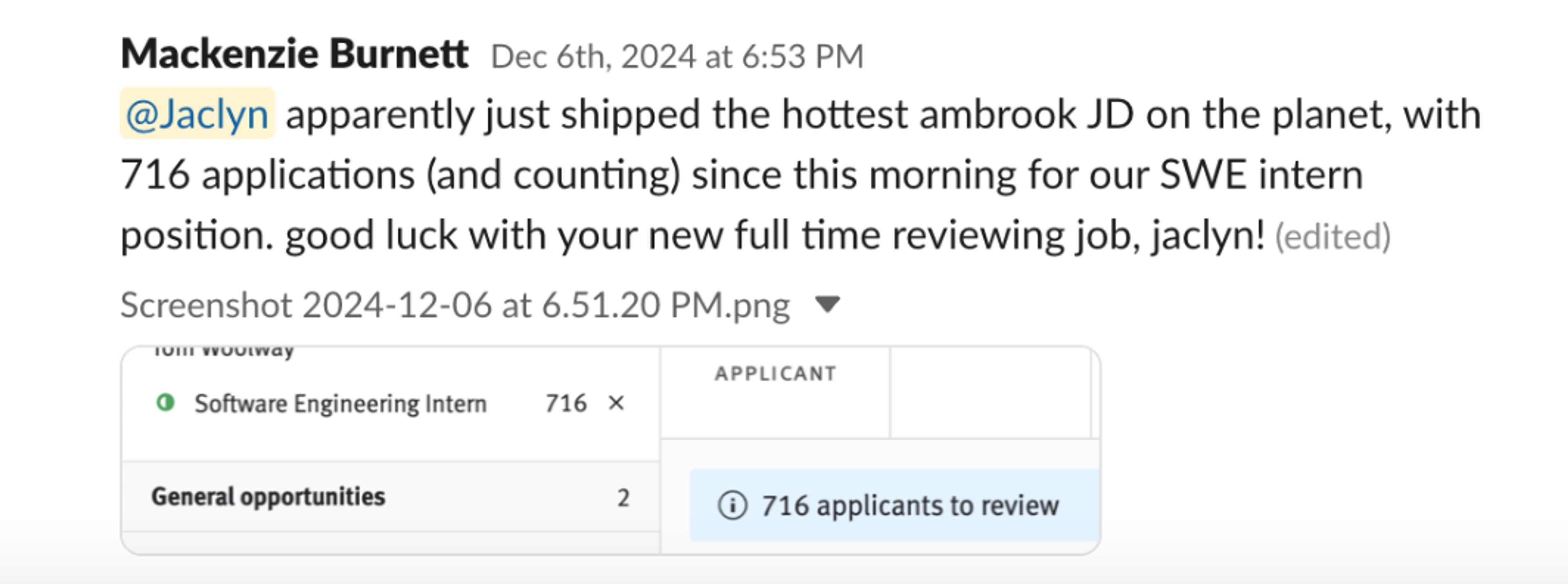
The standout candidates had tangible signals: projects, websites that showed taste, thoughtful short answers. However it was hard to identify these qualities from among the pile of thousands. The best pipeline ended up coming from referrals, fellowships, and school communities, not the job board firehose.
We also quickly learned that timing matters. Many tech companies, particularly Big Tech, recruit in late summer/early fall for the following summer. We started in December, when top students had already signed offers. We lost strong candidates due to it.
One thing we got right was creating an in-depth candidate guide. It outlined our philosophy on early-career mentorship, answered common questions, and doubled as a pitch. Many students prefer bigger, more established companies with well-known recruiting processes and strong brand recognition. The candidate guide self-selected for the right people who were eager to dive into the scrappiness of a startup. Those who read it asked sharper questions and moved faster. I thought about it as a search query to find intentional, curious, and scrappy people who’d fit at Ambrook.
By January, inbound applications dipped. My triage backlog was full of people I should’ve contacted earlier who got lost in the application pile.
I asked for personal intros and sent personalized notes to dozens of candidates. This ended up being the highest quality group of applicants.
I pivoted to outbound. I went through my network — former colleagues, friends still in school, campus communities. I asked for personal intros and sent personalized notes to dozens of candidates. This ended up being the highest quality group of applicants.
For technical interviews, we invested upfront in getting our questions right, iterating to establish a consistent pass bar for future cycles. We also experimented with a take-home test for cold applicants after noticing many failed the technical phone screen. Take-homes are useful for early-career hiring and making sure folks pass the technical bar earlier in the process, but we also lose out on the opportunity to sell candidates on why they should be excited about working at Ambrook. We saw significant drop-off and removed them from the process this year.
Last year, between waves of inbound and outbound sourcing, the take-home experiment, and interview calibration, the entire process from application posting to hire took over three months. Spacing out interviews and switching between intro calls, technical screens, and team chats required context switching from the eng team. It wasn’t efficient.
My recruiting takeaway: Start earlier in the school year, be intentional with outbound, and pre-block calendars to run sprint windows — defined periods for intros, technicals, and team chats.
The Intern Experience
Once we found Sam, the hard part began: choosing an impactful project and creating the conditions for him to thrive.
Many companies park interns on side projects. We decided Sam would work on an important strategic project, just like any other engineer. Startups don’t know what that project is months in advance, so we did selection closer to Sam’s start date. About a month before he joined, customer feedback converged on a longstanding request: taxes, fees, and discounts on invoices. It touched core accounting and multiple product surfaces, had clear user impact, and could be scoped to ship in 8-10 weeks with room for fixes and side quests.
We started onboarding with an architectural walkthrough tied directly to that feature and set a steady cadence: three check-ins a week, plus availability for quick huddles when progress stalled. We held ourselves to fast code-review turnarounds so momentum didn’t die in someone’s PR review queue. In week two, Sam shared his onboarding learnings with the wider team. We’re still figuring out how to scale engineering onboarding, so fresh eyes and a quick feedback loop helped!
Shipping is the best teacher. Our weekly Weeding Day, a day we set aside to focus on customer quick wins, doubled as an onboarding accelerant. Sam moved across the codebase, fixed real issues customers noticed, and built context faster than any toy project could provide. While working on general bugs took time from his main project, he got exposure across product surfaces and worked with more people on the team. Sam became a fan favorite with our customer success team whenever he shipped a highly requested fix. And he got to witness real-world customer impact like any full-time employee.
To anchor the work in reality, we put him in the room with users: design-partner calls and UX research sessions tied to his scope. He joined engineering and all-hands meetings, came to our engineering retreat, helped at our summer soiree “Lettuce Party,” packing CSA bags for guests and even visited 4K Cattle, one of our design partners in Missouri!
We only brought on one intern instead of our initial plan for two, but the timing worked out. A few new full-timers started during his term, so onboarding Sam alongside new peers created a lightweight cohort anyway. New joiners swapped notes and unblocked each other as they onboarded. If we can batch intern start dates with new hires in the future, we will.
Midway through summer, I ran a formal midpoint review synthesizing input from engineers, designers and product specialists across the team working with him. It helped us step back and create a specific, actionable growth plan. It’s easy to get caught up in the day-to-day chaos of an early-stage startup, so setting aside dedicated time for feedback was important for investing in early-career growth.
Reflecting
An intern program isn’t just about building an early-career pipeline. The team gets stronger: We build mentoring muscle, turn onboarding into a repeatable process, and spread institutional knowledge.
If you’re running your first intern program, I hope this saves you a few cycles. Start recruiting earlier in the school year, be intentional with outbound, and treat it as an investment in team capacity.
And if you’re an engineer looking for your next opportunity, whether an internship or full-time role, we’re hiring! We’re looking for people who want real ownership and measurable outcomes. That’s how we think about hiring at Ambrook — every new person is a chance to level up the entire team.
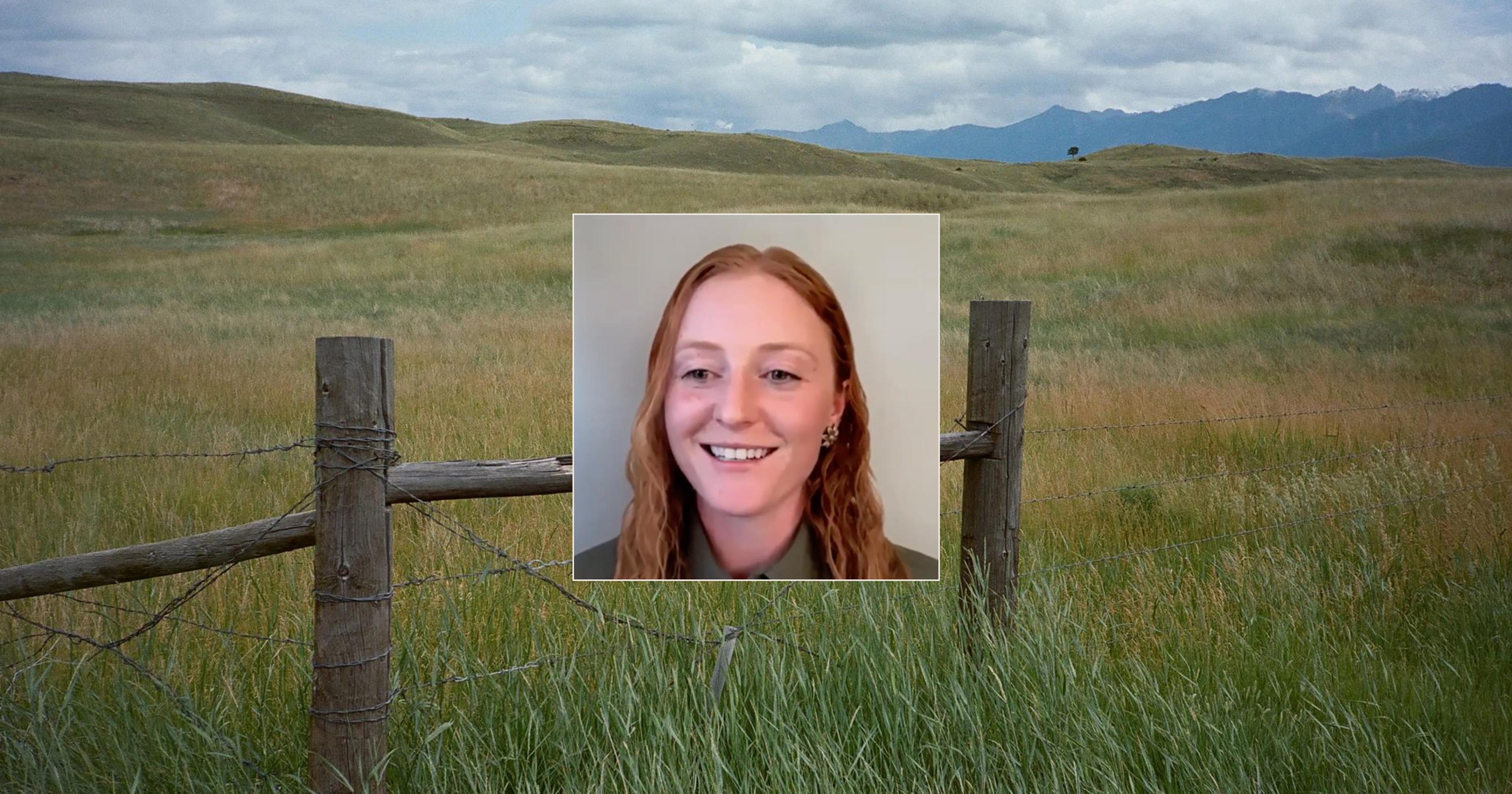
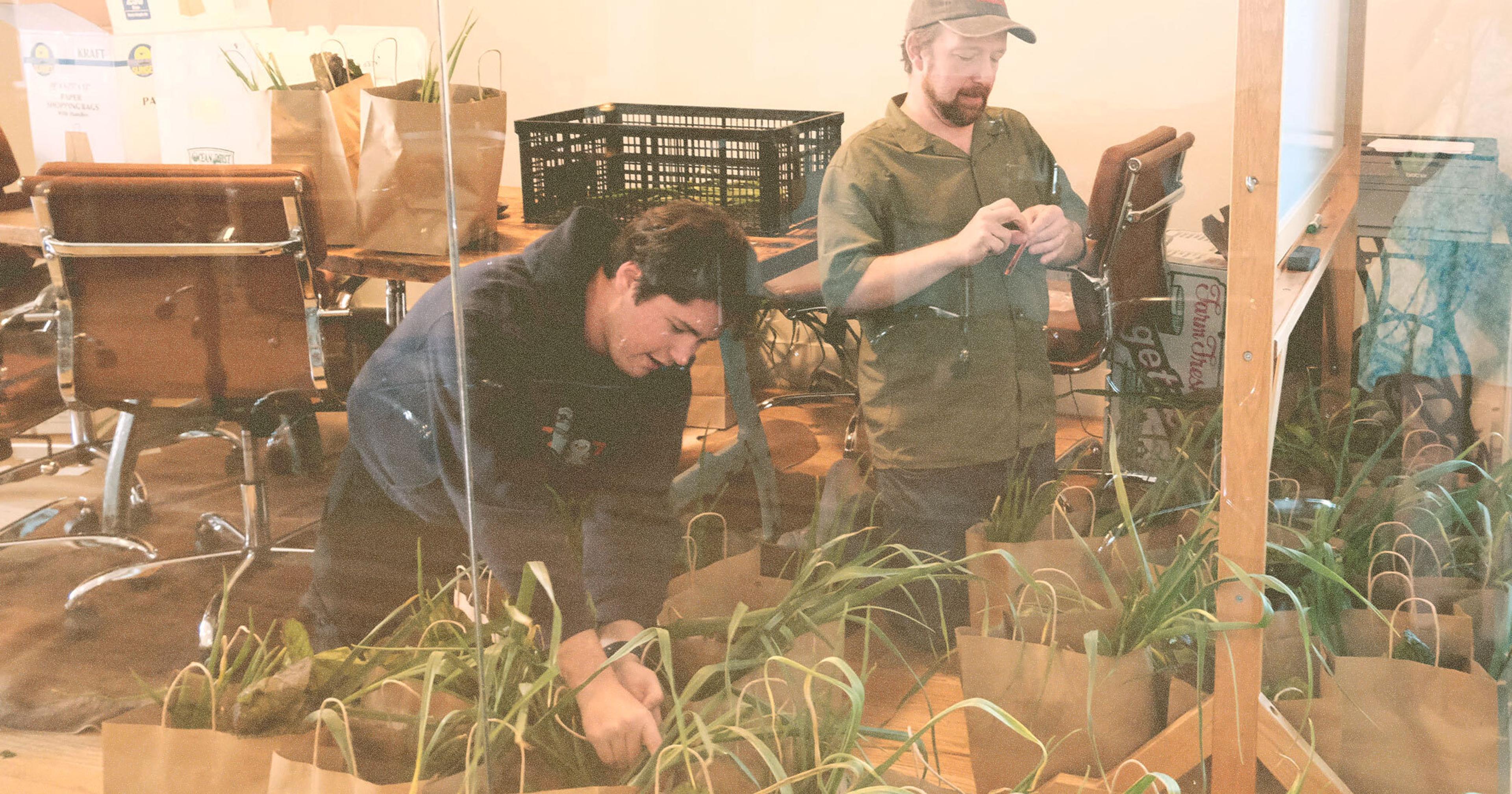
I was sitting on the floor of Chicago’s airport, trying to make my way home to New York from a customer visit in Missouri. As the gate agent announced another hour of delays, I was debugging a PDF rendering bug that a customer had flagged and recording a Loom to explain the cause of the bug.
It was a happy memory.
That’s the joy of interning at a startup — you get to jump right into the thick of things and what you build has a real impact on customers.
As Ambrook’s first engineering intern — intern of any kind, actually — I was a bit of a test case. I spent my summer in the cozy New York office, working alongside a small-but-mighty team of engineers. I spent most of my time building our new taxes, discounts, and fees feature into our invoicing product; fixed bugs and shipped highly requested small updates; and spent valuable time with customers to understand their needs.
I’m currently a student at UC Berkeley, studying computer science and linguistics. There were lots of appealing internship opportunities out there, not all of them even in engineering — before this, I managed events for a nonprofit. Ambrook excited me specifically because I knew I’d have the ability to be able to build things that are useful to people outside the tech world. I craved the ability to see the actual impact of work I was doing.
School can only teach you so much; I was looking forward to spending the summer learning a new tech stack (Typescript & GraphQL) and getting comfortable inside a large React codebase. Ambrook has a very experienced team and, throughout the summer, I was able to pick up a bunch — technical and non-technical — from everyone I was working with. For example, I gained communication soft skills from running a series of customer demos, and I learned a whole new set of Typescript tricks and technical concepts like GraphQL resolvers.
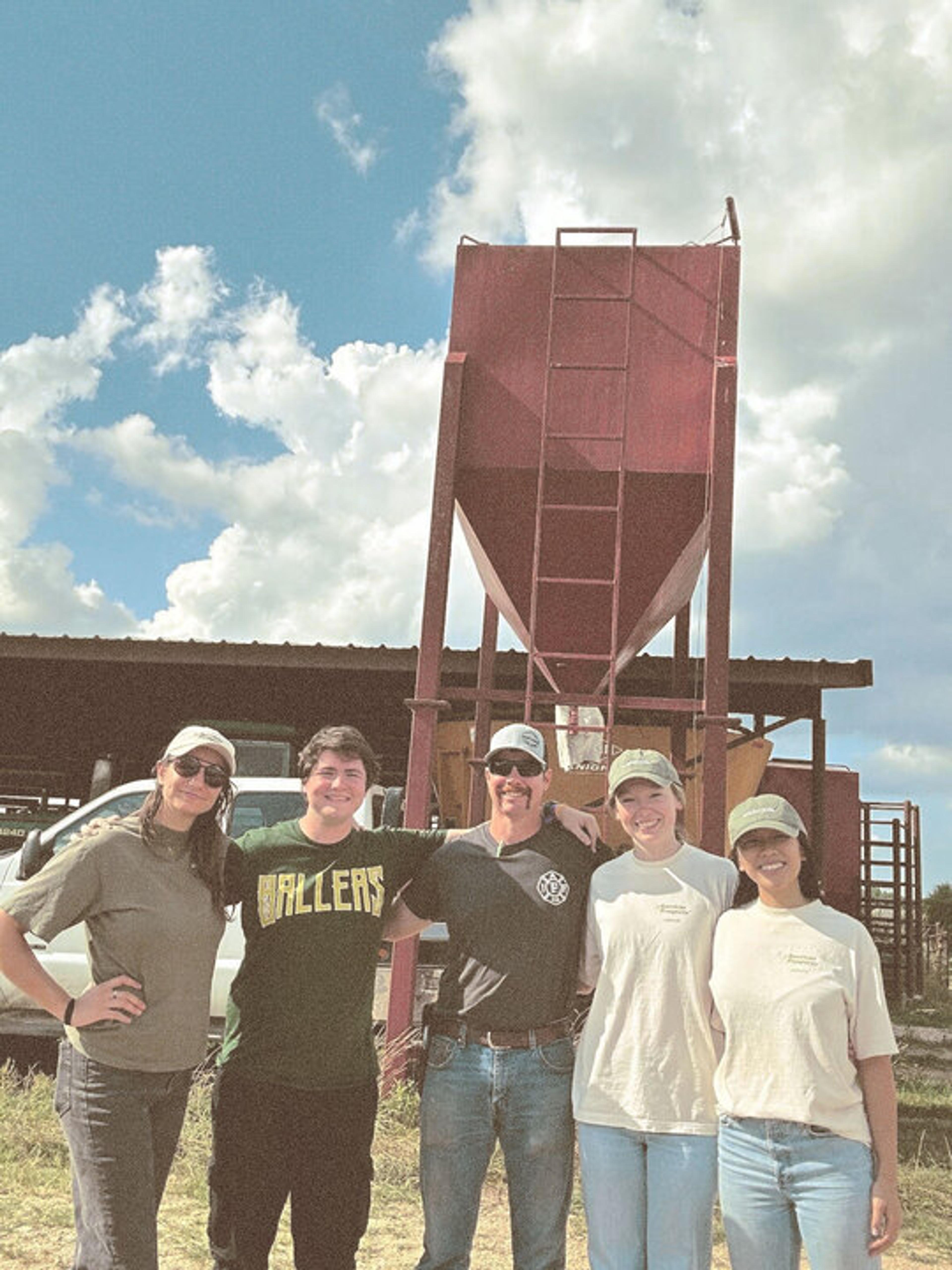
Sam, second from left, with Ambrook customer Josh Kennedy to his right and several colleagues.
It’s a smaller team, too, which gives you the opportunity to gain more hands-on experience. Within my first week at Ambrook, I shipped internal notes on invoices, a highly requested feature by customers. I don’t think I’d be able to hit the ground running like that at a bigger company. I appreciated that throughout the summer we had weekly Weeding Days (fka Bug Day) where I got to spend time working on a broad set of features that touched different parts of the product beyond my main internship project.
I enjoy building things in general, but I enjoy building things that people use even more. At Ambrook, we work closely alongside design partners (a small group of farmers and ranchers who help us improve our software in real time) to build a better product. Having a direct connection with our customers made my work very fulfilling. Through my conversations with working farmers, I gained an appreciation for the complex operations they manage and the ways they care for their land. As a city kid who grew up in Singapore, I had a lot to learn.
As part of the design partner program, I joined a few colleagues on a farm visit to Aurora, Missouri. We were visiting Josh Kennedy, owner and operator of 4K Cattle Co.; he’s been using Ambrook since earlier this year.
Josh works in the cattle backgrounding business; this forces him to make split-second decisions at auctions. He can only do that with a comprehensive understanding of his books, so I was glad that he was able to pull these numbers instantly through Ambrook and use them to make informed investments into the future of his business. He said it’s allowed him to spend more time on the ranch or with his family and less time doing the books. For me, that made this work incredibly rewarding.
No one has one role at startups though, and side quests are bound to pop up. At the end of the visit with Josh, who is also a fireman, we got some lessons on how to carry people out of burning buildings. I volunteered myself for the demonstration. Another highlight from the summer was helping the whole team set up for the Lettuce Party we held at our office! One minute we were on a call with a user discussing their sales tax setup, the next we were packing lettuce into goodie bags for our guests.
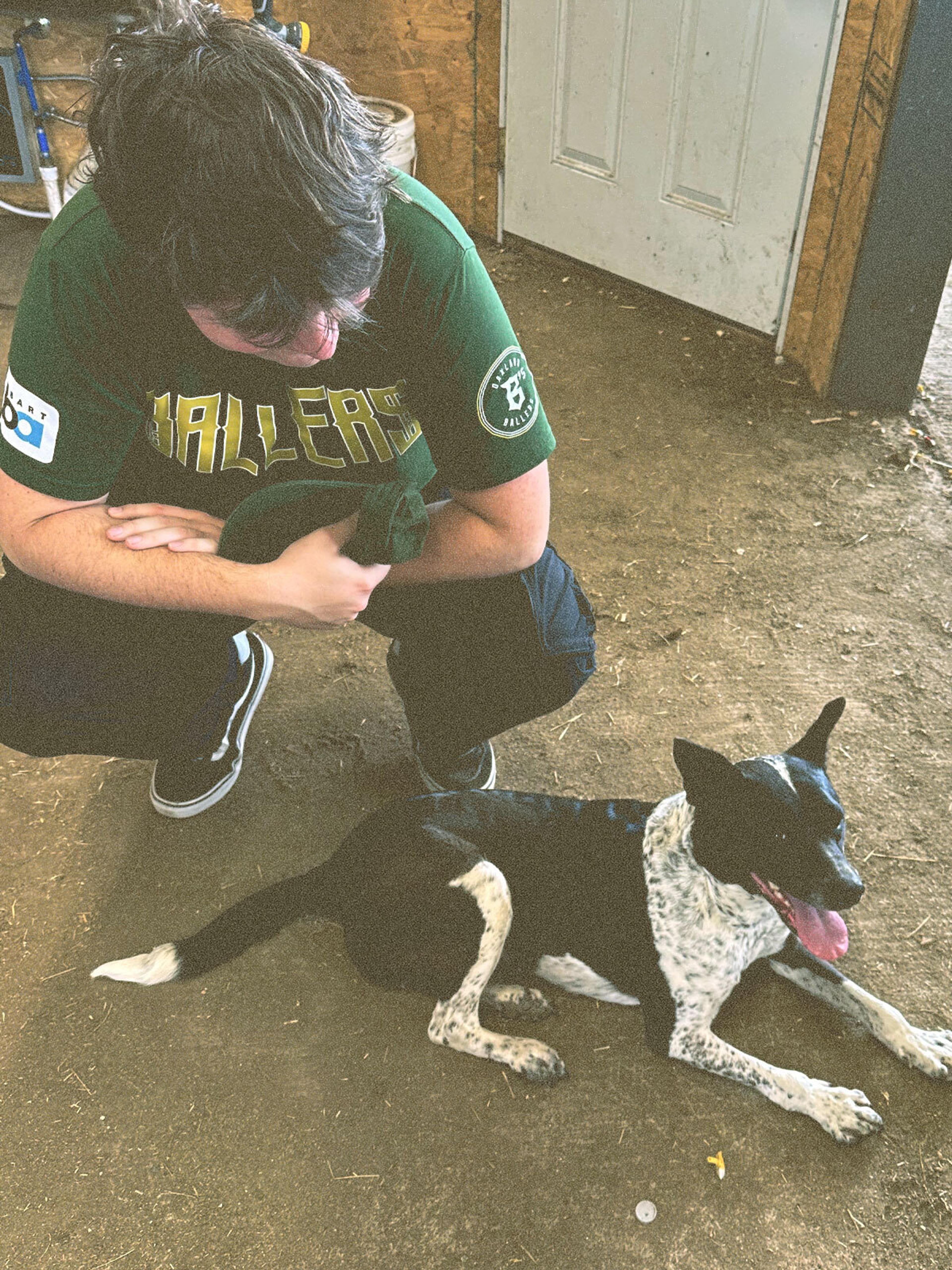
Making friends on the farm.
Outside of direct customer interactions, most of my days at Ambrook were spent working on my main project: sales taxes, discounts and fees. Ambrook’s first target market was agricultural businesses, which are exempt from sales tax. As a company, we’re now expanding into new verticals — for example, equine and agritourism businesses. These operations aren’t exempt from sales tax, so our product needs to adapt so we can bring on more customers.
I built this feature into our invoicing product; it allows customers to maintain a catalog of taxes, discounts and fees, apply them to invoices, and then produce a report to help them pay their sales taxes. All summer, I learned about the complex world of sales tax. Turns out every state, jurisdiction and district in the US can have wildly different tax regulations!
Once a week, though, we take a break from that for Weeding Day. The whole engineering team switches our focus to fixing bugs and shipping small improvements to our platform. I used this day as a time to level up my knowledge and skills by:
Working on parts of the codebase that my main project didn’t touch, for example, improving the reconciliation user experience and redesigning invoice PDFs.
Pairing with more engineers from the team, all with their own styles — I learned about how others work and picked up technical and personal workplace setup tricks I’d never considered. Something particularly interesting was the different way folks used AI-based tools like Claude Code to make themselves more productive. At school, there’s a fair bit of resistance to AI tooling and being in an AI-positive environment was a shift.
Pairing with non-engineering members of the Ambrook team, to get feedback and to build features for them.
Working on a small engineering team means that you get to take on a fair bit of responsibility, but you also have a team of people around you to support. I appreciated that I got to take the lead on my project from an engineering perspective while working with my mentor Jaclyn for code reviews, as well as our design and product teams. It really helped to have others to bounce questions off of as the feature was built out.
Overall, my internship at Ambrook helped me figure out what to look for in a job after I graduate. I want to build something that matters, with practical applications in the real world. I want to work alongside talented people who put care and attention into everything they do. I want to know that my work is meaningful, improving the lives of real people. And I want to keep learning and growing along the way.
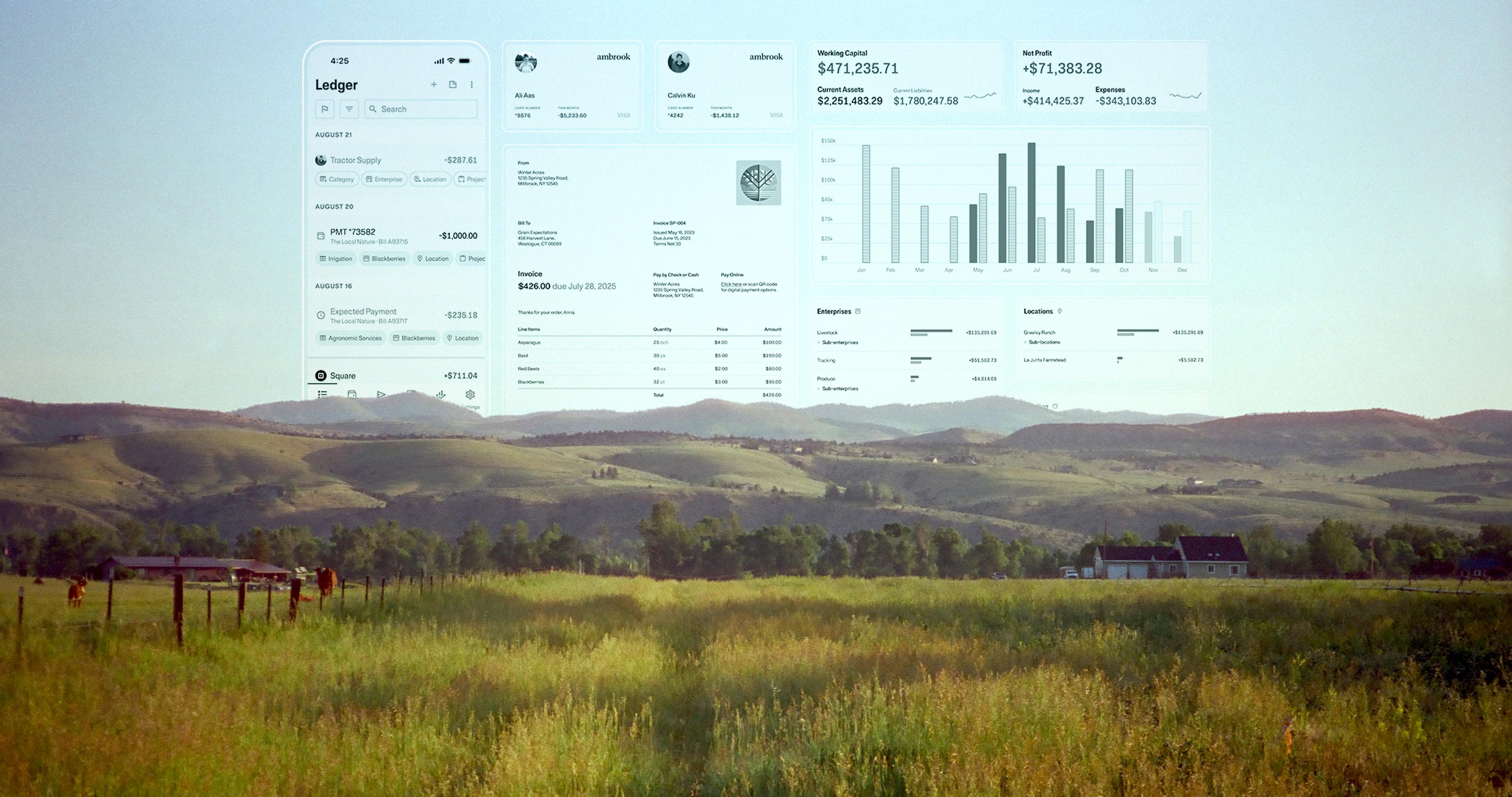
As a Product Designer at Ambrook, I’ve learned that creating technology for America’s rural industries isn’t just about beautiful interfaces or the latest design trends. It’s about truly understanding the context, constraints, and needs of agricultural professionals managing complex operations. Our solutions serve those who both grow our food and steward vast stretches of American land. In this post, I want to share some insights from my journey designing for farmers, ranchers, and rural business owners, and how our team approaches user-centered design in these traditional — yet evolving — sectors.
Understanding Our Users Where They Are
One of the first lessons I learned at Ambrook is that our users aren’t sitting at desks with stable WiFi and ultra-wide monitors. They’re often in fields with spotty reception, using quick breaks to catch up on bookkeeping on their phone, or trying to make financial plans after a 14-hour day of taxing labor. This reality shapes everything we do.
These hard truths led me to some key realizations about how I need to approach design:
Design for limited connectivity and mobile use.
Create interfaces that are legible in bright sunlight.
Build interactions that can be completed when their hands are full.
Prioritize the most important information to help users make decisions faster with limited attention.
These insights come directly from spending time with users and observing their environments firsthand. For example, when designing our receipt capture feature, I prioritized letting users snap a photo right at the checkout counter through our mobile app. Rather than waiting until they get back to the office where bookkeeping can fall behind, they can capture everything in the moment when it matters most.
Research That Goes Beyond the Screen
At Ambrook, user research isn’t just about surveys and focus groups (though we do some of that, too). The most valuable insights have come from partnering closely with our Customer Success team.
We prioritize both the most pressing pain points and promising product opportunities, gathered weekly through Intercom, onboarding calls, support tickets, and LogRocket analytics. There’s nothing like seeing someone struggle with your carefully crafted interface in a screen recording to quickly highlight UX issues that wouldn’t surface in a traditional usability test. For instance, we watched users pause and second-guess themselves in our metrics creation flow because we asked them to name it before defining what it would measure. Flipping that order eliminated the hesitation entirely.
When we get the chance for farm visits, they help us understand the entire ecosystem of tools, workflows, and challenges they navigate daily beyond just our product. Through my on-sites in Washington and Iowa, I learned about seasonal considerations, how farm management tasks vary throughout the year, and how financial planning intersects with agricultural operations. For instance, one farmer explained that while he does his yearly planning during winter months when field work slows down, he needs to track his progress against that budget year-round because staying on top of it is what “keeps him on track.”
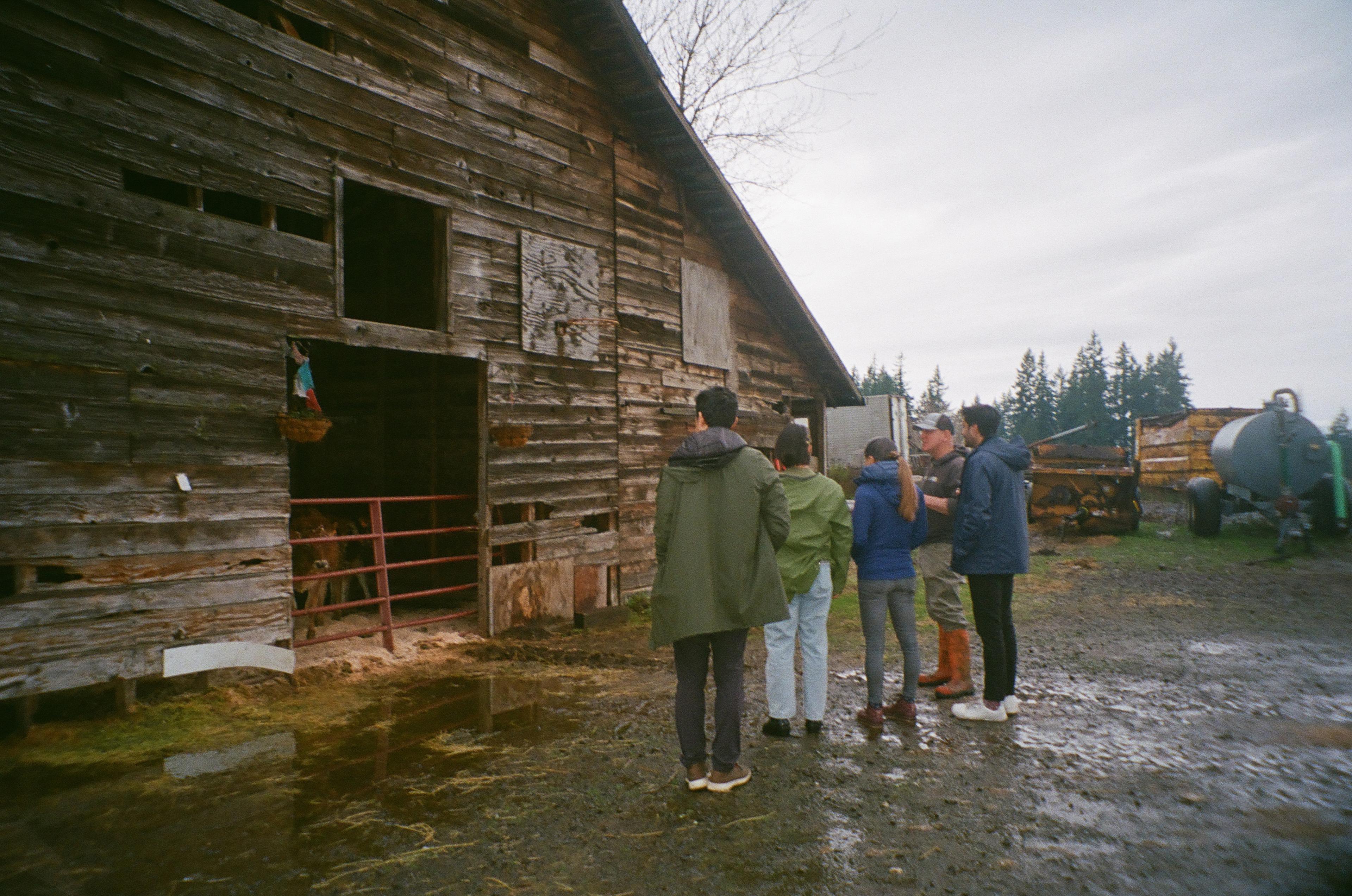
Calvin and his colleagues, Maika Koehl, Paige Wyler, and Vedant Mehta talk with Paul Fantello of Fantello Farmstead Creamery.
·Jaclyn Chan
Designing for Diverse Agricultural Needs
Agriculture is incredibly diverse. A cattle rancher in Arizona has vastly different needs than a specialty produce farmer in California or a dairy operator in Washington. At Ambrook, we’ve had to develop design approaches that acknowledge this diversity while creating cohesive, scalable workflows.
One strategy is to design core experiences that address universal needs like income and expense tracking, grant applications, receipt collection, and loan management, while allowing for customization and specialized workflows for different agricultural sectors. For instance, while most users document receipts the same way, a grain farmer might categorize expenses by season (spring planting, summer maintenance, fall harvest), while a dairy operation organizes the same types of documents around daily, monthly, and annual cycles. These reflect completely different rhythms of when and why they spend money.
We’ve also learned to be humble about our assumptions. I initially thought “inventory” meant the same thing to all agricultural operations. But cow-calf ranchers think about inventory as their calf-crop cycle (tracking which calves are born when and ready for market) while row crop farmers use inventory to organize purchase orders and harvesting schedules. This insight led us to design our invoicing flow to allow negative stock quantities, since many operations sell products before they physically have them, like pre-selling a harvest.
Balancing Novel Approaches With Familiarity
Agricultural practices passed down through generations shape how many of our users operate. While these approaches may have originated without high-tech vertical software, they’ve forced owner-operators to develop good instincts for approximation. Our design challenge is finding the right balance between introducing innovative solutions while respecting existing workflows and mental models. No savvy manager would give up their book of business just to adopt a bleeding edge payment method, so we try to bridge the old and the new.
We’ve found success by:
Mapping our digital patterns to physical processes our users already understand.
Using familiar agricultural terminology over tech industry jargon.
Providing clear transitional paths from legacy systems and methods.
Creating education and onboarding that meets users at their level.
Measuring Success Beyond Metrics
While we track standard product metrics like engagement, retention, and task completion rates, we’ve also developed agriculture-specific measures of success that matter more to our users: Are we saving farmers time during their busiest seasons? Helping them access grants and loans they would have missed? Making compliance less burdensome?
Some of my proudest moments come from stories of customers using what I’ve built: farmers securing loans they didn’t know existed through our Funding Library; bankers gaining confidence in Ambrook farms through the professional reports they bring to lending meetings; and operators using our analytics to modify planting decisions that improved both profitability and sustainability.
Looking Ahead
As we continue to grow at Ambrook, we’re excited to keep refining our approach to product design for American industry. We’re developing new AI technologies for automatic data entry and contextual assistance for speeding up their paper-heavy workflows. Our approach is ambitious both in technical implementation and in creating experiences that build trust with historically underserved operators. But no matter how our technical capabilities evolve, our fundamental commitment remains the same: designing with empathy for the people who work tirelessly to grow our food and power the industrial economy.
Today, Ambrook is announcing $29M in funding raised, including a $26.1M Series A led by Thrive Capital and Dylan Field at Field Ventures, with continued support from Homebrew Capital and participation from Designer Fund, BoxGroup, Mischief, Not Boring, and others.
When I wrote our first Founder’s Letter, it was mostly about what we hoped to do. Three years later, this one’s about what we’ve actually done. Thousands of producers are using Ambrook to make better financial decisions, grow their operations, and invest more confidently in their land. And I feel more sure than ever that we’re on the right path.
Ambrook is building the financial infrastructure for American industry – starting with agriculture – and the opportunity in front of us is massive. We’re still early, but the impact is already visible. Now it’s time to grow.
Part I
Let me tell you a story.
Imagine you grew up on a ranch in the Mountain West. Went to school, hoping maybe you can come back one day. To help out, and eventually continue the family legacy.
But then, a family emergency. You have to take over the books from your dad all of a sudden, to keep the operation running. Not to mention run the operation itself.
This is the real story of our customer, Chase. His family runs cattle across 30,000 acres in Utah and Wyoming.
His first year, he had to wrangle the operation’s legacy accounting software. It had worked for the family business up to this point, but it still took up too much time and left him without a clear view of his numbers day to day.
Until he found Ambrook.
Chase’s dad is recovered now. And has come back to a family operation more resilient, not just financially, but intergenerationally too.
Since I wrote my last letter, over 2,500 operations in all 50 states have now used Ambrook to double their business, cut bookkeeping time in half, get better loan terms, and make land management decisions with confidence. Those customers have spent and managed $1.6B with Ambrook and saved an estimated 75,000 hours in the process.
Our customers have told us they feel less anxious and more optimistic about their future. That they feel empowered in ways they hadn’t before. (We had one couple who even told us they decided to get married because of a conversation with the Ambrook team about their finances.)
Because instead of feeling behind on their books, many of our customers can now focus on answering the questions that matter: How much have I spent so far on this herd? What will it cost to finish? Will this actually pencil out? And can my operation and my family thrive?
There are so many stories I want to tell. Stories of our customers, of our team. What we build and how we build it.
But first, let me zoom out.
*
For the first time in generations, most Americans believe their children will be worse off than they are. That type of pessimism is corrosive.
Starting a small business used to be the way to build a better future for your family. Owning your time, owning your labor, owning that identity and tradition over generations. Staying independent.
It was never easy, but it was straightforward enough.
Small businesses are not simple anymore. Especially in agriculture – the first industry we’re building for – survival has meant diversification. A cattle ranch that traditionally sold its commercial herd at the stockyard, might now also run a direct-to-consumer meat program, a seasonal event business, and a trucking arm. These operations are balance sheet-heavy, multi-P&L, and deeply local.
Most financial software was built for simpler business models than that: a single enterprise, clean books. But that’s not the world we operate in. Today’s producers are managing herds, equipment, inventory, and land across long and volatile cycles, both remotely and in person. They’ve taken on more risk, added multiple revenue streams with countless payment methods, and adapted their operations to survive.
In doing so, they’ve outgrown the old tools, but many can’t afford to manage the enterprise resource planning systems built for their newfound level of complexity.
Some are just trying to get organized for tax time. Others want real-time, enterprise-level insights. Both deserve better tools.
Ambrook fills that gap with modern, collaborative financial software that meets producers and their families where they are. Accounting, payments, and cash management built for operators who spend more time in the field than the office.
Operators like Pittman and JoEllen, a married couple who run a grain farming and beef cattle operation in my home state of Maryland.
“The path we were on before, we were like a ship in the ocean with a small hole in it – just getting lower and lower and lower. With Ambrook, that’s been patched and there’s now a pump pumping the water out, and it’s starting to come back up again. It’s been a turn in the right direction for all of my operations.”
Clarity in the now drives confidence in the future. Confidence builds optimism. And that optimism is contagious.
Part II
I think of our work at Ambrook as American dynamism meets the American Dream.
Instead of top-down technological advancement, we’re working from the ground up to enable family-run businesses to become more profitable and resilient.
When one operation succeeds, it lifts up suppliers, neighbors, the whole community. Better land and resources, supply chain and food supply. That’s the America I want to help build.
True optimism comes from seeing real results. Effective land and resource management can strengthen the bottom line and build long-term resilience against shifts in the environment and the economy. We’ve seen that when producers have clarity, stewardship and profitability go hand in hand.
To us, that’s grassroots American dynamism.
Part III
I think how we build is just as important as what we build. The world is changing. How we build technology is becoming increasingly disrupted by AI. Its own adventure.
But when I was thinking about writing about our fundraise, I kept on being drawn back to the quiet moments with the team. The more human moments that make the hard things about building a company worth it. How we work, and how we spend the time in between.
I wanted to share some of those memories with you.
*
It was Eric’s second week. Do you want to come to a traditional pig harvest? I Slacked him. Sure, he said. What is it?
A few weeks later, we were elbow deep in pig’s blood, helping Howard make blood sausage. Howard’s a customer now.
*
You can see where I did the controlled burn. Katie’s dad gestured at the grass interspersed with clumps of small yellow wildflowers in front of us. Before, this was all just grass. Now it’s a mosaic. How it should be.
We piled back onto the ATVs. On the way back from the river, we stopped and he pointed to the ground. This is where we put the biochar. To improve the soil in this part. We’ll probably find out if it works in a year. He shifted his attention to a tall purple wildflower. We’re testing what seed mix grows best across the ranch.
I sent a photo of the flower to my dad. Montana, I said.
Penstemon grandiflorus, he wrote back. Identifying the plants I send him from my travels is his love language. Large Beardtongue.
*
No one spoke. Tired but happy. It was the three of us, me and Maika and Atticus. We had just signed our second customer, now driving the two hours back to the airport motel.
The thunderstorm boomed in silence across the Arizona plains, lighting up the dusk-dark. The Strokes played on the radio.
The long car rides, driving past amber waves of grain, that have emotionally contextualized my work in unexpected ways. America, the beautiful.
*
Haley, a mother of two from a Montana ranching family, on why she joined our operations team at Ambrook: I watched your Stripe video, she said. I felt as though we both wanted the same thing for different reasons.
She spoke to stewarding the land as a legacy for her children. I want to feel proud about what I pass on to the next generation.
*
We climbed up to the shed’s attic. Katie’s dad pointed to a line of 10 baskets, ordered by year. Each basket was filled with more antlers than the last. The regenerative practices on the ranch had rebounded its wildlife population over the decade.
The antlers Katie wrote about, he said. A father’s quiet pride. I finally got to see the antlers that tell the story.
*
The world is changing, and yet so much stays the same.
Maika walking through the field of a customer's ranch in California.
Part IV
We still believe in the American Dream. And we’re here to build for the people living it.
This latest fundraising round will help us grow to support tens of thousands of businesses, not just within agriculture, but also to the communities that serve ag, all while deepening our workflows and partnerships, expanding our AI-native architecture, and building a payments network that keeps capital within local communities.
Deepening our workflows to get to true cost of production
With this funding, we’ll accelerate the rollout of advanced financial workflows. Think multi-entity reporting, inventory management, and integrated payroll. These enhancements will help producers spend less time wrestling with spreadsheets and more time making strategic decisions.
We’ll also deepen our partnerships across the financial and agricultural ecosystem, connecting Ambrook to more of the tools and services producers already use, from POS systems to livestock management tools, so that data flows seamlessly and everyone wins.
Architecting a thoughtful approach to AI
We believe the best use of AI for our customers is to do the quiet things right, from receipt management to automated categorization to anomaly detection.
MIT economist David Autor calls AI an “inversion technology,” one that can democratize knowledge and bring decision-making power back to the middle class. That’s exactly how we think about it, too.
Keeping capital in local communities
We started Ambrook by helping producers find and apply for working capital to provide disaster relief, do conservation work, and further invest in their businesses. Earlier this year, we rolled out 1% APY on all Ambrook Wallets, making sure customer capital was working as hard as they do.
Next, we’re expanding Ambrook Pay to farms, ranches, and other businesses nationwide. Because fintech was integrated from the beginning into Ambrook’s accounting platform, we can now offer free, instant B2B payments with minimal paperwork and automatic reconciliation.
We’re laying the groundwork for high-context, instant money movement. In the meantime, Ambrook Pay has already significantly improved cashflow and transaction margins.
We want to help our customers become more profitable and resilient. Keeping more capital in local communities is a big part of that.
*
Most of all, this investment helps us stay focused on our mission: to give independent businesses the tools they need to stay independent.
Together, we can build an America that’s prosperous and resilient and beautiful.
An America where Chase’s family can feel confident in decisions they make. Where Pittman and JoEllen feel like they’re doing more than just staying afloat.
Thank you to our team, our investors, and the operators who trust us with their numbers and their future. We are honored to be part of your story.
All my best,
Mackenzie
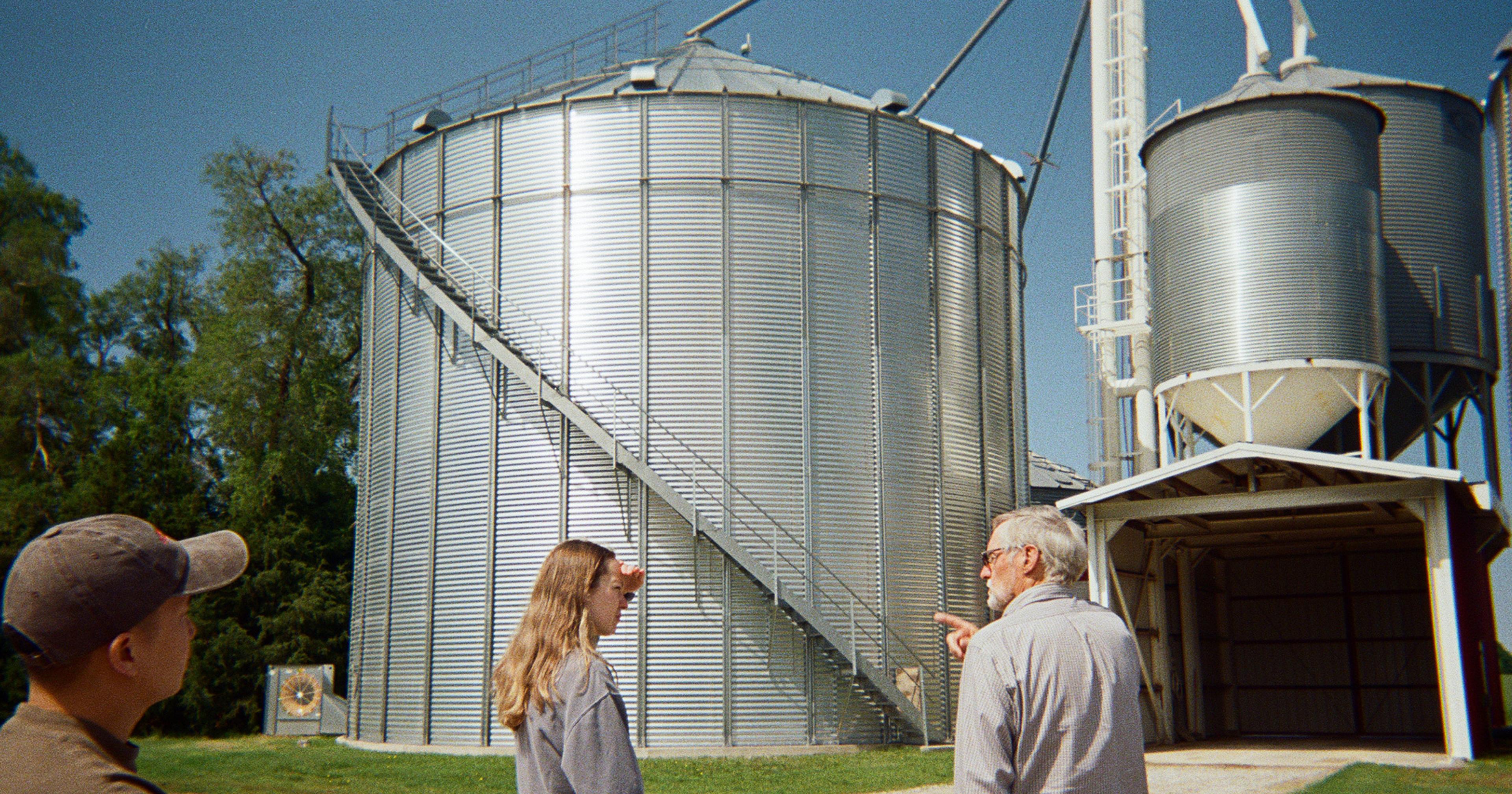
I’ve always been more interested in the application of software than software itself. I feel real excitement when I can map my code to a meaningful real-world contribution, whether that’s responding to a small piece of user feedback or tackling a larger-than-yourself mission like the climate crisis.
As someone with no prior experience in agriculture, Ambrook’s specific approach to climate caught my eye because it was bold; it states there can be positive-sum scenarios, where profitability on farms is linked to resilient and nutrient-rich land. Determined to contribute, I joined and have since been able to work on projects directly related to this mission.
Listening and Learning
Last year, I traveled to North Carolina with a small group to visit the Sustainable Ag Summit, where producers expressed a genuine desire to build resilient food systems — but still need the math to pencil out. I also visited and learned from our customer Bread & Butter Farm in Vermont, as they expressed a need for managerial accounting in order to secure an agroforestry grant. And most recently, I traveled to Kansas with my team to meet with another customer, Silver Creek Farm; we dove into their involvement in the CarbonNow program, where they help producers receive funding for implementing practices that sequester carbon.
From our farm visits and the many talks at the Sustainable Ag Summit, we heard one thing over and over again: Profitability is the core driver in any business decision, including regenerative and other conservation practices.
Something that has really struck me in listening to our customers is how much farmers, ranchers, and other agribusiness owners want to steward their land well. The main hurdle is that they need to trust that these decisions are financially sound — changing practices is a risk that many can’t literally bet the farm on — and there is a gap in the industry for reliable, easy-to-use tools that connect conservation practices to a farmer’s bottom line.
Bread & Butter needed assurance they could maintain profitability while adopting agroforestry practices that reduce greenhouse gases and soil erosion. Silver Creek Farm saw the CarbonNow program as an opportunity to expand their operation and increase profitability by promoting biological agents which sequester carbon.
I was really proud to work on two products that exemplify Ambrook’s commitment to bridging this gap — smart tags and receipts.
Smart Tags and Metrics
Profitability insights have always been offered at Ambrook in the form of multidimensional tagging: Tag your transactions once across different tag types (e.g., the Schedule F “Supplies” Category and the “Apples” enterprise) and receive a profit-loss statement that can be used to file taxes or view a dashboard that describes how your enterprise is performing.
From our visits with both farms, we learned where tags came up short:
There were missing tag types: There was no way to model a location or a conservation project.
Tags did not offer a solution to simple managerial accounting.
Conservation grant income is distributed to Brandon Bless at Bread & Butter per acre and if he cannot track costs by this measurement he can’t know if a practice is profitable.
Allen & Paul Schrag at Silver Creek farm need profitability by field in order to make land purchase decisions and know which combinations of seed, inputs, and practices are most profitable.
But after a couple months of user experience research, product requirement drafting, and engineering, we were able to ship smart tags, introducing metrics and more tag types!
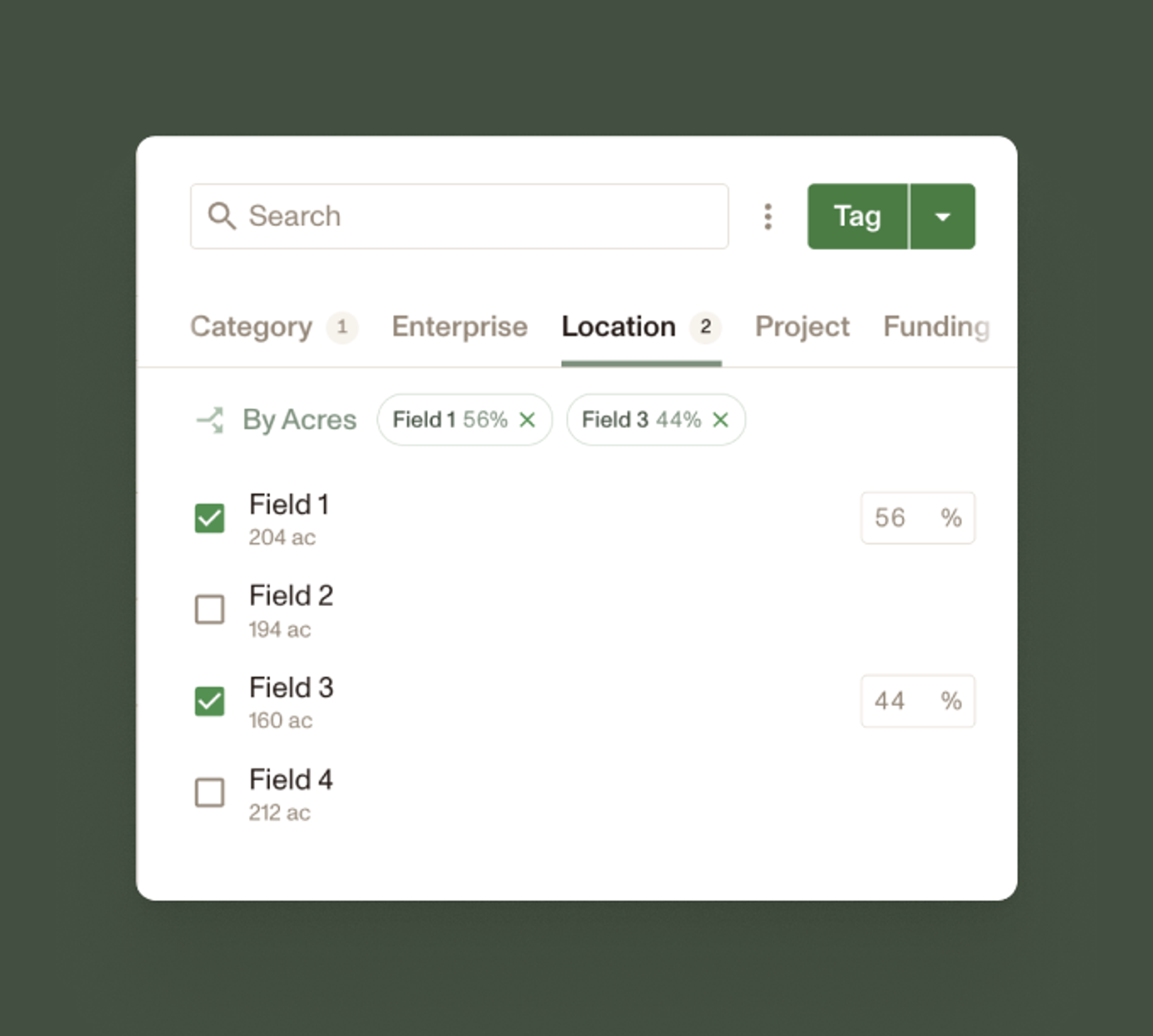
Get the data in: Defining metrics and splitting transactions by location tags.
Now, the Schrags can tag by location in addition to enterprises, projects, and funding programs. On their location tags, they can record metrics to assist with splitting field input costs by acre while they tag. For example, a $1000 fertilizer input cost used across 3 fields (50, 100, and 150 acres) would be automatically split (16.7%, 33.33%, 40%).
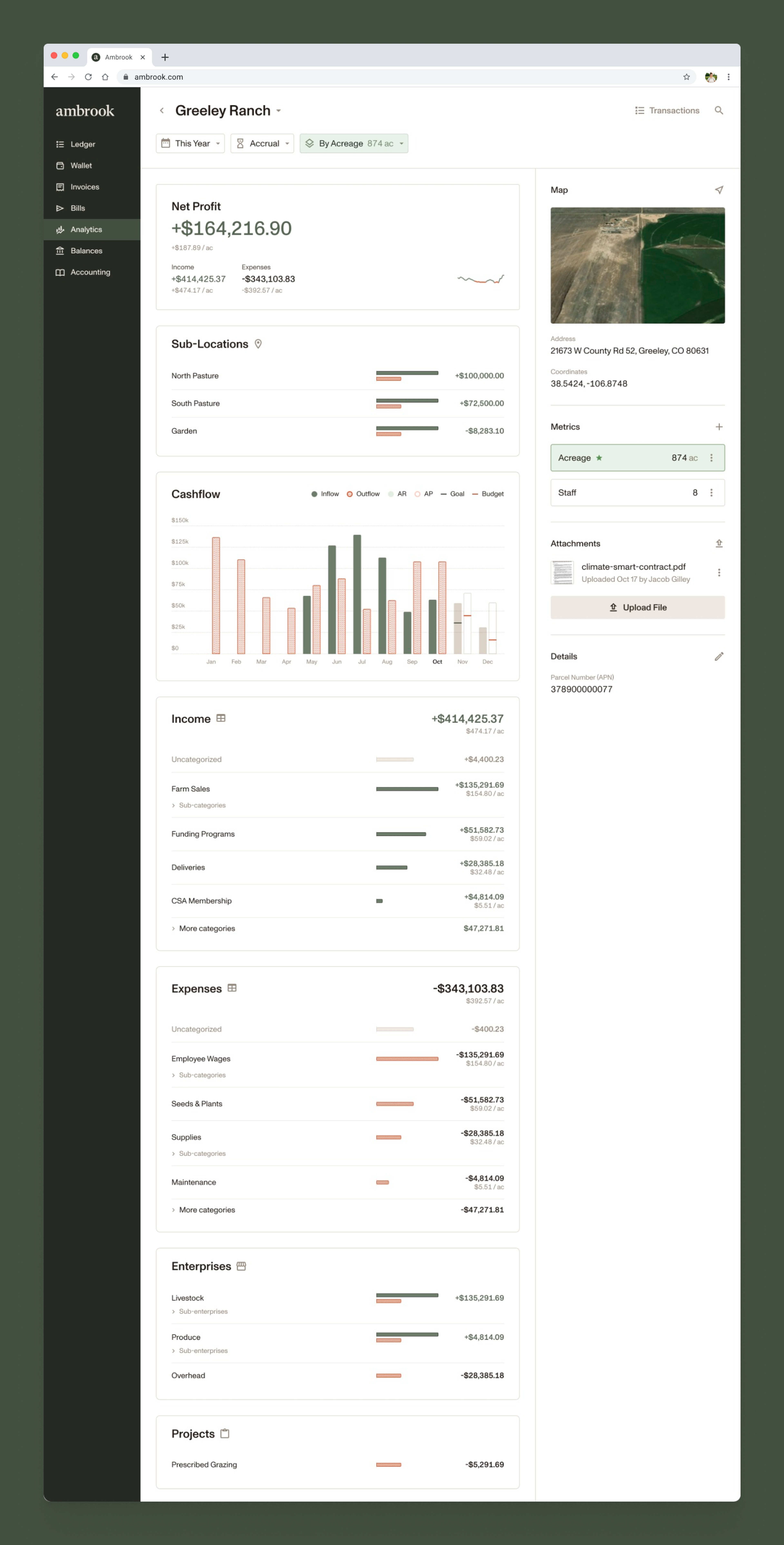
Get the data out: View field profitability by acre.
These splits roll up to our dashboards and reporting features so the Schrags can view field-level profitability, as a whole, or per-acre, at the click of a button, rather than spending hours wrangling data in spreadsheets to try to get those numbers.
Both Silver Creek Farm and Bread & Butter can perform similar analyses across many other tag types and generate per location or per enterprise profit-loss statements!
Receipt Management
Managing conservation grants (compiling paperwork, receipts, and financial data) tends to be a time-consuming activity which limits practice adoption … but not with Ambrook!
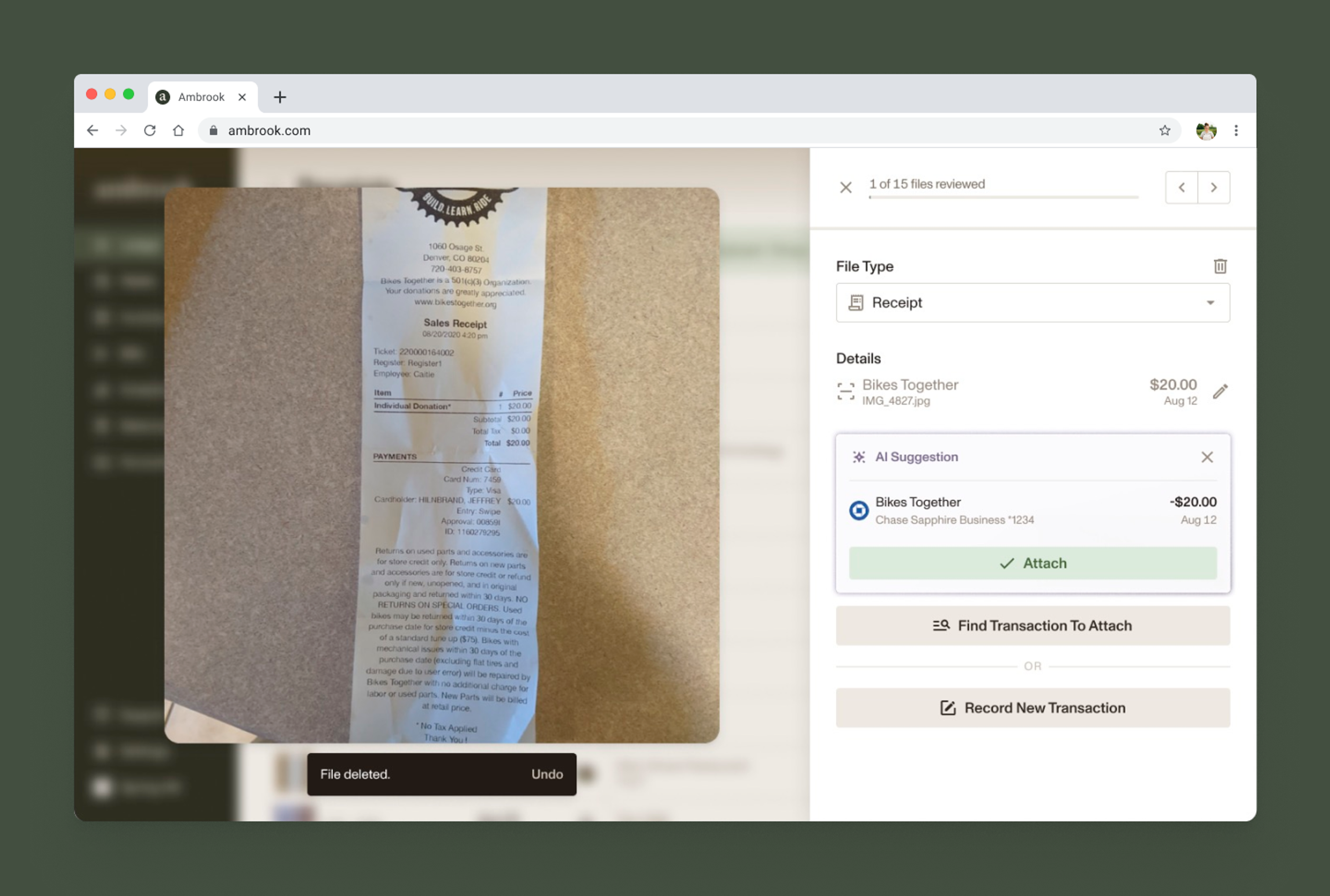
Get the data in: Upload receipts as a net new transaction or match.
With our receipts product, users can bulk upload receipts and our system will parse receipt fields with AI, either creating a new transaction or matching the receipt to an existing one. When the time comes for a customer like Brandon to fulfill grant obligations and provide evidence of practice adoption, our filtered attachments export can instantly generate a set of attachments for transactions tagged to a certain practice.
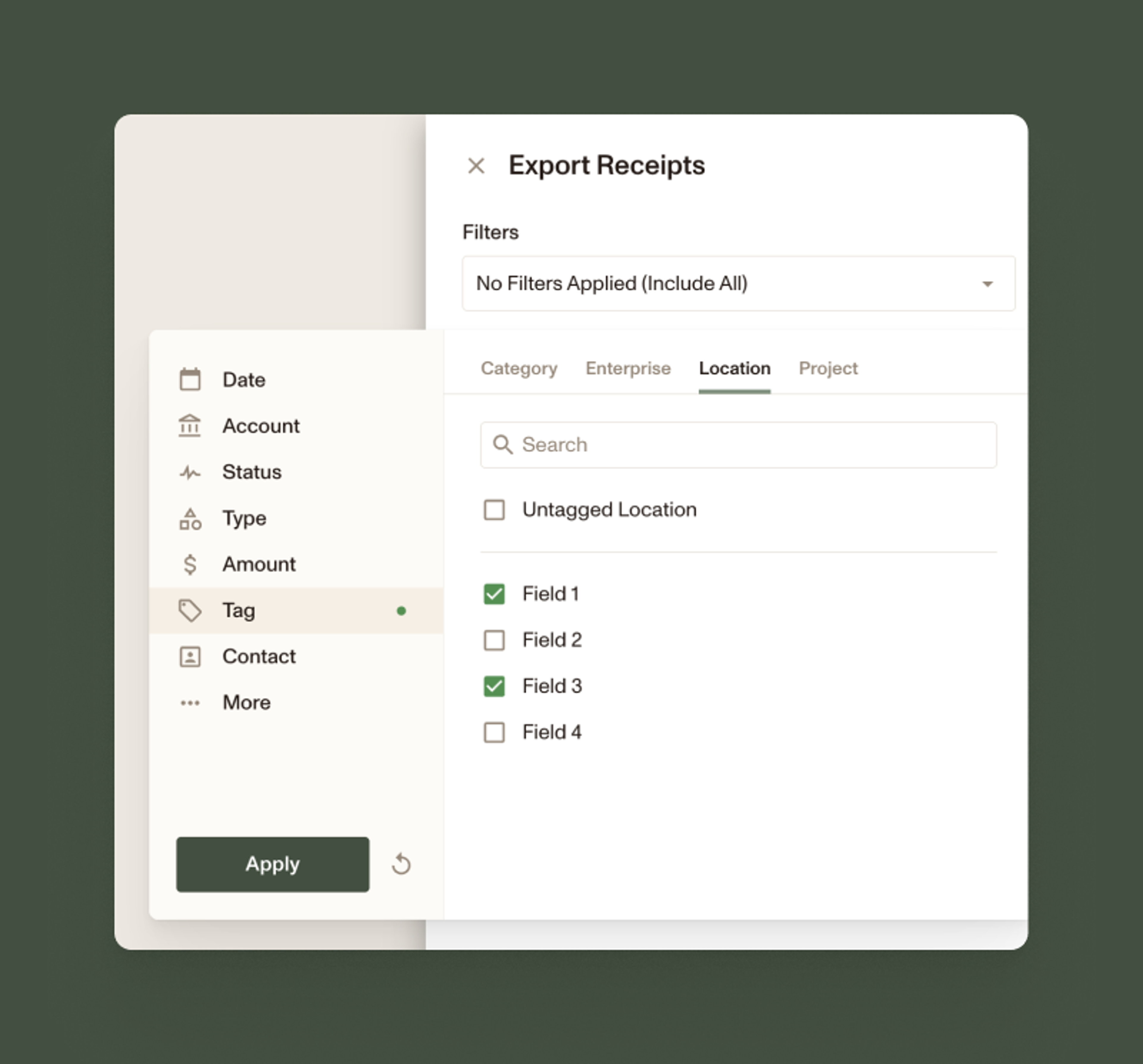
Get the data out: Export all attachments based on transaction tag filters.
By offering real-time profitability insights and improving grant management workflows, these features have seen lots of traction. As of this month, our platform has 190 metrics and over 400 metric quantities across enterprise, funding, project, and location tags. We also have roughly 150,000 attachments — our most dedicated receipt user has uploaded around 10,000!
From my various farm visits and coding sprints, my big takeaway is you can’t improve what you don’t measure and, as Ambrook’s platform continues to enrich the profitability insights we offer to farms and agribusinesses, we will continue to make meaningful progress toward our climate mission.

At Ambrook, we want every independent business to have access to financial tools built for the way they actually operate – whether they’re in the field, in the shop, or out on the open road.
Now that we’ve grown to serve thousands of operations across America, Ambrook is in a position to make our product even more accessible – without compromising the quality and support that every business deserves.
That’s why today, we’re launching new pricing plans that deliver more value and meet more businesses where they are, no matter their size or complexity.
Today’s updates include:
New Start plan for businesses that need just the essentials
New Full Service plan for collaborative bookkeeping and hands-on support
Unlimited invoicing now available on all plans
30-day free trial
Free access for students and educators
We want Ambrook to have a plan for everyone.
What we heard from customers:
When Ambrook first started, we heard from customers that most accounting platforms were too generic and too complicated — and yet still lacked the features that independent American businesses actually need to become more profitable and resilient.
So we set out to build a platform from the ground up that keeps the simple things simple – like tagging a transaction or using AI to organize your receipts – and makes the complex things possible, too: tracking profitability by enterprise, splitting expenses by acre, or running your business from the cab of your truck with a fully featured mobile app.
We also listened to what folks in the field were asking for:
A farmer in Kansas: “One week is too short to try out a platform. It’s not even the full length of a business cycle.”
A rancher in West Texas: “We need invoicing at a lower entry monthly price.”
And from Wyoming: “I don’t need a full-time bookkeeper. I just want someone to help me make sense of the numbers.”
That’s why we’ve updated our pricing to:
Offer more ways for different kinds of businesses to experience Ambrook
Add more value to each plan, tailored to the needs of those it’s designed to serve
Introduce new levels of hands-on support and personalized guidance
Instead of plans limiting who we can serve, we’re opening Ambrook up so more businesses can manage their work their way – whether by field, by herd, by crop, or by enterprise.
Let’s dive in.
What’s new?
Whether you’re a small farmer, a complex multi-entity operation, or a student learning the ropes, we have three new plans built to support every step of your journey.
Start Plan
Our Start plan is now the most affordable way to experience the power of Ambrook. It’s a great alternative to QuickBooks — not just because it’s more affordable, but because it’s specifically built for how real American businesses operate.
Full Service Plan
Some businesses want extra help with their books, but don’t want to fully outsource and lose visibility into their finances. That’s why we created the Full Service plan: everything in our Pro plan, plus hands-on collaborative bookkeeping support that includes monthly financial reviews, reconciliation help, and twice-yearly strategy sessions.
Free for students and educators
We heard from the educators who are training the next generation of farmers and ranchers: they’re teaching cutting-edge growing techniques without a good way to show students how to manage the finances of a modern ag operation. That’s why we’re now offering free access to Ambrook for students and educators.
Let’s take a look at each plan:
All Ambrook plans now include unlimited invoicing – because in today’s economy, every independent American business should have access to online billing and faster payments.
Here’s a quick breakdown of what each plan includes and what sets them apart:

Basics -> Start
The Basics plan is now called Start. It’s the most affordable way to quickly get started with Ambrook and take the stress out of managing your finances.
Designed for smaller businesses, Start includes the essentials without the frills: Track income and expenses, prep for tax season with Schedule F and C reports, and send invoices fast — all from your phone.
👋 For existing customers on Basics: Your price will stay the same until June 1, 2027. Also, you now have access to unlimited invoicing!
Starter -> Build
The Starter plan is now called Build. We created this plan to help teams who are managing multiple enterprises unlock more profitability — with clearer financial insight, stronger planning tools, and easier collaboration. It’s designed to help you see and understand where you’re actually making money and where to invest next.
On top of everything in Start, you’ll get enterprise-level analytics and reporting to track profitability by business line, plus convenient check mailing — we’ll send your checks for you.
👋 For existing customers on Starter: Your subscription stays the same, except you now have access to unlimited invoicing — it’s fast, easy and affordable.
Premium -> Pro
The Premium plan is now called Pro. This plan is for more complex operations focused on long-term growth — giving you the clarity, tools, and dedicated support you need to build a resilient business for your family and your future.
Pro gives you a detailed view of your operation’s performance, with tracking by location, project, or cost of production. You can split expenses by head, acre, or custom metrics — and get priority support from the Ambrook team when you need it.
👋 For existing customers on Premium: Your credit card fees are going down — and ACH payments are getting faster and more reliable. Plus, a new inventory feature is coming soon, available only to Pro users.
Introducing: Full Service Plan
Our new Full Service plan is built for businesses that want expert bookkeeping support — without fully outsourcing their books. It’s designed to help you use your financials to make smarter decisions, with monthly reviews, strategic consultations, and hands-on setup.
👋 Just need some extra help mid-year?
Check out our Catch-Up Package — perfect for getting your books in order in a single session without committing to ongoing service. It’s 50% off now through June 15!
Why the new plans?
We want more Americans to experience the power of Ambrook.
Every independent business should have access to financial software that actually works — especially the families and real-world operators who need affordable, powerful tools the most.
We believe that American prosperity starts with the families who feed us and the businesses that keep this country running. And while it’s easy to focus on what’s not working in today’s economy, we see what is: family-run operations caring for the land, building strong businesses, and working hard to stay independent for the next generation.
To see everything that’s included in each plan, visit ambrook.com/pricing.
Questions? Our team is here to help — just reach out: hello@ambrook.com.
In Ambrook’s early days, when there were only a handful of farmers and ranchers using the platform, we made personalized customer service our top priority. Now, serving more than 2,000 businesses, this commitment hasn’t wavered — even when contending with the challenges of scaling up.
Our Customer Success (CX) team has always played a pivotal role in product development, ensuring that outside feedback directly influenced what we built. We know that quick iteration with our customers — including responding to bugs they surface — helps us build a better product. A side effect is that our customers build a deep sense of trust in our team that gives us the time to continue building new features that turn them into loyal customers.
Balancing Growth and Stability
As we scaled, we faced a classic challenge: balancing the need to fix existing issues with the demand to develop new features. In fall of 2024, we introduced several key features, including solving the messy inbox problem, location and project tracking, and the ability to slice a user’s data by operational units — all while seeing a huge growth in our customer base. Given the complexity of the businesses we support, this expansion inevitably surfaced previously unidentified bugs.
While major issues were always resolved quickly, smaller usability “papercuts” — like needing to refresh a page to load content or inconsistencies with newly launched tags — were often overlooked. With a small team focused on larger feature sets, it became hard to show steady progress to customers. We needed a way to build trust with our users by addressing the pain points that affected their daily bookkeeping, without slowing down new feature development.
Introducing “Bug Day”
This past January, after 40xing our customer base in the previous year, we restructured how we tackled bugs. Instead of assigning tickets to engineers at the start of the week and letting them slot fixes into their individual workflows, we dedicate one full day each week for the entire engineering team to focus on resolving customer pain points identified by the CX team. We run the day like a high-energy hackathon — regularly checking in on how the team is doing and aiming to burn down the list of issues as much as possible. At the end of the day, the engineers demo these changes to the CX team so that they can communicate changes back to customers — such as performance increases on page loads, or cutting down bookkeeping time by retaining tags on copied entries.
Over the last five months, we’ve reduced the number of bugs reported per thousand users by 56%.
These demo sessions have quickly become the CX team’s favorite weekly meeting — filled with numerous 🎉, 🙌, and ♥️s — to show our customers’ (and our) appreciation for these fixes. For the engineering team, it’s turned bug fixing into a shared, high-energy effort, with a tight feedback loop and real momentum. It’s also created a space for our distributed engineering team to come together and rally around a single objective for the day.
The Impact of a Tighter Feedback Loop
The results of this shift have been profound:
Greater empathy and alignment: By having dedicated time and a clear process for working through outstanding bugs, engineering and CX are more in sync with one another. The CX team better understands the tradeoffs that the team needs to make between developing new features or fixing existing problems, and engineers have greater empathy for how solving seemingly small problems can have an outsized impact on customers.
Balancing individual customers with collective impact: As we’ve grown, we’ve shifted our approach from addressing individual requests to tackling common customer pain points. By involving the CX team in solving these issues, we ensure that our solutions not only address widespread concerns while feeling connected to the impact on individual customers.
More effective bug fixes: We’re spending the same amount of time on bugs, but resolving issues in a way that connects engineering and CX more closely. The greater customer understanding and empathy among the engineering team has led to improved testing coverage for new features and a reduction in newly created bugs: Over the last five months, we’ve reduced the number of bugs reported per thousand users by 56%.
By strengthening team collaboration and instilling a customer-first mindset, we’ve kept the customer experience as the foundation for what we build daily. This approach has helped us maintain trust and responsiveness with our customers, even as our user base expands.
What’s Next?
We grew exponentially in 2024, and we’re just beginning. This year, we’re planning more big feature launches — like inventory and more AI-enabled features — all of which are centered around what our existing and prospective customers need to be successful. As we build these features and think towards another massive year of growth, we also need to ensure we’re building the right things at the right time to maintain the growth we saw last year and draw in a new set of customers.
We’re working on more ways for us to stay close to what a user experiences in our product every day:
More time hearing from customers during All Hands: We’ve always shared clips from the CX and sales teams conversations with our customers during our Friday All Hands meeting. We’re going to build on this by hosting a conversation with a customer during this meeting each month.
Focusing on improvements as well as bugs: We strive to build an incredibly high quality product. As we’ve worked through the backlog of bugs on Bug Day, we’ve started to look at bringing in the small workflow improvements that add up to big improvements but often get overlooked for bigger changes. This gives us the opportunity to continue to work closely across teams while showing customers that their experience is improving all the time.
Design Partner programs: We built our core product with a group of amazing customers who have agreed to give us early feedback and beta test new features, called Design Partners. As we grow, we’re continuing to build groups of Design Partners who can help us create the tools that they need to see their business grow.
If you’re interested in learning from customers every day in ways like this and more, we’re hiring across teams! See more at ambrook.com/careers.

At Ambrook, we’re building a comprehensive financial management system for farmers — the stewards of our most vital natural resources. As a product for farmers across the United States, we’re serving a customer base constantly on the move, using network connections of varying quality on a wide array of devices. Our customers trust us with their operations, and we have an obligation to provide a product that lives up to their expectations. And when it comes to financial software, performance and reliability are non-negotiable.
Incidents of inconsistent or delayed data or slow interactions across our web and native applications can impact customer trust. To gain better visibility beyond basic metrics and ensure the reliability our expanding user base expects, we chose to adopt OpenTelemetry for full tracing of our platform.
Ambrook’s systems are entirely in TypeScript, and rely heavily on open-source software. Our application is a Next.js monolith, and to support our React Native mobile app we serve all data to clients via a GraphQL API, powered by Apollo Server. Our data primarily lives in Firestore, though we’re in the process of migrating to PostgreSQL. This stack serves us well, and we had hoped that being built on open-source, battle-tested technologies would ease our tracing implementation.
Ultimately this was less straightforward than we had hoped; we encountered a number of challenges building out our tracing data. However, overcoming these challenges allowed us to improve the performance of our application by 30%, giving our customers a responsive experience they can trust.
Challenge #1: Instrumenting Apollo Server
Once we instrumented basic request tracing with the @opentelemetry/auto-instrumentations-node package, the next challenge was instrumenting Apollo Server. While OpenTelemetry has a GraphQL auto-instrumentation, when deployed in production our GraphQL tracing data had disappeared.
This particular auto-instrumentation patches specific JS files in the graphql npm package, which are not available in production because Next.js bundles our backend code into optimized bundles. Thus, the specific files in that package are not available in the filesystem and no GraphQL operations were instrumented properly.
We were ultimately unable to find an open-source implementation of a runtime GraphQL tracing solution, so we wrote a custom Apollo Server plugin to create spans for each Query or Mutation. We use Apollo’s lifecycle hooks to create an active span at the start of each query, and end it when the query finishes resolving.
This instrumented our queries, but didn’t give us much visibility into the cost of each component of our query execution. We paired this plugin with code that wraps every resolver in our schema with a span, to give our traces high-fidelity data about each GraphQL query’s execution.
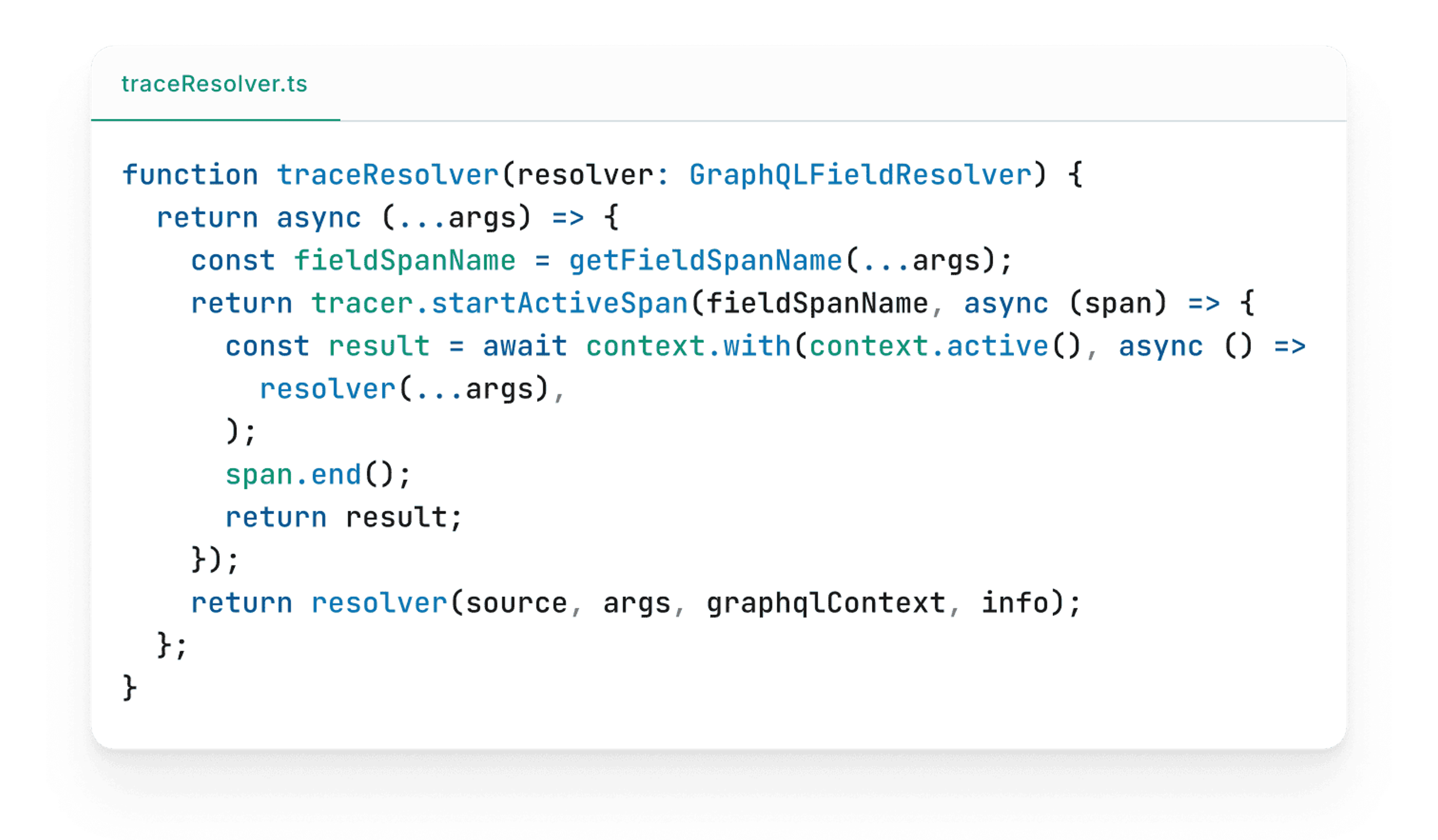
With our custom Apollo tracing in place, we had a clear understanding of high-level performance, and creating custom spans with the OpenTelemetry SDK allowed us to generate finer-grained spans for internal codepaths. The last piece of the puzzle was tracing our database to understand where we had slow queries or were executing too many database operations.
Challenge #2: Database Tracing
Tracing our database operations presented its own set of challenges. We use both Firestore and PostgreSQL, each requiring different instrumentation approaches. PostgreSQL was easy to instrument, thanks to an existing instrumentation package for postgres.js which worked out of the box.
While the official Firestore SDK does include tracing events, they’re incredibly high-volume and unfortunately have limited useful data attached, such as the specific collection being queried. We chose to write our own wrapper around the Firestore client that created spans for each database operation. Fortunately, since each of our database collections passes through a shared ORM-like abstraction, this proved fairly straightforward. We simply wrapped every Firestore operation with tracing code similar to our Apollo resolver code:
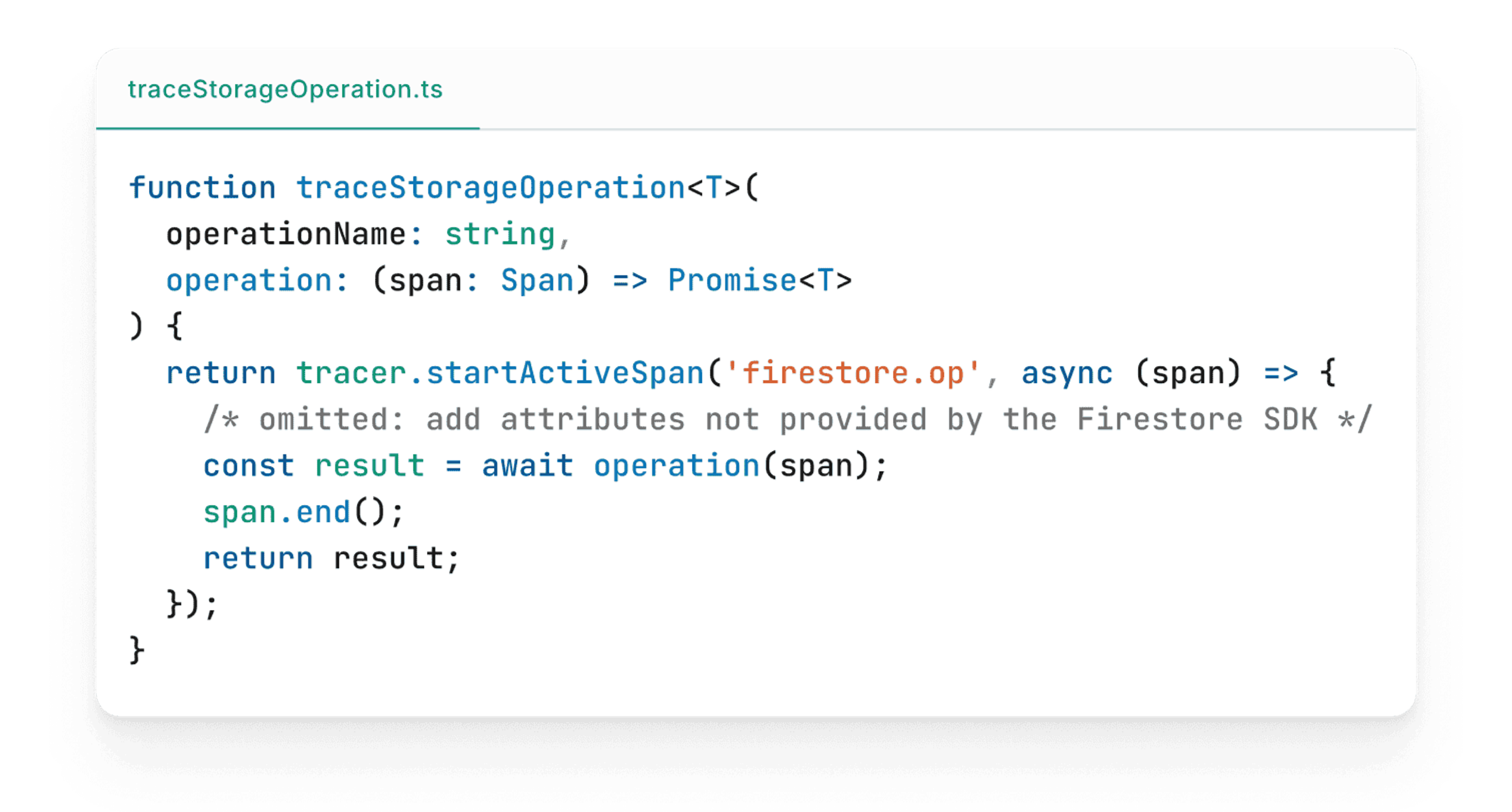
Challenge #3: Client Tracing
As a team, we made the decision to not build any infrastructure to link backend traces to client traces. Given our backend is fully isolated from our frontend via our GraphQL API, a full-stack trace for our app is unnecessary, and would likely produce traces so overwhelming they’d be difficult to grok and consume. Instead, we implemented separate client and server tracing to allow us to optimize the runtime user experience separately from our backend performance and reliability.
Tracing client code is deceptively hard, as OpenTelemetry’s browser instrumentation was not designed for modern client-side applications which comprise more than a static HTML file. Because modern applications have minimal markup in their HTML file by default, markup is mostly hydrated in JavaScript, and API requests are executed outside the scope of the initial HTML page load, traditional client tracing misses most of the interesting parts of loading Ambrook.
Instead we built more custom instrumentation. We hijacked the basic OpenTelemetry browser instrumentation and introduced a concept of a “session” on top of it, which starts when the user opens the page and completes when the page’s main content is rendered. This gives us visibility into the full lifecycle of loading JavaScript bundles, rendering, and executing API requests that make up a full client-side page load.
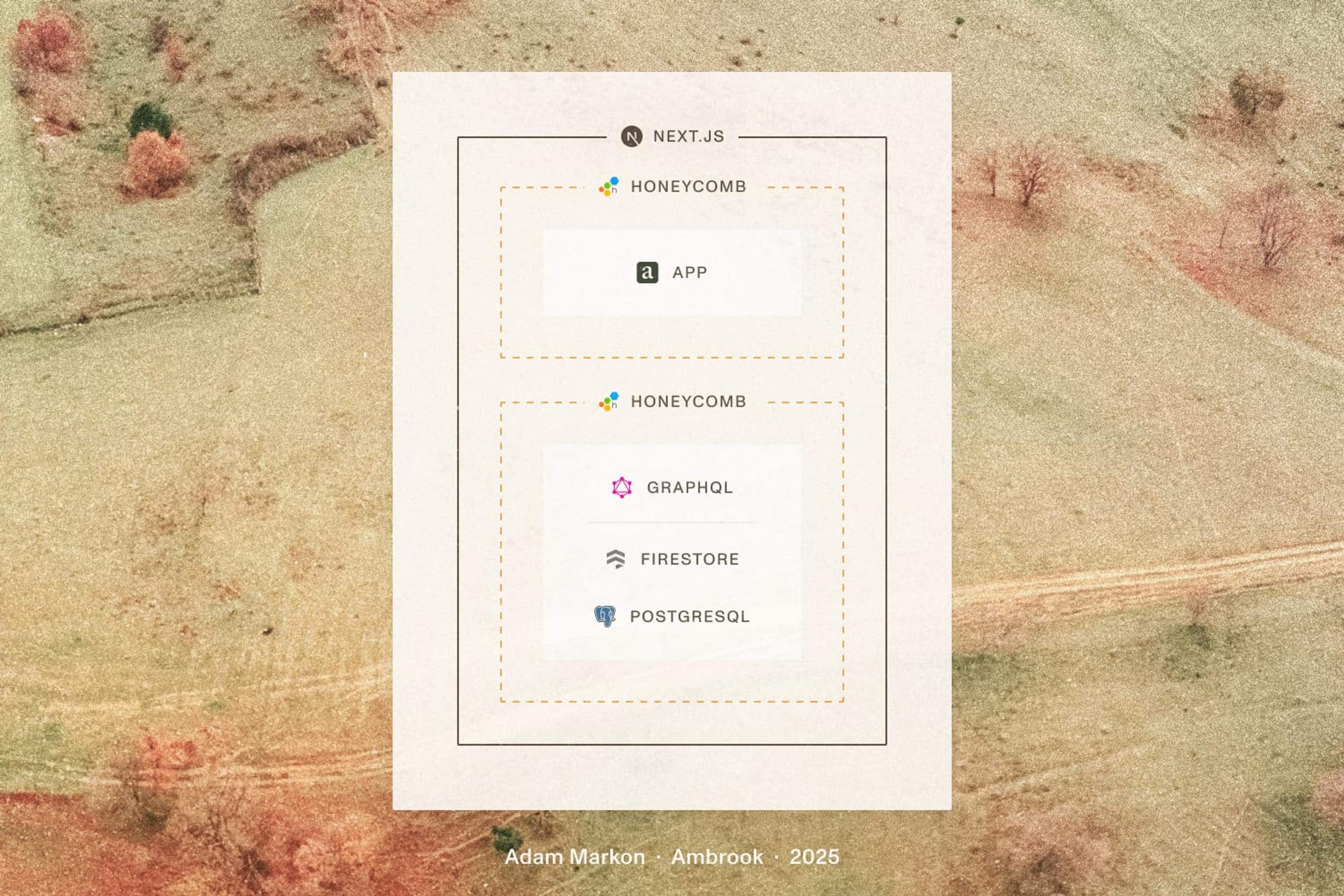
Picking a Storage Provider
Picking a provider to store and serve our tracing data proved tricky. Many providers that would allow us to send a high volume of data had very restrictive limits on the amount and types of data we could send. As a startup with a wide distribution of customer needs, the ability to track granular attributes like account IDs within our tracing data is critical. In addition to traces, we also need this platform to support timeseries metrics for data that isn’t well-suited to tracing. Lastly, we need the ability to run complex queries across spans to build dashboards and track SLOs for our platform.
Honeycomb ultimately emerged as our preferred option. Honeycomb encourages “wide” events, allowing up to 2,000 attributes on each span in a trace, with no limits on unique values. Their pricing structure simply prices by event, meaning we can send as much data as we want for a fixed cost. Most importantly, timeseries metrics in Honeycomb are just “events,” so they fit nicely into the billing, and their advanced query and visualization capabilities allow us to dive deep into traces, performance problems, and error rates. For just $130 per month we are able to send 100 million events with near-zero operational cost, and perform important tasks like alerting on performance changes and defining team-wide SLOs.
The Payoff: Real-Time Insights
Despite the challenges, the payoff has been substantial. We now have unprecedented visibility into our application’s behavior. We can see exactly what happens when a customer interacts with our application, how that interaction flows through our system, and where any bottlenecks or errors occur.
This visibility has already helped us identify and fix several issues that were previously difficult to reproduce or understand. We discovered certain GraphQL queries which were triggering unnecessary database reads, allowing us to save over 10 million unnecessary reads from Firestore each month. We learned about several N+1 query problems in our financial reporting product, reducing the time required to generate financial statements by 85 percent. Lastly, we were able to uncover several smaller data duplication issues in core APIs that reduced our 90th percentile query duration for queries outside of our reporting product from 0.9 seconds to 0.7 seconds.
With new tracing in place and increased visibility into the exact set of operations that make up the most complicated parts of our product, these issues were immediately visible and actionable to the team, allowing us to serve our customers’ needs better than ever before. All of these improvements have compounded to improve overall application performance more than 30 percent, and our newly improved ability to dive deep into errors has helped solve even more issues that would have otherwise gone unnoticed.
If you want to improve the experience of your application, the first step is having the right data to do so. Gathering detailed data about your systems enables a data-driven approach to ensuring your customers see a product you can be proud of.
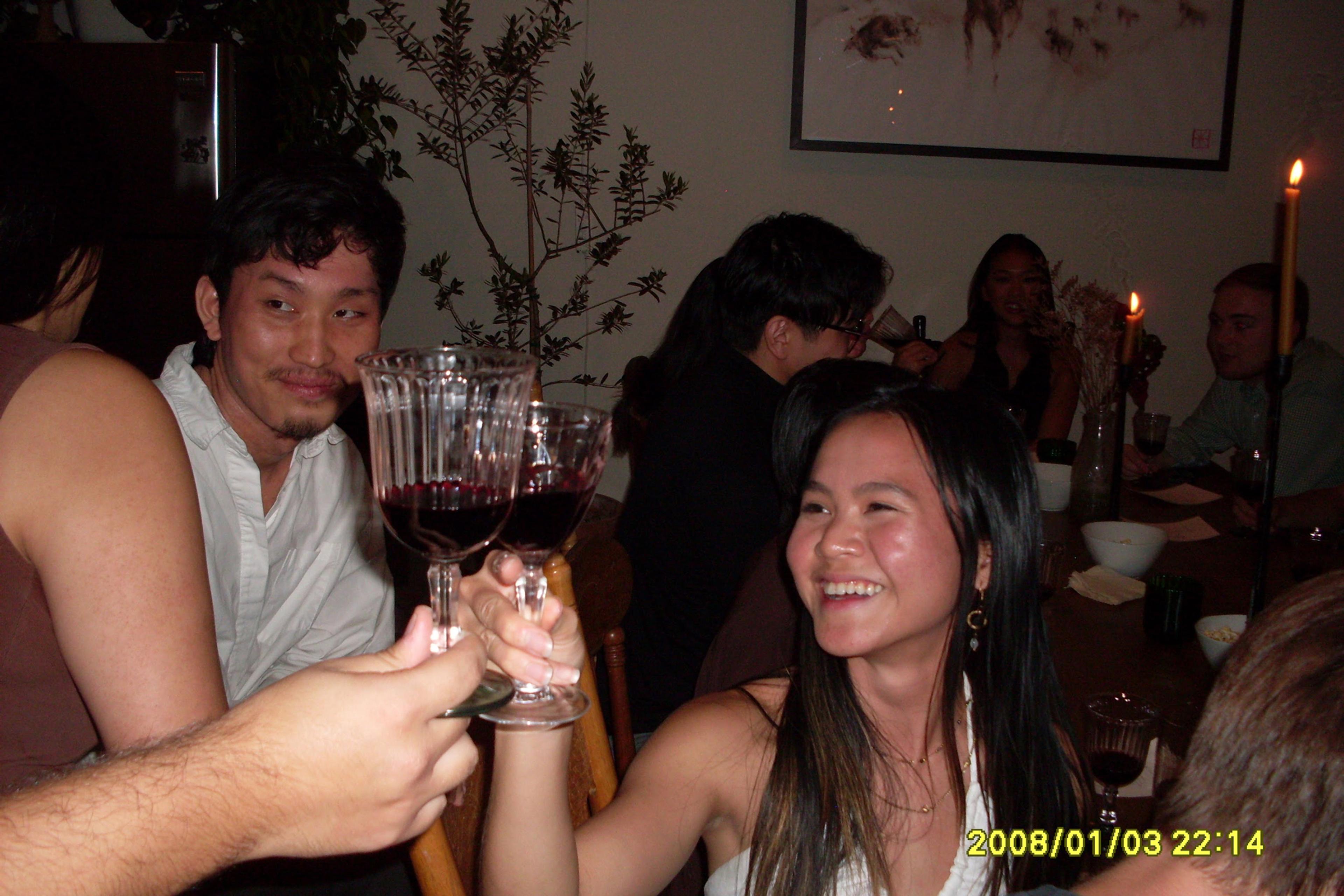
I first met the entire Ambrook team at its inaugural party, celebrating the opening of our sunny, plant-filled SoHo office. I had just joined as a software engineer. Our CEO and cofounder Mackenzie, approaching every detail with intention and an eye for aesthetics, went on a vital mission to choose a worthy serving vessel for the party’s signature wine punch. While scouring nearby Chinatown, she spotted a large glass container filled with sea cucumbers and asked if it was for sale. The bemused shopkeeper dumped out the contents and with that, we secured the party’s finishing touch.
That party set the tone for me: mismatched chairs, candlelit nooks, quiet corners for deep conversation, louder ones for laughter. It didn’t feel like a typical company event — it felt like being invited into something warmer, more personal.
What struck me early on was how deeply intentional this team is and how that sensibility threads through everything we do, from hosting to building to how we show up for each other.


I’ve been organizing gatherings for years — dinners, salons, creative work sessions. Hosting has always been something I loved doing outside of work. But at Ambrook, I didn’t need to compartmentalize. I soon found myself stepping in to help — first with a playlist, then with absurd event ideas, and eventually hosting gatherings of my own. I’d found a team that saw curiosity, design, and careful curation not as extras, but as essential tools for building something meaningful together.
You can feel that philosophy the moment you step into our space. Plants trail from the windowsills. Candles sit tucked between books and mugs. In our first few months there, Jesse acquired some underground Pakistani mangoes — made famous by the award-winning Eater article on these elusive fruits that have yet to make their mass market debut. They arrived through a WhatsApp distribution network and made it to the Ambrook office where we gathered around the sweet fruit at the vintage wooden dining table we proudly sourced from Facebook Marketplace.
We’ve gathered people through events big and small. There was the Supermoon party on the night of the Beaver Moon, with required pre-readings for guests about beavers, a tarot card reader, and herbaceous elixirs. We threw an Ambrook Research party in Colorado to mark our presence in Denver and celebrate the launch of our podcast, The Only Thing That Lasts. Jesse cohosted another Ambrook Research party with The Food Section, featuring Southern cocktails and pickled heirloom watermelon our cohosts flew in from South Carolina. At another point, a fully costumed murder mystery night spiraled into a frenetic and extremely on-brand evening of teamwork and improvisation.

Last spring, I hosted an event highlighting ramps wild-foraged from Appalachia. Through serendipitous connections, we ended up collaborating with Little Poutine, a New York dining collective, and Stephen Pungello, a chef who’d worked at the Michelin-starred Dabney. Stephen spent the week leading up to the event foraging for ramps in Northern Virginia and hand-delivered them to the Ambrook office for the tasting. Little Poutine promised some light, no-fuss ramp snacks but in true chef fashion, showed up with suitcases of ingredients for a full, decadent spread of the leeky, garlicky delicacy.
The food was incredible, but it was the energy in the room that made it unforgettable. Dozens of New Yorkers gathered in our office to eat, drink, linger, and learn. The centerpiece was Stephen’s talk on ramp foraging, but the real magic came from watching people connect over a shared curiosity about food.
Last winter, I hosted an intimate PLG (product-led growth) dinner in our office, where operators from early-stage startups discussed challenges in self-serve onboarding. We kept it simple — our prized dining table, a single-threaded conversation, and a mix of voices from across the New York tech ecosystem. What stood out wasn’t just the shared problems, but the trust and focus in the room. That same attention to detail that we bring to everything at Ambrook came through in the seating chart, the lighting, the thoughtful moderating of the conversation.
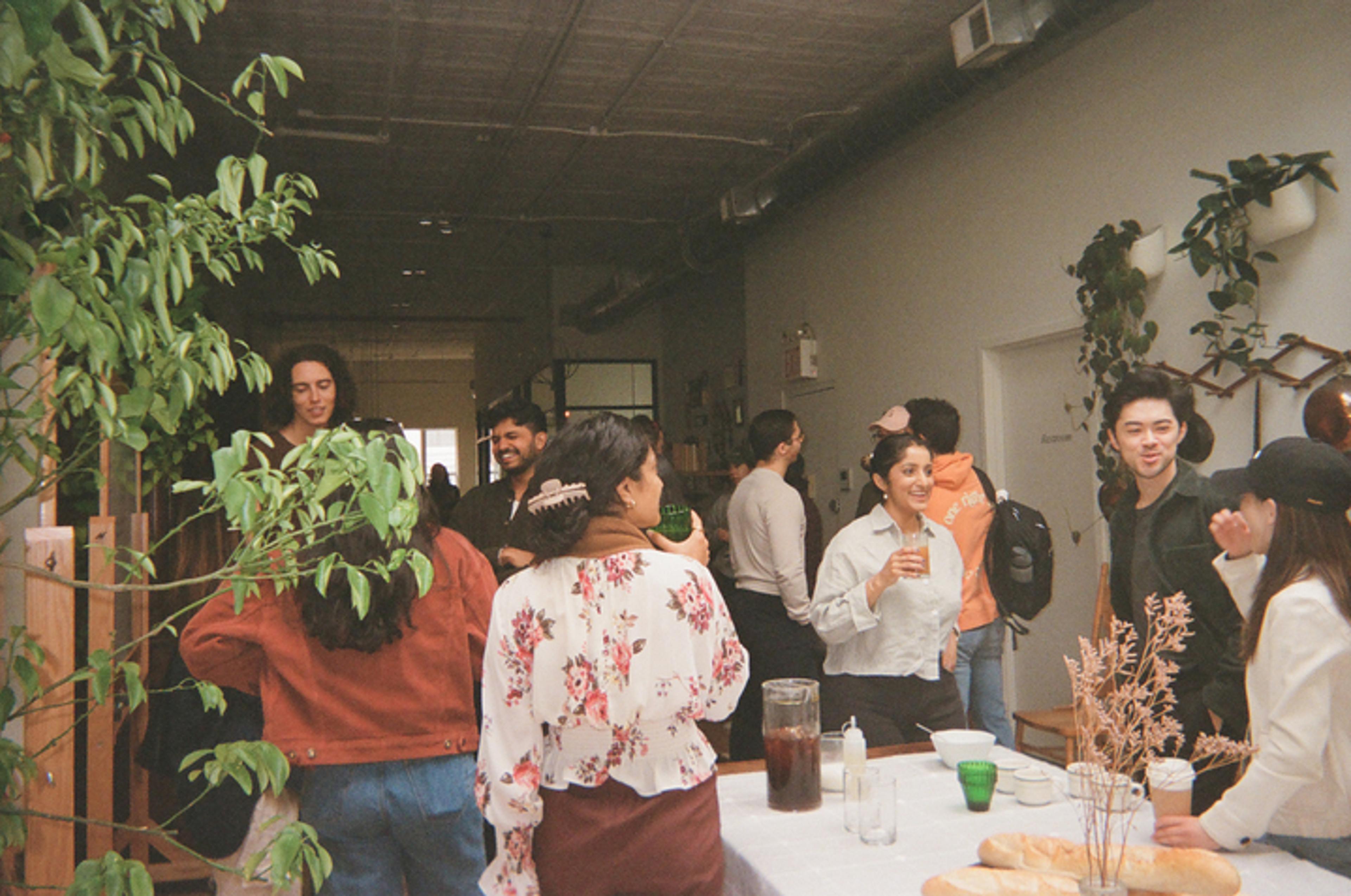
Over time, I found myself wanting to carry that same energy into something more personal. One of the most meaningful communities I’ve built grew out of this space: a biweekly Sunday gathering designed for deep focus, shared curiosity, and creative exploration. Like Ambrook’s intentional approach to gatherings, this Sunday ritual embodies the same spirit of thoughtful creation. Each session is a structured format for creative exploration, where people dedicate time to projects outside their “work work.” What makes it special is the culture of curiosity and support that mirrors so much of what I’ve experienced at Ambrook. I’ve seen people return week after week to write, work on side projects, and invest in parts of themselves that don’t fit neatly into a job title.
The same environment that nurtures Ambrook’s culture has also become a catalyst for my own reinvention. I came in as a software engineer, but I’ve had the space to grow into a community builder — to exercise a new kind of creative muscle, one that shapes not just code, but experiences, spaces, and relationships. I’ve flexed that same curiosity and empathy into new corners of the company: joining sales calls, supporting customer success, and leaning into whatever the moment calls for. That’s because even with all this care, our growth has only accelerated — proof that craft and velocity can coexist.
At Ambrook, I’ve learned that building anything well — whether it’s a product, a community, or a company — starts with the same holistic foundation. This mindset hasn’t just made me a better host. It’s made me better at everything I build. I didn’t join Ambrook expecting to find a niche in gathering people. But in a workplace where the CEO handpicks a punchbowl from a Chinatown aquarium store, it’s hard not to follow suit.

The narrative around AI often focuses on groundbreaking advancements and frontier models. Yet some of the most impactful applications lie hidden in plain sight, within the messy, analog workflows of established industries. These are the unglamorous, deeply human problems often ignored by both specialized industry-specific solutions and horizontal fintech platforms.
Generalist teams, equipped with AI, possess a unique advantage in identifying and solving these overlooked challenges. Ambrook’s journey serves as a compelling case study, demonstrating how a small, versatile team can leverage empathy, modern infrastructure, and targeted AI products to address the underserved needs of American farmers and ranchers.
The “Messy Inbox”
American agriculture presents a paradox: Technologically advanced field operations coexist with decidedly analog business practices. While GPS-guided tractors roam the fields, the financial back office often drowns in paper. During visits to farms and ranches nationwide, our team at Ambrook repeatedly encountered a version of “the messy inbox problem.” This is the challenge businesses face when crucial information arrives in multiple different formats, making it slow and difficult to process. Indeed, the physical evidence of this challenge was everywhere: receipts, invoices, and financial documents scattered across truck dashboards, stuffed into shoeboxes, and piled precariously on desks.
All of this paperwork is more than an inconvenience. Producers we spoke with reported spending several days each year wrangling paperwork before any bookkeeping could even begin. This drains valuable time and obstructs financial clarity, hindering critical business decisions.
We recognized this messy inbox problem as a significant market opportunity. Existing solutions fall short: Agtech innovation has largely concentrated on optimizing field operations. And traditional fintech tools often lack an industry-specific focus, forcing producers to shoehorn their operations into generic systems that don’t reflect the realities of agricultural cash flows or cost structures. This misalignment limits the usefulness of the insights these tools provide, leaving producers without a clear financial picture tailored to their unique business cycles.
This all creates a distinct gap where Ambrook, combining agricultural understanding with financial technology expertise, has been ideally suited to step in and provide effective solutions.
Crossing Boundaries With Empathy and AI
Solving the “messy inbox” problem required more than just technology; it demanded a team capable of understanding the business context of ag while effectively wielding modern tools. This is where the power of a generalist team shines. At Ambrook, our team operates fluidly across disciplines. Designers contribute to the frontend, operations writes SQL queries, and everyone participates in product specs. This inherent ability to cross boundaries is crucial. It allows us to blend:
Empathy and Observation: Identifying the messy inbox wasn’t the result of market reports, but of direct conversations and observations, understanding the lived reality of producers.
Software and Operations: Building solutions that integrate smoothly with existing, often non-digital workflows.
Design and Data: Creating user experiences that make complex financial data accessible and actionable.
AI and Practical Application: Leveraging AI not for its own sake, but as a tool to solve a specific, identified problem.
Crucially, our ability to tackle this challenge coincided with a perfect storm of maturing AI technologies. Large language models (LLMs) are becoming more reliable and affordable. Multimodal systems offer new ways to connect visual and textual data.
These weren’t just abstract advancements; they were tools becoming accessible for generalist teams to apply pragmatically. We didn’t need dedicated AI specialists from day one; our lean structure could leverage these advancements through smart infrastructure choices and a focus on practical implementation.
Case Study: Building the Vault
Our solution to the messy inbox problem—what we call the Vault—exemplifies our generalist approach to shipping something small, real, and useful. We try to use the right AI tools at the right time. The Vault serves as a central digital repository for all physical business documents, extracting unstructured data and integrating it into our customers’ financial picture. This product is the culmination of multiple different projects over months that, when put together, directly addresses what to do with all this paperwork.
The process of putting the multiple parts together used an iterative strategy deeply rooted in our generalist strengths:
Starting Small and Real: We first launched a simple receipt upload feature. It was limited—users had to manually match receipts to existing transactions. But its significant usage, despite the friction, validated the core need. This early win, built by our cross-functional team, provided us the confidence to evolve our solution to support unattached receipts and multiple document types.
Leveraging AI Just-in-Time: As we evolved our concept toward the full Vault, we deliberately incorporated AI capabilities where they offered tangible value:
Document Classification and Parsing: Using multimodal AI to automatically identify document types (checks, invoices, receipts) and extract relevant data, reducing manual data entry.
Intelligent Search: Implementing a universal search that allows users to easily retrieve any document or data point, turning literal shoeboxes into accessible digital archives.
Assisted Workflows: Developing features like suggested transaction linking, where AI proposes matches between uploaded documents and bank transactions, which users then quickly verify. This balances the time savings of automation with the need for human oversight and accounting accuracy.
Building on Strong Foundations: Our success relied on key infrastructure investments (like our design system and cross-platform mobile tech) made with future flexibility in mind. Meanwhile tight customer feedback loops ensured development would remain focused on genuine pain points. We didn’t chase the AI frontier; we applied maturing AI capabilities to solve the messy inbox problem we’d seen firsthand.
The Vault’s development showcases our generalist team’s strength: integrating user empathy, pragmatic design, adaptable infrastructure, and the just-in-time adoption of powerful AI tools to deliver concrete value for an overlooked industry need.
The Next Frontier
Our initial success validates the power of generalists wielding AI for industry-specific problems. Now, as we scale, we face new challenges that demand a continuation of this blended approach:
Navigating the Frontier of AI: How do we intelligently integrate increasingly powerful AI, acknowledging its strengths while designing safeguards against its weaknesses—especially where accounting accuracy is paramount?
Moving from Data Entry to Insight: How do we leverage the rich, structured data from our Vault to provide automated financial analysis tailored to agriculture?
Enabling Natural Language Interaction: How can we empower users to automate their unique business processes within Ambrook using plain English instructions?
These challenges require deepening our AI capabilities while retaining our core generalist strengths: cross-domain thinking, user-centricity, and a focus on solving practical problems. It’s about evolving the synergy between versatile human talent and increasingly sophisticated AI tools.
Why It Matters
Ambrook’s journey in agriculture proves a powerful point: Small, adaptable teams of generalists, equipped with modern AI, are well-suited to solve the often unglamorous, industry-specific problems that others miss. While the new wave of AI tools offers incredible potential, realizing that potential takes patience, deep context, and product humility.
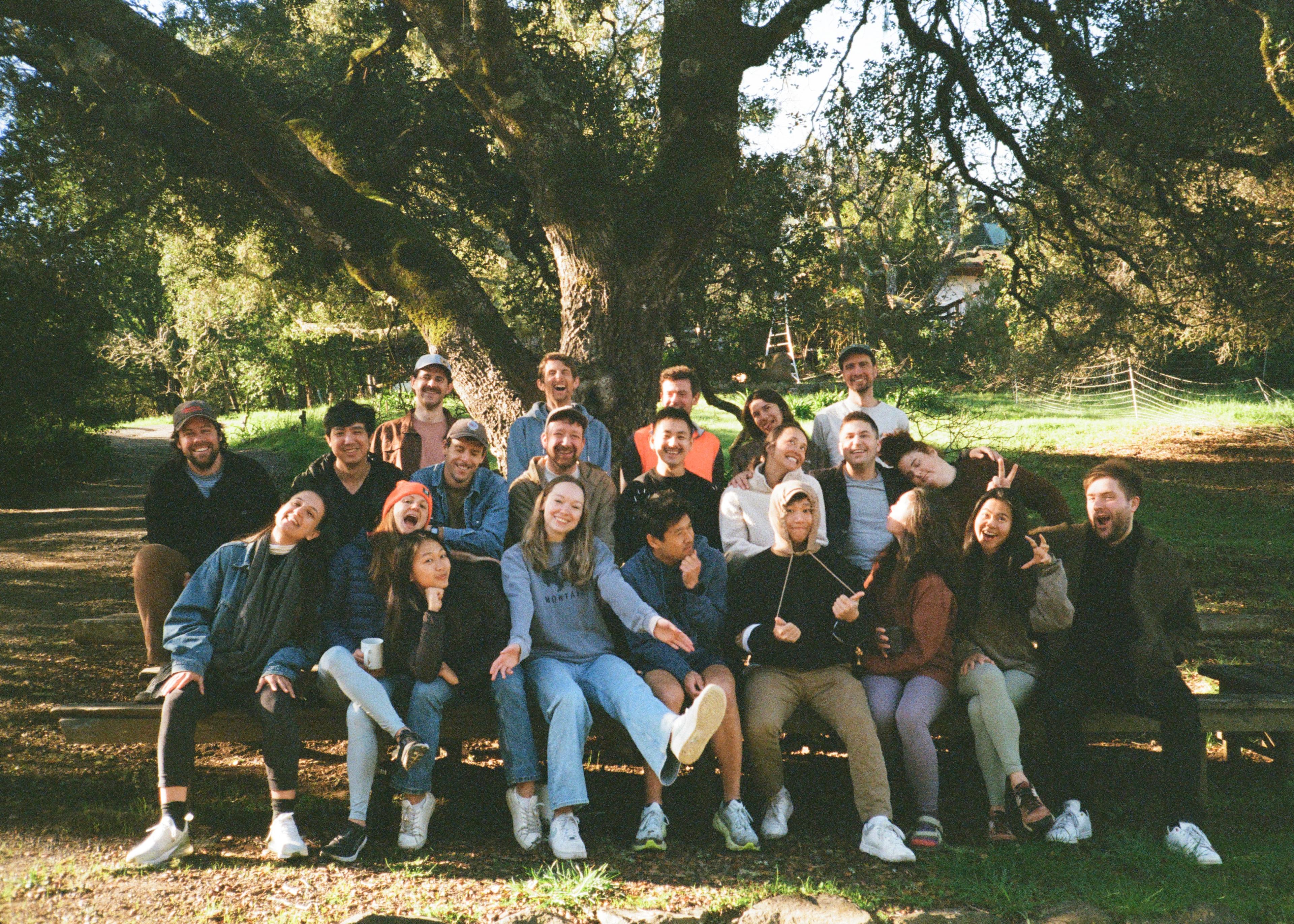
At Ambrook, we don’t spend all our time in the office — our team travels the country, visiting ranches in Montana, ag conferences in Wisconsin, diversified farms in Vermont, and more. It’s such a privilege to visit the places where our customers work and call home, learning from the land they steward. Touching grass is just part of how we do things.
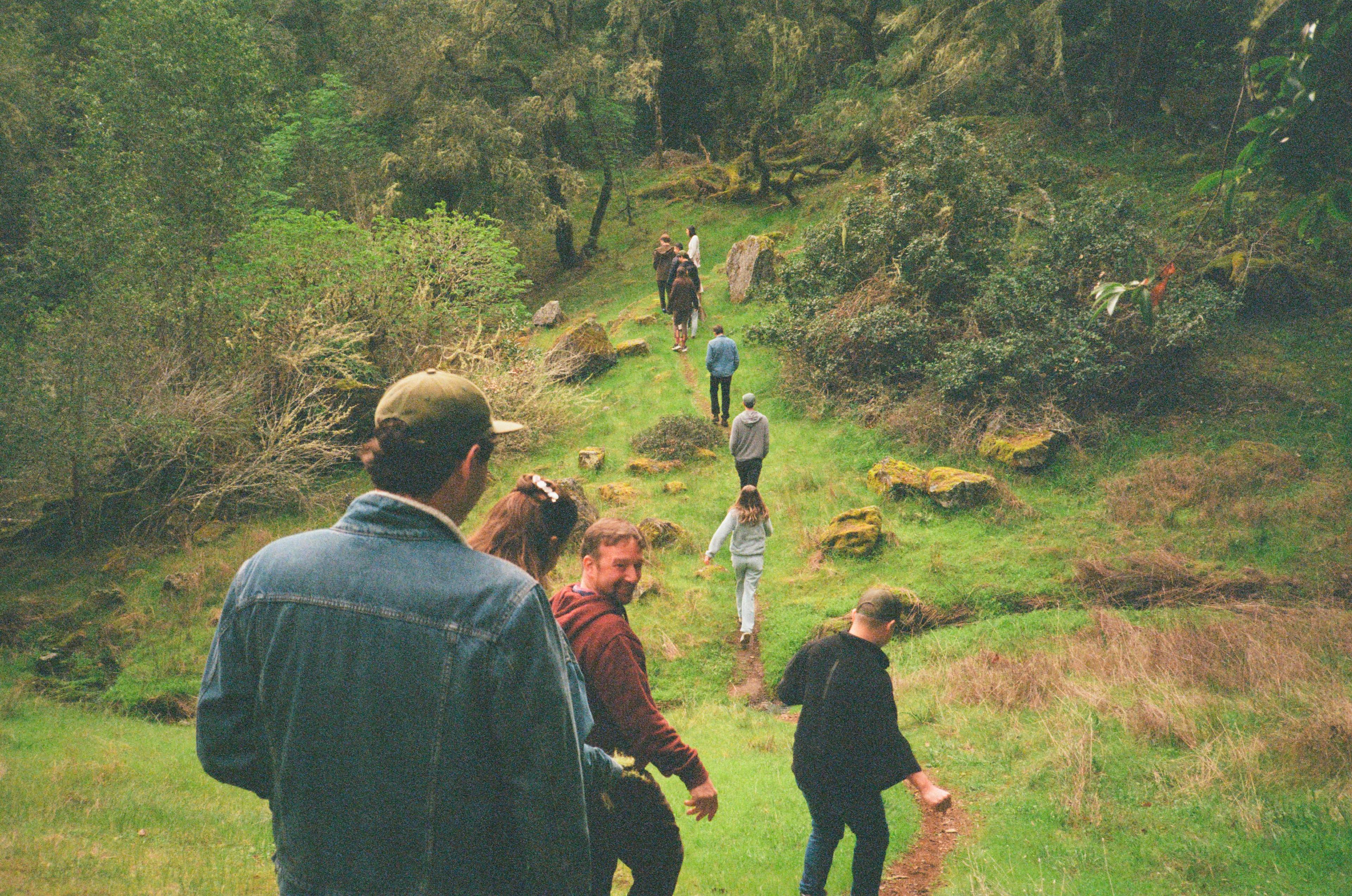
Our team is distributed across the United States: with offices in New York and Colorado and teammates working remotely in California, Washington, Minnesota, and Massachusetts. There’s something different about getting together in person. These retreats are about more than just work. They’re a chance to connect with each other and those we serve, engage in thoughtful collaboration and — most importantly — share some fun memories.
After 11 retreats and nearly five years, here are a few of our favorite moments from a team that loves being together.
Retreat 000: Denver, CO
Our small but mighty team of eight wound up stationed at Jeff’s house for Colorado hiking, urban scootering, board games, and farm-to-table eats. We spent the week on air mattresses and spread out over every square inch of available space. It had the classic feel of early startup energy, but with plenty of nature to explore.
This was the first time our cofounders had seen each other since the Covid-19 pandemic began. The first iteration of Ambrook was helping farmers across America apply for federal funding to help them get through the pandemic. We spent this week building out what is now the Ambrook Funding Library — something that still helps thousands of farmers get access to funding every year.
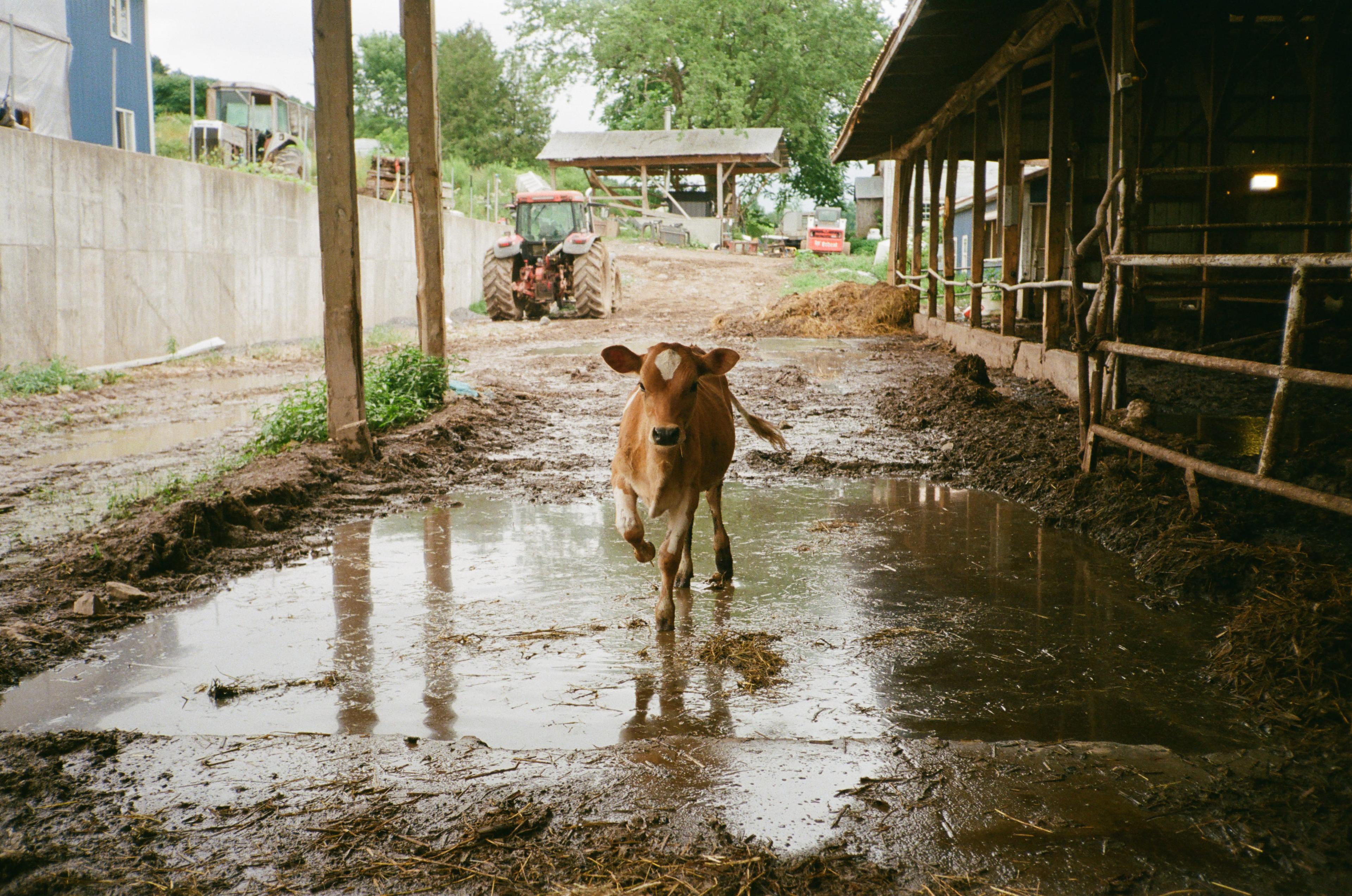
Retreat 001: Red Hook, NY
We started our second retreat coworking in New York City, then headed north to a U-pick farm in Dutchess County. We helped out around the grounds, built owl boxes, and got a bonfire going. At this point in our journey, we were helping farmers qualify for millions of dollars worth of grants. Mid-retreat, we turned the farmhouse living room into a war room to help a customer apply to a large grant. It all wrapped up with hand-picked berries and BBQ burgers.
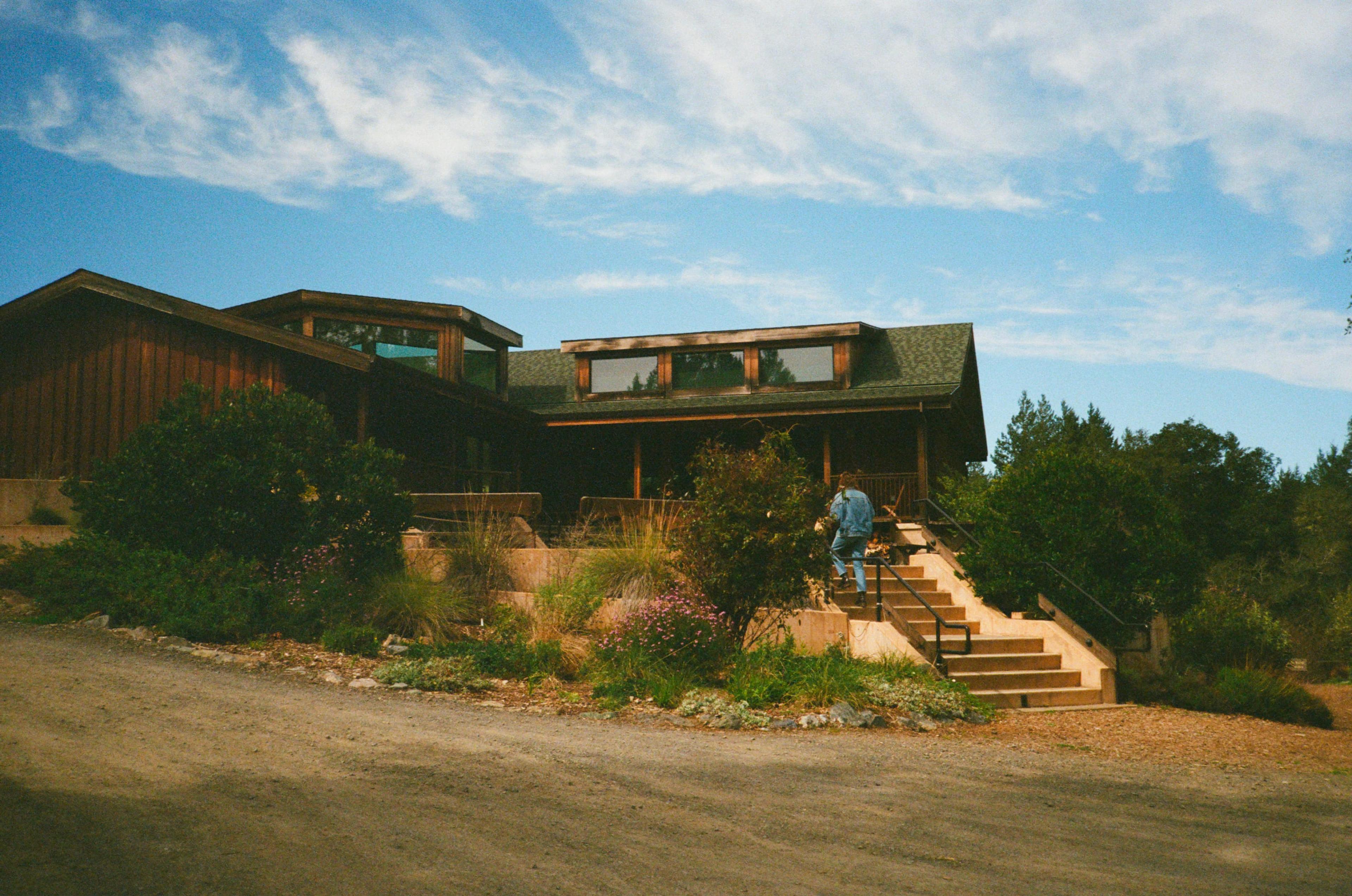
Retreat 002: San Rafael, CA
Later that year in 2021, our next retreat brought us to San Rafael, just an hour north of San Francisco. The team gathered for a focused working session, including readouts on recent design partner feedback from onsite visits and a brainstorming session on our 2022 strategy. Littering our Airbnb with sticky notes, we explored the question, “How might we build a 10x better QuickBooks for agriculture?” In between sessions, we went on hikes, tried tidepooling, and dined on delicious seafood.
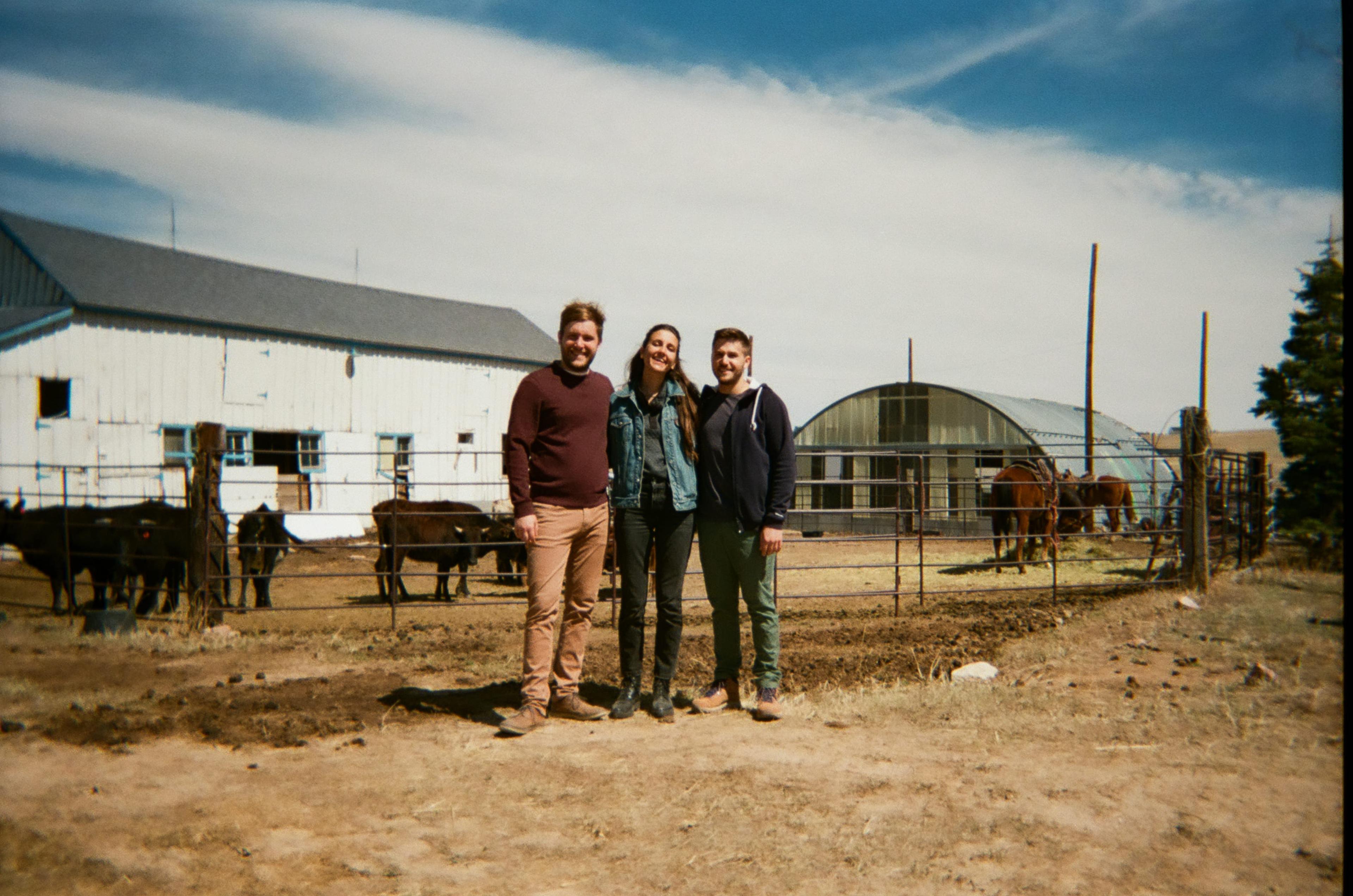
Retreat 003: Nederland, CO
We had several Colorado customers by this point, so this one was part retreat, part in-person farm visit. We visited urban operation Unlikely Farms for breakfast, road tripped to Niccoli Livestock’s goat farm, and spent the day with Teo and Darnell at High Haven Ranch. Colorado also set the backdrop for our mini-documentary with Stripe, which you can watch here.
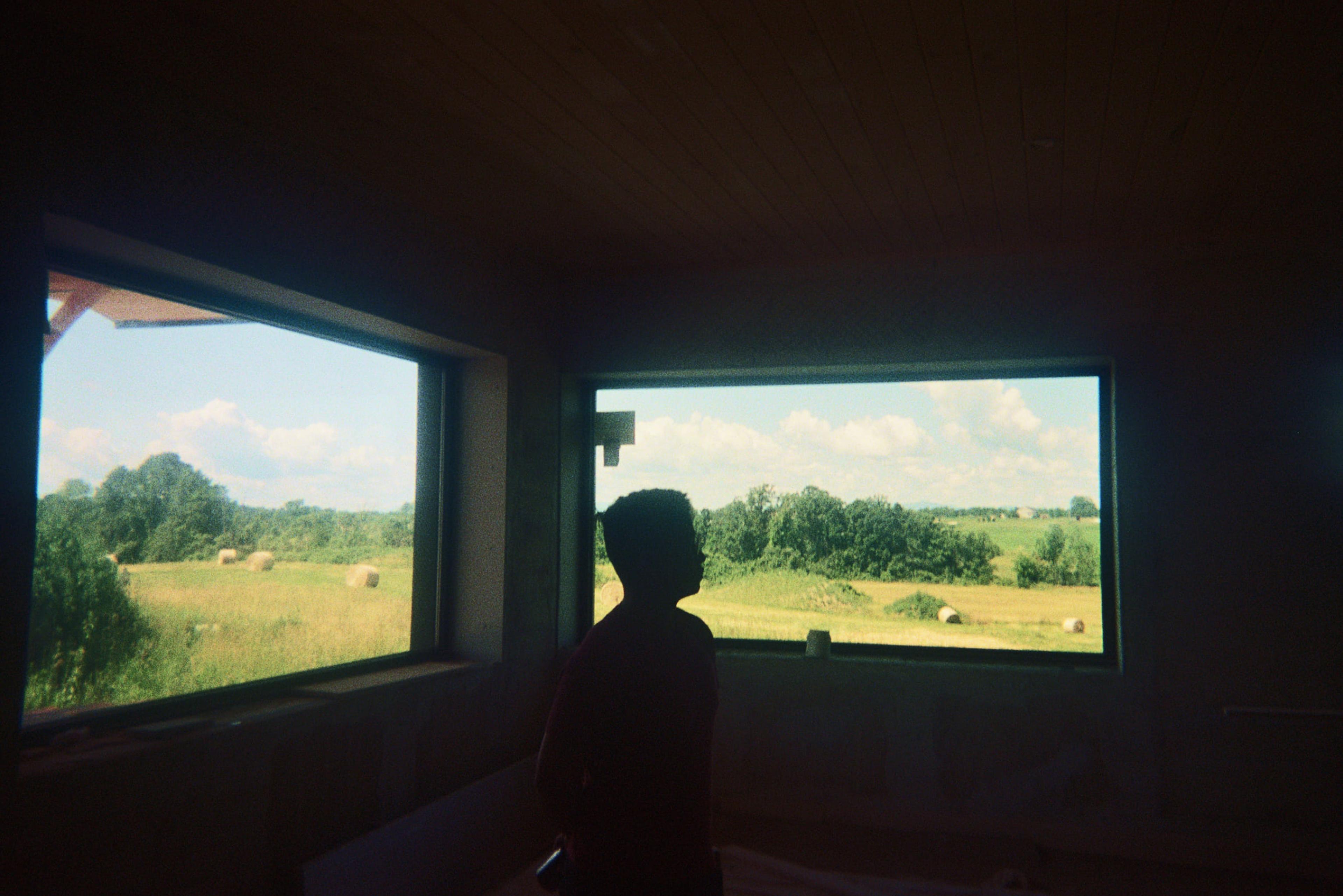
Retreat 004: Burlington, VT
We spent this trip embedded with our design partner Bread & Butter Farm, learning the ins and outs of their operation alongside owners, managers, and staff. We learned about regenerative techniques and sustainable home building, and then herded cattle as part of their rotational grazing practice. We finished each day with farm-to-table meals at Burlington’s top restaurants and slept cozily in beautiful Stowe. John led a barefoot walk through Brewster River Gorge to cap off our time in the Green Mountain State.
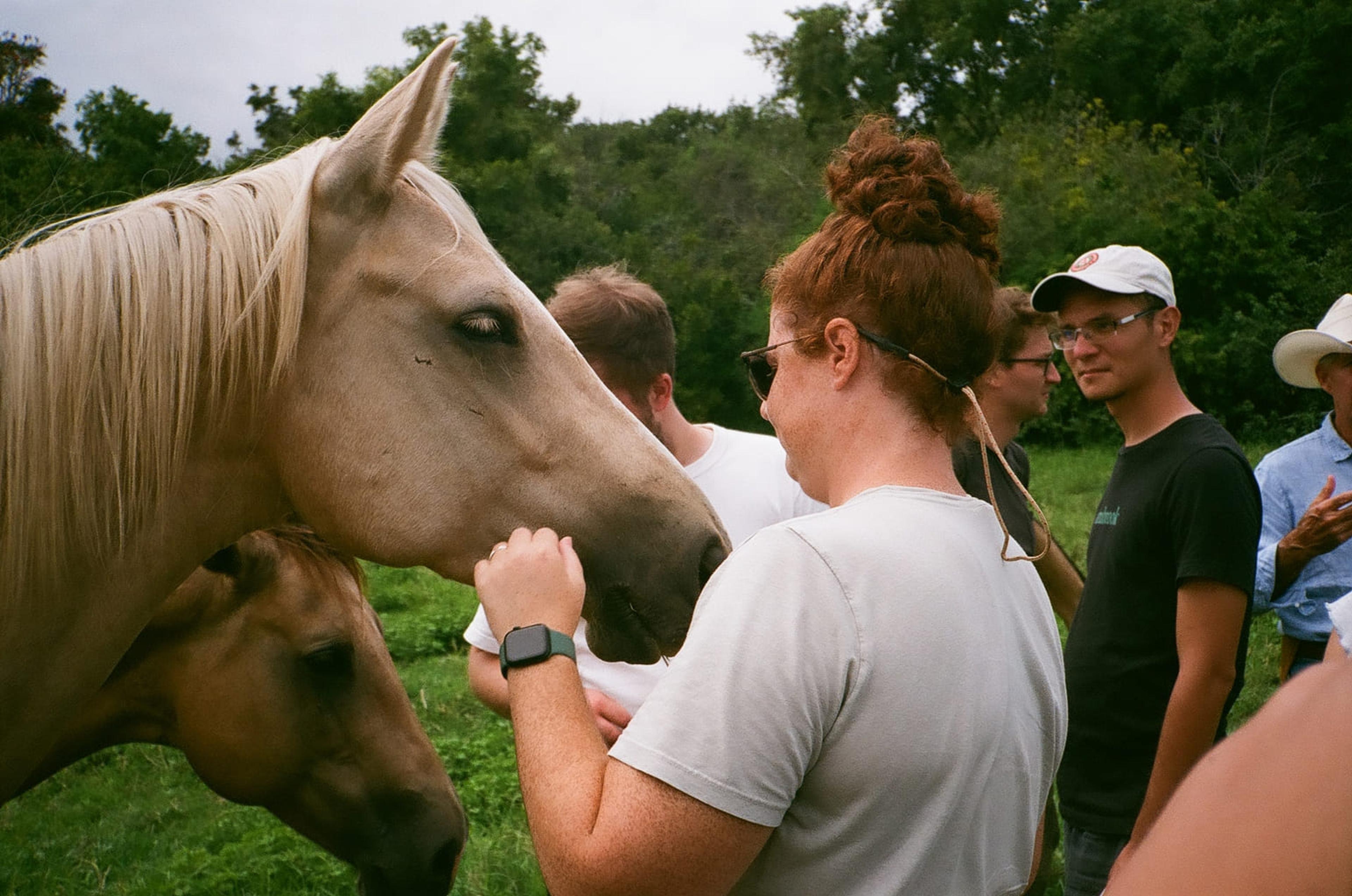
Retreat 005: Maui, HI
When the opportunity came up to visit a diversified operation for a customer discovery trip, the team didn’t hesitate — our team generously agreed to head to Maui. We had local lunch with Hāna Ranch managers Rose and Duane, who would go on to become one of Ambrook’s early design partners. While on-site, we hiked to the highest point in the area, pet free-roaming horses, and ate ulu and oranges straight from the branch.
In our spare time we beached, zip-lined, braved the legendary Road to Hana, and hacked from oceanside recliners.
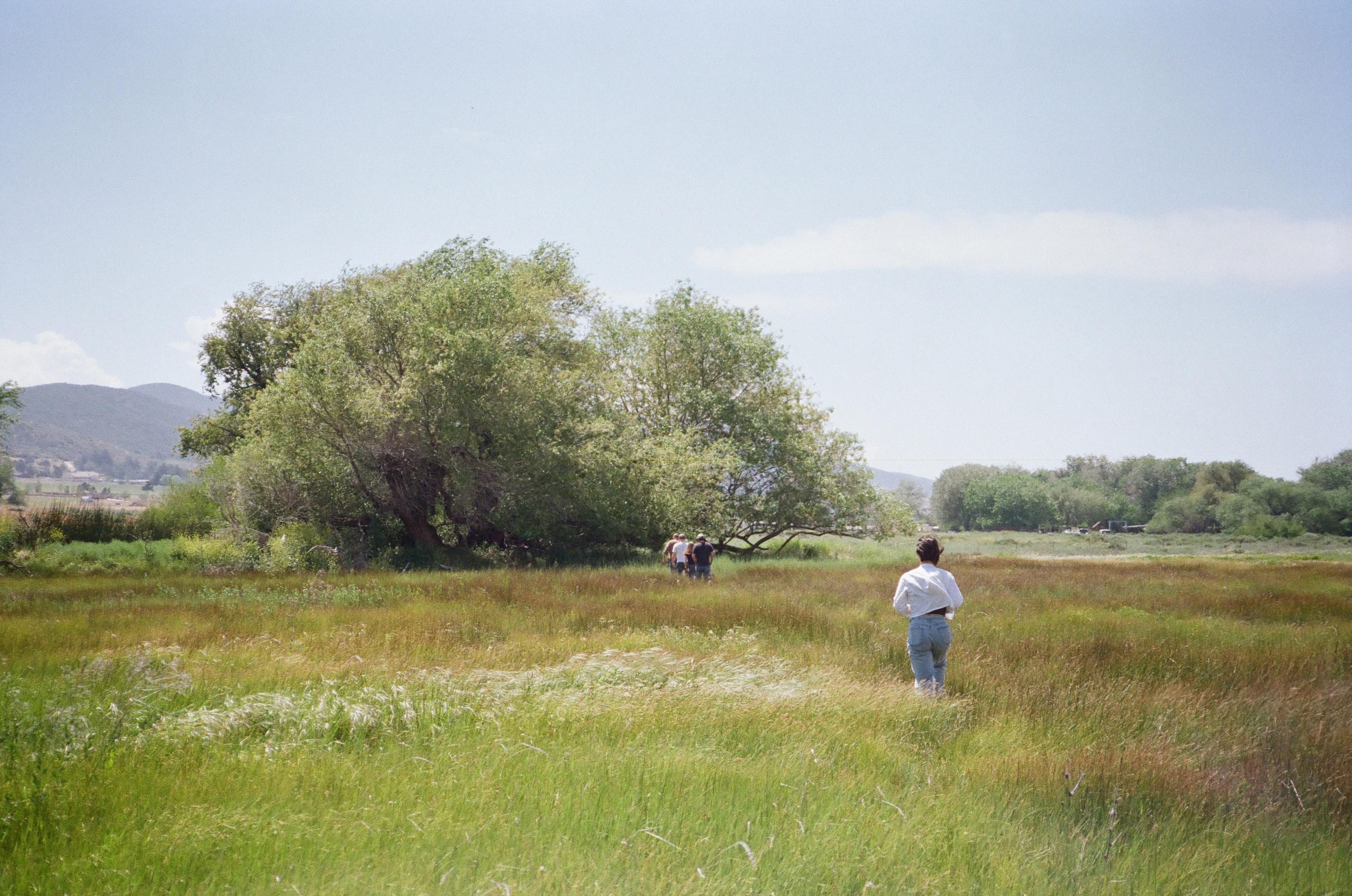
Retreat 006: Los Angeles, CA
In LA, the food was front and center: downtown small plates and rooftop BBQ wagyu burgers from the storefront of one of our early customers, WhiteBarn. Our Los Angeles teammate Maika guided us through her favorite local gems.
We filled our days with communication workshops, a team-wide sprint for a customer milestone, and bonfires on the beach. Our last excursion was an after-hours facility tour with our friend’s family, who owns and operates LA Produce Distributors — a reminder that even in the heart of the city, agricultural production remains the backbone of how we live.
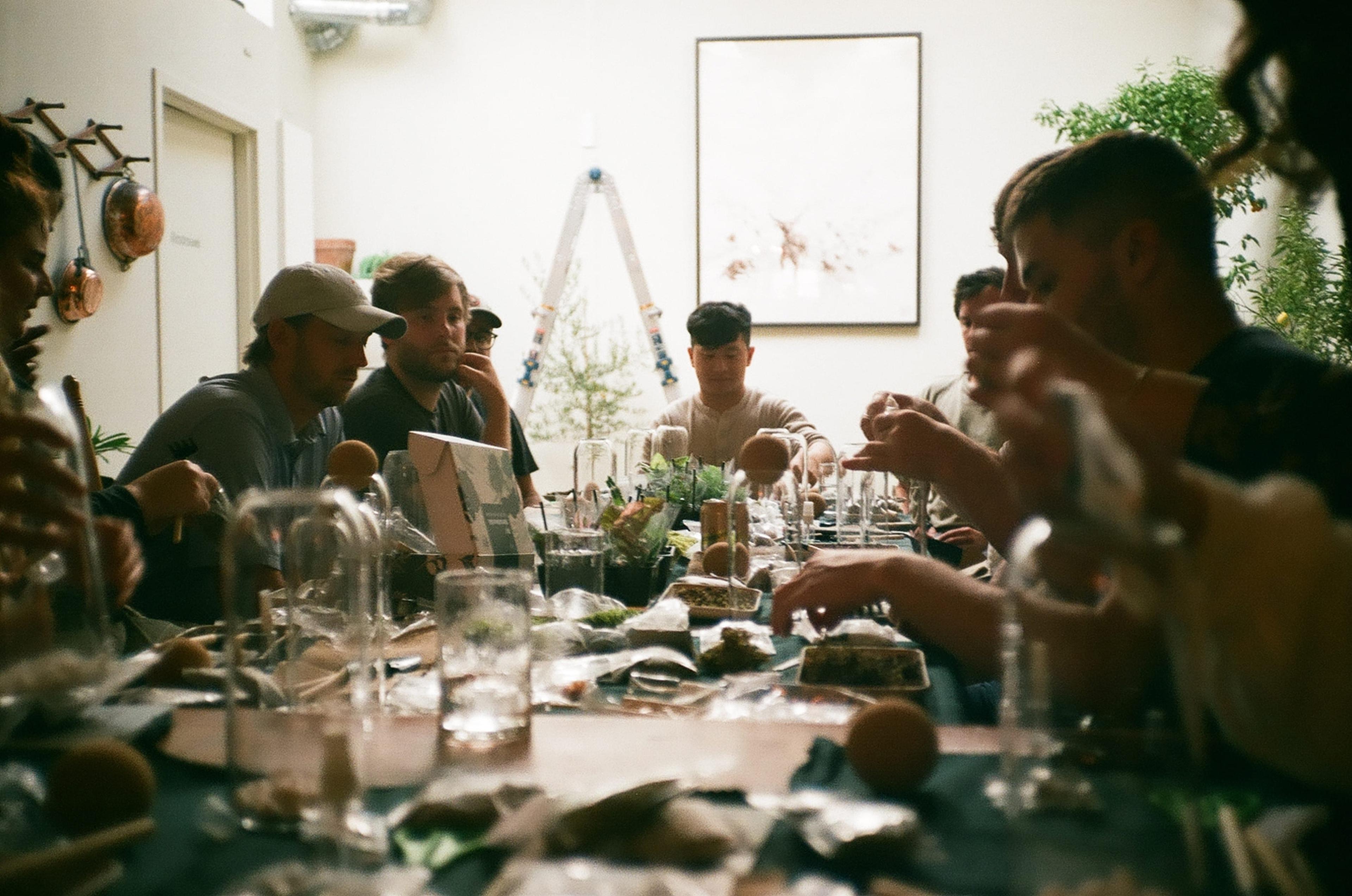
Retreat 007: New York City, NY
This retreat marked the opening of our Ambrook New York office. Our 15-person team flew from across the country to transform it from an empty loft into a cozy space that reflects how we work — collaborative, grounded, and a little eclectic. We had spent the weeks before tracking down antique furniture from estate sales and Facebook marketplace, curating a collection that now defines the office’s distinctive charm.
For the retreat, our team ventured to Staten Island for a tour of the Greenbelt Native Plant Center, then tried to add to our plant collection with a terrarium-building workshop — though most of the plants didn’t survive the month.
We capped it all off with an official Ambrook HQ housewarming party — the first of many gatherings to come.

Retreat 008: Denver, CO
This retreat felt full circle. Just two years earlier, we gathered in Denver post-pandemic for what was Retreat 000. Back then, there were eight of us on air mattresses at Jeff’s house. By this time, the team had more than doubled; we spread between multiple Airbnbs.
With the full team in town, we hosted an Ambrook Research party to celebrate the launch of The Only Thing That Lasts — Ambrook’s first podcast series — at Comal Heritage Food Incubator. We gathered with members of the Denver ag, climate, food, and tech communities to mark the occasion, an ecosystem that Ambrook Colorado is now proud to be a part of. Later in the week, we headed to the National Western Stock Show, where we score VIP seats to the PBR (Professional Bull Riding) finals.
Some of the team wrapped up the retreat with a weekend ski trip to Nederland and Brian’s birthday celebration.
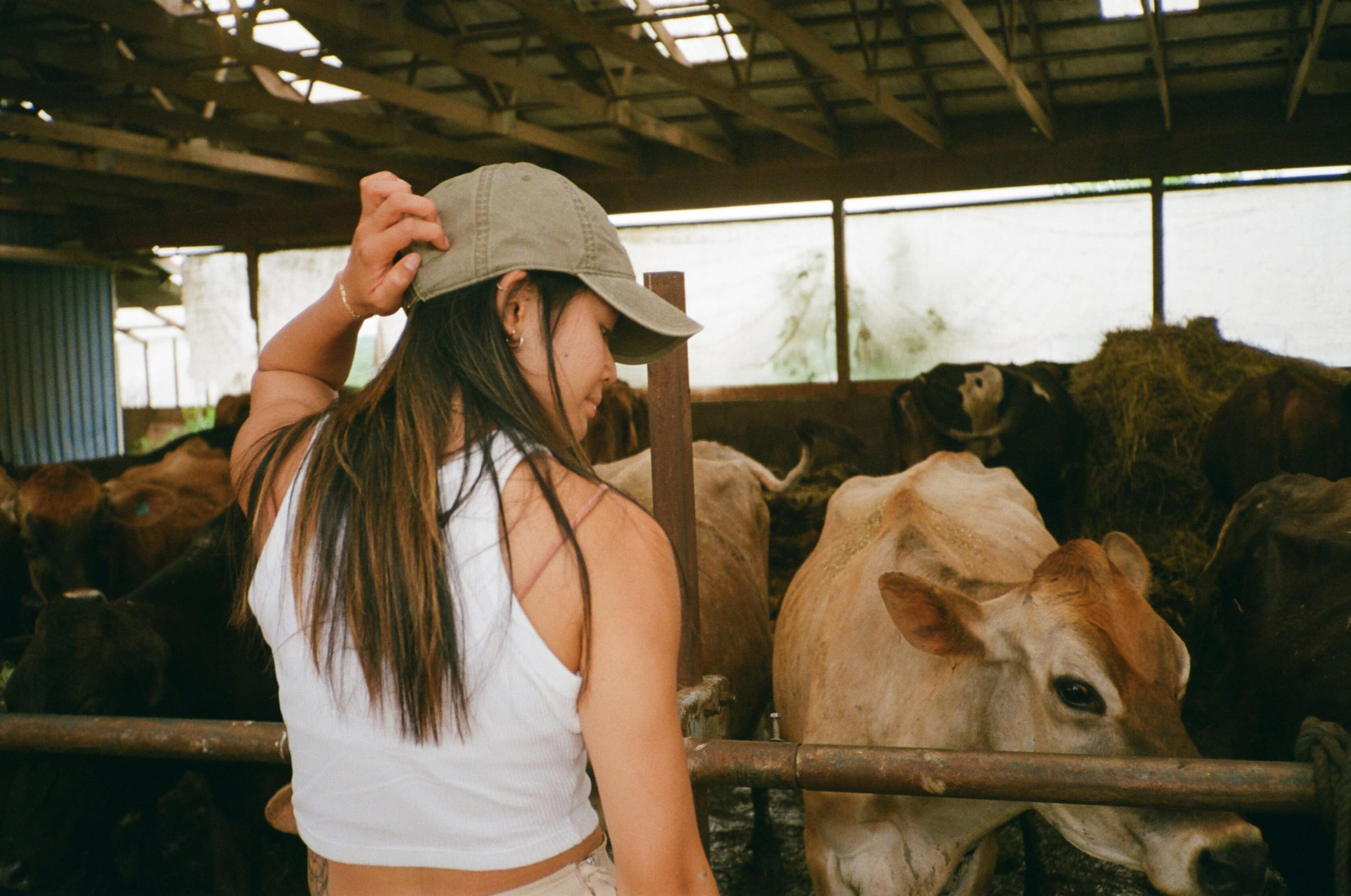
Retreat 009: Hudson Valley, NY
In the heat of July, our team once again flew into NYC — but this time we road-tripped Upstate to the Hudson Valley. We stayed in Airstreams nestled in the Catskills, ate apricots straight off the trees at a local winery, and browsed antique shops in Hudson.
This retreat centered on storytelling — both personal and collective. As Ambrook grows, we’ve been thinking more deeply about what it means to scale without losing sight of our mission. We reflected on the small businesses that shape our families and communities, and brainstormed how Ambrook could better serve them. Through workshops on brand, habits, and company strategy, we recommitted to our vision: making small businesses across America more profitable and resilient, so they can stay independent.
After the retreat, some teammates stayed on to visit Ambrook customer New Moon Farmstead in Central New York — a climate-smart producer and dairy grazing apprenticeship leader. We dug deeper into regenerative practices, grant reporting, and building better tools for producers like her.
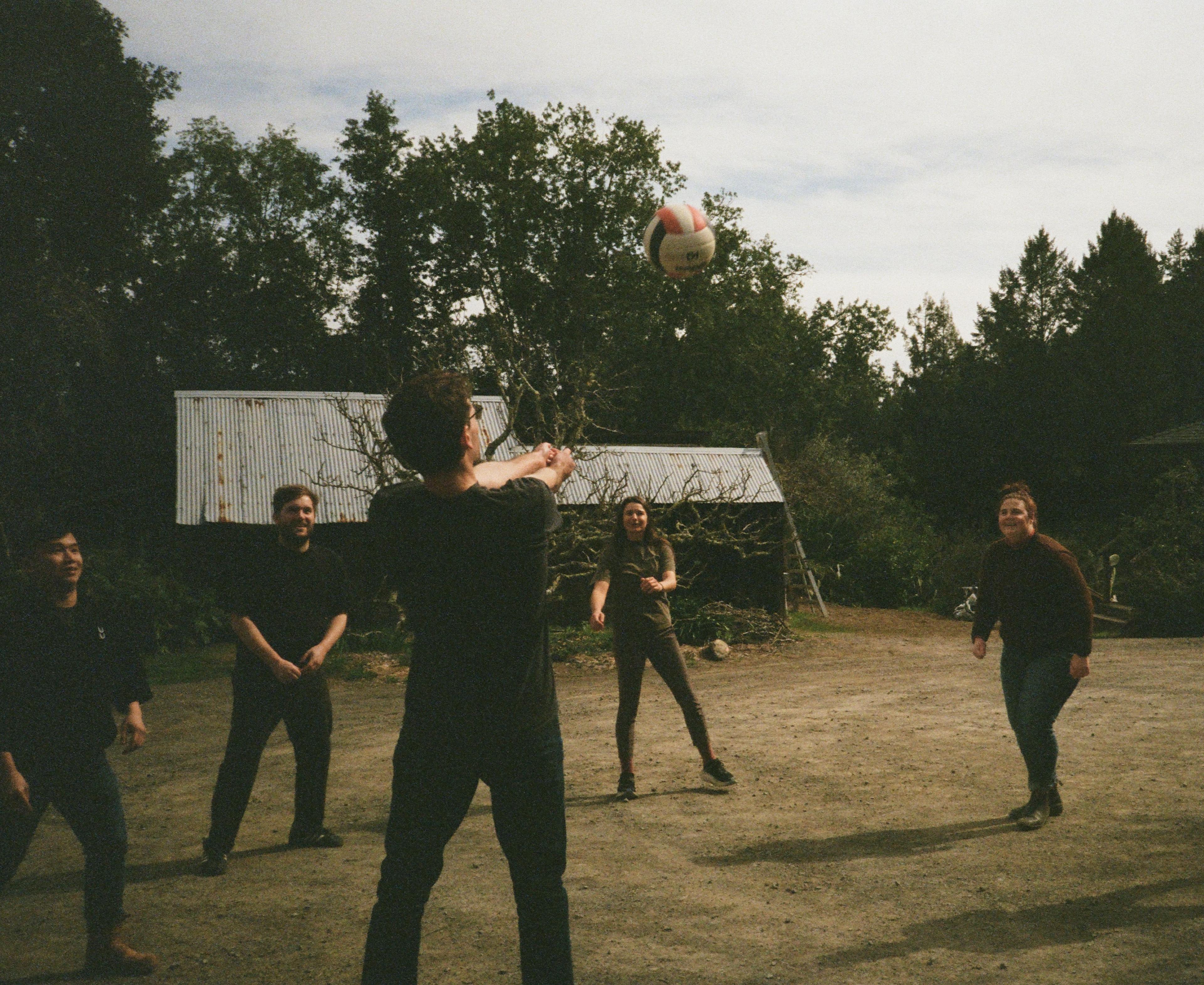
Retreat 010: Sonoma, CA
Last month, we gathered at Occidental Arts & Ecology Center (OAEC) for our 11th retreat — our largest one yet. It was a chance for our 22-person team to reflect on and celebrate a year of growth: more teammates, more customers, more offerings. We paired cross functionally across engineering, ops and growth to better understand each other’s day-to-day work and chart a course for what’s next.
We were grateful to spend that time in a space that so closely aligned with our values. OEAC is a mostly self-sufficient community, with food grown on-site, closed-loop composting systems, and a renowned greywater treatment infrastructure — part of their WATER Institute, which promotes watershed health and climate-resilient land stewardship. Even the hot tub we relaxed in after team sessions was filled with copper filtered water.
On the last morning, some of us were crazy enough to run a half marathon from Occidental to the coast to catch a sunrise. It was the perfect trip to plan for the kind of future we want to help build — one where American small businesses stay independent and sustainability can be profitable.
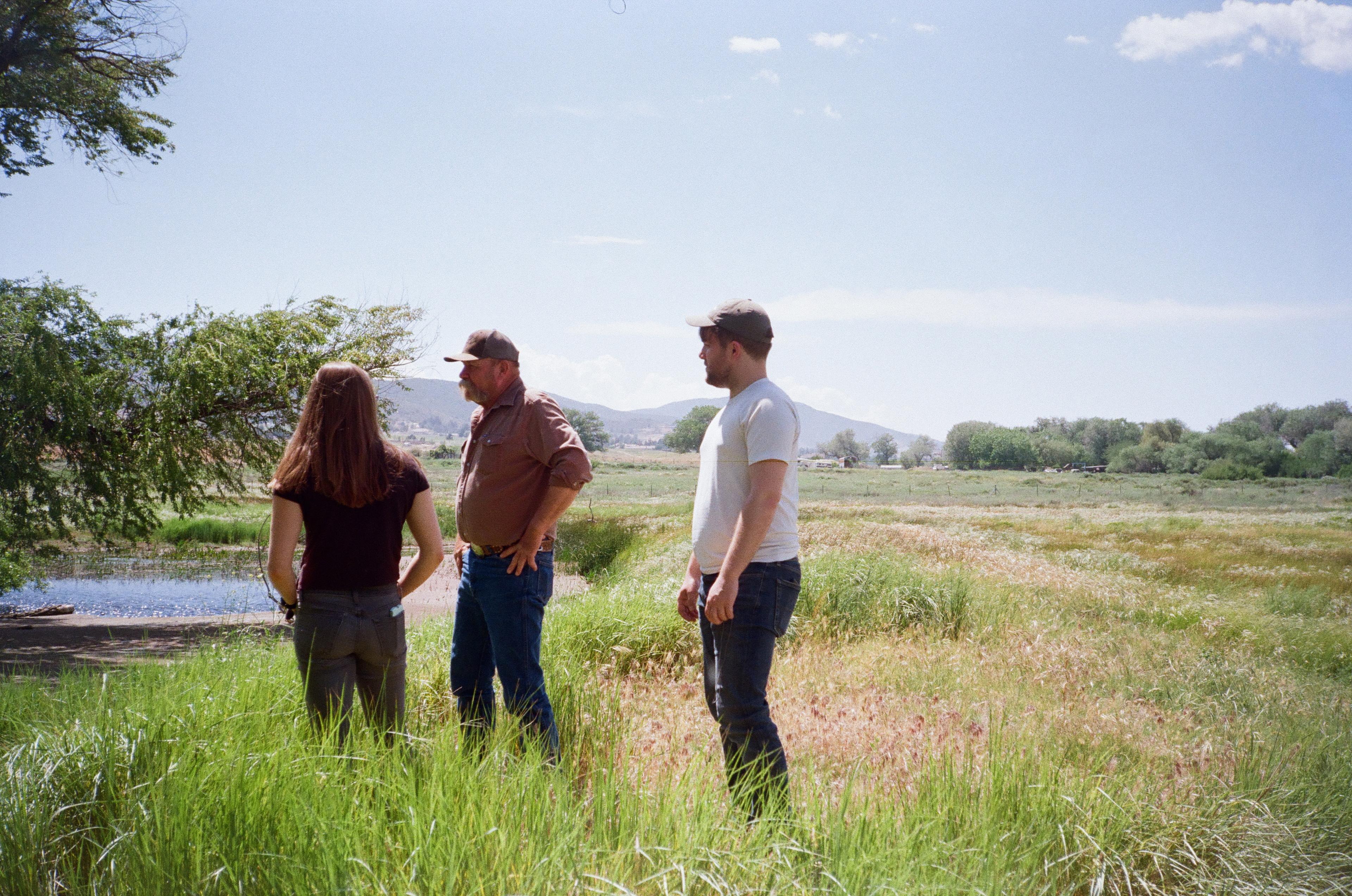
The last 11 retreats have shaped who we are as a team. They’ve taken us across the country, into our customers’ homes and pastures, and into conversations that have pushed us forward. And we’re just getting started.
If what we’re doing resonates with you, we have several open positions in engineering, growth, and ops. We’d love to hear from you!
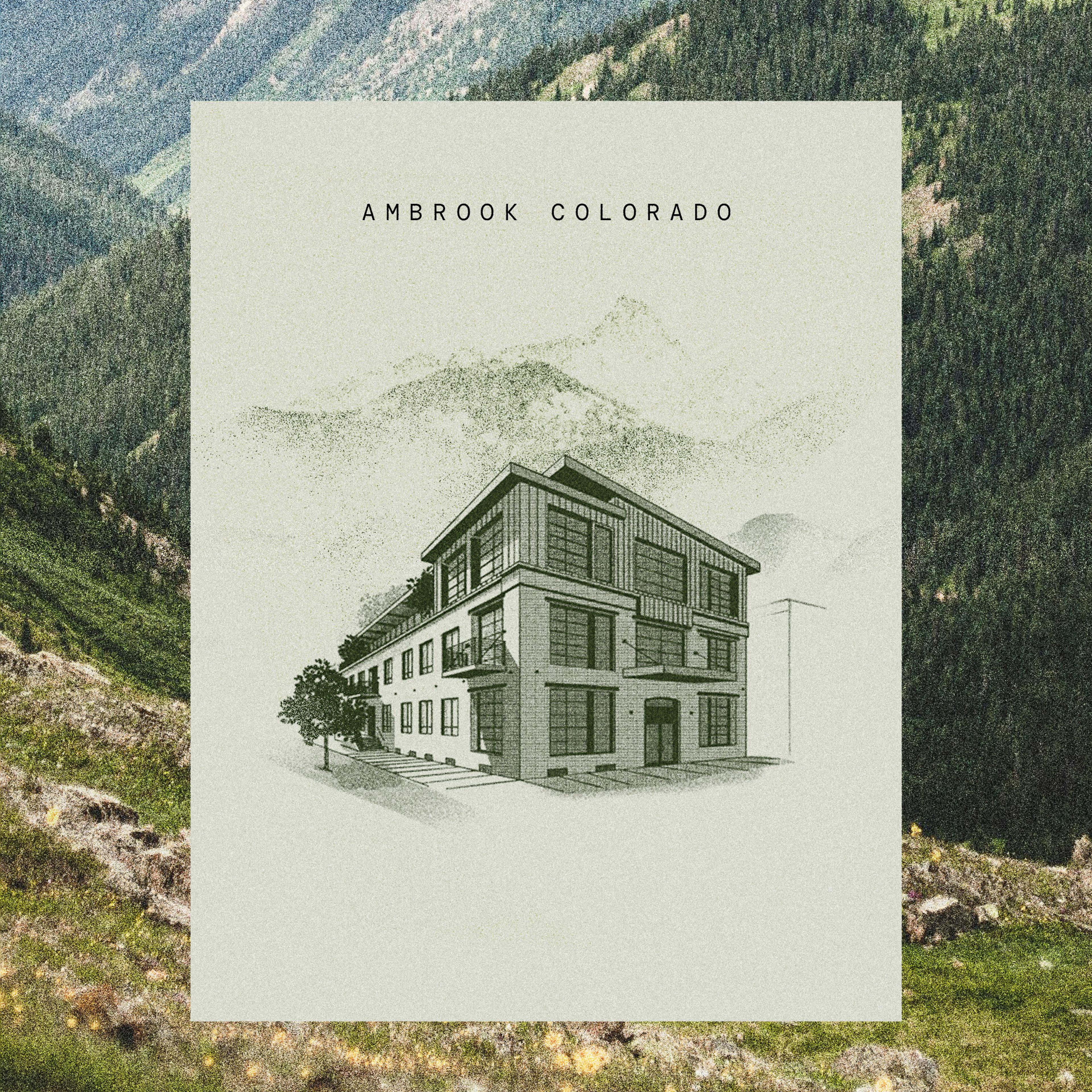
Hey folks, it’s Jeff — cofounder and head of design here at Ambrook. I’m so excited to announce our expansion in Denver, Colorado, with a brand new office. This will be the hub out West for our team, customers, and partners.
The Mountain West is one of the densest regions for businesses on Ambrook, and Colorado is one of the nation’s most productive states for farming and ranching. It’s been an easy decision to plant a flag here.
Colorado has been central to Ambrook’s story from the start. It’s where we shook hands with our first customer, where we’ve held three company retreats, and where I’ve been raising my family since the day we incorporated. We’ve done business at the National Western Stock Show, partnered on research with the state’s top land grant universities, and hosted meetups for designers and our podcast launch.
The new office is nestled in Denver’s Capitol Hill neighborhood, inside the beautiful Shift building. Swing by for mountain views from the rooftop and perks like the gym, team coffee walks, and after-work social events.
I am joined by four wonderful people shaping the culture here: Adam Markon, Louise Lehman, and Grady Ward in engineering, plus Alex Thompson representing ops from the Western Slope.
And we’re still growing! We have several open positions in engineering, growth, and ops, all hiring in Colorado. (New York and working remote are great options, too.)
To stay in the loop for local happenings and company updates, feel free to email me anytime. Catch you on the front range!
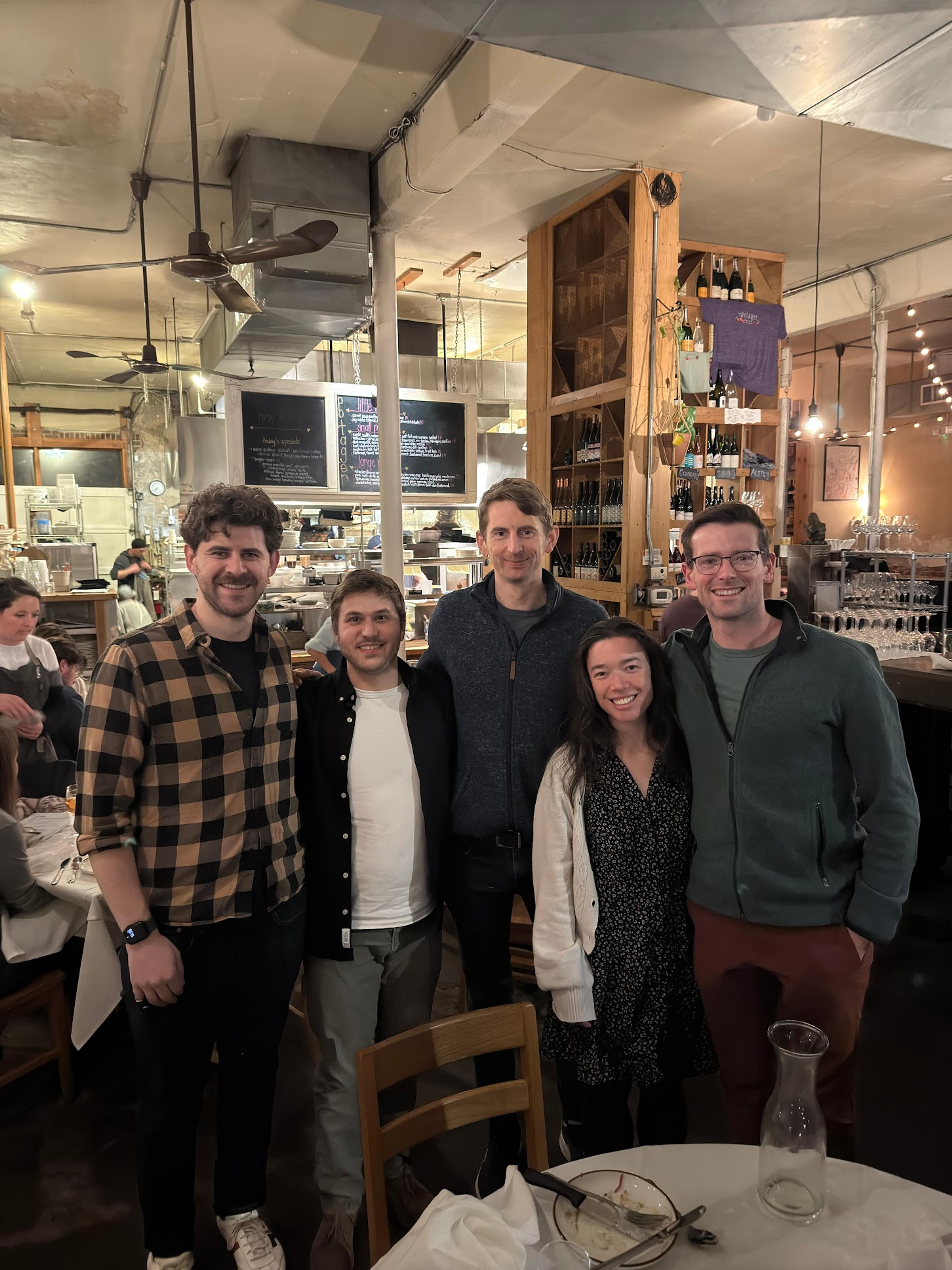

Hosting Tom in town at Denver's finest farm-to-table
·Coworking day with Louise in Golden


Excursions to ski Eldora during Retreat 008 and hike Buena Vista on a weekend
·Ambrook's founders at the podcast launch party in RiNo
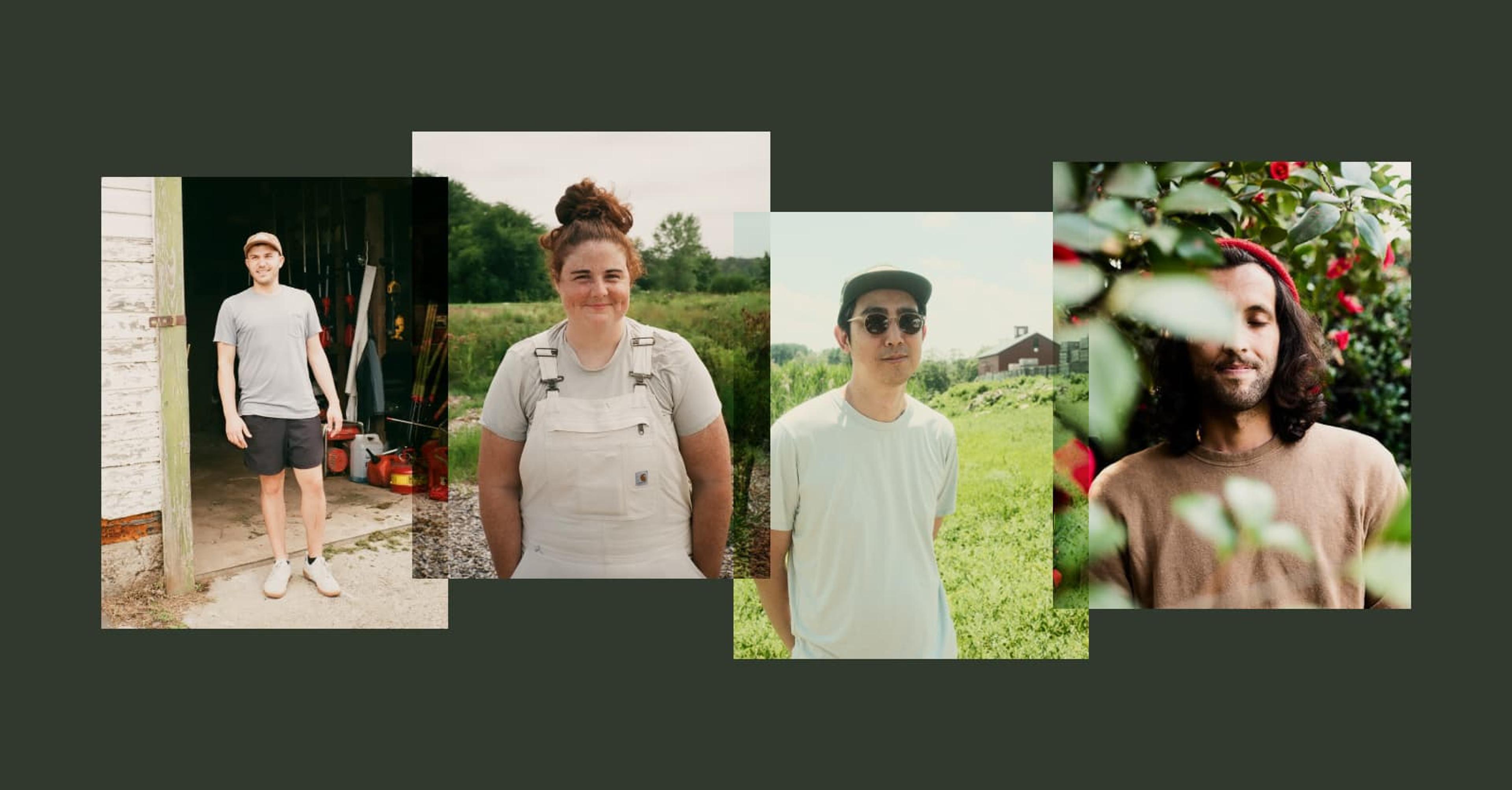
Our design team crafted a product, brand, and culture that we’re truly proud of. We’re always on the lookout for curious creatives to collaborate with, so get to know us and get in touch!
Ali Aas, Creative Director
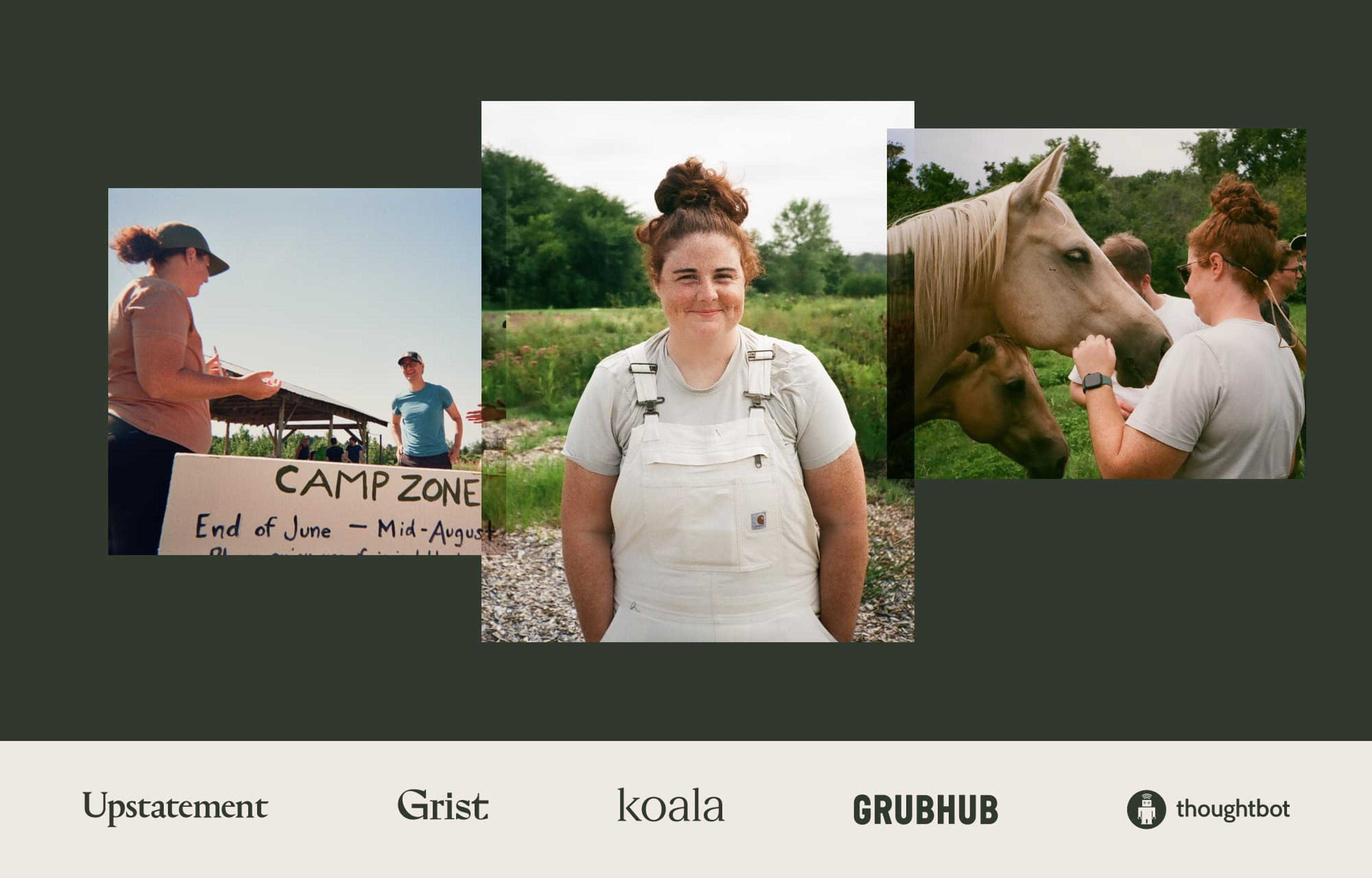
Ali was Ambrook’s first design hire in 2021. After starting with a little bit of everything across product and brand, she grew into Creative Director. Now, Ali stewards the brand, major properties like Ambrook Research or Ambrook Education, and magic moments throughout our software. Ali lives in Boston, Massachusetts with her husband and son.
What’s your connection to Ambrook’s mission?
I connected with Ambrook’s vision initially because I grew up in a town with a rich agricultural history. Working for a company focused on farms meant reconnecting to the traditions of my childhood: cutting down a Christmas tree as a family, celebrating the fall apple harvest with friends… What I’ve realized since joining is that what I truly was aching for was a role where I could impact communities. Beyond food production, farms play a major role in their communities from education and culture to economic development and land stewardship. For me, working at Ambrook means providing family businesses in and adjacent to agriculture with the tools they need to help their communities prosper.
What have you made here that you’re proud of?
Documentation is innate to Ambrook. We write a lot. We reflect. We photograph. Before I joined, the team had already started a tradition of bringing disposable cameras to on-site visits to enable every team member to capture their perspective of the experience. What I am most proud of is my ability to build upon this, helping every team member channel their artifacts into effective storytelling that celebrates ourselves, our customers, and American industry.
What are you looking forward to?
For me, caring about finance is a tectonic shift. When I worked at my mom’s accounting firm in high school, I saw finance as boring and not a place for creativity. Being at Ambrook has taught me how critical accounting is to business viability and that accounting can be comforting. I’m looking forward to spreading the comfort to all our current and future users and encoding Ambrook’s brand with reliability, trust, and warmth.
Calvin Ku, Product Designer
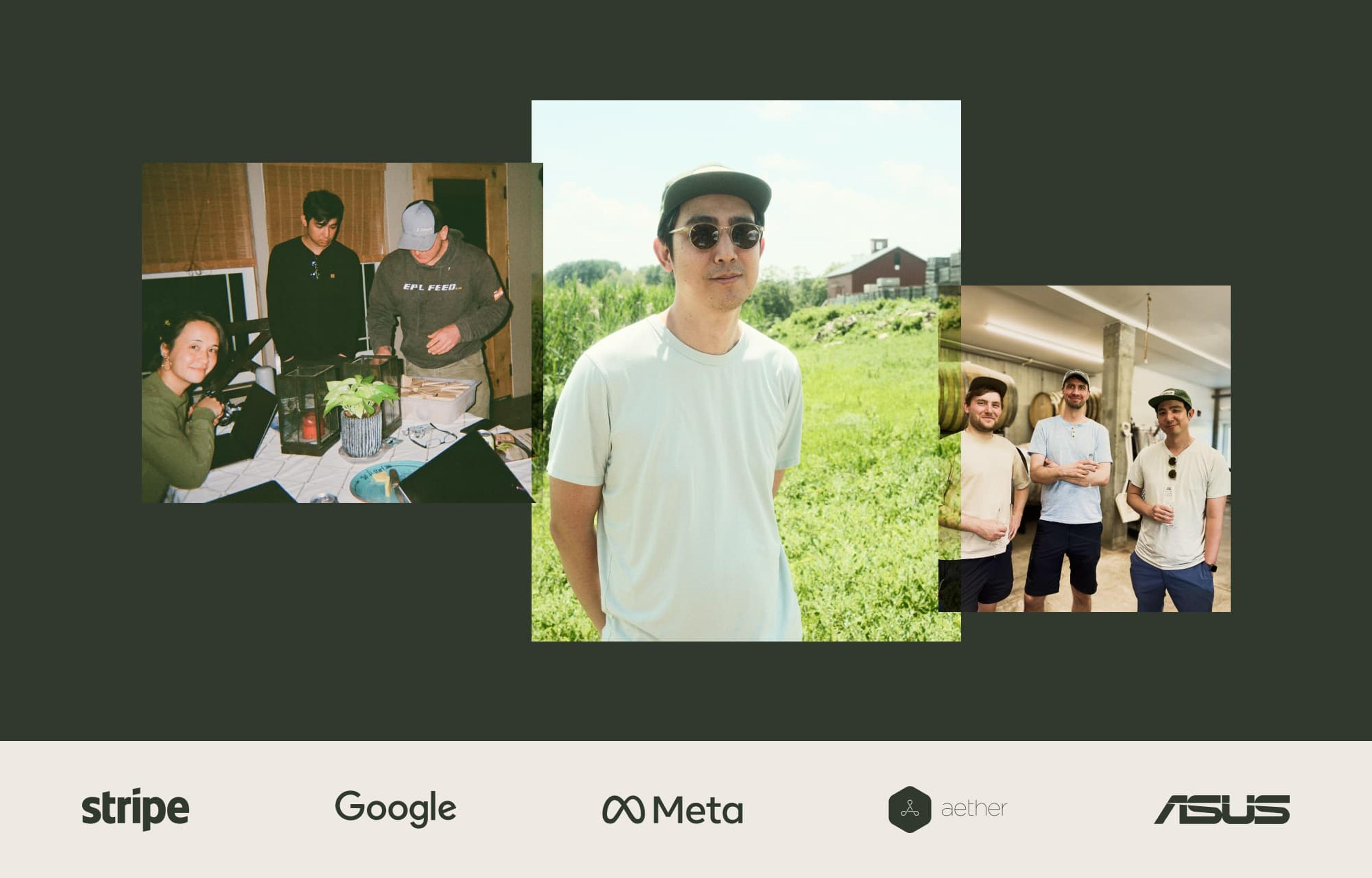
Calvin joined in 2024 from Stripe, bringing his deep expertise in fintech and payments to Ambrook. His career has spanned physical and digital design, so everything from product strategy to interaction details gets the full treatment. Calvin lives in Seattle, Washington with his wife and two kids.
What’s your connection to Ambrook’s mission?
My background and interest in sustainability led me to Ambrook, whose mission to make sustainability profitable for businesses resonates strongly with me. Over the past few years, wildfires and heatwaves have become common in the Pacific Northwest, where I live. I’ve been looking for ways to help address the issues of climate change through design, including helping with the alpha launch of Stripe Climate at my previous job. My family also has a history of founding small businesses: my grandfather started a soy sauce factory (now 3 generations old), my father founded a textile factory, and my in-laws run a small grocery store.
What have you made here that you’re proud of?
I’m passionate about making tools and workflows accessible to everyone. Features like our Analytics page help users understand their finances easily, enabling them to make better business decisions without needing an accounting degree.
What are you looking forward to?
The fintech and climate world is changing rapidly, and it’s a super exciting time to be working in it. Seeing how our customers light up when they get to experience Ambrook’s product suite has been incredibly rewarding. By building tools that make financial management and operations smoother, through emerging technologies and intuitive designs, we can help many more industries beyond agriculture.
Jeff Anders, Head of Design
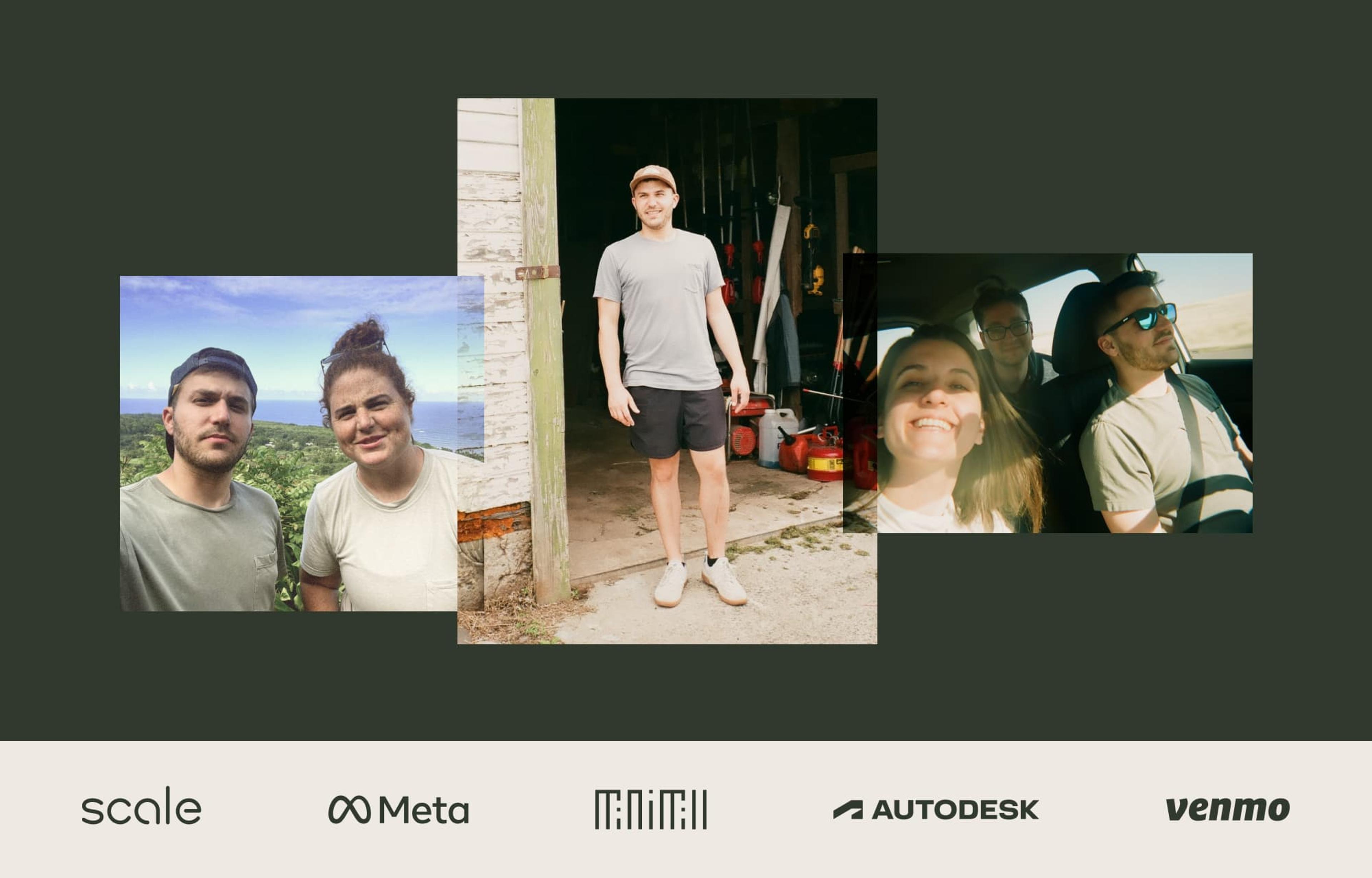
Jeff co-founded Ambrook in 2020 and now gets to work with these fine folks leading the design team. Catch Jeff at the new office in Denver, Colorado, where he lives with his wife and two kids.
What’s your connection to Ambrook’s mission?
My co-founders Mackenzie, Dan, and I started out researching water scarcity and climate resiliency in the American West. I lived then in San Francisco and now in Denver, where drought is a part of daily life. We learned that water efficiency was all too often blocked by back-office financial challenges – and the rest was history. It’s even baked into the brand name: “Am-” (Latin for love) plus “-brook” (like a stream of water).
What have you made here that you’re proud of?
I love making complex workflows accessible, giving our operator customers confidence with tools that don’t require a CPA to grok. For instance, our balance sheet transfers link bank transactions with offline accounts, helping farmers stay on top of loan principal, fixed asset depreciation, and capital expenditures intuitively.
What are you looking forward to?
I’ve been working with Paige from Ops and Dylan from Eng on climate project tracking. Soon, someone on Ambrook will be able to see the ROI of their sustainability practices, linking our financial platform to real-world climate outcomes. Farmers need a combination of financial and field data to justify projects like regenerative transitions, experimental trials, or water management plans. Can’t wait to get this into people’s hands!
Adam Dixon, Graphic Designer

Adam runs a freelance design practice specializing in branding, illustration, and web design. He has been collaborating with Ambrook part-time since 2023 on the iconic visualizations that define Ambrook Research. Adam lives in Winston-Salem, North Carolina with his wife.
What’s your connection to Ambrook’s mission?
Growing up in a small city in the foothills of North Carolina has always felt like growing up between two worlds of urban and rural sensibilities. Its given me a deep understanding of the dichotomies that exist causing me to wonder how to bridge the gap and provide practical help to make sustainability easier. I found Ambrook’s goal of caring for the earth by caring for it’s stewards incredibly compelling. I’ve always looked for ways to connect my work with something more meaningful, and being at Ambrook has given me that opportunity.
What have you made here that you’re proud of?
As an eternally curious person I love exploring and reflecting with others. On a weekly basis I’m challenged to understand and reframe what I’m learning in new and compelling ways. Being able to create imagery that draws attention and inspires further investigation to communities that may be overlooked has been incredibly gratifying.
What are you looking forward to?
Continuing to develop simple, engaging, and thoughtful resources for agriculture and analogous businesses to help guide them toward more sustainable decision-making and well-being.
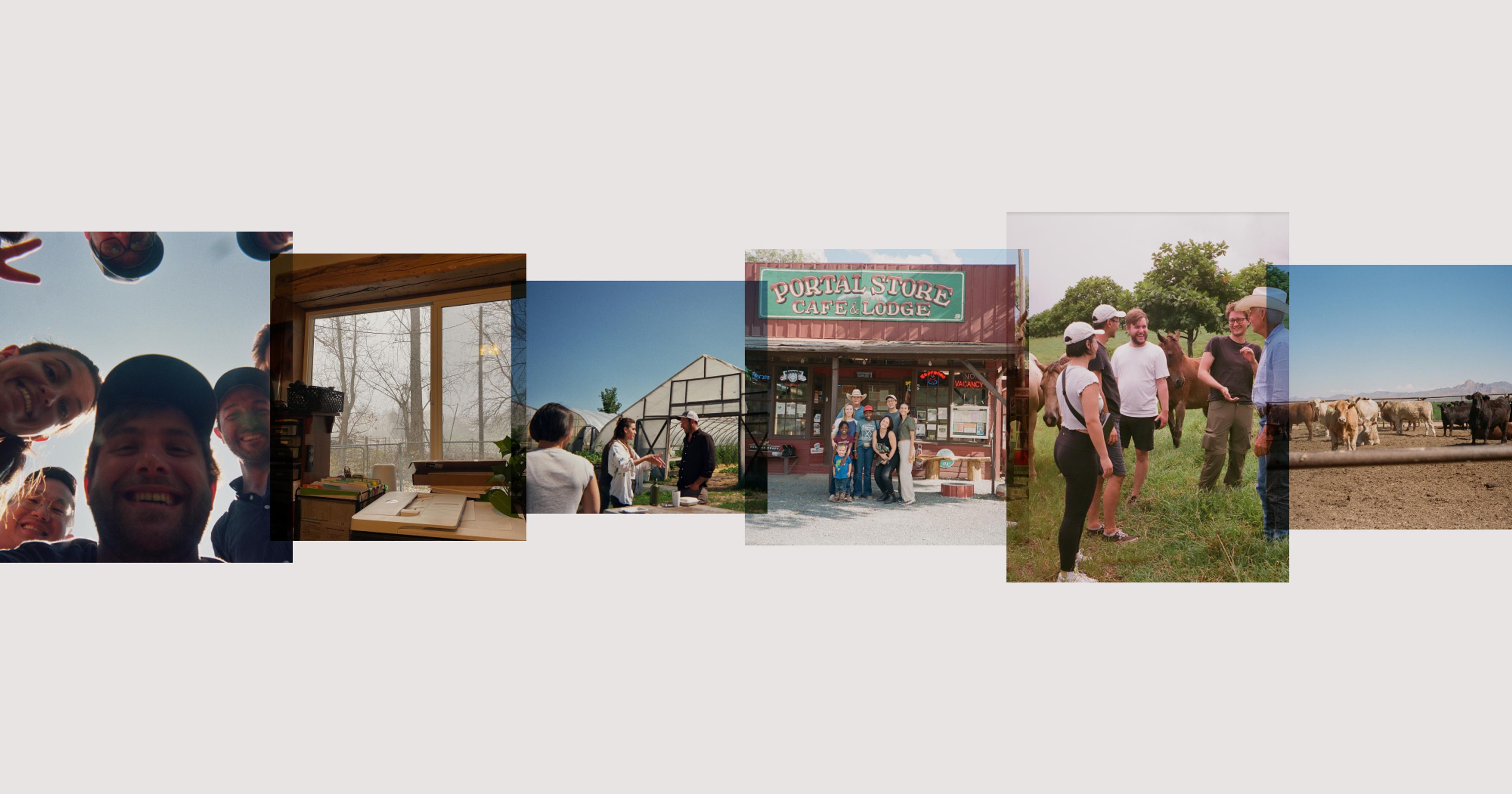
December 20th marked my half-year as Chief of Staff at Ambrook — a thirteen-person company building a vertical ERP for agriculture. At the risk of sounding like every other startup employee: it’s been a ride. I could write walls of text about our team’s herculean efforts to make farm finance delightful (and if this sounds like an oxymoron to you, we intend to turn that on its head).
Six months is a wisp of time in the grand scheme of a career, but the pace, scope, and complexity of what we’re trying to do is incredibly hard. It deserves regular recommitment and reflection.
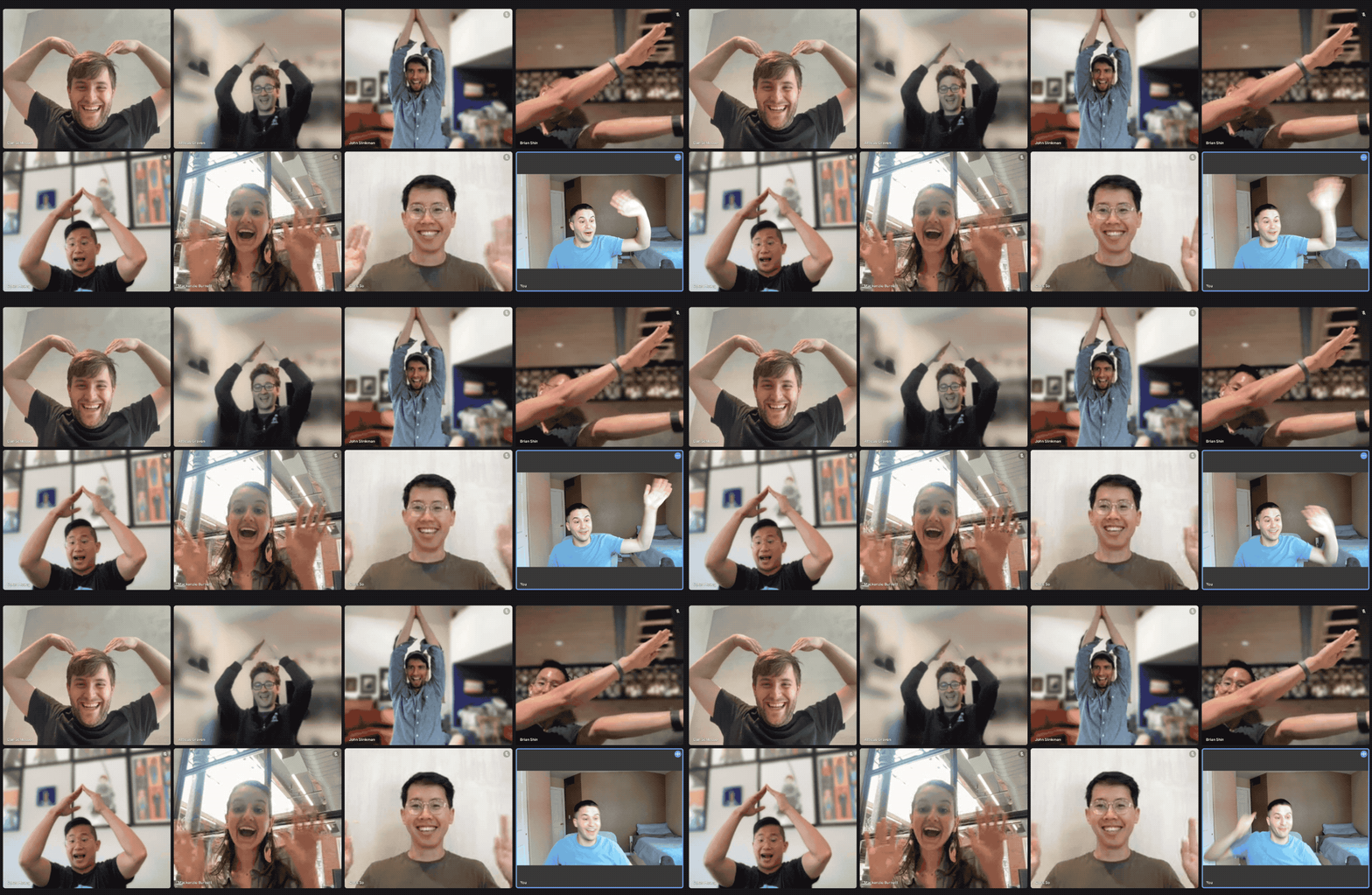
Job hunting, for me, is all-consuming. When I put myself back on the market in May, I was armed with a clear idea of what I valued, but saw a hundred ways it could manifest within a role. I kicked off processes with eight early-stage companies that spanned the spectrum of product-market fit. It came down to three.
Someone I admire once told me that until a startup becomes undeniable, its value is nothing more than its people. Regardless of investors, funding, traction, market, etc etc etc, the underlying machine is what truly separates success from the many different shades of failure. I dug into how the teams at each potential employer did the following: build trust, share information, and make decisions.
My findings on Ambrook, as an outsider:
The most intentional remote workplace I’d found. The heated debate around whether remote works or not always makes me laugh, because of course a company that isn’t designed to be distributed won’t succeed versus its in-person counterparts. Ambrook traded an office lease and shared time zones for quarterly retreats, a ruthless bar for what can’t be completed asynchronously, and an earnest desire to bring work relationships beyond transactional.
Written culture driven by intense curiosity. I learned that reading and writing were essential at Ambrook, and my due diligence involved combing through neatly organized folders of PRDs, user research, and strategy essays. It struck me that none of this output seemed rote, but rather was a side effect of a genuine desire to learn. What are the links between farm profitability and environmental sustainability? What can Slovenia teach us about the future of accounts receivables? It was exciting to meet a team that was sincerely interested in a sprawling universe of interrelated topics.
Rigor laced with a high speed of learning. This quality is the membrane separating life and death for most pre-PMF startups, but was something I could never fully de-risk during an interview process. Instead, I sought out examples where the group balanced thoroughness and pace. Founders were unafraid to tap outside expertise (and were very good at sourcing it), team members freely voiced disagreement, and no one considered consensus to be a valid decision-making approach.
These decisions are never easy. But after a generous helping of quality time with different team members, the right path made itself clear. Ambrook’s “who” and “how” was magnetic.
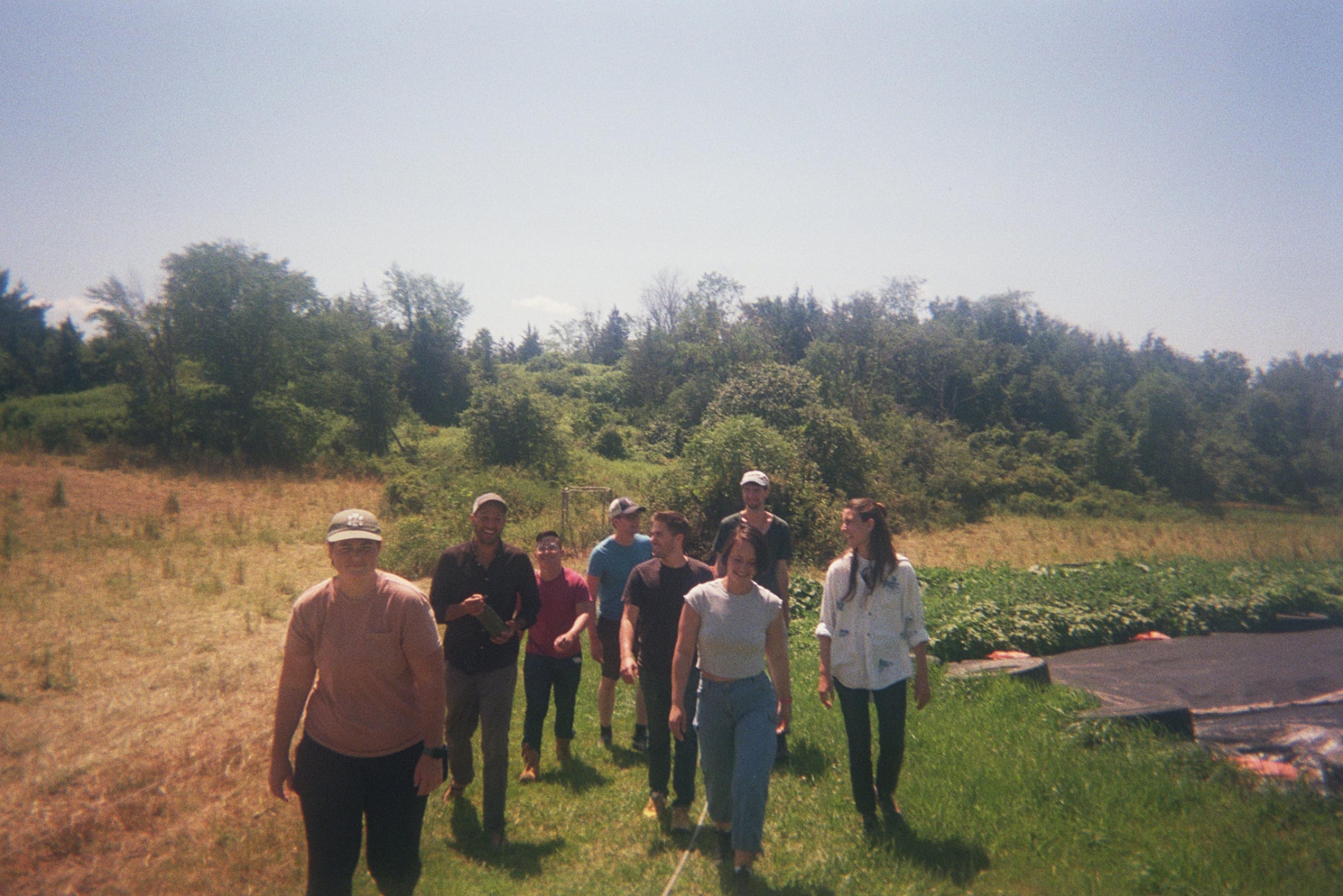
The best and worst part of joining an early-stage startup is watching your processes break as you grow. Many hours are spent reinventing both yourself and your workplace, over and over again. As the months rolled by, my first impressions of Ambrook were put to the test as we executed on a daunting roadmap, established a sales motion, and onboarded the first customers to our ERP.
What I’ve realized: this group is unusually good at doing hard things.
One thing my initial evaluation couldn’t capture was our team’s rich functional dynamic. Its vibrance stems from a sense of psychological safety blended with a tension that arises when individuals in a group are excellent at very different things. There is enough harmony to oil the machine, but also opposing forces where it counts. Our founders are a great example of this “spikiness,” as we like to call it: Mackenzie’s knack for translating the macro into company strategy, Dan’s skill bridging knowledge across technical teams, and Jeff’s expertise designing elegant solutions for complex problems.
I also relish our sense of humor. Everyone is quick to laugh together, and has a shared cleverness that makes the good times a thrill and the hard times more than bearable. Each new team member brings their own texture. There’s nothing better than watching our inside jokes devolve (or evolve?) under layers and layers of meta-nonsense.
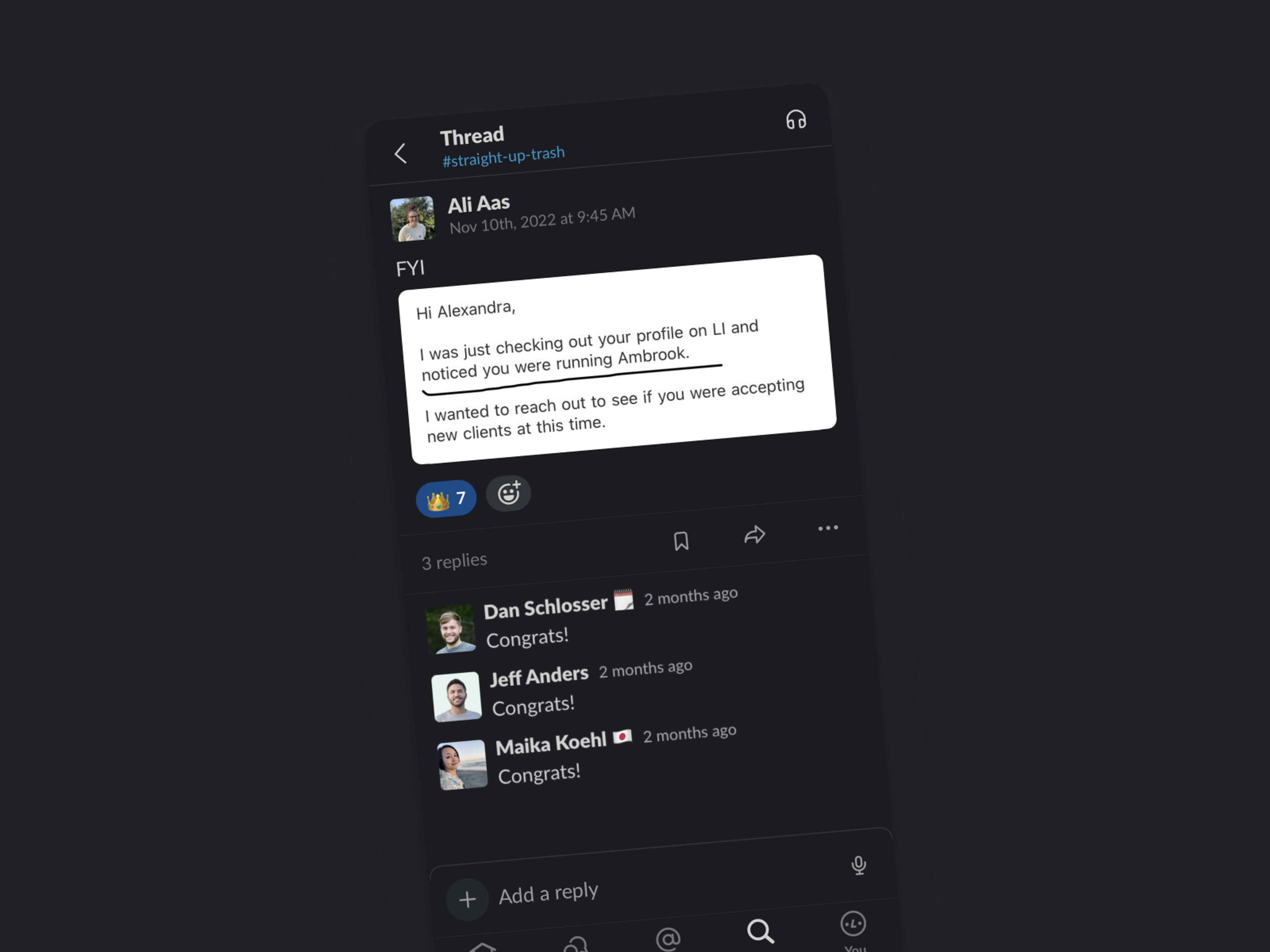
And finally, I’ve found an earnestness here that defines us — a lack of cynicism for what is possible, and a deep respect for the challenges ahead. Building technology in this industry is not for the faint of heart. We lean into that as unabashed optimists.
It’s still so early. But if any group of people can make Ambrook undeniable, it is this one.
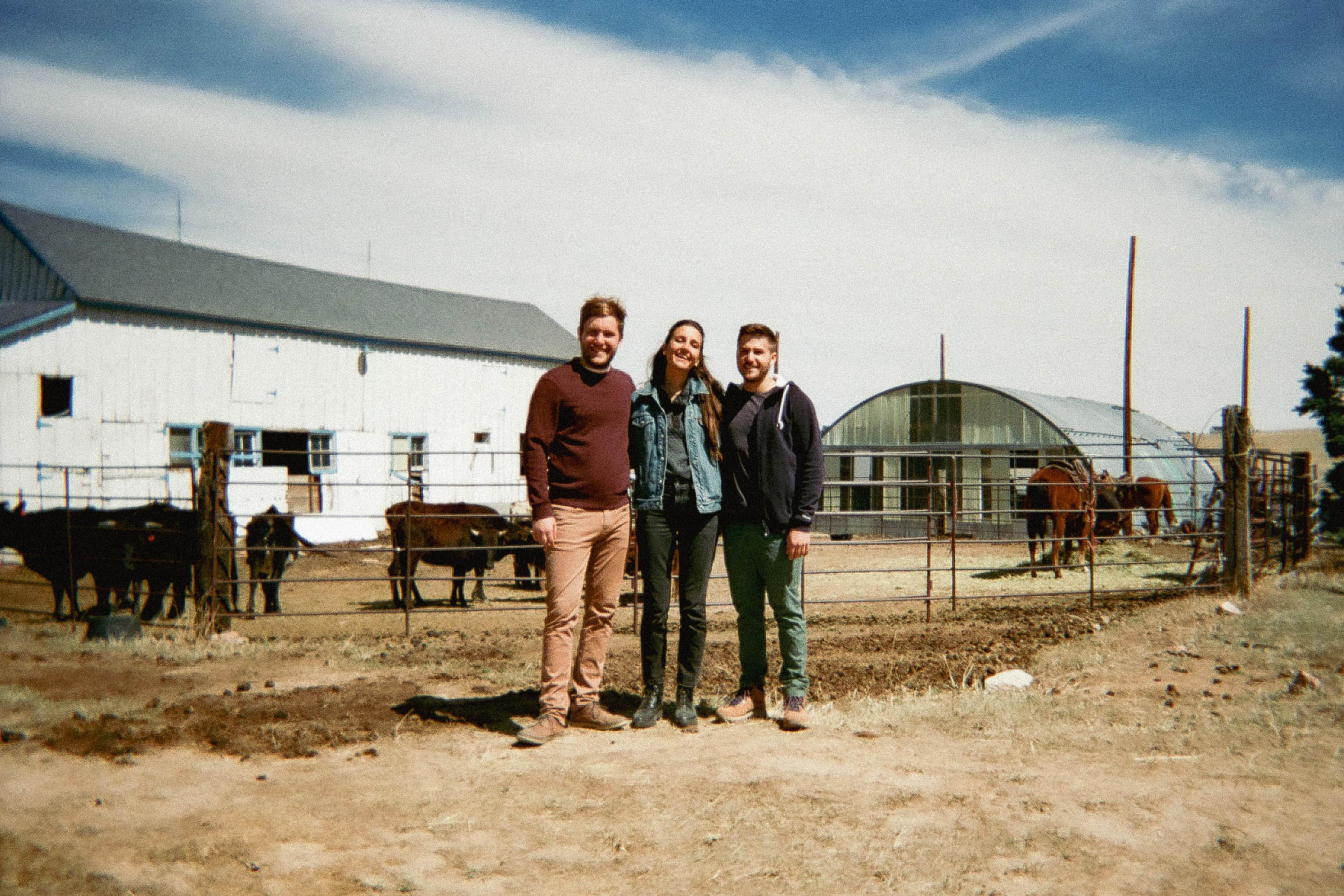
I.
Let me tell you a story.
Imagine you’re a cattle rancher in the high plains of Colorado.
You rent a small plot of land from a neighbor. You have twenty head of cattle.
You tell folks about how you came to Colorado from out East when you were fourteen, working a construction gig with your dad. You fell in love with horses and cattle and the lifestyle of ranching here. You decided to stay.
You’re hoping to buy your own land one day, and expand the small herd you have. Maybe you’ll explore regenerative grazing.
But to do that, you need to get your books in order. You get by, but your margins are thin. You need a business plan to give to your bank. Not to mention a balance sheet.
You’re working on it. But it’s hard to find time at the very end of your days, when you’ve been outside and one of your pups went missing and so you had to drive over to the neighbors’ to find him and then one of the cows gave birth when you got back.
You know the government has programs that will help you grow your ranch, but the applications are lengthy and hard to keep track of.
Not to mention that just to stay compliant as a rancher, you’re probably filing paperwork for six – or is it seven? – different government agencies.
You love your job, and you need to do all this to do your job. But all this means wiping the cow crap off your hands, going on the computer, and hunting through slow-loading government websites. One of them took 25 minutes to download a PDF last week. You made lunch in the meantime.
Farm accounting, farm funding, farm compliance. There’s paperwork for everything it seems. Hours and hours a week of paperwork.
And you’re worried about things happening around the world, outside your control. Drought and wildfires from climate change have wracked Colorado of late. Supply chains still backed up from the pandemic. Rising fertilizer and fuel costs from the war with Russia. Inflation making everything worse.
This rancher is real – and his name is Teo.
Teo is one of Ambrook’s early customers. We helped him get a farm grant during the pandemic, when the rodeos were shut down and the meat processing facilities were backed up. Now he’s using Ambrook to get his books in order and business plan in place.
This is Teo’s story, and the story of countless producers across the country. Some folks move into farming, like Teo. Many have been farming for their whole lives. The paperwork sucks all the same.
II.
Now, let me tell you my story.
I grew up with conversations about agriculture at the dinner table.
Tales of citrus production, the threat of longhorned beetles to American hardwood forests, the dynamics of illegal agricultural imports through the U.S.-Mexican border.
My parents were lifelong civil servants with the U.S. Department of Agriculture, so the conversations got pretty wonky.
For both of my parents, the job was personal.
My mom was born into a local dairy empire in India, built from a rural village in Gujarat and passed down generation after generation until my grandfather immigrated with his family to the United States. My dad grew up going to his family’s dairy, poultry, and produce farms in New England.
I turned out pretty wonky too.
My path looks eclectic from the outside – my first startup built open source software infrastructure, then I went back to grad school to work with U.S. military officials on climate risk, and then I worked on water trading in the Central Valley.
The common theme connecting all these dots is that I’m driven to solve esoteric societal problems – preferably with technology.
There are jobs out there where you can really make a difference in people’s lives.
III.
Most agriculture today is neither sustainable nor resilient.
On sustainability: forty percent of U.S. land and freshwater is devoted to farming. U.S. agriculture contributes to upwards of one-quarter of the nation’s greenhouse gas emissions.
On resilience: climate change is already devastating agriculture and rural communities. (“Adapt or die,” was what one producer told us for Ambrook Research.)
If we’re going to meet the UN’s projected 70% increase in food demand by 2050, something needs to change.
Fortunately, many sustainable farming practices both reduce agriculture’s climate impact and make farms more resilient. However, many farms are not investing in sustainability for three main reasons:
Farm margins are thin and increasingly volatile.
Antiquated systems make it hard to know where farms are making and losing money.
There isn’t enough financing out there to fund sustainable practices.
Here’s a real-life example: planting a cover crop benefits the soil, captures carbon, and usually makes the farmer a bit of money. But it’s an additional investment and risk – a few years of upfront cost, labor, and equipment before you start to see any return on investment. That means a lot of farmers today are reluctant to start cover cropping, despite the value-add to their soil, the environment, and their bottom line.
If you’re worried about or don’t fully understand your bottom line, it’s hard to invest in the sustainable practices that would secure the long-term financial and environmental health of your farm. Farms are complex operations, yet farm financial management still exists as a loosely-connected constellation of pen and paper, Excel, Quickbooks, and decades-old industry software. It’s hard for a lot of farmers – and their finance managers, bankers, and local USDA officials – to know what’s going on in real-time.
Ambrook builds simple, collaborative financial management software for farms. Grant discovery, bookkeeping, spend management with cards, bill pay – the whole fintech gamut. With Ambrook, farmers have a clear view into their financial present and future, can improve their margins, and get easier access to credit.
And of course, farmers have to do less paperwork, because Ambrook makes it easy to automatically fill and file government forms.
When we started Ambrook, we were surprised no one had built this yet. As we dug in, it became clear the reason was because it was hard to build a venture-scale business before the rise of fintech primitives.
Fintech has opened up new business models, where users get software for free and networks, banks, or vendors pay the fees. For thin-margin businesses like farms, this makes software far more accessible to the long-tail of the market – to the everyday farmer. And it makes it easier to scale into enterprise applications and compete against expensive ERP platforms.
Agriculture is characterized as one of the least digitized industries – not because farmers are anti-technology, but because few companies have built for their use case. Many farmers, regardless of their size, run sophisticated operations. They deserve the tools to match.
Over time, we plan to layer in sustainable financing and resource management. Once we’ve solved this problem for agriculture, we’ll expand to other natural resource industries – fisheries, forestry, mining – faced with the same problem of making sustainability profitable.
IV.
Ambrook is built on a philosophy of pragmatic environmentalism: if you care about the earth, then you should care about the people whose jobs are to be stewards of the earth.
If our team succeeds, we’ll have built a far more resilient natural resource supply for society – starting with food and water.
Farmers using our software will be able to invest in more sustainable practices while lowering their costs and improving their margins.
More carbon will be stored in the soil. Less freshwater will be sucked from aquifers. Less nitrogen will pollute our waterways.
And our customers will be able to keep the family farm in the family for longer, weathering increasingly volatile market and climate shocks, in a way that actually starts building wealth again for rural America.
We’ve stayed lean so far, prioritizing a small, fast, senior team as we figured out the best place from which to tackle this problem. We think the product speaks for itself – but you can read about how thoughtful Brian has been about designing our cross-platform experience, or Atticus has been about diving deep into research and customer case studies.
Now that we know we’re onto something, we’re hiring aggressively to go after the opportunity.
If you want to build a new financial stack from the ground up and become an expert in everything from banking and cards to lending and accounting, you should join us. If you want to solve problems in climate or agriculture, you should join us.
Basically, if you come to Ambrook, you’re going to learn how to build this weird, huge business tackling real, deep problems. Most people don’t spend enough time thinking about or being exposed to hard, interesting spaces. At Ambrook, you get the full fintech + SaaS training, but also the muscles to connect those things to challenging problems.
Then, when you’re ready, Jeff, Dan and I will back you to start your own company and introduce you to all our investors. Because, at the end of the day, we need more founders and experts solving problems for these industries and for climate change – that’s my priority.
See you soon,
Mackenzie
P.S. We visited Teo at his ranch last month – you can hear his story in his own words in this beautiful little video that Stripe just released about Ambrook.
This Founder’s Letter was originally published in Not Boring.
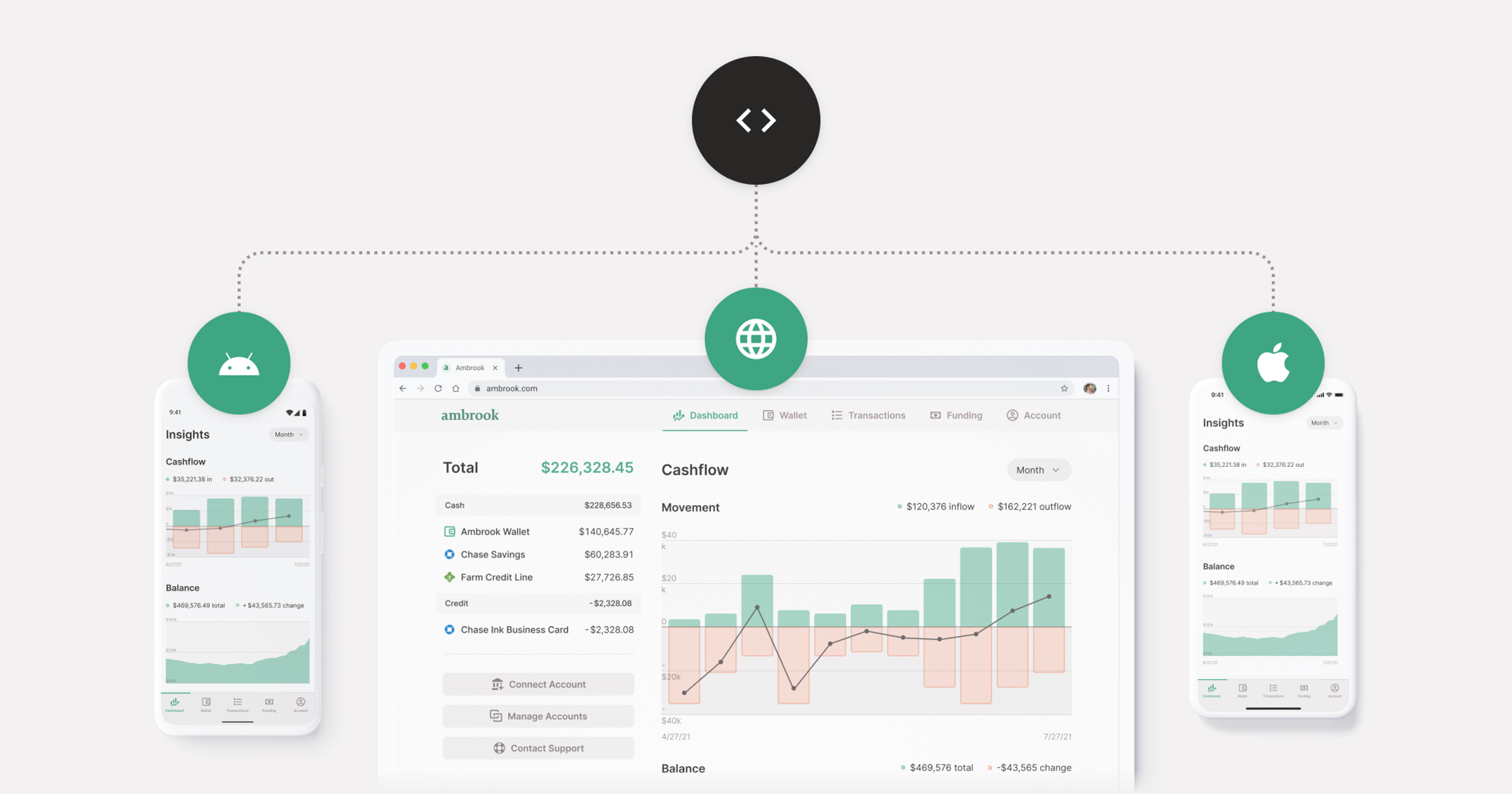
“Why can’t we just write this code once and have it just work across Web, Android and iOS?” As a mobile engineer who has spent both a significant portion of his career copying the exact same product from iOS to Android, I’ve asked myself this question many times.
At Ambrook, we’re lucky to have the opportunity to approach the challenge of supporting multiple platforms without the constraints of legacy engineering decisions. As a result, we’ve been able to share code across web and mobile, allowing all of our entire engineering team (currently four engineers) to contribute with little overhead.
Ambrook is building a suite of financial tools for farmers that needs to be consistent and fully-featured across desktop and mobile. So that farmers can use our tools in the field, they must work well on slower internet connections and while offline. As an early stage company, we are prioritizing rapid delivery of new features as we get feedback from our users.
The Project
When I first joined the Ambrook team, I was tasked with figuring out how to translate our existing web app to mobile. The web app was written in Typescript using React DOM and Next.js, which made it a tempting target to try using React Native. If successful, using React Native would mean that we could share code between platforms, greatly reducing both the cost of copying existing features and (more importantly) the cost of every new feature we’d need to build going forward.
At the same time, we wanted to be humble about the reasons why other companies have struggled to adopt cross-platform technologies. A common issue that we avoided is the need to work with existing native product code, a requirement that can significantly negate the productivity advantages of using a cross-platform framework.
There were three main questions that we set out to address from the beginning:
Can we define best practices and patterns around cleanly separating presentation and business logic to allow for the inevitable UI divergence between platforms?
Do third-party libraries exist that cover common app needs (ex. navigation, API access, graphing), and do they work well across platforms?
Does working cross-platform significantly speed up development time compared to just writing the code twice? Is the system easy for someone familiar with our existing codebase to be productive in?
We decided to leverage React Native as a compatibility layer between the shared business logic from our existing React (Web) codebase and platform-specific APIs. React Native allows us to bridge the differences between the UI APIs on each platform: DOM on Web, UIKit on iOS, and Android’s View system. We chose to adopt this cross-platform approach because it lets us share business logic between platforms, leverage high quality open source libraries, and rapidly develop and QA new changes to the app.
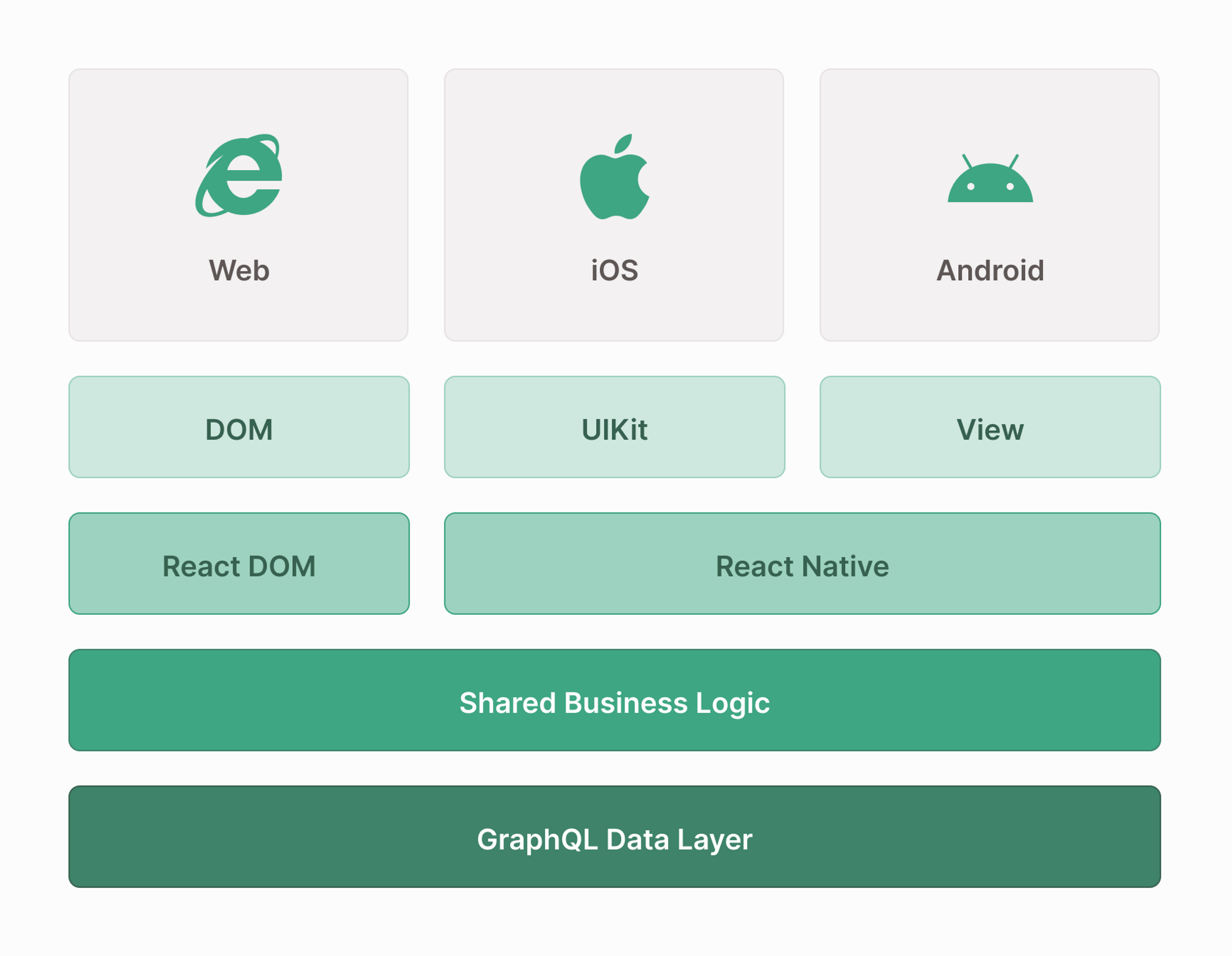
Sharing Business Logic
One of the main benefits of our cross-platform strategy is that we are able to share business logic between web and mobile. In fact, all major screens in our app share the same business logic across platforms; it was easier to adapt the existing Typescript-based business logic to be platform agnostic than to rewrite the same business logic multiple times.
An area where we chose not to share code is in the UI layer above the business logic. The guiding principle that we used was to share as much code as practical (business logic and some views) while allowing for some level of divergence to allow for native-feeling UIs and to use the APIs and technologies that felt best for each platform.
On the web front, this means using CSS-based media queries to create a responsive website and using CSS for things like sticky headers. On mobile, we add support for pull to refresh and double tapping on the navigation bar to scroll to the top of a screen. For both platforms, the lowest level components (like buttons, forms, etc.) are implemented separately as part of our design system, which we talked about in a previous post.
Leveraging Open Source Libraries
By using React Native, we’re also able to tap into a rich open source ecosystem that has largely removed the need for us to write platform specific native code. Our experience has been that most common app use cases have mature, well-maintained libraries.
Some of our favorite libraries in use are:
Apollo Client, a GraphQL client implementation with support for optimistic mutations, cache normalization and persistence, and client-side state. Apollo scales well from a limited persistence web environment to an offline, stateful mobile environment.
Victory, a charting library with support for many different chart types.
React Navigation, a mobile navigation library with support for tabbed navigation, modals, and navigation stacks. It also has first class URL handling, which makes bridging the gap with web very simple: just use URL-based navigation everywhere.
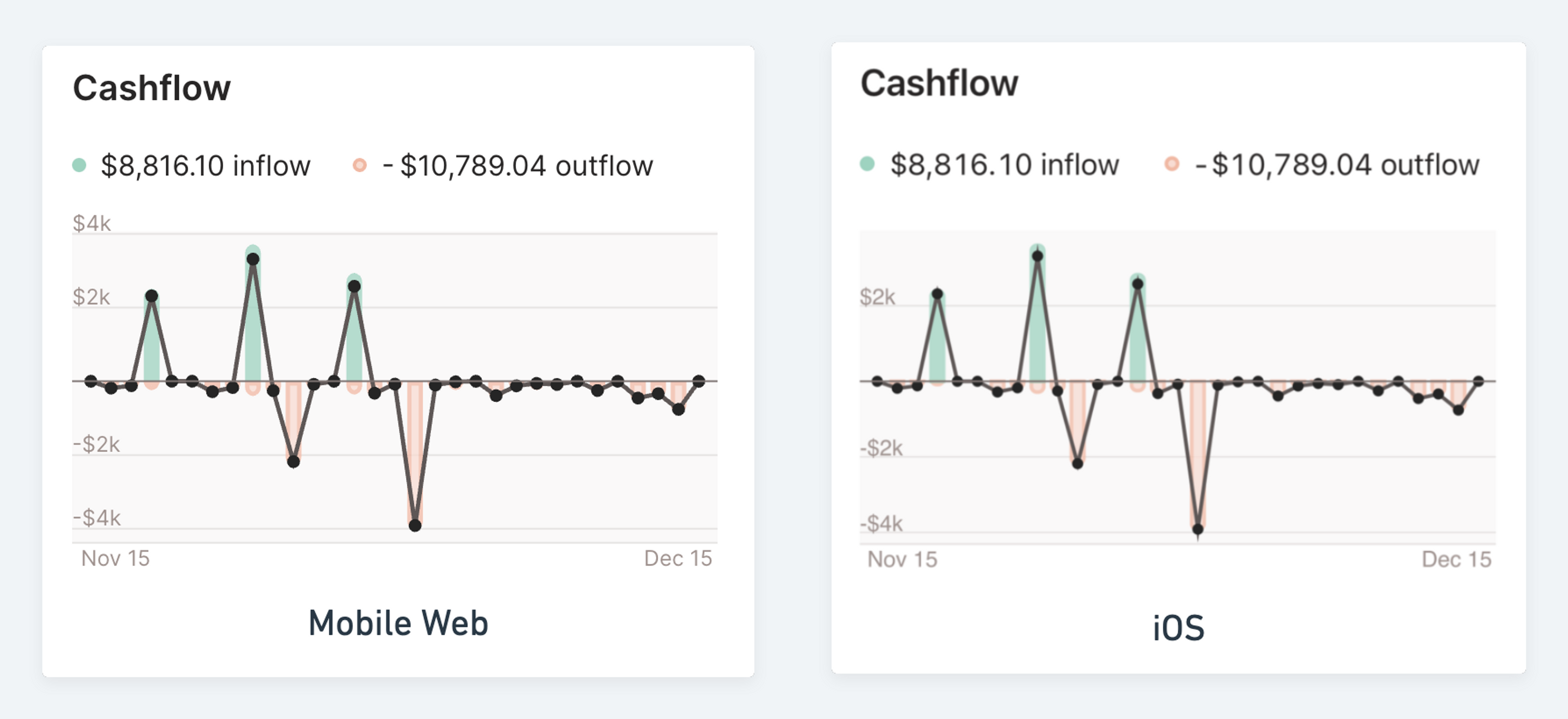
Rapid Local Development
Making a small code change and having it be reflected on device can take anywhere from a few seconds to several minutes in the largest apps. Reducing this incremental build time pays dividends beyond simple time savings. As the iteration time gets shorter, we’re able to both make more rapid and isolated code changes, greatly enhancing comprehension of the code that those changes are being applied to.
Both our web app (via Next.js) and our mobile app (via React Native) support Fast Refresh, allowing changes to components to be reflected in a matter of seconds without losing either app or individual component state. Fast Refresh has been indispensable. When I’m not sure of how a UI will look, I can save small changes several times in a row, tweaking one layout property until everything looks right. Frequently, I keep a browser window and simulator open side by side to reflect live changes on two platforms simultaneously.
Rapid QA on Pull Requests
As an early-stage company, we frequently ship new features and fixes to our app. In order to prevent new bugs from being introduced during this process, we made it easy for developers to manually test changes as a normal part of their review flow.
On web, we deploy every open pull request to a unique Google Cloud Run URL so that opening the new version of the app is a single click away.
On mobile, we generate a QR code that can be scanned by a phone running the Ambrook app to download and run the latest Javascript bundle live on the phone. Native code changes can’t be previewed using this system, but it’s worked well for us because most of our changes do not involve native code. The technical approach used here is similar to that of Shopify’s React Native app, which they’ve described in this blog post.
Our Takeaways
For Ambrook, building a cross-platform web and mobile app from a single codebase has saved us significant time and effort. Other teams considering a similar approach can take a few points away from our experience:
You can expect near-full sharing of business logic between platforms, but having divergent UIs (either at a design system level or at an entire screen level) may be most practical and preferable to create an app that feels native on each platform.
Open source libraries currently cover most common app needs and effectively abstract away platform differences, removing the need to write native code for feature development.
The developer experience improvements in React Native (Fast Refresh and QA via QR codes) are significant and would be difficult to accomplish in native due to its use of statically compiled languages.
Finally, as a quick catch-all, a few bonus recommendations for adopting our stack:
We found it very helpful to use boilerplate apps when starting, both to understand solutions for common issues (global state management, i18n, etc) and to reduce initial setup time.
Although most engineers on this stack don’t need to know about the underlying iOS / Android systems, you’ll still need someone with a working knowledge of the native build systems and IDEs in practice to debug build and configuration issues. This is something that the Expo community is working on.
Not all React libraries work well across both native and web, so you’ll need to be deliberate when choosing which to use.
Conclusion
Thanks to our lack of legacy code, we’ve been able to pick the best of breed tools for our situation: React Native on Mobile and React/Next.js on Web. This technology is instrumental in our ability to rapidly and efficiently iterate on our mission of helping to make farmers more profitable and sustainable.
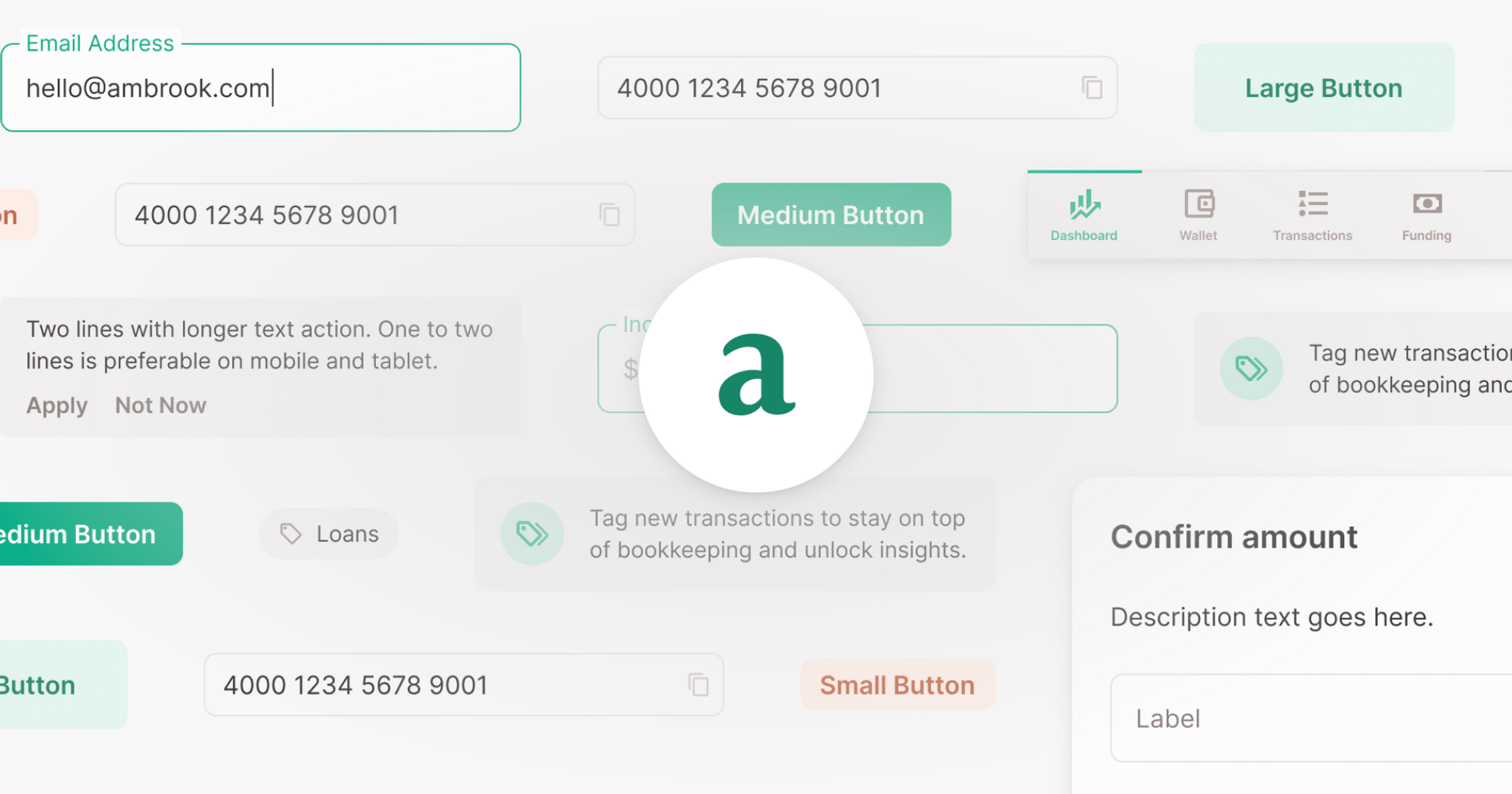
As an early-stage company, it’s imperative that we build and test ideas quickly. And, with limited engineering and design resources, we want to be able to build high quality interfaces without robust design speccing or redlining each iteration. To accomplish this, we decided to invest early in a strong design system foundation, not just in our design tools, but also in code.
Investing early in our design system and maintaining parity between Figma and code base enables our engineering team to autonomously and meaningfully contribute to our product without needing a pixel-perfect mockup in every situation.
All of Ambrook’s products, from our marketing website to our Funding Library, cards and bookkeeping tools are built with these same components, written once by engineers then used everywhere. We’ve built our design system on a single design stack:
Figma components with variants for design
React, Styled Components, and Material UI on web
Storybook for visual testing
When used in concert, these design system components let us plug together high quality user interfaces without engineers having to worry about things not looking right.
It all begins in Figma
Ambrook uses Figma component variants to design consistent interfaces. With components, we can have a central style that gets reused everywhere. And, with Figma variants, we spec out what each possible combination of properties looks like, and then can select the size, color, lightness, hover state, etc from the sidebar easily. This means that when engineers see the button component, they know that it’s the same one that we have in code.
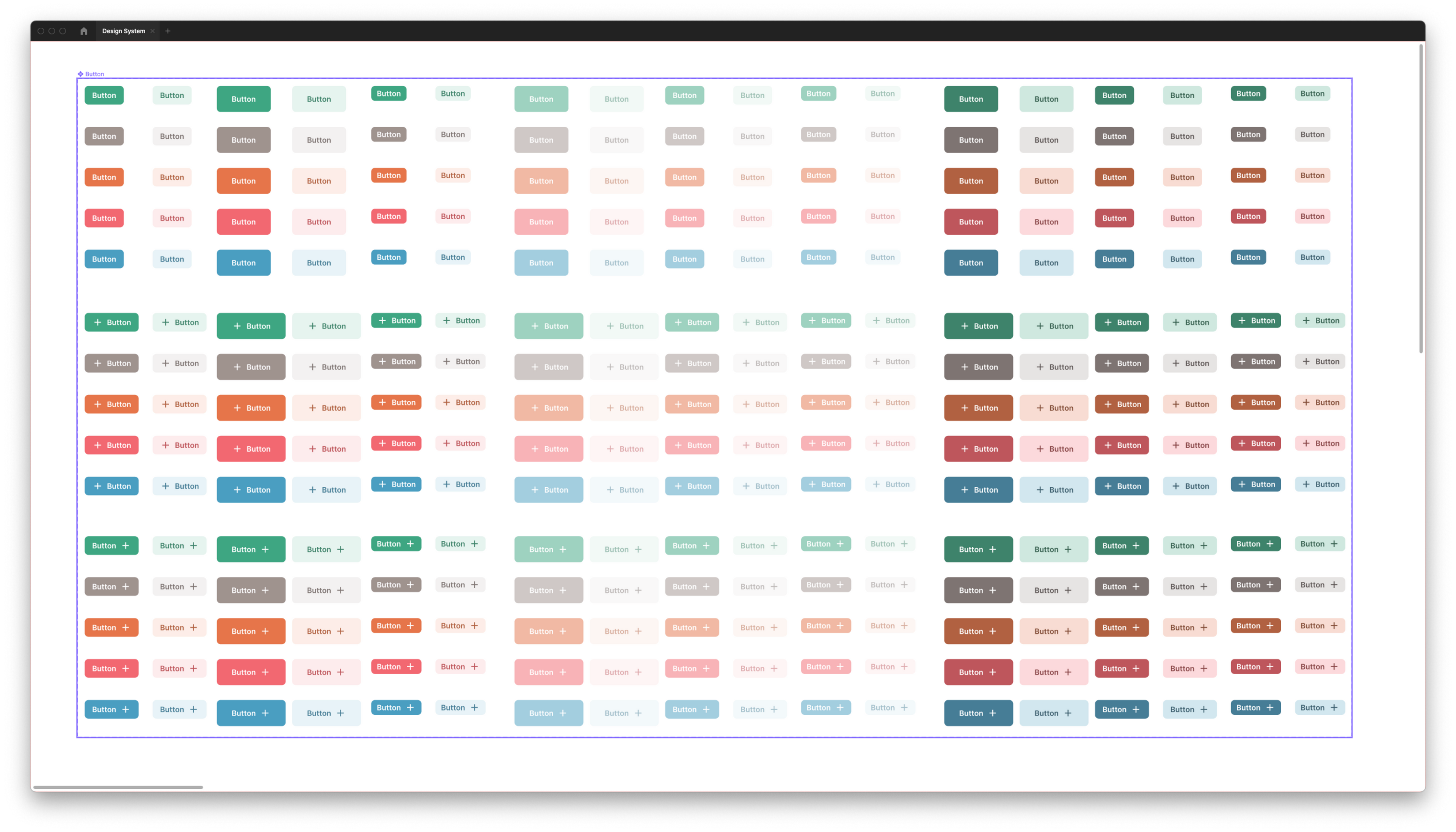
When constructing UIs in Figma, all we need to do is customize the properties of our components to construct interfaces. We use autolayout, which correlates directly with flexbox in code. When engineers view our Figma projects, they can inspect to see which components are used with what configurations, and translate that directly into React code.
Shared Code and Interfaces
Basic foundational values like colors are shared across components. Because our frontend, backend, and mobile app are all written in Typescript, these type definitions are shared across our stack.
We separate business logic and design implementation, creating an agnostic UI layer that we can use with multiple implementations per platform. This layer makes it easy for us to remove third-party dependencies like down the line if we need to optimize for performance, for example.
For each component in Figma, we define a React component that takes on similar properties to those outlined in Figma. For our button, that means size, color, light, disabled, etc. We prefix Ambrook design system components with Am, and we keep them in a frontend/design-system folder.
// frontend/design-system/buttons/AmButton.tsx
import { StyledAmButton } from './AmButton.style';
// ...
const AmButton = (props: AmButtonProps): JSX.Element => {
  // ...
  return (
    <StyledAmButton ... />
  );
};
export default AmButton;
This allows us to write easy-to-read code:
<AmButton size="large" color="blue" href="/careers" light>
  Click Me
AmButton>
The AmButton component is responsible for any business logic, like support for situations where the caller passed an href (e.g. a button that is actually a link), an onClick prop (e.g. a button that submits a form), both (e.g. a button that is a link but also logs to Segment in the background), or neither (e.g. a button nested in a card which doesn’t actually do anything but passes the click event to its parent). By supporting all the different possible use cases for what a “button” can do in a single AmButton component, we ensure that all buttons look the same, regardless of what clicking them does.
Importantly, the AmButton component isn’t responsible for presentation. We have per-platform implementations, using Styled Components and Material UI on web, and React Native Paper for iOS and Android. We store these implementations in neighboring .style.tsx and .style.native.tsx files:
// frontend/design-system/buttons/AmButton.style.tsx

import Colors from 'styles/colors';
//..
export const StyledAmButton = styled(Button)<StyledAmButtonProps>`
  background-color: ${({ $color, $light }) => $light
    ? Colors[$color][10]
    : Colors[$color][50]};
  // ...
`;
The main component file is then responsible for rendering a StyledAmButton. The props prefixed with a $ will not be passed to the HTML, and will just be used within the styled component itself.
<StyledAmButton $size="large" $color="blue" href="/careers" {...moreProps} />For some design system components, we build them directly from View components or HTML elements. For more complex ones, we wrap Material UI and React Native Paper components, which offer robust style implementations like ripples and animations, as well as accessibility features out-of-the-box.
Visualizing in Storybook
In the examples above, we’ve been using a simplified version of our components. In reality, AmButton takes over 20 different props! As components become more complex, being able to verify how components are supposed to look and work in all of their variants can be difficult. To make this easier, we’re starting to use Storybook.
Storybook plugs into the type definitions for our components, and creates properties and controls that can be played with in their pre-built UI.
We can define stories with just a few lines of code, which reduces the maintenance effort to near-zero. We store our stories next to our components, as a neighboring .stories.tsx file. Here’s what our button stories look like:
// frontend/design-system/buttons/AmButton.stories.tsx

import AmButton, { AmButtonProps } from 'frontend/design-system/buttons/AmButton';
import { Meta, Story } from '@storybook/react/types-6-0';
import React from 'react';

export const Normal: Story<AmButtonProps> = (args) => (
  <AmButton {...args}>Hello World</AmButton>
);

export const WithStartIcon = Normal.bind({});
WithStartIcon.args = { ...Normal.args, startIcon: <Decagram /> };

export const WithEndIcon = Normal.bind({});
WithEndIcon.args = { ...Normal.args, endIcon: <ArrowRight /> };

export default {
  component: AmButton,
  title: 'Components/AmButton',
} as Meta;
Our storybook components allow us to play around with the possible properties that can be provided to a component, and see how they interact.
Moving Fast
Bringing our design system into code takes time up front, as well as maintenance along the way. But so far, our investment has paid off, letting us experiment and iterate on our product without worrying about getting the design details right.
Since our founding, Ambrook has helped farmers and ranchers access funding opportunities and manage their finances. Privacy, security, and transparency of how we use data is core to who we are as a company. That’s why we are excited to announce that Ambrook is now officially Ag Data Transparent certified.
Ag Data Transparent is an independent non-profit organization that audits agricultural technology companies‘ use of data to ensure that they transparently communicate how they use an operation’s data. We worked closely with the Ag Data Transparent team to review our Terms of Service and Privacy Policy, and produce a report that is publicly available on their website. Ag Data Transparent has certified other innovative AgTech companies including John Deere, Farmers Business Network, Granular, Indigo Ag, and Conservis.
Our Commitment to Agricultural Producers
We commit to be transparent about how we use data to help farmers and ranchers to achieve their financial goals. As a part of this commitment, we will renew our certification annually, undertaking thorough independent review from Ag Data Transparent.
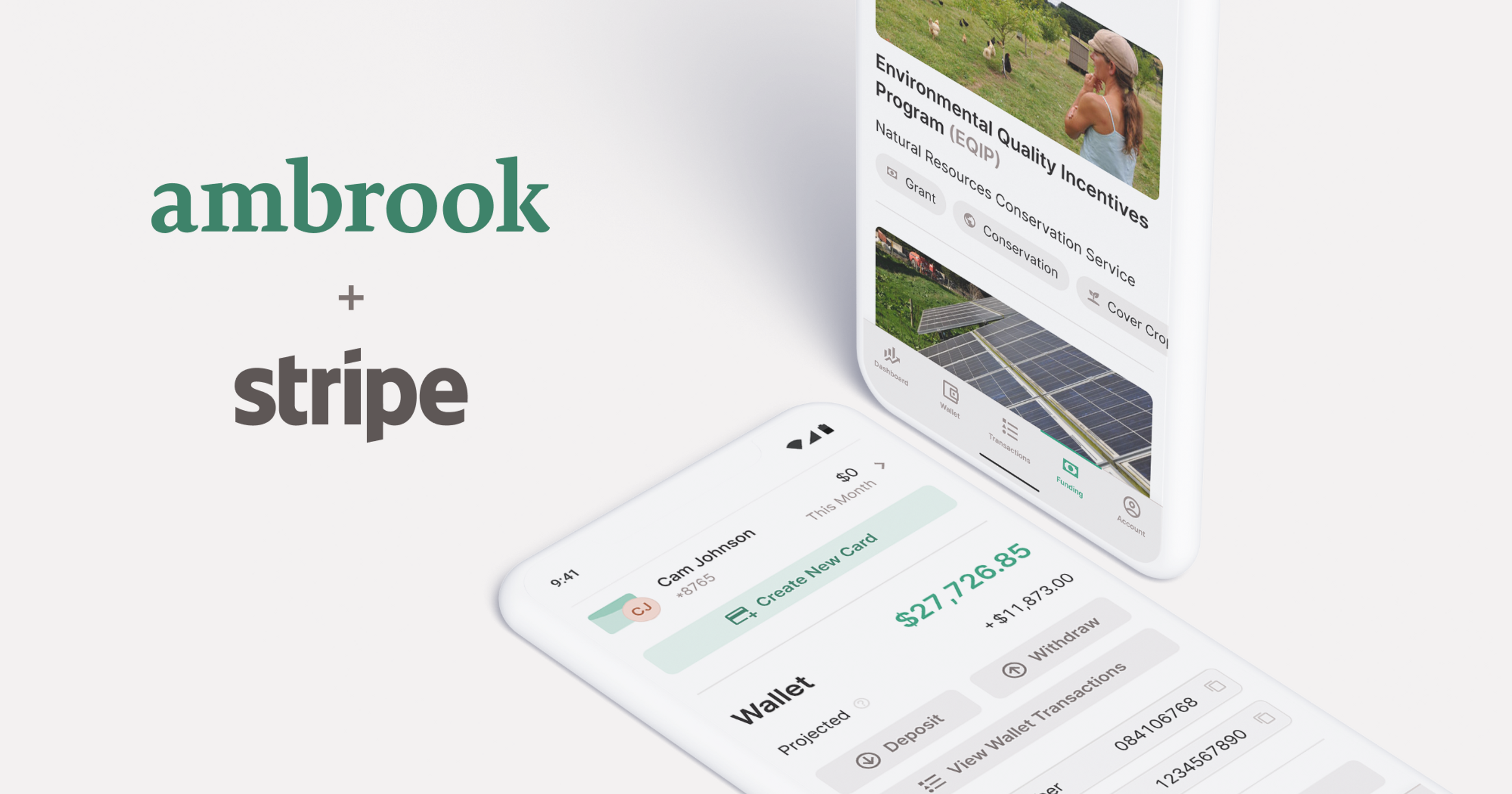
Ambrook has been working to bring modern financial management tools to farmers. We’ve made great progress in just nine months, helping thousands of farmers apply to over $6M in funding for their operations.
We recently launched Ambrook Wallet, a business cash account powered by Stripe Treasury, in order to help farmers seamlessly get access to their funds. When farmers apply to financial assistance programs with their Ambrook Wallet, they can finish the process without reaching for their credit card, and then receive helpful notifications about their payout status.
Stripe announced our partnership yesterday on the opening day of Stripe Sessions, their conference on the future of fintech and payments infrastructure. We worked with Stripe during their private beta period for Treasury, collaborating closely with their engineering team to customize the integration for our unique agricultural use case. Stripe’s team was attentive to our user experience goals, and together we took Ambrook Wallet from zero-to-one in just a few weeks. Check out the announcement here.
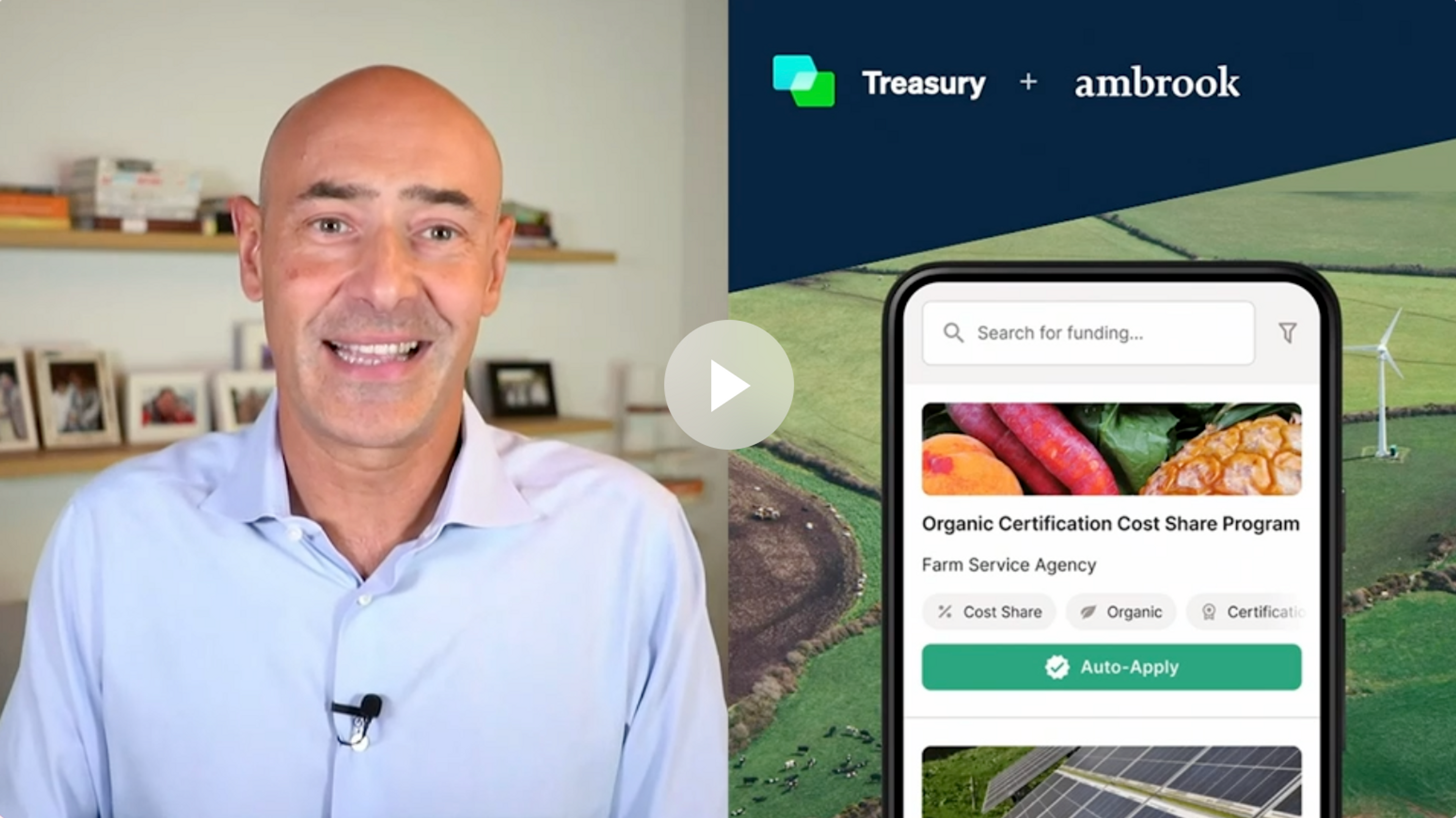
Karim Temsamani, Head of Financial Products at Stripe, highlights our partnership at Stripe Sessions at the 10:20 mark!
How it works
Ambrook Wallet makes applying to farm funding seamless and easy. First, a producer will use our online calculator to understand their eligibility and determine how much money they may qualify for. Then, they complete a series of questions that we use to generate their paperwork, handling all of the conditional logic and complexity to save them time and overhead. Finally, after e-signing their forms, farmers can choose to receive money into their Ambrook Wallet if successfully awarded.
We then submit their paperwork packet to their local USDA service center, sparing customers a trip across the state to hand deliver forms. When the USDA approves their payment, their grant award arrives in their Ambrook Wallet, and we update producers on their status.
Stripe Treasury makes this process a breeze, enabling us to create Ambrook Wallet accounts with just a single line of code. Their API also enables easy withdrawals and transfers from our web app.
Financial tools for the modern farm
In the future, farmers will be able to use their Wallet balance to make more streamlined payments for their operations. Wallet is our first step to bring embedded finance tools to agricultural producers nationwide. We are excited to be on the bleeding edge of vertical fintech innovation in underserved industries!
Interested in being a part of the future of farm fintech and supporting profitable and sustainable farming? Our team is hiring!
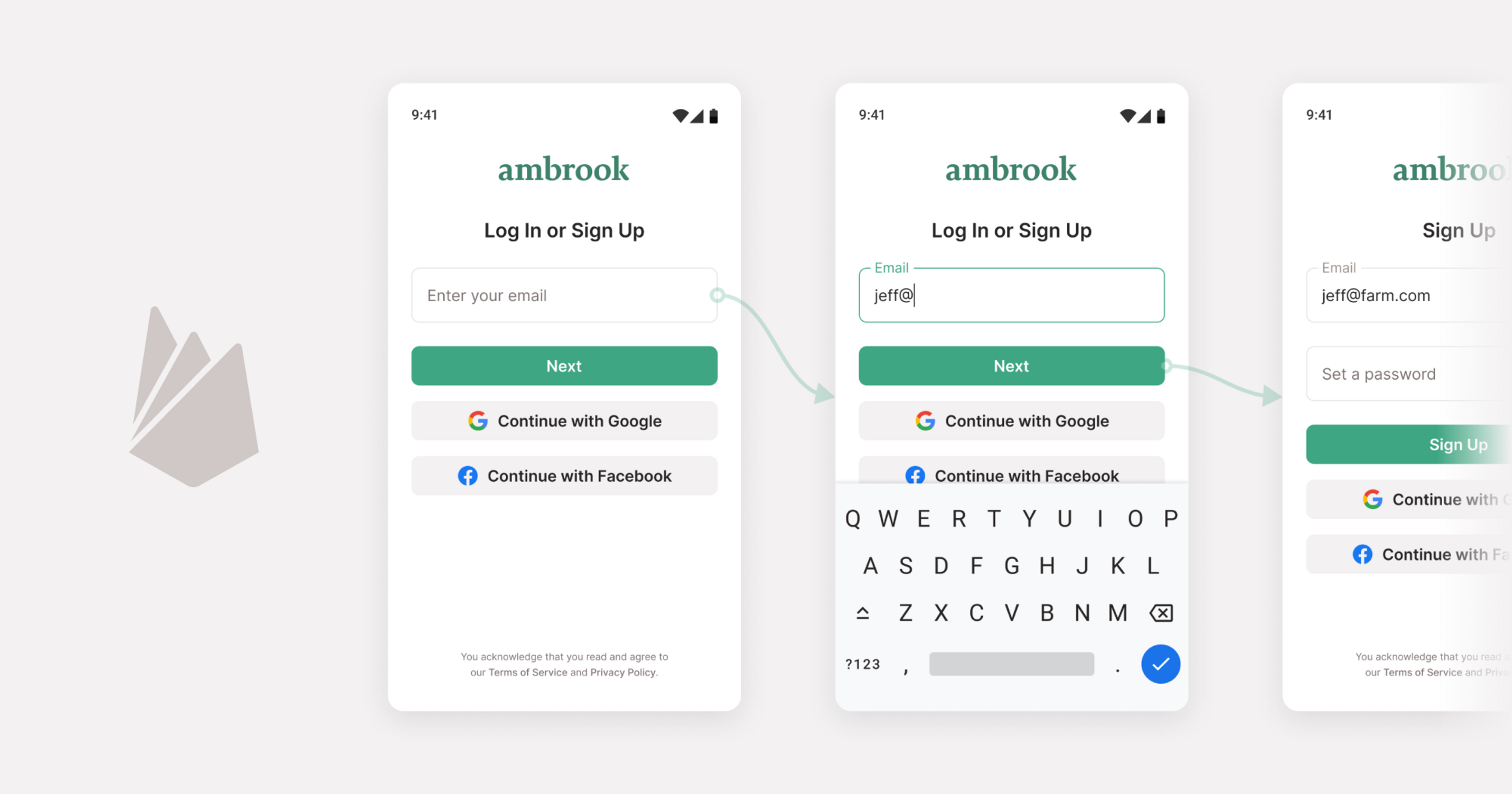
When I started working on Ambrook, adopting Next.js was a clear choice. I liked that it flexibly combines statically generated (SSG) pages (like blog posts, marketing sites), with server-side rendered (SSR) pages (like our app and account pages), and merges it all together with a smart client-side navigation scheme.
Firebase Authentication has been my go-to authentication choice for years. It handles all of the complexities of managing multiple authentication methods (password, Facebook, Google, phone number, magic link) into a single account system.
In using both, I hoped to create a best-in-class user experience. Here’s what I wanted:
Server-side rendered private pages that load the user’s data without lots of spinners.
Statically generated public pages, that show the same content for all users.
Cookie-based authentication that lets users start to input their information and use our app before being asked to make an account, saving progress as they go.
Server-side redirects for users that load a private page without being logged in.
Client-side redirects for users that click an onsite link to a private page without being logged in.
Furthermore, I had some developer experience requirements:
Make it easy to introduce new pages and API routes that are auth-guarded.
Reduce the likelihood that private pages are accidentally exposed.
While the basic integration was straightforward, the combination of these two tools created a fair number of cases to consider. Next.js lets users access pages by client side navigation and server side navigation. Firebase Authentication issues ID tokens that only last for an hour, after which they need to be refreshed using the client-side SDKs.
Authentication and SSR
Authenticating pages accessed via client side navigation is easy – the Firebase SDK will log users in automatically if they have an account, and private pages can check the currentUser. But for the initial HTTP request, we’ll need to use a cookie to store the user’s ID token to be verified on the server. Here’s how it works:
First, we sign in the user using the Javascript SDK:
const { user } = await auth().signInWithCredential(cred);Then, on the client, we generate an ID token and write it to the user’s cookies.
import cookie from 'js-cookie';

export const persistUserCredential = (user: firebase.User) => {
  const token = await user.getIdToken();
  cookie.set('token', token, {
    expires: 1,
    path: '/',
  });
}
Finally, when the user next requests an SSR-powered page, the cookies are passed along in the request headers. We can then verify the ID token to validate a user’s identity.
// Some code is missing here, I'll go into more detail later.
const token = getCookie('token', ctx.req.headers);
const { uid, email } = await verifyIdToken(token);
Maintaining State When Users Refresh
We want users to save our user’s progress before they enter their email address, and connect their saved progress with a full account later if they wish. To do this, we’re using Firebase’s authentication method built for this purpose. To integrate this into Next.js, we modify our custom _app.tsx. Here’s how it works:
Every time a page renders on the client, our
_app.tsx‘s render function will run. We use theuseEffecthook to run our setup code on the first render only.We set up a listener to changes in the Firebase Authentication state using
firebase.auth.onAuthStateChanged, which takes a callback that contains the current user. It runs first withnull, and then once Firebase has loaded the logged in user from the local session.We either persist the user’s credentials to the cookie, if they’re logged in, or log them in anonymously if they are not.
// pages/_app.tsx
import { AppProps } from 'next/app';
import React, { FC, useEffect } from 'react';
import firebase from 'firebase/app';
import persistUserCredential from 'utils/auth/persistUserCredential';

const MyApp: FC<AppProps> = ({ Component, pageProps }: AppProps): JSX.Element => {
  // ...
  useEffect(() => {
    return firebase.auth().onAuthStateChanged((user) => {
      if (user) {
        // If the user just signed in, we call the code to create the cookie.
        persistUserCredential(user);
      } else {
        firebase.auth()
          .signInAnonymously()
          .catch(function (error) {
            // Handle Errors here.
          });
      }
    });
  }, []);
  // ...
  return (<Component {...pageProps} />);
};

export default MyApp;
Next, we’ll set up the code that verifies token on the server.
Handling redirects
It’s important that users get redirected to the login page if they’re logged out but trying to access a private resource, no matter if they navigate on the client or directly to a private URL. I use the redirect feature introduced in Next.js 10, which allows GetServerSideProps to return a redirect object that will be executed on the client or server, depending on the user’s context.
Initially, I was able to make all of this work using Next.js’sGetInitialProps, which runs when a page is first loaded, on the client on client-side navigation, and on the server on server-side navigation. This method is deprecated in favor ofGetServerSidePropshowever, and not recommended. Read more about data fetching in Next.js andgetInitialProps.
I wrote a wrapper function, withPrivateServerSideProps that wraps a page’s GetServerSideProps function:
// withPrivateServerSideProps.ts
import { GetServerSideProps } from 'next';
import isAuthenticated from 'utils/auth/isAuthenticated';

/**
 * This function wraps a page's GetServerSideProps function. It passes the
 * `redirect` object if the user needs to authenticate, and calls the wrapped
 * function otherwise.
 */
export default function withPrivateServerSideProps<P>(
  getServerSidePropsFunc?: GetServerSideProps,
): GetServerSideProps {
  const withPrivateSSP: GetServerSideProps = async (ctx) => {
    const _isAuthenticated = await isAuthenticated(ctx);

    // If not authenticated, we return a redirect object that instructs
    // Next.js to redirect to our login page.
    if (!_isAuthenticated) {
      return {
        redirect: {
          destination: `/login?redirectTo=${ctx.resolvedUrl}`,
          permanent: false,
        },
      };
    }

    if (getServerSidePropsFunc) {
      return await getServerSidePropsFunc(ctx);
    }
    return { props: {} };
  };

  return withPrivateSSP;
}
This code uses a helper function, isAuthenticated, to determine if the user is authenticated. It uses the Firebase Admin SDK’s verifyIdToken function to validate the token and look up the user’s basic details.
// utils/auth/isAuthenticated.ts
import { GetServerSidePropsContext } from 'next';
import { getCookie } from 'utils/auth/cookies';

export default async function isAuthenticated(
  ctx: GetServerSidePropsContext
): Promise<boolean> {
  const token = getCookie('token', ctx.req.headers);

  if (token) {
    const { uid, email } = await verifyIdToken(token);
    // An anonymous user may have a UID, but authenticated users must have an
    // account (an email address).
    return !!email;
  }

  return false;
}
Here, the getCookie function is parsing the cookie header, and either returning the token key or undefined.
This makes for a very simple integration into a private page, like /account:
// pages/account.tsx
import withPrivateServerSideProps from 'hocs/withPrivateServerSideProps';
import React from 'react';
import { getAccountDetails } from 'lib/account'
import Account, { AccountProps } from 'screens/Account/Account';

const AccountPage = (props: AccountProps): JSX.Element => {
  return (
    <Account {...props} />
  );
};

export const getServerSideProps = withPrivateServerSideProps(
  async (ctx) => {
    try {
      const accountDetails = await getAccountDetails();
      return { props: accountDetails };
    } catch (error) {
      return { props: {} };
    }
  },
);

export default AccountPage;
Handling expired tokens
Firebase’s ID tokens expire after about an hour, so it’s likely that users that request a page will need to refresh their token in order to be authenticated. If this is the case, we redirect to the /login page, just like if they were logged out. However, in this case, we detect the presence of an existing token and attempt to refresh it. Here, we use firebase.auth().onIdTokenChanged, which detects not just changes in the user’s logged in status, but also when their ID token is refreshed automatically by Firebase. On the login page, we detect this state, persist their new ID token to the cookie, and redirect them to where they where going.
// pages/login.tsx
import firebase from 'firebase/app';
import { useRouter } from 'next/router';
import persistUserCredential from 'utils/auth/persistUserCredential';
import { useEffect } from 'react'

const LoginPage = ({
  redirectUrl
}: {redirectUrl: string}): JSX.Element => {
  const router = useRouter();

  // ...

  useEffect(() => {
    return firebase.auth().onIdTokenChanged((user) => {
      if (user && !user.isAnonymous) {
        persistUserCredential(user).then(() => {
          router.push(redirectUrl);
        });
      }
    });
  }, [redirectUrl, router]);

  return (
    /* login page content */
  )
};

export default LoginPage;
Lots of cases to handle!
Between client-side and server side navigation, private and public pages, and the user’s authentication state (logged out, logged in, expired token), there are a lot of cases to handle. But by carefully managing and correctly passing around the ID token, we can allow Next.js to authenticate a user from their ID token in whatever context we find them.
There were a couple of features we added that I didn’t include here, but they all follow from the structure outlined above. Asynchronous API requests using fetch() do not pass cookies by default, so I had to write a wrapper that includes the ID token in requests to my API routes. Also, we ended up building out “account-enhanced” pages that load basic content for logged out users and more content for logged in users. These pages follow the more traditional SPA model: Load the page and show a spinner, request the authentication state asynchronously, and then load the logged-in content (or not). We also use Redux in our app, but I removed that code from the samples above for clarity.
Hopefully this guide is helpful for your next project! If you have any questions, feel free to reach out to me on Twitter.
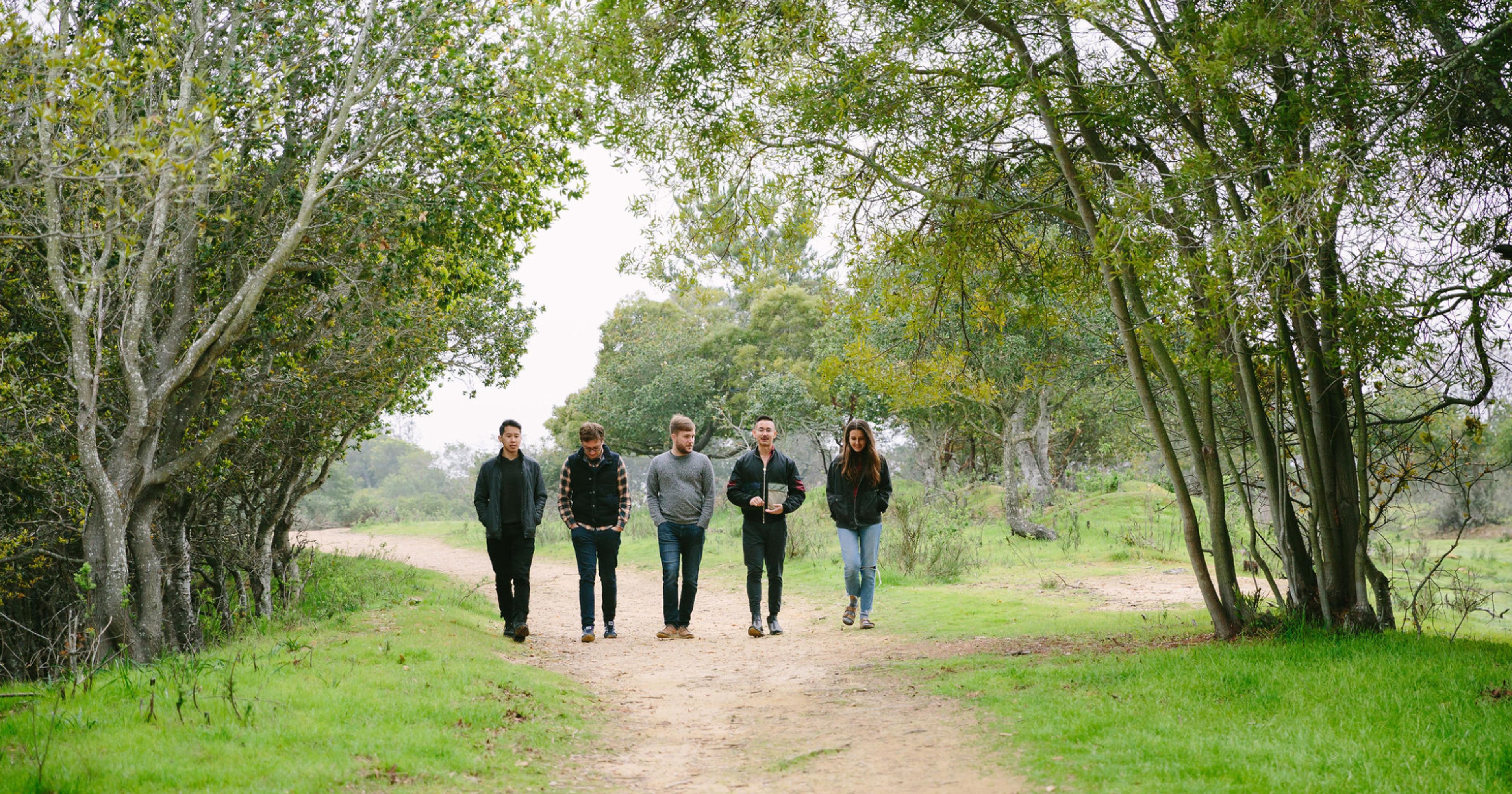
Ambrook is built on the philosophy of pragmatic environmentalism: if you care about the earth, then you should care about the people whose jobs are to be stewards of the earth.
The largest group of these stewards, by land mass, are farmers. But most agriculture today is neither sustainable nor resilient. More than 40% of U.S. land and freshwater is devoted to farming, and U.S. agriculture contributes to upwards of 25% of the nation’s greenhouse gas emissions. Moreover, climate change is already devastating agriculture and rural communities. (“Adapt or die,” was what one producer told us for Ambrook Research.)
Ambrook’s Opportunity
Fortunately, many sustainable farming practices (e.g. cover cropping) both reduce agriculture’s climate impact and make farms more resilient. However, many farms are not investing in sustainability because of thin margins, antiquated tools, and a lack of financing.
Ambrook builds simple, collaborative financial management software for farms, from grant discovery, to bookkeeping and spend management with cards. With Ambrook, farmers have a clear view into their financial present and future, can improve their margins, and get easier access to credit.
Over time, we plan to layer in sustainable financing and resource management. Once we’ve solved this problem for agriculture, we’ll expand to other natural resource industries – fisheries, forestry, mining – faced with the same problem of making sustainability profitable.
You can read more about our mission in Not Boring’s recent feature on Ambrook.
Ambrook in the News
The Founder’s Letter: Mackenzie Burnett, Ambrook | Packy McCormick | Not Boring
Come for the Tool, Stay for the Exchange: Bootstrapping Liquidity in the Private Markets | David Haber, GP | Future, a16z
State of the Cloud 2022 | Bessemer Venture Partners
Extend your business model with embedded finance @ 10:31 | Karim Temsamani, Head of Financial Products | Stripe Sessions 2021
Climate Tech Primer for Founders | Enrique Allen, GP | Designer Fund
Climate Tech Guide for Designers | Enrique Allen, GP | Designer Fund
Working at Ambrook
We are designing the work environment that we each wish we had in previous experiences. From projects to processes to hanging out, we are intentional about how we interact as a team.
We are a remote-hybrid team. That means we have office space in NY and SF, where our team has formed natural hubs and has gravitated toward working in-person together, while maintaining communication and hiring practices that are remote-friendly. This has some incredible upsides:
It enables flexibility in our working styles and schedules. Outside of daily morning standups, we work when and how we want to. We exercise and run errands on a weekday, or take the occasional Friday off to go to a cabin in the mountains. We care much more about productive output than just counting the number of hours put in. That being said, we get energy from working with each other on interesting problems, and want to bring on people who feel the same motivation. Our founding team is the product of many years of coworking and building organizations and side projects together.
It enables us to bring on the best people regardless of location. We aren’t constrained to hiring just in the Bay Area or New York City, which is especially important because our customers live in more rural areas around the country. We’re focused on hiring in North American time zones for now, but will likely expand globally. This also means you can work from travel destinations (with reasonable wifi) if you want to see what it’s like to live in the rainforest or mountains or desert for a few months.
We’re aware that remote work can sometimes be lonely, especially during a pandemic, and have each felt that. Our habit of quietly coworking together using Slack huddles and getting together for virtual “Happy Hours & Feelings,” for example, keep us connected. We’re always accommodating to make sure the team can go outside for a walk or spend time with family or otherwise take the breaks they need to recharge. To ensure we’re living our best professional lives, we also provide each full-time team member with the following benefits:
Healthcare: Generous coverage to maintain your wellbeing
401k: With matching, to invest in your future
Parental leave: Paid time off for maternity or paternity care
Home office stipend: Make sure your setup is ideal
Wellness stipend: Don’t mess around with your mental and physical health
Travel stipend: Ad hoc work in-person with your teammates when you need to
Farm stay stipend: Support your local food system and get to know the farmers and different operation types in your area
Professional development: Take courses or coaches in the areas you’d like to grow, like marketing or management
Coworking spaces: We’ll cover a desk at a community you can opt to work from
Retreats: We host quarterly in-person team gatherings in fantastic locations for focused sprints and general ~team bonding~
Founding Team
Mackenzie Burnett, Dan Schlosser and Jeff Anders are the co-founders of Ambrook. We have a strong history of working together for over eight years, from building products to community organizing . Moreover, we’re building a strong founding team that has expertise in building fintech and mobile products, and a personal interest in enabling climate resilience and sustainability for agriculture.


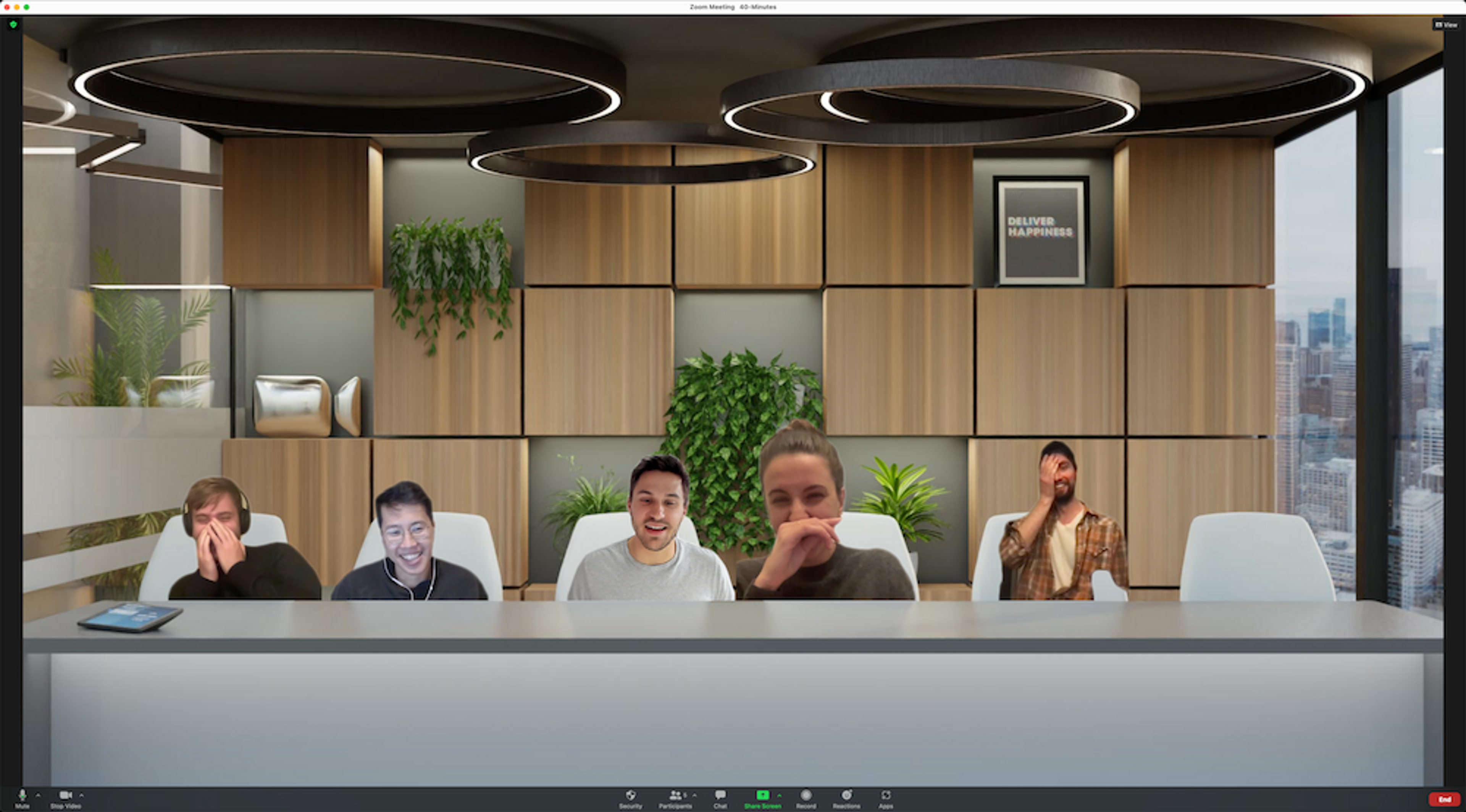
Our Values
We ran a series of exercises to better understand our own founder values ahead of recruiting a team. We know our company values will be co-created with our early team and should evolve over time. That said, this set of five values guides how we think about our work at Ambrook:
Reach Understanding – We are driven by curiosity and empathy to learn about our customers, team, and world.
Communicate with Real Talk – We create space for ourselves and others to be straightforward, vulnerable, and accountable.
Be Proactively Resourceful – We are internally motivated and externally empowered to identify opportunities and solve problems.
Derisk Thoughtfully – We lean into the biggest risks we face as a company and put in the work to address them systematically.
Find the Positive-Sum – We believe in creating incentive structures that align the needs of our company, our customers, and our planet.
Ambrook is an equal opportunity employer. We are committed to building diversity and inclusion into our core company culture.