Out in farm and ranch country, there’s no shortage of DIY solutions to common ag challenges.
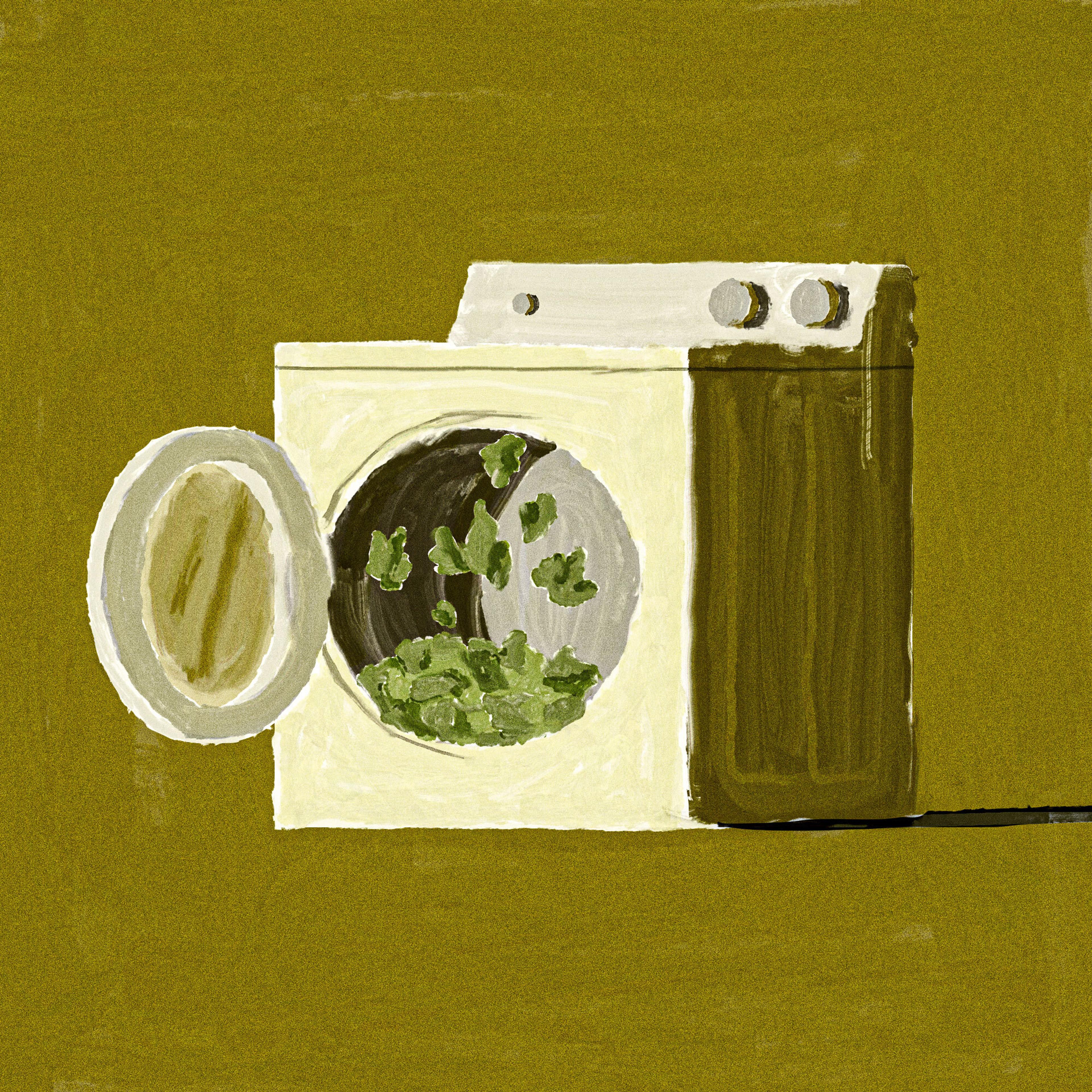
Feedbags made into “hats” that keep chickens from pooping in their hanging feeders. Sawed-off maple syrup jugs used as funnels. Tractor tires made into raised planter beds. Washing machines turned into lettuce spinners. A farm tool belt, inspired by a sailor’s rig, with holsters to hold a Leatherman, pruning shears, and an electric fence tester. Traffic cones for killing chickens. Shade-making eaves over a cold room, fashioned from water trays and two-by-fours. Twine wrapped around a tree-cum-fencepost to insulate it from poly wire fencing out on the range.


These are just a few of the hacks that thrifty, ingenious Offrange readers have told us they’ve devised, following a tradition that’s possibly as old as agriculture itself: finding cheap, DIY solutions to some of farming’s never-ending procession of challenges.
Such inventions born of necessity are referred to, in Hindi, as jugaad. “That practically translates into ‘made of junk,’” said Collin Golbach, a PhD candidate in mechanical engineering at the MIT GEAR Center, which innovates simple tools for small-scale farmers in the Global South — some of which Goldbach believes could fill a niche on smaller American farms, too. “But more roughly it means ‘made from stuff we had laying around’ and there’s a whole circular economy of jugaad machinery manufacturers who are cutting apart mopeds and turning them into rototillers.”
A Google search for jugaad turns up videos of farmers making their own spare-part mud slingers and hoists and onion field weeders. This ethic — which Goldbach called an “honest pointer towards the needs of the user” — informs GEAR Center innovations like a tractor made from a 2-wheel drive motorcycle, and clog-free drip emitters for irrigation systems that produce continuous pressure all along the hose. “The farms are small, the people don’t have a whole lot of money, and oftentimes the nearest source of spare parts can be days away,” said Goldbach of the need for these types of simple machines — echoing the needs of American farmers from a long-ago era.
Even now that a replacement filter for a poultry house water system is a mouse click away, “The vast majority of tools that are being promoted and invested in in research and development aren’t really catering to smaller-scale, diversified producers” in the U.S., said Evan Wiig. Wiig is director of membership and communications for the nonprofit Community Alliance with Family Farms (CAFF), which instituted the Small Farm Innovation Challenge in 2019 to award farm-specific inventions in hardware, software, and DIY categories.
“The tools and technology you might use for 50 to 500 acres of a single crop is very different than [for] 10 acres where you’re growing 70 different crops that change over the course of time. So, trying to find tools that are affordable, accessible, simple enough, that don’t require contracts, that are versatile for multiple purposes — it’s a real challenge,” said Wiig.
“The farms are small, the people don’t have a whole lot of money, and oftentimes the nearest source of spare parts can be days away.”
2024’s DIY Innovation Awards went to a multi-purpose farm use station meant to help with post-harvest handling and packaging of produce, and an all-terrain mulch spreader that’s comprised of a leaf blower attached to the back of an ATV. 2023’s awards went to a portable drying rack for onions and garlic. 2025’s winner was a fertigation and mulch tea machine made from old totes and a couple of motors.
One contest judge, Josh Volk, favored an online system for tech-unsavvy farmers, called the ShareWell, created by Gerardo Fuentes of Kitchen Table Advisors. Volk, an urban mixed-vegetable farmer in Portland, Oregon, who published a book titled Build Your Own Farm Tools, said this was “a really simple solution for allowing collaborative farms, where multiple people need to be recording their use of irrigation water,” to stay on top of it all. “Essentially, those farmers could just text their irrigation use to a person keeping track, and that would end up in a central database spreadsheet,” so they could easily tally who owed what at the end of every month.
Once you start to look around for farmer DIY projects, you find them pretty much everywhere, a testament to farmers’ love of both saving on costs and being self-sufficient. Some of them are professional enough that they’ve made it into production. A Michigan fruit farmer named Phil Miller filed patents for several of his inventions, which included two versions of a handheld fruit tree shaker — one that pushed, one that pulled — a wearable fruit-collecting basket made out of an umbrella, and a portable spinning blossom trimmer.
“These are labor-saver money makers,” he told an enthusiastic local reporter at a farm show a few years back. One multi-year Innovation Challenge winner in the hardware category, named Steve Heckroth, has designed several versions of small-scale electric tractors that he’s morphed into fully operational businesses.
But it’s the oddball, homey DIY solutions that speak to the nature of producers’ true, pedestrian needs. Farm Show magazine, which published its first issue in 1977, still features a “Made It Myself Inventions” column in every issue. These showcase innovations like “home-built” double sided rakes; fly traps constructed out of 5-gallon buckets, landscape fabric, and dish soap; a 50-gallon drum split in half and attached to the back of a mower to catch grass; and a diesel tractor converted to liquid natural gas.
“Trying to find tools that are affordable, accessible, simple enough, that don’t require contracts, that are versatile for multiple purposes — it’s a real challenge.”
On a website called Farm Hack, producers show and share their work for seedbed dibblers, robots that roll out Reemay over greenhouse crops when the temperature drops, and bikes turned into seed pelletizers. Volk has borrowed the idea for a drip tape roller made of plumbing parts from a farmer he once worked for in Connecticut. He’s also worked out improvements to a two-wheeled cart with handles and bed placed higher up, “so you don’t have to bend over so much,” he said. His advice to other would-be DIYers: Keep a set of basic tools like the kind you’d use for home renovations, and “know what materials are available to you at the hardware store, or whatever metal supply place” you’ve got nearby.
Joe Pokay is general ranch manager for the regenerative grazing organization Noble Research. He said that when it comes to rearing livestock, “the culture of innovation and tinkering with stuff” is alive and well. He said there’s a plethora of products on the market that “don’t really meet the purpose that I’m trying to fulfill,” especially when it comes to ranch-specific tasks like moving portable waterers and feeding hay. Offrange reader Bob Cunningham can relate; he’s made several iterations of portable hay feeder for his Katahdins, including one from a water tote — plus a nifty rain shield for the corral from his granddaughter’s old school desk.
“Sometimes, if you have it in your mind that this is what I need to do, it’s just a lot easier to make it yourself,” said Pokay. The rope-fence-poly wire hack is his — a handy solution that circumvents the need for a long drive to purchase a $1 plastic insulator. But he’s also built multiple types of pump to move water from wells and ponds to portable waterers, and he and speaks wistfully of a hack he heard about once, for which a guy in the Chihuahuan Desert used PVC pipe and gravity to transport water from the top of a mountain into a suite of storage drinkers at the bottom.
“It’s really the mindset of not binding yourself to, here’s the constraints,” Pokay said. “It’s allowing your mind to wander and think about things,”